Alien Disclosure: Pentagon Contractor Modelled Military-Documented UFO, UAP & USO Physics
A private aerospace research firm ran computational physics simulations of unidentified aerial phenomena under a classified US Defence Intelligence Agency contract, modelling everything from hypersonic flight characteristics to underwater vehicle acoustics, according to a 2010 self-assessment report that has since been made public.
The 141-page document, produced by Bigelow Aerospace Advanced Space Studies (BAASS) in November 2010, details the company’s analytical capabilities for studying UAPs and unidentified submerged objects (USOs) under DIA contract HHM402-08-C-0072.
The contract ran from 2008 to 2010 and tasked BAASS with building what the report described as “the largest known UAP performance and behavior Data Warehouse in the world,” alongside computational modelling tools capable of simulating the physics of reported encounters.
The report is part of the seventh release under the Presidential Unsealing and Reporting System for UAP Encounters (PURSUE). It’s designated DOW-UAP-D175.
Decades of military UFO research

A collection of reported UFO types from DOW-UAP-D175.
The report traced the US military’s interest in unidentified aerial objects back to the 1940s, beginning with Project Sign in 1947, which was established by the US Air Force to investigate flying disc reports.
Project Sign gave way to Project Grudge and then to Project Blue Book, the longest-running of the military’s UFO programs, which operated from 1952 to 1970. Blue Book investigated 12,618 UFO sightings during its tenure, according to the BAASS report.
Of those sightings, 701 remained classified as “unidentified” at the program’s conclusion. The Condon Committee, a University of Colorado study commissioned by the Air Force, recommended in 1968 that the government discontinue formal UFO research, concluding that it had produced nothing of scientific value.
The DIA contract with BAASS represented a resumption of that research, decades later, with a focus on computational physics rather than field investigation alone.
Twelve technology focus areas
BAASS organised its research around twelve technology focus areas drawn from reported UAP characteristics: lift, propulsion, control, power generation, spatial-temporal translation, materials, configuration and structure, signature reduction, human interface, human effects, armament and “other.”
The report acknowledged that many UAP sightings could be attributed to conventional military aircraft. It specifically cited the SR-71 Blackbird, F-117 Nighthawk stealth fighter, B-2 Spirit bomber and X-45A unmanned combat air vehicle as platforms that had been misidentified as UAPs during their respective development and operational periods.
However, the report argued that a subset of incidents involved performance characteristics that could not be explained by known technology. It was this subset that BAASS focused its computational analysis on.
The 2004 Tic Tac encounter

The centrepiece of the BAASS report’s analytical work was a detailed examination of the November 2004 encounter between US Navy F/A-18 fighter jets and an unidentified object off the coast of Mexico, involving the USS Nimitz Carrier Strike Group.
The incident began on 10 November 2004, when the USS Princeton, an Aegis-class guided missile cruiser, detected anomalous aerial contacts on its SPY-1B radar system. The contacts appeared intermittently over several days, with objects descending rapidly from altitudes above 60,000 feet to as low as 50 feet before disappearing from radar.
On 14 November 2004, two F/A-18F Super Hornets were vectored to intercept one of the contacts. The lead pilot reported a visual sighting of a white, oblong object hovering over a patch of disturbed water.
The object was described as “solid white, smooth, with no edges” and approximately 46 feet long, roughly the size of the F/A-18 itself. Its shape was compared to a Tic Tac breath mint.
As the lead pilot descended to investigate, the object appeared to ascend towards the aircraft before accelerating away at high speed. A second pair of F/A-18s equipped with forward-looking infrared (FLIR) pods subsequently tracked the object, capturing video footage that would later become one of the most widely discussed pieces of UAP evidence in the public domain.
The BAASS report included a DIA assessment of the incident that characterised the object’s performance in stark terms.
The Anomalous Aerial Vehicle (AAV) was no known aircraft or air vehicle currently in the inventory of the United States or any foreign nation,” the assessment stated.
The assessment further noted that the object demonstrated “advanced aerodynamic performance” with “no visible control surfaces, no visible means of propulsion and no visible exhaust.”
Speeds exceeding Mach 10
BAASS conducted a parametric velocity and acceleration analysis of the Tic Tac object based on radar tracking data and witness accounts. The results, presented in a table in the report, suggested the object reached speeds and acceleration rates far beyond those of any known aircraft.
At a conservative transit time estimate of five seconds, the analysis calculated the object’s velocity at Mach 10.7, with an acceleration of 75g. At a one-second transit time, the figures rose to Mach 53.8 and 375g. At half a second, the modelled speed reached Mach 107.5 with 750g of acceleration.
For context, the fastest crewed aircraft ever built, the SR-71 Blackbird, reached speeds of around Mach 3.3. Human pilots begin to lose consciousness at sustained accelerations above 9g.
The DIA assessment observed that the object had been tracked descending from above 60,000 feet to approximately 50 feet in a matter of seconds, and had been witnessed travelling from the encounter area to the carrier strike group’s combat air patrol point, a distance of roughly 60 miles, in under a minute.
Computational fluid dynamics modelling
To model the aerodynamic behaviour suggested by the Tic Tac encounter, BAASS used ANSYS Multiphysics, an industry-standard finite element analysis package (running on a dedicated 12-core HP server with 48GB RAM and 1TB of storage).
The firm created three-dimensional solid models of the Tic Tac geometry in SolidWorks and ran compressible fluid flow simulations using the ANSYS CFX module. These simulations modelled air pressure, temperature and Mach number contours around the object at various speeds, from 100 mph through to 1,500 mph.
The report noted that at speeds up to 500 mph, pressure, temperature and Mach number values increased gradually, with the most significant changes occurring at the front of the object. As speeds approached 700 mph, close to the speed of sound, the simulations showed pronounced shock formations in the pressure and Mach contours.
At 1,100 mph, the simulated temperature rose not only at the nose but also along the sides and in the wake of the object. Detached shock waves appeared in the simulations from 700 mph upward through to 1,500 mph.
“In the field of UAP studies, it is believed this preliminary analysis of the Tic Tac incident is the first of its kind to utilize a multi-industry standard Finite Element Analysis (FEA) code to perform computational studies,” the report stated.

BAASS performed extensive modelling to explain the military-documented behaviour of the ‘Tic Tac.’
Flat-faced cylinder comparison
BAASS also modelled a right circular cylinder geometry for comparison, noting that while “it would seem counter intuitive to have a craft with a flat face pushing through the air,” there had been “many reports of objects of just this sort seen maneuvering in the skies.”
The cylinder simulations showed no significant aerodynamic lift advantages over the Tic Tac shape at any speed tested. The report concluded that both basic geometries served as a starting point for more complex simulations that could incorporate heat generation, electromagnetic effects and acoustics.
BAASS noted the simulations indicated that a sonic boom or vibration “may have been perturbated into the environment” at higher velocities, though it judged it “doubtful the aircrew would have felt a shock wave in the cockpit unless extremely close to the object while traveling at high rates of speed, which the fighter jets were not.”
The report characterised the work as demonstrating “in a basic model that FEA algorithms describing multiphysics can provide to be an invaluable tool in gaining insight into UAP flight characteristics and even possibly rule out improbable scenarios.”
Simulating a UAP entering water
A separate analysis modelled a disc-shaped UAP descending through the air and entering a body of water, a scenario relevant to the disturbed water observed during the Tic Tac encounter and to reports of unidentified submerged objects more broadly.
The simulation modelled a solid steel disc moving downward at five metres per second into water at 25 degrees Celsius. Three distinct phases were created: air, the solid UAP and water. The water surface sat approximately ten feet below the bottom of the disc.
The simulation ran for ten seconds in 0.2-second time steps, tracking pressure changes, volume fraction of water and fluid velocity as the disc penetrated the surface. Results showed the expected trend of increasing pressure with depth, and concentric ripple patterns spreading outward from the point of water entry.
BAASS described the scenario as illustrative of what ANSYS CFX could produce, noting that “a typical problem of this type when solved by hand, would have taken weeks if not longer.” The report suggested the tools could be extended to study heat transfer from a craft entering the atmosphere, wave generation during water impact at various speeds and the recreation of eyewitness observations.
Underwater acoustics and the Shag Harbour incident
The report dedicated a section to the acoustical analysis of spherical unidentified submerged objects, drawing on one of the few cases where a government agency formally acknowledged an encounter with an unidentified flying object entering water.
In 1967, a UFO was reported crashing into Shag Harbour, Nova Scotia. Witnesses described hovering, flashing orange lights before the object tilted at a 45-degree angle and entered the water, leaving a trail of yellow foam. At least eleven people reported seeing a low-flying, lit object heading toward the harbour.
“Multiple witnesses reported hearing a whistling sound ‘like a bomb,’ then a ‘whoosh,’ and finally a loud bang,” the report recounted. “Some reported a flash of light as the object entered the water.”
The Canadian Coast Guard was dispatched but found only yellow foam at the point of entry. The report noted that several military witnesses, including a diver involved in recovery efforts, claimed an alien spacecraft was responsible. The case was briefly investigated by a US Air Force UFO study, which offered no explanation.
BAASS used the incident as a basis for developing an acoustical analysis framework for USOs, proposing that such craft might “operate using some sort of electromagnetic frequency based propulsion system to control underwater ‘flight’ and to achieve incredible performance capabilities in velocity and acceleration.”

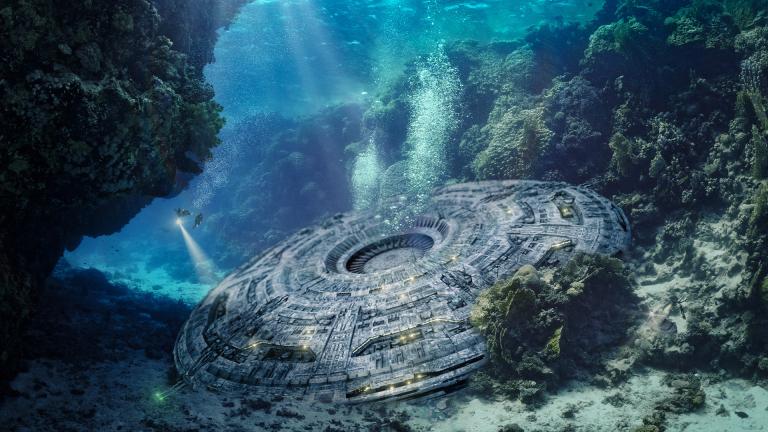
Some of BAASS’ ANSYS modelling of trans-medium USO UAP disc.
The acoustical modelling used a full harmonic simulation to analyse how a radiating sphere would propagate sound waves underwater. The analysis concluded that varying frequencies produced acoustic pressures that declined with distance following an inverse square law relationship.
“In the future, ships and submarines could possibly detect these pressure disturbances and a frequency of the mode of operation could be calculated with a known distance from the vessel,” the report stated.
Electromagnetic modelling and radar cross section
BAASS also explored the electromagnetic characteristics of spherical UAPs, noting that ANSYS Multiphysics included a full-wave electromagnetic solver capable of modelling resonant, propagating, radiation and scattering phenomena.
The report highlighted a recurring puzzle from UAP encounters: pilots reporting visual contact with objects that did not appear on radar.
“Many UAP have been reported across the globe. Pilots have reported seeing these craft in the air, but when asked for confirmation of other aircraft in the area, air traffic control reports nothing on radar,” the report observed.
To investigate this, BAASS conducted a radar cross section analysis of a 10-metre spherical metallic object with a one-metre dielectric coating. The analysis used a 300MHz ultrahigh frequency radar frequency, representative of a long-range military radar system.
The report compared typical radar cross sections across a range of objects and platforms, from insects and birds at the low end through cruise missiles, fighter jets, bombers, surface ships and aircraft carriers at the high end. It noted that the radar cross section of a stealth aircraft was “typically multiple orders of magnitude lower than a conventional plane and is often comparable to that of a small bird or large insect.”
The analysis found the FEA model to be mesh-independent, with the 25-element-per-wavelength model producing results consistent with the 50-element model. Normalised radar cross section values varied from 0 to 180 degrees, with the largest returns occurring at the point of incidence as expected.
The report concluded that “various shapes of UAPs may be evaluated for RCS and the resulting electric field due to an incidental radar wave is also attainable,” and that the information could be used to “determine the prominence of an object’s expected RCS and whether similar radar returns were received.”
Eleven databases in a single warehouse
Beyond computational modelling, BAASS built a data warehouse called Project Capella, comprising eleven databases that the report described as a “Six Layer Model for Anomalous Phenomena.” The warehouse was designed to catalogue and cross-reference UAP sighting data, witness reports and physical evidence.
BAASS also assembled a field investigation kit that included high-definition video cameras, night vision equipment, thermal imaging cameras, GPS devices, microscopes, radiation detectors and spectrum analysers. The equipment was intended for rapid deployment to UAP sighting locations for evidence collection.
The report listed five categories of commonly reported UAP shapes: saucer or disc, ellipsoidal or oval, cylindrical or cigar-shaped, sphere and triangle. Each shape was associated with distinct reported flight characteristics and capabilities.
A broader research agenda
The report’s summary made clear that BAASS viewed the computational analysis work as a starting point, not a conclusion. It described academic areas of concentration including computational fluid dynamics, heat transfer, nuclear engineering, electromagnetics, radio frequencies, theoretical and computational physics, biological sciences and chemistry.
“Theoretical and computational applications, as well as experimentation on components of non-conventional propulsion systems is under way to provide for future development of vehicles that are capable of operating in the atmosphere, under water and in space,” the report stated.
The goal, according to BAASS, was hypersonic flight that would provide “superior performance in its ability to reach intended targets, faster delivery of weapons, greater effective range and an engagement capability enabling employment of complex tactics against multiple targets across multiple domains.”
The report further stated that BAASS’s “acquired knowledge and capabilities are leading the way to quantum leaps in technology for travel in the atmosphere, space and under water, along with advances in armament and defense systems.”
Where analytical solutions did not exist or the geometry was too complex, the report concluded, “BAASS incorporates ANSYS Multiphysics to provide a powerful computational platform to solve large problems numerically, while combining and solving many different physical equations.”
The combination of computational software with field measurement equipment and historical databases of UAP events, the report argued, allowed BAASS “to utilize state of the art engineering techniques and tools to assess the operational capabilities of UAP and USOs.”
“A greater understanding of these objects will allow for an accurate threat assessment, as well as provide the physics behind the incredible performance attributes that some have displayed,” the report concluded.
The references section of the report was redacted under exemption 1843(a)(2), as were the names of BAASS personnel throughout the document.
- Last Updated on October 28, 2026 by Nick Ross
{ https://smbtech.au/category/features/ }


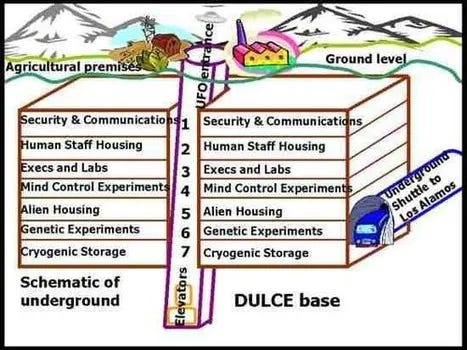
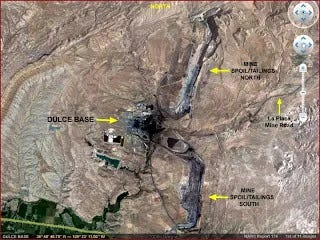
 The Tom Castello Dulce Base Hoax — John Lear, Tal LeVesque, Cherry Hinkle — New Mexico — 1979–2016 - PART I