Three Structures On Mars & An Alien Statue 3 Miles High, UFO Sighting News. Video.

Three Structures On Mars & An Alien Statue 3 Miles High, UFO Sighting News. Video.
Mysterious Lights Over Oregon: A Mesmerizing UFO Sighting

In the early hours of December 6, 2023, the tranquil skies of Oregon became the canvas for an extraordinary event that has since captured the imaginations of thousands. Residents were treated to an enigmatic display that defies easy explanation, sparking a flurry of interest in UFO sightings across the region and beyond.
According to eyewitness reports, a mysterious object illuminated the night sky, holding its position with an eerie steadiness that ruled out the usual suspects of airplanes or satellites. For nearly three minutes, this unidentified flying object (UFO) mesmerized onlookers with its unwavering presence, before it abruptly ceased its luminescence and vanished into the darkness, leaving no trace behind.
The sighting’s location, far from any towers or known aerial traffic routes, adds a layer of intrigue to the incident. Witnesses were quick to note the object’s distinct characteristics: it maintained a consistent size and brightness, and its sudden disappearance was as puzzling as its initial appearance.
This event has fueled speculation and debate among UFO enthusiasts and skeptics alike. The absence of any identifiable source or explanation has led many to wonder about the possibilities of extraterrestrial visitation. It’s a reminder of the vast, unexplored mysteries that lie beyond our understanding, hovering in the skies above.
For those fascinated by the unknown, this sighting in Oregon is a vivid testament to the enduring allure of the unexplained. It serves as a beacon, drawing the curious and the open-minded into a world where the possibilities are as limitless as the universe itself.
As the search for answers continues, this incident joins the annals of UFO sightings that have both puzzled and captivated humanity. Whether a visitor from distant stars or a natural phenomenon yet to be explained, the Oregon sighting of December 6, 2023, remains a compelling invitation to look up and wonder.
For enthusiasts eager to dive deeper into the mystery of UFO sightings, this event represents yet another fascinating chapter in the ongoing quest to understand the unexplained. As we gaze into the skies, the question remains: what other secrets are waiting to be uncovered?
In the spirit of discovery, we invite you to stay tuned for further updates and to share your thoughts and theories. Whether you’re a seasoned UFO researcher or simply a curious observer, there’s never been a more exciting time to explore the unknown.
Remember, the truth may be out there, and the next sighting could provide the key to unlocking it. Keep your eyes on the skies, and you just might be the next witness to the extraordinary.
The 10 best UFO documentaries to watch now:max_bytes(150000):strip_icc():format(webp)/ufo-documentaries-ew-020524-tout-d14b128ebaa549ff8d96ac1ef6070d87.jpg)
Explore UFOs, UAPs, and the existence of alien life from multiple fact-based perspectives in these films.
PERCEPTION MANAGEMENT PRODUCTIONS/ YOUTUBE; NETFLIX; CURATOR PICTURES/ AMAZON
The 2020s have been an exciting time for UFO enthusiasts, as the U.S. government has finally admitted that yes, their pilots do see a lot of strange things in the sky, and yes, they are looking into it. As UFOs become UAPs (unidentified aerial phenomena), however, we’re still no closer to answering some of the major questions that keep believers up at night: Who’s piloting these crafts? Where do they come from? What do they want from us?
There are a few different ways to look at the phenomenon. Maybe they’re physical beings piloting actual spaceships. Or perhaps the explanation is more mystical; some experts speculate that alien encounters and religious experiences have more in common than one might think. The films featured here all look at the topic from different angles, exploring multiple hypotheses and coming to provocative conclusions. We still don’t know exactly what’s out there — decide for yourself after watching the 10 best UFO documentaries.
:max_bytes(150000):strip_icc():format(webp)/The-Ariel-Phenomenon-ufo-doc-020524-f2d62cff8be841ff984b705579bc8184.jpg)
STRING THEORY FILMS, LLC
Director Randall Nickerson spent more than a decade gathering material for this recent documentary, which tells the story of a massive otherworldly sighting and the psychological effects of not being believed. On September 16, 1994, 60 children claimed they saw a UFO on their school grounds in rural Zimbabwe; their accounts were dismissed, but the group is still sticking to their story nearly 30 years later. The Ariel Phenomenon follows one of those witnesses as she returns to the site of the event as an adult, bringing in a BBC reporter and a Harvard professor to corroborate her story — and those of her classmates — for the first time.
:max_bytes(150000):strip_icc():format(webp)/I-Know-What-I-Saw-ufo-doc-020524-82a3e8d6ee714f35af2e8c7dbdc1ef3e.jpg)
UFOTV/AMAZON
James Fox is a mainstay of the UFO sighting scene, and his film for the History Channel is considered one of the most thorough and well-researched documentaries on the “nuts and bolts” side of extraterrestrial research. Fox’s focus here is on the link between the U.S. military and the UFO phenomenon: What do they know, how long have they known it, and why aren’t they sharing this information with the public? His approach is straightforward and fact-based, utilizing footage from congressional hearings and press conferences, along with interviews with retired military and government officials, to lend an air of legitimacy to the subject.
:max_bytes(150000):strip_icc():format(webp)/Love-and-Saucers-ufo-doc-020524-cc93513dbaec458b90f7051562f1975e.jpg)
CURATOR PICTURES/ AMAZON
David Huggins, a New Jersey-based artist who claims to have had a consensual sexual relationship with a female alien that lasted for several years, could be nothing more than a joke. What makes this documentary about Huggins so good though is that it doesn’t treat him as one, instead using his story as a jumping-off point into an earnest exploration of the nature of belief, and, indeed, of reality itself. Sequences of Huggins explaining his artwork — a series of paintings depicting his encounters that numbers in the hundreds — to skeptical gallery-hoppers skillfully strike a tricky tonal balance, and the addition of a religious studies professor who compares Huggins’ experiences to those of medieval saints brings a fresh, fascinating perspective.
:max_bytes(150000):strip_icc():format(webp)/Mirage-Men-ufo-doc-020524-1d4fd3c362494f6ba643ca381ae9a16a.jpg)
PERCEPTION MANAGEMENT PRODUCTIONS/ YOUTUBE
This provocative documentary, based on the book of the same name by Mark Pilkington and John Lundberg, presents a radical alternative theory of UFOs: That they’re all lies. What the directors posit is that, 60 years ago, the U.S. military deliberately concocted the extraterrestrial phenomenon as a way to distract the public from classified weapons research, and that the government has been manipulating belief in aliens ever since. Interviews with former members of the AFOSI (Air Force Office of Special Investigations) officers support Pilkington and Lundberg’s case, and the film has a spooky aura that makes you feel as if you’re being watched. But by who?
:max_bytes(150000):strip_icc():format(webp)/Moment-of-Contact-ufo-doc-020524-251a16fc08b24374a4fe916522a782a4.jpg)
JAMES FOX PRODUCTIONS/ YOUTUBE
Another documentary investigation of a global extraterrestrial event, this film focuses on the Varginha UFO Incident, which began in the winter of 1996 when three teenage girls saw a four foot tall creature with a huge head and red eyes they described as “the devil” in Varginha, Brazil. Things get even weirder from there, and this latest film from documentarian James Fox shines a light on a lesser-known example of a so-called UFO “flap” in his deep-dive, interview-based style.
:max_bytes(150000):strip_icc():format(webp)/Out-of-the-Blue-ufo-doc-020524-6ca76eac24b1463ea5e6da3dc571723c.jpg)
UFOTV/YOUTUBE
Billing itself as “the definitive investigation of the UFO phenomenon,” this 2003 film was originally produced for the Sci-Fi Channel, and its reputation has only grown in the years since its release. It also marked the directorial debut of James Fox, a name that appears no less than four times on this list. Fans praise the documentary for the depth of its research and its level-headed approach to what can be a very out-there topic. It’s convinced of the existence of UFOs, and argues this point passionately, which was a risky stance to take 20 years ago — but, given recent revelations, it’s a stance that’s aged as well as the documentary itself.
:max_bytes(150000):strip_icc():format(webp)/Phenomenon-ufo-doc-020524-1607267d20d14ebf9b18e8b54d02e107.jpg)
1091/YOUTUBE
Documentarian and UFO expert James Fox’s 2020 follow-up to I Know What I Saw incorporates new information that’s come to light in the decade since that previous film’s release, creating an informative overview of what we know about what the U.S. government knows about UFOs (or, to use the more official term, UAPs). The documentary covers revelations from The New York Times’ bombshell 2017 investigation into the Pentagon’s clandestine UFO program, pairing it with new evidence for a movie that comes with the endorsement of both Jacques Vallée and now-deceased U.S. Senator Harry Reid.
:max_bytes(150000):strip_icc():format(webp)/Unacknowledged-ufo-doc-020524-abd78676220645e487b35ad761d12ecf.jpg)
THE ORCHARD
UFOlogist Steven M. Greer is the founder of the Disclosure Project, a group that advocates for classified information on extraterrestrials to be made available to the public. This crowdfunded 2017 documentary is part of that mission, collecting theories and stories from the early ‘60s through the present day that all point towards a government cover-up of the truth about aliens. Like I Know What I Saw, this film relies heavily on interviews with retired military personnel to give it credibility, along with archival footage to bolster Greer’s convincing case.
:max_bytes(150000):strip_icc():format(webp)/Unsolved-Mysterie-ufo-doc-020524-662a105236964442bc8024145dacd9e4.jpg)
NETFLIX
The long-running newsmagazine show has performed dozens of investigations into extraterrestrial encounters, but this 2022 episode, part of the recent series revival on Netflix, is among the best. Its focus is on the UFO sightings that occurred all over West Michigan in 1994, where multiple people — including a National Weather Service meteorologist — saw what they described as clusters of lights flying over Lake Michigan before abruptly disappearing. This episode is structured around first-person interviews, and while it offers no clear answers, it’s pretty darn compelling.
:max_bytes(150000):strip_icc():format(webp)/Witness-of-Another-World-ufo-doc-020524-abce74724ac847d695be59c5c77de2d3.jpg)
1091/YOUTUBE
Like Ariel Phenomenon and Love & Saucers, this UFO documentary from director Alan Stivelman focuses on the human consequences of extraterrestrial contact. The film follows Juan, an Argentinian gaucho whose life was so shattered by an alien encounter that he still lives as a hermit and refuses to talk about what happened to him even 30 years later. Astronomer and UFOlogist Jacques Vallée appears to shed additional light on Juan’s story, and dramatic effects sequences dramatize the emotional impact of his close encounter.
{ https://ew.com/ }
Saturn’s Moon Mimas Harbors Global Ocean beneath Its Icy Shell, Study Suggests
From detailed analysis of Mimas’ orbital motion based on data from NASA’s Cassini mission, planetary researchers from Sorbonne Université, Nantes Université, Queen Mary University of London, Université de Franche-Comté and Jinan University show that its heavily cratered icy shell hides a recently formed (less than 2-3 million years ago) global ocean, at a depth of 20-30 km.
Mimas’ surface, like the surfaces of most of the other major Saturnian moons without atmospheres, is not pure ice but contains some dark impurities; the relatively dark markings appear along the lower portion of the walls of the 130-km-wide Herschel Crater (the peak in the middle of the crater is about as tall as Mount Everest; the impact that made it likely almost destroyed the moon) and some of the smaller craters; scientists interpret this darkening as evidence for the gradual concentration of impurities from evaporating icy materials in areas where the dark impurities slide slowly down the crater wall.
Image credit: NASA / JPL / Space Science Institute.
Evidence that some moons may have oceans beneath their surface is growing, but the detection of such watery worlds is challenging.
Mimas — the innermost, and smallest (radius = 198.2 km, or 123 miles), regular moon of Saturn — is an unlikely candidate, owing to differences in its surface properties compared with other icy moons, such as Enceladus.
This theory is challenged by Sorbonne Université researcher Valery Lainey and colleagues, who assess observations of the small moon made by Cassini.
Previous research suggested two possibilities for Mimas’ interior: either an elongated rocky core or a global ocean.
The new study reveals changes to the rotational motion and orbit of the small moon that are affected by its interior.
Applying the solid-body model would require the rocky core to be elongated, almost pancake-shaped, which does not match the observations.
Instead, the measurements of Mimas’ position suggest that the evolution of its orbit is better explained as being influenced by an internal ocean.
The researchers calculate that the ocean lies beneath an icy shell approximately 20-30 km deep.
Their simulations suggest that it appeared between 25 and 2 million years ago.
As such, signs of such a subsurface ocean would not have had time to make a mark on the surface.
The results imply that the recent processes on Mimas may have been common in the early stages of formation for other icy worlds.
“Mimas is a small moon, and its heavily cratered surface gave no hint of the hidden ocean beneath,” said co-author Dr. Nick Cooper, a researcher at Queen Mary University of London.
“This discovery adds Mimas to an exclusive club of moons with internal oceans, including Enceladus and Europa, but with a unique difference: its ocean is remarkably young.”
Secrets Unveiled: Inside Britain’s Covert UFO Investigations

In the realm of unexplained aerial phenomena, Britain’s clandestine exploration into unidentified flying objects (UFOs) stands out as a riveting chapter of intrigue and enigma. Far from the public eye, dedicated investigators have delved into the depths of some of the most perplexing and bewildering sightings, drawing on a wealth of eyewitness accounts and physical evidence that challenges the boundaries of our understanding.
At the forefront of this quest was former federal agent Ben Hansen, who embarked on a mission to uncover the truth behind a series of UFO sightings across America. Hansen’s journey was not solitary; it was supported by the extensive archives of the late Dr. J. Allen Hynek, the chief scientific adviser of Project Blue Book. Through this unprecedented access, Hansen sought to unlock the secrets of the past to illuminate the nature of present and future UFO encounters.
The range of UFO sightings investigated is as diverse as it is fascinating. Witnesses have reported everything from fiery orbs streaking across the sky to egg-shaped objects hovering near military installations, and dark, triangular craft moving silently through the night. One notable account involved a witness who, during a routine afternoon, observed what appeared to be a meteor; however, its behavior—a smoke trail without the typical mist of a meteor—suggested something far more mysterious.
Another unsettling encounter involved a civilian who, after witnessing a fireball UFO, was confronted by armed military personnel in an area where they had not been present moments before. This incident hinted at a possible military interest or involvement in tracking or possibly engaging with these unidentified objects.
Among the various leads followed, one particularly intriguing theory emerged: the existence of underground bases beneath Native American reservations, specifically around the Archuleta Mesa. Rumors and whispers of jointly operated human-alien facilities, where extraterrestrials were allowed to conduct experiments on humans in exchange for advanced technology, have persisted. Witnesses have claimed to see egg-shaped UFOs entering and exiting these hidden installations, fueling speculation about the nature of the activities within.
The investigations also revisited historical cases, such as the Socorro incident, where a traffic policeman witnessed an egg-shaped craft and beings in white coveralls—a sighting that remains unparalleled in its details and implications. Such cases underscore the persistent nature of UFO phenomena and the challenge they pose to conventional explanations.
Britain’s secret investigation into UFOs reveals a tapestry of unexplained phenomena that continues to challenge, fascinate, and inspire. Through the dedication of investigators like Ben Hansen and the courage of countless witnesses, the pursuit of understanding these mysterious sightings endures. As we stand on the brink of potentially groundbreaking discoveries, the quest for truth remains as compelling as ever, promising to unravel the mysteries that lie beyond our current gras
Wat de natuurkunde zegt over tijdreizen©Shutterstock
Wat de natuurkunde zegt over tijdreizen
Het concept van tijdreizen boeit lezers en bioscoopbezoekers al tientallen jaren. Maar hoewel mensen gefascineerd zijn door het idee, is niemand erin geslaagd om het tijdreizen meer tot realiteit te maken dan voorheen. Het lijkt een droom die net iets te ver buiten bereik ligt. Maar in een tijdperk waarin de wetenschap de grenzen van het mogelijke blijft verleggen, weten we eigenlijk wel - in theorie - wat de fysica van tijdreizen zou kunnen inhouden?
Nieuwsgierig? LEES HIERONDER VERDER om te ontdekken wat we tot nu toe weten over het vooruitzicht van reizen door de tijd.
©Shutterstock
Hoe tijd werkt
Het zal je misschien verbazen dat natuurkundigen nog steeds niet precies weten hoe tijd werkt. Voorlopig lijkt reizen naar de toekomst mogelijk (aangezien we er elke dag naartoe razen).
©Shutterstock
Hoe tijd werkt
Maar als het aankomt op het mogelijk ontmoeten van onze over-over-overgrootouders door naar het verleden te reizen, ziet het er extreem moeilijk, of bijna volledig onmogelijk uit.
©Getty Images
Albert Einstein
Albert Einstein heeft bijgedragen aan ons huidige begrip van tijdreizen. Zijn relativiteitstheorie beschrijft ruimte, tijd, massa en zwaartekracht.
©Getty Images
Relativiteitstheorie
Tijd was relatief voor Einstein. Een belangrijk resultaat van relativiteit is dat de tijdstroom niet constant is. Tijd kan versnellen of vertragen, afhankelijk van de omstandigheden.
©Shutterstock
Tijd is relatief
Het feit dat het kan versnellen of vertragen is waar het concept van tijdreizen zijn intrede doet als mogelijkheid, met gevolgen in de echte wereld.
©Shutterstock
Lichtsnelheid
Tijd verloopt sneller met een hogere snelheid, maar om het effect te merken zou je met de snelheid van het licht moeten reizen.
©Shutterstock
Zwaartekracht
Op dezelfde manier gaat tijd langzamer voorbij in een intens zwaartekrachtsveld, bijvoorbeeld in een zwart gat.
©Shutterstock
Zwaartekracht
De zwaartekracht van de aarde is sterker bij je voeten, dus je voeten verouderen eigenlijk langzamer dan je hoofd!
©Shutterstock
GPS-satellieten
Voor ons zijn de relativistische effecten van tijd te subtiel om op te merken. Maar ze hebben wel degelijk invloed op de satellieten die worden gebruikt voor het Global Positioning System (GPS).
©Shutterstock
Klok aanpassen
De klokken in de lucht tikken sneller dan de klokken op aarde. Daarom moeten de klokken in de lucht constant worden bijgesteld om de nauwkeurigheid te garanderen. Als dat niet gebeurt, kan je navigatie-app ongeveer 10 km per dag onnauwkeurig zijn!
©Shutterstock
Reizen in de toekomst
Relativiteit betekent dat het mogelijk is om naar de toekomst te reizen. Of je nou reist met de lichtsnelheid of tijd doorbrengt in een intens zwaartekrachtsveld, je ervaart een relatief korte hoeveelheid aan subjectieve tijd.
©Shutterstock
Reizen in de toekomst
In de rest van het universum zouden daarentegen tientallen jaren of eeuwen voorbijgaan. Dus wanneer je terugkeert, zou je verder in de toekomst zijn dan de tijd die je hebt ervaren.
©Shutterstock
Terug in de tijd
Relativiteit opent wel enkele deuren voor terug in de tijd reizen, maar op dit moment zijn deze nog niet verder dan het theoretische stadium.
©Shutterstock
De theorie van de gesloten tijdachtige kromme
Een studie uit 1949, gepubliceerd door Kurt Gödel, stelde voor dat een gesloten tijdachtige kromme, een pad waar ruimte en tijd in zichzelf teruglopen, tijdreizen naar het verleden mogelijk zou kunnen maken.
©Shutterstock
De theorie van de gesloten tijdachtige kromme
Een groot probleem met deze theorie is echter dat er nergens in het universum zo'n gesloten lus bestaat. Het is pure theorie.
©Shutterstock
De theorie van de gesloten tijdachtige kromme
Zonder bewijs voor het bestaan van een gesloten tijdachtige kromme, is er geen manier om deze te reconstrueren. Emily Adlam, filosoof aan de Chapman Universiteit in Californië, zegt: "Zelfs als we veel grotere technologische krachten hadden dan we nu hebben, lijkt het onwaarschijnlijk dat we in staat zouden zijn om doelbewust gesloten tijdachtige krommen te creëren."
©Shutterstock
Kosmische snaren
In 1991 kwam de natuurkundige Richard Gott met de theorie dat zo'n gesloten cirkel mogelijk zou zijn als er twee "kosmische snaren" waren die in tegengestelde richting langs elkaar heen bewogen.
©Shutterstock
Kosmische snaren
Wat geweldig zou zijn... als kosmische snaren bestonden! Deze snaren zijn nog steeds hypothetisch en volgens sommige theorieën zouden ze het hele vroege universum hebben gevormd.
©Shutterstock
Wormgaten
Een ander fenomeen dat volgens de relativiteit mogelijk is, zijn wormgaten. Theoretisch is het mogelijk dat ruimtetijd wordt gevouwen als een stuk papier, waardoor een tunnel kan worden geperforeerd om een kortere weg te creëren tussen twee ver van elkaar verwijderde punten, oftewel een wormgat.
©Shutterstock
Wormgaten
Het probleem met wormgaten is weer dat hoewel in theorie is aangetoond dat ze zouden kunnen bestaan, als een wiskundige mogelijkheid, het fysieke bestaan van wormgaten iets heel anders is.
©Shutterstock
Intens zwaartekrachtsveld
Als wormgaten zouden bestaan, zouden ze niet erg lang bestaan. Sterker nog, als het twee zwarte gaten zijn die zich hebben samengevoegd, zoals wordt getheoretiseerd, dan zou hun intense zwaartekrachtsveld instorten onder hun eigen zwaartekracht.
©Shutterstock
Problemen met omvang
Er is nog meer slecht nieuws voor toekomstige tijdreizigers: deze wormgaten zouden microscopisch klein zijn, te klein voor een bacterie, laat staan voor een mens om er doorheen te gaan.
©Shutterstock
Negatieve energie
Om het omvang- en zwaartekrachtprobleem op te lossen zou er een grote hoeveelheid negatieve energie in het atoom nodig zijn. De energie van het atoomveld moet over het algemeen echter meer positieve energie bevatten, dus zelfs als er kleine zakjes negatieve energie in het atoomveld zouden ontstaan, is het geen erg realistisch beeld.
©Shutterstock
Kwantummechanica
Terwijl relativiteit het gedrag beschrijft van grote objecten zoals mensen en sterrenstelsels, verklaart kwantummechanica het hele kleine: kleiner dan atomen, zoals elektronen en fotonen.
©Shutterstock
Non-lokaliteit
Uit de kwantummechanica zijn vreemde waarnemingen naar voren gekomen, met name non-lokaliteit. Dit is waar een verandering in de toestand van een deeltje op één locatie onmiddellijk een ander "verstrikt" deeltje ergens anders kan beïnvloeden.
©Getty Images
Non-lokaliteit
Einstein noemde dit "spookachtige actie op afstand". Het is vele malen experimenteel aangetoond, maar veel natuurkundigen zijn ongelukkig met de mogelijkheid van niet-lokaliteit.
©Shutterstock
Non-lokaliteit
Om het effect onmiddellijk te laten zijn, zou de informatie namelijk sneller moeten gaan dan de lichtsnelheid. Dit wordt als onmogelijk beschouwd.
©Shutterstock
Retrocausaliteit
Als reactie hierop zijn sommige natuurkundigen met een alternatieve manier gekomen om de experimenten te interpreteren. Sommigen suggereren dat wanneer iets er direct lijkt te zijn, het eigenlijk naar de toekomst is gereisd en weer terug. Dit introduceert retrocausaliteit, oftewel gebeurtenissen die in de toekomst plaatsvinden hebben een effect op het verleden.
©Shutterstock
Retrocausaliteit
Als dit het geval is, is ons lineaire concept van tijd niet noodzakelijk correct. Het betekent in feite dat informatie uit de toekomst altijd terugkeert om het verleden te beïnvloeden. Het is goed om in gedachten te houden dat deze theorie ook niet door iedereen wordt geaccepteerd. Sommigen vinden deze theorie nog ongehoorder dan non-lokaliteit.
©Shutterstock
Conclusie
Kortom, we hebben geen volledig antwoord. Relativiteit en kwantumfysica zijn niet met elkaar te combineren, maar ze werken wel om bepaalde aspecten van ons universum te verklaren. Misschien is er een overkoepelende, verenigende theorie die ze met elkaar verbindt, maar die is nog niet ontdekt. Voorlopig blijft tijdreizen buiten bereik - net als de meer mysterieuze aspecten van het universum.
Bronnen:
I Saw the Movie ‘They’ Don’t Want You to SeeThe movie that I, like a million other women, really wanted to see this weekend was Barbie. A celebration of friendship! Of girlhood! Of the color pink! But my editor had a different idea: Would I go see that movie about child sex trafficking? The one that a lot of people online are angry about?
“Uh, sure,” I replied. I am a team player.
When I arrived at the Tysons Corner AMC in McLean, Virginia, on Sunday, the lobby was filled with people wearing fuchsia body-con dresses, blond wigs, and thigh-high boots. None of these happy moviegoers, however, was heag in the same direction as I was. Instead, my theater contained a few dozen somber-looking people who had elected to see a $15 Sunday-afternoon screening of one of the most disturbing films of the year.
Sound of Freedom, which came out on the Fourth of July, follows a man named Tim Ballard, who quits his job at the Department of Homeland Security to personally rescue two Honduran children from a sex-trafficking ring in Colombia. Ballard is a real person with “extreme biceps, extreme blue eyes, and extreme bleach-blond hair,” as my colleague Kaitlyn Tiffany wrote in 2021. He really did start an organization that conducts sting operations to free people from traffickers. But according to one journalistic investigation by Vice, his nonprofit, Operation Underground Railroad, has exaggerated the details of some of its international rescues as well as its role in domestic law enforcement.
[Read: The great (fake) child-sex-trafficking epidemic]
Sound of Freedom was attracting controversy long before its release. Finished in early 2018, the film was bought by Fox, and then when Disney acquired Fox it immediately shelved the film. Right away, that gave the movie a kind of forbidden, subversive appeal. Eventually, the distribution rights were sold to Angel Studios, a company in Utah that produced the Christian historical drama The Chosen. Since Sound of Freedom started showing in theaters, some viewers have alleged instances of sabotage intended to prevent them from seeing the film. This week, Sound of Freedom broke $100 million in revenue. Last week, former President Donald Trump held a screening at his golf club in New Jersey, where, channeling Paris Hilton, he called it “the hottest movie anywhere in the world.” On Tuesday night, House Speaker Kevin McCarthy held a screening of the movie for members of Congress.
The film’s critics argue that the movie exaggerates the prevalence of child exploitation in a way that helps advance QAnon conspiracy theories about a satanic ruling elite that molests children and feasts on their blood. But the movie’s fans say, This is the film the Democratic elite doesn’t want you to see!
Sound of Freedom is neither of these things. It’s fine—not great but not terrible, either. It doesn’t make any reference to “deep state” bloodsucking or congressional sex cabals. It’s a straightforward, if plodding, action movie about a man on a righteous quest—with zero character development and way too many close-ups of people either crying or smoking cigars.
Although the movie doesn’t depict anything particularly graphic, the subject of child abuse is still difficult to watch dramatized on the big screen. It was upsetting. But so was talking about it afterward with other audience members, many of whom seemed convinced that some significant number of their countrymen condone child trafficking. Sound of Freedom, in other words, is just the latest flash point in an apparently endless culture war that encourages Americans to believe the absolute worst about one another.
In the movie, Ballard is played by Jim Caviezel, who also starred as Jesus in 2004’s The Passion of the Christ, and has himself dabbled in the dark whimsy of Q. In 2021, he spoke at a right-wing conference in Oklahoma, where he warned attendees about “the adrenochrome-ing of children,” an absurd theory that says global elites are using a chemical harvested from kidnapped children to keep themselves looking spry. At one point in the movie, asked why he was so determined to rescue the kids, Caviezel’s character pauses, and his eyes well up with tears. “God’s children aren’t for sale,” he says. My theater broke into applause and shouts of “Amen!”
[From the June 2020 issue: The prophecies of Q]
The movie has united religious conservatives and Trump supporters, as well as a small sampling of the chronically paranoid—or at least it appeared to have done so at my showing. (I chose this particular theater because, when I looked online, a lot of people had bought tickets—probably because McLean has more right-leaning voters than many other places in the Washington, D.C., area.)
Kate Cox, a retiree from McLean wearing little flower earrings, told me before the movie that she was “a pro-life Catholic” concerned about the border. “That’s exactly what this is about,” she said. “They’re taking these people and selling them into sex slavery.” Cox and her girlfriends were also worried about the fentanyl coming in from Mexico: How hard would it be to put up a wall?
“And the homelessness!” added Peggy, a friend of Cox’s who declined to share her last name. “Cities are falling apart.” Cox nodded. “Say what you will about Trump, and 99 percent of it’s true,” she said, “but this didn’t happen under Trump.”
Unlike Barbie, with its huge marketing budget and corporate partnerships, word of mouth seems to be the main attendance-driver for Sound of Freedom: Most of the people I spoke with on Sunday had bought a ticket on a loved one’s recommendation.
“One of my friends told me to see this movie,” Nicole Gutierrez, a Swiss native who lives in D.C., told me. “This is a much bigger business than we think it is. Hollywood, politicians—they’re all involved.” She pulled out her phone to show me a text that her friend had sent a few minutes earlier. “Maybe you know what it means.” Her friend had sent the letter C, followed by an eye emoji, followed by the letter A. “I think he means the CIA,” I said. Gutierrez raised her eyebrows. “Everybody’s involved,” she said. “The White House, of course.”
In a bonus clip after the credits, Caviezel encourages viewers in a whispery voice to scan a QR code and buy a ticket for someone who can’t afford it. “We can make Sound of Freedom the Uncle Tom’s Cabin of 21st-century slavery,” he says, likening the film to the novel that helped inspire the 19th-century abolitionist movement. After that, as the lights came up, a woman in my row who introduced herself as Cheska stood up to announce that she was there to talk about her 23-year-old daughter, who had been missing for a year and a half. “I’m expecting a miracle,” she said. “She’s going to be returned soon.” Warning that the End Times were upon us, Cheska asked us to pray for her and for one another. A few people again said, “Amen,” and at least one woman gave her a hug.
As I left the theater, I approached another group of friends to hear what they thought. They all declined to share their last names, but were happy to tell me how powerful they’d found the movie. “Men want to protect people,” a dark-haired middle-aged man named George said, “so it’s embarrassing that there’s anyone out there that would ever do that to a child.” He brought up the new Jason Aldean song, “Try That in a Small Town,” in which the country artist promises vigilante justice. “I like that song that no one wants to talk about,” George said. Real men would beat up a child abuser.
“You realize you’re talking to some of the few conservatives in the area?” George’s bearded friend Steven asked me, with a wink. “You know what surprises me,” he went on, “is why the left hates this movie. I don’t get it.” He looked at me as though he expected an answer.
If people on the left are repelled by this movie, it’s for the same reasons people on the right feel so obligated to see it. Our political leaders, our social circles, and our chosen media have signaled in our echo chambers exactly how we should feel about it—and so much else, besides. Bud Light. Gas stoves. School libraries. The Target Pride section. Elon Musk’s Twitter. Luke Combs’s “Fast Car.” The entire Walt Disney Company. Lizzo playing James Madison’s flute.
It’s exhausting. All I wanted to do was put on a pink dress and enjoy a movie about a plastic doll.
THE UFO MOVIE THEY DON’T WANT YOU TO SEE

By Chris Salce
UFOs and Aliens have been making significant headlines around the world recently. Brian Dunning’s The UFO Movie They Don’t Want You to See investigates some of the UFO reports in those headlines as well as asking one of life’s biggest questions, “Is there life in outer space?”

Part I of a Series
The UFO Movie They Don’t Want You to See is not just a movie, it’s a documentary that utilizes and even teaches critical thinking. It might as well have been called “A Logical Take on UFOs.” Skeptic, and the host of the Skeptoid podcast, Brian Dunning has exposed the truth behind over 900 urban myths, legends, and fantastic stories. It’s a master class on how to engage a logical take. Thus a logical review of Dunning’s new movie is essential.
We Are Not Alone
First, the movie presents a pretty compelling case that we are not alone in the universe. The universe is just too large, there are just too many planets and stars, and the conditions that make life possible are just too common, relatively speaking.* Life very likely exists, if not elsewhere in our galaxy, then elsewhere in the universe. At the same time, however, the same thing that makes alien life so likely—the vastness of the universe—makes it exceedingly unlikely that it will ever visit us. The distances are just too great, and the speed of light (the fastest anything can move) too slow, for life that evolved elsewhere to ever visit us in person. Interestingly, Dunning argues that some alien life likely already does know about us (or will soon); our planet teems with evidence of our existence. He also thinks that we (via a telescope) will likely detect evidence of life on another distant planet soon (within the century maybe). But physical visitation, by advanced biological alien beings, in advanced craft, near or on Earth, is almost statistically impossible.
What Are UFOs?
Why, then, are there so many UFO sightings? If they aren’t aliens, what are they? Dunning points out that there is good data on this: huge collections of UFO reports and what they turned out to be. In all of history, every time a UFO sighting has been verifiable (and not just an unverifiable incredible story, fuzzy video, or blurry photo), it has always, without exception, turned out to be one of three things:
Although the data proves this, Dunning goes on to illustrate his point by explaining four of the most famous UFO stories and videos of all time—evidence that believers have claimed to be the most rock-solid proof of alien visitation: The Rendlesham Forest incident, the Ariel School incident, the 1967 Malstorm AFB incident, Jimmy Carter’s UFO sighting, and the Gimel, Go Fast, Tic Tac, and Green Triangles videos. In each case, the explanation falls into one of the three above categories; it is beyond any reasonable doubt, in each case, that nothing extraordinary happened. What’s more, in each case, some illusion, trick of perception, or fault of memory is at play. The explanation was not, and never has been an extraordinary craft—for example, an alien craft, or one vastly beyond our current technology.
Want to prove yourself right? Try to prove yourself wrong
That’s not to say that it could never be, but Dunning rightly points out that a claim that a UFO is an extraordinary craft is an extraordinary claim—and extraordinary claims require extraordinary evidence. And when one wants to prove an extraordinary claim, with extraordinary evidence, one must try to falsify the extraordinary claim; you must consider and rule out all the non-extraordinary explanations.
This is one of the most basic rules of both scientific and critical thinking. Because anyone can find some evidence for anything, if you want to prove yourself right, but try to do only that, you inevitably will—even if what you believe is blatantly false. If you want to actually prove yourself right, you must try to prove yourself wrong; only if you honestly try to do that and fail, will you actually have good reason to believe that you are right. This is how scientists protect themselves against self-deception; they'll even invite others to try to prove them wrong.
What the UAP Task Force Needs, But Is Lacking
This brings me to the overarching conclusion of the documentary: the government’s Unidentified Arial Phenomena Task Force (UAPTF) is not actually up to its stated task. He shows a government official describing the experts that the UAP Task Force has brought on board: academics like physicists and metallurgists. Although that sounds impressive, these are the kinds of experts you would only need if a UFO turned out to be a spectacular craft (that was recovered). But since in the entire history of UFO sightings this has never happened, the task force is stacked with the experts that it is least likely to need.
What it needs is experts who can rule out the, historically and statistically, most likely explanations: celestial bodies, airborne clutter, and ground-bound objects. You need a host of (observational) astronomers, experienced personnel who are experts at looking at the sky and identifying what is in it. You need UFO skeptics,** who have spent their lives falsifying claims that UFOs are aliens; critical thinkers who know all the trip-ups that lead people to faulty conclusions. And you need NTSB air crash investigators—mainly because they know best what kind of illusions and faulty perceptions lead pilots, and the rest of us, astray. The task force doesn't seem to have them.
In Part II of this series: The possible criticism of the documentary.
Notes:
“…fascinated by UFOs, he wants to go into this film unbiased and will examine all evidence with science…”
Possibly, my favorite thing about this documentary is how Brian Dunning takes digs at the media when exaggerating and embellishing UFO sightings throughout the years. We all know that the media often takes liberties with how they look at things and decide how they want to tell their stories in order to push an agenda across. The UFO Movie gives an example of that when discussing the Rendlesham Forest UFO sightings from 1980. It shows the process of how the media added to the incident and distorted the event as the years went on. It does not necessarily call out any one network, but it is interesting nonetheless.
With all the positives The UFO Movie has, it does have a negative here and there. One is that there are times in the film when it feels as if I was back in high school watching an educational documentary about space, especially when Dunning is speaking straight into the camera numerous times. It is almost as if Dunning is hosting a docuseries about UFOs rather than a documentary film. I feel that Dunning’s presence would have worked better if he had narrated more of the film rather than addressed the camera every few minutes.
The UFO Movie They Don’t Want You to See does something quite interesting – it sees things from both sides of the argument. The film does a good job of analyzing the famous Gimbal and Nimitz videos to the point where it just about debunks the videos as evidence of UFOs. While doing such things as debunking widely known UFO sightings, it also does a decent job at giving some idea of their being life in outer space. I do wish that there was more evidence that was touched on in the documentary. Does this documentary make me go one way or the other in my beliefs of if other lifeforms exist? No, but it does give some hope that there can be life in outer space. It also makes you wonder who “they” are that don’t want you to see this, a question that you would have to look into and discover yourself.
https://www.psychologytoday.com/us
Alien Space Station Sucking Energy From A Star, Sky Map, UFO Sighting News. 3X the size of Earth!
Date of discovery: Feb 6, 2024
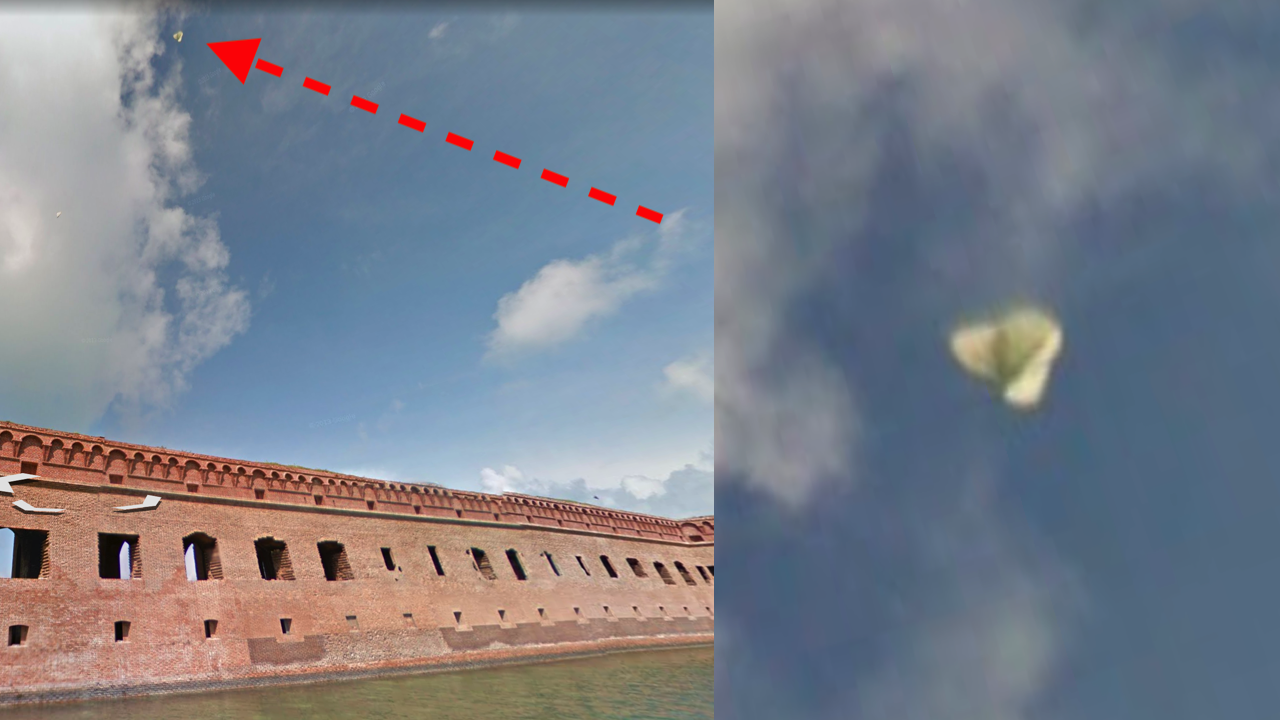
UFO Fleet Over Fort Jefferson, Key West, Florida, Google Earth, UFO Sighting News. Video.
Date of discovery: Feb 1, 2024
n/@24.62852593,-82.87192757,10.73709393a,0d,19.33298687y,300.74894082h,141.82152
242t,0r/data=CowBGmISXAolMHg4OGNlNTY3YWNhZDViOGY1OjB4NDhlOThkYjAyZDhjNTlhZCo
zRm9ydCBKZWZmZXJzb24KSGlzdG9yaWMgMTl0aC1jZW50dXJ5CkNpdmlsIFdhciBmb3J0GAIgA
SImCiQJ71TtC_UdJ0ARMi0HX18dJ0AZrk2-
iwIRV0Ah6sfuQs4QV0AiGgoWVFQ1RWdlUG1oODBwZWF3aThYamV0QRACOgMKATA
Het griezelige mysterie van de Japanse Duivelszee©Shutterstock
Het griezelige mysterie van de Japanse Duivelszee
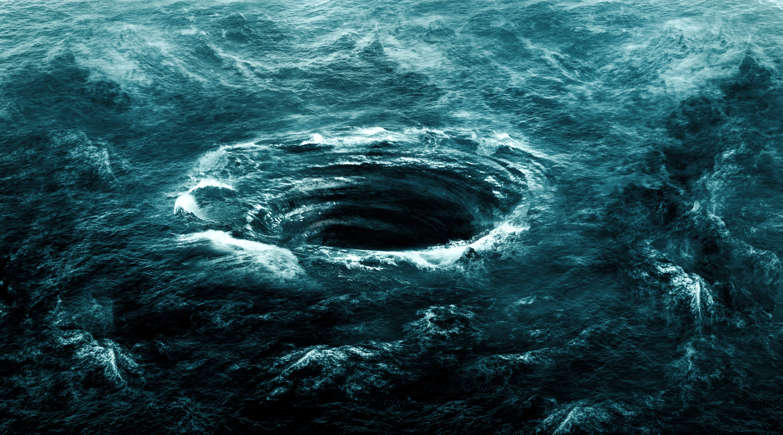
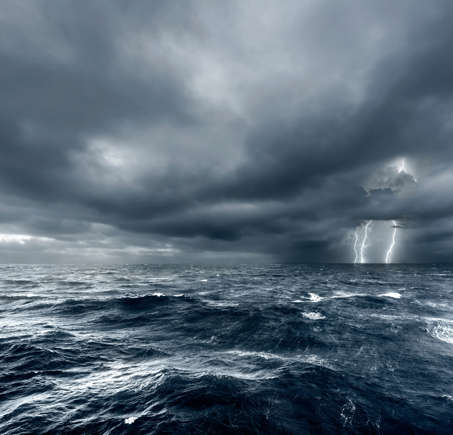
De Bermudadriehoek staat bekend om zijn mysterieuze verdwijningen. Er is echter een minder bekende regio in de Stille Oceaan die net zo berucht is vanwege zijn verhalen over onverklaarbare verdwijningen en schijnbaar bovennatuurlijke activiteiten.
Gefascineerd? Lees hieronder verder en ontdek de fascinerende geheimen van de Duivelszee.
©Public Domain
Wat is de Duivelszee?
De Duivelszee, ook wel bekend als de Drakendriehoek, is een geografisch gebied in de Stille Oceaan, vlakbij de Japanse kust.
©Shutterstock
Waar is het?
De Triangle ligt bij Miyake, een eiland 60 mijl (100 km) ten zuiden van Tokio.

©iStock
De Bermudadriehoek van de Stille Oceaan
Het gebied staat ook bekend als de Bermudadriehoek in de Stille Oceaan vanwege de paranormale verschijnselen die zich in de verraderlijke wateren voordoen.
©iStock
Reputatie
De beruchte reputatie van de Duivelszee houdt al tientallen jaren stand, want er doen verhalen de ronde over verschillende schepen die er zijn verdwenen.
©iStock
Ongewone activiteit
Volgens de legende is geen enkel schip, hoe sterk ook, bestand tegen de paranormale energie die het omringt.
©iStock
Mysterieuze verdwijningen
Halverwege de jaren 50 verdwenen veel grote schepen met hun hele bemanning.
©Shutterstock
Mysterieuze verdwijningen
Tussen 1950 en 1954 zouden er in totaal negen vrachtschepen zijn verdwenen in de Stille Oceaan. Er wordt beweerd dat al deze schepen radiozenders hadden en dat er geen weersproblemen werden geregistreerd.
©Getty Images
Onderzoek
De Japanse regering werd achterdochtig en stuurde een eigen team wetenschappers aan boord van de Kaiyō Maru (foto), maar ook zij keerden nooit terug.
©iStock
Tragedie
Het wrak van de Kaiyō Maru werd later geborgen, maar de verblijfplaats van de 31 bemanningsleden blijft een mysterie.
©Shutterstock
Invasie
Het mysterie van de Duivelszee gaat terug tot Kublai Khan, de vijfde Grote Khan van het Mongoolse Rijk, toen hij Japan probeerde binnen te vallen. In de 13e eeuw stak hij de Drakendriehoek over om Japan binnen te vallen, maar hij verloor de meeste van zijn schepen en 40.000 bemanningsleden nadat ze waren getroffen door twee tyfoons.
©Shutterstock
Kwade draken
De term 'drakendriehoek' komt eigenlijk uit traditionele Chinese fabels, waarin sprake is van draken die onder water leven.
©Shutterstock
Kwade draken
Volgens deze oude verhalen vielen draken passerende boten aan om hun honger te stillen. Deze legendes hebben de vele raadselachtige verhalen over de Duivelszee sterk beïnvloed.
©Shutterstock
Theorieën
Velen hebben geprobeerd het mysterie van de Duivelszee te ontrafelen door verschillende theorieën te ontwikkelen, zoals elektromagnetische interferentie of tijdvervorming.
©iStock
De "Vile Vortex" theorie
Geleerde Ivan T. Sanderson stelde dat de Drakendriehoek één van de 12 Vile Vortexen van de wereld is.
©Public Domain
De "Vile Vortex" theorie
Zijn theorie is dat een "Vile Vortex" een specifiek geografisch gebied is dat in verband wordt gebracht met "elektromagnetische aberraties" die de oorzaak zijn van onverklaarbare verdwijningen. De Bermudadriehoek is de bekendste van deze Vile Vortexes.
©iStock
Paranormale activiteit theorie
In 1989 schreef Charles Berlitz, een theoreticus over paranormale activiteit, een boek waarin hij beweerde dat het gebied een "kwaadaardige natuur" had die het onnatuurlijk en onstabiel maakte.
©iStock
Paranormale activiteit theorie
Hij sprak uitgebreid over UFO´s en hoe er al eeuwenlang meldingen zijn van vreemde objecten die boven Japan zijn waargenomen.
©iStock
Zoektocht naar de waarheid
Om deze tegenstrijdige theorieën te weerleggen, publiceerde de Amerikaanse auteur Larry Kusche in 1995 een boek waarin hij beweerde echte antwoorden te geven op het mysterie van de Duivelszee.
©iStock
Rationele theorieën
Volgens het onderzoek van Kusche werd het regeringsschip, de Kaiyō Maru, vernietigd door een vulkaan of een vloedgolf.
©Getty Images
Het geweld van de natuur
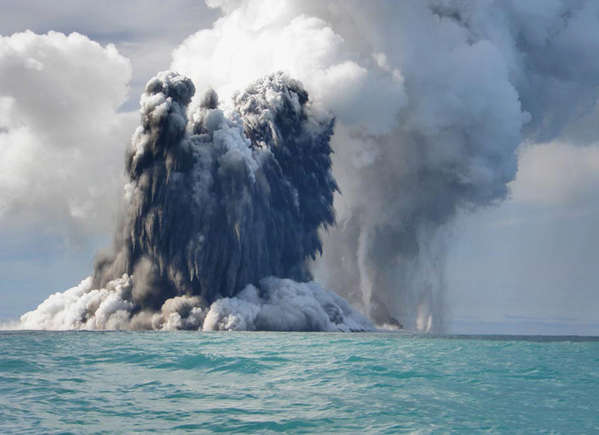
Wetenschappers monitoren regelmatig onderwatervulkanen langs oceaanruggen en bestuderen de uitstoot van lava, kooldioxide en andere elementen in de oceaan
©Shutterstock
Verkeerde informatie
Kusche betwistte ook Berlitz' bewering dat de vermiste schepen massieve schepen waren met een aanzienlijke lading, en suggereerde in plaats daarvan dat het vissersboten waren.
©iStock
Gevaarlijke missies
Volgens Kusche waren de middelen van de marine in de jaren 1950 schaars of onbetrouwbaar en daarom konden veel schepen, zelfs die met radiozenders, geen hulp inroepen.
©iStock
De trieste realiteit
Uit zijn correspondentie met Japanse marineambtenaren leidde Kusche af dat de meeste schepen waarschijnlijk voor de Japanse kust waren neergestort en gezonken.
©iStock
Een twist!
Hij ontdekte ook een cruciaal detail: de Kaiyō Maru was niet gestuurd om de mysterieuze verdwijningen te onderzoeken.
©iStock
De waarheid over de Kaiyō Maru
De Kaiyō Maru was in plaats daarvan een onderzoeksschip dat informatie verzamelde over lokale vulkanische activiteit.
©iStock
Wat zeggen?
Het lijkt erop dat de Japanners zich niet bewust waren van de wereldwijde interesse in de Duivelszee totdat Kusche contact opnam met de Amerikaanse ambassade in Tokio.
©iStock
Gevarenzone
Het gebied was niet eens door de overheid aangewezen als gevarenzone!
©iStock
Feiten
Het verhaal achter de Drakendriehoek (of de Duivelszee) kreeg zoveel aandacht over de hele wereld dat er verschillende theorieën werden opgeroepen, wat resulteerde in een volledig verzonnen verhaal.

Bronnen:
SKINWALKER RANCH: HOTSPOT VAN PARANORMALE VERSCHIJNSELEN
Skinwalker Ranch: A Global Phenomenon

Skinwalker Ranch in Utah, USA, has captivated the imagination of paranormal enthusiasts worldwide. Known for its mysterious and unexplained phenomena ranging from UFO sightings to cryptid encounters, it stands as a beacon for those seeking answers to the unknown. However, the intrigue of Skinwalker Ranch is not an isolated case. Similar hotspots exist globally, each with their own unique tales of the unexplained, suggesting that Skinwalker Ranch is ‘Not Alone’ in its paranormal phenomena. This article delves into these global counterparts, shedding light on the universal nature of these enigmatic occurrences.
Across the world, there are numerous locations that, like Skinwalker Ranch, have become synonymous with paranormal activity and unexplained phenomena. These sites attract researchers, thrill-seekers, and the curious, all looking to uncover the truth behind the legends.
The existence of these global counterparts to Skinwalker Ranch underscores a broader pattern of paranormal phenomena that transcends geographical and cultural boundaries. These locations, each with their own unique stories and legends, contribute to a growing body of anecdotal evidence suggesting that our world is far more mysterious and unexplained than conventional understanding allows.
Researchers and enthusiasts continue to study these phenomena, employing a range of scientific and investigative techniques in an attempt to shed light on the mysteries. From advanced surveillance technology to multidisciplinary approaches that include physics, environmental science, and folklore, the quest for answers is as diverse as the phenomena themselves.
Skinwalker Ranch is not an anomaly but rather a part of a global network of paranormal hotspots. These locations, scattered across the world, share similarities in the nature and frequency of their unexplained phenomena. The global distribution of such sites suggests that the phenomena associated with Skinwalker Ranch are part of a larger, more complex puzzle that challenges our understanding of reality. As investigations continue and technology advances, perhaps one day, the veil of mystery surrounding these locations will be lifted, offering insight into the true nature of our enigmatic world.
Microplastics dringen door tot in elke uithoek van je lichaam (en daardoor verandert mogelijk je gedrag)
Er is al veel onderzoek gedaan naar microplastics in het milieu en hun negatieve effecten op zeeleven, maar er was tot op heden nog relatief weinig bekend over de mogelijke gezondheidsrisico’s bij zoogdieren. Daarom heeft de Amerikaanse professor Jaime Ross de neurologische effecten en ontstekingsreacties in het lichaam van muizen bestudeerd. De dieren kregen verschillende doses microplastics binnen via het drinkwater, waarna Ross en haar team van de University of Rhode Island de opeenhoping van microplastics in verschillende organen en andere weefsels van de muizen onderzochten. Al snel bleek dat de microplastics overal in het lichaam waren doorgedrongen, waardoor vooral bij de oudere labmuizen het gedrag duidelijk veranderde.
“Wij bouwen voort op eerder onderzoek, waaruit is gebleken dat deze microplastics vrij bewegen door het milieu en zich opstapelen in het menselijk lichaam. Er is echter nog erg weinig bekend over de gezondheidseffecten van microplastics, zeker bij zoogdieren”, legt Ross uit. “Dit heeft ertoe geleid dat onze groep de biologische en cognitieve consequenties van blootstelling aan microplastics is gaan bestuderen.”
Vreemde bewegingen en gedrag
De onderzoekers dienden drie weken lang verschillende hoeveelheden microplastics toe aan jonge en oude muizen via het drinkwater. Naderhand zagen zij allerlei gedragsveranderingen bij de dieren en wijzigingen van biomarkers in de lever en de hersenen, die gelinkt zijn aan het immuunsysteem. De labmuizen gingen vreemd bewegen en gedroegen zich apart. De wetenschappers linkten dit gedrag aan dementie bij mensen. Bij de oudere dieren waren deze dingen nog duidelijker te zien dan bij de jonge proefdieren. “We vonden dit heel opvallend. Dit waren helemaal geen hoge doses microplastics, maar toch zagen we na een korte periode al duidelijke veranderingen”, zegt Ross.
“Niemand weet precies wat deze microplastics in het lichaam doen en hoe lang ze er achterblijven. We willen graag meer weten over de gevolgen van microplastics in het menselijk lichaam op latere leeftijd. Ben je dan vatbaarder voor systeemziekten (aandoeningen waarbij het afweersysteem ontregeld is en het eigen lichaam aanvalt, red.)? Kan je lichaam de microplastics makkelijk weer uitscheiden? Reageren lichaamscellen verschillend op deze gifstoffen?” vraagt de wetenschapper zich af.
Door de bloed-hersenbarrière heen
De onderzoekers sneden de labmuizen open en bestudeerden allerlei verschillende weefsels, waaronder de hersenen, lever, nieren, het spijsverteringsstelsel, het hart, de milt en de longen. De microplastics waren in alle organen doorgedrongen, zelfs in de hersenen. Ook werden ze in de urine en uitwerpselen gevonden. “Aangezien we de microplastics in ons experiment via het drinkwater toedienden, hadden we wel verwacht dat we de gifstoffen in het maagdarmstelsel, de lever en de nieren zouden terugvinden”, vertelt Ross.
“Maar dat de microplastics ook in het hart, de longen en de hersenen zaten, maakt duidelijk dat ze het spijsverteringsstelsel kunnen verlaten en elke hoek van het lichaam kunnen bereiken. Het is heel lastig voor stoffen om door de bloed-hersenbarrière heen te breken – dit is een beschermingsmechanisme om virussen en bacteriën tegen te houden – maar het blijkt een peulenschil voor deze plasticdeeltjes om tot diep in het breinweefsel door te dringen.”
Minder van het cruciale eiwit GFAP
Het lijkt erop dat de microplastics in de hersenen ervoor zorgen dat er minder van het cruciale eiwit GFAP wordt aangemaakt. “Een lager GFAP-niveau is gelinkt aan de eerste fases van neurodegeneratieve ziekten, zoals Alzheimer en depressie”, vertelt Ross. “We waren erg verrast om te zien dat de microplastics in de hersenen verantwoordelijk waren voor een verandering in GFAP-aanmaak.” Dit is een van de belangrijkste onderwerpen voor het vervolgonderzoek. “We willen beter begrijpen hoe het kan dat plasticdeeltjes het zelfhelend vermogen van het brein aantasten en hoe blootstelling aan microplastics kan leiden tot neurologische stoornissen en ziekten, zoals Alzheimer”, besluit Ross.
Bevroren, uitgedroogd en afgeschoten: dit piepkleine diertje sterft alleen als de zon uitdooft

Piepklein, maar niet klein te krijgen. Dat is het beerdiertje in een notendop. Maar er valt nog zoveel meer over te vertellen.
En dat doen we aan de hand van tien interessante feitjes waarmee je op een verjaardag of bij de koffiemachine op het werk moeiteloos de blits kan maken. Want beerdiertjes zijn hartstikke cool!
1. Klein en overal te vinden (ook in Nederland!)
Beerdiertjes – ook wel waterberen genoemd – zijn heel kleine, meercellige organismen. Ze kunnen tot een halve millimeter lang worden en hebben acht pootjes, waarmee ze kunnen lopen én rennen. Hét beerdiertje bestaat niet; er zijn meer dan 1000 soorten beerdiertjes bekend! En die leven in uiteenlopende omgevingen; van bergtoppen tot diepe zeeën en van tropische regenwouden tot op Antarctica. Ook in Nederland komen beerdiertjes voor. Zo zijn ze bijvoorbeeld aangetroffen op de stranden langs de Oosterschelde.
2. Beerdiertjes zijn stokoud
Zo’n 66 miljoen jaar geleden sloeg op aarde een planetoïde in. Het bleek de laatste nagel aan de doodskist van de dinosaurussen en tal van andere soorten te zijn. Het is misschien wel de bekendste massa-extinctie die de aarde trof. En hoe catastrofaal de gevolgen ook waren; het beerdiertje heeft deze massa-extinctie overleefd. Net als de vier(!) grote massa-extincties daarvoor, want wetenschappers denken dat het beerdiertje al zo’n 540 miljoen jaar op aarde voorkomt.
3. Het beerdiertje gaat waarschijnlijk nog wel even mee
Hoewel de beerdiertjes al heel wat jaren meegaan en menig catastrofe het hoofd hebben weten te bieden, denken veel onderzoekers dat er voor de minuscule beestjes nog veel meer in het verschiet zit. Zo suggereerde een studie in 2017 dat eigenlijk alleen het sterven van de zon tot het uitsterven van de taaie beerdiertjes zou kunnen leiden. Het zou betekenen dat beerdiertjes nog zo’n 10 miljard jaar voor de boeg hebben.
4. Kou is geen probleem…
Waar wij bij een paar graden vorst al flink beginnen te klagen, geven beerdiertjes geen krimp. Sterker nog: je kunt ze jaren invriezen en er vervolgens als je ze ontdooit, getuige van zijn hoe ze hun leven moeiteloos weer oppakken! Dat ontdekten onderzoekers een jaar of vijf geleden, toen ze beerdiertjes aantroffen in Antarctisch mos dat 30 jaar eerder voor onderzoeksdoeleinden was ingevroren. Ze ontdooiden twee beerdiertjes en zagen vervolgens hoe één ervan zijn in 1983 stilgelegde leven weer succesvol oppakte en een week of zes na zijn ontdooiing zelfs eitjes legde die ook nog eens bijna allemaal uitkwamen. Ook een eitje dat in het mos werd aangetroffen, kwam na ontdooiing – en dus met zo’n 30 jaar vertraging – uit en het beerdiertje dat daar uit kwam zetten, plantte zich ook weer succesvol voort.
Een beerdiertje. Afbeelding: Schokraie E, Warnken U, Hotz-Wagenblatt A, Grohme MA, Hengherr S, et al. (2012)
(via Wikimedia Commons).
5. …en gevaarlijke UV-straling ook niet
Beerdiertjes hebben in naam der wetenschap al heel wat te verduren gekregen. Zo werden ze vorig jaar bijvoorbeeld nog onder een kiemdodende ultraviolette lamp gelegd. Doel was om te achterhalen hoeveel UV-straling verschillende soorten beerdiertjes konden hebben. De meeste beerdiertjes bleken behoorlijk taai te zijn. Een dosis die voor bacteriën en rondwormen al na vijf minuutjes fataal is – bleek de meeste beerdiertjes pas na 24 uur fataal te worden. En één van de onderzochte soorten gaf helemaal geen krimp, waarop de onderzoekers besloten de dosis ultraviolet licht vier keer te verhogen. En ook deze keer gaven de mysterieuze beerdiertjes zich niet zomaar gewonnen. Ongeveer zestig procent van deze kranige beerdiertjes leefde na toetakeling nog zeker een maand door!
6. Je kunt ze ook afschieten
Alsof dat experiment nog niet heftig genoeg was, gingen wetenschappers – op jacht naar de grenzen van het beerdiertje – eerder dit jaar nog een stap verder. Ze stopten bevroren beerdiertjes in een geladen geweer en schoten ze vervolgens met hoge snelheid af. Het onderzoek wees uit dat beerdiertjes inslagen tot ongeveer 900 meter per seconde kunnen overleven. “Het zijn taaie beestjes,” zo concludeerde onderzoeker Mark Butchell, die middels het experiment wilde vaststellen of beerdiertjes die tijdens een inslag op aarde samen met gesteente naar de maan worden geslingerd, dat kunnen navertellen. De experimenten suggereren dat het onder bepaalde omstandigheden denkbaar is. Of ze vervolgens ook van de maan hun thuis zouden kunnen maken, is trouwens dan weer heel twijfelachtig.
7. Of uit laten drogen
Wanneer wij enkele dagen op rij niet drinken, raken we uitgedroogd. En dat is niet best. Het beerdiertje is een stuk minder afhankelijk van vocht; experimenten wijzen uit dat het diertje tot wel tien jaar zonder water kan! Zodra ze minder dan vijf procent van hun normale hoeveelheid water herbergen, gaan ze in standby-modus en maken en passant eiwitten aan die delen van hun lichaam in een soort glasachtige substantie veranderen en er zo voor zorgen dat hun cellen tegen uitdroging beschermd zijn. En als ze dan toch weer nattigheid voelen? Dan kunnen ze – zelfs als ze jaren op water gewacht hebben – in twintig minuten tijd weer tot leven komen.
Het beerdiertje van dichtbij
(Eye of Science).
8. Ze zijn al in de ruimte geweest
Ruimtevaarder worden: wie droomt daar nu niet van? Voor sommige beerdiertjes is die droom al werkelijkheid geworden. In 2007 schoot ESA een bonte verzameling beerdiertjes de ruimte in. “Onze belangrijkste ontdekking is dat het vacuüm in de ruimte – en daarmee gepaard gaande uitdroging – en kosmische straling geen probleem waren voor beerdiertjes,” zo concludeerde onderzoeker Ingemar Jönsson in 2008. Hetzelfde gold voor de extreme kou waaraan de beerdiertjes in de ruimte werden blootgesteld. In de jaren erna volgden nog meer experimenten in de ruimte en stuk voor stuk bevestigden ze dat het beerdiertje over het algemeen niet erg onder de indruk is van de daar geldende omstandigheden. Wetenschappers kunnen dat nog altijd lastig verklaren en daarom zijn eerder dit jaar beerdiertjes naar het internationale ruimtestation gestuurd. Tijdens experimenten wordt gekeken wat er met de genen van beerdiertjes gebeurt wanneer ze in de ruimte vertoeven. Welke genen worden uitgezet of juist geactiveerd? En wat gebeurt er dan? Onderzoekers hopen zo meer inzicht te krijgen in de overlevingsstrategieën van het beerdiertje en daar kunnen toekomstige astronauten dan misschien weer hun voordeel mee doen. Zo kan het leiden tot nieuwe manieren om biologische materialen – zoals voedsel, maar ook medicijnen – beter te wapenen tegen extreme temperaturen, uitdroging en kosmische straling.
9. Ze leggen enorme drollen (relatief gezien dan)
Beerdiertjes mogen dan veel weghebben van superhelden; in bepaalde opzichten zijn ze ook weer net als wij. Zo moeten ze soms ook gewoon poepen. Maar de beerdiertjes zouden geen beerdiertjes zijn als ze ook op dat gebied niet de show zouden stelen. Zo heeft onderzoek uitgewezen dat de piepkleine beestjes enorme drollen fabriceren die soms bijna net zo groot zijn als zijzelf! En jawel, daar zijn beelden van. Klik!
10. Liften is wel gevaarlijk
Het beerdiertje lijkt onverwoestbaar, maar toch vonden wetenschappers vorig jaar iets wat in sommige gevallen zelfs voor het beerdiertje een slecht idee is: liften. Beerdiertjes leggen namelijk enorme afstanden af door mee te liften met slakken. Dit gebeurt trouwens ongevraagd. Als een slak over een beerdiertje glijdt, dan wordt een beerdiertje meegenomen en deze blijft dan aan de slak plakken. En dat is niet zonder gevolgen. Slechts 34 procent van de beerdiertjes wist het contact met het slakkenslijm te overleven.
De mensheid was bijna uitgestorven: een piepklein groepje oermensen hield 100.000 jaar lang de soort in stand

Het had niet veel gescheeld of er waren helemaal geen mensen geweest. Er was een punt in de geschiedenis waarop er amper 1300 vruchtbare menselijke voorouders waren. Samen hielden zij de populatie maar liefst 117.000 jaar in stand, blijkt uit een nieuwe methode om de bevolkingsomvang te meten.
Er was altijd een onverklaarbare periode waarin er op de wereld nauwelijks fossielen zijn gevonden van oermensen. Konden we ze simpelweg niet vinden of waren ze er niet? Dat laatste lijkt waar, althans volgens de nieuwe FitCoal-methode van een internationaal team van wetenschappers uit China, Italië en de VS. FitCoal staat voor fast infinitesimal time coalescent process. Daarmee konden de onderzoekers de opeenstapeling van rekenfouten omzeilen die gewoonlijk gepaard gaat met het berekenen van de omvang van populaties in het verleden.
Knappe overlevers
De wetenschappers gebruikten genoomsequenties van 3154 hedendaagse mensen. Het lukte hen om daaruit demografische conclusies te trekken over onze verre voorouders. En wat bleek: de voorlopers van de mensen maakten in het Vroege Pleistoceen een langdurige en extreme bottleneck door waarin zo’n 1280 zich voortplantende oermensen de populatie 117.000 jaar in stand hielden.
“Dat FitCoal deze enorme bottleneck met slechts een paar sequenties heeft kunnen vaststellen, is echt een doorbraak”, vertelt onderzoeker Yun-Xin Fu, geneticus aan de University of Texas. Uit de resultaten van het onderzoek naar de hedendaagse genoomsequenties bleek dat onze vroege voorouders een extreem verlies aan mensenlevens doormaakten en daardoor flink inboetten aan genetische diversiteit.
Gat in fossiele data
“Het gat in de Afrikaanse en Euraziatische fossiele gegevens kan worden verklaard door deze bottleneck in de Vroege Steentijd. Die valt samen met de eerder vastgestelde periode waarin weinig fossiel bewijs is gevonden”, zegt medeonderzoeker Giorgio Manzi, antropoloog aan de Sapienza University van Rome. Dat de mensheid in die tijd bijna was uitgestorven, komt waarschijnlijk vooral door klimaatverandering. Een ijstijd zorgde voor afkoeling, extreme droogte en het uitsterven van andere soorten, die waarschijnlijk door de vroege mensen werden gegeten.
Op dit plaatje is heel duidelijk te zien hoe weinig het scheelde of de mensheid was uitgestorven.
Afbeelding: Science
Het is bizar hoeveel gevolgen dat bijna einde van de mensheid nu nog heeft. Naar schatting ging zo’n twee derde van de toenmalige genetische diversiteit verloren door deze bottleneck. De langdurige periode waarin er slechts een handje vol mensen was dat zich wist voort te planten, bedreigde dan ook de mensheid zoals we die nu kennen.
Nieuwe soorten
Daar staat tegenover dat die bottleneck ook lijkt te hebben bijgedragen aan nieuwe soortvorming waarbij twee oude chromosomen zijn samengekomen en chromosoom 2 vormden, die we nu bij mensen aantreffen. Daarmee is mogelijk de laatste gemeenschappelijke voorouder ontdekt van de Denisovans, Neanderthalers en moderne mensen.
Maar daarmee is nog lang niet alles gezegd. “Deze conclusie leidt tot een nieuwe richting in de menselijke evolutie, omdat hij vele vragen oproept, zoals waar deze mensen leefden, hoe ze de catastrofale klimaatverandering overleefden en of natuurlijke selectie tijdens de bottleneck de ontwikkeling van de hersenen heeft versneld”, legt onderzoeker Yi-Hsuan Pan uit van de East China Normal University (ECNU).
Nog maar het begin
Nu het erop lijkt dat de mensheid bijna was uitgestorven tussen 930.000 en 813.000 jaar geleden, gaan de onderzoekers hard op zoek naar antwoord op deze vragen om te achterhalen hoe het kan dat zo’n piepkleine groep mensen wist te blijven bestaan in zulke moeilijke omstandigheden. Dat de populatie daarna juist weer extreem snel wist te groeien, is veel gemakkelijker te verklaren: waarschijnlijk kwam dat doordat de mens het vuur onder controle kreeg en het klimaat weer wat aangenamer werd.
“Deze conclusies zijn nog maar het begin. We willen nu een completer beeld krijgen van de menselijke evolutie tijdens deze overgangsperiode in het Vroege tot Midden-Pleistoceen. Daarmee kunnen we het mysterie dat de vroege menselijke evolutie nog steeds is, verder ontrafelen”, aldus onderzoeker Li Haipeng, geneticus aan onder meer de Chinese Academy of Sciences (SINH-CAS).
Repeated signals from the center of the Milky Way could be aliens saying hello, new study claims
Related:
"Until now, radio SETI has primarily dedicated its efforts to the search for continuous signals," study coauthor Vishal Gajjar of the SETI Institute, a nonprofit organization dedicated to the search for intelligent life in the universe, said in a statement. "Our study sheds light on the remarkable energy efficiency of a train of pulses as a means of interstellar communication across vast distances. Notably, this study marks the first-ever comprehensive endeavor to conduct in-depth searches for these signals."
The researchers are listening in to the middle of the Milky Way because it is dense with stars and potentially habitable exoplanets. What's more, if intelligent aliens at the core of the Milky Way wanted to reach out to the rest of the galaxy, they could send signals sweeping across a wide array of planets, given their privileged position at the center of the galaxy. Using narrow bandwidths and repeated patterns would be a prime way for aliens to reveal themselves, as such a combination is extremely unlikely to occur naturally, study co-author Steve Croft, a project scientist with the Breakthrough Listen program, said in a separate statement.
The method uses an algorithm that can search through 1.5 million telescope data samples in 30 minutes. Though researchers did not find any telltale signs in their first search, they say that the speed of the algorithm will help improve searches in the future.
"Breakthrough Listen captures huge volumes of data, and Akshay’s technique provides a new method to help us search that haystack for needles that could provide tantalizing evidence of advanced extraterrestrial life forms," Croft said.
Astrobotic’s Doomed Moon Lander Will Return To Earth In a Blaze of Glory

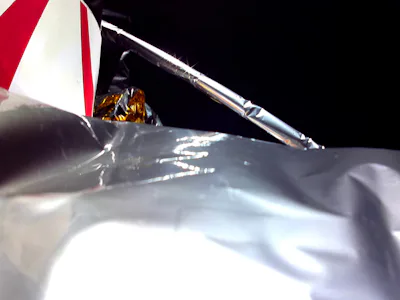
A camera on Peregrine’s payload deck sent home this image on January 15.
Instead of landing on the Moon, Peregrine is set to burn up in Earth's atmosphere later this week.
BY KIONA SMITH
Gene Roddenberry’s ashes are set to burn up in Earth’s atmosphere later this week, along with those of half the main cast of his original Star Trek series, as well as a lunar rover, a small flock of robots, and millions of dollars in scientific instruments, all of which were originally supposed to land on the Moon.
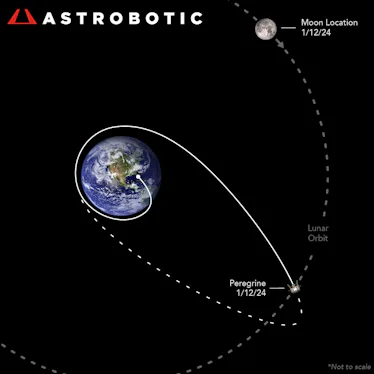
Astrobotic’s Peregrine One lander was originally scheduled to be in lunar orbit early next week, preparing for a landing on the Moon’s near side in late February. Instead, the spacecraft is now headed back to Earth, where it will disintegrate in Earth’s upper atmosphere – so at least it’s going out in a blaze of glory. Here’s everything you need to know about the doomed mission and what went wrong.
As of this morning, January 16, the Peregrine Mission One spacecraft is on its way back to Earth after a 238,000-mile flight out to cross the path of the Moon’s orbit. The ill-fated spacecraft is scheduled to re-enter Earth’s atmosphere and disintegrate dozens of miles above the ground. Astrobotic says both the company and NASA are tracking the spacecraft’s path, and its re-entry won’t pose any safety risk to anyone on the ground.
The return to Earth is based on recommendations from NASA, other U.S. government agencies, and other members of “the space community” to prevent Peregrine from turning to a potentially hazardous piece of space debris orbiting the Moon or Earth, says Astrobotic in a recent update on its website.
“Ultimately, we must balance our own desire to extend Peregrine's life, operate payloads, and learn more about the spacecraft, with the risk that our damaged spacecraft could cause a problem in cislunar space,” the company says.
Shortly after the mission’s launch from Cape Canaveral on January 8, things began to go wrong. It looks like a valve between the spacecraft’s oxidizer tank and a tank of high-pressure helium got stuck in the open position, according to Astrobotic. Here’s what that actually means:
It actually takes several ingredients to fuel a spacecraft. The stuff that actually burns, producing hot gas that gets pushed out the back end of the spaceship to create thrust, is called the propellant, and it’s usually something like liquid hydrogen, hydrazine, or even kerosene. But nothing burns without oxygen, so rocket engines need a second ingredient, called the oxidizer, to mix with the propellant so it can actually ignite.
Most of the time, the propellant and the oxidizer are stored in separate tanks, so they only combine when and where engineers want them to (most variations on that are catastrophically bad). Some spaceships – like Peregrine One – use pressurized helium to push the oxidizer and the propellant into the combustion chamber. Helium is a good choice because it won’t react with the oxidizer or the propellant.
But when the valve that’s supposed to push a small amount of helium into the oxidizer tank gets stuck, you end up with way too much helium in the tank – and like an overinflated balloon, the tank pops. Oxidizer goes everywhere except where the spaceship actually needs it to go, and suddenly, there’s not enough oxidizer to mix with the propellant to steer the spaceship to a safe landing on the Moon.
“While this is a working theory, a full analysis report will be produced by a formal review board made up of industry experts after the mission is complete,” says Astrobotic. “All available data is being downloaded from the lander to support this assessment.”
By January 14, the leak had started slowing down, and by January 15, Astrobotic reported, “The propellant leak caused by the anomaly has practically stopped.”
But by then, it was too late.
“Due to the anomaly, the fuel to oxidizer ratio is well outside of the normal operating range of the main engines, making long controlled burns impossible,” the company wrote in an update on its website.

The brand new rocket, United Launch Alliance's (ULA) Vulcan Centaur, lifts off from Space Launch Complex 41d at Cape Canaveral Space Force Station in Cape Canaveral, Florida, on January 8, 2024, for its maiden voyage, carrying Astrobotic's Peregrine Lunar Lander.
GREGG NEWTON/AFP/GETTY IMAGES
If it had succeeded, Peregrine would have been the first U.S.-based lander to reach the Moon since Apollo 17 visited in 1972, and the first private mission ever to pull it off.
The most recent successful Moon landing was India’s Chandrayaan-3, which touched down near the lunar south pole in August 2023. Just a few days earlier, Russia’s Luna-25 lander “ceased to exist as a result of a collision with the surface of the Moon” in the same region. Like the Peregrine lander for the U.S., Luna-25 would have been Russia’s first Moon landing in more than 50 years (or technically ever: the last Russian spacecraft to land on the Moon was actually built by the Soviet Union, not the modern Russian Federation).
India is now the fourth country ever to make a “soft landing” — as opposed to a crash, either accidental or on purpose — on the Moon, following the Soviet Union (but not post-Soviet Russia), the United States, and China. But nobody’s track record for Moon landings is perfect; India lost its Chandrayaan-2 lander in 2019 thanks to a software glitch.
An Israeli spacecraft also crashed on the Moon in 2019, spilling a payload of tardigrades and DNA onto the lunar surface. Oops.
Peregrine Mission One was originally meant to orbit the Moon for several weeks before landing on February 23. Its controversial payload of human remains and DNA made headlines, but the spacecraft is also carrying a payload of several instruments for NASA, a quintet of tiny robots for the National Autonomous University of Mexico (UNAM) and the Mexican space agency (AEM), a lunar rover from Carnegie Mellon University, and several other privately-funded instruments and experiments.

This diagram (not to scale) shows Peregrine’s new trajectory.
ASTROBOTIC
Several of those instruments managed to switch on and collect some data during the flight to lunar distance (meaning the distance at which the Moon orbits Earth, as opposed to “lunar orbit,” which would mean orbit around the Moon). Two NASA instruments successfully measured cosmic rays from deeper in our galaxy and space weather driven by our Sun’s activity.
“This data helps characterize the interplanetary radiation environment for humans and electronics,” says NASA in a statement.”
And although the five tiny robots from UNAM and AEM, called Colmena, didn’t get to trundle adorably around the lunar surface, they did get to power up and collect some data during the flight — making them the first Mexican instrument to operate in cislunar space.
Meanwhile, the doomed lander also carries the cremated remains of Star Trek creator Gene Roddenberry (mingled with those of his wife and son), Star Trek actors Nichelle Nichols, DeForest Kelley, and James Doohan, science fiction author Arthur C. Clarke, and others, along with DNA samples from several former U.S. presidents. Some of the ashes — a payload from “memorial spaceflight” company Celestis — were intended for interment on the lunar surface, while others were planned to carry on into deep space, but they will now return to Earth and burn up on re-entry later this week.
For Roddenberry, at least, Peregrine wasn’t his only memorial spaceflight. Other portions of the late screenwriter’s ashes traveled into space aboard the Space Shuttle Columbia in 1992 among the personal possessions of astronaut Jim Wetherbee, and aboard a Celestis orbital mission, which burned up during re-entry in 2002 (on purpose that time). Counting the Peregrine mission, Roddenberry’s remains have flown to space more times than many living astronauts.
UFO sighting: US officials tried to stop Australians reporting chilling incident/cloudfront-ap-southeast-2.images.arcpublishing.com/nzme/L5BT74ZP7YRHMCAXZDWH67GBOA.jpg)
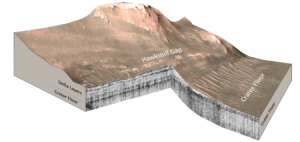
CHANCES THAT ODD SOIL SAMPLES COLLECTED AT MARS’ JEZERO CRATER CONTAIN SIGNS OF ANCIENT LIFE JUST INCREASED DRAMATICALLYA new analysis of subsurface deposit and erosion patterns beneath the dry lakebed in Mars’ Jezero crater indicates the process took place over eons, dramatically improving the chances that soil samples collected at the site by NASA’s Perseverance could contain signs of ancient life.
Although the exact timeline for a joint European Space Agency/NASA mission to retrieve Perseverance’s soil samples has not yet been set, the fact that the lake in Jezero crater had existed across numerous geological phases significantly increases the odds of finding signs of ancient life within those samples.
Over the last few decades, images captured by satellites orbiting Mars have long hinted at the idea of eroded subsurface layers in the region. However, researchers knew that up close analysis by Perseverance’s ground penetrating radar was the only way to confirm those suspicions.
“From orbit, we can see a bunch of different deposits, but we can’t tell for sure if what we’re seeing is their original state or if we’re seeing the conclusion of a long geological story,” said David Paige, a UCLA professor of Earth, planetary and space sciences and first author of the paper detailing the findings. “To tell how these things formed, we need to see below the surface.”
Fortunately, Perseverance’s mission planners included the Radar Imager for Mars’ Subsurface Experiment, or RIMFAX, as one of the seven instruments on board the rover. Like ground penetrating radar used on Earth, the RIFMAX fires radar waves directly into the Mars surface, then reads their reflections as they bounce off different sedimentary layers.

Mars Perseverance Rover RIMFAX ground penetrating radar measurements of the Hawksbill Gap region of the Jezero Crater Western Delta, Mars. Hawksbill Gap.
CREDIT: Svein-Erik Hamran, Tor Berger, David Paige, University of Oslo, UCLA, California Institute of Technology Jet Propulsion Laboratory, NASA
“The periods of deposition and erosion took place over eons of environmental changes, the radar indicates, confirming that inferences about the Jezero crater’s geologic history based on Mars images obtained from space are accurate,” the UCLA and the University of Oslo researchers explain,
Although Perseverance has completed numerous missions and made countless significant findings about the red planet since its landing in February of 2021, few tasks undertaken by the SUV-sized rover have tantalized researchers and the public as much as the soil samples it collected and stored away for an eventual return to Earth. Not only did the original mission planners choose to study Jezero in hopes that there had been an ancient lake at the site, but the exact areas the vehicle has studied within the 30-mile wide crater were selected as the likeliest places to find signs of ancient life.
“The changes we see preserved in the rock record are driven by large-scale changes in the Martian environment,” Paige said of the timescale revealed by the findings. “It’s cool that we can see so much evidence of change in such a small geographic area, which allows us [to] extend our findings to the scale of the entire crater.”
Ultimately, the sooner those samples can be returned to Earth, the sooner researchers can use the most advanced tools and techniques to analyze them. Given these latest findings, researchers may end up finding signs of ancient extraterrestrial life in the exact place they hoped to discover them.
“If life ever existed on Mars, the Perseverance rover’s verification of lake sediments at the base of the Jezero crater reinforces the hope that traces might be found in the crater,” the researchers explain.