An early report takes us all the way back to the 1700s, in the Yekaterinburg region, Ural, Russia. In 1719, men working for a famous plant owner and industrialist were engaged in finding ores in this region of the Ural and reported capturing a strange gnome-like entity, which they found living underground in a cave as they were mining. It was reportedly kept alive for some time before finally dying after refusing to eat anything. Knowing about the interest in weird things by the first Russian Czar Peter the Great, the body of the diminutive humanoid was sent to the capital of Saint Petersburg in order to be kept in a museum. Evidently, it was uncommon in appearance, was not a monkey, and was very different from human beings. We will probably never know what ti was, because it seems the body disappeared long ago.
In 1932, 12-year-old Vera Alexandrovna T was out walking in the rural area near her home in Vnukovo, Yaroslavl Province, when she noticed a “flying ship” that came swooping down over the river to create a wave strong enough to overturn boats. The object landed on a potato field behind the village, after which it dug a hole in the ground and submerged it almost completely into the earth. Not long after this, a group of curious visitors appeared in the village, described as having greenish-brown tint skin and sallow complexions, as well as only four fingers on each hand and hooves instead of feet. The apparent leader was taller than the rest, and rather than a dour expression seemed to be quite friendly, talking and laughing with the locals, purportedly through telepathy.
The locals called them “medics” because they were often walking along the village carrying big shiny tanks with numerous tubes sticking from above. At night the small entities entered the houses, inserting the tubes into the bodies of the sleeping inhabitants apparently “measuring” something. They also allegedly performed experiments on livestock. The aliens were often seen in the company of some kind of pets, which resembled black monkeys, and were known to be mischievous, stealing objects and chickens. As time went on, the aliens and their weird pet monkey-things began to dig up the fields and steal crops, on at least one occasion seen sucking up grain from a silo with a strange machine. It was said that these crops and grains were usually loaded onto a huge, elephant-like beast and brought to the partially buried ship to be unloaded. This went on for several weeks until one day the aliens and their ship were just gone, leaving questions and no answers.

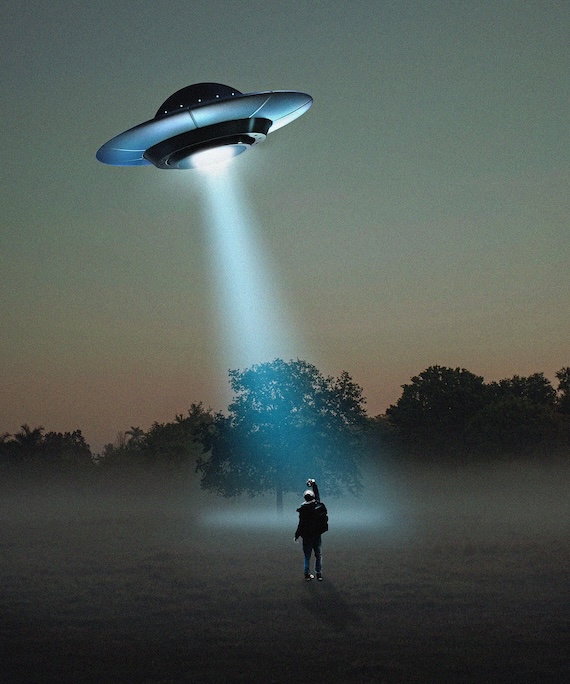
Moving on to 1947, in June of that year, a herdsman by the name of Alexey Romanovich Bodnya was out tending to his herd in the Bahamut Kokchetav Region when he saw a brightly lit circle shining on the grass on the field, somehow resembling “a micro-tornado.” Next, he heard a loud metal clicking sound and when he looked up he was stunned to see a disc-shaped object about 25 meters in diameter, which was bright and shaped like two deep saucers joined together, with a transparent dome on top and 4 prop-like landing legs protruding from the bottom and moving up and down in rhythm. The surface of the disk was silver, almost mirror-like, reflecting the ground and grass beneath it, and piercing searchlights could be seen on the craft as it approached for a landing. Bodnya would later recall that the craft seemed to be wobbling, almost as if it were experiencing mechanical difficulties.
The object managed to land without incident, after which a ladder descended to the ground and three strange beings climbed out. These humanoids were said to stand about 3 meters in height, with elongated faces, oversized round eyes, long noses, high foreheads, grayish-bluish skin, and thin lips. They were dressed in silver reflecting tight-fitting overalls with head coverings. One of the aliens was noticeably taller than the rest and seemed to be the leader, shouting orders at them in a guttural, otherworldly language. The entities seemed to be fixated on the dome atop their craft, dismantling it and initiating what the witness assumed were repairs.
The stunned witness had observed the emergency landing and repair of the disk while hiding behind some shrubs with his horse, but when the animal snorted all of the humanoids looked in his direction. The aliens immediately shone a green beam of light in his direction and the wines had the sneaking suspicion that they had photographed him. The leader then looked at the witness and began to telepathically communicate with him, telling him to come out of hiding and that they meant him no harm. The alien then explained that their craft’s flight control mechanism had been damaged by a bolt of lightning and that they were trying to fix it.
Bodnya drew closer, and the alien leader took him by his hands and sat him on the rim of the disk. Making the story even weirder is that at some point a wolf approached the tied-up horse and the alien apparently killed it with a “thunderous beam.” After what were can only assume was an “OK, where were we?”, the alien allowed Bodnya to come aboard. Looking in, he saw a long corridor leading inside the craft, some frame-like walls, and noticed that the ceiling was very high. He tried to walk along this corridor, but after a few steps, he was overcome by a wave of intense heat and nausea and could continue no further. The giant then said, “Come here” The boy then rushed back and fell on the alien’s arms, he could not remember what happened next, he apparently lost consciousness and woke up again sitting on the grass looking at the repair operations.
After this, Bodnya was somehow convinced that he had been examined onboard and implanted with some type of device. The rest of the night he watched the aliens toil away on their ship until they had seemingly finished the repair job. After finishing their repairs the aliens left behind a small cross-shaped metallic fragment, which the witness buried on the edge of the field intending to dig it out in the future, although he would forget where it was and it is still supposedly there to this day. The disk then rose up and zoomed up to the sky at incredible speed disappearing from sight in a mere flash, astounding Bodnya with bits sheer speed.
It would appear that this would not be the end of things, because years later he would claim that he had once again be contacted by the aliens via a communications device planted in his head. The aliens informed Bodnya that their planet was sterile and that they were vegetarians and that they had a base on the moon, which was covered with a transparent glass dome. They expressed contempt towards the human race and refused to reveal the location or name of their home planet. They confirmed to the witness that there was life after death and predicted coming catastrophes and disasters that would affect humanity. When Bodnya asked them why they didn’t contact humanity openly, their curious answer was, “Why don’t humans contact those in an insane asylum?” This would apparently be his last contact with the creatures and it is unclear what happened to him after this series of otherworldly events.
The following year, in 1948, Valentin Stepanovich was fishing on a small river near the mountains near Lazarevskoye, Sochi, when suddenly he noticed a silver, cigar shaped craft nearby, and saw several luminous balls of light separate from the object to fly towards him. He also noticed several tall and beautiful women nearby, with long blond hair and smiling, but this is the last thing he would see before he suddenly and inexplicably lost consciousness.
When he came to, he found himself onboard a strange craft, lying on a bed inside a room, into which an alien “Nordic” woman entered the room and telepathically communicated with him, telling him to join them on their journey. The witness would describe these aliens as standing 2 meters in height, Nordic people, with blond hair, and slightly slanted bluish, greenish, grayish eyes, and dressed in single-piece tight-fitting silver suits made out of a multi-layered composite material. Fascinated, the man agreed to go with them and it would lead to quite the trippy journey, indeed.
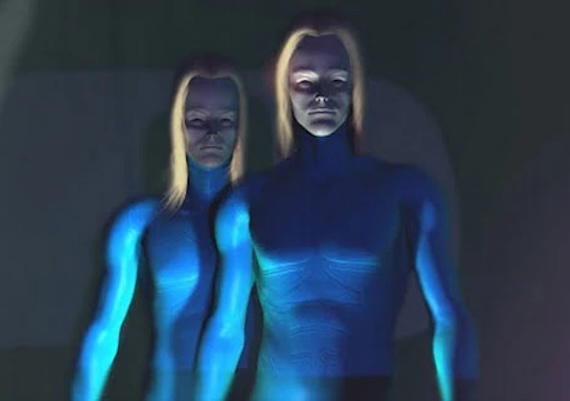
They traveled “faster than the speed of light” according to the aliens, and soon they landed on the alien planet that was approximately twice the size of Earth and divided into three huge continents. The story gets even more bonkers still, when Valentin meets an alien woman named Liffa and soon fell in love with her. At one point he attempted to kiss her, and her skin became extremely red and she told him to get away from her. For this transgression, he was punished and was briefly exiled to a barren, polluted and radioactive satellite moon. He apparently survived this exile and soon he was allowed to marry Liffa, although why this should be is not known and is probably one of the lesser more unbelievable traits of this tale. They had a child together and Valentin also helped the aliens overthrow a small colony of humans taken from Earth to that planet who wanted to overthrow their overlords. Right. The rebels were quickly and safely neutralized, and soon after this Valentin returned to Earth. Although it had felt like only 3 months, it would turn out that actually a year had gone by on Earth, and he had been presumed dead. Make of this story what you will, but it is a damn wild ride.
One day in the summer of that same year, a young boy and two girls in the Stavropol region of North Caucasus, Russia, were out near their rural village watching their cows graze and having their lunch, after that the boy went to take a nap on the other side of the hill. At some time during his nap, he was woken by a piercing whistle, and he bolted up to see “a silver-colored object resembling a huge upside-down plate” that landed not far away on three prongs that looked like landing gear of some kind. As the boy stared at this truly strange sight, the object opened up and out stepped three tall and thin humanoid entities dressed in tight-fitting silver suits. These creatures then approached the witness, and he found that he was paralyzed and unable to move, powerless to resist as they took his hand and led him towards the craft, as if in some sort of trance.
When they were inside, the boy could see that they were in a corridor lined by 4 cages made out of metallic rods, each of which alternatively held a bear, a woman, three men, and one cage holding a single man apparently of Slavic descent. As the humanoid entities walked by these cages, the occupants had quite a violent reaction. The bear growled, snarled, and paced about angrily, the woman screamed in wild hysterics, with “her hair disheveled, her eyes fixed in a wild stare and foaming at the mouth,” and the three men dropped to their knees and began praying. The boy was then shoved into the cage with the Slavic man, who seemed to be the only one keeping his calm and who tried to calm the obviously terrified and increasingly panicked boy down. The aliens then left, the bear and the others calmed down, and the object they were in could be felt to take off and move.
Not long after take-off, the alien figures returned and produced “an operating table” that seemed to just slide right out of the wall, after which they proceeded to grab one of the three men from the cage and lead him to it. Although the man’s face was a grimace of terror, he was apparently under some sort of paralytic spell because he did nothing to physically resist as he was laid down on the table. The Slavic man, seemingly aware of what was going to happen next, tried to pull the boy’s attention away, but he was able to see the aliens take out various bizarre instruments and begin cutting open and dismembering the man, the poor victim completely silent and helpless even as the blood sprayed everywhere and the removed body parts were put into a metallic box. When they were finished, the entities then allegedly cleaned up the blood and carried the box and what remained of the man on the table away. At this point the boy was completely overcome by fear.
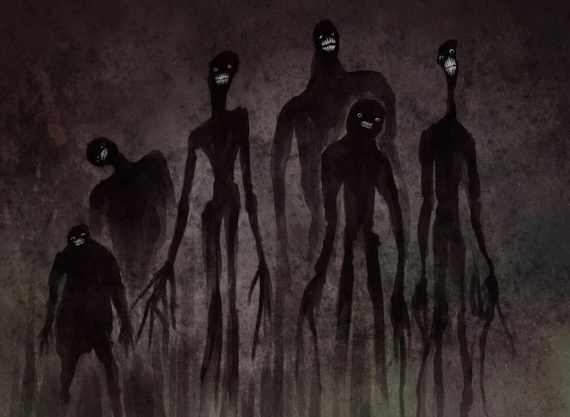
The man in the cage with him tried to calm him down and told the boy that he was a mining engineer from the Urals and that his name was Alexander. He told the boy that he planned to get them out of there and urged him to try and squeeze through the bars of the cage, which he managed to do after some great effort and much pushing from Alexander. There was some sort of button on the wall that Alexander told the boy to push, but he couldn’t reach it, so Alexander removed articles of his clothing and piled them up for the boy to stand on until he was able to push it, which had the effect of causing their cage to slide open. Throughout all of this the bear, woman, and the two remaining men in the other cage were eerily silent. Even when Alexander tried to talk to them they were unresponsive, in some kind of vegetative daze. Now free of their cage, Alexander and the boy let the others be and headed down the corridor and tried to find some way out of their predicament. This is when things would get even more bizarre than they already were.
They purportedly found several other rooms, with one of them holding two sleeping aliens and another “control room” with another alien asleep at the controls. Alexander frantically tried to find something they could use as a weapon but there was nothing for them to defend themselves with if their captors woke up. They then stumbled across what was described as an “engine room,” where there was a “metallic box with a stripe set up on metallic struts.” Alexander picked up this box and proceeded to throw it onto some control panels in the room, which provoked a violent smoking and sparking, as well as a piercing alarm of some kind. Not long after this two aliens rushed into the room and physically scuffled with Alexander as another one appeared with a metallic rod that was able to instantly paralyze the struggling man. These entities then supposedly dragged the both of them back to their cage and they were back to square one.
The aliens then telepathically communicated with Alexander and asked why he was so capable while the others were at such a “low level of development,” to which he responded that they were likely just uneducated and scared out of their minds. The aliens then explained that they were there on Earth because they were concerned about mankind’s use of atomic energy and wanted to monitor our civilization. They also explained that radioactive materials were very useful on their world, as they did not have a large supply and used them for fuel. The boy would later claim:
“They told him (Alexander) that to waste radioactive material for explosions was madness. These materials could be used for other needs and they (the aliens) had those materials in very low quantity and were very valuable to them. They used the radioactive materials to obtain energy which they used in various branches of science and technique and also for space travel.”
They told him that they wanted to study our planet and also gather these radioactive substances and that they still did not know much about humankind. When asked why they had so brutally dismembered and cut apart that man, they said that they had merely dissected him for study, and had not realized that he was even a sentient being until meeting Alexander and realizing that humans were intelligent. To them, the man had been no different from that bear, just an animal, but now they knew differently. They then asked him if he wished to accompany them, which he agreed to on the condition that they release the other prisoners. They agreed, and the boy was dropped off where he had first been abducted from after giving him an injection they claimed he needed to counteract the radiation he had been exposed to on their ship.
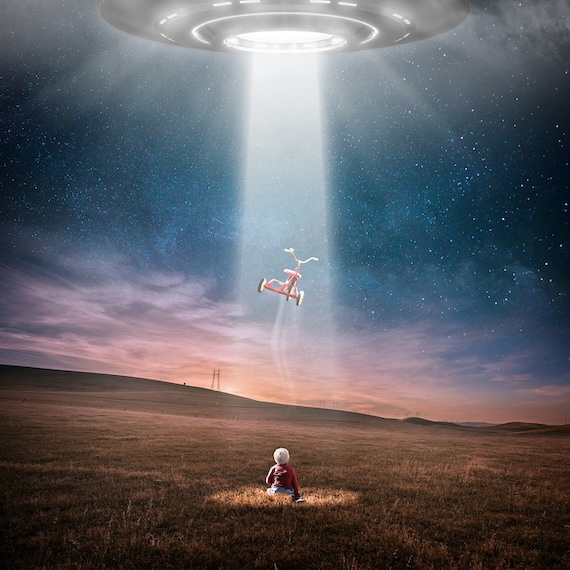
When the boy woke on that hill, he had a strong headache and was very thirsty, and he soon saw that there was a search party out looking for him. When he was brought back to his village, he was sick for several days with a fever, and a metallic taste in his mouth, and his eyes and skin were extremely sensitive to sunlight. At the time, he could not remember what had happened to him, and so was unable to answer when the others asked where he had been. The years went by and he tried to put it behind him, but then one day when he was out in a field he was approached by two military men and a man in civilian clothing who seemed to be very familiar with him but who he did not know. The man in civilian clothes seemed to know about the UFO encounter, but the boy himself did not remember it and told the man he must be mistaken. The man in civilian clothing wished to interrogate the boy under hypnosis, but the military men's clothing told him to leave it be because “the others” didn’t trust him. They then left after telling the boy to tell no one of their visits, and it is unclear exactly what connection this strange little incident has to the abduction event.
The boy would only much later have his memories of the experience dredged up through hypnosis, and it would leave him reeling and us without any clear answers about what we should do with such a tale. It is all a completely bonkers case, equal parts alien abduction and jailbreak, and it is hard to decide what to make of it. Did any of this happen at all, or is it just some twisted fantasy in the mind of this one witness? What happened to the mysterious Alexander, and did he end up joining the aliens on their adventures or was he just another piece of meat stuffed into a metal box? There is no way at all to know, and it is a completely off-the-rails case that occupies its own corner of the very fringe of alien abduction accounts.
From the files of researcher Albert S. Rosales, one evening in 1975, an 18-year-old farmer was peacefully sitting on the edge of a forest glade making a painting in the Solnechnogorsk area, Moscow region. He suddenly had the intense feeling that he was being watched, and when he looked around he could see an object about 13 meters in diameter, which bizarrely disgorged three anthropoid figures wearing silvery clothing, with one being a woman and the other two being men. The trio invited the witness aboard and he agreed. After approximately an hour of flight, the craft entered the hazy atmosphere of their planet around which sailed numerous luminous spheres. The gravity was supposedly lighter than that on Earth, and the population was composed of people over three meters in height and “large-headed dwarfs who wore diving suits.” All around was a brilliant illumination that seemed to come from the very ground itself. Later, the witness was returned to the same location from which he had been taken. Strange, indeed.
In September of 1979, an unidentified witness was sleeping at his home in Yaroslavl when he suddenly woke up to a strong feeling of danger for no discernible reason. He was so overcome with this inexplicable terror that he could scarcely move. As he warily looked around the room for some unidentifiable threat, he noticed that his TV set looked rather odd. Neither its size, nor contours changed, but it now looked like a stone monolith of greenish-gray color. Right in the center of the “screen,” there stuck out a small semicircular cap consisting of a transparent substance; it was about 3 cm in diameter and jutted out from the “screen” to the same distance. Behind the cap, he could see some “dense and viscous” light of a crimson-red color that did not illuminate anything in the room.
As he tried to process what he was seeing, a small being appeared, running over his legs and taking a seat beside him. Its head was disproportionately large in relation to its body. It was globular on top and slightly narrower beneath, and its eyes were rather large, elongated, and “horse-like”. The bridge of its nose was hollow and the nostrils protruding, the mouth was long, having no lips, and the ears were large, round and prominent. The face was gray-greenish in color. This little man then sat down on the witness's abdomen and slightly leaned forward stretching out his left hand “forward and downward in a natural gesture.” Its fingers clung to the witness’s right arm, and this made him feel sick; the being’s touch was frigid to the touch. More unsettling still, the humanoid was staring intently into his eyes.
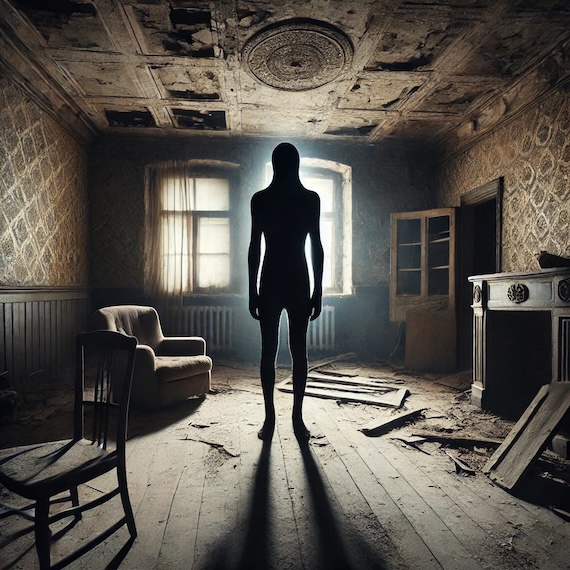
The humanoid looked at him for about 10 seconds and then it leaned somewhat lower and extended its hand in a purely human gesture, holding its palm upwards. It then began to speak, telling the witness, although it was in an incomprehensible gibberish. The fact that the witness could not understand a word he was saying, the entity became visibly irritated that this human had never brushed up on his alien language skills. At this point, the witness attempted to move slightly and the being suddenly rushed toward his feet at very high speed and simply vanished into thin air in plain sight. Looking back the TV showed that it had returned to normal. What in the world was going on here?
Just a year later, in the summer of 1980, a witness by the name of Nadi S was staying at a summer camp in an isolated area of the Seoma River, near Gissar Ridge, when she was overwhelmed with a feeling that someone or something was trying to communicate with her. At this moment as she sat on her cot, she heard a mental voice asking her, “Do you want to leave the tent?” Even though it was very early she walked out of the tent and saw a tall figure hunched over and squatting behind some nearby bushes. The witness tried to approach the mysterious intruder, and at that point, the figure stood up and vanished “in a spark” that hung in the air for several seconds before fizzling out.
Some nights later the tines woke up to the same strange feeling she had had before. She walked out of the tent and saw the tall figure standing about 20 meters away by a glade, and then she heard a noise from the nearby brook and noticed several luminous humanoid figures slowly floating in her direction. These floating humanoids hovered towards her and descended to the ground near the tent. Upon landing, they apparently bowed to her and greeted her telepathically. The tall luminous humanoids had large slanted eyes, large protruding foreheads and pointed chins, their bodies were surrounded by a beautiful bluish aura, which appeared to fluctuate, like blue flames on a candle. On their backs, they had blue protrusions resembling short wings. The witness felt a complete sense of love and understanding emanating from the creatures and did not bother to ask many questions since she felt that they were definitely here to help humanity. After this, she lost consciousness and when she came to the aliens were gone. What in the world?
From 1989 we have a case from the wilderness of Sochi, Caucasus, on the Black Sea coast, concerning a witness named Vasilievna Goloveshko. That summer she was vacationing at the Black Sea with her husband Vladimir and daughter Anyuta. One balmy evening as she tried to drift off to sleep she heard some sounds that sounded like footsteps. This was curious, as both her husband and daughter were fast asleep and there should have been no one else there. She then glanced at the open window and saw two minuscule humanoid beings with very pale greenish-gray skin, no discernible necks, and sporting flowing beards. She would later describe them as looking like “ancient gnomes.”
At first, she thought that she must have been hallucinating but the experience was obviously quite real. One was taller and lighter in color, the second more shadowy in appearance. The carpet seemed to move like a wave as one of the aliens penetrated through the window and began approaching her husband’s bed. Tatyana blinked briefly and as she opened her eyes the strange humanoid was now standing over her. As it did, the witness felt paralyzed by an unseen force, unable to move her arms or say a word. Then both of them slowly moved back from her bed, floating just above the floor, and in the next moment she heard a strange sound like a muffled shot, she then turned her head but both “gnomes” had disappeared, dissolving into thin air.
Moments later the witness saw a spherical lighted object fly into the room, like ball lighting, the size of a tennis ball, leaving a meandering smoky trail behind and emitting a “hissing, crackling” sound. The ball of light then quickly flew into the other room and then returned the same way and flew out the opened window. The witness found she was now able to move again, and went about locking all of the doors and windows. She would later realize that all of the clocks has stopped at the time she had first seen the humanoids. Was this a UFO encounter or perhaps something more paranormal? It is hard to say.
In September of that same year, a strange series of events unfolded in the wilds near Voronezh, Russia, beginning with numerous sightings by frightened locals who described a massive, red sphere floating over a park. When witnesses went to see what was going on, the object apparently dropped down to hover right over the ground, after which a hatch opened to disgorge several very bizarre entities. These creatures were purportedly 9 feet tall, dressed in silver outfits, and most notably with neckless, domed heads holding three glowing eyes and a bright red device that spun around “like a radar.” These aliens reportedly swiveled their heads about to look around, and along with the aliens was a “box-like robot” that walked around with jerky movements upon which the aliens occasionally adjusted instruments on its chest. These creatures were bizarrely described as walking around the park collecting soil samples and occasionally projecting multi-colored beams from disc-like structures in their chests, and strangest of all they reportedly zapped a teenager who got to close with a tube-like weapon of some sort, which “dematerialized” the poor boy. Luckily the boy reappeared when the beings boarded their craft and left. What are we to make of this?

In January of 1990, a 24-year-old man known only as Konstantin walking by the local dump in Kupchino, Leningrad, when he suddenly saw a huge figure standing about fifty meters from him. The figure was rather unusual-looking, sporting what appeared at a distance to be a large fur coat that was “shaggy and spiny.” It would get weirder as he drew closer because he could now see that it was no fur coat, but rather some sort of humanoid covered in “thorns or feather,” which he described as “cats-like.” The being also apparently had antennae or feelers of some sort on its head, which twitched and moved around. Amazingly, a nearby dirt pile then erupted to belch forth another of the creatures, and the two began to meander through the heaps of garbage. Then Konstantin saw the UFO from where the creatures had come from, which reminded him of a large cake. Both aliens were seen to enter the craft and after emitting a whistling sound the craft momentarily rose up into the air and hovered at a very low altitude above the ground before speeding off at high velocity.
From that same year, we have a report from the archives of Albert S Rosales that apparently happened in Mahachkala, in the Dagestan Republic. The unnamed witness was returning home when he noticed a “coin-like circle” in the air, which looked quite like the beam of a flashlight. Indeed, that was what he at first thought it was, but noticed that it seemed to be increasing in size, and becoming more intense. The object then began a series of aerial acrobatics that completely dispelled the idea of it being a flashlight, and it began flying around the witness in a complicated trajectory, emitting heat and a whistling noise as it did.
After some time of this display, the light expanded and morphed into a “human-like head,” making the witness believe he was hallucinating. The head then further transformed until it was a humanoid shape, with arms, legs and a body that was covered with dense fur, like an ape. Strangest of all was that it had only a single eye, which oddly shot forth a beam of red light. The creature was around 2 meters tall and solidly built. As the witness looked on in horror, this entity began to levitate towards where the man’s children were sleeping. He rushed to them and faced the one-eyed monstrosity, commanding it to back off. The entity stood motionless at some distance from the bed and did not make any threatening moves. It then turned around and walked out, slamming the door behind it. The witness was described by other locals as sober and level-headed, and the whole incident was so horrifying to him that he and his family moved shortly after.
One evening in October of 1992, a man and his wife were staying at a hostel near Yekaterinburg, in the Urals Region, when the husband woke up to find the room illuminated by a bright light outside. Suddenly, right above his head, he heard a noise, he turned and saw a sort of flying ‘white mass’ that appeared to have come out straight out of the wall. The strange mass stopped abruptly right in front of his face and seemed to transform into a three-dimensional holographic image of a woman, who was only visible down to her waist, the bottom section of her body blurry. It appeared to be dressed in a sort of ‘nightgown’ with long sleeves and gazed at the stunned witness with coal-black eyes which contrasted sharply with the rest of her body and according to the witness emitted ‘evil intentions.’
Before he could react to this surreal sight, a white hand quickly grabbed his right wrist and slowly pulled him towards the hovering mirage woman. This was enough to prompt the witness to scream out loud, and at this point, the shape instantly changed her appearance and hair to resemble an exact replica of the witness’s still-sleeping wife. As the man began to sob uncontrollably, the intruder let go of his wrist and faded away to nothing, leaving him in the darkness once again.
His wife suddenly awakened and inquired why was he screaming, and he told her that something strange had occurred. She advised him to try to get some sleep and then fell back asleep herself. After walking around the room the husband lay down again, but as he tried to cover himself with the quilt it seemed to resist with incredible force and it even dragged him. As his wife remained sleeping he got up and went to smoke and once back he lay down again. The quilt this time no longer resisted but the feeling of anxiety remained. To alleviate his fear the witness then cursed out loud at the strange visitor he had seen. The reaction was instantaneous, a powerful blow, as if from a hefty board, struck with full force on the nearby table. He again roused his wife who never saw the strange female visitor and slept through most of the strange activity. We can only wonder at what this was all about.
These are some surreal and far-out cases to be sure, and it is hard to know what to make of them. Are these just sensationalized accounts or is there something more to them? It is hard to know just what to think, and these remain some of the odder accounts from the mysterious UFO files of Russia.
RELATED VIDEOS













 This is Ingo Swann: The Man Who Saw Jupiter’s Rings Before NASA Did

 Swann also worked with Cleve Backster, interrogation specialist for the CIA.