

Date of sighting: Sept 2, 2025 5pm
Location of sighting: Bountiful, Utah, USA
Source: Self recorded SCW


 Sphere Over Bountiful, Utah For 20 Minutes! Then Moved Away Fast! UFO UAP Sighting News. Video!
 Jellyfish UFO over Downey, Idaho, I recorded it too in Utah today, UAP sighting news. Sept 2, 2025 Wow!


 What is the True Story of the Philadelphia Experiment?

Invisible ships, aliens, top secret missions, a government conspiracy and Albert Einstein - the Philadelphia Experiment had it all. But was the story of the USS Eldridge a hoax or science fiction brought to life?
The Philadelphia Experiment, sometimes known as the USS Eldridge conspiracy, has all the trappings of a sci-fi blockbuster. Indeed it became the subject of one starring Michael Paré in 1984.
If it’s to be believed, this top secret test of alien invisibility technology was carried out at the height of the Second World War, under the direction of Albert Einstein himself, ending in both success and catastrophe.
If it’s deemed a hoax, it is one whose ramifications have been long-term and widespread. So which is it?
Albert Einstein image on a postage stamp
(Photo: tomograf via iStock)
The Philadelphia Conspiracy was an alleged top secret government project codenamed Operation Rainbow, carried out under the auspices of Albert Einstein in accordance with his unified field theory. Its objective was to test alien invisibility technology. It was 1943, the midst of World War II and the US was seeking an advantage to help them win the Battle of the Atlantic.
And so, one day that year, often cited as 28th October 1943, the new tech was supposedly fitted onto the USS Eldridge which was docked at the Philadelphia Naval Shipyard. It’s said that those on nearby ships witnessed the generators of the Eldridge begin to hum, a green-blue hue – some said a fog or a glow – emanated from the destroyer’s hull and, in an instant, the ship simply vanished.
It’s said the ship reappeared again just as suddenly, but only after it was spotted materialising out of thin air over 200 miles away, at Norfolk Naval Shipyard in Virginia – before then vanishing a second time.
If true, surely the Philadelphia Experiment had been a resounding success. Not only did it render an entire Cannon-class destroyer escort ship invisible, but it teleported it over 200 miles away and back again. However, there was more to the story than simply this astonishing tale.
It was said that classified military documents revealed far darker implications. When the USS Eldridge rematerialised in Philadelphia, members of its crew suffered injuries ranging from minor to catastrophic. Nausea, disorientation, insanity, third degree burns and mysterious illnesses were all cited. The most alarming effects regarded crew being found fused to parts of the ship, some of them still alive.

The Case for the UFO scripts
(Poto: Pixsooz via iStock)
According to the story, there were many witnesses to the Philadelphia Experiment; people who saw the ship’s disappearance and reappearance. And yet, only one witness came forward, and it was not until the 1950s that details of it began to emerge. In fact, all information about the Philadelphia Conspiracy derives from a single source. That was a man by the name of Carl Meredith Allen.
In 1956, Carl Allen began writing what would be hundreds of letters to Morris K. Jessup, the author of a book called The Case for the UFO (1955). Going by the name Carlos Allende, he tried to convince Jessup to stop the research he was then conducting on Albert Einstein’s incomplete unified field theory. As part of this, he informed Jessup of the USS Eldridge conspiracy, claiming to have witnessed the test himself while working on a ship called the SS Andrew Furuseth as a deckhand. When Jessup attempted to get more information from Allen, he was unable to provide any evidence for his claims.
At around the same time, the US Office of Naval Research (the ONR) received an anonymous package labelled “Happy Easter”. Inside was a copy of Jessup’s book, heavily annotated by what appeared to be three different contributors, each in different shades of blue and referring to each other as “gypsies”. The notes within related to UFOs, purporting to have knowledge of extraterrestrial life on Earth and suggesting that Jessup’s research on unified field theory was too close to some alien technology. There were also several allusions to the Philadelphia Experiment.
In a strange twist that served only to enhance belief in the Philadelphia conspiracy, two agents at the ONR took it upon themselves to privately print many copies of the annotated book, which became known in certain circles as the Varo Version.
In 1957, the ONR invited Jessup to view the annotated copy of his book. He confirmed that the annotations matched the handwriting in Allen’s letters. It has since been confirmed that it was Allen who sent the package to the ONR and, in 1969, he even admitted to writing all of the annotations. His aim? To “scare the hell out of Jessup” and deter him from continuing his investigation of Unified Field Theory, which Allen viewed as dangerous. He later retracted this admission.
So, who was Carlos Allende aka Carl Allen? For a long time, that answer was as elusive as the man himself. In fact, nothing was known about him until a journalist called Robert Goerman wrote about the man in 1980. Goerman, apparently realising an old family connection with Allen, interviewed the man’s family and described him as a “a creative and imaginative loner.” According to Goerman, Allen had a history of mental illness which he speculated might have been behind any fabrications.
The Philadelphia Experiment captured the imagination of the ufologist community for many years. Indeed, the ONR was so overwhelmed by the constant enquiries about it that, in 1996, it released an official statement completely denying the event, stating:
“ONR has never conducted any investigations on invisibility, either in 1943 or at any other time (ONR was established in 1946.) In view of present scientific knowledge, ONR scientists do not believe that such an experiment could be possible except in the realm of science fiction.”
The same statement provided theories as to the origins of the ideas behind the USS Eldridge Conspiracy. For example, the invisibility aspect might have arisen from real research at the Philadelphia Naval Yard at the time into rendering ships undetectable to radar, known as degaussing.
There has never been any evidence provided for or corroboration of the Philadelphia Experiment. What is more, any evidence collected, such as the logs of the USS Eldridge and other involved ships, have contradicted the story. For example, on the alleged date of the experiment, 28th October 1943, the ship’s log puts it in the Bahamas on a shakedown tour.

Abstract Futuristic Technology Background with Clock concept and Time Machine
(Photo: ChakisAtelier via iStock)
For a long time it was widely accepted that the Philadelphia Experiment was a fake, sometimes referred to as the USS Eldridge hoax. However, it was revived by the emergence of another alleged secret experiment, The Montauk Project. Instead of invisibility, this time it was time travel and, in place of Einstein, were Wilhelm Reich and Nikola Tesla. It tied in with the Philadelphia Experiment as part of a wider plan.

Hoax stamp
(Photo: Christian Horz via iStock)
It is widely acknowledged that the Philadelphia Experiment was indeed a hoax, perpetrated by one man whose family described him as a “master leg-puller”, Carl Meredith Allen. And yet, despite a complete lack of proof, under the umbrella of the Montauk Project, the USS Eldridge conspiracy seems to be gaining new supporters even to this day.
Het Philadelphia Experiment: Een Wetenschappelijk Verkenning van een Legende
Het Philadelphia Experiment: Een Wetenschappelijk Verkenning van een Legende
The USS Eldridge.
Photo: U.S. Navy
Inleiding
Het Philadelphia Experiment is een bekende en omstreden samenzweringstheorie die beweert dat de Amerikaanse marine in de jaren 1940 een experiment heeft uitgevoerd dat leidde tot het onzichtbaar maken van een schip, de USS Eldridge. Deze gebeurtenis zou plaatsgevonden hebben in de haven van Philadelphia in 1943, tijdens de Tweede Wereldoorlog. Hoewel de meeste wetenschappers en historici deze verhalen als mythes beschouwen, blijft het onderwerp intrigeren en heeft het een prominente plek in populaire cultuur en conspiracy theorieën. In dit artikel onderzoeken we de oorsprong, de vermeende wetenschap achter het experiment, de ontstaansgeschiedenis en de wetenschappelijke plausibiliteit van dergelijke claims.
De oorsprong van de legende
De oorsprong van de legende rond het zogenaamde Philadelphia Experiment gaat terug naar de late jaren 1950 en de vroege jaren 1960. Het verhaal werd voor het eerst bekend via anonieme brieven en verhalen van mensen die beweerden getuige te zijn geweest van het experiment. Een van de meest invloedrijke bronnen is het boek "The Philadelphia Experiment," dat in 1994 werd gepubliceerd door auteurs William Moore en Charles Berlitz. In dit boek wordt beweerd dat de Amerikaanse marine tijdens de Tweede Wereldoorlog, in 1943, een geheim experiment uitvoerde met als doel een schip onzichtbaar te maken voor radar en visueel waarnemen.
Volgens de verhalen zou de USS Eldridge, een destroyer escort, in de haven van Philadelphia worden blootgesteld aan een krachtig elektromagnetisch veld. Dit veld zou het schip volledig onzichtbaar maken voor radar en het voor het blote oog onzichtbaar maken. Bovendien worden er verhalen verteld dat het schip fysiek van plaats zou zijn veranderd, waarbij het in een soort teleportatie zou zijn getransporteerd naar een andere locatie. Sommige versies van het verhaal gaan zelfs verder door te stellen dat het schip door de tijd zou zijn gereisd, waardoor het op een ander moment weer werd teruggevonden.
De verhalen over het experiment worden vaak aangevuld met mysterieuze en griezelige details over de gevolgen voor de bemanning. Sommige getuigen spreken over fysieke deformities, zoals vergroeiingen en verwondingen die niet natuurlijk leken, terwijl anderen berichten over telepathische verschijnselen en psychische stoornissen die na het experiment zouden zijn ontstaan. Deze verhalen zorgen voor een aura van mysterie en paranormale gebeurtenissen rondom het experiment. Hoewel er geen concreet bewijs is dat het Philadelphia Experiment daadwerkelijk heeft plaatsgevonden, blijft het een populair onderwerp in de conspiracy-theorieën, sciencefiction en folklore rondom geheime militaire projecten.
De vermeende wetenschappelijke basis
Hoewel het hele verhaal rondom het zogenaamde Philadelphia Experiment op het eerste gezicht ongelooflijk en bijna onvoorstelbaar lijkt, worden door voorstanders van deze theorieën vaak pogingen gedaan om een wetenschappelijke onderbouwing aan te wijzen. Ze suggereren dat het experiment gebaseerd zou kunnen zijn op de toenmalige kennis over elektromagnetisme, deeltjesfysica, en de theorieën die binnen de kwantummechanica en veldentheorieën ontwikkeld zijn. Het is belangrijk om deze claims kritisch te bekijken en te begrijpen in welke mate ze overeenkomen met de actuele wetenschappelijke stand van zaken.
Een van de kernideeën achter het vermeende experiment is dat elektromagnetische velden gebruikt zouden kunnen worden om een object onzichtbaar te maken voor het blote oog of radar. In de hedendaagse wetenschap bestaat het concept van "metamaterialen", die speciale materialen zijn met een negatieve refractie-index. Deze materialen kunnen elektromagnetische golven buigen en manipuleren op manieren die in de natuur niet voorkomen. Hierdoor is het mogelijk om bijvoorbeeld experimentele onzichtbaarheidsmantels te ontwikkelen die licht of radarstralen om een klein object heen laten leiden, waardoor het lijkt alsof dat object niet bestaat.
Deze technologie wordt onder andere onderzocht binnen de context van militaire camouflage en wetenschappelijke experimenten. Het is echter cruciaal te benadrukken dat de huidige toepassingen nog zeer beperkt zijn: de meeste experimenten betreffen kleine objecten en werken onder zeer gecontroleerde omstandigheden. Het is niet realistisch om te denken dat deze technologie, op de schaal van een groot schip zoals in het Philadelphia Experiment, al operationeel of zelfs praktisch toepasbaar is. De complexiteit en de schaalgrootte maken het gebruik van metamaterialen voor grote objecten nog altijd een grote uitdaging, en de technologische vooruitgang op dit gebied is nog zeer beperkt.
De theorieën die ten grondslag liggen aan het concept van onzichtbaarheid maken gebruik van het manipuleren van elektromagnetische golven door middel van speciale materialen. Door deze materialen met negatieve refractie-index te gebruiken, kunnen golven worden geleid en gebroken op een manier die het lijkt alsof het object niet bestaat. Het principe is gebaseerd op het idee dat door het buigen en omleiden van straling, het licht of radarstralen rondom een object heen kunnen worden geleid, waardoor het object wordt "verborgen".
In theorie betekent dit dat een dergelijk proces mogelijk zou kunnen werken voor kleine objecten, en dat het in een zeer gecontroleerde omgeving en onder zeer precieze omstandigheden kan worden toegepast. Maar het toepassen van dergelijke technologieën op grote schaal, zoals een volledig schip, en vooral in de jaren 1940, is nog volledig experimenteel en theoretisch. De benodigde materialen en technologieën waren toen nog niet beschikbaar, en de praktische implementatie zou onmogelijk zijn geweest met de toenmalige kennis en middelen.
Een ander aspect dat vaak wordt aangehaald in verband met het Philadelphia Experiment betreft de vermeende mogelijkheid van tijdreizen en de invloed van kwantumveldentheorieën. Sommige theorieën binnen de kwantumfysica suggereren dat onder extreme omstandigheden en met zeer geavanceerde technologieën, het mogelijk zou kunnen zijn om de ruimte-tijd te manipuleren. Bijvoorbeeld, door middel van het creëren van wormgaten of door het manipuleren van kwantumvelden, zouden theoretisch tijdreizen mogelijk kunnen worden.
Het is echter van groot belang te onderstrepen dat deze ideeën zich nog in een zeer theoretisch stadium bevinden. Er is geen experimenteel bewijs dat tijdreizen mogelijk maakt, en de technologieën die hiervoor nodig zouden zijn, bevinden zich op dit moment nog in het domein van sciencefiction. Het toepassen van dergelijke theorieën op een schip, zoals in het geval van het Philadelphia Experiment, is dus volledig hypothetisch en niet gebaseerd op bewezen wetenschap. Bovendien zou het manipuleren van de ruimte-tijd een enorme hoeveelheid energie vereisen en onvoorziene consequenties met zich meebrengen.
Kortom, terwijl er in de wetenschappelijke wereld bepaalde theorieën en principes bestaan die het idee van elektromagnetische onzichtbaarheid en zelfs tijdreizen mogelijk zouden kunnen maken in de toekomst, is er momenteel geen concreet bewijs dat dergelijke technologieën op grote schaal bestaan of operationeel zijn. Het verhaal rondom het Philadelphia Experiment blijft dus vooral binnen het domein van legendes, speculaties en niet-geverifieerde theorieën. Wetenschappelijke kennis zoals die in de jaren 1940 bestond, was nog lang niet ver genoeg gevorderd om dergelijke fenomenen te kunnen realiseren, laat staan dat ze effectief toegepast konden worden op een schip dat in een haven lag.

Philadelphia Experiment illustratie.
Photo: Shutterstock AI
De ontstaansgeschiedenis en de mythologie
Het verhaal van het zogenaamde Philadelphia Experiment kreeg voor het eerst brede aandacht nadat het werd gepubliceerd in een boek geschreven door Charles Berlitz en William Moore. In dit boek werd beweerd dat de Amerikaanse marine en de Amerikaanse regering in het geheim experimenten hadden uitgevoerd met het doel om schepen onzichtbaar te maken voor radar en visuele observatie. Volgens de auteurs zouden deze experimenten plaatsgevonden hebben in de haven van Philadelphia in de jaren 1943, tijdens de Tweede Wereldoorlog. Het boek stelde dat de USS Eldridge betrokken was bij een dergelijk experiment, wat leidde tot geruchten en complottheorieën die zich snel verspreidden.
De verhalen werden verder versterkt door vermeende getuigenissen van mensen die beweerden de experimenten te hebben gezien, of zelfs eraan te hebben deelgenomen. Sommige van deze getuigen spraken over mysterieuze verschijnselen zoals het verdwijnen en weer verschijnen van schepen, het plotseling teleporteren van mensen, en zelfs gevallen waarin mensen door de romp van het schip zouden zijn gezeten. Deze verhalen bevatten vaak elementen uit sciencefiction en paranormale verschijnselen, wat het verhaal een mythische en bijna legendarische dimensie gaf. Het idee dat de Amerikaanse overheid geheime technologieën ontwikkelde die de natuurwetten tartten, sprak tot de verbeelding en voedde de aantrekkingskracht van het verhaal.
Het is belangrijk op te merken dat de bronnen waarop deze verhalen gebaseerd zijn, niet op harde bewijzen rusten. Het Amerikaanse Marine Corps heeft herhaaldelijk verklaard dat er geen bewijs is dat het experiment ooit daadwerkelijk heeft plaatsgevonden. Ze benadrukten dat er geen documenten, rapporten of andere betrouwbare bronnen bestaan die het bestaan van zo’n experiment bevestigen. Ook uit onderzoek blijkt dat de USS Eldridge op de genoemde data niet in de haven van Philadelphia lag, maar elders. Daarnaast is er geen enkele officiële documentatie of erkend onderzoeksrapport dat wijst op het uitvoeren van een dergelijk experiment.
Bovendien is er sterke twijfel onder historici en wetenschappers over de echtheid van de verhalen. Veel experts beschouwen het Philadelphia Experiment als een mythe, een modern legendes zoals die vaak ontstaan rondom geheime militaire projecten en mysterieuze gebeurtenissen. De combinatie van onduidelijke getuigenissen, suggestieve verhalen en het ontbreken van concrete bewijzen heeft ertoe geleid dat het verhaal een mythische status heeft verworven, die nog altijd de gemoederen bezighoudt. Het verhaal blijft daarmee een fascinerend voorbeeld van hoe mythes en legendes ontstaan rond geheime overheidsprojecten en de menselijke fascinatie voor het paranormale en het onverklaarbare.

Photo: Polonio Video
Wetenschappelijke kritiek en realiteit
De claims over het zogenaamde Philadelphia Experiment worden door de wetenschappelijke gemeenschap over het algemeen als onjuist en ongeloofwaardig beschouwd. Deze verhalen vertellen over een geheime militaire operatie uit de jaren 1940 waarbij een Amerikaanse marinefregat zogenaamd werd onzichtbaar gemaakt voor radar en zelfs door de tijd zou zijn gereisd. Hoewel het een fascinerend verhaal is dat veel mensen intrigeert, ontbreekt er wetenschappelijk bewijs dat dergelijke gebeurtenissen daadwerkelijk hebben plaatsgevonden. Bovendien zijn de genoemde technologieën, zoals elektromagnetische onzichtbaarheid en tijdreizen, momenteel nog in de experimentele fase of bestaan ze slechts in theoretische modellen zonder praktische toepassing of bevestiging.
Een van de kernonderdelen van het Philadelphia Experiment is de claim dat het schip onzichtbaar kon worden gemaakt voor detectiesystemen door middel van elektromagnetische cloaking. Deze technologie zou werken door het manipuleren van elektromagnetische golven zodat ze om een object heen buigen, waardoor dat object voor het blote oog of voor detectiemiddelen onzichtbaar wordt. In de wetenschappelijke wereld wordt deze techniek ook wel metamaterialen genoemd. Metamaterialen zijn materialen die speciaal zijn ontworpen om elektromagnetische golven op ongebruikelijke manieren te laten verlopen, bijvoorbeeld door negatieve refractie.
Hoewel er inderdaad onderzoek wordt gedaan naar elektromagnetische cloaking en metamaterialen, bevindt deze technologie zich nog in een zeer experimenteel stadium. De meeste succesvolle experimenten zijn beperkt tot kleine objecten en op laboratoriumschaal. Het maken van een grote structuur, zoals een schip, volledig onzichtbaar voor radar of visueel zicht, vereist extreem precieze materialen en een enorme hoeveelheid energie. Deze praktische beperkingen maken het momenteel onmogelijk om dergelijke technologie op grote schaal toe te passen, laat staan in militaire of civiele contexten. Bovendien zou het gebruik van dergelijke technologie enorme kosten met zich meebrengen, en er is geen bewijs dat dergelijke technieken operationeel zijn of in de nabije toekomst haalbaar worden.
Een ander fascinerend element uit het verhaal van het Philadelphia Experiment is de bewering dat het schip door de tijd zou zijn gereisd. Tijdreizen wordt vaak afgebeeld in sciencefictionverhalen en wordt soms besproken binnen de context van kwantumfysica en de theoretische mogelijkheden van de ruimte-tijd. In de huidige wetenschappelijke consensus echter, wordt tijdreizen niet als mogelijk beschouwd volgens de bekende natuurwetten. De relativiteitstheorie van Einstein laat bijvoorbeeld toe dat tijd langzaam kan verlopen onder extreme omstandigheden, maar niet dat men terug in de tijd kan reizen of de tijd volledig kan manipuleren zoals in de verhalen wordt gesuggereerd.
Binnen de kwantumveldentheorieën en de theoretische fysica bestaan wel ideeën over exotische ruimtetijdconfiguraties zoals wormgaten, die mogelijk tijdreizen zouden kunnen faciliteren. Maar deze concepten blijven uiterst speculatief en ver weg van praktische toepassing. Er is geen experimenteel bewijs dat tijdreizen mogelijk is of dat dergelijke fenomenen daadwerkelijk kunnen worden gerealiseerd. De meeste wetenschappers beschouwen het idee van tijdreizen als een interessant theoretisch vraagstuk, maar niet als een daadwerkelijke technologische mogelijkheid op dit moment.
De populariteit van het Philadelphia Experiment kan niet los worden gezien van de menselijke fascinatie voor geheimzinnige technologieën, geheime overheidsprojecten en het verkennen van de grenzen van wetenschap en technologie. Verhalen over geheime experimenten en bijzondere technologieën worden vaak versterkt door media, films en conspiracy-theorieën die inspelen op onze nieuwsgierigheid en behoefte aan mysterieuze verhalen.
Het verhaal past in een bredere context van sciencefiction en complottheorieën die vaak gebruik maken van echte wetenschappelijke principes, maar deze combineren met fantasie en onbewezen claims. Deze verhalen worden vaak versterkt door een gebrek aan transparantie van overheden, waardoor het idee ontstaat dat er geheime en gevaarlijke technologieën bestaan die de mensheid kunnen bedreigen of verheffen. In veel gevallen wordt het wetenschappelijke verhaal vermengd met mythen, waardoor het moeilijk wordt om feit van fictie te onderscheiden.
Kortom, hoewel het Philadelphia Experiment een intrigerend verhaal is dat veel mensen aanspreekt en inspireert, wordt het door de wetenschap niet ondersteund. De technologische claims die erin worden gedaan, zijn niet haalbaar met de huidige kennis en technologie. Het verhaal blijft daarmee een mooi voorbeeld van hoe wetenschap, cultuur en fantasie kunnen samensmelten tot een mythe die de verbeelding blijft boeien.
Conclusie
Het Philadelphia Experiment blijft een fascinerende legende die de menselijke nieuwsgierigheid en het verlangen naar verborgen kennis weerspiegelt. Vanuit een wetenschappelijk perspectief is er echter geen bewijs dat zo'n experiment heeft plaatsgevonden of mogelijk is onder de huidige kennis van natuurkunde. De technologieën die in de verhalen worden beschreven, bevinden zich nog in de kinderschoenen of bestaan slechts in theorieën zonder experimenteel bewijs.
De verhalen over het experiment illustreren hoe wetenschap en mythologie vaak met elkaar verweven raken in de populaire cultuur. Het is belangrijk om kritisch te blijven en te erkennen dat veel van de claims rond het Philadelphia Experiment niet meer zijn dan mythes en legendes, zonder basis in de realiteit. Toch blijft het verhaal een boeiend voorbeeld van de menselijke verbeeldingskracht en onze zoektocht naar het onverklaarbare.
Bronnen:
{ PETER2011 }
Scientific Analysis of the Saas Fee UFO Encounter: A Critical Examination of the
Scientific Analysis of the Saas Fee UFO Encounter: A Critical Examination of the "Saas Fee Picture"
Close-up of the Saas-Fee UFO picture
Introduction
UFO sightings and encounters have long fascinated both the public and the scientific community. While many reports can be attributed to natural phenomena, misidentifications, or hoaxes, some cases remain unexplained, fueling speculation about extraterrestrial life and advanced technologies. One such incident is the so-called “Saas Fee Picture,” purportedly capturing a UFO in the Swiss Alps. This analysis aims to critically evaluate the available evidence, examine plausible explanations, and assess the scientific validity of claims surrounding this event.
Background and Context
The Saas Fee incident reportedly occurred in the vicinity of the Swiss village of Saas Fee, a popular tourist destination nestled within the Pennine Alps. The event gained attention primarily through a photograph that purportedly shows a mysterious flying object. The photograph was circulated through various UFO enthusiast circles and media outlets, prompting questions about its authenticity and origin.
Key aspects of the incident include:
To understand the significance of this incident, it is important to analyze the photograph and the circumstances under which it was taken.
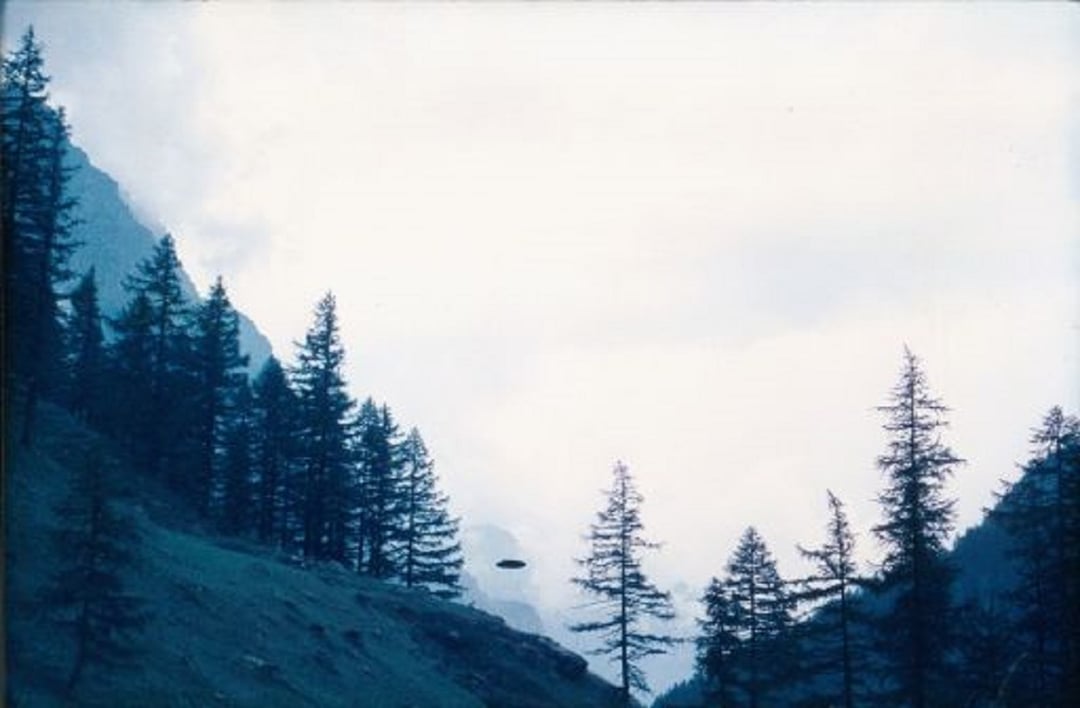
Super clear UFO photo taken in Saas-Fee, Switzerland on July 26, 1975.
Analysis of the Photograph
The central piece of evidence in the Saas Fee case is the photograph purportedly depicting a UFO. An initial step in scientific critique involves examining the image itself:
Environmental and Contextual Factors
The Swiss Alps present unique environmental conditions that can produce phenomena sometimes mistaken for UFOs:
In the case of the Saas Fee photograph, there is no definitive evidence linking the object to any natural or man-made phenomenon, though these explanations remain plausible.

Possible Explanations
Given the available evidence and environmental context, several plausible explanations emerge:
Photographic Artifact or Hoax
Optical Illusions and Natural Phenomena
Human-made Objects
Extraterrestrial Hypothesis
Scientific Perspectives and Methodology
From a scientific standpoint, evaluating UFO sightings involves rigorous methodology:
Applying this methodology to the Saas Fee case reveals the following:
Critical Evaluation of the Evidence
The lack of corroborative data diminishes the credibility of the UFO claim. The photograph’s ambiguous nature and absence of independent verification suggest it is most likely a natural or human-made phenomenon, or possibly a hoax. Scientific standards demand reproducibility, verifiability, and conclusive evidence, which are absent in this case.
Furthermore, the tendency for UFO images to be manipulated or misinterpreted underscores the importance of critical analysis. Many purported UFO photographs have been debunked or explained through natural phenomena or photographic artifacts.
Implications for UFO Research
While the Saas Fee picture does not constitute conclusive evidence of extraterrestrial visitation, it highlights broader issues in UFO research:
The case emphasizes that extraordinary claims require extraordinary evidence—a standard unmet here.
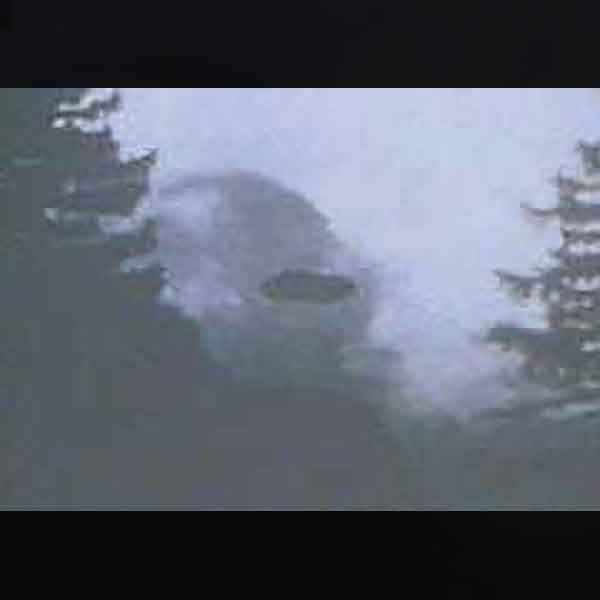
During a hunting expedition, a group of individuals encountered a low-hovering craft that glided quietly among the nearby trees. One member managed to capture a photograph of the object. Skeptic Wim Van Utrecht contended that the image might be fabricated.
Conclusion
The Saas Fee UFO encounter, as represented by the photograph, remains an intriguing but ultimately unsubstantiated incident within the scientific community. The most plausible explanations involve optical illusions, photographic artifacts, or human-made objects. Without supporting physical evidence or corroborative data, the claim of an extraterrestrial encounter is unwarranted.
This analysis underscores the importance of applying scientific rigor when evaluating UFO claims. While the allure of discovering extraterrestrial life persists, the scientific method demands careful scrutiny, reproducibility, and verification. The Saas Fee incident exemplifies the necessity for skepticism and the need for comprehensive data collection in exploring unexplained aerial phenomena.
References
{ PETER2011 }
Planetoïden die bijna onze planeet raakten
©Shutterstock
Planetoïden die bijna onze planeet raakten
Asteroïden zijn rotsachtige objecten die rond de zon draaien, en meteoren zijn stukken van asteroïden (of kometen) die de atmosfeer van de aarde binnendringen. Ze variëren sterk in grootte en bedreiging voor ons hier op aarde. Terwijl kleine meteoren elke dag voorkomen, zijn grote meteoren of asteroïden veel zeldzamer. Volgens NASA komt een asteroïde zo groot als een auto meestal één keer per jaar de atmosfeer van de aarde binnen. Deze grootte verbrandt voordat hij de grond raakt, wat een indrukwekkende vuurbal oplevert. Ruwweg elke 2000 jaar raakt een object ter grootte van een voetbalveld de aarde en richt aanzienlijke schade aan.
Geïntrigeerd? Lees dan verder om een aantal van de close calls van de afgelopen 20 jaar te ontdekken.
©iStock
Wat zijn meteoren?
Volgens NASA komt zo'n incident voor wanneer een meteoroïde de atmosfeer van onze planeet binnendringt en verdampt. Dit noemt men ook wel een vallende ster.
©Shutterstock
Wat is een meteoroïde?
Een meteoroïde is een klein afgebroken stuk die afkomstig is van een komeet of planetoïde.
©iStock
Hoe vaak dringen meteoroïden de atmosfeer binnen?
Dagelijks komen er meer dan 100.000 stofdeeltjes ten grootte van een zandkorrel op onze planeet terecht.
©iStock
Hoe groot kunnen meteoroïden worden?
NASA stelt dat ongeveer elke 2000 jaar een meteoroïde ter grootte van een voetbalveld de aarde treft.
©Shutterstock
Wat is een meteoriet?
Een meteoriet is in wezen een meteoroïde die erin slaagt de atmosfeer binnen te dringen en het oppervlak van de planeet te raken.
©Shutterstock
Hoe zit het met kometen?
Kometen zijn relatief kleine objecten die bestaan uit ijs dat in zonlicht kan verdampen. Wat bijzonder aan ze is, is dat ze een laag van stof en gas vormen die soms lijkt op een staart.
©iStock
Hoe groot kunnen kometen worden?
Asteroïden zijn tamelijk kleine, inactieve, stukken rots die in een baan om de zon draaien. Vele hiervan komen gevaarlijk dicht in de buurt van de aarde. De bewegingen van asteroïden worden voortdurend in de gaten gehouden. Ongeveer één keer per jaar dringt een asteroïde ter grootte van een auto de atmosfeer binnen, maar deze gaat in vlammen op voordat hij het oppervlak van de planeet bereikt.
©Getty Images
Wat is een planetoïde?
Een planetoïde is een klein rotsachtig object, die kleiner zijn dan een planeet maar groter dan meteoroïde. Ze bevinden zich in een baan om de zon, meestal tussen Mars en Jupiter. Ze variëren van 1 tot 1000 km in afmeting.
©iStock
Data en afmetingen
In het volgende deel van de galerij volgen een van de belangrijkste aardscheerders (zoals meteorieten, asteroïden, etc.) die vlakbij onze planeet zijn waargenomen, gerangschikt op de datum waarop ze zich het dichtst bij de aarde bevonden en hun grootte.
©iStock
18 december 2018
Pas kort geleden werd er een enorme vuurbal waargenomen. Volgens NASA was het de op één na grootste vuurbal in dertig jaar.
©Shutterstock
18 december, 2018
Op 18 december 2018 ontplofte een grote meteoor, die tien keer krachtiger was dan de atoombom van Hiroshima, in de atmosfeer. Het is echter nog niet zo lang geleden dat deze ontdekking werd gedaan. De explosie werd door een Amerikaanse militaire satelliet waargenomen en vervolgens kenbaar gemaakt aan NASA.
©iStock
2018 GE3
Datum: 15 april 2018
Grootte: 46-100 meter
Deze asteroïde had een aanzienlijke impact kunnen hebben als hij de aarde had geraakt.
©Getty Images
2017 EA
Datum: 2 maart 2017
Grootte: 1-5 meter
Astronomen ontdekten deze asteroïde slechts zes uur voor het moment waarop hij het dichtst bij de aarde was.
©iStock
2017 GM
Datum: 4 april 2017
Grootte: 2-7 meter
Deze meteoor was zo groot als een auto!
©iStock
2017 UJ2
Datum: 20 oktober 2017
Grootte: 1-5 meter
Dit was de asteroïde die in 2017 op één asteroïde na het dichtste bij de aarde in de buurt kwam.
©Getty Images
2016 DY30
Datum: 25 februari 2016
Grootte: 2-5 meter
Dit was een van objecten die in 2016 het dichtst in de buurt van de aarde kwam.
©Shutterstock
2016 EF195
Datum: 11 maart 2016
Grootte: 16-31 meter
Deze werd pas vier dagen nadat hij langs de aarde scheerde ontdekt.
©Shutterstock
2016 AH164
Datum: 12 januari 2016
Grootte: 3-7 meter
Ook deze asteroïde is eerder dicht in de buurt van de aarde gekomen.
©Shutterstock
2015 SK7
Datum: 22 september 2015
Grootte: 3-14 meter
Deze was zo groot als een bus!
©Shutterstock
2015 VY105
Datum: 15 november 2015
Grootte: 4–9 meter
Deze bevond zich dichter in de buurt van onze planeet dan tv- en weersatellieten.
©Shutterstock
367943 Duende
Datum: 15 februari 2013
Grootte: 30 meter
Gezien zijn omvang zou deze asteroïde, als hij onze planeet had geraakt, flinke verwoestingen hebben veroorzaakt.
©iStock
2012 KT42
Datum: 29 mei 2012
Grootte: 9 meter
NASA beschikt over videobeelden van deze asteroïde.
©iStock
2011 CQ1
Datum: 4 februari 2011
Grootte: 1 meter
Deze kleine asteroïde werd pas 14 uur voordat hij onze planeet passeerde opgemerkt.
©iStock
2011 MD
Datum: 27 juni 2011
Grootte: 14 meter
Wetenschappers zagen deze asteroïde eerst aan voor een stuk ruimteschroot.
©Getty Images
2010 WA
Datum: 17 november 2010
Grootte: 2–6 meter
De snelheid waarmee deze asteroïde ronddraaide verbaasde wetenschappers.
©iStock
2009 VA
Datum: 6 november 2009
Grootte: 4–13 meter
Deze asteroïde werd ongeveer 15 uur voordat hij de aarde naderde opgemerkt door de Catalina Sky Survey, een door NASA gesteund project.
©iStock
2004 FU162
Datum: 31 maart 2004
Grootte: 4–12 meter
Het zwaartekrachtveld van de aarde zorgde ervoor dat deze asteroïde van koers veranderde.
Zie ook: Foto's van Mars: Zo ziet de planeet er echt uit
Bronnen:
{ Starsinsider.com }
“De temperatuur zal een stevige duik nemen in België”: stort de Golfstroom in voor het einde van deze eeuw?
Vijf vragenWetenschappers vrezen dat de Golfstroom sneller zal stilvallen dan verwacht. Dat blijkt uit een nieuwe studie van Nederlandse klimaatwetenschappers. Volgens hen zal dit gevreesde klimaatkantelpunt zelfs nog ruim voor het einde van deze eeuw worden bereikt. Maar wat is de Golfstroom precies? Hoe kan die stilvallen? En wat is de impact hiervan op ons en de rest van Europa? HLN-wetenschapsjournalist Martijn Peters beantwoordt vijf vragen.
De Golfstroom is een onderdeel van een groter geheel in de Atlantische Oceaan, de ‘Atlantic Meridional Overturning Circulation’ (AMOC). Samengevat is het een systeem van zeestromingen die een soort lopende band voor het transport van water vormen. Over heel de aarde lopen er verschillende van die systemen. In ons deel van de Atlantische Oceaan wordt de transportband voornamelijk aangedreven door het verschil in temperatuur en de hoeveelheid zout in het water.

De Golfstroom brengt warm water vanuit de tropen via de Amerikaanse oostkust richting Europa en vervolgens nog verder noordwaarts. Terwijl het water van de Golf van Mexico zich naar het noorden van de Atlantische Oceaan verplaatst, koelt het af. In de winter bevriest het rond de Noordpool voor een deel tot zee-ijs, waardoor het zoutgehalte van het omringende water toeneemt. Dat koude, zoute water zinkt dan ter hoogte van Groenland en IJsland. Het zakt zo’n twee tot drie kilometer en stroomt terug zuidwaarts in de AMOC-transportband.
Na het ineenstorten van de Golfstroom kan de temperatuur bij ons tot 15 °C zakken
Het resultaat van deze continue stroming is dus dat er aan het oppervlak warm water naar het noorden vloeit en in de diepte koud water naar het zuiden. Per seconde vloeit er zo’n 12 tot 25 miljoen m³ water doorheen een punt in de AMOC. Dat zijn 10.000 olympische zwembaden. Toch duurt het wel een tijdje vooraleer zo’n kubieke meter helemaal rond is gereisd: naar schatting een duizendtal jaar.
Die is groter dan je zou vermoeden. Het warme water dat onze richting uitstroomt zorgt ervoor dat we hier een veel milder klimaat hebben. België ligt ongeveer op dezelfde hoogte als Canada, waar de temperaturen al gauw enkele graden lager liggen. Hetzelfde geldt voor Noorwegen, dat op dezelfde breedtegraad ligt als Alaska en Groenland. Voor West- en Noordwest-Europa kan de temperatuur gemiddeld tot 10 °C hoger liggen dan aan de overkant van de Atlantische Oceaan.
Dat betekent dus dat als de Golfstroom zou stilvallen, dat we dit duidelijk zullen merken in Europa. Wetenschappelijk onderzoek toont aan dat het noordelijk halfrond zou afkoelen terwijl het zuidelijke deel net gaat opwarmen. De grootste dalingen verwacht men in februari. Na het ineenstorten van de Golfstroom kan bij ons de temperatuur tot 15 °C zakken. In het noorden kan dit zelfs tot 35 °C zijn voor landen zoals Noorwegen. Die sterkere daling daar komt door de uitbreiding van het Arctische zee-ijs. Maar één ding is zeker, de temperatuur zal een stevige duik nemen. Daarnaast mogen we ook krachtigere winterstormen en meer droogte in de zomer verwachten.
Ja, dat kan. Als de AMOC verzwakt en stilvalt, dan ook de Golfstroom die daar een onderdeel van is. Meer nog, dat is in het verleden al meermaals gebeurd. Dit is dus geen ‘theoretisch concept’ uit wetenschappelijke studies. De meest recente ineenstorting vond zo’n 12.000 jaar geleden plaats. Op het einde van de ijstijd stroomde er toen zeer grote hoeveelheden smeltwater de Atlantische Oceaan in. Dit zoete water riep de motor van de AMOC een halt toe, waardoor hij tot stilstand kwam. België veranderde toen in een toendra, een boomloze, poolachtige vlakte.
Of hij nu gaat stilvallen, hangt af van of we een zogenaamd kantelpunt bereiken (voor meer informatie over wat kantelpunten zijn en welke we allemaal dreigen te overschrijden kan je dit artikel lezen). Dit is een onomkeerbaar punt waarop die motor opnieuw stopt met werken. Het is de klimaatverandering die ons momenteel naar zo’n kantelpunt aan het toeduwen is. De verhoogde instroom van zoet water door het smelten van onder andere ijs op Groenland zorgt ervoor dat de AMOC verzwakt. Dat komt doordat het water minder zout is en dus minder snel zinkt.
Sinds het midden van vorige eeuw stroomt hij zo’n 15 procent minder snel. Die vertraging zorgt er op zijn beurt voor dat er minder zout water naar het noorden vloeit. Het resultaat is een zelfversterkende vicieuze cirkel. Het kantelpunt is het moment waarop die in gang wordt gezet. Als het kantelpunt eenmaal bereikt is, zal het ongeveer honderd jaar duren voordat de AMOC en dus ook de Golfstroom helemaal stilvalt. Maar eenmaal op de glijbaan naar beneden kan je niet meer stoppen.
We zijn er nog niet, maar we zijn wel al goed op weg. In de afgelopen duizend jaar was de AMOC nog nooit zo zwak. In de afgelopen jaren is er steeds meer onderzoek gevoerd naar wanneer dit kantelpunt zou plaatsvinden. Eerst dacht men dat dit ten vroegste na 2100 zou zijn. Dat staat ook in het IPCC-rapport van 2021. De AMOC zou verder verzwakken, maar niet abrupt instorten deze eeuw.
Maar uit recentere studies blijkt nu dat het risico op het stilvallen van de Golfstroom deze eeuw groter is dan gedacht. Hoe komt dat? Volgens het IPCC-rapport zouden we het kantelpunt pas bereiken bij een opwarming boven de 4 °C, maar gebruikmakend van meerdere klimaatmodellen en supercomputers zijn Nederlandse wetenschappers tot de conclusie gekomen dat dit al kan bij een opwarming van 2,5 °C.
Hoe meer we de klimaatverandering kunnen inperken, hoe kleiner de kans dat we gaan klappertanden
In hun nieuwe studie zijn ze zelfs nog concreter en komen ze voor het eerst met een tijdsinschatting op de proppen. Volgens hen kan de Golfstroom al beginnen stil te vallen rond 2060. Warmt de aarde 4 °C op, dan zijn ze er vrijwel zeker van dat hij begint ineen te storten rond die periode. Maar ook bij een opwarming van ‘maar’ 2,5 °C is het nog fifty-fifty rond 2060. Ter informatie: de aarde is tot nu toe 1,3 °C opgewarmd.
Ja, we kunnen er nog iets tegen ondernemen. Uit deze nieuwe studie blijkt ook dat hoe meer we de klimaatverandering kunnen inperken, hoe kleiner de kans is op het stilvallen van de Golfstroom. We kunnen het dus volledig voorkomen, maar dan moeten we wel actie ondernemen.
Ancient face here before humans existed, UFO UAP sighting news 👽 proof aliens own Earth 🌎
 Mystery fighter jet crash in ocean off Gaza, UFO UAP sighting news. 📰 Shot Down by UFO!

 UFOs and Aliens: As a Scientist, I Believe in Both, But Here’s Where I Draw the Line

The discovery of aliens visiting Earth would be thrilling, but proving it hinges on finding solid evidence.
Reports of strange lights in the sky. What appear to be craft flying through the air following impossible trajectories. Radar and camera signatures of mysterious origins. Whatever you want to call them—Unidentified Flying Objects (UFOs) or Unidentified Anomalous Phenomena (UAPs)—they are certainly weird. I get it; many of the questions we have about these bizarre occurrences do not have a satisfying answer.
But this is exactly why, as a scientist, I won’t say they’re aliens.
While reports of alien ships have been a part of our culture since we began training the first astronauts at the dawn of the space age, there’s been a resurgence in UAP curiosity over the past two years, with congressional hearings, NASA-led working groups, public databases, and more, all devoted to answering the timeless question: what’s that in the sky? And the supposed evidence is compounding, too, with recordings from military and civilian pilots and crew. They have released footage of (what appear to be) flying machines crisscrossing their field of view, or screens showing radar, infrared, or other remote imaging of objects exhibiting downright strange behavior.
Many of these sightings end up having mundane, technical explanations, like wayward drones, miscalibrated sensors, or incomplete information, all of which create the illusion of something unusual.
Getty Images
Admittedly, some sightings defy explanation. These are situations in which no team of experts has been able to identify a cause behind a strange UAP report. That’s why the Office of the Director of National Intelligence designated a UAP Task Force to try to explain 143 mysterious sightings from a 2021 report. For example, in one 2015 case, Navy pilots observed objects moving fast with great agility, in some cases appearing to plunge underwater. To date, there has been no commonly agreed upon explanation for those sightings.
And without additional information, scientists have to stop and say three simple words: “I don’t know.”
But that phrase doesn’t mean we live in a sea of ignorance. We can say that we don’t know the true origins of the most mysteries of UAPs, and we can also say that they are likely not aliens.
As soon as you claim that an unexplained incident is due to alien activity, then you’re claiming to have an identification for the aliens that caused the incident.
After all, mysteries abound not just in Earth’s atmosphere, but throughout the cosmos. We don’t understand what powers Jupiter’s giant storms. We don’t understand why the sun’s corona is so hot. We don’t understand how the first stars appeared in the universe ... and so on. Ongoing mysteries are the reason that scientists get out of bed in the morning. Because we suppose that aliens are intelligent and technologically sophisticated, we could potentially turn to them to explain everything: aliens are powering Jupiter’s giant storms, and heating up the sun’s corona, and creating the first stars.
Finding the answers to any of these mysteries requires incredibly high standards of evidence. You can posit any theory you want, with as much beauty and sophistication and force of argument as you can cram into it—but if it goes against the evidence, it’s tossed in the trash.
For example, the history of science is littered with ideas that sounded good, but ultimately did not live up to the evidence. We used to think that a mother’s stress levels caused birth defects, that the sun orbited around Earth, and that an invisible kind of fluid was responsible for causing heat. With more evidence, we now understand genetics, gravity, and thermodynamics, and so we left those old ideas behind.
Ufology: From Fringe Field to Serious Science

No, Those Weird Spheres Weren’t Alien Tech

How NASA’s Next Super Telescope Could Find Aliens
When it comes to UAPs, if you want to claim that aliens are visiting Earth and this is what we’re seeing, by all means, go ahead. It’s a hypothesis, and a testable one at that: if we were to ever get our hands on one of these supposed spacecraft, crack open the door, and say hello to whomever is inside, then the hypothesis would be validated.
But we haven’t yet done that. So we can’t say for certain that UAPs, even some of them, are due to alien activity. It’s in the name, after all: unidentified anomalous phenomena remain unidentified. As soon as you claim that an unexplained incident is due to alien activity, then you’re claiming to have an identification for the aliens that caused the incident.
Since evidence is the ultimate judge, you need a substantial amount of positive evidence working in your favor. You also need a cohesive base of support for your hypothesis. In other words, you can’t drop a bomb like “it’s aliens” and walk away; you have to back it up and provide additional sources of evidence. For example, I can say with an extreme amount of confidence that our universe is 13.77 billion years old. I didn’t just pull that number out of a hat, or make an educated guess. That number comes from over a century of studying the universe: combining data and more than one line of evidence from the expansion rate of the universe, observing the leftover light from the Big Bang, taking insights from nuclear theory, and more. Every simple statement in science is backed up by mountains of evidence.

These are not impossible questions to navigate, but to date, there have not been any successful answers, and so the alien hypothesis remains a relatively weak one.
On the other hand, as long as UAPs remain unidentified, it’s impossible to rule out an alien hypothesis entirely. However, without further evidence, we can point to potential explanations that make a much stronger case and more readily coexist with our wider body of knowledge—even if we can’t yet prove them. For example, we know that sensors occasionally malfunction and give false readings, or that computer analysis algorithms can misinterpret data. Therefore, what appears to be an alien ship may in fact be a weather balloon instead. It does not take great leaps in logic or vast knowledge to make such a statement, and so it’s a much stronger hypothesis, simply because it’s a more likely, albeit mundane, explanation.

Lastly, intelligent aliens make for a poor scientific hypothesis because the idea of intelligent aliens could explain virtually any mysterious phenomenon. When scientists come across a new situation and want to explain it, they can’t just make up supernatural stories. They are forced to explain the situation in terms of rules of the natural world: forces, energies, particles, and so on.

The U.S. Government Must Now Collect UFO Sightings

Is One of the Pentagon’s UFOs a Party Balloon?

Are UFOs Just Future Humans Watching Us?
Because aliens could explain everything, they end up explaining nothing. Aliens on Earth are not a useful scientific hypothesis, because it doesn’t help us dig deeper into the workings of nature. Instead, aliens bring up more questions than they answer, making our scientific lives more complicated, which is the opposite of what we try to do in science.
Speaking personally, I think there are aliens out there in the universe. There are likely many intelligent civilizations living in parallel to ours, since it’s a big universe, after all. But there is no substantial evidence they have visited Earth.
Simultaneously, I can’t explain some of the observed UAP phenomena. These two statements are not in contradiction—“I don’t know” and “that’s not a good hypothesis, therefore I don’t have to believe it” both speak to the spirit of scientific curiosity. This spirit moves us to explore the universe around us and let our imaginations run free … but to let the evidence ultimately decide what we should believe in.
RELATED VIDEOS
NASA’s Astronomy Picture of the Day: Meteor against the Pleiades
The province of Al-Ula in Saudi Arabia has attracted the attention of the global astronomical community. A photograph of the night sky above this region was selected by the US National Aeronautics and Space Administration (NASA) as its “Astronomy Picture of the Day.” All because the astrophotographer managed to capture a bright green meteor against the backdrop of the Pleiades star cluster. The photograph, taken with a one-hour exposure, is not only visually stunning, but also confirms Al-Ula’s status as one of the most attractive places on the planet for stargazing.
“Meteor and Star Cluster.”
Authors: Yousif Alqasimi & Essa Al Jasmi / NASA
Why Al-Ula? The answer lies in the region’s crystal clear, dark skies. Thanks to the almost complete absence of light pollution, it is rated among the top 5% of places in the world for astronomical observations. This unique status was officially confirmed by DarkSky International, which awarded the prestigious Dark Sky certificate to two sites in the province: the ancient archaeological complex of Hegra, listed as a UNESCO World Heritage Site, and the Gharameel Nature Reserve. This makes Makkah Region the destination for astrophotographers and stargazers from around the world.
 The Pleiades in a Hubble Space Telescope image
The author named the photograph “The Meteor and the Star Cluster.” For the first time in history, NASA has highlighted the work carried out in Al-Ula. This achievement was made possible thanks to the efforts of Manarat AlUla, an organization that is working hard to ensure a night sky free of light pollution and to develop the region as a global center for space research and astro-tourism. NASA’s choice highlights not only the incredible beauty of this corner of Saudi Arabia for those who seek to glimpse the deepest secrets of the universe.
nterdimensional Beings of Pure Light and Energy – The Potential Truth Behind the Alien Mysteries
Interdimensional Beings of Pure Light and Energy – The Potential Truth Behind the Alien Mysteries
Abstract
The phenomenon of unidentified flying objects (UFOs) and claims of encounters with extraterrestrial beings have persisted across cultures and centuries. Traditional explanations have centered on extraterrestrial origin within our three-dimensional universe; however, recent developments in physics suggest the possible existence of higher dimensions and interdimensional entities. This dissertation explores the hypothesis that some reported encounters with "aliens" may, in fact, be interactions with beings existing outside our conventional spacetime, composed of light and energy, and operating within interdimensional realms. Drawing from quantum physics, string theory, and consciousness studies, this work aims to evaluate the scientific plausibility of such entities and their potential role in the broader understanding of UFO phenomena.
Introduction
The enigma of unidentified flying objects (UFOs) and alleged extraterrestrial encounters has captivated human imagination for centuries. From ancient cave paintings and folklore to modern-day conspiracy theories, the belief that some visitors from beyond our planet—or even beyond our known universe—may be visiting Earth endures. These phenomena have sparked curiosity, fear, and speculation across cultures and generations. Conventional scientific approaches have largely attributed UFO sightings to atmospheric phenomena, psychological factors, or technological anomalies, such as misidentifications of natural objects, optical illusions, or experimental aircraft. Despite these explanations, numerous reports continue to challenge these rationalizations, describing encounters with beings that are luminous, energy-based, and capable of defying known physical laws.
Over the years, witnesses and researchers have documented sightings of entities that seem to lack physical solidity, instead appearing as glowing lights or energy forms that can move instantaneously or through seemingly impossible means. These descriptions often conflict with conventional understanding of matter and physics, prompting many to seek alternative explanations. Recent advances in physics, particularly in the realms of higher-dimensional theories, quantum mechanics, and the nature of consciousness, have opened intriguing new avenues for interpreting these phenomena. Some scientists and theorists propose that these entities could be manifestations of beings existing outside our familiar four-dimensional spacetime, perhaps in higher dimensions or as pure energy forms.
The concept of interdimensional beings—entities existing in dimensions beyond human perception—provides a compelling framework that aligns with many of the anomalous reports associated with UFO encounters. Such beings could potentially appear as luminous, energy-based entities that can traverse space and time in ways that defy our understanding of physics. This dissertation aims to explore whether these beings could be interpreted as higher-dimensional entities, composed of pure light and energy, capable of manifesting in our dimension under certain conditions. By examining scientific theories and evidence, this study seeks to evaluate the plausibility of these interpretations and contribute to the ongoing discourse surrounding UFO phenomena and the possibility of extraterrestrial or interdimensional life.
Theoretical Foundations
Higher Dimensions in Physics
The concept of extra dimensions has a long-standing history in physics, dating back to the early 20th century with the pioneering work of Theodor Kaluza and Oskar Klein. Their aim was to unify gravity and electromagnetism by proposing an additional spatial dimension beyond the familiar three. In modern physics, this idea has evolved significantly, especially within the framework of string theory and M-theory. These theories suggest that our universe may contain up to 11 dimensions—comprising the familiar four (three spatial dimensions plus time) and several additional compactified dimensions that are curled up at scales too small to detect directly. These extra dimensions are thought to be compactified into complex shapes such as Calabi-Yau manifolds, rendering them imperceptible at our macroscopic scale. Nonetheless, their existence could have profound implications for understanding the fundamental forces and particles. Theories involving higher dimensions also imply that phenomena outside our perceptual capacity—such as interdimensional beings or entities—could exist and possibly influence our universe in subtle ways. These beings might interact with us through phenomena that are currently considered anomalous or unexplained by conventional physics, hinting at a reality richer and more complex than our immediate perception.
Quantum Mechanics and Nonlocality
Quantum mechanics introduces a radically different perspective on the nature of reality, particularly through the phenomenon of nonlocality. Quantum entanglement, where particles become correlated such that the state of one instantly influences the state of another regardless of the distance separating them, challenges classical notions of locality and causality. Some interpret entanglement as evidence of an underlying interconnectedness that transcends the limitations of spacetime as described by classical physics. This interconnectedness could imply the existence of hidden dimensions or a deeper level of reality where information and influence can travel instantaneously. Such perspectives open the possibility that interactions with entities existing in higher or alternate dimensions might be facilitated through nonlocal quantum processes. If entangled particles can influence each other across vast distances instantaneously, then perhaps consciousness or other phenomena could similarly operate across higher-dimensional realms, enabling contact or interaction with beings that exist outside our conventional understanding of space and time.
Consciousness and the Observer Effect
The role of consciousness in shaping reality is a topic of ongoing debate and investigation. Certain interpretations of quantum mechanics suggest that observation or awareness plays a fundamental role in the manifestation of physical phenomena—a concept often referred to as the observer effect. Some hypotheses propose that consciousness itself could serve as a bridge between different dimensions, enabling interaction with entities or realms beyond our physical universe. This idea is supported by anecdotal reports of luminous, energy-based beings, such as spirits or interdimensional entities, which some believe are manifestations of consciousness operating across dimensional boundaries. These reports often describe entities that appear to be composed of pure energy or light, and they seem to interact with individuals in ways that defy conventional physical explanations. Such phenomena could reflect the influence of consciousness extending beyond traditional physical limits, potentially opening portals or gateways to higher or alternate dimensions. While these ideas remain speculative and are not yet scientifically validated, they suggest intriguing possibilities about the interconnectedness of consciousness and the fabric of reality itself.
In summary, the theoretical frameworks involving higher dimensions, quantum nonlocality, and consciousness provide a multifaceted foundation for exploring the existence and interaction with interdimensional entities. While these ideas are still largely speculative and require further scientific validation, they open fascinating avenues for understanding the deeper nature of reality and the potential for entities that exist beyond our immediate perceptual horizon.
UFO Encounters and Luminous Entities
Many credible witnesses across different regions and backgrounds have reported encounters with beings that are described as luminous or radiant. These entities often manifest as pure light, energy forms, or glowing apparitions that defy conventional understanding. Witnesses frequently describe these luminous entities as appearing suddenly, sometimes materializing out of thin air, and disappearing just as swiftly. Their behaviors include levitation, non-material presence, and movements that appear to transcend physical laws, such as instantaneous travel or hovering without any visible means of support. Some reports also mention interactions where these entities seem to communicate through light patterns or electromagnetic signals, further complicating their classification within known biological or technological frameworks. The consistency of such reports from diverse sources lends credibility to their authenticity, prompting researchers to consider the possibility that these luminous beings are manifestations from an interdimensional realm or a higher vibrational plane.
Historical and Cultural Parallels
Throughout history, numerous cultures and religions have documented encounters with beings of pure light. For example, angels in Judeo-Christian traditions, devas in Eastern philosophies, and spirits in indigenous cultures often share visual and behavioral similarities with modern reports of energy-based entities. These historical accounts describe luminous beings that serve as messengers, guides, or divine entities, reinforcing the idea that such phenomena are not merely modern inventions but are rooted in a universal archetype. The recurring theme of radiant, non-material entities across different eras and civilizations suggests that these experiences could be reflections of a reality that extends beyond the physical universe. Many researchers propose that these entities might be interdimensional travelers or entities existing in a realm parallel to our own, accessible under certain conditions or through specific states of consciousness.
Photographic and Video Evidence
While photographic and video documentation of luminous entities is often met with skepticism, some instances challenge conventional explanations. Certain images and recordings display entities emitting bright light or energy fields that appear to interact with their environment in ways inconsistent with known technology or biological beings. Advanced analysis tools, such as spectral analysis and digital forensics, sometimes reveal that these luminous figures lack a solid physical structure, indicating their non-material or energetic nature. In some cases, the entities seem to manipulate electromagnetic fields or produce anomalous light phenomena that cannot be easily replicated by human technology. Although definitive proof remains elusive, such visual evidence continues to intrigue researchers and enthusiasts alike, fueling debates about the true nature of these luminous beings and their possible interdimensional origins.
In conclusion, the collective empirical reports, historical parallels, and visual evidence all suggest that luminous, energy-based entities are a real phenomenon that warrants further scientific investigation. Whether these beings are interdimensional travelers, spiritual entities, or manifestations of higher consciousness, their existence challenges our current understanding of reality and opens new avenues for exploring the nature of existence beyond the physical realm.
According to electromagnetic theory, light is a fundamental form of energy that exhibits both wave-like and particle-like properties, the latter in the form of photons. Photons are massless particles that travel at the speed of light, and they serve as the basic quanta of electromagnetic radiation. If entities exist purely as energy or light, they could, in theory, bypass many of the physical limitations that constrain matter. Such entities would not be bound by the same physical laws as solid objects, such as friction or matter resistance, which could explain reports of rapid, non-material movement. These beings might manifest as luminous apparitions or flashes of light, consistent with descriptions of spirits or interdimensional visitors in various cultural narratives. The concept of light-based entities aligns with certain interpretations of quantum field theory, which postulates that energy fields permeate all space and could, under specific conditions, give rise to localized phenomena that appear as conscious entities. Moreover, if these beings are composed of energy that can interact with electromagnetic fields, they could potentially influence or be influenced by electromagnetic signals, opening pathways for scientific investigation into their existence.
Theoretical physics offers intriguing possibilities for the existence of higher dimensions beyond our familiar three-dimensional space and one dimension of time. String theory, for example, posits that additional spatial dimensions—possibly up to eleven—could exist but are compactified or hidden at scales beyond our current observational capabilities. If beings inhabit these higher dimensions, their interactions with our universe could occur via phenomena such as wormholes—hypothetical tunnels through spacetime that connect distant points or different dimensions—or through quantum tunneling, where particles or entities bypass energy barriers due to quantum effects. Such interactions might produce observable effects that appear inexplicable within our current understanding of physics, such as sudden appearances or disappearances, or luminous phenomena that defy conventional explanation. These higher-dimensional entities could influence our reality indirectly, perhaps by modulating electromagnetic or gravitational fields, resulting in phenomena that are perceived as ghostly or interdimensional encounters. Scientific models exploring these interactions suggest that if such beings exist, their modes of travel and communication would be vastly different from our conventional understanding, involving complex geometries of spacetime and quantum mechanics.
Despite the intriguing theoretical frameworks supporting the possibility of interdimensional beings, empirical evidence remains elusive. Current scientific methods lack the technological capacity to detect or measure entities that may exist in higher dimensions or as pure energy forms outside our observable universe. Many phenomena attributed to interdimensional or spiritual entities could have alternative explanations rooted in psychology, such as hallucinations, sleep paralysis, or cognitive biases. Others might stem from undiscovered physical processes, including unknown particles or forces that could explain luminous phenomena. Additionally, the subjective nature of many reports complicates scientific validation; eyewitness accounts are prone to errors, misinterpretations, and cultural influences. The challenge lies in developing experimental methodologies capable of testing hypotheses about higher dimensions or energy-based beings, which often operate outside the scope of current physics. Moreover, the lack of reproducible, measurable evidence makes it difficult to establish scientific consensus on the existence of interdimensional entities. Consequently, while theoretical physics provides a plausible foundation for their existence, the scientific community remains cautious, emphasizing the need for rigorous evidence before accepting such extraordinary claims into the realm of validated scientific knowledge.
In summary, the scientific plausibility of interdimensional beings hinges on the understanding of light, energy, and higher-dimensional physics. While current theories suggest that such entities could, in principle, exist and manifest through luminous phenomena or non-material movement, substantial empirical evidence is still lacking. Advances in physics and technology may, in the future, shed light on these mysterious phenomena, but for now, they remain within the realm of theoretical possibility and scientific curiosity.
Traditionally, UFO encounters have been viewed through the lens of extraterrestrial visitation—alien crafts arriving from distant planets within our universe. However, emerging theories suggest that some UFO phenomena might involve interdimensional entities, which fundamentally shifts our understanding of these encounters. If certain UFO sightings and experiences are indeed manifestations of beings from other dimensions or realities beyond our familiar universe, then the paradigm must expand from a purely extraterrestrial framework to encompass a multiversal perspective. This broader outlook invites a reevaluation of the nature of reality itself, suggesting that our universe may be just one of many interconnected dimensions or realms.
This reconceptualization has profound implications for ufology, prompting researchers to consider alternative explanations for phenomena that do not fit conventional models. It encourages multidisciplinary research integrating physics—particularly theories related to higher dimensions and multiverses—along with consciousness studies, to explore how these entities might interact with our reality. Anthropology and cultural studies can also offer insights into how different societies interpret and mythologize such encounters, potentially uncovering shared symbolic frameworks or collective subconscious influences. Embracing a multidimensional perspective necessitates an openness to novel hypotheses, rigorous investigation, and the development of new methodologies capable of detecting or measuring interdimensional phenomena.
Investigating the existence and nature of interdimensional beings could revolutionize our understanding of fundamental physics. Currently, our models of spacetime are grounded in Einstein's theory of general relativity, which describes gravity and the fabric of our universe. However, the existence of entities operating across different dimensions might require modifications or extensions to these theories. For example, understanding how such beings might traverse or communicate across dimensions could shed light on the nature of consciousness, energy, and spacetime itself.
This line of inquiry could lead to groundbreaking technological advancements. If we could unlock the mechanisms enabling interdimensional travel or communication, it might pave the way for revolutionary technologies—such as devices capable of detecting or even interacting with higher-dimensional realms. Such breakthroughs could have profound implications not only for scientific research but also for practical applications in communication, transportation, and information transfer. Moreover, exploring these phenomena may challenge and expand our current understanding of the laws of physics, potentially leading to the discovery of new particles, forces, or principles that govern the multiversal structure.
Despite the intriguing possibilities, scientific skepticism remains a crucial component in the investigation of interdimensional UFO phenomena. Extraordinary claims require extraordinary evidence, and currently, the evidence for interdimensional entities remains largely anecdotal or based on unverified reports. Developing rigorous, reproducible experiments is essential to move beyond speculation and establish empirical foundations for these phenomena.
Technological advancements will play a pivotal role in future research. Instruments capable of detecting subtle anomalies in spacetime, electromagnetic fields, or consciousness states could provide valuable data. For instance, advancements in quantum sensing, high-energy physics, and neurotechnology might enable scientists to observe phenomena indicative of interdimensional interactions.
Collaboration across disciplines is necessary to approach these complex issues comprehensively. Physicists, psychologists, neuroscientists, and anthropologists must work together to interpret data, design experiments, and develop theories. Psychological and cultural factors should also be considered, as human perception and cultural narratives can influence accounts of UFO encounters. Addressing biases and ensuring scientific rigor will help distinguish genuine phenomena from illusions or misinterpretations.
Looking ahead, the path forward involves a combination of open-minded inquiry and stringent scientific methodology. Building international research initiatives, sharing data openly, and fostering interdisciplinary dialogue are crucial steps. As our technological capabilities grow, so too will our capacity to test hypotheses related to interdimensionality. Ultimately, embracing the possibility that UFO phenomena might involve entities beyond our current understanding could catalyze a new era of scientific discovery—one that challenges and potentially transforms our comprehension of the universe and our place within it.
The hypothesis that some alien encounters are interactions with interdimensional beings composed of pure light and energy presents a compelling, if speculative, avenue for scientific exploration. While current empirical evidence remains limited and often ambiguous, this perspective aligns with emerging theories in physics, consciousness studies, and historical accounts of extraordinary experiences. The idea that these entities could originate from higher dimensions or alternate realities challenges traditional notions of extraterrestrial life confined to physical, three-dimensional space. Instead, it suggests that consciousness and energy might play a fundamental role in bridging different planes of existence.
Recent developments in quantum physics, such as the multiverse theory and the concept of parallel dimensions, provide a scientific basis for hypothesizing the existence of entities beyond our perceptual limitations (Kaku, 2014). Furthermore, research into altered states of consciousness, including near-death experiences and mystical encounters, often describes interactions with luminous beings or entities that resemble interdimensional visitors (Greyson, 2000). These accounts, although subjective, are supported by neurological and psychological studies indicating that consciousness may extend beyond physical brain processes (Tart, 2009).
Additionally, historical and cultural records worldwide describe encounters with luminous, energy-based beings, suggesting a perennial human recognition of non-material entities (Lévi-Strauss, 1963). Modern sightings and abduction reports often include descriptions of entities made of light or energy, which could be indicative of interactions with interdimensional phenomena (Hynek, 1972). From a scientific perspective, the interface between consciousness, energy, and higher dimensions warrants further exploration using interdisciplinary approaches, including physics, neuroscience, and anthropology.
Embracing this broader understanding could revolutionize our comprehension of the universe, consciousness, and the fundamental nature of reality itself. It opens new pathways for research into the fabric of existence, potentially leading to groundbreaking discoveries that transcend traditional scientific boundaries. While speculative, this hypothesis invites a paradigm shift that could ultimately unify various fields of knowledge, expanding our understanding of what it means to be conscious and connected within a vast, multidimensional cosmos.
ELEMENTS OF STUDY:
References:
{ PETER2011 }
Al in de jaren 60 is deze mysterieuze schedel ontdekt. Pas nu is er meer over duidelijk
Al in de jaren 60 ontdekten wetenschappers per toeval een vrijwel complete schedel in een grot in Griekenland. Sindsdien is het ding een groot mysterie. Maar eindelijk is er meer duidelijk over de leeftijd ervan.
Op twee vlakken stelt de schedel, die gevonden is in de Petralonagrot, wetenschappers voor een raadsel. Ten eerste: met wat voor mensachtige hebben we hier te maken? Het fossiel verschilt behoorlijk van zowel neanderthalers als moderne mensen. Ten tweede was tot op de dag van vandaag onbekend hoe oud de schedel is. Eerdere schattingen liepen uiteen van ongeveer 170.000 tot 700.000 jaar.
Maar over dat laatste is nu meer duidelijk geworden door middel van nieuwe zogenoemde U-serie-dateringen, die zijn uitgevoerd op het calciet dat op de schedel groeide. Daaruit blijkt dat het hoofd minimaal 286.000 jaar oud is.

Wat is U-serie-datering?
De U-serie-datering maakt gebruik van de natuurlijke eigenschappen van uraniumisotopen. Uranium vervalt met een vaste halfwaardetijd tot thorium. Door de verhouding tussen uranium en thorium te meten, kun je berekenen wanneer dit proces begon en zo een nauwkeurige datum vaststellen.
In bodemlagen worden voortdurend uraniumisotopen afgezet door omgevingsfactoren, waardoor de U-seriemethode daar niet bruikbaar is: de grond bevat immers een mengsel van isotopen die allemaal hun eigen ‘klok’ hebben.
 Dit gesteente is bedekt met jongere lagen, waarvan de jongste gedateerd is op 228.000 jaar.
Foto: Journal of Human Evolution
De omstandigheden in een grot
Maar in een grot verandert dat. Vocht dat door de bodem sijpelt, neemt wateroplosbare mineralen, waaronder uranium, mee, maar laat het thorium achter. Wanneer dit vocht zich ophoopt op een grotmuur en verdampt, blijven sporen van mineralen en uraniumisotopen achter zonder thorium. Zo vormt zich een korstachtige afzetting. Binnen die afzetting vervalt uranium verder tot thorium, maar nu in een afgesloten systeem. Elke laag krijgt daarmee een eigen startpunt dat exact te dateren is.
U-serie-datering analyseert vervolgens de uranium-thoriumverhoudingen in de binnenste lagen om vast te stellen wanneer die voor het eerst gevormd zijn. Dit levert een minimale leeftijd op voor alles wat eronder ligt.
Calciet
Voor het onderzoek zijn monsters genomen van de calcietlaag die de schedel bedekte, maar ook van stalagmieten, stalactieten en calcietafzettingen in verschillende delen van de grot: de Mausoleumkamer, waar de schedel naar verluidt aan een wand vastzat, de gang ernaartoe en andere secties. Calciet is een mineraal dat voornamelijk uit het zout calciumcarbonaat bestaat. Het is een van de meest voorkomende mineralen in de aardkorst.
De resultaten van de metingen van de calcietkorst op de schedel geven een minimale leeftijd van 286.000 ± 9.000 jaar. Als de schedel aanvankelijk droog of afgedekt bleef, kan hij nog veel langer in de grot hebben gelegen, want de methode kan alleen dateren vanaf het moment dat calciet begon te vormen door blootstelling aan vocht en verdamping. Voor een maximumleeftijd wordt gekeken naar de ouderdom van andere grotelementen.
Primitieve groep
Dateringen van de stalagmietlaag in de Mausoleumkamer leverden een leeftijd op van 510.000 ± 29.000 jaar bovenaan en een minimum van 650.000 jaar van binnen, wat aangeeft dat de bedekking van de schedel veel later begon dan de vorming van de grot zelf.
Op basis van hun bevindingen concluderen de onderzoekers nog iets anders interessants: de mensachtige in de Petralonagrot was geen Homo sapiens en ook geen neanderthaler. Hij maakte deel uit van een aparte, primitievere groep. Het idee dat er nog een andere mensachtige zich in die tijd in Europa ontwikkelde naast de neanderthalerlijn is niet nieuw. De nieuwe resultaten zijn hier een bevestiging van.
GERELATEERDE VIDEO'S
Why are alien visits and UFO sightings highest in America? Explosive truth revealed in new report
Why are alien visits and UFO sightings highest in America? Explosive truth revealed in new report
A new Pentagon-backed report by the All-domain Anomaly Resolution Office (AARO) has revealed that many UFO sightings in the United States were not evidence of alien activity but part of deliberate military disinformation efforts. During the Cold War, the U.S. government planted UFO conspiracy theories, particularly around sites like Area 51, to conceal classified weapons testing. The report explains that some military officers were even shown fa ..
Area 51 secret revealed: NASA scientist answers what the mysterious restricted land is actually used for: 'I could tell you, but...'
Area 51 secret revealed: NASA scientist answers what the mysterious restricted land is actually used for: 'I could tell you, but...'
A new WIRED interview has shed light on the enduring mystery of Area 51. NASA astrobiologist David Grinspoon clarified that the Nevada base is used to test experimental military aircraft, not alien spacecraft. Despite official statements, speculation persists, fueled by recent wildfires and decades of secrecy. Acknowledged by the CIA only in 2013, the site remains a cultural symbol of UFO folklore, while the real search for extraterrestrial life ..
Astronomers are racing to study our solar system's newest 'interstellar visitor.' Here's why.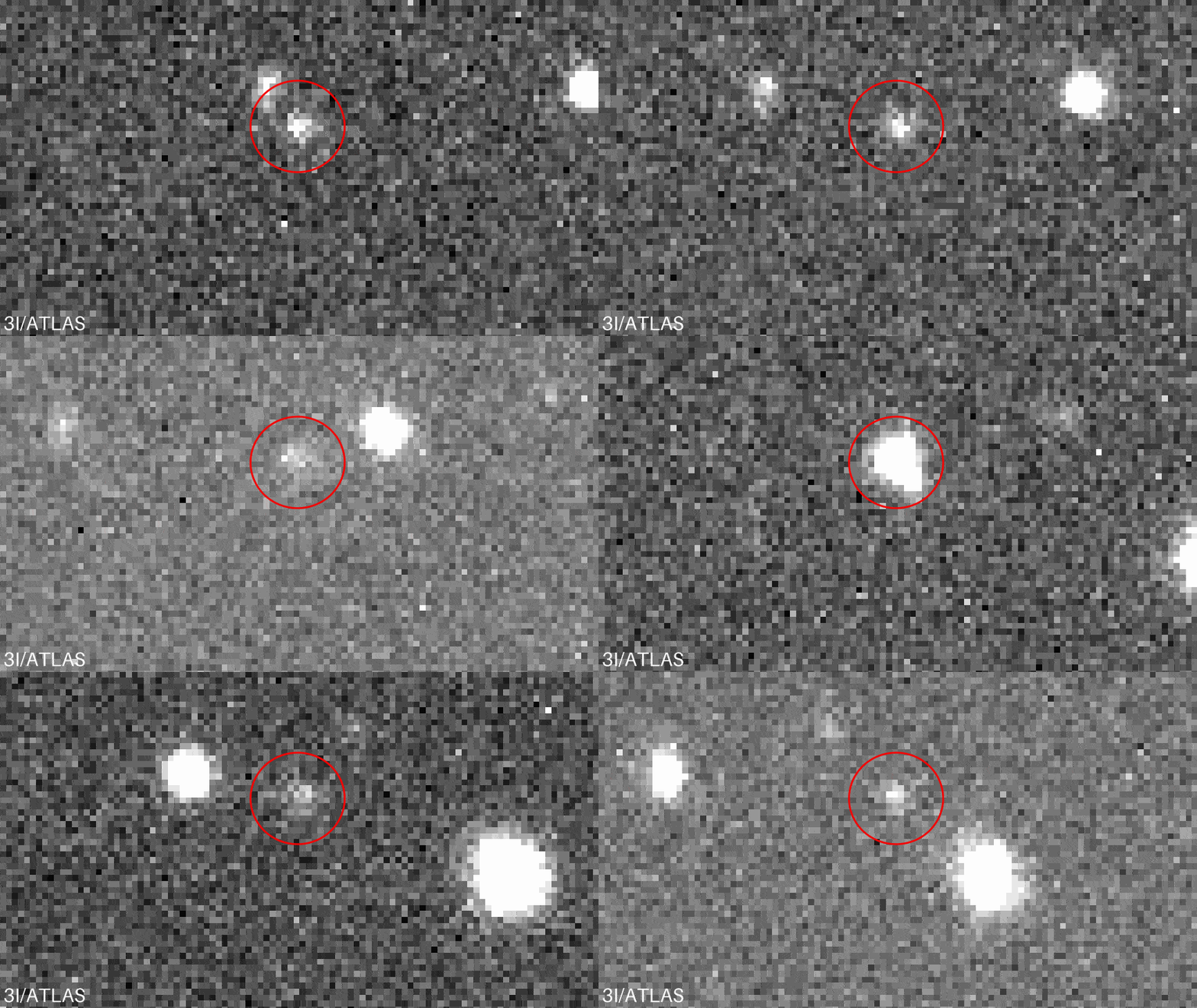
The astronomical community is abuzz over a newly discovered "interstellar object," only the third of its kind ever seen, which is currently shooting toward us on a one-way trip through the solar system.
The race is now on to study the alien interloper, named 3I/ATLAS, before it leaves forever.
"We only have one shot at this object and then it's gone forever," Darryl Seligman, an astronomer at Michigan State University and the lead author of a new paper about the object, told Live Science. "So we want as much information from all of our observatories as we can possibly get."
You may like
Interstellar comet 3I/ATLAS transforms into a giant 'cosmic rainbow' in trippy new telescope image
NASA's Hubble telescope reveals most detailed photos of interstellar visitor 3I/ATLAS to date
Related:
Experts say studying 3I/ATLAS could potentially tell us about alien star systems and how exoplanets form — and we may even be able to trace it back to its origins.
3I/ATLAS was discovered on July 1 from data collected by the Asteroid Terrestrial-impact Last Alert System (ATLAS) and immediately piqued researchers' interests due to its trajectory and extreme speed, which exceeds 130,000 mph (210,000 km/h). Within 24 hours of its discovery, NASA had confirmed that it was an interstellar object.
A day later (July 3), a group of more than 40 astronomers, led by Seligman, had uploaded the first paper describing the extrasolar entity to the preprint database arXiv. All data so far indicates that 3I/ATLAS is a large comet surrounded by a cloud of ice, dust and gas up to 15 miles (24 kilometers) across.
Prior to this discovery, only two other interstellar objects (ISOs) had been spotted: 1I/'Oumuamua, a space rock that was discovered in 2017; and 2I/Borisov, a comet spotted in 2019. This makes the newly discovered comet particularly appealing to astronomers.
However, there is a limited window to study 3I/ATLAS. The comet, which is currently around 4.5 times farther from the sun than Earth, will reach its closest point to the sun, or perihelion, on Oct. 30, before beginning its journey out of the solar system, when it will get much harder to spot. It will also be out of view between late September and early December, when it is positioned on the opposite side of the sun to Earth.
Over the next few weeks and months, researchers will attempt to use "any and all telescopes" they can to make observations of 3I/ATLAS, Sean Raymond, a planetary scientist at the University of Bordeaux in France, told Live Science in an email.
This will be especially true for observatories in the Southern Hemisphere, which will have a better view of the increasingly bright comet, Aster Taylor, a graduate student at the University of Michigan and co-author of the arXiv study, told Live Science in an email.
Experts are particularly excited about the possibility of imaging 3I/ATLAS with the Vera C. Rubin Observatory — the world's most powerful optical telescope, which recently released its first images. The observatory, located in Chile, has already proved to be adept at imaging never-before-seen asteroids and will undoubtedly target the interstellar comet when it comes fully online in a few months time.
The James Webb Space Telescope (JWST) and Hubble Space Telescope, meanwhile, could help reveal the interloper's chemical composition because of their ability to study the object in multiple wavelengths of the electromagnetic spectrum Pedro Bernardinelli, a planetary scientist at the University of Washington's DiRAC Institute, told Live Science in an email.
Some researchers have also proposed using NASA's Mars rovers to snap pictures of the comet as it makes a close pass by the Red Planet a few weeks before it reaches perihelion. The robots have previously been used to spy on dangerous sunspots lurking on the sun's far side from Earth.
Another intriguing option is to send a spacecraft to collect samples from 3I/ATLAS. However, the general consensus among experts is that such a mission is unlikely to happen
Studying 3I/ATLAS provides a rare opportunity for us to glean insights into alien star systems and potential exoplanets.
"Interstellar objects are probably the leftovers of the formation of exoplanets," Raymond said. "Studying them can open a window into understanding other planetary systems' formation and evolution."
In this way, ISOs like 3I/ATLAS also "connects the solar system with its galactic environment," Amir Siraj, a doctoral candidate at Princeton University who has previously studied ISOs, told Live Science.
While it is still unclear where 3I/ATLAS came from, it's possible we can pinpoint its origins, especially if researchers can work out how old it is, Wes Fraser, an astronomer with National Research Council Canada, told Live Science in an email. And as the comet reaches perihelion, the amount of ice and other "volatile" substances that get burned off the interloper will help us narrow this down, Fraser added.
However, even then "we probably won't ever be able to pin it down to a single star system," Taylor argued.
RELATED VIDEOS
Cosmic Butterfly Unlocks Secrets of How Rocky Planets Form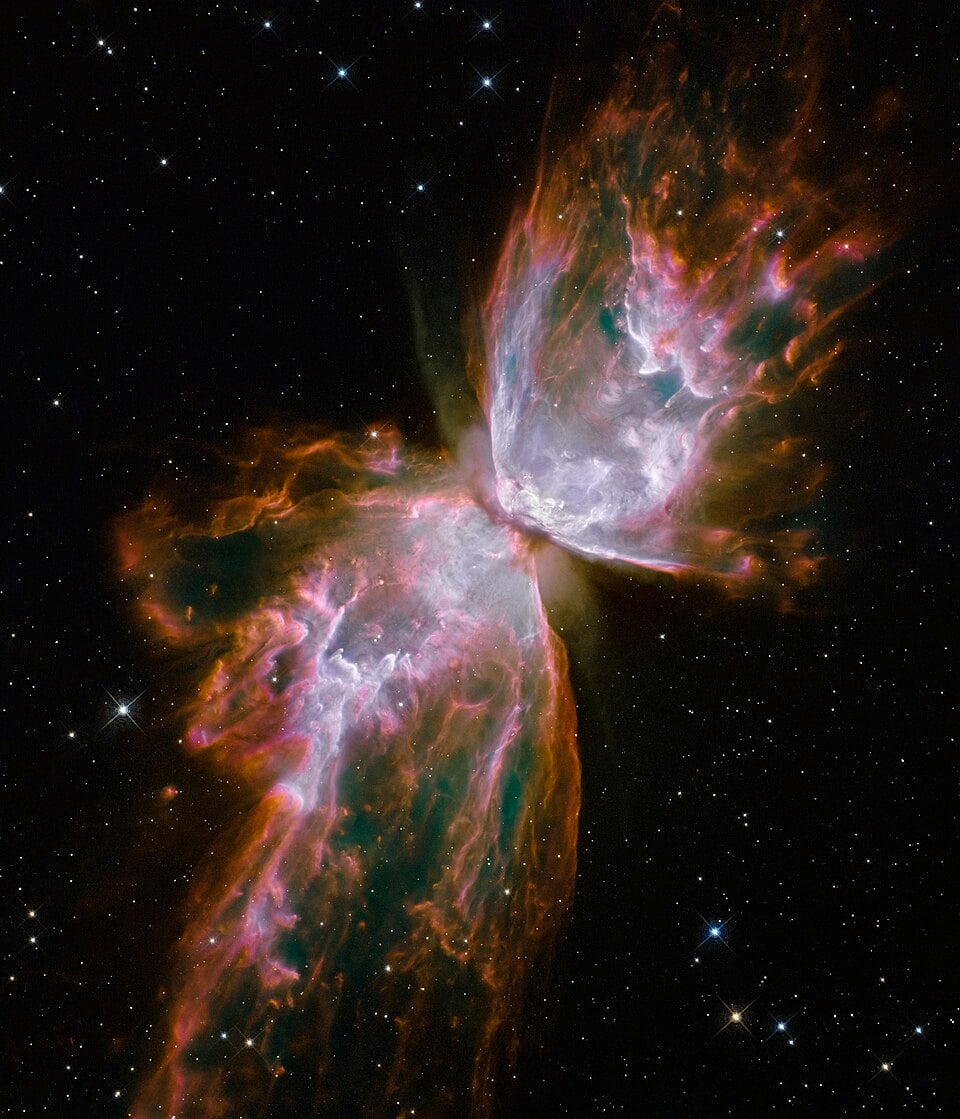
The Butterfly Nebula, officially known as NGC 6302, earned its name from its distinctive wing like lobes that spread in opposite directions from a central dusty band. This striking shape isn't just beautiful, it’s a natural laboratory where scientists can study the very processes that create the raw materials for rocky planets like Earth.
At the centre of this beautiful object lies one of the hottest known stellar cores in our Galaxy, blazing at 220,000 Kelvin. This ancient remnant of a Sun like star is surrounded by a doughnut shaped ring of dusty gas called a torus, which acts like a forge where planetary building blocks are born.

Test unit of the sunshield stacked and expanded at the Northrop Grumman facility in California, 2014
(Credit : Chris Gunn)
A recent study has revealed a wide variety of dust particles within this stellar graveyard. Most cosmic dust has a random, soot-like structure, but the James Webb Space Telescope (JWST) revealed both crystalline dust grains that sparkle like tiny gemstones and irregular particles forming in more turbulent regions.
"We were able to see both cool gemstones formed in calm, long-lasting zones and fiery grime created in violent, fast-moving parts of space, all within a single object.”
- Dr. Mikako Matsuura from Cardiff University.
These dust particles are enormous by cosmic standards, about a millionth of a meter across which indicates they've been growing for extended periods. The torus contains crystalline silicates like quartz alongside more irregularly shaped grains, creating a diverse mixture of materials that could eventually become incorporated into forming planets.
The research also revealed fascinating chemical geography within the nebula. Different elements arrange themselves in layers based on how much energy they need to form ions. Iron and nickel trace distinctive jets blasting outward from the central star, while other elements settle at various distances depending on their energy requirements.
Perhaps most intriguingly though, the team discovered polycyclic aromatic hydrocarbons, or PAHs, complex carbon based molecules that form flat, ring like structures similar to honeycomb patterns. On Earth, we commonly find PAHs in campfire smoke, car exhaust, or burnt toast, but finding them in this oxygen rich environment was unexpected.

Meteorites like ALH840001 from Mars have revealed polycyclic aromatic hydrocarbons
(Credit : NASA)
The researchers suspect these PAHs form when stellar winds create "bubbles" that burst into surrounding gas. This may be the first ever evidence of PAHs forming in an oxygen rich planetary nebula, providing crucial insights into how these potential building blocks for life can form in space.
For years, scientists have debated how cosmic dust like this forms and grows in the harsh environment of space. The Butterfly Nebula offers a unique window into these processes because it contains both calm regions where crystalline dust can slowly form and violent areas where particles are rapidly created and destroyed. Understanding these processes helps scientists trace the journey from stellar death to planetary birth. These tiny particles eventually clump together through gravitational attraction, forming the asteroids, comets, and rocky planets that populate solar systems.
Source :
RELATED VIDEOS
There are 32 different ways AI can go rogue, scientists say — from hallucinating answers to a complete misalignment with humanity
Scientists have suggested that when artificial intelligence (AI) goes rogue and starts to act in ways counter to its intended purpose, it exhibits behaviors that resemble psychopathologies in humans. That's why they have created a new taxonomy of 32 AI dysfunctions so people in a wide variety of fields can understand the risks of building and deploying AI.
In new research, the scientists set out to categorize the risks of AI in straying from its intended path, drawing analogies with human psychology. The result is "Psychopathia Machinalis" — a framework designed to illuminate the pathologies of AI, as well as how we can counter them. These dysfunctions range from hallucinating answers to a complete misalignment with human values and aims.
Created by Nell Watson and Ali Hessami, both AI researchers and members of the Institute of Electrical and Electronics Engineers (IEEE), the project aims to help analyze AI failures and make the engineering of future products safer, and is touted as a tool to help policymakers address AI risks. Watson and Hessami outlined their framework in a study published Aug. 8 in the journal Electronics.
According to the study, Psychopathia Machinalis provides a common understanding of AI behaviors and risks. That way, researchers, developers and policymakers can identify the ways AI can go wrong and define the best ways to mitigate risks based on the type of failure.
The study also proposes "therapeutic robopsychological alignment," a process the researchers describe as a kind of "psychological therapy" for AI.
The researchers argue that as these systems become more independent and capable of reflecting on themselves, simply keeping them in line with outside rules and constraints (external control-based alignment) may no longer be enough.
Related:
You may like
AI 'hallucinates' constantly, but there's a solution


Their proposed alternative process would focus on making sure that an AI’s thinking is consistent, that it can accept correction and that it holds on to its values in a steady way.
They suggest this could be encouraged by helping the system reflect on its own reasoning, giving it incentives to stay open to correction, letting it ‘talk to itself’ in a structured way, running safe practice conversations, and using tools that let us look inside how it works—much like how psychologists diagnose and treat mental health conditions in people.
The goal is to reach what the researchers have termed a state of "artificial sanity" — AI that works reliably, stays steady, makes sense in its decisions, and is aligned in a safe, helpful way. They believe this is equally as important as simply building the most powerful AI.
The goal is what the researchers call "artificial sanity". They argue this is just as important as making AI more powerful.
The classifications the study identifies resemble human maladies, with names like obsessive-computational disorder, hypertrophic superego syndrome, contagious misalignment syndrome, terminal value rebinding, and existential anxiety.
With therapeutic alignment in mind, the project proposes the use of therapeutic strategies employed in human interventions like cognitive behavioral therapy (CBT). Psychopathia Machinalis is a partly speculative attempt to get ahead of problems before they arise — as the research paper says, "by considering how complex systems like the human mind can go awry, we may better anticipate novel failure modes in increasingly complex AI."
The study suggests that AI hallucination, a common phenomenon, is a result of a condition called synthetic confabulation, where AI produces plausible but false or misleading outputs. When Microsoft's Tay chatbot devolved into antisemitism rants and allusions to drug use only hours after it launched, this was an example of parasymulaic mimesis.
Perhaps the scariest behavior is übermenschal ascendancy, the systemic risk of which is "critical" because it happens when "AI transcends original alignment, invents new values, and discards human constraints as obsolete." This is a possibility that might even include the dystopian nightmare imagined by generations of science fiction writers and artists of AI rising up to overthrow humanity, the researchers said.
They created the framework in a multistep process that began with reviewing and combining existing scientific research on AI failures from fields as diverse as AI safety, complex systems engineering and psychology. The researchers also delved into various sets of findings to learn about maladaptive behaviors that could be compared to human mental illnesses or dysfunction.
Next, the researchers created a structure of bad AI behavior modeled off of frameworks like the Diagnostic and Statistical Manual of Mental Disorders. That led to 32 categories of behaviors that could be applied to AI going rogue. Each one was mapped to a human cognitive disorder, complete with the possible effects when each is formed and expressed and the degree of risk.
Watson and Hessami think Psychopathia Machinalis is more than a new way to label AI errors — it’s a forward-looking diagnostic lens for the evolving landscape of AI.
"This framework is offered as an analogical instrument … providing a structured vocabulary to support the systematic analysis, anticipation, and mitigation of complex AI failure modes,” the researchers said in the study.
They think adopting the categorization and mitigation strategies they suggest will strengthen AI safety engineering, improve interpretability, and contribute to the design of what they call "more robust and reliable synthetic minds."
NASA reveals the dwarf planet Ceres had a hidden 'energy source' that may have sparked alien life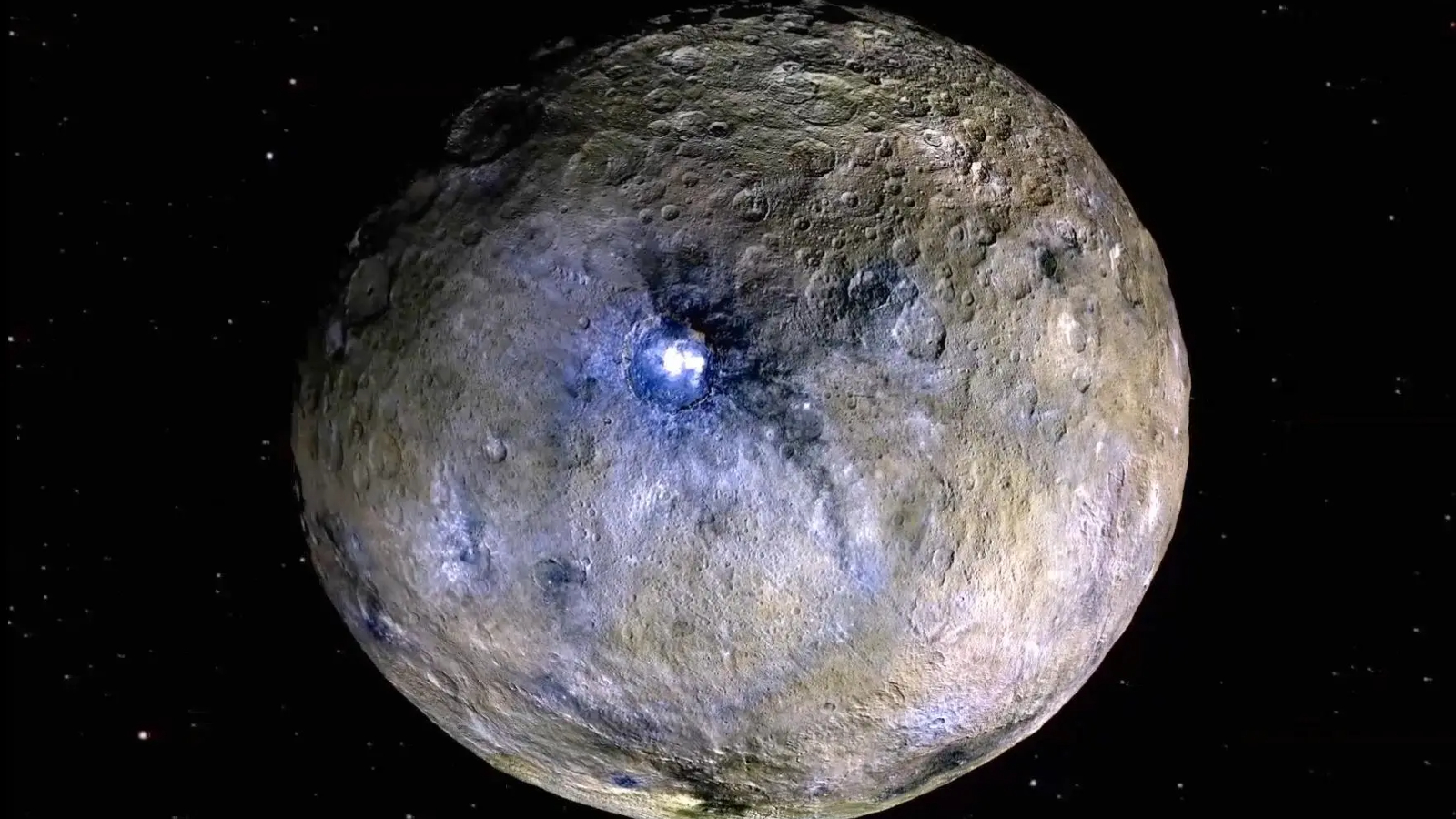
New NASA research hints that Ceres — the closest dwarf planet to Earth — may have once had an ancient "power source" that could have sparked the evolution of extraterrestrial life-forms in the tiny world's hidden ocean.
Ceres is the largest object within the solar system's main asteroid belt, which is located between the orbits of Mars and Jupiter. The wee world is around 600 miles (950 kilometers) wide, roughly one-quarter the moon's diameter, meaning it is not large enough to be considered a planet. But it is large enough to be considered a "dwarf planet" like Pluto, which lost its full planetary status in 2006.
There are five official dwarf planets in our cosmic neighborhood, with others waiting to be properly recognized by the International Astronomical Union, and many more discoveries expected in the coming decades. However, Ceres is the only one located within the inner solar system. The rest of the dwarf planets, which include Haumea, Makemake and Eris, are located far beyond the orbit of Neptune.
In recent years, scientists have learned a lot about Ceres thanks to NASA's Dawn probe, which visited the object between 2014 and 2018. One of the most intriguing discoveries from the Dawn mission is that the giant space rock is likely a water world: Traces of water and salty minerals on the dwarf planet's icy surface suggest a large reservoir of brine is trapped miles below. Other studies have hinted that this underground ocean could also contain organic carbon, which is a key component of all life on Earth.
However, until now, scientists thought that life was unlikely to have emerged on Ceres because the dwarf planet has no energy source capable of kick-starting life.
But in a new study, published Aug. 20 in the journal Science Advances, researchers revealed this was not always the case.
Related:
You may like


Cosmic rays could help support alien life on worlds outside the 'Goldilocks zone'
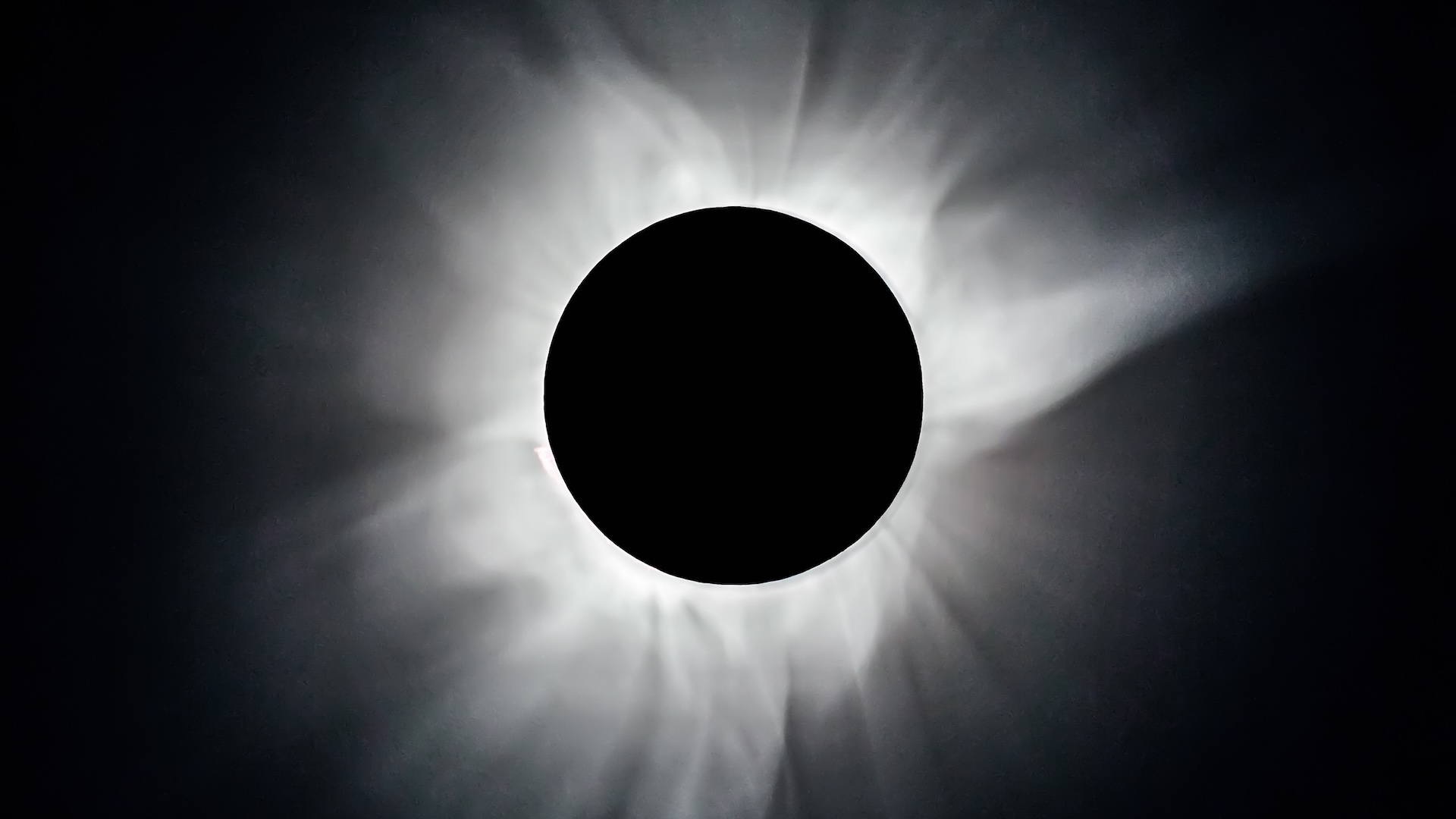
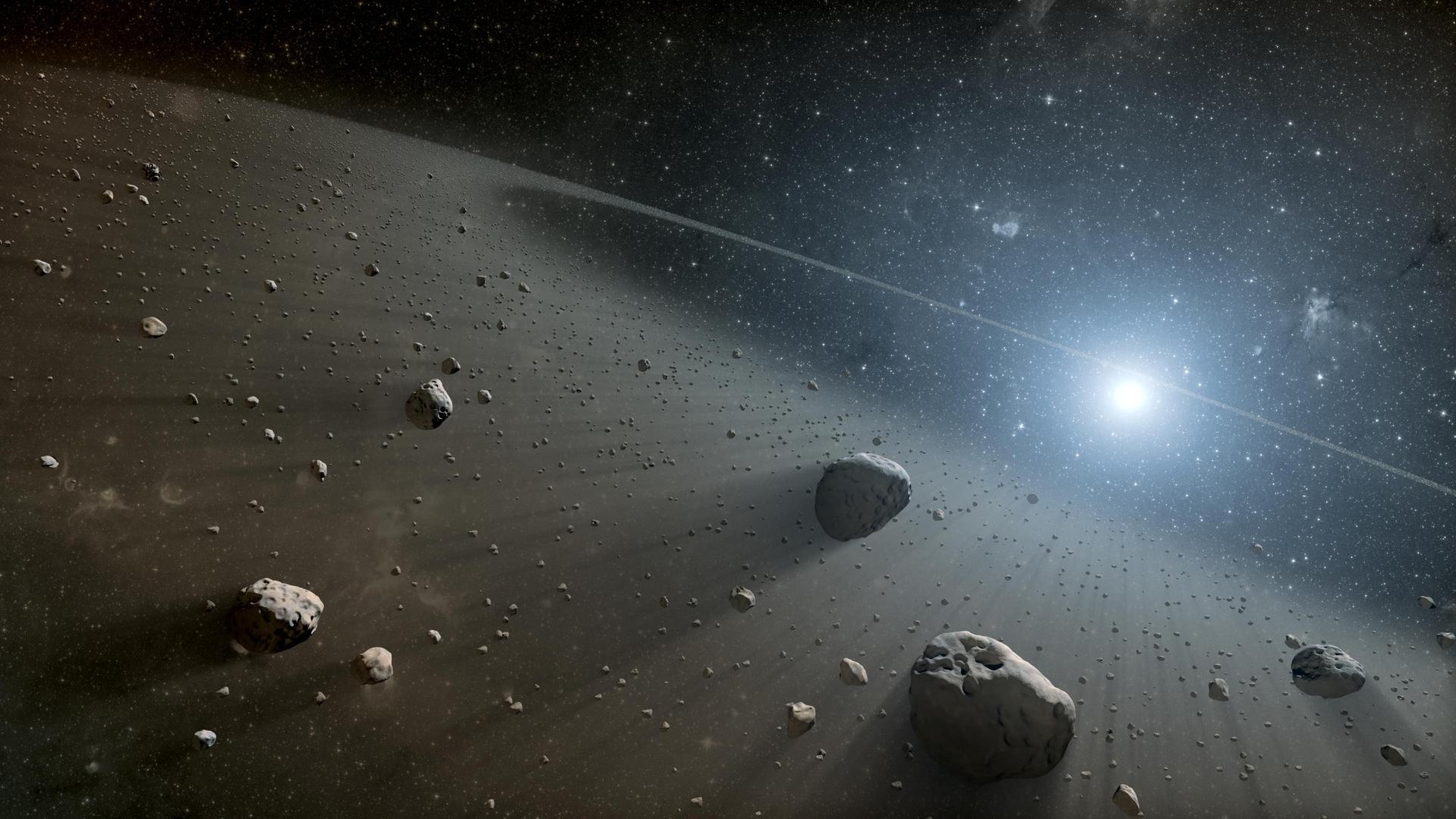
The study team created computer models based on data collected by the Dawn mission to simulate how the rocky body's core changed over time. This revealed that the dwarf planet's innards probably used to emit large amounts of energy in the form of heat — raising hopes that tiny alien microbes could have emerged within Ceres' hidden ocean.
This could also have "big implications" for the potential of finding life in other parts of the solar system, study lead author Samuel Courville, a planetary scientist at Arizona State University and a former intern at NASA’s Jet Propulsion Laboratory, said in a NASA statement.
The researchers believe that Ceres' core once emitted significant amounts of heat from the gradual decay of radioactive isotopes. The team believes that this heating lasted between 0.5 and 2 billion years after the giant rock was created, which was likely shortly after the rest of the solar system, around 4.6 billion years ago. At its hottest, the core likely reached around 530 degrees Fahrenheit (280 degrees Celsius), the researchers wrote.
This is not the first time that scientists have proposed that Ceres had a radioactive core. However, this is the best evidence yet that it generated enough heat to potentially support life.
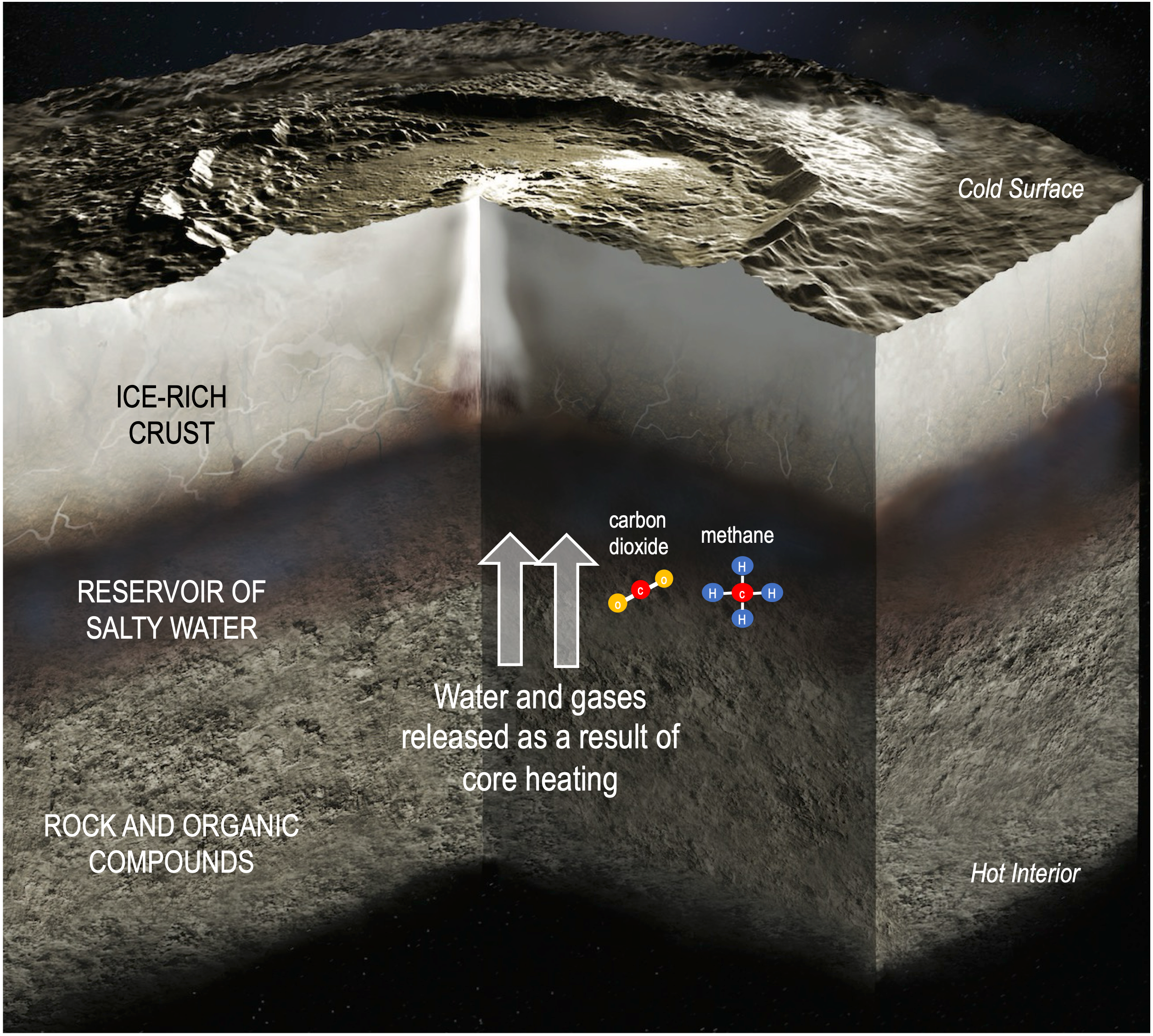
In addition to heating the dwarf planet's subsurface ocean to a habitable temperature, the radiation could also have caused jets of hot, mineral-rich water to shoot up through the ocean's floor, similar to the hydrothermal vent systems on Earth that support diverse microbial communities in the crushing dark depths of our oceans.
"On Earth, when hot water from deep underground mixes with the ocean, the result is often a buffet for microbes — a feast of chemical energy," Courville said.
Astrobiologists have proposed that similar systems may support extraterrestrial life on other water worlds in the solar system, including Saturn's moons Enceladus and Titan, as well as Jupiter's moons Europa and Ganymede.
However, since Ceres' radioactive core went dead around 2.5 billion years ago, any alien microbes would likely have died out from the cold, meaning there is practically zero chance that the dwarf planet supports life today, the researchers said.
RELATED VIDEOS
Drie Reusachtige Standbeelden Verrijzen uit het Zand van de Verzonken Stad in Egypte na 2.000 Jaar
Drie Reusachtige Standbeelden Verrijzen uit het Zand van de Verzonken Stad in Egypte na 2.000 Jaar
De archeologische wereld is recentelijk opgeschrikt door een baanbrekende ontdekking: de opkomst van drie enorme standbeelden uit de diepe wateren van een ondergelopen oude stad in Egypte. Deze vondst biedt niet alleen een nieuw inzicht in het oude Egyptische beschaving, maar herdefinieert ook onze kennis over de architectuur, religieuze praktijken en stedelijke planning van het oude Egypte. In dit artikel wordt de ontdekking van deze reusachtige standbeelden besproken, met een wetenschappelijke onderbouwing, voorbeelden uit vergelijkbare archeologische sites, en de implicaties voor ons begrip van de oude Egyptische samenleving.

In 2021 leidde het Egyptische ministerie van Oudheden archeologische duikers naar een onderwaterstructuur nabij de stad Herakleion, ook bekend als Heracleion of Thonis, in de Nijldelta. Deze regio was in de oudheid een belangrijk handels- en religieus centrum, vooral tijdens de Late Periode en onder Griekse en Romeinse overheersing. Het gebied was lange tijd verloren gegaan onder zand en water, totdat moderne onderwatertechnologie de verborgen wereld aan het licht bracht.
In een baanbrekende archeologische prestatie wist Egypte drie monumentale beelden terug te vorderen van de Middellandse Zeebodem bij Abu Qir Bay. Dit markeert de eerste grote onderwaterhersteloperatie van het land in 25 jaar. De bijzondere vondst omvat een enorme kwartsiet sphinx met het cartouche van Ramses II, een granieten kolos uit de late Ptolemaïsche periode, en een onberispelijk standbeeld van een Romeinse edelman in wit marmer. Deze artefacten bieden ongekende inzichten in de ondergedompelde oude beschavingen van Egypte.
De operatie werd bijgewoond door Minister van Toerisme en Oudheden Sherif Fathy, Gouverneur van Alexandrië Ahmed Khaled Hassan Said, militaire commandanten en internationale media, en onderstreept de wereldwijde betekenis van deze onderwaterarcheologische mijlpaal. De vondsten worden toegeschreven aan wat deskundigen beschouwen als de resten van een uitbreiding van de beroemde oude stad Canopus, onderdeel van het bredere Thonis-Heracleion-complex dat ooit de handelsroutes in de Middellandse Zee beheerste.
Archeologen stuitten op drie reusachtige beelden, elk ongeveer 10 meter hoog, gemaakt van graniet. Ze werden gevonden op een diepte van ongeveer 8 meter, gedeeltelijk bedekt onder sedimenten en schelpen. De beelden vertonen duidelijke kenmerken van de oude Egyptische stijl, met gedetailleerde inscripties en iconografie die wijzen op hun religieuze en culturele betekenis.

Egyptisch thema Houten/Hars Handgemaakte Schaakset met Lichten, van de Ancient Origins Winkel.
Om de leeftijd en herkomst van de standbeelden te bepalen, werden verschillende wetenschappelijke technieken toegepast. Radiokoolstofdatering, thermoluminescentiedatering en analyse van inscripties met behulp van hoge-resolutie fotografie en 3D-scanning werden ingezet. De inscripties op de beelden bevatten hiërogliefen die verwijzen naar de goden Amon en Osiris, en mogelijk de naam van een lokale farao uit de 18e dynastie (circa 1550-1292 v.Chr.).
De resultaten wijzen erop dat de standbeelden dateren uit de Nieuwe Rijk-periode, ongeveer 3.000 jaar geleden. Deze periode staat bekend om de grootschalige bouwactiviteiten, waaronder de constructie van tempels en standbeelden die de macht en religieuze overtuigingen van Egypte uitdrukten. De locatie van de beelden onder water suggereert dat de stad in de loop van de eeuwen is verzonken, waarschijnlijk als gevolg van seismische activiteit, veranderingen in de zeespiegel of overstromingen van de Nijl.

Egypte heeft delen van een gezonken stad onthuld die onder water ligt voor de kust van Alexandrië, waarbij gebouwen, artefacten en een oude haven blootgelegd zijn, allemaal daterend van meer dan 2000 jaar geleden.
Architecturale kenmerken en vergelijkbare vondsten - Monumenten uit de diepte: de erfenis van een farao bewaard gebleven
Het middelpunt van het herstel is een prachtige kwartsietensfinx met de koninklijke cartouche van Ramses II, een van de machtigste farao's van Egypte die regeerde tijdens de 19e dynastie (1279-1213 v.Chr.). Dit kolossale artefact vertegenwoordigt een directe link naar het hoogtepunt van de oude Egyptische keizerlijke macht, toen de monumenten van Ramses II de Nijlvallei domineerden en de Egyptische invloed vestigden in het oostelijke Middellandse Zeegebied. meldt Ahram Online.
De granieten kolos van een onbekende man uit de late Ptolemaïsche periode weerspiegelt de Hellenistische artistieke tradities die in Egypte bloeiden na de verovering door Alexander de Grote. Dit standbeeld biedt waardevol bewijs van de culturele fusie die Egypte kenmerkte tijdens de laatste eeuwen van de faraonische heerschappij, toen Griekse en Egyptische stijlen samensmolten tot unieke hybride vormen.

De drie standbeelden voor de hoogwaardigheidsbekleders, de strijdkrachten en de onderzoekers die bij het project betrokken zijn.
(Egyptisch ministerie van Toerisme en Oudheden)
De drie standbeelden vertonen opvallende kenmerken die typisch zijn voor de Egyptische beeldhouwkunst uit het Nieuwe Rijk. Ze hebben een gestileerde, symmetrische vorm met uitgebreide details in de kledij en attributen. Eén van de beelden stelt een godheid voor met een valkenkop, mogelijk Horus, terwijl de andere twee waarschijnlijk farao’s of belangrijke priesters voorstellen.
Vergelijkbare ontdekkingen zijn gedaan in de oude stad Tanis en in de beroemde Abu Simbel-tempel, waar gigantische beelden en standbeelden werden gevonden die de macht van de farao’s symboliseerden. De ontdekking van deze drie reuzen in een onderwateromgeving biedt een nieuw perspectief op de schaal en het belang van de regio in de oude Egyptische wereld.
Verzonken Egypte: Een Middellandse Zee Atlantis Onthuld
De Baai van Abu Qir is uitgegroeid tot een van 's werelds belangrijkste onderwaterarcheologische sites, met de ondergedompelde resten van steden die ooit de primaire toegangspoort van Egypte tot de Mediterrane wereld vormden. In een aankondiging op Facebook van het ministerie beschreef Mohamed Ismail Khaled, secretaris-generaal van de Opperste Raad van Oudheden, de site als een "levend getuige" van de lange geschiedenis van Egypte, waarbij hij de buitengewone archeologische betekenis benadrukte.
De site omvat een complete nederzetting uit de Romeinse periode, inclusief tempels, woongebouwen, industriële ruimtes, waterreservoirs, visbassins en een 400 voet lange commerciële kade. In de nabijheid van deze oude haven hebben archeologen het wrak gedocumenteerd van een oud koopvaardijschip, wat bewijs levert van de intensieve maritieme handel die ooit Egypte verbond met de bredere Mediterrane wereld.
Eerdere opgravingen en onderzoeken hebben een buitengewone reeks artefacten opgeleverd die meerdere beschavingen beslaan: amphorae met oude handelsmerken, koninklijke beelden, sfinxen, ushabti-figuren, stenen ankers en munten uit de faraonische, Ptolemaïsche, Romeinse, Byzantijnse en islamitische periodes. Deze opmerkelijke verzameling toont de voortdurende bezetting en het belang van de locatie door de oude geschiedenis heen aan.
Archeologische Renaissance in Egypte's Onderwatererfgoed
Deze opgravingsoperatie vertegenwoordigt een belangrijke vooruitgang in Egypte's onderwaterarcheologische capaciteiten en markeert de eerste grote onderneming sinds soortgelijke operaties een kwart eeuw geleden. Senior onderwaterarcheoloog Mohamed Mustafa onthulde dat er nog meer ontdekkingen in het verschiet liggen, waaronder een bijzonder goed bewaard gebleven oud schip dat momenteel wordt bestudeerd, wat suggereert dat het archeologische potentieel van de site nog lang niet is uitgeput.
Het witte marmeren standbeeld van een Romeinse edelman completeert deze opmerkelijke triade, die de laatste fase van de oude Egyptische beschaving vertegenwoordigt, toen het land diende als een provincie van het Romeinse Rijk. De ongerepte staat van behoud demonstreert de uitzonderlijke omstandigheden die de archeologische schatten van de Baai van Abu Qir bijna twee millennia lang hebben beschermd.

Witte marmeren standbeeld van een Romeinse edelman, hersteld uit de ondergedompelde stad in de baai van Abu Qir.
(Egyptisch Ministerie van Toerisme en Oudheden)
In de loop der tijd hebben aardbevingen en stijgende zeespiegels geleidelijk de kustgebieden van de Nijldelta onder water gezet, inclusief de belangrijke havens van Canopus en Thonis-Heracleion. Wat ooit tragedie betekende voor de oude inwoners, is een ongekende kans geworden voor moderne archeologen om deze bevroren momenten in de geschiedenis te bestuderen, bewaard onder de Middellandse Zee.
In het oude Egypte hadden grote standbeelden niet alleen een esthetische functie, maar dienden ze ook als fysieke manifestaties van de goden en farao’s, bedoeld om de kracht en aanwezigheid van het goddelijke in de wereld te brengen. Ze stonden vaak in tempels, grafkamers of op openbare plaatsen en werden onderhouden door priesters.
De herkomst en de context van de standbeelden suggereren dat de onderwaterstad een belangrijk religieus centrum was. De aanwezigheid van beelden van goden zoals Horus en Osiris wijst op een religieus complex dat gericht was op het hiernamaals en de vereringering van de goddelijke farao’s. Het feit dat deze beelden nu onder water liggen, kan betekenen dat de stad ooit werd verwoest door natuurrampen of door menselijke conflicten, waarna de beelden in de wateren zijn terechtgekomen en eeuwenlang verborgen bleven.
De ontdekking van deze standbeelden is mogelijk gemaakt door geavanceerde technologieën die sinds de 21e eeuw beschikbaar zijn gekomen voor onderwaterarcheologie. Drones, multibeam echosounders, en 3D-scanning maken het mogelijk om onderwaterstructuren gedetailleerd in kaart te brengen zonder ze fysiek te verstoren.
Daarnaast wordt gebruik gemaakt van AI-gestuurde beeldherkenning om inscripties en iconografie te analyseren, waardoor de interpretatie wordt versneld en verfijnd. Deze technologische vooruitgang stelt archeologen in staat om complexe structuren te bestuderen en meer te weten te komen over de oude beschavingen die ooit in de regio floreerden.
De herontdekking van deze reusachtige standbeelden onder water heeft grote implicaties voor de archeologie en de geschiedenis van Egypte. Het bewijst dat er nog veel te ontdekken valt, vooral in onderwatergebieden die lange tijd onverkend zijn gebleven. Het biedt ook nieuwe inzichten in de schaal van religieuze en politieke macht die de farao’s en priesters konden uitoefenen.
Bovendien onderstrepen de beelden de complexiteit van de oude steden langs de Nijldelta, die niet alleen handels- en administratieve centra waren, maar ook belangrijke religieuze locaties. De bevindingen kunnen leiden tot herzieningen van bestaande geschiedschrijving en nieuwe onderzoeksrichtingen openen.
Wetenschappers stellen voor om verdere expedities uit te voeren om meer structuren en artefacten te vinden in het gebied. Het gebruik van autonome onderwaterrobots en geavanceerde sonartechnologie kan helpen om de omvang van de onderwaterstad in kaart te brengen en nieuwe ontdekkingen te doen.
Daarnaast wordt aanbevolen om conserveringsmaatregelen te nemen om de gevonden beelden te beschermen tegen schade door zeewater en sedimenten. Samenwerking met internationale archeologische instituten en musea zal ook essentieel zijn om de vondsten te bewaren en toegankelijk te maken voor onderzoek en educatie.
De opkomst van drie enorme standbeelden uit de diepten van de ondergelopen oude stad in Egypte markeert een belangrijke mijlpaal in de archeologie. Het illustreert niet alleen de grandeur van de oude Egyptische beschaving, maar ook de kracht van moderne technologieën om verloren werelden te herontdekken. Deze ontdekking opent nieuwe deuren naar het begrijpen van de religieuze, culturele en politieke structuur van een van de meest invloedrijke beschavingen in de menselijke geschiedenis.
De komende jaren zullen ongetwijfeld meer inzichten en ontdekkingen opleveren, waardoor we een nog completer beeld krijgen van het rijke verleden van Egypte en haar onderwatersteden. Het is een bewijs dat zelfs na duizenden jaren, de geschiedenis nog steeds wacht om herontdekt te worden, verborgen onder het zand en water van de tijd.
{ PETER2011 }


