Misunderstood Science or Paranormal Activity? Bizarre Cases of Spontaneous Human Combustion
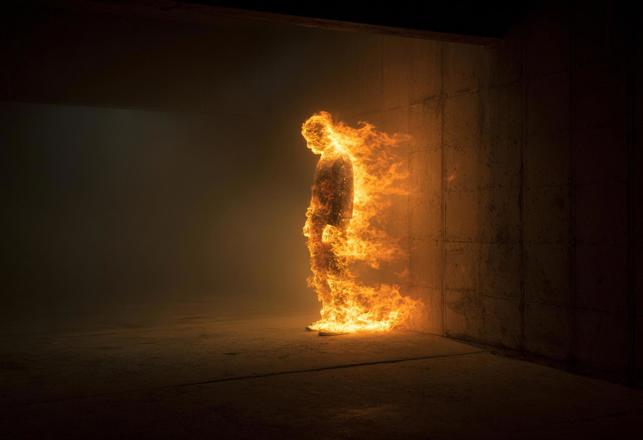
Arguably one of the strangest phenomenon of human life is spontaneous human combustion, something that has claimed many lives over the years, and left many others scared and unsettled by such bizarre encounters. Moreover, it is not simply that a person might burst into flames for no apparent reason, but these fires are so intensely hot that the respective victims are reduced to ash in a matter of moments. Deepening the mystery even further, despite this intense raging inferno, all around the victims is largely unaffected.
Indeed, while spontaneous human combustion is still unexplained, there have been some remarkable facts and statistics revealed over the course of decades of research. Over 60 percent of victims of spontaneous human combustion, for example, are women, and over 50 percent of these bizarre occurrences take place between midnight and 6 am. Perhaps most perplexing is that despite the intensely high temperatures that victims of spontaneous human combustion burn at, and the fact that they are usually reduced to nothing but ash, there is most often a single limb or a foot that is left untouched.
While we might suspect that cases of spontaneous human combustion are a modern phenomenon, the fact is that we can find cases stretching back hundreds of years, at the very least. In the mid-1600s, for example, we can find one of the earliest documented accounts of spontaneous human combustion, most often attributed to Thomas Bartholin, who documented an incident in Milan in 1654. However, since this encounter was documented (in Latin), it has suffered terribly with inaccurate translations and interpretations. So much so that many of the finer details of the case have since become lost to history.
We do, however, have the basics of the account. They involve a knight who was serving Queen Bona Sforza. On the night in question, after enjoying an evening of fine food and even finer brandy, the knight sat down at the table after refilling his glass, feeling the amber liquid burn its way down his throat. A moment later, however, he claimed he could feel the burning sensation rising back up his throat from his stomach. Then, a moment later, when he opened his mouth, a surge of flames sprang from him and engulfed him almost instantly.
Around three-quarters of a century later, a case of apparent spontaneous human combustion almost resulted in a presumed innocent man being charged with murder. In 1725 in France, Nicole Miller's remains were discovered almost completely incinerated in a chair in the house she shared with her husband. The chair itself was completely undamaged (as would become a standard detail when such cases were researched in more depth). At the time, though, such details were not widely understood, and so Nicole's husband was suspected of her murder, arrested, and charged. In fact, it was only the intervention of surgeon, Nicholas Le Cat, that saved him from the guillotine, who argued that Nicole had almost certainly been a victim of spontaneous human combustion. Although the court didn't enter such details onto the record, they did accept that the death had been caused "by a visitation of God!"
Only six years later, on the evening of April 3rd, 1731, in Verona, Italy, Countess de Bandi Cesante was at home enjoying her evening meal as usual before she retired to bed. Before she went to sleep for the evening, she talked for several hours with her maid, who later recalled that although she mentioned that she felt "dull and heavy", she appeared as she usually would, and so when she fell asleep, the maid left the room, planning to return in the morning as soon as she was called by her mistress. However, the following morning, no call came, so the maid decided to check on the countess. When she entered the room, she was confronted by a sight she was simply not prepared for.
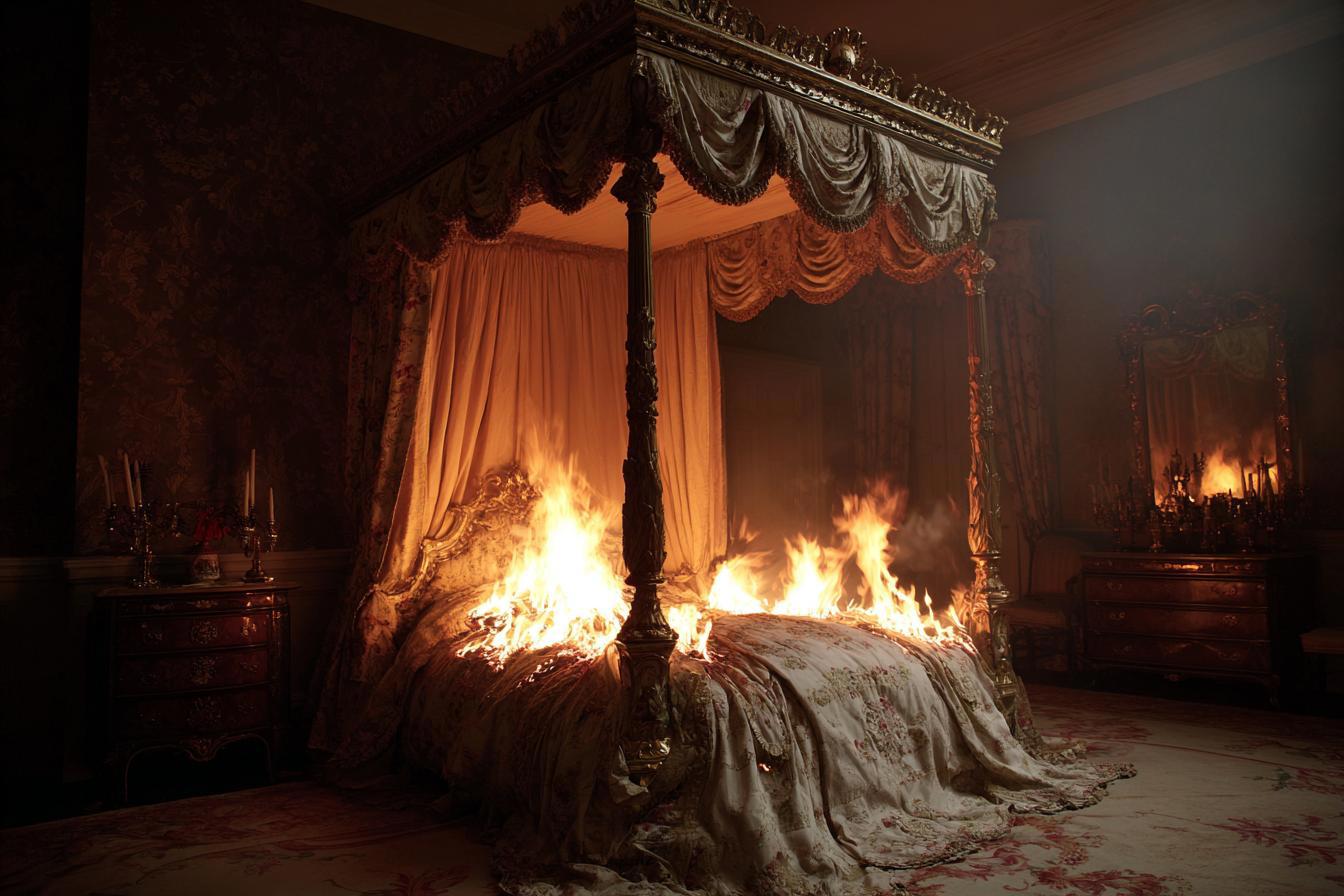
According to the report, around four feet from the bed, there was a "heap of ashes, two legs untouched, from the foot to the knee with their stockings on!" Even more harrowing, between them were the charred remains of the countess's head, as well as three "blackened fingers". Moreover, when the ashes were picked up to examine, they left a "stinking moisture" in the hand. Bizarrely, however, despite the brutal remains of the countess, there was no more damage to the rest of the room. Although there was an oil lamp on the side, it was unlit, as were the two candles next to it. Whether of consequence or not, the bed covers were found turned down, as if the countess had briefly left her bed at some point during the night, fully expecting to return.
As bizarre and intriguing as these details are, the eventual conclusions are even more remarkable. Not only was the oil lamp not lit but there were no signs of any accelerant in the room, and the countess was not a drinker of alcohol. However, it was suggested that the countess had risen during the night to open a window and allow fresh air into the bedroom. A short time later, it was suggested, "silent lightning" had "crept in through a crack in the window or down the fireplace!" However, this conclusion was later revised, with the amount of perfume that the countess often wore being highlighted as the likely reason she had perished in such a way.
Around a decade later, however, Paul Rolli examined the case once more, certain that the previous explanations had been too simplistic. He wrote in the Philosophical Transactions of the Royal Society of London that:
"Such an effect was not produced by the light of the oil-lamp, or any candles; because common fire, even in a pile, does not consume a body to such a degree and would have besides spread itself to the goods of the chamber, more combustible than a human body!"
It was, Rolli suggested, likely a combination of factors that led to the untimely demise of the countess. He suggested that "flammable gases" mixed with the alcohol from the perfume the countess was wearing, which then created a "potent fuel" that was capable of "incinerating the body!" The reason the head and limbs had escaped such carnage from the flames was likely down to the fact that by the time the flames reached them, the fuel had likely died and burned out.
Around 150 years later, on the other side of the Atlantic in the small farming community of Seneca in Illinois, on Christmas Eve 1885, Matilda Rooney was busy in the kitchen while her husband Patrick was in the next room. What exactly happened that evening is not entirely clear, but at some point during the evening, Matilda, essentially, "burst into flames" and was reduced to a pile of ash within moments. In a strange twist to the whole affair, Patrick was also found dead in the house, seemingly from suffocation from the fumes (even though there was no damage at all to the rest of the property).
When investigators examined the scene, they were utterly baffled. One of the farm workers informed them that he had spent several hours at the property before leaving for the evening, and that the couple had appeared fine before he left, each enjoying a glass of whiskey and preparing for the holidays. It was ultimately determined that Matilda herself appeared to be the fuel source of the fire that consumed her.
As we have seen, there are many historic cases of spontaneous human combustion for us to explore. Without a doubt, though, the majority of these recorded cases have unfolded in the twentieth century.
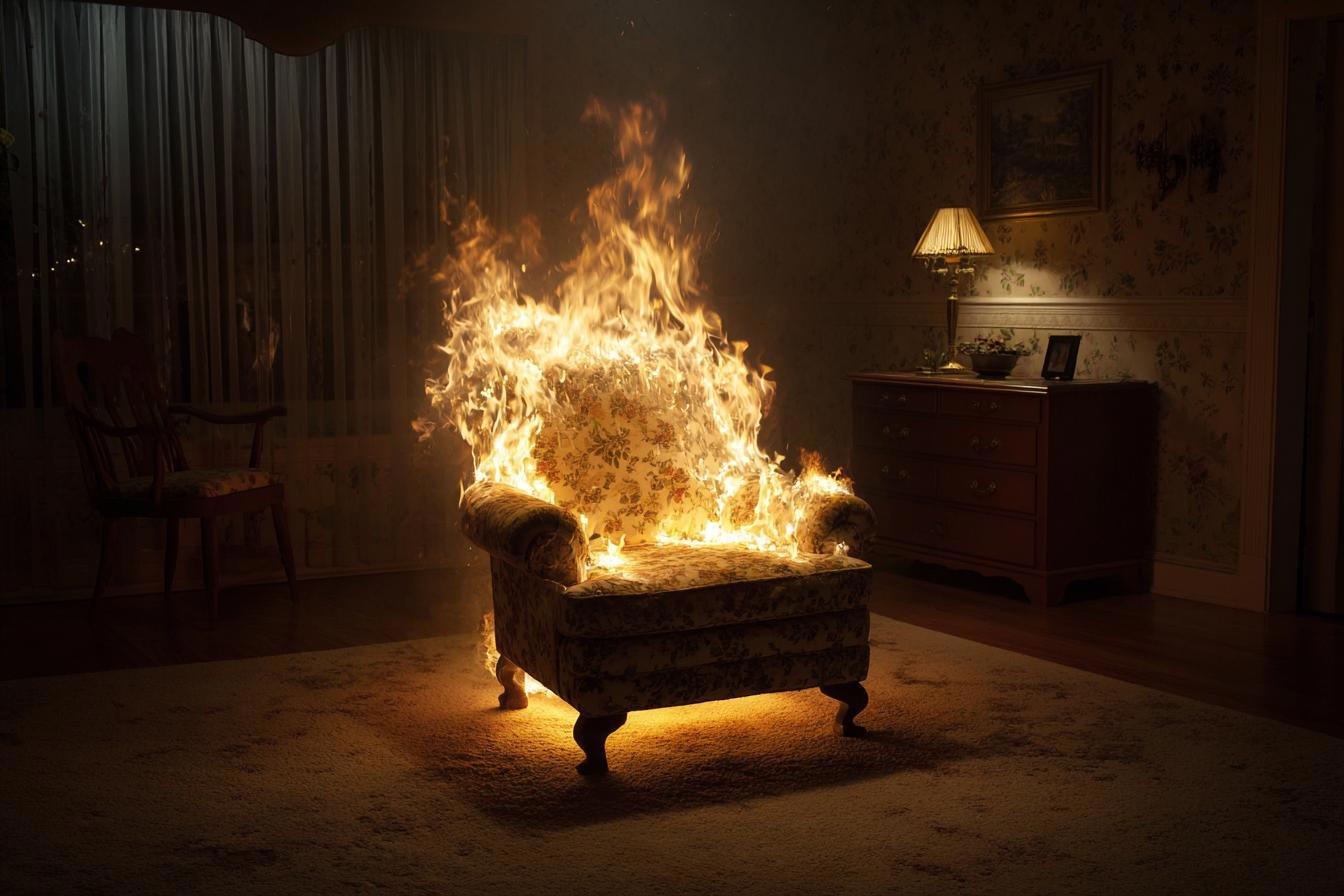
Perhaps the most notable of these occurred in July 1951, when 67-year-old Mary Reeser from St. Petersburg, Florida, or at least what was left of her, was discovered "sitting" in a chair at her home. In fact, all that was discovered of Mary was a skull fragment, one of her feet, and a small piece of her spine, with the chair that she had been sitting on also completely reduced to ash. As was noted at the time, given the high temperatures required to reduce a human body to ash, it was a mystery why the entire property had not been engulfed in flames.
Despite this strangeness, the FBI, which investigated the case, concluded that Mary had likely fallen asleep with a cigarette in her hand, which had then likely ignited her clothes and resulted in her death. As we might imagine, many researchers and investigators simply do not accept this explanation. In fact, some researchers have pondered just what the authorities might have known about the strange death for them to wrap it up so quickly.
Five years later, in December 1956, another baffling spontaneous human combustion case unfolded. On the day in question, 78-year-old Sik Kim was sitting in his wheelchair reading his newspaper. As he did so, however, he suddenly noticed flames appearing around his torso. As he called out for help, the flames began to engulf him. His neighbor, Virginia Cadet, rushed over to see what the matter was. As soon as she saw Sik Kim in flames, she rushed off again to get help. By the time she returned 15 minutes later, Sik Kim was nothing but a pile of ash - except, that is, for his two feet, which remained intact. Even stranger, nothing else in the room was damaged by the flames, including papers, books, and clothes. Sik Kim's death remains a complete mystery.
Around a decade later, on the afternoon of October 16th, 1964, 75-year-old Olga Worth Stephens met a harrowing end outside of a convenience store in Dallas, Texas. She had been in the car with her nephew when he decided he wished to purchase a cold drink and so pulled into the parking lot of the store. He left Olga in the vehicle while he went inside. He was only inside for several minutes, but when he returned, his aunt was completely enveloped in flames. Passersby eventually managed to pull her out of the car and smother the flames. However, she passed away from her injuries eight days later.
Perhaps what made Olga's death all the more mysterious was a line from an article in the Dallas Morning News that stated she had received treatment for "burns received in mysterious circumstances!" Stranger still, when the vehicle was examined by investigators, they discovered no damage whatsoever, not even traces of an accelerant or stimulant. Ultimately, like several other cases we have examined here, it would appear that Olga herself was the fuel source of the fire that killed her.
Only several months later, on the morning of November 8th, 1964, in Upper Darby Township in Pennsylvania, the burnt-out remains of Helen Conway were discovered in her home. Interestingly, when the fire chief, Paul Haggarty, attended the scene, he declared publicly his belief that the incident was one of spontaneous human combustion. Further study, though, perhaps suggested, on this occasion, an alternative explanation for the grim discovery. It came to light that Helen was a "careless smoker" who regularly left cigarettes around the house, leading investigators to ponder if this was how she had come to such a fiery end. Indeed, it appeared that Helen's death was simply a tragic accident. However, when investigators looked deeper into the case, that appeared decidedly unlikely.
It was discovered that Helen had asked her granddaughter for a box of matches on the morning of her death, no more than 20 minutes before her body was discovered, with her granddaughter even suggesting that she found her remains around three minutes after. The fire department had arrived at the property at 8:48 am, meaning that Helen was likely alive as late as 8:42 am - the six minutes not being enough time for her to accidentally set herself on fire and be consumed by the flames.
We should note that several skeptics have suggested the "wick effect" (something we will explore in a little more detail later) as an explanation for Helen Conway's death. However, tests easily showed that this would have taken at least several hours, and certainly a lot longer than between six and 20 minutes.
Only two years later, on the morning of December 5th, 1966, 92-year-old Dr. John Irving Bentley's burnt-out remains were discovered at his home. The remains were discovered by Don Gosnell, who had arrived at the property for a prearranged meeting to read the meters. He entered the property and began on his way to the basement. However, as he did so, he noticed a strange odor in the air, as well as a faint blue smoke.
When he entered the basement, he discovered a small pile of ash on the floor, which he assumed was the source of the strange odor. He then made his way to the bathroom that was directly above the basement. Upon arriving there, he discovered the remains of a lower leg and a foot, still with an undamaged slipper on it, as well as Bentley's walking frame, and a large pile of ash. Stranger still, there was a hole in the bathroom floor that allowed Gosnell to see into the room below.
A particularly bizarre encounter unfolded at around 5 am on the morning of September 5th, 1967, in Lambeth, London, when early work commuters found themselves witnessing one of the strangest incidents they had ever seen. Inside, a local man named Robert Bailey, who was a known alcoholic, was burning to death with an unusual flame bursting forth from his stomach. After several members of the public called the fire brigade, they arrived at 5:19 am - only five minutes later - to a sight that they were not ready to witness.
One of those in attendance later stated that when he entered the building, Bailey was lying at the bottom of the stairs, clearly contorted in pain. He stated that he could see blue flames coming from a small slit in his stomach. Despite using fire extinguishers in an effort to save the man's life, all efforts failed, with one member of the fire brigade offering that he was "literally burning from the inside out!" Even more harrowing, it is claimed that Bailey had seemingly bitten down on the bottom wooden staircase, such was the pain he was in, with his jaw having to be pried open to remove his body.
There were plenty of other strange details. For example, despite the flames coming from his body, Bailey's clothes were largely undamaged, as was the case with the wooden floor and stairs. Moreover, there were no accelerants discovered in the property, and both the gas and the electricity had been cut off. These details led investigators to consider whether Bailey had actually died from exposure to the fumes from the fire. Ultimately, it was determined that Bailey’s death was down to “unknown causes!” Even the wick effect explanation had to be dismissed because witnesses noted “blowtorch-like flames” originating from inside Bailey’s torso. The incident remains one of the strangest cases of spontaneous human combustion on record.
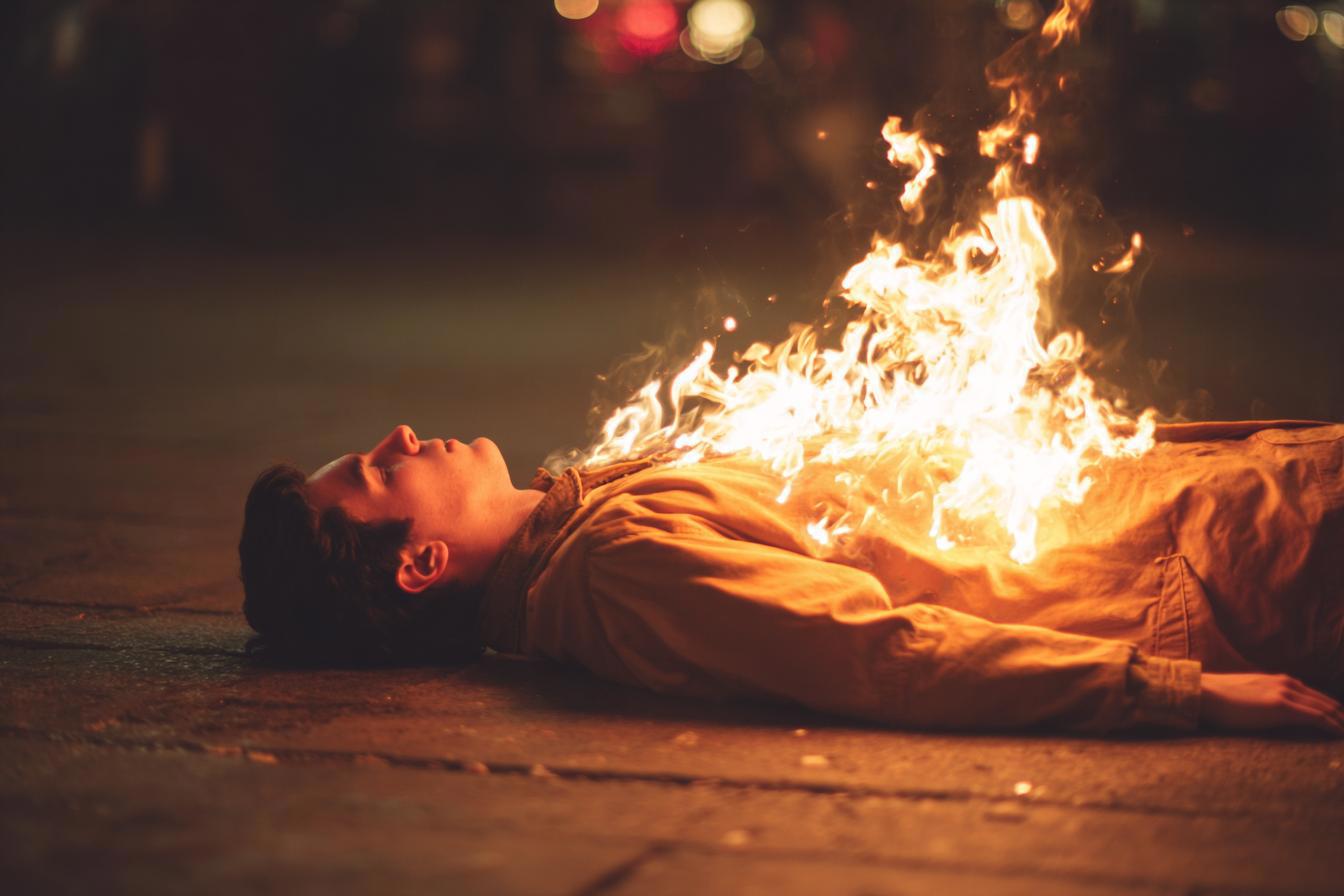
What makes the case of Jack Angel all the more intriguing is that he survived spontaneous human combustion. On the night in question, in 1974, Angel, who was a traveling salesman, parked his motorhome outside a hotel and then ventured into the back to settle down for the night. However, several hours later, Angel awoke with severe burns to his arms and legs. In fact, one of his arms was so drastically burned that it had to be amputated. Much like other cases of spontaneous human combustion, however, there was no damage at all to the motorhome, even though, given the extent of his injuries, the motorhome should have been completely incinerated.
The case baffled investigators and researchers, not least as the flames appeared to extinguish themselves before they had a chance to reduce Angel to a pile of ash. We might ask if Angel was in a trance-like state as opposed to being asleep, similar to the report from the Robert Bailey case. Despite an investigation by the police, there were no faults found with the motorhome, and there was no accelerant discovered. The case remains a complete mystery.
A particularly harrowing case of spontaneous human combustion unfolded on the afternoon of October 9th, 1980, in Jacksonville, Florida. On the afternoon in question, airwoman Jeanna Winchester was in a car driven by her friend Leslie Scott, when Jeanna suddenly “burst into flames!” Jeanna began screaming, “Get me out of here!” as Leslie looked on in shock. She later stated that the flames simply came out of nowhere, and after she tried to put them out with her hands, she lost control of the car and crashed into a telephone pole.
Although she had burns to 20 percent of her body, Jeanna survived the incident, recovering in the hospital. When the vehicle was examined by investigators, there was little damage to the interior of the vehicle, with only the seat and door panel showing any signs of the sudden fire. Moreover, Jeanna herself claimed to have had no memory between setting off that afternoon and waking up in the hospital. With this in mind, we might ask if her mind had simply blocked out the incident, or if there is something more paranormal or supernatural involved in these strange cases of spontaneous human combustion.
If we return to London for a moment, in September 1982, we can find the case of 61-year-old Jean Saffin, who was mentally disabled, and who seemingly burst into flames in front of her father. At the time of the incident, as her father was sitting at the kitchen table when a sudden “flash of light” lit up the room. The next thing he realized, Jean was completely engulfed in flames. He immediately got to his feet and attempted to drag his daughter to the sink, calling to his son as he did so. Between them, they managed to douse the flames before they contacted the emergency services. Jean was taken to the hospital, but she passed away from her injuries just over a week later. Her death, officially at least, is unsolved. Jean’s father, however, was convinced that spontaneous human combustion was the cause of his daughter’s death. Moreover, Jean’s brother-in-law, who also witnessed the incident, stated that “the flames were coming out of her mouth like a dragon, and they were making a roaring noise!” Despite this, the coroner refused to put the death down to spontaneous human combustion because, in his opinion, “no such thing existed!”
Without a doubt, one of the most thought-provoking cases of spontaneous human combustion is that of Vietnam veteran Frank Black, whose case was featured on the television program The Unexplained Files. According to the report, in June 1985, Black and his friend, Pete Wiley, were preparing for a fishing trip and were sitting in Black’s living room. Suddenly, with no warning whatsoever, Black’s arm burst into flames. He and Wiley managed to smother the flames and then sought out medical advice for the burns. Bizarrely, although very similar to other cases of spontaneous human combustion, the doctor who examined Black’s wounds stated that they appeared to have “burned from the inside out!” Although Black was not significantly injured, a second incident occurred during their fishing trip. Needless to say, Black was left deeply shaken by the experience.
In more recent times, on the afternoon of August 24th, 1998, Agnes Philips left the nursing home where she was a resident with Alzheimer’s with her daughter Jackie, who regularly drove Agnes around to let her enjoy a change of scenery. As they were returning home, with Agnes asleep in the passenger seat, Jackie decided to stop at a grocery store to pick up some groceries for later. Several minutes later, with Jackie still inside the store, she could see smoke rising from her parked car. Then, moments later, a “burst of flames” exploded from the vehicle.
Jackie immediately rushed out of the store. By the time she arrived at her vehicle, a passerby was dragging her mother from the car before attempting to smother the flames. Bizarrely, despite being almost completely engulfed, Agnes remained calm, almost in a trance-like state, offering only that it was “too hot!”
The flames were eventually extinguished, and Agnes was taken to the hospital with severe burns to her entire body. Unfortunately, she passed away a week later. Much like many of the other cases we have examined here, the inquest discovered no reason for the explosion of flames. No accelerant was found anywhere in the vehicle, and as the engine was not running at the time, it was unlikely that an electrical fault was responsible. Ultimately, the inquest ruled an open verdict.
Just short of a decade later, on the evening of December 16th, 2007, in Brazil, an unnamed woman suddenly burst into flames, becoming incinerated within seconds. By the time the flames had died down, the woman was left “beyond recognition!” Although her right leg was undamaged, her left leg, upper torso, and both arms were completely obliterated. Moreover, all of her clothing also remained undamaged from the flames. Once more, it was noted that it appeared as though her body had “burned from the inside out!”
The case fascinated many researchers and investigators, with various explanations put forward. Some people, for example, suggested that ball lightning might have been responsible for the horrific inferno, while others suggested that the young woman could have been involved in some kind of “gang initiation”. However, the lack of accelerant meant these suggestions were largely dismissed.
Around the same time, 76-year-old Michael Faherty succumbed to a sudden burst of flames, only this time, the coroner, Ciaran McLoughlin, ruled that the death was the result of spontaneous human combustion. When Faherty’s remains were discovered in West Galway, Ireland, investigators were perplexed as to how he could have been completely consumed by the flames while everything else around him was largely unaffected. Moreover, like other suspected cases of spontaneous human combustion, there was no sign of any accelerants anywhere in the property. The only other damage to the building was the spots directly above and below where Faherty’s remains were discovered. Although McLoughlin rued the death to be a result of spontaneous human combustion, he issued a caveat that “a source of ignition” had to have been responsible for the fire, although he could offer no sound explanation.
Several years later, in early 2013, the charred remains of 65-year-old Danny Vanzandt were discovered at his home in Muldrow, Oklahoma. Despite the intense damage to Vanzandt, his property was unscathed. It is interesting to note that Vanzandt was a heavy smoker with a history of struggles with alcohol, something some researchers into spontaneous human combustion have offered are key components of these bizarre cases. However, investigators found no evidence that a lit cigarette caused the fire, nor did they find any evidence that Vanzandt was drinking at the time of his death. Similar to the Faherty case, the only damage to the property was a few scorch marks close to where the remains were found. Furthermore, there were no signs of a struggle inside the house, almost as if Vanzandt had calmly allowed himself to succumb to the flames. Ultimately, his death remains unexplained.
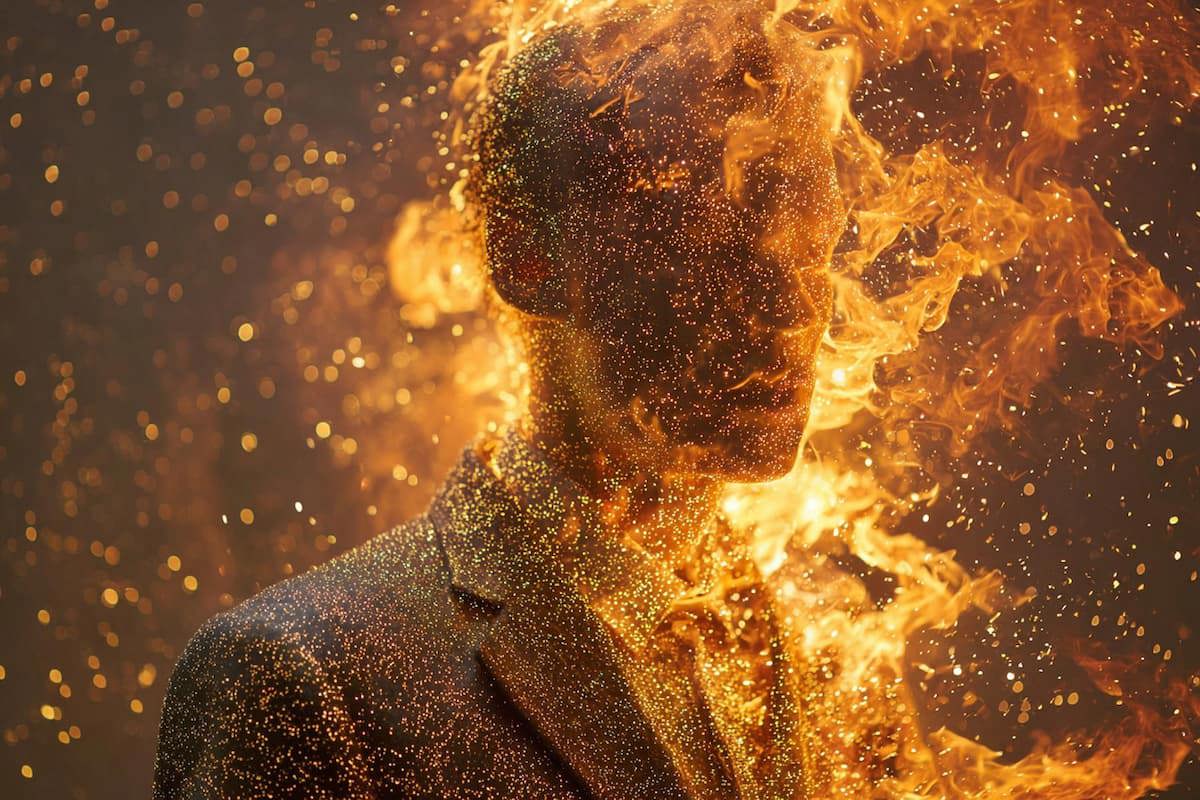
Around two years later, in November 2015, in the small town of Flensburg, near Hamburg in Germany, a local woman (although unnamed in the report) suddenly burst into flames in front of multiple witnesses in the middle of a busy park. Although several onlookers attempted to smother the flames, the fire spread so quickly that her entire body was engulfed in seconds. As we might imagine, there were several theories following the encounter, including that the woman had committed suicide. However, not only were there no signs of any accelerants, but none of the witnesses recalled seeing the woman self-immolate. In a strange twist to the affair, several witnesses reported seeing two strange men leaving the area shortly after the incident, with their identities remaining a complete mystery.
Only several months later, in January 2016, in Novi Sad in Serbia, a video surfaced online (since removed) that appeared to show a man in a doorway with strange “white flames” emerging from his torso. The video showed the flames beginning to engulf the man, even though he remained “indifferent” to the situation. Then, without warning, the man simply got to his feet and “brushed off” the flames before walking off as if nothing out of the ordinary had happened. Various theories were aired following the footage's first appearance, including that the incident was some kind of hoax.
With all of these cases in mind, it is worth turning our attention to the work and research of Joe Nickell and John F. Fischer, who conducted a two-year study into spontaneous human combustion in the mid-1980s. In total, they extensively studied 30 cases of spontaneous human combustion, with cases spanning three centuries, highlighting several points of interest about the phenomenon.
One thing they highlighted was the fact that many of the victims had been discovered close to fireplaces or candles, possibly highlighting a source of ignition. Moreover, many of the victims had been incapacitated at the time of the incident, usually through alcohol consumption, something they stated was likely to make the respective victims somewhat careless in their final hours, as well as reducing their ability to respond to any situations unfolding around them.
It was also Nickell and Fischer who put forward the “wick effect” explanation, stating that combustible materials close to the victims would have assisted in retaining melted fat, which would, in turn, localize the flames and cause the body to burn quicker, which also then melted more fat. At the time this explanation was put forward, it was felt spontaneous human consumption had at last been explained. However, in the decades that have followed, other researchers have dismissed the wick effect as simply not being plausible.
Nickell and Fischer also explained why clothing, papers, and furniture remained largely undamaged despite their proximity to the respective victims. They offered that this was because fire tended to “burn upwards” as opposed to sideways, further offering that this was similar to people and objects being around a campfire without catching fire.
Although they had put forward multiple explanations for the cases they had studied, they cautioned against a “one size fits all” explanation and urged other researchers to investigate claims of spontaneous human combustion on a case-by-case basis.
With that in mind, there have been many other explanations put forward to explain the mysteries of spontaneous human combustion. In his book Ablaze! The Mysterious Fires of Spontaneous Human Combustion, Larry E. Arnold suggested that a subatomic particle that he named “pyroton” could be responsible for the many cases on record. He offered that this particle could, under certain circumstances and in certain conditions, increase the body’s flammability, particularly if there was increased alcohol in the bloodstream. He also offered that stress could act in such a way. Moreover, according to Arnold’s research, this increased flammability used hardly any oxygen, which is why the body burned so quickly and why the flames themselves didn’t spread. We should note that Joe Nickell was highly critical of Arnold’s methods and conclusions, stating that he used “selective evidence” for his research.
John Abrahamson suggested, after his research into spontaneous human combustion, that ball lightning was responsible, highlighting how cases of ball lightning had left similar charred and burnt marks on human limbs. Similar to Arnold, however, most people dismissed these findings as unlikely at best.
Of course, one suggestion we should consider is whether there could be a more paranormal explanation for spontaneous human combustion, perhaps even dealings with demonic entities, or even the Devil himself. And while such considerations sound bizarre, there are several such cases on record. Perhaps one of the first researchers to suggest this was Michael Harrison, who drew comparisons between poltergeist activity and spontaneous human combustion in his 1976 book Fire From Heaven. He looked at several such cases, pondering if objects could burst into flames through poltergeist activity, then maybe human beings could too. It is certainly worth considering, and while it would be almost impossible to delve into this aspect of past cases, it would be interesting to find out how many people who were apparent victims of spontaneous human combustion might have also experienced paranormal or poltergeist activity in the weeks and months leading up to their unfortunate and untimely ends.
It is also interesting to note that many people who have witnessed spontaneous human combustion up close report seeing a bizarre mix of red, orange, and blue. The color of the flames is, generally speaking, determined by the material being burned, as well as the heat of the flames themselves. Could it be, though, that in cases of spontaneous human combustion, the flames, or the source of them, is something supernatural? We might also consider, particularly in the case of the Tuck family, which we will explore in a moment, that a strong odor of sulfur was also noticed, something which is common in not only poltergeist cases, but also Bigfoot encounters, and cases of alien abduction. Once more, does this suggest some kind of connection between different aspects of the paranormal, and does spontaneous human combustion fit into these bizarre and mysterious encounters somehow?
If we turn our attention to the Tuck family, we can find not only one of the most intense poltergeist cases on record, but a case that featured regular blazes appearing out of nowhere. The encounters of the Tuck family – Calvin, his wife Willie Bell, and their six children – began in August 1958. The family, who were already living in absolute poverty, began experiencing small, unexplained fires around their home in Talladega, Alabama. Moreover, some of the objects that seemingly burst into flames were as strange as the incidents themselves. On one occasion, for example, a loaf of bread suddenly burst into flames, while on another, a single item of clothing was engulfed while nearby garments were strangely unaffected. Once more, it is worth noting that the family stated that the flames of these strange fires were a strange mix of red and blue, and were almost always accompanied by the smell of sulfur.
These fires broke out at random times, and while they were small to begin with, the intensity soon increased, as did the regularity of the fires. In total, over 50 fires were reported by the Tuck family, with several people outside the family also witnessing these bizarre events. In fact, one person, a contractor working at the home, claimed to have witnessed small fires breaking out at the property every 15 minutes. Eventually, with no explanation in sight, the Tuck family sought help from the authorities, although they were equally as mystified.
The family noted that these fires usually started at the ceiling, although, as the family didn’t have access to electricity, faulty wiring had to be dismissed as the cause. Eventually, with the fires becoming so regular, as well as threatening to spread to other properties, several neighbors stood guard outside the Tuck property with buckets of water, ready to put out any fires that might start while the Tuck family slept. This assistance worked temporarily. Then, however, the Tuck family was confronted with a day of “relentless” fires that spread so quickly that their home was burned to the ground. Fortunately, none of the Tuck family was harmed, but they, of course, were left homeless. With no insurance and even less money, there was no possibility for the Tuck family to rebuild. Ultimately, they moved to a nearby property. However, only hours after they had done so, fires began breaking out in their new abode.
At this point, undoubtedly worn down by the constant bizarre activity, Calvin dragged all of the family’s possessions out of the new house and set fire to them, believing that they must be cursed and that by destroying them, they would stop the fires. It didn’t. The fires continued, eventually burning down their new property. Homeless once more, the Tuck family moved in with Calvin’s brother-in-law, Darnell Suttle. However, almost immediately, the fires followed them there also.
The Tuck family and Suttle took to keeping buckets of water in each room, ready to douse any potential fires. Once more, the authorities were contacted, with police officers arriving at the home shortly afterward. When they arrived, they saw a blanket draped over a branch in a tree outside the house. To their absolute shock, the piece of material burst into flames right in front of them. Then, after several moments, the flames simply stopped. One of the officers walked over to the blanket and attempted to set it alight with his lighter. To his shock, the flames refused to take hold.
Once the officers went inside the house, Willie Bell informed them that several items of their clothing had ignited similarly, with officers noting severe burn marks where the clothes had been.
Ultimately, after several days, Suttle, fearing his own property would burn to the ground, asked the Tuck family to leave. With nowhere left to go and with no money, the Tuck family moved in with Calvin’s father. The fires, though, moved with them. At this point, with nowhere left to turn, the family sought the advice of a Voodoo doctor, who offered that a “fire curse” was responsible for the strange occurrences. He gave the family a strange herbal mixture that he instructed them to chew daily for three days, as well as a concoction in a bottle that they were to bury in the yard of the property. They did as instructed, but the fires continued.
Shortly after, the authorities began a full investigation of the events, fearing not only for the Tuck family but also for other nearby residents, and an incident witnessed by the local Fire Chief gave the first clue as to what might be causing these bizarre events. The Fire Chief, as well as other officers, witnessed an old rag suddenly bursting into flames. However, after it had been incinerated in only a matter of seconds, they discovered a strange, green substance where the piece of material had been. Although they couldn’t explain how, they began to suspect that arson might be the cause of these strange events. In fact, when the Tuck family moved again, this time to a friend’s house, the authorities kept a close eye on them, treating the incidents as a crime. In part due to the strange green substance they had discovered, officers began to suspect that phosphorus had been used to somehow start the fires. However, while extremely flammable, phosphorus is also extremely volatile, and is only safe when handled by an expert, which Calvin or his family certainly was not.
Then, things took an even stranger turn.
Out of the blue, The Tucks’ 9-year-old son, Calvin Jr., claimed he was behind the fires, claiming he had started them using matches or by making rags “smolder” so that they burst into flames. He did this in an attempt to trick his family that the house they were living in was haunted in the hope that they would move back to Birmingham. He further stated that he only wanted to scare his family into moving and didn’t intend for the properties to burn down. He was sent for psychiatric evaluation, with the police more than certain that they had found their culprit. Some people, however, were more than skeptical about this confession.

They asked, for example, how a young boy could have perfected the slow-burning process of a smoldering rag so that it appeared to simply burst into flames. Moreover, this didn’t explain the blanket that burst into flames on the tree, and we should recall that when the officer went to light the blanket, it simply wouldn’t ignite. Perhaps even more damning against the young boy’s confession was the fact that many of the fires occurred when he wasn’t even in the properties in question.
We might consider, given the publicity the fires were generating, not to mention the concern among the local community, whether the police faced some kind of pressure to “get the case wrapped up!” This is pure speculation, but in other cases, particularly those of a paranormal nature, we have seen this type of action.
Perhaps above all else, though, we might ask, if we assume for one moment that Calvin Jr. was responsible for the fires, how did he manage to control the flames to the point that one item was incinerated while items around them remained untouched, a detail, incidentally, that is also prevalent in cases of spontaneous human combustion. Ultimately, the cause of the fires remains a complete mystery.
As we can see, then, spontaneous human combustion, whatever the cause might be, is very real and has left a trail of destruction and death in its wake. Are the encounters we have explored here simply cases of carelessness? Or might we even consider that one day science will understand what makes some people seemingly burst into flames? Or could it really be that these cases have more of a paranormal origin? As always, there are many more questions than answers.
{ https://mysteriousuniverse.org/ }


 China 'intercepts meteor or UFO' as fireball blasts through sky before exploding