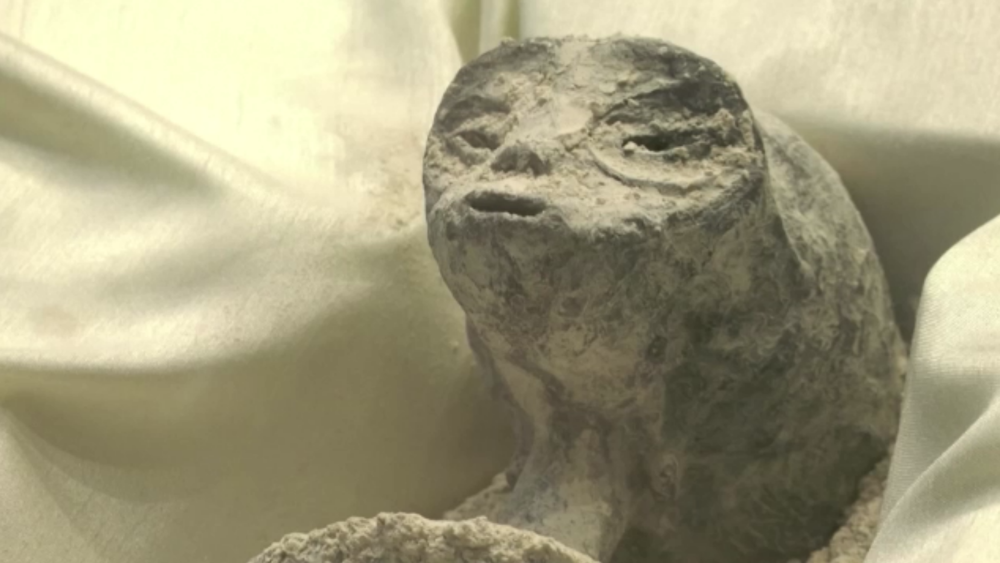
The Need for Blood: Shapeshifters, Aliens, and “Real-Life” Vampires!

The chances are that when most of us think of bloodlust or a desire for blood, particularly human blood, we might think about deranged serial killers with uncontrollable urges. However, in the world of the paranormal, whether it is strange, otherworldly entities, UFOs and aliens, or indeed people who assert their belief that they are, for all intents and purposes, vampires, we find this urge for blood more than many of might like to imagine. Moreover, much of this apparent bloodlust has connections to ultra-secret societies that seemingly operate hidden in plain sight, with members of these cults seemingly coming from the super-rich and the elites of the world.
Perhaps the best place to start with all of this is with vampires and vampirism. Indeed, while the modern world is perhaps most familiar with such concepts through the Bram Stoker novel Dracula, the fact is that cases of people having an insatiable appetite for human blood go back centuries, with Stoker himself even basing his main character on a real-life historic person, Vlad Tepes, perhaps better known as Vlad the Impaler. Born in 1428 near the Danube River in what is modern-day Romania, Vlad was the ruler of Wallachia in the Carpathian Mountains, Transylvania, on three separate occasions between 1448 and 1477, and was known for his appetite for blood. Vlad’s father was the Prince of Wallachia and moved within the elite circles of the time, being a member of a secret society known as the Order of the Dragon. It was from this connection to the Order of the Dragon that he became known as Vlad Dracul – or Vlad the Dragon. It is easy to see where the moniker Dracula came from.
Here, it is very much worth our time exploring the Order of the Dragon a little more, particularly how they operated, at least outwardly, in the same manner as the Knights Templar; officially providing a Holy Army for the church, primarily against the forces of the Sultan of Turkey. It is also worth noting that when the Knights Templar were dissolved by King Phillip IV of France over a century earlier in 1307, those Templar Knights who managed to escape fled to various destinations across Europe before blending in with their respective local populations. Could it be that at least some Knights Templar made it to modern-day Romania and continued their practices within such societies as the Order of the Dragon?
With this in mind, it is also worth highlighting the suggestion from some researchers that the Knights Templar came about from the eventual regrouping of members of the mystery schools of ancient Egypt, meaning that such teachings stretch back thousands of years. Indeed, from an esoteric point of view, the Order of the Dragon means the Order of the Dragon means the Order of Knowledge or Wisdom, and, going back to Bram Stoker’s novel, Dracula, it is further interesting to note that many esoteric messages are said to be contained within its pages.
If we return to Vlad the Impaler, following years of unrest and political assassinations, including that of his father, Vlad had assumed full control of his territory by 1456, and his reputation for torture was, by this point, well known. And it was his solidification of this power that furthered his brutal reputation. Although Vlad was the ruler of Wallachia, the real power still lay with the region’s noblemen, or boyars, some of whom were behind the assassination of Vlad’s father. Almost immediately after taking the throne, Vlad summoned these boyars – 500 men in total – to his castle in Târgoviște. He had them gather in the main hall, and almost immediately, his guards appeared. What followed was the systematic execution of all of them, who were led out to the courtyard one by one, and then impaled on a large wooden stake. The bodies were left there for all to see, with some of these unfortunate noblemen taking days to die. Vlad had issued a brutal warning to anyone who dared to challenge his rule.
It is thought that Vlad murdered thousands of people in this manner. However, it is the accounts of his actions during these executions that are most disturbing, and from where the legends of his very real bloodthirst stem. It is said that as people were being impaled, Vlad would pull up a table in the middle of the killing grounds and partake in a huge feast, taking chunks of bread and dipping them in the blood of his victims. It is, though, the often-ritualistic nature of these bloody feasts that is perhaps most disturbing. According to reports, Vlad would have his victims impaled in a large circle, with him sitting in the middle of them, feasting on fine foods and consuming his victims’ blood. Indeed, all of these details suggest some kind of ritualistic human sacrifice, including the drinking of human blood. Could it be that these rituals also stretch back thousands of years?
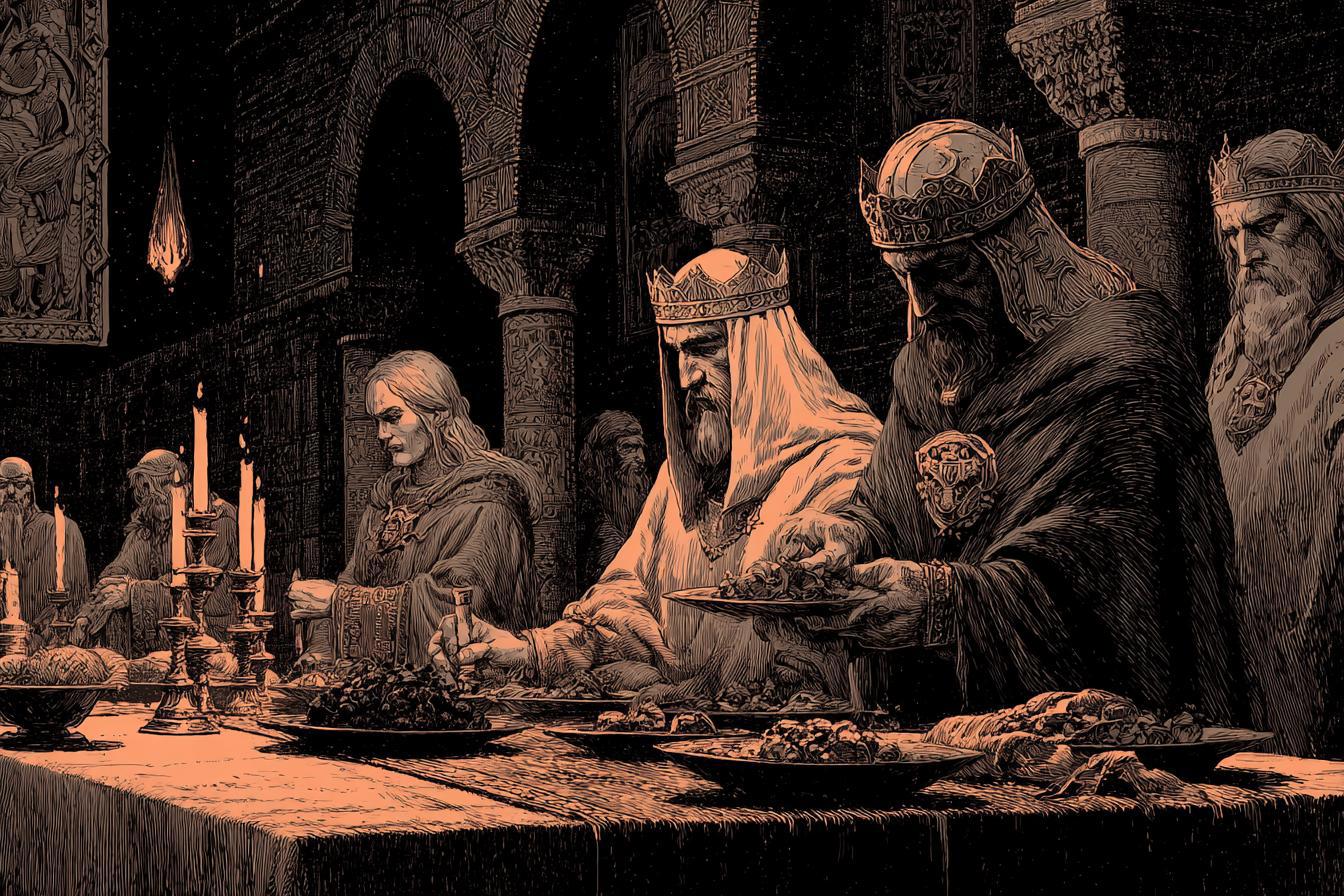
It is also worth noting the location – close to the Black Sea and the Carpathian Mountains – that was a prime route for those fleeing Asia for Europe, many of whom would go on to become the nobility and even monarchs of Europe.
Whatever the truth, it was around this time that Vlad became known as Draculea or Draculya, which eventually morphed into Dracula, which translates as Dragon’s Son or Devil’s Son. Clearly, we can see, then, that Stoker based his Dracula character on Vlad the Impaler, but if we return to the idea that Stoker also inserted many esoteric meanings and messages into his work of fiction, we can find some intriguing details. Such researchers point to the fact that Dracula is called Count Dracula in the novel, are, according to some, suggests that Stoker was revealing to the wider world that such activities were taking place within the circles of the elite throughout Europe. Moreover, Dracula’s ability to shapeshift and take control of a person’s thoughts is also highlighted, as is his need for human blood to maintain such powers (the ritual sacrifices we mentioned earlier). Perhaps of most interest, though, is Stoker’s close relationship with J.W. Brodis-Inis, who was an influential figure in the Hermetic Order of the Golden Dawn, whose rituals were said to date back to those same mystery schools of ancient Egypt we explored previously. It is further interesting to note that many members of this order were also Freemasons, who themselves have tentative connections to the Knights Templar, who fled from France in the early 1300s. Was Stoker trying to inform the wider world of these secret societies, and the bloodthirsty rituals and practices that took place within them?
While Bram Stoker might have informed the wider world of vampirism and its origins in 1400s Europe, some researchers insist that this practice stretches back much further, perhaps to the beginnings of human civilization. One such researcher is the controversial figure, David Icke, who draws comparisons between legends of vampires and reptilian entities, who, he claims, require human blood to maintain their human form. These reptilians, according to Icke, are often referred to as the Anunnaki, who have ruled over humanity since the dawn of time and have continued to do so from ancient Egypt and Babylon, to the ruling houses of Europe, right into the political leaders of the modern world.
While it might be easy to dismiss such considerations as nothing but nonsense, there are very definite connections between the rulers of antiquity and those who have control in the modern world. Moreover, at least according to some researchers, these reptilian entities arrived on Earth from the Draco star system. Of course, once more, we have a connection between the world of Draco and Dracula. One more thing to mention here, especially given Icke’s assertions that many of the royal families of Europe, including the British royal family, is that Queen Mary, Queen Elizabeth’s mother, is a descendant of Vlad the Impaler. While we should perhaps treat this with a pinch of salt, you can make of that assertion what you will.
Whatever the truth about vampires and reptilians and their apparent need for human blood, it is worth keeping in mind that many ancient cultures practiced such blood rituals. We might ask just where they obtained such a belief system; perhaps from the “gods”, who some people believe were the Anunnaki, or reptilians from the Draco star system.
While legends of shapeshifters consuming human blood to maintain human form are dismissed by many, and perhaps rightly so, now would be a good time to explore unsettling claims of our modern world – reports of the “super rich” using blood, or blood plasma, of the young to “maintain eternal youth”. We should be clear that whole these procedures simply halt or slow aging, and are very much in experimental stages, there has been great interest in such studies from those who can afford to pay for them. Ultimately, we might imagine that should such procedures become more widely available, those with the money to pay for them almost certainly will do. And of course, while we should be cautious with such claims, there have been several conspiracies over the years of “private” youth-maintaining procedures taking place behind closed doors.
We might imagine, then, that if such procedures around using human blood to maintain youth are breaking into the modern public arena, we might find examples of this secret knowledge in the past. And, while once more, we should treat such claims with extreme caution and a large helping of salt, there are several intriguing characters that we should examine here.
Perhaps a good person to start with here would be the Count of St. Germain, who, according to some reports, lived from the mid-eighteenth century to the opening decades of the 1900s. Moreover, as if providing tentative proof of this prolonged existence, the Count appeared to have been present at several historical events. As we might imagine, there have been several suggestions put forward to explain this prolonged existence, ranging from him being a time traveler to that he had discovered the secret of eternal youth. Of most interest to us here, though, is the suggestion that the Count of St. Germain was, for all intents and purposes, a vampire. What makes these suggestions even more interesting is that, according to some researchers, the Count was a descendant of a prince from Transylvania – the same Transylvania that was home to Vlad the Impaler, and one of the locations in the previously mentioned Bram Stoker novel, Dracula.
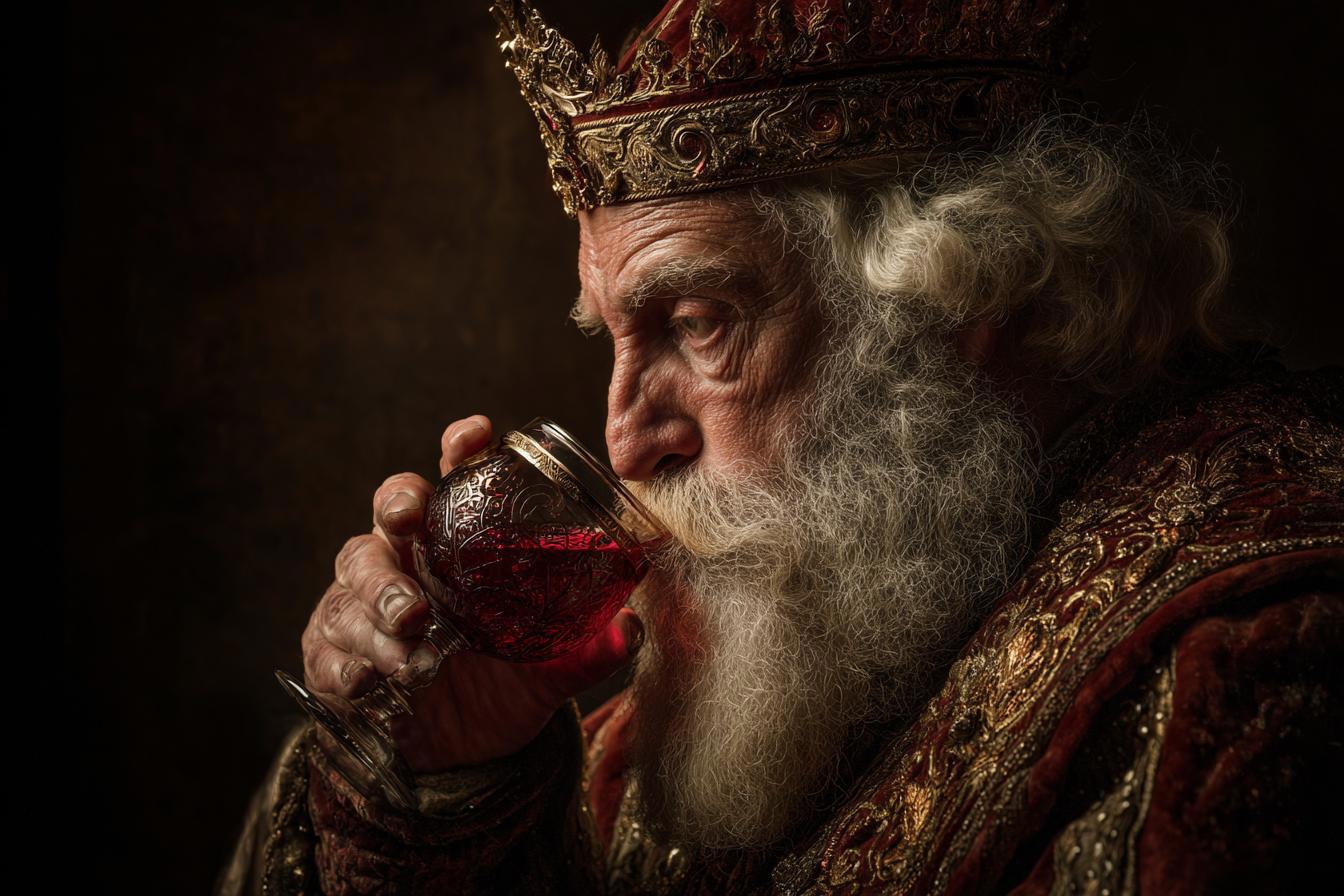
Whatever the truth, the first mention of the Count of St. Germain in the official record is in the early 1740s in London, where he was a socialite of sorts among the city’s elite of the times, one of whom was the (then) British Prime Minister, Robert Walpole’s son, Harold Walpole. In a letter that Walpole had written, he described the Count as being “a little odd”, and possibly even “mad”. Ultimately, he was suggesting that the Count was eccentric, and he elaborated that he was an extremely talented violin player who could compose remarkably intricate pieces of music. It was likely these high society connections, coupled with his eccentric behavior, that led to his arrest on charges of being a spy. Although he was quickly released and the charges dismissed, the incident seemingly unsettled the Count so much that he left London almost immediately afterward and headed for mainland Europe, eventually settling in Paris.
Once more, he circled in the upper classes of Paris society, even striking up a friendship with King Louis XV. It was during his time as a guest of Louis XV that the Count began working on several experiments in a laboratory in Louis XV’s residence, including developing a substance that could dye any material, any color that was desired, something which brought considerable wealth and opportunity to the region. Perhaps of more interest, and keeping in mind the brief charge of being a spy while he was in London, there were several rumors that the Count embarked on several “secret missions” on behalf of Louis XV, missions which remain a complete mystery to this day.
Despite these alleged secret missions and experiments, the Count of St. Germain was often seen in various drinking establishments of the city, and, because he was fluent in several languages, he was often seen conversing with anyone who took an interest in him. Of most interest, on several occasions, if the Count took a liking to a person, he was said to place a considerable “handful of diamonds” in their hand. While some saw this as an act of generosity, others claimed that he could change bog-standard rocks into valuable stones and materials – essentially, he was a master of alchemy. Perhaps because of this suspicion that he was a masterful alchemist, rumors began to spread that the Count was much older than he suggested, and not just by a few years, but by several centuries, with some suggesting that he had been alive and present at the Council of Nicaea in the year 325.
It was around the same time that these rumors were circulating that the Count left Paris. His exact movements remain unclear, but it seems that he traveled from France to Russia, with further rumors suggesting that he became a close friend and advisor to Catherine the Great, assisting in her seizing control of the country. What is known for certain is that he eventually surfaced in Germany, where he, once more, inserted himself into the upper echelons of German society, even striking up a friendship with Prince Charles of Hesse-Cassel. In a remarkably similar scenario to that in Paris under Louis XV, Prince Charles provided the Count with a laboratory where he could conduct experiments and develop his ideas in private.
Officially, the Count passed away in 1784. However, sightings and encounters with him continued all over Europe right into the nineteenth century, with some sightings occurring as far away as New Orleans, Louisiana, in the New World of the United States (something we will return to shortly). It is also worth mentioning that in 1972, a gentleman spoke on a French television program claiming to be none other than the Count of St. Germain. As we might imagine, these claims were not taken seriously, but they could prove to be those of an individual who, through such bizarre claims, had managed to stay hidden in plain sight for hundreds of years.
At this point, it is worth our time returning to New Orleans in the early 1900s, and another intriguing character by the name of Jacque St. Germain. Much like the Count of St. Germain, Jacque St. Germain seemingly appeared out of nowhere and quickly began frequenting the social circles of the city’s elite. Moreover, Jacques St. Germain was known for his eccentric personality, often throwing lavish parties at his home. It was at these parties that he would speak of historical events, as if he had witnessed them firsthand, offering extreme detail and intricacies as he told these fascinating tales.
Interestingly, Jacques St. Germain claimed that he was a descendant of the Count of St. Germain, but some people, in part because of the tales he told and in part because of his physical resemblance to the Count, believed that Jacques St. Germain and the Count of St. Germain were the same person. In fact, not only did he appear similar to the Count, Jacques was practically identical to him, including, of course, his eccentric personality. Not long after this, rumors about Jacques St. Germain began to spread around New Orleans.
Perhaps one of the most interesting of these was that many people had noticed that Jacques rarely, if ever, ate any food or consumed any drinks at his lavish parties. Despite this, he never appeared unwell and never appeared to age. To some, this was proof that not only was Jacques St. Germain the Count of St. Germain, but that he was a vampire. Then, an incident unfolded that seemingly confirmed this, at least to the residents of New Orleans.
One evening, following one of his famous parties, the police were called to attend his property following reports that a woman had fallen from a balcony at the property. The identity of the woman remains unknown, but according to reports at the time, she was a local prostitute. Of most concern, though, when police spoke to witnesses at the party, they learned that the woman had not simply fallen from the balcony, but she had jumped of her own accord. What’s more, she had done so in a state of absolute terror.
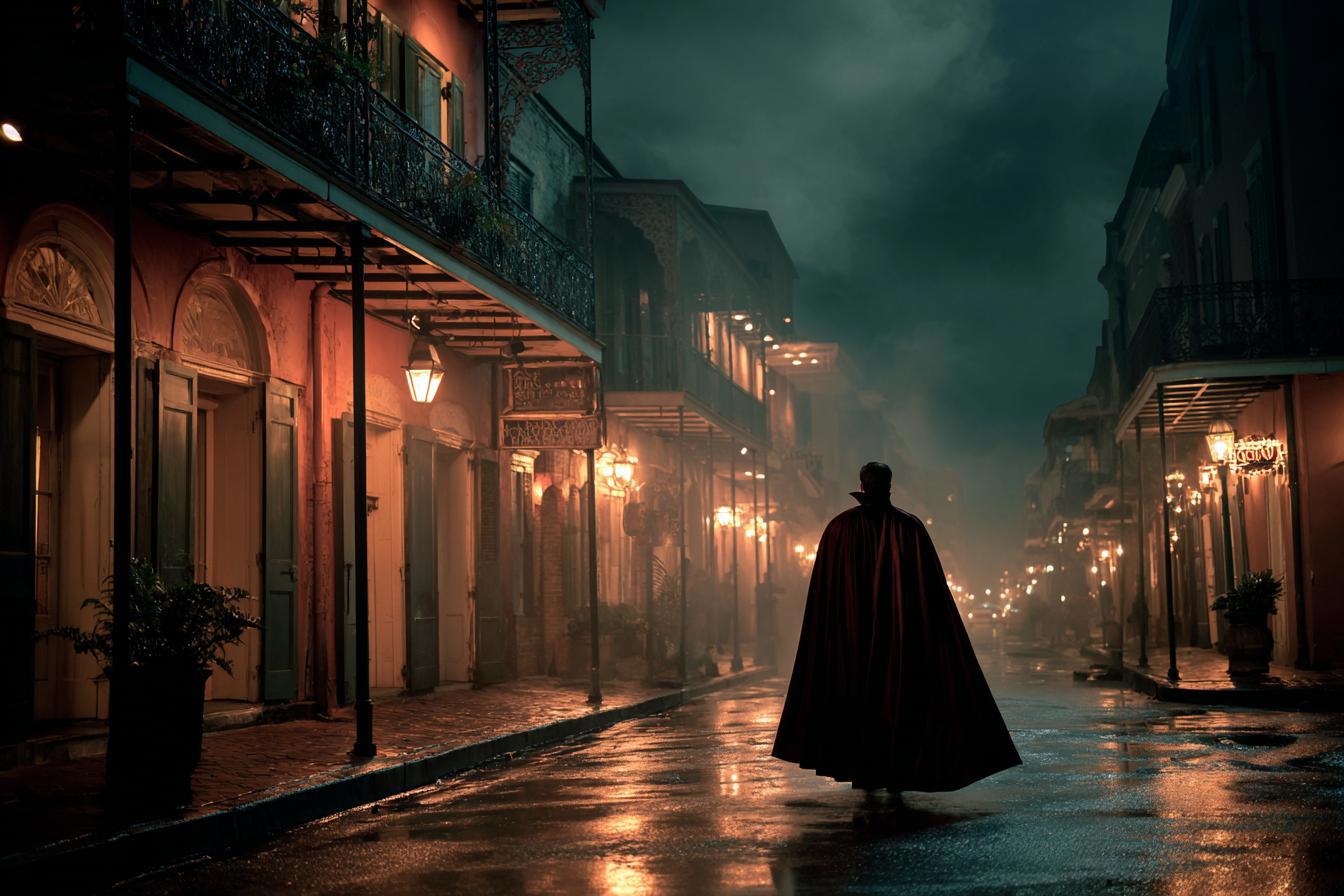
Eventually, the woman regained consciousness, and she told police eventually caused shockwaves to spread throughout New Orleans. She claimed that Jacques St. Germain had not only attacked her, but that he had bitten her neck in an attempt to drink her blood. It was this act, she said, that had caused her to fling herself from the balcony to escape St. Germain. The woman was eventually taken to hospital where it was determined that she must have imagined the entire ordeal due to excessive alcohol consumption. Despite these troubling events, the police declined to arrest Jacques St. Germain. They told him instead to attend the police station the following day so that he could give a statement as to what had happened. The following day, when Jacques failed to show up at the police station, the police attended his property once more. Perhaps not surprisingly, when they arrived, they discovered that St. Germain had seemingly vacated the property during the night. As well as his disappearance, police were perplexed that he had left all of his belongings. However, after they conducted a full search of the property, police made further unsettling discoveries, the most disturbing being several bottles of red wine in one of the abandoned rooms. All of the bottles were open but still full. When the contents were analyzed, though, they were found to contain a mixture of red wine and human blood.
The gentleman who appeared on the French television show aside, Jacques St. Germain, or indeed the Count of St. Germain, was never heard from or seen again. There are, though, many questions that remain, not least if Jacques St. Germain and the Count of St. Germain were the same person. What happened to St. Germain following the incident at his New Orleans home? Did he manage to find a new residence where he blended in without notice? And if that was the case, how did he manage to fund his existence, given that he had left all of his wealth in Louisiana? Moreover, was the account given by the woman who jumped from his balcony true? We might ask, if it wasn’t, then why did Jacques vacate the city under the cover of darkness? Given that the police didn’t even question him following the incident, we might imagine that his high social standing would have protected him against any possible charges. With these questions in mind, we might consider that St. Germain did indeed have a dark secret to protect. Perhaps the biggest question of all, though, is was Jacques St. Germain was what we would collectively understand to be a vampire?
As interesting as the details of St. Germain are, there are other historical figures who have been surrounded in such controversy.
Arguably one of the most interesting of these, as well as one of the most harrowing, is the questionable activities of Countess Elizabeth Bathory of Hungary, who was not only known for her cruel behavior to those who worked for her, but also had an appetite for human blood. In fact, this blood lust, according to many rumors that circulated at the time, resulted in her murdering over 650 young women. Even more harrowing, it is said that she would then bathe in the blood of her victims as she believed not only would it maintain her youth, but also bestow other powers upon her.
Whatever the truth of such rumors, following the death of a young noblewoman – that Bathory had seemingly made appear like a suicide – the authorities eventually questioned the Countess, and when they did, the true nature of her behavior was revealed. She was eventually charged with 80 murders; however, he died before she could be put on trial while under house arrest.
While it might be tempting to think that individuals or secret societies were taking part in blood rituals only in the past, there are many accounts of such activity in the modern age. One of the most thought-provoking of these comes to us from the research of Nick Redfern about a cult that originated in Puerto Rico. It was while Redfern was in Puerto Rico in May 2007 that he learned of this disturbing group and their equally disturbing activities.
Redfern claimed that he was in a bar one evening when a local restaurant worker named Sal spoke with him about an ultra-secret group made of various members of the world’s elite. This group, Sal claimed, practiced rituals involving blood sacrifices of various animals, including chicken, goats, and peacocks. This group seemingly began operating at some point in the mid-1990s, and counted politicians, famous actors and musicians, and even members of various royal families among its members.
These rituals, Sal offered, usually took place in various locations, ranging from rich, spacious mansions to the middle of the rain forest, and would involve the sacrificing of animals, whose blood was then drained into a vessel as an offering to ancient gods. Redfern also reports that these rituals also involved alcohol and drug-fueled orgies, similar to those depicted in the Stanley Kubrick movie Eyes Wide Shut.
What is further interesting about these claims, at least according to Redfern, is that the same animals used in these sacrifices are the same preferred kills of many of the alleged cryptid creatures of the region, specifically, the Chupacabra. Of further interest, reports of the Chupacabra began to become widespread around the same time as the alleged origins of this mysterious cult. Sal informed Redfern that while the group didn’t invent encounters with the Chupacabra, they wasted little time in using such reports to cover their own dark activities.
We should note, as Redfern advises, that the claims should be treated with caution, not least as Sal passed the information on to Redfern after he had heard it from a third person. Moreover, although Redfern questioned Sal for more information, he was unable, or perhaps unwilling, to provide the researcher with any further information.
It is interesting to note, however, as Redfern highlights, the connections between Sal’s account and the religious practice of Santeria, which is practiced not only in Puerto Rico but around the entire Caribbean region. To quote Redfern, he writes:
“While those that adhere to the teachings of Santeria believe in the existence of one, overall god, they also believe there are numerous other sub-gods too, which are collectively known as Orishas.”
Those who practice this religion are known as Santeros, and many of their rituals are geared towards the appeasement of these ancient deities, as well as for reasons such as health or personal desire, with ritual blood sacrifices of animals being a major factor. Redfern writes about this, stating:
“A Santero would rub the skin of a paying client with the body of the animal that was to be imminently sacrificed. Doing so, the followers of Santeria believed, transferred whatever ailed the person – or whatever they desire – into the body of the animal. The sacrificing of the animal was an act designed to ensure the wish reaches the Orishas, who granted them whatever it was that the person in question required. Sometimes, the corpse of the animal was destroyed; on other occasions it was eaten. As for the blood, it was served in a large vessel that is then offered to the gods.”
While this is pure speculation, we might ask if a discreet group of the super-rich – essentially, the elite – also use these sacrifices, perhaps under the cover of such ancient practices as Santeria, and perhaps using not only animals but human blood sacrifices, to maintain and even increase their personal wealth and influence.
It is also worth our time here looking at another alleged secret society of the world’s elites, also documented by Redfern, based on information given to him by a man named Rob Lea in the summer of 2000. Lea claimed that he had proof of this dark cult, based in England, which had been operating discreetly since the late 1980s.
According to what Lea told Redfern, one morning in the summer of 1989, Lea’s father discovered the butchered remains of five of his sheep on the farm he owned. It appeared that these unfortunate animals had been attacked during the night. However, rather than some beastly onslaught, it appeared as though they had been killed in a methodical, calculated way, almost by something or someone who had knowledge and intelligence in such actions. The throat had been perfectly and precisely slit on each of the sheep, with their carcasses purposely arranged in a circle. Moreover, in the middle of this circle were the purposely arranged internal organs of the sheep.
Rob’s father suspected the sheep had been killed as part of a Satanic ritual and immediately reported his concerns to the police. However, when the police arrived at the property, the account took another strange and ominous twist. Not only could the officers find no clues as to who might be behind the disturbing activities, but they also appeared to discreetly warn and discourage Rob’s father from taking the matter further, specifically warning him about speaking to the media about it. Although there were no more such discoveries on the farm, as Rob grew older, he began to carry out his own research into the incident, as well as ritual sacrifices, in general. Eventually, he uncovered an ultra-secret group known as the Cult of the Moon Beast.
According to what Rob told Redfern, this group was comprised of several individuals who came from various locations in the United Kingdom. All of them were hugely influential in their specific field or walk of life. This group used “ancient rites” to carry out various rituals and ceremonies, which involved animal sacrifices that would summon up otherworldly entities, who would then use their power to assist the group in their dark desires, which, according to Lea, even involved the deaths of rivals of the group. Even more remarkable, Lea claimed that after following the group for several years, he managed to secretly view no less than three of these rituals, claiming that these ominous entities came from a “realm or dimension that co-existed with ours”, and were a “non-physical intelligence” that would “take on the appearance of what was in the mind’s eye”. Further still, these entities didn’t use physical methods to kill their targets, instead using “mind power, fright, and suggestion”. Ultimately, they scared their victims to death. Darker still, according to Lea, this group also “hired out” these otherworldly entities to other members of the world’s elites for their own ends, which perhaps tells us just how influential this group actually was, or is.
Of course, many people will dismiss such claims as nothing but bizarre nonsense. However, it is worth noting that many other researchers have made similar claims. And while we should still treat such claims with caution, it is interesting to note the number of political figures and industry leaders who suddenly take their own lives or die of a sudden heart attack despite being seemingly perfectly healthy. Moreover, Redfern made other discoveries about strange goings on connected to dark cults, with specific connections to peacocks, as per the sacrifices in Puerto Rico that we mentioned earlier.
While Redfern was in Puerto Rico in 2004 investigating several Chupacabra reports, he spoke with a wealthy landowner who believed that his peacocks, despite there being a wealth of other animals on his land, had been seemingly singled out and targeted by the beast.
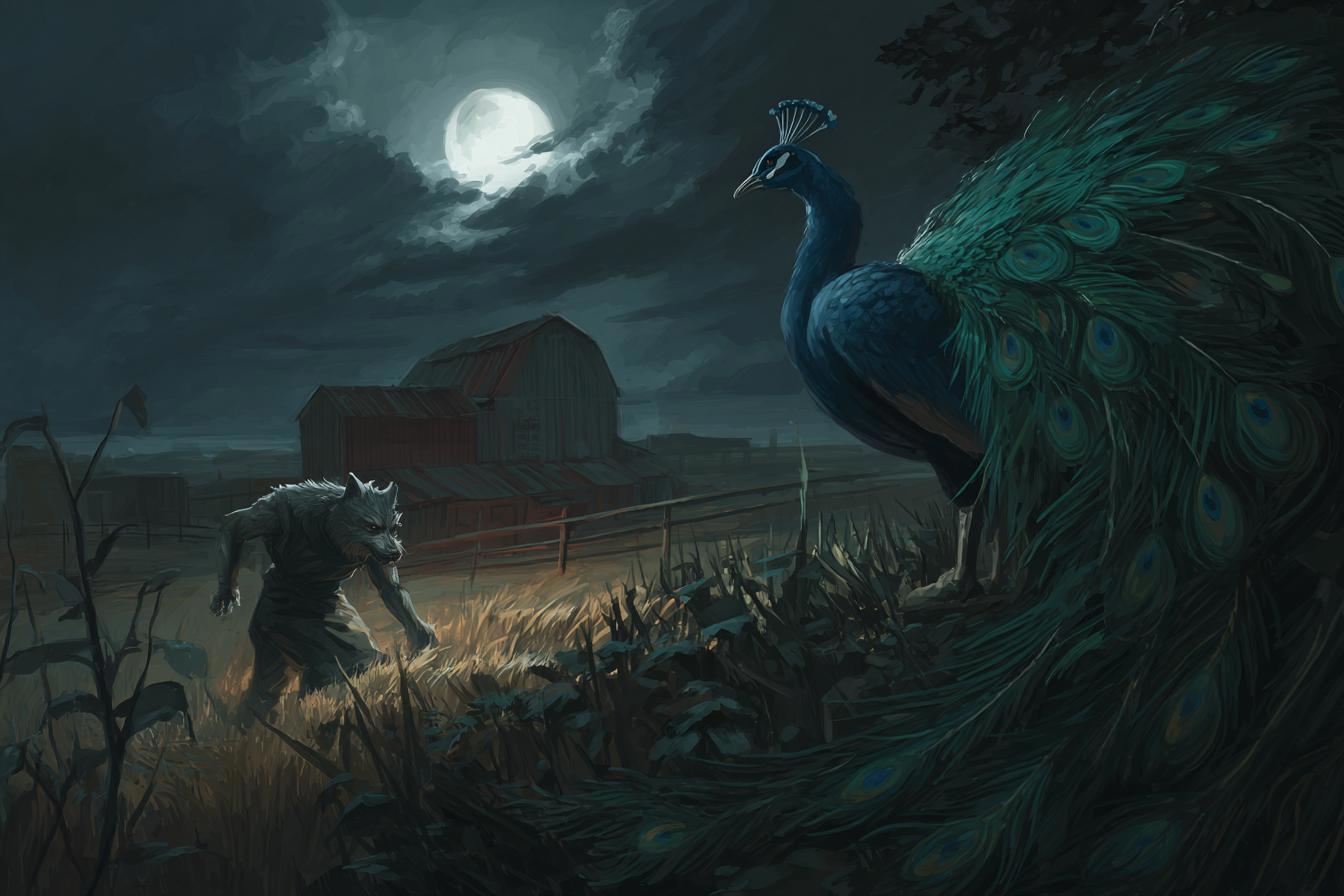
Redfern made similar discoveries regarding the apparent targeting of peacocks while investigating a similar cult in the United Kingdom in 2006. Redfern had traveled to Chartley Castle to investigate a crop circle that had appeared in a nearby field. Of most interest to us here, though, was the presence of peacock feathers in the center of this circle. Further peacock feathers were also discovered along the road that ran next to the field. When Redfern spoke with a Wiccan named Jane Adams, he was told that the presence of peacock feathers in this manner suggested that a dark ritual had been performed, suggesting that a mysterious and powerful cult was behind such rituals. She didn’t reveal any precise details of the group or the names of those involved. She did, though, state that they were a “group of occultists that had tentacles stretching all across the United Kingdom”. She also stated, whether of consequence or not, that the purpose of these rituals was to “conjure up” such supernatural creatures as “alien big cats” or “phantom black dogs”, reports of which, incidentally, are rife in the area.
One more account to mention regarding Redfern’s research is an incident that unfolded on the morning of June 28th, 2007, in Staten Island, New York. On the morning in question, employees and customers at a local Burger King restaurant were surprised by the sudden appearance of a peacock outside the restaurant doors. To begin with, the scene was one of interest and joy, with many customers breaking off bits of food to feed the friendly bird. However, the scene quickly turned nasty when a young man arrived and attacked the bird, eventually killing it. It was later discovered that the man in question suffered from schizophrenia and had neglected to take his medication. However, whether of consequence or not, and of particular interest to us here, the man claimed that the peacock was a “vampire” who assumed the form of a peacock to surprise attack its unsuspecting victims. Of course, once more, we should treat such claims with caution, but they are certainly worth keeping on the mental back burner considering all that we have explored here.
Of course, it was Redfern’s investigations into the Chupacabra sightings that, in part, put him on the trail of such secret societies carrying out such dark rituals, and he discovered more revelations after speaking to another woman in Puerto Rico in the late 2000s named Julia. She claimed that the increase in reports and the legends of the Chupacabra was down to a “secret society”, which her ex-husband had been involved with. In fact, it was his involvement in this group that had led Julia to divorce him. She claimed he had become involved with the group at some point in 1999, around a year before she had met him. She claimed that he had informed her that the power, wealth, and influence he and other members of the group enjoyed were down to “supernatural pacts between the group and the paranormal denizens of realms beyond ours”. Moreover, this pact involved rituals with human blood, with one specific ritual he attended at the lavish mansion of a “powerful Puerto Rican drug baron”, who himself firmly believed his wealth and apparent protection from prosecution were down to these dark rituals.
Julia continued that she had carried out her own research into the group’s activities, claiming she had managed to speak with three separate individuals who had been handsomely paid by the mysterious group for supplies of their blood. According to Julia, each of the people in question had been taken to an unknown location somewhere in the El Yunque rainforest, where a doctor, who himself had been well-paid by the group, extracted the required amount of blood from them before they were returned home.
It was from one of these individuals’ blood that was used in the ceremony at the drug baron’s mansion that her ex-husband informed her about. She claimed that this ritual involved dozens of people from all walks of life, all of whom were extremely influential. Each was “dressed in cloaks,” and all were extremely focused on the task at hand: to manifest a Chupacabra.
Julia claimed that a short time after the start of the ceremony, the light in the mansion began to flicker, and the room filled with a strong aroma of sulfur. Moreover, the air in the room began to “shimmer” before a Chupacabra creature began to form right in front of them right out of thin air. Then, things turned even stranger.
Julia continued that this strange creature was “semi-transparent” – it was “more spectral than it was physical”. However, several moments later, it stepped into a bowl full of human blood that had been placed in front of it. As soon as it did so, it began to become less transparent and quickly fully physical. According to what Julia’s ex-husband told her, it was the human blood that gave it a physical existence in our realm as opposed to the “ethereal” one from its own realm. Then, with many of those in the room still coming to terms with what they were seeing, a blinding “bright blue flash” appeared, and the Chupacabra vanished.
While it isn’t clear what the purpose of this manifestation of the Chupacabra was and how it served those behind the ritual, it is interesting to note the notion that human blood was required to make the creature physical, and perhaps explains the Chupacabra’s need for blood on its travels across the American continents.
Of course, the Chupacabra has long been associated with UFOs and alien entities, and there are several accounts of such that have direct connections to the need for blood (we have already touched on, for example, on alleged reptilian extraterrestrial entities requiring human blood to maintain their human form). Arguably, one of the most fascinating of these accounts can be found in The Mothman Prophecies by John Keel.
According to the report, on the evening of March 5th, 1967, 21-year-old Beau Shertzer, along with a young nurse and colleague, was transporting blood supplies and samples to the Red Cross Headquarters in Huntingdon, West Virginia. It was while they were on Route 2 between Huntingdon and Point Pleasant that their journey took a bizarre and disturbing turn. Out of nowhere, they noticed a “large white glow” that appeared in a flash over the trees that lined the roadside. When they realized this strange glow was heading in their direction, Beau pressed down hard on the gas in an effort to outrun it. However, only seconds later, this ominous, glowing object was directly over their vehicle.
With the vehicle still in motion, Beau wound down the window and attempted to look outside to see what was happening. Out of the light from the object, he could see a “mechanical-looking arm or extension” stretching towards the moving blood bank. Then, he heard the nurse he was riding with let out a horrified scream. He turned in her direction and saw another mechanical arm stretching down past the passenger side window. It appeared to Beau that this object was attempting to “grab” their vehicle, perhaps to carry it off.
Just as Beau was about to submit to their apparent fate, the headlights of an oncoming vehicle came into view. As soon as they did so, the mechanical arms retracted and the glowing object rose into the air and disappeared. Beau continued to his destination, although both he and the young nurse were on the verge of absolute terror for the remainder of the journey. The pair reported the incident to the local police, but there was little they could do, or were willing to do, to investigate it. Similarly, despite the bizarre nature of the events, there was hardly any media coverage of the incident, aside from a brief mention on a local radio station. Keel wrote of the incident:
“In cases like this, we have to ask: Did the UFO really intend to carry off the Bloodmobile? Or was it all a sham to “prove” the UFOs interest in blood. Later I tried to check to find out if any Bloodmobiles had actually vanished anywhere. The Red Cross thought I was a bit nuts. But I often find myself seriously wondering if we only hear about the people who get away!”
Indeed, we might ask just how many other UFO, alien, or supernatural entity encounters and their apparent blood lust go unreported, either because of the unwillingness of the witness to speak about such bizarre matters, or, as Keel states, because the people involved didn’t “get away”.
Beau, incidentally, passed away on October 22nd, 2015, at the age of 71. As well as having a long and respected career in the medical field, he also served in the Vietnam War, earning a Bronze Star for heroism. In short, he was a very credible witness who was unlikely to have concocted such a story.
Beau’s encounter with apparent bloodthirsty UFOs is far from the only one on record, however, with one of the most horrific incidents unfolding several years earlier in March 1956. On the day in question, United States Air Force Sergeant Jonathan Lovette and Major William Cunningham were searching for rocket debris on the White Sands missile testing grounds near Holloman Air Force Base following a recent rocket test. Lovette had gone to inspect over the edge of a dune. Moments later, Cunningham hears his colleague let out a terrified scream. He immediately ran to the top of the dune to check on Lovette. However, what he saw was something he simply wasn’t prepared for.
There, hovering a short distance from the ground, was a silver disc-shaped object approximately 20 feet ahead of him. Coming out of this disc was a huge tentacle-like appendage that was wrapped around Lovette’s leg, who was still screaming and calling out in terror. It was clear that Lovette was being dragged inside the object, and moments later, he disappeared inside the object before the craft shot straight up into the sky and disappeared.
Cunningham immediately ran back to the military jeep and radioed back to the main base about what had happened and requested assistance. Shortly after, Cunningham was transferred to the military hospital, where he was placed under observation. He was questioned several times, and each time he told the same account. Interestingly or not, at least according to some reports, an unidentified object had appeared on the base’s radar at the same time Cunningham claimed the incident happened.
A search of the entire area was carried out, with Lovette’s naked corpse finally being discovered three days later, around 10 miles from where he had vanished. When the autopsy was carried out, though, rather than providing the military with answers, it simply raised more questions. His body, for example, had been completely mutilated, although not in a manner that suggested a beastly attack. His tongue, for example, had been precisely sliced off, while his lower jaw had equally as precisely been cut away. Both of his eyes had also been skillfully removed, but the most disturbing discovery was the fact that every drop of blood had seemingly been drained from his body. Moreover, there were no signs of vascular collapse, which would have happened if Lovette had bled to death.
Despite being initially suspected of Lovette’s murder, in part because of these strange finds, Cunningham was released from the hospital without charge.
One last thing to mention regarding this case is that it was pieced together from accounts given by researcher William Cooper and a former Green Beret captain, William English, both of whom learned of the encounter from an apparent report from Project Grudge – Report 13. Cooper claimed that he was asked to investigate an annotated version of this report in the early 1970s. English, meanwhile, claimed he came across the report while he was assigned to a United States security service based at a Royal Air Force base in Chicksands, England. Both men, each without knowing the other, gave the same details. Moreover, officially at least, Report 13 doesn’t exist, with all of the other reports from Project Grudge (Reports 1 to 12, and Report 14) having since been declassified. Report 13, however, is simply not mentioned. We might ask just why this is.
Perhaps a good place to end our exploration of the need for blood and strange, potentially otherworldly entities is with just some of the cases of “real-life” vampires from the modern world. Before we continue, we should stress that most medical and psychological expertise will tell us that many of these people almost certainly suffered from mental imbalance or illness that resulted in their desire for human blood, without wanting to trivialize such cases, we might ask whether these urges stemmed from their own respective psyche or whether they were influenced by outside, otherworldly forces or entities.
Joshua Rudiger, for example, embarked on a vampiric killing spree throughout the 1990s in California. When he was eventually arrested in 1998, he stated that he was a “2000-year-old vampire” who required human blood for “vitality”. These statements led to him being given the moniker The Vampire Slasher by various media outlets. Ultimately, he was sentenced to over 20 years in jail for his crimes. Of course, whether Rudiger was an actual vampire or whether he used such assertions to distance himself from his horrific crimes remains open to debate to some (although, once more, we should stress, it is almost certainly the latter).
The following year, in Oklahoma, Sean Seller was executed for the 1986 murders of his parents and a store clerk. During his trial, he claimed that he had been possessed by an evil demon with a desire for human blood, even offering its name – Ezurate. He regularly drank human blood, often slashing himself or his friends to do so.
Arguably, one of the most harrowing cases of modern-day real-life vampires unfolded between December 1977 and January 1978 I Sacramento, California, when Richard Chase murdered six people to drink their blood, which led to him being dubbed The Vampire of Sacramento. Chase, it would come to light, had had an intense interest in vampires since he was a young child, specifically, drinking blood. From around the age of 10, he regularly killed animals to satisfy this urge, with details later emerging that Chase believed consuming blood would cure him of “paranoid thoughts” that had plagued him for as long as he could remember. He even went as far as to inject himself with blood, which, on one occasion, led to him being treated for blood poisoning after injecting rabbit’s blood. Following this, he was held in a secure facility for several months, during which time, staff regularly referred to him as Dracula. It was not long after his release from this facility that he began his blood-fueled killing spree when, on the evening of December 29th, 1977, he shot and killed 51-year-old Ambrose Griffin.
From there, Chase regularly prowled the streets of Sacramento looking for victims, later claiming that he would simply try doors of properties on the off-chance that they would be unlocked, stating to police after his arrest, similar to vampire law, that if he found doors to be locked, he took this as a sign that he was “not welcome” and he would walk away. Of course, in vampire folklore, a vampire has to be invited into a property before entering. So when Chase found properties that were unlocked, he took this as a sign that he was allowed to enter.
This was very much the case on the evening of January 23rd, 1978, when he discovered the door of Teresa Wallin’s home unlocked. He went inside and shot her before stabbing her multiple times with a butcher’s knife. Not only did Chase engage in necrophilia, but he also removed several of Wallin’s internal organs, as well as used a yoghurt pot to drink her blood.
Only four days later, on the evening of January 27th, he found the door of 38-year-old Evelyn Miroth unlocked. He entered the property, where, along with Evelyn, was her six-year-old son, Jason Miroth, her 22-month-old nephew, David Ferreria, as well as her friend, Dan Meredith. Chase shot all of them before mutilating Evelyn’s corpse, once more engaging in sexual activity with her corpse before removing her internal organs. Even more alarming, it appeared that Chase had been disturbed during this multiple murder episode by a neighbor, who quickly informed the police. Chase fled the scene, but he took David Ferreira’s corpse with him, which wasn’t discovered for several months; decapitated behind a church.
When police arrived at the Miroth home, they discovered several of Chase’s fingerprints in the bloodstains around the property, and he was arrested later that evening. Not long after, he was charged with six murders. Upon his arrest, investigators discovered a calendar in his home with the word “Today” written on several dates – all of which matched the dates of the murders he was charged with. This, of course, showed premeditation on his part, on which nights he planned to kill. Moreover, there were over 40 dates with the world “Today” written on them, meaning he had planned several months into the future. He was sentenced to death in the gas chamber, but took his own life after stockpiling his antianxiety pills before finally self-administering a fatal dose in his cell in December 1980.
One more case of modern-day real-life vampire murders unfolded over Thanksgiving weekend in 1996, in Murray, Kentucky, when 16-year-old Roderick Ferrell murdered his girlfriend’s father, Richard Wendorf, as well as his partner, Naoma. He bludgeoned the pair to death with a crowbar, the killings being the culmination of Ferrell’s long-held belief that he was a 500-year-old vampire named Vesago.
Following his arrest, it came to light that Ferrell was the leader of a Vampire Clan, through which he had first met his victim’s daughter, Heather Wendorf, when she joined the cult after running away from home. The group regularly met at an abandoned building they dubbed The Vampire Hotel, the words of which were scrawled on one of the walls inside. The group performed regular blood rituals in the building, including consuming each other’s blood. Although five people from the group were arrested in connection with the murders, investigations suggested that their number was around 30 members at the time of the killings.
Once more, whether Ferrell genuinely believed he was a 500-year-old vampire or not, or whether he used it as a way to distance himself from the crimes, remains open to debate. One thing that is worth mentioning, however, and something noted by investigators, was that Ferrell’s mother had a particularly strained relationship with her son, and she also had an intense interest in vampirism. Whether this contributed to Ferrell’s state of mind and murderous tendencies, however, remains open to question. He was, incidentally, initially sentenced to death for the murders, but his sentence was reduced to life in prison without the possibility of parole.
As we can see, then, the notion of vampires, blood sacrifice, and the appeasement or summoning up of otherworldly entities is more widespread than we might wish to admit. Moreover, these activities have taken place for thousands of years. Indeed, when we consider the claim of modern-day cults partaking in such blood rituals, we might contemplate whether these ancient practices have continued right into the modern age through various secret societies, mainly made up of the world elites. As preposterous as it might sound to many, could these ancient blood rituals really be the reason why the families in power and with great influence remain in such positions across generations? Of course, if there is any truth to any of this, if only in part, then it gives us a lot to think about and to come to terms with.
RELATED VIDEOS