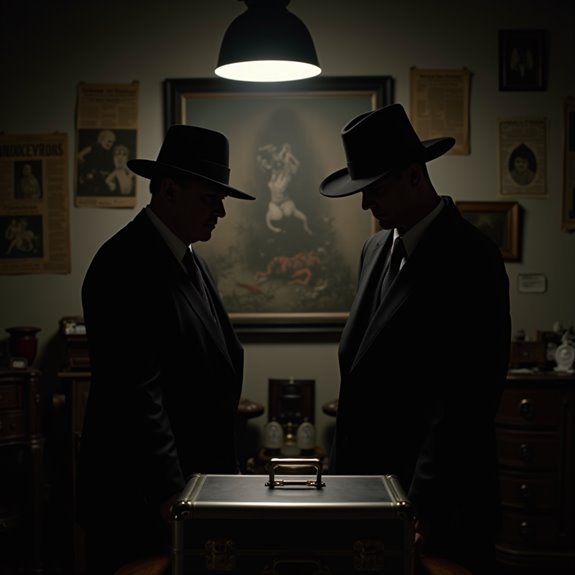
What old Wild West scene would be complete without its saloon full of cowboys, bandits, and unsavory elements of society? How about a haunted one? Paso Robles, California, is a historic little town tucked away along the Salinas River in San Luis Obispo County, California, its name coming from the original El Paso de Robles, meaning “The Pass of Oaks.” It is the quintessential Old West town, looking very much as it always has, and it possesses a long history populated by colorful characters. It was inhabited by Native tribes for thousands of years until the mission era, when settlers began pouring into the region and the area of Paso Robles became known for its numerous thermal springs, and in later years has become known for its haunted historic saloon.
It was due to the hot springs of the area that in the 1880s, Mexican War veteran Drury James, of Kentucky, uncle of the infamous Jesse and Frank James, moved in to secure a land grant along the Camino Real trail in order to provide a stopover for weary travelers. Drury would actively advertise its hot springs as having healing properties and curative effects for a wide range of ailments, even going as far as to bottle it and sell it, and as more settlers and visitors poured in, it became a town in its own right, as more hot baths, orchards, cattle ranches, and vineyards sprang up around them. In fact, in 1886, the Southern Pacific Railroad made it a major stop along its route, and Paso Robles was officially incorporated as a city in 1889.
It became a popular destination as a hot spring resort, with the magnificent El Paso de Robles Hotel serving as a main attraction for the wealthy with its numerous bathrooms, plunge bath, garden, and 9-hole golf course. The hotel itself became well-known for its healing hot springs, and it and the town would go on to be visited over the years up to the present by such famous personalities as President Theodore Roosevelt, actors actors Douglas Fairbanks, Boris Karloff, Bob Hope, and Clark Gable, Gary Busey, Robert Mitchum, Mel Gibson, Sam Elliot, Greg Kinnear, Grammy Award winner Louie Ortega, Kenny Lee Lewis of the Steve Miller Band, musician Merle Haggard, bass player for Steppenwolf Nick St. Nicholas, Eagles songwriter Jack Tempchin, Blues player K.M. Williams, and many others. Yet, although this place in its early days was an attractive holiday destination, it was not without its shadier elements lurking about, most of which revolved around the rough-around-the-edges of a place called Pine Street.
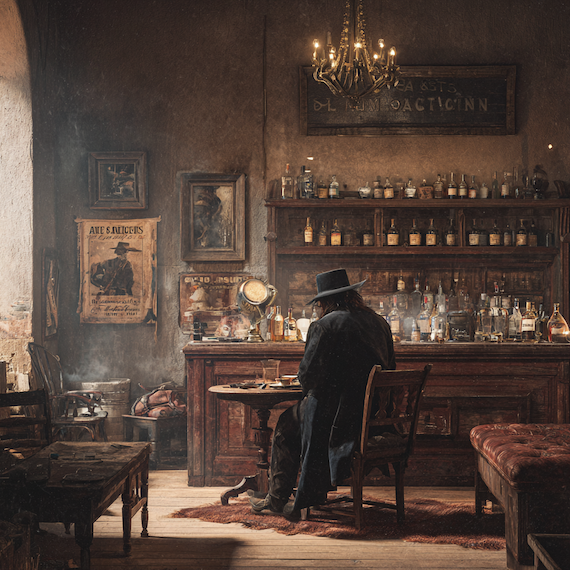
The street itself was originally a stagecoach stop where coaches would stop on their way to Bakersfield, and it became known as a gathering place for miners, ranchers, and the more nefarious dregs of society. They would hold dances and horse races here, often drinking, gambling, and raising a ruckus, and among them were also some notorious outlaws, notably Drury’s own relatives Jesse and Frank James. In the midst of this den of villainy was a modest two story structure which held within it a bar that was at the time called the Red Door, also a notable billiard parlor and card room, at one point even serving as a candy store, which while one of many other similar establishments along the street was certainly one of the most infamous, being one of Jesse James’ alleged haunts when he was in town.
The bar would eventually be known as the Pine Street Saloon, and it has gone on to become one of the oldest standing buildings in Paso Robles, with full swinging doors and looking like something out of a Western movie, as well as the most haunted. Perhaps it is due to its rough history, but the Pine Street Saloon has long been considered ground zero for all manner of paranormal phenomena, including roving cold spots, mysteriously moving objects, shadow figures, and even the supposed apparition of Jesse James himself, said to lurk in darkened corners of the bar, only to vanish when approached. Patrons have also complained of being pushed or slapped by unseen hands, and mediums who have visited have reported there being very malevolent spirits here that mean people harm. There are also often fleeting figures and other anomalies captured on the security cameras of the establishment, and the paranormal activity is such that the Travel Channel show The Dead Files has done an episode on it all called The Watcher.
In recent years, Paso Robles has been a quaint, historic town known mostly for its many vineyards and wineries and its burgeoning beer brewery industry more than anything else, but the Pine Street Saloon still stands, having become a major music venue in modern times, despite its reputation as an intensely haunted place. Indeed, the town itself continues to be a major tourist hotspot, and the saloon has become a haven for people looking to enjoy spirits in one form or another. It seems that the history of this place and its often violent underbelly may have some part to play in the hauntings here, but it still leaves one to wonder why these spirits might remain tethered to this place. Whether there are any real ghosts at the Pine Street Saloon or not, it is certainly something to keep one's eye out for if you are ever in town for a drink
Another decidedly mysterious place imbued with the paranormal, situated in the vast state of Texas, is an area in Crosby County, near where the eastern edge of the Panhandle hits the Red River, where there is a lake called Blanco Canyon Reservoir. Into this reservoir juts a small peninsula, a rocky, grassy plateau that was once called simply “The holding point on the North Blanco,” with the North Blanco being the old name for the White River. The area was a bit precarious due to its steep 200-foot drop-off into a sheer cliff, but this was what made it a popular place for passing ranchers to hold herds while they rested, due to the fact that the cliffs served as a sort of natural fence, and there was ample grass and water at the top. A herd could just be plopped there for a while without having to worry too much about it, with none of the animals willingly toppling over the precipice to their deaths.
This all worked out quite nicely for a while, and trail bosses made this a frequent stop, but in the late 1800s, there was a series of very bizarre events that would cast a sinister light on this place, and earn it the rather ominous nickname “Stampede Mesa.” It all allegedly started one day in the fall of 1889, when a cattle herd was brought here by some trail bosses, but they were disappointed to see that someone had built a brand new homestead right there upon the most prime grazing land. As they tried to figure out what to do and how to reroute the herd, an ominous storm began to rise up out of nowhere, with black clouds quickly rolling out over what had been a totally clear sky not long before, and the rumble of thunder became increasingly louder as flashes of lightning flickered across the darkening landscape.
The main trail boss, a man named Sawyer, decided that he did not feel much like taking the several hours it would have taken to regroup the herd and lead them around the mesa, not in the face of the brewing storm, so he got it into his head to just drive the cattle straight through the homestead. Aided by the booming claps of thunder and the lightning lashing across the sky, Sawyer fired his pistol into the air, waved a blanket, and made as much noise as he could to conjure up a stampede. This worked, and the over 1,000 steers in his care bolted in a mass of heaving panic straight through the homestead, crushing everything in its wake and leaving several innocent people dead.
The problem was, the cattle did not stop with the utter annihilation of the homestead, and indeed did not stop at all, racing right over the mesa to go careening off of the cliffs on the other side. When the dust cleared, the wake of destruction led to almost all of the steers lying dead and dashed upon the rocks below, as well as a few of Sawyer's men, their horses taken over by the same senseless panic as the cattle. Undeterred, Sawyer ordered the few hundred remaining cattle to be rounded up and driven on to their destination, without so much as a proper burial for his ranch hands or innocent homestead occupants who had died in the chaos, simply leaving them there strewn about and smashed on the rocks to rot. Because of his reckless abandon and cold-heartedness, it was said that Sawyer never got work as a trail boss ever again and ended up vanishing without a trace.
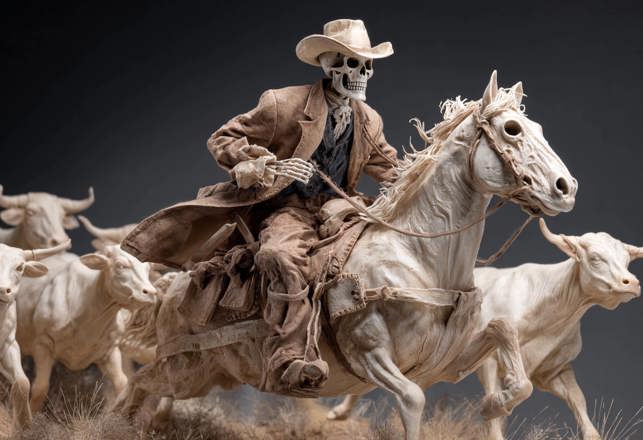
The area became known as Stampede Mesa, and whether it was because of all of this darkness and death or not, the place became known for being intensely haunted. Indeed, the very following season, another group of cattle-pokes were out on the mesa when, for no reason at all, their entire herd suddenly bolted in unison for the cliffs and went recklessly pouring right over to their deaths, along with several ranch hands. According to the tales, this happened again and again, with sudden storms that sprang up out of nowhere often reported, and in some cases, even the presence of spectral entities. One cowboy at the time, named Lon Schuyler, had an account that was shared on the site Texas Escapes, claiming that he had seen mysterious wraith-like beings described as “ghost cows” up on the mesa in 1902, after heading there despite all of the ghostly rumors already swirling at the time. He would say of the whole bizarre experience thus:
“Spring of aught-two, it was. Me an' a pal a mine, feller named George Ramp, I think that was his last name, we signed on for a Injun-beef drive goin' plumb to Montana. Got up on the North Blanco, the boss says 'We a-gonna hold on the point.’ Let me tell you, 'bout half the crew drew their time right then. Me an' George, though, we was fulla piss an' vinegar, an' wasn't no spook story gonna scare us. Them ol' hands, they told us we was crazy if we stayed, but we done it anyway.
Me an' George, we drew second watch-that's from 'bout ten in the evenin' to 'bout two in the mornin'. We decided we'd ride double circle-one of us goin' round the herd one way, one goin' the other, so we'd cross twice durin' each round an' if we seen anything peculiar we could warn each other. It was right on toward midnight, by the way the dipper was settin'. I was on the east side. That's when them things started comin' outa the brush. Looked like cows, but not like no cows I ever saw. They was plumb white-white as milk. They didn't make no sound atall. An' then didn't look like they walked. They just sorta floated by.
Now, I was ridin' a claybank gelding, one of the steadiest horses I ever had. Never knew that horse to shy at anything afore, but he sure didn't want nothin' to do with them things. Trouble was, we couldn't get 'way from 'em. They was everywhere. I hit at one with my hand an' it just went in. Felt like hittin' into cold smoke, 's what it felt like. I hollered real loud 'Look out, George, they gonna run!' an' sure 'nough, they did. George, he was on the west side, an' he taken his lariat an' commenced to hittin' the leaders on their noses, tryin' to turn 'em. Don't never let nobody tell you you can turn a herd by shootin' in front of 'em. All that does is scare 'em worse an' make 'em run faster.
Well, the fellers that wasn't out there with me an' George, all they had to do was pull their boots on an' grab saddled horses. While we did lose 'bout two hunderd head we managed to turn 'em into a mill an' keep the rest from goin' over the side.That trailboss, he come up to me a-hollerin'. 'Goddammit, Lon,' he says, 'it was your holler started that run! I oughta pull you off that horse an' stomp your head in.'
Now, George, he wasn't a cussin' sorta feller. Oh, he'd say 'Hell' or 'damn' ever' now an' then, but he wasn't a big cusser. He laid into that trailboss, an' I swear he called him ever'thing but a white man. When he got through he told that feller 'If Lon hadn't hollered when he did, I'd be down there with them cows. We was up here, you wasn't. That wasn't no low-flyin' nighthawk or a rabbit or a possum loose in the herd. We seen them things. They was ghosts-cow ghosts. An' we're a-drawin' our time right now, 'cause neither one of us is damnfool 'nough to keep workin' for a damnfool like you. An' we're gonna tell ever'body we run into, all the way back to Lampasas County, just what kinda damnfool you are, holdin' a herd on Stampede Mesa.' We done it, too, an' that feller never bossed another herd.”
Other phenomena that were reported over the years at Stampede Mesa include apparitions of the ghosts of cowboys, sometimes atop glowing spectral mounts, ghostly horses wandering about, and the bizarre sight of ghostly stampedes flickering and playing out in the clouds above. There were also reports of the disembodied sounds of stampedes when nothing was there, shrieks and screams, and anomalous lights. The reputation of Stampede Mesa as being a haunted, accursed place grew to the point that cattle ranchers began to avoid the area altogether, and the herds that once wandered about this mesa dried up.
In later days, many of these phenomena persist, and this has come to build a reputation as one of the most haunted places in Texas. The tale has gone on to become the inspiration for the song Ghost Riders in the Sky, by Stan Jones, which has gone on to be recorded by the likes of Burl Ives, Bing Crosby, Peggy Lee, Spike Jones, Dick Dale, Tom Jones, Elvis Presley, Johnny Cash, and others, and this would influence The Doors in their song Riders of the Storm. It is indeed the most oft-recorded Western song of all time, and the story is also supposedly even the inspiration for the Marvel Comics character Ghost Rider.
There is every chance that this all was born of eerie legend, but the fact remains that even to this day, there are various paranormal phenomena reported from the area. Is this all due to some evil force inhabiting this mesa? Is it the ghosts of that fateful stampede instigated by the mad Sawyer over a century ago? Or is it just a spooky myth that has grown to take on a life of its own? No matter what the answers may be, there are places in this world that draw to themselves such stories, and Stampede Mesa holds its place among them.
Moving along from haunted places, we come to various wraiths, demons, and other paranormal entities said to roam the Wild West. Our first tale here comes from the badlands of the U.S. state of South Dakota, where the rugged landscape looks very much as it always has. Looking out over the bleak canyons and jagged peaks of this place, it is easy to imagine one is still in the days of the Wild West, and if the legends are to be believed, some entities are here as they have always been. According to the book Myths and Legends of Our Own Land, by Charles M. Skinner (1852-1907), there is a vengeful spirit that roams this desolate land and strikes fear into the hearts of all who encounter her.
One of the many stories of the area is that there is a lone figure of a ghostly woman who lurks about a lonely butte called “Watch Dog.” Here she has been said to appear since the time of cowboys and Indians and settlers heading west, always by moonlight upon this bleak hill. The phantom is said to approach parties passing through and stand there merely staring, as if waiting for someone to talk to her, yet when someone tries to call out to her, she will throw her arms into the air and unleash an unearthly, ear-piercing shriek that echoes about for miles and leaves the stunned party in terror. The banshee will then vanish to leave those present in a state of bewildered fear, the silence of the night crashing back down upon them once again.
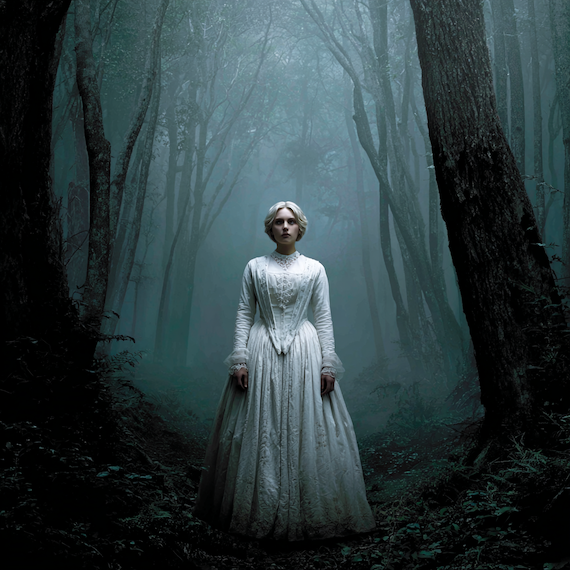
On some occasions, the entity is seen with a companion in the form of a fleshless skeleton, which is said to approach camps in which music is playing, only to ghoulishly sit at the flickering edges of the campfire between light and shadow, bobbing its head to the tune. It is said that if one is to give the apparition an instrument to play, it will do so with breathtaking skill before vanishing into the night, although it is said that this music has a hypnotizing quality and that the skeleton will sometimes try to lead people away into the wilderness to vanish themselves. If one becomes too enamored with this music, they are also said to go insane, and it is best not to offer the skeleton a chance to play at all.
The butte itself is apparently shunned by cattle and wildlife, and making it even weirder is that orbs of light and strange electrical phenomena are known to frequent the hill. No one really seems to know what these spirits are. For some, the woman is the victim of an Indian raid or a murder victim. The skeleton has been said to be the spirit of a cowboy who died in the middle of a song he was never able to finish. No one really knows, but the legend has remained, and those who know of it will still give Watch Dog butte a wide berth.
Similarly, a very well-known tale of wailing ghosts featured in folklore originates in Latin America, Mexico, and the American Southwest, in particular Arizona and New Mexico, and concerns the sinister entity called La Llorona, or “The Weeping Woman.” The dark tale of this tragic figure has many variations and permutations depending on the geographical region, but they generally begin with a village woman who was renowned for her stunning beauty. The woman, in many tales referred to as Maria, is said to have fallen in love with a handsome visiting gentleman who had been entranced by her comeliness, and the two married to go on and have two children.
However, the marriage devolved rather quickly due to the fact that the husband was an unrepentant womanizer, and also tended to ignore her when they were at home in favor of playing with their children. Things came to a head when, in later years, her husband found a younger mistress, and by all accounts, Maria did not take this well. According to the tale, she became insanely jealous and went about viciously drowning her two young children in a river, before finding some lucidity and regretting her actions. Depending on the version of the story, she then either chases them along the river and drowns trying to retrieve them, or commits suicide by joining them in their watery grave. The lore has it that she was then doomed to wander the earth eternally looking for and crying out for her children, and that she could not rest until they were found.
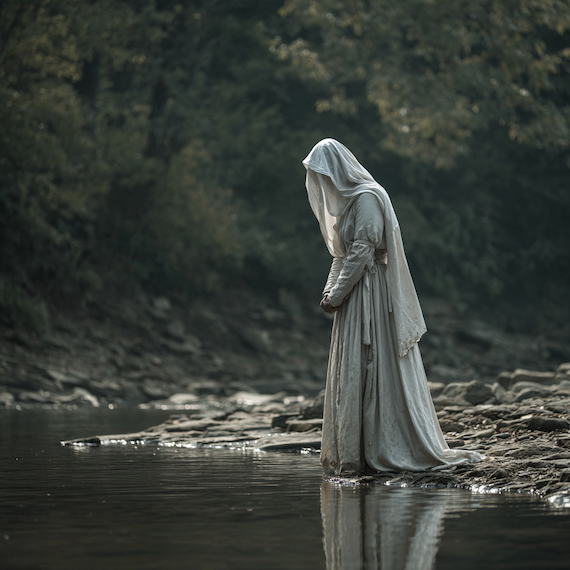
La Llorona is usually described as an apparition of a woman dressed in white, often with a veil over her face, most often seen prowling the shores of lonely rivers or lakes and shouting out for her children, screaming, and sobbing uncontrollably. Many versions of the tale state that to hear her cry is a portent of incoming death or tragedy, which is very similar to the stories of the Banshee, and she is also said to kidnap children and drown them in a pantomime of her murder of her own children. The story has become one of the most popular spooky tales of Latin America, and has been made into countless books, art, poetry, theatre, literary films, and TV shows. While it seems to be mostly pure legend and myth, the tale is a pervasive one, and there are many people in many Hispanic countries and the U.S. Southwest who have claimed to have encountered the spirit, and it is undeniably one of the more famous tales of a wailing spirit.
From the rough wilderness of Mount Superstition in Arizona comes the tale of a tribe of little people who are said to have once inhabited the area. These dwarves were said to stand around 3 feet tall, and while they were mostly peaceful, they were on constant guard against their enemies, the Apache and the Zuni. The story here goes that one day, a group of Zuni warriors was approaching the hill that the dwarves occupied, and since this meant nothing but trouble, the little people began preparations to defend against the imminent attack. On this occasion, the Zuni were coming here to take away a companion the dwarves had made, a pale woman with long, flowing white hair who the Zuni claimed was a witch who had escaped to avoid marrying their chief. When the little people refused to hand her over, the Zuni made preparations to attack, amassing a force of 700 warriors.
According to the tale, the Zuni rushed in expecting a decisive victory against the little people, but they were met by the visage of the pale woman standing before them defiantly, wearing a white robe, her hair blowing in the wind, and completely unafraid of the invading force. The warriors paused only for a moment before approaching their prize with no resistance from the dwarves, who cowered behind rocks and in caves. It is said that as the wave of warriors rushed closer, the pale woman casually emptied an earthen jar onto the parched earth, and sparks, lightning bolts, and balls of fire began to erupt from all around them, striking down the Zuni warriors and sending them careening off cliffs. Seeing their companions dropping dead all around in this intense display of fire and lightning, the remaining Zuni fled. It is said that the Apaches also tried to invade the hill and were similarly driven back by the powerful magic of this mysterious witch woman, who came to be known as “Pale Faced Lightning.” It is said that the dwarves were then left in peace with their guardian savior, and that the ghost of the sorceress still haunts the Superstitious Mountains to this day.
Another area of the Old West with its share of spooky stories is a place called Spring Canyon, in Carbon County, Utah. The landscape here is littered with decrepit, feral ghost towns baking and crumbling under the sun and years, a place of abandoned mines and the ruins of the past. Yet this was once a prosperous, thriving mining community. With the opening of the remote area in the 1880s, due to the building of a route through here by the Denver & Rio Grande Western Railroad, coal was soon discovered, and the area saw an influx of settlers, mostly miners. This fueled a boom in mines, mining camps, and settlements throughout the rugged hills of the area. In its heyday, there were thousands of people living here, but there was something else more insidious lurking here as well.
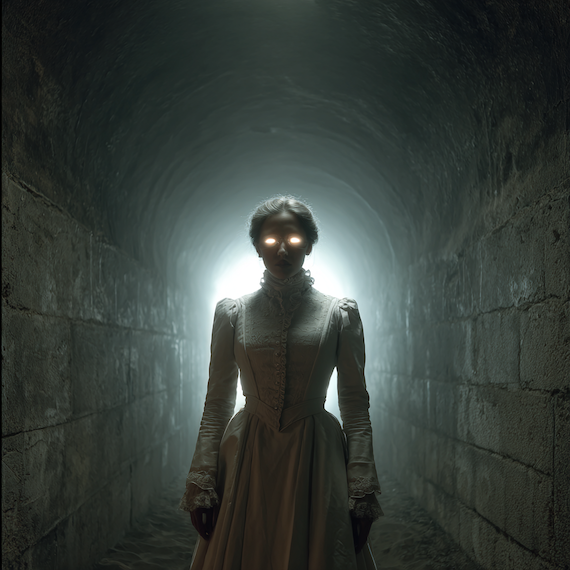
Over the years, the miners began to come back with stories of a mysterious, spectral woman wearing a flowing white dress, who they would encounter down in the gloomy murk of the mines. This Lady in White was apparently not benevolent, as she was said to be the cause of mine and tunnel collapses, and was blamed for miners who went missing without a trace. The phantom woman was said to have the power to beguile and enthrall the men who looked upon her, and would try to lead them further into the dank tunnels, from which they would never return, and many miners refused to go into the mines alone. It does not seem to be clear who this ghost is supposed to be, but what is known is that even after the coal boom ended and the towns and mines were allowed to be reclaimed by the wilderness, the White Lady is still said to wander about calling out to anyone who will listen, and there are sporadic sightings of her to this day.
Other entities supposedly roam the badlands as well. In the mid-1800s, the state of Texas was a lawless, forsaken place, a den of outlaws and murderers, as well as aggressive Native tribes out for blood, all of them prowling the desolate, dusty landscape of the wilds to ruthlessly prey on the unwary. Even more dangerous than the state as a whole was a swath of land sitting between the Rio Grande River and the Nueces River, which was an area disputed by the governments of the United States and Mexico. Since Mexico recognized the border as being the Nueces to the north, while America saw the border as being traditionally the Rio Grande river to the south, it made the area into a sort of no-man’s land that attracted to it the very worst of the worst. Indeed, the area became so riddled with killers, bandits, cattle rustlers, and thugs that the government had it patrolled by a group of hardened men called the Texas Rangers, composed of toughened vigilantes sometimes almost as violent as the men they hunted down.
Two of these rangers were a man named Creed Taylor, a veteran of the Texas War for Independence, and fellow war hero and folk legend William Alexander Anderson “Big Foot” Wallace, who owned their own ranches along just south of San Antonio. One of the villains haunting the area was a bandit and cattle rustler known as Vidal, and in 1850 he had his eye on the horses and cattle of several of the ranches along the Rio Grande and indeed all over south Texas. In daring raids, he managed to snag a good number of prized mustangs from some of these ranches, earning himself a “Dead or Alive” bounty on his head, but unbeknownst to him he had also stolen from both Taylor and Wallace, who had been off fighting a Comanche raid and so had not been able to defend against the bandit. Unfortunately for Vidal, these were two hard men who would not take kindly to outlaws stealing their horses and were trained to hunt down just the sort of scum who had done it, and this is exactly what they set out to do.
The two rangers were well aware of who Vidal was and had no illusions that their horses had been stolen by anyone other than the nearly legendary horse rustler, and so they gathered up a posse to go out for a little frontier justice. The trail led them out over a desolate, forbidding moonscape of wilderness with banditos and Comanche warriors lurking everywhere and danger always around the corner, but the skilled trackers were able to manage to find Vidal’s camp in short order. After an intense exchange of gunfire, Vidal and his henchmen were shot down in a rain of bullets, but Taylor and Wallace were not done yet, and this is where the grim legend of the headless horseman would have its origins.
Wanting to make a bold and bloody statement to other bandits who would raid ranches in the no-man’s land, Taylor and Wallace went about chopping Vidal’s head off and strapping his headless corpse tightly to his horse. When the macabre deed was done, it appeared as if Vidal was riding his mount minus a head, and satisfied that it was a chilling enough warning to other outlaws, the two rangers sent the horse out into the wilderness with its morbid, ghoulish passenger on its back. It did not take long at all for frightened ranchers and travelers to start reporting the “phantom” headless rider, whose appearance only got more horrific as decay and the elements did their work on the corpse, and Vidal in death gained the name El Muerto, “The Dead One.” He was variously seen as being an omen of disaster or death, a harbinger of misfortune, and even a demon, sometimes described with flourishes such as that the horse shot fire from its nostrils or lightning from its hooves, and the rumors spread far and wide.
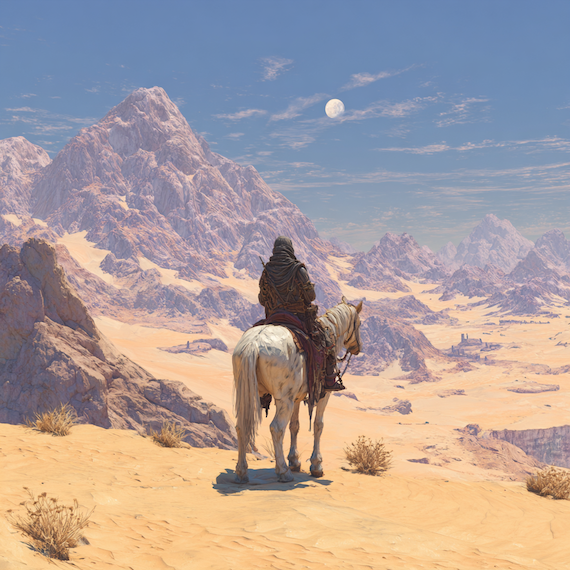
El Muerto would be sporadically sighted wandering about the wilderness for years before one day, when, according to the tale, the horse either died of natural causes or was killed by ranchers near a watering hole. The by now desiccated, skeletal corpse was then pried from its bindings and unceremoniously buried in an unmarked grave at Rancho La Trinidad, near present Ben Bolt in Jim Wells County. One would think that would have been the end of El Muerto, yet although he was no longer a physical presence, the legend was far from over. People now began seeing a ghostly phantom horse with Vidal still headless and riding atop it, sometimes heard to scream out, “It is mine. It is all mine!” as he rides past, often vanishing into thin air. The phantom El Muerto has supposedly been seen all the way up to the present day, most commonly in Duval, Jim Wells, and Live Oak counties, and there is even a place called Headless Horseman Hill, said to be one of the specter’s favorite haunts.
Is this just a spooky campfire story and urban legend, or is there anything more to it? It is known that Creed Taylor and Bigfoot Wallace were real historical figures, but it is unknown if they really killed and beheaded a bandit to send his corpse careening through the wilds without a head. It also isn't exactly clear how much veracity the reports over the years of a ghostly decapitated rider have, whether they are real or just a propagation of the legend and myth. Whatever the case may be, it is a suitably spooky tale that manages to meld real history with a paranormal chill, and although we may never have answers, it will probably still do the rounds for some time to come.
Finally, we have the weird tale of the Red Ghost of Arizona. The whole tale can probably best be traced back to the spring of 1883, when two women and their families were living at a humble cottage near a place called Eagle Creek. On this dark evening, the women were at home alone, watching their young children, the men off on an errand. This was a tense time, as the Native general Geronimo and his warriors had recently passed through, leaving death in their wake, so, understandably, the families waited eagerly for the return of the fathers, ever vigilant for an attack at any time. At some point, as they sat there in the darkness awaiting the return of the fathers and wary of any Native warriors who might come around to kill them, one of the mothers went out to fetch water from a nearby well. It was to be a quick errand, but as soon as she left, the family dogs reportedly began raising a ruckus, howling and barking at nothing in particular, and as the woman was out there on her chore, there was the sudden sound of screams, moans, and chaos. She never came back.
The other woman who went to the window to peer out into the gloomy darkness and said she witnessed something enormous and red “ridden by the devil” go galloping by. It was all so terrifying that instead of going out to investigate, the remaining mother barricaded the doors and waited for help to come, with it being unknown just what had happened out there with that red demon or whether the other woman had survived at all. It was not until the men returned that they would discover what had happened, venturing out into the night to find the body of the woman who had gone to get water. Strangely, her corpse was battered and broken almost beyond recognition, as if she had been viciously trampled by some monstrous beast, surrounded by mysterious footprints far larger than any horse and some wisps of reddish hair adorning the brush. Although it was suspected that someone had murdered her, the hysterical woman who had seen the beast said that the ferocious red monster and ghostly rider she had seen must have been behind the death, and it was officially classified as “death in some manner unknown.” However, this would not be the last appearance of the “Red Ghost.”
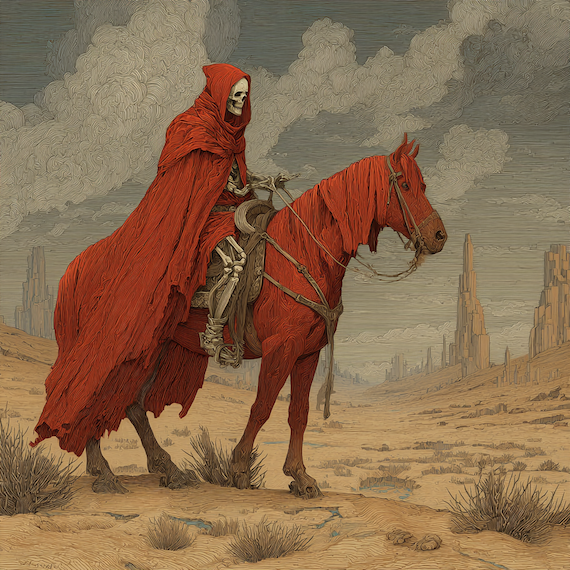
In the days after this tragic incident at the cottage, there would begin to trickle in reports from prospectors of seeing an immense, red cloven-footed creature prowling the wilderness, often with glowing eyes and a phantom rider, and some of these encounters proved to be rather harrowing indeed. In one instance, a miner told of seeing the beast vanish into thin air, and another swore that he had seen it kill a bear. Others said it would kill horses without provocation. One well-publicized account was made by a group of miners who were purportedly accosted in their tent by something very large, and when one dared to look outside, they saw an “impossibly tall horse,” which let out an unearthly wail and ran off into the night. The creature had destroyed the tent and left enormous hoof prints twice the size of those of a horse, as well as a path of trampled brush and red hairs behind.
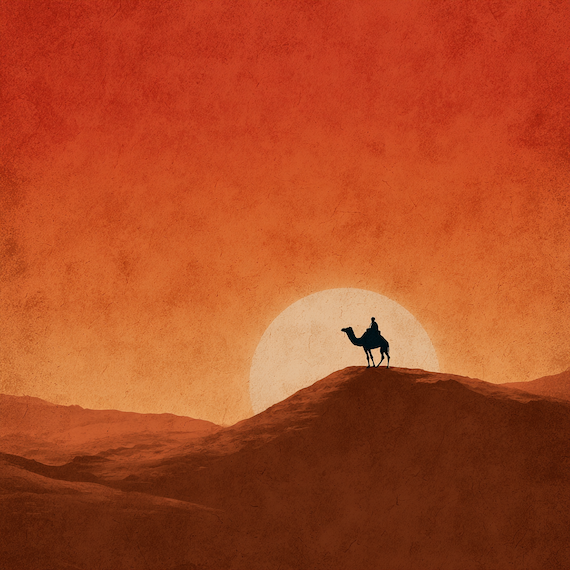
Many of these stories began to take on an almost urban legend feel to them, spooky tall tales whispered around the campfire, each more fantastical than the last, and the Red Ghost, also known as the Fantasia Colorado, became almost legendary in a short period of time. It was seen as a demonic beast atop which rode a skeletal specter, a monstrosity from Hell itself, and it was greatly feared. As mythical as this all seemed, one terrifying account would come forward to give it all a little more weight and a possible explanation. In this case, the witness was a well-respected, wealthy local rancher by the name of Cyrus Hamblin, who on this day was out rounding up cattle in an area near a place called Salt River when he had his brush with the odd. At one point, he was surveying a deep ravine when he claimed that he had spotted a large reddish creature moving through the dense chaparral, which, considering the scary stories of the Red Ghost, was rather alarming at first. However, as the beast made its way into the open, Hamblin saw that it appeared to be something almost as unexpected as a ghost- a camel.
He tried to creep closer to get a better look at the animal, and would report that it had seemed to have something on its back, which looked to be the dead body of a man, although he couldn’t be sure. In the meantime, the Red Ghost continued to be sighted, with many of these reports still maintaining that it was some sort of supernatural beast or demon, which could vanish at will and was not afraid to ruthlessly attack those who wandered too close. A few weeks after Hamblin’s encounter, a group of prospectors said they came across the creature near the valley of the Verde River. In this case, the miners were armed, and they claimed to have fired in unison at the thing, but that it had been impervious to their bullets. As it ran off, it dropped something from whatever was perched on its back, and when the prospectors took a look, it was found to be “a human skull with a few shreds of flesh and hair still clinging to it.”
Although it is unknown who this poor soul had been, the more superstitious claimed that this was yet another victim of the marauding monster, but in reality, it probably was a camel rider who had died from the elements, his corpse withering away as his beast of burden wandered these badlands. It might seem strange that there should be a camel rider out in Arizona, but it would not be beyond the realm of possibility, as the U.S. had at one point created a Camel Corps in 1855, using the animals to help the Army operate in the forbidding desert landscape of the American Southwest.
Camels were seen as perfectly adapted to this harsh frontier, and their ability to carry far more weight than horses or mules made them particularly useful. A contingent of camels was then imported and trained by the Army, and the whole thing was so promising that the War Department added funding and their full support behind the project, but it was an experiment that would ultimately fail. The animals were just too unruly and too alien to most handlers for them to really catch on as a viable alternative to horses. Most ranchers regarded them as foul-tempered, kicking, biting, spitting abominations who did not want them anywhere near their land, and cavalrymen did not care too much for them either. The whole project was disbanded in 1863, with the camels auctioned off, left abandoned at scattered military outposts, or in some cases even just released into the wild.
The use of camels became somewhat invigorated when miners continued to use them, switching to the two-humped Bactrian variety rather than the one-humped dromedary type that the Army had used. However, these camels were no better behaved than the others, and were widely mistreated, leading to incidents of the camels fighting back and even trampling their owners to death. Once again, many of these camels were abandoned or left to the elements, lost and forgotten. It is thought that those that did make it into the wild probably eventually died, but there is the chance that some could have survived, and indeed, there were camels being sighted in the southwest well into the 1900s, with reports coming in from as late as the 1960s. Could it be that one of these camels, made aggressive by years of mistreatment by its human handlers, could have been The Red Ghost?
The mystery of the Red Ghost became even more interesting when the skull and remains that had fallen from its back were more carefully examined, and it was determined that the strips of rawhide used to fasten them had been tied in such a way that suggested that the dead man had been intentionally fastened to its back by someone else, although whether he was still alive at the time or not is unclear. In an article in The Mojave County Miner, it was written:
"The only question is whether the man was tied on for revenge or merely as an ugly piece of humor by someone who had a camel and a corpse for which he had no use."
Who had this man been, and why had he been tied to the back of a camel? No one knows. Interestingly, reports of the Red Ghost continued, with ranchers and miners frequently reporting that they had been attacked by the beast, and although it was beginning to be widely regarded as a possibly violent camel on the loose, there were still reports that painted a picture of something more supernatural. One such account came from some prospectors camping out along the shores of the Verde River, when they said they had been awoken by an earth-shattering, piercing scream. They claimed that a red-haired monstrosity at least thirty feet long and with massive pitch black wings had then swooped down from the sky to land with a resounding crash that knocked some wagons over and sent men running in terror. They said that when they had warily returned to the camp in the morning, the camp had been utterly trashed and littered with huge cloven footprints and red hairs.
Was this just a tall tale to build on the pervasive legend of the Red Ghost, or was there something more demonic operating out there in the desert and being confused with the escaped camel? Whatever the case may be, the creature was seen for years, eventually losing its macabre load on its back, and sightings slowly evaporated until it was rarely seen at all. The last reported official encounter of the Red Ghost was carried in the February 25, 1893 edition of the Mohave County Miner, which reads:
"Another ghost is laid. Another of the tribe of gaunt hobgoblins that keep the romance of the mysterious southern deserts is gone. Another of the unearthly dangers that the timid Mexican women used to pray against has departed. Mizoo Hastings of Ore was the priest that exorcised this phantom. Mizoo has a ranch a little above the gold camp on the San Francisco River. He woke up one morning and saw through the window of his cabin a big red camel banqueting in his turnip patch. Mizoo took a dead rest on the window sill and blazed away. He got the camel. When he went out to examine the beast, he found that he was all scarred up and had evidently had a very hard time. He was covered with a perfect network of knotted rawhide strips. They had been on him so long that some of the strands had cut their way into the flesh."
This was the official end of the Red Ghost saga, but the tales and unconfirmed reports continued, either because there was something else out there or because the real camel had become intertwined with a pervasive, evolving legend. Was it just a camel that killed that woman and was behind all of the strange tales and reports? Who was the body upon its back, and what had doomed him to such a fate? In the end, it is all a rather colorful historical tale, likely weird history tinted with campfire tales, myth-building, and a dose of sensationalist newspaper articles. Regardless, it is a damn strange little historical oddity, whatever the case may be.
As you can see, such tales as we have looked at here certainly put the “Wild” into the Wild West. What are we to make of these stories? Is there anything to these tales besides spooky lore and creepy campfire stories? Are these tall tales, or is there maybe something more to them, a peek into some very unique supernatural phenomena? Whatever the case may be, these are all truly spooky tales that show that the Wild West has its share of creepy horror stories.


 6 'lost' cities archaeologists have never found