

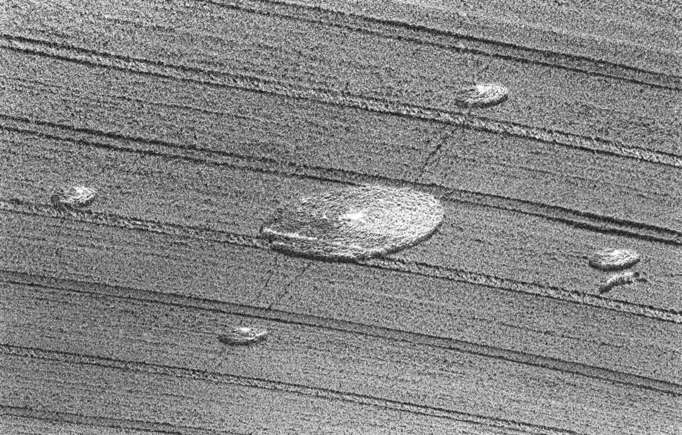
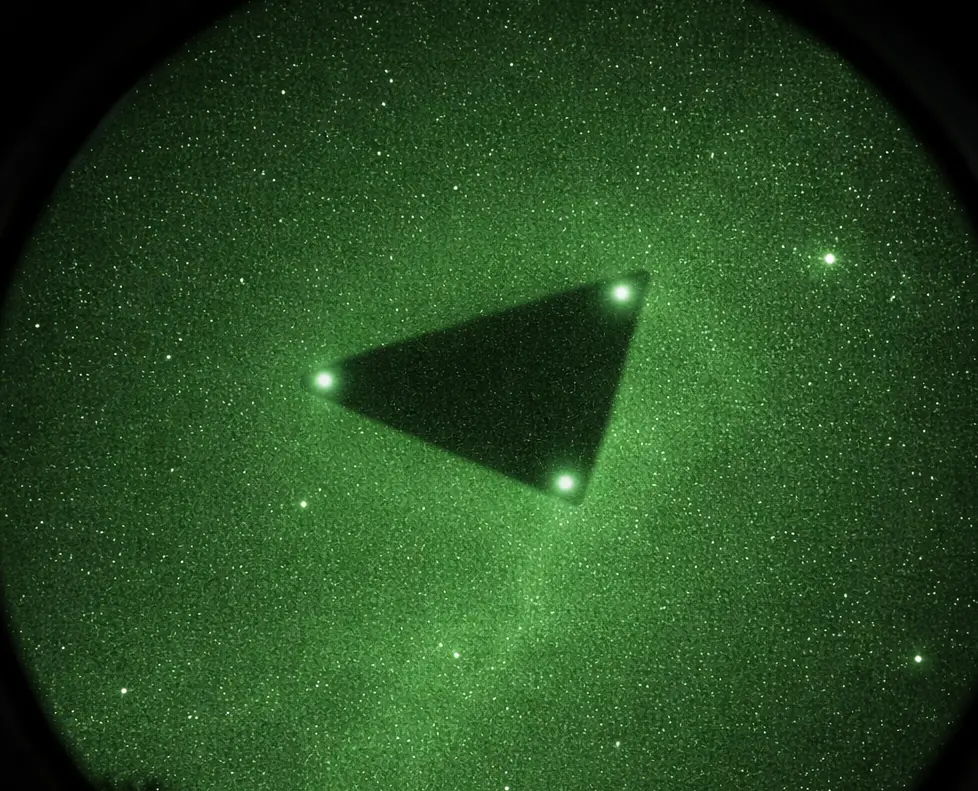
A photo-negative of the “jellyfish” UFO that was witnessed by hundreds on Feb. 13, 1989 above the city of Nalchik.
Zondag 8 februari 2026
 UFO intel documents stolen out of Russia reveal decade-long probes into alien encounters, abductions

UFO intel documents stolen out of Russia reveal decade-long probes into alien encounters, abductions

© Aaron Schwartz/Sipa USA via ReutersLegendary UFO reporter George Knapp was able to remove precious UFO documents from Russia in 1993 and released them January 16, 2026.
Legendary reporter George Knapp, 73, quietly released on Jan. 16 documents he smuggled out of Russia in 1993 under the nose of the KGB after the fall of the USSR in 1991.
The translated documents reveal the shocking extent to which the USSR and the post-Soviet Russian Federation probed the persistent phenomenon — despite the communist government officially deeming UFOs a concoction of war-mongering "American imperialists" in 1953.
The USSR commissioned several studies of UFOs beginning with the "Network-AN" program in 1979, continuing with "Galaxy-MD" from 1981-1985, "Pluton 7" in 1989 and 1990, and the continuing "Thread 3" program.

The 1993 report claimed UFO sightings and interactions "increased greatly" after 1978.
The document included many narratives of purported UFO abductees and witnesses which the government deemed credible enough to warrant further investigation, including these:
"By releasing these documents now, George Knapp is expanding the public record, showing not only how seriously Russia confronted the UFO phenomenon," investigative journalist and Knapp's "Weaponized" podcast partner Jeremy Corbell told The Post.
The document included many narratives of purported UFO abductees and witnesses which the government deemed credible enough to warrant further investigation, including these:
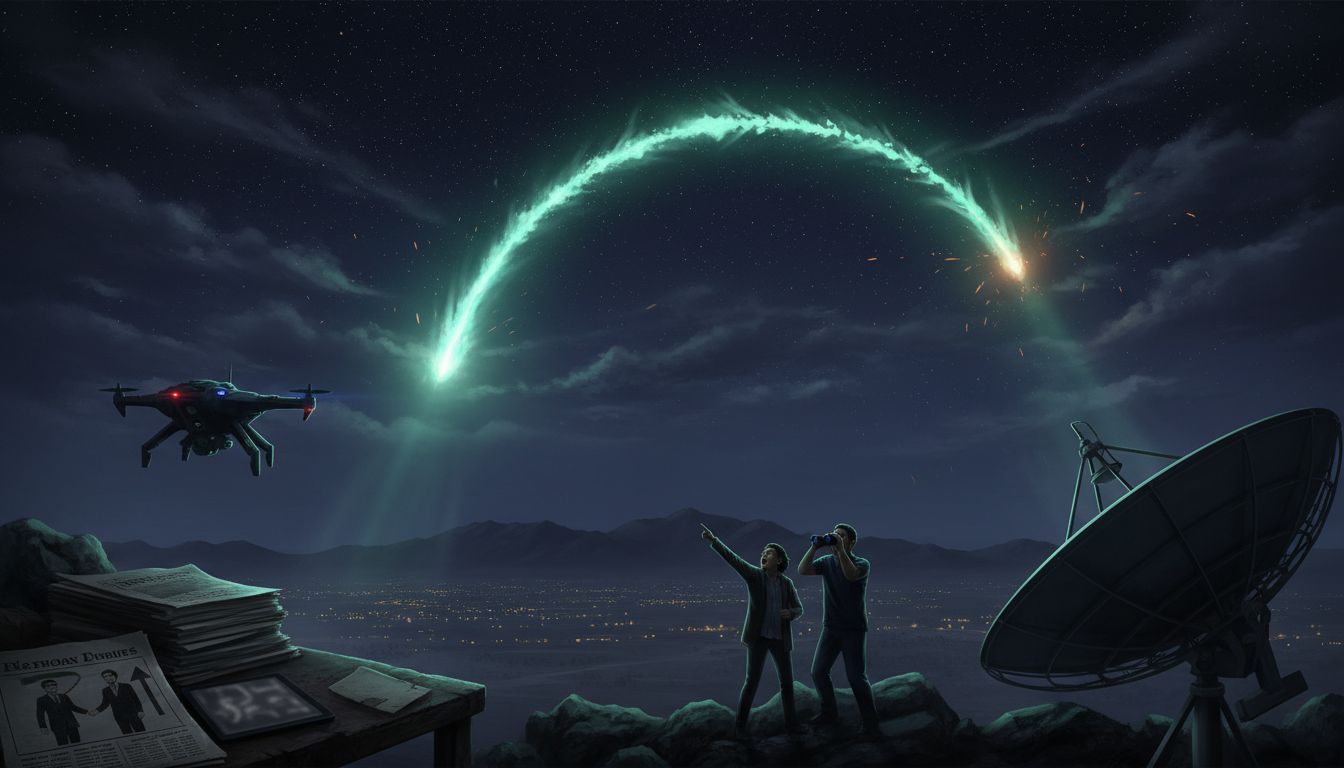
- On Feb. 13,1989, hundreds of people witnessed a massive 450-foot wide jellyfish-shaped UFO flying 300 feet above the ground in the city of Nalchik, between the Black Sea and the Caspian Sea. A massive red light was seen descending over the city, then splitting into equidistant green lights. After 10 minutes, the lights merged and ascended into the sky. Ninety minutes later, the massive UFO descended on the city with a smaller, more agile craft also swarming before disappearing into the night sky. Among the witnesses were military members, local airport staff and astronomers.
- Anatoly Malishev, 18, claimed he was brought onboard a craft on July 21, 1975, and flown to the home planet of the alien pilots. Malishev was sketching the sunset in the woods of the village of Blagoveshenka in the same Kabardino-Balkarian region when he saw what looked like a meteor falling from the sky. A silver disc appeared and three humanoids, including one woman with chestnut colored hair, emerged. Their planet was three light years away, and had no star but was illuminated from within. "They fastened detectors to my hands and legs, and put on my head something like a crown." Their conclusion after the examination: "very strong nerves; mental faculties below the average." The Russian investigator said he continued contact with Malishev for years and described him as "honest, kind, sympathetic" with no desire to indulge in "fantasy."
- Earthlings allegedly came into contact with a race of giant aliens on June 27, 1979, in Derzhavinsk, Kazakhstan. A group of pioneers, including many children, were traveling from Berezka when they stopped to camp near a mound. One group of boys, escorted by an adult, chased a flash on the edge of a forest and came upon 10-foot-tall, black, slender aliens with shining pink eyes. The next day, a girl and her teacher saw one of the giants sitting in a chair near the campsite. Nearly a year after the incident, investigators spoke to the children and reported they all had the same recollection of events.
"By releasing these documents now, George Knapp is expanding the public record, showing not only how seriously Russia confronted the UFO phenomenon," investigative journalist and Knapp's "Weaponized" podcast partner Jeremy Corbell told The Post.
Overview
A cache of previously classified Russian intelligence files, reportedly stolen from a government server and provided to the New York Post, reveals that the Russian government has been conducting a systematic investigation of unidentified aerial phenomena (UAP) and alleged alien‑abduction claims for more than ten years. The documents, which are internally labeled as “UFO‑INTEL,” cover a range of topics from civilian sight‑spotting reports to scientific analyses of high‑altitude sensor data. Their existence suggests a sustained, state‑level effort to assess the potential national‑security implications of what many in the scientific community and defense establishment still describe as a “high‑level unknown.”
Key Findings from the Documents
The papers, dated between 2012 and 2024, reveal a multi‑layered approach to UAP scrutiny. The earliest files show the Russian Ministry of Defence’s “A‑Group” receiving civilian reports from the civilian aviation network and from citizens’ mobile‑phone footage. By 2016, the documents indicate a shift toward joint collaboration with the Russian Academy of Sciences, where physic‑chemists and astrophysics researchers were tasked with analyzing sensor‑fusion data from satellite and radar sensors.
A 2019 memorandum, signed by the head of the Main Directorate of the General Staff, authorized a “target‑group” dedicated to “possible non‑human biological interactions,” which included investigations of alleged abduction narratives recorded in the Siberian and Ural regions. The group’s final 2022 summary concluded that while many reports could be explained by atmospheric optics or equipment malfunction, a small fraction remained “unexplained and potentially significant.”
The documents also contain internal communications describing the creation of a secure database (coded “K‑UFO‑NET”) intended to store raw sensor recordings and human‑witness testimony. The database’s design mirrors that of the United States’ UAP‑Centric Defense (UCD) repository, suggesting that Russian analysts were aware of, and perhaps seeking to counter‑propagate, the same international discourse on UAP.
International Context
The revelation of a Russian UAP program parallels several open‑government efforts in other capitals. The U.S. Department of Defense’s 2023 “UAP‑Report” and the 2024 formation of the Office of the Director of National Intelligence’s UAP‑Center both acknowledge that governments worldwide are treating unidentified aerial phenomena as a potential risk to national‑defence and air‑traffic safety.
European countries, especially France’s CNES‑GEO‑UAP group, have also admitted to maintaining “a small but dedicated” research team for decades. The Russian documents thus provide a rare glimpse into how a major world‑power’s intelligence community has internally coordinated its UAP research, filling a gap in the public record that has hitherto been largely based on speculation and official silence.
Expert Commentary
“While the existence of these files is not entirely surprising—most governments have some form of UAP monitoring—the level of detail in the Russian case is noteworthy,” said Dr. Elena Smirnova, a senior researcher at the Center for Strategic and International Studies (CSIS) who studies defense‑intelligence coordination. “What is more significant is the explicit acknowledgement of possible ‘non‑human biological interactions.’ That phrasing, which mirrors language used in U.S. defense documents, indicates an emerging consensus that the unknown could have more than just physical‑flight implications.”
The New York Post’s investigative team, which obtained the files through an anonymous source, cautioned that the documents represent internal hypotheses rather than definitive proof of extraterrestrial activity. “The Russian analysts themselves repeatedly cautioned against drawing conclusions from limited data,” the Post’s editor‑in‑chief noted in an accompanying editorial.
Implications for Future Research
If the documents are authentic, they underscore a broader, global convergence of government‑sponsored UAP research. The existence of a coordinated Russian database may eventually lead to international data‑exchange channels, especially as the 2025 International UAP Consortium (IUC) – a proposed collaborative forum among the U.S., Russia, China, France, and the United Kingdom – seeks to standardize reporting protocols.
In the meantime, the public’s appetite for transparency remains high. The World Government UAP Transparency Initiative, launched by the United Nations in late 2024, now has a new candidate for participant‑state documentation. As governments continue to parse the thin line between national‑security concerns and scientific curiosity, the stolen Russian files provide a rare, unfiltered view of a world‑government’s internal calculations regarding what may—or may not—be a non‑human presence in our skies.
Bottom line: The leaked Russian intelligence files confirm a decade‑long, coordinated national effort to investigate unidentified aerial phenomena and alleged alien‑abduction claims. While the records do not prove the existence of extraterrestrials, they highlight a growing consensus across world powers that the unknown deserves systematic, scientific scrutiny—and that the world’s governments are now, more than ever, looking upward with a mixture of caution and curiosity.
LATEST ( UFO ) VIDEO NEWS ( ENG)
Geschreven door peter om 22:08
Stuur door
























Comment: George tells the story of acquiring the archives:
RELATED VIDEOS