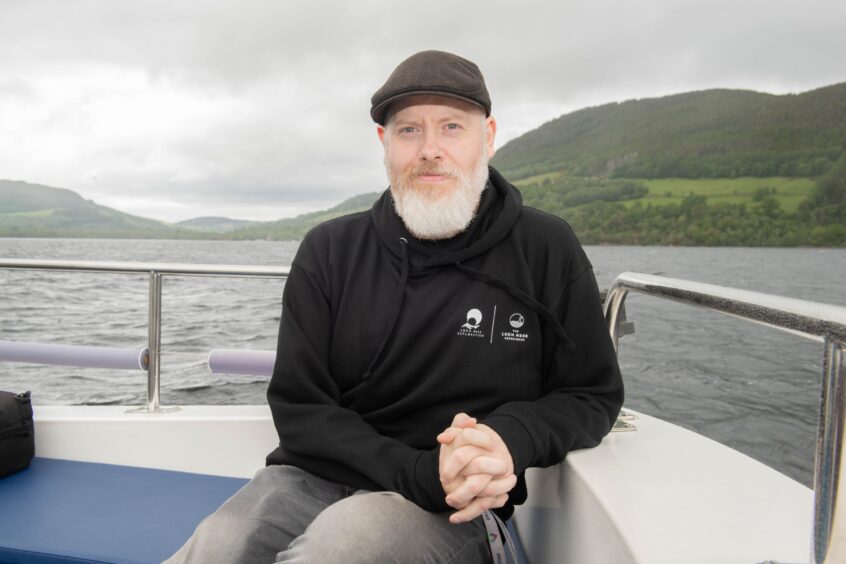
This Man Claims an Alien Being Named Bashar Says Humanity Is Going Through a Reset in 2026
He was a creative kid into sci‑fi, not a New Age guru, until two silent black triangular craft passed over Los Angeles in broad daylight. One at roughly 150 feet and another about 70 feet away, both witnessed by multiple people.
That shock did not turn him into a preacher; it turned him into a researcher who spent years digging into UFOs, psychic phenomena, and channeling because his lived reality no longer matched the official story.
Whether you think those craft were classified tech, nonhuman intelligence, or some glitch in perception, that rupture is what birthed the entire Bashar material.
I care less about “believing” his story and more about what it means when a reasonably normal, creative person sees something so far outside the script that they dedicate decades to decoding it.
Ten years later, during a guided meditation in a channeling class, Darryl suddenly received what he describes as a telepathic download. The name “Bashar,” a face, and the memory of an agreement made before this life to be a channel.
The moment that happened, the entity speaking through the teacher stopped, turned directly to him, and said, “There is an entity here for you right now if you’re ready to begin.”
Another student simultaneously sketched the same face Darryl had just “seen” in his mind, convincing him this was more than imagination. From there he practiced, struggled to handle the energy, and over decades word‑of‑mouth expanded his sessions from a living room to audiences around the world.
Whether you think this is ET contact or a deep layer of his own psyche, you have to admit that there is a coherent system behind it that has been stable for 40+ years.
So who is Bashar, according to Darryl?
Bashar presents as a hybrid extraterrestrial from a parallel reality, part human and part “grey,” living in a civilization roughly 3,000 years more advanced than ours. Their solar system would be located about 500 light years in the direction of Orion if you overlapped their universe with ours, but it is only perceivable by shifting realities, like tuning into another frequency.
Physically, Bashar is described as about 5 feet tall, slender, pale‑skinned, large eyes, smaller facial features, and slightly larger head – a 50/50 hybrid between humans and the greys.
His role is not “space god” but a very specific job: a first contact specialist, part of a larger structure of social engineers and planetary engineers focused on guiding young civilizations through the most dangerous part of their evolution. This framing alone is controversial because it flips us from “top of the food chain” into “adolescents in a galactic neighborhood that’s already watching.”
According to Bashar’s narrative, the greys were once a human‑like civilization, a parallel version of Earth that destroyed its biosphere and mutated to survive. They lost the ability to reproduce and had to access other timelines where human DNA was still viable, including ours, to create hybrids that could preserve their culture.
That is the darker reinterpretation of “alien abduction” in this model: a desperate genetic salvage operation by a civilization that wrecked itself. Now the hybrids, including Bashar’s people, see us making the same mistakes and are trying to intervene before we push our own reality down the same dead timeline.
Darryl is very open about the fact that he cannot “prove” Bashar is real in a lab sense, but he has actually put his brain under study in a documentary to demystify channeling. In those measurements, his resting brain rhythm sits around 9 hertz, but when Bashar “speaks” it jumps to about 10 hertz, and when Bashar “listens” to a question it goes to 11, indicating an even deeper empathic intake of information.
At the same time, his brain shifts into high‑frequency gamma activity when channeling, the same “in the zone” state we hit during deep creativity, but with unusual stability and intensity. Bashar’s model is that everyone channels to some degree: when you do what you love and lose track of time, you are in a channeling state, just tuned to your own higher mind rather than a distinct ET consciousness.
One of the core teachings is what he calls “the formula,” which is basically an instruction manual for aligning your life with your highest timeline. The essence: your highest purpose is to be yourself as fully as possible, to live each moment in alignment with your true excitement, and to stop trying to be everything you are not just to fit external expectations.
Most of our suffering comes from being trained to ignore our authentic path: don’t stand out, be practical, don’t follow your passion, be “realistic.” Bashar reframes this as an energetic system: you cannot perceive what you are not the vibration of, so you must “be” the frequency of the reality you prefer before you can experience it.
To me, this is where his material overlaps with both neuroscience and simulation theory: your beliefs and emotions function like parameters, selecting which version of reality you load into your personal “game.”
On consciousness, Bashar’s model is radical but surprisingly elegant. You do not “have” a soul; you are a soul, and the body is more like a focus point, a condensed pixel cluster in a larger field of awareness.
He describes the soul as a sphere of energy filled with patterns, each representing concepts and lessons, which then focuses some of those patterns into a dense “seed” at the center to create a specific physical incarnation.
Life is the soul breathing: focusing into that seed to live a life, then relaxing back out into its full scope, integrating the experience, then doing it again.
Read also:
Our interactions, including Darryl’s link with Bashar, happen by vibrational and telepathic agreement between these “seeds” within a larger shared field of consciousness.
This sounds like mysticism, but it is highly compatible with a simulation‑style universe where all objects and “players” are simply different nodes of one underlying information field.
Now to the headline claim everyone fixates on is timing. Bashar originally spoke about a window for open contact between roughly 2020 and 2033, but as disclosure efforts and global conversation intensified, he narrowed that to around 2027 for a more literal introduction to extraterrestrials via official channels.
2026 is described as the year of disclosure more broadly: not just UFO files, but secrets in finance, religion, media, and power structures emerging from the shadows. He is explicit that this will not instantly create unity; there will be denial, resistance, accusations of hoaxes, and decades of adjustment.
The reason for the urgency, he says, is that humanity needs time before its “reset” to integrate ET contact at its own pace rather than being shocked into it. Whether you buy those dates or not, I find the deeper point compelling: a civilization that has nuclear weapons, global AI, and collapsing trust in institutions cannot just keep drifting. Something will force a choice.
Bashar does not paint ETs as saviors; they are more like strict older relatives who step in when the kids are about to burn the house down. He points to stories of UFOs disabling nuclear missile systems and scrambling launch codes as an example of a boundary: they will not allow a full thermonuclear annihilation because Earth is too valuable as a school for souls.
Earth, in this framing, is a high‑intensity polarity school where souls come to explore extremes of good and evil, connection and separation, specifically because it is hard.
From that perspective, the “zoo hypothesis” that we are being monitored while in quarantine is partially true, but the bigger picture is that we are being nudged toward global cooperation because the survival of our species now depends on it. Do you like the idea of ETs quietly enforcing a no‑extinction rule, or does it bother you that humans might not be the ultimate authority over Earth’s future?
There is also a softer, psychological edge to Bashar’s work that often gets ignored in the UFO conversation. He talks constantly about how beliefs generate experience, how people use their own confidence to reinforce negative narratives, and how “lack of trust” is itself a form of trust in something that does not serve you.
He uses humor to break patterns, pointing out that saying “I’m not confident” is still a demonstration of confidence; you are just confident in your limitation. He challenges the idea that certain situations, like chronic health problems, are impossible to shift at the belief level by calling that very assumption a belief that keeps the pattern locked.
This does not erase material conditions, but it gives people a more empowered framework: what if your primary leverage point is not controlling events, but changing your relationship to them.
For me, this is where his message is both empowering and controversial, because it implies a level of responsibility that many people understandably resist.
Here is my own stance, as someone who lives in the overlap of AI, UFOs, simulation theory, and ancient mysteries: you do not have to believe Bashar is a literal hybrid alien for his message to matter. You can treat him as a symbolic future human, a parallel version of us who has already solved the problems we are drowning in, transmitting back a set of psychological, spiritual, and civilizational “patch notes.”
The real danger is not that he is wrong; the real danger is that we keep living as if none of these warnings matter, pretend there is no bigger context, and let our timelines be chosen for us by inertia and fear.
My bold take is that whether contact in 2027 looks like a press conference, a mass sighting, or just millions of people snapping out of their old programming at once, the civilization we land in will depend far more on our consciousness than on any ship in the sky.
So the real question is not “Are aliens real?” but “What kind of species do we become if we act as if we are already being watched, mentored, and challenged to grow up?”
{ https://howandwhys.com/ }


 Mysterious triangular aircraft spotted over Area 51 sparks secret tech theories