Disk Passes Over Home In Syracuse, Utah July 4, 2026, UAP Paranormal Sighting Breaking News.

Disk Passes Over Home In Syracuse, Utah July 4, 2026, UAP Paranormal Sighting Breaking News.
US President Trumps Face On Mars Near NASA Rover, How Is This Even Possible? UFO UAP Sighting News.


A Mysterious Circular Structure Buried Under the North Sea Has Revealed New Evidence of an Ancient Cataclysmic Event

More than two decades have passed since geologists first identified an unusual circular structure buried beneath the North Sea, and now scientists say new evidence could finally solve the mystery.
New research has confirmed that the feature, known as the Silverpit Crater, was likely formed by an asteroid impact as much as 46 million years ago. The discovery ends years of speculation about the mysterious feature’s origins, much of which debated whether the circular structure had been caused by volcanic activity or shifting underground salt deposits.
The research was led by researchers at Heriot-Watt University in Edinburgh and published in Nature Communications.
Combining high-resolution seismic imaging, microscopic analysis of rock samples, and computer simulations, the team behind the new study says their assessment offers the strongest evidence yet that Silverpit represents one of Earth’s relatively rare ancient impact features that have survived throughout time.
The three-kilometer feature, which lies approximately 700 meters (2,300 feet) beneath the floor of the southern North Sea, and close to 80 miles off the Yorkshire coast, has long perplexed geologists. Several larger concentric ringlike structures encircle the primary feature, comprising about 12 miles, and since its discovery in 2002, geologists have remained divided over what might have caused it.
“We were exceptionally lucky to find these,” according to Nicholson, who called the team’s work “a real ‘needle-in-a-haystack’ effort.”
“These prove the impact crater hypothesis beyond doubt, because they have a fabric that can only be created by extreme shock pressures,” Nicholson said, making them among the strongest lines of evidence available to researchers for confirming ancient impact sites.
By reconstructing the ancient impact event that shaped the Silverpit feature, the team now believes that an asteroid roughly 160 meters wide struck the North Sea at a low angle after approaching from the west. The resulting collision produced the main crater, while launching massive volumes of stone and seawater to levels of up to 1.5 kilometers—the resulting tsunami would have exceeded 100 meters in height.
This ancient impact is still dwarfed when compared to the likes of Mexico’s Chicxulub Crater, which was created by an asteroid that struck our planet 66 million years ago, now widely believed to be responsible for the extinction of the dinosaurs. While smaller by comparison, the Silverpit impact would still have unleashed enormous destructive energy across the surrounding region.
The team’s work also adds to the accumulation of impact features known to scientists, which are relatively rare, despite thousands of asteroids reaching the surface of our world over the last several billion years. However, over such long periods, other geological processes such as erosion, plate tectonics, and volcanic activity have erased most of the remaining evidence of these collisions.
Presently, there are only around 200 impact craters that are known to exist on land, and another few dozen that have been detected beneath Earth’s oceans.
Altogether, while the mystery of Silverpit has now been solved, the new research does more than merely settle a debate: it allows seismologists a deeper look at how asteroid impacts reshape planetary surfaces.
Such knowledge, while improving scientists’ understanding of Earth’s past, could also help provide potentially crucial data for future planetary defense efforts by helping scientists refine models of future impact hazards.
The team’s recent study, “Multiple lines of evidence for a hypervelocity impact origin for the Silverpit Crater,” appeared in Nature Communications.
Harvard astronomer leading White House UFO council explains what he hopes to uncover
Three UFO Videos Of The Same UAP Over Ohio, June 16, 2026, Alien Paranormal Sighting News.
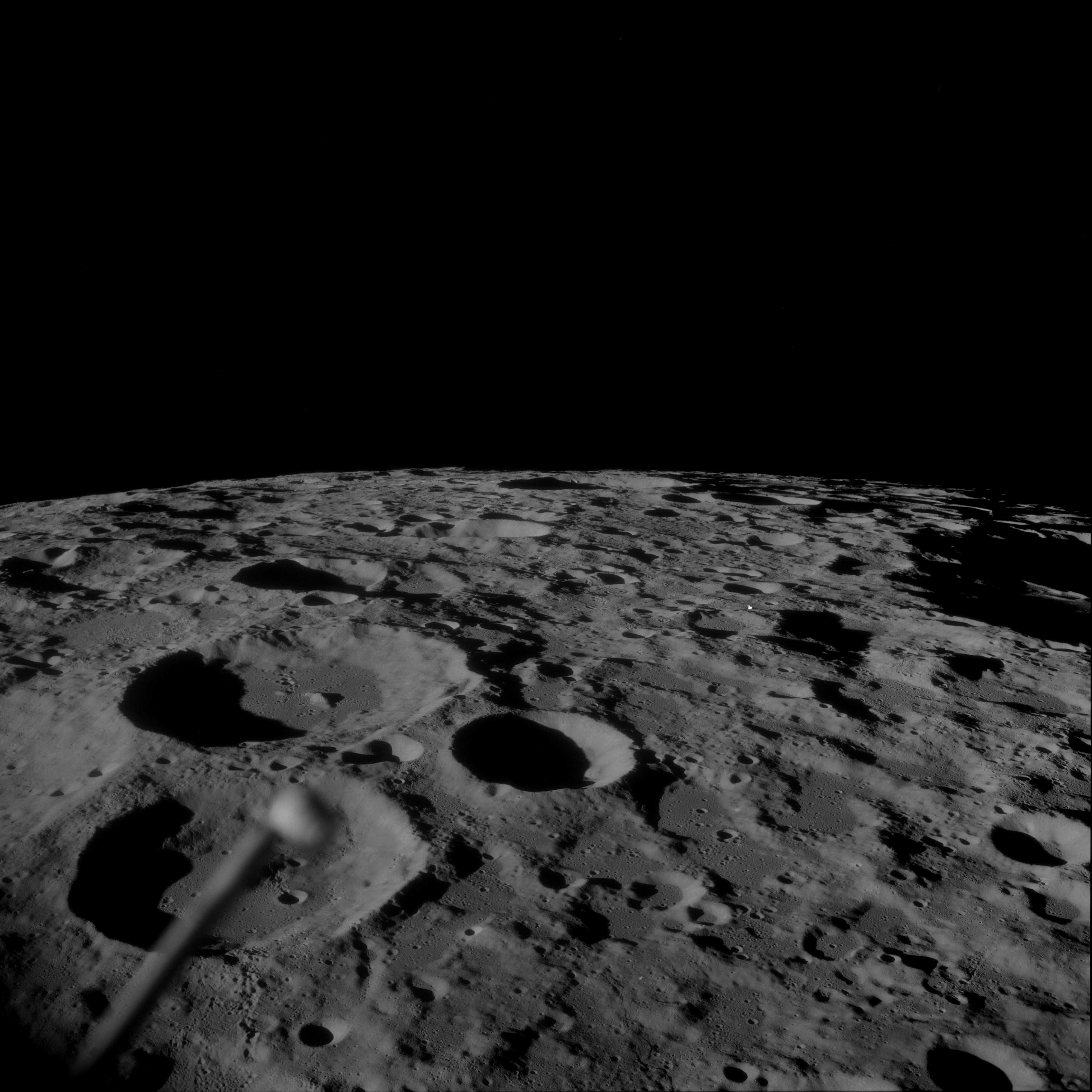
On The Dark Side Of The Moon, Apollo 11 Recorded a 1.2 Mile Tall White Structure! UFO UAP Alien Sighting News.


This day in UFO History: It's the 78th anniversary of the Roswell "crash" back in July 3, 1947, UAP Sighting News.
The single question thats on every UFO researches mind 24/7 is...will the US gov release all the files, photo, videos of the alien spacecraft and its occupants that crashed as Roswell, New Mexico? Its the single most famous case on the face of the Earth and its the deal breaker. If this case is released in its entirely...the world will forever be changed and forever know the truth. That the US gov has had alien bodies and technology since 1947. What this means...1st, it 100% explains how the US has remained a world power. 2nd, it 100% explains how the US had access to seveal alien bodies to research and possibly even a live alien caught at the crash...which helped the US gov. 3rd, giving the US gov alien tech that not only can travel from planet to plane in mere minutes, but...can also allow the most dangerous weapon on the planet to fall into American hands...time travel. Most alien spacecraft are not just capable of traveling in space, but also in atmosphere, oceans as well as through time.
Scott C. Waring - UFO Sightings Daily
Earths moon is a spaceship and has a thermal exhaust port, it means the moon can be destroyed! UFO UAP Paranormal sighting news
El Niño is RAPIDLY strengthening, experts say - and the consequences could be catastrophic
Super El Niño has officially begun in the tropical Pacific and is now rapidly strengthening, scientists warn.
The World Meteorological Organization's (WMO) latest forecast shows that El Niño conditions are forecast to grow into a 'strong' event during July to September this year.
According to weather models, ocean surface temperatures are showing a 'consistent and significant warming' across the key central and eastern Pacific regions.
Experts now predict that water temperatures will exceed 2C (3.6F) above average in the critical areas driving the El Niño cycle.
The WMO expects that El Niño will continue to strengthen through autumn in the Northern Hemisphere, with an influence covering many regions of the globe.
Meanwhile, other ocean areas such as the equatorial Atlantic Basin are also predicted to stay well above average.
This natural warming cycle is expected to exacerbate the weather-altering effects of climate change, leading to potentially catastrophic extreme weather around the globe.
WMO Secretary-General Celeste Saulo said: 'This will intensify the chances of drought and heavy rainfall and the risk of heatwaves on land and marine heatwaves in many regions of the world.'

The World Meteorological Organization warns that El Niño is strengthening rapidly and could trigger extreme weather and heat around the world. Pictured: Map showing the probability of a given area experiencing above-average heat
The El Niño-Southern Oscillation is a naturally occurring weather cycle, which is one of the biggest drivers of year-to-year weather variations
Every two to seven years, the cycle shifts between a cooling La Niña phase and a warming El Niño phase.
Normally, the trade winds blow westwards across the Pacific, transporting warm water away from South America towards Australia and allowing colder water to well up along the coast.
During the El Niño phase of the cycle, these winds weaken or reverse, allowing warm water to build up in the tropical Pacific.
That concentration of warm water can raise the global average temperature and disrupt weather patterns on a global scale.
Last month, scientists confirmed that the ocean surface in the Pacific has now warmed past the threshold for El Niño conditions to officially begin.
However, experts now predict that the weather pattern is only going to strengthen as time goes by.
Over the oceans, the Pacific already shows the footprint of a rapidly intensifying El Niño event, with more than 80 per cent likelihood of above-normal sea surface temperatures in the equatorial Pacific.

Experts forecast that El Niño will continue to strengthen from July to September as waters in the equatorial Pacific warm
Ms Saulo said: 'El Niño conditions are already underway and are forecast to strengthen rapidly into a strong event – as accurately anticipated by WMO forecasts.'
The El Niño weather pattern typically reaches its peak in November and February, exerting its strongest influence on global temperatures in the year following its onset.
The exact impacts an El Niño triggers vary depending on its intensity, the time of year it forms, and how it interacts with other ongoing climate events.
But in almost all cases, this weather pattern leads to increased global temperatures and extreme weather around the globe.
According to the WMO's predictions, there is now an 'overwhelming likelihood' of above-average temperatures on land between 60°S and 60°N, which includes almost all populated regions on Earth.
This comes as Europe already grapples with a record-breaking heatwave that has sent temperatures soaring.
In the UK, the record for the hottest June day was broken as a temperature of 37.3C was recorded in Santon Downham, in Suffolk.
Similarly, provisional figures reveal that the UK has just sweltered through the hottest June on record.

This comes after the UK experienced its hottest June on record, with an average temperature of 17.1C last month, surpassing the previous record of 16.9C set in 2025

El Niño is also expected to affect global patterns of precipitation, leading to lower-than-average rainfall in northern Europe
According to the Met Office, the average temperature was 17.1C last month, surpassing the previous record of 16.9C set in 2025.
Meanwhile, France has been facing deadly heat conditions that have already been linked to 1,300 deaths.
While the current heatwaves are not caused by El Niño, experts say we can also expect extreme heat ‘almost everywhere’ as the weather pattern intensifies this summer.
Gareth Redmond-King, Head of International Programme at the Energy and Climate Intelligence Unit, said: 'Two deadly heatwaves in the last two months have shown how dangerous climate change impacts have become at 1.4C of global average temperature rise.
'Now an intensifying El Niño is set to add more heat into our climate, driving temperatures up almost everywhere in the coming months.'
While its influence on British weather is indirect, a particularly strong El Niño event could raise global temperatures and supercharge the heating effects of climate change, as well as reducing rainfall across Northern Europe.
Simon Culling, a prominent data collector and investigator for the UK’s Tornado & Storm Research Organisation (TORRO), wrote on X: ‘If the current predictions for the forthcoming El Niño phase are realised, what does this mean for the UK?
‘It may mean hotter summers for both 2026 and 2027 and increases the risk of a significant cold spell in winter 2026/27. Let’s see what plays out.’
Bombshell report exposes missing scientist's ties to secret experiments at UFO-linked lab before vanishing
Shocking new clues from police in New Mexico have revealed the secret project a missing scientist was reportedly working on before he vanished without a trace.
Anthony Chavez, a former employee at the Los Alamos National Laboratory (LANL), one of America's key nuclear research facilities, was allegedly working with a quantum physicist on a project that would allow matter to exist 'in two places simultaneously.'
Chavez, 78, was last seen on May 4, 2025 after mysteriously walking out of his Los Alamos home and leaving behind his newly purchased car, his keys and wallet.
He reportedly worked as an HVAC technician at the lab until his retirement in 2017. However, a police report obtained by Los Angeles Magazine journalist Lauren Conlin has revealed Chavez's ties to the most advanced technology on Earth, with the potential to teleport objects over great distances.
A friend of Chavez’s told police that he had been working with an unnamed Los Alamos scientist on the idea of being 'in two places at once,' a concept linked to quantum physics.
The theory stems from a phenomenon known as superposition, in which tiny particles can exist in multiple possible states at the same time and forms the basis of quantum computing and experiments in teleportation.
How Chavez was connected to, or was assisting, the Los Alamos scientists with potential experiments into superposition or quantum teleportation remains unclear.
However, working with quantum computers requires super-cooled environments that can reach -459.65°F in order for these particles to stay in their special quantum states - a problem that could require the services of an HVAC specialist.

Anthony Chavez (Pictured) was allegedly working with a quantum physicist in Los Alamos, according to a newly obtained police report. He disappeared without a trace in May 2025
Boston-based technology company and quantum computer builder QuEra Computing explained in a statement: 'In the realm of quantum computing, cryogenic cooling is essential for achieving the ultra-low temperatures required to isolate and control qubits.'
Qubits, or quantum bits, are what replace the traditional bits of a standard computer - which can only operate in one state at a time.
During an interview with NewsNation's Jesse Weber, Conlin claimed that Chavez had recently purchased a silver Acura before his disappearance, which police found parked in his driveway with the keys left inside his locked house.
Chavez, a well-known smoker, uncharacteristically left his cigarettes and identification behind. The former nuclear lab worker was also known to not have a cellphone, making it nearly impossible to trace his whereabouts digitally.
Although friends considered him an avid hiker, investigators noted that Chavez was not dressed for a long outdoor walk and did not take any means of contacting him in case of emergency.
LANL has not responded to the Daily Mail's repeated attempts to confirm Chavez's duties at the nuclear facility.
The Daily Mail has also reached out to the Los Alamos County Police Department regarding the details given by Chavez's friend, however, the name of the LANL physicist Chavez was allegedly working with has not been revealed.
If Chavez's connection to quantum research is proven to be true, it would tie another missing lab worker to advanced technology that intelligence officials have told the Daily Mail could have made them targets of a foreign espionage plot.

Currently, a quantum computer that could process millions of qubits would need to be incredibly large, which is why your smartphone still uses traditional computer technology
Chris Swecker, who was the assistant director in charge of the bureau's Criminal Investigative Division during his 24-year career, told the Daily Mail in April that foreign powers could be targeting citizens who have knowledge of national security secrets.
'The first thing you go to is its potential espionage,' he said.
'Our scientists have been targeted for a long time, especially in the rocket propulsion area, by hostile foreign intelligence services.'
Swecker warned that enemy intelligence agencies have been attempting to derail top-secret US programs for decades, using one of two main methods: finding ways to steal the information from the US or killing those who know about the programs.
'It's been happening since the Cold War,' he added. 'Especially when nuclear technology and missile technology were first coming to the forefront.
'I think we've even seen instances where nuclear scientists have been taken out. They've been assassinated.'
Chavez is one of five individuals who vanished without a trace over the last year, all of whom had ties to secretive research, including knowledge of nuclear weapons, advanced rocket propulsion and alleged UFO recovery programs.
Another LANL employee, Melissa Casias, disappeared just seven weeks after Chavez in almost the exact same fashion, leaving behind all of her belongings and identification in her New Mexico home.
Casias, a 53-year-old administrative assistant at LANL, was found dead on May 28 in New Mexico's Carson National Forest. Her remains were reportedly found next to a handgun, but authorities have not released a cause of death in over a month.
Intelligence officials have claimed that Casias may have been in a position to access sensitive information on nuclear research that her superiors possessed.
Meanwhile, the FBI is still investigating the disappearance of retired Air Force general William Neil McCasland, who walked out of his New Mexico home with no keys, phone or wallet on February 27.
The general, who was in charge of the Air Force Research Laboratory, was deeply tied to both nuclear research at multiple US facilities, including LANL, and to the US government's alleged activities involving extraterrestrial technology.
Swecker previously told the Daily Mail that there is enough evidence to suspect foul play in several of the disappearances and deaths, especially among those individuals tied to advanced research and rocket technology.
'I think there's enough of a pattern, even if it's a small group, I think there's a smaller group of missing people that warrants an investigation by the FBI, which is the lead agency in counter-espionage, counterintelligence,' he said.
'I would be looking for that, unless we show something points to another direction
Scientists BUILD a cell from scratch: Synthetic organism can feed, grow, copy its DNA and divide in world-first breakthrough
By WILIAM HUNTER, SENIOR SCIENCE & TECHNOLOGY REPORTER
Scientists have built a synthetic cell from scratch in a world-first breakthrough that paves the way for creating entirely artificial forms of life.
The tiny blobs, dubbed SpudCell, are about 50 times smaller than a normal bacterium and are made of microscopic water droplets encased in a fatty membrane.
That bubble is filled with enzymes, chemicals, and small snippets of DNA that allow SpudCell to perform some of the basic functions of life.
According to its creators, this synthetic cell can now feed, grow, copy its DNA, divide, and even change over generations in a process resembling evolution.
This is not the first time that scientists have attempted to make synthetic life, but, unlike those earlier attempts, SpudCell is entirely constructed from the ground up.
Scientists hope these cells could one day revolutionise medicine by acting like mini biological factories, pumping out medicines and other chemicals.
Lead author Professor Kate Adamala, of the University of Minnesota Twin Cities, says: 'We’ve replicated in chemistry what only used to be possible in biology: the complete set of behaviours of a cell.
'It proves that the most fundamental functions of life, like growth and replication, do not need a mysterious magical spark.'

Scientists have built a synthetic cell from scratch, in a world-first breakthrough that paves the way for creating entirely artificial forms of life
Rather than breaking down and reconstructing existing cells, these almost-living bubbles are made from nothing but artificial chemicals.
Like all living organisms, SpudCell contains stretches of DNA that contain the instructions for making all the proteins the cell needs to survive.
SpudCell also contains a sort of biochemical toolkit called 'PURE', which includes everything the cell needs to turn those DNA instructions into proteins.
While a human genome contains around three billion pairs of DNA, SpudCell contains just 90,000.
Biologists had previously speculated that the smallest genome a living cell could have is 113,000 pairs, making this synthetic organism much smaller than the theoretical limit.
This means that SpudCell is far simpler and much less sophisticated than even the most basic life form.
However, despite the simplicity of its genetic code, these fatty bubbles are still able to replicate several basic functions of life.
SpudCells can feed by fusing with minuscule 'feeder' liposomes, hollow spheres made of fatty lipids, which contain all the nutrients the cell needs to function.

The tiny blobs, dubbed SpudCell, are about 50 times smaller than a normal bacterium and are made of microscopic water droplets encased in a fatty membrane
ts DNA contains instructions to use that food to create replicas of its genetic code, preparing it for reproduction.
The cells can even undergo a basic form of division by flooding their membrane with a protein that creates a repelling force, essentially tearing the cell apart at the seams.
Most impressively, the cells even appear to be capable of a form of natural selection over multiple generations.
In an experiment, published in a pre-print paper, the scientists gave some SpudCells a mutation that helped them gather more food and grow faster.
After five generations, these mutated cells had outcompeted their rivals, and 60 per cent of genomes contained the mutation.
To develop the concept further, Professor Adamala and her co-authors have founded a public-benefit research institution named Biotic.
However, Professor Adamala cautions this does not mean SpudCells are alive.
The process of selection can't be considered evolution because the researchers had to insert the mutation from outside, rather than having it arise naturally.

These artificial cells can feed, grow, divide, and even change over generations through selection and competition. However, their creators say they are not alive
SpudCells also can't naturally divide over many generations, and the researchers had to press them through a membrane with tiny holes to get multiple rounds of division.
This process is also incredibly crude compared to the division that happens in real cells.
Since the SpudCells don't tear themselves apart evenly, they don't always get the right number of genomes in the finished offspring.
After five division cycles, the researchers found that only 30 per cent of cells still carried the full genome.
Prof John Dupré, a philosopher and founder of the Centre for the Study of Life Sciences at the University of Exeter, told the Daily Mail: 'This work is undoubtedly technically very impressive. Whether it "will ultimately underlie diverse applications across all of biotechnology", is more questionable.
'Even assuming that synthetic biology will eventually produce entities with all the capacities of a living bacterial cell, it is doubtful whether this will ever be a more effective technology than modification of naturally evolved cells.'
Scientists have also criticised the papers publication, which was released to the public without peer-review after being reportedly rejected by the journal Cell.
Professor Kerstin Göpfrich, a molecular biologist from Heidelberg University, told the Daily Mail: 'History has shown multiple times that press before peer review can go wrong. A good ethical standard would be to refrain from reporting until the paper has gone through the normal peer-review procedure.'
Mysterious structure in NASA's Mars photo sparks theories of a long-lost civilization on the Red Planet
NASA's Mars rover is hunting for signs of ancient life, but a new image has sparked claims it may have found the ruins of a lost civilization.
Among the dusty landscape, some have pointed to a formation in the distance that they say resembles a structure with a doorway, similar to an early human dwelling.
The theory was put forward by Scott C Waring of UFO Sightings Daily, who argued that the feature appears to be 'made from a clay stucco type of material' that is abundant on Mars.
'What looks like cut boulders is actually clay-type walls and an entrance way made by intelligent beings who needed protection from the elements. We had them on Earth long ago, and they had them on Mars long ago,' Waring said.
NASA has not commented on the latest claims, but the agency previously addressed similar speculation after Curiosity photographed a door-like feature in 2022.
'The mound, on Mount Sharp, has a number of naturally occurring open fractures – including one roughly 12 inches (30 centimeters) tall and 16 inches (40 centimeters) wide, similar in size to a dog door,' NASA said at the time.
'These kinds of open fractures are common in bedrock, both on Earth and on Mars.'

An image taken by NASA's Curiosity rover has sparked claims of a long-lost civilization as a formation in the distance appears to have a 'doorway'
NASA has also maintained that it has no evidence of extraterrestrial life and has yet to find any signs of current or past life on Mars.
While Waring is sure Curiosity spotted a hidden doorway on the Martian landscape, others believe otherwise.
'Nah, just a rock formation. I definitely think it's possible that entrances could be there, but this just looks like a shadow,' one X user commented on his post.
However, Waring said: 'Chances of intelligent beings creating this structure...100%.'
Curiosity rover is a car-sized, nuclear-powered robot searching for signs of life and learning about the Red Planet's unique environment.
The image shared by NASA in 2022 took the internet by storm, with many users also claiming that it shows a doorway.
'That appears man-made,' one user shared on X.
Another posted: 'Not natural! The angles are too sharp, like a rectangle, to have been naturally occurring. It was constructed by someone, something.'

Among the dusty landscape , some have pointed to a formation in the distance that they say resembles a structure with a doorway, similar to an early human dwelling

NASA has not commented on the latest claims, but the agency previously addressed similar speculation after Curiosity photographed a door-like feature in 2022 (pictured)
Waring has been sharing bizarrely shaped rocks on the Red Planet for about a decade now, with another recent discovery this week.
In an image captured by NASA's Opportunity rover in 2014, a strangely shaped rock lies on the Martian landscape.
Waring suggested it was an 'alien gun,' and NASA sent the rover to retrieve it.
'Alien gun on Mars photos, only one still exists, others deleted by NASA,' Waring shared on X on Tuesday.
The image was previously circulated by Waring, writing in a blog post that the supposed weapon was 'about one foot long.'
'I have to admit... It's incredible,' he shared. 'The exact location of the gun is at SOL 3773, which is between Mt Edgecumbe and Wdowiak Ridge.'
While Waring believes the object is a gun lying on the Martian surface, skeptics argue it is nothing more than a naturally shaped rock.

In an image captured by NASA's Opportunity rover in 2014, a strangely shaped rock lies on the Martian landscape, which some claimed was an 'alien gun'
One X user commented: 'I'm not an expert, but I believe this is a rock.'
While another joked: 'Why would aliens have guns designed for human hands and fingers? lol.'
NASA's Opportunity rover landed on Mars on January 25, 2004, touching down in a small impact crater known as Eagle Crater on the Meridiani Planum.
However, the robot fell silent in June 2018 during a severe, planet-wide dust storm that blocked sunlight from reaching its panels. After spending months attempting to re-establish contact, NASA officially declared the mission complete in February 2019.
Cloaked UFO Passes Over Girls Soccer Team In Buderim, Australia On July 1, 2026, UAP Sighting News.

Ark of the Covenant mystery blown wide open as 'biblical relic' is discovered
Archaeologists have uncovered ruins in Israel that they believe may be the original home of the Ark of the Covenant, a sacred, gold-covered chest described in the Bible.
According to scripture, Moses placed the Ten Commandments inside the Ark, which was kept in the Tabernacle, a sanctuary built shortly after the Israelites' Exodus from Egypt, traditionally dated by some scholars to around 1445 BC.
The fate of the Ark remains a mystery, as it vanishes from the biblical record before the Babylonian sack of Jerusalem in 586 BC.
Now, archaeologists with the Associates for Biblical Research (ABR) working at biblical Shiloh, the ancient city in the West Bank where scripture says the Tabernacle stood for more than 300 years, have made new discoveries that they say strengthen their theory.
The team uncovered additional walls belonging to a massive structure that may have formed part of the Tabernacle, along with worship-related artifacts and newly identified fortifications.
Dr Scott Stripling, director of the Tel Shiloh excavation, said the latest discoveries are helping researchers reconstruct the full dimensions of the monumental building and better understand its purpose.
The most significant breakthrough came with the discovery of the structure's southern wall.
The building is oriented east to west and has proportions similar to those described for the biblical Tabernacle, the portable sanctuary built by the Israelites after the Exodus from Egypt.

A new theory has suggested that the Ark was built using ancient Egyptian religious symbols as a theological rebuke, a statement that the Israelite God was superior to Egyptian gods because he required no idol, and because his presence was not confined to a statue
Last year, Stripling's team announced they had uncovered a monumental building from the Iron I period whose dimensions appeared to align with the biblical description of the Tabernacle.
The latest findings do not prove that identification, but archaeologists said they strengthen the case.
'The discovery of the southern wall now enables our researchers to reconstruct the full dimensions of the building and better evaluate its function and significance,' Stripling said in a blog post on the Bible Archaeology Report.
Adding to the mystery, excavators have also unearthed numerous objects associated with worship activities in and around the structure, including altar horns, ceramic pomegranates and murex shells.
The shells are particularly intriguing because they were used to produce the blue dye associated with priestly garments described in the Bible.
The discoveries build on previous finds at Shiloh, where researchers uncovered more than 100,000 animal bones, predominantly from sheep, goats and cattle.
Many of the bones came from the right side of the animals, a detail that mirrors Leviticus 7, which states that portions from the right side were reserved for priestly offerings.
Shiloh occupies a central place in biblical history. Located about 19 miles north of Jerusalem, the city is described in the Book of Joshua as the place where the Israelites established the Tabernacle after conquering the Promised Land.

The team uncovered additional walls belonging to a massive structure that may have formed part of the Tabernacle
The team uncovered three large Canaanite storage jars dating to the period before the arrival of the Israelites. The jars contained charred remains of common food staples, including olives, wheat and lentils
It was there that Joshua divided the land among the tribes of Israel. It was also the home of Eli, the high priest, and the place where the prophet Samuel was raised.
The Bible portrays Shiloh as Israel's first religious and political capital.
In 1 Samuel 4, the Israelites bring the Ark of the Covenant from Shiloh to the battlefield during a war with the Philistines, hoping it will guarantee victory.
Instead, the Ark is captured, and Eli's sons, Hophni and Phinehas, are killed.
When a messenger returns to Shiloh and tells the elderly priest that the Ark has been taken, Eli falls backward from his seat near the city gate, breaks his neck and dies.
This year, excavators also uncovered additional walls belonging to Shiloh's northern fortification system.
The findings indicated the complex was built as a bent-axis gate and contained multiple rooms, providing new insight into the city's defenses and urban planning.
The discoveries add weight to earlier suggestions by Stripling that his team may have identified the gate complex mentioned in the biblical account of Eli's death.
The most significant breakthrough came with the discovery of the structure's southern wall
Meanwhile, excavators working in another area of the site made a separate discovery that sheds light on Shiloh's earliest history.
The team uncovered three large Canaanite storage jars dating to the period before the arrival of the Israelites.
The jars contained charred remains of common food staples, including olives, wheat and lentils.
Archaeologists plan to conduct radiocarbon testing on the contents to establish a more precise date for the destruction layer associated with the finds.
'These discoveries provide an important window into the earliest occupational phases of Shiloh and help us better understand the site's history before the Israelite settlement,' Stripling said.
Despite the excitement surrounding the discoveries, archaeologists cautioned that they have not found the Ark of the Covenant itself, nor have they definitively proven that the monumental structure is the Tabernacle.
Instead, the latest excavation season has provided new evidence that appears to align with the biblical narrative.
Archeologists Just Found an Underwater Graveyard Packed with Punic, Roman, Medieval, and World War II Shipwrecks
One bay. Twenty-five centuries. More than 100 lost ships. What archaeologists just pulled from the water near Gibraltar rewrites Mediterranean history.

This Shipwreck Site Preserved Centuries Of History Beneath The Waves.
Image credit: Ludovic MADELAINE
The bottom of the Bay of Algeciras is a museum no one built on purpose. For thousands of years, ships that anchored there waiting for safe passage through the Strait of Gibraltar never left. They went down in storms, in battle, or because the sea simply decided otherwise. Now archaeologists have catalogued what remains.
A three-year survey called Project Herakles logged 151 archaeological sites across a 29-square-mile stretch of water between the Spanish city of Algeciras and the British territory of Gibraltar. More than 100 of those sites are shipwrecks. The oldest dates to the fifth century B.C., when Carthage controlled the western Mediterranean. The most recent is a weapon from World War II.


A pair of team members uses a suction hose to clean sediment from a wreck in the Bay of Algeciras.
Image credit: Alejandro Mañas
That waiting turned lethal with enough frequency to seed the seafloor with wrecks. The bay recorded two major naval battles: the Battle of Gibraltar in 1607 and the First Battle of Algeciras in 1801. In that second engagement, British Rear Admiral James Saumarez, his squadron badly damaged on July 6, retreated to Gibraltar, repaired his ships, and sailed back out six days later to defeat a larger combined French and Spanish force, as documented by the Society for Nautical Research. Outside of wartime, ordinary transit failures stacked hulls atop hulls for centuries.
The Roman period accounts for 25 of the documented wrecks, a number that tracks with the empire’s centuries-long grip on both shores of the strait. The oldest vessel belongs to the Punic era, a remnant of Carthaginian maritime power around the fifth century B.C., well before Rome erased Carthage from the map. A University of Cádiz research portal entry notes that geophysical surveys and visual inspections confirmed two Punic shipwrecks, recovered materials from two anchorage zones, and flagged two more potential wrecks awaiting confirmation.
Three medieval wrecks caught the team off guard. Ship timbers from that period are scarce across the Mediterranean. Cerezo Andreo told the Guardian that studying those hulls could illuminate seafaring during the late centuries of Islamic rule in southern Spain, an era with a thin material record.

An outlined wreck is seen from above a few metres offshore in the Bay of Algeciras.
Image credit: Alejandro Mañas
By the early modern period, the bay had become international in a way few harbors were. The team documented Dutch, Venetian, Spanish, and English ships. “We have ships of practically every nationality, because they all passed through the strait,” Cerezo Andreo told the Guardian. Popular Mechanics reported that 134 shipwrecks were catalogued overall, with 34 documented in full.
The wreck of Puente Mayorga IV stands out because of the strategy it was built to execute. Spain designed this small gunboat in the 18th century to harass British shipping near the Rock of Gibraltar, the territory Britain secured in 1713 through the Treaty of Utrecht.
The vessels dressed as fishing boats, netting concealing cannons until the crew dropped the disguise and opened fire at close range. Historians knew the tactic from written records. A physical example had never been studied until now.

An archaeologist marks the naval architecture in the Bay of Algeciras.
Image credit: Alejandro Mañas
According to El País, the research team used underwater photographs from the 1970s and 1980s to relocate several known sites and measure how much the marine environment has changed under the weight of this invasive species.
The survey covered just 23 percent of the bay’s surface, mostly nearshore zones. Deeper water introduces a different threat. Large cargo vessels drop anchors weighing more than twenty tons, and when they hit, the damage is immediate.
The team’s assessment classifies 56 percent of the documented sites as stable. The other 44 percent require urgent study and protection. Researchers are pushing for formal underwater cultural heritage designations that would restrict anchoring and development in the most sensitive areas.
While that legal effort proceeds, the data gets a second life. The team is building a public digital archive of 360-degree dive videos and three-dimensional virtual models, allowing researchers and the public to examine the wrecks without disturbing them. The long task of interpreting those hulls, and deciding what can be saved, has only started.
Look What NASA’s Mars Reconnaissance Orbiter Just Spotted Lurking in the Red Planet’s Arbot Hills

A tiny green dot appearing in an image taken by NASA’s Mars Reconnaissance Orbiter (MRO) captures a historic tale of Red Planet exploration by one of its first Earthling visitors.
That visitor—a robotic rover named Perseverance—has been conducting investigations on Mars since February 18, 2021, and the new aerial images reveal its current location in an area that mission specialists have dubbed “Arbot.”
While Perseverance’s latest appearance reveals little more than a greenish spec on the planet’s rust-colored surface, also visible in the new images are the long path its formidable tires have left in the Martian soil as the robotic explorer has trekked west of its initial landing site.
The new images, captured on June 13, 2026, were taken just one day before Perseverance broke the previous distance record held by a robotic explorer on Mars: NASA’s Opportunity rover.
However, Perseverance completed this phase of its journey in record time compared to its predecessor, which took more than 11 years to traverse a similar distance. Perseverance, by contrast, covered the same distance in less than half that time, with just five years and four months of travel now behind it.

In the image above, NASA’s Perseverance Rover appears in the center of the image as a small, greyish-green reflective spot. Also visible are the impressions left by its all-terrain tires, revealing the robotic rover’s long path over the last several years of Martian exploration
(Image Credit: Credits: NASA/JPL-Caltech/University of Arizona)
The images were made possible by the MROs’ High-Resolution Imaging Science Experiment (HiRISE) camera, which also captured surface features in the Arbot area that include ridges and windswept areas along Mars’ rugged exterior.
Built and operated by the University of Arizona, HiRISE captures images with resolutions as fine as about 25 centimeters (10 inches) per pixel, allowing researchers to distinguish features roughly the size of a kitchen table from orbit. The camera has returned hundreds of thousands of detailed images since the MRO arrived at Mars two decades ago, contributing to a growing data set that has transformed scientists’ understanding of the Red Planet.
Documenting everything from active dust avalanches and shifting dunes to fresh impact craters, the unprecedented resolution its imagery provides has made HiRISE one of the most powerful planetary imaging instruments ever deployed.
Last year, the MRO’s HiRISE camera also successfully captured images of the interstellar comet 3I/ATLAS as it made its way past Mars during its trip through our Solar System. Although the HiRISE images weren’t the clearest images of the interstellar visitor obtained during its visit, they did help demonstrate just how formidable NASA’s MRO and its suite of instruments are.
Additional details about Perseverance and its mission can be found at NASA’s official web page, and information about the MRO can be found here.
Archaeologists stumble upon ancient Mexican ruins unlike anything seen before

COATEPEC, June 20 — Mexican archaeologists unearthed ancient ruins with signs of Mayan culture as well as “never before seen” characteristics in the eastern state of Veracruz.
President Claudia Sheinbaum called the discovery “very relevant” during her morning press conference yesterday, saying her government would allocate resources for the investigation and restoration of the site.
The site includes a circular stone platform unlike any other unearthed in that part of Mexico.
Researchers also discovered a monolith depicting a figure with potential Mayan features, the National Institute of Archaeology and History (INAH) said.

“It’s a unique, unprecedented finding,” said Lino Espinoza Garcia, an archaeologist for the INAH and one of the coordinators for the Campo Viejo site near the town of Coatepec.
Dating back to the Early Classic period between 200 and 600 AD, the pre-Hispanic ruins include a flagstone and limestone platform adorned with almost squared lines or figures as well as the circular stones.
These attributes have never been recorded in this region of Mexico, the INAH said in a statement.

It’s “a very particular structure,” said Alberto Vazquez, the other archaeologist responsible for the site.
“We don’t have any records so far of a correlation with other (ancient) sites.”
The monolith stands 1.88m (6.16 feet) high, 1.47m (4.82 feet) wide at its broadest point and 68cm (2.23 feet) at the narrowest.

The stone depicts a scene of a symbolic character, according to experts.
“They are two characters who are requesting something, they have a bowl and are receiving something, we think it’s a liquid. Obviously, in that context, it’s a divine liquid, we think it would be water,” Espinoza detailed.
The archaeologist believes the image could reflect the era of a great drought in the region, which could explain why two members of the elite, one of them with Mayan traits, are depicted receiving the fluid from a divine entity. — AFP
“We Don’t Have Any Records So Far”: Archaeologists Discover Ancient ‘Monolith’ in Mexico Unlike Anything Previously Seen

Archaeologists in Mexico report “a unique, unprecedented” discovery in the country’s state of Veracruz, including a monolith bearing unique features and pre-Hispanic ruins unlike others found in the region.
The ancient ruins are believed to display motifs that archaeologists have linked to early Maya culture, according to recent reporting by Agence France-Presse.
The monolithic sculpture, which stands taller than six feet and features an engraving that depicts a pair of individuals engaged in what may be a ritual activity, was accompanied by a large stone platform positioned nearby, and is believed to date to between A.D. 200 and 600. This falls within the Maya Early Classic period, a foundational era of the ancient civilization during which the proliferation of its hieroglyphic writing and calendar systems occurred, as well as the onset of massive stone pyramid construction.
Alberto Vazquez, one of the principal archaeologists at the site, called the discovery “a very particular structure,” adding that archaeologists in Mexico presently “don’t have any records so far of a correlation with other sites.”
The site layout during recent excavations, which shows the position of the monolith in-situ
(Image Credit: INAH)
Monumental construction was a hallmark of the Maya Early Classic period, an era that was also partially defined by the widespread use of sculpted stone stelae and altars that often bore historical significance related to political events.
These stelae and altars preserved a record of events from the period using the Maya Long Count calendar, as rulership governed by hereditary dynasties was believed to leverage religious ceremonies to help legitimize their positions in power.
Several aspects of the recent discovery align with such known components of Early Classic period structures, although some elements about the site remain outliers, such as the circular stone platform, which bears little resemblance to others found throughout Mexico.
The most intriguing component of the site is its monolith, which stands slightly taller than six feet and is under five feet across at its broadest point. The sculpture also features a pair of individuals that researchers say is likely related to symbolism associated with the period in question.
An artistic rendering of the imagery depicted on the monolith, which features two individuals receiving what archaeologists interpret as a “divine liquid”
(Image Credit: Lino Espinoza)
Lino Espinoza Garcia, an archaeologist with Mexico’s National Institute of Archaeology and History (INAH), described the imagery on the monolith as depicting “two characters who are requesting something,” adding that the individuals “have a bowl and are receiving something.”
“[W]e think it’s a liquid,” said Garcia, who also serves as a coordinator at the nearby Campo Viejo site near Coatepec, Mexico. “Obviously, in that context, it’s a divine liquid, we think it would be water.”
Additional discoveries at the site include a flagstone and a large platform made of limestone, which features a series of square-lined patterns, which INAH archaeologists say are unlike those found at nearby sites.
One possible interpretation of the discovery is that the figures depicted with a possible “divine liquid” may document a period of drought that struck the region, which could account for the depiction of two individuals receiving water from a God or other divine figure. Garcia and his colleagues also suggest the two recipients of the liquid may have been members of the ruling class from the period.
During a press conference last week, Mexican President Claudia Sheinbaum called the discovery “very relevant” and added that investigations would continue with support from her administration.
For Garcia and others, the monolith and its surrounding features offer a unique look at features unlike those they have worked with in the past and may help to deepen our understanding of ancient cultural and political dynamics in Mexico’s pre-Hispanic past.
“It’s a unique, unprecedented finding,” Garcia said.
Nun warns that aliens are 'fallen angels' invading Earth to cast doubt on the existence of God
by Liam Randall / News Reporter

A Catholic nun has warned that alleged alien encounters are actually demons
(Image: Getty Images/Science Photo Library RF)
A Catholic nun has dropped a bombshell claim about UFOs, warning that alleged alien encounters are actually a sinister invasion by "fallen angels." Mother Miriam claims that the spooky phenomena people see in the skies are rooted in a dark spiritual realm, rather than coming from distant planets.
Speaking out on her podcast after a listener asked if ETs were real or spiritual, she didn't hold back. Mother Miriam said: "I think sooner look at the demonic side than the extraterrestrial."
While the Catholic Church doesn't have an official stance on aliens, the holy woman believes the truth is far more terrifying.

Mother Miriam claims that the spooky phenomena people see in the skies are rooted in a dark spiritual realm(
Image: @MotherMiriamHighlights/Youtube)
Channelling the teachings of medieval theologian St Thomas Aquinas, she argued that angels are the original extraterrestrials because they come from another world.
She said: "The Catholic position, there is such a thing as extraterrestrial intelligence. These creatures really are from another world, the spiritual world. They're what we call angels."
But she warned that not all of these cosmic beings come in peace. "Some of these angels are ministers of light. Others are ministers of deception and destruction," she said in a YouTube video.

Mother Miriam argued that angels are the original extraterrestrials because they come from another world
(Image: Getty Images)
Mother Miriam, who was born Rosalind Moss in Brooklyn before converting and leading a monastery in Oklahoma, believes these entities are playing a dangerous game with humanity.
She claims their ultimate goal is to steer people away from God, using UFO obsession as the perfect smoke screen.
She said: "They do all they can to deceive human beings and draw them into a belief system without God, without faith, and without the necessary graces for their salvation."
She added that if these forces "can get people wrapped up in theories of alien visitations and extraterrestrial visitors to Earth, if they can get them absorbed and fascinated by any number of paranormal phenomena and distracted from God, they will have succeeded in their diabolical mission to deceive and to destroy."
The nun claims we are right in the thick of a supernatural battle for the universe.
She said: "These extraterrestrial forces are involved in a great cosmic war. And human beings are a part of a conflict. Once that is understood, all that remains is for you to decide on which side you plan to do battle."
Mother Miriam isn't alone in her wild theories. US Vice President JD Vance previously made headlines on a podcast by suggesting UFOs are actually "demons."
TV host Tucker Carlson has also pushed the theory that celestial phenomena are demonic entities. Even movie legend Steven Spielberg previously admitted that finding real aliens could rock humanity to its core.
Speaking ahead of the release of his film Disclosure Day, he said: "What does this do to the fundamental beliefs that many of us have? Is God our God only on this planet? Or is God a god for every system where there's civilisation and intelligent life, and even developing life?"
Despite her terrifying warnings, Mother Miriam hasn't completely ruled out the idea of actual aliens existing.
She said: "It's possible there are other planets. The church is not definitive on that. If we find out one day that there is truly life on other planets, well, we'll know then. But so far, our Lord hasn't shown us that."
Strange formation in NASA's Mars photo fuels claims of extraterrestrial life on the Red Planet
A strangely shaped object photographed on the Martian surface has reignited bizarre theories about extraterrestrial life on the Red Planet.
The picture, captured by NASA's Opportunity rover in 2014, recently resurfaced online after social media users claimed the object resembles an 'alien gun.'
Scott C Waring, a Martian researcher from 'UFO Sighting Daily,' suggested the 'gun' is evidence of why NASA sent a rover to Mars to retrieve alien technology.
'Alien gun on Mars photos, only one still exists, others deleted by NASA,' Waring shared on X on Tuesday.
The image was first circulated by Waring in 2016, writing in a blog post that the supposed weapon was 'about one foot long.'
'I have to admit... It's incredible,' he shared. 'The exact location of the gun is at SOL 3773, which is between Mt Edgecumbe and Wdowiak Ridge.'
NASA's Opportunity rover landed on Mars on January 25, 2004, touching down in a small impact crater known as Eagle Crater on the Meridiani Planum.
However, the robot fell silent in June 2018 during a severe, planet-wide dust storm that blocked sunlight from reaching its panels. After spending months attempting to re-establish contact, NASA officially declared the mission complete in February 2019.

The picture, captured by NASA's Opportunity rover in 2014, recently resurfaced online after social media users claimed the object resembles an ' alien gun.'
However, it seems the UFO researchers' claims are nothing more than a case of pareidolia, a psychological response to seeing faces and other significant and everyday items.
While Waring is sure Opportunity spotted a gun on the Martian landscape, others believe otherwise.
One X user commented: 'I'm not an expert, but I believe this is a rock....'
While another joked: 'Why would aliens have guns designed for human hands and fingers? lol.'
Waring has been sharing bizarrely shaped rocks on the Red Planet for about a decade now, with one in 2016 that he claimed was a shoe.
'While looking through some Mars rover photos, I found a lone shoe on the edge of the crater,' he wrote on his website.
‘This is probably a shoe of a species that was at war long ago, the shoe being the lone evidence that the person had ever existed.’
The discovery was spotted on August 24, 2016, however, the original photo from the Opportunity was taken in 2013.

The image was first circulated by Warning in 2016, writing in a blog post that the supposed weapon was 'about one foot long'

Waring has been sharing bizarrely shaped rocks on the Red Planet for about a decade now, with one in 2016 that he claimed was a shoe
The NASA image shows a cluster of rocks spread out on the dusty planet, and the lone shoe can be seen to the right among the rubble, which may also just be another rock.
However, Waring is sure this ‘shoe’ is all that is left of a soldier who lost their life on the battlefield.
‘How many times on a battlefield or at a catastrophic event have we seen photos in the newspaper of the shoes of victims…alone…evidence of how hard they were hit, how fast they were taken from us? Well, this is such evidence,’ he wrote.