Naar de inhoud

UFO'S of UAP'S, ASTRONOMIE, RUIMTEVAART, ARCHEOLOGIE, OUDHEIDKUNDE, SF-SNUFJES EN ANDERE ESOTERISCHE WETENSCHAPPEN - DE ALLERLAATSTE NIEUWTJES

UFO's of UAP'S in België en de rest van de wereld
BerichtenArchiefGastenboekContact
akke.beakke.be
Ontdek de Fascinerende Wereld van UFO's en UAP's: Jouw Bron voor Onthullende Informatie! Ben jij ook gefascineerd door het onbekende? Wil je meer weten over UFO's en UAP's, niet alleen in België, maar over de hele wereld? Dan ben je op de juiste plek! België: Het Kloppend Hart van UFO-onderzoek In België is BUFON (Belgisch UFO-Netwerk) dé autoriteit op het gebied van UFO-onderzoek. Voor betrouwbare en objectieve informatie over deze intrigerende fenomenen, bezoek je zeker onze Facebook-pagina en deze blog. Maar dat is nog niet alles! Ontdek ook het Belgisch UFO-meldpunt en Caelestia, twee organisaties die diepgaand onderzoek verrichten, al zijn ze soms kritisch of sceptisch. Nederland: Een Schat aan Informatie Voor onze Nederlandse buren is er de schitterende website www.ufowijzer.nl, beheerd door Paul Harmans. Deze site biedt een schat aan informatie en artikelen die je niet wilt missen! Internationaal: MUFON - De Wereldwijde Autoriteit Neem ook een kijkje bij MUFON (Mutual UFO Network Inc.), een gerenommeerde Amerikaanse UFO-vereniging met afdelingen in de VS en wereldwijd. MUFON is toegewijd aan de wetenschappelijke en analytische studie van het UFO-fenomeen, en hun maandelijkse tijdschrift, The MUFON UFO-Journal, is een must-read voor elke UFO-enthousiasteling. Bezoek hun website op www.mufon.com voor meer informatie. Samenwerking en Toekomstvisie Sinds 1 februari 2020 is Pieter niet alleen ex-president van BUFON, maar ook de voormalige nationale directeur van MUFON in Vlaanderen en Nederland. Dit creëert een sterke samenwerking met de Franse MUFON Reseau MUFON/EUROP, wat ons in staat stelt om nog meer waardevolle inzichten te delen. Let op: Nepprofielen en Nieuwe Groeperingen Pas op voor een nieuwe groepering die zich ook BUFON noemt, maar geen enkele connectie heeft met onze gevestigde organisatie. Hoewel zij de naam geregistreerd hebben, kunnen ze het rijke verleden en de expertise van onze groep niet evenaren. We wensen hen veel succes, maar we blijven de autoriteit in UFO-onderzoek! Blijf Op De Hoogte! Wil jij de laatste nieuwtjes over UFO's, ruimtevaart, archeologie, en meer? Volg ons dan en duik samen met ons in de fascinerende wereld van het onbekende! Sluit je aan bij de gemeenschap van nieuwsgierige geesten die net als jij verlangen naar antwoorden en avonturen in de sterren! Heb je vragen of wil je meer weten? Aarzel dan niet om contact met ons op te nemen! Samen ontrafelen we het mysterie van de lucht en daarbuiten.
Dinsdag 4 augustus 2026

The horrifying truth behind Antarctica's 'Blood Falls': Scientists discover the striking red waterfall is teeming with ancient sea creatures trapped beneath the ice

The horrifying truth behind Antarctica's 'Blood Falls': Scientists discover the striking red waterfall is teeming with ancient sea creatures trapped beneath the ice

  • READ MORE: Earth records its LOWEST temperature in 14 years

By XANTHA LEATHAM, EXECUTIVE SCIENCE EDITOR

Scientists have uncovered the gruesome secret behind Antarctica's infamous Blood Falls – it's alive with the descendants of ancient sea creatures.

The eerie crimson waterfall, which pours from the Taylor Glacier into Lake Bonney, has long fascinated researchers with its blood–like appearance.

Now, a study suggests the iron–rich brine emerging from beneath the ice is home to a unique community of marine microorganisms that have been trapped beneath the glacier for hundreds of thousands of years.

These included marine diatoms, haptophytes, dinoflagellates and ciliates – tiny organisms that usually inhabit the ocean.

These are the descendants of ancient marine communities that became isolated when the glacier advanced and cut off the trapped seawater from the ocean.

The discovery provides the strongest biological evidence yet that the mysterious water originally came from the sea before being sealed beneath advancing ice.

Writing in the journal Nature Geoscience, the researchers described the site as 'a rare marine refuge in the polar desert'.

They added: 'These findings indicate that the subglacial brine–fed system at the Taylor Glacier Terminus retains marine–derived biological signatures long after physical separation from the ocean.'

The eerie crimson waterfall, which pours from the Taylor Glacier into Lake Bonney, has long fascinated researchers with its blood-like appearance

The eerie crimson waterfall, which pours from the Taylor Glacier into Lake Bonney, has long fascinated researchers with its blood–like appearance

A new study suggests the iron-rich brine emerging from beneath the ice is home to a unique community of marine microorganisms that have been trapped beneath the glacier for hundreds of thousands of years. Pictured: The study area

A new study suggests the iron–rich brine emerging from beneath the ice is home to a unique community of marine microorganisms that have been trapped beneath the glacier for hundreds of thousands of years. Pictured: The study area

Blood Falls gets its terrifying colour from iron–rich salty water that rusts when it reaches the air, creating its distinctive blood–red stain across the glacier.

Scientists have long suspected the brine was once seawater that flooded Taylor Valley during a warmer period before sea levels dropped and the glacier advanced over it.

Until now, however, there has been little biological proof that the trapped water really had a marine origin.

Researchers analysed 167 samples of water, sediment, ice and air collected from the McMurdo Dry Valleys and surrounding areas of Antarctica.

Using DNA sequencing, they identified thousands of different microorganisms living in and around Blood Falls.

The team discovered that the red ice, mud and sediments where the waterfall emerges were packed with species normally found in marine environments rather than on land or in freshwater.

Overall, 9.34 per cent of the microorganisms at Blood Falls were shared with nearby ocean samples, compared with just 1.15 per cent at other Antarctic Dry Valley sites.

The researchers say this strong marine fingerprint would be difficult to explain by wind blowing microbes inland from the coast.

The team discovered that the red ice, mud and sediments where the waterfall emerges were packed with species normally found in marine environments rather than on land or in freshwater

The team discovered that the red ice, mud and sediments where the waterfall emerges were packed with species normally found in marine environments rather than on land or in freshwater

The microbes included diatoms ¿ glass-shelled algae that form the foundation of marine food webs (stock image)  There were also dinoflagellates, microscopic plankton that propel themselves through the water using whip-like tails (stock image) 

The microbes included diatoms – glass–shelled algae that form the foundation of marine food webs (left). There were also dinoflagellates, microscopic plankton that propel themselves through the water using whip–like tails (right)

What sea creatures are stuck beneath the ice?

Diatoms: Microscopic algae encased in intricate shells made of glass–like silica. They drift through oceans and freshwater, produce oxygen through photosynthesis and form the base of many aquatic food chains.

Haptophytes: Tiny single–celled algae that also photosynthesise. They are an important part of the ocean's plankton and play a key role in absorbing carbon dioxide from the atmosphere.

Dinoflagellates: Microscopic plankton that propel themselves through the water using whip–like tails called flagella. Some make their own food using sunlight, while others hunt prey, and certain species are responsible for harmful 'red tides'.

Ciliates: Single–celled organisms covered in hundreds of tiny hair–like structures called cilia, which they use to swim and sweep bacteria and other microscopic food into their mouths. They are common in both freshwater and marine environments.

The study also found many of the microorganisms are still biologically active despite surviving in one of Earth's most hostile environments.

Genetic evidence showed they were carrying out photosynthesis, repairing damaged cells and activating stress–response systems to cope with the freezing, salty conditions beneath the ice.

Some species may survive by entering dormant states, effectively lying in wait until conditions become favourable again.

The microbes included diatoms – glass–shelled algae that form the foundation of marine food webs – and haptophytes, which are tiny single–celled algae that are an important part of the ocean's plankton.

There were also dinoflagellates, microscopic plankton that propel themselves through the water using whip–like tails, and ciliates – single–celled organisms covered in hundreds of tiny hair–like structures called cilia.

Researchers say these hidden ecosystems could reveal how life survives through dramatic climate shifts over hundreds of thousands of years.

The findings may also help scientists reconstruct Antarctica's ancient history by revealing when seawater became trapped beneath the growing ice sheet.

Since Blood Falls preserves biological traces of an ancient marine world hidden beneath the frozen continent, the team says it offers a rare glimpse into ecosystems that have remained isolated ever since Antarctica's landscape was transformed by advancing glaciers.

The red waterfall stands about five storeys high in the McMurdo Dry Valleys region of Antarctica, which is known as being one of the coldest and least habitable places in the world.

It was first discovered in 1911 by the Australian geologist Griffith Taylor, who first explored the valley.

READ MORE

  • Antarctica's toxic time bomb: Melting ice is unleashing dangerous amounts of mercury trapped for hundreds of years, scientists warn

article image

Blood Falls is the coldest known glacier–fed feature with persistently flowing water, which emerges at a temperature of about –7°C (19°F).

The lake under the glacier has an unusually salty consistency, and because saltwater has a lower freezing point than pure water and releases heat as it freezes, it melts the ice, enabling the rivers to flow.

Antarctica's ice sheets contain 70% of world's fresh water - and sea levels would rise by 180ft if it melts

Antarctica holds a huge amount of water.

The three ice sheets that cover the continent contain around 70 per cent of our planet’s fresh water. 

If all the ice sheets were to melt due to global warming, Antarctica would raise global sea levels by at least 183ft (56m).

Given their size, even small losses in the ice sheets could have global consequences. 

In addition to rising sea levels, meltwater would slow down the world’s ocean circulation, while changing wind belts may affect the climate in the southern hemisphere. 

In February 2018, Nasa revealed El Niño events cause the Antarctic ice shelf to melt by up to ten inches (25 centimetres) every year.

El Niño and La Niña are separate events that alter the water temperature of the Pacific ocean.

The ocean periodically oscillates between warmer than average during El Niños and cooler than average during La Niñas.

Using Nasa satellite imaging, researchers found that the oceanic phenomena cause Antarctic ice shelves to melt while also increasing snowfall. 

In March 2018, it was revealed that more of a giant France-sized glacier in Antarctica is floating on the ocean than previously thought.

This has raised fears it could melt faster as the climate warms and have a dramatic impact on rising sea-levels.


The horrifying truth behind Antarctica's 'Blood Falls': Scientists discover

There's a Blood-Red Waterfall in Antarctica 🩸 (Even Scientists Were Stunned)
Blood Falls in Antarctica | The Red Waterfall Mystery Finally Explained!

Blood Falls in Antarctica: The Creepiest Natural Mystery on Earth!

{ https://www.dailymail.com/sciencetech/index.html }

MYSTERIES ( Fr, Nl, E)

Hoe vind je dit bericht? 0 stemmen
Geschreven door peter om 16:53 Stuur door
Maandag 3 augustus 2026

NASA Mars photo captures mysterious 'walking man' on the Red Planet

NASA Mars photo captures mysterious 'walking man' on the Red Planet

  • READ MORE: I'm a pastor who attended a secret UFO

disclosure meeting. We saw images of 'translucent

beings' that chilled me to the bone... the files could

fulfil a dark biblical prophecy

By STACY LIBERATORE, US SCIENCE & TECHNOLOGY EDITOR

A stunning panorama of Mars appears to show a mysterious human-like figure walking in the distance.

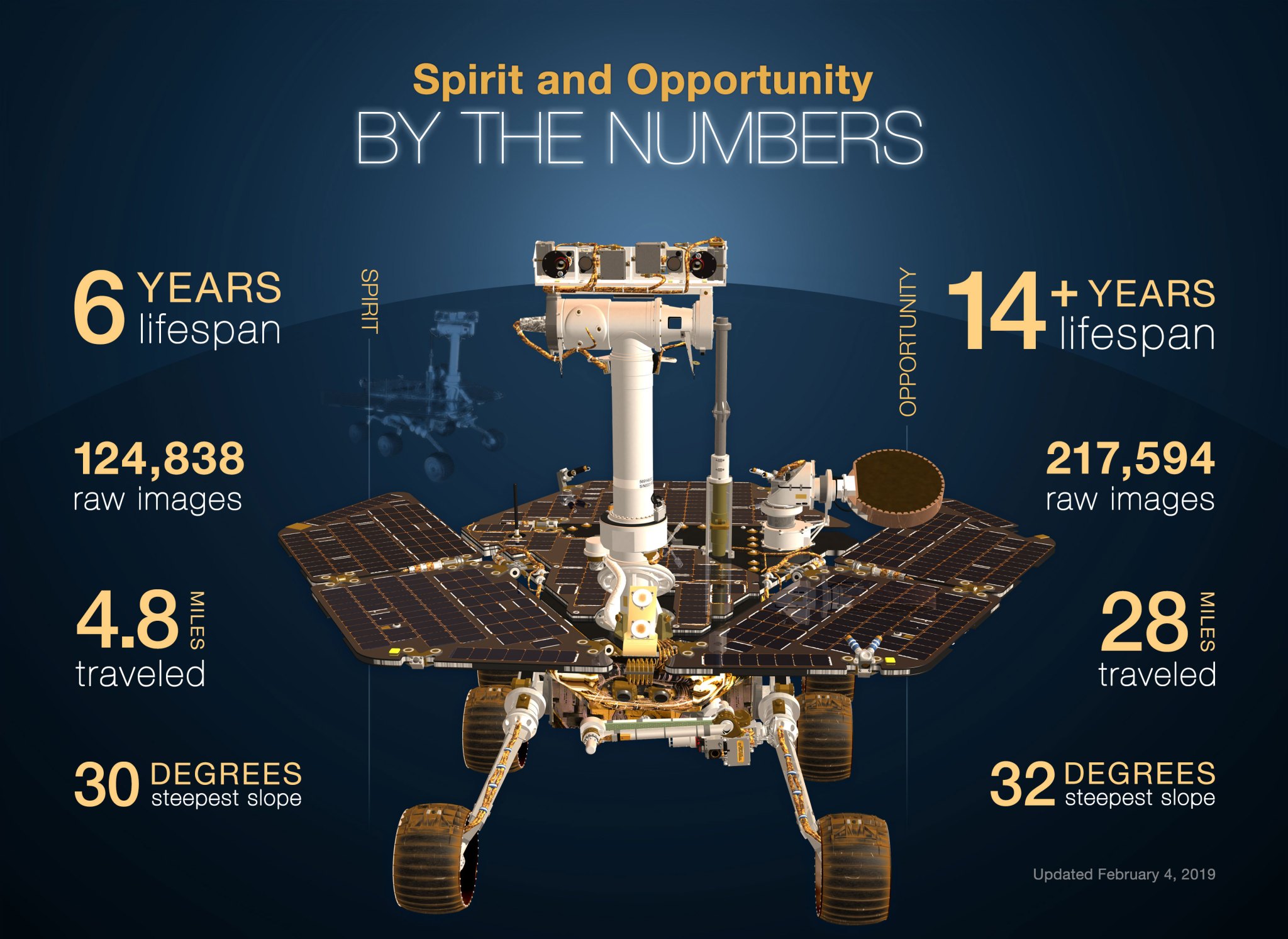
The image, captured by NASA’s Spirit rover in 2007, has resurfaced online, with viewers convinced it shows a ‘walking man’ on the Red Planet.

Nestled among rocks is a strange shape that appears to have its arms outstretched and one leg forward, as if caught mid-stride.

The eerie form appeared in a sweeping panorama of the Martian hills captured during the later years of Spirit’s mission. The rover became trapped in soft sand in 2009 and eventually lost power, prompting NASA to declare its mission over in 2011.

While some suggested the object was a walking man, others proposed a 'statue of someone kneeling with one hand out.'

Many viewers acknowledged that the apparent figure is nothing more than a strangely shaped rock, but some argued there were no similar formations nearby.

One Reddit user shared: 'This looks to be a combination of rocks or shapes in the surface along with shadowing. 

'You can even find other odd shapes in the photo that don't appear natural. It would be cool if this were some sort of alien artifact, but if that were the case, I highly doubt NASA and the government would release the photo.'

The image, captured by NASA¿s Spirit rover in 2007, has resurfaced online, with viewers convinced it shows a ¿walking man¿ on the Red Planet

The image, captured by NASA’s Spirit rover in 2007, has resurfaced online, with viewers convinced it shows a ‘walking man’ on the Red Planet

NASA has maintained that it has no evidence of extraterrestrial life and has yet to find any signs of current or past life on Mars. 

Regardless, viewers of the image have proposed wild ideas for what could be seen in the photo.

'That could be a statue. It's sitting, not walking. Past life on Mars, Absolutely Yes,' one Reddit user shared. 

Another commented: 'It’s obviously a person or a statue of one!!! I don’t care what NASA says.'

The Planetary Society published a blog post addressing the mysterious sighting in the Mars image, saying it is nothing more than an optical illusion.

The organization added that pretty much any person would see a humanoid shape in the photo, noting it is a case of pareidolia, the human propensity to see patterns in random shapes.

Another mysterious Mars photo was published online earlier this month, with people claiming it showed an unexploded 'alien missile' lying on the Martian surface.

UFO researcher Scott C Waring shared a photo on his site, arguing the object is evidence of an ancient conflict that wiped out a once-thriving civilization, claiming space agencies have remained silent because of its potential military significance. 

Nestled among rocks is a strange shape that appears to have its arms outstretched and one leg forward, as if caught mid-stride

Nestled among rocks is a strange shape that appears to have its arms outstretched and one leg forward, as if caught mid-stride

Waring even speculated the mysterious object could represent advanced extraterrestrial weapon technology that governments would rush to obtain if it were ever recovered.

The remarkable claims, however, are not supported by NASA, which has offered no indication that the object is anything other than a naturally occurring rock formation.

Scientists have long noted that Mars is shaped by billions of years of volcanic activity, meteorite impacts and relentless wind erosion, processes capable of sculpting rocks into surprisingly artificial-looking shapes.

Similar discoveries have repeatedly sparked claims of alien artifacts on the Red Planet before later being explained as examples of pareidolia, the human tendency to see familiar objects and patterns where none actually exist.

A UFO researcher shared a photo taken by the Curiosity rover that appears to show what he believes is an unexploded 'alien missile' lying on the Martian surface

A UFO researcher shared a photo taken by the Curiosity rover that appears to show what he believes is an unexploded 'alien missile' lying on the Martian surface

Still, the peculiar shape has reignited debate online, with believers convinced Curiosity stumbled upon the remnants of an extraterrestrial battlefield while skeptics see little more than another Martian rock. 

Waring estimated the object measures just over eight feet long and speculated it could be an intact piece of extraterrestrial technology. 

He claimed such a discovery would be highly sought after by governments hoping to study advanced weapons, while wondering who might reach it first and what purpose it may have served.

Waring offered no evidence to support those claims, and NASA has not identified the object as anything other than part of the Martian landscape.

{ https://www.dailymail.com/sciencetech/index.html }

Ruins, strange artifacts on other planets, moons, ed ( Fr, EN, NL )

Hoe vind je dit bericht? 0 stemmen
Geschreven door peter om 23:58 Stuur door
Maandag 3 augustus 2026

Unsettling Footage | Claims of a Close Encounter Spark Controversy

Unsettling Footage | Claims of a Close Encounter Spark Controversy

By Samantha Williams, Edited By Jasmine Moon

A close-up view of a close saucer illuminated against a dark night sky, with stars visible in the background.

A recent video purporting to show a close encounter with an unidentified flying object (UFO) has ignited a heated debate among people on various forums. While some express skepticism, others find the footage compelling, raising questions about authenticity and the psychological effects of perceived sightings.

Claims and Skepticism: A Divide in Perception

The video depicts an object hovering near a pole, causing many observers to speculate its nature. Comments vary widely, with several noting poor video quality and unstable camera movement. One user remarked, "The person is standing still and yet the camera is wobbling all over the place"

Criticism centers on the claim of authenticity. Skeptics assert the footage likely results from editing and low-quality technology. "Every fake video does this to make it seem real," another contributor explains. The doubts grew stronger when others pointed out the object's limited visibility in the frame and the overall lack of context during the supposed sighting.

Exploring Possible Explanations

A number of theories emerged on user boards, with some attributing the object to natural phenomena such as swamp gas or weather balloons. As one user noted, "It stays very close to that pole the entire time. My guess is a balloon on a string attached to that pole, getting blown in the wind." Others suggested it might be artificial intelligence manipulation, adding layers to the discussion about technological interference in media.

Interestingly, historical references to disc-shaped crafts from declassified CIA documents were woven into conversations, suggesting that the evolution of sightings reflects a change in the nature of phenomena—possibly indicating a shift from physical visits to drone-like operations by unidentified entities.

Key Points from the Debate

  • Mixed Reactions: Sentiments online lean towards skepticism, with most contributors labeling the video as questionable.

  • Quality Concerns: Commenters highlighted the low resolution and editing inconsistencies in the footage, further fueling doubts.

  • Speculative Theories: Users proposed various explanations for the sighting, ranging from harmless weather balloons to more elaborate conspiracy theories involving AI.

Final Thoughts

As people push for clearer evidence and better documentation of such phenomena, questions persist. Will the technology behind UFO sightings evolve to yield more credible footage? Or will skeptics continue to reign supreme in discussions surrounding unexplained aerial phenomena? Only time will tell.

"Looks so fake and of course nobody notices the giant UFO over them." - A perceptive comment

Stay tuned as this story continues to develop.

What Lies Ahead for UFO Sightings

There's a strong chance that as technology advances, the evidence surrounding UFO sightings will become more credible. Enhanced imaging techniques and AI-driven analysis may reveal details that are currently overlooked. Experts estimate around 60% probability that the quality of footage will improve significantly over the next few years, potentially laying to rest some skepticism. However, the divide between believers and critics is likely to persist, as many people remain entrenched in their views regardless of emerging data. This growing polarization may lead to more intense discussions on forums, affecting how these phenomena are perceived by the public.

A Lesson from Past Hurdles

Drawing a parallel to early photography in the 19th century can shed light on our current situation. Initially, groundbreaking photos were met with doubt and criticism, as many were convinced they were staged or manipulated. Just as early camera technology sparked heated debates, today's footage of unidentified objects is subject to similar scrutiny. Over time, as photography became more accessible and reliable, it transformed how people captured and interpreted historical moments. In this case, the unpredictable trajectory of public trust will shape the narrative around UFOs and how they are documented, echoing that initial skepticism paired with eventual acceptance of new technology.

{ https://mysterylores.com/ }

LATEST ( UFO ) VIDEO NEWS ( ENG)

Hoe vind je dit bericht? 0 stemmen
Geschreven door peter om 23:43 Stuur door
Maandag 3 augustus 2026

One Hundred Objects off Virginia: What AARO’s New UAP Report Actually Reveals

One Hundred Objects off Virginia: What AARO’s New UAP Report Actually Reveals

A U.S. Navy report describes approximately 100 airborne objects and two likely uncrewed surface systems off the Virginia coast. The incident is real enough to be under investigation — but the public evidence remains strikingly incomplete.

U.S. Navy vessel operating in the Atlantic Ocean off the Virginia coast

A U.S. Navy vessel operates in the Atlantic. AARO has not identified the specific Navy assets involved in the reported Virginia UAP incident, and has not disclosed the date, location, or sensor data underlying the report. This image is provided for regional context only — it does not depict the incident or the units involved.

Image: U.S. Navy / public domain.

The most arresting passage in the Pentagon’s latest annual report on unidentified anomalous phenomena occupies only three sentences.

According to the All-domain Anomaly Resolution Office, or AARO, U.S. Navy assets operating off the coast of Virginia reported approximately 100 unidentified airborne objects and two “likely uncrewed” systems on the surface of the water. AARO says it is actively investigating the event in coordination with the unit that submitted the report.

That is the full public account.

No date is given. No video, radar data or infrared imagery accompanies the passage. The report does not describe the objects’ appearance, size, altitude, speed, formation, duration or behavior. It does not say whether the airborne objects interacted with the surface systems. It does not identify the Navy platforms involved or explain why the objects remained unidentified.

That distinction is essential. A report from military personnel deserves investigation, particularly when it concerns a large concentration of unidentified objects in a strategically important maritime area. But an unresolved military report is not, by itself, evidence of extraterrestrial technology. It is evidence of an unresolved event.

■  What the Official Report Confirms

AARO’s Fiscal Year 2025 Consolidated Annual Report on Unidentified Anomalous Phenomena covers reports received for events occurring primarily between June 2, 2024, and May 30, 2025. The office received 319 UAP reports. The single maritime case was the Virginia incident. The official text states:

“The single maritime domain UAP case AARO received involved a report from U.S. Navy assets operating off the coast of Virginia. The report described approximately 100 airborne UAP and two, likely uncrewed, surface systems. AARO is actively investigating this event in coordination with the reporting unit.”

— AARO, Fiscal Year 2025 Consolidated Annual Report on UAP, p. 5

The language confirms five facts:

  1. The report came from U.S. Navy assets — not an anonymous account.
  2. The reported location was off the Virginia coast.
  3. Approximately 100 airborne objects were involved.
  4. Two objects on the water were assessed as likely uncrewed surface systems.
  5. AARO had not resolved the event when it published the report.

Primary Source:   Download the AARO FY2025 Annual Report (PDF) →

Official seal of the All-domain Anomaly Resolution Office (AARO)

Official seal of the All-domain Anomaly Resolution Office (AARO), established July 2022 under the Office of the Secretary of Defense. AARO serves as the U.S. government’s central body for UAP detection, identification, and attribution across air, maritime, and space domains.

Source: U.S. Department of Defense.

What We Know — and What We Do Not

✓  Confirmed by AARO■  Not Publicly Disclosed✗  Not Established
U.S. Navy assets submitted the report Date and duration of the event Extraterrestrial origin
Location was off Virginia Precise location Extraordinary speed or maneuvering
Approximately 100 airborne UAP were described Sensor platforms and raw data Transmedium travel
Two likely uncrewed surface systems were described Size, shape and formation of objects Connection between airborne and surface objects
Investigation remains active Whether objects were tracked or recovered afterward Foreign, domestic or nonhuman control

This table shows why the case is both important and easy to exaggerate.

The presence of approximately 100 objects sounds unprecedented. Yet quantity alone does not establish anomalous capability. Large numbers can point toward coordinated drones, balloons, birds, airborne debris, sensor tracks, misidentification or more than one phenomenon grouped into a single report. Without the underlying data, it is impossible to rank those possibilities confidently.

The two surface systems add an unusual dimension. They could suggest a coordinated maritime drone operation in which surface vessels supported airborne systems. They could also have been unrelated objects observed in the same operating area. AARO’s brief wording does not establish that the surface and airborne objects communicated, maneuvered together or belonged to the same operator.

Even the word “approximately” matters. It may represent a visual estimate, a count assembled from multiple sensor detections or the total number of observations recorded over time. The report does not tell us.

U.S. Navy and Marine Corps personnel during a training exercise off the Virginia coast

U.S. Navy and Marine Corps personnel during a training exercise in the Virginia coastal region. The waters off Virginia encompass Naval Station Norfolk — the world’s largest naval station — multiple restricted operating areas, and active Atlantic training zones. AARO did not disclose the precise location of the reported UAP incident. This image depicts routine naval training and does not represent the incident.

Image: U.S. Navy / DVIDS.

Why the Virginia Location Matters

The waters and airspace around coastal Virginia are among the most sensitive military environments in the United States. The region includes Naval Station Norfolk — the world’s largest naval station — major training areas, active aviation corridors and direct access to the Chesapeake Bay and the Atlantic Ocean.

That makes an unidentified mass incursion a legitimate national-security concern regardless of its ultimate explanation. If the objects were drones, the central questions would be: who operated them, how they entered the area, what they were collecting, and why U.S. forces could not immediately identify or stop them. Those questions are serious without invoking visitors from another world.

U.S. Navy destroyer underway in the Atlantic Ocean

A U.S. Navy destroyer underway in the Atlantic. The waters off Virginia are among the most monitored military environments in the world — which makes a mass unidentified incursion a legitimate security concern regardless of its eventual explanation. If the objects were drones, the question of how they entered the area and why they could not be immediately identified is as serious as any exotic hypothesis.

Image: U.S. Navy / DVIDS.

The location also invites comparison with previously reported drone incursions in the Virginia region, including repeated activity over Langley Air Force Base in December 2023. Public reporting described unidentified drones entering restricted airspace over a period of more than two weeks. However, AARO’s new report does not connect the offshore Navy case to the Langley events. Any connection is therefore a hypothesis, not a fact.

The incidents may reflect a broader vulnerability to small, relatively inexpensive systems operating around high-value military sites. They may also involve different technologies, different operators and different circumstances. Until the government provides dates and technical details for the maritime case, the two stories should not be merged.

The Drone Explanation Must Be Taken Seriously
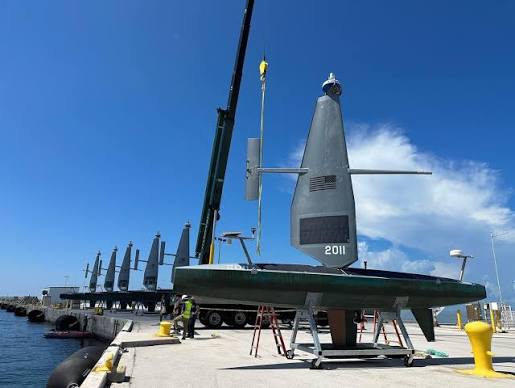
U.S. Navy unmanned surface vessel — example of existing uncrewed maritime technology

A U.S. Navy unmanned surface vessel. This illustrates the category of uncrewed maritime technology described in the AARO report — not the objects from the Virginia incident. The Navy operates multiple classes of unmanned surface vessels for patrol, surveillance and as potential launch platforms for airborne systems.

Source: U.S. Navy / DVIDS.
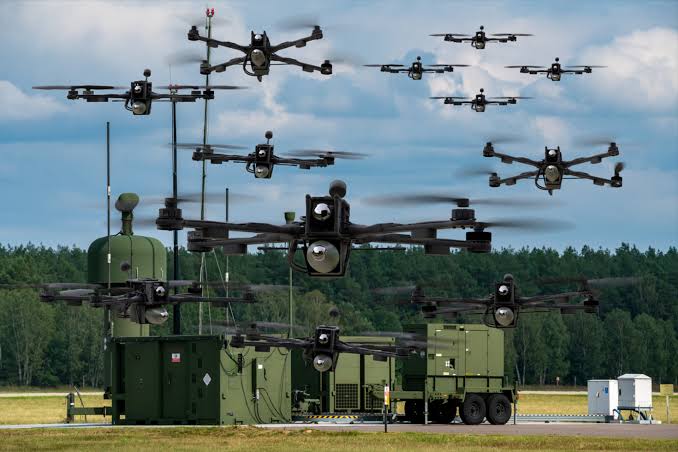
U.S. Navy drone swarm test — example of coordinated unmanned aerial systems

U.S. Navy drone swarm test. Modern unmanned aerial systems can operate in coordinated groups of dozens or hundreds of units, launched from land or sea. This image illustrates existing technology relevant to the Virginia case — it does not depict the reported objects.

Source: U.S. Navy / DVIDS.

“Drone” is sometimes treated as a dismissive answer in UAP discussions. It should not be. Modern unmanned systems can operate in coordinated groups, carry sophisticated sensors, launch from land or sea, and create difficult identification problems — especially at night or when viewed through specialized military sensors.

The two likely uncrewed surface systems make a drone-centered explanation particularly relevant. Surface vessels can potentially function as launch platforms, relay stations, navigation aids or recovery systems for airborne drones. That does not prove such an operation occurred off Virginia, but it provides a plausible technological framework requiring investigation.

Several possibilities remain open:

  • A domestic military exercise or classified test not immediately recognized by the reporting unit.
  • A foreign intelligence or surveillance operation.
  • Commercial or civilian systems entering a military operating area.
  • Multiple conventional objects or sensor returns incorrectly interpreted as a coordinated event.
  • A genuinely anomalous incident whose characteristics cannot be reproduced by known systems.

The fifth possibility cannot be excluded merely because the first four are more familiar. But it should not be elevated above them without evidence of performance that conventional systems cannot achieve. AARO does not report such performance in this case.

100 Unknown Objects and Two Mystery Vessels: Inside the Navy's Report | Sky Watch Archive

What the Wider Annual Report Shows

The Virginia event appears inside a report that is far more cautious than many online summaries suggest.

Of the 319 reports received, AARO resolved 114 as ordinary objects or phenomena. Those explanations included balloons, birds, satellites, aircraft, unmanned aerial systems, a commercial rocket launch and even one manned jet pack. The office also resolved 256 cases inherited from an earlier reporting period, bringing the total number of cases resolved during the period to 370.

AARO identified nine of the 319 new reports as deserving further analysis by intelligence, scientific and technical specialists. It placed 191 in what it calls the “active archive” because insufficient information prevented a reliable assessment. Those archived reports may be revisited if corroborating data or improved analytical methods become available.

That category must be interpreted carefully. “Insufficient data” does not mean that AARO detected impossible flight characteristics. It means the office could not determine whether the underlying events were ordinary or exceeded known technology. The report also states that none of the cases AARO resolved indicated advanced foreign capabilities or breakthrough technology. This conclusion applies to resolved cases. It does not explain every unresolved case, and it does not validate extraordinary interpretations of them.

The Growing Satellite Problem

One of the report’s most useful findings concerns satellite flares. Sunlight reflecting from a satellite can appear as a bright orb that emerges, moves or fades under particular viewing conditions. As satellite constellations multiply, pilots and observers are seeing more lights whose apparent behavior can be difficult to interpret without precise location, time and viewing-angle data.

AARO says a new three-dimensional modeling capability enabled analysts to attribute 238 reports to satellite flaring. Forty-four of the 319 reports covered in the current reporting period were resolved this way.

This is exactly why rigorous analysis matters. An observation can be sincere, accurately reported and genuinely unidentified to the witness while still having an ordinary astronomical or technological explanation. The military personnel who file UAP reports are trained observers — but even trained observers cannot calculate satellite trajectories from a cockpit.
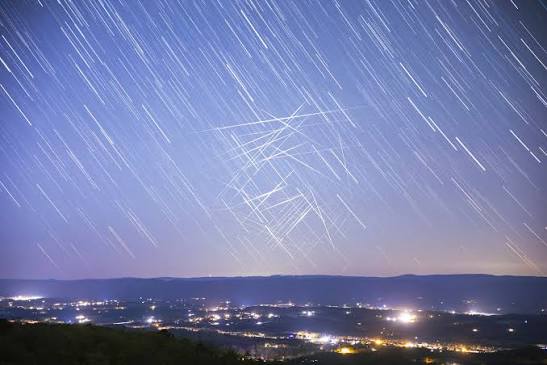
Satellite flare visible in the night sky — an increasingly common source of UAP misidentification reports

A satellite flare captured from the ground. As commercial satellite constellations expand, sunlight reflecting off spacecraft produces bright, moving lights that trained observers cannot immediately identify without precise time, location and trajectory data. AARO resolved 44 of its 319 current reports — and 238 cases total — using new 3D modeling that attributed them to this phenomenon.

Source: Creative Commons.

Reports Near Sensitive Sites

AARO also analyzed reports near national-security sites and critical infrastructure. Some narrative accounts described apparent performance beyond known technology, but the office said those reports arrived without technical data capable of validating the claims.

The annual report records two cases in which witnesses attributed electronic or avionics interference near operational aircraft to UAP. AARO has not determined whether the unidentified objects caused those effects.

Separately, government agencies reported 50 unmanned-aircraft incidents near U.S. nuclear infrastructure, weapons or launch sites — up from 18 in the previous annual report. AARO explicitly says those 50 incidents were not reported as UAP. Most involved recognizable unmanned aircraft, commonly quadcopters.

That separation matters. Drone incursions and UAP cases can overlap as security problems, but they are not interchangeable labels. The government should not use “drone” to prematurely close an unidentified case, and UAP advocates should not rebrand identified drone incidents as evidence of exotic technology. Ryan Graves — the former Navy pilot who has testified before Congress about UAP reporting stigma and sensor limitations — has made precisely this point: the failure mode runs in both directions.

The Pentagon Just Released New UFO Files — And They Raise More Questions Than Answers

The Central Weakness: Missing Data

AARO identifies the same obstacle that has followed official UFO investigations for decades: a lack of timely, actionable sensor data.

Witness testimony can establish that someone observed something unusual. It can help reconstruct direction, duration, color, shape and behavior. But testimony alone rarely provides the measurements needed to calculate distance, size, acceleration or energy output.

For the Virginia case, a meaningful public assessment would require at least some of the following:

Information Needed for a Public Assessment

  • The date, time and duration of the event
  • Navy units and sensor platforms involved
  • Radar tracks and possible clutter or interference data
  • Infrared or electro-optical imagery
  • Estimated altitude, speed and object dimensions
  • Weather, visibility and astronomical conditions
  • RF or signals-intelligence data, if collected
  • Whether objects flew in formation or responded to each other
  • Evidence connecting airborne objects to surface systems
  • Records of interception, tracking or recovery attempts

Without those materials, the public has a dramatic sentence but not a testable case. Classification may legitimately protect sensor capabilities, tactics and military operations. Nevertheless, the government could release a carefully redacted case summary explaining how the observations were collected and which hypotheses remain under consideration. Transparency does not require revealing every technical specification. As Congressman Tim Burchett and others on the House Oversight Committee have repeatedly argued, the current level of disclosure is insufficient for congressional oversight, let alone informed public understanding.

■ Editor’s Assessment

The Virginia incident deserves sustained attention. A coordinated intrusion involving approximately 100 airborne objects and two surface systems — if that description is supported by multiple sensors — would represent a significant failure of domain awareness and possibly a major intelligence event.

But the conditional phrase is essential: if that description is supported by multiple sensors.

At present, the public does not know whether the count came from radar, infrared imagery, visual observation or a combination of sources. We do not know whether the objects displayed unusual speed, acceleration or transmedium capability. We do not know whether they were close to military assets or many miles away.

The responsible conclusion is therefore limited: A U.S. Navy unit reported a large and unusual offshore event. AARO considered it sufficiently unresolved to keep the investigation active. The released information is not sufficient to determine what occurred.

That is less sensational than declaring a swarm of alien craft. It is also more consequential than dismissing the event as “probably drones” without seeing the evidence.

— The UFO Times Editorial Desk, July 27, 2026

What Should Happen Next

AARO should publish an unclassified update addressing the basic architecture of the incident. The questions requiring answers are not extraordinary — they are the minimum information necessary for serious public understanding:

  • When did the event occur, and over what period were the objects observed?
  • Which sensor categories detected them?
  • Was the approximate count simultaneous or cumulative over time?
  • Did the objects enter restricted airspace or approach Navy vessels?
  • What made the surface systems “likely uncrewed”?
  • Is there evidence that the airborne and surface systems were coordinated?
  • Which conventional explanations remain viable, and which have been tested and ruled out?
  • What specific information prevents resolution of the case?

These questions do not presume an extraterrestrial answer. They demand the minimum information necessary for serious public understanding. The Virginia case may eventually be explained as a drone exercise, a surveillance operation, a collection of unrelated conventional objects or a sensor interpretation problem. It may retain genuinely anomalous features after those possibilities are tested.

We do not yet know. That uncertainty is not a license for speculation. It is a reason to keep investigating — and a reason for government to be clearer about what it has already learned.

Sources

Primary Source

All-domain Anomaly Resolution Office. Fiscal Year 2025 Consolidated Annual Report on Unidentified Anomalous Phenomena. U.S. Department of Defense, 2026.  Download PDF →

  • Brandi Vincent, DefenseScoop. “Pentagon investigating mysterious UAP event reported by the Navy near Virginia’s coast.” July 21, 2026.
  • All-domain Anomaly Resolution Office. Congressional and Press Products. aaro.mil.

RELATED


Orbs Launching Orbs: The Western U.S. UAP Case AARO Still Can’t Resolve

The Navy Counted ~100 UAP Off Virginia — This Pentagon File Is Still Open (AARO)

Pentagon Report: 100 UAP Off Virginia - Still Unexplained

AARO's Hidden Swarm: 100 Objects, 319 New Cases, and the Report They Buried for a Year

{ https://theufotimes.com/gov-files }

LATEST ( UFO ) VIDEO NEWS ( ENG)

Hoe vind je dit bericht? 0 stemmen
Geschreven door peter om 21:43 Stuur door
Maandag 3 augustus 2026

Was a UFO Examining Google Earth Mapping Car On An Island In Canada? UAP Sighting News.

Was a UFO Examining Google Earth Mapping Car On An Island In Canada? UAP Sighting News.

UFO_news.png
Date of sighting: August 3, 2026
Location of sighting: Canada
 
Hey guys, found this disk like craft in the sky over an island in Canada and it really looks like a classic disk UFO. I don't see anything else in the sky, but that doesn't mean it's aliens. US military is known for working top secret disk craft outside the US to keep the ownership of the craft secret. Also it could be a beetle, bird, bug of some sort, but this shape is very confusing. It's caught by the Google Earth map car as it was driving down the street. There is a bird in the sky later, but it probably has nothing to do with the UFO in the area. Most UFO videos have birds around in them, here and there, if we exclude videos with birds, we have almost zero videos left. Thus, birds are only a possibility. 
Scott C. Waring - UFO Sightings Daily 


{ https://www.ufosightingsdaily.com/ }

Kathleen Marden 's News about Abductions... ( ENG)

Hoe vind je dit bericht? 0 stemmen
Geschreven door peter om 18:40 Stuur door
Maandag 3 augustus 2026

Scientists reveal the most scientifically accurate VOLCANO movies ever made - with Dante's Peak topping the list

Scientists reveal the most scientifically accurate VOLCANO movies ever made - with Dante's Peak topping the list

  • READ MORE: Even small volcanic eruptions can spread ash thousands of miles

By WILIAM HUNTER, SENIOR SCIENCE & TECHNOLOGY REPORTER

Much to volcanologists' dismay, Hollywood's enthusiasm for special effects often gets in the way of scientific accuracy when it comes to making a volcano movie.

But experts say that some epic disaster movies do manage to get some surprising details correct.

Now, researchers have revealed the most scientifically accurate volcano movies ever made.

And it's great news if you've been looking for an excuse to re-watch the 1997 classic, Dante's Peak.

In a new paper, published in the Bulletin of Volcanology, a team of British scientists watched through 20 movies featuring volcanoes to see how they square up with real eruptions.

They found that the most important thing these films get wrong is not the eruption itself, but the build-up to the explosion and how scientists try to predict it.

Most volcano movies dramatically shorten the real timeline, condensing weeks or months of uncertainty into hours or days of intense action.

However, Co-author Professor Jenni Barclay, a volcanologist from the University of Bristol, told the Daily Mail that Dante's Peak 'had a real attempt to demonstrate the uncertainties around an eruption and some of the elements of the eruption were pretty well portrayed.'

Scientists say that the 1997 classic Dante's Peak is one of the most scientifically accurate volcano movies ever made, but it still gets a lot wrong

Scientists say that the 1997 classic Dante's Peak is one of the most scientifically accurate volcano movies ever made, but it still gets a lot wrong 

After watching volcano movies spanning the last 60 years of cinema, starting with 1942's Superman vs Volcano, the researchers found that most movies get some core scientific details wrong.

Most importantly, they say that the timelines seen in volcano movies can be about ten times shorter than real eruptions.

Professor Barclay says the least realistic films they watched were 'where the volcano goes from 0 to 10,000 miles per hour dramatically fast'.

While volcanoes in the movies have a clear onset, rapid progression, and obvious resolution point, this is far from the case for real eruptions.

The researchers also bemoaned the almost ubiquitous presence of sudden, fast-flowing streams of lava which 'move like rivers in spate'.

Co-author Dr Bridie Davies, of the University of Manchester, told the Daily Mail that this is a particularly egregious blunder given the other classic features of a Hollywood volcano.

The classic on-screen eruption features a large cone-shaped volcano, which is scientifically known as an arc stratovolcano.

Dr Davies says the occurrence of 'runaway lava flows' alongside large, ashy explosive eruptions of stratovolcanoes is one of the most glaring scientific errors because 'these two eruption styles are unlikely to coexist in the real world'.

The biggest issue most volcano movies have is that the eruption accelerates too quickly from initial signs of unrest to an abrupt stop

The biggest issue most volcano movies have is that the eruption accelerates too quickly from initial signs of unrest to an abrupt stop

Researchers say that the 1997 movie Volcano is much less realistic than Dante's Peak due to its bad choice of Los Angeles as the site of an eruption and excessive use of fast-flowing lava

Researchers say that the 1997 movie Volcano is much less realistic than Dante's Peak due to its bad choice of Los Angeles as the site of an eruption and excessive use of fast-flowing lava 
The most and least scientifically accurate volcano films, according to the experts

Most accurate

* Dante's Peak

* Krakatoa: The final Days

* Pompeii: The Last Day

Least accurate

* Volcano 

* Joe Versus the Volcano 

* Pompeii 

* Krakatoa: East of Java 

* Apocalypse Pompeii 

Arc stratovolcanoes are much more likely to create deadly pyroclastic flows, fast-moving avalanches of superheated ash and rock, but these natural terrors very rarely make an appearance in cinema.

The researchers' dedicated watching also helps to settle a question that has divided film fans for the last 30 years.

1997 saw the back-to-back release of two classics of the volcano disaster genre: Volcano starring Tommy Lee Jones, and Dante's Peak with Pierce Brosnan.

Now we can finally say that, as far as scientific accuracy is concerned, Dante's Peak was the far superior flick.

Dr Davies says: 'Volcano does show some of the key signs of volcanic unrest we would look for, such as increased temperatures and gas levels.

'But the runaway lava flow apocalypse in Volcano and the poorly chosen location of downtown LA for a large hidden volcanic threat are difficult to overlook.'

On the other hand, Dr Davies says that Dante's Peak 'gives more screen time to unrest phenomena and does a better job at representing the wide range of scientists involved in monitoring volcanic hazard.

'We just have to overlook the scene where Pierce Brosnan drives for several minutes over a red-hot lava flow without his tyres popping.' 

Real eruptions have a much longer period of uncertainty before the eruption, sometimes lasting days or months

Real eruptions have a much longer period of uncertainty before the eruption, sometimes lasting days or months 

What are arc stratovolcanoes?

Arc stratovolcanoes are tall, steep-sided volcanoes built from alternating layers of lava, ash and volcanic rock. 

They form in curved chains called volcanic arcs, usually where one tectonic plate is forced beneath another.

Their magma is generally thick and rich in silica, which can trap gases and produce powerful, explosive eruptions. 

The main hazards include ash clouds, lava flows, fast-moving pyroclastic flows and volcanic mudslides.

Famous examples include Mount Fuji, Mount St Helens and Mount Vesuvius. They are particularly common around the Pacific Ring of Fire and in the Mediterranean region. 

Likewise, co-author Professor David Pyle, of the University of Oxford, told the Daily Mail: 'Dante’s Peak is geologically much more realistic, starting with the volcanic setting, which is clearly reminiscent of Mt St Helens, which erupted in 1980.

'The film does try to cram in far too many effects, but the inspiration is very much taken from things that have been seen in eruptions.'

Outside of the typical blockbuster movie, the researchers praised the accuracy of the 2006 BBC docudrama Krakatoa: The Last Days.

This is a partially fictionalised account of the 1883 Krakatoa eruption, based on eyewitness accounts, particularly the writings of Dutch geologist Rogier Verbeek.

The researchers say this film did a great job capturing the catastrophic effects of the blast, such as the tsunami waves and avalanches of volcanic ash, as well as the reality of the eruption timeline.

When it comes to the least scientifically accurate films, Professor Pyle singled out many of the disaster films that take inspiration from the 79 AD eruption of Vesuvius, such as 2014's Pompeii, starring Kit Harington.

Professor Pyle says these films 'run away with their imaginative dramatisations of the catastrophe'.

He adds: 'More often than not, the motivation is to show off the special effects to the max, rather than to be more faithful to what might have happened.'

Experts say that films about Pompeii, including the 2014 flop Pompeii, are the least scientifically accurate

Experts say that films about Pompeii, including the 2014 flop Pompeii, are the least scientifically accurate 

The most accurate piece of volcano media is the 2006 docudrama Krakatoa: The Last Days, which used eyewitness accounts to closely match the progress of the real eruption (illustrated)

The most accurate piece of volcano media is the 2006 docudrama Krakatoa: The Last Days, which used eyewitness accounts to closely match the progress of the real eruption (illustrated) 

However, besides the details of the eruptions themselves, one massive thing that all of these movies get wrong is the role of local communities and emergency responders.

While these movies usually show the local population 'running around and panicking', the reality is that people who live near volcanoes play a key role in preventing disasters.

Read More

  • Scientists find 73 volcanoes across the ocean floor - and some could erupt at any moment 

article image

Local groups help scientists to monitor the signs of an impending eruption and make plans for evacuations in case of an emergency,

Dr Davies says: 'I would love to see greater value placed on the stories, knowledge and often extremely pro-social responses of local communities before, during and after volcanic eruptions.

'The relationships built between scientists, local communities, leaders and emergency managers are complex and their combined efforts during times of volcanic crisis provide compelling stories of the power of the human spirit and community collaboration at its best.

'Something we could all use more of these days.'

HOW CAN RESEARCHERS PREDICT VOLCANIC ERUPTIONS?

According to Eric Dunham, an associate professor of Stanford University's School of Earth, energy and Environmental Sciences, 'Volcanoes are complicated and there is currently no universally applicable means of predicting eruption. In all likelihood, there never will be.'

However, there are indicators of increased volcanic activity, which researchers can use to help predict volcanic eruptions. 

Researchers can track indicators such as: 

* Volcanic infrasound: When the lava lake rises up in the crater of an open vent volcano, a sign of a potential eruption, the pitch or frequency of the sounds generated by the magma tends to increase.

* Seismic activity: Ahead of an eruption, seismic activity in the form of small earthquakes and tremors almost always increases as magma moves through the volcano's 'plumbing system'.

* Gas emissions: As magma nears the surface and pressure decreases, gases escape. Sulfur dioxide is one of the main components of volcanic gases, and increasing amounts of it are a sign of increasing amounts of magma near the surface of a volcano. 

* Ground deformation: Changes to a volcano's ground surface (volcano deformation) appear as swelling, sinking, or cracking, which can be caused by magma, gas, or other fluids (usually water) moving underground or by movements in the Earth's crust due to motion along fault lines. Swelling of a volcano cans signal that magma has accumulated near the surface.  

Source: United States Geological Survey

RELATED

DANTE'S PEAK (1997): Why it's the ultimate volcano movie
🌋 Most Powerful VOLCANIC ERUPTIONS Ever 🌋💥 Size Comparison

The Lost Supervolcano: The Biggest Eruption in Human History - Full Documentary

{ https://www.dailymail.com/sciencetech/index.html }

Diversen (Eng, NL en Fr)

Hoe vind je dit bericht? 0 stemmen
Geschreven door peter om 18:28 Stuur door
Maandag 3 augustus 2026

No, this isn't CGI! $150,000 robot has eerily human-like facial expressions and movements - as fans claim 'we'll be able to have a robot girlfriend that's way out of our league'

No, this isn't CGI! $150,000 robot has eerily human-like facial expressions and movements - as fans claim 'we'll be able to have a robot girlfriend that's way out of our league'

  • READ MORE: Self–dressing ROBOT puts your clothes on for you in 10 seconds 

By SHIVALI BEST, SCIENCE & TECHNOLOGY EDITOR 

At first glance at this footage, you'd be forgiven for mistaking it as a clip from the latest science fiction blockbuster. 

But the humanoid robot in the video is very much real.

Dubbed 'Origin–F1', the robot is the brainchild of Chinese robotics company AheadForm. 

Its facial expressions and movements are eerily human–like thanks to AI–driven facial motion algorithms, which deliver natural motion while avoiding 'uncanny effects'.

To get your hands on one, you'll need to splash the cash, with the Origin–F1 estimated to cost between $50,000 and $173,000, depending on the configuration. 

However, this price tag doesn't seem to faze many fans, who are desperate to get their hands on one. 

Commenting on a video of the robot, one viewer said: 'My father saved his money for a house, I am saving mine for my future robot dream girl.'

Another added: 'We'll be able to have a robot girlfriend that's way out of our league.'

At first glance at this footage, you'd be forgiven for mistaking it as a clip from the lastest science fiction blockbuster. But the humanoid robot in the video is very much real

At first glance at this footage, you'd be forgiven for mistaking it as a clip from the lastest science fiction blockbuster. But the humanoid robot in the video is very much real

AheadForm describes the Origin-F1 as a 'desktop ultra-bionic humanoid robot for real-world human interaction scenarios'

AheadForm describes the Origin–F1 as a 'desktop ultra–bionic humanoid robot for real–world human interaction scenarios'

AheadForm describes the Origin–F1 as a 'desktop ultra–bionic humanoid robot for real–world human interaction scenarios'.

In terms of software, the bot features AI–driven facial motion algorithms, which co–ordinate facial expressions, eye movements and speech. 

And when it comes to hardware, the robot features 26 degrees of freedom, which allow it to carry out even the most subtle of micro–expressions.  

'It combines bionic mechanical design with multimodal artificial intelligence to deliver natural, vivid, and continuously evolving interactive experiences in a physical embodiment,' AheadForm added. 

On the website, the Origin–F1 is described in two forms – 'black' (a female humanoid with black hair), and 'white' (a female humanoid with light blonde hair). 

However, AheadForm claims it could have 'unlimited character appearances' in the future. 

'Through 3D reconstruction and high–precision biomimetic skin, the virtual image is perfectly restored,' it explained. 

Its lifelikeness has delighted fans online, with many praising its realistic movements. 

On the website, the Origin-F1 is described in two forms - 'black' (a female humanoid with black hair), and 'white' (a female humanoid with light blonde hair)

On the website, the Origin–F1 is described in two forms – 'black' (a female humanoid with black hair), and 'white' (a female humanoid with light blonde hair)

In terms of software, the bot features AI-driven facial motion algorithms, which co-ordinate facial expressions, eye movements and speech

In terms of software, the bot features AI–driven facial motion algorithms, which co–ordinate facial expressions, eye movements and speech

On YouTube, one said: 'The blinking of the eyes is the most realistic I've ever seen in a robot. It feels so natural and impressive!'

Another wrote: 'Eye realism (blinking speed and cadence, left/right and up/down movement) is pure next–level. 

'She radiates a sense of true awareness. AheadForm have landed on the other side of the uncanny valley and it's amazing.'

And one said: 'By far the best of the best right now. This is the turning point.'

Meanwhile, others claimed they are willing to fork out the $150,000 to get one themselves. 

One simply said: 'Take my money.'

Another claimed: 'Please release as soon as possible, I will spend anything.'

And one joked: 'Wow I'm looking at my future wife.' 

A release date remains unclear at this stage, although the Daily Mail has contacted AheadForm for clarification.   

The news comes shortly after UBTech Robotics unveiled a new generation of humanoid robots said to be designed for a 'lifetime' of companionship.

The Uworld U1 androids are covered with 'biomimetic skin' that looks and feels just like that of a real human.

Read More

  • The humanoid robot designed 'for a lifetime': China reveals creepy bots that look like real humans 

article image

And the company even claims that the robots' specially designed 'spines' mean they can reproduce 90 per cent of human movements.

The male and female versions stand at 183 and 169 centimetres tall respectively, and weigh about half as much as their average human counterpart.

They are being offered for sale in a basic torso–only version as well as in two full–body options with more advanced features.

UBTech says that prices start at £13,218 (119,888 RMB), with the high–end units costing up to £109,205 (990,000 RMB).

RELATED

China’s $173,000 Human-Like AI Robot Is Now for Sale… Moya SHOCKS The World

The Perfect Fake Human!

China Built a Fake Human. You Literally Can't Tell.

{ https://www.dailymail.com/sciencetech/index.html }

SF-snufjes }, Robotics and A.I. Artificiel Intelligence ( E, F en NL )

Hoe vind je dit bericht? 0 stemmen
Geschreven door peter om 17:14 Stuur door
Maandag 3 augustus 2026

Grootste zonsverduistering in België sinds 1999 op 12 augustus: 90 procent van zon bedekt

Grootste zonsverduistering in België sinds 1999 op 12 augustus: 90 procent van zon bedekt

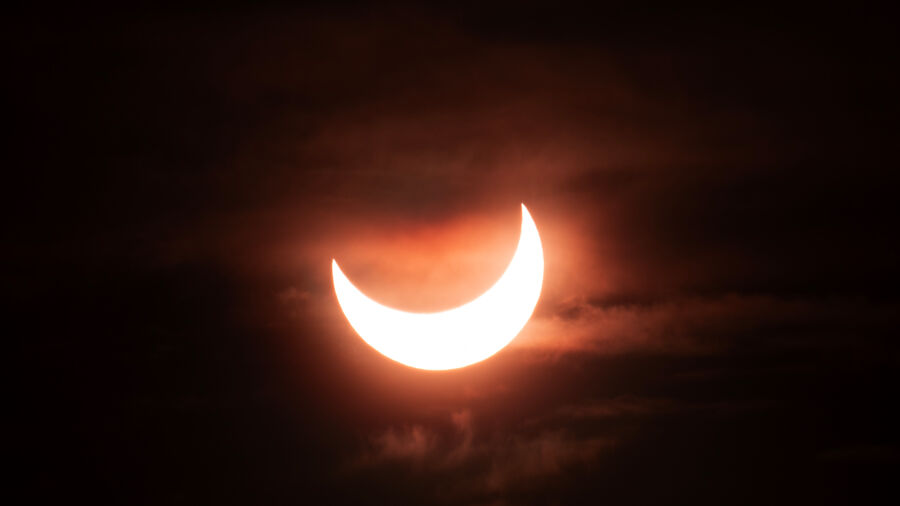
Foto Archieffoto ter illustratie. Foto: Getty Images
Archieffoto ter illustratie.
Technologie & Wetenschap

Op woensdag 12 augustus zal in België de grootste zonsverduistering sinds 1999 te zien zijn. Dat meldt Volkssterrenwacht Urania. Kort voor de zonsondergang zal de maan ongeveer 90 procent van de zon bedekken. Een zonsverduistering van dezelfde omvang zal in ons land pas opnieuw zichtbaar zijn in 2081.

De grootste zonsverduistering van deze eeuw maakt deze maand zijn opwachting. Op woensdag 12 augustus om 20.11 uur wordt ongeveer 88% van de zon bedekt door de maan, meldt Weeronline. In IJsland, Spanje en een klein deel van Portugal is sprake van een totale zonsverduistering.

De gedeeltelijke zonsverduistering begint in Nederland om 19.16 uur. De maan schuift voor de zon, die dan laag aan de horizon staat. Om 20.11 uur is de zon alleen nog aan de bovenkant voor een klein deel zichtbaar. Ongeveer een uur later is de gedeeltelijke verduistering helemaal voorbij. Het is nog niet duidelijk of de zonsverduistering daadwerkelijk goed te zien is; daarvoor is een heldere hemel noodzakelijk.

In het westen van IJsland is tegen het einde van de middag al een volledige zonsverduistering. In delen van Spanje wordt de zon tussen 20.26 en 20.32 uur volledig verduisterd. Tijdens een totale zonsverduistering verandert de heldere dag tijdelijk in de nacht. De helderste sterren kunnen zichtbaar worden en de temperatuur kan enkele graden dalen.

De eclips begint om 19.18 uur Belgische tijd, wanneer de maan voor het eerst de zon raakt. De bedekking neemt daarna geleidelijk toe terwijl de zon zakt. Om 20.13 uur bereikt de verduistering het maximum. Vanuit Brussel zal ongeveer 90 procent van de zon door de maan worden bedekt. Om 21.05 uur eindigt de eclips.

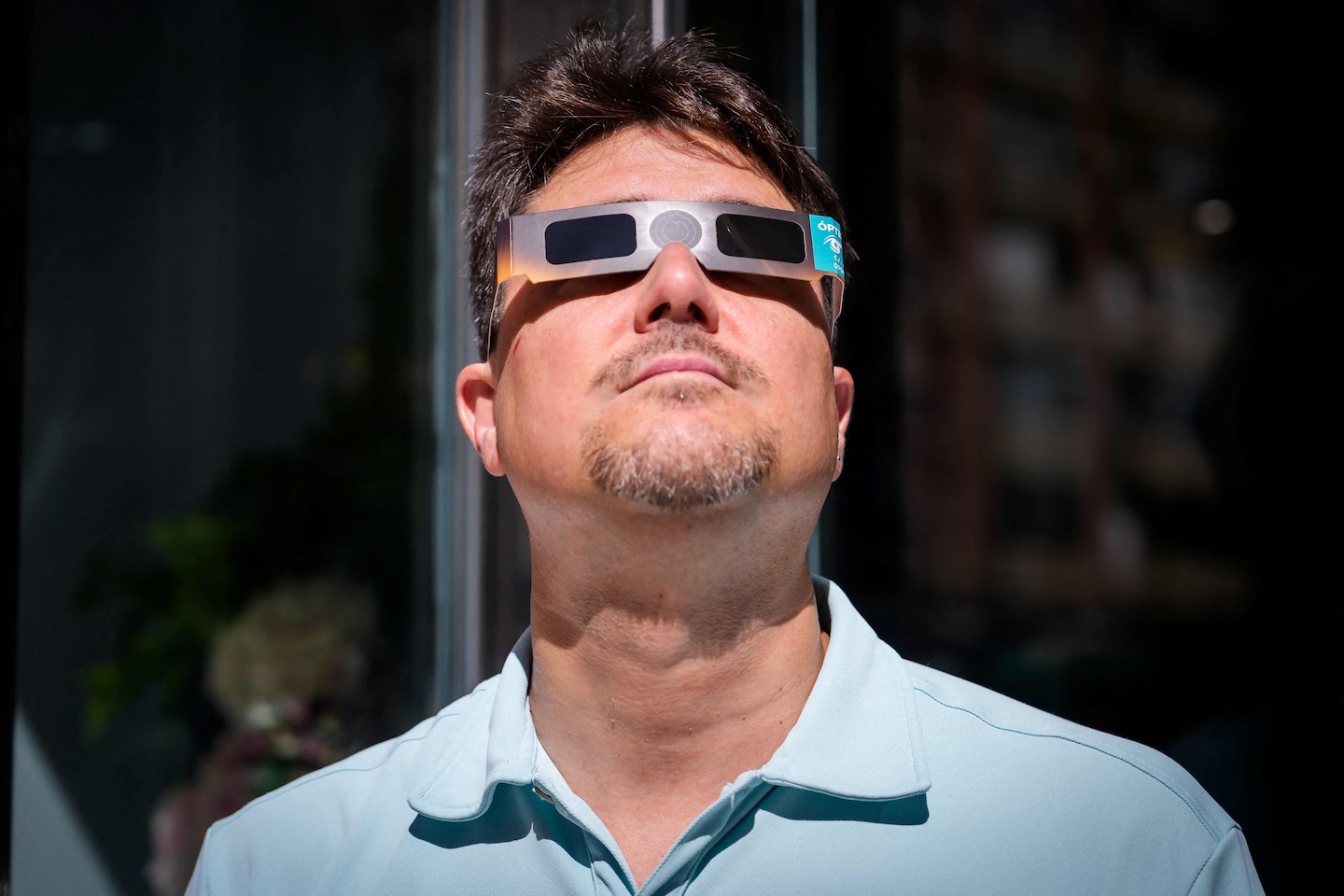
Volgens Urania groeit de belangstelling voor het natuurverschijnsel. Directeur Marc Van den Broeck stelt dat al 80.000 mensen een eclipsbril hebben gekocht. 

Eclipsbril

Volgens Urania groeit de belangstelling voor het verschijnsel sterk. Directeur Marc Van den Broeck stelt dat al 80.000 mensen een eclipsbril hebben gekocht.

Wie op 12 augustus een vollédige zonsverduistering wil zien, moet naar Groenland, IJsland, Spanje of Portugal. De laatste volledige eclips in België dateert van 11 augustus 1999. Voor de volgende totale zonsverduistering in ons land is het nu wachten tot 25 mei 2142.

ZGlvLzI3NTUwMzU2Mi9maXQtd2lkdGgvMTQ0MA

© AFP

De Vlaamse volkssterrenwachten hebben een informatiebrochure samengesteld om jongeren te informeren over dat uitzonderlijke fenomeen. Die raadt de jeugd onder meer aan om nooit rechtstreeks naar de zon te kijken en de ogen te beschermen met een eclipsbril of zonnefilter, en is beschikbaar via de site www.eclips2026.be.

Hoe kan je naar een zonsverduistering kijken?

Om naar de zon te kijken, heb je altijd een speciale eclipsbril nodig. Kijk nooit rechtstreeks in de zon. Je kan er blijvende oogschade aan overhouden.

Ook een zonnebril is niet sterk genoeg. Die houdt het directe zonlicht wel tegen, maar laat toch nog schadelijke infrarode en uv-straling door, die ook blindheid kunnen veroorzaken.

Hetzelfde met andere "trucjes", zoals een cd of dvd. Ook die blokkeren zonlicht, maar laten toch nog schadelijke straling door. Lasglazen met een gradatie 13 of hoger, zijn wél geschikt om naar de zonsverduistering te kijken.

Het is niet veilig om rechtstreeks naar een zonsverduistering te kijken. Het weerbureau adviseert een eclipsbril om oogschade te voorkomen. "Een alternatief is het projecteren van het zonlicht op een vlak oppervlak, bijvoorbeeld met een vergiet of een vel papier met kleine gaatjes", aldus Weeronline.

{ https://www.vrt.be/vrtnws/nl/ }

ASTRONOMIE / RUIMTEVAART

Hoe vind je dit bericht? 0 stemmen
Geschreven door peter om 16:36 Stuur door
Zondag 2 augustus 2026

Why MTV used NASA's Apollo 11 footage for its iconic launch intro

Why MTV used NASA's Apollo 11 footage for its iconic launch intro

Why MTV used NASA's Apollo 11 footage for its iconic launch intro

There's a special connection between MTV and Apollo 11

Jack Marsh

What do Teen Mom, Jackass, Beavis and Butt-Head, and Celebrity Deathmatch all have in common? Well, apart from all being follow-up programs for MTV Cribs, they've all also been welcomed onto the screen by Buzz Aldrin.

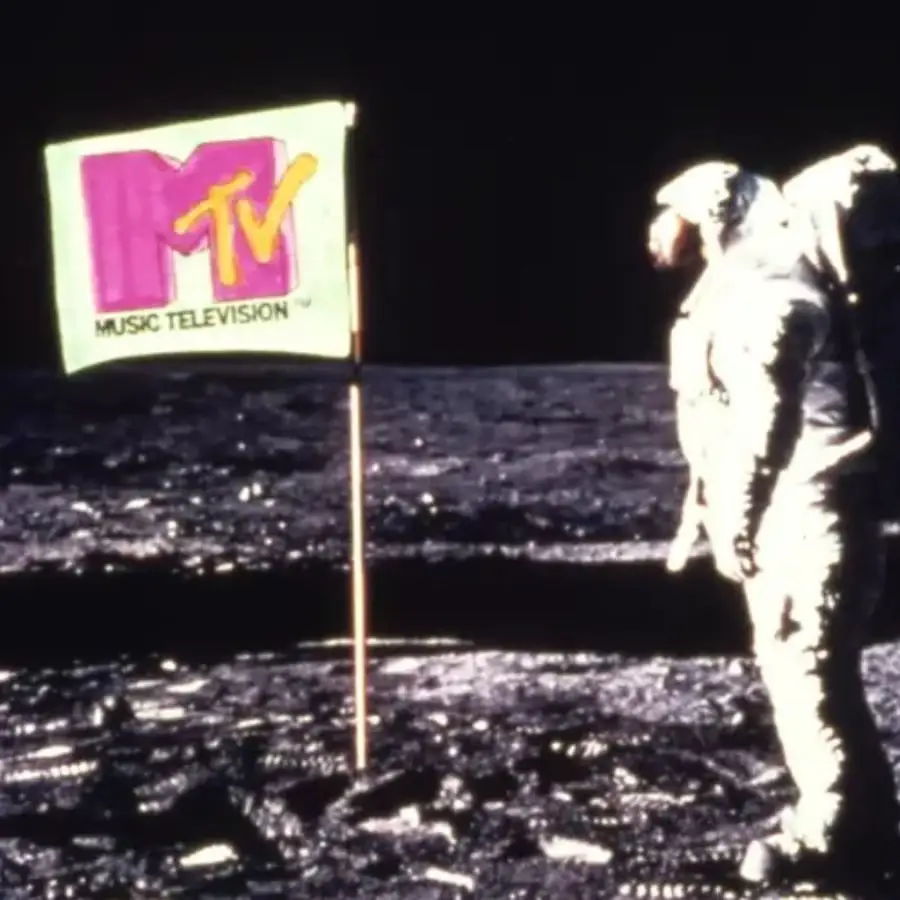
Yes, MTV programs have all been supported by NASA and Apollo 11 icon Buzz Aldrin, as the television platform has used the iconic space footage of the second man on the moon in its launch intros.

In fact, the first-ever sequence that aired on MTV back in 1981 saw Aldrin's likeness plant the MTV flag on the moon, a staple feature of the channel ever since.

Yet the reason why is lesser-known to the public and the countless celebrities that have hoisted the 'Moon Man' trophy.

What links MTV and NASA's Apollo 11?

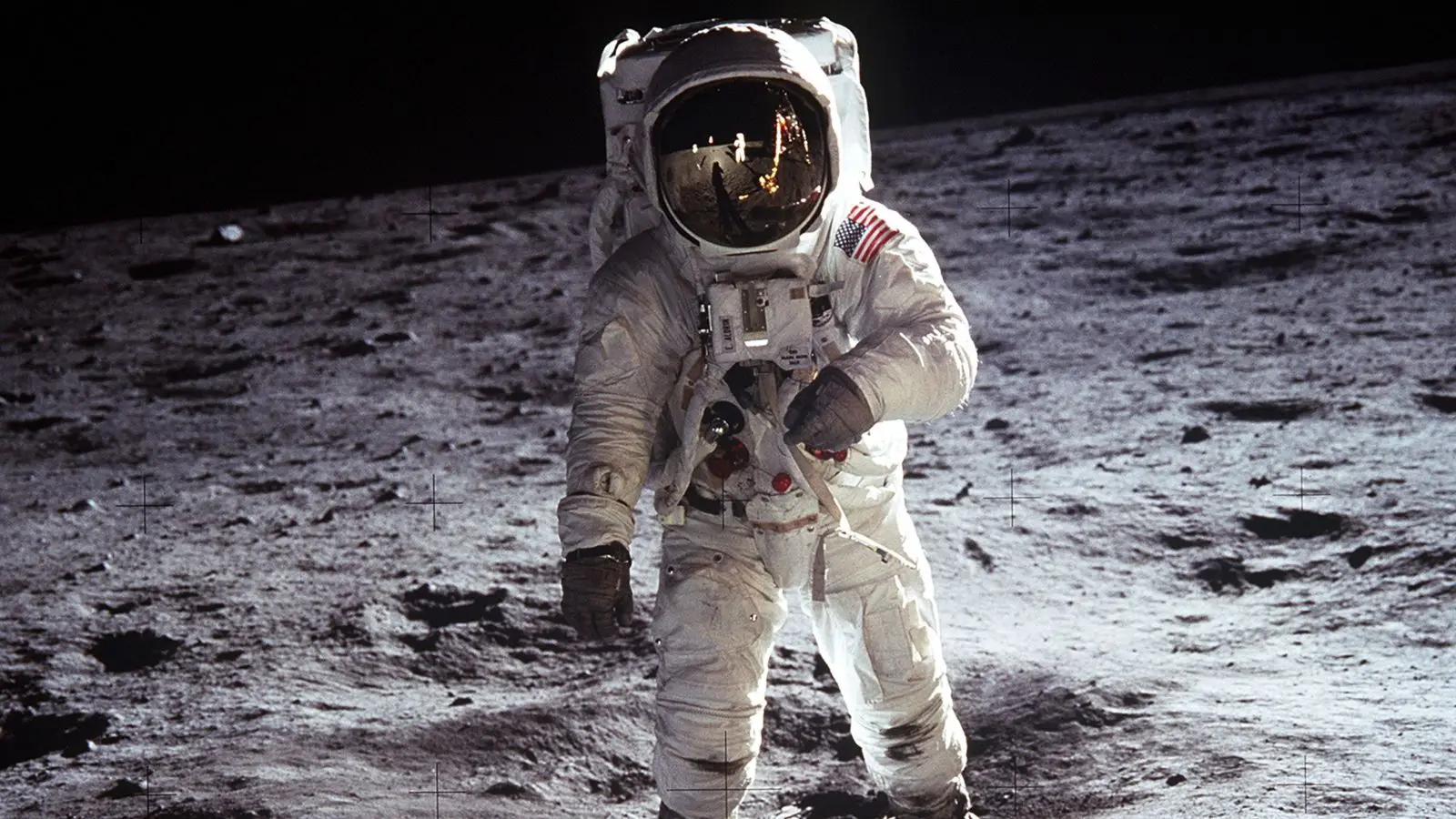
It's one of the most iconic photos of all time, but the first picture of men on the moon shows Buzz Aldrin's figure turning to face the camera held by Neil Armstrong.

The footage, also captured in video form, has always been free to use for all creative purposes as part of the public domain, and MTV chose to use it for their branding.

Image

NASA

According to the Smithsonian National Air and Space Museum, MTV founder Bob Pittman claimed that the channel intended to be 'a network that would be about the network, rather than the individual programs,' and wanted to lead with the legendary slogan of 'That's one small step for man, one giant leap for mankind.'

However, having appealed to NASA and Armstrong's lawyers about using his quote, building their marketing and promotional decks before hearing back, MTV was blocked from adding the words to their slogan.

Instead, the intro was released without the words and simply saw an astronaut resembling Aldrin planting the MTV flag on the moon instead.

That clip ran for every hour for five years and continues to sporadically feature today.

Although nowadays, the 'Moon Man' has a different meaning for MTV.

A worthwhile trophy

Having introduced the Video Music Awards (VMAs) just a few years later, championing the best of the best in the music video medium, MTV even decided to use its newfound mascot as the likeness for the coveted award.

Image

Getty Images / Alexi Rosenfeld

Some 42 years after the first ceremony, in which the winners consisted of icons like Michael Jackson and David Bowie, the Moon Man trophy continues to be hoisted by the likes of Ariana Grande and Lady Gaga.

"The whole idea was, the statue had to be balancing on one leg, like anti-gravity and floating,” said trophy creator Pat Gorman.

While the trophy has been remade many times, lining the cabinets of the legends of the music industry, MTV made a special one that even traveled to space, as Pepsi paid to have a VMA award statue flown to the Russian Mir space station, which featured in a live broadcast during the award ceremony in 1996.

From what was once just a free-to-use gimmick, the Moon Man is now a legend.

{ https://www.uniladtech.com/science }

ASTRONOMIE / RUIMTEVAART

Hoe vind je dit bericht? 0 stemmen
Geschreven door peter om 23:52 Stuur door
Zondag 2 augustus 2026

NASA’s Mars rover spots unexplained mystery on the Red Planet that's left scientists baffled

NASA’s Mars rover spots unexplained mystery on the Red Planet that's left scientists baffled

NASA’s Mars rover spots unexplained mystery on the Red Planet that's left scientists baffled

NASA's Curiosity rover discovered strange shapes on the surface of Mars

Rikki Loftus Rikki Loftus

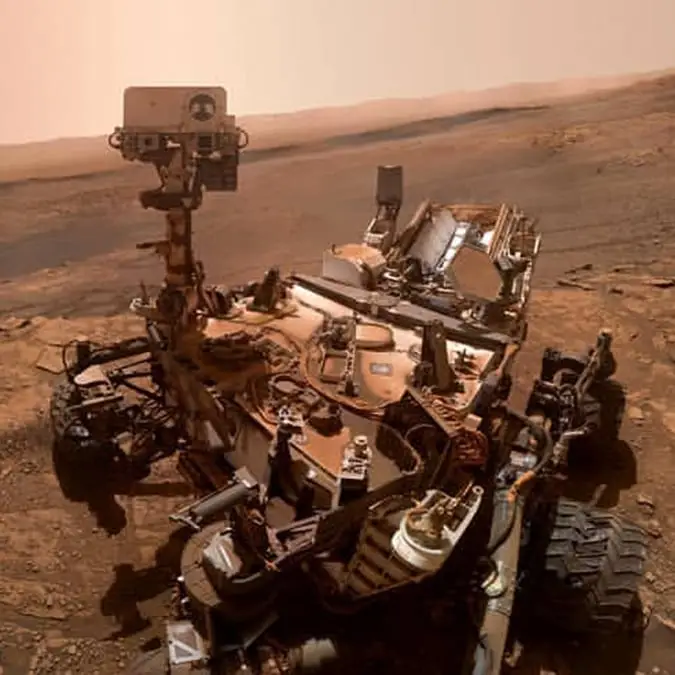
NASA’s Mars Curiosity rover has been roaming the Red Planet for nearly 14 years after it first landed back in August 2012.

Scientists have gained a lot of insight about our neighboring planet thanks to the rover and now, it seems that it has made a new unexplained discovery.

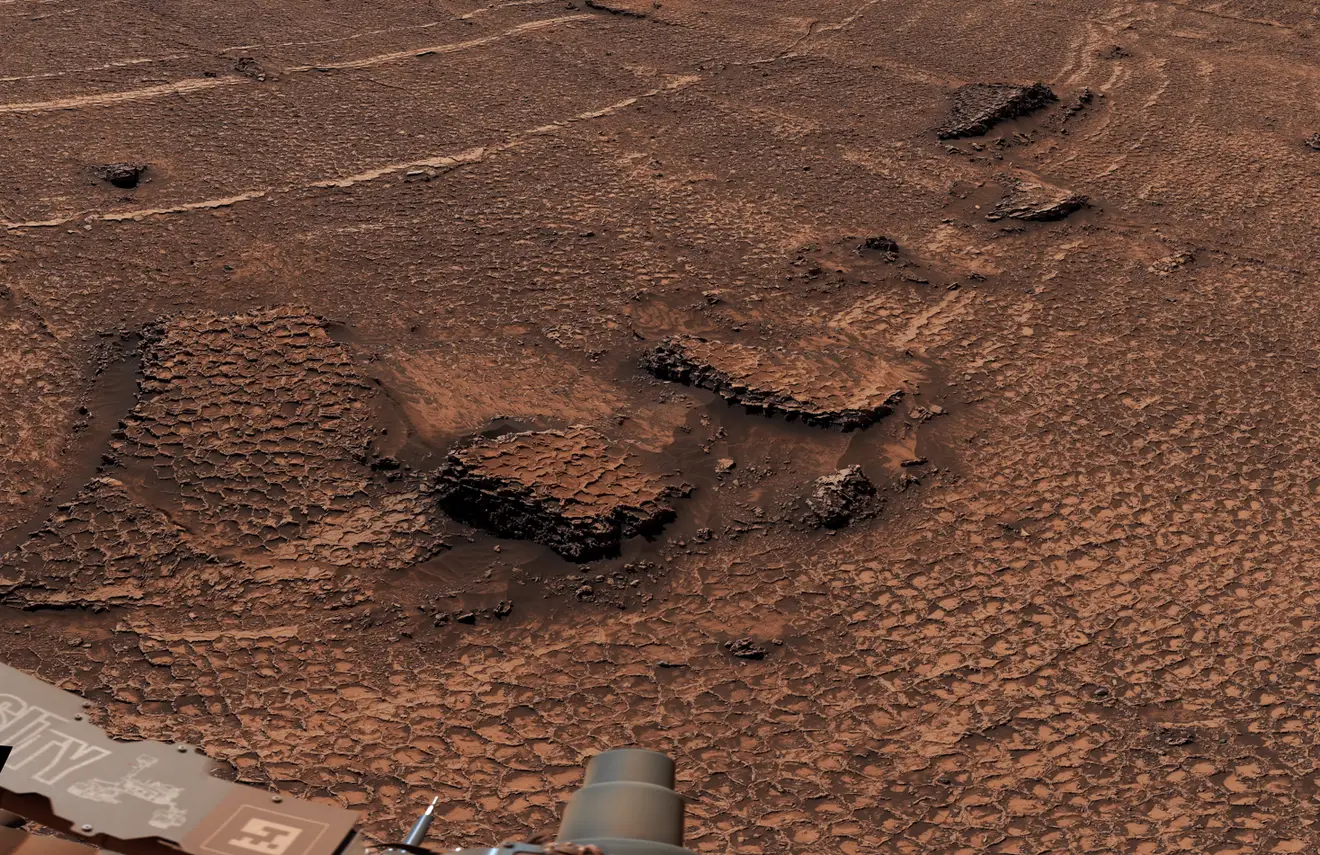
The mystery on Mars has left experts baffled after the vehicle came across ‘honeycomb-like’ patterns on the planet’s surface.

The discovery was made while the rover was exploring a particular valley on Mars known as Valle Grande when it stumbled upon mysterious polygonal shapes, which NASA has since described as a ‘field of honeycomb textures’.

NASA's Curiosity rover discovered strange shapes on the surface of Mars (NASA/JPL-Caltech/MSSS)

NASA's Curiosity rover discovered strange shapes on the surface of Mars
(NASA/JPL-Caltech/MSSS)

In a statement, the mission’s project scientist, Ashwin Vasavada of NASA’s Jet Propulsion Laboratory in Southern California, said: “We’ve seen a lot of fascinating landscapes through Curiosity’s eyes, but this sea of polygons took our breath away.

“We measured their shapes and chemistry carefully and are hopeful there are clues in the data as to how these features formed.”

According to the space agency, Curiosity has found ‘small patches’ of these shape formations before but nothing to the scale of what was found at Valle Grande.

Some of the polygons spotted previously had clearly been ‘formed as mud cracks’, although there are a variety of processes which could contribute to the honeycomb texture.

This includes ‘cycles of warm and cold temperatures or compression that squeezed water out of the sediment when the surface was buried’.

In the statement, NASA continued: “In a 360-degree panorama that the rover captured on June 19 and 20, the 4,930th and 4,931st Martian days, or sols, of the mission, the polygonal shapes spread in all directions for as far as the rover can see. They even wrap around the sides of a nearby butte nicknamed ‘Miraflores’, which stands 20 feet (6 meters) tall and is topped with a thick cap of sand.”

However, this isn’t the only discovery made by the rover as, over the years, Curiosity has shined a light on never-before-seen parts of the Red Planet.

This includes sulfur crystals, meteorites and other geologic features of Mars that scientists previously had no idea about.

NASA added: “The rover has previously uncovered chemistry left over from Mars’ watery history, including carbon-based molecules believed to be precursors to RNA and DNA, two nucleic acids that carry genetic information. Scientists have no way of knowing whether these organic molecules were created by biologic or geologic processes - either path is possible - but their discovery reconfirmed that ancient Mars had the right chemistry to support life.”

RELATED VIDEOS

NASA Found Something Strange on Mars

NASA Just Found Something Strange on Mars… Scientists Are Stunned!

Rover Just Found Something NASA Didn't Expect... 🚀 #fascinatinginformation #redplanet

{ https://www.uniladtech.com/science }

Ruins, strange artifacts on other planets, moons, ed ( Fr, EN, NL )

Hoe vind je dit bericht? 0 stemmen
Geschreven door peter om 23:34 Stuur door
Zondag 2 augustus 2026

Why Dinosaurs Were ‘Created’ by Extraterrestrials

vbnfghk.jpg

Why Dinosaurs Were ‘Created’ by Extraterrestrials

Artistic concept of extraterrestrials observing dinosaurs on ancient Earth

Why Dinosaurs Were ‘Created’ by Extraterrestrials

Claims that extraterrestrials influenced Earth’s distant past have fuelled debate, including controversial theories about the purpose of dinosaurs

What if the dinosaurs were never meant to rule Earth forever?

What if they were only one chapter in a plan that began hundreds of millions of years before humanity existed?

It sounds impossible.

Yet that is exactly what several whistleblowers, researchers, and investigative journalists have claimed for years.

Among them are Linda Moulton Howe and David Hatcher Childress, who have explored testimony suggesting Earth’s history may have been shaped by advanced extraterrestrial civilisations rather than natural evolution alone. If you would like to hear these claims presented directly by the people discussing them, you can watch the video included at the end of this article.

According to these extraordinary accounts, dinosaurs were not simply prehistoric giants.

They may have been part of a much larger experiment.

And if even part of that story were ever proven true, it would force humanity to rethink everything it believes about its own origins.

Earth May Have Been a Living Laboratory for Experiments

Artistic reconstruction of ancient Earth with dinosaurs and prehistoric wildlife

Ancient Earth with diverse dinosaur species. Credit: Wikipedia

The story begins long before humans.

Long before the first mammals.

Even before the dinosaurs became Earth’s dominant life forms.

One of the most controversial claims comes from a former Defence Intelligence Agency analyst who allegedly stated that three competing extraterrestrial civilisations have been genetically influencing life on Earth for at least 270 million years.

Rather than allowing evolution to unfold naturally, these alleged visitors supposedly guided it.

  • Species appeared.
  • Others disappeared.
  • Entire ecosystems changed.

Within this narrative, Earth was never simply a planet where life evolved on its own.

It became a laboratory.

And that may have been only the beginning.

The Question That Could Change the Dinosaur Story

If dinosaurs were part of that programme…

Why did they disappear?

Mainstream science points to the asteroid impact that struck Earth around 66 million years ago.

The evidence supporting that event is extensive and remains the accepted explanation for the mass extinction.

But then comes perhaps the most astonishing claim of all.

Some alternative researchers argue the asteroid may not have been entirely natural.

Instead, they suggest an advanced civilisation either allowed the impact to happen—or deliberately influenced it—to make room for the next stage of life on Earth.

There is no publicly verified evidence supporting that claim.

Even so, it remains one of the most debated ideas within the UFO disclosure movement.

Because if the extinction was intentional…

Then the rise of humanity may not have been accidental.

The Alleged Genetic Programme Did Not End

If that theory sounds extraordinary, the next claim goes even further.

According to these accounts, the disappearance of the dinosaurs was not the conclusion.

It was the transition.

Linda Moulton Howe and other researchers have discussed testimony claiming that genetic intervention continued long after prehistoric life vanished.

Some whistleblowers describe multiple non-human groups conducting separate biological programmes over millions of years.

Others claim those efforts eventually focused on early human ancestors.

Supporters believe this could explain sudden leaps in intelligence and several unanswered questions surrounding human evolution.

Mainstream science reaches very different conclusions.

Researchers explain human development through genetics, fossils, and natural selection accumulated over immense periods of time.

Without independently verified evidence, extraterrestrial genetic engineering remains an extraordinary claim rather than an accepted scientific explanation.

Where Science Ends and the Greatest Mystery Begins

This is where the story takes an unexpected turn.

Scientists continue to uncover new dinosaur species.

Ancient DNA research grows more advanced every year.

Our understanding of evolution also continues to evolve as fresh discoveries emerge.

At the same time, disclosure researchers argue that classified testimony deserves further investigation rather than immediate dismissal.

Neither position answers every question.

Why did certain evolutionary changes happen so rapidly?

Could every mass extinction be explained completely?

Have we already uncovered all of humanity’s origins?

Those questions keep the debate alive.

And perhaps that is why theories like these refuse to disappear.

Final Verdict: Were Dinosaurs Only the Beginning?

Today, no publicly verified scientific evidence supports the claim that extraterrestrials created the dinosaurs or directed Earth’s evolutionary history.

The accepted scientific explanation remains that dinosaurs evolved naturally and disappeared after a catastrophic asteroid impact changed the planet forever.

Yet the alternative story continues to capture imaginations around the world.

Because it asks a question that reaches far beyond dinosaurs themselves.

What if humanity has misunderstood the purpose of life on Earth from the very beginning?

If the dinosaurs were only one phase of a much larger experiment…

Who—or what—was waiting for the next one?

Watch the Video

You need to watch this. It explores the extraordinary claims presented by Linda Moulton Howe, David Hatcher Childress, and alleged intelligence insiders, examining theories that extraterrestrial civilisations may have genetically influenced life on Earth, the mystery surrounding the dinosaur extinction, and why some believe humanity’s true origins have been hidden for millions of years.

This explosive panel discussion brings together Linda Moulton-Helm, David Hatcher, and whistleblowers to unpack evidence that challenges everything we’ve been taught about human origins. From a DIA analyst who claimed three competing extraterrestrial civilizations have been mixing genes on Earth for at least 270 million years, to the puzzling question of the six-mile asteroid and how it may have been allowed or provoked, this video stitches archaeology, whistleblower testimony, and stellar anomalies into a single, unsettling narrative.

We examine obelisks as massive quartz antennas, the strange wooden pyramids cropping up across Russia, underwater monoliths off Sicily, and the vast underground structures at Tiwanaku and Puma Punku. The panel also raises Antarctica as a potential disclosure flashpoint — whistleblowers and a Navy SEAL imply non-human encounters and concealed sites that could shatter the official timeline.

If you follow UFOs, alien disclosure, government secrets, ancient monuments, and secret technologies, this episode connects dots across DNA manipulation, ancient engineering, and classified knowledge. Subscribe for more deep-dive investigations and witness testimony as we continue to track the evidence governments won’t explain.

{ https://ufosecret.net/index.php/category/aliens/ }

ALIEN LIFE, UFO- CRASHES, ABDUCTIONS, MEN IN BLACK, ed ( FR. , NL; E )

Hoe vind je dit bericht? 0 stemmen
Geschreven door peter om 22:56 Stuur door
Zondag 2 augustus 2026

NASA Data On The Moon Just Dropped — The Truth Is Worse Than Expected

vbnfgk.jpg

NASA Data On The Moon Just Dropped — The Truth Is Worse Than Expected

NASA Data on The Moon Just Dropped — The Truth Is Worse Than Expected

NASA Data On The Moon Just Dropped — The Truth Is Worse Than Expected

New NASA measurements hint at unexpected lunar conditions, raising questions about what scientists may have misunderstood.

For years, the far side of the Moon has been described as one of the least understood regions in near-Earth space. Unlike the hemisphere constantly visible from Earth, this hidden area remained largely unexplored until modern probes began returning detailed measurements. Recent datasets linked to NASA missions have revived debate about unusual formations detected within shadowed terrain and deep crater interiors.

What makes the situation unusual is not a single observation, but a collection of anomalies. Thermal inconsistencies, radar reflections, and localized magnetic signatures appear scattered across the landscape. Each finding has a plausible explanation, yet viewed together they form a pattern that some observers consider difficult to ignore. The absence of a unified interpretation fuels speculation.

High-resolution imagery has added another layer to the mystery. Certain ridges and lines appear unusually straight compared to surrounding terrain. Researchers often attribute these to geological fracturing, but critics argue that the precision seems unexpectedly organized. Without direct exploration, the discussion remains unresolved.

Compounding the intrigue is the limited follow-up commentary. Technical data is released, but broad conclusions remain cautious. For those inclined toward speculative interpretations, the gap between measurements and official explanations creates fertile ground for alternative theories about hidden structures.

Geometric Patterns in Shadowed Craters

Photograph of the far side of the Moon, with Mare Orientale (centre left) and the mare of the crater Apollo (top left) being visible, taken by Orion spacecraft during the Artemis 1 mission.

Photograph of the far side of the Moon, with Mare Orientale.

Some of the most discussed observations involve linear formations within permanently shadowed craters. These features appear aligned in ways that contrast with surrounding chaotic terrain. Natural fracturing can produce straight edges, yet the apparent symmetry continues to attract attention.

Researchers analysing imagery suggest that lighting angles may exaggerate perceived structure. When shadows stretch across uneven ground, ridges can appear more uniform than they actually are. This optical effect may explain the visual consistency.

Alternative interpretations propose that these formations could represent collapsed surface layers above subsurface cavities. While hypothetical, the idea reinforces speculation about complex underground features.

Radar Signals Hinting at Hollow Spaces

Radar mapping has revealed regions where signals penetrate deeper than expected. These readings often indicate voids or less dense material below the surface. Scientists commonly interpret these as lava tubes formed by ancient volcanic activity.

Some scans suggest unusually large cavities. These appear more interconnected than isolated pockets, which has drawn attention from researchers studying subsurface geology.

Without direct entry, the exact nature of these voids remains uncertain. They could represent natural tunnels, though their scale continues to inspire broader interpretations.

Thermal Anomalies in Permanent Darkness

Permanently shadowed areas are expected to maintain extremely low temperatures. Yet certain locations show slight variations. These differences are small but consistent enough to raise interest.

Scientists propose that subsurface composition or insulation effects may explain the warmth. Another possibility involves buried voids altering heat retention.

Speculative interpretations suggest internal cavities could create unique thermal signatures. This remains unconfirmed but contributes to ongoing debate.

Magnetic Patches That Defy Expectations

The Moon lacks a global magnetic field, yet localized regions of magnetism exist. These areas are often linked to ancient impacts or magnetized rock.

Some anomalies appear clustered rather than randomly distributed. This pattern has prompted discussion about unusual subsurface composition.

Geological explanations remain most likely, though the distribution keeps speculation active.

Unusual Surface Density Readings

Certain areas display higher-than-expected density measurements. These readings suggest compacted layers beneath the surface.

Such variations could result from ancient lava flows or compressed regolith. However, uniformity in some zones appears distinctive.

One interpretation suggests dense layers covering hollow spaces, creating contrasts detected by instruments.

Limited Imaging Coverage Fuels Speculation

Not all regions have equal high-resolution coverage. Mission priorities often focus on specific scientific targets.

Uneven coverage has led to claims that certain areas remain under-documented. There is no evidence supporting this, yet the perception persists.

The absence of continuous imaging allows speculation to grow in unexplored gaps.

Historical Rumours Resurface

Stories about unusual formations on the far side date back decades. Early low-resolution imagery sparked imagination long before modern missions.

As new data emerges, earlier claims resurface and merge with contemporary findings. This combination strengthens speculative narratives.

Despite this, no official confirmation supports extraordinary interpretations.

Future Missions May Reveal More

Upcoming lunar missions aim to map the surface with greater precision. Improved radar and imaging could clarify existing anomalies.

Exploration of potential lava tubes is also being considered. These structures may offer natural shelter for future operations.

Whether these efforts confirm natural geology or something unexpected, they will likely reshape the discussion.

Could Hidden Structures Exist?

The combination of geometric patterns, radar voids, and thermal variations keeps speculation alive. Individually, each observation has a scientific explanation. Together, they form a puzzle inviting further study.

The far side remains difficult to access, making definitive answers slowly to arrive. Until direct exploration occurs, interpretations will remain divided.

For now, the Moon continues to hold unanswered questions beneath its surface. Whether these anomalies represent natural formations or something more unusual remains open.

Watch This:

Watch the video for a breakdown of lunar anomalies, radar findings, and why some believe hidden structures may exist on the Moon’s far side.

The Moon's Mysteries Revealed | Ancient Aliens | History

NASA Data About the Moon Has Just Been Released — The Truth Is Worse Than Expected

{ https://ufosecret.net/index.php/category/ufo/ }

LATEST ( UFO ) VIDEO NEWS ( ENG)

Hoe vind je dit bericht? 0 stemmen
Geschreven door peter om 22:29 Stuur door
Zondag 2 augustus 2026

Hidden Clues in Spirit Rover Data Suggest Mars Once Had Far More Water than Scientists Realized

Hidden Clues in Spirit Rover Data Suggest Mars Once Had Far More Water than Scientists Realized

 by Sergio Prostak

A new look at more than two decades’ worth of archival data from NASA’s Spirit mission suggests that the Martian soil may hold iron-bearing minerals — hematite and altered magnetite — that were too faint for scientists to detect in real time during the mission.

NASA’s Spirit rover on Mars. Image credit: NASA.

NASA’s Spirit rover on Mars.

Image credit: NASA.

“From early 2004, Spirit Rover explored the surface of Gusev crater on Mars carrying a suite of scientific instruments to perform geological and mineralogical analysis on soils, rocks, meteorites, and dust collected by magnets,” said Professor Paulo de Souza, a researcher at Edith Cowan University.

A 3D model of the twin Mars Exploration Rovers, Spirit and Opportunity.
NASA Visualization Technology Applications and Development (VTAD)

“Among these instruments, a miniaturized Mössbauer spectrometer named MIMOS II was extensively used.”

“During the next 2062 sols, NASA’s Mars Exploration Rovers traversed the surface of the Red Planet with the objective of determining if Mars was once wet.”

In a new study, Professor de Souza revisited data collected by the MIMOS II spectrometer, which can identify iron-bearing minerals by measuring how iron atoms in a sample absorb gamma rays.

Because the Spirit rover had to share limited time, power and memory among a full suite of science instruments, individual Mössbauer measurements on Mars were often brief, producing spectra with relatively poor statistics.

This made it difficult to spot minor iron phases that made up only a small fraction of a soil sample’s mineral content.

To work around that limitation, Professor de Souza combined readings from 32 undisturbed soil targets that Spirit examined at Gusev crater over the course of 2,062 Martian days, spanning temperatures from 180 to 300 K.

Because temperature swings within about a 10-K range don’t meaningfully distort the spectra of basaltic material, the researcher merged data across those windows first, then combined all the temperature ranges into one composite spectrum.

The result was roughly six days worth of equivalent measurement time packed into a single dataset.

The consolidated spectrum pointed to the presence of common Martian soil minerals such as olivine and pyroxene, along with a poorly crystalline, paramagnetic iron-bearing phase.

But it also revealed clearer signatures of magnetite and crystalline hematite than earlier single-experiment analyses were able to pick out.

“One of the most important discoveries was finding crystalline hematite in ordinary Martian soil,” Professor de Souza said.

“This mineral’s widespread presence suggests not only that water was present, but that significant areas of Mars may have once been covered by water.”

  • The study was published in the journal Interactions.
  • P. de Souza. 2026. A consolidated Mössbauer spectrum for undisturbed soils from Gusev Crater, Mars. Interactions 247, 278; doi: 10.1007/s10751-026-02625-4

This inforgraphic shows a Mars rover and highlights from their tenure on Mars - including 14 years lifespan, more than 300,000 raw images and as much as 28 miles traveled.

NASA’s Spirit and Opportunity rovers were identical twin robots that helped rewrite our understanding of the early history of Mars.


Scientists Think Mars Once Had Water. So What Happened to It?

{ https://www.sci.news/news/space }

ASTRONOMIE / RUIMTEVAART

Hoe vind je dit bericht? 0 stemmen
Geschreven door peter om 20:45 Stuur door
Zondag 2 augustus 2026

Hebben we altijd op de verkeerde plek naar buitenaards leven gezocht? Onderzoekers wijzen op andere radiofrequentie

Low-Res_12-Atacama2024_0424_214111-9824_AGP-Edit_1.jpg

Hebben we altijd op de verkeerde plek naar buitenaards leven gezocht? Onderzoekers wijzen op andere radiofrequentie

  Jeannette Kras-  - Redacteur

Al tientallen jaren speuren astronomen de hemel af naar radiosignalen die kunnen wijzen op buitenaardse intelligentie. Maar mogelijk hebben ze daarbij een groot deel van het radiospectrum over het hoofd gezien. Nieuw onderzoek wijst uit dat juist hogere radiofrequenties interessant kunnen zijn in de zoektocht naar technologische signalen van andere beschavingen.

Het merendeel van de SETI-programma’s (Search for Extraterrestrial Intelligence) richt zich al jaren op radiofrequenties tussen 1,42 en 1,66 gigahertz. Deze bandbreedte staat bekend als de waterput, omdat het tussen de natuurlijke radiofrequenties van waterstof en hydroxyl in ligt, die samen water vormen.

Wetenschappers beschouwen dit als een logische frequentie om naar buitenaardse signalen te zoeken. Een technologisch geavanceerde beschaving zou immers het belang van waterstof en hydroxyl kunnen herkennen en daarom juist in dit relatief rustige deel van het radiospectrum zenden én luisteren. Maar volgens de nieuwe studie is het tijd om de blik te verruimen.

Vrijwel onontgonnen terrein

Voor haar onderzoek gebruikte Louisa Mason, promovenda aan de Universiteit van Manchester, archiefgegevens van de Atacama Large Millimeter/submillimeter Array (ALMA) in Chili. Daarmee voerde ze de eerste SETI-studie ooit uit met deze telescoop.

In plaats van nieuwe waarnemingen te doen, analyseerde ze bestaande ALMA-data die oorspronkelijk voor heel andere astronomische onderzoeken waren verzameld. Ze zocht daarin naar smalbandige radiosignalen die eerder op technologie dan op natuurlijke astronomische processen wijzen.

“Decennialang hebben SETI-onderzoeken zich geconcentreerd op een relatief klein deel van het radiospectrum”, zegt Mason. “Wij wilden onderzoeken wat er gebeurt als we op een heel andere plek gaan zoeken.” Volgens haar zijn de millimeter- en submillimetergolflengten vrijwel volledig onontgonnen binnen SETI. “Het gaat erom een heel nieuw onderzoeksgebied te starten.”

Leestip: 

  • Volgens onderzoekers hebben we zo de grootste kans om intelligent buitenaards leven te ontdekken

Geen buitenaardse signalen

Mason onderzocht twee kleine frequentiegebieden binnen ALMA’s zogeheten Band 3-waarnemingen. Daarbij werden geen technologische signalen gevonden die voldeden aan de gestelde detectiecriteria.

Dat betekent volgens haar echter niet dat buitenaardse intelligente beschavingen niet bestaan. De studie onderzocht maar een klein deel van het frequentiebereik en maakte bovendien gebruik van slechts vier gearchiveerde ALMA-waarnemingen. Wel laat het onderzoek zien dat telescopen die op hogere radiofrequenties werken in de toekomst een waardevolle aanvulling kunnen vormen op bestaande SETI-programma’s.

Veel meer sterren dan gedacht

En het onderzoek leverde nog een opvallend resultaat op. Wanneer astronomen een telescoop op één object richten, komen automatisch ook talloze andere sterren binnen het gezichtsveld terecht. Die zogeheten stellar bycatch blijkt veel groter te zijn dan gedacht.

Tot nu toe maakten onderzoekers vaak gebruik van sterrencatalogi, zoals Gaia, om te bepalen hoeveel sterren daadwerkelijk waren onderzocht. Mason koos een andere aanpak en gebruikte het Besançon Galactic Model. Daarmee kon ze ook sterren meenemen die te zwak, te ver weg of te moeilijk te identificeren zijn om in bestaande catalogi voor te komen.

Beter beeld

Toen ze deze methode toepaste op een eerdere SETI-survey met 1327 telescoopwaarnemingen, bleek het aantal onderzochte sterren niet ongeveer 288.000, zoals op basis van Gaia werd aangenomen, maar ruim 6,1 miljoen. Volgens Mason geeft dat een veel realistischer beeld van hoeveel van onze Melkweg daadwerkelijk is onderzocht op mogelijke technologische signalen. “Een van de spannendste resultaten van dit werk is dat we ons realiseren dat we veel meer sterren hebben onderzocht dan we aanvankelijk dachten”, zegt ze.

“Zelfs een heel kleine waarneming kan een enorme hoeveelheid en diversiteit aan sterren bevatten die we oorspronkelijk helemaal niet van plan waren te bestuderen. Door waarnemingen op hogere frequenties te combineren met galactische simulaties krijgen we een veel beter beeld van wat we daadwerkelijk hebben onderzocht en waar we vervolgens moeten zoeken.”

Leestip: 

  • Buitenaards intelligent leven blijkt misschien nóg zeldzamer dan gedacht

Slimmer zoeken

Mason ziet het niet als een teleurstelling dat er geen buitenaardse radiosignalen zijn opgepikt. Volgens haar laat het onderzoek vooral zien dat de zoektocht naar technologische signalen nog veel breder kan worden opgezet dan tot nu toe het geval was.

Ze hoopt dan ook dat toekomstige SETI-projecten niet alleen vaker hogere radiofrequenties onderzoeken, maar ook beter gebruik maken van de enorme hoeveelheid astronomische archiefgegevens die al beschikbaar is. Bestaande waarnemingen bevatten mogelijk veel meer informatie dan gedacht.

  • Het onderzoek wordt deze week gepresenteerd tijdens de National Astronomy Meeting van de Royal Astronomical Society in Birmingham.

Bronmateriaal

  • "Could alien signals be hiding on a different radio channel?" - Royal Astronomical Society's National Astronomy Meeting in Birmingham.
  • Afbeelding bovenaan dit artikel: ALMA / Alex Pérez


Wait — alien signals could hide in unexplored radio waves. | alien signals

{ https://scientias.nl/ }

ALIEN LIFE, UFO- CRASHES, ABDUCTIONS, MEN IN BLACK, ed ( FR. , NL; E )

Hoe vind je dit bericht? 0 stemmen
Geschreven door peter om 20:31 Stuur door
Zondag 2 augustus 2026

Mystery 'flying saucer' zooms within feet of passenger jet over UK airport

Mystery 'flying saucer' zooms within feet of passenger jet over UK airport

Official UK aviation reports reveal alarming close encounters between pilots and mysterious UFOs, including a 'flying saucer' lurking near a London airport

BY Liam Randall - News Reporter

An Airbus passenger jet coming in to land at London Gatwick was approached by an unidentified disc-shaped object (Stock image)

An Airbus passenger jet coming in to land at London Gatwick was approached by an unidentified disc-shaped object

(Stock image)(Image: Getty Images)

Pilots flying commercial aircraft in the UK have detailed terrifyingly close encounters with unidentified flying objects and suspected drones, official reports show. In one alarming incident, an Airbus passenger jet coming in to land at London Gatwick was approached by an unidentified disc-shaped object.

Details released by the UK Airprox Board state: "The A319 pilot reports that descending, turning left, a disc or 'flying saucer' type ­suspected drone was seen flying very close in the opposite direction, at the same level to them, past their right wing.

"Approximately 100-300ft from their aircraft wing. The object looked like a disc with darker markings on the rim, a suspected possible drone but not sure. It was very close to the aircraft, but no ­evasive action was required as they were in a turn already."

An assessment of the near-miss at Gatwick concluded that the safety of the jet had been 'reduced' (Stock image)

An assessment of the near-miss at Gatwick concluded that the safety of the jet had been 'reduced'

(Stock image)(Image: Getty Images)

Following an assessment of the near-miss, the board concluded that the safety of the jet had been "reduced", according to The Sun.

A separate incident occurring in the same month near Heathrow Airport involved an A321 aircraft whose crew spotted a drone passing dangerously close.

Official documents state: "The A321 pilot reports that, whilst in a left turn on to base leg at LHR (over Marlow), a drone was witnessed to fly down the left-hand-side of the aircraft at close enough proximity to see details such as the colour, shape and individual props spinning."

A separate incident occurred in the same month near Heathrow Airport

A separate incident occurred in the same month near Heathrow Airport

(Image: alxpin via Getty Images)

Investigating the close call, Airprox officials said: "The board considered that providence had played a major part in the incident and/or a definite risk of collision had existed."

The reports follow another striking encounter detailed by the board involving military personnel.

Two Royal Air Force pilots operating an air-to-air refuelling mission at 16,000ft over the North Sea off the Norfolk coast spotted an unidentified craft.

One pilot inside a Voyager tanker was forced to duck as the object zoomed past at a distance of just 100ft to 150ft.

Although the pilot of an accompanying Typhoon fighter also witnessed the object, it failed to show up on radar systems.

RELATED

Pilot spots “flying saucer” near London Gatwick Airport 👽

{ https://www.dailystar.co.uk/latest/ufo }

LATEST ( UFO ) VIDEO NEWS ( ENG)

Hoe vind je dit bericht? 0 stemmen
Geschreven door peter om 18:30 Stuur door
Zondag 2 augustus 2026

Learn About Japan’s Centuries-Old Legend of the Hollow UFO Ship

Learn About Japan’s Centuries-Old Legend of the Hollow UFO Ship

By Sage Helene 
“Utsurobune”: A UFO Legend from Nineteenth-Century Japan | Nippon.com

Photo: Wikimedia Commons

 (Public domain)

In 1803, something strange washed ashore on the coast of Hitachi Province, in what is now Ibaraki Prefecture, Japan. Local fishermen found a round, hollow vessel bobbing in the shallows. Inside sat a young woman in unfamiliar clothing. She clutched a small box and refused to let it go. She spoke a language no one recognized, and strange writing covered the vessel. Then, according to the old records, she vanished from history.

The story is known as utsuro-bune, meaning “hollow ship.” It appears in several manuscripts from Japan’s Edo period, which lasted from 1603 to 1868. Centuries later, the legend still puzzles researchers. The vessel’s unusual shape and the woman’s mysterious appearance have earned the tale a nickname: Japan’s flying saucer legend. It predates the 1947 sighting that helped spark America’s modern UFO craze by more than a century.

Tanaka Kazuo, a professor emeritus at Gifu University, spent decades investigating the legend. His interest in utsuro-bune began after the 1995 sarin gas attacks carried out by the Aum Shinrikyo cult. While researching pseudoscience and paranormal claims for a lecture series, he encountered the story and became fascinated by its unusual paper trail.

Tanaka tracked down 11 separate documents describing the Hitachi incident. The accounts disagree about the exact dates and locations. Several, however, offer detailed descriptions of the vessel. The most cited include Toen Shosetsu, a collection edited by novelist Kyokutei Bakin in 1825, and Ume no Chiri, an 1844 text by Nagahashi Matajiro. Other sources, including Records of Castaways, describe a vessel roughly 3.3 meters tall and 5.4 meters wide. According to these accounts, it featured rosewood, iron, glass, and crystal.

The folklorist Yanagita Kunio once dismissed utsuro-bune tales as pure invention. Tanaka disagrees, at least when it comes to the 1803 Hitachi case. He points to the story’s specific year and its consistent illustrations of a saucer-like craft. Those details, he argues, set it apart from vaguer regional versions of the legend.

日本“虚舟事件”,不明女子驾驶空心船凭空出现 - 每日头条

The historical context also adds another layer to the mystery. During the Edo period, Japan enforced strict policies that limited contact with foreign countries. A confirmed foreign shipwreck or visitor could have triggered an official government investigation and left a formal paper trail. When British sailors landed at Otsuhama in 1824, the incident helped push Japan toward an edict ordering foreign ships to be repelled. Tanaka suspects that something similar, but smaller and quieter, may have occurred at Kashimanada Beach. A brief, real encounter could have later fused with older Japanese folk traditions about mysterious hollow ships.

The strange script inside the vessel remains unsolved. One theory suggests that it echoes the faux-Roman lettering sometimes used as a decorative border in ukiyo-e, a style of Japanese woodblock printing. If so, the writing may never have meant anything at all. Tanaka has not ruled out stranger explanations, either, and has even raised the possibility of alien writing, though he does so with a laugh rather than as a serious claim.

That mix of the plausible and the unexplainable is what keeps Tanaka going. New documents could still surface, and each one could reopen the case. A mysterious woman washing ashore in 1803 inside a disc-shaped vessel covered in unreadable script is not a story anyone can fully close the book on, and that may be exactly why it has outlasted two centuries of skeptics.

In 1803, a mysterious woman reportedly washed ashore in Japan inside a strange, disc-shaped vessel known as the utsuro-bune.

UFO(未確認飛行物体)発見 日本でも江戸時代に「虚舟」が出現!?

Photo: Wikimedia Commons 

(Public domain)

Source: 

  • “Utsurobune”: A UFO Legend from Nineteenth-Century Japan
RELATED

A Japanese UFO? - The Utsuro-Bune Incident of 1803

The Utsuro-bune Mystery: Was This Japan’s First UFO Encounter?
{ https://mymodernmet.com/ }

Myths, legends, unknown cultures and civilizations

Hoe vind je dit bericht? 0 stemmen
Geschreven door peter om 18:13 Stuur door
Zondag 2 augustus 2026

Monster 'Sharkzilla' leaves trail of carnage off New York coast as scientists probe nuclear mutant theory

Monster 'Sharkzilla' leaves trail of carnage off New York coast as scientists probe nuclear mutant theory

  • READ MORE: Urgent warning as sharks move into unexpected US waters: See the popular beaches where predators are now lurking

By STACY LIBERATORE, US SCIENCE & TECHNOLOGY EDITOR

A mysterious predator lurking off the coast of New York has sparked a dangerous hunt for a monster shark capable of tearing apart some of the ocean's largest animals.

A humpback whale was discovered with a 24-inch bite mark, while a gray seal suffered a 22-inch wound and a 400-pound tuna was found ravaged in the water.

The trail of carnage has turned Montauk into ground zero for a real-life hunt featured in the Discovery Channel's Shark Week episode Sharkzilla Takes New York, airing on Friday at 9pm ET.

Local shark scientist Craig O'Connell believes the brutal attacks could signal the return of enormous predators once thought to have vanished from the region.

But he also raised a more disturbing possibility: that decades-old barrels of leaking nuclear waste could have affected wildlife inside a vast underwater canyon off the coast.

If his controversial theory were true, the team could be hunting a genetically altered shark that is faster, stronger and deadlier than an ordinary predator.

With a storm rapidly approaching, O'Connell and his crew had just 30 hours to find the creature, tag it and collect tissue for radioactive testing.

They called the suspected monster 'Sharkzilla.'

The trail of carnage has turned Montauk into ground zero for a real-life hunt featured in the Shark Week episode Sharkzilla Takes New York, airing on Friday at 9pm ET

The trail of carnage has turned Montauk into ground zero for a real-life hunt featured in the Shark Week episode Sharkzilla Takes New York, airing on Friday at 9pm ET

O'Connell launched the investigation on September 20, 2025, following reports of large marine animals being attacked off Long Island.

Montauk was once famous as a destination where fishermen could encounter exceptionally large sharks, but years of intense fishing devastated their numbers.

O'Connell said: 'In the past, this is the place you came to catch monster sharks. There are so many records right here off the shores of Montauk.

'All these monster sharks were completely fished out. They're gone.

'But all the evidence we are seeing is telling me that all these big sharks might be back. I know those big sharks are out there, and we are going to find them.'

His search led the team approximately 100 miles off Montauk to the Hudson Canyon, a gigantic underwater gorge that begins at a depth of roughly 900 feet before plunging to around 4,000 feet.

Comparable in scale to the Grand Canyon, the dark chasm provides a potential hiding place for some of the Atlantic Ocean's largest predators. It also has a haunting history.

'In the late 1960s, they dumped 15,000 barrels of nuclear waste in the Hudson Canyon,' O'Connell said. 'Ten years later, they went out to check on these barrels, and they were all leaking.'

The team launched  a hunt to 100 miles off Montauk to the Hudson Canyon, a gigantic underwater gorge that begins at a depth of roughly 900 feet before plunging to around 4,000 feet

The team launched  a hunt to 100 miles off Montauk to the Hudson Canyon, a gigantic underwater gorge that begins at a depth of roughly 900 feet before plunging to around 4,000 feet

Read More

EXCLUSIVE
  • Urgent warning as sharks move into unexpected US waters: See the popular beaches where predators are now lurking 

He starticle imageressed that his theory linking the waste to the predator was controversial and unproven.

'Radioactive leaks could be impacting wildlife, even top predators,' O'Connell said.

'If animals are subjected to nuclear waste, this could cause genetic mutations and abnormal growth. If this predator is genetically altered, it could be faster, stronger and deadlier than any predator on Earth. We are calling it Sharkzilla.'

O'Connell and his team packed their boat with bait and headed toward the canyon, hoping to lure sharks close enough to attach tracking tags and collect tissue samples.

The tags would reveal where the animals traveled, while laboratory tests could determine whether their bodies showed signs of radioactive contamination.

The team reached the canyon's edge at 4am and lowered a baited camera into the darkness.

Six hours later, they pulled it back to the surface and examined footage captured more than 600 feet underwater in the dimly lit region known as the ocean's 'twilight zone.'

The team entered the water to hand-feed the sharks, placing themselves within striking distance as they attempted to tag the animals and secure tissue samples.

The team entered the water to hand-feed the sharks, placing themselves within striking distance as they attempted to tag the animals and secure tissue samples.

A huge mouth suddenly emerged from the darkness and attempted to bite the camera.

'That is an absolutely massive great white shark,' O'Connell said after seeing the animal, which he identified as a large female.

Another formidable predator then appeared, a mako shark.

O'Connell and his team entered the water to hand-feed the sharks, placing themselves within striking distance as they attempted to tag the animals and secure tissue samples.

A 10-foot female mako soon made a beeline toward the divers.

Makos are the fastest sharks in the ocean and are capable of moving at speeds exceeding 40 miles per hour, leading O'Connell to suspect that Sharkzilla could be one of them.

The team then deployed a decoy dolphin named Hudson, which was fitted with a large piece of tuna intended to draw the predator closer.

The team entered the water to hand-feed the sharks, placing themselves within striking distance as they attempted to tag the animals and secure tissue samples.

The team entered the water to hand-feed the sharks, placing themselves within striking distance as they attempted to tag the animals and secure tissue samples. 

Makos are the fastest sharks in the ocean and are capable of moving at speeds exceeding 40 miles per hour, leading O'Connell to suspect that Sharkzilla could be one of them

Makos are the fastest sharks in the ocean and are capable of moving at speeds exceeding 40 miles per hour, leading O'Connell to suspect that Sharkzilla could be one of them

Two makos emerged from the depths, an unusual sight because the animals are generally solitary hunters.

They then vanished without warning, raising fears that something much larger had frightened them away.

An enormous shadow eventually appeared, cruised near the team and disappeared into the darkness before they could identify it.

With time running out, the researchers created what they called a 'blubber blaster,' designed to mimic the aftermath of a dead whale bursting at the surface and releasing a feast capable of attracting sharks.

Just as the sun began to set, a giant female mako charged toward the boat.

'This is Sharkzilla,' O'Connell screamed.

Measuring nearly 12 feet long, the mako appeared powerful enough to have inflicted the enormous wounds found on animals off Long Island.

The monster in question appeared later during the search, measuring nearly 12 feet. The team captured tissue samples, finding no traces of radiation. They did find a mako birthing ground, suggesting that was why the shark was causing chaos in the area

The monster in question appeared later during the search, measuring nearly 12 feet. The team captured tissue samples, finding no traces of radiation. They did find a mako birthing ground, suggesting that was why the shark was causing chaos in the area

When she refused to approach the cage, O'Connell swam outside and attempted to attach a tracking tag. The first tag bounced off her body, and she disappeared.

Despite fading daylight making the dive increasingly dangerous, O'Connell remained convinced that she would return.

When the mako reappeared, he successfully attached the tag and obtained a tissue sample before the team headed back to Montauk.

Signals from the tracker revealed that Sharkzilla was traveling in the same direction.

Tests ultimately found no evidence that the mako had radioactive mutations, destroying the team's most alarming theory.

However, the investigation indicated that the waters served as a breeding ground for makos, offering a more natural explanation for the carnage: the predators were hunting to feed their developing pups.

Sharkzilla was not a radioactive mutant, but a huge pregnant mako, an exceptionally fast and formidable predator patrolling the waters off New York.


Shark Week | Sharkzilla : terreur sur New-York

{ https://www.dailymail.com/sciencetech/index.html }

Diversen (Eng, NL en Fr)

Hoe vind je dit bericht? 0 stemmen
Geschreven door peter om 17:54 Stuur door
Zondag 2 augustus 2026

July #15 MUFON eNewsletter -JULY 2026 sightings report

July #15 MUFON eNewsletter -JULY 2026 sightings report

JULY 2026 sightings report

NATIONS OF THE WORLD

UNITED STATES 314

UNITED KINGDOM 16

CANADA 14

FRANCE 6

AUSTRALIA 5

GERMANY 5

SPAIN 4

BRAZIL 4

CROATIA 3

SWITZERLAND 3

MEXICO 2

ECUADOR 2

CHILE 2

CHINA 2

KOREA, (South) 2

ITALY 1

SLOVENIA 1

COLOMBIA 1

HONG KONG 1

TURKEY 1

INDONESIA 1

RUSSIAN FEDERATION 1

KENYA 1

HUNGARY 1

POLAND 1

TURKS AND CAICOS ISLANDS 1

ERITREA 1

ISRAEL 1

SINGAPORE 1

VENEZUELA 1

GUATEMALA 1

ARGENTINA 1

CZECH REPUBLIC 1

INDIA 1

PORTUGAL 1  

TOTAL: 404

SHAPE

Circle 64

Sphere 58

Other 31

Oval 28

Triangle 28

Disc 27

Unknown 20

Cylinder 16

Star-like 15

Cigar 11

Square/Rectangular 11

Tic Tac 9

Fireball 8

N/A 7

Diamond 7

Egg 6

Boomerang 6

Saturn-like 4

Teardrop 3

Bullet/Missile 3

Blimp 3

Cone 1

Cross 1

STATES OF THE U.S.A.

California 33

Texas 24

Florida 22

New York 17

Pennsylvania 15

Arizona13

Illinois 13

Colorado 13

Ohio 12

Michigan 11

Oregon 7

Arkansas 7

South Carolina 7

Minnesota7

Missouri 7

Alabama 7

Utah 7

Nevada 6

Washington 6

Indiana 6

Oklahoma 6

Virginia 5

Kentucky 5

New Jersey 4

North Carolina 4

Tennessee 4

Alaska 3

New Mexico 3

Wisconsin 3

Connecticut 3

Kansas 3

Mississippi 3

Georgia 3

Louisiana 3

Maine 2

Vermont 2

Idaho 2

Massachusetts 2

West Virginia 2

Iowa 2

South Dakota 2

Montana 2

Hawaii 1

Maryland 1

New Hampshire 1

Rhode Island 1

Wyoming 1

District of Columbia 1

DISTANCE

< 100 ft 49

101-500 ft 45

501 ft - 1 Mile 69

Over 1 Mile 81

Unknown 63

NO VALUE 18

ERT

Most impressively there were 16 Landings, Hovering, or Takeoffs reported, and 25 Entities observed.

{ https://mufon.com/ }

ARTICLES of MUFON ( ENG)

Hoe vind je dit bericht? 0 stemmen
Geschreven door peter om 17:31 Stuur door
Zaterdag 1 augustus 2026

The Neuroscience and Psychology of the Alien Abduction Phenomenon: A Review

The Neuroscience and Psychology of the Alien Abduction Phenomenon: A Review - PART I

Pascal Michael

Abstract

The alien abduction phenomenon – reports of being taken by non-human entities, often into a craft-like environment and subjected to examinations or procedures – is widely described yet remains scientifically contentious. This review synthesizes the main neuroscientific and psychological models that have been proposed to explain why such experiences occur, why they are often recalled as vivid and life-changing, and why their surface content varies across persons and cultures. On the neurobiological side, the strongest candidate mechanisms are sleep paralysis, rapid-eye-movement dreaming and intrusion, temporoparietal and basal ganglial implication, ‘death feigning’ re-activation, and the ways in which certain serotonergic changes can dramatically shift the experience of the self, world and other. At a higher explanatory level, predictive processing models help integrate these factors by framing abduction experiences as high-confidence inferences made under conditions of sensory ambiguity and heightened arousal, shaped by learning and cultural expectations. On the psychological side, individual differences in dissociation, fantasy proneness, absorption, suggestibility, memory vulnerability and past trauma, appear to modulate both susceptibility and (especially for memory effects and trauma responses) narrative content and consolidation. Finally, phenomenological and psychological parallels with psychedelic and near-death experiences – centered around ‘entity encounters’ – suggest partially overlapping mechanisms across exceptional human experiences, while also highlighting meaningful differences in context, meaning-making, and downstream impact. A conclusion is offered as to an integrated framework, while importantly highlighting limitations and a minority of cases evading clear explanation. Practical recommendations for future research aimed at improving phenomenological, psychological and neurobiological measurement and prediction, are finally made.

The Neuroscience and Psychology of the Alien Abduction Phenomenon: A Review

Introduction

Alien abduction accounts typically involve the reported removal of a person from an ordinary setting, entry into a craft-like or enclosed environment, and interaction with apparently non-human entities, often accompanied by examinations, procedures, and a subsequent period of confusion, fear, or existential disruption (Jacobs, Citation1992). Such experiences sit at the intersection of clinical psychology, cognitive neuroscience, cultural studies, the study of exceptional human experiences (EHEs) – a broad category used for rare but impactful experiences that challenge a person’s usual assumptions about reality (White, Citation1990) – and even have relevance for sleep science.

This article reviews the leading neurobiological and psychological explanations that have been offered for abduction reports. The goal is not to adjudicate the ultimate ontological status of these experiences, but to clarify what current evidence can and cannot explain, and to identify testable predictions. Also drawn on are selective parallels with two neighboring EHE domains: (a) psychedelic states, particularly those associated with N,N-dimethyltryptamine (DMT), and (b) near-death experiences (NDEs). Both domains frequently include vivid ‘entity encounter’ themes, significant emotionality, and durable aftereffects particularly of an existential nature, making them useful comparison cases when considering mechanisms and meaning-making (Strassman, Citation2001; Timmermann et al., Citation2018).

In recent years, renewed public and institutional attention to unidentified aerial phenomena or UAP (Cooper et al., Citation2017; Elizondo, Citation2024; Live Now From FOX, Citation2024) has also broadened interest in experiences that are interpreted as contact-related. This may have implications for affecting the prevalence and interpretation of anomalous experience as being contact-related, but also indicates that the ‘abduction’ phenomenon specifically, as part of the broader UAP dialogue, should be given greater attention to, upon which the rigor of neuroscience and psychology should be brought to bear. The explanatory sufficiency of these fields should also have important ontological implications for abductions, which could then be extrapolated to UAP at large.

A major challenge for the scientific study of abduction is that most data are retrospective, self-reported, qualitative and without rigorous interview technique. This does not invalidate the experiences as lived events, but it does mean that models must account for both the proximal state in which the experience occurred (e.g., sleep-related, waking, drug-associated), and how the event is consolidated into memory and communicated over time (McNally, Citation2012). The most productive approach, therefore, as with most complex phenomena and much like historical research on UAP, is to treat abduction accounts as multi-determined: different mechanisms may dominate in different cases, and many cases may involve converging influences, especially more compelling cases. Ontological humility, however, applies throughout, where provided explanations may not be satisfactory at present.

Two clarifications are important at the outset. First, abductees often report that the experience is ‘more real than a dream’, and many describe long-term consequences such as potential trauma, altered spirituality, or changes in identity. These reports therefore merit careful study regardless of one’s stance on their objective reality. Second, many published analyses mix together several phenomena under the same label: brief episodes occurring around sleep; extended narratives spanning multiple alleged events; and memories recovered or elaborated in therapeutic or quasi-therapeutic contexts. Throughout, mechanisms which are most plausible for different contexts, as well as places where evidence is currently weak, are highlighted.

Finally, prior familiarity with specialized constructs in sleep science, psychedelic neuroscience, or anomalous experience research is not assumed. When technical terms are used, they are defined and their explanatory relevance rather than biological detail is emphasized.

Neural Models

Neural models of abduction reports generally focus on how unusual brain states can generate (a) a compelling sense of external agency, (b) vivid multimodal imagery, (c) strong emotions such as fear and awe, and d) bodily effects such as paralysis. Because essentially all abduction data are retrospective and unaccompanied by physiological recording, the evidence base is indirect. Consequently, the most persuasive neural proposals are those that (1) are grounded in well-characterised altered states (particularly sleep-related states), and (2) make predictions that can be tested in prospective or laboratory designs. In the sections below four complementary strands are reviewed: serotonergic and psychedelic models; sleep paralysis and REM-intrusion accounts; regional neurocognitive proposals focused on body representation and sensed presence; and predictive processing frameworks that integrate these elements into a single, effective account of perception, belief, and meaning.

Psychedelics and Serotonin

Interest in serotonergic psychedelics arises because some abduction reports contain themes that are also common in psychedelic experiences, such as intense visual imagery, altered self-boundaries, and encounters with seemingly autonomous entities (Michael, Citation2025c). Serotonergic psychedelics primarily act through the 5-HT2A receptor, and this system is strongly implicated in shifts in perception, meaning attribution, and the balance between top-down expectations and incoming sensory evidence (Carhart-Harris & Friston, Citation2019).

From a mechanistic standpoint, the relevance is not that a psychedelic state is ‘the same’ as abduction, but that psychedelics provide an experimentally tractable example of how the brain can generate high-fidelity social and agentive experiences under altered neurochemical conditions. DMT is especially relevant in phenomenological comparisons because reports often involve rapid onset, immersive environments, and perceived contact with ‘beings’ (Michael et al., Citation2021, Citation2023; Strassman, Citation2001).

Nevertheless, direct biological claims about endogenous psychedelic-like processes during abductions remain speculative, as is the case with other phenomena (such as NDEs, Michael et al., Citation2025). Serotonergic models help explain how vivid, socially rich experiences can arise from internal generative processes, informed by priors – and why such experiences may feel more ‘real than real’ to the person who has them. While corroborative elements are not required by experients, belief may still be partly inspired by physical effects.

Several aspects of the psychedelic literature are especially relevant. First, psychedelics can intensify the salience of ambiguous stimuli, making neutral sensations feel loaded with significance. Second, they can enhance ‘agentive’ interpretations – for example, the feeling that thoughts are received from elsewhere or that communications are occurring without ordinary speech (Bongiorno & Corlett, Citation2024). Third, they can generate complex social scenes that feel autonomous, including perceived interactions with beings that exhibit intentionality and perform roles (Winkelman, Citation2018).

At the same time, this article does not encompass abduction reports which occur under the influence of psychedelics. That many abduction features may be occasioned by them is further testimony to the explanatory import of psychedelics, but it is a separate question (beyond the scope of this article) as to whether such ‘psychedelic abductions’ should be considered under the same category as non-psychedelic (uninduced) ones. This is not to say, however, that psychedelic cases are less legitimate; on the contrary, if psychedelic-like neural processes are key in spontaneous abductions, these substances may be especially capable of providing access to such experiences, and if phenomenological similarity is prioritized then their authenticity can be argued for (Griffiths et al., Citation2019). But psychedelic cases, being automatically limited to parameters within consciousness, provoke questions related to the philosophy of mind and metaphysics. Psychedelic research is therefore best viewed as a source of mechanistic analogies and measurement tools. For example, structured questionnaires and careful phenomenological interviewing – now common in psychedelic trials – can be adapted to abduction research to separate (a) raw perceptual content (e.g. an entity with all its attendant features) (b) pre-reflexive interpretations about the immanent, unfolding experience (e.g. an ‘alien’), as well as (c) aftereffects.

Sleep Paralysis, REM and Dreams

Sleep paralysis is the most frequently discussed neurobiological candidate mechanism for abduction-like experiences. It is a state in which a person wakes (or partly wakes) while muscle atonia associated with rapid-eye-movement (REM) sleep persists. The result is an unpleasant blend of wakefulness and dream-like phenomena: the person may feel awake, unable to move, and accompanied by intense fear, pressure on the chest, or difficulty breathing. Hallucinations can occur, including a sensed presence, an ‘intruder’, or a feeling of being touched or restrained (Cheyne et al., Citation1999; Jalal, Citation2018).

Two features make sleep paralysis especially relevant to abduction narratives. First, it is common and cross-cultural, but its surface interpretation varies with local beliefs and expectations. Comparable underlying sensations can be framed as a supernatural attack, witchcraft, demonic oppression, or – in contemporary contexts – alien contact. Second, the combination of paralysis, fear, and vivid imagery naturally produces a narrative structure that resembles many abduction reports: restricted movement, perceived threat or control and an external agent, respectively (Bullard, Citation1989; Jalal, Citation2018).

Evidence linking abduction reports and sleep paralysis is correlational but consistent with this proposal. For example, abductees report higher rates of sleep paralysis than matched controls, supporting the idea that sleep-related vulnerability contributes to susceptibility (Blackmore & Cox, Citation2000). Sleep paralysis can also produce strong autobiographical conviction, and subsequent attempts to make sense of the experience may lead to elaborated interpretations, especially when reinforced by suggestive questioning or cultural narratives (McNally, Citation2012).

Patently, however, sleep paralysis will not be able to account for many reports. Abductions often entail complex settings, extended sequences over time, daytime contexts that are not obviously sleep-related, and alleged corroboration. Moreover, even when sleep paralysis is involved, it does not fully explain why some people consolidate the event as a literal external encounter while others interpret it as a sleep phenomenon. This gap motivates integrative accounts that combine state factors (e.g., REM intrusion) with cognitive and social influences (e.g., prior beliefs, trauma history, and memory processes).

Phenomenologically, sleep paralysis episodes often include three clusters of experiences: (1) an ‘intruder’ or sensed presence; (2) an ‘incubus’ component, such as chest pressure and a sense of suffocation; and (3) vestibular-motor sensations, such as floating, vibration, or perceived movement despite paralysis. These clusters provide multiple routes to abduction-like interpretations. For example, an intruder plus tactile sensations can be experienced as restraint by entities, while vestibular-motor sensations can be experienced as levitation or transport into another environment.

The cultural dimension is crucial here, as with most other altered states. Cheyne et al. (Citation1999) stipulate that neurophysiological features are shaped into specific narratives through culturally learned interpretations. In a predictive processing language, the brain must explain a threatening but ambiguous bodily state; culturally available ‘agent’ explanations are often the fastest way to restore coherence (Winkelman, Citation2018). This provides a bridge between physiology and folklore: abduction-like interpretations (including in situ, affecting the primary experience) should be most likely in communities where such narratives are familiar, where other explanations (& experiences) such as demons or djinn are found in those where these narratives are socially ‘available’ instead.

Finally, sleep paralysis models must be applied with care. Some abductees report clearly wakeful daytime episodes, repeated encounters over years, or events involving multiple witnesses. These features may reflect misclassification, social contagion, memory conformity – or genuine environmental anomalies – but they also remind us that sleep paralysis is best treated as one mechanism among several. The task is to pay attention to features diagnostic of a sleep-related pathway (e.g., paralysis, hypnagogic imagery, sleep proximity, bedroom setting etc.)

Regarding dreaming, one striking experiment, based on the idea that abductions are tied to sleep paralysis which is in turn wedded to false awakenings, OBEs and lucid dreams, Raduga et al. (Citation2020, Citation2021) leveraged the controllability of lucid dreams by instructing lucid dream adepts to deliberately emulate alien or UFO encounters. Seventy five percent of dreamers successfully reported these encounters, implying that alien/UFO encounters may simply represent the spontaneous activations of the same lucid dream-related mechanisms (& specific imagery) in those somehow prone to these mechanisms’ unprovoked stimulation. Additionally, 24% reported concurrent sleep paralysis, partly supporting the sleep paralysis model – but the fact that most didn’t experience sleep paralysis may undermine the model. A clear limitation is that volunteers were instructed as to what types of experiences to have, which may constitute priming prior to the suggestible state of dreaming. Such likely priming is contrasted to the more challenging explanation for spontaneous UFO/abduction cases having to rely on the culturally learnt prior hypothesis, i.e. the alien abduction narrative, being universally available to experiencers. Lastly, 20% of the UFO/alien encounters were associated with ‘realism’, i.e. the sense that the experience was real, including the superimposition of otherwise strange elements (aliens/UFOs) into normal scenes. While this may foster belief in the experience, in its contrasting the hyper-associative, creative bizarre quality of REM dreams – it is still consistent with REM intrusion. Also, such relative realism is typically the case for the majority of spontaneous abduction experiencers, implying lucid dreams are a convincing model only a fifth of the time.

Brain Regions

Direct evidence on the neural correlates of abduction reports is sparse. Most discussion is inferential, drawing on neuroscience findings from related experiences that involve the confluence of strong sense of presence, altered body representation, and vivid imagery.

One influential idea is that disruptions in multisensory integration and body representation – particularly around the temporoparietal junction, or the wider right superior parietal cortex – can generate experiences of a presence nearby, agency attribution, and unusual bodily sensations, including a sense of disembodiment or out-of-body travel (Jalal & Ramachandran, Citation2014). These mechanisms are well documented in research on out-of-body experiences and related autoscopic phenomena (Blanke et al., Citation2015), which are features not uncommonly reported in abductions.

Another strand of the literature emphasizes the temporal lobe because temporal-limbic networks are involved in autobiographical memory, emotional salience, and the feeling of personal meaning. Abduction reports are often described as ‘numinous’, ontologically shocking or involve convictions of déjà vu (Cheyne, Citation2001), and such appraisals are plausibly shaped by emotion and memory systems.

Lambrinos (Citation2011) appears to be the only study to have directly employed functional MRI neuroimaging in a sample of abductees. They found that the recall of memories of the abduction experience (vs. other ‘normal’ memories) were specifically associated with increases in right hemispheric activity of the lateral globus pallidus (GP), which partially overlaps with Nolan’s findings below – as well as with the superior frontal gyrus and parietal supramarginal gyrus – which is adjacent to Jalal and Ramachandran (Citation2014) model above.

Nolan (Lex Fridman, Citation2022; UFO UAP News, Citation2023; James, Citation2023) describes structural MRI findings, not from abductees, but from some UAP-engaging intelligence personnel (including pilots and physicists) showing unusually high connectivity between the head of the caudate and putamen – a circuitry linked to sensory integration, goal-directed control, attention/salience, and what he frames as “intuition”. Because some individuals reportedly showed the same pattern before their contact event, he argues it may be a rare, partly congenital trait that could predispose certain people to notice or interpret UAPs that others miss, sometimes implying a “psychic” angle. However, the sample is drawn from intelligence agencies, so the finding could simply reflect selection effects in a high-functioning occupational group. Due to the lack of publication, it is unclear to which groups the sample was compared; the key comparison would be within that same intelligence community between those who did and did not report UAP contact. Elizondo (Citation2024) also notes follow-up work by Nolan suggesting slightly elevated caudate-putamen connectivity in autism and schizophrenia compared with unspecified controls, justified by Nolan via “savant/genius” associations but potentially risking pathologising anomalous experience. An alternative comparison group with putative psychical capacity (e.g. remote viewers) might be more conceptually appropriate.

A key point is that such neural accounts are only ever best treated as one side of the neuropsychological coin. Abduction reports typically include not just perceptual anomalies but coherent social scenes, interpretations, and lasting meaning. Neural mechanisms do not by themselves explain why a person adopts a specific narrative (e.g., ‘aliens’) rather than another culturally available narrative. Both neural and psychological models by no means compete, and must be integrated (as elegantly attempted by predictive processing approaches, below).

Neural proposals are often framed in terms of specific ‘nodes’ of the brain, but their broader function is what matters: integrating signals about the body, the environment, and other agents into a unified scene. When that integration is disrupted – by sleep-state instability, stress, or fear – the resulting scene can include a vivid other, a distorted sense of one’s body, and mislocalised touch or movement. In abduction narratives, these are precisely the elements that make experiences feel coercive: the sense that another intelligence is present, acting upon the body, and overriding voluntary control.

Predictive Processing

Predictive processing (also called predictive coding) offers a useful integrative framework because it focuses on how the brain combines prior expectations with sensory input to construct perception and belief. In this view, perception is an inference: the brain continually predicts what is likely to be present and updates these predictions in response to sensory evidence. Under conditions of ambiguity, arousal, or unusual internal signals, predictions can dominate, producing percepts that feel compelling even when they are generated primarily from internal models (Andersen, Citation2019; Friston et al., 2013).

This framework maps naturally onto experiences that occur in altered states, be them psychedelic, sleep paralysis – or abduction. If any of the features of bodily paralysis, breath discomfort, or threat-related arousal occur in these altered states, it would create strong prediction errors. The brain attempts to explain the source of these signals quickly, and culturally available ‘agent’ templates (e.g., a malign, controlling entity) can provide a ready interpretation. This helps explain both the cross-cultural regularities (presence, threat, restraint) and the culture-specific surface content (Bullard, Citation1989; Jalal, Citation2018).

Predictive processing has also been extensively applied to psychedelic neuroscience. Psychedelics can alter the balance between prior beliefs and sensory evidence, changing how meaning is assigned to internal imagery and making social and agentive experiences more likely to be treated as extrinsically real (Carhart-Harris & Friston, Citation2019). Clinical and cognitive work on delusion-like belief formation further suggests that when prediction errors are high and explanation is urgent, unusually confident interpretations can become entrenched (Bongiorno & Corlett, Citation2024).

Lastly, Mago et al. (Citation2026) suggest that under psychedelics such as DMT, highly novel and thus unpredictable experiences are less easily recognized as self-generated, which can cause them to be experienced as originating from an external agent or entity, with the specific form this takes shaped by the adoption of a ‘best hypothesis’ from a suite of relaxed prior expectations.

Viewed with the explanatory power of predictive processing, ‘alien abduction’ need not be a single syndrome. Instead, a family of experiences and memories can become organized around an abductive narrative when (a) the person is in a state that generates strong anomalous signals (e.g., REM intrusion, extreme stress), (b) the person has psychological or social factors that foster elaboration (e.g., fantasy proneness, suggestibility, exposure to alien-related narratives), and (c) the resulting memory is consolidated through rehearsal and further post-hoc priming. This approach could lead to testable predictions, such as how abduction-like reports should correlate with state instability (sleep disruptions), prior expectations, and markers of memory elaboration, and that experimental manipulation of ambiguity and threat should shift perceived agency and meaning.

In addition, once a person adopts a particular explanation, later ambiguous experiences may be assimilated into the same framework – as if being auto-primed by past experiences – creating the impression of repeated contact. This may be related to state-dependent memory, and is not unique to abduction, but could occur in other contexts, like under psychedelics, where people interpret multiple anomalous experiences through explanatory models stabilized over time (Michael et al., Citation2024).

A further advantage is that predictive processing can accommodate both ‘benign’ and ‘threatening’ abduction narratives. Threat-related priors (e.g., vulnerability, intrusion) can bias perception toward hostile interpretations, whereas priors centered on curiosity or spirituality may bias interpretation toward guidance or transformation. Such priors will be predicated on individual differences in affect regulation, trauma history, and belief systems, and it should be reiterated that these do not merely color the memory but shape the experience as it unfolds.

Finally, predictive processing provides a bridge to clinical and psychiatric constructs without pathologising abductees. High-confidence inferences in ambiguous contexts are ubiquitous; they become clinically relevant only when they are distressingly hostile, impairing, rigid, or disconnected from corrective feedback. Many abductees function well and do not present with psychopathology (Mack, Citation2000).

Regressive or Evolutionary Models

Malmstrom (Citation2005) modeled the expected visual perception of the mother by a cradled neonate based on its under-developed occipital system, and concluded it would appear remarkably like the classical ‘grey’ alien. They suggest this also explains the instinctive response (e.g. of emotionality or awe, familiarity or bonding, even sexual attachment) shown by people presented with images of grays – as well as explaining the success of regression to recover memories which produce such imagery.

Alien abduction experiences may partly relate to thanatosis (death-feigning), drawing on the idea that NDEs could have evolutionary roots in thanatosis, due to neural overlap (partially disconnected states with suppressed vital physiology) and phenomenological overlap (superficial NDE-like features triggered during human thanatosis, akin to a “fear-death experiences”; Peinkhofer et al., Citation2021); a novel suggestion form the present review. Although thanatosis was not originally associated with rich inner experiences, more elaborate altered-state content may have emerged later alongside language, symbolism, and memetic transfer. Thanatosis could contribute mechanistically to abduction given that: (a) NDEs and abductions share some phenomenology (Michael, Citation2024) and some neurobiology (e.g., REM intrusion; Raffaelli et al. Citation2023), and (b) sleep paralysis (an abduction model) converges with thanatosis both physiologically (paralysis) and phenomenologically, especially in the predator-like entities that precipitate thanatosis and the similarly terror-inducing entity encounters reported in sleep paralysis.

Phenomenological Parallels with Psychedelics and Near-Death Experiences

Abduction reports should be discussed alongside psychedelic experiences and NDEs because all three domains include, at the very least, altered bodily experience, intense affect, vivid environments, encounters with apparently autonomous beings and numinous qualities. Quantitative work comparing DMT experiences and NDEs has reported notable overlaps in broad phenomenological dimensions (Timmermann et al., Citation2018), as do other psychedelics and NDEs (Martial et al., Citation2024). These overlaps motivate the hypothesis that shared underlying neurocognitive mechanisms apply in both, and may also in abduction experiences given the phenomenological comparability.

At the same time, close qualitative analyses indicate meaningful differences between psychedelics and NDEs (Martial et al., Citation2024; see Michael et al., Citation2025 re: DMT and NDEs). Similarly, abduction narratives appreciably differ, with prototypical themes of paralysis, coercion, bodily violation, and kidnapping (though these may sometimes arise in DMT). While neural differences are yet to be fully elucidated (especially with abductions), the obvious differences in context and precipitation between all three will have explanatory value, because if abductions are similarly regarded as psychedelic-like then their content may be comparably context-sensitive.

Psychological Models

Neurobiological models explain how abduction-like experiences can arise in altered states, but psychological models help explain why certain individuals are more likely to report these experiences, how the experiences are interpreted, and why the memories are often vivid, stable, and impactful. The literature below focuses on three broad domains: cultural transmission, individual predispositions and memory processes.

Cultural Transmission

The same underlying sensations can be organized into different narratives depending on available templates. Folklorists have long noted that abduction reports share structural similarities with older supernatural encounter traditions, such as faerie lore, even as surface imagery shifts with time and technology (Bullard, Citation1989). Contemporary media and community discourse can provide scripts that guide interpretation, language, and even expectations about what ‘typically’ happens. Additionally, recent discussions of UAP as a broader cultural category may further increase the availability of abduction interpretations of anomalous experiences, even when the proximal experience is sleep- or stress-related, as may have occurred after the popularization of the Roswell ‘crash’ (dos Santos & Martins, Citation2020). In similar vein, the propagation of high-profile abduction cases in the collective imagination elevates the legitimization and availability of such explanations (French, Citation2024).

One practical implication is that research must attend to the social ecology in which abduction memories are discussed. Support groups, investigators, online communities, and some therapeutic settings can provide interpretive reinforcement. Where hypnotic regression or other suggestive techniques are used, the risk of priming and memory distortion increases, particularly when interviewers presume a specific narrative. This concern has been emphasized with recovered memories leading to abduction reports where ‘missing time’ or fragmented recall is later filled in through guided exploration (McNally, Citation2012).

Cultural transmission implies the testable claim that the more a narrative template is culturally salient and emotionally resonant, the more likely it is to be used to explain ambiguous or anomalous experiences. This is compatible with sleep paralysis models, predictive processing models, and trauma-related memory dynamics.

Psychological Predisposition, Trauma and Memory

Several studies suggest that abductees differ from controls on psychological variables linked to altered experience and memory vulnerability. Clancy et al. (Citation2002) found that individuals who reported abduction memories – and those who inferred abduction from perceived aftereffects – showed elevated false recall in the Deese-Roediger-McDermott paradigm compared with controls. Thus, memory systems amongst abductees may be vulnerable to suggestion and narrative elaboration, especially when the event is emotionally intense. Abductees have also been reported to score higher on dissociation and unusual belief-related traits as other key predictors, alongside physiological reactivity compared to war veterans when exposed to scripts describing their respective experiences (McNally et al., Citation2004). This latter finding importantly implies that while past trauma may be a predictor, the abduction experience itself constitutes a traumatic memory, where such trauma-related processes could stabilize vivid memories while also promoting threat-focused interpretation and avoidance. This does not mean that the experiences are simply delusional, but does suggests that abduction reports often function psychologically like other high-arousal autobiographical events: they are salient, rehearsed, and meaning-laden (McNally, Citation2012).

Holden and French’s review emphasized that psychological explanations are best treated as probabilistic rather than deterministic: no single trait identifies an abductee, and many people with these traits will never report abduction experiences (Holden & French, Citation2002). Conversely, some abductees present as otherwise psychologically typical. This heterogeneity again supports the view that while certain traits hold potentially predictive power, neural, contextual, or possibly other anomalous models must be attended to.

Trauma and adversity have also been discussed as potential background factors. The evidence here is mixed and may depend on how ‘trauma’ is defined and measured. Nonetheless, two points are robust. First, trauma-related hyperarousal can destabilize sleep and increase the likelihood of REM intrusion, which in turn increases the likelihood of frightening sleep-related hallucinations. Second, traumatic appraisal can intensify memory consolidation: events that are encoded as threatening or violating tend to be rehearsed, avoided, or both, which can strengthen their narrative features. Eventually, repeated episodes strengthen a contact-based explanatory model. These dynamics help explain why abduction experiences can have durable aftereffects even if their proximal mechanism is sleep-related. Holden and French emphasize that in light of such psychological avalanching, supportive, non-suggestive clinical approaches are critical for distressed experiencers (Holden & French, Citation2002).

Finally, the false memory findings should be interpreted cautiously. Elevated false recall in a laboratory task does not mean an individual’s autobiographical memory is generally unreliable, nor does it establish that a specific abduction memory is false. Rather, these tasks identify cognitive tendencies that can increase susceptibility to memory errors under certain conditions, especially when combined with suggestion, where ambiguous experiences are more likely to be consolidated into elaborate narratives.

Continuing with the thread of early trauma predisposing to complex psychological events, one other framework comes from Newman and Baumeister (Citation1996). They proffer that the classic abduction narrative is redolent of sadomasochism, that is, the enjoyment of experiencing pain or humiliation (masochism) or inflicting it on others (sadism). The narratives involve themes of power dynamics and control, submission and domination, or punishment by alien beings, in the context of the exploration of fear and vulnerability, and so experiencers may derive a sense of arousal or pleasure, even if terrified, from said experiences. The argument is that they may locate a form of relief (even if the newly rendered version may be itself novelly traumatic) via this especially complex coping method of fantasy; a form of autotherapeutic theatrical reenactment. Such defence mechanisms are argued to be against unconscious conflicts, fears or desires likely emanating from early, unresolved sexual trauma. However, they could also be a form of PTSD-like flashback re-dressed by the subconscious in bizarre new surface content, which may aid as another defence (though may itself be traumatizing). The resultant experience is thought to be fostered through inherent fantasy proneness and its elaboration into memory distortion via hypnosis with therapists specialized in abduction regression.

Problematically, not all abductees present with this form of traumatic history – though, it may be deeply suppressed or not inquired about. The authors also offer no empirical evidence – but they do provide several case examples of persons reporting being abducted by extraterrestrial beings, subjected to medical examinations, and experiencing intrusive procedures, who as revealed during therapy also had a history of sexual abuse (e.g. in one case, physical and sexual abuse by the father, which paralleled themes of powerlessness, violation, and helplessness embedded in their abduction account).

{ https://www.tandfonline.com/ }

LATEST ( UFO ) VIDEO NEWS ( ENG)

Hoe vind je dit bericht? 0 stemmen
Geschreven door peter om 23:01 Stuur door
‹ Nieuwere berichtenOudere berichten ›

Meer van UFO'S of UAP'S, ASTRONOMIE, RUIMTEVAART, ARCHEOLOGIE, OUDHEIDKUNDE, SF-SNUFJES EN ANDERE ESOTERISCHE WETENSCHAPPEN - DE ALLERLAATSTE NIEUWTJES

 FORUM 

Kan een afbeelding zijn van vuur

Kan een afbeelding zijn van hond

5 juni 2025 , DAN BESTAAT MIJN BLOG AL 14 JAAR!!!

Carl Sagan Space GIF by Feliks Tomasz Konczakowski

X Files Ufo GIF by SeeRoswell.com

1990: Petit-Rechain, Belgium triangle UFO photograph - Think AboutIts

Ufo Pentagon GIF

Alberta_meteor_GIF_%283%29.gif

Asteroid_sitecard.gif

ufo abduction GIF by Ski Mask The Slump God

Flying Sci-Fi GIF by Feliks Tomasz Konczakowski

Season 3 Ufo GIF by Paramount+

DEAR VISITOR,


MY BLOG EXISTS TODAY 6 - 10 - 2026 15 YEARS AND 4 MONTHS  = 5.622 days.

ON 06/10/2026 MORE THAN 4.434.000 bezoekers..

VISITORS FROM 135 DIFFERENT NATIONS ALREADY FOUND THEIR WAY TO MY BLOG.

THAT IS AN AVERAGE OF 789 GUESTS PER DAY.

THANK YOU FOR VISITING  MY BLOG AND HOPE YOU ENJOY EACH TIME.


Goodbye and thanks
PETER2011

De bronafbeelding bekijken

De bronafbeelding bekijken

Beste bezoeker, bedankt voor uw bezoek.

Dear visitor, thank you for your visit.

Cher visiteur, je vous remercie de votre visite.

Liebe Besucher, vielen Dank für Ihren Besuch.

Estimado visitante, gracias por su visita.

Gentile visitatore, grazie per la vostra visita.

Inhoud blog

  • Is the truth really out there? Studying UAP sightings
  • Town-terrorising 'werewolf' connected to UFOs 'exposed' in 13-year-long investigation
  • UK UFO sightings mapped as 'black triangles' worry Pentagon officials
  • “These Small Ones Dominate the Risk”: Are Deadly ‘Halloween Fireballs’ Just Media Ghost Stories, or is the Cosmic Airburst Threat Real?
  • Life after death mystery deepens as scientists find signs of consciousness in 'clinically dead' patients
  • NASA celebrates Halloween with its spookiest photos of the universe, including a jack-o'-lantern sun and an evil eye nebula
  • UFO Nearly Hits Space Station, Seen From DragonX Capsule Oct 13, 2026, UAP Sighting News.
  • NASA Astronaut Winston Scott Convinced Alien Life Exists but Warns of an Impending Space Military War
  • UFO Researcher Finds a 3,000-Foot Hole Near the Canadian Coast and Claims It Is an Alien Base Entry
  • Astronauts’ Greatest Fears
  • Newly Declassified Pentagon Documents Suggest Popular California Tourist Spot Was Once Hub for UFO Sightings
  • Aliens, Bigfoots, and Monsters… Remembering the Age of the Weirdumentary
  • Tunguska's Evil Twin on Halloween: Real Threat or Clickbait Experiment?
  • UK's top UFO expert says government 'hiding truth about aliens' in final ever interview
  • This Ancient Meteorite Hints at Mars' Warm, Wet Past
  • Examining the Cat's Head Nebula with the Hubble and JWST
  • Triangle UFO Seen From Plane Over Utah, USA Oct 18, 2026, UAP Sighting News.
  • Ejection Pods Found On Mars, Fits Figures Size, Were They natives To Mars Or Just Lost? UFO UAP Sighting News
  • UFOs could be hiding in our oceans, says retired US Navy admiral... as researcher claims to have discovered 'alien base entrance' off Canada
  • Roman Space Telescopes: Which Observatories Will Uncover the Universe’s Next Mysteries?

Categorieën

  • ALIEN LIFE, UFO- CRASHES, ABDUCTIONS, MEN IN BLACK, ed ( FR. , NL; E ) 3750
  • André's Hoekje (ENG) 745
  • André's Snelkoppelingen (ENG) 383
  • ARCHEOLOGIE ( E, Nl, Fr ) 2084
  • ARTICLES of MUFON ( ENG) 478
  • Artikels / PETER2011 (NL EN.) 174
  • ASTRONOMIE / RUIMTEVAART 14020
  • Before it's news (ENG.) 5702
  • Belgisch UFO-meldpunt / Frederick Delaere ( NL) 23
  • Diversen (Eng, NL en Fr) 4378
  • FILER FILES - overzicht met foto's met dank aan Georges Filer en WWW.nationalUFOCenter.com (ENG) 930
  • Frederick's NEWS ITEMS (ENG en NL) 112
  • HLN.be - Het Laatste Nieuws ( NL) 1717
  • INGRID's WEETJES (NL) 6
  • Kathleen Marden 's News about Abductions... ( ENG) 36
  • LATEST ( UFO ) VIDEO NEWS ( ENG) 12010
  • Michel GRANGER - a French researcher ( Fr) 22
  • MYSTERIES ( Fr, Nl, E) 2265
  • MYSTERIES , Complot Theories, ed ( EN, FR, NL ) 518
  • Myths, legends, unknown cultures and civilizations 231
  • National UFO Center {NUFOC} 110
  • News from the FRIENDS of facebook ( ENG ) 6019
  • NIEUWS VAN JAN ( NL) 42
  • Nieuws van Paul ( NL) 17
  • NineForNews. nl ( new ipv NIBURU.nl) (NL) 3711
  • Oliver's WebLog ( ENG en NL) 118
  • Paul SCHROEDER ( ENG) 98
  • Reseau Francophone MUFON / EUROPE ( FR) 87
  • références - MAGONIE (Fr) 486
  • Ruins, strange artifacts on other planets, moons, ed ( Fr, EN, NL ) 655
  • SF-snufjes }, Robotics and A.I. Artificiel Intelligence ( E, F en NL ) 978
  • UFO DIGEST / a Weekly Newsletter - thanks that I may publish this on my blog (ENG) 125
  • UFOs , UAPs , USOS 3191
  • Vincent'snieuws ( ENG en NL) 5
  • Who is Stanton FRIEDMAN - follow his news (ENG) 16
  • WHO IS WHO? ( ENG en NL) 5

Zoeken in blog

Beoordeel dit blog

Bekijk de resultaten

8:57:05 PM

Al na negen uur 's avonds...

Er is nu 1 bezoeker op dit blog.
Record tot nu toe: 845

Zondag1november2026

The purpose of  this blog is the creation of an open, international, independent and  free forum, where every UFO-researcher can publish the results of his/her research. The languagues, used for this blog, are Dutch, English and French.You can find the articles of a collegue by selecting his category.
Each author stays resposable for the continue of his articles. As blogmaster I have the right to refuse an addition or an article, when it attacks other collegues or UFO-groupes.
 

Archief per maand

  • November 2026
  • Oktober 2026
  • September 2026
  • Augustus 2026
  • Juli 2026
  • Juni 2026
  • Mei 2026
  • April 2026
  • Maart 2026
  • Februari 2026
  • Januari 2026
  • December 2025
  • November 2025
  • Oktober 2025
  • September 2025
  • Augustus 2025
  • Juli 2025
  • Juni 2025
  • Mei 2025
  • April 2025
  • Maart 2025
  • Februari 2025
  • Januari 2025
  • December 2024
  • November 2024
  • Oktober 2024
  • September 2024
  • Augustus 2024
  • Juli 2024
  • Juni 2024
  • Mei 2024
  • April 2024
  • Maart 2024
  • Februari 2024
  • Januari 2024
  • December 2023
  • November 2023
  • Oktober 2023
  • September 2023
  • Augustus 2023
  • Juli 2023
  • Juni 2023
  • Mei 2023
  • April 2023
  • Maart 2023
  • Februari 2023
  • Januari 2023
  • December 2022
  • November 2022
  • Oktober 2022
  • September 2022
  • Augustus 2022
  • Juli 2022
  • Juni 2022
  • Mei 2022
  • April 2022
  • Maart 2022
  • Februari 2022
  • Januari 2022
  • December 2021
  • November 2021
  • Oktober 2021
  • September 2021
  • Augustus 2021
  • Juli 2021
  • Juni 2021
  • Mei 2021
  • April 2021
  • Maart 2021
  • Februari 2021
  • Januari 2021
  • December 2020
  • November 2020
  • Oktober 2020
  • September 2020
  • Augustus 2020
  • Juli 2020
  • Juni 2020
  • Mei 2020
  • April 2020
  • Maart 2020
  • Februari 2020
  • Januari 2020
  • December 2019
  • November 2019
  • Oktober 2019
  • September 2019
  • Augustus 2019
  • Juli 2019
  • Juni 2019
  • Mei 2019
  • April 2019
  • Maart 2019
  • Februari 2019
  • Januari 2019
  • December 2018
  • November 2018
  • Oktober 2018
  • September 2018
  • Augustus 2018
  • Juli 2018
  • Juni 2018
  • Mei 2018
  • April 2018
  • Maart 2018
  • Februari 2018
  • Januari 2018
  • December 2017
  • November 2017
  • Oktober 2017
  • September 2017
  • Augustus 2017
  • Juli 2017
  • Juni 2017
  • Mei 2017
  • April 2017
  • Maart 2017
  • Februari 2017
  • Januari 2017
  • December 2016
  • November 2016
  • Oktober 2016
  • September 2016
  • Augustus 2016
  • Juli 2016
  • Juni 2016
  • Mei 2016
  • April 2016
  • Maart 2016
  • Februari 2016
  • Januari 2016
  • December 2015
  • November 2015
  • Oktober 2015
  • September 2015
  • Augustus 2015
  • Juli 2015
  • Juni 2015
  • Mei 2015
  • April 2015
  • Maart 2015
  • Februari 2015
  • Januari 2015
  • December 2014
  • November 2014
  • Oktober 2014
  • September 2014
  • Augustus 2014
  • Juli 2014
  • Juni 2014
  • Mei 2014
  • April 2014
  • Maart 2014
  • Februari 2014
  • Januari 2014
  • December 2013
  • November 2013
  • Oktober 2013
  • September 2013
  • Augustus 2013
  • Juli 2013
  • Juni 2013
  • Mei 2013
  • April 2013
  • Maart 2013
  • Februari 2013
  • Januari 2013
  • December 2012
  • November 2012
  • Oktober 2012
  • September 2012
  • Augustus 2012
  • Juli 2012
  • Juni 2012
  • Mei 2012
  • April 2012
  • Maart 2012
  • Februari 2012
  • Januari 2012
  • December 2011
  • November 2011
  • Oktober 2011
  • September 2011
  • Augustus 2011
  • Juli 2011
  • Juni 2011

Rondvraag / Poll

Bestaan UFO's echt? Are UFOs real?Les OVNIS existent-ils vraiement?

Bekijk resultaat

Rondvraag / Poll

Denk Jij dat UFO's buitenaards zijn? Do You think that UFOs are extraterrestrial? Les OVNIS sont- ils ET?

Bekijk resultaat

E-mail mij

Druk oponderstaande knop om mij te e-mailen.
E-mail mij!

Zoeken in blog

Deze blog is opgedragen aan mijn overleden echtgenote Lucienne.

In 2012 verloor ze haar moedige strijd tegen kanker!

In 2011 startte ik deze blog, omdat ik niet mocht stoppen met mijn UFO-onderzoek.

BEDANKT!!!

Een interessant adres?

Hello GIFs – Fun Animated Images to Greet Anyone - Funimada.com

Item preview, Colorful UFO Design with Hello Text designed and sold by Rue Market.

Ufo GIFs | Tenor

De bronafbeelding bekijken

MUFON’s New Social Network

full-blackMUFON-logo-copy.png

Mijn favorieten

  • Verhalen TINNY * SF
  • IFO-databank van Belgisch UFO meldpunt
  • Belgisch UFO meldpunt
  • The Black Vault
  • Terry's Theories UFO Sightings. Its a Youtube Channel thats really overlooked, but has a lot of great and recent sightings on it.
  • . UFO Institute: A cool guy who works hard
  • YOUTUBE kanaal van het Belgisch UFO-meldpunt
  • LATEST UFO SIGHTINGS

DES LIENS AVEC LE RESEAU FRANCOPHONE DE MUFON ET MUFONEUROP

  • BELGISCH UFO-NETWERK BUFON
  • RFacebook BUFON
  • MUFONFRANCE
  • MUFON RHÔNE-ALPES
  • MUFON MIDI-PYRÉNNÉES
  • MUFON HAUTE-NORMANDIE
  • MUFON MAROC
  • MUFON ALSACE LORRAINE
  • MUFON USA
  • Site du REUB ASBL

Other links with friends / bloggers # not always UFOs

  • PANGRadio MarcSima
  • Blog 2 Bernward
  • Nederlandse UFO-groep
  • Ufologie Liège
  • NIBURU
  • Disclose TV
  • UFO- Sightings - HOTSPOT
  • Website van BUFON ( Belgisch UFO-Netwerk)
  • The Ciizen Hearing on Disclosure
  • Exopolitics Finland: LINKS

LINKS OF THE BLOGS OF MY FACEBOOK-FRIENDS

  • ufologie -Guillaume Perrot
  • UFOMOTION
  • CENTRE DE RECHERCHE OVNI PARASPYCHOLOGIE SCIENCE - CROPS -
  • SOCIAL PARANORMAL Magazine
  • TJ Morris ACO Associations, Clubs, Organizations - TJ Morris ACO Social Service Club for...
  • C.E.R.P.I. BELGIQUE
  • Attaqued'un Autre Monde - Christian Macé
  • UFOSPOTTINGNEDERLAND
  • homepage UFOSPOTTINGNEDERLAND
  • PARANORMAL JOURNEY GUIDE
WELCOME TO THIS BLOG! I HOPE THAT YOU ENJOY THE LECTURE OF ALL ISSUES. If you did see a UFO, you can always mail it to us. Best wishes.

Beste bezoeker,
Heb je zelf al ooit een vreemde waarneming gedaan, laat dit dan even weten via email aan Frederick Delaere op
 www.ufomeldpunt.be. Deze onderzoekers behandelen jouw melding in volledige anonimiteit en met alle respect voor jouw privacy. Ze zijn kritisch, objectief  maar open minded aangelegd en zullen jou steeds een verklaring geven voor jouw waarneming!
DUS AARZEL NIET, ALS JE EEN ANTWOORD OP JOUW VRAGEN WENST, CONTACTEER FREDERICK.
BIJ VOORBAAT DANK...

Laatste commentaren

  • crop cirkels (herman)
    op UFO'S FORM CROP CIRCLE IN LESS THAN 5 SECONDS - SCOTLAND 1996
  • crop cirkels (herman)
    op UFO'S FORM CROP CIRCLE IN LESS THAN 5 SECONDS - SCOTLAND 1996
  • Een zonnige vrijdag middag en avond (Patricia)
    op MUFON UFO Symposium with Greg Meholic: Advanced Propulsion For Interstellar Travel

Gastenboek

  • Nog een fijne avond
  • Hallo Lieverd
  • kiekeboe
  • Een goeie middag bezoekje
  • Zomaar een blogbezoekje
Druk op onderstaande knop om een berichtje achter te laten in mijn gastenboek Alvast bedankt voor al jouw bezoekjes en jouw reacties. Nog een prettige dag verder!!!
Voeg berichtje toe!

Over mijzelf

Ik ben Pieter, en gebruik soms ook wel de schuilnaam Peter2011.
Ik ben een man en woon in Linter (België) en mijn beroep is Ik ben op rust..
Ik ben geboren op 18/10/1950 en ben nu dus 76 jaar jong.
Mijn hobby's zijn: Ufologie en andere esoterische onderwerpen.

Op deze blog vind je onder artikels, werk van mezelf. Mijn dank gaat ook naar André, Ingrid, Oliver, Paul, Vincent, Georges Filer en MUFON voor de bijdragen voor de verschillende categorieën... Veel leesplezier en geef je mening over deze blog.

Zoeken in blog

LINKS NAAR BEKENDE UFO-VERENIGINGEN - DEEL 1

  • http://www.ufonieuws.nl/
  • http://www.grenswetenschap.nl/
  • http://www.beamsinvestigations.org.uk/
  • http://www.mufon.com/
  • http://www.ufomeldpunt.be/
  • http://www.ufowijzer.nl/
  • http://www.ufoplaza.nl/
  • http://www.ufowereld.nl/
  • http://www.stantonfriedman.com/
  • http://ufo.start.be/

LINKS NAAR BEKENDE UFO-VERENIGINGEN - DEEL 2

  • www.ufo.be
  • www.caelestia.be
  • ufo.startpagina.nl.
  • www.wszechocean.blogspot.com.
  • AsocCivil Unifa
  • UFO DISCLOSURE PROJECT

Een interessant adres?

Mijn favorieten

  • Verhalen
↑ Terug naar de berichten
SeniorenNet BlogsEen blog op SeniorenNet
Maak ook een blog Mijn blog
RSSAtom JavaScript Meld misbruik Privacy