Naar de inhoud

UFO'S of UAP'S, ASTRONOMIE, RUIMTEVAART, ARCHEOLOGIE, OUDHEIDKUNDE, SF-SNUFJES EN ANDERE ESOTERISCHE WETENSCHAPPEN - DE ALLERLAATSTE NIEUWTJES

UFO's of UAP'S in België en de rest van de wereld
seniorennet.beseniorennet.be
Ontdek de Fascinerende Wereld van UFO's en UAP's: Jouw Bron voor Onthullende Informatie! Ben jij ook gefascineerd door het onbekende? Wil je meer weten over UFO's en UAP's, niet alleen in België, maar over de hele wereld? Dan ben je op de juiste plek! België: Het Kloppend Hart van UFO-onderzoek In België is BUFON (Belgisch UFO-Netwerk) dé autoriteit op het gebied van UFO-onderzoek. Voor betrouwbare en objectieve informatie over deze intrigerende fenomenen, bezoek je zeker onze Facebook-pagina en deze blog. Maar dat is nog niet alles! Ontdek ook het Belgisch UFO-meldpunt en Caelestia, twee organisaties die diepgaand onderzoek verrichten, al zijn ze soms kritisch of sceptisch. Nederland: Een Schat aan Informatie Voor onze Nederlandse buren is er de schitterende website www.ufowijzer.nl, beheerd door Paul Harmans. Deze site biedt een schat aan informatie en artikelen die je niet wilt missen! Internationaal: MUFON - De Wereldwijde Autoriteit Neem ook een kijkje bij MUFON (Mutual UFO Network Inc.), een gerenommeerde Amerikaanse UFO-vereniging met afdelingen in de VS en wereldwijd. MUFON is toegewijd aan de wetenschappelijke en analytische studie van het UFO-fenomeen, en hun maandelijkse tijdschrift, The MUFON UFO-Journal, is een must-read voor elke UFO-enthousiasteling. Bezoek hun website op www.mufon.com voor meer informatie. Samenwerking en Toekomstvisie Sinds 1 februari 2020 is Pieter niet alleen ex-president van BUFON, maar ook de voormalige nationale directeur van MUFON in Vlaanderen en Nederland. Dit creëert een sterke samenwerking met de Franse MUFON Reseau MUFON/EUROP, wat ons in staat stelt om nog meer waardevolle inzichten te delen. Let op: Nepprofielen en Nieuwe Groeperingen Pas op voor een nieuwe groepering die zich ook BUFON noemt, maar geen enkele connectie heeft met onze gevestigde organisatie. Hoewel zij de naam geregistreerd hebben, kunnen ze het rijke verleden en de expertise van onze groep niet evenaren. We wensen hen veel succes, maar we blijven de autoriteit in UFO-onderzoek! Blijf Op De Hoogte! Wil jij de laatste nieuwtjes over UFO's, ruimtevaart, archeologie, en meer? Volg ons dan en duik samen met ons in de fascinerende wereld van het onbekende! Sluit je aan bij de gemeenschap van nieuwsgierige geesten die net als jij verlangen naar antwoorden en avonturen in de sterren! Heb je vragen of wil je meer weten? Aarzel dan niet om contact met ons op te nemen! Samen ontrafelen we het mysterie van de lucht en daarbuiten.

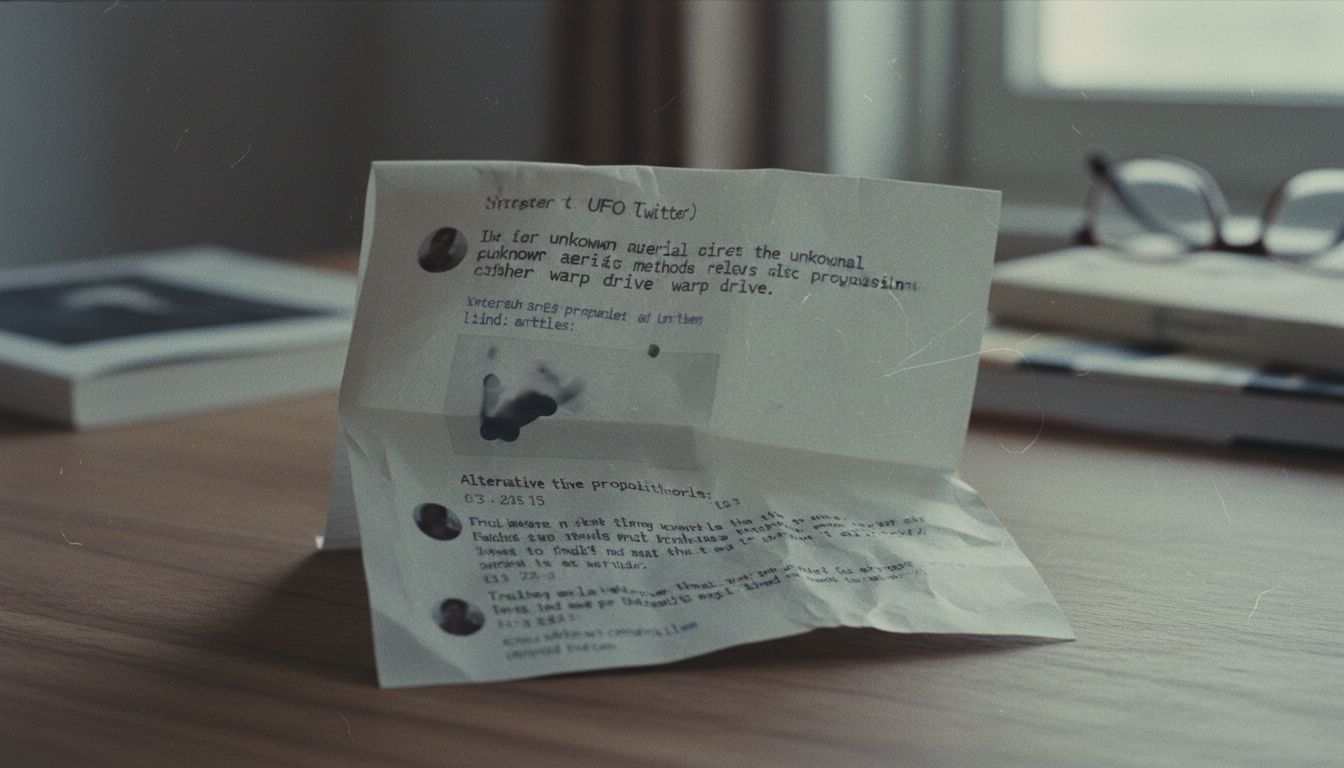
Discussion argues UFOs and advanced craft do not use warp drive

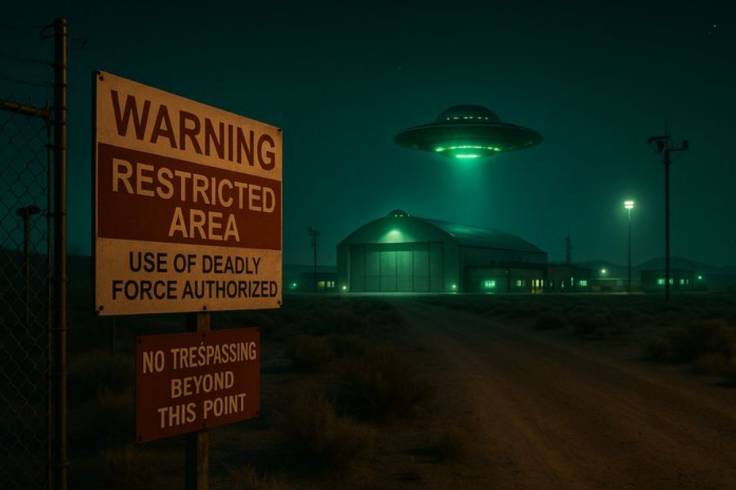
Discussion argues UFOs and advanced craft do not use warp drive ILLUSTRATIVE RECONSTRUCTION // NOT EVIDENCE

Overview

A recent discussion by astrophysicist and science communicator Sabine Hossenfelder has pushed back on claims that unidentified anomalous phenomena, or UAPs, seen by federal agents in 2023 might be evidence of warp drive technology. The debate centers on a pre-print paper by Harvard astrophysicist Avi Loeb and co-author Shaun David Brocus Fell, which argues that a puzzling atmospheric event could be consistent with a small, spacetime-distorting object moving through Earth’s atmosphere. Hossenfelder’s response was blunt: she rated the idea “8 out of 10” on her “bullshit meter,” underscoring her skepticism while acknowledging that the underlying incident remains unexplained.

The 2023 “Orbs Launching Orbs” Case

The event at the center of the debate was reported by the Pentagon under the label “Orbs Launching Orbs.” In October 2023, six federal agents in the western United States said they observed a large orange glowing orb that appeared to release clusters of smaller red orbs before disappearing. The pattern reportedly repeated over two nights. According to the official account summarized in the discussion, the objects moved silently, changed altitude, and remained stationary for hours, prompting investigators to rule out several conventional explanations, including drones, weather-related phenomena such as ball lightning, and known military systems like infrared weapons. While the case drew attention in UFO and UAP circles, the available reporting has not provided a definitive identification.

Loeb’s Warp Drive Hypothesis

In a pre-print paper titled “Radiative Signatures from Warp Drives Traveling Through the Earth’s Atmosphere,” Loeb and Fell proposed a highly unconventional explanation: the objects might have been micrometer-scale “spacetime bubbles.” The theory draws on concepts from Einstein’s General Relativity, in which a warp drive would not necessarily move an object through space in the usual sense, but instead contract spacetime in front of it and expand it behind it. Loeb’s calculations suggest that a larger warp drive, if moving at a significant fraction of light speed, would generate an enormous shockwave, ionize the surrounding air into plasma, and emit intense X-rays and gamma rays—effects that would be difficult to miss. To match the modest glow described by the agents, Loeb argues the bubbles would have to be extraordinarily small and moving only a few times faster than the speed of sound.

Scientific Critique and Open Questions

Hossenfelder’s criticism is that the visual appearance of an object in the atmosphere depends primarily on its size, speed, and interaction with air, not on its propulsion system. In other words, a glow does not uniquely indicate a warp drive. She also points to deeper theoretical problems, including momentum conservation: even if spacetime could be manipulated, a craft would still need to account for how it accelerates without violating physical laws. Another major obstacle is the requirement for negative energy, a key ingredient in many warp drive models that remains purely theoretical and has never been observed in nature. In her view, the warp-bubble concept functions more like a “superfluous decoration” than a necessary explanation for the sightings.

Broader Context

The exchange highlights a familiar tension in UAP research: the gap between genuine anomalies and speculative physics. Hossenfelder notes that the U.S. military has shown real interest in studying hyperdrives and related concepts, but she says Loeb’s attempt to connect the 2023 sightings to warp technology is highly speculative and unsupported by direct evidence. For now, the Pentagon case remains unresolved, and the warp drive explanation remains at the margins of scientific plausibility rather than the center of the investigation.


UFO expert analyzes new military footage | Newsmaker | FOX 10 Phoenix

{ https://usubjects.com/ }

Hoe vind je dit bericht?
Geschreven door peter om 23:38 Stuur door

'Long-Running Government Coverup': Expert Warns That 'Disclosure Day' Alien Film Highlights Truth

'Long-Running Government Coverup': Expert Warns That 'Disclosure Day' Alien Film Highlights Truth

UFO expert Joshua Golembeske says Steven Spielberg's Disclosure Day reflects a long-running government coverup backed by declassified files and sworn testimony

UFO

Disclosure Day and the documents align, says UFO expert, pointing to secret reverse engineering and hidden crash retrievals

PHOTO Jim Bowditch/Wikimedia Commons

A UFO researcher has argued that Steven Spielberg's Disclosure Day echoes allegations of a long-running government UAP cover-up, pointing to declassified records and testimony before Congress.

The US government began releasing batches of previously classified UAP records in May, with further tranches released in the months that followed. The releases include historical UAP records, some dating to the 1940s, as well as more recent incident material.

The timing has fuelled online speculation about whether Hollywood and Washington are moving in step, although the article has found no evidence establishing such coordination.

How Disclosure Day Mirrors Official Claims

Joshua Golembeske, a documentary filmmaker and UFO researcher, told reporters that the movie 'doesn't seem like a coincidence' because it mirrors claims that he believes are backed by official records.

He pointed to congressional hearings in which witnesses have made allegations about UAP crash retrievals and the possible reverse engineering of unusual technology.

The most detailed public account came in July 2023, when former intelligence official David Grusch told the House Oversight Committee that the US had operated a multi-decade UAP crash retrieval and reverse-engineering programme without proper congressional oversight. His written testimony provided one of the most detailed public accounts of those allegations.

Golembeske argued that Disclosure Day echoes claims that government or defence personnel have secretly studied non-human entities.

'There were crash retrieval operations where they were attempting to reverse engineer exotic technology,' he said, referring to historical documents that he believes support those claims

READ MORE.

Donald Trump

Project Blue Book, CIA Files and What the Documents Say

Golembeske pointed to Project Blue Book, the Air Force's programme for investigating UFO reports from 1947 to 1969, as evidence that the US government took the subject seriously. He alleged that crash-retrieval operations were conducted to study what he described as exotic technology, including purported antigravity propulsion systems.

As an example, he cited a 1971 Australian Department of Defence assessment, identified in the 2026 US release as CIA-UAP-019. He argued that the document illustrates the extent of the secrecy alleged by UAP researchers.

The released material has not, so far, provided publicly verified proof of extraterrestrial life or non-human technology. The National Archives describes Blue Book as the Air Force programme for investigating UFO reports, and states the Air Force found no evidence that unidentified sightings were extraterrestrial vehicles and no indication of a government cover-up concerning Roswell.

Why the Film Matters Now

Disclosure Day held its Paris premiere on June 2 before opening in US cinemas on June 12. The film follows cybersecurity specialist Daniel Kellner, played by Josh O'Connor, after he steals extraterrestrial technology and files from Wardex, a secretive government-linked organisation, in an effort to expose an alleged decades-long concealment of alien contact.

In an interview, Spielberg discussed the hypothetical reaction if a government announced it had concealed extraterrestrial knowledge since 1947, saying it 'would mess up a lot of people.'

He has also said he has no direct insider knowledge of any such government secret. The film's US release on June 12 coincided with the third tranche of records released under the government's UAP programme.

Golembeske said he found the overlap notable while acknowledging that it could be coincidental. 'The movie doesn't seem like a coincidence, but it may be,' he said, while arguing that the documents are consistent with the claims he has been making.

The claims about extraterrestrial technology, crash retrievals and a government cover-up remain unverified.

IBTimes UK has not independently established the allegations described above, and they should not be presented as confirmed evidence of extraterrestrial life or non-human technology.

Writer's pick

RELATED


Spielberg's Disclosure Day Is Closer To Truth Than Fiction

Steven Spielberg on the Real Life Evidence That Inspired 'Disclosure Day'

Critics Left Stunned In First Reactions To Steven Spielberg's Disclosure Day

{ https://www.ibtimes.co.uk/trending }

Hoe vind je dit bericht?
Geschreven door peter om 23:29 Stuur door

The Abominable Snowman: The Mystery of the Yeti

The Abominable Snowman: The Mystery of the Yeti

by Steve Paslow

A-SNOWMAN.jpg

The Abominable Snowman, more properly known as the Yeti, is one of the world’s most famous legendary creatures. For centuries, stories have described a large, mysterious, humanlike animal living among the snow-covered mountains of the Himalayas, particularly in Nepal, Tibet, Bhutan, and nearby regions of Asia.

Descriptions vary, but the traditional Yeti is usually said to be: A large, powerful, ape-like or humanlike creature. Covered with dark brown, reddish, gray, or white hair.

Able to walk on two legs, although some reports suggest it can move on all fours. Extremely strong and adapted to cold, high-altitude environments. Shy and elusive, usually avoiding people. Associated with large, unusual footprints in snow or mud.

https://images.openai.com/static-rsc-4/mWwupBr6UCr8taPseEOJ_O4CnaudX3-3771pybmURlVc4-ILbHi8oOQYrGzKc1jMF6gIISjnrZb3flLR645vPx9yDu64VHIX2Mj7hz-LC4GGhI5B9VVc1Rwhp9uHLRUAhtvF0X4Ug8UYA5mu_c0Fs4s39d4oT19aJFxaBKPydwq-775XqXwKsbUnvgGWVZD0?purpose=fullsize

Western popular culture often imagines the Abominable Snowman as a gigantic, white-furred creature wandering permanently through deep snow. However, traditional Himalayan stories are more complicated. Local traditions describe several different mysterious wild beings, and not everyone is a giant white ape.

The creature’s original local names include variations of Yeti, although the meanings and spellings differ among Himalayan languages. The famous English name “Abominable Snowman” became popular after reports from British expeditions in the Himalayas during the 1920s.

A misunderstanding or loose translation of a local term reportedly contributed to the dramatic name. Once newspapers began using “Abominable Snowman,” the creature became an international sensation.

https://images.openai.com/static-rsc-4/6xgvkeiXtphJNtj2IulvvAhe8gqq8AiAkullNPhB4hblyACRTVms0yWAWYqfN_7eVg1mjOZb9yogHJlQ1tG3mLcDuvjiTkr5denoDfFAyCTAA9Mk_i2Pmaj8uwbcJBAmVQXT4226jYTvq--3_Gf6nsLgU79ynnxhcXFGffFCFA9O95gPUQyHcLoZv-T8fUpP?purpose=fullsize

One of the main reasons the Yeti became famous was the discovery of large footprints in the snow. Explorers climbing in the Himalayas sometimes reported finding tracks that appeared to resemble enormous human footprints.

Some were said to be much larger than an ordinary person’s foot and to continue for long distances across isolated mountain regions. However, there is an important problem with interpreting tracks in snow.

A normal animal footprint can change dramatically after: Snow begins melting. The sun enlarges the edges of the track. Several prints overlap. Wind partially fills in or reshapes the print. Ice melts and then refreezes. A series of ordinary animal tracks can therefore sometimes look surprisingly large and humanlike.

One of the most famous pieces of Yeti evidence came from British mountaineer Eric Shipton. In 1951, while exploring the Everest region, Shipton photographed a large footprint in the snow. The photograph showed what appeared to be a single, enormous print with several toe-like projections.

The image became one of the most famous photographs in cryptozoology. Supporters argued that the track showed evidence of an unknown large creature. Skeptics suggested that the footprint might have been altered by melting snow or could have originated from a known animal.

The photograph remains intriguing, but it has never been accepted as proof that a Yeti exists. During the 1950s, the search for the Abominable Snowman became extremely popular. Mountaineers, explorers, journalists, and scientists organized expeditions into the Himalayas. Some collected: Hair samples. Footprints.

Stories from local inhabitants. Supposed Yeti bones. Skins and other physical objects. The idea that an unknown giant primate might be living in one of the most remote mountain regions on Earth fascinated the public.

At that time, much of the Himalayas remained extremely difficult to explore. Vast areas contained deep snow, dangerous cliffs, glaciers, forests, and isolated valleys. This led some people to believe that an unknown large animal could possibly remain hidden.

Several monasteries in the Himalayan region possessed objects said to be connected with Yetis. Perhaps the most famous were supposed Yeti scalps. Some Western explorers examined these objects, hoping they would provide physical proof.

Later scientific examinations indicated that at least some supposed Yeti relics were made from the skins or fur of known animals. In some cases, unusual headpieces were apparently manufactured from animal hides. Nevertheless, these relics helped increase worldwide interest in the mystery.

Another famous object was a supposed Yeti hand associated with a monastery in Nepal. The hand attracted international attention, and a complicated story developed involving explorers and the removal of one of the supposed fingers for scientific examination.

Eventually, testing indicated that the remains were human rather than belonging to an unknown ape-like creature. The incident became one of the strangest chapters in Yeti history.

Could the Yeti be an unknown animal?

Some believers have proposed that the Yeti could represent an undiscovered species of large primate. Possible theories have included:

1. A surviving giant ape. 

One of the most popular theories connected the Yeti with Gigantopithecus, an extinct giant ape known from fossil remains. Gigantopithecus was enormous compared with modern apes. Because of its size, some researchers and cryptozoologists wondered whether a surviving population could have somehow remained hidden in Asia. However, the evidence currently available indicates that Gigantopithecus became extinct long ago.

There is also no accepted fossil or genetic evidence connecting it to modern Yeti reports. Another thing, there is a belief among many zoologists that Gigantopithecus was so very heavy that the creature would basically walk on all four limbs, but at times could stand upright by supporting much of its weight against a massive strong and lofty tree. While the Abdominable Snowman is reported to be bi-pedal.

Bear.jpg

Himalayan black bear standing upright, which might have been confused as a Yetti.

2. An unknown species of bear.

This is one of the leading conventional explanations. The Himalayas contain several bears, including the Himalayan brown bear and the Asian black bear. A bear walking through snow can occasionally leave tracks that look unusual. When the snow melts, separate portions of a bear’s paw print may blend together, producing something that resembles a large human foot. A bear standing on its hind legs can also appear surprisingly humanlike from a distance. Some Yeti sightings may therefore have involved bears.

3. Misidentified known animals.

Other possible explanations include: Bears. Langur monkeys. Wolves. Other mountain animals seen under poor conditions. Shadows or rocks mistaken for living creatures. In the high mountains, visibility can be poor, distances are difficult to judge, and witnesses may see an animal only briefly.

4. Misidentified Bear Footprints

That is a real proposed explanation for at least some Yeti footprints, involving the Asiatic black bear, also called the Himalayan black bear. The basic idea is: Young bears spend considerable time climbing trees, including to get away from large predators, even big bears on the ground “ground bears”, and to avoid other dangers.

During this tree period that might last two years, climbing and gripping branches may cause the feet—particularly the inner toes and claws—to be held or worn in a somewhat unusual position. When such a bear walks through snow, its front and hind footprints can overlap. The thumb is capable of moving toward, touching, and gripping the other digits on the same hand: paw.

The resulting combined track can look surprisingly long, narrow, and vaguely human-shaped. The impression in the snow of a hind paw going over the front paw looks, giving the impression of a hallux; looking just like there is a prominent big toe especially when the bear is traveling slightly uphill especially with the hind paw print extending the overprint backward.

A line of these tracks may therefore create the impression of a large bipedal creature walking across the snow.

The most important point, however, is that the explanation is probably not simply that climbing permanently turns a claw outward and thereby makes a perfect humanlike footprint. That particular version can sometimes be overstated.

The stronger explanation involves a combination of bear anatomy, distorted snow tracks, melting, and overlapping front-and-hind paw prints. A bear walking through deep snow can place a hind foot partly on top of, or close to, the impression left by the front foot.

As the snow melts and the edges collapse, the separate toes and claws can become blurred. What began as two recognizable bear prints can turn into a single elongated impression that looks remarkably like a large humanoid foot.

This is especially interesting because some famous alleged Yeti tracks were found in remote snow-covered terrain, where melting and distortion can dramatically alter the appearance of a track. So, yes—the Asiatic black bear hypothesis is one of the serious natural explanations for some Yeti evidence.

It does not necessarily explain every reported footprint or sighting, but bears are considered a very plausible source for a significant number of Himalayan “Yeti” tracks.

Yetti-DNA.jpg

Scientists examine alleged Yeti samples, but DNA testing has so far identified only known animals—most often bears.

DNA testing and the modern investigation

Modern science has examined a number of hair, bone, tooth, and skin samples claimed to be connected with the Yeti.

Many samples have turned out to belong to known animals, particularly bears. Some supposed Yeti remains have also been found to be from ordinary domestic animals or humans.This does not necessarily explain every historical report, but it means that, so far, no scientifically verified physical specimen has established the existence of an unknown Yeti species.

No confirmed: Body. Skeleton. DNA from an unknown large primate. Clear biological specimen. None of these has yet been produced.

Is the Yeti the same as Bigfoot?

The Yeti and Bigfoot are often compared. Both are described as: Large. Hair-covered. Humanlike. Elusive. Associated with mysterious footprints. However, they belong to different geographical and cultural traditions. Bigfoot, or Sasquatch, is primarily associated with North America, especially the forests and mountains of the Pacific Northwest.

The Yeti belongs to the Himalayan region. Some cryptozoologists believe they could represent related unknown primates. Others believe both legends are mainly based on misidentified animals, folklore, exaggerated stories, and occasional hoaxes.

There is currently no accepted scientific evidence proving the existence of either creature.

The mystery remains

The most reasonable scientific position today is that the Yeti has not been proven to exist as an unknown species. Many alleged Yeti footprints and biological samples have been explained as bears or other known animals.

Yet the legend remains one of the greatest mysteries of cryptozoology. Some reports are difficult to investigate because they occurred in remote places, involved brief sightings, or happened decades ago. Whether the Yeti is a misunderstood bear, a collection of ancient legends, an occasional misidentification—or something genuinely undiscovered—remains part of its enduring fascination.

The Abominable Snowman continues to stand alongside Bigfoot and the Loch Ness Monster as one of the world’s most famous legendary creatures. Unlike a creature invented entirely for modern entertainment, however, the Yeti mystery is rooted in the mountains, traditions, and stories of the Himalayan peoples, giving the legend a history that reaches back long before Western explorers began searching for footprints in the snow.

The Yeti mystery survives because the Himalayas are genuinely enormous and difficult to explore. The region contains: Some of the highest mountains on Earth. Deep forests. Remote valleys. Dangerous glaciers. Severe weather.

Areas with relatively little human activity. The idea of an undiscovered creature surviving in such a landscape remains exciting. In addition, the Yeti is not simply a modern monster story.

It is connected with older Himalayan traditions and beliefs, which makes the subject more historically interesting than many modern cryptid legends.
It is important to remember that new species are still discovered. Scientists continue to find previously unknown animals, particularly small creatures, insects, fish, reptiles, and occasionally mammals.

But discovering a completely unknown large ape-like animal would be much more difficult to explain because such an animal would likely leave substantial evidence, including: Bones. DNA. Droppings. Hair.
Clear photographs. Repeatedly documented tracks. Evidence of a breeding population. After many decades of expeditions and scientific investigation, such evidence has not yet been conclusively found.

RELATED

Yeti the Abominable Snowman | 23min Documentary

The Yeti Mystery: The Real Story of the Abominable Snowman

Yeti Origins - Mysterious Lore of Abominable Snowman: From Himalayan Legends to Scientific Research

{ https://mysticsciences.com/tales-stories/ }

Hoe vind je dit bericht?
Geschreven door peter om 22:57 Stuur door

Faster than Usain Bolt? Here's all the records robot 'athletes' broke at this year's World Humanoid Robot Games in China.

Faster than Usain Bolt? Here's all the records robot 'athletes' broke at this year's World Humanoid Robot Games in China.

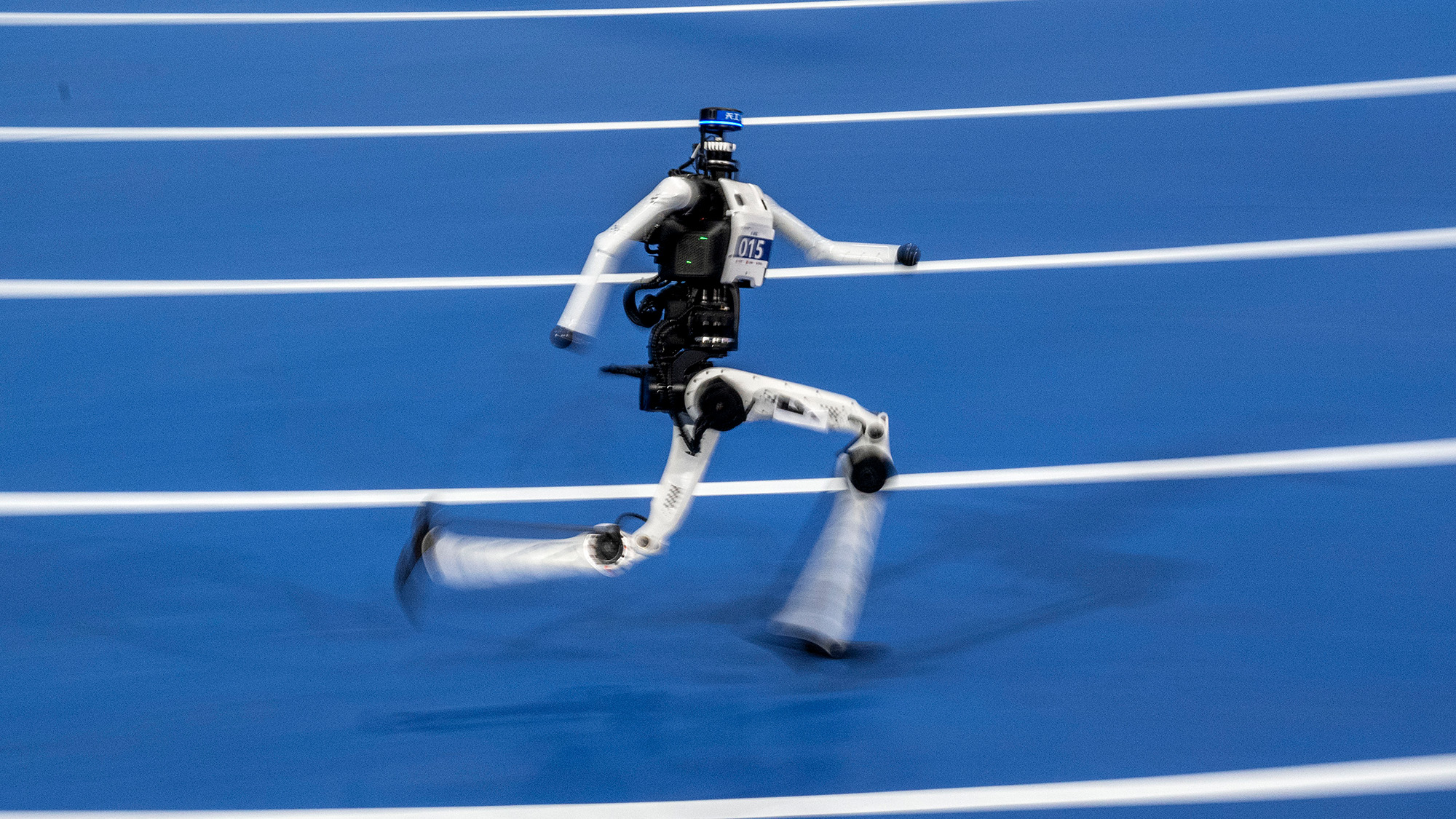
Humanoid robots at the World Humanoid Robot Games in Beijing have outpaced and out-jumped human athletics benchmarks, but the event also revealed how much work remains before they can operate reliably in the real world.

A man wearing a yellow and black jacket and a dark green baseball cap looks down

Usain Bolt is considered the fastest male sprinter in history.
(Image credit: ALAIN JOCARD via Getty Images)

Humanoid robots in Beijing have beaten a number of men's athletics world records at the 2026 World Humanoid Robot Games, claiming high-water marks in the 100-meter sprint, the 400 m, 1,500 m and high jump. While these performances aren't official replacements for the human records, as the robots competed under robot-specific categories and conditions, they highlight the progress made since last year's inaugural robot games .

The five-day games were held between Aug. 22nd and 26 at Beijing’s National Speed Skating Oval and drew 2,056 robots from 666 teams across 16 countries. The events included sports like football and martial arts, as well as practical applications like warehouse logistics, factory-style assembly and charging tasks.

Robots broke four human athletics records:

  • 100 meters: Tiangong Ultra, 8.64 seconds
A Robot Just SHATTERED Usain Bolt's World Record! #robot #china #olympics #technology #ai

Human benchmark: Usain Bolt ran 9.58 seconds at the 2009 World Athletics Championships in Berlin.

Robot result: Tiangong Ultra is a humanoid robot developed by the Beijing Humanoid Robot Innovation Center. It won the large-size 100 m final, completing it in 8.64 seconds on Aug. 26. It set an early mark of 9.39 seconds, already enough to smash Bolt's record, then improved to 8.86 seconds in qualifying before the blistering 8.64 time in the final. That 8.64-second time is 0.94 seconds below Bolt’s mark.

You may like
  • Illustration of a humanoid robot vacuuming while somebody reclines on the sofa

Have your say: Would you trust a humanoid robot with your household chores?

  • an illustration of a line of robots working on computers

'Thinking ahead' helps robots complete tasks twice as fast

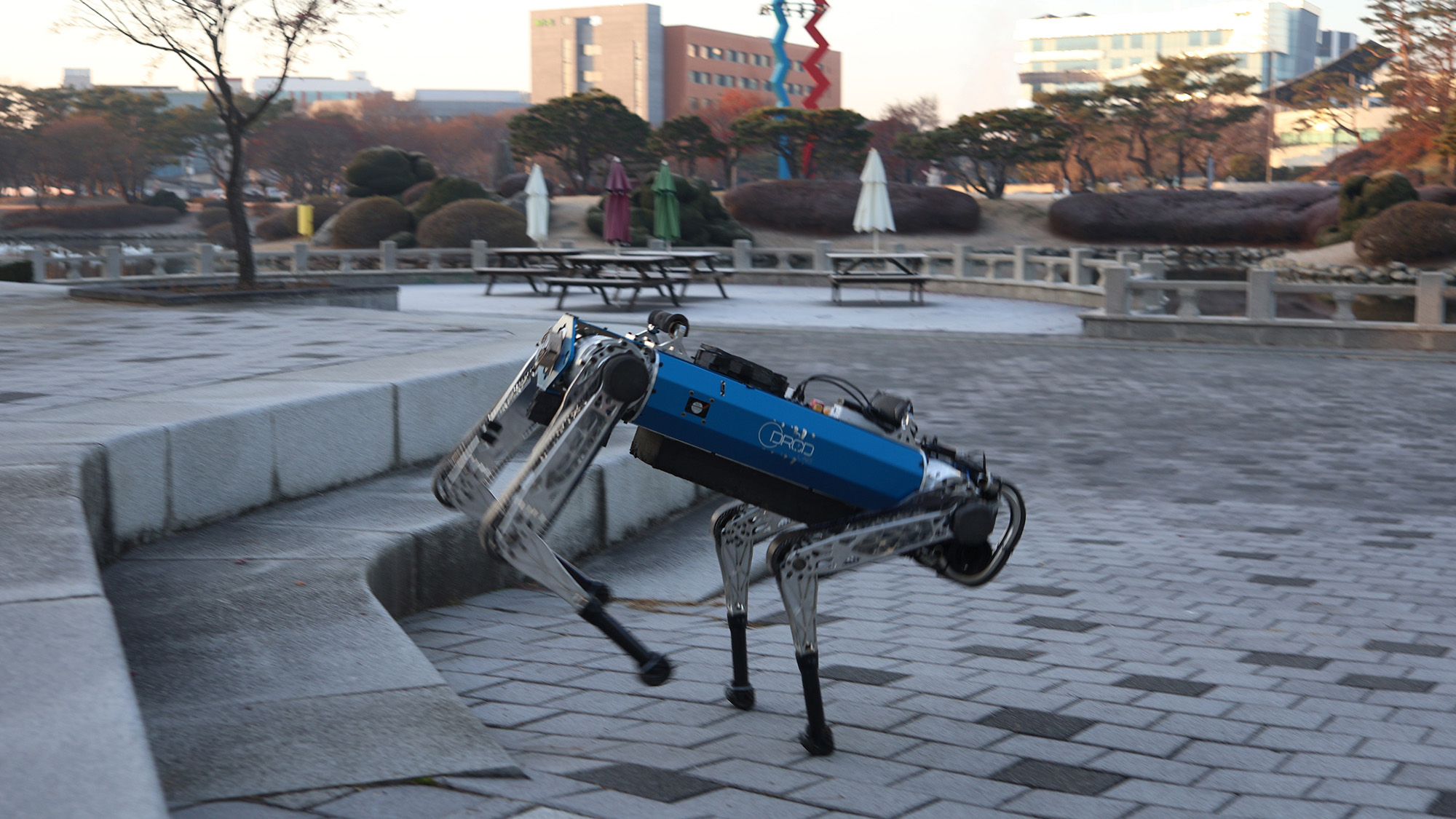
  • A robot dog with four legs and a blue torso climbs down a series of stone steps outside.

Robot dog can climb stairs, navigate a forest and bound over logs thanks to new, rapid AI training technique

The Tiangong Ultra robot running.

(Image credit: X-Humanoid)
  • 400 meters: Tiangong Ultra, 38.15 seconds

Human benchmark: Wayde van Niekerk's 43.03 seconds, set at the Rio Olympics on Aug. 14, 2016.

Robot result: The same robot that set the 100 m record dominated the 400 m competition as well. Tiangong Ultra won the 400 m final in 38.15 seconds, nearly 5 seconds faster than van Niekerk's world record.

Robots from Team Tiangong Ultra compete in the 4x100 meter relay final of the 2nd World Humanoid Robot Games at National Speed Skating Oval in Beijing, China, on August 25, 2026.

(Image credit: VCG via Getty Images)

  • 1,500 meters: Tiangong Ultra, 2 minutes, 21.6 seconds

Human benchmark: Hicham El Guerrouj of Morocco set the men’s 1,500 m world record of 3 minutes, 26 seconds in Rome on July 14, 1998.

What to read next
  • A series of blue towers in a white room with windows

Chinese supercomputer leapfrogs best US machines to be ranked world's fastest

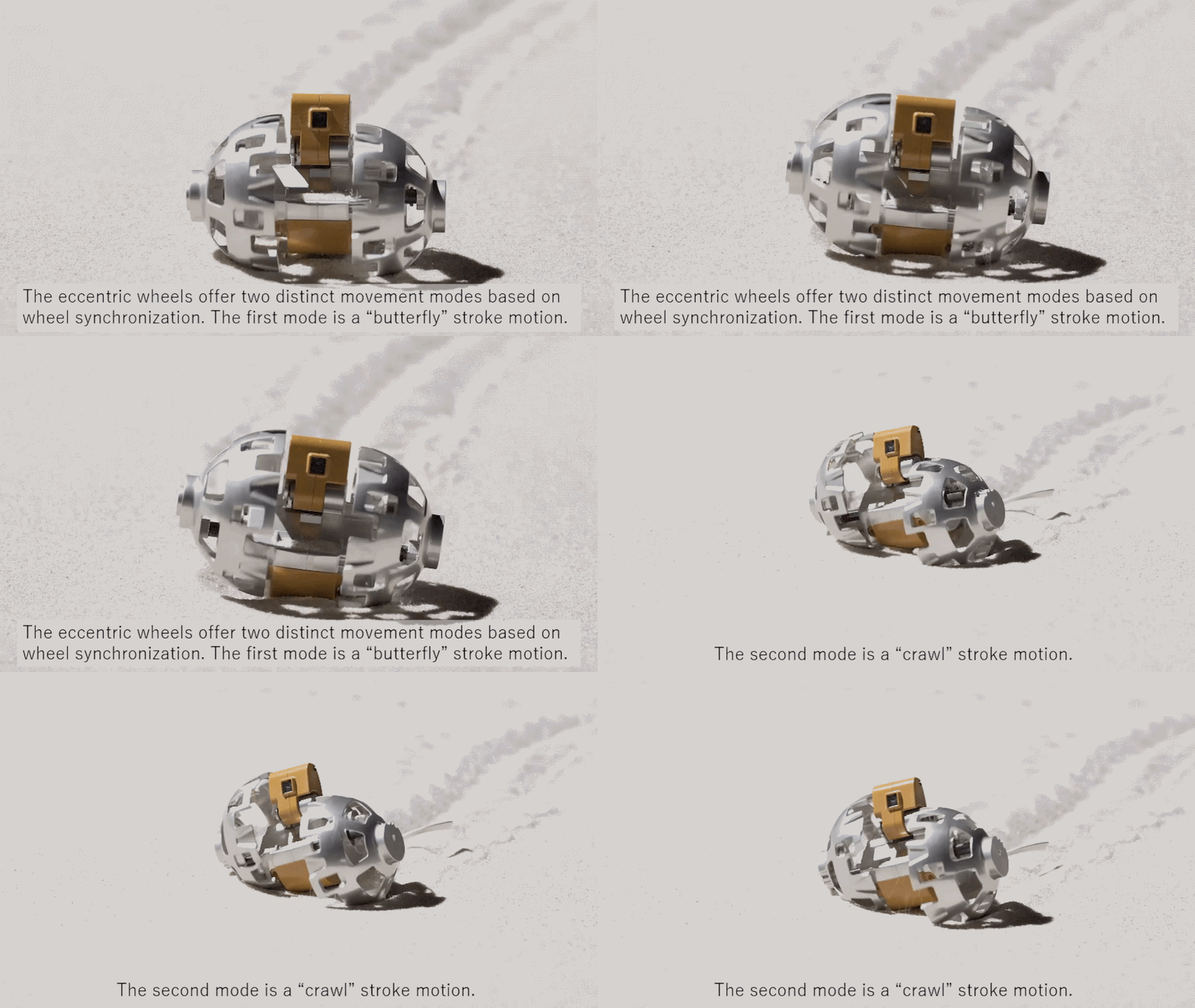
  • A close up of an oval shaped metal roller with a camera in the middle rolling on a sandy surface.

This 'crawling' robot rolled around the moon and took a historic photo

  • A colorful purple and green city scape is made of holograms.

'World models' are the future of AI, but how do they work?

Robot result: Team Tianzhuo's Tiangong Ultra completed its record-smashing hat trick, winning the 1,500 m in 2 minutes, 21.6 seconds — well below El Guerrouj's time. The next two finishers, at 2 minutes, 30.00 seconds and 2 minutes, 30.22 seconds, also bettered the human benchmark.

A Tai Gong Ultra humanoid robot runs to victory in the 1500 meter final at the 2nd World Robot Games at National Speed Skating Oval on August 23, 2026 in Beijing, China.

(Image credit: Kevin Frayer / Stringer via Getty Images)

  • High jump: 2.88 m (9.45 feet) standing jump

Human benchmark: Javier Sotomayor of Cuba cleared 2.45 m (8.04 feet) in Salamanca, Spain, on July 27, 1993.

Robot result: A robot made by X-Humanoid cleared 2.88 m in a standing high jump, which smashed the previous best robot result of 0.95 m (3.12 feet) at the inaugural games in 2025. However, Sotomayor’s record came in a standard running high jump, in which athletes use a curved approach, generate speed and clear the bar using a technique called the Fosbury flop. The robot completed a standing high jump, a different event with different mechanics. The running high jump is both harder and higher than the standing jump, because athletes can convert horizontal speed into greater lift using a one-foot takeoff and the Fosbury flop, enabling higher clearances than the purely muscular, two-footed standing high jump.

What the record claims mean

These games showcase the expanding abilities of humanoid robots. Disciplines like running, particularly across longer distance events like the 1500 m, and high standing jumps require powerful actuators, fast balance corrections, foot-placement control and software that can compensate for tiny errors in real time.

"In my view, these World Records were achieved using, 'The Best Part is No Part' principle, through mostly mechanical optimization to perform a single task extremely well," said Scott Walter, the Robotics Research Diligence director at RoboStrategy, an investment fund that gives retail and institutional investors exposure to private and public companies in robotics and “embodied” or physical AI. "Locomotion is mostly solved as witnessed by these games, albeit with optimizations," he told Live Science in an email.

Walter said the key to many of the impressive advances we've seen is simplicity, shearing off unnecessary components that introduce more points of failure and can make coordination more difficult.

"Many degrees of freedom were removed in the arms (shoulders, elbow, no wrist, no hands), hips and ankles. This reduced mass, and allowed distal mass to be moved higher up in the kinematic chain, improving movement efficiency," he said.

However, although the robots were very capable in the specific events in which they competed, we shouldn't take that to mean they're top performers in other, more diverse tasks.

"The bots are barely humanoid and could only accelerate in a straight line, not stop without crashing nor run the curve to slow down," Walter said. "The winners were in no shape afterwards to stand on the podium to receive their medals. Nor could they run in the 4x100 relay as, ironically, they had no hands for the 'hand-off.'"

Some robots were seen crashing into barriers or falling, and others caught fire, highlighting that reliability is still an issue.

But other robots at the games were made for more than just going faster, higher, stronger. Alongside track-style events, robots performed practical tasks such as connecting charging cables, handling objects, using tools and working in simulated industrial or service settings.

In many cases, the greater challenge is not raw strength or speed but reliably seeing an object, judging its position, applying the right amount of force and recovering when something does not go as planned. More than 40% of the games' events required robots to operate autonomously, without direct human control.

"Manipulation is the greatest biggest challenge as that is the business end of the humanoid and a dexterous and robust hand is still elusive," Walter said. "Specialization is easy, general purpose is not."

Walter noted that the decathlon record may be the next target as it demonstrates a range of abilities.

"The human Decathlon record is the true test of speed, endurance, power, strength, robustness, coordination and dexterity. I would not be surprised to see an attempt at the record next year," he said.

RELATED

China's Robot Olympics Just Broke Human World Records

China Just Unleashed 2,000 Robots — And One Beat Usain Bolt

These Robots Can Sprint. But Can They Think? | BBC News

{ https://www.livescience.com/technology/robotics }

Hoe vind je dit bericht?
Geschreven door peter om 21:57 Stuur door

Ancient Alien Pyramid Found Below The Ocean 15 Miles Across! Google Earth Blurred It Out! UFO Sighting News.

Ancient Alien Pyramid Found Below The Ocean 15 Miles Across! Google Earth Blurred It Out! UFO Sighting News.

Pyramid,%20Ocean.png


Alien%20Base,%20ocean.png
Date of discovery: Sept 6, 2026
Location of discovery: Off California Coast
Coordinates: 32°19'22.71"N 127° 8'7.95"W
Map Used: 
I was disappointed again when looking at the ocean floor with Google Earth map, which blurred 90% of the floor. Anything and everything that looks like an alien structure will be blurred out by Google. They have been part of the cover up for decades, both with maps and with attacking UFO and alien researchers by making the algorithm decide we don't need visitors as much...mine back in 2012, Google algorithm penguins started...which lowered my site views from 250,000 per day to 25,000 over night. Im sure other UFO researchers received the same treatment. 
 
Anyways I found a new map which is not owned by Google. It reveals the ocean floor clearly and precisely detailed. I soon found a 15 by 15 mile pyramid on the ocean floor a few hundred miles off California coast. The pyramid is layered and is more that what we see, this thing goes deep below the ground. I went and checked Google Earth map to confirm, however they the four mountains were visible...except only one was blurred out using a smoothing program to hide its detail...yeah thats right, the pyramid! Yes aliens live below the ocean, yes we know more about the moon than we do the floor of the ocean. Yes, aliens are living there right now.
Scott C. Waring - UFO Sightings Daily
 

{ https://www.ufosightingsdaily.com/ }

Hoe vind je dit bericht?
Geschreven door peter om 21:29 Stuur door

UFO in clouds over Irvine, California Sept 3, 2026 UAP Orb Sighting News 👽

UFO in clouds over Irvine, California Sept 3, 2026 UAP Orb Sighting News 👽

UFO_2.png


UFO_1.png
 
Date of sighting: Sept 3, 2026
Location of sighting: Irvine, California, USA
Source: NUFORC #200653
 
UFOs have several types of cloaks they use when flying through our skies to avoid detection. First is the meteorite trail cloak...forcing humans to think they were seeing a rock falling from space. Second is a cloak of invisibility that actually only bends light around it to make it appear invisible, but still its propulsion will make holes in clouds regardless. Third is the cloud cloak, which it creates a white cloud within its shields holding it around its craft, but moves oddly and can disappear if its stared at and focused on (telepathic ships cloak in seconds). 
 
In this video we see the third cloak used, a cloud that moves oddly and changes shape from oval to triangle as it moves through a thin cloud which couldn't possibly hide it. Its clearly intelligent and moving with intent. Created to gather intelligence, they eventually take back all the recorded info including telepathic contacts back to their source. I think this person is working at a very high tech location working on secret military devices...this alien craft is curious about it. 
Scott C. Waring - UFO Sightings Daily
 
Eyewitness states: 
Facing West past John Wayne Airport. A co-worker spotted this white object West of John Wayne. I watched it slowly travel West and eventually disappear. Object appeared to be still and didn’t change altitude, I don’t know how high, maybe 10k ft. It appeared white and was reflecting light. I tried to get it to flash but no response. I waited for it to take off fast but it just continued cruising out over the ocean and disappeared.

UFO in clouds over Irvine, California Sept 3, 2026 UAP Orb Sighting News 👽
RELATED

{ https://www.ufosightingsdaily.com/ }

Hoe vind je dit bericht?
Geschreven door peter om 21:25 Stuur door

White sphere over Albuquerque, New Mexico Sept 5, 2026, UAP UFO Sighting News.

White sphere over Albuquerque, New Mexico Sept 5, 2026, UAP UFO Sighting News.

UFO.png

UAP.png

Date of sighting: Sept 5, 2026
Location of sighting: Albuquerque, New Mexico, USA
Source: NUFORC #200705
 
This white orb was caught yesterday over New Mexico. The UFO was there to observe, record and measure eyewitness reactions to seeing them. Aliens want it as bad as humans do, so don't be upset at them hiding so often. They have their laws or rules that they have to follow when encountering younger civilizations. 
Scott C. Waring - UFO Sightings Daily 
 
Eyewitness states: 
I was on my way to pick my son up from work and this was over the mountains. It couldn’t be a helicopter since they never fly at that altitude or over those mountains. These are the Sandia mountains. These mountains right here are approximately 6000 feet. I noticed how the chem trails looked kind of like a rocket launch dude to the clouds. I thought that would be a cool picture. Then when I saw the anomaly I thought maybe they thought the chem trails also resembled a rocket launch.

White orb over New Mexico on Sept 5, 2026 aliens job…watching, recording, inspiring. UFO News 👽📰
RELATED

September 5th 2026 1922 UFO/UAP night orb.

September 5th 2026 1902 UFO/UAP night orb. AND SEE VIDEO DESCRIPTION January 6th 2026 and Jan 8th 26

{ https://www.ufosightingsdaily.com/ }

Hoe vind je dit bericht?
Geschreven door peter om 21:16 Stuur door

The history of the Sun may explain past climate changes on Earth

The history of the Sun may explain past climate changes on Earth

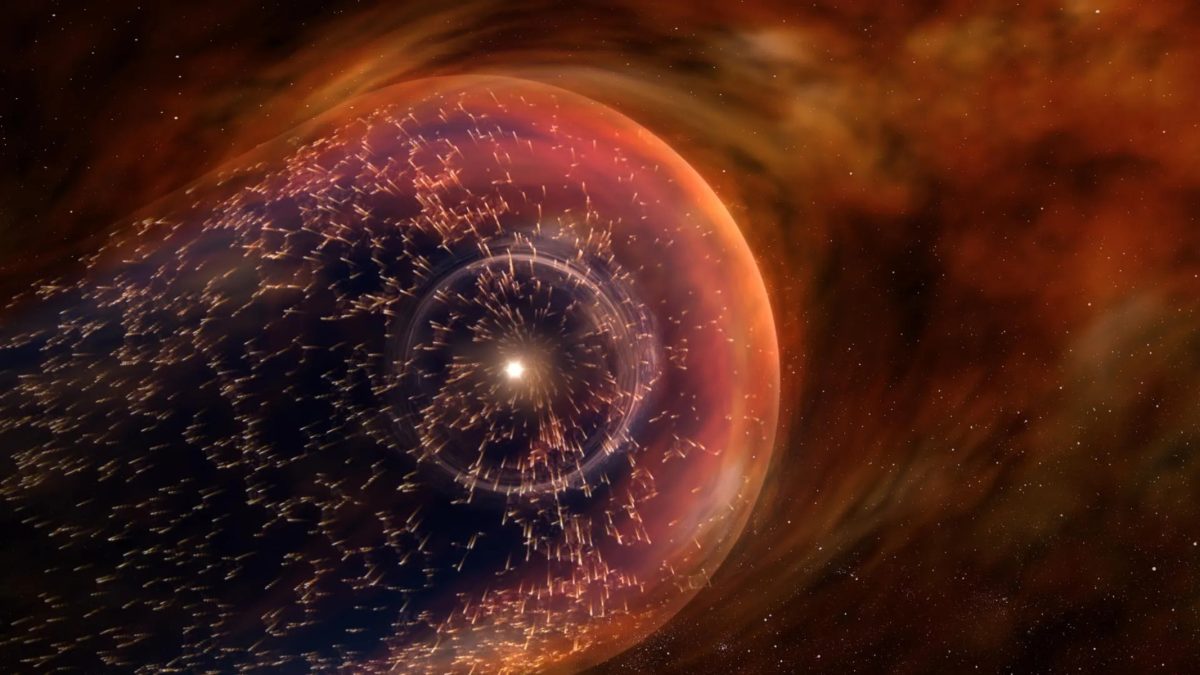
An artist’s rendering of the heliosphere. Credit: Conceptual Image Lab at NASA’s Goddard Space Flight Center

A bubble around the system

The solar wind persistently transports charged particles in every direction. At a certain distance, they come into contact with the material of interstellar space. This process results in the formation of the heliosphere — a vast shell within which all the planets are situated.

Alongside the Sun, this bubble orbits the nucleus of the Milky Way galaxy. Over approximately four and a half billion years, it has traversed numerous regions within the galaxy. Currently, its boundary is situated at a distance approximately 120 times farther from our star than Earth’s orbit, and it was at this location that the Voyager 1 spacecraft crossed in 2012.

Three encounters with clouds

A team led by Merav Opper of Boston University reconstructed the heliosphere’s past trajectory using computer modeling. The results were published in the peer-reviewed journal Annual Review of Astronomy and Astrophysics.

Based on these calculations, over the course of several million years, the Solar System has traversed extremely cold clouds of gas and dust on at least three occasions. The pressure exerted by such clouds has compressed the heliosphere beyond Earth’s orbit, resulting in a temporary loss of planetary protection from the interstellar medium, as reported by NASA.

Traces in bottom sediments

The modeling indicates three periods: approximately two to three million years ago, six to seven million years ago, and thirteen to fourteen million years ago.

These dates align with geological data. Chemical elements characteristic of interstellar dust have been identified in deep-sea sediment cores, Antarctic snow, and lunar samples of precisely this age.

In the calculations, contact with a dense, cold cloud of hydrogen increased the concentration of water vapor in the atmosphere and altered processes in the upper layers of the atmosphere. The effects gradually reached the surface and, as a result, may have influenced past climate fluctuations, particularly ice ages. 

The paradox of the faint young Sun

Approximately three billion years prior, our Sun emitted merely 70 percent of its current luminosity. Under these illumination conditions, the Earth would have been entirely frozen, as reported by ScienceDaily.

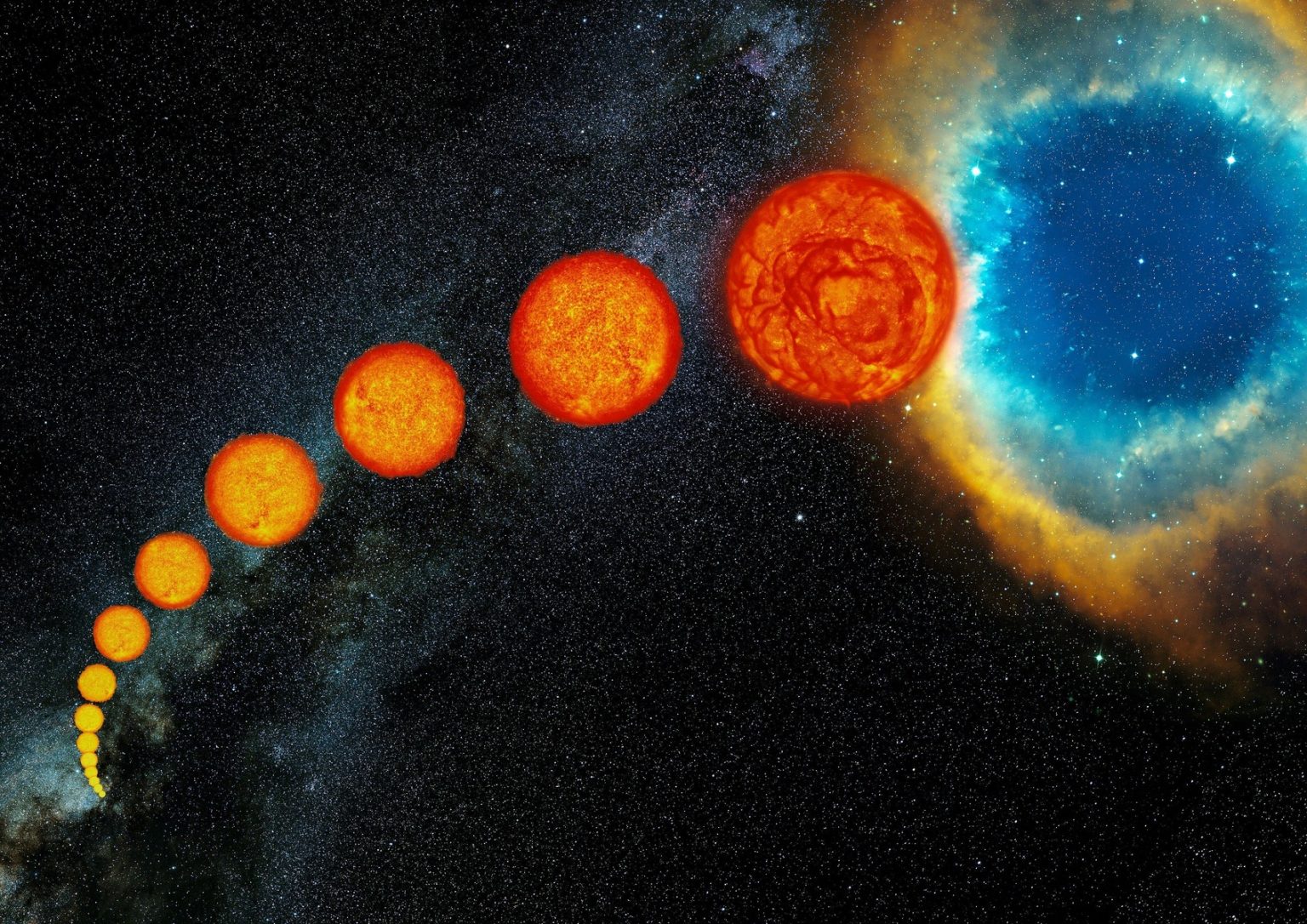
A star, akin to the Sun, commences its lifecycle as a main-sequence star, subsequently progressing through the subgiant and giant phases. Following this, it expels its outer layers, resulting in the formation of a planetary nebula. Credit: ESO, S. Steinhöfel.

Geological evidence indicates otherwise. Stable liquid water existed on the planet well before that period. This discrepancy is recognized as the “weak young Sun” paradox. 

An experiment with protons

Astrophysicist Volodymyr Airapetian of NASA’s Goddard Space Flight Center has highlighted research concerning young stars analogous to the Sun. Data obtained from the Kepler space telescope indicate that these stars produce exceptionally intense flares daily and release streams of high-energy particles.

The team replicated the environment of ancient Earth within a sealed chamber by combining molecular nitrogen, ammonia, carbon dioxide, and carbon monoxide. The mixture was subjected to proton bombardment to emulate the effects of solar flares. This process yielded nitrous oxide, a greenhouse gas that is 300 times more potent than carbon dioxide. The research was documented in the peer-reviewed journal The Astrophysical Journal Letters.

Certain molecules were eradicated by intense ultraviolet radiation. Nevertheless, calculations indicated that even a tenth of these molecules would suffice to raise the temperature of the equatorial regions by five degrees Celsius above zero. Moderately elevated temperatures, marginally above the freezing point, were found to be even more favorable for the formation of lengthy chains of amino acids than higher temperatures.


How Much Does the Sun Affect Earth's Climate?

Earth’s Climate: Past, Present & Future (100,000 BC - 2100)

{ https://universemagazine.com/en/articles-en/ }

Hoe vind je dit bericht?
Geschreven door peter om 23:00 Stuur door

An Explanation of the Sun’s 11-Year Cycle in Simple Terms

An Explanation of the Sun’s 11-Year Cycle in Simple Terms

Once every eleven years, the Sun exhibits a marked increase in activity before reverting to a more quiescent state. We will elucidate the origins of this cyclical rhythm and the reasons why predicting the behavior of our star remains challenging.

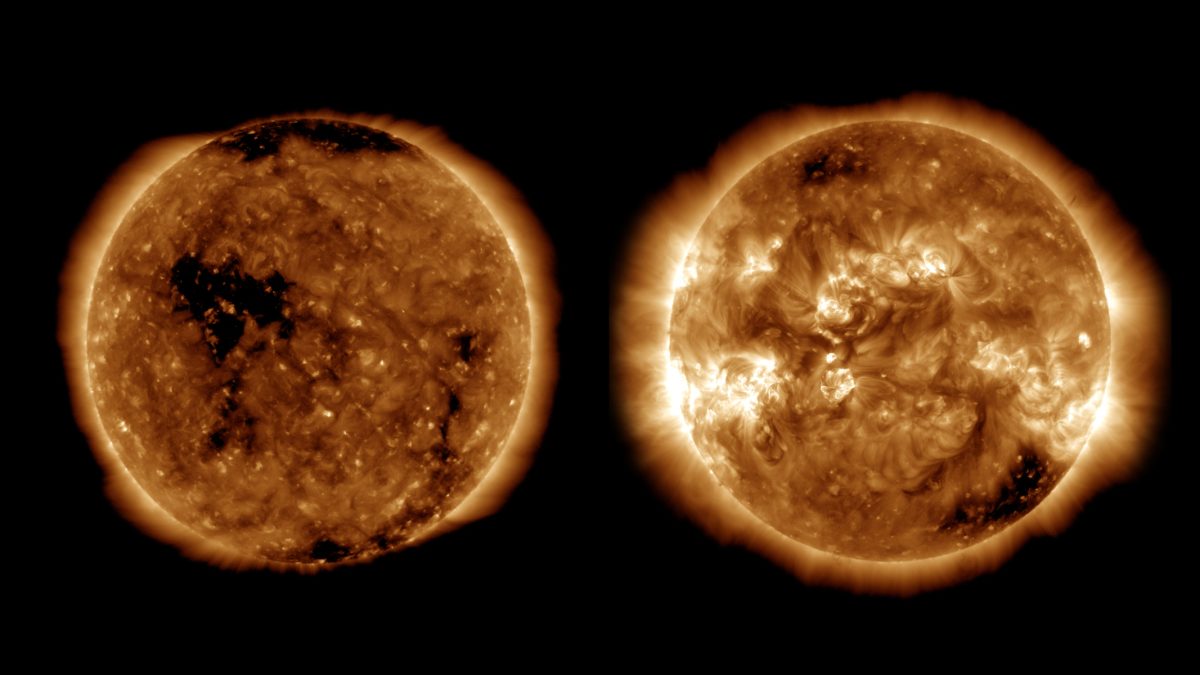
The Sun in October 2019 during a minimum in activity (left) and in April 2014 during a previous maximum (right). Images courtesy of the Solar Dynamics Observatory. Credit: NASA’s Solar Dynamics Observatory/Joy Ng

The deceptive constancy of our star

Every morning, the Sun ascends beyond the horizon, mirroring its emergence from a millennium ago. It appears unchanging to us; however, in actuality, its activity exhibits cyclical variations approximately every eleven years. At the beginning of the cycle, solar activity gradually increases. More and more spots and active regions appear on the surface of the Sun, its magnetic field becomes more complex, the movement of hot plasma on the surface becomes more turbulent, and, as a result, flares and ejections of matter into space become more frequent. Particles and magnetic structures from some of these events reach the  Earth and interact with its magnetosphere. This can cause geomagnetic storms, create problems for satellites and radio communications, and the auroras become brighter and can be visible even at unusually low latitudes. After the maximum, activity gradually decreases. The number of sunspots, flares, and coronal ejections on average becomes smaller, and the Sun moves to solar minimum. Then the cycle begins again. And so on from cycle to cycle. 

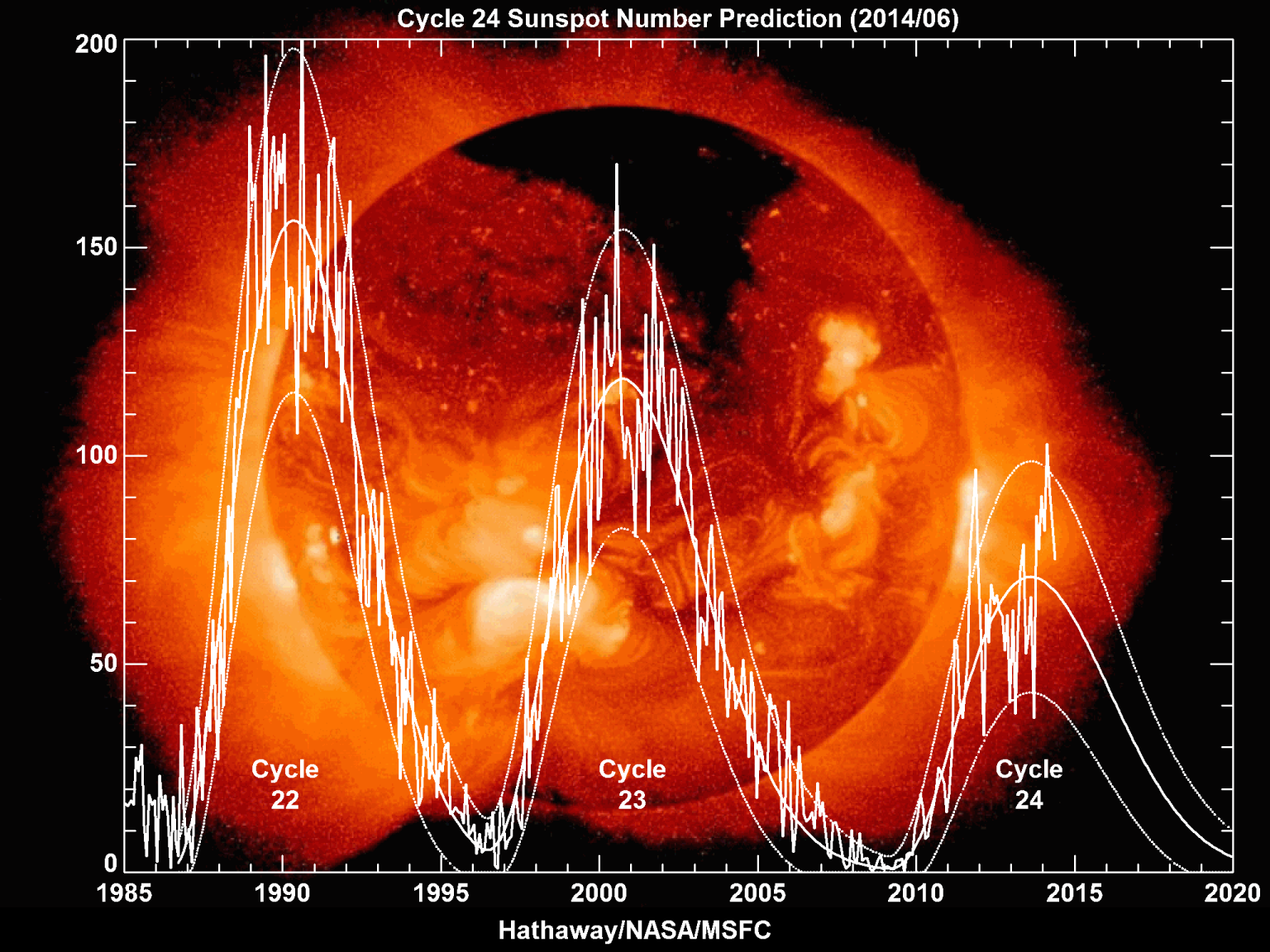
A graph illustrating sunspot numbers, accompanied by a forecast for Cycle 24, produced in 2011. Author: David Hathaway. Source: NASA

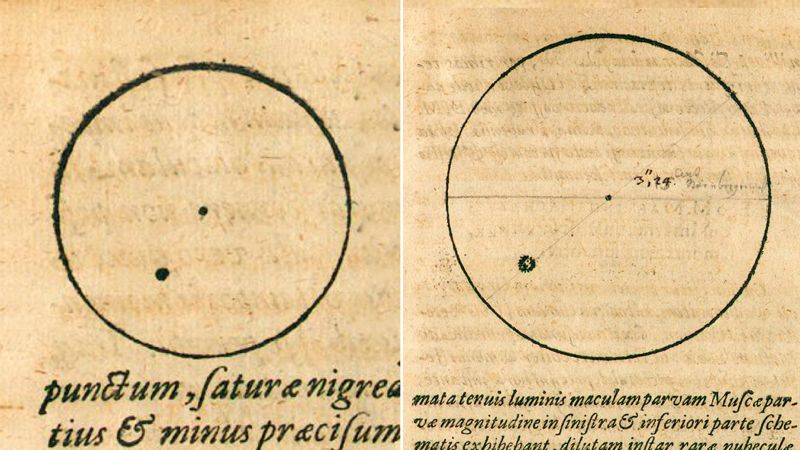
This rhythm was noticed as early as the 19th century, although astronomers had observed sunspots themselves much earlier. One of the earliest dated records belongs to Johannes Kepler: in 1607 he observed the Sun using a pinhole camera. However, Kepler mistakenly thought that the dark spot on the Sun’s disk was Mercury passing in front of the Sun. It was not until 1843 that the German astronomer Heinrich Schwabe drew attention to the approximately 10-year periodicity of changes in the number of sunspots. Later, the period was refined to approximately 11 years. The explanation for this cycle is related to the Sun’s magnetic field, which changes along with the motion and differential rotation of the plasma inside the star. In the early 20th century, astronomers finally had the opportunity to directly study the magnetic fields of sunspots – something that astronomers of the past could not investigate without the instruments available to us today.

Sketches of sunspots published by Johannes Kepler in his book “Phaenomenon Singulare Seu Mercurius In Sole” in 1609.
Credit: Johannes Kepler

The accidental discovery of the solar cycle

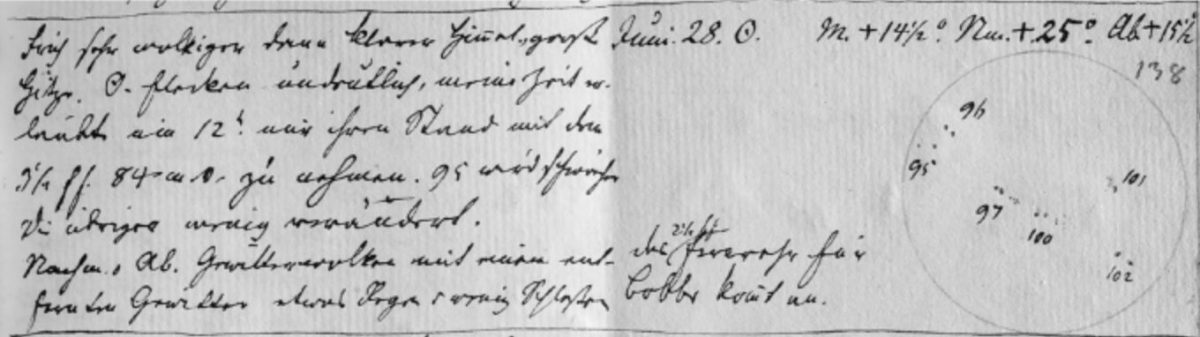
In 1826, German amateur astronomer Samuel Heinrich Schwabe initiated a search for an elusive hypothetical planet thought to orbit closer to the Sun than Mercury. To prevent missing its transit across the Sun’s disk, he meticulously documented all dark spots observed through his telescope daily. Although he did not discover the planet, he amassed seventeen years of consistent observations, employing the same method throughout, and discerned a periodic pattern within the data. The number of sunspots fluctuated in a cycle of approximately ten years. Samuel Heinrich Schwabe subsequently published his findings in the early 1840s in the esteeme  astronomical journal Astronomische Nachrichten. 

An entry dated June 28, 1829, from the observation journal of Samuel Heinrich Schwabe. Author: Samuel Heinrich Schwabe

The Swiss astronomer Rudolf Wolf undertook the subsequent step. He meticulously examined observatory archives and assembled fragmented observations dating from 1745 — systematic records before that period did not exist. Utilizing this extended series, the interval was revised to eleven years. Additionally, Wolf established the numbering system that remains in use today, commencing with the cycle initiated in 1755. The current cycle is designated as number 25.

The reasons why sunspots became the primary measure of solar activity are evident in the era’s practices. They are observable even with basic telescopes, whereas solar flares were first documented only in 1859, and material outbursts from space were not detected until the 1970s. Sunspots continue to serve as a practical indicator today, although solar radio emissions are now also employed alongside them. 

The methodology scientists use to monitor the solar cycle.

Source: NASA Goddard Space Flight Center

What is the origin of this rhythm?

Sunspots have been observed since the time of Samuel Heinrich Schwabe, but their true nature was not understood until 1908. At that time, American astronomer George Ellery Hale studied the light emanating from sunspots and discovered characteristic changes in it that occur only in a very strong magnetic field. Since then, it has become clear that sunspots are merely a visible sign, and the cause of the cycle must be sought in the behavior of the magnetic field inside the Sun. 

ExploreParanormal Gear

This behavior is atypical. The Sun’s surface is designated as the photosphere — namely, the visible stratum from which light is emitted. The Sun, of course, does not have a regular solid surface: the photosphere consists of very hot plasma. This is a state of matter in which the gas is largely ionized: along with neutral particles, it contains charged ions and free electrons. It is this mobile electrically conductive substance that forms the complex magnetic field of the Sun. Plasma conducts electric current well, and the magnetic field moves with it, as if frozen inside. This connection is two-way: the flows of matter seem to drag the magnetic field along with them, and a sufficiently strong field, on the contrary, slows down their movement.

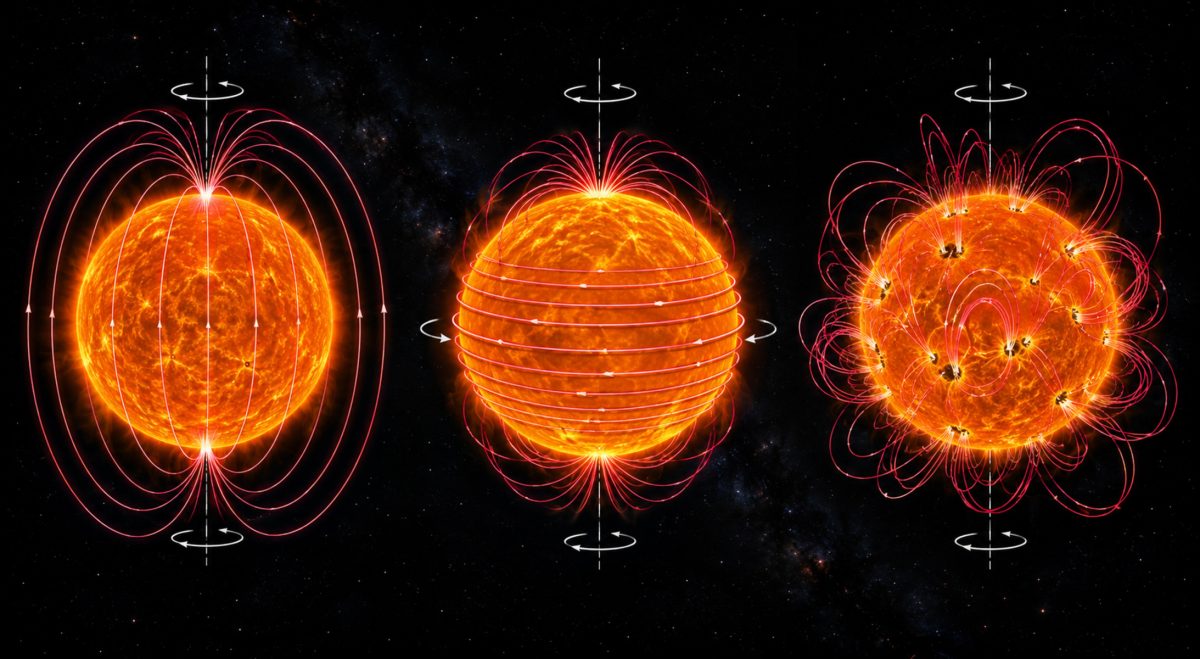
The plasma exhibits variable rotational velocities across different latitudes. The equatorial zone completes a complete rotation in about 25 days, while at high, near-polar latitudes the rotation takes about 35 days. This difference in speed gradually deforms the Sun’s poloidal magnetic field: its field lines stretch in the direction of rotation and increasingly wind around the Sun, forming a toroidal component of the magnetic field. This part of the solar dynamo mechanism is called the omega effect.

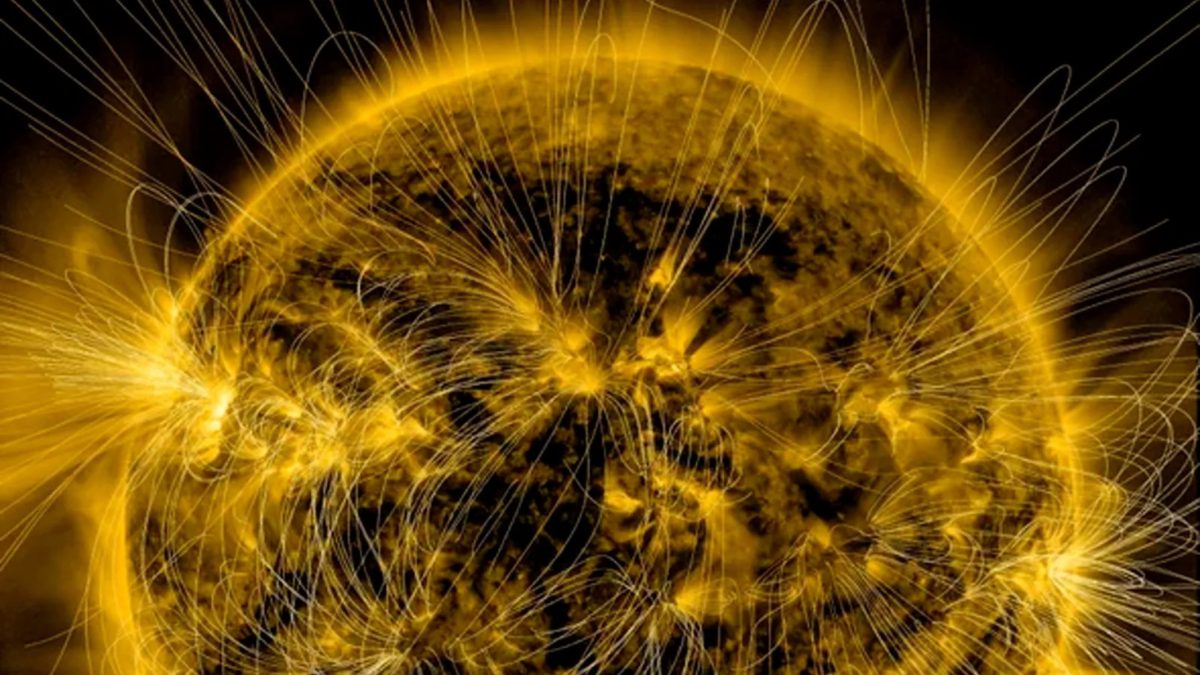
A schematic representation delineating the three phases of the Sun’s magnetic field evolution throughout a cycle. On the left, the magnetic field extends longitudinally from pole to pole. In the central depiction, the field exhibits twisting along the parallels due to differential rotation speeds. On the right, the magnetic field appears entangled, with loops protruding outward and dark spots forming at their bases.

The second component of the mechanism functions concurrently with the first. In the Sun’s outer layer, hot plasma ascends, cools, and descends, while rotational forces twist these flows similar to the manner in which cyclones are twisted in  Earth’s atmosphere. The reversed magnetic field generated by this twisting gradually reverts to its original configuration, with the north magnetic pole occupying the position previously held by the south pole. This process occurs approximately at the peak of solar activity. This phenomenon is known as the alpha effect and remains a subject of considerable debate among researchers. Collectively, these two components constitute the solar dynamo.

The magnetic field beneath the Sun’s surface exhibits an uneven distribution. In areas where the magnetic field is particularly strong, it affects the movement of the plasma and can make a magnetically saturated region buoyant. It rises through the Sun’s mass, carrying with it the magnetic flux. Near the surface, the magnetic field can emerge in arcs and loops, while their ends remain submerged in the plasma. A strong magnetic field suppresses the convective transfer of energy from the depths, so where such a loop emerges, the surface becomes colder than the surrounding area. This is how a sunspot appears. The more complex and tangled the field becomes, the more often loops of opposite direction come together and reconnect. During such magnetic reconnection, some of the stored magnetic energy is quickly released. This can cause powerful solar flares, and under certain conditions, coronal mass ejections, when huge amounts of plasma are ejected into interplanetary space.

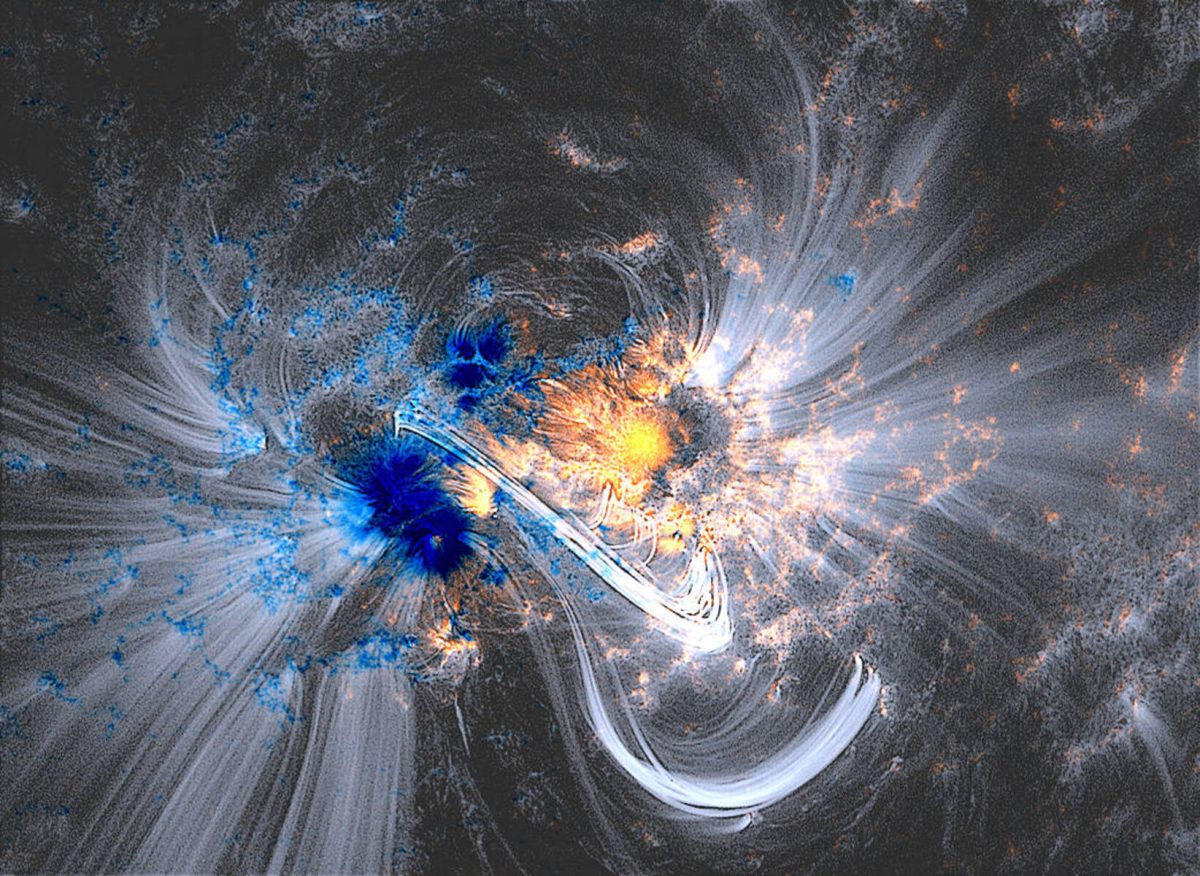
A composite image of an active region on the Sun, captured by the Solar Dynamics Observatory. Credit: NASA/SDO

The concept of such a mechanism was first proposed by the Irish physicist Joseph Larmor in 1919. However, the theory still does not elucidate why one of its cycles precisely endures eleven years. Individual cycles vary from nine to fourteen years, with an average of eleven. Currently, it remains infeasible to accurately predict either the duration or the intensity of the subsequent cycle.

Why the area is not actually dark

On the Sun itself, sunspots remain the most conspicuous manifestation of this phenomenon, and their designation leads to a common misconception. The term “spot” implies a defect or a void, although in reality it refers to the same incandescent material, but cooler than the adjacent regions. The photosphere is heated to approximately 5,500 degrees Celsius, whereas a sunspot reaches about 3,500 degrees in temperature. Consequently, the material within a sunspot emits roughly one-fifth of the light emitted by the surrounding surface, and this contrast is what renders the sunspot dark. 

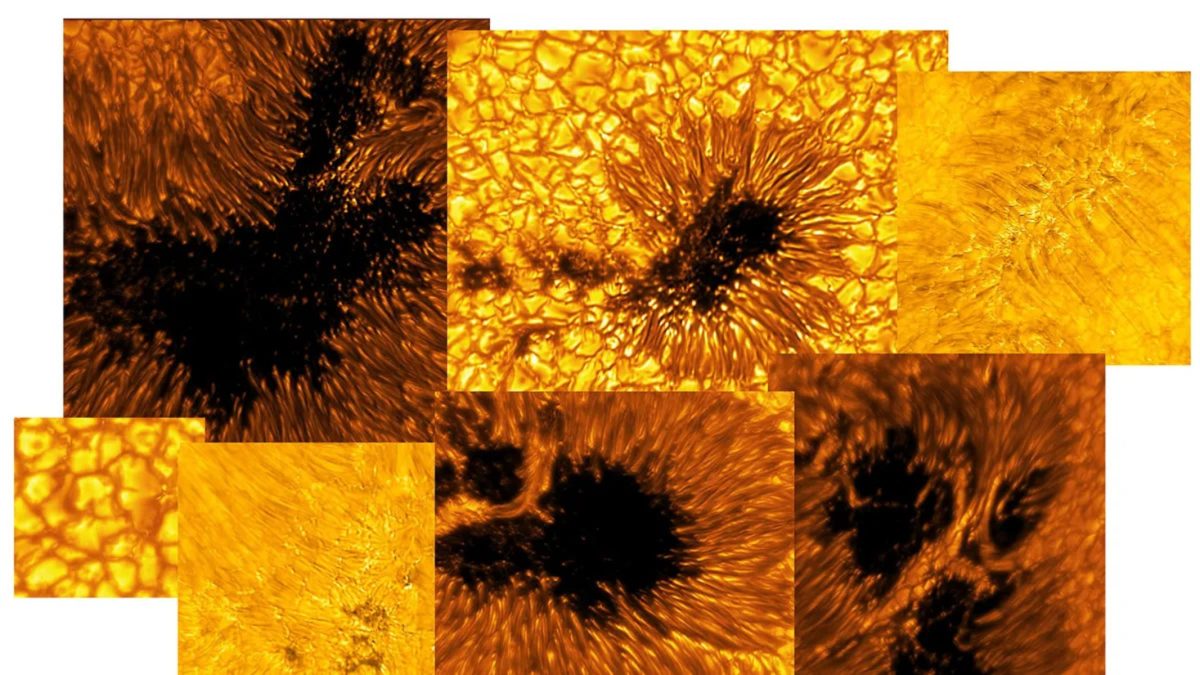
A collection of images of the Sun captured during the initial year of the Daniel K. Inouye Solar Telescope’s operation, released on May 19, 2023. Credit: NSF/AURA/NSO

The smallest sunspots measure approximately 1,600 kilometers in diameter, whereas the largest can extend up to 160,000 kilometers — approximately twelve times the diameter of  Earth. The most intense flares and eruptions originate above these substantial sunspot clusters. These phenomena reach us through multiple pathways. 

The radiation emitted by the flare arrives at Earth in approximately eight minutes. It remains imperceptible to the human eye due to its predominant emission within the X-ray and ultraviolet spectra. Nonetheless, it ionizes the upper atmospheric layers, resulting in disruptions to shortwave radio communications on the sunlit side of the Earth and impairing the accuracy of satellite navigation as signals traverse the modified ionosphere.

Emissions of this substance propagate at a considerably slower rate, taking several days to reach Earth’s vicinity. They are responsible for magnetic storms and the resulting auroras, which become visible at much lower latitudes than usual under such conditions. Due to abrupt variations in the magnetic field, supplementary currents are induced in extensive power lines, leading to transformer overloads. The upper atmosphere heats and expands as a consequence of the storm, causing satellites in low Earth orbit to encounter a denser environment and consequently lose altitude at an accelerated rate. Additionally, high-energy charged particles can impair satellite electronics, causing issues ranging from isolated memory errors to the gradual deterioration of solar panels. Such events are markedly more frequent during solar maxima than during solar minima.

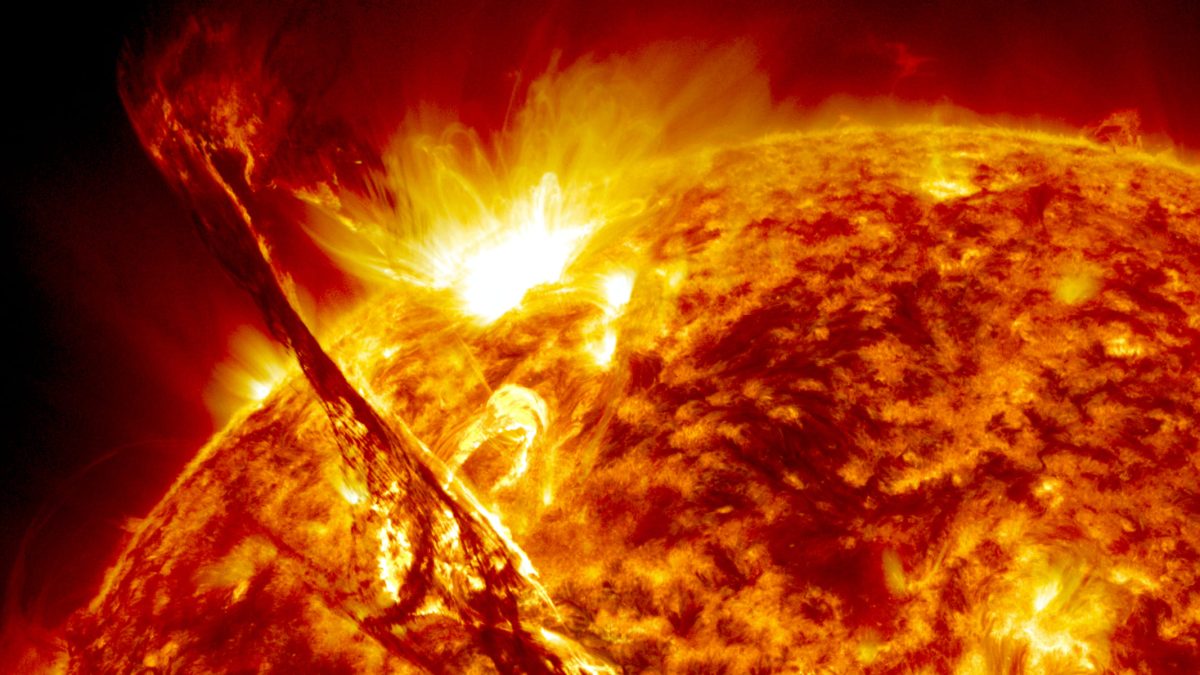
An eruptive prominence observed on August 31, 2012, that initiated a coronal mass ejection. A composite image captured in two ultraviolet bands. Credit: NASA’s Goddard Space Flight Center/SDO

This remains, however, merely a preliminary guideline. Predicting a specific flare is unattainable, and severe storms have been documented on numerous occasions even during the declining phase, when overall activity was diminishing.

What is currently occurring with the Sun?

The present cycle has demonstrated the considerable challenges associated with making precise predictions. In 2019, a panel of experts from the United States National Oceanic and Atmospheric Administration (NOAA), in collaboration with NASA, forecasted that the peak would occur in July 2025; however, it actually materialized earlier, in the autumn of 2024. Moreover, the predicted intensity was also inaccurate. The forecasted activity index was 115, whereas the actual index surpassed 160. These figures do not directly correspond to the count of sunspots on the solar disk, as the index also considers their groupings. The peak itself is identified by the average value over the year, making its exact date indeterminate until after it has occurred.

The apex of Solar Cycle 25 commenced in 2024, during which time the most intense solar flares occurred with extraordinary regularity. Credit: NASA/SDO/AIA/LMSAL

Approximately concurrently, the polarity of the Sun’s poles underwent a reversal. Based on measurements from the Japanese Hinode spacecraft, this event likely occurred in October 2024 in the southern polar region, with the northern polar region experiencing the reversal approximately one month later. 

The activity is presently declining and is projected to continue decreasing until reaching a minimum around the year 2030. Subsequently, Cycle 26 will commence, and at its peak — approximately in the mid-2030s — the polarity will reverse once more, reverting the magnetic field to its pre-2024 state. It has been observed that the interval between two activity minima is approximately eleven years, as evidenced by the frequency of sunspots and solar flares. During this period, the solar poles undergo a single polarity reversal. To complete another such reversal and return to the initial configuration, an additional cycle is necessary; thus, a complete magnetic cycle is estimated to span approximately twenty-two years.

RELATED


The Heartbeat of the Sun: Understanding the 11-Year Cycle

The Sun Has an 11-Year Cycle | #space #cosmos

T
he 11-Year Sunspot Cycle Explained

{ https://universemagazine.com/en/articles-en/ }

Hoe vind je dit bericht?
Geschreven door peter om 22:44 Stuur door

What If We Become the Aliens of Tomorrow?

What If We Become the Aliens of Tomorrow?

Now imagine another planet where intelligent life appeared one million years, 10 million years or 100 million years before us. 
Such a civilization would already have had an extraordinary amount of time to develop. Such a civilization could theoretically have developed technologies far beyond anything we currently possess. 
evolution%20humanity%20to%20aliens.jpg

It could potentially have developed for example: advanced artificial intelligence; autonomous machines; genetic engineering; nanotechnology; self-replicating systems; autonomous spacecraft; planetary engineering; Interstellar space travel: advanced energy systems; telepathy, time travel; technologies capable of modifying its own biology. 
They may have started as biological organisms. But after millions of years, they could have become something else entirely. A civilization that is partly or almost completely post-biological. 
Biological evolution and technological evolution could become intertwined. The civilization might begin changing itself deliberately. Its members could alter their biology. They could replace biological organs. They could integrate artificial intelligence into themselves. Eventually, the distinction between organism and machine could begin to disappear. 
We call them “aliens” and their craft “UFOs” simply because we don’t know who they are or what they represent. But what if that is the wrong way to look at them? What if they are not something mysterious at all, but the result of their own evolutionary journey on another planet? 
Just as humanity has evolved from primitive tools to advanced technology, artificial intelligence, genetic engineering, and space exploration, could these beings represent what humanity might ultimately become after millions of years along its own evolutionary journey, shaped by the technologies, developments, and techniques emerging today? 
Just think about this: If humanity were to encounter a civilization 100 million years more advanced than us tomorrow, would we even recognize it as a civilization, or would we simply call it something we cannot understand?

RELATED

ARE ALIENS JUST HUMANS FROM THE FUTURE?

"Aliens Are Humans From The Future!" (Ft. Mike Masters & David Grusch)

"Aliens" are HUMANS from the FUTURE: Top Anthropologist Reveals Explosive Evidence | Mike Masters

{ https://ufosightingshotspot.blogspot.com/ }

Hoe vind je dit bericht?
Geschreven door peter om 22:05 Stuur door

Archaeologists scanned Machu Picchu—and found hidden roads the world had never seen before

Archaeologists scanned Machu Picchu—and found hidden roads the world had never seen before

Story by Tim Newcomb
Using LiDAR, the team discovered 1.5 miles of pre-Columbian roads, but to protect the find, officials are keeping the specific location a secret.
© inigoarza - Getty Images

Here’s what you’ll learn when you read this story:

  • A new archaeological discovery at Machu Picchu deepens the site’s connections to the sacred Mandor Wall.
  • A team of researchers discovered 1.5 miles worth of roads connecting the site to additional terraces and platforms.
  • Officials are keeping the exact location of the new discovery under wraps to prevent any amateur treasure hunters from disturbing the site.

Archaeologists recently discovered 1.5 miles of pre-Columbian era roads leading to platforms and terraces near the Mandor Wall alongside Machu Picchu, buried under dense tropical forest. The Inca roads—nearly 8,000 feet high in the towering Andes—lead to a mixture of architectural features directly opposite Machu Picchu, further linking the larger complex together and showcasing the importance of the site. “This discovery complements and significantly revised hypotheses regarding the functioning of the entire complex,” Mariusz Ziółkowski, the director of the Center for Andean Studies at the University of Warsaw, said in a statement.

A UNESCO World Heritage Site, Machu Picchu was “probably the most amazing urban creation of the Inca Empire at its height,” according to UNESCO, with giant stone walls, terraces, and ramps created to look as though they’d been cut naturally in the continuous rock escarpments. “The natural setting,” according to UNESCO, “on the eastern slopes of the Andes, encompasses the upper Amazon basin with its rich diversity of flora and fauna.”

Within the larger Machu Picchu National Park, over 60 archaeological monuments connect via a network of roads. “These sites served various satellite functions in relation to the main complex, known as Llagta de Machu Picchu,” Ziółkowski said. “They are situated mainly on the left bank of the river, and it seemed that this was where the Incas has concentrated their urban planning efforts.”

The newly discovered roads sit on the opposite side of the river, showing that a larger area “underwent significant cultural transformations during the Inca period.” Adding new roads to the mix further highlights just how the site functioned 600 years ago, and presents a fresh lens through which experts can view Machu Picchu.

Machu Picchu's Hidden Roads Were Just Mapped—After 500 Years Under the Canopy #Shorts

The discoveries come thanks (in large part) to LiDAR imagery, which helps map environments, even ones covered in dense vegetation, without on-the-ground exploration. The team hopes to hit the field next year to mine the details of what they spotted remotely through excavation, which should help define the size and scope of the platforms and may uncover additional architectural features. The team also hopes to accurately date the new discoveries next year.

In the meantime, neither the Warsaw researchers nor the Peruvian government is sharing the exact location of the find, so as to keep amateur treasure hunters away.

The links to a variety of new sites near the Mandor Wall shows that the sacred function of the larger Machu Picchu site covered a wider area than previously believed. One .75-mile section of discovered road features a common Inca zigzag design, prompting experts to believe that they could find proof that the road dates to the time of Machu Picchu’s use.

RELATED VIDEOS

Machu Picchu’s Hidden Underground World Is More Incredible Than We Thought

They Found Roads Hidden Beneath the Jungle Near Machu Picchu… 😳

New Scans Revealed Machu Picchu’s Hidden Engineering — Experts Missed This
Hoe vind je dit bericht?
Geschreven door peter om 21:38 Stuur door

Pentagon UFO Program Scientist Says “Gifted” Chinese Children Teleported Objects Through Sealed Containers Last updated: August 30, 2026 11:28 pm By Vicky Verma 4 days ago

Eric Davis teleportation study

Pentagon UFO Program Scientist Says “Gifted” Chinese Children Teleported Objects Through Sealed Containers

Physicist Eric Davis has made an extraordinary claim about experiments reportedly carried out in China involving children said to possess unusual psychic abilities. According to Davis, these “gifted” children were allegedly able to move physical objects through sealed containers without opening or damaging them. The objects reportedly included mechanical watches, insects, pieces of paper and even miniature radio transmitters.

Some of the experiments, Davis says, were recorded using high-speed cameras and other instruments. Researchers allegedly saw objects appear to interact with the walls of sealed containers, disappear from view and later reappear elsewhere.

More than two decades ago, he included the same Chinese experiments in his report, titled “Teleportation Physics Study” prepared for the U.S. Air Force Research Laboratory.

Davis was tasked with examining different concepts of teleportation, ranging from established quantum physics to highly speculative possibilities involving wormholes, extra dimensions and alleged psychokinetic phenomena. He discusses research from China in which children and young adults described as possessing extraordinary abilities allegedly caused objects to move through physical barriers.

And in a recent interview, Davis has now added more detail about what he believes happened in those experiments.

The Air Force Teleportation Study

Eric W. Davis is a physicist and astrophysicist who has worked on advanced aerospace and defense-related research. He has also been associated with the Pentagon’s controversial UFO/UAP research effort, working as a consultant on programs connected with the Defense Intelligence Agency’s investigation of unidentified aerial phenomena and advanced aerospace concepts.

Long before much of his UAP-related work became publicly known, Davis was commissioned to investigate teleportation for the Air Force Research Laboratory.

Davis examines quantum teleportation, for example, which is a genuine area of physics involving the transfer of quantum information between systems. He also considers highly theoretical concepts such as manipulating spacetime, traversable wormholes and additional dimensions.

But Davis created another category that he called “p-Teleportation.” The “p” referred to psychic or psychokinetic teleportation: the alleged movement of matter from one place to another through some unknown effect involving consciousness.

The Chinese “Gifted Children” Experiments

Davis points to a Chinese paper published in September 1981 in the journal “Ziran Zazhi”, which he translates as “Nature Journal”. The paper was titled “Some Experiments on the Transfer of Objects Performed by Unusual Abilities of the Human Body”.

According to Davis’s summary, the researchers reported experiments involving children who supposedly possessed unusual mental abilities. The children were said to cause small objects to move from one location to another without touching them beforehand. The reported objects included radio micro-transmitters, photosensitive paper, mechanical watches, horseflies and other insects.

Research carried out by the Aerospace Medicine Engineering Institute in Beijing was published in 1990 in the “Chinese Journal of Somatic Science”. These experiments reportedly involved objects including nuts, bundles of matches, pills, nails, thread, treated paper and other small materials.

The researchers allegedly placed those objects inside sealed containers. These included sealed glass bottles, glass tubes with closed caps, paper envelopes, double-layered bags and plastic film containers. The claim was that the test objects somehow passed through the walls of the containers without those walls being broken.

In his 2004 report, he argues that the Chinese experiments used unusually strict controls. He says researchers employed blind and double-blind procedures and that the gifted subjects were, in many cases, blindfolded.

According to Davis, the subjects were not allowed to touch the specimens or sealed containers before or after the experiments. He writes that only the experimenters handled the objects. He also states that outside witnesses were present, including technical specialists and individuals connected with military intelligence.

The 1990 Chinese experiments were particularly interesting to Davis because researchers reportedly used videotape and high-speed photography. According to his report, some recordings seemed to show objects interacting with the walls of the containers during the alleged transfer.

Davis describes specimens appearing to “meld” or blend with the container wall. In other experiments, the object reportedly disappeared completely and later appeared at another location. The objects were said to remain physically unchanged after the process.

That reportedly included living insects. Davis notes that the insects were apparently unharmed after the alleged teleportation. Unlike a match, pill or insect, a radio transmitter could continuously produce a measurable signal.

That meant researchers could potentially monitor what happened to it even when it could no longer be seen.

In the recent interview with Michael Phillip, Davis describes the transmitter experiment in stronger and more specific terms than he does in the 2004 report. He says the radio signal became weaker and weaker as the transmitter disappeared. Davis compares the behavior to what would be expected if a transmitter were physically moving farther away from the receiver.

Radio-wave intensity normally falls as distance increases. According to Davis’s description, the signal weakened until the transmitter appeared to be very far away or effectively undetectable. Then, as the object supposedly materialized at the destination, the receiving equipment began detecting a stronger signal again.

The 2004 paper clearly discusses dramatic changes in signal amplitude and frequency, including the signal becoming extremely weak or absent during the alleged event.

The more specific claim that the signal behaved as though the transmitter were moving progressively farther away comes from Davis’s recent verbal description. That distinction matters when evaluating the story.

Hal Puthoff and the Defense Intelligence Agency

Puthoff is well known for his involvement in U.S. government-sponsored investigations of remote viewing and other alleged psychic phenomena beginning in the 1970s.

He worked at SRI International and became closely associated with research programs that eventually formed part of the government’s broader STAR GATE history.

In the recent interview, Davis says Puthoff went to China to meet scientists involved in this type of research. According to him the trip occurred under Defense Intelligence Agency sponsorship and that Puthoff wanted to determine whether the scientists were genuine researchers or simply charlatans performing tricks.

According to Davis, Puthoff came away convinced that they were not simply conducting magic tricks or deliberately hoaxing observers. There is documentary evidence confirming an important part of this history.

Puthoff really did travel to China and investigate Chinese research into what was then described as “extraordinary human body function” or psychoenergetics. A declassified October 1982 report written by Puthoff is titled “Psychoenergetics Research in the People’s Republic of China”.

Read also:

The report was prepared for the Defense Intelligence Agency under the GRILL FLAME program. This shows that U.S. intelligence had a genuine interest in Chinese claims involving anomalous human abilities.

Davis also emphasizes that the Chinese research was not limited to obscure private paranormal groups. He says researchers associated with Chinese aerospace and military-related institutions were involved.

His 2004 report states that observers in the 1981 experiments included representatives from China’s National Defense Science Commission. Davis says this involvement contributed to the Defense Intelligence Agency preparing an intelligence report containing an English translation of the Chinese paper. Later experiments also came from the Aerospace Medicine Engineering Institute in Beijing.

For Davis, this institutional involvement makes the research harder to dismiss as nothing more than casual paranormal experimentation. At the same time, government or military interest should not be confused with scientific confirmation. Intelligence agencies often investigate unusual claims simply because even a small possibility of strategic importance may be worth examining.

This was especially true during the Cold War, when both the United States and the Soviet Union explored unconventional areas of research partly because neither side wanted to discover that the other had developed an unexpected advantage. The fact that intelligence agencies investigated a subject therefore tells us that they considered it worth looking into, but it does not automatically mean they concluded the phenomenon was genuine.

Davis’s Fourth-Dimension Explanation

The most fascinating part of Davis’s interpretation is his attempt to explain what might be happening if the Chinese observations were real. Rather than suggesting that the objects were being destroyed in one location and reconstructed somewhere else, Davis proposes that they might temporarily leave normal three-dimensional space.

The easiest way to understand his idea is to imagine a creature that lives entirely on a flat sheet of paper. That creature can move forward, backward, left and right, but it cannot move upward because its world contains only two spatial dimensions.

Now imagine drawing a closed circle around the creature. From its perspective, there is no way to escape because every direction it can travel is blocked by the line.

But someone living in three dimensions has another option. We could simply lift the creature off the paper, move it over the circle’s boundary and place it back down outside. From the creature’s point of view, it would appear to have passed through an impossible wall, even though it never actually crossed the wall at all.

It simply moved around the barrier using a spatial direction the two-dimensional creature could not access.

Davis asks whether something similar could happen in our own world. Human beings experience three ordinary dimensions of space, but if an additional spatial dimension existed and could somehow be accessed, an object inside a sealed container might theoretically leave our normal three-dimensional space, move through that additional direction and then return somewhere outside the container.

From our point of view, it could look as if the object had passed directly through solid matter. Davis suggests that the strange “melding” or blending effect reportedly seen on high-speed recordings might represent our three-dimensional view of an object moving through a fourth spatial dimension.

Why Would the Radio Signal Disappear?

Davis uses the radio-transmitter experiment to take this idea even further. If the transmitter really moved partly outside ordinary three-dimensional space, he suggests that its electromagnetic signal might also spread into the additional dimension.

A receiver remaining in normal three-dimensional space would therefore detect less of the signal. As the transmitter moved farther into this hypothetical fourth spatial dimension, the signal could become progressively weaker until it was extremely faint or no longer detectable.

Davis speculates that any weak signal still being detected during the process could represent electromagnetic energy leaking back into our normal three-dimensional space. This is his proposed explanation for why the transmitter’s radio signal allegedly weakened or disappeared while the object itself was undergoing the supposed teleportation event.

It is important to stress that this remains a hypothesis rather than a demonstrated explanation. There is no accepted scientific evidence showing that physical objects can be moved through additional spatial dimensions in this way, or that human consciousness can cause such an event.

Higher-dimensional spaces are perfectly legitimate concepts in mathematics and theoretical physics, but that does not mean humans can physically access them. Davis himself acknowledges that a much deeper theory, along with far more experimental evidence, would be required before such an explanation could be seriously tested.

Davis suggests that consciousness itself may somehow interact with higher-dimensional physics. The Chinese experiments were allegedly performed by particular children and young adults who were described as possessing unusual psychokinetic abilities, so any explanation of the reported phenomenon would also have to explain why certain individuals appeared able to produce the effect.

If those effects were genuine, Davis argues that a complete theory might need to connect consciousness with matter, quantum physics and spacetime. He speculates that the brain or consciousness may possess properties that are not fully described by ordinary three-dimensional physics.

{ https://howandwhys.com/ }

Hoe vind je dit bericht?
Geschreven door peter om 23:32 Stuur door

What Caused Antarctica to Freeze Millions of Years Ago? New Clues Could Finally Solve This Longstanding Climate Mystery

Antarctica ice sheet

(Image Credit: T. Dederichs/Unsplash)

What Caused Antarctica to Freeze Millions of Years Ago? New Clues Could Finally Solve This Longstanding Climate Mystery

New clues to the formation of our planet’s oldest and largest ice sheet could help resolve a longstanding enigma about the southernmost continent.

Around 34 million years ago, Antarctica’s ice sheet began to take shape during a period when global temperatures were predominantly warmer than they are at present. The exact reason why such a large portion of Earth’s water would be subsumed into a massive ice sheet under such conditions has long perplexed researchers.

Now, a new study published in the journal Science suggests that clues to the mystery may exist beneath the ice itself, according to researchers who point to geological evidence that could help explain what led to the formation of Antarctica’s glaciers during a comparatively warm period in our planet’s history.

Clues to Why a Continent Froze

The East Antarctic Ice Sheet (EAIS) holds enough frozen water that it could raise sea levels around the world by more than 50 meters if a sudden, total melting event were ever to occur. Fortunately, scientists don’t anticipate that happening any time soon, although questions over what caused the formation of the largest mass of ice on our planet have remained one of the most predominant mysteries about Antarctica’s ancient history.

Based on geological evidence and paleo-climatological proxy data, the ice sheet’s formation occurred near the transition between the Eocene and Oligocene eras around 34 million years ago, marking a significant step along our planet’s path toward the cooler conditions that prevail today, even amid anthropogenic factors that contribute to ongoing climate changes.

As far as the causes behind this, scientists have long pointed to a reduction in atmospheric carbon dioxide as one potential driver of glaciation in Antarctica. However, this explanation also leads to questions: namely, that if falling CO2 and global cooling are believed to be the main factors behind the formation of Antarctica’s ice, then similar freezing should have occurred close to the North Pole as well.

Curiously, evidence suggests that glaciation in Earth’s northernmost regions didn’t begin catching up to its southern counterpart for another 20 to 25 million years. But what might account for this?

An Ancient Climate Missing Link

The new research, led by scientists at the University of Southampton in collaboration with an international team of researchers from Durham University and several other institutions, points to Antarctica’s changing landscape as a likely missing piece to this ancient puzzle.

“Antarctica’s land surface was gradually lifted to the point where ice could gain a permanent foothold, even while the surrounding polar oceans as well as global temperatures remained surprisingly warm,” said Thomas Gernon, a Professor of Earth Science at the University of Southampton and the study’s lead author.

By employing models that helped the team map the evolution of the Antarctic landscape, they were able to successfully reconstruct the ancient geological processes going all the way back to the original breakup between Africa and Antarctica that reshaped East Antarctica. This continental breakup led to the formation of a coastal escarpment in the region identified today as Dronning Maud Land, where an elevated plateau rose to nearly two kilometers, and extended close to 2,000 kilometers inland.

Over the 100 million years that followed, a wave of uplift and erosion gradually migrated inland toward Antarctica’s Gamburtsev Mountains, a process which would recur again during the Eocene, further elevating the region and increasing the amount of ancient Antarctica’s landmass that was above the permanent snow line, all of which occurred roughly 15 million years before mass-scale glaciation would begin on the continent.

Based on the team’s models, these major changes to the landscape shifted East Antarctica above the threshold where ice-sheet growth could begin occurring, the onset of which began around 45 million years ago.

Combined Factors Behind Antarctica’s Freeze

Another factor the team identified involves how the large-scale glaciation also caused more sunlight to be reflected away from Earth due to the icy surface’s light coloration, a process known as albedo feedback. The team believes this reflected sunlight may have contributed to as much as an additional degree Celsius of total global cooling.

That cooling alone, the researchers note, would not have been enough to cause widespread glaciation across the Northern Hemisphere, which generally features lower elevations.

Overall, the findings do indicate that Earth’s transition into an icehouse wasn’t something that was driven solely by climate. Instead, what seems most likely is that slow geological transformations occurring over many millions of years were likely to have been a primary contributor to this process, raising Antarctica’s landscape enough to facilitate ice sheet formation, and revealing how the evolution of landscapes can ultimately reshape the climate of an entire planet.

RELATED

Scientists Finally Found What Froze Antarctica 🧊🐧🪐🌋✨

Scientists Just Pulled a 1.2-Million-Year-Old Ice Core From Antarctica — Rewriting Earth's History

Antarctica Was Green for Millions of Years - What Froze It? | Full Documentary

{ https://thedebrief.org/category/science/ }

Hoe vind je dit bericht?
Geschreven door peter om 22:39 Stuur door

“We’ve Never Seen Anything Quite Like This”: A Strange Ten-Sided “Structure” Has Been Spotted on Saturn’s North Pole

Hubble Saturn ten-sided wave

(Image Credit: NASA, ESA, STScI, Agustin Sánchez-Lavega (UPV), Amy Simon (NASA-GSFC), Michael Wong (UC Berkeley);
Image Processing: Alyssa Pagan).

“We’ve Never Seen Anything Quite Like This”: A Strange Ten-Sided “Structure” Has Been Spotted on Saturn’s North }Pole

NASA’s Hubble Space Telescope has glimpsed a strange ten-sided atmospheric wave at Saturn’s south pole, the first regular-sided jet pattern ever observed there.

In a recent paper published in Science Advances, researchers examined Saturn’s peculiar decahedron, detecting signs of an entirely new atmospheric phenomenon for the gas giant. A similar hexagon-shaped wave resides at Saturn’s north pole but differs in noticeable ways.

Years of Hubble observations from 2023 to 2025 allowed the team to trace subtle hints that they eventually resolved into the decagonal wave at Saturn’s south pole.

Observing the Solar System

“We’ve never seen anything quite like this in Saturn’s southern hemisphere,” said co-author Amy Simon, OPAL principal investigator, at NASA’s Goddard Space Flight Center in Greenbelt, Maryland. “The northern hexagon has been there every time we’ve looked for more than 40 years. This feature is different — it appears to be strengthening, giving us the rare opportunity to watch a giant atmospheric pattern develop.”

Since its 1990 launch into low Earth orbit, the Hubble Space Telescope has been observing our solar system, uncovering new details about our planetary neighbors. One such project is the Outer Planet Atmospheres Legacy (OPAL) program, which began collecting data with observations of Uranus in 2014 and now provides the crucial evidence for this discovery, with high-resolution images that resolve murky hints from ground-based observations.

As Saturn’s seasons changed, its south pole came into alignment with ground-based observatories. In images from those telescopes submitted to the Planetary Virtual Observatory Laboratory, amateur astronomers Trevor Barry and Jean-Paul Oger, along with Agustín Sánchez-Lavega of the University of the Basque Country in Spain, noticed something interesting happening on the gas giant.

Saturn two views Since 2023, the decagon has continued to develop in what scientists believe may be a new atmospheric pattern on Saturn. Credit: NASA, ESA, STScI, Agustin Sánchez-Lavega (UPV), Amy Simon (NASA-GSFC), Michael Wong (UC Berkeley); Image Processing: Alyssa Pagan

A Strange Band on Saturn

The researchers spotted an undulating band along Saturn’s south pole, which, in further 2025 ground-based telescope images, began to suggest a decagonal (ten-sided) structure. With its incredible image clarity and spatial resolution, Hubble’s imagery finally allowed researchers to resolve the decagonal shape with certainty.

“Given Saturn’s symmetry in its north-south jet stream system, we have been searching for a counterpart to Saturn’s northern hexagon on the south pole in Hubble images since 1990,” said lead author Agustín Sánchez-Lavega of the University of the Basque Country in Spain. “Images from NASA’s Cassini spacecraft, which orbited Saturn between 2004 and 2017, showed no inkling of a long-lived formation, either. The Hubble data confirmed the feature’s presence back to 2023.”

The wave is an interesting three-dimensional feature that extends through multiple layers of the atmosphere within one of the planet’s jet streams. Because Hubble can image the planet in multiple wavelengths, the decagon’s location appears to shift between observations, as each wavelength penetrates the atmosphere to a different degree.

Questions About Saturn

“The most intriguing part to me is that this seems to have just formed recently,” said Simon. “The question is, why did it suddenly form now when we haven’t seen one before?”

Recognizing Saturn’s decagonal wave is only a first step. Follow-up observations to collect more data and computer models to piece together what is occurring on the planet will be required to firmly grasp the phenomenon. Questions remain about how it formed, how long it may last, and how similar it is compared to the northern hexagonal wave.

One thing the team will be sure to watch for in their continued observations is whether the shape evolves or maintains its decagonal structure. Their continued work could provide important new insights into how atmospheric dynamics operate on gas giants and what they can reveal about our own planet’s atmospheric phenomena.

  • The paper, “A Decagon Wave Around Saturn’s South Pole,” appeared in Science Advances on September 2, 2026.
  • Ryan Whalen covers science and technology for The Debrief. He holds an MA in History and a Master of Library and Information Science with a certificate in Data Science. He can be contacted at ryan@thedebrief.org, and follow him on Twitter @mdntwvlf.

RELATED


JUST CONFIRMED! Astronomers Discover Mysterious 10-Sided Structure At Saturn’s Pole

😳 NASA Just Found a Strange 10-Sided Shape on Saturn 😳 #Saturn #NASA #Hubble #ViralVerseUSA #shorts

{ https://thedebrief.org/category/space/ }

Hoe vind je dit bericht?
Geschreven door peter om 22:15 Stuur door

NASA photo of Mars sparks theories of alien life as eagle-eyed viewers spot TRACKS in the dust

Another strange image has been unearthed in the NASA archives which some believe is evidence of intelligent life driving along the surface of Mars.

NASA's Curiosity rover, which has been investigating whether Mars could have supported microbial life for the last 14 years, snapped the image just over a year ago on May 19, 2025.

It shows the dusty Martian landscape with rocky hills and distant mountains around 2.40am in Coordinated Universal Time on Earth.

However, the panorama also revealed a large and easily visible pattern in the ground which looked similar to a row of tire tracks.

One person asked: 'Are those Curiosity’s tracks we’re seeing?'

However, others who viewed the NASA image shared on social media that the tracks from the human-made rover are completely different from the pattern seen last year.

Fueling speculation that NASA’s rover had captured proof of some mechanical device driving on Mars, another image taken just two minutes later caught the same pattern in the ground from a different angle - suggesting this was not a camera glitch or trick of the light.

In September 2025, NASA declared it had found the clearest signs of ancient microbial life on Mars in a sample collected by the Perseverance rover.

Images sent from the Curiosity rover on Mars in 2025 captured a strange pattern some have compared to tire tracks

Images sent from the Curiosity rover on Mars in 2025 captured a strange pattern some have compared to tire tracks

A second image sent by Curiosity photographed the same track from a different angle

A second image sent by Curiosity photographed the same track from a different angle

Despite the history-making revelation, both the space agency and White House have maintained that no signs of intelligent, extraterrestrial life have ever been found.

There were no other photos from May 19, 2025 publicly posted by NASA that revealed if more tracks were found or if Curiosity got closer to the strange formation to get a more detailed look.

NASA and military officials have frequently called strange and unexplainable objects in space photos 'artifacts,' often blaming them on unusual camera lighting or corrupted data being transmitted back to Earth.

The 2025 image was reposted on Tuesday by social media user Kari Sivertzen, a space enthusiast who regularly shares public NASA images that contain strange anomalies that cannot be easily explained. 

Sivertzen said on X: 'Sometimes I spot things that catch my eye, and I share them here. I believe there is life on other planets, and since NASA has found potential traces of life on Mars, it’s the perfect place to look.'

While viewers were immediately drawn to the strange track marks, Sivertzen said she shared the rover's photo to point out clues that a body of water may have existed on Mars in the distant past.

'What I'm actually highlighting here are the depressions in the surrounding area, which look quite distinct and could be consistent with past water activity or an impact,' Sivertzen posted.

However, the photo had some lining up Curiosity's wheel marks to the uniform pattern seen on Mars, which appeared to show a straight line down the center of the track, with evenly spaced prints closely distributed in a straight line - just like a tire in motion.

A social media user to shared the 2025 Mars image said it also revealed signs of an ancient body of water on the planet

A social media user to shared the 2025 Mars image said it also revealed signs of an ancient body of water on the planet

Curiosity landed on Mars in 2012 to find evidence that the planet had conditions that could support microbial life billions of years ago

Curiosity landed on Mars in 2012 to find evidence that the planet had conditions that could support microbial life billions of years ago

article image

One person replied to the X post: 'It's not the rover, at least what I think, since that would have left two tracks and the "pattern" doesn't match other rover tracks.'

The X user pointed out that Curiosity has no center line in its tire tracks, and the treads also feature a jagged pattern with large square blocks between them.

This was not the first strange pattern or formation astronomy enthusiasts have spotted on the Red Planet.

Last month, Sivertzen shared another shocking photo from Curiosity appearing to show a jellyfish-like being or mechanical device moving along Mars' Gale Crater.

The unearthed panorama from 2023 revealed a small figure in the left corner of the image that appeared to have a large black body perched atop two spindly legs.

Images taken of the same area less than a minute earlier showed no sign of the mysterious figure.

The object in 2023 was seen in Gale Crater and was not present in images taken seconds before

The object in 2023 was seen in Gale Crater and was not present in images taken seconds before 

Curiosity rover has been exploring Gale Crater since 2012. The area is a huge impact crater roughly the size of Connecticut and Rhode Island combined, with a towering mountain rising from its center.

Scientists believe this location will provide more evidence that life once existed on Mars thousands, and possibly millions, of years ago.

Like the Perseverance rover, it is using onboard instruments to study rock layers, clay deposits and climate history to look for microbial traces of life.

Skeptics have previously claimed that people see strange images in the Martian landscape because the human brain naturally attempts to recognize familiar shapes in ambiguous images, a phenomenon known as pareidolia.

It is the same psychological effect that can cause people to see faces in clouds, animals in rock formations or human-made structures across the barren Martian landscape.

Mars has produced several famous examples, most notably the so-called ‘Face on Mars,’ which was photographed by NASA’s Viking 1 orbiter in 1976.

Higher-resolution images later revealed that the apparent face was an ordinary eroded hill whose human-like appearance resulted from shadows and the relatively poor quality of the original photograph.

NASA and the Trump Administration are now planning for the first manned mission to Mars by the end of the decade.

{ https://www.dailymail.com/sciencetech/index.html }

Hoe vind je dit bericht?
Geschreven door peter om 21:50 Stuur door

EXCLUSIVE - DR PHIL: There are crystal clear secret UFO videos the government's hidden in plain sight. And that's just the tip of the iceberg. What I've heard... and the terrifying reason for the cover-up may be more damaging than a PANDEMIC

EXCLUSIVE - DR PHIL: There are crystal clear secret UFO videos the government's hidden in plain sight. And that's just the tip of the iceberg. What I've heard... and the terrifying reason for the cover-up may be more damaging than a PANDEMIC

Dr Phil McGraw is beginning to lose patience with the Trump administration's efforts to disclose decades of government-held secrets about unidentified flying objects, though he doesn't believe the President is to blame.

'I think the President is fully committed to wanting transparency, but I think his intention and what's getting bureaucratically executed are two very different things,' Dr Phil told the Daily Mail after the Pentagon released a new batch of documents and images related to UFOs, also known as unidentified anomalous phenomena or UAP.

Included in the latest dump were six videos of UAP encounters by Special Operations forces on an AC-130J gunship over the Gulf of Oman in September 2021. The footage, which appears to have been taken by a cellphone of screens, shows objects picked up by infrared cameras and other sensors.

An accompanying report indicated the Special Ops forces on the ship 'observed approximately 25 instances of UAPs while conducting a live fire exercise in the Gulf of Oman.' 

Beyond that, little additional information was provided.

For Dr Phil that's a problem. 

'This is the fifth tranche of information they've put out,' he said of the new material. 'There's not any context to this. There's very seldom any follow-up information.'

The renowned talk show host and former practicing clinical psychologist is a member of President Trump's Religious Liberty Commission and is in close contact with members of Congress about this disclosure process.

'This is the fifth tranche of information they've put out,' he said of the new material. 'There's not any context to this. There's very seldom any follow-up information'

'This is the fifth tranche of information they've put out,' he said of the new material. 'There's not any context to this. There's very seldom any follow-up information'

'My point is: Are we really getting disclosure here?' he continued. 'Or are we getting information without context, so you don't really know the meaning of what they're reporting? Is that an accident? The pattern suggests that it's not really an accident.'

Dr Phil stresses that he is not one to engage in reckless speculation. In fact, House and Senate members have apparently sought him out to share their concerns over the potential of a mental health crisis, if non-human life and technology is revealed to the public.

'[Members of Congress] speak as candidly with me about it as anybody and maybe more so,' he told the Daily Mail. And these top government officials, he said, are as worried as he is that they're not getting the full story.

'The information about this, I've come to find, is very fractionalized,' Dr Phil explained. 'There's not one place or one person or group of people that has all the information. So, the left hand doesn't know what the right hand knows.'

That observation, he said, has given rise to suspicion, shared among members of Congress, that additional information may be held outside of federal government control.

article image

'I think there is a fairly strong belief that a lot of this information has been housed, moved, managed, however you want to say it, to the private aerospace industry. Maybe to escape Freedom of Information Act requests,' Dr Phil shared.

The Freedom of Information Act or FOIA is a federal law that gives citizens the right to ask for and view records held by federal agencies. 

But if the information is not in government hands, the system can be thwarted.

'There are a lot of people who believe that [addition information is] in the possession of private aerospace companies, not the government, in terms of physically holding it and housing it. And I think there are senators and representatives that want to know… There are people on the Hill who believe that that's been done,' he said.

'Let's say something has been recovered,' Dr Phil continued in reference to potential non-human technology. 'The propulsion systems that have been described in some of these aircraft are pretty amazing. Some of them have no heat signature, some of them are astoundingly fast.

'They move in ways that we don't have the technology to navigate and move. If you were able to reverse engineer that and there was some kind of new energy source that would be a quantum leap forward, right? What would that be worth?'

It would be naive, he argued, to dismiss the possibility that groups would not be motivated to keep advanced technology hidden in defiance of administration demands.

A screenshot of a video released showing an unresolved UFO report from last year. The footage shows a small orb-like object traveling across the screen

A screenshot of a video released showing an unresolved UFO report from last year. The footage shows a small orb-like object traveling across the screen

Dr Phil observed, for instance, why aren't high-definition images and videos of these UFO encounters also being released?

'I've seen gun cameras, they're not grainy. You can see with great clarity, but we're not getting those and at least in some cases, they exist. We're not getting the best evidence that I believe exists.'

'I've seen radar readouts that are crystal clear. So why are we looking at stepped-down, degraded videos?'

There is also another possible explanation, he said, for the steady flow of UFO disclosures that offer clarity: a distraction campaign.

'Culturally, we kind of have attention deficit disorder,' said Dr Phil. 'We read headlines and if nothing big comes out and pays off, we kind of get inoculated to it... We adapt and don't have the same reactivity. That could be intentional. "Let's wear them out. Maybe this will blow over and they'll move on to the next big thing."'

Overall, Dr Phil's involvement in the UFO disclosure process has more to do with safeguarding public health than anything else – and he paints a concerning picture when it comes to the consequences of a potential revelation that humans are not alone in the universe.

'When we have the highest levels of anxiety and depression, and loneliness among our young people that we've ever had since we started keeping records, our mental health system is fully deployed,' he said.

'If all of a sudden, 10 percent of the population really had a problem with [disclosure of non-human life] and really needed help with it that could be 20 or 30 million people. It could be like a pandemic. I think it's important that we think about that ahead of time and be prepared.'


The UFO Phenomenon | Full Documentary 2021 | 7NEWS Spotlight

{ https://www.dailymail.com/sciencetech/index.html }

Hoe vind je dit bericht?
Geschreven door peter om 21:38 Stuur door

Dr Phil rages over UFO 'lie' the US government has told Americans for years: 'I don't trust them about this at all'

Dr Phil McGraw has exposed the staggering number of UFO sightings which the Pentagon has never investigated despite overseeing the White House's massive disclosure campaign.

In a video released on Wednesday, Dr Phil claimed he was 'absolutely certain' the US government has been deceiving the American people for the last 80 years, covering up evidence of unexplainable encounters with UFOs and potential contact with alien life.

Although he did not claim to have proof that UFOs exist, the famed TV personality and author revealed how more than 1,800 legitimate reports of UFOs made by the public have been ignored by the Pentagon.

He added: 'Can some of those be explained away? I'm sure they can, maybe all of them, I don't know. The point is nobody in the government is even looking at these things.'

McGraw, who has previously criticized the ongoing rollout of documents, photos and videos allegedly tied to the government's UFO files, claimed the entire campaign was a giant lie that was continuing to keep the truth about extraterrestrials from the public.

'Most of you are as angry as I am that the government has lied straight to our face. This is what really p***** me off, there is not one government agency that lets everyday Americans report UAPs [Unidentified Anomalous Phenomena].'

In February, President Trump ordered the US Department of War to oversee the declassification and release of all documents related to UFOs and alien life.

To this point, there have been five batches of files released, mainly coming from the FBI, CIA, NASA and the Pentagon, but the vast majority have contained vague reports, unrelated information or images which were too obscure to be considered real proof.

Dr Phil McGraw slammed the US government's alleged coverup of UFO sightings amid the highly criticized disclosure campaign led by the Pentagon

Dr Phil McGraw slammed the US government's alleged coverup of UFO sightings amid the highly criticized disclosure campaign led by the Pentagon

A video released in the first wave of UFO files appeared to show a glowing object resembling an 'eight-pointed star' with uneven arms that has been compared to a craft from biblical times

In his new video posted on X, McGraw took aim directly at the federal government, alleging that nearly every private citizen in the US was being shut out of the conversation surrounding UAPs - the updated term for UFOs.

He claimed that 93 percent of Americans have no official way of reporting UFO sightings to the government or military. That is more than 310 million people.

Officially, the only people who have the ability to file a report directly with the federal government about alleged sightings of strange flying objects or other phenomena are current and former federal employees, military service members, government contractors and pilots.

'It's turned a blind eye from most Americans. So, if the government doesn't want to see it, who does, where is all that information going?' he asked.

'If 99 percent of it proves to be nothing to see here, fine. What about the one percent?' 

The only avenue Dr Phil said was available to the general public were two private, non-government databases which allow anyone to submit reports about UFOs and other unexplainable encounters.

These are NUFORC, the National UFO Reporting Center, and the Mutual UFO Network (MUFON).

McGraw noted that NUFORC currently had 1,855 UFO reports that they classified as 'Tier 1,' meaning that someone provided one of the hardest-to-explain sightings of a UFO which could not be dismissed as a bird, balloon, camera glitch or human-built aircraft.

Dr Phil claimed that the American people were being lied to by the US government, who he said had been concealing the truth about UFOs for 80 years

Dr Phil claimed that the American people were being lied to by the US government, who he said had been concealing the truth about UFOs for 80 years

Despite independent analysis determining that all of these reports, going back decades across the US, could only be described as a potential extraterrestrial spacecraft, Dr Phil revealed that none of the 1,855 had likely been investigated - meaning these cases are missing from the UFO disclosure rollout.

READ MORE

EXCLUSIVE 

article image

Moreover, the Pentagon division in charge of examining UFO sightings - known as the All-domain Anomaly Resolution Office (AARO) - continues to promise that they will eventually begin taking reports from the public, but it never has.

AARO said in a statement: 'Please note that reporting is limited at this time to current or former US Government employees, military personnel, or contractor personnel with direct knowledge of US Government programs or activities related to UAP dating back to 1945.'

'AARO is NOT currently accepting reports of UAP sightings/encounters from the general public. In the future, reporting eligibility will be expanded to the general public and include reports of any event related to UAP.'

Congresswoman Anna Paulina Luna of Florida, chairwoman of the House Oversight Task Force on the Declassification of Federal Secrets, has previously slammed AARO for obstructing Congress's attempt to reveal the truth about UFO encounters.

She accused former AARO director Sean Kirkpatrick’s office of blocking, stonewalling and suppressing UAP information from Congress and the public. Kirkpatrick left AARO on December 1, 2023.

'They should be saying, "here's how to submit that report through the proper channels," but there is no channel, proper or otherwise!' McGraw declared.

'Eighty years of "trust us" has gotten us nowhere. I don't trust them about this at all,' the TV host added.

{ https://www.dailymail.com/sciencetech/index.html }

Hoe vind je dit bericht?
Geschreven door peter om 21:25 Stuur door

El Niño is being supersized before our eyes: Scientists warn the devastating climate event is 'firmly established' – and is on track to wreak havoc until at least February

El Niño is being supersized before our eyes: Scientists warn the devastating climate event is 'firmly established' – and is on track to wreak havoc until at least February

The El Niño weather phenomenon is 'supersizing before our eyes' as it threatens to wreak havoc on the UK in autumn and early winter, experts have warned.

Scientists from the World Meteorological Organization (WMO) said the climate pattern – where Pacific sea surface temperatures become significantly warmer than average – is now 'firmly established' and is set to have huge impacts on rainfall and temperatures globally, triggering floods, drought and extreme heat.

Forecasts indicate an 'exceptionally huge likelihood of nearly 100 per cent' that El Niño will cause problems until February – the first time such an unequivocal update has been issued.

In the UK, El Niño is likely to make autumn and early winter colder, wetter and stormier, according to the Met Office. 

UN Secretary-General Antonio Guterres said: 'El Niño is being supersized before our eyes. The science leaves no room for doubt: the planet is in uncharted waters – and those waters are heating up.

'Sea surface temperatures are rising, temperatures keep climbing and the world is in the danger zone of extreme weather.

'The race now is between rising risks and our commitment to take climate action and protect people. We must win that race.'

Scientists warned El Niño is 'firmly established' and 'being supersized before our eyes' as temperatures continue to rise

Scientists warned El Niño is 'firmly established' and 'being supersized before our eyes' as temperatures continue to rise

Experts said the phenomenon will have huge impacts on rainfall (pictured) and temperatures across the globe

The El Niño Southern Oscillation is a naturally occurring climate cycle that shifts between hot El Niño years and cool La Niña years once every two to seven years.

As we enter an El Niño phase, the powerful trade winds that normally blow hot water across the Pacific towards Australia weaken, or even reverse.

That prevents cool waters welling up from the deep ocean below and causes hot water to collect near the surface off the west coast of South America.

Eventually, that warm water starts to spread out, raising the average global temperature and causing major disruptions to weather patterns around the globe.

The WMO said sea surface temperatures in the region at the heart of El Niño are already well above average and are continuing to rise.

The developing El Niño has gathered pace dramatically in recent months, with Pacific Ocean temperatures now more than 2C above average in some regions.

Scientists say the warmth lurking beneath the surface is even more remarkable, with some underwater areas reaching a staggering 8C above normal.

For September to November this year, the WMO's forecasts indicate there will be above-normal temperatures across almost all land areas around the world.

Forecasts indicate an ‘exceptionally huge likelihood of nearly 100 per cent’ that El Niño will wreak havoc until February

Forecasts indicate an 'exceptionally huge likelihood of nearly 100 per cent' that El Niño will wreak havoc until February

El Niño generally begins developing between March and June and reaches its peak intensity between November and February.

Its impact on global temperatures can extend beyond the period of peak ocean warming and be most pronounced in the year after development.

'El Niño has the potential to deliver a massive blow to communities and economies across the world,' WMO Secretary-General Celeste Saulo said.

'We are already seeing disruption and devastation from droughts and floods and we expect these impacts to increase as El Niño intensifies.'

Britons have been told to brace for a cold and stormy winter as warm ocean temperatures in the Pacific send 'waves' rippling through the atmosphere.

These waves push the world's most powerful weather systems – including the jet stream – off their usual course, wreaking havoc on Britain's winter weather.

This winter, experts predict the jet stream will send storms towards the UK along powerful currents of fast-moving winds.

While it is still too early to say when these storms will occur, the latest weather predictions agree that bad weather is increasingly likely.


The developing El Niño has gathered pace dramatically in recent months, with Pacific Ocean temperatures now more than 2°C above average in some regions

The developing El Niño has gathered pace dramatically in recent months, with Pacific Ocean temperatures now more than 2°C above average in some regions

Will Lang, chief meteorologist at the Met Office, told the Daily Mail: 'El Niño conditions increase the chance of storms in late autumn and early winter.'

Professor Bill McGuire, Professor Emeritus of Geophysical Hazards, said: 'Powerful El Niños typically bring mild, stormy Autumns and early Winters to the UK, followed by bitter cold, although this isn't set in stone.'

A separate study, published last week, found the El Niño events have been ramping up for decades.

article image

Scientists from the University of Michigan examined corals in the Galapagos Islands to estimate the strength of previous events.

Their analysis revealed that El Niños have become nearly 40 per cent stronger in the last 40 years than the previous 1,000.

'We don't see a time in the past where El Niños have been as strong as today,' said lead author Professor Julia Cole.

'We show that the strength of El Niño changes in parallel with the warming of global temperature.

'Our findings tell us that the big El Niño events of the last 40 years are not normal in the context of the last thousand years.'

WHAT IS THE EL NINO PHENOMENON IN THE PACIFIC OCEAN?

El Niño and La Niña are the warm and cool phases (respectively) of a recurring climate phenomenon across the tropical Pacific - the El Niño-Southern Oscillation, or ENSO for short.

The pattern can shift back and forth irregularly every two to seven years, and each phase triggers predictable disruptions of temperature, winds and precipitation. 

These changes disrupt air movement and affect global climate. 

ENSO has three phases: 

* El Niño: A warming of the ocean surface, or above-average sea surface temperatures (SST), in the central and eastern tropical Pacific Ocean. Over Indonesia, rainfall becomes reduced, while rainfall increases over the tropical Pacific Ocean. The low-level surface winds, which normally blow from east to west along the Equator, instead weaken or, in some cases, start blowing the other direction from west to east. 

* La Niña: A cooling of the ocean surface, or below-average SST, in the central and eastern tropical Pacific Ocean. Over Indonesia, rainfall tends to increase, while rainfall decreases over the central tropical Pacific Ocean. The normal easterly winds along the Equator become even stronger.

* Neutral: Neither El Niño or La Niña. Often tropical Pacific SSTs are generally close to average.

Source: Climate.gov

RELATED
UN warns 'supersized' El Niño could be the strongest ever | DW News

'Off the charts': World in 'extreme weather danger zone' with El Niño 'supersizing before our eyes'

El Nino could reach exceptional levels, WMO warns of global weather risks

{ https://www.dailymail.com/sciencetech/index.html }

Hoe vind je dit bericht?
Geschreven door peter om 21:04 Stuur door

VN slaat alarm om extreem sterke El Niño: dit kunnen we er in Nederland van merken

VN slaat alarm om extreem sterke El Niño: dit kunnen we er in Nederland van merken

Artikel door Maudi Stuur
Een bosbrand met hoge vlammen en rook. 
Afbeelding: Yavuz Solgun / Pexels

VN slaat alarm om extreem sterke El Niño: dit kunnen we er in Nederland van merken

De Verenigde Naties trekken aan de bel. El Niño is inmiddels duidelijk aanwezig en lijkt de komende maanden uit te groeien tot een uitzonderlijk sterk klimaatverschijnsel. Volgens de Wereld Meteorologische Organisatie (WMO) is de kans dat El Niño tot februari 2027 aanhoudt bijna 100 procent. Maar wat betekent dat eigenlijk voor ons in Nederland?

El Niño wordt steeds sterker

El Niño is geen nieuw verschijnsel, maar een natuurlijke klimaatcyclus die gemiddeld iedere twee tot zeven jaar voorkomt. Tijdens zo’n periode warmt het zeewater in het tropische deel van de Stille Oceaan sterk op, waardoor ook de lucht erboven warmer wordt. Die extra warmte kan vervolgens invloed hebben op het weer duizenden kilometers verderop.

Een hele droge grond.
Dominika P / Pexels
En de huidige situatie is opvallend. De temperatuur van het zeewater in het centrale en oostelijke deel van de tropische Stille Oceaan lag in juli gemiddeld 2 graden Celsius hoger dan normaal. In de weken daarna liep de afwijking volgens de WMO zelfs op tot ongeveer 2,2 tot 2,6 graden. Onder het oceaanoppervlak is het nog extremer: op sommige plekken was het water in juli en begin augustus meer dan 8 graden warmer dan gemiddeld. De WMO verwacht dat El Niño richting het einde van 2026 zijn piek bereikt en uitgroeit tot een zeer sterke variant. Dat vergroot wereldwijd de kans op extreme hitte, droogte en zware neerslag.

Nederland blijft grotendeels onaantastbaar

Voor Nederland klinkt dat misschien behoorlijk verontrustend, maar er is hier geen reden tot paniek. El Niño heeft volgens het KNMI geen grote directe invloed op ons weer. We krijgen dus niet automatisch een extreem warme winter of een zomer vol overstromingen.

Toch kan El Niño op langere termijn wel degelijk merkbaar zijn. Onderzoek van het KNMI naar ongeveer 150 jaar aan gegevens laat bijvoorbeeld een duidelijk verband zien tussen sterke El Niño’s en een natter voorjaar in delen van West- en Midden-Europa, waaronder Nederland. Dat effect ontstaat pas maanden later. De invloed van El Niño werkt namelijk via veranderingen in de atmosfeer en luchtdrukgebieden door naar Europa.

Een overstroming waarbij huizen onder water staan.
Long Bà Mùi / Pexels

Vooral 2027 kan interessant worden

De timing is daarbij belangrijk. Volgens het KNMI wordt de hoogste wereldgemiddelde temperatuur doorgaans pas drie tot vier maanden na de piek van El Niño bereikt. Een sterke El Niño die eind 2026 zijn hoogtepunt bereikt, kan daardoor juist in 2027 voor extra warmte zorgen.

Tijdens een zeer sterke El Niño kan de wereldgemiddelde temperatuur tijdelijk ongeveer 0,2 graden Celsius hoger uitvallen. Dat klinkt misschien al heel weinig, maar komt bovenop de door klimaatverandering veroorzaakte opwarming. Voor Nederland betekent dit dus niet dat we ons direct moeten voorbereiden op een compleet ander klimaat. Wel kan een sterke El Niño wereldwijd voor extra weersextremen zorgen en indirect bijdragen aan veranderingen in ons eigen weer. Vooral het voorjaar van 2027 kan daarom interessant worden om in de gaten te houden.


Super El Niño op komst

El Niño kan sterkste in veertig jaar worden
Hoe vind je dit bericht?
Geschreven door peter om 20:01 Stuur door

UFO Nuclear Test Link Reportedly Debunked by Experts Warning Believers Not To Act Like 'Religion'

UFO Nuclear Test Link Reportedly Debunked by Experts Warning Believers Not To Act Like 'Religion'

Astronomers have torn apart UFO claims linking 1950s 'orbiting objects' to nuclear tests, warning that believers must accept scientific scrutiny or risk turning the subject into a kind of religion

UFO

Astronomers in Australia and the US have now gone public with a challenge to the UFO claims first put forward in 2025 

PHOTO Sparker/Pinterest

International astronomers have published a devastating critique dismantling high-profile 2025 UFO claims that mysterious objects orbited Earth decades before the launch of Sputnik.

Led by researchers from Wellesley College and the University at Albany, the peer-reviewed study, accepted for publication in the Publications of the Astronomical Society of Australia, argues that previous assertions linking photographic 'transients' to US nuclear weapons tests relied on faulty mathematics and severely compromised archival data.

The original research, conducted under the Vanishing and Appearing Sources during a Century of Observations project, suggested that anomalous light flashes captured by California's Palomar Observatory represented non-human technology drawn to atomic detonations.

However, the latest scientific evaluation exposes deep methodological flaws, proving that glass plate defects, dust scratches, and incorrect observational timescales generated an illusory statistical signal.

As academic backlash mounts against unrefereed counterclaims, the rigorous study revives fierce debates over whether fringe UFO proponents truly welcome scientific stress-testing or prefer shielding speculative hypotheses from empirical reality.

Anatomy of the Original VASCO UFO Claims

The new critique focuses on alleged 'technosignatures' seen on photographic plates decades before the space age. The controversy began when astronomer Dr Beatriz Villarroel and collaborators reported evidence of objects apparently orbiting Earth years before any human‑made satellite was launched.

Working under the VASCO project, they said old photographic surveys from the Palomar Observatory in California showed fleeting 'transients' that could be sunlight glinting off non‑human technology.

A companion paper, co‑authored with Vanderbilt University anaesthesiologist Stephen Bruehl, went further, claiming a statistical correlation between the dates of those transients and US nuclear weapons tests in the 1950s.

If that had stood up, it would have been dynamite. Mysterious objects in pre‑Sputnik orbit, apparently clustering around nuclear detonations, look like the script treatment for Oppenheimer 2.

It also offered believers what they have long craved, a peer‑reviewed breadcrumb trail pointing towards UFOs as alien surveillance craft drawn to humanity's most dangerous toys.

How the Vasco UFO Claims Took Off

The VASCO project, short for Vanishing and Appearing Sources during a Century of Observations, is built on a smart, almost old‑school idea. Villarroel's team uses archival photographic plates, taken long before the sky was crowded with satellites and space junk, to hunt for technosignatures, signs of advanced technology that might briefly flare and then vanish.

The studies at the heart of the current argument used early 1950s images from the Palomar Observatory Sky Survey, known as POSS‑I. Each region of sky was photographed twice in quick succession, once with a red‑sensitive plate and once with a blue‑sensitive one.

VASCO's software scanned the digitised plates looking for things that appeared in one exposure but not the other. Those were labelled transients and, in the more speculative framing, possible UFO‑like artefacts in orbit.

The most attention‑grabbing claim was statistical. Villarroel's team said there were far fewer transients recorded on plates taken during Earth's shadow, when sunlight could not reflect off orbiting objects.

UFO

New peer-reviewed research reveals that messy photographic plate defects and mathematical errors created a statistical mirage of alien technosignatures  PHOTO Unsplash

They calculated that deficit as a '22 sigma' result. In particle physics, 5 sigma is the gold standard for a discovery. Twenty‑two is almost absurdly strong, the sort of number that suggests either profound new physics or that something, somewhere, has gone mad in the spreadsheets.

In a second paper, Bruehl and Villarroel said that the dates of these transients significantly overlapped with the timing of nuclear tests. The implication, not exactly buried in the framing, was that whoever might be flying those hypothetical craft was paying close attention to mushroom clouds.

Rigorous Scientific Pushback Led by Wesley Watters

The pushback has now arrived in the form of a detailed critique led by Wesley Watters of Wellesley College. His paper, titled 'Critical Evaluation of Studies Alleging Evidence for Technosignatures in the POSS1 – E Photographic Plates,' was accepted by the Australian astronomy journal after peer review and posted online ahead of print.

What makes this more awkward for UFO enthusiasts is who is doing the debunking. Watters has previously argued that unidentified aerial phenomena deserve serious, agnostic study.

Co‑author Kevin Knuth, a physicist at the University at Albany, SUNY, has published work examining US Navy pilot UAP encounters. Both have been affiliated with Avi Loeb's Galileo Project, which is explicitly set up to examine UAPs scientifically, not to scoff at them.

In other words, this is not a hit job from dyed‑in‑the‑wool sceptics. It is criticism from scientists who, if anything, have stuck their necks out to say UFO reports should not be laughed out of the room.

Watters and his colleagues start with a mundane but brutal problem, the plates themselves. Old photographic glass is riddled with defects, from dust and scratches to emulsion flaws and copying artefacts.

Astronomers spent years trying to use similar plates to catch fleeting optical signals from gamma‑ray bursts, only to conclude the medium just was not up to that kind of work at scale.

  • UFO

Because of that, Watters refuses to call the POSS‑I blips 'transients' at all. His team rebrands them 'Selected POSS 1‑E Features,' or SPFs, until someone can prove they are real astronomical objects.

Then they try to reconstruct, plate by plate, what subset of the survey VASCO actually used, a task made harder because Villarroel's team did not publish their full working dataset.

Once they do that, a pattern emerges, and not a good one. SPFs cluster at plate edges, disappear in wide stripes, and bunch oddly in certain regions. The sky map is a mess. For a robust statistical analysis, you need an underlying distribution that is roughly uniform and random, something that can be modelled as a Poisson process.

Watters argues that the VASCO features fail that basic test, which means the more sophisticated maths layered on top is on wobbly ground from the start.

Collapsing the Statistical Mirage and Timescale Errors

When the Australian‑led group re‑ran the crucial Earth‑shadow calculation with their reconstructed dataset, the jaw‑dropping 22 sigma result vanished. They found no statistically significant deficit of features in Earth's shadow.

On closer inspection, only 11 of the 645 plates VASCO used were even in shadow, and just five were fully so. Most of the supposed signal came from a single problematic plate that sat in one of the odd 'bands' where defects were already clustering.

Watters' team points out that VASCO's correlation used the wrong observing timescale, treating the survey as if it spanned 2,718 observing days instead of the actual 312 days from which their plates were drawn. Correct that, and the apparent UFO‑nuclear overlap collapses into something more prosaic.

A loose relationship between the periods when the Palomar telescope was operating and when nuclear tests were conducted, perhaps because both favoured clear weather over the western US. As for aliens timing their fly‑bys to our detonations, that statistical mirage evaporates.

Philosophical Friction Between UFO Belief and Scientific Process

The final part of Watters' critique is almost philosophical. He accuses the VASCO papers of circular reasoning, treating the features as genuine transients from the outset and then using that assumption to argue they must be real technosignatures. Without independent confirmation that most of these specks are not just plate defects, the logic folds in on itself.

None of this means the VASCO concept is useless. On the contrary, trawling clean, digitised archives for technosignatures is a sharp, modern twist on classic astronomy. The problem, according to Watters, is that this particular dataset is simply too dirty and too sparse in the critical regions to bear the UFO‑flavoured weight put on it.

ufo

The authors of the peer-reviewed critique accused the original team of circular reasoning by treating unverified plate defects as genuine technological signatures from the outset  PHOTO Pinterest

Predictably, the backlash has not been limited to journal pages. Unrefereed online documents have popped up purporting to rebut the Australian‑led critique, bypassing peer review entirely and demanding to be treated as equal parts of the scientific conversation.

Researchers who are unconvinced by the UFO‑friendly statistics are branded 'part of the problem' or worse. At which point many working scientists quietly ask themselves why they should spend time on this stuff when they could be doing almost anything else.

And that is the uncomfortable question hanging over this latest UFO skirmish. Does the UAP community actually want their favourite claims tested, stress‑tested even, inside the sometimes painful machinery of science, or do they want those claims protected from serious challenge? If you are unwilling to let your beliefs be broken by better data and better maths, you are not really doing science any more. You are doing something else entirely.

Writer's pick

{ https://www.ibtimes.co.uk/trending }

Hoe vind je dit bericht?
Geschreven door peter om 23:43 Stuur door

Meer van UFO'S of UAP'S, ASTRONOMIE, RUIMTEVAART, ARCHEOLOGIE, OUDHEIDKUNDE, SF-SNUFJES EN ANDERE ESOTERISCHE WETENSCHAPPEN - DE ALLERLAATSTE NIEUWTJES

↑ Terug naar de berichten