




Naar de inhoud

UFO'S of UAP'S, ASTRONOMIE, RUIMTEVAART, ARCHEOLOGIE, OUDHEIDKUNDE, SF-SNUFJES EN ANDERE ESOTERISCHE WETENSCHAPPEN - DE ALLERLAATSTE NIEUWTJES

UFO's of UAP'S in België en de rest van de wereld
seniorennet.beseniorennet.be
Ontdek de Fascinerende Wereld van UFO's en UAP's: Jouw Bron voor Onthullende Informatie! Ben jij ook gefascineerd door het onbekende? Wil je meer weten over UFO's en UAP's, niet alleen in België, maar over de hele wereld? Dan ben je op de juiste plek! België: Het Kloppend Hart van UFO-onderzoek In België is BUFON (Belgisch UFO-Netwerk) dé autoriteit op het gebied van UFO-onderzoek. Voor betrouwbare en objectieve informatie over deze intrigerende fenomenen, bezoek je zeker onze Facebook-pagina en deze blog. Maar dat is nog niet alles! Ontdek ook het Belgisch UFO-meldpunt en Caelestia, twee organisaties die diepgaand onderzoek verrichten, al zijn ze soms kritisch of sceptisch. Nederland: Een Schat aan Informatie Voor onze Nederlandse buren is er de schitterende website www.ufowijzer.nl, beheerd door Paul Harmans. Deze site biedt een schat aan informatie en artikelen die je niet wilt missen! Internationaal: MUFON - De Wereldwijde Autoriteit Neem ook een kijkje bij MUFON (Mutual UFO Network Inc.), een gerenommeerde Amerikaanse UFO-vereniging met afdelingen in de VS en wereldwijd. MUFON is toegewijd aan de wetenschappelijke en analytische studie van het UFO-fenomeen, en hun maandelijkse tijdschrift, The MUFON UFO-Journal, is een must-read voor elke UFO-enthousiasteling. Bezoek hun website op www.mufon.com voor meer informatie. Samenwerking en Toekomstvisie Sinds 1 februari 2020 is Pieter niet alleen ex-president van BUFON, maar ook de voormalige nationale directeur van MUFON in Vlaanderen en Nederland. Dit creëert een sterke samenwerking met de Franse MUFON Reseau MUFON/EUROP, wat ons in staat stelt om nog meer waardevolle inzichten te delen. Let op: Nepprofielen en Nieuwe Groeperingen Pas op voor een nieuwe groepering die zich ook BUFON noemt, maar geen enkele connectie heeft met onze gevestigde organisatie. Hoewel zij de naam geregistreerd hebben, kunnen ze het rijke verleden en de expertise van onze groep niet evenaren. We wensen hen veel succes, maar we blijven de autoriteit in UFO-onderzoek! Blijf Op De Hoogte! Wil jij de laatste nieuwtjes over UFO's, ruimtevaart, archeologie, en meer? Volg ons dan en duik samen met ons in de fascinerende wereld van het onbekende! Sluit je aan bij de gemeenschap van nieuwsgierige geesten die net als jij verlangen naar antwoorden en avonturen in de sterren! Heb je vragen of wil je meer weten? Aarzel dan niet om contact met ons op te nemen! Samen ontrafelen we het mysterie van de lucht en daarbuiten.

UFO Nuclear Test Link Reportedly Debunked by Experts Warning Believers Not To Act Like 'Religion'

UFO Nuclear Test Link Reportedly Debunked by Experts Warning Believers Not To Act Like 'Religion'
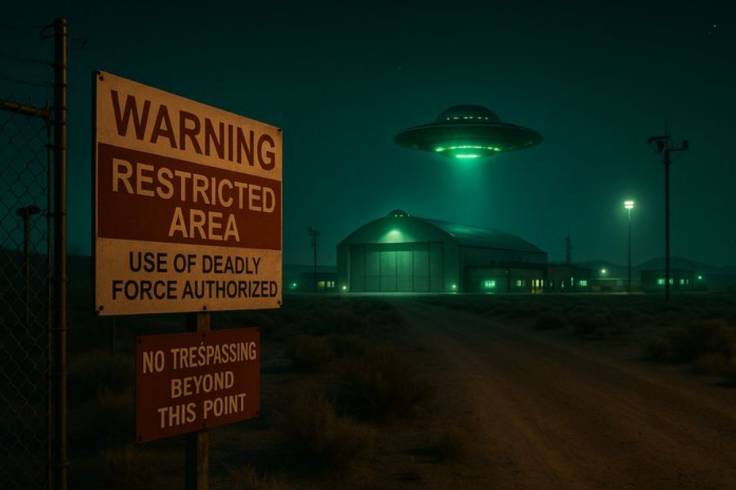
Astronomers have torn apart UFO claims linking 1950s 'orbiting objects' to nuclear tests, warning that believers must accept scientific scrutiny or risk turning the subject into a kind of religion

UFO

Astronomers in Australia and the US have now gone public with a challenge to the UFO claims first put forward in 2025 

PHOTO Sparker/Pinterest

International astronomers have published a devastating critique dismantling high-profile 2025 UFO claims that mysterious objects orbited Earth decades before the launch of Sputnik.

Led by researchers from Wellesley College and the University at Albany, the peer-reviewed study, accepted for publication in the Publications of the Astronomical Society of Australia, argues that previous assertions linking photographic 'transients' to US nuclear weapons tests relied on faulty mathematics and severely compromised archival data.

The original research, conducted under the Vanishing and Appearing Sources during a Century of Observations project, suggested that anomalous light flashes captured by California's Palomar Observatory represented non-human technology drawn to atomic detonations.

However, the latest scientific evaluation exposes deep methodological flaws, proving that glass plate defects, dust scratches, and incorrect observational timescales generated an illusory statistical signal.

As academic backlash mounts against unrefereed counterclaims, the rigorous study revives fierce debates over whether fringe UFO proponents truly welcome scientific stress-testing or prefer shielding speculative hypotheses from empirical reality.

Anatomy of the Original VASCO UFO Claims

The new critique focuses on alleged 'technosignatures' seen on photographic plates decades before the space age. The controversy began when astronomer Dr Beatriz Villarroel and collaborators reported evidence of objects apparently orbiting Earth years before any human‑made satellite was launched.

Working under the VASCO project, they said old photographic surveys from the Palomar Observatory in California showed fleeting 'transients' that could be sunlight glinting off non‑human technology.

A companion paper, co‑authored with Vanderbilt University anaesthesiologist Stephen Bruehl, went further, claiming a statistical correlation between the dates of those transients and US nuclear weapons tests in the 1950s.

If that had stood up, it would have been dynamite. Mysterious objects in pre‑Sputnik orbit, apparently clustering around nuclear detonations, look like the script treatment for Oppenheimer 2.

It also offered believers what they have long craved, a peer‑reviewed breadcrumb trail pointing towards UFOs as alien surveillance craft drawn to humanity's most dangerous toys.

How the Vasco UFO Claims Took Off

The VASCO project, short for Vanishing and Appearing Sources during a Century of Observations, is built on a smart, almost old‑school idea. Villarroel's team uses archival photographic plates, taken long before the sky was crowded with satellites and space junk, to hunt for technosignatures, signs of advanced technology that might briefly flare and then vanish.

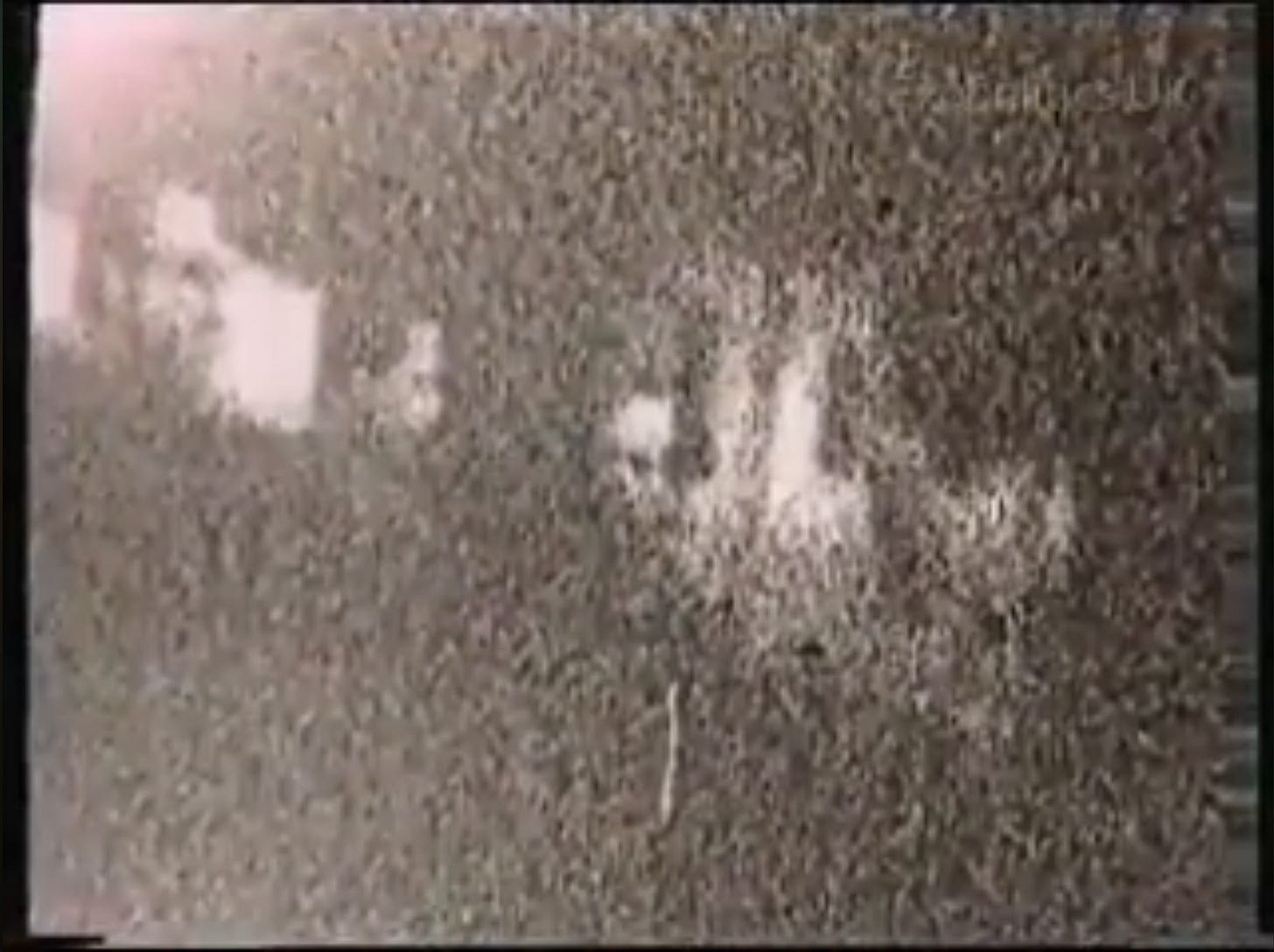
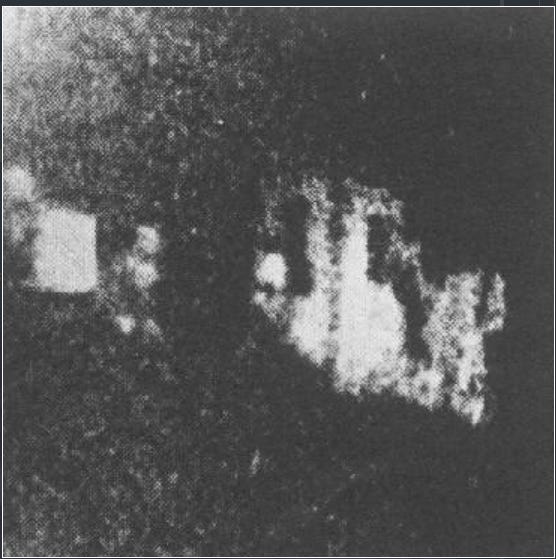
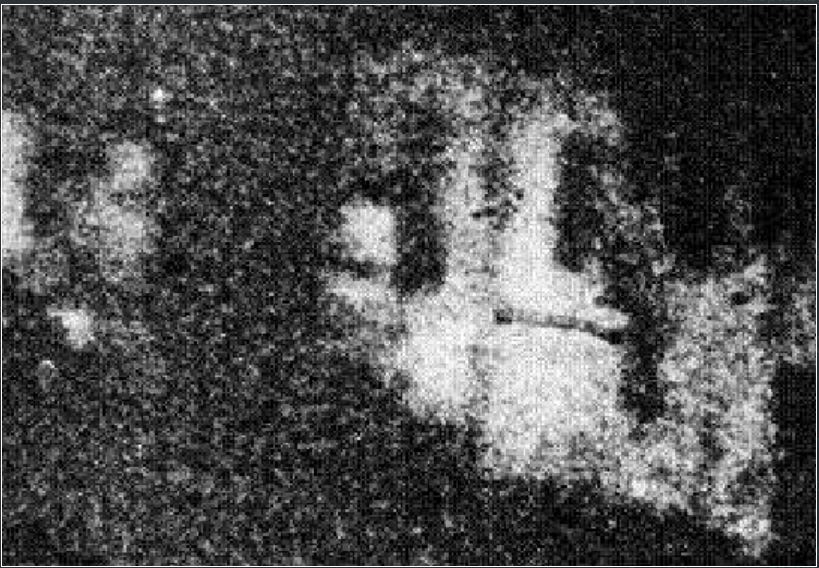
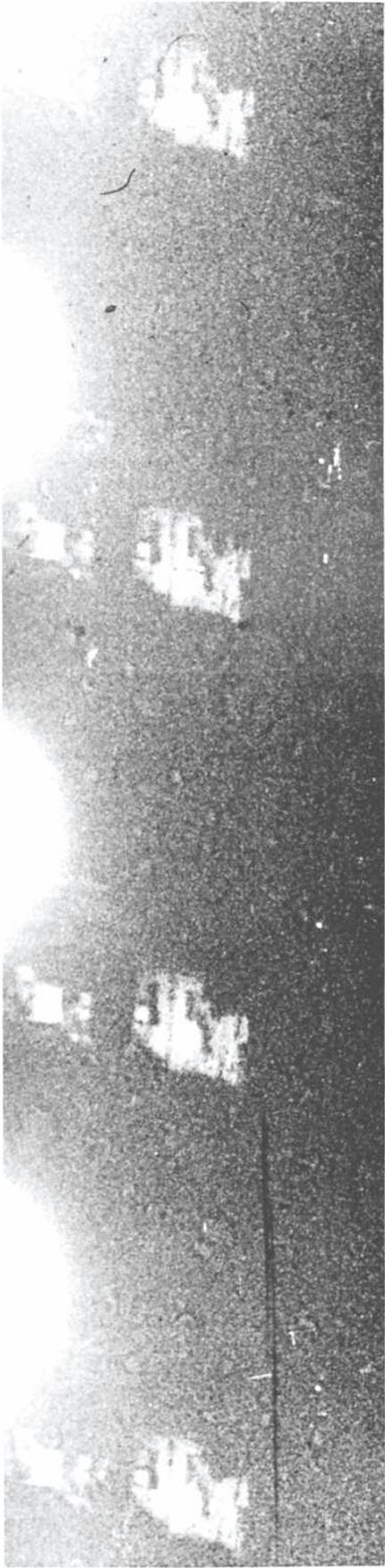
The studies at the heart of the current argument used early 1950s images from the Palomar Observatory Sky Survey, known as POSS‑I. Each region of sky was photographed twice in quick succession, once with a red‑sensitive plate and once with a blue‑sensitive one.

VASCO's software scanned the digitised plates looking for things that appeared in one exposure but not the other. Those were labelled transients and, in the more speculative framing, possible UFO‑like artefacts in orbit.

The most attention‑grabbing claim was statistical. Villarroel's team said there were far fewer transients recorded on plates taken during Earth's shadow, when sunlight could not reflect off orbiting objects.

UFO

New peer-reviewed research reveals that messy photographic plate defects and mathematical errors created a statistical mirage of alien technosignatures  PHOTO Unsplash

They calculated that deficit as a '22 sigma' result. In particle physics, 5 sigma is the gold standard for a discovery. Twenty‑two is almost absurdly strong, the sort of number that suggests either profound new physics or that something, somewhere, has gone mad in the spreadsheets.

In a second paper, Bruehl and Villarroel said that the dates of these transients significantly overlapped with the timing of nuclear tests. The implication, not exactly buried in the framing, was that whoever might be flying those hypothetical craft was paying close attention to mushroom clouds.

Rigorous Scientific Pushback Led by Wesley Watters

The pushback has now arrived in the form of a detailed critique led by Wesley Watters of Wellesley College. His paper, titled 'Critical Evaluation of Studies Alleging Evidence for Technosignatures in the POSS1 – E Photographic Plates,' was accepted by the Australian astronomy journal after peer review and posted online ahead of print.

What makes this more awkward for UFO enthusiasts is who is doing the debunking. Watters has previously argued that unidentified aerial phenomena deserve serious, agnostic study.

Co‑author Kevin Knuth, a physicist at the University at Albany, SUNY, has published work examining US Navy pilot UAP encounters. Both have been affiliated with Avi Loeb's Galileo Project, which is explicitly set up to examine UAPs scientifically, not to scoff at them.

In other words, this is not a hit job from dyed‑in‑the‑wool sceptics. It is criticism from scientists who, if anything, have stuck their necks out to say UFO reports should not be laughed out of the room.

Watters and his colleagues start with a mundane but brutal problem, the plates themselves. Old photographic glass is riddled with defects, from dust and scratches to emulsion flaws and copying artefacts.

Astronomers spent years trying to use similar plates to catch fleeting optical signals from gamma‑ray bursts, only to conclude the medium just was not up to that kind of work at scale.

  • UFO

Because of that, Watters refuses to call the POSS‑I blips 'transients' at all. His team rebrands them 'Selected POSS 1‑E Features,' or SPFs, until someone can prove they are real astronomical objects.

Then they try to reconstruct, plate by plate, what subset of the survey VASCO actually used, a task made harder because Villarroel's team did not publish their full working dataset.

Once they do that, a pattern emerges, and not a good one. SPFs cluster at plate edges, disappear in wide stripes, and bunch oddly in certain regions. The sky map is a mess. For a robust statistical analysis, you need an underlying distribution that is roughly uniform and random, something that can be modelled as a Poisson process.

Watters argues that the VASCO features fail that basic test, which means the more sophisticated maths layered on top is on wobbly ground from the start.

Collapsing the Statistical Mirage and Timescale Errors

When the Australian‑led group re‑ran the crucial Earth‑shadow calculation with their reconstructed dataset, the jaw‑dropping 22 sigma result vanished. They found no statistically significant deficit of features in Earth's shadow.

On closer inspection, only 11 of the 645 plates VASCO used were even in shadow, and just five were fully so. Most of the supposed signal came from a single problematic plate that sat in one of the odd 'bands' where defects were already clustering.

Watters' team points out that VASCO's correlation used the wrong observing timescale, treating the survey as if it spanned 2,718 observing days instead of the actual 312 days from which their plates were drawn. Correct that, and the apparent UFO‑nuclear overlap collapses into something more prosaic.

A loose relationship between the periods when the Palomar telescope was operating and when nuclear tests were conducted, perhaps because both favoured clear weather over the western US. As for aliens timing their fly‑bys to our detonations, that statistical mirage evaporates.

Philosophical Friction Between UFO Belief and Scientific Process

The final part of Watters' critique is almost philosophical. He accuses the VASCO papers of circular reasoning, treating the features as genuine transients from the outset and then using that assumption to argue they must be real technosignatures. Without independent confirmation that most of these specks are not just plate defects, the logic folds in on itself.

None of this means the VASCO concept is useless. On the contrary, trawling clean, digitised archives for technosignatures is a sharp, modern twist on classic astronomy. The problem, according to Watters, is that this particular dataset is simply too dirty and too sparse in the critical regions to bear the UFO‑flavoured weight put on it.

ufo

The authors of the peer-reviewed critique accused the original team of circular reasoning by treating unverified plate defects as genuine technological signatures from the outset  PHOTO Pinterest

Predictably, the backlash has not been limited to journal pages. Unrefereed online documents have popped up purporting to rebut the Australian‑led critique, bypassing peer review entirely and demanding to be treated as equal parts of the scientific conversation.

Researchers who are unconvinced by the UFO‑friendly statistics are branded 'part of the problem' or worse. At which point many working scientists quietly ask themselves why they should spend time on this stuff when they could be doing almost anything else.

And that is the uncomfortable question hanging over this latest UFO skirmish. Does the UAP community actually want their favourite claims tested, stress‑tested even, inside the sometimes painful machinery of science, or do they want those claims protected from serious challenge? If you are unwilling to let your beliefs be broken by better data and better maths, you are not really doing science any more. You are doing something else entirely.

Writer's pick

{ https://www.ibtimes.co.uk/trending }

Hoe vind je dit bericht?
Geschreven door peter om 23:43 Stuur door

No confirmed evidence of extraterrestrial life after nearly 70 years of searching

No confirmed evidence of extraterrestrial life after nearly 70 years of searching

After nearly 70 years of searching, humanity has found no confirmed evidence of extraterrestrial life—only potential biosignatures in a Martian rock, disputed chemistry 124 light-years away, and thousands of UAP reports that may have nothing to do with aliens at all. The answer, whatever it is, still arrives only in fragments.

By   

After nearly 70 years of searching, humanity has found no confirmed evidence of extraterrestrial life—only potential biosignatures in a Martian rock, disputed chemistry 124 light-years away, and thousands of UAP reports that may have nothing to do with aliens at all. The answer, whatever it is, still arrives only in fragments.

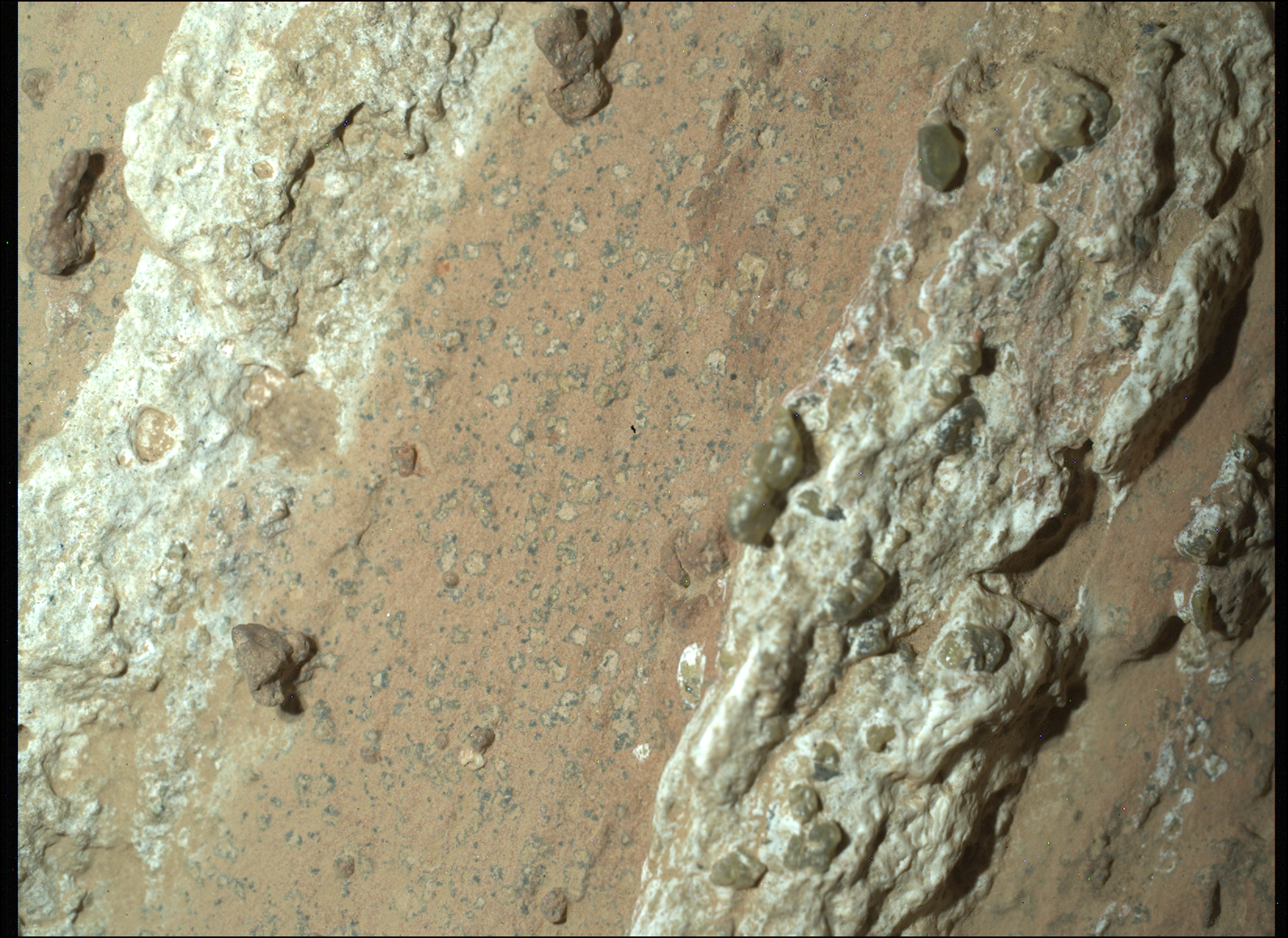
Pale, millimetre-scale leopard spots with dark rims cover part of the Cheyava Falls rock in this Perseverance WATSON image.

Credit: NASA/JPL-Caltech/MSSS. 

Source. The features are potential biosignatures, not photographed fossils or organisms.

Mars, K2-18 b and decades of UAP reports offer intriguing fragments, but each remains separated from confirmed extraterrestrial life by a different evidentiary gap.

An early alert was probably aircraft radar. Otherwise, the loudspeaker produced static and the chart recorder drew no meaningful feature. It was a tiny search by current standards, but it established the basic discipline: choose a plausible signal, observe, test interference and report the null result.

Later surveys covered far more sky, bandwidth and signal types. The scale can sound exhaustive when described by raw numbers. As SpaceDaily’s account of SETI@home explained, volunteer computers processed about 12 billion threshold events before a decade of filtering reduced the data to roughly 100 sky positions worth another look. Those billions were not billions of possible alien messages. Most were radio interference, statistical fluctuations or other products of an instrument listening from a noisy technological planet.

Even the largest search samples only a sliver of the possible combinations of sky position, frequency, time, signal shape and transmitter power. A civilisation could be quiet, use a method not being monitored, transmit in another direction or exist millions of years out of step with the brief era in which Earth can listen.

A detection is not yet a confirmation

The word “evidence” covers several levels that are easily collapsed in public discussion. A detector may register a feature. Researchers may show that the feature resembles a molecule or process associated with life. They must then ask whether the feature is real, whether the identification is unique and whether geology, chemistry, contamination or technology can explain it.

A biosignature is therefore not a synonym for an organism. NASA defines a potential biosignature as a substance or structure that might have a biological origin but requires more evidence before a conclusion can be reached. A technosignature has the same logic: it is an observable sign that could reveal technology, not any unexplained event by default.

Confirmation would demand convergence. Independent instruments should recover compatible results. Alternative explanations should be actively tested rather than merely overlooked. The evidence must fit its environment, because a molecule produced by life in Earth’s oceans may have a different source in a hydrogen-rich atmosphere, and a light moving strangely in a compressed video may move normally once range and camera motion are known.

The Martian rock is a serious candidate, not a biological sample

The most tangible of the current fragments sits inside a sealed tube on Mars. Perseverance drilled the Sapphire Canyon core from a rock called Cheyava Falls in Jezero Crater in July 2024. The rock formed in an ancient river-valley setting and contains fine clay and silt, organic carbon, sulphur, oxidised iron and phosphorus.

In a 2025 peer-reviewed analysis in Nature, the rover team described millimetre-scale reaction fronts nicknamed leopard spots. Instrument data were consistent with two iron-rich minerals, vivianite and greigite, arranged where electron-transfer reactions had occurred between sediment and organic matter.

That combination matters because related reactions on Earth can support microbial metabolisms, and microbes can participate in the formation of these minerals. The wet sedimentary setting could also preserve traces of ancient life. NASA consequently described Sapphire Canyon as Perseverance’s best candidate for signs of ancient microbial processes.

But the minerals can form without biology. Heat, acidic conditions and reactions involving organic compounds offer abiotic routes, and the rover cannot reproduce the range of microscopy, isotope measurements and controlled experiments available in an Earth laboratory. SpaceDaily’s earlier examination of Cheyava Falls reached the necessary boundary: this is a compelling pattern in a habitable context, not a fossil, cell or confirmed product of metabolism.

At 124 light-years, chemistry is reconstructed from starlight

K2-18 b is more remote in every sense. The planet is about 124 light-years away, roughly 2.6 times Earth’s radius and 8.6 times its mass. It orbits in the conventional habitable zone of a cool red dwarf, but that does not establish an ocean or a surface where familiar life could live.

Webb observes the planet during a transit. As K2-18 b crosses its star, a small amount of starlight filters through the upper atmosphere. Researchers measure minute changes with wavelength and compare them with models of which gases could have absorbed the missing light. Webb is not collecting alien air, and its spectrum does not directly reveal conditions deep below the atmosphere.

A 2023 analysis found strong methane and reported a lower-confidence hint of dimethyl sulphide, or DMS. A second study in 2025 used mid-infrared data and reported an approximately three-sigma preference for DMS and/or dimethyl disulphide. DMS drew attention because Earth’s atmospheric supply is closely associated with marine microbes, although that connection does not make it an exclusive product of life everywhere.

Independent analyses weakened the claim. One team processed the near-infrared observations through many pipeline and model combinations and found methane but no reliable statistical evidence for DMS. Other researchers showed that wavelength grouping, instrumental systematics and a wider library of possible molecules could materially change the result. The episode is covered in detail in SpaceDaily’s earlier K2-18 b overview.

The disputed chemistry is therefore a fragment twice removed. The first question is whether the sulphur-bearing gases are present. Only after that would researchers ask how they formed. Even a secure detection of DMS would not by itself demonstrate an ocean, a habitable climate or biology.

Thousands of UAP reports ask a different question

UAP reports belong to another evidence category altogether. They concern events observed in Earth’s atmosphere, oceans or nearby space, often through human testimony or sensors designed for defence rather than scientific measurement. “Unidentified” describes the status of an observation. It does not describe the origin of an object.

The historical volume is undeniably measured in thousands. According to the US National Archives, Project Blue Book collected 12,618 sightings between 1947 and 1969, leaving 701 categorised as unidentified. More recently, the All-domain Anomaly Resolution Office, or AARO, held 1,870 reports as of 30 May 2025. Those counts come from different programmes and should not be added into one clean statistical series, but they show how many reports can accumulate without producing an extraterrestrial conclusion.

AARO’s latest annual report received 319 cases and resolved 114 of them, while also closing 256 older cases. All 370 resolutions involved ordinary objects or events, including balloons, satellites, birds, aircraft, drones, one rocket launch and one manned jet pack. The office moved 191 new reports into an active archive because the available data were insufficient and sent nine for deeper intelligence, scientific or technical analysis.

Insufficient data can preserve an unknown indefinitely. A sincere witness may not know distance or speed. A short infrared clip may lack original metadata. A bright satellite flare can appear to move or hover in surprising ways. AARO resolved 238 older reports as satellite flaring after adding three-dimensional modelling, an unusually clear example of better analysis converting mystery into identification.

This does not make UAP investigation pointless. An unidentified event near an aircraft can represent a flight hazard, a drone, foreign surveillance or a sensor problem even if it has nothing to do with extraterrestrial life. It does mean that volume is not proof, a distinction also central to SpaceDaily’s coverage of recent Pentagon UAP releases.

Why the fragments resist simple answers

All three cases suffer from limited access, but in different ways. Cheyava Falls is a physical sample from a once-wet environment, yet the most capable laboratory is millions of kilometres away. K2-18 b is observed as a tiny modulation in the light of a star, so noise and model assumptions can imitate chemistry. UAP records concern nearby events, but many were not collected with the calibration, metadata and repeatability a controlled scientific observation would require.

The limitations create three distinct risks. Mars can preserve non-biological chemistry that looks suggestive in a life-friendly setting. Exoplanet retrievals can prefer a molecule because the tested model library is incomplete. UAP cases can remain unresolved because essential measurements were never taken. Calling all three “evidence for aliens” erases the very information needed to judge them.

The fragments also invite a common human shortcut. Once an observation fits a hoped-for story, every remaining uncertainty can feel like an empty space waiting for that story. Science treats the empty space differently. It asks what additional observation would distinguish the proposed explanation from its rivals.

A null result is not an empty result

Nearly 70 years without confirmation sounds like a verdict only if the search is assumed to have been complete. It has not been. Radio SETI has examined a small portion of a vast parameter space. Mars rovers have sampled a few locations on one planet. Webb has begun atmospheric studies of worlds whose signals sit near the limits of its instruments. Ocean worlds such as Europa and Enceladus have not yet been sampled directly for life.

Null results still narrow the possibilities. A silent radio survey constrains certain transmitters at certain times and frequencies. A disputed spectrum exposes which systematics must be controlled in the next observation. An ordinary explanation for a UAP helps investigators recognise the same optical or orbital effect in future reports.

Nor does the absence of confirmed life support the opposite claim that Earth is alone. Detection and prevalence are different questions. A search may fail because life is rare, because technology is brief, because the target is wrong or because the instrument is not yet sensitive to the signal that exists.

What genuine confirmation would look like

On Mars, confidence would rise if multiple independent lines of evidence converged on biology: diagnostic microscopic structures, distinctive isotope patterns, complex organic distributions and a geological context that excludes plausible abiotic formation. Bringing a well-documented sample into a controlled laboratory would allow tests Perseverance cannot perform, although contamination control would remain essential.

For an exoplanet, repeat spectra across instruments and transits would need to recover the same molecular features. Researchers would then have to show that the gases coexist in quantities difficult to maintain without biology under a physically credible model of the planet. One molecule, especially one inferred near the noise floor, is unlikely to carry the conclusion alone.

A technological signal would need equally strong provenance. A radio transmission might repeat from the same point on the sky, show structure inconsistent with natural emission and survive checks against terrestrial and satellite interference. A UAP case would need calibrated multi-sensor data, precise geometry and a documented chain of custody before extraordinary performance could even be established. Extraordinary motion inferred from an underdetermined image is not yet extraordinary technology.

The careful answer in 2026 is therefore less dramatic than either certainty. Humanity has not confirmed extraterrestrial life, and it has not shown that life is absent beyond Earth. It has a Martian sample worthy of better tests, an exoplanet spectrum teaching astronomers how fragile remote biosignatures can be, and a large archive showing that an unresolved observation is not an identified alien craft.

The answer still arrives only in fragments. The task is not to dismiss them, and not to assemble them into a conclusion too soon. It is to keep asking which fragment survives the next measurement.

RELATED VIDEOS

How Close Are We To Finding Alien Life?

The Third Kind | Absolute Evidence of Extraterrestrial Life

The Mystery Of Extraterrestrial Life | Free Documentary Space

{ https://spacedaily.com/ }

Hoe vind je dit bericht?
Geschreven door peter om 22:34 Stuur door

Aliens and the Bible? By Garrick R. OxleyAugust 31, 2026 Many wonder what recent UFO disclosures mean for religious belief. Here’s how to cut through the confusion.

Aliens and the Bible?

By Garrick R. Oxley

Many wonder what recent UFO disclosures mean for religious belief. Here’s how to cut through the confusion.

Aliens_and_Bible-apha-260831.jpg

Getty Images

In “Disclosure Day,” a movie released this summer, famed director Steven Spielberg once again invited audiences to ponder the existence of extraterrestrial life—and the implications it would have for religion on Earth.

In a CBS interview, Mr. Spielberg described what might happen if the government suddenly confirmed that it had concealed evidence of extraterrestrials: “If this truth were just known overnight…that would mess up a lot of people.” He added, “What does this do to the fundamental beliefs that many of us have? Is God our God only on this planet, or is God a God for every system where there’s civilization, intelligent life…?”

These are provocative questions. And Mr. Spielberg is not the only one making headlines about UFOs and the possibility of life on other planets.

What was once considered fringe or conspiratorial has in recent months popped up everywhere from the White House to the Catholic Church, as public fascination with unidentified anomalous phenomena—or UAPs, as the government calls them—has become more mainstream.

In May, the Pentagon began making large swaths of UFO files public with very little context, leaving curious sleuths to piece together their own interpretations. The dumps began just weeks after former President Barack Obama set off a media frenzy for stating in an interview that aliens are real, though he later tempered that take.

“Statistically, the universe is so vast that the odds are good there’s life out there,” the former president, who made a surprise visit to the “Disclosure Day” set, posted on social media. “I saw no evidence during my presidency that extraterrestrials have made contact with us. Really!”

Some religious adherents, as well as nonbelievers, maintain that the existence of life on other planets might undermine many faiths because it would complicate assertions that humans are unique. But others argue the opposite.

“Belief in UFOs is really one of the best things that’s happened to religion in a long time,” said Diana Walsh Pasulka, a religion scholar at the University of North Carolina Wilmington. “It’s a blow to the secular, materialist worldview.”

Whether one views the possibility of alien life as an impediment to religious belief or an asset, for Christians, the truth must be compatible with Scripture.

Aliens in the Bible? What Scripture Reveals About Alien Life and ...

Familiar Fascination

The idea of otherworldly beings coming to Earth is nothing new.

“People would call it the plurality of worlds. So even back in the time of Socrates and Aristotle, there were Greek philosophers who talked about beings on other planets and other stars,” Ms. Walsh Pasulka said.

But it was not until after 1945 that modern conceptions of UFOs began to develop, according to Jeffrey Kripal, a historian of religions at Rice University. “The flying saucer and the alien and the UFO—it’s definitely a Cold War invasion narrative,” he said.

That narrative explains why UAPs are often perceived as hostile to humans. But it has also evolved over time and led to the formation of some religions—like Scientology, which counts many a Hollywood celebrity among its adherents—that see extraterrestrials as good or even part of a divine plan. Some adherents to the Nation of Islam, for example, believe that its founder will inaugurate an apocalyptic return to Earth on a spaceship.

Thousands of years ago, King Solomon wrote, “there is no new thing under the sun” (Ecc. 1:9). UFO fascination falls into this category. The underlying curiosity today is not that different from what people felt decades ago when they discussed rumors about Area 51 and flocked to movies like “Men in Black,” “Independence Day” and “War of the Worlds.”

Interest in aliens also evokes Acts 17:21, which speaks of people who “spent their time in nothing else, but either to tell, or to hear some new thing.” Some tend to be on the edge of their seats about every alleged sighting or new document dump. Maybe this time the right piece of smoking gun evidence will be released, they think. Undeniable proof never comes, yet there is a certain thrill in the chase.

The wide spectrum of views toward aliens and UFOs and their impact on religion can feel overwhelming. But Christians do not need to be confused. God has provided a firm anchor for answering life’s greatest questions: His Word, the Holy Bible.

Even if the truth of a specific news event appears to be murky, no alien discovery can overthrow Scripture. Jesus Christ said, “Scripture cannot be broken” (John 10:35). He also taught, “Man shall not live by bread alone, but by every word that proceeds out of the mouth of God” (Matt. 4:4). The Bible reveals one God who created the entire universe, and the purpose He is carrying out within it.

Having this foundation means Christians do not need to be on edge for every UFO rumor, fearful it will shatter their belief system. They are confident that the Bible is true, and that the truth about alien life cannot break or overthrow it.

What Did Moses REALLY See On Mount Sinai? | Ancient Aliens Explained

Does the Bible Teach Aliens?

Some Bible readers have wondered if Ezekiel chapter 1 in the Old Testament describes UFOs.

Take time to read the chapter. The prophet Ezekiel observed living creatures, wheels, brilliant light and an extraordinary structure moving through the sky. It can appear to fit modern concepts of alien spacecraft. Verse 15 identifies “living creatures” with “four faces.”

But notice that the last verse of the chapter shows that what had been described was “the appearance of the likeness of the glory of the Lord” (vs. 28). It was depicting God on His throne and the angels surrounding it. Far from proof of green men from Mars or anything like that.

The beings described here are cherubim—powerful angelic beings associated with God’s throne. In chapter 10, Ezekiel says directly that the beings from the vision are cherubim: “And the cherubims were lifted up. This is the living creature that I saw by the river of Chebar” (10:15). Also read verse 20.

Various other verses also speak of cherubim. For instance, II Samuel 22:11 says “He [God] rode upon a cherub, and did fly: and He was seen upon the wings of the wind.”

Read the Bible from Genesis to Revelation and you will find no proof of alien life.

Some may still ask: Even though the Bible does not say aliens exist, could life exist elsewhere in the universe?

Scripture does not directly address the topic. Yet it does reveal that God created all things (John 1:3; Rev. 4:11). If the knowledge of extraterrestrial life were important to God’s purpose for mankind, He would have revealed it.

What is important is the knowledge God has revealed—including a spirit realm that plays an important role in His purpose for human beings.

Angels are created beings who serve God (Psa. 103:20). They are much more powerful than most realize. The illustrations found in books and in churches do not do them justice. Scripture shows that angels play an important role in God working with human beings here on Earth.

There are also fallen angels—demons—in this spirit realm who serve Satan the devil. Ezekiel 28:14 shows Satan himself is a fallen angel, having previously been “the anointed cherub that covers.” Satan and the demons are not pursuing their own interests, either—like angels, they are focused on people.

II Corinthians 11:14 adds that the devil can appear to be something he is not: “Satan himself is transformed into an angel of light.” This principle would also apply to demons.

Some believe recent UFO sightings are really encounters with these fallen spirits.

“I don’t think they’re aliens. I think they’re demons,” Vice President JD Vance, a Catholic convert, said in a podcast interview.

That sentiment was echoed by Monsignor Stephen Rossetti, formerly an exorcist with the Archdiocese of Washington. He was removed in June by the archbishop, who said statements by Mr. Rossetti “gravely undermine” Catholic teaching on demons and the devil.

“It’s my personal belief that probably many, if not most, of these UFO sightings are in fact demons,” Mr. Rossetti said in a May 29 video posted on his Facebook page.

Thinking alien encounters are demonic could seem like a safer or more biblical position than that they are real aliens. Yet we should also be careful of believing every sighting is an evil spirit.

While it is possible this could be true in rare situations, not every unexplained light, object or noise is demonic. Many UAP reports have ordinary explanations—balloons, satellites, birds, aircraft or drones. Others remain unresolved simply because there is not enough reliable data to determine what was seen. An unexplained sighting is not necessarily a supernatural one.

More important than dissecting every document or sighting is understanding the very real spirit world Scripture reveals.

The Spirit Realm

Spirits in the spirit realm include God the Father, Jesus Christ, Satan the devil, and a multitude of angels, both righteous and fallen.

Some angels have greater authority than others, such as the archangels Gabriel and Michael. Satan was the archangel Lucifer before he rebelled against God.

Satan and the demons also interact with human beings—but to deceive and oppose God’s purpose.

Hebrews 1:14 says righteous angels are “ministering spirits, sent forth to minister for them who shall be heirs of salvation.” Who are the heirs of salvation? Christians. Read Romans 8:17 and Titus 3:7.

Put simply, the role of angels is to help the people God is working with succeed and reach salvation.

We could not know this unless Scripture revealed it. Hebrews 13:2 adds, “Be not forgetful to entertain strangers: for thereby some have entertained angels unawares.” God could use an angel to help us and we have no idea what really happened. They can appear and work in a way that leaves people unaware.

Also understand that angels are not mindless tools. They really care about people. Luke 15:10 says, “There is joy in the presence of the angels of God over one sinner that repents.”

What goal do Satan and the demons have? Revelation 12:9 says the devil “deceives the whole world.” Satan and his demons deceive people into accepting lies and not believing the truth of the Bible. This deception could involve aliens and UFOs but also many other things in life.

I Timothy 4:1 speaks of a time when “some shall depart from the faith, giving heed to seducing spirits, and doctrines of devils [demons].” The next few verses provide some specific examples of these doctrines. Demons have doctrines just like people and churches do. They use these teachings to harm and deceive.

The apostle John warned: “Believe not every spirit, but try the spirits whether they are of God” (I John 4:1). Unlike angels, Satan and the demons work to spiritually destroy Christians and keep them from fulfilling their incredible potential in God’s Plan.

The Bible also warns against admiring righteous angels to the point of worship. Colossians 2:18 says: “Let no man beguile you of your reward in a voluntary humility and worshipping of angels.” While angels do play a valuable role, God is the only Being a Christian may worship.

GODS OR EXTRATERRESTRIALS? - Ancient Alien and UFO Legacy

Where Should We Focus?

As time goes on, there will be more alleged UFO sightings, eyewitness accounts and document leaks. But the Bible shows what is really worth focusing on: “Seek those things which are above, where Christ sits on the right hand of God. Set your affection on things above, not on things on the earth” (Col. 3:1-2).

Setting affection on things above does not mean obsessing over objects in the sky. It means focusing on God and His Plan instead of rumors and conspiracy.

Philippians 4:8 provides more parameters for what to think about: “Whatsoever things are true, whatsoever things are honest, whatsoever things are just, whatsoever things are pure, whatsoever things are lovely, whatsoever things are of good report; if there be any virtue, and if there be any praise, think on these things.”

While there is nothing wrong with keeping up with the news, we should be careful of how content about aliens makes us feel. If we find that it draws us toward negative thinking, we should adjust our news consumption.

There is a great irony in the obsession with aliens. People scan the heavens searching for intelligent beings greater than we are, but do not stop to consider the awesome future God has in store for ordinary people.

We saw that angels help the heirs of salvation. Psalm 8 adds more: “What is man, that You are mindful of him? And the son of man, that You visit him? For You have made him a little lower than the angels, and have crowned him with glory and honor” (vs. 4-5).

Today, people are “a little lower” than angels. But God has great glory and honor in store for humans.

Hebrews 2 quotes the same psalm and expands on it: “Unto the angels has He not put in subjection the world to come, whereof we speak. But one in a certain place testified, saying, What is man, that You are mindful of him? Or the son of man, that You visit him? You [God] made him [man] a little lower than the angels; You crowned him with glory and honor, and did set him over the works of Your hands: You have put all things in subjection under his feet. For in that He [God] put all in subjection under him [man], He left nothing that is not put under him. But now we see not yet all things put under him” (vs. 5-8).

“All things” have not yet been put under man’s control. But that is the awesome future just ahead. Christians who receive salvation will be much more powerful than any angel or demon today. They will rule all things alongside God the Father and Jesus Christ. They will rule in the “world to come,” a responsibility that has not been offered to any angel.

Peter added: “Of which salvation the prophets have inquired and searched diligently, who prophesied of the grace that should come unto you…which are now reported unto you by them that have preached the gospel unto you with the Holy Spirit sent down from heaven; which things the angels desire to look into” (I Pet. 1:10, 12).

As powerful as angels are, they are not privileged to understand the Plan of God the way human beings can—the way you can.

RELATED

Biggest Bible Revelations | Ancient Aliens | History

UNDENIABLE Biblical Evidence for Extraterrestrial Life

{ https://rcg.org/realtruth/ }

Hoe vind je dit bericht?
Geschreven door peter om 21:55 Stuur door

The Alleged Nixon–Jackie Gleason Alien-Bodies Encounter

The Alleged Nixon–Jackie Gleason Alien-Bodies Encounter

by Steve Paslow

Jackie-Nixon.jpg

One of the strangest stories in American UFO lore involves President Richard Milhous Nixon, born January 9, 1913 and died on April 22, 1994; the 37th U.S. President, and the comedian and actor Jackie Gleason, born February 25, 1915; died on June 24, 1987;- and four alleged deceased extraterrestrial bodies, supposedly being kept at a secret Air Force facility in Florida. The story is fascinating—but it is important to distinguish what was actually documented from what has only been alleged. There is no publicly verified evidence that Nixon showed Gleason extraterrestrial bodies.

Jackie Gleason, best known for The Honeymooners, had a genuine interest in UFOs and paranormal subjects. His fascination was sufficiently well known that stories about his alleged UFO experiences became part of his biography. He even had a distinctive, circular house in New York that was popularly nicknamed the “Mothership.” Gleason was also acquainted with Richard Nixon. According to accounts surrounding the story, the two men played golf together and had a personal relationship during Nixon’s presidency.

The most commonly repeated version places the incident in 1973, during Nixon’s presidency. According to the story, Nixon unexpectedly arranged for Gleason to accompany him to Homestead Air Force Base in South Florida. Gleason was allegedly taken, under the accompaniment of armed guards, through a heavily secured area of the base and eventually brought into a restricted room.

There, he saw four small humanoid bodies. The beings were described as approximately two feet tall, with relatively large heads, small or bald heads, and unusually large ears. Some versions say the bodies were embalmed or preserved and were being kept in cases. The account claims Gleason was deeply disturbed by what he saw.

The most important source for the allegation was Beverly McKittrick Gleason, born in 1925; died on 1983; Jackie Gleason’s second wife, and she swote that the story is true. According to Beverly’s later account, Gleason returned home after the alleged encounter and told her that Nixon had taken him to Florida to see the bodies. She said that he was extremely upset and that he described the beings to her. Beverly subsequently discussed the story publicly. In a later interview, she said she initially believed Gleason’s account completely because he appeared convinced that what he had seen was genuine. She also said that Gleason became angry when she talked publicly about it, because it was meant to be a secret. That last point has become an important part of the UFO legend: Gleason himself apparently did not publicly confirm the story, while his former wife continued to describe what he had allegedly told her.

According to Beverly’s account, Gleason had wanted the matter kept private. When the story became public, he reportedly objected strongly. This has been interpreted in two completely different ways. UFO proponents argue that his anger could have resulted from a genuine concern that he had revealed a government secret. Skeptics point out that anger over a sensational story does not demonstrate that the story was true. Gleason could simply have been angry that a private conversation had been made public. Anyway, you look at the matter, it was common knowledge at the time that the US government very much did not want the public to learn of such eerie stories.

The story has changed considerably as it has been retold. In one version, Nixon took Gleason to Homestead Air Force Base and showed him four preserved bodies. Other versions add a crashed flying saucer, pieces of an extraterrestrial craft, or even a spacecraft allegedly being kept inside a hangar. Some later accounts contain considerably more details than the earliest versions. This evolution is significant because it makes it difficult to determine exactly what, if anything, Gleason originally claimed.

Jackie-UFO.jpg

A UFO researcher presenting the case at a 2003 crash-retrieval conference noted that three people claimed to have been told versions of the story originating with Nixon, Larry Warren, and Beverly Gleason, while emphasizing Beverly as the principal witness concerning Gleason’s account. This is where the evidence becomes extremely weak. There is no publicly authenticated government document, photograph, autopsy report, military record, or physical evidence establishing that Homestead Air Force Base possessed extraterrestrial bodies. Likewise, there is no publicly authenticated document establishing that Nixon personally took Gleason into a secret facility to view them. The story therefore belongs in the category of an unverified UFO allegation, rather than established history. Interestingly, even accounts sympathetic to the story acknowledge the lack of proof. One modern discussion of the case explicitly notes that there is no proof that aliens were stored at Homestead or that Nixon showed them to Gleason. Naturally, the U.S. government would not allow any proof to be made available to the public.

It is widely known that the United States government wanted information on UFOs (unidentified Flying Objects) is to be kept secret from the public. Such proof in the way of documentation would be highly classified. This matter is especially true for concealment considering any wreckage, ,especially of machines from the crafts, and the dead bodies of extraterrestrial crew thereof. There would also be very harsh penalties for exposing such otherworldly information to the general public, but often then when the situation gets “out of hand”, a  very strong downplaying and misinformation campaign strategy becomes used. When there is absolutely no proof to a story about otherworldly aliens, the skeptics can convince a great majority of the public to simply dismiss the story; not to pay any further attention to it. And the United States government can be satisfied with that outcome.

What makes the story unusually persistent is that it isn’t simply an anonymous Internet tale. There really was a Jackie Gleason, there really was a Richard Nixon, they really knew one another, and Gleason really did have a strong interest in UFOs and paranormal subjects. Beverly Gleason also really did tell the story publicly and later discuss it in interviews. What remains unproven is the crucial part: whether Gleason actually saw extraterrestrial bodies—and whether President Nixon was the person who showed them to him.

So the best historical assessment is: The Nixon–Gleason alien-body story is a well-established UFO legend with a traceable history and identifiable witnesses, but there is no publicly verified evidence that the alleged event actually occurred. That distinction is particularly important because later books, podcasts, television programs, and Internet accounts sometimes present the story as an established fact rather than as an allegation. But, if the story is true, the U.S. government would see to it that the claims would be just an allegation as far as the public could tell.

RELATED

Nixon Showed Jackie Gleason Dead Aliens?! The True Story They Don't Want You To Know

Did President Nixon Secretly Show Jackie Gleason Dead Alien Bodies?

Richard Nixon Allegedly Showed a Comedian Alien Bodies

{ https://mysticsciences.com/ }

Hoe vind je dit bericht?
Geschreven door peter om 21:17 Stuur door

Psychokinesis (Telekinesis): Can Mind Power Move Matter?

Psychokinesis (Telekinesis): Can Mind Power Move Matter?

by Steve Paslow

ChatGPT-Image-Sep-2-2026-12_36_50-PM.jpg

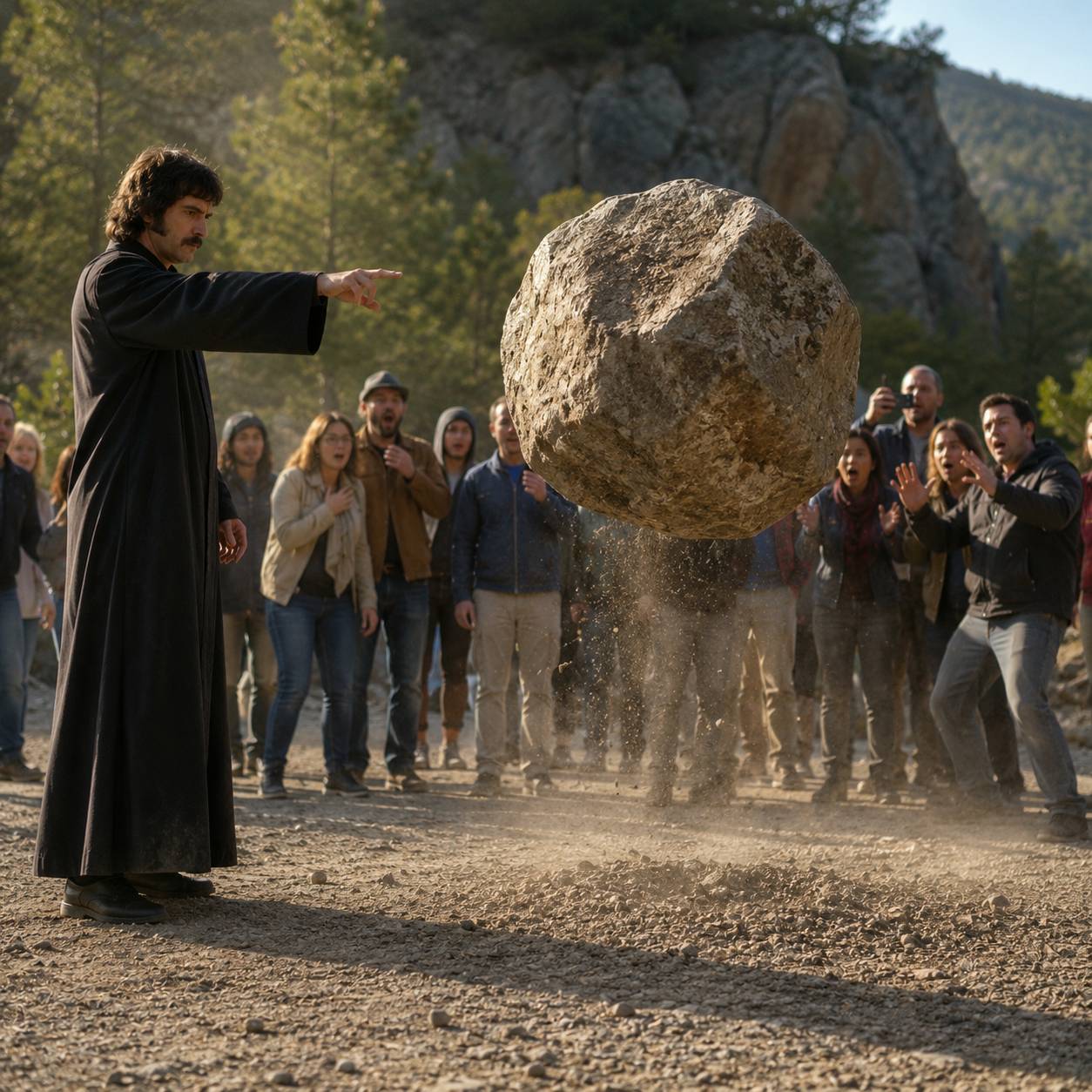
Psychokinesis, often called telekinesis, is the alleged ability of a person to influence or move physical objects using the power of the mind alone, without physically touching them. The word psychokinesis comes from Greek roots meaning roughly “mind movement.” Telekinesis means movement at a distance. The idea is one of the most famous and controversial subjects in paranormal research. Stories of people supposedly bending metal, moving objects, levitating themselves, influencing dice, or even affecting electrical and mechanical devices have fascinated the public for more than a century. But there is an important distinction between claims of psychokinesis and scientific evidence for psychokinesis. Despite numerous experiments and dramatic personal accounts, science has not established that human beings can reliably move or influence objects solely through thought.

Psychokinesis is generally divided into several kinds of alleged phenomena. Moving objects. The classic form of telekinesis is the supposed ability to move an object without touching it. A person might supposedly cause a pencil to roll across a table, make a coin move, or cause a small object to rise into the air. Another famous claim involves bending spoons, forks, keys, or other metal objects through mental concentration. This became particularly popular during the twentieth century, especially after performers and alleged psychic individuals demonstrated spoon bending before audiences.

Some alleged psychokinetic practitioners have claimed the ability to make themselves or other objects float. Stories of levitation have appeared in religious traditions, spiritualism, séances, and modern paranormal reports.Psychokinesis has also been investigated in a much less dramatic form. Instead of attempting to move an object visibly, researchers have sometimes asked people to concentrate on dice, random-number generators, or other systems and attempt to influence their results. The supposed effect, if present, would be extremely small and detectable only statistically.

Interest in mind-over-matter phenomena became especially strong during the nineteenth century. The rise of Spiritualism produced séances in which mediums claimed that spirits could communicate with the living and produce physical effects. Tables allegedly moved by themselves, objects supposedly appeared or disappeared, bells rang without being touched, and other strange events were reported.Some of these events were attributed to spirits rather than to the medium’s own mind. Nevertheless, they helped establish the cultural background from which modern psychokinesis developed. Unfortunately, many famous séance phenomena were eventually exposed as tricks, deception, or misinterpretations. That did not prove that every paranormal claim was fraudulent, but it demonstrated how easily people can be fooled by apparently impossible physical effects.

One of the most important figures in the history of parapsychology was Joseph Banks Rhine, a researcher at Duke University. Beginning in the 1930s, Rhine investigated alleged extrasensory perception and psychokinesis under experimental conditions. Rather than asking someone to perform spectacular feats such as levitating a table, Rhine used statistical experiments. For example, subjects might attempt to influence the results of dice. If a person could mentally cause a particular number to appear more frequently than chance would predict, researchers could look for a statistical deviation. This was an important change in approach.

Perhaps the most recognizable image associated with telekinesis is the bending spoon. During the 1970s, Israeli-born performer Uri Geller became internationally famous for demonstrations involving supposedly psychic abilities. He appeared on television and performed demonstrations in which spoons and other metal objects appeared to bend or deform. Geller maintained that psychic abilities were involved. Skeptics, however, argued that the effects could be produced through ordinary magician’s techniques, preparation of the objects, misdirection, or other physical methods.Professional magicians have demonstrated many ways in which an apparently impossible spoon-bending performance can be accomplished without paranormal powers. Consequently, spoon bending became less convincing as evidence for genuine telekinesis.

One of the most famous alleged psychokinetic individuals was Nina Kulagina, a Soviet woman who became well known in paranormal circles during the Cold War. Films and reports claimed that Kulagina could move small objects across tables without touching them. Some demonstrations allegedly showed her moving objects while sitting several feet away. She reportedly underwent experiments involving investigators and scientists. The demonstrations attracted considerable attention because the Soviet Union was a scientific and technological rival of the United States, leading some Western paranormal researchers to take the reports seriously. However, critics pointed out problems with experimental controls and the possibility of concealed physical mechanisms. There has never been a generally accepted scientific demonstration establishing that Kulagina possessed genuine psychokinetic powers.

float.jpg

The controversy surrounding Uri Geller became particularly interesting because some scientists believed that at least some of his performances deserved investigation, while magicians argued that his demonstrations could be duplicated using conventional methods. The debate illustrated an important problem in paranormal research: An extraordinary demonstration is not necessarily extraordinary evidence. If a person can bend a spoon, for example, the important scientific question is not merely whether the spoon bent. The question is: Can the effect still occur when every ordinary method of producing the effect has been eliminated? That is a much more difficult test.

The human brain certainly produces physical effects. Electrical activity occurs throughout the nervous system. The brain controls muscles, releases chemical signals, regulates organs, and influences behavior. But this is very different from telekinesis. When a person picks up a cup, the brain sends signals through the nervous system to muscles in the arm and hand. The muscles physically move the cup. In alleged telekinesis, there would be no physical contact. The proposed mechanism would somehow have to allow mental activity in the brain to exert a measurable force on an object outside the body. Modern physics does not have an established mechanism that allows ordinary human thoughts to exert such forces at a distance

Some people have suggested that brain waves might be responsible for telekinesis. The brain does generate electrical activity, and this electrical activity can be measured with instruments such as an EEG. However, the electrical fields produced by the brain are extremely weak and decrease rapidly with distance. There is no established evidence that ordinary brain activity can generate enough force to push an object across a table or bend metal. Brain-computer interfaces demonstrate something interesting, however. Modern technology can detect certain patterns of brain activity and use computers to translate those patterns into commands. A person can therefore sometimes control a cursor, robotic device, or prosthetic limb using brain signals.But this is not telekinesis.

The brain is providing information to an electronic system, which then supplies the physical force. There are many ways apparently impossible physical effects can occur without paranormal abilities. These include: hidden wires, magnets, air currents, vibrations, static electricity, specially prepared objects, concealed physical contact, mechanical devices, misdirection, sleight of hand
unconscious movements, selective reporting, video editing, deliberate deception.

There is another important factor: human perception is imperfect. People naturally look for patterns and explanations. When something unexpected happens, we may remember the remarkable event while forgetting all the ordinary occasions when nothing happened. Suppose someone places a lightweight object on a table and concentrates intensely on it. After several minutes, the object moves slightly. It can be very tempting to conclude that the person’s mind caused the movement. But there could have been an air current, vibration from the building, unevenness in the table, static electricity, or another ordinary explanation. If the experiment is repeated hundreds or thousands of times under controlled conditions, however, researchers can determine whether the movement occurs more often than would be expected by chance. That is where scientific testing becomes important.

The scientific consensus is that psychokinesis has not been demonstrated reliably under controlled, independently reproducible conditions. Parapsychology researchers have reported statistical anomalies in some experiments, particularly experiments involving random-number generators and other statistical systems. However, these results remain controversial. Critics have raised concerns involving: experimental design, statistical analysis, publication bias, inadequate controls, multiple testing, replication failures, possible unconscious methodological errors. A phenomenon as fundamental as psychokinesis would require extraordinarily strong evidence because it would represent a major discovery about the relationship between consciousness and physical matter.

Could Psychokinesis Ever Be Proven? In principle, yes. A convincing demonstration would need to be repeatable.For example, imagine a person claiming to move a small object mentally. Researchers could place the object inside a transparent enclosure that prevented air movement and physical contact. Multiple cameras could record the experiment from every direction. Independent investigators could control the equipment. The object could be weighed and monitored by sensitive instruments. The person could then attempt to move the object repeatedly. If the object consistently moved in a measurable direction whenever the person concentrated—and independent laboratories could reproduce the same result—it would be extraordinarily important. Scientists would investigate the mechanism. If ordinary explanations were eliminated and the phenomenon survived repeated testing, psychokinesis would become a legitimate scientific discovery rather than merely a paranormal claim.

Telekinesis has become one of the most popular supernatural abilities in movies, television, books, and video games. Characters with telekinetic abilities are often portrayed as being able to: throw people across rooms, lift cars, crush objects, stop bullets, levitate, move weapons, open doors, manipulate objects from a distance. These abilities are fictional and dramatically exaggerated. Real-world psychokinesis claims, by comparison, generally involve very small effects—if the reported phenomena are genuine at all.

The most interesting aspect of psychokinesis may not be the spectacular claims. It is the possibility that consciousness could somehow interact with physical reality in ways that science does not yet understand. Modern neuroscience has made enormous progress in understanding how the brain works, yet consciousness itself remains a profound scientific problem. We know that thoughts are associated with measurable activity in the brain. We know that thoughts can cause the body to act. We know that technology can detect brain activity and translate it into commands. What has not been established is that thoughts alone can directly push, pull, bend, or otherwise manipulate external physical objects. Therefore, psychokinesis remains an intriguing paranormal hypothesis rather than an established scientific ability. The subject sits at the boundary between psychology, neuroscience, physics, magic, and the study of unexplained phenomena—and that is precisely why it has remained fascinating for so long.

RELATED


Telekinesis Explained! Can Your Brain Really Move Objects? 🤯 #telekinesis #psychokinesis

TELEKINESIS | Can the Human Mind Move Matter?

Is It Possible to Move Objects with the Mind? | Telekinesis Explained by Science

{ https://mysticsciences.com/ }

Hoe vind je dit bericht?
Geschreven door peter om 20:54 Stuur door

Robot 'attacks customer' using martial arts skills after he pushed it in technology store

A technology store in Russia has released footage of a moment it claims shows one of its robot assistants lashing out at a customer after he pushed it. 

The video, taken inside Volga Electronics in Saratov, shows the robot walking up to a man as he enters the shop. 

The man extends his arm out for a handshake, but when the robot ignores him, the customer jokingly pushes the machine away. 

Just seconds later, the robot responds by unleashing a violent flurry of kicks and punches aimed at the customer. 

Two staff members intervene and are shown trying to hold the robot back as it continues to take aim at the customer. 

It is unclear why, if the attack on a customer was genuine and not a publicity stunt, the store would choose to release the footage. 

The video has gone viral on social media, with many viewers pointing out the dangers of robots. 

'The machines are getting ready to take over. We were warned,' one X user commented. 

Video grab shows a customer approaching a robot at the Volga Electronics technology store in Saratov, Russia and extending his arm out for a handshake

Video grab shows a customer approaching a robot at the Volga Electronics technology store in Saratov, Russia and extending his arm out for a handshake

After the customer pushes the robot, the machine appears to get ready for a fight

After the customer pushes the robot, the machine appears to get ready for a fight

The robot is seen unleashing a violent flurry of punches and kicks aimed at the customer

The robot is seen unleashing a violent flurry of punches and kicks aimed at the customer 

article image

Another said: 'We will be seeing more instances of this until we pause reckless AI model developments.'

This is not the first video to emerge of a robot performing martial arts moves.  

It comes just weeks after a humanoid robot wearing a clown wig kicked a child in the stomach during a martial arts show in China.

The robot wearing an afro wig was giving a unique martial arts demonstration to a crowd of onlookers at Urumqi Botanical Garden in Xinjiang, China.

While the audience filmed the performance, the robot transitioned into a fighting stance and executed a spinning roundhouse kick.

The unexpected move struck a young boy directly in the stomach, leading him to double over in pain before falling backwards into the crowd.

The robot stumbled backwards after the kick before appearing to balance itself, recover and continue the performance.

The video went viral online, with the footage sparking fresh debate over the AI- powered robots.

One commenter wrote on X: 'Very soon we will be attacked by these robots cause I don’t really know why China is just so enthusiastic about making these robots.' 

Store staff rush to intervene as the robot continues to take aim at the customer 

The clip has since gone viral on social media

The clip has since gone viral on social media 

Another added: 'Why are humans so hell bent on destroying themselves. Who needs these.'

In another instance earlier this year, dozens of bots took to the stage at the CCTV Spring Festival gala, which is China's most-watched TV show. 

Wearing vests, the robots performed kicks, flips, and even moves with nunchucks, swords, and poles. 

Amazingly, their daring performance took place just metres away from human children performers.

RELATED

robot starts fighting customers after being pushed | karate robot

Humanoid Robot Fights Back After Man Pushes It In Russian Store 😳

Robot goes out of control, attacks humans with martial arts kicks in Indonesia | Shocking video

{ https://www.dailymail.com/sciencetech/index.html }

Hoe vind je dit bericht?
Geschreven door peter om 20:04 Stuur door

11,000-Year-Old Stone Sculpture Unearthed at Göbekli Tepe’s Mysterious Sister Site Was Carved Millennia Before the First Human Societies

Türkiye Ministry of Culture and Tourism

11,000-Year-Old Stone Sculpture Unearthed at Göbekli Tepe’s Mysterious Sister Site Was Carved Millennia Before the First Human Societies

Officials from Turkey’s Ministry of Culture and Tourism working at Karahan Tepe, a “significant parallel site” to the enigmatic Göbekli Tepe, have announced the discovery of a unique stone sculpture depicting a human figure riding a leopard.

Ministry officials said the 70-centimeter-tall “composite sculpture,” likely carved thousands of years before the first organized human societies, “opens new questions” about the ancient Neolithic artist who created it.

The discovery also offers insights into the sophistication of the society and the types of artistic expression taking place thousands of years ago in this archaeologically rich region of southeastern Turkey, according to a recent Yenisafak news agency report.

11,000-Year-Old Composite Sculpture Found at “Parallel Site” to Göbekli Tepe

When most people think of ancient megalithic structures, well-known archaeological sites like the Egyptian pyramids, Stonehenge, and Machu Picchu likely come to mind. Critically, all those impressive feats of ancient engineering were accomplished after the generally agreed-upon formation of humanity’s first societies.

Those attitudes began to shift after the relatively recent discovery of Göbekli Tepe in southeastern Turkey. Famous for its massive stone pillars and lifelike animal sculptures found throughout much of the site, the site’s construction has been scientifically dated to between 11,500 and 12,000 years before present. That date places this impressive site and its artwork’s creation thousands of years before those first human societies.

While researchers continue to excavate Göbekli Tepe, they have also unearthed several historically rich sites in the same region. That includes the nearby Karahan Tepe, which has been dated to a few hundred years after its more famous neighbor.

“Composite Sculpture” Represents Style Not Previously Identified in Region

According to the ministry, Karahan Tepe lies approximately 30 kilometers from Göbekli Tepe. The historic sites are part of the larger Taş Tepeler archaeological project. That effort includes a cluster of Stone Hills sites previously dated to the Neolithic period more than 11,000 years before present.

When Turkey’s Culture and Tourism Minister Mehmet Nuri Ersoy announced the discovery, he described the ancient artwork as a “composite sculpture.” The Minister said the find, which he also described as 11,000 years old, represented a style not previously encountered at the ancient site, near Şanlıurfa.

The minister said the unusual sculpture was found during ongoing excavations this year. Instead of resting inside a majestic monument like the Göbekli Tepe sculptures, the leopard-and-man statue was found resting on a bench along the wall of a circular structure “roughly three meters in diameter.”

Notably, the structure’s floor was paved with flat stones. The ministry said this suggests a sophisticated level of deliberate architectural planning “during an era predating the emergence of cities and written records.”

Find “Opens the Door to New Questions About the Earliest Periods of Human History”

When discussing the discovery’s significance, the ministry pointed to the volume of monumental structures and elaborate artworks found in the region. They also noted the value of artifacts representing humanity’s transition “between mobile hunter-gatherer existence and settled agricultural life,” which “challenge previous assumptions about the timeline of complex social organization.”

“While Göbeklitepe has drawn international attention since the 1990s for its T-shaped pillars and animal carvings, Karahantepe has emerged as a significant parallel site since excavations began there in 2019,” the announcement explains.

After highlighting Turkey’s ‘Heritage to the Future’ initiative, which supported the effort, Minister Ersoy said the ancient statue’s discovery “opens the door to new questions about the earliest periods of human history” and would resonate throughout the scientific community.

  • Christopher Plain has spent the last six years as Associate News Editor and Head Science Reporter at The Debrief. Follow and connect with him on X, learn about his novels at plainfiction.com, or email him at christopher@thedebrief.org.
RELATED

Göbekli Tepe: The 11,500-Year-Old Temple That Rewrote Human History

The 12,000-Year-Old Temple That Rewrote Human History: Göbekli Tepe Full Documentary

The Untold Story of Göbekli Tepe – Secrets of the World’s Oldest Temple Finally Revealed

{ https://thedebrief.org/category/science/ }

Hoe vind je dit bericht?
Geschreven door peter om 22:30 Stuur door

A Discovery Hidden in Antarctica’s Soil is Unlike Anything Found Elsewhere on Earth, Challenging Past Assumptions

Noah Fierer collects samples at the Shackleton Glacier, near the Ross Ice Shelf.
Image Credit: Byron Adams.

A Discovery Hidden in Antarctica’s Soil is Unlike Anything Found Elsewhere on Earth, Challenging Past Assumptions

Scientists at the University of Colorado at Boulder’s Cooperative Institute for Research in Environmental Sciences (CIRES) have discovered that some microbes in Antarctica’s soil don’t exist anywhere else on Earth, upending the long-held belief that microbes move freely around the planet and inhabit many regions.

The researchers behind the discovery said understanding that some microbes are endemic to Antarctica’s soil challenges previous assumptions and offers valuable insights for future research and present-day conservation efforts.

Microbes in Antarctica’s Soil Live in an Extreme Environment

Announcing the findings, study leader and postdoctoral researcher Nick Dragone and co-author Noah Fierer, a CIRES Fellow and Director of the Center for Microbial Exploration, noted that scientists have always assumed that microbial species were widespread.

“There is a long-standing assumption in microbiology that ‘everything is everywhere,’” Dragone explained.

That’s because, unlike plants and animals, which are generally restricted to certain global zones or latitudes, microbes are highly mobile. For example, a simple updraft could propel microbes into an atmospheric jet stream, then deposit them hundreds or even thousands of miles away.

Still, Dragone and Fierer propose that, given Antarctica’s remote location, if there were a spot on Earth containing species unlike the rest of the globe, it would be on the planet’s southernmost continent.

“If we do find we’re looking for endemic microorganisms, a good place to start is Antarctica, because it’s an entire continent that is geographically isolated, ” Fierer said.

The study coauthor also noted that the unique conditions found in Antarctica’s soil aren’t usually found in other soil environments. “[Being] cold is the obvious one,” Fierer said, “but also super dry; Antarctica is a desert.”

Comparing 100 Antarctic Strains with 500 Worldwide Strains

Instead of starting with any microbial species, the CIRES team focused on bacterial strains within the Arthrobacter group. First, these strains grow well in lab conditions, which was critical to the team’s experiments. Second, Arthrobacter group bacterial strains are found in diverse environments ranging from the tropics to Colorado, and most critically, to Antarctica’s soil.

Byron Adams, professor of biology at Brigham Young University and a co-author of the study, said the species is widespread, but also diverse.

“Arthrobacter as a group may be found all over the planet, but when we look closely at individual strains, just like penguins, Antarctica clearly has its own distinctive biological history,” the professor explained.

To start, the team collected soil samples from Antarctica. They also collected comparison samples from similarly cold, arid regions like the Tibetan Plateau, Svalbard in the Arctic, and Chile’s Atacama Desert.

When examining the sampled soils, the team tested over 100 Antarctic bacterial strains and 500 worldwide strains.

Dragone and Fierer both noted that the research was made possible by “long-term collaborations among international research teams who have spent decades collecting samples across the continent for various projects.”

Genetic Sequencing Finds 90% of Antarctic Microbes are Endemic

After sequencing the genomes of the Arthrobacter strains found in samples from Antarctica’s soils, the team compared them with worldwide strains. For the worldwide species, the team obtained genomes from international research databases.

As hoped, the genetic comparison found species in Antarctica’s soil that were not found anywhere else in the world. Perhaps even more shocking, 90 percent of the Antarctic strains they’d sequenced were completely endemic, with no matches anywhere in the world.

Fierer said previous studies had identified “a few endemic microbes found in very specific environments.” However, the researcher also noted that finding such a large and unexpected number of endemic microbial species “does suggest there could be some in other locations.”

“[Determining] whether other microbial groups show these patterns is a good direction to go,” Fierer added.

Next, the team ran a follow-up experiment to see whether the endemic Antarctic strains showed signs of adaptation to the local, extreme environment. This included growing strains of the collected Antarctic Arthrobacter strains in the laboratory. Critically, the team mimicked the continent’s harsh environmental conditions.

First, the experiments showed that the strains collected from Antarctica’s soil were extremely resilient. They also grew more slowly than non-endemic strains. The team suspects these results show that Arthrobacter strains “are uniquely adapted to Antarctica.”

“We already knew that a broad diversity of microbes can survive the inhospitable conditions of Antarctica,” Fierer said. “Now we know that some of those microbes are also unique to Antarctica and are uniquely adapted to life on the southern continent.”

“Some of Antarctica’s Most Distinctive Species are Microscopic”

When discussing the implications of their findings, Adams pointed to a potential shift in public perception of what species diversity means.

“We tend to think of biodiversity in terms of penguins, seals, and whales, the researcher explained, “but this shows that some of Antarctica’s most distinctive species are microscopic.”

Along with the study’s scientific and public relations value, the team said it “sets the stage for future research on microbial life in Antarctica.” They also noted that the findings will aid efforts to preserve Antarctica’s biological diversity, including its microbial species.

“Protecting Antarctic biodiversity also means protecting the biological history contained in a handful of soil,” Adams concluded.

The study, “Evidence for endemism and local adaptation in Antarctic soil bacteria,” was published in the Proceedings of the National Academy of Sciences. 

  • Christopher Plain is a Science Fiction and Fantasy novelist and has spent the last six years as Associate News Editor and Head Science Writer at The Debrief. Follow and connect with him on X, learn about his books at plainfiction.com, or email him at christopher@thedebrief.org.

{ https://thedebrief.org/category/science/ }

Hoe vind je dit bericht?
Geschreven door peter om 22:13 Stuur door

V Shaped UFO hovering low over Mason, Iowa, USA Aug 29, 2026 UAP sighting news 👽 👀😱

V Shaped UFO hovering low over Mason, Iowa, USA Aug 29, 2026 UAP sighting news 👽 👀😱

UAP_UFO.png

UFO_News.png
Date of sighting: August 29, 2026
Location of sighting: Mason City, Iowa, USA
Source: NUFORC #200594
 
An orange glowing V shape UFO was over Mason City this week. Seen over traffic it startled both the driver and the passengers in the vehicle. There must have been hundreds of other eyewitnesses but they often feel embarrassed or lack the time to report such sightings. This is an awesome sighting...V shaped craft do not come this low to the ground very often...I have never, ever heard of such a thing...at least not this low to the ground. They want to be seen, they want you to know they exist and are real. This is a massive step forward...to full disclosure. Its good aliens are taking control from here. Disclosure will move faster in their hands. 
 
This is exactly like the Phoenix Lights V UFO just on a much smaller scale. This craft looks to be about 50 meters across. I will keep you updated if more eyewitness testimonies, photos or videos come in. I checked Mason City news, but found nothing about it yet. 
Scott C. Waring - UFO Sightings Daily 
 
Eyewitness states: 
My girls and I were driving home from the store and I looked ahead and saw this massive thing in the sky. I asked my middle child (she was sitting up front) if she could also see it and she said yes. I started to record it with my phone. I honestly thought it was one of those massive flags but it wasn't. It wasn't a helicopter or a plane because there was no visible lights blinking, plus it was just staying still. Once I turned, the thing just POOF, VANISHED into thin air!


UFO hovering low over Mason, Iowa, USA Aug 29, 2026 UAP paranormal alien sighting news 👽 👀😱

{ https://www.ufosightingsdaily.com/ }

Hoe vind je dit bericht?
Geschreven door peter om 21:51 Stuur door

Snake Found On Mars In NASA Rover Photo, Sept 1, 2026, UFO Sighting News.

Snake Found On Mars In NASA Rover Photo, Sept 1, 2026, UFO Sighting News.

life_Planet%20Mars.png

Date of discovery: Sept 1, 2026
Location of discovery: Mars, Sol 693 Spirit rover
Source: 
The Spirit rover has taken a photo of an long slithery animal as it crossed over the top of a flat rock on the surface of Mars. The creature has no arms or legs but only a long body...that would closely resemble a small garden snake on Earth. The animal measures about half a meter and this is 100% exactly what we might see in the desert on Earth. Snakes can withstand incredible temperatures. It would of course hunt other creatures to eat to allow it to get its water and nutrients from its food. The real mystery...what does it hunt?
Scott C. Waring - UFO Sightings Daily
 
Snake_Planet_Mars.jpg

Snake On Mars! NASA photo by Spirit Rover, Life Discovered ! UFO UAP science astronomy news. 📰🐍👽

{ https://www.ufosightingsdaily.com/ }

Hoe vind je dit bericht?
Geschreven door peter om 21:43 Stuur door

Eyewitness Reports of Russia’s Height 611 UFO Crash

Eyewitness Reports of Russia’s Height 611 UFO Crash

Over the years, not only the United States but also the Soviet military reportedly investigated thousands of anomalous events, including alleged UFO crashes. One of the most intriguing cases was the Dalnegorsk Incident of 1986. 
Russia%E2%80%99s%20Height%20611%20UFO%20Crash.jpg

Near Dalnegorsk, a mining town in Primorsky Krai in the Soviet Far East, local residents reportedly observed a strange reddish-orange sphere approximately one meter in diameter moving across the sky. 
The object appeared to be traveling at a relatively low altitude. According to witnesses, it moved toward Izvestkovaya Hill, commonly known as Height 611, before apparently crashing into or colliding with the mountainside. 
What made the case particularly intriguing was what investigators reportedly discovered afterward. Around the apparent impact site, they found unusual traces, including small glassy or melted patches on rocks, metallic-looking particles, blackened material, tiny spheres, and unusual metallic droplets with an unexplained chemical composition. Some of the material was reportedly so hard that it could only be cut using a diamond saw blade. 
Unlike many UFO cases based entirely on eyewitness testimony, the Dalnegorsk incident appeared to offer something potentially testable: physical material. According to accounts of the investigation, these samples were subsequently examined by Soviet scientists.  
The case remains controversial, however, with questions surrounding the origin of the material, the interpretation of the scientific analyses, and claims that information about the incident was later suppressed by Soviet authorities.
  

RELATED


The Height 611 UFO Crash (1986) | The Soviet UFO Mystery That Still Has No Answer

"Height 611", the Russian Roswell: UFO crash in the USSR in 1986? (Re-edited/Re-uploaded)

Declassified CIA Documents - The Height 611 UFO Crash

{ https://ufosightingshotspot.blogspot.com/}

Hoe vind je dit bericht?
Geschreven door peter om 21:32 Stuur door

Are we looking for alien life the wrong way? Scientists claim extraterrestrials are out there - we just haven't been able to detect them

Are we looking for alien life the wrong way? Scientists claim extraterrestrials are out there - we just haven't been able to detect them

Astronomers have spent decades scouring the universe for signs of life and come up empty-handed - but what if they were simply looking the wrong way?

Scientists argue that extraterrestrials may be out there, but we have been overlooking, missing, or ignoring possible evidence.

The researchers call this the problem of 'false negatives', and say that it could be holding back the search for life beyond Earth.

These false negatives may mean there are signs of alien life out there, but we haven't been able to detect them yet.

Lead author Professor Inge Loes ten Kate, an astrobiologist from Utrecht University and the University of Amsterdam, told the Daily Mail that experts should be on the lookout for this issue. 

She explained that scientists could miss the signs of life when their equipment isn't up to spotting them.

However, she also warns that evidence for alien life might be slipping right under our noses because scientists simply aren't prepared to consider the possibility.

Professor ten Kate says: 'We miss it or misinterpret it because we think it is "just a mineral" or "just a gas in the atmosphere that is not produced by life"'.

Scientists say that humans might have already found alien life, but simply ignored the evidence in a 'false negative' error. Pictured: Images of the Martian surface taken by the Viking rover, which experts say may have missed vital evidence

Scientists say that humans might have already found alien life, but simply ignored the evidence in a 'false negative' error. Pictured: Images of the Martian surface taken by the Viking rover, which experts say may have missed vital evidence

Professor ten Kate says: 'New research showed that a compound, perchlorate, was present that caused the Viking results, but at the time of Viking, we had no idea a compound like that could be present at all at the surface of Mars.

'With everything we know now compared to then, we are able to redesign those experiments to give us answers that may be more indicative of life or no life.'

Another possible false negative is the recent discovery of the 'poppy seeds' and 'leopard spots' found by the Perseverance rover.

These are rings of iron-bearing minerals which, on Earth, are generally produced by biological activity.

In the context of Mars, scientists simply don't know enough to form any strong conclusions about what is going on.

However, with NASA's science budget slashed, the long-promised Sample Return Mission that would allow further investigation seems extremely unlikely.

'It would be amazing if there were a sample return mission at some point to collect those samples, as our labs on Earth may give a clear answer,' says Professor ten Kate.

The researchers are urging other scientists to focus on avoiding false negatives as well as false positives.

Scientists say that false negatives can be caused when our technology can't spot the signs of life or when scientists make assumptions about what evidence should exist (illustrated)

Scientists say that false negatives can be caused when our technology can't spot the signs of life or when scientists make assumptions about what evidence should exist (illustrated) 

To do this, scientists need to fully understand the environment they are looking at and try to think about which tests would reveal the specific life that might exist there.

While this will be easier for well-known planets like Mars than for less-understood environments like the icy moon Enceladus, progress is already being made.

'The good news is that the intentions for this are already there and quite some research has been done in this direction,' says Professor ten Kate.

'Of course, some signatures we may always miss. For example, when searching from an orbit and there is life underneath a rock or in a cave, but even there, we may find some clues in the environments we can study.'

WHAT IS THE FERMI PARADOX?

The Fermi Paradox questions why, given the estimated 200-400 billion stars and at least 100 billion planets in our galaxy, there have been no signs of alien life. 

The contradiction is named after its creator, Italian physicist Enrico Fermi.

He first posed the question back in 1950.

Fermi believed it was too extraordinary that a single extra-terrestrial signal or engineering project has yet to be detected in the universe — despite its immense vastness. 

Fermi concluded there must a barrier that limits the rise of intelligent, self-aware, technologically advanced space-colonising civilisations.

This barrier is sometimes referred to as the 'Great Filter'.

Italian physicist Enrico Fermi devised the so-called Fermi Paradox in the 1950s, which explores why there is no sign of alien life, despite the 100 billion planets in our galaxy

Italian physicist Enrico Fermi devised the so-called Fermi Paradox in the 1950s, which explores why there is no sign of alien life, despite the 100 billion planets in our galaxy

If the main obstacle preventing the colonisation of other planets is not in our past, then the barrier that will stop humanity's prospects of reaching other worlds must lie in our future, scientists have theorised.  

Professor Brian Cox believes the advances in science and engineering required by a civilisation to start conquering the stars will ultimately lead to its destruction.

He said: 'One solution to the Fermi Paradox is that it is not possible to run a world that has the power to destroy itself.

‘It may be that the growth of science and engineering inevitably outstrips the development of political expertise, leading to disaster.'

Other possible explanations for the Fermi Paradox include that intelligent alien species are out there, but lack the necessary technology to communicate with Earth.

Some believe that the distances between intelligent civilisations are too great to allow any kind of two-way communication.

If two worlds are separated by several thousand light years, it's possible that one or both civilisations would become extinct before a dialogue can be established. 

The so-called Zoo hypothesis claims intelligent alien life is out there, but deliberately avoids any contact with life on Earth to allow its natural evolution. 

RELATED VIDEOS

The The Search for Alien Life — Are We Alone? | Abandoned Earth

The Universe's DARKEST Secret: Why We'll NEVER Find Aliens!

Are We Alone in the Universe? The Search for Alien Life

{ https://www.dailymail.com/sciencetech/index.html }

Hoe vind je dit bericht?
Geschreven door peter om 21:18 Stuur door

Mystery of how the moon formed is finally solved: Study claims our lunar satellite was created in just five hours during a giant impact between Earth and a Mars–sized planet

Mystery of how the moon formed is finally solved: Study claims our lunar satellite was created in just five hours during a giant impact between Earth and a Mars–sized planet

The moon could have formed within just five hours of a colossal collision that rocked the early solar system 4.5 billion years ago, scientists suggest.

For decades, experts have believed the moon was created when a Mars–sized planet named Theia smashed into a young Earth, blasting huge amounts of molten rock into space.

This material was thought to have gradually clumped together over years to form our lunar satellite.

But a team from the Southwest Research Institute and the University of Arizona say there may be another possibility.

Using powerful computer simulations, the researchers discovered that in some scenarios, a largely intact moon emerged astonishingly quickly after the crash.

The deciding factor appeared to be temperature.

'Depending on how hot the Earth and Theia are prior to the collision, an impact can destroy Theia and produce this massive disk of debris that eventually forms the moon,' Dr Adeene Denton said.

'But when I used the same parameters as original impact modelling – down to the equal temperature structures inside both bodies – within around five hours, an intact moon emerged.'

The researchers discovered that in some scenarios, a largely intact moon emerged astonishingly quickly after the crash - in as little as five hours

The researchers discovered that in some scenarios, a largely intact moon emerged astonishingly quickly after the crash – in as little as five hours


The team discovered that the geological properties of the colliding worlds play a crucial role in what happens after the impact.

Previous models largely treated the planets as fluid–like bodies and ignored the strength of their rocks.

When the scientists factored in the strength of planetary materials and their temperature, they found dramatically different outcomes.

Hotter planets are weaker and more easily torn apart, they said.

However cooler worlds are stronger and more likely to survive the impact in one piece.

'Models have evolved to include material strength, something that's really important when you're studying collisions between smaller bodies like asteroids or for my previous paper about the formation of the Pluto–Charon system,' Dr Denton said.

'We weren't sure if it would matter for the moon or not.

'When we did the simulations, we found it actually matters quite a bit.'

When the scientists factored in the strength of planetary materials and their temperature, they found dramatically different outcomes

When the scientists factored in the strength of planetary materials and their temperature, they found dramatically different outcomes 

The findings could help explain some of the moon's unusual characteristics, including the amount of volatile materials it contains

The findings could help explain some of the moon's unusual characteristics, including the amount of volatile materials it contains

The findings, published in Astrophysical Journal Letters, could help solve one of the biggest mysteries in planetary science – exactly when the moon–forming impact occurred.

Researchers say the work could also help explain some of the moon's puzzling characteristics, including differences in its composition and the amount of volatile material it contains.

Dr Robin Canup, who carried out an earlier study on the moon's origin, said: 'These surprising and exciting new results imply a potential connection between the physical properties of the moon today, including perhaps its volatile content, and the thermal state of the Earth and Theia at the time of the giant impact.

'This in turn might help scientists better constrain when the Moon–forming event occurred.'

The researchers said explaining the close compositional makeup of the Earth and the moon remains an open scientific question.

A possible explanation is that Theia and a young Earth formed from a common region of the protoplanetary disk – a pancake–like ring of dense gas and cosmic dust.

Mars, on the other hand, is compositionally different from the Earth and the moon, which indicates it initially formed further away.

'Because Earth and Mars formed in the same neighbourhood of the solar system, they are like siblings,' Dr Denton said. 'The moon and Earth are like fraternal twins.'

Last month, an out–of–control SpaceX rocket smashed into the moon, leaving a visible crater.

The Falcon 9 second stage careened into the lunar surface at 5,400 miles per hour (8,690km/h).

READ MORE

article image

Scientists believe that the 9,920lb (4,500kg), 39ft–long (12m) rocket would have hit with a force equivalent to 15,000 sticks of dynamite, or three tonnes of TNT.

A NASA satellite captured pictures showing the result of the impact – revealing a 60–foot–wide (18m) crater surrounded by streaks of lunar rock thrown up by the rocket's impact.

WHO HAS BEEN TO THE MOON?

In total 12 people have walked on the moon.

1 + 2. Apollo 11 - July 21, 1969

Neil Armstrong made history by becoming the first person to set foot on the lunar surface, before he he was followed by crewmate Edwin 'Buzz' Aldrin.

3 + 4. Apollo 12 - November 19 and 20, 1969

Pete Conrad and Alan Bean were the moon walkers on the Apollo 12 mission. 

The Apollo 12 crew experienced two lightning strikes just after their Saturn V rocket launched.

5 + 6. Apollo 14 - February 5, 1971 

Alan Shepard and Edgar Mitchell were part of the Apollo 14 mission. They launched on January 31, 1971, and landed in the Fra Mauro region of the moon, the original destination for Apollo 13.

7 + 8. Apollo 15 - July 31, 1971

Dave Scott and James Irwin landed on the moon and stayed for three days, until August 2.

 9 + 10. Apollo 16 - April 21, 1972

John Young and Charlie Duke were the next men to walk on the moon. When the crew reached lunar orbit, the mission almost had to be aborted because of a problem with the command and service module's main engine.

11 + 12. Apollo  17 - December 11, 1972

The final people to walk on the moon were Eugene (Gene) Cernan and Harrison (Jack) Schmitt. 

Before he left the moon, Cernan scratched the initials of his daughter Tracy into the lunar regolith. Since the moon does not experience weather conditions like wind or rain to erode anything away, her initials should stay there for a very long time. 

All the men who have been to the moon

All the men who have been to the moon 


How Was the Moon Really Born? 🌙 | Earth's Violent Past #cosmicunknown

How Was the Moon Formed? | The Giant Impact and the Worst Day Earth Ever Had

{ https://www.dailymail.com/sciencetech/index.html }

Hoe vind je dit bericht?
Geschreven door peter om 20:54 Stuur door

Stella Lansing’s UFOs, Occupants, and Other Anomalies — New Jersey & Massachusetts, 1967–1973

Stella Lansing’s UFOs, Occupants, and Other Anomalies — New Jersey & Massachusetts, 1967–1973

Hoe vind je dit bericht?
Geschreven door peter om 00:00 Stuur door

UFO disclosure update on new revelations and latest UAP news

UFO disclosure update on new revelations and latest UAP news ILLUSTRATIVE RECONSTRUCTION // NOT EVIDENCE

Overview

An Italian-language video update has added to the ongoing discussion around UAP disclosure, presenting what the creator describes as the latest news, new revelations, and developments circulating in UFO communities. While the summary provided does not include specific names, dates, or direct claims from the video, the topic reflects the continued momentum around unidentified anomalous phenomena, a field that has moved increasingly into public and institutional debate over the past several years.

The update appears to be positioned as a news roundup rather than a single investigative report, drawing together recent chatter from online UFO circles and broader disclosure conversations. That format has become common in UAP coverage, where new statements, alleged leaks, official comments, and media reports often arrive in rapid succession. In that environment, the challenge for viewers is distinguishing between verified developments and material that remains speculative or unconfirmed.

Latest UAP Discussion

According to the available summary, the video focuses on “new revelations” and the latest UAP news. In practical terms, that usually means a mixture of evolving public disclosures, commentary from researchers or advocates, and discussion of events that continue to fuel interest in the subject. In recent years, this has included government acknowledgment of unexplained sightings, congressional interest, and renewed attention from journalists and independent investigators.

The phrase “UFO disclosure update” suggests the video may be aimed at viewers following the broader push for transparency on the issue. Disclosure remains a contested term in the field: for some, it refers to formal government release of information; for others, it means a gradual accumulation of data, testimony, and institutional acknowledgment. The video’s framing indicates it is likely intended to keep audiences informed about where that process stands, even if the details in this summary remain limited.

Context in the UFO Community

The UFO and UAP community has become a highly active information space, especially as official interest in the subject has increased. News updates like this one often serve as a way to connect individual developments to the larger narrative of whether authorities are withholding information, slowly releasing it, or still struggling to identify the source of certain sightings. That broader context is important, because claims of “new revelations” can range from credible developments to unverified speculation.

For that reason, the value of a video like this depends heavily on the evidence behind its claims. Without a transcript or link, it is not possible to confirm what specific information was discussed. Still, the summary shows that the video is part of a larger and continuing public conversation about what governments know about UAPs, what remains unexplained, and how much of the subject can be substantiated with evidence.

Outlook

What stands out most from the summary is not a single headline-making claim, but the fact that UAP disclosure continues to attract attention across languages, platforms, and communities. An Italian-language update aimed at UFO followers underscores how international the conversation has become. Whether discussing official reports, whistleblower claims, or community-driven analysis, these updates continue to shape public expectations about what may come next.

For now, the video seems best understood as a current affairs briefing for UAP watchers, summarizing developments in a field where uncertainty remains the norm. As always with disclosure-related content, the most useful updates will be those that clearly separate confirmed facts from interpretation, helping audiences follow the issue without overstating what is actually known.

RELATED

UFO disclosure debate grows with congressional push and missing scientists questions | Backscroll

UFO News LIVE | UAV News LIVE: Trump Drops 220+ Secret UFO Files: Aliens Real or Hoax? | India Today

1 Hour of Real UFO Sightings | Bizarre UAP Footage Caught On Camera

{ https://usubjects.com/  }

Hoe vind je dit bericht?
Geschreven door peter om 23:28 Stuur door

Did people report seeing UFOs before the 20th century?

Did people report seeing UFOs before the 20th century?

Are UFO sightings a 20th-century phenomena, or did people report seeing them earlier in history?

An illustration of a strange streak of light in the night sky

Did earlier civilizations report seeing UFOs?
(Image credit: Aaron Foster via Getty Images)

Every so often, claims of UFO sightings go viral and even spur serious research. But humans have been gazing at the sky for millennia, and reports of such sightings go way back. So what was the first recorded UFO sighting, and did it predate the mid-20th century, when reports of UFOs became more commonplace?

Unfortunately, the answer isn't clear-cut, at least when looking at pre-modern examples.

"There is no consensus on what constitutes the first recorded UFO sighting in history," Chris Aubeck, an independent researcher and director of the Magonia Exchange, an international UFO history archival project with members in 15 countries, told Live Science. This dispute is not due to a lack of accounts; many artifacts portray puzzling, celestial objects.

There's no question that human beings have depicted or reported or chronicled things about strange, anomalous things in the sky dating back to the ancient world," Greg Eghigian, a professor of history and bioethics at Penn State, told Live Science.

Related: 

You may like
  • A black and red striped planet is seen next to a large glowing sun with a curved brown strip behind it in space.

We've spent decades looking for the wrong type of alien radio signals, new paper claims

  • aerial image of a geometric geoglyph in a heavily forested area of Brazil

Lasers reveal hundreds of geoglyphs made by a mysterious civilization in the Amazon rainforest thousands of years ago

  • A black and white photo showing an open war ship as soldiers move into the water

Has there ever been a period in human history without war?

Rather, the context and form of these accounts make it difficult to pinpoint what can be definitively described as the first recorded UFO sighting. For example, according to Aubeck, ancient texts like Sumerian and Babylonian cuneiform tablets, like those in the Šumma ālu series and other divination texts from the second and first millennia B.C., provide the first known recordings of potential UFO sightings, though these are interpreted as omens. These accounts describe changing shapes in the sky and black meteors, which, at the time, were regarded as religious harbingers. However, these texts lack visual depictions or illustrations.

A black and white photo of a cuneiform tablet

The Šumma ālu cuneiform tablets from the first millennium B.C. detail the first known recordings of potential UFO sightings.

(Image credit: Purchase, 1886; The Met; Public Domain)

"I can't put a lot of stock in those stories because they're completely decontextualized from the society in which they're made," Eghigian said. These accounts may not be claims of extraterrestrials visiting Earth, but rather religious scriptures or written stories. In these cases, it can be difficult to separate cultural lore from an individual's attempt to describe a sight they could not explain, from comets to lenticular clouds.

In one example, residents of Nuremberg, Germany reported a strange aerial battle on April 14, 1561. They wrote about seeing orbs, crosses, cylinders, and a giant, mysterious black arrow-shaped object, which crash-landed in the distance. According to Hans Glaser, a local artist who made a woodcut depicting the event, the different objects in the sky "all started to fight among themselves" until "they became fatigued … fell from the sun down upon the earth 'as if they all burned' and they then wasted away on the earth with immense smoke." However, he didn't mention UFOs, only writing that "Whatever such signs mean, God alone knows."

Because their interpretation isn't clear, these bygone examples aren't necessarily claims of a UFO sighting. What's more, although humans commonly believed in alien civilizations for centuries, "what was not common was to say aliens were visiting us," Eghigian said.

a woodcut engraving and manuscript with an illustration of strange geometric shapes floating in the sky over a village

German artist Hans Glaser created a woodcut engraving that depicted a strange aerial disturbance that people in Nuremberg reported seeing on April 14, 1561.

(Image credit: Public Domain)

For Eghigian, the first definitive recorded "UFO sighting" was relatively recent. In June 1947, amateur pilot Kenneth Arnold was flying his plane around Mount Rainier in Washington in search of a crashed cargo plane, when he saw nine objects flying in formation at high speeds. According to Eghigian, Arnold suspected these were military aircraft that the public wasn't supposed to know about. He took this sighting to the local newspaper.

What to read next
  • A hand reaches out toward another hand with a starry blue boundary between them

Superintelligent AI in space could explain the Fermi Paradox

  • Two images show different sides of Mars, one being a grayscale image and the other being bright orange.

Humanity's first look at the surface of Mars shared on 50th anniversary of historic NASA landing

  • A painting of a man kneeling in front of a glowing vial with two children behind him

'His urine goes on tour around Europe, showing the kings and queens this glowing pee'

One reporter asked about how the aircraft moved, and Arnold described it as a saucer skipped across the water. This reporter turned that description into "flying saucer." The following summer, many more people reported sightings of flying saucers. In this way, the Arnold sighting kicked off modern UFO culture as we know it.

Aubeck agreed that this sighting "is widely regarded as the event that kick-started modern UFO culture."

Still, Eghigian said the public didn't immediately point to extraterrestrials in the mid-20th century. Instead, they suggested it was either the U.S. or Soviet military. This theme of paranoia and suspicion of other humans extends back to previous sightings. Eghigian said there were a number of dirigible sightings in England in 1912 and 1914, and civilians suspected the Germans.

Ultimately, understanding the history of UFO sightings helps us understand human storytelling. "Studying UFO sightings is valuable because they represent the urban legends of our time," Aubeck said. "They allow us to examine the interplay between human imagination and observation, helping us understand how cultural narratives shape our perceptions of unexplained phenomena."


The History of UFOs

{ https://www.livescience.com/space/extraterrestrial-life }

Hoe vind je dit bericht?
Geschreven door peter om 21:39 Stuur door

Scientists build tiny robots without motors that can fly using sound waves alone

Scientists build tiny robots without motors that can fly using sound waves alone

A century-old trick for tuning musical instruments has been repurposed to power robots that fly, float and steer themselves using nothing but sound waves.

A close up of a green robot

A close-up of one of EPFL's sound-powered microfliers, showing its spherical resonator cavities and connecting blades
(Image credit:
EPFL/MICROBS - <a href="https://creativecommons.org/licenses/by/4.0/deed.en">CC-BY-SA 4.0</a>)

If you blow across the top of an empty bottle you'll hear a clear, steady note. Now, engineers have used that same concept to power tiny robots that move without a single motor on board.

These new devices are powered entirely by sound. When the right frequency is aimed at them, hollow chambers built into their structure resonate and push out a jet of air, generating enough thrust to steer a small boat or lift a tiny flying robot off the ground.

a toy robot with a helmet

https://unsplash.com/photos/a-toy-robot-with-a-helmet-CpVrpY3InKM

The scientists described their innovation in a study published Aug. 12 in the journal Science Advances.

A 19th-century tuning trick, miniaturized

The effect behind it, known as Helmholtz resonance, was first studied in 1856 by the German physicist Hermann von Helmholtz, who was trying to invent a tool for tuning musical instruments. He noticed that when air trapped inside a cavity resonates, it also pushes out a faint jet of air.

"It isn’t very powerful when you do it with a musical instrument, because pressure is low," said study co-author Selman Sakar, an associate professor of mechanical engineering at the Swiss Federal Technology Institute of Lausanne (EPFL) in Switzerland. "But if you could crank up the pressure, all of a sudden that jet could become significant... in a way that the force can be harnessed for machinery," he told Live Science.

You may like
  • A red tent glows with internal light in the middle of a dark forest.

Strange 'magnetoelastic' tent generates electricity from wind, body movement and sound to power small devices

  • A gif of a drone spinning against a metal background

Meet Phantom Twist, a stealthy new drone that hides in plain sight by tricking your eyes

  • Researchers hold up a cyborg cockroach wearing a newly developed diving suit.

Scientists build tiny 'diving suit' for cockroaches, turning them into search-and-rescue cyborgs

The team realized that shrinking Helmholtz's resonators down would push the frequency needed to activate them into the ultrasonic range — meaning it's too high-pitched for humans to hear and, crucially, easier to focus with precision. Larger versions generating the same force would need audible sound loud enough to be both annoying and potentially harmful, Sakar said.

Using a specialized 3D-printing technique called two-photon printing, the researchers built hollow structures based on Helmholtz's original equations and confirmed with lab tests and computer simulations that they generated thrust as predicted.

A close up of a gold coin with three y-shaped robots next to it.

Several of the tiny, propeller-like microfliers pictured next to a Swiss franc coin for scale.

(Image credit: EPFL/MICROBS - CC-BY-SA 4.0)

Boats, rockets and tiny helicopters

The team built small boats measuring roughly 2 inches (5 centimeters) fitted with multiple resonators, each tuned to a different frequency and pointed in a different direction. By changing the pitch of a nearby speaker, the researchers could steer the boats left, right or straight ahead.

At a far smaller scale — some just 0.04 inches (1 millimeter) across — the team also built "microfliers" that generated lift two different ways: some pushed thrust downward like a rocket — but using air for the thrust — while others span tiny attached blades to fly like a helicopter, using sound waves to rotate the blades.

The technology has an advantage over conventional means of power generation because it can be built at extremely small scales, Sakar said. Conventional motors have "a fundamental limit" on miniaturization because of the physical components like magnets, coils and shafts that a motor needs to work, he said. Because these resonators are just precisely shaped hollow cavities, there's no comparable limit on how small they could eventually build.

The researchers said in the study that the same principle could eventually be used to precisely rotate and manipulate small objects in midair without touching them, or to build soft, flexible surfaces that bend and change shape on command when they "hear" a particular frequency which can be used for biomedical applications like heart stents.

For now, the study is a foundation for the researchers to build on, Sakar said. "This paper, I think, is important in the sense that we put the design principles out," he said, adding that follow-up work could focus on more applied designs, control systems or navigation.

Article Sources
  • Hwang, J., Angéloz, Q., Murugan, A. S., Lissek, H., & Sakar, M. S. (2026). Acoustic resonators as wireless actuators in air for small-scale robots. Science Advances, 12(33), eaef5620. £

https://doi.org/10.1126/sciadv.aef5620


{ https://www.livescience.com/technology/robotics }

Hoe vind je dit bericht?
Geschreven door peter om 21:15 Stuur door

What lies beneath: Scientists discover six never-before-seen mystery structures lurking deep inside the Earth

What lies beneath: Scientists discover six never-before-seen mystery structures lurking deep inside the Earth

Scientists have uncovered six never-before-seen mystery structures lurking deep inside the Earth.

Although our planet's deep layers are totally inaccessible, scientists can use the seismic waves from powerful earthquakes to probe the hidden depths.

Now, Chinese scientists have uncovered structures sitting on the boundary between the viscous mantle and the liquid outer core, 1,800 miles (2,900km) beneath our feet.

These 'deep-seated scatterers' are all but invisible, except for the way that they subtly influence the path of passing seismic waves.

In their paper, published in the journal JGR Solid Earth, the scientists suggest these structures could have been formed when material from the outer layers was dragged deep into the Earth.

They could include pieces of the continental crust or even the remains of Theia, a Mars-sized protoplanet believed to have formed the moon after hitting Earth 4.5 billion years ago.

Under the vast pressures and incredible temperatures at the mantle boundary, these chunks transform, partially melt, or undergo mineral transformation.

The researchers suggest that this has left six 'thermochemical piles' of material very different from the surrounding mantle.

Scientists have uncovered six never-before-seen mystery structures lurking deep inside the Earth (labelled in dashed boxes)

Scientists have uncovered six never-before-seen mystery structures lurking deep inside the Earth (labelled in dashed boxes)

These structures are located right on the boundary between the solid yet malleable mantle and the liquid metal outer core (stock image)

These structures are located right on the boundary between the solid yet malleable mantle and the liquid metal outer core (stock image)  

While Earth looks relatively stable from our perspective up on the surface, deep below the planet is violent and dynamic, especially at the boundaries between layers.

One particularly dramatic boundary is the one between the mantle and the outer core, where solid-yet-viscous rocks meet liquid nickel and iron.

There is an enormous temperature jump across the boundary, with a difference of about 1,000°C (1,800°F) from one layer to another.

The massive heat escaping from the outer core drives convection currents in the mantle known as mantle plumes, which play a key role in determining where volcanic activity occurs on the surface.

Due to the huge density differences, seismic waves also dramatically slow down at this boundary, which allows geologists to 'see' what is going on.

To learn more about this strange part of the planet, the researchers looked at a special type of seismic wave called a PKP precursor.

These are relatively weak waves that arrive shortly before the stronger seismic waves triggered by earthquakes.

PKP precursors are extremely useful for scientists because they get scattered by the subtle differences in the hidden structures, known as heterogeneities, on the mantle boundary.

To learn more about this strange part of the planet, the researchers looked at a special type of seismic wave called a PKP precursor, weak waves that arrive shortly before the stronger seismic waves triggered by earthquakes

To learn more about this strange part of the planet, the researchers looked at a special type of seismic wave called a PKP precursor, weak waves that arrive shortly before the stronger seismic waves triggered by earthquakes

Earth's 4 major layers

The crust

The crust is the rocky outer layer where all life exists. It is between 3 and 43 miles thick.

The mantle 

The mantle is the largest of the Earth's layers and consists of hot rocks. 

Measuring about 1,802 miles thick, it makes up 84 per cent of our planet's volume. 

The outer core 

The outer core is about 1,367 miles thick and is comprised of a layer of liquid nickel and iron heated to 5,500°C (9,932°F).

The inner core 

The inner core is a hot, dense ball of iron about the size of the moon where temperatures reach 5,200°C (9,392°F).

These scattered waves then pass through the liquid outer core, but not the solid inner core, and bounce back to arrive at seismic detectors before the main wave.

The issue is, because they are so weak, PKP precursors are extremely difficult to find in seismic data and have to be manually searched for among the thousands of signals collected every year.

In their paper, the researchers explain: 'Manual identification of these precursors is inefficient, subjective, and insufficient for vast global seismic data sets.'

To get around this, the researchers trained an artificial intelligence (AI) model to spot PKP precursors in seismic data.

After training the model on human-identified waves, the team let their AI loose on over two million recordings from 5,000 different earthquakes.

Eventually, their model identified 174,929 high-quality PKP precursor signals – more than ten times all previous studies combined.

That has given an unprecedented view of the mantle boundary, revealing huge areas of previously unknown structures.

The researchers write: 'We also discovered six areas that likely host significant heterogeneities that had never been documented before, providing clear priority targets for future exploration of Earth's deep interior.'

Using an AI model, the researchers identified 174,929 high-quality PKP precursor signals from over two million recordings of 500 earthquakes. Pictured: Earthquakes with identified PKP precursors that travelled from the source (pink stars) to seismic array detectors (blue triangles).

Using an AI model, the researchers identified 174,929 high-quality PKP precursor signals from over two million recordings of 500 earthquakes. Pictured: Earthquakes with identified PKP precursors that travelled from the source (pink stars) to seismic array detectors (blue triangles).

Earlier studies have found fragmented, seemingly random structures in a few locations around the world.

article image

But this new map shows that those fragments were actually connected into much larger, continuous belts.

Currently, the researchers aren't exactly sure what these structures are made of or how they formed, only that they are different from the surrounding mantle.

However, with AI models allowing even more powerful analysis of data collected over the last few decades, the picture could soon become clearer.

The researchers add: 'As the catalogue continues to expand, its high-resolution spatiotemporal coverage will advance the refinement of fine-scale structural models of the lowermost mantle, and offer increasingly rich constraints for deepening our understanding of the geodynamic state of Earth's deep interior.'

EARTH'S LIQUID IRON CORE CREATES THE MAGNETIC FIELD

Our planet's magnetic field is believed to be generated deep down in the Earth's core.

Nobody has ever journeyed to the centre of the Earth, but by studying shockwaves from earthquakes, physicists have been able to work out its likely structure.

At the heart of the Earth is a solid inner core, two thirds of the size of the moon, made mainly of iron. 

At 5,700°C, this iron is as hot as the Sun's surface, but the crushing pressure caused by gravity prevents it from becoming liquid.

Surrounding this is the outer core there is a 1,242 mile (2,000 km) thick layer of iron, nickel, and small quantities of other metals. 

The metal here is fluid, because of the lower pressure than the inner core.

Differences in temperature, pressure and composition in the outer core cause convection currents in the molten metal as cool, dense matter sinks and warm matter rises.

The 'Coriolis' force, caused by the Earth's spin, also causes swirling whirlpools.

This flow of liquid iron generates electric currents, which in turn create magnetic fields.

Charged metals passing through these fields go on to create electric currents of their own, and so the cycle continues.

This self-sustaining loop is known as the geodynamo.

The spiralling caused by the Coriolis force means the separate magnetic fields are roughly aligned in the same direction, their combined effect adding up to produce one vast magnetic field engulfing the planet.

RELATED


Scientists Found 6 MYSTERY Structures Inside Earth 🌎😱 #shorts

What Lies Beneath? The Terrifying Truth About the Deepest Holes on Earth

What’s Really Inside Earth? Scientists Finally Explain

What’s Below Us? The Mysterious World Hidden Deep Beneath Earth

{ https://www.dailymail.com/sciencetech/index.html }

Hoe vind je dit bericht?
Geschreven door peter om 20:43 Stuur door

Noah's Ark could finally be found after tests uncover telltale signs at potential resting place

Noah's Ark could finally be found after tests uncover telltale signs at potential resting place

Scientists investigating a mysterious boat-shaped formation high in the mountains of Turkey have uncovered new clues that Noah’s Ark could be buried beneath it.

An international team examining the Durupınar Formation near Mount Ararat detected unusually high carbon levels in soil collected from inside its distinctive outline.

Tests found higher carbon levels inside the formation than in matching soil collected just a few yards away on the same hillside.

Researchers said the difference could point to a concentration of organic material, potentially the remains of ancient wood, although no timber has been recovered.

‘The amount of carbon coming from the interior of the ship is 40 percent higher than what was found outside,’ lead archaeologist Dr Cenker Atila said.

‘This raises the idea that there may be organic material or remains of wood.’

New radar scans also revealed underground anomalies that intersect at right angles, possibly indicating cavities or structural divisions beneath the surface.

The formation lies about 18 miles south of Mount Ararat, Turkey’s highest peak, and has fueled speculation about Noah’s Ark since it was identified in aerial photographs in 1959.

A ground-penetrating radar image maps unusual features hidden beneath the Durupınar Formation, with red and yellow markings identifying irregular and straight-edged anomalies

A ground-penetrating radar image maps unusual features hidden beneath the Durupınar Formation, with red and yellow markings identifying irregular and straight-edged anomalies

According to local reports, heavy rains and earthquakes in May 1948 washed away the surrounding mud, revealing the mysterious formation, which was discovered by a Kurdish shepherd.

According to the Bible, the massive vessel saved Noah, his family and every kind of animal from annihilation during a catastrophic flood that some biblical chronologies place more than 4,300 years ago.

Scripture also says that the Ark came to rest on the 'mountains of Ararat' after a 150-day flood that drowned the Earth and every living creature not sheltered inside the wooden vessel.

What is intriguing is that the formation sits near a mountain with a peak that some believe matches the ark's shape and dimensions.

According to biblical measurements, the ark was '300 cubits long, 50 cubits wide, and 30 cubits high,' roughly 515 feet long, 86 feet wide and 52 feet tall.

The idea that the ark landed on Mount Ararat has long sparked debate.

While many scientists argue that the formation is a naturally occurring geological feature, others are convinced it points to something far more extraordinary.

The international team of researchers working at the site firmly believes the latter.

A mysterious geological formation perched high in the mountains of Turkey could be the site where Noah's Ark landed around 4,300 years ago

A mysterious geological formation perched high in the mountains of Turkey could be the site where Noah's Ark landed around 4,300 years ago

The researchers added further studies using infrared thermography (IRT), a heat-sensing technology that can uncover hidden structures underground, have also suggested the presence of a ship-shaped hull buried deep in the soil

The researchers added further studies using infrared thermography (IRT), a heat-sensing technology that can uncover hidden structures underground, have also suggested the presence of a ship-shaped hull buried deep in the soil

Researchers have collected around 1,000 soil samples, which are being analyzed to determine whether the high carbon levels originated from environmental processes or concentrations of organic material, including degraded wood.

Independent researcher Andrew Jones, who is part of the team, has been working at the Durupınar Formation since 2019, using ground-penetrating radar to see more than 20 feet below the surface.

Jones told the Daily Mail that a key development in the investigation was the discovery of different soil inside the mysterious formation.

Inside, the soil is less alkaline, has more organic matter and contains more potassium, which is what would be expected from decaying wood, like an ancient wooden boat, which lowers pH and adds carbon and potassium, said Jones.

According to the Bible, the massive vessel saved humanity and every kind of animal from annihilation during a catastrophic flood more than 4,300 years ago

According to the Bible, the massive vessel saved humanity and every kind of animal from annihilation during a catastrophic flood more than 4,300 years ago

The radar captured 'a series of right angles' about 20 feet down, which researchers believe could be the rooms that held animals on the ark

The radar captured 'a series of right angles' about 20 feet down, which researchers believe could be the rooms that held animals on the ark

'Tests show less than a five percent chance they're random, giving 95 percent confidence that something like a decayed wooden ship is causing them,' said Jones.

Earlier this month, the team announced that a new radar survey had detected strong subsurface anomalies and distinct layers inside the 515-foot-long formation, challenging the idea that it is one homogeneous block of rock.

Led by Dr Khosrow Bakhtar, the survey used BakhtarRadar, a specialized imaging system developed through US Air Force research, to probe deeper beneath the site than earlier scans.

A new radar survey has detected strong subsurface anomalies and distinct layers inside the 515-foot-long formation, challenging the idea that it is one homogeneous block of rock

A new radar survey has detected strong subsurface anomalies and distinct layers inside the 515-foot-long formation, challenging the idea that it is one homogeneous block of rock

'My team and I are carefully evaluating the collected subsurface data, which aids in planning the core drilling pattern to be performed at the site,' Bakhtar shared.

'We will use BakhtarRadar's unique capability to directly distinguish any still preserved petrified, man-worked timbers from the natural host formation and its varying mineralogy.'

Jones said the deeper readings processed so far had yet to reveal a clear boundary between the formation and the underlying bedrock.

The team is still analyzing the data and will use the results to select locations for core drilling that could establish what lies beneath the formation.

‘We believe the Durupınar Formation is the remains of Noah’s Ark, and that is exactly why we want to put it through the strongest scientific testing we can,’ Jones said.

However, the researchers acknowledged that the results are preliminary and that radar anomalies alone do not prove the formation has an archaeological origin.


Scientists FINALLY Entered Noah's Ark? The Truth Behind the Viral Claims

Scientists FINALLY Enter Noah’s Ark in Turkey — What They Found Inside SHOCKED Everyone!

{ https://www.dailymail.com/sciencetech/index.html }

Hoe vind je dit bericht?
Geschreven door peter om 20:21 Stuur door

Wetenschappelijke Analyse over mogelijke Ufo-Basissen en Aliens in Antarctica: Een Kritische Beschouwing

Wetenschappelijke Analyse over mogelijke  Ufo-Basissen en Aliens in Antarctica: Een Kritische Beschouwing

UFO-Antartica-large-1600x815.jpg

Inleiding

Antarctica, het meest zuidelijke continent op aarde, wekt al decennia lang zowel wetenschappelijke interesse als volksverbeelding. Met zijn onmetelijke ijsvlaktes, extreme klimaat en afgelegen ligging vormt het een gebied dat zowel wetenschappelijk waardevol als mysterieus is. Het fenomeen van vermeende UFO-bases onder het ijs van Antarctica behoort tot de meest intrigerende en controversiële onderwerpen binnen de ufologie en complottheorieën. Deze analyse beoogt een wetenschappelijke en objectieve beoordeling te geven van de claims en bewijsvoering rondom de vermeende aanwezigheid van buitenaardse bases op Antarctica, met een kritische blik op de betrouwbaarheid, bewijsgrond en wetenschappelijke consensus.

Historische Context en Ontwikkeling van de Theorieën

De fascinatie voor Antarctica en buitenaards leven ontwikkelde zich vooral in de tweede helft van de 20e eeuw, mede door de geopolitieke spanningen tijdens de Koude Oorlog en de ruimtevaartrace. In deze periode groeide de belangstelling voor de mogelijkheid van geheime bases en buitenaardse aanwezigheid, mede door de toegenomen meldingen van onverklaarbare vliegende objecten (UFO’s).

Operation High Jump (1946-1947), geleid door Rear Admiral Richard E. Byrd, wordt vaak aangehaald in de context van UFO-theorieën. Officieel had deze missie tot doel het opzetten van een onderzoeksstation en het trainen van militair personeel onder extreme omstandigheden. Echter, in de alternatieve theorieën wordt beweerd dat deze expeditie bedoeld was om buitenaardse bases te detecteren en te neutraliseren. Er bestaat echter geen wetenschappelijk bewijs dat deze missie specifiek gericht was op het opsporen van buitenaardse activiteiten, en de officiële verslagen spreken vooral over klimaat- en wetenschappelijke doelen.

crashed-ufos-secret-bases-antarctica-2.jpg

Antarctica Geheime operationele basissen en gecrashte UFO’s onthuld door UFO-onderzoeker

Nazi-Expedities en Geruchten over Geheime Bases

Een andere belangrijke bron van controverse zijn de Duitse expedities in Antarctica, met name de zogenaamde “Neu-Schwabenland” expeditie (1938-1939). Conspiracy theoristen suggereren dat Nazi-Duitsland tijdens deze expeditie geheime bases heeft gevestigd onder het ijs, mogelijk met behulp van geavanceerde technologieën of buitenaardse hulp. Sommige aanhangers beweren dat er enorme gaten en ondergrondse tunnels zijn gevonden, geschikt voor het huisvesten van geavanceerde vliegtuigen of zelfs buitenaardse wezens.

Wetenschap en feiten wijzen echter uit dat de Duitse aanwezigheid in Antarctica beperkt bleef tot tijdelijke onderzoeksstations en dat geen fysiek bewijs bestaat voor de constructie van ondergrondse bases of geavanceerde technologieën. De Duitse expedities richtten zich vooral op het verkennen van het continent en het vastleggen van geografische gegevens, zonder enige documentatie of fysiek bewijs dat de claims van geheime bases ondersteunt. Bovendien heeft de internationale gemeenschap na de Tweede Wereldoorlog geen aanwijzingen gevonden voor dergelijke geheime installaties.

Geruchten over Nazi-UFO’s en Geavanceerde Technologieën

De theorie dat Nazi’s geavanceerde vliegende schotels of “UFO’s” ontwikkelden met buitenaardse technologie is populair in pseudowetenschappelijke en fictieve kringen. Volgens deze theorieën zouden nazi-wetenschappers, mogelijk geholpen door buitenaardse entiteiten, UFO-achtige voertuigen hebben gebouwd die superieure snelheid en manoeuvreerbaarheid bezaten. Sommige verhalen verwijzen naar zogenaamde “Haunebu” of “Vril”-vliegtuigen, die volgens de mythes in geheime bases onder Antarctica zouden zijn ontwikkeld.

Wetenschappelijk en historisch bewijs voor dergelijke claims ontbreekt volledig. De meeste wetenschappelijke studies tonen aan dat de technische mogelijkheden van de Nazi’s beperkt waren en niet konden leiden tot de ontwikkeling van gereedstaande UFO-achtige voertuigen met buitenaardse eigenschappen. Bovendien zijn er geen fysieke resten of betrouwbare getuigenissen die de claims van geavanceerde nazi-technologieën ondersteunen. Het crashen van een UFO in Kecksburg, Pennsylvania, in 1965, wordt vaak aangehaald in de context van geheime buitenaardse technologie, maar dit incident is nooit wetenschappelijk bevestigd en wordt algemeen beschouwd als een misinterpretatie of natuurverschijnsel.

UFO-abduction.jpg

Bewijs en Wetenschappelijke Validiteit

De kernvraag bij de claims over UFO-bases in Antarctica is de betrouwbaarheid van het beschikbare bewijs. Tot op heden zijn er geen concrete, reproduceerbare wetenschappelijke gegevens die de aanwezigheid van ondergrondse buitenaardse bases of UFO-crashes onder Antarctica ondersteunen. De meeste “bewijsstukken”, zoals satellietbeelden, worden vaak geïnterpreteerd als natuurlijke formaties of optische illusies.

Satellietbeelden tonen wel anomalieën die door sommige onderzoekers worden aangegrepen als mogelijke ingangen of structuren. Echter, de meeste van deze waarnemingen worden door experts eenvoudigweg verklaard door natuurlijke geologische formaties, sedimentvorming of optische effecten. Zonder fysiek bewijs, zoals artefacten, monsters of betrouwbare getuigenissen, blijft de claim van geheime bases speculatief.

Daarnaast heeft de wetenschap op het gebied van Antarctica uitgebreide onderzoeken uitgevoerd, gericht op geologie, glaciologie en biologie. Deze studies hebben geen aanwijzingen gevonden voor ondergrondse constructies of buitenaardse activiteiten. De extreme omstandigheden – zoals de temperaturen die kunnen dalen tot onder -80°C, de constante wind en de dikte van het ijs – maken de constructie en het onderhouden van ondergrondse bases uiterst onwaarschijnlijk zonder expliciete technologische hulp die niet wordt ondersteund door bewijs.

Wetenschappelijke en Geografische Beperkingen

De fysische omstandigheden op Antarctica vormen aanzienlijke barrières voor het bestaan van permanente bases, zeker voor buitenaardse of geheime installaties. De enorme ijsmassa’s, de moeilijk bereikbare ondergrond en de extreme weersomstandigheden maken bouw en logistiek uiterst complex en kostbaar. Bovendien is er geen bewijs dat dergelijke bases bestaan of dat er enige activiteit plaatsvindt die niet door wetenschappelijke expedities kan worden verklaard.

Daarnaast wordt het continent streng gecontroleerd door internationale verdragen, zoals het Antarctisch Verdrag (1961), dat het militaire gebruik en de exploitatie van natuurlijke hulpbronnen reguleert en het behoud van het milieu waarborgt. Het is uiterst onwaarschijnlijk dat geheime bases, vooral van buitenaardse aard, onopgemerkt blijven onder deze strikte internationale controle.

Mediacultuur en Fictie

De popularisering van het idee van geheime Nazi- of buitenaardse bases in Antarctica wordt sterk gevoed door sciencefictionfilms, boeken en pseudowetenschappelijke literatuur. Films zoals “Iron Sky” (2012) en series als “The X-Files” propaganderen het idee van verborgen bases en geheime technologieën. Deze verhalen combineren feitelijke elementen met fictie, waardoor ze aantrekkelijk en intrigerend worden voor het publiek.

De invloed van dergelijke media heeft bijgedragen aan het ontstaan en de verspreiding van complottheorieën, ondanks het ontbreken van wetenschappelijk bewijs. Het is belangrijk te onderscheiden tussen entertainment en wetenschappelijke realiteit. Fictie kan inspiratie bieden, maar mag niet worden beschouwd als bewijs.

UFO-eskimo.jpg

Wetenschappelijke Conclusie en Kritische Beschouwing

Na een uitgebreide beoordeling van de beschikbare informatie, bewijs en wetenschappelijke consensus kunnen we concluderen dat:

  • Er geen concreet bewijs bestaat voor de aanwezigheid van UFO-bases onder Antarctica.
  • Claims over nazi-geheime bases en geavanceerde buitenaardse technologieën in Antarctica zijn niet ondersteund door fysiek bewijs of betrouwbare getuigenissen.
  • Satellietbeelden en anekdotisch bewijs worden niet wetenschappelijk gevalideerd en kunnen meestal worden verklaard door natuurlijke formaties.
  • De extreme fysische omstandigheden maken het bouwen van ondergrondse bases, laat staan buitenaardse installaties, uiterst onwaarschijnlijk zonder geavanceerde technologie die niet wordt ondersteund door bewijs.
  • Culturele en mediatradities dragen bij aan de populariteit van deze theorieën, maar zij vormen geen wetenschappelijke onderbouwing.

Aanbevelingen voor Toekomstig Onderzoek

Hoewel de huidige stand van wetenschap geen bewijs levert voor UFO-bases in Antarctica, blijft het continent een fascinerend gebied voor geologisch en biologisch onderzoek. Verdere wetenschappelijke expedities, met geavanceerde technologieën zoals seismische monitoring, ondergrondse exploratie en geochemische analyses, kunnen mogelijk meer licht werpen op de mysteries van Antarctica.

Het is essentieel dat dergelijk onderzoek transparant en open gebeurt, zonder te worden beïnvloed door pseudowetenschappelijke of conspiratieve theorieën. Kritisch denken, goede wetenschappelijke methoden en verificatie blijven de hoekstenen van betrouwbare kennis.

Conclusie

De mythe van UFO-bases en Nazi-activiteiten in Antarctica blijft een intrigerend onderdeel van de populaire cultuur en complottheorieën. Echter, uit wetenschappelijk oogpunt ontbreekt het aan bewijs dat dergelijke claims ondersteunt. Antarctica is een continent vol natuurlijke wonderen en wetenschappelijke ontdekkingen, maar de verhalen over geheime buitenaardse bases behoren tot de sfeer van speculatie en fictie. Vooralsnog is het continent vooral een plek waar de wetenschap de complexe geologische en biologische processen van onze planeet onderzoekt, en niet een geheime uitvalsbasis voor buitenaardse beschavingen.

Bronnen en verder lezen

  • National Snow and Ice Data Center (NSIDC) – Antarctica Research
  • International Geophysical Year (1957-1958) en Antarctica-onderzoek
  • Rapporten en publicaties van het Antarctic Treaty Secretariat
  • Kritische wetenschappelijke analyses over UFO-claims en satellietbeelden
  • Fictie en cultuur: Analyse van representaties in media

NOTE PETER2011

Door het scheiden van feit en fictie en het baseren van conclusies op wetenschappelijke bewijsvoering, kunnen we een genuanceerder en realistischer beeld krijgen van Antarctica en de vermeende buitenaardse activiteiten daar. Het blijft een gebied dat vooral onze natuurlijke nieuwsgierigheid en wetenschappelijke interesse wekt, en minder een plek voor geheime buitenaardse bases.

GERELATEERDE VIDEO'S

Wat zit er echt verborgen in Antarctica? UFO's & geheime bases met Brad Olsen | Unveiled Aflevering 51

{ PETER2011 }

Hoe vind je dit bericht?
Geschreven door peter om 23:34 Stuur door
Meer van UFO'S of UAP'S, ASTRONOMIE, RUIMTEVAART, ARCHEOLOGIE, OUDHEIDKUNDE, SF-SNUFJES EN ANDERE ESOTERISCHE WETENSCHAPPEN - DE ALLERLAATSTE NIEUWTJES
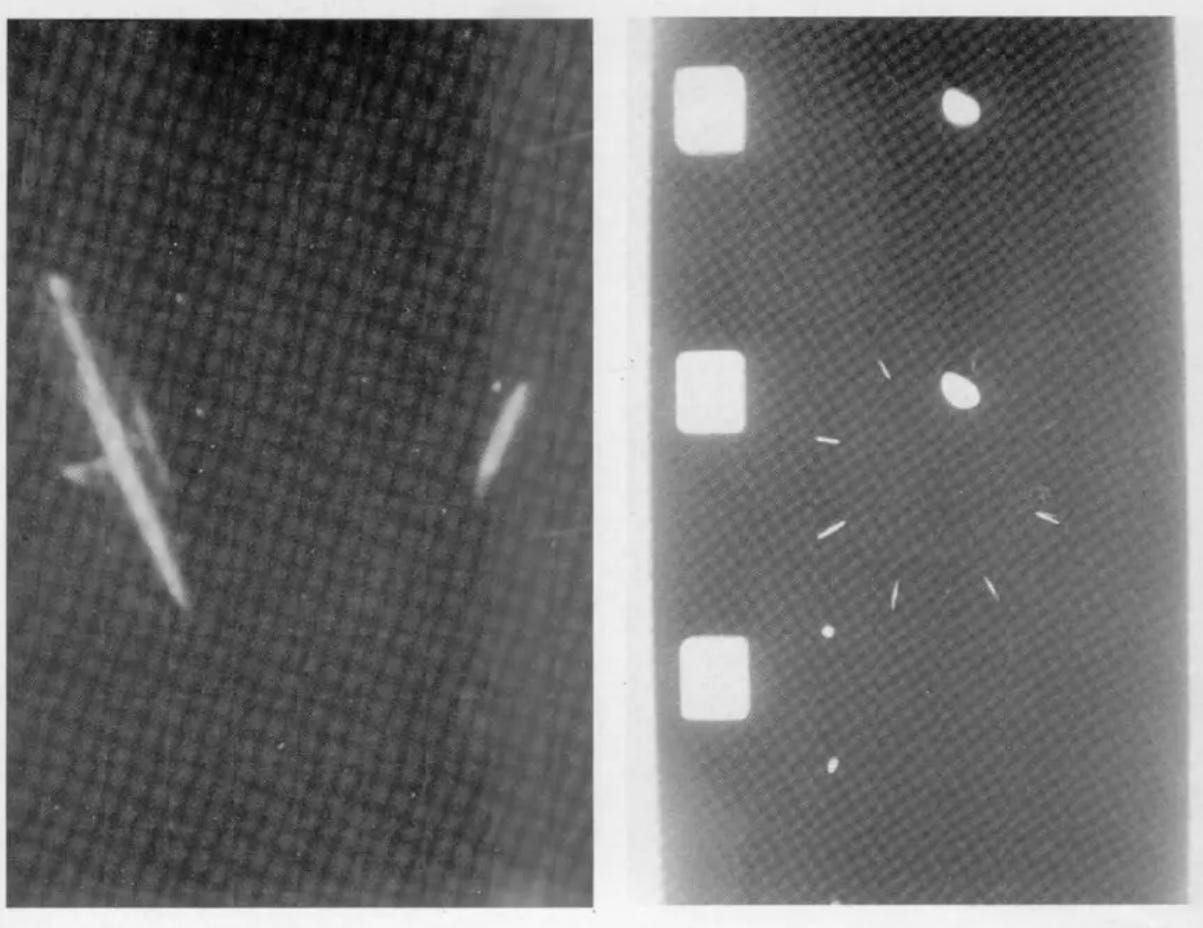
↑ Terug naar de berichten