Ontdek de Fascinerende Wereld van UFO's en UAP's: Jouw Bron voor Onthullende Informatie!
Ben jij ook gefascineerd door het onbekende? Wil je meer weten over UFO's en UAP's, niet alleen in België, maar over de hele wereld? Dan ben je op de juiste plek!
België: Het Kloppend Hart van UFO-onderzoek
In België is BUFON (Belgisch UFO-Netwerk) dé autoriteit op het gebied van UFO-onderzoek. Voor betrouwbare en objectieve informatie over deze intrigerende fenomenen, bezoek je zeker onze Facebook-pagina en deze blog. Maar dat is nog niet alles! Ontdek ook het Belgisch UFO-meldpunt en Caelestia, twee organisaties die diepgaand onderzoek verrichten, al zijn ze soms kritisch of sceptisch.
Nederland: Een Schat aan Informatie
Voor onze Nederlandse buren is er de schitterende website www.ufowijzer.nl, beheerd door Paul Harmans. Deze site biedt een schat aan informatie en artikelen die je niet wilt missen!
Internationaal: MUFON - De Wereldwijde Autoriteit
Neem ook een kijkje bij MUFON (Mutual UFO Network Inc.), een gerenommeerde Amerikaanse UFO-vereniging met afdelingen in de VS en wereldwijd. MUFON is toegewijd aan de wetenschappelijke en analytische studie van het UFO-fenomeen, en hun maandelijkse tijdschrift, The MUFON UFO-Journal, is een must-read voor elke UFO-enthousiasteling. Bezoek hun website op www.mufon.com voor meer informatie.
Samenwerking en Toekomstvisie
Sinds 1 februari 2020 is Pieter niet alleen ex-president van BUFON, maar ook de voormalige nationale directeur van MUFON in Vlaanderen en Nederland. Dit creëert een sterke samenwerking met de Franse MUFON Reseau MUFON/EUROP, wat ons in staat stelt om nog meer waardevolle inzichten te delen.
Let op: Nepprofielen en Nieuwe Groeperingen
Pas op voor een nieuwe groepering die zich ook BUFON noemt, maar geen enkele connectie heeft met onze gevestigde organisatie. Hoewel zij de naam geregistreerd hebben, kunnen ze het rijke verleden en de expertise van onze groep niet evenaren. We wensen hen veel succes, maar we blijven de autoriteit in UFO-onderzoek!
Blijf Op De Hoogte!
Wil jij de laatste nieuwtjes over UFO's, ruimtevaart, archeologie, en meer? Volg ons dan en duik samen met ons in de fascinerende wereld van het onbekende! Sluit je aan bij de gemeenschap van nieuwsgierige geesten die net als jij verlangen naar antwoorden en avonturen in de sterren!
Heb je vragen of wil je meer weten? Aarzel dan niet om contact met ons op te nemen! Samen ontrafelen we het mysterie van de lucht en daarbuiten.
Woensdag 7 oktober 2026
UFO Whistleblower Claims US Forces Had a Deadly Shootout With Seven-Foot-Tall Reptilian Aliens
UFO Whistleblower Claims US Forces Had a Deadly Shootout With Seven-Foot-Tall Reptilian Aliens
Even Grusch admits he never saw the reptilians, and the Pentagon says no such evidence exists
David Grusch, the former Air Force officer behind the 2023 UFO disclosure hearings, during a recent podcast appearance
PHOTO TheBritishIntel/X
David Grusch, the former US intelligence officer who testified at the 2023 congressional UFO hearing, told Joe Rogan on 30 September that US forces allegedly shot dead about seven-foot-tall reptilian beings after a crashed craft, although he said he never personally saw them.
Speaking on The Joe Rogan Experience, Grusch described a crashed 'tic-tac' craft linked to what he framed as a clash between two groups of non-human beings. He said dead 'grays' were recovered alongside living reptilians, creatures he described as more than seven feet tall, with a gorilla-like build and scaly skin.
Those beings, he claimed, turned on US personnel, wounding and killing some before troops opened fire and killed them. He also described human-like beings said to resemble Greek gods, part of a wider set of alleged non-human types.
Grusch told Rogan the account came from a colleague, not from anything he witnessed, and he offered no physical evidence to back it. 'I cannot believe I'm talking about this on Joe Rogan,' he said during the episode. Rogan himself called the subject 'kooky talk', while allowing that 'if it was real, there's no way it doesn't sound kooky'.
The Claim That Divided UFO Watchers
Reaction inside Reddit's r/UFOs forum turned sharply sceptical rather than excited. Users questioned why Grusch had moved from pressing for government transparency earlier this year to sharing a vivid, unprovable crash story. Several criticised the account as attention-seeking or fictional, with one comparing it to something lifted from a bad novella. The shift matters because Grusch built his reputation on documents and sworn statements, not on dramatic retellings.
Why Credibility Is the Real Story
Grusch is not a fringe figure, which is what makes the latest claims so awkward. He served as an Air Force intelligence officer and as the National Reconnaissance Office's representative to a Pentagon task force studying unidentified anomalous phenomena. When he testified under oath to a House Oversight subcommittee on 26 July 2023, he presented allegations based largely on information provided by others.
Even then, he said his testimony was based on information he had been given, and he declined to share classified material when pressed. His new account, by contrast, rests entirely on what others allegedly told him.
What the Pentagon Has Found
Official findings have not corroborated the broader claims of recovered extraterrestrial technology. The Pentagon's All-domain Anomaly Resolution Office, known as AARO, published a historical review in March 2024 and reported no verifiable evidence that the US government has recovered or reverse-engineered alien technology. The office also determined that specific claims about people, locations, and documents tied to alleged reverse-engineering programmes were inaccurate.
Sean Kirkpatrick, AARO's first director, told the Senate in April 2023 that investigators had found no credible evidence of extraterrestrial activity.
What Happens Next
Grusch told Rogan to expect major disclosure before President Donald Trump leaves office and predicted a coming shift in what the public accepts as real.
For now, the story rests on a secondhand account with no publicly available footage, bodies, or records that independently verify the encounter. Readers weighing whether to believe it face the same basic evidentiary question: where is the physical evidence?
Shooting Down UFOs Could Risk Conflict With Extraterrestrials, Durham Professor Warns
Professor Michael Bohlander says UAP should generally be treated as non-aggressive unless they demonstrate hostile intent, while acknowledging there is no evidence they are extraterrestrial
Expert warns firing on UFOs without clear threat risks unlawful force and dangerous escalation
PHOTO Image: U.S. Department of War
Governments risk triggering a conflict humanity cannot win if they fire on unidentified flying objects that later turn out to be of non-human origin, a Durham University legal academic has warned.
Professor Michael Bohlander, the university's Chair in Global Law and SETI Policy, set out his argument in a commentary titled Should we Shoot Down UFOs?, published by Global Policy Journal on 30 September.
His case rests on a hypothetical. He does not claim that extraterrestrial craft have been shown to exist, and NASA says there is no evidence that unidentified anomalous phenomena (UAP) are extraterrestrial.
Call for Restraint Before Pulling the Trigger
Prof. Bohlander argues that UAP should generally be treated as non-aggressive unless they demonstrate hostile intent. Where an object's nature and intentions cannot be established, he says, the default should be protection rather than destruction. He also argues that the legal basis for attacking such an object is hard to establish.
He wrote that there is 'no guarantee' UAP would remain restrained if attacked, and that some 'may carry weapon systems equally advanced as their overall technology'. He questioned whether humanity should test them without good reason and a 'colourable case' that humans would prevail.
Prof Bohlander joined the German judiciary in 1991 and has served as an international judge at the Kosovo Specialist Chambers and as international co-investigating judge at the Extraordinary Chambers in the Courts of Cambodia.
Real-World Encounters Cited in Warning
UAP is a term used by US government agencies for observations that cannot immediately be attributed to known objects, actors or natural phenomena. The label does not itself indicate extraterrestrial origin.
Prof. Bohlander pointed to events in February 2023, when the US military shot down a Chinese high-altitude surveillance balloon off South Carolina. Three other unidentified objects were subsequently shot down over North American airspace.
Gen. Glen VanHerck, then NORAD commander, initially declined to rule out an extraterrestrial origin for the three objects, although officials later qualified the remark. Prof. Bohlander noted that the objects were reportedly observed without an apparent propulsion system. He said recordings of pilots' conversations during the Lake Huron encounter showed uncertainty over how to classify the object.
He also cited video shown at a 2025 US congressional hearing. Republican Rep. Lauren Boebert presented footage she said was taken on 30 October 2024, showing an MQ-9 drone tracking an object off Yemen while another launched a Hellfire missile. ABC News reported that the video appeared to show the missile bouncing off the object. No one has independently established what the object was.
Questions Over Secrecy and Rules of Engagement
Prof. Bohlander wrote that the US intelligence community has an 'iron grip' on the UAP environment. He argued there is little publictransparency about the rules of engagement governing responses to such objects. That does not mean no rules exist, as such guidance can be classified.
Governments have released some UAP footage and records in recent years, but he maintains that important information remains too closed for public scrutiny.
Independent assessment of the precise origin and technical capabilities of the objects cited in his commentary is difficult, particularly where key data remains classified or has not been made publicly available.
Satellite images of NASA’s Armstrong Flight Research Center in California captured a strange detail: the legendary reconnaissance aircraft SR-71 Blackbird, tail number 844, disappeared from an open display area near Edwards Air Force Base. The aircraft, which had remained stationary for decades as a museum exhibit, was moved into a hangar for inspection. This immediately sparked a wave of rumors about the possible return to flight of the fastest jet aircraft in aviation history.
Lockheed SR-71 Blackbird with an experimental propulsion system from NASA in 1998. Photo: NASA
NASA Administrator Jared Isaacman added fuel to the fire. During a presentation at a summit in Los Angeles, he unveiled a concept for a new aircraft with distinctive features — tail surfaces, cockpit design, and engines resembling those of the SR-71. Isaacman said that the space agency would soon once again fly “as high and fast as we did decades ago, and even faster.”
Records That Remain Unbroken
The SR-71 Blackbird reconnaissance aircraft made its first flight in December 1964 and entered service in early 1966. During 24 years of active service with the U.S. Air Force, the aircraft earned the status of the fastest and highest-flying production aircraft in the world.
Lockheed SR-71 Blackbird
In July 1976, the SR-71 set two absolute world records in its class:
Speed: 3,529.56 km/h (more than Mach 3);
Flight altitude: 25,929 meters.
Tail number 844 made its last official flight on October 9, 1999, after which it became part of a museum display.
Engineers’ Doubts
According to specialized publications, NASA did contact several former engineers and test personnel who had worked with the SR-71 in order to assess the possibility of reviving the project. However, the specialists themselves are highly skeptical.
Lockheed SR-71 Blackbird in a hangar before testing for NASA. Photo: NASA
Mike Relia, a 70-year-old veteran engineer of the U.S. Air Force and NASA, admitted that he was stunned by the question of restoring flight operations: “I wished them luck, but I do not believe it is possible under the current conditions.”
According to Relia, getting an airframe back into the air after it had spent 27 years exposed to open sun, wind, and sand would be an extremely difficult task.
Lockheed SR-71 Blackbird taking off. Photo: NASA
The main problem lies in the propulsion systems. Starting and maintaining them requires unique components, including the ignition chemical triethylborane, special high-temperature oils, hydraulic fluids, as well as specialized ground equipment and carts for removing the engines. Most of this equipment has been permanently lost. During the aircraft’s operational period, spare engines were also started every 180 days, while the current engines have been shut down for more than 30 years.
In addition, in 2007 the U.S. Air Force and NASA completely destroyed the remaining SR-71 spare parts, valued at about $600 million.
NASA’s Official Position
For now, the space agency is refraining from directly confirming any revival of the Blackbird. In comments to the media, NASA representatives said they appreciate the enormous public interest in the history of the SR-71, but currently have no additional information regarding the aircraft’s future.
Whether moving aircraft No. 844 is an attempt to give the legend a new life or merely a research step toward developing new hypersonic vehicles remains to be seen.
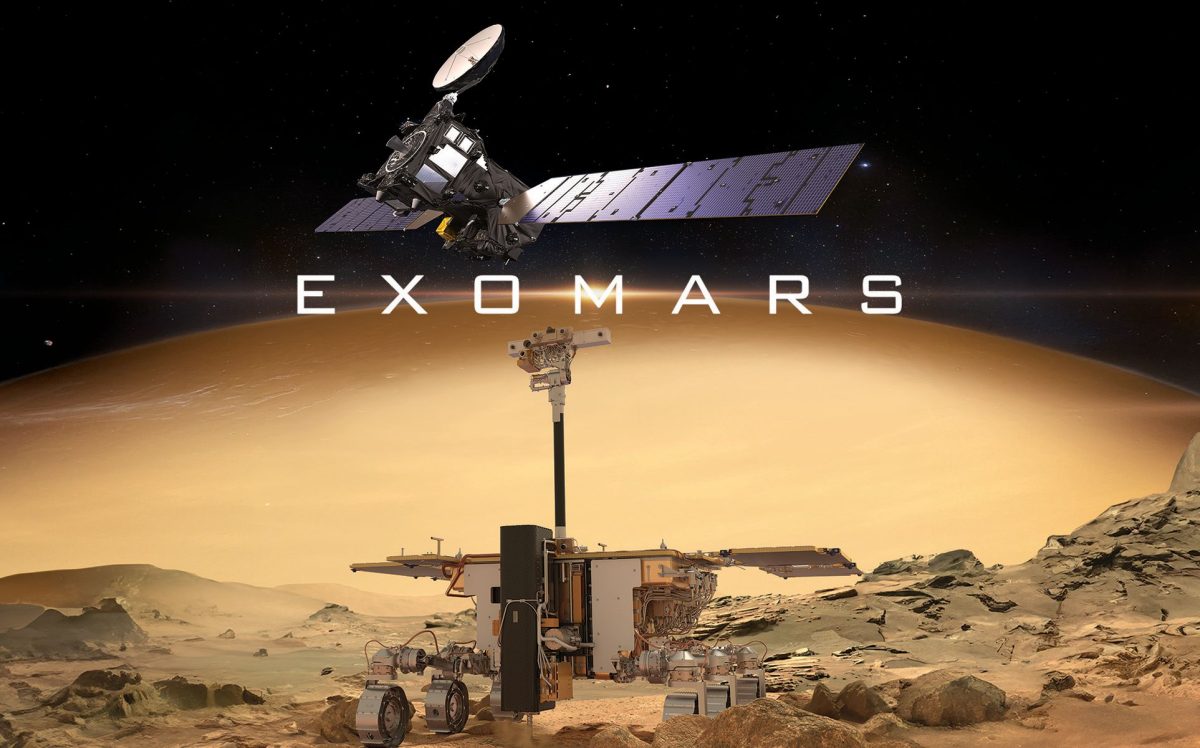
In 2028, the European Space Agency (ESA) plans to send the ExoMars Rosalind Franklin rover, assembled by Airbus in Stevenage, UK, to Mars. The spacecraft is expected to arrive at the Red Planet in 2030. The rover’s main mission is to answer the question of whether life beyond Earth ever existed and whether we and hypothetical Martian life might share common origins.
ExoMars mission poster
The main technological advantage of Rosalind Franklin will be its unique drill, capable of penetrating up to 2 m beneath the surface.
All previous Mars rovers studied samples taken from the surface or from only shallow depths. However, the Martian surface has been continuously bombarded by solar and cosmic radiation for billions of years, destroying any organic material. At a depth of 2 m, rocks have remained untouched and protected from radiation.
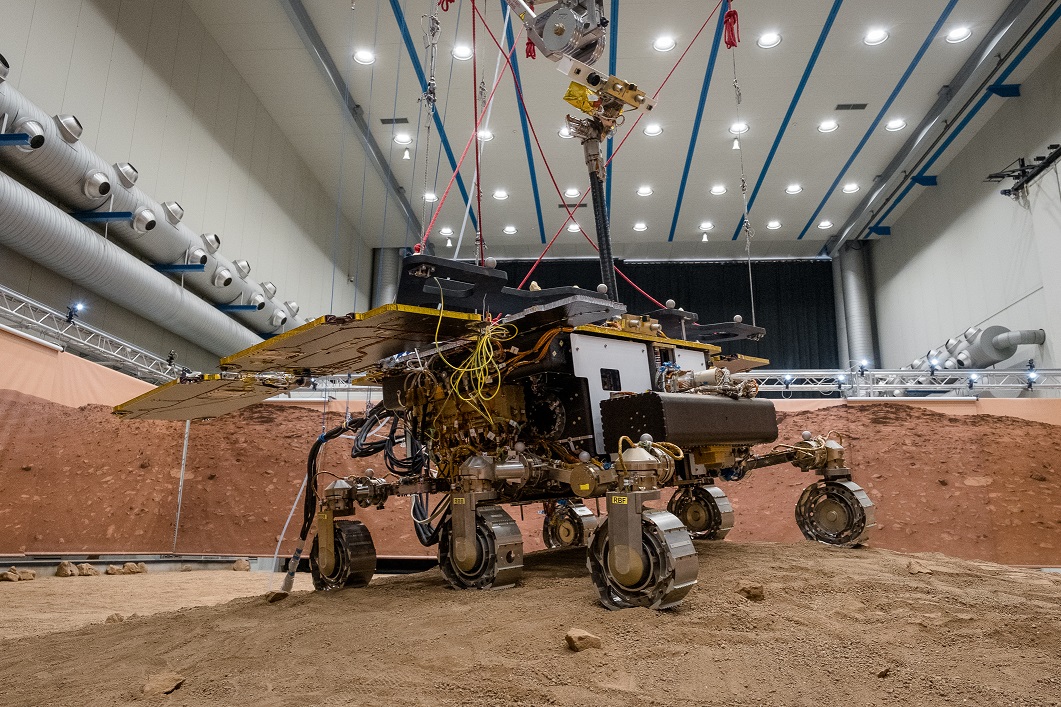
ExoMars Rosalind Franklin rover during tests simulating Martian gravity. Source: ESA
Scientists do not expect to find living organisms. The rover’s goal is to detect biosignatures: chemical, molecular, or structural traces of ancient biological activity from the time when Mars was wet and habitable.
Panspermia and Common Ancestors
One of the mission’s most important questions concerns the panspermia hypothesis. During the early stages of the Solar System, around 3.8–4.1 billion years ago, Earth and Mars experienced intense meteorite bombardment. Rocks blasted into space by powerful impacts could have traveled between the planets.
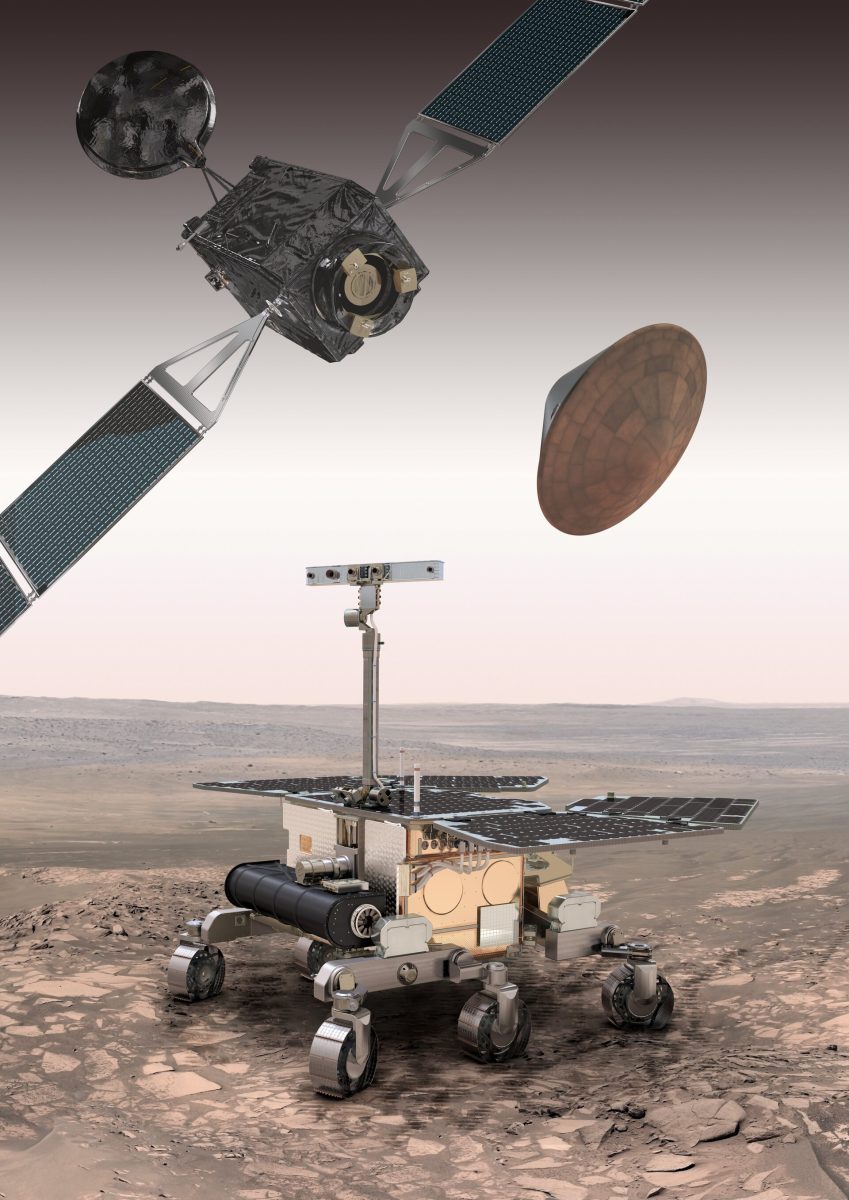
Illustration of the ExoMars Rosalind Franklin rover together with the spacecraft and landing module. Source: ESA
According to Professor of Planetary Mineralogy Susanne Schwenzer, if Martian biosignatures turn out to be similar to those on Earth, this could indicate the existence of a common ancestor. If, however, life on Mars is found to have emerged independently, it would show that biology in the Universe is a natural and widespread phenomenon when suitable conditions are present.
Oxia Planum
The rover will land near the equator in the Oxia Planum region. This location was chosen because of its rich deposits of ancient clay, which formed under prolonged exposure to water about 4 billion years ago. Clay minerals are excellent at preserving organic compounds.
To select the exact drilling site, the rover will use an entire suite of instruments:
a panoramic camera from University College London to analyze the terrain;
an infrared spectrometer from Aberystwyth University to determine mineral composition;
a subsurface sounding radar to assess rock layers before the drill penetrates them.
Independent Decisions from Millions of Kilometers Away
Real-time control of the rover is impossible. A radio signal from Earth to Mars takes between 4 and 21 minutes, depending on the relative positions of the planets. Because of this, Rosalind Franklin will have a high level of autonomy.
Scientists involved in the mission note that any evidence of life on Mars could indicate a common origin with life on Earth. Source: REUTERS
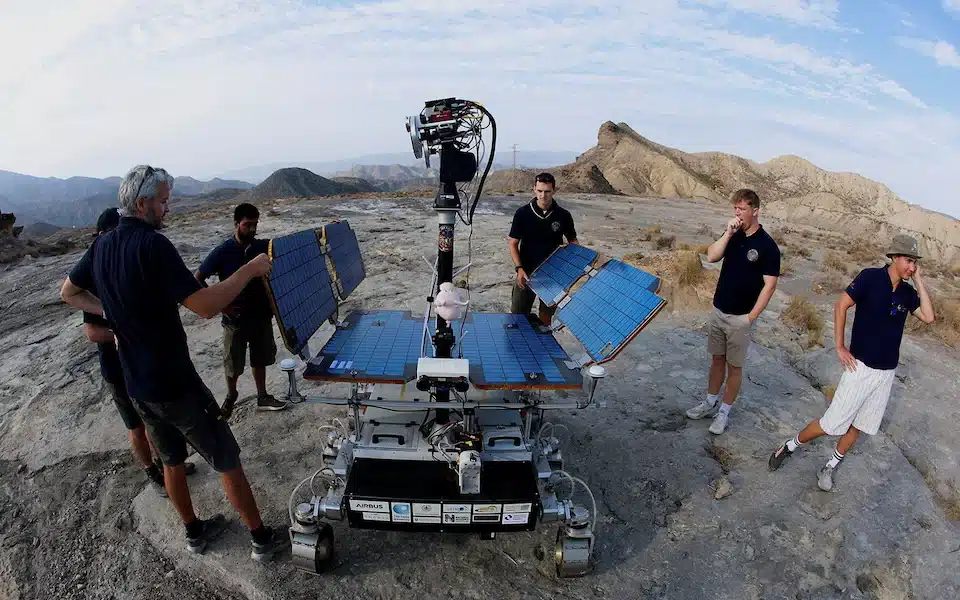
The control center in Turin, Italy, will send general instructions, but the rover will independently avoid obstacles, choose its route, and carry out drilling. Engineers are currently testing autonomous driving and soil-sampling algorithms in Spain’s Tabernas Desert, whose dry terrain closely resembles that of Mars.
Most planets known to us form alongside their host stars within a shared protoplanetary disk. However, while analyzing data from space observations, an international team of scientists came across something unique: chemical and optical signatures of a gas giant that formed from the material left behind after its star died.
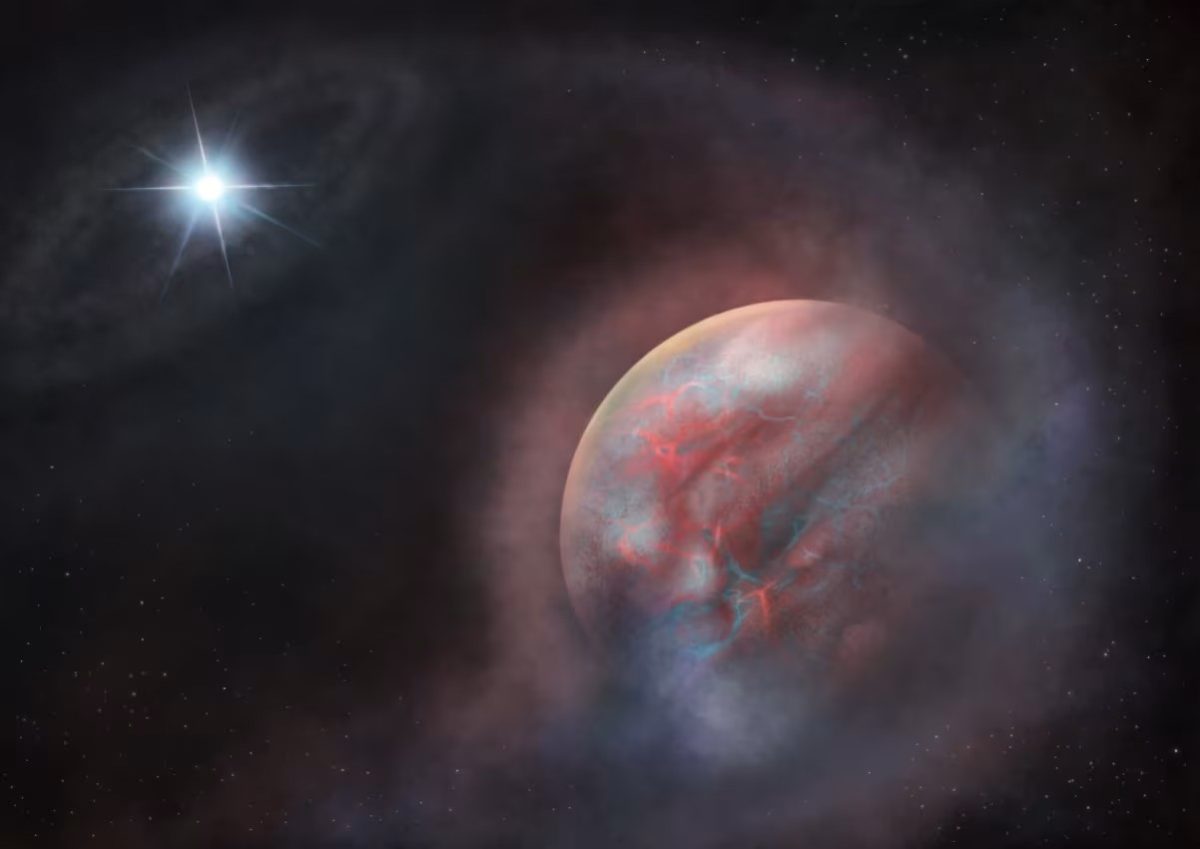
Artist’s illustration of a possible young planet that formed after its star became the white dwarf HS 0209+0832. Credit: Snehalata Sahu / University of Warwick
This young world now orbits the white dwarf HS 0209+0832, located approximately 270 light-years from Earth. The findings describing this phenomenon were published inNature Astronomy.
A Niobium Signature and Clues from TESS
The main evidence for the birth of a second-generation planet came from the unusual composition of the white dwarf’s atmosphere. Using the Hubble Space Telescope, astronomers detected a substantial concentration of niobium on the dead star’s surface.
Heavy elements in white dwarfs usually sink rapidly into the interior under the influence of immense gravity, leaving only the lighter hydrogen and helium at the surface. The presence of niobium indicates that this material arrived at the star from an external source very recently. Scientists believe that intense ultraviolet radiation from the hot white dwarf is literally evaporating the nearby planet’s atmosphere, causing this material to fall onto the star.
Further evidence came from observations by TESS (the Transiting Exoplanet Survey Satellite). The spacecraft recorded regular variations in the white dwarf’s brightness with a period of 4.4 days, characteristic of a large planet passing in front of the stellar disk.
Life from Stardust
The formation of first-generation planets still holds many mysteries, and the mechanism behind the emergence of second-generation planets is even more complex. In the case of HS 0209+0832, scientists propose the following scenario: during its red giant phase, the dying star may have engulfed a close companion, such as a brown dwarf or a small star with about 20% of the Sun’s mass.
This infall prevented the stellar material from dispersing completely into space. Instead, some of the gas and dust began swirling in a dense disk around the remaining stellar core, from which a new exoplanet eventually condensed.
The Future of the Solar System
For the scientific community, this discovery overturns existing ideas about the evolution of planetary systems. White dwarfs cool over tens of billions of years, making their surrounding habitable zones exceptionally stable. If second-generation planets can form under such conditions, they could potentially provide a refuge for life over periods far exceeding the age of our Universe.
The discovery also offers a direct illustration of the future of our own cosmic home. In a few billion years, the Sun will also become a white dwarf. Although Earth will evaporate during this process, a new world could emerge in our system from its remnants and the stellar ashes.
For now, the object near HS 0209+0832 remains a planet candidate. To definitively confirm its existence, the team plans to conduct additional observations using Hubble, Chandra, and the James Webb Space Telescope.
Last week, a 28-year-old employee at an anti-plague institute in the Siberian city of Irkutsk died at a regional hospital just two days after mysteriously falling ill.
Her unusual occupation drew an international media frenzy, sparking fears over another pandemic. The news sounded just a bit too much like the opening to a cheesy medical horror movie, with US secretary of state Marco Rubio saying that the US is “watching and monitoring” the case “closely.”
Former White House COVID-19 response coordinator Deborah Birx called the death “particularly concerning,” saying that the Centers for Disease Control and Prevention are “very much aware and tracking” the situation.
And something about Russian officials’ reassurances hasn’t quite quelled our fears. The deceased worker, Darya Shipilova, was diagnosed with “pneumonia of unknown etiology,” per the Moscow Times — a vague diagnosis that left plenty of questions unanswered.
It’s especially unsettling considering the lab has been studying the pneumonic plague, which develops when “bacteria spread to the lungs of a patient with untreated bubonic or septicemic plague, or when a person inhales infectious droplets coughed out by another person or animal with pneumonic plague,” per the CDC.
The Black Death, a global 14th century pandemic that’s believed to have killed tens of millions of people, included all three forms of plague: bubonic, septicemic and pneumonic.
Russian head of the republic of the neighboring Siberian region Buryatia Alexei Tsydenov at first threw fuel on the fire by claiming in a Telegram post that Shipilova had died of the plague — before adding the word “maybe” to his statement.
Many say there’s no reason to panic. Consumer safety watchdog Rospotrebnadzor said it found no evidence that any lab materials had anything to do with the tragic death and that were no signs of foul play or security breaches. Intriguingly, the watchdog confirmed that contact tracing revealed two cases of COVID-19 and two cases of rhinovirus, according to the Moscow Times — but no plague.
The World Health Organization has since publicly stated that the risk of an epidemic in Russia is low. Spokesperson Christian Lindmeier said in a statement today that “all of the patients’ contacts have reportedly been identified and are being monitored for illness, and none to date have shown symptoms of illness.”
The lab at the institute where Shipilova was employed is currently under lockdown, including 60 of her colleagues, forcing them to sleep on the floors and in chairs.
Characteristically, president Donald Trump appeared to have received some serious mixed messaging from his aides — or struggled to interpret the details for himself.
“I hate to see them having it,” he said, seemingly implying the existence of a plague outbreak in Russia, one of the United States’ biggest adversaries. “We’ll help. Everybody who has that kind of a problem, we’ll always help.”
EXCLUSIVE - I saw unreleased UFO files at a secret meeting in the Tennessee mountains. We prayed after seeing what these 'humanoid beings' did... the world is not prepared
A pastor who claims he was whisked away to a secret UFO disclosure gathering in the Tennessee mountains has revealed chilling new details about the evidence he was shown.
One of the supposed attendees, Pastor Joseph Zupetz, has disclosed vivid new details about what he saw, warning that the UFO files released by the Trump administration so far are nothing compared to what is still to come.
Far removed from the grainy, blurry UFO footage previously released by the government, Zupetz said he and five other Christian influencers were shown images of non-human beings that were startlingly clear and sent chills down his spine.
The pastor said the secretive meeting, whose attendees he declined to identify, was organized by 'personnel now working within groups that investigate non-human intelligence issues involving UAPs (Unidentified Anomalous Phenomena) and reverse-engineered craft.'
'I was shown images that some of the people who were presenting to us had on their devices of real entities that they personally took photos of,' Zupetz told the Daily Mail.
'They took images of entities standing in the woods. They were very tall, they had very long appendages, some of them almost looked, and this is a crude way of saying it, almost like humanoid squid-type things.'
Congress recently requested 46 UFO videos from the Department of War, including one that viewers have claimed shows an angel flapping its wings
He claimed that other images featured 'tall, lanky, light beings,' with some completely see-through.
Then, after leaving the two-hour meeting and boarding his flight back to Colorado, he noticed several glowing orbs hovering in the sky in the distance.
He recorded the strange encounter and shared the footage with the Daily Mail.
Zupetz said that during the flight, the plane was shaken so violently that he and other passengers began to pray.
When they looked back out the window, the orbs were gone from their view.
'We were flying in an aircraft, and we truly had an encounter with six orbs right outside the plane,' he said.
'We began to pray, and it stopped trembling. I thought that was very interesting. Now, maybe it was just turbulence, and we had a psychosomatic episode.'
But, according to the pastor, he is convinced it was demonic and fears the encounter was linked to the meeting he had just attended.
'Here I am, a faith-filled believer, and I'm seeing this, and it's making me question, like, okay, what is this? Is this demons? Is this angels? Is it high-level tech?' the pastor said.
Zupetz was one of several influential faith leaders who claimed to have attended private meetings held in Tennessee in February, where former government officials warned that information expected to be released this year could have profound implications for Christian beliefs.
The Daily Mail could not confirm that the meetings took place. But the evangelist Tony Merkel told us that he helped organize the meeting and was also in attendance.
Pastor Joseph Zuptz says he attended one of three secret meetings between faith leaders and former intelligence officials who believe UFO disclosure will shake the Christian faith
Faith leaders at multiple secret meetings throughout the US were allegedly shown images of real extraterrestrials, including a squid-like being with long limbs (Stock Image)
Merkel said the idea was to bring in key ministers who have a large reach within the Christian community to prepare people of faith for the potential disclosure of aliens.
On June 12, the third tranche of declassified files was released to the public, containing hundreds of pages of documents, images, videos and even audio recordings from NASA space flights.
However, Zupetz has admitted that he and his followers have not been shocked or convinced that extraterrestrial life existed after seeing these initial releases.
To this point, only a handful of videos disclosed by the Pentagon have shown clear footage of alleged UFOs, mostly metallic orbs, flying over the planet in great detail.
However, after attending the meeting in Tennessee, Zupetz and others were convinced the slow drip of UFO content from the government is designed to build a 'normalcy bias,' making strange things seem ordinary, to set up for a potentially Earth-shattering reveal in future.
'They're going to continue to drip these things, drop them slowly, and it's not going to be shock and awe in the beginning. And this is what we were told,' Zupetz explained.
'Eventually, they will bring out an entity, a non-human biologic that they will either have speaking or communicating with, and when they do this, then it's going to be a little more shaking.'
The Pentagon's main UFO investigative unit has claimed that most reports of mysterious phenomena in the sky have been caused by explainable things, including balloons, drones and even bird sightings.
To date, six batches of files have been released.
A video released in the first wave of UFO files appeared to show a glowing object resembling an 'eight-pointed star' with uneven arms that has been compared to a craft from biblical times
Yet, despite the ongoing file dumps from the Pentagon and multiple members of Congress saying more evidence of real UFOs exists, the US government has maintained that there is no physical proof that aliens exist.
However, Zupetz and other faith leaders have presented an alternative theory, calling the appearance of strange craft, glowing orbs and non-human figures evidence of 'fallen angel technology.'
The theory argues that UFO sightings that cannot be explained as advanced human technology or natural phenomena may actually be interdimensional beings described in the Bible and the controversial Book of Enoch.
'I believe that they are fallen angel tech, or it is interdimensional abilities afforded to angels, rogue spirits or demonic powers that can manifest and appear,' Zupetz said, referring to the origins of the unexplained phenomena in our skies.
'I believe that is the big false flag thing, and the agenda they'll bring forward is saying, we originally are the ones that [seeded] you here.
'The Bible you read is close, but it's not perfectly accurate, because now we're here to enlighten humanity, raise your consciousness, and bring you higher.'
Zupetz shared images of six orbs that surrounded his plane while leaving the secret meeting in Tennessee
Zupetz said his plane began shaking as the orbs surrounded the aircraft, and only stopped when the passengers began praying
Zupetz said believers who find themselves faced with similar sightings and questioning their faith should speak the name of Jesus during their encounters.
The pastor claimed that genuine good entities would respond positively, while deceptive ones would be triggered negatively.
The pastor also cited Steven Spielberg's latest film, 'Disclosure Day,' and the famed director's comments regarding believers in Jesus as more evidence of an ominous narrative being formed, which aligns with the Bible's darkest chapters.
During a CBS News interview, Spielberg reflected on how confirmation of intelligent life beyond Earth could affect religious faith, saying, 'The movie also takes the position of the church.
'What does this do to the fundamental beliefs that many of us have? Is God our God only on this planet? Or is God a god for every system where there's civilization and intelligent life, and even developing life?'
Zupetz said: 'When this disclosure happens, it's the narrative attached to it that'll become more and more negative towards Christianity.'
RELATED
Unreleased UFO files seen by Pastor at a secret meeting in the Tennessee mountains #fyp #viral #news
Secret Pastor UFO Meeting Was NOT What Anyone Told You
Pastors Briefed on UFO Disclosure — Perry Stone’s Claims About Preparing Congregations
A mysterious hole on the moon's surface could open into a vast underground world.
NASA has selected a project to investigate the opening, known as the Marius Hills Pit, and determine whether it leads to a cavern that could shelter future astronauts from radiation and extreme temperatures.
The project, known as the Geophysical Instruments for Marius Lunar Pit Investigation (GIMLI), will combine ground-penetrating radar, seismic sensors and a device to measure the the local gravitational field to see below the surface.
Located in one of the moon's most volcanically varied regions, the pit is about as deep as a 10-story building is tall, with an opening roughly the size of an American football field.
It is one of about 300 pits identified on the lunar surface, some of which could provide entrances to caves formed by ancient volcanic activity. It was found by Japan's SELENE spacecraft in 2009.
The team, which announced the project on Monday, said it also plans 'to study more than the possible underground structure.'
The surrounding area has experienced a long history of volcanic activity, and the walls of MHP expose layers of regolith and lava flows that normally remain buried.
Examining these layers could show how lava once moved across and beneath the lunar landscape and whether individual eruptions were separated by long intervals.
NASA has selected a project to investigate a hole on the lunar surface, known as the Marius Hills Pit. The initiative will determine whether it leads to a cavern that could shelter future astronauts from radiation and extreme temperatures
NASA has tapped the Planetary Science Institute (PSI) to lead the investigation.
The American space agency said that if such a cavern exists beneath the lunar surface, it could one day protect astronauts from radiation and the dramatic temperature swings on the lunar surface.
Radiation levels on the lunar surface are roughly 2.6 times higher than on the International Space Station (ISS), which orbits about 250 miles above Earth's surface, and about 200 times higher than on Earth.
If astronauts were exposed to such levels, they would face serious health risks, including cancer, cell damage and acute radiation sickness.
Rather than relying only on observations from above, GIMLI will provide researchers with an opportunity to examine Marius Hills Pit directly from the lunar surface.
PSI Associate Director and Senior Scientist Than Putzig said in a statement: 'It's long been a desire of mine to reintroduce intentional active-source seismic methods to planetary science, as it has essentially not been done since the Apollo astronauts conducted the first seismic surveys on the moon.
'Combining that method with ground-penetrating radar and gravity measurements makes it all the more exciting, as these methods together will allow us to get a much better understanding of subsurface properties, including the anticipated detection of a lava tube extending away from the Marius Hills Pit.'
Even if an underground cave is not found, lunar pits are valuable because their walls expose otherwise hidden geology.
Located in one of the moon's most volcanically varied regions, the pit is about as deep as a 10-story building is tall, with an opening roughly the size of an American football field
Any underground spaces connected to them could also preserve evidence of the volcanic processes that helped shape the moon.
Gareth Morgan, PSI Senior Scientist and Deputy Principal Investigator on the GIMLI program, said: 'Confirming a substantial lava tube would give us an insight into how volcanism operated on the moon.
'Lava tubes are a common feature of basaltic volcanism on Earth, so identifying them on the moon means we could use knowledge of such terrestrial caves to better understand lunar history.'
When the crew reaches the moon, two astronauts will descend to the surface and spend approximately a week near the South Pole of the moon conducting new science before returning to lunar orbit to join their crew for the journey back to Earth.
RELATED
NASA Found a Hidden Cave on the Moon — Here's Why It Matters
McCasland once commanded the Air Force Research Laboratory, overseeing billions of dollars in military science and technology research, which has long been tied to conspiracy theories of the alleged storage of crashed UFO debris and alien bodies from Roswell.
Now, UFO whistleblower David Grusch, who testified under oath in 2023 that the US government has secretly operated programs to recover and reverse-engineer non-human spacecraft for decades, has claimed the general was involved in an effort to prepare Americans for UFO disclosure.
Speaking on Joe Rogan's podcast, the former intelligence officer linked that alleged effort to Hillary Clinton's pledge to release UFO files if elected president in 2016.
'It's very bizarre. And it's within a week of Trump coming out,' said Grusch, referring to McCasland disappearing days after the president's February 19 announcement to release all files related to UFOs and extraterrestrials.
William Neil McCasland, 68, vanished from his Albuquerque, New Mexico, home on February 27. His phone, wearable devices and prescription glasses were left behind
McCasland held senior military research positions at both Wright-Patterson Air Force Base in Ohio and Kirtland Air Force Base in New Mexico.
He commanded the Air Force Research Laboratory at Wright-Patterson and previously led its Phillips Research Site at Kirtland.
His connections to UFO discussions attracted public attention in 2016, when WikiLeaks published hacked emails from Podesta’s account.
One message, dated January 25, 2016, and titled ‘General McCasland,’ described former Blink-182 frontman Tom DeLonge’s dealings with the retired general.
DeLonge shifted his career to push for government disclosure on unidentified aerial phenomena (UAP, co-founding To The Stars Academy, which explored UFOs and other phenomena.
‘I’ve been working with him for four months. I just got done giving him a four-hour presentation on the entire project a few weeks ago,’ DeLonge wrote.
‘He not only knows what I’m trying to achieve, he helped assemble my advisory team.’
In the same email, DeLonge repeated the longstanding claim that material from the Roswell incident had been taken to Wright-Patterson, linking that allegation to the laboratory McCasland had commanded. The message did not provide evidence to substantiate that claim.
UFO whistleblower David Grusch, who testified under oath in 2023 that the US government has secretly operated programs to recover and reverse-engineer non-human spacecraft for decades, has claimed the general was involved in an effort to prepare Americans for UFO disclosure
Grusch told Rogan: 'John Podesta greenlit a... I'll call it acclimatization activity, a popularization activity. And, you know, that's why Tom DeLonge got his advisors.
'That's why General McCasland talked to him.'
Podesta recently publicly acknowledged UFO discussions involving DeLonge and McCasland.
In an emailed response to PARADIGM, Podesta challenged Grusch’s explanation of their purpose.
‘That is probably not how I would characterize our interaction,’ Podesta wrote.
He recalled a conference call arranged by DeLonge that covered declassifying Defense Department files and reducing the stigma surrounding professionals taking UFOs seriously.
‘I have always maintained that the American people could handle the truth about UAPs and didn’t really need to be “acclimated,"' Podesta wrote.
Grusch claimed McCasland spoke with DeLonge because the former Blink-182 star could be of use.
A surveillance image shows retired Air Force general William Neil McCasland the day before he vanished without a trace on February 27
'It was because they were given top cover to see Tom as a public figure who had the touch of the youth, rightly or wrongly,' he told Rogan.
'I mean, once again, there was an attempt, and I'm not going to judge them bad or good, but they were trying to prep the battlespace prior to 2016.'
McCasland's wife, Susan Wilkerson, told local police in February that she does not believe there was any foul play involved in her husband's disappearance, but also told 911 dispatchers it appeared the general 'had planned not to be found.'
Local police have not had any updates in the case.
Grusch had previously claimed that McCasland was one of the officers who had been in charge of classified programs related to non-human craft recovery and reverse-engineering.
The whistleblower also alleged that McCasland had not been cooperative with lawmakers seeking to interview individuals with knowledge of America's alleged contact with extraterrestrials.
Trump Release Alien Files Push Stalls as NYT Says Panel Found 'Unconfirmed Reports'
10 US Scientists Go Missing: White House Vows To Find Truth | GRAVITAS Highlights
Een theorie die ter discussie staat Volgens de overheersende theorie ontstond het leven op aarde ongeveer 4 miljard jaar geleden uit organische moleculen, die zich ontwikkelden van eencellige micro-organismen tot de diversiteit aan levende wezens die we nu kennen. Toch zijn er steeds meer geluiden die deze opvatting bevragen.
Abiogenese: anorganisch materiaal als basis Deze hypothese, bekend als abiogenese, stelt dat leven is ontstaan uit niet-levend, dus anorganisch, materiaal. Eenvoudige verbindingen ontwikkelden zich tot complexe zelfreplicerende systemen (die zichzelf konden kopiëren met behulp van grondstoffen uit hun omgeving) dankzij verschillende chemische processen.
Proces naar de eerste levensvormen De omstandigheden waarin abiogenese plaatsvond kwamen overeen met de vroege ontwikkeling van de aarde. Ongeveer 4,5 miljard jaar geleden ontstond de planeet, en tijdens deze periode, tussen de door meteorietinslagen gevormde kraters gevuld met water en het hete magma van de mantel, ontstonden hydrothermale bronnen die het ideale milieu vormden voor het ontstaan van het eerste leven.
Recent onderzoek werpt twijfels op In juli 2025 publiceerde onderzoeker Robert G. Endres van Imperial College London een wetenschappelijke studie op arXiv getiteld 'The Irrational Probability of Being', waarin hij het onderwerp abiogenese analyseert. Hoewel hij deze mogelijkheid niet uitsluit, concludeert hij dat deze theorie vrijwel onmogelijk is.
Toepassing van wiskundige modellen Endres gebruikte verschillende wiskundige modellen om te berekenen hoeveel tijd het zou kosten voordat uit niet-levende elementen op natuurlijke wijze de eerste levende cel zou ontstaan.
De tijden komen niet overeen Op basis van deze veronderstelling ontdekte de Britse wiskundige dat de moleculen die essentieel zijn voor het creëren van leven zich veel sneller tot microbieel leven hadden moeten samenvoegen dan eigenlijk mogelijk is, aangezien ze normaal gesproken zouden afbreken voordat dit zou kunnen gebeuren.
Te lang om aannemelijk te zijn Voor Endres gaven de gebruikte modellen aan dat deze theorie uiterst onwaarschijnlijk is, vooral omdat het proces van trial-and-error dat hiervoor nodig zou zijn veel langer zou duren dan wat blijkt uit de bekende fossiele gegevens.
Chemische reacties die leven veroorzaakten Ook in zijn experimenten voor de studie kwam hij tot de conclusie dat de benodigde tijd niet overeenkwam, zelfs niet als, zoals abiogenese veronderstelt, katalysatoren betrokken zouden zijn die de reeks chemische reacties op gang brachten die nodig zijn voor het ontstaan van leven.
Ongestructureerde systemen Hieraan voegt hij het wetenschappelijk bewijs toe dat systemen de neiging hebben om chaotischer te worden in plaats van meer geordend, wat een duidelijk obstakel vormt voor het ontstaan van complexe en sterk georganiseerde structuren die essentieel zijn voor het ontstaan van leven.
Onvoldoende onderbouwing Endres sluit zijn onderzoek af met het in twijfel trekken van de abiogenese-theorie. Volgens hem kunnen we niet uitsluitend vertrouwen op deze natuurlijke chemische processen en toeval om afdoende te verklaren hoe leven op onze planeet ontstond in de context van de vroege aarde.
Een grote uitdaging voor de biologische fysica Desondanks benadrukt de wiskundige in zijn studie dat het ontstaan van leven niet onmogelijk is, maar dat er nog onvoldoende kennis is om dit volledig te begrijpen. Hiervoor zouden de onderliggende natuurkundige principes ontdekt moeten worden, wat een grote uitdaging blijft voor de biologische fysica.
Wat als onze oorsprong buitenaards is? Mocht de theorie dat leven door abiogenese ontstond worden weerlegd, dan overweegt Endres een alternatieve, niet nieuwe hypothese: wat als leven op aarde werd gebracht door buitenaardse wezens die de planeet aanpasten aan het leven?
Buitenaardse interventie op aarde "Is de aarde geterraformd of ontstond orde uit chaos onder het stille bestuur van de natuurkunde? Tegenwoordig overwegen mensen serieus het terraformen van Mars of Venus in wetenschappelijke tijdschriften. Als er geavanceerde beschavingen bestaan, is het niet onwaarschijnlijk dat zij soortgelijke ingrepen zouden proberen, uit nieuwsgierigheid, noodzaak of ontwerp," stelde Endres in zijn studie, zoals gerapporteerd door Popular Mechanics.
Wat is terraforming? Dit hypothetische proces, dat door sommige deskundigen wordt voorgesteld, bestaat uit het opzettelijk aanpassen van de omstandigheden van een planeet (zoals temperatuur, oppervlak, atmosfeer, enz.) om deze geschikt te maken voor leven en bewoonbaar te maken. Iets vergelijkbaars met wat sommigen vandaag met Mars willen doen.
Al decennia aanwezig in sciencefiction Dit onderwerp is niet alleen door de wetenschap behandeld, maar komt ook veelvuldig voor in films en boeken binnen het sciencefictiongenre. 'Star Trek' en '2001: A Space Odyssey' zijn daar goede voorbeelden van.
Theorie van Francis Crick en Leslie Orgel De theorieën over terraforming en gerichte panspermie (het doelbewust verspreiden van leven door buitenaardse wezens) ontstonden in de jaren 70 dankzij Leslie Orgel en Francis Crick (op de afbeelding één van de wetenschappers die hielp bij de identificatie van DNA). Zij suggereerden dat een buitenaardse beschaving die op het punt stond uit te sterven, leven op verschillende planeten zou hebben verspreid om zijn voortbestaan te waarborgen.
Gerichte panspermie Panspermie is een wetenschappelijke theorie die stelt dat leven de aarde kan hebben bereikt vanuit de ruimte, hetzij op natuurlijke wijze via moleculen of micro-organismen die door meteorieten, kometen of interstellair stof op aarde terechtkwamen, hetzij doelbewust overgebracht door een buitenaardse beschaving.
Een radicale breuk met het bekende "Hoewel het idee dat de aarde is geterraformd door geavanceerde buitenaardse wezens wellicht indruist tegen het principe van Occams scheermes uit de conventionele wetenschap, blijft gerichte panspermie, oorspronkelijk voorgesteld door Francis Crick en Leslie Orgel, een speculatief maar logisch openstaand alternatief", aldus Endres volgens Popular Mechanics.
Een complexe, maar mogelijke optie In dit opzicht onderschrijft Endres deze theorie met enige terughoudendheid. In zijn studie maakt hij duidelijk dat, hoewel een buitenaardse oorsprong van het leven onwaarschijnlijk is, het technisch gezien niet onmogelijk is en daarom niet volledig uitgesloten zou moeten worden binnen de wetenschappelijke gemeenschap.
13.000 jaar GESCHIEDENIS: De Buitenaardse Oorsprong van het Leven op Aarde
Before the Pharaohs: The Mystery of Machine-Made Artifacts
How did the ancient Egyptians create objects of such extraordinary precision — thousands of years before modern machinery, power tools, and computer-controlled manufacturing?
Across Egypt, archaeologists have discovered hard-stone vessels with remarkably thin walls, perfectly polished surfaces, circular grooves, and astonishingly symmetrical forms. Massive granite sarcophagi appear to have been shaped and finished with a level of precision that seems, at first glance, almost impossible for their time.
Then there are the drill cores, mysterious machining-like marks, and complex stone forms that raise an even deeper question: What tools were the ancient Egyptians actually using?
Were these objects created entirely with the tools and techniques known from the archaeological record, using copper, stone abrasives, sand, pounding, grinding, and enormous amounts of time and skilled labor? Or do some of these artifacts preserve evidence of techniques that we have yet to fully understand?
Modern experiments have demonstrated that surprisingly sophisticated stoneworking can be achieved using relatively simple tools when combined with abrasive materials, patience, skill, and careful technique. Yet some examples continue to provoke debate because of their extraordinary precision and the difficulty of reproducing certain features.
In this documentary, we go beyond the mystery and examine the physical evidence.
We will look closely at the sarcophagi, hard-stone vessels, Schist Disk, drill cores, circular grooves, thin walls, and geometric surfaces, comparing them with both ancient-tool experiments and modern manufacturing techniques.
The question is not simply whether the ancient Egyptians were capable of remarkable craftsmanship but how such precision could have been achieved without modern machinery, were these techniques uniquely Egyptian or could ancient civilizations have received knowledge, guidance, or even direct assistance from an unknown intelligence, perhaps an advanced extraterrestrial civilization?
RELATED
Before the Egyptians The Forgotten Civilization That Taught Them Everything History for Sleep 1
Egypt Before the Pharaohs: The Forgotten Civilization That Changed History
The days of keeping your thoughts to yourself may be numbered.
Scientists have unveiled a groundbreaking ‘mind-reading’ AIthat can recreate images people are looking at simply by analysing their brain scans.
As part of a study, participants were asked to look at photos ranging from images of a baseball game to a dog leaning out of a car and a group trekking across a snowy plain.
The AI programme analysed their brain activity patterns through a scan and reproduced the pictures – which it had never seen before – with remarkable accuracy.
‘There exist nowadays models that translate brain activity into images, and they can even produce impressive reconstructions that preserve the semantic meaning of the image reasonably well,’ Professor Michal Irani, from the Weizmann Institute of Science, said.
‘However, they tend to make mistakes in basic features such as composition and colour.
‘The new model we developed outperforms them in reconstructing both the content of the image and its details.
‘What’s more, while every other model requires dozens of hours of brain scans to learn to “read” a new person, our model needs only one hour.’
Scientists have unveiled a groundbreaking ‘mind-reading’ AI that can recreate images people are looking at simply by analysing their brain scans. Pictured: The photos people viewed (left) and the AI reconstruction (right)
The AI programme analysed their brain activity patterns through a scan and reproduced the pictures – which it had never seen before – with remarkable accuracy (referred to as RECON here)
To build the system, called Brain-IT, the scientists fed it thousands of brain scans collected while eight volunteers looked at different images.
This allowed the programme to learn how specific patterns of neural activity correspond to colours, shapes and objects.
It was so accurate that it even learned to predict what a brain scan would look like from an image.
By combining data from multiple studies, the researchers identified brain regions that appear to perform similar functions across different people.
For example, one area consistently responded to images of food while another was activated by pictures of sport.
‘During training, the encoder naturally identified 128 functional regions that are shared by all people and perform specific roles in image processing,’ Professor Irani said.
‘Some of them are familiar to neuroscientists, but others are entirely new.
‘For example, we discovered a division of roles within the brain region that processes images of places – the PPA – with one part responding to indoor scenes and another to outdoor scenes.’
When given a new brain scan, the AI was able to generate a remarkably accurate reconstruction of the original image.
The system was fed thousands of brain scans collected while eight volunteers looked at different images. When it was then tested, it could recreate a set of new images (RECON) the participants were looking at
Participants were asked to look at photos ranging from images of a baseball game (left) to a dog leaning out of a car and a group trekking across a snowy plain. Brain-IT could then reproduce the picture (right)
Other AI ‘mind reading’ tools require about 40 hours of brain scan data on anyone new before they can be used to predict what a person is seeing.
But this new decoder only needs 60 minutes of data, the team explained.
To prove this, they compared the images generated by Brain-IT when trained with one hour of data compared to the same system trained with 40 hours, and the results are remarkably similar.
They also compared their system’s image recreation results with those of other programmes, revealing it generated much more accurate reconstructions.
Professor Irani’s lab is now working to extend these ‘mind-reading’ methods to the decoding of auditory information as well.
Video could be another frontier.
‘What remains especially challenging is decoding video – for example, during dreaming,’ she explained.
‘Dozens of images change every second, while an fMRI scan takes about two seconds. If we overcome all these obstacles, it’s possible that in the future we may even be able to read dreams.’
The team compared the images generated by Brain-IT when trained with one hour of data compared to the same system trained with 40 hours, and the results are remarkably similar
They also compared their system’s image recreation results with those of other programmes, revealing it generated a much more accurate reconstructions
The team are also working towards similar systems that decode brain activity recorded using electroencephalography (EEG).
This technique measures the brain's electrical signals through sensors placed on the scalp, sometimes via a cap or even specially designed headphones.
As AI models become more sophisticated, scientists expect it will become increasingly easy to interpret the brain data collected in this way, rather than through MRI scans.
The findings were presented at the Cognitive Computational Neuroscience conference in New York last month.
The AI That Can Read Your Mind, with Jean Remi King
Waar worden UFO's het vaakst gesignaleerd? UFO’s worden al lang geassocieerd met buitenaards leven. Elk jaar melden duizenden mensen over de hele wereld dat ze vreemde objecten door de lucht hebben zien vliegen, en recente trends laten zien dat dit aantal zelfs toeneemt door de groeiende belangstelling van het publiek.
Maar sommige landen spannen echt de kroon wat betreft het aantal gemelde waarnemingen. Terwijl de meeste landen wereldwijd slechts een paar UFO-meldingen hebben, zijn er andere waar hele databases ermee overspoeld worden. Beniewd in welke landen de meeste UFO's worden gesignaleerd? Klik dan verder.
Wat zijn UFO's? De afkorting UFO staat voor ‘ongeïdentificeerd vliegend object’, terwijl UAP staat voor ‘ongeïdentificeerde abnormale verschijnselen’. Beide termen verwijzen in feite naar iets dat iemand in de lucht, op zee of in de nabije ruimte waarneemt en dat nog niet is geïdentificeerd.
Waarom de naam is veranderd De term UFO was ooit alomtegenwoordig, maar veel instanties geven tegenwoordig de voorkeur aan ‘UAP’, omdat die term breder klinkt en minder beladen is. De term omvat niet alleen objecten in de lucht, maar ook vreemde waarnemingen op verschillende gebieden.
Onbekend betekent niet buitenaards Het sleutelwoord is ‘niet-geïdentificeerd’. Dat betekent niet automatisch dat er buitenaardse wezens in het spel zijn. Het All-domain Anomaly Resolution Office (AARO) zegt dat het geen bewijs heeft gevonden voor buitenaardse technologie, en veel gevallen blijven onopgelost.
Het land dat bovenaan staat Er worden in de Verenigde Staten de meeste UFO’s gemeld. In de wereldwijde database van Enigma Labs, een onderzoeksgemeenschap die zich bezighoudt met UAP’s, staan de VS met een enorme voorsprong op de eerste plaats, gevolgd door Canada, het Verenigd Koninkrijk, Australië en Frankrijk.
Het huidige wereldwijde klassement In de Verenigde Staten zijn er ongeveer 252.100 meldingen van UFO’s geweest, terwijl dat aantal in Canada 15.300 bedraagt, in het Verenigd Koninkrijk 14.638, in Australië 5.531 en in Frankrijk 5.010.
Waarom Amerika de statistieken domineert De Verenigde Staten staan waarschijnlijk bovenaan, deels omdat het een groot land is met een hoge bevolkingsdichtheid, een levendige luchtvaartindustrie, een uitgebreide internetverbinding en de bakermat van enkele van ’s werelds beroemdste UFO-verhalen. Meer mensen die omhoog kijken en meer plekken om waarnemingen te melden, betekent doorgaans ook meer waarnemingen.
De belangrijkste staat van de VS Binnen de Verenigde Staten is Californië veruit koploper wat betreft het totale aantal meldingen in de belangrijkste openbare databases. Volgens het National UFO Reporting Center (NUFORC) zijn er in Californië ongeveer 17.100 waarnemingen gemeld.
Andere staten Na Californië zijn de Amerikaanse staten met de meeste meldingen van UAP’s Florida (met 8.800 meldingen), Washington (7.600 meldingen), Texas (6.700) en New York (met 6.600 meldingen).
Het halve verhaal Het is ook belangrijk om te bedenken dat een staat met een grote bevolking veel waarnemingen oplevert zonder dat dit per se opvallend is. Daarom zijn kaarten per hoofd van de bevolking van belang: die laten namelijk zien waar meldingen vaak voorkomen in verhouding tot het aantal inwoners.
Washington en Vermont Uit een voor de bevolkingsomvang gecorrigeerd overzicht op basis van NUFORC-gegevens blijkt dat Washington en Vermont bovenaan staan, met elk bijna 1.000 waarnemingen per miljoen inwoners. Dat wijkt sterk af van de ranglijst op basis van de ruwe totalen.
Wat onderzoekers op nationaal niveau hebben vastgesteld Uit een in de VS gepubliceerd, door vakgenoten beoordeeld onderzoek, waarbij meer dan 98.000 openbare meldingen werden geanalyseerd, bleek dat er in het westen van de Verenigde Staten en in het uiterste noordoosten veel meer waarnemingen werden gedaan, gecorrigeerd voor de bevolkingsomvang, dan in het grootste deel van de rest van het land.
Washington, D.C. Uit het onderzoek bleek ook dat er verspreide concentraties te zien waren rond Washington D.C. en in het drielandengebied van Illinois, Indiana en Kentucky, in de buurt van Evansville. Uiteindelijk bevinden niet alle significante concentraties zich in het verre westen.
Waarom er in het Westen wellicht meer wordt gemeld Onderzoekers hebben vastgesteld dat het aantal meldingen toeneemt op plaatsen waar mensen beter zicht op de lucht hebben en waar zich boven hun hoofd meer objecten kunnen bevinden, zoals vliegtuigen en militaire installaties.
Lichtvervuiling Uit het onderzoek bleek dat er een verband bestaat tussen meer lichtvervuiling en minder meldingen. Een helderdere hemel kan sterren, satellieten, meteoren en andere vreemd uitziende verschijnselen doen vervagen voordat mensen ze opmerken.
Bomen en zichtbaarheid In het nationale onderzoek bleek er ook een verband te bestaan tussen een dichter bladerdak en een lager aantal meldingen. Een belemmerd uitzicht betekent dat er minder dingen aan de hemel worden opgemerkt, dat er minder mysteries ontstaan en dat er minder gelegenheid is voor mensen om een officiële UFO-melding in te dienen.
Luchtverkeer Er werd een verband gelegd tussen meer vliegverkeer en meer meldingen, aangezien een druk luchtruim meer kansen biedt dat vliegende objecten verkeerd worden geïdentificeerd. In een druk luchtruim krijgen mensen te maken met meer onbekende lichtverschijnselen en bewegingen die ze moeten interpreteren.
Militaire gebieden In datzelfde onderzoek werden militaire installaties als een van de factoren genoemd. In de publieke opinie wordt al lang gewezen op strategische militaire locaties (zoals Area 51) als plekken waar het aantal UFO-waarnemingen sterk toeneemt. Dit bewijst echter niet dat er in militaire gebieden iets vreemds aan de hand is.
Wat de regering vaak besluit Van alle door AARO geregistreerde UFO-meldingen werd ongeveer 75% van de afgesloten zaken toegeschreven aan ballonnen, 16% aan drones, 6% aan vogels en telkens 1% aan vliegtuigen, satellieten en andere oorzaken.
Wat mensen het vaakst zeggen te zien Volgens AARO meldden mensen in ongeveer 46% van de gevallen dat ze 'lichtjes' hadden gezien, terwijl er in ongeveer 31% van de gevallen sprake zou zijn geweest van lichtbollen, ronde vormen of bollen.
Waarom eenvoudige dingen er vreemd kunnen uitzien De waarheid is dat vogels, puin, ballonnen, vliegtuigen, drones, satellieten, raketlanceringen, Venus, Jupiter en meteoren allemaal vaak als UAP’s worden gemeld. Onder vreemde hoeken of bij slechte zichtomstandigheden kunnen gewone dingen er buitengewoon uitzien.
Beweging kan het oog bedriegen Een andere reden waarom mensen in de war kunnen raken, is bewegingsparallax: een stilstaand of langzaam bewegend object kan snel lijken te bewegen omdat de waarnemer zelf snel beweegt. Dat verklaart mede waarom sommige spectaculaire waarnemingen vanaf de grond uiteindelijk heel alledaags blijken te zijn.
Satellieten De toename van satellietverkeer, met inbegrip van felle lichtflitsen en schitteringen, draagt waarschijnlijk bij aan het huidige aantal UFO-meldingen. Onderzoekers hebben inderdaad herhaaldelijk vastgesteld dat satellieten vaak voor verwarring zorgen.
Ballonnen Ballonnen (met name die welke door meteorologen worden gebruikt) verdienen een speciale vermelding omdat ze op onvoorspelbare wijze kunnen afdrijven, op grote hoogte blijven hangen, zonlicht weerkaatsen en geen duidelijke markeringen hebben.
Rapportage versus voorval De plekken waar de meeste UFO’s worden gemeld, zijn niet per se de plekken waar de meeste vreemde gebeurtenissen plaatsvinden. Het kan gewoon zijn dat mensen daar vaker omhoog kijken, dat de lucht daar helderder is, of dat ze weten waar ze een melding kunnen doen.
Canada Canada is veruit de belangrijkste speler buiten de VS als het gaat om meldingen van UAP’s, wat waarschijnlijk te danken is aan een combinatie van het uitgestrekte grondgebied van het land, de weidse lucht, een actieve cultuur van burgermeldingen en een goede zichtbaarheid in minder dichtbebouwde gebieden.
Verenigd Koninkrijk Het Verenigd Koninkrijk onderscheidt zich niet alleen door de omvang, maar ook door zijn buitengewoon rijke officiële archief. Het Nationaal Archief bewaart tientallen jaren aan UFO-documenten, correspondentie en beleidsdossiers die verband houden met de manier waarop de overheid met meldingen omgaat.
Frankrijk Frankrijk valt vooral op omdat het binnen het Franse ruimteagentschap een officiële, aan de staat gelieerde instantie heeft, genaamd GEIPAN (Groep voor Onderzoek en Informatie over Onbekende Lucht- en Ruimteverschijnselen). GEIPAN verzamelt, analyseert en archiveert casusmateriaal en maakt dit openbaar, waarbij de anonimiteit van getuigen wordt gewaarborgd.
Australië Australië komt veelvuldig voor in internationale databases en beschikt bovendien over een omvangrijke gedocumenteerde geschiedenis. Uit openbaar archiefmateriaal en latere berichtgeving blijkt dat waarnemingen soms zo serieus werden genomen dat ze in de nationale archieven werden opgenomen.
Uitgebreide aardrijkskunde De enorme omvang van Australië, de relatief donkere hemel in veel regio’s en de grote afstanden tussen bevolkingscentra kunnen helpen verklaren waarom er daar steeds weer meldingen van UFO’s worden gedaan. Omstandigheden die het zicht verbeteren, kunnen het mysterie ook vergroten.
Andere brandhaarden wereldwijd Maar afgezien van deze landen zijn er ook diverse gebieden in andere delen van Noord-Amerika, het oostelijke Middellandse Zeegebied tot Zuid-Azië en Oost-Azië waar veel UFO-waarnemingen worden gemeld. Het lijkt erop dat het zien van UFO’s een wereldwijd verschijnsel is.
Een groep astronomen heeft voor het eerst radiogolven opgevangen van een planeet buiten ons zonnestelsel, wat kan helpen bij het meten van de magnetische velden van verre werelden.
Onderzoekers van het Center for Astrophysics, een samenwerking tussen Harvard en het Smithsonian Institution, en de University of Oregon deelden vorige week een preprint-onderzoeksartikel op arXiv, waarin zij verslag doen van de “eerste directe detectie van aurorale radio-emissie van een exoplaneet, de gasreus Beta Pictoris b” – die zich op ongeveer 64 lichtjaar van de aarde bevindt.
Poollichten, zoals het noorderlicht en zuiderlicht op aarde, zijn verschijnselen die ontstaan wanneer geladen deeltjes in wisselwerking treden met het magnetische veld en de atmosfeer van een planeet.
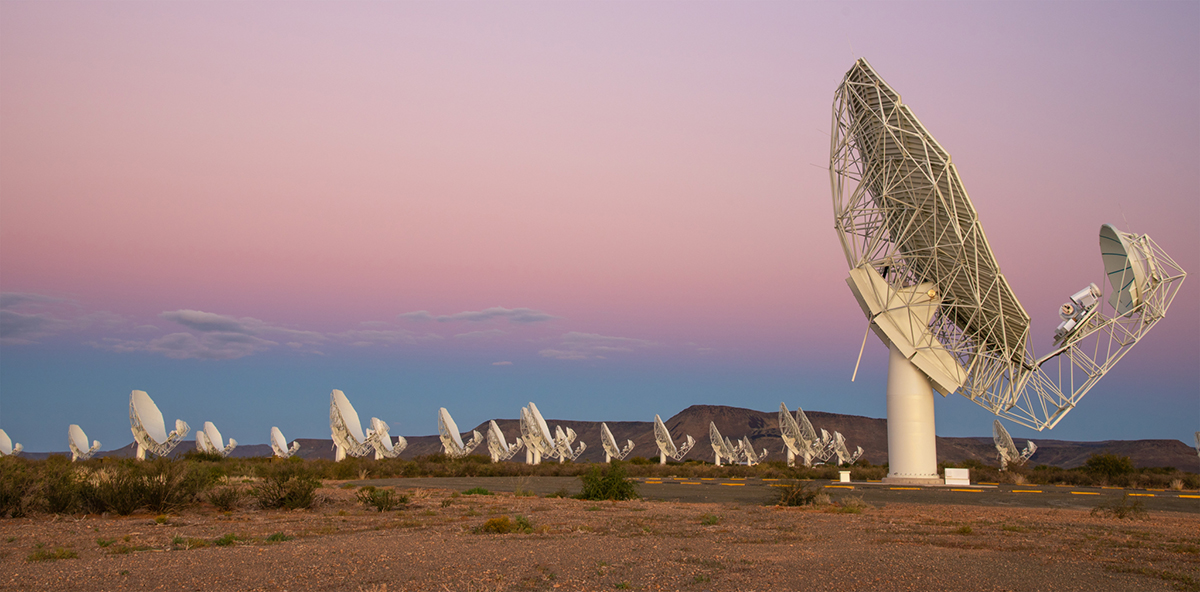
De astronomen gebruikten de MeerKAT-telescooparray in Zuid-Afrika, 64 gekoppelde radiotelescopen die samen als één telescoop werken, om het stersysteem van de planeet vier keer te bestuderen in 2025 en 2026.
“Hoewel aurorale radiobursts worden waargenomen bij planeten in het Zonnestelsel en bij sommige ultrakoele dwergen, is er tot dusver geen radiodetectie ondubbelzinnig gelokaliseerd op een extrasolaire planeet in plaats van op zijn moederster,” schreven de onderzoekers. Zij zeggen dat ze nu zo’n signaal hebben herleid tot Beta Pictoris b.
Eerdere radiospeurtochten vonden óf geen signaal van een exoplaneet (planeten buiten ons zonnestelsel), óf detecteerden wel een signaal maar hadden moeite vast te stellen of het afkomstig was van een planeet of van de ster waar deze omheen draaide. In dit geval zegt het team echter dat het kon bepalen welke signalen afkomstig waren van Beta Pictoris b.
Hoewel het signaal zelf niets zegt over de vraag of Beta Pictoris b bewoonbaar is, is de ontdekking belangrijk omdat deze astronomen kan helpen hetzelfde te doen voor andere planeten en te beoordelen welke daarvan mogelijk geschikt zijn voor leven.
Zal dit helpen buitenaards leven te vinden?
De ontdekking van Beta Pictoris b kan indirect worden gebruikt om te helpen bij de zoektocht naar buitenaards leven, omdat een magnetisch veld soms wordt gezien als een mogelijke indicator of een wereld omstandigheden heeft die geschikt zijn voor leven – aangezien magnetische velden helpen om de atmosfeer van een planeet te beschermen.
Magnetische velden kunnen helpen voorkomen dat de “atmosfeer verloren gaat in de ruimte” en “kunnen ook leven aan het oppervlak beschermen tegen schadelijke straling”, aldus de National Aeronautics and Space Administration (NASA).
NASA noemt Mars als voorbeeld van een magnetisch veld dat deze functie vervult. Nadat de planeet zijn globale magnetische veld verloor, werd zijn atmosfeer “direct blootgesteld aan de zonnewind en zonnevlammen,” zegt NASA. Terwijl de atmosfeer erodeerde, “was vloeibaar water niet langer stabiel aan het oppervlak.”
Maar magnetische velden kunnen onder bepaalde omstandigheden ook “het totale verlies van de atmosfeer versterken”, schreven Guillaume Gronoff en zijn coauteurs in een publicatie uit 2020 in het Journal of Geophysical Research: Space Physics.
Aanwezigheid van een magnetisch veld, zelfs een dat helpt om de atmosfeer van een planeet te beschermen, betekent op zichzelf niet dat een planeet bewoonbaar is.
Beta Pictoris b is een gasreus, een type planeet zonder hard oppervlak, waardoor het een onwaarschijnlijke thuisbasis is voor leven zoals wij dat kennen. Maar als astronomen die naar rotsachtige planeten kijken dezelfde methoden gebruiken als de onderzoekers in deze ontdekking om vergelijkbare radiosignalen te detecteren, zou het onderzoek kunnen worden gebruikt om te bepalen of de planeet een atmosfeer kan behouden en vloeibaar water kan ondersteunen.
First radio signal from an exoplanet #exoplanet #radiosignal #astronomy
Space Radio Burst First Traced to an Orbiting Exoplanet in 2023
Radio signals detected from a planet beyond our Solar System. Landmark discovery could help us search for habitable worlds
Radio signals detected at a planet beyond our Solar System
BY Iain Todd
Researchers have captured direct radio wave emissions originating from a planet outside our Solar System.
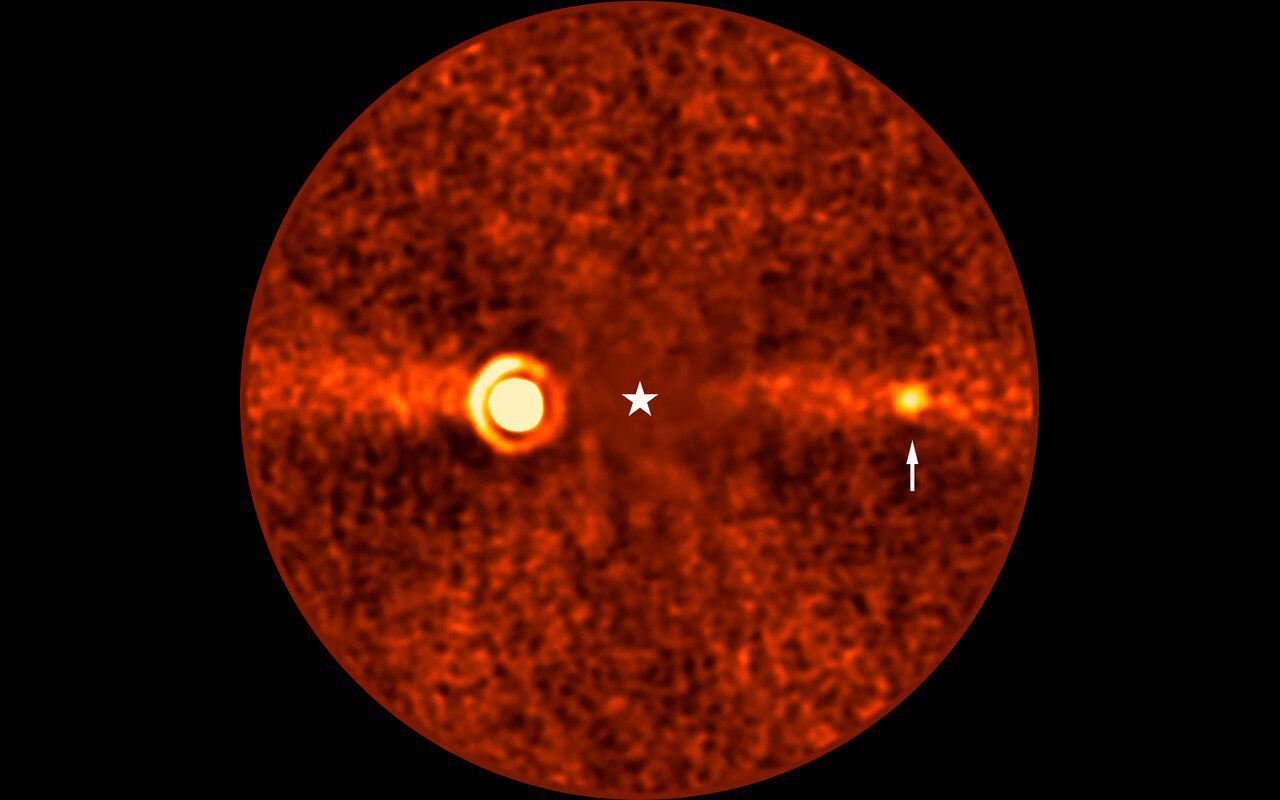
Using South Africa’s MeerKAT radio telescope array, an international team of astronomers successfully detected variable radio bursts coming directly from Beta Pictoris b, a massive gas giant exoplanet located about 63 lightyears away.
But while many of us may hear of radio signals detected at a distant planet in our Galaxy and instinctively imagine a detection of alien life, in this case the discovery is not a sign that E.T. has been detected.
The discovery is, however, a landmark find that will help astronomers learn more about the types of planet that exist beyond our Solar System – and where we might find life.
For decades, scientists have hunted for radio emissions in deep space.
When it comes to exoplanets – planets beyond our Solar System – astronomers are interested in detecting radio waves similar to those produced by the large gas giants Jupiter, Saturn, Uranus and Neptune.
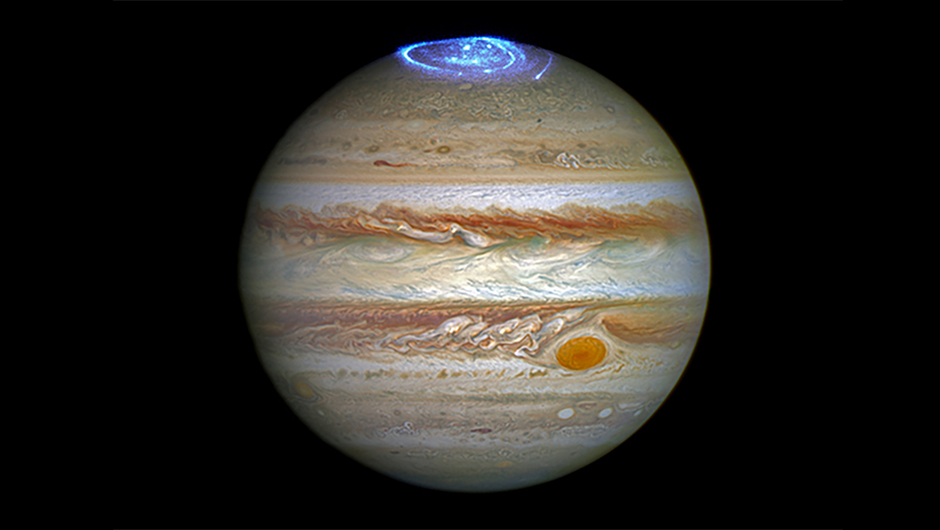
Scientists say Jupiter is the strongest auroral radio source in our Solar System.
So, learning more about radio waves emitted by other Jupiter-like planets across the Galaxy could reveal more about what those planets are like, what their magnetic fields are like and whether they produce visual displays of aurora like the Northern and Southern Lights on Earth.
It could also tell us whether those planets have protective magnetic fields that could protect emerging life from the ferocious power of their host stars.
However, separating an individual planet's faint signal from the radio signal of its host star is difficult.
An image of aurorae on Jupiter, taken by the Hubble Space Telescope. Image Credits: NASA, ESA, and J. Nichols (University of Leicester)
Targeting a distant system
The team behind this study targeted planet Beta Pictoris b, which orbits star Beta Pictoris, 63 lightyears from Earth. That's just a stone's throw in cosmic terms.
Beta Pictoris made headlines in July 2026 when astronomers photographed one of its other orbiting planets, Beta Pictoris d, making it the faintest exoplanet ever directly imaged from Earth.
The subject of this study, however, is Beta Pictoris b, which is about 10–12 times the mass of Jupiter.
Crucially, the star it orbits is magnetically quiet, say the researchers, which enabled them to isolate a particular radio signal to Beta Pictoris b.
It's the first time a radio signal has been confirmed as coming from a single planet, rather than from the whole star system in general.
Alien Signal Detected? What Scientists Just Found
Image taken with ESO’s Very Large Telescope showing Beta Pictoris d, orbiting the star Beta Pictoris. Credit: ESO/B. Sutlieff, M. Bonse et al.
Magnetism and aurorae across the Galaxy
The team say the physics behind the signals is the same as the mechanisms that power aurora displays on the planets in our Solar System.
As energetic, charged particles from the Sun spiral down along magnetic field lines toward a planet's polar regions, they excite particles in the atmosphere, creating the colourful aurora displays we see on Earth.
And because the aurora correlates with the planet's magnetic field strength, the detection has allowed the team to calculate the strength of Beta Pictoris b's magnetic field. It's thousands of times stronger than our planet's.
The 64-dish MeerKAT radio telescope array. Credit: South African Radio Astronomy Observatory
A new era for exoplanet science?
The discovery is a milestone in the study of distant planets and the search for life beyond our Solar System.
Because magnetic fields play a vital role in protecting planetary atmospheres from being stripped by stellar winds – just as Earth's magnetic field protects us from the power of the Sun – understanding them is crucial in the search for habitable worlds beyond our Solar System.
And with more powerful radio observatories on the horizon, astronomers may be able to use the lessons learned from this study to target other gas giant planets.
That could give us a new, unique way of learning more about the types of planets orbiting stars scattered across our Galaxy and whether they might be able to host life.
Scientists have detected radio signals from a planet beyond our Solar System
First time a radio signal has been confirmed as coming from a single planet rather than an entire system
BY Iain Todd
THE KEY FACTS
Radio emissions: Researchers have captured direct radio wave emissions originating from a planet outside our Solar System.
MeerKAT array: Using South Africa’s radio telescope array, an international team successfully detected variable bursts coming from Beta Pictoris b.
Not aliens: While some might imagine the signal indicates extraterrestrial life, the discovery is not a sign of E.T.
Giant exoplanet: The targeted planet is a massive gas giant located about 63 lightyears away from Earth.
Magnetic fields: Studying these radio waves could reveal details about the magnetic fields of other Jupiter-like planets across the Galaxy.
Quiet star: Because the star it orbits is magnetically quiet, the researchers were able to isolate the particular radio signal.
First confirmation: This marks the first time a radio signal has been confirmed as coming from a single planet rather than an entire system.
Habitable worlds: Understanding planetary magnetic fields is crucial in the search for habitable worlds because they protect atmospheres from stellar winds.
Using powerful supercomputers, scientists created an extensive simulation of what the Milky Way could have looked like long ago—a chaotic progression of hot gas cooling, condensing into stars, and exploding, over and over again. Purple indicates hot gas; white is UV radiation from stars; yellow is glowing hot oxygen atoms. Credit: Harley Katz/MEGATRON Collaboration
In the early days of the universe, our home looked very different from how it does today. Back then, the region in our universe that would eventually become our Milky Way neighborhood was a collection of thousands of smaller galaxies—some pumping out tons of new stars, others filled only with gas or littered with dead stars and black holes.
You can watch how these galaxies coalesced over time and formed the familiar spiral disk we see today, thanks to a new set of simulations by a group of scientists led by Harley Katz, assistant professor of astronomy and astrophysics at the University of Chicago.
The simulations, which took three years to run even on high-powered supercomputers, are the most detailed model to date of how a galaxy like the Milky Way might have evolved over the first several billion years of its existence.
"What does the Milky Way look like at what we call cosmic dawn?" said Katz. "For the first time, we can directly predict what the early Milky Way would have looked like to telescopes like Hubble or the James Webb Space Telescope."
The six papers from the project, which is named MEGATRON, provide new insight into the makeup of early galaxies and how the elements formed over time. The papers are published in The Open Journal of Astrophysics.
A simulation of the area that will eventually collapse into the Milky Way, starting from 180 million years after the Big Bang and running for two billion years. The purple filaments are hot gas; the white represents UV radiation from stars; and yellow shows glowing hot oxygen atoms. Flashes of white and yellow appear as the gas cools and collapses into stars, which then heats up the gas, and the cycle begins again. "The very big bursts are catastrophic star formation events, typically caused by instabilities or when a galaxy merges," explained Katz. Credit: Harley Katz/MEGATRON Collaboration
How the Milky Way evolves over time
Since we cannot travel to the dawn of the universe to study it, one of the only ways we have to understand how space evolved over time is to build detailed computer models based on what we know about the laws of nature.
"Essentially, we put in all of the physics we think is relevant—gravity, hydrodynamics, radiation, chemistry, etc.—and then let it evolve and see if it reproduces what we actually see when we look around us today," said Katz.
New data coming in from the powerful James Webb Space Telescope has added a new dimension to our understanding of the universe. So three years ago, a team of scientists undertook a project to incorporate this newfound knowledge into a model of what our galaxy might have looked like back in the first billion years of its existence. Now they can compare it to the readings Webb gets today to see what matches and what's missing.
If you run the clock back, the scientists said, you see a web of large and small galaxies of all different types, which will eventually merge into the modern Milky Way.
"We follow thousands of subsystems in the model and directly compute what they all would have looked like with our most powerful space telescopes, which is many orders of magnitude more than what had been simulated before," said Katz. "Within those you see an incredible diversity. Some of them are bursting out in star formation, others are dead, others are in the process of dying."
One unique finding was that the model predicts the existence of "galaxies" that don't have any stars at all but still shine. Some of these might have once had stars that exploded or collapsed directly into black holes; others might have only ever contained gas.
Another discovery addresses a long-standing puzzle in stellar astrophysics. In our Milky Way, we typically see that smaller and fainter galaxies have less iron. However, this trend breaks down in extremely faint systems where the amount of iron appears constant, independent of mass. Thus far, simulations have been unable to reproduce this behavior.
The culprit, the simulation suggests, is explosions from an exotic type of star left over from right after the Big Bang. These stars, known as Population III stars, are so old that they are made of only the first elements that existed in the universe—hydrogen and helium—and when they explode, they can produce more iron than other supernovae do. If a galaxy is large enough, it will have enough gravity to hold on to this iron; but if it's too small, the iron will be lost to space.
These Population III stars, in fact, are so old that none have ever been directly seen by telescopes. Another paper in the set is the first to show how these stars form in an environment like the Milky Way and predicts where these stars would be most likely to exist if any still do—which may help astronomers search for them.
This image shows what our galaxy could have looked like 12 billion years ago. Though young, the galaxy could already have formed a rotating disk like we see today, with a significant amount of heavy elements and dust. The bands of light to the north and south are remnants from a gigantic collision of two galaxies, which left a trail of stars. Credit: Harley Katz/MEGATRON Collaboration
The physics of stars and elements
A hallmark of these simulations is that they are much more complex than anything attempted before.
"What's unique about our simulation is that it's the first time we have modeled the enrichment of individual chemical elements from individual stars after the Big Bang, coupled to detailed models for gravity, chemistry, radiation and stellar processes," said Katz.
This model, for example, was the first large-scale simulation to include a detailed computation of "non-equilibrium physics." Most physics models assume, for the sake of simplicity, that a system's chemistry is more or less in equilibrium. But of course, in the real universe, galaxies are constantly evolving, which often breaks this key assumption.
Scientists weren't sure how much this would affect the end result—and including it in a simulation slows down the computation significantly.
However, two of the papers that are part of the study show that adding non-equilibrium physics made a real difference—especially when dealing with flows of gases around galaxies, known as the circumgalactic medium.
Adding this complexity allows scientists to more accurately interpret observations and to put limits on the number of possible answers to many questions about the formation of the universe.
"Looking at these results, it's very clear that the physics happening right after the Big Bang has a direct impact on what we see today in the local universe," said Katz.
"But there are also things we're not getting right, which is interesting too—what are the parts we're still missing? That can lead you into new directions and new questions."
More information
Harley Katz et al, MEGATRON: Reproducing the Diversity of High-Redshift Galaxy Spectra with Cosmological Radiation Hydrodynamics Simulations, The Open Journal of Astrophysics (2026). DOI: 10.33232/001c.169643
Martin Rey et al, MEGATRON: how the first stars can create an iron metallicity plateau in the smallest dwarf galaxies, The Open Journal of Astrophysics (2026). DOI: 10.33232/001c.169605
Corentin Cadiou et al, MEGATRON: the impact of non-equilibrium effects and local radiation fields on the circumgalactic medium at cosmic noon, The Open Journal of Astrophysics (2026). DOI: 10.33232/001c.169640
Harley Katz et al, MEGATRON: The Physical Origins of Steep UV Slopes at high redshift, The Open Journal of Astrophysics (2026). DOI: 10.33232/001c.169642
Nicholas Choustikov et al, MEGATRON: Disentangling Physical Processes and Observational Bias in the Multi-Phase ISM of High-Redshift Galaxies, The Open Journal of Astrophysics (2026). DOI: 10.33232/001c.158199
Harley Katz et al, The Impact of Star Formation and Feedback Recipes on the Stellar Mass and Interstellar Medium of High-Redshift Galaxies, The Open Journal of Astrophysics (2026). DOI: 10.33232/001c.156097
RELATED
THE FATE OF THE MILKY WAY | 100,000 Simulations Reveal Our Galaxy’s Future (4K Documentary)
Did the Milky Way Slowly Flip on Its Side After a Cosmic Crash?
"My position going into every one of these: one, be open-minded."
NASA Administrator Jared Isaacman delivers remarks at the American Institute of Aeronautics and Astronautics (AIAA) ASCEND 2026 Conference on May 19, 2026 in Washington, DC.
(Image credit: Kevin Dietsch/Getty Images)
Could unidentified anomalous phenomena — a new catch-all term for unidentified objects in the sky, oceans or space — be pushing the United States towards another "Sputnik Moment"?
That's the belief of NASA Administrator Jared Isaacman, who compared the uptick in reported unidentified anomalous phenomena (UAP) sightings in recent years to the Cold War paranoia stirred up when the former Soviet Union launched Sputnik 1, the first artificial satellite to circle Earth in 1957.
Isaacman made the comments in a recent interview with Blake Burman, host of NewsNation's "The Hill" broadcast on Sept. 25 that touched upon a range of space-related issues. And one of those was probing the space agency chief about he thinks UAP might be.
Flight characteristics
Burman made note of pilot reports and videos released of objects with flight characteristics unlike anything previously seen.
"When you watch these videos," Burman asked Isaacman, "do you believe that anything that we've seen in any of this is potentially extraterrestrial. Is it military? What is it?"
Why are the US China and Russia racing to build nuclear reactors on the Moon?
Isaacman said that NASA has had "a seat at the table" since U.S. President Donald Trump earlier this year called for releasing Unidentified Flying Object (UFO) and UAP files. That call is now officially known as the Presidential Unsealing and Reporting System for UAP Encounters (PURSUE).
"My position going into every one of these: one, be open-minded. I mean, it is kind of our job to go out and try to answer the question 'are we alone?' And I said look, if it's aliens, I think NASA should have a seat at the table in this for sure," Isaacman said.
Jared Isaacman appears before the Senate Committee on Commerce, Science, and Transportation, Wednesday, April 9, 2025 during a confirmation hearing prior to his appointment as NASA Administrator. (Image credit: NASA/Bill Ingalls)
The NASA Administrator also said that, "if it's a Sputnik moment, we did really well the last time that happened. Which means, is this potentially red technology? Is this an adversary that's testing some next generation propulsion? It's certainly in the realm of the possible." (In military exercises, adversary forces are generally referred to as "red.")
TV host Burman then asked Isaacman, "but what does your gut tell you?"
"I would say I would lean toward it's either some phenomenon that can happen," Isaacman responded. "There are things that can happen just like natural phenomena that can be observed. I also think there's a good chance that there could be a Sputnik Moment that's happening and people are testing new stealthy or next generation type technologies," he said.
Isaacman continued by noting that space missions have barely explored our own backyard.
"Do you know there are moons out there […] Saturn's moon Enceladus has an ocean. Europa has an ocean. It has complex chemistry. We couldn't tell you conclusively that there isn't life in our own backyard let alone the billions of other stars in the Milky Way galaxy, or the two trillion other galaxies out there. It's why NASA's mission is so important," Isaacman concluded.
Whistleblower woes
In a related UAP side saga, in early September, the U.S. Department of War issued a "legal waiver" for those wishing to disclose information regarding UAP, a hybrid term also linked to Unidentified Flying Objects (UFOs).
Military service members, civilian personnel, and contractors are purportedly green-lighted to disclose once protected information, such as under a non-disclosure agreement (NDA).
What's old news is that this waiver is not really new, said Robert Powell, an executive board member for the Scientific Coalition for UAP Studies in Austin, Texas. This same protection was provided to whistleblowers if they reported UAP information to the U.S. government's All-domain Anomaly Resolution Office (AARO).
"This was established via the 2023 National Defense Authorization Act, which stated that, 'Individuals with current or previous access to UAP-related information subject to a U.S. government NDA are authorized to provide that information to AARO representatives.' This waiver simply adds a second agency that can collect information," Powell told Space.
Jared Isaacman stands partially outside SpaceX's Dragon spacecraft during the first-ever commercial spacewalk on Sept. 12, 2024 as part of the Polaris Dawn mission he funded. (Image credit: SpaceX)
PURSUE and release
It is important to note that this is not permission for a whistleblower to talk to the press, a researcher, or the public," said Powell. "The same is true of this latest whistleblower waiver."
The new waiver states, "This waiver removes those barriers by explicitly authorizing covered disclosures to PURSUE representatives without triggering breach-of-agreement penalties or standard NDA violations."
"The NDA relaxation is only if the whistleblower reports their information to PURSUE representatives," said Powell.
"However, the waiver does not state how a whistleblower can identify the PURSUE representatives or how to reach them. So will anything change? It will take a year or two to determine if any whistleblower stories are made public or if a whistleblower realizes that an individual's story will go no farther than the PURSUE representative," Powell said.
He said/she said
Furthermore, Powell points out, this new waiver does not clearly waive criminal statutes, for example Espionage Act/unauthorized disclosure of classified information.
"How does a whistleblower know if their information violates criminal statutes versus civil statutes? The new waiver does not protect a whistleblower from an NDA with a civilian corporation," said Powell.
Let's assume someone comes forth and says that they know that there is an alien spacecraft being held at Edwards Air Force Base in California, said Powell. How is that claim verified?
"If it is not verified then there is little value in the efforts put forth by the whistleblower. To date, Congress has not seemed willing to use its subpoena powers to force a military branch to provide information, concluded Powell, and until Congress is willing to push the point and investigate claims, "it just remains 'he said, she said.'"
FULL HEARING: NASA Administrator Jared Isaacman Testifies Before The House Appropriations Committee
Reporter Asks NASA Admin Jared Isaacman Directly: Are We Alone In The Universe?
Strange lights over Cyprus: what are people seeing?
From a 1985 sighting off Chlorakas to reports involving Starlink and military activity, specialists say most unusual sightings over Cyprus have ordinary explanations
Most things people see in the skies above Cyprus have perfectly ordinary explanations. Every night, satellites pass overhead, meteors streak across the night sky, and aircraft fly back and forth over one of the busiest regions in the world. Yet from time to time, something catches someone’s attention that they can’t immediately explain. For decades, those moments have given rise to reports of unusual aerial phenomena across the island.
One of the most well-known cases occurred in September 1985, when fishermen off the coast of Chlorakas reported seeing a bright white glow on the horizon that gradually expanded into a rainbow like arc. According to Dr Georgios Florides co-founder of the Unidentified Aerial Phenomena (UAP) Cyprus Centre, the phenomenon lasted around 35 minutes and coincided with a power cut in nearby Kissonerga. At around the same time, commercial pilots flying between Cyprus and the Aegean also reported an unusual luminous object. The incident was covered by local press and attracted the attention of aviation authorities, but no definitive explanation was established.
Nearly four decades later, reports of unexplained aerial phenomena continue to capture public attention. International interest has grown following US government disclosures and a renewed willingness among scientists to discuss the subject openly. But behind the headlines there’s a more intriguing question. What do those who dedicate their lives to studying the skies over Cyprus really think about the island’s reports of unexplained phenomena?
What people are seeing in Cyprus skies
For Chief Operating Officer of the Troodos Observatory Agapios Elia reports of unusual lights are a familiar part of the job.
“This happens very frequently,” he says. “Often people write or call in to report strange sightings or they mention things they have seen at one time or another during our public sessions. Nowadays a lot of people just post online about unusual lights they see and they are frequently directed to us for clarifications”.
More often than not, those sightings have ordinary explanations. Many recent reports have involved SpaceX’s Starlink satellites or military activity in the Middle East, Elia says. Other common explanations include missile plume cones, high altitude aircraft reflecting the setting sun, unusual cloud formations and meteors.
“I have to say no,” he says when asked if he’s ever found a phenomenon that ultimately defied explanation. “Any strange looking phenomenon ultimately turns out to be one of two things: man-made and nature-made.”
This is not to say that people are imagining what they see. Instead, Elia says, many unusual sightings come down to perspective. “From a practical standpoint, the biggest misconception is a lack of understanding regarding scale and distance,” he says. “People often struggle to judge how large, how fast, or how far away a light in the dark sky truly is.”
How UAP reports are investigated
But explaining what people see is only part of the story. Just as important is what happens after someone reports an unexplained sighting.
For Florides, every report begins the same way: with an investigation. Established in 2022, the centre investigates unexplained aerial phenomena in Cyprus and the Eastern Mediterranean from a scientific perspective. When a report is received, investigators visit the location where possible, interview the witnesses, measure distances and viewing angles, analyse photographs and compare the location and time of the sighting with flight paths, satellite movements and astronomical data.
The centre receives numerous reports each year, but Florides says all those investigated so far have had conventional explanations. “Most submissions consist of either a photograph of a distant, undefined speck of light or a written account describing such a light,” he says. In some instances where higher quality images or more detailed observations were available, they ultimately ended up being Venus, military drones, distant aircraft, Starlink satellites or meteors.
For Florides, the biggest misconception isn’t witnessing something unusual; it’s the assumption that “unidentified” means “unexplainable”.
“Based on the received reports and the work the centre is doing, we believe the single biggest misconception people have about UAP is that any unidentified light in the sky is inherently extraordinary or ‘otherworldly’,” he says. “In reality, the vast majority of reports have mundane explanations”.
Why scientists are still interested
Nonetheless, conventional explanations doesn’t mean that the subject lacks scientific value. For president of the Cyprus Space Exploration Organisation (CSEO) George A Danos, unexplained aerial phenomena are worth investigating precisely because science is driven by curiosity and evidence.
Cyprus’ location may also make it particularly interesting for UAP reporting. Danos points to UAP reporting maps published by the US Department of Defense’s All-domain Anomaly Resolution Office (AARO), which show concentrations of reports in the broader Middle East and eastern Mediterranean region.
“Science ultimately requires empirical evidence to reach results,” he says. “Right now, that conclusive evidence regarding UAPs as non-human technology isn’t yet readily available or conclusive, but the scientific community is now establishing the rigorous, objective frameworks necessary to properly investigate these anomalies.”
Danos believes that, regardless of where the evidence ultimately leads, asking questions is fundamental to scientific progress. “Scientists constantly seek to expand the frontiers of knowledge,” he says. “If there are objects in our skies performing maneuvers we don’t understand, we need to investigate and learn rather than being afraid to study the data due to the professional stigma that historically surrounded the topic.”
For Danos, curiosity remains one of science’s greatest strengths. “The cosmos is limited only by our capacity to wonder.”
The Christian pastor who sparked panic with a failed prediction of the Rapture has made a new claim that the end-times belief is near.
Pastor Joshua Mhlakela, a South African preacher, recently said he has calculated the exact time of the biblical event in which believers are lifted into the clouds to meet Jesus Christ, claiming that it will happen between October 12 and 13.
The Rapture is a belief held by some Christians called 'eschatology,' which is the study of end-times events, marking the Second Coming of Jesus and Judgment Day for non-believers.
Mhlakela has claimed in multiple interviews and his own videos online that both God and Jesus have appeared to him in visions, revealing when the Rapture would take place and what the fallout on Earth would look like.
The controversial pastor declared: 'God told me because there's no other date coming out, 12 to 13 October, which is the true feast of trumpets, which is when I will be meeting my savior face to face in the rapture.'
Mhlakela has drawn widespread skepticism and criticism for his wild predictions, including incorrectly marking the date of the Rapture multiple times in 2025.
He sent social media into a frenzy when he alleged the biblical event would take place on September 23, 2025, convincing scores of believers who watched his predictions online to sell their homes and cars and even quit their jobs.
'There's no other final. I mean, there's no other rapture date. This is the final date for me,' Mhlakela claimed in an interview on September 17.
Pastor Joshua Mhlakela (Pictured) has falsely predicted the biblical event known as the Rapture. He recently said it will now start on October 12, 2026
The Rapture is considered a kind of rescue, where believers are instantly taken away from Earth to avoid a coming period of intense suffering called the Tribulation
(Stock Image)
The pastor claimed his previous false predictions were not errors, but the work of God, who was delaying the final judgement to give humanity more time to repent.
He said the delay was actually fulfilling Scripture, which says the Tribulation days will be shortened for the sake of the 'elect' - meaning the people God has chosen before Jesus returns.
This event is thought to be a kind of rescue, where believers are instantly taken up from Earth into Heaven to avoid a coming period of intense suffering called the Tribulation.
Biblical texts describe the Tribulation as a seven-year period of chaos and disasters, where evil rules on Earth before Jesus returns again to set up a peaceful kingdom.
Mhlakela has said that his first visions of Jesus came to him in 2018, when he warned that the Rapture would come on September 23, 2025, during the Jewish Feast of Trumpets, also known as Rosh Hashanah.
Some Christians have tied the annual holiday to the prophecy that Jesus will return to Earth 'with the voice of the archangel and with the trumpet call of God.'
However, Mhlakela now says the date of the Feast of Trumpets has been off by one month, pushing the actual time of the Rapture roughly 30 days past the annual celebration of Rosh Hashanah.
'Many are saying Feast of Trumpets is September when you Google [it's] September 11. [This] is not Feast of Trumpets. The true Feast of Trumpets is actually in October,' Mhlakela claimed during his interview with CettwinzTV.
Many Christians have pushed back on claims the Rapture's date has been revealed, saying that date-setting goes against the teachings of Jesus (Stock Image)
The pastor explained that his new calculation for the Rapture was based on additional visions from Jesus which pointed him toward later days.
According to Mhlakela, a vision involving two full moons convinced him the calendar itself was off by about a month because the current celebration of Passover was taking place under the astrological sign of Pisces.
He tied that gap to the Exodus story of Israel’s departure from Egypt, saying the 'true' Passover must fall when the sun is in Aries, just as it is said to have taken place during the biblical Exodus.
The pastor then applied that same one-month shift to his new Feast of Trumpets date in mid-October.
However, the Bible did not document the sun being in Aries during the Exodus. It only said Passover falls in the first month of spring, with the Aries link coming from later writers such as Josephus, a first-century Jewish historian - not from the Exodus account itself.
Moreover, Mhlakela's end times predictions continue to receive pushback from many Christians who believe setting a definitive date for the Second Coming of Jesus goes against the teachings of the Bible.
Vladimir Savchuk, a pastor, author, and YouTube preacher, said last September: 'If someone sets the date, they are directly contradicting Jesus's word.'
He further debunked the Rapture claims by noting that Scripture says the son of perdition must be revealed first, referring to a figure often interpreted as the Antichrist.
'2 Thessalonians 2:3, it says clearly that Jesus is not returning until the Antichrist is revealed, and that has not happened yet,' Savchuk explained.
Meer van UFO'S of UAP'S, ASTRONOMIE, RUIMTEVAART, ARCHEOLOGIE, OUDHEIDKUNDE, SF-SNUFJES EN ANDERE ESOTERISCHE WETENSCHAPPEN - DE ALLERLAATSTE NIEUWTJES


 UFO Whistleblower Claims US Forces Had a Deadly Shootout With Seven-Foot-Tall Reptilian Aliens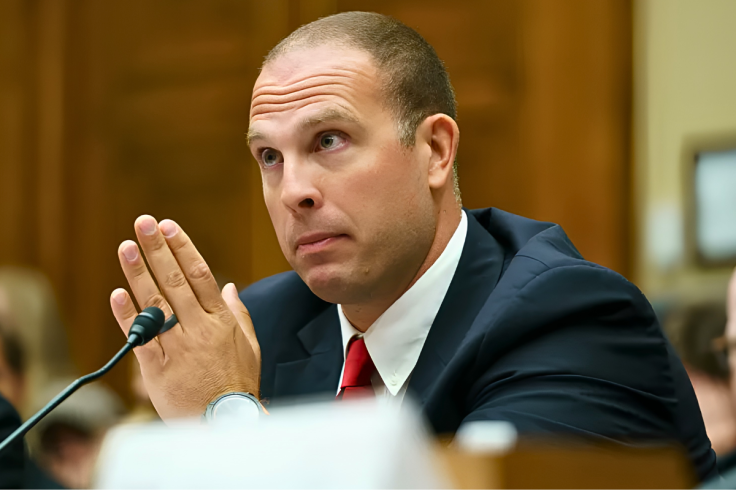

 Lockheed SR-71 Blackbird with an experimental propulsion system from NASA in 1998.
Photo: NASA
Lockheed SR-71 Blackbird with an experimental propulsion system from NASA in 1998.
Photo: NASA
 Lockheed SR-71 Blackbird
 Lockheed SR-71 Blackbird in a hangar before testing for NASA.
Photo: NASA
Lockheed SR-71 Blackbird in a hangar before testing for NASA.
Photo: NASA
 Lockheed SR-71 Blackbird taking off.
Photo: NASA
Lockheed SR-71 Blackbird taking off.
Photo: NASA