Ontdek de Fascinerende Wereld van UFO's en UAP's: Jouw Bron voor Onthullende Informatie!
Ben jij ook gefascineerd door het onbekende? Wil je meer weten over UFO's en UAP's, niet alleen in België, maar over de hele wereld? Dan ben je op de juiste plek!
België: Het Kloppend Hart van UFO-onderzoek
In België is BUFON (Belgisch UFO-Netwerk) dé autoriteit op het gebied van UFO-onderzoek. Voor betrouwbare en objectieve informatie over deze intrigerende fenomenen, bezoek je zeker onze Facebook-pagina en deze blog. Maar dat is nog niet alles! Ontdek ook het Belgisch UFO-meldpunt en Caelestia, twee organisaties die diepgaand onderzoek verrichten, al zijn ze soms kritisch of sceptisch.
Nederland: Een Schat aan Informatie
Voor onze Nederlandse buren is er de schitterende website www.ufowijzer.nl, beheerd door Paul Harmans. Deze site biedt een schat aan informatie en artikelen die je niet wilt missen!
Internationaal: MUFON - De Wereldwijde Autoriteit
Neem ook een kijkje bij MUFON (Mutual UFO Network Inc.), een gerenommeerde Amerikaanse UFO-vereniging met afdelingen in de VS en wereldwijd. MUFON is toegewijd aan de wetenschappelijke en analytische studie van het UFO-fenomeen, en hun maandelijkse tijdschrift, The MUFON UFO-Journal, is een must-read voor elke UFO-enthousiasteling. Bezoek hun website op www.mufon.com voor meer informatie.
Samenwerking en Toekomstvisie
Sinds 1 februari 2020 is Pieter niet alleen ex-president van BUFON, maar ook de voormalige nationale directeur van MUFON in Vlaanderen en Nederland. Dit creëert een sterke samenwerking met de Franse MUFON Reseau MUFON/EUROP, wat ons in staat stelt om nog meer waardevolle inzichten te delen.
Let op: Nepprofielen en Nieuwe Groeperingen
Pas op voor een nieuwe groepering die zich ook BUFON noemt, maar geen enkele connectie heeft met onze gevestigde organisatie. Hoewel zij de naam geregistreerd hebben, kunnen ze het rijke verleden en de expertise van onze groep niet evenaren. We wensen hen veel succes, maar we blijven de autoriteit in UFO-onderzoek!
Blijf Op De Hoogte!
Wil jij de laatste nieuwtjes over UFO's, ruimtevaart, archeologie, en meer? Volg ons dan en duik samen met ons in de fascinerende wereld van het onbekende! Sluit je aan bij de gemeenschap van nieuwsgierige geesten die net als jij verlangen naar antwoorden en avonturen in de sterren!
Heb je vragen of wil je meer weten? Aarzel dan niet om contact met ons op te nemen! Samen ontrafelen we het mysterie van de lucht en daarbuiten.
Berichten van 1 november 2017 tot 30 november 2017
The ink isn’t even dry on the news stories (ask your parents what it means) about the discovery of a massive, previously unknown void or empty area inside the Great Pyramid of Giza that was being called “the discovery of the century” when the century suddenly ended as a renowned Egyptian archeologist announced that this is no big deal since they’ve known about it for years. Why did this expert void the void? Was he annoyed that they would avoid asking him first or is he paranoid that he may soon be unemployed?
“The pyramid is full of voids and that does not mean there is a secret chamber or a new discovery.”
This is no ordinary Egyptologist. Zahi Hawass is the former Minister of State for Antiquities Affairs and is involved with the ScanPyramids project, a research team using state-of-the-art non-invasive technology based on cosmic rays and muons (heavy electrons) to detect changes in the solid structure of the pyramid. The ScanPyramids team announced last week the discovery of a void (they avoided calling it a ‘chamber’ because they weren’t sure of its purpose and ‘chamber’ apparently gets pyramid fans all hot and bothered) above the Grand Gallery that was at least 100 feet long with a cross-section that made it similar in shape to the Grand Gallery. The team believed this was the first new discovery of anything inside the Great Pyramid since the 19th century.
Not so fast, said Zahi Hawass.
“[They] showed us their conclusions, and we informed them this is not a discovery.”
He told The Hindu Times that archeologists have known about this void for 25 years. The current head of the government’s antiquities council, Mustafa Waziri, gave the ScanPyramids team an archeological ass-chewing for jumping the gun with the announcement.
“The project has to proceed in a scientific way that follows the steps of scientific research and its discussion before publication.”
Let’s just say he was definitely annoyed by how the news of the void was deployed. That’s not to say this is not a big discovery, just not the discovery of the century. It appears the void has been closed since the Great Pyramid was built 4500 years ago, which would make anything inside of it, including the air itself, extremely significant. This also validates the new non-invasive technology, which can only get better.
As Shakespeare might say, the announcement last week about the void was “much ado about nothing.”
Weird Phenomenon In The Sky Appears Above Gilbert, Arizona
A weird colorful sky phenomenon has been filmed by Mrmbb333 on November 6, 2017 at 11.11am as he walked out of his home depot in Gilbert, Arizona.
The phenomenon is a so-called fire rainbow caused by sunlight reflecting off of ice crystals or maybe it is an earthquake light?
What to think about the effects of geo-engineering? Could it be a chembow around the sun which is the effect of chemicals like aluminium, barrium and strauntium components released by chemtrails in the air causing the unusual display in the sky?
You can see the strange phenomenon in the short un-edited video below.
(Note: The blue dot in the images and video is lens flare.)
A photograph of Enceladus, an icy moon of Saturn, taken by NASA’s Cassini probe.
Enceladus, a small moon of Saturn, hides a global ocean beneath its crust of ice.
Scientists could not explain how the ocean formed, however, nor how long it might have existed.
New 3D computer models hint a porous rocky core — kneaded by the gravity of Saturn — could provide enough heat to keep the ocean going for perhaps billions of years.
Based on the amount of time it took life to emerge on Earth, the study bodes well in the search for alien microbes.
Deep inside Enceladus, an icy moon of Saturn some 890 million miles from Earth, one of our best chances of discovering alien life is heating up.
Enceladus is less than 1% the size of our moon yet hides an ocean containing up to 10% as much water as exists on Earth. What’s more, chemical studies of ice jets shooting out of Enceladus’ south pole suggest the moon’s deep, warm waters could be “a candy store” for microbes.
No one yet knows if aliens exist in this distant subsurface ocean. However, a study published Monday in the journal Nature Astronomy suggest the moon’s hidden sea of water may be billions of years old — perhaps even as old as Earth’s own oceans.
“This could be good news for the astrobiological potential of Enceladus’s ocean,” Kevin Hand, a planetary scientist at NASA’s Jet Propulsion Laboratory who wasn’t involved in the research, told Business Insider in an email. “We don’t know how long it takes for the origin of life to occur, but more time is probably better.”
Enceladus hides a warm, salty ocean that may be habitable to alien life
Scientists long suspected Enceladus might hide an ocean.
They reasoned radioactive elements could heat up the moon’s rocky core enough to melt surrounding ice. Or Saturn’s gravity — through a process similar to tides on Earth — could knead and heat Enceladus’s rocky core as it orbited the planet. Or perhaps both at once.
However, the existence of Enceladus’s ocean was mythical until the arrival of NASA’s Cassini spacecraft in 2004.
The nuclear-powered probe later flew through the moon’s icy jets, giving scientists a crude “taste” of the water’s other ingredients — including gases that microbes could feed on, salts, and tiny grains of silica rock from the seafloor.
Cassini also gathered more than a decade of data on the moon’s wobble before NASA purposefully destroyed the robot in Saturn’s thick atmosphere. A 2015 analysis of that wobble signalled the existence of a global subsurface ocean, further raising the chances for life’s foothold below the moon’s icy crust.
What researchers were less certain about is how long the ocean of Enceladus has existed.
On Earth — the only inhabited world we know of — it took nearly a billion years for life to emerge, then billions more to thrive and diversify into plants and animals. (Earth is 4.54 billion years old, and the oldest-known life are fossils of deep-sea hydrothermal vents dating back 3.77 billion years old.)
Knowing that a younger ocean would lower the chances for finding alien life at Enceladus in the future, a group of seven scientists set out to estimate its age.
New 3D models suggest the interior ocean of Enceladus might be billions of years old.
Measurements of Enceladus and its ocean suggest the moon’s core was about 100 times hotter than heat given off by decaying radioactive elements could explain, according to a European Space Agency press release.
The new study tackled the age of Enceladus’s ocean by taking everything scientists knew about the moon — primarily from Cassini data — and plugging it into 3D simulations. The model explored how much heat tidal friction could generate at the moon’s core, and where it’d go over millions of years.
When the Europe-based research group assumed the moon’s ion could generate enough heat to form a global ocean.
There was also enough warmth to keep the ocean liquid for tens of millions or perhaps billions of years, according to a NASA-JPL press release. All of the ocean’s water also cycled through Enceladus’ rocky core every 25-250 million years — a process that could bring life-giving chemicals to the surface.
“Long-lived, sustained geothermal activity on Enceladus’s seafloor could spell good news for geochemistry that gives way to biochemistry,” Hand said.
Future missions to Enceladus may be able to determine if hydrothermal vents exist on the moon’s seafloor, according to the ESA, further raising the moon’s profile as a place to seek out alien life.
EXPERTS DISCLOSE ALIEN SPECIES RESIDE IN THE UNIVERSE
Scientistsbelieve that as the universe is so enormous and, presumably, filled with an incalculable number of planets capable of supporting life, any of those extraterrestrial life forms may probably be more advanced technologically when compared to us. Quite possibly one of the reasons the inhabitants of these planets have not established contact with us is due to our lack of technological means and a minimal knowledge of the laws of the universe.
Is there any chance that this will change in the years to come?
This strong conviction in alien existence originates from an instinctual acknowledgment of the Universe as a magnificent sowing mechanism that had broaden to a large number of areas the gift of life and evolution.
The most prominent among the proponents of this belief is the brilliant inventor Elon Musk, the founder of the SpaceX program, who firmly believe in the existence of extraterrestrial civilizations and with his innovations which could boost the human desire to explore space and hopefully make interaction with our presently concealed intergalactic neighbors.
Elon Musk’s bold ambitiousness has been clarified in an article composed in the New York Times by Astrophysicist Adam Frank, entitled – Yes, There Have Been Aliens.
According to him, we’re not the initial generation of intelligent humanoids which have developed on the blue pale dot. The probability is thin for mankind to be the exclusively evolved creatures in this enormous of the universe, a 1 in 10 billion trillions to be more precise.
This give opportunity to presume that there are tremendous chances outsiders even now to be among us, understanding that our DNA may very well be blended with theirs, therefore have figured out how to consistently blend into the general public unnoticed.
This could mean that our star is not hosting its first generation of living beings which find a way how to beam radio signals into space. Adam Frank’s research is based upon the challenging and innovating mathematical formula serving as an instruction for any person enthusiastic about acquiring genuine evidence of extraterrestrial life in the universe.
It certainly could be challenging to decode Drake’s Equation by yourself, the scientific community is currently focusing on a method to place numbers on the table. The formula looks like this:
N = R * fp ne fl fi fe L
fp – the percentage of stars with planets
ne – the number of planets similar to Earth
fl – the number of Earth-like planets capable of supporting and maintaining life
fi – the percentage of celestial bodies with life that can further develop intelligent life forms
fe – the percentage of intelligent species able to detect otherworldly technology originating from another foreign civilization (i.e. ration transmissions)
L – the average number of earth-years during which advanced civilizations emit signals.
Multiplying the two components of the formula with the period of time that sophisticated civilizations take to communicate reveals the whole quantity of civilizations that have walked the exact lands we are exploring at present.
The complicated Drake Equation can only be solved after discovering accurate values for every one of its components. Scientists speculate this will be achievable in coming years, but nonetheless, warn those quantities are likely to be worthless if attempting to discover species with a potential beyond that of mankind constructs.
Astronomers already have found over 3,000 neighboring exoplanets, with roughly 20% of these planets within habitable areas. The latest NASA press release of 7 Earth-like planets just a couple of light years separate from us has increased expectations of discovering alien existence in the years to come.
The only thing we are able to do at this moment is waiting for the time when we’ll discover our cosmic neighbors, however, waiting for science to deliver the results will likely take just too much time of one’s life, so it’s better to seek for indications on our very own planet. After all, mysteries on Earth are surfacing every day, and there are various leads to pursue which might be quickly labeled as otherworldly.
SOUNDS OF ALIEN LIFE ON JUPITER RECORDED BY NASA’S JUNO SPACECRAFT
Horrendous sounds of life of an unknown origin are being recorded on Jupiter by NASA’s Juno spacecraft. Further examination of the footage suggests they are originated by some unknown obscure colossal creatures living on the planet.
Scientific circles awaited with anticipation the moment when after 5 years of intergalactic travel, Juno finally arrived at its destination – Jupiter and after attaining a stable orbit of the planet, managed to collect and send back to Earth information, of inestimable significance, about Jupiter’s atmosphere, magnetic field, and weather phenomena.
On June 24, Juno crossed the perimeter of Jupiter’s magnetic field and that’s when the WAVES instrument aboard the spacecraft began getting a progression of entrancing radio signals that sound extraordinary when moved down into the discernible range.
According to sources in NASA, researchers can not yet affirm with certainty precisely what is going on under the billowing clouds of Jupiter’s atmosphere yet, as reported by them, a booming blast that is heard on the recording is caused by specific phenomena called astrophysical bow shock. It is the consequence of the interaction between a celestial object’s magnetic field and the atmospheric plasma flows that are hindered and warmed by the magnetic field they encounter giving rise to the shocking, extraordinary sounds.
From the little data we have about Jupiter, we know it is impossible that carbon-based life forms could survive on its surface to survive types of life. But this does not exclude the possibility of a different type of life form since exobiologists believe exotic life forms could exist in Jupiter’s thick, 5,000 mile deep atmosphere, which is for the most part hydrogen, but it does additionally contain amounts of ammonia, methane and water. These are the very gasses that were utilized as a part of the renowned Miller-Urey experiment that showed how the fundamental building blocks of life could be created by interactions between gasses in a planet’s environment.
Artist’s rendition of possible life forms on a gas giant
The Miller-Urey experiment was relatively easy, water vapor was placed in a flask comprising of hydrogen gas, methane, and ammonia. Miller transferred the electronic pulse through the compound and, after only one week of zapping the gas, the substance of the flask had already revealed remnants of organic molecules and amino acids, the precursors of life. Jupiter possesses the gases and also has lightning storms to carry out its own experiments
The possibility of Jupiter to sustain life forms has frequently encouraged many speculations by numerous writers and scholars. In the 1971 science fiction novella,” A Meeting with Medusa”, writer and futurist Arthur C. Clarke theorizes about the capability of Jupiter not only to possess a minuscule air plankton life forms but also huge, jellyfish-like organisms, held afloat by hydrogen-filled compartments, these kind of rightly- named beasts would likely consume the minuscule types similar to the filter-feeders floating in the Earth’s oceans.
One of the most prominent scientists like Carl Sagan consents with the vast majority of the hypotheses about the presence of Jupiter’s life forms. Certainly, the Juno spacecraft recording, subsequently, after it passed Jupiter’s magnetopause emerge as exceptionally fascinating. Nevertheless, that is certainly not what occurs to magnet-women later in life, it’s the area around a planet where it features a magnetic field more powerful compared to that of the star it’s orbiting. Fundamentally, the planet’s home turf.
Is it conceivable that these sounds originated from particular life shapes on the surface of Jupiter?
Could possibly be a consequence of an intelligent life form communication?
THE CIA DECLASSIFIED DOCUMENTS CONFIRMS EXTRATERRESTRIAL ACTIVITY ON OUR PLANET
Having a glimpse into the latest declassified UFO files and high ranking government officials statements, we are witnessing how UFO phenomenon all of a sudden becomes a reality.
It is difficult to envision that we are alone in this enormous universe, particularly after high ranked officials recently showed up in broad daylight with proclamations that we are not the only one in this boundless universe, also that we already have effectively established contact with extraterrestrial species.
Dimitri Medvedev, the Russian prime minister, in 2012 made an announcement shortly after his interview that was broadcast live on 5 tv stations. The Russian ex-president uncovered to a journalist that every leader of the Kremlin is given two envelopes with classified data in regards to the visit of extraterrestrial creatures.
Image: wp.com
It didn’t take long for his words to be shared in mass across all the media and social networks which caused great interest in the general public. After all, he is a high-level official that publicly acknowledged the existence of extraterrestrial civilizations during the presidential mandate.
In an interview for Sputnik, in 1980 a famous Russian astronaut Yevgheni Krunov gave a statement that he wont deny the existence of UFOs, they are more than just optical illusions, even some of their characteristics, such as they are something other than optical deceptions, even some of their qualities, for example, the quick difference in flight course at a 90 degree edge offers us a considerable measure of something worth mulling over.
Another observer of this various bizarre and baffling phenomena is another Russian space explorer, Ghenadie Strekalov. He portrayed a marvel saw on September 28, 1980, during his day shift on the Mir space station: a flying dish above the Earth, at an altitude of 20-30 km, around Newfoundland. The atmosphere was clear and the permeability was flawless, so he could look for around 10 seconds how the circle was moving delightful distinctive shades, and afterward vanishing in the space.
As indicated by publicly released data releases, in the time of 1952 alone have been examined and affirmed 100 UFO phenomena with no intelligent clarification, that were enlisted and named in the CIA chronicles as “inexplicable”.
According the report:“Almost 100 believable confessions remain inexplicable at the moment. However, the CIA monitoring will continue and no reports will be made public.”
In the latest batch of unclassified CIA documents, the officials indicated that records don’t contain any data in regards to crushed UFOs, experiences or kidnappings, however, they are certain people, in general, will find them to a great degree captivating:
CIA declassified files
“We have decided to release to publicity a few files that even the most skeptical individuals will find appealing. Five of these files are fit for “X Files” agent Fox Mulder, but the other 5 files are perfect for his skeptical partner, agent Dana Scully.”
The declassification of these 10 records corresponds with the relaunch of the “X Files”, nonetheless, conspiracy theorists trust that CIA’s decision to make these reports open does not complement the relaunch of the new X Files series, yet rather are an endeavor to warm-up the audience for later divulgences.
“Apparently, the CIA used the rebirth of the X Files franchise to remind the people that the agency has agents investigating these cases.”, proclaims Stephen Basset, official chief of Paradigm Research Group, an association that militates at the White House all together for the legislature of the United States to concede that extraterrestrials do exist.
However, it might take some time for this world as it is to acknowledge the UFO reality, and hope remains that in the days to come, the government will soon pour the beans relating the presence of extraterrestrials.
Little is known about the phenomenon, which can sometimes be explained by exploding generators or power systems. Another explanation claims that the tectonic movement of rocks including quartz, generates a piezoelectric field which produces flashes of light.
A 2014 study said the stress of the tectonic plates can break apart pairs of negatively-charged oxygen atoms, pushing them towards the Earth’s surface and forming a light-emitting plasma when it combines with air.
A tsunami warning is in place following Friday’s earthquake, the strongest in a century. At least five people are reported dead with the number expected to rise.
Met dit instrument gaan we uitzoeken of de maan Enceladus leefbaar is
Caroline Kraaijvanger
NASA heeft een plan!
Saturnus’ maan Enceladus spreekt tot de verbeelding. Er zijn namelijk sterke aanwijzingen dat onder de dikke ijslaag die de maan rijk is, een vloeibare oceaan te vinden is. Zou het in die oceaan – net als in de oceanen op aarde – wemelen van het leven?
Instrument Onderzoekers staan te popelen om dat uit te zoeken. Maar dat valt natuurlijk nog niet mee. Want we hebben het hier over een oceaan die zich onder een kilometersdikke laag ijs bevindt. Maar NASA is niet voor één gat te vangen en komt nu met een instrument op de proppen waarmee we mogelijk een schat aan informatie over die ondergrondse oceaan kunnen verzamelen.
SELFI Het instrument wordt kortweg SELFI genoemd. Dat staat voor Submillimeter Enceladus Life Fundamentels Instrument. Het instrument maakt handig gebruik van de pakweg honderd geisers die op Enceladus te vinden zijn en die – via enorme scheuren in de ijskap – continu waterdamp, CO2, methaan en andere gassen de lucht in slingeren. “We kunnen deze pluimen scannen om te zien wat er uit Enceladus komt zetten,” vertelt onderzoeker Gordon Chin. “Waterdamp en andere moleculen kunnen iets onthullen over de chemie van de oceaan.”
Onder de dikke ijskap van Enceladus bevindt zich mogelijk een oceaan. Mogelijk bevinden zich op de bodem van de oceaan hydrothermale bronnen die waterstofgas voortbrengen (en waar op aarde nogal wat leven rond te vinden is). De aanwezigheid van zulke bronnen zou bevestigd kunnen worden door de pluimen die de geisers op de maan genereren, te bestuderen.
Afbeelding: NASA / JPL-Caltech / Southwest Research Institute.
Radiostations SELFI zou dat alles vanaf een afstandje kunnen doen. “Submillimetergolflengtes bieden ons een manier om te meten hoeveel verschillende moleculen er in een koud gas zitten,” vertelt Chin. “Moleculen zoals water en koolstofmonoxide en anderen zijn een soort kleine radiostations die op specifieke frequenties uitzenden en laten weten “hé, ik ben water, ik ben koolstofmonoxide”. Onderzoeker Paul Racette voegt toe: “De spectrale lijnen zijn zo duidelijk dat we chemische stoffen kunnen identificeren en kwantificeren zonder dat daarbij verwarring kan ontstaan.”
Dertien moleculen SELFI zou in staat zijn om dertien soorten moleculen tegelijkertijd te detecteren en analyseren. Je moet dan onder meer denken aan water, maar ook methanol, ozon, waterstofperoxide, zwaveldioxide en natriumchloride (het stofje dat de oceanen op aarde zout maakt).
Door de gegevens die SELFI verzamelt, te extrapoleren kunnen onderzoekers een beeld krijgen van hoe de oceaan onder Enceladus’ ijskap in elkaar steekt en of in die oceaan bijvoorbeeld ook hydrothermale bronnen te vinden zijn. En op basis daarvan kan dan weer meer gezegd worden over de leefbaarheid van de oceaan.µ
Planetoïden vallen ongevraagd en ongeweigerd deze foto van Hubble binnen
Caroline Kraaijvanger
Een kosmische fotobom!
Op de diepe opnames van ruimtetelescoop Hubble zijn duizenden sterrenstelsels te zien. Sommige van die sterrenstelsels zijn gigantisch (zoals de gele elliptische sterrenstelsels en de blauwe spiraalstelsels). Anderen staan weer ontzettend ver weg (de rode sterrenstelsels).
Strepen Maar wat nog veel meer in het oog springt, zijn natuurlijk de opvallende strepen die dwars over de opname lopen. Het zijn planetoïden die gemiddeld zo’n 257 miljoen kilometer van de aarde verwijderd zijn.
De sporen die de planetoïden achterlaten, lijken iets af te buigen. Het is het resultaat van een verschijnsel dat parallax wordt genoemd. Terwijl Hubble rond de aarde draait, lijkt de planetoíde ten opzichte van de op veel grotere afstand staande sterren en sterrenstelsels op de achtergrond langs een boogje te bewegen. Het effect is een beetje vergelijkbaar met het effect dat je ziet vanuit een bewegende auto, waarbij bomen langs de kant van de weg veel sneller lijken te bewegen dan de objecten op grotere afstand erachter. Daarnaast dragen ook de beweging van de aarde rond de zon en de bewegingen van de planetoïden zelf nog bij aan het feit dat deze planetoïden door de ruimte lijken te zwalken.
Afbeelding: NASA / ESA / B. Sunnquist & J. Mack (STScI).
Sporen De planetoïden laten niet één lang spoor achter, maar duiken herhaaldelijk op. Dat komt doordat deze Hubble-foto (boven) is opgebouwd uit meerdere kiekjes van Hubble. De twintig ‘sporen’ van planetoïden die je hier ziet, zijn veroorzaakt door zeven unieke objecten. Twee daarvan waren ons reeds bekend. De overige vijf reflecteerden te weinig licht om eerder ontdekt te kunnen worden.
Hieronder zie je nog een fotobom. Tijdens het maken van deze diepe opname, vielen vijf planetoïden (samen goed voor zo’n 22 sporen) de foto binnen. Geen van deze planetoïden waren astronomen bekend.
Hier vereeuwigde Hubble het cluster Abell 370 en dus ook een handjevol planetoïden!
Afbeelding: NASA / ESA & STScI.
En zo kunnen zelfs op diepe opnamen van Hubble heel dicht bij huis dus nog nieuwe dingen worden ontdekt!
'Planeet X wordt waarschijnlijk binnen een paar jaar gevonden'
Caroline Kraaijvanger
Astronoom Konstantin Batygin weet het vrijwel zeker: Planeet X bestaat. En hij is vastbesloten ‘m op te sporen.
Het was begin 2016 wereldnieuws. Astronomen Konstantin Batygin en Mike Brown hadden sterke aanwijzingen gevonden voor het bestaan van een negende planeet in ons zonnestelsel. De planeet zou tien keer groter zijn dan de aarde, 500 keer zwaarder zijn dan Pluto en een slordige 90 miljard kilometer van de zon verwijderd zijn. Batygin en Brown leidden het bestaan van de planeet af uit het effect dat deze lijkt te hebben op de banen van een aantal Kuipergordelobjecten. De Kuipergordelobjecten in kwestie hebben allemaal elliptische banen, maar volgen dezelfde richting in de fysieke ruimte. “De kans dat dit toeval is, is slechts 0,007 procent,” vertelde Brown in 2016. “Kortom: het kán haast geen toeval zijn. Er moet iets zijn dat de koers van deze objecten bepaalt.” En dat ‘iets’ is volgens Batygin en Brown dus Planeet X.
Opeenstapeling van bewijs Inmiddels zijn we bijna twee jaar verder en is Planeet X nog altijd een vermoeden: het is astronomen namelijk nog niet gelukt om de planeet te spotten. Wél stapelt het bewijs – dat NASA recent nog ‘overtuigend’ noemde – voor het bestaan van de planeet zich op.
Het maakte ons nieuwsgierig. Want hoe staat het nu eigenlijk met die zoektocht naar Planeet X? Zit er een beetje schot in? En is de verwachting nog steeds dat we de planeet binnen een paar jaar gaan vinden? We zochten contact met de man die momenteel jacht maakt op Planeet X en ons er dus alles over kan vertellen: Konstantin Batygin. En hij had toch wel voorzichtig goed nieuws. “De zoektocht gaat echt heel goed,” Een updatevertelt hij aan Scientias.nl. “We hadden een beetje een trage start, maar dit jaar gaat het tot op heden geweldig. Ik heb eind september samen met Mike (Brown, red.) een weekje doorgebracht op de top van Maunt Kea en in december en februari gaan we weer terug.” Op dat topje van Maunt Kea bevindt zich de Subaru-telescoop: het beste instrument dat een astronoom op zoek naar een planeet in een donker hoekje van het zonnestelsel zich kan wensen. “Subaru is uniek, omdat deze een groot gezichtsveld heeft – zodat we dus een groot deel van het heelal in één keer kunnen bekijken – én ook gevoelig genoeg is om Planeet X (die buitengewoon donker is) te vinden.”
Planeet X doet er mogelijk wel 20.000 jaar over om een rondje rond de zon te voltooien!
Afbeelding: Caltech / R. Hurt (IPAC).
2021 Inmiddels hebben Batygin en Brown al zo’n 20% van het stukje heelal waarin ze planeet X verwachten, afgespeurd. Dus er zit zeker schot in. Brown liet begin 2016 aan Scientias.nl weten te verwachten dat Planeet X binnen een jaar of vijf wel ontdekt zou worden. En dat lijkt nog steeds haalbaar, zo vertelt Batygin. “Je weet het nooit zeker, natuurlijk. Als het elke keer als we willen observeren slecht weer is, komen we bijvoorbeeld in de problemen. Maar het lijkt waarschijnlijk dat we de planeet tegen 2021 wel gevonden hebben.” In principe zouden we de planeet zelfs dit jaar nog kunnen spotten. Batygin schat de kans dat het bewijs voor het bestaan van de planeet zich ophoudt in de data die eind september verzameld is, op zo’n 10 tot 15 procent.
“IK ZIE EERLIJK GEZEGD GEEN MANIER MEER OM HET ZONNESTELSEL ZONDER EEN PLANEET X TE VERKLAREN”
De twijfel voorbij Ervan uitgaande dat de planeet echt bestaat, natuurlijk. Want dat is – zolang we de planeet niet direct spotten – toch altijd nog onzeker. Maar Batygin is die twijfel eigenlijk voorbij, zo vertelt hij. “Op dit punt ben ik vrijwel zeker dat er een Planeet X is.” Hij verwijst hierbij naar een recent paper waarin hij samen met collega Alessandro Morbidelli de interpretatie van alle verzamelde data die op het bestaan van Planeet X wijzen, van een update heeft voorzien. “Nu we de data beter begrijpen, zie ik eerlijk gezegd geen manier meer om het zonnestelsel zonder een Planeet X te verklaren.”
Zoals gezegd zijn er verschillende bewijsstukken voor het bestaan van deze negende planeet. Zo zijn er de Kuipergordelobjecten die Batygin en Brown in 2016 aanwezen. Maar ook het feit dat het omloopvlak van de acht bekende planeten in ons zonnestelsel ietsje schuin staat ten opzichte van de evenaar van de zon lijkt op het bestaan van Planeet X te wijzen. Het sterkste bewijsstuk is volgens Batygin echter het feit dat de aanwezigheid van Planeet X voorspelt dat er een groepje hemellichamen moet zijn met een baanvlak dat haaks op dat van de andere planeten in het zonnestelsel staat. “En zo’n populatie kleine hemellichamen zien we precies op de plek waar deze zou moeten zijn.”
Gewoontjes Het lijkt dus een kwestie van tijd voor we Planeet X spotten. En die ontdekking zal een hoop veranderen, denkt Batygin. Zo wordt het zonnestelsel in zekere zin groter. Nu gaat het wanneer we over het zonnestelsel spreken vaak over de ruimte waarin de planeten cirkelen. En die ruimte zal met de ontdekking van Planeet X flink groter worden: de planeet is naar schatting zo’n twintig keer verder verwijderd van de zon dan de huidige buitenste planeet in ons zonnestelsel, Neptunus. Daarnaast zal de ontdekking ervoor zorgen dat ons zonnestelsel wat ‘gewoontjes’ wordt. Want opeens bezit het dan een superaarde: “over het algemeen genomen het type planeet dat het meest voorkomt”.
Mocht Planeet X ergens in de komende jaren ontdekt worden, dan wacht Batygin en collega’s behalve een hoop aandacht van de media ook een enorme hoop werk. Want opeens is er dan een negende planeet om verder te verkennen. Eén van de eerste onderzoeksvragen die dan aan bod zullen komen, is ongetwijfeld de vraag waar deze planeet geboren is. Op de huidige plek, op zo’n grote afstand van de zon? Dat lijkt niet zo aannemelijk. Stond ‘ie dan eerst dichter bij de zon en is ‘ie door andere planeten weggetrapt? Of hoorde de planeet eigenlijk bij een andere ster en heeft onze zon deze ‘gestolen’? Batygin verwacht dat we vrij kort na de ontdekking van de planeet ook de oorsprong ervan wel helder kunnen krijgen. “Er zal flink wat gemodelleerd moeten worden, maar ik vermoed dat het snel kan gaan.” Zodra de baan van de planeet in kaart is gebracht, kan immers met simulaties worden nagegaan wat deze allemaal heeft meegemaakt.
Terwijl Brown en Batygin jagen op de negende planeet in ons zonnestelsel dromen anderen al van de ontdekking van nog meer planeten. Recent onderzoek suggereert nu reeds dat er naast Planeet X ook nog een tiende planeet op ontdekking wacht. Batygin heeft er niet echt een mening over “maar het bewijs is veelbelovend”. Hij zal er in ieder geval niet gek van opkijken als er op termijn nog meer planeten in de achterhoede van het zonnestelsel worden gevonden. “Het zonnestelsel is groot. Maar op dit moment hebben we echter alleen heel sterk bewijs voor Planeet X. Het is opwindend om te zien wat de toekomst gaat brengen.”
Bronmateriaal:
Interview met Konstantin Batygin Afbeelding bovenaan dit artikel: Caltech / R. Hurt (IPAC)
'Mogelijk een uitgebreid planetenstelsel rond dichtstbijzijnde ster Proxima Centauri'
Caroline Kraaijvanger
Daarop hinten onderzoekers na de ontdekking van koud stof rond de ster.
Met behulp van de ALMA-sterrenwacht op Chili hebben astronomen rond Proxima Centauri – de ster die het dichtst bij ons in de buurt staat – koud stof ontdekt. Het stof vormt als het ware een kring rond Proxima Centauri en strekt zich uit tot op enkele honderden miljoenen kilometers van de ster. Naar schatting herbergt deze stofgordel ongeveer één honderdste van een aardmassa aan materiaal. De temperatuur van dat materiaal ligt rond de -230 graden Celsius, zo schatten de astronomen. Daarmee is de stofgordel ongeveer net zo koud als de Kuipergordel in ons eigen zonnestelsel.
Tweede stofgordel? Maar dat is nog niet alles. ALMA heeft namelijk ook aanwijzingen gevonden voor een tweede stofgordel op iets grotere afstand van Proxima Centauri. Deze stofgordel is ongeveer tien keer verder van de ster verwijderd dan de eerste stofgordel en is tevens aanzienlijk kouder.
PROXIMA B
Proxima b werd vorig jaar ontdekt. De planeet is rotsachtig en ongeveer 1,3 keer zo zwaar als de aarde. Bovendien bevindt deze zich in de leefbare zone. De planeet staat dichter bij Proxima Centauri dan de twee stofgordels die nu zijn ontdekt.
Planetenstelsel Het is een fascinerende ontdekking, zo vertelt onderzoeker Guillem Anglada. “Het stof rond Proxima is belangrijk omdat dit, na de ontdekking van de aardse planeet Proxima b (zie kader, red.) de eerste aanwijzing is dat de meest nabije buurster van de zon omgeven is door een uitgebreid planetenstelsel.”
Planetoïden rond Proxima Centauri De stofgordels bestaan waarschijnlijk uit rots- en ijsdeeltjes die zijn achtergebleven na het planeetvormingsproces. De rots- en ijsdeeltjes in beide gordels hebben grootten die uiteenlopen van minder dan een millimeter tot vele kilometers (in het laatste geval kun je van planetoïden spreken). “Dit resultaat wijst erop dat Proxima Centauri een meervoudig planetenstelsel kan hebben, met een rijke geschiedenis van interacties die tot de vorming van een stofgordel heeft geleid. Verder onderzoek kan informatie verschaffen over de locaties waar zich nog onontdekte planeten kunnen bevinden.”
Een artistieke impressie laat zien hoe de pas ontdekte stofschijven rond Proxima Centauri eruit zouden kunnen zien. Let op: de schets is niet op schaal. Om de ster duidelijk zichtbaar te laten zijn, is de binnenste gordel op grotere afstand van de ster getekend. In werkelijkheid is de gordel minder groot.
Afbeelding: ESO / M. Kornmesser.
Proxima Centauri mag zich de laatste jaren in steeds meer aandacht verheugen. Zo wordt er momenteel ook hard nagedacht over een ruimtemissie naar de dichtstbijzijnde ster (die toch nog zo’n 4 lichtjaar van ons verwijderd is). Gedacht wordt aan microsondes die aan grote lichtzeilen hangen en door lasers op aarde worden voortgestuwd (lees er hier alles over). Voor je zo’n missie op pad stuurt, moet je natuurlijk wel een goed beeld hebben van de bestemming en eventuele gevaarlijke planetoïdengordels die hier te vinden zijn. En ALMA kan daarbij dus helpen, zo benadrukt onderzoeker Pedro Amado. “Deze eerste resultaten laten zien dat ALMA stofstructuren rond Proxima kan detecteren. Vervolgwaarnemingen zullen ons een gedetailleerder beeld van het Proxima-stelsel geven.” En uiteindelijk kunnen we zo ook meer te weten komen over ons eigen zonnestelsel. “In combinatie met het onderzoek van protoplanetaire schijven rond jonge sterren zal dit meer inzicht geven in de processen die 4,6 miljard jaar geleden tot de vorming van de aarde en de rest van het zonnestelsel hebben geleid. Wat we nu zien, is nog maar een voorproefje van wat er komen gaat!”
NASA's nieuwe Marsrover krijgt recordbrekend veel camera's mee
Caroline Kraaijvanger
23 stuks. Knappe alien die daaraan weet te ontsnappen!
De afgelopen decennia heeft NASA verschillende rovers naar Mars gestuurd (zie kader). Maar geen enkele rover had zoveel camera’s als het exemplaar dat in 2020 naar Mars vertrekt. De Mars 2020-missiewordt namelijk uitgerust met 23 camera’s, zo heeft NASA bekend gemaakt.
DE VOORGANGERS VAN MARS 2020
In 1997 zette NASA de Marsrover Sojourner op Mars. De rover had drie camera’s. Later volgden Spirit en Opportunity, met beiden tien camera’s. Daarna kwam Curiosity met zeventien camera’s.
Functie De rover zal de camera’s onder meer gebruiken om panoramafoto’s te maken, obstakels te spotten en de atmosfeer van Mars te bestuderen. Ook kunnen de camera’s ingezet worden om andere instrumenten aan boord van de rover te assisteren. Bovendien zullen de camera’s foto’s maken terwijl de Mars 2020-rover afdaalt naar het oppervlak van de rode planeet. Een primeur: voor het eerst zullen de camera’s foto’s maken van parachutes die boven een andere planeet openklappen.
Beter De Mars 2020-missie heeft niet alleen meer camera’s. Ze zijn ook beter. Zo beschikt de nieuwste Marsrover over Navcams en Hazcams (respectievelijk bedoeld om ritjes te plannen en obstakels te vermijden) die plaatjes met een hogere resolutie én in kleur afleveren. Ook is het gezichtsveld van de lenzen van deze camera’s groter. “Onze eerdere Navcams maakten meerdere foto’s en plakten die aaneen,” stelt Colin McKinney. “Met het grotere gezichtsveld krijgen we hetzelfde beeld met één kiekje.” Tevens zijn de camera’s in staat om scherpe foto’s te maken terwijl de rover beweegt. “De cameratechnologie wordt steeds beter,” vertelt Justin Maki. “Elke opeenvolgende missie is in staat om die verbeteringen te benutten, wat leidt tot betere prestaties en lagere kosten.”
Afbeelding: NASA / JPL-Caltech.
Maar al die camera’s brengen ook een grote uitdaging met zich mee. Ze brengen namelijk bijzonder veel foto’s voort en die moeten allemaal naar de aarde worden verzonden. Het vereist dat de data flink gecomprimeerd wordt. In Spirit en Opportunity regelde de computer dat. In Curiosity namen de camera’s zelf dat proces reeds voor hun rekening. En ook in de Mars 2020-rover wordt gebruik gemaakt van dergelijke slimme camera’s.
NASA en andere ruimtevaartorganisaties experimenteren al jaren met camera’s. En daar plukken wij allemaal de vruchten van. Het leidde namelijk tot camera’s die steeds kleiner en lichter werden, maar toch hoogwaardige foto’s konden maken. En bedrijven borduurden op dat werk voort en integreerden camera’s in laptops en smartphones.
In recent years, the International Space Station has given astronauts the chance to photograph transient luminous events – or TLEs – natural light shows produced at the tops of thunderstorms.
Two weeks ago, we published a photo by Paul Smith of an awesome red sprite over Oklahoma. Red sprites are a type of transient luminous event (TLE), different from the more familiar lightning that takes place in the troposphere, or lowest part of Earth’s atmosphere. A related phenomena are the blue jets, which pulse from the tops of intense thunderstorms and reach up toward the edge of space. In 2015, European Space Agency (ESA) astronaut Andreas Mogensen photograped blue jets from the International Space Station. A subsequent analysis of the video footage by researchers at Denmark’s National Space Institute – published in early 2017 – revealed some amazing results!
Olivier Chanrion, lead author of the publication reported:
During 160 seconds of video footage, 245 pulsating blue discharges were observed, corresponding to a rate of about 90 per minute.
One of the blue jets observed reached 25 miles (40 km) above sea level.
Watch the video above to see Mogensen’s footage, and learn more about blue jets, red sprites and other flashes high above thunderstorms.
By carefully timing the dimming caused by planets passing in front of a star, astronomers can estimate that star’s density. Credit: NASA Tim Pyle
Distant planets tell all: A new analysis uses alien worlds' orbital treks to peek inside their stars.
NASA's ever-watchful Kepler space telescope has identified thousands of exoplanets by noting the tiny brightness dips caused when these worlds "transit," or cross the face of, their host stars. The length between dimmings tells scientists how long the planet takes to orbit—how long its year is—and the level of dimming shows how much smaller the planet is than the star.
"It's really weird that a planet that's orbiting far away from the star can tell us anything about the star's interior—I think that's really bizarre but cool," said Emily Sandford, an astronomer at Columbia University in New York and lead author on the new work.
"Basically, by measuring very precisely the shape of those dimmings, the amount of light that's missing over time when a planet passes in front, you can measure the density of the star the planet's orbiting," she told Space.com.
Using a method first derived by astrophysicsts Sara Seager and Gabriela Mallen-Ornelas in 2003, Sandford and co-author David Kipping, also of Columbia, analyzed data on 66 Kepler stars to determine their densities. Their precision rivalled that of asteroseismology, a technique used on bright stars that uses oscillations in their shine to reconstruct their interior properties. While asteroseismology requires very precise brightness measurements, Sandford said, the new calculation needs less pristine data.
Essentially, the process works because how long a planet spends in front of its star is tied to the star's density. Planets that are far away from their stars spend less time in front of them—imagine a planet right at the star's surface, which would spend half of its orbit in front of it, versus one that is very far away, and only crosses in front for a quick part of its orbit, Sandford said. But at the same time, a planet has to move at a certain speed to maintain a steady orbit based on how massive the star is—if the planet is going too slowly, it will fall into the star, and if it's going too fast, it will fly away.
"We can then use that knowledge of [proportionally] how far the planet is from its star, combined with the duration of the transit, to solve for the stellar density," Sandford said. "If a planet is far away and yet takes a long time to transit, we know that the star must be big, puffy, and low-density; if a planet is close-in and yet transits quickly, we know that the star must be small, compact, and high-density."
In other words, the denser a star is—the more massive it is compared to its radius—the less time the planet spends in front of it.
TREASURE TROVE
While researchers already knew about this relationship between transiting planets and their parent stars' densities, it's only since Kepler's launch in 2009 that more than a handful of transiting planets have been available for analysis, according to Sandford.
"We have this enormous treasure trove of data, and we can start to apply some of these ideas that people thought of way in advance before the data was ready," Sandford said. "That's what we've done here." [How Do You Spot an Alien Planet from Earth? (Infographic)]
This method requires that the researchers know the planet's orbit well, or that they can predict that it's circular. (Circular orbits tend to be common in systems with multiple planets.) It also requires researchers to know the planet's full orbit length—so it must have passed in front of the star more than once.
Once those criteria are established, researchers can use these calculations in two key ways: to determine if a transit is really caused by a planet or if it's a false positive, and to analyze the other planets in a multiplanet system.
That false-positive case was one of the uses Seager had in mind when the equation was first developed, she told Space.com: "If you get the stellar density from the light curve alone, and then if you get the stellar density because you already know something about its mass and size … and if those densities don't match up, the thing you're looking at is not a planet," said Seager, who was not involved in the new study. "It's a blended object; it's a false positive; it's something else."
"All the applications are exciting, whether you want to just measure the densities of the set of stars, or whether you're using it as a kind of comparison tool," she added.
During its primary mission, Kepler looked at the same set of stars for four years, but future exoplanet hunters such as NASA's Transiting Exoplanet Survey Satellite (TESS), set to launch in 2018, will spend a much shorter time on each part of the sky—just a month or so. In systems with multiple planets, if one orbits quickly enough for researchers to see more than one full orbit, that planet could act as an "anchor" to pin down the star's density, letting researchers learn about the orbits of the other planets, too.
"There's going to be a lot of habitable-zone planets that fall out in that window where their orbital period is longer than a month," Sandford said. "If we only see one transit, if we can't measure the period directly, it might be a very, very faraway planet, in which case it's too cold to have liquid water, or it might fall right in the middle of the habitable zone."
"If we can use our method to constrain the star, and from there to constrain the outer planet's period, that could be really interesting for prioritizing certain planets for follow-up if we know that they're likely to be habitable-zone, potentially the right temperature range for liquid water, type planets," she added.
KNOW THE PLANET, KNOW THE STAR
According to Vincent Van Eylen, a researcher at Leiden University in the Netherlands who is uninvolved with the study, there's a saying that goes "Know thy star, know thy planet." Often, researchers use what they can glean about stars to identify what their planets might be made of and what the orbits look like.
Van Eylen's own research uses stars' densities and the durations of transits to learn about the planets' orbits—a reversal of Sandford's calculations.
"We don't know enough about stars, and everything we learn about planets somehow is indirect information that's related to stars," Van Eylen said. "In that way, it's kind of a sweet result that they can turn things around and actually learn about the planets, and thereby learn about the stars."
The new work has been accepted for publication in The Astronomical Journal and is available on ArXiv.org.
Alien life may be thriving in a warm, underground ocean on Saturn's icy moon Enceladus, according to new research.
Scientists say tidal forces could have kept the subterranean sea liquid for billions of years - enough time for organisms to have developed.
The mysterious world has a very fragmented and porous rocky interior, ideal conditions for flowing water with the friction creating 10 gigawatts of heat.
This amount of energy would light and heat more than 7 million homes - and explains all the global properties of Enceladus observed by Cassini.
Scroll down for video
Alien life may be thriving in a warm, underground ocean on Saturn's icy moon Enceladus, according to new research. Scientists say tidal forces could have kept the subterranean sea liquid for billions of years - enough time for organisms to have developed
WHAT IS ENCELADUS?
Enceladus is Saturn's sixth largest moon, at 313 miles wide (504 kilometers).
Cassini observations have revealed hydrothermal activity, with vents spewing water vapour and ice particles out from a global ocean buried beneath the icy crust.
According to NASA, the plume includes organic compounds, volatile gases, carbon dioxide, carbon monoxide, salts, and silica.
While it may look 'inhospitable' like Saturn's other moons, the observations suggest it may have the ingredients to support life.
Earlier this year Nasa's spacecraft picked up the first evidence of chemical reactions deep below the frozen crust - suggesting an environment capable of supporting life.
It was one of its final successes before plunging into Saturn's atmosphere at the end of its 12 year expedition to the ringed planet.
The latest study, published in Nature Astronomy, is based on a computer model using Cassini's observations.
These showed Enceladus has a global ocean fed by intense hydrothermal activity beneath the surface.
Its measurements of water escaping from geysers at the south pole showed the sea is salty - and contains organic molecules.
But tidal forces within the ice are not sufficient to sustain this activity.
Without an additional contribution the ocean would freeze in less than 30 million years.
So planetary scientist Dr Gael Choblet and colleagues explored the possibility this additional heating comes from the effect of tidal forces acting on the highly porous core.
They found enough heat would be generated by the resulting hydrothermal activity to keep the ocean liquid for 'tens of millions to billions of years.'
This heat is dissipated mainly at the poles - explaining why the ice shell is thinner there.
The model suggests an ocean has existed within Enceladus for eons - even though the small moon is only 887 million miles away from the sun.
Dr Choblet said: 'What we show is hydrothermal processes probably provide means to have efficient interactions between rocks and hot water in a large volume deep within the moon.
'What had been shown earlier is hydrothermal processes were very likely occurring right now within Enceladus. What we show in our study is the context of this activity.
'We also suggest this activity is relatively stable - for at least tens of millions of years.'
He said the life expectancy of the ocean and - perhaps more importantly - how long the hydrothermal activity has been occurring would be key to the emergence of microbes and other organisms.
The mysterious world has a very fragmented and porous rocky interior, ideal conditions for flowing water with the friction creating 10 gigawatts of heat
Dr Choblet, of Nantes University in France, said: 'Only future missions equipped with instruments capable of analysing the organic molecules in the plume with higher accuracy than the Cassini measurements will tell us whether the required conditions have been sustained long enough for life to have emerged on this distant ocean world.'
He added: 'Projected missions back to Enceladus are currently under consideration - especially in the US.
'If selected these would already enable us to analyse the chemicals emitted though Enceladus plumes with a much better precision than the instruments onboard the Cassini spacecraft could - especially the complex organics.
'With a possible launch in 2024 this means that new, more precise use information could be obtained in the 2030s.'
In October 2015 Nasa sent Cassini into a deep dive through one of the plumes of spray which shoot up into the atmosphere through cracks in the ice, and discovered hydrogen and carbon dioxide.
Scientists are certain they were created by reactions between warm water and rocks on the ocean floor.
Crucially, if hydrogen is present it can mix with carbon dioxide to form methane, which is consumed by microbes in the deep, dark seas of our own planet.
Enceladus is the sixth largest moon of Saturn. It is around 310 miles in diameter and approximately 790 million miles from Earth.
Scientists had long suspected that liquid water could exist on the moon because of the extreme tidal forces acting on the satellite from Saturn's gravity.
The model suggests an ocean has existed within Enceladus for eons - even though the small moon is only 887 million miles away from the sun.
Although scientists previously thought Enceladus' icy crust was around 13 miles thick, Cassini found at the south pole it could be as little as three miles deep.
The distant moon has long been hailed as one of the three best potential locations for finding extra terrestrial life in the solar system.
The others are Mars and Jupiter's satellite Europa. Such a discovery of even primitive microbes would make it almost certain life is widespread throughout the universe.
Dr Choblet said: 'Chemical analyses indicate that the ocean is salty and is fed by ongoing hydrothermal activity.
'Here, we show that more than 10GW of heat can be generated by tidal friction inside the unconsolidated rocky core.
'Water transport in the tidally heated permeable core results in hot narrow upwellings with temperatures exceeding 363K (90 degrees Celsius) characterised by powerful hotspots of 1 to 5 GW at the seafloor, particularly at the south pole.'
'The release of heat in narrow regions favours intense interaction between water and rock, and the transport of hydrothermal products from the core to the plume sources.'
Dr Choblet added: 'We predict that this internal activity can be sustained for tens of millions to billions of years.'
Saturn's moon Enceladus has a warm ocean that's one of the most promising places to look for extraterrestrial life. Now it seems that ocean may stay warm thanks to a quirk in the moon's core.
Because Enceladus is so small, it doesn't have a solid core like Earth's, but rather a porous one. According to a study published today in Nature Astronomy by a team led by the University of Nantes, that core may be the key.
The model suggests an ocean has existed within Enceladus for eons - even though the small
THE FIRE INSIDE
The scientists compiled various observations from the Cassini spacecraft, which studied Saturn and its moons for 13 years before falling into the planet forever this September. When it arrived in the Saturn system in 2004, the Cassini mission saw that Enceladus was shooting geysers out its south pole hundreds of miles into space. Something had to be creating liquid water below, and eventually a consensus built: there is a large liquid ocean on this little moon moon.
This new study say, Enceladus's small size (about 150 miles in diameter) means its core isn't rocky, but sort of mushy. It takes in water from the ocean, and that water comprises up to 20 percent of the core materials. "What we have in mind is not a sponge like porosity, it's more like a pile of sand or gravel," says Gael Choblet of Nantes, coauthor of the paper.
The rest of the core materials may experience radioactive decay and tidal forces to stay hot, which also heats up the water into super-hot jets moving toward the north and south pole. This affects the ice shell and keeps it fairly thin in those regions, which creates a geyser effect at the south pole.
Choblet says there's a preliminary indication of some kind of geologic activity at the moon's north pole, but that it's far less active. Partly, this owes to the thickness at the north pole — it's 7 miles deep, where other areas have a surface layer of ice about 15 to 20 miles above the ocean surface. The south pole, on the other hand, is cracked enough that water seeps through a thin ice layer out into interstellar space. "The motion of the porous floor of the liquid water produces very novel and very hot features at the poles," Choblet says.
Carly Howett, a senior research scientist at the Southwest Research Institute who was not involved with the paper, says this study takes modeling of Enceladus's core to a new level and goes a long way toward explaining the geyser activity.
"The difference between these results and previous models is not that surprising (porous cores would deform more until tidal stresses, and thus are heated more). But the magnitude of the heating is encouraging in explaining the high heat flows we see on the surface," she says. "Some of my work indicated it could be as high as 16 gigawatts across Enceladus' south polar terrain."
HOTSPOTS FOR LIFE
Why does this all matter? On Earth, anywhere there's water, there's life. So if we're searching for aliens big or small, watery worlds are a good place to start, and Enceladus has a ton of it. Cassini evidence shows that the moon may have complex chemistry, including chemicals associated with earthly ocean floor features called hydrothermal vents, where life on our own planet may have started.
"In our view, these hotspots at the base of the ocean would create the vents that thin the ice above," Choblet says. And from there? With all the right ingredients, we might have the best place to find alien life in our own solar system and confirm that life isn't just exclusive to Earth.
Alien Planets Can Reveal Clues to Their Stars' Insides: Here's How
By Sarah Lewin, Space.com Associate Editor
New research used the dimming caused by planets passing in front of their stars to work out the stars' densities.
Credit: NASA
Distant planets tell all: A new analysis uses alien worlds' orbital treks to peek inside their stars.
NASA's ever-watchful Kepler space telescope has identified thousands of exoplanets by noting the tiny brightness dips caused when these worlds "transit," or cross the face of, their host stars. The length between dimmings tells scientists how long the planet takes to orbit — how long its year is — and the level of dimming shows how much smaller the planet is than the star.
"It's really weird that a planet that's orbiting far away from the star can tell us anything about the star's interior — I think that's really bizarre but cool," said Emily Sandford, an astronomer at Columbia University in New York and lead author on the new work.
"Basically, by measuring very precisely the shape of those dimmings, the amount of light that's missing over time when a planet passes in front, you can measure the density of the star the planet's orbiting," she told Space.com.
Using a method first derived by astrophysicsts Sara Seager and Gabriela Mallen-Ornelas in 2003, Sandford and co-author David Kipping, also of Columbia, analyzed data on 66 Kepler stars to determine their densities. Their precision rivalled that of asteroseismology, a technique used on bright stars that uses oscillations in their shine to reconstruct their interior properties. While asteroseismology requires very precise brightness measurements, Sandford said, the new calculation needs less pristine data.
Essentially, the process works because how long a planet spends in front of its star is tied to the star's density. Planets that are far away from their stars spend less time in front of them — imagine a planet right at the star's surface, which would spend half of its orbit in front of it, versus one that is very far away, and only crosses in front for a quick part of its orbit, Sandford said. But at the same time, a planet has to move at a certain speed to maintain a steady orbit based on how massive the star is — if the planet is going too slowly, it will fall into the star, and if it's going too fast, it will fly away.
"We can then use that knowledge of [proportionally] how far the planet is from its star, combined with the duration of the transit, to solve for the stellar density," Sandford said. "If a planet is far away and yet takes a long time to transit, we know that the star must be big, puffy, and low-density; if a planet is close-in and yet transits quickly, we know that the star must be small, compact, and high-density."
In other words, the denser a star is — the more massive it is compared to its radius — the less time the planet spends in front of it.
Treasure trove
While researchers already knew about this relationship between transiting planets and their parent stars' densities, it's only since Kepler's launch in 2009 that more than a handful of transiting planets have been available for analysis, according to Sandford.
"We have this enormous treasure trove of data, and we can start to apply some of these ideas that people thought of way in advance before the data was ready," Sandford said. "That's what we've done here." [How Do You Spot an Alien Planet from Earth? (Infographic)]
This method requires that the researchers know the planet's orbit well, or that they can predict that it's circular. (Circular orbits tend to be common in systems with multiple planets.) It also requires researchers to know the planet's full orbit length — so it must have passed in front of the star more than once.
Once those criteria are established, researchers can use these calculations in two key ways: to determine if a transit is really caused by a planet or if it's a false positive, and to analyze the other planets in a multiplanet system.
That false-positive case was one of the uses Seager had in mind when the equation was first developed, she told Space.com: "If you get the stellar density from the light curve alone, and then if you get the stellar density because you already know something about its mass and size … and if those densities don't match up, the thing you're looking at is not a planet," said Seager, who was not involved in the new study. "It's a blended object; it's a false positive; it's something else."
"All the applications are exciting, whether you want to just measure the densities of the set of stars, or whether you're using it as a kind of comparison tool," she added.
During its primary mission, Kepler looked at the same set of stars for four years, but future exoplanet hunters such as NASA's Transiting Exoplanet Survey Satellite (TESS), set to launch in 2018, will spend a much shorter time on each part of the sky — just a month or so. In systems with multiple planets, if one orbits quickly enough for researchers to see more than one full orbit, that planet could act as an "anchor" to pin down the star's density, letting researchers learn about the orbits of the other planets, too.
"There's going to be a lot of habitable-zone planets that fall out in that window where their orbital period is longer than a month," Sandford said. "If we only see one transit, if we can't measure the period directly, it might be a very, very faraway planet, in which case it's too cold to have liquid water, or it might fall right in the middle of the habitable zone."
"If we can use our method to constrain the star, and from there to constrain the outer planet's period, that could be really interesting for prioritizing certain planets for follow-up if we know that they're likely to be habitable-zone, potentially the right temperature range for liquid water, type planets," she added.
Know the planet, know the star
According to Vincent Van Eylen, a researcher at Leiden University in the Netherlands who is uninvolved with the study, there's a saying that goes "Know thy star, know thy planet." Often, researchers use what they can glean about stars to identify what their planets might be made of and what the orbits look like.
Van Eylen's own research uses stars' densities and the durations of transits to learn about the planets' orbits — a reversal of Sandford's calculations.
"We don't know enough about stars, and everything we learn about planets somehow is indirect information that's related to stars," Van Eylen said. "In that way, it's kind of a sweet result that they can turn things around and actually learn about the planets, and thereby learn about the stars."
The new work has been accepted for publication in The Astronomical Journal and is available on ArXiv.org.
Search for Extraterrestrial Intelligence: Coping with alienation
By Debkumar Mitra
In Blade Runner, Ridley Scott’s 1982 science fiction film based on Philip K Dick’s 1968 novel Do Androids Dream of Electric Sheep?, the androids on the run look exactly like their human creators. Humans love to see their image in everything they see around them. From apparitions to aliens, morphologically speaking, they are all humanoids to us. No wonder that in Stephen Spielberg’s 1982 ET: The Extra-Terrestrial, the little alien that charmed millions with its bulging sad eyes and long sinewy fingers looked every bit human as one could imagine.
Now, a group of evolutionary biologists claim that in the 200,000-odd worlds that possibly can harbour intelligent life in our galaxy alone, the aliens are more likely to ‘look like’ ‘higher order’ living beings as seen on Earth.
The paper, ‘Darwin’s Aliens’ (goo.gl/JwF3yA), published in the International Journal of Astrobiology, claims that Charles Darwin’s Theory of Evolution can be used to understand how major transitions may happen on an alien planet harbouring life. The scientists claim that these transitions from single-cell to multicellular organisms are likely to be close to terrestrial Darwinian evolution. According to them, extraterrestrial life will become “more advanced” organisms over time as a result of events known as ‘major transitions’.
The scientists claim that the aliens are likely to be made up of a hierarchy of entities. At every level of the alien organism, there will be mechanisms in placeto maintain cooperation, remove conflict and keep order so that the organismcan function. They have also posited an example of what those likely mechanisms could be, along with the sketch of how a complex, ‘higher order’ alien could look.
The Oxford University paper is a break from past researches in the domain of astrobiology. Past predictions of aliens have been based on what is seen on Earth. Our knowledge of chemistry, geology and physics is frequently used to make these predictions. For instance, the skin tone of humans can make or break our chances of survival. It is advantageous to have dark skin in places where the sun beats down for most parts of the year. In colder climates, human skin sports a lighter hue.
Not our ET: The ‘Octomite’, scientists’ impression of a ‘complex alien
From these observations, scientists often predict that aliens from cold and dark climates will probably be pale-skinned who would avoid bright light. On the other hand, aliens from warm planets will probably have darker skin. Despite the conclusions along the same vein, the Oxford paper’s predictions are independent of such a mechanistic approach and can be observed on Earth.
Despite its novel theoretical evolutionary approach, the paper’s prediction on how an alien could look will have to border on science fiction. There are many scientists who believe that alien life many not be biological at all.
According to Search for Extraterrestrial Intelligence (Seti) astronomer Seth Shostak, the majority of the intelligence in the known universe is probably synthetic intelligence. There are others who claim that alien life could be noncarbonaceous, perhaps based on silicon, and speculate about whether the beings evolve according to the Darwinian plan. One of the major objections to siliconbased life is because of the quality called ‘handedness’ in biomolecules. This characteristic allows molecules to recognise and regulate all biological processes. And silicon doesn’t form many compounds with handedness.
In his book, Wonderful Life: The Burgess Shale and the Nature of History, evolutionary biologist Stephen Jay Gould proposed a series of thought experiments designed to probe the contingent nature of life’s history. Each of the experiments involved rewinding the ‘tape of life’ to a different period in the history of animal evolution, and then trying to understand how the story would unfurl — or if evolution takes hold at the point where the tape is stopped to tell the same ‘story’ as we know today.
From these thought experiments, Gould draws a conclusion, “…that early animal extinction patterns were essentially haphazard and counterfactually non-replicable”. He further says that “owing to the path-dependent nature of macroevolution, these early stochastic (random) sampling events dramatically shaped the future history of animal life on the Earth”. For those who believe in Gould’s theory, the Oxford study can lead to other dramatic outcomes than the team speculates.
We would love to know if there are ‘others’ in this universe. It is this sense of cosmological isolation that has given birth to our myths: from gods to Martians. As we know more about the universe and discover more ‘habitable’ worlds, the urge to know more about aliens grows. This latest research adds to the lore of the humanoid alien.
So, as we wait for an answer to Enrico Fermi’s famous query, ‘Where is everybody?’, these efforts will be, at best, informed speculation.
A video showing a US military predator drone tracking down a UFO in Afghanistan has gone viral. The video shows that the unidentified object fires a powerful energy beam to destroy the drone.
Conspiracy theorists claim that the video is leaked government footage. The viral video, which has been viewed more than 194,742 times, shows the predator drone over a mountain range chasing a UFO in the distance in the desert-like landscape.
The mysterious object appears from the right side before disappearing around a corner. When the drone follows it, a quick beam of light appears to attack the drone in an attempt to destroy it.
The video was uploaded on YouTube on October 22 by the username UFO Today. In the description, the YouTuber claims that he got the video from an anonymous source.
"This video was sent to me by an anonymous source, claiming to work for the government. He/she said that this video was just the tip of the iceberg. There seems to be an increase of UFO's interacting with military drones. Some ex-military people told me that this footage seems genuine drone footage, probably recorded in Afghanistan."
The video received mixed reactions from the viewers on the YouTube page. While some have commented saying that the video is a proof of aliens, several other believe it is a hoax and the video is edited.
"And why is it on a military drone such a shit camera? Now on drones with Aliexpress there are cameras 4k 120Hz," a user said.
"Is that real? Why would they allow this to be released? Are they preparing us for the UFO false flag?"
New York State U.S. Senators Charles E Schumer, Kirsten E. Gillibrand Washington, D.C. 20510
New York State Congressional Delegation Lee M. Zeldin, Pete King, Thomas Suozzi, Kathleen M. Rice, Gregory Meeks, Grace Meng, Nydia Velazquez, Hakeem Jeffries, Yvette D. Clarke, Jerrold Nadler, Daniel Donovan, Carolyn Maloney, Adriano Espaillat, Joseph Crowley, Jose E. Serrano, Eliot Engel, Nita Lowey, Sean Patrick Maloney, John Faso, Paul D. Tonko, Elise M. Stefanik, Claudia Tenney, Tom Reed, John M. Katko, Louise Slaughter, Brian D. Higgins, Chris Collins Washington, D.C. 20515
Dear New York State Congressional Representatives:
As a member of Congress you clearly have a grave obligation to help ensure the adequacy and effectiveness of America’s armed forces. It is in that connection I am writing you this open letter today.
On Nov. 14, 2004, numerous aviators and seaman from the USS Nimitz carrier battle group were witness to events that demonstrated beyond any reasonable doubt the existence of advanced airborne technologies far superior to anything America presently deploys.
We understand that the events of that day, as described in an online article by former naval aviator Paco Chierci, have since been independently confirmed by two former senior Pentagon officials, Christopher Mellon and Luis Elizondo, who have spoken directly to some of the pilots involved.
My only request is for you to seek a briefing from the Department of the Navy to ascertain the truth for yourself. This is a matter of great consequence and a small amount of due diligence on your behalf could prove crucial in revealing vital issues that warrant your attention and that of your colleagues and the American people.
Once you are able to confirm the veracity of these events, I trust you will pursue the matter to learn how many other similar events have occurred and what steps need to be taken to inform the American people and take appropriate steps to further reveal the nature of this technology and its origin.
Sincerely,
Cheryl Costa Journalist, Syracuse New Times
Special thanks to the Mutual UFO Network (MUFON) for authoring this letter and making it available to all of us.
All Americans who want the truth about the extremely advanced high performance vehicles that fly in the skies above our cities and homes are encouraged to download the MUFON letter and write to your U.S. senator and local congressional representative.
Making predictions about aliens is not an easy task. Most previous work has focused on extrapolating from empirical observations and mechanistic understanding of physics, chemistry and biology. Another approach is to utilize theory to make predictions that are not tied to details of Earth. Here we show how evolutionary theory can be used to make predictions about aliens. We argue that aliens will undergo natural selection – something that should not be taken for granted but that rests on firm theoretical grounds. Given aliens undergo natural selection we can say something about their evolution. In particular, we can say something about how complexity will arise in space. Complexity has increased on the Earth as a result of a handful of events, known as the major transitions in individuality. Major transitions occur when groups of individuals come together to form a new higher level of the individual, such as when single-celled organisms evolved into multicellular organisms. Both theory and empirical data suggest that extreme conditions are required for major transitions to occur. We suggest that major transitions are likely to be the route to complexity on other planets, and that we should expect them to have been favoured by similarly restrictive conditions. Thus, we can make specific predictions about the biological makeup of complex aliens.
Introduction
There are at least 100 billion planets in our Galaxy alone (Cassan et al.2012), and at least 20% of them are likely to fall in the habitable zone (Petigura et al. 2013), the region of space capable of producing a biosphere. Even if 0.001% of those planets evolved life, that would mean 200 000 life-harbouring planets in our Galaxy; and it would only take one alien life form for our conception of the Universe to change dramatically. It is no wonder, then, that hundreds of millions of dollars have recently been invested in astrobiology research (Schneider 2016), the USA and Europe have rapidly growing astrobiology initiatives (Des Marais et al. 2008; Horneck et al.2016), and myriad new work has been done to try and predict what aliens will be like (Benner 2003; Davies et al.2009; Rothschild 2009; Rothschild 2010; Shostak 2015). The challenge, however, is that when trying to predict the nature of aliens, we have only one sample – Earth – from which to extrapolate. As a result, making these predictions is hard.
So far, the main approach to making predictions about extra-terrestrial life has been relatively mechanistic (Domagal-Goldman et al.2016). We have used observations about how things have happened on the Earth to make statistical statements about how likely they are to have happened elsewhere. For example, certain traits have evolved many times on the Earth, and so we posit that extraterrestrial life forms will converge on the same earthly mechanisms. Because eye-like organs have evolved at least 40 times (von Salvini-Plawen & Mayr 1977), and are relatively ubiquitous, we predict that they would evolve on other planets, too (Conway Morris 2003; Flores Martinez 2014). Similarly, we have used a mechanistic understanding of chemistry and physics to make predictions about what is most probable on other planets. For example, carbon is abundant in the Universe, chemically versatile, and found in the interstellar medium, so alien life forms are likely to be carbon-based (Cohen & Stewart 2001). These kinds of predictions come from a mixture of mechanistic understanding and extrapolating from what has happened on the Earth. There is no theoretical reason why aliens could not be silicon-based and eyeless.
An alternative approach is to use theory. When making predictions about life on other planets, a natural theory to use would be evolutionary theory. Evolutionary theory has been used to explain a wide range of features of life on the Earth, from behaviour to morphology. For example, it has allowed us to predict when some organisms, especially insects, should manipulate the sex of their offspring, to produce an excess of sons or daughters, how some birds should forage for food, and why males tend to be larger than females (Darwin 1871; Clutton-Brock & Harvey 1977; Davies & Houston 1981; West 2009; Davies et al.2012). If life arises on other planets, then the evolutionary theory should be able to make similar predictions about it. Neither approach – theoretical or mechanistic – is more or less valid than the other. But each has different advantages and can be used to make different sorts of predictions.
Here, we examine how theoretical and mechanistic approaches can be combined to better understand what to expect from alien life. We consider whether aliens will undergo natural selection, and what implications would follow if they do. That aliens undergo natural selection is something often taken for granted, but which needs justification on firm theoretical grounds. We then turn our attention to a specific subset of aliens: complex ones. We examine how complexity has arisen on the Earth, and make predictions about how complexity would arise elsewhere in the Universe. Finally, we describe some biological features we would expect to find in complex extraterrestrial life.
Natural selection
On Earth
Darwin (1859) showed that just a few simple features of life on Earth lead to evolutionary change via natural selection. Individual organisms differ in how they look and act – there is natural variation. These differences are heritable – offspring tend to look and act like their parents. These heritable differences are linked to differential success – some individuals, as a result of how they are made or behave, leave more offspring than others. These three features, with heritable variation leading to differential success, result in natural selection (Darwin 1859; Fisher 1930). Any traits or behaviours linked to the greater production of offspring (higher fitness or success) will build up in the population over time. As the environment changes, different traits lead to higher success. This leads to changes in the population or evolutionary change.
Thus, the ingredients required for natural selection are incredibly simple. Given a collection of entities (a population) that has: (1) heredity; (2) variation; and (3) differential success linked to variation, then natural selection will follow. The entities that are more successful will become more prevalent in the population, as a result of being ‘selected’. Natural selection does not depend on a specific genetic system (Darwin knew nothing of modern genetics) or a specific genetic material, elemental makeup or planet-type. Given that 1, 2 and 3 exist, natural selection occurs (Fig. 1).
Fig. 1. Natural selection. Natural Selection operates if three conditions are satisfied: variation, differential success linked to variation and heredity. Here, we illustrate with an example: the evolution of long necks in giraffes. (i) Initially, there are natural variations in giraffes’ neck lengths. (ii) Longer-necked giraffes have access to more food, high up in the trees and so live longer to have more offspring. (iii) Giraffes’ offspring resemble their parents. As a result of (i), (ii) and (iii), the population gradually shifts to be dominated by long-necked giraffes.
Natural selection not only explains evolutionary change, it also explains adaptation. When we look around at the natural world, we cannot help but see what looks like design: a giraffe's neck is for reaching high up leaves, a stick insect's body for camouflage, a tree's leaf for photosynthesizing. Organisms look designed or ‘adapted’ for the world in which they live. Through the gradual selection of small improvements, traits associated with success in the environment accrue in the population. Consequently, over time, natural selection will lead to organisms that appear as if they were designed for success in the environment. The clause ‘as if’ is key here – natural selection leads to the appearance of design (adaptation), without a designer (Grafen 2003; Gardner 2009).
In fact, natural selection is the only explanation we have for the appearance of design without a designer (Gardner 2009). Other processes can cause evolutionary change. For example, a mutation can cause a change from one generation to the next. But, without natural selection, random mutation is incredibly unlikely to produce the complex traits that we see around us, like limbs or eyes. Things that appear purposeful, such as limbs, organs and cells, require the gradual selection of improvements.
Another way to say this is that natural selection is unique because it is a directional force. The entities that increase in representation in the population are a specific subset of the population – those that are better at replicating. Natural selection increases fitness (Fisher 1930). As a result of these ‘successful’ entities accruing in the population, over time entities become adapted for the apparent purpose of success. They look like ‘well-designed’ machines, with the ‘purpose’ of their ‘design’ being successful replication.
In space
Natural selection is the only way we know to get the kinds of life forms we are familiar with, from viruses to trees. By familiar, we are not restricting ourselves to life forms that look earthly. Instead, they are familiarly life-like in the sense that they stand out from the background of rocks and gases because they appear to be busy trying to replicate themselves. A simple replicator could arise on another planet. But without natural selection, it won't acquire apparently purposeful traits like metabolism, movement or senses. It won't be able to adapt to its environment, and in the process, become a more complex, noticeable and interesting thing.
We can ask, then, will aliens undergo natural selection? Evolutionary theory tells us that, for all but the most transient and simple molecules, the answer is yes. Without a designer, the only way to get something with the apparent purpose of replicating itself (something like a cell or a virus), is through natural selection. Consequently, if we are able to notice it as life, then it will have undergone natural selection (or have been designed by something that itself underwent natural selection).
It is easy to quibble about the definition of life, and as some authors have pointed out, trying to do so can reveal more about human language than about the external world (Cleland & Chyba 2002). Our goal here is not to thoroughly define life. We adopt a functional stance – what separates life from non-life is its apparent purposiveness, leading to tasks such as replication and metabolism (Maynard Smith & Szathmáry 1995). Further, without natural selection, entities cannot adapt to their environment, and are therefore transient and will not be discovered. If we identified an extra-terrestrial entity that we deemed to be a foreign life form, but that had no degree of adaptedness, this prediction would not hold.
Picture an alien (Fig. 2). If what you are picturing is a simple replicating molecule, then this ‘alien’ might not undergo natural selection (Fig. 2a). For example, it could replicate itself perfectly every time, and thus there would be no variation, and it would never improve. Or it might have such a high error rate in replication that it quickly deteriorates. If we count things like that as life, then there could be aliens that do not undergo natural selection. But if you are picturing anything more complex or purposefulthan a simple molecule, then the alien you are picturing has undergone natural selection (Fig. 2b). This is the kind of prediction that theory can make. Given heredity, variation and differential success, aliens will undergo natural selection. Or, more interestingly, without those three things, aliens could not be more complicated than a replicating molecule. Given an adapted alien, one with an appearance of design or purpose, it will have undergone natural selection.
Fig. 2. Picture an alien. These illustrations represent different levels of adaptive complexity we might imagine when thinking about aliens. (a) A simple replicating molecule, with no apparent design. This may or may not undergo natural selection. (b) An incredibly simple, cell-like entity. Even something this simple has sufficient contrivance of parts that it must undergo natural selection. (c) An alien with many intricate parts working together is likely to have undergone major transitions.
Complexity
What is complexity?
We have established that aliens will undergo natural selection. It also seems reasonable that, given the sliding scale from replicating molecules to large creatures with many ‘body parts’, and beyond, some alien discoveries would be more interesting than others. In particular, the more complex the aliens we find, the more interesting and exciting they will be, irrespective of whether they appear anything like the life forms on the Earth. Something similar to a colony of Ewoks from Star Wars or the Octomite in Fig. 4 would likely be more interesting than a simple chemical replicator.
Complexity is difficult to define, and there is certainly no hard and fast rule about what is and is not complex. In biology, it is common to define complexity in terms of functional parts. Things with more parts taking on more tasks and containing more functional interactions are more complex (Maynard Smith & Szathmary 1995; Corning & Szathmáry 2015). A tree is more complex than a virus, and a beehive is more complex than a protein. Importantly, with organisms as with machines, the parts need to be working towards a common purpose, such as assembling a car or surviving to reproduce. Again, our goal here is not to provide definitions. The challenge comes at the boundaries, for example between a virus and a cell, where the definitions become murky. In the following sections, we are not focusing on the boundaries, but things, like the vast majority of life on the Earth, which clearly have a multitude of parts working in concert. Astrobiology is a largely empirical field, and the kinds of things programs like SETI are searching for are undeniably complex.
Complexity on Earth
What do we know about how complexity arises on the Earth? The theory of natural selection itself is silent about whethercomplexity will arise. The theory is useful for making predictions about what kinds of conditions or environments will lead to what kinds of evolutionary adaptations – not for making long-term predictions about the form of specific traits or creatures. However, recent advances in the field of evolutionary biology have shed light on how complexity has arisen on the Earth, on what points on the tree of life this has happened, and on what theoretical conditions favour it (Maynard Smith & Szathmáry 1995; Queller 1997; Bourke 2011; West et al.2015).
In particular, the evolution of complex life on the Earth appears to have depended upon a small number of what have been termed major evolutionary transitions in individuality. In each transition, a group of individuals that could previously replicate independently cooperate to form a new, more complex life form or higher level organism. For example, genes cooperated to form genomes, different single-celled organisms formed the eukaryotic cell, cells cooperated to form multicellular organisms, and multicellular organisms formed eusocial societies (Maynard Smith & Szathmáry 1995; Queller 1997; Bourke 2011; West et al.2015).
Major transitions
Major transitions on the Earth
Major evolutionary transitions are defined by two features. First, entities that were capable of replication before the transition can replicate only as part of a larger unit after it (interdependence). For example, the cells in our bodies cannot evolve back into single-celled organisms. Second, there is a relative lack of conflict within the larger unit, such that it can be thought of as an organism (individual) in its own right (Queller & Strassmann 2009; West et al.2015). For example, it is common to think of a single bird as an individual, and not as a huge community of cells each doing their own thing.
Major transitions are important because the new higher-level organisms that they produce can lead to a great jump in complexity. For example, the evolution of multicellularity involved a transition from an entity with one part (the single-celled organism) working for the success of itself, to an entity with many parts (the multicellular organism), working for the success of the whole group. The cells can now have very different functions (a division of labour), as each is just a component of a multicellular machine, sacrificing itself for the good of the group, to get a sperm or egg cell into the next generation. As a result, diverse specialized forms such as eyes, kidneys, and brains were able to develop. The rise in complexity on Earth has been mediated by a handful of such jumps, when units with different goals (genes, single cells, individual insects) became intricately linked collectives with a single common goal (genomes, multicellular organisms, eusocial societies). Increases in complexity can also occur through mutations, gene duplications, or even whole genome duplications, but these are not major transitions. These other changes tend to be reversible and gradual, while major transitions are irreversible and cause large leaps in complexity.
The identification of major evolutionary transitions was an empirical observation about how complexity has increased on earth (Maynard Smith & Szathmáry 1995). The next step was to use evolutionary theory to provide insight about when (or under what conditions) we can expect major transitions to occur (Maynard Smith & Szathmáry 1995; Queller 1997; Gardner & Grafen 2009; Bourke 2011; West et al. 2015). Major transitions involve the original entities completely subjugating their own interests for the interests of the new collective. This represents an incredibly extreme form of cooperation. Think of the skin or liver cells in your body sacrificing for your sperm or eggs, or the worker ants in a eusocial colony sacrificing for the queen. Evolutionary theory tells us what conditions lead to such extraordinary cooperation.
What conditions drive major transitions?
Consider a multicellular organism, such as yourself. Why don't your hand and heart cells try to reproduce themselves, as opposed to helping your sperm or egg cells? The answer involves genetic similarity or ‘relatedness’ (Hamilton 1964). Your hand cells contain the same genes as your sperm cells because they are clonal copies. A hand cell could in principle get the same fraction of its genes into the next generation (all of them) by either copying itself, or by helping copy the sperm cells. A similar phenomenon occurs in eusocial insects, such as some ants, bees, wasps and termites. A worker termite can pass on half her genes to her offspring. But a random sibling in the colony (her brother or sister) also contains, on average, half her genes. Thus, a worker can get the same fraction of gene copies into the next generation by reproducing or by helping her mother, the queen, to reproduce (Hamilton 1964; Boomsma 2009). Helping their mother is likely to be more efficient than reproducing on their own, and so our termite can better get their genes into the next generation by helping rather than reproducing (Hamilton 1964; Queller & Strassmann 1998; Bourke 2011).
These are two examples of alignment of interests. The ‘interests’ are evolutionary interests in getting genes into future generations. The hand and the sperm cells both act as if they ‘want’ to get copies of their genes into the next generation, because as we discussed above, natural selection will have led to them being adapted in this way (Grafen 2003; Gardner 2009). The interests between them are aligned because they share the same genes. When individuals share genes, we say that they are genetically related. Relatedness is a statistical measure of the extent to which individuals share genes (Grafen 1985).
In the case of eusocial ant colonies and human bodies, the interests are aligned through genetic relatedness. But there are other ways for evolutionary interests to be aligned. Consider, for example, a mutualism between two species. Some aphids carry bacteria in their gut (Moran 2007). The aphids provide the bacteria with sugars and other nutrients to survive and the bacteria provide the aphids with vital amino acids missing from their diet. The aphid and the bacteria do not share the same genes, but neither can reproduce without the other. To reproduce itself, the aphid has to help reproduce the bacteria and vice versa. Again, their evolutionary interests are aligned.
The very cells that make up our bodies – known as eukaryotic cells – evolved through a similar kind of alignment of interests (Margulis 1970; Thiergart et al.2012; Archibald 2015). Early in the evolution of life, one bacterial species engulfed another. Over time, the two species took on different roles, with one specializing in replication and the other in energy production. The nucleus of our cells is the descendant of the former, and the mitochondria the latter. Neither can reproduce without the other. Their interests are aligned through reproductive dependence on each other.
All cooperation in nature requires alignment of interests (West et al.2007). Consider, for example, flower pollination by bees. The bee benefits by receiving food from the flower, and the flower benefits by being pollinated. But major transitions are a particularly extreme form of cooperation. Compare the pollination scenario to the cells within the flower or the bee. Major transitions involve organisms cooperating so completely that they give up their status as individuals, becoming parts of a whole (Queller & Strassmann 2009). Unsurprisingly, then, major transitions require the extreme condition of effectively complete or perfect alignment of interests (Gardner & Grafen 2009; West et al. 2015).
It is also useful to consider the biology of organisms that do not have interests sufficiently aligned, and thus where conflict remains and major transitions have not occurred. For example, in single-celled organisms, we can compare non-clonal cooperative groups of things like slime moulds with clonal groups such as those that make up multicellular organisms such as humans and trees. These non-clonal groups have evolved only relatively limited division of labour, and never complex multicellular organisms (Fisher et al.2013). Numerous experimental studies have shown that this is because in non-clonal groups non-cooperative ‘cheats’ can spread, limiting the extent of cooperation (Griffin et al.2004; Diggle et al.2007; Kuzdzal-Fick et al.2011; Rumbaugh et al.2012; Pollitt et al.2014; Popat et al.2015; Inglis et al.2017).
Thus, there must be something in place to maintain the alignment of interests (Bourke 2011; West et al.2015). Evolutionary theory can suggest what these somethings would have to be. In multicellular organisms, the something is the single-celled bottleneck (Buss 1987; Queller 2000). Multicellular organisms start each new generation as a single-celled zygote, such that all the cells in the resulting body are clonal (it could also be a spore giving rise to a haploid cell). Eusocial insect colonies evolved from colonies founded by a singly mated queen (Boomsma 2007, 2009, 2013; Hughes et al.2008). If the queen had multiple mating partners, a worker would have half-sisters, and be less related to her siblings than her offspring, breaking down the alignment. The monogamous mating pair is the eusocial colony's equivalent of a zygote or a bottlenecking event (Boomsma 2013). With unrelated units, like mitochondria and the nucleus, the individual parts must be co-dependent for joint reproduction (Foster & Wenseleers 2006; West et al.2015) – which can be thought of as a different form of bottleneck. The rarity of conditions like these – conditions under which alignment is so complete – explains the rarity of major transitions in individuality in the history of life.
Biology of organisms that have undergone major transitions
Do the conditions required for major transitions tell us anything about the biology of organisms that have undergone major transitions? Yes. Organisms are a nested hierarchy, where each nested level is the vestige of a former individual (Fig. 3). Eusocial ant colonies function as a single individual, but are made up of multicellular organisms. Those organisms themselves are made up of cells. In turn, those cells resulted from the fusion of two simple species early in evolution. Each of those organisms had a genome that evolved from the union of the individual, replicating molecules.
Fig. 3. Major Transitions. Life started with naked replicating molecules, and has since undergone a series of major transitions. Arrows show the occurrence of major transitions in individuality. Dotted arrows represent transitions between dislike things and solid lines represent transitions between like things. Callouts show examples of the present-day organisms that have undergone that transition but no further ones. (a) As we have not yet identified the earliest replicators, Spiegelman's monster, a simple replicating RNA molecule, is shown as an example candidate. (b) A single-celled bacteria, such as Escherichia coli. (c) A single-celled eukaryote, like Blepharisma japonicum. (d) A multicellular organism, like frogs. (e) An obligate eusocial colony, such as honeybees. (f) Secondary endosymbiosis events, such as the origin of the chloroplast. (g) Further endosymbiosis events, such as those leading to Dinoflagellates. (h) Obligate interspecific mutualisms, such as between aphids and buchnera bacteria. (i) Obligate mutualisms between a multicellular organism and eusocial colony, such as between leaf-cutter ants and fungi. All images courtesy of Wikipedia.
Further, at each level of the hierarchy, there must be something to align the interests of the parts. This usually happens through some form of population bottlenecking. When the parts are related, it is a relatedness bottleneck, such as the single-celled stage in multicellular organisms, or the singly mated female in the social insects (Boomsma 2009, 2013; West et al.2015). When the parts are unrelated, it is usually another form of a bottleneck, such as enforced vertical transmission with joint reproduction (Foster & Wenseleers 2006; West et al.2015). We use the term ‘bottleneck’ to refer to new generations being founded by a strict unit (the zygote, the mutualist pair, etc.), but another way to think of this is that the parts require each other for reproduction (e.g. the soma and the germ line, or the mitochondria and the nucleus). Other, further aligners may be required (e.g. in multicellular organisms, there may need to be a cap on somatic mutations), but these are more likely to be life-form specific.
To conclude so far, empirical observation tells us that complexity has increased on earth through major transitions. Evolutionary theory tells us that for major transitions to occur, the conflict must be eliminated. The theory also tells us what conditions lead to the elimination of conflict. The empirical data agree with the predictions of the theory, in that major transitions have only occurred in the extreme conditions that effectively remove conflict (Boomsma 2007; Hughes et al.2008; Fisher et al.2013; West et al. 2015; Fisher et al.2017).
Complex aliens
Complexity and major transitions in space
We can now ask: what does the major evolutionary transition approach tell us about aliens? Will extraterrestrial life undergo major transitions? Not necessarily. Natural selection cannot predict a specific course of evolution. However, as we have said, we might be particularly interested in complex aliens. Complexity requires different parts or units working together towards a common goal or purpose. Under natural selection, units are selected to be selfish, striving to replicate themselves at the expense of others. Theory tells us that for units to unite under a common purpose, the evolutionary conflict between them must effectively eliminate (Gardner & Grafen 2009; West et al. 2015).
Once again, picture an alien (Fig. 2). If you are picturing something like unlinked replicating molecules or undifferentiated blobs of slime, then your aliens might not have undergone major transitions. But if what you are picturing has different parts with specialized functions, then your alien is likely to have undergone major transitions (Fig. 2c). What matters is not that we call them ‘major transitions’, but rather that complexity requires multiple parts of an organism striving to the same purpose, and that theory predicts that this requires restrictive conditions (Gardner & Grafen 2009; West et al. 2015). Consequently, if we find complex organisms, we can make predictions about what they will be like.
Are there other ways to get complexity? To do so, natural selection would have to sculpt separate parts with unique functions out of a single replicator. Could, for example, the alien equivalent of a single copy of a gene, housed in one ‘cell’ generate the equivalent of limbs and organs? If so, it would disprove our prediction. However, both empirical (major transitions are how complexity has increased on Earth) and theoretical (functional parts requires the elimination of conflict) evidence support the argument that complex aliens will have undergone major transitions.
The biology of complex aliens
Given that complex aliens will have undergone major transitions, we can make a number of predictions about their biology (Fig. 4).
They will be entities that are made up of smaller entities – a nested hierarchy of individuality with as many levels as completed transitions. This could mean a collection of replicators, like the first genomes on the Earth, or some hideously complex nesting of groups on a planet where many more transitions have occurred than on our own. For example, you might imagine a ‘society of societies’, where many different social colonies collaborate, with each society specializing on different tasks, such that they are completely dependent on each other. Versions of the simpler entities are likely to be found free-living on the planet as well.
Whatever the number of transitions, there will be something that aligns interests, or eliminates conflict within the entities, at the level of each transition.
Theory suggests that some sort of population bottlenecking will be key to aligning interests. Bottlenecking is not necessarily the only way to eliminate conflict, but it is probably the easiest evolutionary route to take. In particular, it does not require additional mechanisms of enforcement, such as kin discrimination, policing or randomization. The specific kinds of bottlenecking will depend on whether like or dislike units are united.
When like entities come together, interests can be aligned through a bottleneck similar to our single-celled bottleneck in multicellular organisms or the single mating pair in eusocial colonies, which maximizes relatedness between entities.
If the organisms are made up different types of entities, we can expect something similar to the bottleneck that forces mitochondria and nuclei to pass to the next generation together, with joint reproduction. By trapping individuals together over evolutionary time, their interests become aligned.
Some aliens, like us, may contain both types of conflict reduction, for having both like and dislike types joined within them.
Fig. 4. Major transitions in space: ‘The Octomite’. A complex alien that comprises a hierarchy of entities, where each lower-level collection of entities has aligned evolutionary interests such that conflict is effectively eliminated. These entities engage in a division of labour, with various parts specializing on various tasks, such that the parts are mutually dependent.
Conclusion
When using evolutionary theory to make predictions about extraterrestrial life, it is important to avoid circularity. Our chain of argument is: (1) Extraterrestrial life will have undergone natural selection. (2) Knowing that aliens undergo natural selection, we can make further predictions about their biology, based on the theory of natural selection. In particular, we can say something about complex aliens – that they will likely have undergone major transitions. (3) Theory tells us that restrictive conditions, which eliminate conflict, are required for major transitions. (4) Consequently, complex aliens will be composed of a nested hierarchy of entities, with the conditions required to eliminate conflict at each of those levels.
When making predictions about aliens, we must take advantage of our entire scientific toolkit. Mechanistic understanding is a good way to extrapolate from what we see on Earth. The theory is a good way to make predictions that are independent of the details of the Earth. Combining both approaches is the best way to make predictions about the many hundreds, thousands or millions of hypothetical aliens. Now we just need to find them.
Acknowledgements
We thank The Clarendon Fund, Hertford College, and the Natural Environment Research Council for funding; and Magdalen College for emergency housing.
TWO BROTHERS PHOTOGRAPH ASTONISHING UFO OVER CITY HALL IN 1937
An amazing UFO sighting caught on camera in 1937.
While many people are aware that the UFO phenomenon has been going on for many centuries, perhaps even thousands of years, most people tend to think of photographic evidence of bizarre anomalies in the sky that may point towards extra-terrestrial visitors as a purely modern craze. However, these fascinating photographs prove that this is not the case.
At Christmastime 1937, Leonard Lamoureaux was a twenty-one-year-old soldier on leave from the battlefields of the Second World War. He visited Vancouver City Hall on his well-earned break with his brother Wilfred and decided to take a few pictures of the dazzling Christmas light display.
When the two brothers found a good spot to take photographs, they suddenly saw what they described as a ‘bright blue light’ breaking through the sky. The object became larger and larger as it moved towards them at speed. Once it reached the peak of the city hall, it began to move slowly and in a horizontal method across the sky. Leonard quickly reached for his camera and captured an image of the amazing sight.
She provided additional details regarding this UFO encounter, all the information originating from her father’s tales and analysis of the event:
" The camera was on a tri-pod of sorts because Dad was trying to take sequential shots of the courthouse to capture all the lights. But he was not using a timed exposure, his camera was not sophisticated enough. He did say that he could actually see the bubble or tail as he called it that the object was encapsulated in."
After they took the picture, the brothers claim that the strange object disappeared rapidly and silently. They were completely stricken by the event and had no idea what it could have possibly been.
The brothers passed away quite some time ago, but the images of their notorious sighting have lived on through Leonard’s daughter Debra DeCamillis who still has the photographs and the memory of what her father told her about his astonishing sighting.
Unfortunately, the negative of the image has been lost at some point over the years. This has led to some people claiming that the bizarre picture is nothing more than a watermark defect caused during the print development process. However, Debra says that this is simply not the case as her father was very vocal about what he had seen with his own eyes on the day that the photograph was taken.
RESEMBLANCE TO UNUSUAL FRESCO PRODUCED IN 1350
The photograph is incredibly interesting in and of itself, but it has also raised excitement in UFO research circles for another reason. Some people have noticed that the object captured in this particular photograph bears a striking resemblance to this deeply unusual fresco produced in 1350.
Could there be some connection between these two historical images?
The death of an American Air Force pilot attached to the RAF was not the result of a UFO encounter but a "tragic" accident, according to today's Ministry of Defence files.
A headline from an article on the UFO theories
Captain William Schaffner's fatal crash into the North Sea on September 8, 1970, made headlines more than 20 years later over claims he was on an secret operation to intercept UFOs.
Reports emerged in 1992 that the 28-year-old USAF pilot, stationed at RAF Binbrook in Lincolnshire, disappeared after approaching a conical shape with a bright bluish light off the east coast.
The story has prompted much discussion and attracted conspiracy theories
The Grimsby Evening Telegraph published a transcript of what, according to an anonymous source, was the final conversation between radar control at Staxton Wold and the pilot, who reportedly described seeing the shape, followed by something "like a large soccer ball ... made of glass".
"It's like bobbing up and down and going from side to side slowly," he was quoted as saying, before ditching his aircraft.
Searches failed to find any trace of his Lightning plane until the wreckage was discovered weeks later, with no sign of its pilot.
But the RAF accident report showed the crash occurred when Captain Schaffner accidentally flew into the sea while on an exercise to practise shadowing low-flying targets at night.
Officials decided that while carrying out the difficult task of fixing on his target, the captain failed to monitor how low his own aircraft was and "inadvertently" flew it into the water.
When the ejection seat mechanism failed, he drowned during or after making his escape from the aircraft, they concluded.
An MoD official wrote of the report: "There is no indication of any 'unidentified aircraft' having been encountered, and no reason to suggest that there is any sort of UFO incident in any way connected with the tragic crash."
Another noted that any response from the RAF would be likely to be interpreted by alien enthusiasts who had seized on the suggestion of a mystery as evidence of further "sinister doings".
A newspaper cutting from the Grimsby Evening Telegraph reporting the disappearance
UFO expert Dr David Clarke described the supposed transcript of the pilot's final words, which had fuelled the speculation, as a "clever fake".
He said of the person who leaked the story: "I think it was somebody who was in the RAF, reading between the lines, and for reasons known only to himself decided to concoct this cock-and-bull story.
"I don't understand what it was supposed to achieve.
"All it's done is caused a lot of heartbreak for the surviving sons of Captain Schaffner, who thought they had been lied to."
A BBC Inside Out programme in 2002 also debunked the idea of any bizarre encounter being behind the death.
Reports from military sources claimed there had been unidentified objects across Grimsby, Cleethorpes, Scunthorpe, Hull, the Humber, all the way up the coast to Flamborough at the time
It's a story which continues to attract attention, conspiracy theories and intrigue.
The downing of fighter jet XS894, piloted by American Captain William Shaffner on a September evening in1970, has been officially documented as a tragic accident.
But reports of bizarre flying transparent spheres, unusual blips on the radar and the fact the aircraft was discovered with its cockpit empty and canopy shut fast has left the story open to discussion.
On the night of September 8 1970, Captain William Schaffner, an American pilot based at RAF Binbrook took off from the flight-line out into the skies over Grimsby and headed across the Humber, and out over the North Sea, heading to Flamborough. Shortly after 10.30pm his plane ditched into the North Sea, five miles south of Flamborough Head.
An air and sea search and rescue operation was launched but it would take a further four days for the joint American and British operation to cease their search.
During this period local newspapers from Grimsby, Hull and Bridlington were relaying information to the public but it was fruitless when it was revealed that the pilot had been lost.
A newspaper cutting from the Grimsby Evening Telegraph reporting the disappearance
On October 7 1970, it was revealed that the plane had been found when navy divers sailed to Flamborough onboard the HMS Kedleston but their search still did not provide answers and they returned empty handed.
The body of Captain William Schaffner was still missing and the plane remained on the sea bed.
It would take until December 1970 for the submerged plane to be brought to the surface but to everyone’s surprise the canopy over the cockpit was closed and the cockpit was empty.
The American pilot had vanished and immediately rumours began to circulate.
On Thursday, October 8 1992, the story resurfaced with a new look at the incident, which was now being described as The Riddle of Foxtrot 94, when the Grimsby Telegraph began publishing a series of articles written by Pat Otter.
Mr Otter claimed that new evidence had surfaced and the real reason behind the downing and disappearance of the pilot had a cause which was out of this world.
Mr Otter claimed the new evidence pointed to the involvement of UFOs over the region.
The story has prompted much discussion and attracted conspiracy theories
He went on to cite unnamed military sources, claiming they had seen unidentified objects across Grimsby, Cleethorpes, Scunthorpe, Hull, the Humber, all the way up the coast to Flamborough and beyond.
Captain William Schaffner during this period was on Quick Reaction Alert duty and was dispatched to investigate the blips on radar.
Days later, on Saturday, October 10 1992, a follow up report followed, stating the pilot had reported seeing a flying cone and a transparent sphere that flew around his Lightening aircraft, causing his equipment to malfunction.
It went on to claim the UFO flew much faster and out manoeuvred his plane.
The American air force, stationed in Britain at the height of the Cold War, ordered their nuclear planes to take off and join the search.
The story continued to attract attention and on Tuesday, October 13 1992, a follow up report followed, stating that all investigations into the crash had reached a brick wall. It alleged the real reason behind the crash was being covered up in a whitewash.
The story dropped off the radar, albeit for a few reports made by UFO investigators, such as Tony Dodd, who wrote about the incident in one of his books, and Bruce Barrymore Halpenny, who reported the incident in one of his Ghost Stations books.
Then in July 1994, the Grimsby Telegraph featured an article about the mass of alleged UFO sightings which had taken place over the region in 1970.
It claimed that UFOs had been sighted over Grimsby, especially over the docks, up the Humber, over Scunthorpe, Lincolnshire, across at Hull, and up the coast.
A headline from an article on the UFO theories
One of the sightings took place over Cleethorpes Pier, and it is claimed that a top secret Anglo-American operation - Operation Aeneid- was launched in an attempt to track, photograph, and ascertain what had happened.
Throughout August 1994, numerous articles appeared in the Grimsby Telegraph about these sightings, with headlines claiming radar operators had been called in to view the craft.
There were reports the unidentified craft had surrounded a fleet of Phantom jets and that a cat and mouse chase resulted in the death of Captain William Schaffner.
The story was so big it made its way across the Humber and appeared in a series of double page spreads in the Hull Daily Mail.
A transcript was published to reveal what was said between the control rooms and the Lightning aircraft piloted by Schaffner.
Nick Pope, former Ministry of Defence employee on Sec(As)2A desk, which dealt with UFO sightings, wrote about it in one of his books.
The XS894 aircraft was on its last sortie - Foxtrot 94 - when disaster struck
Other eyewitnesses told their stories, including a team at RAF Binbrook who said it was their job to investigate the crash but claimed they were stalled and that various instruments had vanished.
One of two audio transcriptions taken from that night revealed the pilot had described these strange craft.
It seemed like the case would remain a mystery but several things happened that would change the course of the story.
In 2002, Captain William Schaffner’s sons, Mike and Glenn, launched an attempt to see the official files.
Eventually the files were declassified and they showed that the incident was an unfortunate accident with a plausible explanation, even going so far as to suggest that the cockpit canopy was closed because the hydraulic fluid compresses when it gets cold, as it would on the floor of the North Sea.
Newspaper cuttings about the incident in 1970 and, left, the fighter jet XS894.
Another breakthrough in the case followed in recent years when the National Archives declassified hundreds of files containing thousands of pages. Across these are a number of interesting files, including Defe-24-2039-1-1 and Defe-24-2027-1-1, both of which contain numerous pages on the incident.
These files, whilst held in the National Archives UFO files, appear to show that the incident was a tragic accident which claimed the life of Captain William Schaffner.
Whatever side of the story you believe, the mystery continues to attract attention, theories, and counter theories.
Could it be that a fleet of UFOs flying over Grimsby followed a pilot flying from the region and downed his plane in the North Sea, or was this all just a tragic accident?
IT’S A FALLISH day in the Allegheny Mountains of West Virginia, the rural home of Green Bank Observatory and the world’s largest fully steerable telescope. Rippled clouds hang low over the site’s hulking 100-meter radio dish, itself undergirded and overhung by bright white scaffolding. The browning leaves are nearly gone. And the visitor center director, Sherry McCarty, has agreed to give me the astronomy center’s new SETI tour ($40, reservations required).
McCarty leads us toward a Jeep Liberty—diesel, so spark plugs won’t create radio waves that interfere with the telescope’s observations—and hands me a hard hat. Learning about the history of alien hunting is risky business, after all. Soon, we’re driving toward the US GOVERNMENT PRIVATE PROPERTY gate, beyond which radio-blasting cell phones are totally, 100 percent prohibited. I check my back pocket to make sure I left my phone behind.
Highlighting SETI history is kind of a departure for Green Bank, which has tried, if not to distance itself from extraterrestrial excitation, then to emphasize its work in more traditional radio astronomy: gas clouds, galaxies, supernova remnants, black holes, and other staid stuff.
When I taught students here between 2010 and 2012, I sometimes led the regular site tours. People would often ask me, “So … have you found aliens yet?” Each time, I’d let out a silent scream. Of course that would have come first in my spiel and also in all other conversations ever—and besides, the observatory didn’t even really do SETI work at the time. Like me, most comms people at the observatory spoke of SETI as more of a comma than an exclamation point in Green Bank’s history.
HARRISON SHULL/GETTY IMAGES
But that changed—quickly, dramatically—in 2016, when the billionaire-backed Breakthrough Listen project bought a bunch of time on the 100-meter Green Bank Telescope. Now, a significant fraction of the observatory’s funding and sky-scanning time do go toward looking for extraterrestrial intelligence. “That was the reason for the tour,” says McCarty. “We could finally say we were looking.”
Of course, that means Green Bank has to abandon some astronomical objects of interest—in favor of alien-hunting.
Most of Green Bank’s science projects have, historically, happened through a kind of democratic process. Under a National Science Foundation policy called “open skies,”anyone can submit a proposal outlining what they’d like to do with the flagship telescope. A committee ranks those ideas according to scientific merit, doling out telescope time starting at the top of the list.
But in 2012, the NSF began to talk about “divesting” itselffrom Green Bank, and spending its money instead on newer telescopes. With an ever-decreasing budget from the NSF—down to 60 percent of operating costs in 2017, and just 30 percent in 2018—the observatory needed alternative funding. So when entrepreneur Yuri Milner’s Breakthrough Listen came to town with millions of dollars and 10-year backing, Green Bank bit (according to investigations of the Paradise Papers, first released Sunday, Kremlin money helped back Milner's lucrative investments in Twitter and Facebook). Today, Breakthrough’s SETI work uses (and pays for) about 20 percent of the telescope’s time.
But even moonshot-scale funding can’t magically create more hours in a day. That 20 percent had to come from somewhere. And it came from partially closing the skies.
HALF A MILE from the gate, McCarty pulls the Jeep up to an 85-foot radio dish called the Tatel telescope—the first stop on the SETI tour. The no-longer-operational telescope is rusty, and so paint-chipped it looks almost heathered. In 1960, a 29-year-old named Frank Drake used this scope to peer at two nearby stars, just to see if maybe perhaps some cosmic beast was broadcasting from them. (It wasn’t.) He called his project—the world's first scientific SETI experiment—Ozma.
Back in my Green Bank days, I would gesture at this telescope from the tour bus, say a whiz-bang sentence or two about this seminal SETI work, and keep on driving. But on this tour, says McCarty, the audience spends about 40 minutes stalking around SETI’s birthplace, its control room freshly spruced for visitors. Before they started the SETI tour, Green Bank employees had to clear it of dead mice, dead snakes, dead birds. Inside, typewriter-labeled drawers slide in and out of a cabinet, still full: If you need potentiometers, they can, in fact, be found in the drawer labeled “potentiometers.”
The typical tour-goers aren’t woo-woo—just curious (although a few have felt out an audience for their abduction stories). “They, like Frank Drake, have always wondered if we’re alone,” says McCarty. Finally, now that the observatory is revving up the SETI work people always thought they were doing anyway, it’s justified in giving the people what they want. Especially since, at $40 a head and 20 people a pre-reserved tour, the observatory can make $800 doing it.
The data from Breakthrough will, eventually, support non-SETI science, in the form of a public database: observations of the star systems and nearby galaxies Breakthrough has observed, at frequencies from 1 to 15 gigahertz. “It’s win-win,” says senior education officer Sue Ann Heatherly. “You’ve got open data instead of open skies.”
But it’s not as good as pointing the scope at the spot you actually want to study, for the amount of time you want to study it, with the instruments you think best, at the frequencies you think are most stellar, etc. With less time available, “it makes the competition fiercer,” says Heatherly. Green Bank’s scientists feel the absence of those hours.
“They don’t have anything against SETI at all,” says program manager and assistant business manager Marty Bloss. “But they really hate losing open skies.”
WHEN SETI TOURISTS are done at the old telescopes, they go down to the big, modern instrument—the actual Green Bank Telescope. Completed in 2000, it’s taller than the Statue of Liberty, and its 100-meter dish encompasses 2.3 acres. It looks like someone dismantled a bridge’s scaffolding and turned it into a Transformer that resembles a giant Dish Network antenna. Here, the tourists hear about present SETI and then zip over to a room called the Drake Lounge.
There, in 1961, Frank Drake first presented the famous Drake Equation, which lists the variables that determine how many detectable communicative civilizations might be in our galaxy. A rotating cast of scientists meets the tourists there, to talk through that math and the SETI work that is keeping the lights on and the cryogenics pumping.
In the end, people always want to know what the scientist thinks. You know, are we alone? What’s the deal?
Some of the scientists are optimistic, or neutral, about our chances of answering that question (and answering it with “Nope!”). Others, less so (others much less so). All give their frank opinions.
McCarty has a simple answer. “I say there’s at least one example of life forming,” she says. “It’s us.”
The alien world appears friendly at first, not forbidding.
Near the size of Earth, Proxima b is also nearby—twenty-five trillion miles away. In space, that’s practically spitting distance.
“The closest planet outside our solar system,” says Guillem Anglada-Escude, the lead scientist of the research team that discovered Proxima b in 2016. “And the first step beyond it.”
Including the location of Proxima b’s orbit, inside the “habitable zone”—a sliver of sanctuary within solar systems, a place where a world could sustain liquid water.
Just as intriguing, Proxima b is probably rocky, like Earth, with enough surface area to serve as a launching pad for land-based life.
Even a mild climate might prevail on at least portions of the planet—although Proxima b is astonishingly close to its star, Proxima Centauri, just four-and-a-half million miles away. “That’s about five percent of the distance between the Earth and the Sun,” says Anglada-Escude.
Normally, that would suggest a scorched world, roasted by temperatures hundreds or perhaps thousands of degrees Fahrenheit. But Proxima Centauri, a cold star categorized as a “red dwarf,” is relatively faint and feeble, about one-tenth the size of the Sun and 500 times less bright.
Balance Proxima b’s closeness with Proxima Centauri’s coldness, and the result could be temperatures “in the same range as Earth,” says Anglada-Escude.
Proxima b, however, possesses a darker side—literally.
“It doesn’t have days and nights,” he says. Instead, the planet is, “almost for sure,” tidally-locked. Half of Proxima b forever faces its star; the other half remains in permanent darkness.
Somewhere in-between, a temperate space may endure—the so-called “terminator line,” blending both shadow and sunlight. Anglada-Escude speculates it covers roughly one-quarter of the surface. “My guess is, this is the place to find life, if there is any," he says.
Intrigued by the notion that alien life is there—microbes, vegetation, or something else—astronomers have published more than 100 studies of the planet over the past year.
Yet still, nearly nothing is certain about Proxima b. Some scientists say even the existence of an atmosphere is up in the air.
One study indicates Proxima Centauri’s ferocious stellar winds swept it away. “The force of that wind is thousands of times higher than the solar wind on Earth,” says Jeremy Drake of the Harvard-Smithsonian Center for Astrophysics. “Anywhere from one to twenty thousand times higher.”
Another study theorizes that extreme amounts of radiation emitting from a star so close “essentially blasts Proxima b’s atmosphere, scouring it off,” says Drake.
By themselves the winds and radiation are devastating enough. Combine them, and it’s a celestial double whammy.
Search for Extraterrestrial Intelligence: Coping with alienation
By Debkumar Mitra
In Blade Runner, Ridley Scott’s 1982 science fiction film based on Philip K Dick’s 1968 novel Do Androids Dream of Electric Sheep?, the androids on the run look exactly like their human creators. Humans love to see their image in everything they see around them. From apparitions to aliens, morphologically speaking, they are all humanoids to us. No wonder that in Stephen Spielberg’s 1982 ET: The Extra-Terrestrial, the little alien that charmed millions with its bulging sad eyes and long sinewy fingers looked every bit human as one could imagine.
Now, a group of evolutionary biologists claim that in the 200,000-odd worlds that possibly can harbour intelligent life in our galaxy alone, the aliens are more likely to ‘look like’ ‘higher order’ living beings as seen on Earth.
The paper, ‘Darwin’s Aliens’ (goo.gl/JwF3yA), published in the International Journal of Astrobiology, claims that Charles Darwin’s Theory of Evolution can be used to understand how major transitions may happen on an alien planet harbouring life. The scientists claim that these transitions from single-cell to multicellular organisms are likely to be close to terrestrial Darwinian evolution. According to them, extraterrestrial life will become “more advanced” organisms over time as a result of events known as ‘major transitions’.
The scientists claim that the aliens are likely to be made up of a hierarchy of entities. At every level of the alien organism, there will be mechanisms in placeto maintain cooperation, remove conflict and keep order so that the organismcan function. They have also posited an example of what those likely mechanisms could be, along with the sketch of how a complex, ‘higher order’ alien could look.
The Oxford University paper is a break from past researches in the domain of astrobiology. Past predictions of aliens have been based on what is seen on Earth. Our knowledge of chemistry, geology and physics is frequently used to make these predictions. For instance, the skin tone of humans can make or break our chances of survival. It is advantageous to have dark skin in places where the sun beats down for most parts of the year. In colder climates, human skin sports a lighter hue.
Not our ET: The ‘Octomite’, scientists’ impression of a ‘complex alien
From these observations, scientists often predict that aliens from cold and dark climates will probably be pale-skinned who would avoid bright light. On the other hand, aliens from warm planets will probably have darker skin. Despite the conclusions along the same vein, the Oxford paper’s predictions are independent of such a mechanistic approach and can be observed on Earth.
Despite its novel theoretical evolutionary approach, the paper’s prediction on how an alien could look will have to border on science fiction. There are many scientists who believe that alien life many not be biological at all.
According to Search for Extraterrestrial Intelligence (Seti) astronomer Seth Shostak, the majority of the intelligence in the known universe is probably synthetic intelligence. There are others who claim that alien life could be noncarbonaceous, perhaps based on silicon, and speculate about whether the beings evolve according to the Darwinian plan. One of the major objections to siliconbased life is because of the quality called ‘handedness’ in biomolecules. This characteristic allows molecules to recognise and regulate all biological processes. And silicon doesn’t form many compounds with handedness.
In his book, Wonderful Life: The Burgess Shale and the Nature of History, evolutionary biologist Stephen Jay Gould proposed a series of thought experiments designed to probe the contingent nature of life’s history. Each of the experiments involved rewinding the ‘tape of life’ to a different period in the history of animal evolution, and then trying to understand how the story would unfurl — or if evolution takes hold at the point where the tape is stopped to tell the same ‘story’ as we know today.
From these thought experiments, Gould draws a conclusion, “…that early animal extinction patterns were essentially haphazard and counterfactually non-replicable”. He further says that “owing to the path-dependent nature of macroevolution, these early stochastic (random) sampling events dramatically shaped the future history of animal life on the Earth”. For those who believe in Gould’s theory, the Oxford study can lead to other dramatic outcomes than the team speculates.
We would love to know if there are ‘others’ in this universe. It is this sense of cosmological isolation that has given birth to our myths: from gods to Martians. As we know more about the universe and discover more ‘habitable’ worlds, the urge to know more about aliens grows. This latest research adds to the lore of the humanoid alien.
So, as we wait for an answer to Enrico Fermi’s famous query, ‘Where is everybody?’, these efforts will be, at best, informed speculation.
Earth’s twin? Earth-like planets could hide around nearest star to our solar system
Experts note that “this result suggests that Proxima Centauri may have a multiple planet system with a rich history of interactions that resulted in the formation of a dust belt. Further study may also provide information that might point to the locations of as yet unidentified additional planets…”
In what is considered another major astronomical discovery, scientists have spotted ‘dust’ around Proxima Centauri—the closest star system to our sun.
Located a ‘mere’ four light years from Earth, astronomers believe they have found an entirely new planetary system around Proxima Centauri.
Despite the fact that four light years is anything but close—ONE light years is exactly 9,460,730,472,580.8 kilometers—future generation spaceships could help human astronauts reach the aliens star system and explore in detail the planets hiding around the star.
Recent discoveries made by experts from the Instituto de Astrofísica de Andalucía in Grenada detected the dust layers using the ALMA Observatory in Chile.
Proxima Centauri is a weak red dwarf located in the constellation of the Centaur.
Orbiting around this star is Proxima b, a temperate exoplanet the size of Earth discovered in 2016 – by Guillem Anglada-Escudé, professor of Astrophysics at Queen Mary University in London – and which is the closest planet to our System Solar.
Image Credit: ESO
“The dust around Proxima is important because, following the discovery of the terrestrial planet Proxima b, it’s the first indication of the presence of an elaborate planetary system, and not just a single planet, around the star closest to our sun,” explained Dr. Guillem Anglada, lead author of the new study.
These dust belts are made up of the material left over from the planetary formation.
Primarily, they are ice and rock particles with sizes ranging from dust grains of less than one millimeter to bodies similar to asteroids several kilometers in diameter.
Some of this material seems to be distributed in a cosmic belt that extends to a few hundred million kilometers of Proxima Centauri and with a total mass of approximately one hundredth the mass of the Earth.
In addition, experts estimate that it has a temperature of approximately -230 degrees Celsius, the same as that of the Kuiper Belt, a similar structure located in the outer Solar System.
According to data obtained by ALMA, there are indications that point to the existence of another dust belt around Proxima Centauri, ten times farther and much colder than the first.
If confirmed, this belt would be in a very cold and distant environment of a star that is already colder and much weaker than the Sun.
Both this and the other dust belt are much farther from Próxima Centauri than its planet Proxima B, which orbits its star from a distance of around four million kilometers.
“This result suggests that Proxima Centauri may have a multiple planet system with a rich history of interactions that resulted in the formation of a dust belt. Further study may also provide information that might point to the locations of as yet unidentified additional planets,’ said Dr. Anglada.
Proxima Centauri is “especially interesting” according to scientists, since there are plans for future exploration missions with micro spaceships equipped with laser-driven sails (Starshot project), and understanding the composition and size of the dust belts surrounding the star is of great importance to plan these types of missions.
Dr. Pedro Amado co-author of the study, said: “These first results show that ALMA can detect dust structures orbiting around Proxima. Further observations will give us a more detailed picture of Proxima’s planetary system. In combination with the study of protoplanetary discs around young stars, many of the details of the processes that led to the formation of the Earth and the solar system about 4,600 million years ago will be unveiled.”
“What we are seeing now is just the appetizer compared to what is coming!” concluded Dr. Amado.
Alien BOMBSHELL: Watch 'leaked' US Navy footage of ‘UFO that DEFIED PHYSICS’
LEAKED US Navy video footage of a bizarre UFO which "defied physics" has emerged just weeks after a former Area 51 insider told of the encounter, it is claimed.
The extraordinary UFO is said to have outmanoeuvred several F-18 pilots during the terrifying encounter, revealed by former senior US national security chief Chris Mellon, who spent time at the mysterious Area 51 military base.
US Navy personnel aboard the USS Nimitz filmed the UFO during the encounter that lasted several hours, according to Mr Mellon.
Mr Mellon served for almost 20 years in the US federal government in a series of national security positions roles under presidents Bill Clinton and George W Bush.
The ex-national security chief, who had high-level clearance, was on a committee with oversight of all Department of Defence (DoD) special access programmes and spent a decade on the Senate Intelligence Committee.
He is now one of a number of former senior government insiders who have gone on record about UFOs after joining alien truth-seeking organisation To The Stars Academy, set up by former Blink 182 frontman Tom DeLonge.
Mr Mellon, who also work on classified projects at Area 51 in Nevada, detailed the astonishing incident that reportedly happened off the coast of San Diego in broad daylight, at the launch of the academy last month.
Now a video that is said to be the footage, filmed in 2004, has been released by an “unknown source” and is doing the rounds on social media, Dailystar.co.uk reports.
Alien conspiracy theory Youtube channel Secureteam10 has broadcast the clip, which shows a mystery hovering in the skies.
It appears that one of the F-18’s crosshairs lines it up, but is unable to keep track of it when it speeds out of sight.
Tyler Glockner, who runs Secureteam10, said the "craft disappears with seemingly supersonic speed."
Getty*Chris Mellon
UFO NEWS: Chris Mellon previously worked at mysterious Area 51.
He said: "It looks like legit F-18 footage. The US Navy investigation was hushed up.
"This footage has been corroborated by men that were there."
Mr Mellon had said the Mimitz, a five billion dollar warship with a crew of thousands, was operating there, escorted by the USS Princeton, an Aegis class cruiser.
Mr Mellon said: "Imagine these ships engaging in a routine training exercise when an unidentified aircraft with a small radar cross section appears on the radar heading directly towards the battlegroup.
YouTube
UFO BOMBSHELL: The object was allegedly caught on US Navy radar with footage leaked.
"The aircraft has no transponder does not respond to radio calls. The Princeton contacts two F-18s already aloft to intercept the target as the two F-18s approach the four aviators see that the object has no wings or exhaust.
"It is white, oblong, some 40 feet long and perhaps 12 feet thick."
He said one pilot pursued the craft while his wing man stayed high in the air.
Mr Melon said: "The pilots are astonished to see the object suddenly reorient itself toward the approaching F-18.
It looks like legit F-18 footage. The US Navy investigation was hushed up. This footage has been corroborated by men that were there.
Tyler Glockner
"In a series of discreet tumbling manoeuvres that seem to defy the laws of physics.
"The object takes a position directly behind the approaching F-18.
"The pilot’s capture gun camera footage and infrared imagery of the object.
"They are outmatched by a technology they’ve never seen."
The pilots returned to the Nimitz, but the object remained in the area for several hours he said.
He added: "At one point the object soars to 80,000 feet, hovers, then drops at supersonic speeds coming to a full stop a mere 50 feet above the ocean where it resumes hovering.
"More F-18s are dispatched but with similar results.
"As before the engagement occurs in broad daylight in the secret machine easily evades the F-18s.
"Dozens of military personnel aboard the various planes and ships involved are privy to these interactions.
"Clearly this is not an experimental US aircraft, but whose is it?
John Barney posted on the Secureteam10 channel that he served in the US Navy for 21 years until 1996.
He said: "My time in the service was great but there so many times that we seen this events right in front of our eyes and we were told never to speak of it.
"I’m sure every time our government documented these events.
"I think it’s great that the truth is finally coming out"
However, sceptic Mick West, who runs the Metabunk.org debunking website, believes the footage just shows a plane.
He wrote in an Metabunk.org online forum about the footage: "To me this seems consistent with a distant (>50 miles away) plane flying away from the camera.
"At the end of the video it gently drifts off to the left, either making a turn or due to the camera lock drifting.
"A sudden jump between one times and two times zoom makes this look vastly more dramatic than it actually is.
"It could be a combination of the plane making a turn and the camera lock.
YouTube
UFO HOAX? the sighting has already been debunked by sceptics.
"If it's flying nearly directly away from the camera and it's really far away (like 50 to 100 miles), then it's still likely going to be moving relative to the camera direction, and indeed we see the camera heading at the top got from 4°R to 8° L, at which point the tracking seems to fail.
"So I'd say the entire incident likely consisted of dodgy radar returns and a distant plane not on the radar."
Not everyone who has viewed the footage is convinced it is proof of anything extra-terrestrial.
One YouTube poster wrote: “This is such blurry UFO footage. You’re just scraping at barrels.”
Another added: “Wait so the leaked information is a black dot… okay you win I believe in aliens.”
Apocalyptic Trumpet Sounds In The Sky Heard In Canada and Indonesie
People around the world have been reporting eerie, haunting and almost apocalyptic like sounds. According to witnesses of this unexplained phenomenon, they hear humming and loud booms, grinding metal, trumpet-like noises coming from the sky.
But do these sounds really come from the sky or something else is going on?
An in-depth investigation on this issue conducted by Linda Molten Howe has shown that the secret of these sounds is inside the Earth.
And again these sounds have been heard. This time strange apocalyptic trumpet-like sounds are heard in the sky in Downtown Calgary, Alberta, Canada on November 2, 2017 at 9:30pm local time and one day earlier, on November 1, 2017 similar sounds are heard from several locations in Indonesie.
BIJZONDERE WAARNEMINGEN IN HET LUCHTRUIM ( VIDEO )
Er waren de afgelopen dagen enkele vreemde verschijnselen waar te nemen in de lucht op diverse plaatsten op aarde.
Een grote mysterieuze lichtbol verscheen boven de beroemde Popocatépetl vulkaan in Mexico en ook in Zuid Limburg was het nodige te zien.
Niet ver van de Amerikaanse stad Los Angeles in Californië ligt de plaats Rowland Heights.
Op 24 oktober rijdt daar een man die uit zijn ooghoeken een merkwaardig langgerekt object door de lucht ziet vliegen. Het heeft de inmiddels bekende sigaarvorm, maar dat niet alleen, het ding lijkt begeleid te worden door een ronde witte UFO.
Zoals zo vaak is de kwaliteit van de camera niet al te geweldig, maar er is duidelijk te zien dat een vreemd object wordt begeleid door een ronde witte UFO. Waarmee er dan twee UFO's zijn, want ook het langwerpige object lijkt geen vliegtuig of iets dergelijks.
Hedenochtend even na zeven uur was ik buiten met onze hond. Voorwerp hing stil op grote hoogte. Geen geluid. Er was een vliegtuig in de buurt van de Amerikaanse luchtmacht, dit heb ik namelijk bij thuiskomst opgezocht. Vliegtuig is zichtbaar op de video, evenals het stil hangend voorwerp. Opeens was voorwerp ook weer weg. Ik had enkel mijn mobiele telefoon bij me, helaas daardoor niet dichterbij kunnen zoomen. Heel apart.
De volgende interessante opname is gemaakt op 15 oktober vanuit een rijdende auto in Manhattan, New York.
Het zijn drie tot vier objecten die zich in de buurt van wat wolken ophouden, iets dat we geregeld tegenkomen. Of de wolken hier een rol spelen is niet duidelijk.
Uit manier waarop de video is opgenomen en de stemmen in de achtergrond lijkt dit een echte opname te maken en dan is het bijzonder dat zo weinig mensen dit hebben opgemerkt nabij een grote stad als New York.
UFO's die zich verborgen houden in wolken zijn soms heel duidelijk waar te nemen en andere keren wat minder.
De volgende foto's zijn gemaakt door een lezer die zich afvraagt wat hij heeft gezien. In dit geval is het niet echt duidelijk. Het zou een object kunnen zijn, maar ook een donker deel van de wolk.
Hij schrijft het volgende (dank!):
Onderstaande foto's zijn van gisteren middag circa 5 uur.
Na mijn werkdag en de boodschappen zat ik even op de bank en keek naar buiten. Vond de lucht op een of ander manier best apart kwa kleur ect.Iets trok mijn aan om even buiten vanaf mijn balkon rond te kijken.
Buiten vond ik in de natuur/omgeving een bijzondere sfeer hangen betreft geluiden en licht. Na links kijkend viel mijn iets op alwaar ik de bijgevoegde foto's van heb gemaakt.Het lijkt namelijk net of er een donker groot rond object zich schuil houd achter/in de wolken.
Heb er zeker 15 minuten na staan kijken in de hoop dat de wolken er voor zouden optrekken, dit mocht helaas niet zo zijn.
Maar op de foto's vind ik het best goed zichtbaar (misschien na enig speurwerk). Het hing de hele tijd op nagenoeg dezelfde plek terwijl de wolken er voorlangs trokken.
Kunnen jullie mijn vertellen wat of ik gezien heb ??
De foto's zijn genomen in Oudewater, vanaf een balkon op twee hoog.
Op 23 oktober 2017 gebeurde er iets bijzonders bij de beroemde Popocatépetl vulkaan in Mexico.
Door de jaren heen hebben webcams daar de meest vreemde dingen waargenomen, waarover wij ook al uitgebreid hebben bericht.
Boven de vulkaan verschijnt enige tijd een enorme lichtbol, waarvan is komen vast te staan dat het niet de maan is.
De bol blijft enige tijd zichtbaar zoals te zien in de volgende video, die helaas in het Spaans is. De beelden met de tijdaanduiding van wat de webcam heeft vastgelegd zijn wel goed te zien.
Dit verschijnsel lijkt op iets dat we zagen eind vorig jaar bij die andere bekende vulkaan in Mexico, de Colima, en waar wij toen het volgende over schreven:
In Mexico zijn eigenlijk twee vulkanen waar altijd wel wat valt te beleven. De ene is die met die mooie naam Popocatépetl en de andere Colima.
Bij beiden was afgelopen week het nodige te beleven.
De Colima vulkaan, waar de webcam wel iets heel bijzonders vast wist te leggen.
Het zag er zo uit:
De volgende serie foto’s geeft ongeveer een beeld van wat er achtereenvolgens was te zien.
Wat het ook is, het is enorm, want de krater zelf schijnt een doorsnee te hebben van zo’n 600 meter.
Is dit een enorm ruimteschip dat zich middels een soort plasma-achtige structuur probeert te verbergen? En wat doet dit enorme schip dan bij de vulkaan?
Heeft het iets te maken met het tanken van energie, zoals soms grote UFO’s dat lijken te doen in de buurt van de zon?
Deze beelden zijn gevonden door de inmiddels bekende Youtube gebruiker Streetcap1, de man die ongeveer 24 uur per dag bezig is met het ontdekken van bijzondere dingen.
The list of passengers for the first interstellar space mission has been released and, sorry Elon, you’re not on it and neither are any other Trekkie-wannabes – with or without their own rockets. However, if you’re a Caenorhabditis elegans or a tardigrade, you may want to check the manifest of the starchip USS Starlite to see if it has a tiny seat with your name on it.
“We are developing the capability to test whether terrestrial life as we know it can exist in interstellar space by preparing small life-forms … C. elegans and radiation-resistant tardigrades … which are ideal candidates to be our first interstellar travelers.”
“Small and radiation-resistant” – that second qualification knocked Peter Dinklage off the list but, in a speech given at the NASA Innovative Advanced Concepts (NIAC) Program’s 2017 Symposium in Denver reported on by Space.com, Philip Lubin, head of the Starlight program at the University of California, Santa Barbara, gave an update on who would be making the first trip-on-a-chip to another star. Project Starlite (also referred to as DEEP-IN (Directed Energy Propulsion for Interstellar Exploration) and DEIS (Directed Energy Interstellar Studies)) is NASA’s program to use lasers to propel chip-sized spacecraft or wafer-sats at up to one-quarter the speed of light on long-distance voyages.
“Besides being microscopic, and thus conveniently fitting on our first interstellar wafer craft, they can be frozen and put into a state of anhydrobiosis, meaning they can be dehydrated and put into suspended animation. When they are re-hydrated, they wake up as good as new!”
No jet-lag … that pretty much eliminates the rest of us humans. While those cute little tardigrades are better known and have better nicknames (water bears, moss piglets, space bears), Caenorhabditis elegans (which means recent, rod-like and elegant) seems better suited for a trip to Alpha Centauri on a DVD-sized spaceship. C. elegans was the first multicellular organism to have its whole genome sequenced, they’re hermaphrodites and can be re-hydrated after years in a dehydrated state with a tiny drop of water – assuming there is water of some kind at its destination. Tardigrades are a more complex organism that have shown in previous orbital space flights to be extremely resistant to radiation, G-forces, temperature fluctuations, lost luggage and anything else they might encounter on a 20-year trip.
The inside of the first compartment for C. elegans won’t be quite this elegant
How will future mission control specialists know that the space travelers survived the trip in their miniature chambers? The craft’s onboard plutonium will power a warm-up and tiny cameras to monitor their awakening … not to mention any close encounters with aliens of their size or larger. Anticipating your questions and concerns about contamination, NASA escapes through a loophole – while it is participating in sending the ship, it will not participate in the funding of the C. elegans/tardigrades portion and the reanimation itself will occur in space near Alpha Centauri, not on a planet.
Should we be sending Earth creatures into deep space? Will, as believers in panspermia suggest, the worms and water bears be greeted by long-lost relatives? Will they survive or die in a few hours like Laika, the first dog to orbit the Earth 60 years ago this month?
Or will an extraterrestrial skeet-shooter blast the star-chip to bits before anything can happen?
Plasmoid Anomalies -A camouflaged life form in our skies
Plasmoid Anomalies Study Group is a research channel and their key steps for systematically observing Plasmoid anomalies are:
1. Infrared or short radio waves (radar) spotting. 2. The use of very high optical magnification able to resolve distant object details. 3. Direct signaling to the anomalies spotted. Anomalies will change behavior and body geometry in response to "smart" signals.
In the same way that stars are masked by the sky scattering of visible light in daylight many small objects in the atmosphere are also masked.
This masking effect is lower in the infrared portion of the spectrum and even lower in the short radio wave portion, so the detection of small objects in the atmosphere is more effective in the infrared or in the short radio wave (radar) portion of the spectrum than in visible light.
Adaptive/dynamic camouflage is used by cephalopods in marine environments but Anomalies are the real kings of camouflage.
Some anomalies respond with flares to direct light signals in daylight or at night showing with that clearly their anomalous character. Some anomalies had responded by morphing into digit shapes correlated to the signals sent to them.
The observational data available on plasmoid anomalies and recent research results on the physics of complex plasmas strongly suggest that some plasmoid anomalies could be plasma based life forms, but more comprehensive studies are needed according to the Study Group.
If the extraterrestrial hypothesis is controversial, then abductions of humans by alien beings is controversial squared, if not cubed. There’s intense polarization on the issue, not just between UFO skeptics and believers, but between the believers themselves. Is there a person who can share reality story of alien abductions? Famous abduction cases, such as the Travis Walton situation, have been popularized in books and movies, along with the occurrence been validated using polygraph tests administered to all parties involved. While this may not be proof positive that aliens are abducting humans and performing experiments and surgical procedures on them, it does raise questions.
Investigators worth mentioning sightings and abduction reports call themselves Ufologists, and now have precise scientific methods meant for investigating the reports people receive. While many of your methods and findings are usually not recognized by the scientific community overall, it does raise this question of why many people would risk their reputations and careers while in the scientific world by becoming needed for paranormal investigations such seeing that these. Logic would say you need to have something to the UFO and additionally separate question, for the property to take such risks. Of course, there’s no concrete evidence that anyone has taken by an alien spaceship. However, there are those who assert they’ve been kidnapped, and their stories are chilling.
After the Sitgreaves National Forest nearby Heber, Arizona, the occurrence began on Nov. 5, 1975. Walton and his six loggers were heading when they saw a 40 ft. shiny disc soaring in the air. According to his testimony, the disc has an enthusiastic and metallic material, making strange sounds. From the time it got close, the more it became scary to people. Fifteen years later, it was being revealed that the trees where the extraterrestrial craft hovered had been producing wood fibers thirty-six times it did 85 years before. The most curious part is that its core has thickened growth, but only in the direction where the craft had been years ago.
Man Saw Alien Looking Beings Pushing Their Vehicle In The Field
Philip Shepherdson reported having encountered a black triangular shaped object. He said the incident took place near York in North Yorkshire.
He was on country lanes near Easingwold driving his scooter when he turned left toward Huby. Then something strange distracted him.
Philip noticed the unusual black triangular object from his left hovering in the corner of a small field. Not believing what he was seeing, he stopped to get a better look.
Philip described the object as smooth with no control surfaces and sharp edges. The top had a cockpit with a figure inside it, Philip said.
All he could see was a black shaped helmet and some kind that was black overall.
He then realized there were two more slim looking figures by the side of the craft. They too wore black overalls as they tried to push the vehicle into the next field. Philip believed those strange looking beings were trying to conceal their vehicle among the standing crop.
These alien-looking figures then suddenly stopped and looked at his direction. He was shaking and time appeared to stop.
After seeing the entire thing, Philip’s mind could not take anymore, and he got on his bike and took off to work. The incident took place in February 1979, but only recently he dared to come forward and seek out other witnesses.
Astronauts' brains change during spaceflight, the Great Pyramid of Egypt harbors a void that researchers discovered using cosmic rays and water bears are good candidates for interstellar space travel. Here are the most interesting things that happened in the universe this week.
1. Works begins on massive telescope's fifth of seven mirrors.
Technicians have begun casting the Giant Magellan Telescope's (GMT) fifth primary mirror at the University of Arizona's Richard F. Caris Mirror Laboratory. The resulting telescope, scheduled to start observing the heavens in 2023, will have 10 times the resolving power of the NASA's Hubble Space Telescope. [Full Story: Giant Magellan Telescope Project Starts Making Mirror No. 5]
3. Possible void discovered inside Egypt's Great Pyramid.
With the use of cosmic rays, researchers found an empty space that sits above the Grand Gallery of the iconic Great Pyramid of Egypt, built about 4,500 years ago. The researchers did not collaborate with Egyptologists, and the results have led to mixed reviews among scientists across different backgrounds. [Full Story: Secret Chamber? Cosmic Rays Reveal Possible Void Inside Great Pyramid]
Photo Credit: NASA/JPL-Caltech
4. New-and-improved Mars rover launches in 2020!
In a few short years, NASA's Curiosity and Opportunity Mars rovers will get some company on the Red Planet. The 2020 Mars rover will feature a total of 23 cameras, which is 6 more than Curiosity has, and will be able to take more 3D imagery than Curiosity's Mastcam camera-eyes do. [Full Story: 2020 Vision: NASA's Next Mars Rover Will Have Nearly Two Dozen Cameras]
Photo Credit: Adrian Wyld/The Canadian Press/AP
5. Don't miss the Beaver Moon this weekend!
The Beaver Moon on Nov. 4 will be quite large in the night sky, since the full moon will happen just before the moon reaches its closest distance to Earth. This near "supermoon" will pass through the constellation Cetus ("The Whale") and will cover the brightest star of the Taurus constellation, Aldebaran. [Full Story: November Full Moon 2017: Almost-Super Beaver Moon Occults Aldebaran This Weekend!]
An astronaut's brain can experience big changes after a prolonged time in space, according to a new study. By performing brain scans of 34 former astronauts, researchers noticed that, in some cases, the brain shifted upwards in their skulls. [Full Story: Here's How Space Travel Changes the Brain]
Photo Credit: R. Hurt/NASA/JPL-Caltech
7. NASA seeking an inheritor of Spitzer mission.
NASA is looking for U.S.-based private institutions to handle the operations of its Spitzer Space Telescope once the space agency's funding for the project ends in 2019. Currently, the infrared observatory receives $14 million in annual funding, and NASA hopes an organization can continue using the telescope since it remains in good condition. [Full Story: NASA Looking for Private Organizations to Take Over Spitzer Mission]
Photo Credit: NASA
8. Nominee for NASA administrator receives sharp criticism.
Democrats, such as Senator Bill Nelson, criticized the nomination of Jim Bridenstine as NASA administrator during a confirmation hearing on Nov. 1. Nelson and other members of the Senate Commerce Committee said the lives of astronauts could be placed at risk should Bridenstine lead the space agency, citing his lack of a technical background for the position and previously stated partisan opinions. [Full Story: Bridenstine Faces Partisan Criticism at NASA Administrator Nomination Hearing]
Photo Credit: Philip Lubin, University of California, Santa Barbara
9. Water bears could be first life-forms to reach interstellar space.
Researchers from University of California, Santa Barbara have created a NASA-supported project that aims to use large-scale lasersto propel small spacecraft on interstellar missions. The candidates for potential passengers include microscopic creatures such as water bears, also known as tardigrades. [Full Story: Candidate 'Passengers' Picked for Potential 1st Interstellar Mission]
The hybrid rocket Minotaur C launched for the first time on Halloween (Oct. 31) and shortly after, there was a brief loss of telemetry. The data stream from Orbital ATK's rocket quickly came back, however, and the booster successfully delivered six Earth-observing satellites to orbit. [Full Story: Orbital ATK's 'Frankenstein' Minotaur C Rocket Blasts Off on Halloween]
'Big void' identified in Khufu's Great Pyramid at Giza
By Jonathan Amos BBC Science Correspondent
The mysteries of the pyramids have deepened with the discovery of what appears to be a giant void within the Khufu, or Cheops, monument in Egypt.
It is not known why the cavity exists or indeed if it holds anything of value because it is not obviously accessible.
Japanese and French scientists made the announcement after two years of study at the famous pyramid complex.
They have been using a technique called muography, which can sense density changes inside large rock structures.
The Great Pyramid, or Khufu's Pyramid, is thought to have been constructed during the reign of Pharaoh Khufu between 2509 and 2483 BC.
At 140m (460 feet) in height, it is the largest of the Egyptian pyramids located at Giza on the outskirts of Cairo.
ScanPyramids has already detected a smaller void on the northern face
The new cavity is perhaps 30m long and several metres in height
All three muon technologies sense the same feature in the same place
Khufu famously contains three large interior chambers and a series of passageways, the most striking of which is the 47m-long, 8m-high Grand Gallery.
The newly identified feature is said to sit directly above this and have similar dimensions.
"We don't know whether this big void is horizontal or inclined; we don't know if this void is made by one structure or several successive structures," explained Mehdi Tayoubi from the HIP Institute, Paris.
"What we are sure about is that this big void is there; that it is impressive; and that it was not expected as far as I know by any sort of theory."
Image copyrightSCANPYRAMIDSImage captionThe newly found void is directly above the Grand Gallery
The ScanPyramids team is being very careful not to describe the cavity as a "chamber".
Khufu contains compartments that experts believe may have been incorporated by the builders to avoid collapse by relieving some of the stress of the overlying weight of stone.
The higher King's Chamber, for example, has five such spaces above it.
The renowned American archaeologist Mark Lehner sits on a panel reviewing ScanPyramids' work.
He says the muon science is sound but he is not yet convinced the discovery has significance.
"It could be a kind of space that the builders left to protect the very narrow roof of the Grand Gallery from the weight of the pyramid," he told the BBC's Science In Action programme.
"Right now it's just a big difference; it's an anomaly. But we need more of a focus on it especially in a day and age when we can no longer go blasting our way through the pyramid with gunpowder as [British] Egyptologist Howard Vyse did in the early 1800s."
Media captionMehdi Tayoubi: "It's a big void, similar to the Grand Gallery, but what is it?"
One of the team leaders, Hany Helal from Cairo University, believes the void is too big to have a pressure-relieving purpose, but concedes the experts will debate this.
"What we are doing is trying to understand the internal structure of the pyramids and how this pyramid has been built," he told reporters.
"Famous Egyptologists, archaeologists and architects - they have some hypotheses. And what we are doing is giving them data. It is they who have to tell us whether this is expected or not."
Much of the uncertainty comes down to the rather imprecise data gained from muography.
This non-invasive technique has been developed over the past 50 years to probe the interiors of phenomena as diverse as volcanoes and glaciers. It has even been used to investigate the failed nuclear reactors at Fukushima.
Muography makes use of the shower of high-energy particles that rain down on the Earth's surface from space.
When super-fast cosmic rays collide with air molecules, they produce a range of "daughter" particles, including muons.
These also move close to the speed of light and only weakly interact with matter. So when they reach the surface, they penetrate deeply into rock.
But some of the particles will be absorbed and deflected by the atoms in the rock's minerals, and if the muon detectors are placed under a region of interest then a picture of density anomalies can be obtained.
Image copyrightSCANPYRAMIDSImage captionThe muon detectors have to be placed under the region of interest
The ScanPyramids team used three different muography technologies and all three agreed on the position and scale of the void.
Sébastien Procureur, from CEA-IRFU, University of Paris-Saclay, emphasised that muography only sees large features, and that the team's scans were not just picking up a general porosity inside the pyramid.
"With muons you measure an integrated density," he explained. "So, if there are holes everywhere then the integrated density will be the same, more or less, in all directions, because everything will be averaged. But if you see some excess of muons, it means that you have a bigger void.
"You don't get that in a Swiss cheese."
The question now arises as to how the void should be investigated further.
Jean-Baptiste Mouret, from the French national institute for computer science and applied mathematics (Inria), said the team had an idea how to do it, but that the Egyptian authorities would first have to approve it.
"Our concept is to drill a very small hole to potentially explore monuments like this. We aim to have a robot that could fit in a 3cm hole. Basically, we're working on flying robots," he said.
Credible UFO sighting by pilots and crew in new UK files
Auriginy Trislander, similar to the one flown by Bowyer.
One of the most highly regarded UFO sightings in recent history was witnessed by the crew and passengers of two separate planes above the Channel Islands, in the English Channel, on April 23, 2007. The most recent batch of UK UFO files includes reports from the pilots of the planes, along with drawings of what they saw. One of the pilots estimates that the objects may have been a mile wide. Dr. David Clarke, a university lecturer on journalism and Ph.D. of folklore, serves as a consultant to the UK National Archives for their UFO file releases, and he says of this case, “This unexplained sighting remains one of the more intriguing puzzles in the MoD’s X-files.”
The first to spot the UFO was Captain Ray Bowyer, the pilot of a small 18-seat Trislander passenger plane for Aurigny Air Services. The most detailed account of his sighting can be found in a report he wrote for the book UFOs: Generals, Pilots, and Government Officials Go On the Record, written by Leslie Kean. He says it was a clear spring afternoon with a low layer of haze. He was at about 4000 feet when he spotted a bright yellow object below. At first he thought it might be a greenhouse he was familiar with, but then realized that with the haze, he should not be able to see the greenhouse. He grabbed his binoculars and noticed that it was actually a large shiny cigar shaped object with a dark band to the right of the middle.
-
Bowyer UFO Drawing.
At first he estimated the size of the object to be as large as a 737 fuselage, and estimated the object to be at about 2000 feet. As he got closer to the object he noticed there was a second identical one just beyond the first. They didn’t appear to move, although later he learned they were moving slowly apart. He called the radar controller on the island of Jersey, to inquire about the objects, but they said they were not picking anything up. However, after Bowyer asked them to check again a few minutes later they were able to pick up two objects south of the island of Alderny. Seeing the object get larger as he flew closer, he felt relieved with this information as Alderney was his destination. Bowyer was not enthusiastic about flying close to these unknown objects with a cabin full of passengers.
As they approached Alderney the objects were visible to the naked eye. The Trislander aircraft does not have a separate cabin for the pilots, so Bowyer could hear passengers inquiring about what the objects were. He decided not to address their concerns in fear of frightening them. At this distance he could now see that the dark band on the objects was actually an area of sparkling blues and greens.
While descending into Alderney, they lost site of the objects once they dropped below the haze. Bowyer figured that no one from the ground must have been able to see the UFOs due to the layer of haze. Once on the ground he asked the passengers what they had seen and they confirmed seeing the same objects he saw. One of the passengers onboard, John Russell, who had seen the object along with his wife Kate, later told the press, “I saw an orange light. It was like an elongated oval.”
Bowyer reported his sighting, as required, and took a break before his next flight. He was a little worried that the objects were still up there. However, once he broke the haze on his next flight, the objects were gone.
Upon reflection of the distances, Bowyer felt that the objects must have been a lot larger than he first estimated. In fact he feels they must have been a mile long. He is still at a loss to what it was that he saw. He told the press soon after the sighting, “I’m certainly not saying that it was something of another world. All I’m saying is that I have never seen anything like it before in all my years of flying.
Ray Bowyer speaking about his sighting at the National Press Club in Washington D.C. on Nov. 11, 2007.
(image credit: James Fox)
Later Bowyer found out that there had been another pilot who had sighted the object. At the time Bower was discussing his sighting with the tower in Jersey, Captain Patrick Patterson, was flying from the Isle of Man into Jersey. He had heard the tower report that they had a radar hit of an unknown, so he took a look to see if he could see something himself. In a report in the UK files, it states that Patterson reported seeing a cigar shaped craft yellow in color. He also estimated it at 2000 feet. However, because of the haze he was only able to see one object for about a minute.
The official statements of the Royal Air Force are also in the files, they questioned the radar contacts. They stated, “We believe the ATC radar at Jersey is secondary only and therefore unable to achieve primary radar contact (if the object was producing one). The contact was reported stationary again making radar detection unlikely…” They went on to wrap up their investigation with this final statement, “…no further reports indicated that the object had a heading towards the UK. Therefore, we concluded that there was no threat to the UK from this observation and will not be taking the investigation further.”
In other words, they disregard the radar evidence, and since the objects didn’t seem to be in British airspace, it is not their problem. Not everyone agrees that such a credible sighting of two very large objects near British airspace should not be of concern to their military.
Soon after the incident, Nick Pope, who once worked for the British Ministry of Defense UFO desk, had this to say, “While no witnesses are infallible, pilots are trained observers and less likely than most people to misidentify something mundane. The MoD’s UFO case files contain several reports from civil and military pilots, some of which were correlated by radar. This is the sort of sighting that is taken seriously and should be investigated thoroughly. While most UFOs can be explained as misidentifications of aircraft, weather balloons, satellites and suchlike, a small percentage are more difficult to explain. This is one of the most intriguing sightings I’ve heard about in recent years.”
“There are potentially hundreds of thousands of habitable planets in our galaxy”
Sam Levin
The incredible study from the labs of posho Oxford University suggested natural selection will likely have played a huge part in how extraterrestrials developed on distant worlds.
Shockingly, it said any aliens that we may encounter are unlikely to look like beings we have become familiar with on TV or on the silver screen.
On far-away planets, beings could appear remarkably different to one another – depending on a number of conditions on the worlds.
GETTY
ALIENS: Beings on distant worlds could appear very different to what we expect
UNIVERSITY OF OXFORD
STRANGE: The weird pictures show what boffins think aliens will look like
Oxford University researcher Sam Levin said the team could not say for certain what aliens would look like, but was confident evolution would play a huge role.
He said: “We still can’t say whether aliens will walk on two legs or have big green eyes.
"But we believe evolutionary theory offers a unique additional tool for trying to understand what aliens will be like, and we have shown some examples of the kinds of strong predictions we can make with it.
“There are potentially hundreds of thousands of habitable planets in our galaxy alone.
UNIVERSITY OF OXFORD
BIZARRE: The aliens look very different to each other
GETTY
FAR AWAY: Aliens could live in galaxies millions of light years from us
He added: “We can’t say whether or not we are alone on Earth, but we have taken a small step forward in answering, if we are not alone, what our neighbours are like.”
These mystery creatures could be the ‘First’ Interstellar species
The tardigrades commonly called water bears, space bears, or moss piglets due to their appearance and movement, constitute a phylum of Ecdysozoa within the animal kingdom, characterized by being invertebrates, protostomes, segmented and microscopic (500 μm on average).
They are grouped within a large cluster of paratropes by presenting characters that suggest that they share a common ancestor with arthropods, along with onychophores.
The tardigrades were described for the first time by Johann August Ephraim Goeze in 1773, who named them water bears (from the German Kleine Wasser-Bären, literally ‘water bears’) and refers to the way they walk, similar to the movement of bears.
Later, the term tardigrade (meaning “slow pace”) was given by Lazzaro Spallanzani in 1777 precisely because of the slowness of this animal.
They are resilient organisms under extremophile conditions, with unique characteristics in the animal kingdom such as being able to survive in the vacuum of space, at very high pressures 6000 atm (the atmospheric pressure on the surface of the Earth is 1 atm, so they can resist atmospheric pressures 6000 times higher), they have the ability to survive at temperatures of -200 ° C and up to 150 ° C, and can withstand prolonged dehydration (they can live for up to 10 years without water). Tardigrades are also able to withstand ionizing radiation.
Image Credit: NASA
These bizarre creatures are most likely to outlive everything until our Sun eventually swells up and becomes a red giant.
Precisely this is why they could become the first interstellar species, as scientists plan to send Tardigrades and the nematode worm on a spacecraft that will leave our solar system.
“These are real interstellar passengers,” says Philip Lubin, head of the Starlight program at the University of California, Santa Barbara, which is planning one such interstellar journey, according to Space.com.
“We are developing the capability to test whether terrestrial life as we know it can exist in interstellar space by preparing small life-forms… C. elegans and radiation-resistant tardigrades… which are ideal candidates to be our first interstellar travelers.”
Scientists are currently working on a safe plan on how to store these tiny—yet bizarre—creatures in a state known as anhydrobiosis—a dormant state induced by drought in which an organism becomes almost completely dehydrated and reduces its metabolic activity to an imperceptible level.
Scientists plan to wake them up at a specific time during their journey across the stars and study them in detail.
This unprecedented mission will provide scientists with a better understanding of how organisms could survive long cosmic journeys, but also offer insight on how life in general could spread across the universe.
“Besides being microscopic, and thus conveniently fitting on our first interstellar wafer craft, they can be frozen and put into a state of anhydrobiosis, meaning they can be dehydrated and put into suspended animation,” the team wrote on the project website. “When they are re-hydrated, they wake up as good as new!”
“Clearly, there are many technical challenges. This is a long-term humanity-changing program,” Lubin said. “The biggest challenge is that NASA, the U.S. government, does not plan 30 to 50 years ahead in space. Perhaps a public/private alliance is needed. Similarly, what may be required is a new division of NASA or new agency whose mandate is interstellar flight.”
ANCIENT HISTORY - Egypt isn’t the country with the most Pyramids in the world—Sudan has more than 250
Despite the fact that when speaking about Pyramids our mind immediately jumps to Egypt, the land of the Pharaohs isn’t the country with the most number of Pyramids on Earth.
In fact, Pyramids are everywhere. It’s as if thousands of years ago, ancient civilizations around the globe decided to build pyramids all of a sudden.
Without knowing that the ancient Chinese were building Pyramids, the Ancient Aztecs, Maya, Egyptians and many other civilizations erected massive monuments that defy modern-day engineering skills.
There are literally thousands of Pyramids around the globe. There are more than 1000 pyramids in Central America alone. There are 300 Pyramids in China and over 200 Pyramids in Sudan. Egypt boasts around 120 Pyramids.
How ancient civilizations managed this, remains one of the grates mysteries for modern-day scholars.
There are modern engineers who have said: “We couldn’t do this in twenty-two years.” However, the ancients apparently were able to do it.
If we travel to an area of the Nile valley know as Nubia, we find that this land was home to three Kushite kingdoms during ancient times.
The first had its capital at Kerma (2600–1520 BC).
The second was located in Napata (1000–300 BC), while their last kingdom was based around Meroë (300 BC-AD 300).
Kerma and Meroë were areas heavily influenced by ancient Egypt in many ways, culturally, economically, politically, and militarily.
During hundreds of years, the ancient Kushite kingdoms eventually erected more than 250 pyramids at three sites in Nubia.
ASSOCIATED PRESS
These ancient structures served as tombs for the kings and queens of Napata and Meroë.
The most extensive site of Nubian Pyramids is located at Meroe.
According to scholars, during the Meroitic period around forty queens and kings were buried there.
The size and complexity of the Nubian pyramids greatly differ from their ancient Egyptian counterparts.
The ancient Nubian pyramids were built of stepped courses from horizontally positioned stone blocks.
Their height varies from approximately 6 to 30 meters.
Nearly all of the ancient Nubian pyramids were plundered in the past.
Sadly, many Nubian Pyramids were destroyed during the 18300’s when treasure hunter Giuseppe Ferlini blew the tops off from 40 tombs during his quest for treasure.
Some of the pyramids have been successfully restored, but many of the ancient monuments remain partially destroyed.
According to UNESCO, the Nubian pyramids bear decorative elements from the cultures of Pharaonic Egypt, Greece, and Rome, making them priceless ancient relics.
Eerie denizens of the ocean depths star in this video from the Monterey Bay Aquarium Research Institute.
The Monterey Bay Aquarium Research Institute (MBARI) posted this video on its Facebook page this weekend and wrote:
To get you in the mood for Halloween, we bring you Deep-sea Nightmares!
Starring the black sea devil (Melanocetus), a skeleton shrimp (caprellid amphipod), the vampire squid (Vampyroteuthis infernalis), a bat-faced crab (Macroregonia macrochira), the fangtooth (Anoplogaster cornuta), a giant sea spider (as big as your open fist; not an actual spider, but an arthropod called a pycnogonid), bacterial ooze (growing on a hay bale placed at 3,000 m for a carbon experiment), the witch eel (Nettastomidae), a slimy mob of hagfish feeding on a dead fish, and the bloody-belly comb jelly (Lampocteis cruentiventer).
“Looking at gene expression … we really see an explosion, like fireworks taking off, as soon as the human body gets into space.”
NASA’s Twins Study investigates subtle effects and changes that might occur in spaceflight as compared to Earth. This is done by studying two individuals who have the same genetics – identical twin astronauts Scott and Mark Kelly- but are in different environments for one year. Read more about the Twins Study.
Chris Mason of Weill Cornell Medicine is the Twins Study Principal Investigator. Mason said:
Some of the most exciting things that we’ve seen from looking at gene expression in space is that we really see an explosion, like fireworks taking off, as soon as the human body gets into space. With this study, we’ve seen thousands and thousands of genes change how they are turned on and turned off. This happens as soon as an astronaut gets into space, and some of the activity persists temporarily upon return to Earth.
When retired twin astronaut Scott Kelly returned to Earth in March 2016, the Twins Study research intensified with investigators collecting samples from him and his twin brother, retired astronaut Mark Kelly. The researchers began combining the data and reviewing the enormous amount of information looking for correlations. Mason said:
This study represents one of the most comprehensive views of human biology. It really sets the bedrock for understanding molecular risks for space travel as well as ways to potentially protect and fix those genetic changes.
Final results for the Twins Study are expected to be published in 2018.
Bottom line : Twins Study preliminary results suggest space travel causes an increase in methylation, the process of turning genes on and off. New video from NASA.
ANCIENT NUCLEAR EXPLOSIONS? DID THE ANCIENTS HAVE WEAPONS OF MASS DESTRUCTION?
The ancient literature is full of references to weapons of mass destruction used by the primordial gods. Many historians consider them to be mythology, with no connection to modern technology.
WEAPONS OF MASS DESTRUCTION THOUSANDS OF YEARS AGO?
But, on a more careful analysis, correlated with archaeological discoveries, these references may fall into the "history" category, with everything in the field. Even if they are amazed, even if they seem incredible, in times hard to date there have been wars in which atomic bombs and neutron bombs have been used but also military technology still unknown.
NUCLEAR WAR DESCRIBED IN INDIA'S EPIC HISTORY
In the Mahabharata, the epic grand epic poem of ancient India, convincingly and picturesque at the same time, episodes of a nuclear war are described.
A comparative analysis of myths allowed the researchers to assume that the Mahabharata speaks of sometimes that existed hundreds of thousands of years before us, about the Asura civilization which, like the Atlantians, the Lemurians, and the Hyperboreans, existed before the contemporary civilization.
There are assumptions that assimilate the Sumerian gods with the Vedic gods, claiming that there was only one devastating war between the generations of the gods that remained in the memory of men just like the Flood. And the name of the great Vedic War is Kurukshetra, which reminds of the "Sumerian Myths of Kur".
The ancient civilization of the Indus was in commercial relations with the Sumerian civilization, as evidenced by the many seals found in the Mesopotamian royal archives.
The physical traces left by the wars, where nuclear weapons (vitrified sand, vitrified fortifications, skeletons, soil, and radioactivity) are used, exist in all places where "mythology" places conflicts.
The great Vedic War, in which atomic bombs were used, also included a young generation of gods and the leading clan. They were all related. And some and others have used powerful weapons of destruction and, ultimately, atomic bombs and/or neutrons. These weapons, have been described in Mahabharata and Rigveda.
Like the Sumerian and Biblical cities, and the great cities of the Indus, Harappa, and Mohenjo-Daro, there are obvious "traces" of nuclear and neutron destruction. The skeleton on the streets, many holding hands, caught in the run of catastrophe that suddenly fell on them, are among the most radioactive, similar to those of Hiroshima and Nagasaki. They were dated at 2,500 BC, but radioactivity can change the dating in the sense that it looks a much more recent date. Russian historian A. Gorbovski reported finding a skeleton with a 50-fold higher radioactivity than normal.
At Mohenjo-Daro, a thick layer of green glass was also discovered, resulting in the melting of the clay over 1,500 degrees. It was argued that the epicenter of the explosion was also found, where everything is crystallized, melted or forming a glass conglomerate.
The mysterious shiny black stones found in the epicenter were actually clay pots, melted at an extreme temperature. There were only 44 skeletons found on the street across the city, indicating that they knew what to do next, and the population had run away early.
The possibility of ancient nuclear wars, called the prehistoric nuclear wars, was first proposed by author Erich von Daniken in the 1960s.
His theory states that nuclear weapons were produced and used by ancient cultures or by ancient astronauts in the distant past. Von Daniken and other authors claim that they have found evidence of nuclear weapons in the Bible in the Mahabharata text in the Libyan desert - glass and vitrified architecture.
Ancient cities whose stone walls have been literally vitrified can be found in India, Ireland, Scotland, France, Turkey and elsewhere. There is no logical explanation for the vitrification of stone forts and cities, apart from an atomic explosion.
TOM DELONGE HAS A MIND-BLOWING THEORY BEHIND THE ROSWELL UFO INCIDENT
Former Blink-182 musician on the UFO phenomenon, Roswell and becoming UFO Researcher of the Year.
Tom DeLonge, who was once a member of the popular band Blink-182, raised some eyebrows back in 2016 when he announced that he was giving up his career in music to devote himself to the study of extra-terrestrial activity full time.
UFO ARE ADVANCED AERIAL THREATS (AATS)
When DeLonge made his announcement, he met a great deal of ridicule and many people claimed that he was just going through a rather silly phase. However, a year later, he has shown that he has the capability to become a figure of serious influence in the UFO research community.
He has been given the ‘UFO Researcher of the Year’ award and has been working on a crowdfunded campaign intended to raise the money to build a spaceship that will be used to study aspects of the UFO phenomenon, or ‘Advanced Aerial Threats’ as he and his colleagues refer to them.
DeLonge is not coy about speaking publicly about his work and his beliefs about extra-terrestrial activity on this planet and the UFO phenomenon. He has recently appeared as a guest on The Joe Rogan Experience to discuss his work. In the course of the interview, he explained why he and his colleagues have begun to refer to UFOs as Advanced Aerial Threats and the current state of his relationship with his former bandmates.
Perhaps the most interesting aspect of his interview is his views on the infamous Roswell incident of 1947. He explains that he believes that the crash at the military base was not actually extra-terrestrial in origin but most likely hailed from either Germany or Argentina but that the technology had hallmarks of extra-terrestrial technology which the US government wanted to keep secret.
He claims that the conflicting stories that emerged in the period of time following the notorious incident were a smokescreen to ensure that the public never found out the truth about what had happened. “We put out a story saying, ‘It’s alien!’ And then we put out a story saying, ‘It’s a weather balloon!’ But the real thing it was we didn’t want anyone to guess, ” he said.
Despite his misgivings about the extra-terrestrial activity at Roswell, DeLonge has no doubts that the Earth has been visited by aliens. "What people need to realize is the UFO phenomenon isn't a phenomenon. The universe is f**king gigantic and there's life everywhere!" he said.
NASA: 'THERE IS A QUASI-MOON ORBITING AROUND EARTH FOR ALMOST A CENTURY'
Representatives from NASA have reported that they have definitively identified a secondary moon which is orbiting Earth. Astonishingly, they believe that while the newly discovered mini-moon has been in orbit for more than a century without ever being detected before.
The space agency has explained that the smaller moon is moving on a rather irregular path compared to the Moon. It has an elliptical orbit and passes at a distance to Earth of between thirty-eight and a hundred times further than the Moon.
It is also in a tilted orbit which means that it sometimes travels must faster through space than the Earth and, at other times, its speed is much slower. This discrepancy means that this moon has a slightly different length of a year than an Earth year.
“Since 2016 HO3 loops around our planet, but never ventures very far away as we both go around the sun, we refer to it as a quasi-satellite of Earth,” said Paul Chodas, manager of NASA’s Center for Near-Earth Object (NEO) Studies at the Jet Propulsion Laboratory in Pasadena, California. “One other asteroid — 2003 YN107 — followed a similar orbital pattern for a while over ten years ago, but it has since departed our vicinity. This new asteroid is much more locked onto us. Our calculations indicate 2016 HO3 has been a stable quasi-satellite of Earth for almost a century, and it will continue to follow this pattern as Earth’s companion for centuries to come.”
Representatives from NASA have referred to the mini-moon as Asteroid 2016 H30 and believe that it was caught in the Earth’s orbit at least a hundred years ago.
However, the moon is incredibly small and has therefore evaded telescopes before now. The mini-moon is only forty meters in width and a hundred meters in length which means that it is incredibly difficult to view in the night’s sky without the use of specialized equipment. It has been reported that the smaller moon was detected and studied using the PAN-STARSS 1 asteroid survey telescope which is based in Haleakala in Hawaii.
Unlike the older Moon, Asteroid 2016 H30 is described as being a quasi-satellite meaning that it will not be in the Earth’s orbit indefinitely. However, representatives from the space agency said that given the current trajectory of the mini-moon, it is not expected to break away from the orbit of the Earth for several centuries. This means that the Moon will have a smaller companion for quite some time.
ORIGINAL FOOTAGE FROM THE BATTLE OF LOS ANGELES UFO SIGHTING - 1942
If you ask people about the first major UFO encounter in the US, chances are the answer is Roswell. Most people (including UFO enthousiasts) forget about the famous battle of Los Angeles UFO encounter back in 1942.
That UFO encounter may score less on the UFO popularity scale, however this event could be much more important for the future of our planet and human civilization.
The Roswell UFO crash story comes down to the fact that an extraterrestrial vehicule malfunctioned and crashed to earth. Humanity was not to blame for the cause of the crash.
VIDEO FOOTAGE OF THE EVENT
On the 24th of February of 1942 however (right after the start of WW2), we might have had a true first contact with an extraterrestrial intelligence... and the US army decided to answer that invite with more than 1,400 anit aircraft shells.
Air raid sirens sounded throughout Los Angeles when a unidentified object invaded the guarded airspace. Numerous search lights were aimed at the object while the anti aircraft guns were blazing.
Some people may have heard about this sighting, very few know that there is actual footage of this event. It clearly shows the search lights aiming for the object while 12.8-pound anti aircraft shells are flying through the air. In the focus area of the search light we can see a saucer shaped aircraft.
If this was a real first contact with a UFO, we sure made a great impression.
Er is al een buitenaardse levensvorm ontdekt. Tom DeLonge doet meer onthullingen
De voormalige zanger van de Amerikaanse band Blink-182, Tom DeLonge, ging tijdens een nieuwe uitzending van The Joe Rogan Experience dieper in op zijn onderzoek naar buitenaards leven.
In de podcast stelde hij onder meer dat er al een buitenaardse levensvorm is ontdekt, schrijft muziektijdschrift Alternative Press.
DeLonge claimde dat de VS na het Roswellincident in 1947 heeft geprobeerd het bestaan van een experimenteel Duits vaartuig in de doofpot te stoppen en dat de overheid gedurende de Koude Oorlog daadwerkelijk op een levensvorm is gestuit.
Buitenaards wezen
Hij vertelde tijdens het interview over zijn ontmoetingen met diverse hooggeplaatste overheidsfunctionarissen.
Eén van die ontmoetingen leidde tot onthullingen over de vondst van een buitenaards wezen tijdens de Koude Oorlog.
“Ik vloog naar een vliegveld en nam daar plaats in een restaurant,” vertelde hij. “Er kwam een man bij me zitten die me recht in mijn ogen keek en zei dat ze tijdens de Koude Oorlog een levensvorm hadden gevonden.”
Duitse makelij
Bij het Roswellincident was volgens DeLonge inderdaad buitenaardse technologie betrokken, maar het was volgens hem niet wat de meeste mensen denken.
“Ik denk dat het van Duitse makelij was,” zei hij. “Maar de technologie was gebaseerd op buitenaarse technologie.”
“Het universum is gigantisch en er is overal leven,” klonk het nog.
Mysterious booms and shock waves shook Bridgewater NY and the border of Tijuana-San Diego
A loud boom and a flash of light can be heard and seen in the surveillance footage below taken by Philip Vicari from his home on Popular Street in the Bradley Gardens section of Bridgewater, New York on Wednesday, November 1 around 8:30 p.m.
On Thursday, November 2, a strange phenomenon shook the Tijuana-San Diego border that many residents believed was an earthquake. They heard a rumble before the shock around 11.00 in the morning. Doors and windows rattled due to the powerful shock.
But neither the United States Geological Survey (USGS) nor any other seismological entity detected any earthquake in the area.
Luis Mendoza Garcilazo, a seismologist at the Center for Scientific Research and Higher Education of Ensenada (CICESE) ruled out that it was an earthquake or a telluric movement. (Telluric movement is an electric current which moves underground or through the sea.)
The geologist Pat Abbott indicated that if something had happened below the surface it would be registered by the multiple instruments that exist but because that was not the case Pat Abbott is convinced, what shook the residents of the border originated from above, reports univision.com.
Mendoza pointed out that according to the records in the CICESE measurement instruments it was a "shock wave" like the one that occurs violently when an object travels faster than the speed of sound.
Such a “shock wave” can be caused by various situations, such as an explosion, the passage of a supersonic airplane, the entrance to the atmosphere of a meteorite or an Unidentified Flying Object – UFO.
While it remains a mystery what might have caused the booms and shock waves near the Tijuana-San Diego border and New York it seems that something is moving at a tremendous speed over the US.
Meer van UFO'S of UAP'S, ASTRONOMIE, RUIMTEVAART, ARCHEOLOGIE, OUDHEIDKUNDE, SF-SNUFJES EN ANDERE ESOTERISCHE WETENSCHAPPEN - DE ALLERLAATSTE NIEUWTJES


 Egyptologist Voids the Void Discovered in the Great Pyramid





 Mystery of the Solar Boys: brothers become inexplicably paralysed when the sun sets
 Vatican: Get ready for the encounter with extraterrestrial brothers!

 Cover-Up: Egypt Silent On Hall of Records Discovery
 CREEPY! 300 Year Old GHOST SPOTTED At Oxburgh Hall Bridge!


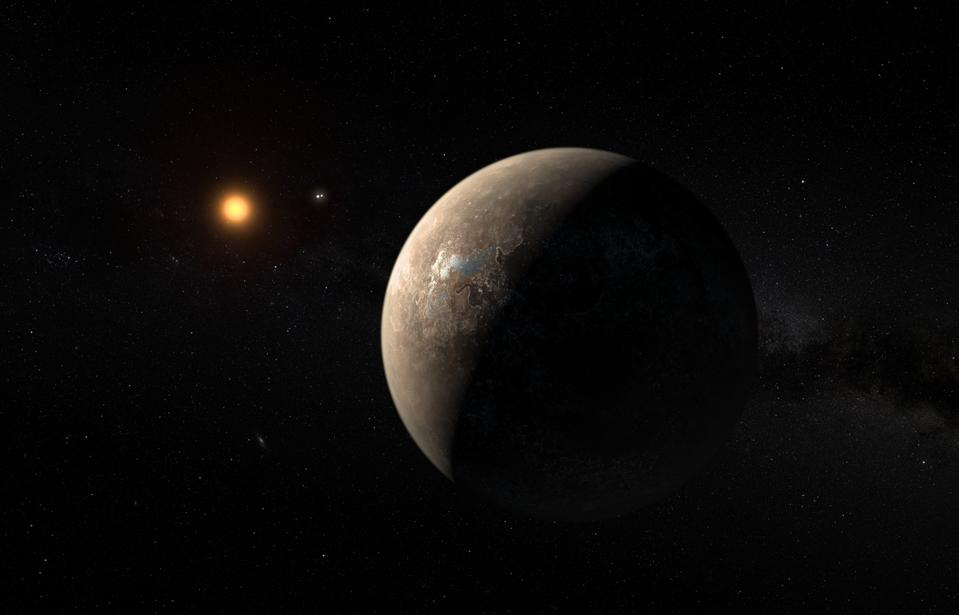












 Did the Ancients Know the Secrets to Levitation?
 Is This The REAL Reason Why The Ancients Built THOUSANDS Of Pyramids?

 R
 Former Google Ethicist Warns Smartphones Are Weapons Of Mass


 NASA confirms: A second moon is orbiting Earth
 We are NOT alone! Scientists claims Earth has MORE than one

 On 6/6/16 The Satanic Church Will Celebrate The Devil In Los Angeles
 Los Angeles Minecraft: Elon Musk has started digging a giant


