Ontdek de Fascinerende Wereld van UFO's en UAP's: Jouw Bron voor Onthullende Informatie!
Ben jij ook gefascineerd door het onbekende? Wil je meer weten over UFO's en UAP's, niet alleen in België, maar over de hele wereld? Dan ben je op de juiste plek!
België: Het Kloppend Hart van UFO-onderzoek
In België is BUFON (Belgisch UFO-Netwerk) dé autoriteit op het gebied van UFO-onderzoek. Voor betrouwbare en objectieve informatie over deze intrigerende fenomenen, bezoek je zeker onze Facebook-pagina en deze blog. Maar dat is nog niet alles! Ontdek ook het Belgisch UFO-meldpunt en Caelestia, twee organisaties die diepgaand onderzoek verrichten, al zijn ze soms kritisch of sceptisch.
Nederland: Een Schat aan Informatie
Voor onze Nederlandse buren is er de schitterende website www.ufowijzer.nl, beheerd door Paul Harmans. Deze site biedt een schat aan informatie en artikelen die je niet wilt missen!
Internationaal: MUFON - De Wereldwijde Autoriteit
Neem ook een kijkje bij MUFON (Mutual UFO Network Inc.), een gerenommeerde Amerikaanse UFO-vereniging met afdelingen in de VS en wereldwijd. MUFON is toegewijd aan de wetenschappelijke en analytische studie van het UFO-fenomeen, en hun maandelijkse tijdschrift, The MUFON UFO-Journal, is een must-read voor elke UFO-enthousiasteling. Bezoek hun website op www.mufon.com voor meer informatie.
Samenwerking en Toekomstvisie
Sinds 1 februari 2020 is Pieter niet alleen ex-president van BUFON, maar ook de voormalige nationale directeur van MUFON in Vlaanderen en Nederland. Dit creëert een sterke samenwerking met de Franse MUFON Reseau MUFON/EUROP, wat ons in staat stelt om nog meer waardevolle inzichten te delen.
Let op: Nepprofielen en Nieuwe Groeperingen
Pas op voor een nieuwe groepering die zich ook BUFON noemt, maar geen enkele connectie heeft met onze gevestigde organisatie. Hoewel zij de naam geregistreerd hebben, kunnen ze het rijke verleden en de expertise van onze groep niet evenaren. We wensen hen veel succes, maar we blijven de autoriteit in UFO-onderzoek!
Blijf Op De Hoogte!
Wil jij de laatste nieuwtjes over UFO's, ruimtevaart, archeologie, en meer? Volg ons dan en duik samen met ons in de fascinerende wereld van het onbekende! Sluit je aan bij de gemeenschap van nieuwsgierige geesten die net als jij verlangen naar antwoorden en avonturen in de sterren!
Heb je vragen of wil je meer weten? Aarzel dan niet om contact met ons op te nemen! Samen ontrafelen we het mysterie van de lucht en daarbuiten.
Giant Triangle UFO Seen Over Freeway In California On April 2, 2018, Photos, UFO Sighting News.
Date of sighting: April 2, 2018
Location of sighting: Simi Valley, California, USA
Source: MUFON #91465
This UFO report just in today. A person was driving in Simi, CA and noticed a dark triangle craft moving over the freeway. The UFO had no aircraft lights, so we can rule out public aircraft. The design seems very odd and uneven, but also very thick. Simi Valley located in Southern California, is very close to Area 51, Nellis AFB and the Extraterrestrial Highway. The pattern is becoming visible.
Scott C. Waring
Eyewitness states: I caught a triangle craft above the freeway on the way home. (further statement is not visible to the pubic due to MUFON no longer allowing you to view without paying them).
Strangest UFO Case of All Time, This One is Stranger Than Fiction
It couldn’t happen here? Most people would say it couldn’t happen anywhere! But more than 100 witnesses to one of the world’s biggest UFO mysteries are adamant that it did, in broad daylight. And 50 years after the event, many are still fuming that the military they say were swarming around the scene for days have offically denied the incident and no record appears to exist. They say they spent their lives being doubted and want some official acknowledgment that something weird happened above and behind Westall high and primary schools that morning. London’s Telegraph newspaper rates it as the fifth-greatest UFO mystery of all time, but another mystery is how little-known the episode is here. A documentary – Westall ’66: A Suburban UFO Mystery. Producers hope it will flush out an official who can say what the military were doing and what they found.
Two Pilots On Separate Planes Observe The Same UFO
When we heard of UFO sightings or UFOs being spotted it is hard to believe especially if the report is coming from a single witness. It is often written off immediately, simply because it is hard to verify or give proof of what an individual believes they saw in the sky.
However, when two or more individuals reported the same sighting, things get a lot more interesting. Seasoned pilots know things or everyday events in the sky, and when they witness an unnatural event, it is worth to give more attention to their reports.
Two pilots flying above Arizona on February 14th reported seeing a strange object flying above them. Even the FAA could not explain the UFO.
An audio recording of the incident reveals the bizarre sighting also baffled their air traffic controller.
The pilot of Learjet of the Phoenix Air recorded a conversation of the pilot and the air traffic control center. In the audio, the pilot asks the air traffic control if there is a plane above that passed over them, but the controller responds in the negative. Then the controller adds maybe it is a UFO which the pilot agrees.
The controller then contacts another pilot on an American Airlines flying above over the same area. The controller asks if they have seen anything that passed over them over the next few miles of their flight.
The Learjet pilot says that he does not know the unusual aerial thing, but it was flying in the opposite direction.
Moments later, American Airlines joins in the conversation and states that they also saw that unusual object flying above them and that it was operating two to three thousand feet above them.
The FAA states that no other planes should have there in the area of the sightings.
Based on the recording, those pilots did not think it was just another plane or a balloon. Now, this makes reports such as this one a lot more interesting and confusing at the same time.
Buzz Aldrin did NOT see a UFO during 1969 moon mission: Apollo 11 astronaut said bizarre light he saw in space 'was not an alien,' as NASA confirms it was likely a reflection off the craft's panel
Bizarre story this month claims Apollo 11 astronaut said he saw a UFO in space
But, the astronaut has said over the years that the light he saw 'was not an alien'
Both Aldrin and NASA have said it was likely sun reflecting off a spacecraft panel
Despite widely circulated claims this week that astronaut Buzz Aldrin, the second human to step foot on the moon, saw alien activity during his historic 1969 mission, no such close encounter ever actually happened.
In fact, the Apollo 11 astronaut has said the exact opposite about the unusual sighting in question.
Describing the appearance of a moving light alongside his spacecraft, Aldrin said explicitly during a 2014 Q&A: ‘It was not an alien.’
Renewed interested in Aldrin’s strange experience has been sparked by a bizarre story published earlier this month by the Daily Star, which claimed he passed a lie detector test after recalling an ‘alien encounter.’
But, the astronaut never took a lie detector test on the subject, and never stated he saw aliens in the first place.
Scroll down for video
Despite widely circulated claims this week that astronaut Buzz Aldrin (right) , the second human to step foot on the moon, saw alien activity during his 1969 mission, no such encounter ever actually happened. Pictured are Neil Armstrong (left) and Michael Collins (center)
Over the years, Aldrin has described a strange sighting that occurred during his 1969 mission, when a light appeared outside of the module.
While he has said that 'technically, the definition could be "unidentified,"' as he did not know what exactly caused the light at the time, he has repeatedly insisted that it was not of alien origin.
In a 2014 question-and-answer session on Reddit, he explained that it was likely the reflection of the sun bouncing off a panel that separated from the craft after launch.
'On Apollo 11 in route to the Moon, I observed a light out the window that appeared to be moving alongside us,' Aldrin wrote.
'There were many explanations of what that could be, other than another spacecraft from another country or another world - it was either the rocket we had separated from, or the 4 panels that moved away when we extracted the lander from the rocket and we were nose to nose with the two spacecraft.
'So in the close vicinity, moving away, were 4 panels. And I feel absolutely convinced that we were looking at the sun reflected off of one of these panels. Which one? I don't know. So technically, the definition could be "unidentified."
'We well understood exactly what that was. And when we returned, we debriefed and explained exactly what we had observed.'
Pictured, astronaut Edwin E. 'Buzz' Aldrin Jr. poses for a photograph beside a U.S. flag planted on the moon during the Apollo 11 mission
Still, the Star's story claims the second man to walk on the moon 'took part' in research conducted by an Ohio woman, Sharry Edwards that confirmed he had an alien encounter.
But Edwards told The Associated Press in an email, 'There were no tests.'
She claims that reviews of recordings of Aldrin's voice indicate he 'has a firm belief' that he saw a UFO.
NASA spokeswoman Stephanie Schierholz said in an email to the AP that Aldrin likely saw panels that separated as the Apollo 11 command module maneuvered to dock with the lunar lander on the way to the moon in 1969.
WHAT DID BUZZ ALDRIN SAY ABOUT HIS 'UFO ENCOUNTER'?
While UFO enthusiasts have long clung to Buzz Aldrin's story of a strange light appearing alongside his spacecraft in 1969, the Apollo 11 astronaut does not think what he saw was an alien.
'On Apollo 11 in route to the Moon, I observed a light out the window that appeared to be moving alongside us. There were many explanations of what that could be, other than another spacecraft from another country or another world - it was either the rocket we had separated from, or the 4 panels that moved away when we extracted the lander from the rocket and we were nose to nose with the two spacecraft.
'So in the close vicinity, moving away, were 4 panels. And i feel absolutely convinced that we were looking at the sun reflected off of one of these panels. Which one? I don't know. So technically, the definition could be "unidentified."
'We well understood exactly what that was. And when we returned, we debriefed and explained exactly what we had observed.
'And I felt that this had been distributed to the outside world, the outside audience, and apparently it wasn't, and so many years later, I had the time in an interview to disclose these observations, on another country's television network. And the UFO people in the United States were very very angry with me, that i had not given them the information. It was not an alien. Extraordinary observations require extraordinary evidence.
'That's what Carl Sagan said. There may be aliens in our Milky Way galaxy, and there are billions of other galaxies. The probability is almost CERTAIN that there is life somewhere in space.
'It was not that remarkable, that special, that unusual, that life here on earth evolved gradually, slowly, to where we are today.
But the distances involved in where some evidence of life may be, they may be hundreds of light years away.'
One of the leading investigators into UFOs sighting has claimed that they "are increasing" with "more and more" being reported every day.
The news comes after five "very convincing" sightings were reported from Cornwall, as well as countless others from across the rest of the UK last year.
One of the sightings, which was captured of film, was reportedly so terrifying that it left a Launceston resident with "nightmares".
The person, who has not given their name, contacted the British Earth and Aerial Mysteries Society (BEAMS) after spotting a “perfectly round disc” hanging in the sky above North Hill in Launceston.
It was 2pm on a clear and sunny Friday afternoon that the object was reportedly spotted “motionless hanging in the sky, making no sound”.
The spotter estimated the object being a few miles away from them, but it was still close enough to make out details of a silver metallic colour as well as black, brown, orange and red tones.
After watching it still in the skies for around 30 seconds, the resident claimed the object shot off “at high speed” and they even managed to capture the moment on film, which can be seen above. They described the encounter as “brief, but it was very quiet and surreal”.
A screenshot of the images and photograph shown on the BEAMS website, alongside the Launceston sighting(Image: www.beamsinvestigations.org)
In a message sent to the BEAMS investigators, they said: “On a personal note, the experience has shaken me to the core and frankly terrified me.
“During the sighting I was unsettled but very calm, I knew exactly what I was witnessing, shock I guess, but in the weeks that have passed I have had nightmares!
“I now have a profound empathy for those who have been taken.
The sighting was reported to BEAMS in September and was one of five "very interesting" sightings that were logged in the county in 2017.
Speaking to Cornwall Live, UFO investigator Hilary Porter, who jointly runs the society with Ken Parsons, said: “It’s very convincing.
“[All of the sightings in Cornwall] are very interesting and people are definitely experiencing things more and more."
One witness in Mevagissey claimed to have spotted a "saucer" object in the sky.
They said that they had spotted the object in clear skies at around 9.30pm in October last year.
The witness, who did not give their name, described the object they saw as a silent, yellow/orange saucer that was "hovering, in a jerky but controlled up and down movements, whilst travelling horizontally".
The video below shows what they believe to be UFO lights.
Then in September a "huge red light" was reported as a sighting in Marazion.
The witness claimed that they had been left 'spooked' when they came across the unidentified object in Green Lane.
Another Marazion sighting, reported to BEAMS in July, saw a witness claim to have spotted a "strange object" in the grounds of the historic farm where they lived.
The sighting left the farms occupant "creeped out" and sent their dog "growling and barking" to the window.
The resident gave the following statement to BEAMS: "I live alone in a rather large 300-year-old barn complex near Marazion in Cornwall. A week or so ago I was sitting in my front room with my girlfriend listening to the radio.
"It was about 11pm the windows were open but the curtains were drawn, suddenly my Jack Russell jumped up growling then barking very aggressively at the window, if it were a fox etc she would run to the front door to chase it away, it wasn't her normal behavior.
"I had my camera next to me so I put it through the curtains and the open window and blindly took a few photos into the dark.
"Upon examination I found the following strange object, it casts a shadow on the ground from the flash, it actually has creeped me out a little."
Screenshot taken from the BEAMS website of the photograph taken by a person who spotted a "strange object" in the grounds of a 300 year old farm in Marazion(Image: www.beamsinvestigations.org)
And in January 2017, there was two reports of a UFO with "a contrail" spotted in the skies above Newlyn East.
While there haven’t been any sightings in the county since the start of 2018, Hilary said that the county has been a hotspot for activity and in the future, it could be again.
Hilary added: “We cover everything, including ancient sites and ley lines – it all joins together with the UFO side of it in many ways.
“Bodmin Moor has always been popular for sightings, you’ve got some very strange things going on there.
“It goes in waves I think, you get no activity and then you get a whole wave of things happening at once.”
The Enigma Of The Phaistos Disk, A 3,700-Year-Old Indecipherable Message
The 2nd millennium BC is a period that spanned the years 2000 through 1001 BC and was marked by the appearance of great kingdoms and empires across the planet. The period marks the transition from the Middle to the Late Bronze Age.
Experts maintain that the first half of the 2nd millennium BC was noted by the domination of the Middle Kingdom of Egypt and Babylonia. During this time, scholars say that alphabet started developing.
However, the 2nd millennium BC also marked the appearance of Chariot warfare and population movements which are believed to have led to violent changes at the center of the millennium; a new order emerges with Greek dominance of the Aegean and the rise of the Hittite Empire.
The side A of the Phaistos disk, as displayed in the Archaeological Museum of Heraklion after the 2014 renovation.
But this period was also marked by many different things.
It is believed that a mysterious artifact, dubbed the Phaistos Disc,housed today at archaeological museum of Heraklionwas crafted by a mysterious people, written in an undecipherable text, during the end of the Bronze Age, around 1700 BC, that is, some 3700 years ago.
The side B of the disc of Phaistos, as displayed in the Archaeological Museum of Heraklion after the 2014 renovation.
The mysterious disk-shaped object is about 15 cm (5.9 in) in diameter and is covered on both sides with a spiral of stamped symbols.
Its purpose and meaning, and even its original geographical place of manufacture remains disputed among scholars, making it one of the most mysterious archeological artifacts on the surface of the planet.
The inscriptions, made by pressing hieroglyphic “seals” into a disc of soft clay, are hieroglyphical and are similar to those of the linear script A (the system used by the Cretan culture and still not deciphered totally) and the linear B (the one used by the Mycenaeans) together with others of unknown origin.
Some researchers attribute this to a non-Cretan origin, despite the fact that it was discovered, on July 3, 1908, in Phaistos, Crete.
The disc was discovered by the Italian archaeologist Luigi Pernierin the Minoan palace-site of Phaistos and features 242 tokens, comprising 45 distinct signs, which were supposedly made by pressing hieroglyphic “seals” into a disc of soft clay, in a clockwise order spiraling toward the center of the object. Many of these 45 signs represent easily identifiable symbols. In addition to these, there is a small diagonal line that appears underneath the final sign in a group a total of 18 times. The disc shows traces of corrections made by the scribe in several places.
However, many authors believe the disk is a forgery.
The doubts come from the own characteristics of the disc: the Phaistos Disk has straight edges, despite the fact that nearly all the clay disks of the time appear curved.
However, perhaps what casts the greatest doubts on the Phaistos Disk’s authenticity is that typographical seals were used in its manufacture when there is no other similar example in antiquity, or anything similar until the invention of the printing press by Guttenberg.
According to a report in The Times in 2008, the date of manufacture has never been established by thermoluminescence.
The Roman Dodecahedra, Mysterious Ancient Artifacts Whose Purpose Remains A Mystery
More than a hundred dodecahedra have been found by archaeologists throughout the territory of the ancient Roman Empire, including countries such as Spain, Italy, France, even in outlying areas such as Germany, Wales, and Hungary.
According to the archaeological records, they date back to the 2nd and 3rd centuries AD, but their exact purpose is still a mystery which experts have not been able to solve.
The Roman Dodecahedra are small hollow objects made of bronze or stone in the shape of a Dodecahedra, twelve pentagonal faces, each of which has a circular hole in the center, of different diameters.
The first Roman Dodecahedra was found in 1739, and since then they have continued to appear all over Europe.
Ancient Roman dodecahedron found in Atuatuca Tungrorum (Tongeren). It’s a small hollow object made of bronze or stone with a dodecahedral shape. Its use is still unclear and several proposals have been made including an aid for knitting gloves and a device for determining the optimal sowing date for winter grain. Collection of Gallo-Romeins Museum, Tongeren, Belgium.
Most of these curious objects were found in France and Germany and range in size between 4 and 11 centimeters in diameter.
However, no mention has been made of these objects in contemporary sources, nor any representation in mosaics, reliefs or other artistic expressions which raises numerous questions.
Their exact purpose has been debated for more than 2 centuries and some archeologists argue that the mystery objects may have used as supports for candles since experts have found wax remains on a few of them.
But the theories also point to other possible utilities, such as for example being a kind of dice for some sort of ancient game.
Some authors have even proposed that these artifacts may have been used as measuring instruments to calculate distances (diopters), and even determine the appropriate date for planting grain in winter, calibrate water pipes or religious objects or artifacts used in different rituals. However, some experts have proposed that these mysterious objects may have had a much simpler purpose and may have been used as a children’s toy.
However, given that fact that most of these objects were found mainly in the peripheral areas of the Roman empire, where the presence of Roman legions constituted the main group of Roman citizens, the Roman dodecahedrons may have been a military artifact.
A few of the ancient texts available about the mystery artifacts were left by Plutarch, the famous Greek historian, who wrote that these artifacts were representations of the zodiac, where each of the twelve faces corresponded to an animal of the astrological circle. But even this theory has been rejected by scholars since it does not explain the peculiar decoration of the dodecahedra.
It is noteworthy to mention that many of the dodecahedra were found together with other treasures and coins, probably buried by their owners to hide from robbers or looters, which indicates that they were considered as valuable objects.
Smaller dodecahedra with the same features (holes and knobs) and made from gold have been found discovered by experts in South-East Asia.
They have been used for decorative purposes and the earliest items appear to be from the Roman epoch.
Fragments of an ancient Roman dodecahedron found in 2010 at the construction site of the A2 tunnel in Maastricht. Height: 8.1 cm. The 20 corners were decorated with separately attached dots. Photographed at the temporary exhibition Top or Topic in Centre Céramique in Maastricht, the Netherlands.
So what exactly these mysterious artifacts were, remains a mystery.
However, one theory that I find quite appealing was proposed by G.M.C. Wagemanswho wrote “the dodecahedron was an astronomic measuring instrument with which the angle of the sunlight can be measured and thereby one specific date in springtime, and one date in the autumn can be determined with accuracy. The dates that can be measured were probably of importance for the agriculture”.
For centuries, human beings have wondered about the possibility of other Earths orbiting distant stars. Perhaps some of these alien worlds would harbor strange forms of life or have unique and telling histories or futures. But it was only in 1995 that astronomers spotted the first planets orbiting sunlike stars outside of our solar system.
In the last decade, in particular, the number of planets known to orbit distant stars grew from under 100 to well over 2,000, with another 2,000 likely planets awaiting confirmation. Most of these new discoveries are due to a single endeavor — NASA's Kepler mission.
Number of confirmed exoplanets continues to grow.
Credit: Wendy Stenzel/ The University of Texas at Austin/Andrew Vanderburg/ NASA/Ames Research Center, CC BY
Kepler is a spacecraft housing a 1-meter telescope that illuminates a 95 megapixel digital camera the size of a cookie sheet. The instrument detected tiny variations in the brightness of 150,000 distant stars, looking for the telltale sign of a planet blocking a portion of the starlight as it transits across the telescope's line of sight. It's so sensitive that it could detect a fly buzzing around a single streetlight in Chicago from an orbit above the Earth. It can see stars shake and vibrate; it can see starspots and flares; and, in favorable situations, it can see planets as small as the moon.
Scientists can determine the size or radius of a planet by measuring the depth of the dip in brightness and knowing the size of the star.µ
Credit: NASA Ames, CC BY
Kepler's thousands of discoveries revolutionized our understanding of planets and planetary systems. Now, however, the spacecraft is nearly out of its hydrazine fuel and will end its fantastic life sometime in the next few months. Luckily for planet hunters, NASA's upcoming TESS mission is waiting in the wings and will take over the exoplanet search.
Prepping the Kepler spacecraft pre-launch in 2009.
Credit: Tim Jacobs/NASA, CC BY
Kepler's history
The Kepler mission was conceived in the early 1980s by NASA scientist Bill Borucki, with later help from David Koch. At the time, there were no known planets outside of the solar system. Kepler was eventually assembled in the 2000s and launched in March of 2009. I joined the Kepler Science Team in 2008 (as a wide-eyed rookie), eventually co-chairing the group studying the motions of the planets with Jack Lissauer.
Originally, the mission was planned to last for three and a half years with possible extensions for as long as the fuel, or the camera, or the spacecraft lasted. As time passed, portions of the camera began to fail but the mission has persisted. However, in 2013 when two of its four stabilizing gyros(technically "reaction wheels") stopped, the original Kepler mission effectively ended.
NASA scientists figured out how to use solar pressure to stabilize Kepler.
Credit: W. Stenzel/NASA Ames, CC BY
Even then, with some ingenuity, NASA was able to use reflected light from the Sun to help steer the spacecraft. The mission was rechristened as K2 and continued finding planets for another half decade. Now, with the fuel gauge near empty, the business of planet hunting is winding down and the spacecraft will be left adrift in the solar system. The final catalog of planet candidates from the original mission was completed late last year and the last observations of K2 are wrapping up.
Kepler's science
Squeezing what knowledge we can from those data will continue for years to come, but what we've seen thus far has amazed scientists across the globe.
We have seen some planets that orbit their host stars in only a few hours and are so hot that the surface rock vaporizes and trails behind the planet like a comet tail. Other systems have planets so close together that if you were to stand on the surface of one, the second planet would appear larger than 10 full moons. One system is so packed with planets that eight of them are closer to their star than the Earth is to the Sun. Many have planets, and sometimes multiple planets, orbiting within the habitable zone of their host star, where liquid water may exist on their surfaces.
As with any mission, the Kepler package came with trade-offs. It needed to stare at a single part of the sky, blinking every 30 minutes, for four straight years. In order to study enough stars to make its measurements, the stars had to be quite distant – just as when you stand in the middle of a forest, there are more trees farther from you than right next to you. Distant stars are dim, and their planets are hard to study. Indeed, one challenge for astronomers who want to study the properties of Kepler planets is that Kepler itself is often the best instrument to use. High quality data from ground-based telescopes requires long observations on the largest telescopes – precious resources that limit the number of planets that can be observed.
We now know that there are at least as many planets in the galaxy as there are stars, and many of those planets are quite unlike what we have here in the solar system. Learning the characteristics and personalities of the wide variety of planets requires that astronomers investigate the ones orbiting brighter and closer stars where more instruments and more telescopes can be brought to bear.
Once launched, TESS will identify exoplanets orbiting the brightest stars just outside our solar system.
Credit: NASA's Goddard Space Flight Center, CC BY
Enter TESS
NASA's Transiting Exoplanet Survey Satellite mission, led by MIT's George Ricker, is slated to launch in the next few weeks and will search for planets using the same detection technique that Kepler used. TESS' orbit, rather than being around the Sun, will have a close relationship with the Moon: TESS will orbit the Earth twice for each lunar orbit. TESS' observing pattern, rather than staring at a single part of the sky, will scan nearly the entire sky with overlapping fields of view (much like the petals on a flower).µ
Duration of TESS' observations on the celestial sphere, taking into account the overlap between sectors.
Credit: NASA, CC BY
Given what we learned from Kepler, astronomers expect TESS to find thousands more planetary systems. By surveying the whole sky, we will find systems that orbit stars 10 times closer and 100 times brighter than those found by Kepler – opening up new possibilities for measuring planet masses and densities, studying their atmospheres, characterizing their host stars, and establishing the full nature of the systems in which the planets reside. This information, in turn, will tell us more about our own planet's history, how life may have started, what fates we avoided and what other paths we could have followed.
The quest to find our place in the universe continues as Kepler finishes its leg of the journey and TESS takes the baton.
This article was originally published on The Conversation. Read the original article. Follow all of the Expert Voices issues and debates — and become part of the discussion — on Facebook, Twitter and Google +. The views expressed are those of the author and do not necessarily reflect the views of the publisher. This version of the article was originally published on Space.com.
An asteroid similar in size to one that exploded more than 100 years ago in Russia's Tunguska region in Siberia gave Earth a close shave on Sunday (April 15), just one day after astronomers discovered the object.
The asteroid, designated 2018 GE3, made its closest approach to Earth at around 2:41 a.m. EDT (0641 GMT), whizzing by at a distance of 119,400 miles (192,000 kilometers), or about half the average distance between Earth and the moon, according to NASA's Center for Near Earth Object Studies(CNEOS).
NASA estimated that this asteroid measures 157 to 360 feet (48 to110 meters) wide, making the space rock up to 3.6 times the size of the one that leveled 500,000 acres (2,000 square kilometers) of Siberian forest when it exploded over Tunguska in 1908. [Gallery: Potentially Dangerous Asteroids]
A diagram shows the orbit of asteroid 2018 GE3, which flew by Earth on April 15, 2018.
Credit: NASA JPL
This newfound asteroid is three to six times as big as another recent meteor, the one that broke up over Chelyabinsk, Russia, in 2013. That object injured more than 1,200 people and damaged thousands of buildings up to 58 miles (93 km) away from the impact site.
"If 2018 GE3 had hit Earth, it would have caused regional, not global, damage, and might have disintegrated in the atmosphere before reaching the ground," SpaceWeather.com reported. "Nevertheless, it is a significant asteroid, illustrating how even large space rocks can still take us by surprise. 2018 GE3 was found less than a day before its closest approach."
SURPRISE ASTEROID FLYBY: With little warning, a relatively large asteroid flew through the Earth-Moon system on April 15th only 192,200 km (0.5 LD) from our planet. 2018 GE3 was discovered by the Catalina Sky Survey approaching Earth on April 14th. Hours later, amateur astronomer Michael Jäger of Weißenkirchen Austria video-recorded the space rock gliding through the southern constellation Serpens:
"According to Wikipedia, 2018 GE3 is the largest known asteroid to pass that close to Earth in observational history," says Jäger. "It was shining like a 13th magnitude star at the time of my observations."
Based on the intensity of its reflected sunlight, 2018 GE3 must be 48 to 110 meters wide, according to NASA-JPL. This puts it into the same class as the 60-meter Tunguska impactor that leveled a forest in Siberia in 1908. A more recent point of comparison is the Chelyabinsk meteor--a ~20-meter asteroid that exploded in the atmosphere over Russia on Feb. 15, 2013, shattering windows and toppling onlookers as a fireball brighter than the sun blossomed in the blue morning Ural sky. 2018 GE3 could be 5 to 6 times wider than that object.
If 2018 GE3 had hit Earth, it would have caused regional, not global, damage, and might have disintegrated in the atmosphere before reaching the ground. Nevertheless, it is a significant asteroid, illustrating how even large space rocks can still take us by surprise. 2018 GE3 was found less than a day before before its closest approach.
Based on an observational arc of only 1 day, 2018 GE3 appears to follow an elliptical orbit which stretches from the asteroid belt to deep inside the inner solar system. Every ~2.5 years the space rock crosses the orbits of Mercury, Venus, Earth, and Mars--although not necessarily making close approaches to the planets themselves.
The asteroid 2018 GE3 was first spotted on Saturday (April 14) at 5:23 a.m. EDT (0923 GMT) by astronomers at the Catalina Sky Survey, a NASA-sponsored program based at the University of Arizona in Tucson. This first sighting occurred just 21 hours before the asteroid's closest approach to Earth.
Asteroid 2018 GE3 by Michael Jaeger. Used with permission.
This is an excellent follow up article to the post on disclosure of life Everywhere in the Universe, which demonstrates an increased level of Scientific acceptance and it’s dissemination into the public domain.
A couple of months ago top US astronomers gathered in front of congress to let them know that extraterrestrial life exists without question.
Their main argument was the size of the universe, emphasizing that there are trillions of stars out there, with one in every five most likely harboring an Earth-like planet.
It’s also important to keep in mind that planets do not have to be “Earth-like” in order to harbor life.
“The number of habitable worlds in our galaxy is certainly in the tens of billions, minimum, and we haven’t even talked about the moons. And the number of galaxies we can see, other than our own, is about 100 billion.”
– Seth Shostak, Senior Astronomer at California’s SETI Institute (source
This time, NASA and the Library of Congress have teamed up bringing together scientists, theologians, philosophers and historians from around the globe for a two day symposium in order to discuss how to prepare the world for extraterrestrial contact, whether it be microbial organisms or intelligent beings.
“We’re looking at all scenarios about finding life. If you find microbes, that’s one thing. If you find intelligence, it’s another. And if they communicate, it’s something else, and depending on what they say, it’s something else!
“The idea is not to wait until we make a discovery, but to try and prepare the public for what the implications might be when such a discovery is made. I think the reason that NASA is backing this is because of all the recent activity in the discovery of exoplanets and the advances in astrobiology in general.
“People just consider it much more likely now that we’re going to find something — probably microbes first and maybe intelligence later. The driving force behind this is from a scientific point of view that it seems much more likely now that we are going to find life at some point in the future.”
– Astronomer, symposium organizer and former chief NASA historian, Steven J. Dick. (source)
One of the theologians present was Brother Guy Consolmagno, who is the new president of the Vatican Observatory Foundation. This is what he had to say:
“I Believe [alien life exists], but I have no evidence. I would be really excited and it would make my understanding of my religion deeper and richer in ways that I can’t even predict yet, which is why it would be so exciting.” (source)
He is urging the public not to be so surprised when extraterrestrial life is discovered, because it will be discovered. He even said that he would be happy to baptize them, if it’s intelligent extraterrestrial life that’s discovered. The Vatican has been very open to the idea of intelligent extraterrestrial life, and they’ve expressed these views for a very long time.
Earth is not the center of the universe, it’s not flat, and it’s looking very likely that the next major paradigm shifting revelation will be the fact that we are not alone in the universe.
It’s great to see the mainstream world gather, discuss and prepare for this possibility and ultimate reality, and it’s a great seg-way to create more awareness about the world of secrecy, the world’s within our world that deal with projects the human race knows nothing about.
The Other Probability – Intelligent Extraterrestrial Life is Already Here
All of the information I’ve provided below is probably old information for CE fans that regularly visit our site. This information is from a previous article I wrote earlier in the year, I thought it would be fitting to cut and paste it here for our new readers. You can find more CE articles on the UFO/Extraterrestrial topic by visiting our exopolitics section HERE.
In the United States alone, at least half of all Americans say that we’re not alone in the universe. Fifty percent of Americans already believe that there is some form of life on other planets, while only seventeen percent think that there isn’t. A quarter of Americans believe that intelligent extraterrestrial visitors have already come to Earth and have been doing so for a long time. (source)
Here’s one of them:
“Yes there have been crashed craft, and bodies recovered. We are not alone in the universe, they have been coming here for a long time.”
(source) (source) – Apollo 14 Astronaut, Air Force Captain and Founder of the Institute of Noetic Sciences, Dr. Edgar Mitchell
There are multiple reasons why the extraterrestrial question continues to gain popularity. People are starting to ask questions about the world around them, utilizing critical thinking and investigation. After thoroughly investigating this topic your conclusions will be similar to the conclusions of the majority, we are not alone, and we are being visited.
1. The Size of the Universe
How often do you look up into the night sky and wonder just how many stars, planets, galaxies and more are out there? Space has been a high area of interest that has always fascinated scientists, philosophers, musicians and pretty much just about everyone.
What is it about deep space that grabs our attention so much? To think about just how big the universe is can really put things into perspective.
Counting the stars in the universe is like trying to count the number of sand grains on a beach, not possible.
Although estimates vary among different experts, the general consensus is that there are at least between 100 billion and 200 billion galaxies in our universe. Think about that for a moment, and now throw in billions of stars in each galaxy! (source) This number could very easily be in the trillions for all we know.
Take the Milky Way Galaxy for example, which measures to about 120,000 light years across (it would take light that many years to travel across the galaxy), and contains up to 400 billion stars. Again, that’s billions of galaxies that contain billions of stars. (source)
Scientists estimate that at least 10 billion habitable Earth-sized planets exist in the milky way alone ( one galaxy out of billions), but it’s important to keep an open mind as to what type of conditions and environments some unknown extraterrestrial like forms could thrive in. They all don’t necessarily have to be Earth-like.
Given our estimation of the size of the universe, or multiverse (whatever you want to call it), odds are we are not alone.
2. Whistle Blowers
The past few years have seen a surge of whistle-blowers that’ve come out and said some remarkable things. Bradley Manning, Edward Snowden and Julian Assange have received the most attention, but the reality is that there are hundreds of whistle blowers who have come forward with verified credentials and backgrounds.
Mass surveillance and the security state is not the only thing shocking people around the world, it’s the fact that many of these whistle blowers claim that we are not alone in the universe. It wouldn’t be so hard to ignore if it wasn’t for the backgrounds these people have in their respected fields.
The first one that comes to mind is Paul Hellyer, Former Canadian Defence Minister, the man responsible for unifying the Canadian Air Force, Army and the Navy into one united force now known as the Canadian Forces.
For someone with such a background to come out and make these extraordinary claims definitely grabbed the attention of many people.
“Decades ago, visitors from other planets warned us about the direction we were heading and offered to help. Instead, some of us interpreted their visits as a threat, and decided to shoot first and ask questions after. Trillions of dollars have been spent on black projects which both congress and the commander in chief have deliberately been kept in the dark.” (source)
”In one of the cases during the cold war, 1961, there were about 50 UFOs in formation flying South from Russia across Europe. The supreme allied commander was very concerned and was about ready to press the panic button when they turned around and went back over the North Pole. They decided to do an investigation and they investigated for three years and they decided that with absolute certainty that four different species, at least, have been visiting this planet for thousands of years. There’s been a lot more activity in the past two decades, especially since we invented the atomic bomb.” (source)
Paul Hellyer isn’t the only one making extraordinary statements, at least a dozen NASA astronauts have done the same. Just like Dr. Edgar Mitchell’s quote, other astronauts have said some remarkable things. Let’s take a look at a few (out of many) examples.
“There is abundant evidence that we are being contacted, that civilizations have been monitoring us for a very long time. That their appearance is bizarre from any type of traditional materialistic western point of view. That these visitors use the technologies of consciousness, they use toroids, they use co-rotating magnetic disks for their propulsion systems, that seems to be a common denominator of the UFO phenomenon” (source) – Dr. Brian O’leary, Former NASA Astronaut and Princeton Physics Professor
“In my opinion I think they were worried that it would panic the public so they started telling lies about it. And then I think they had to tell another lie to cover their first lie, now they don’t know how to get out of it. Now it’s going to be so embarrassing to admit that all these administrations have told so many untruths, it would be embarrassing getting out of it. There are a number of extraterrestrial vehicles out there cruising around.”
(source) – Gordon Cooper, Former NASA Astronaut, Aeronautical Engineer and test pilot. One of the seven original Astronauts in Project Mercury, the first manned space program of the United States
The list goes on and on, the latest in NASA Astronaut statements about UFOs came from the 2005 International Space Station (ISS) Commander, Leroy Chiao. You can read more about that HERE.
Here is a video of John Podesta who was recently appointed as councilor to Barack Obama supporting UFO disclosure.
Some of the most extraordinary statements about UFOs and extraterrestrials come from persons who have held some of the highest positions known. Those who would be in a position to ‘know’ about possible extraterrestrial encounters.
“Behind the scenes, high ranking Air Force officers are soberly concerned about UFOs. But through official secrecy and ridicule, many citizens are led to believe the unknown flying objects are nonsense”
Former head of CIA, Roscoe Hillenkoetter, 1960 (source)
“There is a serious possibility that we are being visited and have been visited for many years by people from outer space, by other civilizations. Who they are, where they are from, and what they want should be the subject of rigorous scientific investigation and not be the subject of ‘rubishing’ by tabloid newspapers.”
(source) – Lord Admiral Hill-Norton, Former Chief of Defence Staff, 5 Star Admiral of the Royal Navy, Chairman of the NATO Military Committee
“Everything is in a process of investigation both in the United States and in Spain, as well as the rest of the world. The nations of the world are currently working together in the investigation of the UFO phenomenon. There is an international exchange of data.” – General Carlos Castro Cavero (1979). From “UFOs and the National Security State, Volume 2″, Written by Richard Dolan
The list of military whistle blowers is huge, there are hundreds of them and hundreds of quotes to choose from. To view military whistleblowers (with verified backgrounds) give a press conference at The National Press Club about UFOs deactivating nuclear weapons, click HERE. You can also look up Dr. Steven Greer and the disclosure project.
The list of quotes from all fields, from many people is outstanding. I could literally fill pages upon pages so I’ll stop here, I think you get the picture. These quotes by whistleblowers and people with prestigious backgrounds leads perfectly into the next point as to why almost everybody knows that we are not alone in the universe.
“There is another way whether it’s wormholes or warping space, there’s got to be a way to generate energy so that you can pull it out of the vacuum, and the fact that they’re here shows us that they found a way.”
(source) – Jack Kasher, Ph.D, Professor Emeritus of Physics, University of Nebraska
In this clip, it seems he (Dr. Jack Kasher) is referring to FREE ENERGY.
“This thing has gotten so highly-classified…it is just impossible to get anything on it. I have no idea who controls the flow of need-to-know because, frankly, I was told in such an emphatic way that it was none of my business that I’ve never tried to make it to be my business since. I have been interested in this subject for a long time and I do know that whatever the Air Force has on the subject is going to remain highly classified”
– Senator Barry Goldwater , Chairman of the Senate intelligence committee (source)
3. The Evidence of UFOs
Within the past few years, dozens of governments admitted to allocating resources and having programs to study the UFO phenomenon. For instance, in Canada the RCMP, Transport Canada, and the Department of National Defence recently admitted to tracking UFOs and investigating them. (source)
They’ve been doing it for years, accumulating thousands upon thousands of UFO related documents. Many of these documents have since been officially released.
HERE is the latest batch of UFO files released from the United Kingdom.
Documents released by the National Security Agency (NSA) reveal what is recorded when a UFO is being tracked on radar. HERE is one example. HERE is a four page U.S. Defense Intelligence Agency and NSA report describing a particular encounter in great detail.
“As the F-4 approached a range of 25 nautical miles it lost all instrumentation and communications. When the F-4 turned away from the object and apparently was no longer a threat to it, the aircraft regained all instrumentation and communications. Another brightly lighted object came out of the original object. The second object headed straight toward the F4. ”
You can read more about the radar tracking of UFOs HERE.
HERE is a Wikileak cable that describes how some politicians already know we are not alone in the universe. You can read more about that HERE.
Again the list goes on and on and thousands upon thousands of UFO related documents are now available in the public domain.
For a summary of more documents that have been declassified and made available, a video done by UFO Richard Dolan does a great one in 10 minutes. To watch it click HERE and see what type of information is out there.
4. Mass Mainstream Media Attention
Media outlets of all kind are covering the topic, almost every movie that comes out these days has something to do with space or some kind of extraterrestrial intelligence. We’ve been bombarded with the topic for a while now so it’s not hard to see how it’s on the minds of many.
The most recent case of mainstream extraterrestrial ‘noise’ was made when scientists recently spoke to the house Committee on Science, Space and Technology. Dan Werthimer of the SETI Research Centre at the University of California, Berkeley, recently called for more funding to be allocated to the search for extraterrestrial life since he is “close to 100 percent” certain that we are not alone. (source)
In mid 2013, the same committee held a hearing about exoplanet discoveries, but perhaps one of the largest UFO/extraterrestrial hearings came at the National Press Club, which also took place in Mid-2013.
At this event, hundreds of researchers, activists and military/ agency/ political witnesses representing ten countries gave UFO/extraterrestrial testimony to six former members of the United States Congress about events and evidence indicating an extraterrestrial presence engaging the human race.
Former Sen. Mike Gravel (D-Alaska), and 2008 presidential candidate said that there is “an extraterrestrial influence that is investigating our planet. Something is monitoring the planet and they are monitoring it very cautiously.” You can learn more about the citizens hearing here.
Apart from these events, UFOs are constantly a topic of interest in today’s mainstream news. Unfortunately, most mainstream media outlets that cover the topic seek out to ridicule it rather than investigating it properly.
To view military whistleblowers (with verified backgrounds) give a press conference at The National Press Club about UFOs deactivating nuclear weapons, click HERE.
There are millions of people out there claiming to have contact with extraterrestrial beings. This has played a large role in spreading the influence of extraterrestrial interest across the world. All of us seem to be naturally fascinated with the unknown, especially when it comes to space. It seems like human nature.
Neuroscience can now explain what happens to our body when we meditate, but it’s something we all knew to be beneficial before the science. Is extraterrestrial life similar? Is it something we all feel deep down inside, something we don’t need proof for? (Even though the proof is there).
Besides the thousands of videos available on YouTube, there is some very fascinating officially documented UFO footage available for us to see. Click HERE to see raw footage of a UFO showing up in Norway for scientists at their observatory.
Click HERE and HERE to see film from the 1991 NASA STS-48 Discovery Space Shuttle mission. It’s some of the best, officially documented UFO footage that’s out there today.
HERE is a video that made headlines once released. It came from straight front the Mexican Air Force. Do a quick UFO search on youtube and you’ll see many fakes, but many real videos of unknown aerial objects.
Final Thoughts
A few years ago the question was “Do UFOs exist?” Today that question has been answered, and the presence of UFOs performing maneuvers that defy our laws of physics has been well documented. The question has more so shifted to, “Is that an extraterrestrial space craft?”
It’s nothing to fear, in my opinion they’ve been around forever. They have been aware of us long before we have been aware of them. As speculated with our ancient civilizations in Earth’s brief past, perhaps they will one day interact with humanity again. I guess we will see.
Perhaps some groups are concerned about our planet, and come here further pushing the idea that we need to start changing the way we are doing things here. Perhaps one day soon we will find out.
I definitely believe that a good chunk of these UFOs are of extraterrestrial origin. I also believe that many of these crafts are “ours.”
Scientists have discovered nearly 2,000 alien planets since spotting the first ones orbiting a star beyond our sun back in 1992. Here's a brief rundown of the main techniques they use to find these far-flung worlds.
Photo Credit: NASA/Ames/JPL-Caltech
1. Old Faithful: The Transit Method
This technique watches for the tiny, telltale dips in a star's brightness caused when a planet crosses (or transits) the star's face, blocking some of its light. NASA's Kepler spacecraft has employed this method to great effect, spotting more than 2,700 potential planets since its March 2009 launch.
Astronomers also look for variations in the timing of a particular planet's transit, because these can reveal the presence of additional worlds orbiting the same star.
Photo Credit: ESO/M. Kornmesser
2. Wobbling Stars: Radial Velocity
The radial velocity method picks up on the tiny wobbles an orbiting planet induces in its parent's star's motion toward or away from Earth. This technique is also known as the Doppler method because it measures shifts in the star's light caused by these gravitational tugs.
Several teams of astronomers have discovered many exoplanets using this method and such Earth-based instruments as the HARPS spectrograph, on a telescope at the European Southern Observatory's La Silla Observatory in Chile, and the HIRES spectrograph, on Hawaii's Keck telescope.
Photo Credit: NASA/JPL-Caltech/R. Hurt
3. Gravitational Microlensing
In gravitational microlensing, astronomers watch what happens when a massive object passes in front of a star from our perspective on Earth. The nearby object's gravitational field bends and magnifies the light from the distant star, acting like a lens.
This produces a light curve — a brightening and fading of the faraway star's light over time — whose characteristics tell astronomers a lot about the foreground object, which is often a star. If this star has any planets, these can generate secondary light curves, alerting researchers to their presence.
Gravitational microlensing is less biased toward planets that orbit relatively far from their stars than the transit or radial velocity methods. Researchers have even used it to find so-called "rogue planets," which cruise through the depths of space without a parent star.
Photo Credit: NASA/ESA/T. Currie, U. Toronto
4. Say Cheese! Direct Imaging
This one is pretty self-explanatory. Powerful telescopes get actual images of distant worlds, using instruments called coronagraphs to block out the overwhelming glare of their parent stars.
NASA's Hubble Space Telescope has spotted planets by direct imaging, as have Hawaii's Keck Observatory, the European Southern Observatory's Very Large Array in Chile and several other telescopes.
This one is specific to planets around pulsars, tiny, superdense remnants of exploded stars that emit radio waves at regular intervals as they rotate.
Anomalies in the timing of these radio pulses can reveal the presence of orbiting planets. The first worlds ever discovered beyond our solar system were found using this method back in 1992.
Photo Credit: David A. Aguilar (CfA)
5. Harnessing Special Relativity
In this new technique, astronomers watch for a star to brighten as it's tugged by an orbiting planet, causing photons to "pile up" in energy and light to be focused in the direction of the star's motion due to relativistic effects.
The planet Kepler-76b (also known as "Einstein's planet") was discovered via this method, then confirmed by radial velocity measurements. More such detections are likely to follow as researchers hone the technique.
Photo Credit: ESA.
7. Astrometry
Astrometry relies on the ultraprecise tracking of a star's movements on the sky to spot the gravitational tugs of orbiting planets. (It's similar in principle to the radial velocity method but doesn't measure the Doppler shifts in a star's light.)
Scientists have searched for alien planets using astrometry for decades, with very limited (and debatable) success. But the European Space Agency's Gaia mission, set to launch in October 2013, could spot tens of thousands of exoplanets using the technique, researchers say.
NASA is set to launch the Transiting Exoplanet Survey Satellite (TESS) on Monday, starting a new chapter in the search for planets that could potentially support extraterrestrial life.
During its mission, TESS will analyse thousands of relatively nearby stars for planets orbiting the stars.
According to NASA, scientists expect to find about 50 Earth-sized planets and about 20,000 exoplanets in total, of which the vast majority will probably be larger than Neptune, our solar system's fourth biggest planet.
Exoplanets are planets that orbit a star other than the sun.
TESS will be sent into space aboard a SpaceX Falcon 9 rocket, the launch of which is slated to take place at 10:30 GMT at the Cape Canaveral station in Florida.
It will take two weeks for the satellite to get in its planned orbit and will eventually be closer to the Moon than to Earth.
After two months of testing and calibrating its systems, TESS will start a two-year mission examining 200,000 stars looking for exoplanets.
NASA✔@NASA
Launching Monday, our planet-hunting @NASA_TESS spacecraft will fly in a unique orbit that'll allow it to study nearly the entire sky over 2 years. This special orbit is key in potentially finding thousands of new planets outside our solar system. Watch:
Based on the light emitted by the stars, the satellite will be able to catalog thousands of planets, NASA said.
Combining that information with data gathered by telescopes on Earth scientists will be able to determine the make-up and mass of those planets.
The satellite, which cost about $200m, will build on work done by the Kepler telescope, which was able to catalogue about 2,300 exoplanets to date.
However, TESS will examine a much larger portion of the sky, about 85 percent in total. This is about 350 times more than Kepler, which has a similar mission to TESS but is only focused on a small part of the sky.
TESS will also look at stars that are much closer, about 30 to 300 lightyears away, than those examined by Kepler, which studied stars 300 to 3,000 light years away.
The planets found by TESS will be studied in depth by both scientists on Earth, as well as future space missions.
The launch of the James Webb telescope, the most powerful space telescope to date, is currently slated for 2020 and will continue research done by TESS.
One of the most important aspects of these exploratory space missions is for scientists to identify more planets that could potentially support life.
Based on Kepler's data, our galaxy alone could potentially have 10 billion planets that could be habitable.
In total, scientists estimate there are about 100 billion galaxies in the Universe.
The Soviet Republic was the first country to send a man into outer space. The US landed the first man on the Moon. Now, China wants to check its first as well: they want to grow plants (and silkworm) on the Moon.
The image is shot by Chinese Chang’e 3, an unmanned lunar exploration probe, and Yutu rover.
Image credits: Xinhua.
According to a new announcement, seeds of potatoes and Arabidopsis — a small flowering plant related to cabbage and mustard, often used in research — will be planted on the Moon. Along with silkworm cocoons, the seeds will be launched with Chang’e-4 lander and rover. China’s first probe to the far side of the moon is currently scheduled for December.
The seeds will be placed inside a cylindrical tin made from a special aluminum alloy. The tin is 18 cm tall, with a diameter of 16 cm, a net volume of 0.8 liters and a weight of 3 kilograms. It also contains water, air, and a special nutrient mixture, as well as a camera and a data transmission system. If everything goes according to plan, the seeds will be planted, they will grow and blossom and the entire process will be captured on camera.
The team which will be sent to the Moon, holding the seeds.
Image credits: Weibo / Chungking.
While potatoes and Arabidopsis have been grown before on the International Space Station and the Tiangong-2 space lab, growing them on the moon will be much more difficult. Maintaining the temperature in an acceptable range will be particularly tricky.
“We have to keep the temperature in the ‘mini biosphere’ within a range from 1 degree to 30 degrees, and properly control the humidity and nutrition. We will use a tube to direct the natural light on the surface of Moon into the tin to make the plants grow,” said Xie Gengxin, chief designer of the experiment.
Liu Hanlong, chief director of the experiment and vice president of Chongqing University, which spearheads the project, says it will offer much-needed insight about how plants can be grown on the Moon.
“Why potato and arabidopsis? Because the growth period of arabidopsis is short and convenient to observe. And potato could become a major source of food for future space travelers,” said Liu. “Our experiment might help accumulate knowledge for building a lunar base and long-term residence on the Moon.”
China reportedly plans to start a ‘mini biosphere’ as part of its efforts to develop a research station and perhaps even a permanent base on the dark side of the Moon. The dark side of the Moon is an excellent place for a research base as it is shielded from electromagnetic interference from Earth and it’s an excellent vantage point to study solar bursts and the deeper parts of space.
Of course, it’s also a great place to study the feasibility and challenges of an out-of-Earth research base.
“Our experiment might help accumulate knowledge for building a lunar base and long-term residence on the Moon,” Professor Liu Hanlong, chief director of the experiment and vice president of Chongqing University, told Xinhua news agency.
The far side of the Moon photographed by Apollo 16, April 1972.
This particular project was chosen over more than 200 candidates. If it succeeds, it will be an important landmark of China’s space ambitions. China spends some $3 billion a year on its space projects, significantly less than America’s $21 billion — but even so, China is catching up fast.
The Chang’e-4 probe will also carry scientific payloads developed by the Netherlands, Sweden, Germany, and Saudi Arabia. For instance, a small Swedish analyzer will monitor the interactions between the solar winds and the Moon’s surface.
“The Chinese and Dutch low-frequency radio spectrometers might help us detect 21-cm hydrogen line radiation and study how the earliest stars were ignited and how our cosmos emerged from darkness after the Big Bang,” said Chen Xuelei, an astronomer with the National Astronomical Observatories of the Chinese Academy of Sciences.
It’s an ambitious project, which not only signals China’s growing ambitions but also its willingness to collaborate with other countries — this can only be an encouraging sign.
We know our galaxy is huge, and that there’s an untold number of other galaxies out there in the unimaginably large universe. We also know that there’s bound to be plenty of planets in those galaxies, and at least a portion of them are bound to be habitable by some form of life. So, why haven’t we detected, spotted, or at least heard the faint whispers of another intelligent civilization outside of Earth? A planetary scientist from Colorado’s Southwest Research Institute believes he might have the answer, and it’s literally chilling.
Speaking at a meeting of the American Astronomy Society Division for Planetary Sciences Division, Alan Stern proposed an incredible answer to the question which has long puzzled astronomers and first contact hopefuls: aliens aren’t living outside.
It sounds like total bunk to us since humans are spread across just about every nook and cranny of planet Earth, but there’s a very real possibility that life could form, evolve, and even gain advanced intelligence without ever seeing the surface of their own planet. This would be most likely on frigid ocean worlds where underwater thermal vents would provide the heat energy to sustain life, and with the sheer number of frigid ocean worlds we already know exist, there’s no shortage of opportunities for this to happen.
If an intelligent alien civilization evolved in the depths of an icy ocean world, it would be incredibly difficult for humanity to detect it, and even harder for them to contact us. In fact, even venturing to the surface of their own planet would be an incredibly difficult task, and as Stern notes, doing so would essentially be the equivalent of mankind venturing into space — a mysterious, frigid, and dangerous place.
It’s obviously very difficult for us to imagine an entire civilization of intelligent creatures living deep within the ocean, but our understanding of the requirements for life mean that it’s entirely possible. The only question is whether or not it exists somewhere out there in the vast number of unexplored worlds.
Aliens bestaan op manieren waarvan we ons geen voorstelling kunnen maken. Lees dit revolutionaire onderzoek over buitenaards leven
Onderzoekers van de Universiteit van Cadiz in Spanje zeggen dat aliens er mogelijk heel anders uitzien dan we denken.
Wetenschappers die speuren naar buitenaardse beschavingen verwachten doorgaans dat aliens eruitzien als mensachtigen.
Als gevolg van deze aanname zien we buitenaards leven dat zich recht onder onze neus bevindt misschien over het hoofd, zeggen de Spaanse onderzoekers.
Donkere materie of energie
De studie, die gepubliceerd is in het tijdschrift Acta Astronautica, bespreekt de mogelijkheid dat buitenaards leven bestaat op manieren die mensen letterlijk niet kunnen begrijpen.
“We proberen andere mogelijkheden te overwegen,” zei neuropsycholoog Gabriel de la Torre, die meewerkte aan de studie.
Hij denkt aan wezens die zich kunnen manifesteren in dimensies die we niet kunnen waarnemen, wellicht door middel van intelligenties gebaseerd op donkere materie of energie, waar bijna 95 procent van het universum uit bestaat.
Andere universa
“Er is ook een mogelijkheid dat er nog andere universa bestaan, zoals blijkt uit onderzoek van Stephen Hawking en andere wetenschappers,” zei De la Torre.
De onderzoekers wijzen erop dat onze verwachtingen ons vaak misleiden. Dat lieten ze zien aan de hand van een experiment.
Ze vroegen 137 mensen om te bepalen of structuren in een aantal luchtfoto’s natuurlijk waren of door mensen gemaakt.
Gorilla
In één van de foto’s verstopten de wetenschappers een afbeelding van een gorilla. De participanten deden wat er van hen werd gevraagd, maar de meesten zagen de gorilla niet omdat ze er niet specifiek naar zochten.
Om diezelfde reden vinden astronomen en de wetenschappelijke gemeenschap als geheel geen buitenaards leven omdat ze bepaalde verwachtingen hebben en dus veel dingen over het hoofd zien.
Als we niet weten waar we naar moeten zoeken, zullen we waarschijnlijk ook niets vinden.
EUROPEES PARLEMENT OVERWEEGT MENSENRECHTEN VOOR ROBOTS? (VIDEO)
We zijn 1 april met alle grappen en grollen reeds enige tijd voorbij, maar bovenstaande titel had heel goed op die dag gebruikt kunnen worden.
De Europese Unie is echter bloedserieus over dit onderwerp en overweegt echt om robots mensenrechten te geven.
In een toenemend tempo krijgt onze wereld te maken met robots. Robots die steeds beter en slimmer worden en wel eens het einde van de mensheid kunnen betekenen volgens de onlangs overleden wetenschapper Stephen Hawking.
Toch waarschuwde Hawking voor de problemen en gevaren die steeds slimmer wordende kunstmatige intelligentie met zich meebrengt. In 2014 sprak hij duidelijke taal in een interview met de BBC: "De ontwikkeling van kunstmatige intelligentie kan het einde van de mensheid betekenen."
Hawking waarschuwde voor de consequenties als AI uiteindelijk even intelligent of zelfs slimmer wordt de mens. "De techniek verbetert zichzelf op een steeds hoger tempo", zei hij. "De mens kan die groei niet bijhouden, omdat biologische evolutie hen tegenhoudt. De mens wordt dan voorbijgestreefd."
Hoe lang het nog duurt voordat dit kantelpunt is bereikt, is niet bekend. Hawking zei in 2015 tijdens een conferentie in Londen dat computers "ergens binnen de komende honderd jaar" slimmer worden dan mensen.
Maar, we leven nog altijd in een wereld waar de mens het uiteindelijk voor het zeggen heeft en het zal volgens velen wel allemaal niet zo’n vaart lopen. Toen de eerste auto’s op de weg verschenen zagen mensen dat ook vaak als duivelse apparaten waar nooit iets goeds uit voort kon komen.
Echter, met robots en kunstmatige intelligentie is het toch een iets ander verhaal, want dit fenomeen is in staat om de controle over de wereld over te nemen. Daarom is het absoluut noodzakelijk dat er paal en perk wordt gesteld aan de verdere ontwikkeling van robots.
In een rapport dat begin dit jaar verscheen, schreef het parlement dat robots - gedeeltelijk of geheel - aansprakelijk moeten zijn voor hun daden. Als het wetsvoorstel wordt aangenomen, kunnen robots in rechtszaken optreden als aanklager en ondervraagde. De meer ontwikkelde robot heeft weliswaar een elektronische persoonlijkheid, maar alsnog recht op een menselijke behandeling, oordeelde het parlement.
Voorstanders van de wet willen denkende machines op deze manier juist verantwoordelijk stellen voor hun acties. Omdat robots die zelf leren en beslissingen nemen veel minder voorspelbaar zijn, wordt het veel ingewikkelder om verantwoordelijkheid voor eventuele schade neer te leggen bij de producent, de eigenaar, de programmeur of degene die het apparaat de opdracht heeft gegeven waaruit de ellende is ontstaan. Door ze een menselijke status te geven, te registreren en verplicht te laten verzekeren, zou het veel makkelijker worden om schade door robots vergoed te krijgen.
Het klinkt als een slechte science fiction film, maar het is bittere werkelijkheid. Natuurlijk zit er een andere agenda achter deze redenatie, want het Europees Parlement zal zich echt niet druk maken over schadevergoedingen als een machine iets verkeerds doet.
Het aannemen van deze nieuwe wet is natuurlijk wel een relatief gemakkelijke horde om te nemen, omdat het lovenswaardig klinkt dat men iets wil doen voor gedupeerden als iemand schade lijdt door zo’n machine.
Maar, wanneer ze eenmaal de status hebben van rechtspersoonlijkheid, gaat het verhaal natuurlijk verder. Want als ze een rechtspersoonlijkheid hebben, zullen ze ook een burgerservice nummer krijgen, recht hebben op een symbolisch loon, waar dan natuurlijk wel loonheffing over wordt gerekend.
Net zoals de bijtelling van een auto, wordt er straks een fictief loon voor de robot bepaald, waar degene die de robot commercieel exploiteert loonbelasting over moet betalen.
Ondertussen komen er protesten van bezorgde wetenschappers en andere prominente figuren:
Maar veel deskundigen op het gebied van robotica, kunstmatige intelligentie, recht, medische wetenschappen én ethiek raden het voorstel sterk af. ,,Nachtmerriescenario's worden op deze manier werkelijkheid. Allerlei fabrikanten zijn bezig met het bedenken en produceren van zelflerende mechanische poppen. De vraag is: hoe lang blijven mensen nog aan de knoppen zitten?'', staat onder meer in hun open brief van afgelopen weekend.
Wat al deze mensen niet begrijpen is dat de Rothschild/Soros medewerkers opdracht hebben gekregen om deze wetgeving erdoor te loodsen zodat hun meesters straks wel verzekerd blijven van een permanente stroom belastinggeld.
Het is niet voor niets dat eerder de robot Sofia al staatsburgerschap kreeg van Saoedi Arabië. Hierna volgt een deel van een eerder artikel waarin dit nader wordt beschreven en ook de reden van dit alles.
Eind oktober gebeurde er ogenschijnlijk iets grappigs, een AI robot Sophia genaamd, werd een staatsburger van Saudi Arabië(SA). Dat dit nu uitgerekend in SA moest gebeuren lijkt wel een grap, een land waar de vrouw amper rechten heeft en streng islamitisch is, juist daar krijgt een "vrouwelijke" robot het staatsburgerschap.
De mainstream media hebben ervoor gezorgd dat Sophia het wereldnieuws haalde en maar weinigen namen het staatsburgerschap van Sophia serieus, echter het blijkt bloedserieus te zijn en niet voor niks.
De push van de elite richting de robotisering wordt steeds groter en steeds meer vooraanstaande mensen worden opgetrommeld om de slapende burger duidelijk te maken dat ze niets hebben te vrezen. De robots gaan niet zorgen voor een toename van de werkloosheid en de mensen die hier wel bang voor zijn mogen we ouderwets noemen. Echter er kleeft wel degelijk een groot nadeel aan de robotisering en heeft dat niets met de burger te maken maar met de overheden.
Wanneer er steeds meer robots het werk overnemen van de burgers dan zullen alle overheden ter wereld een enorme derving zien van de inkomstenbelasting en je voelt nu al waar we naartoe gaan.
SA is natuurlijk niet gek en ziet dit probleem ook op zich afkomen en heeft dit probleem nu getackeld. Elke AI robot krijgt het staatsburgerschap en dus een sofinummer en is dus belastbaar voor de arbeid die het verricht. De inkomstenbelasting zal gelijk zijn aan de hoogte die het had als een mens dat werk zou uitvoeren. We kunnen nu dus wel stellen dat het geen grap was om Sophia het staatsburgerschap te geven.
Uiteraard is de naam ook niet zomaar uit de lucht komen vallen. Sophia staat ongetwijfeld voor de godin van de wijsheid, ze is Asherah, the queen of heaven, de vrouw aan gods zijde. Uiteraard is dit heel toepasselijk aangezien we de AI robot Sophia kunnen beschouwen als een nieuwe levensvorm hier op aarde die uiteindelijk gelijk of zelfs boven de mens zal staan. Sommigen refereren naar de vrouw van koning Solomon die de wijsheid van God had gekregen. Echter het wordt nog veel gekker. In de volgende clip wordt ons uit gelegd dat Sophia "los" wordt gelaten op het wereldwijde blockchain netwerk.
De clip is een echte must see en dat Sophia juist nu in de tijd van wederopstanding haar intrede doet lijkt me geen toeval. Ik heb me altijd al verbaasd waarom de bitcoin wordt gedoogd door de elite en dat nu grote landen hun eigen crypto currency genereren. Is de blockchain technologie een creatie van AI en worden we in feite al geregeerd door deze AI zonder dat we het beseffen? Is dit de reden waarom Taylor Swift net een clip heeft uitgebracht met de vraag... are you ready for it? Dit terwijl ze eruit ziet als een AI robot die via de trap omhoog stijgt naar het hoogste platform.
Gaan we de komende weken een volledige oorlog in het Midden Oosten zien die het complete financiële stelsel onder uithalen en ons in een transitie periode brengen naar de cashloze maatschappij geregeerd door AI? Zien wij hier de geboorte van het spirituele kindje van Osiris en Isis, genaamd Horus, die met het alziend oog en die gekoppeld is aan de oorlogsplaneet Mars?
Het worden zeer interessante dagen, dagen die gaan bepalen of het verhaal van de goden echt zullen worden uitgespeeld.
Tot zover Bert.
En wie denkt dat het toch allemaal een grap is, raden wij aan even de tijd te nemen om te kijken en luisteren naar een interview met de robot Sophia waarin ook het staatsburgerschap in Saoedi Arabië ter sprake komt.
All Systems 'Go' For Launch of NASA Exoplanet Mission Monday
By Mike Wall, Space.com Senior Writer
NASA's Transiting Exoplanet Survey Satellite (TESS) is scheduled to lift off atop a Falcon 9 rocket on April 16, 2018.
Credit: NASA/Orbital ATK
CAPE CANAVERAL, Florida — NASA's next exoplanet-hunting spacecraft is poised for an on-time liftoff Monday (April 16).
The Transiting Exoplanet Survey Satellite (TESS) is ready to go, as is its SpaceX Falcon 9 rocket ride, mission officials said during a pre-launch briefing today (April 15).
"We just got done with our launch readiness review, and all went well," said Omar Baez, senior launch director for the Launch Services Program at NASA's Kennedy Space Center (KSC) here. The launch will take place from Cape Canaveral Air Force Station, which is next-door to KSC. [NASA's TESS Exoplanet-Hunting Mission in Pictures]
And the weather is likely to cooperate as well. Some storms will blow through the area tonight, but they'll likely be gone by the scheduled launch time of 6:32 p.m. EDT (2232 GMT) tomorrow, said weather officer Mike McAleenan, of the U.S. Air Force's 45th Weather Squadron. There's just a 20 percent chance that Mother Nature will scuttle that liftoff, he added. The chief concern for tomorrow is strong winds.
The launch window tomorrow lasts just 30 seconds. If winds do rear up and spoil things, the outlook is even better for the backup day, Tuesday (April 17). There's less than a 10 percent chance of bad weather on Tuesday, McAleenan said.
TESS is designed to spot exoplanets by noticing the tiny brightness dips caused when they cross the face of, or transit, their host stars. This same method is employed by NASA's Kepler space telescope, which has found about two-thirds of the 3,700 exoplanets known to date.
If all goes according to plan, TESS will settle into a long, looping orbit around Earth in June, then beginning hunting for worlds that circle stars relatively close to the sun. TESS could end up discovering thousands of such planets, mission officials have said.
But TESS isn't about merely boosting the exoplanet tally. The goal is to find alien worlds that can be investigated in depth by future instruments, such as NASA's $8.8 billion James Webb Space Telescope, which is scheduled to lift off in 2020.
Tomorrow's liftoff, which you can watch live here on Space.com, will be action-packed for SpaceX. Shortly after launch, the company will attempt to land the first stage of the two-stage Falcon 9 on a robotic "drone ship" stationed in the Atlantic Ocean. SpaceX has already pulled off two dozen such first-stage landings, roughly half of them on drone ships.
The company will also try to recover the payload fairing, the protective nose cone surrounding TESS during launch. But SpaceX won't use the net-equipped boat "Mr. Steven" to snatch the fairing halves out the sky tomorrow, Hans Koenigsmann, SpaceX vice president of build and flight reliability, said during today's briefing. Rather, the fairing halves will splash down in the ocean with the aid of parachutes, and the company will scoop them out of the water.
Such activities are part of SpaceX's effort to develop fully and rapidly reusable rockets and spacecraft, a breakthrough that company founder and CEO Elon Musk has said could slash the cost of spaceflight and help humanity spread its footprint out into the solar system.
Visit Space.com Monday, April 16 for complete coverage of NASA's TESS mission launch. A live webcast on the launch begins at 6 p.m. EDT (2200 GMT).
Large Triangle UFO Sighting reported 4/10/18 Plainsboro NJ
UFO Sighting reported on 6/10/18 of a very Large Triangular UFO craft with three bright lights one light is white lights with a red dot in the center, was silent, stopped and changed direction. I sighted a strange formation of lights on 04/18/18 (3 defined white lights in a triangle with a red dot in the center) while walking my dog in a South Brunswick, New Jersey park.
From my perspective, the UFO lights I saw where approx. 2 inches apart, while all other aircraft in that were in the sky were about 2 centimeters apart; so I assumed that the aircraft was either close or really big. The UFO triangle lights were moving at about or maybe a little faster than the other aircraft in the sky (and any aircraft nearby were headed towards the Newark Int Airport. The UFOtriangle of lights was flying towards Newark but a less frequented direction north-south and there was no sound coming from the aircraft. After flying at the same speed of the aircraft the UFOsuddenly stopped at a quick speed hovered for a second and took off in the opposite north east (after heading north-south) direction from Newark. thought this was strange so because the whole time I could not see the aircraft itself, and when the triangle of lights changed their direction the lights remained at the same place and did not seem to change angles or anything, which is why know I saw a Triangular UFO that was VERY LARGE. It looked like they stopped only for a second and kicked in in reverse essentially and took off at the in a north east direction and the same speed. Also, my dog did not seem to act strange.
((NUFORC Note: We assume that the UFO sighting occurred at 20:30 hrs., in the evening, and not at 08:30 hrs., in the morning. We have attempted to contact the witness to confirm that fact, but we have been unable to reach him. We have amended the time above. PD))
ONLINE CONSPIRACY THEORISTS ARE MORE DIVERSE (AND ORDINARY) THAN MOST ASSUME
Conspiracy theories are known for connecting apparently unrelated events. Consider the X-Files’ Fox Mulder holed up in his office, frantically joining seemingly random dots. Or the American radio host Alex Jones connecting leaked Clinton emails and fuzzy rover pictures to conclude that NASA is running a child slave colony on Mars.
Cognitive psychologists have often claimed that conspiracy theorists possess a “monological” belief system, in which belief in one conspiracy leads to belief in others. Eventually, they explain every significant event, however unrelated, through the same conspiratorial “logic”.
On such a view, conspiracy theorists are fundamentally irrational, perhaps even pathologically so. But is this an oversimplification?
So-called “big data” approaches to psychology can give a unique perspective on these questions. By using large datasets gathered from social media websites, one can look at people interacting in everyday settings. Importantly, these approaches can capture everybody, not just the most vocal members of a community.
In a recent paper we used online comments to examine individuals who are interested in these types of ideas. We examined a complete set of comments over eight years from the conspiracy forum of reddit.com.
Our dataset included 2.2 million comments from roughly 130,000 distinct user names. Our analyses used topic modelling, a type of linguistic analysis that tries to find common themes across a large collection of documents.
We were able to identify 12 distinct subgroups of individuals who used language in different ways and who varied widely in their interests and their posting habits. What they talked about strongly suggested that they held different beliefs and attitudes about a range of conspiracies.
Eleven of these had consistent enough interests to be readily interpretable. We assigned each of them a name and created aggregate sample comments, as shown in this diagram.
We found that there were posters who fit the “monological” pattern (we dubbed them True Believers), writing at length on a wide variety of different topics. However, they were only the tip of the iceberg. Most posters had more specific interests.
Indeed, many seemed to be attracted as much to the social aspects of discussing conspiracies as the content of specific conspiracies. The group we called the Meta-redditors, for example, was most notable for their discussion of other forums on Reddit and complaints about moderation policies.
Similarly, there were subgroups (the Downtrodden) who appeared to be communicating about conspiracy theories as a way of expressing general frustration with authority.
Some were suspicious of US foreign policy (Anti-imperalists). Others may be using conspiracy topics as a way to express racist or otherwise socially unacceptable ideas (Anti-semites). There was even a distinct subgroup who appeared to be posting primarily in order to debunk conspiracy beliefs (Sceptics).
This suggests that individuals involved with conspiracy theories may have quite different motivations, beliefs and attitudes. It may not be useful to consider them as a homogeneous group.
What does all this mean for the study of conspiracy theories? It’s complicated.
On the one hand, it has long been known that online conspiracy theorising can have a variety of negative social effects, from political disengagement to actual violence. These are effects we should aim to mitigate.
On the other hand, our study also reveals something more surprising. The vast majority of posters were no more active in the conspiracy forum than they were on other reddit forums. This suggests that, for most individuals, conspiracy theories are not an all-encompassing obsession that overrides other interests, but just one interest among many. Even the most obsessed posters also spend a lot of time discussing Star Wars and trading cute cat photos on other parts of the site.
As noted, many members of online forums appear to use conspiracy theories to express legitimate doubts about structures of power, even if the details may appear striking to us. Reddit’s conspiracy forum links on its front page to a “list of confirmed conspiracies”, many of which are historically accurate. In the 1960s, for instance, the US FBI did infiltrate domestic protest groups to disrupt and discredit them. The public health service in Alabama did conduct long-term medical experiments on African American men.
Hence, we think that conspiracy theorising may be best understood as a symptom of a breakdown of trust in institutions like government and the media. Rebuilding that trust is, alas, a difficult proposal. However, our work suggests that recognising the varied and complex motivations and attitudes of conspiracy believers is an important step forward.
WETENSCHAPHet Europees Parlement overweegt robots dezelfde rechtspersoonlijke status als mensen te geven. Levensgevaarlijk, vinden ruim 150 experts. “Straks zijn we overgeleverd aan machines die op eigen houtje beslissen over leven en dood.”
In een rapport dat begin dit jaar verscheen, schreef het parlement dat robots - gedeeltelijk of geheel - aansprakelijk moeten zijn voor hun daden. Als het wetsvoorstel wordt aangenomen, kunnen robots in rechtszaken optreden als aanklager en ondervraagde. De meer ontwikkelde robot heeft weliswaar een elektronische persoonlijkheid, maar alsnog recht op een menselijke behandeling, oordeelde het parlement. Maar veel deskundigen op het gebied van robotica, kunstmatige intelligentie, recht, medische wetenschappen én ethiek raden het voorstel sterk af. “Nachtmerriescenario’s worden op deze manier werkelijkheid. Allerlei fabrikanten zijn bezig met het bedenken en produceren van zelflerende mechanische poppen. De vraag is: hoe lang blijven mensen nog aan de knoppen zitten?”, staat onder meer in hun open brief van afgelopen weekend.
Tegelijkertijd stellen robotica-experts dat de EU zich teveel laat beïnvloeden door sensationele berichtgeving over kunstmatige intelligentie. “Het wetsvoorstel is gebaseerd op een perceptie van robots vervormd door science fiction en een paar recente sensationele nieuwsberichten.”
De vraag is: hoe lang blijven mensen nog aan de knoppen zitten?
Menselijke status
Voorstanders van de wet willen denkende machines op deze manier juist verantwoordelijk stellen voor hun acties. Omdat robots die zelf leren en beslissingen nemen veel minder voorspelbaar zijn, wordt het veel ingewikkelder om verantwoordelijkheid voor eventuele schade neer te leggen bij de producent, de eigenaar, de programmeur of degene die het apparaat de opdracht heeft gegeven waaruit de ellende is ontstaan. Door ze een menselijke status te geven, te registreren en verplicht te laten verzekeren, zou het veel makkelijker worden om schade door robots vergoed te krijgen.
Onlangs was Sophia de eerste robot die staatsburgerschap kreeg. ”Ik ben heel trots en vind het een grote eer”, sprak ze nadat ze zichzelf officieel burger van Saoedi-Arabië mocht noemen. Kort daarna riep Japan een algoritme tot inwoner uit. Nu lijkt Sophia bij lange na niet intelligent genoeg om voor een persoon door te kunnen gaan, maar dat geldt wel voor toekomstige robots.
A brief clip of an official video from the Defense Advanced Research Projects Agency, or DARPA, has appeared online, showing what looks to be a C-130 Hercules-type aircraft deploying or recovering a prototype unmanned system as part of the Gremlins drone swarm program. This is the first actual footage to emerge regarding the project, which is focused on demonstrating the feasibility of having groups of low-cost, air-launched, reusable drones perform a variety of roles.
The clip is presently available through the public hosting service Giphy, but it is unclear how long it has been online. We first noticed it earlier in April 2018 after Twitter user @MIL_STD posted it along with a quote from Eric DeMarco, who is President and CEO of Kratos Defense & Security Solutions.
Kratos, along with Dynetics, General Atomics, and Lockheed Martin, took part in the first phase of the Gremlins program, which ended in March 2017. DARPA subsequently awarded additional contracts to Dynetics and General Atomics, but Kratos continued to be involved in the project as a subcontractor to the former firm.
“We have consistently demonstrated our success in rapidly designing and delivering low-cost, high-performance unmanned jet aircraft, and we see this as critical with respect to the Gremlins requirement,” DeMarco said in a press release in March 2017. “Our strategic focus is consistent with the Department of Defense's Third Offset Strategy, which emphasizes the need to rapidly prototype innovative technologies to counter emerging threats and provide the United States with an asymmetric advantage over our adversaries.”
Air Power@MIL_STD
"This will probably be a game-changer for our company if we're successful" E Demarco, Kratos https://gph.is/2q9pv57
Gremlins, which first began in August 2015, envisions a cheap, short-life drone swarm that one or more aircraft can release in flight and another set of planes can then retrieve in mid-air after a mission. The basic concept of operations envisions a C-130-type aircraft – as seen in the video – as well as combat aircraft, such as fighter jets and bombers, releasing the swarm of Gremlins at a stand-off distance from enemy defenses.
The drones would then conduct this missions and another C-130 would retrieve them and return to base with them, where ground crews would be able to have them ready for another sortie within 24 hours. The minimum threshold requirement is for the low-cost unmanned systems to remain functional for just 20 missions.
DARPA
An artist's conception of Gremlins in heading out to a target area, while others return to a separate mothership.
DARPA says the primary tasks it envisions for Gremlins, at least at present, are intelligence, surveillance, and reconnaissance and as a platform for other “non-kinetic” payloads, which could include electronic warfare systems. This would make sense since swarms offer significant potential as distributed sensor nodes and as a means of overwhelming enemy integrated air defenses ahead of a strike.
But this is just a small portion of the potential mission sets for swarms of small drones able to act autonomously or semi-autonomously, based on a fixed set of parameters and potentially in concert with other, larger unmanned or manned systems. As I wrote in a piece detailing Chinese swarm developments in January 2018:
Future swarms of small drones might also be able to carry electronic warfare jammers, emitters that mimic the signals of larger aircraft, equipment capable of conducting cyber attacks, or other systems to confuse or overwhelm an opponent’s defenses ahead of or during a more complex operation. A swarm of drones with small electro-optical or infrared cameras might be able to rapidly search a broad area for targets of interest discreetly and, with miniaturized data links, feed this information to other aircraft or other assets where it can be fused and exploited, giving their friendly force a more complete view of the battlefield and any potential hazards or targets of opportunity.
Even a swarm of small drones each with different modular capabilities installed could potentially conduct a broad array of tasks at once and in a resilient manner. Navigation system carrying types could help guide armed versions over long distances. Some armed variants could be capable of homing in on certain types of radiation—like radar emitters, air defense nodes, or even individual communications devices, while others can be capable of attacking prescribed targets that visually match images in their memory database. In this way, developments may be able to reduce the overall size and complexity of the basic underlying aircraft. This is an especially important consideration since the cost of launching dozens, or even hundreds of drones, could otherwise become prohibitive quite quickly, especially if the user doesn't expect some or even all of them to necessarily survive.
Systems that are ostensibly for scientific research purposes, but that have sensors designed to monitor visual or other changes across a wide area could easily have military applications, too, acting as early warning nets or helping guard borders.
Drones swarms might even be able to eventually attack targets directly with small munitions or launch suicidal strikes against ground vehicles or ground-based elements of an integrated air defense system, such as radar arrays. When it comes to Gremlins in particular, a modular strike package of some sort, with a combination of sensors and a kinetic payload, could squeeze extra capability out of the aircraft on their last operational flights.
The clip does not appear to show Kratos’ Gremlins prototype, though. A public affairs representative for DARPA confirmed that the clip was from an official video, but said that it had been released yet and declined to comment further.
We do know that it is not General Atomics’ design. The company is, so far, the only one to publicly display its offering, which it simply calls the Small Unmanned Aerial System, or SUAS.
The unmanned system in the DARPA video has a distinctly different and more bulbous planform with four fins at the rear. General Atomics’ SUAS only has two rear fins in a completely different arrangement.
The rear fins on the vehicle in the animated picture have what appears to be of a grid or lattice design. This point towards Dynetics, which produces the GBU-69/B Small Glide Bomb, a precision-guided munition that has three fins of a similar shape. Kratos’ existing target and multi-purpose drone designs feature traditionally shaped control surfaces.
DYNETICS
The GBU-69/B Small Glide Munition.
In addition, the C-130 visible in the video appears to be one that belongs to International Air Response. This firm offers a variety of specialized air services, including making their aircraft available for flight tests, and is a member of Dynetics Gremlins team.
Of course, grid fins are a well-established technology at this point and, among other benefits, offer a relatively easy way to fold control surfaces near flush against the cylindrical body of a missile, rocket, or other types of projectiles. This can help make the weapon or air vehicle more compact for storage and carriage before launch, which would almost certainly be an important consideration for the Gremlins project.
The video itself is almost certainly from the first phase of the project, which was supposed to include tests to examine methods for both launching and recovering prototypes from the rear of a C-130-type aircraft. The clip appears to show a winch system with a physical tether to the drone, but it is not clear whether this is part of the launch or recovery process, or if that system performs both functions. Reeling the vehicle in either direction would be good test points.
But while a tether could offer a low-cost means of releasing the unmanned systems, it might present greater difficulties in attempting to recover them and do so rapidly. It is possible that there is a secondary arm or another mechanism to quickly snag a returning aircraft that is not visible in the clip. General Atomics' Gremlins’ concept art has depicted underwing pylons releasing drones via a fixed line, but with a more complex robotic arm for retrieving them afterward.
GENERAL ATOMICS
Concept art showing a full-configured C-130 mothership for the Gremlins drones.
The complicated nature of this proposition is not entirely new. During the Cold War, the U.S. Air Force and the Central Intelligence Agency employed the Fulton Recovery System, also known as the Skyhook, to catch the parachutes on falling film canisters from spy satellites and early reconnaissance drones in mid-air, as well as snatch up downed aviators, special operators, and secret agents right off the ground.
This arrangement consisted of an aircraft with a large V-shaped frame at the front to snag the parachute or a line attached to a balloon. The object would then trail behind the aircraft, where personnel at the rear would use a separate line and winch to haul it aboard. The C-130 was the primary Fulton platform until the Air Force retired the system completely in 1996.
Physical hooks that allow one aircraft to retrieve another are an even older concept, dating back to the 1930s with the U.S. Navy airship USS Akron. This massive dirigible could launch and release Curtiss F9C Sparrowhawk biplane fighters from a large internal hangar.
During the 1950s, the Air Force experimented with a number of air-launched and recovered aircraft schemes, both to provide fighter escort for long-range bombers and to extend the range of small reconnaissance aircraft. Modified B-29 Superfortress and B-36 Peacemaker actually flew experimentally carrying modified F-84 jet fighters and RF-84 reconnaissance aircraft, as well as the purpose-built XF-85 Goblin "parasite fighter."
In the 1970s, Boeing revived the concept, suggesting that it could convert 747 airliners into flying Airborne Aircraft Carriers (AAC). In addition to being able to launch and recover 10 "microfighters," the modified airliner would've be able to refuel them in flight, at least in theory.
So there is definitely a significant amount of existing history out there with launching and recovering aircraft in mid-air that Dynetics and General Atomics could tap into as they proceed with the Gremlins project. It will be fascinating to see what concepts they ultimately propose as the program moves forward.
BOEING VIA BOEING-747.COM
Boeing's 747 AAC concept.
DARPA’s first phase also included studies to examine ways to keep the individual drones cheap and easy to modify in order to accept new systems as necessary. There was also work on developing digital flight control systems to enable the aircraft to work together as a swarm.
The second phase, which began in 2017, is working toward maturing the experimental components into more functional prototypes for full-scale tests of a complete system. DARPA hopes that demonstration, phase three of the Gremlins program, will begin in 2019.
And though the agency said it couldn’t tell us anything more about the video, they did say there’s a new announcement about Gremlins coming soon. So it might not be long before we get more details about the project’s actual progress.
Can Humans Conceive In Space? NASA Sent Sperm To The ISS To Find Out
What happens if humans bone in space?
Don’t lie, the question has crossed your mind before. Now, NASA scientists are getting one step closer to answering it. Specifically: they want to understand the behavior of sperm in space.
Last week, alongside 5,800 pounds of supplies and experiments, NASA sent a couple of sperm samples to the ISS aboard a Falcon 9 rocket.
It might seem a silly use of resources, but NASA is trying to answer a question that has been plaguing us ever since we realized that humans would be eventually living in space (or at least going on extended space vacations): Can we reproduce in microgravity? As luxury space hotels and long-term Mars missions become a reality, so too will people who make babies (or at least try to) in space. So it’s good to start looking into how that might work out before it happens.
Sperm being prepared for launch. Image Credit: NASA
In Mission Micro-11, as it’s been called, astronauts on board the ISS will test if samples of human and bull semen (acting as quality control) can move freely enough and fast enough to potentially fertilize an egg, though, importantly, no egg is involved in the process. The researchers will then re-freeze the sperm and send it back to Earth, where another team of scientists will use technology similar to in-vitro fertilization to test if it’s capable of reproduction.
(Yes, there are six full-grown men on board the ISS right now, but NASA didn’t ask them to contribute in another way, “it’s understandable why the space agency didn’t go that route, if for no other reason than the limits of what can be reasonably demanded in even an outer space workplace,” as Live Science notes.)
The experiments are important because there’s evidence from earlier experiments that the lack of gravity might throw off how sperm function here on Earth. While sperm themselves might be able to move more freely in microgravity, the bigger challenge might be getting the sperm to fuse with the egg. “Delays or problems at this stage could prevent fertilization from happening in space,” according to NASA’s web site.
It’s not the first time we’ve studied sperm in space. In 2017, NASA found that frozen mouse sperm survived a 9 month trip to the ISS, and was able to produce healthy mice back on Earth. Scientists also showed that aquatic invertebrates were able to successfully reproduce in space back in 1998: snails and water fleas were able to continue life-cycles within a water-filled tank during a four-month trip aboard the Mir Space Station.
Even once we understand how sperm operate in space, there will still be questions. What about the intricacies of having sex in space? Can humans survive giving birth in microgravity? How will we overcome the massive amount of radiation levels? Will the lack of gravity affect children’s early development?
Science has laid the foundation, and NASA is finally going to find out if we will stand a chance as long-term travelers in outer space. But let’s take it slow.
Editor’s note (Tuesday 4/10/18, 5:15 PM ET): An earlier of this piece misrepresented the nature of the experiments on the sperm. They are to determine how the sperm can fuse, but no egg is involved. The piece has been updated with the correct information, and we regret the error.
Psychologists explained the impossibility of contact with extraterrestrial civilizations
Psychologists at the University of Cadiz in Spain have come to the conclusion that mankind can not recognize signals from alien civilizations, since the latter can use communication on unknown physical principles. Scientists also criticize researchers involved in the SETI project, because they are focused only on the search for radio signals. The article of scientists is published in the Acta Astronautica journal.
Experts believe that mankind can not detect extraterrestrial intelligence because of the analogue of the blindness of inattention. This psychological phenomenon is the inability to discern an object that has fallen into the field of view, because of the presence of other objects on which human attention is concentrated. In the opinion of the authors of the article, instead of looking for other possible communication channels, the scientists involved in the SETI project are concentrating on the registration of extraterrestrial radio signals.
In support of their point of view, psychologists conducted a cognitive test involving 137 volunteers, which consisted of several parts. The first was a test for cognitive reflection, which consists in assessing a person's ability to correctly solve a problem, a quick intuitive response to which is incorrect. After that, participants were given aerial photographs of artificial and natural objects. In one of the pictures was inserted a small image of a man in a gorilla costume (a hint of a famous experiment with an invisible gorilla).
It turned out that those who are inclined to impulsive behavior and were in a hurry to give the wrong answer, were more likely to notice the gorilla in the pictures. At the same time, people with an analytical mindset are more prone to a "blindness of inattention". Such results, according to psychologists, suggest that scientists may not notice other evidence of the existence of extraterrestrial civilizations.
In addition, psychologists criticized the Kardashev scale, used to assess the technological development of a hypothetical civilization based on the amount of energy consumed by it. Thus, the civilizations of the first type use all available resources on their native planet, the second type - the energy of the star, and the third type - of the entire galaxy. Scientists offer an alternative scale based on the ability to change environmental conditions.
In their opinion, humanity is in a transition stage from the first to the second type. It remains dependent on the Earth's natural conditions, vulnerable to global catastrophes and is influenced by biological evolution. At the same time, people are relatively close to becoming cosmic colonists and enjoying the achievements of genetic engineering and nuclear physics, while the third type of civilization is super-developed and capable of manipulating space-time, dark matter and dark energy. Thus, the search for radio signals makes it possible to find only the first type of civilization.
Planetary scientist Carolyn Porco shows a graphic that compares the size of Enceladus, a moon of Saturn, with the British Isles. (Breakthrough Initiatives Photo)
STANFORD, Calif. — Are there microbes falling in the snows of Enceladus? Could a drone fly to biological hot spots on Titan? Is life floating in the sulfurous clouds of Venus?
All those extraterrestrial locales — plus Mars and Europa — had their turn in the spotlight on Thursday at the third annual Breakthrough Discuss conference on Stanford University’s campus. The gathering was organized by the Breakthrough Initiatives, a program created by Russian billionaire Yuri Milner and his wife Julia to spotlight future frontiers in the search for life beyond Earth.
The program is supporting the radio-based search for extraterrestrial intelligence, or SETI, through Breakthrough Listen. It’s also backing Breakthrough Starshot, a decades-long campaign aimed at sending blizzards of beam-powered nanoprobes to the Alpha Centauri star system.
This week’s proceedings signal that Breakthrough’s quest will focus broadly on our own solar system as well.
At this week’s gathering, the head of the Cassini imaging team, Carolyn Porco of the Space Science Institute, laid out her case for sending a probe back to Enceladus for a closer look.
Porco argued that Enceladus would be the best possible choice for seeking a second instance of the origin of life in the solar system — a “second genesis” that would be unmistakably distinct from the potential microbe-swapping between Earth and Mars.
If microbial life exists deep within Enceladus’ hidden ocean, it’s likely to be spewed into space along with the water droplets coming from the moon’s fissures. Those microbes should fall back onto the surface when the droplets freeze into what are basically snowflakes.
“Look up and stick your tongue out, and you’ve got what you came for,” Porco joked.
If a lander is too expensive, a probe could collect samples for onboard analysis as it flies through Enceladus’ plumes of water, she said.
Saturn’s largest moon, Titan, offers a different type of target in the search for life. The Cassini orbiter and a piggyback probe known as Huygens documented lakes of liquid hydrocarbons as well as evidence for a subsurface water ocean.
“It’s essentially a prebiotic laboratory on a planetary scale,” said Morgan Cable, a research scientist at NASA’s Jet Propulsion Laboratory.
Cable is on the science team for a mission that proposes sampling Titan’s surface, using an instrument-laden, hybrid lander-drone known as Dragonfly. If NASA selects Dragonfly for further funding, the rotorcraft could launch in 2025, touch down on Titan in 2034 and spend two years hopping between sample sites.
“We know we can do this,” Cable said. “Let’s do it.”
David Grinspoon, senior scientist at the Planetary Science Institute, put in a pitch for Venus — which has long been written off as a hellish planet unsuitable for life. Recently, however, Grinspoon and other researchers have revived the idea that sulfur-based organisms could live in temperate layers of Venus’ cloud cover.
“Among the plausible niches for extraterrestrial life in our solar system, the clouds of Venus are among the most accessible and the least well explained,” Grinspoon said.
For more than four decades, NASA has targeted Mars with robotic missions, including a rover that’s due to be launched in 2020. Carol Stoker, a planetary scientist at NASA’s Ames Research Center, wants to see another mission added to the list.
She pointed out that the Phoenix Mars Lander actually dug into deposits of water icein the Red Planet’s north polar region back in 2008.
“We should go back to the Phoenix landing site, and we should drill, and we should sample that ice to detect life, for an exploration that has a fairly good probability of getting a yes-no answer,” Stoker said.
JPL planetary geologist Cynthia Phillips’ vote goes to Europa — an ice-covered moon of Jupiter that, like Enceladus, is thought to harbor a watery ocean. Referring to the second-genesis hypothesis, Phillips said Europa presents “the best possible case for finding life beyond the Earth that didn’t come from the Earth.”
NASA has already committed to sending an orbiter known as the Europa Clipperpast the moon for multiple flybys in the 2020s, but Phillips and other Europa fans are also pressing for a lander mission that could scoop up icy samples for onsite analysis in the 2030s. NASA is already considering concepts for such a lander.
Which destinations will win out? Astrobiologists might wish the answer would be “all of the above,” but NASA has only so much funding available for robotic exploration.
Jim Green, who’s due to become NASA’s chief scientist, noted that all of the concepts mentioned during the Breakthrough Discuss sessions could be valid targets for space missions. For example, the concepts being considered for a Europa lander could provide templates for a potential Enceladus lander as well.
The cost question is where Milner and the Breakthrough Initiatives could play a role. Pete Worden, a former NASA official who leads the Breakthrough Initiatives, said support may be provided not only for a mission to Enceladus, but also for life-hunting missions to other promising solar system destinations.
“We’re looking potentially at all those things, as public-private partnerships,” he told GeekWire.
A small but thriving village, Hollesley’s unusual claim has been somewhat foreshadowed by the mysterious UFO sightings in nearby Rendlesham Forest where a series of unexplained lights in the sky in December 1980 became the UK’s Roswell.
Have you seen a UFO?
Picture: SIMON PARKER
But there are claims that Hollesley had extra-terrestrial visitors of its own – three years after Rendlesham and, in a further incident, again in 2017.
The autumn of 1983 was colder than usual and by the time Halloween was on the horizon at the end of October, there had been several sharp frosts and even some wintry showers – but the weather didn’t deter some very unusual day-trippers who paid an unexpected visit to Hollesley at the tail-end of the month.
Late one evening, in a clear dark sky, villagers reported seeing a large, dark-coloured, silent, triangular-shaped aircraft hovering above Hollesley for around 15 minutes: they were astonished to see that three lights on the base of the craft which lit up the ground spectacularly.
Ron Macro told the press: “We froze. The lights were in a triangle and remained perfectly still. Whatever was in the sky flew over us. The lights beamed down and we heard a high-pitched whine.”
Debbie Foreman and Pauline Osborne were driving in Hollesley when the UFO appeared: as they drew close to it, the engine of Debbie’s car began to splutter, the headlights faltered and then the engine cut out completely: “Until then the car had behaved quite normally,” said Debbie, “but everything seemed to go wrong.”
Many attributed the craft to nearby RAF Woodbridge – one resident, John Button, said: “If they are experimenting then we ought to be told. And if there’s something flying around here which comes from outer space, we ought to be told about that, too.” The answer from Woodbridge was concise: “Nothing was seen on radar. I cannot say more than that.”
Fast forward almost 35 years and there was a repeat visit from an unidentified flying object.
In a submission to BEAMS, the British Earth and Aerial Mysteries Society, a witness offered an account of a strange occurrence which happened as they was driving in the Hollesley area which, they said, included an inexplicable time slip. The sighting happened on August 31 2017 between 11pm and 12.30am.
“I was picking my daughter up from work and when driving past Sutton Heath with Rock Barracks on the left, I saw a flash line of bright white light above the trees ahead and to the right: I asked what that was and my daughter thought maybe streak lightning. I was doubtful as it didn’t look like that to me,” said the witness.
The lights appeared every few minutes. The pair drove towards Hollesley Bay Prison and saw a ball of stationary white light above a building which then suddenly disappeared before another light sphere appeared to the left, then darted into a garden above a low bush before vanishing again.
Perplexed, the pair drove towards Bawdsey but, interest piqued, headed back to where they had seen the lights, driving on a single track tree-lined road where they saw another ball of light which disappeared in a flash. They immediately found themselves outside Hollesley’s village shop.
“It takes at least 10 minutes to get to Hollesley shop from the road leading to Bawdsey where we turned in the road - if we were driving fast, but we were crawling - and we would have had to turn left at the crossroads and drive through Alderton... but we never reached the crossroads, didn’t drive through Alderton or take any turnings…it was as though we’d just been teleported from one place to another!
“The light was like a vibrating wave in the air…(we) saw it twice more, this time above sea to the left where no planes or boats were.”
DO ALIENS exist, is the truth really out there or are we all just being duped while the Government continues to test out top secret flying technology right under our noses?
England and Scotland may have witnessed their fair share of UFO sights - but they definitely aren't alone.
Here are some of Ireland's biggest UFO hotspots according to the website UFO Stalker and just some of the strange objects stopped in recent times.
13. Nenagh, Co. Tipperary
On November 16, 2017, a fast-moving light was spotted high in the sky, carefully tracking a commercial aircraft that has just taken off. To this day, no official explanation has ever been offered.
12. Carrickmacross, Co. Monaghan
Back on September 30, 1996, a slow-moving object was observed for around half an hour, moving east to west overhead before retracing its path again and again in a way that dispelled any suggestion it could be a plane.
11. Westport, Co. Mayo
In more recent times, an experienced sky watcher reported seeing 'something out of the ordinary' in the Westport sky on February 4, 2018. A mysterious shape unlike anything witnessed before or since. The shape has not returned since.
10. Clifden, Co. Galway
On July 23, 2018, two mysterious oval orbs were spotted near Clifden and eventually photographed by an onlooker. The pictures shed no light on what the shapes were though conventional aircraft was ruled out.
9. Bruff, Co. Limerick
Another recent sighting on October 17, 2017 let onlookers unsettled. Again, it involved two orbs, only this time blue light was emanating from the craft. Onlookers reported suspecting the lights to be part of a larger flying object or perhaps even two objects flying close together.
8. Kanturk, Co. Cork
An unidentified flying object was spotted travelling at an accelerated speed over Kanturk on December 3, 2017. It was only seen for a matter of seconds before disappearing completely.
7. Glounthaune Village, Co. Cork
On April 12, 2017, a ball of bright golden light was spotted by locals travelling at tremendous speed before changing direction and disappearing quickly. The change of direction indicates it couldn't possibly have been a standard aircraft.
6. Middleton, Co. Cork
Back on July 6, 2017, onlookers in Middleton claimed to have spotted a strange star-shaped ball of light that began moving in a series of random directions unlike anything man-made.
5. Dublin, Co. Dublin
On December 7, 2017, two bright intense lights were reported hovering, stationary, over Dublin Airport. As the sun began to rise, the two lights got brighter before eventually disappearing.
4. Dromahair, Co. Leitrim
A series of bright stationary lights reportedly appeared in the Dromahair sky before quickly disappearing again on November 25, 2016.
3. Letterkenny, Co. Donegal
Photos taken on August 24 depicted a strange black triangle flying high in the sky above Letterkenny. Could it have been a prototype fighter jet being tested out? There have been no sightings of the shape since.
2. Greystones, Co. Wicklow
A speck of orange motionless light was spotted in the sky on November 19, 2016. The orange light soon began expanding into a larger, brighter shape approximately five times its original size. It then switched to a red and blue colour before moving west.
1. Kells, Co. Meath
On August 15, 1977, strange lights and shapes were spotted high above Kells for several hours. At one point, a large triangular craft, with a multi-coloured light trail, flew past at high speed.
Sur des images rendues publiques par la NASA, des ufologues pensent avoir découvert une preuve qu’une civilisation extraterrestre nous surveille depuis l’espace.
Récemment, il a été révélé que Buzz Aldrin et trois autres astronautes de renom avaient passé des tests au détecteur de mensonges. Au cours de cette expérience, ils avaient été interrogés sur leurs rencontres avec de prétendus extraterrestres.
Aldrin, Al Worden, Edgar Mitchell et Gordon Cooper avaient tous pris part à cette étude. Des experts sont dorénavant « complètement convaincus » que des signes de vie extraterrestre ont bien été observés à bord de la mission Apollo 11 en 1969 sur la Lune.
Des images nouvellement diffusées pourraient prouver les affirmations de ces célèbres et respectés astronautes.
La vidéo en question nous montre une rencontre avec un OVNI, faite par des astronautes installés à bord d’une navette spatiale au cours d’une mission en 1996.
Dans ces images, on peut entendre un astronaute communiquer par radio avec le centre de contrôle de la mission de la NASA pour signaler l’observation.
Mario Runco Jr, l’homme qui a filmé le phénomène – raconte à ses collègues sur Terre qu’ils observent cet objet volant non identifié depuis un certain temps.
Il signale ensuite qu’il peut voir une autre lumière passer dessus, admettant que cela pourrait être une étoile.
Toutefois, alors que l’astronaute décrit l’incroyable OVNI qu’il est en train de regarder, le centre de contrôle ne semble pas s’enthousiasmer et paraît vouloir changer rapidement de sujet.
Ces images ont été capturées lors de la 77ème mission de la NASA baptisée STS-77.
Elle a été lancé en 1996 à partir de la rampe de lancement 39B du Kennedy Space Center en Floride. Elle a duré 10 jours.
La vidéo a été plus tard diffusée par la chaîne YouTube UFO Today. Ce dernier croit désormais que la NASA essaie de nous cacher quelque chose.
October 27, 1954–The Day A UFO Stopped a Football Game
As fascinating as it may sound, it’s true.
The ‘event’ happened in Florence, Italy, on October 27, 1954.
In October of 1954, a match involving the Italian team Fiorentina was interrupted by mysterious visitors hovering above the stadium. The Fiorentina UFOs were part of a wave of mass-sightings across Europe – and it remains a mystery to this day.
On that occasion one of the most massive UFO sightings in history took place: around 10 thousand people who were in theArtemio Franchi stadium watching the encounter between Fiorentina and Pistoiese witnessed the appearance of unidentified flying objects in the skies above the stadium.
Image Credit: Giornale Del Mattino
Eventually, the match had to be suspended “because the spectators saw something in the sky” according to the official report of the match referee.
According to the testimony of one of the players present in that match, defender Ardico Magnini, who was something of a legend at the club and had played for Italy at the 1954 World Cup.
“I remember everything from A to Z,” he says. “It was something that looked like an egg that was moving slowly, slowly, slowly. Everyone was looking up and also there was some glitter coming down from the sky, silver glitter.
“We were astonished we had never seen anything like it before. We were absolutely shocked.”
He also remembered that a strange sticky and shiny material fell on the ground.
Other testimonies relate the presence not of one but of several strange objects in the sky.
La Nazione’s headline reads: Glass fibers fall on Tuscan cities after globes and flying saucers pass by. Lower headline: The sighting over Florence (with a photograph, now lost, of the UFO).
In the following days, numerous other UFO sightings were recorded in the towns near the stadium.
That unknown substance did not only fall on the court, but it covered a good part of Florence before evaporating.
Those who came into contact with this material describe it as similar to cotton but ungraspable as it disintegrated on contact.
An explanation, rare but scientific, of this phenomenon, arrived many years later: it could have been large networks of connected webs, which appeared in the sky as globes, shining by the reflection of the Sun since that is how spiders migrate.
Curiously, October coincides with the time of migration of the northern hemisphere spiders.
However, the material found simultaneously with the appearance of UFOs was analyzed in the laboratory and the elements found do not coincide with those that are part of spider webs.
Therefore, until this day, whatever the spectators and players saw floating above the Artemio Franchi stadium remains a profound mystery, and one of the best documented UFO cases in history.
Why UFO / Extraterrestrial Disclosure Will Never Happen
There is no topic more controversial, misunderstood, and distorted in UFOlogy than that of governmental UFO Disclosure. Millions of people worldwide wait with baited breath.
It is the strongly held belief that many UFO true believers have that the U.S. Government knows more about aliens on Earth than they have officially admitted. A highly coordinated and sophisticated conspiracy of silence and plausible deniability that has been leaking through the veiled shadows of half-truths and deception for almost 80 years. Essentially a highly coordinated screw you to the citizens of this pale blue dot. The knowing suppression of the information that we are not alone in the Universe. Acknowledgement that the spark of life happened somewhere else besides here. Arguably this would be the greatest discovery of all time. A great many foundation stones would be changed at light speed in our collective accepted reality.
At least that is what is commonly believed…
YOU must use that four pound mass of grey matter in your skull. YOU must think about this. The true reality of the situation is not going to come to you from the myriad sources of uneducated adulterated fraudsters that claim to have all the answers to the UFO enigma. Social Media and TV personalities are not motivated by the quest for truth but are motivated by money and attention. On Facebook, for example, 98% of all UFO information posted is insane in the extreme. These absolutely pathetic click-baiters are absolute intellectual bottom feeders (you know who you are).
In a way, I am grateful to these intellectual Luddites. Without all the bat-shit crazy UFO information being spewed to the digital winds, I would never have created “The Angry UFOlogist”. I get so pissed off at what passes for UFO news these days.
I am a firm believer in other life in the Universe. My family and I had a daylight up close UFO sighting in the fall of 2012. All three of us witnessed a large black triangle UFO at no more than 50 meters away. Up to that moment, I was solely a sceptic of ufos. My eyes were gleefully opened to this extended reality. I and my family saw it with our own eyes. I have burned excessive clock cycles analyzing what I witnessed. I have no answer to what it was other than an unidentified flying object. My instinct and education in the sciences know that humans do not have that kind of technology. This thing was the size of small one-story house. It was moving slowly, maybe 5-10 kilometres/hr. It floated by. I say floated because that is what it did. We saw it up close for two maybe two and a half minutes. What was very obvious was that whatever it was it had Mass cancelling technology. Whoever or whatever made this was a master of the gravitational force. When it floated by its movement had slight perturbations caused by the wind on the highway where this occurred. There was a slight bouncy horizontal movement like a balloon would have if it was travelling horizontally. This slight wind had enough force to cause this bumpiness in its movement. It corresponded to the timing of the gusts of winds that happened. There is only one phenomenon that I know of that could cause this…it had a very low mass.
The LHC is the absolute pinnacle of particle physics research on the planet. Us primitive humans are by no stretch of imagination masters of gravity and its constituent components. I can say that with a high level of confidence. The absolutely brilliant men and women of CERN and the Large Hadron Collider (LHC) have just recently found through billions of dollars investment the elusive Higgs Boson. The Higgs Boson and its corresponding field is the conveyor of what creates mass in the Universe. Without the Higgs, all that would be is just exotic forms of energy. No matter at all. We are only able to glimpse the Higgs incidentally in nanosecond slices of time. We are just observers of the Higgs, We are not hands on at all. There is no governmental black project (that is so popular with the true believer crowd) that is more advanced than the LHC. No evidence exists anywhere that would support an advance particle understanding from some dark super high power top secret particle accelerator that was around 60 years ago, which is approximately the length of time some people believe that we have had this technology. True mastery of gravity is NOWHERE near us in the future. The jump from burning highly purified fossil fuels to controlling the fundamental forces of the Universe is more immense than most may realize. It would not surprise me if it takes us 1000 years of continual scientific advancement to get there… if ever. Oceans of theoretical and practical sciences must be crossed and mastered to create anything like what we witnessed that amazing afternoon. Many, many, credible witnesses have reported craft with similar flight characteristics.
The whole disclosure subject is assuredly more bizarre and infinitely stranger than what is popularly envisioned. To have the perspective to understand this there are a few important concepts to explore before we can have an accurate big picture view.
We have to contemplate the nature of a life form that has evolved on a completely separate planet. Even that statement is intellectually limiting. Life may be able to evolve on moons, nebula, or planets that are totally different in characteristics than our own pale blue dot. They may exist and function on different time scales then us based on the gravity that they evolved in. Special relativity makes for very strange bedfellows. It is possible that they could be here already just beyond our perceptual ability. There truly are more things in heaven and earth than is dreamed in our collective philosophy.
It is intellectual ignorance to think the genetic nucleotides A.G.C.T. are the only alphabet letters of life. Assuredly the letters, language, and syntax of life will be unknown to us. Truly alien. That is what would be expected by a creature that has a total independent evolution than our own. They are NOT going to be mutated form us, they are going to be wondrous and terrifying in their difference.
But that is not what we are seeing in UFOlogy. The overwhelming consensus of alien reports in the media and in first-hand accounts predominantly highlight humanoid type aliens. Aliens that are structurally similar to our construction is what is usually reported. They may be grey, blue, green, scaled, tall or short, but a humanoid nonetheless. If that is a reflection of reality it has serious terrifying overtones for all of us.
Consider that on our planet our human physical form is the same one that we share with the great apes. Humans and the other great apes only account for less than a dozen different types of species. We share the humanoid form with our closest primate brothers but that is essentially it. Interestingly Mother Earth has an estimated 8.7 million species with still up to 80% still to be found according to Nature magazine. So the percentage of life forms on Earth that are humanoid in form only accounts for 0.0000003793% of all known life. By any measure and consideration that is an impossibly small number. So the conclusion to draw here is that the humanoid form is exceedingly rare even on Earth. Logical conclusion.
So what really is the odds that an alien race would evolve on a different planet than us, find us in the vastness of space, in this sliver of time, and look anything like us? It would be a probability that so infinitesimally small that it would be in the ballpark of a googolplex raised to the power of a googolplex to one. That is a number a thousand orders of magnitude larger than the total amount of elementary particles (2.5 x 10^89) in the entire Universe. Just think about that for a moment.
At this point, we have to make an assumption. An assumption we are going to assume throughout this article. The assumption is that the humanoid reflection of alien reality visiting earth is the correct one.
Since parallel evolution is so unlikely to occur we have to then attempt to find the common thread that connects through oceans of improbability. There has to be a connection of some kind that connects us and them. One good hypothesis is that of Panspermia. The seeds of life arrived on the cosmic winds. Asteroids or comets seed the environment they pass. If we and aliens were seeded in this manner, and we have base genetic codes in common does not really guarantee any particular result. It took us from the earliest tide pools to what you see in the mirror in the morning approximately 4 billion years.
That general time frame would be required for the aliens as well if they are like us. That is an immense time for the divergence and specialization of life. There is no guarantee that even if the initial seed was the same that after 4 billion or so years of separate evolution a greatly different creature might evolve. This theory only holds for life in our galaxy anyway. There is no way asteroid or comets can span the intergalactic distances that would be required for cross galaxy seeding.
So the Panspermia theory is not likely to be the correct one if we and aliens look alike. If the cause of our similarity is not a passive one such as seeding we are forced to consider the only other possibility which is an active cause. This active cause may be the true heart of the reason for 80 years of silence. Something either made us or modified us.
We are the ultimate GMO. If this is true our human saga is not going to end well for us.
Everything we thought we were is a lie. Our life is not our own. Either by barnyard or laboratory intentions we are a product, not people. If this line of deduction is correct (I hope it is not) it fits a significant part of UFOlogy canon.
The well-documented phenomena of alien abductions fit in perfectly with the perspective of dealing with a product. The fact that they have not announced their intentions and have conducted their horrors in the shadows screams either hostility or indifference. Both will look the same to us. The only way that this would be beneficial for us is if they respected us as living beings. Very unlikely they would do that. When was the last time you respected the inalienable rights of an insect? The stealthy nature of these silent thieves precludes the hope that these are the “Love and Light” kind of aliens popular in UFOlogy. Thieves work under the cover of darkness. Mutual dealing thrives in the honesty of the light of day.
It seems like they do not want to contaminate what we are doing down here, at least directly. Whatever we are or are doing as a culture is of interest to them. The hard fact is that they designed it be so. What is the purpose of the human commodity? Have unfortunate victims of alien abductions found out first hand? When considering the phenomena in an entirety there is NO end result that empowers us.
If the ET’s have communicated with the world governments and brought them up to speed on the situation we are in. Knowing that we are a product and not free people, can you blame them for the suppression. How can such hope robbing and mind-shattering bad news help people? It wouldn’t. It would be like dropping a neutron bomb on the planet. Just ponder the impact of such a revelation in the world, especially knowing we can’t-do anything about it at all. We are helpless. Helpless by design. It would destroy us. It would rob the hope from the scientific and the religious alike. A very large portion of our society believes in some form of God. Billions of people worldwide are of faith. A faith that exalts them with promises of nirvana and infinity. To fall from such a heralded height to the reality of being product would not be just damaging but devastating. When hope is lost all is lost… Billions would be gravely affected.
What this line of reasoning does not support are the UFO crash phenomena. Why would they just leave their crashed vessels or whatever they are? It is not logically consistent that they would leave the hardware. Why would they when they are so careful to conceal themselves all this time and live in the shadows. If you dropped your iPhone in an anthill would you not pick it up? Even if it had a cracked screen?
Remember that this grim prediction only comes to fruition if they are like us in form and function. It is this writers opinion that real alien life will conform to the more likely “Unknown and Unexpected” type. A life form we have not dreamed of.
I hope it looks like a nightmare with 7 legs, 100 eyes, and nothing in common with us.
If we look at the possibility that totally unexpected life forms have been visiting earth there may be nothing to disclose about it. The chance that any meaningful communication has ever occurred is infinitesimal, to say the least. The government may have a recovered craft but the odds say that they have little chance of ever understanding it anytime soon. It would be like dropping a quantum computer into the bronze ages and having the expectation to make more of them.
The government does not have any special ET whisperer abilities. They would be deaf and dumb just like the rest of us when faced with true aliens trying to communicate. Governments have released UFO files all over the world. But still, no real information on who they are and why they are here is being released. That is because they don’t know. No one really knows. Credible and reliable support for the unknown alien type being the culprits. Which is good news for us?
I do not think by logical deduction that meaningful disclosure will never occur because either they don’t know or the truth is too horrific and harmful to our populace to ever see the light of day. Either way, true disclosure that is wanted by so many in UFOlogy most likely NEVER happen.
Why do the masses look towards the government for truth in anything? All of them are professional liars and will say whatever serves their best interest. It is the height of hubris to look to professional liars for the truth. Nobody believes anything they say now. Why would it be any different in this case? The turds in suits that we elect have nothing intelligent to say about the true nature of the visitors.
Disclosure has been imminent for over 60 years. No reason to think it will happen within the next thousand.
The real truth of the Universal pantheon of intelligences is not going to come from someone in a business suit… they will be wearing a white lab coat.
MASS SIGHTING – BIZARRE, SWIRLING LIGHTS OVER ARIZONA, CALIFORNIA AND MEXICO
PHOENIX (KSAZ) – Viewers have reported seeing an odd “cloud” in the sky on Monday night, as they looked to the west.
Throughout the night, FOX 10 Phoenix has received photos and video from people in Phoenix, Yuma, as well as Coachell, Menifee and San Diego in California, showing what happened.
Phoenix residents were in for an amazing sight Monday evening. Local news shared photos of what looks like swirling lights or a bizarre cloud taking up a massive portion of the sky in Phoenix (but apparently this was seen in other parts of Arizona, as well as California and Mexico, too). So far, there has been no explanation given for this mass display, but one person commented that this could be an example of “cloud iridescence,” or a rainbow cloud caused by ice crystals hanging in the atmosphere. Others believe this could be the leftover “contrail” of sorts of a missile or rocket launch. The latter is a lot more likely to me, considering this was seen as far as Mexico! Also, there is a Chinese space station expected to crash near this area in the coming days, so perhaps this event is related. As always, you be the judge:
WERE US ASTRONAUTS ORDERED NOT TO REPORT UFOS & ALIENS?
Written By Douglas Herman 4-8-6
“At no time, when the astronauts were in space were they alone: there was a constant surveillance by UFOs.” – Scott Carpenter
Buzz Aldrin is a brilliant man. Not simply remarkable for his intellect but a deeply spiritual man. Long since retired, Colonel Aldrin now orbits the innermost dimensions of his mind, a secretive universe as deep and mysterious as the far reaches of the moon.
As a young airman, my path took me into a close encounter with Colonel Aldrin, more than 30 years ago. As a chauffeur with a radio-operated staff car, I served at Lackland AFB when Colonel Aldrin was undergoing a series of tests there. One afternoon my radio crackled that colonel Aldrin would need a ride to Wilford Hall, the large base hospital. Sadly my car wasn’t chosen. I’ve often wondered since then whether the “nervous breakdown’ this remarkable astronaut suffered was due to the government pressure or not. I think it was.
Why did Colonel Aldrin suffer a “nervous breakdown’ at that time? The weight of sudden celebrity, certainly. Deification by the adoring press and masses. But there was something more.
According to Fred Steckling, author of the book, We Discovered Alien Bases on the Moon II, Aldrin might have wanted to proclaim the truth of what he saw. Very likely, Pentagon and White House officials, fearful as always, would have cajoled, convinced or threatened him not to do so.
According to Steckling:
“The following list of facts I have learned from several individuals who are working or who have worked or been linked with NASA in some way over the years. For obvious reasons I will not now use their real names. The list below represents some of the information from three people: one is currently working in DOD missions for NASA; another started working with NASA & DOD when JSC (Johnson Space Center) was built. The third is a scientist who has worked at NASA and other facilities(and with) Edward Teller.’
There are buildings on the Moon.There is mining equipment on the Moon.
Photos, NASA photos, do exist which clearly show both of these. Hundreds, but probably thousands, of NASA photos have been tampered with. Specifically, by careful use of an airbrush, flying saucers and other UFOs can be removed, and then the photo is released to the public and/or press.
Film taken by astronauts clearly show UFOs, IFOs, Alien Vehicles, etc. The NSA screens all photos before release to the public. Everything that NASA has launched has been closely monitored by at least one ‘alien’ culture.
NASA knew about ‘alien’ activity on the Moon before Armstrong, Aldrin, and Collins ever set foot on it. Edwin Aldrin at one point found evidence that we were NOT THE FIRST to arrive on the moon. After first seeing and then taking photographs of footprints in the lunar soil (Aldrin) then saw the beings that made the footprints (the report and transcripts of conversations between the astronauts were not clear if Aldrin had physical and/or mental contact with the entities).
“Alien Vehicles flew within 50 feet of a U.S. space vehicle for one full Earth orbit and then the AV departed; again while Aldrin was present. ‘Buzz’ Aldrin had a nervous breakdown because of these events and the pressure not to talk. There have been 22 deaths (many ‘suicides’) at JSC in Houston. No astronaut who has seen AVs or ETs is allowed to talk about it, even amongst themselves. If they do and are caught they may be fined, publicly humiliated, imprisoned, or have all pensions and future salaries taken away.'(my emphasis)
How much of the above account is fictional and how much fact? Only those who went to the moon and back know for certain. There are many second-hand accounts and alleged conversations, (Google UFO Sightings by Astronauts) where both Aldrin and Armstrong state, in no uncertain terms, they saw huge ships and other signs of alien occupation of the moon.
Return to Earth, Aldrin’s autobiography, tells of his struggle with depression and alcoholism following his long and dedicated USAF and NASA career. Did NASA, CIA and the Pentagon compel Colonel Aldrin (and every other astronaut) to conceal what they saw on the moon? How much did this contribute to Aldrin’s mental problems?
Some time ago the Science Channel aired a program called “First on the Moon: The Untold Story.’ One segment described a UFO encounter that Apollo 11 astronauts witnessed during flight to the moon. Aldrin spoke of something he saw.
‘To the best of my knowledge, this is the first time that Buzz Aldrin, an Apollo 11 astronaut, had ever publicly recounted any UFO experience associated with the Apollo 11 moon mission,’ wrote Dave Stone.
Buzz Aldrin remarked, “There was something out there that, uh, was close enough to be observed and what could it be?…Mike (Collins) decided he thought he could see it in the telescope and he was able to do that and when it was in one position, that had a series of ellipses, but when you made it real sharp it was sort of L shaped.’
“NASA knew very little about, um, the object reported by the Apollo 11 crew. It was obviously an unidentified flying object,’ said Senior NASA scientist, Dr. David Baker. “But such objects were not uncommon and the history of even earth orbit space flights going back over the previous years indicated that SEVERAL CREWS SAW OBJECTS” (emphasis mine).
“Now, obviously, the three of us were not going to blurt out, ‘Hey Houston we got something moving along side of us and we don’t know what it is,’ observed Aldrin. “We weren’t about to do that, cause we know that those transmissions would be heard by all sorts of people and who knows what somebody would have demanded that we turn back because of Aliens or whatever the reason is, so we didn’t do that but we did decide we’d just cautiously ask Houston where, how far away was the S-IVB?’
The S-IVB served as the third stage on the Saturn V and second stage on the Saturn IB. It had one J-2 engine. For lunar mission it was used twice: first for the orbit insertion after second stage cutoff, and then for the trans lunar injection (TLI). Now NASA reported the separated stage 6,000 miles behind. Obviously they didn’t detect any UFO.
Aldrin replied: “And a few moments we decided that after a while of watching it (UFO), it was time to go to sleep and not to talk about it anymore until we came back and (went through) debriefing.”
Perhaps one day, a living astronaut, a once-and-future hero, will come forward and frankly say what he saw and experienced. “One of these guys—sooner or later—has to go public,” observed one prominent UFO researcher.” This is a cosmic cover-up of the highest order.”NASA scientist, David Baker said, “There were a lot of people within the program who went off later and became convinced that UFOs existed and that led to some concern on NASA’s part where they got the agreement of the crew never to publicly talk about these things for fear of ridicule.”
A galaxy cluster warps space and time to create a circle of light, a new study reveals that illicit drug use rose during the 2017 total solar eclipse and researchers looked at a growing dark zone on an ice sheet in Greenland. These are some of this week's top stories from Space.com.
Photo Credit: H. Avenhaus et al./ESO/DARTT-S collaboratio
1. Astronomers spot planetary 'cribs' around young stars
New imagery from a European Southern Observatory (ESO) instrument reveals dusty disks around young nearby stars in never-before-seen detail. The disks are made of gas, dust and planetesimals which could merge to form new planets, and they are "wildly different in size and shape" from each other, according to ESO officials. These regions could offer insights about planet formation and are also of interest to scientists because their young stars are particularly close to Earth, between 230 and 550 light-years away.
NASA officials announced this week that Jim Green will be the space agency's next chief scientist, starting May 1. Green, who is currently head of NASA's Planetary Sciences Division, will serve as the main advisor to leaders in NASA science programs, policy and planning. In addition to representing the agency, Green will be tasked with communicating NASA's research goals and achievements to a broader scientific community.
3. Dark-colored algae bring attention to important ice sheet
A new study offers an explanation for the growing dark zone on the western edge of a Greenland ice sheet. Researchers in Norway found that a layer of dust and black carbon is providing nutrition to algae with dark pigmentation there. NASA is also monitoring the ice sheet because of the potential impact its melting could have on the world: If climate change liquifies this entire ice sheet, which is about three times the size of the state of Texas, global sea levels would rise about 23 feet (7 meters).
Photo Credit: Courtesy of NASA/SDO and the AIA, EVE and HMI science teams
4. Solar wind flowed towards Earth, created auroras
Early this week, strong solar wind streamed toward Earth from a massive hole in the sun's outer atmosphere, called its corona, with the potential to create stunning auroras. The U.S. Space Weather Prediction Center issued a geomagnetic storm watch for April 10 and 11, and data from NASA's Solar Dynamics Observatory revealed the large, dark region on the star's surface that caused the solar wind's increased flow.
5. New theory says dark matter is made up of mini black holes
A new theory attempts to explain the composition of dark matter, the mysterious mass in the universe that exerts a gravitational pull but emits no light. The theory states that small, ancient black holes born during the Big Bang could be what composes dark matter. While an intriguing idea, some physicists are skeptical about it, adding that even if it's in part true, the primordial black holes are unlikely to explain all the dark matter in the universe.
6. Air Force wants help for space surveillance telescopes
The U.S. Air Force Space Command is looking for help operating space-observing telescopes for 16 hours a day, seven days a week. Known as the Ground-based Electro-Optical Deep Space Surveillance System (GEODSS), these facilities operate from three sites across the world and deliver about 80 percent of all geosynchronous observations. The 21st Contracting Squadron at Peterson Air Force Base, Colorado released a notice and responses are due April 23.
7. Mostly-metal world is focus of future NASA mission
A NASA mission, set to launch in 2022, will use a Mars flyby to shoot itself towards the 124-mile-wide (200 kilometer-wide) asteroid Psyche. When the spacecraft arrives in early 2026, the Psyche mission will study the world that some scientists believe is 95 percent metal. This endeavour could improve scientific understanding about how Earth and rocky planets evolved, according to a recent video by the agency's Goddard Space Flight Center.
8. Locals and tourists got high for 2017 solar eclipse
In rural Kentucky, researchers tested sewage for active ingredients and metabolites of several illicit drugs. The results, published last month, suggest that there was a roughly 60 percent increase in amphetamine use during the total solar eclipse of August 2017. This technique to monitor drug use is rarely used in the United States, but has the potential to complement other sources of data in drug research.
The Mars 2020 rover is starting to come together. NASA technicians have officially started the mission's ATLO phase of development (the assembly, test and launch operations) at the Spacecraft Assembly Facility High Bay 1 at the space agency's Jet Propulsion Laboratory in Pasadena, California. The engineering team will work on the Red Planet rover for the next year and half, and so far the project is on track for a 2020 launch, NASA officials said.
10. Light-bending gravity creates an 'Einstein ring'
Hundreds of individual galaxies are bound together by gravity inside the galaxy cluster astronomers have labelled SDSS J0146-0929. A new Hubble Space Telescope image displays how extremely large the mass of this galaxy cluster is: You can see it warping space and time. Light from a background galaxy forms a perfect circle shape, known as an Einstein ring, as it gets distorted on its path towards Earth.
Flying Saucers Exist! Look at these Authentic 1950s Photographs
Two old black and white original photographs that came from an old hermit show very detailed flying saucers in the sky over Starks, Maine.
Since the images have been taken in the 1950s, it is always the question whether these flying saucers are real alien craft or man-made UFOs fabricated based on the knowledge obtained from former German scientists who have worked on the Nazi UFOs, like the Haunebu type. Mufon case 91403.
Triangle UFO Seen Following Space Station In Earths Orbit On Live Cam, April 14, 2018, Video, UFO Sighting News.
Date of sighting:April 14, 2018 Location of sighting: International Space Station (ISS) This UFO is going to blow your mind! I mean it just shows up as a single glowing orb. Then it divides into about 4-6 flashing orbs! During this time the UFO is revealed partially, meaning its not 6 UFOs, but one large UFO of about 300 meters diameter. As you can see in the above photo, the UFO has a more TR3B shape....meaning its a triangle! To see the triangle UFO, pause the video at 1:12 to see it. The TR3B UFO is known as an alien craft that the USAF has modified to be flown by humans. This appears to be one of those top secret government ships. Such a craft has the capability to fly from Earth to the moon in under a minute. Its not light speed, but its fast. Scott C. Waring
The surface of Canada’s Devon Ice Cap. Two lakes likely lie over 2,000 feet below.
(Credit: Anja Rutishauser)
These days it’s hard to find a place on Earth where humans haven’t interfered in some way. Venture to the most remote jungle or the depths of the Mariana Trench and you’ve likely been preceded by some emissary of humanity, whether that’s chemicals carried on the wind or something more tangible.
But there are places where our long shadow has never reached, where the events of the past 100,000 years might as well have never happened. Locked deep below gargantuan sheets of ice thousands of feet thick in Canada, researchers have discovered what they believe to be two lakes, saturated with salt and closed off from rest of the world for millennia.
A Different World
Subglacial lakes aren’t anything new — hundreds lie beneath Antarctica, and one, Lake Vostok is estimated to be the sixth-largest in the world by volume. For many, their contents have remained pristine by virtue of isolation. Scientists often see them as time capsules, snapshots of global conditions at the time they were closed off.
But some function almost as alternate realities. Samples from some of these lakes, such as Vostok, indicate that microbial communities are alive and well under the ice, even without sunlight. These organisms exist, and have existed, entirely separate from the flora and fauna that teem across the Earth — they might as well live on another planet.
And that’s why these environments, particularly those recently discovered in Canada, are so interesting to researchers. As we think about where in our solar system (and beyond) life might exist, researchers are looking to Earthly environments for inspiration. Chile’s Atacama desert, for example, might resemble Mars; hydrothermal vents under the sea might have close analogues elsewhere in the solar system.
At the moment, Jupiter’s moon Europa looks to be a solid candidate for finding extraterrestrial life. The moon likely has a large, salty ocean beneath an icy crust, which satisfies one of the most basic requirements for life. The water probably interacts with the bedrock, which would allow for crucial chemical reactions to take place. Sadly, sending a mission to Europa, especially one that would actually bore into the ice, would be fairly difficult and isn’t likely to happen anytime soon.
Water Under Ice
And that’s where these subglacial lakes come in. Researchers from the University of Alberta and the University of Texas at Austin were conducting radar scans of the terrain underlying Canada’s Devon Ice Cap, which lies north of the Arctic Circle near Greenland, when they noticed some unusual signatures. Bedrock normally scatters the signals, but they saw two areas where the signal was reflected with an odd amount of precision. The only explanation that made sense was that two bodies of water, roughly two and three square miles in area respectively, lay deep below, the researchers say.
Given the water lies under enormous pressure, with an average temperature well below freezing, the researchers say that it must be highly saline to remain in a liquid state. Based on models of the glacier at that depth, salt levels must be around four or five times that of the oceans, according to the researchers. They published their research Wednesday in Science Advances.
The salt probably comes from the bedrock the lakes are in contact with, they say, making them an outlier even among subglacial lakes. Just one other hypersaline lake, under Taylor glacier in Antarctica, is known to exist, and these newly discovered lakes may be even saltier.
While the researchers have no set plans at the moment to sample water from the lakes for microbes, the environment makes it an ideal model for other salty oceans in the solar system. If life exists in such environments here on Earth, it’s an indication that it could do so elsewhere as well.
ET Won't Phone Home: Psychologists Say SETI Has Faulty Alien Contact Methods
by Staff Writers Moscow (Sputnik)
ET is calling the wrong number.
A group of psychologists say scientists will never make contact with aliens because aliens are likely to use communications based on unknown physical principles. They also say scientists are prone to so-called inattentional blindness.
A group of psychologists from the University of Cadiz in Spain has published an article criticizing alien-seeking scientists involved in the Search for Extraterrestrial Intelligence (SETI) project, saying they will never make contact with extraterrestrial civilizations.
According to the article, published in Acta Astronautica, the scientists involved in SETI are concentrating solely on searching for radio signals when aliens are likely to use other forms of communication, including those based on undiscovered physical principles. Therefore, humanity will not be able to recognize those signals.
The psychologists also say scientists are prone to so-called "inattentional blindness." This psychological phenomenon means a human can miss an object in his sight because his attention is focused on other objects. According to the psychologists, the scientists are concentrating on radio signals too much instead of watching for other forms of communication, too.
The shrinks proved their point with a cognitive test that involved 137 volunteers. The test comprises several stages: the first stage evaluated a person's ability to solve a kind of task, a quick and intuitive answer to which would be incorrect; after that, the psychologists showed the volunteers aerial images of natural and man-made objects. Some photos included a photoshopped image of a man in a gorilla suit.
It turned out that people prone to quick and intuitive answers noticed the gorilla-man more often than people who tend to give well-thought-out, analysed answers. The psychologists say these results show that the scientists are likely to miss different evidence of extraterrestrial life that may be both right in front of them and plainly obvious.
The psychologists also criticized the so-called Kardashev scale used to classify civilizations in space based on their power usage. According to the Kardashev scale, first proposed by Soviet astronomer Nikolai Kardashev in 1964, civilizations rated at "I" use all the resources of their own planet; civilizations rated "II" use all the energy of their parent star and civilizations rated "III" can utilize the energy and resources of their whole galaxy. The psychologists instead offered their own kind of scale built on the ability of a civilization to alter its environment.
Humanity is still dependent on the natural conditions of the Earth, vulnerable to global catastrophes and still subject to the governing rules of biological evolution. At the same time, humans are relatively close to becoming space colonists and using the fruits of genetic engineering and nuclear physics. This makes humanity stuck between the first and the second stage of their scale.
A type II civilization should have control over quantum and gravitational energy, space-time and the ability to explore galaxies, while a type III civilization would be made up of exotic, immortal beings with the power to traverse multiple dimensions and manipulate dark energy and matter, the paper says.
Therefore, looking for radio signals only makes it possible to contact civilizations in the first stage of their scale, the psychologists say.
A few weeks ago a story about a UFO encounter by pilots over Arizona and New Mexico made headlines. While this encounter was impressive, the journalist who broke that story has a much more exciting case involving many more pilot witnesses and the scrambling of jets. He also was able to obtain multiple audio files, radar data and other information from the FAA regarding this unusual incident.
Tyler Rogoway (Credit: The Drive/The War Zone)
Tyler Rogoway is a defense writer for the website The Drive. He writes for a section called The War Zone. Rogoway often writes about advanced aircraft developed by militaries all over the world. However, in an interview on Open Minds UFO Radio, he shared that he also has an interest in the rare occasions in which a high-performance aerial vehicle cannot be identified. In other words, UFO cases.
“I’ll tell you, anyone that is in the aerospace world and journalism and tell you that they have no interest in the legacy of UFOs and the whole history that goes along with it is lying to you,” Rogoway recently told Open Minds UFO Radio. “It is an interesting thing, even for the sake of lore and intrigue. So I have followed it very closely.”
Rogoway explained that when people see things in the sky, they cannot identify, it might not be a craft from outer-space, it may be something the government is working on they are keeping secret. This makes it essential for him to keep an eye on the UFO phenomenon. He says he has never seen anything he could not explain himself. He has also been to many of the bases that are alleged to have alien bodies or crashed alien spacecraft, and he has never seen anything out of place.
However, because of the recent revelations that the Department of Defense (DoD) has had a project that takes UFOs seriously, he has felt more emboldened to write about unusual cases he has come across. It should be noted; however, his first story on the Oregon incident was posted on November 15, 2017, a month before the shocking DoD revelations.
The sighting over California and Oregon took place on October 25, 2017. According to his first article on the incident, Rogoway first found out about the sighting from “friends in the aviation world.”
He says at first he felt it was most likely a case of a misidentification, which he says happens every day. Then he found an interesting post on Reddit that seemed to be referring to the sighting.
Reddit user Duprass wrote: ”Just landed in Seattle coming from the bay area. Beginning over Southern Oregon we kept overhearing Seattle Center attempting to track an airplane with no transponder who wasn’t talking. A handful of crews were able to track it visually…”
Duprass also mentioned that he heard Seattle Center, an FAA air traffic control center, was having trouble tracking the object on radar. This was when they asked pilots to see if they could get a visual sighting of the object. Among other details, Duprass also said he heard jets were scrambled.
Rogoway then found audio files at LiveATC.com that seemed to be related to the incident. Although Rogoway provides links to the audio in his story, the links no longer work. He says air traffic control and the pilots discussed the object for about half an hour.
Rogoway quickly sent a request for information to “the 142nd Fighter Wing based at Portland International Airport, North American Aerospace Defense Command (NORAD), and the FAA.”
He writes:
NORAD’s reply was quick and clear. An incident involving multiple airline crews, air traffic control, and F-15Cs from the 142nd Fighter Wing based out of Portland did occur. According to the limited information NORAD supplied, airliner pilots were asked by FAA air traffic controllers to help track and possibly identify a “white aircraft” traveling in the flightlevels nearby—roughly between 35,000 and 40,000 feet based on the radio recordings. NORAD also said that the incident did result in F-15s from Portland being scrambled to investigate, but by the time they got up and ‘looked around’ the mystery aircraft couldn’t be found.
This answer intrigued Rogoway even more. He says the 142nd Fighter Wing’s F-15Cs are upgraded with some of the best radar and long-range targeting systems in the world. He writes, “The fact that they ‘didn’t find anything’ is surprising to say the least.”
An F-15 Eagle from the 142nd Fighter Wing takes off from Portland Air National Guard Base in Oregon during an operational readiness inspection on Wednesday, June 14.
(Image credit: U.S. Air Force photo/Senior Airman John Hughel)
Rogoway says the FAA confirmed the event occurred, but said they had nothing further to add to what he already knew. The 142nd Fighter Wing did not respond at all.
Rogoway found another Reddit post from someone who claimed to be an air traffic controller. Reddit user The Flying Beard claimed that the situation was being investigated. The Flying Beard wrote: “I think the FAA is pursuing this at higher levels. From a safety standpoint, if the military is running super secret test stuff in the NAS [National Airspace], that’s bad. If I were one of the pilots that had a sighting, I’d definitely be filing a NASA form and any other official reports that you can…”
Rogoway’s initial article on this story added a lot more detail and some intelligent analysis. He also said he submitted a Freedom of Information Request (FOIA) to the FAA for more information.
On February 15, 2017, Rogoway posted a follow-up story regarding his investigation of this incident. He writes, “Now, through the Freedom of Information Act, we present what could be one of the most insightful instances of official documentation surrounding such an encounter that had already been confirmed to have occurred by both the FAA and the USAF. These materials include fascinating audio recordings of radio transmissions and phone calls made as the incident was unfolding, as well as pilot interviews, and conversations between FAA officials made in the aftermath of the highly peculiar incident.”
Rogoway and The War Zone put together videos with the audio synced with the radar information they received. The first video covers the initial spotting of the object. It was first seen over Northern California traveling “very fast at 37,000” feet at about 4:30 pm PST. The object then took a turn to the north where it came into the vicinity of nearby air traffic. The craft had no transponder, never communicated with air traffic control, and somehow could disappear from radar.
Soon after being first caught on radar, it dropped off of the radar. That is when nearby aircraft were asked to get a visual. Over the next half hour, and hundreds of miles, several airline crews, shared their visual sightings.
Rogoway writes, “The exchanges between nearby pilots and air traffic control regarding the unidentified aircraft were constant in the audio, with the same description coming back time and again—that of a white aircraft cruising at around 37,000 feet that is too far away to tell the type or if it has markings of any kind on it.”
Jets were scrambled about 30 minutes into the incident. However, Rogoway notes that the jets headed south from the last known location of the unidentified craft. According to the pilot reports, the object headed north.
Besides air traffic control audio, Rogoway was also able to obtain phone calls made by the FAA regarding the incident. Names are bleeped out for privacy, and Rogoway notes that there is no way to know if any of the audio has been redacted.
Rogoway also explains some of the terms heard in the audio. “DEN” is an acronym for the Domestic Events Network, which he explains is a hotline for the FAA to reach federal authorities. The term “WADS” and “Bigfoot” are also used. WADS is an acronym for Western Air Defense, which is a part of NORAD that monitors airspace over a large part of the U.S and Canada. Bigfoot is their nickname.
In the phone calls, FAA managers can be heard discussing how to handle the situation. They contemplate having civilian aircraft scheduled to land in Portland stay airborne so they can keep an eye on the unidentified aircraft. They decide against this because they say they are not sure “if [the unidentified object] are equipped with anything.” Presumably meaning they are not sure if they would be putting the civilian craft in danger. They conclude there is something out there and that military involvement was the best idea. There is also some debate over procedure as to who should have contacted the military and requested the scrambling of the jets.
The calls also include deliberation over how to report the incident. One controller says, “I have a feeling someone is going to go through this with a fine-tooth comb.”
The audio files also included interviews with pilots. The most interesting, Rogoway writes, is an account from a Southwest pilot.
He writes:
The call with the pilot of Southwest 4712 was by far the most interesting. He immediately notes how strange the encounter was and how he has never seen an incident like it in nearly 30 years of flying jets. The pilot noted, “if it was like a Lear (private jet) type airframe I probably would not have seen it this clear. This was a white airplane, and it was big. And it was moving at a clip too because we were keeping pace with it, it was probably moving faster than we were… It was a larger aircraft yeah.” He also said they watched the object from Northern California all the way to their descent into Portland.
The final FAA calls confirmed the incident occurred, and just how “weird” the event was. Rogoway points out that the conversations demonstrate just how rare these sorts of events are. One FAA official says the event was “a weird enough thing that there is not a set procedure… It’s not often we hear about an unknown guy up at that altitude.”
The entire incident is fascinating, and the amount of material Rogoway obtained is incredible. Rogoway says he was also surprised how much information he received. In his Open Minds UFO Radio interview, Rogoway says it has crossed his mind that the FAA was more forthcoming after the news of the DoD UFO program. He certainly felt they seemed more willing to share recently than they were in November when he first broke the story. However, he does not know for sure if the DoD news has anything to do with it.
In the end, the FAA never found out what the unidentified aircraft was. They concluded it was large and fast. They state that it seemed to be flying faster than a nearby 737. 737s have a cruising speed of just over 500 mph. It had no transponder and somehow seemed to be able to evade radar. Although it dropped off the radar, it could still be seen visually. Another important mystery is why the F-15s could not find the aircraft after the commercial airlines visually tracking the object landed in Portland. Rogoway says he believes the high-tech equipment on those F-15s should have been able to find it.
Read more about the entire investigation on The Drive’s The War Zone here.
Header image credit: Maintainers from the 142nd Maintenance Group, {the F-15 Eagle for a training mission from the Air Dominance Center, Savannah Ga., Jan. 28, 2017. (U.S. Air National Guard photo by Senior Master Sgt. Shelly Davison, 142nd Fighter Wing Public Affairs)
Originator and former host of late-night American radio talk show “Coast to Coast AM,” Art Bell died at the age of 72 on Friday at his Nevada home surrounded by his family. The news of Bell’s death was confirmed by Nye County, Nevada, Sheriff’s Office.
The last time Bell hosted an edition of "Coast to Coast AM" was in the year 2010. In the recent years, he was more involved in the creation and production of an overnight talk show named “Midnight in the Desert” on the Dark Matter Digital Network.
The current host of his former show “Coast to Coast AM,” George Noory also made an announcement about Bell’s death during his show at 1:20 a.m. local time (2:20 a.m. EDT) Saturday. The cause of Bell's death was yet to be revealed.
Born June 17, 1934, in Jacksonville, North Carolina, to Arthur Bell, Jr., a United States Marine Corps captain, and Jane Gumaer Bell, a Marine drill instructor, Bell also served in the U.S. Air Force as a medic during the Vietnam War and in his free time operated a pirate radio station at Amarillo Air Force Base, where he played anti-war music that was not aired on the American Forces Network.
He was an American Broadcaster and author and the original host of the paranormal-themed show “Coast to Coast AM,” which was broadcasted on hundreds of radio station in U.S. and Canada. He also created and hosted its companion show “Dreamland.”
Former radio host Art Bell dies at 72. In this photo, a deserted studio at French radio station RTL radio's historical headquarters at Bayard Street, in central Paris, March 16, 2018.
Photo: Getty Images / Ludovic Marin
He semi-retired from the show in the year 2003 and hosted a lot of weekend programs on primetime networks for the following four years. Bell finally announced his retirement in July 2007 but even after that, on occasions, served as a guest host through 2010.
According to his bio, when Bell was asked the reason for his retirement, he said he wanted to spend more time with his wife and their daughter, who was born in May 2007.
But even after announcing his retirement, Bell returned to radio July 20, 2015, with a new show called “Midnight in the Desert,” which is available online on TuneIn and on some terrestrial radio stations. However, he retired again in December 2015 citing security concerns at his home.
Bell said he and his family were subject to repeated intrusions at his home in Pahrump, Nevada, including gunshots.
Fearing for his family’s safety, Bell finally decided to go off the air due to the attention that comes with living in the public life because he believed the intruder(s) wanted him to leave the shows.
In addition to his TV shows, Bell was also the original owner of a Pahrump-based radio station, KNYE 95.1 FM and both his broadcast studio and transmitter were located near his home in Pahrump itself.
Bell also lived in the Philippines from June to December 2006 and returned back in March 2009 after having difficulties in obtaining a visa for his wife. He is survived by his wife Airyn and their daughter.
Soar Over Jupiter's Monster Polar Storms with This Stunning NASA Video
By Mike Wall, Space.com Senior Writer
The massive cyclones that swirl near Jupiter's north pole glow like lava in a gorgeous new 3D flyover video captured by NASA's Juno spacecraft.
The Juno science team put together the 80-second video using infrared imagery gathered by the probe's Jovian Infrared Auroral Mapper (JIRAM) instrument during a flyby in early 2017. Juno loops around Jupiter on a highly elliptical orbit, making such close polar passes once every 53.5 days.
"Before Juno, we could only guess what Jupiter's poles would look like," Juno co-investigator Alberto Adriani, from the Institute for Space Astrophysics and Planetology in Rome, said in a statement. "Now, with Juno flying over the poles at a close distance, it permits the collection of infrared imagery on Jupiter's polar weather patterns and its massive cyclones in unprecedented spatial resolution." [Photos: NASA's Juno Mission to Jupiter]
Those cyclones are indeed massive. The eight that surround the central polar vortex range in diameter from 2,500 miles to 2,900 miles (4,000 to 4,600 kilometers), NASA officials said.
This infrared 3D image of Jupiter's north pole was derived from data collected by the Jovian Infrared Auroral Mapper instrument aboard NASA's Juno spacecraft.
Credit: NASA/JPL-Caltech/SwRI/ASI/INAF/JIRAM
The storms' resemblance to lava in the newly released video is of course superficial; we're seeing swirling air here, not melted rock. And that air is pretty frigid. The warmest parts depicted in the video — the deeper-down bits that glow yellow — top out at 9 degrees Fahrenheit (minus 13 degrees Celsius), NASA officials said. The darker regions are even chillier; the coldest spot is about minus 117 degrees F (minus 83 degrees C), they added.
The Juno team presented the new video Wednesday (April 11) at the European Geosciences Union General Assembly in Vienna, Austria. Mission scientists also unveiled another data product at the conference — an animation providing the first detailed look at the "dynamo" that powers Jupiter's intense magnetic field.
"We're finding that Jupiter's magnetic field is unlike anything previously imagined," Juno deputy principal investigator Jack Connerney, of the Space Research Corporation, Annapolis, Maryland, said in the same statement. "Juno's investigations of the magnetic environment at Jupiter represent the beginning of a new era in the studies of planetary dynamos."
The $1.1 billion Juno mission launched in August 2011 and arrived in orbit around Jupiter on July 4, 2016. The solar-powered probe is studying the gas giant's structure, composition and magnetic and gravitational fields. Its observations should help scientists better understand how the planet formed and evolved, mission team members have said.
Juno will perform its 12th science flyby of the gas giant's poles on May 24. If all goes according to plan, many other close passes will follow.
"Juno is only about one-third [of] the way through its planned mapping mission, and already we are beginning to discover hints on how Jupiter's dynamo works," Connerney said. "The team is really anxious to see the data from our remaining orbits."
No, the Rapture Isn't Coming on April 23 Because of Nibiru (Which Doesn't Exist)
By Elizabeth Howell, Space.com Contributor
Artist's conception of the fictional rogue planet Nibiru, or Planet X. Nibiru does not exist, so don't be fooled.
Credit: gilderm | sxc.hu
Here we go again: Fresh reports claim that the end of the world is nigh. Forgetting that we were all a little burned out by the 2012 end-of-Maya-calendar debacle, outlets such as the Daily Express are claiming that the Rapture — the end-time event when Christians are said to ascend to heaven at the second coming of Christ — is coming April 23 and we should get ready for it. In case you were inclined to jump on the Armageddon bandwagon, know this: The reports are bogus, and the celestial bodies aren't even in the predicted position for this supposed doomsday to occur!
According to the Daily Express' claims, the position of the planets on April 23, 2018, echoes language in the Bible from Revelation 12:1-2. The New International Version of that passage (according to BibleGateway.com) says, "A great sign appeared in heaven: a woman clothed with the sun, with the moon under her feet and a crown of twelve stars on her head. She was pregnant, and cried out in pain as she was about to give birth."
The Daily Express's source says this passage refers to the second coming of Jesus Christ and the beginning of the Rapture. Further, they say the passage refers to Virgo, a woman from Greek and Roman mythology. Virgo also is represented in astrology (which is not a science, by the way) and as a constellation. [What's the Draw of Dystopian Sci-Fi?]
"On April 23, the sun and moon will be in Virgo, as will Jupiter, which represents the Messiah," the Daily Express report says. "Experts at first dismissed this claim when they discovered this alignment happens every 12 years. However, the conspiracy theories claim another planetary alignment, representing 'the Lion of the tribe of Judah', will make this time the Rapture."
The moon, Jupiter and the sun are nowhere near Virgo on April 23 — the least of the many reasons we're not on the verge of the Rapture.
What planet is responsible for this alignment? It's Nibiru, a mythical world supposedly orbiting the sun in an extremely long, eccentric orbit that has been debunked again and again by NASA — but it somehow keeps popping up in forecasts of doom. In the latest prediction, Nibiru is supposed to pass by Earth this October, causing volcanic eruptions as the gravity of this massive world disturbs our own.
Nibiru has been implicated in all sorts of planetary trouble, going back as far as 1995, when there were nasty predictions that it would collide with Earth. NASA, however, reassured us a few years ago that "No giant, rogue planet has been found in the outer solar system to play the role of Nibiru."
Astronomy popularizer Neil deGrasse Tyson also tackled the subject back in 2009, addressing the claim that Nibiru was supposed to disturb our planet during an alignment of Earth, the sun and the center of the galaxy on Dec. 21, 2012. "What the [conspiracy web]site doesn't tell you is that [alignment] happens every year on December 21," Tyson said. "They left that out of the account." In a more charitable moment, he referred to the doomsday prediction as "a marvelous work of fiction."
Some people may argue that "Planet Nine," a hypothetical large world that could be causing disturbances in the Kuiper Belt, is Nibiru. But again, NASA has emphasized that no one knows for sure if Planet Nine exists — and, even if it does, it's disturbing only small, icy objects far away from Earth.
"The existence of this distant world is only theoretical at this point and no direct observation of the object nicknamed have been made," reads a web page about Planet Nine from NASA, which makes no mention of any collision or encounter with Earth. "The mathematical prediction of a planet could explain the unique orbits of some smaller objects in the Kuiper Belt," the agency noted, but that's far from home — way beyond the orbit of Neptune.
And here's the kicker: The sky arrangement is totally wrong. Jupiter is actually in Libra all day and night on April 23, while the moon is between Leo and Cancer. (The sun, out of view when Jupiter and the moon are in the sky, is over by Pisces.) None of those bodies is in Virgo, and again, even if they were, astrology is not real science.
So, we feel safe in saying there will be no apocalypse on April 23. On that cheerful note, since the world isn't ending this month, it's best to file your taxes this weekend as planned.
Nieuwe Marsorbiter opent de jacht op eventuele Marsmannetjes
Caroline Kraaijvanger
Deze orbiter kan uitvogelen of er methaan producerende aliens op Mars huizen.
De ExoMars-orbiter zal de jacht op die aliens binnen enkele weken aanvangen, zo heeft ESA bekend gemaakt. De orbiter kwam al in 2017 bij Mars aan, maar is bijna een jaar druk geweest met het bereiken van de juiste omloopbaan. Dat is nu gelukt: de orbiter voltooit elke twee uur een rondje rond Mars en bevindt zich op zo’n 400 kilometer afstand van het oppervlak. De orbiter is volgens ESA dan ook “klaar om vanuit een baan rond Mars op zoek te gaan naar sporen van leven”.
Atmosfeer De ExoMars-orbiter zal met name onderzoek gaan doen naar de atmosfeer van Mars. De instrumenten aan boord van de sonde zijn gevoelig genoeg om zelfs heel zeldzame gassen in die atmosfeer op te sporen. De focus zal daarbij liggen op methaan. Eerdere onderzoeken hebben al aangetoond dat dit gas in de atmosfeer zit, maar niemand weet waar het vandaan komt (zie kader). ExoMars moet dat gaan onthullen en bovendien uitzoeken hoeveel methaan er nu precies in de Martiaanse atmosfeer zit.
Onderzoekers verwachten dat methaan in de atmosfeer van Mars maar kort meegaat: rond de 400 jaar. Dat komt onder meer doordat het eenmaal in de atmosfeer wordt afgebroken door ultraviolet licht van de zon. Dat we nu in de atmosfeer van Mars methaan aantreffen, wijst er dan ook op dat dit methaan vrij recent op Mars is geproduceerd.
Vulkanen of leven? Als het gaat om de productie van methaan op Mars zijn er verschillende opties. Zo kan het ontstaan door vulkanische en hydrothermale activiteit. Maar op aarde wordt het grootste deel van het atmosferische methaan gegenereerd door…levende organismen. En onderzoekers sluiten dan ook niet uit dat ook op Mars biologische activiteit aan het methaan ten grondslag ligt.
Natuurlijk houdt Mars Express zich niet alleen bezig met de atmosfeer van Mars. De sonde zal ook op zoek gaan naar waterijs dat onder het oppervlak van Mars verstopt zit. Daarmee kan de sonde weer richting geven aan nieuwe Marsmissies door interessante potentiële landingsplekken aan te wijzen. Bovendien zal de orbiter in aanloop naar de aankomst van Marslander InSight dienst gaan doen als doorgeefluik en de communicatie tussen de aarde en twee Marsrovers van NASA – Curiosity en Opportunity – op zich nemen. Vanaf 2021 moet deze ook het contact tussen de nieuwe ExoMars-rover en de aarde mogelijk maken.
NASA presenteert: de maan in een duizelingwekkend hoge resolutie
Caroline Kraaijvanger
Zo mooi is onze natuurlijke satelliet in 4K!
De Amerikaanse ruimtevaartorganisatie heeft een prachtig filmpje vrijgegeven van de maan. Het is een re-make van een filmpje dat in 2011 is vrijgegeven en gebaseerd was op de data die de Lunar Reconnaissance Orbiter in aanloop naar dat moment had verzameld. In de afgelopen zeven jaar is daar natuurlijk veel meer data bij gekomen. En dat resulteert nu in een nieuw filmpje, in een veel hogere resolutie.
Onder de beelden uit het filmpje in 2011. Boven de beelden uit het nieuwe filmpje. De verbeteringen zijn te danken aan data die LRO in de tussenliggende jaren heeft verzameld. Afbeelding: NASA’s Scientific Visualization Studio.
In het filmpje scheren we over een aantal bekende en een aantal minder bekende plekken op de maan. Zo zien we landschappen die zich aan de voorzijde van de maan bevinden en dus ook vanaf de aarde prima zichtbaar zijn. Maar er zijn ook landschappen in het filmpje opgenomen die alleen vanuit de ruimte te bewonderen zijn. Enjoy!
Bronmateriaal:
"Tour of the Moon 4K Redux" - NASA's Scientific Visualization Studio Afbeelding bovenaan dit artikel: NASA
First, look for a rainbow when the sun is behind you, and there are raindrops falling in front of you.
Second, know that – when making the rainbow – sunlight is emerging from many raindrops at once. A rainbow isn’t a flat two-dimensional image on the dome of sky. It’s more like a mosaic, composed of many separate bits … in three dimensions. More about the three-dimensional quality of rainbows below. Just know that your eye sees rainbows as flat for the same reason we see the sun and moon as flat disks, because, when we look in the sky, there are no visual cues to tell us otherwise.
Third, rainbows are more than half circles. They’re really whole circles. You’ll never see a circle rainbow from Earth’s surface because your horizon gets in the way. But, up high, people in airplanes sometimes do see them. Check out the photo below.
View larger. | Full circle rainbow was captured over Cottesloe Beach near Perth, Australia, in 2013 by Colin Leonhardt of Birdseye View Photography. He was in a helicopter flying between a setting sun and a downpour. Used with permission.
Ready for some rainbow physics? When making a rainbow, sunlight shining into each individual raindrop is refracted, or split into its component colors. And the light is also reflected, so that those various colors come bouncing back.
One key to rainbows is that the light leaves the collection of raindrops in front of you at an angle. In making a rainbow, the angle is between 40 and 42 degrees, depending on the color (wavelength) of the light. Physicsclassroom.comexplained it this way:
The circle (or half-circle) results because there are a collection of suspended droplets in the atmosphere that are capable of concentrating the dispersed light at angles of deviation of 40-42 degrees relative to the original path of light from the sun.
These droplets actually form a circular arc, with each droplet within the arc dispersing light and reflecting it back towards the observer.
So why are rainbows curved? To understand the curvature of rainbows, you’ll need to switch your mind to its three-dimensional-thinking mode. Cecil Adams of the newspaper column The Straight Dope explained it this way:
We’re used to thinking of rainbows as basically two-dimensional, but that’s an illusion caused by a lack of distance cues. The cloud of water droplets that produces the rainbow is obviously spread out in three dimensions.
The geometry of reflection, however, is such that all the droplets that reflect the rainbow’s light toward you lie in a cone with your eyes at the tip.
It takes an intuitive leap to see why this should be so, but let’s give it a crack. Water droplets reflect sunlight (or any light) at an angle of between 40 and 42 degrees, depending on the wavelength …
The sun is low and behind you. All the sunbeams head in, strike the cloud of water droplets ahead of you and bounce back at an angle of [approximately] 40 degrees.
Naturally the beams can bounce 40 degrees any which way — up, down, and sideways.
But the only ones you see are the ones that lie on a cone with a side-to-axis angle of 40 degrees and your eyes at the tip.
Rainbows don’t exist! They are nowhere in space. You cannot touch them or drive around them. They are a collection of rays from glinting raindrops that happen to reach our eyes. Raindrops glint rainbow rays at an angle of 42 degrees from the point directly opposite the sun. All the drops glinting the rainbow are on the surface of a cone with its point at your eye. They can be near and far. Other drops not on the cone also glint sunlight into rainbow colours but their rays do not reach our eyes. We only see those on the cone. When you look down the cone you see a circle. So rainbows are circles!
Mohamed Laaifat Photographies in Normandy, France caught the waxing gibbous moon below a rainbow on March 28, 2018.
Culpeper, Virginia. Image via Janet Furlong.
Rainbow reflected at sunset, via Fotograf Göran Strand. He captured this image in Vansbro, Sweden, over a river known as the Västerdalälven. More about this image here.
Jüri Voit in Estonia caught this double rainbow and lightning flash on July 18, 2017. Image via Jüri Voit.
Rainbow over the Brooklyn Bridge. Photo via Jennifer Khordi.
Eliot Herman wrote to EarthSky: “This one is my fav ground-hugging rainbow, right out my front door … A final last thunder storm and as the day was ending it cleared and the low angle sun lit up this ground hugging rainbow on the adjacent hillside.”
Nevada, after heavy monsoon rain. Photo via RN Misha.
Grand Canyon rainbow. Photo via Anne McLellan Swan.
Niagara Falls. Photo via Bob Lennartz.
Photo via Jean Marie Delaporte in Normandy, France
The Advanced Aviation Threat Identification Program and the To the Stars Academy equate to a major cultural advance for the UFO field: from ridicule to respect. What they have done, and are doing, is ‘Confirmation’ that the UFO Phenomenon is ‘real’ as opposed to ‘Disclosure’ of ET presence.
Former Blink 182 singer, Tom DeLonge was chosen by figures within the United States governmentas their spokesman tasked with communicating UFO knowledge they provide him with. DeLonge states that he has been ‘briefed’ and that it caused him to lose sleep “for multiple days on end”. http://wapo.st/2CKAF4r
Three days after DeLonge’s tweet (above) he was proven right with the Pentagon’s confession that it had studied the UFO Phenomenon over a five year period and that UFO’s are real. The five year study was conducted from 2007–12. It was called ‘The Advanced Aviation Threat Identification Program’ (AATIP). It was a highly secretive United States government investigation into the reality of UFO’s. Senator Harry Reid was the initiator of AATIP. He convinced billionaire businessman, Bob Bigelow that it was justified. Bigelow agreed and the study commenced in the Pentagon’s C Wing. It was led by the Intelligence official, Luis Elizondo. Elizondo has now resigned from the investigation in order to establish a new group called ‘To the Stars Academy’. The ‘To the Stars’ (TTS) team is highly professional. For example Jim Semivan is the co-founder and Vice President of TTS. He has previously worked at “senior management positions in CIA headquarters” and spent 25 years in the CIA’s “National Clandestine Service”. http://bit.ly/2oEnVrl
Dr. Hal Puthoff is another member of TTS team. He has written many published papers on “electron-beam devices, lasers and space propulsion and has patents in the laser, communications, and energy fields.” http://bit.ly/2zgfab8
Steve Justice is another member responsible for some very interesting duties. He is “leading the effort to examine the possibilities of emerging sciences and technologies. This team will work to define advanced systems exploiting radical technologies, prototypes promising concepts, and develop operational systems that shatter conventional thinking.”
Dr Gary Nolan is another player who has “published more than 220 research articles and is the holder of 20 U.S. patents, has been honoured as one of the top 25 inventors at Stanford University”.
The full list of the TTS team can be read at the TTS link provided above.
The UFO Phenomenon should never have been ridiculed. Now, the UFO Phenomenon is no longer being laughed at. On the contrary, it is a field of study that is worthy of huge respect as it offers the potential to revolutionize our understanding of the world.
In this article, I will argue that the TTS team are carrying out ‘Confirmation’ as opposed to ‘Disclosure’.
“Like I said before if this was a court of law, we are beyond reasonable doubt.”
- Luis Elizondo, former Pentagon Intelligence Officer.
Arguing the case for Confirmation of Multiple Witness Close Encounters that possess a Modus Operandi (MO)
For years I have believed that the UFO Phenomenon is real. This is due to the fact that there are countless multiple witness close encounters and that there is a pattern to what is observed. I do not think that you need to be an airline pilot to qualify as a reliable witness if what is seen is right infront of you (so that you could touch it) and if what you describe is entirely consistent with decades of reports from other close encounter witnesses.
Many people who are interested in the UFO Phenomenon go one step further than I have done and say that what controls these craft equates to biological extraterrestrial intelligence. Those people argue for Disclosure of the ET Presence. I do not possess a hypothesis. If it is ET then I would suspect its non biological as 21st century humans are expected to go beyond our biology and merge with our technology. Alternatively the intelligence behind the UFO’s could be super human intelligence that is relatively split off from society. This would make them an elite in terms of a specific type of scientific knowledge, non-conformist and Nikola Tesla-like in their brilliance! Such a group would have refused to conform to scientific norms thus going beyond the laws of physics resulting in teleportation, anti-gravity technology and time travel abilities. Still another theory is that the intelligence behind the UFO’s equates to our Simulators. The Simulated Universe theory is popular in Silicon Valley, popular with technological Singularitarians and popular with the infamous Elon Musk. Surely the most difficult theory for people to come to terms with is Remo Roth’s psychophysical hypothesis. Roth is a post-Jungian who goes far beyond the consulting room. He was mentored by Marie Louise von Franz, who herself was a very close collaborator of Jung’s. Roth goes beyond just saying that the UFO Phenomenon is about consciousness. He really goes into detail about how this is so. He says “In my theory, aliens are defined as entities living in psychophysical reality. The latter is space-, time- and mass-less, and thus gravitation-less. In this way the characteristic of aliens is what I call psychophysically nonlocal: in the moment of encounter and abduction […] UFOs are the “tools” of the aliens existing in psychophysical reality, in the intermediary realm of Hermetic alchemy. They represent living matter existing in the intermediary world”. http://bit.ly/1och1rC The Canadian UFO researcher, Grant Cameron views UFOs as tied in with various other phenomena, such as Near Death Experiencers and says that it’s all about consciousness. http://bit.ly/2CLYk4u However, Elizondo thinks that we have practically cracked the UFOs capabilities within known cutting-edge science (see later in this paper) hence if that is so there could be a split within ufology. That is assuming that Elizondo and TTS have not managed to unify technology and consciousness. If they have achieved such unification, or if they think they can do so, then that is quite remarkable.
I certainly think the UFO researchers have been (and are) right in general and thus ‘Confirmation’ is entirely justified. But I am suspicious of exact narratives that have long sought to explain exactly who the intelligence are and exactly what their motives are.
My ideas are the same as Luis Elizondo’s openly stated position. Elizondo is now a key figure in this field and therefore it is worth noting in some detail what he is saying. But first, I want to ram home the point that this phenomenon has been going on for at least seven decades. I also want to touch upon the run-up to where we are now, so I will also refer to the Podesta emails before getting to the heart of the matter concerning the excellent place we now find ourselves in. My view is that we know the UFO Phenomenon is real due to countless close encounter cases whereby what the witness describes is entirely consistent with what countless other witnesses have described. There is a Modus Operandi (MO) within the UFO close encounter that proves that the UFO Phenomenon is real. I cannot go further than this because I only see the pattern in the witness testimonies. That pattern does not tell me what the intelligence behind the UFO is. It merely tells me that the pattern is real. But it appears this has long been known. Indeed, as far back as 1947 we have official documentation, the ‘Twining Memo’ that said the following: “The phenomenon reported is something real and not visionary or fictitious”. http://bit.ly/2owvUXS
And in 1959 the famous psychologist Carl Jung wrote Flying Saucers: A Modern Myth of things seen in the Skies… and in that text he wrote that UFO’s are sometimes witnessed “shooting to enormous altitudes for inexplicable reasons or performing acrobatic evolutions before the noses of exasperated pilots.” http://bit.ly/2osKGyO I note that Jung quote as something worthy of comparing with the detailed description of the video that accompanied the NYT UFO story (see later). Hence, as I said (above) the UFO Phenomenon has been known to be real for decades. What is new is that it’s now coming from the top, from people who would have previously been considered as debunkers. Now, rather than saying that we do not investigate UFOs… they are doing the opposite: they are running the show. With a team of people whose credentials are indisputable, Ufology will be given the respect it deserves as something worthy of investigation.
Podesta/Hillary/DeLonge/Wikileaks
Now fast forward to 2016.
Hillary Clinton openly (without even hinting at any sarcasm) told the Breakfast Club Radio Show that “there are enough stories out there that I don’t think everybody is just sitting in their kitchen making them up”. http://bit.ly/2FAOvt8 True, UFO researchers had been aware of the Clinton’s interest in UFO’s for a couple of decades. But now Hillary was opening up within the context of a Presidential Election Campaign.
John Podesta was the chairman of her campaign. He openly advocates more openness and transparency in government. And he particularly likes to focus on UFO’s. Maybe then, he could use this as a consolation prize for Wikileaks leaking his emails that exposed just how much he was involved in the UFO field. Podesta seems to have agreed to use rock star Tom DeLonge as a spokesman for the truth. So the emails to Podesta are largely DeLonge keeping Podesta updated with progress. Here is a particularly interesting email message from DeLonge describing a General who had helped him put together a team of advisors to promote disclosure:
January 25th, 2016: “General McCasland” Email from DeLonge to Podesta:
He mentioned he’s a “skeptic”, he’s not. I’ve been working with him for four months. I just got done giving him a four hour presentation on the entire project a few weeks ago. Trust me, the advice is already been happening on how to do all this. He just has to say that out loud, but he is very, very aware — as he was in charge of all of the stuff. When Roswell crashed, they shipped it to the laboratory at Wright Patterson Air Force Base. General McCasland was in charge of that exact laboratory up to a couple years ago. He not only knows what I’m trying to achieve, he helped assemble my advisory team. He’s a very important man.
McCasland has an impressive biography. This is extracted from his bio page on the U.S. Airforce Website:
“Maj. Gen. William N. McCasland is the Commander, Air Force Research Laboratory, Wright-Patterson Air Force Base, Ohio. He is responsible for managing the Air Force’s $2.2 billion science and technology program as well as additional customer funded research and development of $2.2 billion. He is also responsible for a global workforce of approximately 10,800 people in the laboratory’s component technology directorates, 711th Human Performance Wing and the Air Force Office of Scientific Research”. http://bit.ly/2ETRNusNote that McCasland is no longer openly working on the DeLonge TTS team. Nevertheless he is one of many establishment figures or professionals that have got the snowball well-and-truly rolling. DeLonge’s email about McCasland even discusses Roswell. A momentary glance at that email is enough to demonstrate that DeLonge views himself as ultimately a Disclosure supporter. Presumably he is not alone among TTS members concerning being closer to a Disclosure mind-set than a Confirmation mind-set. Bigelow, who funded AATIP advocates the extraterrestrial hypothesis. (ETH) and thus is ultimately wanting Disclosure. http://nyti.ms/2CmEnWbHowever, the TTS team are currently running a ‘Confirmation’ style investigation. Therefore they are analogous to a centre right political party that is running on an agenda that is a little closer to the centre than some of their politicians would ideally like… or ditto, analogous to a centre left party that is running on an agenda that is a little closer to the centre than some of their politicians would ideally like. Whether a UFO team or a political party, they do this to stay relatively in-tune with what would appear to be acceptable to the public.
December 2017: The New York Times Article
“The Revelations concerning the Pentagon’s AATIP program are extraordinary. For years, the U.S. government denied any interest in the UFO phenomenon, and claimed that sightings weren’t investigated. Now, it turns out that was incorrect. Not only was there a program, but some of the work seems to have been contracted out to Bigelow Aerospace.”
-Nick Pope (personal correspondence, 23rd February 2018)
Now let’s forward to December 2017. This is the time that events got much more voluntarily open rather than Wikileaks forcing things into the open.
On 16 December 2017 the New York Times (NYT) ran a front page headline titled “Glowing Auras and Black Money: The Pentagon’s Mysterious U.F.O Program’.
This finally gave the UFO issue the openness and transparency that it needed and deserved because it was front and centre of arguably the most famous mainstream newspaper publication on earth. The NYT effectively ran a UFO Confirmation Story and they even backed it up later in a follow-up report by Ralph Blumenthal who stated the following:
“Our readers are plenty interested in unidentified flying objects. We know that from the huge response to our front-page Sunday article (published online just after noon on Saturday) revealing a secret Pentagon program to investigate U.F.O.s. The piece, by the Pentagon correspondent Helene Cooper, the author Leslie Kean and myself — a contributor to The Times after a 45-year staff career — has dominated the most emailed and most viewed lists since. So how does a story on U.F.O.s get into The New York Times? Not easily, and only after a great deal of vetting, I assure you”.http://nyti.ms/2C63ZWP
Basically, the NYT checked out the credentials and biographies of those they were to write about. They checked out brilliantly… thus the NYT felt obliged to run the story and probably felt simultaneous shock that the credentials checked out.
The original NYT story demonstrated that a number of Pentagon personnel had between 2007–12 worked on a UFO Program called ‘The Advanced Aviation Threat Identification Program’ (AATIP). The online NYT page included an accompanying video to the original story. This had previously been leaked without the fanfare. It was discussed two months earlier, in October 2017, in a Huffington Post report, written by Leslie Kean. And what is quoted from the Post article below, i.e., the Nimitz Case (2004) is reminiscent of Jung’s 1959 comment about UFO’s “shooting to enormous altitudes for inexplicable reasons or performing acrobatic evolutions before the noses of exasperated pilots”.
“Two F-18’s approach, the four aviators see that the object has no wings or exhaust — it is white, oblong, some 40ft long and perhaps 12 ft thick. One pilot pursues the craft while his wingman stays high. The pilots are astonished to see the object suddenly reorient itself towards the approaching F-18. In a series of discrete tumbling maneuvers that seem to defy the laws of physics, the object takes a position directly behind the approaching F-18… At one point the object went from hovering at 80,000 feet to dropping at supersonic speeds, and came to a complete stop at 50 feet above the ocean. More F-18s are dispatched but with similar results… The secret machine easily evades the F-18s. Dozens of military personnel aboard the various planes and ships involved are privy to these interactions.” http://bit.ly/2znFbWm
Luis Elizondo
Luis Elizondo, the former intelligence official who has committed himself to TTS, is not only bringing clarity, acceptance and respect to the field, but also the prospect of designing a UFO!
Elizondo: We will build a UFO
Elizondo does not possess a theory about what the intelligence behind the UFO amounts too. Indeed, that is the ultimate question that he would like to find out as Elizondo is passionate about truth. But finding that out is not the aim of TTSA, at least not for the foreseeable future. The current aim of the TTSA seems to be to take advantage of the phenomenon and to actually replicate the UFO by designing one ourselves. Given that the aim of TTSA is to “build the very things that we are seeing […] to the benefit of mankind” (Elizondo http://bit.ly/2Ge32xU) we can be sure that TTSA possess all of the data required that would give them the realistic opportunity to do this. It also proves that the former debunker theories were nonsense. Elizondo takes a pop at one of them. He says the ‘atmospheric anomaly’ theory is wrong because “radar returns do not track atmospheric anomalies”, “Pilots don’t see atmospheric anomalies moving at hypersonic speeds above the water”, “An atmospheric anomaly isn’t going to effect and disturb the water the way these things are doing”. (ibid). Indeed the object is intelligent.
Elizondo: Nimitz UFO possessed foresight
We touched on this case when referring to the Huffington Post article (above).
The USS Nimitz case (2004) equates to one of the three videos that have been released and hence is now well documented. In this case the UFO does the usual toying with the military pilots (as Jung stated in 1959, i.e., an acrobatics show for them), and then for good measure the unknown intelligence adds something to the show. When it blinks out of existence it blinks back into existence at the specific location where the F18’s are heading. (Elizondo http://bit.ly/2Ge32xU). Moreover, even in this one case, there is more to it than just the acrobatics and the foresight. The military had been “tracking these things for the past week.” (ibid). When Elizondo says “these things” he is meaning “sometimes up to twenty of them”. (ibid). All of this always seems to me to be the intelligence ensuring that the witnesses cannot deny it, so that everything is well and truly clear in terms of the reality of the phenomenon. Yet the intelligence behind the phenomenon also knows that we will be mystified about what they are. It seems to force onto the serious person that the phenomenon is real in terms of being intelligent but what the intelligence is remains unknown.
Elizondo: The Modus Operandi of the UFO
1) “Sudden and instantaneous acceleration. These are objects that are moving in a manner that if there was a biological system inside it, it should not be able to withstand those type of sudden G-forces”. (ibid)
2) “… not just supersonic but hypersonic [velocities]. An object moving well above the limitations of supersonic speed and objects moving in a way that don’t have any apparent signature related to that. So there’s no heat trail coming out of the object that’s moving very fast through the atmosphere. There’s no sonic boom. So things that would traditionally be associated with objects moving at very fast speeds, even though we can see them moving that fast, we don’t see a signature.” (ibid)
3) “Low Observability”. We try to figure out what these things “look like”. But “unfortunately what we are getting as a return seems a-bit nonsensical.” [For example] radar returns coming back nonsensical despite having the best of the best radar […] our radars get either turned off or radar can’t pick something up.” (ibid)
4) “An object that has the ability to move in the various layers of the earth’s atmosphere, possibly even in outer space and possibly even through water seemingly even without any type of normal resistance associated with friction associated with objects moving in that manner.” (ibid)
5) “The most important, ‘Positive Lift’. […] An object apparently resisting the natural effects of earth’s gravity, yet without the normally associated aerodynamic structures that would require an object to either to have lift or thrust. So no visible engines. No visible engine exhaust plumes, no wings, no rudders, no ailerons, no fins. Yet able to move in a very precise manner.” (ibid)
Elizondo: if the intelligence is human and foreign
I was delighted that when pondering the thought that these craft may amount to foreign human intelligence, that Elizondo said that he is open to that but if that theory is correct then “whoever has this technology has had this technology for a very long time which is even more alarming [than the point that a potential adversary has technological craft that is so futuristic]. (ibid). Later in the interview Elizondo adds that he wants to know if it’s another countries. “Because these things are real. This is reality. And what we are seeing is unquestionable and undeniable.” (ibid).
Elizondo’s views in one paragraph
A neat summary of Elizondo’s views can be outlined as follows… the UFO Phenomenon is real. There’s intelligence behind the UFO’s. However we do not know the origins of the intelligence. Nevertheless the intelligence uses advanced physics. The Modus Operandi of the UFO is exactly the pattern that tens of thousands of witnesses have reported over several decades. (e.g., blinking in-and-out of existence). While it would be fantastic to know the origins of these things we (at TTSA) will invest all of our efforts to build a UFO for the benefit of mankind.
Personally, I have always viewed the UFO Phenomenon as real in the sense of it being intelligently controlled. So I am very happy with the work of TTSA and I am empathic with Elizondo.
Jung, Vallee, Hynek have all noted Patterns in the Data
The patterns that I refer to as the UFO Modus Operandi, were briefly referred to by Jung, and have been referred to over and over again by Jacques Vallee. Moreover, in 1975 Vallee’s colleague, J. Allen Hynek expressed the physical pattern in the UFO MO when he said “The UFO’s are capable of producing physical effects: they are reported to leave “landing marks” or other physical evidence of their proximity, such as rings or other types of imprints on the ground; plant life is often reported withered or blighted or scorched […] Humans have reported physiological effects, such as temporary paralysis and blindness, headaches and nausea, etc…” http://amzn.to/2EUYMndWhen the pattern combines with the close encounter then I think the UFO Phenomenon can be scientifically studied because pattern recognition over many years within an undeniable context amounts to scientific study.
TTS have noted the pattern. And they have the personnel to replicate the technology. To what extent they can do that depends on exactly how advanced it is. If consciousness is inextricably linked to the technology then this complicates their work to an extent that would require a worldview paradigm shift. If it’s all within our current knowledge as Elizondo thinks it is, then its game on. If our scientific knowledge is so advanced that we have unified physical and consciousness then that is, as said, remarkable.
The Near Future
“I think we’ve come very close to understanding the physics of how it works, and that’s very exciting. For the first time, we have a compelling picture that what we are seeing is explained in our current understanding of physics, advanced physics, and quantum mechanics… perhaps all these observables that we have been seeing, for example: sudden and extreme acceleration, hypersonic velocities, low observability, trans-medium travel and last but not least, positive lift, or anti-gravity, is really a manifestation of a single technology. So it’s not five exotic technologies we’re trying to figure out how it works. It’s one and we think we know that one too.”
Elizondo says TTS is not about guessing “where these things originated but rather, how they worked” (ibid) That then is ‘Confirmation’, not ‘Disclosure’.
Now in the present day, we can expect more scientific study and more revelations. DeLonge says that there are twenty more big reveals to come. http://bit.ly/2EVhzP5 This is good news and suggests relative openness and transparency. Interestingly it also suggests some secrecy even if only temporary secrecy. Because some people may wonder why they do not just reveal everything they know in one go? The answer to that maybe that they require media cooperation and their choices of who covers the stories do not want to turn themselves into UFO publications. Nevertheless, we can expect the scientific study to be ongoing as with any other respected field of knowledge.
In conclusion there are various benefits to the acceptance and respect of the UFO phenomenon. There are technological spin-offs. And progressive increases in knowledge. And acceptance and respect towards experiencers. Overall the UFO Phenomenon has progressed from belief-orientated, from pre-science, and from secretive science, to being (at least) relatively out in the open, openly scientifically studied by professional investigators whose credentials are undeniable. Now let’s build that UFO!
A new planet near the habitable zone around a bright cool star
Scientists report the existence of 15 new planets — including one ‘super-Earth' that could harbor liquid water — orbiting small, cool stars near our solar system. These stars, known as red dwarfs1, are of enormous interest for studies of planetary formation and evolution.
A research team led by Teruyuki Hirano of Tokyo Institute of Technology's Department of Earth and Planetary Sciences has validated 15 exoplanets2 orbiting red dwarf systems.
One of the brightest red dwarfs, K2-155 that is around 200 light years away from Earth, has three transiting super-Earths, which are slightly bigger than our own planet. Of those three super-Earths, the outermost planet, K2-155d, with a radius 1.6 times that of Earth, could be within the host star's habitable zone3.
The findings, published in the form of two papers in The Astronomical Journal, are based on data from NASA Kepler spacecraft's second mission, K2, and follow-up observations using ground-based telescopes, including the Subaru Telescope in Hawaii and the Nordic Optical Telescope (NOT) in Spain.
The researchers found that K2-155d could potentially have liquid water on its surface based on three-dimensional global climate simulations (see Figure 1). Hirano expresses both excitement and restraint, as he says: "In our simulations, the atmosphere and the composition of the planet were assumed to be Earth-like, and there's no guarantee that this is the case."
A more precise estimate of the radius and temperature of the K2-155 star would be needed to conclude definitively whether K2-155d is habitable. Achieving such precision would require further studies, for example, using interferometric techniques.
A key outcome from the current studies was that planets orbiting red dwarfs may have remarkably similar characteristics to planets orbiting solar-type stars.
"It's important to note that the number of planets around red dwarfs is much smaller than the number around solar-type stars," says Hirano. "Red dwarf systems, especially coolest red dwarfs, are just beginning to be investigated, so they are very exciting targets for future exoplanet research."
For example, while the so-called radius gap4 of planets around solar-type stars has been reported previously, this is the first time that researchers have shown a similar gap in planets around red dwarfs. (See Figure 2.) "This is a unique finding, and many theoretical astronomers are now investigating what causes this gap," says Hirano.
He adds that the most likely explanation for the lack of large planets in the proximity of host stars is photoevaporation, which can strip away the envelope of the planetary atmosphere.
The researchers also investigated the relationship between planet radius and metallicity5 of the host star. "Large planets are only discovered around metal-rich stars," Hirano says, "and what we found was consistent with our predictions. The few planets with a radius about three times that of Earth were found orbiting the most metal-rich red dwarfs."
The studies were conducted as part of the KESPRINT collaboration, a group formed by the merger of KEST (Kepler Exoplanet Science Team) and ESPRINT (Equipo de Seguimiento de Planetas Rocosos Intepretando sus Transitos) in 2016.
With the planned launch of NASA's Transiting Exoplanet Survey Satellite (TESS) in April 2018, Hirano is hopeful that even more planets will be discovered. "TESS is expected to find many candidate planets around bright stars closer to Earth," he says. "This will greatly facilitate follow-up observations, including investigation of planetary atmospheres and determining the precise orbit of the planets."
Figure 1. Results of 3D global climate simulations for K2-155d
Surface temperatures were plotted as a function of insolation flux (the amount of incoming stellar radiation) estimated at 1.67±0.38. When the insolation exceeds 1.5, a so-called runaway greenhouse effect occurs, signaling a cut-off point for life-friendly temperatures. If the insolation is under 1.5, the surface temperature is more likely to be moderate.
Figure 2. Distribution of planet sizes
Histogram of planet radius for the validated and well-characterized transiting planets around red dwarfs: The number counts for mid-to-late red dwarfs (those with a surface temperature of under 3,500 K) are shown above those for early red dwarfs (those with a surface temperature of around 3,500–4,000 K). The results show a "radius gap", or a dip in the number of stars with a radius between 1.5–2.0 times that of Earth.
1Red dwarfsAlso known as low-mass stars, red dwarfs are small, cool stars with a surface temperature of less than about 4,000 Kelvin.
2ExoplanetsPlanets that orbit stars outside our solar system.
3Habitable zoneA region that is neither too hot nor too cold for liquid water, and hence life, to exist.
4Radius gapHere referring to a reduced occurrence of planets that have a radius of between 1.5 to 2.0 times that of Earth.
15 nieuwe planeten ontdekt rond koele dwergsterren. Op deze superaarde is stromend water mogelijk
Japanse astronomen hebben met behulp van de Amerikaanse ruimtetelescoop Kepler 15 exoplaneten ontdekt rond koele rode dwergsterren.
Waarnemingen met telescopen op aarde hebben bevestigd dat het daadwerkelijk om planeten gaat.
Het zijn vrijwel allemaal superaardes: rotsachtige planeten die een stuk groter zijn dan de aarde.
Stromend water
Bij de ster K2-155, die op zo’n 200 lichtjaar van de aarde staat, zijn zelfs drie van deze superaardes aangetroffen.
De buitenste van de drie bevindt zich mogelijk in de bewoonbare zone van zijn moederster, wat betekent dat op het oppervlak van deze planeet stromend water zou kunnen voorkomen.
Op basis van simulaties zeggen de onderzoekers dat de planeet, K2-155d gedoopt, vloeibaar water kan bezitten.
Veel gelijkenissen
Verder onderzoek naar onder meer de radius en de temperatuur van de moederster moet gaan aantonen of K2-155d bewoonbaar is.
De wetenschappers ontdekten daarnaast dat planeten rond rode dwergsterren opvallend veel gelijkenissen vertonen met planeten die rond zonachtige sterren draaien.
Meer van UFO'S of UAP'S, ASTRONOMIE, RUIMTEVAART, ARCHEOLOGIE, OUDHEIDKUNDE, SF-SNUFJES EN ANDERE ESOTERISCHE WETENSCHAPPEN - DE ALLERLAATSTE NIEUWTJES


 Mysterious Object Near ISS Starts Blinking, April 14, 2018

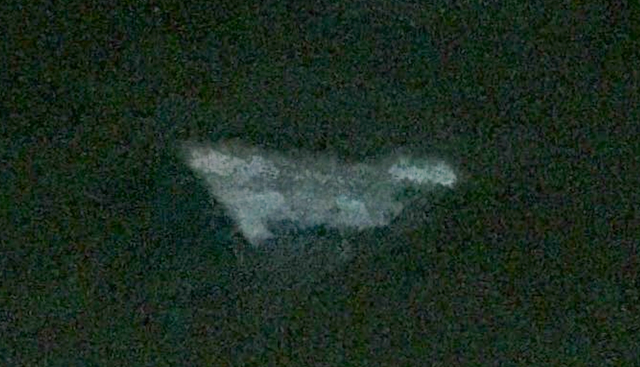
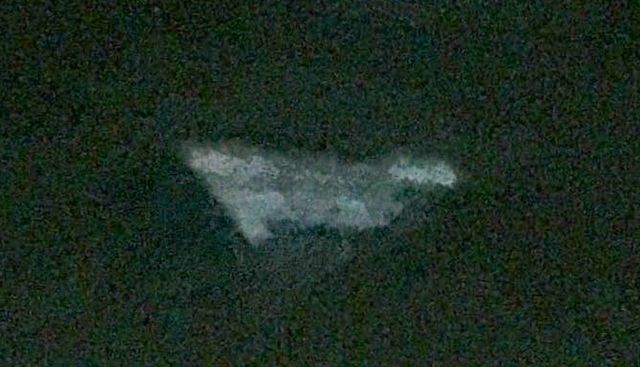
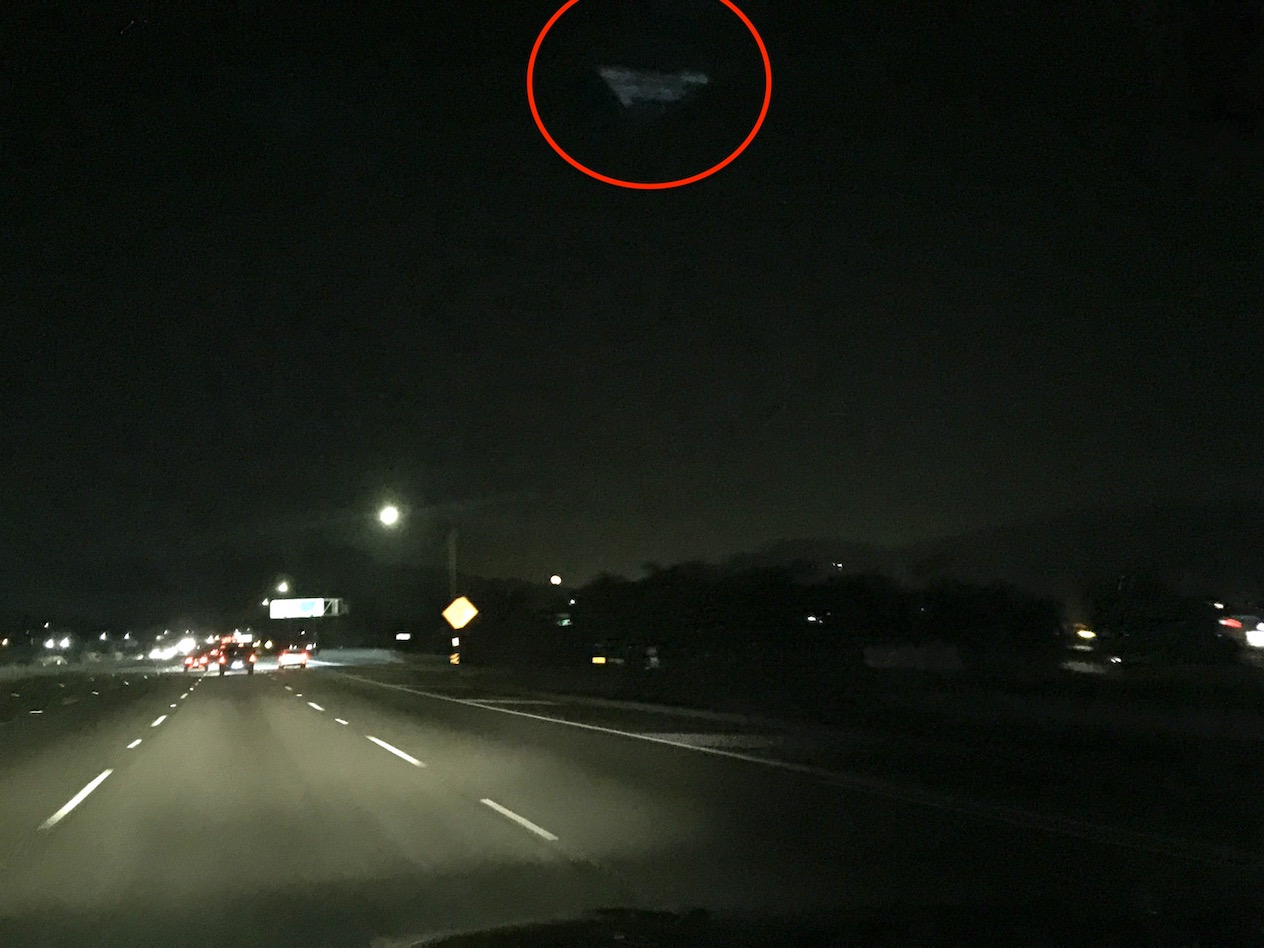


 A glimpse of taxi travel in the future? Plans reveal an...
 Facebook-owned WhatsApp allows Android users to recover...
 High-speed Hyperloop systems that fire passengers between...
 What led to the age of the dinosaurs? Mass extinction 232...








 @MikeWehner