Ontdek de Fascinerende Wereld van UFO's en UAP's: Jouw Bron voor Onthullende Informatie!
Ben jij ook gefascineerd door het onbekende? Wil je meer weten over UFO's en UAP's, niet alleen in België, maar over de hele wereld? Dan ben je op de juiste plek!
België: Het Kloppend Hart van UFO-onderzoek
In België is BUFON (Belgisch UFO-Netwerk) dé autoriteit op het gebied van UFO-onderzoek. Voor betrouwbare en objectieve informatie over deze intrigerende fenomenen, bezoek je zeker onze Facebook-pagina en deze blog. Maar dat is nog niet alles! Ontdek ook het Belgisch UFO-meldpunt en Caelestia, twee organisaties die diepgaand onderzoek verrichten, al zijn ze soms kritisch of sceptisch.
Nederland: Een Schat aan Informatie
Voor onze Nederlandse buren is er de schitterende website www.ufowijzer.nl, beheerd door Paul Harmans. Deze site biedt een schat aan informatie en artikelen die je niet wilt missen!
Internationaal: MUFON - De Wereldwijde Autoriteit
Neem ook een kijkje bij MUFON (Mutual UFO Network Inc.), een gerenommeerde Amerikaanse UFO-vereniging met afdelingen in de VS en wereldwijd. MUFON is toegewijd aan de wetenschappelijke en analytische studie van het UFO-fenomeen, en hun maandelijkse tijdschrift, The MUFON UFO-Journal, is een must-read voor elke UFO-enthousiasteling. Bezoek hun website op www.mufon.com voor meer informatie.
Samenwerking en Toekomstvisie
Sinds 1 februari 2020 is Pieter niet alleen ex-president van BUFON, maar ook de voormalige nationale directeur van MUFON in Vlaanderen en Nederland. Dit creëert een sterke samenwerking met de Franse MUFON Reseau MUFON/EUROP, wat ons in staat stelt om nog meer waardevolle inzichten te delen.
Let op: Nepprofielen en Nieuwe Groeperingen
Pas op voor een nieuwe groepering die zich ook BUFON noemt, maar geen enkele connectie heeft met onze gevestigde organisatie. Hoewel zij de naam geregistreerd hebben, kunnen ze het rijke verleden en de expertise van onze groep niet evenaren. We wensen hen veel succes, maar we blijven de autoriteit in UFO-onderzoek!
Blijf Op De Hoogte!
Wil jij de laatste nieuwtjes over UFO's, ruimtevaart, archeologie, en meer? Volg ons dan en duik samen met ons in de fascinerende wereld van het onbekende! Sluit je aan bij de gemeenschap van nieuwsgierige geesten die net als jij verlangen naar antwoorden en avonturen in de sterren!
Heb je vragen of wil je meer weten? Aarzel dan niet om contact met ons op te nemen! Samen ontrafelen we het mysterie van de lucht en daarbuiten.
Berichten van 1 februari 2019 tot 28 februari 2019
Vanuit verschillende steden in Siberië komen steeds meer meldingen van mensen die zwarte sneeuw zien. Letterlijk dan: het giftige goedje bedekt straten, bomen, auto’s en daken. De foto’s op sociale media spreken boekdelen. Er wordt met een beschuldigende vinger gewezen naar de mijnbouw en de kolencentrales in de buurt. De baas van zo’n bedrijf gaf al toe dat een van zijn filters niet meer werkte.
BFMTV✔@BFMTV
De la neige noire (et toxique) recouvre plusieurs villes en Sibérie
Of dat de enige uitleg is, valt te betwijfelen. Het fenomeen is immers niet nieuw. “In de winter ziet de sneeuw hier sowieso eerder zwart dan wit”, stelt Vladimir Slivyak van milieuorganisatie Ecodefense. “Er zit altijd veel koolstof in de lucht. Maar dat wordt pas zichtbaar als het sneeuwt.”
Deze keer werd er blijkbaar nog een flinke schep bovenop gedaan. De meldingen komen vooral uit Prokopyevsk, Kiselyovsk en Leninsk-Kuznetsky, samen goed voor enkele honderdduizenden inwoners. “Ziet sneeuw in de hel er zo uit?”, klinkt het onder meer op Twitter.
De regio Koezbass staat bekend als een van de grootste steenkoolwinningsgebieden ter wereld. Uit een rapport blijkt dat inwoners er gemiddeld drie à vier jaar minder lang leven dan in Rusland. Ze lopen bovendien bijna dubbel zo veel risico om tuberculose te krijgen.
Absoluut een gevaar voor de gezondheid dus, maar de overheid wil dat potje toch vooral toedekken. Twee maanden geleden werd in de stad Kemerovo zelfs nog een poging ondernomen om de sneeuw wit te... verven.
Khodorkovsky Center@mbk_center
#Russia is a country of outstanding natural beauty and diversity. But the sheer lack of environmental regulations is a devastating effect for residents in #Kuzbass, where last night there was BLACK SNOW.
In juli viel er in Norilsk dan weer ‘bloedregen’ uit de lucht. Even werd gevreesd voor een ramp van Bijbelse proporties, maar al snel bleek ook hier een bedrijf de boosdoener: een stevige storm had het slecht opgeslagen industrieel afval over de stad verspreid. In Yakutia zorgde mysterieus stof er dan weer voor dat de zon drie uur lang niet meer te zien was.
Black snow recently fell in Siberia, thanks to pollution from the many coal factories in the region.
Eerie black snow falls over Siberian region triggering acute pollution concerns from locals
Ghostly pictures of dark snowscapes - which should be pristine white - as blame pointed at failure to filter fumes at coal plant.
Eerie black snow.
Picture: nataseife, Typical Kemerovo
Prosecutors in Kemerovo region are reportedly checking the cause of black snow over three cities in the coalmining region - Prokopyevsk, Kiselyovsk and Leninsk-Kuznetsky.
Pictures shared by locals show alarming black winter scenes with one comment reading: ‘Is this what snow looks like in hell?’
Others have claimed there is a beauty in the bleak snowscapes.
Local media have blamed the gloom on local plants processing coal.
Director general of Prokopyevskaya factory Anatoly Volkov explained to Vesti-KUzbass TV channel that a shield stopped working at his plant protecting the air from coal powder.
Ghostly pictures of dark snowscapes - which should be pristine white - as blame pointed at failure to filter fumes at coal plant.
Pictures: Typical Kemerovo
Deputy governor of Kemerovo region Andrei Panov - in charge of ecology - is to meet local environmentalists to discuss the matter.
He suggested this plant was not the only cause of the problem.
Coal boilers, car exhausts and other coal-burning plants were also to blame.
On social media residents point the finger at other plants too, alleging there is a long-term lack of environmental protection in an region that’s lifeblood is coal.
‘No cleansing systems, all the waste, dust and dirt, coal lay in the area. Our children and us are breathing it. It's just a nightmare,’ said one.
Another commented: ‘The government bans smoking in public. But let us inhale coal dust all together and let it reside in our lungs.’
Black snow falls over Siberian region triggering acute pollution concerns from locals.
Pictures: Nataseife, kamenkseni, Typical Kemerovo
Many on social media concerns about pollution.
The region ‘is just a place for extracting resources’ with the authorities not caring about ‘living conditions (and) culture’, was one angry comment.
’It is not surprising that our people have no taste in art, it simply can't form when you live around ugly sculptures covered with black snow, and slide down a black slide, and see dirty monuments.’
Cars were seen covered in grime but many expressed most concern over young lungs.
‘The future of our children is terrifying.’
Pictures from Kemerovo region by Orlovprklife, Willravilov, Typical Kemerovo
Wetenschappers ontdekken gigantische bergen op 660 kilometer onder onze voeten. Zo hoog zijn ze
Sciencefictionschrijver Jules Verne stelde zich een ondergronds landschap voor in het binnenste van de aarde, waar allerlei verloren prehistorische diersoorten konden worden gevonden.
Hoewel we daar misschien geen dinosaurussen zullen vinden, blijkt uit nieuw onderzoek dat de onderwereld niet overal een kolkende massa gloeiendhete magma is.
Wetenschappers van de Princeton-universiteit en de Chinese Academie van Wetenschappen hebben na een zware aardbeving in Bolivia iets bijzonders ontdekt.
Niet vaak
Op 9 juni 1994 vond in de Amazone een aardbeving plaats met een kracht van 8,2 op de schaal van Richter.
De schokken konden tot in Canada worden gevoeld.
“Zulke zware aardbevingen doen zich niet vaak voor,” reageerde aardwetenschapper Jessica Irving.
Voor het eerst
Het epicentrum van de beving bevond zich op een diepte van maar liefst 650 kilometer.
Dankzij de seismische golven konden de wetenschappers een beeld krijgen van het binnenste van de planeet.
De onderzoekers hebben nu voor het eerst de overgangszone in de mantel op zo’n 660 kilometer diepte in kaart gebracht.
In het niet
Op de plek waar de bovenmantel overgaat in de ondermantel zagen ze een gebergte waarbij zo’n beetje alle bergen op aarde in het niet vallen.
“Op 660 kilometer diepte bevinden zich hogere bergen dat de Rocky Mountains of de Appalachen,” zei hoofdonderzoeker Wenbo Wu.
Afgedaald
Het lijkt erop dat oude tektonische platen zijn afgedaald in de mantel en daar bergen hebben gevormd.
Most schoolchildren learn that the Earth has three (or four) layers: a crust, mantle and core, which is sometimes subdivided into an inner and outer core. That’s not wrong, but it does leave out several other layers that scientists have identified within the Earth, including the transition zone within the mantle.
Princeton seismologist Jessica Irving worked with then-graduate student Wenbo Wu and another collaborator to determine the roughness at the top and bottom of the transition zone, a layer within the mantle, using scattered earthquake waves. They found that the top of the transition zone, a layer located 410 kilometers down, is mostly smooth, but the base of the transition zone, 660 km down, in some places is much rougher than the global surface average. “In other words, stronger topography than the Rocky Mountains or the Appalachians is present at the 660-km boundary,” said Wu.
NOTE: This graphic is not to scale
Image by Kyle McKernan, Office of Communications
In a study published this week in Science, Princeton geophysicists Jessica Irving and Wenbo Wu, in collaboration with Sidao Ni from the Institute of Geodesy and Geophysics in China, used data from an enormous earthquake in Bolivia to find mountains and other topography on the base of the transition zone, a layer 660 kilometers (410 miles) straight down that separates the upper and lower mantle. (Lacking a formal name for this layer, the researchers simply call it “the 660-km boundary.”)
To peer deep into the Earth, scientists use the most powerful waves on the planet, which are generated by massive earthquakes. “You want a big, deep earthquake to get the whole planet to shake,” said Irving, an assistant professor of geosciences.
Big earthquakes are vastly more powerful than small ones — energy increases 30-fold with every step up the Richter scale — and deep earthquakes, “instead of frittering away their energy in the crust, can get the whole mantle going,” Irving said. She gets her best data from earthquakes that are magnitude 7.0 or higher, she said, as the shockwaves they send out in all directions can travel through the core to the other side of the planet — and back again. For this study, the key data came from waves picked up after a magnitude 8.2 earthquake — the second-largest deep earthquake ever recorded — that shook Bolivia in 1994.
“Earthquakes this big don’t come along very often,” she said. “We’re lucky now that we have so many more seismometers than we did even 20 years ago. Seismology is a different field than it was 20 years ago, between instruments and computational resources.”
Seismologists and data scientists use powerful computers, including Princeton’s Tiger supercomputer cluster, to simulate the complicated behavior of scattering waves in the deep Earth.
The technology depends on a fundamental property of waves: their ability to bend and bounce. Just as light waves can bounce (reflect) off a mirror or bend (refract) when passing through a prism, earthquake waves travel straight through homogenous rocks but reflect or refract when they encounter any boundary or roughness.
“We know that almost all objects have surface roughness and therefore scatter light,” said Wu, the lead author on the new paper, who just completed his geosciences Ph.D. and is now a postdoctoral researcher at the California Institute of Technology. “That’s why we can see these objects — the scattering waves carry the information about the surface’s roughness. In this study, we investigated scattered seismic waves traveling inside the Earth to constrain the roughness of the Earth’s 660-km boundary.”
The researchers were surprised by just how rough that boundary is — rougher than the surface layer that we all live on. “In other words, stronger topography than the Rocky Mountains or the Appalachians is present at the 660-km boundary,” said Wu. Their statistical model didn’t allow for precise height determinations, but there’s a chance that these mountains are bigger than anything on the surface of the Earth. The roughness wasn’t equally distributed, either; just as the crust’s surface has smooth ocean floors and massive mountains, the 660-km boundary has rough areas and smooth patches. The researchers also examined a layer 410 kilometers (255 miles) down, at the top of the mid-mantle “transition zone,” and they did not find similar roughness.
“They find that Earth’s deep layers are just as complicated as what we observe at the surface,” said seismologist Christine Houser, an assistant professor at the Tokyo Institute of Technology who was not involved in this research. “To find 2-mile (1-3 km) elevation changes on a boundary that is over 400 miles (660 km) deep using waves that travel through the entire Earth and back is an inspiring feat. … Their findings suggest that as earthquakes occur and seismic instruments become more sophisticated and expand into new areas, we will continue to detect new small-scale signals which reveal new properties of Earth’s layers.”
Seismologist Jessica Irving, an assistant professor of geosciences, sits with two meteorites from Princeton University’s collection that contain iron thought to come from the interiors of planetesimals. Irving uses seismology to investigate the interior of our own planet, recently finding mountain-sized topographic roughness on the 660-km boundary at the base of the mantle’s transition zone.
Photo by Denise Applewhite, Office of Communications
What it means
The presence of roughness on the 660-km boundary has significant implications for understanding how our planet formed and continues to function. That layer divides the mantle, which makes up about 84 percent of the Earth’s volume, into its upper and lower sections. For years, geoscientists have debated just how important that boundary is. In particular, they have investigated how heat travels through the mantle — whether hot rocks are carried smoothly from the core-mantle boundary (almost 2,000 miles down) all the way up to the top of the mantle, or whether that transfer is interrupted at this layer. Some geochemical and mineralogical evidence suggests that the upper and lower mantle are chemically different, which supports the idea that the two sections don’t mix thermally or physically. Other observations suggest no chemical difference between the upper and lower mantle, leading some to argue for what’s called a “well-mixed mantle,” with both the upper and lower mantle participating in the same heat-transfer cycle.
“Our findings provide insight into this question,” said Wu. Their data suggests that both groups might be partially right. The smoother areas of the 660-km boundary could result from more thorough vertical mixing, while the rougher, mountainous areas may have formed where the upper and lower mantle don’t mix as well.
In addition, the roughness the researchers found, which existed at large, moderate and small scales, could theoretically be caused by heat anomalies or chemical heterogeneities. But because of how heat in transported within the mantle, Wu explained, any small-scale thermal anomaly would be smoothed out within a few million years. That leaves only chemical differences to explain the small-scale roughness they found.
What could cause significant chemical differences? The introduction of rocks that used to belong to the crust, now resting quietly in the mantle. Scientists have long debated the fate of the slabs of sea floor that get pushed into the mantle at subduction zones, the collisions happening found all around the Pacific Ocean and elsewhere around the world. Wu and Irving suggest that remnants of these slabs may now be just above or just below the 660-km boundary.
“It’s easy to assume, given we can only detect seismic waves traveling through the Earth in its current state, that seismologists can’t help understand how Earth’s interior has changed over the past 4.5 billion years,” said Irving. “What’s exciting about these results is that they give us new information to understand the fate of ancient tectonic plates which have descended into the mantle, and where ancient mantle material might still reside.”
She added: “Seismology is most exciting when it lets us better understand our planet’s interior in both space and time.”
“Inferring Earth’s discontinuous chemical layering from the 660-kilometer boundary topography,” by Wenbo Wu, Sidao Ni and Jessica Irving, appears in the Feb. 15 issue of the journal Science. The research was supported by the National Basic Research Program of China (973 Program, grant 2014CB845901), the Chinese Academy of Sciences (grant XDB18000000), the National Natural Science Foundation of China (grant 41590854), and the National Science Foundation (grants EAR1644399 and 1736046).
White snow, depending on its depth, is usually considered to be a good thing. Often song-inspiring, kids around the world never fear catching flakes on their tongues or scooping up a cupful and drizzling it with a flavored syrup to make a true snow cone. This type of colored snow, depending on your blood sugar level, is usually considered to be a good thing. Eating any other color of snow, especially the song-inspiring yellow kind, is never a good thing. Hues of pink, red, orange, blue, green and other rainbow shades can be caused by bacteria, algae or chemical spills. What about black snow? Inquiring Siberians want to know after several cities in the Kemerovo Oblast reportedblack snowfall for a number of days last week. Some call it eerie, some call it beautiful … what do the parents of kids carrying cups of it call it?
Before you make an educated and obvious guess, take a look at the pictures collected from social media by The Siberian Times. Finished? Are you ready for a dose of Siberian irony?
Cough, cough.
“The government bans smoking in public. But let us inhale coal dust all together and let it reside in our lungs.”
Fans of government deregulation usually support ending the former and conveniently ignore the latter, but it’s hard to ignore black snow covering the streets, fields, buildings and statues in Prokopyevsk, Kiselyovsk and Leninsk-Kuznetsky that caused one citizen to wonder:
“Is this what snow looks like in hell?”
That assumes hell has frozen over, which is a subject for a different article. It should come as no surprise that these three cities are the heart of Siberia’s coal mining and processing industries. Kuzbass, short for Kuznetsk Basin, is home to 2.6 million people and one of the world’s largest open-pit coal fields. How big is the coal business there? It’s home to an indoor/outdoor coal mining museum which is one of the area’s most popular tourist attractions. Do kids get a free cone of black snow at the end of the tour?
It should also come as no surprise that this black snowfall is being blamed on the coal industry. Director general of Prokopyevskaya factory Anatoly Volkov admitted that a shield that was supposed to catch coal powder before it entered the atmosphere stopped working at his plant. Is that all?
“It’s harder to find white snow than black snow during the winter. There is a lot of coal dust in the air all the time. When snow falls, it just becomes visible. You can’t see it the rest of the year, but it is still there.”
It should come as no surprise that these same government officials are pointing their sooty fingers in every direction but towards themselves. Deputy governor of Kemerovo region Andrei Panov, the official in charge of ecology, says other coal-burning plants, coal boilers in homes and buildings and car exhausts were also to blame. He can’t blame smoking, because that’s banned in public. Sadly, inhaling the coal dust through a filtered cigarette might actually clean it.
Is this the future … or the present?
The mystery of this Siberian black snow of death is not the cause but how the government can keep covering it up (literally and figuratively) while the life expectancy in the area drops, quality of life worsens and residents worry about how it’s affecting their children – and no, they don’t let them eat it. This social media comment sums it up well:
“It is not surprising that our people have no taste in art, it simply can’t form when you live around ugly sculptures covered with black snow, and slide down a black slide, and see dirty monuments. The future of our children is terrifying.”
There are no songs about black snow. Stop making excuses, Siberians … hell has frozen over.
Historians in England have identified a massive new collection of symbols intended to ward off evil spirits and demonic forces. If confirmed, this new set would be England’s largest known set of apotropaic marks or “witch marks,” symbols used to defend against dark supernatural forces. What were these marks guarding, and who put them there?
The new collection of “witch marks” was found in the Creswell Crags, an enclosed limestone cave system on the border of Derbyshire and Nottinghamshire, England. The marks include hundreds of letters, symbols, and strange patterns carved deep into the walls of a large limestone cave which contains a “deep, dark hole” that remains unexplored. The marks were identified by Hayley Clark and Ed Waters of Subterranea Britannica, a research group devoted to the study and investigation of man-made and natural underground places throughout the UK.
A typical witches’ mark.
Clark and Waters were on a guided tour of the Creswell Crags when they spotted the marks hiding in plain sight. The Creswell Heritage Trust which operates the site has for years thought the marks were graffiti made in the Victorian period, but Clark and Waters immediately suspected them to be apotropaic marks. Experts from nearby universities confirmed their suspicions soon after, and have dated the marks to the 17th and 18th centuries.
Alison Fearn, a Leicester university expert on protective marks, told The Guardian that the marks were likely intended as protection against whatever foul things local people believed were at the bottom of this cave system. “It could be fairies, witches, whatever you were fearful of, it was going to be down there,” Learn adds. Whatever these symbols’ creators were afraid of, they were very afraid of it: the cave system appears to be full of thousands of them.
Paul Baker, director at Creswell Crags Museum and Heritage Centre, told The Week that these symbols were likely intended to keep what local people historically viewed as an entrance to the evil underworld. “These marks were either to keep something in, or to keep something out,” says Baker. “I think over a period of time this hole was blamed or associated with a series of events, illnesses or crop failures to the point in which they hoped the marks would protect them.”
While this discovery is being hailed as one of the most significant developments in the study of these “witch marks”and other apotropaic symbols, I’m more interested in what may lie at the bottom of the dark, mysterious hole in Creswell Crags. Did 17th and 18th century people know something we don’t?
'Gateway to hell' discovered in cave with hundreds of 'anti-witch marks' lining walls
The markings - thought to protect from evil spirits - were found on walls and ceilings of the caves at Creswell Crags, on the border between Nottinghamshire and Derbyshire
By Emily Beament
The discovery at Creswell Crags was made by enthusiasts Hayley Clark and Ed Waters from the Subterranea Britannica group
(Image: PA)
An 'unprecedented' number of 'anti witch marks' have been found in caves at a limestone gorge in the Midlands, experts have said.
The marks are said to prevent evil spirits rising from the underworld - and there are hundreds of them carved on walls and ceilings of the caves at Creswell Crags, on the border between Nottinghamshire and Derbyshire.
It's thought to be the largest collection of its kind in one place in the UK.
Witches' marks, or "apotropaic" marks, from the Greek word apotrepein, "to turn away", are most commonly found in historic churches and houses, near doorways, windows and fireplaces, to protect the inhabitants from evil spirits.
The discovery at Creswell Crags was made by enthusiasts Hayley Clark and Ed Waters, from the Subterranea Britannica group, during a cave tour when they noticed the rare protection marks on the walls.
Experts said the number and variety of the marks found in the caves is unprecedented.
There are said to be hundreds of the marks(Image: PA)
The marks were previously thought to have been graffiti from the time before the caves were shut off.
Among the most common are the double VV engravings, thought to reference Mary, Virgin of Virgins, and PM or Pace Maria, while other symbols are believed to be devices for capturing or trapping evil, including diagonal lines, boxes and mazes.
The marks appear to have been added to over time and may indicate a need to strengthen the protection against underworld spirits in response to unexpected sickness, death or poor crops, the experts said.
Until now the largest known quantity of witches' marks in caves in Britain was 57 in Somerset, but the number at Creswell Crags is far higher - with hundreds in one cave alone and marks now found in all the caves at the site.
It was initially thought that the marks were graffiti(Image: PA)
There may even have been more in the past, as the caves were excavated by archaeologists during the 19th century and were widened in the process, potentially accounting for some surfaces featuring no marks.
It is the latest significant discovery at the caves, which provided shelter for Neanderthal and anatomically modern people through a crucial period of human evolution between 130,000 and 10,000 years ago.
The site has been a rich source of archaeological finds and even features Britain's earliest cave art, with 13,000-year-old pictures of birds, deer, bison and horses.
John Charlesworth, heritage facilitator and the tour leader at the time of the discovery of the protective marks, said: "These witches' marks were in plain sight all the time.
"Being present at the moment their true significance was revealed will stay with me forever. This remarkable place continues to give up its secrets."
The marks were found on walls and ceilings in caves(Image: PA)
Academic and TV presenter Professor Ronald Hutton, an authority on folklore, said: "This discovery is significant because it looks like the largest assemblage of protective marks ever found in British caves, and possibly anywhere in Britain.
"This is a suddenly a large new area of research for historians and archaeologists, and so adds appreciatively to the importance of the Crags as a world resource."
The team who look after Creswell Crags are now working with academics and experts from Historic England to better understand the significance and extent of the discovery at the site, which is a scheduled monument.
Duncan Wilson, chief executive of Historic England, said: "Creswell Crags is already of international importance for its Ice Age art and ancient remains.
"To find this huge number of protection marks from the more recent past adds a whole new layer of discovery.
"Even 200 years ago, the English countryside was a very different place; death and disease were everyday companions and evil forces could readily be imagined in the dark.
"We can only speculate on what it was the people of Creswell feared might emerge from the underworld into these caves."
Creswell Crags will be launching tours of the areas containing witches' marks for the first time, from late February.
In late 2018 scientists discovered evidence of a hidden 19-mile-wide craterbelieved to have been made by a meteorite impact underneath Greenland’s Hiawatha Glacier. The discovery was surprising as scientists have long believed that the erosion caused by melting or shifting glacial ice would wipe away all underlying geological features as it scrapes unrelentingly across the Earth’s surface. However, revolutionary new images provided by NASA’s Operation IceBridge has revealed a new wealth of new discoveries about what lies under Greenland and other large ice sheets.
One of those new discoveries was announced this week in a NASA press release stating that glaciologists have found what may be a second impact crater lying under a mile of ice. The new crater measures over 22 miles across and a half a mile deep and if confirmed as an impact crater would be the 22nd largest on Earth.
The discovery was a surprise to NASA glaciologist Joe MacGregor, who says that finding two of these new craters so close together and in such a short period of time is the scientific equivalent of winning the lottery:
I began asking myself ‘Is this another impact crater? Do the underlying data support that idea? Helping identify one large impact crater beneath the ice was already very exciting, but now it looked like there could be two of them. We’ve surveyed the Earth in many different ways, from land, air and space – it’s exciting that discoveries like these are still possible.
Naturally, much more data is needed to definitively identify this new geologic structure as impact crater. If it is confirmed, though, it could turn out to be a discovery which has the potential to rewrite the history of the Earth and humankind as we know it.
I know, I know: every week there’s some new scientific study or archaeological discovery which claims to have the potential to “rewrite history.” These meteorite craters are somewhat different, though, because preliminary data about their ages suggests these impacts may coincide with the Younger Dryas, a period of radical climate change which altered the face of the Earth forever and in some ways led to the creation of modern human civilization. Scientists have long suspected that an unknown meteorite impact may have been the mechanism which brought about this period of sudden cooling and allowed humans to flourish. Could these newfound meteorite craters be related to the Younger Dryas?
Famed whistleblower Bob Lazar has recently been in the news witha new documentaryabout his groundbreaking experiences at Area 51’s highly classified S-4 facility. In his initialTV interviews with George Knappback in 1989, Lazar first discussed element 115 (Moscovium) and how it was used in the propulsion system of the alien craft hidden at the S-4 facility. He said that aliens had supplied 500 pounds (227 kg) for reverse engineering purposes.
In 2014, Lazar did another interview with Knapp where he discussed Element 115 and how it is created both synthetically and naturally through supernova, which is the cataclysmic explosion of a star.
Given recent studies showing that suns regularly undergo micronova or “solar flash” events, we have another process by which a star can produce and eject heavy elements, which are subsequently mined by advanced extraterrestrial civilizations in a cyclic manner.
Lazar further explained in his interviews that bombarding Element 115 with protons leads to it creating Element 116 (Livermorium) which immediately decays and produces antimatter. The antimatter collides with normal particles creating a massive energy burst, which can be used for propulsion. It’s quite likely Element 115 could also be the famed exotic matter that is needed to create traversable wormholes that physicists such as Drs. Kip Thorne and Carl Sagan have speculated, and was the subject of a recently leaked Defense Intelligence Reference Document titled “Traversable Wormholes, Stargates, and Negative Energy” .
What follows is a post from May 21, 2005 where I first discussed Element 115 and how its discovery had provided scientific corroboration for Lazar’s earlier claims.
I wish to focus on some recent scientific advances that vindicate some of the information that Bob Lazar provided from his alleged experiences at S4, and respond to some of his critics. The most important criticism concerned Lazar’s initial claim in 1989 of the existence of a stable form of element 115. The existence of such an element was initially dismissed by some of his critics and became a factor in Lazar not being taken seriously. For example Stanton Friedman wrote in 1997:
“There is no evidence that any 115 has been created anywhere. Based on what we know about all other elements over #100, it would certainly have been radioactive with a short half life, and 500 pounds could not have been accumulated. His scheme sounds good, but makes no real sense especially in view of how difficult it would be to add protons to #115.” (http://www.v-j-enterprises.com/sflazar.html )
However, in February 2004 scientists announced that they were able to reproduce an isotope of 115 in a laboratory, and said that a stable isotope is possible. Dr Joshua Patin, one of the creators of the 115 isotope, confirmed in an interview with Linda Moulton Howe that with sufficient technological advances, the creation of a stable form of 115 is possible:
“[Howe:] Could there be an element 115 isotope that is solid and can be held in the hand? [Dr Patin:] “Some day down the road, I think so. If it’s true that we find something that is long enough lived. To hold something in your hand, you would need a significant quantity of these atoms. We’ve produced four atoms of Element 115 in a month. It would take you don’t have enough time in the rest of the universe to create enough that you could hold in your hand through these same kinds of production methods (that we are using).
That’s why I say a future technology might allow us advances in terms of how much can be produced and the target material, maybe a better way of producing but somewhere down the road, there might be a possibility, sure (see http://www.intalek.com/Index/News/Element115.htm ).
As to how element 115 is formed, Lazar claimed it is formed in massive stars. In an article he wrote:
“[M]any single star solar systems have stars that are so large that our Sun would appear to be a dwarf by comparison. Keeping all this is mind, it should be obvious that a large, single star system, binary star system, or multiple star system would have had more of the prerequisite mass and electromagnetic energy present during their creations.
Scientists have long theorized that there are potential combinations of protons and neutrons which should provide stable elements with atomic numbers being higher than any which appear on our periodic chart, though none of these heavy elements occur naturally on earth.” http://members.fortunecity.com/groom51/interstellartravel.html
Lazar’s idea that element 115 is formed in stars led to more criticism this time by astronomers and physicists that Lazar was incorrect since stars could not produce heavy metals with atomic numbers greater than iron (atomic number 26) in stable stars. This criticism was raised by Dr David Morgan in 1996 whose critique was kindly sent to me by Stanton Friedman.
Dr Morgan says:
“[Lazar] SEEMS to be suggesting that his element 115, the alien fuel source, which doesn’t exist on the Earth, should be present in those solar systems that were more massive at their inception. The implication here is that a star system which condensed out of a more massive primordial cloud should have a greater abundance of heavier elements.
This is quite incorrect. Heavy elements – all elements heavier than iron – are not formed during the normal life cycles of stars. The only time when these nuclei are “cooked” is during the collapse and subsequent explosion of supernovae.
The supernova explosion then spreads heavy elements throughout the galaxy. For this reason, the abundances of heavy elements in any particular star system depend NOT upon the properties of the current star, but on the properties of the nearby stars of the PREVIOUS GENERATION!
Therefore, all of the star systems in a particular region of the galaxy will have essentially the same abundances of heavy elements, regardless of the mass of star. If element 115 is STABLE, as Lazar claims it to be, then it should be created in supernova explosions and it should exist EVERYWHERE!” (http://www.serve.com/mahood/lazar/critiq.htm).
Dr Morgan’s criticism of Lazar is not supported by recent breakthroughs in understanding the formation of heavy metals in stars.
It has been discovered for example that heavy metals with higher atomic numbers than iron (26) can and are found in stars in their normal cycle rather than just through supernova which was the ‘old understanding’.
A NASA astronomer reflecting on this new theory answers a question concerning the existence of heavy metals with higher atomic metals forming in massive stars and answers:
This new theory has been recently confirmed with the recent discovery of three massive stars that have ‘lead’ (atomic number 82) in them:
“The theory has now been supported by data from the three binary, or “double” stars, studied by French and Belgian astronomers using the European Southern Observatory 3.6 metre telescope at La Silla, Chile.
The process by which some stars develop high concentration of heavy metals such as lead towards the end of their lives is called the ‘slow fusion’ or ‘s-process’ and is described as follows:
“The high abundance of Lead in these otherwise low-metallicity stars also provides detailed clues on how the s-process operates inside the AGB stars. When a Carbon-13 nucleus (i.e. a nucleus with 6 protons and 7 neutrons) is hit by a Helium-4 nucleus (2 protons and 2 neutrons), they fuse to form Oxygen-16 (8 protons and 8 neutrons).
In this process – as can be seen by adding the numbers – one neutron is released. It is exactly these surplus neutrons that become the building-blocks for making heavier elements via the s-process.” (http://spaceflightnow.com/news/n0108/30heavy/ – thanks to Stan Friedman for notifying me of this article)
It is estimated that half of all metals heavier than iron are caused by supernova explosions where these are rapidly formed through nuclear fusion (r-process) and the other half in stable stars with low metallicity that slowly build up heavy metals in a more gentle fusion process.
The new understanding of the formation of heavy metals in stars and discovery of large quantities of lead in some stars basically negates Dr Morgan’s criticism and shows that Lazar’s idea that some massive stars in the normal stellar cycle may have element 115 developed in them is a very real possibility.
What are the exopolitical implications of this given Lazar’s claims that extraterrestrials use 115 for their propulsion systems?
If element 115 is naturally formed in the core of some massive stars and element 115 is used in the propulsion system of extraterrestrial races, then it would be fair to assume that some extraterrestrials may have discovered how to mine stars of their heavy elements to use as a propulsion fuel.
Indeed, extraterrestrials with sufficient knowledge in mining suns of element 115 and other elements may be using this as part of an interstellar trade. Indeed, such knowledge and possession of large quantities of 115 and other elements may lead to interstellar conflicts over certain star systems.
Indeed, the Earth’s sun or nearby stars may have heavy elements that may attract extraterrestrial races who seek to mine these precious natural resources. We are now slowly moving to an understanding of how certain star systems might be highly prized by extraterrestrial races that seek to gain control and mine stars of heavy elements such as element 115.
With new advances in physics and astronomy, Bob Lazar’s information so widely dismissed in the early 1990’s appears to have more relevance than ever.
Inlichtingendiensten verdoezelen buitenaards leven op aarde al decennia. Luister naar deze ufoloog
Inlichtingendiensten spannen wereldwijd al decennia samen om buitenaards bezoek te verdoezelen. Dat heeft een ufoloog gezegd tegen zender RT.
Op één punt zijn alle landen het met elkaar eens: contact met aliens moet in de doofpot worden gestopt, aldus Steven Greer, directeur van het Disclosure Project, in het programma SophieCo.
De gepensioneerde traumatoloog zegt te beschikken over documenten die laten zien dat de KGB, de staatsveiligheidsdienst van de voormalige Sovjet-Unie, en de Amerikaanse inlichtingendiensten samenwerkten op dit punt.
Diepste geheim
Vandaag de dag doen onder meer Canada, Groot-Brittannië, Rusland, China en de Verenigde Staten in het diepste geheim onderzoek naar buitenaards leven, stelde dr. Greer.
Volgens hem is er onweerlegbaar bewijs voor het bestaan van buitenaards leven.
Hij verwees naar incidenten in Chili en Mexico, waarbij straaljagerpiloten een UFO probeerden te onderscheppen.
Sneller dan het licht
Greer zei verder dat buitenaardsen beschikken over technologie die hen in staat stelt sneller dan het licht te reizen.
Ze zullen voorkomen dat mensen massavernietigingswapens in de ruimte brengen, aldus de ufoloog.
“Terwijl 43 procent van de Amerikanen gelooft in contact met niet-menselijke wezens, verspreidt de CIA desinformatie om het volk te misleiden,” zei hij.
Enorme belangen
Hij voegde toe dat de overheid de waarheid niet zal onthullen vanwege de enorme belangen die hiermee gemoeid zijn.
Greer legde uit dat er in het geheim al vele ‘beschavingen’ en ‘soorten’ afkomstig uit verschillende zonnestelsels zijn gedocumenteerd.
Recentelijk onthulden Amerikaanse media dat het Pentagon van 2007 tot 2012 jaarlijks zo’n 22 miljoen dollar investeerde in een geheim onderzoek naar UFO’s.
Get ready to celebrate, you Hollow Earthers … science may have given you the proof you’ve been waiting for that there a vast underground land filled with mountains just like on the surface. Well, the mountains part has been validated – you’ll have to keep digging (literally and figuratively) for the rest. A new study using data from one of the most massive earthquakes in recent history found mountains and other topographical features 410 miles deep between the upper and lower mantle. Could there be life forms down there? Does anyone have an original French copy of Jules Verne’s’ Journey to the Center of the Earth (Voyage au centre de la Terre)?
“You want a big, deep earthquake to get the whole planet to shake.”
Well, you do if you’re a geophysicist like Princeton University professor Jessica C. E. Irving who conducts seismological studies of the deep Earth. One such big, deep quake occurred in Bolivia in 1994. Measuring 8.2 on the Richter scale, this was the second-largest deep earthquake ever recorded (fortunately, it occurred in a sparsely populated area), sending shock waves as far north as Canada. However, Irving is more interested in the waves that deep quakes send through the center of the Earth to the other side of the planet. These seismic waves travel straight through homogenous rocks but reflect or refract when they encounter any boundary or roughness.
In particular, the researchers are interested in how the waves pass through the so-called “transition zone”, the boundary at a depth of 660 km (410 miles) in the area between the upper and lower mantle. Wenbo Wu, a fifth year graduate student in geophysics at Princeton and co-author with Irving of the study published in Science, was shocked when they fed the 1994 data into Princeton’s modern Tiger supercomputer cluster to simulate the quake and what its waves encountered.
“In other words, stronger topography than the Rocky Mountains or the Appalachians is present at the 660-km boundary.”
These subsurface mountains may be the same size as their surface counterparts and are separated by smooth area that could be the equivalent of ocean floors. Furthermore, the “rough” mountains only exist at the 660 km bottom boundary – there was nothing like it at the 410 kilometers (255 mile) top boundary of the “transition zone.”
In Verne’s novel, German professor Otto Lidenbrock and his team traveled through volcanic tubes beginning at the Icelandic volcano Snæfellsjökull and surfacing at the Stromboli volcano in southern Italy. Along the way, they found vast caves filled with prehistoric animals, plants, giant insects and a 12-foot-tall giant humanoid creature. They walk, travel on water by raft and are eventually propelled back to the surface by the force of magma and steam.
Jules Verne
A Jules Verne-style trip is obviously still science fiction today, but the discovery of the mountains in the transition zone show that the upper and lower areas of mantle truly are different and are separated by … something. Many geophysicists believe the layers are chemically different and don’t mix thermally or physically, which makes the area in between them a true transition zone. But of what? Could any form of life exist there?
“What’s exciting about these results is that they give us new information to understand the fate of ancient tectonic plates which have descended into the mantle, and where ancient mantle material might still reside. Seismology is most exciting when it lets us better understand our planet’s interior in both space and time.”
So, Irving thinks ancient surface plates sank into the mantle and their ancient materials could still exist down there – 440 miles beneath the surface.
Drillers, Hollow Earthers and sci-fi writers … it’s your move.
It’s that time again: the weekly mystery boom round-up. Unexplained and powerful explosions continued to shake the ground throughout the United States this week with seemingly little attention paid to them by elected officials and law enforcement agencies. What on Earth (or off) could be causing these booms?
On February 5, the Tucson News Nowreported an Earth-rattling explosion felt throughout Tucson. Residents took to social media to share their experience with the booms, which apparently have been baffling residents of southern Arizona for years. Several of the noises have been powerful enough to register on seismograph. The Tucson News Now reached out to the three closest military installations to Tucson, and while Luke Air Force Base confirmed that their exercises produced sonic booms in the area on the same day, the times at which the base reported those booms occurred did not correspond with the times of the noises reported by residents.
Tucson, Arizona
A few days later on February 7, residents along the Wake County-Franklin County line in North Carolina reported sudden and terrifying loud booms. According to CBS 17, many homeowners “walls rattled and floors shook when mysterious blasts occurred nearby.” While the nearby Seymour Johnson Air Force Base was a prime suspect, officials there denied all responsibility for the booms. As in many other modern cases of mystery booms, explosive firearms targets containing tannerite were also suspected, although gun store owners interviewed by CBS 17 say it’s doubtful the small targets could cause such loud booms heard throughout such large areas.
Seymour Johnson AFB is home to the F-15E Strike Eagle Team, 4th Fighter Wing.
On February 11, residents of Davidson, North Carolina were also frightened by a mysterious loud boom. “I swear it like shook our entire house,” Davidson Jacqueline Hawtin told local NBC affiliate WCNC. “I was scared.” Construction sites in the area were suspected, but the similarity with the innumerable other cases over the last several years likely suggests this one will remain unsolved.
The Week in Booms ended on Valentine’s Day as mystery booms were reported in East Louisville, Kentucky. People in several neighborhoods have been hearing booms for months without any official explanation, and some witnesses even report bright flashes of light which coincide with the anomalous sounds. Local news station WLKY reached out to the University of Louisville Geology Department and nearby rock quarries, but so far the booms remain unexplained.
While I personally feel that sonic booms are to blame, that leaves the question of why they seem to be occurring with increasing frequency all throughout the country. If these are sonic booms, what might the Air Force be up to? Is American airspace being threatened by an adversary or unknown force, prompting bases to scramble jets at supersonic speeds? Or are these merely exercises or training drills? If so, again, why the sudden increase in frequency?
So many questions, and so few answers. Will we ever find out what’s behind these unexplained booms? The silence of federal law enforcement agencies is deafening given the frequency and scope of the phenomenon. Who knows something we don’t know, and why aren’t they telling us?
The universe runs according to a perfect plan and consciousness appears to be on going when the brain is shut down are some of the realities they have experienced during their NDE.
Inspirational experiences of Dr. Anthony Cicoria, Dr Sam Parnia, David Bennet and Anne Horne who have had Near Death Experiences and their thoughts and insight into who we are and our place in the universe.
Anne Horne "I was alone in the light and it was surrounding me. The feeling of love was like a bliss,total ecstatic bliss! There was love, joy, knowledge, Wisdom, an incredible feeling of beauty. The light was me, I was the light!"
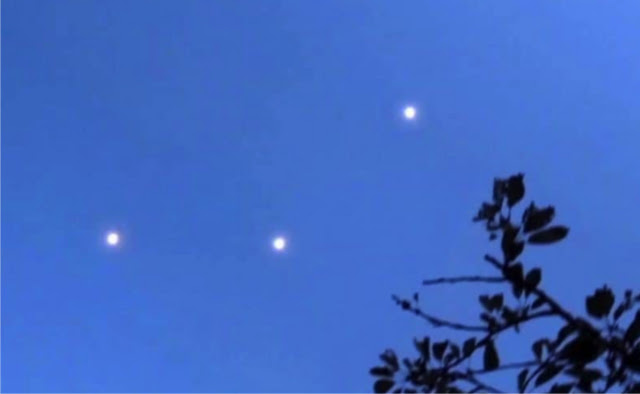
There is no video or photos of this sighting however, I have heard of such UFOs over England, back in 2014 an eyewitness recorded over Cambridge, England of several glowing yellow white orbs during the day. I will include the video below. Even without the photos, this is a serious UFO case that needs further investigation. Scott C. Waring
News states:
DID a UFO fly over Taunton Deane last night? Some residents believe so! At around 6.30pm last night (February 14), the object, which looked like a 'big white golf ball', was seen flying over Taunton. Kevin Midwood, who lives in Hillcommon, says he spotted the object flying over his home. He said: "I wonder if anybody else saw the big white glowing ball shape object that went over Taunton last night? Possible UFO sighting? "I live in Hillcommon and my son lives in Wellington, he spotted it too. "It seemed to come over from Taunton at great speed then it just disappeared." James Vasey, Mr Midwood's son, said: "I was walking from my home in Wellington and a bright yellow object shot across the sky at rapid speed. "It wasn't a meteorite or shooting star as it was flying too low and whatever it was disappeared." Did you see anything flying across the sky yesterday evening? Let us know!
Boven grote delen van Nederland en Vlaanderen hebben tientallen mensen gisteravond iets na negen uur een enorme vuurbal gezien. Niets ongewoons evenwel.
De vuurbal werd door een twitteraar op beeld geschoten. Zie jij het?
Ⓒ TWITTER 675DAAN
Vooral in Nederland maakten vele mensen melding van het spektakel in de lucht.
Verslaggever Martin Drent van RTV Noord zag een ‘ hele heldere, blauwe lichtkogel die naar beneden viel’. ‘Ik dacht eerst dat het vuurwerk was, maar hij was veel hoger. Zag hem in zuidelijke richting. Was wat lager in de lucht, dus niet recht boven Groningen, maar wel heel helder en duidelijk.’
Het weerstation Zoersel bijvoorbeeld verzamelde de waarnemingen op zijn facebookpagina.
Weerman Frank Deboosere kwam snel met een logische verklaring voor het verschijnsel. Het ging om een gewone vallende ster of meteoor.
‘Omdat het een heel helder exemplaar was, en het bovendien ook helder en droog weer was, was deze heel goed zichtbaar. En dat verklaart waarom zoveel mensen gisteravond het verschijnsel gezien hebben.’
Een vallende ster of meteoor is een stofdeeltje uit de ruimte dat de dampkring van de aarde binnenkomt en daar verbrandt. Het botst dan met hoge snelheid tegen moleculen in de lucht. Hierbij komt op zo’n 100 kilometer hoogte energie vrij in de vorm van een lichtflits die we vanaf de grond kunnen zien als een vallende ster.
There is no video or photos of this sighting however, I have heard of such UFOs over England, back in 2014 an eyewitness recorded over Cambridge, England of several glowing yellow white orbs during the day. I will include the video below. Even without the photos, this is a serious UFO case that needs further investigation. Scott C. Waring
News states:
DID a UFO fly over Taunton Deane last night? Some residents believe so! At around 6.30pm last night (February 14), the object, which looked like a 'big white golf ball', was seen flying over Taunton. Kevin Midwood, who lives in Hillcommon, says he spotted the object flying over his home. He said: "I wonder if anybody else saw the big white glowing ball shape object that went over Taunton last night? Possible UFO sighting? "I live in Hillcommon and my son lives in Wellington, he spotted it too. "It seemed to come over from Taunton at great speed then it just disappeared." James Vasey, Mr Midwood's son, said: "I was walking from my home in Wellington and a bright yellow object shot across the sky at rapid speed. "It wasn't a meteorite or shooting star as it was flying too low and whatever it was disappeared." Did you see anything flying across the sky yesterday evening? Let us know!
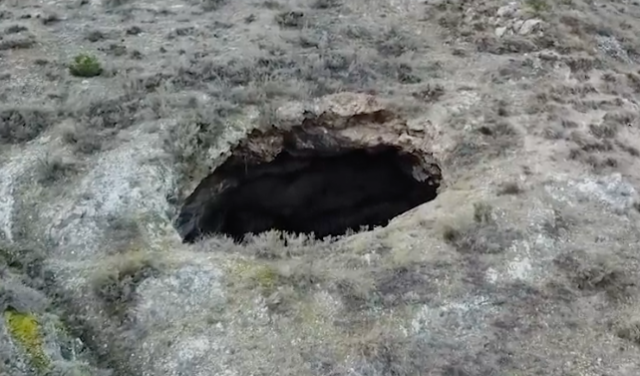
Entrance To Underground Alien Base Found In La Rioja, Spain On Feb 2019, Video, UFO Sighting News.
Date of sighting: February 11, 2019
Location of sighting: Lea, La Rioja, Spain
In Spain some UFO investigators went to look into a hole in the ground that was recently found. The hole led down into a tunnels below the ground. The investigators set up their cameras and that night they were surprised to record some glowing lights in the area, which they believe came from the cave opening. This leads them to believe that this may be an entrance to an underground alien base. That is really possible. If aliens do want to see the light of day, they will have to traverse long underground tunnels but they could of course use their technology to transport to that location, but I think most would go for a walk for the sake of walking and getting some fresh air...seeing the blue sky. Being underground must be rather...closed in and depressing. Yes, I do believe they are 100% correct on this. Its an entrance to an underground base.
Scott C. Waring
Eyewitness states:
It has been too long to explain, you must see it yourselves, we wanted to investigate the area of the alleged extraterrestrial base located in Leza (La Rioja) Spain, but we discovered much more.
WETENSCHAPHet stamcelonderzoek, in-vitrofertilisatie (ivf) en jumbojets zijn volgens Indiase wetenschappers helemaal geen recente ontwikkelingen of uitvindingen. De hindoes zouden duizenden jaren geleden reeds op de hoogte zijn geweest van de recente wetenschappelijke ontwikkelingen.
Tijdens het jaarlijkse Indiase Wetenschapscongres in de deelstaat Punjab, werd er niet gesproken over recente ontwikkelingen in de ruimtevaart of innovatieve technologieën. In plaats daarvan ging het over een vrouw die duizenden jaren geleden honderd kinderen baarde: het bewijs dat de oude Indiase hindoes de hedendaagse voortplantingstechnologieën al onder de knie hadden.
“India was duizenden jaren geleden al bezig met het stamcelonderzoek”, zei Nageshwar Rao, vicerector van de Andhra University in Visakhapatnam, tijdens het congres. Maar omdat stamcelonderzoek en –therapie nog in kinderschoenen staan, is het niet meteen geloofwaardig dat Indiase wetenschappers duizenden jaren geleden al over zulke innovatieve technieken beschikten.
Toch waren de oude Indiërs volgens de vicerector Rao zelfs nog straffer dan dat. Zo beschikten de Indiërs zo’n duizend jaar geleden al over jumbojets en raketten. Verder nog zouden Einstein en Newton de wetten van de zwaartekracht nooit goed begrepen hebben, maar de Indiërs wel.
(Lees verder onder de foto)
AFPIndiase hindoes
Pseudowetenschap
Dergelijke claims zijn een voorbeeld van de religieus geïnspireerde pseudowetenschap, diep geworteld in het hedendaagse hindoenationalisme in India. Sinds het aantreden van minister-president Narendra Modi in 2014 lijkt het zelfs alsof die pseudowetenschap zegeviert.
En terwijl sommige wetenschappers de (lachwekkende) statements spottend navertellen , waarschuwen anderen dat ze een bedreiging vormen voor de wetenschap, het onderwijs en de algemene ontwikkeling in India.
Die bekommernissen lijken terecht, want vorig jaar nog verklaarde de Indiase minister van Hoger Onderwijs Satyapal Singh dat de evolutietheorie van Charles Darwin niet klopt en uit het curriculum van de middelbare scholen geschrapt moet worden.
WETENSCHAPNederlandse wetenschappers hebben een speciale camera ontwikkeld waarmee ze op grote afstand het bestaan van levende planten kunnen aantonen. De techniek moet in de toekomst buitenaards leven kunnen opsporen, meldt de Universiteit Leiden.
Het gaat om een camera met speciale lenzen en ontvangers die de draaiing kan meten in licht dat planten reflecteren. De basisidee is dat moleculen waaruit leven is opgebouwd, het invallende licht gedraaid weerkaatsen. “Dit zogeheten circulair gepolariseerde licht verplaatst zich als een soort kurkentrekker en kan met de juiste apparatuur van grote afstand worden waargenomen”, aldus de universiteit.
De onderzoekers werken nu aan een versie van de zogeheten TreePol die geschikt is voor het Internationaal Ruimtestation ISS of voor een Maanlander.
De afgelopen 20 jaar zijn bijna 4.000 exoplaneten ontdekt, planeten die draaien om andere sterren dan onze Zon. Astrobiologen kijken nu vaak of er water, zuurstof en koolstof aanwezig is.
Maar die methode is volgens de Leidse wetenschappers minder nauwkeurig voor de opsporing van leven. “Als TreePol in de toekomst een buitenaards signaal opvangt, dan duidt dat zeer waarschijnlijk op leven.”
Ongeveer zes jaar geleden schreven wij een aantal artikelen over vreemde oranje bollen in de lucht die zich toen overal vertoonden, ook in ons land.
Daarna werd het een aantal jaren wat rustiger, maar ze zijn nooit weg geweest en nu komen er opnieuw meldingen van oranje bollen in de lucht.
Al jarenlang breken wij ons het hoofd over de merkwaardige oranje of soms ook witte bollen die door mensen overal ter wereld worden waargenomen. Ze maken geen geluid, lijken een soort verkenners te zijn en helemaal niemand heeft tot nu toe een logische verklaring kunnen bedenken voor dit soort objecten.
Nu zijn ze weer terug:
Er komen meldingen vanuit diverse plaatsen in Amerika waar men deze oranje bollen in de lucht ziet. In de video die hierna volgt zie je een mooie opname die is gemaakt op 9 februari in een plaats die Stacy heet in de Amerikaanse staat Californië.
De opname is gemaakt door een vrouw die thuis komt aanrijden en het vreemde verschijnsel in de lucht waarneemt. Het oranje object blijft enige tijd rond het huis hangen en verdwijnt dan plotseling recht de lucht in.
Daarnaast zijn er meldingen uit andere plaatsen waar men ook deze vreemde bollen heeft gezien. In de meeste gevallen zijn er ook meer dan één te zien en vaak worden ze in een soort formatie waargenomen.
Door diverse mensen worden de oranje bollen omschreven als energiebollen, omdat ze als het ware pulseren wanneer je wat verder inzoomt.
"Omstreeks 23.15-23.30 uur gisteravond, thuis, maandag 8 juli, was ik buiten een luchtje aan het scheppen. Naar de lucht kijkend zag ik een onverklaarbaar verschijnsel. Iets wat ik nog nooit eerder zo heb meegemaakt. Ik heb op het punt gestaan om de buren er bij te halen, maar vond het te laat om ze nog te storen.
Het betrof een serie helder verlichte objecten, constant licht, kleur geel-oranje, die zich met grote snelheid in een baan van Noord naar Zuid bewogen. Ik schat enkele tientallen stuks.
Ze bewogen zich met een constante snelheid in een strak formatieverband, dat onderweg qua verband en snelheid niet waarneembaar veranderde. De onderlinge afstand was naar ik schat een tot een paar honderd meter, de hoogte schat ik op 1 tot 2 km. De formatie was niet in lijn maar zat binnen een baan van enkele honderden meters. De eerste objecten waren al aan de Zuidelijke kant uit zicht verdwenen, terwijl nieuwe nog enige tijd vanaf de Noordkant in zicht kwamen.
Het was donker en een heldere, onbewolkte hemel. Het geheel voltrok zich in absolute stilte. Geen enkel motorgeluid was te horen. Het fenomeen duurde minuten lang.
Ik heb geen foto's genomen omdat de geloofwaardigheid ervan even discutabel is als mijn verhaal. Bovendien hechtte ik meer aan de analyse er naar kijkend dan aan de fotografische opname. Gezien de duisternis was er buiten het lichtverschijnsel eigenlijk niets te zien. De doorsnee van de lichtvlek per object was optisch 2-3 centimeter, wat op die hoogte een object van een aantal meters in doorsnede zou moeten betreffen. Een fenomeen als afgeleide van laserbeams lijkt me onmogelijk.
Ik heb verder verschillende mogelijkheden figuurlijk tegen het licht gehouden, maar kan er geen sluitende verklaring voor vinden. Wat er als optie over blijft is raadselachtig. Intussen heb ik de politie gebeld om te kijken of er andere meldingen waren. Bovendien heb ik het Radarcentrum in Nieuw Millingen van de Luchtmacht, dat in het kader van luchtverdediging 7 dagen per week, 24 uur per dag het NL luchtruim bewaakt, gebeld. In beide gevallen was er geen bevestiging van waarnemingen of meldingen hunnerzijds".
En nu we het toch over getuigenverklaringen hebben, hierna volgt er één van een lezer (dank!) naar aanleiding van het artikel dat wij eerder deze week schreven over de Engelse nachtwaker die 40 jaar geleden een mooie opname wist te maken van een sigaarvormige ufo boven een Engelse stad.
Naar aanleiding van dit bericht op jullie site vind ik het noodzakelijk om ook mijn enige alles overtuigende waarneming van een UFO te melden.
Ook in mijn geval is het al enige tijd geleden, ik schat een jaar of 12. Ik stond buiten bij mijn sportvereniging te roken- ik ben inmiddels gestopt :)- en vanuit mijn positie zag ik de vliegtuigen die boven Den Haag hun landing op Schiphol inzetten, duidelijk op hun aanvliegroute. Bij druk verkeer en bij een bepaalde windrichting volgen deze vliegtuigen dezelfde route met een interval van een slechts een aantal minuten.
Het was een heldere avond en donker. Wanneer de vliegtuigen gaan landen wordt het landingslicht aangezet en verschijnen de vliegtuigen zichtbaar boven het Westland als een enkel wit/geel licht. Pas als ze naderen boven Den Haag worden ook de rood en groen knipperende navigatielichten met het blote oog zichtbaar. Als verstokte roker had ik dit al vele malen gezien.
Op de bewuste avond viel mij op dat een “vliegtuig” niet alleen van de gebruikelijk route afweek, maar dat ook het landingslicht feller en witter van kleur was. Ik volgde het licht en verbaasde mij over het feit dat hoewel het bijna boven mij was, de navigatielichten ontbraken. Gek genoeg verbaasde mij het niet dat het licht plotseling tot stilstand kwam precies op een plaats waarmee het mijn zicht op een ster of planeet- ik heb hier geen verstand van- maar die tevoren duidelijk zichtbaar was, blokkeerde.
De felheid en kleur van deze ster of planeet was vergelijkbaar met die van het “vliegtuig”. Na enkele seconden bewegingloos te hebben gehangen, schoot het in een lichtflits met een ongekend hoge snelheid recht omhoog waarna het in een fractie van een seconde in een, wat ik niet anders kan omschrijven dan een soort van naflits, in het heelal verdween.
Ook de ster of planeet was verdwenen waardoor ik op hetzelfde moment concludeerde dat ze op één af andere manier waren samengevoegd. Pas na deze gebeurtenis ben ik me gaan verdiepen in vliegtuigen en UFO's en leerde zodoende van landings- en navigatielichten, aanvliegroutes enz.
Ook speurde ik het internet af naar gelijksoortige meldingen. De beste die hiermee overeenkomt en waar beeldmateriaal van is, bleek de volgende:
Hierbij merk ik op dat bij mijn waarneming het licht niet daalde en nog sneller wegschoot. De reden waarom ik dit pas nu deel, heeft te maken met het gegeven dat de waarnemer in het bovengenoemde artikel spreekt over het gevoel dat hem is bijgebleven dat als hij en ik (wij gewone burgers) dit soort waarnemingen doen, de overheid dit zeker doet en het kennelijk niet nodig vindt om dit te openbaren of redenen heeft dit te verbergen.
Earlier this month, I wrote about an Indiana man’svery mothman Christmas, in which he saw a large flying humanoid near the Prairie Creek reservoir. Like many other big-name paranormal entities—bigfoot, fairies, the greys—where there’s mothman, there’s a heavy dose of high strangeness with him. After the recent mothman reports began circulating, other witnesses have come forward with their experiences in the Great Lakes region, including a man who has allegedly observed glowing orbs of light near the Prairie Creek reservoir for decades.
The witness contacted the Singluar Fortean Society to relate his experience. According to the 51-year-old man, his first experience with the mysterious orbs was in 1981 when he was 12:
“It was a clear summer night sky. I saw an orange/amber colored ball of light about 20 feet above the trees. It started towards me slowly so I ran in and got my mom, when we came back out it was over our trees. The actual size is hard to say but I’d guess three feet across. It was totally silent, and it moved off to the west out of sight behind the trees.”
Since the, the witness says, he has observed this phenomenon approximately 12 times since 1981. The balls of light vary in colors, sometimes appearing as orange and sometimes as white. They also appear to have an intelligence behind them, the man says, as they change color, move around, and seem to react to observers.
Or maybe it’s Indiana’s newest disco sensation lighting up the dance floor: Mothman and the Orbs.
An alleged intelligence becomes sort of a sticky wicket, as evidenced by the man’s most recent experience with the orbs in the summer of 2016:
“I was driving east coming home at night, when I spotted an orb that was orange, and it seemed like a second one right next to it was changing back and forth from red to orange and dimming to dark and back. So I got to my road turning south and I came to a stop to watch. The car window was down, so I fumbled with my phone to hit record…snap, gone.”
It’s the old joke: what if bigfoot is just blurry? The problem is that a lot of these experiences do suggest an intelligence behind them, and an intelligence—especially an intelligence with a trickster inclination—would certainly make it as difficult as possible to take a picture of it. But it also becomes an easy out when you’re just making stuff up. Which, again, fits the M.O. of a trickster intelligence. As I said, a sticky wicket.
If we are to believe—or at least entertain—this witness however, it’s another piece of a large and unbelievably complex phenomenon. According to the Singular Fortean Society, these encounters occurred near a one-acre-large, 2,000-year-old Native American burial ground, on a direct line with Prairie Creek reservoir and Mounds State Park to the west, another ancient ceremonial site with legends of trickster spirits called Pukwudgies.
Most times someone calls anything an Indian burial ground, I can’t roll my eyes hard enough. Nine times out of ten, it’s a pile of rocks left by a 19th century farmer who found he had more than he needed for his stone wall. But there are actual Native American burial and ceremonial grounds. Mounds state park is one of them. However, lines are easy to draw.
These phenomena seem to be necessarily proof proofed. Yet some of the strangeness lies in how similarly the phenomena tend to defy documentation. That similar tendency can be seen as evidence for its existence, or evidence or its nonexistence. Which could be seen as by design. Or it could be seen as an interesting psychological phenomenon. It spirals infinitely. Which could be seen as….nope, that way lies madness.
Maybe the best we can hope for is a continued collection of these stories, both genuine and otherwise, and a more complete (but never finished) picture of our strange world.
Earlier this month, I wrote about an Indiana man’svery mothman Christmas, in which he saw a large flying humanoid near the Prairie Creek reservoir. Like many other big-name paranormal entities—bigfoot, fairies, the greys—where there’s mothman, there’s a heavy dose of high strangeness with him. After the recent mothman reports began circulating, other witnesses have come forward with their experiences in the Great Lakes region, including a man who has allegedly observed glowing orbs of light near the Prairie Creek reservoir for decades.
The witness contacted the Singluar Fortean Society to relatehis experience. According to the 51-year-old man, his first experience with the mysterious orbs was in 1981 when he was 12:
“It was a clear summer night sky. I saw an orange/amber colored ball of light about 20 feet above the trees. It started towards me slowly so I ran in and got my mom, when we came back out it was over our trees. The actual size is hard to say but I’d guess three feet across. It was totally silent, and it moved off to the west out of sight behind the trees.”
Since the, the witness says, he has observed this phenomenon approximately 12 times since 1981. The balls of light vary in colors, sometimes appearing as orange and sometimes as white. They also appear to have an intelligence behind them, the man says, as they change color, move around, and seem to react to observers.
Or maybe it’s Indiana’s newest disco sensation lighting up the dance floor: Mothman and the Orbs.
An alleged intelligence becomes sort of a sticky wicket, as evidenced by the man’s most recent experience with the orbs in the summer of 2016:
“I was driving east coming home at night, when I spotted an orb that was orange, and it seemed like a second one right next to it was changing back and forth from red to orange and dimming to dark and back. So I got to my road turning south and I came to a stop to watch. The car window was down, so I fumbled with my phone to hit record…snap, gone.”
It’s the old joke: what if bigfoot is just blurry? The problem is that a lot of these experiences do suggest an intelligence behind them, and an intelligence—especially anintelligence with a trickster inclination—would certainly make it as difficult as possible to take a picture of it. But it also becomes an easy out when you’re just making stuff up. Which, again, fits the M.O. of a trickster intelligence. As I said, a sticky wicket.
If we are to believe—or at least entertain—this witness however, it’s another piece of a large and unbelievably complex phenomenon. According to the Singular Fortean Society, these encounters occurred near a one-acre-large, 2,000-year-old Native American burial ground, on a direct line with Prairie Creek reservoir and Mounds State Park to the west, another ancient ceremonial site withlegends of trickster spiritscalled Pukwudgies.
Most times someone calls anything an Indian burial ground, I can’t roll my eyes hard enough. Nine times out of ten, it’s a pile of rocks left by a 19th century farmer who found he had more than he needed for his stone wall. But there are actual Native American burial and ceremonial grounds. Mounds state park is one of them. However, lines are easy to draw.
These phenomena seem to be necessarily proof proofed. Yet some of the strangeness lies in how similarly the phenomena tend to defy documentation. That similar tendency can be seen as evidence for its existence, or evidence or its nonexistence. Which could be seen as by design. Or it could be seen as an interesting psychological phenomenon. It spirals infinitely. Which could be seen as….nope, that way lies madness.
Maybe the best we can hope for is a continued collection of these stories, both genuine and otherwise, and a more complete (but never finished) picture of our strange world.
It’s not every day that a Pulitzer-prize-winning journalist says he got to take a ride on a flying saucer… but that’s precisely what happened to Hal Boyle, a syndicated columnist who wrote articles that appeared in more than 700 newspapers during World War II.
Well, that’s sort of what happened, but we’ll get to all that.
A journalist who, during his three-decade tenure with the Associated Press wrote more than 7,500 columns, Boyle’s career began in Kansas City in 1928 as a copy boy with the AP Bureau. He was serious enough to pursue his journalistic talent, and enrolled at the Junior College of Kansas City, later heading on to the University of Missouri, where he completed his studies in journalism. Shortly thereafter, Boyle began working for the Associated Press out of Saint Louis, and then transferred to New York in 1936.
Boyle continued his correspondence throughout the Second World War, for which he received his Pulitzer Prize in May 1945. It was not the last award he would receive for his reporting: Boyle went on to receive the Omar Bradley Award for his coverage of the Korean War.
Hal Boyle in a press photo during the war years.
However, it was shortly after World War II that the “flying saucer” craze erupted onto the American scene, with Kenneth Arnold’s now-legendary report of seeing a group of objects dodging and weaving between mountain peaks near Mount Rainier in June of that year.
A story as juicy as this was hardly anything Boyle could resist.
Tuesday, July 8, 1947, was an important day in the history of flying saucers, to say the least. That morning, the mysterious discs had been front page news in a number of American papers, although one particular story–that of an alleged saucer wreckage recovery in New Mexico that appeared in the Roswell Daily Record–would ultimately stand out among them.
However, that same day the Associated Press carried another story that, in many ways, even rivaled the curiosity of the Roswell story. It was now Hal Boyle who was reporting on the saucers, and not just sounding off about them in his syndicated column. Having reportedly been missing for two days, Boyle now claimed he had been aboard one of these remarkable aircraft.
“Our Hal Boyle, returning from a two-day absence, insists he is the first man to come back alive from a trip on a ‘flying saucer’,” an Editor’s Note read at the beginning of Boyle’s regularly syndicated column.
Here, it would only do Boyle’s story justice to hear how it all went down in his own words:
“Here I am in the middle of [a flying saucer], zooming around the American landscape like a boomerang. These things aren’t discs or saucers at all. They’re built like a cowboy hat seven-stories tall.
“The reason you folks down below have been disagreeing about the size is you haven’t seen the whole thing. All you have seen is the reflection of the sides where patches of the infra-invisible paint were burned off these huge space ships as they passed too close to the sun on their way here from Mars.
“Yes. Mars! I am a prisoner aboard a 1947 model “flying saucer” from another planet.”
Boyle’s fantastical adventure began in, of all places, the New York Public Library (was this a possible nod to Forteans in his readership? After all, this was the very same locale where Charles Hoy Fort spent his long hours looking for clippings that smacked the face of modern science, as he saw it, offering plausible proof of anomalies in our midst).
In another of Boyle’s dispatches, he detailed just how it came to pass that he would end up aboard a flying saucer:
I left the New York Public Library at dusk the other day and dropped into a quiet bar to wash down a warm vitamin pill with a cold bottle of beer.
Finishing it, I turned to a silent figure sitting next me—the only other customer at the bar—and all but fainted. I saw a thing some eight feet tall, covered with thick green hair, with one eye a hard-boiled egg in the center of his forehead, and no visible mouth at all. He was naked, his hands were three-clawed and big enough for a Brooklyn center fielder.
Up until this point, it still seems plausible at least that Boyle had merely run into a New York regular… albeit one who had perhaps done a few extra laps in the Hudson, and bathed in the wastewater microbes dwelling there. However, what transpires next removes all doubt that Boyle’s new acquaintance was of the extraterrestrial variety:
The Green man’s yolk – yellow eye burned menacing red. One hand twisted one of a series of knobs on his chest marked “slang, American,” and noiseless words drifted to me:
“Scram, Mac. But take along some beer. You’re going on a long ride.”
Then I found myself lifted and tossed sprawling. There was the sound of a door closing and a sense of lifting rapidly into space. I scrambled to my feet and looked out the window—its infra-invisible paint is only invisible when you look at it from the outside. Manhattan was falling away beneath us like a toy town. “Well, how do you like your first ride in a flying saucer, Orson Welles?” leered the green man. “You’re on the way to a place where there are more Martians than there ever were in New Jersey.”
“You may take his story or leave it,” Boyle’s editors wrote of his alleged ordeal. “But we are turning down his expense account for $2,880 — which is what five cents a mile comes to after 48 hours in his 1,200-mile-an-hour conveyance.”
Whether you’re a hopeful skeptic or a doubter among believers, it would be awfully hard not to see the humor in a yarn of this magnitude.
Of course, while Boyle was merely poking fun at the flying saucer stories, this no doubt was met with distaste by the hopeful, early UFOlogists trying to see past the novelty of these reports, and discern whether a genuine mystery might have been present. However, there are a few interesting takeaways from our look at Boyle’s once famous, and now nearly-forgotten flying saucer “hoax” (I use quotes here since, while Boyle’s story was not true, he no doubt expected his readership would know this, and hence had not intended to mislead anyone).
Of course, there is some debate as to when, precisely, the flying saucers (which, being in the pre-Blue Book era, were not yet called UFOs at this time) began to be almost explicitly associated with the idea of extraterrestrials. Many suggest that this wasn’t truly the case until after publication of a lengthy article by Donald Keyhoe in True Magazine in 1950, where he laid out the case that an extraterrestrial source seemed most likely.
However, as with Boyle’s saucer “hoax,” we see that even before the public had time to speculate about what had (or hadn’t) happened at Roswell, New Mexico, in early July, people were insinuating that the occupants might be extraterrestrials right off the bat. In fact, even prior to Boyle’s spoof column, a June 30th, 1947 UPI article made reference to a silver-ball-shaped aircraft observed over Lexington, Kentucky, as being “Martian-like.” Indeed, it seems that insinuations about extraterrestrials were indeed taking off with the saucers almost in tandem with Arnold’s initial report, and subsequent reports of similar things in the days that followed.
Legendary newspaperman though he was, many today are probably unaware of Hal Boyle, apart from those still alive who may have read his columns decades ago (many of which were later anthologized and published as books). In his prime, however, Boyle was one of the most prolific and revered writers in American journalism, which makes it all the more interesting that he was, essentially, also one of the very first major media personalities to poke fun at UFOs, and even speculate about their “extraterrestrial” nature, in the early days of the 1947 saucer craze.
Over the years I have written a number of books on the Men in Black phenomenon. They include The Real Men in Black, On the Trail of the Saucer Spies, and The Black Diary. If there’s one thing we can say about the MIB in the real world, it’s that they are nothing like their Hollywood counterparts. I am, of course, talking about Will Smith and Tommy Lee Jones. And, Chris Hemsworth and Tessa Thompson, who will be starring in this year’sMen in Black: International movie. The Men in Black of the movies are portrayed as agents of a secret group that defends the world from hostile aliens. As for the MIB of Ufology, well, they are quite another thing altogether. People describe them as looking pale, emaciated, sometimes extremely tall and with long, spidery fingers. Bizarrely, they are occasionally described as wearing bad wings and even make-up. Their goal: to silence those who dare to dig into the UFO subject, whether witnesses to UFO activity or researchers of the phenomenon. Then there’s the matter of who or what the MIB really are.
Ironically, the least likely explanation for the presence of the Men in Black is that they are “secret agents” of the CIA, the NSA, the Pentagon or…well…the list goes on. Government people they most definitely are not. There are multiple different theories to try and understand what the MIB are and who (or what) they represent. Some researchers have suggested they are time-travelers from a distant future. Others maintain they have demonic origins. There is also the possibility that the Men in Black are biological robots, dispatched to silence those who get too close to the ufological truth. There’s another scenario that may explain a significant part of the phenomenon. It’s a theory that Thomas E. Bearden detailed in his 1980 book, Excalibur Briefing.
In his book, Bearden focused deeply and extensively on the matter of Tulpas, about which Tulpa.info state the following: “A tulpa is an entity created in the mind, acting independently of, and parallel to your own consciousness. They are able to think, and have their own free will, emotions, and memories. In short, a tulpa is like a sentient person living in your head, separate from you. It’s currently unproven whether or not tulpas are truly sentient, but in this community, we treat them as such. It takes time for a tulpa to develop a convincing and complex personality; as they grow older, your attention and their life experiences will shape them into a person with their own hopes, dreams and beliefs.”
Psychonaut Wiki provide the following: “Tulpas are seemingly sentient, autonomous mental companions subjectively experienced by the psychonaut as a separate being with their own agency, emotions, preferences, thoughts, and character. They can be likened to a separate mental consciousness, existing alongside the psychonaut. Tulpas can be considered as a type of autonomous entity distinguished by their persistence and continuity over time.”
All of which brings us back to Tom Bearden. In Excalibur Briefing, he states this: “The kindling of virtual state tulpoidal forms into the zeroth bioframe of a physical reality (materialization) can result in the materialization of living, breathing, functioning forms. There is essentially no limit on the format that may be obtained. Sasquatch, Nessie, fairies, demons, angels, mothmen, skunkmen, yeti, kangaroos, etc. are just a small sampling.” On this same matter of Tulpas, Bearden addresses the MIB in this fashion. He says: “The men-in-black syndrome is based on our own unconscious tuning; since each of us has some unpleasantness in the unconscious, sometimes the tuned-in-men-in-black can be very nasty indeed.”
The question of who built Stonehenge and for what purpose remains one of the greatest unsolved mysteries in archaeology. Researchers continue to study the mysterious ancient megalith and publish sometimes contradictory claims about the structures. Were the stones brought from far away using a sophisticated transportation system, or were the stones already in place? Was Stonehenge a party spot used for orgies and fertility rituals, or could it have been the site of human sacrifices?
So many questions, and unfortunately, despite the many studies conducted on the stones, we’re not too closer to answering any of them than we were decades ago. However, a new study published this week may help place Stonehenge in context with other known ancient structures and may offer a clue as to what inspired the mysterious stone monument. The latest new theory to be put forward about Stonehenge and other ancient megaliths claims that an unknown ancient culture from northwest France may have started building these structures over 7,000 years ago and inspired the entire practice of building these stones throughout Europe.
The new “Out-of-France” theory was developed by Bettina Schulz Paulsson of the University of Gothenburg in Sweden after a 10-year study of monument sites throughout Europe. Paulsson and her colleagues conducted exhaustive radiocarbon dating of over 2,000 of these structures and found that they appeared to have been built in three successive phases, the first of which seems to have originated in France.
According to Paulsson’s new publication in the Proceedings of the National Academy of Sciences of the United States of America, the practice of building stone megalithic monuments likely spread along sea routes throughout the Mediterranean and Atlantic coast of Europe. Paulsson argues that the gateway-like construction of these monuments along with their chronological distribution seems to imply that these structures were involved in passage grave burial rites:
Their distribution emphasizes the maritime linkage of these societies and a diffusion of the passage grave tradition along the seaway. The passage graves mark a radical change of burial rites, along with other economic and social changes in Europe. […] These are exceptional grave forms for this period in their respective regions, at a time when subterranean cists, pit burials and hypogea (dug-out subterranean burial chambers) were still the most common burial rites.
If this theory is confirmed with further research, Paulsson notes that it could radically change our conception of Stonehenge and other megaliths:
The megalithic movements must have been powerful to spread with such rapidity at the different phases, and the maritime skills, knowledge, and technology of these societies must have been much more developed than hitherto presumed.
Were Stonehenge and other monuments used as elaborate grave sites which reflected the maritime heritage of their creators? How did the knowledge of megalith construction spread so rapidly throughout Europe? Like all things Stonehenge, we’ll likely never know for sure. Hard data like radiocarbon dates are one thing, but trying to understand the meaning of ancient monuments from our modern perspective will always be problematic. How can we possibly hope to understand what ancient people were thinking from studying a pile of rocks? Ultimately, any theories about Stonehenge will reflect our thinking about the monument, not necessarily its creators’.
Cube UFO Shaped Object Exits Earths Sun. February 9, 2019
Date of sighting: February 9, 2019
Location of sighting: Earths Sun
Source: NASA
Now another cube was caught exiting our sun last week. I say exit, because as you see from the photo gif below...there is a big ejection of solar material shooting out the the sun that is tightly focused on the other end. Look carefully and you will see a cube inside the material coming out of the sun. The cube is not on top of the material, but rather...inside of it. You can only see about 80% of the cube and the other 20% is under the solar material. That is evidence that this UFO cube is a 3D object and not a glitch in the photo. This UFO has been seen entering and exiting our sun, sometimes 100% visible and other times its 3D and blended into the solar surface of the sun as it entered or exited. Its not a rare occurrence either. It happens several times a week or more. Its hard to believe NASA has managed to hide such information about giant alien ships using our sun...and yet, they pull it off. At a size of several times bigger than earth, the only reason its managed to stay a secret so long is that its just so far away from Earth.
A glaciologist has discovered a possible 2nd impact crater buried under more than a mile of ice in northwest Greenland.
Scientists think that a newly-discovered bowl-shaped feature buried under more than a mile of ice in northwest Greenland might be another impact crater.
This followsthe finding, announced in November 2018, of a 19-mile (30.5-km) wide crater beneath Hiawatha Glacier – the first meteorite impact crater ever discovered under Earth’s ice sheets.
Though the newly found impact sites in northwest Greenland are only 114 miles (183.4 km) apart, at present they do not appear to have formed at the same time.
If the second crater, which has a width of over 22 miles (35.4 km), is ultimately confirmed as the result of a meteorite impact, it will be the 22nd largest impact crater found on Earth.
Joe MacGregor is a glaciologist with NASA’s Goddard Space Flight Center in Greenbelt, Maryland, who participated in both findings. MacGregor reported the discovery of this second possible crater in Geophysical Research Letters on February 11, 2019. He told NBC News:
Once we knew from Hiawatha that there could be craters under ice sheets, it was quite easy to find the next one using an ensemble of publicly available NASA data.
Before the discovery of the Hiawatha impact crater, scientists generally assumed that most evidence of past impacts in Greenland and Antarctica would have been wiped away by unrelenting erosion by the overlying ice.
Following the finding of that first crater, MacGregor checked topographic maps of the rock beneath Greenland’s ice for signs of other craters. Using satellite imagery of the ice surface, he noticed a circular pattern some 114 miles (183.4 km) to the southeast of Hiawatha Glacier. He said:
I began asking myself ‘Is this another impact crater? Do the underlying data support that idea?’ Helping identify one large impact crater beneath the ice was already very exciting, but now it looked like there could be two of them.
To confirm his suspicion, MacGregor studied the raw radar images that are used to map the topography of the bedrock beneath the ice. What he saw under the ice were several distinctive features of a complex impact crater: a flat, bowl-shaped depression in the bedrock that was surrounded by an elevated rim and centrally located peaks, which form when the crater floor equilibrates (bounces back up) post-impact. Though the structure isn’t as clearly circular as the Hiawatha crater, MacGregor estimated the second crater’s diameter at 22.7 miles (36.5 km). MacGregor said:
The only other circular structure that might approach this size would be a collapsed volcanic caldera. But the areas of known volcanic activity in Greenland are several hundred miles away.
By analyzing ice layers and rates of erosion, the researchers suggest that although the two newly-found impact craters in northwest Greenland are only 114 miles (183.4 km) apart, they were not formed at the same time. Read more here about how the team made this determination. MacGregor said:
On the whole, the evidence we’ve assembled indicates that this new structure is very likely an impact crater, but presently it looks unlikely to be a twin with Hiawatha.
The structures come in various shapes and sizes, including one that curves off into the horizon (shown here). Credit: Copyright Nick Brooks and Joanne Clarke
Archaeologists Are Not Sure What Many of Them Were Used For
by Owen Jarus Live Science Contributor
Hundreds of stone structures dating back thousands of years have been discovered in the Western Sahara, a territory in Africa little explored by archaeologists.
The structures seem to come in all sizes and shapes, and archaeologists aren’t sure what many of then were used for or when they were created, archaeologists report in the book “The Archaeology of Western Sahara: A Synthesis of Fieldwork, 2002 to 2009” (Oxbow Books, 2018).
About 75 percent of the Western Saharan territory, including most of the coastline, is controlled by Morocco, while 25 percent is controlled by the Sahrawi Arab Democratic Republic. Before 1991, the two governments were in a state of war. [See Photos of the Stone Structures in Western Sahara]
Between 2002 and 2009, archaeologists worked in the field surveying the landscape and doing a small amount of excavationin the part of Western Sahara that is controlled by the Sahrawi Arab Democratic Republic. They also investigated satellite images on Google Earth, they wrote in the book.
“Due to its history of conflict, detailed archaeological and palaeoenvironmental research in Western Sahara has been extremely limited,” wrote Joanne Clarke, a senior lecturer at the University of East Anglia, and Nick Brooks, an independent researcher.
“The archaeological map of Western Sahara remains literally and figuratively almost blank as far as the wider international archaeological research community is concerned, particularly away from the Atlantic coast,” wrote Clarke and Brooks, noting that people living in the area know of the stone structures, and some work has been done by Spanish researchers on rock art in Western Sahara.
Mysterious structures
The stone structures are designed in a wide variety of ways. Some are shaped like crescents, others form circles, some are in straight lines, some in rectangular shapes that look like a platform; some structures consist of rocks that have been piled up into a heap. And some of the structures use a combination of these designs. For instance, one structure has a mix of straight lines, stone circles, a platform and rock piles that altogether form a complex about 2,066 feet (630 meters) long, the archaeologists noted in the book.
Though the archaeologists are unsure of the purpose of many of the structures, they said some of them may mark the location of graves. Little excavation has been done on the structures, and archaeologists have found few artifacts that can be dated using a radiocarbon method. Among the few excavated sites are two “tumuli” (heaps of rock) that contain human burials dating back around 1,500 years.
Research suggests that Western Sahara was once a wetter place that could sustain more animal life than it does today. Archaeologists documented rock art showing images of cattle, giraffe, oryx and Barbary sheep while environmental researchers found evidence for lakes and other water sources that dried up thousands of years ago.
Security problems
At present, security problems in the region mean that fieldwork has stopped, Clarke and Brooks told Live Science. The terrorist group al-Qaeda in the Islamic Maghreb operates in the desert regions near Western Sahara, and in 2013 they kidnapped two Spanish aid workers at a refugee camp in Tindouf, Algeria, just across the border from Western Sahara.
While the Sahrawi people and Sahrawi Arab Democratic Republic strongly oppose the terrorist group, it’s extremely difficult for authorities to effectively patrol the vast desert areas where the stone structures are located, Clarke and Brooks said. This means archaeologists can’t work there safely right now. This problem is not unique to Western Sahara, as the security risks posed by terrorist and extremist groups in the region mean that archaeologists can’t work in much of North Africa right now, they said.
Cheetahs are the fastest animals on land, and they owe their speed in part to thedesign of their skeletons— the tibia and fibula in their legs are fused, helping them maintain stability while sprinting after prey.
However, this unique characteristic also prevents cheetahs from being effective climbers like many other cats. If it could somehow separate its leg bones at will, the animal would be far more formidable.
Alas, the cheetah is stuck with the skeleton evolution gave it. But a new robot out of Colorado State University (CSU) doesn’t suffer from the same limitation. It can melt and solidify its bones on the fly — changing its skeleton to best suit whatever task it currently faces.
Mighty Morphing Robo Joints
In a new paper published in the journal IEEE Robotics & Automation Letters, the CSU team describes how it gave its robot the ability to adapt to different challenges by equipping it with “shape morphing joints.”
Each of these joints starts out rigid, but when heated up with electricity, it becomes pliable within about 10 seconds. Stop the flow of electricity, and the joint once again becomes rigid.
In a video, the researchers demonstrate how their robot can use its SMJs to lower itself enough to slink below an obstacle it would otherwise hit.
Next Steps
The CSU team plans to work on building a robot capable of more than just one type of locomotion next — a bot that can both swim and walk, for example, or one that can walk and fly. However, it already sees a number of potential uses for its technology as is.
“Our morphing technique is ideal for robots that are small but need to perform different tasks or adapt to different environments” researcher Jianguo Zhao toldIEEE Spectrum. “Those robots can be used for a wide range of applications including environmental monitoring, military surveillance, as well as search and rescue in disaster areas.”
The latest episode ofProject Blue Bookreturns to the possibility that some UFOs may be alien spacecraft, although it seems the U.S. Air Force is convinced its the Russians. Either way, Hynek decides to team up with the person he trusts the most to figure it out, his wife, Mimi.
This episode starts with military personnel setting up a fake neighborhood setting in the Nevada desert. It is an area used for testing nuclear bombs. Suddenly, an alarm blasts and a voice begins a countdown for launch. This strikes terror into the hearts of the men, and they scramble to get out of there. Luckily, when the clock hits zero nothing happens. In the control room, the technicians don’t know why the launch sequence began. As the men at the test site get on their knees and pray, strange green lights are seen zipping around the sky. We are left believing these “green fireballs” must have had something to do with the mishap.
Back home, Hynek is working hard on a camera system that will track motion in the sky so he can prove the green fireballs are meteorites. Fuller’s death still frazzles him. Mimi is concerned about him working so hard and not spending time with the family. When she presses him on it, he yells at her that he cannot share with her what he's working on and that what he is doing is important. Before he can adequately apologize for yelling, he has to leave to Nevada with Quinn to investigate the green fireballs using his new system.
Meanwhile, Mimi is left concerned about Hynek’s work with Project Blue Book. Her friend Susie (the Russian spy), suggests Mimi has the right to look through her husband's papers. They go to Hynek’s den, and Susie happens to find a set of keys. They use them to get into a locked box that has a journal in it. It is Hynek’s Project Blue Book journal. Mimi discovers Hyenk saw Fuller commit suicide and had tried to stop him.
In Nevada, Hyenk and Quinn see the light and Hynek eventually does catch them on his camera equipment. It also turns out Hynek had gone over General Harding and Valentine’s heads and got approval for his camera system from the secretary of defense. Harding and Valentine tell Quinn they did not approve Hynek’s request because the green fireballs are advanced Russian technology used to spy on American nuclear testing. They do not want the public to know about this.
Hynek runs into the man in black again after he has visions of Fuller and gets confused and dizzy. It is not the first time this has happened. Hynek asks the man in black why he is there and is told Hynek sees him when he needs to and vice versa. Later, while meeting in a church, the man in black gives Hynek a set of keys.
Hynek then goes to Valentine and Harding, who are not happy he went around them and hands them a report concluding that the green fireballs are just meteorites. They are satisfied with the report, but Harding threatens Hynek he should never go over their heads again. While talking with the man in black, Hynek admitted the green fireballs do not appear to be meteorites. He speculates they could be advanced human technology, but feels they are too advanced for that.
After meeting with the generals, Hynek unlocks the gate to a secured area of the Nevada base. He goes down into a warehouse, reminiscent of the one at the end of Raiders of the Lost Ark. He finds a row of small boxes, similar to a safe deposit box and opens one with another key. Inside is an alien looking artifact. It looks kind of like a blocky wand. Back home, he shows it to Mimi and tells her he is going to share everything with her from now on and that they will work together.
What I like about the way the series handles the UFO phenomenon is that it offers up several possibilities. Although it is very loosely based on real Project Blue Book cases, it keeps the audience guessing. Valentine and Harding seem to believe the Russians are to blame for most UFO incidents, even the green fireballs. However, in this episode we find Hynek moving closer to the idea it might be more complicated than that. It is also hinted that Hynek may be a victim of mind control. The show does keep me wanting to see more, and apparently, I am not the only one. History recently announced Project Blue Book is getting a second season.
There are some great real UFO cases referenced in this episode. The green fireballs were a real phenomenon occurring in the southwest in 1950, especially New Mexico. They were seen so often that the U.S. Air Force set up a special study to investigate them called Project Twinkle. The conclusion to the investigation was that the fireballs were misidentifications of human-made objects, meteorites or other natural phenomena. However, not everyone agreed.
In 1952, Life Magazine featured a story on UFOs that gained a lot of attention. In fact, in his book, Project Blue Book chief Edward Ruppelt claims the article gained so much attention that it helped influence the creation of Project Blue Book. The article featured cases from previous UFO investigations, including Project Sign, which was often referred to as Project Saucer by the media. It also included information about Project Twinkle.
One of the experts quoted in the article was Dr. Lincoln La Paz, who Life described as a “mathematician, astronomer and director of the Institute of Meteoritics at the University of New Mexico.” He investigated the green fireballs.
“[Dr. LaPaz] points out that normal fireballs do not appear green, they fall in the trajectory forced on them by gravity, are generally noisy as a freight train, and leave meteorites where they hit,” according to Life. “The green New Mexican species does none of these things. Neither do the green fireballs appear to be electrostatic phenomena—they move too regularly and too fast.”
Although the Life article only mentions La Paz in the section regarding the green fireballs, what readers did not know was La Paz, and his family witnessed another UFO sighting referenced in the article. The article reviews several UFO incidents and “Incident 2” was witnessed by “one of the U.S.'s top astronomers.”
This astronomer, who turned out to be La Paz, chose to remain anonymous regarding the sighting. He described what he saw as a “sharp and firm regular outline, namely one of a smooth elliptical character much harder and sharper than the edges of the cloudlets... The hue of the luminous object was somewhat less white than the light of Jupiter in a dark sky, not aluminum or silver-colored... The object clearly exhibited a sort of wobbling motion... This wobbling motion served to set off the object as a rigid, if not solid body."
Another UFO incident indirectly referenced in the show was from the testimony of Robert Salas, who was a missile launch officer in March 1967 when UFOs were spotted above ground, while in the underground missile control bunker, nuclear-armed ICBMs were going offline. According to researchers, UFOs are often seen around nuclear facilities. Similar reports have also come from France and Russia.
The U in UFO stands for unidentified. In some of these cases, whatever was seen remains unidentified. It is very entertaining to watch Hynek try to discover the answer to the UFO mystery. However, he seems to be realizing there may be more than one answer. The 1952 Life article appeared to conclude that UFOs pose a real problem and that solutions may be far off. Will Hynek discover more answers in season 1, or will we have to wait for season 2?
Life concluded, “Before these awesome questions, science – and mankind – can yet only halt in wonder. Answers may come in a generation – or tomorrow. Somewhere in the dark skies there may be those who know.”
Using an optical technique, researchers have identified numerous mammal footprints in Gibraltar — including one that seems to come from a Neanderthal.
The place where the footprint was found.
Image credits: Universidad de Sevilla.
“In this work we present the first record of fossil footprints of terrestrial mammals in the Late Pleistocene coastal aeolian deposits of Gibraltar (southern Iberian Peninsula),” researchers write.
For the past 10 years, researchers from Gibraltar, Spain, Portugal, and Japan have been analyzing aeolianites — rocks formed by the solidifying of sediment deposited by aeolian processes (that is, wind). Most such rocks come from coastal limestones, just like is the case in Gibraltar.
The Gibraltar aeolianites are riddled with footprints from vertebrates that used to inhabit the area some 28-31,000 years ago. The footprints correspond to Red Deer, Ibex, Aurochs, Leopard and Straight-tusked Elephant — iconic mammal megafauna that lives alongside early humans. In a new study, researchers describe what they believe to be the footprint of another mammal that inhabited the area: Neanderthals.
A 3D model of the single track described as Hominipes isp. seen from different angles. A and D. Different oblique views of the microtopographic representation of the track with false colors (hot colors represent higher areas, cold colors the lower areas and the dark ones correspond to the printed horizon).
Image credits: Muñiz et al.
Of course, much of the sediment in and around the footprint has been eroded, and it’s not clearly visible to the naked eye. So the team used a technique called Optically stimulated luminescence (OSL) to date the footprint and get a better view of it. OSL is somewhat analogous to radiocarbon dating, the main difference being that radiocarbon dating is used to date organic materials, while OSL is used to date minerals.
The Neanderthals in Gibraltar are well known, being among the first to be discovered by modern scientists. They’ve been thoroughly studied, and most anthropologists believe that the Iberian Peninsula and Gibraltar acted as a “refuge” for the shrinking Neanderthal populations in the area.
If the footprint is confirmed to be Neanderthal, it would only be the second one in the world, the other being Vartop Cave in Romania. There are rare documented examples of human footprints in coastal aeolianites, but Neanderthal footprints have turned out to be much more elusive.
Researchers hope that this can be another piece of the puzzle that allows us to understand these close relatives of ours, their culture, and ultimately — what led to their demise. In a way, though, Neanderthals still live through us: it is suggested that 20 percent of Neanderthal DNA survived in modern humans, notably expressed in the skin, hair, and diseases of modern people.
Journal Reference: Fernando Muñiz et al. Following the last Neanderthals: Mammal tracks in Late Pleistocene coastal dunes of Gibraltar (S Iberian Peninsula). Quaternary Science Reviews, 2019; DOI: 10.1016/j.quascirev.2019.01.013
In 1955, writer and astronomer Morris K. Jessup received two letters from a man named Carlos Miguel Allende, who claimed to have witnessed military time travel.
In the correspondences, Allende described a supposed secret experiment at the Philadelphia Naval Shipyard, in which the Navy used a variation of Albert Einstein's unified field theory to render the destroyer escort USS Eldridge (DE-173) invisible. He wrote that the ship teleported through time and another dimension sometime around October 1943 in what is now known as "The Philadelphia Experiment."
While Jessup wrote off Allende's claims as the ramblings of a crazy person, he was unwittingly drawn into the bizarre story again when two years later, the Office of Naval Research (ONR) in Washington, D.C. got in touch with him.
Somebody had sent them a copy of Jessup's book, "The Case for the UFO." It had been filled with annotations referencing Allende's earlier claims, leading Jessup to assume he was behind it. The ONR ended up funding a printing of 100 copies of the annotated version, known as the Varo edition, which helped spread the story of the alleged experiment.
Different versions of the story have circulated ever since. One of the most common claims is that researchers believed uniting the fields of electromagnetism and gravity into a single field to bend light around an object would make it invisible.
Supposedly, the Navy thought this would gives their ships an advantage over submarines by keeping them hidden from sight during World War II, so they began testing on the USS Eldridge in 1943.
In one test, the ship allegedly disappeared with a green fog in its place and then reappeared with some sailors physically fused to certain parts of the ship. In a later one, it was said to have teleported 200 miles away to Norfolk, Virginia, and then returned to Philadelphia, going back 10 minutes in time.
The story eventually grew so popular that it was made into a 1984 movie, "The Philadelphia Experiment." Six years after its release, a man named Alfred Bielek claimed he knew its portrayal of the story was true because he was a former crew member of USS Eldridge and that he'd been a part of the experiment.
However, the U.S. Navy has and continues to assert that these claims are false, stating that the USS Eldridge was on its first shakedown cruise in the Bahamas during the time period when the alleged experiment happened. Navy veterans who had actually served aboard the ship have also said they never made port in Philadelphia.
The ONR has also stated they've "never conducted any investigations on invisibility, either in 1943 or at any other time," and that the ONR wasn't even established until 1946. They added that "in view of present scientific knowledge, ONR scientists do not believe that such an experiment could be possible except in the realm of science fiction.
The Philadelphia Experiment is widely regarded as a hoax now. You have to admit, though, it's still a very fascinating and entertaining story to say the least.
WETENSCHAPHet Amerikaanse ruimtevaartagentschap NASA zal in 2023 een nieuwe veelbelovende missie lanceren die een van ’s werelds grootste mysteries moet oplossen: hoe het heelal ontstond, maar vooral waardoor het zo snel evolueerde.
SPHEREx is de bijnaam die de nieuwe ruimtemissie krijgt. En het instrument dat wordt ingezet om tal van data te verzamelen is werkelijk een technologisch hoogstandje. Zo is het in staat om op zoek te gaan naar nabij-infrarood licht, alsook kan het de sterrenhemel afspeuren op optische golflengten.
Op die manier is het in staat om de gegevens van meer dan 100 miljoen sterren en stervormingsgebieden in ons eigen Melkwegstelsel te verzamelen, en daarnaast de gegevens van zo’n 300 miljoen andere sterrenstelsels op een afstand van tot tien miljard lichtjaar. Hallucinante cijfers die samen het drieledige doel van de missie moeten dienen.
Allereerst moet de missie de ruimtelijke verdeling van de donkere materie – een ongrijpbare en onzichtbare stof in het heelal die zich zo onderscheidt van zichtbare materie – in kaart brengen. Op die manier wil men ook meer te weten komen over de uitdijing of evolutie van die materie. Astronomen hopen zo een van ’s werelds grootste mysteries te ontrafelen: waardoor dijde het heelal zo snel uit, slechts een (nano)seconde na de oerknal?
(Lees verder onder de foto)
REUTERSSatellietbeeld van NASA
Daarnaast zal de totale lichtproductie van sterren en sterrenstelsels worden gemeten om zo hun geschiedenis te bepalen. Tot slot zullen de astronomen tijdens de missie onderzoeken in welke mate de cruciale elementen van leven (koolstof, waterstof, stikstof, zuurstof, zwavel en fosfor) in de Melkweg voorkomen.
Galactische kaart
“Deze verbazingwekkende missie zal een schat aan unieke gegevens voor astronomen zijn”, aldus Thomas Zurbuchen, administrator voor het Directoraat Wetenschapsmissies van NASA. “De missie zal resulteren in een ongekende galactische kaart met daarop de allereerste ‘vingerafdrukken’ van ons bestaan.”
SPHEREx zal in 2023 gelanceerd worden en zal twee jaar lang belangrijke data verzamelen. De veelbelovende missie zal zo’n 242 miljoen dollar (214 miljoen euro) kosten, exclusief de opstartkosten.
Over the course of the last 70 years or so, the world of Ufology has spawned a truly huge number of books. Many are very good indeed, a not-insignificant number are very bad, and some hover somewhere in between. Just occasionally, however, a title comes along that is truly revolutionary, ground-breaking and – as far as its potential implications are concerned – thought-provoking in the extreme. For me, personally, Jacque Vallee’sMessengers of Deceptionand John Keel’s UFOs: Operation Trojan Horseboth fall into that latter category. Both books argue – albeit in different ways – that we should look beyond the extraterrestrial hypothesis for answers. Of course, for many of the longstanding players within Ufology, any talk of deceptive messengers, or of Keel’s super-spectrum, is dismissed as mere speculation and not much else. For them, UFOs have to be extraterrestrial. After all, they have upheld such notions and beliefs for decades; and to relegate them to the rubbish-bin is not an option.
Well, I have a few choice words for those people who are so rigidly set in their ways: the extraterrestrial hypothesis is itself entirely speculative and totally lacking in hard evidence. All we really know for certain is that there most assuredly is a genuine UFO phenomenon. But, as for definitive proof of its actual point of origin or origins? Please! There is none. At all. There is merely a lot of data clearly demonstrating the presence of unidentified “others” among us.
Vallee and Keel most assuredly and astutely recognized this (Vallee still does). They understood that a puzzle which – at first glance – seemed to be defined by the presence of nuts-and-bolts spacecraft and flesh-and-blood aliens in our midst, was far, far stranger than many within Ufology wanted to admit. And there was someone else who also recognized this ufological factor: Mac Tonnies. Mac was someone who I met once, corresponded with on seven or eight occasions, and chatted with now and again. We were becoming good friends when Mac’s life came to an end. Like all of his friends I was shocked when Mac passed away suddenly and tragically in 2009, at the age of only 34. But, I was pleased that Mac’s third and final book, The Cryptoterrestrials, got published – all thanks to Anomalist Books.
Like Vallee and Keel, Mac rightly recognized that not all UFO encounters could dismissed as the ravings of lunatics, the tales of the fantasy-prone, or the lies of those seeking fame and fortune. But, he was also careful not to get sucked into the near-viral mindset that practically screams (take a deep breath): UFOs = alien spaceships piloted by little gray chaps from across the galaxy, who are on a mission to save their dying race by stealing our DNA, eggs and sperm. Rather, Mac – right up until the time of his death – was chasing down the theory suggesting that the UFOnauts may actually represent the last vestiges of a very ancient race of distinctly terrestrial origins; a race that – tens of thousands of years ago – may have ruled our planet, but whose position of power was thrown into overwhelming chaos by two things: (A) the appearance of a “debilitating genetic syndrome” that ravaged their society; and (B) the rising infestation of a violent species that threatened to eclipse – in number – their own society. They are, said Mac, the Cryptoterrestrials. And that violent species that blusters around like an insane, unruly and spoiled child, and that has done more damage in its short life-time than can ever be truly imagined, is, of course, us.
With their society waning, Mac suggested, their health and ability to even successfully reproduce began to collapse. As a result, their absolute worst nightmare came true: the Human Race became the new gang in town. The Cryptoterrestrials followed what was perceived as the only viable option: they quietly retreated into the shadows, into the darkened corners of our world, below the oceans, into the deeper caverns that pepper the planet. And, in their own uniquely silent and detached way, set about a new course of action. That course of action – given that they were in some fashion genetically related to the Human Race – was to eventually resurface; to move among us in stealth; to pass themselves off as entities from far-off worlds (as part of a concerted effort to protect and hide their real point of origin); and to use and exploit us – medically – in an attempt to try and inject their waning species with a considerable amount of new blood: ours.
In addition, Mac believed, the Cryptoterrestrials were – and, by definition, still are – subtle-yet-brilliant, cosmic magicians. For them, however, there is no top-hat from which a white-rabbit is pulled. There is no hot babe sliced in half and then miraculously rejoined at the waist. No: their tricks are far more fantastic. As well as deceiving us about their origins, the Cryptoterrestrials have – via, perhaps, the use of advanced hologram-style technology, mind-manipulation and much more – led us to conclude that they have an infinite number of craft, resources and technologies at their disposal. And that, Mac added, is the trick, the ruse: in actuality, their numbers today may be very small. They may well be staging faked UFO events to try and convince us that they have a veritable armada at their disposal when, perhaps, the exact opposite is the case. And, most important of all, they desperately want us to think of them as visitors from the stars. If their plan to rejuvenate their species is to work, then stealth, subterfuge and camouflage are the essential orders of the day. Of course, the above all amounts to a theory – just like the ETH. And, Mac’s book makes it very clear that he was only theorizing, rather than being able to provide the reader with definitive proof for such an extremely controversial scenario. He did, however, offer a logical, and at times powerful, argument in support of the theme of his book.
“Alien abductions” and the clumsy, intrusive means by which ova and sperm are taken by a race of beings we are led to believe are countless years ahead of us, were also addressed by Mac. That the ability of the aliens to wipe out the memories of those they abduct is constantly and regularly overturned by nothing more than simple hypnosis was highlighted. And the unlikely scenario that our DNA would even be compatible, in the first place, with extraterrestrial entities was also firmly dissected. Mac’s conclusion: all this points not to the presence of highly-advanced aliens who are thousands of years ahead of us, but to the actions of an ancient Earth-based society whose technology may not be more than a century or so in advance of our current knowledge. Mac also noted how the “aliens” seem to spend a hell of a lot time ensuring they are seen: whether its taking “soil-samples” at the side of the road; equipping their craft with bright, flashing lights; or hammering home the point to the abductees that they are from this planet, from that star-system, or from some far off galaxy. Just about anywhere aside from right here, in fact.
For Mac, Roswell came into the equation, too: and in ingenious fashion. Those who do not adhere to the extraterrestrial hypothesis for Roswell point to the fact that many of the witness descriptions of what was found at Roswell, arecollectively suggestive of some form of large balloon-type structure having come down at the Foster Ranch, Lincoln County, New Mexico on that fateful day in the summer of 1947. The possibility that ET would be flying around New Mexico in a balloon is absurd. But, as Mac noted, a race of impoverished, underground-dwellers, highly worried by the sudden influx of military activity in New Mexico (White Sands, Los Alamos etc), just might employ the use of an advance balloon-type vehicle to secretly scope out the area late at night. Perhaps, when elements of the U.S. military came across the debris, they really did assume it was balloon-borne material and probably of American origin. Until, maybe, they stumbled across something else amid the debris, too. Unusual bodies, maybe…
The Cryptoterrestrials continued in a similar vein, to the extent that we are left with a stark and surreal image of a very ancient – and very strange – race of beings who may once have been the masters of this planet; who were sidelined thousands of years ago; and who are now – under cover of darkness and while the cities sleep – forced to grudgingly surface from their darkened lairs and interact with the very things they fear (and perhaps even hate and despise) most of all: us. Survival, Mac said, is the name of their game. And deception is the means by which it is being cunningly achieved. Whether you agree with Mac’s theorizing or not, The Cryptoterrestrials is a book that is expertly and beautifully written. It challenges the reader to throw out old, rigid views. It represents the careful studies of a man who knew he was going out on a limb – but who, thankfully, didn’t give a damn about appeasing the UFO research community in fawning style. And, for me, it truly is a Messengers of Deception for the 21st Century and for Generation-Next.
These were the words of Kenneth Arnold, according to one of the many quotes attributed to him during national coverage of his famous observation of nine “discs” flying in formation near Mount Ranier, Washington, in June of 1947. According to most accounts, this was the incident that brought the public into awareness of the so-called “flying saucers.”
Hence, in the days after Arnold’s account went to print across the nation, several other reports of unusual aerial phenomena from other parts of the country began to appear. That is to say, once the news about “saucers” was on people’s minds, it was no big surprise that similar reports began to crop up elsewhere.
This is one reason why reports from prior to Arnold’s initial sighting are so interesting, where incidents involving unusual aerial phenomenon were less likely to have been influenced by all the press Arnold and his story were getting at the time.
Kenneth Arnold
Arguably, one of the most notable incidents of this kind was reported by Captain Jack Puckett of Strategic Air Command on August 1, 1946. Early that morning, Puckett was flying a twin-engine C-47 from Langley Field to MacDill Air Force Base in Tampa, Florida, reported having a near-collision with a large, rocket-like aircraft that blazed past him. Only weeks prior to that, numerous reports out of Scandinavia detailed similar encounters with smaller, rocket-like objects seen streaking through the skies, which resulted in the first government inquiry into unidentified flying objects.
Another instance of pre-Kenneth Arnold UFO sightings (which, remember, weren’t actually called UFOs until a few years later, with the institution of Project Blue Book) involved sightings of unusual nighttime lights that were being seen over Richmond, Virginia, in the weeks leading up to Arnold’s sighting.
The reports, which didn’t begin to surface until well after Arnold’s sighting made news, were first logged by staff members with the Weather Bureau in Richmond, where they had begun to receive calls over several successive evenings from people in the Richmond area that were claiming to have seen odd aerial lights.
On June 30, 1947, an Associated Press article out of Washington, D.C., described that the reports of the lights had preceded news of Arnold’s sightings by several weeks, quoting Samuel S. Trotter, an assistant meteorologist at the Richmond Weather Bureau.
“Mr. Trotter added the reports here started before anything was printed about the ‘flying saucers’,” the report states.
However, Trotter and his colleagues apparently weren’t particularly impressed with the reports. “[Trotter] said he was convinced ‘that what they see is a spotlight somewhere playing on the clouds.”
“When I tell them so, nobody believes me,” the meteorologist complained.
Apart from the fact that the “mystery lights” over Richmond provide a somewhat less than compelling UFO report from the pre-Kenneth Arnold era, it helps illustrate a few other things, too. Apparently, even prior to the “arrival” of flying saucers over Mount Rainier in June 1947, people were reporting unusual things they were seeing in the skies. And as Trotter laments in the quote above, even when he advised that these lights were probably just spotlights reflecting off clouds, people seemed to disagree, preferring to believe that they were seeing something else instead.
We can’t rule out that latter possibility, especially in light of the other reports of objects in the skies at that time. Regardless, this is interesting, particularly since it is often asserted that people were more inclined to express doubt about conventional things they had seen in the skies after the “flying saucer” craze had already begun. If Trotter’s account of people’s disbelief is accurate, at least a few folks in the Richmond area had seemed to be exhibiting this tendency several weeks before Kenneth Arnold put flying saucers on the map.
Could it be that there are psychological reasons for why some people gravitate toward belief in extraordinary things? Maybe so, although I certainly don’t think that this idea alone can “explain” or roundly debunk all UFO reports.
However, noting such things in relation to the history of UFOlogy may be useful in helping us remove certain stigmas and preconceptions about what people have seen, and how they may have interpreted it in relation to other things that were going on in the world at a given time. Hence, the Pre-Kenneth Arnold reports like these remain some of the most interesting in the collected literature from the early years of UFO research.
In late 2017, the UFOlogy and conspiracy circles were somewhat vindicated by the not-so-surprising revelation that the Pentagonoperated a secret research programto investigate anomalous aerial phenomenon. While some of us are beginning to believe that those so-called “revelations” about the Advanced Aerospace Threat Identification Program, or AATIP, may actually be a smokescreenor publicity stunt, the program’s former director Luis Elizondo continues to hint that more secrets will soon be revealed.
The latest revelation about Pentagon UFO research didn’t come from Elizondo or anyone else at the “To the Stars Academy of Arts and Sciences,” but instead were brought to light by Keith Basterfield at the blog “Unidentified Aerial Phenomena – Scientific Research.” With so many headlines being written about the Pentagon’s UFO research program, Basterfield began digging through older texts and documents to see if AATIP might be the tip of a much older iceberg.
Basterfield may have found something, if his sources are to be taken at their words. After re-reading the 1990 book Out Thereby New York Times reporter Howard Blum, Basterfield discovered a few anecdotes concerning Major General James C. Pfautz, Chief of Air Force Intelligence who oversaw a $5 million UFO research program within the Pentagon.
Major General James C. Pfautz, USAF
According to Blum’s book, the program ran from 1983 to 1985 and was kept off the Air Force’s official books to hide its massive price tag. Pfautz reportedly told Blum that the program was established to study and identify the many anomalous phenomena the Air Force regularly encounters as it carries out its principal mission of protecting America’s skies:
In 1983, six months after taking command of Air Force Intelligence [Pfautz] decided to investigate the heavens. To Pfautz’s way of thinking, the decision to establish this secret UFO task force was not that extraordinary. The primary job of the Air Force of the United States of America was to protect and defend the airspace of this country. No intrusions could be tolerated. It was his job, he reasoned, to investigate whether unidentified objects of any sort, of any origin, were penetrating this airspace. He was simply fulfilling the responsibility of his office.
According to anonymous sources Blum cites, Pfautz was invited to address the Defense Intelligence Agency’s alleged “UFO Working Group” which went by the characteristically uninteresting name “Advanced Theoretical Physics.” While addressing the group, Pfautz is said to have become emotional in describing the threats Earth faces from unknown phenomena, even going so far as to suggest attempting to forge an alliance with the extraterrestrial beings visiting Earth.
Pfautz was eventually outed from his leadership post at Air Force Intelligence for what can be described as political reasons. Blum writes that Pfautz had initially agreed to a private interview with him to discuss the program, but cancelled suspiciously at the last minute after allegedly being notified that the program’s research remained classified. The fate of the alleged program is ultimately unknown, but it could be that it in some ways morphed into the more recent AATIP.
What’s to be made of Howard Blum’s tale? On one hand, this is merely an unconfirmed anecdote, but then again Blum is one of the most respected journalists in America and has published several New York Times best-selling works of non-fiction including Out There. Could this 1990 book contain one more crumb of truth which suggests our government may actually know more about anomalous aerial phenomena than they’re letting on? Be sure to head over to Basterfield’s blog and read the full account for yourself.
It’s unusual when the U.S. government reveals information about unusual occurrences or events in space … especially without the intervention of a rock star. It’s even more unusual for the Russian government to do it. Yet that’s what’s happening in Moscow where a leading scientist revealed that a Russian satellite has picked up strange explosions of light that researchers are unable to explain. Инопланетяне? (Russian for “Aliens?” – at least that’s what Google Translate claims.)
“With the help of the telescope, we have obtained even more important results than we expected. It looks like we have encountered new physical phenomena… We do not yet know their physical nature… For example, during Lomonosov’s flight at an altitude of several dozen kilometres, we have registered several times a very powerful ‘explosion’ of light. But everything was clear underneath it, no storms, no clouds.”
“We do not yet know their physical nature.” That’s not the kind of thing Russians are accustomed to hearing from officials, but that’s exactly what Mikhail Panasyuk, the director of the Research Institute of Nuclear Physics at the Russian State University, told Sputnik News this week. An ultraviolet telescope installed on the Russian satellite Lomonosov — launched in 2016 and named for Mikhail Lomonosov, the Russian mathematical genius and scientist whose discoveries include the atmosphere of Venus and the law of conservation of mass in chemical reaction – picked up light “explosions” in the upper atmosphere where Lomonosov was supposed to be observing gamma-ray bursts, high-energy cosmic rays and transient (short-duration) atmospheric phenomena.
Sprite
Technically, “transient phenomena” describes the mysterious lights observed by the Lomonosov satellite, but Panasyuk and other scientists are concerned because they can’t identify them beyond “light explosions.” Sprites are similar light flashes that appear above thunderstorms, but there were no storm clouds under these lights and so little is known about sprites that it’s not even a certainly that they can be picked up by a UV telescope. The researchers have eliminated ground explosions and missile or rocket launches. It’s possible that the explosions could be the result of secret weapons testing, but good luck getting the Russian government to admit to that. By process of elimination, that leaves … Инопланетяне!
Before you toss out the possibility of “Aliens!”, there’s one more strange occurrence to report:
“On June 30, 2018, the Head of Nuclear Physics Institute of Moscow State University, NIIYaF MGU, Mikhail Panasyuk, confirmed the report by the RIA Novosti news agency that Mikhailo Lomonosov, one of only two dedicated scientific satellites operated by Russia, had suffered a failure of its data transmission system.”
Any ideas?
These light explosions occurred some time before June 30, 2018, when Russian space watchers the satellite suffered a malfunction and has been shut down ever since. So, the news of the event has been hidden for almost a year, the Lomonosov mysteriously malfunctioned and was shut down, and suddenly the same head scientist has decided to talk about it with the media. Is he worried? Are the Russians? Should we be?
If you have read my2010 book, Final Events, you’ll know that for years, a small element of the U.S. Government (very small) has secretly investigated the UFO phenomenon from the perspective that – rather than being alien in nature – it has literal demonic origins. And, while the idea that UFOs could be anything less than extraterrestrial is most assuredly not what the vast majority of people within the realm of Ufological research want to hear, the demonic theory is one that attracts a faithful following. As for me, I pretty much gave up the extraterrestrial theory more than a few years back, but I still don’t fully rule it out. But literal demons, overseen by the Devil, and from a literal Hell? Admittedly, I find that extremely hard to buy into. In fact, almost impossible. It’s important to note, though, that there’s nothing new about all this. The reason I say that is because I often get correspondence from people who assume the demonic angle is something recent, something of modern day times. It isn’t. A perfect example is a highly controversial1955 book titledRound Trip to Hell in a Flying Saucer. It was written by a man named Cecil Michael.
So, what does the book tell us? Well, I’ll tell you. If you have not read Michael’s book, then you should. It’s part horror-story, highly Contactee-themed, and infinitely weird in the extreme. Replete with strange tales of ethereal, human-like entities that manifest before Michael; out-of-body experiences; a cosmic trip in a UFO to the Planet Hell (yes, really!); and tales of alien wisdom, this is a highly entertaining, rip-roaring read that absolutely typifies much of the early-1950s Contactee movement. We may never really know to what extent Michael’s story had a basis in some form of non-human reality, if his experiences were purely internal and subjective, or if it was a gigantic hoax. Personally, I go for theory number two. Whatever the truth, Michael was personally sure he had been to a hellish realm and that it was one tied to the UFO phenomenon.
The issue I have with most of the people who have written books on the UFO-demonic angle – and that includes Cecil Michael – is that they are absolutely sure they have the answer to the riddle. They don’t. What they do have, however, is a strong belief that they are right. And there’s nothing wrong with having a belief-system, providing that you recognize it as that and as nothing else – at all. Just a handful of pages into Final Events, I wrote the following, which sums up my approach to all this: “…it’s important to note that the accounts, beliefs, theories and conclusions that I uncovered are strictly those of the people who have been willing to have them publicized. As the author of the book, I am only the messenger for those who adhere to the message. In view of this, it is perhaps wise and apposite for me to cite the words of Sir Walter Scott: ‘I cannot tell how the truth may be; I say the tale as ’twas said to me.'”
Next year will be ten years since Final Events was published. I still stand by what I said back then: there is a real UFO phenomenon. It’s probably not extraterrestrial. And I find it hard to accept it’s all down to dangerous and manipulative demons and the work of the Devil. But, I felt – and I still feel – that telling the story of a group of people in government who fully believe the scenario is worth doing, even though I don’t personally buy into their beliefs. Far more relevant information has come forward since 2010; some of it is arguably beyondcontroversial. Will there be a sequel one day? Yes, there will, but not from me. I’m leaving that in the hands of someone who has taken the story – and the investigation – to new and amazing levels…
With the advancement of technology, drones have become quite popular and very useful. One example is that Ordnance Survey has introduced a solar-powered mapping drone that will be able to fly for 90 straight days and will take high quality pictures of Earth. This new unmanned aircraft will travel at a height of 67,000 feet which is twice the height of a commercial airliner.
Ordnance Survey (a mapping firm) owns 51% of Astigan, which is a firm based in Bridgwater, Somerset, England. Astigan is also the name that was given to the unmanned solar-powered aircraft that is scheduled to complete the last of its endurance tests before the end of this year. Brian Jones, who is Astigan’s managing director, said, “By the end of 2019 we aim to be completing endurance flight testing, building up to 90 days non-stop, which is the operational capability we’re striving for.”
The aircraft, which is controlled remotely, weighs 330 pounds with a wingspan of nearly 130 feet. According to Mr. Jones, the mobility of this aerial vehicle makes it much cheaper and a lot more flexible than using satellite imagery. “It’s incredibly exciting that the UK has developed this kind of technology, delivering satellite capabilities, unparalleled flexibility and improved efficiency, all at a vastly reduced cost,” he explained.
In other news, the Colorado sky has been lit up with giant light paintings of Pokemon characters, the Batman symbol, and a large cube, just to name a few. An artist and photographer named Russell Klimas attached a powerful LED light called Lumecube to his drone and created bright white streaks in the sky which formed several images. In order to map out a detailed flight plan for his drone to make the images in the sky, he used Google Earth as well as a navigation app named Litchi. The images took him less than fifteen minutes to create in the sky. Now that’s definitely a unique and eye-catching way to show off one’s artistic talents.
“A few months ago I was inspired to try and see what shapes I could create while attaching a Lumecube to my drone,” Klimas said. He then explained the process involved in making these images by manually drawing in waypoints one at a time in order to create more detail in the images. “A shape can consist of a few waypoints or hundreds to thousands,” adding, “My current record when writing this article is 633 for Santa and his reindeer but you can definitely have much more.”
Click here to see pictures and a video of the images created by the drone, as well as the article written by Russell Klimas himself on how he created them.
There are extra pictures by clicking here of the Batman and cube images that Klimas created in the sky.
The Cold War may be over (or not), but Space War I is clearly heating up as the world’s major superpowers continue to appear to be scrambling to get as many weaponized satellitesand secret space dronesinto orbit as they can before the other sides do the same. We cannot afford a killer satellite gap!
Many nations are now believed to have some type of “killer satellite” in orbit.
The latest development to suggest we’re heading towards a war in space comes in the form of a new Pentagon publication which was quietly released this week. The 46-page report is titled Challenges to Security in Space and was published by the Defense Intelligence Agency. According to the document, the Pentagon believes “some foreign governments are developing capabilities that threaten others’ ability to use space” and “developing jamming and cyberspace capabilities, directed energy weapons, on-orbit capabilities, and ground-based anti-satellite missiles that can achieve a range of reversible to non-reversible effects” on other satellites and spacecraft. Clearlyit’s only the other guys doing these things, too; the US wouldn’t be up to the same shenanigans, no way!
“Oh that X-37B? It’s merely a weather balloon.”
One of the threats the document cites is a new laser technology China is developing which it claims is intended to zap space debris. Orbital pollution is becoming a serious issue after all, one which threatens every nation’s ability to conduct safe operations in orbit around Earth. While China’s anti-debris lasers certainly seem like they could clean up space if they wanted to, the Pentagon notes (as I did last year when the technology was unveiled) that these seemingly peaceful technologies could easily also function as full-on space weapons:
These systems could include payloads such as kinetic kill vehicles, radio frequency jammers, lasers, chemical sprayers, high-power microwaves, and robotic mechanisms. Some of these systems, such as robotic technology for satellite servicing and repair and debris removal, have peaceful uses but can also be used for military purposes.
The document outlines several technologies the People’s Liberation Army is known to be testing which could pose a threat to other nations’ space-based defense and surveillance capabilities. It makes you wonder what type of reports the Chinese and Russians are publishing concerning the same types of technologies being developed here in the West.
It sure is looking more and more like the next major conflict between superpowers will look like something straight out of the science fiction of the mid-20th century. Space lasers, space-to-surface missile strike capabilities, cyberwarfare conducted by artificial intelligence constructs – nothing is off the table for the oncoming struggle over Earth’s dwindling natural resources. Who will come out on top?
Other than the irradiated super-cockroaches, that is.
Bend, Oregon is a very heavily forested area with beautiful mountains surrounding it. Its an excellent location for an underground base in the back woods location where most people wont go. I've been to Bend, its heaven for a nature love like me. These orbs are strange. I see three in the screenshot above, two red and one white. They look about the same size and shape. Because there is three of them, I am writing off drones, because usually drones are flown alone, but here we have several. Also, way out there in the forest is not a drone hotspot. They are usually seen in city and monument areas. So, its unlikely its human RC toys. Its not Chinese lanterns because they glow yellow or orange and usually the candle at the bottom will burn out in just 3-5 minutes. They move slowly and only in the direction of the wind. Their lights color never change. So these are not Chinese lanterns. All around this one is strange. Alien...yeah, I believe so. But why there, at that time, that moment? What were they doing? And should we be concerned with this sudden UFO activity? Scott C. Waring
News states:
BEND, Ore. (KOIN) -- From stunning snow-capped mountains to wide open skies -- Central Oregon is home to some incredible views -- including some that are seemingly out of this world. "There are a lot of things out there that are completely unexplainable, they're baffling," said Jim Friedman, who spotted one of those sights.Friedman saw strange lights outside his Bend home in late January and caught it on video. "And I thought it was odd because it was over a meadow and there shouldn't have been anything out there," he said. Friedman, a self-admitted fan of the unknown, said he's the "guy that looks and never finds [UFOs.]" He said he's confident what he saw was a not a plane or a planet. It was hovering just 500 feet above the ground -- so Friedman reported what he saw to the Mutual UFO Network. Tom Bowden, the director of Oregon's chapter of MUFON, confirmed Friedman's thoughts after an extensive review. "To me it's exciting," Friedman said. "It's hard to tell someone without even getting excited about it." Then, two days after Friedman recorded whatever he saw -- a friend of his saw something eerily similar flying above the Cascades. "I had my motorhome parked up here and stepped outside. I saw this bright light. I mean it was a brilliant bright light that was in the sky," Coty Alexander said. Alexander called Friedman to compare their videos. "I called Jim that same night and said 'You won't believe this' and told him about exactly what had happened," Alexander said. Alexander captured two red dots that were coming in and out of the picture alongside the bright white light. He said it stayed for more than two minutes. "And it just went out. Totally," Alexander said. He thinks the light was somewhere above Mt. Bachelor and that it had some kind of tower-like structure on top of it. "Either you can believe it or discount it but I know what I saw," Alexander said. Both men say whether you're in town or our in the country, there is no doubt there are secrets in the sky. "I know there's something out there," Friedman said. "I just don't know what it is exactly." "We're not alone," Alexander said.
If we're going to head out into interstellar space one day, we might want to go equipped with some heavy-duty degreaser. New research has found that the vast intervals of space aren't always filled with dry dust, but often contain a mist of greasy molecules.
And there's a lot of space grease out there. The Milky Way galaxy alone holds some 10 billion trillion trillion tonnes of cosmic butter. Although, it's actually more like a greasy sort of soot, and not at all edible.
"This space grease is not the kind of thing you'd want to spread on a slice of toast," said chemist Tim Schmidt from the University of New South Wales (UNSW) in Australia.
"It's dirty, likely toxic and only forms in the environment of interstellar space (and our laboratory). It's also intriguing that organic material of this kind - material that gets incorporated into planetary systems - is so abundant."
The researchers, from UNSW and Ege University in Turkey, were actually investigating the presence of carbon in interstellar space.
Carbon is a vital ingredient for organic life as we know it - all known life on Earth is carbon-based - but we're not entirely sure how much of it is out there.
Only half the expected carbon is floating around in its pure form. The rest is in one of two forms: aromatic, like mothballs, the researchers said; and aliphatic, or grease-like.
To help bring us closer to understanding how much carbon is out there, the research team recreated a space dust analogue in the lab to figure out its composition.
They replicated the outflows of carbon stars that create organic molecules by expanding carbon-laden plasma into a low-temperature vacuum. They then collected and analysed the resulting material.
When aliphatic carbon in space is viewed against a background radiation source, it produces a specific infrared spectral absorption feature. Using spectroscopy and magnetic resonance, the team was able to determine how closely their lab-created material matched the dust in interstellar space.
"Because then we have it in our hands, we were able to use a variety of techniques to figure out how strongly that greasy carbon absorbs light," Schmidt told the ABC.
"And we can then tell you how much carbon there is in the line of sight to different stars, and then that gives us a picture of how much carbon there is in space in total."
The results indicated that there are roughly 100 greasy carbon atoms for every million hydrogen atoms - that greasy carbon makes up somewhere between a quarter and half of all the available carbon in the Universe.
However, this still leaves a substantial proportion of the carbon to be found in mothball-like form.
Finding out how much aromatic carbon is out there is the next thing the researchers want to tackle.
It's going to be a challenge, but the results will be worth it: figuring out how much carbon is bound up in the interstellar medium will allow more accurate calculations for the amount of carbon that is left over and available for the creation of life.
If you're holding out hope that Mars may have once been an inhabited world, two new studies should put a little spring in your step.
NASA'sMars rover Curiosityhas identified a variety of organic molecules, the carbon-based building blocks of life as we know it, in 3.5-billion-year-old Red Planet rocks, one of the papers reports.
"But there is a possibility that [the organics] are from an ancient life source; we just don't know," Eigenbrode told Space.com. "And even if life was never around, they [the molecules] tell us there was at least something around for organisms to eat."
NASA's Curiosity Mars rover took this self-portrait on Jan. 23, 2018, on the slopes of the towering Mount Sharp.
The other new paper also details a Curiosity find: that methane concentrations in Mars' atmosphere cycle seasonally. The discovery suggests that this gas, which here on Earth is produced primarily by living organisms, is seeping out from underground reservoirs, study team members said.
Again, these results are not evidence of life — methane can also be produced by geological processes — but they are consistent with the presence of Martian organisms, which is exciting in and of itself.
"We cannot rule out the possibility that it was created biologically," said study lead author Chris Webster, a senior research fellow at NASA's Jet Propulsion Laboratory (JPL) in Pasadena, California. "We can't say that it was, but we're certainly not dropping that idea. So, in a sense, that's positive for the astrobiologists in the world."
Both new studies were published online today (June 7) in the journal Science.
The building blocks of life
The serious hunt for organics on Mars has a long and complicated history. It starts with NASA's twin Viking landers, which touched down on different parts of the Red Planet in 1976 to search for signs of life. The Vikings' science payload included an instrument called a gas chromatograph mass spectrometer (GCMS), which heated Martian soil and studied the molecules that boiled off.
While the Vikings' life-hunting experiments returned intriguing but ambiguous results, the GCMS found no organics. Indeed, the instrument spotted little of note, save for two chlorinated chemicals — chloromethane and dichloromethane — that were thought to be contaminants from Earth. This result convinced most scientists at the time that Mars is a dead planet; life as we know it is impossible without organic molecules, after all.
But that thinking began to shift a bit in 2008, when NASA's Phoenix lander found chlorine-containing chemicals called perchlorates in the Martian soil. Some researchers noted that perchlorates can destroy organics in a heated sample, and suggested that such reactions may have been responsible for the Vikings' null GCMS result.
In 2011, this hypothesis got some experimental backing. In a lab here on Earth, researchers heated perchlorate-spiked soil and spotted chloromethane and dichloromethane boiling out of the sample.
Then, Curiosity came onto the scene. The rover touched down inside Mars' huge Gale Crater in August 2012, kicking off a quest to determine if the Red Planet has ever been capable of supporting microbial life. Curiosity mission scientists quickly answered that question in the affirmative, finding that Gale hosted a long-lived, potentially habitable lake-and-stream system billions of years ago. [Photos: Ancient Mars Lake Could Have Supported Life]
The rover also found organics in relatively short order, using its Sample Analysis at Mars (SAM) instrument. SAM identified chlorinated hydrocarbons, such as chlorobenzene and dichlorobutane, in powdered samples drilled out of rock at a spot called Yellowknife Bay, which is near Curiosity's landing site.
The discovery confirmed the existence of native Martian organics. It was tough to know their full story, however, given the seeming ubiquity of perchlorates in the red dirt. For example, did these chlorinated compounds exist as-is in the rock, or were they created from other indigenous organics in a reaction inside SAM, which also heats its samples?
"We were a bit puzzled; we weren't sure what those molecules really meant in the bigger picture of the search for life," Eigenbrode said. "But it gave us a lot of anticipation that, if we can find these molecules here, perhaps we're going to come across other layers of rock that have more organics in them. And that's exactly what happened."
Climbing the mountain
In July 2013, Curiosity left the Yellowknife Bay area and started heading for Mount Sharp, the 3.4-mile-high (5.5 kilometers) mountain that rises from Gale's center. The six-wheeled robot made it to Mount Sharp's base 14 months later, then set to studying its environs.
In the new study, Eigenbrode and her colleagues looked closely at SAM's analyses of samples from the first two Mount Sharp rocks Curiosity drilled — powder collected from targets called Confidence Hills and Mojave in September 2014 and February 2015, respectively.
The researchers considered only the gases that boiled off at temperatures greater than 930 degrees Fahrenheit (500 degrees Celsius) — high enough to take possible perchlorate reactions out of the mix. They found several new organics, as well as a number of molecules that are probably fragments of much larger carbon-containing compounds.
The new observations increase the inventory of known Mars organics and "are more consistent with what we would expect if the organics were from life, from meteorites or from geological processes," Eigenbrode said.
SAM's measurements also suggest that the concentration of organic carbon in the drilled rocks is hundreds of parts per million, she added.
"When you get up to that level, now we're approaching the abundances of carbon that we find in rocks of similar age here on Earth," she said. "So the expectation is, if the stuff here on Earth was largely biological around 3 billion years ago, then there's a consistency there. But it doesn't really tell you anything specific. It's just, OK — it's not weird; it's not anomalous." [Ancient Mars Lakes & Laser Blasts: Curiosity Rover's 10 Biggest Moments in 1st 5 Years]
Methane mystery
Astrobiologists are also keen to better understand the distribution of methane in Mars' air, because the stuff is a potential "biosignature" gas. This is tough to do using Earth-based instruments, because there's a lot of methane in our planet's atmosphere — about 1,850 parts per billion (ppb) — to complicate matters.
So the new study led by Webster presents some landmark results. He and his colleagues report baseline atmospheric methane concentrations over about five Earth years, as measured by Curiosity's Tunable Laser Spectrometer (TLS) instrument. Gale Crater's levels are representative of the Red Planet as a whole, Webster said, given how much mixing goes on in Mars' air.
The researchers found that these concentrations ranged a great deal, from a low of about 0.24 ppb to a maximum of 0.65 ppb. And the variation is seasonal, with the peak coming near the end of the northern hemisphere's summer.
This strong seasonality rules out meteorites or infalling dust as the primary source, Webster said. He and his team instead think the methane is leaking continuously from underground reservoirs and then getting bound to soil particles when it reaches the surface. During warmer weather, more of the methane is freed from these particles and released into the air.
Methane gets destroyed by ultraviolet light within a few hundred years of the gas's appearance in Mars' atmosphere, so the stuff Curiosity detected must have been emitted relatively recently. But that doesn't mean those particular molecules formed recently, Webster said.
"These underground reservoirs — they can be made up of old methane, ancient methane, or they can be made up of modern, or new, methane that's being created today," he told Space.com. "We can't distinguish that."
Nor does the team know the methane's origin, Webster stressed. It could be produced by microbes, but geological processes — namely, the reaction of hot water with certain types of rock — are also a possibility. And the new study deals only with background levels of Mars methane; it doesn't offer any significant insight into one-off surges of the stuff, such as the spike to 7 ppb that Curiosity observed over a few weeks from late 2013 to early 2014
This illustration shows the ways in which methane from the Martian subsurface might find its way to the surface, where its uptake and release could produce a large seasonal variation in the atmosphere as observed by NASA's Curiosity Mars rover.
The Mars-methane picture could get clearer in the relatively near future. The Trace Gas Orbiter — part of the European-led ExoMars program — recently began sniffing the Red Planet's air from above, in an effort to map global concentrations of methane and other gases.
"The big question is, will they see plumes or patches or spikes?" Webster said. "If they could tell us there's a region of Mars where the methane seems to be coming from, that would be huge. Now we can direct future missions in that direction."
For example, the life-hunting ExoMars rover, which is scheduled to launch in 2020, could be sent to sample such a source. The rover might be able to get a carbon-isotope measurement, which would go a long way toward revealing the gas's origin. (Biologically produced methane here on Earth is depleted in the heavier carbon-13 isotope, which contains one more neutron in its nucleus than the "normal" carbon-12 atom.) Curiosity could theoretically make such a measurement as well, Webster said, but the ExoMars rover's TLS instrument will be more sensitive than Curiosity's.
Future missions will also take advantage of the new study by Eigenbrode and her team, Curiosity project scientist Ashwin Vasavada said.
"This gives us a really important insight into how organic molecules can be preserved over time, and what types might be better preserved than others," Vasavada, who's based at JPL, told Space.com. (Vasavada is a co-author of the new methane study but not the organics one.)
Curiosity's results show that lake beds are good collectors and concentrators of organics, he and Eigenbrode said. So an ancient lake wouldn't be a bad place to send a life-hunting rover, such as the ExoMars vehicle or the Mars 2020 rover, which NASA plans to launch two years from now.
"What this does, at the very least, is increase our confidence that there will be something to find with those future missions," Vasavada said, referring to interesting organics.
The Dolmen di Sa Coveccada, a megalithic grave found in northeastern Sardinia.
Credit: Bettina Schulz Paulsson.
Stonehenge is arguably the most famous prehistoric monument in the world. However, not a lot of people know that this megalithic style is far from being unique. There are literally tens of thousands of such ancient sites all across Europe, many of which are thousands of years older than Stonehenge. Now, a new ambitious study took on the massive task of finding the common thread among all these sites. The analysis suggests that a single hunter-gatherer culture founded the megalithic phenomenon in the Brittany region of northwestern France nearly 7,000 years ago.
Standing stones
The debate surrounding the origin of megaliths can be divided into two trains of thought: either they appeared in a single place then spread across Europe through sea routes or they developed independently by different cultures.
Bettina Schulz Paulsson of the University of Gothenburg, Sweden and colleagues combed through a mountain of archaeological data for 35,000 sites, including standing stones as well as tombs and temples. The research team narrowed their analysis down to 2,410 sites across Europe which had human remains buried within them that had been previously radiocarbon dated. To further narrow the dates, the study also took into account the site’s architecture (some pre-megalithic graves involved elaborate structures but not huge stones), tool use, and burial customs. Finally, using statistical methods, the authors were able to paint a clearer picture of where the first monuments were built and in what order.
The Ring of Brodgar in Orkney Islands, UK.
Credit: Bettina Schulz Paulsson.
Dolmen de las Ruines, Catalonia.
Credit: Bettina Schulz Paulsson.
Dolmen in Goosefeld, Germany.
Credit: Bettina Schulz Paulsson.
Paulsson found that the very earliest megaliths were in northwestern France — and not in the Near East as previously suggested — dating to about 4700 B.C.E. The region is also home to gravesites with intricate earthen tombs that date to about 5000 B.C.E, further cementing Brittany as the origin of the megalithic phenomenon. Some standing stones at Brittany sites depict sperm whales and other marine life, suggesting that these hunter-gatherers were also involved with some kind of sea travel. Some of these early standing stone sites — table-like structures that look like the Greek letter Pi called dolmens — were also some of the largest. For instance, the Grand Menhir once rose more than 20 meters high.
From there, megaliths spread across Europe over the next 2,000 years, concentrating around coastal regions of the Mediterranean and the Atlantic coasts. Stonehenge, for instance, is thought to have been first erected in 2400 B.C.E., although the oldest such structures in the British Isles date back to about 4000 B.C.E.
“We argue for the transfer of the megalithic concept over sea routes emanating from northwest France, and for advanced maritime technology and seafaring in the megalithic Age,” the authors wrote in the journal PNAS.
Map showing dates estimated for the start of megaliths in the different European regions. Credit: PNAS.
The emergence of the stone monuments around coastal areas suggests that the practice was spread by prehistoric sailors. If this true, then advanced seafaring in Europe could be pushed back by 2,000 years. This is highly plausible: ancient carvings on Brittany megaliths, such as engravings of many boats, are large enough for a crew of 12.
Of course, there are many other megaliths that have been either destroyed or not discovered yet — some of them may be older and found in a different location than Brittany. But right now this looks like our best bet. Further studies that also include DNA analysis and ancient population movements might shed further light on these mysterious structures.
A new study found that the Earth’s magnetic shield beats like a drum when it’s hit by external impulses. This confirms a decades-old theory
Artist rendition of a plasma jet impact (yellow) generating standing waves at the magnetopause boundary (blue) and in the magnetosphere (green). The outer group of four THEMIS probes witnessed the flapping of the magnetopause over each satellite in succession, confirming the expected behavior/frequency of the theorized magnetopause eigenmode wave.
Image credits: E. Masongsong/UCLA, M. Archer/QMUL, H. Hietala/UTU.
The Earth’s magnetic field is driven by convection currents in the Earth’s outer core. Differences in temperature, pressure, and compositionwithin the outer corecause some parts of the core to move around. The flow of this liquid iron generates electric currents, which in turn produce magnetic fields. The resulting magnetic fields produce further electric currents, which then generate their own magnetic fields, and so on. This natural self-sustaining loop is called a geodynamo, and produces a magnetic field that loops around the entire planet.
This magnetosphere is essential for life on Earth, as it protects the atmosphere from being eroded by the solar wind and deflects cosmic rays (high-energy charged particles that are mostly from outside the Solar System). However, we’re still learning a lot about the magnetosphere. Obviously, no one has gone down to the inner core to actually see how it is formed, and measurements of its overall structure remain challenging. In a new paper, researchers describe a feature of this field which had been predicted mathematically 40 years ago, but never previously observed.
Essentially, when an impulse strikes the outer boundary of the magnetopause, ripples can travel along its surface. These then get reflected back when they approach the magnetic poles. It’s a bit like how acoustic waves are absorbed and reflected by a drum. When the impulse interacts with the Earth’s magnetosphere, the interference the waves leads to a standing wave pattern in which specific points appear to be standing still while others vibrate back and forth — it’s exactly the way a drum resonates when struck.
Dr. Martin Archer, a space physicist at Queen Mary University of London and lead author of the paper, explains:
“There had been speculation that these drum-like vibrations might not occur at all, given the lack of evidence over the 45 years since they were proposed. Another possibility was that they are just very hard to definitively detect.”
“Earth’s magnetic shield is continuously buffeted with turbulence so we thought that clear evidence for the proposed booming vibrations might require a single sharp hit from an impulse. You would also need lots of satellites in just the right places during this event so that other known sounds or resonances could be ruled out. The event in the paper ticked all those quite strict boxes and at last, we’ve shown the boundary’s natural response,” said Archer.
In order to finally prove this theory, researchers used data from five NASATHEMIS satellites, designed specifically to study the magnetosphere. These five satellites were ideally located when a strong isolated plasma jet slammed into the magnetopause.
The probes were able to detect the boundary’s oscillations and the resulting sounds within the Earth’s magnetic shield, which confirmed the drum model and ruled out any alternative explanations
The Earth isn’t alone in having a magnetosphere. Other planets like Mercury, Jupiter and Saturn, have also been found to have similar magnetic shield — which means that drum-like vibrations may be possible elsewhere. However, further research is needed to understand just how often these vibrations occur and what their significance is.
Movements of the magnetopause can have wide-ranging effects on space weather, potentially damaging technology like power grids, GPS, and even passenger airlines.
Journal Reference: ‘Direct Observations Of A Surface Eigenmode Of The Dayside Magnetopause’. Archer et al.Nature Communications.
The mystery behind the “disappearances” in Alaska (Video)
In Alaska they are used to disappearances. Each year, around 3,000 people disappear in the peninsula, an even more striking figure if we take into account that 736,732 people live there, according to the 2014 census.
In many cases, these people appear, alive or dead: many explorers and suicides opt for the solitude of these places. In others, the natural conditions of the American State, plagued by rivers, glaciers and extreme cold, complicate the search. Almost all its inhabitants know someone who disappeared without a trace.
In an area of northwest Alaska, which covers 300,000 square miles, more than 20,000 people have mysteriously disappeared. Most of these disappearances have occurred in an area they call the Alaska Triangle.
Some people got lost in the wild landscape, others disappeared in plane crashes. But in all these cases, bodies are discovered in mysterious ways.
Who or what is behind this? Some believe it is the work of local predators. Others point to legendary creatures like the Kushtaka, or the monster of Lake Iliamna. And some believe it's a supernatural force called "the vile vortex."
The American Indians did not walk with compasses, at least for a long time, but they know from time immemorial that strange things happen in that territory. The Eskimo tradition and other autochthonous cultures are full of legends about the place.
Perhaps the excess of clarity, at least during part of the year, is contributing to the occurrence of the dark phenomena that occur in the Alaska Triangle. The sun almost permanently bathes the territory for three months a year and it is believed that there is a greater electromagnetic activity that is the cause of the abnormalities.
But it is not a very convincing explanation, since the disappearances do not stop during the long winter months.
Another hypothesis that has ventured is the position of the territory on the confluence of two tectonic plates; this reasoning also has its weak flank, since it would justify a greater seismic activity but not on its own just such a high index of disappearances.
The truth is that the world still does not know if the case of the Alaskan Triangle is a matter of force majeure or simply legends that have been fed on a few people disoriented in a complicated area.
Meanwhile, many people will not return from that land every year. What do you think? Leave your comment below.
The Secret UFO Conference That No One Knows About via Ufologist Jacques Vallee (Video)
COAST TO COAST AM. George Knapp was joined by legendary ufologist Jacques Vallee, who discussed a recent discrete gathering of international UFO experts that was not mentioned to the public. He revealed that the two-day conference was organized by the French version of NASA, known as CNES, and featured 30 presentations to about 100 attendees.
According to Vallee, the focus of the conference revolved around determining the best way to gather and research UFO cases as well as how to synthesize that data. He attributed the event to a change in the French scientific community, where a new generation has emerged that is willing to take a fresh look at the UFO phenomenon. Unlike UFO research in the United States, which is beset with ideological disputes, Vallee noted, this examination of the phenomenon centered around “a good long look at the data.”
WETENSCHAP & PLANEET Lange tijd ontweek Elon Musk de vraag hoeveel het zou kosten om in de toekomst naar Mars te reizen, maar nu maakt de Tesla- en SpaceX-topman op Twitter toch een richtprijs bekend. Wie naar de planeet wil vliegen met ruimteschip Starship, zal diep in de buidel moeten tasten.
De 47-jarige topman legde uit dat het prijskaartje afhankelijk zal zijn van de vraag. “De prijs is afhankelijk van de vraag, maar ik ben er vrij zeker van dat een reis naar Mars (retourticket is gratis) ooit minder dan 500.000 dollar (omgerekend zo’n 441.540 euro) zal kosten en misschien zelfs minder dan 100.000 dollar (omgerekend zo’n 88.308 euro). Zo laag dat mensen uit welgestelde landen hun huis op Aarde kunnen verkopen en naar Mars kunnen verhuizen, als ze willen”, schreef Musk op Twitter.
SpaceX is van plan om rond 2024 de eerste mensen al naar Mars te laten reizen.
What are the estimated costs for tickets to Moon/Mars accounting for reusability?
Elon Musk✔@elonmusk
Very dependent on volume, but I’m confident moving to Mars (return ticket is free) will one day cost less than $500k & maybe even below $100k. Low enough that most people in advanced economies could sell their home on Earth & move to Mars if they want.
Het bedrijf van de topman wil de Starship, een roestvrijstalen ruimteschip, gebruiken om naar de maan en naar Mars te vliegen. Deze eerste versie van de raket is overigens nog maar een prototype dat alleen omhoog en omlaag kan. Die testversie wordt door Musk de ‘test hopper’ genoemd.
Musk toonde vorige maand op Twitter dat de Starship hopper op eenzelfde manier zal getest worden als de Falcon 9 vijf jaar geleden. De raket kan dus niet naar een baan om de aarde. Dat moeten latere versies wel kunnen. Die hoopt SpaceX later dit jaar te presenteren.
Meer van UFO'S of UAP'S, ASTRONOMIE, RUIMTEVAART, ARCHEOLOGIE, OUDHEIDKUNDE, SF-SNUFJES EN ANDERE ESOTERISCHE WETENSCHAPPEN - DE ALLERLAATSTE NIEUWTJES




 Zwarte giftige sneeuw bedekt steden in Siberië - HLN.be

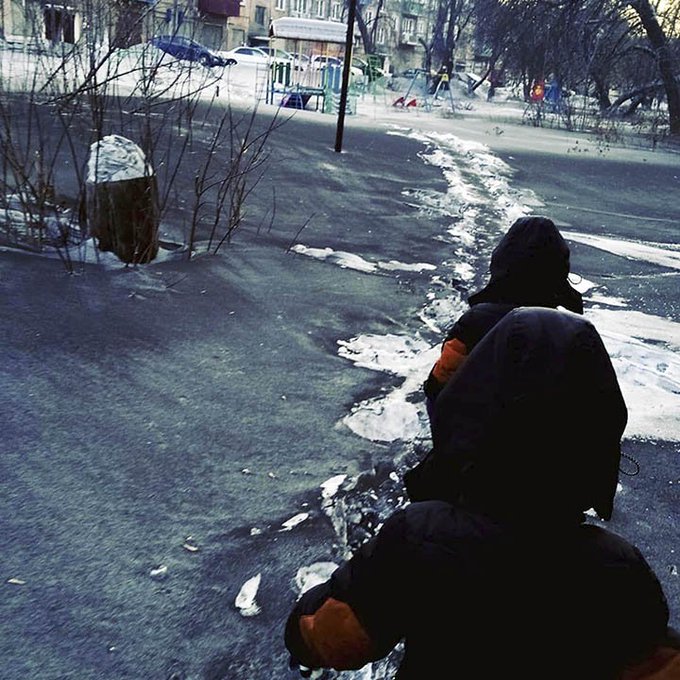
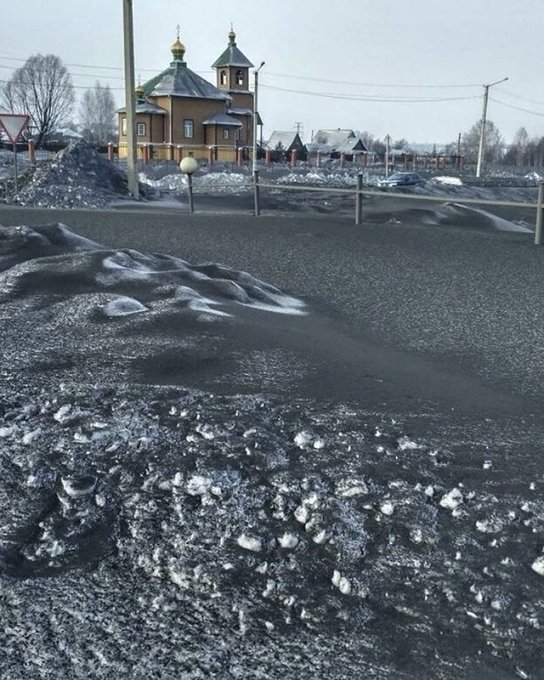
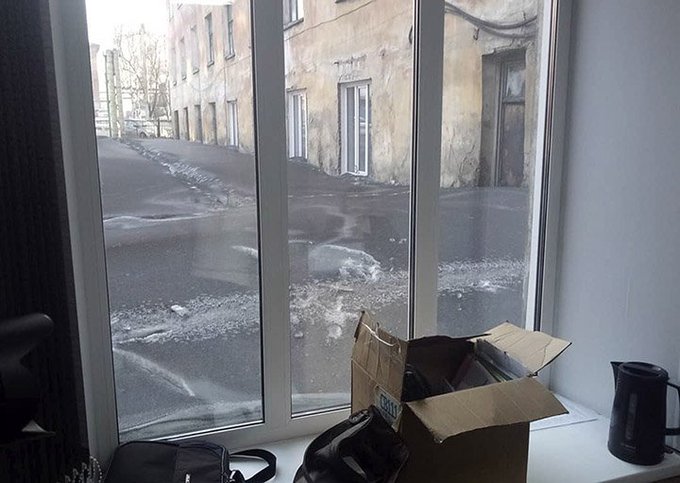
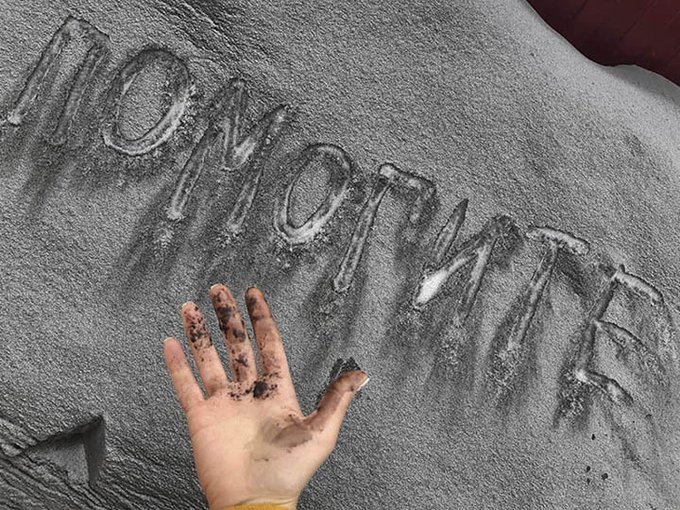
 Strange Sounds@Strange_Sounds
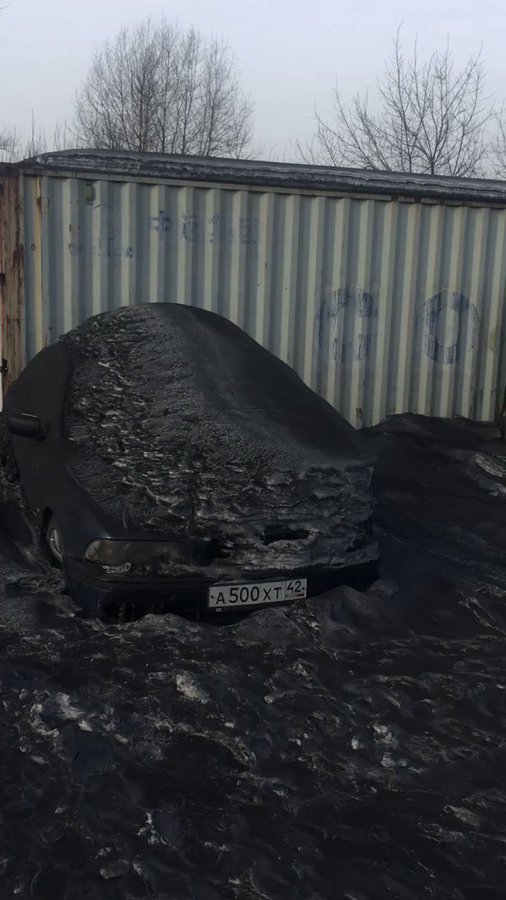


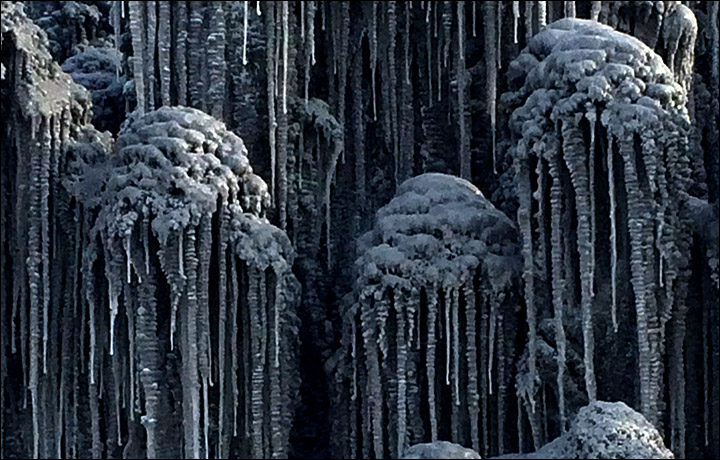

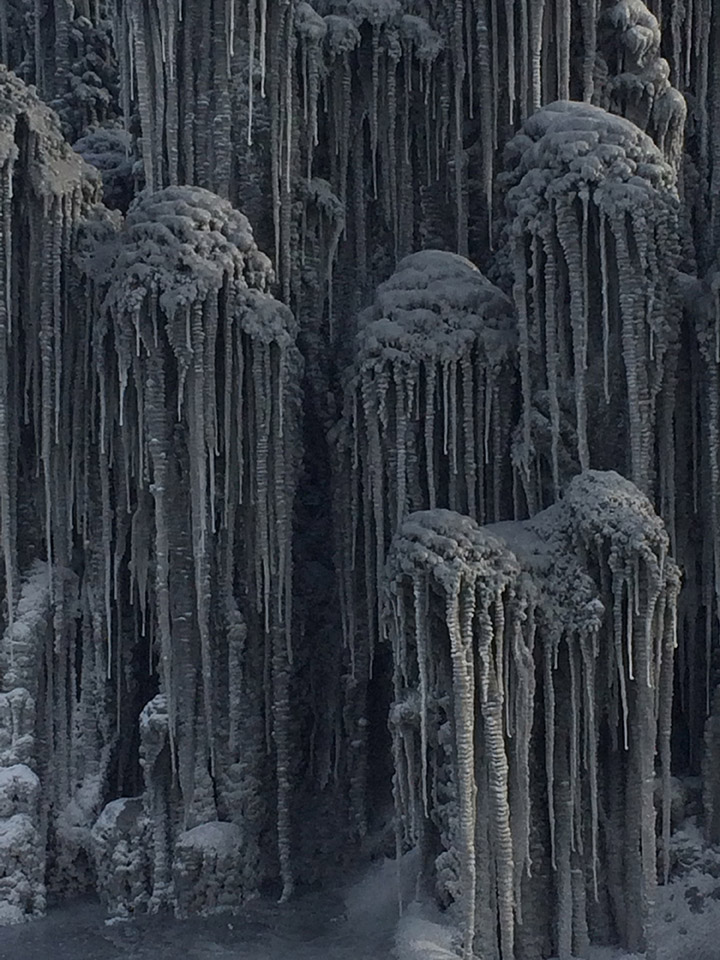
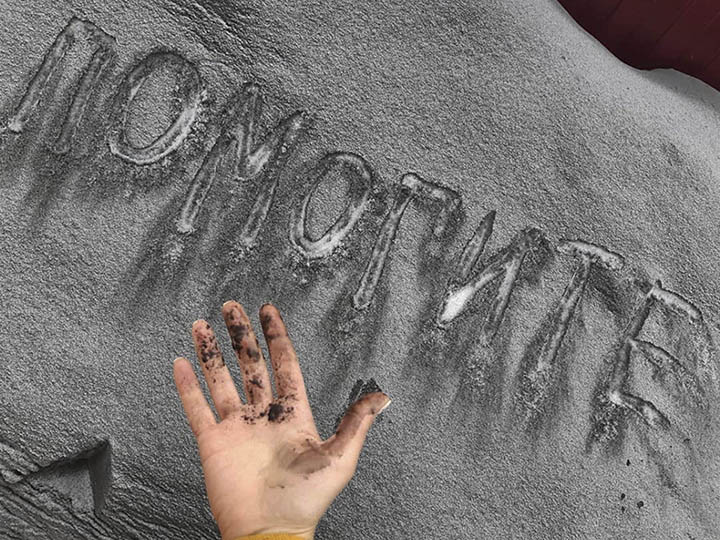
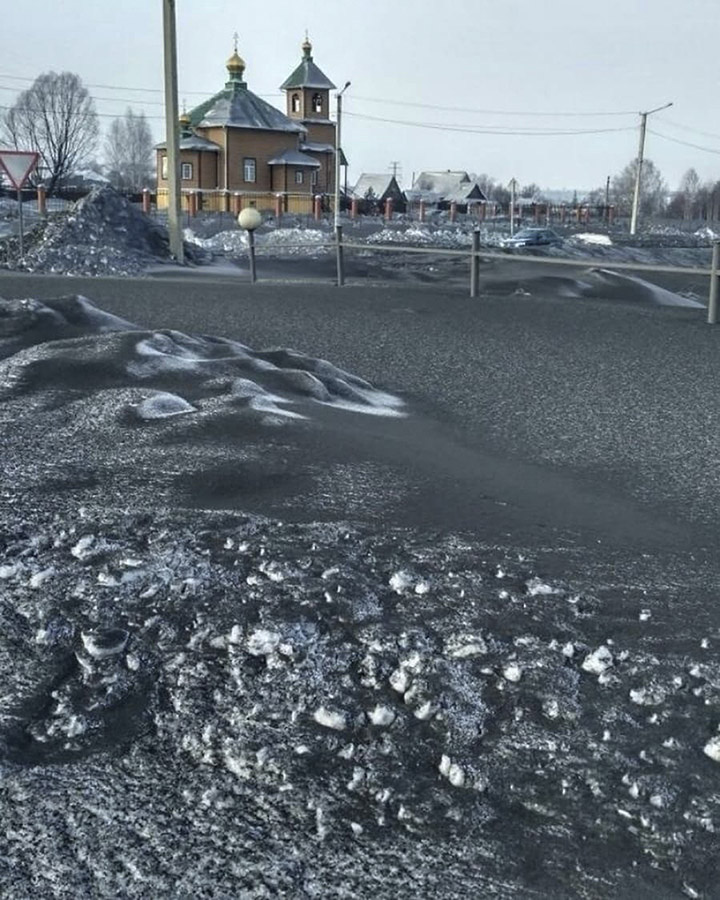
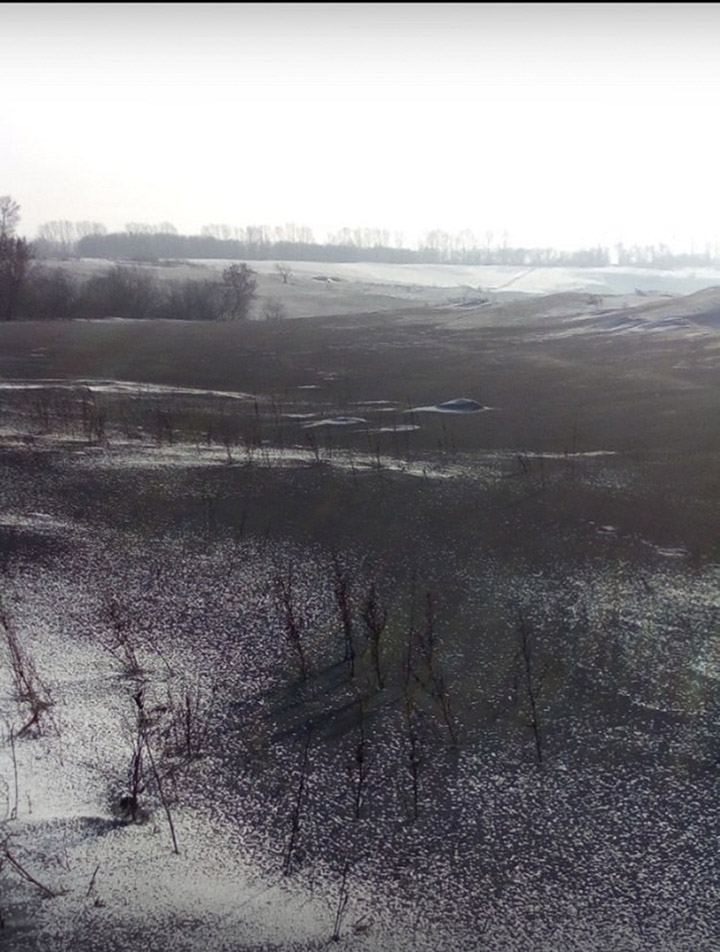
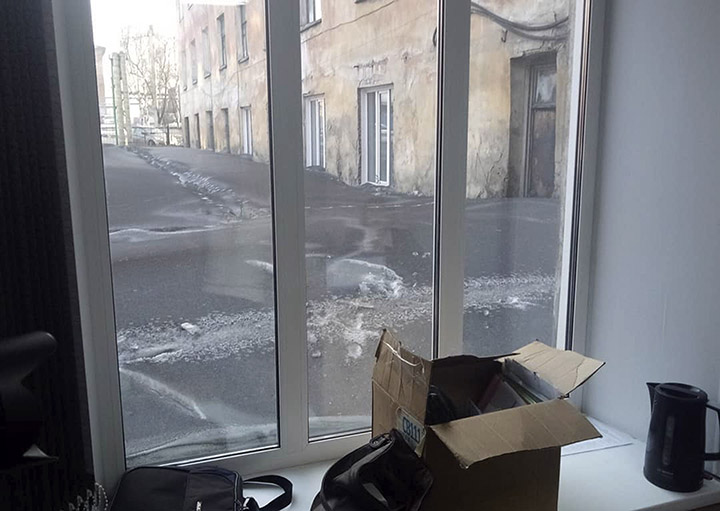

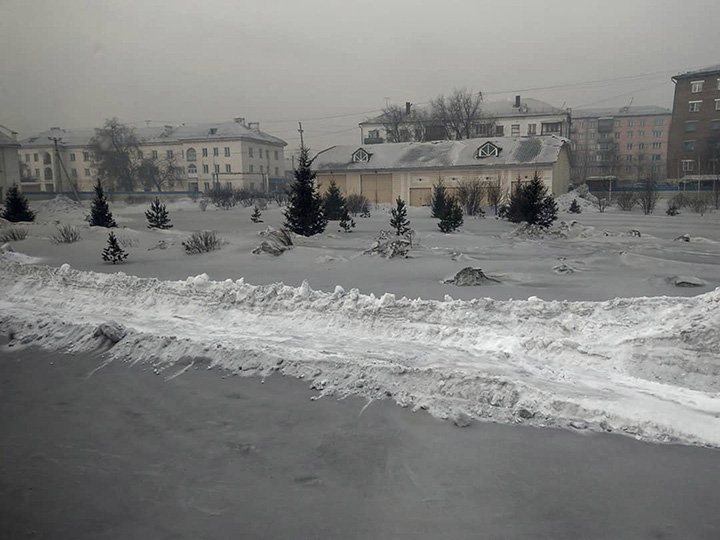



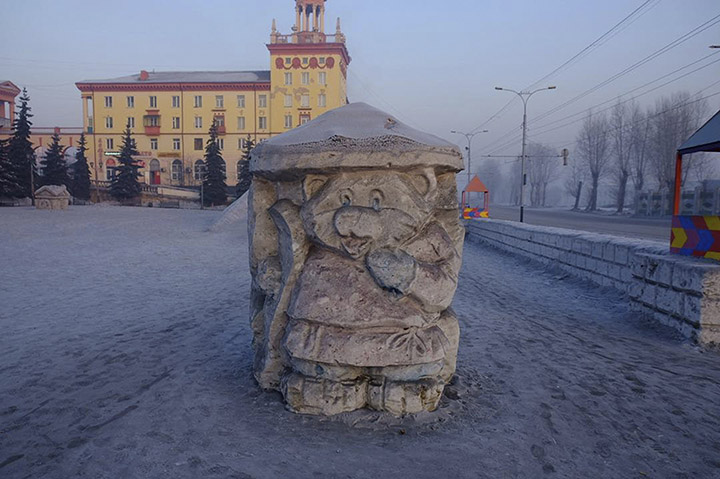


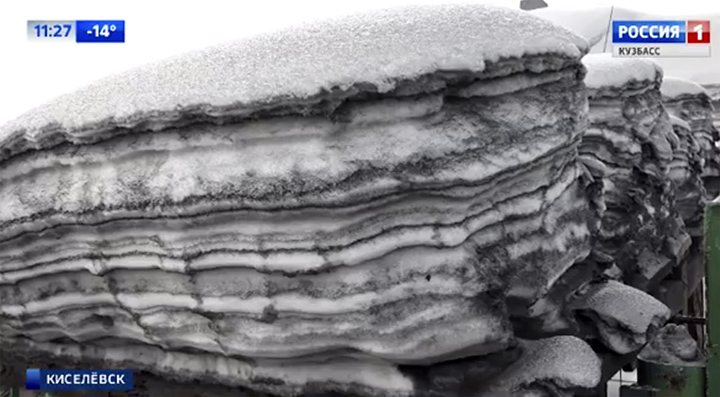
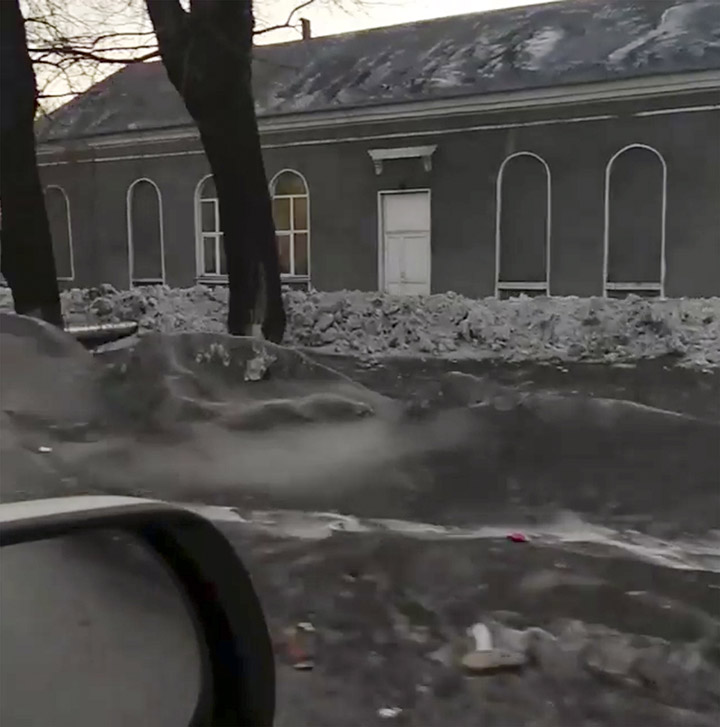
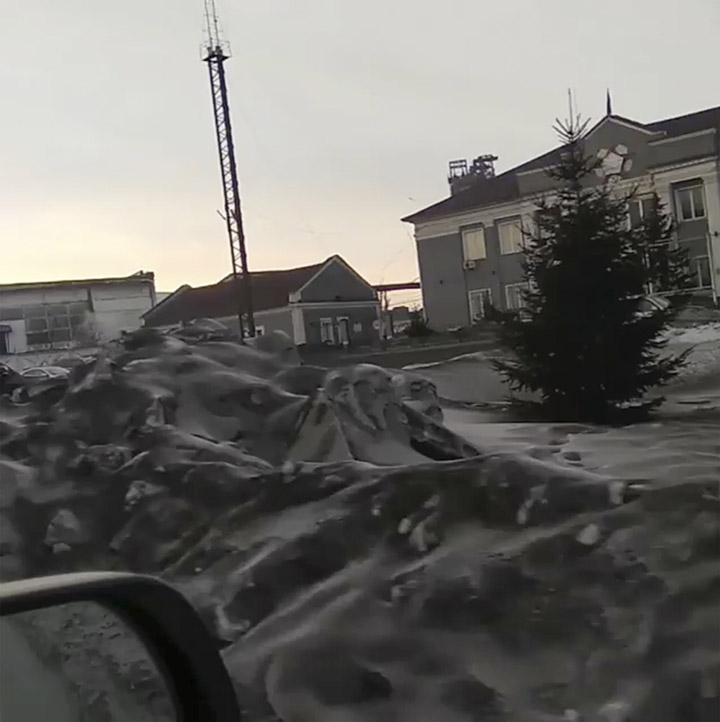

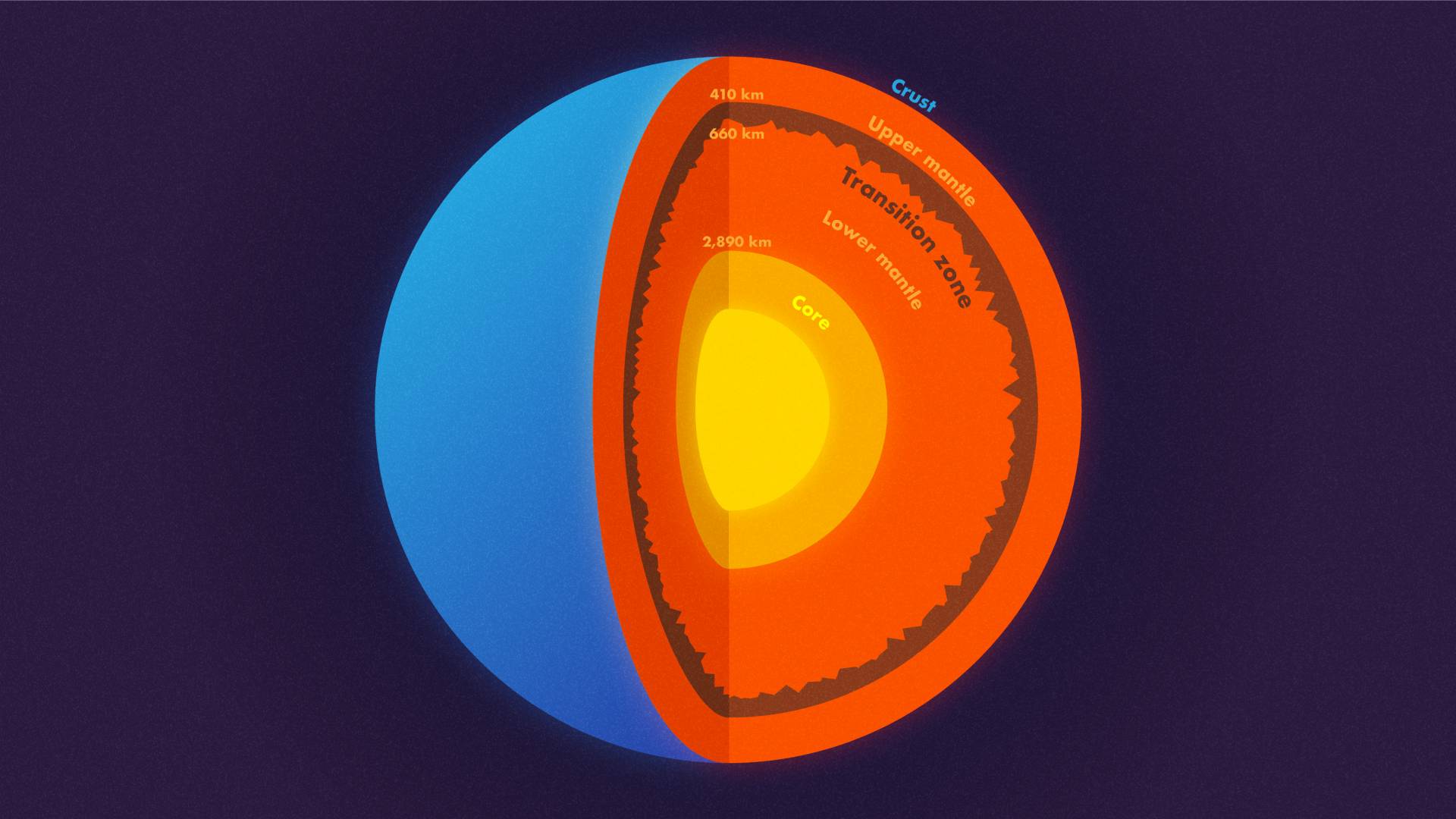



 µ