Ontdek de Fascinerende Wereld van UFO's en UAP's: Jouw Bron voor Onthullende Informatie!
Ben jij ook gefascineerd door het onbekende? Wil je meer weten over UFO's en UAP's, niet alleen in België, maar over de hele wereld? Dan ben je op de juiste plek!
België: Het Kloppend Hart van UFO-onderzoek
In België is BUFON (Belgisch UFO-Netwerk) dé autoriteit op het gebied van UFO-onderzoek. Voor betrouwbare en objectieve informatie over deze intrigerende fenomenen, bezoek je zeker onze Facebook-pagina en deze blog. Maar dat is nog niet alles! Ontdek ook het Belgisch UFO-meldpunt en Caelestia, twee organisaties die diepgaand onderzoek verrichten, al zijn ze soms kritisch of sceptisch.
Nederland: Een Schat aan Informatie
Voor onze Nederlandse buren is er de schitterende website www.ufowijzer.nl, beheerd door Paul Harmans. Deze site biedt een schat aan informatie en artikelen die je niet wilt missen!
Internationaal: MUFON - De Wereldwijde Autoriteit
Neem ook een kijkje bij MUFON (Mutual UFO Network Inc.), een gerenommeerde Amerikaanse UFO-vereniging met afdelingen in de VS en wereldwijd. MUFON is toegewijd aan de wetenschappelijke en analytische studie van het UFO-fenomeen, en hun maandelijkse tijdschrift, The MUFON UFO-Journal, is een must-read voor elke UFO-enthousiasteling. Bezoek hun website op www.mufon.com voor meer informatie.
Samenwerking en Toekomstvisie
Sinds 1 februari 2020 is Pieter niet alleen ex-president van BUFON, maar ook de voormalige nationale directeur van MUFON in Vlaanderen en Nederland. Dit creëert een sterke samenwerking met de Franse MUFON Reseau MUFON/EUROP, wat ons in staat stelt om nog meer waardevolle inzichten te delen.
Let op: Nepprofielen en Nieuwe Groeperingen
Pas op voor een nieuwe groepering die zich ook BUFON noemt, maar geen enkele connectie heeft met onze gevestigde organisatie. Hoewel zij de naam geregistreerd hebben, kunnen ze het rijke verleden en de expertise van onze groep niet evenaren. We wensen hen veel succes, maar we blijven de autoriteit in UFO-onderzoek!
Blijf Op De Hoogte!
Wil jij de laatste nieuwtjes over UFO's, ruimtevaart, archeologie, en meer? Volg ons dan en duik samen met ons in de fascinerende wereld van het onbekende! Sluit je aan bij de gemeenschap van nieuwsgierige geesten die net als jij verlangen naar antwoorden en avonturen in de sterren!
Heb je vragen of wil je meer weten? Aarzel dan niet om contact met ons op te nemen! Samen ontrafelen we het mysterie van de lucht en daarbuiten.
Black UFO Ring Flying Over Denver, Colorado Makes Local News. April 2019, Videos, UFO Sighting News.
Date of sighting: April 15, 2019 Location of sighting: Denver, Colorado, USA A possible UFO sighing was seen in Denver two weeks ago. The whole city seemed to see it and the exact explanation of what it is remains a mystery. Many explanations from fireworks to volcanos have been given. However Denver is a UFO hotspot with most of its citizens having seen UFOs in the area. Its totally possible that this ring is actually the outline of an alien cloaked craft that is having difficulties keeping cloaked. Its also possible that a UFO shot off so fast that it left a black ring around it. Lots of white glowing balls have been seen over the Denver area near the Rocky Mountains for decades, so its no surprise to see such oddities in the sky above Denver. Scott C. Waring
Chirs Spears of CBS4 states:
OKAY ... here's an odd one for you. This was caught on our city cam looking due west around 740 pm. We also had a viewer in LoDo film it. His video was more of a perfect circle. I am baffled at how to explain this one. LOL! CRAZY! And creepy.
When NASA launched two rockets studying auroras in Norway recently, the mission created visuals so magnificently beautiful that it had some around the world thinking aliens.
The New York Post reports that some called the police warning that "aliens are coming," and that a UFO sightings message board picked up on the other-worldly visuals saying a ship "entered an underground base."
This post will run through what the U.S. space agency was doing with its two rockets in the arctic and, of course, some of the amazing visuals created in the process:
Benjamin Raven | braven@mlive.com
The space agency's work studying auroras focuses on measuring the atmospheric density and temperature with instruments on the rockets including visible gas tracers. These tracers are said to be trimethyl aluminum and a barium/strontium mixture, which NASA says ionizes once exposed to sunlight.
During the evening launch back on April 5 from the Andoya Space Center in Norway, NASA released the mixture over the Norwegian Sea between 71 and 150 miles altitude.
"These mixtures, using substances similar to those found in fireworks, created colorful clouds that allow researchers to track the flow of neutral and charged particles with the auroral wind," NASA writes on its website. "By tracking the movement of these colorful clouds via ground-based photography and triangulating their moment-by-moment position in three dimensions, AZURE will provide valuable data on the vertical and horizontal flow of particles in two key regions of the ionosphere over a range of different altitudes.
"Many people believe the Earth’s atmosphere “ends” some 20-30 miles above the ground. However, the air we breathe does not abruptly end at some predefined point -- instead, it gradually thins."
The AZURE mission stands for Auroral Zone Upwelling Rocket Experiment. The space agency says preliminary results from the April 5 launch have left scientists involved "very pleased with the results."
The two rockets flew to an altitude of 200 and 202 miles, as both tracked the movement of the very colorful clouds.
Auroras are defined by the space agency as "energetic particles, which can speed out from the sun both in a steady stream called the solar wind and due to giant eruptions known as coronal mass ejections or CMEs. After a trip toward Earth that can last two to three days, the solar particles and magnetic fields cause the release of particles already trapped near Earth, which in turn trigger reactions in the upper atmosphere in which oxygen and nitrogen molecules release photons of light."
The AZURE mission successfully launched back-to-back aboard two sounding rockets in Norway tonight. These colorful clouds created a light show in the sky, helping researchers track the flow of neutral and charged particles in Earth's ionosphere. Details: https://go.nasa.gov/2oJGOtz.
NASA says that AZURE is the first of eight sounding rocket missions with international collaborators scheduled in the next two years. This mission will mainly focus on measuring the winds in the Arctic region, while trying to "better understand the forces at play."
"By tracking the movement of these colorful clouds via ground-based photography and triangulating their moment-by-moment position in three dimensions, AZURE will provide valuable data on the vertical and horizontal flow of particles in two key regions of the ionosphere over a range of different altitudes," NASA reports on its website.
"Such measurements are critical if we are to truly understand the effects of the mysterious yet beautiful aurora. The results will be key to a better understanding of the effects of auroral forcing on the atmosphere, including how and where the auroral energy is deposited."
Ever wondered what auroras look like from space? @ESA@Astro_Alex Gerst gives us his space-based view from aboard the @Space_Station, tweeting that the experience is "[m]ind-blowing, every single time." Take a look: https://go.nasa.gov/2ODAhei
In 2013, in a big success story, a Mars rover and orbiter made a near-simultaneous observation of methane in Mars’ atmosphere. Now a newer mission orbiting Mars – ESA’s Trace Gas Orbiter – has failed to detect methane. Why?
Artist’s concept of ESA’s Trace Gas Orbiter, part of the ExoMars mission,
analyzing the Martian atmosphere. Image via ESA/ATG MediaLab.
Ten days ago, we spoke of aJune 2013 detectionof methane in Mars’ atmosphere by both the ground-basedCuriosityrover and theMars Expressorbiter. Scientists were excited about that because, on Earth, methane is generated by living organisms, as well as geological processes. So Mars’ methane might hold clues to possible life on Mars. But now another group of perplexed planetary scientists is asking … where has Mars’ methane gone? The first results from ESA’s Trace Gas Orbiter (TGO) – part of theExoMarsmission, which launched on Mars in 2016 – showed virtually no signs of the gas in the Martian atmosphere. This is surprising, to say the least.
TGO also has some new findings for scientists about dust in Mars’ atmosphere and subsurface deposits of water ice and water-related minerals.
The puzzling methane results were presented at the annual meeting of the European Geosciences Union last week in Vienna, and a first paper was published on April 10, 2019, in the peer-reviewed journal Nature Today. A second paper, also in Nature Today, discusses the impact of the recent global dust storm on water in the Martian atmosphere. A third paper (in Russian), submitted to the Proceedings of the Russian Academy of Science, provides the most detailed map ever produced of water ice and hydrated minerals in the shallow subsurface of the planet.
So far, TGO has found an upper limit of methane in the Martian atmosphere 10 to 100 times less than previous detections. Why?
Image via ESA; spacecraft: ATG MediaLab; data: O. Korablev et al (2019).
These papers indicate an upper limit of 0.05 ppbv (parts per billion by volume), which is 10 to 100 times less methane than all previous reported detections. The most precise detection of 0.012 ppbv, taken by the Atmospheric Chemistry Suite (ACS) spectrometer on TGO, was achieved at an altitude of less than two miles (three km). According to ACS principal investigator Oleg Korablev at the Space Research Institute of the Russian Academy of Sciences in Moscow:
We have beautiful, high-accuracy data tracing signals of water within the range of where we would expect to see methane, but yet we can only report a modest upper limit that suggests a global absence of methane.
Earth-based telescopes had previously found transient measurements of up to 45 ppbv, while Mars Express found a limit of 10 ppbv in 2004. The Curiosity rover found a background level of methane of 0.2 – 0.7 ppbv, with higher periodic peaks. Our story from a week ago reported that Mars Express had confirmed one of Curiosity’s largest peaks in 2013, narrowing down the location of at least one methane plume down to east of Gale Crater.
Diagram of Mars, with spacecraft and their results labeled.
A history of key methane measurements on Mars from 1999 to 2018.
Image via ESA.
The upper limit of 0.05 ppbv amounts to about 500 tons of methane overall, but that is actually a very tiny amount when it is spread throughout the entire atmosphere.
The findings by TGO seem to be quite contradictory to all earlier detections, which poses some difficult questions. Where did the methane go? Is it errors in analysis or – as researchers have suggested – is the methane being actively destroyed somehow soon after it is released into the atmosphere? As Korablev explained:
The TGO’s high-precision measurements seem to be at odds with previous detections; to reconcile the various datasets and match the fast transition from previously reported plumes to the apparently very low background levels, we need to find a method that efficiently destroys methane close to the surface of the planet.
As Håkan Svedhem, TGO project scientist, also noted:
Just as the question of the presence of methane and where it might be coming from has caused so much debate, so the issue of where it is going, and how quickly it can disappear, is equally interesting.
We don’t have all the pieces of the puzzle or see the full picture yet, but that is why we are there with TGO, making a detailed analysis of the atmosphere with the best instruments we have, to better understand how active this planet is – whether geologically or biologically.
Diagram showing the seasonal cycle of methane as detected by the Curiosity rover in Gale Crater.
Image via NASA/JPL-Caltech.
Methane is of primary interest to scientists studying Mars, since it can originate either geologically or biologically. On Earth, by far most of the gas – about 95 percent – is produced by living organisms, but some also is created by geological activity. We still don’t know the origin of Mars’ methane, but the Curiosity rover did also determine that it is seasonal in nature – increasing in summer and decreasing again in winter – which may explain why it hasn’t been found yet by TGO. Current evidence also points to the methane most likely coming from beneath the surface. That could fit in with either a geological or biological scenario, or perhaps even both.
Methane is not the only thing that TGO has been studying; the orbiter has also been examining how dust in the atmosphere from the recent global dust storm affected water vapor. Two spectrometers – NOMAD and ACS – made the first high-resolution solar occultation measurements of the atmosphere, to see how sunlight is absorbed in the atmosphere as a way to reveal the chemical fingerprints of its ingredients. The vertical distribution of water vapor was measured from close to the surface to over 50 miles (80 km) in altitude. According to Ann Carine Vandaele, principal investigator of NOMAD at the Royal Belgian Institute for Space Aeronomy:
In the northern latitudes [of Mars] we saw features such as dust clouds at altitudes of around 25-40 km [15-25 miles] that were not there before, and in southern latitudes we saw dust layers moving to higher altitudes. The enhancement of water vapor in the atmosphere happened remarkably quickly, over just a few days during the onset of the storm, indicating a swift reaction of the atmosphere to the dust storm.
The results fit with previous global circulation models, Vandaele said:
We see that water … is very sensitive to the presence of ice clouds, preventing it from reaching atmospheric layers higher up. During the storm, water reached much higher altitudes. This was theoretically predicted by models for a long time but this is the first time we have been able to observe it.
TGO observations of how dust from the recent global dust storm has affected water vapor in the Martian atmosphere.
Image via ESA; spacecraft: ATG MediaLab; data: A-C Vandaele et al (2019).
TGO has also been using its neutron detector called FREND to map the distribution of hydrogen in the uppermost meter of Mars’ surface. It has indicated the presence, either now or in the past, of water. TGO can find minerals that were formed in water millions or billions of years ago, as well as detect current deposits of ice below the surface. As Igor Mitrofanov, principal investigator of the FREND instrument, said:
In just 131 days the instrument had already produced a map that has a higher resolution than that of the 16 years data from its predecessor onboard NASA’s Mars Odyssey – and it is set to continue getting better.
The data is continually improving and we will eventually have what will become the reference data for mapping shallow subsurface water-rich materials on Mars, crucial for understanding the overall evolution of Mars and where all the present water is now. It is important for the science on Mars, and it is also valuable for future Mars exploration.
The non-detection of methane so far by TGO presents a conundrum for scientists. If it is there, as multiple Mars missions and telescopes have shown, how does it disappear so fast? If it is seasonal as previously determined, was TGO just looking at the wrong time? Only further observations will help to answer that question. Chris Webster, a senior scientist at NASA’s Jet Propulsion Laboratory, told Space.com that he is optimistic TGO will still detect methane:
We need to be more patient with TGO, because one thing we have learned is that the methane story is full of surprises, and there are surely more to come. It would not surprise me if TGO detected methane sometime in the future.
Want more detail? There’s a good overview of the new methane findings in a new article in Nature.
Map of shallow subsurface water (hydrated minerals/ice) distribution on Mars.
Image via ESA; spacecraft: ATG/medialab; data: I. Mitrofanov et al (2018).
Bottom line: The origin of Mars’ methane is still a mystery, but now its apparent vanishing act is in itself another puzzle for scientists to solve.
Meteoroid impacts regularly liberate puffs of water vapor from the moon, suggesting that minuscule amounts of water may lurk just under the entire lunar surface, a new study finds.
When the Apollo missions brought lunar rocks to Earth, scientists found evidence that the moon was devoid of water. However, in the past decade, data from a bevy of spacecraft — including NASA's Cassini, Deep Impact and Lunar Prospector missions, and India's Chandrayaan-1 probe — revealed trace amounts of water on the surface of the moon. Even more intriguingly, they found water across the moon's surface, not only at the poles, as was previously expected.
But scientists still have many questions about the source and extent of lunar water. To learn more, researchers analyzed data from NASA's Lunar Atmosphere and Dust Environment Explorer (LADEE), which orbited the moon from October 2013 to April 2014.
The scientists behind the newly published research found that the moon released numerous puffs of water vapor from near its surface into its exosphere, the very tenuous layer of molecules comprising the closest thing that the moon has to an atmosphere. These outbursts coincided with 29 known meteoroid streams that passed near Earth during that eight-month span of time, including the Leonids, Geminids and Quadrantids.
"Most of the geological processes we deal with in planetary science are very slow — we almost never get to see something respond dynamically over the scale of hours like we did here," lead author Mehdi Benna, a planetary scientist at NASA Goddard Space Flight Center in Greenbelt, Maryland, told Space.com.
The researchers suggested that meteoroid impacts kicked up these puffs of water from the moon, and said that four of these puffs were apparently caused by previously undetected meteoroid streams.
"One would think we know all of the meteoroid streams that are out there, but apparently we don't," Benna said.
By analyzing the amount of water released by meteoroid streams of different sizes, the scientists estimated that the uppermost 3.15 inches (8 centimeters) of lunar soil is dehydrated — any less, and smaller meteoroids would have excavated more water. Below this desiccated layer, the researchers suggest, water comprises up to about 0.05% of the weight of the rock up to at least 10 feet (3 meters) deep.
"With our measurements, we could see exactly the water extracted from the moon in a very dynamic way by micrometeroid impacts, and by analyzing the data, see how much water was stored in the lunar reservoir and where it was going," Benna said.
The researchers estimated that meteoroid impacts cause the moon to lose as much as 220 tons (200 metric tons) of water annually. To sustain this amount of loss over time, they suggested that this water either was present when the moon formed, about 4.5 billion years ago, or was delivered by cosmic impacts from water-laden rocks soon after the moon was born.
The lunar samples from the Apollo missions may have appeared devoid of water because the water on those rocks was likely not incorporated into the rocks themselves, but only weakly coated them. As such, any water on the rocks was likely fragile and difficult to hold onto during the return trips, Benna said.
Future research can examine how deep water actually extends on the moon, Benna said. He and his colleagues detailed their findings online today (April 15) in the journal Nature Geoscience.
Picture a world where rain falls, gathers in lakes and ponds, seeps into the surrounding rock, and evaporates away, only to fall again. There's just one catch: The world is Saturn's moon, Titan, where the rain isn't water; it's liquid methane.
Two new papers explore how this eerily familiar, waterless "water cycle" manifests on Titan's surface. To do so, two separate research teams turned to data from the Cassini mission, which ended its stay at the Saturn system in September 2017. The spacecraft flew past the massive moon more than 100 times, gathering crucial observations of this strange world as it did so.
Some of those observations showed scientists something truly extraordinary: their first glimpse of liquid currently on the landscape, rather than mere ghosts of such liquid features. "Titan is the only world outside the Earth where we see bodies of liquid on the surface," Rosaly Lopes, a planetary scientist at NASA's Jet Propulsion Laboratory who worked on the Cassini mission but wasn't involved in either of the new papers. "Some of us like to call Titan the Earth of the outer solar system."
"Titan is the most interesting moon in the solar system. I think that gets me some enemies, but I think it's actually true," Shannon MacKenzie, lead author on one of the new studies and a planetary scientist at Johns Hopkins University's Applied Physics Laboratory, told Space.com. But that doesn't mean the moon is straightforward. "Titan throws us a lot of curveballs," she said.
MacKenzie's study analyzes one potential curveball: three small features that appeared to be liquid-filled lakes when Cassini first spotted them, but seem to have dried up by the time the spacecraft returned to the area. The observations suggest that the liquid either evaporated or seeped into the surrounding planetary surface.
These "phantom lakes" may be evidence of seasonal changes on the moon, MacKenzie and her coauthors believe. (Seven Earth years passed between the spacecraft's two observations of the area, during which the northern hemisphere of the moon transitioned from winter to spring.)
But the situation may not be quite that simple, since the two sets of observations were taken by different instruments. Cassini was built to gather data with either its radar instrument or its visual and infrared light cameras, but not both simultaneously. And during the spacecraft's first pass, the region was too dark to use the cameras.
So MacKenzie and her colleagues had to factor in the change in instruments as a potential variable. But she's still confident that something is different in the two passes, and that it's pretty plausible that liquid was there, then disappeared. Even if the different signals over the two flybys were caused by some other phenomenon, MacKenzie said she's still intrigued by what that could tell us about the strange moon, which is among scientists' plausible candidates for where life may be lurking beyond Earth.
"If we're instead looking at some newly identified materials on the surface, then that's interesting, too, because the sediments on Titan are really important for prebiotic chemistry," MacKenzie said.
But although MacKenzie focused on just three small lakes that seem to have disappeared, plenty of lakes remained visible throughout Cassini's observations of the region. In the second paper published today, scientists used radar data to study a handful of much larger lakes.
During Cassini's very last pass over Titan in April 2017, the spacecraft was programmed to gather a very specific type of data, called altimetry, over the lake region to measure the height of different substances. Marco Mastrogiuseppe, a planetary scientist at Caltech, had already used similar data to measure the depths of some of Titan's seas, much larger bodies of liquids, and the Cassini team hoped he would be able to do the same with lakes.
Mastrogiuseppe and his colleagues did so in their new paper, identifying the bottoms of lakes more than 328 feet (100 meters) deep and establishing that their contents were dominated by liquid methane. "We realized that essentially the composition of the lakes is very, very similar to the one of the mare, of the sea," he said. "We believe that these bodies are fed by local rains and then these basins, they drain liquid."
That suggests that below Titan's surface, the moon may host yet another feature reminiscent of Earth: caves. On Earth, many caves are formed by water dissolving away surrounding rock types like limestone, leaving behind a type of landscape called karst, characterized by springs, aquifers, caves and sinkholes.
Researchers studying Titan's lake region think that they see similar karst-type characteristics. They also haven't spotted channels connecting all these different liquid features, which is why Mastrogiuseppe and others suspect that some of the liquid may be seeping into the surrounding terrain, much like karst systems here on Earth.
"Titan is really this world that geologically is similar to the Earth, and studying the interactions between the liquid bodies and the geology is something that we haven't really been able to do before," Lopes said. The new studies begin to make that happen by seeing those interactions playing out live on another planetary body.
Of course, it's much more difficult to study these interactions so far away, on a world that has never been the primary focus of a mission. "We've been talking about possible missions with robotic explorers that might crawl down into lava tubes and caves on the moon and Mars," Lopes said. "Could we in the future send one of these to sort of crawl down into this terrain and into caves and find out what's underneath there?"
Such a mission likely won't happen any time soon, but NASA is seriously considering a project called Dragonfly that would land a drone on the strange moon. If selected, the mission would launch in 2025 and reach Titan nine years later. And if NASA doesn't choose Dragonfly, chances are good that another mission concept will come along. "Titan's just too cool to not go back to," MacKenzie said.
Both MacKenzie's and Mastrogiuseppe's papers were published today (April 15) in the journal Nature Astronomy.
WETENSCHAPPERS BEVESTIGEN KOMST KOUDE PERIODE ( VIDEO )
Langzaam maar zeker begint het ook in sommige delen van mainstreamland door te dringen dat we een koude periode tegemoet gaan.
Een periode die decennialang kan duren en wordt veroorzaakt door een zon die in de slaapstand gaat.
Een internationale groep wetenschappers kwam onlangs bij elkaar bij National Oceanic and Atmospheric Administration (NOAA) voor een workshop, waarbij ze nogal opzienbarende voorspellingen deden voor de komende zonnecyclus 25.
Tussen de zomer van 2019 en de herfst van 2020 zal het aantal zonnevlekken nog verder verminderen, waardoor we aanzienlijk koudere temperaturen zullen meemaken.
De door hen voorlopig gemaakte voorspelling ziet er zo uit en is identiek aan de voorspelling die wij al heel lang hanteren.
Wij hebben tot nu toe de volgende voorspelling gebruikt, waarin je ziet dat zonnecyclus 25 nog zwakker wordt dan de al zwakke cyclus 24 en dat daarna zonnecyclus 26 nog zwakker zal zijn.
Maar, zo te zien zijn we nog aan de optimistische kant geweest en is het nog maar de vraag of de pieken van cyclus 25 zo hoog zullen komen als op de door ons gebruikte voorspelling.
Hoe dan ook, wat we kunnen verwachten tijdens zonnecyclus 25 is dan een periode die te vergelijken is met het Dalton Minimum.
Het Dalton-minimum was een periode van lage zonneactiviteit, genoemd naar de Engelse meteoroloog John Dalton, die duurde van ongeveer 1790 tot 1830. Zoals het Maunder-minimum en het Spörer-minimum, viel het Dalton-minimum samen met een periode van lager dan gemiddelde wereldtemperatuur. Het Oberlach-station in Duitsland, bijvoorbeeld, mat een 2,0°C afname over 20 jaar.
Tijdens de daarop volgende zonnecyclus wordt het dan nog kouder en krijgen we een periode die te vergelijken is met het Maunder Minimum.
Het Maunder Minimum (ongeveer 1645-1715) betrof een periode waarin er decennia lang opmerkelijk weinig zonnevlekken waargenomen werden, een zogeheten Grand Minimum. Het was een tijdvak in de veel langer durende Kleine IJstijd (16e tot 19e eeuw), waarin de temperaturen onder meer in Europa 1 à 2 graden lager waren dan in de 20e eeuw.
Maar, uiteraard wordt er vastgehouden aan de opwarming van de aarde.
Zo was er deze week te lezen:
De zomer wordt warmer en droger dan gemiddeld. Volgens Weeronline is de kans op een ’bovengemiddeld warm verloop’ in de maand juni zelfs zeventig procent.
Heel goed mogelijk dat iets dergelijks gebeurt, maar vooralsnog is daar heel weinig van te merken.
Vooralsnog hebben we te maken met een stroom koude arctische lucht die onze kant op komt waardoor het in mei net zo koud aanvoelt als rond afgelopen kerst.
Volgens Adept2030 is dit al het derde opeenvolgende jaar waarbij we aan het begin van het jaar een korte warme periode hebben, gevolgd door een langdurige koude periode. Hierdoor zijn volgens hem alleen al in Europa de opbrengsten van de vroege landbouwoogsten zo’n 40 procent minder.
Wanneer we inderdaad een aantal opeenvolgende minima perioden krijgen zoals het Dalton of het Maunder Minimum, dan komt de voedselproductie wereldwijd zwaar onder druk te staan en zullen voedselprijzen astronomisch stijgen vanwege de schaarste.
Zoals we eerder schreven, brak de Franse revolutie uit in een periode van mislukte oogsten en gezien de onvoorstelbaar instabiele situatie in de wereld, zouden voedseltekorten wereldwijd weleens voor de nodige chaos en anarchie kunnen zorgen.
Volgens de klimaatreligie zijn wij als mens verantwoordelijk voor de wereldwijde opwarming.
Kijk hoe deze genadeloos toeslaat in de woestijnen van Saoedi Arabië.
Ook in New Foundland, Canada, keken ze vreemd op toen er op 1 mei nog een pak sneeuw viel. Ze zijn daar wel wat sneeuw gewend, maar dit soort sneeuwval zie je daar normaal gesproken in januari en februari.
En ondertussen gaan de klimaatidioten verder met het kapot maken van ons land door het volledig afhankelijk te maken van het elektriciteitsnet.
Het wordt kouder en kouder en toen kwam er een stroomstoring……
Een draagraket van SpaceX heeft een Dragon-capsule naar de ruimte gebracht, met aan boord voorraden en vracht voor het ruimtestation ISS. De Falcon-9-raket keerde daarna veilig terug naar Aarde en landde verticaal op een onbemand schip op open zee, wat straffe beelden oplevert. De Dragon zal naar verwachting overmorgen aankomen.
Life may have traveled to Earth from afar, aboard an interstellar visitor like the weird, cigar-shaped object 'Oumuamua, researchers say.
'Oumuamua, which zoomed through the inner solar system last fall, is the first confirmed interstellar object ever observed in our neck of the woods. But that doesn't mean it was the first ever to get here — far from it, in fact.
"We think that something like an 'Oumuamua ... there's always one within about 1 AU of the sun at any given time," planetary scientist Bill Bottke said last month during a panel discussion at the Breakthrough Discuss conference at the University of California, Berkeley. (One AU, or astronomical unit, is the average Earth-sun distance — about 93 million miles, or 150 million kilometers.)
"And that actually has some really interesting implications," added Bottke, who directs the Department of Space Studies at the Southwest Research Institute in Boulder, Colorado.
One such implication centers on the role that 'Oumuamua-like objects could play in the transfer of life from world to world around the cosmos, an idea known as panspermia.
'Oumuamua's exact size is unknown, but researchers think it spans less than 2,600 feet (800 meters) in its longest dimension. The object displayed "nongravitational acceleration" as it cruised away from the sun, spurring speculation that 'Oumuamua could be an alien spacecraft of some kind. But the consensus view is that the interloper is icy and its weird movements were caused by comet-like outgassing.
"This tells us that ices can survive over these interstellar distances," astrobiologist Karen Meech, of the University of Hawaii's Institute for Astronomy, said during the Breakthrough Discuss panel.
Previous research on comets and other small bodies within our own solar system suggests that 'Oumuamua-like objects provide good thermal insulation and radiation shielding, she added. That's good news for any microbes that may be hitching a ride.
"You're probably getting significant protection on the inside, and you're not getting any deeper with the radiation field or heating from supernovae below 10, 20 meters [33 to 66 feet] depth in a body," Meech said. "So, the idea that you could bring some living organism in some state — it could be preserved in a cold deep freeze. So, it would be no different than coming from our outer solar system."
Astronomers have not yet identified 'Oumuamua's natal star system, so we don't know long ago the object was ejected into the dark and frigid wastes. But it may have been traveling through interstellar space for 10 million years or more, Meech said.
It's unclear if any putative critters aboard 'Oumuamua could have survived an impact with Earth. The icy object barreled past us at about 134,000 mph (215,000 km/h) relative to our planet, Meech said.
"That's a very high impact velocity," she said. (And it could have been even higher. 'Oumuamua came from above the plane of our solar system; an interstellar body hitting us more head-on could have an impact velocity of around 225,000 mph, or 360,000 km/h, Meech said.)
But 'Oumuamua and its kin are thought to be quite fluffy, so any that impact Earth are likely to "land" relatively gently and break open when they hit our atmosphere, Steinn Sigurdsson, a professor in the Department of Astronomy and Astrophysics at Penn State University, said during a different talk at the Breakthrough Discuss meeting.
Previous work by Harvard University astronomer Avi Loeb and others, along with Sigurdsson's own calculations, suggests that about 100 'Oumuamua-like objects have slammed into Earth over our planet's nearly 4.6-billion-year history, Sigurdsson said. (This is assuming these bodies are on random trajectories — that they weren't sent on their way by intelligent aliens, an idea known as directed panspermia.)
"Now, if any of them have biota in them? We don't know," he said. "Maybe we should go catch one and drill into it."
Catching 'Oumuamua is not feasible, said Loeb, who chairs Harvard's astronomy department and recently co-authored a paper speculating that 'Oumuamua might be an alien sailcraft. We don't know exactly where the object is now, so any chase probe would have to be equipped with a powerful (and heavy and expensive) telescope, he said. And gaining enough speed to catch up to 'Oumuamua would require slingshotting around the sun at a dangerously close distance.
"It makes much more sense to search for the next interstellar object," Loeb said during the question-and-answer portion of the Breakthrough Discuss panel. (He was in the audience, not on the dais.)
The powerful Large Synoptic Survey Telescope, which is scheduled to start observing the heavens from Chile next year, will probably spot about one interstellar object per month when it's fully up and running, Loeb added.
"So, just wait a few years and have one per month and just go after those with much less cost," he said. "If you detect them on their approach to us, you can actually meet them halfway at relatively low speeds."
It's also possible, of course, that life took a relatively short leap to Earth long ago. The terrestrial planets in our solar system swap rocks fairly regularly, as the ever-growing collection of Mars meteorites here on Earth attests. Indeed, some researchers think life probably started on the Red Planet and made its way to Earth aboard a rock lofted into space by a powerful impact.
All of this being said, panspermia — interstellar or local, directed or natural — is not the canonical explanation for life's emergence on Earth. There's no evidence for it, after all, so most researchers go with Occam's Razor and presume that we're native to our blue marble.
Very specific language usage here by the media, unthinkable just a few years ago. Putting the words “UFO’s” and “invading” in the same sentence assumes we will make the connection that any such aerial visitors would be both non-human and a ‘threat’. This brings another word to mind – ‘fakery’ – as in: they might know what these things are, but wish to raise a high sense of fear about them, for a reason.
The suspicion is easily raised when you consider a few logical assumptions based around these developments, and how what they want us to believe about them is flawed.
Logical assumption:
#1) If these were aliens, wouldn’t they want to contact humans to ensure we do not mistake them as a threat?
2)Keeping in mind humans have to date only achieved putting a man on a moon, not even on our closest neighbour – Mars; if ET’s were a threat, and they have the technology to traverse vast interstellar distances they would also have mastered the technology to wipe out humans in an instant, without us even knowing it happened.
3)Aerial phenomenon (human engineered drones) filmed over Area 51 in the 1990’s making maneuvers which defied current understanding of physics are logically to blame for some if not all of what has been filmed by US Navy jets in recent times and reported in multiple mainstream media outlets.
4) This act of generating of a fake (ET) threat; has been called ‘the ultimate false flag operation’ for decades. Dr Carol Rosin who worked with the father of rocketry himself Werner Von Braun, said that he told her that there was such a plan in the making (over a number of decades) towards a ‘fake alien invasion’.
Just keep that in mind. The secret technology exists to make your jaw drop. Combine this secret tech with holographic technology of today and we are looking a potential for immense fakery and the realization of objectives which will also remain unknown to us. I understand this looks like paranoid conspiracy talk, but I am not one for conspiracies, and none of this is adding up.
5)At a time of serious planetary threat from human over-consumption, overpopulation.. climate change… what on earth could the system have planned to ‘take care’ of us all? The sums just don’t add up, and they don’t appear to be concerned enough. We have a planet based on false economics, because; Capitalism demands infinite growth and it is impossible to have infinite growth on a planet with finite resources. It makes sense that the elite may have something in place to take care of this peacefully. If they have something non-peaceful they would keep it to themselves.
The question is, if they have something to address the multiple crises – ‘why’ are they keeping any such solution to themselves?
6) Why all this, about UFO’s and non-human intelligences now? Why else now?
Extraterrestrials, take note: The U.S. Navy plans to set up an official reporting and investigative system that will monitor reports from its pilots about unidentified flying objects.
But while this "X-Files"-worthy operation sounds newsy, don't expect to hear details about it anytime soon. The Navy doesn't intend to make the data public, citing the privileged and classified information that these reports usually include,according to The Washington Post.
"Military aviation safety organizations always retain reporting of hazards to aviation as privileged information in order to preserve the free and honest prioritization and discussion of safety among aircrew," Joe Gradisher, a spokesman for the Office of the Deputy Chief of Naval Operations for Information Warfare, told The Washington Post. [7 Things Most Often Mistaken for UFOs]
In fact, beyond the announcement that the Navy is setting up this UFO-reporting procedure, "no release of information to the general public is expected," Gradisher said.
The upcoming procedure comes in the wake of other government-related UFO news. In late 2017, word came out that the Pentagon had a secret "UFO" office that spent $22 million over five years to study strange and threatening aeronautical events. Although funding for the venture, called the Advanced Aerospace Threat Identification Program (AATIP), ended in 2012, the program didn't entirely stop, according to those reports.
When news of AATIP became public in 2017, the Defense Department released two declassified videos, which showed pilots talking about a bizarre aircraft that appeared to accelerate quickly, even though it had no recognizable means of propulsion. These aircraft, which looked like blobs on the video, could allegedly drive thousands of feet in an instant.
By creating this new program, the Navy hopes to destigmatize any reporting associated with incidents that involve UFOs, which could, after all, be militarized aircraft from other parts of the world.
"There have been a number of reports of unauthorized and/or unidentified aircraft entering various military-controlled ranges and designated air space in recent years," the Navy told Politico, which broke the story. "For safety and security concerns, the Navy and the [U.S. Air Force] takes these reports very seriously and investigates each and every report."
The public may get a whiff of these incidents eventually, although the details may be scarce. For instance, perhaps unclassified parts, broad overviews or statistics about the number of sightings could be released, Luis Elizondo, an intelligence officer who ran AATIP before leaving the Pentagon, told The Washington Post.
"If it remains strictly within classified channels, then the 'right person' may not actually get the information," Elizondo said. "The right person doesn't necessarily mean a military leader. It can be a lawmaker. It can be a whole host of different individuals."
The government is making a smart move by announcing its intentions to formally document and analyze these UFOs, said Seth Shostak, a senior astronomer at the Search for Extraterrestrial Intelligence (SETI) Institute in Mountain View, California.
"It will make everybody happy because it sounds like a move toward transparency," Shostak told Live Science.
With this announcement, the Navy benefits not only because it will formally investigate these strange sightings, which may well be reconnaissance or enemy aircraft from other nations; the Navy is also winning a nod from the roughly two-thirds of Americans who think that the government isn't divulging everything it knows about extraterrestrials and UFOs, said Shostak, citing a 2002 study on attitudes about aliens.
That said, the government probably isn't formalizing this program because it's looking for E.T.
"The military is interested in this stuff not because they think that Klingons are sailing in the skies, but i think because maybe they think the Chinese or the Russians are sailing through the skies," Shostak said.
Like it or not, there has been a tectonic shift in public awareness about UFOs. Since December of 2017, news outlets around the globe have picked up the story about one of the Department of Defense programs that actively investigates UFOs - and also about a fighter pilot named Commander David Fravor who had first-hand experience tactically engaging an Advanced Aerial Vehicle of unknown origin and intent. Now, more than ever, there is a bright light shining on the UFO problem; yet translation is needed to understand what has happened and its significance. Naturally, there are more questions than answers. More division than alignment; and more confusion than clarity.
Many believe the news of late is a type of "confirmation" or “acknowledgement” from the U.S. Government about the mystery of The Phenomenon, as well as, the ongoing government interest and involvement in the study of UFOs. As un-orchestrated as it is - I would agree with that - to a degree.
It’s certainly true that some of the brightest minds in the political, military, intelligence and aerospace communities have acknowledged unequivocally and publicly that we - the people of Earth - are being engaged by intelligently controlled technology of unknown origin; craft that perform maneuvers far beyond current human aerospace and flight capabilities. The global media has been abuzz about this UFO business, and it’s exciting to to be a witness at this time in history.
“The waves were breaking over something that was just below the surface. Whatever it was, it was big enough to cause the sea to churn. The disturbance looked like frothy waves and foam, as if the water were boiling. It accelerated like nothing I’ve ever seen. It had no plumes, wings or rotors and outran our F-18s."
- Cmdr. David Fravor, F/A-18F fighter pilot & former Commanding Officer of VFA-41 the Black Aces.
Military interest in UFOs begins with the fact that the vehicles encountered represent a new technology. A technology that fits within our known understanding of physics, yet remains outside human replication - at this time. We are on a cosmic precipice; and to some, what we are learning represents a critical defense-code to be cracked by a motivated nation. And in this game, the winner takes all.
However, the issue of UFOs traversing our airspace with impunity is a small aspect of a much larger performance that is commonly referred to by those in-the-know as, "The UFO display" or "The Phenomenon". The entirety of the performance is regarded by our defense and intelligence communities as a "threat to our National Security". It is of note to say that up until now, UFOs have not displayed a recognizable or overt hostility to the people of planet Earth. But this is a much bigger conversation and we are still divided over the fundamentals. It is recklessly reductive to conjure imaginary scenarios to explain away the exotic as ordinary and the profound as mundane. Critics and debunkers have coordinated elaborate philosophical gymnastics to ignore and betray the evidence - twisting knowledge into an unrecognizable ooze of pseudo-explanation - for each and every aspect of what has come to light surrounding this topic. It has to be exhausting to cling to the past paradigm of the Marlboro Man and Isaac Newton, while beating the drum of ignorance and self-glorification with false cleverness. Harnessing one’s will in this way is corrosive, like an acid. It’s blinding, like standing too close to an atomic blast.
Understanding is a game of inches and degrees. It takes thoughtful inquiry and a collected approach. And nobody will do the work for you… well, sometimes they do. Thanks to a recent television report (in a series of illuminating investigations on the subject), by KLAS Investigative Reporter - George Knapp - a document was released. This small piece of paper is just one of many tangible artifacts born from over three-decades of hunting for UFO truth as a mainstream reporter with ties to all aspects of this field of inquiry. If history is a good indicator of future events - I suspect there is much more to come from Knapp on this path of obtaining documentation that is denied to exist at all. He did it with the Bob Lazar case; he did it with the AAWSAP & AATIP UFO programs. I suspect he will continue the trend moving forward.
Official DoD document obtained and released into the public realm by investigative reporter, George Knapp
This particular document provides proof that the famous footage of Anomalous Aerial Vehicles - captured by fighter pilots on both coasts of the United States - were indeed officially authorized for study under the direction and sanction of the U.S. Government. That the videos were property of the U.S. Government, and that they were cleared for additional use. That is despite the initial and outright denial by the Pentagon and their spokespersons that this was the case. Thankfully, we now know the truth about this piece of the puzzle. That's one small step for a man, one giant leap for mankind.
Specifically, Knapp obtained the DD 1910 request - a part of the paper trail - the final step in a multi-step process, issued by the Department of Defense office of prepublication and security review. This is just one of many supporting documents and pieces of evidence surrounding the government’s role and interest in studying the UFO phenomenon. Knapp laid it at the feet of the public. It’s excellent investigative reporting.
This recent development has me looking at the public response to the UFO videos. It has highlighted for me that the general understanding of what is being seen on the footage can be confusing. In the age of mass accessibility to crystal-clear imagery, Instagram filters and pocket sized cellphone cameras - thermal imaging is not something that the average Snapchat user is exposed to on a daily basis. It made me wonder if there was a way to translate what we are seeing in those exquisitely puzzling FLIR camera videos from US fighter pilots. After all, this footage is the Muhammad Ali of UFO videos; it has weight in the ring. And it’s imperative that we try to understand more deeply what we are seeing; or we lose the battle toward understanding.
As we are well aware in this ever expanding cyber-savvy connected reality we call “now”; technology is a language. And it can be foreign, especially when we’re trying to decipher its capabilities. It can take translation to understand what we are looking at. I was seeking a uniquely capable FLIR-shaman to help read the entrails of this new sacrifice to our ending paradigm - and to assist me on my quest.
My friend Dave (@DaveFalch on Twitter) does interesting work; and is an expert with military FLIR cameras (FLIR pods). He’s exceptionally qualified to understand the footage as seen in the TIC TAC / GIMBAL / GO FAST videos; his comparisons and explanations are insightful. He’s mystified by the mental gymnastics performed by “debunkers” in the attempt to minimize the significance of the Pentagon released F-18 contact footage with Anomalous Aerial Vehicles. Below are a few recent correspondences with Dave - including video explanations to a few of my questions about the government FLIR footage. Dave provided me with insight to understand FLIR technology, and what we might glean in the TIC TAC and GIMBAL event videos. He eloquently and pragmatically challenges the debunker’s attempts at demystifying the footage of the captured UFO phenomenon.
Dave has also provided a detailed “Thermal Signature Comparison” specifically reviewing aspects of the GIMBAL incident. His explanation is informative for anybody interested in hearing the perspective of an expert in the technology.
For a clear picture of Dave’s qualifications - he was an Aviation Electronics Technician in the Navy (E-5) working on F-18/P-3/S-3 avionics. His current position is that of Depot Level FLIR Technician; a contractor that currently works for a government agency. He has been factory trained by several manufacturers in FLIR technology and worked directly off of the Naval Air Station Jacksonville flight line.
Dave knows of what he speaks when it comes to FLIR and the footage we have all been exposed to. He tests his hypotheses, and has been kind enough to break-down some of the basics regarding the technology he works on - and what he sees in the Pentagon released thermal UFO footage.
Enjoy!
Jeremy Kenyon Lockyer Corbell Creator, Extraordinary Beliefs
Infrared signatures, or thermal signatures, are what an infrared detector sees in relation to the object it is viewing. For example, birds and planes appear different to the detector due to the heat differences and movement. A wall that was a uniform temperature will show a handprint if someone places their hand on the wall for only a few seconds. I know a guy that I can identify in infrared just from his cold fingers!
This becomes important in identifying objects when using infrared detectors. At the current time, this is crucial when identifying objects using government infrared systems. Two government infrared systems that I will address here are the FLIR (Forward Looking Infrared Radar) and the ATFLIR (Advanced Targeting Forward Looking Infrared Radar). While these are different systems produced by different manufacturers for different purposes, the technology has a large overlap that is relevant to my opinions on the matter.
Let’s begin with the ATFLIR video the social media has been discussing recently called the “Gimbal.”
In this video we see an unidentified object that’s oval in appearance and has a small point at what looks like the bottom of a vehicle of some sort. The video is set to black hot on this picture, and the heat appears uniform over the presumed craft. A rather large “halo” surrounds the object, perhaps an edge enhancement of sort from the ATFLIR, maybe a characteristic of the craft itself. The clouds below it does not interfere with the viewing of the object, and they minimally affect the auto gain/level the system would compensate for. In other terms, the infrared detector is seeing a good representation of the thermal image with minimal interference from other surrounding objects or conditions.
When I view the video, I see no flaring from jet engines, or any other typical variances in a thermal signature I normally see with jets and planes. The uniformity of the heat is unique to what I view every day. Then there is the movement of the object. It appears to me as mechanical, but in a coarse way; normal aircrafts are very gradual and flexing - smooth in nature. It makes me think of what the angle of the attack would be like in such a coarse adjustment, not to mention how the craft itself would be capable of this rotation.
That being said, let’s take a look at a picture of a trainer jet that I caught on infrared recently. This was taken with a FLIR system.
I purposefully adjusted the focus to where it would somewhat resemble the ATFLIR video object. However, there are differences that are worthy of mention and debate.
First, you can see the outline of the jet if you look closely. There are darker greys that show the wings horizontally, and the tail and landing gear can be seen. I’ll blow up the image and get a closer look. Granted, it’s not that easy to see. It’s easier to watch the videos and compare them to see the difference, but it’s there. You will also notice an obvious flaring of the jet engine as the jet flies away: there is spiking and changing of the heat signature that is indicative of a jet. Nothing like that is shown in the Gimbal video.
CLICK IMAGES TO ENLARGE
Now let’s take a look at what is seen with the daylight camera of the FLIR compared to the infrared image. It’s common for FLIR systems to have a few different types of cameras mounted on a chassis that are aligned to each other. This is called boresighting. The cameras are aligned to see the same image in an overlapping manner.
It’s faint, I know. If you look closely though, you can see the outline of the jet when you compare the images in this simple juxtaposition. Now let’s compare the Gimbal video image versus that of which I took:
Experience tells me that this is an anomaly to which I am not familiar with. There are some things that need to be taken into consideration, though.
Different infrared detectors. I have not worked with ATFLIR systems, so I am only relying on my experience on the multitude of FLIRs I have worked on. My experience spans from FLIRs that date from approximately 1998 to present. Hundreds of systems, different manufacturers.
In-air versus ground-based. My experiences are mostly ground-based versus the in-air Gimbal video. I have flown in helicopters and planes and operated FLIRs, but not a jet fighter.
Video manipulation. When I viewed the Gimbal video, I am under the assumption that it is real and unedited. The same goes with other videos similar in nature.
Typical workday, nothing out of the ordinary. Weather was around 65 degrees Fahrenheit, clear skies. I had taken my 10:00 break, and came back at 10:15 to check my work e-mail. I was engrossed in the process of typing a response when a junior technician approached me and said something of the nature of, “Hey Dave, can you look at this?” I was slightly annoyed because it interrupted my train of thought, but I stopped typing and asked him what he was talking about. He said something like, “You gotta check this shit out man, it’s been sitting in the sky for about 15 minutes and I don’t know what it is.”
I went to look at what he was talking about and saw the object on the video monitor. He was right - it wasn’t moving at all. I gathered some technicians to get some other points of view. I believe that 6 of us were watching the monitor and making observations. Some of us were analyzing, some were joking about the situation. One of the technicians made a comment that the object seemed to be “geosynchronous”; he indicated that the object didn’t seem to move at all. We watched this object for about 5-7 minutes without it moving, and the technician that originally alerted me to it said it didn’t move for the 10-15 minutes he first saw it. I pulled out my iPhone and made a recording of the monitor. I stopped after a brief recording because I thought I could get a better video of it with a better FLIR system.
We set up a better FLIR system (high-definition) and waited for it to cryogenically cool (4-5 minutes). We then focused the FLIR towards the area of the sky where the object had been sitting; there was nothing there. We panned the sky for maybe a movement of a blimp or something but there was nothing but open sky. We then thought it might be an anomaly with the original FLIR and got it running again - still nothing in the sky.
All of us, who have many years of looking in the sky at objects, still cannot explain what it was we saw that day. We take many things into consideration such as planets, aircraft, the ISS, etc. Still no explanation.
I hope Dave’s explanations and correspondence with me has been helpful. He has been generous with his time, and pragmatic with his efforts to clarify and distinguish fact from fiction regarding FLIR technology. What is observed in the government released UFO videos is worthy of our attention for understanding. It's kinda like pulling on a string to unravel a more complex story - a story that continues to get bigger and bigger. We must suspend our our predetermined disbelief long enough to accumulate the facts - despite any extensional discomfort. What’s been coming out about UFOs over the past few years is simply the tip of the spear. There is a lot of information poised to emerge in the public realm about the UFO problem. However it’s not going to release itself; it will take all of our efforts here on planet Earth.
It is of note to say that my film on Bob Lazar - and his account of working to reverse engineer an alien propulsion system for the United States military as part of a secret UFO study - can be gleaned from a different vantage now that we know more about the operations being conducted by our DoD. One aspect of Lazar’s account that I find particularly interesting, is the way he describes the gravitational propulsion system used in these flying saucers. Many people have compared the footage from the GIMBAL UFO encounter to the descriptions by Lazar. In-fact, Lazar and I have talked in depth and analyzed this. More on this soon, but if you are curious about Lazar’s description of the “Anatomy of a Flying Saucer”, check out this film clip where he details the way the craft maneuver through space/time.
Weaponize your curiosity,
Jeremy Kenyon Lockyer Corbell Creator, Extraordinary Beliefs
Sure, this post is titled a bit curiously. “Wait a minute,” you’re probably thinking. “What kinds of mistakes do I have to start making before I start seeing UFOs?” Ah, I too wish it were only that simple… hence, before I go any further, I’d best clarify a bit.
Earlier today, SiFy Network featured a roundup at their website detailing the “Top 10 most common explanations for UFOs.” Sure, conventional wisdom doesn’t seem to conflict with many of the items included in SiFy’s list being mistaken for alien spacecraft, including meteors, the planet Venus (now there’s a classic), ball lightning and even “experimental military aircraft,” which ranked at number one (while regular, non-military aircraft came in close behind at second place). But the thing that always get’s me going when I see articles like this is that, as a matter of definition, many of these things actually are UFOs!
Think I’m kidding, or maybe just crazy? Before you begin casting stones, follow my rational for a moment, since when we get right down to the matter of definition, this observation actually does begin to make sense. Simply put, the acronym “UFO” doesn’t stand for “Unwanted Foreign Occupants,” or anything that specifically entails an actual extraterrestrial spacecraft. Instead, the popular term merely denotes the presence of an Unidentified Flying Object. Arguably, the funniest thing about all this is that what I’m pointing out here is so well known–even among those who don’t consider themselves UFO buffs–that it’s almost silly to devote time to spelling it out; and yet, somewhere along the way, the notion that a “UFO” is a term that specifically refers to an alien craft obviously began to take shape. How did this happen?
It’s rather difficult to nail down exactly what caused this to occur, much less find an exact date, although when viewing the Wikipedia entry for the term UFO, the authors note a similar aspect regarding the way the definition began to evolve after its inception in the early 1950s:
The United States Air Force, which coined the term in 1952, initially defined UFOs as those objects that remain unidentified after scrutiny by expert investigators, though today the term UFO is colloquially used to refer to any unidentifiable sighting regardless of whether it has been investigated.
Although it is not directly implied that the United States Air Force intended “unknowns” to be accepted as alien visitors, they certainly remained unaccounted for according to USAF records once official investigations turned up empty-handed. Again, many would argue that UFOs today–whether or not they’ve been investigated–are most often also associated with alien visitors from other planets, rather than foreign military craft and other terrestrial possibilities. The last place these things appear to come from is anywhere on Earth, right? Hence, following this logic (and maybe a healthy dose of Occam’s Razor) we can see how easily the notion could have developed over time that if these strange objects are seen in the sky, it’s only rational to conclude that they descended into view from even greater heights (outer space), and that they are likely visitors from other worlds.
When it comes to its application, “UFO” was also a more all-inclusive term for use with the variety of strange objects people began reporting after WWII, especially after pilot Kenneth Arnold’s famous sighting of “flying saucers” over Mount Ranier, Washington, in 1947. Ironically, the craft Arnold spotted weren’t really “saucers” either, but were half-moon shaped, although Arnold had noted they flew “like a saucer would if you skipped it across the water.” “UFO” wouldn’t begin to see common use until five years after Arnold’s sighting, but the test of time proved it to be the more popular name in the long run, and by the mid 1950s, various “contactees” claiming to have made contact with spacemen were morphing their wild stories from secluded seances into physical encounters with occupants of UFO craft (often claiming they traveled here from neighboring planets like Mars or Venus, which are less than impressive locales by today’s standards).
The way we perceive UFOs as a culture, right down to nit-picky little definitions, is a fascinating subject when we consider the way our attitudes and beliefs toward them have changed over time; and no doubt are continuing to change in ways we may not yet perceive. How will we treat the subject ten years, or even ten decades from now? Who knows… but one thing is for certain: next time you spot something bizarre and unexplainable in the night sky, you can proudly proclaim with a degree of certainty to those around you, “yes, that is indeed a UFO!”
A meteoroid as seen from the Space Station… make a wish!
At the end of 2015, people in southern California freaked out when they saw a bright white light shoot across the night sky.
The real story? Space dandruff, which are things that have shed off space vehicles during flight, like ice flakes,paint chips, or fragments of insulation. They're different to space junk, because they don't pose a real threat to spacecraft,Oberg explains on his site.
The conclusion? Most of your "insane UFO sightings" are little more than 'space dandruff', or your brain misunderstanding of what space travel actually looks like,says Oberg.
UFOs are all the buzz lately… and have been ever since the initial reporting by the New York Times about the Pentagon’s Advanced Aerospace Threat Identification Program in December of 2017.
Since that time, further information has seeped forth at a slow trickle, with recent events including confirmation that the Pentagon had been behind the release of unusual footage promoted by the To the Stars Academy, a private UFO study group that also has various commercial interests. The group is headed by former Blink 182 frontman Tom DeLonge, although Luis Elizondo, former head of the Pentagon’s UFO program, is also a member.
In recent news, an announcement by the US Navy reported previously here at Mysterious Universe announced plans to draft new procedures for UFO reporting. Speaking with the San Francisco Gate, Joe Gradisher, a spokesperson with the office of the deputy chief of naval operations for information warfare, further stated that this information would include sensitive classified data, and therefore would not be released to the public.
“Any report generated as a result of these investigations will, by necessity, include classified information on military operations,” Gradisher said.
With this in mind, it remains in question just how much information about ongoing UFO studies the public would be made aware of (although the Navy’s acknowledgment does raise hopes for the possibility of Freedom of Information Act requests, which might allow proper civilian channels for accessing certain government records, albeit in redacted form).
Despite the necessity for secrecy in UFO reporting by government agencies like the Navy and USAF, there is still some compelling information about UFO incidents that the government has made available in recent years. It is accessible on account of the simple fact that it was never classified in the first place; however one has to know where to look in order to find it.
John Podesta admitted on Twitter that his biggest regret was “not being part of Alien Disclosure” whilst working under Obama!
The Aviation Safety Reporting System (ASRS) is an online database which logs incident reports related to possible aviation safety hazards. For the last several decades, the ASRS has been maintained by NASA, and allows aviation professionals in various lines of work to report potential concerns anonymously (so as to remove concerns over things like future litigation).
The bulk of the information presented in the ASRS reports deals with issues pertaining to electronic or mechanical problems, as well as weather-related issues and other similar things. Some reports also relate to concerns about collision avoidance, whether between two separate aircraft, or between aircraft and objects or animals (birds hitting aircraft during initial ascent is another frequent happening).
Then there are the odd reports that, while remaining in the distinct minority, nonetheless convey some of the really unusual things going on in our skies.
One of my favorites is an incident that occurred in August of 2015, where a pilot observed an extremely unusual object at approximately 3,500 feet in altitude, and a distance of five miles Northeast of Windham High Peak in Greene County, New York.
According to the incident report:
I was piloting and had a passenger along for his first flight. We could not see any kind of wings, rotors, or form of propulsion. Unfortunately, my camera was stuck in my pocket under tight seat belts and I couldn’t get it out while flying the glider trying to avoid hitting this thing.
It was about 6 feet tall, 2-3 feet wide. Top of UAV was extremely radiant, with black half sphere under the radiant top and what appeared to be an antenna under the half sphere, we watched it skimming over the tree tops below and to the right of our flight path. It was moving at a fast speed southwest toward Windham High Peak. It had a very sparkling appearance like sun shining on a mirror with rainbow colors. I was flying northeast from Windham High Peak at about 3500 feet. As we watched the UAV I banked to the left and half way through the turn and now pointing at Windham High Peak, the UAV turned around and came toward us at a high rate of speed. As I got 3/4 of the way through the turn was within 50 yards of my right wing, quickly got in front of me and followed me around the turn getting closer until it was off my left wing, probably no more than 25-30 yards away. It covered about 5 miles in just a few seconds. We had a really good view of it.
The report concludes with an interesting twist: the pilot notes that as the object left its position off of his left wing, the passenger flying with him “looked up and saw two more UAVs come out of the cloud directly over us.” The pilot, seemingly unnerved by the experience, told his passenger they were “returning immediately to the airport,” at this point.
“I pushed the nose down and picked up speed,” the final line of the report reads. “The UAVs then headed to the west at a fast speed.”
Standard procedure with ASRS reports of any kind usually involves at least one follow up call, in order to glean any additional details that might be determined about the incident in question. With relation to the incident above, additional commentary was provided by the agent who made the follow up, who noted the following:
The reporter estimated at first visual contact the UAV was approximately 3.5 miles away down the hill. It sped up hill to the reporter’s aircraft at a much higher speed than the aircraft. The reporter estimated the closure took less than a minute and as he accelerated his aircraft away from the craft it followed, maneuvering at a speed much high than his. Two other similar shaped UAVs also had brilliant tops but colors somewhat different from the first which was a shimmering, brilliant rainbow type light.
It’s a tantalizing story, to say the least. While it certainly leaves determinations about what the “UAVs” was a bit open-ended, it nonetheless appears to convey a genuine concern on part of the pilot (enough so, obviously, that he or she felt compelled to file an incident report with the ASRS).
It is also just one of several reports of “unknowns” that appear in the database, although the majority of reports that involve unknown or unconventional aircraft are either indistinct, or they describe objects that more closely resemble some kind of unmanned aerial vehicle or projectile. The prevalence of the latter of these two, in fact, served as part of the basis for my own inquiry into “ghost rocket” reports since the end of World War II (the name is borrowed specifically from the sightings of projectile-like objects over Scandinavia in 1946, although I apply it more broadly in my book The Ghost Rockets: Mystery Missiles and Phantom Projectiles in Our Skies).
Although many of the ASRS reports of unidentified craft aren’t as exciting as the case outlined above, they nonetheless point to an odd prevalence of unusual things in U.S. airspace, which were of obvious concern to the pilots and aviation professionals who encountered them. Whether or not the Navy and other agencies are able to disclose information from their forthcoming inquiries, the fact alone that they have publicly stated an intent emphasize their UAP studies is noteworthy.
SpaceX Rocket Live Cam Cuts Out, Faked Rocket Landing? May 3, 2019, UFO Sighting And Alien News.
Date of event: May 3, 2019 (Taiwan Time) Location of event: USA Now I was watching the live coverage of the rockets taking off and landing, but a glitch happened at the very moment that last rocket was to land. If it lands well, its the first time ever that SpaceX had a 100% successful return and landing of all rockets. After the cam cuts out, the announcers tell the audience it had already landed. Camera returns and the rocket is sitting comfortably on the platform as if it had been there all day. It seems to me this was too coincidental That the last rocket may have fallen into the ocean and so a crane replaced it with another rocket on the pad. The rocket we were looking at could have actually been an old one that had fallen into the water and was still on board the recovery ship. If you were 500 million or more in debt to banks...as news says Tesla is, would you be desperate enough to fake a landing? They called it a historical moment. So...watch the video and tell me your thoughts in the comments below please. Scott C. Waring
UFO Photo Near Area 51, Joshua Tree, California, Possibly USAF Secret Craft, April 28, 2019, UFO Sighting News.
Source: MUFON #10061 Date of sighting: April 28, 2019 Location of sighting: Joshua Tree, California The eyewitness states that he went home and found this UFO on his vacation photos of Joshua Tree, CA. So he noticed it after the event, but cameras optics captured it well. Now this sighting in Joshua Tree is just 200 miles from Area 51. Yeah I measured it with google map. That being the case, its highly probable that this is a USAF experimental craft from Area S4 within Area 51. Area S4 is the part of the base were nuclear physicist Bob Lazar worked on one of eight alien disks. Each disk was a bit different. The focus of the UFO and the mountains match perfectly as do the shadows. This is a real photo and the craft is about 10 meters across and notice the hump in the upper middle. It a classic disk, clearly USAF top secret kind of stuff happening here. Scott C. Waring
Alexander Weygers, a Renaissance man in the mold of the tech industry’s stated ideal, inspired an art dealer to become an acolyte.
Alexander Weygers made numerous detailed drawings of an aircraft called the “Discopter”, a vertical liftoff aircraft that looked very much like what was to be later termed “flying saucer” and other drawings of an American cities specifically flying saucers in San Francisco and as well as a port in Chicago.
He sent these detailed plans to all the branches of the U.S. Military and was eventually told that they were intrigued by the concept and the design of the craft but were not prepared at that time because the war effort superseded its development.
However he did indeed patent the design for the “Discopter” in January 1944 with the U.S. Patent Office and it served as the prototype for other similar aircraft that have been developed up to the present day.
Ashlee Vance visits the dealer whose curiosity about Weygers has evolved into an obsession.
Russian Strange Ray of Light Emerges From The Sky Captured on Camera
Russian photographer Zhiganov, who initially planned to photograph some of his friends lounging in a hot tub with the aurora overhead in the city of Aptity, Russia quickly changed when he noticed a strange phenomenon, explained as a vertical aurora, in the sky upon he started to film it.
“It was the first time I ever saw an aurora in such a rarified form” Zhiganov said but I wonder whether it was an aurora or some sort of a laser/plasma beam since it turned into an enormous bright sphere that moved across the surface until it disappeared.
Here is the amazing video and please decide for yourself whether it is a rare vertical aurora or not.
United States Navy Says They Will Not Allow the American Public to Read UFO Reports That Pilots File With the Advanced Aerospace Threat Identification Program
The U.S. Navy has drafted a procedure to investigate and catalogue reports of unidentified flying objects coming in from its pilots. But the service doesn’t expect to make the information public, citing privileged and classified reporting that is typically included in such files.
Bible believers know that we are not alone in this universe, extraterrestrial beings are all through the pages of scripture, in both Testaments. Little green men? Not so much. But a King on a flying white horse with an army of redeemed soldiers flying behind Him through Outer Space? You better believe it.
“Then I turned, and lifted up mine eyes, and looked, and behold a flying roll.” Zechariah 5:1 (KJV)
Jesus said that the time of Jacob’s trouble would be like it was in the ‘days of Noah’, when half-breed fallen angel children roamed the earth and God destroyed it all with a flood. If you are interested in the bizarre, the unexplained, 7-headed red dragons, zombies, flying UFOs people coming back from the dead and aliens from Outer Space, then dust off your King James Bible and take it for a spin. It’s the wildest, most unbelievable Book ever written, and it’s all true.
UFO information not expected to go to general public, Navy says
FROM SFGATE: Joe Gradisher, a spokesman for the office of the deputy chief of naval operations for information warfare, said in a statement that the Navy expects to keep the information it gathers private for a number of reasons.
“Military aviation safety organizations always retain reporting of hazards to aviation as privileged information in order to preserve the free and honest prioritization and discussion of safety among aircrew,” Gradisher said. “Furthermore, any report generated as a result of these investigations will, by necessity, include classified information on military operations.”
He added, “Therefore, no release of information to the general public is expected.”
The Navy’s recent decision to draft formal guidelines for pilots to document encounters with unexplained aerial phenomena comes after the revelation in late 2017 that the Pentagon ran a secret “UFO” office that spent $22 million over five years to collect and analyze “anomalous aerospace threats.” Funding for the office, known as the Advanced Aerospace Threat Identification Program, or AATIP, officially ended in 2012, though operations continued.
Among other things, the program resulted in the release of footage from the cockpit cameras of military aircraft, which appeared to document oval-shape vessels that resemble flying Tic Tacs.
Reports of curious sightingsfrom military aircraft aren’t new. During World War II, Allied military pilots witnessed unexplained objects and fireballs that they dubbed “foo fighters.” A number of official government investigations looked into such phenomena in the postwar period.
Now, the Navy has agreed to a more formalized process for cataloguing and investigating reports from pilots, a decision welcomed by former U.S. officials who want the military to take the matter seriously and remove the stigma in the armed forces of reporting such incidents. READ MORE
Watch US Navy Jet Lock Scope On UFO
A U.S. Navy F/A-18 Super Hornet encountered this apparent UFO off the East Coast of the United States in 2015.
Why alien life no longer seems like science fiction: Expert claims recent discoveries including organic compounds on Mars suggest finding ET is 'inevitable and possibly imminent'
Discoveries over the last few decades have made alien life seem more realistic
Complex organic chemistry is common, as are potentially habitable exoplanets
Some of the conditions for life seem to be duplicated elsewhere in solar system
Extraterrestrial life, that familiar science-fiction trope, that kitschy fantasy, that CGI nightmare, has become a matter of serious discussion, a 'risk factor', a 'scenario'.
How has ET gone from sci-fi fairytale to a serious scientific endeavour modelled by macroeconomists, funded by fiscal conservatives and discussed by theologians?
Because, following a string of remarkable discoveries over the past two decades, the idea of alien life is not as far-fetched as it used to seem.
Discovery now seems inevitable and possibly imminent.
Extraterrestrial life, that familiar science-fiction trope, that kitschy fantasy, that CGI nightmare, has become a matter of serious discussion, a 'risk factor', a 'scenario'. Artist's impression
It's just chemistry
While life is a special kind of complex chemistry, the elements involved are nothing special: carbon, hydrogen, oxygen and so on are among the most abundant elements in the universe. Complex organic chemistry is surprisingly common.
Amino acids, just like those that make up every protein in our bodies, have been found in the tails of comets. There are other organic compounds in Martian soil.
And 6,500 light years away a giant cloud of space alcohol floats among the stars.
Habitable planets seem to be common too. The first planet beyond our Solar System was discovered in 1995. Since then astronomers have catalogued thousands.
Based on this catalogue, astronomers from the University of California, Berkeley worked out there could be as many as 40 billion Earth-sized exoplanets in the so-called 'habitable zone' around their star, where temperatures are mild enough for liquid water to exist on the surface.
There's even a potentially Earth-like world orbiting our nearest neighbouring star, Proxima Centauri.
At just four light years away, that system might be close enough for us to reach using current technology. With the Breakthrough Starshot project launched by Stephen Hawking in 2016, plans for this are already afoot.
Life is robust
It seems inevitable other life is out there, especially considering that life appeared on Earth so soon after the planet was formed.
The oldest fossils ever found here are 3.5 billion years old, while clues in our DNA suggest life could have started as far back as 4 billion years ago, just when giant asteroids stopped crashing into the surface.
Our planet was inhabited as soon as it was habitable – and the definition of 'habitable' has proven to be a rather flexible concept too.
Life survives in all manner of environments that seem hellish to us:
floating on a lake of sulphuric acid
inside barrels of nuclear waste
in water superheated to 122 degrees
in the wastelands of Antarctica
in rocks five kilometres below ground.
Tantalisingly, some of these conditions seem to be duplicated elsewhere in the Solar System.
Snippets of promise
Mars was once warm and wet, and was probably a fertile ground for life before the Earth.
Today, Mars still has liquid water underground. One gas strongly associated with life on Earth, methane, has already been found in the Martian atmosphere, and at levels that mysteriously rise and fall with the seasons.
(However, the methane result is under debate, with one Mars orbiter recently confirming the methane detection and another detecting nothing.)
Martian bugs might turn up as soon as 2021 when the ExoMars rover Rosalind Franklin will hunt for them with a two-metre drill.
Besides Earth and Mars, at least two other places in our Solar System might be inhabited.
Humanity's best hope for finding alien life may be Saturn's moon Enceladus (pictured). Scientists say the icy celestial body is the only world in the solar system other than Earth with all the ingredients needed for life
HOW DID LIFE ON EARTH BEGIN?
Life on Earth may have started thanks to a modified version of modern-day DNA's sister molecule, scientists believe.
DNA is the backbone of life and almost all of our planet depends on it but, on primordial Earth, a primitive version of its lesser-known sister - RNA - was the focal point for evolution, experts say.
RNA is structurally similar to DNA, except one of the four fundamental pieces, thymine, is substituted for uracil.
This changes the shape and structure of the molecule and researchers have long believed this chemical was vital to the development of Earth's first lifeforms.
An accidental discovery by Harvard academics published in December 2018 found that a slightly different version of RNA may have been the key ingredient allowing life on Earth to blossom.
Scientists claim that a chemical called inosine may have been present in place of guanine, allowing for life to develop.
This slight change to the bases, known as a nucleotides, may provide the first known proof of the 'RNA World Hypothesis' - a theory which claims RNA was integral to primitive lifeforms - they say.Jupiter's moon Europa and Saturn's moon Enceladus are both frozen ice worlds, but the gravity of their colossal planets is enough to churn up their insides, melting water to create vast subglacial seas.
In 2017, specialists in sea ice from the University of Tasmania concluded that some Antarctic microbes could feasibly survive on these worlds.
Both Europa and Enceladus have undersea hydrothermal vents, just like those on Earth where life may have originated.
When a NASA probe tasted the material geysered into space out of Enceladus last June it found large organic molecules.
Possibly there was something living among the spray; the probe just didn't have the right tools to detect it.
Russian billionaire Yuri Milner has been so enthused by this prospect, he wants to help fund a return mission.
A second genesis?
A discovery, if it came, could turn the world of biology upside down.
All life on Earth is related, descended ultimately from the first living cell to emerge some 4 billion years ago.
Bacteria, fungus, cacti and cockroaches are all our cousins and we all share the same basic molecular machinery: DNA that makes RNA, and RNA that makes protein.
A second sample of life, though, might represent a 'second genesis' – totally unrelated to us.
Perhaps it would use a different coding system in its DNA. Or it might not have DNA at all, but some other method of passing on genetic information.
By studying a second example of life, we could begin to figure out which parts of the machinery of life are universal, and which are just the particular accidents of our primordial soup.
Perhaps amino acids are always used as essential building blocks, perhaps not.
We might even be able to work out some universal laws of biology, the same way we have for physics – not to mention new angles on the question of the origin of life itself.
A second independent 'tree of life' would mean that the rapid appearance of life on Earth was no fluke; life must abound in the universe.
It would greatly increase the chances that, somewhere among those billions of habitable planets in our galaxy, there could be something we could talk to.
Perhaps life is infectious
If, on the other hand, the discovered microbes were indeed related to us that would be a bombshell of a different kind: it would mean life is infectious.
When a large meteorite hits a planet, the impact can splash pulverised rock right out into space, and this rock can then fall onto other planets as meteorites.
Life from Earth has probably already been taken to other planets – perhaps even to the moons of Saturn and Jupiter. Microbes might well survive the trip.
In 1969, Apollo 12 astronauts retrieved an old probe that had sat on the Moon for three years in extreme cold and vacuum – there were viable bacteria still inside.
As Mars was probably habitable before Earth, it's possible life originated there before hitchhiking on a space rock to here. Perhaps we're all Martians.
Even if we never find other life in our Solar System, we might still detect it on any one of thousands of known exoplanets.
It is already possible to look at starlight filtered through an exoplanet and tell something about the composition of its atmosphere; an abundance of oxygen could be a telltale sign of life.
A testable hypothesis
The James Webb Space Telescope, planned for a 2021 launch, will be able to take these measurements for some of the Earth-like worlds already discovered.
Just a few years later will come space-based telescopes that will take pictures of these planets directly.
Using a trick a bit like the sun visor in your car, planet-snapping telescopes will be paired with giant parasols called starshades that will fly in tandem 50,000 kilometres away in just the right spot to block the blinding light of the star, allowing the faint speck of a planet to be captured.
The colour and the variability of that point of light could tell us the length of the planet's day, whether it has seasons, whether it has clouds, whether it has oceans, possibly even the colour of its plants.
The ancient question 'Are we alone?' has graduated from being a philosophical musing to a testable hypothesis. We should be prepared for an answer.
Could the microbes that surround us actually be encoded with interstellar messages from some far-flung race of space aliens? It’s a question that has been posed for decades by some members of the SETI (Search for Extraterrestrial Intelligence) community. But most recently it was tackled by longtime space advocate Robert Zubrin, at this month’s ‘Breakthrough Discuss 2019’ conference at the University of California at Berkeley.
Given that we are now capable of sequencing the entire human genome, it’s not so far-fetched to think that we might be well-served to look for patterns, even messages in strands of bacterial DNA. Such microbes might make the perfect conduit for an interstellar Encyclopedia Galactica.
The idea is that once they are launched intentionally or even unintentionally, bacteria can travel interstellar distances and potentially seed the universe with messages from whoever encrypted them.
An individual bacterium --- which typically ranges in size between one and ten-millionths of a meter --- can easily replicate itself. But how could such tiny microbes naturally overcome their star’s gravity in order to make an interstellar journey?
Most likely through light pressure from their star’s outflow of photons, Zubrin, an astronautical engineer who is founder and president of The Mars Society, told me. This method of bacteria transmission would work best for brighter stars such as F-, G-, and K- spectral type stars. However, Zubrin notes that Red dwarf M-stars, the cosmos’ most ubiquitous, might have a difficult time pushing their bacteria outside their solar systems.
Yet if a bacterial colony was strongly magnetized, as Zubrin noted in a 2017 article posted on the popular space blog, Centauri Dreams, it might be able to act as a miniature magnetic sail. If so, it would, in theory, catch a 500 kilometer-per-second solar wind. That’s more than enough to propel it out of the solar system.
In contrast, if a manufactured microbial solar sail were shot out of the Earth’s gravity by a rocket and released into near-Earth space, it would be blown out of the solar system at approximately Earth’s speed around the Sun, or 30 kilometers-per-second. Thus, it would travel a light year every 10,000 years, and be able to reach nearby stars in less than 50,000 years. And Zubrin says the point is that at least some of these bacteria would survive such a trip.
DNA structure
CREDIT: WIKIPEDIA
But they wouldn’t have an easy time of it. They would be subject to high doses of both cosmic ray and ultraviolet radiation that would be close to the limit of survivability for even hardy microbial species such as Deinococcus radiodurans. But Zubrin is adamant that out of the initial billions of bacterium cells sent, at least some would survive and get through; thus, preserving the message in the process.
Researchers here on Earth have already proven that they can successfully encode information in bacterial DNA. As Zubrin noted in this month’s Berkeley talk, microbiologists at Columbia University and The New York Genome Project demonstrated their ability to encode information with a density of 215,000 terabytes per gram of DNA.
If an alien civilization were to send such an extensive library of encoded DNA in a putative interstellar message, they could basically provide us with an Encyclopedia Galactica of everything they ever knew and could hope to know.
What would be involved in conducting such a search?
As Zubrin wrote in his article for Centauri Dreams, he hopes that buried somewhere in a bacteria’s so-called junk DNA, there might be an alien code of amino acids just waiting to be unscrambled and decoded by a top cryptologist.
We could look for messages that might conceivably be found in the genomes of multicellular organisms, says Zubrin. But he says that would require evidence that they were carrying genetic information not useful to bacteria. Finding such evidence would require the genetic sequencing of terrestrial genomes to look for either magic numbers (such as Pi) or other anomalous traits.
As Zubrin noted in his Berkeley talk, a good place to start looking for such encoded microbes would be to focus bacteria showing the strongest signs of most recent extraterrestrial origin. He noted that they might be found by: Subjecting bacterial to space conditions, to see which are adapted for spaceflight. Aerogel sampling to look for microbes in space. Looking for anomalous microbes in Earth’s stratosphere. Looking for microbes in the atmospheres of Mars, Venus, or Saturn’s moon of Titan. Or even looking for alien micro sailcraft in planetary atmospheres.
E.Coli bacteria
CREDIT: WIKIPEDIA
At this point, no one can say whether the evolution of life on Earth had outside help from natural or artificial panspermia --- the theory that life originated from microorganisms or chemical precursors of life present in outer space. But Zubrin seems convinced that life appeared on our own planet as soon as it was physically possible.
In fact, life appeared on Earth 3.8 billion years ago, virtually immediately after the end of the heavy asteroidal and cometary bombardment phase in the inner solar system that is thought to have precluded life on Earth prior to that, says Zubrin. Thus, he concludes that either life evolves quickly and easily from chemistry as soon as it has a chance. Or life was already floating around in space ready to land and multiply as soon as conditions on Earth became livable.
Because we find no evidence of pre-bacteria in Earth’s fossil record Zubrin thinks that it’s highly probable that bacterial life must have arrived here from interstellar space in one fell swoop.
I’m unaware of any free-living organisms on Earth that are equipped with fully-functional DNA/RNA information systems that are simpler than bacteria, says Zubrin.
“If natural or artificial panspermia were occurring, we would see the same general type of life everywhere, with no evidence of a prior evolutionary history of simpler forms,” said Zubrin.
But panspermia could take place naturally, via happenstance, the same way that meteorites from the Moon, Mars and the Main Asteroid Belt show up here on Earth. If we find microbes on Mars with the same information system as Earth, but no prior local evolutionary history that would support panspermia says Zubrin. But we would still need to show it was artificial panspermia, he says.
As for the civilization that sent the DNA message?
They could be very ancient and maybe even long gone.
WETENSCHAP De sterren die deel uitmaken van ons Melkwegstelsel – het zouden er zo’n 200 tot zelfs 400 miljard zijn – hebben een herkenbare en vergelijkbare samenstelling. Totdat astronomen een eigenaardig exemplaar ontdekten met hun telescoop. De ster J1124+4535 is er eentje die helemaal niet lijkt op de andere sterren van ons sterrenstelsel.
Sterren zijn bolvormige hemellichamen die ontstaan uit interstellaire gaswolken. In die gaswolken zijn de druk en temperatuur zo hoog dat er kernfusiereacties plaatsvinden. De chemische elementen van de gaswolk gaan vervolgens, na de kernfusiereacties, ook deel uitmaken van de ster die ontstond.
Die uiteindelijke chemische samenstelling ziet er voor elke ster hetzelfde uit. Tenminste als ze in de buurt van elkaar – in ons Melkwegstelsel – ontstonden.
Daar lijkt J1124+4535 een uitzondering op de regel te zijn. De ster bevat relatief weinig magnesium en opvallend veel europium, wat erop wijst dat de ster niet echt thuishoort in ons sterrenstelsel. En J1124+4535 is niet alleen.
Wetenschappers vonden in het verleden al vaker ‘vreemde’ sterren terug in ons sterrenstelsel. Maar hoe kwamen die dan in onze Melkweg terecht? Wetenschappers vermoeden al een tijdje dat de buitenbeentjes in het verleden deel uitmaakten van een zogenaamd dwergsterrenstelsel, eentje met andere eigenschappen dan ons sterrenstelsel.
Onze Melkweg zou doorheen de tijd gefuseerd zijn met verschillende dwergsterrenstelsels waarna sterren met andere eigenschappen plots bij ons sterrenstelsel werden gevoegd. Dat gebeurde in het verleden, en de wetenschappers vermoeden dat het in de toekomst nog zal gebeuren.
Botsing van sterrenstelsels
Een botsing of een zogenaamde fusie van twee sterrenstelsels gaat gepaard met heel wat kleur, licht en vuurwerk – daar lijkt het althans op.
Nearly two weeks after SpaceX said one of its spaceships suffered a testing “anomaly” – it exploded – an executive of Elon Musk’s aerospace company has provided fresh information and insights into the failure.
On April 20, SpaceX set out to test the escape thrusters of its Crew Dragon capsule, which isdesigned to fly NASA astronauts to and from orbit. The test was supposed to show that the ship’s engine clusters would ignite without incident. SpaceX was then planning to attach the capsule to a rocket in order to test the escape system mid-flight. If all of this had gone smoothly, that would have showed NASA that SpaceX’s launch system is capable of propelling astronauts out of a high-speed pickle if one arises. But that’s not what happened.
Instead, a Florida Today photographer captured worrisome images of pink smoke clouds rising from SpaceX’s test stand at Cape Canaveral. A video later appeared to show the Crew Dragon suffering an explosion.
“The initial tests completed successfully but the final test resulted in an anomaly on the test stand,” SpaceX said on the day of the failure. “Ensuring that our systems meet rigorous safety standards and detecting anomalies like this prior to flight are the main reasons why we test. Our teams are investigating and working closely with our NASA partners.”
SpaceX, which is typically forthcoming after its failures, has been unusually quiet about this one. Even Musk has yet to make a public statement on the matter.
On Thursday, however, Hans Koenigsmann – SpaceX’s vice president of mission assurance – revealed new details about the explosion during a press conference. (The event was supposed to focus on the company’s upcoming cargo resupply mission to the International Space Station, which is scheduled to launch 3:11 a.m. EDT on Friday.)
Here’s what we’ve learned from Koenigsmann – and other reporting – about the Crew Dragon’s testing failure.
1. The ship’s small escape thrusters fired OK, but something bad happened before its larger engines ignited
Foto: Super Dracos are used on SpaceX’s Crew Dragon spacecraft as part of the vehicle’s launch escape system.
sourceSpaceX
Koenigsmann said the Crew Dragon was attached to a stand in Cape Canaveral, where SpaceX typically lands its Falcon 9 rocket boosters for later reuse.
He said that during the engine test, the clusters of smaller Draco escape engines fired for about five seconds; that part was a success. But just moments before a follow-up test in which eight larger, more powerful Super Draco escape engines would ignite, something went wrong.
“Because this was a ground test, we have a high amount – a huge amount of data – from the vehicle and the ground sensors,” Koenigsmann said. “The initial data indicates that the anomaly occurred during the activation of the Super Draco system.”
By “activation,” Koenigsmann clarified: “You pressurize the system, make sure everything is primed in. You open valves, you close valves.”
2. SpaceX confirmed the capsule blew up, but key components survived intact
“The vehicle was destroyed,” Koenigsmann said. But he said that key parts survived the blast, including pressurized tanks the engines require called composite overwrapped pressure vessel (or COPVs). That may help SpaceX whittle down the list of potential causes of the explosion.
Koenigsmann speculated that neither the Super Draco engines nor the COPVs are to blame, given hundreds of prior tests during which they’ve worked just fine.
“We don’t have, currently, something where we could say, ‘Oh, it was most likely this or that.’ We do think – I think – it was not a Super Draco thruster itself,” he said. “But that’s pretty much all I can say at this time. It will take some time for us to go through the data and figure out what it was.”
3. SpaceX is cagey about it, but this video is almost certainly authentic-
A journalist asked Koenigsmann whether or not a viral video claiming to show the Crew Dragon exploding was authentic. The exec said he couldn’t comment on it because the clip “was not produced by us.”
However, the Orlando Sentinel reported on Tuesday that it had obtained an internal memo that a NASA contractor emailed to its employees. That memo read:
As most of you are aware, SpaceX conducted a test fire of their crew capsule abort engines at [Cape Canaveral Air Force Station], and they experienced an anomaly … Subsequently, video of the failed test – which was not released by SpaceX or NASA – appeared on the internet.
The Sentinel said the memo “confirms the video is authentic and the capsule did explode.”
4. SpaceX still lacks access to the test stand where its capsule exploded
Although it has been nearly two weeks since the explosion, Koenigsmann said SpaceX has yet to get its own up-close look at the testing stand where it happened.
When pressed on the matter, he seemed to indicate that this delay was for safety reasons, saying that some COPVs are still intact – and under immense pressure. The fact that the engines use a toxic oxidizer called dinitrogen tetroxide might also play a role in the limited site access.
5. A question about saltwater led to an interesting reaction by SpaceX
Foto: SpaceX’s Crew Dragon is retrieved by the company’s recovery ship, Go Searcher, in the Atlantic Ocean.
sourceNASA/Cory Huston
The Crew Dragon vehicle that SpaceX was testing has previously been sent into space. When it returned, it splashed into the Atlantic Ocean. Saltwater can harm metal and electronics.
So at the press conference, one reporter asked if any of SpaceX’s hundreds of tests of the Super Draco engines had ever used a system that was first exposed to saltwater.
“That’s a good question,” Koenigsmann said, seeming to pause and think for a moment. He was unable to provide an answer.
But he did say that the Super Draco system was “isolated and never used.”
SpaceX presumably inspected and cleaned all areas of the Crew Dragon where salt water got in before the April 20 test. But a spaceflight expert who spoke on the condition of anonymity told Business Insider “that doesn’t eliminate the possibility that [saltwater] was part of the problem.”
6. Two NASA astronauts who are supposed to fly inside the spacecraft called SpaceX after the blast
Foto: NASA astronauts Bob Behnken, left, and Doug Hurley, right, in SpaceX’s Crew Dragon spaceship.
sourceNASA
Another reporter asked if anyone at SpaceX had, following the anomaly, spoken with the NASA astronauts Bob Behnken and Doug Hurley – the two men who are slated to fly Crew Dragon for the first time.
In fact, Koenigsmann said, the astronauts called SpaceX first.
“They were very sympathetic and reached out to us,” he said. “I almost feel like they’re encouraging us right now, and they are helping us in keeping our motivation and not falling into a hole, basically.”
7. Despite the failure, SpaceX is hopeful
It’s never comforting when a safety test ends in destruction. But Koenigsmann seemed upbeat about the prospects of rooting out the cause and moving forward.
“That is why we test. If this has to happen, I’d rather it happen on the ground in the development program,” he said. “We will take the lessons learned from this, and I’m convinced this will help us to ensure that Crew Dragon is one of the safest human spaceflight vehicles ever built.”
8. SpaceX might still launch its first astronauts before 2020
Foto: An illustration of SpaceX’s Crew Dragon vehicle docking with the International Space Station.
sourceSpaceX
Before the failed test, SpaceX had hoped to launch Behnken and Hurley this summer.
When pressed about schedule changes as a result of the failure, Koenigsmann said he hopes “this is a relatively swift investigation” but added that he “didn’t want to completely preclude the current schedule.”
Koenigsmann said it’s still too early to tell what the result of the joint NASA-SpaceX investigation will be, given its early stage. The required fix could be a small or big change to the Crew Dragon or the way it’s operated.
In the meantime, Boeing may become the first private company to fly NASA astronauts, as part of the agency’s Commercial Crew Program.
People are too complacent about theasteroid threatfor Bill Nye's liking.
The former TV "Science Guy," who currently serves as CEO of the nonprofit Planetary Society, warned that catastrophic impacts like the one thatoffed the dinosaurs 66 million years agoare not confined to the past.
"The Earth is going to get hit with another [big] asteroid," Nye said yesterday (May 2) at the International Academy of Astronautics'2019 Planetary Defense Conference in College Park, Maryland.
"The problem is, we don't know when," he added. "It's a very low probability in anyone's lifetime, but it's a very high-consequence event. If it happens, it would be like control-alt-delete for everything."
Unlike the dinosaurs, however, we don't just have to sit around and wait for doom to rain down on us. We can do something about the asteroid threat — and we should start prepping for it now, Nye stressed.
The first step is to find the dangerous space rocks. There's good news on this front: NASA scientists think they've already discovered more than 90% of the potential civilization-enders — near-Earth asteroids at least 0.6 miles (1 kilometers) wide — and none of these mountain-size space rocks pose a threat for the foreseeable future.
But there are lots of undiscovered asteroids zooming through near-Earth space that could do serious damage on a local scale — wiping out an area the size of a state, for example. So, it would behoove us to get some better detection tools online, Nye said.
Such help is coming, and soon. For instance, the Large Synoptic Survey Telescope, a big instrument set to start observing the heavens next year from Chile, will likely be able to discover and catalog 80% to 90% of potentially hazardous asteroids at least 460 feet (140 meters) wide, project team members say.
And NASA is considering launching a dedicated asteroid-hunter called the Near-Earth Object Camera. This proposed mission would scan for space rocks in infrared light, spotting their heat signatures in the darkness.
Coordination is the next step after detection, Nye said. A big asteroid hurtling toward Earth would be a global issue, so the international community would have to work together to deal with it.
And we'd have several options at our disposal. If we had enough warning time — years or, preferably, decades — we could launch a probe to fly alongside the asteroid, gradually nudging the rock off course via a gravitational tug. This "gravity tractor" craft would ideally boost its pull by plucking a big boulder off the asteroid, said NASA Chief Scientist Jim Green, who participated in yesterday's event with Nye.
If we were pressed for time, we could slam one or more spacecraft into the asteroid, knocking it onto a benign trajectory through brute force. Or we could detonate a nuclear weapon near the rock, vaporizing much of its surface. The resulting mass loss, and the flow of material off the asteroid, would change the rock's path, experts say. And the shock wave from the blast might do the trick by itself, Nye said.
Nye also mentioned the "Laser Bees" strategy, which involves sending a swarm of small spacecraft out to the potentially dangerous asteroid. Each little probe would focus a laser beam on the same spot on the rock, vaporizing material and causing a jet to erupt. This jet would serve as a sort of engine that would push the asteroid onto a different path.
During his portion of the presentation, Green highlighted the many things we can learn from asteroids — they're time capsules from the dawn of the solar system, after all, and carbon-rich rocks may have helped life get started on Earth — and their potential benefits for exploration. Tapping into asteroid resources could make voyaging spacecraft and astronauts more self-sufficient and improve life here on Earth as well, he said.
But Green agreed with Nye that the space-rock threat is real: There are catastrophic impacts in our future if we don't do something about them.
"It's not a matter of if; it's only a matter of when," Green said.
You’ve probably heard of the Hollow Earth theory – the idea that the planet is a mere shell with openings, usually at North and South poles, through which residents of the underworld can exit and surface dwellers can enter … if they dare. Edmond Halley – the noted astronomer, astronomer, geophysicist, mathematician and Halley’s Comet predictor – was an early proponent of the Hollow Earth theory. Now, a former NASA scientist has proposed a similar and equally radical theory – that the Earth was formed eons ago around a tiny black hole that still exists and is responsible for volcanoes, earthquakes, the planet’s magnetic field and more. Is this possible? Will it inspire any novels, movies, songs or Nazi conspiracy theories?
“Billions of years ago, Earth would have formed around this tiny black hole just as pearl forms around a grain of sand. That black hole would be responsible for generating Earth’s internal heat, which causes volcanoes and earthquakes but has also caused our island to form.”
According to her LinkedIn page, Louise Riofrio studied physics and astronomy at San Francisco State University and worked for ten years at NASA’s Johnson Space Center in Houston assisting senior scientists in Oceaneering Space Systems. According to The Daily Star, she’s currently involved in a project to place an atomic clock on the International Space Station to test her other big theory that the speed of light is changing – something that could facilitate time travel. Any mention of time travel and the speed of light these days always brings in black holes, and Riofrio recently sat down with the website thirdphaseofmoon to discuss her ‘black hole in the center of the Earth’ theory. (Watch the interview here.)
A map of “The Interior World”, from The Goddess of Atvatabar by William Bradshaw (1892).
Yes, it does seem odd that a former NASA scientist currently working on an ISS project wouldn’t explain her theories in scientific journals rather than to a tabloid and a conspiracy theory website. Is this idea so radical that they won’t touch it?
“So then we do not have to fear black holes. Our life could not exist or our planet could not exist, if not for them. And in the future they could be an immense source of energy – something as revolutionary as nuclear power in the last century.”
Riofrio say the Earth’s black hole is the size of a grain of sand but has the weight of the Moon. She’s not proposing a Jules Verne journey to the center of the earth, but points out that CERN has been rumored to be creating tiny black holes on the surface.
“But do not worry. Even if there’s a black hole on this table, it would not suck us, and that’s just a simple math. Do not bother them, it would only sink to the bottom of the earth and hit the black hole there already. “
An interesting theory … and a possible movie plot. It would be nice if this or her ‘variable speed of light’ theory were reviewed by space scientists, physicists or astronomers, but there doesn’t seem to be any other information about them or Riofrio. Her book, The Speed of Light, was self-published in 2014 and doesn’t seem to have any peer reviews either.
While this ‘black hole in the center of the earth’ idea does have a certain sci-fi movie appeal, with so little evidence and no scientific reviews or rebuttals, the needle on the meter is heading for that black hole known as “highly skeptical.”
Scientists believe that we were closer than ever tofinding proof of extraterrestrial life and some even say that it’s “imminent”. One expert said that there have been several clues over the last couple of decades that that point to the real possibility of alien life forms.
Water has been discovered on Mars and chemical elements are located throughout the universe, so there may be some type of life that existed elsewhere even if it was just microbial. Carbon, hydrogen, and oxygen are located throughout the cosmos, as well as amino acids “just like those that make up every protein in our bodies, have been found in the tails of comets,” said Cathal O’Connor who is a researcher and center manager at the University of Melbourne.
The James Webb Space Telescope (JWST) is scheduled to launch into space in 2021 as the replacement of the Hubble Telescope. Astronomers are optimistic that the new telescope will be able to prove the existence of alien life as it will be able to see 0.3 billion years after the Big Bang happened to when visible light began to form.
The telescope will also be able to see a lot further into space, meaning that it can measure the amounts of water, carbon dioxide, and other elements that are present in the atmosphere of distant exoplanets. They will additionally be able to tell how big the planets are and how far they are from their own suns in order to determine if they could sustain any form of life.
O’Connor wrote, “The James Webb Space Telescope, planned for a 2021 launch, will be able to take these measurements for some of the Earth-like worlds already discovered,” adding, “Just a few years later will come space-based telescopes that will take pictures of these planets directly.”
He then discussed the possibility of alien life by writing, “Following a string of remarkable discoveries over the past two decades, the idea of alien life is not as far-fetched as it used to seem. Discovery now seems inevitable and possibly imminent. Even if we never find other life in our Solar System, we might still detect it on any one of thousands of known exoplanets.”
The age-old question remains “Are we alone in the universe?” and while everyone has a different view on whether aliens do in fact exist, we may finally have the answer we’ve all been waiting for when the James Webb Space Telescope is finally launched into space in 2021. I guess we’ll have to wait and see.
China is expanding its robotic space-exploration plans far beyond the moon.
The nation, whose Chang'e 4 spacecraftpulled off the first-ever soft landing on the lunar far side this past January, aims to launch a bold mission just three years from now that will explore both an asteroid and a comet, according to China's state-run Xinhua news agency.
The current plan, which is still under discussion, calls for a probe to visit and collect samples from the small near-Earth asteroid 2016 HO3 (also known as Kamo'oalewa).
"Then, the probe will fly back to the proximity of Earth, and a return capsule will be released to bring the samples back to Earth," Xinhua reported today (April 18), citing a China National Space Administration official. "After that, the probe will continue its journey. With the assistance of the gravity of Earth and Mars, it will finally arrive at the main asteroid belt and orbit the Comet 133P to explore it."
Comet 133P/Elst-Pizarro is not your typical icy wanderer. Rather, it's an odd hybrid beast known as a "main-belt comet" — an asteroid-belt body that has displayed comet-like activity in the past. Indeed, 133P also has an asteroid designation: 7968 Elst-Pizarro.
The object may in fact be an "active asteroid," a cosmic class with just a handful of known members. A recent addition to this list is the near-Earth space rock Bennu, which NASA's OSIRIS-REx probe has been exploring up close since late last year. OSIRIS-REx has observed numerous ejections of dust particles from the 1,650-foot-wide (500 meters) Bennu, the cause of which remains a mystery.
The planned Chinese mission will likely last about 10 years, Xinhua reported. During that time, the spacecraft will gather a variety of data, which will help scientists better understand the two objects' composition, structure, orbit, rotation, shape and size, among other characteristics.
China is not alone in its desire to return samples from an asteroid. OSIRIS-REx will return pieces of Bennu to Earth in September 2023, if all goes according to plan. And Japan's Hayabusa2 mission has already snagged bits of the 3,000-foot-wide (900 m) asteroid Ryugu. This material is scheduled to land on our planet in late 2020. (The original Hayabusa mission brought tiny pieces of the stony asteroid Itokawa home in 2010.)
China also intends to snag some moon rocks, as part of its ambitious and ongoing Chang'e lunar program. The Chang'e 5 sample-return mission will launch toward Earth's nearest neighbor this December, if all goes according to plan.
Is the moon all it's cracked up to be? Yes — and then some. New analysis of the lunar surface reveals that it's far more fractured than once thought.
Since the moon formed 4.3 billion years ago, asteroid impacts have scarred its face with pits and craters. But the damage goes far deeper than that, with cracks extending to depths of 12 miles (20 kilometers), researchers recently reported.
Though the moon's craters have been well-documented, scientists previously knew little about the upper region of the moon's crust, the megaregolith, which sustained the bulk of the damage from space rock bombardment. In the new study, computer simulations revealed that impacts from single objects could fragment the lunar crust into blocks about 3 feet (1 meter) wide, opening surface cracks that extend for hundreds of kilometers. This suggests that much of the fracturing in the megaregolith could have come from single, high-speed impacts, leaving the crust "thoroughly fractured" early in the moon's history. [When Space Attacks: 6 Craziest Meteor Impacts]
These findings helped to address questions raised by NASA's Gravity Recovery and Interior Laboratory (GRAIL), a mission that sent twin spacecraft to the moon in 2011 to create the most detailed lunar gravity map to date.
Data gathered by GRAIL showed that the moon's crust was far less dense than expected, Sean Wiggins, lead author of the new study and a doctoral candidate with the Earth, Environmental and Planetary Sciences Department at Brown University in Rhode Island, told Live Science.
Wiggins and his colleagues suspected that ancient impacts could have substantially fractured the lunar surface, "adding porosity and therefore lowering the density," he said.
Deep impacts
Using simulations, the study authors found that an impact from an object measuring just 0.6 miles (1 km) in diameter could have opened cracks reaching depths of 12 miles (20 km) in the lunar surface. After impacts from objects measuring 6 miles (10 km) in diameter, cracks yawned to similar depths, but also extended laterally to distances up to 186 miles (300 km) from the impact crater.
"There's quite a lot of damage outside of the main crater area," Wiggins said. "Material is still very broken up, farther away than we would have predicted." Over time, networks of cracks grew and connected, creating a fragmented lunar crust, the researchers reported.
The researchers also used the simulations to explore how similar impacts could affect Earth, which has also been pummeled by asteroids, and they found that gravity played an important role in the quantity and severity of the fractures.
Under conditions with higher gravity — such as on Earth — the surface in simulations suffered less damage from impacts, while lower gravity meant that the surface experienced more damage, the simulations showed. This explains why impacts on the moon created surface cracks that penetrated deeper than cracks from asteroid impacts on Earth.
Piecing together a more detailed picture of the megaregolith will help scientists to better understand how that region conducts heat; this could reveal important clues about the formation of other moons and even planets, Wiggins said.
"It definitely opens doors for further investigation into lots of different processes — not just on the moon, but on other bodies as well, like Mars or Earth," he added.
Could alien life be hiding in the clouds of Venus?
Though the surface of Venus is a hellish landscape, a new study suggests that microbial life may be able to survive in — and change — the venusian atmosphere.
According to a new study, the ever-changing appearance of Venus' clouds may indicate that microbial life can survive in the venusian atmosphere. This artist’s impression shows the clouds above the surface of Venus.
ESA
When it comes to searching for life elsewhere in the solar system, astronomers typically fixate on Mars or the handful of ice-encrusted moons around Jupiter and Saturn. But according to a new study, to find extraterrestrial life, we may only need to look to our nearest neighbor — Venus.
In a paper published March 30 in the journal Astrobiology, an international team of researchers suggests that the thick and acidic atmosphere of Venus may actually serve as a potential safe haven for microbial life. In the hypothesis paper, they not only present multiple lines of evidence showing the venusian clouds could harbor extreme forms of life, but also show that airborne life on Venus would help explain the fluctuating appearance of the planet’s clouds — a mystery that has plagued astronomers for nearly a century.
Although scientists have debated the habitability of Venus’ atmosphere for many decades — Carl Sagan co-authored a paper on the topic in 1963 — our sister world is often still ignored as a target for astrobiological research. This is primarily because the surface of Venus is now almost undoubtedly inhospitable to life, sporting temperatures of over 860 degrees Fahrenheit (450 Celsius) and surface pressures about 90 times greater than those found on Earth. However, despite the fact that Venus is now a hellish landscape (largely due to a run-away greenhouse effect), at one point, the planet looked a lot more like Earth does today.
“Venus had plenty of time to evolve life on its own,” said lead author Sanjay Limaye, a planetary scientist at the University of Wisconsin-Madison’s Space Science and Engineering Center, in a press release. In fact, previous research suggests that Venus could have once maintained a habitable climate with liquid water on its surface for as long as 2 billion years. “That’s much longer than is believed to have occurred on Mars,” he said.
This would have allowed life to initially form on the surface of Venus (when the toxic planet looked more like present-day Earth) before eventually migrating up into the venusian clouds. Although this scenario may seem unlikely, on Earth, microorganisms such as bacteria can (and do) get swept high up into the atmosphere. According to co-author David Smith of NASA’s Ames Research Center, by using specialized research balloons, scientists have even found such high-altitude microorganisms surviving up to 25 miles (41 kilometers) above the Earth’s surface.
Furthermore, as the new paper points out, a series of space probes sent to Venus between 1962 and 1978 showed that, though the surface of Venus is not conducive to life, the venusian atmosphere very well could be. At altitudes between 25 and 37 miles (40 and 60 kilometers), the atmospheric temperature of Venus ranges between about 90°F and 160°F (30°C to 70°C), and the pressure is almost the same as you would find at sea level on our own planet. On the other hand, the acidic, sulfur-laden venusian air is rather toxic — that is, at least to most forms of life.
Over the years, though, scientists have compiled a large catalog of microbes that are known to survive and thrive in incredibly harsh environments here on Earth. One such organism is the humble tardigrade — a microscopic animal (often called a “water bear”) that can survive even the most extreme conditions. These hardy critters have been found almost everywhere on the planet, ranging from the driest deserts to the tallest mountaintops. In 2007, researchers even found that Tardigrades could survive up to 10 days in the irradiated vacuum of space.
Tardigrades are one of the most resilient forms of life on Earth. These microscopic animals can go decades without food or water, can exist in the most extreme temperatures, and can survive in the harsh, radiation-filled vacuum of space.
NASA/N. Ottawa/O. Meckes/Eye of Science/Science Source Images
So, is it possible a certain type of microorganism could endure living in Venus’ highly toxic atmosphere? It may not be probable, but it is certainly possible.
“On Earth, we know that life can thrive in very acidic conditions, can feed on carbon dioxide, and produce sulfuric acid,” said co-author Rakesh Mogul, a professor of biological chemistry at California State Polytechnic University, Pomono, in a press release. Considering this, Mogul says it’s worth noting that the atmosphere of Venus is primarily made of carbon dioxide and water containing lots of sulfuric acid, meaning the toxic clouds do not necessarily rule out venusian life.
Perhaps most importantly, according to the paper, the physical and chemical conditions within Venus’ atmosphere allow for microorganisms to not only exist, but also contribute to the persistently changing appearance of the planet’s clouds. “Venus shows some episodic dark, sulfuric rich patches, with contrasts up to 30-40 percent in the ultraviolet, and muted in longer wavelengths,” said Limaye. “These patches persist for days, changing their shape and contrasts continuously, and appear to be scale dependent.”
The researchers also point out that, based on previous spectroscopic observations, the dark patches are made up of particles that are almost the same size and shape as some light-absorbing bacteria found here on Earth. According to Limaye and Mogul, this means that the atmospheric patches could be living colonies of microorganisms, similar to algae blooms commonly found in large bodies of water on Earth. However, every instrument used to sample Venus’ atmosphere so far has been incapable of distinguishing between inorganic and organic compounds.
So for now, it seems, the question of whether extraterrestrial life floats above the surface of Venus remains a mystery. “To really know, we need to go there and sample the clouds,” said Mogul. “Venus could be an exciting new chapter in astrobiology exploration.”
Mankind doesn’t explore space solely in search of extraterrestrials, but we keep our eyes peeled. Still, scientists know that the chances of happening across a fellow traveler in the great beyond are minimal — and they wrap their heads around the infinitesimal odds using the Drake Equation, a seven-variable way of deriving the chance of active civilizations existing beyond Earth.
But equations get older and equations get wrong. The Drake Equation, which takes into account various factors like the rate of star formation, the fraction of stars that could form planetary systems, the number habitable planets in those systems, and so on, is now 55 years old. It doesn’t reflect the new information SETI researchers have collected since the 1960s.
A new study published in the journal Astrobiology seeks to integrate new exoplanet data as part of the Drake Equation while demonstrating the role of “pessimism” and “optimism” in estimating the odds of finding E.T. (you don’t find what you don’t look for).
“The question of whether advanced civilizations exist elsewhere in the universe has always been vexed with three large uncertainties in the Drake equation,” said University of Rochester astronomer and study coauthor Adam Frank in a statement. “We’ve known for a long time approximately how many stars exist. We didn’t know how many of those stars had planets that could potentially harbor life, how often life might evolve and lead to intelligent beings, and how long any civilizations might last before becoming extinct.”
Estimates derived by projects running under NASA’s Kepler satellite and a few other instruments suggest that out of the estimated 2 x 10^22 stars in the known universe, 20 percent have planets that reside in habitable zones that have temperatures, atmospheres, and other traits that could support life. So that takes care of one uncertainty.
That leaves two other questions:
How often would life evolve?
How long could those civilizations survive for?
That last one is a particularly tough question to answer, since we can only really work off the history of human civilization — and we haven’t died off yet.
That’s where the notion of pessimism and optimism arise. Frank and Sullivan write that their method requires only establishing how low the probability that humans are the only intelligent species to have ever evolved is. They call this the pessimism line. “If the actual probability is greater than the pessimism line,” said Frank, “then a technological species and civilization has likely happened before.”
Using current SETI and exoplanet data, Frank and Sullivan ended up calculating this number at one in 10 billion trillion. That’s incredibly small — which means the odds that another intelligent species has evolved are very, very good.
“Think of it this way,” said Frank. “Before our result you’d be considered a pessimist if you imagined the probability of evolving a civilization on a habitable planet were, say, one in a trillion. But even that guess, one chance in a trillion, implies that what has happened here on Earth with humanity has in fact happened about a 10 billion other times over cosmic history!”
The researchers emphasize that this revised interpretation of the Drake equation accounts for the entire 13.78 billion year history of the universe — while the original localizes the odds of finding E.T. to the present day.
That being said, optimism for finding alien life has never been higher. After all, three famous names just started a multi-million dollar project to look for aliens in Alpha Centauri — the closest star system to the Earth — and some prominent scientists think there’s a good chance we’ll find something special. There’s certainly never been a time to be an E.T. optimist.
Scientists have detected traces of water in dust from an asteroid previously assumed to be dry, adding new support for a theory that could explain how Earth’s oceans came to be.
In a new study, researchers from Arizona State University re-examined samples collected by Japan’s first Hayabusa probe back in 2010.
The spacecraft captured roughly 1,500 particles in total when it visited the asteroid Itokawa during the first-ever asteroid sampling mission.
The new analysis revealed a substantial amount of water and hydrogen compositions that are ‘indistinguishable from Earth,’ suggesting water-rich asteroids are far more common than previously thought.
Researchers now say an impact from a similar asteroid in our planet’s history could have been responsible for delivering as much as half of Earth’s water.
Scroll down for video
In a new study, researchers from Arizona State University re-examined samples collected by Japan’s first Hayabusa probe back in 2010. The spacecraft captured roughly 1,500 particles in total when it visited the asteroid Itokawa during the first-ever asteroid sampling mission
‘We found the samples we examined were enriched in water compared to the average for inner solar system objects,’ said postdoctoral scholar Ziliang Jin.
Itokawa is what’s know as an S-type asteroid and is thought to have broken off of a larger object that measured at least 12 miles wide.
It’s estimated to be about 1,800 feet long and 700 to 1,000 feet wide, and circles the sun every 18 months.
‘S-type asteroids are one of the most common objects in the asteroid belt,’ said co-author Maitrayee Bose.
‘They originally formed at a distance from the sun of one-third to three times Earth’s distance.’
Despite a series of impacts that occurred to produce today’s Itokawa millions of years ago, the team says the asteroid retained its water.
‘The particles we analyzed came from a part of Itokawa called the Muses Sea,’ says Bose.
The new analysis revealed a substantial amount of water and hydrogen compositions that are ‘indistinguishable from Earth,’ suggesting water-rich asteroids are far more common than previously thought. The particles (shown) are just half the thickness of a human hair
‘It's an area on the asteroid that's smooth and dust-covered.’
‘Although the samples were collected at the surface, we don't know where these grains were in the original parent body,’ Jin adds.
‘But our best guess is that they were buried more than 100 meters deep within it.’
‘The minerals have hydrogen isotopic compositions that are indistinguishable from Earth,’ the Jin said.
The water content of different materials, including primitive Earth and Itokawa, is plotted in the chart above
In the samples, each of which are just half the thickness of a human hair, the researchers found surprising amounts of water.
The discovery suggests these asteroids, assumed to be dry, may be home to much more water than previously thought.
‘This means S-type asteroids and the parent bodies of ordinary chondrites are likely a critical source of water and several other elements for the terrestrial planets,’ Bose said.
‘And we can say this only because of in-situ isotopic measurements on returned samples of asteroid regolith -- their surface dust and rocks.
‘That makes these asteroids high-priority targets for exploration.’
WHAT ARE THE DIFFERENT TYPES OF SPACE ROCKS?
An asteroid is a large chunk of rock left over from collisions or the early solar system. Most are located between Mars and Jupiter in the Main Belt.
A comet is a rock covered in ice, methane and other compounds. Their orbits take them much further out of the solar system.
A meteor is what astronomers call a flash of light in the atmosphere when debris burns up.
This debris itself is known as a meteoroid. Most are so small they are vapourised in the atmosphere.
If any of this meteoroid makes it to Earth, it is called a meteorite.
Meteors, meteoroids and meteorites normally originate from asteroids and comets.
For example, if Earth passes through the tail of a comet, much of the debris burns up in the atmosphere, forming a meteor shower.
PEANUT IN THE SKY Asteroid Itokawa (shown in this image from Japan’s Hayabusa spacecraft) was thought to be devoid of water. But scientists studying grains of dust returned by the craft in 2010 found trace amounts of the substance.
For the first time, evidence of water has been found in a stony type of asteroid once thought to be bone-dry.
Grains of dust from the asteroid Itokawa actually contain a surprising amount of water, two cosmochemists from Arizona State University in Tempe report May 1 in Science Advances.
“We didn’t really expect water to be there in Itokawa at all,” says study coauthor Maitrayee Bose. But if similar asteroids have similar amounts of water, the space rocks could have been a major source of water for the early Earth.
The Japanese spacecraft Hayabusa brought back more than 1,500 grains of Itokawa in 2010 (SN Online: 6/14/10). Itokawa is what’s known as stony asteroid or an S-type asteroid, which means that it was born closer to the sun than to Jupiter. Scientists think that Itokawa formed from the rubble of a catastrophic impact that broke up a larger asteroid.
Most of Itokawa’s water could have boiled away with the heat from that traumatic event as well as the asteroid’s proximity to the sun. Previous studies have shown that meteorites that break off from S-type asteroids are mostly dry.
Bose decided to look for water anyway. Her lab has an instrument called a NanoSIMS, which can measure one atom of hydrogen in 100,000 other types of atoms. If Itokawa held more water than that, she thought her team should be able to detect it.
And it did: In two Itokawa grains, the team found between roughly 680 and 970 parts per million of water. Earth’s crust, by comparison, contains 15,000 to 20,000 ppm of water.
IN A GRAIN OF SAND Specks of dust from an asteroid called Itokawa that scientists studied are just a few tens of micrometers across.
Z. JIN AND M. BOSE/ASU, JAXA
Taking into account all of the ways that Itokawa could have lost water, Bose and colleague Ziliang Jin calculated that Itokawa’s parent body had 160 to 510 ppm of water. Other S-type asteroids, if they had that much water on average, could have delivered water to the rocky planets, including Earth.
Not only did Itokawa have water, it had the right kind of water to seed Earth’s oceans, the researchers found. The grains’ ratio of deuterium, a heavy form or isotope of hydrogen, to the more common form of hydrogen matched the ratio found in earthly water. Previous work has shown that icy comets, on the other hand, have the wrong deuterium ratio to explain Earth’s oceans (SN: 1/10/15, p. 8). But stony asteroids like Itokawa could do have done the trick.
“It’s still dry with respect to anything in our human experience,” Bose says. “But it is wet enough, and with the correct isotopic composition, [for many such asteroids] to provide half the water on Earth” in the oceans.
“This is very nice and careful work,” says planetary scientist Tomoki Nakamura of Tohoku University in Sendai, Japan, who led the first team to study the Hayabusa samples. The Arizona State University researchers “proposed a new interpretation for the origin of water on the Earth.”
Nakamura’s only concern is whether water from Earth’s atmosphere could have contaminated the samples. He would like to see the same analysis done on samples of Itokawa that were never exposed to the atmosphere, “although this sample preparation is extremely difficult,” he says.
NASA’s Goddard Space Flight Center Celebrates 60 Years
On May 1, 1959, the Beltsville Space Center in Greenbelt, Maryland, was renamed NASA’s Goddard Space Flight Center in honor ofRobert H. Goddard, widely considered the father of modern rocketry. Thus began a 60-year boom in science and technological innovation.
The center has led or contributed to many of the agency’s accomplishments, ranging from missions to the Moon to detecting the first light in the universe and arriving at an asteroid in space to collect a sample. Goddard now boasts the largest concentration of scientists and engineers dedicated to the study of Earth and space and has successfully sent more than 300 satellites into orbit, secured more than 800 patents, produced more than 50,000 science and technical publications, and contributed to several significant awards, including the Nobel Prize in physics. of its innovations have resulted in commercial applications, such as spacecraft sensors and control centers being re-purposed for traffic management and methods for grinding large observatory mirrors being used to improve machines for Lasik surgery. Thanks to its past successes, Goddard is poised to contribute to NASA’s future goals, including sending a crewed spaceflight to land on the Moon by 2024 and eventually to Mars.
Goddard Space Flight Center was established on May 1, 1959, as NASA's first spaceflight center. In celebration of its 60th year, we look back at the innovations and scientific impacts the women and men of Goddard have made throughout its history.
Many of its innovations have resulted in commercial applications, such as spacecraft sensors and control centers being re-purposed for traffic management and methods for grinding large observatory mirrors being used to improve machines for Lasik surgery. Thanks to its past successes, Goddard is poised to contribute to NASA’s future goals, including sending a crewed spaceflight to land on the Moon by 2024 and eventually to Mars.
Over six decades, Goddard expanded from 1,200 acres in Greenbelt to include five additional sites in New York; White Sands, New Mexico; Wallops Island, Virginia; Palestine, Texas; and Fairmont, West Virginia. Goddard stimulates and strengthens economic activity from local to national scales, investing in technology, manufacturing, and contracting. Goddard’s partnerships and technology transfer spur innovation and business growth. Its workforce has grown from 650 employees in 1959 to approximately 13,000 in 2019. Consisting mostly of scientists and engineers, its workforce also comprises a large cadre of professionals in such fields as procurement, outreach and finance – all of whom contribute to the center’s success. It boasts a diverse workforce as a key element in problem-solving and innovation. In 2018, NASA ranked first among the 17 large agencies and Goddard ranked second among NASA centers, in the best places to work in the federal government, according to the Partnership for Public Service – a nonprofit, nonpartisan organization working to make government more effective.
Installation of early signage at NASA's Goddard Space Flight Center in Greenbelt, Maryland.
Credits: NASA's Goddard Space Flight Center
Computer engineer Harvey Walden has worked at Goddard for 56 years and has seen advancements unimaginable 60 years ago. “I’ve witnessed many changes at Goddard over the last 56 years of Goddard’s 60-year history,” he said. “Nothing describes them better than Dr. Robert H. Goddard’s own oft-quoted maxim: ‘It is difficult to say what is impossible, for the dream of yesterday is the hope of today and the reality of tomorrow.’ NASA’s Goddard Space Flight Center proves the truth of that statement better than almost any place on Earth.”
Goddard’s work in studying the Sun, Earth, solar system and far reaches of the cosmos – as well as in developing such technologies as space communications and robotics – while maintaining a vibrant workforce makes its anniversary tag line “Bringing the Universe Into View” a reality.
Over 70 percent of Earth’s surface is covered in water, almost all of which isin the oceans. But where did all this water come from? Several hypotheses seek to explain how water arrived on our planet in the early days of its formation, including the idea that molecular water leaked out of hydrated minerals on Earth, and the possibility thatasteroids and comets delivered waterto Earth.
New research in the journal Science Advances lends support to the asteroid hypothesis, suggesting that these rocky visitors could have delivered up to half of Earth’s water billions of years ago.
We find ourselves in this ‘pale blue dot,’ a planet full of water, rich in organics and supportive of life.”
In a paper published Wednesday, a pair of cosmochemists at Arizona State University showed that the first asteroid ever sampled by humans contains hydrogen isotopes in levels that are almost identical to the concentrations found in rocks on Earth. Even though their study examined samples from just one asteroid, this evidence suggests that asteroids could have very well been the source of a significant portion of water in Earth’s oceans.
Maitrayee Bose, Ph.D., an assistant professor in the ASU School of Earth and Space Exploration and the principal investigator on the project, co-authored the study with postdoctoral scholar Ziliang Jin, Ph.D..
“We find ourselves in this ‘pale blue dot,’ a planet full of water, rich in organics and supportive of life,” Bose tells Inverse. “We know of no other such planet. My aim is to find out how.”
Bose (left) and Jin (right) load asteroid samples into a secondary ion mass spectrometer.
Almost a decade before Hayabusa2 landed on the asteroid Ryugu and shot it with a bullet (for science, of course), the first Hayabusa spacecraft delivered microscopic particles of the asteroid Itokawa back to Earth.
The Japanese Aerospace Exploration Agency (JAXA) provided Bose and Jin with five particles brought back to Earth from Itokawa, an S-type (stony) asteroid, in 2010. By analyzing the particles in a secondary ion mass spectrometer, Bose and Jin identified that Itokawa contained water and hydrogen isotopes in levels that are “indistinguishable” from rocks found on Earth.
“Ziliang and I study small bodies and processes within them to understand asteroids, which are considered the building blocks of our solar system,” says Bose, explaining that the source of Earth’s water is a matter that the scientific community has hotly debated.
Two particles harvested from the asteroid Itokawa.
“The most popular scenario is that water on Earth was delivered by water-rich asteroids from the outer solar system during different periods of planetary formation, i.e., early, when Earth was not as big as it is now (proto-Earth) or late, after the Earth had completely formed,” she says. “Thus, we wanted to study water in this asteroid Itokawa (first asteroid that we have visited!) and see if it had enough water to account for water on Earth.”
Based on their analysis, Bose and Jin write in the paper that “S-type asteroids formed in the inner solar system were hydrous despite high temperatures and could have been a potential source for Earth’s water.”
This is just the first bulk water estimate of the water-content in an S-type asteroid, so Bose is careful to point out that this study is the launching point for future investigations into the water conditions of early Earth.
“There are currently several theories about water delivery to Earth, and we are suggesting another source,” says Bose. “But this is not the end-point but the beginning of trying to gauge through other laboratory investigations of other isotopes and elements, if the arguments hold true.”
Bose hopes the picture will become even clearer once the newer spacecraft Hayabusa2 and OSIRIS-REx return their carbonaceous asteroid samples to Earth — she plans to analyze these samples, of course.
Abstract: We performed the first measurements of hydrogen isotopic composition and water content in nominally anhydrous minerals collected by the Hayabusa mission from the S-type asteroid Itokawa. The hydrogen isotopic composition (dD) of the measured pyroxene grains is −79 to −53‰, which is indistinguishable from that in chondritic meteorites, achondrites, and terrestrial rocks. Itokawa minerals contain water contents of 698 to 988 parts per million (ppm) weight, after correcting for water loss during parent body processes and impact events that elevated the tempera- ture of the parent body. We infer that the Bulk Silicate Itokawa parent body originally had 160 to 510 ppm water. Asteroids like Itokawa that formed interior to the snow line could therefore have been a potential source of water (up to 0.5 Earth’s oceans) during the formation of Earth and other terrestrial planets.
Since 2014, UFOs have intruded upon military airspace as often as several times per month, a military official told theWashington Post. Ina follow-uppublished by the Post on Monday, the same official said that the U.S. Navy will not share any more information regarding what they call “unexplained aerial phenomena” with the public, despite drafting formal procedures to document UFO sightings on an ongoing basis.
“There have been a number of reports of unauthorized and/or unidentified aircraft entering various military-controlled ranges and designated air spaces in recent years,” the Navy said in a statement released to Politico, who first reported on the new approach. “The Navy is updating and formalizing the process by which reports of any such suspected incursions can be made to the cognizant authorities. A new message to the fleet that will detail the steps for reporting is in drafts.”
The new processes come in response to multiple sightings of rounded objects spotted and tracked on infrared cameras, including footage of a so-called “Tic-Tac” UFO craft released by The New York Times in 2017. During the 2004 incident, the Nimitz Carrier Strike Group tracked multiple UFOs off California’s Baja Peninsula, with pilots, radar technicians and other military officials confirming the mysterious technology.
“At a certain point, there ended up being multiple objects that we were tracking,” Petty Officer Gary Voorhis, stationed aboard the Princeton missile cruiser escorting the USS Nimitz, said in testimony described by Issues in Science & Technology. “They all generally zoomed around at ridiculous speeds, and angles and trajectories and then eventually they all bugged out faster than our radars.”
The vehicles buzzing military installations are described as having no air intake, no exhaust and no other indication of a power source or known method of generating thrust.
Joseph Gradisher, spokesman for the office of the Deputy Chief of Naval Operations for Information Warfare, described multiple recorded sightings per month to The Washington Post, but emphasized that any further information will likely remain classified. Congress may see reports with broad statistics regarding the number of sightings and conclusions taken from follow-up investigations.
But while the Navy plans to keep its UFO sightings out of the public eye, the politician who helped fund the Pentagon’s shuttered UFO program, the Advanced Aerospace Threat Identification Program (AATIP), says UFO sightings are far more common in military circles than previously revealed.
Speaking with CBS affiliate KLAS in Las Vegas, former Senate Majority Leader Harry Reid described widespread sightings on military bases. “You can’t just hide your head and say these things are not happening,” Reid, who has previously described a UFO arms race between the United States and competing countries, told the I-Team’s George Knapp. “We have military installations where hundreds and hundreds of people who are there see these things."
Water is essential for life on Earth and is one of our most precious natural resources. But considering how our planet formed, it is quite surprising how much water we still have. The Earth aggregated from a cloud of gas and dust – a protoplanetary disk– and was incandescently hot for the first few million years. Its surface was kept molten by impacts from comets and asteroids. Earth’s interior was also (and still is) kept liquid by a combination of gravitational heating and the decay of radioactive isotopes.
That means that if there were any initial water (and organic compounds) on the Earth, it should have boiled off quickly. So how come there’s plenty of water on our planet today – where did it actually come from? A surprising new study, published in Science Advances, suggests that a type of asteroid we didn’t think contained very much water could be responsible – simultaneously demonstrating that the solar system is probably a lot wetter than had previously been thought.
Scientists have long debated exactly where the Earth’s water comes from. One theory suggests that it might have been captured from the asteroids and comets that collided with it. Another argues that water was always present in the rocks of the Earth’s mantle and was gradually released to the surface through volcanoes.
itokawa. Credit: NASA/JPL.
Thanks to the Japanese Hayabusa mission we now have fresh evidence. The spacecraft brought back a precious cargo of grains retrieved from the surface of asteroid 25143 Itokawa in 2010. The researchers behind the new study were able to analyse the water content of two grains. They used a sophisticated piece of kit called an ion microprobe, which bombards a sample with a beam of ions (charged atoms) in order to probe the composition of its surface.
The experiment was not easy – the grains are tiny, less than 40 microns (one millionth of a metre) across, and each grain was made up of several different minerals. The ion microprobe had to be focused on one specific mineral within each grain so that the authors could gather the required data. The species of mineral that they analysed was an iron and magnesium-bearing silicate known as a pyroxene, which is almost entirely free of calcium.
This type of substance is not usually associated with water – indeed, it is regarded as a Nominally Anhydrous Mineral (NAM). The lattice of a pyroxene crystal does not contain vacant sites for water molecules in the same way that, for example, a clay mineral does – so its structure is not necessarily conducive to taking up water. However, the sensitivity of the technique that the authors used was such that they could detect and measure tiny quantities of water.
The results were surprising: the grains contained up to 1,000 parts per million of water. Knowing the composition of Itokawa, the researchers could then estimate the water content of the entire asteroid, which translated to between 160 and 510 parts per million of water. This is more than had been anticipated – remote measurements of two similar bodies (also S-type asteroids) found that one contained 30 and the other 300 parts per million water.
Unlikely source
Water is made from hydrogen and oxygen. But those elements occur as different isotopes – meaning they can have a different number of neutrons in their atomic nucleus (neutrons are particles that make up the nucleus together with protons). The researchers looked at the hydrogen isotopic composition of the water and discovered it was very close to that of Earth, suggesting the water on Earth has the same source as that of the Hayabusa grains.
The results raise several interesting questions, the first of which is how so much water came to be in nominally anhydrous minerals? The authors suggest that, during their formation, the grains absorbed hydrogen from the protoplanetary disk, which, at the high temperatures and pressures of the solar nebula, combined with oxygen in the minerals to produce water.
Original morphology of the two studied Itokawa particles. Credit: Japan Aerospace Exploration Agency (JAXA), edited by Z. Jin
So far, so reasonable. But how is it possible that the water has remained in the minerals? They after all came from an S-type asteroid – one that forms in the inner and hotter part of the solar system. Itokawa has had a complex history of thermal metamorphism and collision, reaching temperatures at least as high as 900°C. But the researchers used computer models to predict how much water would be lost in these processes – and it turned out to be less than 10% of the total.
Earth’s water
But how does all this relate to Earth’s water? The researchers speculate that following the grains’ uptake of water from the protoplanetary disk, the minerals aggregated and stuck together to form pebbles and eventually larger bodies such as asteroids.
If this mechanism worked for asteroids, it could also hold true for the Earth – maybe its original water came from these minerals coming together to help form the Earth. While water was then lost during the Earth’s early history, it was added again during collisions by the numerous S-type asteroids – as implied by the similarity in hydrogen isotopic composition between Earth and Itokawa.
This fresh look at an old problem – the origin of Earth’s water – has produced a surprising conclusion, one that suggests a large population of inner solar system asteroids might contain a lot more water than had been realised.
So while there is water everywhere in the solar system, the fact that it is hidden away inside minerals means that there is not always a drop to drink.
Jawbone discovered in Baishiya Karst Cave, high on the Tibetan Plateau, is the most complete remains yet from the mysterious ancient-hominin group known as the Denisovans.
(Photo Credit: Dongju Zhang / Lanzhou University)
The story of human evolution is not a straight line but rather a series of branching events. We now know that Homo sapiens were contemporaries not only with their famous cousins, the Neanderthals, but also with Homo floresiensis,the Denisovans(a species that lived around a cave in the Altai Mountains of western Siberia), and according to a recent studywith fifth species, called Homo luzonensis. The Denisovans, which were first discovered in 2010, are particularly intriguing and mysterious since scientists could study them only from a few bone fragments and teeth — until now.
Reporting in a new study published inNature, researchers say they’ve identified a jawbone that belonged to a Denisovan that lived more than 160,000 years ago in the Himalayas.
The Baishiya Karst Cave where the Denisovan jawbone was found.
Credit: Dongju Zhang.
Denisovans were first discovered from a bone fragment in Denisova Cave (pictured) in Siberia. Researchers have now uncovered another specimen in the Tibetan Plateau.
(Photo Credit: rusak / iStock / Getty Images)
The lower jawbone with two remaining teeth was actually found three decades ago in the Baishiya Karst Cave on the Tibetan Platea. The Tibetan monk who found the stunning remains deep in the Himalayan mountains gave it to a local revered as a living Buddha, who passed it on scientists. A team of European and Chinese researchers has been carefully studying the jawbone ever since.
Researchers were not able to extract DNA from the mandible but managed to extract proteins from one of the molars. Their sequencing firmly identified the fossil as Denisovan — the first time researchers have identified the physical remains of a Denisovan outside the cave that gave them their name, Denisova Cave, in Siberia.
Researchers excavating the Baishiya Karst Cave.
Credit: Dongju Zhang, Lanzhou University.
Ancient tools and animals bones showing cut marks were also retrieved from the same cave which stands almost 3,350 meters (11,000 feet) up on the plateau. If these remains were indeed left by Denisovans, they suggest that the ancient humans had adapted to high-altitude, low-oxygen environments long before the regional arrival of modern Homo sapiens. In fact, these traits were likely passed down to the modern human gene poolthrough interbreeding between the two species. We know this likely happened because DNA extracted from the Denisovan teeth in Siberia had genes shared with modern humans, among them one that is common in Tibetans, allowing them to live at high altitudes with low oxygen levels.
Scientists were always puzzled about how Tibetan populations came to carry a Denisovan gene seeing as the Siberian cave wasn’t at a high altitude. The new findings have now connected the dots.
In the future, the team of researchers, which includes members from Lanzhou University in China and the Max Planck Institute in Germany, hopes to find further Denisovan fossils in China which might still hold viable DNA.
View of the virtual reconstruction of the jawbone after digital removal of the adhering carbonate crust. The jawbone is so well preserved that it allows for a virtual reconstruction of the two sides of the mandible.
ShutterstockEen illustratief beeld van een asteroïde die langs de Aarde passeert.
WETENSCHAPDe Aarde krijgt over 10 jaar het bezoek van een enorme asteroïde. Apophis – genoemd naar de Egyptische god van de chaos – is met zijn doorsnede van 340 meter groter dan de Eiffeltoren en zal ons op een afstand van 31.000 kilometer passeren. Dat lijkt misschien ver, maar in astronomische termen is dat ‘rakelings’. Meer nog, het is de hoogte waarop enkele van onze satellieten rond de Aarde draaien. Volgens de NASA is de kans op een inslag evenwel ‘miniem’.
13 april 2029 is de dag dat het zal gebeuren. Wie dan naar de hemel kijkt, zal Apophis zelfs zonder telescoop kunnen waarnemen. Als een lichtpuntje dat steeds helderder en sneller zal worden en door de hemel zal suizen. Volgens de NASA – die de kans dat het ooit tot een inslag komt, schat op minder dan 1 op 100.000 – is het vooral een opportuniteit om zo’n groot hemellichaam van erg dichtbij te bestuderen. De meeste asteroïden die de Aarde passeren zijn veel kleiner.
De NASA verspreidde deze week een animatie van de passage van Apophis. Daarop is te zien hoe de asteroïde dichterbij komt dan sommige van onze satellieten die rond de Aarde draaien (aangeduid als blauwe stippen), maar nog niet in de buurt zit van het internationaal ruimtestation ISS (te zien als een paarse stip). Het ISS vliegt immers op een hoogte van ongeveer 400 kilometer.
“De passage van Apophis in 2029 wordt in elk geval een enorme opportuniteit voor de wetenschap”, zegt Marina Brozovic, een radarwetenschapper van het Jet Propulsion Laboratory van de NASA. Ze houdt zich bezig met de studie van ruimteobjecten in de buurt van de Aarde door middel van radars. “We zullen Apophis bestuderen met optische telescopen en radartelescopen. Met die laatste zullen we details kunnen zien aan de oppervlakte van de asteroïde van amper een paar meter groot.”
De asteroïde zal op de avond van 13 april – net voor middernacht Belgische tijd – op zijn dichtste punt bij de Aarde komen. Hij zal dan over de Atlantische Oceaan vliegen. Maar volgens de NASA zou hij in de uren daarvoor en daarna ook zichtbaar moeten zijn aan de hemel. Eerst in Australië en laatst in de Verenigde Staten, want hij zal zich naar het westen bewegen. Volgens de NASA zal hij snel vliegen en een afstand van de breedte van de maan afleggen in minder dan een minuut.
Hoewel de kans op een inslag miniem is – bij de ontdekking 15 jaar geleden werd ze nog berekend op 2,7 procent, maar intussen is ze bijgesteld tot minder dan 1 op 100.000 dat het óóit tot een botsing komt – zal de passage vermoedelijk wel een impact hebben op de asteroïde zelf. Op de baan die de asteroïde volgt, bijvoorbeeld, en op de manier waarop de asteroïde draait. Volgens de NASA zouden er zelfs kleine lawines kunnen ontstaan aan het oppervlak van het hemellichaam.
Ruimtetuig
Wetenschappers zitten deze week samen op de Planetary Defense Conference in het Amerikaanse Maryland om te bespreken hoe ze - vanuit wetenschappelijk oogpunt - het meeste uit de bijzondere passage kunnen halen. Er wordt zelfs besproken of het aangewezen is om er een ruimtetuig naartoe te sturen.
Apophis is gecategoriseerd als 1 van bijna 2.000 bekende ‘potentieel gevaarlijke asteroïden’. Door hem te bestuderen in 2029 hopen wetenschappers belangrijke info te verzamelen die ooit gebruikt kan worden voor het verdedigen van onze planeet tegen de potentiële inslag van een ander hemellichaam.
IN BEELD. Zo ziet zonsopgang en zonsondergang op Mars eruit - HLN.be
NASA/JPL-Caltech
WETENSCHAPDe Marslander InSight van de Amerikaanse ruimtevaartorganisatie NASA heeft beelden naar de Aarde gestuurd van een zonsopgang en een zonsondergang op de Rode Planeet.
De beelden werden een week geleden genomen met een camera op de robotarm van het ruimtetuig, op de 145ste sol van de missie. Een sol is een dag op Mars. Die duurt 24 uur, 39 minuten en 32,5 seconden, wat ongeveer 2,7 procent langer is dan een dag op Aarde.
De beelden van de zonsopgang werden genomen rond 5.30 uur lokale tijd op Mars, die van de zonsondergang om 18.30 uur. Een camera onder het dek van de Marslander maakte ook mooie beelden van de wolken in de lucht rond zonsondergang.
De zon op Mars ziet er overigens een stuk kleiner uit dan op Aarde en dat is logisch. De afstand van de zon tot de Aarde is 150 miljoen kilometer, de afstand van de zon tot Mars 228 miljoen kilometer. Die grotere afstand maakt dat de zon er op Mars een derde kleiner uitziet dan bij ons. (lees hieronder verder)
NASA/JPL-Caltech
Een beeld van de wolken rond de Marslander.
NASA/JPL-Caltech
Een beeld van een zonsopgang op Mars.
NASA/JPL-Caltech
En zo ziet een zonsondergang eruit vanop de plaats waar de InSight zich bevindt.
Het was eigenlijk al de tweede keer dat de InSight dergelijke beelden nam. Op 2 en op 10 maart deed de camera al testopnames.
“Het is een traditie voor missies naar Mars om zonsopgangen en zonsondergangen te fotograferen”, aldus Justin Maki van het Jet Propulsion Laboratory van de NASA in Californië. “We hebben al heel wat van onze belangrijkste beeldvormingsmissies afgewerkt en daarom besloten we dat de tijd gekomen was om de traditie in eer te houden.”
Viking
De allereerste missie die zulke beelden naar de Aarde stuurde, was de Viking 1-lander. Die toonde voor het eerst een zonsondergang op 21 augustus 1976. Viking 2 maakte foto’s van een zonsopgang op 14 juni 1978. Onder meer ook de Spirit, de Opportunity en de Curiosity deden dat.
The crop circle you see above appeared in 2002 in a field near Crabwood, United Kingdom. It's been well documented, pictured and filmed from multiple helicopters. It's existence and the fact that it happened is not up for debate, who put it there is.
Reflect On:
Who could do something like this? In the dead of night, with no entrance or exit marks, with such precision? Who would have this type of mathematical knowledge, artistry and technology?
Chladni's 'Cymatic' diagrams
Diagram showing a Lambdoma Matrix
Did you know that crop circles are actually real? How they’re made and who or what is making them is up for debate, but the existence of intricate, remarkable and very complex designs that are “sown” into crop fields all around the world is a fact that’s not open for debate. Looking at some of these designs, especially footage taken from a plane or a helicopter, should give you goosebumps. Why? Richard Taylor, a physicist from the University of Oregon, outlines it best. Despite ridiculing any type of ‘supernatural’ explanation for these designs, he states that this is “the most science-oriented art movement in history.” It’s also interesting to note that many of these designs have been studied in a laboratory setting, as some of the nodes of these stalks are blasted out on one side. Not many people know this about crop circles, but the crops are not simply flattened. It’s quite clear that some sort of high level technology is being used. (source) This ‘blasting’ effect has been replicated by highly localized microwave heating, which causes water inside the crop to vaporize and dislodge. As a result, the stock flops completely over to one side. Because of this, Taylor concludes that crop circle artists are usingGPS devices, lasers, and microwaves to create these astonishing patterns of geometric forms due to the measurements he found in his research.
There will always be those who reject some sort of supernatural hypothesis, but for those who actually look deeper into the crop circle phenomenon, it’s hard to argue that something strange isn’t happening. Personally, I would say it’s obvious.
The crop circle you see above appeared in 2002 in a field near Crabwood, United Kingdom. Yes, it was real. It’s been filmed, documented and photographed. There is footage all over the internet. It made a lot of noise as it’s documented in the Crop Circle archives and has been researched by multiple scholars all over the world. Here is some great helicopter footage of the Crabwood circle with Terje Toftenes, an award-winning Norwegian filmmaker and video producer.
HERE is some more astonishing helicopter footage taken by the photographer of the photos posted below, Lucy Pringle. You can see people standing in the crop circle here as well, it’s quite detailed footage.
Who could do something like this? Who could design a binary code and implant a face within a crop in the dead of night in only a few hours, leaving no entrance or exit marks, while being artistically and mathematically precise?
Miia Pitkonen is one of many scholars who have examined this particular circle. He is a physicist from the University of Helsinki in Finland, specializing in medical physics. You can view his curriculum vitae here.
Clearly, he has an interest in this phenomenon because he published a paper titled “Crop Circles and Life at Parallel Space-Time Sheets.” It’s a two part series, and in it he examines the Crapwood crop circle. (source)
He explains:
“Crabwood message consists of two parts. An alien picture and a picture representing spiral like bit sequence starting from the center of the picture and proceeding counterclockwise. It has been proposed [59, 60] that the message is coded using 9-bit code and that 8-bit portions obey ASCII code. With this assumption the message reads as:
‘Beware the bearers of FALSE gifts & their BROKEN PROMISES. Much PAIN but still time. EELI!UVE. There is GOOD out there. We OPpose DECEPTION. Conduit CLOSING\’
Obviously there are one or two incomprehensible words involved (EELI!UVE). There are also two variants of the message in the net. OPpose appears at Paul Vigay’s homeopage and Oppose at at Martin Keitel’s homeopage. In the following both options are considered. One could consider the possibility that the message has much deeper layer than the somewhat oracle-like statement in ASCII code, and that the presence of the little inconsistency might be intended to make clear that a deeper level is involved. What these aliens would like to communicate is something very essential about themselves as a life form. The image of an alien accompanying the bit sequence indeed suggests this. This something very essential could obviously include the code for translating ordinary DNA triplets to amino-acids. Perhaps also the code for translating the exotic RNA doublets to the analogs of amino-acids. These analogs could be even electromagnetic waves. There could be also other codes: just at the time when the Crabwood message had arrived I developed entire hierarchy of cognitive codes based on Mersenne primes and regular polygons constructible using only compass and ruler. The first guess is that the message should be represented by some universal code. The appearance of 3 × 3 = 9-bit code words decomposing naturally to 3 sequences of 3-bits suggests that a cognitive code consistent with genetic code might be involved. This guess was very useful in that it led to the identification of the genetic code of exotic RNA and the decomposition of 3 3-bit portions also suggests immediately that information about RNA is in question. It however turned out that ASCII code is the proper manner to interpret the message, ninth bit serves as a separation sign only. The interpretation relies on extremely general aspects of the ASCII code: capital and small letters correspond to amino-acids and capital and small forms of a given letter denote for the same amino-acid. Control signs denote the amino-acidic counterparts for the code associated with the exotic RNA. The ordering of the symbols does not matter. One could also use different kinds of symbols: only the numbers of various kinds of symbols telling how many code words are mapped to a particular amino-acid (or whatever counterpart of it) matter.”
It’s quite complicated, I know. Paul Vigay, a British computer consultant notable for work in developing and supporting RISC OS software and longtime researcher in the field, was the first to discover that the message was encoded in ASCI binary code. He also worked with Mel Gibson on the film Signs, but unfortunately died a very mysteries death.
“Beware the bearers of false gifts and their broken promises. Much pain but still time. (Damaged word.) There is good out there. We oppose deception. Conduit closing (bell sound).”
Below is another great screen shot taken by a helicopter.
Pitkonen’s paper is quite in-depth and states that the makers of this circle, whoever/whatever they are, could be using this type of specific code, and much more. One thing is for certain: Whoever made this circle is extremely artistically, technologically, and mathematically advanced to a point beyond belief.
Below is a screenshot of the last part of his paper expressing the same conclusion that many of us have come to, the realization that something amazing is going on here.
Pitkonen, in his paper, also goes into great detail and analysis regarding a broadcast (known as the “Arecibo” message) that was put together by Carl Sagan and his colleagues in 1974. It was sent into space via radio waves at a special ceremony to celebrate the remodelling of the Arecibo radio telescope in Puerto Rico. It was the most powerful broadcast ever deliberately beamed out into space. Directed at a star cluster sitting approximately 25,000 light years away, it consisted of a pictorial message depicting our planet’s location in our solar system, the core principles of our math and science, and the NASA antenna used to transmit the signal in the hopes that it would be interpreted by an extraterrestrial intelligence. The message also included details about human beings, such as our physical appearance and DNA code. The signal was a million times stronger than the typical TV transmission.
27 years later, in 2001, the crop circle phenomenon gained some well-deserved attention when a pattern in the form of a response to the 1974 broadcast appeared right next to Britain’s largest telescope, the Chilbolton, and observatory, home to the world’s largest fully steerable meteorological radar.
The Takeaway
Why are such discoveries and phenomena ridiculed in the mainstream? And when the mainstream does engage in a discussion about the crop circle phenomenon, why don’t they address the facts presented in this article? Why are these considered to be hoaxes when some of the designs are so complicated, precise and complex that they baffle some of the worlds greatest minds? What’s going on here?
There are facts about our reality that are so mind-altering that the human mind, in many cases, will instantly dismiss them. On a collective level, clearly we are all not ready to examine this phenomenon, and no matter how much evidence is in support of it, it always be greeted with ridicule and skepticism.
Something extraordinary is happening here, and it has been happening for years. It could have tremendous implications for humanity as we continue to slowly but surely open our minds to concepts that do not yet fit within the framework of accepted knowledge.
Zijn graancirkels boodschappen uit een verre toekomst? Natuurkundige komt tot opvallende conclusies
Miia Pitkonen van het Helsinki University Central Hospital in Finland heeft uitgebreid onderzoek gedaan naar graancirkels. De natuurkundige komt tot een aantal opmerkelijke conclusies.
In één van zijn papersstelt hij dat de media graancirkels vaak afschilderen als een hoax. Maar dit kan niet het geval zijn, aldus Pitkonen.
Tijdens zijn onderzoek ontdekte hij bijvoorbeeld dat de groeiknoppen van gewassen tijdens het ontstaan van graancirkels exploderen als gevolg van microgolven.
Plasmabollen
Verder is meteorisch materiaal gevonden in graancirkels, wat volgens Pitkonen absoluut onmogelijk is als ze worden gemaakt door mensen.
Hij merkt op dat graancirkels vooral ontstaan in gebieden waar de bodem rijk is aan calciumcarbonaat (krijt). Dit helpt de omgeving elektrisch te laden, stelt de natuurkundige.
De meest eenvoudige graancirkels doen denken aan de zelforganiserende patronen van plasma, zegt hij.
Er zijn in weilanden voor en na het ontstaan van graancirkels kleine plasmabollen waargenomen.
Bewuste en intelligente entiteit
Pitkonen stelt dat er een link is tussen graancirkels en de ionosfeer. Hij maakt hieruit op dat ieder levend systeem, zelfs planten, een magnetisch lichaam heeft, en dat de magnetosfeer een bewuste en intelligente entiteit is.
Om die reden kunnen we graancirkels zien als een poging van magnetosferische bewuste entiteiten om aan ons te laten zien dat ze bestaan.
Pitkonen heeft zich voornamelijk verdiept in twee fascinerende graanformaties: Chilbolton en Crabwood.
Verre toekomst
Beide formaties kunnen worden gezien als boodschap van een intelligente beschaving die mogelijk in een parallelle ruimtetijd in ons zonnestelsel leeft, zegt hij.
Hij denkt dat de boodschappen afkomstig zijn uit een verre toekomst en gaan over genetische codes van toekomstige beschavingen die in het zonnestelsel leven.
Deze beschavingen kunnen op aarde, maar ook op Mars en Jupiter of diep in planeten leven, besluit Pitkonen.
Ik werd ingezet om buitenaardse schepen te bergen. Amerikaanse sergeant doet boekje open
Enige tijd geleden was de Amerikaanse sergeant Clifford Stone te gast bij Coast to Coast AM. Het gesprek is nu gratis te beluisteren in onderstaande video.
Stone beweert te hebben deelgenomen aan topgeheime missies waarbij gecrashte UFO’s werden geborgen.
Hij zei geregeld niet-menselijke levensvormen te hebben gezien tijdens zijn werkzaamheden.
TOI’s
Volgens Stone zijn er andere getuigen die kunnen bevestigen wat hij heeft gezien, maar ‘die zijn te bang om te praten’.
Hij vertelde dat zijn eenheid zogeheten TOI’s (Tracks of Interest) in de gaten moest houden. Een aantal daarvan bevond zich in de diepe ruimte.
“In sommige gevallen ging het om schepen die niet afkomstig waren van deze planeet,” verklaarde Stone.
Buitenaardse schepen bewegen zich volgens hem op een andere manier voort.
Wormgaten
“Toen we ze voor het eerst zagen, zeiden we dat het onmogelijk was omdat ze snelheden bereikten van 11.000 tot 14.000 kilometer per uur en er geen sonic boom te horen was,” zei hij.
We weten nu dat hun vaartuigen de ruimtetijd vervormen met behulp van antizwaartekracht-aandrijving, aldus Stone.
Hij onthulde verder dat ze via wormgaten reizen en dat een tripje naar een zonnestelsel op 100 lichtjaar hierdoor maar een uur en 40 minuten hoeft te duren.
Handboek
Stone ging tijdens het gesprek dieper in op een incident in Augusta in Georgia in 1973. Daar ging hij naar eigen zeggen een vaartuig binnen met een diameter van ongeveer 11 meter.
Tot zijn verbazing merkte hij dat het schip van binnen een stuk groter was, wat erop wees dat er ‘multidimensionale realiteiten in het schip bestonden’.
Stone zei verder dat zijn eenheid tijdens missies een handboek meenam waarin 57 verschillende buitenaardse soorten waren gedocumenteerd.
They Hid Something in the Mars Rover That No One Knows About
There is more to the story of Mars than they will ever admit. When NASA received the first pictures of Mars they immediately started tweaking them, even changing the color of the sky from blue to red.
They have been trying to convince us for 40 years that there is no life or even signs of past life but the evidence suggests otherwise.
One of the most interesting stories here regards a technicians who downloaded the Mars rover data, he found images that were not on the original hard drive, are they storing data on a different one and not sharing the data?
WW3: Russian Navy 'Spy Whale' Freed - Weapons of Russia
This “spy” beluga whale was found off the coast of Norway with a GoPro harness. Scientists believe escaped from the Russian navy.
We talked to the Norwegian marine biologist who freed a beluga whale from a harness that said “Equipment of St. Petersburg.”
A beluga wearing a bizarre harness appeared in Norwegian waters last week, sparking questions about Russia’s history of training whales for the military.
A strange mariner’s tale is unfolding in a remote Norwegian fishing village. Far above the Arctic Circle, near the small island of Ingøya, a white whale wearing a sort of harness was spotted last Thursday. Vice
2nd video WW3: Russian new weapon missile 27 times faster than speed of sound will beat all air defenses – Russia’s new strategic weapon has rendered any missile defenses useless at a small fraction of their cost, officials said Thursday.
They’re named for a cave in the Altai Mountains in Siberia where the remains of five members of an extinct species humans were found in 2010 among the bones of modern humans and Neanderthals. Studies of modern human genomes show there was interbreeding between these species, but there has been no evidence of Densiovans in South Africa, Nigeria, France, Papua New Guinea and China where Denisovan DNA has been found in modern humans. That may change with the discovery of a Denisovan jawbone in a cave in Tibet. How did this Denisovan get to Tibet over 160,000 years ago … and how did the species survive at 10,000 feet (3,280 meters) above sea level with little or no resources, heat or oxygen?
“The Xiahe specimen provides direct evidence of the Denisovans outside the Altai Mountains and its analysis unique insights into Denisovan mandibular and dental morphology. Our results indicate that archaic hominins occupied the Tibetan Plateau in the Middle Pleistocene epoch and successfully adapted to high-altitude hypoxic environments long before the regional arrival of modern Homo sapiens.”
In a new study published in the journal Nature, an international team of researchers explain how the bone was found in 1980 by a Buddhist monk who entered the Baishya Karst Cave near Xiahe, Tibet, to pray. Instead, he found a jawbone that was eventually turned over to anthropologists who put in in their overflowing bones in-box until 2010 when Dongju Zhang, an archaeologist at Lanzhou University in China, picked it up. She eventually traced it to the cave, where she found tools and signs of humans.
Denisova Cave in Siberia
Dongju Zhang circulated photos and information about her discovery and eventually formed a team to study it. the jawbone had rock embedded in it containing uranium, which allowed them to date it to 160,000 years ago. While there was no DNA, there were ancient proteins in the teeth which were a match to the Denisovans of Siberia. How did this Denisovan, who was estimated by the size of the jawbone to be a very large adult, survive in the harsh conditions and thin air of Tibet?
It turns out they survived the same way modern Tibetans do – they had a variant of a gene called EPAS1 that reduces the amount of the oxygen-carrying but blood-thickening protein hemoglobin in their blood, enabling them to live at high altitudes with low oxygen levels. Denisova Cave in Siberia is at a much lower altitude (700 meters), so it appears the Tibetan Denisovans evolved the gene and then passed it down to modern humans … which means there was definitely some interbreeding going down on the higher up.
When and how did all of this happen? That’s just one of the many puzzles about the mysterious Denisovans that remain to be solved. The researchers suggest that the answers may not be in another cave but in a dusty box in a storage room where old bones are kept until someone has the time and budget to examine them. They’re scanning databases to search for possible candidates that can be compared to the Denisovan fossils … and may possibly have the missing link of ancient DNA.
All three genomes – Denisovan, Neanderthal and ancient human – are found in modern humans, which means we’re the end result of a prehistoric ménage à trois or two. Will we ever find out which one made the first move?
The team was able to identify this partial mandible as Denisovan by analyzing its degraded proteins.
Has the Apollo 10 lunar module finally been found? Astronomers believe they have located NASA's probe left in orbit 50 years ago - and now they want to bring it back to Earth
In 1969, the Apollo 10 crew ejected the lunar module, named Snoopy, from the command module into orbit, never to be seen again – or so they thought
Astronomer Nick Howes, along with flight controllers, space dynamics experts and astronauts from the Apollo program, have spent years looking for it
The team believe they may have found the four-meter wide vehicle
Now all they need is someone with the expertise to go and retrieve it
The Apollo 10 mission was a dress rehearsal for the Apollo 11 moon landing, which took place two months later in July 1969
A team of British astronomers believe they may have located the lunar module from NASA's Apollo 10 mission - fifty years after the crew released the probe into a perpetual orbit around the Sun.
The lunar module is one of the greatest surviving relics of the moon landings and scientists want to devise a way to retrieve it as it orbits some 50,000ft above the lunar surface.
At the time of the mission in 1969, Tom Stafford, a member of the Apollo 10 crew radioed back to Houston from his own orbit around Moon that the crew had completely lost sight of the probe after they jettisoned it from their command module.
In 1969, the Apollo 10 crew jettisoned the lunar module 'Snoopy' from the Apollo command module into an orbit never to be seen again – or so they thought. The command module is pictured here on the far side of the moon
The Apollo 11 Lunar Module is pictured gathering data on the moon's surface. It's sister from the Apollo 10 mission is still circling the moon and scientists believe it could be brought back
Apollo 11 Lunar Module in landing configuration, as viewed from Command & Service Module. The similar module from Apollo 10 is still somewhere out there but may have been spotted
American astronauts and crew of the Apollo 10 mission, from left, Lunar Module pilot Eugene Cernan (1934-2017), Command Module pilot John Young and Commander Thomas P Stafford pose together in front of a Command Module during training in November 1968
The view of earth taken from the Apollo 10 space ship showing the peninsula of Baja, California, seen through swirling clouds
Astronomer Nick Howes, pictured, along with flight controllers, space dynamics experts and astronauts from the Apollo program have spent years looking for the lunar module and believe they may have found it
'We don't have any idea where he went. He just went boom and it disappeared right into the Sun,' Stafford said.
The lunar module, nicknamed Snoopy, was thought to be lost forever, though the search intrigued many back on Earth who felt that one day they might be able to find this tiny needle in a cosmic haystack.
At just four meters wide, it was always going to be a long shot but Nick Howes, a Fellow of the Royal Astronomical Society, along with legendary flight controllers, space dynamics experts and astronauts from the Apollo program, have spent a number of years in a calculated hunt for the probe.
The team now believe that they may have found it and according to The Times all they need is someone with the expertise to go and retrieve it.
The Apollo 10 mission was launched in May 1969 as a dress rehearsal for the Apollo 11 moon landing. Stafford and Cernan descended in the Lunar Module (pictured) to within 9 miles of the surface of the Moon
Left to right; Eugene Cernan, John Young and Thomas Stafford standing in spacesuits in front of the Saturn V rocket carried the Apollo 10 spacecraft. The Apollo 10 Lunar Module was code-named Snoopy and the Command Module, Charlie Brown
Space expert Ed Buckbee, left, and Apollo 10 astronauts Tom Stafford and Euene Cernan are pictured in 2010. The crew lost sight of the lunar module after they jettisoned it into space
Howes believes someone with 'expertise' like Elon Musk, pictured, the founder of SpaceX might somehow be able to bring the lunar module back to Earth
All the other craft that were used during the Apollo missions were either fired into the Moon for seismology experiments or jettisoned to burn up in the Earth's atmosphere.
Snoopy, however, was used as practice run for the Apollo 11 lunar landing, which would take place two months after Apollo 10 in July 1969.
Two of the three astronauts transferred into it as it drifted nine miles above the Moon's surface. The pair then moved back into the command module. The mission was deemed a success.
Snoopy was fired off and left to drift in orbit around the sun forever with no realistic way to track it.
Then, eight years ago, Howes began a project to try and locate the last surviving module and managed to get astronomers from around the world to focus their telescopes on regions of the moon where he calculated it may pass though.
The inside of Apollo 10. The craft, which had the call sign Charlie Brown, traveled approximately 500,000 miles during the eight-day mission and exceeded 24,790 mph on its return to Earth
The two astronauts are pictured inside their Command Module as part of their mission
He even persuaded schools to get on board and help analyse the data.
'The approximate distance it travels in its orbit is 940 million kilometers. When you are looking for something four meters wide and the last reliable data you've got on it is 50 years ago, it's a bit tricky,' he told The Times.
But against the odds, it seems the astronomers have found this unique piece of space junk after spotting an object that looked 'odd'.
'It was a strange anomalous object in approximately the right orbit and exactly the right size. The radar data was completely whack, as one astronomer put it. It was like nothing we've ever seen. We're 99 percent convinced we've got it,' said Howes.
Apollo 10, carrying astronauts Thomas Stafford, Eugene Cernan and John Young was launched on 18th May 1969 on a lunar orbital mission, the dress rehearsal for the Apollo 11 Moon landing mission which took place two months later
Apollo 10 astronauts inside spacecraft before closing the hatch in May 1969. Now a team in 2019 believe they may have found the four-meter wide lunar module
Apollo 10 astronauts (left to right): Eugene Cernan, Thomas Stafford and John Young, stand smiling in door of helicopter which landed them aboard the aircraft carrier U.S.S. Princeton after their successful splashdown May 26th 1969
But even the strongest telescope is unable to see an object so small at that range. The only real way to verify if the object is indeed the lunar module is to go back up there and take a look.
Howes believes there is a strong argument for doing so.
'To recover one lunar module that is intact would be, I feel, quite special. The quality of engineering that went in to the Apollo program would probably mean that if power was restored you may even be able to fire up some of the systems.
'What I'm hoping is someone like Elon Musk can develop something and capture it and bring it back down.'
In 1969, the Apollo 10 crew jettisoned the lunar module 'Snoopy' from the Apollo command module into an orbit never to be seen again – or so they thought. The command module is pictured here on the far side of the moon
Apollo 10 ‘Snoopy’ Lunar Lander May Have Been Found
Before there was Apollo 11 and its historic first steps by a human on the Moon, there was Apollo 10 – when a crew and NASA support team obsessed with the Peanut cartoon strip sent a command module named Charlie Brown and a lunar module named Snoopy. While Charlie Brown carried the three crew members back safely to Earth, Snoopy was left behind in space and has become a treasure for astronomers both pro and amateur to search for. That hunt is over as Snoopy has been found in, still in orbit – not around the Moon but the Sun. These astronomers think NASA, or perhaps Elon Musk, should mount a mission to bring Snoopy home. They face objections from those who believe it would cost too much … and those who don’t believe Apollo 10 or any of the Apollo missions actually occurred.
“We don’t have any idea where he went. He just went boom and it disappeared right into the Sun.”
Apollo 10 crew members: left to right, Eugene Cernan, Tom Stafford and John Young
(NASA)
Eighty-eight-year-old Thomas Stafford is the last surviving member of the Apollo 10 crew and thought he’d never see Snoopy again after descending in it (with Eugene Cernan) to 15,000 meters above the surface, then jettisoning the descent module and returning to the command module, where they jettisoned Snoopy before heading home. The LM is only 4 meters wide and the only thing known about it was when and where it was jettisoned into a heliocentric orbit, but that was enough for British astronomer Nick Howes, who eight years ago began teaming up with with flight controllers, space dynamics experts and astronauts from the Apollo program to search for it.
“It was a strange anomalous object in approximately the right orbit and exactly the right size. The radar data was completely whack, as one astronomer put it. It was like nothing we’ve ever seen. We’re 99 percent convinced we’ve got it.”
Unfortunately, “strange anomalous object” is the best description Howes can give of what he and many others strongly believe is Snoopy. He, along with many space experts, space historians, former astronauts and others, believe that a mission should be sent to confirm the identification and bring Snoopy back.
“To recover one lunar module that is intact would be, I feel, quite special. The quality of engineering that went in to the Apollo program would probably mean that if power was restored you may even be able to fire up some of the systems. What I’m hoping is someone like Elon Musk can develop something and capture it and bring it back down.”
Would that convince doubters that the Apollo missions actually were real and not an elaborate hoax staged at some secret location – a large group of people whose number continues to grow?
“The thing that concerns me more and more about this is, as time passes and the Apollo landings are farther into the past and fewer people remember them, it might be easier to embrace these kinds of ideas.”
In a recent NASA presentation, Roger Launius, a former senior official at the Smithsonian Institution’s National Air and Space Museum and author of the new book, “Apollo’s Legacy: Perspectives on the Moon Landings,” expressed concern that 5% of Americans believe the Apollo moon landings were fakedand that percentage is growing fast. Launius blames this on a number of factors: Americans are getting dumber, Americans don’t trust their government agencies, Americans love conspiracy theories and Americans love profiting from the nativity of other Americans. He offers one way to try and convince these skeptics that there was no Apollo hoax: point out that our Cold War enemies and space race competitors, the Soviet Union, have never doubted the Moon landings.
“They had both the capability and the desire to disprove this, if it was true — you know, if we hadn’t landed on the moon but were faking it. And they never said a word. That’s a pretty strong element to me.”
Well, until recently at least. Dmitry Rogozin, the Director General of Roscosmos, has stated that one part of his space agency’s next moon mission will be to “verify whether they’ve been there or not.”
Will finding the Apollo 10 Snoopy module convince lunar landing doubters? When given the choice between believing “me or your lying eyes,” conspiracy theorists seem to continue to side with the conspiracists.
The Indian Army has discovered large footprints close to the Makalu Base Camp in North-Eastern Himalayas that could have possibly been made by a Yeti. The army’s Mountaineering Expedition team located the gigantic footprints on April 9, 2019, that measured 32 inches by 15 inches. They were found close to the Makalu Barun National Park which is located in Nepal and is coincidentally the same location where the creature has allegedly been seen in the past.
The Yeti, which is also known as the Abominable Snowman and the Asian Bigfoot, is believed to live in the Himalayas and there have been several reported sightings of the creature over the years, although there has yet to be any definitive proof of its existence. Yetis are said to be over 6 feet tall and can weigh anywhere from 91 to 181 kilograms (200 to 400 pounds).
The Additional Directorate General of Public Information (ADG-PI) tweeted the photos of the footprints which can be seen here.
Photo of Yeti footprints tweeted by the Indian Army
Unfortunately for the army, they have not received the support they were expecting when they posted the pictures of the footprints online and instead received much ridicule. Since the footprints were one in front of the other (instead of side-by-side), some users said that it was a “yeti catwalk” and that whatever made the footprints must have been “hopping”. Some joked about it being a “mythological one-legged creature”.
Needless to say, the Indian Army has become a popular topic over the last several days, but not in a good way, as one online user asked the army to “delete this tweet to avoid international embarrassment of India.” Another person wrote, “This is deeply, deeply embarrassing: whoever in the Indian Army’s PR has circulated this is disgracing the institution, and India, in the world’s eyes.” Click here to read more of the tweets.
If the past is any indication, the footprints were most likely made from a bear. In 2017, researchers collected 24 “Yeti” samples which included hair, skin, bones, and feces, but after studies were conducted on the samples, it was concluded that they came from a Himalayan brown bear and a black bear.
A few years before that, in 2014, researchers tested 30 hair samples that were believed to have came from a Yeti but instead came from several other animals, including bears and dogs.
While the footprints were probably created by a bear, the mystery of the Yeti continues to fascinate and excite those who believe the creature does exist.
ADG PI - INDIAN ARMY✔@adgpi
For the first time, an #IndianArmy Moutaineering Expedition Team has sited Mysterious Footprints of mythical beast 'Yeti' measuring 32x15 inches close to Makalu Base Camp on 09 April 2019. This elusive snowman has only been sighted at Makalu-Barun National Park in the past.
This is a dark tower I found on planet Mercury in a NASA archive. Most craters on other planets and moons are about 10-30km across. So I will take the low number 10km and the tower is 1/3 the diameter of the crater making it 3km tall. Now thats a low end estimate. If this unknown crater is 30km across, then this tower is actually 10km tall! The gravity on Mercury is 38% that of Earths, so any building will weigh 62% less on Mercury, compared to here on Earth. There is also a huge statue of a person praying in the left side of the photograph. This could mean that the tower we see is of religious significance to the aliens species that created it. The tower could also be a docking point for ship too large to land not he planets surface. Scott C. Waring
I found this ancient tomb on Mars when I was looking back at a tiny skull photo that I had found a few years ago. I had never seen this tomb back then. It was just right there in the center of a photo. It was a totally different photo than the skull. The skull was of a tiny alien species because the photo was taken with he micro viewer camera. The tomb is a little bit bigger than 2 meters long. It looks to be 2.1-2.2 meters long. That would match up to the size of tombs here on earth. The top of the tomb seems to be slightly raised in one corner so we know that the tomb is hollow and this is a lid. Also the sides of the tomb have sculptures in it, but the photos detail is too poor to make out for certain what those carvings are. Still, I am just surprised that I had found this today. This is absolutely 100% proof that intelligent aliens one thrived on Mars. I wonder if this species still exists below the ground in underground cities to escape the horrible heat of the surface? Time will tell. Scott C. Waring
They Hid Something in the Mars Rover That No One Knows About
There is more to the story of Mars than they will ever admit. When NASA received the first pictures of Mars they immediately started tweaking them, even changing the color of the sky from blue to red.
They have been trying to convince us for 40 years that there is no life or even signs of past life but the evidence suggests otherwise.
One of the most interesting stories here regards a technicians who downloaded the Mars rover data, he found images that were not on the original hard drive, are they storing data on a different one and not sharing the data?
Meer van UFO'S of UAP'S, ASTRONOMIE, RUIMTEVAART, ARCHEOLOGIE, OUDHEIDKUNDE, SF-SNUFJES EN ANDERE ESOTERISCHE WETENSCHAPPEN - DE ALLERLAATSTE NIEUWTJES


 Black UFO Ring Flying Over Denver, Colorado Makes Local News. April 2019, Videos, UFO Sighting News.




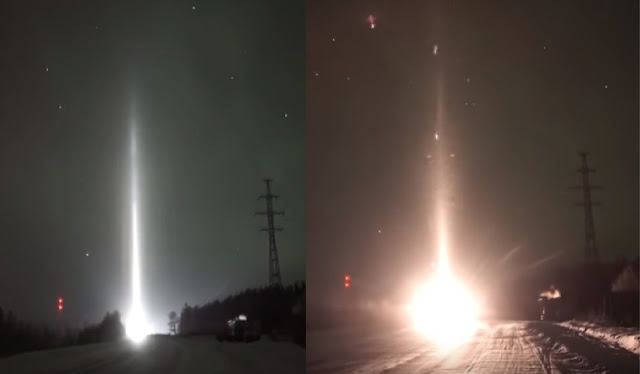
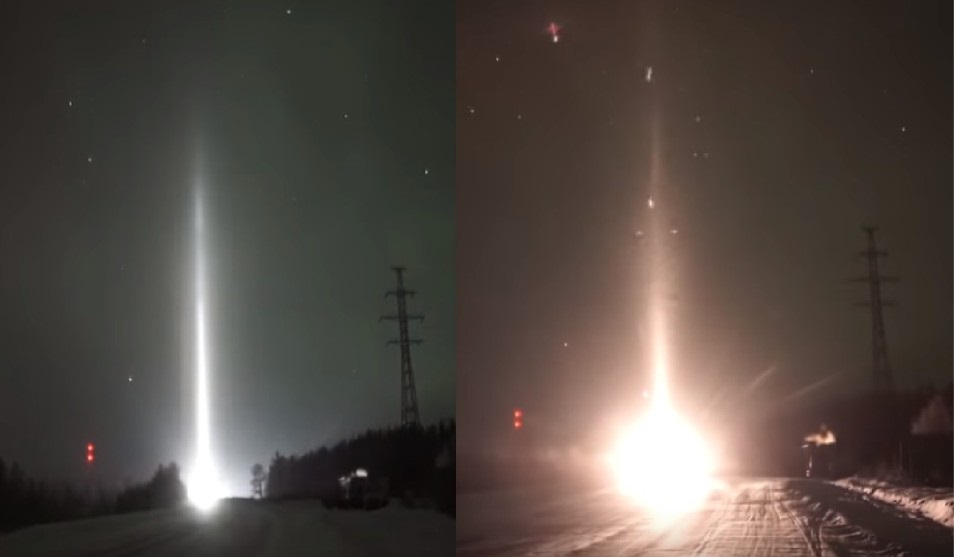

 Amazon says it's still a decade away from full automation at...
 Facebook BANS Alex Jones, Milo Yiannopoulos and other...
 Listening to high-quality music makes us happier, decreases...
 Enormous floating 45-foot long rafts carried feathery sea...





 Ice Age bear and wolf-like carnivores discovered in a...
 Hunt for Hilter's missing uranium: Physicist reconstructs...
 Jawbone reveals ancient human Denisovan ancestor lived...
 Are air conditioners the key to fighting climate change?...


 Would you fly in a pilotless plane?Concept craft ideal for...
 Hubble measurements confirm that the universe is expanding...
 See the far side of the moon like never before: China...
 China plans to build a MOONBASE within the next decade to...