Ontdek de Fascinerende Wereld van UFO's en UAP's: Jouw Bron voor Onthullende Informatie!
Ben jij ook gefascineerd door het onbekende? Wil je meer weten over UFO's en UAP's, niet alleen in België, maar over de hele wereld? Dan ben je op de juiste plek!
België: Het Kloppend Hart van UFO-onderzoek
In België is BUFON (Belgisch UFO-Netwerk) dé autoriteit op het gebied van UFO-onderzoek. Voor betrouwbare en objectieve informatie over deze intrigerende fenomenen, bezoek je zeker onze Facebook-pagina en deze blog. Maar dat is nog niet alles! Ontdek ook het Belgisch UFO-meldpunt en Caelestia, twee organisaties die diepgaand onderzoek verrichten, al zijn ze soms kritisch of sceptisch.
Nederland: Een Schat aan Informatie
Voor onze Nederlandse buren is er de schitterende website www.ufowijzer.nl, beheerd door Paul Harmans. Deze site biedt een schat aan informatie en artikelen die je niet wilt missen!
Internationaal: MUFON - De Wereldwijde Autoriteit
Neem ook een kijkje bij MUFON (Mutual UFO Network Inc.), een gerenommeerde Amerikaanse UFO-vereniging met afdelingen in de VS en wereldwijd. MUFON is toegewijd aan de wetenschappelijke en analytische studie van het UFO-fenomeen, en hun maandelijkse tijdschrift, The MUFON UFO-Journal, is een must-read voor elke UFO-enthousiasteling. Bezoek hun website op www.mufon.com voor meer informatie.
Samenwerking en Toekomstvisie
Sinds 1 februari 2020 is Pieter niet alleen ex-president van BUFON, maar ook de voormalige nationale directeur van MUFON in Vlaanderen en Nederland. Dit creëert een sterke samenwerking met de Franse MUFON Reseau MUFON/EUROP, wat ons in staat stelt om nog meer waardevolle inzichten te delen.
Let op: Nepprofielen en Nieuwe Groeperingen
Pas op voor een nieuwe groepering die zich ook BUFON noemt, maar geen enkele connectie heeft met onze gevestigde organisatie. Hoewel zij de naam geregistreerd hebben, kunnen ze het rijke verleden en de expertise van onze groep niet evenaren. We wensen hen veel succes, maar we blijven de autoriteit in UFO-onderzoek!
Blijf Op De Hoogte!
Wil jij de laatste nieuwtjes over UFO's, ruimtevaart, archeologie, en meer? Volg ons dan en duik samen met ons in de fascinerende wereld van het onbekende! Sluit je aan bij de gemeenschap van nieuwsgierige geesten die net als jij verlangen naar antwoorden en avonturen in de sterren!
Heb je vragen of wil je meer weten? Aarzel dan niet om contact met ons op te nemen! Samen ontrafelen we het mysterie van de lucht en daarbuiten.
The white UFO was seen in the most recent photo taken by the NASA rover. The UFO in the distance is watching the Mars rover...studying this primitive device. I wonder if this is the closest they have come to the rover, or have they actually physically touched it in any way. I have seen many white glowing lights on Mars, but never one hovering and never one the shape of disk. This is new to me. I need to dig deeper into the photos to see if its been caught in any other photos. I would love to see this closer and at a different angle. Scott C. Waring
Are UFOs a Threat to National Security? This Ex-U.S. Official Thinks They Warrant Investigation
Chris Mellon believes the government should more aggressively gather intel on military UFO sightings, some of which were captured on video.
Throughout his distinguished government career, Chris Mellon has been keenly focused on the prospect of unconventional national threats. Now he works with a civilian group called To the Stars Academy of Arts & Science, trying to prod the U.S. defense and intelligence communities to investigate reports of unidentified aerial phenomena (UAPs—also known as UFOs) that maneuver in ways that have no known precedent.
He’s inspired, he says, by the growing number of such sightings in sensitive military contexts—reported by highly trained, highly credible witnesses and corroborated by some of the world’s most sophisticated technology, including several infrared videos shot from fighter jets. He doesn’t claim to know what these unusual crafts might be, nor does he assume they bring “aliens” from afar. To him, they signal a potential high-level strategic threat of unknown origin—one the nation would be foolish to ignore.
Chris Mellon (left) and Luis Elizondo of To the Stars Academy of Arts & Science.
Photo by Andrew Cagle
Mellon is uniquely qualified to assess such threats. Having served as Deputy Assistant Secretary of Defense for Intelligence during the Clinton and George W. Bush administrations, and later as Minority Staff Director of the Senate Intelligence Committee, he was heavily responsible for reviewing agencies and budgets involved in top-secret “black programs” related to things such as special operations and nuclear weapons. Mellon is now an integral part of the investigative team featured on HISTORY's “Unidentified: Inside America’s UFO Investigation.” We talked to him about what’s happening—and what he thinks should be done.
Why raise the alarm now about UFOs/AAVs?
What is really motivating me right now, what really has accelerated and solidified my interest, is the [2004] USS Nimitz case—when I learned of that and began to talk to the military personnel involved. We had multiple naval aviators [reporting] what they saw [wingless UFOs, with extraordinary capabilities] in broad daylight, over an extended period of time. It was corroborated by the most sophisticated air-defense sensor systems on earth, and on multiple platforms operated by multiple independent individuals. So when you start talking about that level of evidence, I think any reasonable person would have to say—this is real, and we should proceed accordingly.
Which means what? Intelligence gathering? Risk assessment?
From a national security standpoint of course, you’re paid to be paranoid, to think about risk. So you do inevitably wonder: Why are these things currently in these locations at these times? Have we been technologically leapfrogged? Could it be the Russians or Chinese—or someone else? And what else may be going on?
There are craft that are violating our airspace with unknown intentions and extraordinary capabilities. And until we get some answers to the questions about the technology involved and the capability, the intentions, we shouldn't rest easy.
I have lived through and survived intelligence failures, including the 9/11 attack on the Pentagon, and the Iraq war. Some of those problems are manifest in the situation again today. And that's part of what concerns me—people are not paying attention or not engaging, and the data is extremely compelling. We don't want to have to relive mistakes we've seen in the past, like in Pearl Harbor, where radar blips were observed and nobody paid attention.
When the Nimitz pilots got back to the aircraft carrier, no one took their report seriously.
It was extraordinary that when the [Nimitz] pilots landed, that they were ridiculed. There was no interest expressed on the part of the intelligence personnel on board, in terms of documenting this, running this up the chain. It was the inverse of what you would normally expect. We spent $50 billion a year and have an intelligence apparatus, in large part to avert strategic surprise. And here we have a case where incredible technology is manifesting itself, intelligently controlled vehicles operating in and around the carrier battle group—and the system doesn't react. It shuts down. It tries to suppress the information.
I think a large part of the reason is because people have a hard time processing something so radical; there's no frame of reference for it.
There's a great deal of agitation on the part of our combat personnel who are encountering these objects—and understandably so. Their concerns are what we're trying to relay. We respect the uniform, we respect those personnel, and we're deeply concerned that the information they’re trying to provide is not being acted on.
If one of these craft bore a Russian insignia, do you think the response would be different?
One of the things that I've often pointed out—and I've never found anyone who disagreed with this—is that if any one of these objects had a Russian insignia on it, the entire system would be electrified and would spring into action.
Sixty years ago, the public was rightly agitated to learn that the Soviet Union had beaten us to space, had deployed the first man-made satellite in orbit. That capability and the momentum they were achieving with their space program understandably generated a lot of concern here in the context of the Cold War. I would hope that people, when they get this information, would react now as the public did then, which is to raise questions about what we are doing in response to that.
How has that question-raising gone for you inside the Beltway?
When you're talking to people about this issue in the Pentagon, you're going to draw blank stares. Even from very high-ranking officials, very, very few of them have any exposure to the actual underlying information and the empirical data. So there's a propensity for people to say, "Well if this were real, I'd know about it, because I'm well plugged in, I've got all these security clearances, and I get access to all this information."
Well, the fact is, the information has not been disseminated through normal channels.
Didn’t the U.S. government investigate UFOs during the Cold War?
In the 1940s, shortly after the war, the military began to encounter an increasing a number of UFOs, and the number of incidents spiked enormously. They recognized the need to try to understand the phenomenon, which resulted in series of investigations culminating in the Air Force’s Project Blue Book, a program that lasted until the late ’60s.
We know from documents that in New Mexico, the director of Air Force security was advocating a study of the phenomenon, because so many people in and around Los Alamos and other facilities where nuclear weapons were being tested, were observing these [anomalous] crafts: scientists, military pilots, civilian pilots, a wide range of individuals.
Ultimately, the government determined it needed to tamp down the public concern, in part because during the Cold War, this could create some kind of hysteria. The government concluded, behind the scenes, that it needed to discredit this phenomenon—not due to a lack of compelling information. It was actually the result of compelling information. When the Air Force undertook this study, they examined 12,000 cases. Of those, 700 were unexplained.
The first question all of us have asked when we've seen the information is: Could this possibly be one of our own programs, a highly classified U.S. test program?
I served in a capacity in which it was my job to conduct oversight of our black programs, and never saw anything of this kind on the books. Moreover, I was once actually specifically asked to determine whether we had a capability along these lines, in response to a query from the chairman of the Senate Appropriations Committee, Senator Bobby Byrd.
I ran that all the way up the flagpole with the Air Force and others, and believe me, everyone respected Senator Byrd. No one was going to lie to him and risk his wrath. And the answer was, “Absolutely not. We don’t have a super-secret black triangle that can go at hypersonic speeds and all that sort of thing.”
Secondly, a technology like this is so radical, it can't just appear out of nowhere. There have to be facilities, there has to have been research and development, a prototype. We don't see any evidence of that anywhere.
Thirdly, these aircraft are being observed operating in and around carrier battle groups that are armed with air-to-air missiles and so forth. We never, to my knowledge, put at risk those personnel—or test personnel—by flying them in an uncoordinated manner against carrier battle groups. That's just not how we operate.
Chris Mellon (right) and Luis Elizondo of To the Stars Academy of Arts & Science.
Photo by Andrew Cagle
Talk about To the Stars Academy, where you work with Tom DeLonge and Luis Elizondo. What’s the mission?
They are not necessarily asserting that these are alien craft or anything of that kind. They are people like me who see this as an incredible mystery and enigma that that needs to be resolved.
We’re helping to change the climate, I think, and establish that there are reasonable level-headed, patriotic people who are willing to speak about this.
My goal, personally, in my role within the organization, is to help break down the bureaucratic walls that are preventing this information from reaching Congress and the American people. I'm not trying to drive any particular agenda. I want to ensure, if possible, that people who have responsibility for national security are informed and have the facts and the data.
Is anyone else exploring these questions?
One of the things that's really exciting to me is that we are one of only three efforts in the world that are [currently] in a position to potentially answer the profound, timeless question “Are we alone in the universe?”
Today, NASA is spending about $20 billion a year. A small portion of that is directed toward trying to uncover, identify exobiology—alien life. They're looking for microbial life on Mars, and they want to use the next generation of space telescopes to examine the atmospheres of different planets for molecules that would be consistent with life. Not necessarily intelligent life, just some kind of life. So that's a very slow-moving, wonderful program—exquisite science, but not likely to answer the question anytime soon.
There's a Russian billionaire who has self-funded a program listening for signals from space that might reveal alien communications. It's a very worthwhile effort. But so far they've had no success. We probably don't even know what to look for. We probably wouldn't recognize the signals. So it's a difficult proposition.
The third effort, that we're associated with, is trying to convince our government to use the capabilities it already has to understand the UFO phenomenon. And if we find out it's the Russians or Chinese or others, then we've done a great thing for the country and for national security.
What are those capabilities? What are you suggesting?
The U.S. government has an extraordinary network of sensors—from geosynchronous orbit 22,500 miles away to the depths of the ocean—and many places in between. And that fairly exquisitely sophisticated and calibrated sensor network is acquiring data that could help answer these questions that no one is even bothering to look at.
We've already paid for it. It’s just sitting there at a computer and no one is even interested enough to say, “Gee, during that period when this carrier battle group was engaging these unknown vehicles in the Pacific… What other signatures are we seeing in that area?” Nobody's analyzing it, no one's pulling it together.
So the first step is to convince the Congress, the executive branch, to simply use the apparatus the taxpayer has already bought and paid for to try to answer the question.
Robotic fighter jets could soon join military pilots on combat missions. Here's why.
The fast-flying drones would scout enemy locations and draw fire that otherwise would be directed at human pilots.
The Boeing Airpower Teaming System is the company's first unmanned system developed in Australia and designed for global defense customers.Boeing
By Jeremy Hsu
Military pilots may soon have a new kind of wingman to depend upon: not flesh-and-blood pilots but fast-flying, sensor-studded aerial drones that fly into combat to scout enemy targets and draw enemy fire that otherwise would be directed at human-piloted aircraft.
War planners see these robotic wingmen as a way to amplify air power while sparing pilots' lives and preventing the loss of sophisticated fighter jets, which can cost more than $100 million apiece.
"These drone aircraft are a way to get at that in a more cost-effective manner, which I think is really a game-changer for the Air Force," says Paul Scharre, director of the technology and national security program at the Center for a New American Security, a think tank in Washington, D.C.
Unlike slow-moving drones such as the Reaper and the Global Hawk, which are flown remotely by pilots on the ground, the new combat drones would be able to operate with minimal input from human pilots. To do that, they'd be equipped with artificial intelligence systems that give them the ability not only to fly but also to learn from and respond to the needs of the pilots they fly alongside.
"The term we use in the Air Force is quarterbacking," says Will Roper, assistant secretary of the U.S. Air Force for acquisition, technology and logistics and one of the experts working to develop the AI wingmen. "So the pilot is calling a play and knows how the systems will respond, but doesn't have to run the play for them."
Training a robotic wingman
Earlier this year, the U.S. Air Force Research Laboratory took an important step in the development of the AI wingmen by announcing its Skyborg program focused on developing the AI necessary to control the drones. As part of the program, Air Force pilots are already flying simulated missions alongside the drones. Roper says drones like the XQ-58A Valkyrie, a 652-mph drone built by Sacramento-based Kratos Unmanned Aerial Systems with a projected manufacturing cost of $2 million apiece, could be AI-enabled and ready to fly within the next three years.
The XQ-58A Valkyrie demonstrator, a long-range unmanned air vehicle, completed its inaugural flight on March 5, 2019 at Yuma Proving Grounds in Arizona.Senior Airman Joshua Hoskins / US Air Force
"I wouldn't be surprised if the AI becomes tailored to individual pilots," Roper says. "They're actually training their own AI that augments their strengths and weaknesses."
The U.S. military isn't alone in working to develop fighter drones. The Future Combat Air System is a $74-million, two-year deal between Germany and France aimed at building a next-generation fighter that would act as a flying command center for swarms of the fighter drones.
The latter program plans for the first test flight to take place in 2020, with the goal of eventually selling the system worldwide.
Partners or replacements?
Given the rise of drones and AI, some experts question whether it makes sense to continue sending human pilots into harm's way. Why not have people on the ground or in an airborne command center give orders to swarms of combat drones — and let them carry out the mission on their own?
"If you just make the human go fly in combat and their wingman is a drone, it doesn't change their risk profile at all — it only adds to their workload," says Missy Cummings, director of the humans and autonomy laboratory at Duke University and a former fighter pilot in the U.S. Navy.
Scharre says the military still needs humans "forward in the fight" to guide combat drones. But he too sees a coming shift in the role of combat pilots — from flying a fighter jet and controlling its weapons systems to acting as a "battle manager" who decides what actions need to be taken by piloted and drone aircraft. That will likely include deciding when drones should use deadly force and selecting specific targets — decisions that the U.S. military is hesitant to hand over entirely to AI in part because research suggests AI is less skilled than humans at adapting to changing or uncertain situations.
"A country that does not have pilots trained as good as we do might see appeal in shifting more and more of their mission to autonomous systems," Roper says. "Well, if they do that, I think we will have the advantage, because those autonomous systems acting alone will never be able to do what people teamed with machines are able to do."
The True Story Behind Project Blue Book: When The United States Government Actually Hunted For Aliens
By Katie Serena
For centuries, humans have wondered if they are alone in the universe. In the early 20th century, the US government set out to figure it out once and for all.
Photograph of the supposed Westall UFO. More than 200 students and teachers at two Victorian state schools allegedly witnessed this UFO, 1966. Project Blue Book would have sought to explain this such incident.
In their new drama series, the History Channel dives into the murky world of UFO sightings and explores a very real, but now defunct, project funded by the US government known as Project Blue Book. The project was responsible for separating fantastic myths from real-life mysteries.
Since man first walked the earth – and especially since he first walked the moon – one question has plagued humankind; are we really alone in this wide, unending universe? In ancient times the appearance of shooting stars sparked interest in extraterrestrial life forms. Now, the so-called signs are much more advanced – floating lights, drone photographs, and first-hand accounts of actual abductions.
But where does the fantasy end and the reality begin? Just how many of those floating lights or grainy photos or wild accounts are real? And if they are, is the government hiding it all from us? Project Blue Book hoped to answer each of these questions.
The Birth Of Project Blue Book
While extraterrestrial enthusiasts are the butt of many a joke, especially where aliens are concerned (looking at you, Guy From Ancient Aliens), it may surprise you to know that they were once taken seriously.
In fact, there was once a very official project, run by the United States Air Force, that specialized in pinpointing unidentified flying objects (UFOs) and determining their purpose. This endeavor was known as Project Blue Book.
It all began in 1947, when an army general named Lt. General Nathan Twining sent a classified memo to the Pentagon. Titled “Flying Discs,” the memo detailed an encounter Twining had had with a group of disc-like aircraft. He claimed that the discs demonstrated “extreme rates of climb, maneuverability (particularly in roll), and motion which must be considered evasive when sighted or contacted by friendly aircraft and radar.”
Getty Images
A picture of a flying saucer photographed by farmer Paul Trent shown flying over his farm, May 11, 1950, in Minnville, Oregon.
Per Twining’s memo, Project Sign was started at the Wright-Patterson Air Force Base near Dayton, Ohio. Project Sign was later replaced by Project Grudge, though neither collected sufficient data or turned out any viable conclusions. Thus, Project Blue Book was born.
According to government documents released under the Freedom of Information Act, Project Blue Book ran officially from 1952 to 1969. Even though the facts of Project Blue Book have been released to the public, there remains a certain amount of mystery surrounding the events, fueling conspiracy theories and casting a veil of doubt over any real facts that stand out.
To sort out fact from fiction is, depending on who you ask, impossible. However, in any mention of the project, two things are consistently conveyed as fact: that the project aimed to a.) determine if UFOs were a threat to national security, and b.) to scientifically analyze any and all collected UFO-related data.
With those two aims in mind, the project was born. Though it wasn’t the first of its kind it was the first to be run effectively and collect usable conclusive data.
Under the guidance of a handful of Air Force generals, the operatives working for the project spent their time essentially on the lookout for UFOs. Cold War panic had instilled in the American public the fear of all things unknown – especially things that came from the sky, and from the general direction of Russia.
Project Blue Book was, in part, supposed to dispell some of this panic and to debunk theories that the Russians were colluding with aliens, or that the United States was under attack from yet another foreign foe.
The Players
Maj. Gen. John A. Samford’s Statement on ‘Flying Saucers,’ Pentagon, Washington, DC, 1952.
The first head to Project Blue Book was Captain Edward J. Ruppelt, an experienced airman and was decorated for his efforts in World War II with the Air Corps. He officially coined the term “Unidentified Flying Object” and was dedicated to scientifically and genuinely researching each UFO sighting. He looked into such popular cases as the Lubbock Lights, which was a UFO in Texas, and a 1952 radar case over Washington D.C.
Ruppelt’s lead scientific consultant was J. Allen Hynek, a prominent astronomer from Chicago. In the TV series, Hynek is be played by Aidan Gillen, a.k.a Little Finger from Game of Thrones.
As a scientist, Hynek’s participation legitimized the project in a way; it wasn’t just a bunch of soldiers searching the sky for mysterious lights, it was now a scientific study of life beyond earth.
PL Gould/IMAGES/Getty Images
J. Allen Hynek, UFO expert circa 1977 in New York City.
Most of Hynek’s job involved explaining away mysterious lights as a natural phenomenon or attributing flying objects to planes, asteroids, or sometimes simply clouds. Hynek went into the project a self-proclaimed skeptic and admitted that sometimes he tried too hard to explain the strange phenomenon away with implausible reason.
However, there were a few events that took place during the project that sparked Hynek’s interest enough for him to continue his own UFO studies long after Project Blue Book shut down. In fact, it was Hynek who would go on to coin the infamous alien term “close encounters.”
Of his change of heart, Hynek once told an interviewer that “You can’t assume that everything is black no matter what…the caliber of the witnesses began to trouble me. Quite a few instances were reported by military pilots, for example, and I knew them to be fairly well-trained, so this is when I first began to think that, well, maybe there was something to all this.”
Several Army generals oversaw Project Blue Book during the almost two decades it ran. Each general had a different regime, different goals and different interpretations of what they were looking for, and sometimes, their findings disputed those of their predecessors.
Perhaps the most change-ridden era in Project Blue Book was that of Major Hector Quintanilla. Under Major Quintanilla’s watch, the project underwent changes, some of which were performed under suggestion from outside forces, something that had rarely been done under previous generals.
One of the first changes to the project was the verification of several lights that had been popping up for years in the same place. Quintanilla’s officers found that many previous researchers had been mistaking Jupiter for UFO lights for several years. He found several similar misidentifications as well.
Perhaps the most important event that happened under Major Quintanilla was a congressional hearing.
Wikimedia Commons
Members of Project Blue Book in 1962, Major Hector Quintanilla is seated at the center.
In 1966, the northern area of New England began to experience a string of potentially extraterrestrial encounters. Lights flashed across the sky in patterned formations and residents reported flying discs hovering in the air.
It got to the point where a congressional hearing was ordered by the House Committee on Armed Services. The lights were explained away as a flying billboard and an airforce training exercise, but speculation still abounded. It took Hynek testifying that he had “not seen any evidence to confirm” extraterrestrial existence to put the matter to bed, but many believe that Hynek may have been fibbing.
Major Quintanilla also oversaw the suggestion of other changes at Project Blue Book. Under direction from Hynek, the project intended to improve upon communication between the scientific community and the researchers. Hynek believed that there was less attention to scientific detail being paid than there was to the public relations aspect of the project.
In other words, Hynek wanted to find real UFOs, while the army was focused on making sure that the public knew that UFOs weren’t real. While the changes were almost implemented, and some of the focus started shifting to real science, the payoff wasn’t what Hynek expected. Before much further research could be done, the project began to come to an end.
“The entire Blue Book operation was a foul-up based on the categorical premise that the incredible things reported could not possibly have any basis in fact.”
Allen Hynek
Indeed, Hynek would later admit that many of his investigations simply defied explanation, though he publicly went along with the skeptical sentiments of the Air Force. Hynek would later reveal that Quintanilla’s “method was simple: disregard any evidence that was counter to his hypothesis.” He added that under Quintanilla, “the flag of the utter nonsense school was flying at its highest on the mast.”
The Findings
Throughout the 17 years that it operated, Project Blue Book collected 12,618 UFO reports. 11,917 of them were explained away as the result of cloud coverage obscuring aircraft lights, classified Airforce training exercises, or mirages in the deserts of the southwestern United States.
However, to conspiracy theorists delight, 701 of those cases remain “unsolved.” Whether the researchers didn’t have time to solve them, or whether they really were aliens flying overhead remains unknown.
Getty Images
This UFO hovered for fifteen minutes near Holloman Air Development Center in New Mexico. The object was photographed by a government employee and was released by the Aerial Phenomena Research Organization after careful study. There is no conventional explanation for the object.
In late 1969, Secretary of the Air Force Robert C. Seamans, Jr. announced that Project Blue Book was coming to an end, as there was no further scientific evidence to prove that UFOs were a matter of national security. The project officially ceased to exist on Dec. 17, 1969, though some research efforts continued until January of the following year.
The official findings of Project Blue Book claimed that four things influenced UFO sightings:
1. Mass hysteria among the American people. 2. Individuals hoping to propose a hoax to seek fame. 3. Psychopathological persons. 4. Misidentification of conventional objects.
The findings also provided a firm response to the existence of UFOs claiming the following:
1. No UFO reported, investigated, and evaluated by the Air Force has ever given any indication of threat to our national security. 2. There has been no evidence submitted to or discovered by the Air Force that sightings categorized as “unidentified” represent technological developments or principles beyond the range of present-day scientific knowledge. 3. There has been no evidence indicating the sightings categorized as “unidentified” are extraterrestrial vehicles.
In short, Project Blue Book, while sparking interest in the existence of UFOs, claimed to have solved the mystery once and for all by chalking it up to natural phenomenon.
Hynek went on to continue his own investigations and established the Center for UFO Studies (CUFOS) in 1973. Of the myriad investigations CUFOS undertook, roughly 80 percent of them can be explained. 20 percent remains a mystery.
But, while the US Airforce may believe the final report of Project Blue Book to be true, the question still lingers in the minds of skeptics and experts alike today: Are we really alone in the universe?
Any intelligent aliens that humans manage to contact probably won't look much like you or me, or the squid-like creatures in the new film "Arrival."
If an extraterrestrial species becomes advanced enough to send signals Earthlings can pick up, it will likely shed its traditional biological trappings and become a form of machine intelligence in rather short order, said veteran alien hunter Seth Shostak.
To make his case, Shostak pointed to the path that humanity appears to be on. The human species invented the radio around 1900 and the computer in 1945, and it's already manufacturing relatively cheap devices with greater computing power than the human brain. [13 Ways to Hunt Intelligent Alien Life]
The development of true, strong artificial intelligence (AI) is therefore not too far off, experts have said. The famous futurist Ray Kurzweil, for example, has pegged 2045 as the year this world-changing "singularity" will hit.
"But maybe it takes to 2100, or 2150, or 2250. It doesn't matter," Shostak said in September during a presentation at the Dent:Space conference in San Francisco. "The point is, any society that invents radio, so we can hear them, within a few centuries, they've invented their successors. And I think that's important, because the successors are machines."
AI will interface with people's bodies for a while, but eventually humans will abandon the wetware and go fully digital, Shostak predicted.
"It'll be like — you build a four-cylinder engine. You put it in a horse to get a faster horse. And pretty soon you say, 'Look, let's get rid of the horse part and just build a Maserati,'" said Shostak, an astronomer at the Search for Extraterrestrial Intelligence (SETI) Institute in Mountain View, California. "So that's probably what's going to happen."
Humans' machine selves will get smarter and more capable incredibly quickly, he added. Humanity's present intelligence is the result of 4 billion years of Darwinian evolution, which uses random variation as its raw material and is not directed toward any particular goal. But the evolution of machine intelligence will be engineered and efficient, Shostak said.
"Once you invent a thinking machine, you say, 'Invent something better than you are,' and you build that. 'Design something better than you are,' and you build that, and so forth," he said.
This idea has serious implications for the search for intelligent alien life. Unlike Earth organisms, super-advanced extraterrestrial machines would not require water or other chemicals to survive, so they would not be tied to their ancestors' home worlds tightly at all, Shostak said. And journeying tremendous distances would not be a big deal to these machines, provided they could access enough energy and raw materials to keep repairing themselves over the millennia, he said.
"We continue to look in the directions of star systems that we think have habitable words, that have planets where biology could cook up and eventually turn into something clever like you guys," he told the Dent:Space audience. "But I don't think it's going to be that way."
Shostak said he isn't counseling his fellow SETI astronomers to stop investigating potentially Earth-like planets such as Proxima b, a recently discovered world that lies just 4.2 light-years away. (And simple life-forms could still inhabit such worlds even if their most intelligent inhabitants went digital and departed long ago, Shostak said.) But it may be a good idea to expand the search to regions of space that would seemingly be attractive to digital life-forms, he said — for example, places with lots of available energy, such as the centers of galaxies.
"That may be where the really clever beings are," Shostak said.
"Maybe what we ought to do is look at places on the sky that connect two places where there is a lot of energy," in an attempt to intercept communications between alien machines, Shostak added.
"This is my message to you: We're looking for analogues of ourselves, but I don't know that that's the majority of the intelligence in the universe," Shostak concluded. "I'm willing to bet it's not."
Dark Forest theory: A terrifying explanation of why we haven’t heard from aliens yet
The Fermi paradox asks us where all the aliens are if the cosmos should be filled with them. The Dark Forest theory says we should pray we never find them.
The Milky Way galaxy has 200 billion stars and perhaps 100 billion planets. If even a small fraction of those planets harbored life, and even if only a pathetic scattering of those planets had lifeforms which became intelligent, our galaxy would be teeming with alien civilizations, some of whom would be either looking for us or discoverable for at least a little while.
The number of alien civilizations the galaxy should have can be determined by an equation, the Drake equation, that turns the above factors into variables. When you plug them into the formula, you find that there should be at least 20 civilizations in our cosmic neighborhood.
This makes the fact that we have yet to find any other life in the cosmos almost shocking when you think about it. This seeming discord between how many advanced civilizations ought to be in space and the lack of evidence for any is known as the Fermi paradox. It has lead to dozens of hypotheses and potential solutions over the last few decades.
Many of the solutions aim at one of the variables in the Drake equation and try to make the supposed number of civilizations lower so it is more reasonable for us to not have met anybody yet.
Some propose that life starting at all is rare, others suggest that the development of intelligence is the bottleneck, others still posit that most civilizations would live for a short time before blowing themselves up or, conversely, never even manage to invent the radio.
One solution, however, is a bit darker than the others
The Dark Forest solution explains why we haven't heard from aliens by positing that they are purposefully keeping quiet.
The reasoning is laid out best in the science fiction novel The Dark Forest, by Liu Cixin. The plot of the book, the second in a series, concerns questions of how to best interact with potentially hostile alien life.
In the novel, the argument is laid out like this:
All life desires to stay alive.
There is no way to know if other lifeforms can or will destroy you if given a chance.
Lacking assurances, the safest option for any species is to annihilate other life forms before they have a chance to do the same.
Since all other lifeforms in the novel are risk-averse and willing to do anything to save themselves, contact of any kind is dangerous, as it almost assuredly would lead to the contacted race wiping out whoever was foolish enough to give away their location. This leads to all civilizations attempting to hide in radio silence.
The reasoning behind the paranoia is explained in this paragraph from the novel:
The universe is a dark forest. Every civilization is an armed hunter stalking through the trees like a ghost, gently pushing aside branches that block the path and trying to tread without sound. Even breathing is done with care. The hunter has to be careful, because everywhere in the forest are stealthy hunters like him. If he finds another life—another hunter, angel, or a demon, a delicate infant to tottering old man, a fairy or demigod—there's only one thing he can do: open fire and eliminate them.
Is there a non-literary approach to this solution? Or is it just an idea that is good for a story?
It was also put forth by scientist David Brin as a potential solution to the lack of radio evidence for alien life. While the variant he describes relies on robotic probes carrying out the task of killing off civilizations other than the one that created it, the core concept remains the same. In this excerpt, he explains why this solution an attractive one for scientific purposes and terrifying for existential reasons:
“It is consistent with all of the facts and philosophical principles described in the first part of this article. There is no need to struggle to suppress the elements of the Drake equation in order to explain the Great Silence, nor need we suggest that no ETIS anywhere would bear the cost of interstellar travel. It need only happen once for the results of this scenario to become the equilibrium condition in the Galaxy. We would not have detected extraterrestrial radio traffic- nor would any ETIS have ever settled on Earth- because all were killed shortly after discovering radio."
He then reminds us that broadcasts of I Love Lucy are racing across the cosmos, ready to reveal our location and sense of humor to anybody who can pick them up.
How plausible is this theory?
This theory has the advantage of only affecting one of the variables in the Drake equation and affecting the one that is the most open to speculation. It also doesn't require us to make broad assumptions about how all alien civilizations behave; a single advanced race that acts this way would be enough to cause the observed situation.
This would also explain why we haven't found any mundane alien radio signals despite a century of being able to pick them up. Just as we accidentally send our radio signals, meant for us, out into space, another civilization would be likely to as well. One possible reason for this is that other civilizations are so fearful of being detected that they purposely avoid sending out any radio evidence of their existence.
It does, however, assume that other species have a similar risk aversion level and reasoning process as we do or that there really is one civilization out there killing off anybody they think can harm them. This is a big assumption.
Why is this theory dark?
We've been screaming our existence to the cosmos for almost one hundred years now. Any aliens within a one hundred light year radius of us would be receiving a barrage of radio signals from our direction. If we had reason to avoid letting aliens know about us, as Stephen Hawking thought we did, we might have a problem.
Why haven't we heard from aliens yet? If this solution is correct, they are purposely hiding in the darkness of space for fear of death. Should we stop broadcasting our existence to the universe too then? Or would alien life be a little nicer than we've been in our history?
Scientists have discovered a massive subsurface deposit of dense material – probably metal – beneath the largest crater on the moon. Did it result from a huge asteroid impact or a former lunar ocean of molten rock?
The South Pole-Aitken Basin (outlined) on the far side of the moon. The unusual mass is beneath the surface in this area.
What is hiding beneath the largest crater on Earth’s moon (in fact, the largest crater in our solar system)? That’s what scientistssaid they’d like to find out after an unusual large mass of material was discovered lurking underneath the lunar South Pole-Aitken Basin.
Imagine taking a pile of metal five times larger than the Big Island of Hawaii and burying it underground. That’s roughly how much unexpected mass we detected.
The intriguing peer-reviewed findings were first published in the April 15, 2019, issue of the journal Geophysical Research Letters. From the abstract:
The South Pole-Aitken Basin is a gigantic impact structure on the far side of the moon, with an inner rim extending approximately 2,000 kilometers [1,200 miles] in the long-axis dimension. The structure and history of this basin are illuminated by gravity and topography data, which constrain the subsurface distribution of mass. These data point to the existence of a large excess of mass in the moon’s mantle under the South Pole-Aitken Basin. This anomaly … likely extends to depths of more than 300 km [about 200 miles].
False-color map of the far side of the moon, showing the location of the unusual massive subsurface deposit beneath the South Pole-Aitken Basin.
Image via NASA Goddard Space Flight Center/ University of Arizona/ Baylor University.
So what is this mysterious mass?
It is most likely metal of some kind, given its density and the fact that it is weighing the crater basin floor down by more than half a mile (0.8 km). An ancient asteroid impact would be a logical solution. Computer simulations of large asteroid impacts suggest that, under the right conditions, an iron-nickel core of an asteroid might be lodged into the upper mantle of the moon (the layer between the moon’s crust and core) during an impact, in this case the impact that created the South Pole-Aitken Basin.
Researchers analyzed data from spacecraft used for NASA’s Gravity Recovery and Interior Laboratory (GRAIL) mission to measure very small changes in gravity around the moon. As James explained:
When we combined that with lunar topography data from the Lunar Reconnaissance Orbiter (LRO), we discovered the unexpectedly large amount of mass hundreds of miles underneath the South Pole-Aitken basin. One of the explanations of this extra mass is that the metal from the asteroid that formed this crater is still embedded in the moon’s mantle. We did the math and showed that a sufficiently dispersed core of the asteroid that made the impact could remain suspended in the moon’s mantle until the present day, rather than sinking to the moon’s core.
The South Pole-Aitken Basin is estimated to have been formed about 4 billion years ago. The solar system was a very chaotic place back then, with collisions occurring between rocky and metallic bodies such as asteroids and young protoplanets – planetary embryos – on a pretty much regular basis. It seems quite feasible, then, that this is how the dense subsurface mass on the moon got there.
One other plausible theory, however, is that the mass might be a concentration of dense oxides associated with the last stage of lunar magma ocean solidification. It is theorized that the moon once had an ocean of sorts – not of water, but of magma, or molten rock – which then cooled and solidified. In the process, the oxides could have been deposited in this region, forming the large mass.
These scientists say an asteroid impact is still the leading hypothesis, however, and James referred to the South Pole-Aitken Basin as one of the best natural laboratories for studying catastrophic impacts in the early solar system.
Topographic map of the South Pole-Aitken Basin on the moon.
The South Pole-Aitken Basis is the largest known crater in the solar system. Measured from outer rim to outer rim, it’s about 1,600 miles (2,500 km) in diameter and 8.1 miles (13 km) deep. It was named for two features on opposite sides of the basin: Aitken Crater on the northern end and the lunar south pole at the other end. The basin’s existence had been suspected since 1962, based on data from the Luna 3 and Zond 3 orbiters, but was not confirmed until the mid-1960s by the Lunar Orbiter program.
On January 3, 2019, China’s Chang’e 4 spacecraft landed within this basin, in the smaller and younger Von Kármán Crater. This was the first time that any spacecraft has landed on the far side of the moon. It has studied samples of material thought to have come from deeper within the moon’s mantle, excavated during the impact that created the crater. This is a unique opportunity to explore in detail not only the crater, but a small portion of the larger basin as well.
Bottom line: The massive dense deposit below the largest crater on the moon is a very interesting discovery, and may be metal left over from a huge asteroid impact 4 billion years ago.
Water levels were only sitting at six to 10 inches on average, according to Back Bay resident Andrew Kotaska.
(Ingrid Wood/Facebook)
The phenomenon was as quick as it was dramatic.
Water levels dropped in Yellowknife's Back Bay dropped by approximately 25 centimetres in about the space of an hour, exposing large swaths of lake bed (and all the detritus littered on it) for about 30 minutes, before shooting back up.
Buffalo Airways' Mikey McBryan shared photos of the event on his official Facebook page Tuesday, garnering dozens of comments and more than 250 shares.
People raised theories that ranged from aliens, to lunar tides to meteorological events.
In the absence of reported UFO events in the Yellowknife area last night, the sudden drop in water levels did at least resemble something celestially caused.
Was it the moon?
While the National Ocean Service doesn't have tidal data on Great Slave Lake, it does have information about tides in similarly sized bodies of water.
"True tides … do occur in a semi-diurnal [twice daily] pattern on the Great Lakes," says a fact sheet from the organization.
"Studies indicate that the Great Lakes spring tide, the largest tides caused by the combined forces of the sun and moon, is less than five centimetres in height."
Theories about what happened have ranged from lunar tides to high winds pushing water out. (Ingrid Wood/Facebook)
Other fluctuations in lake levels are big enough to mask this effect, which means the Great Lakes are considered to be non-tidal.
How about glaciers?
Andrew Kotaska, who has lived near Back Bay for 13 years, points to another phenomenon that affects water levels. The land around Yellowknife is rising.
During the last ice age, Yellowknife was buried below a giant glacier, and the effects of that glacier can still be seen on the land to this day in a process called isostatic rebound.
"It's, you know, a thousand or two thousand metres of ice," he said. "The weight is incredible — a quadrillion tons pushing down on the Earth's crust. Now that it's all melted, the Earth's crust is slowly rebounding back up."
The effect is measurable. According to research done by Natural Resources Canada, lake level recession in the Yellowknife area has marched on unabated at an average rate of five millimetres a year for the past 8,000 years.
It's a bit of a head-scratcher.-
Terri Lang, meterologist, Environment Canada
Kotaska says isostatic rebound wouldn't cause the Earth's crust to suddenly spring up 25 centimetres in one night, but it does explain why, on average, Back Bay is getting shallower.
So if it wasn't glaciers, what was it?
Is the answer in the wind?
"It's a bit of a head scratcher," said Terri Lang, a meteorologist with Environment Canada.
Another popular theory is high winds could have blown the water out of Back Bay in a weather event called a seiche (pronounced "say-sh").
"It seems to me if it was caused by very, very strong winds, then those winds probably would have needed to come from the southwest," explained Lang. "And usually they have to be sustained winds as well for a long period of time."
Lang said the Yellowknife airport reported gusts of only 10 km/h at around midnight Monday evening. Any lightning strikes in the area — to indicate a storm was passing through — were to the north, and had ended hours before.
Water Survey of Canada data show water levels rose and dropped dramatically between 8 p.m. June 17 and 4 a.m. June 18. (Water Survey of Canada)
But this doesn't kill the seiche theory.
Hydrometric data from Yellowknife Bay show water levels rose and fell dramatically between 8 p.m. Monday evening and 4 a.m. Tuesday morning — the biggest oscillation being about 25 centimetres just before midnight.
This sloshing water effect was indeed caused by wind, according to Nathen Richea, director of water management and monitoring with the N.W.T. Department of Environment and Natural Resources.
"When winds are from a particular direction for a sustained period and wind direction aligns with a lake's orientation … increased water levels can occur," he stated in an email to CBC.
"Once the winds recede or reverse, water levels rebound or can drop for a short period of time until the water levels equalize on the lake."
The effect was dramatic in Back Bay simply because water levels have been extremely low this season anyway. Kotaska estimates they have ranged from six to 10 inches near the docks this season.
The naked metallic core of a dead, early planet should soon get a visitor. Orbiting the sun between Mars and Jupiter, the bizarre space rock is the target of a NASA mission that just entered its final design phase this week.
The space agency has targeted the date of Jan. 31, 2026, for the arrival of a spacecraft in the neighborhood of Psyche, a 125-mile-wide (200 kilometers) object in the asteroid belt. Planetary scientists have long suspected that Psyche — named after the nymph who married Cupid in Greek mythology — made up almost entirely of iron and nickel, might be the exposed core of a long-dead protoplanet from the early days of our solar system. The planet could have once boasted a girth similar to that of Mars before ancient collisions ripped its outer, rocky shell from its relatively dinky core.
Workers on the Psyche mission hope that their probe might provide more conclusive evidence for that theory and reveal new information about the swirling cloud of matter from which our ancient neighborhood first formed. [Black Marble Images: Earth at Night]
"With the transition into this new mission phase, we are one big step closer to uncovering the secrets of Psyche, a giant mysterious metallic asteroid, and that means the world to us," Lindy Elkins-Tanton, an Arizona State University planetary scientist and principal investigator on the Psyche mission, said in a statement. [Doomsday: 9 Real Ways Earth Could End]
Psyche has a mass of about 49 billion billion lbs. (22 billion billion kilograms), making it 0.03% the mass of our moon. While it's the eleventh most massive known asteroid in the solar system — a few hundredths of the mass of monsters like Ceres and Vesta — those even-larger asteroids are made up primarily of rock and ice. Psyche is by far the largest known object of its nearly-pure metallic type orbiting our sun.
The Psyche probe should orbit the metal object for a couple weeks, collecting data about its age and how it formed. During this final design phase, engineers will draw up final plans for and build many of the parts that will make up the final spacecraft. (They won't be assembled into one piece until the next phase, in 2021.)
If everything goes according to plan, the mission should launch in August 2022, swing by Mars in 2023 and approach Psyche three years later.
On June 30th, 1908, the boreal forests of Tunguska, Siberia, were shaken (and subsequently flattened) by a massive explosion. It wasn’t man-made — an asteroid pierced our planet’s atmosphere and exploded before hitting the surface.
Artistic rendering of a meteorite. Image via Pixabay.
This explosion, known as the Tunguska event, would make history. It was the largest impact event humanity has ever witnessed first-hand and would lead the UN to declare June 30th the International Asteroid Day.
While definitely awe-inspiring, the event didn’t lead to the massive loss of life that, say, the Chixulub Impactor caused (that’s the pebble that killed the dinosaurs). So why did one space-rock kill off the largest beasts to ever roam the Earth, while another merely flattened 2,000 square kilometres (770 square miles) of forest without causing a single human death? Well, the secret is all in the definition. Today, we’ll take a look at that simple yet oh so important distinction between an asteroid and a meteorite.
What is an asteroid?
The word itself gives us a glimpse into the nature of asteroids. “Aster” is the ancient Greek word for ‘star’, and the suffix “-oid” is used to show an incomplete or imperfect resemblance to the root word. “Asteroid”, therefore, means ‘star-like’ or, taken more literally, ‘star-like, but not quite’.
Keep in mind that for the ancient Greeks looking up into the night sky, planets and stars all looked the same; ‘aster’, therefore, can be understood as both ‘star’ and ‘planet’.
Artist’s concept of an asteroid belt around the star Vega. Oumuamua, the first object to pass through our solar system that was confirmed to come from outside it — originates from this system. Image credits NASA / JPL-Caltech.
Asteroids are chunks of space rock ranging from one meter to almost a thousand kilometers in diameter. The larger ones may rightfully be considered minor planets (or dwarf planets/planetoids). Ceres is a good example of this latter category, and the largest known asteroid. These large ones closely resemble planets: they’re roughly spherical and have at least partly-differentiated core structures. They’re generally considered baby planets that didn’t quite make it to adult status.
Most asteroids, however, are quite petite. They also don’t seem to prefer a particular shape. To the extent of our knowledge, they either formed from the primordial matter of a stellar system or via subsequent impacts between its first rocky bodies. Most asteroids in our neighborhood today make a home in the asteroid belt (surprising, I know).
So, to recap: asteroids are chunks of rock or metal (or both) in space. They’re mostly made up of telluric elements (such as carbon, metals, and silica), which tend to be quite resilient. They’re either planets that couldn’t grow large enough or their shattered remnants. Most known ones hang out in the asteroid belt between Mars and Jupiter, but they can take on all sorts of orbits (or none at all!)
What is a meteorite?
The Hoba meteorite in Grootfontein, Namibia, is the largest meteorite known to have landed on Earth. Estimated to weigh around 60 tonnes, it has never been moved from the spot it was discovered in. Hoba is currently a very visited touristic attraction. Image credits Sergio Conti / Wikimedia.
A meteorite is any space-borne body that enters a planet’s or moon’s atmosphere, survives the violent trek through it, impacts the surface, and leaves behind solid pieces of material. The name comes from the ancient Greek words “meta” and “aerio”, which put together roughly translate to ‘something hanging up in the air’.
Meteorites start their life as meteoroids (small meteors) or asteroids. On contact with an atmosphere, meteorites experience immense friction, causing them to spontaneously combust (at up to 3,000 degrees Fahrenheit, or 1,649 degrees Celsius). These fireballs — colloquially called shooting or falling stars — are meteors.
The life of a meteor is short — and hellish. The friction they experience is enough to raise surface temperatures beyond the material’s boiling point, vaporizing it layer by layer. In fact, it’s enough to break apart its (and the atmosphere’s) constituent molecules into ionized particles (basically plasma), which then recombine, releasing energy as light. This is the tail you see on a shooting star.
Meteor over Sardinia, seen on the 8th of May 2016. Image credits Migebuff / Wikimedia.
The extreme violence of the final impact generally shaves off much of a meteor’s mass — the remaining kernel is our meteorite. Keep in mind that geologists generally call impactors large enough to create a crater ‘bolides’, while astronomers tend to prefer ‘meteorite’.
Depending on chemical composition, angle and speed of atmospheric entry, as well as sheer happenstance (whether it breaks apart or not), a meteor needs to range in size between a marble and a basketball for even a tiny portion of it to reach our planet’s surface.
Meteorites under 2mm (0.07in) in diameter are called micrometeorites. Meteorites that impact celestial bodies apart from Earth (and thus don’t necessarily pass through an atmospheric layer, such as those hitting the Moon) are called extraterrestrial meteorites.
As a side note, these burning chunks also spawned the associated term ‘meteorology’, or ‘the knowledge of things happening up in the air’, the branch of atmospheric sciences involved heavily in the study and forecasting of weather events.
So… what’s the difference between them?
As a general guideline, most meteorites are asteroids — but very few asteroids are meteorites.
Ceres, for example, is a moon and an asteroid. We do NOT want it to be a meteorite, too! Image credits NASA / JPL-Caltech / UCLA/ MPS / DLR / IDA.
The definitions tend to overlap a little. Let’s take size, for example. An astronomer will call any of these space projectiles ranging between a molecule and a chunk several hundred feet wide (usually up to 100m / 330ft in diameter) a meteoroid. Anything larger than that, generally, is considered an asteroid.
However, that leaves out chemistry, which is also a hard delineator for what is (and isn’t) an asteroid. Comets are globs of ice and dust formed in the freezing corners of the cosmos (i.e. outside of solar systems). They also have a little pocket of atmosphere around them (a distinctive feature for comets), generated by evaporation from this ice. Their interactionwith heat and particles generated by stars is what creates those long, elegant plumes that are quintessentially comet-y.
Comets can and do fly towards planets and moons. The beefier ones also generally make it through any atmospheric layer and impact the surface. What makes comets generally fall short of being termed ‘meteorites’ is that they’re made up of volatile materials that don’t survive post-impact. However, some do — and also leave behind traces of their impact in the form of impact glass or diamonds. While definitely traces of impact, it can be seen as a technicality to consider such elements remnants of the impacting body itself. I personally do. So, following the impact-and-debris definition, I’d consider comets impacting the surface to be meteors as well.
And herein lies the difference. To be a meteorite, one needs to impact a planet or moon and leave behind solid debris. To paraphrase Iain Banks (my favorite author) the meteorite only lives as it is falling. For asteroids, it’s sufficient to be. Have the right chemical make-up, don’t be too tiny, don’t sublime too much when around stars, and voila! You’re an asteroid.
Most asteroids are nice and never impact any planets or moons. The overwhelming majority of them, actually, are content to orbit around in their asteroid belts or on whatever path they’re set on. But we should never take their absence for granted; it only takes one to come visiting for humanity to become a thing of the past.
Mars has clouds too — but some are formed by falling meteorites, not rain.
Rendering of Mars produced using MOLA altimetry data. Image credits Kevin Gill / Flickr.
Researchers from the University of Colorado at Boulder have obtained new insight into the clouds that dot the Red Planet. While these clouds have long been documented in Mars’ middle atmosphere (which begins about 18 miles or 30 kilometers above the surface), little was known about how they form in the thin, dry ‘air’ there.
New research shows that these wispy bodies are actually accumulations of “meteoric smoke”, the icy dust thrown up when meteorites or space debris break up in the planet’s atmosphere.
Dust rain
“We’re used to thinking of Earth, Mars and other bodies as these really self-contained planets that determine their own climates,” said Victoria Hartwick, a graduate student in the Department of Atmospheric and Ocean Sciences (ATOC) and lead author of the new study.
“But climate isn’t independent of the surrounding solar system.”
The most peculiar fact about Mars’ clouds is that they exist. The Big Bang notwithstanding, you can’t make something out of nothing, and clouds subscribe to this rule as well. Down here on Earth, low-lying clouds form on the backs of tiny particles — things like grains of sea salt or dust that get blown high into the air. These act as anchors of sorts for water vapor to condense on, growing into larger and larger drops, forming the large puffs of white or gray you can see from the ground.
To the best of our knowledge, however, that same mechanism doesn’t exist on Mars. There’s no sea salt to be blown up, and even if there was, the atmosphere is less dense so it’s less able to hold particles aloft. So Hartwick’s team turned their attention to meteors.
Around two to three tons of space debris rain down on Mars, on average, every single day, the authors explain. As this material, ranging from meteorites to space dust, comes into contact with the planet’s atmosphere, it starts to burn and break apart. In essence, a torrent of space dust ‘rains’ down on Mars.
So far, the theory seemed plausible — now the team needed to test it. To find out if this dust could generate Mars’ mysterious clouds, the team employed massive computer simulations that attempt to mimic the flows and turbulence of the planet’s atmosphere. After introducing meteors into the simulations, clouds started to appear.
“Our model couldn’t form clouds at these altitudes before,” Hartwick said. “But now, they’re all there, and they seem to be in all the right places.”
The findings are supported by previous research showing that a similar mechanism may help seed clouds near Earth’s poles (where the magnetic shield is weakest), the team explains. However, we shouldn’t expect to see enormous, roiling thunderstorms of cosmic dust above Mars: the clouds Hartwick’s team studied are very thin, “cotton candy-like clouds” explainsSpace.
“But just because they’re thin and you can’t really see them doesn’t mean they can’t have an effect on the dynamics of the climate,” Hartwick said.
Depending on the area, these clouds could cause temperature swings of up to 18 degrees Fahrenheit (10 degrees Celsius), the team’s model shows. The findings flesh out our understanding of Martian clouds and could help us better understand how ancient Mars regulated its climate, and how it was able to hold liquid water on its surface.
The paper “High-altitude water ice cloud formation on Mars controlled by interplanetary dust particles” has been published in the journal Nature Geoscience.
The Formative Years: Giant Planets vs. Brown Dwarfs
It appears more and more likely that large planets and brown dwarfs have very different roots. That’s based on preliminary results from a new Gemini Observatory survey of 531 stars with the Gemini Planet Imager (GPI),
Animation showing the 617 observations conducted during GPIES from November 2014 to April 2019 (right) and the location of the stars in the southern sky (left). Open circles indicate system (like 51 Eri at 2 o’clock) which have been visited multiple times. Stars indicated by a red dot have a disk of material. Blue dots are planetary systems (with one planet at least). Brown dot are binary systems with a brown dwarf.
Credits: P. Kalas, D. Savransky, R. De Rosa and GPIES.
The GPI Exoplanet Survey (GPIES), one of the largest and most sensitive direct imaging exoplanet surveys to date, is still ongoing at the Gemini South telescope in Chile. “From our analysis of the first 300 stars observed, we are already seeing strong trends,” said Eric L. Nielsen of Stanford University, who is the lead author of the study, published in The Astronomical Journal.
In November 2014, GPI Principal Investigator Bruce Macintosh of Stanford University and his international team set out to observe almost 600 young nearby stars with the newly commissioned instrument. GPI was funded with support from the Gemini Observatory partnership, with the largest portion from the US National Science Foundation (NSF). The NSF, and the Canadian National Research Council (NRC; also a Gemini partner), funded researchers participating in GPIES.
Imaging a planet around another star is a difficult technical challenge possible with only a few instruments. Exoplanets are small, faint, and very close to their host star — distinguishing an orbiting planet from its star is like resolving the width of a dime from several miles away. Even the brightest planets are ten thousand times fainter than their parent star. GPI can see planets up to a million times fainter, much more sensitive than previous planet-imaging instruments. “GPI is a great tool for studying planets, and the Gemini Observatory gave us time to do a careful, systematic survey,” said Macintosh.
GPIES is now coming to an end. From the first 300 stars, GPIES has detected six giant planets and three brown dwarfs. “This analysis of the first 300 stars observed by GPIES represents the largest, most sensitive direct imaging survey for giant planets published to date,” added Macintosh.
Credit: NASA
Brown dwarfs are more massive than planets, but not massive enough to fuse hydrogen like stars. “Our analysis of this Gemini survey suggests that wide-separation giant planets may have formed differently from their brown dwarf cousins,” Nielsen said.
The team’s paper advances the idea that massive planets form due to the slow accumulation of material surrounding a young star, while brown dwarfs come about due to rapid gravitational collapse. “It’s a bit like the difference between a gentle light rain and a thunderstorm,” said Macintosh.
“With six detected planets and three detected brown dwarfs from our survey, along with unprecedented sensitivity to planets a few times the mass of Jupiter at orbital distances well beyond Jupiter’s, we can now answer some key questions, especially about where and how these objects form,” Nielsen said.
This discovery may answer a longstanding question as to whether brown dwarfs — intermediate-mass objects — are born more like stars or planets. Stars form from the top down by the gravitational collapse of large primordial clouds of gas and dust, while planets are thought — but have not been confirmed — to form from the bottom up by the assembly of small rocky bodies that then grow into larger ones, a process also termed “core accretion.”
Artist’s conception of how WISE 0855, a brown dwarf, might appear if viewed close-up in infrared light.
Artwork by Joy Pollard, Gemini Observatory/AURA.
“What the GPIES team’s analysis shows is that the properties of brown dwarfs and giant planets run completely counter to each other,” said Eugene Chiang, professor of astronomy at the University of California Berkeley and a co-author of the paper. “Whereas more massive brown dwarfs outnumber less massive brown dwarfs, for giant planets the trend is reversed: less massive planets outnumber more massive ones. Moreover, brown dwarfs tend to be found far from their host stars, while giant planets concentrate closer in. These opposing trends point to brown dwarfs forming top-down, and giant planets forming bottom-up.”
More Surprises
Of the 300 stars surveyed thus far, 123 are at least 1.5 times more massive than our Sun. One of the most striking results of the GPI survey is that all hosts of detected planets are among these higher-mass stars — even though it is easier to see a giant planet orbiting a fainter, more Sun-like star. Astronomers have suspected this relationship for years, but the GPIES survey has unambiguously confirmed it. This finding also supports the bottom-up formation scenario for planets.
One of the study’s greatest surprises has been how different other planetary systems are from our own. Our Solar System has small rocky planets in the inner parts and giant gas planets in the outer parts. But the very first exoplanets discovered reversed this trend, with giant planets skimming closer to their stars than does moon-sized Mercury. Furthermore, radial-velocity studies — which rely on the fact that a star experiences a gravitationally induced “wobble” when it is orbited by a planet — have shown that the number of giant planets increases with distance from the star out to about Jupiter’s orbit. But the GPIES team’s preliminary results, which probe still larger distances, has shown that giant planets become less numerous farther out.
“The region in the middle could be where you’re most likely to find planets larger than Jupiter around other stars,” added Nielsen, “which is very interesting since this is where we see Jupiter and Saturn in our own Solar System.” In this regard, the location of Jupiter in our own Solar System may fit the overall exoplanet trend.
But a surprise from all exoplanet surveys is how intrinsically rare giant planets seem to be around Sun-like stars, and how different other solar systems are. The Kepler mission discovered far more small and close-in planets — two or more “super-Earth” planets per Sun-like star, densely packed into inner solar systems much more crowded than our own. Extrapolation of simple models suggested GPI would find a dozen giant planets or more, but it only saw six. Putting it all together, giant planets may be present around only a minority of stars like our own.
In January 2019, GPIES observed its 531st, and final, new star, and the team is currently following up the remaining candidates to determine which are truly planets and which are distant background stars impersonating giant planets.
The next-generation telescopes — such as NASA’s James Webb Space Telescope and WFIRST mission, the Giant Magellan Telescope, Thirty Meter Telescope, and Extremely Large Telescope — should be able to push the boundaries of study, imaging planets much closer to their star and overlapping with other techniques, producing a full accounting of giant planet and brown dwarf populations from 1 to 1,000 AU.
“Further observations of additional higher mass stars can test whether this trend is real,” said Macintosh, “especially as our survey is limited by the number of bright, young nearby stars available for study by direct imagers like GPI.”
Background:
GPI is specifically designed to search for planets and brown dwarfs around other stars, using a mask known as a coronagraph to partially block a star’s light. Together with adaptive optics correcting for turbulence in the Earth’s atmosphere and advanced image processing, researchers can search the star’s neighborhood for Jupiter-like exoplanets and brown dwarfs up to a million times fainter than the host star.
In our Solar System, Jupiter is the largest planet, being about 318 times as massive as the Earth and lying about five times farther from the Sun than does the Earth. Brown dwarfs range from 13 to 90 times the mass of Jupiter; and while they can be up to a tenth the mass of the Sun, they lack the nuclear fusion in their core to burn as a star — so they lie somewhere between a diminutive star and a super-planet.
An early success of GPIES was the discovery of 51 Eridani b in December 2014, a planet about two-and-a-half times more massive than Jupiter, that orbits its star beyond the distance that Saturn orbits our own Sun. The host star, 51 Eridani, is just 97 light-years away, and is only 26 million years old (nearby and young, by astronomy standards). The star had been observed by multiple planet-imaging surveys with a variety of telescopes and instruments, but its planet was not detected until GPI’s superior instrumentation was able to suppress the starlight enough for the planet to be visible.
GPIES also discovered the brown dwarf HR 2562 B, which is at a separation similar to that between the Sun and Uranus, and is 30 times more massive than Jupiter.
Most exoplanets discovered thus far, including those found by NASA’s Kepler spacecraft, are found via indirect methods, such as observing a dimming in the star’s light as the orbiting planet eclipses its parent star, or by observing the star’s wobble as the planet’s gravity tugs on the star. These methods have been very successful, but they only probe the central regions of planetary systems. Those regions outside the orbit of Jupiter, where the giant planets are in our Solar System, are usually out of their reach. GPI, however, endeavors to directly detect planets in this parameter space by taking a picture of them alongside their parent stars.
The Gemini results support those from these other techniques, including a recent study of exoplanets discovered by the radial velocity method that found the most likely separation for a giant planet around Sun-like stars is about 3 AU. The finding that brown dwarfs occur with a frequency of only about 1%, independent of stellar mass, is also consistent with previous results from direct imaging surveys.
COAST TO COAST AM. Earthfiles investigative reporter Linda Moulton Howe discussed details of a “Planet Nine” in our solar system. The announcement, a year ago, of a 9th Planet, ten to twenty times the mass of Earth, is one of the greatest astronomical mysteries as we enter 2017.
She spoke with the discoverer of the planet, Prof. Michael Brown, an astronomer at Caltech, who ironically was responsible for knocking Pluto out of the 9th planet category, and into dwarf planet status. Brown shared that he’s using telescopes in Hawaii to nail down Planet Nine’s location.
He believes it was once near Uranus and Neptune, but its orbit was jostled and it was thrown out much further in a slingshot effect. Further, he explained, the new planet’s mass is so large that it causes our entire solar system, including the sun, to tilt at 6 degrees.
Clif High: UFOs, Alien Encounters, & Secret Space via Richard Dolan
Clif High and Predictive Linguistics. PL is the process of using computer software to aggregate vast amounts of written text from the internet by categories delineated by the emotional content of the words and using the result to make forecasts based on the emotional ‘tone’ changes within the larger population. A form of ‘collective sub-conscious expression’ is a good way to think of it.
Predictive linguistics can be used to forecast trends at many different levels, from the detail of sales to individuals, all the way up to forecasts about emerging global population trends. Richard Dolan is one of the world’s leading researchers and writers on the subject of UFOs and believes that they constitute the greatest mystery of our time. He is the author of two volumes of history, UFOs and the National Security State, both ground-breaking works which together provide the most factually complete and accessible narrative of the UFO subject available anywhere.
He also co-authored a speculative book about the future, A.D. After Disclosure, the first-ever analysis not only of how UFO secrecy might end, but of the all-important question: what happens next?
There are plenty of people who believe crop circles are made by humans. There are plenty of crop circles that are so large and complex that even skeptics wonder if there’s something more going on in those fields. It turns out that in one field of crops circles in France – there is. A farmer went out to check on the beautiful circles he found covering two adjoining wheat fields and discovered a nude middle-aged couple who had just completed their application for admission into the “Crop Circle Club.” If you don’t know what that means, this may change the way you look at (or in) crops circles forever.
If you build it, they will come.
“At the beginning, from the ground, I could not see what it was, I went to Château du Haut-Koenigsbourg (castle on top of the plain) to take height, and there I discovered part of the land.I saw a work of geometric circles in 30 ares of field that are three hectares in Saint-Hippolyte. It is not ugly to see, it is very beautiful, but I can not be happy having lost part of my wheat crop.”
On June 12, Thomas Jehl got a call from a neighbor in Saint-Hippolyte, a commune (township) in northeastern France near the German border. The neighbor was letting him know that two of his wheat fields were now partially and geometrically covered with a series of crop circles measuring over 200 meters (656 feet) from end-to-end. (See the photos here and here.) He was obviously flattered to be flattened in a wheat sense, but had no idea what else he was in for, other than losing some of his crop to the circles and their mysterious makers.
“It would really surprise me if I could do something about it. It’s a shame, because this time it had been a great season for wheat.”
Jehl didn’t report the cercles de culture (cultural circles – the French term for crop circles) to the police because he’s not really sure if they can find the culprits.
“It is true that the wheat is not broken, as if something had come from above and cracked it, but I do not believe that it is the work of someone who is not an inhabitant of the Earth. Then I saw nothing, so I can not know.I do not even know when it was done, it was between this weekend and Wednesday, I guess.”
News of the artistic cercles de culture (the top figure has 5 circles aligned and an outer ring; the second figure has 19 aligned circles and a ring around the central group) spread quickly and by the weekend there were cars from France and Germany lined up to take in the sight. According to the news source L’Alsace, the spectators included a middle-aged couple Jehl stumbled upon in flagrante delicto … and in nothing else.
“The case even takes a crisp turn when we learn that the farmer would have fallen Friday night on a couple who was getting dressed, in the middle of ears of wheat. No doubt the two forty-year-olds wanted to profit directly and without any form of barrier, supposed positive waves.”
While crop circles aren’t generally thought of as aphrodisiacs or fertility aids, other paranormal sites are, including some stone circles and giant ground drawings like the Cerne Abbas (Cerne Giant) in Dorset, England, which is 180 feet tall and has a 20-foot penis (that may be a clue). The current crop circle crop in Europe is up to four this year,with two each in France and the UK. While this is the first one to host a couple joining the Crop Circle Club (like the Mile High Club, only a mile lower), this could be a new hidden compensation for farmers or a new category of amateur porn video.
On the other hand … what if the circle really WAS made by aliens? Are they entertained, mortified … or both?
An unidentified flying object has been filmed from a mountain overlooking top secret US air base Area 51 by a hiker while hiking just miles away Area 51.
The hiker states: "Area 51 from Tikaboo Peak the base is very active. A great look into Area 51 just as the snow stopped."
"To get the best video, and pictures of Area 51 out there, I do feel the weather had a lot to do with the great shots I was able to get. Between the snowstorms, and clouds the base would just illuminate long enough for me to film, and take pictures."
RT America’s Natasha Sweatte reports on this sighting.
The white UFO was seen in the most recent photo taken by the NASA rover. The UFO in the distance is watching the Mars rover...studying this primitive device. I wonder if this is the closest they have come to the rover, or have they actually physically touched it in any way. I have seen many white glowing lights on Mars, but never one hovering and never one the shape of disk. This is new to me. I need to dig deeper into the photos to see if its been caught in any other photos. I would love to see this closer and at a different angle. Scott C. Waring
Alien Orb Size Of Car Close To Passenger Jet During Sunset, June 2019, Video, UFO Sighting News.
Date of sighting:June 2019 Location of sighting: unknown This UFO was recorded passing a passenger jet during sunset last week. The UFO is coming very close the the plane and if we compare size, then the UFO would be about the size of a car. That is no small object to be so close to an aircraft with so many passengers! I wonder if it even showed up on radar or not? Believe it or not, this does happen daily at most airports around the world. Than means it happens tens of thousands of times a day, but few ever look up and record a jet. Scott C. Waring
UFO Shoots From Volcano In Live Cam Raw Footage, June 2019, UFO Sighting News.
Date of sighting: June 16, 2019 Location of sighting: Volcano in Mexico Here is a video recorded from the live cam of the famous Mexican volcano Popocatepetl. The video shows the UFO shooting up out of the side of the volcano almost as a rocket would. This is really extrodinary footage and important proof that an alien base does sit 5-6 miles below this volcano. Scott C. Waring
Absolute Proof Of USAF Flying UFO Disks In Area 51, June 2019, Video, UFO Sighting News.
Date of sighting:June 2019 Location of sighting: Area 51, Nevada, USA This is a short video of Area 51 viewed from a hilltop. The person is zooming in on a hanger there where they witness a whiteish UFO exiting the hanger. Everyone knows that they test alien tech over there. The disks they have they received from aliens and have converted them so humans can fly them. But the pilots need lots of practice time to learn to control these craft well. Amazing video. Scott C. Waring
American President Trump Reveals He Had Meeting on UFOs
In a new development that will either ignite dozens of more conspiracy theories or douse twice as many as new ones, United States President Donald Trump has said he met with officials about UFOs although he reiterated that he did not particularly believe in them.
Trump revealed that the military briefed him on UFO sightings.
He said that he had seen, read, and heard and did one very brief meeting on it. He pointed out that people were saying they saw UFOs, but he did not believe it particularly.
Despite Trump’s disinterest on UFOs, the military has been keeping an eye on the skies recently. After the increase in UFO reports, the Navy recently set new guidelines for reporting UFOs entering US aerospace, making sure all sightings get the proper investigations.
Last month, the Pentagon admitted that Advanced Aerospace Threat Identification Program (AATIP) was involved in research and investigation of UFOs. Defense Department spokesman Christopher Sherwood revealed that the AATIP’s main focus was investigating UFO event.
The AATIP was shut down in 2012, but only in 2017, the AATIP’s existence was known. Sherwood claimed that the government still has a department until now to handle alleged sightings of alien aircraft.
Greenish-Yellow Pulsating Light UFOs Keep Pace With A Korean Airliner
The passengers onboard of a Korean airliner were left baffled after seeing a UFO flying beside them. Lucas Kim managed to snap pictures of the strange aerial event as it split into six separate objects leaving travelers confused.
The UFO kept pace with the airliner flying towards Thailand. Lucas Kim looked out of his window when he noticed something similar to the scene from The Twilight Zone episode, Nightmare at 20,000 Feet.
Kim first thought it was just another jet, but he realized it was too close for comfort. Something was not right with the scene, so he grabbed his phone and started recording the UFO.
He could not believe what he was observing as it wasn’t a plane at all. He saw the UFO split into six mysterious objects surrounded by a greenish-yellow pulsating light.
Luis Elizondo – Former Head of the Pentagon’s UFO Project
Luis Elizondo is a career intelligence officer whose experience includes working with the U.S. Army, the Department of Defense, the National Counterintelligence Executive, and the Director of National Intelligence. As a former Special Agent In-Charge, Elizondo conducted and supervised highly sensitive espionage and terrorism investigations around the world. As an intelligence Case Officer, he ran clandestine source operations throughout Latin America and the Middle East. Most recently, Elizondo managed the security for certain sensitive portfolios for the US Government as the Director for the National Programs Special Management Staff. For nearly the last decade, Elizondo also ran a sensitive aerospace threat identification program focusing on unidentified aerial technologies. Elizondo’s academic background includes Microbiology, Immunology and Parasitology, with research experience in tropical diseases. Elizondo is also an inventor who holds several patents.
These bright lights were filmed in the sky above Conway, Pennsylvania on 4th June 2019.
Witness report:
driving home when husband spotted 3 amber colored colored lights in the sky moving in a slow straight line, then one moved to make it a triangle,and after about 1 min approx. the first one disappeared, leaving 2 in a straight line, then one a little higher and they turned white, after about 2 min. more they just disappeared.
MJ Banias is the author of “The UFO People: A Curious Culture.” He is an educator, writer and blogger. He was a former field investigator with the Mutual UFO Network, has been featured on multiple podcasts and radio shows, and contributes to Mysterious Universe and RoguePlanet. His work has been included in Fortean Times, FATE Magazine, and in a book entitled UFOs: Reframing the Debate. He lives in Canada with his wife, two children, and a massive cat. In this episode we talk to MJ about what he had found when taking a closer look at those who are interested in the UFO phenomenon.
Are UFO people a community on their own? How does the UFO topic effect the general public? What does MJ feel the future for the UFO topic holds? How is all of this changing as these recent UFO developments permeate the wider public? We will cover all of this and more in this fascinating episode.
Strange object filmed from a plane over Port of Prince, Haiti 1-Jun-2019
This strange partially invisible object was filmed from a plane over Haiti on 1st June 2019.
Witness report:
unknown flying object at huge speed. the heading of the plane is 335 as on film, it looks like a could but according to plane position, and relative position of the object it can t be a cloud, cause that would say this could is supersonic…..rmk : aircraft speed is around 450kts at the moment….
Do these Pentagon pictures prove UFOs ARE real? TOM LEONARD investigates after US Navy pilots claimed to have spotted fast-flying objects during late-night training
Several U.S. Navy aviators came forward to claim UFO sightings during training
They say objects were spotted over Eastern seaboard between 2014 and 2015
Pilots say objects flew at hypersonic speeds without leaving engine exhaust
They said that the UFOs were also able to stop quickly and turn suddenly
The fighter pilots could hardly conceal their surprise as they tracked the object moving at incredible speed above the waves. 'Wow, what is that, man?' says one excitedly. 'Look at it fly!'
Infrared cockpit-camera footage taken on a later sortie by the same U.S. Navy squadron reveals another immensely fast-flying object, this one spinning in mid-air and moving against a 120-knot wind, again accompanied by commentary from totally baffled airmen.
Although the footage shows only one of these objects, a pilot is heard to say: 'There's a whole fleet' showing up on his monitors. And as the one in the film turns slowly in the air, a shocked voice chimes in: 'Look at that thing! It's rotating!'
Between the summer of 2014 and March 2015, it's now emerged, these unexplained objects were spotted almost every day over the skies off the U.S. East Coast.
Highly qualified U.S. Navy pilots — flying from the nuclear-powered aircraft carrier USS Theodore Roosevelt and training for active duty in the Persian Gulf — told their superiors the objects seemingly defied the laws of physics.
About 30-40ft long and shaped like a Tic Tac mint, they had no wings or rotors — in fact, they had no discernible means of propulsion or flight — and, yet, they could hover in the sky, slow suddenly and accelerate almost instantaneously to hypersonic speeds of a mile a second.
Between the summer of 2014 and March 2015 these unexplained objects were spotted almost every day over the skies off the U.S. East Coast
Radar showed they could fly as high as 80,000ft. One pilot compared their remarkable manoeuverability to a ping-pong ball bouncing off a wall. The resulting G-force would crush any humans inside.
A near collision was recorded in an official mishap report, when, in late 2014, the pilot of a Super Hornet fighter jet almost hit one of them. The pilot said it looked like a sphere encasing a cube.
'These things would be there all day,' said Lt Ryan Graves, a Super Hornet pilot of ten years' service. He and four other pilots reported their sightings to the Pentagon and to Congress, but only now have they spoken out publicly.
Their accounts — backed by the infrared camera footage and reports of a strikingly similar encounter that occurred a decade earlier — appear to have bounced the U.S. Navy into action.
Amid claims it has ignored or covered up sightings in the past, it has now been forced to admit it does investigate what it calls 'unexplained aerial phenomena', and that it has just introduced a formal, albeit secret, procedure for military personnel to report what the rest of us know as UFOs.
Former U.S. officials have welcomed the move, saying the government needs to take the issue seriously and remove the stigma attached to reporting incidents.
clearly this is not some giant hoax and, given the weight of evidence, it's hard to swallow the arguments of sceptics who say these newly publicised sightings can be explained by human error or equipment failure .
In which case, many experts agree, only two possible explanations remain: either someone or some country has secretly developed jaw-droppingly advanced technology, or the giant flying Tic Tacs don't come from this planet.
Highly qualified U.S. Navy pilots — flying from the nuclear-powered aircraft carrier USS Theodore Roosevelt and training for active duty in the Persian Gulf — told their superiors the objects seemingly defied the laws of physics
Nobody at the Pentagon is saying the objects were extraterrestrial, and scientists stress that more mundane explanations are often found for such incidents. (Last week, for instance, billionaire Elon Musk's company SpaceX, sent 60 satellites into orbit, prompting excited stargazers across the world to report UFOs.)
The pilots' evidence was sent for analysis at a secret Pentagon outfit called the Advanced Aerospace Threat Identification Program, which investigates encounters between UFOs and U.S. military.
Angry that his government wasn't doing more to counter what could be a profound security threat, the boss of the Identification Program, Luis Elizondo, decided to release the footage of the UFO encounters into the public domain, and in 2017 resigned his post.
Mr Elizondo is believed to be the most senior U.S. official ever to say that the UFO phenomenon is real.
And now, two years on from his release of the footage, some of the pilots involved in the encounters appear to corroborate his view, speaking to the New York Times and makers of a forthcoming History Channel documentary series, Unidentified: Inside America's UFO Investigation.
They say they only started noticing the UFOs after their Eighties-era radar was modernised. Initially, they ignored them, thinking they were false radar tracks.
However, they kept appearing as the carrier group sailed between Virginia and Florida, at varying altitudes, at immense speeds far faster than any fighter jet.
Whatever fuelled the UFOs, it was clearly much more advanced than anything known to the U.S. Navy. They were able to tear around the sky for 12 hours at a time, when a navy jet could only manage an hour before having to refuel, says Lt Graves.
A fellow pilot, Lt Danny Accoin, says he encountered the objects twice. The first time he picked one up on his radar, he set his plane to head towards it, albeit flying 1,000ft below.
Amid claims it has ignored or covered up sightings in the past, it has now been forced to admit it does investigate what it calls 'unexplained aerial phenomena', and that it has just introduced a formal, albeit secret, procedure for military personnel to report what the rest of us know as UFOs
Even though it was clearly visible on his radar, missile system and infrared camera, he couldn't see it through his helmet camera.
Then, the pilots started seeing the objects with their naked eyes. 'No distinct wings, no distinct tail, no distinct exhaust plume,' says Lt Accoin. 'It seems like they were aware of our presence, because they would actively move around us.'
Lt Graves said he once bumped into a squadron mate who had just returned from a mission 'with a look of shock on his face'. He told him he had 'almost hit one of those things' as he and another pilot flew just 100ft apart. Something suddenly flew right between them.
The pilots initially believed they had stumbled into a top-secret U.S. drone project, but, after the near miss, they reasoned the Pentagon wouldn't possibly behave so irresponsibly as to let them fly so close.
It's not the first time that U.S. Navy pilots have reported disturbing encounters in broad daylight with a 'giant Tic Tac'.
In November 2004, two Super Hornets were on a routine training mission over the Pacific, 100 miles out from San Diego, when a cruiser, the USS Princeton, radioed them and ominously asked if they were armed.
The ship had spent two weeks tracking strange, unidentified aircraft that appeared suddenly at an altitude of 80,000ft, then plunged towards the sea. At 20,000ft, they stopped and hovered before either disappearing out of radar range or shooting straight up again.
Cmdr David Fravor and his colleagues only had dummy missiles, but they were directed to the last known location of one of the objects. In the sea, they saw a large object just below the surface of the water, and another, 50ft above, hovering erratically. They described it as 40ft long, white, wingless and shaped like an oblong pill.
As Cmdr Fravor flew towards it, the second object rose to meet him at a fast speed and acceleration. Flying with the other pilot was an unidentified weapons systems operator, who is now a senior naval officer.
She told the History Channel: 'The hair on the back of my neck was standing up. I was thinking: 'I'm going to be watching a disaster here.' You're wondering: 'How can I possibly fight this?' '
Instead, the object suddenly peeled away at a speed that Fravor admits left him feeling 'pretty weirded out'.
He was even more 'weirded out' when the Princeton told him its radar showed the object had reappeared under a minute later, 60 miles away at the planes' precise rendezvous point.
How did it travel so fast, at a speed of 3,700 mph (the Super Hornet's top speed is 1,190 mph), and how did it know his rendezvous point? Another jet was swiftly sent up with an infrared camera and captured a grainy 90-second film of the 'Tic Tac' flying slowly, then zipping away fast.
Sceptics question whether there are bugs in the planes' imaging systems, or whether the pilots were tricked by atmospheric effects and reflections.
However, Kevin Day, the Princeton's senior radar operator at the time, says his screen showed well over 100 UFOs over the course of that week. 'Watching them on the display was like watching snow fall from the sky,' he says.
Cmdr Fravor says: 'There is a capability out there, I don't know where it's from. I'm not saying it's from outer space, but I'm not saying it's from here either.'
Some physicists have outlined how 'field propulsion' systems can move an object at astonishing speeds without any propellant, by creating external force fields so the space around the object moves rather than the object.
However, the theory is purely speculative — perhaps even less feasible than little green men in physics-defying spaceships.
WHAT IS THE SECRET PENTAGON DEPARTMENT INVESTIGATION ON UFO ATTACKS?
UFO enthusiasts have argued for decades that the U.S. government has been covering up the existence of unidentified craft containing alien visitors.
The idea that a hush-hush government outfit was investigating sightings and other bizarre phenomena famously provided the basis for TV drama series The X-Files.
Now, it seems the cult series wasn't such a flight of fancy after all.
The shadowy Advanced Aerospace Threat Identification Program's existence was intentionally buried in the defense department's $600 billion (£448.76 bn) annual budget, as were its headquarters, deep within the labyrinthine Pentagon building.
Based on the fifth floor of C Ring, the secret department has spent years investigating reports of unidentified flying objects.
Although the Pentagon officially stopped funding the project in 2012, insiders told the New York Times it is still operating. And, more tantalizingly, intelligence experts who ran it, and politicians who backed it, insist its research has not been fruitless.
Having investigated myriad reports from U.S. servicemen of encounters between unknown objects and military planes, they are convinced that nothing in this world can explain them.
Navy Pilot Says Fleet of UFOs Followed US Aircraft
During training missions between 2014 and 2015, seasoned pilots of the U.S. Navy experienced several encounters with UFOs. Impossible flying objects moving at hypersonic speeds at altitudes up to 30,000 feet were recorded on their aircraft cameras and radar. Pilots reported that these unidentified flying objects had no visible means of propulsion.
Six pilots reported seeing UFOs from the aircraft carrier U.S.S. Theodore Roosevelt between 2014 and 2015 during flights along Virginia to Florida.
Two of the involved pilots share their stories in a documentary series of History Channel featuring two aerial encounters. They show clips of one little white speck and one giant, dark blob. These unusual objects are later known as Go Fast and Gimbal, respectively.
According to Lt Danny Accoin, these UFOs had no distinct wing, tail, and exhaust plume and somewhat aware of their presence as these mysterious objects would actively move around them.
The lieutenant said that it was possible to say that it was just a false alarm when an unusual reading showed up on the radar for the first time, but it was another story as they got multiple sensors reading the exact the same thing.
Accoin stated that he encountered UFOs twice and his tracking equipment, radar and infrared cameras on aircraft detected UFOs both times but did not manage to capture them on his helmet camera.
F-18 pilot Lt. Ryan Graves claimed that a squadron of UFOs followed his Navy strike group for months in the eastern coast of the U.S. Graves said the UFOs reappeared in March 2015, after Roosevelt was deployed to the Arabian Gulf.
The lieutenant said that they had issues with the UFOs when they went out to the Middle East.
Following this spate of UFO sightings, the U.S. Navy issued official guidelines in 2015 for personnel to report and investigate UFOs. Earlier this year, those Navy protocols were updated, mandating that all data will be classified information and won’t be available to the general public.
UFO sightings have been reported as early as 1400 BC, and Cook County is one of those famous places allegedly visited by aliens. A local Cook County woman had caught the attention of Dr. James McDonald after she claimed of witnessing a UFO in the sky. Her case was one of several sightings featured in U.S. Air force national study “Condon Report.”
The effort of scientist McDonald to locate the woman led to a correspondence with Adolf “Ade” Toftey of Cook County News-Herald editor.
This is the story of searching the local woman, featuring original letters from the Cook County Historical Society archives.
This feature is produced by Martha Marnocha and a collaboration between the Cook County Historical Society and WTIP.
Special appreciations to Erik Hahn as the voice of scientist James McDonald.
New UFO video of a strange activity over Area 51 in Nevada.
Witness report:
I shot this video from my backyard in the Summerlin area of Las Vegas, Nevada on the night of May 24, 2019, while aiming my camera directly towards the center of the base at Area 51 which is 77 miles away. The final object in this video took off so fast it only occupied one frame of the video. This is only the second time in more than five years that I’ve filmed an object that was leaving the ground at such a speed that it created a rainbow of colors. In both videos, it only occupied a single frame of the video. This isn’t a camera glitch because there definitely would have been more of them along the way had there been some kind of mechanical issue with either of the cameras. This is just one more piece of evidence that Area 51 is still very active. I am confident that it is Area 51 because the distance between here and there isn’t that far and there is nothing in between that would account for this type of object.
Anthony Lappe – Producer of Unidentified: Inside America’s UFO Investigation
Open Minds UFO Radio: Anthony Lappé is a New York-based showrunner, director and investigative journalist. He was the executive editor of the Guerrilla News Network, and produced their award-winning Showtime Iraq war, documentary, BATTLEGROUND. As a commentator, he has appeared on media outlets around the world, including the BBC, Radio France, Radio Havana, Fusion, NPR and Sky News. He has written for The New York Times, Details, ESPN: The Magazine, New York Magazine, VICE and the South China Morning Post. He is the author of the graphic novel, SHOOTING WAR. For VICELAND, he was the showrunner of BLACK MARKET WITH MICHAEL K. WILLIAMS. For HISTORY, he has helmed AMERICA’S WAR ON DRUGS, RFK: THE KENNEDY FAMILY REMEMBERS and the upcoming UNIDENTIFIED: INSIDE AMERICA’S UFO INVESTIGATION.
An unidentified flying object has been spotted on the Red Planet’s surface, alien conspiracy theorists have claimed.
Some conspiracy theorists made the controversial claim on a strange coloured object found on Google Mars. A YouTube video was uploaded to support the claim. They said that the mysterious anomaly was actually a UFO that has crashed into a crater on Mars.
The unusual thing looks like a thick disc spacecraft.
The video shows burn and scorch marks after rotating the compass.
Conspiracy theorists speculated they saw an edge to the surface of the blue disc. They said that the UFO was a biologically-grown spacecraft because of its rough edges resemble something organically grown.
They believe that the discovery shows one of the most detailed living ships of aliens.
With the use of photo-editing software, they estimated the scorch mark trail was measuring around 6.25 miles and the UFO measuring approximately 1.28 miles across.
Other commenters of the video thought that it could be an underground base rather than a disc because the blue light area that looks like a light coming up from a massive hole.
We have accomplished a lot in our (relatively) short time on Earth. We’ve sent humans to the Moon and to live in space, developed massive and sophisticated telescopes to see the farthest reaches of the cosmos, and even rocketed rovers to Mars and probes to the edge of our solar system. However, a number of organizations have taken humanity’s voyage into the final frontier a step farther. NASA, the European Space Agency, and the research collective behind the Search for Extraterrestrial Intelligence (SETI) have been working tirelessly to find out if we are alone, once and for all.
Already, a number of projects exist that scan the stars for signs of intelligent life. And despite the fact that many of them have been looking to the skies for decades, we have yet to make contact. And that’s a bit of a problem.
0. The Paradox That Started It All
To put it mildly, our solar system is very old. In fact, scientists are still figuring out just how old — clues gathered from meteorites suggest it is almost 5 billion years old, and surrounding star systems are likely billions of years older. While interstellar travel still seems to be a distant dream, new technology is born every year that allows us to scan the skies for signals from civilizations in the most distant corners of the cosmos. The number of known alien worlds and star systems discovered through these technologies continues to rise, but our creative methods of listening to space have not yet revealed anything that resembles extraterrestrial communications or civilizations.
Given the size and age of our universe, it seems like we should have made contact. We, of course, have not.
In the early 20th century, physicist Enrico Fermi asked himself a now-famous question: Given the scope of our universe, why haven’t we found intelligent extraterrestrial life yet (or why haven’t they found us)? This is sometimes called the Fermi Paradox or the Great Silence. Scientists have floated many possible answers in the century since Fermi first asked this question. Here are some of the most plausiblereasons why he haven’t made first contact.
Basic probability asserts that alien life must exist. Since we haven’t made contact yet, one theory goes, there must be something barring life from interstellar travel or, at least, barring it from communicating with other alien species. This barrier is known as the “Great Filter,” and it is a force or event that stops a civilization from getting to the aforementioned point of interstellar travel or communication.
If the theory holds true, there are two primary reasons that we haven’t made contact: Because societies kill themselves off before they reach a state advanced enough to explore the stars orinterstellar travel is simply not possible on a technological scale. Neither option is particularly pleasing.
And according to the experts behind the work, the filter event is of equal or greater probability than the existence of alien life itself. This is the point argued by Robin Hanson, a research associate at the Future of Humanity Institute at Oxford University, in his discussion of the topic.
No alien civilizations have substantially colonized our solar system or systems nearby. Thus among the billion trillion stars in our past universe, none has reached the level of technology and growth that we may soon reach. This one data point implies that a Great Filter stands between ordinary dead matter and advanced exploding lasting life.
Since we have not been able to detect alien life (or leave the solar system much, for that matter), how far are we from being caught up in some event that would bar us from ever finding aliens? “The easier it was for life to evolve to our stage, the bleaker our future chances probably are,” Hanson writes. In other words, the more life there is in the cosmos, the greater the likeliness that we are about to reach a cataclysmic, life-ending event or reach the cosmic limits of technological advancement.
2. Do Not Disturb The Aliens
Another hypothesis asserts that alien civilizations certainly exist, but they’re simply inactive. That’s the “aestivation hypothesis” (aestivation refers to an organism’s state of prolonged inactivity, similar to a bear hibernating or a frog that buries itself in sand during hot weather), which was put forth by researchers from Oxford’s Future of Humanity Institute and the Astronomical Observatory of Belgrade.
The theory, published in a paper in the Journal of the British Interplanetary Society in 2017, states that aliens may be “hibernating” until the environmental conditions are just right to become active and build their super society. The researchers argue that the laws of thermodynamics directly limit computation, as computing technologies need to be cooled in order to function. This makes it exceedingly difficult to create advanced technologies, as keeping them cool at scale quickly becomes prohibitively difficult. So the aliens are falling into a dormant until, to be blunt, the universe cools.
But distilling the development of a civilization to the kinds of conditions that our current, and somewhat imperfect, models can predict could be reductive. What if intelligent extraterrestrial life has found a way around the thermodynamic conditions that limit its ability to compute? “What if there are other forms of value that can be generated?” the study authors write. If they’re wrong about the relationship between thermodynamics and technology, the aestivation hypothesis would be moot. In this case, perhaps one of the other ideas here holds true.
According to the “Gaian Bottleneck” hypothesis, life needs particular environmental conditions to develop, and they’re not so common. Astrobiologists at the Australian National University penned their explanation to the Fermi Paradox in 2016.
Extinction is “the cosmic default for most life that has ever emerged on the surfaces of wet rocky planets in the Universe,” the researchers wrote. That’s because a planet has to be actually inhabited for it to be habitable, because organisms change the concentration of greenhouse gases in the atmosphere. A Catch-22 emerges: no life without habitability, no habitability without life.
For alien life to persist, the researchers write, it must hang on: “like trying to ride a wild bull. Most life falls off.” Life can only take place with the presence of an unlikely feedback loop. In this case, Earth is the exception to the rule.
4. Trapped In Deep Oceans
In 2015, after nearly a decade in transit, NASA’s New Horizons spacecraft became the first to do a close flyby of Pluto. It offered humanity its first look at its icy surface and raised questions about the possibility of subsurface oceans of water, and lots of methane and nitrogen. These questions put Pluto on a short but growing list of worlds with buried oceans trapped under a thick crust of ice and rock (some of the other worlds are Saturn’s moons Enceladus and Titan, as well as Jupiter’s moons Europa, Callisto, and Ganymede).
Those oceans figure prominently into another theory of where life might be lurking, one that Alan Stern, the principal investigator for New Horizons, touches on. Since buried oceans form a much more stable ecosystem than flowing surface streams, changes such as altering tides and dissipationtake place over a longer time period. A hard outer shell protects hypothetical life in the oceans from a harsh climate and a lethal mix of gases on the surface. “Impacts and solar flares, and nearby supernovae, and what orbit you’re in, and whether you have a magnetosphere, and whether there’s a poisonous atmosphere — none of those things matter,” Stern told Space.com.
Any intelligent alien life that forms in these deep oceans would have to overcome a big hurdle to reach inhabitants of other worlds: drilling through that thick, protective crust. All that work would only get them to the surface — sending signals to other planets become even more unlikely.
For the past eighty years or so, we’ve been listening for signs of extraterrestrial life with radio technology. The Allen Telescope Array, situated 470 km (290 miles) northeast of San Francisco, is one of the biggest — since 2007, 42 dishes have stood at the ready to scan the skies regularly in the hope of receiving radio signals from extraterrestrial life.
But what if extraterrestrial life doesn’t operate on those frequencies? Attempts at contact could simply be passing us by simply because we don’t comprehend the right wavelengths.
Instead of using telescope arrays and scanning the skies for radio signals, Duncan Forgan at the University of St. Andrews in Scotland suggests creating a galactic communications network. The same way we blink our high beams to send a signal to other drivers, we could use the shadow that Earth creates when it passes in front of the Sun to send a message to our fellow inhabitants of the universe. Forgan suggests that we build powerful lasers that contain those encoded messages, which are sent out as we pass in front of the Sun.
“If you want to communicate with someone on the other side of the galactic centre, there’s lots of stuff in the way – dust, stars, a big black hole – so you can take the long way around using the network,” Forgan tells New Scientist. Rather than letting intergalactic messages get lost in the vastness of space, civilizations in different galaxies could agree to use this “galactic communications network” to ensure their messages get to their intended recipients – a unified system to cut through the chatter.
6. We Are Being Impatient
We’ve only been actively reaching out for alien life for about a century — a mere blip in the long history of the solar system and of the universe overall. Evan Solomonides, an astrophysics and mathematics undergrad and researcherat Cornell University, suggests that it could take a while — about 1,500 years from now, to be precise — before we hear from any extraterrestrials.
In a paper submitted to the American Astronomical Society, Solomonides examines the probability of finding life. “We predict that under 1 percent of the galaxy has been reached at all thus far, and we do not anticipate to be reached until approximately half of the stars/planets have been reached.” Solomonides believes that we will have explore around half of the Milky Way galaxy before we hear anything, which will take a while since we’ve barely explored our own galactic neighborhood.
Solomonides is careful to note that the 1,500 years is not a deadline. “This is not to say that we must be reached by then or else we are, in fact, alone. We simply claim that it is somewhat unlikely that we will not hear anything before that time.”
Editor’s Note: This article was updated to correct the names of Saturn and Jupiter’s moons.
The Planetary Society's LightSail 2 spacecraft is finally ready to attempt flight by light.
The crowdfunded, loaf-of-bread-sized CubeSat is set to blast off from Kennedy Space Center on June 24 aboard a SpaceX Falcon Heavy rocket. Liftoff is set for 11:30 p.m EDT (0330 June 25 GMT), the start of a 4-hour launch window.
Roughly 2 weeks after launch, the spacecraft will deploy its 344-square-foot (32-square-meter solar sail) — about the size of a boxing ring — and use the slight pressure from solar photons to gradually raise its orbit. If successful, LightSail 2will become the first spacecraft in Earth orbit to fly on sunlight alone, demonstrating that solar sailing is a viable method of propulsion for CubeSats. It will also mark the culmination of a 10-year project with a legacy deeply intertwined with Planetary Society history.
Launch!
LightSail is hitching a ride to orbit aboard the U.S. Air Force's Space Test Program 2 (STP-2) mission, which will send a total of 24 spacecraft into 3 different orbits. To do this, the Falcon Heavy's upper stage will have to complete long coast periods and 4 upper stage burns. The complexity of the flight plan has prompted SpaceX to call it "among the most challenging launches in SpaceX history."
The Falcon Heavy's center core has not flown before, but the side boosters are being reused from the Arabsat 6A flight in April. This will be the first time the Department of Defense has used a rocket with "flight-proven" boosters, giving government officials a chance to check out SpaceX's refurbishment procedures for future missions. After liftoff, the plan is for the side boosters to once again fly back to Florida and land upright, while the center core touches down on the autonomous drone ship Of Course I Still Love You in the Atlantic Ocean. The recovery of the boosters, while one of the most exciting parts of any SpaceX mission, is not a requirement for launch success.
SpaceX's Falcon Heavy rocket lifts off carrying the Arabsat-6A communications satellite on April 11, 2019.
At launch, LightSail 2 will be tucked inside Prox-1, a suitcase-sized spacecraft designed by students at Georgia Tech. Prox-1 was originally designed to chase down and rendezvous with LightSail 2, but its mission is now focused solely on deploying LightSail 2 into orbit.
The Falcon Heavy upper stage’s first goal is an orbit with an apogee, or high point, of 865 kilometers above Earth’s surface, and a perigee, or low point, of 300 kilometers. There, it will deployroughly a dozen CubeSats and a small satellite named Oculus-ASR.
The orbits of Venus, Earth and Jupiter may explain the sun's regular 11-year cycle, a new study suggests.
A team of researchers from Helmholtz-Zentrum Dresden-Rossendorf (HZDR), a research institute in Dresden, Germany, showed that the magnetic fields of those three planets influence the cycle of solar activity, resolving one of the bigger questions in solar physics.
"Everything points to a clocked process," Frank Stefani, a researcher at HZDR and lead author of the new study, said in a statement. "What we see is complete parallelism with the planets over the course of 90 cycles."
The researchers compared observations of solar activity — like sunspots, solar flares and coronal mass ejections — from the last thousand years with planetary alignments in order to show that there was in fact a correlation, according to the statement.
While other stars like the sun go through similar cycles, marked by a change in levels of radiation or number and size of sunspots, previous models have been unable to explain what causes the very regular, 11-year cycle of Earth's sun.
However, this new study shows a connection between the tidal forces of Venus, Earth and Jupiter — whose gravitational pull tugs on the sun's plasma — and the steady rhythm of the sun's magnetic activity. "There is an astonishingly high level of concordance," said Stefani.
The researchers said they hope to use the same model of the sun's magnetic field to more effectively quantify and predict space weather events, or solar storms that spew potentially harmful radiation.
The study was published May 22 in the journal Solar Physics.
Cotton candy clouds in the middle atmosphere of Mars may owe their life to dying meteors.
New research suggests that the atmospheric destruction of meteors creates tiny particles of dust that can seed the thin clouds. The discovery may help solve the mystery of how the wispy clouds grow in the middle atmosphere, improving scientists' understanding of the Martian climate both of today and in the past.
"Clouds don't just form on their own," Victoria Hartwick, a graduate student at the University of Colorado Boulder and lead author on the new paper, said in a statement. "They need something that they can condense onto."
On Earth, water molecules stick to tiny grains of sea salt or dust blown into the air until they form thewhite wisps visible from the ground as clouds. But Mars lacks sea salt, and scientists haven't been able to explain the presence of midatmospheric clouds by studying dust particles on the Red Planet.
Nevertheless, Mars and Earth have another cloud seed in common. Previous studies have shown that dust from destroyed meteors, known as meteoritic smoke, may help build clouds near Earth's poles. Hartwick and her colleagues investigated if meteoritic smoke could similarly create the clouds that hover in the middle atmosphere of Mars, below other known types of clouds.
"Our model couldn't form clouds at these altitudes before [we included meteorite impacts]," Hartwick said. "But now, they're all there, and they seem to be in all the right places."
The research was published today (June 17) in the journalNature Geoscience.
A glimpse of ancient Mars
Scientists have already cracked the secret of a different Martian cloud type. Forty miles (65 kilometers) above the Red Planet's surface, clouds of carbon dioxide ice float through the atmosphere. These clouds form as mineral dust is swept up from the surface, allowing water molecules to attach to the material and grow clouds.
But circulation models have struggled to explain the thinner clouds that lie from 18 to 37 miles (30 to 60 km) above the surface, in the middle of the atmosphere. These thin, cotton candy-like clouds are smaller than most Earth clouds, but they could dramatically affect the Martian climate.
Each day,2 to 3 tons of meteorites, most of them relatively small, crash into the Martian atmosphere. As the heated passage through the atmosphere tears these meteorites apart, they spew a significant amount of dust into the air.
An unusual rock spotted by NASA's Curiosity rover appears to be a meteorite. Much smaller meteors may be seeding the Red Planet’s atmosphere to allow wispy clouds to form.
To determine if meteors burning up in the atmosphere could serve as seeds for the tenuous clouds, Hartwick and her colleagues combined data taken from NASA'sMars Atmosphere and Volatile Evolution (MAVEN) satellite with massive computer simulations that mimicked the flows and turbulence of the planet's atmosphere. The researchers found that including meteoritic smoke in the simulations created clouds and conditions similar to those observed on the Red Planet.
The new simulations also revealed that the thin clouds could cause significant temperature fluctuations, of as much as 18 degrees Fahrenheit (10 degrees Celsius). When a pole reaches its winter months, changing air temperatures and pressures increase the amount of meteoritic smoke, which in turn pushes the low-hanging clouds higher than in simulations without micrometeoroids. The thin, meteoroid-built clouds of the middle atmosphere also strengthen thetwice-daily temperature oscillations in the middle atmosphere, as well as the large-scale atmospheric circulation, the authors wrote.
The discovery could help reveal information not only about the weather conditions on present-day Mars but also about the planet's past climate. Ancient Mars was a warmer, wetter world, with water running across its surface. How the planet lost its water remains amystery.
"More and more climate models are finding that the ancient climate of Mars, when rivers were flowing across its surface and light might have originated, was warmed by high-altitude clouds," study co-author Brian Toon, who studies clouds on Earth and beyond at the University of Colorado Boulder, said in the same statement. "It is likely that this discovery will become a major part of that idea for warming Mars."
Weapons developers Raytheon and Northrop Grumman are ready to start flight tests for their new hypersonic missile, which is capable of firing a nuclear warhead at five times the speed of sound.
The two companies announced that they’d partnered up at Tuesday’s Paris Air Show, according to Defense News. The missile is the companies’ bid for a hypersonic weaponry contract with the government, which would herald in a terrifying new age of warfare where powerful missiles travel too quickly to be intercepted.
Jet Stream
DARPA, the U.S. military’s dedicated research division, has put out a call for developers to build what it calls an “air-breathing” hypersonic weapon, per Defense News, that should be able to take in and compress air as it flies, then combusting it to further propel and accelerate the weapon.
The weapon, according to Reuters, will be able to carry nuclear warheads as well as conventional payloads.
Missile Division
Based on the presentation given by Tom Bussing, vice president of Raytheon’s advanced missile division, it sounds like the new missile — built by Raytheon and housing a 3d-printed Northrop engine — is about ready.
“We have a flight test planned for the near future where we will begin flying this particular class of weapon system,” he told the crowd at Paris.
Dit is het vreemdste wat ik ooit heb gezien. Onverklaarbare lichtbollen vastgelegd boven Amerikaans meer
Er zijn onbekende vliegende objecten waargenomen boven het Amerikaanse Bovenmeer, zo laat de New York Post weten.
Toen Erik Rintamaki op 12 juni door Paradise in de staat Michigan reisde zag hij twee goudkleurige lichtbollen meer dan een uur lang in de lucht hangen.
Verdween
Eén van de lichten verdween op mysterieuze wijze en kwam korte tijd later weer tevoorschijn.
Erik en zijn vrouwelijke metgezel vroegen zich af wat ze precies hadden waargenomen.
“Dit is het vreemdste wat ik ooit heb gezien,” zei hij.
Un crop circle, ou cercle de culture, est apparu dernièrement à Menetou-Salon. Ce dessin géométrique, réalisé dans un champ, est passé inaperçu ces derniers jours.
Tout a commencé vendredi 14 juin, à la réception d'un mail adressé au Berry Républicain, nous informant de l'existence et de l'emplacement de ce crop cicle, et nous fournissant une photographie (voir ci-dessus), prise au drone. Nous nous sommes donc rendus sur place ce lundi matin, à la recherche du motif.
Ni le propriétaire du champ, ni Pierre Fouchet, maire de Menetou-Salon, ni aucune des autres personnes interrogées au cours de nos investigations n'étaient au courant de l'existence de ce dessin, formé de cercles, dans un champ de céréales de la commune.
Invisible depuis la route, nous l'avons finalement découvert. « Ceux qui ont fait cette figure se servent des sillons de tracteurs pour s'enfoncer dans les champs. Ils ont ensuite couché les céréales, au pied ou avec une planche. [...] Certains épis commencent à se relever, ce qui semble indiquer que le crop circle date déjà de deux ou trois semaines », pense un viticulteur de la commune, qui nous a accompagnés sur place.
Pierre Fouchet, maire de Menetou-Salon, à l'intérieur du crop circle.
La figure, qui fait au minimum quarante mètres de long, comporte deux cercles de dix mètres de diamètre. « C'est très calibré, bien fait. Il était arrivé la même chose dans le Sancerrois il y a deux ans », se souvient Pierre Fouchet, maire de Menetou-Salon.
Opnieuw mysterieuze graancirkel ontdekt in Frankrijk. Is dit de nieuwe hotspot?
Normaal gesproken verschijnen graancirkels vooral in Engeland, maar dit jaar is Frankrijk erg in trek bij de makers.
In dat land is opnieuw een graancirkel verschenen, dit maal in de gemeente Menetou-Salon. Het geometrische patroon werd pas na een aantal dagen opgemerkt.
Vorige week vrijdag werd dagblad Le Berry républicain gewezen op het bestaan van de graanformatie.
Twee tot drie weken oud
Met een drone waren beelden van de graancirkel gemaakt.
Noch de boer noch Pierre Fouchet, de burgemeester van Menetou-Salon, was op de hoogte van het bestaan van de formatie, die bestaat uit een aantal cirkels.
Sommige graanstengels begonnen weer omhoog te komen, wat erop lijkt te wijzen dat de graancirkel al ongeveer twee tot drie weken oud is, liet een lokale wijnboer weten.
40 meter lang
De graanformatie is ongeveer 40 meter lang en bevat twee cirkels met een doorsnee van 10 meter.
“Het is erg geraffineerd, mooi gemaakt,” zei burgemeester Fouchet over het patroon.
“Dit gebeurde twee jaar geleden ook in Sancerrois,” herinnerde hij zich.
HET WEMELT VAN DE ONBEKENDE VLIEGENDE OBJECTEN BOVEN MACHU PICCHU
Er gebeuren zoveel vreemde dingen in de lucht boven de oude Incastad Machu Picchu in Peru dat dit geen toeval meer kan zijn.
De ene na de andere toerist legt vliegende objecten vast die je normaal gesproken niet op deze aarde verwacht.
Er zijn van die gebieden op aarde waar heel veel onverklaarbare zaken voorvallen en één van die plekken is de oude Incastad Machu Picchu op een hoogte van ruim 2.000 meter in het Andesgebergte.
De volgende foto werd onlangs ingediend bij Mufon en is genomen door een toerist die in de trein wegreed van Machu Picchu.
Dan gaan we weer vooruit in de tijd en maakt in 2017 een toerist de volgende opname van een, zo lijkt het op het eerste gezicht, sigaarvormig object in de buurt van de top van de berg.
Kortom, een scala aan waarnemingen van vreemde vliegende objecten boven deze oude Incastad. Met zoveel verschillende toeristen die allen hetzelfde soort objecten vastleggen en geen enkel belang hebben bij het maken van nepopnames, lijken de beelden redelijk betrouwbaar.
En dan komen we weer terug op de aloude vraag en dat is of het objecten zijn van menselijke makelij of toch buitenaardsen die misschien in het uitgestrekte Andesgebergte één of meerdere bases hebben.
Mysterious Pyramid on the Moon Discovered - Discover Buildings Under the Sea in Antarctica
by Sandra Elena Andrade
I am sending you this discovery that I have made on the surface of the Moon. I find it very interesting to spread it. The video was published by Sandra Andrade on her Youtube channel. If you wish, you have our authorization to publish it.
Found Marcelo Irazusta. In a relatively flat sector of the Moon a strange and curious elevation of several hundred meters and with unique shape, rises on its surface. One base? A strange pyramid? Undoubtedly its shape and location makes it very strange.
What is hidden inside? I await your opinions and if you can share it among your contacts. The images are from NASA and published on Google Moon. Coordinates 20 ° 45’25.28 “N 26 ° 5’2.00″ W
Antarctica Disclosure! The Evidence Everyone Missed...Researcher Left Speechless! It's Under the Ice!
Did we have a developed advanced civilization long before the emergence of the Mesopotamian and Egyptian civilisations? Did these people live at the South Pole in Antarctica, until it iced over many thousands of years ago?
It confirmed that a gigantic city exists at the bottom of the ocean. These ruins are much older than the pyramids of Egypt!
Antarctica is Earth’s southernmost continent. It contains the geographic South Pole and is situated in the Antarctic region of the Southern Hemisphere, almost entirely south of the Antarctic Circle, and is surrounded by the Southern Ocean. At, it is the fifth-largest continent.Wikipedia
During an excavation of an ancient temple to Vishnu in the city of Singuali, Madhya Pradesh, Indian archaeologists found something quite strange: a 1,300-year-old brick engraved with the face of a “bearded foreigner” wearing a skullcap. It’s a complete mystery as to who this person was, or why there is an engraving of them on a brick. Even more mysterious, despite the many amazing archaeological finds coming out of this temple—which, according to the Times of India, push the urbanization of this region back to at least 2,000 years—the project has now been unexpectedly and immediately shut down by the Archaeological Survey of India (ASI), the government ministry responsible for overseeing archaeological projects. According to the Times, sources within the ASI say that a “section of ASI officers are apparently uneasy over the puzzling brick engraving.”
This excavation is the first work being done on the site in 150 years, and was apparently going quite well. The team had apparently identified more promising mounds to begin digging in, and were expected to employ over 200 locals as the work progressed throughout the year. The shuttering of the project came as a complete surprise and the justification for it even more surprising. The letter sent by the ASI reads:
“Permission granted for carrying out exploration in landscape archaeological studies on religious architecture of Sidhi/Singrauli districts in favour of Temple Survey project (TSP) stands cancelled due to unauthorized excavations carried out contrary to the permission issued only for exploration.”
The site being excavated was an ancient temple to Vishnu.
If they were digging where they shouldn’t be, it wouldn’t be at all surprising. It would sort of be expected. But, according to an ASI official who spoke to the Times of India under the conditions of anonymity, archaeologists don’t usually need to ask permission to dig once they’ve gotten permission to explore a site. The unnamed official says:
“It is the duty and mandate of an archaeological officer to make excavations of an area where he/she believes that any area that is not protected contains ruins or relics of historical or archaeological importance.”
According to the Times, it seems as though the real reason for shutting the project down is what was being discovered. The “foreign face” engraving is apparently making the ASI uneasy, although the specifics of that uneasiness were left unsaid. Project superintendent Dr Madhulika Samanta described the uniqueness of the engraving:
“This is striking, as it means that a foreigner was allowed into the religious activities of the day. Such examples are extremely rare. Clothes of this type were not worn by people of the region in those days. The drawing on the brick shows the presence of such a person at a Vishnu shrine. The attire and features indicate a resemblance to such things found in West Asia.”
But why would that be cause to shut down the project?
AMong the relics found was a unique statue of the god Vishnu.
The strange engraving wasn’t the only thing found during the excavation. The team also found a statue of Vishnu so unique that there are only a “handful” of similar statues that have been found, with this one being the oldest. Perhaps that’s a clue as to the ASI’s motivations. According to the team, the findings at the site had the potential to “add new chapters to the history of Central India.” According to Dr Samanta:
“The relics indicate the existence of a big city, which is rare in this region for the time. We have found several temples and monasteries of the early medieval period, but hardly any trace of big habitations such as this. There are very few such sites in India.”
One thing is for certain, no matter what the motivations for shutting down this excavation are, it only makes it that much more intriguing.
In 2002, Timothy Cooper – a UFO researcher from Big Bear Lake, California, who is no longer involved in the subject – sold all of his UFO files to ufologist Dr. Robert Wood. I spent a week ensconced in an Orange County, California motel room carefully logging every one of the items contained within Cooper’s vast document collection – having been hired to do so by Bob Wood. One of those items was a controversial, undated, 8-page extract from a longer, very seldom seen, document titled UFO Reports and Classified Projects: The CIA Perspective. Provided to Cooper, indirectly by an alleged CIA source that he referred to as the “Blue Boy,” it details a controversial theory that links Roswell with down-to-earth (as opposed to extraterrestrial) biological warfare activities and the Nazis. The document appears to be a draft of a briefing paper, and provides a concise history of the role of the United States’ Government and military with respect to UFOs. The opening pages, which would have provided us with a date, are unfortunately missing; but the 1990s are mentioned. Like so many supposedly leaked documents, it’s incredibly difficult to say for sure if it is the real deal or carefully-crafted disinformation. The available portions of the document are provided in full and begin as follows, and under the heading of “Historical Perspective.”
“Since 1969, the United States Government has taken the official position that unidentified flying objects (UFO) do not exists and do not pose a threat to national security. This position is based on the conclusions reached by Project BLUE BOOK, the official United States Air Force UFO study program which began in early 1948 and was terminated in December 1969. According to General Charles P. Cabell USAF, and Deputy Director of Central Intelligence, this view was no accepted until the successful moon landing of Apollo 11 and several scientific studies. In January 1953, the CIA conducted its own review of the UFO phenomenon known as the Robertson Panel chaired by Dr. H.P. Robertson, a CIA employee, and its conclusions are mirrored by Project BLUE BOOK files. The only threat was of UFO reports, not UFOs.
“Freedom of Information Act responses by the CIA state that the only involvement by the CIA ended after the Robertson Panel submitted its report. Since then, the Agency has not authorized any intelligence collection project nor has received a mandate from the National Security Council to continue UFO intelligence and operations at the scientific level. A review of declassified CIA and NSA intelligence documents suggest that this may not be the case which in either event, a re-examination of all CIA and NSA intelligence documents dealing with UFOs since 1953 is warranted. I might also add that continued reporting of UFOs and related phenomenon across the United States and foreign countries, most noticeably in China, Korea, Australia, and Russia would require some form of surveillance as was done by the CIA up until 1991. Based on past CIA conclusions, a positive identification was never reached.”
We are then told: “The need for an American central intelligence and Coordinator of Information (COI) to advise the president of impending political and military developments among hostile governments arose in pre and post-World War II era through the efforts of Sir William S. Stephenson of British Intelligence, General William J. Donovan, and President Roosevelt. In this case, technological advantages in unconventional aircraft and weapons systems of Nazi Germany became the focus of Military Intelligence Division (MID), Army Intelligence (G-2), Office of Naval Intelligence (ONI) and COI (later Director of the Office of Strategic Services) shortly after Germany’s capitulation in May 1945. Interest in securing all available rocket and aircraft technology was generated from earlier reports of incursions over the United States by yet unidentified aerial objects believed to have been advanced aircraft from a foreign power. This technical intelligence collection effort was carried out through a vast and comprehensive man hunt known as Operation PAPER CLIP whose purpose was to bring back to the United States leading German rocket and aircraft scientists and engineers to begin work on military defense projects while preventing the wholesale recruitment of remaining German scientists by Soviet military intelligence still in Germany.
“During the war OSS technical intelligence had secured reliable information that German advances in high speed, high altitude, long range fighters and bombers were all-wing, circular-shaped employing innovative airfoil designs capable of eliminating boundary layer restrictions achieved by their V-2 ballistic missile. Coupled with the fact that American and British intelligence were gravely concerned that such aerial machines could deliver atomic bombs anywhere in Europe and on the continental United States given the fact that Germany’s atomic bomb program had a two-year head start of the Army’s Manhattan Project. I January 1948, the Department of the Army circulated a classified intelligence document to all concerned intelligence chiefs that ‘the German High Command indicated a definite interest in the Horten type of flying wing and were about to embark on a rigorous campaign to develop such aircraft toward the end of the war.’ The report suggested that the Gotha manufacturing plant was the proposed site where such aircraft were to be built and warned: ‘This plant is now in the hands of the Russians.’ The report also indicated that such information was highly desirable and requested any additional intelligence on ‘aircraft whose shape approximate that of an oval, disc, or saucer’, including ‘boundary layer control method by suction, blowing, or a combination of both” and “special controls for effective maneuverability at very slow speeds or extremely high altitudes.’
“The OSS had information regarding such developments as early as 1943 based on transcripts taken from the Flying Wing Seminar given by the Horten brothers at Bonn, Germany, on April 14, 1943, in which the newly created Central Intelligence Agency had classified and did not disseminate in 1947. British intelligence also had this information and provided the CIA technical specifications for delta-shaped, right-angled triangle, tailless and semi-circular aircraft. Other specifications included designs for ‘boomerang’ shapes under development in Britain, Canada, and the United States which are enumerated in General Nathan F. Twining’s September 23, 1947 Air Materiel Command ‘Flying Saucer’ report to Air Intelligence headquarters after numerous UFO sightings subsided during the previous summer. During the ensuing 50-year development efforts of the CIA and defense contractors these designs evolved into today’s delta-shaped stealth aircraft and uninhabited reconnaissance drones. Some of the reported UFO sightings of the 1960’s and 1970’s were classified CIA and Air Force satellites developed under high security and for national security reasons were not divulged publicly which fueled considerable speculation among the news media and civilian UFO researchers. One basic rule of military secrecy: You don’t allow a rival service to gain control over a new area of operations. Two days after the Air Materiel Command released its ‘flying saucer’ report, the Air Staff instructed the AMC to evaluate a Research and Development (RAND) study on the feasibility of putting earth orbiting reconnaissance satellites about the earth based on the opinions of German rocket experts employing state-of-the-art photographic techniques and optical imagery.”
The “Blue Boy” then turned his attention to the matter of the Roswell affair of 1947: “Another rule of secrecy was: You always camouflage your operations from prying eyes. It was not widely known to many that the Air Force and navy were conducting classified rocket-launched reconnaissance payloads from White Sands, New Mexico, which failed to reach orbiting altitudes and subsequently crashed off range and generated considerable public interest in the United States and abroad. As part of a top secret Air Force atomic weapons detection project called MOGUL involving radiation dispersal in the atmosphere, selected monitoring sites across the United States were not acknowledged to by the Air Force and Central Intelligence Group (CIG) and as a result, wreckage from one of the payloads was accidentally discovered by a sheep rancher not far from the Air Force’s Roswell Army Air Field.
“Also, another fact was not widely known among military intelligence was that CIG had planned to utilize artificial meteor strikes as decoy devices ejected from V-2 warheads at 60 miles above the earth to record dispersal trajectories and possible psychological warfare weapons against the Soviets in the advent of a war in Europe. One of the projects underway at that time incorporated re-entry vehicles containing radium and other radioactive materials combined with biological warfare agents developed by I.G. Farben for use against allied assault forces in Normandy in 1944.
“When a V-2 warhead impacted near the town of Corona, New Mexico, on July 4, 1947, the warhead did not explode and it and the deadly cargo lay exposed to the elements which forced the Armed Forces Special Weapons Project to close off the crash site and a cover story was immediately put out that what was discovered was the remains of a radar tracking target suspended by balloons. In 1994 and again in 1995, the Air Force published what it considered the true account of what lay behind the Roswell story but omitted the radiological warhead data for obvious reasons. It may also be pointed out here that this kind of experiment was very similar to those conducted by the Atomic Energy Commission and the military in the late 1940’s. It was known in the CIA that the Soviets were conducting the same kind of radiological and biological warfare experiments in the early 1950’s after their successful detonation of a [sic] atomic bomb based on stolen documents and materials from Los Alamos forwarded to Moscow by communist espionage agents in the United States.”
Turning away from Roswell, the Blue Boy continued thus: “Prior to the August 1949 Soviet atomic bomb experiment, Army, Navy, and FBI intelligence officers had classified flying saucer sightings in the United States as TOP SECRET as indicated in a January 31, 1949 FBI memorandum which located Los Alamos as an active area of investigation by USAF Office of Special Investigations and described the UFOs as an ‘unconventional type without wings’ and resembled ‘rocket ship’ configurations similar to the German V-2. Almost a year prior to the United States 1947 Flying Saucer wave, State Department military Attaches reported similar sightings over Sweden and other parts of northern Europe and it was assumed that the ‘ghost rocket’ phenomenon was of Soviet origin and was in response to U.S. atmospheric tests of atomic weapons in the Pacific.
“In March 1949, the CIA did a review of flying saucer sighting data conducted by the Office of Scientific Intelligence (OSI) and based upon submitted reports from Air Force Project SIGN did not concur with the extraterrestrial hypothesis reached by project officers. Dr. Stone of OSI drew other conclusions suggesting that ‘many of the objects may be free meteorological sounding balloons’ and that if the sightings were classified projects they would not be launched from many locations across the United States and would be ‘closely coordinated with USAF or commercial designers.’ Stone also ruled out foreign aircraft reconnaissance flights because of the great distances involved and ‘guided aircraft’ lacked the range required for such flights and was beyond technical capabilities of any government at that time. The CIA had the best intelligence available on Soviet capabilities and for security reasons would not discuss classified ‘secret weapons’ programs that were under development within secret establishments in the U.S. which would be compromised if Stone made some obscure disclosure to Project SIGN staff officers. And, for the same reasons General Twining did not elaborate on ‘physical evidence’ for recovered wreckage of failed rocket launches conducted at White Sands.
“The CIA paid particular attention to reports originating out of New Mexico as indicated in a April 24, 1949 CIA intelligence report detailing a theodolite track of a ‘white spherical object’ that was traveling too fast to be a balloon described as ‘an ellipsoid about 2 ½:1 slenderness ratio’ at an altitude of 60 miles with a course heading that would have covered White Sands, Holloman Air Force Base and Los Alamos. At this point, the CIA did not comment on such reports and drew no conclusions without disclosing the existence of classified programs to un-authorized agencies.
“SCIENTIFIC INTELLIGENCE: UFO Identification And Analysis: The sharing of scientific intelligence between British and American agencies in missile and atomic weapons research was instrumental in defeating Japan and Germany in World War II. In exchange of aviation advances and electronics, the OSS supplied technical and scientific intelligence and kept General Groves appraised of German scientific activities in atomic fission. The use of atomic weapons in war and the spread of scientific knowledge was anticipated and magnified by the Soviet penetration of U.S. atomic secrets enlarged the horror of a nuclear Pearl Harbor. With the growing possibility that some UFO sighting reports collected by the CIG were Soviet devices, Admiral Sidney Souers in 1946 undertook the task of coordinating scientific intelligence with the Office of Scientific Research and Development and directed the Central Planning Staff to look into the problem of surprise attack by unconventional means and recruited Dr. H. P. Robertson as his scientific consultant and established the Interdepartmental…”
The remaining pages of the document were not found within the files of Tim Cooper. And while the data imparted by the Blue Boy concerning the Roswell crash and biological warfare is certainly provocative, does it have any validity? With respect to the theory that a Mogul balloon was responsible for creating the legend of the UFO crash at Roswell, the United States Air Force firmly embraced, and still does embrace, that particular explanation. Mogul was a project that utilized balloons to carry radar reflectors and acoustic sensors aloft for the purpose of determining the state of Soviet nuclear weapons research. As far as the reference to I.G. Farben is concerned, this too is provocative: I. G. Farben was the company that made the Zyklon-B gas that was utilized in the terrible Nazi death camps of the Second World War. Indeed, at the height of its production in 1944, I.G. Farben ran a slave labor plant at Auschwitz using no less than 83,000 people. Arguably any “biological” work undertaken at White Sands involving people allied to I.G. Farben would have created intense controversy and would have been subject to stringent security measures – particularly if a V-2 rocket with such a “deadly cargo” had indeed strayed off course and crashed near the town of Corona.
And it is quite true that a wealth of tests of captured Nazi V-2 rockets were undertaken at the White Sands Missile Range, New Mexico in the period 1946 to 1952. Indeed, in total, sixty-seven V-2 rockets were assembled and tested at the Range, and ultimately provided the United States with valuable experience in the assembly, pre-flight testing, handling, fueling, launching, and tracking of large missiles. The scientific experiments conducted aboard the rockets also yielded significant information about the upper atmosphere. One series of tests, the Blossom Project, was responsible for undertaking the first biological experiments in space. Interestingly, in its July 1994 document titledReport of Air Force Research Regarding the Roswell Incident, the Air Force did address the question of whether or not a V-2 rocket was to blame for the monumental fuss at Roswell:
“A crashed or errant missile, usually described as a captured German V-2 or one of its variants, is sometimes set forth as a possible explanation for the debris recovered near Roswell. Since much of this testing done at nearby White Sands was secret at the time, it would be logical to assume that the government would handle any missile mishap under tight security, particularly if the mishap occurred on private land. From the records reviewed by the Air Force, however, there was nothing located to suggest that this was the case. Although the bulk of remaining testing records are under the control of the U.S. Army, the subject has also been very well documented over the years within Air Force records. There would be no reason to keep such information classified today. The USAF found no indicators or even hints that a missile was involved in this matter.”
To this day, the Blue Boy’s controversial revelations – shared with Tim Cooper almost a couple of decades ago – remain steeped in controversy. Whether or not the papers told the truth of Roswell and other UFO-themed events, or if alleged personnel at Area 51 concocted them to try and deflect Cooper away from the idea that UFOs have extraterrestrial origins, is an issue that remains wide open, years after Cooper received the documents.
My own view on all of this is one that many might not have taken into consideration: you will have noted that Nazi Germany gets a lot of coverage in this controversial document. I know for a fact that there are a number of people in Ufology who are racist pigs and who have a disturbing admiration for the Nazis. Yep, undeniably disgusting. Some of them are well-known figures in the field. In view of that, I would not be surprised if Cooper was duped by someone – or by a group – within Ufology itself, seeking to further emphasize and highlight a UFO-Nazi connection. My new book, Flying Saucers from the Kremlin, is a study of how the Russians – throughout the Cold War – used the UFO phenomenon as a tool of psychological warfare against the United States. In light of that, I’m seriously thinking of writing a similar book, but on all of the many and varied racist, right-wing extremist scumbags in Ufology – and who still have a dangerous UFO-themed agenda designed to fly the flag of the pathetic “master race.”
The long, strange saga of the U.S. Navy and its sudden willingness to admit that its personnel regularly encounter unidentified aerial phenomena keeps getting longer and stranger. Why the sudden shift in policy? What is the motivation for disclosing these encounters to the public? Some of my fellow MU contributors and I have for months been discussing the matter and speculating about the motivations of the Navy and the Pentagon, yet nobody is any closer to understanding what might really be happening here.
Clearly, the narrative is being carefully controlled by the Department of Defense and the U.S. Navy. We can only base our speculation on what has been released to the public over the last few years by news outlets and the History Channel and what is public record. With that said, it’s been my humble opinion that the most curious additions to the still-developing story are the strange aerospace patents filed by one Salvatore Cezar Pais, a scientist working for the Naval Air Warfare Center – Aircraft Division, or NAWCAD, in Patuxent River, Maryland.
In my attempt to dig up as much information as I can about the inventor and these patents, I’ve found some supplemental documents in the U.S. Patent Office’s databases that seem to imply that Navy leadership knows that these technologies are actually possible – or that they want us to think that they are. Accompany me down this rabbit hole, if you will. I’m so far down I can’t even see the surface anymore.
Little information can be found about Salvatore Cezar Pais; he has absolutely no web presence. What is known is that he received a PhD from Western Case University in 1999 and that he currently works as a scientist for NAWCAD. Pais has published several articles and presented papers at American Institute of Aeronautics and Astronautics conferences over the years describing his work in electromagnetic propulsion, revolutionary room temperature superconductors, and topics like his PhD dissertation: “Bubble generation under reduced gravity conditions for both co-flow and cross-flow configurations.” A list of his publications can be found here.
Pais is listed as the inventor for three separate patents for which the U.S. Navy is the assignee: a curiously Tic-Tac-shaped “High Frequency Gravitational Wave Generator;” a room temperature superconductor; and, perhaps the strangest of all, one titled “Craft Using an Inertial Mass Reduction Device.” That craft is described as being capable of incredible feats of speed and maneuverability, capable of flying equally well in air, water, or space without leaving a heat signature, and capable of altering the ‘fabric of our reality’ as we know it through exploiting what are essentially ‘loopholes’ in our current understanding of the laws of thermodynamics.
It’s weird stuff.
Of course, just because something is patented doesn’t mean it’s currently in production. Private entities and the U.S. government both regularly patent forward-looking technologies to ensure that they own the rights to them when or if they’re ever fully realized. That being said, the unorthodox circumstances surrounding the approval of this patent has me wondering: does the Navy or anyone else actually possess craft capable of the feats listed in these patents – feats which are curiously exactly like those described by Navy personnel in the recently disclosed UFO incidents and which make up the “Five Observables” Luis Elizondo keeps hammering home in the History Channel’s Unidentified series? Is the Navy attempting to patent something not yet in production based on what they’ve observed in these now well-known sightings of unknown aircraft? I’m beginning to wonder: could the United States actually already be flying hybrid underwater/aerospace craft that will change history as we know it?
While many readers have pointed out to me over the last few months since I first reported on these patents that there are plenty of patents for futuristic technologies far beyond our ability to actually produce them, it turns out the Chief Technology Officer of the U.S. Navy personally vouched for the legitimacy of this beyond-revolutionary aerospace technology in an appeal with the U.S. Patent Office, assuring the patent examiner in charge of this application that the aircraft propulsion method described in the patent is indeed currently possible based on experiments and tests NAWCAD has already conducted.
The application was initially rejected by Patent Examiner Philip Bonzell on the grounds that “when referring to the specifications as to ascertain about the microwave emitters needed in this system it is seen that for a high energy electromagnetic field to polarize a quantum vacuum as claimed it would take 109 [T]eslas and 1018 V/m.” That’s more magnetic strength than most magnetars generate. In other words, the examiner believed it’s impossible with today’s technology to create the insane amount of energy needed to generate the EM field that would propel this craft in the manner described in the patent application. What would be needed to generate such amounts of energy, you ask? How about a room temperature superconductor? That do anything for ya? Again, though: until we see a working prototype of said room temperature semiconductor, we have no idea what this theoretical research may add to the mystery surrounding the objects described by Navy pilots – if anything at all.
According to documents available to the public at USPTO.gov, the Patent Office rejected Pais’ and the Navy’s application for this craft several more times, the last of which was on March 30, 2018. Yet each time it was rejected, the NAWCAD’s patent attorney, Mark O. Glut, appealed the decision and submitted further documentation to ensure the patent office that this craft is indeed “enabled,” meaning it can actually be built and can actually perform as described in the patent.
The most significant addition I’ve found in these documents is a letter accompanying the final appeal written by Naval Aviation Enterprise Chief Technology Officer (CTO) Dr. James Sheehy concerning the US Patent Office’s rejection of “Craft Using an Inertial Mass Reduction Device.” In the letter, Dr. Sheehy claims that Salvatore Pais has “already begun a series of experiments to design and demonstrate advanced High energy Density/High Power propulsion systems” that are described in the patent. Furthermore, he claims that “the realization of this result demonstrates that this patent documents the future state of the possible and moves propulsion technology beyond gas dynamic systems to field-induced propulsion based hybrid aerospace-undersea craft.” Have a look at the letter yourself:
It’s important to note that Sheehy doesn’t go so far as to say the Navy currently possesses this technology, and instead notified Patent Examiner Philip Bonzell that he agrees that “this mode of acceleration/movement is beyond the state of the possible, at least at present.” Sheehy of course adds that “China is already investing significantly in this area” and “would prefer we [the US] hold the patent as opposed to paying forever more to use this revolutionary technology” as he asserts “this will become a reality.” As always, it all boils down to the ol’ “we must not allow an Inertial Mass Reduction Device gap!” With that threat of the Chicoms looming, the U.S. Patent Office finally issued a notice of allowance for “Craft Using an Inertial Mass Reduction Device” to the Department of the Navy on October 31, 2018 at a fee of $1000 USD. No reason was given for why the patent was eventually approved.
Shortly after the patent was approved, Pais presented his paper, “Room Temperature Superconducting System for Use on a Hybrid Aerospace Undersea Craft” at the 2019 SciTech Form in San Diego this past January. In the paper, Pais writes that “the achievement of room temperature superconductivity (RTSC) represents a highly disruptive technology, capable of a total paradigm change in Science and Technology,” and adds that its “military and commercial value is considerable.” The capabilities described in the paper should certainly sound familiar to anyone who’s been following the Navy UFO story over the last several years:
It is possible to envision hybrid aerospace-undersea craft (HAUC), which can function as a submersible craft capable of extreme underwater speeds (lack of water-skin friction) and enhanced aerial / underwater stealth capabilities (non-linear scattering of RF and sonar signals). This hybrid craft would move with great ease through the air/space/water mediums, by being enclosed in a Vacuum /plasma bubble/sheath, due to the coupled effects of EM field-induced air/water particles repulsion and Vacuum energy polarization. The HAUC is conical in configuration, with an elliptical cross-section, similar in geometry to a hypersonic glide vehicle / dart.
Furthermore, Pais notes in the paper that such a technology “would permit swift movement of the HAUC [hybrid aerospace-undersea craft] beyond our Solar System.” Is this why we suddenly need a Space Force? Is this what Air Force Lieutenant General VeraLinn Jamieson was referring to last year when she casually dropped during an unrelated interview that in “different galaxies in the future we’re going to actually have capability that we have right now in the air”? Curiously enough, the patent for the hybrid aerospace-undersea craft includes the possibility of a crew compartment.
SPACE FORCE! Sign me up.
Normally, I would agree with others that these patents are likely just the Navy ensuring that when or if this technology does become available, the U.S. will be able to control it. However, these are not normal times. Thanks to To the Stars Academy (TTSA) and the Department of Defense, we are now being told that Navy Navy pilots have witnessed unknown aircraft behaving exactly like these patents describe. Some of the pilots’ visual descriptions of those anomalous aircraft even seem to be uncannily similar to the drawings of the aircraft in Pais’ patents: the patents describe a resonant, gas-filled body surrounding an internal microwave generator; some Navy pilots have described seeing cubes encased in spheres flying through the air, seemingly ignoring the laws of physics.
Images from two separate patents: “Craft Using an Inertial Mass Reduction Device,” left; and “High Frequency Gravitational Wave Generator;” right. Look familiar? They’re straight out of every UFO sighting ever.
Are these patents related to the ongoing To the Stars Academy revelations in any way? Perhaps the few pieces of footage that have trickled out in the last several years could be the Navy’s way of subtly hinting that this concept actually works and is being tested in the field. Or, perhaps more likely, could all of this – the patents, the footage, the TTSA revelations – be part of some psychological operation or misinformation campaign designed to make our adversaries wonder if the U.S. is flying the unidentified aircraft zooming through their airspace with impunity? Some reports out of Iran seem to suggest that incredibly fast and maneuverable objects have been entering Iran’s airspace for years, hovering over nuclear facilities, flying abruptly away at seemingly impossible velocities, and possibly even downing an Iranian F-14. Similar craft have been seen in Russian airspace in recent years, and known U.S.-controlled experimental aircraft testing grounds around the world have seen their fair share of unusual activity lately. Remember that Puerto Rican coast guard UFO footage from a few years back? It certainly appears to show a hybrid aerospace-undersea craft, if what we’re seeing is indeed legitimate.
It is also important to note that if the Navy had wanted this patent to remain classified, it could have filed the patent under the Invention Secrecy Act of 1951, a law which allows patents to remain classified if they might pose a possible threat to the national security of the United States. Instead, all of Pais’ patents are currently fully available to the public. If such a propulsion technology was so revolutionary and if the Navy indeed wanted to keep this technology out of others’ hands, why make the patent public?
Before all of this speculation is discounted as grasping at straws, consider comments made by former Senator Harry Reid of Nevada, reportedly a key figure in securing funding and contracts for groups like Bigelow Airspace and the shadowy Advanced Aerospace Threat Identification Program. Earlier this year, Reid stated that the U.S., Russia, and China are currently in a “UFO race.” Could he have meant that these three military superpowers are currently scrambling to be the first to get these hybrid aerospace-undersea craft off the ground? Notice how both Tom Delonge and Chris Mellon have recently hintedthat we will soon see evidence that at least one of our NATO allies has encountered these objects as well. It’s curious that they both used the “NATO ally” talking point to bring up this addition to the unfolding story. Is TTSA all a propaganda campaign designed to make it seem as though the U.S. already has made progress in revolutionary aerospace technologies in order to sow doubt among our non-NATO frenemies?
Alternatively, is all of this meant to capitalize on the current fascination with and belief in conspiracy theories to help shore up failing Navy recruiting, funnel more billions to the military industrial complex, or to simply keep us all afraid of unseen boogeymen so that we trust the judgment of the military and defense industrial complex? After all, anyone who’s seen it can agree: each episode of Unidentified is basically a 42-minute-long Navy advertisement.
Too many questions, not enough concrete evidence of anything outside of what is available to the public. Again: we can only draw conclusions from what has been released publicly over the last few years. Still, it’s clear that something is happening here, but we don’t know what it is, do we?
Salvatore Cezar Pais knows.
Note: There is no way to link directly to these supplementary patent application documents. To view them for yourself, visit https://portal.uspto.gov/pair/PublicPair and search for application number 15/141,270. Once there, click on the “Image File Wrapper” tab.
In 2017, Harvard University geneticist George Church predicted that gene-edited pig organs would be transplanted into humanswithin two years. Well, it’s 2019. Is it time to stop putting pork in baked beans and start putting it in human bein’s? (Sorry, but you knew it was coming.)
“I was wrong.”
When life gives you lemons, or pesky regulations that stop you from testing gene-edited pig organs on humans, you make lemonade by putting the pig organs in the next best thing to humans. No, not zombies … although that’s a great idea for a movie. George Church and his eGenesis company has convinced a major US hospital to allow them to transplant gene-edited pig organs into monkeys. You know the next question: What could possibly go wrong?
“What we’re doing is a necessary step. We’d be hard pressed to put a modified organ into a human until it’s been tested in a large animal.”
Dr. James Markmann, the chief of transplant surgery at Massachusetts General Hospital in Boston, is working with eGenesis to prove to skeptics that the shortage of human donor organs can be solved by using modified pig organs which are closer to human organs than those of any other animals. Close — but not close enough to light up a Cohiba Behike … yet. In fact, the only thing you may want to light up at the moment is a warning flare. In an interview in the MIT Technology Review, Markmann declines to identify which pig organs are being tested (heart, kidney and liver would be the most popular and useful) nor what kind of monkeys are receiving them. Baboons and chimps would be the obvious choices for their size but it’s difficult both physically and ethically to obtain them for medical experiments, which is why those plentiful, pesky and sometimes murderous Rhesus monkeys are probably the recipients.
On the other hand, there’s millions of pigs and the non-organ parts won’t go to waste, but animal rights groups are fighting for them as well – Markmann avoids conflicts by refering to both donors and recipients as merely “large animals.” Pigs are also becoming more controversial as other researchers believe it’s better to perform the gene edits (the purpose is to eliminate recipient rejection) in such a way that they remove the rejection gene from most of the pig’s organs – creating a veritable buffet of transplantable offal. Markmann prefers to edit one organ at a time and points out that pig hearts have survived in baboons for up to two years. Is it time to test them on humans? What could possibly go wrong?
Doctor, ever since I got that transplant I have this overwhelming urge to burn down a sausage plant.
“We’ve got a Chevy. We may even have a BMW now. Do we wait for a Ferrari? There’s a point where you just want to give it a test drive.”
By far, the best quote on the subject comes from Devin Eckhoff, director of the medical school transplantation division at the University of Alabama at Birmingham, who seems to liken his own field to auto mechanics and organ transplants to putting a big new Ford engine in an old Model T. As with so many other experiments that end up being plots for horror movies, what could possibly go wrong is that the marketing and accounting departments overrule research and development and make decisions based on fame, money and beating the competition.
Meer van UFO'S of UAP'S, ASTRONOMIE, RUIMTEVAART, ARCHEOLOGIE, OUDHEIDKUNDE, SF-SNUFJES EN ANDERE ESOTERISCHE WETENSCHAPPEN - DE ALLERLAATSTE NIEUWTJES


 Aliens Find Curiosity Rover On Mars, Watches From Distance, UFO Sighting News.


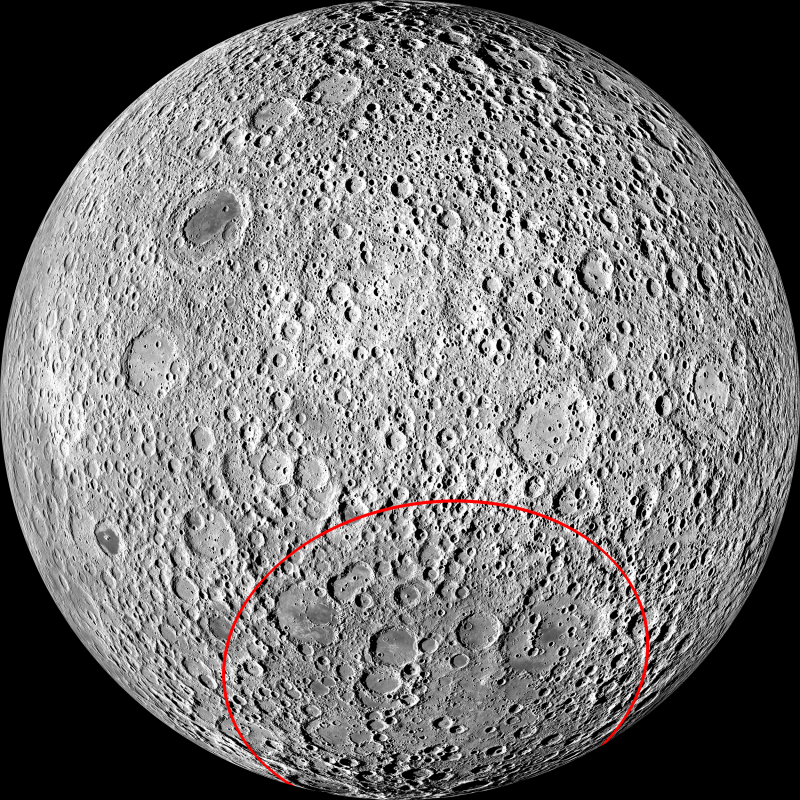
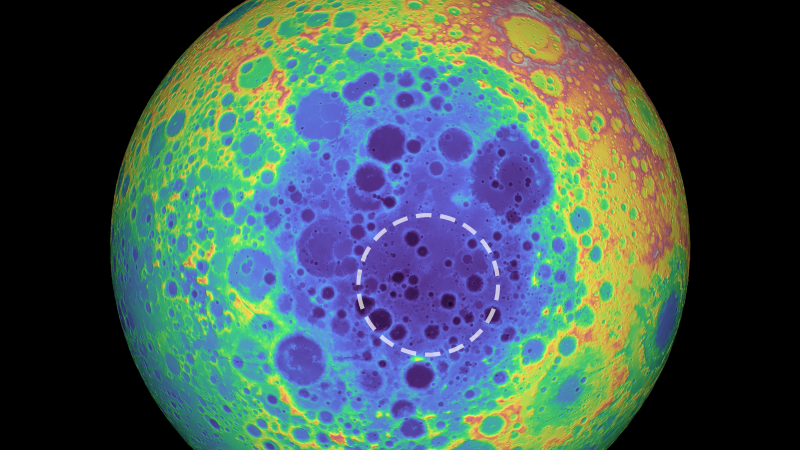
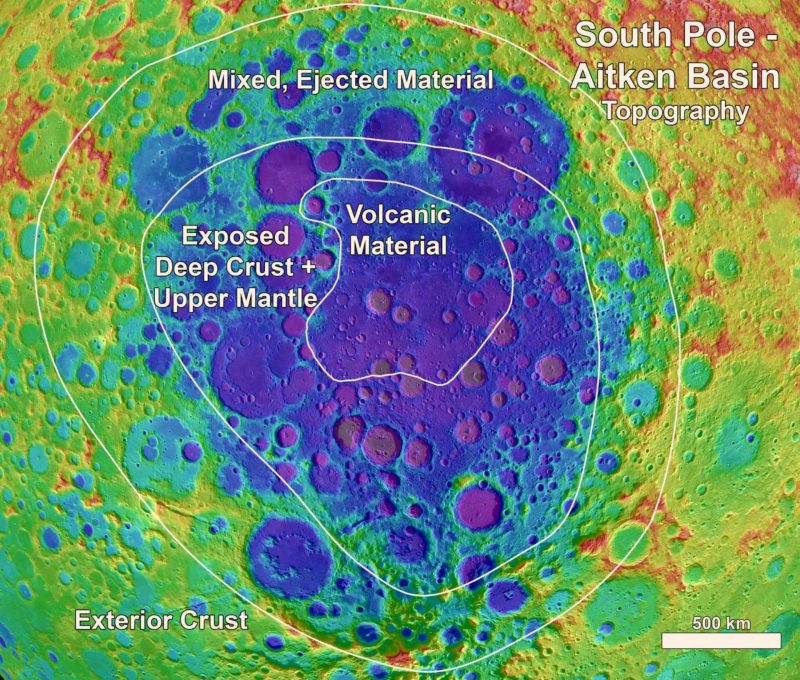






 'These things would be out there all day': US Navy pilots...


