Ontdek de Fascinerende Wereld van UFO's en UAP's: Jouw Bron voor Onthullende Informatie!
Ben jij ook gefascineerd door het onbekende? Wil je meer weten over UFO's en UAP's, niet alleen in België, maar over de hele wereld? Dan ben je op de juiste plek!
België: Het Kloppend Hart van UFO-onderzoek
In België is BUFON (Belgisch UFO-Netwerk) dé autoriteit op het gebied van UFO-onderzoek. Voor betrouwbare en objectieve informatie over deze intrigerende fenomenen, bezoek je zeker onze Facebook-pagina en deze blog. Maar dat is nog niet alles! Ontdek ook het Belgisch UFO-meldpunt en Caelestia, twee organisaties die diepgaand onderzoek verrichten, al zijn ze soms kritisch of sceptisch.
Nederland: Een Schat aan Informatie
Voor onze Nederlandse buren is er de schitterende website www.ufowijzer.nl, beheerd door Paul Harmans. Deze site biedt een schat aan informatie en artikelen die je niet wilt missen!
Internationaal: MUFON - De Wereldwijde Autoriteit
Neem ook een kijkje bij MUFON (Mutual UFO Network Inc.), een gerenommeerde Amerikaanse UFO-vereniging met afdelingen in de VS en wereldwijd. MUFON is toegewijd aan de wetenschappelijke en analytische studie van het UFO-fenomeen, en hun maandelijkse tijdschrift, The MUFON UFO-Journal, is een must-read voor elke UFO-enthousiasteling. Bezoek hun website op www.mufon.com voor meer informatie.
Samenwerking en Toekomstvisie
Sinds 1 februari 2020 is Pieter niet alleen ex-president van BUFON, maar ook de voormalige nationale directeur van MUFON in Vlaanderen en Nederland. Dit creëert een sterke samenwerking met de Franse MUFON Reseau MUFON/EUROP, wat ons in staat stelt om nog meer waardevolle inzichten te delen.
Let op: Nepprofielen en Nieuwe Groeperingen
Pas op voor een nieuwe groepering die zich ook BUFON noemt, maar geen enkele connectie heeft met onze gevestigde organisatie. Hoewel zij de naam geregistreerd hebben, kunnen ze het rijke verleden en de expertise van onze groep niet evenaren. We wensen hen veel succes, maar we blijven de autoriteit in UFO-onderzoek!
Blijf Op De Hoogte!
Wil jij de laatste nieuwtjes over UFO's, ruimtevaart, archeologie, en meer? Volg ons dan en duik samen met ons in de fascinerende wereld van het onbekende! Sluit je aan bij de gemeenschap van nieuwsgierige geesten die net als jij verlangen naar antwoorden en avonturen in de sterren!
Heb je vragen of wil je meer weten? Aarzel dan niet om contact met ons op te nemen! Samen ontrafelen we het mysterie van de lucht en daarbuiten.
Berichten van 1 september 2019 tot 30 september 2019
Venus Could Have Supported Life for Billions of Years
In 1978, NASA’sPioneer Venus (aka. Pioneer 12) mission reached Venus (“Earth’s Sister”) and found indications that Venus may have once had oceans on its surface. Since then, several missions have been sent to Venus and gathered data on its surface and atmosphere. From this, a picture has emerged of how Venus made the transition from being an “Earth-like” planet to the hot and hellish place it is today.
It all started about 700 million years ago when a massive resurfacing event triggered a runaway Greenhouse Effect that caused Venus’s atmosphere to become incredibly dense and hot. This means that for 2 to 3 billion years after Venus formed, the planet could have maintained a habitable environment. According to a recent study, that would have been long enough for life to have emerged on “Earth’s Sister”.
The study was presented yesterday (Sept. 20th) at the 2019 Joint Meeting of the European Planetary Science Congress (EPSC-DPS), which took place from Sept. 15th to 20th in Geneva, Switzerland. It was here that Michael Way and Anthony Del Genio of the NASA Goddard Institute for Space Science (GISS) shared a new take on Venus’s climatic history, which could have implications in the search for habitable exoplanets.
For the sake of their study, Dr. Way and Dr. Del Genio created a series of five simulations that considered what the environment of Venus would be like based on different levels of water coverage. This consisted of adapting a 3D general circulation model that took into account changing atmospheric compositions and the gradual increase in solar radiation as the Sun became warmer over the course of its lifetime.
In three of the five scenarios, Way and Del Genio assumed that the topography of Venus was much as the same as it is today, the ocean ranged from a minimum depth of 10 m (~30 ft) to a maximum of about 310 m (~1000 ft) and a small amount of water was locked in the soil. They also considered a scenario with Earth’s topography and a 310-meter ocean, and another where Venus was entirely covered in an ocean 158 m (~500ft).
In the end, all five simulations indicated the same thing: that Venus would have been able to maintain stable temperatures – from a low of 20 °C (68 °F) to a high of 50 °C (122 °F) – for about three billion years. Were it not for a series of event that caused 80% of the planet’s surface to be resurfaced (which led to the outgassing of CO² contained within the crust), it might even be habitable today. As Way explained it:
“Our hypothesis is that Venus may have had a stable climate for billions of years. It is possible that the near-global resurfacing event is responsible for its transformation from an Earth-like climate to the hellish hot-house we see today.
A land-ocean pattern like that above was used in a climate model to show how storm clouds could have shielded ancient Venus from strong sunlight and made the planet habitable. Credits: NASA
It all started about 4.2 billion years ago, a few hundred million years after Venus formed and had just finished a period of rapid cooling. At this point, assuming Venus underwent a similar process as Earth, it’s atmosphere would have been dominated by carbon dioxide. This would have slowly been absorbed by silicate rocks to form carbonates that were then locked into the planet’s crust.
By about 715 million years ago, according to Way and Del Genio’s study, the atmosphere would have been similar to what Earth’s is like today – composed predominantly of nitrogen gas with trace amounts of CO² and methane. These conditions could have remained stable up until present times were it not for a massive outgassing event.
The cause of this remains a mystery; however, scientists believe it was due to a geological event that caused 80% of the planet to resurface. This could have involved large amounts of magma bubbling up and releasing massive amounts of CO² into the atmosphere. The magma would have then solidified before reaching the surface, thus creating a barrier that prevented the CO² from being reabsorbed. As Way explained:
“Something happened on Venus where a huge amount of gas was released into the atmosphere and couldn’t be re-absorbed by the rocks. On Earth we have some examples of large-scale outgassing, for instance the creation of the Siberian Traps 500 million years ago which is linked to a mass extinction, but nothing on this scale. It completely transformed Venus.”
Artist’s conception of a terraformed Venus, showing a surface largely covered in oceans. Credit: Wikipedia Commons/Ittiz
This would explain how Venus’ atmosphere was thickened to the point where it was over 90 times as dense as Earth’s (92 bar compared to 1 bar). Combined with the high concentrations of CO², this would have led to a runaway Greenhouse Effect that would explain how the planet became the hellish place we know today, where surface temperatures average 462 °C (864 °F).
This flies in the face of conventional notions of habitability, which state that Venus’ orbit places it beyond the inner edge of our Sun’s habitable zone (HZ). Within this “Venus Zone”, according to conventional wisdom, a planet absorbs too much solar radiation to ever be able to maintain liquid water on its surface. But as Way indicated, their simulations all indicated otherwise:
“Venus currently has almost twice the solar radiation that we have at Earth. However, in all the scenarios we have modelled, we have found that Venus could still support surface temperatures amenable for liquid water.”
These findings are in line with a similar study that Way and Del Genio conducted in 2016 with colleagues from the NASA Goddard Space Flight Center, the Planetary Science Institute (PSI), Uppsala University and Columbia University. For this study, their team created a suite of 3D climate simulations using data from the Magellan mission that examined how the presence of an ocean on ancient Venus would affect its habitability.
From this, they determined that if Venus had a rotational period slower than about 16 Earth days, its climate would have remained habitable until 715 million years ago. However, there are still two major unknowns that need to be addressed before scientists can say with confidence that Venus was habitable until very recently.
The planet Venus, as imaged by the Magellan 10 mission. Credit: NASA/JPL
First, scientists will need to determine how quickly Venus cooled and if it was able to condense liquid water on its surface in the first place. Second, it remains unknown whether the global resurfacing event that led to Venus’ transition was a single event or merely part of a series that had been taking place for billions of years.
“We need more missions to study Venus and get a more detailed understanding of its history and evolution,” said Way. “However, our models show that there is a real possibility that Venus could have been habitable and radically different from the Venus we see today. This opens up all kinds of implications for exoplanets found in what is called the ‘Venus Zone’, which may in fact host liquid water and temperate climates.”
Think of it… had Venus not undergone a massive resurfacing event (or a series of them), humanity would have only needed to look next-door for proof of extra-terrestrial life. For that matter, had Mars not lost its magnetosphere 4.2 billion years ago, it could have produced life of its own that would still be around today. Our one Solar System could have had not one, but three life-bearing planets (neighboring at that)!
These findings are likely to be encouraging for those who believe that Venus should be terraformed someday. Knowing that the planet once had a stable climate, and could maintain it despite its orbit, effectively means that any ecological engineering we do there would stick.
That means that Venus could someday be made into a balmy world that’s mostly covered with oceans with few large continents and extensive archipelagos. Sound like any pl }ace you know?
This beautiful view from ESA’s Mars Express stretches from the bright, cloud-covered north pole of Mars to the contrasting hues of the northern hemisphere and the cratered terrain in the south.
Mars Express has been orbiting Mars since 2003. The spacecraft has sent back myriad breathtaking images of our planetary neighbour in the past decade and a half, captured by the probe’s on-board High Resolution Stereo Camera – and this image is no different.
The spacecraft imaged this slice across the planet’s surface in June 2019, when the camera took several global views. Visible at the top of the frame is Mars’ ethereal north pole: this is permanently covered by a cap of frozen water and carbon dioxide, which thickens in the northern martian winter and thins in the summer.
The northern polar cap is seen here encircled by bright, eye-catching clouds, tendrils of which snake downwards from the polar region to obscure some of the planet’s northern hemisphere. As this image shows, this patch of Mars is a mix of different tones and colours – a reflection of the different chemical and physical characteristics of the material that makes up the surface. Mars’ two hemispheres are very different in a number of ways.
Most notably, the northern hemisphere sits several kilometres lower than the southern, and the two are separated by a distinctive, rugged boundary formed of canyons, cliffs and scarps, fractures, valleys, flat-topped mounds known as mesas, and many other features. The northern hemisphere is also characterised by low-lying plains that are largely unmarked by impact craters and thus thought to be relatively young, while the southern hemisphere is ancient, showing signs of intense cratering.
This separation can be seen here, and is shown especially clearly in the accompanying topographic context map.
The dark and dusty young plains of the northern hemisphere sit just below the white northern cap; these meet and merge with a prominent escarpment that slices across the planet, creating a dark scar on the tan-coloured surface. Below this, in tones ranging from rusty orange to pale butterscotch, are the southern highlands, featuring more craters than it is possible to count.
Topographic context
Two main regions are shown here: Arabia Terra (towards the upper left) and Terra Sabaea (to the middle and lower right, forming the main bulk of the highlands visible in this slice).
The light region stretching out of frame to the bottom right is Hellas Planitia, a plain that is home to the Hellas basin: one of the largest basins identified on Mars – and, in fact, in the Solar System – at 2300 km across.
The split between Mars’ two hemispheres is known as the martian dichotomy, and remains one of the greatest mysteries about the planet.
Was it formed due to geological processes within Mars’ mantle? Did the planet’s crust once comprise various moving tectonic plates, as we see on Earth, that pushed against one another to form the dichotomy? Could it have been created by one or more colossal past impacts – or by another process entirely?
Terra Sabaea and Arabia Terra in context
Observations of the boundary zone between the two hemispheres show that this region has been altered over time by wind and water, including by glaciers. Mars is thought to have seen various bursts of glacial activity over the years, where deposits of ice – sometimes hidden beneath layers of soil or dust – form viscous flows that slowly move across the surface, altering it as they go.
Mars Express was recently joined at Mars by the ESA-Roscosmos ExoMars Trace Gas Orbiter (TGO), which arrived in 2016 and has since been analysing the martian atmosphere and mapping the planet’s surface. Mars Express and the TGO will soon welcome the ExoMars Rosalind Franklin rover and its accompanying surface science platform, which are scheduled for launch in July of 2020.
This growing fleet will continue ESA’s long-standing presence at Mars, and further our understanding of the planet and its many remaining scientific mysteries – including the martian dichotomy.
An amateur astronomer says our solar system may have another visitor from deep space.
According to an announcement from the Minor Planet Center, an object spotted at the end of August by amateur astronomer, Gennady Borisov, in Crimea, is likely the second known interstellar object to make a pit stop in our corner of the galaxy.
Astronomers say the object, preliminarily dubbed C/2019 Q4, appears to be a comet given what they have identified as a tail streaking behind the interstellar visitor while it moves through space.
Estimates on C/2019 Q4 project that the object could remain within our solar system for between six months to a full year, meaning astronomers may be able to get a particularly good look at its features, on its brightness
On Thursday, the center released an official 'circular' -- a document detailing information on the object's orbit -- which highlighted the apparent comet's eccentric pattern.
'Based on the available observations, the orbit solution for this object has converged to the hyperbolic elements shown below, which would indicate an interstellar origin.' reads document.
While that hyperbolic pattern -- which differs from the elliptical shape of objects in our solar system -- shows that the object will likely leave our solar system for good, it also portends a longer stay and much more in-depth look than previous interstellar travelers.
Estimates on C/2019 Q4 project that the object could remain within our solar system for between six months to a full year, meaning astronomers may be able to get a particularly good look at its features, on its brightness.
On Thursday, the center released an official 'circular' -- a document detailing information on the object's orbit -- which highlighted the apparent comet's eccentric pattern. The faint object is circled above
'We don’t know how bright it’s going to be. That’s always an issue with comets, so you’ve got that unpredictability, combined with the fact that it is interstellar. And this is the first interstellar comet we’ve seen,' astronomy-software developer Bill Gray, told Forbes.
Previously, astronomers identified an asteroid-like rock known as Oumuamua, the first known interstellar object to pass through our solar system.
The mysterious cigar-shaped projectile, formally named object 1I/2017 U1, resembles both a comet and an asteroid, however, it doesn't conform to many of the other defining features usually associated with these objects, including its direction of spin and lack of a tail.
Previously, astronomers identified an asteroid-like rock known as Oumuamua, the first known interstellar object to pass through our solar system. An artist's impression of Oumuamua is pictured
Conversely, when astronomers spotted Oumuamua, they had just three weeks to observe it before it left our solar system.
Professional stargazer Robert Weryk first spotted the interstellar traveler in October, 2017 at the University of Hawaii's Haleakala Observatory.
Researchers had just weeks to collect as much data as possible before the strange visitor traveled beyond the reach of Earth's telescopes.
The object is now out of sight but could take up to 20,000 years before it leaves our solar system onto its next destination.
Interstellar objects like the ones recently discovered are particularly exciting for astronomers since they offer a rare, glimpse of what other parts of the galaxy may look like.
Astronomers will now be able to compare their findings on Oumuamua with the most recent specimen.
WHAT IS 'OUMUAMUA AND WHAT DO WE KNOW ABOUT IT?
A cigar-shaped asteroid named 'Oumuamua sailed past Earth at 97,200mph (156,428km/h) in October.
It was first spotted by a telescope in Hawaii on 19 October, and was observed 34 separate times in the following week.
It is named after the Hawaiian term for 'scout' or 'messenger' and passed the Earth at about 85 times the distance to the moon.
It was the first interstellar object seen in the solar system, and it baffled astronomers.
Initially, it was thought the object could be a comet.
However, it displays none of the classic behaviour expected of comets, such as a dusty, water-ice particle tail.
The asteroid is up to one-quarter mile (400 meters) long and highly-elongated - perhaps 10 times as long as it is wide.
That aspect ratio is greater than that of any asteroid or asteroid observed in our solar system to date.
But the asteroid's slightly red hue — specifically pale pink — and varying brightness are remarkably similar to objects in our own solar system.
Around the size of the Gherkin skyscraper in London, some astronomers were convinced it was piloted by aliens due to the vast distance the object traveled without being destroyed – and the closeness of its journey past the Earth.
Alien hunters at SETI – the Search for Extra-terrestrial Intelligence based at Berkeley University, California said there was a possibility the rock was ‘an alien artefact’.
But scientists from Queen’s University Belfast took a good look at the object and said it appears to be an asteroid, or ‘planetesimal’ as originally thought.
Researchers believe the cigar-shaped asteroid had a 'violent past', after looking at the light bouncing off its surface.
They aren't exactly sure when the violent collision took place, but they believe the lonely asteroid's tumbling will continue for at least a billion years.
A mysterious star whose repeated bouts of darkening might be due to "alien megastructures," according to some researchers' conjectures, may now have more than a dozen counterparts that display similarly mystifying behavior, a new study finds.
Further research into all of these stars might help solve the puzzle of their bewildering flickering, the study's author said.
In 2015, scientists noticed unusual fluctuations in the light from a star named KIC 8462852. This otherwise-normal F-type star, which is slightly larger and hotter than Earth's sun, sits about 1,480 light-years from Earth, in the constellation Cygnus.
When the researchers analyzed data from NASA's Kepler space telescope, astronomer Tabetha "Tabby" Boyajian, then at Yale University, and her colleagues found dozens of odd instances of KIC 8462852 dimming by up to 22%, with such dips lasting anywhere from a few days to a week. These events did not appear to follow any pattern and seemed far too substantial to be caused by planets or dust crossing the star's face.
These analyses of KIC 8462852 — now nicknamed "Boyajian's star" (formerly Tabby's star) after its discoverer — raised the possibility that astronomers had detected signs of intelligent alien life. Specifically, researchers have suggested that the star is surrounded by a Dyson sphere, a hypothetical megastructure that is built around a star to capture as much of its light as possible. Mathematician and physicist Freeman Dyson suggested that such megastructures could help power an advanced civilization. (Science fiction often depicts Dyson spheres as solid shells around stars, but the megastructures also could be globular swarms of giant solar panels.)
The megastructure hypothesis is near the bottom of most astronomers' lists these days when it comes to Boyajian's star, however; further analyses have pointed to more prosaic explanations, such as clouds of dust or comet fragments. Still, scientists have not yet nailed down the precise cause of the odd dimming. The answer remains elusive in part because Boyajian's star seemed unique; there were no known counterparts to provide additional clues that might help researchers solve this cosmic mystery.
Now, study author Edward Schmidt, an astrophysicist at the University of Nebraska-Lincoln, suggests that he may have discovered more than a dozen stars like Boyajian's star.
Schmidt looked for counterparts of Boyajian's star using software that searched for analogous dimming events from about 14 million objects with varying brightness monitored in the Northern Sky Variable Survey from April 1999 to March 2000. He then followed up on promising candidates by examining their long-term behavior, using data from the All-Sky Automated Survey for Supernovae, ruling out sources whose dimming could be caused by conventional explanations such as an eclipsing companion star or some intrinsic variability in brightness.
Schmidt identified 21 stars that showed possibly unusual dimming. These fell into two distinct categories: 15 were "slow dippers" that dimmed at rates similar to Boyajian's star, and six were "rapid dippers" that showed even more extreme variability in their dimming rates.
"The thing that surprised me the most were these stars that had so many dips, the ones I called 'rapid dippers,'" Schmidt told Space.com. "I expected more occasional dips like Boyajian's star."
Further analysis using data from the European Space Agency's Gaia space observatory found that these potential dippers tended to be either conventional "main-sequence" stars with about the same mass as the sun or red giant stars with about twice the sun's mass. The slow and rapid dippers are seen in both groups, which may suggest that they represent varying degrees of the same mechanism, Schmidt said.
Schmidt noted that the Northern Sky Variable Survey he searched for potential counterparts of Boyajian's star did not contain records of Boyajian's star itself darkening during the year of data in that catalog. This highlights how astronomers may easily miss stars that can darken in this manner if they look only at catalogs that monitor stars for relatively short intervals of time.
"We're obviously missing some of these stars because of the catalogs we have," Schmidt said. "By looking at more catalogs, we may get a better picture of what's going on, even though it won't be a complete picture."
Future research that combs through more catalogs of stellar activity may turn up even more analogues of Boyajian's star, he said.
"I intend to try and follow up on the rapid dippers," Schmidt said. "One thing I noticed about them is that at least one seemed to be slowing way down in its dipping rate over the five years of coverage we have of it. It'd be interesting to find out what happened in its past, which may help give a better idea of what's going on with these stars."
Schmidt detailed his findings July 18 in The Astrophysical Journal Letters.
Bigelow Aerospace publishes video what looks like an Orb and a Being inside a sealed room
On September 20, 2019 Bigelow Aerospace posted a strange video on their Twitter account showing a floating Orb and probably 'something' else and it's entitled "our small contribution"
When asked what the video is about, they responded "It is an orb recorded in a highly secure Bigelow Aerospace facility in Las Vegas. Absolutely nothing could get in or out of that particular structure but yet, something did…”
But something strange is going on with this video recorded in Bigelow's research and development facility in Las Vegas which is said to be the location for the storage of metal alloys and other materials recovered from unidentified aerial phenomena.
At first it is a grainy video something you don't expect from a recording made in 2011 except if the video was intentionally blurred to hide some details. Was the room a sealed one and why does that look like a prison table inside the room? Beside the floating Orb in the small room it is as if 'something' is sitting at the table.
Absolutely nothing could get in or out of that particular structure!
In his wonderful account of the rocket that never was (Project Orion: The True Story of the Atomic Spaceship, 2002), George Dyson discusses his father’s thoughts on taking the craft to the moons of Saturn. Freeman Dyson and other Orion colleagues wanted to land on a moon to pick up propellant, but thought the moons of Jupiter were trickier than Saturn’s because of the depth of the Jovian gravity well. Anyway, Enceladus was a kind of beacon, and it was there Dyson fixed his attention.
George Dyson quotes Freeman on the matter:
“We knew very little about the satellites in those days. Enceladus looked particularly good. It was known to have a density of .618, so it clearly had to be made of ice plus hydrocarbons, really light things; which were what you need both for biology and for propellant, so you could imagine growing your vegetables there. Five-one-thousandths g on Enceladus is a very gentle gravity, just enough so that you won’t jump off.”
As George noted, Enceladus was a long way from La Jolla, CA (where General Atomic had moved in 1958 to a 300-acre facility above the beaches near Torrey Pines), some 9 astronomical units, but the views would be spectacular. Imagine standing on Enceladus, where Saturn would appear vastly larger than Earth’s moon appears to us. Planet and rings would fill the sky, “changing phase from hour to hour, illuminated by the pale light of a distant sun.”
Image: Mosaic of the surface of Enceladus captured by Cassini on 9th October 2008 from an altitude of 25 kilometres.
Credit: NASA/JPL/Space Science Institute.
We now know just how prescient Freeman Dyson was about the virtues of Enceladus, armed with Cassini data about geysers and an internal ocean. I always keep an eye on further insights from Cassini about this intriguing moon, and notice that at the EPSC-DPS joint meeting in Geneva this week, a team of researchers under Alice Le Gall (LATMOS-UVSQ, Paris) has analyzed some 60 radar observations of Saturn’s inner moons taken by Cassini. The result: Previous reports from these data underestimated their radar brightness by a factor of two.
All of Saturn’s inner moons show high radar reflectivity, with Enceladus itself being twice as bright as Europa, which is the brightest of Jupiter’s satellites. Significant variation turns up among the moons of Saturn, with Enceladus having the highest radar albedo, Titan the lowest.
Image: This is Figure 1 from the precis of Dr. Le Gall’s presentation. Caption: Averaged 2.2-cm disk-integrated radar albedos of Saturn’s major satellites. The error bars show the dispersion of the dataset for each satellite.
Credit: Alice Le Gall.
What we’re witnessing among these inner moons is a fascinating interplay of material being pumped from the internal ocean of Enceladus into nearby space, affecting Tethys and Mimas. These three moons also interact with Saturn’s E-ring, which delivers water ice to their surfaces. The dazzling reflectivity that attracted the Orion team is largely the result of fresh water-ice particles from Enceladus, which acts as what Dr. Le Gall calls a ‘snow-cannon’ to coat all three surfaces. In other words, it snows on these worlds, in the sense that the particles fall back onto Enceladus and precipitate onto the surfaces of the other moons as well. Says Le Gall:
“The super-bright radar signals that we observe require a snow cover that is at least a few tens of centimetres thick. However, the composition alone cannot explain the extremely bright levels recorded. Radar waves can penetrate transparent ice down to [a] few meters and therefore have more opportunities to bounce off buried structures. The sub-surfaces of Saturn’s inner moons must contain highly efficient retro-reflectors that preferentially backscatter radar waves towards their source.”
Just what these ‘structures’ are is not known, though radar observations of Enceladus have shown subsurface features including pinnacles and ice blocks, along with fractured terrain. Le Gall’s team has developed models to test what specific shapes can act as effective reflectors, also testing whether enhanced reflection is a matter of random scattering events. This is a work in progress:
“So far, we don’t have a definitive answer,” adds Le Gall. “However, understanding these radar measurements better will give us a clearer picture of the evolution of these moons and their interaction with Saturn’s unique ring environment. This work could also be useful for future missions to land on the moons.”
The presentation is Le Gall et al., “Saturn’s inner moons: why are they so radar-bright?” in EPSC Abstracts Vol. 13, EPSC-DPS 2019-454-2, 2019 EPSC-DPS Joint Meeting 2019 (abstract).
Mysterious magnetic pulses & evidence of groundwater discovered on Mars
Mars may be hiding water deep beneath its surface, NASA’s InSight lander has discovered – and the planet’s magnetic field has a life of its own, pulsing at the stroke of midnight in a manner utterly unlike anything found on Earth.
There may be liquid water on Mars after all – dozens of miles inside the planet, according to magnetic measurements from the InSight lander, which has been exploring Mars since landing in November. The probe’s magnetometer seems to register an electrically conductive layer up to 62 miles beneath the surface, appearing similar to how water deep within the Earth appears using terrestrial magnetometers.
Unfortunately for would-be Martian colonists eager to find out whether there really is water down there, InSight can only drill 16 feet beneath the surface, leaving a potential oasis woefully out of reach.
In another intriguing discovery, the red planet’s magnetic field wiggles mysteriously at midnight, according to measurements from InSight’s magnetometer, which found that field to be 20 times stronger than what had been predicted based on previous orbital measurements. The pulses last as long as two hours.
Scientists suspect a protrusion in the weak magnetic envelope surrounding the planet is “plucking” the surface magnetic field to cause the eerily-timed pulsations, suggesting the anomaly aligns with InSight’s perch in Elysium Planitia every night at midnight, causing the magnetometer to go wild as if on a timer.
During a hearing of the space subcommittee of the U.S. House of Representatives' Science, Space and Technology Committee on Wednesday (Sept. 18), multiple representatives voiced concerns about the agency's progress toward the ambitious 2024 lunar-landing goal. And one of the key witnesses, Ken Bowersox, NASA's acting associate administrator for human exploration and operations, didn't exactly put their deadline doubts to rest.
When Rep. Bill Posey, R-Fla., asked how confident he was that NASA would meet the 2024 target, for example, Bowersox responded, "I wouldn't bet my oldest child's upcoming birthday present or anything like that."
The 2024 target is a good thing, Bowersox added, saying that aggressive goals help focus the agency's efforts and attention. But he stressed that meeting the deadline is not the agency's main objective.
"We're going to do our best to make it. But, like I said, what's important is that we launch when we're ready, that we have a successful mission when it launches," he said.
"And I'm not going to sit here and tell you that, just arbitrarily, we're going to make it," said Bowersox, a former NASA astronaut. "We have to have a lot of things come together to make it happen. We have to get our funding, we have to balance our resources with our requirements, and then we've got to execute it really well. And so, there's a lot of risk to making the date, but we want to try to do it."
NASA is doing this work via a lunar-exploration program called Artemis, which envisions using the moon as a steppingstone to the ultimate human-spaceflight destination: Mars.
If all goes according to plan, NASA will build a small moon-orbiting space station called the Gateway in the early 2020s. Gateway is key to the overall Artemis effort, because it will serve as a hub for surface missions. Landers, both crewed and uncrewed, will depart from the Gateway to the lunar surface and return to the ministation when their work on the ground is done. Astronauts will also operate moon rovers from this orbital perch, NASA officials have said.
The space agency aims to land two astronauts — including the first-ever female moonwalker — near the lunar south pole in 2024 and establish a sustainable, long-term presence on and around the moon by 2028.
This latter date was the original target for the first crewed lunar landing since the Apollo era. But in March, Vice President Mike Pence moved the timeline up four years.
"Urgency must be our watchword," Pence said at the time, invoking a space race with Russia and China. "The United States must remain first in space in this century as in the last, not just to propel our economy and secure our nation but, above all, because the rules and values of space, like every great frontier, will be written by those who have the courage to get there first and the commitment to stay."
NASA plans to achieve the Artemis goals using the Orion capsule and a huge rocket called the Space Launch System (SLS). Orion has flown once, on an uncrewed test mission to Earth orbit in 2014, but the oft-delayed SLS has yet to get off the ground.
The first flight of SLS, known as Artemis 1, will send an uncrewed Orion around the moon. That test mission is targeted for late 2020, Bowersox said. Artemis 2, scheduled for 2022, will launch four astronauts on a lunar flyby mission. Artemis 3 will deliver four astronauts to the Gateway in 2024; two of these pioneers will then make their way down to the lunar surface aboard a privately built lander.
Eddie Bernice Johnson, D-Texas, who chairs the House Science, Space and Technology Committee, voiced considerable skepticism that this plan will come together in time.
"It has been almost a decade since an American spacecraft sent astronauts into space at all. Yet the Administration's plan requires our astronauts to attempt a lunar landing on only the second crewed flight beyond low-Earth orbit after what by then will have been a 50-year hiatus, with no real plans for prior crewed preparatory flights in low-Earth orbit," Johnson wrote in her prepared statement for Wednesday's hearing, which was called "Developing Core Capabilities for Deep-Space Exploration: An Update on NASA's SLS, Orion and Exploration Ground Systems."
The paucity of crewed test flights is apparently an area of concern for Johnson, who noted that the 2024 lunar landing attempt will come as part of the first crewed mission to Gateway. And that surface mission might mark the first flights of the lander and the ascent vehicle that gets astronauts back up to the Gateway, she added.
"Rhetoric about American leadership in space and advancing the role of women in spaceflight is all well and good, but it is not a substitute for a well-planned, well-managed, well-funded, and well-executed exploration program," Johnson said in her written statement. "To date, Congress has not been given a credible basis for believing that the president’s Moon 2024 program satisfies any of those criteria. In short, if Congress is to support such a program, the Administration is going to have to do a lot more to provide such evidence."
Mike Wall's book about the search for alien life, "Out There" (Grand Central Publishing, 2018; illustrated byKarl Tate), is out now. Follow him on Twitter @michaeldwall. Follow us on Twitter@Spacedotcom orFacebook.
Aliens of all stripes are zeroing in on the secretive Area 51 this weekend.
Area 51 is the hush-hush U.S. Air Force military installation located at Groom Lake in southern Nevada.
The installation has been the focus of numerous conspiracies involving the base's extraterrestrial connection — a locale for captured flying saucers and surely an alien holding site.
The town of Rachel is an unincorporated portion of Lincoln County, Nevada. As the closest habitation to the Nellis Air Force Range and Area 51, the area has become a Mecca for inquisitive UFO believers.
The town is roughly three hours drive north of Las Vegas along Nevada Highway 375, also called the "Extraterrestrial Highway." Rachel is home base for Little A'Le'Inn that has been selling tickets for "ALIENSTOCK."
Be forewarned: There is no gas available in Rachel. Incoming alien hunters are urged to fill their tank in Alamo/Ash Springs from the east or Tonopah from the west.
Meanwhile, instead of storming a secretive government base, the Downtown Las Vegas Events Center is partnering with Collective Zoo and Bud Light to host an evening of top-secret entertainment on Thursday, September 19 with the Area 51 Celebration.
"The time has come to sit back, share a beer, and talk all things aliens," exclaims the associated website. "Come in peace, we have everything you need to make this celebration a blowout, including a classified lineup of music artists specially curated by Collective Zoo."
Matty Roberts, the man behind the virtual "Storm Area 51" movement has been abducted to host the alien-themed event in downtown Las Vegas.
Gate-crashing no-no
Overall, there's no telling how many are truly expected to populate the Area 51 festivities. As of this posting, it remains unclear what events may have been cancelled or are still planned in light of an alien free-for-all, even legal fights over events.
In the meantime, for those wishing to storm a highly-classified military base, UFO devotees are being warned that any gate-crashing is a no-no and will be deterred.
Leonard David is author of the recently released book, "Moon Rush: The New Space Race" published by National Geographic in May 2019. A longtime writer for Space.com, David has been reporting on the space industry for more than five decades. Follow us on Twitter @Spacedotcom or Facebook.
WETENSCHAP NASA heeft een gedetailleerde - en wondermooie - afbeelding van Mars vrijgegeven. Eerder deze week stuurde ook al de Europees-Russische ruimtesonde ExoMars een indrukwekkende foto van de rode planeet richting aarde.
Bovenste afbeelding werd genomen door NASA’s ruimtesonde Mars Reconnaissance Orbiter, en toont een deel van de Danielson-krater. Die heeft een diameter van 66 kilometer en werd “miljoenen of miljarden jaren geleden” gevormd, aldus de Amerikaanse ruimteorganisatie. De krater bestaat uit rotsen vermengd met zand (blauwe gebieden), die bevroren raakten. Bepaalde delen op de kraterbodem vielen makkelijker ten prooi aan erosie dan andere, wat dan weer de trapachtige, uitspringende structuur verklaart.
Ook de Europees-Russische sonde ExoMars stuurde deze week een gedetailleerde foto van de rode planeet naar de aarde. Daarop zijn duinen op de noordpool van Mars te zien. De witte kleur op onderstaande afbeelding wordt veroorzaakt door droogijs, de vaste vorm van koolstofdioxide. In de lente, wanneer de zon schijnt, barst het ijs en ontsnapt er gas uit de duinen. Donker zand wordt dan omhoog gestuwd, zoals op de afbeelding duidelijk te zien is.
Dark Disk Seen Passing Over Our Moon, Over 5km Long! UFO Sighting News.
Date of sighting:March 15, 2019, but reported today
Location of sighting: Earths moon
Source: MUFON #103464
An eyewitness caught a dark circular UFO with his camera. The cameras today often come with zooms of up to 200X so they even beat a lot of telescopes, especially for the convenience of getting photos or video. Dark circular objects have been recorded for the last decade passing over the surface of our moon. This is nothing new, but its should be a warning to the public...if NASA doesn't tell us about these unidentified flying objects on our moon...then NASA must be too frighted causing a panic in the public. Honestly...how would you feel emotionally if you heard on world news that NASA has spotted an alien craft that is 5km across near our moon? Yeah...it would cause a bit of worry.
Scott C. Waring
Eyewitness states:
Was taking pics of moon in succession. My last pic has dark looking object in the front of the bottom of the moon.
Dark Disk In Daytime Over Doolin, Ireland On Aug 19, 2019, UFO Sighting News.
Date of sighting: August 19, 2019 Location of sighting: Doolin, Ireland Source: MUFON #103466 The eyewitness took a photo of his car in Ireland on a hill, and when he got home he noticed a thick disk near the clouds. The disk is wider at its center and thiner at is ends. To top it off, the disk is tilted, which Area 51 scientist Bob Lazar said is necessary if a disk is moving. UFOs can be seen anywhere in the world, although some locations seem to have a higher change of seeing one than others. In a world where everyone is looking down at their phone, its no wonder why sightings are down this year...few people bother looking up at the sky. Scott C. Waring
'Storm area 51' raid brings crowds of ‘alien believers' to Nevada
For those who follow 'Storm Area 51' here is the latest news on this event... but what do you think is in Area 51?
According to RT-Ruptly - Live, visitors from around the country are trekking to the Alien Research Center in Hiko on the outskirts of the top-secret US military installation known as Area 51 in the Nevada Desert where the ‘Storm Area 51 Basecamp’ will take place Friday and Saturday.
The event, titled ‘Storm Area 51, They Can't Stop All of Us’, was called for on social media, with millions of people RSVPing. Organisers intend to raid Area 51 to “see them Aliens.”
Area 51 has long been a topic of fascination for conspiracy theorists and paranormal enthusiasts who believe it to be the location where the US government stores and hides alien bodies and UFOs.
Its existence was only acknowledged by the US government in 2013 after citizens filed a Freedom of Information Act request that called for the release of information regarding the government's activities in the area.
The 38,400-acre land area has been restricted to the public since 1958 and has armed guards patrolling the perimeter. It's also impossible to enter the airspace above without permission from air traffic control. The facility’s official name is Nevada Test and Training Range. It is a unit of the Nellis Air Force Base, located at Groom Lake, 120 miles (193 km) northwest of Las Vegas.
A mysterious star whose repeated bouts of darkening might be due to "alien megastructures," according to some researchers' conjectures, may now have more than a dozen counterparts that display similarly mystifying behavior, a new study finds.
Further research into all of these stars might help solve the puzzle of their bewildering flickering, the study's author said.
In 2015, scientists noticed unusual fluctuations in the light from a star named KIC 8462852. This otherwise-normal F-type star, which is slightly larger and hotter than Earth's sun, sits about 1,480 light-years from Earth, in the constellation Cygnus.
When the researchers analyzed data from NASA's Kepler space telescope, astronomer Tabetha "Tabby" Boyajian, then at Yale University, and her colleagues found dozens of odd instances of KIC 8462852 dimming by up to 22%, with such dips lasting anywhere from a few days to a week. These events did not appear to follow any pattern and seemed far too substantial to be caused by planets or dust crossing the star's face.
These analyses of KIC 8462852 — now nicknamed "Boyajian's star" (formerly Tabby's star) after its discoverer — raised the possibility that astronomers had detected signs of intelligent alien life. Specifically, researchers have suggested that the star is surrounded by a Dyson sphere, a hypothetical megastructure that is built around a star to capture as much of its light as possible. Mathematician and physicist Freeman Dyson suggested that such megastructures could help power an advanced civilization. (Science fiction often depicts Dyson spheres as solid shells around stars, but the megastructures also could be globular swarms of giant solar panels.)
The megastructure hypothesis is near the bottom of most astronomers' lists these days when it comes to Boyajian's star, however; further analyses have pointed to more prosaic explanations, such as clouds of dust or comet fragments. Still, scientists have not yet nailed down the precise cause of the odd dimming. The answer remains elusive in part because Boyajian's star seemed unique; there were no known counterparts to provide additional clues that might help researchers solve this cosmic mystery.
Now, study author Edward Schmidt, an astrophysicist at the University of Nebraska-Lincoln, suggests that he may have discovered more than a dozen stars like Boyajian's star.
Alien Megastructure Star Being Investigated By UC Berkeley | Video
-Schmidt looked for counterparts of Boyajian's star using software that searched for analogous dimming events from about 14 million objects with varying brightness monitored in the Northern Sky Variable Survey from April 1999 to March 2000. He then followed up on promising candidates by examining their long-term behavior, using data from the All-Sky Automated Survey for Supernovae, ruling out sources whose dimming could be caused by conventional explanations such as an eclipsing companion star or some intrinsic variability in brightness.
Schmidt identified 21 stars that showed possibly unusual dimming. These fell into two distinct categories: 15 were "slow dippers" that dimmed at rates similar to Boyajian's star, and six were "rapid dippers" that showed even more extreme variability in their dimming rates.
"The thing that surprised me the most were these stars that had so many dips, the ones I called 'rapid dippers,'" Schmidt told Space.com. "I expected more occasional dips like Boyajian's star."
Further analysis using data from the European Space Agency's Gaia space observatory found that these potential dippers tended to be either conventional "main-sequence" stars with about the same mass as the sun or red giant stars with about twice the sun's mass. The slow and rapid dippers are seen in both groups, which may suggest that they represent varying degrees of the same mechanism, Schmidt said.
Schmidt noted that the Northern Sky Variable Survey he searched for potential counterparts of Boyajian's star did not contain records of Boyajian's star itself darkening during the year of data in that catalog. This highlights how astronomers may easily miss stars that can darken in this manner if they look only at catalogs that monitor stars for relatively short intervals of time.
"We're obviously missing some of these stars because of the catalogs we have," Schmidt said. "By looking at more catalogs, we may get a better picture of what's going on, even though it won't be a complete picture."
Future research that combs through more catalogs of stellar activity may turn up even more analogues of Boyajian's star, he said.
"I intend to try and follow up on the rapid dippers," Schmidt said. "One thing I noticed about them is that at least one seemed to be slowing way down in its dipping rate over the five years of coverage we have of it. It'd be interesting to find out what happened in its past, which may help give a better idea of what's going on with these stars."
Schmidt detailed his findings July 18 in The Astrophysical Journal Letters.
Space Mysteries: If you travel through a black hole, where do you go?
So there you are, about to leap into a black hole. What could possibly await should — against all odds — you somehow survive? Where would you end up and what tantalising tales would you be able to regale if you managed to clamber your way back?
The simple answer to all of these questions is, as Professor Richard Massey explains, "Who knows?" As a Royal Society research fellow at the Institute for Computational Cosmology at Durham University, Massey is fully aware that the mysteries of black holes run deep. "Falling through an event horizon is literally passing beyond the veil — once someone falls past it, nobody could ever send a message back," he said. "They'd be ripped to pieces by the enormous gravity, so I doubt anyone falling through would get anywhere."
If that sounds like a disappointing — and painful — answer, then it is to be expected. Ever since Albert Einstein's general theory of relativity was considered to have predicted black holes by linking space-time with the action of gravity, it has been known that black holes result from the death of a massive star leaving behind a small, dense remnant core. Assuming this core has more than roughly three-times the mass of the sun, gravity would overwhelm to such a degree that it would fall in on itself into a single point, or singularity, understood to be the black hole's infinitely dense core.
The resulting uninhabitable black hole would have such a powerful gravitational pull that not even light could avoid it. So, should you then find yourself at the event horizon — the point at which light and matter can only pass inward, as proposed by the German astronomer Karl Schwarzschild — there is no escape. According to Massey, tidal forces would reduce your body into strands of atoms (or 'spaghettification', as it is also known) and the object would eventually end up crushed at the singularity. The idea that you could pop out somewhere — perhaps at the other side — seems utterly fantastical.
What about a wormhole?
Or is it? Over the years scientists have looked into the possibility that black holes could be wormholes to other galaxies. They may even be, as some have suggested, a path to another universe.
Such an idea has been floating around for some time: Einstein teamed up with Nathan Rosen to theorise bridges that connect two different points in space-time in 1935. But it gained some fresh ground in the 1980s when physicist Kip Thorne — one of the world's leading experts on the astrophysical implications of Einstein's general theory of relativity — raised a discussion about whether objects could physically travel through them.
"Reading Kip Thorne's popular book about wormholes is what first got me excited about physics as a child," Massey said. But it doesn't seem likely that wormholes exist.
Indeed, Thorne, who lent his expert advice to the production team for the Hollywood movie Interstellar, wrote: "We see no objects in our universe that could become wormholes as they age," in his book "The Science of Interstellar" (W.W. Norton and Company, 2014). Thorne told Space.com that journeys through these theoretical tunnels would most likely remain science fiction, and there is certainly no firm evidence that a black hole could allow for such a passage.
Artist's concept of a wormhole. If wormholes exist, they might lead to another universe. But, there's no evidence that wormholes are real or that a black hole would act like one.
(Image credit: Shutterstock)
But, the problem is that we can't get up close to see for ourselves. Why, we can't even take photographs of anything that takes place inside a black hole — if light cannot escape their immense gravity, then nothing can be snapped by a camera. As it stands, theory suggests that anything which goes beyond the event horizon is simply added to the black hole and, what's more, because time distorts close to this boundary, this will appear to take place incredibly slowly, so answers won't be quickly forthcoming.
"I think the standard story is that they lead to the end of time," said Douglas Finkbeiner, professor of astronomy and physics at Harvard University. "An observer far away will not see their astronaut friend fall into the black hole. They'll just get redder and fainter as they approach the event horizon [as a result of gravitational red shift]. But the friend falls right in, to a place beyond 'forever.' Whatever that means."
Maybe a black hole leads to a white hole
Certainly, if black holes do lead to another part of a galaxy or another universe, there would need to be something opposite to them on the other side. Could this be a white hole — a theory put forward by Russian cosmologist Igor Novikov in 1964? Novikov proposed that a black hole links to a white hole that exists in the past. Unlike a black hole, a white hole will allow light and matter to leave, but light and matter will not be able to enter.
Scientists have continued to explore the potential connection between black and white holes. In their 2014 study published in the journal Physical Review D, physicists Carlo Rovelli and Hal M. Haggard claimed that "there is a classic metric satisfying the Einstein equations outside a finite space-time region where matter collapses into a black hole and then emerges from a while hole." In other words, all of the material black holes have swallowed could be spewed out, and black holes may become white holes when they die.
Far from destroying the information that it absorbs, the collapse of a black hole would be halted. It would instead experience a quantum bounce, allowing information to escape. Should this be the case, it would shed some light on a proposal by former Cambridge University cosmologist and theoretical physicist Stephen Hawking who, in the 1970s, explored the possibility that black holes emit particles and radiation — thermal heat — as a result of quantum fluctuations.
The resulting uninhabitable black hole would have such a powerful gravitational pull that not even light could avoid it. So, should you then find yourself at the event horizon — the point at which light and matter can only pass inward, as proposed by the German astronomer Karl Schwarzschild — there is no escape. According to Massey, tidal forces would reduce your body into strands of atoms (or 'spaghettification', as it is also known) and the object would eventually end up crushed at the singularity. The idea that you could pop out somewhere — perhaps at the other side — seems utterly fantastical.declared he had made an error during a scientific conference in Dublin in 2004.
So, do we go back to the concept of black holes emitting preserved information and throwing it back out via a white hole? Maybe. In their 2013 study published in Physical Review Letters, Jorge Pullin at Louisiana State University and Rodolfo Gambini at the University of the Republic in Montevideo, Uruguay, applied loop quantum gravity to a black hole and found that gravity increased towards the core but reduced and plonked whatever was entering into another region of the universe. The results gave extra credence to the idea of black holes serving as a portal. In this study, singularity does not exist, and so it doesn't form an impenetrable barrier that ends up crushing whatever it encounters. It also means that information doesn't disappear.
Maybe black holes go nowhere
Yet physicists Ahmed Almheiri, Donald Marolf, Joseph Polchinski and James Sully still believed Hawking could have been on to something. They worked on a theory that became known as the AMPS firewall, or the black hole firewall hypothesis. By their calculations, quantum mechanics could feasibly turn the event horizon into a giant wall of fire and anything coming into contact would burn in an instant. In that sense, black holes lead nowhere because nothing could ever get inside.
This, however, violates Einstein's general theory of relativity. Someone crossing the event horizon shouldn't actually feel any great hardship because an object would be in free fall and, based on the equivalence principle, that object — or person — would not feel the extreme effects of gravity. It could follow the laws of physics present elsewhere in the universe, but even if it didn't go against Einstein's principle it would undermine quantum field theory or suggest information can be lost.
Artist's impression of a tidal disruption event which occurs when a star passes too close to a supermassive black hole.
(Image credit: All About Space magazine)
A black hole of uncertainty
Step forward Hawking once more. In 2014, he published a study in which he eschewed the existence of an event horizon — meaning there is nothing there to burn — saying gravitational collapse would produce an 'apparent horizon' instead.
This horizon would suspend light rays trying to move away from the core of the black hole, and would persist for a "period of time." In his rethinking, apparent horizons temporarily retain matter and energy before dissolving and releasing them later down the line. This explanation best fits with quantum theory — which says information can't be destroyed — and, if it was ever proven, it suggests that anything could escape from a black hole.
Hawking went as far as saying black holes may not even exist. "Black holes should be redefined as metastable bound states of the gravitational field," he wrote. There would be no singularity, and while the apparent field would move inwards due to gravity, it would never reach the center and be consolidated within a dense mass.
And yet anything which is emitted will not be in the form of the information swallowed. It would be impossible to figure out what went in by looking at what is coming out, which causes problems of its own — not least for, say, a human who found themselves in such an alarming position. They'd never feel the same again!
One thing's for sure, this particular mystery is going to swallow up many more scientific hours for a long time to come. Rovelli and Francesca Vidotto recently suggested that a component of dark matter could be formed by remnants of evaporated black holes, and Hawking's paper on black holes and 'soft hair' was released in 2018, and describes how zero-energy particles are left around the point of no return, the event horizon — an idea that suggests information is not lost but captured.
This flew in the face of the no-hair theorem which was expressed by physicist John Archibald Wheeler and worked on the basis that two black holes would be indistinguishable to an observer because none of the special particle physics pseudo-charges would be conserved. It's an idea that has got scientists talking, but there is some way to go before it's seen as the answer for where black holes lead. If only we could find a way to leap into one.
China's Yutu-2 moon rover captured this image from the edge of the small crater where it found a mysterious, gel-like material.
(Image credit: CNSA/CLEP)
China's lunar exploration program has released images that give us a glimpse of the mysterious material discovered on the far side of the moon.
Yutu-2, the lunar rover for China's Chang'e-4 mission, grabbed attention last month after its drive team spotted something unusual while roving close to a small crater. The Chinese-language science outreach publication Our Space, which announced the findings on Aug. 17, used the term "胶状物" (jiao zhuang wu), which can be translated as "gel-like." This notion sparked wide interest and speculation among lunar scientists.
Scientists have now gotten a look at that curious material, thanks to a post (Chinese) released over the weekend by Our Space via its WeChat social media account. Along with new images of the stuff on the moon, the post details how the Yutu-2 team carefully approached the crater in order to analyze the specimen, despite risks.
The clearest image shows two of the rover's six wheels and the contents of an approximately 7-foot-wide (2 meters) crater.
The compressed, black-and-white shot comes from an obstacle-avoidance camera on the rover. The green, rectangular area and red circle within are suspected to be related to the field of view of the Visible and Near-Infrared Spectrometer (VNIS) instrument, rather than the subject matter itself, according to some lunar scientists.
A cropped image showing the highlighted area with the crater.
(Image credit: CNSA/CLEP)
VNIS is one of Yutu-2's four science payloads. It detects light that is scattered or reflected off materials to reveal their chemical makeup. As VNIS has a small field of view, the drive team needed to carefully navigate Yutu-2 to make a detection without falling into the crater.
After obtaining the first set of data that VIRS collected at the crater in July, the Yutu-2 team deemed it to be unsatisfactory due to shadows, so the team members attempted a second approach and measurement during the following lunar day in August. According to Our Space, a satisfactory detection was made — but the results were not released.
An image showing Yutu-2's shadow and tracks from when it approached the crater.
(Image credit: CNSA/CLEP)
Clive Neal, a lunar scientist at the University of Notre Dame, told Space.com that while the image is not great, it may still give clues to the nature of the material.
Neal said that the material highlighted in the center of the crater resembles a sample of impact glass found during the Apollo 17 mission in 1972. Sample 70019 was collected by astronaut Harrison Schmitt, a trained geologist, from a fresh crater 10 feet (3 meters) in diameter, similar to that approached by Yutu-2.
The crater containing sample 70019, with the Apollo 17 lunar module in the background.
(Image credit: NASA)
Neal describes 70019 as being made of dark, coherent microbreccia — broken fragments of minerals cemented together — and black, shiny glass. "I think we have an example here of what Yutu-2 saw," Neal said.
High-speed impacts on the lunar surface melt and redistribute rock across the craters they make and can create glassy, igneous rocks and crystalline structures.
As for being unusual and "mysterious," as described by the initial Chinese account, "having craters looking like those from Yutu-2 and where 70019 was collected is to be expected," Neal said.
The initial observation that commanded the attention of the drive team was made from an image from Yutu-2's Panoramic Camera (PCAM). The Chang'e-3 mission's Yutu rover, which landed on the near side in 2013, returned impressive, high-resolution color images of the lunar landscape using its PCAM
The Yutu-2 team will have great images to work with, and these may suggest something different. However, images from the Chang'e-4 mission might be released publicly as long as one year after they have been taken.
An image from Mare Imbrium taken by the PCAM on Yutu-1.
(Image credit: CNSA/CLEP)
Dan Moriarty, NASA Postdoctoral Program Fellow at the Goddard Space Flight Center in Greenbelt, Maryland, agrees that it is hard to make a definitive assessment of the substance's chemical composition, given the poor image quality and overlying colored section in the Yutu-2 image.
Moriarty told Space.com that the outlined material appears somewhat brighter than surrounding materials, though the actual brightness is hard to confirm from the photographs. If so, the contrast could be due to the differing origins of the respective materials.
"Chang'e-4 landed in a mare basalt-filled crater, which is typically dark," Moriarty said. "Highlands crustal materials are typically brighter, so that would be a potential candidate."
"It will be very interesting to see what the spectrometer sees, and if any higher-resolution images become available," Moriarty notes.
Chang'e-3's Yutu rover carried an alpha particle X-ray spectrometer for analyzing chemical composition, mounted on a robotic arm, which would be very useful for identifying such specimens. Yutu-2 instead carries the new Advanced Small Analyzer for Neutrals (ASAN), a payload from Sweden for studying how solar winds interact with the lunar surface.
A stitched image from Yutu-2 looking back toward the Chang'e-4 lander during lunar day 7, in late June and early July 2019.
(Image credit: CNSA/CLEP)
The Chang'e-4 lander and Yutu-2 completed the ninth lunar day of their mission on Sept. 5, powering down around 24 hours ahead of local sunset. Lunar day 10 will begin around Sept. 22 for Yutu-2 and Sept. 23 for the lander. (On the moon, a day lasts about two weeks.)
Yutu-2 has been heading west of the Chang'e-4 landing site in the Von Kármán crater since the historic Jan. 2 lunar far side landing, covering 934 feet (285 meters) so far.
Geheimzinnige oermens herrijst op sciencefictionachtige manier uit DNA-monster
De Denisovamens moet vanaf een half miljoen jaar geleden hebben geleefd in Azië. Beeld EPA
Een volk van stevige, gedrongen mensen met lage voorhoofden, een grote ronde hersenpan en opvallende brede monden. Zó ongeveer moet het geheimzinnige, verdwenen oervolk van de Denisovamensen eruit hebben gezien. Aldus hun DNA.
Hoewel archeologen nog nooit een skelet van een Denisovamens hebben opgegraven, wisten Israëlische onderzoekers hun uiterlijk op sciencefictionachtige manier te bepalen, door het af te lezen uit hun DNA.
De Denisovamens moet vanaf ongeveer een half miljoen jaar geleden hebben geleefd in Azië, lang voordat de moderne mens er zijn intrede deed. Maar hoe ze eruitzagen weet niemand. Archeologen hebben van de mysterieuze menssoort alleen een vingerkootje, wat kiezen en tanden en een onderkaak teruggevonden – met als bonus dat men daaruit wel het DNA van de oermens heeft kunnen halen.
DNA waarmee bio-informaticus Lian Carmel en collega’s van de Hebreeuwse universiteit van Jeruzalem nu een ruw profiel van de Denisovamens hebben opgesteld, schrijven ze in vakblad Cell. Het team voorspelde hoe hun skelet er op 32 punten ongeveer moeten hebben uitgezien – uiteenlopend van subtiliteiten zoals de dikte van hun tandglazuur tot opvallender zaken zoals de breedte van de ribbenkast.
Al met al levert dat een menssoort op die van een afstandje nog het meeste lijkt op een neanderthaler: gespierde bonken met een plat voorhoofd, een brede borstkas, wijde heupen en dikke vingers. Tot je hem beter bekijkt: vooral opvallend is dat de Denisovamens een ongewoon hoofd heeft, veel breder dan dat van hedendaagse mensen.
Helemaal verdwenen is de Denisovamens overigens niet. Nog altijd lopen modern Aziaten en Polynesiërs rond met in hun systeem zo’n 6 procent Denisova-DNA. Onder meer een genetische aanpassing waardoor Tibetanen in de Himalaya op grote hoogte kunnen overleven, lijken we te hebben overgeërfd van de enigmatische voorouder.
Reconstructie van een Denisovameisje.Beeld Maayan Harel
Scholes UFO expert claims RAF Bentwaters encounter was aliens searching for nuclear weapons
Revelations from Gary Heseltine come 36 years after UFOs were spotted at a Suffolk RAF base
By Susie Beever / Breaking News Reporter
A police officer's report of a UFO sighting near Emley Moor TV mast on November 2 1986 and Gary Heseltine, pictured in 1989 while training at the Ashford Police Training School in Kent
A UFO expert has made a shocking revelation about a famous British extra-terrestrial encounter.
Gary Heseltine, from Scholes, Holmfirth, claims aliens who visited RAF Bentwater in Suffolk in 1980 were interested in a “secret stash” of nuclear weapons.
Dubbed as the “British Roswell”, the site was claimed to have been visited by UFOs over three nights that December.
Gary was at the airbase while making a documentary.
WATCH compilation of Sue Sill's UFO sightings below
Gary, who himself has served in the RAF, says witness Colonel Charles Halt told him at the scene that the UFO had “shone a beam on the weapons storage area (WSA)”, which “had more nuclear missiles than anywhere else in Europe”.
He claims he was told the secret while touring at the site for a documentary which was never finished.
Gary Heseltine with Colonel Charles Halt when they met shortly after the UFO incident at RAF Bentwaters
Gary, 56, said: “It was the year Russia invaded Poland who were threatening to break from the Soviet regime, and the US Middle East hostage crisis.
“It was a tense time which would explain why they had weapons.”
The claims have been backed up by Gary’s wife Lynn, who had joined the pair during filming.
Gary has now come forward with the theory after watching a documentary on UFO sightings at nuclear bases, suggesting other life forms may be interested in the weapons.
“It’s no coincidence that UFOs were turning up at that base”, Gary added.
Col Halt and the UK government have previously denied the base was holding deadly weapons.
UFO expert Gary Heseltine
The Colonel said: “My comment to Gary was, ‘it appears the beam was in or near the weapons storage area’.
“I never made such a statement about weapons to Gary. Those are his conclusions.”
Mysterieus object dat ons zonnestelsel nadert zou buitenaards ruimteschip kunnen zijn. Topwetenschapper doet opmerkelijke claim
mysterieus object dat zich in de richting van ons zonnestelsel begeeft, zou een buitenaards ruimteschip kunnen zijn. Dat heeft een wetenschapper gezegd in een interview met The Sun.
Verleden week kondigden Duitse wetenschappers aan dat ze een object hadden ontdekt dat onze kant op komt.
Het object, C/2019 Q4, lijkt uit een ander zonnestelsel afkomstig te zijn en vliegt in oktober langs Mars.
Niet uitsluiten
Er zijn al diverse pogingen ondernomen om C/2019 te bestuderen, maar wetenschappers hebben nog steeds geen idee wat het is.
Velen speculeren dat het gaat om een komeet.
Volgens astronoom Seth Shostak van het SETI Institute in Californië is dat nog niet zeker. “We kunnen niet uitsluiten dat het een interstellaire sonde is,” zei hij.
Oumuamua
Toch denkt hij dat uiteindelijk zal blijken dat het een komeet is.
Als blijkt dat C/2019 inderdaad uit een ander zonnestelsel komt, is het voor zover we weten de tweede keer dat een interstellaire bezoeker ons heeft bereikt.
De eerste, een sigaarvormig object genaamd Oumuamua, zoefde in 2017 langs de aarde.
Ruimteschip
Twee Harvard-wetenschappers claimden dat het een ruimteschip was.
Dr. Shostak zei tegen The Sun dat SETI C/2019 mogelijk binnenkort zal scannen.
“Ik heb aan ons SETI-team voorgesteld om dit nieuwe object te onderzoeken met de Allen Telescope Array,” zei hij.
WEDEROM SPECTACULAIRE STIJGING VAN VUURBOLLEN IN DE LUCHT ( VIDEO )
Ze worden vaak vuurbollen genoemd, de brokken ruimtepuin die steeds vaker vlak langs de aarde scheren.
Het aantal van die gevaarlijke projectielen wordt groter en groter en de mensheid weet vaak niet of op het laatste moment dat ze komen.
We hebben als aarde te maken met een aantal natuurlijke bedreigingen en klimaatopwarming hoort daar niet bij.
Dat is een door de Illuminati verzonnen niet bestaand fenomeen, bedoeld om de burger nog meer vrijheden en geld te ontnemen en om te zorgen dat uiteindelijk de planeet van hen is.
Er worden fenomenale bedragen uitgegeven om deze niet bestaande bedreiging te bestrijden, terwijl wij als mensheid zo goed als niets doen tegen werkelijke gevaren.
Keer op keer lees je verhalen over brokken ruimtepuin, asteroïden, die vlak langs de aarde scheren en waarvan sommigen zelfs de potentie hebben om ons te raken.
Zo staat er nu weer een verhaal over een asteroïde met een doorsnede van 430 meter die op 24 september de aarde met een snelheid van bijna 13 kilometer per seconde zal passeren, oftewel zo’n 80.000 kilometer per uur.
Deze asteroïde is dan bekend en heeft de naam 1998 FF14. Dit object is door NASA geclassificeerd als een PHA, hetgeen staat voor Potentially Hazardous Asteroid. Dit betekent dan weer dat deze asteroïde een mogelijk gevaar voor de aarde kan opleveren.
Wanneer een dergelijk object de aarde daadwerkelijk zou raken, dan spreken we over de verwoesting van een complete streek, land of zelfs continent. Want dit object zal inslaan met een kracht van 60 ton TNT, hetgeen beduidend meer is dan de zwaarste test die ooit met een kernbom is uitgevoerd.
De volgende video is een animatie van NASA en laat zien hoeveel asteroïden er zijn ontdekt in de periode 1999 tot 2018. Een fenomenaal aantal en dit is nog slechts een fractie van de echte hoeveelheid..
Keer op keer wordt de mensheid verteld dat de kans dat een dergelijk object de aarde zal raken minimaal is en dat we ons daarover geen zorgen hoeven te maken.
Nu horen we dat wel te doen, want het aantal vuurbollen dat onze atmosfeer binnenkomt is dit jaar wederom spectaculair gestegen ten opzichte van vorig jaar.
Wat men vuurbollen noemt zijn asteroïden die als meteorieten onze dampkring binnenkomen en/of verbranden, exploderen of op de grond terechtkomen. Zoals te zien in de grafiek is het aantal van die vuurbollen dit jaar spectaculair gestegen ten opzichte van vorige jaren.
Klik op het plaatje voor een grotere versie.
Zoals is gebleken met de exploderende meteoriet boven het Russische Chelnyabinsk zijn lang niet alle objecten in kaart gebracht en heeft destijds helemaal niemand deze asteroïde zien aankomen. Sterker nog, NASA vernam via Twitter dat er boven Rusland een meteoriet was geëxplodeerd.
Er zijn natuurlijk wetenschappers die hebben berekend dat de aarde in 2032 getroffen zal worden door de asteroïde 2013 TV 135 en waarvan NASA zegt dat deze geen gevaar zal opleveren. Saillant detail is dat zo ongeveer de enige tijdreiziger die nog nooit is ontmaskerd, Scott, ook spreekt van een inslag van een asteroïde in 2032.
Of dat wel of niet gebeurt, de vraag is of het nog zolang gaat duren voordat één van die ongeleide projectielen daadwerkelijk de aarde raakt.
Misschien moet Urgenda die zich nu voor het karretje van de New World Order laat spannen met de klimaathoax zich eens gaan bezighouden met werkelijke bedreigingen voor de aarde, zoals bijvoorbeeld het bovenstaande.
Als het gezonde verstand zou regeren, dan zou een fractie van het geld dat aan klimaatidioterie wordt besteed voldoende zijn om alle ruimtepuin in kaart te brengen, systemen te ontwikkelen die op tijd mensen zouden waarschuwen als er een bepaald gebied op aarde risico loopt en werken aan manieren om de werkelijke bedreigingen onschadelijk te maken.
Maar, het gezond verstand speelt al lang geen rol meer in dit soort zaken en moeten we het maar doen met wat NASA adviseert en dat is bidden.
De dag dat de wereld stilstond, 9/11, vanwege een aanslag in het hart van Amerika, de Twin Towers, zagen veel mensen niet wat er werkelijk gebeurde.
Dat er die dag talloze ufo’s werden waargenomen die betrokken waren bij de aanslagen en die nu weer terug zijn.
We weten dat een satanische sekte verantwoordelijk is voor deze aanslagen op 9/11 en dat ze gebruik maakten van technieken die onze tijd officieel ver vooruit zijn.
Je kunt ze geavanceerde drones noemen, maar een beter woord is ufo’s, omdat het veelal kleine snel vliegende objecten zijn die ook een belangrijke rol hebben gespeeld bij 9/11, waarover later meer.
Als je als satanische sekte een dergelijke afgrijselijke misdaad hebt uitgevoerd zoals de 9/11 aanslag, dan lijkt het ook wel heel toepasselijk om tijdens de ceremonie waar duizenden mensen het verlies van hun geliefden herdenken nog eens zout in de wonden te strooien.
Tijdens de laatste herdenking enkele dagen geleden werd de hemel boven New York verlicht door zogenaamde Tribute Lights. En in de stralen van die lichten waren een aantal onbekende vliegende objecten waar te nemen, ufo’s dus.
Volgens ufoloog Scott Waring hebben we hier te maken met buitenaardse ufo’s die het, zoals hij zegt, vaak interessant vinden om historische plaatsen te bezoeken. Hij ziet het allemaal als iets heel positiefs en dat buitenaardsen op deze manier de menselijke emoties observeren.
Het zou kunnen dat hij gelijk heeft, maar gezien de gebeurtenissen rondom 9/11 denken wij dat een andere mogelijkheid voor de hand liggender lijkt.
Hier zijn de beelden van de ufo’s rondom de Tribute Lights.
We gaan even terug naar de gebeurtenissen op 11 september 2001 via een deel uit een eerder artikel, waarin wordt aangetoond dat er ook toen sprake was van ufo's.
Tot twee keer toe hebben wij een onthulling gepubliceerd die tot de meest schokkende ooit kan worden gerekend en het wordt volkomen genegeerd door de wereld.
Een lezer schrijft (dank!) het volgende:
Uiteraard zijn jullie bevindingen opmerkelijk. Maar zolang de mainstream media zwijgt kan je weinig. Tevens is het erg moedig dit soort dingen op jullie site kenbaar te maken.
Voordat je het weet krijgt iemand van de redactie een `ongeluk` tijdens een vakantie verblijf. (vooral geen verblijf boeken op de 33e etage)
Het goede nieuws voor ons is dat we geen geld hebben om met vakantie te gaan, dus hieruit blijkt maar dat Cruijff gelijk had omdat volgens hem ieder nadeel zijn voordeel heeft.
We kregen nog meer interessante informatie binnen van een andere lezer (dank!) en dat heeft betrekking op de aanslagen van 9/11 op het World Trade Center in New York.
De aanslag in Afghanistan vorige week laat zien hoe daar een UFO wordt ingezet die met aan zekerheid grenzende waarschijnlijkheid een soort geheim laser-/energiewapen gebruikt, gericht op een groep die aanwezig was tijdens een begrafenis. Nu blijkt vervolgens dat dezelfde tactiek ook is gebruikt voor de aanslagen van 9/11.
Er deden al langer verhalen de ronde over UFO’s die zouden zijn gesignaleerd en zelfs verhalen dat de vreemde bal die werd gezien een wapen zou zijn wat in de zuidelijke toren terecht zou zijn gekomen in plaats van een vliegtuig.
Maar, wanneer we alle beschikbare beelden bekijken en op een rij zetten, dan zien we een identiek scenario als wat is gebruikt in Afghanistan.
Navolgend nogmaals het traject van de UFO in Afghanistan, de explosie en vervolgens het verdwijnen van de UFO.
Bij 9/11 gebeurde er precies hetzelfde en volgde de UFO het volgende traject:
Op de volgende afbeelding zie je de UFO verschijnen, deze komt van rechtsboven.
Vervolgens verdwijnt deze achter het eerste gebouw van het WTC dat al is geraakt.
De volgende video gaat in detail in op het traject van deze UFO tot en met het punt waarop deze de tweede toren van het WTC heeft bereikt. In de video noemt de onderzoeker het geen UFO maar “the ball”.
Men gaat er vanuit dat dit een soort geheim wapen is wat in de tweede toren is gevlogen in plaats van een vliegtuig zoals men ons wil laten geloven. Ook wordt aangetoond hoe het vliegtuig later op een nogal slordige manier in de beelden is gemonteerd.
“The ball” zoals ze het noemen, is niets anders dan een UFO die door middel van een soort laser-/energiewapen een explosie veroorzaakt in de toren en daarna wegvliegt, net zoals bij de begrafenis in Kabul en de explosie en dientengevolge de vernieling van de Space X raket, een concurrent van NASA projecten.
Wanneer je het traject volgt uit het bovenstaande deel en de UFO vliegt weg na de explosie te hebben veroorzaakt, dan zou zich die bevinden precies op de plek waar deze op de volgende afbeeldingen is te zien
Na de explosie bij de tweede toren van het WTC zie je de UFO wegvliegen.
Dit wordt nog duidelijker als je de volgende bewegende beelden bekijkt.
Ook wordt in bovenstaande video het bewijs geleverd dat het vliegtuig er later in is gemonteerd en niet helemaal goed, want je ziet nog steeds de UFO.
Wat we nu hebben, is een duidelijk patroon van hoe ze dit soort aanslagen uitvoeren. Waarschijnlijk zullen er met goed zoeken nog wel meer beelden te vinden zijn en we houden ons aanbevolen mocht iemand nog iets ontdekken.
Een donkere satanische sekte die duizenden mensen vermoordt zodat ze later in de oorlogen die als een gevolg daarvan ontstaan, nog eens miljoenen mensen kunnen doden.
Een sekte die zich verbergt achter en onder het Joodse volk:
Voor hen die niet al te bekend zijn met de materie, hierbij een uitleg van enkele begrippen. Wat wij tegenwoordig Joden noemen zijn voor het overgrote deel geen Joden, maar Chazaren. Een klein elite deel van deze Chazaren vormen een geheime satanische sekte die bekendstaat onder verschillende namen zoals de Sabbateans, de Illuminati, de Rothschild mafia of de Chazaarse mafia (CM). Een afgeleide van de Sabbateans is de Chabad beweging. Zij hebben niets met het gewone Joodse/Chazaar volk te maken. Deze satanische mafia verbergt zich onder de paraplu van het Jodendom. Niet alleen hebben zij de controle over de gelduitgifte in bijna de hele wereld en de mainstream media inclusief Hollywood, zij hebben ook het machtige werktuig van het Zionisme. Dit doet zich voor als een politiek ideologische beweging, maar is in feite een geheim genootschap ter verdere controle en manipulatie van het menselijk ras.
Een dodelijke sekte, die beschikt over bijna alle technische middelen die de aarde heeft te bieden en die dit gebruikt wanneer het hen uitkomt.
Tot slot hierna nog een interessante getuigenverklaring van een man die op die bewuste dag in de stad was en vertelt hoe hij een vreemde zilverkleurige ufo zag.
Live Stream! Area 51 Raid! The Event Begins in Nevada
Area 51 Raid Live Stream
The Event begins in Nevada. What was once a Hoax has now become reality. lol Pretty foolish but fun to watch I’m sure. I doubt anyone will be raiding Area 51 today.
Area 51 is the common name of a highly classified United States Air Force facility located within the Nevada Test and Training Range. Officially, the facility is called Homey Airport or Groom Lake, named after the salt flat situated next to its airfield.
Cosmic Disaster, Solar Micronova, Superflare, Magnetic Reversal, Crustal Displacement, Ice Age, Tsunamis, Volcanoes… it’s all here, it’s all been done before and it’s all coming again soon.
Science tells us these magnetic events come on a cycle, we are due up again now, and shocker… the magnetic field is shifting and accelerating. This is not a coincidence.
The cataclysmic pole shift hypothesis suggests that there have been geologically rapid shifts in the relative positions of the modern-day geographic locations of the poles and the axis of rotation of the Earth, creating calamities such as floods and tectonic events.
Guys, these structures on the moon were found by Placitto Dominique of Youtube. The structures really stand out in the photos of the desk of the NASA scientists. At one one point in the video, the narrator asks why they scientists is so tired, that he should go home and get some rest, the scientist answers...because I'm too excited. Yes he was excited because as he said that...the building photos were right in front of him on the table! Check out the video I made to show you more. The raw footage is 100% proof that NASA knew about the existence of aliens way back in 1971! Scott C. Waring
9 Facts About Project Blue Book, the Government’s Top-Secret UFO Program
Between 1952 and 1969, the U.S. Air Force conducted a series of studies on UFO sightings called Project Blue Book. Not only is there a new History Channel series about the program, this year also marks the 50th anniversary of the project’s termination. Get to know the secretive program better.
1. PROJECT BLUE BOOK WASN’T THE GOVERNMENT’S FIRST UFO STUDY.
In 1947, a private pilot named Kenneth Arnold reportedly spotted nine glowing UFOs zooming over Washington’s Mount Rainier. The public went wild for the so-called “flying saucers.” Shortly after, the U.S. government launched Project SIGN to determine if such objects were a threat. In 1948, Project SIGN purportedly published a document called the “Estimate of the Situation,” which suggested that extraterrestrials were a possible explanation for UFO sightings. As the story goes, Air Force officials destroyed the document and launched a more skeptical investigation in the late 1940s called Project GRUDGE. Blue Book came a few years later.
2. THE “ESTIMATE OF THE SITUATION” WAS INSPIRED BY A MIND-BOGGLING EVENT.
In the 1960s, Air Force officials denied that the “Estimate of the Situation” document ever existed. Those who vouch for its authenticity, however, say the report was inspired by a 1948 UFO sighting in Alabama, after two experienced pilots saw a torpedo-shaped “glowing object” zip past their aircraft and rocket into the clouds. The report shocked and baffled many of Project SIGN’s researchers, though scientists would later claim the sighting was consistent with a bolide, or bright meteor.
3. “BLUE BOOK” WAS NAMED AFTER A COLLEGE TESTING STAPLE.
Whether UFOs are extraterrestrial in origin is debatable. What’s undeniable is that, during the 1950s, people routinely spotted (or thought they spotted) objects flying over the United States—and it was the onus of the U.S. military to figure out what they were and whether they posed any danger. Blue Book would earn its name because, at the time, Air Force officials equated studying the phenomenon with preparing for a collegiate “blue book” final exam.
4. OFFICIALS DEVELOPED A SPECIAL PROTOCOL FOR HANDLING UFO SIGHTINGS.
A central part of Project Blue Book was the creation of a standardized questionnaire for UFO sightings. Some sample prompts: “Draw a picture that will show the shape of the object or objects … What was the condition of the sky? … Did the object: Suddenly speed up and rush away at any time? Change shape? Flicker, throb, or pulsate?” Eventually, every U.S. Air Force base ended up designating a special officer to collect these UFO reports.
5. THOUSANDS OF REPORTS WERE COLLECTED—AND SOME HAVEN’T BEEN EXPLAINED.
By the time Project Blue Book was closed, officials had gathered 12,618 UFO reports. Of those, 701 were never explained. Nearly half of those unidentified UFOs appeared in 1952 when a whopping 1501 UFOs were sighted. (Interestingly, that following year, it became a crime for military personnel to discuss classified UFO reports with the public; the risk of breaking the law could mean up to two years imprisonment.)
6. PROJECT BLUE BOOK SAW FIVE LEADERSHIP CHANGES.
Each person in command saw the purpose of Project Blue Book differently. Captain Edward J. Ruppelt, for example, treated the job as a serious scientific quest and is often lauded as the project’s most impartial leader. (Notably, he is responsible for coining the term UFO.) Major Hector Quintanilla, who took over the project in 1963, was more interested in turning Blue Book into a PR front and focused on quelling the public’s interest in UFOs—a desire that would eventually lead to charges of a government cover-up.
7. BLUE BOOK MADE SUCH BAD SCIENTIFIC MISTAKES THAT CONGRESS HAD TO GET INVOLVED.
In 1965, Oklahoma Police, the Tinker Air Force Base, and a local meteorologist using weather radar independently tracked four unexplained flying objects. Under Quintanilla’s advisement, Project Blue Book would claim that these witnesses had simply observed the planet Jupiter. The problem with this explanation? Jupiter wasn’t even visible in the night’s sky. “The Air Force must have had its star finder upside-down during August,” Robert Riser, an Oklahoma planetarium director, said at the time. A series of more badly botched scientific explanations eventually led to a congressional hearing.
8. THE PROJECT’S DESIRE TO DISMISS UNIDENTIFIED PHENOMENA BOTHERED ITS SOLE SCIENTIST.
Project Blue Book had one consistent scientific consultant, astronomer Dr. J. Allen Hynek. In 1968, Hynek wrote: “The staff of Blue Book, both in numbers and in scientific training, is grossly inadequate … there is virtually no scientific dialogue between Blue Book and the outside scientific world … The statistical methods employed by Blue Book are nothing less than a travesty” [PDF]. Hynek held Quintanilla in particularly low regard, saying, “Quintanilla’s method was simple: disregard any evidence that was counter to his hypothesis.”
9. IN 2007, A NEW GOVERNMENT INQUIRY INTO UFOS WAS LAUNCHED.
Between 2007 and 2012, the U.S. government spent $22 million on a new UFO study called the “Advanced Aviation Threat Identification Program.” (Nowadays, UFOs are called UAPs, or “Unidentified Aerial Phenomena”: You can watch one here.) This January, more than three dozen of the program’s studies became publicly available, revealing the government’s interest in everything from warp drives to invisibility cloaks.
Researchers Looking For Dark Matter Fail And Find Gold Instead
Over the past recent years, scientists have devised several methods to detect the mysterious dark matter particles, but no one has been successful in doing so.
Any signal from dark matter is incredibly small. A research team from Swinburne’s Centre for Astrophysics and Supercomputing, Australia thus attempted to detect dark matter, deep in the core of a mine in Stawell, Victoria. However, they failed in their task.
Even though the researchers carried out the experiments, almost a kilometer down the mineshaft using a highly sensitive sensor device, the rock above them could not shield the cosmic radiations, called Muon particles, which ruined the measurements. However, there was a silver lining. The scientists ended up detecting gold in the process!
Now, muons are similar to electrons but are said to be 200 times heavier. As high atomic numbers preferentially scatter muons, heavy metal deposits like gold create shadows like bones in a medical X-Ray. Thus, researchers designed a portable muon detector, the size of a paperweight equipped with a sensor that runs our smartphones. Given its portability, it can be used to explore lower mineral boreholes.
Gold formed on quartz in a hydrothermal vein. Unspecified mine at or near Grass Valley, Nevada County. Image credits James St. John / Flickr
“The first one we built was a cylindrical piece of scintillating plastic in a paint tin. You’ve never seen anything that looked so rough and ready, but it just gave the most beautiful detections,” said Alan Duffy, an Associate Professor at Swinburne’s Centre for Astrophysics and Supercomputing, as reported by ZME Science.
The team looks forward to reconstructing a picture of the minerals from the data in a few short weeks. The researchers also ideally want a new company to be built around the sensor after it develops the device to be sturdy enough for use in real mines.
ASTROPHYSICISTS WARN THAT ENTIRE GALAXIES “ARE BEING KILLED”
NASA/VICTOR TANGERMANN
DAN ROBITZSKI
Paging Galactus
Distant galaxies are dying. Stripped of their ability to produce new stars, the unfortunate galaxies are stuck in time, slowly vanishing as their existing stars fade away or die in violent supernovas.
Now a team is investigating the nearby Virgo Cluster to figure out what’s going on in hopes that similar phenomena are happening there, project leader and McMaster University astrophysicist Toby Brown writes in The Conversation. Brown suggests that galaxies are being killed as they interact with the extreme conditions of tightly-packed galaxy clusters — but he’s not sure why.
Narrowing Down
To clarify, when Brown writes that “in the most extreme regions of the universe, galaxies are being killed,” he doesn’t mean that they’re suddenly vanishing. Rather, the formation of new stars within them is being shut down by yet-undetermined factors.
So far, Brown’s team has arrived at two possibilities, and Brown hopes that using advanced telescopes to probe the still-forming Virgo Cluster will tilt the scales one way or another.
Cosmic Starvation
The first possibility is called ram pressure stripping, a process through which all of the gas that a galaxy would use to form stars is vacuumed away by nearby intergalactic plasma. The other is that the environment inside a galactic cluster simply becomes too hot for cosmic gases to cool and condense into stars, rendering it useless as fuel.
“When you remove the fuel for star formation, you effectively kill the galaxy,” Brown writes, “turning it into a dead object in which no new stars are formed.”
Mystery object approaching us from interstellar space could be ALIEN spacecraft, top scientist admits
EXCLUSIVEHarry Pettit, Senior Digital Technology and Science Reporter
A MYSTERIOUS object hurtling towards our Solar System may be an alien spacecraft.
That's the shock claim made by one space scientist, who has exclusively revealed to The Sun that our incoming visitor could be piloted by hyper-intelligent beings.
Last week, scientists in Germany announced they were tracking a distant object heading in our direction.
Dubbed "C/2019 Q4", the high-speed body appears to be on a path originating from another star system that will see it fire past Mars in October.
Despite numerous attempts to study C/2019, scientists remain clueless as to what it is. Many speculate the distant mass is a comet.
According to prominent astronomer Dr Seth Shostak, while this is the interstellar traveller's most likely identity, we can't say for sure it's not a flying saucer.
Dr Seth Shostak, a senior astronomer at the SETI Institute, reckons the mysterious visitor could be an alien spacecraft
Credit: SETI
This is the first colour-composite image of the interstellar object, published MondayCredit: Gemini Observatory
"We can't rule out that this is an interstellar probe," Dr Shostak, a senior astronomer at the SETI Institute in California, told The Sun.
"If we get a closeup look, we may well see it has a metal exterior with portholes and little green faces looking out at us.
"Hwever, I would bet next month's pay cheque this is a comet."
Dr Shostak, 76, has won numerous awards for his work, which among other things involves scanning the stars for signals sent out by aliens.
Artist's impression of the interstellar object Oumuamua
Credit: Getty - Contributor
He's a top scientist at the SETI Institute, a UFO-hunting non-profit dedicated to finding out if we're alone in the universe.
If C/2019 really is from another star system, it would be only the second interstellar visitor ever known to have reached the Solar System.
The first, a cigar-shaped object called Oumuamua, took the world by storm when it careened past Earth in 2017.
A pair of Harvard scientists claimed it could be a spacecraft, sparking a frantic flurry of scans – including from telescopes operated by SETI – as the object flew by.
What is Oumuamua?
Here's everything you need to know...
Oumuamua is a cigar-shaped asteroid that sped past Earth in 2017
Some boffins think the space rock was an alien probe sent by a distant civilisation
It was spotted by scientists in Hawaii, and its name means 'scout' in Hawaiian
Researchers involved in SETI- the Search for Extra Terrestrial Intelligence - used a powerful dish to scan Oumuamua
They found no signs of radio signals, suggesting it wasn't an alien spaceship after all
Recent research suggests that the object could have been ejected by a gas giant planet
It's now moving away from Earth so fast that we're unlikely to ever find out
Experts found no signs of alien signals, and Oumuamua whizzed past Earth before its true origin could be determined.
Dr Shostak, 76, revealed to The Sun that SETI may soon train its scanning equipment on C/2019 to look for signs of life, much like it did as Oumuamua flew by.
"I have suggested to our SETI team that we give this new object a look with the Allen Telescope Array," the Virginia-born scientist said. "So maybe we will check it out."
C/2019 was spotted on August 30 by amateur Ukrainian astronomer Gennady Borisov, and scientists around the world have pored over it ever since.
Dr Shostak is urging SETI scientists to take a look at the object with the Allen Telescope Array (pictured)Credit: SETI
"It's so exciting, we're basically looking away from all of our other projects right now," Dr Olivier Hainaut, an astronomer with the European Southern Observatory in Germany, told Business Insider last week.
Early images released on Monday suggest it's followed by a tail of dust.
That's typically what you see coming out the back of a comet, though scientists say they can't be sure that's what the object is.
Further observations of C/2019 have exposed the shape of its orbit.
The elusive visitor could be piloted by hyper-intelligent beingsCredit: Getty - Contributor
If the object is indeed interstellar, scientists should be able to study it until early 2021, when it will grow too dim to see.
They'll largely focus on what it's made of, as well as where it came from, while alien fanatics wait with bated breath.
Dr Shostak strongly believes that life exists outside of Earth, and it may have even visited our planet in the past.
"I have no doubts that aliens are out there, we wouldn't be doing our work if I didn't believe that," he told The Sun.
"It’s even possible they've visited Earth at some point, maybe a billion years ago, maybe 100million years ago. We may never know.
Mysterious object from interstellar space ‘approaching our solar system’
Consider the possibility that an asteroid may have transformed the picture of life on Earth — but forget the dinosaurs and the massive crater, and rewind an extra 400 million years from that dramatic moment.
Back then, life was primarily an oceanic affair and backbones were the latest in arrival on the anatomy scene. But unlike the asteroid that killed the dinosaurs 66 million years ago, this earlier space rock never made it to Earth. Instead, a collision in the asteroid belt flooded the solar system with so much dust that, given some other changes at the time, allowed life on Earth to flourish, new research suggests.
"Most important events in the history of life are like that," said Rebecca Freeman, a paleontologist at the University of Kentucky who specializes in this period but wasn't involved in the new research. "You get a really unique set of circumstances that all come together, and you get a really dramatic event that maybe seems like it should be due to one particular dramatic thing. But in reality, it's a more complicated system at play," she told Space.com.
The dramatic event scientists want to explain is a spree of new species. That outburst of life, which paleontologists call the Great Ordovician Biodiversification Event, took place in the oceans, which were inhabited mostly by spineless creatures. "This is really a world that is dominated by invertebrate marine organisms," Freeman said. "Probably the top predator would have been a cephalopod," likely an ancestral relative of today's chambered nautilus, with its intricate spiral shell.
But when Birger Schmitz, a geologist at Lund University in Sweden, went hunting for rock dating back 466 million years, he wasn't hoping to find fossilized nautiluses; he was looking for fossilized meteorites. And over the past couple of decades, he and his colleagues have found dozens of these fossilized meteorites in a Swedish limestone quarry. Each carries a chemical time stamp indicating that it was heated about 470 million years ago, and scientists have thought for a while that there might have been a massive asteroid collision around that time.
"For 25 years, I've had a gut feeling that this must somehow have had an effect on Earth, on life in particular," Schmitz said. "I felt there has to be some kind of connection." So he and his team looked to the rock. In the paper, the researchers drew on two key threads of evidence: a special form of helium and a mineral carried to Earth by meteorites.
They wanted something more difficult to find than fossilized meteorites: micrometeorites, which, like their larger siblings, carry the mineral chromite. "There are a lot more micrometeorites falling on Earth than larger meteorites, so I got one of the most crazy ideas I've had, I think," Schmitz said. "It wasn't that crazy, but at the time, it felt crazy."
A 466-million-year-old meteorite is photographed next to a fossilized nautiloid.
(Image credit: John Weinstein, Field Museum)
It meant the team had to get awfully destructive. "How would you do it if you want to find a needle in a haystack?" Schmitz said. "It's quite easy: You burn the haystack away. And this is what we do." When your haystack is limestone, burning it means dumping it — 2,870 lbs. (1,300 kilograms) of it — into hydrochloric acid to eat away the rock, leaving chromite grains behind. "They survive everything," he said of the chromites. "They survive 500 million years in the sediment; they survive all our acid treatment."
Levels of both the chromite grains and the exotic helium skyrocketed around this period — but not at precisely the same time. First, the rock shows a slow increase in extraterrestrial chromite that lasted between 2 million and 4 million years. A subset of that stretch shows a sharp increase in the grains from a particular category of meteorites, and another subset coincides with the arrival of the fossilized meteorites that have informed Schmitz's previous research. Another slightly skewed timeline charts the arrival of the extraterrestrial flavor of helium.
For Schmitz, all of those factors come together to suggest that a massive, distant asteroid collision did indeed affect life on Earth. He and his colleagues suggested that this breakup — of an asteroid stretching nearly 100 miles (150 kilometers) across — filled the inner solar system with meteorites and asteroid dust. Larger chunks would have spread from the collision site faster than smaller pieces.
The team proposed three ways in which so many asteroid fragments could affect Earth, cooling the planet. Perhaps the particles reaching Earth carried enough iron into the ocean that plant life dramatically flourished there, feasting on carbon dioxide and pulling it out of the atmosphere, the reverse of today's conditions. Or maybe particles strewn across the solar system blocked sunlight from reaching Earth.
The third possibility the team offered was that such cosmic dust trapped in Earth's atmosphere could have reflected sunlight away from Earth. That's the most plausible of the three scenarios, according to John Plane, an atmospheric chemist at the University of Leeds in the U.K. who studies cosmic dust in planetary atmospheres and has run models of the impact of increased dust levels on the climate.
The levels proposed in the new research are about 1,000 times the current levels of cosmic dust in Earth's atmosphere, which causes some subtle phenomena on our planet today, Plane said. "But obviously, if you increase it by 1,000, then there's no question it could have all of the effects that they're talking about."
Overall, Plane thought the research was intriguing. "They've made what I would regard as a pretty compelling case, which now needs to be investigated in a lot more detail," he said. "I think it's a very nice piece of work."
But the paper doesn't give the asteroid's debris all the credit for that spree of diversification. That's good, Freeman said, because many other factors would have played a role, like ocean circulation patterns and sea level rise. One particularly important factor is how land and the ocean were spread across Earth's surface at that time, with small continents stretching from the equator to the South Pole, offering many different niches for species to adapt to, she said.
Cliffs in Sweden show a gray line in the rock levels; scientists believe it was created by dust falling to Earth from an asteroid collision.
(Image credit: Philipp Heck, Field Museum)
"Continents move around really slowly, and so one of the things that's important for making these species is that you isolate populations," Freeman said. "You can find ways to link this supposed asteroid explosion space dust idea into a lot of different things; one thing you can't really blame on the asteroid is where the continents were."
The famous dinosaur scenario has led paleontologists to suspect asteroids as culprits in other events, she said. (Although some scientists think other factors played a role, there's still a clear connection between the impact and the mass extinction.) "That sent everybody into a frenzy of trying to blame meteorites for everything," Freeman said. "As a community, we've maybe pulled away from wanting to blame everything on things from outer space, but they've got some really great documentation here."
From that documentation, Schmitz is even willing to describe what time travelers might see if they stopped to visit the mighty nautiluses of the era.
"There would have been a lot more meteorites, light streaks," Schmitz said. "You could stand there, wishing things all the time, because there would be a lot of these light streaks from the sky with all the dust coming in."
The research is described in a paper published today (Sept. 18) in the journal Science Advances.
In December 2017 and March 2018, The New York Times released three allegedly declassified videos showing U.S. Navy pilots trailing some unidentified flying objects. The mystery crafts moved at hypersonic speeds, flying tens of thousands of feet above the Earth with no distinct wings, engines or visible signs of propulsion whatsoever. Were they flying saucers? Incredibly high-tech drones? The pilots had no idea — and, according to a recent statement from Navy intelligence officials, neither does the U.S. government.
In a statement delivered to the intelligence news website The Black Vault, Joseph Gradisher, a spokesperson for the Deputy Chief of Naval Operations for Information Warfare, announced that the Navy officially considers the craft in these three videos "unidentified aerial phenomena." That means that the eerie videos are authentic — and that the objects, which were detected in restricted military training airspaces in 2004 and 2015, were not supposed to be there. The objects still have not been successfully identified as any known type of aircraft.
The UFO footage was also never cleared for public release, Gradisher told The Black Vault — meaning these are three unidentified phenomena you were never supposed to know about.
According to The Black Vault, the videos may have been improperly released by a former Pentagon employee who had applied for permission to share them across several government agencies as part of a database on unmanned aerial vehicles (UAV) he was allegedly compiling. The man received permission to share the videos for "[US Government] Use Only," paperwork obtained by The Black Vault shows. However, Navy officials never declassified the footage for public release, Gradisher said.
What was the Navy trying to withhold, specifically? Only some very bizarre aerial acrobatics. In one incident filmed in 2004, for example, the unidentified objects "appeared suddenly at 80,000 feet, and then hurtled toward the sea, eventually stopping at 20,000 feet and hovering," The New York Times wrote. "Then they either dropped out of radar range or shot straight back up."
To be clear, nobody is saying that these mystery aircraft have anything to do with alien visitors; they simply can't be identified or explained by current aeronautical knowledge. Comforted? Good — because this sort of thing probably happens way more often than we know.
No one knows where it came from, but it’s here now. And the chase is on.
Astronomers around the world are monitoring an interstellar comet hurtling through the solar system, known for the moment as C/2019 Q4. It’s the second time in less than two years that they’ve seen an object from another star swing through our cosmic neighborhood. The first time around, the discovery kicked off a worldwide sprint to inspect the object before it got away. It was mysterious enough that some astronomers even began to consider whether it was dispatched byan advanced alien civilization.
This second interstellar object was spotted in late August by Gennady Borisov, an amateur astronomer in Crimea. Borisov has a reputation for catching never-before-seen comets with his telescopes, but they’re from around here; like everything else in the solar system—the planets, the moons, a sea of asteroids—they trace an orbit around the sun. And over the past few weeks, it’s become very clear that this comet does not.
Observations with more powerful telescopes revealed that the comet is moving much faster than an object orbiting the sun at the solar system’s edges would. The clear giveaway, however, has to do with C/2019 Q4’s trajectory as it zooms through space, and in particular a measurement called eccentricity. An object that orbits its star in a perfect circle has an eccentricity of zero. No object in our solar system does that, and most eccentricities fall between zero and one. The higher the eccentricity, the more elliptical the orbit. But any higher than one, and the object isn’t going around the sun at all.
‘Oumuamua, the first known interstellar visitor, had an eccentricity of 1.2. According to the latest data, this comet clocks in at 3.7.
“This is clearly coming from outside the solar system,” says Gareth Williams, an astronomer at the Harvard-Smithsonian Center for Astrophysics. “This isn’t going to revert into something going back into our solar system.”
Sometimes, passing by a larger object can jostle small cosmic travelers, but no planetary nudge can explain this kind of orbit, he says.
Williams is the associate director at the Minor Planet Center, the international organization in charge of confirming discoveries of new objects in the solar system—or, in this case, the stuff just passing through. The center has not yet formally bestowed C/2019 Q4 with the label of “interstellar,” but Williams and other astronomers say the evidence so far is undeniable.
CANADA-FRANCE-HAWAII TELESCOPEAstronomers are still getting to know this new visitor from beyond. And so far, it’s nothing like the last one.
‘Oumuamua was discovered in October 2017 by a telescope in Hawaii programmed to scan the sky for icy comets and rocky asteroids. It didn’t look like that any astronomers had seen before. ‘Oumuamua is elongated and narrow, like a cigar, a decidedly unnatural shape in a universe where gravity loves to smooth things into spheres. The thing was unusual enough, in fact, that a project to search for intelligent extraterrestrial life, funded by a Russian billionaire, had a radio telescope check it for artificial signals. (It didn’t detect any.)
It took months for scientists to conclude that ‘Oumuamua is probably a comet, even though it wasn’t acting like one as it passed the sun. A comet has a tell: When it gets close enough to the sun, some of its ice melts, producing a shimmery tail of gas and dust known as a coma. ‘Oumuamua showed some signs of gas emission, but it didn’t have the unmistakable cometary haze.
C/2019 Q4 does. “The behavior has been reasonably straightforward,” says Michele Bannister, a planetary astronomer at Queen’s University Belfast. “This is the interstellar object that we expected to see first.”
The rather uncomplicated nature of C/2019 Q4 only makes ‘Oumuamua more mysterious. Astronomers have long suspected that celestial bodies from other solar systems pass through our own all the time. Before ‘Oumuamua came barreling through, they had expected the first one they found to be a clear-cut comet.
Icy objects are the most susceptible to being kicked out of their solar systems and thrust on a journey through interstellar space. The universe can be a turbulent place, especially around a young star, just ignited into existence. Cosmic dust grains around the new orb clump together until they become whole planets and moons. The jostling can send smaller bits and pieces flying deep into space, toward other stars. Astronomers predict that comets—forged at the edges, where their sun is too weak to melt them away—would probably be the first ones out.
C/2019 Q4 is holding onto a few secrets, though. The comet appears to be bigger than ‘Oumuamua, but its exact size and shape are unknown for now. From our vantage point on Earth, the comet appears close to the sun, which means astronomers can’t point their very expensive telescopes at it for very long without frying them. The fuzzy coma obscures the comet’s contours, too.
But telescopes will be able to probe C/2019 Q4 gases for clues about its composition. “This will be particularly exciting to see if the chemistry is the same as comets in our solar system,” says Karen Meech, an astronomer at the University of Hawaii’s Institute for Astronomy, who led the team that characterized ‘Oumuamua two years ago.
Astronomers will have more time with C/2019 Q4. ‘Oumuamua was detected as it was leaving the solar system, and was only observable with telescopes for several months. Borisov, the astronomer in Crimea, caught C/2019 Q4 on its way in. The comet will appear brightest in mid-December, when it makes its closest approach to the sun. Unless the comet breaks apart, the biggest, most powerful telescopes will be able to monitor it until October of next year. “Early observations will help us decide better what additional observations are needed to best understand it, so we should be able to learn a lot more, without the immediate rush that we had with the previous one,” says Rob Weryk, an astronomer at the University of Hawaii, the first to lay eyes on ‘Oumuamua in the telescope data.
After that, C/2019 Q4 will fade from view for good, moving on to the next leg of its journey. The comet may have traveled for hundreds of millions of years before reaching our star, and it may be as long until it reaches the next one. Interstellar visitors are just that; onetime guests, unwilling to overstay their welcome, as thrilling as their company might be for the hosts.
Ovni : l’U.S. Navy confirme l’observation de « phénomènes aériens non identifiés »
Alors que plus de 2 millions de personnes veulent forcer l'entrée de la zone 51 aux États-Unis ce week-end, l'U.S. Navy a confirmé officiellement le 10 septembre l'authenticité de trois vidéos montrant des objets volants non identifiés. Ces vidéos, acquises en vol par des pilotes américains avaient été rendues publiques par l'organisation TTSA (To The Stars Academy) de recherche sur les Ovni de Tom DeLonge, ancien chanteur de Blink-182.
En novembre 2014 et en janvier 2015, au large des côtes de San Diego et de Jacksonville, des pilotes de la marine américaine, à bord d'avions de chasse, ont été confrontés à des objets volants non identifiés à plusieurs reprises réalisant des manœuvres incompatibles avec les performances de tous les engins volants connus (accélérations, arrêts brutaux, virages instantanés).
Les enregistrements réalisés lors de ces vols montrent clairement la présence de structures volantes se déplaçant à très grandes vitesses et l'on peut entendre l'étonnement et la surprise des pilotes face à ces objets aux performances inenvisageables, et surtout leur incapacité à déterminer leur origine.
Ces enregistrements avaient été rendus publics deux ans plus tard par TTSA (To The Stars Academy), l'organisation de recherche sur les Ovni de Tom DeLonge, ancien chanteur de Blink-182. Ils avaient également fait l'objet d'une couverture médiatique aux États-Unis. À l'époque, l'U.S. Navy parlait de drones et de ballons (certainement une version plus moderne du ballon météo de Roswell !) pour expliquer leur présence.
L'U.S. Navy se veut pragmatique et admet, enfin, l'évidence
Mais, contrainte par la loi américaine sur la liberté d'information, l'U.S. Navy a dû apporter des explications plus convaincantes et sérieuses. Le 10 septembre, son porte-parole, Joseph Gradisher, a admis que le « phénomène montré dans ces vidéos n'est pas identifié » et reconnu qu'il s'agit « d'objetsinconnus violant l'espace aérien américain ». Mais, plutôt que de parler d'objets volants non identifiés (Ovni), la marine américaine a préféré utiliser les termes moins polémiques de « Phénomènes aériens non identifiés ».
Cette annonce a agréablement surpris la communauté ufologique mondiale, saluant la déclaration de l'U.S. Navy, rompant de fait avec la position officielle du gouvernement des États-Unis qui n'a jamais souhaité reconnaître de tels « phénomènes » en utilisant les termes aussi précis employés par l'U.S. Navy.
Cela dit, si l'authenticité des images a pour la première fois été attestée officiellement, elles n'indiquent en rien une origine extraterrestre. En effet, ces objets peuvent aussi évoquer des drones militaires très avancés qui a priori ne seraient pas américains.
Amerikaans leger geeft bestaan van ufo's toe: "Geen uitlaat, geen strepen, ongelooflijk snel en steeds meer"
door Peter Mijlemans
De Amerikaanse marine heeft toegegeven dat drie video’s die al een tijdje circuleren op het internet, authentieke beelden zijn, gemaakt vanuit de cockpit van gevechtsvliegtuigen. Op de filmpjes zijn unidentified aerial phenomena (UAP) te zien, de militaire term voor ufo’s. De militairen blijken de zaak heel ernstig te nemen, want het aantal ‘encounters’ neemt al jaren toe. Sinds een half jaar zijn alle gevechtspiloten ook verplicht dergelijke incidenten te melden, en worden die ook onderzocht. “We moeten weten wie hierachter zit, waar het vandaan komt en wat de intenties zijn.”
De getuigenissen van de piloten over de UAP’s lopen gelijk: geen uitlaat, geen vliegtuigstrepen, geen luchtwaardig tuig, maar wel ongelooflijk snel
Wat het in elk geval niet zijn: ontploffende Ierse weerballonnen. Wat het dan wel is: niemand weet het. Het gaat meestal om objecten die met een onmogelijke snelheid zichzelf verplaatsen en wendbaarder zijn dan zelfs het gesofisticeerdste gevechtsvliegtuig. De conclusie van alle piloten die ermee geconfronteerd zijn: “Het is het bizarste en ongelooflijkste wat we ooit gezien hebben.”
Vandaar dat er enige terughoudend is bij de gevechtspiloten om de “incidenten” te rapporteren. Ze vrezen vaak dat ze voor gek versleten zullen worden, en dat het een negatieve invloed op hun carrière kan hebben. In maart van dit jaar greep het oppercommando van de Navy in: piloten zijn nu verplicht om álle vreemde verschijnselen te melden. De administratie om aangifte te doen, is versoepeld en in tegenstelling tot vroeger belanden de rapporten niet meer in een lade, maar zullen ze allemaal onderzocht worden.
Bovenstaande beelden werden in 2004 gemaakt en gingen twee jaar geleden de wereld rond
“We merken een gestage toename van het aantal UAP’s. Ondertussen is het bijna een maandelijks fenomeen”, zei een woordvoerder. “We gaan dit tot op het bot onderzoeken. We willen weten wie erachter zit, waar het vandaan komt en wat de intenties zijn. We moeten een manier vinden om te voorkomen dat het nog gebeurt.” Meer details worden niet gegeven, maar het lijkt er sterk op dat de militairen geloven dat de verschijnselen een reëel gevaar vormen. Ze vermoeden dat er vreemde mogendheden mee gemoeid zijn, maar geen aliens.
“Zie dat ding daar, man”
Afgelopen woensdag werd dan de authenticiteit bevestigd van een aantal UAP-filmpjes die druk bekeken en bediscussieerd worden op het internet. Het zijn officiële militaire opnames van onverklaarbare tuigen waarmee gevechtspiloten in contact kwamen. De drie video’s van zulke ‘ontmoetingen’ – Go Fast, FLIR1 en Gimbal genaamd – werden openbaar gemaakt in 2017 en 2018, en door het privéonderzoeksbureau To the Stars Academy of Arts & Sciences op het internet geplaatst. De Navy wilde de echtheid noch bevestigen noch ontkennen, tot woensdag dus.
Een van video’s werd in 2004 opgenomen voor de kust van San Diego door David Fravor, een ondertussen gepensioneerde piloot van een F/A-18F Super Hornet. Op het filmpje hoor je een van de piloten zeggen: “Zie dat ding daar, man. Het draait rond.”
“Ik stond verstomd”, zei Fravor aan The New York Times. “Het ding dat zowat een meter of twaalf groot was, zweefde ter plaatse boven de zee terwijl het water opborrelde. Toen ik het naderde, versnelde het op een onmogelijke manier.” Het object werd toen al gevolgd door de Navy Cruiser ISS Princeton, die al twee weken zocht naar ‘vreemde vliegtuigen’. Fravor kreeg de opdracht 90 kilometer verder te vliegen, waar het tuig volgens de berekeningen ook zou arriveren. “Nog voor we een derde van de afstand hadden gevlogen, werd gemeld dat het daar al was aangekomen. Toen we arriveerden, was het spoorloos.” Het incident werd toen niet verder onderzocht.
Net Star Wars maar wel echt. FOTO: DEPARTMENT OF DEFENCE
Ufo-onderzoek
Sinds 2004 gebeuren dergelijke confrontaties op “geregelde tijdstippen”, bevestigt de Navy. Wat verontrustend is, is dat getuigenissen vaak gelijk lopen. De meeste piloten hebben het over witte, vreemd gevormde tuigen die noch lucht opnemen, noch uitstoot vertonen, die geen vliegtuigstrepen nalaten en die helemaal niet luchtwaardig lijken.
In 2017 gaf het Pentagon toe dat een geheim project tussen 2007 en 2012 alle ufo-meldingen had geïnventariseerd en bestudeerd. Het Advanced Aviation Threat Identification Programme kostte ruim 20 miljoen euro per jaar. Ook toen zocht men niet naar aliens, maar naar vliegende objecten met een revolutionaire aandrijving, van Russische of Chinese makelij. Volgens diverse Amerikaanse media – waaronder The New York Times en The Washington Post – werd ook bewijsmateriaal gevonden dat er wat vreemds gebeurt in het Amerikaanse luchtruim. Er zouden materialen gevonden zijn die onbekend zijn, en waarvan Amerikaanse wetenschappers niet weten wat de samenstelling is. In 2012 werd het project officieel stopgezet “wegens andere prioriteiten”. Maar zeven jaar later zijn de UAP’s voor de Navy dus opnieuw een prioriteit.
Ufo’s bestaan niet, zei de prof. Maar 701 waarnemingen kon hij niet verklaren
FOTO: BELGAIMAGE
Dr. J. Allen Hynek.
De allereerste piloot die getuigde over een buitenaardse ontmoeting, was een zakenman. Kenneth Arnold zag het vreemde ding toen hij in 1947 in de buurt van Mount Arnold in Washington vloog. In totaal telde hij negen ongeïdentificeerde vliegende tuigen. De schets die hij maakte, deed de term ‘vliegende schotel’ ontstaan.
Belangrijker was dat zijn getuigenis leidde tot de oprichting van Project Sign, Project Grudge en vooral Project Blue Book: het grootste ufo-onderzoek ooit, geleid vanop de Wright-Patterson luchtmachtbasis. Tussen 1947 en 1969 werden 12.618 getuigenissen genoteerd en onderzocht. Bedoeling was vooral om de waarnemingen te ontkrachten door wetenschappelijk onderzoek. Daarvoor werd Dr. J. Allen Hynek aangetrokken, die ufo’s te belachelijk voor woorden vond. Hij sprak over verzinsels van onbetrouwbare getuigen of waarnemingen van onbegrepen natuurlijke fenomenen.
Toen het project in 1969 werd afgesloten, stelde de Amerikaanse luchtmacht dat er geen ufo’s waren gevonden, noch buitenaardse vliegende schotels, noch tuigen met een ongekende technologie. Hynek sprak dat later tegen. Tijdens zijn onderzoek was hij op 701 waarnemingen gestoten die niet te verklaren waren. De professor die ufo’s onzin vond, was door zijn werk een believer geworden.
Area 51 has ‘secrets that deserve to be protected’, warns US Air Force general
General Dave Goldfein has issued a strong warning to anyone planning to storm Area 51 to 'see them Aliens'
Area 51 has “secrets that deserve to be protected”, a US Air Force general has warned amid a plan to storm the secret installation to “see them aliens”.
General David Goldfein, the chief of staff for the US Air Force, made the cryptic comment at the Air Force Association’s Air, Space, Cyber conference at National Habor, Maryland.
He was quizzed about the viral Facebook event by reporters.
Millions of people had planned to attend “Storm Area 51, They Can’t Stop All Of Us” on September 20.
US Air Force officials have already warned they “stood ready” to defend the military base.
Goldfein’s response however will just further inflame conspiracy theories that Area 51 is actually the home of the US government’s secrets about aliens.
Signage is posted outside a gate to Area 51(Image: AFP/Getty Images)
Speaking to reporters, Goldfein said: “We’re taking it very seriously, our nation has secrets.
“And those secrets deserve to be protected.”
Matt Donovan, acting secretary of the US Air Force, reportedly added that extra security has been deployed along with barricades.
Thousands of people are still expected to descend on Nevada despite the event now being deleted from Facebook
And just last week YouTuber Ties Granzier and his friend Govert Charles Wilhelmus Jacob Sweep were arrested close to Area 51.
General David Goldfein is the top officer in the US Air Force(Image: Getty Images)
Nevada residents are preparing for an influx of tourists amid the plan to storm it.
Businesses around the already popular tourist spot were looking forward to a boom.
Matty Roberts started the event as a joke, but has now said the event as cancelled as he fears a “humanitarian disaster”.
And the linked festival Alienstock 2019 has also been axed due to fears the event was going to become “Fyrefest 2.0” due to the “lack of infrastructure, poor planning, risk management”.
Area 51 is subject to endless conspiracy theories
(Image: AFP/Getty Images)
Roberts was inspired to make the joke after Joe Rogan interviewed conspiracy theorist and former Area 51 employee Bob Lazar.
On the now-deleted Facebook event, it said: “We will all meet up in Rural Nevada and coordinate our parties.
"If we Naruto run, we can move faster than their bullets.
“Lets see them aliens."
Area 51 stormers want to 'see them aliens'(Image: Getty Images)
Area 51 lies in the middle of the barren desert in the US, with unmarked roads leading up to the frontgate.
It is one of the most secretive locations in the world and is often linked to conspiracy theories about aliens.
The site is a highly classified remote detachment of Edwards Air Force Base, and was built in 1955.
The fenced off land, measuring six by ten miles, is located 83 miles north of Las Vegas in Nevada.
Nevada is braced for people to storm Area 51(Image: AFP/Getty Images)
US Government officials refused to acknowledge the existence of Area 51 for decades.
The base was kept secret until it was officially acknowledged by the CIA in 2013, and its location was revealed.
It had been used as a testing ground for top-secret aircraft, including the U-2 in the 1950s, and the B2 stealth bomber.
The current purpose of the site however remains a closely guarded secret.
Area 51 beschikt over ‘geheimen die beschermd moeten worden’, waarschuwt deze generaal
51 beschikt over ‘geheimen die beschermd moeten worden’, zo heeft een luchtmachtgeneraal gezegd. Hij reageerde hiermee op de geplande bestorming van de geheimzinnige basis.
Generaal David Goldfein, stafchef van de Amerikaanse luchtmacht, deed deze uitspraak tijdens een conferentie in de staat Maryland toen hij vragen kreeg over het Facebookevenement ‘Bestorm Area 51’.
Miljoenen mensen waren van plan om de basis op vrijdag te bestormen, schrijft de Daily Star.
Koren op de molen
Legerfunctionarissen hebben al gewaarschuwd dat ze de militaire basis zullen verdedigen.
De uitspraak van Goldfein is koren op de molen voor complottheoretici die stellen dat de Amerikaanse overheid geheimen over aliens in Area 51 bewaart.
“We nemen het zeer serieus, ons land heeft geheimen,” zei de generaal tegen journalisten. “En die geheimen moeten beschermd worden.”
Extra beveiliging
Matt Donovan, de baas van de Amerikaanse luchtmacht, voegde toe dat er extra beveiliging is ingezet en dat er barricades zijn opgeworpen.
Naar verwachting zullen duizenden mensen afreizen naar Nevada.
Opgepakt
Afgelopen week nog werden YouTuber Ties Granzier en zijn vriend Govert Sweep opgepakt in de buurt van Area 51.
Het bestaan van de basis is in 2013 officieel erkend door de CIA. Het is niet bekend wat er precies gebeurt.
Apollo-astronauten zagen meerdere grote schepen op de maan. Acteur Dan Aykroyd vertelt in deze podcast ronduit over UFO’s en aliens
Enkele dagen geleden was de Canadese acteur Dan Aykroyd te gast in de podcast van Joe Rogan. Het gesprek ging onder andere over de kristallen schedels, UFO’s en aliens.
Aykroyd stelt dat buitenaards leven bestaat en dat daar intussen genoeg bewijs voor is.
“We zijn inmiddels op een punt aanbeland dat we moeten accepteren dat deze schepen echt zijn en dat ze geavanceerd zijn,” aldus de acteur.
Zeta Reticuli
“Er zijn gewoon zoveel beelden, zoveel getuigenverslagen en zoveel landingsplekken,” vervolgde hij.
“Deze wezens zijn echt,” benadrukte Aykroyd. “Er zijn veel verschillende soorten. Sommige zijn goedaardig. Sommige zijn kwaadaardig.”
Hij verwees onder meer naar Barney en Betty Hill, een stel uit New Hampshire dat in 1961 naar eigen zeggen werd ontvoerd door aliens.
De Hills claimden dat de aliens uit het zonnestelsel Zeta Reticuli afkomstig waren.
Ovaalvormig ruimteschip
Daarnaast werden de broers Jim en Jack Weiner en hun vrienden Charles Foltz en Charles Rak in 1976 ontvoerd door aliens met amandelvormige ogen en vier vingers aan iedere hand.
Ze werden meegenomen aan boord van een cirkelvormige UFO en onderzocht, aldus Aykroyd.
In 1973 werden Charles Hickson en Calvin Parker uit Mississippi meegenomen door aliens toen ze aan het vissen waren.
De buitenaardse wezens namen het tweetal mee aan boord van een 12 meter lang ovaalvormig ruimteschip.
Erg interessant
De mannen konden zich niet bewegen, maar waren wel bij bewustzijn toen ze werden onderzocht in de UFO, zei Aykroyd.
Hij noemde ook nog een aantal bekende UFO-waarnemingen die door de jaren heen zijn gedaan.
Rogan was erg septisch en zei dat mensen die claimen te zijn ontvoerd door aliens lijden aan schizofrenie of om aandacht vragen.
Hij gaf wel toe dat de zaak rond Betty en Barney Hill erg interessant is.
Andere dingen
Aykroyd, die zelf vier keer een UFO heeft gezien, vertelde verder een verhaal over een conferentie in Frankrijk, waar onder meer Apollo-astronaut Neil Armstrong en een voormalig MI6-hoofd bij aanwezig waren.
Het MI6-hoofd hoorde Armstrong praten met een inlichtingenofficier.
“De officier had het over de maanlanding, toen Neil opeens zei: ‘We schakelden over op een andere frequentie om te praten over andere dingen die daar op dat moment gebeurden’,” vertelde de vrouw aan Aykroyd.
Authentiek
“Toen we landden, bevonden zich aan de rand van de krater meerdere grote schepen,” citeerde de vrouw de astronaut.
De acteur stelde bovendien dat de kristallen schedels authentiek zijn gebleken en dat ze in de jaren zestig zijn onderzocht door ingenieurs van Hewlett-Packard.
Die concludeerden dat ze niet zijn gemaakt door moderne machines.
Image Analysis Team: We disclose this information for no reason other than to inform the film crew, pilot and co-pilot of what they really witnessed four decades ago. We hope to draw the interest of those who were involved. The people that were present DESERVE TO KNOW THE TRUTH as the New Zealand Defense Force has restricted access to the original case files till the year 2040 / 2050.
On the 31st of December 1978 a film team went on board of an Argossy airplane for an interview with the crew. On the 20th and 21st of December another aircraft had reported several UFO and this was the reason for the interview by Mr. Fogarty and his crew.
The pilot – and co-pilot were not the ones that had reported the event. Only ten minutes into the flight their was a first UFO encounter. The cameraman quickly changed the lens of his camera to a 100 mm / 240 mm zoom lens and after midnight on the 1st of January 1979 he filmed several UFO that during the entire flight followed and approached the plane. He recorded the UFO from the windows of the cockpit and the presence of these unidentified flying objects were also confirmed by Wellington Radar and Air traffic Control.
This event is commonly known as the Kaikoura UFO Mystery and the journalist, Mr. Quentin Gogarty, wrote a beautiful book about it titled: Let’s Hope They Are Friendly. Interesting fact: Mr. Fogarty saw something with his eyes that the old video does not not show you. He mentioned in the video that the UFO appeared to be “rolling and turning”. So was he right?
No one knew that the original 16 mm film still existed. Fogarty’s crew had some very bad (personal) experiences after their film had been shown in the media. They have been ridiculed and called fantasists. As most of the reactions about their eye-witness report were negative, in some cases hostile, despite its importance this film was never supposed to be published!
Flux, one of our team members, who lives in New-Zealand performed his own in-depth research into the Kaikoura UFO and his good nose led him in 2015 to the original 16 mm film.
Long story short: The 16 mm had been digitized by a top notch film laboratory and our team received 4 High Definition videos of Blue-Ray quality. We almost fainted as they arrived as for the first time we had UFO material of the best possible quality.
After you have watched the presentation you will agree that the bright object can no longer be dismissed with a simple explanation and you will understand why this UFO encounter frightened them and afterwards had such an enormous impact on their lives.
For the passed 40 years these UFO only lived in their memory but they never knew what they really looked like in full close up… until today! Without Flux’s curiosity the world never would have seen what you are about to see.
We dedicate this presentation to all who were present that night and witnessed a UFO encounter. This presentation does not provide any answer to the question what these UFO are!
We only provide undeniable visual evidence that they exist.
They're Here! UFOs Confirmed By US Government!! The Videos However - You Were 'Never Cleared' To See!
Here’s the Video with the full story! Don’t forget to subscribe and share!!
You are all very familiar with the videos; one very commonly known as the tic tac video. That speck of white racing across the ocean being tracked by a US Navy pilot as he screams out in celebration as his radar locked on the tiny spot! Well now, thanks to John Greenwald from Black Vault there is a bit more to that story and it’s connection to To The Stars Academy, the New York Times and Luis Elizondo. John’s FOIA requests will change the way you look at this entire story.
That is the beginning of a much larger journey however that resulted in the US Navy, for the first time, officially acknowledging the existence of UFOs presented in the video. You see my friends, disclosure comes in many forms, sometimes even in denial as they stated the videos were never cleared for release. As LA Marzulli put it, it is like rungs on a ladder…when are we going to take the next step up, onto the next rung of disclosure. At the same time I was researching this article Mr. Steve Quayle sent me an e-mail, and an article. An article I need you to read and have linked below. An article that reinforced everything he spoke about in Branson at his True Legends Conference. His wisdom and knowledge are a springboard to greater understanding that each of us need to achieve before more information is released so that we are prepared for everything to come!
Watch the broadcast for all the information and thank you again for helping to spread the word about my Justus Knight Broadcasts!!
Jesse Ventura: Trump's Space Force & Space Wars and Military Astronauts
‘The World According to Jesse’ Jesse Ventura and producer Brigida Santos discuss President Trump’s official creation of the U.S. Space Command
Jesse Ventura and producer Brigida Santos discuss President Trump’s official creation of the U.S. Space Command, the rise of neurocapitalism, and America’s ballooning deficit. Harvard professor and political activist, Lawrence Lessig, talks about the growing problem of corruption in academia.
Jesse Ventura is an American media personality, actor, author, retired professional wrestler, and former politician who served as the Mayor of Brooklyn Park from 1993 to 1995 and as the 38th Governor of Minnesota from 1999 to 2003. He was the first and only candidate of the Reform Party to win a major government election.
US Navy confirms leaked ‘UFO videos’ are real and never should have been released to the public
Three videos appearing to show encounters between US Navy aircraft and UFOs are real, the Navy’s Deputy Chief of Naval Operations for Information Warfare spokesman Joseph Gradisher admitted.
However, he also insisted that the the videos are genuine – and their contents can’t be explained.and were never cleared for public release.
According to RT: “The Navy designates the objects contained in these videos as unidentified aerial phenomena” (UAP), Gradisher said, explaining that UAP is used instead of UFO as the “basic descriptor for the sightings/observations of unauthorized/unidentified aircraft/objects that have been observed entering/operating in the airspace of various military-controlled training ranges.”
What I find interesting is why they released the videos but not telling you what it looks like and why they have not released more details. Wouldn't you say that by now they must know what they are up against?
It is pretty difficult to enhance any details from for example the Gimbal UFO video as the craft is located right in the center of an over-bright and high contrast region.
Part of the solution to make the craft visible the Image Analysis Team found in applying a 4 times iteration of CLAHE (Contrast Limited Adaptive Histogram Equalization).
So what will you see in the final result realized by the Image Analysis Team:
1. The Gimbal UFO is neither saucer shape nor does it resemble a (real) triangle. 2. The UFO appears to have a minimum of three visible and perhaps more indiscernible propulsion systems.
The second video shows the Gimbal UFO as it really is!
Astronomers have spotted a second interstellar object
It appears to be a comet from another star system
‘Oumuamua, shown in this artist’s illustration, became the first known interstellar object to visit the solar system when it was spotted in 2017. Now there seems to be a second visitor.
An object that seems to be a comet from around another star is speeding through the solar system. This comet, dubbed C/2019 Q4 (Borisov), marks the second time that astronomers have seen an interstellar visitor on its way past the sun.
Ukrainian amateur astronomer Gennady Borisov spotted the comet on August 30. In the days that followed, other astronomers took enough observations of the comet to show that its orbit is not bound to the sun, a telltale sign that the object is from interstellar space, says astrophysicist Matthew Holman. He is the director of the International Astronomical Union’s Minor Planet Center in Cambridge, Mass., which reported C/2019 Q4’s trajectory September 11 in a public bulletin.
“There have been three or four different groups that have checked the orbit and poked at it from different directions, and everybody reaches the same conclusion,” Holman says. But he cautions that the comet is close to the sun and low on the horizon, which make it difficult to observe.
“This is an unusual thing. You always want to be extra careful when you get an answer that’s not typical,” he says. “That said, I think it will hold up.”
The first known interstellar object, named ‘Oumuamua, was spotted in October 2017 as it sped away from the solar system (SN: 10/27/17). Astronomers could only grab fleeting glimpses of ‘Oumuamua on its way out the door. That left many theories for what the object was — an asteroid, a fluffy ice fractal, a skeleton of a comet, even an alien spaceship. But little data existed to back up any of those ideas (SN: 2/27/19).
The possible interstellar comet C/2019 Q4 (Borisov)’s trajectory will take the object between the orbits of Jupiter and Mars.TONY873004/WIKIMEDIA COMMONS (CC BY-SA 4.0)
C/2019 Q4, on the other hand, is just past the solar system’s doorstep, on a trajectory that will take it between the orbits of Jupiter and Mars. It will make its closest approach to Earth (at about twice the distance between Earth and the sun) on December 29.
“It’s going to be a nice Christmas comet,” says astronomer Michele Bannister of Queen’s University Belfast in Northern Ireland. The object will remain in view for several months after that.
In total, “we’ll be able to observe it for probably a year, which is really different from ‘Oumuamua,” Holman says. ‘Oumuamua was tracked for a short 2.5 months before it became too faint to see.
Already, C/2019 Q4 looks different from its predecessor. ‘Oumuamua resembled an asteroid more than a comet, with no obvious cloud of gases. C/2019 Q4 is surrounded by a bright cometlike halo, indicating that it’s sloughing off gas and dust.
That cometlike appearance is more like what astronomers expected from the first interstellar object than ‘Oumuamua was, Bannister says. Comets are a type of leftover planetary building block, called planetesimals, and most planetesimals form far from their stars and are therefore icy. Most stars end up losing their small planetesimals, either while planets are forming or after the star dies. “Almost all the planetesimals that each planetary system makes end up being scattered out to go wander the galaxy,” Banister says.
Further observations will reveal more about C/2019 Q4’s orbit, size and origin. Astronomers will also be able to tease out the comet’s composition and see how different it is from our solar system’s comets.
The dark patches are caused by springtime defrosting.
Sand dunes ripple near Mars' north pole in this image captured by the European/Russian Trace Gas Orbiter. The photo was taken on May 25, 2019, and released on Sept. 16.
Rippling, dark-flecked sand dunes near Mars' north pole look like melting chocolate-chip ice cream in an image captured by the European-RussianTrace Gas Orbiter spacecraft (TGO).
The photo, which TGO snapped with its Colour and Stereo Surface Imaging System (CaSSIS), shows some effects of springtime warming in the Red Planet's far north.
"During winter in the polar regions, a thin layer of carbon dioxide ice covers the surface and then sublimates — turns directly from ice into vapor — with the first light of spring," European Space Agency (ESA) officials wrote about the image, which was taken May 25 but just released today (Sept. 16).
"In the dune fields, this springtime defrosting occurs from the bottom up, trapping gas between the ice and the sand," they added. "As the ice cracks, this gas is released violently and carries sand with it, forming the dark patches and streaks observed in this CaSSIS image."
The newly released photo depicts U-shaped "barchan dunes," visible at lower right, meeting up and merging into "barchanoid ridges," ESA officials said.
"The curved tips of the barchan dunes point downwind," the officials added in the same statement. "The transition from barchan to barchanoid dunes tells us that secondary winds also play a role in shaping the dune field."
Barchan dunes aren't confined to the Martian poles; NASA's Curiosity rover has also encountered them on the floor of the 96-mile-wide (154 kilometers) Gale Crater, which sits just south of the Red Planet's equator.
TGO launched in March 2016 along with a landing demonstrator called Schiaparelli. Together, the two spacecraft comprised the first phase of the two-part ExoMars program, a collaboration between ESA and Roscosmos, Russia's federal space agency.
Schiaparelli crashed during its landing attempt in October 2016, but TGO arrived safely in orbit around the same time. TGO soon began sniffing the Red Planet's atmosphere for methane — which could be a sign of Mars life, if any has ever existed — and other low-abundance gases.
ExoMars' second phase centers on a life-hunting rover called Rosalind Franklin, which is scheduled to launch toward the Red Planet next summer and land in March 2021. NASA is planning to launch a life-hunting rover of its own during the same window — the 2020 Mars rover, which will get a more memorable name of its own soon via a student naming competition.
Mike Wall's book about the search for alien life, "Out There" (Grand Central Publishing, 2018; illustrated byKarl Tate), is out now. Follow him on Twitter @michaeldwall. Follow us on Twitter@Spacedotcom orFacebook.
Ancient Artists Left Signs For us to Decode. Did they Witness UFOs?
Did ancient artists leave us clear signs of otherworldly interference in our lives and in our culture?
Art can be considered a record of history, culture, and science as it reveals man in his many aspects, offering a more complete insight and a unique viewpoint. Since the beginning of man, humans have always felt a need to reproduce celestialevents, first on the walls of cavesand then on canvas. It is not the case that history, art, archaeology, and anthropology were rewritten in art, but these interpretations should be viewed in light of new elementswhose existence had not previously been suspected.
Much has been written about the representation of strange objects placed in the sky in works of art from the Renaissance period, but little has been written about some ancient tapestries of the medieval period—and what has been discussed is controversial because it challenges the orthodox perspective.
Mysterious Medieval Tapestries
In eastern France, Cote d’Or department, in the little town of Beaune, (the wine capital of Burgundy), there is the Notre Dame Basilica . The original building was constructed about 1120-1149. Inside, besides frescos of the 15th century, there is a library that houses a set of tapestries from the 15th to the 18th centuries.
Among them, the eyes of an attentive observer are struck by “The Life of the Virgin Mary” and “Magnificat”, two medieval tapestries which are part of a group of five of important moments in the Virgin Mary’s life.
Life of the Virgin Mary, medieval tapestry from Tournai, Belgium.
In both of these tapestries there is one unidentified flying object ‘flitting’ across the sky in the background. Even in “Magnificat”, made in 1330, this black object is depicted in the typical way of many UFO sightings.
But there are many who state they are priest hats. But logic asks why include floating and lonely ecclesiastic hats in the sky?
Therefore, it is reasonable to wonder, considering the historical period, whether personal experiences or popular stories could have influenced an artist to include an odd event in the depths of a sacred image, hoping in this way to increase a halo of mysticality.
There are discs or UFOs which cannot be mistaken for ‘priest hats’ – given they do not fly in ‘religious skies’. A good example is the tapestry “ Summer Triumph ”, depicting allegoric and symbolic images of the season.
This tapestry certainly was part of a series that originally depicted the four seasons. It is not known if any of the other tapestries have survived. This tapestry, (perhaps created in Bruges), is located at the Bayerisches National Museum in Munich, Germany, which unfortunately has little information about it. They do know it was brought to the museum in 1971 by an art dealer. There was no information about the workshop, the designer, the patron, or the circumstances of its production.
The date 1538 is woven into the border on both the right and the left sides of the tapestry. In the upper border, there is an inscription in old Latin saying: “REX GOSCI SIVE GUTSCMIN”. This translates as “King Gosci of Gutscmin”. If this is a hint to the patron who ordered the tapestry to be made, nobody knows for sure.
As usual, almost hidden in the background, there are some black discs or UFOs in the blue sky.
Summers Triumph on display at the Bayerisches National Museum in Munich, Germany.
Dr. Birgitt Borkopp from the Bayerisches Museum, in a letter sent to the author, states that “As the style of the tapestry is rather unusual, even for its period, I would doubt if this is the right object to illustrate the history of art, but of course this is your decision entirely.”
Of course, she wasn’t aware that the link between UFOs and history in art is discussed in many books and articles. It is interesting to note strange or unusual art generally is not considered with curiosity by the ‘experts’ and they seem to prefer to ignore them.
The Tapestry of the Two Crusaders
An interesting example that displays ‘knowledge ahead of its time’ is what was written about the images of the two crusaders in the " Annales Laurissenses " (books about historical and religious events), composed in the beginning of the 8th century.
In 776, during one of the innumerable raids of the Saxons in Frank territory, an odd event happened. While Charlemagne, in a rare moment, was resting from battle and devoting himself to the cause of the Holy Church, the Saxons left their lands with a great army and invaded the Franks.
They reached the chapel at Frisdilar, founded by Saint Bonifacio, preacher and martyr who had predicted the chapel would never be burned. The Saxons surrounded the chapel, entered it and started to set it alight. But at the very last moment, two men dressed in white appeared in the sky. They were seen by the Christians who had taken refuge in the castle and by the pagans who were outside.
The two men were said to have protected the chapel from the fire. The pagans were not able to set fire to it, neither inside nor outside, and this terrified them so much they ran away – even though no one was pursuing them.
But one crusader remained during the hasty escape and was found dead, in flames, in front of the chapel. His dead body was positioned prone on his knees and elbows, with his mouth covered by his hands, showing what seemed to be clear signs of death from asphyxia.
The fire was there and was witnessed. It did not cause any damage to the chapel, but it killed the crusader who remained while the others escaped. This event could be interpreted in a variety of ways and it could be irrelevant if it had not been followed, after a short time, by another strange event.
It was the year 776, and it happened during the siege of the Sigiburg castle. The Saxons besieged and surrounded the Franks but in this circumstance the French garrison snuck out and suddenly attacked the Saxons from the rear. The Saxons were unprotected in that direction, since they were intent on the attack of the castle. In the midst of battle, something appeared in the sky.
Ruin of Hohensyburg castle, on the site of the Sigiburg.
Witnesses saw in the air two flaming shields, one after another. These appeared to hover over the top of the church as though spectral knights were bringing them into battle. Because of this miracle, it seemed the Franks were protected by the sky, and because of the assault the French had launched at their rear, the Saxons became so frightened that they all turned and ran.
For this last event, apart the chronicle of the text, there is pictorial documentation depicting two crusaders. In the miniature it shows the crusader with his arms up and clearly depicts an object in the sky, shaped like a sphere, with little circles like portholes around it. It is interesting to note the representation of light or energy emitting from the object seems to convey movement.
But it is only when observing the image [above, on the left] that it is possible to understand the attempt of the artist to portray the image in artistic perspective – but in those historical times, the concept of artistic perspective did not exist yet. Images were represented only in one dimension, flatly.
Observing the other image [above, right], the one of the crusader with the crown on his head (maybe a noble leader or even Charlemagne, though the chronicles tell us he was not present at this event) riding the horse and pointing to the object in the sky , it is possible to determine that the object inside the burst of light cannot be anything but an unidentified flying object – as we can confirm from the witness tales and from graphic documentation in circulation.
The Mysterious Objects Depicted in the Urbinate Bible
Another unusual flying object is found in a beautiful miniature from the Renaissance period, in the Urbinate Bible. This manuscript is kept in the Vatican museum; it is the most famous document relating to the Holy Scriptures.
The Urbinate Bible (or Urbino Bible) is divided into two books, the Old and New Testament . Hugo de Cominellis (or Hugues de Cominellis de Mazieres) has been identified as the scribe of these volumes which were commissioned by Frederico da Montefeltro, Duke of Urbino. It was written at the studio of Vespasiano da Bisticci, the renowned Florentine bookseller, who was the primary provider of manuscripts for the Urbino library. The manuscript is a transcription of the canonical text of the Vulgate – a famous text translated by Saint Girolamo from Ebraic and Aramaic in 390 AD.
A number of different artists, panel painters, fresco painters, and miniature painters worked together in decorating these volumes. The Urbinate Bible is a rare example of artistic collaboration in Florence at the end of the 15th century.
Among the beautiful images in this Bible is the subject of this text – Saint Geremia’s Contemplation. The image is a perfect example of how mystic representation, the anomalous factor, and daily reality are brought together.
Medieval tapestry - Saint Geremia’s Contemplation.
We have the mountains, the surrounding countryside, the town, and the men and horses as examples of objective reality. We also have the divine mystic element falling into classic patterns of religious iconography. What interests us in this painting is the unusual object in the top right.
It is a round body emitting blazing rays. From the flames surrounding the object we witness a straight yellow beam of light (laser?). There are no perfectly straight lines in nature. In this example, the object is clearly out of the religious context. Straight beams originating from flying objects are no strangers to Ufology.
Medieval tapestry - Saint Geremia’s Contemplation - close up of the right hand top corner.
For this miniature, any analysis cannot state for certain whether the artist had seen or heard something in reality, but one thing is apparent, he wanted to tell us something…
It’s not likely that today someone seeing a flying object at a distance to witness advanced characteristics such as shape, movement, controllability, or luminosity, would think, as the Saxons did, that it’s a sign we are protected by God or by gods. Thanks to our technical knowledge, we might immediately think it is some secret military aircraft or even extraterrestrial. Also, the Franks, although ignorant of aerial technology, didn’t think of it as a simple celestial phenomenon but as something more particular: “as though knights were bringing them into battle”. This presupposes the idea that the two discs were driven by ‘knights’ who seemed to want to take part in the battle.
Was there the deliberate intention to alter the result of that battle? Or was it just by chance the two flaming discs appeared in that moment? After all, these two events as quoted in the chronicles influenced the result of two different assaults/aggressions by the Saxons, (called pagans in that period). Thus, it seems right to wonder if the battles during which these sightings occurred were so critical for the still forming empire of Charlemagne, promoter of Christianity.
How important was it that the Saxons were driven away? How important was it that Charlemagne won? And if the Saxons had won, what kind of civilization would we have today?
Could our civilization, and by consequence, the present/actual social-political structure have been ‘driven’ in its development since remote times ? And why?
Top image: Medieval tapestry in Ecouen Castle, Ecouen, France.
Piri Reis Map - How Could a 16th Century Map Show Antarctica Without Ice?
On October 9, 1929, a German theologian named Gustav Adolf Deissmann was cataloguing items in the Topkapi Palace library in Istanbul when he happened across a curious parchment located among some disregarded material. On the gazelle skin parchment was a map, now referred to as the Piri Reis map .
The map was drawn and signed by Turkish cartographerHagji Ahmed Muhiddin Piri , aka Piri Reis, and is dated to 1513 AD. Reis was an admiral in the Turkish navy, an experienced sailor, and a cartographer, who claimed to have used 20 source maps and charts to construct the map, including 8 Ptolemaic maps, 4 Portuguese maps, an Arabic map, and a map by Christopher Columbus.
Since its discovery, the Piri Reis map has stirred both intrigue and controversy, mostly due to the presence of what appears to be a representation of Antarctica 300 years before it was discovered. Another—if not even more intriguing facet of the appearance of Antarctica—is that it appears to show the land mass before it was covered in ice, over 6000 years ago.
Evidence of Ancient Technology?
The great debate was sparked by Professor Charles Hapgood when he published his theory on the Piri Reis map in his book Maps of the Ancient Sea Kings in 1965. He and a team of students at the University of New Hampshire studied the map and found many anomalies, such as the use of mercatorial projection and the inclusion of a pre-ice Antarctica.
The Greeks were able to create cylindrical maps based on their knowledge of a spherical earth, though mercatorial projection was not used by Europeans until later in the 16 th century, and were also able to use astronomy and geometry to calculate latitude and longitude, though absolute accuracy was not possible until the invention of the chronometer in 1760. While these two feats—amazing as they are—could be explained by use of Greek source maps and charts from the age of Alexander, nothing could explain the inclusion of Antarctica. As a result, Hapgood proposed that the map was based on materials that pre-date 4000 BC, before any known developed languages or progressive civilizations.
This theory implies that a prehistoric civilization had the technology to navigate major seaways and fairly accurately chart the globe. Hapgood also suggested that the topographic depiction of the interior of the continents required aerial capabilities, implying the prehistoric ‘super’ civilization to be both nautical and aerial masters and leading to the further speculation of either an Atlantean or alien civilization. No evidence has been found to support such theories.
South America vs Antarctica
Skeptics of Hapgood’s theory point out that the map is a representation of the South American coastline, pointing to modern physical features of the coast and interior included on the 16 th century map. Otherwise, argue critics, the image would indicate that Antarctica and South America had once been connected at Uruguay, and that Argentina did not yet exist.
While this argument possibly dismisses the presence of Antarctica on the Piri Reis map, other anomalous maps have been found that are identical to the the ice free continent as only 20 th century satellite technology has been able to identify.
Other theories of Hapgood’s have already been dismissed, such as his polar shift theory in which he claimed a sudden shift in the inclination of the Earth's axis of rotation in 9,500 BC could have resulted in the displacement of Antarctica, sending it hundreds of miles south and resulting in the alteration of its climate from semi-temperate to freezing. All evidence suggests that this shift could not, and did not, occur.
Undiscovered Civilization?
The true question is whether or not Antarctica is the identifiable continent on the Piri Reis map, or any of the other anomalous maps. If it is, could the Piri Reis map have been based on the documents of a yet undiscovered, prehistoric civilization, one that could possess technology enabling them to travel and accurately chart the globe? Regardless of the true origin of the sources, one thing is for certain: this map opens up the debate over how we view our own history and what, if any, of those views are accurate. Perhaps someday the truth will be discovered.
Top image: The Piri Reis Map. Credit: Mehmetilker / Adobe Stock
Last month, rafts of pumice, spewed from an undersea volcano and spanning an area about the size of Washington, D.C., appeared in the South Pacific.
Satellite image of a pumice raft floating near the Kingdom of Tonga.
Image via NASA Earth Observatory.
In early August 2019, an unnamed volcano in the South Pacific Ocean near the Kingdom of Tonga erupted roughly 130 feet (40 meters) underwater. As lava spewed from the volcano, it cooled into pumice — porous rock filled with gas bubbles — and floated to the surface. This volcanic debris, with some fragments tiny and some as large as beach balls, aggregated into pumice rafts spanning an area of about 60 square miles (200 square km) — almost as big as Washington, D.C.
These temporary islands of volcanic rock are shaped and moved by ocean currents, wind, and waves, and provide a literal toehold for marine life, such as barnacles, coral, seaweed and mollusks, say scientists.
Several sailing crews have encountered the rocks. In a video, below, posted on YouTube on August 17, Shannon Lenz said:
On August 9, 2019, we sailed through a pumice field for 6-8 hours, much of the time there was no visible water. It was like plowing through a field. We figured the pumice was at least 6-inches thick.
An Australian couple, Michael Hoult and Larissa Brill, were sailing a catamaran to Fiji, when they encountered the raft on August 16. The couple said in a Facebook post:
We entered a total rock rubble slick made up of pumice stones from marble to basketball size.
Pumice rafts aren’t that common, according to Martin Jutzeler, a volcanologist at the University of Tasmania in Hobart. He told EOS:
We see about two per decade.
Jutzeler told EOS that not all undersea eruptions produce them, but the rafts that do form tend to stick around. They can last for months or years until the pumice abrades itself into dust or finally sinks. And floating pumice can traverse long distances. For example, he said, when the same unnamed volcano near Tonga erupted in 2001, the pumice raft it created eventually arrived in Queensland, Australia.
These transient, movable islands play an important role in marine ecosystems, scientists say, moving barnacles, coral, and seaweed that cling to the pumice to new homes. Some news outlets are reporting that the pumice might make it to Australia to help restore the Great Barrier Reef’s corals , half of which have been killed in recent years as a result of climate change. According to Denison University volcanologist Erik Klemetti, the long-distance journeys of pumice rafts are
… definitely a way to get organisms to disperse widely.
But the idea that the stowaways aboard pumice rafts might replenish the Great Barrier Reef’s corals is wishful thinking, Klemetti told EOS. He said:
That’s probably an oversell.
Researchers are keeping a close watch on how the rafts are moving. Satellite imagery provides nearly daily updates. Ocean currents, wind, and waves sculpt and power the rafts, which now number in the hundreds.
7NEWS Gold Coast✔@7NewsGoldCoast
A raft of rock, the size of 20,000 football fields is floating towards Queensland. The pumice was created when an underwater volcano erupted off Tonga. Scientists say it'll bring millions of new coral to the Great Barrier Reef. @ErinEdwards7@QUT#7NEWS
Bottom line: In August 2019, rafts of pumice, spewed from an undersea volcano and spanning an area about the size of Washington, D.C., appeared in the South Pacific.
Back in 2017, a gravitational wave rang across Earth like the clear tone of a bell. It stretched and squished every person, ant and scientific instrument on the planet as it passed through our region of space. Now, researchers have gone back and studied that wave, and found hidden data in it — data that help confirm a decades-old astrophysics idea.
That 2017 wave was a big deal: For the first time, astronomers had a tool that could detect and record it as it passed, known as the Laser Interferometer Gravitational-Wave Observatory (LIGO). That first wave was the result, they found, of two black holes crashing together far away in space. And now, a team of astrophysicists has taken another look at the recording and found something others thought would take decades to uncover: precise confirmation of the "no-hair theorem." This essential aspect of black hole theory dates back at least to the 1970s — a theorem that Stephen Hawking famously doubted.
When physicists say black holes don't have "hair," said Maximiliano Isi, a physicist at MIT and lead author of the paper, they mean that astrophysical objects are very simple. Black holes only differ from each other in three ways: rate of spin, mass and electric charge. And in the real world, black holes probably don't differ much in electrical charge, so they really only differ in terms of mass and spin. Physicists call these bald objects "Kerr black holes."
That hairlessness makes black holes very different from just about every other object in the universe, Isi told Live Science. When a real bell rings, for example, it emits sound waves and some undetectable, incredibly faint gravitational waves. But it's a much more complicated object. A bell is made of a material, for example (bronze maybe, or cast iron), while according to the no-hair model, black holes are all uniform singularities. Each bell also has a somewhat unique shape, whereas black holes are all infinitesimal, dimensionless points in space surrounded by spherical event horizons. All those features of a bell can be detected in the sound that a bell makes — at least if you know something about bells and sound waves. If you could somehow sense a bell's gravitational waves, you'd detect those differences in bell composition and shape in them as well, Isi said.
"The secret to this whole business is that the waveform — the pattern of this stretching and squeezing — encodes information on the source, the thing that made this gravitational wave," he told Live Science.
And astronomers studying the 2017 wave learned a great deal about the black hole collision that spawned it, Isi said.
But the recording was faint, and not very detailed. LIGO, the best gravitational wave detector in the world , used a laser to measure the distances between mirrors arranged 2.5 miles (4 kilometers) apart in an L-pattern in Washington state. (Virgo, a similar detector, also picked up the wave in Italy.) As the wave rolled over LIGO, it warped space-time itself and ever so slightly changed that distance. But the details of that graviational wave were not intense enough for the detectors to record, Isi said.
"But it's like we're listening from very far away," Isi said.
At the time, that wave offered a lot of information. The black hole behaved as expected. There was no obvious evidence that it lacked an event horizon (the region beyond which no light can escape) and it didn't dramatically deviate from the no-hair theorem, Isi said.
But researchers couldn't be very certain of many of those points, particularly the no-hair theorem. The simplest part of the waveform to study, Isi said, came after the two black holes merged into one larger black hole. It kept ringing for a while, very much like a struck bell, sending its excess energy into space as gravitational waves — what astrophysicists call the "ringdown" process.
At the time, researchers looking at LIGO data spotted just one waveform in the ringdown. Researchers thought it would take decades to develop instruments sensitive enough to pick up any quieter overtones in the ringdown. But one of Isi's colleagues, Matt Giesler, a physicist at the California Institute of Technology , figured out that there was a brief period right after the collision where the ringdown was intense enough that LIGO recorded more detail than usual. And in those moments the wave was loud enough that LIGO picked up an overtone — a second wave at a different frequency, very much like the faint secondary notes that are carried in the sound of a struck bell.
In musical instruments, overtones carry most of the information that give instruments their distinctive sounds. The same is true of the overtones of a gravitational wave, he said. And this newly uncovered overtone clarified the data on the ringing black hole a great deal, Isi said.
It showed, he said, that the black hole was at least very close to a Kerr black hole. The no-hair theorem can be used to predict what the overtone will look like; Isi and his team showed that the overtone pretty much matched that prediction. However, the recording of the overtone wasn't very clear, so it's still possible that the tone was somewhat different— by about 10% — from what theorem would predict. .
To get beyond that level of precision, he said, you'd need to extract a clearer overtone from the waveform of a black hole collision, or build a more sensitive instrument than LIGO, Isi said.
"Physics is about getting closer and closer," Isi said. "But you can never be sure."
It's even possible that the signal from the overtone isn't real, but occurred by mere chance due to random fluctuations of the data. They reported a "3.6σ confidence" in the overtone's existence. That means there's about a 1-in-6,300 chance that the overtone isn't a true signal from the black hole.
As instruments improve and more gravitational waves are detected all of these numbers should become more confident and precise, Isi said. LIGO has already been through upgrades that have made detecting black hole collisions fairly routine. Another upgrade, planned for mid-2020, should increase its sensitivity tenfold, according to Physics World. Once the space-based Laser Interferometer Space Antenna (LISA) is launched in the mid-2030s, astronomers should be able to confirm the hairlessness of black holes to degrees of certainty impossible today.
However, Isi said, it's always possible that black holes aren't completely bald — they may have some quantum peach fuzz that's simple too soft and short for our instruments to pick up.
Although the exact cause of ice ages is not known, scientists speculate that they are caused by a combination of the distance of the Earth from the Sun, the position of the continents and solar output. The last ice age happened around 20,000 years ago.
During an ice age, the whole planet is noticeably colder. Ice ages can last for million of years and help to shape continents. Today's climate is actually a warm period between periods of glaciation. The world's climate continues to change and land masses continue to move. This means that the Earth is in the middle of a major cooling period that started more than 3 million years ago.
Over long periods of time, the temperature of the Earth fluctuates between a cold phase (an ice age) and a warmer, interglacial phase.
An ice age is a time where a significant amount of the Earth’s water is locked up on land in continental glaciers. During the last ice age, which finished about 12,000 years ago, enormous ice masses covered huge swathes of land now inhabited by millions of people. Canada and the northern USA were completely covered in ice, as was the whole of northern Europe and northern Asia. In Europe, Britain was connected to the rest of the continent through an area called Doggerland, and on average, the Earth’s average temperature was about 12 degrees Fahrenheit (6 degrees Celsius) colder than it is today.
Image via Wikipedia.
At the moment the Earth is in an interglacial period — a short warmer period between glacial periods. The Earth has been alternating between long ice ages and shorter interglacial periods for around 2.6 million years. For the last million years or so these have been happening roughly every 100,000 years – around 90,000 years of ice age followed by a roughly 10,000-year interglacial warm period.
Within the ice ages more temperate and more severe periods occur. The colder periods are called glacial periods, the warmer periods interglacials — this is the period in which we are living now.
It should also be said that different disciplines sometimes use some different terminology. In glaciology, ice age implies the presence of extensive ice sheets in both northern and southern hemispheres. In most cases, the term “ice age” refers to the geological period called the Pleistocene, which lasted from about 2,588,000 to 11,700 years ago. The Pleistocene spanned the world’s most recent period of repeated glaciations — these glaciations are sometimes also called ice ages, though the term is improper.
Why does an ice age happen?
There are many aspects related to ice age onset, but if we want to truly understand this phenomenon, we have to look outside of the Earth itself and onto its orbit.
The main cause of ice ages is connected to something called the Milankovitch cycle. The Milankovitch cycle refers to the collective effects of changes in the Earth’s movements on its climate over thousands of years. Very small changes in the Earth’s orbit shift the angle at which the Sun’s rays hit the Earth. While this may seem like a small thing, it actually has a huge impact.
Even small tilt changes of the Earth can change the planet’s temperature by several degrees. When the tilt is low, ice sheets grow and snow continues to accumulate. When the tilt is high, the ice sheets melt away. Since then the tilt has reached a maximum of 24.2 degrees (10,000 years ago), current the Earth’s tilt measures approximately 23.5 degrees — and as a result, large ice sheets are restricted to the polar areas.
Relationship of Earth’s orbit to periods of glaciation.
It’s not just the tilt — other factors about the Earth’s orbit can play a role. The three main orbital parameters are:
eccentricity (how circular the Earth’s orbit around the Sun); this varies with periods between 400,000 and 100,000 years.
obliquity (how tilted the Earth is with respect to its orbit); this varies with a period of around 40,000 years.
precession (changes between the distance of the Sun and the Earth in over the same season); this varies with a period of around 23,000 years and is particularly important around the Equator.
Having 3 major factors with different time periods leads to some hard-to-predict interactions, but the ice ages we know about can generally be traced back to these factors. The 100,000-year cycle seems to be the most significant one, and also coincides with interactions between 40,000 and 20,000-year cycles — it’s basically when all the factors “team up” to play their part. However, this is still an area of active research.
420,000 years of ice core data from Vostok, Antarctica research station, reveal the approximate ciclicity.
More to this story
Still, things aren’t really all that simple. It actually takes thousands of years for an ice age to begin, and things are not always neat and clear.
Ice ages are triggered when summer temperatures in the northern hemisphere fail to rise above freezing for years. This triggers a snowball effect: winter snowfall doesn’t melt, builds up, compresses, and over time starts to compact, or glaciate, into ice sheets. This further accentuates the cooling, as snow and ice have a higher albedo, meaning they reflect more of the solar energy and cool down even more.
Over thousands of years, these ice sheets start to build up. They seem to start out in the northern areas like Canada or Russia and then spread out across the northern hemisphere. The onset is, again, related to the Milankovitch cycles — but these changes in the Earth’s tilt and orbit combine are complemented by other geological factors to favor the emergence of ice ages.
When all these factors align so the northern hemisphere gets less solar radiation in summer, you have all the ingredients needed for an ice age.
Glacials are characterized by cooler and drier climates over most of the earth and large land and sea ice masses extending outward from the poles. Mountain glaciers in otherwise unglaciated areas extend to lower elevations due to a lower snow line
Could there be more factors involved?
We have the rough picture pretty well drawn out, but there are still some details missing. For instance, the position of continents, which is affected by plate tectonics, can also influence ice ages, as they control the circulation of the oceans and the atmosphere which in turn, affects how ocean currents carry heat to high latitudes.
The atmospheric composition (which can also shift somewhat in geologic time) is another important parameter.
Scientists at the Potsdam Institute for Climate Impact Research (PIK) in Germany have shown that the onsets of past ice ages were triggered mainly by decreases in carbon dioxide and that the dramatic increase of carbon dioxide in the atmosphere, because of human-caused emissions, has likely suppressed the onset of the next ice age for up to 100,000 years.
“Like no other force on the planet, ice ages have shaped the global environment and thereby determined the development of human civilization,” Hans Joachim Schellnhuber, former director of PIK, said. “For instance, we owe our fertile soil to the last ice age that also carved out today’s landscapes, leaving glaciers and rivers behind, forming fjords, moraines, and lakes. However, today it is humankind with its emissions from burning fossil fuels that determines the future development of the planet.”
Nevertheless, while some aspects may be more difficult to assess, the overall processes are pretty well understood.
What impacts have ice ages had on the planet?
Today, less than 10% of our continents are covered by ice, but that figure has been as high as 30% in the past.
Ice ages caused enormous changes to the Earth’s surface. Glaciers are not static — they reshaped the landscape by picking up rocks and soil and eroding hills during their unstoppable push, their sheer weight razoring the Earth’s crust. As temperatures dropped in areas adjacent to these ice cliffs, cold-weather plant life was driven to southern latitudes. These processes tend to create spectacular scenery which can be seen in many parts of Canada, Scandinavia, and the Alps.
Meanwhile, the dramatic drop in sea levels enabled rivers to carve out deeper valleys and produce enormous inland lakes, with previously submerged land bridges appearing between continents. Upon retreating during warmer periods, the glaciers left behind scattered ridges of sediment and filled basins with melted water to create new lakes.
During the last ice age, which ran from about 110,000 years ago to 10,000 years ago, the lower sea levels allowed humans to move out across the entire world. While there was still some water between Asia and Australia it took just a few short canoe trips to bring the first humans to Australasia.
The world’s ecosystems also try to adapt to these climatic changes. Some creatures survive and adapt, others don’t. The extreme glaciation periods put extreme pressure on species, who devise adaptations for the colder or warmer periods.
Scientists have a variety of methods they use. Evidence for the more recent ice ages comes from changing sea levels in the past, which can be seen by looking at coral reefs or modern landscapes, as well as samples conserved in glacial ice over millions of years.
Ice core records provide invaluable information on changes in temperature and greenhouse gases over the last 800,000 years. If we want to go back even further into the past, evidence for ice ages in the last tens of millions of years is predominantly seen in ocean sediments.
And for thedeep time ice ages that occurred tens to hundreds of millions of years ago,scientists use the geological record where the story of sea level and climatecan be unraveled by analyzing rocks of various ages.
How many ice ages have happened so far?
At least five major ice ages took place in Earth’s history. These include the Huronian, Cryogenian, Andean-Saharan, Karoo, and the Quaternary ice ages.
The Huronian Ice Age is dated to the early Protezerozoic Eon, roughly 2.4 to 2.1 billion years ago. The Cryogenian Ice Age lasted from roughly 850 to 630 million years ago and was perhaps the most severe in Earth’s history. The Andean-Saharan Ice Age occurred during the Late Ordovician and the Silurian period (roughly 460 to 420 million years ago).
The Karoo Ice Age is attributed to the evolution of land plants during the onset of the Devonian period (ca. 360 to 260 million years ago). The current ice age, known as the Pliocene-Quaternary glaciation, started about 2.58 million years ago during the late Pliocene when the spread of ice sheets in the Northern Hemisphere began. Since then, the world has experienced several glacial and interglacial periods.
Approximately a dozen major glaciations have occurred over the past one million years, the largest of which peaked 650,000 years ago and lasted for 50,000 years.
The Earth is currently in an interglacial period, and the last glacial period ended about 10,000 years ago. What remains of the continental ice sheets that once stretched across the globe are now restricted to Greenland and Antarctic, as well as smaller glaciers
What would happen if a new ice age occurs?
While we may have delayed the onset of the next ice age, for now, a new one would have significant consequences for human civilization. Besides the fact it would be an awful lot colder, huge regions where hundreds of millions of people live would become completely uninhabitable. They’d be covered in thick ice sheets and subject to an inhospitable climate.
There would be a lot less agricultural land available, so it would be very difficult to support the human population. The physical shape of the continents would look completely different across the whole planet. Plus, a huge drop in sea level of up to 120 meters would close down marine channels – the Mediterranean Sea, Torres Strait, Bass Strait, and Bering Strait – and create new areas of land that could be used for habitation or agriculture.
Nevertheless, this is not really a matter of concern. As mentioned, the onset of ice ages is a geological process — it takes a really long time and is very gradual.
Which leads us to our final point.
Don’t blame man-made climate change on natural processes!
The world’s climate is currently heating up. This is not a natural process — there is ample and conclusive evidence that this process is caused by man-made greenhouse gas emissions.
However, although there is a scientific consensus on this issue, disinformation campaigns have been successful in spreading climate change denialism and doubts. “Climate change is natural” is one of the favorite quips of climate change deniers — but this is not the case here.
Climate does change naturally, and ice ages and glaciation periods are excellent examples of that. We are also currently in a warming phase. However, it is a simply incorrect to use this as an argument to suggest that the current climate heating is natural — it’s not.
In December 2017 and March 2018, The New York Times released three allegedly declassified videos showing U.S. Navy pilots trailing some unidentified flying objects. The mystery crafts moved at hypersonic speeds, flying tens of thousands of feet above the Earth with no distinct wings, engines or visible signs of propulsion whatsoever. Were they flying saucers? Incredibly high-tech drones? The pilots had no idea — and, according to a recent statement from Navy intelligence officials, neither does the U.S. government.
In a statement delivered to the intelligence news website The Black Vault, Joseph Gradisher, a spokesperson for the Deputy Chief of Naval Operations for Information Warfare, announced that the Navy officially considers the craft in these three videos "unidentified aerial phenomena." That means that the eerie videos are authentic — and that the objects, which were detected in restricted military training airspaces in 2004 and 2015, were not supposed to be there. The objects still have not been successfully identified as any known type of aircraft.
The UFO footage was also never cleared for public release, Gradisher told The Black Vault — meaning these are three unidentified phenomena you were never supposed to know about.
According to The Black Vault, the videos may have been improperly released by a former Pentagon employee who had applied for permission to share them across several government agencies as part of a database on unmanned aerial vehicles (UAV) he was allegedly compiling. The man received permission to share the videos for "[US Government] Use Only," paperwork obtained by The Black Vault shows. However, Navy officials never declassified the footage for public release, Gradisher said.
What was the Navy trying to withhold, specifically? Only some very bizarre aerial acrobatics. In one incident filmed in 2004, for example, the unidentified objects "appeared suddenly at 80,000 feet, and then hurtled toward the sea, eventually stopping at 20,000 feet and hovering," The New York Times wrote. "Then they either dropped out of radar range or shot straight back up."
To be clear, nobody is saying that these mystery aircraft have anything to do with alien visitors; they simply can't be identified or explained by current aeronautical knowledge. Comforted? Good — because this sort of thing probably happens way more often than we know.
Foto: YouTube/To The Stars Academy of Arts & Science
UFO’s bestaan echt – en je had ze nooit mogen zien, zegt deze militaire functionaris
Vorig jaar kwamen er uit het niets opeens beelden van UFO’s naar buiten. Ze gingen gelijk viral. De overheid wil nu dat je ze vergeet.
In december 2017 en maart 2018 publiceerde de New York Times geheime beelden van drie onbekende vliegende objecten.
De mysterieuze vliegtuigen bereikten hypersonische snelheden en vlogen tienduizenden meters boven de aarde zonder vleugels, motor of uitlaat.
Geen idee
Waren het vliegende schotels? De piloten die de waarnemingen deden hadden geen idee.
Uit een recente verklaring van inlichtingenfunctionarissen van de Amerikaanse marine blijkt dat de overheid ook geen idee heeft.
In een verklaring zegt woordvoerder Joseph Gradisher tegen nieuwswebsite The Black Vault dat de marine de vaartuigen in de video’s heeft geclassificeerd als ‘ongeïdentificeerde luchtfenomenen’.
Nooit
Dat betekent dat de beelden authentiek zijn en dat de objecten, die in 2004 en 2015 zijn waargenomen in militair luchtruim, daar niet hoorden te zijn.
De UFO-beelden hadden ook nooit naar buiten mogen komen, vertelde Gradisher aan The Black Vault.
Je had dus eigenlijk helemaal niet mogen weten dat de drie onbekende objecten in het luchtruim zijn waargenomen.
Buitengewone manoeuvres
De marine wilde de beelden liever geheimhouden omdat de objecten zeer buitengewone manoeuvres uitvoerden.
Zo vlogen ze het ene moment op 25 kilometer hoogte om vervolgens richting de zee te schieten en op zes kilometer hoogte stil te blijven hangen.
As humans, we believe we evolved from apes and the Rh factor in our blood even derives its name from the Rhesus Macaque. But when it comes to the antigens in our blood there’s a small percentage of the population with a strange anomaly, leading some to question if Rh-negative blood is alien in origin.
Where Does Rh Negative Blood Come From?
There are 35 blood group systems organized by our genetic structure to carry the information that produces antigens. Antigens are molecules that produce an immune response, so when a foreign substance or toxin enters our system, antigens tell our bodies to attack them.
Within the Rh system there are 61 antigens, with the D antigen determining whether one is Rh-positive of Rh-negative. This antigen is a sensitive protein that exists on the surface of red blood cells and can react negatively if it comes in contact with Rh-positive blood.
If a woman with Rh-negative blood becomes pregnant with an Rh-positive baby, her body will produce antigens signaling to her immune system that her fetus is essentially toxic. Oddly, the woman’s body will kill its own fetus, unless given a rare antibody known as Rh-D immunoglobulin. This complication is known as hemolytic disease.
Some believe Rh-negative blood is simply a mutation that came about at some unknown time in our evolution. But, as strange as it sounds, others have speculated at the possibility that it may have come from an alien species that interbred with humans or engineered us in some way, producing a hybrid bloodline.
When we look at hybrid animals in other species, there are similar incompatibilities and sometimes even complete infertility. When a horse and donkey mate, the genetic differences result in a sterile mule. The same goes for a liger – the progeny of a lion and a tiger – the two species chromosomes don’t match, so they produce infertile offspring. Could there be a similar incompatibility between Rh-negative mothers and Rh-positive babies?
Rh Negative Characteristics
About 15 percent of the world’s population has the Rh-negative distinction, with the D-antigen absent in their veins. But this percentage of the population is not spread evenly across all areas of the planet. While humans are thought to all share a common ancestor, originating in sub-Saharan Africa, the number of Rh-negative Africans is disproportionately low compared to others – about three percent. In Asia, that proportion is even lower with only about one percent of the population possessing this rare blood type.
The gene that produces Rh-negative is largely present in Caucasians, with the highest concentration found in a small region on the Iberian Peninsula between France and Spain, known as the Basque region. Here, straddling the Pyrenees mountains, up to 40 percent of the population is Rh-negative, and that’s not the only distinguishing feature of the region.
Those from the Basque are also the only people of Western Europe who continue to speak an indigenous Indo-European language – an isolated tongue not spoken anywhere else in Europe. But this language is not just isolated, it’s completely unrelated to other European languages.
A more mundane explanation for the homogenous traits of people from the Basque region is the idea that early farmers, during the start of the agricultural revolution, mixed with local hunters, before becoming isolated for thousands of years preserving their language and genetics. Others have posited the idea that the Basques could have been the pure descendants of the first modern humans to arrive in Europe.
But another theory that falls in the more ethereal category is that the Nephilim of biblical lore are responsible for Rh-negative blood types. In the Book of Enoch, the Nephilim, also known as the Watchers, descend from the heavens and mate with humans, creating a human-angel hybrid. This group of angels and their offspring were wiped out in the great biblical deluge, though some were said to have survived, leaving the Rh-negative blood distinction.
Another otherworldly theory is that the Anunnaki, the extraterrestrial race that helped establish ancient Mesopotamian civilizations, engineered or crossbred with humans, and that some part of this process created the Rh-negative blood type.
It’s alleged that people with Rh-negative blood have distinct physical features paired with a predilection for psychic phenomena and alien abductions. Some of those features are:
Higher than average IQ
Lower body temperature
Higher blood pressure
Red or reddish hair
Extra vertebrae
Sensitive vision and particular sensitivity to sunlight
Elevated intuition
Could there be any validity behind this, or is it an elitist idea that there might be a small percent of the population that has advanced, extraterrestrial genetics? While there’s not much grounding evidence of these alleged characteristics, some have pointed to instances of red-haired rulers in ancient civilizations throughout the world as potentially having some connection.
In South America, some of the bizarrely-shaped, oblong Paracas skulls were found to have red hair in an area where that hair color isn’t native. The gene for red hair originates in the Middle East and Europe. Breakaway archeologists, like L.A. Marzulli have connected these red-haired skulls to the Nephilim. Could the Rh-negative blood type be another connecting factor?
Meer van UFO'S of UAP'S, ASTRONOMIE, RUIMTEVAART, ARCHEOLOGIE, OUDHEIDKUNDE, SF-SNUFJES EN ANDERE ESOTERISCHE WETENSCHAPPEN - DE ALLERLAATSTE NIEUWTJES


 Venus Could Have Supported Life for Billions of Years

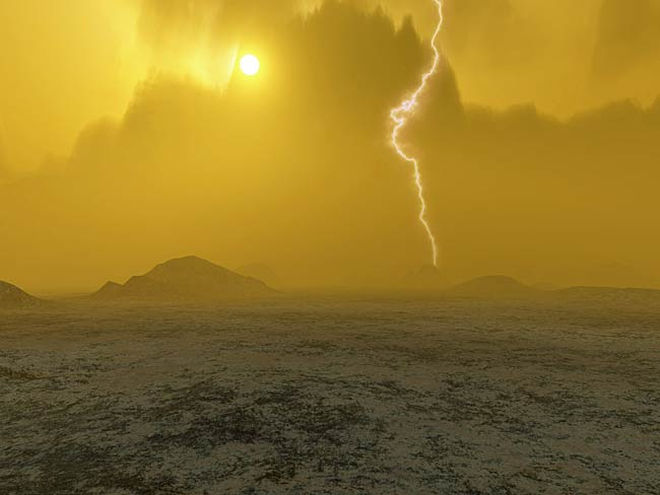


 First interstellar object to enter the solar system...
 Team behind the largest-ever search for alien life says it...
 Revealed: The stars that Voyager and Pioneer probes will...
 The first ever known deep space meteor to visit Earth from...