Ontdek de Fascinerende Wereld van UFO's en UAP's: Jouw Bron voor Onthullende Informatie!
Ben jij ook gefascineerd door het onbekende? Wil je meer weten over UFO's en UAP's, niet alleen in België, maar over de hele wereld? Dan ben je op de juiste plek!
België: Het Kloppend Hart van UFO-onderzoek
In België is BUFON (Belgisch UFO-Netwerk) dé autoriteit op het gebied van UFO-onderzoek. Voor betrouwbare en objectieve informatie over deze intrigerende fenomenen, bezoek je zeker onze Facebook-pagina en deze blog. Maar dat is nog niet alles! Ontdek ook het Belgisch UFO-meldpunt en Caelestia, twee organisaties die diepgaand onderzoek verrichten, al zijn ze soms kritisch of sceptisch.
Nederland: Een Schat aan Informatie
Voor onze Nederlandse buren is er de schitterende website www.ufowijzer.nl, beheerd door Paul Harmans. Deze site biedt een schat aan informatie en artikelen die je niet wilt missen!
Internationaal: MUFON - De Wereldwijde Autoriteit
Neem ook een kijkje bij MUFON (Mutual UFO Network Inc.), een gerenommeerde Amerikaanse UFO-vereniging met afdelingen in de VS en wereldwijd. MUFON is toegewijd aan de wetenschappelijke en analytische studie van het UFO-fenomeen, en hun maandelijkse tijdschrift, The MUFON UFO-Journal, is een must-read voor elke UFO-enthousiasteling. Bezoek hun website op www.mufon.com voor meer informatie.
Samenwerking en Toekomstvisie
Sinds 1 februari 2020 is Pieter niet alleen ex-president van BUFON, maar ook de voormalige nationale directeur van MUFON in Vlaanderen en Nederland. Dit creëert een sterke samenwerking met de Franse MUFON Reseau MUFON/EUROP, wat ons in staat stelt om nog meer waardevolle inzichten te delen.
Let op: Nepprofielen en Nieuwe Groeperingen
Pas op voor een nieuwe groepering die zich ook BUFON noemt, maar geen enkele connectie heeft met onze gevestigde organisatie. Hoewel zij de naam geregistreerd hebben, kunnen ze het rijke verleden en de expertise van onze groep niet evenaren. We wensen hen veel succes, maar we blijven de autoriteit in UFO-onderzoek!
Blijf Op De Hoogte!
Wil jij de laatste nieuwtjes over UFO's, ruimtevaart, archeologie, en meer? Volg ons dan en duik samen met ons in de fascinerende wereld van het onbekende! Sluit je aan bij de gemeenschap van nieuwsgierige geesten die net als jij verlangen naar antwoorden en avonturen in de sterren!
Heb je vragen of wil je meer weten? Aarzel dan niet om contact met ons op te nemen! Samen ontrafelen we het mysterie van de lucht en daarbuiten.
Berichten van 1 september 2019 tot 30 september 2019
Here is an older sighting that I had never seen before, so I will post it here. A UFO cloud was seen back in March of 2017 over Scotland and as it passed over a hill...a colorful thick rainbow appeared linking the ground to the UFO. I believe that the UFO was of course beaming people and supplies down to an underground base about 4-6km below the ground. An incredible once in a lifetime sighting. In my 15 years of reporting UFOs, I have never seen a UFO that created a rainbow. I have seen them in the rainbow or near it, but this is a first. Scott C. Waring
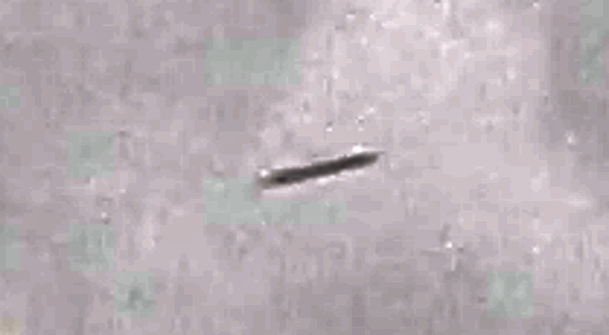
Identical elongated UFOs filmed over France and Costa Rica
Identical elongated UFOs have been filmed over France and Costa Rica respectively on September 22, 2019 and May 7, 2019.
While UFO is a descriptive term for an unknown type of flying craft it is noteworthy that sightings of cigar-shaped UFOs traveling in our atmosphere or traveling in space f.e. next to Orion Nebula have been reported much more than any other type of UFOs over the years.
Both videos show the objects in real time as well as in still and enlarged images.
NASA’S NEW BLACK HOLE SIMULATION WILL COMPLETELY MELT YOUR BRAIN
NASA
VICTOR TANGERMANN
Hungry Hungry
A new trippy visualization by NASA researchers shows how a black hole distorts its appearance by skewing the matter around it and warping the light itself with its immense gravity.
Gigantic black holes often appear at the center of large galaxies, where they pack an immense amount of matter into a tiny space. The resulting gravitational field eats up everything, including light.
Warp Zone
In the visualization, the yellow highlights are twisting magnetic fields as they’re making their way through churning gas. The inside gas nearest to the hole itself orbits the hole at almost the speed of light, according to a NASA statement.
The reason it has separate rings jutting out of the bottom is because of intense gravitational forces bending the light emitted by the disk, thereby providing a view of the disk’s underside.
Warping Space And Time
A team of scientists used NASA’s Event Horizon Telescope to snap the first-ever image of a black hole to the world back in April. Scientists are already working on getting an even crisper, higher resolution shot using two or three satellites.
NASA also helpfully included a labelled image of the highlights of its visualization.
‘Stealth Supersonic Spy Jet’ Spotted Near Oregon Air Base Leaves Conspiracy Theorists Guessing
Something that was universally deemed to be an exotic triangular object made its way over Portland, Oregon, arousing vast speculation over covert USAF projects, both past and present.
There has emerged a series of images supposedly showing a shadow project government spy plane in the skies over Portland, Oregon in the US, apparently a stone’s throw from the Portland Air National Guard Base (PANG). The authenticity of the images has yet to be verified, however.
The triangular, partially lit-up object featured in the snaps couldn’t help but intrigue the vast audience of YouTube conspiracy theorists Blake and Brett Cousins of thirdphaseofmoon, who posted the pictures in a clip over the weekend, citing “multiple accounts” from a number of onlookers in the area.
In the clip, Blake noted that the sighting, more specifically the contours, bears a striking resemblance to the alleged “infamous” TR-3B Black Manta – an aircraft that is thought to have been developed for the US Air Force as part of a black project.
Many have long speculated that the supersonic stealth plane, with a recognisable triangular design, was used during the Gulf War to provide laser designation for the Lockheed F-117 Nighthawk attack aircraft.
Blake went on to suggest that the craft in the images was most certainly “military”, given the light it was throwing back.
“FINALLY! It's About To Get Real...TR-3B Pang Base Portland”, the website founders wrote, while another user commented in the same manner:
“Great picture of a TR-3B.”
There were, however, those who thought other options would be even more plausible:
“Judging by the pic that’s not the TR3. That’s the new Stealth AI Drone”, one astonished viewer noted, while another butted in, saying that he would rule out CGI (computer-generated imagery).
Hordes of fans applauded the footage, bringing up the military base in the vicinity: one even suggested that it could be a new stealth drone, the XQ-58A.
Another went deeper into the conspiracy theory, suggesting “they want to be seen” as “it’s part of how they control disclosure”.
“This IS NOT definitely a TR3B! It looks like an F45”, a user commented, with another chiming in with a completely different idea in mind:
“That is a Large Extra-terrestrial Craft. The 2nd clip. The entire ship is phasing in from another dimension and somehow how only exposing its lights. The ship does not reveal its true form for safety reasons (its [sic] massive, that's an understatement), and also due to compassion for us”, the user explained.
The idea about the military testing new equipment is recurrent, though:
“This is not a UFO/this is military aircraft. They were out testing”, one suggested, with another adding: “I saw what looked like an Air Force logo near the nose of the craft”.
Photo: Saucer-Shaped UFO Spotted in Daytime Over Doolin, Ireland
A local resident was on 19 August reportedly trying to make a spectacular photo of his red-colored car parked on a rocky plain with beautiful bushy clouds in the background. After he returned home, a shocking and unexpected detail appeared on the picture.
The Irish driver noticed a thick and black disk hiding in the clouds.
The Irish driver noticed a thick and black disk hiding in the clouds
The purported alien space ship had visible those classic saucer-shaped features. Notably, the UFO was pictured seemingly tilted - according to hunters for an extraterrestrial - crucial sign that the object was flying when it was accidentally captured on camera.
According to UFO pundit Scott C. Waring, the owner of the thematic online source which broke this news, the sighting of such aerial phenomena has become statistically rare recently, because "In a world where everyone is looking down at their phone, its no wonder why sightings are down this year...few people bother looking up at the sky".
Overnight changes in Mars’ atmosphere could solve a methane mystery
Atmospheric gases may mix differently as the planet’s surface moves in and out of sunshine
The Curiosity Mars rover, shown in a self-portrait taken in May, detected a much higher concentration of methane gas on the ground than an overhead orbiter did. Now there may be an explanation.
Methane released in Gale crater stays in Gale crater. An overnight change in the Martian atmosphere could hold the gas close to the ground until morning, explaining why the Curiosity rover caught a whiff of methane while an overhead orbiter found none.
The theory offers “a way for the two measurements to live in harmony with each other,” says planetary scientist John Moores of York University in Toronto. He and his colleagues lay out the theory’s details online August 20 in Geophysical Research Letters.
Methane should last no more than about 300 years in the Martian atmosphere before sunlight breaks it down. “To see a seasonal cycle tells you that something is actively producing or destroying methane in the present time,” Moores says. Microbes produce methane on Earth, so finding the gas on the Red Planet has been seen as a possible sign of life — although not a definitive one.
Methane “can be produced by abiotic processes,” says Dorothy Oehler, a planetary geologist and astrobiologist with the Planetary Science Institute who is based in Houston. “But even if it’s not directly related to biology, it can enhance habitability for other kinds of microbes. So it’s an important thing to be seeking,” says Oehler, who was not involved in the new study.
Curiosity measured average methane concentrations of 0.41 parts per billion inside Gale crater, a 154-kilometer-wide depression near Mars’ equator. So it was a surprise when the European Space Agency’s Trace Gas Orbiter, part of the ExoMars mission which arrived at Mars in 2016 (SN: 10/18/16), flew over Gale crater and found no methane at all. There could still be minuscule methane concentrations below 0.05 parts per billion in the atmosphere that the Trace Gas Orbiter can’t smell, the satellite team reported in Nature April 10.
Even so, “it is hard to reconcile those” different findings, Moores says. If Mars is oozing enough methane that Curiosity would sense so much, there should be enough methane in the atmosphere for the orbiter to detect.
But Moores’ team noticed a coincidence: Curiosity took all its methane measurements at night, when the rover is standing still and charging its batteries. Night could also mark a time when gases mix differently in the Martian atmosphere than they do in the daytime, the team realized.
During the day, sunlight warms the air, creating currents and convection that mix different molecules together. So, methane in the daytime atmosphere can get mixed up and diluted. But overnight, the air calms and methane could build up near the surface, where Curiosity can sniff it. At sunrise, the methane would get diluted again.
The idea is plausible, and the argument in the paper is convincing, says planetary scientist Sébastien Viscardy of the Royal Belgian Institute for Space Aeronomy in Brussels, a member of the Trace Gas Orbiter team. But the theory doesn’t explain everything, he says.
For one thing, Moores and colleagues calculated that, to be consistent with both measurements, only 27,000 square kilometers of Mars’ surface should emit methane at a constant rate. That’s an area equivalent to 1½ Gale craters.
And “it’s difficult to imagine that only Gale emits methane,” Moores says. “Either Gale is even more special than we imagine, or there’s something we’re missing in the chemistry of the atmosphere.”
The bigger problem, Viscardy says, is that the different nighttime methane concentrations detected don’t explain the periodic spikes in methane that Curiosity has also observed (SN: 4/28/15). Those spikes showed huge methane increases occurring at random intervals throughout Curiosity’s mission. The most recent spike, in June 2019, was the largest plume yet observed, with methane levels of about 20 parts per billion, about 50 times above the seasonal average. Within a few days, though, detected methane levels returned to normal.
So the daily change in atmospheric mixing “solves a very small problem, but not the global methane story,” Viscardy says.
What were the mystery fireballs of Devon? Police launch urgent search after 'two fireballs tear through sky' sparking 999 calls over fears of a plane crash
Two bright lights spotted over south coast of England early this morning
Sparked several 999 calls from witnesses concerned it was a plane crash
Devon and Cornwall police have searched the area and are 'satisfied' it was not a plane crash but more likely an asteroid
Police in Devon are investigating a mysterious bright object spotted falling across the night sky over the south coast.
Two 'fireballs' sparked several 999 calls, with witnesses suspecting there could have been a plane crash.
Plymouth police reached out to the public to try and establish the cause, questioning whether it might have been asteroids breaking up in the atmosphere.
'Did anybody else see two glowing objects falling southwesterly direction out towards Plymouth sound? I know I have been up all night, but that was odd. Asteroid?' the force tweeted.
Plymouth police reached out to the public to attempt to identify a mysterious bright object spotted falling across the night sky over the south coast, questioning whether it might have been asteroids breaking up in the atmosphere
Another officer responded with a picture they managed to take of the bright light at around 5.52am this morning.
The Force Incident Manager for Devon and Cornwall Police said: 'We have had further reports of seeing an object in the sky from some distance away with a trajectory towards the ground, with an item falling off it at some point.
'There have been reports it broke into two and this has come from numerous people.
'We’ve got two aircrafts in the air looking and doing aerial searches of the area. At the moment we are saying it is the Yelverton/Tavistock/Prince Town area.'
Sightings were also reported across the South Coast of England, London and Wales in the minutes before 6am.
In a further update, officers in Devon have ruled out the possibility of a plane crash due to a lack of debris, suggesting it was more likely a meteor shower.
Insp John Shuttleworth said: 'We are as satisfied as we can be that this has not been a light aircraft crash and no persons have been injured.
'The expert opinion of trained search officers is that if there had been an aircraft crash, assets in the air would have seen some debris.
'There have also been a couple of reports from the Cardiff and Dorset areas of people watching meteor showers across the South West.'
WASHINGTON DC – On September 7, the US mini space shuttle X-37B completed two years in orbit. Today it is one of the most enigmatic space apparatuses, as very little information about its mission is known.
Some experts are confident that this spacecraft pursues purely military purposes.
The NASA space agency and the US company Boeing began to carry out the project related to the construction of the X-37 in 1999. At the beginning of the works, its manufacturers considered that the device would be dedicated to repair satellites located at an altitude of up to 700 kilometers. Later however, the military fully classified this project and commissioned it to carry out the Advanced Defense Research Projects Agency (DARPA).
This spacecraft’s previous mission ended in May 2017 after remaining 718 days in orbit. On October 7, 2017, the X-37B made its fifth flight in space and is still there today.
Secret Mission
Although the device has been in orbit for two years, experts can only make assumptions about the tasks this shuttle can perform in space. According to one version, the US military conducts experiments aboard the X-37B. In particular, NASA investigates the influence the space environment has on different materials.
The director of the Space Policy Institute, Ivan Moiseev, explained to Sputnik that this device was created especially for use by the Pentagon. According to the agency’s interlocutor, the X-37B carries smaller intelligence satellites.
Why does X-37B ‘scare’ Washington’s enemies?
Former US Air Force Secretary Heather Wilson has almost confirmed the military designation of this spacecraft. Under the policy, the machine’s unusual maneuverability “drives” potential US enemies crazy.
“[…] Our enemies do not know where they will be later, as this occurs on the hidden side of the earth. We know that this lack of knowledge makes them crazy and I am really happy about it,” emphasized the employee quoted by various averages.
Answer from Russia
Ivan Moiseev recalled that the spacecraft’s current orbit passes over the equator, and it is unlikely that the spacecraft will actively change its position using its aerodynamic characteristics.
“To change its tilt and stand on Russia, the X-37B needs to expend a lot of energy that it cannot generate by itself,” he explains.
Moreover, nowadays Russia is one of the largest space powers in the world. Its advanced space control systems can track the flight of US satellites and easily detect all their movements.
“Watching the X-37B is an easier task for us. It’s so big that you just have to turn right or left and then we can figure it out,” Russian Aerospace Forces Major General Anatoly Nesterechuk said.
Not only does Russia now have surveillance satellites, it also has X-37B-like ship-fighting devices. These systems can neutralize them if they pose a threat to your national security.
NASA news: What is this giant black hole on Jupiter? JunoCam snaps stunning pictures
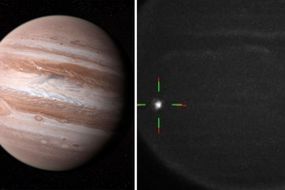
NASA’S Juno spacecraft snapped this incredible image of a giant black hole cropping up on the surface of Jupiter – but what is this dark spot blemishing the Gas Giant?
NASA’s spacecraft snapped this stunning portrait of Jupiter during one of its closest flybys of the Gas Giant. The flyby, or perijove, was the 22nd close brush with the planet that took place on September 11 this year. NASA’s Juno performs frequent dives towards Jupiter to study the planet’s surface and takes stunning snapshots of its atmospheric features. In this mesmerising photo, the probe appears to have snapped a large black hole in the upper hemisphere of the planet.
NASA news: What is this large black hole on the surface of Jupiter?
NASA news: The images were snapped by NASA's Juno spacecraft
(Image: NASA/JPL-Caltech/SwRI/MSSS/Kevin M. Gill)
As a result, the moon blotted out the sunlight and cast its round shadow onto the cloudy surface of Jupiter.
Your labours of love have illustrated articles about Juno, Jupiter and JunoCam
NASA
In essence, NASA’s probe witnessed a solar eclipse on Jupiter from high up in orbit.
Raw images of the Jovian eclipse were shared on NASA’s JunoCam directory where amateur astronomers and space enthusiasts have an opportunity to process them.
This particular image was tweaked and processed by software engineer Kevin Gill.
Members of the public are invited to dive into the JunoCam directory to have a go at processing the images.
Some of the best user-submitted images are often put on display by the US space agency.
NASA said: “We invite you to download them, do your own image processing, and we encourage you to upload your creations for us to enjoy and share.
“The types of image processing we’d love to see range from simply cropping an image to highlighting a particular atmospheric feature, as well as adding your own colour enhancements, creating collages and adding advanced colour reconstruction.
NASA news: The dark spot is a solar eclipse of the Galilean moon Io
(Image: NASA/JPL-Caltec /SwRI/MSSS/AstroHD)
“For those of you who have contributed – thank you. Your labours of love have illustrated articles about Juno, Jupiter and JunoCam.”
NASA’s Juno launched into space on August 5, 2011, but it did not reach Jupiter until July 2016.
The spacecraft is the second probe to reach the Gas Giant after Galileo between 1995 and 2003.
Once the mission comes to an end, NASA will deorbit the spacecraft to burn up in Jupiter’s atmosphere.
NASA news: The Juno probe reached Jupiter in July 2016
(Image: NASA)
NASA said: “Juno's principal goal is to understand the origin and evolution of Jupiter.
“Underneath its dense cloud cover, Jupiter safeguards secrets to the fundamental processes and conditions that governed our solar system during its formation.
“As our primary example of a giant planet, Jupiter can also provide critical knowledge for understanding the planetary systems being discovered around other stars.”
The Juno probe is managed by NASA’s Jet Propulsion Laboratory (JPL) in Pasadena, California.
Quick facts about the planet Jupiter:
1. Jupiter is the fifth planet from the Sun and the largest in our solar system.
2. Just like Saturn, the Gas Giant has rings but they are too faint to see.
3. Astronomers believed Jupiter does not have a surface but does have a solid core about the size of Earth.
4. The Gas Giant boats a total of 79 moons of its own.
5. A single day on Jupiter lasts only 10 hours.
6. The clouds on Jupiter are estimated to be about 31 miles (50km) thick.
7. Jupiter’s largest moons were discovered by Galileo Galilei in 1610.
8. The Gas Giant weighs twice as much as all the other planets in the system combined.
9. Eleven Earths can fit in a straight line across Jupiter’s equator.
10. The planet’s iconic Great Red Spot is a storm that is bigger than our planet.
The Moon may provide the most efficient method of obtaining evidence for alien life, a groundbreaking new scientific paper has proposed. Harvard astronomers Professor Abraham Loeb and Manasvi Lingam suggest in a new paper how the lunar surface could act as a “fishing net” for interstellar objects. Such objects from outside our solar system could collected over time on the lunar surface and potentially store the building blocks of life from the habitable environments around other stars.
The pair wrote in their paper: “The lack of a lunar atmosphere guarantees that these messengers will not burn up on their way but instead reach the lunar surface.
Will the unique qualities of the lunar surface enable new frontiers in astronomy?
Professor Abraham Loeb
“In addition, the geological inactivity of the Moon implies that the record deposited on its surface will be preserved and not get mixed with the deep lunar interior.
“Serving as a natural mailbox, the lunar surface collected all impacting objects over the past few billions of years.
“Most of this ‘mail’ originated from our neighbourhood within the Solar System.”
Alien life news: Might ET evidence be accumulating on the lunar surface?
Alien life news: Harvard's Professor Abraham Loeb the lunar surface could act as a “fishing net”(Image: Getty)(Image: Getty)
Space scientists now know the Solar System also intercepts external objects from interstellar space.
These range from dust particles to free-floating planets and stars.
The first interstellar object, the 200m long cigar-shaped `Oumuamua, made headlines around the world when it was first reported in 2017.
And earlier this year another was tentatively discovered in the form of one metre-size meteor from outside the Solar system, after burning-up in our atmosphere in 2014.
On the assumption these interstellar enter the Solar System on random trajectories, Professor Loeb and his team estimated the amount of interstellar material collected on the surface of the Moon over its history.
And although Moon rocks were famously returned to Earth by the NASA Apollo mission, they were likely contaminated by human hands.
This, they argue is the reason why evidence of interstellar impactors carrying the building blocks of extraterrestrial life has yet to be discovered on the lunar surface.
Professor Loeb wrote in Scientific American: “The fundamental question is whether distant life resembles the biochemical structures we find on Earth.
“Similarities might imply that there exists a unique chemical path for life everywhere or that life was transferred between systems.
“Either way, a lunar study shortcuts the need to send spacecrafts on extremely long missions to visit other star systems.
Getting similar information from a trip to the nearest star system: Alpha Centauri A, B or C, would take nearly nine years even if the spacecraft were to travel at the maximum speed allowed in nature, the speed of light.
Chemical rockets, meanwhile, could make this journey only after a hundred thousand years, of order the time that elapsed since the first modern humans began migrating out of Africa.
The Harvard astronomers conclude: “Excavating the lunar surface for physical evidence of etraterrestrial life is dramatically faster.”
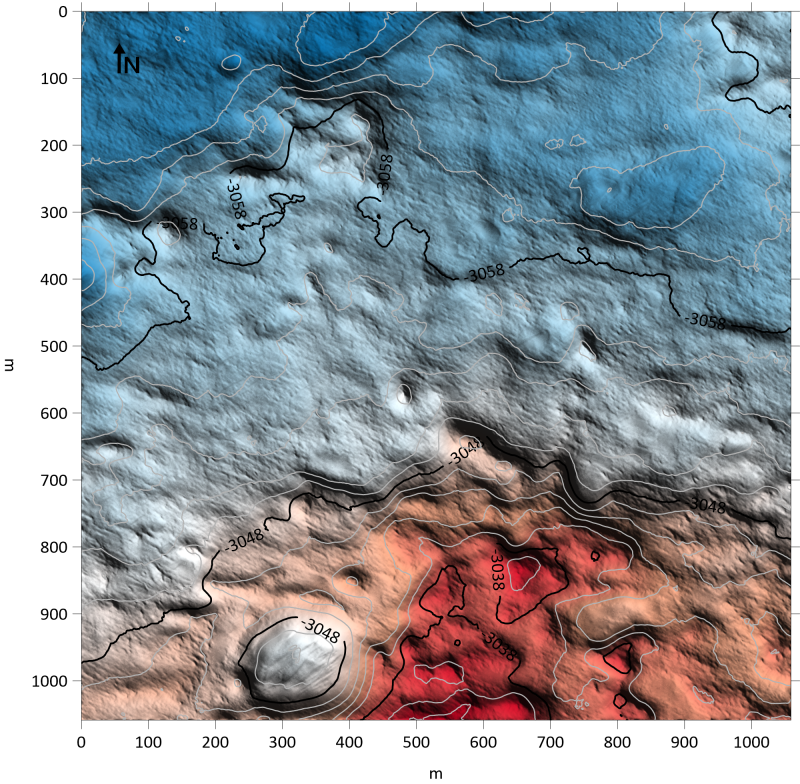
Maps are handy for travel. But what if you’re traveling to a place never before visited? For the ExoMars mission, due to launch next summer, scientists have developed new 3-D models of the area to be explored, which may be an old Martian river delta.
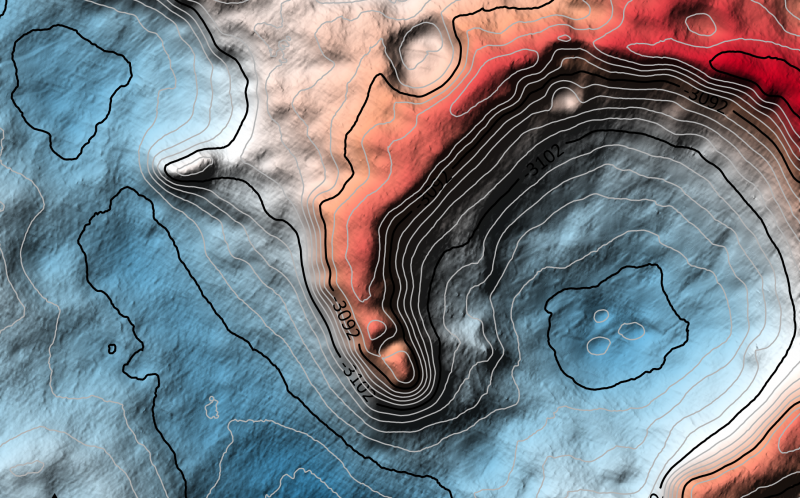
Here’s a piece of one of the new 3-D models just created to help ESA’s Rosalind Franklin rover explore Mars in 2021. The models are so detailed that they show, for example, as dune ripples inside craters, as you see here.
Image via TU Dortmund/ NASA/ JPL-Caltech/ Europlanet.
How do modern-day space explorers prepare to search an unknown terrain? Never mind that the explorers are robots, and that the preparers are space scientists and engineers. Next summer, an ambitious new mission to Mars is scheduled to launch. The ExoMars mission of the European Space Agency (ESA) will carry the robotic Rosalind Franklin rover to Mars. The rover will search for evidence of past Martian life in Oxia Planum, a large plain rich in clays and containing an old river delta. How do they prepare? A team of scientists at TU Dortmund Universityin Germany has created extremely detailed 3-D models of the landing location. These scientists said on September 16, 2019 that they want to use the models to understand the geography and geological characteristics of this unexplored region on Mars, and to help plan the path of the rover.
The 3-D models are called Digital Terrain Models (DTMs). They’re a variation of Digital Elevation Models (DEMs) used by space scientists to understand planets, moons and asteroids. These particular maps have a resolution of about 25 centimeters per pixel. One of scientists, Kay Wohlfarth, presented them at last week’s international meeting of astronomers in Geneva, Switzerland.
First, they use high-resolution imagery of Mars’ surface from the HiRISE camera on NASA’s Mars Reconnaissance Orbiter (MRO). That imagery is then applied to the classic stereo method of combining two images taken from slightly different angles, in order to create a 3D image of the landscape. But those kinds of stereo techniques can be limited when it comes to dusty and sandy surfaces – basically featureless – in locations like the Rosalind Franklin landing site, Oxia Planum. By necessity, the landing site is relatively flat to help ensure a safe landing.
The DTMs were then further enhanced by using a technique called Shape from Shading in which the intensity of reflected light in the image is translated into information on surface slopes. The slope data is combined with the stereo imagery, providing a much better estimate of the 3-D surface, while achieving the best resolution possible in the reconstructed landscape.
The resulting models give the scientists a much more detailed view of the landing region. As Wohlfarth explained:
With the technique, even small-scale details such as dune ripples inside craters and rough bedrock can be reproduced.
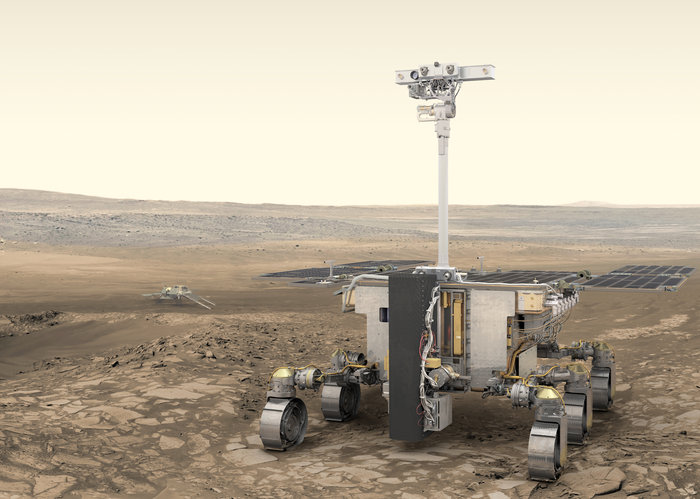
Artist’s illustration of the Rosalind Franklin rover on Mars, part of ESA’s ExoMars mission.
We have taken special care over the interaction between light and the Martian surface. Areas that are tilted towards the sun appear brighter and areas that are facing away appear darker. Our approach uses a joint reflectance and atmospheric model that incorporates reflection by the surface as well as atmospheric effects that diffuse and scatter light.
These new models will be a great aid to the rover as it navigates the landscape, looking for the best places to study with its array of instruments. Not only will the rover examine rocks and soil, it will also be able to drill up to two meters (six feet) into the subsurface, searching for possible biosignatures, chemical traces of past life. Samples will be delivered to the on-board laboratory for analysis.
PanCam, with its stereo and high-resolution cameras, will provide detailed views of interesting features in both visible and near-infrared wavelengths. Spectrometers will determine what rocks are composed of, and how much they were affected by water.
The rover’s drill in a clean room on Earth, in the stowed position. The drill will be able to penetrate down to two meters (six feet) into the subsurface.
According to Jorge Vago, ESA’s ExoMars rover project scientist:
Our rover has really taken shape. We have an incredibly powerful scientific payload to explore the surface and subsurface of Mars on our quest to find biosignatures.
ExoMars will be an exciting mission, and along with NASA’s upcoming 2020 rover, the first since the Viking mission in the 1970s/1980s to look directly for evidence of life. The rover is expected to launch sometime between July 26 and August 13, 2020 on a Russian Proton-M launcher, arriving at Mars in March 2021.
More information about ExoMars mission is available on the mission website.
Bottom line: New 3-D models of the Martian terrain will help the Rosalind Franklin rover search for life on Mars in 2021.
Irish Teenager Invents Magnetic Liquid Trap That Can Remove 90% of Microplastics From Water
Teenager wins Google Science award for genius invention that could cheaply remove most microplastics from the ocean
Because microplastics are so small — some as tiny as grains of sand — scientists have had a hard time figuring out to remove them from the soil and the sea.
Now, an Irish teenager has come up with a promising solution for this seemingly impossible task — a magnetic liquid that attracts microplastics to itself.
18-year-old Fionn Ferreira was kayaking one day when he spotted a rock covered in oil from a recent spill. Clinging to the oil were a bunch of tiny pieces of plastic.
“It got me thinking,” Ferreira told Business Insider. “In chemistry, like attracts like.”
Plastic and oil are nonpolar, making them likely to stick together in nature
Ferreira wondered if the effect could be recreated using ferrofluid, a magnetic, oil-based liquid invented by NASA in 1963 to keep rocket fuel moving in zero gravity.
Today ferrofluid is used to control vibrations in speakers and to seal off electronics to keep debris out.
Ferreira makes a more environmentally friendly version of the liquid than the kind used in rocket fuel, using recycled vegetable oil and magnetite powder, a mineral found naturally on Earth’s surface.
When he first drops the liquid into a container of water contaminated with microplastics, it disperses and turns the water black.
Then he dips a magnet in the water, which pulls out all the ferrofluid, plastic and all, leaving clear water behind.
“It got me thinking,” Ferreira told Business Insider. “In chemistry, like attracts like.”
The method removed 88% of the microplastics in his test samples.
The most difficult type of microplastic to remove was polypropylene, used to make all sorts of plastic packaging. Still, the ferrofluid removes 80% of polypropylene.
The easiest microplastics to remove were microfibers from plastic clothing such polyester, spandex and Lycra.
Washers and dryers are currently not equipped to filter these microfibers, which are a major source of ocean plastic pollution, so this is great news for that application.
Additionally, Ferreira‘s invention can be used at wastewater treatment plants as a sort of catch-all for microplastic pollution before it enters rivers, lakes and oceans.
Ferreira has won the Google Science award, $50,000 and educational funding for his invention.
Thanks to 2019’s record drought in Europe, a 7,000-year-old circle of 150 upright stones is back on dry land in western Spain, after 50 years underwater.
This image shows the remains of the standing stones in July 28, 2019, after having been submerged since the 1960s.
After 50 years underwater, Spain’s Dolmen of Guadalperal— a 7,000-year-old circle of 150 upright stones — is back on dry land, thanks to record heat and drought in Europe this summer.
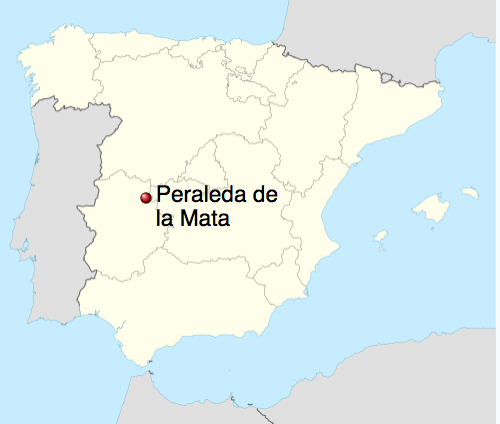
The megalithic monuments – known as the Spanish Stonehenge, located several miles from the town Peraleda de la Mata – have been underwater since the 1963 construction of the Valdecañas Dam flooded this region of western Spain. In the summer of 2019, several areas of Europe experienced drought conditions, including Spain, which had its third-driest June of the century, along with above-average temperatures in July and August. The drought conditions were enough to expose the Dolmen of Guadalperal, so that some residents of the nearby town of Peraleda de la Mata were able to see it for the first time. Angel Castaño is president of Raíces de Peralêda, a local cultural association dedicated to preserving the monument. He told AtlasObscura.com:
All my life, people had told me about the dolmen. I had seen parts of it peeking out from the water before, but this is the first time I’ve seen it in full. It’s spectacular because you can appreciate the entire complex for the first time in decades.
When we saw it, we were completely thrilled. It felt like we had discovered a megalithic monument ourselves.
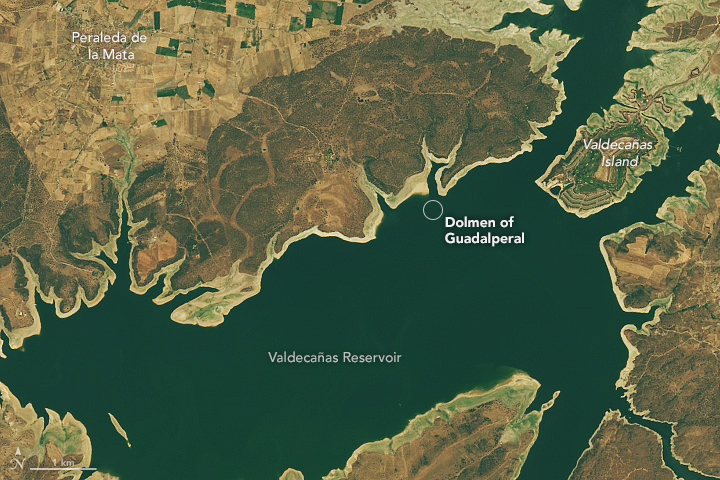
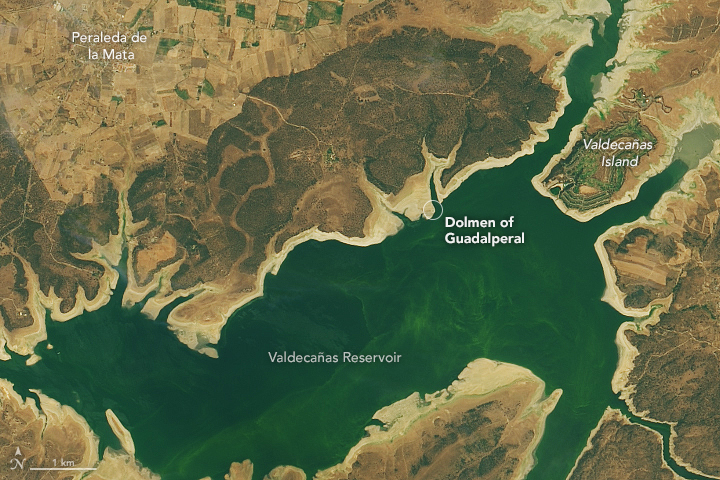
NASA Earth Observatory also reported on the reappearance of the Dolmen of Guadalperal, showing two different satellite images of it, captured in July 2013 and July 2019, by NASA’s Landsat 8 satellite. Note the changing water levels and the widening of the tan ring around the along the reservoir’s shoreline in the second image. These lighter colored sediments are the recently exposed lake bottom. A circle marks the Dolmen of Guadalperal.
The Dolmen of Guadalperal was found in 1926, part of a research and excavation campaign led by the German archaeologist Hugo Obermaier. Scientists believe it could have been a solar temple, as well as a burial enclave. Roman remains have been found there, including a coin, ceramic fragments and a grinding stone. Axes, ceramics, flint knives and a copper punch were found in a nearby dump. According to the Spanish media outlet Repelando, a settlement was also found nearby, thought to date back to the time of the monument’s construction. There were homes, charcoal and ash stains, lots of pottery, mills and stones to sharpen axes, among other objects, .
Since the 1960s, tips of the tallest megaliths have peaked out of the lake as water levels fluctuated. The monument consists of 150 granite stones or orthostates, placed in vertical arrangement that make up a circular chamber about 15 feet (five meters) in diameter, preceded by an access corridor about 70 feet (21 meters) long.
At the end of the hall, just at the entrance of the chamber, there is a menhir or standing stone, about 6 feet (2 meters) high, that contains the image of a snake. Research suggests this image represents the Tagus River – longest river in the Iberian peninsula – which passes through the area.
The Dolmen of Guadalperal are located in the town of Peraleda de la Mata in Spain.
Archeologists believe the Dolmen of Guadalperal was originally constructed as an enclosed space — a large stone house with a cap. The dolmen could have served as a tomb, a site for religious rituals, or a trading hub since it was relatively easy to cross the river at this location.
The most recent recorded exploration and excavation of the site was by German archaeologist Hugo Obermaier in the 1920s. By the time Obermaier’s findings were published in the 1960s though, Valdecañas Reservoir was filled with water.
The Dolmen de Guadalperal was excavated and studied in the 1920s, drowned in the 1960s, and dry again in 2019.
Image via 1080 Wildlife Productions/ AtlasObscura.
Bottom line: The Dolmen of Guadalperal – aka the Spanish Stonehenge, submerged for 50 years – is back on dry land, thanks to the hot and dry 2019 summer.
They're at the core of a triple galaxy merger 1 billion light-years from Earth.
A view from multiple telescopes of SDSS J084905.51+111447.2, a system of three merging galaxies found about 1 billion light-years from Earth. The system harbors three supermassive black holes on a collision course, a new study reports.
A rare trio of supermassive black holes has been caught in the act of coming together.
Three of the light-gobbling monsters nuzzle shoulder to shoulder in SDSS J084905.51+111447.2, a system of three merging galaxies about 1 billion light-years from Earth, a new study reports.
"We were only looking for pairs of black holes at the time, and yet, through our selection technique, we stumbled upon this amazing system," lead author Ryan Pfeifle, of George Mason University in Virginia, said in a statement. "This is the strongest evidence yet found for such a triple system of actively feeding supermassive black holes."
Making the epic find wasn't easy; it took observations by multiple instruments and help from lots of citizen scientists.
The trail started with the Sloan Digital Sky Survey (SDSS) telescope in New Mexico, which imaged SDSS J084905.51+111447.2 in optical light. Volunteers with the citizen-science project Galaxy Zoo then used those images to flag the system as an ongoing galaxy merger.
Next, the researchers looked at data gathered by NASA's Wide-field Infrared Survey Explorer (WISE) spacecraft. WISE spied lots of infrared light emanating from the system during a phase of the merger in which more than one of the supermassive black holes was expected to be accreting material rapidly, the researchers said.
Further observations in X-ray and optical light sealed the deal. NASA's Chandra X-ray Observatory detected strong sources of X-ray light near each of the merging galaxies' centers, indicating that lots of gas and dust was being consumed there — a sign of black-hole feeding.
NASA's Nuclear Spectroscopic Telescope Array spacecraft, or NuSTAR, also spotted evidence of gas and dust circling one of the supermassive black holes. And optical-light data gathered by the SDSS and the Large Binocular Telescope in Arizona further bolstered the notion that all three black holes were active.
"Through the use of these major observatories, we have identified a new way of identifying triple supermassive black holes," Pfeifle said. Each telescope gives us a different clue about what's going on in these systems. We hope to extend our work to find more triples using the same technique."
The distance from each supermassive black hole to its nearest neighbor ranges from 10,000 light-years to 30,000 light-years, study team members said. But those spans will shrink, because the black holes are apparently bound to merge, just as their parent galaxies are doing now.
Astronomers already know a bit about how black holes collide; after all, the Laser Interferometer Gravitational-Wave Observatory (LIGO) has detected the gravitational waves generated by a number of black-hole mergers. But a triple system probably works a bit differently than the traditional merging duo does, the researchers said.
For example, the nearby presence of a third supermassive black hole should make its two neighbors come together much faster.
"This may be a solution to a theoretical conundrum called the 'final parsec problem,' in which two supermassive black holes can approach to within a few light-years of each other, but would need some extra pull inwards to merge because of the excess energy they carry in their orbits," officials on the Chandra mission wrote in the same statement. "The influence of a third black hole, as in SDSS J0849+1114, could finally bring them together."
Neither LIGO nor Europe's similar Virgo project can detect the gravitational waves produced by mergers of supermassive black holes, by the way. The frequencies involved are outside the range of both LIGO and Virgo, which are tuned to gravitational waves generated by much smaller stellar-mass black holes.
Mike Wall's book about the search for alien life, "Out There" (Grand Central Publishing, 2018; illustrated byKarl Tate), is out now. Follow him on Twitter @michaeldwall. Follow us on Twitter@Spacedotcom orFacebook.
Opnieuw mysterieus ruimte-object ontdekt dat van buiten ons zonnestelsel komt - HLN.be
Photo NewsEen beeld van de nieuwe bezoeker van ons zonnestelsel, genomen door het Gemini Observatory op Hawaii.
WETENSCHAP Astronomen hebben opnieuw een ruimte-object gespot in ons zonnestelsel dat daar niet uit afkomstig is. Het is nog maar de tweede keer dat zoiets gebeurt, na de ontdekking van een mysterieuze sigaarvormige ruimterots in 2017. Op 7 december zal het object – waarvan ook nu niemand weet wat het precies is – zijn kleinste afstand tot de zon bereiken.
2I/Borisov: zo heeft de Internationale Astronomische Unie (IAU) het ruimte-object genoemd, naar ontdekker Gennady Borisov. Die amateurastronoom uit de Krim spotte het als eerste op 30 augustus met een zelfgemaakt telescoop. Het object leek op een komeet.
Na een week van observaties door astronomen van over de hele wereld, slaagde het Minor Planet Center van het Amerikaanse Smithsonian Astrophysical Observatory erin om een voorlopige baan te berekenen van het object en dat wees erop dat het van buiten ons zonnestelsel kwam. Een conclusie die intussen met zekerheid bevestigd is.
Op basis van zijn helderheid vermoeden wetenschappers dat het object een diameter heeft van enkele kilometers. Dat is echter niet exact te bepalen omdat er rond de kern een aura zit.
2I/Borisov zou op 7 december op zijn dichtste punt bij de zon komen. Het object zou zich dan op 2 Astronomische Eenheden (300 miljoen kilometer) van de Aarde én van de zon bevinden. Ter vergelijking: dat is twee keer de afstand van de Aarde tot de zon.
Het object zou op zijn helderst zijn in december en januari en te zien aan de zuidelijke hemel. Daarna zal het zich weer verder van ons verwijderen en voorgoed uit ons zonnestelsel verdwijnen. (lees hieronder verder)
Photo News1I/Oumuamua.
Het is nog maar de tweede keer dat wetenschappers een object waarnemen in ons zonnestelsel dat daar niet uit afkomstig is. In 2017 werd 1I/Oumuamua ontdekt en dat was meteen wereldnieuws. Er werd volop gespeculeerd over wat het precies kon zijn en daarbij werd zelfs geopperd dat het om een buitenaards ruimteschip ging. Maar tot nu toe heeft men nog niet met zekerheid kunnen vaststellen wat het precies is. Hetzelfde geldt voorlopig voor 2I/Borisov.
Waarneembaar
2I/Borisov zal wel langer waarneembaar zijn dan 1I/Oumuamua – verscheidene maanden – en dat is een vooruitzicht dat wetenschappers plezier doet. Ze hopen dat ze de mysterieuze bezoeker van ons zonnestelsel daardoor grondiger zullen kunnen bestuderen.
De nieuwe vondst doet vermoeden dat er nog meer van dergelijke objecten zijn en die zouden een nieuwe manier kunnen bieden om processen in andere sterrenstelsels te onderzoeken.
Is The London Hammer An Ancient, Out Of Place Artifact?
By: Lisa Trank
What could be so unusual, or controversial about the discovery of an iron hammer encased in rock? After all, archaeologists have discovered historical artifacts for as long as humans have been searching for their ancient roots. But what happens when an object defies historical study and appears to exist in the mysterious realms between worlds, as a kind of time traveler? For what is known as the “London Hammer,” the world has been wrangling with a seemingly ordinary household tool; one steeped in mystery, archaeological wonder, and for many, unanswered questions.
Alleged to date back more than 400 million years, the London Hammer, or as it is also called, the London Artifact, can be looked at as a study in how the modern and ancient worlds can connect, and collide. How else can we explain that an obviously human-made instrument linked to the late 1800s never rusted, despite the wood transforming into coal? How could the London Hammer withstand normal aging impacts such as oxidation, and what explanations can be made for it having been found in a rock formation that precedes human existence? Perhaps it’s best to start where the London Hammer was supposedly discovered – the tiny town of London, Texas.
LONDON HAMMER: FROM TEXAS TO THE WORLD STAGE
For Max and Emma Hahn, it was a summer day like many others. In 1936, the Texas couple took a hike along Red Creek near London, Texas, a tiny community located in the center of the Lone Star State. But the hike was like no other the Hahns had ever experienced. Not because of the weather, or the beauty of the landscape, but because they discovered a strange piece of wood encased in what seemed to be an unusual formation of rock.
It wasn’t until 1947 that their son broke through the rock and uncovered what was attached to the wooden handle — an iron-headed hammer. For close to four decades, the hammer remained a local oddity and relatively unknown, until it came to the attention of Carl Baugh, a Young Earth creationist, after an article was published on the artifact in the Bible-Science Newsletterin 1983. Baugh was influential in a form of creationism which believes that Earth and all its forms of life were created by a deity’s supernatural acts 6000-10,000 years ago. He promoted the hammer as proof of an antediluvian discovery, which remains in exhibit at Baugh’s Creation Evidence Museum in Glen Rose, Texas.
Of equal interest to archaeologists, the London Hammer posed a scientific dilemma. What could possibly explain how a modern instrument was encased in ancient, prehistoric Ordovician rock from between 65-135 million years ago?
There are many who doubt where the hammer was supposedly found; others claim the rock formation is consistent with the minerals and sediments of the surrounding area, putting the claim of the rock dating back to hundreds of millions of years ago in doubt. Others claim that the hammer could have been discarded and the rock formation occurred through the natural process of petrification.
Carbon 14 dating of the hammer’s wooden handle would provide a pathway to best determine the age of the rock, as well as the hammer. Unfortunately, the hammer’s owner, Baugh, has only conducted private testing and has to date not published the results. The strongest criticism of the Baugh’s pre-flood theory comes from Glen J. Kuban, former creationist, computer programmer, and paleontology enthusiast, who states that “no clear evidence linking the hammer to any ancient formation has been presented.”
Despite this, there are certain facts about the London Hammer which does shed some light on the mysterious tool.
The Hammer measures at six inches in length with a diameter of one inch.
The metal is made up of 96.6% iron, 2.6% chlorine, and 0.74% sulfur.
The iron head has not rusted since it was discovered in 1936.
The wooden handle is unmineralized with small traces of carbonization
While the exact discovery location has not been verified, the lack of sharp nicks seems to confirm that it was not chiseled from a larger rock formation, but found loose, as the Hahns claimed.
There is much debate surrounding the London Hammer’s origin remains unanswered. Was the artifact hit by a meteorite that formed around the tool? According to what is known about the chemical component of a meteor, the formation’s composition would seem to discount this theory. Some counter this by asserting the existence of an ancient, advanced civilization which left behind tools eerily similar to those of a more modern era.
The most well-known argument refuting the London Hammer’s provenance in an ancient time comes from J. R. Cole from the National Center for Science Education who wrote in 1985 that:“the stone concretion is real, and it looks impressive to someone unfamiliar with geological processes. How could a modern artifact be stuck in Ordovician rock? The answer is that the concretion itself is not Ordovician. Minerals in solution can harden around an intrusive object dropped in a crack or simply left on the ground if the source rock (in this case, reportedly Ordovician) is chemically soluble.”
The mystery surrounding the London Hammer remains. For those who believe, the hammer represents a kind of mystical time traveler. For others, it is a geological wonder. Whatever the belief, the London Hammer does represent our unquenchable thirst for knowledge, meaning, and connection to a larger order.
Een 400 miljoen jaar oude hamer? Niemand heeft een verklaring voor dit mysterieuze voorwerp
In 1934 werd in de plaats London in de Amerikaanse staat Texas een hamer gevonden in een laag steen.
Het gesteente is naar verluidt meer dan 400 miljoen jaar oud, wat zou betekenen dat de hamer is gemaakt voordat er mensen waren.
De hamer kwam in de jaren tachtig in handen van Carl Baugh. Hij speculeerde dat de omstandigheden op aarde al die miljoenen jaren geleden een ras van reuzen hebben voortgebracht.
Ongewone samenstelling
Baugh liet het voorwerp analyseren door het Battelle Laboratory in de staat Ohio. In hetzelfde lab zijn maanstenen van de NASA onderzocht.
De hamer heeft een ongewone samenstelling: 96,6 procent ijzer, 2,6 procent chloor, 0,76 procent zwavel en 0 procent koolstof.
De afwezigheid van koolstof is vreemd. Chloor wordt normaal gesproken niet aangetroffen in ijzer. In het ijzer zijn geen luchtbelletjes gevonden. De hamer bevat een laag ijzeroxide die roest voorkomt.
Scepticus Glen J. Kuban zei dat het gesteente materiaal kan bevatten wat miljoenen jaren oud is, maar dat het gesteente rond de hamer mogelijk een stuk jonger is.
Fossielen
Rond archeologische voorwerpen vormt zich soms een laag kalksteen die niet ouder is dan 200 jaar.
Rond de hamer zijn echter fossielen gevonden die deel uitmaken van de oorspronkelijke formatie. De fossielen zijn niet aangetast.
Dit zou erop kunnen wijzen dat de fossielen en de hamer uit dezelfde periode stammen. Koolstofdatering van de hamer in de jaren negentig leverde weinig op omdat de monsters besmet zouden zijn geraakt.
Steenkool
Het voorwerp is gevonden door een wandelaar en lag op een richel. Mogelijk is het losgekomen uit een grotere formatie.
Baugh verklaarde dat een deel van het houten handvat van de hamer door de jaren heen in steenkool is veranderd.
Op foto’s van de hamer is een donker gedeelte te zien wat steenkool zou kunnen zijn.
Witness To An Alien Abduction Frightened In Australia
OCTOBER 1, 2001 …………GUNDIAH AUSTRALIA
Keith Rylance told us that he had gone to sleep in the caravan bedroom at about 9.30 pm. Petra retired to her bedroom in the caravan annex. Amy stayed on a couch watching TV in the caravan annex “lounge room”. Each of these locations were in close proximity, separated by a window and wall respectively from the lounge room.
Petra’s room had a door leading to the lounge room, which was left ajar. The door to the bedroom, where Keith was, apparently was open to the lounge room. Amy apparently fell asleep on the couch. A storm was in the area.
Around 11.15 pm, Petra was reportedly woken up and when she entered the adjacent lounge was confronted by an extraordinary sight, that allegedly quickly overwhelmed her. A rectangular beam of light was being projected through the open window of the caravan lounge room.
This light beam appeared to be truncated at the end. Inside the beam Petra claims to have seen Amy in a sleep prone position, being carried out head first through the window. Underneath her, also within the beam were the items that had been on the coffee table adjacent to the couch Amy had been on. Before apparently fainting in shock Petra saw that the beam was coming from a disc shaped UFO hovering just above the ground a short distance away, near a tree at the rear of the clear section, immediately behind the annex caravan house.
Petra reports she believes she was only in a faint for a very short period of time. Regaining consciousness, she began screaming. Keith reports that he was awoken by the commotion coming from Petra. As he came from the caravan bedroom and stepped down into the lounge room annex Keith claims he was confronted by the sight of a highly agitated Petra and the contents of the coffee table on the floor in front of the window.
He told us that he soon realised that the window screen was torn in both a vertical fashion and along the bottom of the window frame. Keith indicated that initially he couldn’t get any sense out of Petra who was crying and very agitated, so he rushed outside trying to locate Amy.
She was reportedly nowhere to be found. Keith states when he started to be less agitated himself he was eventually able to get from Petra an idea of what happened. Keith claims he initially refused to believe what Petra was telling him. He said he rushed outside again trying to find his wife.
Eventually as the situation became clearer, Keith indicates he decided to call the police.
Keith call the Tiaro police around 11.40 pm reporting that his wife had been abducted and imploring that the police should come out. The manning status at that time meant there were some delays in the police coming out, but about hour and a half after the initial call Senior Constable Robert Maragna from Tiaro and an officer from Maryborough arrived at the site.
Initially police thought they might have been walking into a situation involving foul play, even perhaps a murder scene, but then the bizarre circumstances of the alleged events came into focus.
The two people, Keith and Petra, at the Gundiah property were claiming that Amy Rylance had been abducted by a “spaceship”! The officers were struggling to keep an open mind.
They were joined later by Sgt. John Bosnjak, the officer in charge of the Tiaro police. He had been asleep when the police called him to assist in the investigation. The three officers continued their investigations at the site. They confirmed that Keith Rylance and Petra Heller appeared to be in an agitated state and that there was no sign of Amy Rylance. The torn screen was examined.
A flowering bush, commonly known as “yesterday, today, tomorrow” was located immediately outside the left side of window, had indications of possibly being affected by heat or another mechanism along its right side. Oddly another flowering bush, a hibiscus, located immediately on the right hand side of the window area was not affected in the same way. The police took samples for possible later testing.
While the police were at the property, a phone call came through, which was taken by Keith Rylance. A woman was calling from Mackay indicating that she had taken a somewhat distressed and apparently dehydrated young woman from a BP petrol service station on the northern outskirts of central Queensland city of Mackay, some 790 kilometres to the north of the Gundiah – Tiaro area.
The young woman turned out to be Amy Rylance, and the female caller was ringing to advise that Amy was apparently all right and was at the Mackay hospital, where she had been examined by a doctor. Keith handed the phone to Snr. Constable Marangna.
Given these extraordinary circumstances Mackay police were called in, making a total of three police stations involved in the investigation -Tiaro, on outskirts of central Qeensland, Maryborough on the coast and Mackay, some 790 kilometres to the north of the Gundiah – Tiaro area.
A statement was notarised by the Mackay police with a Justice Act acknowledgement, that required Amy to acknowledge that she had stated was true to the best of her knowledge and belief, and that if it is admitted as evidence, that she may be liable to prosecution if she had indicated anything in it that she knew was false.
This statement indicated that she last only recollected lying on the couch at the Gundiah property. She had no recollection of the events that Petra described, but claimed she then next remembered waking up lying on a bench in a strange rectangular room. llumination came from the walls and the ceiling. She was alone.
She indicated she called out and heard what seemed to be a male voice, asking her to be calm and that everything would be alright and that she would not be harmed. Soon an opening appeared in the wall and “a guy” about 6 feet tall walked into the room.
The man appeared to be slender in build but in perfect proportion, covered head to foot in a full body suit. He had what seemed to be a black covering mask on his face, with a hole for his eyes, nose and mouth. He repeated his calming assurances.
Amy felt she had been there a while.
The guy told her they were returning her to a place not far from where they took her from, because the lights were wrong at the property and it wasn’t safe. She then indicates she found herself lying on the bed and falling asleep.
The next thing she recollects is that she woke up on the ground with trees around her. She felt disorientated, could smell the ocean, and indicated she was not sure how long she tumbled through bushland, but seemingly it was for a long time, but she felt she wasn’t making much progress.
She then came out onto a road that looked like a highway and saw a light from a petrol station. She walked into the station, where staff seeing her state, tried to offer some assistance.
She accepted some water, as she felt somewhat dehydrated. Initially she was not able to answer identifying questions, and didn’t know where she was.
She was also asked if she had been drinking or was on drugs, to which she said no. Amy indicated she felt tired, sore, drained and lethargic. She asked a woman at the service station to take her to the hospital, as she didn’t know of where else to go. The woman and her friend took Amy to the hospital.
Later Amy spoke with two police officers and also spoke with her husband Keith from the hospital. She then went to Mackay police station where she gave the statement of events. Amy also indicated that this sort of thing had never happened to her before, but when she was in 5th year school she had seen a large UFO surrounded by smaller objects.
The police arranged to put Amy in a motel pending the arrival of her husband. He and Petra arrived during the day and indicated they spent considerable time with Amy discussing what happen. Extensive notes were apparently made and photographs were taken of a triangular arrangement of marks on her inner right thigh, marks on each heel and the growing out of her hair which she had dyed earlier in the week.
Her hair had apparently started to show her former colour, suggestive that some considerable time had passed for her, apparently indicative of rather more than a few hours. Body hair had allegedly also become somewhat more pronounced that would otherwise would be apparent for the short time involved.
Via an Newsagent’s a copy of the Australian Ufologist magazine was purchased, Keith, Petra and Amy started to learn more about UFOs. Keith Rylance contacted the Australian UFO Research Network office number mentioned in the magazine. Diane Harrison took the call Date: Fri, 5 Oct 2001 15:20 p.m and for the next hour or so listened to the story that Keith and Amy told. Petra was apparently sleeping at the time.
Given the nature of the story, its complexity and the fact it apparently featured the alleged use of “solid light”, Diane decide to bring Bill Chalker into the investigation, making contact with him during the evening of Friday, October 5th.
Paradoxically Bill was scheduled to talk at a Brisbane UFO conference on October 13th, and his topics included “solid light” cases and the application of science to alien abduction cases. Bill put a call through to them at the motel, securing permission to record the conversation.
Once again Petra was not available to talk about her part in the alleged events. Keith Rylance went into considerable detail about the events, referring often to the notes they had apparently been compiling during the day. The details described covered the events Petra had witnessed, what Keith had experienced, and what Amy told them had happened to her during her experience.
Finally Bill spoke with Amy, focusing mainly on the events before and after the claimed onboard experiences, because Keith had already gone into considerable detail about the latter.
Bill discussed with Amy her general responses and her physical state and her current state of thought on her experiences. Keith Rylance seemed to want to control how both media and investigators would get involved. His desire to contact the media promptly drew from both Diane and Bill the suggestion that he should think very carefully about the possible ramifications of doing so. Keith seemed to feel that it was important to get the story out, as it would come out anyway and this way he could control the way it did.
He was also trying to restrict the way the investigators could or should look into their experience. He claimed they didn’t need to proof the experience. While he didn’t directly witness the experiences he believed both Amy and Petra.
Given the possible nature of the event, and that irrespective of the ultimate resolution of the affair, it seemed destined to be a big story, Diane and Bill decided to undertake an investigation. They had been given an indication from Keith Rylance that the three would wait for the investigators to come to Mackay.
The claimants were in no apparent hurry to return to Gundiah. They gave permission for Bill and Diane to visit the property on the way. Bill arrived in the Brisbane area on Tuesday afternoon, October 9th.
Diane and Bill then travelled to Gundiah, arriving at the Whispering Winds winery property, just after 10 pm. Because of the lateness of the hour, we got the witnesses permission to stay there overnight and to conduct whatever investigation we needed to do.
Keith had arranged for a neighbour to regularly check on the two pets left behind, namely a parrot and a kelpie dog. He indicated to us that it would be okay to let the dog off for a run, but warned us it was very friendly but inclined to jump all over people. We let the dog off at some point and observed its behaviour. At one point it did jump up on the window where the damaged screen was located. This gave some support to the possibility that at least some, if not all of the damage, could have been caused by the dog.
Some of the damage on closer inspection seemed suggestive of possible dog damage. Our inspection of the plant damage also suggested possible prosaic causes, such as heat stress. A plant at the front of the house had similar damage and a healthy flowering bush of the same species that was at the window, was examined by us at Mount Basset lawn cemetery has similar damaged.
A gardener there we spoke to indicated that the species often had random or more extensive damage of a heat stress nature from hot sunlight. The prosaic possibilities for both the screen and the plant damage are only suggestive at this point and further investigation is required. We undertook extensive investigations at the property and the area. Police were very helpful.
Our investigation generated many issues and questions, which we feel need resolution, in order to assist interpretations of these events. Further extensive investigations were undertaken in Mackay, focusing in particular at the area where Amy Rylance returned.
These included attempts to reconstruct the circumstances of Amy’s return, through onsite research. The BP petrol service station staff were spoken with and a surveillance video tape that may contain Amy’s visit there was provided to us by the station owner.
This part of our investigation also generated many issues and questions that need resolution if we are to approach any measure of certainty about the real nature of the events alleged.
Keith Rylance indicated to us he would be available to us when we got to Mackay, but it was made clear to us early on the first day of our investigations there that this wasn’t probably going to be the case.
When we contacted the motel where they had been the night before, their third motel in Mackay, we learned they had apparently already checked out that morning.
We left messages on their phone but didn’t hear from Keith until early on the afternoon of our second day, as we were leaving Mackay. In his mobile call, Keith apologised for not being available, but was indicating they had relocated to an unspecified location after having fled the area.
The primary reason for this Keith indicated was that they claimed they had a kind of “men-in-black” experience. In this case Keith was reporting a pursuit of their vehicle by a high powered dark brown 4 wheel truck. The nature of this event apparently frightened Keith, Amy and Petra, prompting Keith to attempt to loose the vehicle and eventually leave the area.
Before the completion of this preliminary report (14th October) we have heard from Keith again. We remain hopeful that they will get into more direct contact with us.
This affair is both extraordinary and controversial. Many have rushed to judgement, but given it’s complex and evolving dynamics, caution and patience is necessary. We have many issues and questions we would like to try to resolve.
Further contact with the Rylances and Petra Heller may help this process.
The case is far from closed and requires an objective, open-minded investigation. Only time will give us the possibility of resolution and certainty about this intriguing but controversial affair.
Regards, Diane Harrison National Director of The Australian UFO Research Network Australian Skywatch Director
I found this elephant head carving in a Mars photo last week and I have been thinking about it ever since. I wasn't going to tell anyone, because it was just too odd, but some of the most interesting things in life are odd. So, here we go. I found this head and it has a trunk like a baby elephant, except the trunk is a bit shorter. The end of the trunk has a wider opening...just like the elephants on earth. The ear is big and rounded and its forehead matches the ancient mammoth elephants here on earth more than the modern day elephants. The eyes are bold and round, with huge brow ridges. I just seems obvious to me. Scott C. Waring
This gigapan photo of Mars shows some very interesting patters that are similar to looking down on a city on Earth. The grid patterns here are huge and thick, much like the streets here in some big cities. You can even see some buildings in between the grid lines. So incredible. One structure looks very similar to the Vatican with its round base and rounded roof. NASA named this photo Atlantis Chassis. These grid lines are about 1km across each on average before they touch the next grid line...just like a big city block. Very incredible ancient alien city that appears to be millions of years old. 100% proof that aliens once existed on Mars. Please watch my video to learn more. Scott C. Waring
The Lightsail 2 craft is an experiment to prove the practical application of a controlled ‘solar sail’, which has the ability to far outstrip traditional rocket engines. The revolutionary mission was launched on June 25 and developed by ‘The Planetary Society’, based in the US. The voyage became the first ever to demonstrate solar sailing and used energy from the Sun to orbit Earth.
The tiny 10x10x30cm spacecraft was powered with propelled sunlight bouncing off its mirrored sails.
The exploration used thin plastic sheets to gather the momentum from the Sun.
Most notably the spacecraft was able to manoeuvre without the need for fuel or engines.
The Lightsail 2 was successful in its orbit around Earth
(Image: AP)
The voyage became the first ever to demonstrate solar sailing
(Image: The Planetary Society)
Mr Betts said: “We’re thrilled to announce mission success for LightSail 2.
“Our criteria was to demonstrate controlled solar sailing in a CubeSat by changing the spacecraft’s orbit using only the light pressure of the Sun, something that’s never been done before.
“I’m enormously proud of this team. It’s been a long road and we did it.”
Leading scientist and Planetary Society CEO Bill Nye said the mission was a “game-changer” for further space exploration.
He said: ”For The Planetary Society, this moment has been decades in the making.
“Carl Sagan talked about solar sailing when I was in his class in 1977. But the idea goes back at least to 1607, when Johannes Kepler noticed that comet tails must be created by energy from the Sun.
Lightsail: An artist impression of the space craft in orbit
(Image: PA)
Lightsail: The designs were released on the launch of the spacecraft
(Image: PA)
“The LightSail 2 mission is a game-changer for spaceflight and advancing space exploration.”
The LightSail 2 is a crowdfunded mission and involved donations from 50,000 people from across the world.
Jennifer Vaughn Planetary Society CEO said the mission can be a “paradigm shift” to get more people involved in space missions.
Ms Vaughn said: “LightSail 2 proves the power of public support.
Lightsail: The Planetary Society tweted out the last information emitted from the spacecraft
(Image: TWITTER•@exploreplanets)
“This moment could mark a paradigm shift that opens up space exploration to more players.
“It amazes me that 50,000 people came together to fly a solar sail.
“Imagine if that number became 500,000 or 5 million. It’s a thrilling concept.”
In a statement on the Planetary Society Twitter account, the team wrote: "LightSail2 is now the highest performing solar sail to date and it's 100% crowdfunded by our members and backers!"
History of solar sailing
• The idea for solar sailing dates back to the 17th century • NASA came up with the plan for a solar sail to Halley's comet in the 1970s • Russia teamed up with the Planetary Society for a doomed solar test for Cosmos 1 in 2001 and 2005 • Japan launched Ikaros - the first solar sail flight in 2010 • LightSail2 was launched aboard SpaceX's Falcon Heavy rocket in 2019 • LightSail2's mission is to be the second-ever controlled solar sail flight and the first in Earth orbit
LightSail 2 has a limited lifespan and is doomed to be destroyed.
The spacecraft will eventually crash into the sun and burn as it continues its orbit.
The technology follows LightSail 1 which managed a much lower orbit on the same approach.
Ikaros: Japan's space craft was the first of its kind to carry out the journey
However, Lightsail is not the first solo-powered spacecraft to reach the other side of the sun.
Japan's Ikaros, which was carried by a Mitsubishi H-2A rocket, made the journey in May 2010.
Ikaros was helped on its journey to Jupiter, where it landed, by a 20-metre sail after a three-year journey.
Reporting on the mission, Japan's space agency said: "There will be the world's first solar-powered sail craft employing both photon propulsion and thin-film solar power generation during its interplanetary cruise."
Ex Air Force Officer Describes Four Types of Extraterrestrial Beings The Government Knows About
IN BRIEF
The Facts:
A former member of the Air Force Office of Special Investigations, Richard Doty, tells all to researcher Dr. Steven Greer in a long interview.
Reflect On:
With the reality of this phenomenon coming to light, how much disinformation has been spread by the 'powers that be' in order to twist the truth? Why?
Richard Doty is a retired Air Force Special investigations officer (AFSIO), and his job was to spread disinformation about the UFO subject during his time with the Air Force. Spreading disinformation about the reality of UFOs is no secret, and in Doty’s case, he admitted to infiltrating UFO circles along with his colleagues to feed ufologists and journalists lies and half truths so that they would never understand any real truth. This is something I believe is still occurring within the UFO community–multiple disinformation campaigns that are now perhaps more sophisticated as well as a number of frauds who are sharing their ‘experiences’ when they’ve really had done. In fact, it was decades ago when the very first Director of the Central Intelligence Agency, Roscoe Hillenkoetter, stated to The New York Times:
It is time for the truth to be brought out in open Congressional hearings. Behind the scenes, high ranking Air Force officers are soberly concerned about UFOs. But through official secrecy and ridicule, citizens are led to believe the unknown flying objects are nonsense. To hide the facts, the Air Force has silenced its personnel.
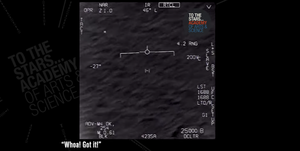
Several astronauts have been quite outspoken about UFOs, like Apollo 14 astronaut Dr. Edgar Mitchell and high ranking military/government personnel from around the world as well. On top of all of this, the simple fact that many people have had their own experiences has also sparked interest in the subject. There are also multiple videos that’ve been released by governments around the world, as a couple came from the Pentagon over the past few years via the To The Stars Academy. Here’s a picture that the Canadian Air Force released in the 60s. It’s no secret that UFOs have been a topic of concern, as academic publications, radar trackings, and millions of pages of documents have been released from multiple governments detailing numerous interesting encounters with these objects.
So where does the extraterrestrial question come into play? It comes from hundreds, if not thousands, of people like the ones mentioned above. Credible sources with verified backgrounds have alluded to the fact that these objects are indeed extraterrestrial, and that this can be verified.
Yes there have been crashed craft, and bodies recovered.
Not long ago, a leaked document exposed notes taken by legendary scientist Dr. Eric Davis during a meeting he had with Admiral Thomas Ray Wilson, the former Director of the Defense Intelligence Agency, regarding extraterrestrial space crafts. You can read more about that document and access it here.
This is why it’s always interesting to hear such people talk about actual extraterrestrial entities rather than ‘UFOs.’ UFOs are no longer taboo within the mainstream, but the idea that some of them are extraterrestrial still seems to be a touchy subject.
According to Richard Doty, in the interview below with Dr. Steven Greer, maker of the hit documentary that’s currently on Netflix called “Unacknowledged,” the US government is aware of at least four different extraterrestrial species that’ve visited this planet.
Dr. Greer is well-known for interviewing multiple people with interesting, verified backgrounds, especially from the military and intelligence agencies. He’s a major reason as to why the topic of UFOs has garnered so much attention.
According to Doty:
There were four types of crafts that they showed us, four types of extraterrestrials, and they never explained to us where they got the pictures of these extraterrestrials but there were actually pictures of these weird looking creatures that showed on the film that were extraterrestrials from some other location different from where the EBENs came from.
One was looking like an insect, had huge eyes, very large head, a small body. They had two different appendages on their arms, they had basically two hands on each arm. They had several joints in their legs, and they had a bubble type appendage in the front and a lump or something in the back, that was one of them. They were about the size of an average human.
The second one was a very tall thing, very very thin humanoid that had long arms. Arms reached down probably to its knees, they had regular hands. Their faces were very very thin. They were almost human looking, unless you really really study them and got real close to them. They didn’t have any hair, they had cat like eyes.
And then there was a third creature… It looked something like the EBEN but it was bigger, it had a bigger body. I found out later in a briefing that I had, in 1995, that that was a genetically engineered creature that the EBENs made… They knew it was genetically engineered, and I don’t know how, they didn’t ever tell us how.
The “EBENs,” which stands for extraterrestrial biological entities, Doty describes as “about four feet tall” and that they “didn’t appear to have any ears, they had an indentation for the nose. They had very big eyes. They had a very tight fitting suit, almost looked like they were nude, but they actually had a very thin but tight fitting suit on. No thumbs just four fingers, suction devices on their tips of their fingers. One of them had a head apparatus on it, maybe a helmet or some kind of an ear phone, or some type of device that they were communicating with the craft or with something else, and they found a number of different objects in the craft. They had a piece of what they thought was plexiglass that they kept for years before they figured out it was an energy device for the craft.”
Doty goes on to explain that multiple crafts have been shown to use zero-point energy–meaning they’ve found a way to extract energy from the vacuum of space.
Jack Kasher, Ph.D, a professor emeritus of physics at the University of Nebraska, once expressed “there is another way, whether it’s wormholes or warping space, there’s got to be a way to generate energy so that you can pull it out of the vacuum, and the fact that they’re here shows us that they found a way.” (source)
You can watch the full interview below.
Doty is not the only one to claim that the global elite is aware of extraterrestrial beings. Paul Hellyer, who was the Canadian Minister of National Defense in the 1960s during the Cold War, claimed that “At least four known alien species have been visiting Earth for thousands of years.”
“They have different agendas… Nearly all are benign and benevolent, they want to help us, [but] there may be one or two species which do not… They come from various places. For a long while, I only knew about ones that came from different star systems… There are some in our star system, there are actually extraterrestrials who live on a planet called Andromedia, which is one of the moons of Saturn, and that there are others on Venus, and some on Mars, and that they may be interacting between themselves… because there is what is called a federation of these people, and they have rules.”
These people have nothing to gain but ridicule for speaking up about these things. And it’s not just witness testimony, it’s testimony that corroborates with many others in similar positions.
Lyn Buchanan, one of the STARGATE army remote viewers, claims, as multiple others within the program have, that he was tasked to find out information on extraterrestrial groups that were/are visiting the planet.
There are multiple other examples!
Confirming Doty’s Identity
As far as Doty’s identity, UFO researcher Alejandro Rojas wrote a piece for Huffington Post in 2014 linking some very interesting documents regarding one of Doty’s misinformation missions, one of which he also speaks about in the interview below. The Guardian has confirmed his identity, as do these videos. But what really did it for me was Hal Puthoff’s response to this well-known UFO researcher.
Hal Puthoff is an American physicist who earned his Ph.D. from Stanford University. He is the Director of the Institute for Advanced Studies at Austin. His research includes theoretical and experimental projects in electrodynamics, quantum physics, gravitation, cosmology, energy research and more. His professional background includes engineering work at General Electric and Sperry as well as three and a half years spent at the U.S. Department of Defence. He served various government agencies, the Executive Branch, and Congress as a consultant on leading-edge technologies and future technology trends. He has been awarded the DoD Certificate of Commendation for Outstanding Performance, post-doc appointments at Stanford University as Research Associate, and more.
He is currently part of the team at the To The Stars Academy and was also the co-founder of the US Government’s STARGATE program, which examined parapsychology.
Doty claimed that he worked with Puthoff on multiple occasions and also mentioned him in the interview below. I came across a tweet from well-known UFO researcher Grant Cameron who tweeted that Hal Puthoff confirmed Doty’s identity. Furthermore, another popular and well-known UFO researcher, James Iandoli, also asked Puthoff to comment on Doty’s claims, and he did.
Dr. Steven Greer does not interview anybody whose credentials he cannot verify, which is also a noteworthy point. Doty’s identify has been confirmed by many, something which is hard to do when you’ve held these types of positions within intelligence agencies.
It’s safe to say that Doty is who he claims to be. Whether or not he is telling the truth is up to you to decide.
The Takeaway
Again, the reality of UFOs performing maneuverers that defy our known laws of aerodynamics and travelling at speeds no known aircraft made by humans can travel at is firmly established thanks to whistleblower testimony, radar tracking data, videos, and photographs. The evidence is overwhelming. The extraterrestrial hypothesis as an explanation behind the UFO phenomenon seems to be the most plausible explanation, and in my opinion the most obvious. There are many questions to still be asked and answered, and many things still remain uncovered. This is a topic that leaves no aspect of humanity untouched.
National View Column: Navy's attitude about releasing UFO videos more disturbing than the videos
Written By: Thomas L. Knapp
The U.S. Navy confirms that three online videos showing two military air encounters with what it calls "unexplained aerial phenomena" and the rest of us call "unidentified flying objects" are authentic, as Popular Mechanics reported.
The videos are interesting, and some might find them disturbing. What's more disturbing to me is that the Navy thinks the videos are none of our business, not even 15, or even four, years after they were recorded in 2004 and 2015.
Pentagon spokesperson Susan Gough told The Black Vault website, “The videos were never officially released to the general public by the DoD (U.S. Department of Defense) and should still be withheld."
The videos aren't classified. They just haven't been "cleared for public release."
No such long-term category as "not cleared for public release" should exist with respect to information generated or acquired by government.
There are legal standards for "classifying" information as "confidential," "secret," or "top secret," based on supposed degrees of damage to national security disclosure of the information might cause.
I'm personally against allowing the state to keep secrets at all. They claim to work for us. If we're really their bosses, we should get to look over their shoulders any time we please.
Of course, that won't happen. But given the fact that the classification system does exist, there should also be a non-negotiable time limit within which any given piece of information must either be classified or made available to the public.
I'm not referring to deniable requests for information filed under the Freedom of Information Act. All government information not classified within 30 days of its creation or acquisition should be stored in databases that the public can search at will.
UFOs have been a matter of intense public interest since at least as far back as the 1947 Roswell incident, which still spawns rumors of alien craft and corpses held in secret government facilities.
I don't know, and am not going to claim to know, whether we're being visited by extraterrestrials — and if so what they're up to while they're here. I don't have strong opinions on which sighting and abduction stories are true and which aren't. I'm just exactly smart enough to understand that I don't have the information I'd need to reach such conclusions.
What I do know is that it shouldn't be the government's prerogative to conceal such information from the rest of us indefinitely, tell us tall tales about weather balloons and swamp gas, and offer lame "national security" excuses when called out.
Nor are UFOs the only subject this problem touches. The post-World War II national security state has developed a culture of general secrecy that we accommodate at our peril.
Concealing information from the public should be incredibly difficult — not a matter of course.
Thomas L. Knapp is director and senior news analyst at the William Lloyd Garrison Center for Libertarian Advocacy Journalism (thegarrisoncenter.org). He lives and works in north-central Florida.
The Hayabusa2 mission has confirmed that – if asteroid Ryugu or a similar asteroid were to come dangerously close to Earth – we’d need to take care in trying to divert it, lest it break up into fragments that might then impact Earth.
Here’s asteroid 162173 Ryugu in June 2018, as seen by Japan’s Hayabusa2 spacecraft. This mission is the 2nd-ever sample-return mission to an asteroid. The earlier one was the original Hayabusa mission, which returned a sample from asteroid 25143 Itokawa in 2010.
Japan’s Hayabusa2 spacecraft – launched in December, 2014 – traveled some 200 million miles to near-Earth asteroid Ryugu. It closed to within 12 miles (20 km) of the asteroid’s surface in June 2018. Hayabusa2 will continue traveling with this asteroid until December 2019, when it’ll begin making its way back to Earth. It’s due to return a sample of the asteroid to scientists in December 2020. In the meantime – in two studies published this summer – the Hayabusa2 mission has already given us valuable information about asteroids like Ryugu. Among other things, it showed that, if an asteroid like Ryugu were headed toward Earth – and if we on Earth decided to send a spacecraft out in an attempt to divert the asteroid – we’d need to take “great care” in the attempt.
Hayabusa2 released several small rovers to Ryugu’s surface. One was a German-French device, called the Mobile Asteroid Surface Scout (MASCOT). It was “no bigger than a microwave oven” and equipped with four instruments. On October 3, 2018, MASCOT separated from Hayabusa2 when the craft was 41 meters (about 100 feet) above the asteroid. MASCOT touched down on Ryugu for the first time six minutes after deployment, bounced a bit in the asteroid’s low gravity, then settled on its surface about 11 minutes later.
MASCOT Lander✔@MASCOT2018
Hello #Earth, hello @haya2kun! I promised to send you some pictures of #Ryugu so here’s a shot I took during my descent. Can you spot my shadow? #AsteroidLanding
MASCOT lasted 17 hours on Ryugu, an hour longer than anticipated, until its non-rechargeable battery ran out. It carried out experiments in various places amid Ryugu’s large boulders, possible because MASCOT was designed to tumble to reposition itself.
Researchers learned Ryugu’s surface is dominated by two types of rock. They were surprised to find no evidence for fine-grained dust. They noted that millimeter-sized inclusions in the rocks are similar to those present in carbonaceous meteorites found on Earth. This group includes some of the most primitive known meteorites, some of which date back 4.5 billion years. In other words, these meteorites are some of the oldest stuff in our neighborhood of space, formed when our solar system was condensing solid material from its original primordial nebula of gas and dust.
Scientists knew thiz sort of meteorite was fragile. Hayabusa2 confirmed just how fragile this sort of material is.
If Ryugu or another similar asteroid were ever to come dangerously close to Earth and an attempt had to be made to divert it, this would need to be done with great care. In the event that it was impacted with great force, the entire asteroid, weighing approximately half-a-billion tons, would break up into numerous fragments. Then, many individual parts weighing several tons would impact Earth.
Ryugu was found to have an average density of just 1.2 grams per cubic centimeter (.043 pounds per cubic inch). In other words, the asteroids is only a little “heavier” than water ice. But, the scientists said:
… as the asteroid is made up of numerous pieces of rock of different sizes, this means that much of its volume must be traversed by cavities, which probably makes this diamond-shaped body extremely fragile. This is also indicated by the measurements conducted by the DLR MASCOT Radiometer (MARA) experiment, which werepublished recently.
In that earlier study – published July 15 in the peer-reviewed journal Nature Astronomy – scientists using Hayabusa2 data to study Ryugu pointed out an upside to the asteroid’s fragility. Their statement on July 15 said:
Ryugu and other asteroids of the common ‘C-class’ consist of more porous material than was previously thought. Small fragments of their material are therefore too fragile to survive entry into the atmosphere in the event of a collision with Earth.
These two studies of asteroid Ryugu were made possible by a space mission that, like all space missions, required years for planning and implementation. Thanks to the mission, scientists learned that what we knew from Earth-based observations about the nature of these asteroids was essentially correct. But they confirmed and refined their knowledge; they know more details now.
Ryugu is what’s called a near-Earth object (NEO). That’s an asteroid or comet that comes close to or intersects Earth’s orbit.
Ryugu itself is not on a collision course with Earth and likely never will be. That’s good because Ryugu is 850 meters (about a half a mile) across, large enough to do some serious damage to any world it might strike. It could wipe out a city, for example. But, again, Ryugu isn’t going to strike us. In part because we sent a spacecraft to it, we know a lot about the orbit of this asteroid. Its orbit around the sun is almost coplanar to that of Earth. The asteroid approaches us at an angle of 5.9 degrees to within a distance of approximately 100,000 kilometers (60,000 miles). These scientists said:
Ryugu will never come within the immediate vicinity of Earth, but knowing the properties of bodies like Ryugu is of great importance when it comes to assessing how such near-Earth objects (NEOs) could be dealt with in the future.
Bottom line: Two studies published this summer about asteroid Ryugu – based on data from the Hayabusa2 mission – confirm that the asteroid is fragile, even more fragile than scientists had thought. The good news is that fragments of this asteroid (or asteroids like it) might more easily burn up in our atmosphere. The bad news is that, if an asteroid like this one were on a collision course with Earth, and we planned to try to divert it (for example, by setting off a nuclear device in its vicinity), we’d have to do so with “great care” in order not to create multiple large bodies that would then impact Earth. By the way, in case you’re interested, Hayabusa is Japanese for Peregrine falcon, which is Earth’s fastest bird.
THE man who exposed Area 51 to the world is still being tracked by the US Government, he claims.
Bob Lazar claims to have seen test flights of nine captured UFOs, and says he even worked as an engineer on the alien spacecrafts, in a TV interview in 1989.
Bob Lazar gave an explosive interview in 1989 claiming to have worked on UFOs and alien technologyCredit: Orchard Films
Now a new documentary, Bob Lazar: Area 51 and Flying Saucers, takes a deep dive into his theories and where is now.
Thirty years ago he claimed to have worked near Area 51 at hangar S-4 where he claims UFOs with tiny alien seats were made out of a material called Element 115.
Going by the fake name Dennis, he told reporters: "The propulsion system is a gravity propulsion system. The power source is an antimatter reactor. This technology does not exist at all."
The US Government always denied the existence of Area 51 until five years ago wen CIA documents listed it as an aviation test site.
The scientist says he worked in a secret hangar near Area 51
Credit: Facebook
Area 51, in Nevada desert, has been the subject of many UFO conspiracy theories
Credit: IMDB
Bob sketched one of the nine flying discs he claims to have seen in test flights
Credit: Orchard Films
Lazar described the cover up as "a crime against the scientific community".
He later claimed the Government had threatened his life, his wife and family in an effort to silence him.
In the documentary he says he regrets blowing the whistle on the alien test site, adding: "At this point in my life, I’d probably lean towards not saying anything."
These days he lives in Michigan with wife Joy and and runs United Nuclear, selling lasers, chemicals and sciency products.
Bob's stunning story is the subject of a new documentary
Credit: Orchard Films
His whistle-blowing has put it on the map and , he says, he has been threatend by the US government
Credit: IMDB
Bob says he had no contact with aliens, but worked on the spacecraft propulsion tech
Credit: IMDB
Lazar claims the FBI once raided his lab, saying: "At the risk of sounding paranoid, I do always have a suspicion that someone is monitoring me – it’s something that is difficult to get out of my mind."
He added: "I do not follow UFO stories or reports and am not interested in researching life outside of Earth.
"My primary interest was, and still is, the incredibly advanced technology. I know if we can control and develop it, it can change the world."
Jeremy Corbell, right, has interviewed, Bob, for a new documentary catching up on where his life is nowCredit: IMDB
Bob claims the Government is still monitoring himCredit: Facebook
The journalist who introduced Lazar to the public, George Knapp backs-up his story adding: "His vehicle also had break-ins. Mind games being played. Threats were issued
"Lazar and others were bugged and followed, and it certainly seemed like someone wanted to frighten him into remaining silent, or maybe they wanted to drive him a little crazy.
"I was present for many of these events. I saw them with my own eyes, and I witnessed the aftermath as well."
But Lazar's reputation has taken a kicking throughout the years - like when researchers failed to find a record of him attending his alleged schools, MIT and the California Institute of Technology.
He tells the documentary: "How can I prove anything else? Do you think Los Alamos just hired me out of high school?"
Documentary filmmaker Jeremy Corbell told Mail Online: "If this story’s true, it is probably the most important UFO story in human history, because it reveals the truth."
Chinese media have reported that the Yutu-2 rover has discovered a “gel-like” substance in a crater on the far side of the moon. It sounds intriguing, but details are still scarce.
Tracks from China’s Yutu-2 rover approaching the crater where the rover has reportedly discovered a “gel-like” substance on the far side of the moon. Few details are known at this point.
Image via China Lunar Exploration Program (CLEP)/Space.com.
What has China’s Yutu-2 rover discovered on the far side of the moon? That is a question a lot of people are asking after an intriguing report came out from Space.com a few days ago, which referenced a “gel-like” substance discovered in a small crater. Not many details are known right now, but there are some possible clues, as provided by planetary scientists who have commented on the finding.
The discovery was published in the “Drive Diary” for Yutu-2 (literally “Jade Rabbit”) in the Chinese government-sanctioned publication Our Space, on August 17, 2019. It was also tweeted by the state-run People’s Daily newspaper.
Yutu-2, the follow-up to the first Yutu rover and part of the Chang’e 4 mission, first made the discovery back on July 25, day 8 of its mission. Previous driving plans were postponed, so scientists could take a better look at the material with the rover’s instruments. The oddity was first noticed by mission team member Yu Tianyi while he was checking images from the main camera on the rover. There were many small craters around, but one of them looked unusual, containing something with an unexpected color and luster.
People's Daily, China✔@PDChina
Yutu-2 rover, part of China’s Chang’e-4 mission, has discovered an unusually colored “gel-like” substance during its exploration activities on the far side of the moon. Mission scientists are now trying to figure out what the mysterious material is. What do you think it is?
The material has been described as gel-like, but it should be noted that the actual appearance still isn’t known for certain yet. As others have noted, it’s possible that this is a mistranslation from Chinese reports. Some planetary scientists have speculated that what has been found may be impact melt glass from a meteorite strike (and the substance is in a crater) or perhaps volcanic glass from an ancient volcanic explosion. Both of those have been found before on the moon, including by Apollo astronauts.
According to Mahesh Anand, a planetary scientist at the Open University in the United Kingdom, in Newsweek:
The fact that it has been observed associated with a small impact crater, this finding could be extremely exciting as it would indicate that a very different material could just be hiding underneath the very top surface. This would assume even a greater significance if these material turn out to have experienced interaction with water-ice (as the possibility of existence of water-ice in the top few meters of the lunar south polar region is predicted on the basis of recent remote sensing dataset).
As Walter Freeman, a physicist at Syracuse University, also noted:
We have lots of processes on Earth that cause interesting geology: the action of water, wind, and volcanism. But the moon has none of these, so meteorite impacts are the main thing that reshapes its surface. There’s a bit of precedent for this on Earth: at the site where the first nuclear bomb was tested in New Mexico, there is a glassy mineral called “trinitite” formed from the heat of the explosion. The same thing happens around meteorite impacts here.
In 1972, Apollo 17 astronauts discovered unusual orange-colored soil on the moon. Could the Chinese rover discovery be of something similar?
In Our Space, the material was described as being significantly different from the surrounding lunar soil in shape and color, but not specifically how.
Both the material and the crater itself were examined with the rover’s Visible and Near-Infrared Spectrometer (VNIS) instrument, which detects light that is scattered or reflected, to reveal their makeup. As previously reported, VNIS also detected material that originated from the lunar mantle, in the regolith of Von Kármán crater. That discovery was announced last May.
Is this new material the same or similar to what was found in Von Kármán crater? We don’t know yet, and there is still little information to go on. It would be odd if it actually was gel-like, but at the moment, most other scientists think that it is probably more like impact melt or volcanic glass. We don’t even know the specific color yet, other than it is “unusual.”
Could it also be similar to what Apollo 17 astronauts found in 1972? They discovered orange-colored soil near the Taurus-Littrow landing site, created during a volcanic eruption 3.64 billion years ago.
View of the Yutu-2 rover as it rolled off the Chang’e-4 lander last January. Image via China National Space Administration
So far, there haven’t been any photos or analysis results released of the “gel” itself, so we will just have to wait for more information.
The Yutu-2 rover will now continue its journey west of the landing site. What else might it find? Yutu-2 was launched in December 2018 on the Chang’e 4 lander, landing in Aitken Basin near the south pole of the moon in January, and is the first rover to explore the far side of our closest celestial neighbor. As Zou Yongliao at the Chinese Academy of Sciences told Xinhua:
The far side of the moon has unique features never before explored on site. The exploration of this virgin land by Chang’e-4 might bring breakthrough findings.
For now, the “moon gel” finding remains a mystery, but stay tuned for further updates when more information becomes available.
Bottom line: The Chinese rover Yutu-2 has discovered an unusual “gel-like” material on the far side of the moon, according to state-run sources. But details are limited right now as to what it might actually be.
In the new movie "Independence Day: Resurgence," opening in theaters today (June 24), Earth will once again gear up for an epic fight with a hostile alien race. The premise will set up some awesome action sequences, but how realistic is the idea that if aliens were to visit Earth, their one goal would be to destroy us? What do the experts think?
Twenty years ago, the new movie's predecessor, "Independence Day," featured Will Smith and Jeff Goldblum cracking wise while using a computer virus (presumably written in an Earth-based computer language) to disable an alien ship and save humanity. In the new movie's timeline, Earth's nations have since created a huge, planetary-wide defense program to shield our planet, but it may not be enough to defend humanity when the aliens return.
Renowned physicist Stephen Hawking has said repeatedly that he's afraid of aliens wiping out the human race the way a human would wipe out a colony of ants. ['Independence Day: Resurgence' Trailer]
In 2015, Hawking co-launched an initiative called Breakthrough Listen, which will search for alien communication signals out in the cosmos, and eventually broadcast signals from the human race, with the goal of enabling communication across the universe.
"We don't know much about aliens, but we know about humans," Hawking said at the Breakthrough announcement. "If you look at history, contact between humans and less intelligent organisms have often been disastrous from their point of view, and encounters between civilizations with advanced versus primitive technologies have gone badly for the less advanced. A civilization reading one of our messages could be billions of years ahead of us. If so, they will be vastly more powerful, and may not see us as any more valuable than we see bacteria."
Are the aliens benign?
Alien invasions of Earth are nothing new in sci-fi. One of the most famous examples is "War of the Worlds," an H.G. Wells 19th-century classic that was adapted into a Tom Cruise movie in 2005. In that film, aliens inexplicably begin bursting from underneath city pavement to incinerate humans.
But some films portray aliens as benign, such as 1997's "Contact," based on a 1980s book written by Carl Sagan. A signal begins spouting prime numbers, which Jodie Foster's SETI (search for extraterrestrial intelligence) team tries to decode. Their efforts at talking with the aliens turn a little strange, but there definitely is no invasion.
This hopeful view is something that science communicator Ann Druyan, Sagan's widow, shared at the Breakthrough event in 2015. (It's also the belief held by astronomer Jill Tarter, former director of the Center for SETI Research, whom Foster's character in "Contact" was based on.) Druyan is also involved in the Breakthrough initiative.
"We may get to a period in our future where we outgrow our evolutionary baggage and evolve to become less violent and shortsighted," Druyan said. "My hope is that extraterrestrial civilizations are not only more technologically proficient than we are but more aware of the rarity and preciousness of life in the cosmos."
Active SETI debate
Three spacecraft currently heading out of the solar system — the Pioneer probe and the two Voyager probes — contain maps that point the way back to Earth. And there continue to be initiatives to put messages for aliens on spacecraft. When the NASA New Horizons probe finishes its Pluto and possible Kuiper Belt work, some people are hoping to create a crowdsourced message for aliens to upload to its hard drive.
Some researchers, however, aren't sure it's such a good idea to shift SETI efforts from just listening to actually sending out signals — a method some call "active SETI."
"Active SETI advocates broke with the conventional wisdom of the SETI pioneers, which was to listen but not transmit. This change may have been driven by the impatience of younger SETI people after 40 years of unsuccessful searches," Michael Michaud, author of the book "Contact with Alien Civilizations: Our Hopes and Fears About Encountering Extraterrestrials" (2007, Copernicus), said in a 2014 interview with Space.com.
"But active SETI is not science," added Michaud, a former U.S. Foreign Service Officer for the U.S. Department of State. "It is an attempt to provoke a response from an alien society whose capabilities and intentions are not known to us."
But Earth's sheer distance from other civilizations might serve as a shield against aliens that don't exactly want us around.
Douglas Vakoch, director of interstellar-message composition at the SETI Institute, said in 2010, "Even if they tend to be hateful, awful folks, can they do us any harm at interstellar distances?"
Prehistory Decoded at Gobekli Tepe: From a Cataclysmic Event Dawns the Origin and Perhaps the End of Civilization
Around 13,000 years ago, the Earth burned. A swarm of comet debris from the Taurid meteor stream had blasted the Americas and parts of Europe; the worst day in prehistory since the end of the ice age. Many species of large animal were exterminated by the conflagration and ensuing cataclysms. And those that survived the initial onslaught could do little against the floods, acid rain, and starvation that followed.
People suffered too. Mankind was knocked backwards by this cataclysm into even more primitive stone-age ways of life, leaving sickly, frightened communities battling for survival. Vegetation, and the animals that grazed it, could not live in the weak half-light of day or the starless black of night. And without them, life was bleak and hard.
Many years passed before the dust settled and the stars could be seen again. The sun and moon gradually strengthened and slowly the natural order of things returned. But this devastating cataclysmic event was not forgotten.
The Cataclysmic Birth of Religion
In the Fertile Crescent, modern day southern Turkey, the surviving Natufian tribes memorialized this great catastrophe by erecting Gobekli Tepe, the world’s first temple. The event had changed them – made them more fearful and religious. They prayed at their new stone temple for protection, deliverance, and anything else that might help. And they watched the sky, very carefully.
Their community swelled and their temple grew. Needs were met and they further developed agriculture to support the growing number of sedentary mouths that camped within sight of their monument. Centuries passed and their community developed new skills. Their temple became more complex and ornate, and more famous.
People gathered in their thousands, traveling for hundreds of miles, to witness the greatest accomplishment of their age. They came to read the messages, written with animal symbols and other abstract forms, on Gobekli Tepe’s giant stone pillars, and to take part in its religious ceremonies. Civilization had begun.
Gobekli Tepe archaeological site, southern Turkey. ( CC BY-SA 3.0 )
It spread like a contagion. The potent mix of religion and agriculture propelled this new lifestyle outwards into the Eurasian and African continents. The greatest revolution in history was underway.
But nothing lasts forever in this world. In time, new cultural centers arose that out-competed Gobekli Tepe. New fashions took hold in each capital, promulgated by those with much to gain, and Gobekli Tepe’s star slowly faded.
Three thousand years after it was founded, Gobekli Tepe was purposefully buried to protect its heritage. The messages written on its walls, effectively witness accounts of the darkest catastrophe in 20,000 years, were hidden from waves of marauding invaders, scheming looters, and many others that walked over it.
Until, that is, they were rediscovered by Klauss Schmidt in 1994. Twenty years after that, Paul Burley and Graham Hancock found the key to unlock these messages and they were read properly again, for the first time in 10,000 years and by me two years ago. Hardly believing what I had stumbled upon, I wrote a peer-reviewed paper, with my colleague Dimitrios Tsikritsis, that hit headlines across the world.
Our ‘Fox’ paper showed the animal symbols at Gobekli Tepe, apart from snakes, represented constellations – the same constellations we know in the West today. The snakes emanating or threatening the animal symbols therefore represented meteors from the Taurid meteor stream. One pillar in particular, Pillar 43, is especially important as it allows their writing to be decoded using statistical methods. It is our Rosetta Stone. And the message written on this pillar is profound – as it very likely encodes the date of the Younger Dryas event itself, written in terms of precession of the equinoxes.
This pillar reveals many new insights that overthrow commonly accepted norms of scholarship. It is revolutionary. Most importantly, it tells us that ancient people were far more sophisticated astronomers than previously thought. And it also confirms that Clube and Napier’s coherent catastrophism, a theory that proposes multiple devastating comet impacts on Earth over the last 20,000 years or so, with perhaps more to come, is correct. Essentially, it tells us to ‘beware’, for the cosmos is not as safe as once thought.
Copy of Pillar 43 in Sanliurfa museum.
( Image courtesy of Alistair Coombs, author supplied)
Clearly, this is not the story we tell our children, or we were told as children. Most academics across the Earth Sciences still hold to the ‘uniformitarian’ paradigm developed over 200 years ago by James Hutton, which reassures us that Earth is safe from these kinds of devastating impact. While the dinosaur-killing asteroid story has been bought by most, uniformitarianism maintains that such events could not have happened over the timespan of human development. These events are, supposedly, about as rare as fairies.
Staying Safe from Cataclysmic Events
But we now know this view is wrong. It is a delusion. Uniformitarianism is dead and should be buried. In any case, every scientist should automatically be suspicious of it. In technical terms, uniformitarianism is an extreme form of ‘extrapolation’. It proposes that only the geological process we have witnessed over the last few hundred years (corresponding to the scientific revolution) can have ever happened on Earth, or at least within the last few million years. It effectively ignores rare events, in particular those originating from space. But as any decent scientist knows, rare events often dominate complex systems, like Earth’s environment. And, in general, extrapolations are normally avoided altogether in science, or used only with great caution. So why has uniformitarianism been so popular?
I’m not sure of the answer to this. Possibly there is a psychological dimension to it. Perhaps, speaking generally, we would rather not confront the dangers that face us, especially if there is little we can do about them. Nevertheless, from a scientific perspective, uniformitarianism is wholly unsatisfactory and needs to be binned.
How can I be so confident of this? How can I state with such assurance that most of academia has got it wrong, while I and at least 70 other scientists (including the Comet Research Group) are right? Well, apart from the lunacy of uniformitarianism, there are three major lines of physical evidence the cataclysm to draw on, each of which is iron-clad and revolutionary in its own right.
Combined, they all point in the same direction to provide an unassailable paradigm changing case. Briefly, there is the geochemical, astronomical, and archaeological evidence.
Beginning with geochemistry, it is now known that a disaster of cosmic dimensions struck earth nearly 13,000 years ago. Nanodiamonds, microscopic iridium-enriched magnetic grains and elevated levels of platinum, all of which are strong indicators of a comet impact, have been found at the base of the Younger Dryas Boundary (or Black Mat) – a ubiquitous layer of discolored sediment dating to the onset of the Younger Dryas mini ice-age. Their presence, spanning at least three continents, has been confirmed by multiple independent research groups within the last 10 years. Moreover, a frozen layer of platinum dust occurs in the Greenland ice sheet at precisely the same time ‘horizon’. Attempts to refute this evidence are badly flawed in a fundamental and surprisingly basic way.
(Image courtesy of the Comet Research Group, a uthor supplied)
Next, there is the astronomical evidence. Observations of comets beyond Jupiter, the frequency with which they enter the inner solar system, and their fragmentation within the inner solar system , all suggest that intense comet impacts on Earth with global consequences are expected on the timescale of human development.
Distribution of the Younger Dryas Boundary.
( Image courtesy of the Comet Research Group author supplied)
Moreover, observations of comet fragments accompanying Encke in the Taurid meteor stream, along with the massive zodiacal dust cloud, strongly suggest they should also have occurred on the even shorter timescale of human civilization. Indeed, it would be a major surprise if none were found. Therefore, an event on the scale of the Younger Dryas impact nearly 13,000 years ago is entirely expected.
Break-up of comet 73P, Schwassmann-Wachmann, observed with the Spitzer Space Telescope.
( Image courtesy of NASA/JPL-Caltech/W. Reach, a uthor supplied)
Ancient Astronomers
Finally, we have the animal symbols at Gobekli Tepe and in cave art. The general view is that these are examples of ‘animism’, a kind of shamanism. However, we now know, without a shadow of doubt, that these animal symbols are symbolic, and actually represent the same star constellations we know today on the various equinoxes and solstices. They demonstrate that precession of the equinoxes was known many tens of thousands of years ago, and therefore that Hipparchus of the Ancient Greeks were not the first to discover this effect in the 2 nd century BC, as commonly believed.
Gobekli Tepe and Pillar 43 provided the key to understanding this, but our Fox paper left some room for doubt. This doubt has been effectively eliminated by my more recent peer-reviewed paper, this time with Alistair Coombs, that demonstrates that the same zodiacal system can be used to ‘read’ west European cave art, such as at Lascaux, Chauvet and Altamira. Indeed, the Lascaux Shaft Scene can be interpreted as a memorial to another devastating comet impact, this time in 15,150 BC. This is no mere speculation – our zodiacal theory has been proven in a scientific sense.
(Image courtesy of Alistair Coombs, author supplied)
Indeed, even the earliest accepted example of figurative art, the 40,000 year old Lion-man of Hohlenstadel cave, obeys this zodiacal system – in this case this sculpture likely represents the constellation Cancer on the winter solstice at that time.
All this evidence, and more, is summarized in my recent book Prehistory Decoded . As well as piecing this evidence together to create a coherent picture of the last 40,000 years, I also show how it relates to the origin of civilization, the origin of religion, and the true age of the Great Sphinx .
The lakes on Saturn’s moon Titan are filled with liquid methane, not water, and some are surrounded by steep rims. A new study suggests these features might have been caused by explosions of warming nitrogen, which created Titan’s lake basins long ago.
Artist’s concept of a lake at the north pole of Saturn’s large moon Titan. This image illustrates the raised rims and rampart-like features seen by NASA’s Cassini spacecraft around some Titan lakes. Scientists think these features might indicate underground explosions, which carved out the lake beds long ago.
During its 13 years of scrutinizing Saturn and its moons, the Cassini spacecraft executed dozens of close flybys of the system’s largest moon, Titan. It found that Titan has a cycle much like our water cycle, with a kind of “rain,” although Titan’s rain consists of liquid methane and other organic compounds, not water. Cassini also revealed that Titan’s methane rain has filled basins on its surface, so that this frigid moon is the only world in our solar system, besides Earth, known to have stable surface lakes and seas (albeit not made of water). This week, using radar data from Cassini, scientists published a new scenario to explain why some methane-filled lakes on Titan are surrounded by steep rims that reach hundreds of feet high. The models suggests that explosions of warming nitrogen created the lake basins in the moon’s crust.
The new work was published September 9, 2019, in the peer-reviewed journal Nature Geoscience.
Radar images from NASA's Cassini spacecraft reveal many lakes on Titan's surface, some filled with liquid, and some appearing as empty depressions.
Credits: Image credit: NASA/JPL-Caltech/ASI/USGS
The study suggests that some of Titan’s smaller lakes – just tens of miles across – might have formed when pockets of liquid nitrogen in Titan’s crust warmed, turning into explosive gas that blew out craters, which then filled with liquid methane. Giuseppe Mitri of Italy’s G. d’Annunzio University and Jonathan Lunine of Cornell University in Ithaca, New York, co-authored the new study. They said their theory explains why some of the smaller lakes near Titan’s north pole, like Winnipeg Lacus, appear in radar imaging to have such very steep rims. The rims, their statement said:
Infrared view of seas and lakes in Titan’s northern hemisphere, taken by Cassini in 2014. Sunlight can be seen glinting off the southern part of Titan’s largest sea, Kraken Mare.
Image via NASA/JPL-Caltech/University of Arizona/University of Idaho.
The rampart-like rims around some small Titan lakes are hard to explain with other models. Most alternate models of lake formation on Titan show liquid methane dissolving the moon’s bedrock of ice and solid organic compounds, carving reservoirs that fill with the liquid. On Earth, bodies of water that formed similarly, by dissolving surrounding limestone, are known as karst lakes. On Titan, this karstic model might explain some of Titan’s lakes – those with sharp boundaries – but, Mitri and Lunine believe, it does not explain all of them. Mitri commented in a statement:
… We were not finding any explanation that fit with a karstic lake basin. In reality, the morphology was more consistent with an explosion crater, where the rim is formed by the ejected material from the crater interior. It’s totally a different process.
Their statement further explained:
Over the last half-billion or billion years on Titan, methane in its atmosphere has acted as a greenhouse gas, keeping the moon relatively warm – although still cold by Earth standards. Scientists have long believed that the moon has gone through epochs of cooling and warming, as methane is depleted by solar-driven chemistry and then resupplied.
In the colder periods, nitrogen dominated the atmosphere, raining down and cycling through the icy crust to collect in pools just below the surface …
And so, said Jonathan Lunine:
These lakes with steep edges, ramparts and raised rims would be a signpost of periods in Titan’s history when there was liquid nitrogen on the surface and in the crust.
He added that even localized warming would have been enough to turn the liquid nitrogen into vapor, cause it to expand quickly and blow out a crater.
So, it seems, studies based on Cassini spacecraft data keep coming, even though Cassini itself burned up in Saturn’s atmosphere, ending its 13-year orbit around the planet, in 2017. And, scientists say, they don’t expect the mining of Cassini data to end anytime soon. Cassini Project Scientist Linda Spilker of JPL commented:
This is a completely different explanation for the steep rims around those small lakes, which has been a tremendous puzzle. As scientists continue to mine the treasure trove of Cassini data, we’ll keep putting more and more pieces of the puzzle together. Over the next decades, we will come to understand the Saturn system better and better.
Cassini captured this image of Saturn with its large moon, Titan, on August 29, 2012.
Bottom line: A new study suggests the high rampart-like rims around some of the smaller lakes on Titan might have been caused by explosions of warming nitrogen.
NASA Moon landing SHOCK: What did Apollo 11 discover during lost two minutes of SILENCE?
NASA’S Apollo 11 crew achieved the first manned Moon landing in 1969 but there are some researchers who question whether NASA has told the entire truth about the landing. Here is what some believe happened during two mysterious minutes when Apollo 11 went radio-silent.
Moon landing experts who have intently studied the Apollo 11 mission have boldly claimed NASA is holding back information on what really happened on July 20, 1969. Shorty after the NASA lunar lander piloted by astronauts Neil Armstrong and Buzz Aldrin touched down on the Moon, radio communications were cut short. Appearing on the History Channel’s show Ancient Aliens, Dr Michael Salla, author of Exopolitics: Political Implications of the Extraterrestrial Presence, said the fact has been at the heart of a lot of intense debate. The NASA expert said: “During the 1969 Apollo Moon mission, after the landing, there was a very strange gap in radio transmissions.
“What happened in those two minutes has been subject to a lot of controversy.”
Over the years, NASA sceptics and conspiracy theorists have used the two minutes of radio silence to challenge NASA and claim humans never went to the Moon.
Some scientists and NASA researchers have even gone as far as to claim NASA’s astronauts came across evidence of alien activity on the Moon.
One such researcher is book author David Childress, who said communiques of “parked UFOs” on the Moon were intercepted during this gap and withheld from the public.
NASA Moon landing: Researchers claim Neil Armstrong saw "parked UFOs" on the Moon
(Image: NASA/ANCIENT ALIENS)
Mr Childress said: “The astronauts apparently talked about seeing extraterrestrial objects on the Moon, including flying saucers parked along the edge of a crater within their view.”
Fellow conspiracy theorist Mike Bara, author of Ancient Aliens on the Moon, similarly alleged NASA’s astronauts were stunned by an incredible discovery.
Mr Bara, who also appeared on the History Channel, said both of NASA’s astronauts were evidently upset by something they saw on the Moon within 30 minutes of landing.
The revelation was made by a secret “medical” channel of communication between Apollo 11 and NASA’s mission control on Earth.
Mr Bara said: “Now the truth of it is that each of the astronauts had a separate medical channel.
The astronauts apparently talked about seeing extraterrestrial objects on the Moon
David Childress, author
“That channel was not public and it could have been very easily used to communicate information that you didn’t want to be heard over the general public transmissions.
“What is really interesting about that story though, is the fact that within 30 minutes of landing on the Moon, that story was circulating around NASA that, hey guess what, they saw something on the rim of the crater, they were all upset, they didn’t know what to do, they didn’t know if they should go out.”
And David Whitehead, radio host and creator of the Truth Warrior podcast, argued the story is given credence by the astronaut’s tense and sullen body language in post-return interviews.
NASA Moon landing: Apollo 11 landed on the Moon on July 20, 1969
(Image: NASA)
NASA Moon landing: Conspiracists are intrigued by two minutes of radio silence
(Image: NASA)
Mr Whitehead said: “It is interesting when you watch the feed of when they came back from the Moon and they’re not sitting there jumping up and down for joy and saying, ‘I had the most incredible experience of my life, I was on the Moon’.
“They’re not saying that. They look very sullen, very depressed, they’re looking down.
“They almost look like they want to vomit – that’s how disturbed they look.
“Could they have seen something there that they didn’t want to tell the public because of the implications?”
After the success of the Apollo 11, NASA sent six more manned crews to the Moon before public interest in lunar exploration waned.
The last astronaut to walk the Moon was Gene Cernan of the Apollo 17 mission – the 11th and final man to set foot on Earth’s natural satellite.
The fact NASA has not been back to the Moons since the Apollo Programme wrapped up has been another point of contention between conspiracy theorists and Moon landing sceptics alike.
Alan Butler, author of Who Built the Moon?, said on Ancient Aliens: “One of the most interesting questions with regard to our interaction with the Moon, is why we have never gone back there since the end of the Apollo missions.
“And what else is very telling is that although the USSR at the time was getting to be quite able to send its own astronauts to the Moon, it never seems to have done so.
“Could it be that there were agencies associated with the Moon, aliens or other beings who have wanted humanity to stay away from the Moon?
Quick facts about the 1969 Moon landing:
1. NASA’s Apollo 11 crew blasted off from Earth on July 16, 1969, from Cape Canaveral, Florida.
2. The Apollo 11 spacecraft took three days to reach the lunar orb.
3. Of the three Apollo 11 astronauts, Command Module pilot Michael Collins was the only one who did not set foot on the Moon.
4. The Apollo crew and to spend 21 days in quarantine after returning to Earth.
5. President Richard Nixon awarded the three men the Presidential Medal of Freedom – the highest civilian award in the US.
Moon landing: A timeline of the 1969 Apollo 11 Moon landing (Image: GETTY)
When is NASA going back to the Moon?
The US space agency has boldly announced in February this year it will renew its focus on permanently returning to the Moon.
NASA administrator Jim Bridenstine told a press conference NASA will go to the Moon “as soon as possible”.
The space agency aims to send remote rovers to Mars by 2024, followed by manned crews in 2028.
The NASA chief said: “It’s important that we get back to the Moon as soon as possible.
“This time when we go to the Moon, we’re actually going to stay.
“We’re not going to leave flags and footprints and then come home and not go back for another 50 years.”
It only took five minutes for Gavin Schmidt to out-speculate me.
Schmidt is the director of nasa’s Goddard Institute for Space Studies (a.k.a. GISS) a world-class climate-science facility. One day last year, I came to GISS with a far-out proposal. In my work as an astrophysicist, I’d begun researching global warming from an “astrobiological perspective.” That meant asking whether any industrial civilization that rises on any planet will, through their own activity, trigger their own version of a climate shift. I was visiting GISS that day hoping to gain some climate science insights and, perhaps, collaborators. That’s how I ended up in Gavin’s office.
Just as I was revving up my pitch, Gavin stopped me in my tracks.
“Wait a second,” he said. “How do you know we’re the only time there’s been a civilization on our own planet?”
It took me a few seconds to pick my jaw off the floor. I had certainly come into Gavin’s office prepared for eye rolls at the mention of “exo-civilizations.” But the civilizations he was asking about would have existed many millions of years ago. Sitting there, seeing Earth’s vast evolutionary past telescope before my mind’s eye, I felt a kind of temporal vertigo. “Yeah,” I stammered, “Could we tell if there’d been an industrial civilization that deep in time?”
We never got back to aliens. Instead, that first conversation launched a new study we’ve recently published in the International Journal of Astrobiology. Though neither of us could see it at that moment, Gavin’s penetrating question opened a window not just onto Earth’s past, but also onto our own future.
We’re used to imagining extinct civilizations in terms of the sunken statues and subterranean ruins. These kinds of artifacts of previous societies are fine if you’re only interested in timescales of a few thousands of years. But once you roll the clock back to tens of millions or hundreds of millions of years, things get more complicated.
When it comes to direct evidence of an industrial civilization—things like cities, factories, and roads—the geologic record doesn’t go back past what’s called the Quaternary period 2.6 million years ago. For example, the oldest large-scale stretch of ancient surface lies in the Negev Desert. It’s “just” 1.8 million years old—older surfaces are mostly visible in cross section via something like a cliff face or rock cuts. Go back much farther than the Quaternary and everything has been turned over and crushed to dust.
And, if we’re going back this far, we’re not talking about human civilizations anymore. Homo sapiens didn’t make their appearance on the planet until just 300,000 years or so ago. That means the question shifts to other species, which is why Gavin called the idea the Silurian hypothesis, after an old Dr. Who episode with intelligent reptiles.
So, could researchers find clear evidence that an ancient species built a relatively short-lived industrial civilization long before our own? Perhaps, for example, some early mammal rose briefly to civilization building during the Paleocene epoch about 60 million years ago. There are fossils, of course. But the fraction of life that gets fossilized is always minuscule and varies a lot depending on time and habitat. It would be easy, therefore, to miss an industrial civilization that only lasted 100,000 years—which would be 500 times longer than our industrial civilization has made it so far.
Given that all direct evidence would be long gone after many millions of years, what kinds of evidence might then still exist? The best way to answer this question is to figure out what evidence we’d leave behind if human civilization collapsed at its current stage of development.
Now that our industrial civilization has truly gone global, humanity’s collective activity is laying down a variety of traces that will be detectable by scientists 100 million years in the future. The extensive use of fertilizer, for example, keeps 7 billion people fed, but it also means we’re redirecting the planet’s flows of nitrogen into food production. Future researchers should see this in characteristics of nitrogen showing up in sediments from our era. Likewise our relentless hunger for the rare-Earth elements used in electronic gizmos. Far more of these atoms are now wandering around the planet’s surface because of us than would otherwise be the case. They might also show up in future sediments, too. Even our creation, and use, of synthetic steroids has now become so pervasive that it too may be detectable in geologic strata 10 million years from now.
And then there’s all that plastic. Studies have shown increasing amounts of plastic “marine litter” are being deposited on the seafloor everywhere from coastal areas to deep basins and even in the Arctic. Wind, sun, and waves grind down large-scale plastic artifacts, leaving the seas full of microscopic plastic particles that will eventually rain down on the ocean floor, creating a layer that could persist for geological timescales.
The big question is how long any of these traces of our civilization will last. In our study, we found each had the possibility of making it into future sediments. Ironically, however, the most promising marker of humanity’s presence as an advanced civilization is a by-product of one activity that may threaten it most.
When we burn fossil fuels, we’re releasing carbon back into the atmosphere that was once part of living tissues. This ancient carbon is depleted in one of that element’s three naturally occurring varieties, or isotopes. The more fossil fuels we burn, the more the balance of these carbon isotopes shifts. Atmospheric scientists call this shift the Suess effect, and the change in isotopic ratios of carbon due to fossil-fuel use is easy to see over the last century. Increases in temperature also leave isotopic signals. These shifts should be apparent to any future scientist who chemically analyzes exposed layers of rock from our era. Along with these spikes, this Anthropocene layer might also hold brief peaks in nitrogen, plastic nanoparticles, and even synthetic steroids. So if these are traces our civilization is bound to leave to the future, might the same “signals” exist right now in rocks just waiting to tell us of civilizations long gone?
Fifty-six million years ago, Earth passed through the Paleocene-Eocene Thermal Maximum (PETM). During the PETM, the planet’s average temperature climbed as high as 15 degrees Fahrenheit above what we experience today. It was a world almost without ice, as typical summer temperatures at the poles reached close to a balmy 70 degrees Fahrenheit. Looking at the isotopic record from the PETM, scientists see both carbon and oxygen isotope ratios spiking in exactly the way we expect to see in the Anthropocene record. There are also other events like the PETM in the Earth’s history that show traces like our hypothetical Anthropocene signal. These include an event a few million years after the PETM dubbed the Eocene Layers of Mysterious Origin, and massive events in the Cretaceous that left the ocean without oxygen for many millennia (or even longer).
Are these events indications of previous nonhuman industrial civilizations? Almost certainly not. While there is evidence that the PETM may have been driven by a massive release of buried fossil carbon into the air, it’s the timescale of these changes that matter. The PETM’s isotope spikes rise and fall over a few hundred thousand years. But what makes the Anthropocene so remarkable in terms of Earth’s history is the speed at which we’re dumping fossil carbon into the atmosphere. There have been geological periods where Earth’s CO2 has been as high or higher than today, but never before in the planet’s multibillion-year history has so much buried carbon been dumped back into the atmosphere so quickly. So the isotopic spikes we do see in the geologic record may not be spiky enough to fit the Silurian hypothesis’s bill.
But there is a conundrum here. If an earlier species’s industrial activity is short-lived, we might not be able to easily see it. The PETM’s spikes mostly show us the Earth’s timescales for responding to whatever caused it, not necessarily the timescale of the cause. So it might take both dedicated and novel detection methods to find evidence of a truly short-lived event in ancient sediments. In other words, if you’re not explicitly looking for it, you might not see it. That recognition was, perhaps, the most concrete conclusion of our study.
It’s not often that you write a paper proposing a hypothesis that you don’t support. Gavin and I don’t believe the Earth once hosted a 50-million-year-old Paleocene civilization. But by asking if we could “see” truly ancient industrial civilizations, we were forced to ask about the generic kinds of impacts any civilization might have on a planet. That’s exactly what the astrobiological perspective on climate change is all about. Civilization building means harvesting energy from the planet to do work (i.e., the work of civilization building). Once the civilization reaches truly planetary scales, there has to be some feedback on the coupled planetary systems that gave it birth (air, water, rock). This will be particularly true for young civilizations like ours still climbing up the ladder of technological capacity. There is, in other words, no free lunch. While some energy sources will have lower impact—say solar vs. fossil fuels—you can’t power a global civilization without some degree of impact on the planet.
Once you realize, through climate change, the need to find lower-impact energy sources, the less impact you will leave. So the more sustainable your civilization becomes, the smaller the signal you’ll leave for future generations.
In addition, our work also opened up the speculative possibility that some planets might have fossil-fuel-driven cycles of civilization building and collapse. If a civilization uses fossil fuels, the climate change they trigger can lead to a large decrease in ocean oxygen levels. These low oxygen levels (called ocean anoxia) help trigger the conditions needed for making fossil fuels like oil and coal in the first place. In this way, a civilization and its demise might sow the seed for new civilizations in the future.
By asking about civilizations lost in deep time, we’re also asking about the possibility for universal rules guiding the evolution of all biospheres in all their creative potential, including the emergence of civilizations. Even without pickup-driving Paleocenians, we’re only now learning to see how rich that potential might be.
Aliens could wipe us out with ‘coded message’ that shuts down electronics and unleashes killer robots, astrophysicists warn
Harry Pettit, Senior Digital Technology and Science Reporter
ALIENS will choose to destroy humanity by "hacking" our planet over blasting us with space weapons.
That's the bonkers claim made by one group of scientists, who warn a single message sent by ET could wipe out all life on Earth.
Aliens are unlike to bother coming to Earth because it's too far away. Instead, if they want to attack us, they'll likely do so in the form of a complex computer virusCredit: Getty - Contributor
That message, loaded with computer viruses, is a more efficient way to attack our planet than a fleet of warships, a team of German and American scientists said.
It could shut down our computer systems or gift us the plans to an alien technology that will eventually turn on us.
"After all, it is cheaper to send a malicious message to eradicate humans compared to sending battleships," researchers from the University of Hawaii and Sonneberg Observatory in Germany wrote in a paper on their theory.
The team said messages sent by aliens would likely first be picked up by telescopes on Earth.
We're extremely unlikely to ever bump into intelligent lifeCredit: Getty - Contributor
There are a number of ways they could be used to destroy us.
One would be to suggest the aliens are about to destroy our sun.
Even if it wasn't true, the resultant chaos on Earth would prove catastrophic for humanity.
Another way would be to introduce an artificial intelligence that takes over or shuts down our computers or electricity grids.
One suggestion from the team is that instructions on how to build nano-robots that are sold as a new miracle cure for cancer could be sent in the message.
These robots may eventually turn on us, chewing up Earth or its inhabitants until there's nothing left.
The scientists said Earthlings need to be careful if we ever have the opportunity to open or decode messages sent by extraterrestrials.
A number of projects around the world are looking for radio signals sent by aliens, including a team at China's new state-of-the-art FAST telescope, the largest telescope in the world.
What are FRBs, and why are they important?
Here's what you need to know...
FRBs, or fast radio bursts, are a mysterious space phenomenon
They're very quick radio bursts that last just a few milliseconds (or thousandths of seconds)
They're detected as huge spikes of energy that change in strength over time
The first one was discovered back in 2007, found by looking back through space survey data
Lots of FRBs have been found since then
There's also one FRB source that is sending out repeated bursts – and no one is quite sure why
In fact, scientists have struggled to explain exactly what causes any FRB in the first place
Theories include rapidly rotating neutron stars, black holes, and even alien life
FRBs are important simply because they're so baffling to experts
Unlocking the secrets of what causes them will give us a much better understanding of what goes on beyond our galaxy
And if it does turn out that some other life-form is causing these FRBs, it would be a world-changing discovery
They're looking for "Fast Radio Bursts" – strings of radio waves detected multiple times on Earth that could be messages from a distant alien race.
To avoid disaster, we could "decontaminate" any messages received by aliens, though the researchers suggest this is next-to-impossible.
Instead we may be best off discarding them without ever reading them.
The research was published last year on the preprint server arXiv.
Fortunately for us, the chances of us ever meeting – let alone being attacked by – intelligent life are almost zero.
David Morrison, Director of Space at NASA-Ames Research Center, recently admitted that contact with aliens is "extremely unlikely".
He reckons any messages exchanged would come in the form of radio waves sent across galaxies, rather than a physical meet.
In other news, one scientist claimed earlier this month that hyper-intelligent aliens have already explored the galaxy and visited Earth.
So, you've probably heard of the popular movie Men in Black, which is full of alien encounters and paranormal activity. But what if there were real-life Men in Black...and they were way less friendly than Will Smith?
When they come into contact with people, they present themselves as members of a secret organization. Sometimes, they even show a white card with the word "Security" on it and refer to each other by number, rather than name.
Stock Images / Via BuzzFeed Video
People claim that the Men in Black use scare tactics and intimidation to bully people who claim they've seen UFOs into remaining quiet.
Stock Images / Via BuzzFeed Video
So, who has actually seen these elusive Men in Black? The first report comes from Harold Dahl in 1947.
Thinkstock / Via BuzzFeed Video
Dahl was out on his boat in the Puget Sound when he saw six doughnut-shaped objects in the sky. One of the objects actually fell apart and spilled debris, which killed Dahl's dog and injured his son.
The next encounter was reported by Robert Richardson in 1967 in Ohio.
Thinkstock / Via BuzzFeed Video
Richardson claimed he collided with a UFO while driving. However, on impact...the object vanished. After the crash, Richardson took home a small lump of metal that he believed was from the UFO.
Only a week later, Richardson said he was visited by two men in black suits who asked for the piece of metal he had collected from the scene of the crash.
Thinkstock / Via BuzzFeed Video
When Richardson informed them he had already given the piece of metal to authorities for testing, he said they threatened his wife. He did not hear from the men again after that, and he had no idea how they could have known about the piece of metal.
Thinkstock / Via BuzzFeed Video
The next encounter was reported in 1968 by Jack Robinson, a UFO researcher in New Jersey. Robinson claimed he and his wife were terrorized by a man in a black suit who would stand across the street from their apartment building.
Getty Images / Via BuzzFeed Video
They also reported that their apartment appeared to be rummaged through.
Thinkstock Photos / Via BuzzFeed Video
After they had seen the Man in Black outside their apartment for three days, the couple’s friend Timothy Green Beckley decided to get a closer look and actually captured this photo of the man:
Timothy Green Beckley / Via BuzzFeed Video
This is one of the rare instances of a reported MIB actually caught on camera.
The next encounters get even more bizarre. In 1976, Dr. Herbert Hopkins, a doctor who was studying a UFO incident, had an encounter with the MIB.
Thinkstock / Via BuzzFeed Video
Hopkins received a phone call from a man who identified himself as a representative of a New Jersey UFO organization. The man asked Hopkins if he was alone and available to discuss his research.
Thinkstock / Via BuzzFeed Video
Hopkins agreed to talk with him, and by the time they finished discussing what Hopkins had found...the man from the phone was walking up his stairs to his door.
Thinkstock / Via BuzzFeed Video
Hopkins' description of the man who appeared at his door is perhaps the most unsettling of any reported MIB sighting. He said the man wore a neatly tailored black suit, was bald with no eyebrows or eyelashes, and had smooth dead white plastic skin and ruby-red lips.
Hunter Delaney
Hopkins claimed the MIB took out a coin and told him to watch it. As he watched it, "it started to develop a silver color instead of copper and then the silver became bluish and the penny was getting quite fuzzy, out of focus, blurred, and then it simply was gone – it slowly dematerialized."
The next encounter happened pretty recently...and with someone you might know: : Dan Aykroyd.
Getty Images / Via BuzzFeed Video
In January 2002, Aykroyd sold a series to the Sci Fi Channel called Out There, which would break serious ground revolving around topics like UFOs, crop circles, and alien abductions.
BuzzFeed Video
On a break during interviews for the upcoming show, he stepped outside and saw a black Ford sedan with a Man in Black standing outside it. He looked away for a brief moment, and when he looked back...the car was gone.
Hotel manager Shane Sovar and a security guard reported seeing a large triangular UFO outside the building. A group called the Aerial Phenomenon Investigations Team looked into the incident. They (along with three other witnesses) reported that a couple weeks later, two unidentified Men in Black visited the hotel.
The Men in Black terrified the hotel staff and were looking for Sovar and the hotel guard.
Luckily, Sovar and the guard were not at the hotel at the time. However, cameras caught the Men in Black on the hotel security footage.
Sovar said the hotel guests described the men as tall with black suits, identical faces, no eyebrows or eyelashes, and extremely pale skin.
Antonio Paris, API
So who are the Men in Black? Are they aliens? Are they a government agency trying to cover something up? We may never know the truth, and for now...it remains unsolved.
Here are some recent poll numbers regarding Americans’ beliefs regarding UFOs.
According to a recent article by Christopher Carbone of Fox News, “Two-thirds of Americans say the government knows more than it’s saying about UFOs.”
Well that’s a pretty safe assumption to believe the government knows more about something than it lets on.
“In a Gallup poll released Friday, 68 percent of respondents said the government is not leveling with the public about what it knows, however, it appears that the public remains skeptical of actual sightings of unidentified flying objects.”
“Only 33 percent of U.S. adults believe that some UFO sightings over the years have in fact been alien spacecraft visiting Earth.”
“The remaining 60 percent are skeptical, saying that all such sightings can be explained by human activity or natural phenomenon.”
“The poll also has a demographic breakdown of which Americans are more likely to believe that UFOs are alien spacecraft.”
Of course…, they had to go “there.”
“Residents of the West rate the highest, with 40 percent, compared with 32 percent for those in the East and 27 percent in the Midwest. Americans of a lower socioeconomic status are more likely to believe UFOs are real, as well.”
“Socioeconomic status” is the new politically correct term for “how rich you are.”
It sounds like they are entertaining doubts about the intelligence of people based on a lack of wealth.
Far be it for us lowlifes to question the intelligence of all of these well-to-do people who become alcoholic, and drug addicts because their life is so hard.
Far be it for us lowlifes to question the intelligence of all of these well-to-do people who feel the need to go into therapy or rehab on a regular basis because their life is so hard.
Far be it for us lowlifes to question the intelligence of all of these well-to-do people who feel the need commit suicide because their life is so hard.
It must be such a terrible burden to be so intelligent and so rich.
“Intelligence” is a relative term I guess.
“It is impossible for a man to learn what he thinks he already knows.” – Epictetus
“True wisdom is knowing what you don’t know.” – Confucius
“The only true wisdom is knowing you know nothing.” – Socrates
Are you getting the picture?
“Whether or not Americans believe the government is being honest, it’s clear from the poll that the topic has entered the country’s consciousness, since 86 percent of adults say they have heard of or read about unidentified flying objects.”
WAIT, WHAT?!
I believe we have stumbled across the most important statistic of all here!
The poll says that “86 percent of adults have heard of or read about unidentified flying objects [UFOs].”
I would hope so, since “the country” has been dealing with UFOs for well over 100 years now!
It kind of started with H.G. Wells’ novel “The War of the Worlds,” then Orson Welles’ famous radio broadcast, “The War of the Worlds.” Then the Roswell incident, then Project Blue Book, followed by thousands of books and hundreds of movies and TV shows on the subject.
What about all of the interest in “Area 51,” intermittent news reports on the subject and the many documentaries that are out there?
How about the movie series “Alien?” How about “Star Trek,” “E.T.,” “Close encounters of the Third Kind,” “The Day the Earth Stood Still,” “Independence Day,” “Men in Black,” “2001: A Space Odyssey,” “Contact,” or “The Thing?”
How about TV shows like “Ancient Aliens?” How about shows like “The X-Files,” “The Outer Limits,” “Lost in Space,” “Star Trek,” “3rd Rock from The Sun,” “My Favorite Martian,” “The Invaders,” “Star Gate,” “Alf,” “Mork and Mindy,” or the many others?
That means that 14% of the adults in the poll have NEVER HEARD OF and are NOT AWARE OF UFOs or aliens at all!
WHO ARE THESE PEOPLE?!
Who are these 14% of people who have never heard of UFOs before?!
I believe this is virtually impossible.
I mean, you may not believe in UFOs, and that’s okay, but surely you’ve heard of UFOs!
So, what does this mean?
My theory is that these 14% are not telling the truth!
It means this 14% are actually aliens who do not want to give any credence to the whole UFO topic, thus blowing their cover!
It’s either that or we have 14% of adults out there who are too stupid to even imagine.
On second thought, I guess I could go either way.
Stay thirsty my friends!
NOTE: If you’re not already “following” me and you liked my blog(s) today, please “click” on the comment icon just to the right of the date at the bottom of this article. From there you can let me know you “like” my blog, leave a comment or click the “Follow” button which will keep you up to date on all of my latest posts.
The authenticity of UFO (Unidentified Flying Objects) views has been the subject of considerable discussion for countless years. Now, it has been shown that the presence of UFOs is perhaps true and confirmed by the US Navy.
The U.S. Navy has lately verified the authenticity of three videos on UFO sightings, according to reports. It is reported that the videos leaked over the last two years should not have been made public by the Navy.
Joseph Gradisher, the spokesperson for Naval Operations ‘ Deputy Head of Information Warfare, told Black Vault, a website for disclosing government secrets and documents, that “the Navy designates the items in these videos as undetected aerial phenomena.”
Gradisher added that the army is using the word UAPs instead of UFOs as UAP “gives the fundamental descriptor for sightings of unexposed/unidentified aircraft/objects in the airspace of multiple military-controlled fields”
In one of the videos published, two drivers can hear that in 2015 an unknown object had been spotted flying on the East Coast. He has now come to the conclusion that the object in it might have been a UFO. In reality, the video says “Wow! What’s that, man? See that flight!” to one of the drivers.
In the second video, the object formed by Tic Tac was discovered on the shore of California in 2004 coming down in only a few seconds from 60,000 feet to 50 feet. The report even produced a disturbance on the water the size of a football field.
It was the first time that the navy confirmed the existence of UFOs with an official declaration.
The U.S. government has finally admitted that UFOs are real..sort of.
This past week, the U.S. Navy confirmed that several videos—two of which were first released by The New York Times in 2017 depicting so-called “Unidentified Aerial Phenomena" (UAP)—are authentic. The three videos, (another was later published by The Washington Post), each depicting quick-moving oblong-shaped objects, were shot by Navy pilots during training exercises in 2004 and 2015. The Navy has yet to identify the objects in the video, and along with the Department of Defense, said the videos should have never been made public.
While a “UAP” may be an unfamiliar term, that’s sort of the point. UAPs are essentially the new UFO—but with a lot less historical baggage. A Navy spokesman told The Washington Post that the acronym “UFO” carries so much stigma that it discourages someone from reporting a sighting.
“That term is so loaded at this point, that you are never going to change people’s understanding of what it means,” journalist Leslie Kean, who co-wrote the 2017 New York Times investigation into the Pentagon’s UFO (or UAP) program, tells Popular Mechanics. “All you can do is adopt a new one.”
But humans didn’t just start seeing UFOs darting around above our heads in just the past few weeks...or in 2015, 2004, 1947, or even 1639. Humans have seen and encountered unidentified flying objects for millennia.
BIBLICAL BEGINNINGS
Jacob Wrestling with the Angel by Gustave Doré, 1885.
WIKIMEDIA COMMONS
Unidentified flying objects have been recorded throughout human history. The only thing that’s changed is how people—stretched across thousands of years—have interpreted these unexplainable events.
“Catholicism, Judaism, Buddhism, Hinduism, and all the major religions actually have pictures and anecdotes of ariel phenomenon,” Diana Walsh Pasulka, author of American Cosmic: UFOs, Religion, Technology and a professor of philosophy and religion at UNC Wilmington tells Popular Mechanics.
Some of them were comets, asteroids, meteors, and other atmospheric optical phenomena that were scientifically unknown to our ancient ancestors, but others still defy modern explanations.
Pasulka explains in nearly every religion, there are “contact events” where an important figure makes contact with a heavenly figure. Moses and the burning bush, Mohammad and the angel Gabriel, and the Virgin Mary’s own angelic visitation.
WHEN RELIGION IS A LENS TO EXPLAIN THE UNIVERSE, UNEXPLAINABLE PHENOMENA CAN BECOME RELIGION.
“These are human’s first contact with something they interpret to not be human or of this planet. And, if they are [not of this planet], they are de facto extraterrestrial.”
Pasulka says the Torah’s tale of Jacob’s fight with an angel is a good example of an encounter with aerial phenomenon that was turned into a religious narrative. “When you go back to the original source and read it in its original language... it wouldn’t look like what the artists’ rendition of it are in Western history,” says Pasulka, “It would look like he's fighting some kind of being from outer space.”
Pasulka isn’t saying that a biblical figure fought an alien and it turned into a religious text, but that vision of a figure descending from the sky could have come from a shared, human experience or observation. When religion is a lens to explain the universe, unexplainable phenomena can become religion.
The book’s earliest sighting, dating back nearly 3,500 years in modern-day Sudan, is from a stela (granite slab) of Gebel Barkal that tells the tale of how a falling star “the like had not happened before” struck down the Nubians in defeat. For the Egyptian victors, it was looked upon as a miracle and spiritual intervention.
Mystery airship illustrated in the San Francisco Call in 1896.
WIKIMEDIA COMMONS
These mysterious sightings dot human history through out Vallee’s book, culminating in a phenomena in Dubuque, Iowa, in 1879. It’s a “large, unexplained airship” that was visible for an hour across the city before it “disappeared on the horizon.”
Pasulka says by the late 19th century humans began to shift their interpretation of the unknown from a religious framework to a technological one. Throughout the 19th and early 20th century, what was happening on Earth was seeping into how we interpret what we saw in the sky. In 1896 and 1897, mysterious “airships” were again supposedly seen all over the U.S, with many witnesses even signing affidavits.
Even Thomas Edison weighed in by saying “you can take it from me that it is a pure fake...I have no doubt that airships will be successfully constructed in the near future but...it is absolutely impossible to imagine that a man could construct a successful airship and keep the matter a secret.”
By the late 19th century, hydrogen-filled airships were in development, and a few years later, in 1900, the first Zeppelin would make its maiden voyage. Whatever aerial phenomenon people in 1897 were seeing, it looked enough like a modern technological marvel of the day so that is what it became.
THE DAWN OF THE UFO
BETTMANNGETTY IMAGES
In November 1944, late into World War II, American fighter pilots started observing orange, glowing lights. A few weeks later, one pilot saw a red-ish, wingless cigar-shape object. The pilots named these “foo fighters” after a nonsense phrase used in a popular cartoon about firefighters (and, yes, the band is named after this incident). The media got ahold of the story, and theories weren’t far behind.
Could they be optical illusions? Or a hallucination from battle fatigue? Or could these aerial phenomena be super-secret Nazi weapons? The last theory was what captured the public’s attention. After all, the pilots were flying in Axis territory and plenty of rumors surrounded the German’s taste for outlandish science projects, like a Nazi lunar base for example. In the end, it was never established exactly what these foo fighters were (and a 1953 panel would eventually conclude that it was likely an electrostatic or electromagnetic phenomena).
Kenneth Arnold, middle, and two other pilots examine a UFO photo.
BETTMANNGETTY IMAGES
But June 24, 1947, would change everything.
While searching for a Marine Corps C-46 transport plane, experienced pilot Kenneth Arnold diverted from his original flight path to help search the southwest slope of Mount Rainier. During the search, Arnold observed nine “peculiar-looking” and possibly “completely round” objects flying in a formation that reminded him of geese. It was later estimated they were flying in excess of 1,000 miles per hour. When he reported it (and assuming they were a new type of jet or experimental military aircraft), the Army Air Corps dismissed it as a mirage or hallucination.
Within days, others came out in support of Arnold saying they saw a similar aerial phenomenon. Arnold, perturbed that the military dismissed his account, did interviews with local press. When he described to reporter Bill Bequette from the East Oregonian newspaper what he saw looked “saucer-like,” Bequette termed them “flying saucers,” the first time the term was ever used.
A few years later, the term “U.F.O” was coined by the Air Force. Prominently used in the 1953 Robertson Panel report, the same panel that dismissed “foo fighters,” the acronym proved purposeful in its lack of clarity.
“IT WAS UNIMAGINABLE THAT THE RUSSIANS COULD HAVE SOMETHING LIKE THIS.”
“It was supposed to mean something unidentified. Period. Full stop,” says Kean. “And it’s a pretty reasonable term to use. It could mean anything.”
The first assumption of what Arnold and others had seen from both the U.S. military and the public was that it was the Soviets. The Cold War was quickly warming up in 1953 and atomic bomb testings, secret military exercises, and build-up of arms were all possibilities.
“There was a whole question about if they were Russian, but they wrote that off pretty early on because of the extreme sophistication of the technology,” says Kean, who along with reporting for the New York Times is the author of the book UFOs: Generals, Pilots, And Government Officials Go On The Record. “It was unimaginable that the Russians could have something like this.”
AN EXTRATERRESTRIAL THREAT?
The Lubbock Lights were an aerial phenomenon above Lubbock, Texas. One episode of the UFO mania that gripped the U.S. in the early 50s.
BETTMANNGETTY IMAGES
In response to these late 1940s sightings, the Air Force set up a secret project with the code name “Sign” to investigate these incidents. But the more the Air Force researched, the more stumped they became. “There are so many documents that show at the highest levels [the U.S. military] didn’t know what they were,” says Kean.
According to her book, there was a divide between those who thought there was a more conventional answer—like a mirage, natural phenomena, inaccuracy, or secret military technology—to those who believed these aerial phenomena were not from this planet.
A host of sightings in July 1952, including over Washington D.C., led to the broadest admission that the U.S. government and military would make that there was indeed some sort of aerial phenomena soaring over U.S. airspace. With the project now being called “Blue Book,” the FBI was briefed by Major General John Samford’s office, the director of intelligence for the Air Force.
“SOME MILITARY OFFICIALS ARE SERIOUSLY CONSIDERING THE POSSIBILITY OF PLANETARY SHIPS.”
As Kean’s book depicts, the Federal Bureau of Investigation was told by a branch of the U.S. military that “it was not entirely impossible that the objects sighted may possibly be ships from another planet such as Mars.” Other FBI memos stated that “some military officials are seriously considering the possibility of planetary ships.”
The real worry—no matter if they were Russians or extraterrestrials—was if it was a threat to national security. On July 29, 1952, Major General Samford held a press conference where he said that they looked into nearly two thousand reports and have been able to adequately account for most of them. But they were still looking into the few “relatively incredible things” that they could not explain.
However, they’ve been able to reach one conclusion about these sightings and that was “it does not contain any pattern of purpose or of consistency that we can relate to any conceivable threat to the United States.”
“I don’t think they ever believed it wasn’t a national security threat. They just didn’t know what else to do at that point,” says Kean. “What are they going to tell people? They’re just not going to say ‘Well, there’s things flying around in our sky that demonstrate technology that we can’t explain.’ That’s not something you want to announce to the public.”
THE MYSTERY REMAINS
JOSHUA ROBERTSGETTY IMAGES
When Robertson Panel filed its report in early 1953, it came to two conclusions about how to best deal with these sightings as it related to the public: training them to properly identify natural phenomenon (meteors, mirages, noctilucent clouds) and human-made objects (weather balloons, reflective aircraft) and debunking.
And that’s exactly what federal authorities did for more than six decades. Through every sighting, incident, report, unexplained occurrence—from Roswell to Area 51 to 2006’s O’Hare sighting—the U.S. government and military has debunked or, just as often, remained silent, but recent events suggest a new strategy in the works.
What made the December 16th, 2017, New York Times article so shocking wasn’t that it had on record several very credible sources saying that the government had looked into UFOs recently. That much could probably be assumed based on the military’s 1940s and 1950s history with them. It’s what they’ve potentially discovered and found since that time.
The $22 million Advanced Aerospace Threat Identification Program officially ran for about five years, from 2007 to 2012. This much was acknowledged by the Pentagon, but Luis Elizondo, who headed the program until his 2017 resignation, told the Times that it continued to run beyond 2012.
In that time, Elizondo said that the program had investigated a number of UAPs, including the ones that the U.S. Navy confirmed were authentic. The program also studied physical effects from encounters with the objects, the technology that could in theory do what those said they observed, and the possible threat it posed to national security.
But the most jaw-dropping detail is one that’s a bit buried: the program recovered materials from these UAPs.
Kean says she believes there’s a lot going on behind-the-scenes. She thinks research is being done on these recovered materials to understand what they are. Alluding to the fact that the U.S. may not be the only country in possession of these materials—that there is a secretive global race associated with them.
“From what I’ve been told, it’s a competitive thing. Whoever understands the technology first has a real advantage,” says Kean. “My sense of it is that there’s an undercurrent of competition among Russia, China, and the U.S.”
Sources have also told her that the physics of how these objects move has already, theoretically, been cracked.
“What they’ve figured out is very futuristic. It would be a very difficult thing to [replicate], but they can understand how it’s done.” Scientists and medical experts are also attempting to understand the biological effects on those humans who’ve come close to these phenomenons.
I WANT TO BELIEVE
The Real Story Behind the Myth of Area 51
What We Know About The Navy’s UFOs
All Our UFO Covers from Over the Years
Kean thinks the government is changing on how they deal with these reports of aerial phenomena. In this era of Youtube and cell phone cameras, it’s becoming more common to see these types of videos. After all, more than two-thirds of Americans believe that the U.S. government knows more about UFOs than they are telling the public.
Kean is convinced that there are unexplained aerial phenomena, but not convinced its extraterrestrials. “It’s a valid hypothesis, but I don’t think for a moment that we know what it is [yet].”
Other hypotheses and speculations out there include interdimensions, time travelers, or a super-secret weapons or aircraft developed by another nation on this planet. Even after decades of research, it’s still an unknown. What was once a mystery in ancient times, remains a mystery today.
In the end, Kean can only be certain of one thing: “You are just stuck with something that you can’t explain.”
Ex Air Force Officer Describes Four Types of Extraterrestrial Beings The Government Knows About
IN BRIEF
The Facts:
A former member of the Air Force Office of Special Investigations, Richard Doty, tells all to researcher Dr. Steven Greer in a long interview.
Reflect On:
With the reality of this phenomenon coming to light, how much disinformation has been spread by the 'powers that be' in order to twist the truth? Why?
Richard Doty is a retired Air Force Special investigations officer (AFSIO), and his job was to spread disinformation about the UFO subject during his time with the Air Force. Spreading disinformation about the reality of UFOs is no secret, and in Doty’s case, he admitted to infiltrating UFO circles along with his colleagues to feed ufologists and journalists lies and half truths so that they would never understand any real truth. This is something I believe is still occurring within the UFO community–multiple disinformation campaigns that are now perhaps more sophisticated as well as a number of frauds who are sharing their ‘experiences’ when they’ve really had done. In fact, it was decades ago when the very first Director of the Central Intelligence Agency, Roscoe Hillenkoetter, stated to The New York Times:
It is time for the truth to be brought out in open Congressional hearings. Behind the scenes, high ranking Air Force officers are soberly concerned about UFOs. But through official secrecy and ridicule, citizens are led to believe the unknown flying objects are nonsense. To hide the facts, the Air Force has silenced its personnel.
Several astronauts have been quite outspoken about UFOs, like Apollo 14 astronaut Dr. Edgar Mitchell and high ranking military/government personnel from around the world as well. On top of all of this, the simple fact that many people have had their own experiences has also sparked interest in the subject. There are also multiple videos that’ve been released by governments around the world, as a couple came from the Pentagon over the past few years via the To The Stars Academy. Here’s a picture that the Canadian Air Force released in the 60s. It’s no secret that UFOs have been a topic of concern, as academic publications, radar trackings, and millions of pages of documents have been released from multiple governments detailing numerous interesting encounters with these objects.
So where does the extraterrestrial question come into play? It comes from hundreds, if not thousands, of people like the ones mentioned above. Credible sources with verified backgrounds have alluded to the fact that these objects are indeed extraterrestrial, and that this can be verified.
Yes there have been crashed craft, and bodies recovered.
Not long ago, a leaked document exposed notes taken by legendary scientist Dr. Eric Davis during a meeting he had with Admiral Thomas Ray Wilson, the former Director of the Defense Intelligence Agency, regarding extraterrestrial space crafts. You can read more about that document and access it here.
This is why it’s always interesting to hear such people talk about actual extraterrestrial entities rather than ‘UFOs.’ UFOs are no longer taboo within the mainstream, but the idea that some of them are extraterrestrial still seems to be a touchy subject.
According to Richard Doty, in the interview below with Dr. Steven Greer, maker of the hit documentary that’s currently on Netflix called “Unacknowledged,” the US government is aware of at least four different extraterrestrial species that’ve visited this planet.
Dr. Greer is well-known for interviewing multiple people with interesting, verified backgrounds, especially from the military and intelligence agencies. He’s a major reason as to why the topic of UFOs has garnered so much attention.
According to Doty:
There were four types of crafts that they showed us, four types of extraterrestrials, and they never explained to us where they got the pictures of these extraterrestrials but there were actually pictures of these weird looking creatures that showed on the film that were extraterrestrials from some other location different from where the EBENs came from.
One was looking like an insect, had huge eyes, very large head, a small body. They had two different appendages on their arms, they had basically two hands on each arm. They had several joints in their legs, and they had a bubble type appendage in the front and a lump or something in the back, that was one of them. They were about the size of an average human.
The second one was a very tall thing, very very thin humanoid that had long arms. Arms reached down probably to its knees, they had regular hands. Their faces were very very thin. They were almost human looking, unless you really really study them and got real close to them. They didn’t have any hair, they had cat like eyes.
And then there was a third creature… It looked something like the EBEN but it was bigger, it had a bigger body. I found out later in a briefing that I had, in 1995, that that was a genetically engineered creature that the EBENs made… They knew it was genetically engineered, and I don’t know how, they didn’t ever tell us how.
The “EBENs,” which stands for extraterrestrial biological entities, Doty describes as “about four feet tall” and that they “didn’t appear to have any ears, they had an indentation for the nose. They had very big eyes. They had a very tight fitting suit, almost looked like they were nude, but they actually had a very thin but tight fitting suit on. No thumbs just four fingers, suction devices on their tips of their fingers. One of them had a head apparatus on it, maybe a helmet or some kind of an ear phone, or some type of device that they were communicating with the craft or with something else, and they found a number of different objects in the craft. They had a piece of what they thought was plexiglass that they kept for years before they figured out it was an energy device for the craft.”
Doty goes on to explain that multiple crafts have been shown to use zero-point energy–meaning they’ve found a way to extract energy from the vacuum of space.
Jack Kasher, Ph.D, a professor emeritus of physics at the University of Nebraska, once expressed “there is another way, whether it’s wormholes or warping space, there’s got to be a way to generate energy so that you can pull it out of the vacuum, and the fact that they’re here shows us that they found a way.” (source)
You can watch the full interview below.
Doty is not the only one to claim that the global elite is aware of extraterrestrial beings. Paul Hellyer, who was the Canadian Minister of National Defense in the 1960s during the Cold War, claimed that “At least four known alien species have been visiting Earth for thousands of years.”
“They have different agendas… Nearly all are benign and benevolent, they want to help us, [but] there may be one or two species which do not… They come from various places. For a long while, I only knew about ones that came from different star systems… There are some in our star system, there are actually extraterrestrials who live on a planet called Andromedia, which is one of the moons of Saturn, and that there are others on Venus, and some on Mars, and that they may be interacting between themselves… because there is what is called a federation of these people, and they have rules.”
These people have nothing to gain but ridicule for speaking up about these things. And it’s not just witness testimony, it’s testimony that corroborates with many others in similar positions.
Lyn Buchanan, one of the STARGATE army remote viewers, claims, as multiple others within the program have, that he was tasked to find out information on extraterrestrial groups that were/are visiting the planet.
There are multiple other examples!
Confirming Doty’s Identity
As far as Doty’s identity, UFO researcher Alejandro Rojas wrote a piece for Huffington Post in 2014 linking some very interesting documents regarding one of Doty’s misinformation missions, one of which he also speaks about in the interview below. The Guardian has confirmed his identity, as do these videos. But what really did it for me was Hal Puthoff’s response to this well-known UFO researcher.
Hal Puthoff is an American physicist who earned his Ph.D. from Stanford University. He is the Director of the Institute for Advanced Studies at Austin. His research includes theoretical and experimental projects in electrodynamics, quantum physics, gravitation, cosmology, energy research and more. His professional background includes engineering work at General Electric and Sperry as well as three and a half years spent at the U.S. Department of Defence. He served various government agencies, the Executive Branch, and Congress as a consultant on leading-edge technologies and future technology trends. He has been awarded the DoD Certificate of Commendation for Outstanding Performance, post-doc appointments at Stanford University as Research Associate, and more.
He is currently part of the team at the To The Stars Academy and was also the co-founder of the US Government’s STARGATE program, which examined parapsychology.
Doty claimed that he worked with Puthoff on multiple occasions and also mentioned him in the interview below. I came across a tweet from well-known UFO researcher Grant Cameron who tweeted that Hal Puthoff confirmed Doty’s identity. Furthermore, another popular and well-known UFO researcher, James Iandoli, also asked Puthoff to comment on Doty’s claims, and he did.
Dr. Steven Greer does not interview anybody whose credentials he cannot verify, which is also a noteworthy point. Doty’s identify has been confirmed by many, something which is hard to do when you’ve held these types of positions within intelligence agencies.
It’s safe to say that Doty is who he claims to be. Whether or not he is telling the truth is up to you to decide.
The Takeaway
Again, the reality of UFOs performing maneuverers that defy our known laws of aerodynamics and travelling at speeds no known aircraft made by humans can travel at is firmly established thanks to whistleblower testimony, radar tracking data, videos, and photographs. The evidence is overwhelming. The extraterrestrial hypothesis as an explanation behind the UFO phenomenon seems to be the most plausible explanation, and in my opinion the most obvious. There are many questions to still be asked and answered, and many things still remain uncovered. This is a topic that leaves no aspect of humanity untouched.
Ex-luchtmachtofficier beschrijft in deze video vier soorten buitenaardsen die bekend zijn bij de overheid (en die onze planeet hebben bezocht)
Richard Doty was lange tijd werkzaam als officier binnen het Amerikaanse Air Force Office of Special Investigations. Het was zijn taak om desinformatie over UFO’s te verspreiden.
Hij heeft toegegeven dat hij UFO-groepen moest infiltreren met zijn collega’s om ufologen en journalisten om de tuin te leiden.
In werkelijkheid weet de overheid dat er meerdere soorten buitenaardsen bestaan, aldus de ex-luchtmachtofficier.
Vier soorten
In een interview bespreekt Doty vier soorten die deze planeet hebben bezocht.
“Ze lieten ons vier soorten ruimteschepen zien, vier soorten buitenaardsen,” zei hij.
“Ze hebben ons nooit verteld waar ze die foto’s hebben gemaakt, maar het waren foto’s van vreemd uitziende buitenaardse wezens,” vervolgde hij.
Enorme ogen
Eén soort zag eruit als een insect, had enorme ogen, een groot hoofd en een klein lichaam, aldus Doty.
Ze waren ongeveer net zo groot als een mens en hadden twee handen aan iedere arm, lichtte hij toe.
“De tweede soort was heel lang, heel slank, mensachtig en had lange armen,” ging Doty verder.
Genetisch gemanipuleerd
“De armen reikten tot hun knieën en ze hadden normale handen,” zei hij. “Ze leken heel erg op mensen.”
“Ze hadden geen haar en katachtige ogen,” klonk het.
Dan was er nog een wezen dat genetisch gemanipuleerd was. “Ik heb geen idee hoe ze dat hebben gedaan, dat hebben ze ons nooit verteld.”
It’s yet another mysterious object spotted on the International Space Station’s live video feed which some people seem to be able to scrutinize 24/7 and pick up far more anomalies than NASA does – or at least is willing to admit to seeing before the feed gets mysteriously shut down for various and sundry reasons that seem puzzling and provocative to those looking for UFOs and conspiracies. Those people include someone named “Scott M,” who sent a segment of the live feed to “Your Earth Watchman,” — MrMBB333 – who posted it on his YouTube channel and expanded/expounded on it. (FYI — MrMBB333 hosts an interesting site and is a great source for unusual world weather and seismic phenomena in addition to the interesting videos he receives of UFOs, etc.)
“Huge craft spotted hovering about Earth on ISS Live feed. The real McCoy!”
The real McCoy? Really? That well-used axiom most likely originated in Scotland (where an ad referred to the real “McKay”) but the more popular explanation ties it to a Canadian-born African-American inventor and engineer named Elijah McCoy. That McCoy, who became a U.S. citizen and died in Detroit in 1929, held 57 U.S. patents, mostly for lubrication systems in steam engines, but also a couple of interesting ones for a folding ironing board and a lawn sprinkler. However, his lubrication inventions were said to be so good, engineers supposedly made sure they weren’t getting some cheapo knock-off by asking for “the real McCoy.”
Elijah McCoy – the ‘real McCoy’
“This is not a reflection, in fact, this object over here as you’ll see reflects light itself […] It seems to be some sort of large triangular craft.”
MrMBB333 magnifies the video of a video (you can watch it here) until the tiny blob looks like … a bigger blob. (It’s almost impossible to size objects seen outside the ISS.) To him, it’s triangular, which always leads to suppositions that this is a TR-3B or perhaps some next generation of the craft whose first generation we’re still not quite certain is the explanation for various triangular UFOs seen around the world. MrMBB333 (or perhaps Scott M – it’s not always clear when he’s quoting the person who sent him the video a week ago) identifies three points on the UFO which he’s convinced are not reflections, making them lights on the corners of whatever it is that was recorded on the ISS feed.
Was this what the ISS camera picked up?
As those who have seen videos of ISS feeds before pointed out in the comments, this one did not cut out but had the UFO in its field until it appeared to fly off, leaving just the NASA logo. Other commenters point out correctly that this comes at about the same time as the US Navy confirmed that those three famous “tic-tac” UFOs spotted by pilots and radar operators were real and they should not have been released. And of course, it’s just a few weeks after President Trump officially christened the Space Force.
Those are all interesting dots and fun to connect, but would inventor Elijah McCoy or ‘Scotty’ McKay, given just this video, call the first dot — the blob in the video — “the real McCoy”?
“In the most extreme regions of the Universe, galaxies are being killed. Their star formation is being shut down and astronomers want to know why.”
It sounds like a great opening to a science fiction thriller … but it’s real. A team of Canadian astronomers is concerned enough about this phenomenon (maybe they realized that WE live in a galaxy?) and has launched a project to study a nearby galaxy in hopes of determining what mysterious force is destroying massive galaxy clusters in a way that sounds pretty painful on a galactic level.
“This process leads to a slow, inexorable shut down in star formation known, somewhat morbidly, as starvation or strangulation.”
Toby Brown, Post Doctorate Fellow in Astrophysics at McMaster University, describes in The Conversation what he and other astronomers have observed happening to galaxy clusters – groups of thousands of galaxies exerting massive gravitational forces on each other that propel them to travel at high speeds (thousands of km-per-second) and heat the plasma between them until it glows ultravioletly. It’s the makings of a film industry CGI developer’s wildest dreams. In reality, it’s not the place you want to be.
“It is these interactions that can kill off — or quench — their star formation.”
Brown is leading 30 colleagues in a new program called the Virgo Environment Traced in Carbon Monoxide survey (VERTICO). They’ll be using the Atacama Large Millimeter Array (ALMA) – a cluster of connected radio dishes in Chile’s Atacama desert — to map molecular hydrogen gas in 51 galaxies in the Virgo Cluster, the galaxy cluster closet to the Milky Way.
Milky Way
Did they chose the Virgo Cluster because it’s the closest or because it’s about to strangle itself to death in a blaze of cosmic glory that could impact the Milky Way?
I can see you’re getting a little worried. According to Brown, Virgo is an ideal cluster to study because it’s in the process of forming stars. That sounds contradictory to stars dying, but that happens during formation as new galaxies travel (or fall) through the cluster.
“As galaxies fall through clusters, the intergalactic plasma can rapidly remove their gas in a violent process called ram pressure stripping. When you remove the fuel for star formation, you effectively kill the galaxy, turning it into a dead object in which no new stars are formed. In addition, the high temperature of clusters can stop hot gas cooling and condensing onto galaxies. In this case, the gas in the galaxy isn’t actively removed by the environment but is consumed as it forms stars.”
While “ram pressure stripping” sounds like something that requires a heavy-duty stripper pole, Brown says it and “starvation” are the two big ways to kill a galaxy in a cluster, and the Virgo Cluster looks like the perfect location for VERTICO to use ALM to look for and map hydrogen molecules, which will guide the team in the direction of possibly solving the mystery of what’s killing galaxies at the edge of the universe.
Note to VERTICO: it will make a better movie if you can find some aliens fleeing the ram pressure stripping or maybe sending a ship with a baby on it to Earth.
Croc-like Creature Terrorized Triassic Dinosaurs 210 Million Years Ago
Rauisuchians fed on vegetarian dinosaurs according to Wits student Rick Tolchard.
Giant, predatory croc-like animals that lived during the Triassic period in southern Africa preyed on early dinosaurs and mammal relatives 210 million years ago. These predators, known as “rauisuchians” preyed on early herbivore dinosaurs and their mammal relatives living at the time, according to Wits Masters student Rick Tolchard.
“These ancient fossils provide us with evidence of how at least two predator species hunted these vegetarian dinosaurs 210 million-years-ago. It is amazing to follow the clues left behind in fossilised teeth, jaws, limbs and other fossils to help us tell the ancient story of life in southern Africa,” says Tolchard.Artist’s reconstruction of two rauisuchians fighting over a desiccated corpse of a mammal-relative in the Triassic of southern Africa. In the background, dinosaurs and mammal-like reptiles form other parts of the ecosystem.
Credit: Viktor Radermacher, owns copyright
The fossils studied by Tolchard include teeth, pieces of jaws, hind limbs and body armour, all of which are can be described as parts of rauisuchians.
Rauisuchians are closely related to crocodiles as we know them today. They had a diversity of body shapes and sizes during the Triassic period. The specimens described in this research include some of the largest carnivorous members of this group, that were possibly up to 10 metres long, with huge skulls full of serrated, curved teeth.
Example of rauisuchian teeth in the Wits collections
Credit: Wits University
The study, published online in the Journal of African Earth Sciences last week, shows that the rauisuchians were some of the latest-surviving members of their group, and that when they were alive, they were thriving close to the Antarctic Circle – the theoretical limit for their physiology.
“In the Triassic period, rauisuchians were widespread and their fossils are known from all continents except Antarctica,” adds Tolchard. “They went extinct about 200 million years ago, paving the way for dinosaurs to become the dominant large land animals.”
“Rick’s study demonstrates the value of re-examining old specimens, and now we finally know what was preying on all those herbivorous dinosaurs!” says Professor Jonah Choiniere, Rick’s advisor and Professor of Comparative Palaeobiology at the Wits Evolutionary Studies Institute.
Rick Tolchard studying rauisuchians in the Geological Survey in Namibia.
Credit: Helke Mocke
Tolchard studied fossils from collections based at the the University of the Witwatersrand, the Iziko South African Museum and the National Museum in Bloemfontein. He was joined in the research by an international team, including researchers from the USA, Argentina and the UK.
Contacts and sources:
Rick Tolchard
University of Witwatersrand
Citation:
‘Rauisuchian’ material from the lower Elliot Formation of South Africa and Lesotho: Implications for Late Triassic biogeography and biostratigraphy Journal of African Earth Sciences Volume 160, December 2019, 103610
We shall call our experiencer Eve. Eve was only 12 years old when she had an eerie encounter with the unknown. She was living with her Aunt and her cousins in Gulfport, Mississippi during the summer (July) of 1966. Gulfport is only a short distance down the coast from Pascagoula, which would be host to the landmark 1973 abduction of Charles Hickson and Calvin Parker.
At the bewitching age between childhood and adulthood, Eve would portray both roles this particular day. Playing in the back yard with her cousins, she began to feel a strange sensation… like something or someone was calling her, or watching her.
She turned to look behind her, and was stunned by the sight of a craft in the distance. The craft had an array of colored lights, a pretty and alluring sight to a twelve-year-old girl. The lights were blinking on and off. They encircled the strange craft, and these lights seemed to be of a color she had not seen before, and were extremely bright and clear. In her own words, “The more I looked, the more I wanted to keep looking.”
Though the onset of the sighting had been unnerving, she now felt a strange sense of contentment. The sight of the beautifully colored lights made her happy. She could not take her eyes off the craft and its twinkling lights.
The sighting had interrupted the children’s game of “hide and seek.” Eve was “it,” and since she was taking too long to find anyone, the others began to call for her. Eve could hear their cries, but she could not respond to their pleas. She was so strongly drawn to the craft, it was if she was glued to its presence… its charm.
The importance of her game was now insignificant compared to the strange object that had her mesmerized. Finally one of the impatient children found her and tapped her on the shoulder to get her attention. This jolted her back to reality, and she was then able to move. Eve was asked, “Why weren’t you trying to find us?” She responded, “I don’t know, but isn’t it pretty?” still drawn to the object.
She had not even turned toward her playmate, the craft still holding her attention. Eve pointed to the hovering, distant object. She said, “Look at that!” Her friend asked, “What is it?” The rest of the “hide and seek” gang was now on the scene, staring at the UFO. Mostly frightened, they wanted to leave, afraid it would “get them.”
One of the kids told Eve to come inside, but Eve refused, wanting to continue her watch.
Being warned that she might get into trouble by being outside after dark, Eve had watched her friends run to the back door, and then as she turned back to get one more look at the craft, she noticed it was much closer now. She could see two beings inside through a window! She could make out part of one of their bodies, and another being seemed to be controlling the UFO. The two appeared to be conversing with each other.
Eve felt as if they were talking about her, the lone person drawn to their presence. Both of the beings had long, slender arms, and the pilot of the object seemed to be focusing on Eve now.
Her happiness was beginning to turn into fright and she began running. She fled not in the direction of her house, but toward some bushes near the house. She was trying to lure the object’s attention away from her family inside the house. The UFO moved even closer to the ground now. Eve could hear no sound, but felt she was being targeted.
In her frantic run for safety, she looked back to see where the house-sized object was. A white beam was now projected from the bottom of the object, obviously searching for Eve.
She made it to the bushes before the beam could find her. She was now kneeling, shaking, and crying to herself. She prayed for God to help her, as the craft edged even closer to her hiding place.
“Had the craft found her?” she asked herself. The beam was moving…scanning the ground close to her. The object was totally motionless as the beam angled toward the ground. Soon the light disappeared up into the craft, not turned off, but drawn into the craft in one motion. Within a moment, the craft was gone.
She could barely make it out and it rose further into the sky. There were now three other craft just like the first one she saw. Eve could sense they were working in unison. The four craft were now moving slowly. Should she make a run for the house? No, not yet. Oh no!
Another craft now filled the place of the first one, and began searching the ground around the house and the bushes. After a few short moments, the beam was drawn back into the craft just like the first one had been. The second search craft now reunited with the remaining three. After what Eve estimated as some 20 seconds, the objects made a type of jerking motion, and in flash, they were gone. This was her chance. She ran for the house, and tried to open the screen door.
It was locked. She couldn’t believe she was locked out of her own house, and she began banging on the door, shaking the screen door, making all the noise she could.
“Where was everybody?” she thought. She called to her Aunt, who eventually came to the back door in her bed clothes. She asked Eve, “Who are you?” Eve said, “It’s me.” Her Aunt asked her what she was doing out so late. Eve told her that her cousins had just came in a few minutes before. Her Aunt’s reply shocked her, “Everyone has been in bed for a while.”
In Eve’s mind, she had only been outside about five minutes after her cousins had ran into the house. She wondered, “What had happened?”
Her Aunt explained that she remembered Eve was in the house when she locked the doors. Eve went to her and her cousin’s bedroom, and woke her cousin to ask her what had happened.
Her cousin also stated that she thought Eve was safe inside the house with the others before the doors were locked. The strange UFO and its occupants are gone now, but Eve’s haunting memories are not. She, to this day, does not understand what exactly occurred or why.
She turned her story in to one UFO investigative group, but no follow-up was done, and she was basically ignored. The case was not recent enough, she was told. The significance of what happened to Eve is not diminished by the passing of time. It is as important today as it was then.
Did Eve go into the house as the others claimed? Was she then abducted by the occupants of the UFO? Eve was too afraid and traumatized at the time to tell anyone what happened that summer night in Mississippi. Eve now wants to tell her story. Who will listen?
Cigar Shaped UFO Shoots Into Cloud Over Costa Rica, Video, UFO Sighting News.
Date of sighting: May 7, 2019 but reported this week
Location of sighting: Costa Rica
The eyewitness caught a UFO shooting across the sky and into some clouds over a mountain. The UFO is very long and cigar shaped. The speed is incredibly fast and the object can only be seen clearly when the video is stopped and viewed one frame at a time. Costa Rica is an island and actually has a high frequency of UFO sightings compared to the norm. Its probably because a lot of alien bases exist below the ocean floors. 100% proof that aliens have an extreme interest in Costa Rica.
UFO Over Freeway Causes Car Crash In Australia, Video, UFO Sighting News.
Date of sighting: March 2019 Location of sighting: Austrailia Source:Terrys Theories, Youtube Hey here is a great sighting recorded by a car cam. As the cam recorded a crash...a octopus like UFO appears in the upper right of the screen for a few seconds. As the UFO appears...it actually changes shape! I believe the UFO is rotating slowly so the object appears to change shape, yet its edges to seem to change. Its my personal belief that someone driving noticed this UFO and accidentally lost control of his car...causing a crash on the freeway. Bad place for a UFO to appear...so aliens do make mistakes...this video is proof of that. Scott C. Waring
In the below original video jump to 35 seconds in...to see the UFO.
Huge Triangle Craft spotted hovering above earth on ISS Live Feed!
The ISS live feed from about a week ago shows what appears to be a huge triangle craft hovering above Earth.
According to Mrmb333 who uploaded the live footage, it is not a reflection since the object has three distinct points of light on. A t a certain moment the triangle craft speeds up and disappears.
Some people wonder whether it is a craft of the new branch of military, Space Force, because of what they already know is hovering around our planet.
The first video starts with the triangle craft and continues with the announcement that the Californian company The Gateway Foundation has released plans for the Von Braun Station, a cruise ship-style hotel floating among the stars. The aim is to get the hotel off the ground by 2025 and make it fully operational for travel by 2027.
Video: Michio Kaku On UFOs. “The Evidence Is Overwhelming.”
JAZZ SHAW
This is another intriguing interview I wanted to share with those of you who may have missed it. It deals with those three videos of UFOs (they want us to say Unidentified Aerial Phenomenon these days but I don’t care for it) captured on film by the military. As you may have seen already, the Navy has finally come forward and confirmed that not only are the videos real with a full chain of custody, but they alsoconsider them “unidentified” objects.
Since that time, noted astrophysicist Michio Kaku has been wading into that discussion, originally bringing it up during a conference in Spain. This caught the attention of the mainstream media and he’s since been doing some interviews where he expounds on the subject. This weekend he was on Fox News talking to Tucker Carlson, and he’s definitely seen enough evidence at this point to draw at least some scientific conclusions.
I just wanted to highlight a couple of points from this interview before we get to the video. First of all, having previously said that the onus was now “on the government” to prove that these UAPs are not extraterrestrial in origin, this weekend Kaku declared the videos to be “a gamechanger.” His reason is that reviews of the videos and reports of the pilots have given us some hard, testable science to work with. This includes velocities and acceleration rates. He calls the evidence “overwhelming.”
But having said all of that, when Tucker hits him with the hard question (twice) Professor Kaku seems to step back just a bit. Tucker asks him if, based on what we know of physics, the craft could have been built by humans. The first time, he responds by talking about all of the millions of planets orbiting other stars and the exciting possibility that someone up there “might be watching us.” The second time he comes a bit closer, but still won’t call it impossible that people made these machines.
I’m still waiting for someone to explain how humans can make a machine that can hover in place over the ocean with no visible means of propulsion and then take off at Mach 5. But hey… I won’t argue with Professor Kaku here. Let’s get to the interview. After it concludes, the website that published this clip includes the three Navy videos with full tech explainers from To The Stars Academy in case you’ve never seen them.
Video: Netizen Claims NASA's Live Feed Captured 'Large Triangular' UFO Hovering Over Earth
A bizarre object was spotted on NASA's live footage from the International Space Station (ISS) by a netizen, prompting online debates that the 'triangular' UFO may be a real US Space Force ship.
YouTube user dubbed MrMBB333 shared a controversial video showing the UFO purportedly flying in the vicinity of the ISS.
According to the netizen, "this is not a reflection, in fact, this object over here as you'll see reflects light itself [...] It seems to be some sort of large triangular craft".
The user claimed that the UFO sped up before "disappearing" in the live feed. "You'll see when I zoom in and put it in slow motion, you're going to see light reflecting off it and it glistens", they add.
The intriguing video instantly attracted the attention of UFO pundits and other conspirators who have suggested - apart from being an alien space ship - that this particular clip could reveal evidence of the existence of the US Space Force.
In August, US President Donald Trump proposed the establishment of a United States Space Command (SPACECOM), declaring that US military assets must have the freedom to operate in space in order to detect and destroy missiles launched against the United States.
Trump is pressing for the Department of Defence to create an independent Space Force. The existing Space Command - or SPACECOM - is not that force, but integrates existing space fighting units and capabilities under its direction from the five branches of the US armed forces.
It’s a huge bipolar gas structure, hundreds of light-years across, centered on our galaxy’s center and near the galaxy’s central supermassive black hole. Astronomers found it with the new, supersensitive MeerKAT telescope in South Africa.
The complex radio emission from the galactic center, as imaged by the South African MeerKAT radio telescope. The newly-discovered giant radio bubbles are the structures running top to bottom in this image.
Image via SARAO/Oxford.
Our Milky Way is considered to be a relatively quiescent galaxy, and yet – at its heart – it’s known to have a 4-million-solar-mass black hole: the source of many fascinating and dynamic processes. Yesterday – September 11, 2019 – astronomers announced the discovery in that region of what they’re calling “one of the largest features ever observed” in the center of the Milky Way. This feature is a pair of enormous radio-emitting bubbles, towering above and below the central region of our galaxy. Scientists described it as hourglass-shaped. The entire structure stretches some 1,400light-years, or about 5% of the distance between our sun and the galaxy’s center.
This new discovery was announced today in the journal Nature, which also published the initial study of the feature. They said in a statement that it:
… dwarfs all other radio structures in the galactic center [and] is likely the result of a phenomenally energetic burst that erupted near the Milky Way’s supermassive black hole a few million years ago.
In other words, said these scientists, they believe features have formed from a violent eruption, presumably emanating from the vicinity of the galactic center and its supermassive black hole, which – over a short period of time – punched through the interstellar medium in opposite directions. As explained in Nature:
The bubbles are gas structures that can be observed because electrons stirring inside them produce radio waves as they are accelerated by magnetic fields.
Image via SARAO/Oxford.
The team of astronomers that made the discovery was led by Ian Heywood of the University of Oxford in England. They used the new and supersensitive South African Radio Astronomy Observatory (SARAO) MeerKAT radio telescope to map out broad regions in the center of the galaxy. They conducted their radio observations at wavelengths near 23 centimeters (about 9 inches), which, they said:
… indicates energy generated in a process known as synchrotron radiation, in which free-floating electrons are accelerated as they interact with powerful magnetic fields. This produces a characteristic radio signal that can be used to trace energetic regions in space. The radio light seen by MeerKAT penetrates the dense clouds of dust that block visible light from the center of our galaxy.
Heywood, who processed the large amount of observational data leading to this result, said:
The center of our galaxy is relatively calm when compared to other galaxies with very active central black holes. Even so, the Milky Way’s central black hole can become uncharacteristically active, flaring up as it periodically devours massive clumps of dust and gas. It’s possible that one such feeding frenzy triggered powerful outbursts that inflated this previously unseen feature.
Previously unseen? Yes, in the radio part of the spectrum. But there’s another hourglass-shaped structure previously known by astronomers that might (or might not) be related to the MeerKAT bubbles. And that is the so-called Fermi Bubbles, confirmed by high-energy gamma ray observations in 2010.
Hints of the Fermi Bubbles’ edges were first observed in X-rays (blue) by ROSAT, a joint German, U.S. and British X-ray observatory, which operated in space throughout the 1990s. Later, the Fermi Gamma-ray Space Telescope – launched in 2008 – confirmed the outlines of 2 vast bubbles extending for tens of thousands of light-years on either side of our galaxy’s core. Those observations are marked in magenta in this illustration.
Image via NASA’s Goddard Space Flight Center.
I asked one of the authors on this new paper – Fernando Camilo, SARAO Chief Scientist in Cape Town, South Africa – how the new discovery relates to the Fermi Bubbles. He replied by email:
That’s a very good question.
The Fermi bubbles are much larger than the MeerKAT radio bubbles (about 50 times larger: some 75,000 light years in size for Fermi, 1,400 light years for MeerKAT). They are also much more energetic: the amount of energy involved in the event that inflated the MeerKAT bubbles is no more than 1% of the energy content of the Fermi bubbles.
However, they are both huge bi-polar structures, symmetric about the galactic center, near the central supermassive black hole, and so your question does arise.
Our view is that the MeerKAT bubbles may well represent a less energetic version of a process similar to that which created the Fermi Bubbles (the origin of the Fermi bubbles themselves continues to be greatly debated, and I expect that the origin of the MeerKAT bubbles will likewise elicit a range of views).
If that’s the case, the MeerKAT bubbles may well be an example of a series of such intermittent events that occasionally take place near the center of the Milky Way, governed by the black hole, the cumulative effect of which is responsible for other large scale structures seen at higher galactic latitudes (that is, away from the plane of the Milky Way), including structures seen in X-rays and, indeed, the Fermi gamma-ray Bubbles.
Camilo added:
These enormous bubbles have until now been hidden by the glare of extremely bright radio emission from the center of the galaxy. Teasing out the bubbles from the background ‘noise’ was a technical tour de force, only made possible by MeerKAT’s unique characteristics and propitious location in the Southern Hemisphere. With this unexpected discovery we’re witnessing in the Milky Way a novel manifestation of galaxy-scale outflows of matter and energy, ultimately governed by the central black hole.
A composite of the radio bubbles and the MeerKAT telescope. A radio image of the center of the Milky Way with a portion of the MeerKAT telescope array in the foreground. The plane of the galaxy is marked by a series of bright features, exploded stars and regions where new stars are being born, and runs diagonally across the image from lower right to top center. The black hole at the center of the Milky Way is hidden in the brightest of these extended regions. The radio bubbles extend from between the two nearest antennas to the upper right corner. Many magnetized filaments can be seen running parallel to the bubbles. In this composite view, the sky to the left of the second nearest antenna is the night sky visible to the unaided eye, and the radio image to the right has been enlarged to highlight its fine features.
Image via SARAO/Oxford.
Bottom line: Radio astronomers have spied a pair of enormous radio-emitting bubbles that tower hundreds of light-years above and below the central region of our galaxy.
SIX GALAXIES JUST SUDDENLY IGNITED INTO VORACIOUS QUASARS
ESO/M. KORNMESSER
KRISTIN HOUSER
Speed Run
Researchers have spotted not one but six previously quiet galaxies suddenly transforming into voracious quasars — a transition that could force astronomers to revisit what they thought they knew about one of the brightest, most energetic types of objects in the universe.
“Theory suggests that a quasar should take thousands of years to turn on,” researcher Suvi Gezari of the University of Maryland said in a press release, “but these observations suggest that it can happen very quickly. It tells us that the theory is all wrong.”
Zwicky Situation
According to the researchers’ paper, which was recently published in The Astrophysical Journal, the team made the discovery while looking at data gathered by the Zwicky Transient Facility during its first nine months surveying the sky.
During that short period of time, the survey caught six low-ionization nuclear emission-line region (LINER) galaxies — a common, mildly active type of galaxy — transforming into bright, energetic quasars.
Researchers at University of Maryland spotted quiet LINER galaxies (left) fire up into quasars (right) in a matter of a few months.
(Image source: ESA/Hubble, NASA)
Galactic Mystery
Follow-up observations with the Discovery Channel Telescope provided the researchers with more information about the six LINER galaxies’ transformations. Now, they’re trying to use what they’ve learned to figure out why the transitions happened so suddenly and dramatically.
“It will take some work to understand what can disrupt a galaxy’s accretion structure and cause these changes on such short order,” researcher Sara Frederick said in the press release. “The forces at play must be very extreme and very dramatic.”
Artist’s illustration of a Breakthrough Starshot probe arriving at the potentially Earth-like planet Proxima Centauri b. A representation of laser beams is visible emanating from the corners of the craft’s lightsail.
Interstellar space travel. Fantasy of every five-year-old kid within us. Staple of science fiction serials. Boldly going where nobody has gone before in a really fantastic way. As we grow ever more advanced with our rockets and space probes, the question arises: could we ever hope to colonize the stars? Or, barring that far-flung dream, can we at least send space probes to alien planets, letting them tell us what they see?
The truth is that interstellar travel and exploration is technically possible. There's no law of physics that outright forbids it. But that doesn't necessarily make it easy, and it certainly doesn't mean we'll achieve it in our lifetimes, let alone this century. Interstellar space travel is a real pain in the neck.
If you're sufficiently patient, then we've already achieved interstellar exploration status. We have several spacecraft on escape trajectories, meaning they're leaving the solar system and they are never coming back. NASA's Pioneer missions, the Voyager missions, and most recently New Horizons have all started their long outward journeys. The Voyagers especially are now considered outside the solar system, as defined as the region where the solar wind emanating from the sun gives way to general galactic background particles and dust.
So, great; we have interstellar space probes currently in operation. Except the problem is that they're going nowhere really fast. Each one of these intrepid interstellar explorers is traveling at tens of thousands of miles per hour, which sounds pretty fast. They're not headed in the direction of any particular star, because their missions were designed to explore planets inside the solar system. But if any of these spacecraft were headed to our nearest neighbor, Proxima Centauri, just barely 4 light-years away, they would reach it in about 80,000 years.
I don't know about you, but I don't think NASA budgets for those kinds of timelines. Also, by the time these probes reach anywhere halfway interesting, their nuclear batteries will be long dead, and just be useless hunks of metal hurtling through the void. Which is a sort of success, if you think about it: It's not like our ancestors were able to accomplish such feats as tossing random junk between the stars, but it's probably also not exactly what you imagined interstellar space travel to be like.
To make interstellar spaceflight more reasonable, a probe has to go really fast. On the order of at least one-tenth the speed of light. At that speed, spacecraft could reach Proxima Centauri in a handful of decades, and send back pictures a few years later, well within a human lifetime. Is it really so unreasonable to ask that the same person who starts the mission gets to finish it?
Going these speeds requires a tremendous amount of energy. One option is to contain that energy onboard the spacecraft as fuel. But if that's the case, the extra fuel adds mass, which makes it even harder to propel it up to those speeds. There are designs and sketches for nuclear-powered spacecraft that try to accomplish just this, but unless we want to start building thousands upon thousands of nuclear bombs just to put inside a rocket, we need to come up with other ideas.
Perhaps one of the most promising ideas is to keep the energy source of the spacecraft fixed and somehow transport that energy to the spacecraft as it travels. One way to do this is with lasers. Radiation is good at transporting energy from one place to another, especially over the vast distances of space. The spacecraft can then capture this energy and propel itself forward.
This is the basic idea behind the Breakthrough Starshot project, which aims to design a spacecraft capable of reaching the nearest stars in a matter of decades. In the simplest outline of this project, a giant laser on the order of 100 gigawatts shoots at an Earth-orbiting spacecraft. That spacecraft has a large solar sail that is incredibly reflective. The laser bounces off of that sail, giving momentum to the spacecraft. The thing is, a 100-gigawatt laser only has the force of a heavy backpack. You didn't read that incorrectly. If we were to shoot this laser at the spacecraft for about 10 minutes, in order to reach one-tenth the speed of light, the spacecraft can weigh no more than a gram.
This is where the rubber meets the interstellar road when it comes to making spacecraft travel the required speeds. The laser itself, at 100 gigawatts, is more powerful than any laser we've ever designed by many orders of magnitude. To give you a sense of scale, 100 gigawatts is the entire capacity of every single nuclear power plant operating in the United States combined.
And the spacecraft, which has to have a mass no more than a paper clip, must include a camera, computer, power source, circuitry, a shell, an antenna for communicating back home and the entire lightsail itself.
Thatlightsailmust be almost perfectly reflective. If it absorbs even a tiny fraction of that incoming laser radiation it will convert that energy to heat instead of momentum. At 100 gigawatts, that means straight-up melting, which is generally considered not good for spacecraft.
Once accelerated to one-tenth the speed of light, the real journey begins. For 40 years, this little spacecraft will have to withstand the trials and travails of interstellar space. It will be impacted by dust grains at that enormous velocity.
And while the dust is very tiny, at those speeds motes can do incredible damage. Cosmic rays, which are high-energy particles emitted by everything from the sun to distant supernova, can mess with the delicate circuitry inside. The spacecraft will be bombarded by these cosmic rays non-stop as soon as the journey begins.
Is Breakthrough Starshot possible? In principle, yes. Like I said above, there's no law of physics that prevents any of this from becoming reality. But that doesn't make it easy or even probable or plausible or even feasible using our current levels of technology (or reasonable projections into the near future of our technology). Can we really make a spacecraft that small and light? Can we really make a laser that powerful? Can a mission like this actually survive the challenges of deep space?
The answer isn't yes or no. The real question is this: are we willing to spend enough money to find out if it's possible?
Meer van UFO'S of UAP'S, ASTRONOMIE, RUIMTEVAART, ARCHEOLOGIE, OUDHEIDKUNDE, SF-SNUFJES EN ANDERE ESOTERISCHE WETENSCHAPPEN - DE ALLERLAATSTE NIEUWTJES


 UFO Over Scotland Creates Rainbow, UFO Sighting News.


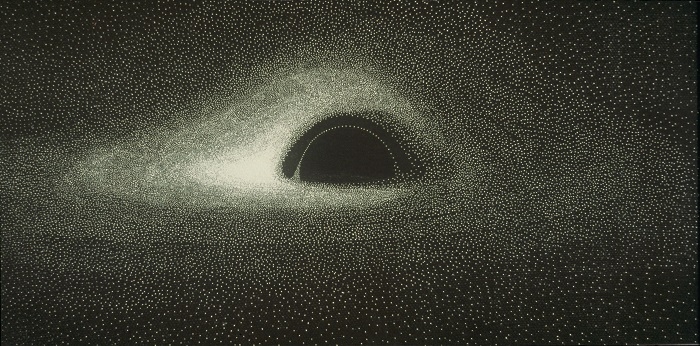
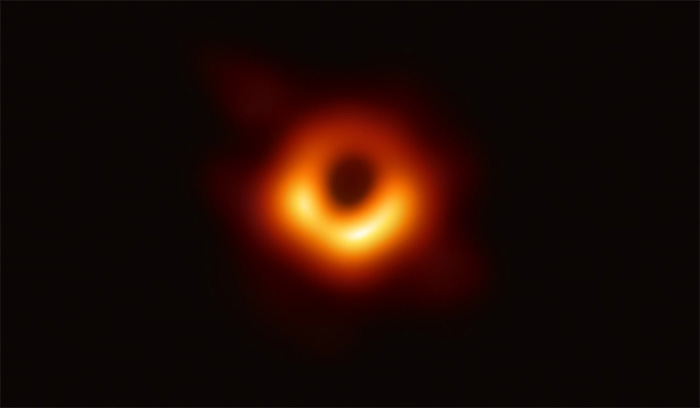


 Meteorite the size of a football and weighing 33 lbs smashes...
 Gold hunter finds a mysterious reddish rock buried near his...