Ontdek de Fascinerende Wereld van UFO's en UAP's: Jouw Bron voor Onthullende Informatie!
Ben jij ook gefascineerd door het onbekende? Wil je meer weten over UFO's en UAP's, niet alleen in België, maar over de hele wereld? Dan ben je op de juiste plek!
België: Het Kloppend Hart van UFO-onderzoek
In België is BUFON (Belgisch UFO-Netwerk) dé autoriteit op het gebied van UFO-onderzoek. Voor betrouwbare en objectieve informatie over deze intrigerende fenomenen, bezoek je zeker onze Facebook-pagina en deze blog. Maar dat is nog niet alles! Ontdek ook het Belgisch UFO-meldpunt en Caelestia, twee organisaties die diepgaand onderzoek verrichten, al zijn ze soms kritisch of sceptisch.
Nederland: Een Schat aan Informatie
Voor onze Nederlandse buren is er de schitterende website www.ufowijzer.nl, beheerd door Paul Harmans. Deze site biedt een schat aan informatie en artikelen die je niet wilt missen!
Internationaal: MUFON - De Wereldwijde Autoriteit
Neem ook een kijkje bij MUFON (Mutual UFO Network Inc.), een gerenommeerde Amerikaanse UFO-vereniging met afdelingen in de VS en wereldwijd. MUFON is toegewijd aan de wetenschappelijke en analytische studie van het UFO-fenomeen, en hun maandelijkse tijdschrift, The MUFON UFO-Journal, is een must-read voor elke UFO-enthousiasteling. Bezoek hun website op www.mufon.com voor meer informatie.
Samenwerking en Toekomstvisie
Sinds 1 februari 2020 is Pieter niet alleen ex-president van BUFON, maar ook de voormalige nationale directeur van MUFON in Vlaanderen en Nederland. Dit creëert een sterke samenwerking met de Franse MUFON Reseau MUFON/EUROP, wat ons in staat stelt om nog meer waardevolle inzichten te delen.
Let op: Nepprofielen en Nieuwe Groeperingen
Pas op voor een nieuwe groepering die zich ook BUFON noemt, maar geen enkele connectie heeft met onze gevestigde organisatie. Hoewel zij de naam geregistreerd hebben, kunnen ze het rijke verleden en de expertise van onze groep niet evenaren. We wensen hen veel succes, maar we blijven de autoriteit in UFO-onderzoek!
Blijf Op De Hoogte!
Wil jij de laatste nieuwtjes over UFO's, ruimtevaart, archeologie, en meer? Volg ons dan en duik samen met ons in de fascinerende wereld van het onbekende! Sluit je aan bij de gemeenschap van nieuwsgierige geesten die net als jij verlangen naar antwoorden en avonturen in de sterren!
Heb je vragen of wil je meer weten? Aarzel dan niet om contact met ons op te nemen! Samen ontrafelen we het mysterie van de lucht en daarbuiten.
Berichten van 1 november 2019 tot 30 november 2019
Photo illustration by Slate. Photos by grandeduc/iStock/Getty Images Plus; Lucas Sankey/Unsplash.
In the most recent development in the negotiations over President Trump’s contentious proposal to create a Space Force, acting Secretary of Defense Patrick Shanahan has proposed that the new organization follow the current Marine Corps/Department of the Navy model. Just as the Marine Corps is a military service within the Department of the Navy, this version of the Space Force would fall under the responsibility of the secretary of the Air Force.
Briefly, the overall purpose of a future Space Force, if it happens, will be twofold. First, it will organize, train, and equip its members to build, launch, and operate satellites and other capabilities that support U.S. government activities on Earth. The second major mission will be to prepare to operate those satellites when future conflict eventually extends its battlefields into space.
But whatever the formal structure of a sixth military service, if it happens, the Pentagon will have to decide what to call its uniformed members. Few decisions are as important in determining the long-term success, and public acceptance of this new organization could depend on this one choice. Choosing the wrong naming conventions, symbology, and other artifacts in the early days will have a lasting impact. Often, newly minted leaders will either overlook these small decisions or stubbornly defend a perceived poor choice. After the debate over creation of the Space Force in the first place, the last thing the military needs is a long news cycle ridiculing whatever name is chosen.
Most Americans can easily rattle off soldier, sailor, airman, and Marine. (Despite being the fifth military service, the Coast Guard doesn’t always make the list.) On the very first day that a space service comes into being, Americans will want to know what to call its members. The wrong moniker would affect the morale, confidence, and credibility of the entire organization.
The right name should be simple and should derive from a credible story—the explanation for it should make sense. It has to be grounded in military tradition of the past, but it also has to speak to the present and the future. Given all the memes that have circulated since Trump first talked about a Space Force, Americans would likely support a name that nods toward pop culture.
Three particular names have gained traction in space circles. In an informal poll recently conducted by the Army Space Professional Association, trooper, sentinel, and guardian were among those that received positive support. Spaceman was widely regarded as a nonstarter.
Space trooper is my personal favorite. With two syllables, trooper matches the flow of the soldier-sailor phrasing. Also, the Army refers to captain-led cavalry organizations as troops and their members as troopers. Furthermore, within military circles, the book and movie Starship Troopers is quite popular and on many official reading lists, so the name will resonate as a source of strength and inspiration, especially if we end up fighting aliens someday.
Space sentinel is a strong candidate as it evokes an image of a person standing watch over something, such as the Army’s Old Guard sentinel protecting the Tomb of the Unknown Soldier at Arlington National Cemetery. Since members of a Space Force will be operating and defending satellites that look across the entire globe, that imagery could work. Also, the Army, Air Force, and Coast Guard each have equipment (radars, drones, Coast Guard cutters) currently in their inventories known as sentinels, which would allow for certain types of lineage to carry into the new force. Finally, The Sentinel is an anthology of space-centric short stories by Arthur C. Clarke, one of the most well-known space-centric sci-fi authors.
A space guardian makes sense as well, in part because of the way it invokes the heavens. As the newest military service, some space professionals would prefer to use terminology that isn’t steeped in centuries of military history. Adopting the name guardian provides an opportunity to introduce a new term into the lexicon. And of course, the Marvel Cinematic Universe has turned the Guardians of the Galaxy into a household name.
The wrong moniker would affect the morale, confidence, and credibility of the entireorganization.
Why are some military space professionals against the name spaceman? For one thing, it’s a little too close to airman. In 1947, Congress officially split the Army Air Forces out of the U.S. Army and consolidated them into the newly established Department of the Air Force. Members of the “new” U.S. Air Force didn’t want to be known as air soldiers and eventually settled on airman. Under Shanahan’s proposal, and similar to the history of the Air Force, the Space Force will be a separate and distinct branch of the military, although still within the Department of the Air Force. (Yes, I know that’s confusing.) Members will want their name to be different, especially knowing that one day, it will eventually transition out of the Air Force and become its own military department. Similarly, the space service deserves the opportunity to find terminology that is connected to, but not a carbon copy of, its origin. Spaceman as a name is as close to airman as you can get. And of course, it makes sense to avoid using -man in the 21st century, even though it’s long been accepted within the Air Force as gender neutral. Trooper, sentinel, and guardian offer an obvious distinction so that Space Force members will view themselves as different from their Air Force counterparts.
Eventually, the space community will find a name for its members that sticks. Internet memes and obvious references to Star Wars or Star Trek aside, people will find serious words and symbols that come to represent the new organization. But finding the right words and symbols is a serious and necessary conversation, one that shouldn’t be restricted to PowerPoint presentations within the Pentagon. The leaders and decision-makers of the new Space Force should actively seek input from the community. A relatively simple way to address this would be to utilize a series of focus groups that could include future targets for recruiting, congressional members and staff, industry, and existing service members who are designated as space professionals
But we can also do this more informally. What do you think we should call members of the Space Force if it comes to be? Leave it in the comments or tweet it with #RealSpaceForce.
All opinions expressed in this interview are those of the author and not those of the United States Army or the Department of Defense. Special thanks to Joe Guzman, Jason Kalainoff, Mark Cobos, and Joe Mroszczyk for their inspiration in the development of this piece.
Former Brexit Party candidate for Yorkshire seat says she comes from far-flung star and aliens are 'working with world Governments'
Jill Hughes, the former PPC for the Brexit Party in Batley and Spen. Photo: The Brexit Party
GERALDINE SCOTT
A would-be MP for Batley and Spen believed aliens were “working with our world Governments” and that she came from a star called Sirius.
Jill Hughes was the Prospective Parliamentary Candidate for the Brexit Party in the West Yorkshire constituency.
But when The Yorkshire Post contacted the Brexit Party today, a spokesman said Ms Hughes had stood down and the party would announce her replacement in due course.
However Ms Hughes was posting supportive Brexit Party messages on both Twitter and Facebook today, and a photo posted showed her at a Brexit Party meeting on Wednesday.
Ms Hughes’ unusual outlook came to light as campaign group Hope Not Hate looked into Brexit Party candidates’ backgrounds.
They questioned her employment history but also quoted from social media postings and her book, released last year, Spirit of Prophecy.
In the book it reads “the E.T’s, some of them less than Apple Pie wholesome or Positive pumpkins, are already here working with our world Governments, but that’s all hush-hush for now”.
And in information about the author listed on Amazon, it said: “To this day J.J.Hughes believes in elves/fairies/mermaids/unicorns and all things Elemental and Other Worldly…She has had numerous prophetic premonitions – usually about death, which so far despite a few close shaves she has escaped. She came to believe in reincarnation in her mid-twenties when her old horse Red made a re-appearance, this time as a palomino called Hooray Henry.”
In one post on website The Soul Matrix from 2017 Ms Hughes said: “I have just come to truly realise that my purpose is to raise consciousness here on earth - I originated from Sirius.”
Ms Hughes has also faced questions from Leave activists in Batley and Spen, with Jonathan Scott - who said he ran Vote Leave campaigns in Dewsbury and Batley and Spen - questioning who Ms Hughes was on her official campaign Facebook page.
He said: “No one I have spoken to even at Brexit Party events have ever mentioned your name?”
But Ms Hughes said it was now less important that PPCs lived in their would-be constituencies. She said: “We live in a Global-Digital world now-geographical locations are less and less relevant.”
And added: “The Brexit Party selected outstanding candidates across the entire nation regardless. Rightly we were judged on our abilities not 'where we live' or where we come from...that’s how democracy and meritocracy works surely?”
She continued: “I am intensely proud to be a Yorkshire lass regardless and will do my utmost for my constituents.”
Aliens ‘werken al samen met onze overheden, maar dat wordt stilgehouden’. Britse ex-parlementskandidaat doet opzienbarende uitspraken
Een kandidaat-parlementslid voor de Britse Brexit Party uit Yorkshire heeft zich teruggetrokken nadat er in de media nieuwsberichten waren verschenen over haar uitspraken over aliens.
Jill Hughes claimde onder meer dat ‘aliens samenwerken met onze overheden’ en dat ze zelf afkomstig was van Sirius.
Een woordvoerder van de partij zei tegen de Yorkshire Post dat Hughes niet langer zou meedoen aan de verkiezingen en dat er binnenkort een vervanger zal worden aangekondigd.
Stil wordt gehouden
Toch verschenen er nog berichten over de Brexit Party op de sociale media van Hughes. Daarnaast plaatste ze een foto van zichzelf op een bijeenkomst van de partij.
Een campagnegroep genaamd Hope Not Hate had zich verdiept in de achtergrond van de kandidaten van de Brexit Party.
De groep had ontdekt dat Hughes afgelopen jaar een boek had gepubliceerd, waarin ze schrijft dat ‘de ET’s al hier zijn en samenwerken met onze overheden, maar dat dat stil wordt gehouden’.
Bewustzijn
Op haar Amazon-profiel staat verder dat ze soms visioenen krijgt en gelooft in reïncarnatie, elven en zeemeerminnen.
In een bericht op de website The Soul Matrix schreef Hughes: “Ik heb ontdekt dat het mijn taak is om het bewustzijn te verruimen op aarde. Ik kom van Sirius.”
Mystery as ‘identical UFO fleet’ seen over Utah and North Carolina within hours
The onlooker claimed to see around 50 bright lights appear in the skies above Utah, with a friend saying the same was spotted 2,000 miles away in North Carolina.
A fleet of UFOs have been spotted above Utah on the same day the same objects were seen 2,000 miles away in North Carolina, a conspiracy theorist has wildly claimed.
The footage, filmed from Bountiful in the US state of Utah on October 10, appears to show several bright lights hovering in the sky.
They flicker in the night sky and repeatedly disappear and reappear as the cameraman watches.
He counts at least eight of the lights emerging in a line.
The footage was sent into the Mutual UFO Network (MUFON), with the witness reporting there were originally 50 bright orange lights in the atmosphere.
“I thought a large meteor had broken up in the atmosphere, but then they hovered in a cluster and changed direction toward the East,” he said.
“The cluster of lights disappeared and a bright, white light was left in their place hovering.
“I then observed several bright white lights blinking in a sequential pattern in a straight line as they hovered.”
To add more mystery to the clip, he even claimed that a friend sent him a link to a video “of a cluster of bright orange lights hovering over the ocean near North Carolina on the same day”.
“I watched the video and observed that it was exactly what I saw during the initial sighting,” the unnamed onlooker said.
While he did not specify or reveal this second piece of footage, a similar video did emerge at the time of what appeared to be several bright objects above the sea.
Many have since dismissed that as being nothing but military flares.
The new footage is quickly going viral after being posted to YouTube channel ET Database by conspiracy theorist Scott C Waring.
Footage shows a mysterious cluster of lights hovering over the ocean
NASA’s Limbed Excursion Mechanical Utility Robot (LEMUR) can autonomously walk, climb, and crawl, and now other robots using its technology, are going to be, or have already been, sent into space.
Among these robots are the RoboSimian, Robonaut 2, Ice Worm, Underwater Gripper, Dragonfly, and Astrobee, and the wall-climbing LEMUR is the source of many of the skills that are going to really freak the hell out of those aliens who live on Mars.
The LEMUR, with its four limbs and hundreds of tiny fishhooks in each of its 16 fingers (yes, 16) and top of the line artificial intelligence, recently scaled a steep rock wall in Death Valley while at the same time keeping an artificial eye out for ancient fossils to simulate a mission of searching for signs of life on Mars.
That’s a little unnerving. However, the most creepy of all of these NASA space robots might just be the Ice Worm.
Adapted from a single limb of LEMUR, Ice Worm moves by scrunching and extending its joints like an inchworm. The robot climbs ice walls by drilling one end at a time into the hard surface. It can use the same technique to stabilize itself while taking scientific samples, even on a precipice. The robot also has LEMUR’s AI, enabling it to navigate by learning from past mistakes. To hone its technical skills, JPL project lead Aaron Parness tests Ice Worm on glaciers in Antarctica and ice caves on Mount St. Helens so that it can one day contribute to science on Earth and more distant worlds: Ice Worm is part of a generation of projects being developed to explore the icy moons of Saturn and Jupiter, which may have oceans under their frozen crusts.
Speaking of Saturn, NASA recently announced that they are developing shapeshifting robots (pictured at the top of the page) that will study Saturn’s very important moon Titan.
That’s right, shapeshifting robots.
In a dusty robotics yard at NASA’s Jet Propulsion Laboratory in Pasadena, California, the Shapeshifter team is testing a 3D-printed prototype of this unusual explorer. A contraption that looks like a drone encased in an elongated hamster wheel rolls across the yard, then splits in half. Once separated, the two halves rise on small propellers, effectively becoming flying drones for aerial exploration. These 3D-printed parts are only the beginning; the team imagines a series of up to 12 robots that could transform into a swimming probe or a team of cave explorers.
The Shapeshifter will have to wait its turn to go into outer space though. Next up for a mission to Titan will be the Dragonfly in 2026.
Check out even more of the NASA robots that will be our eyes and ears… and hands, and legs, and brains… in space today and in the coming years below.
The Russian navy has declassified its records of encounters with unidentified objects technologically surpassing anything humanity ever built, reports Svobodnaya Pressa news website.
The records dating back to soviet times were compiled by a special navy group collecting reports of unexplained incidents delivered by submarines and military ships. The group was headed by deputy Navy commander Admiral Nikolay Smirnov, and the documents reveal numerous cases of possible UFO encounters, the website says.
Vladimir Azhazha, former navy officer and a famous Russian UFO researcher, says the materials are of great value.
“Fifty percent of UFO encounters are connected with oceans. Fifteen more – with lakes. So UFOs tend to stick to the water,” he said.
On one occasion a nuclear submarine, which was on a combat mission in the Pacific Ocean, detected six unknown objects. After the crew failed to leave behind their pursuers by maneuvering, the captain ordered to surface. The objects followed suit, took to the air, and flew away.
Many mysterious events happened in the region of Bermuda Triangle, recalls retired submarine commander Rear Admiral Yury Beketov. Instruments malfunctioned with no apparent reason or detected strong interference. The former navy officer says this could be deliberate disruption by UFOs.
“On several occasions the instruments gave reading of material objects moving at incredible speed. Calculations showed speeds of about 230 knots, of 400 kph. Speeding so fast is a challenge even on the surface. But water resistance is much higher. It was like the objects defied the laws of physics. There’s only one explanation: the creatures who built them far surpass us in development,”Beketov said.
Navy intelligence veteran, Captain 1st rank Igor Barklay comments:
“ Ocean UFOs often show up wherever our or NATO’s fleets concentrate. Near Bahamas, Bermudas, Puerto Rico. They are most often seen in the deepest part of the Atlantic Ocean, in the southern part of the Bermuda Triangle, and also in the Caribbean Sea.”
Another place where people often report UFO encounters is Russia’s Lake Baikal, the deepest fresh water body in the world. Fishermen tell of powerful lights coming from the deep and objects flying up from the water.
In one case in 1982 a group of military divers training at Baikal spotted a group of humanoid creatures dressed in silvery suits. The encounter happened at a depth of 50 meters, and the divers tried to catch the strangers. Three of the seven men died, while four others were severely injured.
“I think about underwater bases and say: why not? Nothing should be discarded,” says Vladimir Azhazha. “Skepticism is the easiest way: believe nothing, do nothing. People rarely visit great depths. So it’s very important to analyze what they encounter there.”
Meanwhile Russian Navy officials have denied the collection of UFO-related encounters exists. A source in the Navy’s service staff said the story may have its roots in the reports of vessel commanders, which describe locating objects of unclear but Earthly origin.
“An illusion of a UFO encounter can result from large fish shoals, floating garbage or natural phenomena,” ITAR-TASS news agency cites the source.
Did Anunnaki Ancient Aliens Build A Civilization On Earth Before Humans?
A lot of information in this one adding to my knowledge.
Whether out of place artifacts and structures are evidence of a Lost Civilization built by the Anunnaki Ancient Aliens before Human beings existed on Earth.
‘Out-of-Place Artifact’ (OoPArt) is a term coined by American naturalist and cryptozoologist Ivan T. Sanderson for an object of historical, archaeological, or paleontological interest found in a very unusual or seemingly impossible context that could challenge conventional historical chronology by being too advanced for the level of civilization that existed at the time, or showing human presence well before humans were supposed to exist.
The question that we are ultimately confronted with is who built the lost Civilization before human beings?
Was it the Ancient Anunnaki Aliens as suggested by alternative historical theories or some other unknown entity/ies?
The question persistently posed by Out of Place Artifacts is whether they are evidence of advanced past Ancient Alien or Lost Human Civilization.
Zechariah Sitchin and other proponents of the Ancient Astronaut Theory suggest that such artifacts are evidence of an Ancient Alien Civilization, whilst on the other end of the unacknowledged History spectrum you have Graham Hancock and others taking the position that it is evidence of an advanced Human Civilization.
We’ve covered the Anunnaki angle considerably as part of the ongoing ‘Anunnaki Chronicles‘ series, and today, we shed light on the alternative Graham Hancock argument on whether the past reveals the presence of an Ancient Alien or Lost Human Civilization.
The Evidence For A Lost Civilization
According to Hancock, the Ancient Astronaut Hypothesis emerges from ancient texts and traditions when they are read in the light of modern space-exploration technology. However, at present NO ancient archaeological site and NO ancient text or tradition provides persuasive evidence for the ancient astronaut hypothesis.
In his view, if one examines the original source material upon which Sitchin drew, and comparing what you find to how Sitchin presented it in his Earth Chronicles series, you would see that Sitchin has created a gigantic work of science fiction masquerading as fact.
As such. Out of Place Artifacts, the anomalies of history and prehistory pointed to by advocates of the ancient astronaut hypothesis are far better and more elegantly explained as emanating from a lost, advanced HUMAN civilization of prehistoric antiquity than from high-tech alien visitors from another Planet.
His verdict on whether the past reveals an Ancient Alien or Lost Human Civilization is therefore that it is a lost Human Civilization that we should credit and not Ancient Aliens.
Top 5 Anomalies & Out Of Place Artifacts
1. Klerksdorp Spheres
Resembling the ‘Death Star’ in Star Wars, the Klerksdorp Spheres were found by Miners in South Africa and their origin remains unknown.
They were found in rock dated 2.8 billion years old and their presence in this Archaeological layer remains perplexing.
2. The Antikythera Mechanism
The next perplexing artifact was recovered by sponge-divers from a shipwreck off the coast of Antikythera, Greece. Its a sophisticated mechanism of gears whose existence 2000 years ago cannot be explained.
3. The Battery Of Babylon
The 2000 Ancient Battery of Babylon was unearthed in Baghdad in 1938. The device could create an electric charge, and this find is particularly remarkable since we only invented batters in 1799.
4. Egyptian Helicopoters & Inca Planes
The mystery of the flying machines of the Gods continues to reign. Our previous entry on the Vimana Epics of Ancient India also shed some light on this extraordinary question.
Hieroglyphs such as those at the Egyptian Temple at Abydos only add to the mystery as they depict Helicopters, submarines and supersonic jets…Meanwhile Golden Ancient Inca Model Aircraft suggest the presence of aviation technology amongst the Ancient Civilizations of South America.
The suggestion that Ancient Civilizations possessed advanced Aviation Technology which we are only beginning to understand today remains, and the jury is still out on how that will be eventually resolved.
5. The Piri Ries Map
Last but not least, is the Piri Ries Map.
In 1929, a group of historians found an amazing map drawn on a gazelle skin. Research showed that it was a genuine document drawn in 1513 by Piri Reis, a famous admiral of the Turkish fleet in the sixteenth century.
The controversy lies in that the Piri Reis map shows the western coast of Africa, the eastern coast of South America, and the northern coast of Antarctica. The northern coastline of Antarctica is perfectly detailed even though the map was drawn 300 years before it was discovered, drawing the coastline in perfect detail even though it was under ice.
Conclusion: Anunnaki Ancient Aliens or Lost Human Civilization?
Whether Historical anomalies like Ancient Megalith Structures and Out of Place Artifacts demonstrate the existence of an Ancient Alien or Lost Human Civilization remains contested…Perhaps the answer lies in combining both theories instead of adopting a mutually exclusive approach to either theory.
In Ancient Aliens Debunked, our previous entry based on a documentary by the same name which you can read here, we also noted that the Ancient Astronaut Theory was not always correct in its interpretation of certain Out Of Place Artifacts, sometimes making exaggerated claims in order to shore up support of itself.
Nevertheless, its clear that unanswered questions remain and various new lines of enquiry continue to develop, expanding and enriching our understanding of the Human story…That in itself is progress, and we will continue to follow the latest revelations in an effort to answer what is perhaps Humanity’s ultimate question.
The Anunnaki Ancient Astronuat Theory also continues to provoke interest and debate on the question of our origins and whether the Historical Timeline of Civilization provided by the current historical paradigm is correct.
In Realm Of The Elohim, our own E-Book based on Zechariah Sitchin’s Lost Book of Enki, an effort was made to provide accessible and digestible information on the Ancient Astronaut Theory and the activities of the Anunnaki from the landing on Earth, the setting up of the first Base station at Edin, the creation of man, great deluge and the Nuclear destruction of Sumer up to the rise of Babylon under Marduk.
It also explores the implications of the Anunnaki Ancient Astronaut Theory for the existence of God and Spirituality
Due to the ongoing debate and interest on the topic especially online, a list of online references and Documentaries is also included for further individual research and exploration.
For more on Out of Place Artifacts and the Lost Human Civilization argument, peep the Ancient Astronaut Archive video below, as well as Graham Hancock’s website and his seminal work on the lost ancient Human Civilization, ‘Fingerprints Of The Gods’.
If you would like to explore more interesting Alternative History on the Anunnaki, you can click the Archive links below:
The Google Powered Search Box on the Home Page with custom links to official Egyptology and Sumerian Archaeological Texts, Records and Documentaries will also help you along your quest.
ALIENS AMONG HUMANS AND THE PLANETARY TRANSMIGRATION
People have always wondered if there’s life in other planets, if aliens ever visited humans and if they left descendants on Earth somehow.
What people don’t always know, is that aliens might be closer than they imagine. They can be next door. According to many different cultures, there are alien souls trapped in human bodies.
What is Planetary Transmigration
In occult philosophy it is said that humans live on seven different planets, evolving continuously from minerals until the soul reaches its final destination, which involves reuniting with God, or unity. In Hinduism, planets are considered living beings and have a specific time to exist. Like all living things, they die at some stage.
When planets cease to exist, the creatures that live in that planet have two possible destinations: if they have evolved enough to continue their journey, they incarnate in a new planet, where they will develop other faculties in order to continue the process of evolution.
However, if some of them haven’t absorbed all experiences that the planet offered – as it is believed that each planet is “programmed” in a way that enables creatures to develop a certain aspect of consciousness – some of them might migrate to a planet to repeat the same experience. This process is called planetary transmigration or transmigration of the soul.
Aliens Living on Earth – Sumerian, Hindu, Egyptian and Mayan Gods Were Extraterrestrials
-According to Spiritism theories, a long time ago, a group of extraterrestrials arrived on Earth to repeat the human experience in this planet, since they could not continue the experience with the rest of their fellows. Having completed the human experience before, they were much more technologically advanced than Earthlings.
In many different religions and traditions, there are references to advanced beings that coexisted with primitive humans in ancient times. It appears in the Sumerian tradition, as the gods described in the Sumerian tablets are believed to have arrived from other planet that exploded.
It also appears in the Hindu tradition. The Mahabharata along with the Ramayana, the most important books of Hinduism, bring information about gods that had flying machines and could contact other beings from other planetary systems.
The Egyptian mythology is filled with references to beings with a certain knowledge and technology that could only be consistent with a more advanced civilization. There are also images of flying objects in the walls of Egyptian caves that look exactly like those described in the Vedas.
Mayan mythology also makes references to beings from other planets that arrived on Earth and genetically modified the earthlings, making the primitive human look more like them. Some argue that the Bible saying “God created men in His own image”, refers to these gods that engineered humans, helping in the transition from animal to man.
In short, the same history has been told in all religions and traditions, under different names and with the elements of each culture.
Extraterrestrials and Atlantis – the Lost Continent
Legends tell of aliens arriving on flying machines and genetically modified humans who mixed their DNA with normal humans and then…. what? If the original planets no longer existed, where did they go, and if they stayed, how come there is no trace of them anymore?
There are many possible explanations for that, but one possibility is that when the great cataclysm that destroyed Atlantis happened, the alien technology disappeared under the waters.
They escaped to Egypt, Europe and South America (it’s said that this is what allowed these people to have a great amount of information about alien visitors in their myths and legends) where they lived among humans. Without technology, they died.
The Reincarnation Process – Alien Souls, Human Bodies
Spiritism belief holds that that after death, the extraterrestrial visitors were reincarnated among humans, being orn again in human bodies. The reincarnation process is the same for every human being on Earth and with aliens it was no different.
Once born in human bodies, with human limitations, all memories from previous lives were erased from the conscious mind, as it is said that the brain doesn’t support all the information from all incarnations, keeping only what is necessary for one life (the rest remains in the unconscious mind and is never lost).
Until now the aliens continue to reborn among humans. Without knowing their true origins, these people live normally keeping only a slight sensation that there might be much more out there than their ordinary lives.
A 'very significant' discovery of a Bronze Age monument has been uncovered after being hidden under foliage in the Forest of Dean.
Dating back to about 2,000 BC the circular ritual ring was found during a LiDAR laser scan of the area.
The findings, known as a ring cairn, consist of a circular bank with limestone standing stones.
Archaeologist Jon Hoyle discovered the site, near the village of Tidenham, Gloucestershire, which he first believed could be a World War Two gun emplacement due to its 'extremely circular' nature.
Archaeologist Jon Hoyle said nobody knows precisely what ring cairns were used for. An artists impression of the 2,000 BC the circular ritual ring
Dating back to about 2,000 BC the circular ritual ring was found during a LiDAR laser scan of the area
This is the only Bronze Age monument of its type to be discovered in Gloucestershire, however the cairns are common in Derbyshire, Northumberland and Wales, said Mr Hoyle.
Mr Hoyle told the BBC: 'It was very exciting. I was expecting to find quite a lot of new sites with the LiDAR, but nothing as interesting as this.'
Adding: 'Nobody knows precisely what they were used for.
'Some have been found in association with burials, and often there appear to be residues of charcoal in places like this, suggesting rituals that involved fire.'
This is the only Bronze Age monument of its type to be discovered in Gloucestershire, however the cairns are common in Derbyshire, Northumberland and Wales
Archaeologist Jon Hoyle discovered the site, near the village of Tidenham, Gloucestershire
The large ring is about 80ft wide and contains a circular bank formed with rubble that is 16ft wide.
White limestone standing stones were found on top of the bank, about 3ft high each.'
LiDAR (light detection and ranging) can be used to expose structures hidden by folliage or other structures by bouncing light off a target to measure distances and build a 3D map.
The archaeologist first believed the ring could be a World War Two gun emplacement due to its 'extremely circular' nature
WHAT IS LIDAR TECHNOLOGY AND HOW DOES IT WORK?
LiDAR (light detection and ranging) is a remote sensing technology that measures distance by shooting a laser at a target and analysing the light that is reflected back.
The technology was developed in the early 1960s and uses laser imaging with radar technology that can calculate distances.
It was first used in meteorology to measure clouds by the National Center for Atmospheric Research.
The term lidar is a portmanteau of 'light and 'radar.'
Lidar uses ultraviolet, visible, or near infrared light to image objects and can be used with a wide range of targets, including non-metallic objects, rocks, rain, chemical compounds, aerosols, clouds and even single molecules.
A narrow laser beam can be used to map physical features with very high resolution.
This new technique allowed researchers to map outlines of what they describe as dozens of newly discovered Maya cities hidden under thick jungle foliage centuries after they were abandoned by their original inhabitants.
Aircraft with a Lidar scanner produced three-dimensional maps of the surface by using light in the form of pulsed laser linked to a GPS system.
The technology helped researchers discover sites much faster than using traditional archaeological methods.
There are some parts of England where you can’t throw a stone without hitting a stone circle. There are other parts where you won’t hit a single one. Gloucestershire recently joined the ranks of stone circle locations with the discovery of a Bronze Age ring cairn hidden by thick foliage in the Forest of Dean. Who’s Dean? Did he know about it?
“Nobody knows precisely what they were used for. Some have been found in association with burials, and often there appear to be residues of charcoal in places like this, suggesting rituals that involved fire.”
Part of the mystery of stone circles, found primarily in the UK but others are scattered around the world, is that there are so many dating to a relatively short period in history … and yet, we know so little about them. That sentiment is echoed by archaeologist Jon Hoyle, who told the BBC how he found yet another one in Gloucestershire’s Forest of Dean.
“It was very exciting. I was expecting to find quite a lot of new sites with the LiDAR, but nothing as interesting as this.”
The Forest of Dean
Indeed, Hoyle wasn’t even looking for stone circles, since Gloucestershire is about 70 miles from Avebury and Stonehenge and, until now, had no ring cairns. In fact, it appears he was just conducting a general aerial survey using LiDAR (the light detection and ranging equipment which uses laser beams to erase ground cover and create a 3D picture of what lies hidden and beneath the surface) when he spotted something “interesting.” (Photos here.)
The stones are much smaller than those seen at Stonehenge
Credit: BBC Gloucestershire
The ring cairn can be seen here on the LiDAR scan
Credit: Forest Commision
This screenshot from the BBC shows an artists impression of what a ring cairn may have looked like
Credit: BBC / Anne Leaver
Archaeologist Jon Hoyle made the discoveryCredit: BBC Gloucestershire
The Gloucestershire monument could have been constructed at a similar time to Stonehenge
Credit: Alamy
At first, Hoyle suspected the “extremely circular” mound in a naked Forest of Dean was a World War Two gun emplacement. That might make sense since the Forest of Dean was an important English mining area, with extremely productive coal and iron mines, foundries to process them and a network of railways and tramroads to distribute them. However, when Hoyle visited the site at a secret location near the village of Tidenham, he realized this mound hid something that dated much earlier than the 1940s – something from the Bronze Age between 2,500 BCE and 1,500 BCE.
This shouldn’t be surprising, since the Forest of Dean (historians debate whether ‘Dean’ is a corruption of the Welsh ‘din’, which means ‘hillfort’, or ‘Dane’ as in ‘Land of the Danes’ which refers to the Viking settlements in the area) was occupied by humans in the Mesolithic Age (15,000 to 5,000 BP – Before Present or 1950) and signs of Bronze Age agricultural field systems have been found there. Remnants of stone megaliths have also been discovered, but no rings … until now.
“The ring cairn is about 25m (80ft) in diameter and made up of a 5m-wide (16ft) rubble bank, with at least 10 white limestone standing stones, each no more than 1m (3ft) high, standing on top.”
Hoyle told the BBC that ring cairns were “common in upland areas, in places like Derbyshire, Northumberland and Wales” but this is a first for Gloucestershire and the Forest of Dean. It’s an area Hoyle knows well – his new book is “Hidden Landscapes of the Forest of Dean.” However, even with his extensive knowledge of the archaeological sites in the Forest of Dean, the purpose of this ring is a mystery to him.
One thing is for certain – The Forest of Dean would make a great title for an album by a progressive rock band named Stoned Circles.
What Earth creature is best-suited for space travel? If you said the one with the smartest brain and opposable thumbs, you’d be half right. If you said the eight-legged one that looks like a micro-sized water bear, is found thriving in the most hostile environments on the planet, and has already survived in the vacuum of outer space without the benefit of a million-dollar space suit, you’d be half right as well. Researchers are seriously studying ways to combine human and tardigrade DNA to create a radiation-resistant hybrid to colonize Mars. Will their spacesuits need more legs?
“If we have another 20 years of pure discovery and mapping and functional validation of what we think we know, maybe by 20 years from now, I’m hoping we could be at the stage where we would be able to say we can make a human that could be better surviving on Mars.”
While humans might visit Mars before 2039, that date is well-within the projections for setting up a permanent settlement there, and it’s the survival of those humans Chris Mason, a geneticist and associate professor of physiology and biophysics at Weill Cornell University in New York, is focused on. In a presentation at the 8th Human Genetics in NYC Conference, Mason talked about what he learned as a member of the NASA team studying the twin astronauts Mark and Scott Kelly and how his physiology changed after Mark spent a year in space. That research highlighted the damaging effects of cosmic radiation on the human body. In an interview with Space.com after his presentation, Mason discussed his radical idea for gene-splicing human cells with the mighty tardigrade.
“Genetically editing humans for space travel would likely be a part of natural changes to the human physiology that could occur after living on Mars for a number of years, Mason said. “It’s not if we evolve; it’s when we evolve,” he added.”
Mark and Scott Kelly
(Credit: NASA)
The way Mason sees it, putting humans in space in large numbers would trigger the usual survival-of-the-fittest evolutionary changes to their physiology, one of which would be that the survivors would have slightly more radiation protection which would be passed down to their offspring and grow stronger over generations. By genetically altering humans ahead of time, that evolution would be accelerated artificially. The real question is … would natural evolution create a human with tardigrade characteristics like Mason and other researchers want to create themselves?
Here’s another question. Despite the tardigrade’s universal survivalist body, would a human-tardigrade hybrid lose its ability to survive on Earth? Would these hybrids be doomed to die on Mars and never return to Earth?
“In terms of a question of liberty, you’re engineering it [a future human] to have lots more opportunities, again assuming we haven’t taken away opportunities. If we learned that, in some way, when we decided to try and prove the ability of humans to live beyond Earth, and we take away their ability to live on Earth, I think that would be unjust.”
Unjust, yes. However, if we’re talking human ethics, we know from past experience that human profits influence human ethics. While this might cause NASA to ponder whether it’s right for a Martian colony, would it stop a space corporation from offering an obscene amount of money to volunteers on a suicide mission to mine an asteroid loaded with rare minerals – money that might set their family up for life – even for generations?
Would ethics really win out?
Based on past experience, will we see a human-tardigrade hybrid?
To paraphrase a suitable adage: the water bear is already out of the bag.
Human Face On Huge Goldfish Proof Of Alien Experiments In China, Video, UFO Sighting News.
Date of sighting: Nov 2019 Location of sighting: Miao, China
A tourist who was in a town in southern China was stunned after seeing a fish with a human face . The video, which has become a trend in social networks, shows a face with mouth, nose and eyes, very similar to a person's face. The woman who recorded the video was so amazed that she burst into tears. "The fish has become a fairy, it has a human face," said the woman who wanted to remain anonymous. The strange animal was discovered this week by a visitor in the town of Miao, a tourist destination near the city of Kunming. The images became viral in China after they were published on the popular Weibo social network, with numerous users offering all kinds of opinions and theories about the strange creature. Some said it was a mutant fish escaped from a laboratory , while the most skeptical said there was nothing sinister or supernatural in the unique condition of the fish, since the spooky face was simply the result of matching body markings. But the truth about this fish is that alien have been doing experiments on all forms of life on earth for millions of years, often causing evolution to take days for what normally would take millions of years. Sure aliens have abducted humans to do experiments and even cut up cows and sheep on farms, but the experiments have a more sinister side. As you see this fish with a human face is evidence of that. When it pokes its head out of the water, its eyes, nostrils and mouth all come into focus. This is an alien experiment.
These giant mother ship UFOs were seen over several cities in Texas on Saturday Nov 2. The UFOs showed up on weather radar. The radar caught three UFOs that were miles in diameter over Texas late at night around 9:45-10:30pm. The UFOs were so big the radar bounced off of each of them...causing a series of rings to show up around the UFO. Each UFO had six thick refracted rings around it, caused by the radar bouncing of of them. Twitter lit up this on Sat with people tweeting to @wfaweatehr that it looked like an alien invasion. They were worried about the rings seen over cities of Waco, Austin, and more. They are correct in believing its aliens. Now WFFA news is trying to convince people in the video that they have the answer...that its super refraction, yet they are grasping at straws trying to explain away the truth before them. Alien UFOs do sometimes get caught in weather radar maps. This is 100% proof that several huge UFOs were over Texas this week. As you see on the screenshot above, the empty circle at the center of the rings is the true size of the UFOs. They are each big enough to cover one entire county. The UFO motherships must have hovered in place for up to 15 minutes...allowing them to be seen on radar. I believe they came from the Gulf of Mexico from an underwater alien base. I also believe that they were testing their cloaking devices against our human technology to see if they would be noticed...and yes, our technology is catching up to them fast. Doppler radar does make larger ships visible. Where did they go you ask? Probably straight up and out of our atmosphere. Scott C. Waring-Taiwan WFFA News states:
DALLAS — "Are we being invaded? Crop rain circles? WHY AREN'T YOU TALKING ABOUT THIS!!???" These were the types of questions that came flooding in on social media to WFAA on Saturday night. While it make look extraterrestrial, there is actually a simple answer for what the radar is showing. The reason the radar looked this way is from something called superrefraction.
Stephen Morales@smorales13
Y'all there's weird sounds goin on outside, then a buddy of mine posted these lights in the sky, and someone else posted this radar image (sorry ch8 but I want your take)...what's going on in North Texas #livePD@wfaa@MansfieldScan1@wfaaweather@FOX4
"Are we being invaded? Crop rain circles? WHY AREN'T YOU TALKING ABOUT THIS!!???"
These were the types of questions that came flooding in on social media to WFAA on Saturday night.
While it make look extraterrestrial, there is actually a simple answer for what the radar is showing.
The reason the radar looked this way is from something called superrefraction.
Normally, when a radar beam travels away from the radar, it becomes higher off the ground the farther away from the radar it travels because of the curvature of the earth.
This is normal, and it is called "normal refraction".
However, when there are calm, cool, and dry conditions-- even more specifically, when moisture and temperature decrease sharply with height-- "superrefraction" can happen to the radar beam.
These conditions were in North Texas on Saturday night.
When superrefraction occurs, the atmospheric conditions cause the radar beam to curve back closer to the surface of the earth. The beam travels lower than it would under normal circumstances.
This causes the beam to hit things that are closer to the ground as well. Things like birds, bugs and dust. If conditions are ideal, it can even hit buildings, trees and cars.
And that gives us the green rings you might have seen on the radar Saturday night. We had clear skies, so it was not rain.
The radar was hitting birds, bugs and so on, but the radar made it look like rain. We call this "ground clutter" instead.
So there ya go! A simple explanation much more boring than an alien invasion.
For a brief time in 1976, it seemed as if NASA’s Viking landers had found microbes on Mars! Those results have been vigorously disputed in the years since, but the original experiment’s principal investigator, Gilbert Levin, still maintains they really did detect Martian microbes.
Water frost on Mars rocks and soil near the Viking 2 lander, May 18, 1979.
Did NASA find evidence of life on Mars way back in the 1970s? That is a question that has been much debated for the past few decades, regarding the positive-yet-inconclusive results from the biology tests of the two Viking landers in 1976. Both landers reported positive results when the Martian soil was tested for the possible presence of microbes, but now, most scientists have concluded that those results were caused by unusual chemistry in the soil, not life.
But not all scientists. Gilbert Levin, who was the principal investigator for the Labeled Release (LR) life detection experiment for both landers, still maintains that Viking really did discover life in the red sands of Mars after all. He outlined his stance in an opinion piece in Scientific American on October 10, 2019.
As Levin noted, both landers sent back positive results for the detection of microbial respiration:
On July 30, 1976, the LR returned its initial results from Mars. Amazingly, they were positive. As the experiment progressed, a total of four positive results, supported by five varied controls, streamed down from the twin Viking spacecraft landed some 4,000 miles apart. The data curves signaled the detection of microbial respiration on the Red Planet. The curves from Mars were similar to those produced by LR tests of soils on Earth. It seemed we had answered that ultimate question.
The experiments seemed to be saying that there were living, breathing microbes in the Martian soil. But there was one big problem: neither lander had found organics in the soil, which any life would be made of and without which you couldn’t have life at all.
Viking 1 with its sampling arm in the foreground and deep trenches dug into the soil. Experiments on the lander – as well as on Viking 2 – seemed to indicate the presence of Martian microbes in the soil.
There were three experiments on each lander, including LR, that tested for life:
The Gas Chromatograph – Mass Spectrometer (GCMS), which would heat the soil to varying temperatures and measure the molecules that turned into a gaseous form, capable of measuring a huge variety of molecular compounds down to densities of a few parts-per-billion.
The Gas Exchange (GEX) experiment took an incubated sample of Mars soil and replaced the Martian atmosphere with helium, an inert gas. They then applied both nutrients and water, and looked for signatures of biological activity: absorption or emission of oxygen, carbon dioxide, nitrogen, hydrogen and methane.
The Labeled Release (LR) experiment took a sample of Martian soil and applied a drop of nutrient solution to it, where all of the nutrients were tagged with radioactive carbon-14. Radioactive carbon-14 would then be metabolized into radioactive carbon dioxide, which should only be detected if life were present.
The consensus from most scientists in the years since then has been that there was something in the soil mimicking life, but it wasn’t life itself. As a result, none of the following missions over the next few decades carried any life detection experiments like Viking did. Instead, they have focused on past habitability, whether or not Mars could have supported life in the past. That has been an unpopular strategy for many people, as it seemed that NASA was abandoning any actual additional search for life on Mars.
The complete biological experiment package, identical for each lander.
The LR experiment had been quite simple: moistening samples of soil with a special nutrient “broth”and seeing if it was consumed by any microbes; it was designed to detect and monitor the metabolism of any microbes present. The nutrients were tagged with radioactive carbon. The LR experiment was sensitive to very low populations of microbes, and each run of the experiment lasted for seven days. Comparison with similar test on Earth seemed to support the biological interpretation of the results, as Levin explained:
The Viking LR sought to detect and monitor ongoing metabolism, a very simple and fail-proof indicator of living microorganisms. Several thousand runs were made, both before and after Viking, with terrestrial soils and microbial cultures, both in the laboratory and in extreme natural environments. No false positive or false negative result was ever obtained. This strongly supports the reliability of the LR Mars data, even though their interpretation is debated.
In the years since Viking, perchlorate salts had been found in the Martian soil, which have been suggested as an explanation for the lack of organics seen by Viking, since they can destroy organics. But more recently, organics have now been found in Martian rocks by the Curiosity rover, both simple ones and others a bit more complex. Some of them also hint at having come from previously more complex organic molecules, but Curiosity isn’t equipped to determine whether these have a biological origin or not.
In 2013, the Curiosity rover found some interesting textured rocks – the Gillespie Lake outcrop – in Gale Crater’s Yellowknife Bay region. The rocks resemble stromatolites or microbial mats on Earth.
In summary, we have: positive results from a widely-used microbiological test; supportive responses from strong and varied controls; duplication of the LR results at each of the two Viking sites; replication of the experiment at the two sites; and the failure over 43 years of any experiment or theory to provide a definitive nonbiological explanation of the Viking LR results.
The Viking LR results will probably still be in dispute for years to come, especially if an updated version of the experiment isn’t sent back to Mars in the near future. The lack of any follow-up experiments in the years since has been disappointing, but it seems that NASA is now starting to take the possibility of life on Mars seriously again, even if incrementally. The Mars 2020 rover, due to launch next year and land in 2021, will look for evidence of life as its prime mission, but will focus on past life, not current biology. That may not be as ambitious as many people would like, but it’s a step in the right direction.
Apart from the organics, other, more recent findings on Mars would also seem to support at least the possibility that microbes really were present in the soil samples that Viking analyzed. These include the existence of methane, found and documented by the Curiosity rover, orbiters and telescopes on Earth. We don’t yet know the origin of the Martian methane, but on Earth at least, it comes primarily from microbes (and cows!), as well as other geological processes. Curiosity also came across rock formations in the Yellowknife Bay region of Gale Crater that resemble stromatolites or microbial mats on Earth, which are produced by microorganisms. The finding was the subject of an extensive analysis by Nora Noffke at Old Dominion University. On a similar note, the Spirit rover found silica formations that resemble those created by microorganisms in hot spring environments.
None of these have been proven to be evidence of life yet, but they are tantalizing. Plus there are the findings from multiple rovers, landers and orbiters that continue to show that Mars once had a much more habitable environment than it does now, with rivers, lakes and maybe even an ocean.
There is also new evidence for subsurface water still existing on Mars today, including below the south polar ice cap and perhaps even in a global reservoir. That would, of course, have direct implications for the possibility of life – at least microbial – on Mars today.
Levin listed other possible positive clues to life on Mars as well, in his article.
While life on Mars, either past or present, still hasn’t been proven, the work of Gilbert Levin and other discoveries keep bringing us closer to the point when we may know for sure.
More information about Levin’s work is available on his website.
Bottom line: Gilbert Levin, the principal investigator for the Labeled Release (LR) life detection experiments on the Viking landers on Mars in the 1970s, still maintains that they really did find evidence of current microbial life in Martian soil.
Ever since our universe emerged from an explosion of a tiny speck of infinite density and gravity, it has been ballooning, and not at a steady rate, either — the expansion of the universe keeps getting faster.
But how quickly it's expanding has been up for a dizzying debate. Measurements of this expansion rate from nearby sources seem to be in conflict with the same measurement taken from distant sources. One possible explanation is that, basically, something funky is going on in the universe, changing the expansion rate.
And one theorist has proposed that a brand-new particle has emerged and is altering the future destiny of our entire cosmos.
Astronomers have devised multiple clever ways of measuring what they call the Hubble parameter, or Hubble constant (denoted for the folks with busy lives as H0). This number represents the expansion rate of the universe today.
One way to measure the expansion rate today is to look at nearby supernovas, the explosion of gas and dust launched from the universe's largest stars upon their death. There's a particular kind of supernova that has a very specific brightness, so we can compare how bright they look to how bright we know they're supposed to be and calculate the distance. Then, by looking at the light from the supernova's host galaxy, astrophysicists can also calculate how fast they are moving away from us. By putting all the pieces together, we then can calculate the universe's expansion rate.
But there's more to the universe than exploding stars. There's also something called the cosmic microwave background, which is the leftover light from just after the Big Bang, when our universe was a mere baby, only 380,000 years old. With missions like the Planck satellite tasked with mapping this remnant radiation, scientists have incredibly precise maps of this background, which can be used to get a very accurate picture of the contents of the universe. And from there, we can take those ingredients and run the clock forward with computer models and be able to say what the expansion rate should be today — assuming that the fundamental ingredients of the universe haven’t changed since then.
These two estimates disagree by enough to make people a little bit worried that we're missing something.
Look to the dark side
Perhaps, one or both measurements are incorrect or incomplete; plenty of scientists on either side of the debate are slinging the appropriate amount of mud at their opponents. But if we assume that both measurements are accurate, then we need something else to explain the different measurements. Since one measurement comes from the very early universe, and another comes from more relatively recent time, the thinking is that maybe some new ingredient in the cosmos is altering the expansion rate of the universe in a way that we didn’t already capture in our models.
And what's dominating the expansion of the universe today is a mysterious phenomenon that we call dark energy. It's an awesome name for something we basically don't understand. All we know is that the expansion rate of the universe today is accelerating, and we call the force driving this acceleration "dark energy."
In our comparisons from the young universe to the present-day universe, physicists assume that dark energy (whatever it is) is constant. But with this assumption, we have the present disagreement, so maybe dark energy is changing.
I guess it's worth a shot. Let’s assume that dark energy is changing.
Scientists have a sneaking suspicion that dark energy has something to do with the energy that's locked into the vacuum of space-time itself. This energy comes from all of the “quantum fields” that permeate the universe.
In modern quantum physics, every single kind of particle is tied to its own particular field. These fields wash through all of space-time, and sometimes bits of the fields get really excited in places, becoming the particles that we know and love — like electrons and quarks and neutrinos. So all the electrons belong to the electron field, all the neutrinos belong to the neutrino field, and so on. The interaction of these fields form the fundamental basis for our understanding of the quantum world.
And no matter where you go in the universe, you can’t escape the quantum fields. Even when they’re not vibrating enough in a particular location to make a particle, they’re still there, wiggling and vibrating and doing their normal quantum thing. So these quantum fields have a fundamental amount of energy associated with them, even in the bare empty vacuum itself.
If we want to use the exotic quantum energy of the vacuum of space-time to explain dark energy, we immediately run into problems. When we perform some very simple, very naive calculations of how much energy there is in the vacuum due to all the quantum fields, we end up with a number that is about 120 orders of magnitude stronger than what we observe dark energy to be. Whoops.
On the other hand, when we try some more sophisticated calculations, we end up with a number that is zero. Which also disagrees with the measured amount of dark energy. Whoops again.
So no matter what, we have a really hard time trying to understand dark energy through the language of the vacuum energy of space-time (the energy created by those quantum fields). But if these measurements of the expansion rate are accurate and dark energy really is changing, then this might give us a clue into the nature of those quantum fields. Specifically, if dark energy is changing, that means that the quantum fields themselves have changed.
A new enemy appears
In a recent paper published online in the preprint journal arXiv, theoretical physicist Massimo Cerdonio at the University of Padova has calculated the amount of change in the quantum fields needed to account for the change in dark energy.
If there is a new quantum field that's responsible for the change in dark energy, that means there is a new particle out there in the universe.
And the amount of change in dark energy that Cerdonio calculated requires a certain kind of particle mass, which turns out to be roughly the same mass of a new kind of particle that's already been predicted: the so-called axion. Physicists invented this theoretical particle to solve some problems with our quantum understanding of the strong nuclear force.
This particle presumably appeared in the very early universe, but has been "lurking" in the background while other forces and particles controlled the direction of the universe. And now it's the axion's turn ...
Even so, we've never detected an axion, but if these calculations are correct, then that means that the axion is out there, filling up the universe and its quantum field. Also, this hypothetical axion is already making itself noticeable by changing the amount of dark energy in the cosmos. So it could be that even though we've never seen this particle in the laboratory, it's already altering our universe at the very largest of scales.
Apollo sample processors Andrea Mosie (left), Charis Krysher and Juliane Gross unseal Apollo 17 previously-untouched lunar sample 73002 inside a science glovebox at Johnson Space Center's Lunar Curation Laboratory in Houston on Nov. 5, 2019.
NASA has unsealed one of its last untouched samples of Apollo moon rock to prepare for the return of new material by future lunar missions.
Scientists at Johnson Space Center's Lunar Curation Laboratory in Houston opened the Apollo 17-recovered sample on Tuesday (Nov. 5). The 1.5-inch-wide (4-centimeter) tube holding the small stash of moon rocks and dust was sealed by astronauts Gene Cernan and Harrison Schmitt during the second of their three moonwalks on Dec. 12, 1972.
The 15 ounces (430 grams) of moon material, collected as part of a core sample taken near the rim of Lara Crater, had remained unopened but not under vacuum since being brought to Earth 47 years ago.
"The analysis of these samples will maximize the science return from Apollo, as well as enable a new generation of scientists and curators to refine their techniques and help prepare future explorers for lunar missions anticipated in the 2020s and beyond," said Sarah Noble, the program scientist for NASA's Apollo Next-Generation Sample Analysis (ANGSA) initiative at the agency's headquarters in Washington, D.C.
"We are able to make measurements today that were just not possible during the years of the Apollo program," said Noble in a statement.
View of Apollo 17 core sample 73002, which scientists unsealed for the first time on Tuesday, Nov. 5, 2019.
(Image credit: NASA/James Blair)
Exposing the moon
The Apollo program brought a total of 842 pounds (382 kilograms) of moon rock and regolith (or soil) back to Earth. Most of those samples, which were gathered by 12 astronauts on six moon-landing missions, have been the subjects of past and present studies. The majority of the samples are held today at Johnson Space Center, with a smaller collection stored off-site for safe keeping.
The sample opened on Tuesday, assigned the ID number 73002, was the upper segment of a 2-foot-long (0.6-meter) "drive tube." The bottom segment, sample 73001, is slated to be opened in January. Together they are the first untouched Apollo moon rock samples to be opened since the 1970s.
The drive tube was used to collect core samples that preserved the vertical layering within the soil, including information about landslides on the moon, and a record of the volatiles trapped within the lunar regolith, perhaps even those escaping from along the Lee-Lincoln Scarp, a fault at the Apollo 17 landing site.
Side by side comparison of scans taken of Apollo 17 core sample 73002: radiograph technology scan in 1974 by NASA and X-ray computed microtomography scan taken in 2019 at the University of Texas at Austin.
(Image credit: NASA/UT Austin)
"Opening these samples now will enable new scientific discoveries about the moon and will allow a new generation of scientists to refine their techniques to better study future samples," said Francis McCubbin, NASA's astromaterials curator at Johnson.
Advances in research techniques, including non-destructive 3D imaging, mass spectrometry and ultra-high resolution microtomy, will allow for a coordinated study of samples 73001 and 73002 at an unprecedented scale. In March, NASA chose nine science teams at agency centers, federal laboratories and universities to examine the pristine samples using these new technologies and processes.
Two other drive-tube samples, one each from Apollo 15 and Apollo 16, will become the only lunar material caches to be kept untouched.
Scanned then unsealed
Before opening sample 73002, the still-sealed tube underwent X-ray computer tomography at the University of Texas Austin to produce a high-resolution, 3D image of the regolith within. The imaging helped scientists understand the sample's structure before unsealing the container and will aid in the dissection and distribution of the sample to the research teams now that it is open.
The scan will also help protect fragile soil components from damage during the tube's processing and provide details of the individual grains and smaller samples, known as "rocklets."
Following the X-ray analysis, the samples will be removed from their tube using specialized tools inside a science glovebox filled with ultra-pure dry nitrogen. The regolith will be portioned into 0.25 inch (0.6 cm) segments, providing scientists the opportunity to understand variation along the length of the core.
This is the first time that NASA has processed a drive tube like this in more than 25 years and curation scientists have been hard at work over the past few months rehearsing the process.
Apollo 17 moonwalker Gene Cernan preparing to collect samples 73001 and 73002 at Station 3 on Dec. 12, 1972.
(Image credit: NASA)
"I grew up on the stories of Apollo, they inspired me to pursue a career in space and now I have an opportunity to contribute to the studies that are enabling the next missions to the moon," said Charis Krysher, the lunar sample processor who was tasked with unsealing the tube on Tuesday. "To be the one to open a sample that hasn't been opened since it was collected on the moon is such an honor and heavy responsibility, we're touching history."
Unlike 73002, the lower drive tube sample 73001 was sealed on the moon in a special vacuum container and then placed in another vacuum container and sealed again once on Earth. According to NASA, that sample will be opened after scientists finetune their plan for capturing the moon's gases that were caught in the container along with the sample itself.
Once 73001 is unsealed, it will be processed in a science glovebox and similarly shared with the scientific teams selected for the ANGSA research.
SpaceX is planning to launch the second installment of its Starlink megaconstellation on Monday (Nov. 11), and astronomers are waiting to see — well, precisely what they will see.
When the company launched its first set of Starlink internet satellites in May, those with their eyes attuned to the night sky immediately realized that the objects were incredibly bright. Professional astronomers worried the satellites would interfere with scientific observations and amateur appreciation of the stars.
"That first few nights, it was like, 'Holy not-publishable-word,'" Jonathan McDowell, an astrophysicist at the Harvard-Smithsonian Center for Astrophysics, told Space.com. "That kind of was the wake-up call."
SpaceX and its leader, Elon Musk, reassured astronomers that once the satellites settled into place, they would stop masquerading as the stars they are named for. McDowell wanted to confirm the accuracy of Musk's statement, so he asked an email Listserv of amateur astronomers to wait for the first batch of Starlink satellites to reach their final orbit, then compare the brightness of specific satellites to the stars around them.
Those observations started in July. McDowell hasn't completed an exhaustive analysis, but he said the preliminary results are concerning, with Starlink satellites regularly clocking in at magnitudes between 4 and 7, which is bright enough to see without a telescope. "The bottom-line answer is, you can consistently see these things," he said.
The initial Starlink launch carried 60 satellites, but that's just a tiny fraction of what SpaceX has described as its long-term plan, of launching tens of thousands of the devices in orbit. "When you're talking about 30,000 satellites, and many above the horizon at any one time, that's what's new about this," McDowell said. "It's not going to be just the occasional interference, it's going to be continual."
McDowell and his colleagues specializing in optical astronomy aren't used to having to ignore technology masquerading as astronomy. But it's a position radio astronomers are quite familiar with, since satellites send data back to their humans in radio frequencies. "That was something that people realized was coming," he said, "whereas the light-pollution aspect caught us by surprise."
In response to the outcry, Musk said in May that he "sent a note to Starlink team last week specifically regarding albedo reduction," which refers to the amount of light reflected by the satellites. In a separate tweet regarding the issue, Musk also said that SpaceX doesn't intend to interfere with optical astronomy. "That said, we’ll make sure Starlink has no material effect on discoveries in astronomy. We care a great deal about science," he wrote.
But McDowell complained that SpaceX hasn't provided any details about what modifications the satellites could endure and how much they would dim. He hopes to repeat his brightness check once the Starlink satellites that SpaceX plans to launch next week reach their final orbits.
"We can hope that that will improve things, but let's see, the proof is in the pudding, right?" he said. "All we can do right now is go on what they've actually put up there. And what they've actually put up there are really bright satellites that if you had many thousands of them would represent a serious change to the night sky."
For McDowell, the concern is about more than Starlink or SpaceX specifically. "This whole new scale of space industrialization means that this is a problem that we have to start worrying about, and in fact, should have started worrying about 10 years ago," he said. "I'm not trying to say we absolutely shouldn't do megaconstellations. But let's phase it in, let's assess the degree of light pollution, let's manage it as a resource."
He hopes that the space community adopts general practices about how much light pollution individual projects can produce, paralleling existing guidelines for managing space debris. "We thought we could ignore the space age in astronomy, but it's here," McDowell said. "Now we have to take it seriously and deal with the impacts on ground-based astronomy."
India has launched just three planetary-science spacecraft, but the country is already eyeing a new destination: Venus.
Scientists and engineers at the Indian Space Research Organisation (ISRO) have sent plans for a Venus orbiter to the Indian national government and are hoping they'll get approval to go ahead with the mission. The spacecraft could launch in just a few years and would carry more than a dozen instruments.
"The major objective is to map the Venusian surface and subsurface," Nigar Shaji, an ISRO scientist, told a group of Venus experts during a meeting held this week in Colorado.
According to Shaji, the Venus orbiter that ISRO is designing would be able to create such a dataset for Venus in about a year. In addition to mapping the surface itself, looking a bit deeper into the planet should help scientists identify volcanic hotspots scattered across Venus.
Instruments onboard the spacecraft would also study the planet's atmosphere and ionosphere, as well as how Venus interacts with the surrounding environment, Shaji said. ISRO has identified 16 instruments from Indian scientists that it would like to fly. Those include instruments focused on monitoring clouds, identifying lightning strikes, studying the eerie airglow of the planet and measuring the highly charged plasma particles passing by Venus on their way out from the sun.
Another few instruments came from international partnerships. Three of those were proposed by U.S. scientists, but Shaji said ISRO understands that the funding for those instruments is not viable, so the agency is currently assuming the trio won't fly.
If the mission is approved, the spacecraft could launch in June 2023 on one of ISRO's Geosynchronous Satellite Launch Vehicles, the same type of vehicle that launched India's Chandrayaan-2 mission to the moon this summer.
In India's history of launches, that spacecraft followed its predecessor, which launched in 2009, and the Mars Orbiter Mission, which launched in 2013. ISRO has also discussed returning to the Red Planet, but preliminary timelines suggest that such a mission would likely launch after the Venus orbiter.
It can be easy to forget that an alien world lives right beneath us – the mysterious ecosystem of the deep ocean, where the creatures of your nightmares lurk far below the surface.
But, the Twitter feed of one Russian fisherman could make you think twice before ever dipping your toes at the beach again.
Murmansk-based Roman Fedortsov has revealed a trove of terrifying catches, from eight-legged arthropods to fish with dagger-like teeth.
Among the many creatures brought to light is the frilled shark – an elusive eel-like shark with rows of terrifying teeth. The frilled shark is often called a living ‘relic’ due to its primitive features
The fisherman works on a trawler based out of a port in northwest Russia, and began sharing his remarkable finds earlier this year, the Moscow Times reports.
Along with his Twitter account, Fedortsov has also shared stunning images of his catches on Flickr.
Among the many creatures brought to light is the frilled shark – an elusive eel-like shark with rows of terrifying teeth.
The frilled shark is often called a living ‘relic’ due to its primitive features.
The fisherman has also revealed photos of the bizarre chimaera, a fish commonly known as the ‘ghost shark.’
On a photo of a bizarre, alien-like creature with a massive jaw and sharp teeth, the fisherman wrote, ‘We’re still arguing about this one. What is it?’ On Twitter, some argue that the specimen in question is a stoplight loosejaw, a deep-sea dragonfish from the genus Malacosteus
The fisherman has also revealed photos of the bizarre chimaera, a fish commonly known as the ‘ghost shark.’ Their eyes glow only when exposed to light. In the darkness of the sea, ghost sharks appear to have sunken, ‘dead’ eyes
Chimaera are known for their winged fins and long, whip-like tails – and an image captured by Fedortsov reveals their haunting green eyes.
But, these glow only when exposed to light. In the darkness of the sea, ghost sharks appear to have sunken, ‘dead’ eyes.
Like sharks and rays, chimaeras have a skeleton made of cartilage.
While he may be better versed in deep sea creatures than most people, some catches had even Fedortsov stumped.
With one photo of a bizarre, alien-like creature with a massive jaw and sharp teeth, the fisherman wrote, ‘We’re still arguing about this one. What is it?’
A terrifying fish with massive teeth is also among the many remarkable catches. According to Fedortsov, the creature is a black scabbardfish
Murmansk-based Roman Fedortsov has revealed a trove of terrifying catches, from eight-legged arthropods to fish with dagger-like teeth
One picture reveals a massive orange ‘sea spiders’ – a marine arthropod with long, spindly legs that’s roughly the size of a human hand
On Twitter, many have chimed in with their thoughts, with some arguing that the specimen in question is a stoplight loosejaw, a deep-sea dragonfish from the genus Malacosteus.
And, not all of the catches are fish.
One picture reveals a massive orange ‘sea spider’ – a marine arthropod with long, spindly legs that’s roughly the size of a human hand.
Creatures of a similar appearance were recently discovered in the Arctic and Southern Oceans, where they’ve been observed at a staggering leg-span of nearly 25 centimetres.
Another bizarre fish, with bulging red eyes and drooping red lips, was identified as a type of grenadier. These are also known as rattails, and can be found deep below the surface from the Arctic to the Antarctic
The fisherman works on a trawler based out of a port in northwest Russia, and began sharing his remarkable finds earlier this year, The Moscow Times reports
While the expert has identified a number of the specimens, some remain a mystery. On this clear creature, he remarked ‘who are you?’
Along with his Twitter account, Fedortsov has also shared stunning images of his catches on Flickr, including this deep sea shark
These sea 'spiders' are actually pycnogonids, a type of primitive marine arthropod, and they grow to massive sizes in a phenomenon known as polar gigantism — but scientists don't know why.
A terrifying fish with massive teeth is also among the many remarkable catches. According to Fedortsov, the creature is a black scabbardfish.
Another bizarre fish, with bulging red eyes and drooping red lips, was identified as a type of grenadier.
These are also known as rattails, and can be found deep below the surface from the Arctic to the Antarctic.
The Twitter feed of one Russian fisherman could make you think twice before ever dipping your toes at the beach again
The fisherman tweeted a photo of this remarkable creature, noting its 'beautiful' color
While deep-sea creatures tend to have an alien-like appearance to begin with, it’s also known that changes in pressure can affect the appearance of some when they’re brought to the surface.
Thousands of feet below the sea, they are subjected to extremely high pressures.
While some are able to withstand dramatic vertical migrations, the lower pressures of the world above are known to cause metabolic problems for others, and can even alter their shape.
This effect can be seen most famously in the case of the blobfish – a creature voted the world’s ‘ugliest animal.’
Not all of the catches are fish. The deep-sea fisherman tweeted this photo, writing 'I'm watching you'
It can be easy to forget that an alien world lives right beneath us – the mysterious ecosystem of the deep ocean, where the creatures of your nightmares lurk far below the surface
Light leaking from a distant galaxy hints at a cosmic makeover’s origins
Harsh ultraviolet radiation suggests how hydrogen got ionized in the universe long ago
Visible and infrared light shine from a single star-forming region in the Sunburst Arc galaxy (center). The spot of light is duplicated six times in the arc in this Hubble Space Telescope image, thanks to the gravity of a separate galaxy cluster (not shown).
A leaky galaxy might be offering up clues about a vast cosmic makeover foisted on the universe during its youth.
Within about a billion years after the Big Bang, something stripped nearly all of the hydrogen atoms in the universe of their electrons. This “reionization” puzzles astronomers, who can’t account for all of the energy needed to make such a sweeping change(SN: 2/6/17).
A galaxy dubbed the Sunburst Arc might help. It appears to be blasting ionizing ultraviolet radiation through a small hole (or holes) carved out of the gas that permeates the galaxy, researchers report in the Nov. 8 Science. Similar channels in the earliest generation of galaxies could have provided an escape hatch for harsh light to zap intergalactic hydrogen.
While massive youthful stars can produce ionizing radiation, the light has trouble navigating the thickets of gas and dust within the host galaxy. “Not all of it can get outside the galaxy, let alone reionize the intergalactic medium,” says Brant Robertson, an astronomer at the University of California, Santa Cruz, who was not involved with the research. And yet, get out it must, given what happened to the cosmic inventory of hydrogen.
Directly looking for ionizing radiation from the first galaxies is out of the question. Intervening gas clouds absorb that faint light long before it reaches Earth. “The way to go about it is to look for [closer] analogs,” says Joanna Bridge, an astronomer at the University of Louisville in Kentucky also not a part of this study. “We look for galaxies that are similar … and gain an understanding of the physical processes that might have occurred.”
Ionizing radiation blasts out of a single spot in the Sunburst Arc galaxy, made visible here using a special filter on the Hubble Space Telescope. The six spots of light are all from the same source, and are distorted and replicated thanks to the gravity of an intervening galaxy cluster (not shown).T.E. RIVERA-THORSEN, HUBBLE SPACE TELESCOPE
Meet the Sunburst Arc, a galaxy in the small southern constellation Apus whose light takes nearly 11 billion years to reach Earth — far, but not quite as far as the galaxies responsible for reionization. Part of what makes the Sunburst Arc special is that it hides behind a much closer cluster of galaxies. The gravity from that cluster amplifies and smears the Sunburst Arc’s light into an arc — hence its nickname — creating 12 distorted images of the galaxy smeared across the sky.
Without this gravitational assist, “we probably would not have noticed it,” says Thøger Emil Rivera-Thorsen, an astronomer at Stockholm University. “It would have been just one more speck out of millions.”
Two years ago, Rivera-Thorsen and colleagues noticed that a particular wavelength of ultraviolet light from this galaxy appeared to sneak out through small gaps in its hydrogen gas, like water through a sieve. This light is not energetic enough to ionize hydrogen. But through those gaps, the team hypothesized, more energetic ionizing light might slip out as well.
To test their idea, the team pointed the Hubble Space Telescope at the Sunburst Arc. In all 12 of the gravitationally distorted images, the researchers saw ultraviolet light capable of ionizing hydrogen blasting out of a small region within the galaxy. The source of the ultraviolet light coincides with a splotch of bright light seen in previous Hubble images, light that the team suspects radiates from a pocket of intense star formation no more than about 520 light-years across. The scientists think that the ionizing radiation from these young stars is using one or a few holes in the surrounding gas to escape into intergalactic space.
“This object is a unique lab for understanding the detailed way in which ionizing photons get out of a galaxy,” Robertson says. The find is also reminiscent of another much closer galaxy, where a few years ago astronomers reported a similar leak of ionizing light (SN: 10/10/14).
Whether this actually is a missing piece in the reionization puzzle remains to be seen. “In the part of the universe we studied, this is an atypical galaxy,” Rivera-Thorsen says. Out of hundreds of thousands the team has looked at, no other galaxy appears to behave this way. Whether such open pathways in the gas were more common in earlier galaxies is unknown. “That’s still an open question,” he says.
Scientists Confirm The Discovery Of A Mysterious Interstellar Space Boundary
Abstract imagr of space - Nasa image / shutterstock
NASA scientists behind the Voyager mission are on the brink of something huge – literally. Recent findings from the Voyager 2 probe confirm there is a distinct – albeit mysterious – boundary known as the heliopause between the local space we are in and interstellar space.
Spacecraft Voyager 2 joined its sister craft Voyager 1 on November 5, 2018, when it passed through the interstellar medium. It’s only now that researchers are learning about the space environment the craft is currently moving through.
“This is a watershed moment in our exploration of space: we have for the first time left the confines of ‘home’ and are taking our very first tentative steps into the interstellar space – the Milky Way galaxy of which we are a part,” explained NASA astrophysicist Jeffrey Hayes to IFLScience. “That’s an amazing distance to come in only 62 years, since the launch of the first satellite. Who knows what the next 62 will bring?”
The Voyager 2 probe was launched by NASA on August 20, 1977, and is the second spacecraft to enter interstellar space to study the edge of our solar system. Five studies released this week each identifies findings from one of Voyager 2's five operating science instruments. Altogether, these help us to understand the “cosmic shoreline”, where our Sun ends and the “vast ocean of interstellar space begins,” writes NASA Jet Propulsion Laboratory.
Data from Voyager 2 has helped further characterize the structure of the heliosphere, structure of the heliosphere -- the wind sock-shaped region created by the sun's wind as it extends to the boundary of the solar system. NASA/JPL
“Inside is the space we live in, which is the very extended influence of the Sun and the solar wind that it generates, and outside is a region that is not under that same influence,” said Hayes. “Both Voyagers found this to be the case. The original model was that the solar wind would just gradually fade away until one was in the interstellar medium; clearly that’s not the case.”
“The heliopause acts as a somewhat porous boundary that only allows some particles to traverse it," said Hayes. “Because we have only very recently passed through it – in 2012 with Voyager 1, and now with Voyager 2, there are still a lot of aspects of this we don’t understand.”
Voyager 2 also observed that the magnetic field outside of the heliopause is slightly stronger than measurements taken by Voyager 1, which seems to indicate that the interstellar magnetic field changes over small distances. Unexpectedly, charged particles carried by solar wind also appear to “leak” out into interstellar space.
Before Voyager 2 took the first direct measurements of interstellar space, scientists had to infer findings with data taken from a spacecraft much closer to Earth. Hayes said that the current observations are “totally new” and will take time to understand fully.
“In terms of space exploration, it means that we have only barely scratched the surface of what it means to be in interstellar space,” said Hayes.
“All told, we have entered a new era of exploration that is posing as many new questions as it has answered our older ones,” said Hayes, adding that it has taken some 42 years to travel about 143 Astronomical Units (or 143 times the distance from the Earth to the Sun) and only just now have we reached the beginning of interstellar space. If humans as a species hope to explore space, Hayes said we must either learn to be patient or learn to travel faster.
NASA’s Heliophysics Division is set to launch the Interstellar Mapping and Acceleration Probe (IMAP) mission by 2024, carrying with it instruments designed to follow up on the discoveries made by the Voyager probes. In the 2030s, Hayes said that NASA is studying an Interstellar Probe concept mission that would travel out 10 times the distance that the Voyagers are at now.
An artist concept depicting one of NASA's twin Voyager spacecraft. NASA/JPL
Wetenschappers bevestigen ontdekking van mysterieuze grens in de ruimte. Wat je moet weten
Ruimtesonde Voyager 2 heeft een nieuwe mijlpaal bereikt door als tweede ruimtevaartuig ooit het zonnestelsel te verlaten.
Wetenschappers hebben nu onthuld wat de NASA-sonde, die op 20 augustus 1977 werd gelanceerd, waarnam op de mysterieuze grens tussen het zonnestelsel en interstellaire ruimte.
Eerder vloog Voyager 1 in 2012 de interstellaire ruimte binnen.
Wonderbaarlijke reis
In de waarnemingen die beide sondes deden toen ze het zonnestelsel verlieten, zaten opvallend genoeg de nodige verschillen.
Eén van de wetenschappers van het Voyager-project, Ed Stone, zei: “Dit is echt een wonderbaarlijke reis geweest.”
Onderzoekers zijn onder meer tot de ontdekking gekomen dat het magnetisch veld van de interstellaire ruimte twee tot drie keer krachtiger is dan altijd werd gedacht.
Raadsel
Dat betekent dat de deeltjes in de interstellaire ruimte tot wel tien keer zoveel druk uitoefenen op de heliosfeer, de ‘bubbel’ waarin het zonnestelsel zich bevindt, dan verwacht.
De grens tussen het zonnestelsel en de interstellaire ruimte, de heliopauze, is voor wetenschappers nog grotendeels een raadsel.
Volstrekt nieuw
“Er zijn nog steeds veel aspecten die we niet begrijpen,” zei astrofysicus Jeffrey Hayes van de NASA.
Hij zei dat de huidige metingen ‘volstrekt nieuw’ zijn en dat het nog veel tijd in beslag zal nemen om ze volledig te begrijpen.
The sun's light and heat keeps our planet alive and a Martian researcher believes UFOs are actually controlling how much is released to Earth.
A YouTuber and 'UFOlogist’ has spotted what he claims to be numerous UFOs traveling around the sun this week in images sent back from the Solar Heliospheric Observatory.
And this might not be their first trip around the sun, as Russian scientists have claimed to have seen the same event ‘six to seven’ years ago.
Scroll down for video
A YouTuber and 'UFOlogist’ has spotted what he claims to be numerous UFOs traveling around the sun this week in images sent back from the Solar Heliospheric Observatory. And this might not be their first trip around the sun, as Russian scientists have claimed to have seen the same event ‘six to seven’ years ago
‘People should know the truth that hides Nasa,’ Myunhauzen writes underneath the video on his YouTube channel.
The video was released to the public yesterday and shows images with strange green lit objects floating around the bright glowing ball of gas.
‘I heard in a news story about 6-7 years back about two Russian scientists that discovered that there were numerous UFOs around the sun at the same time, 24 hours a day, every day,’ reports Scott C. Waring from UFO Sightings Daily on his website.
‘They stated the UFOs would increase and decrease their speed suddenly for no reason and they would make sudden hard right 90 degree turns without slowing down’.
EX-NASA AGENT CLAIMS AGENCY USED CODE WORD SANTA CLAUS FOR THREE UFOS
Three flying saucers were spotted on the moon during Nasa's lunar landings, according to the bizarre claims of a former Nasa contractor.
In a video testimony, Dona Hare says the space agency covered up a series of UFO sighting that they codenamed 'Santa Claus'.
Hare claims she was told by numerous sources, which she does not name, about three UFOs that landed shortly after one of the moon landings.
Not only is she accusing Nasa of hiding UFOs from the public, she has also stated the agency has doctored and obscured thousands of photos. She went on record to state the agency erases anomalies from pictures before selling them to the public.
During her time at Nasa, she was employed as an illustrator and photographic slide technician and received many awards for her work.
She claims Nasa threatened those who dared speak about the UFO sightings or airbrushed pictures.
One would hope if aliens are constantly traveling through space that their vehicles were far more advanced than our spacecraft.
Waring continued to explain that the new story about the discovery by the Russian scientists ‘has long vanished’ from the web.
‘They are out there… around our sun, doing god knows what,’ Waring wrote.
‘They may actually be controlling the sun, to keep a steady temperature here on Earth, or they could be harvesting a very rare and powerful heavy element.’
‘Let’s hope they don’t make a mistake and Barbecue our planet.’
I heard in a news story about 6-7 years back about two Russian scientists that discovered that there were numerous UFOs around the sun at the same time, 24 hours a day, every day,’ reports Scott C. Waring from UFO Sightings Daily
‘They stated the UFOs would increase and decrease their speed suddenly for no reason and they would make sudden hard right 90 degree turns without slowing down’.Waring continued to explain that the new story about the discovery by the Russian scientists ‘has long vanished’ from the web
Another alien hunter found something similar far away from the sun.
An enormous alien structure was, they claim seen moving in the direction of Jupiter’s moon Europa which, according to some, resembles an ‘interstellar mothership’ or ‘an intergalactic cruiser’.
The image was taken by a Canon 650D camera with a 7D-300mm telescopic lens mounted on a tripod in someone’s backyard garden last week.
‘They are out there… around our sun, doing god knows what,’ Waring wrote. ‘They may actually be controlling the sun, to keep a steady temperature here on Earth, or they could be harvesting a very rare and powerful heavy element'
‘Jupiter has long been shrouded in mystery along with its moon and particularly that of Europa,’ says UFO researcher from SecureTeam, Tyler, in a YouTube video – who does not give his full name.
‘There has been a lot of scientific talk about alien life likely existing in the vast oceans that currently exists under its icy surface.’
WAR OF THE WORLDS CAUSED MASS HYSTERIA
'The War of the Worlds' broadcast consisted of simulated news bulletins, which suggested an actual alien invasion by Martians was currently in progress
'The War of the Worlds' was an episode of the American radio drama anthology series The Mercury Theater on the Air.
It aired as a Halloween special on October 30, 1938 over the Columbia Broadcasting System (CBS Network) by Orson Welles.
The broadcast consisted of simulated news bulletins, which suggested an actual alien invasion by Martians was currently in progress.
The public was in a extreme panic as they really believed the world was being invaded by aliens.
Legend has it that some of the radio audience may have been listening to Edgar Bergen and tuned in to "The War of the Worlds" during a musical interlude.
This means they missed the opening of the show which stated it was just a story.
But recent research suggests this only happened in rare instances.
The video was sent to SecureTeam from Louis Read, a Martian researcher from the city of Bristol in the UK, reports Mirror Online.
The image shows Jupiter glowing on the left and a strange anomaly shining brightly to the right of it, which they suggest is approaching Europa.
Tyler notes that the UFO comes very close to Europa and nothing like this has ever been seen in our solar system – until now.
An enormous alien structure was, they claim seen moving in the direction of Jupiter’s moon Europa which, according to some, resembles an ‘interstellar mothership’ or ‘an intergalactic cruiser’. The image was taken by a Canon 650D camera with a 7D-300mm telescopic lens mounted on a tripod in someone’s backyard garden
SecureTeam is very excited about this ‘amazing find’ because they say there is no doubt that the glowing orbit is a structure and could actually be multiple structures put together. One thing for sure is that this definitely doesn’t belong there and it wouldn’t surprise me in the least if this was some sort of alien craft,’ says Tyler.
SecureTeam has expressed their belief about life on fifth planet and believe the icy world of Europa is also on the top of Nasa scientists’ list for next exploration mission.
Enormous alien intergalactic starships approaching and crossing the Sun recorded by UFO researcher
On November 5, 2019, during sunset UFO researcher Pedro Ramírez recorded two huge unknown objects approaching and crossing the sun.
When he saw two enormous bright UFOs approaching the sun he started to follow them. Then the earth-sized intergalactic starships seem to come even closer to the sun, as if it were a huge sunspot.
Apparently the spacecraft crossing the sun until the moment they are leaving the sun again into deep space.
Not only these new images are again proof that there is a lot of extraterrestrial activity near the sun, but it also indicates that these UFOs may also be able to withstand the enormous pressure and temperature of the sun.
Voyager 2 left the realm of the sun’s influence a year ago today, becoming the 2nd craft ever to do so. This week, the journal Nature Astronomy published 5 new papers describing what Voyager 2 has been seeing on its journey into the unknown.
View a larger, annotated image. | Look closely at the blue ball. Inside you’ll see a yellow dot representing our sun, and some white ovals representing the orbits of the planets orbiting our sun, including Earth. The lighter blue oval represents the heliosphere, or realm of the sun’s influence, as our sun moves through the space of the Milky Way galaxy. In this artist’s depiction, Voyagers 1 and 2 – launched from Earth in 1977 – are depicted just outside of the heliosphere, on the boundary of interstellar space. The image – not to scale – is via NASA. Both spacecraft are still heading outward …
Voyager 1 crossed the heliopause, or the edge of the heliosphere – the protective bubble of particles and magnetic fields created by our sun – in August 2012. Heading in a different direction, Voyager 2 crossed another part of the heliopause on today’s date a year ago, November 5, 2018. Thus Voyager 2 became only the second earthly spacecraft to cross into interstellar space, at a distance of some 11 billion miles (18 billion km) from Earth, well beyond the orbit of Pluto. Today, five new research papers in the peer-reviewed journal Nature Astronomy describe what scientists observed during and since Voyager 2’s historic crossing (see links to the papers below).
A statement from NASA said:
Each paper details the findings from one of Voyager 2’s five operating science instruments: a magnetic field sensor, two instruments to detect energetic particles in different energy ranges and two instruments for studying plasma (a gas composed of charged particles). Taken together, the findings help paint a picture of this cosmic shoreline, where the environment created by our sun ends and the vast ocean of interstellar space begins.
Before their historic crossing into interstellar space, the Voyagers had already served humanity well. Taking advantage of a rare alignment of planets in the outer solar system, both Voyagers visited mighty Jupiter and ringed Saturn, and Voyager 2 performed the first – and only – flybys of the ice giants Uranus and Neptune.
Consider that – before Voyager 1 reached the edge of the heliosphere in 2012 – this edge was entirely theoretical in nature. We had never been to the boundary of interstellar space before. Scientists weren’t entirely sure how far this boundary was located from our sun, although their predictions turned out to be amazingly precise. You might know that the sun undergoes an 11-year cycle of activity. Scientists expected the heliopause – or boundary region of the heliosphere – to move with the changes in activity on the sun:
… sort of like a lung expanding and contracting with breath. This was consistent with the fact that the two probes encountered the heliopause at different distances from the sun.
And so – due to the malleable nature of the heliopause – the two Voyagers crossed into interstellar space at different times, one six years before the other, and at different distances from the sun. The new papers now confirm that Voyager 2 is not yet in undisturbed interstellar space. Like its twin, Voyager 1, Voyager 2 appears to be in a perturbed transitional region just beyond the heliosphere.Ed Stone, project scientist for Voyager and a professor of physics at Caltech, commented:
The Voyager probes are showing us how our sun interacts with the stuff that fills most of the space between stars in the Milky Way galaxy. Without this new data from Voyager 2, we wouldn’t know if what we were seeing with Voyager 1 was characteristic of the entire heliosphere or specific just to the location and time when it crossed.
Both Voyagers carry a golden record, designed to give any alien civilization that might someday encounter the craft a glimpse of Earth and its abundant life.
The five new papers in Nature Astronomy describe various measurements made by Voyager 2. According to NASA:
The two Voyager spacecraft have now confirmed that the plasma in local interstellar space is significantly denser than the plasma inside the heliosphere, as scientists expected. Voyager 2 has now also measured the temperature of the plasma in nearby interstellar space and confirmed it is colder than the plasma inside the heliosphere.
In 2012, Voyager 1 observed a slightly higher-than-expected plasma density just outside the heliosphere, indicating that the plasma is being somewhat compressed. Voyager 2 observed that the plasma outside the heliosphere is slightly warmer than expected, which could also indicate it is being compressed. (The plasma outside is still colder than the plasma inside.) Voyager 2 also observed a slight increase in plasma density just before it exited the heliosphere, indicating that the plasma is compressed around the inside edge of the bubble. But scientists don’t yet fully understand what is causing the compression on either side.
Speaking of Voyager 2’s findings, NASA also said:
If the heliosphere is like a ship sailing through interstellar space, it appears the hull is somewhat leaky. One of Voyager’s particle instruments showed that a trickle of particles from inside the heliosphere is slipping through the boundary and into interstellar space. Voyager 1 exited close to the very ‘front’ of the heliosphere, relative to the bubble’s movement through space. Voyager 2, on the other hand, is located closer to the flank, and this region appears to be more porous than the region where Voyager 1 is located.
And NASA explained:
An observation by Voyager 2’s magnetic field instrument confirms a surprising result from Voyager 1: The magnetic field in the region just beyond the heliopause is parallel to the magnetic field inside the heliosphere. With Voyager 1, scientists had only one sample of these magnetic fields and couldn’t say for sure whether the apparent alignment was characteristic of the entire exterior region or just a coincidence. Voyager 2’s magnetometer observations confirm the Voyager 1 finding and indicate that the two fields align, according to Stone.
Voyager 1, the faster of the two probes, is currently over 13.6 billion miles (22 billion kilometers) from the sun.
Voyager 2 is 11.3 billion miles (18.2 billion kilometers) from the sun. Traveling at the speed of light, a signal from Voyager 2 requires about 16.5 hours to travel to Earth. By comparison, light traveling from the sun takes about eight minutes to reach Earth. The 22.4-watt transmitter on Voyager 2 has a power equivalent to the light that pops on when you open your refrigerator door. This dim signal from Voyager – which is more than a billion billion times dimmer by the time it reaches Earth – is picked up by the 70-meter antennas at three facilities spaced equidistant from each other – approximately 120 degrees apart in longitude – around the world. These are the sites of NASA’s Deep Space Network at Goldstone, near Barstow, California; near Madrid, Spain; and near Canberra, Australia.
The two Voyagers are powered by steadily decaying plutonium batteries. NASA scientists have been slowly powering down the crafts’ scientific instruments for some years now, attempting to stretch out the amount of time we can continue to communicate with them. Both craft are projected to drop below critical energy levels in the mid-2020s, after which they will fall silent.
In this artist’s concept, a Voyager spacecraft looks back toward our solar system, from its vantage point in interstellar space. The circles represent the orbits of the major outer planets, all visited by Voyager 2: Jupiter, Saturn, Uranus and Neptune.
Image via NASA, ESA, and G. Bacon (STScI).
Bottom line: Voyager 2 crossed into interstellar space on November 5, 2018 – one year ago today – becoming the 2nd craft ever to do so. This week, the journal Nature Astronomy published 5 new papers describing what Voyager 2 has been seeing on its journey into the unknown.
Daniel Apai, Associate Professor of Astronomy and Planetary Sciences, University of Arizona. Benjamin Rackham, Postdoctoral Fellow, Massachusetts Institute of Technology
Within just 50 light-years from Earth, there are about 1,560 stars, likely orbited by several thousand planets. About a thousand of these extrasolar planets – known as exoplanets – may be rocky and have a composition similar to Earth's. Some may even harbor life. Over 99% of these alien worlds remain undiscovered — but this is about to change.
With NASA's new exoplanet-hunter space telescope TESS, the all-sky search is on for possibly habitable planets close to our solar system. TESS — orbiting Earth every 13.7 days — and ground-based telescopes are poised to find hundreds of planets over the next few years. This could transform astronomers' understanding of alien worlds around us and provide targets to scan with next-generation telescopes for signatures of life. In just over a year, TESS has identified more than 1,200 planetary candidates, 29 of which astronomers have already confirmed as planets. Given TESS's unique ability to simultaneously search tens of thousands of stars for planets, the mission is expected to yield over 10,000 new worlds.
These are exciting times for astronomers and, especially, for those of us exploring exoplanets. Weare members of the planet-hunting Project EDEN, which also supports TESS's work. We use telescopes on the ground and in space to find exoplanets to understand their properties and potential for harboring life.
Undiscovered worlds all around us
Worlds around us await discovery. Take, for example, Proxima Centauri, an unassuming, faint red star, invisible without a telescope. It is one of over a hundred billion or so such stars within our galaxy, unremarkable except for its status as our next-door neighbor. Orbiting Proxima is a fascinating but mysterious world, called Proxmia b, discovered only in 2016.
And that is what makes this planet so exciting: It lies in the "habitable" zone and just might have properties similar to Earth's, like a surface, liquid water, and — who knows? — maybe even an atmosphere bearing the telltale chemical signs of life.
NASA's TESS mission launched in April 2018 to hunt for other broadly Earth-sized planets, but with a different method. TESS is looking for rare dimming events that happen when planets pass in front of their host stars, blocking some starlight. These transit events indicate not only the presence of the planets, but also their sizes and orbits.
Finding a new transiting exoplanet is a big deal for astronomers like us because, unlike those found through stellar wobbles, worlds seen transiting can be studied further to determine their densities and atmospheric compositions.
By measuring the depth of the dip in brightness and knowing the size of the star, scientists can determine the size or radius of the planet.
(Image credit: NASA Ames)
Red dwarf suns
For us, the most exciting exoplanets are the smallest ones, which TESS can detect when they orbit small stars called red dwarfs – stars with masses less than half the mass of our Sun.
Each of these systems is unique. For example, LP 791-18 is a red dwarf star 86 light-years from Earth around which TESS found two worlds. The first is a "super-Earth," a planet larger than Earth but probably still mostly rocky, and the second is a "mini-Neptune," a planet smaller than Neptune but gas- and ice-rich. Neither of these planets have counterparts in our solar system.
Among astronomers' current favorites of the new broadly Earth-sized planets is LHS 3884b, a scorching "hot Earth" that orbits its sun so quickly that on it you could celebrate your birthday every 11 hours.
Artist's impression of an exoplanet transiting a red dwarf star.
(Image credit: L. Calçada/ESO)
No Earth-like worlds yet
But how Earth-like are Earth-sized planets? The promise of finding nearby worlds for detailed studies is already paying off. A team of astronomers observed the hot super-Earth LHS 3884b with the Hubble Space Telescope and found the planet to be a horrible vacation spot, without even an atmosphere. It is just a bare rock with temperatures ranging from over 700 C (1300 Fahrenheit) at noon to near absolute zero (-460 Fahrenheit) at midnight.
The TESS mission was initially funded for two years. But the spacecraft is in excellent shape and NASA recently extended the mission through 2022, doubling the time TESS will have to scan nearby, bright stars for transits.
However, finding exoplanets around the coolest stars — those with temperatures less than about 2700 C (4900 F) — will still be a challenge due to their extreme faintness. Since ultracool dwarfs provide our best opportunity to find and study exoplanets with sizes and temperatures similar to Earth's, other focused planet searches are picking up where TESS leaves off.
Illustration of TESS, NASA's Transiting Exoplanet Survey Satellite
It also demonstrated how small telescopes — relative to the powerful behemoths of our age — can still make transformational discoveries. With patience and persistence, the TRAPPIST telescope scanned nearby faint, red dwarf stars from its high-mountain perch in the Atacama desert for small, telltale dips in their brightnesses. Eventually, it spotted transits in the data for the red dwarf TRAPPIST-1, which — although just 41 light-years away — is too faint for TESS's four 10-cm (4-inch) diameter lenses. Its Earth-sized worlds would have remained undiscovered had the TRAPPIST team's larger telescope not found them.
Two projects have upped up the game in the search for exo-Earth candidates around nearby red dwarfs. The SPECULOOS team installed four robotic telescopes – also in the Atacama desert – and one in the Northern Hemisphere. Our Exoearth Discovery and Exploration Network – Project EDEN This artist's concept shows what the TRAPPIST-1 planetary system may look like, based on available data about the planets' diameters, masses and distances from the host star, as of February 2018.– uses nine telescopes in Arizona, Italy, Spain and Taiwan to observe red dwarf stars continuously.
The SPECULOOS and EDEN telescopes are much larger than TESS's small lenses and can find planets around stars too faint for TESS to study, including some of the transiting Earth-sized planets closest to us.
This artist's concept shows what the TRAPPIST-1 planetary system may look like, based on available data about the planets' diameters, masses and distances from the host star, as of February 2018.
(Image credit: NASA/JPL-Caltech)
The decade of new worlds
The next decade is likely to be remembered as the time when we opened our eyes to the incredible diversity of other worlds. TESS is likely to find between 10,000 and 15,000 exoplanet candidates by 2025. By 2030, the European Space Agency's GAIA and PLATO missions are expected to find another 20,000-35,000 planets. GAIA will look for stellar wobbles introduced by planets, while PLATO will search for planetary transits as TESS does.
However, even among the thousands of planets that will soon be found, the exoplanets closest to our solar system will remain special. Many of these worlds can be studied in great detail – including the search for signs of life. Discoveries of the nearest worlds also represent major steps in humanity's progress in exploring the universe we live in. After mapping our own planet and then the solar system, we now turn to nearby planetary systems. Perhaps one day Proxima b or another nearby world astronomers have yet to find will be the target for interstellar probes, like Project Starshot, or even crewed starships. But first we've got to put these worlds on the map.
The burst released as much energy in 20 seconds as our sun does in about 10 days.
On Aug. 20, NASA’s Neutron star Interior Composition Explorer (NICER) telescope on the International Space Station detected a sudden spike of X-rays caused by a massive thermonuclear flash on the surface of a pulsar, the crushed remains of a star that long ago exploded as a supernova. The X-ray burst, the brightest seen by NICER so far, came from an object named SAX J1808.4-3658, or J1808 for short.
The observations reveal many phenomena that have never been seen together in a single burst. In addition, the subsiding fireball briefly brightened again for reasons astronomers cannot yet explain. The data reveal a two-step change in brightness, which scientists think is caused by the ejection of separate layers from the pulsar surface, and other features that will help them decode the physics of these powerful events. The explosion, which astronomers classify as a Type I X-ray burst, released as much energy in 20 seconds as the Sun does in nearly 10 days. J1808 is located about 11,000 light-years away in the constellation Sagittarius, spins at a dizzying 401 rotations each second, and is one member of a binary system.
Its companion is a brown dwarf, an object larger than a giant planet yet too small to be a star. A steady stream of hydrogen gas flows from the companion toward the neutron star, and it accumulates in a vast storage structure called an accretion disk. Hydrogen raining onto the pulsar's surface forms a hot, ever-deepening global 'sea'. At the base of this layer, temperatures and pressures increase until hydrogen nuclei fuse to form helium nuclei, which produces energy — a process at work in the core of our Sun. The helium settles out and builds up a layer of its own. Eventually, the conditions allow helium nuclei to fuse into carbon. The helium erupts explosively and unleashes a thermonuclear fireball across the entire pulsar surface.
As the burst started, NICER data show that its X-ray brightness leveled off for almost a second before increasing again at a slower pace. The researchers interpret this 'stall' as the moment when the energy of the blast built up enough to blow the pulsar’s hydrogen layer into space. The fireball continued to build for another two seconds and then reached its peak, blowing off the more massive helium layer. The helium expanded faster, overtook the hydrogen layer before it could dissipate, and then slowed, stopped and settled back down onto the pulsar’s surface. Following this phase, the pulsar briefly brightened again by roughly 20 percent for reasons the team does not yet understand.
A telescope mounted on the International Space Station has detected a record-setting X-ray burst coming from a flash on the surface of the remains of an exploded star.
On Aug. 20 at about 10:04 p.m. EDT (0204 GMT on Aug. 21), NASA's Neutron star Interior Composition Explorer (NICER) telescope, which is on the space station, detected a sudden and extreme surge of X-rays. The brightest X-ray burst ever observed by NICER, it released as much energy in 20 seconds as our sun does in about 10 days, according to a statement from NASA.
The burst came from the object SAX J1808.4-3658, or J1808, a pulsar (a type of neutron star, or the remnants of a star that exploded as a supernova far in the past). The extra-bright burst was created by a thermonuclear flash on the surface of this pulsar, according to the statement.
An artist's illustration of the thermonuclear blast on a pulsar called J1808 that resulted in the brightest burst of X-rays seen to date by NASA's Neutron star Interior Composition Explorer (NICER) telescope. The explosion occurred on Aug. 20, 2019, and released as much energy in 20 seconds as our sun does in almost 10 days.
(Image credit: NASA)
"This burst was outstanding," lead researcher Peter Bult, an astrophysicist at NASA's Goddard Space Flight Center in Maryland, said in the statement. "We see a two-step change in brightness, which we think is caused by the ejection of separate layers from the pulsar surface, and other features that will help us decode the physics of these powerful events."
This ultrabright, record-setting event is classified as a Type I X-ray burst, which is the most common type; it's identified by a brightness that often rises rapidly, and then slowly declines.
With this NICER observation, scientists will be able to improve their understanding of such extreme eruptions and learn more about what causes them on such objects as the J1808 pulsar.
Creating a thermonuclear eruption
Pulsars often spin rapidly and emit X-rays from hotspots at their poles. J1808, which is about 11,000 light-years from Earth in the constellation Sagittarius, spins about 401 times every second.
The eruption on this pulsar's surface traces back to the binary system it's in, which includes a brown dwarf (an object too large to be a planet and too small to be a star). Hydrogen gas flows from this object to J1808, forming an accretion disk around it. After a period of time, this gas becomes so dense that some of it will lose its electrons (or ionize), which makes it more difficult for this gas, and therefore light, to move around the pulsar in this disk.
Trapped in this slow movement, that energy starts to build, heat up, ionize and create even more of this "trapped energy," which makes it even harder for gas to move in the disk. Eventually, the gas in the disk stars to spiral inward until it finally falls onto the pulsar. The hydrogen in the gas falls on the surface, adding to a "sea" of such material. At the bottom of this sea, extreme temperatures and pressures force the hydrogen nuclei to fuse and form helium nuclei — a process known as nuclear fusion.
"The helium settles out and builds up a layer of its own. Once the helium layer is a few meters deep, the conditions allow helium nuclei to fuse into carbon. Then the helium erupts explosively and unleashes a thermonuclear fireball across the entire pulsar surface," Goddard's Zaven Arzoumanian, the deputy principal investigator for NICER, said in the statement.
After the eruption began, the burst's brightness leveled off for just a second before increasing again, just more slowly, the NICER data showed. This brief stall and pace change was caused by a buildup of energy that blew the pulsar's hydrogen layer out into space. The object's helium layer was blown out into space next, after the burst continued to grow. After the helium layer blew out into space, it quickly overtook the hydrogen and then settled back onto the pulsar.
Following this wild explosion, the pulsar got brighter again, but scientists can't yet explain this final brightening.
It’s the first time state-run media has “publicly unveiled a plan for manned missions to the Red Planet”. With the country hoping to send Taikonauts - Chinese astronauts- to the moon first in a test run before the big final flight. In a statement published by China Daily, the China Aerospace and Technology Corporation said: “The next steps in (China’s) manned space programs will be manned exploration of the moon.
“(We will) set up bases on the moon to conduct scientific operations, expand a habitable place for mankind and gain experience and expertise for deep-space expeditions beyond the moon.”
But the organisation added: “The long-term goal is to send humans to Mars.”
The mission should provide insight into the traces of life on Mars and it’s thought that it will also give insight into the development of life on Earth.
If successful the mission would place China squarely in front of NASA in Mar’s exploration eclipsing past feats such as the Mars Curiosity Rover.
China plans to first send astronauts to the Moon
(Image: GETTY)
Chinese Taikonauts
(Image: GETTY)
The unveiling of the Chinese exploration bid comes as NASA announces its own plans explore the planet’s surface with a new autonomous helicopter.
A small, autonomous rotorcraft, will travel with the agency’s Mars 2020 rover mission, currently scheduled to launch in July 2020.
The new chopper will pave the way for other flying machines on Mars including possible human piloted flying machines.
Susan Gorton, NASA’s manager for the Revolutionary Vertical Lift Technology (RVLT) project said: “Flying a heavier-than-air vehicle within Mars’ thin atmosphere has never been done before, and we’re excited our aeronautics experts could help with this important space mission.
“This first Mars Helicopter will serve as a technology demonstrator that, if successful, will enable future scientists to remotely explore regions of the planet’s surface far from its mothership’s landing site.
Ms Gorton added: “The Mars Helicopter’s initial flight will represent that planet’s version of the Wright Brothers’ achievement at Kitty Hawk and the opening of a new era.
“For those of us whose research revolves around all things related to flight, that would be a remarkable, historic moment.”
NASA Administrator Jim Bridenstine is also championing this historic first, he said: “NASA has a proud history of firsts.
“The idea of a helicopter flying the skies of another planet is thrilling.
“The Mars Helicopter holds much promise for our future science, discovery, and exploration missions to Mars.”
US Republican politician John Culberson of Texas echoed Bridenstine’s appreciation of the impact of American firsts on the future of exploration and discovery.
He said: “It’s fitting that the United States of America is the first nation in history to fly the first heavier-than-air craft on another world.
“This exciting and visionary achievement will inspire young people all over the United States to become scientists and engineers, paving the way for even greater discoveries in the future.”
The Mars Rover on the planet's surface
(Image: GETTY)
In size and capabilities the helicopter is about the size of a small drone.
Its hoped the chopper will be able to explore locations on Mars that are otherwise inaccessible such as cliff sides and cover far more territory than rovers at a resolution that cannot be achieved by current orbital assets.
The mystery handbag of the Gods: Depicted in Sumer, America, and Göbekli Tepe
How is it possible that thousand-year-old depictions of the Anunnaki show the gods carrying a mysterious bag, and halfway around the world we find the same thing depicted by ancient Mesoamerican civilizations? Depicted by the ancient Sumerian representations of the Anunnaki, the mysterious ‘handbag’ of the Gods is seen in several cultures in America and Göbekli Tepe. Coincidence?
Compelling evidence—found in the last couple of decades—has proven mankind is a species with amnesia. The countless discoveries made all across the globe has forced us to question everything about the origin of mankind, ancient cultures and history in general.
Slowly and piece by piece, we have been exploring and gathering small pieces of a MASSIVE puzzle that have driven us in the right direction when searching for answers mainstream scholars have not been able to fully answer.
How can you explain the countless similarities among civilizations that inhabited Earth thousands of years ago, which were separated by tens of thousands of kilometers?
Why did nearly all ancient cultures on Earth decide to build Pyramids? And why are so many pyramids eerily similar?
It’s as if nearly all ancient civilizations followed the same blueprint. It’s as if somehow, ancient cultures were interconnected thousands of years ago.
One of the most interesting and mind-boggling enigmas can be traced back to Ancient Mesopotamia—comonly referred to as the Cradle of Civilization—where a mysterious motif has driven many authors to question history as we have been taught.
The ancient Sumerians depicted the Ancient Anunnaki with curious items. Two of the most interesting objects seen in the ancient Sumerian deities were the ‘hand watch’ seen on nearly all depictions, and the mysterious ‘bag’ carried by the Gods.
Curiously, if we travel thousands of kilometers around the globe from Mesopotamia to the Americas, we will find that the ancient Maya, Aztecs and other ancient civilizations utilized the same motif when depicting their deities.
Furthermore, if ew travel to Egypt we will see that the Ankh symbol was also carried around by the gods just as the mystery handbag in ancient Mesopotamia and the Americas.
Why is it that ancient civilizations in America, Egypt, and ancient Mesopotamia depicted their deities carrying a mysterious object in their hand? Is it possible that all ancient cultures in America, Egypt and Mesopotamia were visited by the same ‘Gods’?
Interestingly, the Ancient Anunnaki were nearly always represented in a humanoid form, even though numerous traits indicate clear differences between the Anunnaki and ordinary humans, the facial features of the Ancient Anunnaki Gods were always well-hidden thanks to the large beards.
Just as the ancient Sumerians depicted their deities in a humanoid form, the Ancient Egyptians and different cultures in the Americas did the same thing.
The obvious question here is why? Why did ancient cultures—separated thousands of kilometers from each other—depict their deities in a nearly identical way? Furthermore, how is it even possible that the Ancient Sumerians depicted their gods carrying a mysterious bag, and that people halfway across the world did the same thing?
At the archeological site of La Venta, we will find a stone stele depicting the ancient Mesoamerican God Quetzalcoatl, who is curiously holding in his hand the same ‘Bag’ we see in ancient Sumerian depictions.
But this isn’t the only site in Mexico where the curious representation was found.
If we travel to Tula—an important regional center which reached its height as the capital of the Toltec Empire between the fall of Teotihuacan and the rise of Tenochtitlan—we will find their massive ‘Atlantean’ statues, and if we observe closely, we will notice that once again the mysterious handbag is present.
Toltec temple ruins in Tula, Mexico Credit: Pinterest
If we travel to Göbekli Tepe, located on a remote hilltop in southern Turkey we will find the same THING.
Göbekli Tepeis one of the oldest (if not oldest) ancient megalithic temples on our planet. There, intricate massive stone pillars arranged into a set of rings stand tall and proud telling a millennia-old story when different civilizations ruled the over the planet. The massive stones were believed to have been carved by Neolithic hunter-gatherers some 12,000 years ago, even though recent evidence points towards the fact that
The mysterious temple, which consists of three huge stone circles was deliberately buried for an unknown reason in the distant past. After 13 years of digging, archaeologists investigating the ancient site have failed to recover a single stone-cutting tool. No one has been able to understand how ancient mankind, which was believed to be incapable of such feasts, erected some of the greatest stone-works on the planet.
Does the presence of the mysterious bag, carried by the gods, indicate that these two cultures connected in a mysterious way?
Why did ancient cultures depict their Gods carrying the mysterious handbag? What was inside it?
And most importantly, how is it even possible that the mysterious handbag is present in different civilizations around the globe—which according to mainstream scholars were never connected?
What if the Ancient Anunnaki—depicted by the Ancient Sumerians—and the Gods who visited the ancient Maya, Aztec, Toltec and Olmec civilizations are in fact the SAME?
What do you think this mysterious bag is meant to represent? Do you think it is just a coincidence that these three sites—and there are more—feature all the same thing? What could have been carried by the ‘Gods’ that was so important that nearly all ancient cultures had to illustrate it?
REUTERSTechniekers werken aan het eerste volledig elektrische vliegtuig van NASA.
WETENSCHAP & PLANEET NASA, vooral bekend voor haar ruimtetechnologie, heeft gisteren haar eerste volledig elektrische vliegtuig, de X-57 ‘Maxwell’ onthuld. Het ruimtevaartagentschap hoopt eind 2020 de eerste vlucht met het vliegtuig te kunnen realiseren.
NASA startte in 2015 met de ontwikkeling van een volledig elektrisch vliegtuig en onthulde gisteren de vorderingen in het onderzoekscentrum in de woestijn van Californië. De ontwikkelaars hopen eind 2020 de eerste vlucht met het volledig elektrische vlucht te kunnen maken.
Het toestel is gebaseerd op een tweemotorig propellervliegtuig, waarbij de traditionele verbrandingsmotoren vervangen werden door elektrische motoren. Er zijn 14 elektromotoren die worden aangedreven door speciaal ontworpen lithium-ionenaccu’s, dezelfde technologie die ook in mobiele telefoons en elektrische auto’s wordt gebruikt.
NASA hoopt dat met meer verbetering de techniek ook zal toegepast kunnen worden in commerciële vluchten. Daarvoor zal er echter nog gesleuteld moeten worden aan het ontwerp om te voldoen aan de internationale standaarden voor bijvoorbeeld veiligheid, energie-efficiëntie en geluidsoverlast. “We richten ons op dingen die de hele sector kunnen helpen, niet slechts één bedrijf”, vertelde Brent Cobleigh, een projectmanager bij NASA’s vluchtonderzoekscentrum, aan Reuters.
REUTERSNASA testpiloot Wayne Ringelberg oefent in een simulator voor de eerste vlucht van NASA met een elektrisch vliegtuig.
NASA pronkte ook met een nieuw gebouwde simulator waarmee ingenieurs en piloten kunnen voelen hoe het zal zijn om de afgewerkte versie van de X-57 tijdens de vlucht te manoeuvreren.
note peter2011.
NASA's X-57 Maxwell, the agency's first all-electric experimental aircraft, aims to help engineers study potential electric propulsion benefits.
One cornerstone of many a conspiracy theory is that of mysterious secret bases. Governments around the world do have extremely secretive, off-limits bases scattered throughout all corners of the globe, which draw to them such stories of strange experiments, secret research, UFOs, and all manner of high strangeness. Many of these have become legendary for the thick cloud of intrigue and bizarre tales orbiting them, such as the infamous and much-discussed Area 51 in Nevada. My colleague Nick Redfern recently also talked about deep weirdness at the top-secret Porton Down military installation in the English county of Wiltshire. However, while the stories surrounding many of these sorts of facilities may or may not hold any truth, at least the bases themselves are known to be real, if not fully understood. Yet there are other supposed secret bases out there that hover out in the realm of pure speculation, rumor, myth. For some supposed secret bases, their very existence seems to be fueled by pure conspiracy theory, and it is not really known if they have ever even existed or not. These are the weird, very often eyebrow raising tales of phantom secret bases that may or may not exist and the bizarreness that surrounds them.
One such base is known as Base AL/499, and is known primarily through the testimony of a James Casbolt, who came forward to claim to have been a high level intelligence operative at the top secret facility. According to Casbolt, Base AL/499 is supposedly located 200 feet under the earth in a subterranean cavern under the English village of Peasemore, and is involved with the top secret Project Mannequin, which supposedly seeks to primarily to clone genetically enhanced humans and to research various methods of mind-control to create sleeper assassins that could be activated at any time. The base is apparently overseen by the NSA, and it is all made even more ominous when considering the fact that Casbolt also claims that Base AL/499 has connections with the secret society the Illuminati.
Besides human cloning and mind control there are also the supposed bases dealing with aliens and UFOs. Area 51 is there and has been done to death, so let’s look at some more obscure such bases which are currently unknown to even really exist. Out in the remote wasteland of the Kalahari Desert of South Africa there is allegedly a secret underground base called Camp 13, which is most well-known from what is called the “Kalahari Incident.” On May 7, 1989, a bizarre unidentified spacecraft is said to have crashed into the desert near the border with Botswana, after being aggressively shot down by South African fighter jets. The South African military then immediately descended upon the downed craft, and apparently found their electrical equipment to inexplicably malfunction in the vicinity.
The craft itself was said to be made of a smooth, silvery substance, and inside there were found to be three passengers of apparently extraterrestrial origin, about 5 feet in height and with thin bodies, large heads, and dressed in tight silver one-piece outfits. The area of the crash had also seemingly experienced an immense heat that had fused together the sand in the location into smooth glass. The military did their best to hide the site with fresh sand and whisked off the craft and its occupants, who were reportedly still alive at the time. UFO researcher Tony Dodd has claimed that the United States negotiated with the South African government to hand over the alien spacecraft and its passengers, but South Africa then supposedly secretly kept one of the alien crew members and had it hidden away at the mysterious Camp 13. Is there anything to this odd story? Who knows?
Speaking of rumored secret bases harboring UFOs and aliens, there is also supposedly one called Dulce Base lurking in the wilds of the U.S. state of New Mexico within the Archuleta Mesa, which lies on the Colorado-New Mexico border near the small town of Dulce. The base, which has gained legendary status in the UFO community, was allegedly first discovered by the public in 1979, when a local electrician named Paul Bennewitz began picking up what he claimed to be radio transmissions between government forces and aliens emanating from the mesa, which he became convinced were from some secretive underground base. At the time, the story became a big hit in UFO circles, and there was much talk of what the government was up to out there in those badlands. The whole thing received further fuel when a man named Phil Schneider came forward to claim that he had actually worked at the facility, before proceeding to take the tale deeper into the weird.
Schneider would go on to describe the layout of the base in great detail, saying it had 7 levels and was a joint operation between the United States government and extraterrestrials. According to Schneider, the base had thousands of aliens living there, where they were allowed to experiment on humans in secrecy in exchange for pieces of advanced technology and peace. Eerily, the base also supposedly had an underground subway system running between it and the Los Alamos National Laboratory, which has its own mythology of conspiracy theories as well. Another supposed former employee at the base was a man named Thomas Costello, who claimed to have been a security guard there and that he seen horrific experiments carried out on both humans and aliens alike first hand during his tenure at the facility. According to an article by Mike Rothschild on Dulce Base from Skeptoid:
Castello added depth and detail to the existing story, telling of underground caves occupied for centuries by reptoids, caves that were taken over by the RAND Corporation for use by the New World Order to create biological weapons. The former guard spoke of fleets of alien ships stored at Los Alamos, human/alien hybrid cloning, his arguments with a cranky reptoid leader named “Khaarshfashst” and a vast system of tunnels running under the entire country.
All manner of stories have been laid on the alleged base ever since, such as that it is ground zero for an interstellar war and that there has even been a shoot-out between humans and aliens on the premises. Schneider would eventually develop cancer, which he claimed to have contracted from an alien weapon during the incident, and committed suicide in 1996. Considering these rather far-fetched claims, the fact that all of our information on the alleged base comes from three possibly mentally troubled people, the sense of a detachment from reality to the whole tale, and the fact that there doesn’t actually seem to be any evidence at all of anything approaching what is described going on at Archuleta Mesa, there has understandably been quite a lot of skepticism aimed at the existence of the Dulce Base, and it is largely completely left to the imagination.
Just about as bonkers as the mythology of Dulce Base is the tale of a top secret government facility purportedly lying under the McCarran International Airport, in Las Vegas, Nevada. According to an elaborate report from a Reddit user named Blue_KeyCard, the infamous and mysterious Area 51 is merely a front and distraction from where the real secret experiments are being conducted, deep down in the bowels of the earth beneath McCarran Airport. The mysterious base itself, which is apparently called NEXUS, is described as a massive, labyrinthine complex deep down under the airport, where it remains hidden partly because the airport drowns out any suspicious sounds from it and city of Las Vegas consumes so much power that it its own immense power consumption doesn’t look suspicious.
McCarran International Airport, Las Vegas
Within the NEXUS base, there are claimed to be four distinct sections called “Hives.” According to the witness, Hive 1 is for “finance, accounting, operations/organization divisions, troop training/housing, and some small-scale weapons testing.” Next is Hive 2, which is for “Chemical engineering, some nano-tech research, and advanced psychological fitness,” then Hive 3 with its bioweapon and disease research and testing of “advanced space-travel and space-warfare technologies, particle engines and gravitational beams,” as well as research into inter-dimensional anomalies, and finally the sinister and terribly mysterious Hive 4, which is apparently kept in a “total information blackout.” In this place clearance is especially limited, and there is seemingly no communication at all with the outside world. Even more ominous is that the facility supposedly harbors what the witness calls possibly “the most terrifying thing in the world,” which he explains thus:
Another thing I’ve read minimally about are “the twins.” I don’t know who or what these are, but they’re the “above-top-secret” gem of Hive 4. It is treasonous to even correspond about them on our secure networks unless you are cleared to do so, and only four employees are. I’ve only seen a few things about them. One was a medical record. No vitals, unusual vocalizations that manifest hallucinations and psychosis in nearby employees, and skin that produces violent nausea when touched. The document was basically speculation that the skin functions much like the Australian stinging tree or a jellyfish. I read documents about people who worked with them as well. In 4, a woman was remanded to the psychological ward after being in the same room with them, and a soldier who stood outside of the laboratory where they are kept basically killed himself. Specifically, he peeked inside during a routine access, then began bashing his own brains out with the butt of a pistol while singing an Irish folksong. The woman who was remanded to psych was even weirder: during breakfast with her colleagues, she grabbed a fork, stood up, walked out of the mess hall, stripped all of her clothes off, blinded herself in both eyes, then somehow managed to make her way all the way up to Floor 1 where the access corridor to Hive 3 is located. How she managed to operate the dozens of keycard readers, passcode boxes, and retinal scanners is still under review. Last email regarding her was sent in 2012, about how she sits in the dark of solitary on Floor 11’s psych ward with a permanent and blissful grin on her face. One of my colleagues whom I trust told me that he saw the twins once through hacked access to a video feed. He said they are woman-like, about twice as tall as a full-grown man, with unidentifiable black growths dangling from their heads (like hair but thicker), and they basically float a few inches off the ground and drag their toes lightly as they move. They’re utterly pale. He never saw the faces, but he claims that they appear to distort reality (or at least the video feed) in such a way that space looks bent around them.
It is all very, very strange and compelling stuff, if not obviously charged with an whiff of pure fabrication. Just what is going on here? The Reddit user claims that all of this is going on as the U.S. government actively seeks to maintain the illusion that Area 51 is where all of these experiments are being carried out, in order to divert attention away from the real site. Is there anything to any of this tale at all or is this just the ranting of a delusional individual or a flat out hoax? You can read the whole report here and see what you think. It seems worth taking this all with a grain of salt or two, as it did come from Reddit, and is most likely a fabricated piece of spooky creepypasta, but it is all very entertaining nonetheless.
If that is not enough for you, then how about a tale of a secret government base complete with flesh eating aliens? According to a report that is allegedly from files published by the United States Department of Agriculture, a secret base was constructed in New Mexico within the Tonto National Forest. One witness allegedly told about the base in a mysterious email on December 30, 2013, which was described thus:
David received a call this morning at the front desk from a male caller reporting the construction of a secret government installation upstream from the Salt River Canyon past Pinal Creek (Upstream from Roosevelt Lake). Aliens and at least one detached head are involved. Caller claims to have seen construction cranes coming out the side of the cliffs, miniature stealth planes and UFOs, aliens and people working together at the site, aliens eating humans. He found a severed head and claims to have pictures of some of this stuff. Caller reported that he is 60, not crazy and doesn’t do drugs. He said he had already called the ‘office at the lake’, but he didn’t know if those people were turning the other cheek or maybe those people have been paid off.
Wait, what? Flesh eating aliens? Severed heads? What in the world? The witness claimed he didn’t do drugs, so there’s that, I guess. Besides its sheer insanity, this account is somewhat curious in that there are others who have claimed that a base lies in the same vicinity as well. Former US Air Force Intelligence Officer George A. Filer has said that he was contacted by a man named Scott Heckman, who spoke of a base in the same area. The witness claimed that the area was a hotbed of UFO activity, as well as unexplained disappearances, and said thus:
The most major base that I have been able to follow the craft towards is located in the Tonto National Forest. I discovered this while camping in the Sierra Ancha Wilderness. The UFOs kept flying down into the basin two minutes apart. They flew low, out of the southeast at about two thousand feet above the terrain. During the daytime A-10s use the area for training. Re-fueling practice also occurs here both day and night. These areas have also been plagued with several unexplained disappearances that have occurred in Cochise County over the last 30 years. Cars are abandoned with people’s ID; money and keys left behind. Their occupants are mysteriously missing, never to be seen again.
Information on one extremely weird supposed base was relayed to me personally by the anonymous contact calling himself Molten13, who I have written of here at Mysterious Universe before. This mysterious individual claimed to me that there were several bases lying under the deserts of Nevada and New Mexico, where he alleges he worked as what I suspect was some sort of security post. Molten13 claimed that the base was used for all manner of strange experiments including mental powers, mind control, inter-dimensional travel, teleportation, time travel, genetic experimentation, and apparently even individuals with unique powers, such as “guys who can walk through walls.” According to this source there was even supposedly seemingly an extraterrestrial kept in some sort of suspended animation down in a bio-containment unit.
All of this was described as research that mankind was not ready for, and supposedly took place down in a self-sufficient base hidden away even from the upper echelons of the government. According to Molten13, there was some sort of security breach at one point in which he suspects that something escaped out into the Nevada wilds. He claimed that whatever this was, it confronted me personally in a bizarre encounter I had at around the same time, which I have written of here before. I have come to the conclusion that this is most likely just a hoax and someone yanking my chain, and Molten13 has disappeared, with not even my article about him drawing him back out. Nevertheless, it is an incredibly far-out tale, and you can read more about it in my article on the incident here.
It is impossible to know how much truth any of these wild stories have, and considering their tenuous nature of being based on hearsay and rumors with no real evidence, there is no way to prove them or disprove them, keeping them firmly in the domain of speculation and the imagination. However, regardless of whether any of these secret bases and others like them exist or not, they still serve to be intriguing and entertaining, and show that such conspiracy theories have a tenacious ability to stubbornly continue to sprout up and spread. Is this all fiction, the product of disillusioned minds, hoaxes, or somehow rooted in reality? We will probably never know for sure, but these bases certainly do exist in conspiracy mythology.
Have they finally found the REAL missing link? Scientists discover 12 million-year-old ape fossil with straight hind legs for 'walking upright' in the heart of Europe
The remains were unearthed in the mountainous region of Allgäu in Germany
Danuvius guggenmosi was broad chested and lived around 12 million years ago
Standing at around three-and-a-half feet the ape had a unique walking style
It would have both swing from tree limbs and walked on its human-like feet
A 'missing link' between humans and our ape-like ancestors that lived around 12 million years ago has been unearthed in Bavaria, Germany.
According to researchers, the bizarre creature had arms suited to hanging in trees but legs like ours — making it like an 'ape and human in one'.
The discovery provides the first image of what the last common ancestor of apes and humans looked like — with fossils from this period being rare.
Named Danuvius guggenmosi after a Celtic river god, the find of the broad-chested primate also pushes back the timeline for when walking on two feet began.
Based on the shape of Danuvius' bones, experts have concluded that the animal moved around in a unique way, dubbed 'extended limb clambering'.
They describe this technique as a combination of both swinging from branch-to-branch and walking on the ground.
Danuvius was about three-and-a-half feet tall and weighed up to five stone.
Scroll down for video
A 'missing link' between humans and our ape-like ancestors, pictured, that lived around 12 million years ago has been unearthed by palaeontologists in Bavaria, Germany
'It is a missing link. It was astonishing for us to realise how similar certain bones are to humans, as opposed to great apes,' said paper author and palaeontologist Madelaine Boehme of the University of Tübingen in Germany.
'I personally was most surprised by the amount of Danuvius similarity in the back and shin bones, in contrast to apes. This was totally unexpected to all of us.'
'Danuvius is like an ape and a human — in one.'
'The ape-like features are the slightly elongated arms — like bonobos but not as long as a gorilla's or gibbon's — and the opposable big toe.'
'But even its elbow joint is not like great apes and resembles humans and small apes.'
'[It] would have been able to hang from branches by its arms.
'However, unlike other apes such as gibbons or orangutans, which do not use their legs as much as their arms for locomotion, this species had hind limbs that were held straight and could have been used to walk on,' she added.
'This ape also had a grasping big toe, which meant it would have walked on the sole of its feet.'
Danuvius' teeth identify it as belonging to a group of extinct apes called dryopithecins, which have been found in European rocks dating from the mid–to–late Miocene, or around 16–5 million years ago.
The ape would have had a broad chest, long spine and extended hips and knees — as with all animals that walk on two feet, including humans.
Its remains were dug up in a mountainous region called the Allgäu, which today is popular with tourists for its fairytale-style castles.
The bones came from at least four individuals — a male, two females and a juvenile — and included not only teeth but also parts of the skull, jaw, rib cage and spine, along with arm, leg, finger and feet bones.
According to researchers, the bizarre creature had arms suited to hanging in trees but legs like ours — making it like an 'ape and human in one'
The discovery provides the first image of what the last common ancestor of apes and humans looked like — with fossils from this period being rare
The adult male's skeleton was so complete that the researchers were able to describe its limbs and body proportions in detail.
'It was similar in size to modern-day bonobos. Thanks to completely preserved limb bones, vertebra, finger and toe bones, we were able to reconstruct the way Danuvius moved about in its environment,' explained Professor Boehme.
'Importantly, for the first time, we were able to investigate several functionally important joints, including the elbow, wrist, hip, knee and ankle, in a single fossil skeleton of this age. From the skull we have found the left part of the face.'
'We could estimate its stature — a little more than one metre (3ft 3in). Females weighed about 19 kg (3 stone) and males 31 kg (5 stone).'
Danuvius would have had a powerful grasp and flat, human-like feet for walking. It also had a mobile wrist and hands with curved fingers.
'Knuckle-walkers like chimpanzees, bonobos and gorillas lack the extended knee and have less developed grasping,' said Professor Boehme.
'The fingers of Danuvius also lack the robusticity typical of knuckle-walkers.'
The uniqueness of Danuvius is demonstrated by its small body size, which lay between that of a gibbon and a bonobo, she added.
Named Danuvius guggenmosi after a Celtic river god, the find of the broad-chested primate also pushes back the timeline for when walking on two feet began
Based on the shape of Danuvius' bones, experts have concluded that the animal moved around in a unique way, dubbed 'extended limb clambering'. They describe this technique as a combination of both swinging from branch-to-branch and walking on the ground
'It is a missing link. It was astonishing for us to realise how similar certain bones are to humans, as opposed to great apes,' said paper author and palaeontologist Madelaine Boehme of the University of Tübingen in Germany
'The emerging picture of its locomotion is different from any known living creature,' added Professor Boehme.
'Living primates either favour their arms or their hind limbs — leaping monkeys and humans, respectively, for instance.'
'Danuvius shows upright walking originated in the trees, not on the ground, and early humans did not go through a stage of hunched knuckle-walking.'
'Our last common ancestor with great apes did not look like a chimp, or any living great ape — he may have looked like Danuvius.'
'Danuvius shows us the conditions from where both great apes and humans diverged. And this evolutionary process happened in Europe.'
'Our findings tremendously increase our knowledge about Miocene hominids — African apes and humans. They add bipedalism to the spectrum of behaviours.'
The bones came from at least four individuals — a male, two females and a juvenile — and included not only teeth but also parts of the skull, jaw, rib cage and spine, along with arm, leg, finger and feet bones
Danuvius would have had a powerful grasp and flat, human-like feet for walking. It also had a mobile wrist and hands with curved fingers
The research may answer the question of what kind of early locomotion underlies our bipedal origins, said anthropologist Tracy Kivell of the University of Kent, who was not involved in the present study.
'That would get us closer to answering why and how our human ancestors became less dependent on life in the trees and fully embraced two-footed terrestrial locomotion,' she added.
The full findings of the study were published in the journal Nature.
Danuvius' remains were dug up in a mountainous region called the Allgäu, which today is popular with tourists for its fairytale-style castles
WHEN DID HUMAN ANCESTORS FIRST EMERGE?
The timeline of human evolution can be traced back millions of years. Experts estimate that the family tree goes as such:
55 million years ago - First primitive primates evolve
15 million years ago - Hominidae (great apes) evolve from the ancestors of the gibbon
7 million years ago - First gorillas evolve. Later, chimp and human lineages diverge
A recreation of a Neanderthal man is pictured
5.5 million years ago - Ardipithecus, early 'proto-human' shares traits with chimps and gorillas
4 million years ago - Ape like early humans, the Australopithecines appeared. They had brains no larger than a chimpanzee's but other more human like features
3.9-2.9 million years ago - Australoipithecus afarensis lived in Africa.
2.7 million years ago - Paranthropus, lived in woods and had massive jaws for chewing
2.6 million years ago - Hand axes become the first major technological innovation
2.3 million years ago - Homo habilis first thought to have appeared in Africa
1.85 million years ago - First 'modern' hand emerges
1.8 million years ago - Homo ergaster begins to appear in fossil record
800,000 years ago- Early humans control fire and create hearths. Brain size increases rapidly
400,000 years ago - Neanderthals first begin to appear and spread across Europe and Asia
300,000 to 200,000 years ago - Homo sapiens - modern humans - appear in Africa
50,000 to 40,000 years ago - Modern humans reach Europe
Scientists have unearthed 12 million-year-old fossils in a mountainous region called Allgäu in Bavaria, Germany that provide the “missing link” between humans and our ape-like ancestors.
The ape-man had arms that would allow it to hang from trees, but had legs like modern humans, allowing it to swing from tree branches as well as walk upright on the ground. It even had an opposable big toe which means that it would have walked on the sole of its feet. Additionally, it had mobile wrists and hands with curved fingers. (Pictures of their discovery can be seen here.)
This rare discovery provides scientists with a picture of what the ape-man ancestor looked like millions of years ago and has been given the name Danuvius guggenmosi after a Celtic river god. The Danuvius guggenmosi was approximately three and a half feet tall and weighed as much as five stone (almost 32 kilograms or 70 pounds).
Madelaine Boehme, who is from the University of Tübingen in Germany as well as an author of a paper describing the discovery, said, “It is a missing link. It was astonishing for us to realize how similar certain bones are to humans, as opposed to great apes,” adding, “Danuvius is like an ape and a human – in one.” (Their findings were published in the journal Nature and can be read in full here.)
The teeth from the Danuvius revealed that it belonged to a group of extinct apes called dryopithecins that were around during the middle to late Miocene period approximately 16-5 million years ago. It would have had a broad chest, long spine, and extended hips and knees, just like humans and any other animal that walks on two feet.
In addition to the teeth, parts of a skull, jaw, spine, and rib cage were also discovered as well as a finger, arm, leg, and feet bones. The remains came from at least four individuals (a male, two females, and a juvenile). In fact, there were so many remains found from the adult male that the researchers were able to put together quite a bit of detail about his body proportions as well as his limbs.
“It was similar in size to modern-day bonobos. Thanks to completely preserved limb bones, vertebra, finger and toe bones, we were able to reconstruct the way Danuvius moved about in its environment,” Boehme explained.
She went on to say, “Our last common ancestor with great apes did not look like a chimp, or any living great ape – he may have looked like Danuvius,” adding, “Danuvius shows us the conditions from where both great apes and humans diverged. And this evolutionary process happened in Europe.”
Tracy Kivell, who is an anthropologist at the University of Kent, weighed in on the discovery by stating, “That would get us closer to answering why and how our human ancestors became less dependent on life in the trees and fully embraced two-footed terrestrial locomotion.”
A visitor to a village in southern China has been left stunned after spotting a fish that appears to have a human face.
Trending footage shows the carp sporting markings that resemble a man's mouth, nose and eyes on its head.
A woman who was filming the video was so awestruck by the sight she gushed: 'The fish has turned into a fairy.'
The carp was discovered yesterday in the Miao village in Kunming, China. Carp have long been known to carry markings which can look like a human face, but actually seeing one is rare
The extraordinary animal was discovered yesterday by a visitor in the Miao Village, a tourist destination in the city of Kunming, according to popular blogger Feidian Videos.
Web users in the country have been amazed by the 15-second clip since it emerged today on Weibo, China's equivalent to Twitter.
One person wrote: 'This is scary.'
Another queried: 'Who dares to eat it?'
Carp have long been known to carry markings which can look like a human face, but actually seeing one is rare.
Sightings of 'human-faced carp' have been reported in Taiwan and the UK.
In 2010, a 44-year-old former butcher in Britain discovered that a fish he had bought five months earlier (pictured) started to develop facial features similar to those of a human
A side view of the British man's carp shows it looking a lot more fish-like. The fish, owned by Brendan O'Sullivan of Dagenham in Essex, was said to be worth an estimated £40,000
In 2010, a 44-year-old British man found out that a carp he had bought five months earlier started to develop facial features like those of a human.
'It was astonishing. I could easily make out from the markings two eyes, a nose and a mouth. I thought I was suffering from sunstroke,' said the fish's owner Brendan O'Sullivan of Dagenham, Essex.
Mr O'Sullivan's fish was said to be worth an estimated £40,000.
In 2011, residents in north-eastern Taiwan's Yilan County were surprised to find a black-and-white carp with seemingly human features in a pond run by the local government.
Rare Fish with 'human face' spotted in lake near Miao Village, Kunming, China
No, it is not an alien but a fish with a "human-like face" which was spotted swimming in a lake by a tourist in southwestern China's Kunming on November 5, 2019.
A woman says: "See the fish has become a fairy, it has a human-like face."
According to fish farmers, the fish is actually a kind of carp but how the markings on the fish originated, resemble that of a human's eyes, nose and mouth is a mystery.
I found a crashed propeller shaped UFO on Mars this week. The UFO has left a long crash trail behind it as proof from the direction it came. As the UFO fell slowly to land, it hit the edge of the rock cliffs and broke the cliff. Then it slightly rotated and the tracks turn about 45 degrees then go straight to the UFO. The tracks are the same width as the UFO bottom, so this is 100% evidence that the UFO did make the tracks behind it. This is the first time I ever found a propeller shaped UFO, however its not the first time I ever saw one. I once recorded a propeller UFO that turned like a wheel over my apartments here in Taiwan about 6 years ago. The UFO was about the size of a motorcycle and it rotated inside of a cloud. I had it on infrared video, however, back then I didn't know how to keep the resolution of the video and when I uploaded it to Youtube, the resolution dropped, so the UFO was almost impossible to see. It was already hard since it was just 3 propeller blades rotating slowly in the cloud like an upright wheel, slowly rotating, churning the cloud. IR video recorders are the only way to get the hard core evidence quickly that you want. Scott C. Waring
Evidence of the Exists of UFO and Extraterrestrials
Jan Young
Creditable Officials Provides the Evidence of the Exists of UFO and Extraterrestrials
In the 1940-1960’s, Flying Saucers was at its highest in American Pop Culture.
Retired US Army Lieutenant Colonel Phillip J. Corso was a respectable high-ranking officer in the US Army whom publicly spoke about his direct experiences of extraterrestrials and their intelligence. He spoke in detail about his role in the well-known Roswell crash. Lieutenant Corso also describes the absences of human characteristics that the extraterrestrial does not feature; no nose, no mouth, no vocal cords, no ears, no digestive system. Given his high level military ranking and his detailed eyewitness accounts published in “The Day After Roswell“, it is easy to be persuaded towards believing that we are not the only intelligent life form in our vast universe.
On a CNN Live video, retired military officers explain in detail their eyewitness accounts of UFO.
In the documentary video, “UFO’s Chasing Aircrafts Black Box Mysteries – The History Channel Documentary”, UFO encounters are captured on FAA Black Box audio by creditable airline pilots, military pilots, and astronauts. In some incidents, it is documented that the UFO seemed to be observing, traveling closely, and/or matching speeds of the commercial airplane. In many of these cases, the pilots describe in detail the characteristics of the UFO. I find that this compilation of eyewitness sightings by creditable personnel helps to prove the exists of extraterrestrials.
In conclusion, I believe that there is extraterrestrial intelligence in the unknown limits of our universe. My confirmation bias heightened the first time I heard actual experiences from Retired US Army Lieutenant Colonel Phillip J. Corso about extraterrestrials and their travels to Earth from Star Systems millions (or billions) of light-years away and the Roswell UFO Incident. He also talked about his involvement in extraterrestrial technology research. I found that his extraterrestrial technology research statements to be credible since our technology evolved tremendously thereafter, where the timeline seems to fit. However, although I truly believe in the existence of extraterrestrial intelligence, it is nearly impossible to prove that these statements are indeed factual.
A deep sea photo taken off the East Coast by NOAA researchers is providing ample proof of why mariners once confused squids for mermaids.
NOAA PHOTO
A deep sea photo taken off the East Coast by NOAA researchers is providing ample proof of why it was easy for mariners of yore to confuse sea creatures for mermaids.
The image, posted last week on Facebook, shows a “lurking” human-like shape that appears to have arms, legs and a Medusa-like head of hair. It was photographed “creeping” above a remotely operated deep sea vehicle that was exploring a steep slope or escarpment earlier this summer.
NOAA identified the transparent shape as a deep-sea squid and reported it was spotted 2,838 feet down in an area known as the Central Blake Plateau Scarp, off northeast Florida.
“Ever get the feeling you’re being watched?” asked the post.
“Now we know otherwise, but it took a long time for scientific evidence to replace the myths,” the museum says.
Mermaids and mermen are legendary half human, half-fish creatures that predate Greek mythology, according to LiveScience.com.
“In folklore, mermaids were often associated with misfortune and death, luring errant sailors off course and even onto rocky shoals,” the museum site reports.
NOAA got the surreal photo by using a sneaky two-camera approach to conduct its research. While a remote camera moved across the sea floor, a wider angle camera was attached to the bottom of its ship, spying on creatures that they believed were secretly observing the remote camera from above.
The research was done as part of the Deep Search 2019 mission, to explore deep water off the Atlantic coast, including canyons and escarpments. NOAA did not reveal the depth the photo was taken.
Commenters on NOAA’s post of the photo marveled that the creature’s appearance was deceptive and likened it instead to a to “a killer gigantic spider” or a large scorpion.
Foto: Facebook/NOAA Office of Ocean Exploration and Research
Heb je weleens het gevoel dat je in de gaten wordt gehouden? Spookachtige foto van diepzeewezen maakt de tongen los
In de diepzee heeft de Amerikaanse oceanografische dienst NOAA een foto gemaakt van een bizar zeewezen dat gemakkelijk kan worden aangezien voor een zeemeermin.
De afbeelding, die verleden week op Facebook is geplaatst, toont een mensachtige vorm die armen, benen en een Medusa-achtig hoofd met haar lijkt te hebben.
Het wezen bevond zich in de buurt van een onderwaterrobot die afgelopen zomer onderzoek deed in het gebied.
In de gaten
De NOAA liet weten dat het om een diepzee-inktvis gaat en dat het dier voor de noordoostkust van Florida is gespot.
“Heb je weleens het gevoel dat je in de gaten wordt gehouden?” schreef de dienst bij de foto.
Het nationaal historisch museum van de Verenigde Staten meldt dat mensen inktvissen lange tijd aanzagen voor mythische wezens zoals zeemeerminnen.
Bodem
Het duurde heel lang voordat er meer waarde werd gehecht aan wetenschappelijk bewijs dan aan de mythe, aldus het museum.
De foto kon worden gemaakt met een camera die was bevestigd aan de bodem van het schip van waaruit de onderwaterrobot werd ingezet.
Diepte
De NOAA vertelde er niet bij op welke diepte de foto is gemaakt.
Sommigen dachten dat op de foto een ‘gigantische spin’ of een ‘grote schorpioen’ was te zien.
Bizarre ‘piramide’ verschijnt in de lucht boven Philadelphia. Is dit de beruchte TR-3B?
Boven de Amerikaanse stad Philadelphia is een mysterieuze ‘piramide’ vastgelegd in de lucht. Beelden van het tafereel zijn op YouTube geplaatst door MrMBB333, die sprak van een ‘indrukwekkend fenomeen’.
Een vrouw genaamd Venetia legde de driehoekige vorm in de lucht vast, schrijft de Daily Star.
Achter de vorm is een oranjerode tint te zien, waardoor het lijkt alsof het ‘object’ in brand staat.
Brandende piramide
“Het lijkt op een piramide in de lucht,” aldus MrMBB333, toevoegende dat er ‘echt iets te zien is’.
De beelden zijn in enkele dagen tijd al meer dan 50.000 keer bekeken.
Sommigen omschreven het object als een ‘brandende piramide’ terwijl anderen zeiden dat het ‘op een uitbarstende vulkaan lijkt’.
Beruchte TR-3B
Weer anderen vergeleken het object met het beruchte spionagevliegtuig TR-3B.
De TR-3B is volgens complottheoretici ontwikkeld door de Amerikaanse overheid en zou onderdeel uitmaken van een zogeheten black project.
“Dat is een TR-3B in de lucht, omgekeerd,” schreef iemand. “Normaal gesproken zie je de lichten aan de onderkant van het vaartuig.”
Bergtop
“Mee eens, het is een TR-3B,” voegde iemand anders toe.
Sommige sceptische kijkers zeiden dat het eenvoudigweg een bergtop was.
For those who think many UFOs are secret military aircraft being tested – or perhaps already deployed – by either the US or a foreign power, the US Navy may have confirmed your suspicions … and the reality may be scarier than alien UFOs.
“From publicly available, but obscure documents we’ve collected, it’s clear that, for years, the Navy has been developing and integrating multiple types of unmanned vehicles, shipboard and submarine systems, countermeasures and electronic warfare payloads, and communication technologies to give it the ability to project what is, in essence, phantom fleets of aircraft, ships, and submarines. These realistic-looking false signatures and decoys have the ability to appear seamlessly across disparate and geographically separated enemy sensor systems located both above and below the ocean’s surface. As a result, this networked and cooperative electronic warfare concept brings an unprecedented level of guileful fidelity to the fight. It’s not just about disrupting the enemy’s capabilities or confusing them at a command and control level, but also about making their sensors tell them the same falsehoods across large swathes of the battlespace.”
Forget fake news … they’re projecting fake fleets of ships both in the air and underwater. Fake ships that can do just about anything one can imagine because they’re … FAKE! This blockbuster news comes from The Drive, which has built quite a reputation for digging deep secrets out of military vaults around the world. Brett Tingley, a former Mysterious Universe contributor, authored this recent big reveal about NEMESIS – the sinister acronym for Netted Emulation of Multi-Element Signature against Integrated Sensors, the Navy’s so-called electronic warfare “ecosystem.” While NEMESIS falls under the general definition of electronic warfare, it’s much more than the usual radar jamming, computer hacking, lasers and sonic blasts. It’s replacing bombs with … electrons.
Real or electrons?
“(NEMESIS) addresses the need to generate the appearance of a realistic naval force to multiple adversarial surveillance and targeting sensors simultaneously.”
According to The Drive, NEMESIS made its first appearance in a 2013 Navy R&D document describing projects in the 2014 budget. The document states that NEMESIS will consist of “reconfigurable and modular EW payloads, Distributed Decoy and Jammer Swarms (DDJS), effective acoustic countermeasures (CM), and Multiple Input/Multiple Output Sensor/CM (MIMO S/CM) for false force generation to both above and below water sensors.” “Generate the appearance of”, “false force generation” and “false signatures” are code phrases for what the sci-fi savvy general public might refer to as phantom crafts or even holograms.
While The Drive admits that there is little detailed data about NEMESIS, what is available suggests both physical and simulated aircraft with hypersonic footprints. On the physical side, NEMESIS might deploy Unmanned Aerial Vehicles (UAV) in swarms with technology to simulate a large aircraft or a fleet. Underwater, a similar imaginary footprint could be made with advanced sonic technology. In fact, “might” and “could” should probably be replaced by “is.”
“The very existence of NEMESIS proves that a revolution in electronic warfare is well underway.”
And …
“If the capabilities we’ve described can be gleaned from scant publicly available information, there are no doubts that more advanced NEMESIS components and capabilities remain classified.”
Classified?
There has long been speculation that the triangular UFOs seen around the world are secret next-generation aircraft being tested by the US Air Force. Which begs the question … could those so-called ‘tic tac’ UFOs spotted by Navy pilots and ship crews be products of the US Navy itself? Could this be a project – NEMESIS or another – testing electronic warfare systems on our own personnel? As we know, that’s been done before. Could the Navy’s endorsement of these UFOs be part of the decoying? It certainly seems possible that a phantom or holographic ship could be made to perform in ways impossible for conventional aircraft. What better way to disguise them than by saying upfront that they’re UFOs?
Kudos to The Drive for bravely digging so deeply into the dark and dangerous data in formerly classified military files. And sorry, UFO believers. We want to believe too, but maybe it’s time to believe in the probability of electronic weapons creating impossible distractions.
Strange experiences with UFOs and their occupants have been reported from all over the world for decades, from myriad witnesses ranging across a variety of all age groups and all walks of life. Yet, the ones who really make us listen are those who are in positions of power or authority, ones whom we trust to be what we’d like to think of as “reliable witnesses” or those who are “in the know.” This is especially profound when we get people from the government itself talking about these things, and when an official of this nature talks about UFOs and aliens, people tend to take notice. One such person is a Canadian top-ranking politician from the upper echelons of government, who has become rather famous in recent years for his candid and very open willingness to talk about these matters, and who has some very bizarre stories to tell.
The official in question is one Paul Hellyer, a former gunner with the Royal Canadian Artillery during World War II, an aeronautical engineer, and who served as Canada’s Defense Minister from 1964 to 1967 under prime minister Lester B. Pearson, and who remained connected to politics in later years and is the longest serving current member of the country’s Privy Council. He is notable for being largely responsible and instrumental in unifying the Canadian Navy, Air Force and Army into one organization now known as the Canadian Forces, but in recent years he has become perhaps most famous for his amazing claims and activities involving purported aliens and UFOs, gaining a reputation as one of the highest ranking UFO witnesses and supporters of disclosure on record. His path down this bizarre path can perhaps be best traced back to 1967, when Hellyer inaugurated a landing pad that had been constructed in St. Paul, Alberta, specifically for use by any alien visitors that might arrive. It was mostly considered a symbolic gesture and tourist attraction at the time, but there was still quite a lot of fanfare over it, and it bears a sensational plaque that reads:
The area under the World’s First UFO Landing Pad was designated international by the Town of St. Paul as a symbol of our faith that mankind will maintain the outer universe free from national wars and strife. That future travel in space will be safe for all intergalactic beings, all visitors from earth or otherwise are welcome to this territory and to the Town of St. Paul.
Paul Hellyer
While this might just seem like a politician’s plug to help a town out with its gesture and publicity stunt, this would not be the end of Hellyer’s involvement with UFOs by a long shot, and in later years he would make waves with a series of increasingly bizarre statements concerning aliens, their technology, and their plans for us. It all really started rolling with a very public and well-covered statement in 2005 that he believed that UFOs were real alien craft, and that he had in fact seen one with his wife and friends. He has said of his own sighting:
I have seen a UFO, about a 120 miles north of Toronto. Two years ago, last Canadian Thanksgiving, my wife decided she wanted to go look at the stars, so I went with her, and she looked into the eastern sky and said, ‘There’s a star.’ And I turned around the other way and said, ‘Oh, there’s a much brighter one here!’ And she looked at it, and we watched it until our necks almost broke for 20 minutes. And it was definitely a UFO, because it could change position in the sky by 3 or 4 degrees in 3 or 4 seconds. I checked out and there were no satellites that could do that, the space station wasn’t going by and it isn’t able to move that fast anyway. There was no other explanation except it was the real thing. Two days later, I went down to the dock and got a comfortable chair, it came back in almost to the same spot and entertained me for as long as I could take it. It would drop down in the sky and then roar back up and then shift a few degrees and do a circle and come back at a speed, at just astronomical speeds.
To have such an official figure make these public statements was eye brow raising enough, but Hellyer would increasingly go off the rails into the odd, making ever more spectacular and bizarre claims over the following years. Hellyer went on to very publicly claim that not only were aliens real, but that they had been coming to visit Earth for millennia. He also claims that there are more than one type of entity visiting us, the number of which over the years has fluctuated between 4 and 12 different, separate species of alien beings, in more recent years stating that there could be as many as 80 (!), all with different aims and agendas, some in cahoots with the United States government, most of them benevolent, but at least two of which are not. One example of these alleged creatures is an entity Hellyer has often mentioned, which are called the “Tall Whites,” which are described as being up to 10 feet tall, looking like blonde humans of Scandinavian descent, with disproportionately large blue eyes, blonde hair, and life spans of 800 years.
According to Hellyer, these different alien species have a sort of federation, and maintain a presence on Earth, and also at bases on Venus, Mars and Saturn’s moon in order to keep an eye on us, worried that our nuclear capabilities and destructive nature pose an imminent threat to the cosmos. He is also convinced that these aliens have advanced technology available that they have shared with world governments that would eliminate climate change, but that this is all covered up. A staunch supporter of full government disclosure of aliens and UFOs, Hellyer has made repeated appeals for the nations of the world to release the alien technology he is sure they are hiding, and he has said:
I would like to see what (alien) technology there might be that could eliminate the burning of fossil fuels within a generation…that could be a way to save our planet…We need to persuade governments to come clean on what they know. Some of us suspect they know quite a lot, and it might be enough to save our planet if applied quickly enough.
Why don’t the aliens just directly share this world changing green energy with us, you ask? If this is such groundbreaking technology and they are so worried about us, then why not just gift it to us now? Well, he says that this is because they wish for us to change our ways and stop wars and pollution on our own first. He has explained of their general attitude towards our race:
They don’t think we are good stewards of our planet, we’re clear cutting our forests, we’re polluting our rivers and our lakes, and we’re dumping sewage in the oceans, and we’re doing all sorts of things which are not what good stewards of their homes should be doing.
A bit ominously, Hellyer has also gone on record as accusing the U.S. government of being in possession of hidden recovered alien technology and metal alloys, and of using this technology for preparing weapons of war and also for the expressed purpose of fighting unfriendly alien species. He has in the past famously pointed such accusations directly at the administration of then-president George W. Bush, insisting that they not only were creating weapons and aircraft from alien tech, but that they were also prepared to shoot UFOs down and were even creating a moon base to act as a forward operating station in the event of an extraterrestrial attack. Wait, what? Let Hellyer explain:
They’ve been working on technology that they got from the aliens and not only that but the particle guns based on the work of Tesla and others. That is the primary purpose of the anti-ballistic missile shield, the weapons are ones that can be aimed in either direction to control the situation on earth but equally, if not more important, to shoot down UFOs. I do believe they have developed two or three kinds of weapons that are capable of disabling and bringing down UFOs.
The United States military are preparing weapons which could be used against the aliens, and they could get us into an intergalactic war without us ever having any warning. The Bush Administration has finally agreed to let the military build a forward base on the moon, which will put them in a better position to keep track of the goings and comings of the visitors from space, and to shoot at them, if they so decide.
Shooting down aliens? Intergalactic war? What the what? It is all rather colorful and bonkers to say the least, but people listen because of his position, and in recent years it has only ramped up in intensity, with Hellyer claiming that some species of aliens are cooperating with the Illuminati secret shadow government, and that these entities will not release technology to stop global warming because they are tight with petroleum companies. It is a weird claim, especially as it doesn’t make any sense, because it is the oil causing the global warming, so how would stopping climate change with alien tech hurt the oil industry? If they could produce oil without worrying about causing any damage, that seems it would be a good thing for them, but what do I know, I’m not the ex-defense minister with the inside dirt of UFOs. So, is Hellyer delusional? Has he gone off the deep end into some pure science fiction territory? With his high standing and connections why should he want to do this? Or is this all his true intentions at disclosure that just aren’t making any headway due to those who won’t believe? Whatever the case may be, it is all a wild tale, and it all comes from one of the very highest ranking officials to ever step forward on the matter.
I was looking over some NASA sun photo when I came across one with a winged craft. This craft is perfectly proportioned on both sides. When I enlarged it, I noticed a small trail coming from what looks to me like the back of the object. The propulsion is visible for a small ways behind it. This object is the size of our moon, so you can see why NASA keeps a lid on this subject. They don't want to frighten anyone about exploring space...because they don't want their budget cut. It seems that there is a lot of alien traffic around our sun. So either they are gathering particles of importance, or they are inhabiting the hollow center of our sun.
Fleet Of UFO Motherships Seen Over Ocean From Space Station,Nov 2019, Video, UFO Sighting News.
Date of sighting: Nov 7, 2019 Location of sighting: From earths orbit, view of ocean Source: NASA ISS Live Cam I was watching the live NASA space station cam and noticed three oval disks over the ocean. This looks like a fleet of motherships rising up from the ocean floor from an alien base. Notice that one of the UFOs is over the cloud, not below the cloud...this is 100% proof that these are not islands, but are flying at cloud level. These UFOs are about 1-2 miles across and each is perfectly distanced from the other. The three UFOs are a fleet, preparing to leave earths atmosphere or perhaps entering our ocean. One thing is clear...a UFO this size cannot hide very well from the ISS live cams even if they can hide from our primitive radar technology. Scott C. Waring
Below is a screenshot with contrast added to bring out detail.
Bizarre pyramid-shaped object appears in the sky over Philadelphia
A few days ago a woman named Venetia, spotted a bizarre pyramid-shaped object hovering in the night sky over Philadelphia on which she managed to capture an image of it.
There appears to be an illumination coming from behind the object, which reveals the shape of the anomaly.
Could it be some kind of alien or man-made craft?
Some people have suggested that the pyramid-shaped object may have actually been a secret triangular craft like the TR-3B.
It is getting weird going to shows lately. All you seem to encounter in the lines to get in are 50th anniversary tour shirts. For UFO’s 50th anniversary tour, the final US date was actually a free show, and an odd one-the Wolf’s Den in Mohegan Sun Casino. Open on all sides, everyone in the casino is exposed to the assault of whomever is on stage.
The line to get into the seated area started well before 5 pm for an 8:00 show. Most of the people in line stood motionless for 2.5-3.5 hours before the line moved. As I cruised down the line (I already knew where the best place to stand on the outside perimeter was, so didn’t need to plant myself into that hellacious line), I perused the concert shirts folks were wearing: Yes 50th anniversary; Rolling Stones 50th anniversary; the Who 50th anniversary; Motorhead 40th anniversary; Iron Maiden 40th anniversary…..you get the picture. First, if you mentioned that any of these bands would be having astronomically large numbers attached to an anniversary back in ’81, you’d get some pretty funny looks. Because rock was so vibrant and changing, bands that had a decade long run were the exception rather than the rule. Hell in ’81, the Stones went on a massive tour, and were in their then mind boggling 18th year as a band. (Both Sabbath and Tull had some ‘come to jesus we are ancient’ self-reflection moments during interviews at their 10th anniversary in 1979-both bands turned 50 this year).
In 2019? Even derivative 6th (and the final) wave bottom feeders like Coldplay are only a year away from their 25th anniversary. Rock as a medium of social change and influence died in the early 90’s, and the pioneers are the only ones left making a dent in the consciousness of the psyche of the music world. (Granted this ignores the plethora of excsellent indie bands out there, but 99% of them are highly derivative of the grand parade of 1970’s -1980’s era rock bands that came before them, only a minuscule few are truly original musical affair). But I digress…
Like many bands before them, UFO seemed bewildered by this venue, in the center of a casino on a timber and fake stone boulder stage surrounded on all sides by acres of visible slot machines and tables. Mother Mary opened the set, and they seemed a little hesitant. I’d seen them two years ago in Worcester with Saxon opening, and they seemed disinterested in even being there. Mogg had said he’d seriously considered retirement at the end of 2016, and it looked then as if he’d wished he already had as Saxon blew them out of the club. (I had seen the full original band reunion in NYC in 1995, parked in a gas station lot and watched the drummer from Dream Theater get out of a car next to me. Mike Portnoy looked at us, and said “nah screw Dream Theater, I’m here for fucking UFOOOOOO!”)
A six song blast followed of post Schenker stuff that usually sends me to the bar, interspersed only by a fairly energetic reading of Lights Out. People started to get a little anxious. I mean, this was their last show ever, let’s break out some gems? Fighting Man from 2002’s Sharks might count as a rarity for some, but most were waiting for the classic material chronicled on the seminal Strangers in the Night live lp from 1979. (aside: I’d read an article in a local paper in 1979 reviewing two amazing live albums that had just come out from two relatively unknown bands, UFO’s Strangers in the Night and Head East’s Live! Both bands were mentioned as huge in the midwest and relatively unknown on the east coast. I’d never heard of either band. I knew a local store that carried brand new promo only pre-release copies of many new releases, and upon arrival found they had both. I only had money for one, and basically flipped a coin to get UFO. I chose wisely)
Back to the tale. The band now slipped into the meat of the set, and things quickly changed:
Vinnie Holds Candle
With that out of the way, the band picked up steam as they began to realize, ‘hey this is the final show of the tour’, and final US show ever. Only You Can Rock Me led into the signature bass intro to Cherry (one of their better tunes saddled with some of their most insipid lyrics in a career of eye rollingly bad lyric sheets). From there it was a full speed sleighride to the finish: Love to Love, Too Hot to Handle, Rock Bottom, Doctor Doctor….and the last song they’d ever play in America-Shoot Shoot. I’d seen Schenker earlier this year at Schenker fest, and getting to compare Vinnie Moore’s take on Rock Bottom with Schenker’s take was interesting. Many say that nobody in rock can hold a candle to Schenker, but you can take this for what it’s worth: Vinnie can hold candle. Moore is an underrated shredder that cut his teeth in the era of mega shredders: Satriani, Yngwie, Vai got the spotlights and the ink, but Vinnie quietly accrued credibility as one of the better guitarists in rock. He was able (Schenker fans look away for a second please) to pull off some modulated trills that even Master Michael is not capable of in Rock Bottom.
Neil Carter (rhythm guitar and keys from 1980-1983) replaced the long serving Paul Raymond who died in April while on the first leg of the tour. (Keys, an essential part of many UFO songs were far too quiet bordering on inaudible at times, a poor choice by the sound guy). Carter had been Raymond’s replacement back in 1980, and he kept up the pedigree of the band along with original drummer Andy Parker.
As the evening wound down, it became apparent that it was starting to sink in on Mogg that this was it. Always affable, and dressed like a dapper London barman, he stopped near the end to say the usual ‘we’ll see you next time’ but was forced to stop and said “we will sss…..uhhhhh…well whatever” and wiped mock tears away. But Phil Mogg is over 71 years old, and unlike Lemmy, doesn’t seem interested in dying onstage in front of all of us, he’d rather curl up in front of the fireplace with a cup of tea and a blanket. In the end, they did manage to squeeze in an extra 3 songs over their usual 11 song set. Setlist here.
Last Call Bell Rings
Before they came out for the last song, Shoot Shoot, Phil rang a British pub ‘last orders’ bell atop the amp stacks. Few in the crowd knew the real and poignant symbolism in this gesture: Last Call folks. It was a sad yet fitting way to end an amazing run in the country that broke them big. The band that other bands always namecheck as one of the best, but still relatively unknown in many circles to the end.
Trillions of alien ‘robot probes’ may be in space but are too small for NASA to spot, shock paper claims
By Sean Keach, Digital Technology and Science Editor | The Sun
The Fermi bubbles, illustrated in gamma-ray light here, tower over the Milky Way and speak to a gargantuan cosmic explosion from the center of our galaxy. New research attempts to pinpoint that exp
Space scientists may have missed alien probes because they're just too small.
That's the bold claim from an astrophysicist who reckons we've been looking for extraterrestrial life the wrong way.
Astronomers typically look for larger objects or signals coming from space – but aliens may be exploring using nano-robots, a scientist claims
Credit: GETTY - CONTRIBUTOR
The argument is an attempt to explain the Fermi Paradox, a decades-old thought experiment.
It says that the universe is so unimaginably vast that the chance of alien life existing is quite high – and then asks, where are they?
No one really knows that answer, except perhaps astrophysicist Zaza Osmanov of Georgia's University of Tbilisi.
He thinks that aliens might be exploring the universe using tiny robots that measure just a single nanometre.
It's based on the idea of Von Neumann probes.
This is the theory that aliens could send self-replicating spacecraft out into the universe to explore in a risk-free way.
But these self-replicating probes could easily run out of new materials to function properly.
In a paper, Osmanov argues that these probes could instead be built on a nanoscale.
The robots could then use hydrogen atoms from interstellar dust to power themselves.
These nano-droids could already be floating around, but we may not have spotted them because we're looking for larger evidence of alien life.
"The conventional approach to the search for extraterrestrial intelligence implies the search for artificial radio signals, or interstellar beacons targeted at the Earth," Osmanov argues.
"But...the mentioned method strongly restricts the search."
In his paper, Osmanov reveals detailed calculations about how it may be possible to spot these nano-robots.
He says that they could easily self-replicate into a swarm numbering trillions of billions.
This swarm of probes would give off some light as they hoovered up photons along their journey.
And Osmanov says that they might look just like a comet several kilometers across, appearing as infrared light.
"All the...results indicate that if one detects a strange object with extremely high values of luminosity increment, that might be a good sign to place the object in the list of extraterrestrial Von-Neumann probe candidates," he wrote.
A large swarm of nano-robots could potentially be visible as infrared light that looked like a comet, according to one astrophysicist
Credit: GETTY - CONTRIBUTOR
"We have considered the scenario when the Type-II civilization needs to 'invade' the interstellar clouds by means of the self-reproducing robots.
"And it has been shown that this process will inevitably lead to the observational consequences."
However, they would likely only be visible if they remained as a swarm – and would almost certainly be too small to spot if traveling on their own.
Do you think we'll ever find proof of alien life? Let us know in the comments!
Fermi Paradox – what is it?
Here's what you need to know...It's a famous contradiction posed by physicist Enrico Fermi
The Fermi Paradox isn't strict evidence for alien life – but more of a thought experiment
Fermi suggested that the enormous size of the universe – and the billions of Sun-like stars in the galaxy, and their planets – makes it highly likely that there is intelligent life out there
Some of these civilisations may have developed interstellar travel
But Fermi also noted that there's a significant lack of evidence for life on other planets
The chances of aliens being able to reach us are high, but there's no evidence that aliens ever have
Now consider this: In October, a separate team from Oxford published its own paper on humanextinction in the journal Scientific Reports — and it found that people don’t seem to see the loss of humanity as uniquely tragic.
The second group of researchers asked more than 2,500 people in the United States and the United Kingdom to rank three possible scenarios from best to worst: no major catastrophe, a catastrophe that wipes out 80 percent of the human population, and a catastrophe that causes complete human extinction.
As you might expect, most people ranked no catastrophe as the best possibility and complete human extinction as the worst. But when asked to think about the difference in “badness” between the possibilities, most people were more bothered by the possibility of losing 80 percent of humanity than losing all of it.
“Thus, when asked in the most straightforward and unqualified way,” the researchers wrote, “participants do not find human extinction uniquely bad.”
When the researchers switched the whole scenario to focus on an animal species, though, survey respondents saw the loss of all zebras as worse than the loss of 80 percent of zebras.
The issue, it seems, is that survey respondents focused a lot on the individual human lives lost in scenario two — and how the deaths might affect those left behind — rather than on the loss of humanity as a whole.
In other words, we tend to think of a world without any zebras as more tragic than a world in which most zebras die. But for humankind, most people believe the reverse.
There was a way to get survey respondents to consider the loss of our entire species as uniquely bad, though: the researchers just had to tell them humanity would be missing out on a long future existence that was “better than today in every conceivable way.”
While there’s seemingly little we could do to prevent an asteroid impact or a volcanic eruption, humanity does have a say in whether we fall victim to nuclear war and the like — and knowing that people are more likely to care about our species’ potential downfall if they’re feeling optimistic about our future could play a role in making sure we don’t go down one of those self-destructive paths.
“People are going to have a lot of influence over what we’re going to do [about the threats of human extinction in our near future],” Stefan Schubert, co-author of the survey paper, recently told Vox. “So it’s important to find out how people think about them.”
In 2019 UFOs became mainstream. But this truth had already been known for many decades. Collective consciousness is ready now more than ever for contact, and you're being prepared for that.
Reflect On:
Why is humanity so deeply interested in the UFO and ET subject. Sure, you might say there is an 'agenda' with ET disclosure, but is there more to this picture? Why has this subject become the most sought after information out there?
UFOs became mainstream in 2019, the next question is who’s manning them? The mainstream media, and the agencies that direct them, have hidden the truth about UFOs for decades and they finally changed their story on that this year. Given we had known UFOs were real for many decades prior, and that we also have known ETs are involved in this whole phenomenon, are we really going to wait many more decades for the mainstream to admit ETs are real too? Or are we going to start listening to what independent media has been saying for decades?
Humanity is preparing for contact on a mass level. This is a blunt truth but one that is undeniable when you look at how interested and hungry the masses are for content related to this subject. Some of the most watched, read, and searched content on the internet, Netflix and YouTube all relate to ETs and UFOs. Sure, some might still be in the closet about it, but that’s changing QUICK!
But why has this been a secret for so long? The truth is, the biggest secret behind why ET and UFO disclosure has been suppressed is something that isn’t discussed all that much. We typically hear about things like technology suppression, specifically energy systems. How do these crafts get here? What propulsion systems do they use? These questions lead people towards the reality that the technologies of UFO craft ultimately would disrupt our fossil fuel energy oligarchy so much that it would also collapse our economies in some ways.
Of course, this would not be such a bad thing. Why? Because when you consider that this would mean having endless and ‘free’ energy, cost for goods would drop dramatically. Not just that but, when you begin to examine the ease in creating systems based around abundance, it becomes incredible to consider what is truly possible.
An endless supply of food grown locally, everywhere! Endless energy, installed everywhere! Cars and building facilities that do not create pollution. We could essentially live in a society built such that we do not need to be enslaved by money or debt because abundance would simply become a natural happening of a society built with abundant technology, that’s harmonious, in place.
We can all see the value of such disclosures, and the reason why this would be covered but. But there is something even deeper.
The Biggest Secret
The question is, if we know these technologies exist, and they are being suppressed. And if we know that whistleblowers and people have already reverse engineered or built these things, and not all have been killed or threatened, what is the reason why these things are held back? Why do we still deny these realities en masse?
The truth is, it comes down to consciousness. We’ve been saying this since the inception of CE in 2009: solutions are there, but they won’t come until humanity is ready. What does this ACTUALLY mean to be ready? It means growing up enough as a race, that we can actually be responsible for what it is we will have access to. Not just that, but to be able to say we have ‘graduated’ in a sense, to say we are beyond our old ways.
While that sounds like a loaded few sentences, and they are in a sense, all that is really being said here is, humanity has been stuck in a cycle of experience where we continually see everything, and everyone as separate from us. We are individuals, living out our identities and lives and we are simply here to survive. We believe the limiting ideas of what our reality is and should be and thus we create that reality consciously. Our collective belief about how our world should be is directly tied to what actually happens.
But there is this feeling deep within us at this time, and I know you feel it, where we are beginning to deeply question our ways. How we treat one another, our political systems, the elite manipulation and control that exists, the existential reality of who we are and how we are truly just consciousness, all connected. These deep questions are asking us to explore who we truly are and why we are truly here. And many of us are doing so. This is beginning to create instability and change in our system because the consciousness that holds up our old world, is beginning to crack, and a new one is emerging.
Contact: It’s On Us
WE are preparing ourselves fro contact. This is not happening through someone else, it’s a collective phenomenon that is simply the next stage of humanity’s journey. As our consciousness continues to shift, through us truly doing our own questioning, changing our own patterns, habits, thoughts, and actions, we will begin to truly create the solutions necessary to create a world where we can thrive. And disclosure of technologies will come forth. It comes down to US having to do this work, not governments, not someone else coming to save us. It’s about creating an entire populace with the mentality of truly being empowered and self-responsible, as opposed to needed governance and feeling helpless.
This is why the greatest reason why ET reality is so suppressed comes down to consciousness because with an introduction to ET life, comes an entire myriad of experience we have not been exposed to.
Our CETV platform is designed to help prepare us for the stages of the personal transformation that is occurring in people’s lives. From information, to techniques, to how to guides, CETV is here as a tool to help us move through these confusing and yet expansive times. You can check out CETV here.
In the video below I explain what this means deeply, and how we can begin opening up the doors to mass contact with ET’s.
Astronauts mix cement on ISS, pave way for future space colonies
By successfully mixing cement in space for the first time, researchers have taken a small step toward building structures on other worlds, such as the Moon and Mars.
As cement hardens through a process called hydration, the molecules within the mixture develop millions of microscopic crystals, like those seen in this screenshot from the NASA video below. These interlocking crystals help the cement molecules bind with each other, as well as other concrete ingredients like gravel, sand, and small rocks.
NASA ScienceCasts
Concrete, in one form or another, has been a staple of human construction for some 5,000 years. Now, researchers have finally brought the ancient technology to outer space. For the first time, scientists have successfully mixed cement — a primary ingredient of concrete — in the microgravity environment aboard the International Space Station (ISS).
As part of an experiment called the Microgravity Investigation of Cement Solidification, researchers sent the basic building blocks of cement — tricalcium silicate, hydrated lime, and distilled water — to the ISS. The ingredients were then mixed in pouches and allowed to harden for 42 days through a process called hydration.
The results show that cement mixed in microgravity can indeed solidify much like it does on Earth. But unlike Earth-made cement, space cement has some unique microscopic features.
Because the new research is the first to compare cement mixed in space to a control batch mixed on Earth, it opens the door to developing better ways to manufacture the substance in various gravitational environments. And if humans are to build a Moon Village or a martian colony in the years to come, we'll likely need to master mixing cement on other worlds.
What's different about space cement?
Interestingly, the researchers discovered that the space station’s lack of strong gravity made the space cement form with a surprisingly uniform density. Meanwhile, back on Earth, the cement mixed in the control experiment developed a more layered structure due to gravity-induced sedimentation. Study author Aleksandra Radlinska, an engineer at Pennsylvania State University, says that the space cement’s more uniform density should actually make it stronger.
But all other things aren't equal when it comes to space cement.
The researchers noted another major microscopic difference: Space cement develops many large air pockets, making it more porous than its Earth-mixed counterpart. According to the research paper, published earlier this year in Frontiers in Materials, air bubbles don't rise to the surface of the freshly mixed space cement like they would on the ground, where buoyancy matters. "Increased porosity has direct bearing on the strength of the material," says Radlinska in a NASA press release, "but we have yet to measure the strength of the space-formed material."
A comparison between cement allowed to harden for 56 days in regular gravity on Earth (left) and microgravity on the ISS (right). The large, shell-like features seen in the microgravity sample are trapped air bubbles that lead to increased porosity.
J. Neves et al. (doi: 10.3389/fmats.2019.00083)
So, compared to ground-mixed cement, space-mixed cement is more uniform in density (which makes it stronger), but it's also more porous (which makes it weaker). Or, as Radlinska explained it, "we have opposite effects occurring concurrently!"
In order to determine whether the more-uniform-yet-more-fluffy space cement is stronger than its ground-mixed sibling, Radlinska says they'll need to destroy the samples later in 2019, after concluding their microstructural analysis. This will let them determine whether uniformity or porosity plays a bigger role in the cement's overall strength.
Making cement on other worlds
The obvious benefit of learning how Earth-made and space-made cements differ is that it can help researchers identify and address exactly how gravity impacts the cement manufacturing process. Though this hasn't been a concern during the past five millennia, considering the dramatic advances we've seen in human spaceflight in just the past 50 years, we'll want to know these things before we start using cement on other worlds.
"On missions to the Moon and Mars, humans and equipment will need to be protected from extreme temperatures and radiation, and the only way to do that is by building infrastructures on these extraterrestrial environments," says Radlinska. "One idea is building with a concrete-like material in space. Concrete is very sturdy and provides better protection than many materials."
Concrete, in a basic sense, is simply aggregates like sand, gravel, rocks — or a mixture of all three — glued together with cement. The benefits of concrete are that it's cheap, straight-forward to make, and can be formed into just about any shape or structure to suit specific needs.
"Concrete is an excellent insulator and radiation shield, hence its used for storage of nuclear waste," says Radlinska. "The future shelters on [Mars and the Moon] would require thick cover, but a concrete-like binder can be effectively used even in the extraterrestrial extreme conditions."
And as an added benefit, the gravel and rocks used to make concrete don't necessarily need to come from Earth. Because it's the cement that's actually binding these aggregates together, we should be able to create a form of concrete using aggregates readily available on other worlds, such as lunar regolith — also known as Moon dust.
Because regolith is made of notoriously jagged and fine dust grains, Radlinska says it could potentially help decrease the porosity and increase the strength of the resulting concrete. This is why they've already carried out some preliminary work that focuses on lunar regolith. She says they are currently submitting that work for publication.
So, by mixing cement in space for the first time, researchers have not only showed they can do it, but they've also set up future avenues of research that will help us fine-tune space cement to fit our specific extraterrestrial needs.
"We confirmed the hypothesis that this can be done," says Radlinksa. "Now we can take next steps to find binders that are specific for space and for variable levels of gravity, from zero [gravity] to Mars [gravity] and in between."
Although the researchers are remaining tight-lipped about what specific binders might work best for space cement, Radlinska says, "We have several ideas and [a] working hypothesis of what the next 'best' material would be. We can't disclose these just yet."
Meer van UFO'S of UAP'S, ASTRONOMIE, RUIMTEVAART, ARCHEOLOGIE, OUDHEIDKUNDE, SF-SNUFJES EN ANDERE ESOTERISCHE WETENSCHAPPEN - DE ALLERLAATSTE NIEUWTJES


 What Should We Call Members of a Space Force?


 Scientists determine an explosion of Antarctic sea ice may...
 WhatsApp adds fingerprint lock for Android users to stop...
 British company DeepMind's artificial intelligence beats pro...
 NASA celebrates Halloween with series of spooky images from...


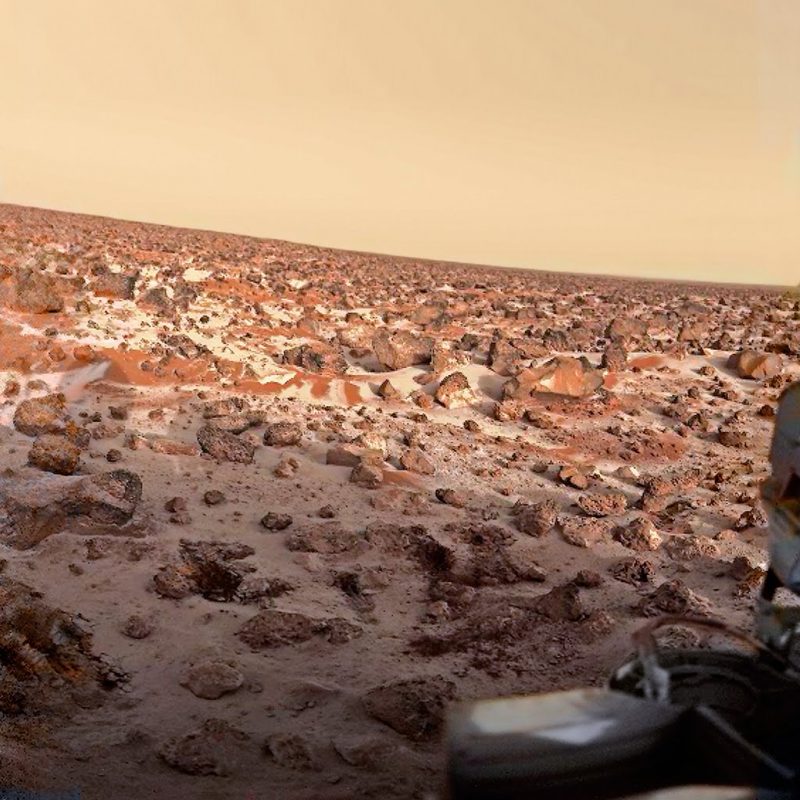
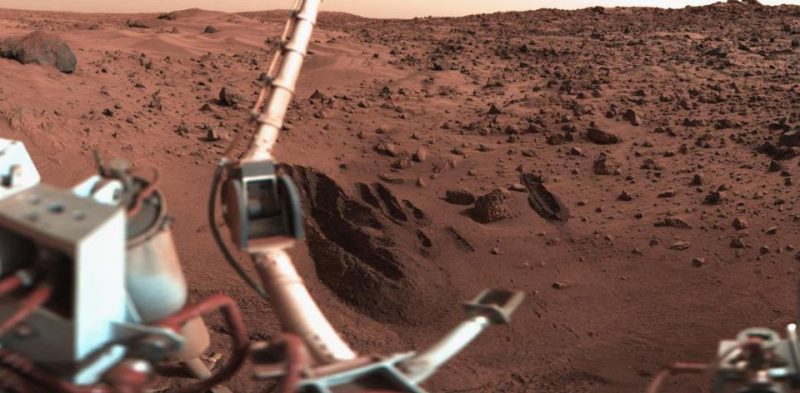
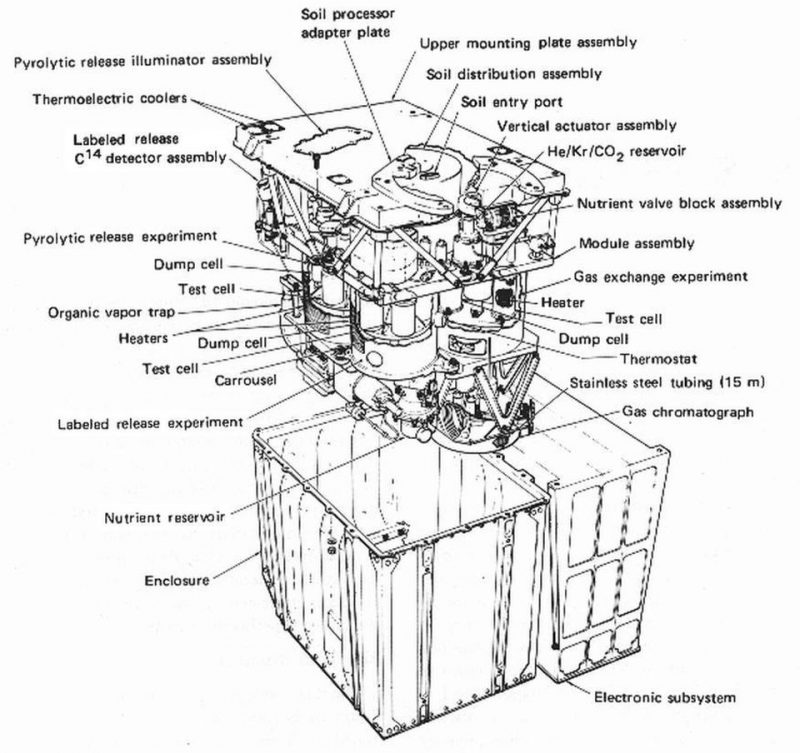
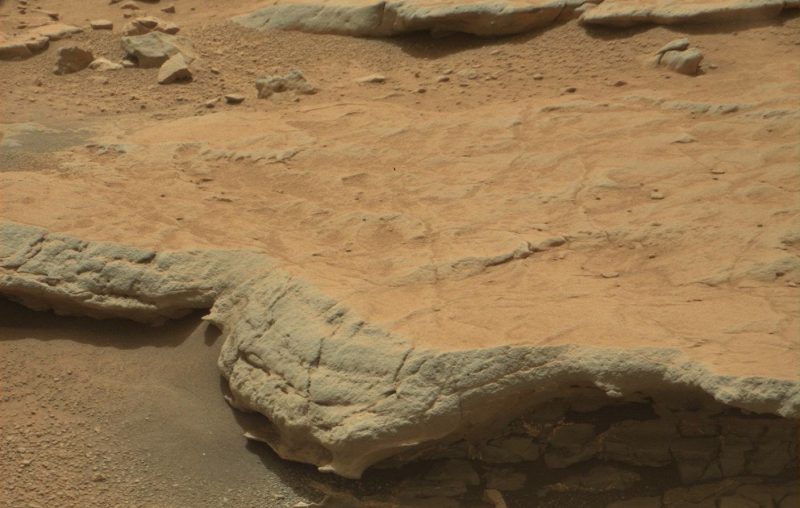



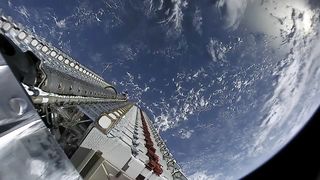


 The birth of a 'spider' on Mars: NASA reveals timelaspe...
 Mobile phones could kill off Casper the ghost octopus:...

 Inuit people have the same 'caveman genes' that helped an...


 Look out! 100ft asteroid 203 TX68 could pass just 15,000...
 There was NO pause in global warming: Controversial data...
 Bland really IS beautiful: Researchers find 'simple' faces...
 The AI GALAXY simulator: Breakthrough game No Man's Sky...





 One-legged skeleton discovered under a disused dance floor...
 Ancient Egyptian 'cat mummy' preserved in French museum has...
 The last Neanderthal necklace? Toe bone of an imperial eagle...
 Ötzi the Iceman's fateful journey to his final resting place...





 China censors films and TV series that have 'too many'...
 Critically endangered porpoise is cruelly killed after...
 China's 'Lord of the Rings' towers: Skyscraper complex...