Naar de inhoud

UFO'S of UAP'S, ASTRONOMIE, RUIMTEVAART, ARCHEOLOGIE, OUDHEIDKUNDE, SF-SNUFJES EN ANDERE ESOTERISCHE WETENSCHAPPEN - DE ALLERLAATSTE NIEUWTJES

UFO's of UAP'S in België en de rest van de wereld
akke.beakke.be
Ontdek de Fascinerende Wereld van UFO's en UAP's: Jouw Bron voor Onthullende Informatie! Ben jij ook gefascineerd door het onbekende? Wil je meer weten over UFO's en UAP's, niet alleen in België, maar over de hele wereld? Dan ben je op de juiste plek! België: Het Kloppend Hart van UFO-onderzoek In België is BUFON (Belgisch UFO-Netwerk) dé autoriteit op het gebied van UFO-onderzoek. Voor betrouwbare en objectieve informatie over deze intrigerende fenomenen, bezoek je zeker onze Facebook-pagina en deze blog. Maar dat is nog niet alles! Ontdek ook het Belgisch UFO-meldpunt en Caelestia, twee organisaties die diepgaand onderzoek verrichten, al zijn ze soms kritisch of sceptisch. Nederland: Een Schat aan Informatie Voor onze Nederlandse buren is er de schitterende website www.ufowijzer.nl, beheerd door Paul Harmans. Deze site biedt een schat aan informatie en artikelen die je niet wilt missen! Internationaal: MUFON - De Wereldwijde Autoriteit Neem ook een kijkje bij MUFON (Mutual UFO Network Inc.), een gerenommeerde Amerikaanse UFO-vereniging met afdelingen in de VS en wereldwijd. MUFON is toegewijd aan de wetenschappelijke en analytische studie van het UFO-fenomeen, en hun maandelijkse tijdschrift, The MUFON UFO-Journal, is een must-read voor elke UFO-enthousiasteling. Bezoek hun website op www.mufon.com voor meer informatie. Samenwerking en Toekomstvisie Sinds 1 februari 2020 is Pieter niet alleen ex-president van BUFON, maar ook de voormalige nationale directeur van MUFON in Vlaanderen en Nederland. Dit creëert een sterke samenwerking met de Franse MUFON Reseau MUFON/EUROP, wat ons in staat stelt om nog meer waardevolle inzichten te delen. Let op: Nepprofielen en Nieuwe Groeperingen Pas op voor een nieuwe groepering die zich ook BUFON noemt, maar geen enkele connectie heeft met onze gevestigde organisatie. Hoewel zij de naam geregistreerd hebben, kunnen ze het rijke verleden en de expertise van onze groep niet evenaren. We wensen hen veel succes, maar we blijven de autoriteit in UFO-onderzoek! Blijf Op De Hoogte! Wil jij de laatste nieuwtjes over UFO's, ruimtevaart, archeologie, en meer? Volg ons dan en duik samen met ons in de fascinerende wereld van het onbekende! Sluit je aan bij de gemeenschap van nieuwsgierige geesten die net als jij verlangen naar antwoorden en avonturen in de sterren! Heb je vragen of wil je meer weten? Aarzel dan niet om contact met ons op te nemen! Samen ontrafelen we het mysterie van de lucht en daarbuiten.

Berichten van 1 februari 2020 tot 29 februari 2020

Chris Mellon: Our Government Is “Lethargic And Risk Averse” In Assessing Possible Threat From UFOs

Chris Mellon: Our Government Is “Lethargic And Risk Averse” In Assessing Possible Threat From UFOs

Chris Mellon was the deputy assistant secretary of defense for intelligence in the Bill Clinton and George W. Bush administrations. He’s also a policy advisor for To the Stars Academy. The guy has been working on military intelligence and policy for a long time from both inside and outside of the halls of the federal government. In other words, when it comes to the military, he knows a thing or two.

One thing that Mellon knows now is that he’s getting frustrated with the seeming lack of coherent response on the part of the Pentagon to the revelations of incredible craft that have been seen violating our military airspace, first revealed to the public in December of 2017. These UFOs (and we should just be calling them that because that’s what they are) are described in detail by Mellon in a new article he’s published at the website of the American Legion titled “A threat unmet.” But despite all of the available data and expert military witnesses, Mellon finds that almost everyone in the United States government and the upper echelons of our military is turning a blind eye to what he sees as a very real, potential threat to our national security. The lack of action on the part of so many agencies that should be cooperating in the collection and analysis of data has led to a condition Mellon describes as “paralysis.” (Emphasis added)

This paralysis is occurring at a time when the scientific community increasingly recognizes the possibility of humanity encountering probes from spacefaring civilizations. In fact, last year the House Committee on Space, Science and Technology directed NASA to begin looking for “technosignatures,” by which it means alien space probes. This is happening because many exobiologists now recognize probes are more efficient and effective than radio waves for purposes of space exploration or contact. As unlikely as it may seem, there is no denying the possibility that some UFO/UAPs encountered by our military are probes launched by distant civilizations.

While military personnel such as [Cmdr. David] Fravor and Lt. Ryan Graves – an F-18 pilot who said UFOs followed his Navy strike group for months – are awed by the technology they observed, they are undeterred, eager to give chase both literally and figuratively. Reflecting on his encounter, Fravor told me, “I want to fly that thing!” He naturally expects his country to figure out where these things come from, why they are here and how they work. Fravor and his colleagues at least still have the right stuff, even if the hierarchy above them is lethargic and risk-averse.

I wanted to highlight that portion of Mellon’s article in particular because you’ll notice that he’s coming out and saying what so many people have been thinking since this story first began developing. At least some of the UFO/UAPs our military has been running into may indeed be “probes launched by a distant civilization.” In other words… aliens. There. We said it.

This is something that a few of us were batting around on social media this week. Virtually nobody with a deep background in either science or the military really thinks that those things were built by the Russians or the Chinese at this point. If either of those countries had developed the technology to build aircraft that can defy gravity and fly at Mach 25 deep in the atmosphere without us catching up, they’d have attacked us by now. Or at least shown off their cool new technology to impress everyone. And the Navy and the Pentagon have already said they aren’t ours.

So if that’s not our hardware and it’s not Russia’s and it’s not China’s… then what? I don’t care if you want to say it’s aliens, time travelers from the future or humans from some parallel dimension. As Mellon says when quoting Joseph Gradisher, spokesman for the deputy chief of naval operations, “whatever they are, they are real, they aren’t ours, and they continue to violate U.S. airspace with impunity.” We have identified a technology gap between us and someone (or something) and our government has an obligation to try to close it.

For my part, I will just say that I’m not entirely convinced that the Pentagon is doing as little as Mellon says. He’s been out of the loop there for a while and there could well be things going on that he’s simply not aware of. Of course, that’s because they keep this huge veil of secrecy over everything and anything to do with the UFO topic, as we’ve discussed here repeatedly. And even when they do tell us something, they frequently contradict themselves and obfuscate when they’re not flat-out lying.

So what does Mellon want to see happening? He would like to see a coordinated effort across multiple agencies including NASA, the National Reconnaissance Office, the FBI, the NSA, the CIA, the DIA, and DHS to develop a process for collecting and integrating pertinent information about UFO/UAPs. We need to assess the level of the risk that’s presented. (The pilots who went up against the tic-tac during the Nimitz encounter told Mellon “We didn’t stand a chance against it.”) And then, with all the available data being coordinated, figure out a plan as to what we’re going to do about it.

If I can add one more item to Mellon’s wish list it would be to tell the government that the public has a right to know what’s going on and what they’re doing, particularly if they’re fairly sure it’s not the Russians or the Chinese. They should come out and tell us everything they know short of exposing sources or methods.

Hoe vind je dit bericht?
Geschreven door peter om 23:46 Stuur door

A bee from the age of dinosaurs

A bee from the age of dinosaurs

One hundred million years ago, a bee got trapped in tree resin. Over time, geological forces converted the resin to amber. Now a scientist arrives on the scene, to tell us this bee’s story.

Left view of the fossil bee in amber.

Primitive bee trapped in amber. It lived in a tropical jungle 100 million years ago, when flowering plants were just beginning to diversify. It’s thought that bees and flowering plants co-evolved. This specimen has traits from modern bees and their evolutionary ancestors, the carnivorous apoid wasps.

Image via George Poinar Jr./ OSU.

About 100 million years ago, a female bee with young beetle larvae crawling all over her body flew haplessly into a glob of sticky tree resin where she became trapped. Over time, the resin fossilized to become amber, preserving the bee and its parasites in exquisite detail within the clear honey-colored rock. As rare as it is, this fossil bee isn’t the first to be found entombed in amber. But it is the only known known amber-encased bee that has pollen on it. And it’s the only fossil bee with parasites, providing a fascinating glimpse into a predator-prey relationship that continues to this day. And the entomologist who studied this doomed bee? He is George Poinar Jr. of Oregon State University (OSU), whose work helped inspire the movie “Jurassic Park.”

Poinar’s work also showed that the bee – which he named Discoscapa apicula – belonged to a new family, genus, and species. His findings were published in the January 29, 2020, issue of BioOne Complete.

George Poinar, Jr. is a renowned expert in animals and plants fossilized in amber. He’s also credited with popularizing the idea of extracting DNA from these primitive insects. This idea received widespread attention when Michael Crichton incorporated it into his blockbuster Jurassic Park franchise. In the movie, dinosaur blood is extracted from mosquitoes encased in amber from the age of dinosaurs, and DNA in the blood is used to clone living dinosaurs.

In the real world of science, researchers study insect pollinators, such as bees, because they’re critically important to the reproduction of flowering plants, some of which are key to humans’ food supply.

There are more than 16,000 known bee species worldwide, from seven taxonomic families. Bees feed primarily on nectar and pollen, in contrast to their evolutionary ancestors, apoid wasps, that preyed on other insects.

Closeup of fossilized bee in amber, with four larval beetle parasites.

A new species of bee, trapped in amber for about 100 million years. Can you spot the parasitic beetle larvae it carried?

Image via George Poinar Jr./ OSU.

The newly studied bee fossil, from Myanmar, dates to the mid-Cretaceous period. This bee’s world was a tropical forest of mostly conifers, ferns, cycads, ginkgo, and horsetails. Angiosperms – flowering plants – were just beginning to diversify, along with the primitive bees that pollinated their flowers. These ancient bees shared traits seen in both modern bees and their evolutionary forebearers, apoid wasps.

In a statement about this new research, Poinar commented on one of the most interesting features of the bee:

Something unique about the new family that’s not found on any extant or extinct lineage of apoid wasps or bees is a bifurcated scape.

The scape is a base section of the antenna, closest to the bee’s head. In this bee, it branches into two sections, one ending as a small spur. This feature has never before been seen in either living or fossil bees.

Microscope view of a segment of the bee's antenna, with labels.

An image of the “scape” on one of the bee’s antennae, divided into 2 parts. This bifurcated scape has not seen before, in any known fossil or living bee. The scape is labeled “Sc” and appears divided into 2 branches, with 1 side ending as a small spur, labeled “S.” Other labeled parts are “T” for torulus (basal socket joint that allows antenna movement), “R” for radicle (antenna joint attached to the head), and “P” for pedicle (antenna segment that creates an elbow-like joint with the scape).

Image via George Poinar Jr./ BioOne Complete.

Poinar continued:

The fossil record of bees is pretty vast, but most are from the last 65 million years and look a lot like modern bees. Fossils like the one in this study can tell us about the changes certain wasp lineages underwent as they became palynivores, or pollen eaters.

There were pollen grains on the bee, indicating it had visited some flowers not long before it died.

Also present were very young beetle larvae on the bee. These parasitic larvae were not feeding on it, but were hitching a ride from one of the flowers visited by the bee to its nest. At the nest, the parasitic beetle larvae would continue to develop, feeding on bee larvae and the food left by the adult bee.

Closeup view of bee leg covered in hair, with very many dots of pollen caught between the hairs.

Microscopic imaging reveals pollen on the bee’s pollen-catching hairs. It had visited flowers shortly before becoming trapped in tree resin.

Image via George Poinar Jr./ OSU.

Poinar observed:

Additional evidence that the fossil bee had visited flowers are the 21 beetle triungulins – larvae – in the same piece of amber that were hitching a ride back to the bee’s nest to dine on bee larvae and their provisions, food left by the female.

It is certainly possible that the large number of triungulins caused the bee to accidently fly into the resin.

Closeup view of a long segmented beetle larva.

One of the young larval beetles. Poinar counted a total of 21 larvae on this bee. These larvae are carried by the adult bee from a flower to the nest, where the larvae parasitize bee larvae and eat the food collected by the adult bee.

Image via George Poinar Jr./ OSU.

{ https://earthsky.org/ }

Hoe vind je dit bericht?
Geschreven door peter om 23:32 Stuur door

Ancient ‘megasites’ may reshape the history of the first cities

Ancient ‘megasites’ may reshape the history of the first cities

Some early urban areas may have been spread out and socially egalitarian

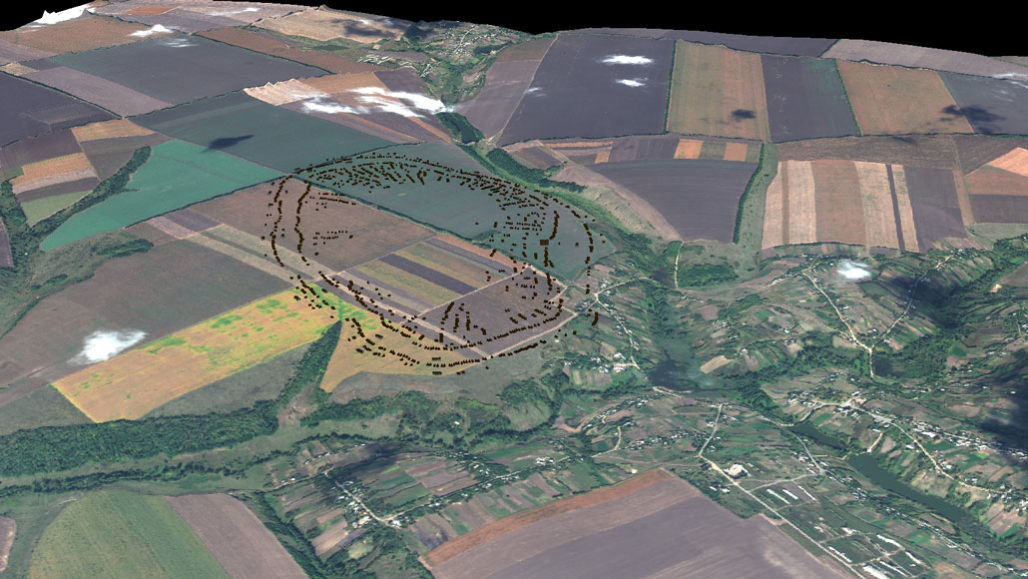
Nebelivka site

Farmland in Ukraine now covers most of an ancient settlement called Nebelivka that some researchers consider to be one of the earliest known cities. Here, Nebelivka’s site plan is superimposed over where it once stood.

NEBELIVKA PROJECT, PRODUCED BY M. NEBBIA

By 

Nebelivka, a Ukrainian village of about 700 people, sits amid rolling hills and grassy fields. Here at the edge of Eastern Europe, empty space stretches to the horizon.

It wasn’t always so. Beneath the surface of Nebelivka’s surrounding landscape and at nearby archaeological sites, roughly 6,000-year-old remnants of what were possibly some of the world’s first cities are emerging from obscurity. These low-density, spread-out archaeological sites are known as megasites, a term that underscores both their immense size and mysterious origins. Now, some scientists are arguing the settlements represent a distinct form of ancient urban life that has gone largely unrecognized.

Megasites were cities like no others that have ever existed, says archaeologist John Chapman of Durham University in England.

For decades, researchers have regarded roughly 6,000-year-old Mesopotamian sites, in what’s now Iraq, Iran and Syria, as the world’s first cities. Those metropolises arose after agriculture made it possible to feed large numbers of people in year-round settlements. Mesopotamian cities featured centralized governments, bureaucratic agencies that tracked and taxed farm production, and tens of thousands of city dwellers packed into neighborhoods connected by dusty streets. Social inequality was central to Mesopotamia’s urban ascent, with a hierarchy of social classes that included rulers, bureaucrats, priests, farmers and slaves.

Over the last decade, however, researchers have increasingly questioned whether the only pathway to urban life ran through Mesopotamian cities. Chapman, along with Durham colleague Marco Nebbia and independent, Durham-based scholar Bisserka Gaydarska, is part of a movement that views low-density, spread-out settlements in several parts of the world as alternative form of early city life.

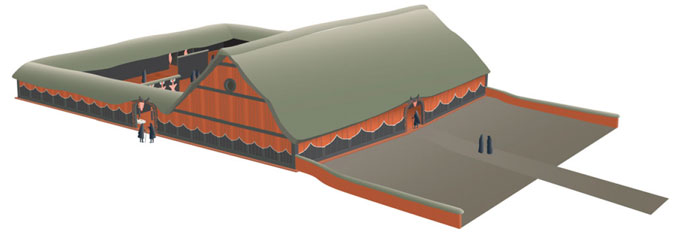
Illustration of assembly house at Nebelivka

An artist’s reconstruction shows what an assembly house may have looked like at Nebelivka. Communal gatherings were likely held in these structures. C. UNWIN (BASED ON DATA FROM S. JOHNSTON), B. GAYDARSKA, M. NEBBIA AND J. CHAPMAN/CAMBRIDGE ARCHAEOLOGICAL JOURNAL 2020

Ukrainian megasites were built by members of the Trypillia culture between about 6,100 and 5,400 years ago. Typically covering a square kilometer or more, some of the sites are bigger in area than Manhattan.

Megasites may have been built so that people could better defend against invasions by rival villages or foreign forces. Based on that assumption, some estimates of population at these places run into the tens of thousands. But recent work by Chapman, Nebbia and Gaydarska indicates megasites in general may have had only a few thousand inhabitants.

And Nebelivka appears to have lacked a class of elites ruling over hordes of common folk who did the dirty work. Instead, excavations suggest that the site was organized to promote shared rule among groups of equal social standing. Thus, Nebelivka demonstrates that urban development doesn’t automatically split people into haves and have-nots, Chapman and colleagues argue, a common assumption among those concerned about social and economic inequality in modern societies.

Nebelivka novelty

In the 1970s, archaeologists began excavating several Trypillia megasites in fertile soil between the Southern Bug and Dnieper rivers in Ukraine. Aerial photography and geomagnetic surveys on the ground revealed outlines of buried structures. At least two dozen megasites have been located in the country since then.

Ukrainian archaeologists have excavated small parts of several of the sites. But it’s a daunting task. Researchers working at one location have unearthed about 50 houses over the last 25 years, Chapman says. “They have another 2,150 houses to go.”

At Nebelivka, Chapman, Gaydarska and Nebbia have reconstructed the megasite’s entire layout. This settlement blueprint, the first of its kind for a megasite, appears in the February Cambridge Archaeological Journal.

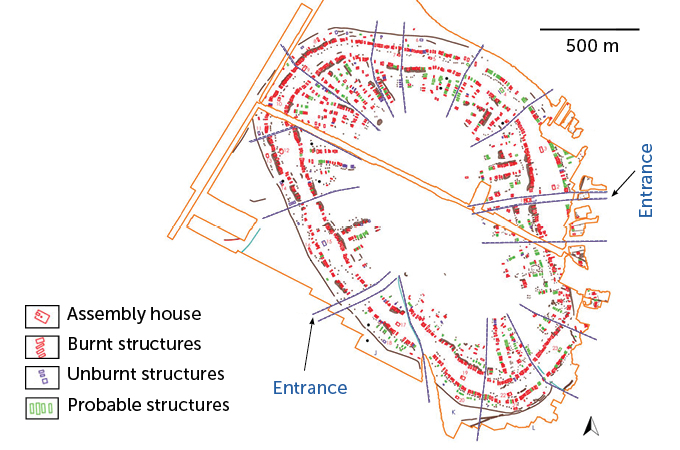
Over six years of fieldwork since 2009, the researchers have excavated and mapped Nebelivka structures located over more than a square kilometer. Aerial photos, satellite images and geomagnetic data, supplemented by excavations of 88 test pits, identified 1,445 residential houses and 24 communal structures dubbed assembly houses. Residential houses, some intact and most in ashes after having burned, were grouped into 153 neighborhoods, a majority containing three to seven houses. Neighborhoods, in turn, formed 14 quarters, each with one or more assembly houses situated in an open area.

Nebelivka megasite blueprint dekstop

This blueprint of the Nebelivka megasite is based on excavations and geomagnetic surveys (orange lines mark the areas of those surveys). About two-thirds of houses had been deliberately burned at different times, perhaps as part of ceremonial burnings, researchers say. Purple lines denote borders of residential quarters made up of neighborhoods. Y. BEADNELL (BASED ON DATA FROM D. HALE), B. GAYDARSKA, M. NEBBIA AND J. CHAPMAN/CAMBRIDGE ARCHAEOLOGICAL JOURNAL 2020

During about 200 years of occupation, Nebelivka served as both a dwelling site and, oddly enough, a kind of cemetery for incinerated houses, Gaydarska says. About two-thirds of Nebelivka houses had been deliberately burned at different times, creating mounds of charred debris across the site. Sediment and pollen excavated in and around Nebelivka display no signs of wildfire, a clue that the houses were intentionally set aflame.

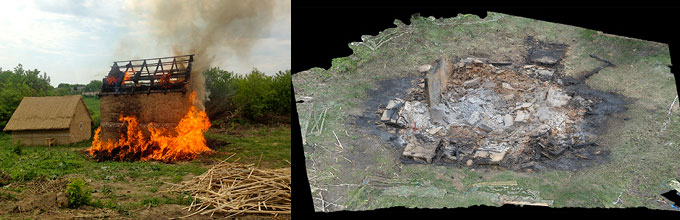
In 2015, the researchers built and then burned a replica of a Trypillia house, producing lumps of ashy clay residue like those found where actual Nebelivka houses once stood. Only after filling the replica with much more dry timber than had been used to build the house did the experimental conflagration reach temperatures high enough to raze the entire structure and produce Nebelivka-like residue mounds. Nebelivka’s ancient residents must have gone to great lengths to gather enough wood for what was likely ceremonial house burnings, Chapman says.

“Burning a house down in this way created a spectacle that could be seen from many kilometers away,” he says.

Nebelivka house burning

Scientists built a wooden version of a Nebelivka house and set it on fire (left) to investigate how and why ancient residents burned down many of their houses. Burned remains of the experimental house were examined in a 3-D image (right). FROM LEFT: B. GAYDARSKA; M. NEBBIA

No signs of a centralized government, a ruling dynasty, or wealth or social class disparities appear in the ancient settlement, the researchers say. Houses were largely alike in size and design. Excavations yielded few prestige goods, such as copper items and shell ornaments. Many examples of painted pottery and clay figurines typical of Trypillia culture turned up, and more than 6,300 animal bones unearthed at the site suggest residents ate a lot of beef and lamb. Those clues suggest daily life was much the same across Nebelivka’s various neighborhoods and quarters.

Although Chapman and colleagues agree Nebelivka’s city life differed from that of Mesopotamian metropolises, the researchers disagree about the details.

Chapman suspects the megasite was a permanent settlement in which, at any one time, 2,000 to 3,000 people occupied up to 400 houses. Residents likely came from 10 regional groups, known from previous investigations of smaller Trypillia villages, that had traded goods and formed some common cultural beliefs and practices, he says. Members of the 10 groups established the neighborhoods and quarters outlined in Nebelivka’s site plan, Chapman speculates. Given the need to ease inevitable tensions among groups living unusually close together, a council recruited from throughout Nebelivka may have made political decisions. Council leadership might have even shifted annually from one group to the next, he says.

Nebbia thinks it’s more likely that perhaps 3,000 to 4,000 people inhabited Nebelivka for around one month each year. During that time, people who assembled at the megasite made new contacts, shared knowledge and goods, and conducted communal activities such as house building and burning. Perhaps 100 to 150 guardians lived at and maintained Nebelivka year-round, he speculates.

Yet another possibility, favored by Gaydarska, portrays Nebelivka as a large center for religious pilgrims from throughout the Trypillia world. Over a roughly eight-month pilgrimage season, presumably scheduled for seasons when the weather permitted long-distance journeys, between 1,000 and 2,000 pilgrims per month inhabited Nebelivka. Ritual leaders from various Trypillia communities maintained the settlement and organized construction projects, she suspects, including the raising of assembly houses where religious ceremonies were held.

Middle Eastern sites for large, periodic gatherings date back at least 10,000 years and could have set the stage for similar but larger get-togethers at Nebelivka, however they were organized, Gaydarska says. While Nebelivka’s site plan can’t unveil the exact nature of social life there, it reveals a large open space in the center of the megasite where researchers previously assumed many people lived. Earlier estimates that Nebelivka housed 10,000 people or more are thus way too high, the three researchers contend.

Power sharing

As at Nebelivka, an increasing number of archaeological sites in Asia, Europe and the Americas are being classified as low-density urban settlements, says archaeologist Roland Fletcher of the University of Sydney. For instance, settlements comparable in size and population to megasites, known as oppida, emerged elsewhere in Europe more than 2,000 years ago. Whether people inhabited oppida year-round or seasonally, these sites contained households of roughly equal status that participated in collective decision making, Fletcher says.

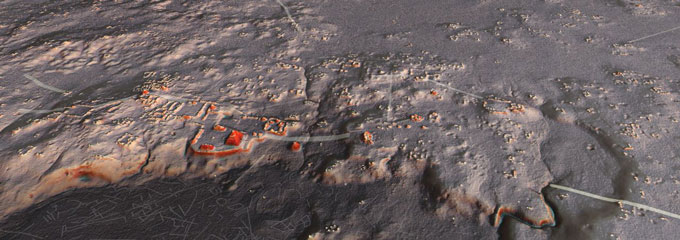
Aerial laser mapping has uncovered much larger examples of urban sprawl that date to around 1,000 years ago at Greater Angkor in Cambodia (SN: 4/29/16) and roughly 2,000 years ago at Maya outposts in Central America (SN: 9/27/18). In those cases, kings and other power brokers ruled spread-out populations that cultivated crops such as rice and maize using sophisticated irrigation techniques.

Naachtun site

Aerial laser mapping has revealed much larger examples of urban sprawl around Maya outposts in Central America than previously thought. Here, a representation of the site of Naachtun in what’s now Guatemala is shown. Yellow dots indicate ancient structures. M.A. CANUTO ET AL/SCIENCE 2018, L. AULD-THOMAS AND M.A. CANUTO

Though some of these sprawling sites had social inequality, egalitarian cities like Nebelivka were probably more widespread several thousand years ago than has typically been assumed, says archaeologist David Wengrow of University College London. Ancient ceremonial centers in China and Peru, for instance, were cities with sophisticated infrastructures that existed before any hints of bureaucratic control, he argues. Wengrow and anthropologist David Graeber of the London School of Economics and Political Science also made that argument in a 2018 essay in Eurozine, an online cultural magazine.

Councils of social equals governed many of the world’s earliest cities, including Trypillia megasites, Wengrow contends. Egalitarian rule may even have characterized Mesopotamian cities for their first few hundred years, a period that lacks archaeological evidence of royal burials, armies or large bureaucracies typical of early states, he suggests.

Megasite mystery

Not everyone views Nebelivka as emblematic of an alternative branch of early city life.

“Nebelivka may be an interesting example of a ritual, ceremonial or defensive gathering place rather than an ‘all-purpose’ city or a distinctive pathway to urbanism,” says archaeologist Monica Smith of UCLA.

Unlike bustling Mesopotamian cities, which featured walls or other prominent structures along their borders, Nebelivka contained lots of apparently open space and was encircled by only a ditch, Smith observes. And from the start, cities brought together large numbers of people who had to cooperate with strangers and heed the edicts of political and religious leaders, Smith argues. Ancient cities typically included massive official structures and were densely occupied for thousands of years, unlike megasites that drew smaller crowds for several hundred years at most, she says. Smith reserves judgment on the nature of city life at Greater Angkor and the Maya sites, where further excavations might reveal higher-density occupations than currently suspected.

Tell Brak site

Some investigators regard densely populated Mesopotamian settlements from around 6,000 years ago, such Tell Brak in Syria, as the world’s oldest cities. The remains of a Tell Brak palace are shown. BERTRAMZ/WIKIMEDIA COMMONS (CC BY 3.0)

Smith suggests calling permanent and temporary gathering spots — a category that, in her view, includes Trypillia megasites — “collective settlements.” In her 2019 book Cities: The First 6,000 Years (SN: 4/16/19), Smith provisionally identifies the oldest known city as Tell Brak, a roughly 6,000-year-old Mesopotamian site in northeastern Syria.

But Nebelivka and other Ukrainian megasites transcended Trypillia village life too dramatically to be classified simply as gathering places, Gaydarska argues. Trypillia people, she maintains, engaged in one of several early experiments in large-scale urban living, even if for only part of the year. It’s time to revamp traditional ideas of what makes an ancient settlement a city, she says.

For now, the next challenge is to explain why the Tyrpillia megasites arose in the first place and lasted no more than around 700 years. To get a better grip on that mystery, Gaydarska plans to excavate Trypillia villages dating to just before and after Nebelivka’s heyday. “We have nothing to compare Nebelivka to at this point,” she says.  

{ https://www.sciencenews.org/ }

Hoe vind je dit bericht?
Geschreven door peter om 22:52 Stuur door

The Time a Scoutmaster was Attacked by a UFO

Afficher l’image source

The Time a Scoutmaster was Attacked by a UFO

It was a hot and humid evening on August 19, 1952, and hardware store clerk and Boy Scout Scoutmaster Dunham Sanborn “Sonny” DesVergers was driving a group of Boy Scouts home on a coastal highway near West Palm Beach, Florida, that winds right alongside the vast swamp wilderness of the South Florida Everglades. As he made his way down a darkened side road towards the home of one of the boys, his attention was captured by a bright flash in the sky out over the gloomy swamp near a dense grove of palmettos. His first thought was to just keep on driving, but then it occurred to him that an airplane had possibly gone down out there in the wilderness, so he turned back, stopped the car, and after some moments of thought peering into the dimness of the swamp he decided to grab a machete and start hacking his way through towards where he believed the accident to have occurred. And so would begin a strange odyssey that has remained one of the weirder UFO encounters on the books.

DesVergers told the Boy Scouts to stay behind, and if they did not hear from him in 15 minutes they were to make their way to a farmhouse off the road and fetch help. He then gripped his machete, hoisted his flashlight, and began penetrating the murky, snake and alligator infested wilderness. As he progressed through the choking brush he allegedly noticed an unpleasant smell in the air, which got steadily worse as he progressed. He continued hacking his way through the vegetation and thickets through the fog of stench that pervaded the air until he reportedly came to a clearing, where he signaled to the boys with his flashlight and then turned to notice what he would describe as an intense heat, as if an enormous oven door had suddenly opened to belch forth its fire. Disoriented, he looked up to see something blocking out the sky above, which he claimed was a large disc-like object measuring around 30 feet in diameter and ringed with glowing lights, and when the beam of his flashlight hit it he could ascertain that it was smooth, metallic, and had a concave bottom. This is where things would get really weird.

As the frightened scoutmaster started backing up in a growing panic, he claims that he heard a grinding sound like metal upon metal, which he soon realized was a hatch of some sort opening on the side of the unearthly craft. From within emerged what he describes as an intense red light that approached him and then transformed into a red mist, which engulfed him and caused him to instinctively cover his face. According to him, he then lost consciousness. Back at the car, the Boy Scouts, who had been tracking their scoutmaster’s progress by watching the glow of his bouncing flashlight beam in the gloom, purportedly saw a “big red ball of fire” through the trees, as well as “a series of red lights … a lot like flares.” That was when they decided to go for help.

Police arrived on the scene not long after, and were about to launch a search through the swamp for DesVergers when he came stumbling out of the thicket in a kind of daze, disoriented, mumbling incoherently and quite obviously very shaken, to the point that deputy sheriff Mott Partin would later say, “In all my 19 years of law-enforcement work, I’ve never seen anyone as terrified as he was.” Closer inspection of the man showed that his skin seemed lightly burned and the hair on his forearms singed, as well as a strange series of three burn marks in his scoutmaster’s cap. Making it all even odder still was that when some of the officers went to the clearing that DesVergers had come from they found his flashlight lying on the ground and a flattened ring of grass they could not explain.

DesVergers would be brought back to the Palm Beach County Sheriff’s office and that was when the case would attract the attention of Captain Edward J. Ruppelt, who was at the time part of the U.S. Air Force Project Blue Book, which was with investigating and analyzing UFO-related incidents in the name of national security. Ruppelt, who would later call it “one of the weirdest UFO reports that I came up against,” took his team to Florida in order to interview the witnesses and investigate the area of the alleged UFO encounter. Talking to the Boy Scouts he learned that they stood by their story of seeing bright red lights, and DesVergers also seemed very sincere, which impressed Ruppelt at first and of which he said he had the “immediate impression he was telling the truth.” The team also were able to find anomalous singed grass in the clearing where it had all gone down, which lab tests were unable to find an answer for, especially since in many instances the samples showed burned roots but intact upper leaves. Nor was there any conventional medical explanation for the victim’s singed hair, slightly burned skin, which was determined to have been caused by a “flash heat source,” or his damaged cap, thought to have been the work of “sparks of some kind,” all of which made it all even more promising, but cracks would slowly start to reveal themselves.

Red flags started going up when DesVergers began drumming up media attention for his alleged encounter, even going so far as to hire a press agent, and the story got more and more exaggerated the more he told it, adding in details such as that he had seen alien beings and even fought with them. A little digging into DesVergers’ past also brought up some warning signs, as he was found to be an insufferable teller of tall tales and as well as having gone AWOL during military service and also a convicted car thief. In other words, honesty was not really his thing, and although dishonest people can still potentially have a strange UFO encounter, Ruppelt was starting to get suspicious. Although there were certainly many oddities that could not easily be explained, and he couldn’t see how they could have been faked, Ruppelt would nevertheless eventually label it “the best hoax in UFO history.” He would go on to write of the account in his 1956 book The Report on Unidentified Flying Objects, and as much as he liked to think of it as a hoax, some of the aspects have never been satisfactorily explained, such as the weirdly singed grass roots and physical evidence, and so the debate has remained open as to whether it really happened or not, with one researcher Jeffrey Wilson saying:

Something unusual happened to the guy, and the physical evidence backed him up. That’s why I put the effort into checking this out. Why would you go to the trouble of faking something like this?” Why, and how, would he stage that? It doesn’t make any sense.

The case is still quite remarkable for the physical evidence left behind and the assertion by the witness even in later years in the face of withering criticism that this was all real. Regardless of whether DesVergers was a known liar or not, there seems to be a lot to unpack here, and it is important to remember that strange phenomena do not always necessarily happen to the most honest or reliable of people. What are we to make of his burns or the scorched grass, or the corroborating reports of the Boy Scouts he was with at the time? Was this perhaps a real event that he merely embellished and took advantage of over time, or was it merely the rantings and scheming of a known liar? The case was certainly enough to catch the attention of Project Blue Book and other researchers since, still unexplained, and whether it is real or not has managed to lodge itself firmly within some of the more curious and puzzling UFO cases there are

{ https://mysteriousuniverse.org/ }

Hoe vind je dit bericht?
Geschreven door peter om 21:50 Stuur door

Military-Owned Cyborg Locusts — What Could Possibly Go Wrong?

Afficher l’image source

Military-Owned Cyborg Locusts — What Could Possibly Go Wrong?

Cyborg locusts.

A great name for a band, an intriguing plot for a movie … but a scary thing to find out your military has developed. Yes, they claim it’s for bomb-sniffing … just like gunpowder was originally developed for medicinal purposes. What could possibly go wrong? Let’s find out.

“Finally, we developed a minimally-invasive surgical approach and mobile multi-unit electrophysiological recording system to tap into the neural signals in a locust brain and realize a biorobotic explosive sensing system. In sum, our study provides the first demonstration of how biological olfactory systems (sensors and computations) can be hijacked to develop a cyborg chemical sensing approach.”

“Hijacked to develop a cyborg chemical sensing approach” means the brains of locusts – made famous by so many plagues – are connected via electrodes in their brains to tiny packs on their backs which transmit sensory images picked up by the locusts’ antennae and send them to a computer, which monitors the signals and sees when the grasshoppers detect the vapors of one of many different explosives, a process that takes a mere few hundred milliseconds, thanks to the 50,000 olfactory neurons in those sensitive antennae. That’s a brief summary of “Explosive sensing with insect-based biorobots,” a non-peer-reviewed paper published this week in BioRxiv describing four years of research by a team led by Baranidharan Raman, associate professor of biomedical engineering in the School of Engineering and Applied Science at Washington University in St. Louis.

If you refuse to let them go, I will bring locusts into your country tomorrow. They will cover the face of the ground so that it cannot be seen. They will devour what little you have left after the hail, including every tree that is growing in your fields. They will fill your houses and those of all your officials and all the Egyptians—something neither your fathers nor your forefathers have ever seen from the day they settled in this land till now.
— Exodus 10:3–6

7- They will come out of the graves with downcast eyes like an expanding swarm of locusts.
(54- The Moon, 7)

And as when beneath the onrush of fire locusts take wing to flee unto a river, and the unwearied fire burneth them with its sudden oncoming, and they shrink down into the water; even so before Achilles was the sounding stream of deep-eddying Xanthus filled confusedly with chariots and with men.
The Iliad

Yeah, yeah, yeah … they know all about your biblical, Quran and Iliad locust plagues, but that didn’t stop the U.S. Office of Naval Research from investing $750,000 back in 2016 to develop cyborg locusts … or was that the reason for the investment? While it’s accepted that cheap bomb detectors are in demand by police, the military and airport security for dealing with terrorists, and by governments like Vietnam and South Korea who still have active minefields left over from not-so-recent wars, it’s easy to imagine other uses for these bionic bugs whose main claim to fame is not bomb-detection but swarming crop devastation of the plague kind. Back in 2016, Raman saw other uses for the cyborg locusts as well.

“But the real key, he says, is the relative simplicity of the locust’s brain. That’s what allows it to be hijacked, which, if all goes right, will allow for remote explosive sensing. Raman believes that eventually cyborg locusts could be used for other sniff-centric tasks, even medical diagnoses that rely on smell.”

Send them to countries with bombs and mines right before the crops are ripe. Have them do their jobs detecting the explosives, then reward them by letting the cyborg locusts detect the wheat fields and let the destruction begin.

What could possibly go wrong?

“Something neither your fathers nor your forefathers have ever seen from the day they settled in this land till now.”

{ https://mysteriousuniverse.org/ }

Hoe vind je dit bericht?
Geschreven door peter om 21:33 Stuur door

DE MAGISCHEGEBEURTENISSEN RONDOM MOUNT SHASTA ( VIDEO )

DE MAGISCHEGEBEURTENISSEN  RONDOM MOUNT SHASTA ( VIDEO )

ms.jpg

Er zijn van die speciale plekken op aarde en één daarvan is de Amerikaanse vulkaan Mount Shasta in Californië. 

Er wordt gezegd dat er zich onder de vulkaan een buitenaardse basis bevindt en de Indianen die ooit het gebied bevolkten spraken van de mystieke krachten van Mount Shasta.

Voor veel mensen is Mount Shasta een heel bijzondere plek en zij schrijven dan ook dingen zoals het volgende:

De vijfde chakra (gerelateerd aan onze keel), is gelegen in het gebied genaamd Mount Shasta, Noord-Californië. De eigenschappen van de keelchakra zijn communicatie, uitdrukking en verbinding tussen je geest, emoties en ziel. Wij hebben veel mensen horen vragen waarom Amerika het centrum van nieuwe ideeën en gedachten lijkt te zijn. De energie van Mt. Shasta is de poort waardoor communicatie kan worden gechanneld in ons collectief bewustzijn. Wij hebben het nu over communicatie van een hoger bewustzijnsniveau, communicatie over de geest en communicatie over het menselijk potentieel. Enkele van de zeer fundamentele leringen kwamen uit de streek van Mt. Shasta. Dus, de verantwoordelijkheid van Mount Shasta is het kanaliseren van de energie van wereldwijde communicatie.

De Mount Shasta is een vulkaan in de Cascade Range in Noord-Californië, VS. Hij heeft een hoogte van 4.317 m. De kegelvormige top is in sterke mate vergletsjerd en vertoont een zeer symmetrische vorm. In de buurt van de top vindt men verschillende zeer hete zwavelbronnen.

Er zijn vele engelen, lichtmeesters en hoger dimensionale wezens aanwezig en er is een sterke verbinding met Lemurië voelbaar, welke je ook kunt voelen en ervaren in Nederland op de Elohim Krachtplaats.

Zes jaar geleden schreven wij het volgende over Mount Shasta:

We hebben het afgelopen jaar veelvuldig voorbeelden gezien van UFO activiteit rondom vulkanen. Zoals de spectaculaire opnames rond de Popocatepetl vulkaan in Mexico.

In Amerika hebben we ook een vulkaan die veelvuldig in verband wordt gebracht met UFO activiteiten en dat is de Mount Shasta in de Amerikaanse staat Californië. Het is niet alleen bekend vanwege UFO’s, maar wordt ook wel één van de heilige plaatsen op deze planeet genoemd. Dit was reeds het geval in de tijd dat de indianen dit gebied bevolkten en ook vandaag de dag worden er mystieke krachten toegeschreven aan Mount Shasta.

Ook hier gaan al decennialang geruchten dat er zich onder Mount Shasta een buitenaardse basis zou bevinden en er worden uiteraard ook regelmatig UFO’s waargenomen.

Een voorbeeld hiervan zie je op de volgende foto, die geloof het of niet, gemaakt is door Google.

ms 1” border=

En nu komt Mount Shasta weer in het nieuws vanwege een bijzondere foto die op sociale media werd geplaatst door een medewerker van de Amerikaanse overheid.

Het is een foto die valt in de categorie: wolken die allesbehalve wolken lijken te zijn en waarvan we recentelijk meerdere voorbeelden hebben gezien. Wolken in een meestal wolkeloze hemel soms helemaal geen wolken blijken te zijn.

xxx

Wat het ook moge zijn, het is een prachtige opname en voor ufo onderzoeker Scott Waring bestaat er dan ook geen enkele twijfel en hebben we hier te maken met een gecloakt buitenaards ruimteschip.

In het licht van alle mysterieuze zaken rond Mount Shasta, geen vreemde conclusie en in de volgende video vertelt hij meer waarom hij denkt dat we hier te maken hebben met een ruimteschip.

Hij vertelt verder over het enorme ondergrondse gangenstelsel dat zich onder Mount Shasta bevindt en hoe daar op mysterieuze wijze mensen zijn verdwenen. Compleet verdwenen zonder dat er ooit iets van hen is teruggevonden. 

Soms komen er volgens Scott mensen uit de tunnels die geheel in het wit gekleed zijn en omringd door een vreemd gloeiend licht. Deze mensen worden in verband gebracht met Saint Germain en er schijnt zelfs een soort complete religie te zijn rondom Mount Shasta.

xxx

Voor Scott is duidelijk dat degene die voor Saint Germain wordt aangezien niemand anders is dan een buitenaardse die afkomstig is van de ET basis diep onder de vulkaan.


En tot slot nog een deel uit een eerder artikel over iemand die een buitenaardse ontmoeting heeft in de buurt van Mount Shasta.

Ik reed op Highway 31, afkomstig van Klamath Falls. Toen ik het stadje Merril binnenreed zag ik een fel vierkant licht dat vanuit "iets" naar buiten scheen. Het licht leek te fel om afkomstig te kunnen zijn van een keukenvenster ofzo.

Op de achtergrond zag ik de silhouetten van een aantal huizen. Het licht leek afkomstig te zijn uit een veld dat ongeveer 25 meter bij mij vandaan lag, langs de kant van de weg. Alhoewel het donker was kon ik zien dat er een object stond dat de vorm had van een bord/schotel met een doorsnee van ongeveer 7 meter waarbij het leek alsof het aan één kant een soort inkeping had.

Het was ook aan die kant van het object dat ik meer dan twee, maar niet meer dan vier, kleine personen ontdekte. Ik kreeg de indruk dat ze aan het werk waren. Ik besteedde er niet al te veel aandacht aan, maar begon toch langzamer te rijden om beter te kunnen kijken.

Plotseling kreeg ik een gevoel dat ze geschrokken waren omdat ik ze had gezien. Ik tuurde in het donker, maar kon ze niet goed zien. Ik dacht dat het misschien een mix was van volwassenen en tieners. In ieder geval stopten ze met wat ze aan het doen waren en bleven stilstaan.

Ondertussen was ik de stad ingereden en verloor ik ze even uit het zicht. Ik reed in een gehuurde bestelbus met daarachter een aanhanger. Waarom weet ik niet, maar ik besloot om te keren en terug te gaan om beter te kunnen kijken. Het viel niet mee om om te keren met die aanhanger en tegen de tijd dat ik weer op die plek terug was, waren er ongeveer drie minuten verstreken.

Tot mijn verbazing was het object weg, er hing alleen nog een soort mist. Ik hing met mijn hoofd uit het raam om naar de lucht te kijken en ik zag een rood knipperend licht zoals je dat ziet op torens en dergelijke, als waarschuwing voor vliegtuigen. Het hing ongeveer op een hoogte van twintig meter. Ik staarde ernaar en besefte dat er niets was waar dit licht aan vastzat, het was alsof het los in de lucht zweefde.

Toen stopte het licht met knipperen en verschenen er rode en witte lichten rondom de hele omtrek van het object. Ze flitsten aan en uit in een bepaalde volgorde, waardoor het leek alsof de lichten bewogen rondom het object. Dat was het moment waarop ik zeker wist dat het een schotel was.

De voorkant, tenminste ik neem aan dat het de voorkant was, hing onder een hoek van 20 graden naar beneden en toen begon het langzaam weg te vliegen, ongeveer met de snelheid van een helikopter. Ik moest lachen in mijzelf, want ik bedacht dat ze dit misschien wel deden om mij te laten geloven dat het een helikopter was. Ik luisterde met gespitste oren om te horen wat voor soort geluid het maakte, maar er was nauwelijks iets te horen.

Eerst vloog het naar het zuidwesten. Toen een paar kilometer verder veranderde het van koers naar een richting waar Mount Shasta ongeveer ligt, schat ik. Ik kon het object nog een tijdlang volgen en toen verdween het uit zicht.

Ik bleef nog een beetje in de buurt rondrijden aan de rand van de stad, de plek waar het object was geland. Ik merkte toen nog een paar dingen op die ik vreemd vond, maar die misschien niets met mijn waarneming te maken hadden.

Zoals een man die voor een groot raam zonder gordijnen zat in het huis dat het dichtst bij de landingsplek stond. Hij leek totaal niet te merken dat ik probeerde met een grote combinatie een honderdtachtig graden draai te maken op zijn gazon. Het leek alsof hij in een soort trance was of iets dergelijks.

Ik vervolgde mijn trip. Toen ik een stukje verder was verloor de auto bijna alle vermogen en was niet vooruit te branden. Ik ging zo langzaam dat ik bijna stilstond. Ik had nog nooit eerder in dat gebied een probleem gehad met een signaal voor mijn mobiele telefoon, maar nu was dit wel het geval. Ik kon niet bellen en ook geen sms versturen.

Tijdens het vervolg van de rit naar Reno voelde ik dat ik geobserveerd werd en dat ik niet alleen was. Ik heb dat gevoel nog steeds, tot op de dag van vandaag. Als ik nu ’s morgens vroeg in het donker buiten loop voel ik me niet op mijn gemak. Ik begrijp dat niet want toen ik die ontmoeting had voelde ik helemaal geen angst.

Sinds die ontmoeting werkt mijn nieuwe camera ook niet meer. Ik had er die dag helaas geen batterijen in en die heb ik nu al een paar keer vervangen, maar hij doet helemaal niets meer. Ik denk dat ze die op de één of andere manier kapotgemaakt hebben.

Tot zover het verhaal van die vreemde ontmoeting in de buurt van Mount Shasta.

Iemand die ook veel ervaringen heeft met UFO’s rondom Mount Shasta is de auteur Brian Wallenstein. Hij heeft er een dik boek over geschreven van ruim 600 pagina’s met de titel “Mount Shasta Sightings”.

Hieronder volgt een vorig jaar opgenomen interview met hem over zijn boek en zijn eigen UFO waarnemingen.

{ https://niburu.co/ }

Hoe vind je dit bericht?
Geschreven door peter om 20:56 Stuur door

What's wrong with this satellite image of Saunders Island?

What's wrong with this satellite image of Saunders Island?

There is a list of satellite map images with missing or unclear data. Some locations on free, publicly viewable satellite map services have such issues due to having been intentionally digitally obscured or blurred for various reasons.

Saunders%2BIsland%2B%25285%2529.jpg

Now take a look at the imagery of Saunders Island, a crescent-shaped island 8.8 km (5.5 mi) long, lying between Candlemas Island and Montagu Island near Antarctica and you see that the images having been intentionally digitally obscured by Google Earth.

Saunders%2BIsland%2B%25282%2529.jpg

We may wonder why they have digitally obscured a part of the island or it must be that they have to hide something!

Saunders%2BIsland%2B%25283%2529.jpg

Something like a never-seen-before lake of bubbling lava under the island?

Saunders%2BIsland%2B%25284%2529.jpg

The shocking discovery was made by the British Antarctic Survey using powerful satellite imagery of the Southern Hemisphere.

The Antarctic survey confirmed not only the presence of molten lava in the crater of Mount Michael, an active volcano on Saunders Island but this lava lake is the eighth of its kind to be found on Earth.

{ http://ufosightingshotspot.blogspot.com/ }

Hoe vind je dit bericht?
Geschreven door peter om 19:05 Stuur door

UFO hovering above Winnipeg, Manitoba, Canada

UFO hovering above Winnipeg, Manitoba, Canada

Winnipeg-UFO.png

This UFO video was just submitted through our Facebook page. It was recorded over Winnipeg, Canada on 13th February 2020.

Witness report: 

My daughter and I recorded a UFO last Thursday night in the sky to the west of our home. It was a sphere of light in the sky. Two other light spheres appeared as well shortly after we began recording. The lights would fade in and out. White lights seem to briefly shoot out from one side of the middle light. The lights stayed in the same location until a military aircraft began flying toward it. The lights started to fade more to the west after 9 minutes or so when the plane was flying toward it. We stopped recording when it wasn’t visible. If I edited it to shorten the clip, could I send somewhere for someone to look at it? I apologize in advance for my daughters disgusting language.

{ https://www.latest-ufo-sightings.net/ }

Hoe vind je dit bericht?
Geschreven door peter om 18:53 Stuur door

ᵀᴴᴱ WESTALL UFO ᴀɴᴅ ᴛʜᴇ STRANGENESS ᴛʜᴀᴛ ғᴏʟʟᴏᴡᴇᴅ

ᵀᴴᴱ WESTALL UFO ᴀɴᴅ ᴛʜᴇ STRANGENESS ᴛʜᴀᴛ ғᴏʟʟᴏᴡᴇᴅ

(Illustrated by Nicholas Eveleigh)

THE CLAYTON SOUTH UFO ENCOUNTER

Amysterious event takes place, in a land considered “far away” by most. Hundreds of children witness something they cannot explain, but no one believes them. The few adults present, teachers no less, are coerced into silence. Students vanish into thin air. The presence of a foreign unknown military force. An idealistic American scientist travels to the under side of the world looking for answers, eventually disgraced, he takes his own life. UFO sightings fluctuate, a man reports a UFO sighting and unusual experience, claiming that his car is being sucked into ethereal lights on an isolated road. Three days later, a fatal car accident occurs at the exact location where the strange event took place. You might be thinking I’m describing the events of some sci-fi drama series, only a great many individuals, to this day, would attest that all, if not most of these claims were entirely true. The least disputed detail of all the strangeness, is the sighting of an unidentified flying object, a flying saucer.

It was 11:00 am, Wednesday, April 6th, 1966, Melbourne, Victoria, Australia. What no doubt may have presented itself as an ordinary day at Westall High school, would have drastically changed the moment voices began to shout, “look up in the sky, it’s a flying saucer!”

Immediately, a sense of frenzy, fear, wonderment and exhilaration resonated among the students, because as many eyewitnesses will tell you, as they looked to the clear blue morning sky, there was a silver flying saucer performing aerial feats beyond the capabilities of the (publicly known) aircraft of the day.

As hundreds of students charged toward an area nicknamed ‘The Grange’ where a paddock converged onto a grove of pine trees (today a nature reserve) beyond the edge of the school, numerous eyewitness reports claim that the flying saucer actually lowered into the tall grass. Causing a circular impression that remained after the UFO ascended, some noting also a swirling inner pattern. The UFO was not alone in the sky, according to many eyewitnesses, a number of small airplanes (claims as high as 5) were tailing it. (Though there were no reports of any unusual activity made by Air traffic control or the Royal Australian Air force. To this day, the alleged ‘5 pilots’ have never come forward).

There have since been claims that children, one girl identified only as “Tanya” and others that were closest to the unidentified object when it made its descent, passed out and lay unconscious on the ground around it. Eyewitnesses make the claim that even an ambulance attended the scene to see to the students seemingly suffering physiological effects of the experience. It is claimed by one eyewitness, that “Tanya” was never seen again, after succumbing to some physiological effect from the experience, never returning to school after the event on April 6th.

All up, it is believed the aerial chase, the landing and high speed escape/disappearance happened within a window of approximately 20 minutes. 20 minutes, according to most of the vocal eyewitnesses that has profoundly effected their lives.

(Dr. James E. McDonald)

In interviews conducted by American Physicist/Ufologist, Dr. James E. McDonald roughly one year later, he managed to speak with science teacher Andrew Greenwood who was there that fateful day. Greenwood upon realizing the frenzy sweeping up outside among the students, headed outside to get a look at what they were reacting to. Andrew Greenwood described the UFO as a “round, silver object about the size of a car with a metal rod sticking up in the air.” He then remarked that one of the first things to occur after the event took place, was the headmaster instructed all students to return to their classrooms, after which Greenwood said “he [the headmaster] gave the school a lecture and told the children they would be severely punished if they talked about this matter and told the staff they could lose their jobs if they mentioned it at all.”

From there, according to those who tried to speak out about the event, an element of secrecy and suppression arose. Military vehicles were seen around the area, the site was under total lockdown. Ironically, exactly as virtually every film surrounding such an event would have you believe. Men in camouflaged uniforms were reportedly seen by dozens of the eyewitnesses still vocal on the issue now more than half a century on. The unusual thing about men in camouflage is that in Australia during the 1960’s, neither the Australian nor the British had incorporated it into the military uniforms. Suggesting a possible involvement of either a group, outside of a national government, or even the U.S government which did/does have a presence on Australian soil.

There is talk of suppression of information surrounding this incident. I don’t know how things were managed at the time, perhaps due to the nature of news in the 1960’s it simply did not receive the coverage it might if it occurred today. Though, anecdotally, I would have to agree that something does seem unusual about the records. In researching the event through the usual channels, archives of Australian public newspaper records, the entire year of 1966 in Australia seems oddly slim. Searching terms like “UFO”, “Westall”, “Flying Saucer” were actually proving fruitless. So then I changed the search purely based on date.

In Melbourne, 1966, possibly by coincidence, 1966 draws a blank. So then I started checking other states, in case stories made it to further away Newspapers. When I looked up ‘The Canberra Times’, checking through dates around early April I didn’t find any mention of the Westall UFO event (though perhaps I was just lazily looking in all the wrong places). I did however, find this story, reported in Canberra, about a story that happened in Victoria, approximately 2 hours NW from the Westall incident, mere days after the UFO was sighted at the back of the school:

“MELBOURNE, Monday. — The current world-wide spate of sightings of flying saucers was brought closer to home today by a report by a Maryborough man. Mr Ronald F. Sullivan, a 38-year-old builder of Victoria Street, Maryborough, said he had seen an unidentified flying object on the Bendigo to St Arnaud Road last Monday. Three days later a youth was killed when his car ran off the road at the place where Mr Sullivan said he had seen the object.

Mr Sullivan said, “the headlights on my car were suddenly diverted to the right, for no apparent reason. And if I had followed them I would have run off the straight stretch of road. The fact that I am an experienced driver, and know the district well, saved my life. I managed to stop before I crashed.

Then I saw a display of gaseous lights in all colours of the spectrum in a nearby paddock. The object rose about 10 feet in the air. It later disappeared”, Mr Sullivan said.

Mr Sullivan said he drove on to Wycheproof where his headlights were checked and found to be in perfect order. He went to the crash scene with police on Friday. “We all noticed there was a depression about five inches deep in the freshly ploughed paddock, about 50 feet from the fence. It was about five feet in diameter.” Mr Sullivan said. Police at Maryborough, Castlemaine, Bealiba and Newstead said today they had all heard reports of flying saucers in the area. They have not been able to find the cause of the accident in which the youth, Gary Taylor, 19, of Carnegie, died.”

—THE CANBERRA TIMES, TUESDAY, APRIL 12, 1966

It’s also claimed that the chemistry teacher at Westall High, Barbara Robins, had access to a camera and was hastily snapping photographs of the UFO during the 20 minute frenzy. There are a great many photographs claiming to be taken during this event, but when I cross referenced them (reverse google search) every single one was linked to other UFO sightings, though that is common in many news stories, surrounding issues even outside of the paranormal. It’s been suggested that Barbara Robins had her camera and film confiscated and was coerced into silence.

Ultimately, in my opinion, this is more a story about suppression than anything else. It has endless possible explanations, but these are the top four I could come up with.

  1. Mass Hysteria, somehow something potentially non-existent has been blown way out of proportion. Disingenuous recollections of a misinterpreted reality. This is actually the least likely scenario, in my mind.
  2. Extraterrestrial or Ultraterrestrial life with access to highly advanced technology, presented itself to hundreds of Australian schoolchildren. For whatever reason, some “agency” (government or otherwise) wants to keep it a secret, suppressed knowledge.
  3. Certain groups on this planet have access to technology that far surpasses what is currently available to the masses. Information is power, and the power is being kept from the general people. Those that rule the world don’t want individuals to be self-sufficient and able to thrive off of the nipple of “the system“.
  4. The whole thing was setup. The entire experience was orchestrated. “They” wanted to test how a group would react to something like this, then how they could suppress it.

Some estimations to the total number of witnesses of UFO phenomenon (of varying levels and vicinity of encounters) in Victoria around the 6th of April, 1966 are approximately 300 individuals. 300 individuals that saw “a flying saucer” at a very low altitude. This wasn’t a craft people were squinting to see through the clouds, this was something narrowly avoiding telegraph poles (as one witness claimed). All said and done, in this account of strange events, there is one major thing to ask yourself. Someone in all of this is lying, that much is certain. The question that only you can truly ask yourself is, who? Did the students decide to create some charade? For the fun of it? For fame? They didn’t achieve any, the story barely got out. Or is the reason that seemingly “military” types were involved almost instantly, liaising with the powers that be, because certain people know certain things, that the rest of us are not allowed to understand.

If you think time will reveal the answers naturally, that the truth will rise to the surface on it’s own accord, like cream, remember this event happened over half a century ago. Many of the eyewitnesses have spent their entire lives waiting to make sense of what they saw, like something would emerge from the woodwork and link the pieces together. That day, unfortunately, has yet to come. Unless something changes, something gives out, the secrets will remain secrets, dormant and unknown.

According to UFO-Hunters.com as of the year 2020, there are over 200220 sightings reported and that number expected to continue to grow as more people around the world continue to more avidly monitor and record the activity of the skies.

{ https://theorbis.home.blog/ }

Hoe vind je dit bericht?
Geschreven door peter om 01:29 Stuur door

Iron Age Temple Uncovered in Jerusalem Challenges Biblical Claim

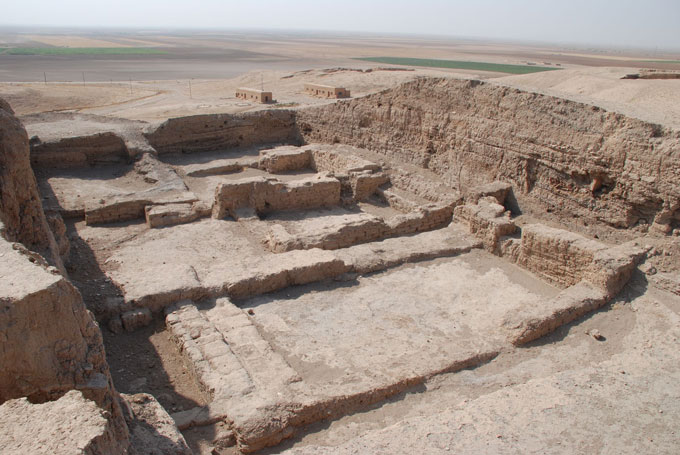
Main: The Tel Motza Iron Age temple excavation site in Jerusalem.    Source: Skyview / Israel Antiquities Authority.     Inset: Ancient figurines of people found at Tel Motza.        Source: Clara Amit / Israel Antiquities Authority

Iron Age Temple Uncovered in Jerusalem Challenges Biblical Claim

The famous Temple of Solomon might not have been the first or only temple in the Holy Land.

Dating to around 900 BC, an Iron Age temple located near Jerusalem negates the long-held idea the ancient Kingdom of Judah (southern Israel) only had one temple, the First Temple, better known as Solomon's Temple, which was operational between 10th century BC until it was destroyed in 586 BC.

The Iron Age site of Tel Motza, about 4 miles (6.4 kilometers) outside Jerusalem, has been known of since the early 1990s and archaeologists found the remains of a settlement dated to the Neolithic period (about 6000 BC). In 2012 a settlement from the First Temple period was discovered containing a cultic structure and 36 wheat granaries, indicating that Motza was part of an ancient economic center, and it is the presence of this one ancient religious complex that challenges the history of Judah presented in the Bible.

The Tel Motza Iron Age temple excavation site in Jerusalem. (Natritmeyer / CC BY-SA 4.0)

The Tel Motza Iron Age temple excavation site in Jerusalem.

(Natritmeyer / CC BY-SA 4.0 )

Judah Was Not As Well Established As The Bible States

A new study of the temple by co-researcher Shua Kisilevitz, a doctoral student of archaeology at Tel Aviv University in Israel and an archaeologist with the Israel Antiquities Authority (IAA), and review co-author Oded Lipschits, the director of the Sonia and Marco Nadler Institute of Archaeology at Tel Aviv University, was published in the January/February issue of the  Biblical Archaeology Review  magazine. In the article the researchers say the temple had been built about 900 BC and that they think it operated until the early 6th century BC.

And where this discovery is controversial is that the existence of this temple means that people living close to Jerusalem had their own place of worship, a cultic temple, which in itself suggests the rule of the Jerusalem high priests was “not so strong”, and that the kingdom was “not so well established” as the Bible leads us to believe, Kisilevitz and Lipschits, told Live Science .

Oldest Known Horse Depictions In Judah

A report in the Daily Mail detailing the study says the ancient temple could have held about 150 congregants who worshiped the god Yahweh, but they also used idols to communicate with the divine in the same period as the First Temple. This contradicts the Jewish Bible that details the religious reforms of  King Hezekiah  and King Josiah, who consolidated worship at Solomon's Temple in Jerusalem, and allegedly stopped ‘all’ cultic practices out of its walls.

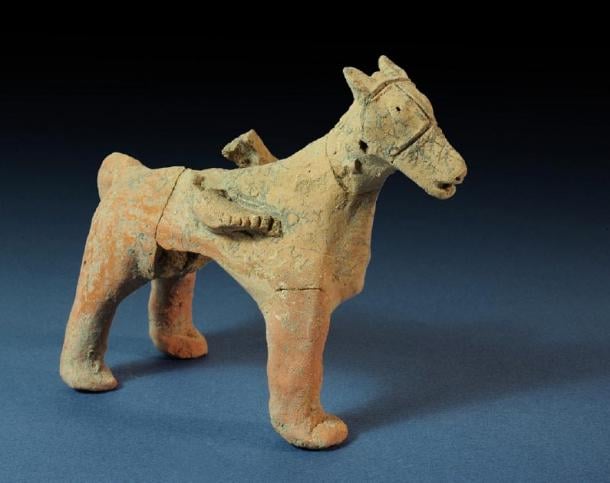
Kisilevitz told Live Science that the temple was a rectangular building with an open courtyard at the front that would have been a focal point for cultic worship, and inside they found a stone built sacrificial altar near pits for dead animal bodies. Two human-like and two horse-like clay figurines were discovered smashed and buried in the courtyard, which was thought to have been associated with a rainfall, fertility and harvest ritual of some kind. The researchers added that the horse-like figurines may be the “oldest known depictions of  horses from the Iron Age of Judah.”

Figurine of a horse found in Tel Motza Iron Age temple in excavation site. (Clara Amit / Israel Antiquities Authority)

Figurine of a horse found in Tel Motza Iron Age temple in excavation site.

(Clara Amit / Israel Antiquities Authority )

Smashed Idols, Broken History

The teams of archaeologists at Tel Motza unearthed dozens of grain storage silos (granaries) and associated administrative and religious buildings. This informs us that Tel Motza sold grain to the nearby Jerusalem. Over time, the settlement is believed to have become an agricultural and economic “powerhouse,” the researchers wrote in the magazine piece. They also speculate that perhaps the temple was permitted to exist by the high priests at Solomon’s Temple, because it was part of the granary and didn’t threaten centralized control of the kingdom.

During the time this temple was functional, new political groups and alliances emerged in the Levant, and it is believed that in the face of these changes people maintained traditional religious practices. The researchers said this was evident in the temple’s artifacts and architecture, which they say are reminiscent of religious traditions from the ancient Near East that had been practiced since the third millennium BC.

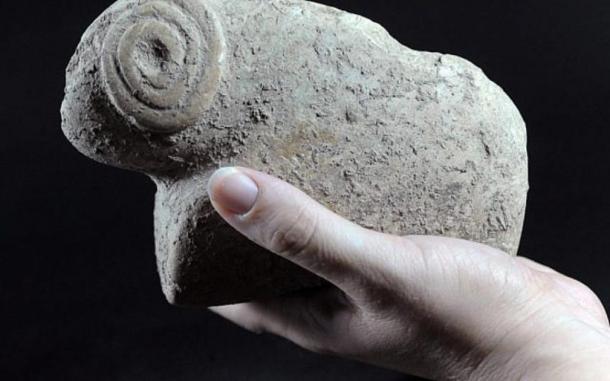
Figurine of a ram found in Tel Motza Iron Age temple excavation site. (Yael Yolovitch / Israel Antiquities Authority)

Figurine of a ram found in Tel Motza Iron Age temple excavation site.

(Yael Yolovitch / Israel Antiquities Authority )

The discovery and analysis of this ancient Iron Age temple not only enlightens historians on the state formation of Judah during this period. It also determines that the state was nowhere near as centralized as it would later become and that in its formative days it depended not solely on the administrative elite at Solomon’s Temple, but on trading relationships with nearby settlements like Tel Motza, and maybe others yet to be discovered.

By Ashley Cowie

{ https://www.ancient-origins.net/ }

Hoe vind je dit bericht?
Geschreven door peter om 01:14 Stuur door

Hadden de neanderthalers een begrafenisritueel?

Hadden de neanderthalers een begrafenisritueel?

79081.jpg?pomiv=EEQII6YhyKzEbNvQ3MO_&hashcode=b7b040c142e20348fdaa41272d6410f0

De neanderthalers waren een stuk verfijnder en beschaafder dan eeuwenlang werd aangenomen, blijkt eens te meer uit een nieuw onderzoek.

De wetenschap verwijst het cliché van de neanderthaler als een menselijke ondersoort in alle betekenissen van dat woord almaar nadrukkelijker naar de prullenmand. Nieuw onderzoek stelt dat beeld van een primitief wezen, dat alleen maar met een steen in een hand gruizige keelklanken zou brommen, nog wat meer bij aan de hand van een gelijkenis met een wel erg menselijk aanvoelend ritueel.

Bloemen en kransen

Voor het eerst in twintig jaar werd in het eldorado van de neanderthalexperts, de Shanidargrot in de Koerdische Autonome Regio in Irak, weer een geleed skelet opgegraven: een geraamte waarvan botten, beenderen en andere lichaamsdelen nog grotendeels met elkaar verbonden waren. En dat opent nieuwe onderzoeksperspectieven rond een hypothese die specialist Ralph Solecki in de jaren 50 van de vorige eeuw formuleerde. Uit de aanwezigheid van pollen in begraafplaatsen leidde deze Amerikaanse archeoloog toen af dat neanderthalers, net zoals de mens, met bloemen afscheid namen van een overledene.

neanderthaler%20Pic_%232.JPG?auto=format&fit=max&h=1080&ixlib=php-1.1.0&q=65&w=1920&s=948e309c2d05a74fb0aeef6bdc7b151b

De botten van de linkerhand van een neanderthaler, gevonden in de Shanidargrot. Credits: Graeme Barker

Dat leidde tot een decennialange controverse, want niet alle wetenschappers waren ervan overtuigd dat de bloemen wezen op doodsrituelen, laat staan begrafenissen tout court. En bij uitbreiding twijfelden zij sterk aan de veronderstelling dat neanderthalers ook maar enige culturele verfijning van die orde hadden. De nieuwe vondst door een team van de universiteiten van Cambridge, Birkbeck en Liverpool (John Moores) maakt het nu mogelijk dit stukje neanderthalerbeschaving verder te verkennen met de nieuwste technieken, zoals CT-scans en DNA-onderzoek. 

Culturele complexiteit

‘Inscripties in grotten, decoratieve schelpen en klauwen van roofvogels… De voorbije jaren zijn er steeds meer aanwijzingen en bewijzen gekomen dat neanderthalers een stuk gesofisticeerder waren dan werd gedacht,’ stelt onderzoekleidster Emma Pomeroy. ‘Wat hun dodenrituelen betreft waren we tot nog toe aangewezen op decenniaoude resten en onderzoeken met intussen verouderde technieken. Maar als nu blijkt dat zij de Shanidargrot inderdaad gebruikten als een kerkhof, met bijhorende rituelen bovendien, dan wijst dat op een culturele complexiteit van een nog net iets hogere orde en een grotere gelijkenis met de mens dan verondersteld.’

{ https://www.eoswetenschap.eu/ }

Hoe vind je dit bericht?
Geschreven door peter om 00:42 Stuur door

Findings From NASA's Juno Update Jupiter Water Mystery

Findings From NASA's Juno Update Jupiter Water Mystery

QV6-KdIb?format=jpg&name=medium

The JunoCam imager aboard NASA's Juno spacecraft captured this image of Jupiter's southern equatorial region on Sept. 1, 2017. The image is oriented so Jupiter's poles (not visible) run left-to-right of frame. Image credit: NASA/JPL-Caltech/SwRI/MSSS/Kevin M. Gill
› Full image and caption

The mission publishes its first stream of data on the amount of water in Jupiter's atmosphere - the first findings on the gas giant's water since the agency's 1995 Galileo mission.


NASA's Juno mission has provided its first science results on the amount of water in Jupiter's atmosphere. Published recently in the journal Nature Astronomy, the Juno results estimate that at the equator, water makes up about 0.25% of the molecules in Jupiter's atmosphere - almost three times that of the Sun. These are also the first findings on the gas giant's abundance of water since the agency's 1995 Galileo mission suggested Jupiter might be extremely dry compared to the Sun (the comparison is based not on liquid water but on the presence of its components, oxygen and hydrogen, present in the Sun).

An accurate estimate of the total amount of water in Jupiter's atmosphere has been on the wish lists of planetary scientists for decades: The figure in the gas giant represents a critical missing piece to the puzzle of our solar system's formation. Jupiter was likely the first planet to form, and it contains most of the gas and dust that wasn't incorporated into the Sun.

The leading theories about its formation rest on the amount of water the planet soaked up.Water abundance also has important implications for the gas giant's meteorology (how wind currents flow on Jupiter) and internal structure. While lightning - a phenomenon typically fueled by moisture - detected on Jupiter by Voyager and other spacecraft implied the presence of water, an accurate estimate of the amount of water deep within Jupiter's atmosphere remained elusive.

Jupiter

Thick white clouds are present in this JunoCam image of Jupiter's equatorial zone. At microwave frequencies, these clouds are transparent, allowing Juno's Microwave Radiometer to measure water deep into Jupiter's atmosphere.

The image was acquired during Juno's flyby on Dec. 16, 2017.
Credit: NASA/JPL-Caltech/SwRI/MSSS/Kevin M. Gill
Full image and caption

Before the Galileo probe stopped transmitting 57 minutes into its Jovian descent in December 1995, it radioed out spectrometer measurements of the amount of water in the gas giant's atmosphere down to a depth of about 75 miles (120 kilometers), where the atmospheric pressure reached about 320 pounds per square inch (22 bar). The scientists working on the data were dismayed to find ten times less water than expected.

Even more surprising: The amount of water the Galileo probe measured appeared to be still increasing at the greatest depth measured, far below where theories suggest the atmosphere should be well mixed. In a well-mixed atmosphere, the water content is constant across the region and more likely to represent a global average; in other words, it's more likely to be representative of water planetwide. When combined with an infrared map obtained at the same time by a ground-based telescope, the results suggested the probe mission may have just been unlucky, sampling an unusually dry and warm meteorological spot on Jupiter.

"Just when we think we have things figured out, Jupiter reminds us how much we still have to learn," said Scott Bolton, Juno principal investigator at the Southwest Research Institute in San Antonio. "Juno's surprise discovery that the atmosphere was not well mixed even well below the cloud tops is a puzzle that we are still trying to figure out. No one would have guessed that water might be so variable across the planet."

Measuring Water From Above

A rotating, solar-powered spacecraft, Juno launched in 2011. Because of the Galileo probe experience, the mission seeks to obtain water abundance readings across large regions of the immense planet. A new kind of instrument for deep space planetary exploration, Juno's Microwave Radiometer (MWR) observes Jupiter from above using six antennas that measure atmospheric temperature at multiple depths simultaneously. The Microwave Radiometer takes advantage of the fact that water absorbs certain wavelengths of microwave radiation, the same trick used by microwave ovens to quickly heat food. The measured temperatures are used to constrain the amount of water and ammonia in the deep atmosphere, as both molecules absorb microwave radiation.

The Juno science team used data collected during Juno's first eight science flybys of Jupiter to generate the findings. They initially concentrated on the equatorial region because the atmosphere there appears more well-mixed, even at depth, than in other regions. From its orbital perch, the radiometer was able to collect data from a far greater depth into Jupiter's atmosphere than the Galileo probe - 93 miles (150 kilometers), where the pressure reaches about 480 psi (33 bar).

"We found the water in the equator to be greater than what the Galileo probe measured," said Cheng Li, a Juno scientist at the University of California, Berkeley. "Because the equatorial region is very unique at Jupiter, we need to compare these results with how much water is in other regions."

Northward Bound

Juno's 53-day orbit is slowly moving northward, as intended, bringing more of Jupiter's northern hemisphere into sharper focus with each flyby. The science team is eager to see how atmospheric water content varies by latitude and region, as well as what the cyclone-rich poles can tell them about the gas giant's global water abundance.

Juno's 24th science flyby of Jupiter occurred on Feb 17. The next science flyby takes place on April 10, 2020.

"Every science flyby is an event of discovery," said Bolton. "With Jupiter there is always something new. Juno has taught us an important lesson: We need to get up close and personal to a planet to test our theories."

NASA's Jet Propulsion Laboratory in Pasadena, California, manages the Juno mission for the principal investigator, Scott Bolton, of the Southwest Research Institute in San Antonio. Juno is part of NASA's New Frontiers Program, which is managed at NASA's Marshall Space Flight Center in Huntsville, Alabama, for NASA's Science Mission Directorate. The Italian Space Agency contributed the Jovian Infrared Auroral Mapper and the Ka-Band translator system. Lockheed Martin Space in Denver built and operates the spacecraft.

More information about Juno is available at:

More information on Jupiter is at:

The public can follow the mission on Facebook and Twitter at:

News Media Contact

2020-033

{ http://www.nasa.gov/ }

Hoe vind je dit bericht?
Geschreven door peter om 00:32 Stuur door

Astronomers to sweep entire sky for signs of extraterrestrial life

Astronomers to sweep entire sky for signs of extraterrestrial life

Project is collaboration between privately-funded institute and New Mexico observatory

 The Very Large Array observatory in New Mexico will gather data to be analysed by the Seti Institute. Photograph: Robyn Beck/AFP/Getty

Astronomers will sweep the entire sky for signs of extraterrestrial life for the first time, using 28 giant radio telescopes in an unprecedented hunt for alien civilisations.

The project is a collaboration between the privately-funded Seti Institute and the Very Large Array observatory in New Mexico, one of the world’s most powerful radio observatories. Gaining real-time access to all the data gathered by VLA is considered a major coup for scientists hunting extraterrestrial lifeforms and an indication that the field has “gone mainstream”.

Normal astronomy operations will continue at the VLA, which was featured in the 1997 film Contact, but under the new arrangement all data will be duplicated and fed through a dedicated supercomputer that will search for beeps, squawks or other signatures of distant technology.

“The VLA is being used for an all-sky survey and we kind of go along for the ride,” said Andrew Siemion, director of the Berkeley Seti centre. “It allows us to in parallel conduct a Seti survey.

“Determining whether we are alone in the universe as technologically capable life is among the most compelling questions in science, and [our] telescopes can play a major role in answering it,” said Tony Beasley, director of The National Radio Astronomy Observatory, which runs the VLA.

The first phase of the project, installing new cables, has been funded by John Giannandrea, a senior Apple executive and trustee of the Seti Institute, and Carol Giannandrea.

The VLA project is one of a wave of upcoming Seti initiatives sketched out at the American Association for the Advancement of Science (AAAS) conference in Seattle on Friday.

Jill Tarter, an emeritus researcher at the Seti Institute, gave updates on Panoseti, a proposed observatory in the prototype stage of development designed to continuously watch a large portion of the sky. If funding is secured, Panoseti will comprise two geodesic domes covered in half-metre lenses, giving it the appearance of a giant pair of insect eyes. The ability to simultaneously watch a vast expanse of sky would make it uniquely suited to spotting transient signals, such as the flash of a distant powerful laser. “To catch that kind of thing you really do want to be looking when the signal comes your way,” said Tarter ahead of her talk.

The veteran Seti scientist said the field had been boosted in the past decade by the discovery that about a fifth of stars host planets in the “habitable zone”.

“Now that there might be more habitable real estate out there than we ever imagined early on … it seems to make this next question about intelligent life more realistic,” she said. “It’s not as far on the fringes as it once was – it’s almost mainstream.”

Others are hunting for less intelligent varieties of alien life. Speaking at the same session at AAAS, Victoria Meadows, who leads Nasa’s Virtual Planetary Laboratory at the University of Washington, described observations planned with the James Webb Space Telescope, scheduled to launch next year.

Three Earth-sized planets orbiting a cool, dim star called Trappist-1 in the constellation of Aquarius will be high up on the hit list. Computer models suggest the Trappist-1 system is among the most promising for finding planets with atmospheres and temperatures that would enable liquid water to exist on the surface.

“The James Webb Telescope will be able to tell us whether they have atmospheres like the Earth or Venus,” said Meadows. “It gives us our first real chance to search for gases given off by life on another planet. We’re basically going to get to study Earth’s cousins.”

Siemion also announced the second tranche of results from the $100m (£76m) Breakthrough Listen Initiative: no alien transmissions have been detected so far.

The latest survey, the most comprehensive to date of radio emissions, included the first search of the “Earth transit zone”. The transit zone search targeted 20 stars in positions where the hypothetical inhabitants of these solar systems would be able to observe the Earth’s shadow flickering across the sun. This method of detection has allowed astronomers to identify thousands of exoplanets and determine whether their conditions are potentially habitable.

“This turns that around and says, ‘What if some other civilisation were watching our sun?’” said Siemion.

If there is, it is either watching quietly or watching from some of the other 200bn stars in the Milky Way.

As the latest technology advances bring scientists a step closer to answering the question of whether anyone or anything is out there, there are still issues to be ironed out over best practice in the event that an alien civilisation is detected.

Stephen Hawking warned against attempting any form of contact, suggesting the outcome for humans would not necessarily be good. Siemion disagrees. “Personally I think we absolutely should and I think without a doubt, we would,” he said. “Part of being human is wanting to reach out into the unknown and wanting to reach out and make connections.”

He is less decisive about what Earth’s message should be, however. “I don’t know … I spend absolutely zero time thinking about that,” he said. “I guess I would just say, ‘Hello’.”

{ https://www.theguardian.com/international }

Hoe vind je dit bericht?
Geschreven door peter om 00:18 Stuur door

Saturn's weird, Earth-like moon just failed a key test for alien life

Saturn's weird, Earth-like moon just failed a key test for alien life

Hoe vind je dit bericht?
Geschreven door peter om 23:57 Stuur door

Avoiding space debris might require new legal framework, US lawmakers say

Avoiding space debris might require new legal framework, US lawmakers say

Hoe vind je dit bericht?
Geschreven door peter om 23:43 Stuur door

Are They Alive... Antarctica Melting Ice Is Revealing Something No One Thought Possible!

Are They Alive... Antarctica Melting Ice Is Revealing Something No One Thought Possible!

hqdefault(223).jpg

As the ice melts, through volcanic activity and human intervention, the world will be watching as this mysterious land reveals the secrets it has held for so long.
 
Any artifacts recovered that would give us free or clean energy will be covered up and hidden away under the Vatican for sure until they can dumb it down make it dirty and charge us monthly for it! AC
 
The military hires private companies to do the research so they don’t have to disclose what’s going on. Private companies don’t have to answer to congress. Kens32052
 
It’s called nuclear destruction and guess what, never trust the miss leading information given here, they lie and withhold info because too much knowledge to the public will disrupt these governments agenda to control all our minds. Drygrass
 

{ https://beforeitsnews.com/ }

Hoe vind je dit bericht?
Geschreven door peter om 23:11 Stuur door

SPACEX WANTS TO SEND REGULAR CITIZENS INTO SPACE — HERE'S HOW

SPACEX WANTS TO SEND REGULAR CITIZENS INTO SPACE — HERE'S HOW

A human-carrying capsule will help a lucky few live out their space travel dreams.

SpaceX has teamed up with a private space tourism company to send up to four private citizens into space.

SpaceX plans to launch citizens into space

Space Adventures, a Washington, D.C.-based firm, announced Tuesday that it will work with Elon Musk's firm to host a voyage using the Crew Dragon capsule. The mission, the Crew Dragon's first free-flying mission, could be the first such space tourism trip powered entirely by American spaceflight technology. A launch could take place as early as 2021.

“This historic mission will forge a path to making spaceflight possible for all people who dream of it, and we are pleased to work with the Space Adventures’ team on the mission,” Gwynne Shotwell, president and chief operating officer of SpaceX, said in a statement.

The mission will use SpaceX's Falcon 9 reusable rocket to send up a Crew Dragon capsule. The rocket will launch from the Cape Canaveral Air Force Station in Florida, a common launch site for SpaceX's missions. Timing is unclear, but the company suggests a window stretching from late 2021 to mid-2022. Following "a few weeks" of training in the United States, the group will lift off and fly for up to five days.

It could mark a momentous occasion in commercial spaceflight history. Over the course of 2001 to 2009, Space Adventures flew over 36 million miles in eight separate missions. Its clients have non-professional astronauts like Dennis Tito, Richard Garriott, Mark Shuttleworth and others. But all successful orbital missions used Roscosmos Soyuz rockets, and this arrangement was put on hold after the rockets became the only means of reaching the International Space Station.

SpaceX, a private company founded by Musk in 2002, routinely sends satellites and cargo into space but has never flown a human. The Crew Dragon, developed as part of NASA's Commercial Crew program, is designed to send astronauts to and from the International Space Station. With this new announcement, the Crew Dragon could also expand human spaceflight and bring tourists along for the ride.

The Space Adventures website failed to load in the wake of the announcement, but the team also shared a video with more details via its YouTube account:

"Honoring our combined histories, this Dragon mission will be a special experience and a once in a lifetime opportunity – capable of reaching twice the altitude of any prior civilian astronaut mission or space station visitor,” Eric Anderson, chairman of Space Adventures, said in a statement.

The company has big plans for the trip. Its official announcement states that the trip will offer the chance to "break the world altitude record for private citizen spaceflight," offering a chance to see Earth like no other human since NASA's Gemini program in the 1960s.

It's not the first time SpaceX has announced plans to send private citizens into space. Japanese billionaire Yusaku Maezawa plans to use the under-development Starship to fly around the moon with a team of six to eight artists. The "Dear Moon" voyage is expected to take around five days, and passengers will be encouraged to create art capturing their experience. The mission is scheduled to take place in 2023.

But like the Starship, the Crew Dragon is still under development. The first manned flight could take place as early as the first half of 2020, with SpaceX reportedly looking at May 7 as a possible launch day. But as the project has already experienced delays during development, a further delay is not entirely out of the question.

moon_loop.jpg

{ https://www.inverse.com/ }

Hoe vind je dit bericht?
Geschreven door peter om 18:43 Stuur door

SpaceX biedt vier “tickets naar de ruimte” aan - HLN.be

SpaceX biedt vier “tickets naar de ruimte” aan - HLN.be

Bron: Belga

SpaceX-CEO Elon Musk tijdens een persconferentie over de SpaceX Crew Dragon demo-missie in maart 2019.

 AFP  SpaceX-CEO Elon Musk tijdens een persconferentie over de SpaceX Crew Dragon demo-missie in maart 2019.
 In samenwerking met een Amerikaanse firma voor ruimtetoerisme zoekt de Amerikaanse raketbouwer SpaceX vier privépersonen voor een ruimtereis. De prijs van het ticket is nog niet geweten.

Bouwer van de Falcon-draagraket SpaceX heeft een overeenkomst gesloten met Space Adventures, met zetel nabij Washington. Die firma werkte samen met het Russische ruimtevaartbureau Roscosmos om acht ruimtetoeristen met een Russische Sojoez naar het Internationaal Ruimtestation ISS te brengen en terug te halen.

Lees ook

Geen verblijf in ruimte

SpaceX, het bedrijf van Tesla-kopstuk Elon Musk, biedt nu de kans om mee te vliegen met zijn door een Falcon-9 gelanceerde Crew Dragon, of de bemande versie van zijn onbemande cargo die voor rekening van het ruimtevaartbureau NASA instaat voor vervoer naar en van het ISS. Die Crew Dragon moet binnen enkele maanden - echt bemand - voor het eerst vliegen, maar wanneer precies is nog niet bekend. 

De raketbouwer beklemtoont ruimtetoeristen geen verblijf in het ISS aan te bieden. SpaceX geeft geen details over de datum, de duur en het programma van de trip. Voorzitter Eric Andersen van Space Adventures zei dat de vlucht twee keer zo hoog kan gaan als voorgaande missies van een amateur-astronaut of bezoeker van het ruimtestation. Dit wentelt op ongeveer 400 km hoogte rond onze planeet.

Concurrentie

Ook werkzaam in de sector van het ruimtetoerisme zijn Virgin Galactic en Blue Origin. Zij werken aan trips tot 80 à 100 km hoogte of de grens van de ruimte, voor enkele minuten, voor 250.000 dollar of meer. SpaceX zal ongetwijfeld duurder zijn. 

Met een Falcon-9 heeft SpaceX maandag nog eens 60 satellieten tegelijk voor zijn Starlink-constellatie voor wereldwijd breedbandinternet gelanceerd. Het netwerk omvat zodoende al 300 kunstmanen.

Voor de eerste keer sinds 2016 kon de teruggekeerde eerste rakettrap echter niet landen op een droneschip in de Atlantische Oceaan. Die trap werd ook al gebruikt bij drie eerdere lanceringen. Het lijkt onwaarschijnlijk dat het in zee geplofte ding nog eens gebruikt zal kunnen worden.

{ https://www.hln.be/ }

Hoe vind je dit bericht?
Geschreven door peter om 18:21 Stuur door

Concerns over secret search for giants' bones near Huntly

Concerns over secret search for giants' bones near Huntly

A representative of local iwi has described the group's actions as 'disturbing'. Photo / Supplied

A representative of local iwi has described the group's actions as 'disturbing'. Photo / Supplied RNZ

By Susan Strongman, RNZ

Archaeologists say a group of people tunnelling into the side of a country road in search of a race of pre-Polynesian giants' skeletons could be damaging the archaeological record.

A representative of local iwi, Ngāti Taahinga, who have tīpuna and taonga buried in the limestone-rich north Waikato area's caves, has described the group's actions as "disturbing".

The group say this bone belongs to a giant pre-Polynesian human and could be more than 2500 years old. Experts say it's likely from a moa. Photo / Supplied

The group say this bone belongs to a giant pre-Polynesian human and could be more than 2500 years old. Experts say it's likely from a moa. Photo / Supplied

RNZ understands one member of the group is a caver, but none are trained archaeologists.

Since 2016, the group has recorded progress of the dig by sharing photos, videos and written updates on a blog that has been viewed more than 88,000 times.

Otago University associate professor of bioarchaeology Dr Siân Halcrow worries about the number of people who might come across the blog and believe the information being put out on it.

"It does really highlight what some New Zealanders think, in terms of pre-Māori conspiracy theories, with really racist undertones. It's not grounded in fact, so people should be aware."

Though the group has tried to keep the location of the cave secret, RNZ has been able to confirm its whereabouts and contact the landowner, who was unaware of the dig and said the group did not have his permission to be tunnelling into his property.

Under cover of darkness

The secretive group has been sporadically digging out the tube-like cave for close to four years, often under the cover of darkness. They are yet to find any real evidence of the supposed giants they call the "tall ones", although they say they have already found several bones in the cave.

The group has determined one is the leg bone of an 8 foot tall human and could be up to 2500 years old. "This here, my friends, is a human bone of a pre-Polynesian inhabitant," a male voice says in a video of the hollow bone posted online by the group. "You can tell by the triangular shape. It's most likely a tibia, which would make this… individual 8ft 4 inches tall… Regardless of its length, this is an older bone than any human being in New Zealand. What do our detractors say now, we wonder?"

Experts say the bone probably belongs to a moa.

The lack of evidence hasn't hampered the enthusiasm of the group's apparent leader, who does not reveal his name online but goes by the initials 'IJ'.

"Providing proof of 8' humans to the world will be bigger than finding Tutankhamen," he tells RNZ, via email, adding that the discovery will be "the most talked about worldwide story of the millennium."

Tuakau man Maurice Tyson says the cave may contain the skeletons of Spanish flu victims. Photo / RNZ, Claire Eastham-Farrelly

Tuakau man Maurice Tyson says the cave may contain the skeletons of Spanish flu victims. Photo / RNZ, Claire Eastham-Farrelly

A spokesman for Heritage New Zealand - the government entity tasked with protecting New Zealand's historic and cultural heritage - is less excited. Although it's illegal to modify or destroy any part of an archaeological site without authority from Heritage New Zealand, the spokesman says he has "no reason to believe that the purported cave is an archaeological site". In other words, the experts don't think the cave contains any evidence of pre-1900 human activity - giant human bones or otherwise.

The farmer who owns the land is fuming. Despite writing on the blog that "the land owner knows and approves of what we do", the property owner told RNZ he was unaware of the dig, and the group did not have his permission.

The 'Tall Ones'

There are many myths, rumours and oral histories pertaining to what lies beneath the crumpled farmland that spreads along the west coast, between Port Waikato and Raglan. Some are more far fetched than others.

Al Mannering, who grew up on a farm in the Waikaretu Valley where the tunnel is being dug, recalls stories of a pou whenua (carved wooden post) being found near a sharp bend when the road was cut, which he says may have signified a nearby urupā. He also recalls seeing a human femur about 2cm longer than his own. "And I am 6ft."

Another story comes from 88-year-old Maurice Tyson, who has lived in nearby Tuakau since he was a teen. He tells of a 'crypt' filled with 14 or more 8ft tall skeletons being uncovered by road workers, then quickly reburied by archaeologists, as part of a wider conspiracy to keep New Zealand's true history a secret.

Tyson doesn't claim to have seen the skeletons, or their reburial - but says the story was told to him by the road workers who found them. He has multiple theories about who the skeletons belong to - from victims of the Spanish flu to WWII Japanese soldiers.

On self-proclaimed "astro-archaeologist" Martin Doutre's CelticNZ website, an article describes a tribe of tall "Aztec type Maoris" [sic] referred to as the "Tall Ones" who lived in north Waikato caves and were eaten to extinction. The article mentions a "secret burial cave" that is "packed with the dead of the tribe."

It is these stories that seem to have inspired IJ and his crew, (who use the initials BM, YM, RL Davidson and MD on their blog,) to tunnel into the limestone cave in a bank on the side of Waikaretu Valley Rd.

"In the following pages and over the next three years or so you will find digital photos and information, along with video, that will prove that the 'tall ones' actually existed and that they were here long before Maori ever arrived and took the land from them," the blog reads.

"Maori, as we know them, did not possess an empty land as taught in the school books these days or as printed these days in the media - Polynesian's, in fact, came to a land already occupied and then they conquered it [sic] … What is inside our cave, when we finally reach the cavern part, will eventually prove this".

Disturbing approach

Though some believe the group is motivated by racism, Eru Whare of Ngāti Taahinga, who is chairman of Pukerewa Marae which is near the cave, is giving IJ and his crew the benefit of the doubt. "I wouldn't put it down to racism. I think it would be a lack of education and understanding of cultural values," he says.

But it's still hard for Whare to understand how or why something like this would be done without talking to iwi first - especially if it's human bones the diggers are searching for. "We have a number of caves back home [in the Waikaretu Valley] and there's still some of our loved ones buried in there. In our history and our culture we always talk about our bones. Where we come from, that's where our bones are. So in an urupā, or this case a cave, when you remove the bones from a place where we laid our dead or our loved ones, it removes that whole spiritual, tapu essence.

The group tunnel into the limestone caves. Photo / Supplied

The group tunnel into the limestone caves. Photo / Supplied

"It's very hard for our people to try and decipher why people would do such things. And whether they are looking for, you know, big giants or moas. I mean I can understand... But for guys just going in there without any consultation. Well, that's something else. That's a pretty disturbing approach."

Grounded in racist ideologies

Despite the group's raison d'etre being the search "for those here long before the Polynesian migrations occurred," there is no evidence of human habitation of Aotearoa New Zealand prior to the arrival of Polynesians. "Every professional archaeologist will tell you the same," Waikato-based archaeologist Sian Keith says.

The pervasive myth that an earlier population of Moriori was displaced by Māori has been repeatedly rejected by academics. So have suggestions that, prior to the arrival of Polynesians, the country was settled by Egyptians, Celts, Greeks, Chinese, Melanesians, or Phoenicians by people like Doutre and Ross Baker of the One New Zealand Foundation (which opposed the return of land to Māori under the Treaty of Waitangi), Bryan Mitchell who believes New Zealand was first settled by a Scottish cattle farmer in the 12th century, Ross Wiseman, Noel Hilliam, Gary Cook and former National Front secretary Kerry Bolton.

More recent stories by writer Barry Brailsford of a mystical, peace-loving, non-Māori race which colonised New Zealand 2000 years before Polynesians arrived, were described as "virulent myth" by archaeologist Atholl Anderson. As with stories of Moriori pushed to justify British colonisation, Brailsford describes the purported peace-loving race as having been killed by Māori.

"These conspiracy theories are really grounded in racist ideologies. They need to be pulled apart for what they are," bioarchaeologist Siân Halcrow says. "There's no cover up."

University of Waikato teaching fellow Dr M Dentith, who studies conspiracy theory, fake news, and secrecy, agrees. "Quite a lot of these theories are used to make some variation of the claim 'Well, if white people were here first, then the Treaty is null and void', or 'We did to Māori only what they did to our distant ancestors'," Dentith says. "My interest is largely in the kinds of 'evidence' people like this put forward in support of their conspiracy theory that the government and Māori are hiding the existence of a pre-Māori, white civilisation here." Like Eru Whare, Dentith links the prevalence of these ideas back to a lack of education about the history and prehistory of Aotearoa.

IJ and his crew appear to loosely subscribe to Brailsford's theory. On the blog, IJ writes of his belief that the "true ancient history" of this country has been "covered up, secreted away, and legislated against" by academics, iwi and archaeologists.

Canterbury Museum curator Paul Scofield calls alternative theories about pre-Polynesian inhabitants of New Zealand "crackpot" and says the north Waikato cave dig reminds him of a low-cost version of a Dutch-American textiles magnate's 20 year search for gold buried by Spanish pirates on Juan Fernandez Island, off the coast of Chile. But he says nothing can be done about the removal of moa bones from the cave if it is on private land, as there is no legislation protecting the extinct birds' remains.

Talk of cover-ups and academic conspiracies frustrates archaeologist Sian Keith. "One of our jobs as archaeologists is to assess, retrieve and analyse the data from historic sites," she says. "We work with tangible evidence, scientific dating, environmental analysis, and engaging with iwi and hapu who have a rich oral tradition. There are many specialists working in the archaeological field who are passionate and thorough.

"The evidence for pre-Māori inhabitants, of any origin, simply isn't there. If it was, the professional community would have identified it and it would be common knowledge. Archaeologists are not secretive, the work we do is carefully managed under the Heritage New Zealand Pouhere Taonga Act, and investigations and excavations have to be formally reported on."

It doesn't matter to the diggers. The most recent update on their progress was posted online by IJ and MD last week. They expressed surprise at the lack of social media reaction to the bone they found. The tunnel they have excavated is now about 14 metres into the hillside. There is still no cavern in sight.

- RNZ

{ https://www.nzherald.co.nz/ }

Hoe vind je dit bericht?
Geschreven door peter om 17:55 Stuur door

Giant skeleton searchers call off dig

Giant skeleton searchers call off dig

Susan Strongman, Reporter, In Depth

A secretive group who spent four years tunnelling into the side of a country road in search of a mythical race of pre-Polynesian giants' skeletons have called off their dig.

But one of the diggers, who has revealed his identity via Facebook, has warned a "reiki protection is on the cave dig".

Men in the 'secret' cave - Waikaretu Valley

The diggers have excavated a tunnel bout 14 metres into the hillside.

Photo: Supplied

Last week, RNZ revealed iwi, academics and the landowner were concerned by the anonymous group's dig in the Waikaretu Valley, west of Huntly.

READ MORE: Concerns over secret search for giants' bones near Huntly

The group say this bone belongs to a giant pre-Polynesian human and could be more than 2500 years old. Experts say it's likely from a moa. Photo / Supplied

The group say this bone belongs to a giant pre-Polynesian human and could be more than 2500 years old. Experts say it's likely from a moa.

Photo / Supplied

The group, who updated their progress on a blog, were searching for evidence of pre-Polynesian inhabitants of New Zealand.

They believed they had found a bone in the tunnel that belonged to a giant human up to 2500 years old.

But after viewing photos and a video of the bone, multiple experts told RNZ it likely belonged to a moa.

The dig was done without the consent of the landowner, or consultation with iwi who have tīpuna and taonga buried in the north west Waikato area's limestone caves.

Archaeologist Dr Siân Halcrow expressed concern that the group's fossicking behaviour could damage the archaeological record.

In a blog post on Saturday, the group announced they would abandon the dig, writing that the world will "now never know for sure if this cave was filled by hand specifically to hide some fourteen 8'+ pre-Polynesian skeletons."

In the post, the group said they would focus on three other locations in their search for proof that a race of eight foot humans beat Polynesians to become the first humans in Aotearoa, which they told RNZ would be "the most talked about worldwide story of the millennium."

Today, Rodney Davidson, a reiki practitioner from Northland, confirmed he was involved in the dig.

He posted a warning on Facebook: "Be aware that a Reiki protection is on the cave dig and has been since the start too. It has made it,s [sic] presence felt on at least two occasions to great benefit in fact. Abuse it in anyway and there will be a ' result ' ! I have no control over this so all your choice!"

There is no evidence of human habitation of Aotearoa New Zealand prior to the arrival of Polynesians.

The pervasive myth that an earlier population of Moriori was displaced by Māori has been repeatedly rejected by academics.

The 1916 and 1946 editions of the School Journal taught generations of school children many myths about Moriori. They include that they were wiped-out by Māori during an 1835 invasion, and that they were conquered due to their inferiority.

A true account of the history of the iwi is about to be entrenched in law.

Other alternative histories suggest that prior to the arrival of Polynesians, the country was settled by Egyptians, Celts, Greeks, Chinese, Melanesians, or Phoenicians.

Evidence from the archaeological record, linguistics and DNA analysis shows Polynesians first arrived in New Zealand in the 14th century.

Halcrow said "conspiracy theories" about the settlement of New Zealand by non-Polynesians were "grounded in racist ideologies."

She raised concerns about the number of people following the group's blog, saying, "It does really highlight what some New Zealanders think, in terms of pre-Māori conspiracy theories, with really racist undertones. It's not grounded in fact, so people should be aware."

Eru Whare of Ngāti Taahinga, chairman of Pukerewa Marae which is near where the group was digging, said, "I wouldn't put it down to racism. I think it would be a lack of education and understanding of cultural values."

"It's very hard for our people to try and decipher why people would do such things. And whether they are looking for, you know, big giants or moas. I mean I can understand... But for guys just going in there without any consultation. Well, that's something else. That's a pretty disturbing approach."

University of Waikato teaching fellow Dr M Dentith, who studies conspiracy theory, fake news, and secrecy, said theories about pre-Polynesian inhabitants of New Zealand were often used to make some variation of the claim, "'Well, if white people were here first, then the Treaty is null and void', or 'We did to Māori only what they did to our distant ancestors'".

Dentith said much of this could be put down to a lack of education around New Zealand's history and prehistory.

{ https://www.rnz.co.nz/ }

Hoe vind je dit bericht?
Geschreven door peter om 16:59 Stuur door

A Secret Search for Giants Has Been Going On in New Zealand

man-3306177_1920-e1582067217715-999x540.jpg

A Secret Search for Giants Has Been Going On in New Zealand

“(The world will) now never know for sure if this cave was filled by hand specifically to hide some fourteen 8’+ pre-Polynesian skeletons.”

There’s a mini war of sorts underway in New Zealand over … giants! A reporter for Radio New Zealand (RNZ) has brought to light a hunt that has been underway for some time for evidence of giants that the searchers believe lived on the island prior to the Polynesians who arrived between 1250 and 1300 and developed the Māori culture. The group calls itself Tangata Whenua (Māori for “people of the land”) and, according to its website, has been secretly digging (often at night) a cave or tunnel since 2016 in the Waikato region in northern New Zealand for evidence of the 8-foot tall giants that they believe have been found before in 16 locations. The website states that the group knows of four of these sites and, earlier this month, they found what they claim is part of a femur from what would have been a being 7’10” to 8’4″ tall and lived 2500 years ago. (You can read the account and see a photo here.)

“But after viewing photos and a video of the bone, multiple experts told RNZ it likely belonged to a moa.”

Moa

RNZ reporter Susan Strongman has been reporting on the secret dig that has annoyed the landowner, who says they never asked permission, and archeologists and indigenous people, who say the hunters are not archeologists and risk harming historical artifacts and human remains. Strongman raised the heat on the group by revealing the name of one member — Rodney Davidson, a reiki practitioner from Northland. In a response on the group website and on his Facebook page, he defended the hunt, criticized Strongman and admitted that the group has stopped looking in that area, so no one will ever know for sure in the cave has giant skeletons in it. He said they will continue their clandestine searches in the other caves whose locations are apparently still secret.

“Be aware that a Reiki protection is on the cave dig and has been since the start too. It has made it,s [sic] presence felt on at least two occasions to great benefit in fact. Abuse it in anyway and there will be a ‘ result ‘ ! I have no control over this so all your choice!”

Along with the warning that a reiki aura or shield is protecting the cave, Davidson also gave out her twitter and email addresses for his supporters to send their responses – supporters whose numbers he claims have risen since she broke the story.

Meanwhile, experts like Otago University associate professor of bioarchaeology Dr Siân Halcrow agree that the bone is probably from a moa (a large extinct flightless bird resembling the emu), there is no evidence of any humans or human-like species of any size on New Zealand prior to the Māori (thus, no evidence that the Māori killed them off – a popular but unproven theory), and any searches for pre-Polynesian giants are disconcerting.

“It does really highlight what some New Zealanders think, in terms of pre-Māori conspiracy theories, with really racist undertones. It’s not grounded in fact, so people should be aware.”

Māori

Archaeologist Sian Keith told RNZ that archeologists seek evidence and are passionate and thorough, so talk of coverups and secrecy in his field are upsetting. That may be true among his own colleagues, but there are plenty of stories from Egypt, Central America and other archeology sites that would disagree.

As with any war of words, deep-seated beliefs, secrecy, conspiracy theories and conflicting information, this one is far from over.

{ https://mysteriousuniverse.org/ }

Hoe vind je dit bericht?
Geschreven door peter om 16:14 Stuur door

The Strange Case of the Tehran UFO Dogfight

6849755-6574-b__734797337-999x540.jpg

The Strange Case of the Tehran UFO Dogfight

UFO encounters happen all over the world, to people from all walks of life. It is an all-encompassing phenomenon that includes a wide range of different reports that run the range from the slightly odd to the downright insane. Some of the most exciting and intriguing of these are those encounters that have occurred between aircraft pilots and something seemingly not of this world, and one of the best known and most mysterious cases of this is the time Iranian fighter jets engaged something very weird and seemingly aggressive in their skies.

It all began with a series of strange phone calls. On September 19, 1976, at approximately 11:30 PM, the Imperial Iranian Air Force command post at Tehran, Iran, began receiving panicked calls from concerned citizens in the Shemiran city district, who claimed to be witnessing unusual bright lights moving about in the sky. The Iranian Air Force at first assumed this to be conventional aircraft or helicopters, but it was soon found that there was nothing scheduled to be in the sky at that time that could be creating the phenomena, and so assistant deputy commander of operations General Yousefi personally contacted the control tower at Mehrabad International Airport and then looked out over the landscape to see with his own eyes a very bright object like a star travelling across the sky, only far too large and bright to be a regular aircraft or star.

In the meantime, more calls were coming in from frightened citizens, and the commander felt it would be prudent to investigate the disturbance further. To this effect he authorized an F-4 Phantom II jet to be scrambled at Shahrokhi Air Force Base in Hamadan and sent to go take a look and possibly intercept. As the jet approached it began to experience various technical malfunction and glitches, with the instrument panel falling to work properly and communications ripped through with heavy static, which all got bad enough that the pilot was forced to abort and head back towards base. Oddly, the plane supposedly began to function normally as soon as he left the area, suggesting that perhaps the unearthly object had been responsible. Undeterred, the Iranian Air Force sent up another F-4, which was able to get a radar signature for the mystery object, which they estimated was similar to that of a passenger jet, although the blinding nature of the light it emitted prevented an accurate judgement of size. Whatever it was then reportedly shot away from the approaching fighter with a sudden, breathtaking burst of speed and acceleration, and the chase was on.

F-4 Phantom

The fighter was able to pace the fleeing UFO but not gain on it, yet the crew, composed of a Lieutenant Parviz Jafari and Lieutenant Jalal Damirian, was able to make some observations. Other than the immense, nearly blinding brightness of the object, it was also noticed that it had an array of rectangular lights upon it that alternated between red, blue, green, and orange in some inscrutable rapid pattern. As they stared in awe and tried to catch up to it, the mysterious unidentified aircraft reportedly at several points ejected into the air a total of four smaller objects, one of which headed right for its pursuers, causing the alarmed pilot to try to lock onto it with a missile, but he would later report that the targeting system suddenly went haywire and all communications with base were cut off. This aggressive smaller object showed no signs of slowing down, inexorably approaching at very high speed, and thinking that this was perhaps a missile of the unidentified object’s own, the fighter took emergency evasive maneuvers. According to the crew, they took a deep dive, and the smaller object followed their movement to chase them some distance before turning around to join its larger brethren. The large UFO then shot off at mind-boggling speed and the jet’s instruments went back online. On their way back to base they apparently would see another smaller object, which apparently descended to the desert below. The pilot Jafari would later say of these objects in a press conference:

Four other objects with different shapes separated from the main one, at different times during this close encounter. Whenever they were close to me, my weapons were jammed and my radio communications were garbled. One of the objects headed toward me. I thought it was a missile. I tried to launch a heat seeking missile to it, but my missile panel went out. Another followed me when I was descending on the way back. One of the separated objects landed in an open area radiating a high bright light, in which the sands on the ground were visible. We could hear emergency squash all the way, which was reported by other airliners flying at the time and continued for another couple of days.

It would indeed later turn out that a passenger airliner had also had their equipment disrupted, and additionally the large object had also apparently been visually observed by air traffic control on the ground. Rather eerily, air traffic control claimed that as the F-4 made its approach to land they observed another object or craft, this one cylindrical and with a light on each end and a flashing light in its center, appear and follow the fighter back towards base. This second object would then apparently pass dangerously close over the fighter and do a fly by over the base, causing the control tower to lose all power as it did, only for everything to return to normal when it was gone. It would then reportedly be seen again some time later by a pilot over the Mediterranean, as well as by the crew and passengers of a passenger airliner over Lisbon, Portugal, and also over Morocco. An Iranian air traffic control officer at the time would later say of the incident:

When they heard our report and the report of the pilots, they concluded that no country is capable of such technology, and all of them believed it was a strange object from outer space.

Another odd little detail is that when the area where the “probe” was claimed to have been dropped was investigated, locals claimed that they had heard a loud noise and seen a bright light on the evening in question, although no physical evidence was apparently found. The whole strange incident would be investigated by not only the Iranian authorities, but also the U.S. Military Assistance Advisory Group in Tehran, the U.S. Air Force, and U.S. Defense Intelligence Agency (DIA), and there have been many attempts to try and explain it all over the years. There have been many conventional explanations offered, such as that what was seen was a rocket, meteor, or the re-entry of a decaying satellite, or that this was a misidentified astronomical body such as Venus or Jupiter, but none of these really seem to fit all of the odd features of the case. These objects were witnessed by numerous experienced, qualified personnel such as pilots, military officers, and air traffic control workers, which makes it unlikely they would make such an observational mistake. There is also the detail that something was jamming equipment aboard the jets, which is hard to explain away and has left authorities and researchers of the case puzzled. It has been suggested that this could have been the result of pilot error and faulty, under-maintained equipment, but there is also the report that an air control tower was temporarily disabled as well.

Was this all explainable with mundane explanations? Is it all a perfect brew of witness error and malfunctioning equipment? Or was this something more bizarre? The Tehran UFO incident has become a very exciting case for several reasons. The object was seen by multiple witnesses, ranging from residents to military personnel and pilots, many of whom are highly reliable observers and all of whom describe the same thing within the same time frame. There is also the strange anomaly that at least three separate aircraft experienced technical malfunctions and equipment jamming similar to electromagnetic effects during the event. Finally, it was very well investigated, with no official explanation ever offered. Whatever is going on here has remained very much discussed in UFO circles, and it remains a true unexplained case for the files, perhaps doomed to remain locked in a limbo of debate and speculation for a very long time.

{ https://mysteriousuniverse.org/ }

Hoe vind je dit bericht?
Geschreven door peter om 15:52 Stuur door

Newly Leaked Bigelow Aerospace Documents Prove Pentagon Investigated UFOs and Paranormal Phenomena

ufo-1951536_1920-1-999x540.jpg

Newly Leaked Bigelow Aerospace Documents Prove Pentagon Investigated UFOs and Paranormal Phenomena

The entire saga of the US military’s modern investigations into UFOs has been clouded in confusion, obfuscation, and a whole alphabet soup of acronyms—AATIP, AAWSAP, UAP, etc.—which has enabled the Pentagon to avoid actually answering the real question: is there something weird going on or not? Since the story of the Advanced Aerospace Threat Identification Program broke in 2017, the Pentagon’s story has gone from acknowledging that AATIP investigated “unidentified aerial phenomena” (UAPs, not UFOs, which is rather important to them), to saying AATIP had nothing to do with UAPs. Add to this the strange list of AATIP funded projects and the former head of AATIP starting a side-project with Blink-182 frontman Tom DeLonge and you’ve got the dumbest possible byzantine labyrinth that could maybe lead to “soft disclosure.”

This week, however, Popular Mechanics reported that they had obtained leaked documents dating to 2009 which show that not only did AATIP investigate UFOs, but they also investigated them as possibly otherworldy or interdimensional phenomena and continued to do so beyond 2012, the year AATIP was “officially” shuttered. Furthermore, AATIP took an interest in the paranormal phenomena at Utah’s famed Skinwalker Ranch with an interest in harnassing whatever’s going on there for defense purposes. Paranormal weaponry, that’s just what we need, right?

The Pentagon

It even looks like a UFO.

The leaked documents come from Bigelow Aerospace Advanced Space Studies (BAASS). It is a 494-page “Ten Month Report” compiled by BAASS for the Advanced Aerospace Weapons Systems Applications Program (AAWSAP), the contracting division of the broader AATIP program. Bob Bigelow, the billionaire founder of Bigelow Aerospace, is a well-known figure in the UFO world. Bigelow’s private research group the National Institute for Discovery Science (NIDS) was stationed at Skinwalker Ranch for years after the billionaire purchased the property. Bigelow Aerospace’s involvement with AATIP has also been well-publicized.

In 2008, BAASS was awarded a $10 million contract by AAWSAP for a guaranteed year with a 5-year option. According to Popular Mechanics,  the “Ten Month Report” was one of many such reports given by BAASS to AAWSAP through the duration of the contract. Throughout the document, it is clear that what is being investigated is not an unknown foreign weapons system. From the Popular Mechanics piece:

From cover to cover, the BAASS report references the government’s new buzzword for UFOs: UAP. However, nowhere could Popular Mechanics find a single reference to foreign (terrestrial) advanced aerospace weapon systems, or projected technological innovations based on current industry trends.

Contrary to the Pentagon’s recent sidestepping, it seems clear that what was being investigated was something not just unidentified but completely unknown. Here’s an incomplete list of topics covered in BAASS’s “Ten Month Report” as summarized by Popular Mechanics:

●Overview of the BAASS Physics Division’s efforts to conduct research on advanced aerospace vehicles, including the development of standardization for measurement of physical effects and signatures associated with UAP.

● Overview of BAASS research for measuring and gleaning the effects on biological organisms from UAP.

● Mention of Skinwalker Ranch in Utah as a “possible laboratory for studying other intelligences and possible interdimensional phenomena.”

● Strategic plans to organize a series of intellectual debate forums targeted to broad audiences pertaining to the “potential disclosure of an extraterrestrial presence.”

● Mention of BAASS program dubbed “Project Northern Tier,” which involved securing documents related to instances where dozens of UFOs flew over restricted airspaces of facilities housing nuclear weapons.
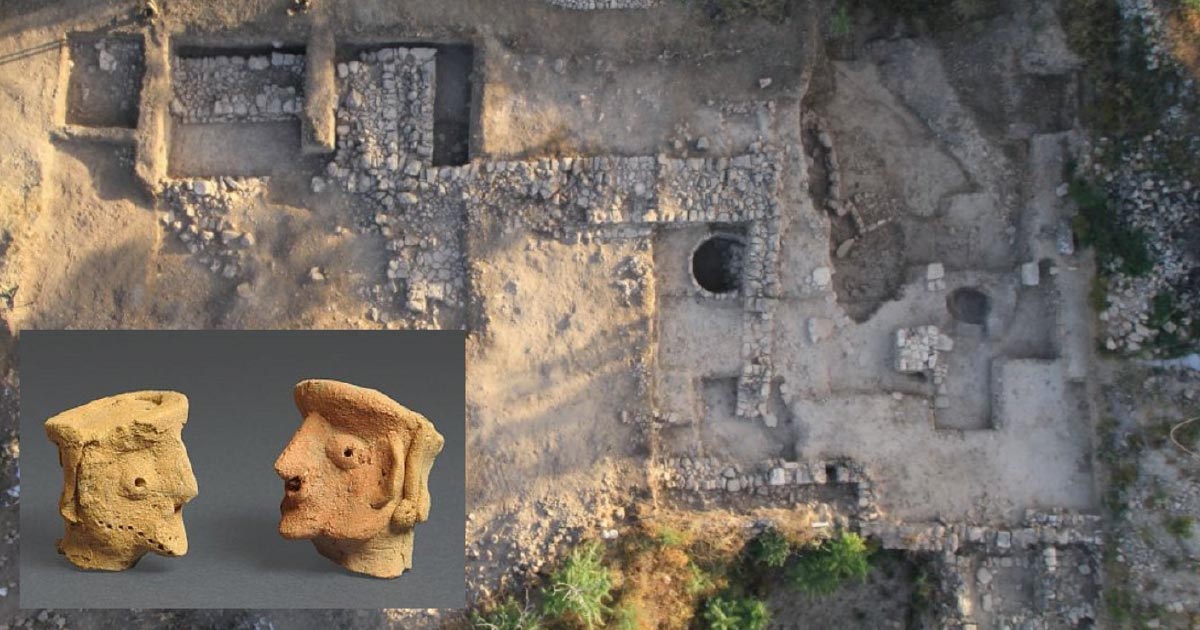
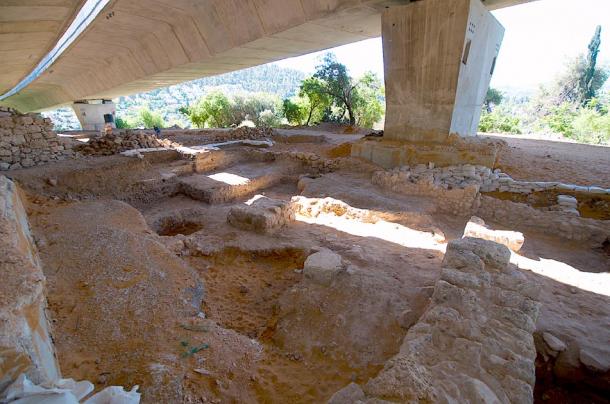
● Project databases of UAP-related materials compiled through various partnerships, and the intent to expand these databases by coordinating with foreign governments.

● Summaries of multiple UAP events both inside the U.S. and in foreign countries.

● Photographs of UAPs provided by various sources, including foreign governments.

Cover of the Ten Month Report

Cover of the BAASS “Ten Month Report”

These reports are technically the property of BAASS and, due to the Economic Espionage Act of 1996, are conveniently excluded from FOIA requests.  Attorney Josh Budray told Popular Mechanics:

“Unfortunately, the government attempting to evade FOIA by contracting out its responsibilities is nothing new. Both federal and state FOIA statutes strive to eliminate such obvious gamesmanship—avoiding transparency and disclosure obligations by contracting out functions—but whether they are successful in doing so is an entirely different story.”

There’s honestly too much in the Popular Mechanics report to summarize here, and it is recommended that you take a read for yourself. Seriously, it’s huge. Other leaked documents obtained include a 54-page report on the physiological effects of exposure to UFOs, as well as proof that AATIP operated beyond its official closure in 2012.

While much of what is in the leaked documents have been in the realm of solid assumptions since the AATIP story first broke, they have still been assumptions. The Pentagon has admitted that footage such as that from the USS Nimitz does show “unidentified aerial phenomena,” it has always been delicately handled from a position that “unidentified” might mean “we just don’t know who built it.” While these leaked documents reveal nothing about the nature of these phenomena (because of course not), they do show that whatever AATIP and BAASS were, and likely are, studying is completely weird and has been treated accordingly by the Pentagon.

{ https://mysteriousuniverse.org/ }

Hoe vind je dit bericht?
Geschreven door peter om 15:35 Stuur door

Disc-shaped UFOs spotted on mountain ridge in Antarctica

Disc-shaped UFOs spotted on mountain ridge in Antarctica

There have been a number of unexplained Google Earth sightings in Antarctica recently and now zooming in on a mountainous region, we found what appears to be several disc-shaped UFOs on a mountain ridge of the Victory Mountains.

disc-shaped-ufos-antarctica%2B%25281%2529.jpg

Whether the UFOs have crash landed, part of a secret military project or may be of extraterrestrial origin, is not clear, but there is clearly a lot of activity around these disc-shaped objects.

First location:
2 UFOs and operational base 
UFOs: 40 meters in diameter 
Coordinates: 73° 4'46.72"S 73° 4'46.72"S 

disc-shaped-ufos-antarctica%2B%25282%2529.jpg

Second location: 
3 UFOs and operational base 
UFOs: 10 meters in diameter 
Coordinates: 73° 4'50.32"S 167°41'36.31"E

disc-shaped-ufos-antarctica%2B%25283%2529.jpg
How many hours of scouring Google Earth must it take to find these things?

How many hours of scouring Google Earth must it take to find these things?

The mountain range where the object was found lies on Antarctica‘s north coast near Australia.

The mountain range where the object was found lies on Antarctica‘s northern coast near Australia.

{ http://ufosightingshotspot.blogspot.com/ }

Hoe vind je dit bericht?
Geschreven door peter om 15:06 Stuur door

Huge bright object recorded over Lake Mary, Florida 17-Feb-2020

Huge bright object recorded over Lake Mary, Florida 17-Feb-2020

lake-mary-ufo.png

This stationary unidentified flying object was seen and filmed in the sky above Lake Mary in Florida on 17th February 2020.

Witness report: 

Observed Orange Star like object. Driving into work on Lake Mary Blvd. stopped at traffic light on Lake Mary Blvd and Lake Emma and witnessed a star like orange object, so I decided to record it, not realizing that there was a object above it with all kinds of lights, a long cigar shape. (Attached recording) Got to work at 3300 Exchange Place, Lake Mary and decided to get my camera and started recording to see if I could find the object and I got it on camera. Then I saw another object to bottom right, plus the orange one, and cigar one which was high. Then all of a sudden an object (green) appears above the cigar object, and beams down at something in the ground and then disappears! I continued to record until I had to go into work.

{ https://www.latest-ufo-sightings.net/ }

Hoe vind je dit bericht?
Geschreven door peter om 14:14 Stuur door

Massive UFO Fleet Appears Over Pennsylvania, Expert Claims

Massive UFO Fleet Appears Over Pennsylvania, Expert Claims

KEY POINTS

  • A fleet of UFOs appeared over a community in Pennsylvania
  • Some of the bright objects appeared in large clusters
  • The objects could be satellites orbiting Earth

Anew video shows an alleged fleet of UFOs flying over a community in Pennsylvania. As seen in the clip, the strange objects were moving slowly in the same direction.

The video was taken by an eyewitness as he was driving with his family in King of Prussia. It was shared on YouTube by Scott Waring of ET Data Base.

In the video, clusters of bright orbs can be seen in the sky. Although they did not appear to follow a specific formation, all of them were moving in the same direction. Some of them were moving slowly while the others remained stationary.

“Personally observed with my family on the way home from the King of Prussia Mall, heading eastbound multiple bright lights in the sky remaining stationary,” the eyewitness stated. “Have video taken in car while observing. This is unexplainable unless there is some type of unknown military aircraft I am unaware of.”

Interestingly, the bright orbs appeared in different parts of the sky. Some of the objects were grouped in large clusters. Based on the brightness of the objects and since there were no stars in the sky when the video was taken, Waring noted that other people most likely saw the strange objects too.

Hopefully, videos taken by other eyewitnesses of their sightings could shed light on the nature of the strange objects.

“The UFOs were moving slowly, glowing and following the same path,” Waring wrote in a blog post. “I do not hear the objects over the sound of the cars on the freeway. This must have been recorded by others. Thousands of people must have seen this so I am expecting a few more videos to come in.”

Although it is not yet clear what the objects were, it is possible that the bright orbs were only satellites. Back when SpaceX launched the first batch of Starlink satellites in May last year, the event sparked numerous UFO sightings due to the formation of the satellites. As seen in the photos, the satellites orbited Earth together and appeared like a “train of stars” in the sky.

ufo

A photograph of a screen shows infra-red video of taken from a Mexican Air Force patrol aircraft of 7 bright objects flying over the eastern coastal state of Campeche on March 25, 2004.

 Photo: REUTERS

{ https://www.ibtimes.com/ }

Hoe vind je dit bericht?
Geschreven door peter om 00:58 Stuur door

Why Are So Many UFOs Seen Near U.S. Military Bases?

5375285623_e92f6cc314_o%20%281%29.jpg?itok=KQt_0Dn-

Why Are So Many UFOs Seen Near U.S. Military Bases?

They are military aircraft.

From 2007 to 2012, a small team of military investigators looked into sightings of unidentified flying objects—yes, UFOs—from an office deep inside the Pentagon. The Advanced Aerospace Threat Identification Program, championed by former U.S. senator Harry Reid, paid contractors to analyze close encounters between military pilots and mysterious airborne objects.

Some of those close encounters probably involved secret military prototype front-line pilots didn’t know exist. Others, however, remain unexplained — and could be revolutionary for human civilization.

“Just because something’s unexplained doesn’t mean that it’s extraterrestrial, of course, but I never say never,”  Nick Pope, who ran the British military’s own UFO investigative unit in the early 1990s, told me via email. “Extraterrestrial visitation might be unlikely, but if a single case turned out to be true, it would be a game-changer.”

One 2004 incident, in particular, has befuddled skeptics. Two U.S. Navy fighter pilots flying off the coast of southern California tracked an airliner-size, cigar-shaped object that appeared to hover and maneuver in ways that seem to exceed conventional aeronautics. “I have no idea what I saw,” David Fravor, one of the pilots, told The New York Times.

“There are still those observations that defy explanation—observations by highly trained individuals such as fighter or airline pilots who would recognize aircraft shapes and aircraft movements,” Luis Elizondo, the head of the Advanced Aerospace Threat Identification Program and related UFO efforts until his October resignation, told me via email.

“The basic instinct of intelligence personnel looking at the most convincing UFO sightings is to assume that they’re secret prototype aircraft or drones, developed either by another nation, or by another part of the government—but in a situation where the information is so compartmentalized nobody else can get access,” Pope said.

“Another theory is that some of these sightings are attributable to some sort of atmospheric plasma phenomenon that science doesn’t yet fully understand,” Pope added, using the scientific term for electrified air.

“Many UFO sightings in the southwest United States during the 1980s were actually secret advanced military aircraft such as the Lockheed F-117 and Northrop Grumman B-2,” Elizondo said.

There has been no shortage of rumored or confirmed, high-performance military prototypes in recent years that could account for UFO sightings. The U.S. Air Force secretly developed the RQ-170 stealth spy drone in the early 2000s, finally admitting to its existence only after a photographer spotted one at an airfield in Afghanistan in 2007. It’s unclear whether sightings of the RQ-170 explain any recent UFO reports.

More recently, the Air Force has been working on a bigger and ever stealthier spy drone called the RQ-180, along with the new radar-evading B-21 bomber. In 2014, a mysterious, wedge-shaped aircraft—possibly an early technology demonstrator for the B-21 program—was photographed flying over Kansas.

The military and the defense industry have also been hard at work on so-called “hypersonic” aircraft and space-planes capable of flying at speed exceeding Mach 5. Some of those efforts are public. Others, such as Lockheed Martin’s self-funded SR-72 hypersonic spy plane, remain cloaked in secrecy.

The abundance of secret prototypes plying American skies gives plenty of cover to government investigators and skeptical outsiders whose impulse is to dismiss possible evidence of alien life. “That said, there are those in government—including, clearly, some of the intelligence officials who worked in the AATIP—who are prepared to think the unthinkable, and say that some of these things might be extraterrestrial,” Pope said.

The 2004 video seems unexplainable now. But remember, many similarly mysterious UFO sightings in the past turned out to be military prototypes. Maybe aliens really are buzzing Planet Earth. But if history is any guide, it’s more likely the Pentagon’s own advanced aircraft that are making surprise appearances in front of baffled pilots.

  • This first appeared in WarIsBoring here. 
  • Image: Flickr.

{ https://nationalinterest.org/ }

Hoe vind je dit bericht?
Geschreven door peter om 00:40 Stuur door

REVEALED: The Pentagon's secret UFO program that focused on shadowy Utah ranch labeled a 'possible laboratory for studying other intelligences'

REVEALED: The Pentagon's secret UFO program that focused on shadowy Utah ranch labeled a 'possible laboratory for studying other intelligences'

  • Bombshell report in Popular Mechanics describes Pentagon's UFO program
  • Details origins of cryptic Advanced Aerospace Threat Identification Program 
  • Previously unknown research contracted by DIA in 2008-09 is revealed  
  • One 494-page report details high frequency of encounters near ICBM silos
  • Describes one 1975 encounter where missile targeting coordinates were altered
  • Another report analyzed the medical effects of close encounters with UFOs 
  •  It also details the shadowy Skinwalker Ranch in Utah - which was proposed as a 'possible laboratory for studying possible interdimensional phenomena'

Remarkable new details about secretive research into UFOs produced for the Pentagon has been revealed in a bombshell new report.

In a lengthy and detailed report published on Friday, Popular Mechanics delved into the Defense Department's cryptic Advanced Aerospace Threat Identification Program (AATIP).

Using black-budget money under the auspices of the Defense Intelligence Agency, in 2008 AATIP contracted private space technology company Bigelow Aerospace Advanced Space Studies (BAASS) to provide the government with technical reports and research into UFOs, according to the magazine.

BAASS also controlled 'Skinwalker Ranch' in Utah  - which the company proposed as a 'possible laboratory for studying other intelligences and possible interdimensional phenomena.'

A 494-page report that BAASS delivered to the Pentagon in July 2009 goes into heavy detail about reported UFO encounters, it was revealed on Friday

A 494-page report that BAASS delivered to the Pentagon in July 2009 goes into heavy detail about reported UFO encounters, it was revealed on Friday

In 2008, the Pentagon awarded a $10 million contract to BAASS under a contracting program known as the Advanced Aerospace Weapon System Applications Program

In 2008, the Pentagon awarded a $10 million contract to BAASS under a contracting program known as the Advanced Aerospace Weapon System Applications Program

The investigative report offers an unprecedented look inside the AATIP, the existence of which was first publicly revealed with the publication of the USS Nimitz encounter video in 2017. 

The AATIP program was officially de-funded by 2012, though many familiar with the matter believe it may have continued on under different auspices.

Mysteries at Skinwalker Ranch may have helped inspire the DIA research program

In 2008, the Defense Intelligence Agency (DIA) awarded a $10 million contract to BAASS under a contracting program known as the Advanced Aerospace Weapon System Applications Program (AAWSAP).

BAASS, today known as Bigelow Aerospace, was founded in 1999 by Robert T. Bigelow, the owner of hotel chain Budget Suites of America.

A lifelong enthusiast of space travel and the paranormal, Bigelow had in 1996 poured some of the fortune he made in business into BAASS and the purchase of the Skinwalker Ranch in Utah, after various strange and paranormal events were reported there. 

Bigelow proposed to use the ranch to study paranormal phenomenon, and a visit to the ranch by a DIA scientist in 2007 may have inspired the creation of the AATIP, according to Popular Mechanics.

Robert Bigelow, founder and president of Bigelow Aerospace, speaks during a tour of Bigelow Aerospace in North Las Vegas, Nevada, U.S. September 12, 2019

Robert Bigelow, founder and president of Bigelow Aerospace, speaks during a tour of Bigelow Aerospace in North Las Vegas, Nevada, U.S. September 12, 2019

Former AAWSAP contractor and astrophysicist Eric Davis shared what colleagues had told him of the DIA scientist's experience in an interview with researcher Joe Murgia.

'In the living room of the former NIDS double wide observation trailer/staff quarters. A 3D object appeared in mid-air in front of him and changed shape like a changing topological figure. It went from pretzel-shaped to Möbius strip shaped. It was 3D and multi-colored. Then it disappeared,' he said. 

According to former Senator Harry Reid, whatever happened at Skinwalker was enough to convince the DIA to seriously investigate paranormal and UFO phenomena. 

'Something should be done about this. Somebody should study it.' I was convinced he was right,' Reid told New York Magazine.

The gate to Skinwalker Ranch is seen prior to its 2016 sale. A visit to the ranch by a DIA scientist in 2007 may have inspired the creation of the AATIP

The gate to Skinwalker Ranch is seen prior to its 2016 sale. A visit to the ranch by a DIA scientist in 2007 may have inspired the creation of the AATIP

In 2016, Bigelow sold Skinwalker Ranch for $4.5 million to a shell corporation, and concrete barriers and heavy security were erected around the perimeter

In 2016, Bigelow sold Skinwalker Ranch for $4.5 million to a shell corporation, and concrete barriers and heavy security were erected around the perimeter

A 2009 BAASS report commissioned by the Pentagon mentions Skinwalker Ranch in Utah as a 'possible laboratory for studying other intelligences and possible interdimensional phenomena.' 

In 2016, Bigelow sold Skinwalker Ranch for $4.5 million to 'Adamantium Holdings', a shell corporation whose true owners have never been traced. 

After this sale, all roads leading to the ranch were blocked, the perimeter was secured with cameras and barbed wire, and signs went up warning strangers not to approach.

Anyone who does approach the ranch now reports being immediately confronted by guards and ordered to leave.  

Project Northern Tier: BAASS report details high frequency of UFO contacts near nuclear missile silos  

Under the DIA contract, BAASS was tasked with providing the Pentagon with technical reports, surveys and studies related to 'future aerospace weapon systems.' 

The language in the DIA's $10 million contract with BAASS - and its objectives - seem purposely vague, obscuring the fact that the AAWSAP contract was focused on what the Pentagon now calls Unidentified Aerial Phenomenon (UAP).

But a 494-page report that BAASS delivered to the Pentagon in July 2009, and revealed by Popular Mechanics, is explicitly focused on UAP.

The 'Ten Month Report,' as it's called, is filled with strategic plans, project summaries, data tables, charts, descriptions of biological field effects, physical characteristics, methods of detection, theoretical capabilities, witness interviews, photographs, and case synopses, all related to UAP.

Robert Bigelow, (left) founder and president of Bigelow Aerospace, and NASA astronaut Mike Gernhardt, are seen on September 12, 2019

Robert Bigelow, (left) founder and president of Bigelow Aerospace, and NASA astronaut Mike Gernhardt, are seen on September 12, 2019 

BAASS, today known as Bigelow Aerospace, was founded in 1999 by Robert T. Bigelow, the owner of hotel chain Budget Suites of America

BAASS, today known as Bigelow Aerospace, was founded in 1999 by Robert T. Bigelow, the owner of hotel chain Budget Suites of America

The report mentions a BAASS program called Project Northern Tier, which involved securing documents related to instances where dozens of UFOs flew over restricted airspaces of facilities housing nuclear weapons.

One chart published in the report details the alarming frequency of UAP encounters near four current and former key ICBM facilities: Malmstrom AFB in Montana, Minot AFB in North Dakota, former Wurtsmith AFB in Michigan and former Loring AFB in Maine.

The time period of the study seems to focus on a five-month window from July through November of 1975, when the BAASS report claims Malmstrom reported an alarming 61 unexplained encounters.

The BAASS report, directly quoting the book Clear Intent, describes one astonishing encounter on November 7, 1975 at the K-7 ICBM missile silo attached to Malmstrom.

A map shows the location of two still-active ICBM facilities mentioned in the BAASS report

A map shows the location of two still-active ICBM facilities mentioned in the BAASS report

One chart published in the report details the alarming frequency of UAP encounters near four current and former key ICBM facilities

One chart published in the report details the alarming frequency of UAP encounters near four current and former key ICBM facilities

Responding to an intrusion alarm, a Sabotage Alert Team raced in a vehicle to the silo, where they encountered a 'brightly glowing, orange, football field-sized disc' hovering in the air.

'It began to rise, and at about 1,000 feet, NORAD picked up the UFO on radar,' the report states. Two F-106 fighter jets were scrambled to intercept the object, but were never able to get a visual. 'At about 200,000 feet, it disappeared from NORAD's radar.'

Specialists were brought in to do a systems check on the missile, and discovered that the computer in the warhead had 'mysteriously changed the target numbers.'

UFO enthusiasts have long noted the apparent connection between sightings and nuclear activity. The famous 2004 USS Nimitz carrier strike group encounter with the 'Tic Tac' object is also connected in that regard, as the air craft carrier is nuclear-powered. 

The BAASS report (above), directly quoting the book Clear Intent, describes one encounter on November 7, 1975 at the K-7 ICBM missile silo attached to Malmstrom

The BAASS report (above), directly quoting the book Clear Intent, describes one encounter on November 7, 1975 at the K-7 ICBM missile silo attached to Malmstrom

One astonishing encounter is described in the BAASS report from November 7, 1975 at the K-7 ICBM missile silo (above in satellite image) attached to Malmstrom AFB

One astonishing encounter is described in the BAASS report from November 7, 1975 at the K-7 ICBM missile silo (above in satellite image) attached to Malmstrom AFB

A Minuteman III missile is seen in its silo. In 1975 there is a report that the onboard targeting computer of such a missile inexplicably changed coordinates after a UFO encounter

A Minuteman III missile is seen in its silo. In 1975 there is a report that the onboard targeting computer of such a missile inexplicably changed coordinates after a UFO encounter

Medical study examines possible physiological effects of UFO encounters

Popular Mechanics also published in full a previously unreleased technical paper listed as one of AATIP's products, .

The paper titled 'Clinical Medical Acute & Subacute Field Effects on Human Dermal & Neurological Tissues' examines injuries that have been reported after contact with UFO/UAPs.

'This focused on forensically assessing accounts of injuries that could have resulted from claimed encounters with UAP,' the study's author, Christopher 'Kit' Green, told Popular Mechanics.  

'I didn't work for BAASS, other than as a contractor for my paper, and I wasn't a part of AAWSAP. However, it is my understanding this program was a UFO study that outwardly was not supposed to look like it had anything to do with UFOs,' he said. 

Green also told the magazine that while his work focused on encounters with unknown or unidentified aerial objects, all of the injuries he assessed could be accounted for by known terrestrial means, and did not provide any evidence for extraterrestrial or non-human technologies.  

Hoe vind je dit bericht?
Geschreven door peter om 00:17 Stuur door

The U.S. Military Has a Secret Research Program on UFOs

48000705153_4d70d6729c_o%20%281%29.jpg?itok=so9dADoH

The U.S. Military Has a Secret Research Program on UFOs

Here is what we know about it. 

By now you’ve probably read the New York Times article detailing a UFO research program run by the Pentagon which received $22 million — a tiny amount by Defense Department standards — from 2007 to at least 2012. The disclosure of the program is the biggest such reveal since Project Blue Book of the 1950s and 1960s and the French government’s 1999 COMETA Report.

If that wasn’t strange enough, the article included declassified footage from a U.S. Navy F/A-18F Super Hornet fighter’s AN/ASQ-228 sensor display as it trailed a still-unidentified flying object over the Pacific near San Diego on Nov. 14, 2004.

In the footage, the Super Hornet pilot, while traveling at 252 knots at nearly 20,000 feet, switched between his display’s infrared and visual modes as the sensor tried to lock onto the blurry, oblong or pill-shaped object. The flying object appeared white in IR mode, and black in TV mode — indicating that whatever it was, the sensor had picked up on the object’s emission, temperature or reflection.

The video comes from the same incident when Cmdr. David Fravor, a veteran Navy pilot assigned to the USS Nimitz carrier fighter squadron VFA-41 Black Aces, was on a training mission off San Diego. “It was a real object, it exists and I saw it,” Fravor told the Washington Post. Telling the paper that he believes it was “not from the Earth.”

During an exercise, commanders ordered Fravor to intercept an object that was appearing at 80,000 feet — above the range of Ticonderoga-class cruiser USS Princeton’s SPY-1 air-search radar — before dropping suddenly to 20,000 feet. “Officials told they had been tracking a couple dozen of these objects for a few weeks,” the paper reported.

The story that followed has circulated in the military aviation world and fighter community for several years, including this write-up by former Navy F-14A Tomcat pilot Paco Chierici at Fighter Sweep. With orders to intercept the object, Fravor in his jet — callsign FASTEAGLE 01 — headed toward with aid from an E-2 Hawkeye early warning and control plane.

The Hawkeye’s sensors, however, couldn’t detect the object and vector him toward it, so Princeton directed FASTEAGLE 01 and Fravor’s wingman, FASETEAGLE 02 to the location, and even asked Fravor whether he was carrying weapons — he wasn’t. He just had two training missiles. Below the jets, Fravor saw whitewater sloshing in the blue ocean.

All four aircrew were eyes out from this point forward. The first unusual indication Dave picked up was the area of whitewater on the surface that Cheeks was looking at over his shoulder as he flew away. He remembers thinking it was about the size of a 737 and maybe the contact they had been vectored on had been an airliner that had just crashed. He maneuvered his F-18 lower to get a better look. As he was descending through about 20K he was startled by the sight of a white object that was moving about just over the frothing water. It was all white, featureless, oblong and making minor lateral movements while staying at a consistent low altitude over the disk of turbulent water.

In his debrief comments, Dave, his WSO and the two other crews stated the object had initially been hovering like a Harrier. They described it as uniformly white, about 46 feet long (roughly fighter-sized), having a discernible midline horizontal axis (like a fuselage) but having no visible windows, nacelles, wings or propulsion systems.

There was no apparent exhaust or rotor wash, either. The pill-shaped object then “oriented one of its skinny ends towards him,” and rose in a “right 2-circle flow” — fighter speak for when each aircraft have their noses pointed at each other’s tails. The object then accelerated away at “multi-Mach” speed.

The video of the AN/ASQ-228 sensor display occurred later in the day with a different set of fighters. The object at this point appeared stationary before taking off.

This is consistent with a U.S. Navy report obtained by To The Stars Academy of Arts and Science, a UFO research company which published the footage. The Navy pilots, apparently, first believed the object could have been a classified missile test from a submarine. The Navy report cited a source who indicated the object maneuvered in a manner “that seemed to defy the laws of physics” and “‘tumbled’ into nonsensical angles that made any engagement by the F-18 impossible.”

So what was it? A secret U.S. test project? A classified drone or hypersonic weapon? A maneuverable reentry vehicle or something like DARPA’s Falcon Project? Naval Air Systems Command, which tests airborne weapons, has 36,000 square miles of controlled sea and airspace off the Southern Californian coast. And the Falcon Project’s Hypersonic Technology Vehicle 2 has reached Mach 22 — albeit six years after the 2004 object sighting in the Pacific.

Or perhaps it was an elaborate hoax, or a software or sensor error. Maybe an atmospheric disturbance? Or let’s say it was an alien spacecraft powered by technology impossible for our tiny primate brains to understand. I hope it’s the last one, but I’m not counting on it. Your guess is as good as mine.

Eyewitnesses, even fighter pilots, are prone to human error. Pilots also know how aircraft operate, and the belief that there is something unusual in the skies is more common in that community than you might assume. Fravor certainly believes what he saw, and many fighter pilots believe him.

The Pentagon UFO-hunting mission, the Advanced Aerospace Threat Identification Program, is still partially classified. In any case, even if the explanation is as mundane as a weapons test, the eyewitness accounts and FLIR footage make this an interesting mystery worth further study. Whether Fravor saw an object of extraterrestrial origin is beside the point.

It’s also worth reading the comments section at Fighter Sweep:

I was on board the USS Princeton (2001-2005) when this all went down. We actually went to GQ (General Quarters) for about 4 hours as all if this was going down. I’ve been telling everyone about this even, but have gotten the usual “yeah right” look when I tell them about it. I saw the video after it happened, but didn’t think that it would somehow make it’s way to the public, considering all of the “security” that surrounded the issue.

Crazy how the world turns, isn’t it?!

Thank you for giving this event life! I no longer look like a tin foil hat wearing idiot!

  • This article first appeared several years ago.
  • Image: Flickr.

{ https://nationalinterest.org/ }

Hoe vind je dit bericht?
Geschreven door peter om 23:57 Stuur door

Red Triangle shaped bright lights Sighting in Bogata, Texas

Red Triangle shaped bright lights Sighting in Bogata, Texas

A mysterious triangular UFO seems to have returned to the skies of Texas after a motorist filmed three red lights flashing above his car.

The bizarre footage shows the strange object seemingly moving towards the cameraperson in the night sky in Bogata.

As it moves overhead, it clearly has a triangle complexion, but then zooms off seconds later.

The sighting bears a similarity to a gigantic triangular craft that was spotted above Houston on New Year’s Day.

That followed another video of a bizarre-shaped UFO above New York at the end of last year.

In the description to the sighting, which was posted to the Mutual UFO Network, the user explained that the “aircraft” was hovering 30 feet above the ground.

The triangle-shaped UFO seen over Texas

The triangle-shaped UFO seen over Texas  (Image: MUFON)

“It was flying right at me going 75mph and then it hovered over my car for one second and disappeared,” they said.

The footage has been seen more than 5,000 times since it was shared by YouTube conspiracy channel UFOmania.

Many viewers claimed the object was more proof of the infamous TR-3B spy plane.

The TR-3B is the name of a surveillance plane of the United States Air Force, speculated to have been developed under a black project.

It is said to be a supersonic stealth spy plane with a triangular design but its existence has never been acknowledged.

“That's a TR-3B, or a for real ET craft,” one viewer commented. “I just wish he could have stopped the car, got out and took more footage.”

Another added: “TR-3B… secret Space Force.”

A third agreed, simply writing: “TR-3B, look it up.”

But others weren’t as convinced. One noted that even though the lights were in a triangular pattern, it didn’t mean the object itself was triangular.

And other sceptics suggested it was nothing more than a drone.

{ https://www.dailystar.co.uk/ }

Hoe vind je dit bericht?
Geschreven door peter om 23:39 Stuur door

Discovery at 'flower burial' site could unravel mystery of Neanderthal death rites

Discovery at 'flower burial' site could unravel mystery of Neanderthal death rites

The Neanderthal skull, flattened by thousands of years of sediment and rock fall, in situ in Shanidar Cave, Iraqi Kurdistan. Credit: Graeme Barker

The first articulated Neanderthal skeleton to come out of the ground for over 20 years has been unearthed at one of the most important sites of mid-20th century archaeology: Shanidar Cave, in the foothills of Iraqi Kurdistan.

Researchers say the new find offers an unparalleled opportunity to investigate the "mortuary practices" of this lost species using the latest technologies.

Shanidar Cave was excavated in the 1950s, when archaeologist Ralph Solecki uncovered partial remains of ten Neanderthal men, women and children.

Some were clustered together, with clumps of ancient pollen surrounding one of the skeletons. Solecki claimed this showed Neanderthals buried their dead and conducted funerary rites with flowers.

The 'flower burial' captured the public imagination, and prompted a reappraisal of a species that—prior to Shanidar Cave—was thought to have been dumb and animalistic.

It also sparked a decades-long controversy over whether evidence from this extraordinary site did actually point to death rituals, or burial of any kind, and if Neanderthals were really capable of such cultural sophistication.

More than 50 years later, a team of researchers have reopened the old Solecki trench to collect new sediment samples, and discovered the crushed skull and torso bones of another Shanidar Neanderthal.

The discovery has been named Shanidar Z by researchers from Cambridge, Birkbeck and Liverpool John Moores universities.

Discovery at 'flower burial' site could unravel mystery of Neanderthal death rites

View of the entrance to Shanidar Cave, in the foothills of the Baradost Mountains of North-East Iraqi Kurdistan. Credit: Graeme Barker

The work was conducted in conjunction with the Kurdistan General Directorate of Antiquities and the Directorate of Antiquities for Soran Province. The find is announced today in a paper published in the journal Antiquity.

"So much research on how Neanderthals treated their dead has to involve returning to finds from sixty or even a hundred years ago, when archaeological techniques were more limited, and that only ever gets you so far," said Dr. Emma Pomeroy, from Cambridge's Department of Archaeology, lead author of the new paper.

"To have primary evidence of such quality from this famous Neanderthal site will allow us to use modern technologies to explore everything from ancient DNA to long-held questions about Neanderthal ways of death, and whether they were similar to our own."

Ralph Solecki died last year aged 101, having never managed to conduct further excavations at his most famous site, despite several attempts.

In 2011, the Kurdish Regional Government approached Professor Graeme Barker from Cambridge's McDonald Institute of Archaeology about revisiting Shanidar Cave. With Solecki's enthusiastic support, initial digging began in 2014, but stopped after two days when ISIS got too close. It resumed the following year.

"We thought with luck we'd be able to find the locations where they had found Neanderthals in the 1950s, to see if we could date the surrounding sediments," said Barker. "We didn't expect to find any Neanderthal bones."

In 2016, in one of the deepest parts of the trench, a rib emerged from the wall, followed by a lumbar vertebra, then the bones of a clenched right hand. However, metres of sediment needed carefully digging out before the team could excavate the skeleton.

During 2018-19 they went on to uncover a complete skull, flattened by thousands of years of sediment, and upper body bones almost to the waist—with the left hand curled under the head like a small cushion.

Discovery at 'flower burial' site could unravel mystery of Neanderthal death rites

The bones of the Neanderthal's left hand emerging from the sediment in Shanidar Cave. Credit: Graeme Barker

Early analysis suggests it is over 70,000 years old. While the sex is yet to be determined, the latest Neanderthal discovery has the teeth of a "middle- to older-aged adult".

Shanidar Z has now been brought on loan to the archaeological labs at Cambridge, where it is being conserved and scanned to help build a digital reconstruction, as more layers of silt are removed.

The team is also working on sediment samples from around the new find, looking for signs of climate change in fragments of shell and bone from ancient mice and snails, as well as traces of pollen and charcoal that could offer insight into activities such as cooking and the famous 'flower burial'.

Four of the Neanderthals, including the 'flower burial' and the latest find, formed what researchers describe as a "unique assemblage". It raises the question of whether Neanderthals were returning to the same spot within the cave to inter their dead.

A prominent rock next to the head of Shanidar Z may have been used as a marker for Neanderthals repeatedly depositing their dead, says Pomeroy, although whether time between deaths was weeks, decades or even centuries will be difficult to determine.

"The new excavation suggests that some of these bodies were laid in a channel in the cave floor created by water, which had then been intentionally dug to make it deeper," said Barker. "There is strong early evidence that Shanidar Z was deliberately buried."

CT-scans in Cambridge have revealed the petrous bone—one of the densest in the body; a wedge at the base of the skull—to be intact, offering hope of retrieving ancient Neanderthal DNA from the hot, dry region where "interbreeding" most likely took place as humans spilled out of Africa.

Added Pomeroy: "In recent years we have seen increasing evidence that Neanderthals were more sophisticated than previously thought, from cave markings to use of decorative shells and raptor talons.

"If Neanderthals were using Shanidar cave as a site of memory for the repeated ritual interment of their dead, it would suggest cultural complexity of a high order."

Explore further

Provided by University of Cambridge 

{ https://phys.org/ } 

Hoe vind je dit bericht?
Geschreven door peter om 23:13 Stuur door

How dark is the cosmic web?

How dark is the cosmic web?

Hoe vind je dit bericht?
Geschreven door peter om 22:58 Stuur door

Hackers could shut down satellites — or turn them into weapons

Hackers could shut down satellites — or turn them into weapons

Hoe vind je dit bericht?
Geschreven door peter om 22:39 Stuur door

SpaceX will fly space tourists on Crew Dragon for Space Adventures

Hoe vind je dit bericht?
Geschreven door peter om 22:17 Stuur door

Breakthrough Listen Scans Milky Way Galaxy for Beacons of Civilization

Breakthrough Listen Scans Milky Way Galaxy for Beacons of Civilization

Artist’s concept of a nearby civilization signaling Earth after observing our planet crossing in front of the sun. Astronomers have now scanned 20 nearby stars in the Earth transit zone in search of such signals. 

exoplanet sees Earth transiting sun
Credit: UC Berkeley image courtesy of Breakthrough Listen

The Breakthrough Listen Initiative today (Friday, Feb. 14) released data from the most comprehensive survey yet of radio emissions from the plane of the Milky Way Galaxy and the region around its central black hole, and it is inviting the public to search the data for signals from intelligent civilizations.

At a media briefing today in Seattle as part of the annual meeting of the American Association for the Advancement of Science (AAAS), Breakthrough Listen principal investigator Andrew Siemion of the University of California, Berkeley, announced the release of nearly 2 petabytes of data, the second data dump from the four-year old search for extraterrestrial intelligence (SETI). A petabyte of radio and optical telescope data was released last June, the largest release of SETI data in the history of the field.

The data, most of it fresh from the telescope prior to detailed study from astronomers, comes from a survey of the radio spectrum between 1 and 12 gigahertz (GHz). About half of the data comes via the Parkes radio telescope in New South Wales, Australia, which, because of its location in the Southern Hemisphere, is perfectly situated and instrumented to scan the entire galactic disk and galactic center. The telescope is part of the Australia Telescope National Facility, owned and managed by the country’s national science agency, CSIRO.

The remainder of the data was recorded by the Green Bank Observatory in West Virginia, the world’s largest steerable radio dish, and an optical telescope called the Automated Planet Finder, built and operated by UC Berkeley and located at Lick Observatory outside San Jose, California.

“Since Breakthrough Listen’s initial data release last year, we have doubled what is available to the public,” said Breakthrough Listen’s lead system administrator, Matt Lebofsky. “It is our hope that these data sets will reveal something new and interesting, be it other intelligent life in the universe or an as-yet-undiscovered natural astronomical phenomenon.”

“For the whole of human history, we had a limited amount of data to search for life beyond Earth. So, all we could do was speculate. Now, as we are getting a lot of data, we can do real science and, with making this data available to general public, so can anyone who wants to know the answer to this deep question,” said Yuri Milner, the founder of Breakthrough Listen.

Moonset, around 2:30 a.m., at the Very Large Array on the Plains of San Agustin, about 50 miles west of Socorro, New Mexico. The VLA is teaming up with the SETI Institute to capture data that can be searched for intelligent signals.

VLA_Moonset_NIK_0992_750px.jpg

Credit: UC Berkeley

The National Radio Astronomy Observatory (NRAO) and the privately-funded SETI Institute in Mountain View, California, also announced today an agreement to collaborate on new systems to add SETI capabilities to radio telescopes operated by NRAO. The first project will develop a system to piggyback on the National Science Foundation’s Karl G. Jansky Very Large Array (VLA) in New Mexico and provide data to state-of-the-art digital backend equipment built by the SETI Institute.

“The SETI Institute will develop and install an interface on the VLA, permitting unprecedented access to the rich data stream continuously produced by the telescope as it scans the sky,“ said Siemion, who, in addition to his UC Berkeley position, is the Bernard M. Oliver Chair for SETI at the SETI Institute. “This interface will allow us to conduct a powerful, wide-area SETI survey that will be vastly more complete than any previous such search.”

“As the VLA conducts its usual scientific observations, this new system will allow for an additional and important use for the data we’re already collecting,” said NRAO Director Tony Beasley. “Determining whether we are alone in the universe as technologically capable life is among the most compelling questions in science, and NRAO telescopes can play a major role in answering it.”

Earth transit zone survey

In releasing the new radio and optical data, Siemion highlighted a new analysis of a small subset of the data: radio emissions from 20 nearby stars that are aligned with the plane of Earth’s orbit such that an advanced civilization around those stars could see Earth pass in front of the sun (a “transit” like those focused on by NASA’s Kepler space telescope). Conducted by the Green Bank Telescope, the Earth transit zone survey observed in the radio frequency range between 4 and 8 gigahertz, the so-called C-band. The data were then analyzed by former UC Berkeley undergraduate Sofia Sheikh, now a graduate student at Pennsylvania State University, who looked for bright emissions at a single radio wavelength or a narrow band around a single wavelength. She has submitted the paper to the Astrophysical Journal.

Australia’s Parkes radio telescope, 210 feet in diameter, conducted the most comprehensive survey yet of radio emissions from the Milky Way galaxy in search of technosignatures from advanced civilizations around other stars.

parkes750px.jpg
Photo courtesy of CSIRO

“This is a unique geometry,” Sheikh said. “It is how we discovered other exoplanets, so it kind of makes sense to extrapolate and say that that might be how other intelligent species find planets, as well. This region has been talked about before, but there has never been a targeted search of that region of the sky.”

While Sheikh and her team found no technosignatures of civilization, the analysis and other detailed studies the Breakthrough Listen group has conducted are gradually putting limits on the location and capabilities of advanced civilizations that may exist in our galaxy.

“We didn’t find any aliens, but we are setting very rigorous limits on the presence of a technologically capable species, with data for the first time in the part of the radio spectrum between 4 and 8 gigahertz,” Siemion said. “These results put another rung on the ladder for the next person who comes along and wants to improve on the experiment.”

Sheikh noted that her mentor, Jason Wright at Penn State, estimated that if the world’s oceans represented every place and wavelength we could search for intelligent signals, we have, to date, explored only a hot tub’s worth of it.

“My search was sensitive enough to see a transmitter basically the same as the strongest transmitters we have on Earth, because I looked at nearby targets on purpose,” Sheikh said. “So, we know that there isn’t anything as strong as our Arecibo telescope beaming something at us. Even though this is a very small project, we are starting to get at new frequencies and new areas of the sky.”
Beacons in the galactic center?

The so-far unanalyzed observations from the galactic disk and galactic center survey were a priority for Breakthrough Listen because of the higher likelihood of observing an artificial signal from that region of dense stars. If artificial transmitters are not common in the galaxy, then searching for a strong transmitter among the billions of stars in the disk of our galaxy is the best strategy, Simeon said.

Breakthrough Listen, based at UC Berkeley, collects petabytes of data from the Green Bank Telescope in West Virginia (right) and the Parkes radio telescope in Australia (left) and makes it available to the science community to analyze in search of signals from intelligent civilizations.

Berkeley-design-new-def-750px.jpg
Graphic courtesy of Breakthrough Listen

On the other hand, putting a powerful, intergalactic transmitter in the core of our galaxy, perhaps powered by the 4 million-solar-mass black hole there, might not be beyond the capabilities of a very advanced civilization. Galactic centers may be so-called Schelling points: likely places for civilizations to meet up or place beacons, given that they cannot communicate among themselves to agree on a location.

“The galactic center is the subject of a very specific and concerted campaign with all of our facilities because we are in unanimous agreement that that region is the most interesting part of the Milky Way galaxy,” Siemion said. “If an advanced civilization anywhere in the Milky Way wanted to put a beacon somewhere, getting back to the Schelling point idea, the galactic center would be a good place to do it. It is extraordinarily energetic, so one could imagine that if an advanced civilization wanted to harness a lot of energy, they might somehow use the supermassive black hole that is at the center of the Milky Way galaxy.”

Visit from an interstellar comet

Breakthrough Listen also released observations of the interstellar comet 2I/Borisov, which had a close encounter with the sun in December and is now on its way out of the solar system. The group had earlier scanned the interstellar rock ‘Oumuamua, which passed through the center of our solar system in 2017. Neither exhibited technosignatures.

NASA’s Hubble Space Telescope took this photo of the interstellar comet 2I/Borisov in October 2019, two months before its closest approach to the sun.

Comet-2IBorisov-HubbleST-20191016_750px.jpg
Photo courtesy of NASA, ESA and D. Jewitt, UCLA

“If interstellar travel is possible, which we don’t know, and if other civilizations are out there, which we don’t know, and if they are motivated to build an interstellar probe, then some fraction greater than zero of the objects that are out there are artificial interstellar devices,” said Steve Croft, a research astronomer with the Berkeley SETI Research Center and Breakthrough Listen. “Just as we do with our measurements of transmitters on extrasolar planets, we want to put a limit on what that number is.”

Regardless of the kind of SETI search, Siemion said, Breakthrough Listen looks for electromagnetic radiation that is consistent with a signal that we know technology produces, or some anticipated signal that technology could produce, and inconsistent with the background noise from natural astrophysical events. This also requires eliminating signals from cellphones, satellites, GPS, internet, Wi-fi and myriad other human sources.

In Sheikh’s case, she turned the Green Bank telescope on each star for five minutes, pointed away for another five minutes and repeated that twice more. She then threw out any signal that didn’t disappear when the telescope pointed away from the star. Ultimately, she whittled an initial 1 million radio spikes down to a couple hundred, which she was able to eliminate as Earth-based human interference. The last four unexplained signals turned out to be from passing satellites.

Siemion emphasized that the Breakthrough Listen team intends to analyze all the data released to date and to do it systematically and often.

“Of all the observations we have done, probably 20% or 30% have been included in a data analysis paper,” Siemion said. “Our goal is not just to analyze it 100%, but 1000% or 2000%. We want to analyze it iteratively.”

Breakthrough Listen, based at UC Berkeley, is supported by a $100 million, 10-year commitment from the Breakthrough Initiatives, founded in 2015 by Yuri and Julia Milner to explore the universe, seek scientific evidence of life beyond Earth and encourage public debate from a planetary perspective.

Contacts and sources:

  • Robert Sanders
    University of California – Berkeley

{ https://beforeitsnews.com/ }

Hoe vind je dit bericht?
Geschreven door peter om 18:38 Stuur door

Lien Ships And Structures On Planet Mercury, UFO Sighting News.

Lien Ships And Structures On Planet Mercury, UFO Sighting News.

%25E7%259B%25AE%25E6%2592%2583%25E3%2580%2581%25E3%2582%25A8%25E3%2582%25A4%25E3%2583%25AA%25E3%2582%25A2%25E3%2583%25B3%252C%2B%2BMercury%252C%2Bplanet%252C%2BUFO%252C%2BUFOs%252C%2Bsighting%252C%2Bsightings%252C%2Balien%252C%2Baliens%252C%2BET%252C%2Banomaly%252C%2Banomalies%252C%2Bancient%252C%2Barchaeology%252C%2Bastrobiology%252C%2Bpaleontology%252C%2Bwaarneming%252C%2Bvreemdelinge%252C%2B%2B%2Bcopy%2B2.png


Date of discovery: Feb 16, 2020
Location of discovery: Planet Mercury
Source:

I was having some fun with the Google Mercury map and found so many structure that I had to make a video about them. I only show about ten in this short video, but one day AI will run ramped through the internet and find thousands of structures in the same planet photo. AI is much better at finding and identifying such tiny details, and people might accept discoveries from AI more easily than a human like myself. 

Can you imagine the technology within one of these ships? It would advance tech on earth thousands of years in just a few days. The country that has one of these ships...will be the most powerful country on earth. 

Scott C. Wari

{ https://www.etdatabase.com/ }

Hoe vind je dit bericht?
Geschreven door peter om 18:00 Stuur door

UFO Seen Shooting Across Sky Over Fremont, California, Video, UFO Sighting News.

UFO Seen Shooting Across Sky Over Fremont, California, Video, UFO Sighting News.

california%252C%2Bovni%252C%2Bomni%252C%2B%2BMUFON%252C%2B%25E7%259B%25AE%25E6%2592%2583%25E3%2580%2581%25E3%2582%25A8%25E3%2582%25A4%25E3%2583%25AA%25E3%2582%25A2%25E3%2583%25B3%252C%2B%2BUFO%252C%2BUFOs%252C%2Bsighting%252C%2Bsightings%252C%2Balien%252C%2Baliens%252C%2BET%252C%2Banomaly%252C%2Banomalies%252C%2Bancient%252C%2Barchaeology%252C%2Bwaarneming%252C%2Bvreemdelinge%252C%2B%2B.png
california%252C%2Bovni%252C%2Bomni%252C%2B%2BMUFON%252C%2B%25E7%259B%25AE%25E6%2592%2583%25E3%2580%2581%25E3%2582%25A8%25E3%2582%25A4%25E3%2583%25AA%25E3%2582%25A2%25E3%2583%25B3%252C%2B%2BUFO%252C%2BUFOs%252C%2Bsighting%252C%2Bsightings%252C%2Balien%252C%2Baliens%252C%2BET%252C%2B%252C%2Bancient%252C%2Barchaeology%252C%2Bastrobiology%252C%2Bpaleontology%252C%2Bwaarneming%252C%2Bvreemdelinge%252C%2B%2B.png

Source: MUFON 
Location of sighting: Fremont, California, USA

Guys there is a close up before and at the end of this video I made to help you see it better. I hope it helps. This is an outstanding video of a circular disk craft shooting across the sky trying to make itself look like a meteor. Its not a meteor, its going too slow and at an angle that would be impossible for a meteor. 100% proof that aliens fly over cities in California. 

Scott C. Waring - Taiwan 

Eyewitness states:
  • Taking my dog for a walk when I saw this about 6pm. going north over Fremont, Ca. took video with iphone. this is an mp4 video.
Hoe vind je dit bericht?
Geschreven door peter om 17:53 Stuur door

Huge UFO hurtling towards the Moon in 5K

Huge UFO hurtling towards the Moon in 5K

BruceSeesall shows a UFO hurtling towards the moon. The footage was captured last year. We get in close in 5K strong magnification.

UFO-Moon.jpg

Other UFO sightings as shown in the video: Directional changes seen in infrared camera...UFO changing directions in the skies of Montreal Canada and UFO's plunging in and out of clouds on the moon seen in high quality 5K.
  

{ http://ufosightingshotspot.blogspot.com/ }

Hoe vind je dit bericht?
Geschreven door peter om 17:42 Stuur door

KLIMAATVERANDERING: ZOU DE ZON DE BOOSDOENER KUNNEN ZIJN?

{ https://www.scientias.nl/ }

Hoe vind je dit bericht?
Geschreven door peter om 17:10 Stuur door

NASA geeft toe dat de klimaatverandering natuurlijk is en veroorzaakt wordt door de zon

NASA geeft toe dat de klimaatverandering natuurlijk is en veroorzaakt wordt door de zon

safe_image.php?d=AQDScLLndvAK4S4X&w=540&h=282&url=https%3A%2F%2Fi0.wp.com%2Ffenixx.news%2Fwp-content%2Fuploads%2F2020%2F02%2FAarde-Globe-Water-Golf-Zee-Meer-Klimaat-Pixa.jpg%3Ffit%3D960%252C635&cfs=1&upscale=1&fallback=news_d_placeholder_publisher&_nc_hash=AQDdhvGvPDYvz_7W

Al meer dan 60 jaar weet de National Aeronautics and Space Administration (NASA) dat veranderingen in de weersomstandigheden op de planeet volkomen natuurlijk en normaal zijn. Maar het ruimteagentschap heeft, om welke reden dan ook, besloten om de zogenaamde door de mens veroorzaakte opwarmingszwendel te laten voortbestaan en zich te laten verspreiden, ten koste van de menselijke vrijheid.

Activiteit op de zon.

Afbeelding: NASA / GSFC / Solar Dynamics Observatory.

Het was in 1958, om precies te zijn, toen NASA voor het eerst opmerkte dat veranderingen in de zonnebaan van de aarde en veranderingen in de helling van de aarde verantwoordelijk waren voor wat klimaatwetenschappers vandaag de dag “opwarming” (of “afkoeling”, afhankelijk van hun agenda) noemen. Met andere woorden, op geen enkele manier verwarmt of koelt de mens de planeet door verbrandingsmotor-voertuigen te rijden of rundvlees te eten.

In 2000 publiceerde NASA op zijn website van het Earth Observatory informatie over de klimaattheorie van Milankovich, waaruit blijkt dat de planeet in werkelijkheid door externe factoren veranderd die absoluut niets met menselijke activiteiten te maken hebben. Maar ook deze informatie is na 19 jaar nog steeds niet in de mainstream media terechtgekomen en daarom beweren “klimaatbeschermers” nu dat we eigenlijk nog maar 18 maanden of 12 jaar over hebben voordat de planeet sterft aan een overschot aan kooldioxide (CO2).

Maar de waarheid is veel meer in overeenstemming met wat de Servische astrofysicus Miloetin Milankovitsj, naar wie de klimaattheorie van Milankovitsj is genoemd, heeft gesuggereerd over hoe de seizoensgebonden en latitudinale variaties in zonnestraling, die de aarde op verschillende manieren en in verschillende tijden raken, de grootste invloed hebben op de veranderende klimaatpatronen van de aarde.

De volgende twee afbeeldingen (door Robert Simmon, NASA GSFC) helpen dit illustreren, de eerste toont de Aarde in een baan dicht bij nul (Excentriciteit: van excentrisch, afwijkend van het centrum) en de tweede toont de Aarde in een baan van 0,07. Deze orbitale verandering wordt weergegeven door de excentrische, ovale vorm in het tweede beeld, die opzettelijk is overdreven om de massale verandering in de afstand tussen de aarde en de zon te laten zien, afhankelijk van of het in het perihelium of het aphelium is.

“Zelfs de maximale excentriciteit van de baan van de aarde – 0,07 – zou niet representatief zijn bij de resolutie van een website”, merkt de Hal Turner Radio Show op.

“Desalniettemin, bij de huidige excentriciteit van 0,017 in het perihelium, is de aarde vijf miljoen kilometer dichter bij de zon dan in het aphelium.”

De grootste factor die het klimaat op aarde beïnvloedt is de zon

Wat betreft de helling van de aarde of de verandering in de axiale helling, laten de twee onderstaande afbeeldingen (Robert Simmon, NASA GSFC) zien hoeveel de aarde kan verschuiven, zowel op haar as als rond haar rotatieoriëntatie. Bij hogere neigingen worden de seizoenen van de aarde veel extremer, terwijl ze bij lagere neigingen veel milder worden. Op dezelfde manier kan de draaias van de aarde een sterke invloed hebben op de seizoensgebonden extremen tussen de twee hemisferen, afhankelijk van welke hemisfeer in het perihelium is uitgelijnd met de Zon.

Er moet worden vermeld dat “klimaat” in het Nederlands “gesteldheid” betekent. Het woord is gekozen omdat de hele dagzijde van de aarde gelijkelijk door de zon wordt bestraald, maar de opwarming hangt uitsluitend af van de invalshoek, de helling van de stralen ten opzichte van het aardoppervlak. Op de warme evenaar is de hoek ongeveer 90%; op de koude polen is hij veel vlakker.

NASA verbergt pagina die zegt dat de zon de primaire klimaatstimulans is, en wolken en deeltjes belangrijker zijn dan broeikasgassen

Wat verbergt NASA in hemelsnaam? De NASA site had vroeger een pagina met de titel (‘What are the primary forcings of the Earth system?’, (‘Wat zijn de primaire krachten van het aardse systeem’). In 2010 zei deze pagina dat de zon de belangrijkste drijvende kracht achter het klimaat van de aarde is, dat het alle … Meer lezen over NASA verbergt pagina die zegt dat de zon de primaire klimaatstimulans is, en wolken en deeltjes belangrijker zijn dan broeikasgassen

Milankowitsch was in staat om uit deze verschillende variabelen een uitgebreid wiskundig model te ontwikkelen dat de oppervlaktetemperaturen op de aarde ver terug in de tijd kan berekenen, en de conclusie is eenvoudig: het klimaat op aarde is altijd al aan het veranderen geweest en is in een staat van constante verandering, zonder onze tussenkomst als mens.

Toen Milankovitsj zijn model voor het eerst presenteerde, werd het bijna een halve eeuw lang genegeerd. Vervolgens, in 1976, bevestigde een studie in het tijdschrift Science dat de theorie van Milankovich inderdaad juist was en dat deze overeenkwam met verschillende perioden van klimaatverandering die zich in de loop van de geschiedenis hebben voorgedaan.

In 1982, zes jaar na de publicatie van deze studie, accepteerde de National Research Council van de Amerikaanse National Academy of Sciences de theorie van Milankovich als reëel en verklaarde deze waar:

“… orbitale variaties blijven het meest grondig bestudeerde mechanisme van klimaatverandering op tijdschalen van tienduizenden jaren en zijn veruit het duidelijkste geval van een direct effect van veranderende zonnestraling op de lagere atmosfeer van de aarde.”

Als we het geheel in één simpele zin zouden moeten samenvatten, zou het zo zijn: De grootste factor die het weer- en klimaatpatroon op aarde beïnvloedt is de zon, of beter gezegd de periode van de zon. Afhankelijk van de positie van de aarde ten opzichte van de centrale ster op een bepaald moment, zullen de klimaatomstandigheden dramatisch variëren en zelfs drastische anomalieën veroorzaken die alles wat mensen dachten te weten over hoe de aarde werkt op de proef stellen.

Maar in plaats van dit feit te accepteren, dringen de huidige klimaat “wetenschappers”, samen met de linkse, en steeds meer rechtse politici, en natuurlijk de massamedia, erop aan dat niet-herbruikbare boodschappentassen in de supermarkt en geen elektrische voertuigen de planeet snel zullen vernietigen, en dat we absoluut een globale klimaatbelasting als oplossing moeten invoeren.

“Het klimaatdebat gaat niet over wetenschap. Het is een poging om de bevolking politiek en economisch te controleren door de elite”, schrijft een commentator op de Hal Turner Radio Show.

“En het is een andere manier om de bevolking te verdelen tegen zichzelf, waarbij sommigen geloven in de door de mens veroorzaakte opwarming van de aarde en anderen niet geloven, dat wil zeggen verdeel en heers.”

Een nieuwe studie toont aan dat de klimaatverandering niet afhankelijk is van de menselijke CO2-uitstoot

Het lijkt erop dat de woorden “opwarming van de aarde” onlangs zijn vervangen door “klimaatverandering”, en degenen die niet geloven in, of twijfelen over het verband tussen “klimaatverandering” en “kooldioxide” worden “klimaatontkenners” genoemd, wat naar mijn mening een heel slecht gekozen woord is, omdat ik denk dat niemand ontkent dat er een klimaat is. De … Meer lezen over Een nieuwe studie toont aan dat de klimaatverandering niet afhankelijk is van de menselijke CO2-uitstoot

solar irradiance

The above graph compares global surface temperature changes (red line) and the Sun's energy received by the Earth (yellow line) in watts (units of energy) per square meter since 1880. The lighter/thinner lines show the yearly levels while the heavier/thicker lines show the 11-year average trends. Eleven-year averages are used to reduce the year-to-year natural noise in the data, making the underlying trends more obvious.

The amount of solar energy received by the Earth has followed the Sun’s natural 11-year cycle of small ups and downs with no net increase since the 1950s. Over the same period, global temperature has risen markedly. It is therefore extremely unlikely that the Sun has caused the observed global temperature warming trend over the past half-century.

https://www.nasa.gov/

{ https://fenixx.news/ }

Hoe vind je dit bericht?
Geschreven door peter om 16:54 Stuur door

A close-up view of Mercury

Perspective view of ancient volcanic plains in the northern high-latitudes of Mercury revealed by instruments on board the MESSENGER spacecraft.

A close-up view of Mercury

Researchers find the planet may have had a dynamic past.

Jennifer Chu, MIT News Office

New observations from a spacecraft orbiting Mercury have revealed that the tiny, pockmarked planet harbors a highly unusual interior — and the craft’s glimpse of Mercury’s surface topography suggests the planet has had a very dynamic history.

The observations were taken by a probe called MESSENGER (short for Mercury Surface, Space Environment, Geochemistry and Ranging), the first ever to enter orbit around Mercury. MESSENGER reached Mercury’s orbit in March 2011, and has since circled the planet twice a day, collecting nearly 100,000 images and more than four million measurements of Mercury’s surface.

A team of scientists from institutions including MIT, the Carnegie Institution of Washington, Johns Hopkins University’s Applied Physics Laboratory and NASA’s Goddard Space Flight Center have analyzed the data and precisely mapped the planet’s topography and gravitational fields. From the gravity estimates, the team found that Mercury likely has a highly unusual interior structure — an exceptionally large iron core overlain by a solid layer of iron sulfide and a thin outer shell of silicate mantle and crust. From topographic measurements, the team mapped out a large number of craters on the planet’s surface, making a surprising finding: Many of these have tilted over time, suggesting that processes within the planet have deformed the terrain after the craters formed.

The researchers detail their findings in two papers published this week in the journal Science.

“Prior to MESSENGER’s comprehensive observations, many scientists believed that Mercury was much like the moon — that it cooled off very early in solar system history, and has been a dead planet throughout most of its evolution,” says co-author Maria Zuber, the E.A. Griswold Professor of Geophysics at MIT. “Now we’re finding compelling evidence for unusual dynamics within the planet, indicating that Mercury was apparently active for a long time.”

Mercurial mission

Getting into orbit about Mercury was no easy feat, mostly because of its proximity to the sun. Any spacecraft heading toward the planet speeds up, drawn in by the sun’s powerful gravitational field. To counteract the sun’s pull and slow MESSENGER down, the MESSENGER team programmed the probe to fly by Venus twice, and Mercury three times, before slowing down enough to be captured in Mercury’s orbit with the help of a main engine burn.

Video: Watch a color movie of Mercury’s surface captured by MESSENGER
After entering Mercury’s orbit, the spacecraft began measuring the planet’s surface elevations via laser altimetry. Through radio tracking, the probe estimated the planet’s gravity field. Throughout the one-year mission, the MESSENGER spacecraft battled tides from the sun, which tugged the probe out of its optimal orbit, as well as what Zuber calls “sunlight pressure” — photons or packets of light from the sun that exerted pressure on the spacecraft. The team periodically adjusted the probe’s orbit and made precise corrections to its measurements to account for the sun’s effects, mapping out the gravity field as well as the elevation of the surface of Mercury’s northern hemisphere.

Inside and out

The team’s measurements revealed surprising findings both in the planet’s interior and on its surface. From the probe’s gravity estimates, the group inferred that Mercury likely has a huge iron core comprising approximately 85 percent of the planet’s radius. (Earth’s core, by comparison, is about half the planet’s radius in size.) This means that Mercury’s mantle and crust occupy only the outer 15 percent or so of the planet’s radius — about as thin as the peel on an orange, Zuber says.

The researchers also reasoned, given Mercury’s gravity field, that just above the outer molten layer of the planet’s core may be a solid layer of iron and sulfur — a type of layered structure not known to exist on any other planet.

“If the iron and sulfur model is correct, it would have implications for how the dynamo inside Mercury produces the planet's magnetic field,” says Gerald Schubert, professor of earth and space sciences at the University of California at Los Angeles, who did not participate in the research. “The dynamo generation process might work differently in Mercury compared with Earth.”

Co-author Dave Smith, a research scientist in MIT’s Department of Earth, Atmospheric and Planetary Sciences, says the scientific process that led to the team’s results was a journey in itself.

“We had an idea of the internal structure of Mercury, [but] the initial observations did not fit the theory so we doubted the observations,” Smith says. “We did more work and concluded the observations were correct, and then reworked the theory for the interior of Mercury that fit the observations. This is how science is supposed to work, and it’s a nice result.”

Through laser measurements of the planet’s surface, researchers mapped out multiple geologic features in Mercury’s northern hemisphere, finding the range of elevations to be smaller than that of Mars or the moon. They also observed something unexpected in Mercury’s Caloris basin, the largest impact feature on Mercury: Portions of the floor of the crater actually stand higher than its rim, suggesting that forces within the interior pushed the crater up after the initial impact that created it.

Zuber and her team also identified an area of lowlands approximately centered on Mercury’s north pole that could conceivably have migrated there over the course of the planet’s evolution. Zuber explains that a process called polar wander can cause geological features to shift around on a planet’s surface due to the redistribution of mass on or within a planet by geodynamical processes.

One such process of transporting mass in a planet’s interior is convection within the mantle. Viscous material within the mantle circulates and can push fragments of crust up and out, shifting terrain around the globe. Given Mercury’s extremely thin mantle, as revealed by MESSENGER, Zuber says it’s challenging to understand how convection operated to raise broad expanses of terrain to the elevations observed.

“It’s interesting to think what might be causing the observed deformation,” Zuber says. “It appears there are some very unusual dynamics going on inside Mercury.”

{ http://news.mit.edu/ }

Hoe vind je dit bericht?
Geschreven door peter om 01:40 Stuur door

Meet the Reaper of Death, a new Canadian tyrannosaur

Meet the Reaper of Death, a new Canadian tyrannosaur

A new tyrannosaur species named Thanatotheristes, which means

Tyrannosaurus head with mouth open showing pointed teeth.

Artist’s concept of Thanatotheristes degrootorum, named for John De Groot.

Image via Julius Scotonyi / Royal Tyrrell Museum.

Canadian paleontologists have identified a new tyrannosaur species, identified from fossils found in southern Alberta. It’s a large bipedal carnivorous dinosaur that lived about 79 million years ago, making it the oldest known tyrannosaur in northern North America (the previous record holder was aged at 77 million years). Details about this new dinosaur and its evolutionary relationship to other tyrannosaurs were published in the journal Cretaceous Research.

John De Groot, a farmer and amateur paleontologist, found the creature’s fossilized jawbone in 2010 while he was hiking along the Bow River shoreline near the town of Hays, about 120 miles (200 km) southeast of Calgary. It had fallen to the ground from a nearby cliff. In a statement from the Royal Tyrrell Museum, De Groot said:

The jawbone was an absolutely stunning find. We knew it was special because you could clearly see the fossilized teeth.

John De Groot, standing outside in the sunshine, holds two fossil pieces, upper and lower jawbones.

John De Groot holding casts of Thanatotheristes degrootorum‘s jaw bones. The new dinosaur species was named after him.

Image via John and Sandra De Groot.

Scientists named the new tyrannosaur Thanatotheristes degrootorum. They picked a genus name apt for an apex predator, Thanatotheristes, after Thanatos, the Greek god of death, and theristes, which means one who reaps or harvests.

The dinosaur’s species name, degrootorum, was in honor of John De Groot. Sandra De Groot, his wife, commented:

John always said that one day he would find a dinosaur skull. Finding the jaw was exciting. Hearing that it is a new species, and seeing it given our family name, was beyond belief.

The fossils – pieces of the tyrannosaur’s skull and its upper and lower jaw bone – stayed tucked away in a drawer at the Royal Tyrrell Museum, in Drumheller, Alberta, until the spring of 2019. That’s when University of Calgary’s Jared Voris began to study it.

In a statement from the University of Calgary, Voris, the paper’s lead author, said:

We found features of the skull that had not been seen before in other tyrannosaurs. The fossil has several physical features, including ridges along the upper jaw, which clearly distinguishes it as being from a new species.

Voris thinks that Thanatotheristes was about 26 feet (8 meters) in length, and likely preyed on large plant-eating dinosaurs like Xenoceratops and Colepiocephale.

A finger points to the vertical ridges along the length of Thanatotheristes degrootorum's upper jaw.

Vertical ridges along the length of Thanatotheristes degrootorum‘s upper jaw indicated that it was a new tyrannosaur species.

Image via Jared Voris/ Royal Tyrrell Museum.

When most people think of tyrannosaurs, it’s the iconic Tyrannosaurus rex that springs to mind. T. rex is engrained in our popular culture, in books and movies, toys and artwork, and lately, in people who run around in inflatable T. rex suits. T. rex lived in present day western North America, around 68 to 66 million years ago. But there are other tyrannosaur species as well, identified from fossils in North America, and paleontologists are trying to understand their evolutionary story.

François Therrien, a paper co-author, commented that their findings are revealing more about the diversity of tyrannosaurs during the Cretaceous period. He said:

This discovery is significant because it fills in a gap in our understanding of tyrannosaur evolution.

A photo showing four of the paper authors standing behind a table with fossils on it.

The paper authors: Darla Zelenitsky, Jared Voris, Caleb Brown, and François Therrien.

Image via Royal Tyrrell Museum.

In their study, the scientists found that Thanatotheristes degrootorum was closely related to two other tyrannosaur species, Daspletosaurus torosus and Daspletosaurus horneri. This trio had common skull features: they had deeper longer snouts and more teeth in their upper jaws than their southern relatives which Voris described as having shorter, bulldog-like faces.

Partial jawbone fossils shown against outline of complete jaw.

Thanatotheristes degrootorum‘s jaw bones.

Image via Jared Voris/ University of Calgary.

The scientists think that differences in tyrannosaur species – in body shape and size – are adaptations to their environment. Voris said:

Some species are better suited to certain environments. This reduces competition and gives species a better chance at survival.

The next step is to test that hypothesis further and compare how tyrannosaur species from various geological regions differed.

White tyrannosaur with striped tail and red head in a jungle setting.

Artist’s depiction of Thanatotheristes degrootorum.

Image via Julius Csotonyi.

{ https://earthsky.org/ }

Hoe vind je dit bericht?
Geschreven door peter om 01:28 Stuur door

Neural Network Says These 11 Asteroids Could Smash Into Earth

neural-network-11-asteroids-smash-earth-600x315.jpg

COLLISION COURSE

Neural Network Says These 11 Asteroids Could Smash Into Earth

These nasty space rocks could level entire cities — how come NASA hadn't flagged them?

A team of researchers at Leiden University in the Netherlands have developed a neural network called “Hazardous Object Identifier” that they say can predict if an asteroid is on a collision course with Earth.

Their new AI singled out 11 asteroids that were not previously classified by NASA as hazardous, and which were larger than 100 meters in diameter — big enough to explode with the force of hundreds of nuclear weapons if they impacted Earth, potentially leveling entire cities. They also focused on space rocks that could come within 4.7 million miles of Earth, as detailed in a paper published in the journal Astronomy & Astrophysics earlier this month.

None are an imminent threat, however: not only are their chances of ever hitting Earth astronomically slim, but they are making their flyby between the years 2131 and 2923 — hundreds of years from now.

Using a supercomputer, the researchers fast-forwarded through a simulation of 10,000 years of orbital movements of the Solar System’s planets. The team then reversed the simulation, simulating future Earth-impacting asteroids by flinging them away from Earth and tracking their exact locations and orbits.

“If you rewind the clock, you will see the well-known asteroids land again on earth,” said co-author and astronomer Simon Portegies Zwart from Leiden University in a statement. “This way you can make a library of the orbits of asteroids that landed on earth.”

This simulation served as the training ground for their neural network, which then looked for patterns in the data common among the simulated asteroids that might eventually hit Earth.

To nail down whether their AI was actually good at spotting Earth-impacting asteroids in reality, the team tested it on known data of 2,000 asteroids listed by NASA. The neural network was 90.99 percent accurate in determining which ones were hazardous and which ones weren’t.

The team is now working on making its neural network even more accurate.

“We now know that our method works, but we would certainly like to delve deeper in the research with a better neural network and with more input,” Zwart said. “The tricky part is that small disruptions in the orbit calculations can lead to major changes in the conclusions.”

{ https://futurism.com/ }

Hoe vind je dit bericht?
Geschreven door peter om 01:08 Stuur door

Mysterious skull washes up on UK beach with ‘no eye sockets’

Mysterious skull washes up on UK beach with ‘no eye sockets’

Grisly remains prompt hunt for answers

Harry Cockburn

What is this mystery skull found on a Lincolnshire beach?

What is this mystery skull found on a Lincolnshire beach?  ( Supplied )

A mysterious skull which appears to have no eye sockets has washed up on a beach in Lincolnshire sparking debate as to what kind of animal it might have belonged to.

The skull, which was discovered at the Gibraltar Point National Nature Reserve, was found by a woman who was walking her dog and picking up litter, according to the Lincolnshire Echo.

When she found the grisly specimen she reportedly “couldn’t believe her eyes”.

“I think it's definitely a washed up seal skull that's been bashed about by the tide,” the woman, who wishes to remain anonymous, said.

“The top part of the jaw is missing and the bottom jaw is out of place by the looks of it.”

She posted photographs of the grisly remains online, with several people trying to work out what it was.

Initial inquiries by The Independent included the suggestion from a London veterinarian that the skull could be the remains of a brachycephalic dog, such as a French bulldog or a pug, which have flat faces and short snouts.

They said from the photographs the creature appeared to have canines, indicating it was from a carnivorous animal. The lack of any discernible eye sockets, led to the suggestion it could have been a malformed puppy.

The plot thickened as the vet said the reddening of the skull could be due to haemorrhage which would suggest evidence of a head trauma, but she also noted the reddening of the skull can also happen after death if the body is left lying on one side so the blood pools.

However, the plot then thinned somewhat after experts from the Natural History Museum and the Grant Museum positively identified the specimen.

skull-lincolnshire-2.jpg

The mystery skull (Supplied)

The mystery animal from the sea is none other than a common seal.

A spokesperson for the Natural History Museum said: “According to our principal curator of mammals, Richard Sabin, it is a seal skull and it is missing the front part of the skull which holds the upper dentition.

“According to Richard, it’s tricky to identify species from the single photograph online, but the shape of the check teeth appears consistent with the common seal, Phoca vitulina. Common seals are known to occur at Gibraltar Point.”

Experts at UCL’s Grant museum concurred. Zoology curator Tannis Davidson said: "I’ve taken a look at this and its looks like a seal skull:  Phoca vitulina.

“The front of the cranium is broken so only the posterior part of the orbit is visible with lack of post-orbital processes suggesting that it is a seal rather than a dog."

She added: “The alignment of the teeth in the mandible are typical of Phoca vitulina as well as the dental morphology.”

The woman who found the skull told The Independent: “I was litterpicking and just walking my dog on the beach. I do a lot of regular litterpicks.

“I suspected it was a seal skull and it does appear to be one.”

She added: “It's quite common for bones and strange things to wash up on our coast just not every day you find a seal skull but loads do get washed up.”

Seal skull found on a beach. Mystery solved.

{ https://www.independent.co.uk/ }

Hoe vind je dit bericht?
Geschreven door peter om 00:57 Stuur door

Discover the Mystery of a 9-Ton Slab of Glass Found in the Cave of Beit Shearim, Israel

Discover the Mystery of a 9-Ton Slab of Glass Found in the Cave of Beit Shearim, Israel

David again assembled all the picked men of Yisrael, thirty thousand strong (Samuel 2 6:1)

Bet Shearim (courtesy: Youtube)

Explore the ancient acropolis of Bet Shearim where Rabbi Yehuda Hanasi, head of the Sanhedrin was buried.

THE MYSTERY SLAB OF BETH SHE'ARIM

Beth She'arim was a cemetery located in Galilee. It was one of the most sacred places in the ancient Jewish world. Just adjacent to its catacombs is a natural cave that had long ago been made into a large cistern for storing water. It apparently fell into disuse at the end of the 4th century and filled up partially with four or five feet of clay-like silt.

In 1956 it was decided to convert the cave into a small museum. A bulldozer was taken in to clear the rubble and level off the surface. But, unexpectedly, the bulldozer bumped into something large—so large, that it wouldn't even budge. It turned out to be a large, rectangular slab that looked like concrete. Because of its size, it was left where it was, and the surrounding area was paved over with flat stone.

Beth She'arim slab

The Beth She'arim slab

The slab measures 6½ x 11 ft. and is 18" thick. Its top is perfectly level.

In 1963, members of a joint expedition of The Corning Museum of Glass and The University of Missouri were surveying the region for possible remains of ancient glass factories. Someone suggested that the Beth She'arim slab might be made of glass. The suggestion was greeted with skepticism—indeed, one member of the team volunteered that if the slab was made of glass, he would eat it. A chemical analysis though, confirmed that it was, in fact, made of glass.

In the summers that followed there was a thorough examination of the slab; some of the adjacent paving stones were lifted up and excavation beneath it occurred in several places. Pottery remains found there indicated to Israeli archaeologists that the slab had been in place since about the end of the 4th century.

There was, of course, much speculation as to what this huge piece of glass was. But after the excavations began, the answer became clear. Whoever made this glass some 1600 years ago was not making a glass artifact; they were making glass as a material.

Glassmaking in ancient times was often carried out in two stages. The first was an engineering stage—the hot, hard, dirty work of heating the granular raw materials to a temperature of about 1100°C (around 2000°F) in order to bring about the chemical reactions that transformed them into a fluid melt. When the melt cooled down from this near white heat, it set up into a glass.

Having this work out of the way, the raw, unshaped chunks of glass could be transported to smaller factories where artisans would reheat the glass to soften it and fashion it into wares. The second stage could have been carried out 20 feet away or 500 miles away.

The Beth She'arim slab is a huge piece of glass meant to have been broken up and fashioned into objects somewhere else. But that never happened. Instead, the glass was abandoned right where it was made.

  • Beth She'arim slab
Limestone slab-floor of the melting tank.
  • Beth She'arim slab
Tank floor with built-up side walls.
  • Beth She'arim slab
A sketch of how the furnace may have looked. The chimney is highly conjectural, although there is a hole in the ceiling of the cave, which lines-up with where the chimney would have been erected.
  • Beth She'arim slab
Drawing of wood-fire locations and probable draught flow.

There are two truly astounding things about the slab. First its sheer size: remember it measures 6½ x 11 feet. That means it weighs about 9 tons—18,000 pounds. When discovered, it was the third largest piece of man-made glass in the world and it was made centuries ago. Its size is still rivaled only by the giant telescope mirrors of the 20th century. More astonishing still are the conditions under which it was made. It is estimated that about 11 tons of raw materials had to be heated to 1100°C (around 2000°F), and held at that temperature for perhaps 5 to 10 days. This could have required as much as perhaps 20 tons of wood for fuel. Imagine what it must have been like in that cave—a veritable inferno.

How was the slab made? Excavations showed that the glass still rests on a bed of limestone block that formed the floor of the stone tank in which it was melted. A few of the stones that formed the walls of the tank are said to have been in place in 1956, before the bulldozer arrived. From evidence of heavy burning alongside the slab, we know the fire boxes were located there. A top of some sort must have arched over the tank, so that the flames would have reflected down onto the top of the batch mixture.

We know the glass batch was heated from above. During the excavation, a pavement corer was used to remove an 18" cylinder of glass near the center of the slab. It took an entire day to drill it out. After grinding and polishing the piece was removed. A scientist showed that the glass was homogeneous from the top down, until it came within a few inches of the bottom on the tank floor, where there were partially reacted ingredients that had not completely melted. At the very bottom was some of the original batch, which looks today like coffee grounds. Coming from above, the heat had not penetrated all the way through.

The glass itself has blobs and bubbles and other evidence of its molten history, but the material does not look like glass--it is not transparent. We know why that is too. Chemical analyses have shown that whereas most of the glasses of that time contain about 8% lime—that is, calcium oxide—this glass contains twice that much.

Apparently, some of the limestone, or the plastered arch over the tank, had become disintegrated by the heat, and sifted down into the molten glass as a chalk-like powder. We know that when glasses with excess lime cool slowly—and this glass must have cooled very slowly—the glass becomes partially crystallized. The myriad tiny crystals, visible through a microscope, turn the glass opaque. That is probably why the glass was never broken up to be used for making vessels.

If the Beth She'arim slab had actually been put to its intended use, probably 50 to 60 thousand small vessels could have been blown from its glass.

While the mysteries of the Beth She'arim slab thus appear to be solved, its extraordinary lesson remains. Without it, who would ever have imagined that, at the beginning of the 5th century, glass technologists had the ability—and even more so, the boldness—to undertake such an astonishing adventure in pyrotechnology (watch: Beth She'arim Slab).


UPDATE MARCH 2019: 

  • In 1999, Ian Freestone and Yael Gorin-Rosen posited that the great glass slab at Beth She’arim dates to the 9th century A.D. Therefore, rather than being an example of typical Roman period glassmaking, the slab represents a transitional phase at the beginning of early Islamic glass production, when glassmakers began to replace mineral natron with plant ash as a fluxing agent. The early Islamic date proposed by Freestone and Gorin-Rosen has been generally accepted by other scholars. To learn more, see The Great Glass Slab at Bet She’arim Israel: An Early Islamic Glassmaking Experiment?.
    — Katherine Larson, Assistant Curator of Ancient and Islamic Glass

{https://www.breakingisraelnews.com/ - https://www.cmog.org/ }

Hoe vind je dit bericht?
Geschreven door peter om 00:21 Stuur door

People in West Africa still carry 'beneficial' genes from a mystery ancient human ancestor that protects them against tumours

People in West Africa still carry 'beneficial' genes from a mystery ancient human ancestor that protects them against tumours

  • Experts at the University of California Los Angeles are behind the finding
  • They devised a statistical method able to highlight abnormal genetic code
  • This was applied to the DNA of 50 modern Yoruba people in West Africa
  • Roughly eight per cent of their DNA comes from a yet unknown 'ghost' species
  • Hominin species Homo heidelbergensis is believed to be the likely candidate

Evidence of an unknown species of human ancestor has been found hiding in the DNA of West African people.

Experts made the finding by analysing the human genome, looking for strings of genetic information that were out of place.

This revealed an inheritance of markers from an unidentified human-like species, some of which may be of benefit to their descendants - including one which suppresses the development of tumours. 

Researchers believe an ancient species of hominin, known as Homo heidelbergensis, may be the most likely candidate for the 'ghost' species.

Scroll down for video 

Mysterious evidence of an unknown species of human ancestor has been found hiding in the DNA of West African people. Homo heidelbergensis (artist's model) was an early human ancestor that experts believe may be the most likely candidate 

Mysterious evidence of an unknown species of human ancestor has been found hiding in the DNA of West African people. Homo heidelbergensis (artist's model) was an early human ancestor that experts believe may be the most likely candidate 

The finding was made by Arun Durvasula and Sriram Sankararaman, researchers at the University of California, Los Angeles. 

They devised a statistical method able to highlight abnormal genetic code without needing the genome of the species it was inherited from.

This bypasses the need for DNA extracted from extinct African hominins as a basis of comparison.

The hotter and wetter climate on the African continent tends to destroy any preserved DNA, unlike samples of human-like species the Neanderthals and Densiovans uncovered in Europe and Asia.   

The statistical technique was applied to the DNA of 50 modern Yoruba who had their genetic information sequenced as part of the 1,000 Genomes Project.

This established that roughly eight per cent of their DNA comes from a yet unknown 'ghost' species.

Ancestor species like the Neanderthals and Denisovans have been ruled out of the equation, as we already have their DNA and there is no evidence to suggest they lived in Africa. The journey of Neanderthals and the evolution of Homo sapiens was intertwined for thousands of years

Ancestor species like the Neanderthals and Denisovans have been ruled out of the equation, as we already have their DNA and there is no evidence to suggest they lived in Africa. The journey of Neanderthals and the evolution of Homo sapiens was intertwined for thousands of years

While Homo sapiens may be the only hominin species alive today, tens of thousands of years ago the planet was home to a variety of human and protohuman species. 

As the result of interspecies breeding, some of these species' DNA has been passed down to modern humans.

Traces of Neanderthal DNA are still found in people of non-African descent and Denisovan DNA lives on in people of Asian heritage.

Researchers also learned in 2016 that the DNA of an unknown population of archaic hominins continues to exist in Pacific Island peoples.

The Neanderthals and Denisovans have been ruled out of the equation, as we already have their DNA and there is no evidence to suggest they lived in Africa. 

WHAT DO WE KNOW ABOUT THE HUMAN ANCESTOR SPECIES HOMO HEIDELBERGENSIS?

Homo heidelbergensis lived in Africa, Europe and western Asia between 600,000 and 200,000 years ago.

It was an early human ancestor that went extinct long before modern humans migrated to Eurasia from Africa. 

Hundreds of thousands of years ago, the ancestors of modern humans diverged from a lineage that gave rise to Neanderthals and Denisovans.

Research published by scientists from the University of Utah in August 2017 now suggests that Neanderthals and Denisovans diverged from each other around 744,000 years ago - around 300,000 earlier than previously believed.

This implies that Homo heidelbergensis may have been an early Neanderthal. 

Researchers have previously suggested that, between 400,000 and 300,000 years ago, a group of heidelbergensis migrated into Europe and West Asia via yet unknown routes and eventually evolved into Neanderthals   

Homo heidelbergensis' evolutionary tree has largely baffled scientists due to scarce fossil records.

The similarity between Neanderthal, Homo heidelbergensis and Homo sapien fossils means researchers previously thought heidelbergensis fossils were simply variants of Homo sapiens.

Modern-day pygmies, who may have interbred with the Yoruba people have also been eliminated from the process, as their DNA has been sequenced and it is not a match. 

A small-brained hominin that could be found roaming around the South African plains 250,000 years ago, Homo naledi, is a possible but unlikely contender. 

Researchers believe they were too different from us genetically to be able to mate and reproduce successfully   

'I would be amazed if there was anything of them in us,' said Mark Thomas of University College London, who was not involved in the study, speaking to New Scientist about the finding.

Experts made the fining thanks to a statistical method which is able to highlight abnormal genetic code without needing the genome of the species it was inherited from. This established that 8% of Yoruba DNA comes from a yet unknown 'ghost' species

Experts made the fining thanks to a statistical method which is able to highlight abnormal genetic code without needing the genome of the species it was inherited from. This established that 8% of Yoruba DNA comes from a yet unknown 'ghost' species

Homo heidelbergensis was a more advanced hominin living in Africa around 200,000 years ago and a more probable candidate.

It could also be that the mystery DNA came from an isolated group of Homo sapiens or population of hominins that are as yet unknown to researchers. 

Whatever the answer turns out to be, the study is a reminder that our species did not emerge from a single founding population, Professor Thomas told New Scientist 

The full findings of the study are available in a paper published in the online print repository bioRxiv. 

WHEN DID HUMAN ANCESTORS FIRST EMERGE?

The timeline of human evolution can be traced back millions of years. Experts estimate that the family tree goes as such:

55 million years ago - First primitive primates evolve

15 million years ago - Hominidae (great apes) evolve from the ancestors of the gibbon

7 million years ago - First gorillas evolve. Later, chimp and human lineages diverge

A recreation of a Neanderthal man is pictured 

A recreation of a Neanderthal man is pictured 

5.5 million years ago - Ardipithecus, early 'proto-human' shares traits with chimps and gorillas

4 million years ago - Ape like early humans, the Australopithecines appeared. They had brains no larger than a chimpanzee's but other more human like features 

3.9-2.9 million years ago - Australoipithecus afarensis lived in Africa.  

2.7 million years ago - Paranthropus, lived in woods and had massive jaws for chewing  

2.6 million years ago - Hand axes become the first major technological innovation 

2.3 million years ago - Homo habilis first thought to have appeared in Africa

1.85 million years ago - First 'modern' hand emerges 

1.8 million years ago - Homo ergaster begins to appear in fossil record 

800,000 years ago - Early humans control fire and create hearths. Brain size increases rapidly

400,000 years ago - Neanderthals first begin to appear and spread across Europe and Asia

300,000 to 200,000 years ago - Homo sapiens - modern humans - appear in Africa

50,000 to 40,000 years ago - Modern humans reach Europe 

Hoe vind je dit bericht?
Geschreven door peter om 20:59 Stuur door

The 'Ghosts' of 2 Unknown Extinct Human Species Have Been Found in Modern DNA

main article image

The 'Ghosts' of 2 Unknown Extinct Human Species Have Been Found in Modern DNA

MICHELLE STARR

When modern humans started emerging from Africa and spreading throughout Eurasia, they found many places already occupied by older hominins such as Neanderthals and Denisovans. As humans do, we got rather friendly with our new neighbours: evidence of that hanky panky lives on in our DNA today.

But we're also starting to find glimpses of something strange in our neighbourhoods - traces of ancient, unknown hominins that we've never seen before.

"Each of us carry within ourselves the genetic traces of these past mixing events," said biologist João Teixeira of the University of Adelaide.

"These archaic groups were widespread and genetically diverse, and they survive in each of us. Their story is an integral part of how we came to be."

After closely analysing the existing literature, Teixeira and his colleague biologist Alan Cooper have identified two such 'ghost' ancestors in modern DNA. The first, identified in Eurasian DNA with the help of artificial intelligence, was widely reported earlier this year.

The second, however, was reported last year, a detail that flew under the radar in a larger paper: a mysterious, and inconclusive, genetic signature exclusively found in the population of Flores, Indonesia. It appears to be as divergent from modern human DNA as Neanderthal or Denisovan DNA is.

By carefully analysing these genetic signatures, the biologists have been able to trace when and where these interbreeding events may have occurred.

"For example, all present-day populations show about 2 percent of Neanderthal ancestry," Teixeira said, "which means that Neanderthal mixing with the ancestors of modern humans occurred soon after they left Africa, probably around 50,000 to 55,000 years ago somewhere in the Middle East."

As the modern humans moved farther east, across into islands of Southeast Asia, they seem to have run into more groups.

"At least three other archaic human groups appear to have occupied the area, and the ancestors of modern humans mixed with them before the archaic humans became extinct," Teixeira said.

One of those groups was the Denisovans. The other two remain a mystery.

The first unknown extinct hominin - named EH1 - was roughly genetically equidistant from Denisovans and Neanderthals. The ancestor of all Asian and Australo-Papuan populations bred with EH1, resulting in 2.6 to 3.4 percent shared EH1 ancestry.

mixing events

(João Teixeira)

It's less strong now, but that genetic signal can still be detected in the DNA of Aboriginal Australians, East Asians and Andaman Islanders. This led the researchers to tentatively conclude that EH1 likely occupied a region in northern India, where a group of modern humans - the migration branch that went on to Asia, Australia and the Papuan islands - encountered them (1 on the map above).

Modern humans also seemed to have interbred with Denisovans in a number of locations, such as East Asia, the Sunda Shelf, and the Philippines (2, 3, and 4 on the map).

Evidence for EH2 - the extinct hominin that interbred with modern humans on Flores - is a little less clear. It only appears in short-statured people that live near Liang Bua Cave - where Homo floriensis was discovered. So it's highly localised, and has somehow remained contained for the roughly 50,000 years since the two groups met (5 on the map).

Further research is obviously required into this phenomenon. But it certainly seems to point to a very tangled human history.

"We knew the story out of Africa wasn't a simple one, but it seems to be far more complex than we have contemplated," Teixeira said.

"The Island Southeast Asia region was clearly occupied by several archaic human groups, probably living in relative isolation from each other for hundreds of thousands of years before the ancestors of modern humans arrived."

Sadly, it also looks like the arrival of modern humans was pretty closely followed by the extinction of the archaic hominins in each area. Talk about being ghosted.

The research has been published in PNAS.

{ https://www.sciencealert.com/ }

Hoe vind je dit bericht?
Geschreven door peter om 20:46 Stuur door

The Bizarre Case of the Valdez UFO Encounter in Chile

maxresdefault-1-999x540.jpg

The Bizarre Case of the Valdez UFO Encounter in Chile

On April 25 of 1977, a patrol of 6 soldiers in the desert badlands wilderness of a remote area of Pampa Lluscuma, near Putre, Chile, were settled down in their camp at approximately 4:15 AM when something caught their attention in the star-flecked expanse of sky above. The men watched in awe as two very bright lights descended from the heavens, with one of them silently approaching close to the camp to show that it was a brightly lit violet oval of light with two pinpoints of red light at either end, and another of the objects sinking down behind some foothills in the near distance, its violet glow still visible frosting the hills. The remaining light apparently then dropped down to a low altitude and seemed to just roam about over the desert, casting everything in that spooky glow. The men at first cowered under emergency blankets, but it soon became clear that there was no impending danger, and that these lights were simply hovering over the landscape. And thus would begin one of the strangest UFO encounter reports to ever come out of the country of Chile.

At the time this whole light show was odd enough that they felt it was worth investigating, and the leader of the patrol, a Cpl. Armando Valdez volunteered to venture out towards where the unknown light had sunk behind the hills to check things out. Valdez checked that his weapon was loaded and ready, and trudged out across the parched, scrub infested moonscape towards the unknown as his men warily gazed out towards that eerie glow in the distance. Valdez would not be gone for long, stumbling back into the camp a mere 15 minutes later, but something was obviously very wrong with him. He looked haggard, worn out, wild-eyed, and most oddly of all seemed to have accrued several days of beard growth in just that short span of time, when he had been clean shaven just minutes before. The patrol leader seemed to have some trouble walking, and when he sat down he merely stared off into the distance in a trance-like state and cryptically mumbled “You don’t know who we are or where we come from but we will be back soon” before passing out. When the men searched him, they found that the watch Valdez had been wearing inexplicably showed that a full 5 days had gone by, even though he had only been gone a few minutes.

Valdez and his men

Valdez would awaken from his stupor at 7 AM, and oddly his watch seemed to be frozen in time, still stuck at exactly the same point it had been when he had returned to camp. He was more lucid this time, but try as he might he could remember nothing of what had happened to him after he had left that camp, much less why his watch and beard growth seemed to indicate that he had been gone for 5 days rather than 15 minutes. He would later say of his bizarre ordeal:

The surprising thing was the way it approached us. As soldiers we are trained to deal with any situation. But this phenomenon didn’t seem to have any logical explanation. I would like to regain my memory of those fifteen minutes. I would even like to submit to hypnosis to draw out information about what happened.

The case became a media sensation in Chile, but there was some effort made to stem the notoriety of it all, with Chilean President and Commander in Chief Augusto Pinochet eventually putting a ban on any further interviews with the witnesses, and it then sort of slipped into obscurity until some researchers began digging into the story again. Notably journalist and researcher Patricio Abuselme went about reopening investigations into this strange UFO encounter, interviewing witnesses and Valdez himself for his 2010 book La noche de los centinelas (The Night of the Sentries), which he spent nearly 8 years compiling after extensive digging around. Abuselme says of the project:

This is the case that made Chilean ufology known worldwide. However, no one bothered to conduct a serious, in-depth investigation of the case. I took up the challenge in 2002, and it took me eight years to compile the protagonists’ accounts and reassemble this “impossible story.”

When I started this investigation, I did so in the secret hope of explaining the whole case in conventional terms. And I thought I was well on the way until the main protagonist of the story debunked the cases most controversial aspects – the growth of his beard and the wristwatch’s date change – by providing conventional explanations. The problem is that when I tried to corroborate it with the other witnesses, they provided a version that was mutually congruent, but at odds with the one offered by Valdés. For this reason, the book poses a controversy. If someone is looking for a story of mystics in direct contact with Martians, he or she won’t find it here. What they will find is information, information and more information. The outcome of a detailed journalistic investigation that enables the reconstruction of an intriguing real case that captured headlines over 30 years ago.

Interestingly, it has come to light in recent years that the story has indeed changed somewhat, with Valdez coming forward on an interview with Terra.cl. to claim during his research for his own book on the matter titled The Shadow of the Truth, that in retrospect he knew that he was never really abducted by aliens at all, although the strangeness with the watch and the beard was all true. Wait, what? Valdez, by this time retired from the military, would give some shocking comments on the affair that had kept people on their toes looking for answers for decades. However, he far from writes it all off as a fiction, rather being very cryptic about what actually happened. He would say in this interview about his hypnotic regression and the insights he gained:

I’ve been fully involved in developing my book and furthermore, looking into my experience, since I wish to be as factual as possible in my story. Truly, I wasn’t abducted. This is the reason for sensitive nature of what I’m putting forth in the book. Some important background details are being released. Look, it’s really complicated to explain all of a sudden. That’s the reason behind my trip to Putre, my scientific studies and the book I’m writing, because it’s all very complicated. I would say that I knew immediately how things had happened. What I’m explaining in my book [is making known] the reasons for which certain items went off on another track. Indeed. I didn’t think at first that I’d been abducted, although the matter of the growth of beard is true, as well as the subject of my wristwatch. But for this reason I have taken to writing the book to explain the reasons behind all of these things.

My story and explanations have been accepted to a certain extent, and I have told them certain things and in a certain manner. There are many who hold points of view different from my own and I don’t have to deny that there are contradictions. But as I said, the story is mine and they have not influenced me at all regarding my book. In fact, there are those who may agree or not agree with my book tomorrow, and will not stop what I’m doing. There are mixed items. The term UFO today is contaminated by another type of thing, and I prefer to speak in terms of FANI (Unidentified Aerial Phenomena). I think that in my experience there is a bit of everything–a good measure of paranormal phenomena, strange effects, lights, many things acting in unison and this is what I am showing in my book, although it’s been hard for me to convey on paper what I felt, what I experienced and what really happened.

It doesn’t make much sense to be honest, and making it even more confusing was an interview Valdez did with researcher Carlos Vergara, which was translated by Mexican UFO researcher Scott Corrales. It is a bit of a confrontational interview, with Valdez being typically cryptic and constantly plugging his book, and here is an excerpt:

– Were you abducted?

– In the context, I would say no…. In other words, had I been abducted, I would have been sucked up and taken by a spacecraft somewhere else. But I will make the truth known in my book.”

– Excuse me, Corporal Valdes. Cut the book talk and tell me something more solid.

– No, no, no. That’s not what its about. I’m not trying to promote myslef. All right, what do you want to know. Ask me and I’ll tell you.”

– Where the hell were you those fifteen minutes?

– I can tell you that I was always present and looking at my men. I even heard everything they said.

– So what’ll it be then? Were you abducted or not?

– I can’t tell you yes or no. I have a truth, but it’s a long story, son. The whole phenomenon must have transpired here on Earth. The truth is harder to explain than a lie. If I said that I went to another galaxy, it would be easier. This is harder to believe.

– I don’t believe you…

– You see? I only want to be at peace with myself. You want the truth? I was never abducted! But another phenomenon occurred.

– What phenomenon?

– Something very close to home, having to do with Earth. And it happened to me with a purpose I have just come to realize. I speak of future things in my book. They call it eschatology…

What in the world is he talking about? It seems in a sense that Valdez is just as confused about what happened as anyone else, and for all of this we are no closer to any real answers as to what he encountered out in that desert wilderness, if anything. was he abducted or not? What does he think really happened? What is the meaning of his beard growth, the weirdness with the watch, and the fact that five others all witnesses the UFOs that kicked off the whole thing? It is hard to say, but it is certainly known that Chile has been rather a hotbed of UFO sightings over the years, so it seems that there could be something genuinely strange going on here. As to what that might be is anyone’s guess, and the Valdez Chilean UFO Encounter remains just as enigmatic as it always has been.

{ https://mysteriousuniverse.org/ }

Hoe vind je dit bericht?
Geschreven door peter om 20:36 Stuur door

Meer van UFO'S of UAP'S, ASTRONOMIE, RUIMTEVAART, ARCHEOLOGIE, OUDHEIDKUNDE, SF-SNUFJES EN ANDERE ESOTERISCHE WETENSCHAPPEN - DE ALLERLAATSTE NIEUWTJES

↑ Terug naar de berichten