Naar de inhoud

UFO'S of UAP'S, ASTRONOMIE, RUIMTEVAART, ARCHEOLOGIE, OUDHEIDKUNDE, SF-SNUFJES EN ANDERE ESOTERISCHE WETENSCHAPPEN - DE ALLERLAATSTE NIEUWTJES

UFO's of UAP'S in België en de rest van de wereld
akke.beakke.be
Ontdek de Fascinerende Wereld van UFO's en UAP's: Jouw Bron voor Onthullende Informatie! Ben jij ook gefascineerd door het onbekende? Wil je meer weten over UFO's en UAP's, niet alleen in België, maar over de hele wereld? Dan ben je op de juiste plek! België: Het Kloppend Hart van UFO-onderzoek In België is BUFON (Belgisch UFO-Netwerk) dé autoriteit op het gebied van UFO-onderzoek. Voor betrouwbare en objectieve informatie over deze intrigerende fenomenen, bezoek je zeker onze Facebook-pagina en deze blog. Maar dat is nog niet alles! Ontdek ook het Belgisch UFO-meldpunt en Caelestia, twee organisaties die diepgaand onderzoek verrichten, al zijn ze soms kritisch of sceptisch. Nederland: Een Schat aan Informatie Voor onze Nederlandse buren is er de schitterende website www.ufowijzer.nl, beheerd door Paul Harmans. Deze site biedt een schat aan informatie en artikelen die je niet wilt missen! Internationaal: MUFON - De Wereldwijde Autoriteit Neem ook een kijkje bij MUFON (Mutual UFO Network Inc.), een gerenommeerde Amerikaanse UFO-vereniging met afdelingen in de VS en wereldwijd. MUFON is toegewijd aan de wetenschappelijke en analytische studie van het UFO-fenomeen, en hun maandelijkse tijdschrift, The MUFON UFO-Journal, is een must-read voor elke UFO-enthousiasteling. Bezoek hun website op www.mufon.com voor meer informatie. Samenwerking en Toekomstvisie Sinds 1 februari 2020 is Pieter niet alleen ex-president van BUFON, maar ook de voormalige nationale directeur van MUFON in Vlaanderen en Nederland. Dit creëert een sterke samenwerking met de Franse MUFON Reseau MUFON/EUROP, wat ons in staat stelt om nog meer waardevolle inzichten te delen. Let op: Nepprofielen en Nieuwe Groeperingen Pas op voor een nieuwe groepering die zich ook BUFON noemt, maar geen enkele connectie heeft met onze gevestigde organisatie. Hoewel zij de naam geregistreerd hebben, kunnen ze het rijke verleden en de expertise van onze groep niet evenaren. We wensen hen veel succes, maar we blijven de autoriteit in UFO-onderzoek! Blijf Op De Hoogte! Wil jij de laatste nieuwtjes over UFO's, ruimtevaart, archeologie, en meer? Volg ons dan en duik samen met ons in de fascinerende wereld van het onbekende! Sluit je aan bij de gemeenschap van nieuwsgierige geesten die net als jij verlangen naar antwoorden en avonturen in de sterren! Heb je vragen of wil je meer weten? Aarzel dan niet om contact met ons op te nemen! Samen ontrafelen we het mysterie van de lucht en daarbuiten.

Berichten van 1 april 2020 tot 30 april 2020

Alien Craft Crashes Into Lake Backsjon In Sweden

Alien Craft Crashes Into Lake Backsjon In Sweden

DISC-LAKE-KEN-PFEIFER-4-22-20-1024x621.jpg

JULY 27 1999 …..LAKE BACKSJON SWEDEN

During the afternoon of 27th July 1999, several people witnessed a cigar-shaped object “with wings” scream out of the skies and ultimately crash into waters of Lake Backsjon. Most witnesses agreed the object was approximately 15 feet in length and around 5 feet wide. What’s more, it was evident that water was “thrown into the air” following the craft’s apparent disappearance beneath the waves.

A report would eventually find its way to the local police. However, after conducting interviews with the witnesses they would seemingly wash their hands of the matter.

Several weeks later, though, in late August, an official presence was back on the waters of Lake Backsjon. And this time there were representatives from the military, the security police, and the rescue service from nearby Arvika. Initial searches were on a relatively small scale. The searches were thorough, though. However, the size of the waters and area to cover would quickly dawn on the units.

So much so, that Operation Sea Find was put into action on 13th September. And whether the military knew something that the general public didn’t, there appeared to be a decisive effort to locate something, somewhere in the waters. These suspicions appeared even more credible when the local population was assured that the whole operation was nothing but a training exercise.

Speculation only deepened when several conflicting reasons for the exercise surfaced. For example, one claimed there was a concern the object might be “foreign surveillance equipment”. Another, on the other hand, would claim the exercise was a response to a spate of “robberies of government facilities”. Whether there was any truth to all or any of those statements is perhaps open for debate.

Operation Sea Find – A Genuine Recovery Mission Or Another Cover Story?

Whatever the real reasons for Operation Sea Find, the 14-strong unit utilized high-tech underwater photography equipment, as well as equally high-tech sonar devices. What’s more eight of the unit were specialist divers with substantial experience in their field.

The search would continue for several days. It would then suddenly come to a halt with an announcement that nothing of significance had come to light. Vast regions of the waters remained unsearched. However, the sheer size of the lake would have likely meant an operation in excess of a year.

Once more, much like the reasons for beginning the operation, whether the reasons for bringing it to a close are genuine or not remains an area of concern. At least to some. We should perhaps note, however, that the military themselves would express surprise that they hadn’t managed to recover anything of interest from the waters.

What might they have been expecting to find in the cold, murky lake? Might something actually have been found only to be covered up by those in charge of the search? We should note that such claims are speculative, although, given the subject at hand, perhaps understandable.

Might it be, though, that the military really didn’t find anything as there wasn’t anything to find? Not that the strange craft didn’t enter the water as per the multiple witnesses. But that it did so purposely in order to enter some kind of unknown gateway or tunnel system. One that might take it to another part of the country, or even the world.

NOTE: The above image is CGI.

KEN PFEIFER WORLD UFO PHOTOS AND NEWS

HTTP://WWW.WORLDUFOPHOTOS.ORG

HTTP://WWW.WORLDUFOPHOTOSANDNEWS.ORG

THANKS TO MARCUS LOWTH AND https://www.ufoinsight.com

Source: 

{ https://beforeitsnews.com/ }

Hoe vind je dit bericht?
Geschreven door peter om 23:33 Stuur door

Physics Article Actually Proves Comet Borisov Is An Alien Space Ship, April 23, 2020, UFO Sighting News.

Physics Article Actually Proves Comet Borisov Is An Alien Space Ship, April 23, 2020, UFO Sighting News.

comet%252C%2B21%252C%2BBorisov%252C%2Bastronomy%252C%2Bscience%252C%2Bspaceship%252C%2BUFO%252C%2BUFOs%252C%2Bsighting%252C%2Bsightigns%252C%2Bnews%252C%2B.jpg


Yahoo article: 

Physics Article: 

Wiki Article: 

World news is talking about an extraordinary astroid that is expelling a large sum of carbon monoxide. And yet, I read a physics article about how the International Space Station has a machine that state similar results. 

The article states: 

"The CO2 breathed by astronauts aboard the ISS is captured by using a sponge-like mineral a zeolite, which has tiny pores to lock in a CO2 molecule. On the space station, the zeolites empty their CO2 when exposed to the vacuum of space."

So you see, this physics article basically has proven that the so called asteroid Borisov...may actually be an alien space station that is expelling the carbon monoxide from its crew inside the ship. The carbon monoxide is 100% proof that aliens exist on the interior of this ship that NASA calls comet 21, Borisov. 

Wikipedia states;

 "Early estimates of nucleus 2I/Borisov diameter have ranged from 1.4 km to 16 km." 

So even NASA the size measures from 1.4-16km or bigger. That is one big starship! Its often seen with a trail behind it, not just of ice, but of carbon monoxide. So the proof is in the pudding. The facts are in front of us...and the the results are in. Comet Borisov...is a confirmed spaceship. 
Scott C. Waring - Taiwan 

 { https://www.etdatabase.com/ }

Hoe vind je dit bericht?
Geschreven door peter om 22:16 Stuur door

Alien God Statue Found On Mars In NASA Photo, Close Up Photo, UFO Sighting News.

Alien God Statue Found On Mars In NASA Photo, Close Up Photo, UFO Sighting News.

Mars%252C%2Bstatue%252C%2Bfigure%252C%25E7%259B%25AE%25E6%2592%2583%25E3%2580%2581%25E3%2582%25A8%25E3%2582%25A4%25E3%2583%25AA%25E3%2582%25A2%25E3%2583%25B3%252C%2B%2BUFO%252C%2BUFOs%252C%2Bsighting%252C%2Bsightings%252C%2Bwaarneming%252C%2Bvreemdelinge%252C%2B%2B%2B.png
Date of discovery: April 2020
Location of discovery: Mars
Source: 
While looking over some Mars photos, I came across a strange figure hidden in the lower part of a hillside. The figure looks like its made of a copper or golden metal. I know this because the color is very different from the color of its surroundings. This was probably a god...a statue of a god that the people on Mars prayed to for protection. The statue itself has a head, a thick chest with a long robe covering it...a large book or shield on one arm. Very amazing discovery and absolute proof that ancient intelligent aliens not only lived on Mars, but prayed on Mars. 
Scott C. Waring - Taiwan 
mars%2Bsurface%252C%2Bstatue%252C%2Bfigure%252C%25E7%259B%25AE%25E6%2592%2583%25E3%2580%2581%25E3%2582%25A8%25E3%2582%25A4%25E3%2583%25AA%25E3%2582%25A2%25E3%2583%25B3%252C%2B%2BUFO%252C%2BUFOs%252C%2Bsighting%252C%2Bsightings%252C%2Bwaarneming%252C%2Bvreemdelinge%252C%2B%2B%2B.png

Mars%252C%2Bstatue%252C%2Bfigure%252C%25E7%259B%25AE%25E6%2592%2583%25E3%2580%2581%25E3%2582%25A8%25E3%2582%25A4%25E3%2583%25AA%25E3%2582%25A2%25E3%2583%25B3%252C%2B%2BUFO%252C%2BUFOs%252C%2Bsighting%252C%2Bsightings%252C%2Baztec%252C%2Bmayan%252C%2Bastrobiology%252C%2Bpaleontology%252C%2Bwaarneming%252C%2Bvreemdelinge%252C%2B%2B%2B.png
Mars%252C%2Bstatue%252C%2Bfigure%252C%25E7%259B%25AE%25E6%2592%2583%25E3%2580%2581%25E3%2582%25A8%25E3%2582%25A4%25E3%2583%25AA%25E3%2582%25A2%25E3%2583%25B3%252C%2B%2BUFO%252C%2BUFOs%252C%2Bsighting%252C%2Bsightings%252C%2Bmexico%252C%2Bvolcano%252C%2Bastrobiology%252C%2Bpaleontology%252C%2Bwaarneming%252C%2Bvreemdelinge%252C%2B%2B%2B.png

 { https://www.etdatabase.com/ }

Hoe vind je dit bericht?
Geschreven door peter om 21:25 Stuur door

Huge UFO Disk Seen Exiting Mouth Of Mexico Volcano, April 20, 2020, Video, UFO Sighting News.

Huge UFO Disk Seen Exiting Mouth Of Mexico Volcano, April 20, 2020, Video, UFO Sighting News.

volcano%252C%2Bmexico%252C%2BUFO%252C%2BUFOs%252C%2Bsighting%252C%2Bsightings%252C%2Balien%252C%2Baliens%252C%2BET%252C%2Banomaly%252C%2Banomalies%252C%2Bancient%252C%2Barchaeology%252C%2Bastrobiology%252C%2Bpaleontology%252C%2Bwaarneming%252C%2Bvreemdelinge%252C%2B%2B%2B.gif

Date of sighting: April 20, 2020
Location of sighting: Popocatepetl, Mexico
Source: Volcano live cam

Here we see a catch from the live Popocatepetl volcano cam. The person caught a large glowing UFO exiting the mouth of the volcano and moving up into space. The ancient volcano is home to an alien base 5-6km below the surface that is the size of an entire city. UFOs are frequently seen on live came exiting and entering the volcano. This is just further proof that the alien base does exist and that the aliens living there have very large spacecraft. The mouth of the volcano is about 600 meters across. That makes this UFO about 50 meters across. This is 100% proof that aliens use this volcano to enter a base deep below. 


Its very possible the Mexican government has an agreement with the aliens to allow them continual use of this area. And possible getting some tech in exchange, which Mexico trades to the USAF for money. 

Scott C. Waring 


ovni%252C%2Bomni%252C%2B%2Bvolcano%252C%25E7%259B%25AE%25E6%2592%2583%25E3%2580%2581%25E3%2582%25A8%25E3%2582%25A4%25E3%2583%25AA%25E3%2582%25A2%25E3%2583%25B3%252C%2B%2BUFO%252C%2BUFOs%252C%2Bsighting%252C%2Bsightings%252C%2Bmexico%252C%2Bvolcano%252C%2Bastrobiology%252C%2Bpaleontology%252C%2Bwaarneming%252C%2Bvreemdelinge%252C%2B%2B%2B.png

ovni%252C%2Bomni%252C%2B%2Bvolcano%252C%25E7%259B%25AE%25E6%2592%2583%25E3%2580%2581%25E3%2582%25A8%25E3%2582%25A4%25E3%2583%25AA%25E3%2582%25A2%25E3%2583%25B3%252C%2B%2BUFO%252C%2BUFOs%252C%2Bsighting%252C%2Bsightings%252C%2Balien%252Carchaeology%252C%2Bastrobiology%252C%2Bpaleontology%252C%2Bwaarneming%252C%2Bvreemdelinge%252C%2B%2B%2B.png

volcano%252C%2Bovni%252C%2Bomni%252C%2B%2Bvolcano%252C%25E7%259B%25AE%25E6%2592%2583%25E3%2580%2581%25E3%2582%25A8%25E3%2582%25A4%25E3%2583%25AA%25E3%2582%25A2%25E3%2583%25B3%252C%2B%2BUFO%252C%2BUFOs%252C%2Bsighting%252C%2Bsightings%252C%2Balien%252Cmexico%252C%2Bpaleontology%252C%2Bwaarneming%252C%2Bvreemdelinge%252C%2B%2B%2B.png
Hoe vind je dit bericht?
Geschreven door peter om 21:09 Stuur door

Satelliettreintje van Elon Musk vanavond aan hemel te zien: “Het kan spectaculaire passage worden” - Hln.be

Satelliettreintje van Elon Musk vanavond aan hemel te zien: “Het kan spectaculaire passage worden” - Hln.be

763?appId=2dc96dd3f167e919913d808324cbfeb2&quality=0.8

 EPA
 Wie vanavond naar de hemel kijkt, maakt kans om een indrukwekkend spektakel te zien. Gisteren lanceerde SpaceX – het ruimtevaartbedrijf van Tesla-baas Elon Musk – een reeks van 60 Starlink-satellieten in een baan om de aarde en die zijn vanavond iets voor 22 uur te zien vanuit ons land. “Het kan een spectaculaire passage worden”, aldus weerman Frank Deboosere op Twitter.
“De satellieten bevinden zich nog heel dicht bij elkaar”, weet Deboosere. “Het satelliettreintje zal zichtbaar zijn tussen 21.55 en 21.59 uur. Gebruik eventueel een verrekijker.”

Lees ook

Baan

En dat is nog niet alles. Een 40-tal Starlink-satellieten die op 18 maart gelanceerd werden, zullen vanavond ook zichtbaar zijn, tussen 21.37 uur en 21.53 uur. “Zij bewegen van west over noord naar oost en volgen allemaal ongeveer dezelfde baan aan de hemel”, zegt Deboosere op zijn website, “van Venus via Capella (de helderste ster van de Voerman) naar de bak van de Kleine Beer.”


Ruwweg om de halve minuut trekt er een satelliet voorbij. “Zorg in elk geval voor een donkere waarnemingsplaat, ver van alle hinderlijke kunstmatige lichtbronnen”, aldus nog Deboosere.

Frank Deboosere
✔@frankdeboosere

Een reeks van 60 Starlink-satellieten is zichtbaar op donderdag 23 april 2020 tussen 21.55 uur en 21.59 uur.
Deze satellieten zijn gisteren gelanceerd en bevinden zich nog heel dicht bij elkaar. Dat kan dus een spectaculaire passage worden.

https://www.frankdeboosere.be/ISS/zichtbaarheidISS.php#STARLINK …#Starlink6

  • 62 people are talking about this

Het was gisteren al de zevende keer dat er satellieten gelanceerd werden van het Starlink-project, dat supersnel internet moet aanbieden in elke uithoek van de aarde. In mei vorig jaar werden de eerste gelanceerd en in totaal moeten er 12.000 in een baan rond de aarde gebracht worden.

De satellieten zijn zichtbaar als een streep van lichtjes. Volgens astronomen is die zichtbaarheid vandaag nog geen probleem, maar kan het wel een probleem worden als er nog meer satellieten bijkomen. Ze veroorzaken immers lichtvervuiling die het werk van astronomen bemoeilijkt.

Helderheid

Elon Musk liet gisteren echter weten op Twitter dat zijn bedrijf iets gaat doen aan de helderheid van de satellieten. Die heeft deels te maken met de manier waarop de zonnepanelen op de satellieten bevestigd zijn. De komende maanden zullen de panelen richting zon worden gedraaid, waardoor ze minder zichtbaar worden. De satellieten vliegen ook dicht bij de aarde en zijn vrij groot, waardoor ze licht reflecteren. Speciale zonneschermen zouden dat probleem moeten verhelpen.

Lees ook: Met hyperloop binnen half uur van Amsterdam naar Brussel

Bekijk ook:

Vliegt Elon Musk ons binnenkort naar Mars?

https://www.hln.be/video/vliegt-elon-musk-ons-binnenkort-naar-mars~p97990

{  https://www.hln.be/ }

Hoe vind je dit bericht?
Geschreven door peter om 20:46 Stuur door

Strange Slow Moving Flaming Objects Fall From The Skies

Strange Slow Moving Flaming Objects Fall From The Skies

Something strange is going on. The last week many people around the world witnessed slow moving flaming objects that fell from the skies.

mysterious-flaming%2Bobjects-skies.jpg

Experts believe the unusual occurrences were meteors, potentially linked to the annual Lyrid meteor shower due to commence this week, but looking at these unusual flaming objects then it is hard to imagine that they all were linked to the Lyrid Meteor shower.

1. Bright flaming object falls from the sky over Iowa.

mysterious-flaming%2Bobjects-skies%2B1.jpg

US National Weather Service Des Moines Iowa wrote on their Facebook page: Does anyone know what happened this morning (April 21, 20200 around 6:20 am in the sky looking East. I was on my way to Pella when I noticed the "explosion". Looks like an explosion of some sort. I would hate to think an airplane but I'm not sure what else it would be. You can see a dark streak then a big poof a smoke and a bright object falling. I know there is a meteor shower tonight.....maybe this one is a bit premature?

2. Slow moving bizarre fireball spotted over Hull, UK 

mysterious-flaming%2Bobjects-skies%2B2.jpg

On Sunday evening (April 19, 2020), a mysterious burning object was spotted traversing the sky over the northern part of Kingston-upon-Hull, East Yorkshire, England. Eyewitnesses suggested that the object moved too slowly to be a meteor.

Rebecca Holmes saw it from her garden in Bransholme, near Kingston upon Hull and said 'It was weird it looked like either a plane or a rocket or something.'

3. Flaming objects spotted over UK and Canada

mysterious-flaming%2Bobjects-skies%2B3A%252C3B%252C3C.jpg
From left to right: Object 3A - Object 3B and Object 3C

3A.  Mysterious Flaming Object Spotted Over Cambridgeshire England A mysterious flaming object spiraling through the sky over Cambridgeshire, England, was spotted by witness this past Wednesday (April 15, 2020)at 8:00 PM. The witnesses described the sight as appearing as a thick chemtrail but with "flames coming out of the back of it.

3B. Flaming object in apparent vertical free fall over London, UK recorded on April 14, 2020. See object 5.

3C. And a burning object falling from the sky over Winnipeg, Manitoba, Canada on April 14, 2020 and reported to Mufon. The witness states: Driving into Winnipeg at around 8:30 in the morning on April 14 There was a big black streak in the sky, not moving. I thought it was a contrail at first, but it had no beginning or end and no sign that it was dissipating. It just hung there for about 15 min then it was gone.

4. Strange burning object falls object from sky 

mysterious-flaming%2Bobjects-skies%2B4.png

A flaming object falls from the sky and although the location is unknown, we can see a v-shaped object with a burning trail behind. Video.


5. And another very strange smoking object that fell from the sky over Iceland on April 14, 2020. Video.

mysterious-flaming%2Bobjects-skies%2B5.jpg

{ http://ufosightingshotspot.blogspot.com/ }

Hoe vind je dit bericht? 1 stem
Geschreven door peter om 18:27 Stuur door

Triangle-shaped craft filmed over Los Angeles, CA 22-Apr-2020

Triangle-shaped craft filmed over Los Angeles, CA 22-Apr-2020

California-traingle.png

This triangle-shaped UFO was recorded in the sky above Los Angeles, California on 22nd April 2020.

Witness report:

A triangle shaped object with a bright white light in each corner. The object was stationary and kind of spinning in place before finally traveling north. The distance between the lights kept changing. At one point it was a straight line.

{ https://www.latest-ufo-sightings.net/ }

Hoe vind je dit bericht?
Geschreven door peter om 17:51 Stuur door

V-shaped UFO over Skopje, Macedonia 12-Apr-2020

V-shaped UFO over Skopje, Macedonia 12-Apr-2020

Macedonia-UFO-1.jpg

This is a footage that was recorded in Skopje, the capital and largest city of North Macedonia 12th April 2020.

As you can see in the enlarged image in the top right corner of the video, this is some kind of V-shaped UFO that was just hovering in the night sky.

What do you think this is? Please leave your opinion in the comment section.

Eyes to the skies guys and don’t forget to subscribe to my Youtube channel for the latest UFO sightings.

{ https://www.latest-ufo-sightings.net/ }

Hoe vind je dit bericht?
Geschreven door peter om 17:40 Stuur door

Big asteroid shows itself ahead of Earth flyby on April 29 (photo)

Big asteroid shows itself ahead of Earth flyby on April 29 (photo)

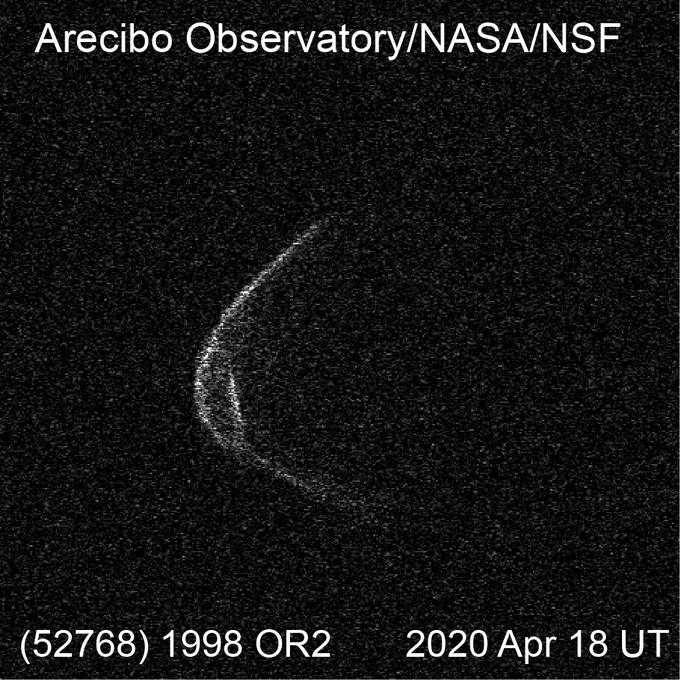
The Arecibo Observatory captured this radar image of the big asteroid 1998 OR2 on April 18, 2020. 1998 OR2 will fly by Earth at a distance of 3.9 million miles (6.3 million kilometers) on April 29.
(Image: © Arecibo Observatory/NASA/NSF)

We've now got a good visual on the big space rock that's going to fly by Earth next week.

On Saturday (April 18), the Arecibo Observatory in Puerto Rico captured a radar image of the asteroid 1998 OR2, which will zoom within 3.9 million miles (6.3 million kilometers) of our planet on April 29. 

For perspective: The moon orbits Earth at an average distance of about 239,000 miles (385,000 km). So we have nothing to fear from asteroid 1998 OR2's Earth flyby on April 29, scientists stress.


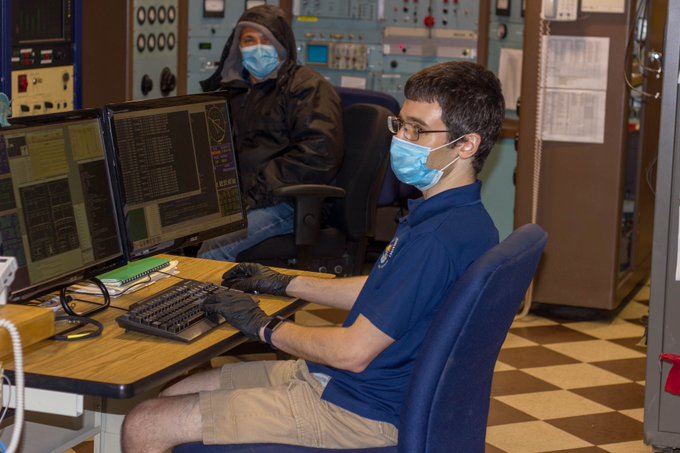
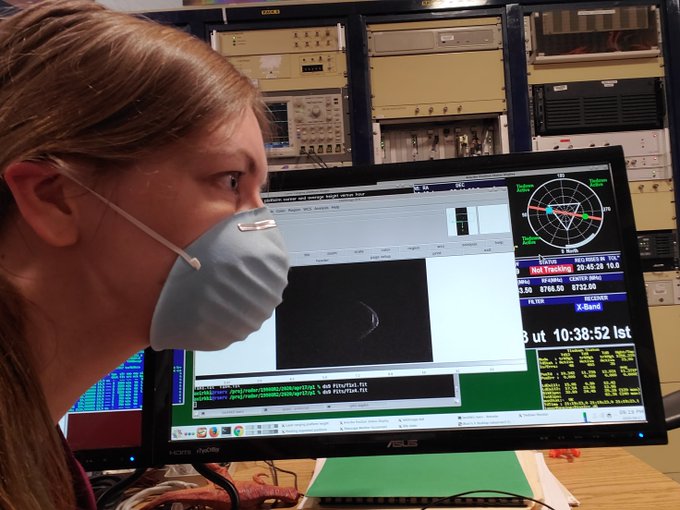
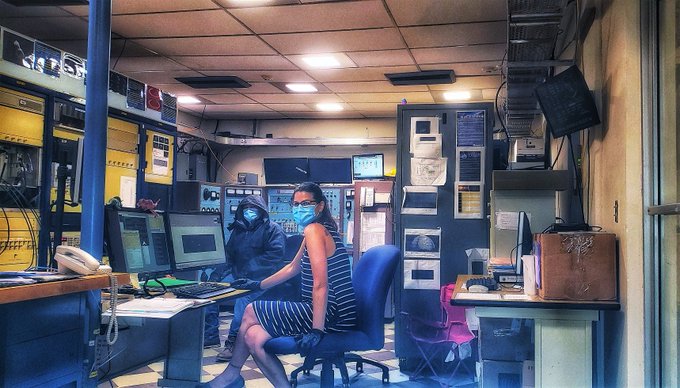
Arecibo team members have been wearing masks in the workplace to help minimize the spread of the novel coronavirus, and they apparently see a bit of themselves in the approaching space rock.

"#TeamRadar and the @NAICobservatory staff are taking the proper safety measures as we continue observations. This week we have been observing near-Earth asteroid 1998 OR2, which looks like it's wearing a mask! It's at least 1.5 km across and is passing 16 lunar distances away!" team members tweeted on Saturday via the @AreciboRadar account. (@AreciboRadar is not an official Arecibo account. But @NAICobservatory is, and it retweeted the April 18 post.)

Arecibo Radar@AreciboRadar

#TeamRadar and the @NAICobservatory staff are taking the proper safety measures as we continue observations. This week we have been observing near-Earth asteroid 1998 OR2, which looks like it's wearing a mask! It's at least 1.5 km across and is passing 16 lunar distances away!

View image on TwitterView image on TwitterView image on TwitterView image on Twitter
  • 138 people are talking about this

The Arecibo researchers aren't the only ones keeping an eye on 1998 OR2. For example, Italian astrophysicist Gianluca Masi, who runs the online Virtual Telescope Project, has been tracking the asteroid as well.

And Masi will continue to do so. On April 28, in fact, he will host a live webcast about 1998 OR2 that will feature telescope views of the object. 

Astronomers estimate that 1998 OR2 is between 1.1 and 2.5 miles (1.8 to 4.1 kilometers) wide — big enough that an impact could threaten human civilization. But, to repeat, there is nothing to fear here; the asteroid will miss us by a large margin on April 29. 

Indeed, you should quell any general death-from-above fears that may be running rampant in your head. NASA has found and tracked the vast majority of giant near-Earth asteroids, and none of them pose a threat to Earth for the foreseeable future.

Mike Wall is the author of "Out There" (Grand Central Publishing, 2018; illustrated by Karl Tate), a book about the search for alien life.

Follow him on Twitter @michaeldwall.

Follow us on Twitter @Spacedotcom or Facebook. 

{ https://www.space.com/ }

Hoe vind je dit bericht?
Geschreven door peter om 01:37 Stuur door

Europe's planet-hunting CHEOPS telescope spies its 1st alien worlds

Europe's planet-hunting CHEOPS telescope spies its 1st alien worlds

Hoe vind je dit bericht?
Geschreven door peter om 01:12 Stuur door

A Close Encounter of the “Cold Case” Kind That Could Still Go Hot

De bronafbeelding bekijken

A Close Encounter of the “Cold Case” Kind That Could Still Go Hot

Just a few days ago I was asked an interesting question. It basically went something like this: are there any really good “cold cases” (so to speak) that might advance our knowledge of the UFO phenomenon? Well, there’s one case in particular that I have addressed occasionally – as have various other researchers of the UFO subject, too. It’s a case that goes back to 1978. The location: Bolivia. It’s an eye-opening case for one particular reason: there is a substantial body of official, U.S. government documentation on the mysterious affair. Yes, 1978 is a long time ago; but, the Roswell event was quickly forgotten when it occurred, and wasn’t resurrected by Bill Moore, Stan Friedman and Charles Berlitz until the mid-1970s. And, although I don’t think that aliens crashed outside of Roswell, you’ll get my point: old cases can often result in the discovery of fascinating data and startling testimony. To a major degree, the 1978 incident has largely been forgotten. But, it doesn’t have to be. So, with that said, perhaps someone will decide to tackle this case and see if anything new surfaces.

It was on May 15, 1978 that the story began to take off. We know this thanks to documentation that has surfaced through the terms of the U.S. Freedom of Information Act. In a U.S. State Department titled “Report of Fallen Space Object,” the following was stated: “The Bolivian newspapers carried this morning an article concerning an unidentified object that apparently recently fell from the sky.  The object was discovered near the Bolivian city of Bermejo and was described as egg-shaped, metal and about four meters in diameter. The Bolivian Air Force plans to investigate to determine what the object might be and from where it came. I have expressed our interest and willingness to help. They will advise. Request the department check with appropriate agencies to see if they can shed some light on what this object might be. The general region has had more than its share of reports of UFOs the past week. Request a reply ASAP.”

Whether the object was a UFO, the remains of a satellite, or something else entirely, someone at least was looking at things from a UFO perspective. The story was far from over. On May 15, 1978, the CIA prepared a document on what its staff had learned about the incident. Again, the documentation surfaced via the FOIA: “Many people in this part of the country claim they saw an object which resembled a soccer ball falling behind the mountains on the Argentine-Bolivian border, causing an explosion that shook the earth. This took place on May 6. Around that time some people in San Luis and Mendoza provinces reported seeing a flying saucer squadron flying in formation. The news from Salta confirms that the artificial satellite fell on Taire Mountain in Bolivia, where it has already been located by authorities. The same sources said that the area where the artificial satellite fell has been declared an emergency zone by the Bolivian Government.”

The CIA had much more to say. On May 16, the agency prepared a second document. Its title: “Reports Conflict on Details of Fallen Object.” It reads as follows: “We have received another phone call from our audience requesting confirmation of reports that an unidentified object fell on Bolivian territory near the Argentine border. We can only say that the Argentine and Uruguayan radio stations are reporting on this even more frequently, saying that Bolivian authorities have urgently requested assistance from the US National Aeronautics and Space Administration in order to determine the nature of that which crashed on a hill in Bolivian territory.”

Bolivia UFO Crash

Even more was to come from the CIA: “Just a few minutes ago Radio El Espectador of Montevideo announced that there was uncertainty as to the truth of these reports. Argentine sources indicated that the border with Bolivia had been closed but that it might soon be reopened. They also reported that an unidentified object had fallen on Bolivian soil near the Argentine border and that local Bolivian authorities had requested aid from the central government, which, in turn, had sought assistance from the U.S. National Aeronautics and Space Administration to investigate the case. A La Paz newspaper said today that there is great interest in learning about the nature of the fallen object, adding that local authorities for security reasons had cordoned off 200 km around the spot where the object fell. The object is said to be a mechanical device with a diameter of almost 4 meters which has already been brought to Tarija. There is interest in determining the accuracy of these reports which have spread quickly throughout the continent, particularly in Bolivia and its neighboring countries. Is it a satellite, a meteorite, or a false alarm?”

May 18 was the day on which the U.S. Embassy in La Paz got involved in the very strange story. The recipient of the findings of the Embassy’s staff was the U.S. Secretary of State: “Preliminary information provided has been checked with appropriate government agencies. No direct correlation with known space objects that may have re-entered the Earth’s atmosphere near May 6 can be made; however, we are continuing to examine any possibilities. Your attention is invited to State Airgram A-6343, July 26, 1973 which provides background information and guidance for dealing with space objects that have been found. In particular any information pertaining to the pre-impact observations, direction of trajectory, number of objects observed, time of impact and a detailed description including any markings would be helpful.”

The U.S. Defense Attaché Office in La Paz reported: “This office has tried to verify the stories put forth in the local press. The Chief of Staff of the Bolivian Air Force told DATT/AIRA this date that planes from the BAF have flown over the area where the object was supposed to have landed and in their search they drew a blank. Additionally, DATT/AIRA talked this date with the Commander of the Bolivian army and he informed DATT that the army’s search party directed to go into the area to find the object had found nothing. The army has concluded that there may or not be an object, but to date nothing has been found.”

It wasn’t just elements of the U.S. Government who were following this story. So were UFO researchers. Leonard Stringfield was someone who collected numerous stories of crashed UFOs from the mid-to-late 1970s  to the early 1990s, said. In the summer of 1979, Stringfield corresponded with an Argentinian UFO researcher named Nicholas Ojeda. He told Stringfield:  “There is a report of a group of investigators who vanished mysteriously in the area. I really think something big happened in Salta. NASA investigated, but there was no news of it. I have to tell you that in La Paz, Bolivia, a huge Hercules C-130 carried ‘something’ from the area where the UFO crashed.”

Yes, this is – as I said at the beginning – very much a case that could still go far. There are more than a few leads to follow up. There may well be more documents on the case that have still not surfaced via FOIA, but which just might appear if someone is prepared to do the research. And opening some doors may result in even more doors opening. How about digging into the words of Nicholas Ojeda? What about the NASA connection? It’s clear that this story is rich in data and government records. Who is up for the challenge?

Bolivia UFO Crash mountain

El Taire mountain

{ https://mysteriousuniverse.org/ }

Hoe vind je dit bericht?
Geschreven door peter om 23:27 Stuur door

The Strange Case of an Airliner Forced to Land by a UFO

safe_image.php?d=AQDnb2hpK5Ey4ADs&w=540&h=282&url=https%3A%2F%2Fmysteriousuniverse.org%2Fwp-content%2Fuploads%2F2020%2F04%2F10-ufo-encounters-reported-by-commercial-airline-pilots-2-640x340.jpg&cfs=1&upscale=1&fallback=news_d_placeholder_publisher&_nc_hash=AQCiuenv4nwUi-Cq

The Strange Case of an Airliner Forced to Land by a UFO

Among all of the alleged UFO encounters out there, some of the most spectacular are those that have been reported by pilots and aviators. After all, these are people who have a firm grasp as to what to expect to see up in the sky, and know when something is wrong with this picture. There are numerous such accounts to be found, but one of the weirder is the time a Spanish airliner was actually forced to land due to a stubborn and very aggressive UFO.

One of the weirdest UFO incidents in Spanish history began on the evening of November 11, 1979, when Transportes Aéreos Españoles Flight JK-297 took off from Salzburg, Austria on a commercial flight to Las Palmas, in the Canary Islands. Aboard the TAE Super Caravelle airliner were 109 passengers, an experienced crew, and it was meant to be a totally routine flight. The plane made it to its refueling stop at the island of Majorca without incident, but as they headed out towards their final destination things would begin to get odd indeed. It started with a sudden request from ground control to pilot Francisco Javier Lerdo de Tejada to switch to his emergency channel because an emergency beacon had been detected in their general area. The pilot obeyed, and that’s when he and his crew noticed something very unusual to the left of their aircraft. Out in the night sky they could see two red lights, which seemed to be moving at great speed, and unsettlingly looked to be headed right towards them. It was alarming enough that Tejada immediately contacted the flight control center in Barcelona to get more information on the approaching lights, but they could see nothing on their radar to explain it. An original transcript of this initial conversation between the flight (TAE-297) and ground control reads:

– Barcelona, this is TAE 297
-TAE-297 tell me?
– Can you confirm me that we have a traffic next to us, to our left, more or less four five miles?
– TAE-297 negative. No traffic reported..
– We see two signals, red lights now. About three miles to ten in our position.. Approximately the same height..
-at ten of your position, three miles left now?
-yes
-TAE-297 received, thank you.
-(voice starting to panic) when you can, inform me about that traffic.
– 297 we Are not aware of any traffic on that route, you are the only one from Ibiza to Alicante.
-thank you very much (it is possible that traffic, yes)
-TAE-297 confirm me, those lights are on the sea or in the air?
-I repeat, is a traffic and it is in our high!
-TAE-297, received, thanks.
-Barcelona, this TAE 297, confirm me the type of aircraft that it could be that traffic!
-TAE-297 confirm me if it’s in the same direction?
-yes! We got closer and closer! … I can only see two red lights, no flashes
-TAE-297 we have no reported traffic around, we have also called Palma(Mallorca) to see if it’s a “lower level 240” and they told us they had no reported traffic either.

The military radar of Torrejón de Ardoz in Madrid could also not detect anything on radar except the airliner,there were no other flights scheduled to be in the area, and in the meantime, those lights were closing the distance fast. Tejada decided to take evasive maneuvers to avoid what he believed to be an incoming collision, rapidly lowering his altitude, but the lights mirrored this movement to stay on the same level as them, and at this time they were reported as no longer closing in, but rather maintaining an uncomfortably close distance of approximately half a kilometer from the airliner. If  this was another plane it was shamelessly ignoring safety precautions, and at this distance further evasive maneuvers were considered too dangerous, so Tejada requested to make an emergency landing at the airport in Manises, Valencia, which was granted.

As the plane approached its new destination, those eerie red lights continued to follow them with inscrutable purpose, still not showing up on radar anywhere, but very visible to the crew and passengers. These lights would follow them until they were nearly at Manises, after which they broke off to fly away just as mysteriously as they had arrived. At this point the lights were close enough to the airport that personnel on the ground were able to make visual confirmation of the anomalies, and then there were sudden radar signatures picked up of three more large flying objects estimated as measuring around 200 meters in diameter circling about. It was thought that there was perhaps an unregistered flight coming in for an emergency landing, but all efforts to hail what they believed to be an aircraft were met with silence.

1979SpainUFO-700x405.jpg

This was all enough to put the Spanish Air Force on high alert, and they began scrambling a Mirage F-1 fighter jet at the Los Llanos airbase in order to get a closer look and see what was going on. The fighter pilot, Spanish Air Force captain Fernando Cámara, reported that the object was moving very rapidly, forcing him to speed up to mach 1.4 just to keep up. He then made visual contact with the mysterious object, which he described as a “truncated cone” with multi-colored flashing lights on it. This was about all he was able to make out, as the strange craft then sped away out of sight faster than he could possibly keep up. At that moment things got even more intense, when there was a report of another object that had appeared near Valencia, which the pilot dutifully went to intercept, yet as he drew closer he was forced to break off when his electronic flight systems were inexplicably jammed and his system additionally gave him an ominous warning that he was being locked onto by missile radar. Alarmed, he aborted his chase as the object allegedly sped off in the direction of Africa, after which his systems returned to normal.

After the harrowing incident, the crew of Flight JK-297 was allegedly strictly forbidden to speak about it to the press and public, but the story got out into the wild nevertheless, and it was indeed curious enough that a full government investigation was launched into what has come to be known as the “Manises UFO Incident.” For his part, pilot Tejada would adamantly deny that what had been seen was another conventional aircraft, although he stopped short of claiming that it was an alien spacecraft. As the media was picking up on the case there were some conspiracies popping up among passengers, many of whom had not actually seen the UFOs and believed it was all a story to get the airline out of having to give them a refund for the delayed and aborted flight. Of course, the airline denied this, saying that an unusual aerial situation had definitely played out on that evening. However, what exactly that was is open to debate.

1979SpainUFO5-700x525.jpg

The government would do its best to explain it through the usual suspects of mundane phenomena, such as the planet Venus, stars, even the lights from a distant chemical plant, but it seems highly unlikely that an experienced crew would all make that misidentification. As for the experience of the fighter pilot Cámara, it was suggested that his electronic systems had been disrupted by “powerful electronic warfare equipment” being used in military exercises being carried out in the area at the time by the United States Sixth Fleet. The pilot completely rejects this possibility, as the fleet was too far away and the disruption had only occurred as he tried to engage the unidentified flying object. Regardless of these arguments by the witnesses, the official explanations still stand, and the Spanish military, government, and the airline involved had constantly tried to downplay the whole affair.

Yet, the pilots and those involved, experienced airmen who know what they are doing, insist that this is wrong. So what are we to think of all of this? Was this misidentified planets and stars, a UFO, or perhaps even some sort of secret military experiment being carried out by the U.S. fleet? How can the government stick so strongly to the mundane explanations when none really seem to fit? What is going on here? As we search for answers, the Manises UFO Incident has attracted much discussion, and remains the earliest and perhaps only account of a commercial airliner being forced to land because of a UFO.

{ https://mysteriousuniverse.org/ }

Hoe vind je dit bericht?
Geschreven door peter om 22:27 Stuur door

A New Case Against the Existence of a Planet 9

Evidence of Planet 9

A New Case Against the Existence of a Planet 9

When we can finally get back to having family gatherings again (won’t that be a wonderful day?), three things that will still be (or perhaps even more) taboo to discuss are politics, religion … and the existence of a Planet 9 — especially if the other party guests are still mourning and/or protesting the demotion of Pluto to dwarf planet status. This rule applies for Planet X or Nibiru as well – both of which can prompt saucer throwing of the plate kind. However, if you’re brave enough to test the subject, a new study may help defend the position of denial or doubt in the existence of Planet 9. Let’s get ready to rumble!

“We test whether the population of “extreme” trans-Neptunian objects (eTNOs) detected in the Y4 Dark Energy Survey (DES) data exhibit azimuthal asymmetries which might be evidence of gravitational perturbations from an unseen super-Earth in a distant orbit. By rotating the orbits of the detected eTNOs, we construct a synthetic population which, when subject to the DES selection function, reproduces the detected distribution of eTNOs in the orbital elements a,e, and i as well as absolute magnitude H, but has uniform distributions in mean anomaly M, longitude of ascending node Ω, and argument of perihelion ω.”

This opening argument comes from “Testing the isotropy of the Dark Energy Survey’s extreme trans-Neptunian objects,” a new study submitted to the journal Astrophysics by Pedro Bernardinelli, a Ph.D. student at the University of Pennsylvania working on solar system science. Bernardinelli and his co-authors were using data from the Dark Energy Survey, a visible and near-infrared survey using the Victor M. Blanco Telescope in Chile. Over a six-year period from August 2013 to January 2019, DES imaged the southern sky multiple times in five photometric bands. They were primarily interested in extreme Trans-Neptunian Objects (eTNOs) – those large enough to be a planet that can exert gravitational pressure on smaller TNOs, forcing their orbits to be strangely aligned. Such an object should be bright enough to be picked up, travel large distances across the sky and be seen over multiple consecutive days – all good criteria for disqualifying just about everything out there … except for seven objects.

“The DES data taken on their own are thus consistent with azimuthal isotropy and do not require a “Planet 9” hypothesis. The limited sky coverage and object count mean, however, that the DES data by no means falsify this hypothesis.”

It won’t bring back Pluto

When the team modeled a population of 40 million TNOs and plugged in the real seven eTNOs, they found that their strange alignments could all have occurred randomly with no influence by a Planet 9. In four different cases, this was the result – although they note that the fourth case, using only 3 eTNOs, it was hard, but not impossible, to randomize the alignment.

Will this win an argument with your uncle who strongly believes there’s a giant planet beyond Neptune? Probably not, since the study uses a very small sample in simulations, not actual images from a spaceship like New Horizons or an extremely powerful telescope with a panoramic view. Still, it’s probably strong enough to produce a stalemate, allowing you to turn the discussion to something less controversial – like sports.

Until then, practice social distancing, wear a mask and hide your saucers.

{ https://mysteriousuniverse.org/ }

Hoe vind je dit bericht?
Geschreven door peter om 21:59 Stuur door

Jupiter-Sized Exoplanet Mysteriously Disappears

planet-3358974_1920-e1587502428368-999x540.jpg

Jupiter-Sized Exoplanet Mysteriously Disappears

“Here today, gone tomorrow.”

It’s a common expression, one that dates back to John Calvin’s 1549 “Life and Conversion of a Christian Man.” Unless you’re watching Star Trek or a Star Wars movie, it’s not something generally heard when discussing a planet … until now. Astronomers watching a Jupiter-sized exoplanet discovered in 2008 and tracked for years with the Hubble space telescope announced this week that it has disappeared. Did they look around for a Death Star?

“The NASA/ESA Hubble Space Telescope has taken the first visible light snapshot of a planet circling another star. Estimated to be no more than three times Jupiter’s mass, the planet, called Fomalhaut b, orbits the bright southern star Fomalhaut, located 25 light-years away in the constellation Piscis Austrinus (the Southern Fish).”

ESA image of Fomalhaut b

In 2004, astronomers created the first-ever resolved visible light image of a large dust belt surrounding Fomalhaut. In 2005, Hubble astronomer Paul Kalas of the University of California, Berkeley proposed that the ring was being gravitationally modified by a planet lying between the star and the ring’s inner edge, and in 2008 a point source of light was photographed which was named Fomalhaut b. Its unusual brightness suggested it either had a Saturn-like ring or multiple moons, and its orbit followed a strange, non-elliptical path. Still, astronomers were confident Fomalhaut b was a large exoplanet.

“To my surprise, it was not present on the latest images. So, I went through all the data and started to analyze it and noticed a pattern: it was fading.”

Astronomer András Gáspár of the University of Arizona told Vice.com that he was looking for something else when he noticed that Fomalhaut b had disappeared from Hubble images in 2014. Going back through older images, Gáspár also saw that the planet was visibly fading and its strange orbit was no longer an orbit but an “escape trajectory” sending whatever it was out of Fomalhaut’s star system. The new data was fed into models, which showed only one thing could have caused all of these anomalies to happen.

“We do have evidence of such collisions in other systems, but none of this magnitude has ever been observed. This is a blueprint for how planets destroy each other.”

Did it look like this?

This was not a confrontation between a giant planet and a Death Star but a collision between two asteroid-sized bodies orbiting Fomalhaut – a collision that likely occurred just prior to the discovery of the dust cloud by Hubble astronomers in 2004. Neither of these space objects were planet-sized, but the resulting debris cloud was and it fooled them into thinking they had discovered exoplanet Fomalhaut b.

“Fool me once, shame on you; fool me twice, shame on me.”

That saying dates back to 1651 when it appeared in “The Court and Character of King James” by Anthony Weldon, and it applies to Fomalhaut b and its star. Fomalhaut can be described by yet another more recent adage: “Live fast, die young.” That one dates back to the 1947 book Knock on Any Door by Willard Motley (actually “Live fast, die young, and have a good-looking corpse”). Fomalhaut is a very hot star, which means it will have a short life in star terms. Its heat will keep its dust and debris ring agitated, so there could be more of these asteroid collisions, which means astronomers will be watching it carefully with the Hubble telescope and eventually the James Webb Space Telescope scheduled to launch in 2021.

Meanwhile, Fomalhaut b is fading fast into a massive cloud of dust, soon to be just a memory … and without a good-looking corpse. Perhaps Billy Joel wrote the best epitaph for this unusual space event.

“Only the good die young.”

This false-color composite image reveals the orbital motion of the planet Fomalhaut b.

› View larger

This false-color composite image, taken with the Hubble Space Telescope, reveals the orbital motion of the planet Fomalhaut b. Based on these observations, astronomers calculated that the planet is in a 2,000-year-long, highly elliptical orbit. The planet will appear to cross a vast belt of debris around the star roughly 20 years from now. If the planet's orbit lies in the same plane with the belt, icy and rocky debris in the belt could crash into the planet's atmosphere and produce various phenomena. The black circle at the center of the image blocks out the light from the bright star, allowing reflected light from the belt and planet to be photographed. The Hubble images were taken with the Space Telescope Imaging Spectrograph in 2010 and 2012. Credit: NASA, ESA, and P. Kalas (University of California, Berkeley and SETI Institute)

{ https://mysteriousuniverse.org/ }

Hoe vind je dit bericht?
Geschreven door peter om 21:28 Stuur door

Dit jaar al 241 UFO-meldingen in ons land, maar meestal zit Elon Musk er voor iets tussen (en vanavond kan je weer Starlink-satellieten spotten) - HLN.be

Dit jaar al 241 UFO-meldingen in ons land, maar meestal zit Elon Musk er voor iets tussen (en vanavond kan je weer Starlink-satellieten spotten) - HLN.be

Bron: Belga, Belgisch UFO-meldpunt, Frankdeboosere.be

Stichter van SpaceX, Elon Musk.

 AP  Stichter van SpaceX, Elon Musk.
 Het Belgische UFO-meldpunt heeft dit jaar al 241 UFO-meldingen op de teller staan. Het gros van de meldingen werd echter veroorzaakt door Starlink-satellieten van SpaceX, het ruimtebedrijf van de Amerikaan Elon Musk. Het meldpunt vraagt waarnemers om in de toekomst eerst na te gaan op zijn website of het de satellieten betreft alvorens een UFO-melding in te sturen.

Afgelopen weekend heeft het Belgisch UFO-meldpunt weer 70 nieuwe UFO-meldingen ontvangen. Met momenteel 241 waarnemingen dit jaar komt het aantal waarnemingen zo stilaan in de buurt van de 270 meldingen die voor het volledige jaar 2019 binnenkwamen.

Ook de komende dagen zullen deze satellieten bij helder weer te zien zijn

Het Belgische UFO-meldpunt

Lees ook

Piek aan waarnemingen

Het merendeel van de meldingen betreffen dus echter de Starlink-satellieten van SpaceX. Het gaat hierbij recent om 60 satellieten die op 18 maart vanuit Florida in een baan rond de aarde werden gebracht. Vooral op 18 en 19 april zag het UFO-meldpunt een piek aan waarnemingen. “Ook de komende dagen zullen deze satellieten bij helder weer te zien zijn”, klinkt het. 

Vanavond
Weerman Frank Deboosere laat alvast op zijn website weten dat vanavond tussen 22.38 uur en 22.56 uur zo’n 40 Starlink-satellieten zichtbaar zullen zijn. “Zij bewegen van west over noord naar oost en volgen allemaal ongeveer dezelfde baan aan de hemel. Ze passeren ongeveer 8 graden boven de Poolster.” 

Donkere plaats

“Starlink-satellieten zijn minder helder dan het ISS, dus mogelijk heb je een verrekijker nodig. Ruwweg om de halve minuut trekt er een satelliet voorbij”, laat Deboosere nog weten. “Zorg in elk geval voor een donkere waarnemingsplaats, ver verwijderd van alle hinderlijke kunstmatige lichtbronnen.” 

En ook: “Als alles goed gaat, wordt vanavond om 21.37 uur een nieuwe reeks van 60 Starlink-satellieten gelanceerd. Mogelijk zien we dat heel “gecondenseerde” treintje ook rond 22 uur. Ik ben benieuwd.”

(Lees verder onder de foto)

Zo zag de lichtjestrein van SpaceX-satellieten er eerder uit.

 astroblog.nl  Zo zag de lichtjestrein van SpaceX-satellieten er eerder uit.

Regelmatig

Sinds 24 mei 2019 zijn met regelmaat konvooien van satellieten van het Starlink-project waar te nemen die meestal van westelijke naar oostelijke richtingen passeren, legt het meldpunt uit. Door uiteindelijk duizenden satellieten in een lage aardbaan te plaatsen, hoopt SpaceX wereldwijd breedbandinternet te kunnen leveren.

Om te voorkomen dat er nog meer meldingen binnenkomen over de satellieten roept het meldpunt waarnemers op eerst een kijkje te nemen op een speciaal toegevoegde pagina over de Starlink-satellieten op zijn website alvorens het meldingsformulier in te vullen. 

Dr Marco Langbroek@Marco_Langbroek

Kaartjes voor de overkomst van de 23 minuten eerder gelanceerde Falcon 9 met nieuwe batch Starlink satellieten vanavond rond 21:53 NL tijd, voor een viertal locaties:
(NB: onzekerheid in tijdstip overkomst 1-2 minuten)

View image on TwitterView image on TwitterView image on TwitterView image on Twitter
  • 25 people are talking about this

Lees ook: 

  1. Astronomen klagen over Elon Musk, die maar satellieten de ruimte in blijft sturen (+)

Beeld van de lancering van opnieuw 60 satellieten voor Starlink aan Cape Canaveral, Florida op 18 maart.

 AP  Beeld van de lancering van opnieuw 60 satellieten voor Starlink aan Cape Canaveral, Florida op 18 maart.

Video's, geselecteerd door peter2011

{ https://www.hln.be/ }

Hoe vind je dit bericht?
Geschreven door peter om 20:45 Stuur door

What Will Happen on 29 April 2020 | NASA

What Will Happen on 29 April 2020 | NASA

According to NASA, every 37,000 years or so, our dear planet Earth is in serious danger of being stuck by a large asteroid (one measuring over 250 meters). The average life expectancy for most people sits at 78 years according to 2011 preliminary figures from the Centers for Disease Control. If the statistics say we can live 474 lifetimes before ever encountering an asteroid attack, there’s no reason to worry, right? Not exactly.

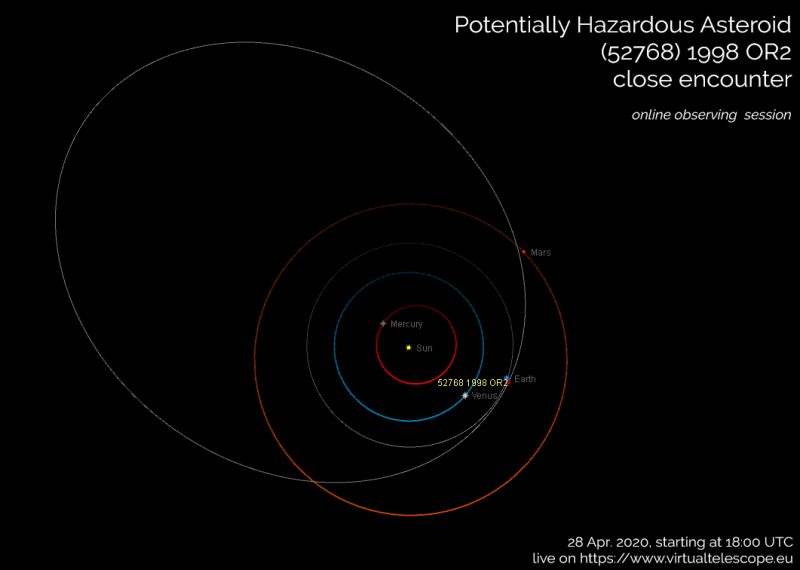
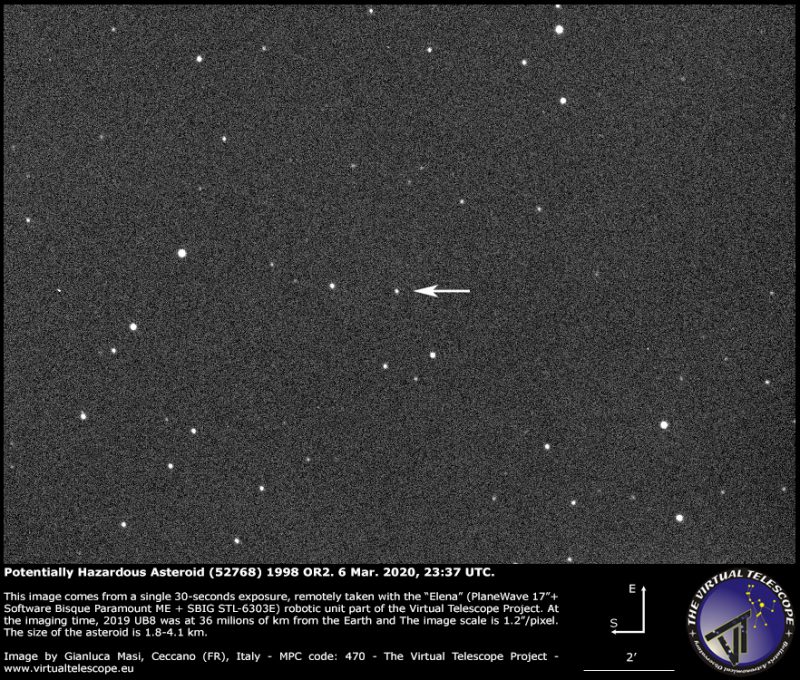
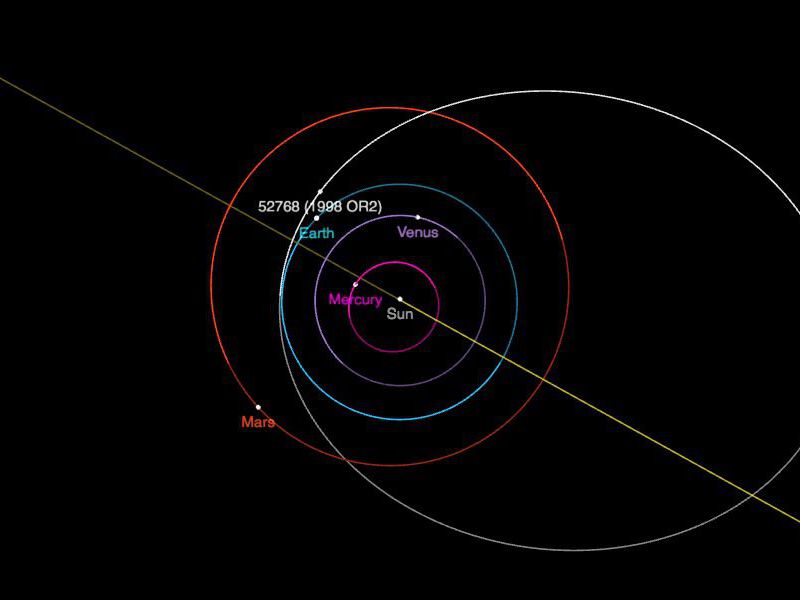
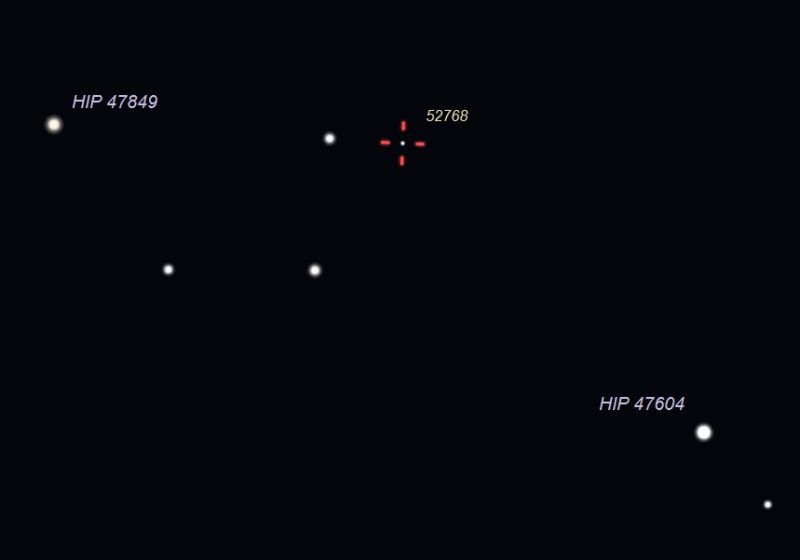
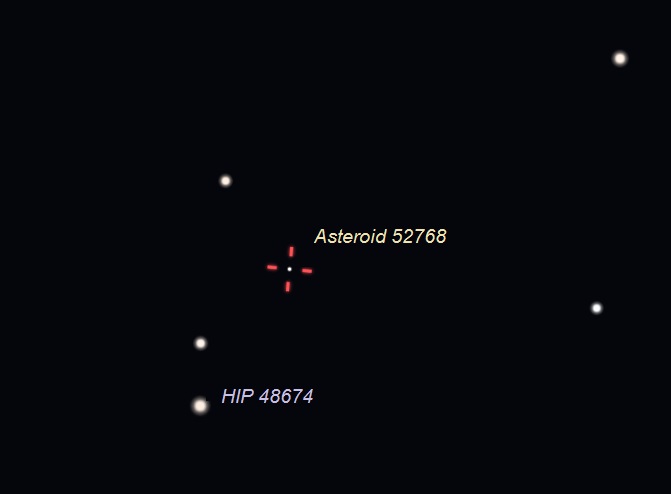
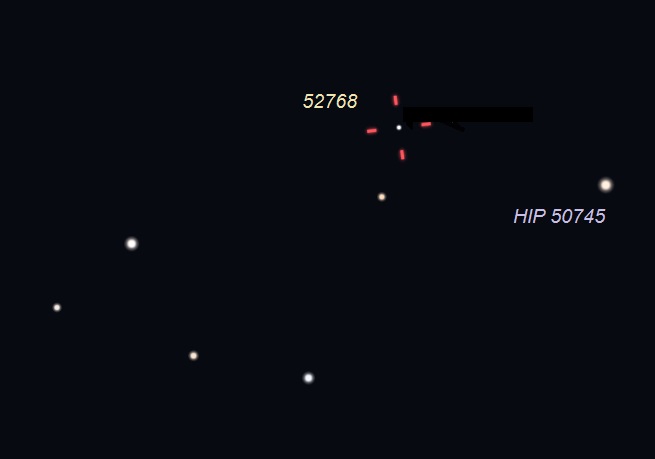
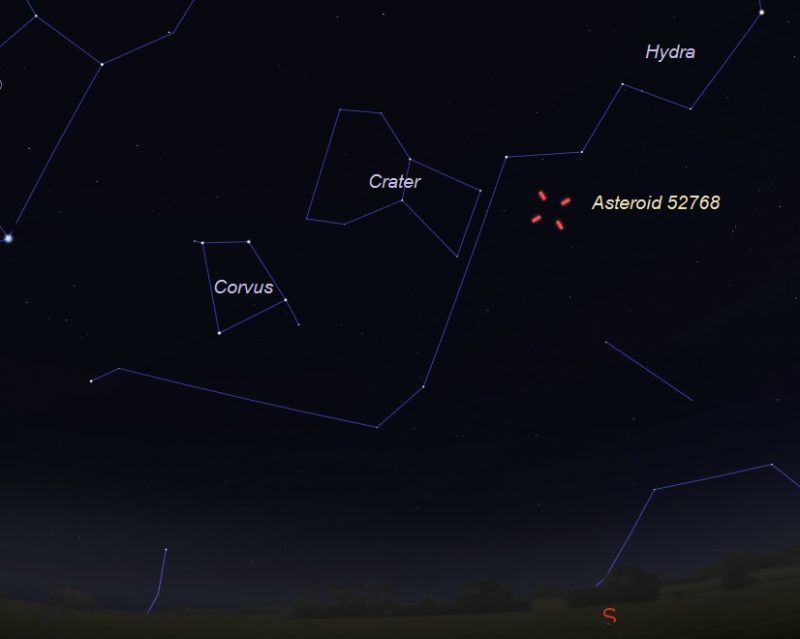
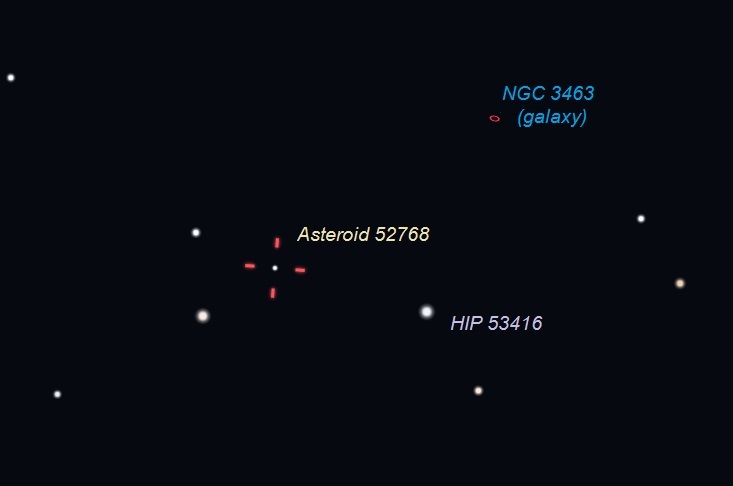
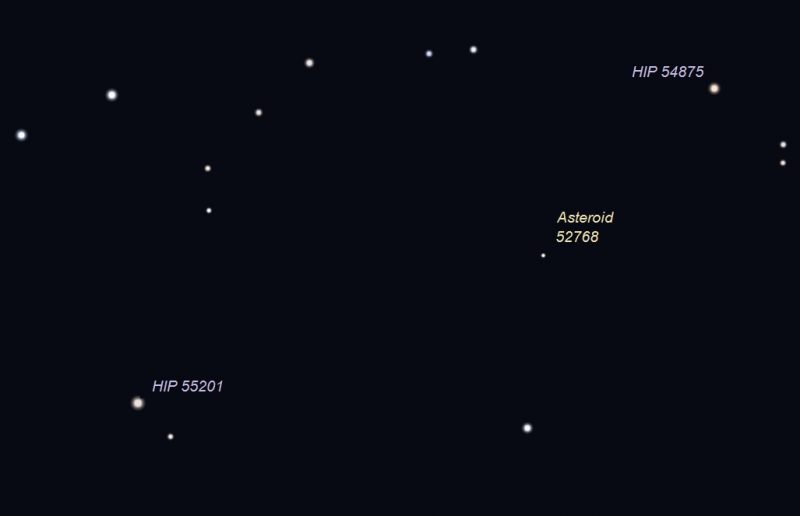
Seeing as how a majority of our closest encounters happened over the past few decades many are beginning to question how much longer can Earth continue to avoid cosmic disaster. That’s been said , Have you heard the buzz about a big – very big – asteroid that’ll pass relatively close to Earth This Month ? A monster asteroid with a diameter of 1.8 – 4.1 km is set to fly past Earth on April 29, 2020 . On its closest approach, the space rock will be 6.3 million km to Earth. Data from the US space agency NASA shows that this is the most massive asteroid to fly so close to Earth this year. The asteroid, named 52768 (1998 OR2), is big enough to destroy several countries and have a global impact, if it hits Earth. In fact, even the least estimate of its diameter (1.8 km) is more than twice the height of the tallest structure in the world, Burj Khalifa (0.83 km).

However, according to NASA, there is no possibility of this asteroid hitting the Earth. Phew.. Any asteroid bigger than 1 km is categorised as having the potential to trigger mass destruction on Earth. The asteroid, which killed the dinosaurs, measured more than 10 km across. As per the National Near-Earth Object Preparedness Strategy, “Objects close to and larger than one kilometre can cause damage on a global scale. They can trigger earthquakes, tsunamis, and other secondary effects that extend far beyond the immediate impact area.” That’s been said here are 10 more Asteroids That Nearly Destroyed Earth

{ https://beforeitsnews.com/ }

Hoe vind je dit bericht?
Geschreven door peter om 18:42 Stuur door

Police Officers Close Encounter In Denmark

Police Officers Close Encounter In Denmark

Police Officers Close Encounter In Denmark

AUGUST 13, 1970 …….HADERSLEY DENMARK

On the evening of 13th August 1970 in Hadersley in southern Denmark, police officer, Evald Maarup was guiding his car through the quiet and peaceful countryside close to the border with Germany. It would be a drive that he would never forget and would change his outlook on the world forever.

It was around 10:30 pm when a sudden “bluish light” suddenly enveloped his vehicle. At the same time, the car engine suddenly died, and the car came to a stop. When he went to radio the situation to the police switchboard, he realized that the radio was also dead. In fact, no electronic equipment in the entire vehicle worked at all.

It was also around this time that he realized that the interior of the car had suddenly heated dramatically. As he peered out through the car windshield he could see that the bright light was the underside of an oval vehicle, similar to a hat-shape, although definitely made from a metallic exterior.

He watched, and it now appeared to be ascending once again into the sky above and so leading to the lead appearing to dim somewhat. As it did so, it appeared to Maarup that the object itself was “withdrawing the light” back inside it as opposed to literally becoming dimmer. When the light had fully vanished, he could make out what appeared to be a darker patch with several protrusions around it. This would suggest a physical device attached onto the underside of the object.

De bronafbeelding bekijken

Drawing

Negatives

Négatif

He would snap himself back to his senses and then reach for the Fujaxa camera that he always had in his police car. He managed to quickly snap several pictures which were developed the following day. However, they would show no details whatsoever due to the dark of the night sky.

It was as he was snapping the pictures that he realized that the object appeared totally silent. Indeed, there was not a sound of any kind around him. He would estimate the entire episode lasted around five minutes before the object disappeared from sight at great speed. Certainly faster than any conventional aircraft of the times.

Bizarrely, although something that is experienced in multiple other UFO encounters around the world, as soon as the strange object disappeared from view the electrics and engine of Maarup’s car came back to life.

What we need to know here is whether the dying out of respective car engines and electrics is a purposeful act on the part of the occupants of these strange crafts, or whether it is a coincidental consequence of being in such close proximity to them – perhaps because of electromagnetic energy in the propulsion systems.

Perhaps also interesting, was Maarup’s findings when he exited the vehicle once the craft had gone. Walking around the sides of the car in order to inspect it to discover if there was anything out of the ordinary, he discovered how “heated” the exterior appeared as if it had been left sat outside on a baking summer’s day.

He would return to the police station a short time later and would make an official report of the incident.

Shortly after making his report, the police officer was ordered to undergo a basic psychiatric evaluation. He was found to be of sound mind, and essentially, truthful and trustworthy. In short, there was no obvious reason to doubt his claims.

What is perhaps also interesting is that the police officer – perhaps expectedly – would receive a wave of criticism and abuse in the local and national press once the story arrived with them. Rather than cut him adrift, though, his fellow officers and superiors would publicly defend him, and his solid police record.

NOTE: The above image is CGI.

KEN PFEIFER WORLD UFO PHOTOS AND NEWS

HTTP://WWW.WORLDUFOPHOTOS.ORG

HTTP://WWW.WORLDUFOPHOTOSANDNEWS.ORG

THANKS TO https://www.ufoinsight.com

Source: 

{ https://beforeitsnews.com/ }

Hoe vind je dit bericht?
Geschreven door peter om 12:36 Stuur door

Evidence Of Intelligent Life Found On Mars, Photos, UFO Sighting News.

Evidence Of Intelligent Life Found On Mars, Photos, UFO Sighting News.

UFO%252C%2Bsighting%252C%2Bnews%252C%2Bface%252C%2B.png
Date of discovery: April 20, 2020
Location of discovery: Mars Sol 313-316
Source photo: 
While looking over a gigapan Mars photo I noticed that there were some odd anomalies that seemed to have been overlooked by NASA. One was a small face on a smooth stone. The smooth stone didn't fit in with its rough surroundings...but the detail on the stone reveals a face carved into it. It looks like some kind of dog-like face, but the cranium extends far back, making the face 3X longer. 
 
Another anomaly was a claw or tooth not far from the face. Everyone in the area fossil hunting knows that the easiest bones to discover are the teeth and claws. They are the hardest and can last hundreds of millions of years or more. Also I found an strange bone, the end sticking out of the Mars dirt, but clearly its some kid of bone...its joint area makes that obvious. 
 
Of course there are two sides to every story, and then there are screenshots. NASA wants to believe that the possibility of single cell life in our solar systems exists...but I present to you the evidence from intelligent species that we may or may not want to meet one day.
Scott C. Waring
dig%252C%2Bfossil%252C%2Bfossils%252C%2Barcheology%252C%2Bdiscovery%252C%2Bnews%252C%2B%2Baliens%252C%2Balien%252C%2BET%252C%2Bplanet%2Bx%252C%2Banunnaki%252C%2Bgods%252C%2Bgod%252C%2Bangels%252C%2Bdemons%2BMars%252C%2Bsecret%252C%2Bwtf%252C%2BUFO%252C%2Bsighting%252C%2Bevidence%252C%2B3%2Bcopy%2B21.png
ancient%2Blife%252C%2Bfossil%252C%2Bfossils%252C%2Barcheology%252C%2Bdiscovery%252C%2Bnews%252C%2B%2Baliens%252C%2Balien%252C%2BET%252C%2Bplanet%2Bx%252C%2Banunnaki%252C%2Bgods%252C%2Bgod%252C%2Bangels%252C%2Bdemons%2BMars%252C%2Bsecret%252C%2Bwtf%252C%2BUFO%252C%2Bsighting%252C%2Bevidence%252C%2B3%2Bcopy%2B26.png

face%252C%2Bface%252C%2Bfossil%252C%2Bfossils%252C%2Barcheology%252C%2Bdiscovery%252C%2Bnews%252C%2B%2Baliens%252C%2Balien%252C%2BET%252C%2Bplanet%2Bx%252C%2Banunnaki%252C%2Bgods%252C%2Bgod%252C%2Bangels%252C%2Bdemons%2BMars%252C%2Bsecret%252C%2Bwtf%252C%2BUFO%252C%2Bsighting%252C%2Bevidence%252C%2B3%2Bcopy%2B25.png

rover%252C%2Bfossil%252C%2Bfossils%252C%2Barcheology%252C%2Bdiscovery%252C%2Bnews%252C%2B%2Baliens%252C%2Balien%252C%2BET%252C%2Bplanet%2Bx%252C%2Banunnaki%252C%2Bgods%252C%2Bgod%252C%2Bangels%252C%2Bdemons%2BMars%252C%2Bsecret%252C%2Bwtf%252C%2BUFO%252C%2Bsighting%252C%2Bevidence%252C%2B3%2Bcopy%2B22.png

strange%252C%2Bodd%252C%2Bfossil%252C%2Bfossils%252C%2Barcheology%252C%2Bdiscovery%252C%2Bnews%252C%2B%2Baliens%252C%2Balien%252C%2BET%252C%2Bplanet%2Bx%252C%2Banunnaki%252C%2Bgods%252C%2Bgod%252C%2Bangels%252C%2Bdemons%2BMars%252C%2Bsecret%252C%2Bwtf%252C%2BUFO%252C%2Bsighting%252C%2Bevidence%252C%2B3%2Bcopy%2B23.png

tooth%252C%2Bclaw%252C%2Bfossil%252C%2Bfossils%252C%2Barcheology%252C%2Bdiscovery%252C%2Bnews%252C%2B%2Baliens%252C%2Balien%252C%2BET%252C%2Bplanet%2Bx%252C%2Banunnaki%252C%2Bgods%252C%2Bgod%252C%2Bangels%252C%2Bdemons%2BMars%252C%2Bsecret%252C%2Bwtf%252C%2BUFO%252C%2Bsighting%252C%2Bevidence%252C%2B3%2Bcopy%2B24.png

{ https://www.etdatabase.com/ }

Hoe vind je dit bericht?
Geschreven door peter om 12:17 Stuur door

A Third Explosion on the sun - Could THIS be the Culprit?

A Third Explosion on the sun - Could THIS be the Culprit?

On March 20, 2020 and on April 12, 2020 huge mysterious explosions occurred on the far side of the sun. Now, on April 18, 2020 NASA's satellites have captured a third explosion from which it is believed to be asteroid impacts.

explosion-sun-nibiru-solar-system%2B%25281%2529.jpg

But so many impacts in a short time is unusual and would suggest that we are dealing with a massive celestial body.

According to Tio Abandom who monitors the solar system, a rogue planet, Nibiru with its moons, is on its way, possible causing the asteroid explosions on the sun.

explosion-sun-nibiru-solar-system%2B%25282%2529.jpg

explosion-sun-nibiru-solar-system%2B%25283%2529.jpg

Suppose that he has it right about this planet Nibiru, then what is going to happen when it passes the sun. Is the sun heating up, because its magnetic poles are being skewered by the Nibiru system adjacent to the sun? Could it be that it results in massive earth directed CMEs causing a total black out here on earth?

I don't know but it looks like history is about to repeat itself. The images as shown in the video say enough.

{ http://ufosightingshotspot.blogspot.com/ }

Hoe vind je dit bericht?
Geschreven door peter om 11:51 Stuur door

Unlike Earth, the gases in Venus’ atmosphere aren’t uniformly mixed

Unlike Earth, the gases in Venus’ atmosphere aren’t uniformly mixed

MESSENGER data surprisingly show different nitrogen concentrations at different altitudes

Venus

For decades, scientists assumed that the gases in Venus’ atmosphere are uniformly mixed below an altitude of about 100 kilometers. A new study undermines that assumption.

JPL-CALTECH/NASA

By

A new look at the nitrogen on Venus may overturn a decades-old assumption about the planet’s atmosphere.

Scientists long thought that atmospheric turbulence would create a uniform mixture of gases in Venus’s atmosphere below an altitude of about 100 kilometers. That’s how it works on Earth. But data from NASA’s MESSENGER spacecraft now indicate that this part of Venus’ atmosphere contains layers of gas with different nitrogen concentrations, researchers report online April 20 in Nature Astronomy.

The unexpected stratification of Venus’s atmosphere may serve as a cautionary tale for astronomers analyzing the atmospheres of planets around other stars, says Patrick Peplowski, a physicist at Johns Hopkins University Applied Physics Laboratory in Laurel, Md. The new results suggest that observations of a planet’s upper atmosphere from afar don’t necessarily reflect conditions closer to the surface.

Peplowski and colleagues analyzed measurements of neutrons escaping from Venus’ atmosphere made by MESSENGER as it flew by the planet in 2007. Neutrons are produced by galactic cosmic rays hitting gas in Venus’ atmosphere between about 60 and 90 kilometers off the ground. Since nitrogen tends to absorb neutrons, the number of neutrons that escape reveal nitrogen content.

Gas at altitudes from 60 to 90 kilometers must contain about 5 percent nitrogen to create the neutron counts measured by MESSENGER, computer simulations showed. In contrast, space probes in the 1970s measured a nitrogen concentration of about 3.5 percent closer to Venus’ surface, at altitudes below 45 kilometers (SN: 12/16/78).

It’s not yet clear why nitrogen in the upper atmosphere is more abundant than in the lower atmosphere. But the apparent divide between nitrogen layers overlaps with a persistent blanket of sulfur dioxide clouds about 50 kilometers above the ground, Peplowski says. “I do wonder if it’s a coincidence, or if the same processes that form that cloud deck are responsible for somehow separating the lower and upper atmospheres.”

{ https://www.sciencenews.org/ }

Hoe vind je dit bericht?
Geschreven door peter om 01:31 Stuur door

Interstellar comet Borisov has an unexpected amount of carbon monoxide

Interstellar comet Borisov has an unexpected amount of carbon monoxide

Second visitor from the stars has three times the CO relative to H2O than any local comets

comet 2I/Borisov

A wispy tail of gas and dust trails behind interstellar comet 2I/Borisov, seen about 420 million kilometers from Earth in this Hubble Space Telescope picture from October 12, 2019.

D. JEWITT/UCLA, ESA, NASA

By 

Comet 2I/Borisov, the solar system’s second known interstellar visitor, probably hails from a planetary family that is chemically distinct from our own.

During Borisov’s brief sojourn through the inner solar system, it was enveloped in its own tenuous gas cloud created as the sun baked ice on the comet’s surface (SN: 10/14/19). New observations of that gas show that the amount of carbon monoxide compared to water was off the charts — at least three times as high as any locally sourced comet that has ventured into the inner solar system.

Martin Cordiner, an astrochemist at NASA’s Goddard Space Flight Center in Greenbelt, Md., and Dennis Bodewits, planetary scientist at Auburn University in Alabama, report the findings in two papers published online April 20 in Nature Astronomy.

Astronomers don’t know where Borisov came from. It was discovered in August 2019 on a trajectory tracing back to somewhere in the constellation Cassiopeia (SN: 9/12/19). Seeing a unique opportunity to get a glimpse at the chemistry of another star system, researchers sifted through data from the Atacama Large Millimeter/submillimeter Array in Chile and the Hubble Space Telescope. Both observatories checked in on Borisov shortly after its closest pass by the sun in December, when the comet was just beyond Mars’ orbit.

To retain so much carbon monoxide, Borisov must have formed cold and stayed cold throughout its life. That means it likely formed in the remote outskirts of a carbon-enriched planetary system, the researchers say, far enough from its star so that carbon monoxide could readily freeze. A close run-in with a large planet may have kicked it out of its home. It then stayed brutally cold — never breaking 25 degrees Celsius above absolute zero (the temperature at which solid carbon monoxide turns to gas) — as it wandered among the stars.

The bottom axis of this graph shows the range of carbon monoxide concentrations (or amount of carbon monoxide relative to the amount of hydrogen cyanide) among solar system comets. The unusually high concentration detected in 2I/Borisov, the first interstellar comet, is highlighted in red. The comet shown on the far right is C/2016 R2 (PanSTARRS), presumably, a solar system comet with CO levels estimated to be dozens of times higher than Borisov’s.

Credit: NASA Goddard/Martin Cordiner/James Tralie

{ https://www.sciencenews.org/ }

Hoe vind je dit bericht?
Geschreven door peter om 01:06 Stuur door

Gravitational waves have revealed the first unevenly sized black hole pair

Gravitational waves have revealed the first unevenly sized black hole pair

One big black hole and one little one partnered up, LIGO and Virgo detections show

illustration of unequal-sized black holes

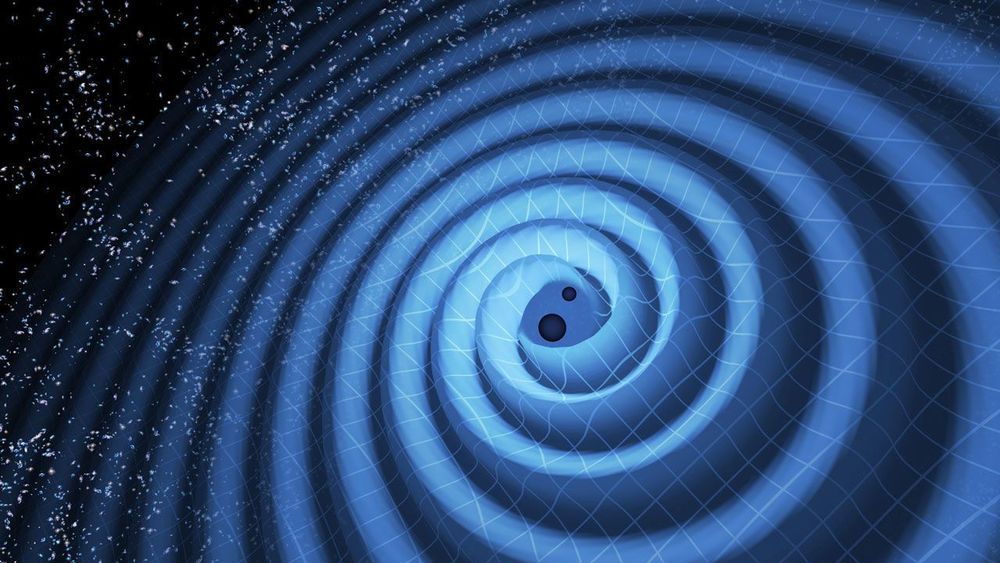
A black hole orbiting with a much smaller partner stirred up gravitational waves (illustrated by colors in this simulation) that scientists with the LIGO and Virgo experiments detected on Earth.

© N. FISCHER, H. PFEIFFER, A. BUONANNO/MAX PLANCK INSTITUTE FOR GRAVITATIONAL PHYSICS, SIMULATING EXTREME SPACETIMES (SXS)

By Emily Conover

As far as odd couples go, this is one for the record books.

The ripples in spacetime stirred up by two distant, merging black holes suggest that one of the pair was much bigger than the other. It’s the first definitively mismatched black hole pair spotted by the LIGO and Virgo collaborations, which search for the gravitational waves emitted in the cosmic encounters of black holes. The collision, detected on April 12, 2019, occurred about 2.5 billion light-years from Earth.

For all previous such black hole mergers, the two partners have been of similar size. But in this case, the bigger black hole had a mass about 30 times that of the sun, while the smaller was about eight times the mass of the sun, researchers with the LIGO and Virgo collaborations reported April 18 at a meeting of the American Physical Society, which was held virtually due to the COVID-19 pandemic.

Prior to this result, scientists did not know if such lopsided partnerships existed, or how rare they might be. “This one event represents a big step forward in our understanding,” astrophysicist Maya Fishbach of the University of Chicago said in a talk at the meeting.

Two black holes, one big and one small, orbit around one another in this simulation, emitting gravitational waves. Blue colors represent weaker gravitational radiation while red is stronger. The undulating line at the bottom traces how the frequency and strength of the waves changes over time. At the finale, the two black holes merge into one.  Credits: © N. Fischer, H. Pfeiffer, A. Buonanno (Max-Planck-Institut für Gravitationsphysik), Simulating eXtreme Spacetimes project

Understanding what types of black holes partner up could eventually help answer the question of how the duos form (SN: 6/19/16). The black holes might partner up within a dense star cluster, or when two stars are born together as twins and both collapse into black holes. Both possibilities could occasionally create unequal mass partnerships.

The researchers also tested whether Einstein’s theory of gravity still held up in this new type of black hole collision.  Surprise, surprise: Einstein was right again.

The detectors of the Advanced Laser Interferometer Gravitational-Wave Observatory in the United States and Virgo in Italy are currently shut down, in an early end to operations that was hastened by COVID-19. They’re scheduled to once again start observing the heavens in 2022.

{ https://www.sciencenews.org/ }

Hoe vind je dit bericht?
Geschreven door peter om 00:45 Stuur door

Two (potentially) exciting new exoplanet discoveries

Two (potentially) exciting new exoplanet discoveries

Scientists just announced 2 new exciting updates about exoplanets. One is a potentially habitable world similar in size and temperature to Earth. The other is a possible new planet – possibly with rings – orbiting the closest star to our sun, Proxima Centauri.

Two planets orbiting a bright star with other stars in background.

Artist’s concept of Kepler-1649c. This world appears to be the closest analog to Earth yet found in terms of both size and temperature.

Image via NASA/ Ames Research Center/ Daniel Rutter.

Last week was very interesting for anyone who loves the idea of exoplanets, or planets orbiting other stars. Not only did NASA and the SETI Institute announce the discovery of a new potentially habitable Earth-sized world – one of the most promising yet – but there was also another possible larger planet directly imaged orbiting the closest star to our sun, Proxima Centauri. And that second planet, if real, might have a huge ring system, according to some analyses done so far.

The possibly habitable world was announced by NASA and SETI Institute scientists on April 15, 2020, with a newly published and peer-reviewed paper in The Astrophysical Journal Letters. The larger possible planet orbiting Proxima Centauri is the subject of a new peer-reviewed paper that was submitted to arXiv on April 14 and has been accepted for publication in Astronomy and Astrophysics.

Let’s look at these worlds, one by one.

A new potentially habitable Earth-sized world. The first planet is called Kepler-1649c. It’s 300 light-years from Earth. Astronomers found it in old data from the Kepler space telescope mission. It had been missed when the data was analyzed the first time around by a computer algorithm called Robovetter, but spotted later on when double-checked by scientists in the Kepler False Positive Working Group (FPWG). As it turned out, this this false positive really was a planet after all.

Two colorful spheres next to each other with text annotations on gray background.

Estimated size of Kepler-1649c as compared to Earth (artist’s concept).

Image via NASA/ Ames Research Center/ Daniel Rutter.

Andrew Vanderburg, a researcher at the University of Texas at Austin (UTA) and first author of the new paper, said in a statement:

Out of all the mislabeled planets we’ve recovered, this one’s particularly exciting, not just because it’s in the habitable zone and Earth-size, but because of how it might interact with this neighboring planet. If we hadn’t looked over the algorithm’s work by hand, we would have missed it.

Kepler-1649c is almost the same size as Earth, only 1.06 times larger. Orbiting in its star’s habitable zone, where liquid water could exist, it receives about 75% the amount of light that Earth does from the sun, and so its temperature is estimated to be similar to Earth’s as well. Thomas Zurbuchen, associate administrator of NASA’s Science Mission Directorate in Washington, said:

This intriguing, distant world gives us even greater hope that a second Earth lies among the stars, waiting to be found. The data gathered by missions like Kepler and our Transiting Exoplanet Survey Satellite (TESS) will continue to yield amazing discoveries as the science community refines its abilities to look for promising planets year after year.

Co-author Jeff Coughlin of the SETI Institute said:

In terms of size and likely temperature, this is the most similar planet to Earth that has ever been found with Kepler. It’s incredible to me that we just found it now, seven years after data collection stopped on the original Kepler field. I can’t wait to see what else might be found in the rich dataset from Kepler over the next seven years, or even seventy.

These findings make Kepler-1649c one of the most promising exoplanets yet found in terms of potential habitability. One caveat to this, though, is that it orbits a red dwarf star. Red dwarfs are well known for emitting large, dangerous flares that might make it difficult for life to exist on any planet. But there’s a lot we don’t know yet about this world (and about red dwarf flares). We don’t know, for example, whether Kepler-1649c has a substantial atmosphere; if so, the atmosphere might help protect any life forms that exist on its surface.

Rocky reddish landscape with large sun and clouds in sky.

Artist’s concept of what Kepler-1649c could like like on the surface.

Image via NASA/ Ames Research Center/ Daniel Rutter.

By comparison, TRAPPIST-1f may be even closer to Earth in terms of size. Also, it is possible that Teegarden c, TRAPPIST-1d and TOI 700 d may be closer in terms of temperature. But Kepler-1649c is intriguing, since it is now considered to be the most similar to Earth of any exoplanet found so far, in terms of both size and temperature, which orbits in the habitable zone of its star.

Kepler-1649c orbits its star in only 19.5 Earth days. This star also has at least one other known planet, Kepler-1649b, which is similar in size but orbits the star at only half the distance of Kepler-1649c. This is similar to how Venus orbits the sun at about half the distance that Earth does.

Could there be any additional planets in this system? Scientists don’t know yet, and so far haven’t found a third one. But the two known planets orbit in a stable ratio. Every four times the outer planet orbits the star, the inner planet orbits almost exactly nine times. This nine-four ratio is rather unique, and might hint at a third, still-undiscovered planet between the two known ones. If so, both the inner and outer planets could orbit in synchronicity with the middle planet, creating a pair of three-to-two resonances.

Finding planets like Kepler-1649c is exciting, since red dwarfs are the most common stars in our galaxy. Many planets have now been discovered orbiting these stars, with many more expected in the near future. Even though red darfs are volatile, this increases the chances of finding worlds around them that are actually habitable. According to Vanderburg:

The more data we get, the more signs we see pointing to the notion that potentially habitable and Earth-sized exoplanets are common around these kinds of stars. With red dwarf stars almost everywhere around our galaxy, and these small, potentially habitable and rocky planets around them too, the chance one of them isn’t too different than our Earth looks a bit brighter.

Now what about the second planet, the one orbiting Proxima Centauri? Keep reading …

Textured red background with yellow circles and yellow and white text annotations.

Combination of five images showing the possible second planet orbiting Proxima Centauri, from the SPHERE instrument on the Very Large Telescope (VLT). It shows a bright dot at the predicted location of the planet in April 2018 and the position where it would be now.

Image via Gratton et al./ Bad Astronomy.

A second possible planet, possibly with a huge ring system, orbiting Proxima Centauri. In another interesting development, scientists may have directly imaged a new planet orbiting the closest star to our sun, Proxima Centauri. Those results, from the SPHERE instrument on the Very Large Telescope (VLT), have just been published in the paper so far, without an official announcement, but it has stirred up conversations on Twitter. Astronomer Phil Plait wrote an excellent update about it for SYFY Wire on April 16.

The possibility of a second planet at Proxima Centauri – called Proxima Centauri c – had been announced previously last January, but now another another research team thinks they may have successfully imaged it! It hasn’t been confirmed yet, and more work needs to be done, but it is certainly intriguing. The possible planet appears as a bright dot near the star, in a combination of five images taken over two months, beginning in April 2018.

Smiling young man with eyeglasses, wearing a polo shirt.

Andrew Vanderburg at the University of Texas at Austin (UTA), first author of the new paper.

Image via UTA.

What’s puzzling is that the possible planet appears significantly brighter than it should. If the brightness was entirely from the light reflected off the planet itself, then the planet would be about five times larger than Jupiter. But its estimated mass is more similar to Neptune’s. So it’s possible, the researchers say, that the planet is actually smaller, but has a huge ring system around it. And if it’s a real planet, then it would be the closest one imaged so far. Previous studies suggest that Proxima Centauri c is a super-Earth; larger and more massive than Earth, but smaller and less massive than Neptune.

The other already known planet orbiting Proxima Centauri is Proxima Centauri b, with a mass about 1.3 times that of Earth, which orbits about 30 times closer to its star. Proxima Centauri is also a red dwarf star, which orbits the binary star system of two sun-like stars known as Alpha Centauri.

Both of these are exciting discoveries, even if one is a bit more tentative, and show how there are still many new fascinating worlds waiting to be discovered.

{ https://earthsky.org/ }

Hoe vind je dit bericht?
Geschreven door peter om 00:22 Stuur door

NASA: Something Is Off About This Interstellar Comet

nasa-something-off-interstellar-comet-600x315.jpg

NIGHT OF THE COMET

NASA: Something Is Off About This Interstellar Comet

2I/Borisov "is dramatically different from most other comets we’ve seen before."

In 2019, astronomers made an incredible discovery: a comet from a different star system making a close approach to the Sun at an extremely unusual trajectory, which was later named “2I/Borisov” after the amateur astronomer who discovered it.

Observations suggest that its home star system could resemble our own. NASA scientists have even suggested that the object may hold water.

Now, a new study by an international team of researchers led by NASA has revealed something highly unusual: gas emanating from the comet contained unusually high amounts of carbon monoxide — up to 26 times higher than that of the average comet.

“This is the first time we’ve ever looked inside a comet from outside our solar system and it is dramatically different from most other comets we’ve seen before,” Martin Cordiner, astrochemist at the NASA Goddard Space Flight Center and lead author of the study published in the journal Nature Astronomy said in a statement.

The fact that they found any carbon monoxide isn’t in itself unusual. It’s one of the most commonly found molecules in space. But the extremely high concentration puzzled the researchers.

“The comet must have formed from material very rich in CO ice, which is only present at the lowest temperatures found in space, below -420 degrees Fahrenheit (-250 degrees Celsius),” Stefanie Milam, planetary scientist at the NASA Goddard Space Flight Center and co-author of the study, said in the statement.

They believe the abundance of the gas could tell us about the comet’s home.

“If the gases we observed reflect the composition of 2I/Borisov’s birthplace, then it shows that it may have formed in a different way than our own solar system comets, in an extremely cold, outer region of a distant planetary system,” said Cordiner.

Scientists suggest that 2l/Borisov could’ve spent billions of years traveling through the extreme colds of interstellar space after being yeeted out of its host system as it came near a passing star.

But we still can’t pinpoint what it’s home system looks like just yet.

“2I/Borisov gave us the first glimpse into the chemistry that shaped another planetary system,” said Milam. “But only when we can compare the object to other interstellar comets, will we learn whether 2I/Borisov is a special case, or if every interstellar object has unusually high levels of CO.”

ESA/Victor Tangermann

{ https://futurism.com/ }

Hoe vind je dit bericht?
Geschreven door peter om 00:00 Stuur door

How WFIRST will use warped spacetime to find exoplanets

How WFIRST will use warped spacetime to find exoplanets

NASA’s WFIRST mission – an infrared space observatory planned for launch around 2025 – will use the fact that the gravity of distant objects warps spacetime, bending and focusing light, thereby revealing new worlds.

Colorful oval spiral mass of stars with schematic diagram overlaid.

Artist’s concept of how WFIRST will use microlensing – the bending and focusing of starlight via the gravity of distant objects – to search for exoplanets. WFIRST will focus on the region near the center of our Milky Way galaxy, where stars are most densely packed.

Image via NASA/ GSFC/ CI Lab/ JPL.

Most exoplanets orbiting distant stars are found by observing a planet transit, or pass in front of, its star. As the planet transits, the star’s light temporarily and minutely dims. The Wide Field Infrared Survey Telescope (WFIRST), now being developed by NASA for a possible launch in the mid-2020s, will do the opposite. It’ll search for little surges of light that occur during what are called microlensing events, or events where the gravity of distant objects warps spacetime, bending and focusing light, in this case revealing new worlds.

A statement from NASA explained microlensing:

Any time two stars align closely from our vantage point, light from the more distant star curves as it travels through the warped space-time of the nearer star. This phenomenon, one of the predictions of Einstein’s general theory of relativity, was famously confirmed by British physicist Sir Arthur Eddington during a total solar eclipse in 1919. If the alignment is especially close, the nearer star acts like a natural cosmic lens, focusing and intensifying light from the background star.

Planets orbiting the foreground star may also modify the lensed light, acting as their own tiny lenses. The distortion they create allows astronomers to measure the planet’s mass and distance from its host star. This is how WFIRST will use microlensing to discover new worlds.

Pretty cool!

The new search will combine WFIRST’s results with those of the Kepler and TESS missions. David Bennett, who leads the gravitational microlensing group at Goddard Space Flight Center in Greenbelt, Maryland, explained that WFIRST’s capabilities as a survey telescope will be key to its potential to find exoplanets:

Microlensing signals from small planets are rare and brief, but they’re stronger than the signals from other methods. Since it’s a one-in-a-million event, the key to WFIRST finding low-mass planets is to search hundreds of millions of stars.

Large bright dots with graph lines below them and text annotations, on black background.

How microlensing can help find exoplanets. Microlensing depends on the chance alignment of two stars. As one star passes behind the other, the closer star acts like a lens, bending the light so that the brightness smoothly increases and decreases. If there is a planet is around the closer star, its gravity will also bend the light slightly, causing a spike that can be detected and measured by scientists.

Image via ESA.

WFIRST will set its sights on the star-rich center of our Milky Way galaxy. Since WFIRST is an infrared telescope, it can see through dust clouds that block visible light. That’s especially important in planet searches near the galaxy’s center because, when we look in that direction, we see vast clouds of dust in space.

Other space-based telescopes like the TESS mission and the no-longer-active Kepler mission have looked for exoplanets around stars up to about 1,000 light-years from our sun. WFIRST will look tens of thousands of light-years away, toward the more densely populated central region of our galaxy.

So far, 86 out of more than 4,000 exoplanets found have been discovered using microlensing. Most exoplanets have been found via the transit method. But the microlensing technique has a very powerful potential: the potential to find solar systems like our own. The NASA statement explained:

The techniques commonly used to find other worlds are biased toward planets that tend to be very different from those in our solar system. The transit method, for example, is best at finding sub-Neptune-like planets that have orbits much smaller than Mercury’s. For a solar system like our own, transit studies could miss every planet.

WFIRST’s microlensing survey will help us find analogs to every planet in our solar system except Mercury, whose small orbit and low mass combine to put it beyond the mission’s reach. WFIRST will find planets that are the mass of Earth and even smaller – perhaps even large moons, like Jupiter’s moon Ganymede.

So WFIRST will be able to find other worlds with masses similar to Earth or smaller, in larger orbits. It will also be ideally suited to finding ice giants, similar to Uranus and Neptune, which may be the most common type of planet in our galaxy.

Using microlensing, WFIRST will search for planets in the habitable zones of their stars, where temperatures could allow liquid water to exist.

No one detection method can find all planets, but by combining the data from missions like WFIRST, Kepler and TESS, scientists will be able to obtain a much better idea of how many kinds of planetary systems there are. According to Matthew Penny at Louisiana State University:

Trying to interpret planet populations today is like trying to interpret a picture with half of it covered. To fully understand how planetary systems form we need to find planets of all masses at all distances. No one technique can do this, but WFIRST’s microlensing survey, combined with the results from Kepler and TESS, will reveal far more of the picture.

Graph with swaths of blue, black and red dots, planets and text annotations.

Comparison of exoplanet discoveries from the Kepler mission and other telescopes with those expected from WFIRST. Red and black dots are large planets with small orbits found by Kepler and others. WFIRST will find planets with a much wider range of masses orbiting farther from their stars (blue dots).

Image via NASA/ GSFC (adapted from Penny et al. 2019).

Kepler’s search area was about 100 square degrees of the sky, containing 100,000 stars typically about 1,000 light-years away. TESS, on the other hand, covers the entire sky and looks at about 200,000 stars, but those stars are much closer, about 100 light-years. By comparison, WFIRST will focus on only three square degrees, but search 200 million stars up to 10,000 light-years distant.

Of the microlensing searches that have been done to date, most have been in visible light. Those searches wouldn’t be able to find planets around stars near the galaxy’s center that are obscured by dust clouds. Another microlensing survey, by the United Kingdom Infrared Telescope (UKIRT) in Hawaii, has been mapping the central region since 2015. This will help pave the way for WFIRST’s upcoming observations by measuring the rate of microlensing events near the galaxy’s core.

UKIRT uses machine learning, which will also be used by WFIRST to help streamline the enormous amount of data. Savannah Jacklin, an astronomer at Vanderbilt University in Nashville, Tennessee, said:

Our current survey with UKIRT is laying the groundwork so that WFIRST can implement the first space-based dedicated microlensing survey. Previous exoplanet missions expanded our knowledge of planetary systems, and WFIRST will move us a giant step closer to truly understanding how planets – particularly those within the habitable zones of their host stars – form and evolve.

Bearded man with eyeglasses and red disk behind him on black background.

David Bennett at Goddard Space Flight Center, who leads the gravitational microlensing group.

Image via GSFC.

As exciting as finding new worlds near the center of our galaxy is, WFIRST will be able to discover other fascinating objects as well. This includes free-floating planets, as small as Mars, not orbiting any stars, and brown dwarfs, which are too large to be planets but too small to be stars. WFIRST could also find neutron stars and black holes. Penny said:

WFIRST’s microlensing survey will not only advance our understanding of planetary systems, it will also enable a whole host of other studies of the variability of 200 million stars, the structure and formation of the inner Milky Way, and the population of black holes and other dark, compact objects that are hard or impossible to study in any other way.

WFIRST and its microlensing capabilities represent a huge step forward in the search for new exoplanets and other amazing objects in the central part of our galaxy, a region brimming with new discoveries yet to be made.

  • Bottom line: The upcoming WFIRST space telescope mission will use microlensing – which relies on massive objects in space bending spacetime – to search for exoplanets near the center of our Milky Way galaxy.
  • Via NASA

{ https://earthsky.org/ }

Hoe vind je dit bericht?
Geschreven door peter om 23:58 Stuur door

Unique Six-Planet System Orbits In Almost Perfect Rhythm

main article image

Artist's impression of six planets orbiting Sun-like star Kepler-11.
(NASA/Tim Pyle)
SPACE

Unique Six-Planet System Orbits In Almost Perfect Rhythm

A very unique planetary system was discovered with all six of its planets orbiting in almost perfect rhythm. The star, which is called HD 158259, is slightly larger than our own sun and is around the same mass. It is located approximately 88 light-years away from us and is orbited by one super-Earth (which is about twice the mass of Earth) and five mini-Neptunes.

An international team of researchers studied this system for seven years and took measurements using the SOPHIE spectrograph as well as the TESS exoplanet-hunting space telescope. By using this information, they calculated the orbits of all six planets orbiting HD 158259.

(Not HD 158259 and its planets)

The fact that the planets are orbiting in an almost perfect rhythm makes it quite extraordinary. In fact, each planet orbits the star at a near 3:2 resonance with the next-closest one, meaning that every time a planet completes three orbits, the next one completes two orbits. Nathan Hara, who is from the University of Geneva (UNIGE) and is the first author of the study (which can be read in full here), explained this further, “This is comparable to several musicians beating distinct rhythms, yet who beat at the same time at the beginning of each bar.”

Their orbits are incredibly quick as it takes all six planets 2.17, 3.4, 5.2, 7.9, 12, and 17.4 days to complete an orbit around the star (starting from the closest to the furthest away). Even though all six planets orbiting HD 158259 are situated close together, they may not have been formed that way. For comparison, the distance from the star to the outermost planet is 2.6 times shorter than the distance from Mercury to our sun.

Stephane Udry, who is also from UNIGE and another author of the study, explained how this would have happened, “Several compact systems with several planets in, or close to resonances are known, such as TRAPPIST-1 or Kepler-80. Such systems are believed to form far from the star before migrating towards it. In this scenario, the resonances play a crucial part.”

Hara went into further detail by stating, “The current departure of the period ratios from 3:2 contains a wealth of information.” “With these values on the one hand, and tidal effect models on the other hand, we could constrain the internal structure of the planets in a future study. In summary, the current state of the system gives us a window on its formation.”

{ https://mysteriousuniverse.org/ }

Hoe vind je dit bericht?
Geschreven door peter om 23:08 Stuur door

If Space Travel Causes Brains to Expand, Humans May Need Alien Skulls

De bronafbeelding bekijken

If Space Travel Causes Brains to Expand, Humans May Need Alien Skulls

A longtime staple of science fiction is the depiction of extraterrestrials having extremely large heads holding almost-as-large brains … think “To Serve Man,” the classic Twilight Zone episode. H.G. Wells may have been the first writer to describe aliens with big heads, and that image eventually became the ‘grey aliens’ many believe are actual extraterrestrials. Many experts paid to ponder what extraterrestrials would look like stick with the ‘big head’ idea. It turns out all of these depictions are rooted in truth … although not because these species evolved into big-brained, smart beings first. A new study of NASA astronauts found that the human brain expands during long-term space fights – a phenomena that space traveler’s skulls may have to evolve quickly to accommodate to avoid damaging their brains. Or will cranial binding return for parents who want their infants to grow up to be Mars explorers?

“When you’re in microgravity, fluid such as your venous blood no longer pools toward your lower extremities but redistributes headward. That movement of fluid toward your head may be one of the mechanisms causing changes we are observing in the eye and intracranial compartment.”

You should have planned a-head.

Detailed medical examinations of astronauts post-flight – especially Scott Kelly and his earthbound twin Mark — found problems with eyesight and cognition long after they returned, raising concerns and prompting more extensive research. In a new study published in the journal Radiology and summarized in Sci-News, Professor Larry Kramer from the University of Texas Health Science Center at Houston led a team which gave MRI scans to 11 astronauts (10 men and one woman) before they departed for extended stays on the International Space Station. The astronauts were then given MRIs the day after they returned from space and periodically throughout their first year back. What they found will definitely affect the future of human space travel.

“What we identified that no one has really identified before is that there is a significant increase of volume in the brain’s white matter from preflight to postflight. White matter expansion in fact is responsible for the largest increase in combined brain and cerebrospinal fluid volumes postflight.”

White matter – the fibers of the central nervous system that act as relays between brain regions – expanded astronauts’ brain and cerebrospinal fluid volumes, causing elevated intracranial pressure to what appear to be dangerous levels. How dangerous?

“We found that the pituitary gland loses height and is smaller postflight than it was preflight. In addition, the dome of the pituitary gland is predominantly convex in astronauts without prior exposure to microgravity but showed evidence of flattening or concavity postflight.”

Future astronaut?

The pituitary gland is considered to be the body’s master gland because it controls the thyroid and adrenals, the ovaries and testicles, and others, affecting the body’s hormone levels. The MRI scans found that this elevated cranial pressure lasted the entire year and can cause normal pressure hydrocephalus, whose symptoms include difficulty walking, bladder control problems and dementia.

Will future human space travelers need to develop larger skulls – either evolutionarily or artificially? As usual, more research is needed. However, it wouldn’t be the first time that H.G. Wells saw the future and depicted it accurately. Let’s hope Rod Serling and “To Serve Man” isn’t the same.

{ https://mysteriousuniverse.org/ }

Hoe vind je dit bericht?
Geschreven door peter om 22:48 Stuur door

Alain Juillet : "Le phénomène ovni échappe à la dimension terrestre"

Alain Juillet : "Le phénomène ovni échappe à la dimension terrestre"

Paris Match - David Ramasseul

Un objet volant non identifiée filmé par un pilote de l'US Navy en janvier 2015.

Un objet volant non identifiée filmé par un pilote de l'US Navy en janvier 2015.DR

Dans "Ovnis: une affaire d'Etats", Dominique Filhol aborde les objets volants non identifiés non comme un folklore mais comme un sujet aussi sérieux que les scientifiques, politiques et experts qui se succèdent dans ce documentaire. Parmi eux, l’ancien directeur des renseignements à la DGSE, Alain Juillet, qui a répondu à nos questions.

C’est une première : l’ancien directeur des renseignements à la DGSE, Alain Juillet, s’exprime sans tabous sur un sujet qui, pour beaucoup, sent encore le souffre: les objets volants non identifiés. Fort de son immense expérience dans le renseignement, il prône une approche pragmatique et un esprit ouvert pour élucider un mystère trop important pour être laissé aux rêveurs et aux sceptiques dogmatiques.

Lire aussi:Alain Juillet : "Le renseignement doit être neutre"

Alain Juillet est l’un des intervenants de haut niveau, politiques, scientifiques et militaires, qui apportent leur expertise au documentaire de Dominique Filhol, «Ovnis : une affaire d’Etats». «Il y a un terme qui revient de plus en plus souvent parmi les spécialistes du sujet c’est l'idée ‘d’intelligence non humaine’ ce terme est intéressant car il ne rejette pas l’hypothèse extraterrestre mais il englobe bien d’autres théories quant à la nature du phénomène» résume le réalisateur, marqué dès l’enfance par des témoignages spectaculaires de proches qui ont observé des phénomènes inexplicables.

Le tournage a encore renforcé ses convictions : «Le phénomène est devenu palpable. J'ai eu la chance de pouvoir filmer une réunion des membres de la commission SIGMA 2 qui étudie les Ovnis de manière rigoureuse et scientifique ou encore de rencontrer le Sénateur Harry Reid à l’origine du programme AATIP de recherche sur les OVNIs du département de la Défense américaine. Toutes ces interviews ont conforté mes intuitions.»

La succession des témoignages et des analyses dans «Ovnis : une affaire d’Etats» le rappelle : les ovnis existent, au moins comme sujet d’études mais leur nature reste insaisissable : «les hypothèses concernant la nature de ces "objets" ne se limitent pas à une origine extraterrestre.» Mondes parallèles, voyageurs temporels: rien ne peut être écarté d’un revers de manche. «Il y a aussi un courant de l’ufologie qui étudie les liens entre la conscience et le phénomène OVNI et c’est un point qu’on aborde dans le film» poursuit Dominique Filhol.

«Pour de plus en plus de chercheurs, dans les cas de rencontres rapprochées, le phénomène semble interagir avec la conscience des témoins. C’est d’ailleurs ce que certains pilotes de chasse de l’US NAVY ayant observé ces phénomènes ont relaté : ces objets semblaient anticiper les réactions des pilotes, comme s’ils étaient capables de lire dans leur esprit.»

Comme d’habitude, le sujet ovni nous emmène très loin. Un voyage moins périlleux si l’on est bien accompagné. C’est en tout cas la conviction d’Alain Juillet pour qui politiques et scientifiques doivent maintenant prendre le sujet à bras le corps.

Alain Juillet, interviewé dans "Ovnis: une affaire d'Etats"

Alain Juillet, interviewé dans "Ovnis: une affaire d'Etats"© DR

Vous avez accepté de participer au documentaire de Dominique Filhol, «Ovnis: une affaire d’Etats». Est-ce la première fois que vous intervenez publiquement sur le sujet des ovnis ?

Alain Juillet: Oui. J’avais participé à une réunion de passionnés d’aéronautique où avait été évoqué le problème des objets non-identifiés. J’étais dans la salle et j’avais répondu à quelques questions. Mais je n’étais jamais intervenu sur ce sujet publiquement. C’est à la suite d’un entretien avec le réalisateur, Dominique Filhol, que nous avons abordé ce thème. Il m’a posé deux, trois questions et m’a dit : «ça, ça m’intéresse, je suis en train de préparer quelque chose.» C’est comme cela que ça s’est passé.

Aviez-vous un intérêt particulier pour les ovnis ?

Oui, même si je ne suis pas un passionné. En revanche, je suis, à l’origine, un homme du renseignement et lorsque l’on voit des choses inexplicables aujourd’hui, on sait qu’on pourra les expliquer demain. C’est simplement que nous n’avons pas les éléments pour imaginer ou comprendre ce qui se passe. Dans le domaine particulier des ovnis, sans parler des gens qui voient une soucoupe volante se poser dans un champ, il y des pilotes de chasse, des astronautes, des gens qui sont tout sauf des rigolos et rapportent des observations très précises. Il ne faut pas dire que ce sont des bêtises mais juste reconnaître qu’il y a des choses qui nous échappent. C’est dans cadre là que je me suis intéressé à ce problème car la première chose que l’on voit quand on étudie ce phénomène, c’est qu’à l’évidence ces engins ou ces apparitions ne fonctionnent pas selon les lois terrestres et en particulier qu’ils ne sont pas soumis à la gravitation. La question qui se pose est donc: un pays a-t-il mis au point un système qui permet d’échapper à la gravitation ? Il y a 20 ans, j’aurais répondu: «Pourquoi-pas?». Mais, aujourd’hui, si un pays dans le monde avait réalisé une telle découverte, on le saurait. Aucun progrès de cet ampleur ne peut rester secret. C’est impossible.

Si un pays disposait d’une telle technologie, elle aurait donc déjà été utilisée ouvertement…

D’une façon ou d’une autre, il y aurait eu des fuites, une indiscrétion des scientifiques qui travaillent dessus… Puisqu’il n’y a absolument rien eu, c’est que c’est autre chose et que ça échappe à la dimension terrestre.

Les services de renseignement disposent-ils des outils adéquats pour traiter des sujets aussi élusifs que celui des ovnis, dont on ne connaît pas la nature et dont l’existence même reste sujette à caution ?

Pour que le sujet les intéresse, il faut qu’ils aient reçu un ordre. Afin de de collecter des informations, il faut développer des moyens techniques et humains. Un service de renseignement ne peut travailler sur les ovnis que s’il y a un besoin qui est exprimé par ceux qui dirigent, c’est à dire par les plus hautes autorités de l’Etat. Si ces dernières considèrent qu’il ne s’agit pas d’un problème prioritaire, ce qui est en général le cas, rien ne se passe. On sait que les Américains ont lancé une étude très sérieuse avec un gros budget pour essayer de comprendre. Et il semble bien que d’autres grandes puissances, en particulier la Russie et la Chine, ont fait la même chose, sans doute pour les mêmes raisons : découvrir s’il n’y pas derrière le phénomène ovni quelque chose qui, techniquement parlant, peut être intéressant. Là, je débouche sur un autre aspect que j’évoque dans le film et qui a été expliqué par d’autres beaucoup plus forts que moi en la matière : nous passons d’une vision du monde modelée par la physique traditionnelle à une autre vision fondée sur la physique quantique. Et l’on comprend beaucoup mieux ces phénomènes à travers le prisme de la physique quantique qu’avec celui de la physique actuelle.

Dans le monde, quelques rares personnalités politiques de premier plan, comme l’ancien directeur de cabinet de Clinton et d’Obama, John Podesta, ont pris publiquement position en faveur d’une plus grande transparence des gouvernements sur les ovnis. Est-ce utile selon vous ?

Dans la compétition mondiale qui fait rage aujourd’hui, notamment entre la Chine et les Etats-Unis, il est évident qu’une arme nouvelle qui s’impose parce que personne ne sait l’arrêter donne un avantage concurrentiel au pays qui la possède. Les Russes, par exemple, ont mis au point un système de missiles sol-air, les S-400, qui font peur à toute le monde, car personne ne sait les arrêter, les Américains pas plus que les autres. Les avions de chasse préfèrent les contourner plutôt que de prendre le risque d’être abattus. Les Russes ont aussi sorti le missile hypersonique, Avangard, qu’aucune défense ne sait arrêter. Intéressante aussi cette torpille, mise au point par les Russes, dont un exemplaire aurait explosé dans le Koursk, en 2000, après être resté bloquée dans le tube lance-torpilles. Cette torpille se déplace à une vitesse incroyable, plusieurs centaines de kilomètres heure, beaucoup plus vite que tout ce que l’on a sur le marché. Pourquoi ? Parce que cette torpille se crée dans l’eau un environnement qui n’est plus de l’eau mais de l’air, ce qui réduit au maximum le frottement.

Je ne pense pas que le secret soit vraiment utile

Ce qui rejoint les recherches sur la MHD la Magnétohydrodynamique

Exactement… C’est un engin qui est redoutable car ses performances dépassent de loin celles de tous les autres. Je ne suis pas un rêveur mais quand on voit comme dans le documentaire un engin qui accélère, ralentit, passe dans l’eau, en ressort, tout cela filmé par des avions de chasse américains, on se pose des questions. Et on se dit : «N’est on pas en train d’y arriver nous aussi?». Pour en revenir à la physique quantique, elle postule que deux points séparés peuvent être les mêmes. Cela nous paraît inconcevable mais à partir de là, on peut aller très loin, jusqu’à l’existence possible de mondes parallèles. A titre de comparaison, une mouche avec ses yeux à facettes peut voir d’autres dimensions que les nôtres bien qu’elle vive dans notre monde. Peut-être existe-t-il donc des choses qui sont dans notre univers mais qu’on ne peut pas voir en temps normal car elles ne sont pas dans notre champ de vision. Mais peut-être que, de temps en temps, il se passe quelque chose, qu’un phénomène passe dans notre champ de perception avant d’en disparaître. Je ne parle pas là des «petits hommes verts». J’ai plutôt l’impression d’être dans la même démarche que certains savants et astronomes qui se disent simplement «quelque chose nous échappe».

D’un point de vue militaire, ce sont donc des recherches qui touchent à la Défense, aux intérêts nationaux… N’y a-t-il pas une contradiction entre réclamer publiquement des recherches sur le phénomène ovni et la nécessité de maintenir une forme de secret ?

Je ne pense pas que le secret soit vraiment utile, sauf si on découvre des choses inquiétantes. Mais on constate que le phénomène n’a pas manifesté, jusqu’à présent, d'intention agressive. Donc, il n’y pas de raison de s’inquiéter, on n’est pas dans un film d’horreur… En revanche, je ne crois pas qu’il soit nécessaire d’en parler trop car beaucoup de gens vont se mettre à fantasmer à tout va ! Si l’on dit «les ovnis sont peut-être une réalité» ou qu’on évoque les avancées de la physique quantique, on s’entendra répondre «oh le pauvre, il est devenu fou». Comme on sort du rapport classique que les gens entretiennent avec la science, ça risque de ne pas passer. Et il y a évidemment la possibilité que des gourous s’emparent de la question et racontent n’importe quoi. Il ne faut pas faire une promotion excessive de tout ça mais essayer de rester scientifique et de se dire : il y a quelque chose, c’est indiscutable. Un certain nombre de facteurs laissent penser que c’est à côté de nous sans provenir de nous et que, ça peut venir d’autres mondes, pourquoi pas après tout… Il ne sert à rien de rêver. J’en reviens à mon métier d’origine, il faut essayer de se demander : quelles conclusions puis-je tirer des éléments dont je dispose ? Or, je n’ai pas de conclusion, tout ce que j’ai, c’est un certain nombre d’indices qui me permettent de réfléchir sans pour autant avoir de certitudes.

Il faut penser en dehors de la boîte

On peut risquer une comparaison peut-être hasardeuse avec l’irruption du Covid-19 comme un élément radicalement nouveau dans la vie de milliards de gens. On constate que les sociétés s’adaptent et intègrent cet évènement avec calme malgré la menace. N’en serait-il pas de même avec la prise de conscience que le phénomène ovni ne provient pas de notre monde ?

Tout à fait. Je pense que les gens s’adaptent très bien. Si demain matin, on a la confirmation que les ovnis viennent d’un monde parallèle au nôtre, et bien tout le monde dira «bon, voilà, il existe un monde parallèle ». Le jour où on le dira, dans les cinq ans, tout le monde l’aura accepté comme un phénomène banal. Dans «Le crabe tambour», film que j’ai adoré, un curé breton interprète des trainées blanches dans le ciel comme des signes. Et il entraîne ses paroissiens à les suivre dans un sens, puis dans un autre. A la fin, épuisés, les fidèles rentrent chez eux et on découvre que ces signes étaient en réalité les trainées laissées par les premiers avions à réacteur qui faisaient Paris New York…

Que pensez vous du travail du Geipan qui au sein du CNES accomplit un gros travail de collecte d’informations sur les Phénomènes aériens non identifiés ?

Les gens dans le renseignement vous diront tous que le premier travail c’est la collecte d’informations. Dans un premier temps, il faut recueillir tout ce que l’on peut recueillir et ils font ça très, très bien. Ensuite, il faut sélectionner dans cette collecte ce qui apparaît véritablement sérieux, et ils le font aussi. Après cela, en ce qui concerne l’analyse elle-même de ces éléments sérieux, ce sont des spécialistes et des chercheurs de haut niveau qui doivent réfléchir là-dessus.

Le GEIPAN, malgré son travail, semble assez peu sollicité par la recherche publique ou privée…

Nous sommes le pays de Descartes, cartésien par essence, le pays des normes, des principes, des règles… Les Américains, eux, apprennent dans leurs écoles à penser «out of the box», en dehors de la boîte. Nous, nous apprenons encore à penser «dans la boîte».
Je crois que ça se fera en France le jour où les gens n’auront plus peur d’être ridicules. Si l’on apprend que les Etats-Unis ou la Chine consacrent non seulement des études importantes à ce sujet, mais qu’en plus des scientifiques de haut niveau en ont tiré des réflexions dignes d’intérêt, alors nos chercheurs ne craindront plus d’être pris pour des farfelus.


Hoe vind je dit bericht?
Geschreven door peter om 22:32 Stuur door

Former French Government Official Says UFOs Come From Parallel Worlds

Former French Government Official Says UFOs Come From Parallel Worlds

Former French Government Official Says UFOs Come From Parallel Worlds

Never underestimate the French. Just when you think your country is about to open its secret X-Files and reveal the truth about UFOs and extraterrestrials, France beats you to le punch. A former director of the country’s foreign intelligence agency (DGSE) opens up in a new UFO documentary and reveals his experiences and observations have convinced him that some of these unidentified crafts are from parallel worlds. Why in France? Is the cheese famous in ALL universes?

“In the particular field of UFOs, not to mention the people who see a flying saucer landing in a field, there are fighter pilots, astronauts, people who are anything but funny and report very precise observations. We must not say that they are nonsense but just recognize that there are things that escape us.”

Alain Juillet held high level positions in the French government (DGSE director, Senior Economic Intelligence Officer to the Prime Minister) in between a storied career as a business leader, educator and now a media consultant. He recently spoke to David Ramasseul of Paris Match about his participation in “UFOs: a matter of States” – a documentary by director Dominique Filhol, who talks to scientists, politicians and experts on the subject of UFOs.

Juillet begins the interview by revealing why he believes sophisticated UFOs like the ones spotted by US Navy pilots are not created by humans – humans would have leaked this kind of information that is too big for scientists, military personnel or officials to keep secret for long. That’s a common belief held by many about various conspiracy theories – it would have taken a large number of people to pull off a moon landing hoax, yet no one has leaked any explosive and conclusive data. Hard to believe, but not a surprise. Anything else, Mr. Juillet?

“We know that the Americans have launched a very serious study with a big budget to try to understand. And it seems that other great powers, in particular Russia and China, have done the same thing, undoubtedly for the same reasons: to discover if there is not behind the UFO phenomenon something which, technically speaking, can be interesting.”

By “interesting” Juillet means that something is worthy of governments spending money on … money that may exceed the secret budgets and thus be exposed to public scrutiny. He believes that the U.S. and China are “interested” because Russia has developed weapon systems which appear to be unstoppable by conventional defenses – the S-400 surface-to-air missile and the Avangard hypersonic missile are two examples. If traditional physics can’t develop a defense (or a better offense), it’s time to turn to the thing used to explain the performance of unexplainable flying objects like the Tic-Tac UFOs — quantum physics.

“To return to quantum physics, she postulates that two separate points can be the same. It seems inconceivable to us but from there, we can go very far, until the possible existence of parallel worlds. For comparison, a fly with its faceted eyes can see dimensions other than ours even though it lives in our world. Perhaps there are therefore things that are in our universe but that we cannot see in normal times because they are not in our field of vision. But perhaps, from time to time, something happens, that a phenomenon passes through our field of perception before disappearing. I’m not talking about “little green men” there. I rather have the impression that I am following the same approach as certain scientists and astronomers who simply say to themselves “something escapes us”.”

Something escapes “us” … but not GEIPAN, the investigative arm of the French Space Agency CNES whose purpose is to investigate unidentified aerospace phenomena (UAP) and make its findings available to the public. It’s no surprise this former intelligence official is interested in intelligence and proud of his own government’s UAP intelligence collection agency. Unfortunately, he believes GEIPAN is being underutilized by his country, which has a hard time “thinking outside of the box.” When will that happen … if ever?

“I believe it will be done in France the day when people are no longer afraid of being ridiculous. If we learn that the United States or China are not only devoting important studies to this subject, but that in addition to high-level scientists have drawn worthwhile reflections, then our researchers will no longer fear ‘be taken for wacky’.”

So, if you want some full disclosure from an agency that has convinced a former intelligence official that UFOs come from parallel universes, stop it with the French jokes already!

{ https://mysteriousuniverse.org/  }

Hoe vind je dit bericht?
Geschreven door peter om 22:01 Stuur door

The Strange Story of a Dog On-Board a UFO!

dog-5032901_1920-999x540.jpg

The Strange Story of a Dog On-Board a UFO!

I have to admit that I was inspired to write this article by one that good mate Rich Reynolds wrote a few days ago. The title of Rich’s article is “Inside a UFO: Alien Abduction stories.” Rich began: “In a response to a comment from DrDee for a posting further down in the cycle here, I mentioned that I read some remarks about ‘seeing’ or ‘getting’ inside a UFO to find a clue as to what they are or something more: what we’re dealing with, reality perhaps? The commentary I read came from a UFO group at Facebook, I think, which deals with things UFO-related, and referenced abductees – persons who think they’ve been kidnapped by ETs.” Rich adds: “In the Barney/Betty Hill event, Betty alleged to have seen the ‘star map’ and a book, along with some observations of medical gear or lab-like appurtenances, plus entities.” With that all said, I thought today I would share with you one of the strangest cases of seeing something out of place on a UFO. You would not believe what was seen. In this case, it was nothing less than a dog! Yes, you did read that right!

ET?

The case is as fascinating as it is weird. Let’s take a look at it. The man in question was Alan Godfrey, a Yorkshire, England policeman. UFO Casebook say of the incident: “Police Constable Alan Godfrey was on patrol on the night of 28 November 1980. Just before dawn he drove along Burnley Road on the edge of Todmorden looking for some cows that had been reported missing. They were only found after sun-up, mysteriously relocated in a rain-soaked field without hoofmarks to indicate their passage. Giving up his nocturnal hunt, Godfrey was about to go back to base to sign off duty when he saw a large mass a few hundred yards ahead. At first, he thought it was a bus coming towards him that took workers to their jobs in town and that he knew passed about 5:00 a.m. But as he approached, he realized that it was something very strange. It was a fuzzy oval that rotated at such speed and hovered so low over the otherwise deserted highway that it was causing the bushes by the side to shake.”

The Dark Histories Podcast reveal what happened next: “He pulled his car over and tried to contact the station on his police radio, after getting only static as a reply, he tried his personal radio, but once again, nothing but static filled the cars interior. This in itself was not altogether unusual, as driving through the valley, it was common to meet radio black spots and so PC Godfrey did the only thing he could think of doing as an officer of the law. He stepped out of the vehicle, pulled out his notepad and pencil and drew the object he saw as it floated noiselessly above the road surface, whipping up leaves around it in a silent vortex.” The story continues: “As he continued to sketch out the object in the road, a blinding flash of white light filled his vision and the next thing PC Alan Godfrey could remember, he was continuing to drive the Burnley Road, twenty feet past where he had stopped to see the object.”

It was a classic case of alien abduction (whatever an alien abduction really is: a genuine case of kidnapping from the stars, hallucination, vision – the list goes on). The story got even stranger, however, when Godfrey went under hypnosis to try and figure out what had happened during that period of missing time. While undergoing hypnotic regression, Godfrey said that aside from seeing a human-looking entity on-board the craft, he also encountered a large black dog. He said: “Well, I think it’s a dog. Horrible. Just looks like a dog. Like the size of an Alsatian [Note: Alsatian is U.K. for a German Shepherd dog].”

This was not the first encounter Godfrey had with an anomalous hound. Years earlier, he had seen a ghostly Labrador. There was also an odd occasion – in the 1960s, and near Todmorden – when what seemed to be a woman with a large black dog stepped out in front of Godfrey’s vehicle, causing him to slam the brakes on. Both the woman and the dog vanished. It just so happens that Todmorden has in its midst centuries-old legends of what are known as the “Gabriel Hounds.” They are akin to the UK’s wider, ancient, phenomenon of so-called “Phantom Black Dogs” of the kind that inspired Sir Arthur Conan Doyle to pen the Sherlock Holmes novel, The Hound of the Baskervilles. I said it was a strange one!

{ https://mysteriousuniverse.org/ }

Hoe vind je dit bericht?
Geschreven door peter om 21:47 Stuur door

The Strange Case of The “Message From Mars” Hieroglyphic Stone from Space

1232838-999x540.jpg

The Strange Case of The “Message From Mars” Hieroglyphic Stone from Space

We have a long history of strange things falling from the skies. On occasion some of the most bizarre things have been reported as falling from the heavens, ranging from space junk, to meteors, to UFOs, some of which is explained and others which remain anomalies. One of the latter is a case from a remote area of Canada, where one day an outlandish stone fell from the sky, seeming to hold some inscrutable message from an alien intelligence.

It was a beautiful afternoon in the Cowichan Valley, near the Cowichan River on Vancouver Island, British Columbia, Canada. It was a clear and sunny September afternoon in 1908, and 14-year-old Willie McKinnon was working in his father’s garden doing his daily chores. It was mundane work, but things were about to get very strange indeed. As Willie toiled away, he thought he could hear something in the distance that sounded almost like a rumbling train, even though there was no railroad nearby. As he looked around trying to figure out what the sound was, he was startled to realize that it seemed to be getting closer, inexorably approaching and after a few minutes becoming deafening as it reverberated through the air. That’s when something went whizzing by his head, just barely missing him, only to barrel on and lodge itself into the ground just 8 feet away from him to spray earth and rocks in all directions and create a shockwave that knocked him off his feet.

As soon as the boy checked himself to see that he was not injured he crept towards where the object had fallen, thinking it had to be a meteor that had luckily managed to miss taking his head off. Yet, as he got closer, he could see that this was no normal meteor. The smoking object in the crater was around 10 inches in diameter and seemed to be completely in one piece. Strangely, it seemed to be a perfect orb, with a smooth surface like marble, and even more bizarre still, the outer shell appeared to be etched with a series of cryptic glyphs that looked to Willie like Egyptian hieroglyphics. He circled the bizarre stone for a while and then decided to try and move it, only to find it was immensely hot. Indeed, he would report that it remained too hot to touch for over a half and hour, but as soon as it was cool enough he went about moving it back to the house.

Willie and his father then apparently went about trying to decipher the mysterious hieroglyphics, and, well, that it pretty much where the story here ends. The article in which this story appeared was in the Sept. 5, 1908 edition of the Cowichan Leader, in an article entitled, “A Message From Mars,” and it ends rather abruptly. There was no further information until a month later, when a follow up article claimed that the Dept. of Mines, Geological Survey, in Ottawa was looking for more information on the event, according to the article they were trying to get:

fuller particulars than those contained in the [Cowichan Leader] dispatch: the time of day, the nature of the sounds emitted by the falling body, their duration and the direction from which they seemed to come, the depth of the hole and the nature of the soil as well as the direction in which the earth was thrown by the impact.

It is unclear if they ever got this information or not, and making things more difficult was that Willie’s father was apparently not cooperative with those looking to investigate. He was apparently very keen to keep the stone hidden away, refused to lend it out or sell it, and was confrontational when people demanded to see it. The writer of the article laments:

The questionnaire included an offer of purchase if terms could be arranged. Whether, in fact, this meteor did make it to Ottawa and public preservation, I can’t say, alas, other than that it’s a matter of record that Willie’s father, Angus McKinnon, was known to be, at the very least, argumentative, and this suggests that negotiations would be challenging. As for the so-called hieroglyphics? Was it, in fact, a Rosetta Stone from Outer Space?

The case rather frustratingly sort of ends there, leaving us to wonder what happened to this amazing find. There is no other follow up article on the matter from the era, and it is unknown if the strange stone was ever sent off for more testing. Indeed, it is hard to verify for sure if any of this ever really happened at all, or whether it was just a piece of creative journalism on a slow news day. In the end, it is unknown where that mystery rock is, what happened to it, what its glyphs meant, or even if it ever existed at all, and it remains a strange historical oddity.

Interestingly, there was a similar case dredged up by the site Message to Eagle which is spookily similar. In this case the report appeared in the November 14, 1865 edition of the Brooklyn Daily Eagle, and revolves around a Rocky Mountain trapped by the name of Mr. James Lumley. On one day in September of that year he was allegedly trapping out near the Great Falls of the Upper Missouri when he saw a bright light making its way across the sky, before spectacularly breaking apart on a rain of sparks, followed by a strong wind and an odor like Sulphur. He would investigate to find a swath of forest cut down by something, a trail of destruction, at the end of which lay a stone that seemed to be divided into compartments and held upon it various hieroglyphics. The story reads:

More than this, Mr. Lumley also discovered fragments of a substance resembling glass, and here and there dark stains, as though caused by a liquid. He is confident that the hieroglyphics were the work of human hands, and that the stone itself, although but a fragment of an immense body, must have been used for some purpose by animated beings. Strange as this story may appear, Mr. Lumley relates it with so much sincerity that we are forced to accept it as true.

So were these really “Rosetta Stones” from space? If so, who sent them and why? Were they ever translated, and if so what did they say? Unfortunately, considering the scant coverage of these cases it is difficult to say. If these stones ever did exist they have slipped through the cracks of history and been forgotten, maybe collecting dust somewhere or in the collection of a private collector. Maybe even lost forever. Whatever the case may be, they remain odd little curiosities, that will sadly probably never be solved.

NASA-2-394259

“This particular NASA photo has a lot in it, but the crown jewel is its hieroglyphs on a large broken wall.

“The video shows writing on Mars. The writing itself is actually protruding from the wall, instead of carved deeply within it.

“There are a lot of similarities between this and ancient Egyptian hieroglyphs.

“I went through the photo and found dozens of ancient artefacts, but picked only the best and posted them below.

“The writing is finally the absolute proof that we needed to prove that these beings were intelligent enough to have a written language.”

Ufologists around the world firmly believe that some of the images taken by NASA 4WD Alien Droid on the red planet show what appear to be intelligent markings on some of the rocks on the red planet. They argue that these markings are the remains of a long lost alien civilization from Mars that inhabited the planet in the distant past, when Mars had an atmosphere nearly identical to that of Earth, and liquid water flowing in rivers, lakes and oceans.

Scot Warring states: “A written language from another planet, it’s the final straw that will reveal disclosure. This is what we need to find more of.”

{https://mysteriousuniverse.org/ }

Hoe vind je dit bericht?
Geschreven door peter om 21:20 Stuur door

NASA peeks inside first interstellar comet, 2I/Borisov, revealing its alien composition

NASA peeks inside first interstellar comet, 2I/Borisov, revealing its alien composition

By Lonnie Shekhtman

When the scientists peeked inside the halo of gas that formed around comet 2I/Borisov as it came closer to the Sun, they detected something peculiar: 2I/Borisov was releasing gas with a greater concentration of carbon monoxide (CO) than anyone had detected in any comet at a similar distance from the Sun.

When amateur astronomer Gennady Borisov discovered an interstellar comet zipping through our solar system on Aug. 30, 2019, astronomers promptly turned their telescopes towards it hoping to catch a glimpse of this rare and ephemeral event. After all, no one had ever set eyes on a confirmed comet from a foreign star system, and it was clear from its projected trajectory that the alien visitor, named 2I/Borisov, would soon disappear from the sky forever.

Before it dimmed from view, a team of international scientists led by Martin Cordiner and Stefanie Milam at NASA’s Goddard Space Flight Center in Greenbelt, Maryland, probed it with the world’s most powerful radio telescope. The comet was near its closest approach to Earth at about 180 million miles, or nearly 300 million kilometers, away.

When the scientists peeked inside the halo of gas that formed around the comet as it came closer to the Sun and its ices began to vaporize, they detected something peculiar. 2I/Borisov was releasing gas with a greater concentration of carbon monoxide (CO) than anyone had detected in any comet at a similar distance from the Sun (within less than 186 million miles, or 300 million kilometers). 2I/Borisov’s CO concentration was estimated to be between nine and 26 times higher than that of the average solar system comet.

Until more interstellar comets are observed, this result raises more questions than it answers. If it was unaltered during its journey, could observations of 2I/Borisov be our first glimpses of the chemistry that shaped another planetary system? Or, could this comet’s composition hint that there’s a wider diversity of CO among solar system comets than scientists are aware of?

“Whatever the answer is, 2I/Borisov opens up a whole new can of worms for cometary science,” says Milam, a planetary scientist and co-author of the April 20 paper on the subject in Nature Astronomy.

Milam, Cordiner, and their colleagues observed the comet using a radio telescope observatory in northern Chile. Known as the Atacama Large Millimeter/submillimeter Array (ALMA), the telescope is made of 66 dishes that work together to observe the sky in great detail. Radio telescopes are ideal for looking at cold, low-energy gas in objects like comets.

On December 15 and 16, 2019, ALMA pointed at a location in the sky where 2I/Borisov was expected to be. This was based on an orbit trajectory that was precise to within 1/5,000th of a degree. The telescope collected a spectrum of energy emitted by the comet’s gases which helped materialize an amorphous image of it and information about its chemical makeup.

The researchers started by looking for the most easily detectable cometary gas, hydrogen cyanide. Detecting it was not too much of a surprise, considering that other scientists using optical telescopes had found the closely related cyanide gas in 2I/Borisov.

Carbon monoxide was a different story, however. Unlike hydrogen cyanide, emissions from CO are much weaker and harder to detect. The researchers almost didn’t bother looking for the gas it in their dataset.

But when the data came back from Chile, the team’s low expectations were shattered. The signal for CO — a lot of it, relative to the other gases — was irrefutable. “As soon as the spectrum came in, we knew it was a significant result,” Milam says.

The bottom axis of this graph shows the range of carbon monoxide concentrations (or amount of carbon monoxide relative to the amount of hydrogen cyanide) among solar system comets. The unusually high concentration detected in 2I/Borisov, the first interstellar comet, is highlighted in red. The comet shown on the far right is C/2016 R2 (PanSTARRS), presumably, a solar system comet with CO levels estimated to be dozens of times higher than Borisov’s. Credit: NASA Goddard/Martin Cordiner/James Tralie

Carbon monoxide is one of the most abundant molecules in space. Scientists expect to see it inside all comets, which are balls of frozen gases, rock and dust that form far away from the heat of the Sun. Yet, there’s a huge variation in the concentration of CO in comets and no one quite knows why. Some of this might be related to where in the solar system a comet was born; some has to do with how often a comet’s orbit brings it closer to the Sun and leads it to release more fragile ices.

So far, nothing explains why 2I/Borisov is “off the charts” of the carbon monoxide continuum, as Cordiner puts is. “It is dramatically different from other comets we’ve seen before,” says Cordiner, an astrochemist who led the Borisov observations.

The length of nine football fields, or 3,200 feet (975 meters), 2I/Borisov is a relatively small comet. Its path through the solar system made it clear to scientists that the comet came from outside our system and was not bound to it by the Sun’s gravity. 2I/Borisov was traveling too fast for that, at an extraordinary speed of about 74,000 miles (120,000 kilometers) per hour, in a hyperbolic trajectory that would bring it around the Sun and then fling it back out into the depths of space.

Carbon monoxide is the most volatile of all comet ices, or the quickest to vaporize in warmer temperatures. Thus, the comet likely formed very far away from its star in one of the coldest environments known, based on how much CO it had preserved. If it had formed around our Sun, 2I/Borisov would have been born in the vicinity of the Kuiper Belt. This is a donut-shaped region of icy bodies beyond the orbit of Neptune, where temperatures during the formation of the solar system could have reached -420 degrees Fahrenheit (-250 degrees Celsius) according to models. Scientists suspect that gravitational disturbances from young, jostling planets may have thrown 2I/Borisov out of its home star system.

“Then, after a cold, lonely voyage, 2I/Borisov made its close encounter with our solar system and started outgassing and showing us what it’s got inside,” Cordiner says.

He and his colleagues offer a few possible explanations for 2I/Borisov’s exotic CO levels, though none explains why this comet would’ve emerged this way while solar system comets didn’t. One idea is that 2I/Borisov could be a fragment of a dwarf planet that had a lot of carbon monoxide near its surface. “If that object collided with another, then the carbon monoxide-rich fragments could be released into space,” said Cordiner.

But 2I/Borisov may have simply formed as a comet with a high concentration of carbon monoxide. Or, perhaps it has a thick, thermally insulating outer layer that’s keeping gases like hydrogen cyanide and water frozen, while the more volatile carbon monoxide outgasses and appears more abundant relative to the other gases that make up comets.

2I/Borisov is not the first comet to stump scientists with its inexplicably high concentration of CO. Discovered in 2016, a comet known as C/2016 R2 (PanSTARRS), was even more striking, with CO levels estimated to be dozens of times higher than Borisov’s.

Scientists determined that R2/PanSTARRS came from the Oort Cloud, a spherical shell of comets and other objects enveloping the solar system. But today’s finding raises the possibility that this mysterious comet may have originated elsewhere. Could R2/PanSTARRS and other presumed solar system comets with unusual chemistries have come from other star systems?

“It’s a provocative idea,” Milam says. “The question that will help comet observers sort this out is whether every interstellar object is going to be unusually high in CO? Will they all have this unique chemistry, or is there going to be a distribution of CO like we see in our own solar system?”

The only other known interstellar object astronomers have ever observed was 'Oumuamua. When it was discovered in October 2017 — the first interstellar object ever identified — 'Oumuamua gripped scientists and the public. But this space rock was already on its way out of the solar system, so it didn’t reveal chemical details, nor settle questions about whether it was a comet, asteroid, or something else.

With increasingly advanced technologies and more large telescopes coming online in coming years, scientists expect to see more Borisovs and 'Oumuamuas. Though these aliens will remain a relatively rare sight, Cordiner warns.

“Our solar system is so tiny compared to the distances between star systems. For an interstellar comet to come in and hit the bullseye like Borisov did is incredible,” he says.

  • Ranger Block I Design (Rangers 1 and 2)
    Ranger Block I Design (Rangers 1 and 2)
  • Earth: Our Living Planet
    Earth: Our Living Planet
  • Earth Poster - Version B
    Earth Poster - Version B
more resources ›

  • Page Updated: April 21, 2020

{ https://science.nasa.gov/ }

Hoe vind je dit bericht?
Geschreven door peter om 20:41 Stuur door

Komeet uit ander sterrenstelsel blijkt ‘drastisch andere en ongewone samenstelling’ te hebben - HLN.be

Komeet uit ander sterrenstelsel blijkt ‘drastisch andere en ongewone samenstelling’ te hebben - HLN.be

Bron: Nature Astronomy, NRAO

De interstellaire komeet 2I/Borisov passeert op dit moment nog altijd langs ons eigen zonnestelsel.

 via REUTERS  De interstellaire komeet 2I/Borisov passeert op dit moment nog altijd langs ons eigen zonnestelsel.
 Komeet 2I/Borisov is nog maar het tweede ruimteobject uit een ander sterrenstelsel ooit dat we in ons eigen zonnestelsel hebben zien passeren, na de fameuze sigaarvormige ‘Oumuamua’ in oktober 2017. De samenstelling van deze 2I/Borisov blijkt nu compleet anders te zijn dan die van andere kometen. Het voorwerp bevat ongewoon veel koolmonoxide, wat iets zou kunnen zeggen over de plaats waar het ontstaan is.

De interstellaire komeet 2I/Borisov werd vorig jaar op 30 augustus gespot door amateurastronoom uit de Krim, Gennady Borisov, die er zijn naam aan gaf. Het ruimteobject zal ons sterrenstelsel ook weer verlaten, maar op dit moment raast het er nog altijd door tegen een snelheid van 33 km per seconde. Al is het inmiddels in twee stukken uiteengespat. Maar daardoor kon de samenstelling ervan worden achterhaald met behulp van de Atacama Large Millimeter/submillimeter Array (ALMA). Het vakblad Nature Astronomy heeft twee nieuwe onderzoeken over de bijzondere komeet gepubliceerd.

Lees ook

“Dit is de eerste keer dat we in een komeet van buiten ons zonnestelsel hebben gekeken en het is drastisch anders dan andere kometen die we tot nu toe zagen voorbijkomen”, verklaart Martin Cordiner. ALMA vond twee moleculen in het gas dat 2I/Borisov uitstootte: waterstofcyanide (HCN) en koolmonoxide (CO). Het was de hoeveelheid koolstofmonoxide (CO) die de onderzoekers verraste. Die bleek veel hoger te liggen - tussen 9 en 26 keer meer - dan bij kometen uit ons eigen zonnestelsel. De CO-concentratie is hoger dan ooit is gedetecteerd in een komeet op minder dan 300 miljoen kilometer van de zon. Wetenschapper Stefanie Milam concludeert daaruit dat “de komeet moet zijn gevormd uit materiaal dat heel rijk is aan CO-ijs”. Dat kan volgens haar enkel in de gebieden van het heelal waar de temperatuur onder de -250 graden Celsius.

Extreem koud gebied

De koolmonoxide kan inderdaad ook volgens Martin Cordiner een aanwijzing geven van waar 2I/Borisov werd gevormd. “Als de gassen die we hebben waargenomen de samenstelling van de geboorteplaats van 2I/Borisov weerspiegelen, dan toont het aan dat die op een andere manier is gevormd dan de kometen in ons eigen zonnestelsel, in een extreem koud buitengebied van een ver planetair systeem”, aldus Cordiner.

Oumuamua was  het eerste ruimteobject uit een ander sterrenstelsel dat het onze bezocht.

Photo News  Oumuamua was het eerste ruimteobject uit een ander sterrenstelsel dat het onze bezocht.

In de tweede studie beargumenteert Dennis Bodewits een ander standpunt, met name dat de komeet zou kunnen zijn ontstaan rond een rode dwergster, het type dat het vaakst voorkomt in het melkwegstelsel. “Deze sterren hebben de juiste lage temperaturen en helderheid zodat een komeet zich daar zou kunnen vormen met het type samenstelling dat in komeet Borisov is aangetroffen”, aldus Bodewits.

“2I/Borisov gaf ons de eerste kijk in de chemie die een ander planetair systeem vormde”, besluit Milam. “Maar alleen als we het object kunnen vergelijken met andere interstellaire kometen, kunnen we te weten komen of 2I/Borisov een speciaal geval is dan wel dat elk interstellair object een ongewoon hoog CO-gehalte heeft.”

{ https://www.hln.be/ }

Hoe vind je dit bericht?
Geschreven door peter om 20:20 Stuur door

Linda Moulton Howe: Could We Really Be Living in a Computer Simulated Universe?

Linda Moulton Howe: Could We Really Be Living in a Computer Simulated Universe?

matrix_5.jpg

Could We Really Be Living in a Computer Simulated Universe? Presented by Linda Moulton Howe Filmed by Conscious Life Expo, LA

Most of us would have likely remembered a strange or weird incident in their lives, be it incredibly rare coincidences we occasionally experience or the moment we notice a ‘jump in the Matrix’. Could the world we know really be run by some kind of computer?

Neo is a cubicle worker sidelining as a computer hacker when he learns he’s nothing more than a data point in the Matrix, a malevolent cyber-force controlling all life on Earth. Soon Neo is recruited by a covert rebel organization to take back his life and all of humanity.

Other videos, peter2011

{ https://beforeitsnews.com/ }

Hoe vind je dit bericht?
Geschreven door peter om 19:50 Stuur door

Fleet Of UFOs Over Michigan During Sunset, Should We Be Worried? Video, UFO Sighting News.

Fleet Of UFOs Over Michigan During Sunset, Should We Be Worried? Video, UFO Sighting News.

Michigan%252C%2BUFO%252C%2BUFOs%252C%2Bsighting%252C%2Bsightings%252C%2Balien%252C%2Baliens%252C%2BET%252C%2Bastrobiology%252C%2Bpaleontology%252C%2Bwaarneming%252C%2Bvreemdelinge%252C%2B%2B%2B.png

ovni%252C%2Bomni%252C%2B%2BMUFON%252C%2B%25E7%259B%25AE%25E6%2592%2583%25E3%2580%2581%25E3%2582%25A8%25E3%2582%25A4%25E3%2583%25AA%25E3%2582%25A2%25E3%2583%25B3%252C%2B%2BUFO%252C%2BUFOs%252C%2Bsighting%252C%2Bsightings%252C%2Balien%252C%2Baliens%252C%2BET%252C%2Banomaly%252C%2Banomalies%252C%2B.png

Date of sighting: April 20, 2020
Location of sighting: Rives Junction, Michigan, USA
Source: MUFON #108024

Here is a great video that was just sent into MUFON today. The eyewitness recorded several glowing lights in the sky during sunset. All the lights clearly have no wings, body or tail. No sound of jets is heard. The lights were seen moving across Rives Junction in Michigan and a tiny population of just 4,600 this city probably didn't have more than a handful of eyewitnesses. This is more proof that glowing white energy orbs are monitoring our planet and how the human race reacts to lock downs and coronavirus. 

Scott C. Waring 

Eyewitness states: 

I heard a weird sound Like A Pulsating hum. Thought it was coming from power substation across the street. Concerned I went to look. I opened my front door and Heard it Above the house looked up and There it was. It had a Set of 4 lights in sets of 2. 2 in front 2 behind those. One on each rear area and One big red blinking light. Out line was clearly visable and shapes see lights lit up underside. Was was very unique shape if seen again could Identify. But I have never seen Anything like this. And it flickered 3 times and Disappeared. 

{ https://www.etdatabase.com/ }

Hoe vind je dit bericht?
Geschreven door peter om 19:08 Stuur door

Another UFO Seen On Same Night But Across England! April 20, 2020, Photos, UFO Sighting News.

Another UFO Seen On Same Night But Across England! April 20, 2020, Photos, UFO Sighting News.

UFO%252C%2BUFOs%252C%2Bsighting%252C%2Bsightings%252C%2Balien%252C%2Baliens%252C%2BEngland%252C%2BUK.png
entity%252C%2B%25E7%259B%25AE%25E6%2592%2583%25E3%2580%2581%25E3%2582%25A8%25E3%2582%25A4%25E3%2583%25AA%25E3%2582%25A2%25E3%2583%25B3%252C%2B%2BUFO%252C%2BUFOs%252C%2Bsighting%252C%2Bsightings%252C%2Balien%252C%2Baliens%252C%2BET%252Csphere%252C%2Borb%252C%2Borbs%252C%2B%2Bastrobiology%252C%2Bnobel%2Bvreemdelinge%252C%2Bcopy1.jpeg
Date of sighting: April 20, 2020
Location of sighting: City of Street, England
Source: MUFON #108008
 
As I said in the last post, this energy sphere has been seen worldwide, and this is the second post about this orb, but this time its in the city of Street, England. Street is a village that is 520km from Coatbridge to Street. And yet the two reports came in on the same day, seen on the same day, but obviously from two different locations, different quality of phones. This is some extraordinary detail of this UFO or energy sphere. Its certainly enjoying the fact that England is on lock down and UFOs have free passage across the sky. Amazing and exciting to see two different reports with photos. Undeniable proof...that aliens are watching over the England...but are they watching because they are scared of what is about to happen to the human race? Or are they watching to understand how well humans are working together to prevent the spread of coronavirus? I wish I knew. 
Scott C. Waring 
 
Eyewitness states: 

Observed bright light in sky in a westerly direction from my house in Street. Appeared to be star like as it was so bright, I was able to zoom in on my iPhone 11 which shows a doughnut shape.

entity%252C%2B%2BUFO%252C%2BUFOs%252C%2Bsighting%252C%2Bsightings%252C%2Balien%252C%2Baliens%252C%2BET%252Csphere%252C%2Borb%252C%2Borbs%252C%2B%2Bastrobiology%252C%2Bnobel%2Bvreemdelinge%252C%2Bcopy2.jpeg

entity%252C%2B%25E7%259B%25AE%25E6%2592%2583%25E3%2580%2581%25E3%2582%25A8%25E3%2582%25A4%25E3%2583%25AA%25E3%2582%25A2%25E3%2583%25B3%252C%2B%2BUFO%252C%2BUFOs%252C%2Bsighting%252C%2Bsightings%252C%2BET%252Csphere%252C%2Borb%252C%2Borbs%252C%2B%2Bastrobiology%252C%2Bnobel%2Bvreemdelinge%252C%2Bcopy3.jpeg

{ https://www.etdatabase.com/ }

Hoe vind je dit bericht?
Geschreven door peter om 18:55 Stuur door

Glowing Sphere Seen Over Coatbridge, Recording Info On Lock Down, England, April 20, 2020, UFO Sighting News.

Glowing Sphere Seen Over Coatbridge, Recording Info On Lock Down, England, April 20, 2020, UFO Sighting News.

April%252C%2B2020%252C%2BUFO%252C%2BUFOs%252C%2Bsighting%252C%2Bsightings%252C%2Balien%252C%2Baliens%252C%2BET%252C%2Banomaly%252C%2Banomalies%252C%2Bancient%252C%2Barchaeology%252C%2Bastrobiology%252C%2Bnobel%2Bvreemdelinge%252C%2Bcopy.png


Date of sighting: April 20, 2020 1:20 AM
Location of sighting: Coatbridge, England
Source: MUFON #108009

This particular shape of UFO is a glowing energy sphere. Its not a solid object or a spaceship with a metallic outer wall. Instead its pure energy. These have been seen around the world on a daily basis a lot over the last two months. People try to dismiss them as stars, but they often dart around high in the sky so we know its not a Venus or some other planet. 


It really makes sense...aliens taking notice of the humans race right now...sending these energy probes to watch, record and return with data to inform them of whats to come for humanity. You see, aliens are intelligent, deeply so, they use the data about the current situations to create thousands of possible resulting outcomes. The outcomes with the highest chance of happening...is the ones that aliens will assume will most likely happen with humanity. Think of their data gathering as...a road map to the future. Coronavirus...may be far from ending. It is even possible that the gov is downplaying the virus, which eventually they know will mutate and...cause our extinction over the next few years. 

Scott C. Waring

Eyewitness states: 

Pulsing ball of light moving at incredible speed over short distances, changing shape and size frequently. It stayed in same place for hours then slowly moved away into the distance.

Coatbridge%252C%2BUK%252C%2BUFO%252C%2BUFOs%252C%2Bsighting%252C%2Bsightings%252C%2Balien%252C%2Baliens%252C%2BET%252C%2Banomaly%252C%2Banomalies%252C%2Bancient%252C%2Barchaeology%252C%2Bastrobiology%252C%2Bnobel%2Bvreemdelinge%252C%2Bmorning%252C%2B.png

England%252C%2BUFO%252C%2BUFOs%252C%2Bsighting%252C%2Bsightings%252C%2Balien%252C%2Baliens%252C%2BET%252C%2Banomaly%252C%2Banomalies%252C%2Bancient%252C%2Barchaeology%252C%2Bastrobiology%252C%2Bnobel%2Bvreemdelinge%252C%2Bcopy.png

{ https://www.etdatabase.com/ }

Hoe vind je dit bericht?
Geschreven door peter om 18:45 Stuur door

Billy Meier UFO Contacts, The Predictions Are Accurate and Immensely Important

Billy Meier UFO Contacts, The Predictions Are Accurate and Immensely Important

COAST TO COAST AM - Michael Horn, spokesperson for famed UFO contactee Billy Meier, addressed how recent developments in Europe were specifically predicted by Meier as far back as 1958.

billy-meier-ufo-contact-predictions.jpg

Horn declared that if the Meier claims of ET contact are real, it would be "the most important thing in human history."

Horn continued with a litany of testimonials he says he has received from professionals who have checked on the Meier films, prophecies, and other material, and declared them genuine.

He recounted his interaction with a former Air Force investigator who says he looked carefully into Meier’s personal history and claims and found them to be entirely true. He (and others, such as special effects experts) Horn says, believe that photos of UFOs taken in the 1960s by Meier would have been impossible to fake at that time.
 
Other videos, peter2011

{ http://ufosightingshotspot.blogspot.com/ }

Hoe vind je dit bericht?
Geschreven door peter om 18:27 Stuur door

Daytime UFO filmed over Albuquerque, New Mexico 19-Apr-2020

Daytime UFO filmed over Albuquerque, New Mexico 19-Apr-2020

ufo-new-mexico.jpg

This UFO video was just submitted to US through our Facebook page. It was filmed over Albuquerque, the most populous city in the U.S. state of New Mexico. Witness recorded a really fast bright unidentified flying object that was making maneuvers in the sky.

This happened on Sunday, 19th April 2020.

{ https://www.latest-ufo-sightings.net/ }

Hoe vind je dit bericht?
Geschreven door peter om 17:49 Stuur door

SpaceX Starlink satellites caused a stir over western Europe last night

SpaceX Starlink satellites caused a stir over western Europe last night

On April 19, 2020, many in western Europe were stunned to spot a line of satellites crossing the night sky. They were the SpaceX Starlink satellites.

We woke up today to many email questions from EarthSky readers in Europe, who saw a line of lights last night (April 19, 2020), trailing each other across the sky. Some on Twitter compared them to a string of Christmas lights, although they were all one color, and they moved. Others weren’t so gentle in their descriptions, because, indeed, these were the SpaceX Starlink satellites, which some fear will ruin the night sky for astronomy. The satellites seen last night over Europe were part of a much-larger group of thousands of satellites that SpaceX has launched or will launch to low-Earth orbit, with the goal of providing global Internet access.

For example, Chris Jones wrote to EarthSky:

Hi, you’re probably inundated with the same question this evening but, I watched approximately 30 ‘star like’ objects traveling at speed from a general west to east direction at around 21:50 GMT. They all seemed to be in-line following each other … Now I realize we are having the Lyrid meteor showers at present but didn’t expect them to be in such a uniform trajectory …

Right! The meteors would not look like these artificial satellites did; instead, meteors are bright streaks across the sky that typically appear one by one, or just a few at a time. The Starlink satellites, on the other hand, can be seen in a group – sometimes referred to as a “constellation” of satellites – all moving across the sky together.

The video above, by the way, was posted last night by ViralVideoLab. There’s not much of a description at VVL’s YouTube page, but the video itself appears to be the same one posted by the Daily Mail last night. Both videos show the SpaceX satellites, as you would see them in the night sky. The Daily Mail video is below. If you go to YouTube, and search for “Starlink satellites,” you can find a number of videos that look just like this one, showing various sightings of Starlink satellites:

The first test launches of Starlink satellites were in February 2018. But the satellites blasted into the consciousness of amateur (and probably many professional) astronomers in May 2019, after a launch of 60 of the first true working satellites by SpaceX. Netherlands-based satellite tracker Marco Langbroek stunned space fans shortly afterwards with a video of dozens of the Starlink satellites soaring overhead. See Marco’s video here.

We skywatchers had, frankly, never seen anything quite like this.

At first, it seemed exciting. Then, many astronomers got mad.

Tweets expressing anger about Starlink satellites.

Tweets via DailyMail. This is a screen grab, by the way, and the links aren’t live.

SpaceX plans to launch some 12,000 of these satellites in all. SpaceX – and astronomers around the world – have been surprised at their brightness in the night sky, and many worry that our night skies will become polluted with these SpaceX Starlink satellite trains, as they’re sometimes called. Many fear they will adversely affect studies of the universe around us that can be done from the ground.

Last I heard, SpaceX was trying to find a way to make future satellites less bright. But so far they haven’t accomplished it. The next SpaceX satellite launch will be this week, April 23.

Young man in a suit jacket and no tie.

The Starlink satellites are a brainchild of Elon Musk’s company SpaceX. The company wants to create a constellation of thousands of low-orbit small satellites to provide global internet access.

Image via Wikimedia Commons.

  • Bottom line: Skywatchers in western Europe last night were stunned to see a line of bright satellites, perhaps 30 according to some estimates, trailing each other across the night sky on April 19, 2020. They were part of the SpaceX Starlink fleet.
  • Via DailyMail
  • Via Twitter

{ https://earthsky.org/ }

Hoe vind je dit bericht?
Geschreven door peter om 01:55 Stuur door

First glimpses of large asteroid due to pass soon

First glimpses of large asteroid due to pass soon

A huge asteroid – (52768) 1998 OR2 – will pass closest to Earth on April 29. Astronomers have already been observing it. Charts, tips, images, how to watch online here.

Ghostly image of a large boulder in space.

Radar image of asteroid 1998 OR2, acquired April 18, 2020. According to current estimates, this space rock is probably at least a mile wide (1.8 km) and maybe 2 1/2 times that long (4.1 km).

Image via Arecibo Observatory in Puerto Rico.

Have you heard the buzz about a big – very big – asteroid that’ll pass relatively close to Earth later this month? Asteroid (52768) 1998 OR2 will pass at a safe distance, at some 4 million miles (6 million km), or about 16 times the Earth-moon distance. It’s big – the biggest asteroid due to fly by Earth this year – and will come closest to Earth on April 29, 2020. Astronomers at Arecibo Observatory in Puerto Rico have been studying the asteroid since April 8, as it’s traveled through space at 19,461 miles per hour (31,320 km/h). The high-resolution radar image above – from Arecibo – is one of the first glimpses of this large asteroid.

Images like these should provide scientists a better estimate of the space rock’s size and shape.

Closest approach will be April 29 around 5:56 a.m. Eastern Daylight Time (09:56 UTC; translate UTC to your time). Professional observatories have been pointing their telescopes at the huge space rock already. Amateur astronomers with smaller telescopes will also have an opportunity to see it as a slow-moving “star.” If that’s you, we give charts and tips for observers at the bottom of this post that should help.

No access to a telescope? No problem. The Virtual Telescope Project in Rome will host a free, online public viewing of the asteroid on April 28, 2020.

Poster for Virtual Telescope Project public viewing showing planetary orbits and long oval orbit of asteroid.

The Virtual Telescope Project will present an online viewing of Potentially Hazardous Asteroid (52768) 1998 OR2 on April 28, 2020. As the time approaches, check this page for more details.

Image via Gianluca Masi/ Virtual Telescope Project.

Gianluca Masi of the Virtual Telescope Project also acquired 166 images of the asteroid – collected back to back – and assembled them to make the animated gif below. The animation shows you the asteroid’s motion in front of the stars. It was made with images from the Elena robotic unit of the Virtual Telescope Project in Rome, Italy. The asteroid is in the center of the image, visible as a sharp dot of light.

A dot of light moving in front of the stars.

Asteroid 1998 OR2 was at about 7.5 million miles from us (about 12 million km) when astronomers acquired the images to make this animation. At its closest on April 29, the asteroid will be 4 million miles (6 million km) from us, or about 16 times the Earth-moon distance. The asteroid appears to move in front of the stars because it is so much closer to us than the stars.

Animation via Gianluca Masi/ Virtual Telescope Project.

Let’s make it absolutely clear that there’s no chance of a collision between this asteroid and Earth. It’s true the object is classified as a Potentially Hazardous Asteroid. The Center for Near Earth Objects defines such an object as one that comes as close to Earth as:

… 0.05 AU or less [about 19.5 lunar distances] and an absolute magnitude of 22.0 or less …

In other words, such objects are reasonably close and reasonably big. And do we need to say there are a bunch of objects like this? Wikipedia lists 22 of the largest here. Recent decades have revealed more and more asteroids orbiting the sun.

None of the 22 Potentially Hazardous Asteroids listed by Wikipedia is known to be on a collision course with Earth in the foreseeble future. In fact, none of the asteroids in the video above is known to be on a collision course. Likewise, asteroid (52768) 1998 OR2 isn’t on a collision course with Earth, not anytime soon. The orbit of this asteroid is well known for at least the next 200 years. Its closest approach to Earth in this century and the next will happen in 2079, when it’ll swoop to within about a million miles of Earth (still about four times farther away than the moon). That 2079 sweep past Earth will still be a big deal. Asteroid (52768) 1998 OR2 is the largest known of all large Near-Earth Objects that’ll pass less than five times the Earth-moon distance over the next two centuries!

Star field with an arrow pointing to a dot: the asteroid. Text annotations at bottom of image.

Astronomers with reasonably sized telescopes are already capturing images of asteroid (52768) 1998 OR2. This March 6, 2020, image of the asteroid comes from a single 30-second exposure, remotely taken with Elena, a 17-inch (43 cm) robotic telescope. At the imaging time, (52768) 1998 OR2 was about 22 million miles (36 million km) from Earth. At its closest in late April, it’ll be about 4 million miles (6.4 million km) away.

Image via Gianluca Masi/ Virtual Telescope Project.

Round orbits of planets in the inner solar system, with big oval orbit of asteroid.

Orbit of asteroid (52768) 1998 OR2. It requires 3 years and 8 months to orbit the sun once. It gets nearly as far from the sun as Jupiter (about 5 times Earth’s distance from the sun).

Image via NASA/ JPL.

How to see asteroid (52768) 1998 OR2 with a small telescope

During its April 2020 pass, this asteroid will at no time be bright enough to view with the unaided eye. However, it’s estimated to reach a visual magnitude of around 10 to 11, which means observers with at least 6-inch or 8-inch (15 to 20 cm) telescopes (the number indicates the size of the primary mirror) will see the asteroid (very slowly) moving in front of the stars!

Sky enthusiasts can initially use a wide-angle (32mm or 35mm) eyepiece to point the telescope to a reference star in the asteroid’s path (charts below). After being assured that the instrument is pointing at the correct patch of the sky, a 26mm or 27mm eyepiece is recommended to detect the asteroid’s slow motion. You will want to note the star field, and watch for the object that moves over a period of about 10 to 15 minutes. Yes, that’ll be the space rock.

Chart with constellations and four marks around position of asteroid.

This illustration shows the location of asteroid (52768) 1998 OR2 on the night of April 24, 2020, around 11:45 p.m. Central Daylight Time (04:45 Universal Time, April 25).  As seen from central U.S., facing west-southwest.

Illustration by Eddie Irizarry using Stellarium.

Chart with six stars, two labeled, and position of asteroid.

On April 24, 2020, at 11:45 p.m. CDT (04:45 UT April 25) observers using small computerized telescopes can point their instruments at these reference stars to observe asteroid (52768) 1998 OR2.  Compare the views 10 or 15 minutes later to detect an apparent star that has changed position.

Illustration by Eddie Irizarry using Stellarium.

There will be closer approaches of asteroids in the future, including Apophis, which – although smaller – will pass very close to Earth in 2029. Another, larger space rock – 2 miles (3 km) wide – designated as asteroid (415029) 2011 UL21 will pass slightly farther than (52768) 1998 OR2 in June 2024.

But the upcoming flyby in April 2020 of asteroid (52768) 1998 OR2 is the most significant close approach of an asteroid until 2027, when another huge asteroid known as (4953) 1990 MU will safely pass by Earth at 12 lunar distances.

Astronomers first discovered asteroid (52768) 1998 OR2 on July 24, 1998, from Haleakala Observatory, Hawaii.

Chart of five stars, one labeled, and position of asteroid.

Have a Go-To Telescope? Point your instrument at star HIP 48674 on April 25, 2020, at 10 p.m. CDT (03:00 UTC April 26) to find the huge asteroid, which will appear as a slow-moving star. To see its movement, compare the views over about 10 to 15 minutes.

Illustration by Eddie Irizarry using Stellarium.

Chart with six stars, one labeled, and position of asteroid.

Location of asteroid (52768) 1998 OR2 on the night of April 27, 2020. The space rock passes close to star HIP 50745 around 9:15 p.m. CDT  April 27 (02:15 UTC April 28). 

Illustration by Eddie Irizarry using Stellarium.

Diagram of sky with constellations and position of asteroid marked.

Location of asteroid (52768) 1998 OR2 around the nights of closest approach (April 28-29, 2020). Facing south, as seen from the central U.S.

Illustration by Eddie Irizarry using Stellarium.

Six stars, one labeled, and a labeled galaxy, with position of asteroid.

On April 29, 2020, around its closest approach to Earth, asteroid (52768) 1998 OR2 will pass close to galaxy NGC 3463 and star HIP 53416. Around 9:30 p.m. CDT April 29 (02:30 UTC April 30), point your small computerized telescope to these reference objects. Compare the views 10 to 15 minutes later to detect the apparent “star” that changed position. That’s the asteroid.

Illustration by Eddie Irizarry using Stellarium.

Scattered stars, one labeled, with position of asteroid.

On April 30, 2020, at 9:30 p.m. CDT (02:30 UTC May 1) asteroid (52768) 1998 OR2 is located close to stars HIP 54875 and 55201. Use a GoTo telescope to locate these reference stars to locate the slow moving asteroid.

Illustration by Eddie Irizarry using Stellarium.

  • Bottom line: The huge asteroid known as (52768) 1998 OR2 will pass closest to Earth on April 29, 2020. Observers peering through telescopes will see it as a slow-moving “star.” Charts, tips, how to watch online – plus some recent images – here.

{ https://earthsky.org/ }

Hoe vind je dit bericht?
Geschreven door peter om 01:36 Stuur door

Top-secret UFO files could ‘gravely damage’ US national security, Navy says

Top-secret UFO files could ‘gravely damage’ US national security, Navy says

Hoe vind je dit bericht?
Geschreven door peter om 00:57 Stuur door

NASA thinks alien life might be hiding underground in ancient caves on Mars

NASA thinks alien life might be hiding underground in ancient caves on Mars

Hoe vind je dit bericht?
Geschreven door peter om 00:23 Stuur door

Gravitational waves reveal unprecedented collision of heavy and light black holes

https://youtu.be/5AkT4bPk-00

Gravitational waves reveal unprecedented collision of heavy and light black holes

Researchers with the world’s gravitational wave detectors said today they had picked up vibrations from a cosmic collision that harmonized with the opening notes of an Elvis Presley hit. The source was the most exotic merger of two black holes detected yet—a pair in which one weighed more than three times as much as the other. Because of the stark mass imbalance, the collision generated gravitational waves at multiple frequencies, in a harmony Elvis fans would recognize. The chord also confirms a prediction of Albert Einstein’s theory of gravity, or general relativity.

De bronafbeelding bekijken

Such mismatched mass events could help theorists figure out how pairs of black holes form in the first place. “Anything that seems to be at the edge of our predictions is most interesting,” says Chris Belczynski, a gravitational theorist at the Polish Academy of Sciences, who was not involved in the observation. But the one event is “not quite in the regime where you can tell the different formation [routes] apart.”

Physicists first detected gravitational waves in 2015, when the Laser Interferometer Gravitational-Wave Observatory (LIGO), a pair of detectors in Washington and Louisiana, spotted two black holes spiraling into each other, generating infinitesimal ripples in spacetime. Two years later, the Virgo detector near Pisa, Italy, joined the hunt, and by August 2017, the detectors had bagged a total of 10 black hole mergers.

All involved pairs of black holes with roughly equal masses, says Maya Fishbach, a physicist and LIGO member at the University of Chicago. But on 12 April 2019, the three detectors detected a black hole merger 2.4 billion light-years away in which one weighed 30 solar masses and the other just eight, says Fishbach, who reported on the event at the American Physical Society’s online April meeting. “This is the first event in which we can confidently say the mass-ratio is not one,” she says.

Ordinarily, two spiraling black holes pump out gravitational waves concentrated at a single frequency: double the rate at which they orbit each other. That doubling arises because of the matched masses of the black holes. Every half orbit they return to a position that’s effectively identical to their original one. But if the black holes have distinctly different masses, then general relativity predicts that they should also generate weaker waves at higher frequencies, or overtones.

The next strongest note sung by the pair should vibrate at three times the orbital frequency, or 1.5 times the main gravitational wave frequency. If the main frequency were a C on a piano, the overtone would be the next higher G—a perfect fifth, and the interval of the first two notes in the melody of Presley’s hit “I Can’t Help Falling in Love with You.” That is what the LIGO and Virgo researchers detected, says Maximiliano Isi, a physicist and LIGO member at the Massachusetts Institute of Technology, who also spoke at the meeting. The overtone rang roughly as loudly as predicted by general relativity, Isi says. “Einstein prevails again.”

Such oddball events might help researchers figure out how the black holes pair in the first place. That’s a puzzle because it’s not obvious how such big black holes can form so close together. Theorists have two general ideas. The pairs could originate from a pair of orbiting massive stars, which each collapse into black holes at the ends of their lives. Alternatively, in so-called dynamical models, the black holes might form completely separately and find each other across space and time, a scenario more likely in globular clusters, the dense clumps of stars found in the outer reaches of galaxies.

Either scenario can probably account for the mismatched black holes in this event, Belczynski says. “If it [the mass ratio] had been 10-to-one I would have bet on the dynamical models,” he says, as binary star systems generally don’t form with such skewed ratios. Fishbach agrees that the single event isn’t enough to rule out one scenario or the other. But she says that if LIGO and Virgo spot more mismatched events, the statistical distributions could suggest which scenario is more likely.

However, the event could have a more complex origin, says Emanuele Berti, a gravitational wave astronomer at Johns Hopkins University. The fact that the one black hole is so much heavier than the other and appears to be spinning fast suggest that it, too, was the product of a merger. “It looks quiet like the product of a multiple-generation merger,” he says.

More peculiar collisions might be waiting among the dozens of recorded events that researchers have yet to analyze. LIGO and Virgo’s observing run three, which went from 1 April 2019 to 26 March, picked up 56 new gravitational wave events, more than five times the previous total. LIGO and Virgo researchers had hoped to finish a global analysis of roughly half that data set by now, but the coronavirus pandemic delayed them, says Patrick Brady, a physicist at the University of Wisconsin, Milwaukee, and spokesperson for the LIGO scientific collaboration. Belczynski says he’s anxious to see those results. “I’m just sitting here with my students, my entire group, waiting for this paper.”

De bronafbeelding bekijken

Posted in: 

doi:10.1126/science.abc3212

{ https://science.sciencemag.org/ }

Hoe vind je dit bericht?
Geschreven door peter om 23:57 Stuur door

The Strange Mystery of the Miniature Coffins of Scotland

De bronafbeelding bekijken

The Strange Mystery of the Miniature Coffins of Scotland

It is amazing just how many strange discoveries have been stumbled upon by complete accident. Some of the most baffling mysteries have been found by pure chance, hidden away in the shadows before suddenly being thrust into the light to baffle and perplex. On an isolated hill in Scotland just such a discovery was made, when there were found a collection of mysterious, anomalous coffins that have never been explained.

In June of 1836 a group of young boys set out to go hunting for rabbits of the slopes of a place called Arthur’s Seat, in Edinburgh, Scotland. The location itself is an ancient volcanic hill already steeped in history and legend, giving it a mystical air, and it is here where the boys stumbled across a small cave on the north-east slope. The cave was not easy to see, more a gap in the rocks than anything else, concealed there behind some stone slabs for who knows how long, and boys being boys of course they just had to investigate. The curious boys peeked inside the dank murkiness of this long forgotten cave and there lined up within the gloom were 17 tiny coffins, each one of them only 3 or 4 inches long and containing within a meticulously carved wooden doll with wide, gaping eyes and dressed in clothing that had been expertly fashioned of cotton. The coffins were arranged in two tiers of eight coffins each, and a third one with only one coffin on it, with the dolls less decayed and rotted away the higher the tier was, that solitary coffin and doll at the top looking to be the newest. The Scotsman newspaper would describe the finding:

Each coffin contained a miniature figure of the human form cut out in wood, the faces in particular being pretty well executed. They were dressed from head to foot in cotton clothes, and decently laid out with a mimic representation of all the funereal trappings which usually form the last habiliments of the dead. The coffins are about three or four inches in length, regularly shaped, and cut out from a single piece of wood, with the exception of the lids, which are nailed down with wire sprigs or common brass pins. The lid and sides of each are profusely studded with ornaments, formed with small pieces of tin, and inserted in the wood with great care and regularity.

Arthur’s Seat

Of course, boys being boys, they had no idea of the value of their discovery, and according to the article in The Scotsman newspaper they destroyed half of them on the way home by “pelting them at each other as unmeaning and contemptible trifles.” People who saw the coffins and dolls at the time immediately thought that they were the result of witchcraft and black magic, and indeed The Scotsman would fan the fires of such speculation, writing:

Our own opinion would be – had we not some years ago abjured witchcraft and demonology – that there are still some of the weird sisters hovering about Mushat’s Cairn [sic] or the Windy Gowl, who retain their ancient power to work the spells of death by entombing the likenesses of those they wish to destroy.

Another theory at the time was that the dolls might have represented dead sailors who had died at sea, effigies created to give them a proper burial, while others still thought that the boys were just playing a prank. Whatever the case may be, after the initial news coverage the coffins were just sort of forgotten and quietly found their way to a private collector, fading into the mists of time for decades before a set of eight was eventually donated to the National Museum of Scotland in 1901. It was only then that they were really noticed and discussed for the first time, and they baffled pretty much everyone who saw them. Questions abounded. Who had put them there in that remote cave and why? Why craft these tiny little coffins and their dolls? What was their significance? No one knew, indeed, we still don’t, but there have been ideas.

The main idea at first was that these had been effigies of people crafted in order to give them “honorific burials,” but other speculation would come up over the years. One idea was that the coffins were lucky charms made be a local craftsman in order to be sold to passing sailors for a safe voyage. However, there is no evidence to point to any one of these theories in particular, and so the dolls and their little ornate coffins remained a mystery, and they were seen as mostly mere anomalous curiosities.

The mysterious coffins

It would not be until 1990 that anyone would really launch any sort of in-depth study of the coffins and their occupants, when a Professor Samuel Menefee, of the Center for National Security Law at the University of Virginia, and Dr Allen Simpson, of the School of Scottish Studies at the University of Edinburgh, began taking a closer look at them. They made many observations about the enigmatic objects, such as that they had likely all been made by the same person, that the way they were made seemed to suggest they were created by a shoemaker, and that they seemed to have been built in the style of toys rather than funerary effigies. It was also noted that some of them had had their arms removed, and maybe even hats that had once sat upon their heads taken off, possibly to fit them into the coffins and suggesting that the dolls were not necessarily specifically made for their final resting places. The style and fabric of their clothing also suggested that they had been buried in the 1830s, probably not very long before they were found, although the paper that lines some of the coffins was dated back to the 1780s.

The theory that the researchers came up with is that the figures and their coffins represent the victims of two Irish immigrant serial killers William Burke and William Hare, who were infamous for a brutal murder spree in the 1820s that left 17 people dead. They targeted mostly transients, and killed in order to feed the trade in cadavers for Edinburgh’s medical school. It is the opinion of Simpson and Menefee that these wooden figures were made in order to give a proper burial to the 17 dead in the wake of what are typically referred to as the West Port murders. The researchers would write of this:

The problem with the various theories is their concentration on motivation, rather than on the event or events that caused the interments. The former will always be open to argument, but if the burials were event-driven—by, say the loss of a ship with seventeen fatalities during the period in question—the speculation would at least be built on demonstrable fact. Stated another way, what we seek is an Edinburgh-related event or events, involving seventeen deaths, which occurred close to 1830 and certainly before 1836. One obvious answer springs to mind—the West Port Murders by William Burke and William Hare in 1827 and 1828.

Considering beliefs such as the alleged mimic burial given to Scottish sailors lost at sea, it would not be unreasonable for some person or person, in the absence of the seventeen dissected bodies, to wish to propitiate these dead, the majority of whom were murdered in atrocious circumstances, by a form of burial to set their spirits at rest. While it is always possible that other disasters could have resulted in an identical casualty list, the West Port murders would appear to be a logical motivating force.

The problem with this idea is that all of the figures in the miniature coffins are male, where almost all of the victims of the West Port murders were female, yet it is an interesting line of speculation. What is the deal with these mysterious coffins and their dolls? In the end there has been no concrete, definitive answer, and these coffins and their creepy, eerie dolls remain on display in museums, fascinating people as much as they always have, and probably always will.

{ https://mysteriousuniverse.org/ }

Hoe vind je dit bericht?
Geschreven door peter om 23:07 Stuur door

The ‘Alien’ Actor Who Says He has Constantly Been Visited by Aliens

De bronafbeelding bekijken

The ‘Alien’ Actor Who Says He has Constantly Been Visited by Aliens

The name Yaphet Kotto is not one that many may be familiar with, but if you are a fan of movies from the 1970s and 80s you will most certainly know his face. Most fout that his father was in fact the Crown Prince of Cameroon, before studying acting at the Actors Mobile Theater Studio and then landing stage roles and after that his first film role in uncredited bit roles to work his way up from there to eventually become a show business legend. Yet while Kotto’s life is colorful and intriguing, what really makes it even more interesting are his many alleged experiences with UFOs and supposedly very real aliens.amous for his supporting role in the sci-fi horror Alien he has appeared in a wide range of movies and television shows, including playing the devious villain Kanaga in the James Bond film Live and Let Die, starring in the Arnold Schwarzenegger film The Running Man, Robert DeNiro’s Midnight run, and many others. Kotto already has an interesting enough life as it is, growing up as a black Jew on the streets of New York and in later life finding 

Kotto’s personal accounts were not really known by any one except his immediate family, rabbi, and psychologist for years, and it was not until journalist Noel Ransome, with Vice, tracked him down for an interview that it would all come out into the open. Ransome had been merely interested in talking to the actor about his experiences making the 1979 film Alien, and although the actor typically did not give interviews he agreed, and Kotto’s talent agent Ryan Goldhar made the cryptic statement that he might like to ask him about UFOs as well. Ransome did, and Kotto would prove to be very candid talking about it all, expressing his desire to finally talk about it after all of those years, and weaving some bizarre tales indeed. According to Kotto, he has had encounters with UFOs and aliens most of his life, starting from when he was just a kid. He says:

It started when I was about nine or ten years old. I’m being grounded in the house for coming home late from school. I remember being told I couldn’t go outside, so I would look out at the streets of my neighborhood in the Bronx, watching the kids play stickball. I get tired of watching and turn to leave and standing right at the edge of the doorway to my room was a figure of what we now call The Grays. When I turned around, a figure was behind me, it was at least five or six feet tall with an elongated head. It appeared, then jumped to the back of me and disappeared.He leaped out of the way like he didn’t want me to catch him. I looked down the hall and there was nobody there. I asked my grandmother if there was anybody in the house and she said, ‘No, just you and me.’ But I never forgot that. And as I got to be a teenager and an adult, I realized that, holy s***, that was an alien.

Yaphet Kotto

He was not sure how to classify these experiences at first, but they seemed to follow him wherever he went. When he was younger it was all very confusing for him, because he wasn’t sure how to process it all or who to turn to talk about it. On some occasions he saw UFOs, on others the aliens themselves, and he also believes that he may have been even abducted. He has explained of this and the effect it all had on him:

At one point, I remember being at my home at 6 PM. I went into my office in the garage to meditate, and I saw something. I Looked at it for about five minutes, and it was light. I was wondering why the neighbors were shining a light through the top of my garage window. So I went to talk to them. Now keep in mind, I had been sitting in that car garage for some 12 hours and I believed that I contributed to those things that were flying above my garage… I shouldn’t call them things, they were aircrafts. As I got older, I understood what they were. I went through my youth, however, not knowing what I was experiencing, therefore, I didn’t talk about it. I would just experience something and file it away until something larger happened. This is the thing other UFO witnesses don’t talk about. Every time I moved into a house, above it at some point, there would be a circle of what looked like smoke. I’d wonder where it came from because it sure as hell didn’t look like clouds. Those sightings continued for a good ten to 15 years. I’ve also had time loss. I have a big loss of time between some of these moments, and I’d often wonder if I was taken.

It didn’t mean anything to me back then, but looking back I thought, wait a minute brother, these guys are real. I didn’t accept it fully until I was 35-40 years old. A lot of the time I never talk about it. I was having extraterrestrial experiences from the time I was 10 years old. Weird experiences. First they took me to a psychiatrist, priest, rabbi, and no one could dispute it. Why would I be making things up at 10? I saw the damn things.

Some of his most disturbing experiences he claims happened when he was in the Philippines for work. While there he says that he had several strange incidents with UFOs, of which he says:

It was one evening in my office in the Philippines. I heard my wife and the waiters calling me to come outside in very anxious voices. So I went out and when I got there, I saw the same huge circle of smoke over the house. When I asked them what they saw, they said they saw a UFO as big as the Yankee Stadium turned upside down. They were freaking out. Two or three nights later, I saw it. The thing blotted out the entire sky. The moon and everything, it was huge. I just remember saying, “Jesus Christ.” I mean I got so nervous man because you don’t see something like that without being vulnerable to becoming psychologically blown away. You get scared to put it quite frankly. That messed me up for a good three or four days.

I mean we’ve had them follow us around. Showing up in places where I am. At one point, I was getting ready to run with my assistant in the morning around Manila in the Philippines. Got up, went outside and we hadn’t gone very far when one of those aircrafts showed up. My assistant freaked out and said, “look at that!” and I said yeah and kept it moving. It followed us around and she ended up telling all her friends. The next morning, when we got ready to go out, I mentally sat down and began to disbelieve it and thought, if two show up, I’ll believe. So we went out and sure enough, two of them showed up and the next day, it was three that showed up as if by request.

Kotto says he even had odd experiences while filming the movie that he is perhaps most famous for amongst mainstream audiences, Ridley Scott’s Alien. Filming occurred during the heyday of his UFO experiences, and at that point he was already very deep into UFOlogy and had had many encounters. As he made his way around the set he says he made some curious observations, of which he explains:

Now, I’ll admit, there were things that I alone found on the set of Alien—the spaceship. That mechanism that Sigourney Weaver throws to put the Sulaco (fictional spacecraft) on automatic destruct. There were symbols there. Symbols that had nothing to do with the ship in the film and I kept finding these symbols. They were like Egyptian symbols and I started trying to decipher them, which I was able to do.

What in the world? This one is a headscratcher, to be sure. It is difficult to know what he means by this, he doesn’t elaborate any further in the interview, and it is at this point that some people might start to think he might be delusional, but Kotto claims that he is completely serious and has no family history of mental illness. He is also very clear about having nothing to gain from coming forward with these experiences. When Ransome suggests that some of his stories and some readers might think he is making it all up, Kotto goes on the defensive, saying:

There’s no reason for me to make these claims. I never promoted any book or anything like that. I never read anyone talking about the experiences I’ve had. I’ve made 75 movies and I’ve done television shows. I’m known all over the world. This confession wouldn’t advance me, I advance myself through my acting. Other people may do this to try to advance themselves, make it public, and then become famous. I’m already famous so what possible purpose would I have to tell these stories except how it relates to the movie Alien? This is the reason why I never talked about it after that movie because of course, they’d say, “oooh, he’s trying to promote his movie.” Well, I’m not promoting anything now. I’ve written no books and I have no movie that’s about to be released. This is the time to reveal this because no one can connect it to anything that’s a financial gain or form of media exposure. Now, if someone asks me if I ever experienced anything that’s remotely close to an alien, I’ll say “damn right I did.” It’s happened since I was nine years old and has continued since then. So I really don’t care whether anyone thinks I’m delusional. My delusion is over. I’ve taken a position on that.

Kotto does not seem to really understand why he should be chosen to be so closely followed by these entities, or why they have done so for decades. However, he does think he knows the reason that they are here to begin with, and believes that they have a larger purpose to play in the future of humankind. In the end, his closing thoughts on the matter are explained thusly:

We’re not alone, we’re not alone in the universe. If you totally westernize the idea look at it from a supremacy viewpoint, then you’ll say, everyone’s imagining them when it comes to these things. We can say that, but much of the world would reject that premise. We’re not alone. They aren’t going to go away and I honestly believe these species are close to making themselves known in this century, to this generation,” he explained. “I believe their purpose is to make sure we don’t kill ourselves. We’re losing our rivers, lakes, mountains and our caps are melting. We need to take a serious look at what we’re doing and they’re going to help us do that.

So what are we dealing with here? Is this notable actor telling the truth, or is this all delusions and tall tales? It is hard to see why the notoriously reclusive Kotto would suddenly come out of hiding to lay this all out for everyone to see, and it is hard to argue that he would have no promotional or monetary motivations to do so. Is he just delusional or is he maybe telling the truth about these odd encounters? The fact that he is well known makes his stories more widely played, but in the end what are we to make of them? Whatever the case may be, the irony cannot be possibly lost that the actor of “Alien” has had some rather weird alien encounters of his own, and it remains a compelling oddity.

{ https://mysteriousuniverse.org/ }

Hoe vind je dit bericht?
Geschreven door peter om 22:37 Stuur door

A UFO Attack: The Mysterious and Deadly Barroso Incident

1028706-999x540.jpg

A UFO Attack: The Mysterious and Deadly Barroso Incident

The most spectacular UFO accounts seems to revolve around those in which some sort of physical evidence has been left behind, and the more sinister of these is when this evidence takes the form of physical injury upon a person that seems indicative of some sort of aggressive action. Are UFOs benevolent or not? It is not a question that has really been adequately answered, but it at least some accounts it seems to decidedly be the latter. There are in fact quite a few cases of UFOs allegedly attacking human beings, and one of the most harrowing of these is one that supposedly occurred in Brazil in the 1970s. It is a spooky glimpse into the possible darker agenda of this phenomenon, and remains one of the few cases of a human being said to have died directly due to a UFO encounter.

Luis just a few days before his death

Luis just a few days before his death

Credit: Philip Mantle

Luis Barroso Fernandez was a simple farmer living on a rural property near the town of Quixada, in the state of Ceará, in Brazil. He led a humble, simple life, but things would get very bizarre on April 3, 1976, when Fernandez was out doing a routine check of his cattle. It was just after 2 AM, his usual time for doing this weekly chore, but this time would be far from usual. As he made his way along the property in a horse drawn wagon, he allegedly saw a metal craft that looked sort of like a disc descend to hover over the ground not far away, emanating a sound like “like a swarm of bees.” The baffled farmer had never seen anything like this, and was both terrified and filled with curiosity at the same time, and his horse was getting very upset about it all. He would later tell his son that as he stared at the strange sight, the craft had suddenly fired a blindingly bright beam of light at him, and two beings holding what looked like flashlights came out to aim their devices at him, after which they reentered the craft and it simply sped off into the sky. Fernandez would say:

We received a light and were totally stopped, unable to move, the animal and I, of course. It opened up a kind of door and appeared two short stature beings. They were normal people, albeit with weird clothes and a kind of flashlight in hand. Pointed one beam of light at us and I lost consciousness.

However, for the farmer it would turn out to be far from the end of this incident. Fernandez would describe how he had lost consciousness, only to wake with a splitting headache and had difficulty breathing and moving his limbs. Even more alarming was that one side of his body seemed to be deeply burned, as if a severe sunburn, even though it had been in the hours of darkness. He managed to make his way home, but was in such pain that his family arranged for him to be examined by a doctor in town. The doctor did not really buy the farmer’s story of the UFO, but was also unable to explain the anomalous injuries to his body, and ended up just sending him home with some medication to rest in bed. It was still not over, though, and things would only get weirder from there.

The claims are being made in new book UFO Contacts in Brazil

The claims are being made in new book UFO Contacts in Brazil

Credit: Philip Mantle

Over the next few weeks, Fernandez was described by his family as slowly losing his mental facilities. He began to mentally devolve in a sense, becoming more and more childlike as the days and weeks went on, seeming to revert to a child state. Making it even more anomalous was that his skin also seemed to be getting younger, healing from the burns and taking on a youthful glow far younger than his years, leading his son, Francisco Leonardo Barroso, to comment that “it was as though it had grown over again.” During this time, he was examined by many medical and psychiatric specialists who could not figure out what was wrong with him. In the meantime, despite his more youthful appearance, his health rapidly deteriorated, as did his mental state. Indeed, whatever was ailing him eventually killed him, with Fernandez passing away from his condition in 1993. According to those around him, by the time he died he had so completely lost his mind that he was purportedly only able to say “Mom”, “give” and “fear.” UFO researcher Philip Mantle, author of the book UFO Contacts in Brazil, has said of the bizarre incident:

Many people claim to have come into direct contact with a UFO and some even claim that it has hurt them as a result. A bruise here, a small cut there, but Luis Barroso Fernandes may be the first person ever killed after his encounter with a UFO. Contact with a UFO is not common at all but when the UFO in question shoots a beam of light at you, a light that hits you full in the face is extremely rare. This is what happened to Luis Barroso Fernandes. The illnesses that followed his immediately after this encounter is bizarre to say the least and went undiagnosed by a number of different doctors. Did the beam of light that hit him cause these illnesses and eventually his death? We will probably never know but this is one of the most bizarre and rarest such close encounters on record, of that there is no doubt.

Luis Barroso Fernandez after the attack

Interestingly, this was not the end of the strange phenomena that would revolve around the family and indeed the whole town. There would be many other reports of UFO sightings in the area, and Fernandez’ own son would have his own odd experiences in the coming days, seeing UFOs on multiple occasions. More frightening still was that there is at least one other report of a UFO in the area of Quixada seemingly attacking human beings. Here we have the account of Francisca Rosete da Silva, 23, and her brother Antonio Leudo da Silva, 12, who were walking along a wooded area in the vicinity when they saw a blazing light through the trees. According to the witnesses, the light then shot a beam at Francisca, which burned her skin and left her disoriented and dizzy. Doctors would find her eyes to be swollen and bruises and burns on her body, although no cause could be determined. The brother, Antonio, was not injured in the incident, and would say of what they saw, “What I saw, I did not want to see ever again. It was not a plane, helicopter or another known thing. It was strange and threatening.”

What happened in this remote town, and what is it that plagued Luis Barroso Fernandez? Was this a malicious attack by a UFO, and if so why would these entities do so? Was is a defensive measure, or perhaps even accidental? It is unclear just what happened here, but Fernandez’s case has never been adequately explained and he is often touted as being one of the only human being to ever be killed by a UFO. Whether it was real or not, it does leave us to ask ourselves whether UFOs are friendly or not, and poses the question of whether there are perhaps times when they have more sinister goals than we may realize.

{ https://mysteriousuniverse.org/ }

Hoe vind je dit bericht?
Geschreven door peter om 22:22 Stuur door

The Time a Miniature UFO Crashed in England and It Ended Up in a Museum

Images taken by Dr. John Dale in 1958 showing the intact saucer, the copper base with hieroglyphs and one of the copper sheets from the ‘booklet’ that contained a message from Ullo.

The Time a Miniature UFO Crashed in England and It Ended Up in a Museum

On the evening of November 21, 1957, businessman Frank Dickenson and two of his friends, Frank Hutton and Fred Taylor, were driving through dark moorland just outside of the tiny town of Silpho, in the Scarborough district of the county of North Yorkshire, England. It was a routine drive, and there wasn’t much to see over those moors, but the monotony was broken by a bright slash of light across the sky, which seemed to come down nearby. The men at first thought is was a meteor that had come down, and went to investigate, but this would be far more bizarre than that. This would begin a weird odyssey of the little UFO that fell to earth, only to disappear and show up in a museum years later

When they got to the place where the glowing object had come down, they could see that this was no meteor, but rather what they described as a “copper-bottomed flying saucer,” looking to be out of commission but in relatively one piece considering it had just plummeted from the heavens. The disc measured just 17 inches across and weighed 33 pounds, and although here were no noticeable seams or opening, the whole of it was covered with cryptic symbols that were etched across its side, similar in appearance to Egyptian hieroglyphics. The men knew they had found something strange, and they went about handing it over to some UFO researchers by the names of Frank Dickenson, Anthony Parker and Philip Longbottom.

They went about trying to pry it open to see what was inside. They finally succeeded, and allegedly found within the saucer 17 thin copper sheets engraved with more of the same glyphs that were on the outside. Of any occupant there was no sign, leading them to believe it was some sort of unmanned craft for purposes unknown. After this the object was apparently cut into several pieces and sent off to be studied by different institutions, with the findings differing depending on who looked at it. Scientists at the Natural History Museum noted that it did not seem to have ever been in space, as it showed no signs of the extreme temperature changes it would have been subjected to in that environment, leading them to believe that it was terrestrial in origin and likely a hoax. However, Manchester University found that the metal of the object was of an unusually high purity and that its shell had been “radiation-proofed,” and when an Air Chief Marshal Lord Dowding of the Royal Air Force examined it he came away convinced that it definitely had to be of extraterrestrial origins. That seems to be about as far as anyone got at the time, and the various pieces of what is now called the “Silpho UFO” sort of disappeared, being filed away in backrooms to gather dust or just vanishing altogether. After this, the whole incident and this diminutive UFO were just sort of forgotten about.

It would not be until 2018 that an old cigarette tin was found sitting hidden and forgotten in a store room by archivists at London’s Science Museum, containing 5 envelopes with some odd metal fragments and pieces of foil within it, all of it labelled “Victoria and Albert Museum- alleged UFO bits.” The box had been sitting there in the dark collecting dust since 1963, and they realized that this discovery in their collection might have cultural significance. It was turned over to a journalism lecturer at Sheffield Hallam University by the name of Dr. David Clarke, who was at the time giving a lecture on UFOs. Clarke would say of it all:

One of the museum staff tapped me on the shoulder and asked if I was aware that ‘bits of a flying saucer’ had been kept in a cigarette tin for decades. I thought it must be a joke, or the pieces of metal would be worthless. They were stored off-site, so I arranged for the files to be sent to London for examination early in the New Year. I was absolutely amazed when later we opened the tin box and saw the wreckage. It was obvious these were the remains of the missing Silpho Saucer that some have claimed as Britain’s answer to the famous Roswell incident. It’s incredible to hear that pieces of this mystery object have been sitting in a museum archive for more than half a century.

Some contents of the box

Pieces said to be from the wreckage of the Silpho UFO found in 1957.

( Dr. David Clarke/Sheffield Hallam University ) 

Clarke was able to track the fragments back to an expert on meteorites and explosives by the name of Gordon Claringbull, Keeper of Mineralogy at the Natural History Museum, who had forwarded them the Science Museum in 1963, after which they had just been sort of thrown into storage and swept away. Interestingly, not long after this rediscovery of the lost wreckage, Longbottom one of the ones who allegedly originally pried the UFO open, claimed that he had become obsessed with the meaning of those glyphs, and after intensively studying them for years he claimed to have translated a portion, which he said was written by an alien calling itself “Ullo,” and gave the rather ominous message of “You will improve or disappear,” as well as various passages warning mankind not to tinker with nuclear weapons. This seems as if it surely must be a hoax based off of the reemergence of the Silpho UFO into the news, but it certainly puts a bizarre spin on things.

The Science Museum said it was likely the items in their collections were from Silpho Moor.

The Science Museum said it was likely the items in their collections were from Silpho Moor.

( David Clarke )

The object itself is widely believed to have been merely an elaborate hoax enacted by the men who found it, but there are plenty of people who have discussed it in forums and in other articles as being the real deal. Of course, there are also conspiracies that abound, such as that the wreckage found in the museum wasn’t the real UFO or that the findings were covered up. Was it real, and if so what was it? Was this some unmanned probe sent here with a message that only one guy has ever figured out? Or is this perhaps a piece of hoaxing history? This is in the end probably a hoax, but it is still an interesting little piece of UFO lore that seems to have been mostly forgotten. It is pretty amazing that it managed to fade away into the shadows and be buried in a museum’s archives for so long, and even if it is not real, it raises the question of if this has ever happened to a real piece of a UFO. Is there maybe some fragment of an alien craft relegated to some dank basement forgotten, just waiting for the right person to stumble on to it? Perhaps time will tell.

The remaining parts of the Silpho UFO, found in 1957, were rumoured by the UFO community to have ended up on a scrap heap or even on display in a local fish and chip shop.

The remaining parts of the Silpho UFO, found in 1957, were rumoured by the UFO community to have ended up on a scrap heap or even on display in a local fish and chip shop. 

( Dr. David Clarke/Sheffield Hallam )

{ https://mysteriousuniverse.org/ }

Hoe vind je dit bericht?
Geschreven door peter om 22:05 Stuur door

A Curious Case of a Dead Alien Humanoid in Sweden

Hum6-1582953660589.jpg?w=992&h=744

A Curious Case of a Dead Alien Humanoid in Sweden

Aliens and encounters with strange humanoids are one thing, but quite another is when these creatures are found dead or dying, leaving behind riddles that we may never solve. Such cases are rare, but they seem to happen all over the world, and never cease to amaze with the potential for what they mean and what could have been. A very bizarre and obscure report of a dead humanoid alien comes to us from the country of Sweden, and it is truly one of the weirdest.

The whole strange affair revolves around an intriguing report dug up by UFO researcher Ed Komarek, and originally made by a man named John Fontaine, supposedly published in the publication UFO Universe Magazine under the title Humanoid Dies In Sweden. Fontaine would claim to have met the witness at a UFO conference in Charlottenborg, Copenhagen, Sweden, in a lecture hall full of UFO and alien enthusiasts, and that the two had struck up a friendly conversation that made its way to the topic of alien humanoids. The man would then choose to launch into a very curious encounter and brush with the unexplained that he himself had had back in 1955, which would leave Fontaine awestruck and baffled.

The man said that at the time he had been working as a lumberjack in the town of Vestra Norrland, at the Gulf of Bothnia, along with his two brothers, where they toiled away shipping out lumber. On a calm morning in July, their attention was captured by a noise in the remote wilderness that sounded like “a big animal thrashing its way through the forest,” which was so insistent that the men were immediately on alert. As they gazed off into the murky trees, they caught a glimpse of what seemed to be a cigar-shaped object that was flying through the treetops to rain down branches and debris all over the place. At first, they thought that this was merely a small aircraft that had flown too low and had perhaps lost its wings, now in danger of crashing, and indeed they were sure that at any second it would come down in a fiery collision with the earth. However, things were about to get much more bizarre than that.

Gulf of Bothnia, Sweden

The craft seemed to come down at a nearby river that meandered through the area, after which there was no sound, but rather a sudden bright flash of light “like a vast flashbulb,” that was absolutely blinding in its sheer intensity. The witness would even claim that such was the incredible brightness of it all that they could actually see through the trees, as if through an X-ray machine, and all of this was followed by a kind of vacuum that seemed to pull them towards it. As they were sucked towards the source of the light they could see that leaves, branches, and everything else not nailed down was also flying towards whatever it was, and such was this inexorable pull that the men found themselves holding on to whatever they could to keep from being drawn towards that mysterious light, during which time the forest was bathed in complete, surreal silence.

Although the whole incident at the time seemed to last far longer, it was estimated that it was all over within a split second, after which the forest returned to normal as if nothing had happened. The men looked about them and crept forward through the brush towards that forbiding unknown, but they did not notice anything unusual, nor anything at all that would even suggest that anything odd had happened at all. Just as the puzzled crew were about to head back, one of them then noticed what he described as a “dwarf dressed in uniform” sprawled out on the ground in some bushes. As the three of them warily stepped closer they could see that there was indeed some sort of humanoid being lying there, and their first thoughts were that whatever had come down had crashed into the water and that this was an occupant who had been hurled out to safety.

The “dwarf” was described as being only around 4 feet in height, surrounded by “white light that vibrated like a halo,” and totally unmoving. They assumed it to be dead, but when they got closer still it snapped awake and recoiled from their touch, saying in perfect Swedish, “Do not touch me! It will only bring you difficulties! Now you know who I am!” The group were not sure what to make of this, and during the whole surreal incident they felt as if an unnatural calm had washed over them and they could now make out various details about this mysterious stranger. Fontaine would quote the witness as saying:

Suddenly I became quite calm and studied him closely. He was no dwarf. He was very well-built with broad shoulders and normal features. His skin was yellowish like that of an Asian. The eyes were deep socketed and black, without any white around. His face was badly bruised with a couple of big wounds on the chin and on the forehead. It did not bleed but the skin watered around the wounds. The top of his head was slightly downy and the hair almost white. The earlobes were one with the neck and resembled a shark’s fin. The lips were wrinkled, narrow and colorless. When he smiled reassuringly, which he did a lot, he revealed a row of small teeth in the upper as well as the lower part of his mouth. I especially noticed that his canine teeth were flat and as broad as two of our front teeth.

His hands were small with five slender fingers without nails and when he moved his hand it looked as if the ring finger had grown together to the little finger, if not they moved synchronized. His uniform was of a reddish metal and appeared glued to his body closely. Head and hands were free, but at the feet the clothing continued into a couple of closed shoes, size 35-37. The foot-soles were ribbed and vibrated, and for a moment I thought of caterpillars on a tank. The stranger looked at me and nodded slightly. There was no doubt that he knew what I was thinking. With those shoes he could roll forwards and backwards without moving his feet. Around the waist he had a broad silvery metal belt with an unusually large buckle, which shone slightly in a light-blue shade, which later when he was dead, turned dark blue. In the middle of the buckle was a sign in yellow — UV — it looked like a V which was incorporated in a U.

It was all a lot to take in, but as amazing as this all was there was a tragic air to it all, as the humanoid then let them know that he was gravely wounded and dying. He then produced a rectangular device with a pencil slate attached to it from his pocket, upon which he wrote something and tossed it out into the wilderness, telling the men that they should not touch it, and that it was meant to be a beacon to draw other of his kind to his location. The witness then claimed that he had talked with the creature for a full 2 hours as he lie there dying, although he seemed loathe to reveal what they had actually talked about. All he would reveal were certain details, such as that the entity claimed to have been from the constellation we call “The Eagle,” that several alien races had routinely visited humans over the centuries, and that many of them had been keenly observing us. He then jumped to the part where the mysterious stranger seemed to be dying, and before so instructed them to place his corpse inside a bag he gave them, saying that it would expedite the destruction of his remains to keep his existence secret. The witness says of the creature’s death:

Just before the stranger died, he gave me folded bag from the invisible pocket and said: “When I am dead, the light will disappear from my body and with the help of the other two men you shall put me in this bag and carry me out into the river where I shall disappear. Then you shall rinse yourself thoroughly in the water, so that you don’t get ill.” He was now breathing heavily, and I could see the end was near. The halo around him became weaker and gradually disappeared. His light blue buckle gradually got darker. He looked at me for a moment and smiled. The he said something in a language I have never heard before or since. Suddenly he switched into Swedish, and I got the last couple of sentences… “You have come without any wish to and depart against your own wish. Our life is like vapor.” He said a few more worlds, but his voice was so weak that I did not catch them. I am convinced he prayed to some deity before dying. I was very moved.

The witness and his brothers then gathered up the being’s corpse, stuffed it into the bag as instructed, and carried him off towards the roaring river, noticing how the body smelled intensely of Sulfur, the skin irritating their flesh. He would claim that the water began bubbling as they lowered the body into it, and that after 5 minutes the corpse had completely dissolved away into nothing. They would apparently go years without discussing the incident, and the witness claimed to Fontaine that that was the first time he had discussed it in decades. He then left in a rather mysterious fashion, showing him the pencil slate from that rectangular device, which he had kept as evidence of the encounter. Fontaine would say of this:

The witness produced a piece of metal and held it to my nose. “Look” he said. I looked bewildered. It resembled a bit crochet hook. “What is it?” He laughed knowingly. “A couple of days after the incident I wandered around where he had been lying. The rectangular object was gone, but the pencil slate was lying in the grass shining. I have kept it as a proof that I was not dreaming.” He left. And while I gazed astonished after him, he disappeared in the crowd. An anonymous, who with his story and pencil slate could hit the front page on the world’s newspapers.

What are we to make of all of this? This is a relatively obscure case, translated into English from Swedish and given by a stranger to a UFO researcher and told third hand, without anything in the way of evidence. Of course, there could be something to it all, but whatever truth there is to it all seems to have left with that enigmatic stranger at that UFO conference long ago, and we are left to merely speculate. Did this entity crash in his ship? If so, why was he here? Is there any truth to this story at all? There is sadly very little information on this obscure case out there, and whether it was true in any way or not we will probably never know for sure, and the secret to this all is confined to that wood in Sweden.

{ https://mysteriousuniverse.org/ }

Hoe vind je dit bericht?
Geschreven door peter om 21:42 Stuur door

Some Bizarre Alien Encounters in Japan

894595_10152442900069048_7900135817723684003_o.png?_nc_cat=110&_nc_sid=6e5ad9&_nc_ohc=LFuH2RuR4x8AX-uuunO&_nc_ht=scontent-bru2-1.xx&oh=dac5ca208830f4df93ea1fd708c8e9cd&oe=5EC56B18

Some Bizarre Alien Encounters in Japan

Strange encounters with UFOs and their often enigmatic occupants have happened all over the world, from every corner of the globe. While those that happen in the United States and the U.K. seem to be the most well-known of oft-covered, this is certainly not the extent of this phenomenon. Perhaps it is the language barrier, but there are many cases that seem to have fallen through the cracks in other countries, and some remarkable ones that don’t seem to get much coverage are a series of very bizarre encounters with what seem to be alien entities in the far eastern country of Japan.

One very weird alien encounter that also happens to have so-called photographic proof supposedly occurred in April of 1975, in the city of Kawanoe, on Japan’s Shikoku Island. On the night of March 24th, 1975, a local resident by the name of Giichi Shiota was at a city landfill when he says he saw something very bizarre indeed. There amongst the rubble he spied a luminous figure in some sort of metallic suit hovering around 7 feet off of the ground, which he would describe as an “alien cosmonaut.” The being itself was said to be about 6 feet tall, and it then smoothly descended to about a foot off of the ground before floating towards the startled witness, who says he then began to develop a sharp headache that increased with intensity the closer it came. This headache apparently became absolutely agonizing, sending him on his way.

Shiota then became determined to go back to the scene of his strange encounter, this time taking with him three cameras for the purpose of possibly capturing something strange on film. He would visit that landfill night after night for a whole week hoping to catch another glimpse of the otherworldly, and then on March 31 his patience apparently paid off. He would claim that that familiar head splitting headache had descended upon him once again, at which point he knew that he was no longer alone their huddling in the darkness. Looking about him, he could then make out what appeared to be a bluish, cloud-like light hovering around 300 feet away, which he described as an “electrical disturbance,” and as he peered through the gloom at it the humanoid emerged from its center. One again it glided towards him, and this time Shiota claimed that he had taken a series of photographs of the strange entity. As if realizing that it was being photographed, the creature then veered off at great speed and vanished into thin air.

Alleged photograph of the “alien cosmonaut”

What did he catch on film? The photos are inconclusive to say the least. Is this a hoax or is there anything more to it? Interestingly, on February 23, 1975, of that same year two 7-year-old boys named Masato Kawano and Katsuhiro Yamahata, were out roller skating in the early evening hours in Kofu City, Yamanashi Prefecture, when they claim that they saw in the sky a pair of luminous orange lights that flickered and made a strange “ticking sound.” As they looked on in amazement, one of the lights apparently moved off towards the distant mountains, while the other started to descend towards the ground nearby. The boys claimed that they went off to investigate, and saw the strange craft come down to rest in a small vineyard behind an old, abandoned estate. The craft was described as being a domed disc around 15 feet in diameter and 7 feet high, which rested upon three ball-shaped legs. The surface of the strange object was silver-colored, and appeared to have characters or letters of some sort etched upon it. The loud ticking sound of the craft was very pronounced as they drew closer, sounding somewhat reminiscent of a Geiger counter. As the two boys pondered what they were seeing, a hatch purportedly opened on the side out of nowhere and a ladder extended towards the ground, after which a strange looking being climbed out.

The creature stood around 4 feet tall, and was wearing a reflective silver suit of some sort. The being’s skin was allegedly a dark brown in color, and it was covered with thick wrinkles that were so pronounced as to make most of its facial features indiscernible, save for two pointed ears and prominent and intimidating 2-inch long silver fangs that jutted out from the folds of where its mouth might be. In its hands it held some sort of device whose purpose could not be fathomed, but which looked somewhat like “a rifle.” Another of the creatures could be seen sitting within the craft huddled over some sort of flickering control panel. Whatever it was seemed to have completely ignored the two young boys standing there gawking at it as it proceeded to carefully examine the surrounding terrain. After a few moments of this it suddenly seemed to become aware of the boys, after which it approached them and patted one of them, Yamahata, twice on the shoulder while issuing a sound that sounded like “a tape recorder running backwards.”

Upon being tapped, Yamahata allegedly slumped to the ground and was unable to move, paralyzed by some inscrutable force. This pushed Kawano into action, and he quickly scooped his friend up onto his shoulders and ran from the area as fast as his legs could carry him. When he got home, Yamahata came to, and they supposedly told their parents what had happened, who would grudgingly follow the boys out to the estate outside to see the strange orange light climbing up into the sky for themselves. The light would then emit a burst of blinding light and vanish. Later, school officials would descend upon the area in daylight to examine the site, and would allegedly find two sturdy concrete posts that had been pushed over by some powerful force, as well as a ring pattern etched into the ground nearby. Authorities of the Civil Aviation Bureau of Transportation Ministry would later get wind of the story and dismiss the lights as merely from normal aircraft in the area. No word on what they thought the fanged humanoid could have been, or if it had anything to do with what Shiota would witness a month later.

A few years later, in 1978 we have another very outlandish encounter, this time in the area of Sayama City. In October of that year, the city had been going through a spate of intense UFO activity, and on the evening of October 3 things would take a turn for the truly bizarre. On this night, 29-year-old Hideichi Amano was out testing out some HAM radio equipment on a hill overlooking the city. It was a hobby of his, and on this occasion he was using the radio to talk with other HAM enthusiasts throughout the area. He didn’t stay long, as his young daughter was waiting for him in the car, but as he got ready to leave something remarkable would purportedly happen.

As he prepared to start the vehicle, the entire interior was bathed in a bright light, its source a complete mystery as they had been out there completely alone. Amano looked outside but could see nothing that could account for the light, and when he looked back to his 2-year-old daughter she was in some sort of daze and foaming at the mouth. As he panicked and wondered what to do, an orange beam of light pierced in from out of the night to land upon his stomach, and he felt himself feeling woozy and faint. There was then the sensation of something pressing into the side of his head, and when he turned to look there was allegedly a humanoid entity with a round head, no neck, and glowing blue eyes standing there outside the car with a “pipe-like” instrument pushed up to his head, which was producing “voiceless high-pitched noises” that seemed to penetrate directly into his mind.

The panicked witness desperately tried to start his car, but nothing worked, and he seemed to be without any power at all. Indeed, moving his limbs felt like moving through a thick liquid, giving him the sense that he was partially paralyzed. He started to get the impression that that rapidly fluctuating droning in his head was giving him a message, although he had no idea what it could be. This apparently went on for about 5 minutes, after which that bizarre entity pulled away his instrument and vanished into the night. There was a beat of utter silence, and then the car roared to life, scaring Amano nearly as badly as that creature had. To his great relief, his young daughter now seemed to be OK, acting as if nothing had happened at all.

Amano would frantically contact police to tell them of what had happened, but they didn’t take it seriously at all. Through all of this his head was becoming increasingly painful, overcome with a relentless headache. After several nights of terrible nightmares, he would seek out hypnotic regression, which would turn up some curiosities. Amano related how the creature had given him a future date, time, and location to meet again, and how the entity had given him a bracelet of some sort, claimed to be some sort of communications device. Even more eerily still was his insistence that something had been placed within his head and was influencing his mind, and the whole story was so sensational that it made the rounds on Japanese television for a while before fading into obscurity. What was going on here? Who knows?

These cases for the most part seem to be pretty obscure and forgotten, relegated to the back catalog of alien encounters, despite their spectacular natures. There seems to have been very little follow-up done on them and little further information on them, leaving us to wonder what could be going on here. Were these aliens, interdimensional interlopers of some sort, the ravings of the imagination, or something more? Whatever the case may be, they remain some of the strangest that Japan has to offer.

{ https://mysteriousuniverse.org/ }

Hoe vind je dit bericht?
Geschreven door peter om 21:29 Stuur door

Meer van UFO'S of UAP'S, ASTRONOMIE, RUIMTEVAART, ARCHEOLOGIE, OUDHEIDKUNDE, SF-SNUFJES EN ANDERE ESOTERISCHE WETENSCHAPPEN - DE ALLERLAATSTE NIEUWTJES

↑ Terug naar de berichten