Naar de inhoud

UFO'S of UAP'S, ASTRONOMIE, RUIMTEVAART, ARCHEOLOGIE, OUDHEIDKUNDE, SF-SNUFJES EN ANDERE ESOTERISCHE WETENSCHAPPEN - DE ALLERLAATSTE NIEUWTJES

UFO's of UAP'S in België en de rest van de wereld
akke.beakke.be
Ontdek de Fascinerende Wereld van UFO's en UAP's: Jouw Bron voor Onthullende Informatie! Ben jij ook gefascineerd door het onbekende? Wil je meer weten over UFO's en UAP's, niet alleen in België, maar over de hele wereld? Dan ben je op de juiste plek! België: Het Kloppend Hart van UFO-onderzoek In België is BUFON (Belgisch UFO-Netwerk) dé autoriteit op het gebied van UFO-onderzoek. Voor betrouwbare en objectieve informatie over deze intrigerende fenomenen, bezoek je zeker onze Facebook-pagina en deze blog. Maar dat is nog niet alles! Ontdek ook het Belgisch UFO-meldpunt en Caelestia, twee organisaties die diepgaand onderzoek verrichten, al zijn ze soms kritisch of sceptisch. Nederland: Een Schat aan Informatie Voor onze Nederlandse buren is er de schitterende website www.ufowijzer.nl, beheerd door Paul Harmans. Deze site biedt een schat aan informatie en artikelen die je niet wilt missen! Internationaal: MUFON - De Wereldwijde Autoriteit Neem ook een kijkje bij MUFON (Mutual UFO Network Inc.), een gerenommeerde Amerikaanse UFO-vereniging met afdelingen in de VS en wereldwijd. MUFON is toegewijd aan de wetenschappelijke en analytische studie van het UFO-fenomeen, en hun maandelijkse tijdschrift, The MUFON UFO-Journal, is een must-read voor elke UFO-enthousiasteling. Bezoek hun website op www.mufon.com voor meer informatie. Samenwerking en Toekomstvisie Sinds 1 februari 2020 is Pieter niet alleen ex-president van BUFON, maar ook de voormalige nationale directeur van MUFON in Vlaanderen en Nederland. Dit creëert een sterke samenwerking met de Franse MUFON Reseau MUFON/EUROP, wat ons in staat stelt om nog meer waardevolle inzichten te delen. Let op: Nepprofielen en Nieuwe Groeperingen Pas op voor een nieuwe groepering die zich ook BUFON noemt, maar geen enkele connectie heeft met onze gevestigde organisatie. Hoewel zij de naam geregistreerd hebben, kunnen ze het rijke verleden en de expertise van onze groep niet evenaren. We wensen hen veel succes, maar we blijven de autoriteit in UFO-onderzoek! Blijf Op De Hoogte! Wil jij de laatste nieuwtjes over UFO's, ruimtevaart, archeologie, en meer? Volg ons dan en duik samen met ons in de fascinerende wereld van het onbekende! Sluit je aan bij de gemeenschap van nieuwsgierige geesten die net als jij verlangen naar antwoorden en avonturen in de sterren! Heb je vragen of wil je meer weten? Aarzel dan niet om contact met ons op te nemen! Samen ontrafelen we het mysterie van de lucht en daarbuiten.

Berichten van 1 mei 2020 tot 31 mei 2020

Cygnus cargo ship leaves space station for free-flying fire mission

Cygnus cargo ship leaves space station for free-flying fire mission

Hoe vind je dit bericht?
Geschreven door peter om 01:24 Stuur door

Robots are patrolling parks in Singapore reminding people to practice social distancing

Robots are patrolling parks in Singapore reminding people to practice social distancing

Until a vaccine is achieved to combat the threat of coronavirus, the most effective way to stay safe during lock down is to follow social distancing guidelines.

Although everyone is allowed to go outside and stretch their legs, social distancing can sometimes be hard especially in places like parks, which have been congested during the warm weather.

While the police and authorities can only do so much to encourage people to keep a two-metre difference from others sometimes a little extra help is needed.

That's why in Singapore the municipal authorities have deployed Boston Dynamics' Spot robot (the one that looks like a dog) in the city’s Bishan-Ang Mo Kio Park, as well as the Pandan and MacRitchie reservoirs, to remind people to social distance.

Loading video

As reported by The Verge this is part of a two-week trial where the robot will play prerecorded messages about social distancing. The robot is also fitted with cameras which will monitor how many people are in the parks.

That being said the Singapore National Parks Board has confirmed that they will not be collecting anyone's personal data or use the footage to identify any individuals.

The Singapore based Straits Times has said that the board is considering sending the remote-controlled robots to other parts of the city, with signs being posted around the park warning people to not 'disrupt' the machines.

However, the robots haven't quite captured everyone's imagination with some comparing the footage to something from a dystopian novel.

At the time of writing Singapore has confirmed just 20 deaths from coronavirus from more than 22,000 reported cases since the outbreak was first detected in the country on 23 January.

{ https://www.indy100.com/ }

Hoe vind je dit bericht?
Geschreven door peter om 00:46 Stuur door

This UFO Hunter Was Right All Along. Now What?

This UFO Hunter Was Right All Along. Now What?

Luis Elizondo helped release Navy videos of unidentified aerial phenomena. Last month, the Pentagon confirmed they were real.

rBORBkC9?format=jpg&name=medium

Photo illustration. Sources: To the Stars Academy, U.S. Department of Defense

Ifwe find out one day that aliens really do exist, there’s a good chance we’ll have Luis Elizondo to thank. Elizondo works as the director of government programs with To The Stars Academy (TTSA), an aerospace and science company founded in 2017 by a physicist for the Department of Defense, a former CIA operations officer, and Blink-182 guitarist Tom DeLonge.

TTSA specializes in research around unidentified aerial phenomena — military-speak for any extraterrestrial presence in the atmosphere. Before joining TTSA, Elizondo headed the Advanced Aerospace Threat Identification Program at the Pentagon, an initiative secured and promoted in 2009 by Sen. Harry Reid of Nevada for the study of “anomalous” aircraft.

Soon after joining TTSA, Elizondo helped facilitate the release of three videos taken by Navy pilots of unidentified objects. Those videos quickly caught the public’s attention, thanks in part to credulous write-ups in the New York Times. Just last month, the Defense Department officially released the videos and finally acknowledged the presence of these unidentified aerial phenomena.

GEN: What was your reaction to the Pentagon’s acknowledgment of unidentified aerial phenomena in the video?

Luis Elizondo: I was encouraged by the Pentagon’s forthcomingness and honesty. This is something I have been engaged with for the last two and a half years after I left the Pentagon because I think this topic requires a conversation not just inside the government, but outside as well. I remain optimistic the Pentagon will continue this trend of transparency. Acknowledging there’s an issue is always the first step in remedying it.

Do you think the Pentagon’s release of the footage gives TTSA more legitimacy in the public eye?

It’s helped the legitimacy of our mission, which is transparency and discussion about a topic fraught with stigma and taboo. Let’s not forget in the last year alone the Navy has admitted the videos are real and they are unidentified aerial phenomena (UAP), not just “unidentified aircraft.” It’s a huge win for the American people that we can now have a conversation about UAPs without thinking about Elvis on the mothership or little green men.

Whether or not these videos are real is no longer up for speculation. They are real. It is a fact. And the government has finally acknowledged their existence. Now, the Pentagon hasn’t taken the further step to say what these UAP are. This is probably a smart thing because we don’t have enough data yet to make this determination.

Furthermore, you have Congress briefed about the footage and you have the President of the United States acknowledging, “It’s a hell of a video.” This should be a testament to where the conversation is going. For many years this topic was relegated to the fringe. Now this is a discussion we can have around the dinner table — and maybe even in the hallways of Congress.

Some astrophysicists say we could simply be seeing atmospheric effects, reflections, or bugs in the display systems of fighter jets. How much room are you allowing for this as a legitimate possibility for the phenomena in the video?

This the first thing we looked at, all the types of conventional aircraft and drones and rockets, missiles, helicopters. Anything that flies, we would look at it. But one can say, sure there’s an infrared flare, or there’s a reflection off of the camera lens. But this doesn’t explain eyewitnesses seeing it with the naked eye. It also doesn’t explain the radar return. You can’t have a radar lock on an atmospheric condition. That doesn’t make sense.

These videos have sustained a lot of public interest since the New York Times reported about their existence in 2017. How will you keep the conversation going?

I’m super excited about the launch of our artificial intelligence through our mobile app, SCOUT, and our database, VAULT, which is where the information will be crunched and housed and stored.

We spent a tremendous amount of time, resources, and effort creating this capability. Anybody out there with a smartphone can quickly be alerted if there’s something in their sky. That information, that thing being observed, will be analyzed using some of the most sophisticated A.I. technology we have right now. Is it an airplane coming in and making a final approach into LAX? Is it a planet, a star, or a meteorological effect? Is it a rocket reentering Earth’s atmosphere? Is it a weather balloon? All these things will automatically be filtered ahead of time.

We are at a point in history where every human being is an intelligence collector. You have a device in your hand that can triangulate and record audio and video. If we have enough of these devices looking up in the skies, I think we’re going to be really surprised by what we can collectively capture.

Why would the government be motivated to — and since you can’t see me over the phone I’m putting this in air quotes — “cover-up” the existence of UAPs?

I want to avoid going into conspiracy theories. I no longer work with the U.S. government so I can’t speak on its behalf, but it is the job of the government to always have answers, especially from a national security perspective. If there is a country out there with a technological capability that surpasses our own, then it is the job of our intelligence community to figure it out and warn certain individuals in our government. When you have something that can fly unimpeded into U.S.-controlled airspace and can perform in ways that certainly outperforms anything conventional we have, that’s alarming. You don’t necessarily want to broadcast that something has this capability.

Look back historically at the U-2 and the SR-71 spy plane missions. During the early days of the U-2, we were flying it over Soviet-controlled airspace, but they never acknowledged it to their own people until they were able to successfully shoot one down. That’s when they said, “Look, America has a secret capability, but we took care of it.” But until they had that capability, they never uttered a word of it.

Can you speak a bit about the contract TTSA just signed with the Army Futures Command? TTSA has often pushed the Pentagon to release documents and footage. Could this collaboration with the government change that relationship?

If you look at who’s inside TTSA, we’re all ex-government or military intelligence officials. People say, “Oh, well, you’re working with the government.” Duh. Have you seen our backgrounds? The fact we are working with the United States Army and other sections within the U.S. government isn’t a bad thing. At the end of the day, I don’t want to be the last guy standing in the Pentagon saying, “This stuff isn’t real, nothing to see here folks.”

This interview has been edited and condensed for clarity.

{ https://gen.medium.com/ }

Hoe vind je dit bericht?
Geschreven door peter om 00:00 Stuur door

The Day UFOs Crashed a Football Game

safe_image.php?d=AQBjlUAorAvQ_Am7&w=540&h=282&url=https%3A%2F%2Fmysteriousuniverse.org%2Fwp-content%2Fuploads%2F2020%2F05%2Fufostadium-640x357.png&cfs=1&upscale=1&fallback=news_d_placeholder_publisher&_nc_hash=AQDq9qf4XAVX1xet

The Day UFOs Crashed a Football Game

Football, or soccer to most North Americans, is perhaps to the surprise of many in the United States one of the most beloved and popular sports in the world. It is a game that has attracted much fanfare, heated rivalries, and is rabidly followed by millions of people from all corners of the globe. It is a very big sport, but is it possible that it is loved just as much by forces from beyond our understanding? Here we will look at the time a group of UFOs showed up at a game and caused quite a stir.

It was October 27, 1954, and an excited crowd of approximately 10,000 people was gathered at the famed Stadio Artemio Franchi stadium in Florence, Italy. Since opening in 1931, the stadium had been host to many momentous events throughout its history, including such historic football games as the World Cup quarter-final in 1934, the Spaghetti Bowl during World War II, and the football preliminaries for the 1960 Summer Olympics in Rome, and on this day it was the venue for an important match between the Fiorentina club and its neighborhood rivals, the Pistoiese club. It was a characteristically heated match, and the fans were going nuts, roaring in support of their respective teams, but then something very strange happened, indeed.

Stadio Artemio Franchi

Just after halftime, with the home team ahead 6-2, the teams began playing again, but all at once the crowd went eerily quiet, the cheers and shouts dying down as the players paused and the ball rolled to a stop. All eyes were on the sky above, where a large, cigar shaped shaped object was flying about before stopping to hover there above the stadium, where by some accounts it was joined by several others. The objects moved fast and then just stopped there overhead with inscrutable purpose as the normally noisy stadium was enveloped in complete silence, the puzzled audience and players staring upward in awe. One of the witnesses would later say of the spectacle:

I remember clearly seeing this incredible sight. We were astonished we had never seen anything like it before. We were absolutely shocked. They were moving very fast and then they just stopped. It all lasted a couple of minutes. I would like to describe them as being like Cuban cigars. They just reminded me of Cuban cigars, in the way they looked. I think they were extra-terrestrial. That’s what I believe, and there’s no other explanation I can give myself.

The UFOs allegedly eerily hovered there for around 10 minutes, before suddenly ejecting some sort of silky, glittery substance into the air and then speeding off at high speeds. This gossamer substance then slowly drifted down over the stadium and covered the area. Oddly, whatever the material was, it then reportedly proceeded to sort of just evaporate and totally disintegrate upon contact, leaving behind no trace. Roberto Pinotti, the president of Italy’s National UFO Centre, would explain that this was what is often called “Angel Hair” in UFO circles, and is a type of cobweb-like substance that is sometimes reported in conjunction with UFO sightings. He explains of this:

At the time the newspapers spoke of aliens from Mars. Of course, now we know that is not so – but we may conclude that it was an intelligent phenomenon, a technological phenomenon and a phenomenon that cannot be linked with anything we know on Earth. It is a fact that at the same time the UFOs were seen over Florence there was a strange, sticky substance falling from above. In English we call this ‘angel hair’. The only problem is after a short period of time it disintegrates. No-one knows what this strange substance has to do with UFOs.

One journalist by the name of Giorgio Batini, with the Florentine newspaper La Nazione, was determined to get a sample of whatever this strange material was, and he was apparently successful when he found some trees near the stadium covered with the stuff. He was carefully able to collect some specimens and had them sent to the Institute of Chemical Analysis at the University of Florence. It was found that the substance contained boron, silicon, calcium and magnesium, but this was about all that could be discerned as the substance ended up just sort of evaporating away in short order. Some skeptics have pointed out that perhaps this is not a spider-web like material, but actual literal spider webs, spun by large gatherings of spiders. One astronomer James McGaha has said of this:

When I looked at this case originally, I thought perhaps it was a fireball, a very bright meteor breaking up in the atmosphere. They can be cigar-shaped with pieces breaking off. But it became fairly apparent that this was actually caused by young spiders spinning webs, very, very thin webs. The spiders use these webs as sails and they link together and you get a big glob of this stuff in the sky and the spiders ride on this to move between locations. They just fly on the wind and these things have been recorded at 14,000 feet above the ground. So, when the sunlight glistens off this, you get all kinds of visual effects. As some of this stuff breaks off and falls to the ground, this all seems magical of course. But I’m fairly confident that’s what happened that day.

Of course, the spider theory has its problems. For instance, how does that explain the giant, cigar shaped UFOs that thousands of people witnessed over the stadium and also in the surrounding countryside? Then there is the chemical composition that was found in the samples that were brought in, which contained elements not found in spider silk, such as boron and silicon. Many of the witnesses also insist that it could not have been spiders and that the fluffy material was disgorged by those fast flying craft. Some things with the spider idea just don’t seem to fit, and the UFOlogist, Pinotti, does not mince words when he says, “Of course I know about the migrating spiders hypothesis – it’s pure nonsense. It’s an old story and also a stupid story.” Whatever was going on here, the people who were there insist that this was UFOs, and it makes one wonder why they were there and what that material could have possibly been. Were they here to watch humanity and study a large group setting? Were they attracted by the noise? Or do they, like many around the world, just like a good old football match?

VIDEOS, selected by peter2011

{ https://mysteriousuniverse.org/ }

Hoe vind je dit bericht?
Geschreven door peter om 23:49 Stuur door

The Time Martians Destroyed a Russian Space Probe

De bronafbeelding bekijken

The Time Martians Destroyed a Russian Space Probe

In the 1980s, the Soviet Union launched the Phobos program to study and explore the two moons of the planet Mars, Phobos and Deimos. The unmanned probe called the Phobos 2 was one of two such probes, which were equipped with loads of some of the most state of the art instruments and equipment available, as well as two small landers that were to be deployed to the surface of Phobos. The two moons were already considered two of the most enigmatic objects in the solar system, with the famed author and scientist Dr. Carl Sagan once musing that the acceleration of Phobos didn’t make sense and that it must actually be hollow, and this mission was to be the first good look Earthlings had ever gotten. Unfortunately, some very weird events would make sure that all did not go according to plan, and so would begin the tale of a probe possibly destroyed by aliens.

The mission actually started off very smoothly and with much promise. Phobos 1 was launched on July 7, 1988 and Phobos 2 on July 12, 1988. Although a malfunction took Phobos 1 out of the picture in September of 1988 while still in transit, the Phobos 2 operated perfectly for the entire trip all the way to Mars, collecting data along the way, and inserted itself into orbit around the planet on January 29, 1989. It was here where it began to experience problems, with two of its three onboard computer systems experiencing malfunctions, yet after taking numerous photos of the Martian surface it nevertheless soldiered on towards its final destination, which was the moon Phobos. It did manage to approach the moon and carried out three successful preliminary encounters with Phobos, taking 37 high quality images of the moon’s surface before things got strange. On March 28, 1989, the Phobos 2, which had been performing admirably despite its computer issues, just abruptly and without explanation stopped working, right as it was synching into a permanent orbit around the moon.

This might have been chalked up to a mere system malfunction, but it gets a bit weirder when looking at some of the evidence surrounding it. First of all were some of the photographs set back by the probe in the time leading up to its demise, which were seen as very curious, indeed. In one of these images, indeed the probe’s last image just before contact was lost, during a time in which it was aligning itself to the orbit of Phobos, there can be seen what appears to be a long, spindle shaped or cylindrical object estimated as measuring around 20 kilometers long and 1.5 kilometers wide, and which appears to be somewhere in the atmosphere between the probe and the surface of Mars. Although it might be easy to write it off as an optical illusion or shadow, the structure was photographed on two different color cameras from slightly differing angles, and it also turns up in the infrared footage. At the time, even the chairman of the Soviet equivalent of NASA, said of the photo, “One image appears to include an odd-shaped object between the spacecraft and Mars.”

Adding to the mystery were other photos taken earlier by the probe, which seemed to show strange rectangular forms on the surface of Mars, and making it even more mysterious still would be that it was later stated by the Kaliningrad control center and reported in the October 19, 1989 issue of Nature Magazine that an investigation into the death of the Phobos 2 had concluded that the probe had been spinning wildly after its final transmission, almost as if it had been impacted by something. You can perhaps see where this is going. The idea among some in the UFO community is that this probe had stumbled across something it was not supposed to see, and that it was either struck by the object in the picture, which has been called a “mothership,” or shot down by it. It certainly doesn’t help that the Soviets were loathe to release the images in the first place, long refusing to show these frames to the public, with most of this being leaked to the West by a Russian astronaut and pilot by the name of Colonel Dr. Marina Popovich, causing whispers of a cover-up.

The mysterious image of the “mothership”

The images and their close proximity to the loss of the Phobos 2 probe have managed to generate discussion ever since. It has been suggested that the cylindrical object is nothing more than a shadow of Phobos the moon and that the end of transmissions from the probe is merely a coincidence, but others have pointed out that the outline appears to be too distinct and the shape not consistent to the shadow of the moon, which has actually been photographed before. The more fringe idea is that there is something out there that does not appreciate our snooping around, and indeed there have been an oddly high number of such Mars probes and missions that have experienced difficulties or been lost. One more recent high-profile case was NASA’s 1992 Mars Observer mission, which was meant to undertake a 2-year mapping of the planet’s surface, but which was suddenly lost in August of 1993 to disappear without a trace. There has been so much trouble in studying Mars that of course there are some who speculate that perhaps there is something out there that does not want us there.

It is hard to know just what is going on here. Is this all just misidentification mixed with coincidence? What really happened to the Phobos 2 probe? Was this just a technical glitch, as they’d like everyone to believe, or something far stranger? What do those photos really show? Mars has definitely become ground zero for a wide variety of mysterious images from both its surface and above, and this certainly adds to the pile of strangeness associated with the Red Planet.

{ https://mysteriousuniverse.org/ }

Hoe vind je dit bericht?
Geschreven door peter om 23:16 Stuur door

String Theorist’s New Theory on Planet 9 and New Way to Find It

safe_image.php?d=AQDWxxwUuYREhyvp&w=540&h=282&url=https%3A%2F%2Fmysteriousuniverse.org%2Fwp-content%2Fuploads%2F2019%2F11%2FExoplanet1-e1589205848361-640x328.jpg&cfs=1&upscale=1&fallback=news_d_placeholder_publisher&_nc_hash=AQBxAJOz5pwXpXf0

String Theorist’s New Theory on Planet 9 and New Way to Find It

“There are hints of a novel object (“Planet 9″) with a mass 5−10 M in the outer Solar System, at a distance of order 500 [astronomical units].”

Thus begins a new paper by a renowned theoretical physicist who believes the “hints” of Planet 9 can be found and identified using spacecraft currently under development. He himself hints that this “Planet 9” may not be a planet at all, but something even more theoretical and “exotic.” More exotic? Like a planet of prehistoric women?

“Searches for this object are in progress. On the other hand, it has been suggested that Planet 9 might really be a primordial black hole (PBH) or other exotic compact object.”

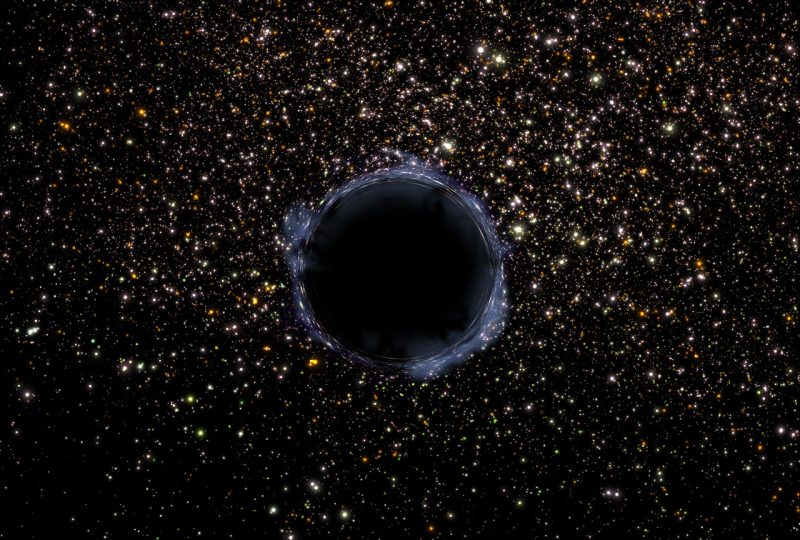
Black hole art

In a new paper published in arxiv.org but not yet peer-reviewed, Ed Witten, a theoretical physicist at Princeton’s Institute for Advanced Study, proposes that where there’s hints of smoke, there’s likely hints of fire, but not necessarily of the planetary kind. Witten certainly has the creds to present this kind of theory – he’s worked on the mathematics of quantum field theory and developed string theory’s unifying “M-theory” which proposes 11 dimensions (9 space dimensions, 1 time dimension, 1 energy dimension) and is the closest thing so far to a “Theory of Everything,” even though no experimental support for it exist.

Witten stays in theoretical mode by proposing that Planet 9 might be a primordial black hole – hypothetical black holes thought to have formed shortly after the Big Bang, meaning they aren’t collapsed stars like conventional black holes. If Planet 9 is a black hole in our solar system (a scary thought), it can’t be seen with conventional telescopes. Fortunately, Witten proposes a soon-to-be-conventional alternative.

“A possible alternative is to probe the gravitational field of this object using small, laser-launched spacecraft, like the ones envisioned in the Breakthrough Starshot project.”

Breakthrough Starshot is the project – founded by Yuri Milner, Stephen Hawking, and Mark Zuckerberg – to build a fleet of tiny light sail spacecraft that would be pushed by lasers at speeds approaching 20% of the speed of light to distant locations. A trip to the Alpha Centauri star system 4.37 light-years away would thus take 20+ years, but one to the edge of the solar system where this Planet 9 or Primordial Black Hole 1 might live would take far less time.

According to LiveScience, each craft would contain just an atomic clock and a radio transmitter. That simple pairing would tell Earth researchers when the craft was affected by the gravity of a large space object, where it is and, depending on the force, whether it’s a planet, a prmoridal black hole or something more exotic. A planet of prehistoric women?

“Think “quark nugget.””

The unimaginative LiveScience proposes a quark nugget (or strangelet), which is a theoretical object composed of approximately equal numbers of up, down, and strange quarks. Whatever the “hint of a novel object” might be, Witten’s proposal is a good news/bad news idea. Tiny light sails are low cost, but their completion, deployment and arrival are still decades away – far too long for those who want their Planet 9 questions answered now.

For those people, I suggest passing the time with viewings of “Voyage to the Planet of Prehistoric Women,” a 1968 sci-fi film directed by Peter Bogdanovich and starring the lovely Mamie Van Doren as Moana, a prehistoric woman living on Venus. Not exactly string theory or even string bikinis, but a fun romp based on a Roger Corman film.

{ https://mysteriousuniverse.org/ }

Hoe vind je dit bericht?
Geschreven door peter om 23:02 Stuur door

Linda Moulton Howe: Antarctica E.T. Facilities Are Identical To Those On Our Moon... 'They' Are Experts at Hiding!

Linda Moulton Howe: Antarctica E.T. Facilities Are Identical To Those On Our Moon... 'They' Are Experts at Hiding!

07167171563dd21b3f6d5178658f0aaf.jpg

NASA have been aware of a huge E.T. monitoring facility on the dark side of our Moon since 1965. Numerous people who worked at NASA have seen the images such as officer Karl Wolfe who revealed his experience to the world during the Disclosure Project.
 
Since then other whistleblowers have spoke out in regards an abandoned E.T. facility in Antarctica, which triggered secret meetings being held at the location. Both these facilities, on our Moon and in Antarctica are seemingly identical.
 
Filmed by Zohar Entertainment Group All content on this channel is licensed, and or produced by Zohar Entertainment Group/Awakening Expo/Phenomena Magazine.

{ https://beforeitsnews.com/ }

Hoe vind je dit bericht?
Geschreven door peter om 21:41 Stuur door

They Captured Something Huge in Russia and There Is Something Inside It!

They Captured Something Huge in Russia and There Is Something Inside It!

Russia-UFO-Files.jpg

I seen 3 stars years ago before this was news. I call them stars only because that’s what they looked like. But they came to a pyramid and stopped for seconds. Then went in different directions. I have always looked up since then . Never have seen that formation again. So yes I believe there is something out there. 🕊 SB

There is proof from ancient paintings, that the aliens have been here since 1200 A. D. & living in the deepest part of the ocean. Colombus wrote about the chariots of fire under the ocean in 1492. We know it’s true, only the religious hierarchy is preventing the government’s from revealing the truth. Larry Lightner

The last few minutes I say I hope so. Because 90% of man are still primitive and would most likely be scared and ready to fight right away when the entire world knows of them. MK

{ https://beforeitsnews.com/ }

Hoe vind je dit bericht?
Geschreven door peter om 21:19 Stuur door

UFO Recorded Entering Top Of Mount Hood, Oregon, Video, UFO Sighting News.

UFO Recorded Entering Top Of Mount Hood, Oregon, Video, UFO Sighting News.

Deagla%25CC%2581n%252C%2B%2BUFO%252C%2BUFOs%252C%2Bsighting%252C%2Bsightings%252C%2B%2Barchaeology%252C%2Bastrobiology%252C%2Bpaleontology%252C%2Bwaarneming%252C%2B.png

MUFON%252C%2BDeagla%25CC%2581n%252C%2B%2Bvolcano%252C%2BUFO%252C%2BUFOs%252C%2Bsighting%252C%2Bsightings%252C%2Balien%252C%2Baliens%252C%2BET%252C%2B%2Bancient%252C%2B%25D7%25A2%25D7%25A6%25D7%259D%2B%25D7%2591%25D7%259C%25D7%25AA%25D7%2599%2B%25D7%259E%25D7%2596%25D7%2595%25D7%2594%25D7%2594%252C%2Bwaarneming%252C%2B%2B%2B.png

Date of sighting: Feb 28, 2020
Location of sighting: Mount Hood, Oregon, USA
Source: 
This is a great video of a UFO entering the peak of Mount Hood. The eyewitness recorded this from a plane and wanted to test out the camera. They didn't even see the UFO until they got home and looked at the video later. The video clearly shows a glowing disk in the distance moving slowly towards the top of Mount Hood and then disappearing. It has been long thought by UFO researcher that such high mountains and volcanos are being used as entrances to underground alien bases, because the peaks of such places are rarely visited by humans. Thus  aliens have the seclusion and privacy they want. 
Scott C. Waring 

Eyewitness states: 

I saw this after the fact. while I was seeing how good my new pocket digital camcorder was! bam one of the first things I found. at 5 seconds and stopped on my large screen, it looks like a tic tac UFO.

{ https://www.etdatabase.com/ }

Hoe vind je dit bericht?
Geschreven door peter om 20:37 Stuur door

Alien Entity Appeared In Church In Infrared Camera, Video, UFO Sighting News.

Alien Entity Appeared In Church In Infrared Camera, Video, UFO Sighting News.

strange%252C%2Bodd%252C%2Bcloaked%252C%2Binfrared%252C%2Bparanormal%252C%2BDeagla%25CC%2581n%252C%2B%2BUFO%252C%2BUFOs%252C%2Bsighting%252C%2Bsightings%252C%2Balien%252C%2Baliens%252C%2BET%252C%2B%2Bancient%252C%2B%25D7%25A2%25D7%25A6%25D7%259D%2B%25D7%2591%25D7%259C%25D7%25AA%25D7%2599%2B%25D7%259E%25D7%2596%25D7%2595%25D7%2594%25D7%2594%252C%2Barchaeology%252C%2Bastrobiology%252C%2Bpaleontology%252C%2Bwaarneming%252C%2Bvreemdelinge%252C%2B%2B%2B.png

Date of sighting: May 2, 2020
Location of sighting: Mississippi, USA

Here is some great raw video from some ghost hunters in Mississippi. Last week they were recording inside an old church using a special infrared camera when something appeared in front of them. A jellyfish shaped orb appeared. Very rare, never seen an orb quite like this before. It almost appears to have long legs and begins to move closer to the person holding the camera, but then vanishes. Looks like they caught an alien entity. They call it a ghost, but I really feel that these smaller orbs are alien entities living amounts that we cant normally see with the human eye. 


Its a well known fact that infrared cameras record cloaked UFOs, orbs and entities that the human eye cannot see. Even the US military and the Chile military releases UFO videos in infrared of them changing UFOs. So...infrared works...both at night and during the day. 

Scott C. Waring 

{ https://www.etdatabase.com/ }

Hoe vind je dit bericht?
Geschreven door peter om 20:30 Stuur door

Orange UFO Shoots Across Sky In Mississippi, May 2020, Photos UFO Sighting News.

Orange UFO Shoots Across Sky In Mississippi, May 2020, Photos UFO Sighting News.

%25D0%259D%25D0%259B%25D0%259E%252C%2Bovni%252C%2Bomni%252C%2B%2Bmississippi%252C%2B%2BDeagla%25CC%2581n%252C%2B%2BUFO%252C%2BUFOs%252C%2Bsighting%252C%2Bsightings%252C%2Balien%252C%2Baliens%252C%2BET%252C%2B%2Bavreemdelinge%252C%2B%2B.png


Date of sighting: May 10, 2020
Location of sighting: Mississippi, USA
News source: 

Here is an interesting capture in Mississippi this week. A person spotted a orange ball moving across the sky. The UFO traveled across the sky at the same speed as a jet. Such UFOs have been seen a lot around the world. But I think aliens are taking notice that most people are on lock down and unable to see the sky, so aliens have free access to the sky for a while in some locations. From the screenshot above, I can tell you this is not a plane, helicopter or rocket...this is a glowing orb craft. This is 100% alien made.
Scott C. Waring - Taiwan

News states: 

For one Natchez resident, a late-night trip out of his house turned into an otherworldly experience when he spotted a bright orange fireball streak across the sky. “It scared the heck out of me,” Alex Sandel said Monday morning. “It was bright orange, red and spinning.” Living near Merit Health Natchez, Sandel said he has stepped outside to watch a helicopter take off from the hospital’s helipad Sunday evening at approximately 10:15 when he was startled by the fireball streaking across the sky. “I was outside waiting for the helicopter to take off when I saw this thing coming,” Sandel said. “It came from the north and went straight south.” Sandel said the fireball was traveling at a slow enough speed for him to reach his phone to capture an image of the flying object. “It wasn’t any faster than a jet,” Sandel said.

UFO%252C%2BUFOs%252C%2Bsighting%252C%2Bsightings%252C%2Bmississippi%252C.png

Link video, peter2011

https://alabamanow.com/2020/05/11/video-mississippi-man-captures-orange-fireball-streaking-across-sky-was-it-a-ufo/

{ https://www.etdatabase.com/ }

Hoe vind je dit bericht?
Geschreven door peter om 20:14 Stuur door

Drone Caught A Fastwalker Speeding Over Medvednica, Croatia

Drone Caught A Fastwalker Speeding Over Medvednica, Croatia

Adrone accidentally recorded a UFO or more likely a fastwalker moving at an incredible speed over Medvednica, Zagreb, Croatia.
ufo-fastwalker-croatia.jpg
On May 10, 2020.a drone owner was shooting video material for his video with his drone and in the montage he noticed a white object moving at high speed towards the drone, but he couldn't identify what it could be.
“Fastwalker” is a term used by NORAD and branches of armed forces to describe unidentified aerial phenomena moving and/or changing directions at high speed far beyond what current aerospace technology is capable of.
Usually these objects are observed in space and although it is assumed that these objects only move in space, in recent years, these fastwalkers have also been filmed while moving through our atmosphere at such an incredible speed that is not perceptible to the naked eye.
The Croatia footage shows such a mysterious fastwalker.

{ http://ufosightingshotspot.blogspot.com/ }

Hoe vind je dit bericht?
Geschreven door peter om 19:45 Stuur door

The Air Force Said This Object Was The Moon. Was It?

The Air Force Said This Object Was The Moon. Was It?

Before Project Blue Book came Project Grudge, an Air Force project its director later admitted was to debunk the UFO phenomenon. One file buried in the Grudge data concerns a cylindrical object photographed above Manhattan in 1950 — by one of New York City's most prestigious photographers (now featured in the Library of Congress).
UFO-cylinder-navy.jpg
The photographer, Irving Underhill, was adamant what was in the photo was an object, that wasn't there before or after it was shot.
The Air Force, though, had other ideas. They believed he misidentified the Moon, and forgot he was taking a time-lapse image.
In this video, we'll explore that hypothesis, and show its many issues, including the USAF's statement that the photo happened during sunset (the only time the Moon was in that part of the sky). Underhill's photo, taken at night, was used for a postcard titled "Night Lights from Queensboro Bridge."
In isolation, this may not be a big deal. But the early 1950s were full of cylindrical UFO sightings, including several made by trained observers noting cylinders traveling — strangely — through the air in an upright position or at an angle. We'll discuss all of this in today's episode.
0:00 Intro to 1950 object over Manhattan 
0:59 Project Grudge 
1:57 Debunking the debunker 
6:34 Early 1950s cylinder UFO sightings 
8:42 The 1967 Newburgh, NY incident 
9:44 Edward J. Ruppelt was right, and conclusion
  

{ http://ufosightingshotspot.blogspot.com/ }

Hoe vind je dit bericht?
Geschreven door peter om 19:40 Stuur door

AMAZING IMAGE OF JUPITER LOOKS LIKE IT’S BURNING

AMAZING IMAGE OF JUPITER LOOKS LIKE IT’S BURNING

De bronafbeelding bekijken

GEMINI OBSERVATORY/M.H.WONG ET AL

Jupiter Descending

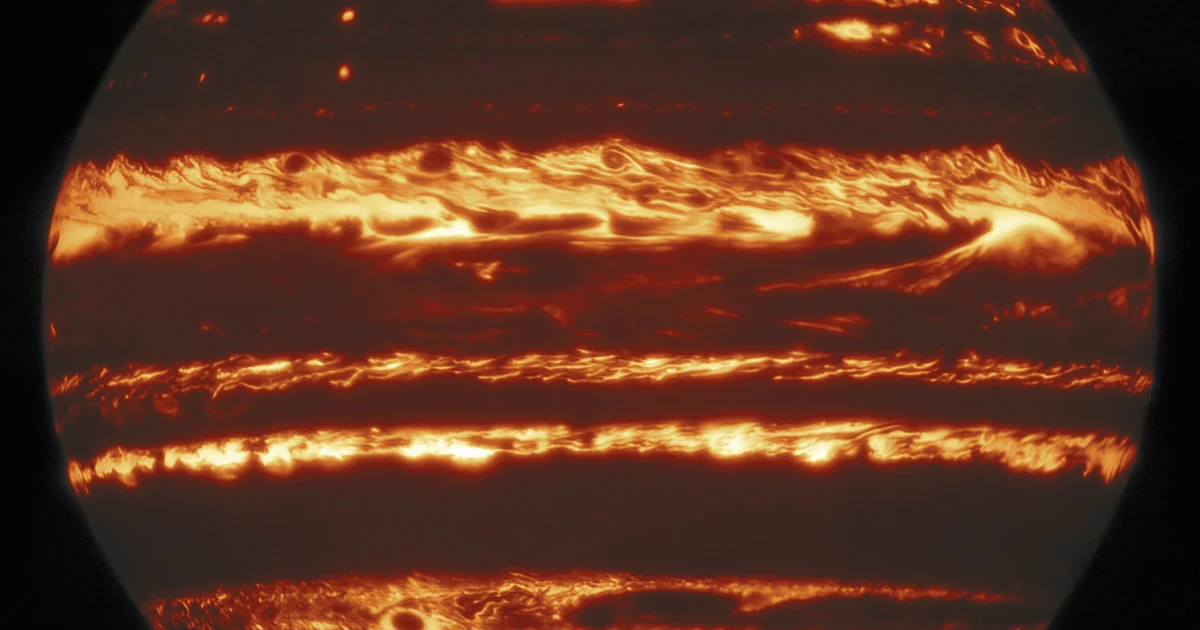
A dazzling new image of Jupiter makes the planet look like a gigantic, swirling ball of fire.

While it’s a dramatic sight to behold, the image doesn’t really show what Jupiter looks like through a telescope, BBC News reports. Rather, it’s a composite taken with a technique called “lucky imaging” that peers beneath the planet’s cloudy surface and shows the tumultuous distribution of heat hiding beneath.

Focusing In

Even though it’s an infrared heatmap, the new image is still among the sharpest images of Jupiter ever taken from Earth, according to BBC News.

That’s because lucky imaging helps filter out the usual blurriness caused by Jupiter’s extremely turbulent atmosphere, resulting in a much sharper image. This final image, from Hawaii’s Gemini North Telescope, combined a lot of those lucky images — letting researchers focus on the entire planet, bit by bit.

{ https://futurism.com/the-byte }

Hoe vind je dit bericht?
Geschreven door peter om 01:15 Stuur door

Stanford Scientist Warns of Risk From Alien Pathogens

De bronafbeelding bekijken

ET GERMS

Stanford Scientist Warns of Risk From Alien Pathogens

NASA's Mars samples will be "quarantined and treated as though they are the Ebola virus until proven safe."

In a report published last month, a team of scientists discussed how to ensure that human space travelers don’t contaminate distant planets — and that they don’t bring back extraterrestrial pollutants back to Earth, a topic that seems more pertinent than ever in the midst of a global pandemic.

“In my opinion, and that of the science community, the chance that rocks from Mars that are millions of years old will contain an active life form that could infect Earth is extremely low,” said adjunct Stanford professor of aeronautics and astronautics Scott Hubbard, co-author of the report, in an interview with Stanford News. “But, the [Mars] samples returned by [NASA] will be quarantined and treated as though they are the Ebola virus until proven safe.

The solution, Hubbard said, is “planetary protection.” Now that humanity is edging ever closer to traveling to Mars thanks to SpaceX and NASA, Hubbard and the rest of the committee argue that the US government and private sector need to “‘continually authorize and supervise’ private activities in space,” Hubbard told Stanford News.

To counteract any chances of contaminating other places around our solar system, Hubbard suggests scientists could implement “combinations of chemical cleaning, heat sterilization, applying reduction credit for time spent in the highly sterilizing space radiation environment and clever mechanical systems” that have already been shown to be effective.

For instance, for NASA Martian Sample Return mission, a part of the agency’s Perseverance Rover initiative set to launch this year, have already been decontaminated using extremely high temperatures.

But that still leaves germy humans.

“Spacesuits can leak or ‘blow out,’ potentially releasing all manner of earthly microbes and contaminating the surface for any future science missions,” Hubbard said.

“Humans obviously cannot be cleaned like robots, so much more attention to spacesuits, human habitats and using robots as assistants is required,” he added.

There’s somewhat of a precedent when it comes to the Moon, he pointed out. The quarantine requirements for Apollo astronauts was eliminated relatively quickly in the 1970s once we found out the Moon posed no risk of contamination.

But that doesn’t mean we shouldn’t handle the samples from Mars with extreme caution.

{ https://futurism.com/ }

Hoe vind je dit bericht?
Geschreven door peter om 01:07 Stuur door

NASA Wants to Chase Interstellar Objects With “Orbital Slingshot”

scientist-suggests-orbital-slingshot-study-interstellar-objects-600x315.jpg

GOING INTERSTELLAR

NASA Wants to Chase Interstellar Objects With “Orbital Slingshot”

An MIT plan would fling spacecraft toward interstellar visitors — before they careen out of our star system forever.

A team of MIT researchers are suggesting that we could use a “dynamic orbital slingshot” to get an up-and-close look at interstellar objects — or, in other words, they want to send tiny satellites screaming through space to chase space rocks from beyond our star system.

It’s a far-out concept that’s even grabbed the attention of NASA. The project has secured proof-of-concept funding from the NASA Innovative Advanced Concepts (NIAC) Program, an incubator for radically futuristic concepts such as turning a crater on the far side of the Moon into a giant radio telescope.

Interstellar objects have been a fascinating and relatively recent addition to scientific inquiry. In particular, space rock Oumuamua, first spotted in 2017, and 2I/Borisov, spotted by amateur astronomer Gennadiy Borisov last year, have puzzled astronomers due to their extremely unusual trajectories, leading them to believe they arrived from a neighboring star system.

“There are a lot of fundamental challenges with observing [interstellar objects] from Earth — they are usually so small that light from the sun needs to illuminate it in a certain way for our telescopes to even detect it,” said Richard Linares, assistant professor in the Department of Aeronautics and Astronautics (AeroAstro) at MIT who came up with the idea, in a statement.

“They are traveling so fast that it’s hard to pull together and launch a mission from Earth in the small window of opportunity we have before it’s gone,” Linares explained. “We’d have to get there fast, and current propulsion technologies are a limiting factor.”

To get over these limitations, Linares suggests using a series of “static satellites” that each use “solar sail” technology — using only radiation of the Sun as propulsion.

niac2020_linares.jpg

This constellation of space buoys could then jump into action, releasing stored energy as well as using the gravitational pull of the sun to slingshot themselves after interstellar objects once they’ve been detected.

But they won’t attempt to stop when they get to these elusive extragalactic visitors.

“Flyby missions tend to be easier because they don’t require you to slow down — you fly past the object and try to get as many pictures as you can in that window,” Linares said.

“Studying an interstellar body close-up would revolutionize our understanding of planet formation and evolution,” professor of planetary sciences Benjamin Weiss, who is also working on the project, said in the statement.

The slingshots could even allow us to study the feasibility of sending objects to other solar systems, according to Weiss.

READ MORE: Solar-sailing sentries could allow up-close study of interstellar visitors like ‘Oumuamua [Space.com]

{ https://futurism.com/ }

Hoe vind je dit bericht?
Geschreven door peter om 00:51 Stuur door

Scientists identify tiny satellite around an asteroid NASA's Lucy spacecraft will visit

Scientists identify tiny satellite around an asteroid NASA's Lucy spacecraft will visit

Hoe vind je dit bericht?
Geschreven door peter om 23:58 Stuur door

Dead Cassini spacecraft could solve mystery of Saturn's hot atmosphere

Dead Cassini spacecraft could solve mystery of Saturn's hot atmosphere

Data from NASA's Cassini spacecraft is still helping scientists to explore Saturn, years after the spacecraft "died."
(Image: © NASA/JPL/ASI/University of Arizona/University of Leicester)

A spacecraft that died in 2017 is still providing insights about Saturn, the planet it studied up close for 13 years.

NASA's Cassini spacecraft helped scientists to discover why Saturn's upper atmosphere is so hot, which puzzled planetary scientists for decades since the planet is too far from the sun to receive our star's heat. But, using old data from Cassini, scientists are closer to solving this mystery.

This new work, which was conducted by NASA and the European Space Agency and led by Zarah Brown, a graduate student at the University of Arizona's Lunar and Planetary Laboratory, suggests that it's auroras that are heating up Saturn's atmosphere. These auroras are triggered by the constant stream of charged particles from the solar wind, which interacts with charged particles that flow from Saturn's moons and creates electric currents.

This insight not only helps scientists understand what is going on at Saturn, but perhaps also at gas giant planets in general. Jupiter, Neptune and Uranus all have strangely hot upper atmospheres as well. There are also numerous exoplanet gas giants far outside of our solar system that may exhibit similar behavior.

"The results are vital to our general understanding of planetary upper atmospheres, and are an important part of Cassini's legacy," study co-author Tommi Koskinen, a member of Cassini's Ultraviolet Imaging Spectrograph instrument team, said in a statement from NASA's Jet Propulsion Laboratory. 

Researchers previously used Cassini data to build a map of the temperature and density of Saturn's upper atmosphere, which was not well known before the spacecraft arrived at the planet in 2004. In this study, this map helped scientists to study how electric currents from Saturn's auroras heats the planet's upper atmosphere, generating the solar wind. The solar wind, in turn, distributes energy from the poles (where the auroras are located) towards the equator. That energy then heats the equator to twice the temperatures than could be generated from the sun's heat.

It's common for archival data from spacecraft like Cassini to continue providing new insights long after the craft are no longer operational. This particular dataset came from Cassini's final few months at Saturn when it did 22 very close orbits of the gas giant before deliberately hurling itself into the planet on Sept. 15, 2017 (to prevent possible Earthly contamination of Saturn's icy moons, which could host microbial life.) 

For six weeks, Cassini examined bright stars in the constellations Orion and Canis Major, watching as the stars rose and set behind Saturn. By observing the shifting starlight, scientists were able to learn more about the density of Saturn's atmosphere. Since density decreases with altitude, the rate of decrease is dependent on temperature, allowing scientists to estimate temperatures in Saturn's upper atmosphere. 

Cassini's observations showed the temperatures peaking around the auroras, in turn providing evidence that it is electric currents are what  Saturn's upper atmosphere so hot. Wind speeds on Saturn were also determined using density and temperature measurements.

A paper based on the research was published Monday (April 6) in Nature Astronomy. 

Follow Elizabeth Howell on Twitter @howellspace. Follow us on Twitter @Spacedotcom and on Facebook.  

{ https://www.space.com/ }

Hoe vind je dit bericht?
Geschreven door peter om 23:35 Stuur door

Recent Mufon Cases

Recent Mufon Cases

1. The Mass Fleet Encounter of UFOs over Washington D.C. Capital (1952)

2.  Mufon Case: 108659 In the sky above Everett,Washington 5/7/2020

Long Description of Sighting Report

Myself and several others were enjoying the beach when these unknown objects kept appearing and reappearing with no sound, almost as if fading in and out from another dimension or cloaking or optical illusions. Not sure if it was military or not. It did not appear to be any aircraft I am familiar with but who knows. I just know I am unable to define what we all saw. We are near the Snohomish County/Paine Field airport and near Everett navy base.
https://mufoncms.com/cgi-bin/report_h...

3. MUFON Report Case Number 104601

A California witness at Menlo Park On Nov 20, 2019 spotted Blimp/ oval-like lights.
“I spotted a bright large blimp/oval like UFO. It was moving interestingly slow for a large object the Witness stated. The features were described as being strong white lights with a hint of yellow lights and a red blinking light at the bottom center of the craft. It appeared to have had a bulge on the top center. The front of the craft had a more rounded curve while the back had a sharper and smaller curve, almost egg-shaped. It took about 8 minutes to move NE to South. and was observed for 40 mins,

4. MUFON Report Case 103929 -

An Iowa witness at Cedar Rapids reported seeing a white light with rapidly flashing red and green lights on October 8,2019 at 9:58 pm. according to testimony. The witness stated “Out of our front window I saw a white light with rapidly flashing red and green lights all around it. It was moving slowly from the East and then seemed to pause. Here is the video we have on this.

{ Mutual UFO Network (MUFON)}

Hoe vind je dit bericht?
Geschreven door peter om 23:10 Stuur door

Four amazing astronomical discoveries from ancient Greece

Four amazing astronomical discoveries from ancient Greece

Earth and Moon as seen by the Galileo spacecraft.
(Image: © NASA)

The Histories by Herodotus (484BC to 425BC) offers a remarkable window into the world as it was known to the ancient Greeks in the mid fifth century BC. Almost as interesting as what they knew, however, is what they did not know. This sets the baseline for the remarkable advances in their understanding over the next few centuries – simply relying on what they could observe with their own eyes.

Herodotus claimed that Africa was surrounded almost entirely by sea. How did he know this? He recounts the story of Phoenician sailors who were dispatched by King Neco II of Egypt (about 600BC), to sail around continental Africa, in a clockwise fashion, starting in the Red Sea. This story, if true, recounts the earliest known circumnavigation of Africa, but also contains an interesting insight into the astronomical knowledge of the ancient world.

The voyage took several years. Having rounded the southern tip of Africa, and following a westerly course, the sailors observed the Sun as being on their right hand side, above the northern horizon. This observation simply did not make sense at the time because they didn’t yet know that the Earth has a spherical shape, and that there is a southern hemisphere.

1. The planets orbit the sun

A few centuries later, there had been a lot of progress. Aristarchus of Samos (310BC to 230BC) argued that the Sun was the “central fire” of the cosmos and he placed all of the then known planets in their correct order of distance around it. This is the earliest known heliocentric theory of the solar system.

Unfortunately, the original text in which he makes this argument has been lost to history, so we cannot know for certain how he worked it out. Aristarchus knew the Sun was much bigger than the Earth or the Moon, and he may have surmised that it should therefore have the central position in the solar system.

Nevertheless it is a jawdropping finding, especially when you consider that it wasn’t rediscovered until the 16th century, by Nicolaus Copernicus, who even acknowledged Aristarchus during the development of his own work.

2. The size of the moon

One of Aristarchus’ books that did survive is about the sizes and distances of the Sun and Moon. In this remarkable treatise, Aristarchus laid out the earliest known attempted calculations of the relative sizes and distances to the Sun and Moon.

It had long been observed that the Sun and Moon appeared to be of the same apparent size in the sky, and that the Sun was further away. They realised this from solar eclipses, caused by the Moon passing in front of the Sun at a certain distance from Earth.

Also, at the instant when the Moon is at first or third quarter, Aristarchus reasoned that the Sun, Earth, and Moon would form a right-angled triangle.

As Pythagoras had determined how the lengths of triangle’s sides were related a couple of centuries earlier, Aristarchus used the triangle to estimate that the distance to the Sun was between 18 and 20 times the distance to the Moon. He also estimated that the size of the Moon was approximately one-third that of Earth, based on careful timing of lunar eclipses.

A 10th century reproduction of a diagram by Aristarchus showing some of the geometry he used in his calculations.  (Image credit: Wikipedia, CC BY-SA)

While his estimated distance to the Sun was too low (the actual ratio is 390), on account of the lack of telescopic precision available at the time, the value for the ratio of the size of the Earth to the Moon is surprisingly accurate (the Moon has a diameter 0.27 times that of Earth).

Today, we know the size and distance to the moon accurately by a variety of means, including precise telescopes, radar observations and laser reflectors left on the surface by Apollo astronauts.

3. The Earth's circumference

Eratosthenes (276BC to 195 BC) was chief librarian at the Great Library of Alexandria, and a keen experimentalist. Among his many achievements was the earliest known calculation of the circumference of the Earth. Pythagoras is generally regarded as the earliest proponent of a spherical Earth, although apparently not its size. Eratosthenes’ famous and yet simple method relied on measuring the different lengths of shadows cast by poles stuck vertically into the ground, at midday on the summer solstice, at different latitudes.

The Sun is sufficiently far away that, wherever its rays arrive at Earth, they are effectively parallel, as had previously been shown by Aristarchus. So the difference in the shadows demonstrated how much the Earth’s surface curved. Eratosthenes used this to estimate the Earth’s circumference as approximately 40,000km. This is within a couple of percent of the actual value, as established by modern geodesy (the science of the Earth’s shape).

Later, another scientist called Posidonius (135BC to 51BC) used a slightly different method and arrived at almost exactly the same answer. Posidonius lived on the island of Rhodes for much of his life. There he observed the bright star Canopus would lie very close to the horizon. However, when in Alexandria, in Egypt, he noted Canopus would ascend to some 7.5 degrees above the horizon.

Given that 7.5 degrees is 1/48th of a circle, he multiplied the distance from Rhodes to Alexandria by 48, and arrived at a value also of approximately 40,000km.

4. The first astronomical calculator

The world’s oldest surviving mechanical calculator is the Antikythera Mechanism. The amazing device was discovered in an ancient shipwreck off the Greek island of Antikythera in 1900.

The device is now fragmented by the passage of time, but when intact it would have appeared as a box housing dozens of finely machined bronze gear wheels. When manually rotated by a handle, the gears span dials on the exterior showing the phases of the Moon, the timing of lunar eclipses, and the positions of the five planets then known (Mercury, Venus, Mars, Jupiter, and Saturn) at different times of the year. This even accounted for their retrograde motion – an illusionary change in the movement of planets through the sky.-

We don’t know who built it, but it dates to some time between the 3rd and 1st centuries BC, and may even have been the work of Archimedes. Gearing technology with the sophistication of the Antikythera mechanism was not seen again for a thousand years.

Sadly, the vast majority of these works were lost to history and our scientific awakening was delayed by millennia. As a tool for introducing scientific measurement, the techniques of Eratosthenes are relatively easy to perform and require no special equipment, allowing those just beginning their interest in science to understand by doing, experimenting and, ultimately, following in the foot steps some of the first scientists.

One can but speculate where our civilisation might be now if this ancient science had continued unabated.

Follow all of the Expert Voices issues and debates — and become part of the discussion — on Facebook and Twitter.

The views expressed are those of the author and do not necessarily reflect the views of the publisher. 

{ https://www.space.com/ }

Hoe vind je dit bericht?
Geschreven door peter om 22:17 Stuur door

Kepler-88 has a new king! Planet three-times Jupiter's mass discovered in alien star system

Kepler-88 has a new king! Planet three-times Jupiter's mass discovered in alien star system

Hoe vind je dit bericht?
Geschreven door peter om 21:43 Stuur door

Playing Asteroids is No Game: Humanity’s Future Could Depend on Diverting Asteroid Impacts

Playing Asteroids is No Game: Humanity’s Future Could Depend on Diverting Asteroid Impacts

It isn't hyperbole to say, the survival of our species may depend on a sucessful me²thod of preventing an asteroid impact.

Earth is surrounded by thousands of Near-Earth Objects, a few of these are potentially hazardous, and fewer still which are classified as planet killers. An impact from the latter carries implications as severe the name suggests. Clearly, we need a method of diverting such objects. In fact, it isn’t hyperbole to say, the survival of our species may depend on it. 

News stories about massive objects skirting close to Earth are pretty common in the media, as a timely example, in April news organisations across the globe reported a mile-wide asteroid passing with just 3.9 miles of our planet. Fortunately, the rock identified as (52768) 1998 OR2, posed no real impact threat. 

(52768) 1998 OR2 passed within 3.9 miles of Earth last month. A near miss, but it no-means the only NEO out there. @AreciboRadar/Twitter/PA

(52768) 1998 OR2 passed within 3.9 miles of Earth last month. A near miss, but it no-means the only NEO out there. @AreciboRadar/Twitter/PA

Yet, our planet is scarred with the evidence of previous collisions with such objects. The most frequently thought of example is the impact that wiped out the dinosaurs 66-million-years-ago, the scale of which can be seen by examining the Chicxulub crater centred on the Yucatán Peninsula in Mexico. 

The dinosaur destroying asteroid is estimated to have been around 10–15 km in width, but the crater it created was 150 km in diameter and the debris in threw into the atmosphere blacked out the Sun for months as well as triggering massive tidal waves which battered the entire continent of America and other deadly secondary effects. 

Even looking beyond the surface of our own planet, the Moon’s geology is strongly shaped by a history of asteroid impacts, as are the faces of other planets in the solar system.

Animation depicts a mapping of the positions of known near-Earth objects The animation depicts a mapping of the positions of known near-Earth objects (NEOs) at points in time over the past 20 years and finishes with a map of all known asteroids as of January 2018. Asteroid search teams supported by NASA’s NEO Observations Program have found over 95 per cent of near-Earth asteroids currently known. There are now over 18,000 known NEOs and the discovery rate averages about 40 per week.  (NASA/JPL-Caltech)

Animation depicts a mapping of the positions of known near-Earth objects The animation depicts a mapping of the positions of known near-Earth objects (NEOs) at points in time over the past 20 years and finishes with a map of all known asteroids as of January 2018. Asteroid search teams supported by NASA’s NEO Observations Program have found over 95 per cent of near-Earth asteroids currently known. There are now over 18,000 known NEOs and the discovery rate averages about 40 per week. (NASA/JPL-Caltech)

The truth is the Earth exists within the vicinity of thousands of Near Earth Objects (NEOs), many of which carry the risk of colliding with our planet. If one of these asteroids — referred to as Potentially Hazardous Objects (PHOs) —did strike our planet, it could cause devastating effects including massive property and infrastructure damage, as well as significant loss of life. Within the population of PHOs is a smaller population of objects which could, much like the asteroid that wiped out the dinosaurs and 75% of all other animal life, trigger a major extinction event. 

It should be abundantly clear that developing a method of mitigating the impact of one of these objects by knocking off its collision course is imperative. Asteroid mitigation has been identified as one of NASA’s ‘Space Technology Grand Challenges’ — problems that require cutting -edge scientific solutions.  Indeed, many other institutions across the globe are working on their own mitigation strategies, each of which comes with its own unique pros and cons.

Should the possibility of an asteroid impact arise, the governments of Earth will be faced with a stark choice. Depending on a number of factors and characteristics they will have to choose between an instantaneous approach or a more gradual method .

Some of these methods and their potential successes and failures are listed below, starting with the more extreme, blunt solutions to asteroid mitigation.

The direct approach

There is probably nothing that constitutes ‘direct approach’ more than tossing a nuclear explosion at a problem. Thus, it may come as no surprise that many research hours have been devoted to devising a scheme in which an asteroid can be diverted with the aid of a nuclear weapon. 

The stark truth of the matter is, if the NEO is spotted on a collision course with Earth with less than 10 years warning, direct intercept with such a device may well be our only hope of diversion. Further to this, these ‘short lead time’ encounters are currently the most likely probable scenarios involving Earth and an encounter with a PHO. 

(NEOSheild 2/ EU Horizons)

Hitting an asteroid with a nuclear weapon obviously provides mitigation by imparting energy to the object to divert it, even if only slightly. Another way of doing this is by slamming the PHO with another object. Instead of imparting nuclear energy, this kinetic impactor is a spacecraft that hits the PHO at a high velocity transferring momentum to it changing its velocity and hopefully diverting its course. 

Interestingly, this method requires the use of a reconnaissance craft to first map the characteristics of the PHO, such as its orbit, size, shape and rotation, even its chemical make-up so that the impact can be perfectly calibrated. One kinetic impactor system currently being researched is the NEOShield-2, which involves the reconnaissance craft launching together with the impactor. The two craft, initially stacked together, will separate with the reconnaissance craft hopefully reaching the asteroid first, and the impactor following through when details are collected.

In March last year, NASA unveiled early plans for a ‘best of both worlds’ mission that unites a kinetic impactor and nuclear device for the purpose of asteroid diversion. The Hypervelocity Asteroid Intercept Vehicle (HAIV) mission craft consists of a fore-body kinetic impactor which smashes into the asteroid, and an aft-body which when deposits a nuclear charge. The beauty of this arrangement is that if the impactor can create a crater in the asteroid, the nuclear blast will occur beneath the surface of the NEO, imparting more energy than a glancing blow could. 

An artist's interpretation of how the  Hypervelocity Asteroid Intercept Vehicle (HAIV) will divert an asteroid (EADS)

An artist’s interpretation of how the Hypervelocity Asteroid Intercept Vehicle (HAIV) will divert an asteroid (EADS)

Both of these missions are still at least ten years from reaching a viable testing-stage. And there is another, deeper problem.

The danger of any direct impact mission is that it could fragment the asteroid in question, especially as some asteroids are merely a loose conglomeration of smaller bodies. This could result in Earth being bombarded with a multitude of meteors — each causing untold destruction. Even worse, if the NEO in question has a core of pure iron, even a nuclear device/ kinetic impactor double-punch is unlikely to divert it.

This is the case if we have little notification of an asteroid’s impact — less than ten years, what if space agencies are granted more time to divert the PHO? 

Diverting asteroids — the gentle way

Methods that require a long lead time tend to be more gentle than short-lead time techniques, and interestingly, also tend to exploit our understanding of physics and energy way beyond that of kinetic energy alone. 

Perhaps the most well-known long-lead-time diversion method involves using gravitational energy to alter the orbit of a NEO. It’s also the most ‘gentle’ of even the long-lead-time methods, not even requiring contact with the asteroid. 

A gravity tractor slowly influences the orbit of a NEO. It is a method that requires a long-lead-time. (NASA)

The idea is to place a spacecraft in orbit alongside a PHO over a period of many years or even decades. The gravitational influence of the gravity tractor gradually pulls the asteroid off course, thus preventing a close encounter with the earth. The gravity tractor method would work on asteroids of all compositions, and shapes, even if they are collections of smaller bodies, loosely gravitationally bound. There is a limit to the size of an asteroid that could be gravitationally pulled, however, making this a technique that is unlikely to tug a planet killer.

The theory behind gravity tractors is so robust and the control it allows is so precise, that it has even been suggested that the method could be used to place asteroids in positions where they could be beneficial for humanity — allowing them to be used for research or even commercial purposes. 

A less ‘contactless’ version of the gravity tractor approach, involves using an actual physical tether to divert the asteroid to a higher orbit. The tethered object would be smaller than the NEO and could either be a spacecraft launched from earth, or another NEO. The concept behind this method is that attaching the larger body to a smaller one changes the centre of mass of the body and thus adjusts its orbit. 

One potential drawback of the system is that is likely to require some pretty intensive surface operations, especially if the tether is to be attached to two NEOs. It also carries the risk of the tether becoming tangled, meaning before any operation was undertaken the motion of the PHO would have to be known precisely.

Though the message is clear if the paint method is going to work, researchers may want to consider a more even coating. (Robert Lea)

One of the most ‘out there’ ideas to divert an asteroid on course to strike the Earth involves spraying a thin layer of powdered paint on one side of an asteroid and allowing radiation from the Sun to alter the asteroid’s orbital path. The paint coating changes the amount of radiation reflected by the asteroid’s surface. This leads to unequal heating within the body, and thermal particles being ejected more strongly on one-side than the other. As a result, a strong net force is created which over the course of several years can shift the asteroid’s orbit. 

Again, these methods which are just the tip of the iceberg in terms of mitigation strategies, are still very much in the developmental phase, and moving them into the test stages could be a matter of some urgency. 

It’s a matter of ‘when’ not ‘if’

“An asteroid collision would be something against which we have no defence… This is not science fiction; it is guaranteed by the laws of physics and probability.” 

 — Stephen Hawking, Brief Answers to Big Questions, [2018].

If 2020 teaches humanity nothing else it should impart the lesson that we are simply not ready to deal with some of the hazards that nature can and will throw at us. If the strategies put in place to deal with a potential pandemic strike us as slap-shot, underwhelming and inadequate, the provisions taken thus far to prevent an asteroid strike fall considerably short of even this. 

The only real hope we have of diverting a PHO as things currently stand is spotting it well in advance and getting a satisfactorily long-lead time. But still, there is very little in the way of infrastructure in place to deal with such an eventuality.

Just as historians may one day look back at the MERS and SARS outbreaks as stark warnings of a coronavirus pandemic that governments around the world failed to take heed of, so too they may consider the close brush with 99942 Apophis as a warning to prepare for asteroid incursion.

The NEO with a diameter of 370 meters caused concern in December 2004 when observations indicated there was a 2.7% chance that on a future sweep past our planet in April 2029, it would strike the planet. Estimations changed between 2004 and 2006, first appearing that 99942 Apophis would miss both the Earth and the Moon, with the possibility that during the 2029 encounter it would pass through a gravitational keyhole, that would result in it impacting the planet in 2036. 

Fortunately, by 2008 it had been determined that the asteroid would both miss the Earth and the 1km gravitational keyhole that would shift it onto a collision course in 2036. As it currently stands, 99942 Apophis has a 1 in 150,000 chance of colliding with our planet in 2068. Pretty slim. But, unfortunately, 99942 Apophis is hardly the only PHO out there, and there are many that we have yet to discover. 

The trail in the key over Russia left by the Chelyabinsk Meteor. ( Alex Alishevskikh/ CCbySA2.0)

The Chelyabinsk meteor provides a stark example of such an unknown object. The object with a 20-meter diameter entered Earth’s atmosphere over Russia on 15th February 2013. Due to its high velocity and shallow entry angle, the meteor broke apart in an airburst at around 30 km over the Chelyabinsk Oblast. The energy it released was so potent that the airburst was brighter than the Sun, and could be seen from a distance of 62 miles away.

Over 1,500 people were injured as a result of the blast. 

Should it have actually hit the surface of our planet, impacting in a region with a population of 3.5 million people, it would have been the equivalent of the detonation of around 500 kilotonnes of TNT — around 33 times the energy released by the detonation of the atomic bomb that devastated Hiroshima. 

We had literally no idea it was there. We still don’t know where it came from.

The real key to asteroid mitigation is increased investment in space science and infrastructure. Developing mitigation strategies isn’t enough, as Chelyabinsk shows, we need to also focus on detection methods.

Hopefully, this is a lesson that won’t be learned in hindsight, because as Hawking predicted in his final work shortly before his death in 2018, this is inevitable. And as estimates made using Earth’s history as a guide, collisions with an object of the size of 99942 Apophis occur roughly once every 80,000 years. That means we are currently well-overdue. 

Sources and Further Reading 

{ https://www.zmescience.com/ }

Hoe vind je dit bericht?
Geschreven door peter om 21:07 Stuur door

First British astronaut Helen Sharman says aliens exist – and may be 'here right now'

First British astronaut Helen Sharman says aliens exist – and may be 'here right now'

Hoe vind je dit bericht?
Geschreven door peter om 18:02 Stuur door

QUANTUM ENTANGLEMENT COULD FIGHT A DISEASE THAT KILLS 600,000 IN THE US A YEAR

Scientists are using quantum entanglement to fight a disease that kills 600,000 people a year

QUANTUM ENTANGLEMENT COULD FIGHT A DISEASE THAT KILLS 600,000 IN THE US A YEAR

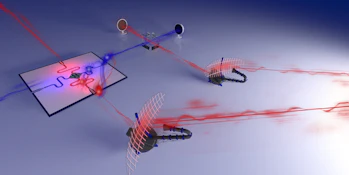
Using "microwave quantum illumination" researchers rely on entangled photons to detect objects.

Whether peering back to the beginning of our universe, winning wars, or looking deep inside the human body at dangerous tumors, radar technology has been a reliable extension of human vision for decades. And at 80-years old, thanks to quantum physics, it's about to get even more precise.

Using a supercooled refrigerator and entangled quantum photons, a team of international researchers has designed a proof-of-concept radar that would be more sensitive and less invasive than today's typical models, especially in "noisy" thermal environments. The process is called "MICROWAVE QUANTUM ILLUMINATION."

The researchers say that this could spell big improvements down the road for ultra-low power and sensitive scanners, especially those used for human health. While radar may not be as associated with medical uses as stethoscopes, the technology is used to monitor conditions associated with some of the most deadly diseases in the U.S., including heartbeats, detect strokes, and even identify cancerous tumors. Helping to identify tumor growth alone could improve the lives of nearly 600,000 patients who die each year in the U.S. from cancer.

A study published Friday in the journal Science Advances describes how researchers were able to achieve this sensitivity by taking advantage of a famous property of quantum particles: entanglement.

"Quantum radar or quantum illumination uses a source of entangled microwave radiation, while classical radar uses coherent signals or classically correlated noise signals," lead researcher and professor at the Institute of Science and Technology Austria, Johannes Fink, tells Inverse.

Kind of like best friends with two separate halves of a friendship necklace, entangled quantum pairs are connected to each other even at great distances through residual physical attributes and interactions. That means that information detected by one part of the pair can affect the other, even if they are physically far apart -- something Einstein (fearfully) called "spooky action at a distance."

quantum radar
This quantum radar relies on the relationship between entangled quantum photons to detect objects. © IST Austria/Philip Krantz

For Fink's team, this spooky action was paramount. Fink tells Inverse that they used a supercooled dilution refrigerator (kept at just over -450 degrees Fahrenheit) to generate a fickle pair of photons, one of which they called the "signal" photon and the other the "idler" photon. In order to take a "look" at any given object, the signal photon was sent out to scout and the idler photon lingered at its origin. Fink tells Inverse that by comparing the information of these two different photons in the pair they could gather precise information about objects in the radar's field.

"One part of the entangled signal is sent to probe an object and the other part of it is kept and stored. A small amount is reflected by the object and this part is also subject to environmental noise," says Fink. "The noisy signal can then be measured together with the stored part of the source signal. Because of the similarity of the two signals (due to the common origin and the strong quantum correlations) a more efficient detection is possible."

Even though the relationship between these photons isn't long-lasting, their joint information creates a signature or pattern of the object that cuts through any thermal noise that may be around it.

"Compared to classical correlated noise, quantum physics allows for stronger correlations to exist at the source, which helps by a certain amount even though the true entanglement is lost before the two signals are recombined (due to the noise)," says Fink.

But that said, while their study has demonstrated the possibility of creating a quantum radar like this, Fink tells Inverse that it's far from fool-proof yet.

In general, Fink says that quantum radars are primarily effective in noisy, close-range environments. Trying to achieve the same accuracy at a longer range wouldn't be possible due to the quantum nature of the photons. Additionally, Fink says that their system right now works best only when very careful calibration is applied to the system, making moving this technique out of the lab more challenging.

"This means we could show a proof of principle working prototype in the lab, but in practice - and without the applied calibration procedure - we would not have been able to outperform the theoretically strongest classical detection strategy," says Fink.

As these challenges continue to be met in years to come, Fink says he foresees two main ways this technology could be used in practice.

"We believe its usefulness is confined to short and medium range applications where the object is not supposed to know (security applications) or notice (sensitive objects like biological tissue) that it is being detected," says Fink.

Abstract: 

Quantum illumination is a powerful sensing technique that employs entangled signal-idler photon pairs to boost the detection efficiency of low-reflectivity objects in environments with bright thermal noise. The promised advantage over classical strategies is particularly evident at low signal powers, a feature which could make the protocol an ideal prototype for non-invasive biomedical scanning or low-power short-range radar. In this work we experimentally investigate the concept of quantum illumination at microwave frequencies. We generate entangled fields using a Josephson parametric converter to illuminate a room-temperature object at a distance of 1 meter in a free-space detection setup. We implement a digital phase conjugate receiver based on linear quadrature measurements that outperforms a symmetric classical noise radar in the same conditions despite the entanglement-breaking signal path. Starting from experimental data, we also simulate the case of perfect idler photon number detection, which results in a quantum advantage compared to the relative classical benchmark. Our results highlight the opportunities and challenges on the way towards a first room-temperature application of microwave quantum circuits.

{  https://www.inverse.com/ }

Hoe vind je dit bericht?
Geschreven door peter om 17:40 Stuur door

HIGHEST RESOLUTION IMAGES OF JUPITER REVEAL ITS FIERY STORMS IN GREAT DETAIL

Highest resolution images of Jupiter reveal new details about the planet's storms

HIGHEST RESOLUTION IMAGES OF JUPITER REVEAL ITS FIERY STORMS IN GREAT DETAIL

The final image is a mosaic of nine different observations.

Jupiter's storms, including its famous Giant Red Spot, are made up of layers of gas that shift and tangle with swirling winds and a layer of dense clouds. Taken all together, they shroud the solar system's largest planet in mystery.

New images captured by the Gemini North Telescope reveal the tremulous, stormy world of Jupiter in all its fiery glory, and unlocking new data on the gas giant's lightning strikes and deep clouds.

The findings from the images were published this week in The Astrophysical Journal Supplement Series.

Using an intricate technique called 'lucky imaging,' the team of researchers behind the new images spent three years collecting observations of Jupiter, resulting in the highest resolution images of the planet ever obtained from Earth.

Lucky imaging is when a telescope captures a large number of images in a row, with short exposure time, and only the sharpest ones are selected, depending on the stability of Earth's atmosphere.

2a1562b3-6531-4b0c-b676-09684b0b5fcd-noirlab2011b.jpg?w=349&h=324.07142857142856&auto=format%2Ccompress&cs=srgb&q=70&fit=max&crop=faces

Gemini captured the highest resolution images of Jupiter from Earth. International Gemini Observatory/NOIRLab/NSF/AURA M.H. Wong (UC Berkeley) and team Acknowledgments: Mahdi Zamani.

The resulting image shows Jupiter as a giant, carved out Halloween pumpkin, bursting with its violent winds in a fiery swirl that goes around the planet. The final image was compiled from a mosaic of nine separate observations.

Thick clouds appear dark in the infrared maps, while clearings appear bright.

“THESE IMAGES RIVAL THE VIEW FROM SPACE.”

The longer wavelength infrared light of the Gemini telescope goes through the thin haze of Jupiter's atmosphere, but is obscured by thicker clouds high in the atmosphere. That's why the warm, deep layers of the planet's atmosphere glow through the gaps of its thick cloud cover.

“These images rival the view from space,” Michael Wong, a researcher at the University of California Berkeley, who led the team behind the new images, says in a statement. “The Gemini data were critical because they allowed us to probe deeply into Jupiter’s clouds on a regular schedule.”

The researchers then combined the new images with observations by the Hubble Space Telescope and the Juno spacecraft of Jupiter in order to better understand the planet's violent storms.

These violent storms, like the Great Red Spot, and other, high pressure, anticyclones are part of what makes Jupiter stand out, beyond its heavyweight crown as the largest planet by a long shot.

Previous observations of the Great Red Spot revealed dark spots, which researchers had interpreted as different variations in the color of the clouds. However, the new observations revealed that these dark spots are actually gaps in the cloud cover.

The gaps appeared as bright infrared hotspots. If they had been thick clouds, then the infrared glow, from Jupiter’s internal heat, would have been blocked by them.

By combining the three sets of data, the researchers were also able to investigate the structure of the clouds. They found that the storms' lightning strikes, and some of the largest storm systems that create them, are formed in and around large convective cells over deep clouds of water ice and liquid, according to the researchers.

“Scientists track lightning because it is a marker of convection, the turbulent mixing process that transports Jupiter's internal heat up to the visible cloud tops,” Wong says. “Ongoing studies of lightning sources will help us understand how convection on Jupiter is different from or similar to convection in the Earth's atmosphere.”

Abstract: 

Imaging observations of Jupiter with high spatial resolution were acquired beginning in 2016, with a cadence of 53 days to coincide with atmospheric observations of the Juno spacecraft during each perijove pass. The Wide Field Camera 3 (WFC3) aboard the Hubble Space Telescope (HST) collected Jupiter images from 236 to 925 nm in 14 filters. The Near-Infrared Imager (NIRI) at Gemini North imaged Jovian thermal emission using a lucky-imaging approach (co-adding the sharpest frames taken from a sequence of short exposures), using the M' filter at 4.7 μm. We discuss the data acquisition and processing and an archive collection that contains the processed WFC3 and NIRI data (doi:10.17909/T94T1H). Zonal winds remain steady over time at most latitudes, but significant evolution of the wind profile near 24°N in 2016 and near 15°S in 2017 was linked with convective superstorm eruptions. Persistent mesoscale waves were seen throughout the 2016–2019 period. We link groups of lightning flashes observed by the Juno team with water clouds in a large convective plume near 15°S and in cyclones near 35°N–55°N. Thermal infrared maps at the 10.8 micron wavelength obtained at the Very Large Telescope show consistent high brightness temperature anomalies, despite a diversity of aerosol properties seen in the HST data. Both WFC3 and NIRI imaging reveal depleted aerosols consistent with downwelling around the periphery of the 15°S storm, which was also observed by the Atacama Large Millimeter/submillimeter Array. NIRI imaging of the Great Red Spot shows that locally reduced cloud opacity is responsible for dark features within the vortex. The HST data maps multiple concentric polar hoods of high-latitude hazes.

{ https://www.inverse.com/ }

Hoe vind je dit bericht?
Geschreven door peter om 17:27 Stuur door

Strange Encounters with Truly Enormous UFOs

d8bad997d33173948040aeb4fd2d7658-999x540.jpg

Strange Encounters with Truly Enormous UFOs

There have been countless UFO sightings and encounters over the decades, which have taken all shapes and sizes. There seems to be no agreed upon norm for how a UFO should look, and while saucer-shaped or spherical are the most common, they really do run the range of appearances. And then you have the sizes reported, from tiny to very large. How big would you say a UFO would have to be before it would be considered truly imposing? As big as a bus? An airliner? How about larger still? What would you think of a UFO the size of a football field or even beyond? While rare, there have been some reports of UFOs of these sorts of dimensions, and here we will look at some of the biggest ever reported.

The earliest case we will look at here comes to us from 1956, an era during which the UFO and flying saucer craze was in full swing. It was originally related by a Major Donald E. Keyhoe, who at the time was first heard the story in 1959, during which time he had been serving as Director of the National Investigations Committee on Aerial Phenomena. Keyhoe was approached by a Navy Captain James Taylor, who had a remarkable story to tell, one which he had long sought to keep out of the public eye. According to Taylor, in 1956 he had been aboard a Navy R7V-2 transport piloted by a Commander George Benton and co-piloted by Lieutenant Peter W. Mooney, on a flight across the Atlantic towards Naval Air Station, Patuxent, Maryland, in the United States, along with several other Navy men returning from duty abroad, several dozen crew members, and 30 airmen-pilots, navigators and flight engineers. On this evening they were approaching a stop at Gander, Newfoundland, under reportedly clear and calm conditions with excellent visibility when a series of bizarre events would play out.

As Benton looked out over the tranquil sea, he noticed that rather than within the dark expanse that spread out to the horizon unmarred before, there was now a “cluster of lights, like a village” out in the distance ahead. It turned out that the co-pilot could clearly see it too, and they both agreed it looked like a small town just sitting out there in the middle of nowhere. The problem was, there should have been nothing out there but open water. At first, they thought they must be off course and that they were approaching land, but a check of their instruments showed that they were right on course as planned. It was then speculated that they were seeing ships, but attempts to radio the vessels were met with silence, and a check with his radio man turned up no records of any groups of ships scheduled to be out there. It didn’t help that these didn’t look like any ships they had seen before. It was weird enough that they woke some of the other crew members, most of who had been asleep, and several other men crowded into the cockpit to see the strange sight for themselves. They were now practically right on top of the enigmatic lights, and began to circle around them in order to try and figure out what was going on. That was when the cluster of lights suddenly dimmed, and Keyhoe would write of it:

As the transport began to circle, the strange lights abruptly dimmed. Then several colored rings appeared, began to spread out. One, Benton noticed, seemed to be growing in size. Behind him, someone gave an exclamation. Benton took another look. That luminous ring wasn’t on the surface – it was something rushing up toward the transport.

“What the devil is it?” said Mooney. “Don’t know,” muttered Benton. He rolled the Constellation out of its turn to start a full-power climb. Then he saw it was useless. The luminous ring could catch them in seconds. The glow, he now saw, came from the rim of some large, round object. It reached their altitude, swiftly took shape as a giant disc-shaped machine.

Whatever it was, it was enormous. The plane they were on is called a Super-Constellation, an enormous four-engine aircraft more like a flying fortress than a plane, 116 feet long and with a 117-foot wingspan, and this mystery object reportedly absolutely dwarfed it, by Benton’s estimation clocking in around 400 feet in diameter. It was coming up fast, and the plane banked in an evasive maneuver, but right when collision seemed inevitable, the object swung around to the side of their aircraft and began pacing them on the port side. It was then that they could see the true enormity of it, and Keyhoe says:

Its sheer bulk was amazing; its diameter was three to four times the Constellation’s wing span. At least thirty feet thick at the center, it was like a gigantic dish inverted on top of another. Seen at this distance, the glow along the rim was blurred and uneven. Whether it was an electrical effect, a series of jet exhausts or lights from opening in the rim, Benton could not tell. But the glow was bright enough to show the disc’s curving surface, giving a hint of dully reflecting metal. Though Benton saw no signs of life, he had a feeling they were being observed. Fighting an impulse to dive away, he held to a straight course. Gradually, the strange machine pulled ahead. Tilting its massive shape upward, it quickly accelerated and was lost against the stars.

After this harrowing experience, Benton immediately called the tower on the ground and asked if they had picked up anything strange, and they confirmed that the object had been picked up on their radar, but things got very odd when they landed at Granger. According to Taylor, they were met by Air Force intelligence officers who gave them lengthy interrogations about what they had seen and seemed to believe that is was all fact, never questioning what the men saw, but rather wanting details. After that the mysterious officers refused to answer any questions about what they themselves thought was going on, and told the crew who had witnessed the phenomena to keep quiet about it. Benton would claim to be approached by an unnamed scientist several days later, who showed him photographs of the object they had seen but refused to divulge any more information on it. The report would be drawn out of obscurity in the Flying Saucer Review, Volume 49/2, Summer 2004, pp. 21-23, and we are left to wonder just what those men saw out there.

More recently there was a rather bizarre report from 1996, in the area of Pelotas, Brazil. On November 5 of that year, Brazilian pilot Haroldo Westendorf was out for a private flight in his single engine Embraer EMB-712 aircraft. Haroldo was an avid private pilot and flight acrobat, and this was purely a recreational flight, yet it would become quite a harrowing experience after just 12 minutes in the air. At around 10:30 AM, the pilot was making his way across a nearby lake, when he noticed before him a gigantic object hovering in the air. After checking with ground control that they saw it too, Haroldo then made the perhaps foolish decision to approach for a closer look. It would turn out to be far more bizarre than he had ever expected.

Upon closing the distance, he could see that it was some sort of immense 8-sided pyramid-shaped object, estimated as being about 70 meters (225 feet) high and about 100 meters (325 feet) in diameter, and Haroldo would report that he got a good look at it, circling it several times at a distance of only 40 meters. He claimed that each side of the pyramid had upon it a series of opaque triangular bay windows, and that the object was seemingly metallic and brown in color. The massive structure also seemed to be spinning very slowly, and inexorably inching towards the nearby coast at an estimated speed of about 60 nautical miles per hour. As the pilot stared at this massive object in awe, it then purportedly disgorged a smaller, disc-shaped craft from an opening in its top, which completely ignored the plane and sped off at incredible speed.

Sketch of the object

Haroldo then gained altitude in order to get a look at the top of the monolithic object, but as he did so it allegedly began spinning more rapidly as it shot off ominous beams of red light. After several moments of this, this enormous pyramid then purportedly shot straight up into the sky at a very rapid pace, which was quite alarming as the pilot fully expected a possibly catastrophic shockwave of turbulence. He even began evasive maneuvers for the expected incoming wall of turbulence, but he claims it never came, as if the craft had defied the laws of physics. The story gained quite a bit of media attention in Brazil at the time, but although Haroldo would claim that it had been witnessed by at least two air traffic control installations, they denied seeing anything. Despite this, several witnesses would step forward to say that they had seen it as well, and we are left to wonder if he saw anything at all or if there was some sort of cover-up.

Even more recently still is a report from April of 2007, and is the possibly the biggest UFO of all of these. Experienced pilot Captain Ray Bowyer was flying off the coast of Alderney, of the Channel Islands, when he spotted a bright yellow light about to the west of the island. It was hard to tell what it was, but it was clear that it was absolutely gigantic. Bowyer would say of the strange object:

It was a very sharp, thin yellow object with a green area. It was 2,000ft up and stationary. I thought it was about 10 miles away, although I later realized it was approximately 40 miles from us. At first, I thought it was the size of a 737. But it must have been much bigger because of how far away it was. It could have been as much as a mile wide. I can’t explain it. At first, I thought it might have been a reflection from a vinery in Guernsey, but that would have disappeared quickly. This was clearly visual for about nine minutes. As I got closer to it, it became clear to me that it was tangible. I was in two minds about going towards it to have a closer look but decided against it because of the size of it. I had to think of the safety of the passengers first.

He would later spot an identical object in another area, and it would also become clear that at least one of the objects had been spotted by another pilot, although ground control radar did not detect them. Interestingly, several years earlier, on January 28, 1994, a similar object had been seen in roughly the same general vicinity, and had been estimated as being over 1,000 feet in diameter. What are these craft and why are they so impossibly huge? Besides the obvious technological marvels that must be in place to allow them to operate, what is their purpose? Are these perhaps motherships holding the smaller craft that are more commonly seen? Or are they something else? Size may not matter, but whatever they are, they add another layer to the strangeness of the UFO phenomenon as a whole.

Videos, selected by peter2011

{ https://mysteriousuniverse.org/ }

Hoe vind je dit bericht?
Geschreven door peter om 13:25 Stuur door

Young Boy In Philippines Records UFO During Day In Video, May 6, 2020, UFO Sighting News.

Young Boy In Philippines Records UFO During Day In Video, May 6, 2020, UFO Sighting News.

Philippines%252C%2BUFO%252C%2BUFOs%252C%2Bsighting%252C%2Bsightings%252C%2Bsky%252C%2Bweather%252C%2Bscience%252C%2Baliens%252C%2BET%252C%2B.png

UFO%252C%2BUFOs%252C%2Bsighting%252C%2Bsightings%252C%2Bsky%252C%2Bweather%252C%2Bscience%252C%2Baliens%252C%2BET%252C%2B.png

Date of sighting: May 6, 2020
Location of sighting: Philippines

A young boy was recording the sky from his rooftop when he noticed a white disk high above his home. The object sits in a clear blue sky without a single cloud visible. The UFO appears to be disk shaped and white, but not a cloud. These types of UFOs often make clouds to hide inside of or dart from cloud to cloud as they watch and record all things on the ground and in the sky. This one is helpless since its a cloudless sky and it got caught out in the open. An awesome and rare report from the Philippines and defiantly 100% real UFO. 


This kid caught it because he tried, he put effort into something that most would not attempt. What is the quote...and a child shall lead them.

Scott C. Waring 

{ https://www.etdatabase.com/ }

Hoe vind je dit bericht?
Geschreven door peter om 12:45 Stuur door

Daytime UFO over Pearland, Texas – 2018

Daytime UFO over Pearland, Texas – 2018

texas-ufo.jpg

This daytime UFO sighting was filmed in the sky above Pearland in Texas. This happened back in 2018 (30th November) but it was just recently submitted to MUFON.

Witness report: 

I noticed the orb in the sky moving west to east, while the prevailing winds were east to west. The area is approximately over Houston hobby airport. I noticed the orb moved from west to east until it disappeared into a cloud. I do not believe this to be a balloon as it was quite large In the sky, considering the distance and as I mentioned previously it was moving contrary to the prevailing winds.

{ https://www.latest-ufo-sightings.net/ }

Hoe vind je dit bericht?
Geschreven door peter om 12:36 Stuur door

Chaos reigns in detailed new views of Jupiter's icy moon Europa

Chaos reigns in detailed new views of Jupiter's icy moon Europa

Hoe vind je dit bericht?
Geschreven door peter om 01:33 Stuur door

CIA’s Role in the Study of UFOs, 1947-90 - PART I

CIA’s Role in the Study of UFOs, 1947-90 - PART I

CIAs-Role-in-the-Study-of-UFOs-1947-90.jpg?resize=678%2C381&ssl=1

An extraordinary 95 percent of all Americans have at least heard or read something about Unidentified Flying Objects (UFOs), and 57 percent believe they are real. (1) Former US Presidents Carter and Reagan claim to have seen a UFO. UFOlogists–a neologism for UFO buffs–and private UFO organizations are found throughout the United States. Many are convinced that the US Government, and particularly CIA, are engaged in a massive conspiracy and coverup of the issue. The idea that CIA has secretly concealed its research into UFOs has been a major theme of UFO buffs since the modern UFO phenomena emerged in the late 1940s. (2)

In late 1993, after being pressured by UFOlogists for the release of additional CIA information on UFOs, (3) DCI R. James Woolsey ordered another review of all Agency files on UFOs. Using CIA records compiled from that review, this study traces CIA interest and involvement in the UFO controversy from the late 1940s to 1990. It chronologically examines the Agency’s efforts to solve the mystery of UFOs, its programs that had an impact on UFO sightings, and its attempts to conceal CIA involvement in the entire UFO issue. What emerges from this examination is that, while Agency concern over UFOs was substantial until the early 1950s, CIA has since paid only limited and peripheral attention to the phenomena.

Background

The emergence in 1947 of the Cold War confrontation between the United States and the Soviet Union also saw the first wave of UFO sightings. The first report of a “flying saucer” over the United States came on 24 June 1947, when Kenneth Arnold, a private pilot and reputable businessman, while looking for a downed plane sighted nine disk-shaped objects near Mt. Rainier, Washington, traveling at an estimated speed of over 1,000 mph. Arnold’s report was followed by a flood of additional sightings, including reports from military and civilian pilots and air traffic controllers all over the United States. (4) In 1948, Air Force Gen. Nathan Twining, head of the Air Technical Service Command, established Project SIGN (initially named Project SAUCER) to collect, collate, evaluate, and distribute within the government all information relating to such sightings, on the premise that UFOs might be real and of national security concern. (5)

The Technical Intelligence Division of the Air Material Command (AMC) at Wright Field (later Wright-Patterson Air Force Base) in Dayton, Ohio, assumed control of Project SIGN and began its work on 23 January 1948. Although at first fearful that the objects might be Soviet secret weapons, the Air Force soon concluded that UFOs were real but easily explained and not extraordinary. The Air Force report found that almost all sightings stemmed from one or more of three causes: mass hysteria and hallucination, hoax, or misinterpretation of known objects. Nevertheless, the report recommended continued military intelligence control over the investigation of all sightings and did not rule out the possibility of extraterrestrial phenomena. (6)

Amid mounting UFO sightings, the Air Force continued to collect and evaluate UFO data in the late 1940s under a new project, GRUDGE, which tried to alleviate public anxiety over UFOs via a public relations campaign designed to persuade the public that UFOs constituted nothing unusual or extraordinary. UFO sightings were explained as balloons, conventional aircraft, planets, meteors, optical illusions, solar reflections, or even “large hailstones.” GRUDGE officials found no evidence in UFO sightings of advanced foreign weapons design or development, and they concluded that UFOs did not threaten US security. They recommended that the project be reduced in scope because the very existence of Air Force official interest encouraged people to believe in UFOs and contributed to a “war hysteria” atmosphere. On 27 December 1949, the Air Force announced the project’s termination. (7)

With increased Cold War tensions, the Korean war, and continued UFO sightings, USAF Director of Intelligence Maj. Gen. Charles P. Cabell ordered a new UFO project in 1952. Project BLUE BOOK became the major Air Force effort to study the UFO phenomenon throughout the 1950s and 1960s. (8) The task of identifying and explaining UFOs continued to fall on the Air Material Command at Wright-Patterson. With a small staff, the Air Technical Intelligence Center (ATIC) tried to persuade the public that UFOs were not extraordinary. (9) Projects SIGN, GRUDGE, and BLUE BOOK set the tone for the official US Government position regarding UFOs for the next 30 years.

Early CIA Concerns, 1947-52

CIA closely monitored the Air Force effort, aware of the mounting number of sightings and increasingly concerned that UFOs might pose a potential security threat. (10) Given the distribution of the sightings, CIA officials in 1952 questioned whether they might reflect “midsummer madness.” (11) Agency officials accepted the Air Force’s conclusions about UFO reports, although they concluded that “since there is a remote possibility that they may be interplanetary aircraft, it is necessary to investigate each sighting.” (12)

A massive buildup of sightings over the United States in 1952, especially in July, alarmed the Truman administration. On 19 and 20 July, radar scopes at Washington National Airport and Andrews Air Force Base tracked mysterious blips. On 27 July, the blips reappeared. The Air Force scrambled interceptor aircraft to investigate, but they found nothing. The incidents, however, caused headlines across the country. The White House wanted to know what was happening, and the Air Force quickly offered the explanation that the radar blips might be the result of “temperature inversions.” Later, a Civil Aeronautics Administration investigation confirmed that such radar blips were quite common and were caused by temperature inversions. (13)

Although it had monitored UFO reports for at least three years, CIA reacted to the new rash of sightings by forming a special study group within the Office of Scientific Intelligence (OSI) and the Office of Current Intelligence (OCI) to review the situation. (14) Edward Tauss, acting chief of OSI’s Weapons and Equipment Division, reported for the group that most UFO sightings could be easily explained. Nevertheless, he recommended that the Agency continue monitoring the problem, in coordination with ATIC. He also urged that CIA conceal its interest from the media and the public, “in view of their probable alarmist tendencies” to accept such interest as confirming the existence of UFOs. (15)

Upon receiving the report, Deputy Director for Intelligence (DDI) Robert Amory, Jr. assigned responsibility for the UFO investigations to OSI’s Physics and Electronics Division, with A. Ray Gordon as the officer in charge. (16) Each branch in the division was to contribute to the investigation, and Gordon was to coordinate closely with ATIC. Amory, who asked the group to focus on the national security implications of UFOs, was relaying DCI Walter Bedell Smith’s concerns. (17) Smith wanted to know whether or not the Air Force investigation of flying saucers was sufficiently objective and how much more money and manpower would be necessary to determine the cause of the small percentage of unexplained flying saucers. Smith believed “there was only one chance in 10,000 that the phenomenon posed a threat to the security of the country, but even that chance could not be taken.” According to Smith, it was CIA’s responsibility by statute to coordinate the intelligence effort required to solve the problem. Smith also wanted to know what use could be made of the UFO phenomenon in connection with US psychological warfare efforts. (18)

Led by Gordon, the CIA Study Group met with Air Force officials at Wright-Patterson and reviewed their data and findings. The Air Force claimed that 90 percent of the reported sightings were easily accounted for. The other 10 percent were characterized as “a number of incredible reports from credible observers.” The Air Force rejected the theories that the sightings involved US or Soviet secret weapons development or that they involved “men from Mars”; there was no evidence to support these concepts. The Air Force briefers sought to explain these UFO reports as the misinterpretation of known objects or little understood natural phenomena. (19) Air Force and CIA officials agreed that outside knowledge of Agency interest in UFOs would make the problem more serious. (20) This concealment of CIA interest contributed greatly to later charges of a CIA conspiracy and coverup.

Amateur photographs of alleged UFOs

Passoria, New Jersey, 31 July 1952

Sheffield, England, 4 March 1962 & Minneapolis, Minnesota, 20 October 1960

The CIA Study Group also searched the Soviet press for UFO reports, but found none, causing the group to conclude that the absence of reports had to have been the result of deliberate Soviet Government policy. The group also envisioned the USSR’s possible use of UFOs as a psychological warfare tool. In addition, they worried that, if the US air warning system should be deliberately overloaded by UFO sightings, the Soviets might gain a surprise advantage in any nuclear attack. (21)

Because of the tense Cold War situation and increased Soviet capabilities, the CIA Study Group saw serious national security concerns in the flying saucer situation. The group believed that the Soviets could use UFO reports to touch off mass hysteria and panic in the United States. The group also believed that the Soviets might use UFO sightings to overload the US air warning system so that it could not distinguish real targets from phantom UFOs. H. Marshall Chadwell, Assistant Director of OSI, added that he considered the problem of such importance “that it should be brought to the attention of the National Security Council, in order that a communitywide coordinated effort towards it solution may be initiated.” (22)

Chadwell briefed DCI Smith on the subject of UFOs in December 1952. He urged action because he was convinced that “something was going on that must have immediate attention” and that “sightings of unexplained objects at great altitudes and traveling at high speeds in the vicinity of major US defense installations are of such nature that they are not attributable to natural phenomena or known types of aerial vehicles.” He drafted a memorandum from the DCI to the National Security Council (NSC) and a proposed NSC Directive establishing the investigation of UFOs as a priority project throughout the intelligence and the defense research and development community. (23) Chadwell also urged Smith to establish an external research project of top-level scientists to study the problem of UFOs. (24) After this briefing, Smith directed DDI Amory to prepare a NSC Intelligence Directive (NSCID) for submission to the NSC on the need to continue the investigation of UFOs and to coordinate such investigations with the Air Force. (25)

The Robertson Panel, 1952-53

On 4 December 1952, the Intelligence Advisory Committee (IAC) took up the issue of UFOs. (26) Amory, as acting chairman, presented DCI Smith’s request to the committee that it informally discuss the subject of UFOs. Chadwell then briefly reviewed the situation and the active program of the ATIC relating to UFOs. The committee agreed that the DCI should “enlist the services of selected scientists to review and appraise the available evidence in the light of pertinent scientific theories” and draft an NSCID on the subject. (27) Maj. Gen. John A. Samford, Director of Air Force Intelligence, offered full cooperation. (28)

At the same time, Chadwell looked into British efforts in this area. He learned the British also were active in studying the UFO phenomena. An eminent British scientist, R. V. Jones, headed a standing committee created in June 1951 on flying saucers. Jones’ and his committee’s conclusions on UFOs were similar to those of Agency officials: the sightings were not enemy aircraft but misrepresentations of natural phenomena. The British noted, however, that during a recent air show RAF pilots and senior military officials had observed a “perfect flying saucer.” Given the press response, according to the officer, Jones was having a most difficult time trying to correct public opinion regarding UFOs. The public was convinced they were real. (29)

In January 1953, Chadwell and H. P. Robertson, a noted physicist from the California Institute of Technology, put together a distinguished panel of nonmilitary scientists to study the UFO issue. It included Robertson as chairman; Samuel A. Goudsmit, a nuclear physicist from the Brookhaven National Laboratories; Luis Alvarez, a high-energy physicist; Thornton Page, the deputy director of the Johns Hopkins Operations Research Office and an expert on radar and electronics; and Lloyd Berkner, a director of the Brookhaven National Laboratories and a specialist in geophysics. (30)

The charge to the panel was to review the available evidence on UFOs and to consider the possible dangers of the phenomena to US national security. The panel met from 14 to 17 January 1953. It reviewed Air Force data on UFO case histories and, after spending 12 hours studying the phenomena, declared that reasonable explanations could be suggested for most, if not all, sightings. For example, after reviewing motion-picture film taken of a UFO sighting near Tremonton, Utah, on 2 July 1952 and one near Great Falls, Montana, on 15 August 1950, the panel concluded that the images on the Tremonton film were caused by sunlight reflecting off seagulls and that the images at Great Falls were sunlight reflecting off the surface of two Air Force interceptors. (31)

The panel concluded unanimously that there was no evidence of a direct threat to national security in the UFO sightings. Nor could the panel find any evidence that the objects sighted might be extraterrestrials. It did find that continued emphasis on UFO reporting might threaten “the orderly functioning” of the government by clogging the channels of communication with irrelevant reports and by inducing “hysterical mass behavior” harmful to constituted authority. The panel also worried that potential enemies contemplating an attack on the United States might exploit the UFO phenomena and use them to disrupt US air defenses. (32)

To meet these problems, the panel recommended that the National Security Council debunk UFO reports and institute a policy of public education to reassure the public of the lack of evidence behind UFOs. It suggested using the mass media, advertising, business clubs, schools, and even the Disney corporation to get the message across. Reporting at the height of McCarthyism, the panel also recommended that such private UFO groups as the Civilian Flying Saucer Investigators in Los Angeles and the Aerial Phenomena Research Organization in Wisconsin be monitored for subversive activities. (33)

The Robertson panel’s conclusions were strikingly similar to those of the earlier Air Force project reports on SIGN and GRUDGE and to those of the CIA’s own OSI Study Group. All investigative groups found that UFO reports indicated no direct threat to national security and no evidence of visits by extraterrestrials.

Following the Robertson panel findings, the Agency abandoned efforts to draft an NSCID on UFOs. (34) The Scientific Advisory Panel on UFOs (the Robertson panel) submitted its report to the IAC, the Secretary of Defense, the Director of the Federal Civil Defense Administration, and the Chairman of the National Security Resources Board. CIA officials said no further consideration of the subject appeared warranted, although they continued to monitor sightings in the interest of national security. Philip Strong and Fred Durant from OSI also briefed the Office of National Estimates on the findings. (35) CIA officials wanted knowledge of any Agency interest in the subject of flying saucers carefully restricted, noting not only that the Robertson panel report was classified but also that any mention of CIA sponsorship of the panel was forbidden. This attitude would later cause the Agency major problems relating to its credibility. (36)

The 1950s: Fading CIA Interest in UFOs

After the report of the Robertson panel, Agency officials put the entire issue of UFOs on the back burner. In May 1953, Chadwell transferred chief responsibility for keeping abreast of UFOs to OSI’s Physics and Electronic Division, while the Applied Science Division continued to provide any necessary support. (37) Todos M. Odarenko, chief of the Physics and Electronics Division, did not want to take on the problem, contending that it would require too much of his division’s analytic and clerical time. Given the findings of the Robertson panel, he proposed to consider the project “inactive” and to devote only one analyst part-time and a file clerk to maintain a reference file of the activities of the Air Force and other agencies on UFOs. Neither the Navy nor the Army showed much interest in UFOs, according to Odarenko. (38)

A nonbeliever in UFOs, Odarenko sought to have his division relieved of the responsibility for monitoring UFO reports. In 1955, for example, he recommended that the entire project be terminated because no new information concerning UFOs had surfaced. Besides, he argued, his division was facing a serious budget reduction and could not spare the resources. (39) Chadwell and other Agency officials, however, continued to worry about UFOs. Of special concern were overseas reports of UFO sightings and claims that German engineers held by the Soviets were developing a “flying saucer” as a future weapon of war. (40)

To most US political and military leaders, the Soviet Union by the mid-1950s had become a dangerous opponent. Soviet progress in nuclear weapons and guided missiles was particularly alarming. In the summer of 1949, the USSR had detonated an atomic bomb. In August 1953, only nine months after the United States tested a hydrogen bomb, the Soviets detonated one. In the spring of 1953, a top secret RAND Corporation study also pointed out the vulnerability of SAC bases to a surprise attack by Soviet long-range bombers. Concern over the danger of a Soviet attack on the United States continued to grow, and UFO sightings added to the uneasiness of US policymakers.

Mounting reports of UFOs over eastern Europe and Afghanistan also prompted concern that the Soviets were making rapid progress in this area. CIA officials knew that the British and Canadians were already experimenting with “flying saucers.” Project Y was a Canadian-British-US developmental operation to produce a nonconventional flying-saucer-type aircraft, and Agency officials feared the Soviets were testing similar devices. (41)

Adding to the concern was a flying saucer sighting by US Senator Richard Russell and his party while traveling on a train in the USSR in October 1955. After extensive interviews of Russell and his group, however, CIA officials concluded that Russell’s sighting did not support the theory that the Soviets had developed saucerlike or unconventional aircraft. Herbert Scoville, Jr., the Assistant Director of OSI, wrote that the objects observed probably were normal jet aircraft in a steep climb. (42)

Wilton E. Lexow, head of the CIA’s Applied Sciences Division, was also skeptical. He questioned why the Soviets were continuing to develop conventional-type aircraft if they had a “flying saucer.” (43) Scoville asked Lexow to assume responsibility for fully assessing the capabilities and limitations of nonconventional aircraft and to maintain the OSI central file on the subject of UFOs.

CIA’s U-2 and OXCART as UFOs

In November 1954, CIA had entered into the world of high technology with its U-2 overhead reconnaissance project. Working with Lockheed’s Advanced Development facility in Burbank, California, known as the Skunk Works, and Kelly Johnson, an eminent aeronautical engineer, the Agency by August 1955 was testing a high-altitude experimental aircraft–the U-2. It could fly at 60,000 feet; in the mid-1950s, most commercial airliners flew between 10,000 feet and 20,000 feet. Consequently, once the U-2 started test flights, commercial pilots and air traffic controllers began reporting a large increase in UFO sightings. (44) (U)

The early U-2s were silver (they were later painted black) and reflected the rays from the sun, especially at sunrise and sunset. They often appeared as fiery objects to observers below. Air Force BLUE BOOK investigators aware of the secret U-2 flights tried to explain away such sightings by linking them to natural phenomena such as ice crystals and temperature inversions. By checking with the Agency’s U-2 Project Staff in Washington, BLUE BOOK investigators were able to attribute many UFO sightings to U-2 flights. They were careful, however, not to reveal the true cause of the sighting to the public.

According to later estimates from CIA officials who worked on the U-2 project and the OXCART (SR-71, or Blackbird) project, over half of all UFO reports from the late 1950s through the 1960s were accounted for by manned reconnaissance flights (namely the U-2) over the United States. (45) This led the Air Force to make misleading and deceptive statements to the public in order to allay public fears and to protect an extraordinarily sensitive national security project. While perhaps justified, this deception added fuel to the later conspiracy theories and the coverup controversy of the 1970s. The percentage of what the Air Force considered unexplained UFO sightings fell to 5.9 percent in 1955 and to 4 percent in 1956. (46)

At the same time, pressure was building for the release of the Robertson panel report on UFOs. In 1956, Edward Ruppelt, former head of the Air Force BLUE BOOK project, publicly revealed the existence of the panel. A best-selling book by UFOlogist Donald Keyhoe, a retired Marine Corps major, advocated release of all government information relating to UFOs. Civilian UFO groups such as the National Investigations Committee on Aerial Phenomena (NICAP) and the Aerial Phenomena Research Organization (APRO) immediately pushed for release of the Robertson panel report. (47) Under pressure, the Air Force approached CIA for permission to declassify and release the report. Despite such pressure, Philip Strong, Deputy Assistant Director of OSI, refused to declassify the report and declined to disclose CIA sponsorship of the panel. As an alternative, the Agency prepared a sanitized version of the report which deleted any reference to CIA and avoided mention of any psychological warfare potential in the UFO controversy. (48)

The demands, however, for more government information about UFOs did not let up. On 8 March 1958, Keyhoe, in an interview with Mike Wallace of CBS, claimed deep CIA involvement with UFOs and Agency sponsorship of the Robertson panel. This prompted a series of letters to the Agency from Keyhoe and Dr. Leon Davidson, a chemical engineer and UFOlogist. They demanded the release of the full Robertson panel report and confirmation of CIA involvement in the UFO issue. Davidson had convinced himself that the Agency, not the Air Force, carried most of the responsibility for UFO analysis and that “the activities of the US Government are responsible for the flying saucer sightings of the last decade.” Indeed, because of the undisclosed U-2 and OXCART flights, Davidson was closer to the truth than he suspected. CI, nevertheless held firm to its policy of not revealing its role in UFO investigations and refused to declassify the full Robertson panel report. (49)

In a meeting with Air Force representatives to discuss how to handle future inquires such as Keyhoe’s and Davidson’s, Agency officials confirmed their opposition to the declassification of the full report and worried that Keyhoe had the ear of former DCI VAdm. Roscoe Hillenkoetter, who served on the board of governors of NICAP. They debated whether to have CIA General Counsel Lawrence R. Houston show Hillenkoetter the report as a possible way to defuse the situation. CIA officer Frank Chapin also hinted that Davidson might have ulterior motives, “some of them perhaps not in the best interest of this country,” and suggested bringing in the FBI to investigate. (50) Although the record is unclear whether the FBI ever instituted an investigation of Davidson or Keyhoe, or whether Houston ever saw Hillenkoetter about the Robertson report, Hillenkoetter did resign from the NICAP in 1962. (51)

The Agency was also involved with Davidson and Keyhoe in two rather famous UFO cases in the 1950s, which helped contribute to a growing sense of public distrust of CIA with regard to UFOs. One focused on what was reported to have been a tape recording of a radio signal from a flying saucer; the other on reported photographs of a flying saucer. The “radio code” incident began innocently enough in 1955, when two elderly sisters in Chicago, Mildred and Marie Maier, reported in the Journal of Space Flight their experiences with UFOs, including the recording of a radio program in which an unidentified code was reportedly heard. The sisters taped the program and other ham radio operators also claimed to have heard the “space message.” OSI became interested and asked the Scientific Contact Branch to obtain a copy of the recording. (52)

Field officers from the Contact Division (CD), one of whom was Dewelt Walker, made contact with the Maier sisters, who were “thrilled that the government was interested,” and set up a time to meet with them. (53) In trying to secure the tape recording, the Agency officers reported that they had stumbled upon a scene from Arsenic and Old Lace. “The only thing lacking was the elderberry wine,” Walker cabled Headquarters. After reviewing the sisters’ scrapbook of clippings from their days on the stage, the officers secured a copy of the recording. (54) OSI analyzed the tape and found it was nothing more than Morse code from a US radio station.

The matter rested there until UFOlogist Leon Davidson talked with the Maier sisters in 1957. The sisters remembered they had talked with a Mr. Walker who said he was from the US Air Force. Davidson then wrote to a Mr. Walker, believing him to be a US Air Force Intelligence Officer from Wright-Patterson, to ask if the tape had been analyzed at ATIC. Dewelt Walker replied to Davidson that the tape had been forwarded to proper authorities for evaluation, and no information was available concerning the results. Not satisfied, and suspecting that Walker was really a CIA officer, Davidson next wrote DCI Allen Dulles demanding to learn what the coded message revealed and who Mr. Walker was. (55) The Agency, wanting to keep Walker’s identity as a CIA employee secret, replied that another agency of the government had analyzed the tape in question and that Davidson would be hearing from the Air Force. (56) On 5 August, the Air Force wrote Davidson saying that Walker “was and is an Air Force Officer” and that the tape “was analyzed by another government organization.” The Air Force letter confirmed that the recording contained only identifiable Morse code which came from a known US-licensed radio station. (57)

Davidson wrote Dulles again. This time he wanted to know the identity of the Morse operator and of the agency that had conducted the analysis. CIA and the Air Force were now in a quandary. The Agency had previously denied that it had actually analyzed the tape. The Air Force had also denied analyzing the tape and claimed that Walker was an Air Force officer. CIA officers, under cover, contacted Davidson in Chicago and promised to get the code translation and the identification of the transmitter, if possible. (58)

In another attempt to pacify Davidson, a CIA officer, again under cover and wearing his Air Force uniform, contacted Davidson in New York City. The CIA officer explained that there was no super agency involved and that Air Force policy was not to disclose who was doing what. While seeming to accept this argument, Davidson nevertheless pressed for disclosure of the recording message and the source. The officer agreed to see what he could do. (59) After checking with Headquarters, the CIA officer phoned Davidson to report that a thorough check had been made and, because the signal was of known US origin, the tape and the notes made at the time had been destroyed to conserve file space. (60)

Incensed over what he perceived was a runaround, Davidson told the CIA officer that “he and his agency, whichever it was, were acting like Jimmy Hoffa and the Teamster Union in destroying records which might indict them.” (61) Believing that any more contact with Davidson would only encourage more speculation, the Contact Division washed its hands of the issue by reporting to the DCI and to ATIC that it would not respond to or try to contact Davidson again. (62) Thus, a minor, rather bizarre incident, handled poorly by both CIA and the Air Force, turned into a major flap that added fuel to the growing mystery surrounding UFOs and CIA’s role in their investigation.

Another minor flap a few months later added to the growing questions surrounding the Agency’s true role with regard to flying saucers. CIA’s concern over secrecy again made matters worse. In 1958, Major Keyhoe charged that the Agency was deliberately asking eyewitnesses of UFOs not to make their sightings public. (63)

The incident stemmed from a November 1957 request from OSI to the CD to obtain from Ralph C. Mayher, a photographer for KYW-TV in Cleveland, Ohio, certain photographs he took in 1952 of an unidentified flying object. Harry Real, a CD officer, contacted Mayher and obtained copies of the photographs for analysis. On 12 December 1957, John Hazen, another CD officer, returned the five photographs of the alleged UFO to Mayher without comment. Mayher asked Hazen for the Agency’s evaluation of the photos, explaining that he was trying to organize a TV program to brief the public on UFOs. He wanted to mention on the show that a US intelligence organization had viewed the photographs and thought them of interest. Although he advised Mayher not to take this approach, Hazen stated that Mayher was a US citizen and would have to make his own decision as to what to do. (64)

Keyhoe later contacted Mayher, who told him his story of CIA and the photographs. Keyhoe then asked the Agency to confirm Hazen’s employment in writing, in an effort to expose CIA’s role in UFO investigations. The Agency refused, despite the fact that CD field representatives were normally overt and carried credentials identifying their Agency association. DCI Dulles’s aide, John S. Earman, merely sent Keyhoe a noncommittal letter noting that, because UFOs were of primary concern to the Department of the Air Force, the Agency had referred his letter to the Air Force for an appropriate response. Like the response to Davidson, the Agency reply to Keyhoe only fueled the speculation that the Agency was deeply involved in UFO sightings. Pressure for release of CIA information on UFOs continued to grow. (65)

Although CIA had a declining interest in UFO cases, it continued to monitor UFO sightings. Agency officials felt the need to keep informed on UFOs if only to alert the DCI to the more sensational UFO reports and flaps. (66)

The 1960s: Declining CIA Involvement and Mounting Controversy

In the early 1960s, Keyhoe, Davidson, and other UFOlogists maintained their assault on the Agency for release of UFO information. Davidson now claimed that CIA “was solely responsible for creating the Flying Saucer furor as a tool for cold war psychological warfare since 1951.” Despite calls for Congressional hearings and the release of all materials relating to UFOs, little changed. (67)

In 1964, however, following high-level White House discussions on what to do if an alien intelligence was discovered in space and a new outbreak of UFO reports and sightings, DCI John McCone asked for an updated CIA evaluation of UFOs. Responding to McCone’s request, OSI asked the CD to obtain various recent samples and reports of UFO sightings from NICAP. With Keyhoe, one of the founders, no longer active in the organization, CIA officers met with Richard H. Hall, the acting director. Hall gave the officers samples from the NICAP database on the most recent sightings. (68)

After OSI officers had reviewed the material, Donald F. Chamberlain, OSI Assistant Director, assured McCone that little had changed since the early 1950s. There was still no evidence that UFOs were a threat to the security of the United States or that they were of “foreign origin.” Chamberlain told McCone that OSI still monitored UFO reports, including the official Air Force investigation, Project BLUE BOOK. (69)

At the same time that CIA was conducting this latest internal review of UFOs, public pressure forced the Air Force to establish a special ad hoc committee to review BLUE BOOK. Chaired by Dr. Brian O’Brien, a member of the Air Force Scientific Advisory Board, the panel included Carl Sagan, the famous astronomer from Cornell University. Its report offered nothing new. It declared that UFOs did not threaten the national security and that it could find “no UFO case which represented technological or scientific advances outside of a terrestrial framework.” The committee did recommend that UFOs be studied intensively, with a leading university acting as a coordinator for the project, to settle the issue conclusively. (70)

The House Armed Services Committee also held brief hearings on UFOs in 1966 that produced similar results. Secretary of the Air Force Harold Brown assured the committee that most sightings were easily explained and that there was no evidence that “strangers from outer space” had been visiting Earth. He told the committee members, however, that the Air Force would keep an open mind and continue to investigate all UFO reports. (71)

Following the report of its O’Brien Committee, the House hearings on UFOs, and Dr. Robertson’s disclosure on a CBS Reports program that CIA indeed had been involved in UFO analysis, the Air Force in July 1966 again approached the Agency for declassification of the entire Robertson panel report of 1953 and the full Durant report on the Robertson panel deliberations and findings. The Agency again refused to budge. Karl H. Weber, Deputy Director of OSI, wrote the Air Force that “We are most anxious that further publicity not be given to the information that the panel was sponsored by the CIA.” Weber noted that there was already a sanitized version available to the public. (72) Weber’s response was rather shortsighted and ill considered. It only drew more attention to the 13-year-old Robertson panel report and CIA’s role in the investigation of UFOs. The science editor of The Saturday Review drew nationwide attention to the CIA’s role in investigating UFOs when he published an article criticizing the “sanitized version” of the 1953 Robertson panel report and called for release of the entire document. (73)

Unknown to CIA officials, Dr. James E. McDonald, a noted atmospheric physicist from the University of Arizona, had already seen the Durant report on the Robertson panel proceedings at Wright-Patterson on 6 June 1966. When McDonald returned to Wright-Patterson on 30 June to copy the report, however, the Air Force refused to let him see it again, stating that it was a CIA classified document. Emerging as a UFO authority, McDonald publicly claimed that the CIA was behind the Air Force secrecy policies and coverup. He demanded the release of the full Robertson panel report and the Durant report. (74)

Bowing to public pressure and the recommendation of its own O’Brien Committee, the Air Force announced in August 1966 that it was seeking a contract with a leading university to undertake a program of intensive investigations of UFO sightings. The new program was designed to blunt continuing charges that the US Government had concealed what it knew about UFOs. On 7 October, the University of Colorado accepted a $325,000 contract with the Air Force for an 18-month study of flying saucers. Dr. Edward U. Condon, a physicist at Colorado and a former Director of the National Bureau of Standards, agreed to head the program. Pronouncing himself an “agnostic” on the subject of UFOs, Condon observed that he had an open mind on the question and thought that possible extraterritorial origins were “improbable but not impossible.” (75) Brig. Gen. Edward Giller, USAF, and Dr. Thomas Ratchford from the Air Force Research and Development Office became the Air Force coordinators for the project.

In February 1967, Giller contacted Arthur C. Lundahl, Director of CIA’s National Photographic Interpretation Center (NPIC), and proposed an informal liaison through which NPIC could provide the Condon Committee with technical advice and services in examining photographs of alleged UFOs. Lundahl and DDI R. Jack Smith approved the arrangement as a way of “preserving a window” on the new effort. They wanted the CIA and NPIC to maintain a low profile, however, and to take no part in writing any conclusions for the committee. No work done for the committee by NPIC was to be formally acknowledged. (76)

Ratchford next requested that Condon and his committee be allowed to visit NPIC to discuss the technical aspects of the problem and to view the special equipment NPIC had for photoanalysis. On 20 February 1967, Condon and four members of his committee visited NPIC. Lundahl emphasized to the group that any NPIC work to assist the committee must not be identified as CIA work. Moreover, work performed by NPIC would be strictly of a technical nature. After receiving these guidelines, the group heard a series of briefings on the services and equipment not available elsewhere that CIA had used in its analysis of some UFO photography furnished by Ratchford. Condon and his committee were impressed. (77)

Condon and the same group met again in May 1967 at NPIC to hear an analysis of UFO photographs taken at Zanesville, Ohio. The analysis debunked that sighting. The committee was again impressed with the technical work performed, and Condon remarked that for the first time a scientific analysis of a UFO would stand up to investigation. (78) The group also discussed the committee’s plans to call on US citizens for additional photographs and to issue guidelines for taking useful UFO photographs. In addition, CIA officials agreed that the Condon Committee could release the full Durant report with only minor deletions.

In April 1969, Condon and his committee released their report on UFOs. The report concluded that little, if anything, had come from the study of UFOs in the past 21 years and that further extensive study of UFO sightings was unwarranted. It also recommended that the Air Force special unit, Project BLUE BOOK, be discontinued. It did not mention CIA participation in the Condon committee’s investigation. (79) A special panel established by the National Academy of Sciences reviewed the Condon report and concurred with its conclusion that “no high priority in UFO investigations is warranted by data of the past two decades.” It concluded its review by declaring, “On the basis of present knowledge, the least likely explanation of UFOs is the hypothesis of extraterrestrial visitations by intelligent beings.” Following the recommendations of the Condon Committee and the National Academy of Sciences, the Secretary of the Air Force, Robert C. Seamans, Jr., announced on 17 December 1969 the termination of BLUE BOOK. (80)

{ https://gaf.news/ }

Hoe vind je dit bericht?
Geschreven door peter om 01:12 Stuur door

CIA’s Role in the Study of UFOs, 1947-90 - PART II

CIA’s Role in the Study of UFOs, 1947-90 - PART II

CIAs-Role-in-the-Study-of-UFOs-1947-90.jpg?resize=678%2C381&ssl=1

An extraordinary 95 percent of all Americans have at least heard or read something about Unidentified Flying Objects (UFOs), and 57 percent believe they are real. (1) Former US Presidents Carter and Reagan claim to have seen a UFO. UFOlogists–a neologism for UFO buffs–and private UFO organizations are found throughout the United States. Many are convinced that the US Government, and particularly CIA, are engaged in a massive conspiracy and coverup of the issue. The idea that CIA has secretly concealed its research into UFOs has been a major theme of UFO buffs since the modern UFO phenomena emerged in the late 1940s. (2)

In late 1993, after being pressured by UFOlogists for the release of additional CIA information on UFOs, (3) DCI R. James Woolsey ordered another review of all Agency files on UFOs. Using CIA records compiled from that review, this study traces CIA interest and involvement in the UFO controversy from the late 1940s to 1990. It chronologically examines the Agency’s efforts to solve the mystery of UFOs, its programs that had an impact on UFO sightings, and its attempts to conceal CIA involvement in the entire UFO issue. What emerges from this examination is that, while Agency concern over UFOs was substantial until the early 1950s, CIA has since paid only limited and peripheral attention to the phenomena.

The 1970s and1980s: The UFO Issue Refuses To Die 

The Condon report did not satisfy many UFOlogists, who considered it a coverup for CIA activities in UFO research. Additional sightings in the early 1970s fueled beliefs that the CIA was somehow involved in a vast conspiracy. On 7 June 1975, William Spaulding, head of a small UFO group, Ground Saucer Watch (GSW), wrote to CIA requesting a copy of the Robertson panel report and all records relating to UFOs. (81) Spaulding was convinced that the Agency was withholding major files on UFOs. Agency officials provided Spaulding with a copy of the Robertson panel report and of the Durant report. (82)

On 14 July 1975, Spaulding again wrote the Agency questioning the authenticity of the reports he had received and alleging a CIA coverup of its UFO activities. Gene Wilson, CIA’s Information and Privacy Coordinator, replied in an attempt to satisfy Spaulding, “At no time prior to the formation of the Robertson Panel and subsequent to the issuance of the panel’s report has CIA engaged in the study of the UFO phenomena.” The Robertson panel report, according to Wilson, was “the summation of Agency interest and involvement in UFOs.” Wilson also inferred that there were no additional documents in CIA’s possession that related to UFOs. Wilson was ill informed. (83)

In September 1977, Spaulding and GSW, unconvinced by Wilson’s response, filed a Freedom of Information Act (FOIA) lawsuit against the Agency that specifically requested all UFO documents in CIA’s possession. Deluged by similar FOIA requests for Agency information on UFOs, CIA officials agreed, after much legal maneuvering, to conduct a “reasonable search” of CIA files for UFO materials. (84) Despite an Agency-wide unsympathetic attitude toward the suit, Agency officials, led by Launie Ziebell from the Office of General Counsel, conducted a thorough search for records pertaining to UFOs. Persistent, demanding, and even threatening at times, Ziebell and his group scoured the Agency. They even turned up an old UFO file under a secretary’s desk. The search finally produced 355 documents totaling approximately 900 pages. On 14 December 1978, the Agency released all but 57 documents of about 100 pages to GSW. It withheld these 57 documents on national security grounds and to protect sources and methods. (85)

Although the released documents produced no smoking gun and revealed only a low-level Agency interest in the UFO phenomena after the Robertson panel report of 1953, the press treated the release in a sensational manner. The New York Times, for example, claimed that the declassified documents confirmed intensive government concern over UFOs and that the Agency was secretly involved in the surveillance of UFOs. (86) GSW then sued for the release of the withheld documents, claiming that the Agency was still holding out key information. (87) It was much like the John F. Kennedy assassination issue. No matter how much material the Agency released and no matter how dull and prosaic the information, people continued to believe in a Agency coverup and conspiracy.

DCI Stansfield Turner was so upset when he read The New York Times article that he asked his senior officers, “Are we in UFOs?” After reviewing the records, Don Wortman, Deputy Director for Administration, reported to Turner that there was “no organized Agency effort to do research in connection with UFO phenomena nor has there been an organized effort to collect intelligence on UFOs since the 1950s.” Wortman assured Turner that the Agency records held only “sporadic instances of correspondence dealing with the subject,” including various kinds of reports of UFO sightings. There was no Agency program to collect actively information on UFOs, and the material released to GSW had few deletions. (88) Thus assured, Turner had the General Counsel press for a summary judgment against the new lawsuit by GSW. In May 1980, the courts dismissed the lawsuit, finding that the Agency had conducted a thorough and adequate search in good faith. (89)

During the late 1970s and 1980s, the Agency continued its low-key interest in UFOs and UFO sightings. While most scientists now dismissed flying saucers reports as a quaint part of the 1950s and 1960s, some in the Agency and in the Intelligence Community shifted their interest to studying parapsychology and psychic phenomena associated with UFO sightings. CIA officials also looked at the UFO problem to determine what UFO sightings might tell them about Soviet progress in rockets and missiles and reviewed its counterintelligence aspects. Agency analysts from the Life Science Division of OSI and OSWR officially devoted a small amount of their time to issues relating to UFOs. These included counterintelligence concerns that the Soviets and the KGB were using US citizens and UFO groups to obtain information on sensitive US weapons development programs (such as the Stealth aircraft), the vulnerability of the US air-defense network to penetration by foreign missiles mimicking UFOs, and evidence of Soviet advanced technology associated with UFO sightings.

CIA also maintained Intelligence Community coordination with other agencies regarding their work in parapsychology, psychic phenomena, and “remote viewing” experiments. In general, the Agency took a conservative scientific view of these unconventional scientific issues. There was no formal or official UFO project within the Agency in the 1980s, and Agency officials purposely kept files on UFOs to a minimum to avoid creating records that might mislead the public if released. (90)

The 1980s also produced renewed charges that the Agency was still withholding documents relating to the 1947 Roswell incident, in which a flying saucer supposedly crashed in New Mexico, and the surfacing of documents which purportedly revealed the existence of a top secret US research and development intelligence operation responsible only to the President on UFOs in the late 1940s and early 1950s. UFOlogists had long argued that, following a flying saucer crash in New Mexico in 1947, the government not only recovered debris from the crashed saucer but also four or five alien bodies. According to some UFOlogists, the government clamped tight security around the project and has refused to divulge its investigation results and research ever since. (91) In September 1994, the US Air Force released a new report on the Roswell incident that concluded that the debris found in New Mexico in 1947 probably came from a once top secret balloon operation, Project MOGUL, designed to monitor the atmosphere for evidence of Soviet nuclear tests. (92)

Circa 1984, a series of documents surfaced which some UFOlogists said proved that President Truman created a top secret committee in 1947, Majestic-12, to secure the recovery of UFO wreckage from Roswell and any other UFO crash sight for scientific study and to examine any alien bodies recovered from such sites. Most if not all of these documents have proved to be fabrications. Yet the controversy persists. (93)

Like the JFK assassination conspiracy theories, the UFO issue probably will not go away soon, no matter what the Agency does or says. The belief that we are not alone in the universe is too emotionally appealing and the distrust of our government is too pervasive to make the issue amenable to traditional scientific studies of rational explanation and evidence.

Notes

(1) See the 1973 Gallup Poll results printed in The New York Times, 29 November 1973, p. 45 and Philip J. Klass, UFOs: The Public Deceived (New York: Prometheus Books, 1983), p. 3.

(2) See Klass, UFOs, p. 3; James S. Gordon, “The UFO Experience,” Atlantic Monthly (August 1991), pp. 82-92; David Michael Jacobs, The UFO Controversy in America (Bloomington: Indiana University Press, 1975); Howard Blum, Out There: The Government’s Secret Quest for Extraterrestrials (New York: Simon and Schuster, 1990); Timothy Good, Above Top Secret: The Worldwide UFO Cover-Up (New York: William Morrow, 1987); and Whitley Strieber, Communion: The True Story (New York: Morrow, 1987).

(3) In September 1993 John Peterson, an acquaintance of Woolsey’s, first approached the DCI with a package of heavily sanitized CIA material on UFOs released to UFOlogist Stanton T. Friedman. Peterson and Friedman wanted to know the reasons for the redactions. Woolsey agreed to look into the matter. See Richard J. Warshaw, Executive Assistant, note to author, 1 November 1994; Warshaw, note to John H. Wright, Information and Privacy Coordinator, 31 January 1994; and Wright, memorandum to Executive Secretariat, 2 March 1994. (Except where noted, all citations to CIA records in this article are to the records collected for the 1994 Agency-wide search that are held by the Executive Assistant to the DCI).

(4) See Hector Quintanilla, Jr., “The Investigation of UFOs,” Vol. 10, No. 4, Studies in Intelligence (fall 1966): pp.95-110 and CIA, unsigned memorandum, “Flying Saucers,” 14 August 1952. See also Good, Above Top Secret, p. 253. During World War II, US pilots reported “foo fighters” (bright lights trailing US aircraft). Fearing they might be Japanese or German secret weapons, OSS investigated but could find no concrete evidence of enemy weapons and often filed such reports in the “crackpot” category. The OSS also investigated possible sightings of German V-1 and V-2 rockets before their operational use during the war. See Jacobs, UFO Controversy, p. 33. The Central Intelligence Group, the predecessor of the CIA, also monitored reports of “ghost rockets” in Sweden in 1946. See CIG, Intelligence Report, 9 April 1947.

(5) Jacobs, The UFO Controversy, p. 156 and Quintanilla, “The Investigation of UFOs,” p. 97.

(6) See US Air Force, Air Material Command, “Unidentified Aerial Objects: Project SIGN, no. F-TR 2274, IA, February 1949, Records of the US Air Force Commands, Activities and Organizations, Record Group 341, National Archives, Washington, DC.

(7) See US Air Force, Projects GRUDGE and BLUEBOOK Reports 1- 12 (Washington, DC; National Investigations Committee on Aerial Phenomena, 1968) and Jacobs, The UFO Controversy, pp. 50-54.

(8) See Cabell, memorandum to Commanding Generals Major Air Commands, “Reporting of Information on Unconventional Aircraft,” 8 September 1950 and Jacobs, The UFO Controversy, p. 65.

(9) See Air Force, Projects GRUDGE and BLUE BOOK and Jacobs, The UFO Controversy, p. 67.

(10) See Edward Tauss, memorandum for Deputy Assistant Director, SI, “Flying Saucers,” 1 August 1952. See also United Kingdom, Report by the “Flying Saucer” Working Party, “Unidentified Flying Objects,” no date (approximately 1950).

(11) See Dr. Stone, OSI, memorandum to Dr. Willard Machle, OSI, 15 March 1949 and Ralph L. Clark, Acting Assistant Director, OSI, memorandum for DDI, “Recent Sightings of Unexplained Objects,” 29 July 1952.

(12) Stone, memorandum to Machle. See also Clark, memorandum for DDI, 29 July 1952.

(13) See Klass, UFOs, p. 15. For a brief review of the Washington sightings see Good, Above Top Secret, pp. 269-271.

(14) See Ralph L. Clark, Acting Assistant Director, OSI, memorandum to DDI Robert Amory, Jr., 29 July 1952. OSI and OCI were in the Directorate of Intelligence. Established in 1948, OSI served as the CIA’s focal point for the analysis of foreign scientific and technological developments. In 1980, OSI was merged into the Office of Science and Weapons Research. The Office of Current Intelligence (OCI), established on 15 January 1951 was to provide all-source current intelligence to the President and the National Security Council.

(15) Tauss, memorandum for Deputy Assistant Director, SI (Philip Strong), 1 August 1952.

(16) On 2 January 1952, DCI Walter Bedell Smith created a Deputy Directorate for Intelligence (DDI) composed of six overt CIA organizations–OSI, OCI, Office of Collection and Dissemination, Office National Estimates, Office of Research and Reports, and the Office of Intelligence Coordination–to produce intelligence analysis for US policymakers.

(17) See Minutes of Branch Chief’s Meeting, 11 August 1952.

(18) Smith expressed his opinions at a meeting in the DCI Conference Room attended by his top officers. See Deputy Chief, Requirements Staff, FI, memorandum for Deputy Director, Plans, “Flying Saucers,” 20 August 1952, Directorate of Operations Records, Information Management Staff, Job 86-00538R, Box 1.

(19) See CIA memorandum, unsigned, “Flying Saucers,” 11 August 1952.

(20) See CIA, memorandum, unsigned, “Flying Saucers,” 14 August 1952.

(21) See CIA, memorandum, unsigned, “Flying Saucers,” 19 August 1952.

(22) See Chadwell, memorandum for Smith, 17 September 1952 and 24 September 1952, “Flying Saucers.” See also Chadwell, memorandum for DCI Smith, 2 October 1952 and Klass, UFOs, pp. 23-26.

(23) Chadwell, memorandum for DCI with attachments, 2 December 1952. See also Klass, UFOs, pp. 26-27 and Chadwell, memorandum, 25 November 1952.

(24) See Chadwell, memorandum, 25 November 1952 and Chadwell, memorandum, “Approval in Principle – External Research Project Concerned with Unidentified Flying Objects,” no date. See also Philip G. Strong, OSI, memorandum for the record, “Meeting with Dr. Julius A. Stratton, Executive Vice President and Provost, MIT and Dr. Max Millikan, Director of CENIS.” Strong believed that in order to undertake such a review they would need the full backing and support of DCI Smith.

(25) See Chadwell, memorandum for DCI, “”Unidentified Flying Objects,” 2 December 1952. See also Chadwell, memorandum for Amory, DDI, “Approval in Principle – External Research Project Concerned with Unidentified Flying Objects,” no date.

(26) The IAC was created in 1947 to serve as a coordinating body in establishing intelligence requirements. Chaired by the DCI, the IAC included representatives from the Department of State, the Army, the Air Force, the Joint Chiefs of Staff, the FBI, and the AEC.

(27) See Klass, UFOs, p. 27.

(28) See Richard D. Drain, Acting Secretary, IAC, “Minutes of Meeting held in Director’s Conference Room, Administration Building, CIA,” 4 December 1952.

(29) See Chadwell, memorandum for the record, “British Activity in the Field of UFOs,” 18 December 1952.

(30) See Chadwell, memorandum for DCI, “Consultants for Advisory Panel on Unidentified Flying Objects,” 9 January 1953; Curtis Peebles, Watch the Skies! A Chronicle of the Flying Saucer Myth (Washington, DC: Smithsonian Institution Press, 1994). pp. 73-90; and Jacobs, The UFO Controversy, pp. 91-92.

(31) See Fred C. Durant III, Report on the Robertson Panel Meeting, January 1953. Durant, on contract with OSI and a past president of the American Rocket Society, attended the Robertson panel meetings and wrote a summary of the proceedings.

(32) See Report of the Scientific Panel on Unidentified Flying Objects (the Robertson Report), 17 January 1953 and the Durant report on the panel discussions.

(33) See Robertson Report and Durant Report. See also Good, Above Top Secret, pp. 337-38, Jacobs, The UFO Controversy, p. 95, and Klass, UFO’s, pp. 28-29.

(34) See Reber, memorandum to IAC, 18 February 1953.

(35) See Chadwell, memorandum for DDI, “Unidentified Flying Objects,” 10 February 1953; Chadwell, letter to Robertson, 28 January 1953; and Reber, memorandum for IAC, “Unidentified Flying Objects,” 18 February 1953. On briefing the ONE, see Durant, memorandum for the record, “Briefing of ONE Board on Unidentified Flying Objects,” 30 January 1953 and CIA Summary disseminated to the field, “Unidentified Flying Objects,” 6 February 1953.

(36) See Chadwell, letter to Julius A. Stratton, Provost MIT, 27 January 1953.

(37) See Chadwell, memorandum for Chief, Physics and Electronics Division/OSI (Todos M. Odarenko), “Unidentified Flying Objects,” 27 May 1953.

(38) See Odarenko, memorandum to Chadwell, “Unidentified Flying Objects,” 3 July 1953. See also Odarenko, memorandum to Chadwell, “Current Status of Unidentified Flying Objects (UFOB) Project,” 17 December 1953.

(39) See Odarenko, memorandum, “Unidentified Flying Objects,” 8 August 1955.

(40) See FBIS, report, “Military Unconventional Aircraft,” 18 August 1953 and various reports, “Military-Air, Unconventional Aircraft,” 1953, 1954, 1955.

(41) Developed by the Canadian affiliate of Britain’s A. V. Roe, Ltd., Project Y did produce a small-scale model that hovered a few feet off the ground. See Odarenko, memorandum to Chadwell, “Flying Saucer Type of Planes” 25 May 1954; Frederic C. E. Oder, memorandum to Odarenko, “USAF Project Y,” 21 May 1954; and Odarenko, T. M. Nordbeck, Ops/SI, and Sidney Graybeal, ASD/SI, memorandum for the record, “Intelligence Responsibilities for Non-Conventional Types of Air Vehicles,” 14 June 1954.

(42) See Reuben Efron, memorandum, “Observation of Flying Object Near Baku,” 13 October 1955; Scoville, memorandum for the record, “Interview with Senator Richard B. Russell,” 27 October 1955; and Wilton E. Lexow, memorandum for information, “Reported Sighting of Unconventional Aircraft,” 19 October 1955.

(43) See Lexow, memorandum for information, “Reported Sighting of Unconventional Aircraft,” 19 October 1955. See also Frank C. Bolser, memorandum for George C. Miller, Deputy Chief, SAD/SI, “Possible Soviet Flying Saucers, Check On;” Lexow, memorandum, “Possible Soviet Flying Saucers, Follow Up On,” 17 December 1954; Lexow, memorandum, “Possible Soviet Flying Saucers,” 1 December 1954; and A. H. Sullivan, Jr., memorandum, “Possible Soviet Flying Saucers,” 24 November 1954.

(44) See Gregory W. Pedlow and Donald E. Welzenbach, The Central Intelligence Agency and Overhead Reconnaissance: The U-2 and OXCART Programs, 1954-1974 (Washington, DC: CIA History Staff, 1992), pp. 72-73.

(45) See Pedlow and Welzenbach, Overhead Reconnaissance, pp. 72-73. This also was confirmed in a telephone interview between the author and John Parongosky, 26 July 1994. Parongosky oversaw the day-to-day affairs of the OXCART program.

(46) See Jacobs, The UFO Controversy, p. 135.

(47) See Peebles, Watch the Skies, pp. 128-146; Ruppelt, The Report on Unidentified Flying Objects (New York: Doubleday, 1956); Keyhoe, The Flying Saucer Conspiracy (New York: Holt, 1955); and Jacobs, The UFO Controversy, pp. 347-49.

(48) See Strong, letter to Lloyd W. Berkner; Strong, letter to Thorton Page; Strong, letter to Robertson; Strong, letter to Samuel Goudsmit; Strong, letter to Luis Alvarez, 20 December 1957; and Strong, memorandum for Major James F. Byrne, Assistant Chief of Staff, Intelligence Department of the Air Force, “Declassification of the `Report of the Scientific Panel on Unidentified Flying Objects,'” 20 December 1957. See also Berkner, letter to Strong, 20 November 1957 and Page, letter to Strong, 4 December 1957. The panel members were also reluctant to have their association with the Agency released.

(49) See Wilton E. Lexow, memorandum for the record, “Comments on Letters Dealing with Unidentified Flying Objects,” 4 April 1958; J. S. Earman, letter to Major Lawrence J. Tacker, Office of the Secretary of the Air Force, Information Service, 4 April 1958; Davidson, letter to Berkner, 8 April 1958; Berkner, letter to Davidson, 18 April 1958; Berkner, letter to Strong, 21 April 1958; Davidson, letter to Tacker, 27 April 1958; Davidson, letter to Allen Dulles, 27 April 1958; Ruppelt, letter to Davidson, 7 May 1958; Strong, letter to Berkner, 8 May 1958; Davidson, letter to Berkner, 8 May 1958; Davidson, letter to Earman, 16 May 1958; Davidson, letter to Goudsmit, 18 May 1958; Davidson, letter to Page, 18 May 1958; and Tacker, letter to Davidson, 20 May 1958.

(50) See Lexow, memorandum for Chapin, 28 July 1958.

(51) See Good, Above Top Secret, pp. 346-47; Lexow, memorandum for the record, “Meeting with the Air Force Personnel Concerning Scientific Advisory Panel Report on Unidentified Flying Objects, dated 17 January 1953 (S),” 16 May 1958. See also La Rae L. Teel, Deputy Division Chief, ASD, memorandum for the record, “Meeting with Mr. Chapin on Replying to Leon Davidson’s UFO Letter and Subsequent Telephone Conversation with Major Thacker, [sic]” 22 May 1958.

(52) See Edwin M. Ashcraft, Chief, Contact Division (Scientific), memorandum to Chief, Chicago Office, “Radio Code Recording,” 4 March 1955 and Ashcraft, memorandum to Chief, Support Branch, OSI, 17 March 1955.

(53) The Contact Division was created to collect foreign intelligence information from sources within the United States. See the Directorate of Intelligence Historical Series, The Origin and Development of Contact Division, 11 July 1946­1 July 1965 (Washington, DC; CIA Historical Staff, June 1969).

(54) See George O. Forrest, Chief, Chicago Office, memorandum to Chief, Contact Division for Science, 11 March 1955.

(55) See Support Division (Connell), memorandum to Dewelt E. Walker, 25 April 1957.

(56) See J. Arnold Shaw, Assistant to the Director, letter to Davidson, 10 May 1957.

(57) See Support (Connell) memorandum to Lt. Col. V. Skakich, 27 August 1957 and Lamountain, memorandum to Support (Connell), 20 December 1957.

(58) See Lamountain, cable to Support (Connell), 31 July 1958.

(59) See Support (Connell) cable to Skakich, 3 October 1957 and Skakich, cable to Connell, 9 October 1957.

(60) See Skakich, cable to Connell, 9 October 1957.

(61) See R. P. B. Lohmann, memorandum for Chief, Contact Division, DO, 9 January 1958.

(62) See Support, cable to Skakich, 20 February 1958 and Connell (Support) cable to Lamountain, 19 December 1957.

(63) See Edwin M. Ashcraft, Chief, Contact Division, Office of Operations, memorandum for Austin Bricker, Jr., Assistant to the Director, “Inquiry by Major Donald E. Keyhoe on John Hazen’s Association with the Agency,” 22 January 1959.

(64) See John T. Hazen, memorandum to Chief, Contact Division, 12 December 1957. See also Ashcraft, memorandum to Cleveland Resident Agent, “Ralph E. Mayher,” 20 December 1957. According to this memorandum, the photographs were viewed at “a high level and returned to us without comment.” The Air Force held the original negatives. The CIA records were probably destroyed.

(65) The issue would resurface in the 1970s with the GSW FOIA court case.

(66) See Robert Amory, Jr., DDI, memorandum for Assistant Director/Scientific Intelligence, “Flying Saucers,” 26 March 1956. See also Wallace R. Lamphire, Office of the Director, Planning and Coordination Staff, memorandum for Richard M. Bissell, Jr., “Unidentified Flying Saucers (UFO),” 11 June 1957; Philip Strong, memorandum for the Director, NPIC, “Reported Photography of Unidentified Flying Objects,” 27 October 1958; Scoville, memorandum to Lawrence Houston, Legislative Counsel, “Reply to Honorable Joseph E. Garth,” 12 July 1961; and Houston, letter to Garth, 13 July 1961.

(67) See, for example, Davidson, letter to Congressman Joseph Garth, 26 June 1961 and Carl Vinson, Chairman, House Committee on Armed Services, letter to Rep. Robert A. Everett, 2 September 1964.

(68) See Maxwell W. Hunter, staff member, National Aeronautics and Space Council, Executive Office of the President, memorandum for Robert F. Parkard, Office of International Scientific Affairs, Department of State, “Thoughts on the Space Alien Race Question,” 18 July 1963, File SP 16, Records of the Department of State, Record Group 59, National Archives. See also F. J. Sheridan, Chief, Washington Office, memorandum to Chief, Contact Division, “National Investigation Committee on Aerial Phenomena (NICAP),” 25 January 1965.

(69) Chamberlain, memorandum for DCI, “Evaluation of UFOs,” 26 January 1965.

(70) See Jacobs, The UFO Controversy, p. 199 and US Air Force, Scientific Advisory Board, Ad Hoc Committee (O’Brien Committee) to Review Project BLUE BOOK, Special Report (Washington, DC: 1966). See also The New York Times, 14 August 1966, p. 70.

(71) See “Congress Reassured on Space Visits,” The New York Times, 6 April 1966.

(72) Weber, letter to Col. Gerald E. Jorgensen, Chief, Community Relations Division, Office of Information, US Air Force, 15 August 1966. The Durant report was a detailed summary of the Robertson panel proceedings.

(73) See John Lear, “The Disputed CIA Document on UFOs,” Saturday Review (September 3, 1966), p. 45. The Lear article was otherwise unsympathetic to UFO sightings and the possibility that extraterritorials were involved. The Air Force had been eager to provide Lear with the full report. See Walter L. Mackey, Executive Officer, memorandum for DCI, “Air Force Request to Declassify CIA Material on Unidentified Flying Objects (UFO),” 1 September 1966.

(74) See Klass, UFOs, p. 40, Jacobs, The UFO Controversy, p. 214 and Everet Clark, “Physicist Scores `Saucer Status,'” The New York Times, 21 October 1966. See also James E. McDonald, “Statement on Unidentified Flying Objects,” submitted to the House Committee on Science and Astronautics, 29 July 1968.

(75) Condon is quoted in Walter Sullivan, “3 Aides Selected in Saucer Inquiry,” The New York Times, 8 October 1966. See also “An Outspoken Scientist, Edward Uhler Condon,” The New York Times, 8 October 1966. Condon, an outgoing, gruff scientist, had earlier become embroiled in a controversy with the House Unamerican Activities Committee that claimed Condon was “one of the weakest links in our atomic security.” See also Peebles, Watch the Skies, pp. 169-195.

(76) See Lundahl, memorandum for DDI, 7 February 1967.

(77) See memorandum for the record, “Visit of Dr. Condon to NPIC, 20 February 1967,” 23 February 1967. See also the analysis of the photographs in memorandum for Lundahl, “Photo Analysis of UFO Photography,” 17 February 1967.

(78) See memorandum for the record, “UFO Briefing for Dr. Edward Condon, 5 May 1967,” 8 May 1967 and attached “Guidelines to UFO Photographers and UFO Photographic Information Sheet.” See also Condon Committee, Press Release, 1 May 1967 and Klass, UFOs, p. 41. The Zaneville photographs turned out to be a hoax.

(79) See Edward U. Condon, Scientific Study of Unidentified Flying Objects (New York: Bantam Books, 1969) and Klass, UFOs, p. 41. The report contained the Durant report with only minor deletions.

(80) See Office of Assistant Secretary of Defense, News Release, “Air Force to Terminate Project BLUEBOOK,” 17 December 1969. The Air Force retired BLUEBOOK records to the USAF Archives at Maxwell Air Force Base in Alabama. In 1976 the Air Force turned over all BLUEBOOK files to the National Archives and Records Administration, which made them available to the public without major restrictions. Some names have been withheld from the documents. See Klass, UFOs, p. 6.

(81) GSW was a small group of UFO buffs based in Phoenix, Arizona, and headed by William H. Spaulding.

(82) See Klass, UFOs, p. 8.

(83) See Wilson, letter to Spaulding, 26 March 1976 and GSW v. CIA Civil Action Case 78-859.

(84) GSW v. CIA Civil Action Case 78-859, p. 2.

(85) Author interview with Launie Ziebell, 23 June 1994 and author interview with OSI analyst, 21 July 1994. See also affidavits of George Owens, CIA Information and Privacy Act Coordinator; Karl H. Weber, OSI; Sidney D. Stembridge, Office of Security; and Rutledge P. Hazzard, DS&T; GSW v. CIA Civil Action Case 78-859 and Sayre Stevens, Deputy Director for National Foreign Assessment, memorandum for Thomas H. White, Assistant for Information, Information Review Committee, “FOIA Litigation Ground Saucer Watch,” no date.

(86) See “CIA Papers Detail UFO Surveillance,” The New York Times, 13 January 1979; Patrick Huyghe, “UFO Files: The Untold Story,” The New York Times Magazine, 14 October 1979, p. 106; and Jerome Clark, “UFO Update,” UFO Report, August 1979.

(87) Jerome Clark, “Latest UFO News Briefs From Around the World,” UFO Update, August 1979 and GSW v. CIA Civil Action No. 78-859.

(88) See Wortman, memorandum for DCI Turner, “Your Question, `Are we in UFOs?’ Annotated to The New York Times News Release Article,” 18 January 1979.

(89) See GSW v. CIA Civil Action 78-859. See also Klass, UFOs, pp. 10-12.

(90) See John Brennan, memorandum for Richard Warshaw, Executive Assistant, DCI, “Requested Information on UFOs,” 30 September 1993; Author interviews with OSWR analyst, 14 June 1994 and OSI analyst, 21 July 1994. This author found almost no documentation on Agency involvement with UFOs in the 1980s.

There is a DIA Psychic Center and the NSA studies parapsychology, that branch of psychology that deals with the investigation of such psychic phenomena as clairvoyance, extrasensory perception, and telepathy. The CIA reportedly is also a member of an Incident Response Team to investigate UFO landings, if one should occur. This team has never met. The lack of solid CIA documentation on Agency UFO-related activities in the 1980s leaves the entire issue somewhat murky for this period.

Much of the UFO literature presently focuses on contactees and abductees. See John E. Mack, Abduction, Human Encounters with Aliens (New York: Charles Scribner’s Sons, 1994) and Howard Blum, Out There (New York: Simon and Schuster, 1990).

(91) See Charles Berlitz and William L. Moore, The Roswell Incident (New York: Berkeley Books, 1988); Moore, “The Roswell Incident: New Evidence in the Search for a Crashed UFO,” (Burbank, California: Fair Witness Project, 1982), Publication Number 1201; and Klass, UFOs, pp. 280-281. In 1994 Congressman Steven H. Schiff (R-NM) called for an official study of the Roswell incident. The GAO is conducting a separate investigation of the incident. The CIA is not involved in the investigation. See Klass, UFOs, pp. 279-281; John H. Wright, Information and Privacy Coordinator, letter to Derek Skreen, 20 September 1993; and OSWR analyst interview. See also the made-for-TV film, Roswell, which appeared on cable TV on 31 July 1994 and Peebles, Watch the Skies, pp. 245-251.

(92) See John Diamond, “Air Force Probes 1947 UFO Claim Findings Are Down to Earth,” 9 September 1994, Associated Press release; William J. Broad, “Wreckage of a `Spaceship’: Of This Earth (and U.S.),” The New York Times, 18 September 1994, p. 1; and USAF Col. Richard L. Weaver and 1st Lt. James McAndrew, The Roswell Report, Fact Versus Fiction in New Mexico Desert (Washington, DC: GPO, 1995).

(93) See Good, Above Top Secret; Moore and S. T. Friedman, “Philip Klass and MJ-12: What are the Facts,” (Burbank California: Fair-Witness Project, 1988), Publication Number 1290; Klass, “New Evidence of MJ-12 Hoax,” Skeptical Inquirer, vol. 14 (Winter 1990); and Moore and Jaime H. Shandera, The MJ-12 Documents: An Analytical Report (Burbank, California: Fair-Witness Project, 1990), Publication Number 1500. Walter Bedell Smith supposedly replaced Forrestal on 1 August 1950 following Forrestal’s death. All members listed were deceased when the MJ-12 “documents” surfaced in 1984. See Peebles, Watch the Skies, pp. 258-268.

Dr. Larry Bland, editor of The George C. Marshall Papers, discovered that one of the so-called Majestic-12 documents was a complete fraud. It contained the exact same language as a letter from Marshall to Presidential candidate Thomas Dewey regarding the “Magic” intercepts in 1944. The dates and names had been altered and “Magic” changed to “Majic.” Moreover, it was a photocopy, not an original. No original MJ-12 documents have ever surfaced. Telephone conversation between the author and Bland, 29 August 1994.

SOURCE: Central of Intelligence Agency (CIA) – Gerald K. Haines is the National Reconnaissance Office historian.

Historical Document

  • Posted: Apr 14, 2007 04:51 PM
  • Last Updated: Jun 27, 2008 07:48 AM

{ https://gaf.news/ }

Hoe vind je dit bericht?
Geschreven door peter om 01:08 Stuur door

New closest-known black hole lies in a visible star system

New closest-known black hole lies in a visible star system

A solid black circle with a thin glowing rim on a field of stars.

Artist’s concept of a black hole via ESO.

A team of astronomers from the European Southern Observatory (ESO) and other institutes has discovered a black hole lying just 1,000 light-years from Earth. The black hole is closer to our solar system than any other found to date and forms part of a triple system that can be seen with the unaided eye. The team found evidence for the invisible object by tracking its two companion stars using the 2.2-meter telescope at ESO’s La Silla Observatory in Chile. They say this system could just be the tip of the iceberg, as many more similar black holes could be found in the future.

Prior to this discovery, the closest-known black hole was A0620-00 in the constellation of Monoceros at a distance of 3,000 light years.

Petr Hadrava of the Academy of Sciences of the Czech Republic in Prague, a co-author of the research, said:

We were totally surprised when we realized that this is the first stellar system with a black hole that can be seen with the unaided eye.

Located in the constellation of Telescopium, the system is so close to us that its stars can be viewed from the Southern Hemisphere on a dark, clear night without binoculars or a telescope.

ESO scientist Thomas Rivinius, who led the study published May 6, 2020, in Astronomy & Astrophysics (doi: 10.1051/0004-6361/202038020), said:

This system contains the nearest black hole to Earth that we know of.

Star chart showing the new closest-known black hole's location on our sky's dome.

This chart shows the location of the HR 6819 triple system, which includes the closest black hole to Earth, in the constellation of Telescopium. This map shows most of the stars visible to the unaided eye under good conditions and the system itself is marked with a red circle. While the black hole is invisible, the two stars in HR 6819 can be viewed from the Southern Hemisphere on a dark, clear night without binoculars or a telescope.

Image via ESO/ IAU/ Sky & Telescope.

The team originally observed the system, called HR 6819, as part of a study of double-star systems. However, as they analyzed their observations, they were stunned when they revealed a third, previously undiscovered body in HR 6819: a black hole. The observations with the FEROS spectrograph on the 2.2-meter telescope at La Silla showed that one of the two visible stars orbits an unseen object every 40 days, while the second star is at a large distance from this inner pair.

Dietrich Baade of ESO in Garching and co-author of the study, said:

The observations needed to determine the period of 40 days had to be spread over several months …

The hidden black hole in HR 6819 is one of the very first stellar-mass black holes found that do not interact violently with their environment and, therefore, appear truly black. But the team could spot its presence and calculate its mass by studying the orbit of the star in the inner pair. Rivinius, who is based in Chile, commented:

An invisible object with a mass at least 4 times that of the sun can only be a black hole.

Astronomers have spotted only a couple of dozen black holes in our galaxy to date, nearly all of which strongly interact with their environment and make their presence known by releasing powerful X-rays in this interaction. But scientists estimate that, over the Milky Way’s lifetime, many more stars collapsed into black holes as they ended their lives. The discovery of a silent, invisible black hole in HR 6819 provides clues about where the many hidden black holes in the Milky Way might be. Rivinius explained:

There must be hundreds of millions of black holes out there, but we know about only very few. Knowing what to look for should put us in a better position to find them.

Baade added that finding a black hole in a triple system so close by indicates that we are seeing just “the tip of an exciting iceberg.”

Already, astronomers believe their discovery could shine some light on a second system. Marianne Heida, a postdoctoral fellow at ESO and co-author of the paper, said:

We realized that another system, called LB-1, may also be such a triple, though we’d need more observations to say for sure. LB-1 is a bit further away from Earth but still pretty close in astronomical terms, so that means that probably many more of these systems exist. By finding and studying them we can learn a lot about the formation and evolution of those rare stars that begin their lives with more than about 8 times the mass of the sun and end them in a supernova explosion that leaves behind a black hole.

The discoveries of these triple systems with an inner pair and a distant star could also provide clues about the violent cosmic mergers that release gravitational waves powerful enough to be detected on Earth. Some astronomers believe that the mergers can happen in systems with a similar configuration to HR 6819 or LB-1, but where the inner pair is made up of two black holes or of a black hole and a neutron star. The distant outer object can gravitationally impact the inner pair in such a way that it triggers a merger and the release of gravitational waves. Although HR 6819 and LB-1 have only one black hole and no neutron stars, these systems could help scientists understand how stellar collisions can happen in triple star systems.

{ https://earthsky.org/ }

Hoe vind je dit bericht?
Geschreven door peter om 23:56 Stuur door

Hydrogen-breathing aliens? Study suggests new approach to finding extraterrestrial life

xHb-rvwT?format=jpg&name=medium

An exoplanet and its atmosphere pass in front of its star (artist’s impression, from an imaginary point near to the planet). 

NASA Goddard Space Flight Center

Hydrogen-breathing aliens? Study suggests new approach to finding extraterrestrial life

The first time we find evidence of life on a planet orbiting another star (an exoplanet), it is probably going to be by analysing the gases in its atmosphere. With the number of known Earth-like planets growing, we could soon discover gases in an exoplanet’s atmosphere that are associated with life on Earth.

But what if alien life uses somewhat different chemistry to ours? A new study, published in Nature Astronomy, argues that our best chances of using atmospheres to find evidence of life is to broaden our search from focusing on planets like our own to include those with a hydrogen atmosphere.

We can probe the atmosphere of an exoplanet when it passes in front of its star. When such a transit happens, the star’s light has to pass through the planet’s atmosphere to reach us and some of it is absorbed as it goes. Looking at the star’s spectrum – its light broken down according to its wavelength – and working out what light is missing because of the transit reveals which gases the atmosphere consists of. Documenting exoplanet atmospheres is one of the goals of the much-delayed James Webb Space Telescope.


If we were to find an atmosphere that has a different chemical mix to what we would expect, one of the simplest explanations would be that it is maintained that way by living processes. That is the case on Earth. Our planet’s atmosphere contains methane (CH₄), which naturally reacts with oxygen to make carbon dioxide. But the methane is kept topped up by biological processes.

Another way to look at this is that the oxygen wouldn’t be there at all had it not been liberated from carbon dioxide by photosynthetic microbes during the so-called great oxygenation event that began about 2.4 billion years ago.

Look beyond oxygen atmospheres

The authors of the new study argue that we should start investigating worlds larger than the Earth whose atmospheres are dominated by hydrogen. These may not have any free oxygen, because hydrogen and oxygen make a highly flammable mixture.

The hydrogen-filled Hindenberg airship destroyed by fire in 1937. Such a fire could not happen on a world with an oxygen-free hydrogen atmosphere.  Murray Becker/Associated Press

Hydrogen is the lightest of all molecules and escapes to space easily. For a rocky planet to have gravity strong enough to hang on to a hydrogen atmosphere, it needs to be a “super-Earth” with a mass between about two and ten times the Earth’s. The hydrogen could either have been captured directly from the gas cloud where the planet grew, or have been released later by a chemical reaction between iron and water.

The density of a hydrogen-dominated atmosphere decreases about 14 times less rapidly the higher up you go than in an atmosphere dominated by nitrogen like the Earth’s. This makes for a 14-times greater envelope of atmosphere surrounding the planet, making it easy to spot in the spectra data. The greater dimensions would also improve our chances of observing such an atmosphere by direct imaging with an optical telescope.

Hydrogen-breathing in the lab

The authors carried out laboratory experiments in which they demonstrated that the bacterium E. coli (billions of which live in your intestines) can survive and multiply under a hydrogen atmosphere in the total absence of any oxygen. They demonstrated the same for a variety of yeast.

Although this is interesting, it does not add much weight to the argument that life could flourish under a hydrogen atmosphere. We already know of many microbes within the Earth’s crust that survive by metabolising hydrogen, and there is even a multicellular organism that spends all its life in an oxygen-free zone on the floor of the Mediterranean.

Spinoloricus, a tiny but multicellular organism that apparently requires no oxygen to live. Scale bar is 50 micrometres.  Roberto Danovaro, Antonio Dell'Anno, Antonio Pusceddu, Cristina Gambi, Iben Heiner & Reinhardt Mobjerg Kristensen

Earth’s atmosphere, which started out without oxygen, is unlikely ever to have had more than 1% hydrogen. But early life may have had to metabolise by reacting hydrogen with carbon to form methane, rather than by reacting oxygen with carbon to form carbon dioxide, as humans do.

Biosignature gases

The study did make an important discovery though. The researchers demonstrated that there is an “astonishing diversity” of dozens of gases produced by products in E. coli living under hydrogen. Many of these, such as dimethylsilfide, carbonyl sulfide and isoprene, could be detectable “biosignatures” in a hydrogen atmosphere. This boosts our chances of recognising life signs at an exoplanet – you have to know what to look for.

That said, metabolic processes that use hydrogen are less efficient than those using oxygen. However, hydrogen breathing life is already an established concept so far as astrobiologists are concerned. Sentient hydrogen breathers have even made appearances in some rationally-based science fiction, such as the Uplift novels of David Brin.

The authors of the new study also point out that molecular hydrogen in sufficient concentration can act as a greenhouse gas. This could keep a planet’s surface warm enough for liquid water, and hence surface life, further from its star than would otherwise be the case.


{ https://theconversation.com/uk }

Hoe vind je dit bericht?
Geschreven door peter om 23:21 Stuur door

UFOs: Red Baron shot down 'flying saucer' over the trenches...and other paranormal phenomena from WWI

UFOs: Red Baron shot down 'flying saucer' over the trenches...and other paranormal phenomena from WWI

Other mysteries of the Great War include an 'angel' appearing in the middle of a battle and thousands of British troops abducted by Aliens

By Warren Manger - Features Writer

world-war-1-ufo-main.jpg

Legends: The 'Red Baron' (right) believed he shot down a UFO while the 'Angel of Mons' (left) reportedly appeared during a battle Stranger and scarier things than fighter pilots were patrolling the skies above the battlefields of France, according to a new book.

During the First World War soldiers and civilians reported a string of paranormal phenomena that historians and UFO experts have struggled to explain.

So much so that it raises the question, were aliens watching us 30 years before the fabled crash landing at Roswell, New Mexico?

Some of these spectacular sightings feature in a new book, UFOs of the First World War, by Nigel Watson.

The most famous flyer of the First World War was the German pilot Manfred Freiherr von Richthofen, better known as the Red Baron.

The Angel Of Mons

Legend: The Angel of Mons is said to have appeared to soldiers during a WWI battle

No human pilot could match his skills in the air - and apparently neither could aliens.

He supposedly spotted an UFO that looked like an upside down silver saucer with orange lights during an early morning mission in the clear blue skies above Belgium in the spring of 1917.

Fellow German Air Force ace Peter Waitzrick, who reportedly witnessed the dogfight, said: “We were terrified because we’d never seen anything like it before. The Baron immediately opened fire and the thing went down like a rock, shearing off tree limbs as it crashed into the woods.”

Two occupants allegedly survived the crash and clambered from the wreck before running into the trees.

Waitzrick and his squadron initially thought the UFO was a secret US aircraft, until he read reports about flying saucers and then had no doubt that was what he saw.

Manfred Freiherr Von Richthofen The So Called Red Baron

Baron:Manfred Freiherr Von Richthofen is rumoured to have shot down a flying saucer while patrolling the skies over the trenches

However, he did not share the story until 80 years after the event, when he was 105 years-old, and the headline appeared in the Weekly World News in August 1999.

Waitzrick said: “There’s no doubt in my mind that the Baron shot down some kind of spacecraft from another planet and those little guys who ran off into the woods were space aliens of some kind.”

However, historians have questioned the story, pointing out that the Fokker triplanes the squadron were allegedly flying were not put into operation service until August 1917, several months after the encounter.

The disappearing soldiers

During the disastrous Gallipoli Campaign up to 4,000 men from the Royal Norfolk Regiment was supposedly snatched by aliens who swooped over the battlefield in giant grey clouds.

Three New Zealand soldiers said they saw several hundred British soldiers marching towards Hill 60 at Sulva Bay in Turkey on August 21, 1915.

Gallipoli Peninsula 1915

Gallipoli: Men from the Royal Norfolk Regiment were said to have been snatched by aliens during the Gallipoli campaign (file picture)  (Image: Mirrorpix)

At the top of the hill was a “more solid looking cloud” that was 800 feet long, 220 feet high and 200 feet wide.

Their statement, made in April 1965, said: “When they arrived at this cloud they marched straight into it with no hesitation, but no one ever came out to fight. About an hour later this cloud very unobtrusively lifted off the ground until it joined other similar clouds, then they all moved away northwards.”

The soldiers insisted the British demanded the return of the regiment when Turkey surrendered, but the Turks denied any knowledge of the soldiers.

While many have dismissed the statement as a hoax, it has since been corroborated by the final report of the Dardanelles Commission, written in 1917 and finally declassified in 1965.

The Aldeburgh platform

Closer to home, there was a strange sighting in the skies above Suffolk. Daily Mirror reader A. E. Whiteland wrote to the newspaper in 1968 about an aircraft his mother saw from the upstairs window of her home in the town of Aldeburgh during the First World War.

His mother, then 84, told him the story many times over the years and he was keen to find out what happened.

Whiteland wrote: “A little above the level of the house eight to twelve men appeared on what seemed to be a round platform with a handrail around it, which they were gripping tightly.

Sighting: A UFO was reportedly sighted over the town of Aldeburgh in Suffolk  (Image: Google)

“She could see them so clearly. They were wearing blue uniforms and little round hats, not unlike sailors’. She heard no sound from the machine as it came off the marshes.

“It turned a bit and went over the railway yard to disappear behind some houses.”

The initial explanation was that Whiteland’s mother had seen an observation carriage lowered from a zeppelin.

However, aviation historian Charles Gibbs said this was certainly not the case, as an observation platform was so tiny it could only take one man and would not be lowered so near the ground.

UFO research Carl Grove carried out a full investigation, but was never able to come up with any plausible explanation.

The Angel of Mons

It was supposedly a sign that God was on Britain’s side. As British soldiers fled at the Battle of Mons in 1914 a strange figure appeared and fended off the German troops so they could make their escape.

Despite the full scale retreat, the British losts just 1,600 men - a fraction of the huge losses suffered during other battles later in the war.

Legend: The legend of Lady Sopwith grew throughout WWI (file picture)  (Image: Wikipedia/Tim Felce (Airwolfhound))

At the time it was widely described as St George, St Michael or a crowd of angelic warriors. News of the miracle spread so rapidly it was even reported in the Evening Standard. However, many UFO enthusiasts now believe the ‘angel’ was an alien visitor that took on a form the soldiers would recognise.

UFO expert Kevin Goodman said: “The UFO enigma was unknown during the First World War conflict, so the troops would relate to an event such as this in the only way they could, by thinking that they had a sign from God.”

Flaming onions

The so-called ‘flaming onions’ terrified WW1 fighter pilots because no-one knew what theory were and they moved too fast for an aircraft to take evasive action.

Cambridge historian Denis Winter recounted in his booked, The First of the Few, that the flaming onions were “green glowing balls which twisted about like live things and seemed to chase an aeroplane, turning over end on end in a leisurely way.”

The mystery of these UFOs has never been solved, though one explanation is that they may have been strings of flares fired by a German five barrelled anti-aircraft gun called the Lichtspucker, or light spitter.

Lady Sopwith

First spotted by Lieutenant Frederick Ardsley as he flew from Amiens to Villers Bocage in northern France on an early morning patrol on January 9, 1918.

He spotted an identical S.E. 5 biplane flying next to his and was stunned when the pilot removed their goggles with a loud laugh to reveal a cascade of golden hair. The beauty blew a kiss at Ardesley before performing a Can Can dance on the edge of her cockpit.

When Ardesley tried to shoot her down and pursued her plane she darted, rolled and dipped with such skill he could not keep up. Eyewitnesses on the ground reported watching the dogfight.

This was just the start of the legend of Lady Sopwith, who reportedly shot down German pilots who nicknamed her The Valkyrie, and was spotted by civilians including a six year-old boy.

Some believed her to be the tomboy sister of British flying corps ace Captain Albert Ball, who was killed in May 1917. However, it has been suggested she was little more than a myth that began when some mechanics saw a pilot in wearing drag climb into the cockpit of an S.E. 5 after a Christmas concert party.

UFOs of the First World War by Nigel Watson is published by The History Press and is available to buy now.

Meanwhile a more recent UFO sighting is reported to have taken place in London earlier this month.

The video below shows flying over Wood Green in the early evening.

{ https://www.mirror.co.uk/ }

Hoe vind je dit bericht?
Geschreven door peter om 23:10 Stuur door

SPACEX CREW DRAGON ASTRONAUT SAYS 3 FACTORS NEED TO ALIGN TO GET TO MARS

SpaceX Crew Dragon astronaut says 3 factors need to align to get to Mars

SPACEX CREW DRAGON ASTRONAUT SAYS 3 FACTORS NEED TO ALIGN TO GET TO MARS

Doug Hurley, along with Bob Behnken, is about to fly to the International Space Station using a SpaceX Crew Dragon capsule.

Getting humans to Mars is going to require the species to work together in a wide variety of ways.

NASA astronaut Doug Hurley is set to make history this month, when he launches into space alongside Bob Behnken inside a SpaceX Crew Dragon capsule. The mission, set for May 27, will be the first time SpaceX has sent humans to the International Space Station, and the first time since 2011 that NASA has sent astronauts into space from the United States.

Both NASA and SpaceX have spoken about their aims to spark a new era of space exploration, returning humans to the moon, establishing permanent bases, and even sending humans to Mars.

Speaking with Inverse ahead of the launch, Hurley says that achieving these breakthroughs will require collaboration between the private sector, the public sector, and international players:

"To do great things in space, going outside of low-Earth orbit, going to the moon, going to Mars, venturing out into the solar system, I think absolutely it's going to be a combination of the public and private sector in order to be able to accomplish that. There's just too much work. Flying in space is expensive, to a degree, depending on your point of view, and just the innovation and the agility a private company can offer, I think adds a huge amount of capability to be successful in those types of missions. And not only public and private but an international aspect of it as well."

The mission is the culmination of years of development. SpaceX and Boeing are both NASA partners on the Commercial Crew program, aimed at developing a capsule that can ferry humans to and from the space station. Ever since NASA's shuttle program ended in 2011, the agency has been using seats on Roscosmos' Soyuz rockets flying from the Baikonur Cosmodrome in Kazakhstan.

Beyond bringing the flights a bit closer to NASA, the flight also paves the way for more ambitious missions. SpaceX is developing the Starship, and NASA the SLS, with a view to sending humans to Mars. Hurley says that to reach these Mars missions, it's going to require big collaborations.

"That all needs to happen, those types of collaboration need to happen for us to venture out into the solar system. Certainly to go to Mars, as a species, is going to most likely involve all those entities."

f6947647-1dc1-4a15-b124-296aa10ac1b4-48727269181_49874b7a79_3k.jpg?w=349&h=217.65966666666668&auto=format%2Ccompress&cs=srgb&q=70&fit=max&crop=faces

Behnken (left) and Hurley get to grips with the Crew Dragon's controls. NASA

FLYING THE CREW DRAGON – Hurley has experience with flying a range of craft. He served as a test pilot in the United States Marine Corps, before being selected as an astronaut in 2000. Hurley has been on two spaceflights before: the STS-127 shuttle mission in 2009, and the STS-135 mission in 2011, the shuttle's final mission.

Crew Dragon is fitted with a slew of touchscreens, and SpaceX's suits look set to impress. But Hurley, who is in charge of launching, landing and recovery, explains how it's not just surface-level differences with his previous experience.

"In this case it's quite a bit different because, from an entry perspective, a capsule, as well as shuttle, you adjust the heat shield such that it absorbs the plasma as you're re-entering, and that is done automatically by Crew Dragon. Shuttle was also automatic for the most part, but we could fly it manually in the phase of flight as well. And then we have some ability, depending on if there are certain failures, to be able to deploy the chutes manually, both the drogues and the main. But with a capsule landing in the water, obviously the precision of where you're landing is not quite as great as it was with the shuttle where you absolutely needed to land on a runway, and a big runway at that."
Behnken and Hurley during training. NASA

Although the capsule is designed to autonomously dock with the space station, Hurley says the team has to remain alert to take over if necessary.

"Sitting in the commander seat, for Dragon, you're responsible all the way to that thing is docked with the station. Every phase of flight. Bob and I have trained a while with this vehicle, and that's our responsibility, to monitor and if it's available to take over manually if it's not going in the way it's supposed to."

When the pair arrive at the space station they will be staying for an extended period, before returning to Earth after an as-yet undecided length of stay. When they return, they will have provided SpaceX and NASA with reams of data that could prove vital for future missions to the likes of Mars.

It may seem like one small trip to the space station, but it could represent one giant leap for manned spaceflight.

Videos, selected by peter2011

{ https://www.inverse.com/ }

Hoe vind je dit bericht?
Geschreven door peter om 22:01 Stuur door

SPACEX STARSHIP: INCREDIBLE ELON MUSK PHOTO SHOWS THE ROCKET’S TRUE SIZE

6f004963-7dbf-4948-8a02-97a34e5db701-exjnqwpumaaqdme.jpg?auto=format%2Ccompress&crop=faces&fit=crop&fm=jpg&h=630&q=70&w=1200

SPACEX STARSHIP: INCREDIBLE ELON MUSK PHOTO SHOWS THE ROCKET’S TRUE SIZE

The giant ship has been captured in an image that demonstrates the scale of the Mars-bound ship.

The Starship, SpaceX's under-development ship for sending humans to Mars, has been captured in a new image that reveals its sheer size.

Ahead of a planned static test fire, CEO Elon Musk shared an image on Twitter Monday of the underside of the rocket, with a single Raptor engine attached. The final ship is expected to use six engines, paired with a Super Heavy booster adding up to 37 more that's designed to help the ship leave Earth. From there, it will be set to reach the moon, Mars and beyond.

The "SN4" prototype in the image is set for a static test fire that fires the engine at a stationary position, a precursor to a potential "hop test" that would see the prototype jump in the air. That test may be postponed, however, after Musk posted on Twitter that a Monday morning static fire "seems unlikely right now."

"SN4 🔥 soon," Musk posted on Twitter. "Raptor looks so smōl."

Musk's tweet.Elon Musk/Twitter

It's the latest step toward a fully-reusable ship that can send humans to the moon, Mars and beyond, and Monday's photo also helps to demonstrate the sheer size of the ship in question. SpaceX has been upfront about the ship's size: a diameter of around 30 feet, a Starship measuring 164 feet high, a Super Heavy booster measuring around 229 feet, and a total system height of around 393 feet – figures that Musk has changed as the design has evolved.

But prototype models of the ship, under development at the Boca Chica facility in Texas, have been somewhat hard to visualize from far-away shots. Photos like these show the impressive design and indicate that it's clearly pretty big, but it's still hard to picture the exact size. This is a ship designed to transport 100 people into space – its size is one of its biggest breakthroughs.

The Starship from a distance. Loren Elliott/Getty Images News/Getty Images

But with this latest image of the Raptor attached to the underside, the viewer gets a clearer picture of the rocket's scale. Compare the Raptor attached there to the Raptors pictured in April, where the image shows a workspace with more common items that help visualize its size:

The three Raptors pictured. Elon Musk/Twitter

With the size of the Raptor in mind, the Starship's size becomes easier to understand.

SN4 with the engine attached. Elon Musk/Twitter

It's not the first time the public has had a visualized peek at the Starship's size. Back when it was known as "BFR," 3D modeler Reese Wilson produced a series of models in 2018 that showed the then-348-foot BFR against a series of landmarks:

Musk also revealed Monday that the Super Heavy, the booster designed to push the Starship out of the Earth's atmosphere, will pack 31 Raptor engines:

Will have 31 engines, not 37, no big fins and legs similar to ship. That thrust dome is the super hard part. Raptor SL thrust starts at 200 ton, but upgrades in the works for 250 ton.

At the firm's September 2019 event, Musk stated that the booster could use a minimum of 24 engines or a maximum of 37 engines, but 31 was likely the ideal figure. The official Starship website claims the booster will pack 37 engines, as demonstrated in an on-site mockup:

The Super Heavy booster visualized.

SpaceX

Musk's latest tweet, however, suggests the team is settling on 31 engines.

THE INVERSE ANALYSIS 

– The Starship is one huge machine, and Musk's tweet demonstrates its incredible size. The ship is expected to have around 1,000 cubic meters of cabin space, enough to send up to 100 humans into space with around two or three people per cabin. It's also designed to send over 150 tons of cargo into space with its alternate configuration. A more restricted 1,000-person version is expected to send people around the Earth within an hour. But while these numbers sound huge on paper, Monday's post brings home just how huge this ship is expected to be.µ

{ https://www.inverse.com/ }

Hoe vind je dit bericht?
Geschreven door peter om 21:17 Stuur door

Rendlesham Forest Was Not The First Secret Experiment Of Its Kind

ufo-forest-e1589104711274-999x540.jpg

Rendlesham Forest Was Not The First Secret Experiment Of Its Kind

One of the many significant things that surfaced while I was doing research into my new book, The Rendlesham Forest UFO Conspiracy, was the connection between the military and strange, aerial phenomena. As just about everyone with an interest in UFOs will know, when the December 1980 events took place in Rendlesham Forest, Suffolk, U.K., they involved a significant number of military personnel. I have several other cases in my files that involve (a) a fairly large military presence; and (b) unusual things seen in the sky. Based on what I discovered during the course of that same research, I strongly suspect that Rendlesham was not the first fabricated UFO event in the U.K.

We’ll begin with the experience of Paul Greensill. His confrontation of the mystifying type happened back in 1962. He retired from the British Army in August of that year, after having served with 9 Parachute Squadron, Royal Engineers. With a successful military career behind him, Greensill then enlisted in the Army Reserve. The Ministry of Defense provides background: “The Army Reserve is the largest of the Reserve Forces. The Army Reserve provides support to the Regular Army at home and overseas, and throughout its history almost every major operation has seen reservists operate alongside their Regular counterparts. Army Reserve Soldiers come from all walks of life and work part-time as soldiers for the British Army alongside full-time Regular soldiers.”

It was in August 1963 when Greensill and his comrades were taking part in a training-based military operation not too far from Ripon, Yorkshire, England. It was an exercise that was comprised of around forty personnel and that began shortly before midnight. Suddenly, a globe-like, dazzling ball of light shot across the skies and stopped over the amazed troops at a height of no more than about eighty or ninety feet. It hung silently in the sky for several minutes, after which it accelerated away at a fast speed. It then briefly returned, after which it yet again soared away into the starlit night. No official report was made, said Greensill. But, just about everyone was excitedly talking about the events the following day – which is not at all surprising. Despite the lack of official paperwork created, Greensill said that the higher-ups were keen to see what the regular troops thought of it all. Today, interestingly, 9 Parachute Squadron RE is stationed at Rock Barracks at…Woodbridge, Suffolk, where the December 1980 events occurred. What goes around certainly comes around, it would seem. With that case addressed, here’s another one for you.

Approximately two years before the dense trees of Rendlesham Forest were lit up, and lives were forever changed, something similar occurred on the U.K.’s expansive and wild Yorkshire Moors. Yes, Yorkshire, again. The witnesses were Mike Perrin and “Titch” Carvell. At the time, both men were with the British Army’s Royal Armored Corps. As the name of the RAC suggests, its role is to provide the armor capability of the Army, such as tanks. Perrin and Carvell were part of a military exercise on the moors when a decidedly strange intruder suddenly appeared on the scene – and right at the time the pair, in their Land Rover, was carefully negotiating a winding stretch of road. Suddenly, a circular, silvery thing appeared out of nowhere and hung in the air at a precarious level and at a distance of around 140-150 feet. Even at that distance they could hear a loud, “strange buzzing” coming from the object. Suddenly, the engine of the Land Rover died and the vehicle coasted to a stop. That was most assuredly not a good thing. In fact, it was a decidedly ominous thing.

Land Rover

Perrin said: “It was about the size of five Land Rovers and had portholes. Lights inside were flashing red and white. I tried to start our vehicle, but the engine was totally dead. We watched the UFO for five minutes, then it shot off and all the power returned to our engine. It’s Army policy to dismiss UFO reports, but when we went back to the area next morning with a sergeant, we found a large circle of burnt grass where the object had hovered.” The event was over. That “UFOs” should have appeared on two occasions in Yorkshire, England – and when military operations were going on – make me suspect that these events (just like Rendlesham) were deliberately hoaxed. The purpose: to determine how military personnel react when faced with strange phenomena and unforeseen events.

VIDEOS, SELECTED BY PETER2011

{ https://mysteriousuniverse.org/ }

Hoe vind je dit bericht?
Geschreven door peter om 20:04 Stuur door

Most Extensive System of Haze Layers Ever Observed in The Solar System Discovered

Most Extensive System of Haze Layers Ever Observed in The Solar System Discovered

A rich variety of meteorological phenomena take place in the extensive hydrogen atmosphere of the planet Saturn, a world about ten times the size of the Earth. They help us to better understand those that operate in a similar way in the Earth’s atmosphere. Featuring among them due to its uniqueness is the well-known “hexagon”, an amazing wave structure that surrounds the planet’s polar region and whose shape looks as if it had been drawn by a geometrician.

fdd59cd6-202d-66e6-c2d9-12d97ced9261?t=1588944162000

Credit: UPV/EHU

Discovered in 1980 by NASA’s Voyager 1 and 2 spacecraft, it has been observed without interruption since then, despite the planet’s long, strong cycle of seasons. A fast, narrow jet stream flows inside this gigantic planetary wave where winds reach maximum speeds of about 400 km/h. Yet, strangely enough, the wave itself remains almost static; in other words, it barely shifts with respect to the planet’s rotation. All these properties mean that the “hexagon” is a highly attractive phenomenon for meteorologists and planet atmosphere researchers.

Cassini, which was in orbit around the planet between 2004 and 2017, took a vast quantity of images from a whole range of distances from the planet and viewing angles. In June 2015 its main camera obtained very high-resolution images of the planet’s limb which are capable of solving details of between 1 and 2 km; they captured the hazes located above the clouds that shape the hexagonal wave. In addition, it used many colour filters, from ultraviolet to near infrared, thus enabling the composition of these hazes to be studied. 

To complete this study, images produced by the Hubble Space Telescope taken 15 days later and showing the hexagon not on the limb but seen from above were also used. “The Cassini images have enabled us to discover that, just as if a sandwich had been formed, the hexagon has a multi-layered system of at least seven mists that extend from the summit of its clouds to an altitude of more than 300 km above them,” said Professor Agustín Sánchez-Lavega, who led the study. “Other cold worlds, such as Saturn’s satellite Titan or the dwarf planet Pluto, also have layers of hazes, but not in such numbers nor as regularly spaced out”.

The vertical extent of each haze layer is between approximately 7 and 18 km thick, and according to the spectral analysis, they contain minute particles with radii of the order of 1 micron. Their chemical composition is exotic for us, because, owing to the low temperatures in Saturn’s atmosphere ranging between 120° C and 180° C below zero, they could comprise hydrocarbon ice crystallites, such as acetylene, propyne, propane, diacetylene or even butane in the case of the highest clouds.

Another aspect studied by the team is the regularity in the vertical distribution of the hazes. The hypothesis put forward is that the hazes are organised by the vertical propagation of gravity waves that produce oscillations in the density and temperature of the atmosphere, a well-known phenomenon on the Earth and on other planets. The researchers raise the possibility that it could be the very dynamics of the hexagon itself and its powerful jet stream that may be responsible for the formation of these gravity waves. On the Earth, too, waves of this type produced by the undulating jet stream travelling at speeds of 100 km/h from West to East in the mid-latitudes have been observed. The phenomenon could be similar on both planets, even though the peculiarities of Saturn mean that it is the only case in the solar system. This is an aspect that remains subject to future research.

Agustín Sánchez-Lavega is professor of physics at the UPV/EHU-University of the Basque Country, head of the GCP-Planetary Science Group and holder of the 2016 Euskadi Award for Research. Teresa del Río-Gaztelurrutia and Ricardo Hueso are tenured lecturers, and Santiago Pérez-Hoyos is a permanent research doctor; they all belong to the GCP.

Contacts and sources:

  • Matxalen SotilloUniversity of the Basque Country

Publication: 

{ https://beforeitsnews.com/ }

Hoe vind je dit bericht?
Geschreven door peter om 18:01 Stuur door

The Mystery of Giant Viruses Thawing from Beneath the Ice in Siberia and Antarctica

The Mystery of Giant Viruses Thawing from Beneath the Ice in Siberia and Antarctica

In recent years, giant viruses have been unearthed in several of the world’s most mysterious locations, from the thawing permafrost of Siberia to locations unknown beneath the Antarctic ice. But don’t worry, “The Thing” is still a work of science fiction. For now.
 
tupa-3.jpg

Giant virus

Credit: Cryo-EM facility, Michigan State University

In a new study, a team of Michigan State University scientists shed light on these enigmatic, yet captivating giant microbes and key aspects of the process by which they infect cells. With the help of cutting-edge imaging technologies, this study developed a reliable model for studying giant viruses and is the first to identify and characterize several key proteins responsible for orchestrating infection.Cartoon schematic of Samba infecting a cell.  

cartoon-3.jpg
Credit: Cryo-EM facility

Giant viruses are bigger than 300 nanometers in size and can survive for many millennia. For comparison, the rhinovirus — responsible for the common cold — is roughly 30 nanometers.

“Giant viruses are gargantuan in size and complexity,” said principal investigator Kristin Parent, associate professor of Biochemistry and Molecular Biology at MSU. “The giant viruses recently discovered in Siberia retained the ability to infect after 30,000 years in permafrost.”

kristin-parent.jpeg
Jason Schrad (left) and Kristin Parent pose next to a Talos Arctica microscope, a specialized instrument that images frozen samples to provide atomic level molecular structures. 
Photo by John A. Dover
The outer shells — or capsids — are rugged and able to withstand harsh environments, protecting the viral genome inside. The capsids of the species analyzed in this study — mimivirus, Antarctica virus, Samba virus and the newly discovered Tupanviruses — are icosahedral, or shaped like a twenty-sided die.

These species have a unique mechanism for releasing their viral genome. A starfish-shaped seal sits atop one of the outer shell vertices. This unique vertex is known as the ‘stargate.’ During infection, the ‘starfish’ and ‘stargate’ open to release the viral genome.

During the study, several roadblocks needed to be addressed. “Giant viruses are difficult to image due to their size and previous studies relied on finding the ‘one-in-a-million’ virus in the correct state of infection,” Parent said.

To solve this issue, Parent’s graduate student Jason Schrad developed a novel method for mimicking infection stages. Using the university’s new Cryo-Electron Microscopy microscope and the university’s Scanning Electron Microscope, Parent’s group subjected various species to an array of harsh chemical and environmental treatments designed to simulate conditions a virus might experience during the infection process. “Cryo-EM allows us to study viruses and protein structures at the atomic level and to capture them in action,” Parent said. “Access to this technology is very important and the new microscope at MSU is opening new doors for research on campus.”

The results revealed three environmental conditions that successfully induced stargate opening: low pH, high temperature and high salt. Even more, each condition induced a different stage of infection.

With this new data, Parent’s group designed a model to effectively and reliably mimic stages of infection for study. “This new model now allows scientists to mimic the stages reliably and with high frequency, opening the door for future study and dramatically simplifying any studies aimed at the virus,” Parent said.

The results yielded several novel findings. “We discovered that the starfish seal above the stargate portal slowly unzips while remaining attached to the capsid rather than simply releasing all at once,” Parent said. “Our description of a new giant virus genome release strategy signifies another paradigm shift in our understanding of virology.”

With the ability to consistently recreate various stages of infection, the researchers studied the proteins released by the virus during the first stage. Proteins act as workers, orchestrating the many biological processes required for a virus to infect and hijack a cell’s reproductive capabilities to make copies of itself.

“The results of this study help to assign putative — or assumed — roles to many proteins with previously unknown functions, highlighting the power of this new model,” Parent said. “We identified key proteins released during the initial stages of infection responsible for helping mediate the process and complete the viral takeover.”

jeremy-schrad.jpg

Jason Schrad freezing Samba viruses in liquid ethane, which is part of preparing the grids for cryo-EM data collection. 

Photo by John A. Dover

As for future study? “The exact functions of many of these proteins and how they orchestrate giant virus infection are prime candidates for future study,” Parent said. “Many of the proteins we identified matched proteins that one would expect to be released during the initial stages of viral infections. This greatly supports our hypothesis that the in vitro stages generated in this study are reflective of those that occur in vivo.”

That many of the different giant virus types studied responded similarly in vitro leads the researchers to believe they all share common characteristics and likely similar proteins.

Whether giant viruses are capable of infecting humans ­– unlike the coronavirus ­– is an evolving topic of discussion amongst virologists.

The study, “Structural and Proteomic Characterization of the Initiation of Giant Virus Infections,” appears in Cell.

Parent credits Jônatas S. Abrahão and Juliana R. Cortines, researchers at Federal University of Minas Gerais and Federal University of Rio de Janeiro respectively, for their dedication in the field to discovering and capturing giant virus specimens and their intellectual contributions for the study.

Contacts and sources:

  • Kim Ward
  • Michigan State University
Publication:
  • Structural and Proteomic Characterization of the Initiation of Giant Virus Infection Jason R. Schrad   Jônatas S. Abrahão Juliana R. Cortines Kristin N. Parent.  
  • Cell  http://dx.doi.org/10.1016/j.cell.2020.04.032
Videos about virus, selected by peter2011

{ https://beforeitsnews.com/}

Hoe vind je dit bericht?
Geschreven door peter om 17:44 Stuur door

Alien Life Form Found On Mars In NASA Rover Photo, UFO Sighting News.

Alien Life Form Found On Mars In NASA Rover Photo, UFO Sighting News.

UFO%252C%2BUFOs%252C%2Bsighting%252C%2Bsightings%252C%2BPhil%2BPlait%252C%2BBad%2Bastronomer%252C%2Blife%252C%2BMars%252C%2Bcuriosity%252C%2Brover%252C%2BNASA%252C%2Bfigure%252C%2Bwoman%252C%2BESA%252C%2Btop%2Bsecret%252C%2Barea%2B51%252C%2Bnews%252C%2Bworld%252C%2BMars%252C%2Belephant%252C%2Bstatue%252C%2B.png
Date of discovery: May 9, 2020
Location of discovery: Mars
Source Photo: 
I found this strange sculpture on Mars today, at least I think its a sculpture, it very well could be alive. But photos only tell us a little bit about things on Mars, we need video to verify movement. Also the fact that there is no trail in the dirt around it would seem to verify that its a statue. 
 
The object I found seems to resemble an elephant sitting down, but has a short trunk. This statue is about half a meter or the size of a medium dog. Of course there is the possibility its a fossil, that its an animal that died in that location and position and it was buried  minerals replaced its, and then the sands blew away revealing it again. 
Scott C. Waring - Taiwan
Mars%252C%2Bstatue%252C%2Banimal%252C%2Bspace%2Bstation%252C%2Bnasa%252C%2Bufo%252C%2Bsighting%252C%2Bdocks%252C%2Bdocking%252C%2Bnew%2Bscientist%252C%2Bnobel%2Bpeace%2Bprize.png
animal%252C%2Blife%252C%2Bstatue%252C%2Bart%252C%2Bhome%252C%2BMars%2B%252C%2Bsphinx%252C%2BMoon%252C%2Bsun%252C%2BAztec%252C%2BMayan%252C%2BWarrier%252C%2Bfight%252C%2Btime%252C%2Btravel%252C%2Btraveler%252C%2Brocket%252C%2BUFO%252C%2BUFOs%252C%2Bsighting%252C%2Bsightings%252C%2Balien%252C%2Baliens%252C%2Bpod%252C%2Bspace%252C%2Btech%252C%2BDARPA%252Cgod%252C%2B.png

{ https://www.etdatabase.com/ }

Hoe vind je dit bericht?
Geschreven door peter om 16:23 Stuur door

UFO Shoots Slowly Over Rome, Italy On TV News! May 2020, Video, UFO Sighting News.

UFO Shoots Slowly Over Rome, Italy On TV News! May 2020, Video, UFO Sighting News.

%25D0%259D%25D0%259B%25D0%259E%252C%2Bovni%252C%2Bomni%252C%2B%2Bnewscaster%252C%2BDeagla%25CC%2581n%252C%2B%2BUFO%252C%2BUFOs%252C%2Bsighting%252C%2Bsightings%252C%2Balien%252C%2Baliens%252C%2BET%252C%2B%2Bancient%252C%2B%25D7%25A2%25D7%25A6%25D7%259D%2B%25D7%2591%25D7%259C%25D7%25AA%25D7%2599%2B%25D7%259E%25D7%2596%25D7%2595%25D7%2594%25D7%2594%252C%2BTV%2Bnews%252C%2Bpaleontology%252C%2Bwaarneming%252C%2Bvreemdelinge%252C%2B%2B%2B.png
%25D0%259D%25D0%259B%25D0%259E%252C%2Bovni%252C%2Bomni%252C%2B%2Bblue%252C%2BTV%252C%2B%2BDeagla%25CC%2581n%252C%2B%2BUFO%252C%2BUFOs%252C%2Bsighting%252C%2Bsightings%252C%2B%252C%2B%25D7%25A2%25D7%25A6%25D7%259D%2B%25D7%2591%25D7%259C%25D7%25AA%25D7%2599%2B%25D7%259E%25D7%2596%25D7%2595%25D7%2594%25D7%2594%252C%2Barchaeology%252C%2Bastrobiology%252C%2Bpaleontology%252C%2Bwaarneming%252C%2Bvreemdelinge%252C%2B%2B%2B.png
Date of sighting: May 8, 2020
Location of sighting: Rome, Italy TV News.
 
This UFO was seen on Italian TV News during a broadcast coming from Rome. A blue disk is seen moving from left to right of the screen in the background. 
 
I took a screenshot and enlarged it. When I added contrast and shadow to it...it had other lights within it of different colors. What this tells me is that it was not a search light. Because a search light would have the same color throughout, but its not. Also a search light would appear circular, this however appears like a disk seen from the side. 
 
The fact that the UFO is so close to the camera, giving us a great view of the UFOs shape, speed, direction is absolutely proof that aliens are highly interested in Rome, watching over them during the  Pandemic. 
 
I wonder...was the UFO coming from Vatican City? It is its own country and the Pope has American astronomers working in Astrobiology (search for intelligent life). The pope may have called for a meeting with the aliens about ending this virus once and for all. Vatican City is its own county and as such...would have the authority to meet with aliens....thus aliens would be more likely to meet with them too.
 
Scott C. Waring - Taiwan UFOlogist

Look at the screenshot below. It shows many different colors within it which means its not a search light. Search lights beam would appear solid or one even color. This...is unique and complex. It shows some of the areas are different colors, which means this is a solid craft and the red areas might be transparent window like areas of the ship. SCW

%25D0%259D%25D0%259B%25D0%259E%252C%2Bovni%252C%2Bomni%252C%2B%2B%2B%2BUFO%252C%2BUFOs%252C%2Bsighting%252C%2Bsightings%252C%2B%252C%2B%25D7%25A2%25D7%25A6%25D7%259D%2B%25D7%2591%25D7%259C%25D7%25AA%25D7%2599%2B%25D7%259E%25D7%2596%25D7%2595%25D7%2594%25D7%2594%252C%2Bastrobiology%252C%2Bpaleontology%252C%2Bwaarneming%252C%2Bvreemdelinge%252C%2B.png
%25D0%259D%25D0%259B%25D0%259E%252C%2Bnews%2Bshow%252C%2B%2BDeagla%25CC%2581n%252C%2B%2BUFO%252C%2BUFOs%252C%2Bsighting%252C%2Bsightings%252C%2Balien%252C%2Baliens%252C%2BET%252C%2B%2Bancient%252C%2B%25D7%25A2%25D7%25A6%25D7%259D%2B%25D7%2591%25D7%259C%25D7%25AA%25D7%2599%2B%25D7%259E%25D7%2596%25D7%2595%25D7%2594%25D7%2594%252C%2Barchaeology%252C%2Bastrobiology%252C%2Bpaleontology%252C%2Bwaarneming%252C%2Bvreemdelinge%252C%2B%2B%2B.png

{ https://www.etdatabase.com/ }

Hoe vind je dit bericht?
Geschreven door peter om 16:16 Stuur door

TicTac UFO Seen Over California, Moving Slowly On Video, May 7, 2020, UFO Sighting News.

TicTac UFO Seen Over California, Moving Slowly On Video, May 7, 2020, UFO Sighting News.

%25D0%259D%25D0%259B%25D0%259E%252C%2Btictac%252C%2BDeagla%25CC%2581n%252C%2B%2BUFO%252C%2BUFOs%252C%2Bsighting%252C%2Bsightings%252C%2Balien%252C%2Baliens%252C%2BET%252C%2B%2Bancient%252C%2B%25D7%25A2%25D7%25A6%25D7%259D%2B%25D7%2591%25D7%259C%25D7%25AA%25D7%2599%2B%25D7%259E%25D7%2596%25D7%2595%25D7%2594%25D7%2594%252C%2Barchaeology%252C%2BCalifornia%252C%2Bwaarneming%252C%2Bvreemdelinge%252C%2B%2B%2B.png

Date of sighting: May 7, 2020
Location of sighting: Monterey, California, USA

Here is a great capture of a tactic shaped UFO over Monterey, California this week. The object appears to be a long cyclyder white craft with no tail, no wings no engine or windows. Very odd, but I do notice that there is an aura around the craft...an energy aura from the propulsion systems. This aura around the craft is all the evidence I need to confirm its an alien craft, but the fact that its shape has nothing to indicate its an aircraft of any known kind also helps. California is home to many US military bases, its possible that this craft is a US military experimental craft using alien technology. 

Scott C. Waring 


omni%252C%2B%2BMUFON%252C%2BDeagla%25CC%2581n%252C%2B%2BUFO%252C%2BUFOs%252C%2Bsighting%252C%2Bsightings%252C%2Balien%252C%2Baliens%252C%2BET%252C%2B%2Bancient%252C%2B%25D7%25A2%25D7%25A6%25D7%259D%2B%25D7%2591%25D7%259C%25D7%25AA%25D7%2599%2B%25D7%259E%25D7%2596%25D7%2595%25D7%2594%25D7%2594%252C%2Barchaeology%252C%2Bastrobiology%252C%2Bpaleontology%252C%2B.png

%25D0%259D%25D0%259B%25D0%259E%252C%2Bovni%252C%2BDeagla%25CC%2581n%252C%2B%2BUFO%252C%2BUFOs%252C%2Bsighting%252C%2Bsightings%252C%2Balien%252C%2Baliens%252C%2BET%252C%2B%2Bancient%252C%2B%25D7%25A2%25D7%25A6%25D7%259D%2B%25D7%2591%25D7%259C%25D7%25AA%25D7%2599%2B%25D7%259E%25D7%2596%25D7%2595%25D7%2594%25D7%2594%252Cpaleontology%252C%2Bwaarneming%252C%2Bvreemdelinge%252C%2B%2B%2B.png

%25D0%259D%25D0%259B%25D0%259E%252C%2Bovni%252C%2Bomni%252C%2B%2BMUFON%252C%2BDeagla%25CC%2581n%252C%2B%2BUFO%252C%2BUFOs%252C%2Bsighting%252C%2Bsightings%252C%2Balien%252C%2Baliens%252C%2BET%252C%2B%2Bancient%252C%2B%25D7%25A2%25D7%25A6%25D7%259D%2B%25D7%2591%25D7%259C%25D7%25AA%25D7%2599%2B%25D7%259E%25D7%2596%25D7%2595%25D7%2594%25D7%2594%252C%2Barchaeology%252C%2Bastrobiology%252C%2Bpaleontology%252C%2B.png

{ https://www.etdatabase.com/ }

Hoe vind je dit bericht?
Geschreven door peter om 16:11 Stuur door

Surf Webcam shut down after USO appears along the coast of Beacons in Encinitas, California

Surf Webcam shut down after USO appears along the coast of Beacons in Encinitas, California

Asurf webcam located at Beacons accidentally recorded a glowing USO (Unidentified Submerged Object) which suddenly appeared along the coast of Encinitas, California on May 7, 2020.

USO-off-coast-encinitas%252C%2Bcalifornia.jpg

The witness, who submitted the video to Mufon, describes the remarkable UFO sighting as follows: "Around 10:30 pm my son was viewing the surf webcam video located at Beacons in Encinitas. Around the 3 min mark you can see an orange object in the lower left quadrant of the screen."

"We observed the object rises up from the ocean then submerge. All the while being able to see the orange object with an orange tail/exhaust hovering above the ocean. Then submerged, then began flashing while the light moving very fast. When it looked like it was at the horizon, ascended, flashed and then disappeared."

"The day after this particular sight had been shut down and the video was gone. Luckily my son had saved the video."

This is another proof that there is a secret underwater UFO base off the coast of California?
  

{ http://ufosightingshotspot.blogspot.com/ }

Hoe vind je dit bericht?
Geschreven door peter om 16:01 Stuur door

Meer van UFO'S of UAP'S, ASTRONOMIE, RUIMTEVAART, ARCHEOLOGIE, OUDHEIDKUNDE, SF-SNUFJES EN ANDERE ESOTERISCHE WETENSCHAPPEN - DE ALLERLAATSTE NIEUWTJES

↑ Terug naar de berichten