Ontdek de Fascinerende Wereld van UFO's en UAP's: Jouw Bron voor Onthullende Informatie!
Ben jij ook gefascineerd door het onbekende? Wil je meer weten over UFO's en UAP's, niet alleen in België, maar over de hele wereld? Dan ben je op de juiste plek!
België: Het Kloppend Hart van UFO-onderzoek
In België is BUFON (Belgisch UFO-Netwerk) dé autoriteit op het gebied van UFO-onderzoek. Voor betrouwbare en objectieve informatie over deze intrigerende fenomenen, bezoek je zeker onze Facebook-pagina en deze blog. Maar dat is nog niet alles! Ontdek ook het Belgisch UFO-meldpunt en Caelestia, twee organisaties die diepgaand onderzoek verrichten, al zijn ze soms kritisch of sceptisch.
Nederland: Een Schat aan Informatie
Voor onze Nederlandse buren is er de schitterende website www.ufowijzer.nl, beheerd door Paul Harmans. Deze site biedt een schat aan informatie en artikelen die je niet wilt missen!
Internationaal: MUFON - De Wereldwijde Autoriteit
Neem ook een kijkje bij MUFON (Mutual UFO Network Inc.), een gerenommeerde Amerikaanse UFO-vereniging met afdelingen in de VS en wereldwijd. MUFON is toegewijd aan de wetenschappelijke en analytische studie van het UFO-fenomeen, en hun maandelijkse tijdschrift, The MUFON UFO-Journal, is een must-read voor elke UFO-enthousiasteling. Bezoek hun website op www.mufon.com voor meer informatie.
Samenwerking en Toekomstvisie
Sinds 1 februari 2020 is Pieter niet alleen ex-president van BUFON, maar ook de voormalige nationale directeur van MUFON in Vlaanderen en Nederland. Dit creëert een sterke samenwerking met de Franse MUFON Reseau MUFON/EUROP, wat ons in staat stelt om nog meer waardevolle inzichten te delen.
Let op: Nepprofielen en Nieuwe Groeperingen
Pas op voor een nieuwe groepering die zich ook BUFON noemt, maar geen enkele connectie heeft met onze gevestigde organisatie. Hoewel zij de naam geregistreerd hebben, kunnen ze het rijke verleden en de expertise van onze groep niet evenaren. We wensen hen veel succes, maar we blijven de autoriteit in UFO-onderzoek!
Blijf Op De Hoogte!
Wil jij de laatste nieuwtjes over UFO's, ruimtevaart, archeologie, en meer? Volg ons dan en duik samen met ons in de fascinerende wereld van het onbekende! Sluit je aan bij de gemeenschap van nieuwsgierige geesten die net als jij verlangen naar antwoorden en avonturen in de sterren!
Heb je vragen of wil je meer weten? Aarzel dan niet om contact met ons op te nemen! Samen ontrafelen we het mysterie van de lucht en daarbuiten.
‘Final proof life existed on Mars' is claimed after discovery of ‘ALIEN KING’S skeleton'
ALIEN chasers claim scientists may never look at Mars the same way again amid claims a humanoid skeleton has been found in NASA images of the Red Planet.
A video has been released on YouTube alleging to show the remains of a Martian.
Scott C Waring, editor of UFO Sightings Daily, said: "This is enough evidence to rock the palaeontology world off its high horse.
"These skeletal remains of a living creature on Mars was found by Paranormal Crucible of Youtube.
"It could be an intelligent species, one of the creatures that controlled this planet. An extraordinary and unusual find that should change how we see Mars forever."
NASA
The 'bones' shown here are being hailed an historic discovery.
Paranormal Crucible released a promotional blurb with the video, stating: "One of subscribers alerted me to this artefact and, in my opinion, its an ancient Martian skeleton.
"I gently colorised the image to bring out the details we can see in the video.
"The relic has a large skull adorned with an ornate or decorative head piece, this could indicate that its the remains of a king, religious icon or perhaps a fallen warrior.
"This is undoubtedly the skeletal remains of an alien humanoid in my opinion.
"I have cross referenced the relics remains and compared them with bones found in humans, and the comparison is undeniable."
NASA
The Curiosity rover, who NASA says has just found evidence of water, not life, on Mars.
This is undoubtedly the skeletal remains of an alien humanoid in my opinion. I have cross referenced the relics remains and compared them with bones found in humans, and the comparison is undeniable.
Paranormal Crucible
Last week the channel claimed to have found evidence of a dinosaur or horse skull in different NASA images which had been beamed back to Earth by the Curiosity Rover, a 4WD droid currently exploring the Red Planet surface.
The blurb added: "This added with my previous video of a dinosaur skull found by the Curiosity Rover, confirms without doubt that Mars did have life on it."
NASA insists it has found no evidence of any life on Mars yet and just traces of surface water.
It believes that nothing more than microscopic lifeforms are likely to have begun before Mars was robbed of its atmosphere by the sun and lost all its former oceans.
NASA scientists and other sceptics say the alien chasers are wrong, and these so-called amazing discoveries are the results of pareidolia, when the brain tricks the eyes into seeing familiar objects or shapes in patterns or textures such as rock surfaces.
Paranormal Crucible has also been heavily criticised for using colourisation and other editing techniques to enhance the images to make them look more like what they say they have found.
Balloon-like UFO spotted in skies above northeastern Japan
An unidentified white balloon-like object was spotted by residents in northeastern Japan on Wednesday, with some people directing inquiries to police and other local authorities while others took to Twitter to voice their excitement.
An official from the Japan Meteorological Agency's Sendai office in Miyagi Prefecture confirmed it was not an item flown by the agency, saying, "We checked with the Sendai municipal government and the Self-Defense Forces, but they have no idea either."
According to the agency, calls about a mysterious floating object began arriving around 7 a.m.
It was observed in Sendai and Fukushima Prefecture and a cross-shaped item, described by an agency official as resembling some type of observational equipment, could be seen hanging from the sphere.
(Photo shows an unidentified white balloon-like object that was observed by residents in skies above northeastern Japan on June 17, 2020)
The Miyagi prefectural police also flew a helicopter to check on the object traveling at more than 2,000 meters above the ground but have yet to determine its origin and identity.
"We just have to keep our eyes on where it's going," a police official said. The police lost the exact location of the object in the evening after clouds blocked them from tracking it.
The transport ministry's office at Sendai airport said there had been no requests for flying an aerial vehicle as per aviation law.
"As it is not on any flight paths, it will not impact aircraft operations, but we will continue to keep an eye on it," an official at the office said.
On Twitter, one user asked "Could it be a UFO?" while another said, "It looks like a hot-air balloon."
Photographs, histology and Raman spectroscopy of Protoceratops and Mussaurus soft eggshells. Image credits Mark A. Norell et al., (2020), Nature.
Researchers from the American Museum of Natural History and Yale University analyzed the eggs of two different non-avian dinosaurs to find that they resemble those of turtles in terms of microstructure, composition, and mechanical properties.
Meaning that early dinosaurs likely laid soft-shelled eggs. Under pressure from predators or the environment, dinosaurs evolved hard-shelled eggs at least three independent times, the team adds.
Getting an egg up
“The assumption has always been that the ancestral dinosaur egg was hard-shelled,” said lead author Mark Norell, chair and Macaulay Curator in the Museum’s Division of Paleontology. “Over the last 20 years, we’ve found dinosaur eggs around the world. But for the most part, they only represent three groups — theropod dinosaurs, advanced hadrosaurs like the duck-bill dinosaurs, and advanced sauropods.”
“At the same time, we’ve found thousands of skeletal remains of ceratopsian dinosaurs, but almost none of their eggs. So why weren’t their eggs preserved? My guess — and what we ended up proving through this study — is that they were soft-shelled.”
Amniotes are a group of animals including birds, mammals, and reptiles, which reproduce by laying eggs with an inner membrane or “amnion”. This membrane helps keep the embryo from drying out. Some amniotes, the team explains, including many turtles, lizards, and snakes, lay soft-shelled eggs, whereas others (mostly birds) lay hard-shelled eggs. Their hardness comes from high levels of calcification in the shell.
Harder eggshells provide better protection from the environment and was a big development for amniotes, as it allowed for more eggs to survive until hatching in more varied environments.
Modern crocodilians and birds, the closest living relatives to the dinosaurs, lay hard-shelled eggs. The fact that soft-shelled eggs rarely fossilize also helped as it made it extremely difficult to study the transition from soft to hard eggshells. So, it was assumed that non-avian dinosaurs used this type of shell.
But this was not the case, a new study reports. The authors studied embryo-containing fossil eggs of Protoceratops (a sheep-sized herbivore) and Mussaurus (a long-necked, big herbivore dino).
The skeletons of six among the Protoceratops embryos have been preserved surrounded by a black-and-white, egg-shaped halo, according to the team. Two of them (potentially hatched) were largely free of this halo. A closer analysis showed that the shapes were created from chemically-altered residues of the membrane lining the inside of all modern archosaur eggs. The same was true for the Mussaurus embryos.
Comparing the minerals that made up these shells with those in the eggshells of modern species, the team determined that the Protoceratops and Mussaurus eggs were indeed non-biomineralized, meaning they were leathery-soft.
“It’s an exceptional claim, so we need exceptional data,” said study author and Yale graduate student Jasmina Wiemann. “We had to come up with a brand-new proxy to be sure that what we were seeing was how the eggs were in life, and not just a result of some strange fossilization effect.”
“We now have a new method that can be applied to all other sorts of questions, as well as unambiguous evidence that complements the morphological and histological case for soft-shelled eggs in these animals.”
Using chemical composition data and the mechanical properties of eggshells from 112 other extinct and living relatives, the team determined that calcified eggs evolved independently at least three times in dinosaurs, probably from a soft-shelled type.
Soft eggshells are more sensitive to water loss and offer little protection against mechanical stress, so Protoceratops and Mussaurus probably buried them in sand or soil and incubated them with heat from decomposing plant matter, as some reptiles do today.
The paper “The first dinosaur egg was soft” has been published in the journal Nature.
Unique Green Glow Spotted on Mars – First Time Around a Planet Other Than Earth
ByEUROPEAN SPACE AGENCY (ESA)JUNE 15, 2020
Artist’s impression of ESA’s ExoMars Trace Gas Orbiter detecting the green glow of oxygen in the martian atmosphere. This emission, spotted on the dayside of Mars, is similar to the night glow seen around Earth’s atmosphere from space.
Credit: ESA
ESA’s ExoMars Trace Gas Orbiter has detected glowing green oxygen in Mars’ atmosphere – the first time that this emission has been seen around a planet other than Earth.
On Earth, glowing oxygen is produced during polar auroras when energetic electrons from interplanetary space hit the upper atmosphere. This oxygen-driven emission of light gives polar auroras their beautiful and characteristic green hue.
The aurora, however, is just one way in which planetary atmospheres light up. The atmospheres of planets including Earth and Mars glow constantly during both day and night as sunlight interacts with atoms and molecules within the atmosphere. Day and night glow are caused by slightly different mechanisms: night glow occurs as broken-apart molecules recombine, whereas day glow arises when the Sun’s light directly excites atoms and molecules such as nitrogen and oxygen.
On Earth, green night glow is quite faint, and so is best seen by looking from an ‘edge on’ perspective – as portrayed in many spectacular images taken by astronauts aboard the International Space Station (ISS). This faintness can be an issue when hunting for it around other planets, as their bright surfaces can drown it out.
Airglow occurs in Earth’s atmospheres as sunlight interacts with atoms and molecules within the atmosphere. In this image, taken by astronauts aboard the International Space Station (ISS) in 2011, a green band of oxygen glow is visible over Earth’s curve. On the surface, portions of northern Africa are visible, with evening lights shining along the Nile river and its delta.
Credit: NASA
This green glow has now been detected for the first time at Mars by the ExoMars Trace Gas Orbiter (TGO), which has been orbiting Mars since October 2016.
“One of the brightest emissions seen on Earth stems from night glow. More specifically, from oxygen atoms emitting a particular wavelength of light that has never been seen around another planet,” says Jean-Claude Gérard of the Université de Liège, Belgium, and lead author of the new study published in Nature Astronomy.
“However, this emission has been predicted to exist at Mars for around 40 years – and, thanks to TGO, we’ve found it.”
Jean-Claude and colleagues were able to spot this emission using a special observing mode of the TGO. One of the orbiter’s advanced suite of instruments, known as NOMAD (Nadir and Occultation for Mars Discovery) and including the ultraviolet and visible spectrometer (UVIS), can observe in various configurations, one of which positions its instruments to point directly down at the martian surface – also referred to as the ‘nadir’ channel.
ESA’s ExoMars Trace Gas Orbiter has detected glowing green oxygen in Mars’ atmosphere – the first time that this emission has been seen around a planet other than Earth.
Credit: Courtesy of J.-C. Gérard et al. (2020)
“Previous observations hadn’t captured any kind of green glow at Mars, so we decided to reorient the UVIS nadir channel to point at the ‘edge’ of Mars, similar to the perspective you see in images of Earth taken from the ISS,” adds co-author Ann Carine Vandaele of the Institut Royal d’Aéronomie Spatiale de Belgique, Belgium, and Principal Investigator of NOMAD.
Between 24 April and 1 December 2019, Jean-Claude, Ann Carine, and colleagues used NOMAD-UVIS to scan altitudes ranging from 20 to 400 kilometers from the martian surface twice per orbit. When they analyzed these datasets, they found the green oxygen emission in all of them.
“The emission was strongest at an altitude of around 80 kilometers and varied depending on the changing distance between Mars and the Sun,” adds Ann Carine.
Studying the glow of planetary atmospheres can provide a wealth of information about the composition and dynamics of an atmosphere, and reveal how energy is deposited by both the Sun’s light and the solar wind – the stream of charged particles emanating from our star.
To better understand this green glow at Mars, and compare it to what we see around our own planet, Jean-Claude and colleagues dug further into how it was formed.
“We modeled this emission and found that it’s mostly produced as carbon dioxide, or CO2, is broken up into its constituent parts: carbon monoxide and oxygen,” says Jean-Claude. “We saw the resulting oxygen atoms glowing in both visible and ultraviolet light.”
Simultaneously comparing these two kinds of emission showed that the visible emission was 16.5 times more intense than the ultraviolet.
“The observations at Mars agree with previous theoretical models but not with the actual glowing we’ve spotted around Earth, where the visible emission is far weaker,” adds Jean-Claude. “This suggests we have more to learn about how oxygen atoms behave, which is hugely important for our understanding of atomic and quantum physics.”
Oxygen emission detected in dayside limb spectra from the UVIS channel of the NOMAD instrument on ESA’s ExoMars Trace Gas Orbiter. Different colours show the measurements at different altitudes in the martian atmosphere. Oxygen dayglow appears to be brightest at 80 km, reaching a second peak around 120 km, and dissipating above 150 km. This is the first time that this emission has been seen around a planet other than Earth.
Credit: Courtesy of J.-C. Gérard et al. (2020)
This understanding is key to characterizing planetary atmospheres and related phenomena – such as auroras. By deciphering the structure and behavior of this green glowing layer of Mars’ atmosphere, scientists can gain insight into an altitude range that has remained largely unexplored, and monitor how it changes as the Sun’s activity varies and Mars travels along its orbit around our star.
“This is the first tim this important emission has ever been observed around another planet beyond Earth, and marks the first scientific publication based on observations from the UVIS channel of the NOMAD instrument on the ExoMars Trace Gas Orbiter,” highlights Håkan Svedhem, ESA’s TGO Project Scientist.
“It demonstrates the remarkably high sensitivity and optical quality of the NOMAD instrument. This is especially true given that this study explored the dayside of Mars, which is much brighter than the nightside, thus making it even more difficult to spot this faint emission.”
Understanding the properties of Mars’ atmosphere is not only interesting scientifically, but is also key to operate the missions we send to the Red Planet. Atmospheric density, for example, directly affects the drag experienced by orbiting satellites and by the parachutes used to deliver probes to the martian surface.
“This type of remote-sensing observation, coupled with in situ measurements at higher altitudes, helps us to predict how the martian atmosphere will respond to seasonal changes and variations in solar activity,” adds Håkan. “Predicting changes in atmospheric density is especially important for forthcoming missions, including the ExoMars 2022 mission that will send a rover and surface science platform to explore the surface of the Red Planet.”
Reference:
“Detection of green line emission in the dayside atmosphere of Mars from NOMAD-TGO observations” by J.-C. Gérard, S. Aoki, Y. Willame, L. Gkouvelis, C. Depiesse, I. R. Thomas, B. Ristic, A. C. Vandaele, F. Daerden, B. Hubert, J. Mason, M. R. Patel, J.-J. López-Moreno, G. Bellucci, M. A. López-Valverde and B. Beeckman, 15 June 2020, Nature Astronomy. DOI: 10.1038/s41550-020-1123-2
ExoMars is a joint endeavour of the European Space Agency and Roscosmos.
The NOMAD experiment is led by the Royal Belgian Institute for Space Aeronomy (IASB‐ BIRA), assisted by Co‐PI teams from Spain (IAA‐CSIC), Italy (INAF‐IAPS), and the United Kingdom (Open University). This project acknowledges funding by the Belgian Science Policy Office, with the financial and contractual coordination by the European Space Agency Prodex Office, by the Spanish MICINN through its Plan Nacional, as well as by UK and Italian Space Agencies.
Pole Shift: Are We Long Overdue for an Extinction Event, Is One Underway Now?
COAST TO COAST AM – In the first extinction, 441 million years ago, around 86% of all life forms died. It’s possible, he postulated, that we live in a double-star system, “and our companion comes close every 70 million years or so, and when it does, the gravity from it throws all these distant bodies that are out in the Oort cloud” hurling toward us.
He shared different Armageddon fears, such as when the tail of Halley’s Comet passed through Earth in 1910, and many thought they might die from cyanide exposure. Berman also pointed out that the Earth’s north and south poles have been moving rapidly, and we’re seeing a weakened magnetic field. While a pole reversal may be underway, he noted that it generally takes between 100 to 1,000 years for this play out.
David Wilcock: New Secret Space Age Secrets Revealed
David Wilcock: New Secret Space Age Secrets Revealed
Join David and Dannion in this rare joint appearance to discuss the deeper mysteries behind current events, and how our collective awakening process continues forward at this time. David and Dannion discuss how the upsetting and distressing events of our time help construct a Pathway to Peace for planet Earth.
Wonders beyond our wildest imaginations are in store for us as we discover the true scope of what has been kept secret from us all… and the implications for us entering into a new Space Age! We will end once again with a guided global peace meditation.
Coal-Burning in Siberia Caused Earth's Greatest Extinction by Catastrophic Global Warming after 2 Million Year Volcanic Eruption
A team of researchers led by Arizona State University School of Earth and Space Exploration Professor Lindy Elkins-Tanton has provided the first ever direct evidence that extensive coal burning in Siberia is a cause of the Permo-Triassic Extinction, the Earth’s most severe extinction event. The results of their study have been recently published in the journal Geology.
For this study, the international team led by Elkins-Tanton focused on the volcaniclastic rocks of the Siberian Traps, a region of volcanic rock in Russia. The massive eruptive event that formed the traps is one of the largest known volcanic events in the last 500 million years. The eruptions continued for roughly 2 million years and spanned the Permian-Triassic boundary. Today, the area is covered by about 3 million square miles of basaltic rock. A cliff over 300 feet high on the Angara River, consisting entirely of volcaniclastics.
Credit: Scott Simper
This is ideal ground for researchers seeking an understanding of the Permo-Triassic extinction event, which affected all life on Earth approximately 252 million years ago. During this event, up to 96% of all marine species and 70% of terrestrial vertebrate species became extinct.
Calculations of sea water temperature indicate that at the peak of the extinction, the Earth underwent lethally hot global warming, in which equatorial ocean temperatures exceeded 104 degrees Fahrenheit. It took millions of years for ecosystems to be re-established and for species to recover.
Among the possible causes of this extinction event, and one of the most long-hypothesized, is that massive burning coal led to catastrophic global warming, which in turn was devastating to life. To search for evidence to support this hypothesis, Elkins-Tanton and her team began looking at the Siberian Traps region, where it was known that the magmas and lavas from volcanic events burned a combination of vegetation and coal.
While samples of volcaniclastics in the region were initially difficult to find, the team eventually discovered a scientific paper describing outcrops near the Angara River.
“We found towering river cliffs of nothing but volcaniclastics, lining the river for hundreds of miles. It was geologically astounding,” Elkins-Tanton said.
Coal and charcoal pieces in the volcanic rocks of the Siberian flood basalts (A&B). In northern Siberia, coal was sometimes liquefied by the heat of lava, and squeezed like toothpaste into cracks, solidifying lava (C). In both northern and southern Siberia, the team found lava filled with pieces of baked hydrocarbons, like raisins in a cake (D).
Photo credit: Lindy Elkins-Tanton/ASU
Columnar basalt from the Siberian flood basalts on an island in the Angara river, south of the volcaniclastics province. Left to right: Scott Simper, Lindy Elkins-Tanton, Sam Bowring, Seth Burgess and Ben Black.
Photo credit: Scott Simper
A lump of coal weathering out from Siberian flood basalts in a quarry near the town of Ust Ilimsk.
Photo credit: Scott Simper
Over six years, the team repeatedly returned to Siberia for field work. They flew to remote towns and were dropped by helicopter either to float down rivers collecting rocks, or to hike across the forests. They ultimately collected over 1,000 pounds of samples, which were shared with a team of 30 scientists from eight different countries.
As the samples were analyzed, the team began seeing strange fragments in the volcaniclastics that seemed like burnt wood, and in some cases, burnt coal. Further field work turned up even more sites with charcoal, coal, and even some sticky organic-rich blobs in the rocks.
Elkins-Tanton then collaborated with fellow researcher and co-author Steve Grasby of the Geological Survey of Canada, who had previously found microscopic remains of burnt coal on a Canadian arctic island. Those remains dated to the end-Permian and were thought to have wafted to Canada from Siberia as coal burned in Siberia. Grasby found that the Siberian Traps samples collected by Elkins-Tanton had the same evidence of burnt coal.
“Our study shows that Siberian Traps magmas intruded into and incorporated coal and organic material,” Elkins-Tanton said. “That gives us direct evidence that the magmas also combusted large quantities of coal and organic matter during eruption.”
And the changes at the end-Permian extinction bear remarkable parallels to what is happening on Earth today, including burning hydrocarbons and coal, acid rain from sulfur and even ozone-destroying halocarbons.
“Seeing these similarities gives us extra impetus to take action now, and also to further understand how the Earth responds to changes like these in the longer term,” Elkins-Tanton said.
Additional study co-authors include Benjamin Black of City College of New York, Roman Veselovskiy of the Institute of Physics of the Earth (Russia), Omid Haeri Ardakani of the Geological Survey of Canada, and Fariborz Goodarzi of FG & Partners Ltd.
Contacts and sources:
Karin Valentine
Arizona State University
Publication:
:Field evidence for coal combustion links the 252 Ma Siberian Traps with global carbon disruption.F. Goodarzi, O.H. Ardakani, R.V. Veselovskiy, B.A. Black, S.E. Grasby, L.T. Elkins-Tanton. Geology, 2020; DOI: 10.1130/G47365.1
If there is, it’s obvious that an advanced “race”, doesn’t want anything to do with we “surface” people. Proably, think we are worthless & violent, never realizing that its’ our masters that are the worthless violent types. Most of us just want to “get along” with all. Our “surface” race will never advance as long as we have the “1%” making all our decisions. GF
“Structure” doesn’t have to mean “man made”. Crystals are structures, structures can be natural too.
This newly discovered phenomenon is called magnetoreception, and it refers to the ability to perceive magnetic fields. Several animals use it to find their way over long distances by aligning themselves with the Earth’s magnetic field. Sea turtles. honeybees, spiny lobsters, dolphins, migratory birds, and more all have a magnetic compass which allows them to use the information that’s coded into magnetic fields.
We know little beyond that, however. How they use them, how they sense them, and what information they are getting from them remains up for speculation. For all we know, these magnetic fields could be used for much more than navigation for certain species.
According to Joe Kirschvink, the geophysicist at the California Institute of Technology who is currently testing humans for a magnetic sense, “it’s part of our evolutionary history. Magnetoreception may be the primal sense.” (source)
A recent study published by Kirschvink in the journal Nature Communications suggests that a protein in the human retina, when placed into fruit flies, has the ability to detect magnetic fields. The research claims that it can serve as a magneto sensor, but whether or not humans actually use it in this way is unknown.
“It poses the question, ‘maybe we should rethink about this sixth sense,’” University of Massachusetts Medical School researcher Steven Reppert told LiveScience. “It is thought to be very important for how animals migrate. Perhaps this protein is also fulfilling an important function for sensing magnetic fields in humans.”
In one of Kirschvink’s recent experiments, a rotating magnetic field was passed through study participants while their brainwaves were measured. He discovered that when the magnetic field was rotated counterclockwise, certain neutrons responded to this change which, in turn, generated a spike in electrical activity. This suggests a possible magnetic sense in humans.
Yet multiple questions still remain. For example, was this neural activity evidence of a magnetic sense or something else? Even if the human brain responds to these fields in some way, that doesn’t mean that information is being processed by the brain. There is still the question of what mechanisms are in place within the brain or body that receive these signals. If the body does indeed have magneto receptors, where are they? The next step for researchers is to identify them.
Kirschvink’s study is one of many publications delving into the mysteries of magnetic fields and what impact they have on human beings. The leaders in this area of research will most likely be found at the HeartMath institute. An internationally recognized nonprofit research and education organization dedicated to helping people reduce stress, self-regulate emotions, and build energy and resilience for healthy, happy lives, HeartMath tools, technology, and training teach people to rely on the intelligence of their hearts in concert with that of their minds at home, school, work, and play.
Researchers at HeartMath have begun what’s called The Global Coherence Initiative (GCI), an international cooperative effort to help activate the heart of humanity and facilitate a shift in global consciousness. It aims primarily to invite people to participate by actively adding more heart-coherent love, care, and compassion into the planetary field. The second focus is scientific research into how we are all energetically connected with each other and the planet, and how we can utilize this interconnectivity to raise our personal vibration and thereby help create a better world.
The hypotheses of the researchers and scientists behind this project are as follows:
The Earth’s magnetic field is a carrier of biologically relevant information that connects all living systems.
Every person affects this global information field.
Collective human consciousness affects the global information field. Therefore, large numbers of people creating heart-centered states of care, love and compassion will generate a more coherent field environment that can benefit others and help offset the current planetary discord and incoherence.
There is a feedback loop between human beings and Earth’s energetic/magnetic systems
The Earth has several sources of magnetic fields that affect us all. Two of them are the geomagnetic field that emanates from the core of the Earth and the fields that exist between Earth and the ionosphere. These fields surround the entire planet and act as protective shields blocking out the harmful effects of solar radiation, cosmic rays, sand, and other forms of space weather. Without these fields, ice as we know it could not exist on Earth. They are part of the dynamic ecosystem of our planet.
Other Evidence That Humans Can Sense These Fields
These energetic fields are known to scientists, and the notion that solar activity and the rhythms taking place on Earth’s magnetic fields have an impact on health and behavior has been firmly established in the scientific literature. (source)(source)
Scientific literature is also clear on the fact that several physiological rhythms and global collective behaviors are not only synchronized with solar and geomagnetic activity but also that disruptions in these fields can create adverse effects on human health and behavior
When the Earth’s magnetic field environment is distributed it can cause sleep problems, mental confusion, usual lack of energy or a feeling of being on edge or overwhelmed for no apparent reason. At other times, when the Earth’s fields are stable and certain measures of solar activity are increased, people report increased positive feelings and more creativity and inspiration. This is likely due to a coupling between the human brain, cardiovascular and nervous system with resonating geomagnetic frequencies. (source)(source)(source)
The Earth and ionosphere generate frequencies that range from 0.01 hertz to 300 hertz, some of which are in the exact same frequency range as the one happening in our brain, cardiovascular system, and autonomic nervous system. This offers one way to explain how fluctuations in the Earth’s and Sun’s magnetic fields can influence us. Changes in these fields have also been shown to affect our brainwaves, heart rhythms, memory, athletics performance, and overall health.
Changes in the Earth’s fields from extreme solar activity have been linked to some of humanity’s greatest creations of art, as well as some of its most tragic events. (source)
We know how these fields affect us, but what about how we affect these fields? That’s the real question here. GCI scientists believe that because brain wave and heart rhythm frequencies overlap the Earth’s field resonance, we are not just receivers of biologically relevant information, but also senders of it. We feed information into the global field, thus creating a feedback loop with the Earth’s magnetic fields.
Human emotions and consciousness interact with and encode information into the geomagnetic field and this information is distributed globally. . . . We are suggesting in essence that this encoded information is communicated nonlocally between people at a subconscious level, in effect linking all living systems. Magnetic fields act as carrier waves for this information, which can influence all living systems – positively or negatively – within the field environment as well as our collective consciousness.
If we look at the heart, for example, it emits electromagnetic fields which change according to our emotions, and these can actually be measured up to several feet away from the human body.
These fields have been shown to affect not only ourselves but those around us. You can read more about that here.
This research on this topic, which is still in its infancy, has immense ramifications for our world. It will further prove and highlight the great extent to which our attitudes, emotions, and intentions matter, and that these factors within the realm of non-material science can affect all life on Earth. The coherent, cooperative intention could impact global events and improve the quality of life on Earth. Practicing love, gratitude, and appreciation, as well as bettering ourselves as individuals, are some of the many crucial action steps towards changing our planet for the better.
Black Shiny UFOs Flutter Around Over Home At Isle If Wright, England June 2020, Video,UFO Sighting News.
Date of sighting: June 2020 Location of sighting: Isle of Wright, England This young woman was keeping an eye out when she noticed several black metallic object in the sky shooting about. We were fortunate enough to get a clear video of the UFOs and they move around similar to cloud orbs. Very amazing video and since its from the island of Isle of Wright, I am convince that these UFOs came from an underwater alien base somewhere not far away. Its not one, but many of the objects, each flying at a different speed. Those certainly are not RC drones, because we can see them flipping in circles as they move...they are actually rotating as they move forward....not looping, but in a straight line spinning. It looks like they make make 1 spin every 2-3 seconds. Very baffling. Scott C. Waring - Taiwan
Single Wing UFO Seen Hovering Over City In Taiwan, Raw Footage Here, June 18, 2020, UFO Sighting News.
Date of sighting: June 18, 2020 Location of sighting: Taiwan Here is a fantastic UFO video from my home in Taiwan. I wish I had seen this but it must have been down south a way. The object looks like a single wing UFO curved but long. It moves around easily in the wind and then moves away into the distance. The object never seems to come down, but only moves off. The UFO never falls at all, so we know its not a parachute or paraglider. Wow, just amazing raw footage. I have to admit...I have only ever seen a few cases single wing UFOs. Very unique and rare. Scott C. Waring Eyewitness states:
3 UFOs Recorded On Security Cam Entering ET Base Below Cabo Rojo, Puerto Rico, Video, UFO Sighting News.
Date of sighting: June 16, 2020
Location of sighting: Cabo Rojo, Puerto Rico
These three UFOs were trying to appear as meteors falling from space this week. They each fell within 90 minute period facing North West between 4:40 am until 6:08 am. Its not often a small fleet of ships come in, but this video shows us the proof that it happened.
The things that make me believe its not meteors:
1. They have too small of tails.
2. They have too small of glow.
3. They are all falling in the same direction.
4. They fell within a close time range of each other.
Absolutely amazing video and defiantly proof that Puerto Rico has an alien base 5-6km below the city of Cabo Rojo.
Alien Watching Pedestrians In New York, Google Earth Discovery, UFO Sighting Global Latest News.
Date of discovery:June 2020
Location of discovery: New York State, USA
Google Coordinates: 42°26'35.27"N 76°30'48.70"W Imagine walking down the sidewalk at night in New York state staring at the river, then turning to the right and seeing the ominous alien face staring back at you. Well the face is situated below a bridge and is way back in the far end making it difficult to see anything but a face. Now at first I thought it was graffiti art, but I didn't see a lot of such art around, but there is some nearby. I also didn't see a wall it was on...because it looks like there is a hollow cavity area where its at. So I do believe this is a real alien watching passerby. Aliens in New York...we knew that already! Scott C. Waring
Researchers in Europe have now confirmed the universality of free fall – which Einstein called his most fortunate thought – with extremely high precision. To do it, they spent 8 years tracking a triple star system containing a millisecond pulsar.
Artist’s concept of the system known as PSR J0337+1715. It’s triple system, consisting of a millisecond pulsar with 2 white dwarf companions. The green mesh illustrates the curvature of space-time caused by the different masses of these 3 stars. Size and distances of the 3 components are not to scale.
It’s part of science legend that Galileo dropped objects of different masses from Italy’s Leaning Tower of Pisa in order to contradict the long-held notion that heavier and lighter objects fall at different rates. In fact, all objects – irrespective of mass – fall at the same rate in a vacuum. This is called the universality of free fall, confirmed since then both on Earth and in space. Einstein himself called the universality of free fall his “most fortunate thought” since it led him eventually to the general theory of relativity. Now researchers in Europe have confirmed this fact of nature again, with extremely high precision, by tracking the motion of a triple star system containing a millisecond pulsar.
The findings were published in the peer-reviewed journal Astronomy & Astrophysics on June 10, 2020. A statement from the Max Planck Institute for Radio Astronomy (MPIfR) in Bonn, Germany, whose researchers participated in the study, said:
[The] findings – achieved by a new rigorous method and a combination of radio telescope data with latest insight from gravitational wave detectors – provide the strongest test ever of one of the most fundamental predictions of general relativity: that gravity attracts all objects with the same acceleration, without regard for their composition, density or the strength of their own gravitational field.
The pulsar in the system they studied – a highly compact neutron star – is called PSR J0337+1715. It orbits in a triple system with two white dwarfs, objects less compact than a neutron star, but more compact than our sun.
As described by general relativity theory, very compact objects like neutron stars curve spacetime many trillion times more strongly than planets or than our sun. These scientists said:
Perhaps more than any previous test, this result indicates that general relativity, based on the simplicity of Einstein’s most fortunate thought, really captures something fundamental about nature.
How can we understand what these scientists studied? Consider the universality of free fall in our own Earth/moon system – in the video below – which shows what’s sometimes called the Apollo 15 Hammer Feather Drop. The video shows that, on an airless world like the moon, a hammer and a feather fall at the same rate.
Much as in the video above, the new work is about a test of the universality of free fall. The scientists’ statement explained:
Pulsar PSR J0337+1715, located in the constellation Taurus, is a neutron star of 1.44 solar masses, showing regular radio pulses as it rotates 366 times per second around its own axis. It is a member of an unusual triple star system, in mutual interaction with two other stars, both of which are white dwarfs. A white dwarf is already quite exotic – a star typically the size of the Earth with a density of many hundred kilograms per cubic centimeter at its center. Compared to white dwarfs, a neutron star is truly extreme, having more mass than the sun squashed into a radius of just 12 kilometers [7 1/2 miles] and by this reaching densities of more than a billion tons within the volume of a sugar cube.
A research team, led by Guillaume Voisin (Jodrell Bank Centre for Astrophysics/UK and Observatoire de Paris), including MPIfR astronomers Paulo Freire,Norbert Wex and Michael Kramer, and astronomers from several institutions in France, used the Nançay radio telescope, located in the Sologne region of France, to precisely measure the arrival times of the radio pulses from PSR J0337+1715 over a time interval of eight years. They can show that neutron stars and white dwarf stars fall with the same acceleration within two parts per million.
What does it mean that the neutron star and white dwarf stars fall with the same acceleration? What does falling have to do with the orbits of objects in this triple system? In fact, you can look at objects in orbit around one another as being in a state of free fall. The object with less mass is falling toward the object with more mass. However, if the less massive object has enough tangential velocity – enough speed – it won’t fall into the other body. Instead, it’ll follow a curved path around the other body. The less massive object is then said to be orbiting the more massive one. To understand more about orbits, try this post on Newton’s cannonball.
Artist’s concept of 2 bodies orbiting a common center of gravity (red cross). You can consider the less massive body as “falling” toward the more massive one. It never reaches the more massive body, though, because it’s moving too fast.
What these scientists showed – to a high degree of precision – was that the orbits of the objects in the pulsar/white dwarf triple system are all “falling” at the same rate, as they pursue their mutual orbit. Since the pulsar is more massive than the white dwarf stars, this result confirms the universality of free fall: it shows that objects of different masses fall at the same rate. Guillaume Voisin commented:
Confirming it to this precision constitutes one of the most stringent tests of Einstein’s theory ever made – and the theory passes the test with flying colors. Moreover, the results also provide very stringent constraints on alternative theories of gravity, which compete with Einstein’s general relativity to explain gravity and, for example, dark energy.
Einstein’s Most Fortunate Thought
The scientists’ statement explained:
After the 1905 publication of the special theory of relativity, Einstein started thinking about how to combine his new theory with gravity, since Newton’s law of gravity is incompatible with his new principle of relativity. In the fall of 1907, an idea came to his mind: that for someone in free fall it is as if gravity has been turned off, since due to the universality of free fall everything in his environment accelerates the same way.
This simple but profound insight led Einstein eventually to understand that gravity is a manifestation of curved space-time acting on all masses the same way, a concept which is at the heart of his general theory of relativity. He later described this sudden inspiration as ‘the most fortunate thought in my life.’
The scientists also pointed out that this triple system containing the pulsar PSR J0337+1715 illustrates something very profound. It shows that Einstein’s “ingenious insight” also applies to such extreme cosmic objects as neutron stars, which were discovered for the first time only 50 years after the publication of the general theory of relativity. Paulo Freire, another co-author from MPIfR, commented:
Perhaps more than any previous test, this result indicates that Einstein’s most fortunate thought really captures something fundamental about gravity and the inner workings of nature.
Bottom line: The universality of free fall describes the fact that objects of unequal mass fall at the same rate (in a vacuum). Einstein called the universality of free fall “my most fortunate thought.” Researchers in Europe have now confirmed this fact of nature with extremely high precision, using a triple star system containing the millisecond pulsar PSR J0337+1715.
SOLAR ORBITER WILL TAKE THE CLOSEST IMAGES OF THE SUN EVER CAPTURED
The spacecraft just made its first close approach to the star.
On Monday, a spacecraft built to withstand the scorching heat of the Sun survived its first close encounter with the star.
The Solar Orbiter, the spacecraft carrying out a collaborative mission between NASA and the European Space Agency (ESA), made its first close approach to the Sun, getting as close as 48 million miles to the star's surface, which is around half the distance between the Sun and the Earth.
The spacecraft launched on February 9, 2020 with the Sun as its destination, getting up close and personal with our host star in order to resolve some of the lingering mysteries regarding the Sun's magnetic field, solar storms and how the star affects its surrounding space environment.
The spacecraft is essentially flying outside the confines of the Solar System in order to peer down at the Sun, studying the star from a high altitude.
The Solar Orbiter will travel in an elliptical orbit around the Sun, completing one orbit every 168 days.
This week marked the spacecraft's first perihelion, the point in orbit closest to the Sun. Following its close approach, the team of engineers behind the Solar Orbiter will test out the spacecraft's ten science instruments for the first time since its launch.
Using the six telescopes onboard the Solar Orbiter, the team will be able to capture the closest images of the Sun ever.
“We have never taken pictures of the Sun from a closer distance than this,” Daniel Müller, ESA’s Solar Orbiter Project Scientist, said in a statement.
However, the images captured by the Solar Orbiter will be taken from space thereby showing parts of the solar spectrum that you cannot capture from Earth.
“For the first time, we will be able to put together the images from all our telescopes and see how they take complementary data of the various parts of the Sun including the surface, the outer atmosphere, or corona, and the wider heliosphere around it,” Müller said.
The images will be released to the public in mid-July.
Since the spacecraft is currently 134 million kilometers away from Earth, it will take about a week for the images to be downloaded before being processed by the team of scientists on the ground.
A breakdown of the different instruments onboard the Solar Orbiter. ESA
In addition to the telescopes, the Solar Orbiter also carries four in-situ instruments, which will measure solar wind, plasma, and other aspects of the environment around the spacecraft.
“For the in-situ instruments, this is not just a test, we are expecting new and exciting results," Yannis Zouganelis, ESA’s Solar Orbiter Deputy Project Scientist, said in a statement. “This is the first time that our in-situ instruments operate at such a close distance to the Sun, providing us with a unique insight into the structure and composition of the solar wind.”
The data from the in-situ instruments will be released to the public later this year.
The Solar Orbiter will make its second perihelion in early 2021. A year later, the mission will officially commence its science phase with its first close approach scheduled for early 2022, where the spacecraft will be as close as 26 million miles to the Sun's surface (getting closer to the Sun than the Solar System's innermost planet, Mercury).
Temperatures at that distance can reach some 1,000 degrees Fahrenheit — 13 times what any satellite in Earth orbit could experience. In order to make its mission possible, scientists developed a special black coating for the orbiter that will help it stand the heat:
"Paint it black": ESA's Solar Orbiter at IABG in Ottobrunn, Germany in October 2019.
NASA's Parker Solar Probe will get even closer to the Sun, a record-breaking distance of around 4 million miles from the Sun's surface. The spacecraft launched in 2018, and will reach its closest approach by June, 2025. But alas, the spacecraft does not carry telescopes that are capable of capturing close-up images of the star.
During its fifth solar encounter, the spacecraft will swoop by Venus.
NASA/Johns Hopkins APL/Steve Gribben
The solar duo will work together to try and enhance scientists' understanding of our host star.
The world of the paranormal sometimes takes a steep turn off the edge of the weird, offering up new phenomena that do not have any real category. One of these must surely be a collection of accounts linked to a phenomenon I have only recently become aware of. It all revolves around tenuous, flickering beings that seem to be made purely of white noise or static, and which seem to pop into this reality to scare and confuse. Here we will look at a selection of reports of a truly new and difficult to categorize area of reports called the “Static Things” or “Static Humanoids.”
In many cases these otherworldly beings seem to be particularly witnessed by children, and according to the very little research I’ve found on these strange entities they seem to almost be drawn to the young. It is unclear if this is some quality of youth or just that kids are more suggestible and prone to imagining things, but it seems to sometimes manifest in fairly dramatic ways. One Reddit poster called “Weavedaddy69,” who seems to have delved into the phenomenon of static humanoids and has collected many of the known accounts, has this to say about this aspect:
They are most often seen by young children, usually from the ages of 3-8, or are seen in the proximity of children. One story I found is that of a mother who saw one of these beings watching her infant son in his crib. Another tells of a young boy who went missing in the woods for several days after he followed the “Fuzzy Man”. He was eventually found alive and in perfect condition despite having been in the woods for several days. This came as a surprise to everyone who found him. The precise nature of their relationship with children is still unclear, but it continues to appear in these cases.
Such cases seem to pervade the phenomenon as a whole, and another is from a Reddit poster called “namora2018,” who says this happened when she was 8 years old. She says that at the time she was in her own home, and sitting in a lounge at the end of a hallway. Although she doesn’t remember exactly what she had been doing in that lounge, she certainly remembers the strange experience she would have there. She says:
All of a sudden I had a really powerful urge to look at the end of the hallway. We had recently brought a coat stand from a bootsale and this was in the middle of the hallway now. As I stood there I saw a human outline but entirely filled with TV like static,i remember little bits of yellow and blue in it but was mainly white and it came out of the bedroom on the left and was in a running stance but it was really weird because it was in slow motion and it ran from the left to the back door on the right. As it ran it grabbed the coat stand and pulled it down with it and it fell to the floor. I was just standing there after in shock and soo scared. I ran to my sister and told her what happened and when we went back to the hallway the stand was still on the floor. That was the only time I saw it, I don’t know why I saw it or why it pulled the stand down it was all just surreal. I did have some other experiences in that house that were paranormal so maybe it was connected.
A similar case comes from a poster called “Joshiebear,” again happening in the confines of a home. In this case the witness, who was a kid at the time, remembers getting up one evening to get a glass of water, after which he went into his parents’ room. He doesn’t recall why he went into the room, but feels as if he might have been drawn there by something, and that is when he had an odd encounter. He says:
When I walked into their room (no door) I saw on the other side of their bed a huge humanoid shape that looked like it was made of static from a TV, except the white was purple, and kind of like when you rub your eyes through your eyelids. I immediately just laid down and went to sleep right there and woke up there in the morning. Don’t think I ever told anyone’s about it until years later. I was 3 or 4 so it’s possible my imagination just went nuts but it always stuck with me.
It seems that in some cases these encounters can become recurring, starting when the witness is very young, but continuing into later life. Reddit poster “Jellybeansidhe” is one such case, and explains that since a very young age he has had occasional episodes of seeing a “Visual Snow” in his field of vision, like a TV static overlaid over everything seen, and it is through this crackling veneer of white noise that he says humanoid shapes take form. These entities congeal out of the static, seemingly made of this visual snow, and, according to him, appeared “in corners, at the edge of the bed, in windowsills, and “dancing” in fields.” This phenomenon haunted him throughout his childhood, but he always thought it was just poor vision and pareidolia. However, when in later years he had corrective eye surgery done the phenomenon did not go away, and neither did the entities. He says:
I was incredibly myopic and I have an astigmatism. However, last December I had prk- a laser eye surgery, and the static never went away. Because it’s always been there, if I’m not focused on it I can sort of tune out the static (like a white noise) and that’s how I usually go about the day to day. When I was a kid I always told myself it was just my imagination, but laying in my bed at night it was hard to believe it was all in my head.
Now, in the past four years, I’ve stopped trying to ignore them. I don’t avidly seek them out, but I must admit that there is something magnetic about them. I’m not sure if I’m making any sense; the whole situation is difficult to describe. First, comes the anxiety. Then I see them, and then something just clicks. It could just be depersonalization or derealization, but it’s all so very surreal. I try to draw features when I can, but the more I focus on them the more their features seem to shift without moving.
I used to think they were aliens. I was always terrified of aliens. Then I thought they were the “Good Folk”. Now I believe that it’s all the same. To me it doesn’t really matter if they’re a figment of my mind, or an actual entity (aliens or fairies or ghosts or whatever). Regardless of the nature of their existence – I see them. Others see them. So something, somehow- some way, must be there.
In a few cases these static entities do appear to adults, and in another report we have a witness in Mexico who goes by the user name “Rakzo5532.” He tells of his encounter with what he calls a “static man” as follows:
I don’t speak English very well so I hope you can understand if I misspell, i try to tell you my experience with a “static man”, but first to but first to enter in context, I am from Mexico more specifically in a in a city called Córdoba in the state of Veracruz, I living in a small house, in my room I have a television I have a television from the mid 90’s which does not work, with that said I will start with my experience: this happened to me two weeks ago while it was already dark, at approximately twelve or one in the morning, I was asleep when I wake up from a feeling of too much terror, feeling like someone is looking at me I see in my room, looking if something is in my room, when I started to see as a human being made of statics, I don’t know if leaving my television or entering this, I fear to get out of bed and go to the door of my room where I keep a weapon to defend myself in case of an intruder in my house, meanwhile I see this thing disappear in a very strange way, like it’s out like smoke. I go to my bed trying to analyze what happened and try to sleep, and this is all my experience with static creatures.
What could these entities possibly be? The Reddit researcher of this phenomenon, “Weavedaddy,” suggests that, other than their tendency to gravitate towards the young, there are other commonalities between many of these cases, which might serve to somehow shed some light on what is a very bizarre area of the paranormal. He explains of some of his observations:
They always manifest as humanoid. Every story I’ve heard always describes them as humanoid. They may have exaggerated features, such as elongated limbs or inhuman faces, but their overall form is always humanoid. What this signifies is still beyond me, but it is an element that always appears. They aren’t malicious. I haven’t yet come across a story of them attacking or harming anyone. They scare the shit out of people, and can appear very menacing, but they don’t appear to have any malicious intent. This points to another intriguing aspect that I am currently investigating. That they are intelligent.
What is going on here? What could such anomalous entities possible be, and what does it all mean? Is this related to hauntings, demons, or something altogether stranger? Could this be related to interdimensional phenomena, with these entities briefly pushing through the veil between realities? It is difficult to say, and it is certainly a rather new and unexplored section of the paranormal that will perhaps become clearer as time goes on.
There could be more than 30 alien civilisations in our galaxy, researchers have found in a major study.
A new paper looked to understand how many planets in our neighbourhood could be home to alien life, by assuming that life develops on other planets in a similar way to how it develops on Earth, and matching that to planets that could be home to similar evolution.
It found that there could be dozens of active civilisations waiting to be found in our Milky Way. But it could also shed light on our own fate, and suggest our prospects for long-term survival are lower than we may have thought.
“There should be at least a few dozen active civilizations in our Galaxy under the assumption that it takes 5 billion years for intelligent life to form on other planets, as on Earth,” Christopher Conselice of the University of Nottingham said in a statement.
“The idea is looking at evolution, but on a cosmic scale. We call this calculation the Astrobiological Copernican Limit.”
The Astrobiological Copernican limits come in two forms.
One is the ‘weak’ limit, which suggests that intelligent life forms on a planet any time after 5 billion years. The other is the ‘Strong’ limit where life formed between 4.5 billion and 5 billion years years ago.
The new research used the latter, and also assumed that these new species would need to develop in metal-rich environments.
This is because human beings developed near a metal-rich environment, due to the metal present in the Sun.
Previous research from 2012 suggests a suitable “minimum stellar metallicity” required for the formation of planets that would be similar to Earth.
Researchers were then able to use those assumptions about where life may form to understand how many planets in our Milky Way would be able to satisfy those conditions.
Detecting any civilisations in our galaxy is strongly dependent on how well we can pick up signals being sent into space.
These include radio transmissions from satellites and television. If these technological civilisations last as long as ours, which has been sending out signals for the last century or so, then it is estimated there could be 36 ongoing intelligent civilisations.
While that might be the case, interacting with them would be difficult. The average distance to any possible civilisation would be 17,000 light years, which makes communication very challenging.
The other scenario is that we are the only intelligent life in the galaxy, and that civilisations die out before we can detect them.
The other scenario is that we are the only intelligent life in the galaxy, and that civilisations die out before we can detect them.
“Our new research suggests that searches for extraterrestrial intelligent civilizations not only reveals the existence of how life forms, but also gives us clues for how long our own civilization will last,” Professor Conselice said.
“If we find that intelligent life is common then this would reveal that our civilization could exist for much longer than a few hundred years, alternatively if we find that there are no active civilizations in our Galaxy it is a bad sign for our own long-term existence. By searching for extraterrestrial intelligent life — even if we find nothing — we are discovering our own future and fate.“
The new study was led by the University of Nottingham and published today in The Astrophysical Journal.
This is not the only recent news to imply the development of intelligent life in the galaxy.
It receives comparable amounts of energy to that the Earth gets from the Sun. If there is liquid form on the planet, it could harbour life, but researchers said there is still much to be done before that can be confirmed, such as checking for the atmosphere and chemicals that could support life.
Studie: Melkweg huisvest meer dan 30 actieve buitenaardse beschavingen
Er kunnen meer dan 30 buitenaardse beschavingen zijn in ons sterrenstelsel, blijkt uit een studie. “Er zouden tenminste enkele tientallen actieve beschavingen in onze Melkweg moeten zijn, ervan uitgaande dat het op andere planeten ook 5 miljard jaar duurt voordat intelligent leven ontstaat,” zei Christopher Conselice van de Universiteit van Nottingham in een verklaring.
“Ons nieuwe onderzoek suggereert dat de zoektocht naar buitenaardse intelligente beschavingen niet alleen onthult hoe leven ontstaat, maar ons ook laat zien hoelang beschavingen blijven bestaan,” voegde Conselice toe.
17.000 lichtjaar
Volgens de onderzoekers zijn er op dit moment minstens 36 intelligente beschavingen in de Melkweg die geavanceerd genoeg zijn om radiosignalen te versturen. De dichtstbijzijnde planeet met zo’n intelligente beschaving zou zich op 17.000 lichtjaar van de aarde bevinden, als de beschavingen gelijkmatig zijn verdeeld.
Voor de studie gingen de onderzoekers terug naar de vergelijking van Drake, een wiskundige formule die in 1962 is bedacht door Frank Drake. De formule onderzoekt hoeveel planeten in ons sterrenstelsel geschikt zijn voor intelligent leven. In de formule ontbraken tot nu toe een aantal belangrijke waarden, waardoor de rekensom nooit opgelost kon worden. Die hebben de Britse wetenschappers – voor zover mogelijk – toegevoegd.
A employee at boat rental on yesterday saw a UFO shaped cloud passing over and took a great photo of it. As we all know, UFOs try to come down as low as possible and they create clouds around them to hide to accomplish this. This is an awesome UFO disk in this photo. Its got the huge disk with a massive lower center hump in it. Classic all the way. Sure aliens in California seems to make a lot of sense especially since Silicon Valley is the tech capital of the world. Yes, some aliens do help humanity. Yes, there are aliens working in Silicon Valley, CA. Yes, Holland River Marina is just 45 miles or 70 km from Silicon Valley. Case closed.
Scott C. Waring
NOTE:
videos of UFOS hinding in clouds, selected by peter2011
Lady Gaga: I've Always Liked To Shapeshift. Admits To Being An Alien, Video, UFO Sighting News.
Date of interview: Oct 5, 2018 Location of video: Hollywood, California, USA Now here is something I haven't seen before. Lady Gaga did an interview on the Late Show and she admitted by accident that she likes to SHAPESHIFT. Its a known fact that aliens live among us, most are not here to help as much as profit off the human race and create a luxury lifestyle for themselves. Lady Gaga may be one of them. The reptilian species is known to have a powerful technological cloaking device around their body that makes them appear human. But this cloak sometimes fails and for a few seconds shows the true species they are. Lady Gaga however accidentally admitted the truth...that she can shapeshift. Reptilians are known for choosing to be shapeshift into being beautiful women due to the men around them overlooking their extreme intelligent due to being blinded by the woman beauty. I think this is the case here. It looks like Lady Gaga is an alien and accidentally revealed it to the world in her on words on national TV. Don't take my word for it...watch the video...and take her word for it instead. Scott C. Waring - Taiwan
Mysterious UFO Fireball blazes across the night sky above Western Australia
Scientists say the "jury is still out" about a mysterious green glow that traveled across the sky in the remote West Australian outback on June 14, 2020.
Night workers on remote sites from Cape Lambert to Hope Downs in the Pilbara saw the bright light just before 1:00am, and many captured it on video.
There were reports of sightings as far away as the Northern Territory and South Australia, according to Glen Nagle from the CSIRO-NASA tracking station in Canberra.
"It was really a spectacular observation, people have captured something very special here." Glen Nagle said.
Note:It looks like the object has a rectangular shape, suggesting that instead of a meteorite or space debris, it could have been an alien spacecraft.
Triangle UFO hovering above Tustin, California 15-Jun-2020
Really interesting footage of a triangle-shaped craft hovering above Tustin, a city located in Orange County, California. This was filmed on 15th June 2020.
Witness report:
IPhone video. Also, video through single lens binoculars. Observed for at least an hour. Appeared & disappeared. No Sound. Most Amazing event I have ever seen. My entire view of the world has changed. It’s too bad everyone just assumes you’re sitting around in a tinfoil hat lol. We witnessed something extraordinarily rare and seen with this much detail by only a few.
If humanity is ever going to settle down on Mars, we may need to become a little less human.
Crewed missions to Mars, which NASA wants to start flying in the 2030s, will be tough on astronauts, exposing them to high radiation loads, bone-wasting microgravity and other hazards for several years at a time. But these pioneers should still be able to make it back to Earth in relatively good nick, agency officials have said.
It might be a different story for those who choose not to come home, however. If we want to stay safe and healthy while living permanently on Mars, or any other world beyond our home planet, we may need to make some tweaks to our species' basic blueprint, experts say.
Genetic engineering and other advanced technologies "may need to come into play if people want to live and work and thrive, and establish their family, and stay on Mars," Kennda Lynch, an astrobiologist and geomicrobiologist at the Lunar and Planetary Institute in Houston, said on May 12 during a webinar hosted by the New York Academy of Sciences called "Alienating Mars: Challenges of Space Colonization."
"That's when these kinds of technologies might be critical or necessary," she said.
Coming soon?
Genetic enhancement may not be restricted to the pages of sci-fi novels for much longer. For example, scientists have already inserted genes from tardigrades — tiny, adorable and famously tough animals that can survive the vacuum of space — into human cells in the laboratory. The engineered cells exhibited a greater resistance to radiation than their normal counterparts, said fellow webinar participant Christopher Mason, a geneticist at Weill Cornell Medicine, the medical school of Cornell University in New York City.
NASA and other space agencies already take measures to protect their astronauts physically, via spacecraft shielding, and pharmacologically via a variety of medicines. So, it's not a huge conceptual leap to consider protecting them genetically as well, provided that these measures are proven to be safe, Mason said.
"And are we maybe ethically bound to do so?" he said during the webinar. "I think if it's a long enough mission, you might have to do something, assuming it's safe, which we can't say yet."
Tardigrades and "extremophile" microbes, such as the radiation-resistant bacterium Deinococcus radiodurans, "are a great, basically natural reservoir of amazing traits and talents in biology," added Mason, who has been studying the effects of long-term spaceflight on NASA astronaut Scott Kelly. (Kelly spent nearly a year aboard the International Space Station in 2015 and 2016.) "Maybe we use some of them."
Harnessing these traits might also someday allow astronauts to journey farther than Mars, out to some even more exotic and dangerous cosmic locales. For instance, a crewed journey to the Jupiter moon Europa, which harbors a huge ocean beneath its icy shell, is out of the question at the moment. In addition to being very cold, Europa lies in the heart of Jupiter's powerful radiation belts.
"If we ever get there, those are the cases where the human body would be almost completely fried by the amount of radiation," Mason said. "There, it would be certain death unless you did something, including every kind of shielding you could possibly provide."
Genetic engineering at least lets us consider the possibility of sending astronauts to Europa, which is widely regarded as one of the solar system's best bets to harbor alien life. (The Jovian satellite is a high priority for NASA's robotic program of planetary exploration. In the mid-2020s, the agency will launch a mission called Europa Clipper, which will assess the moon's habitability during dozens of flybys. And Congress has ordered NASA to develop a robotic Europa lander as well, though this remains a concept mission at the moment.
Genetic engineering almost certainly won't be restricted to pioneering astronauts and colonists. Recent advances in synthetic biology herald a future in which "designer microbes" help colonists establish a foothold on the Red Planet, Lynch said.
"These are some of the things that we can actually do to help us make things we need, help us make materials to build our habitats," she said. "And these are a lot of things that scientists are researching right now — to create these kinds of things for our trip to Mars."
Some researchers and exploration advocates have even suggested using designer microbes to terraform Mars, turning it into a world much more comfortable for humans. This possibility obviously raises big ethical questions, especially considering that Mars may have hosted life in the ancient past and might still host it today, in subsurface lakes or aquifers. (Permanently changing our own genomes for radiation protection or any other reason may also strike some folks as ethically dubious, of course.)
Most astrobiologists argue against terraforming Mars, stressing that we don't want to snuff out or fundamentally alter a native ecosystem that may have arisen on the Red Planet. That would be both unethical and unscientific, Lynch said.
After all, she said, one of the main reasons we're exploring Mars is to determine if Earth is the only world to host life.
"And how can we do that if we go and change the planet before we go and find out if life actually was living there?" Lynch said.
Day 19 on the moon is underway for Chang'4 and the Yutu 2 rover!
The Chang'e 4 lander imaged by Yutu 2, released in May 2020. (Image credit: CLEP)
China's Chang'e 4 mission is back in action for its 19th lunar day of activity on the far side of the moon, with the Yutu 2 rover set to scope out a new crater.
Both the mission's lander and Yutu 2 rover have resumed science activities following sunrise over their location in Von Kármán crater on the far side of the moon.
Yutu 2 awoke on June 14 while the lander restarted its activities 13 hours later, on June 15, according to the China Lunar Exploration Program (CLEP).
The Yutu 2 rover had remained stationary during lunar day 18 (May 16-29), while teams back on Earth upgraded ground stations in preparation for the Tianwen-1 Mars mission, due to launch in late July or early August.
Upgrades to the tracking and command facilities at Jiamusi, northeast China, and Kashi in the northwest were completed June 13 according to CLEP, meaning normal roving service can now resume.
Rover tracks in the lunar regolith and the distant rim of Von Kármán crater, imaged by Yutu 2. (Image credit: CLEP)
While the rover has been stationary, the Yutu 2 science team have identified a nearby crater for examination. The 4-foot-wide (1.3 meters), 8-inch-deep (20 centimeters) crater contains reflective material which may be similar in nature to suspected impact melt glass the rover discovered last year.
After checking out the crater, Yutu 2 will continue its journey northwest from the Chang'e 4 landing site. Yutu 2 has driven a total of 1,469 feet (447.68 meters) since setting down on the far side of the moon in January 2019.
Impressions in the lunar regolith made by the six-wheeled Yutu 2, released in June 2020. (Image credit: CLEP)
NASA's Lunar Reconnaissance Orbiter (LRO) has meanwhile been imaging the Chang'e 4 lander, also showing the progress of Yutu 2. An image taken Jan. 20 shows the lander casting a shadow as well as the much smaller Yutu 2 just north of a crater.
Incredibly, faint tracks made by the rover can also be observed in the images returned from the orbiting LRO.
The Chang'e 4 lander (right) and Yutu 2 rover (left) imaged by NASA's LRO in January 2020. (Image credit: NASA/GSFC)
Chang'e 4 lander (right) and Yutu 2 rover (left) and its faint tracks roving tracks, imaged by NASA's LRO orbiter in January 2020. (Image credit: NASA/GSFC/Arizona State University/Andrew Jones)
Both the Chang'e 4 lander and Yutu 2 rover have exceeded their design lifetimes of one year and three Earth months, respectively.
Lunar day 19 activities will continue until June 27. The spacecraft will then power down to protect against the harsh cold of lunar night, which will begin with sunset on June 28.
China is also preparing a lunar sample return mission, Chang'e 5, to launch in the final quarter of this year.
For the past few years, the possibility of a new (and big!) planet hanging around in the outermost regions of the solar systemhas tantalized scientists and the public alike. But after years of searching, astronomers have found zero new planets in that realm.
Artist's illustration of Planet Nine, a world about 10 times more massive than Earth that may lie undiscovered in the far outer solar system. (Image credit: Caltech/R. Hurt (IPAC))
We've only been studying the region of the solar system past the orbit of Neptune for a few decades now, and after a moment of introspection it's easy to see why: astronomy out here is kind of challenging, because the objects we're trying to hunt down are a) very, very small and b) very, very far away. That makes them hard to spot.
Besides Pluto, discovered by basically blind luck in 1930, our understanding of the outer solar system was completely absent until 1992, when astronomers found their first Kuiper Belt object, a frozen little remnant from the formation of the solar system, lazily circling the sun in near perfect darkness beyond Neptune.
Since then, we've found thousands more such objects, categorizing and subcategorizing them as we go (as astronomers are wont to do). For the rest of our story, we'll be focusing on a class of characters known as extreme trans-neptunian objects, or eTNOs. If you've never heard that jargon term before, don't be scared: it's astronomese for "really, really far past the orbit of Neptune."
In 2003, astronomers discovered perhaps the strangest eTNO yet, Sedna. Sedna is big, about half the size of Pluto, but sits in a truly ridiculous orbit. Over the course of 11,000 years (twice that of all of recorded human history), Sedna swings from 76 astronomical units (AU; one AU is the distance between the sun and Earth) to over 900 AU, then back again.
Sedna is weird.
The case for nine
The orbit of Sedna is so weird that it demands explanation. How can such a massive almost-planet reach such a huge, detached orbit without getting completely ejected from the solar system altogether?
Perhaps there's something else out there, keeping Sedna on a leash.
More recently, a couple teams of astronomers began to notice some other funky eTNOs. Namely, a group of half a dozen objects with similar orbits — they had roughly the same amount of ellipticity, and those ellipses were clustered together.
Imagine picking up a random flower from a field and looking at the petals. You'd normally expect the petals to be distributed evenly around the flower, but if you saw them all clustered together you might think something suspicious was going on.
And the same goes for these strange eTNOs: there was no reason to expect these kinds of orbits by random chance. The best explanation, the astronomers claimed, was that a new planet, Planet Nine (until we come up with a better name), was shaping and shepherding them in their orbits.
It's not a bad argument. The inability to explain the orbit of Uranus led to the detection of Neptune, so there is some historical antecedent to the strategy. And since then, more eTNOs have been found in the same strange, clustered orbits.
But in the years since the claim of a ninth planet made headlines, astronomers haven't snagged a picture of it. Which isn't too worrisome, at least not yet: if Planet Nine exists, it is very small (relatively) and very far away, making it hard to spot.
And in that same time, other astronomers have weighed in, arguing that the special eTNOs aren't so special after all. It could be that because of the way our surveys are designed and conducted, we're simply more likely to spot eTNOs with these funky orbits, and not any of their friends with more normal orbits. In other words, these eTNOs aren't shepherded by some mysterious entity in the outer solar system. There's simply nothing to explain — they only look different because we haven't finished looking yet.
What's more, it's hard to square the existence of a ninth planet with the formation of the solar system as we currently understand it. Astronomers can, of course, work to fold in a ninth planet (say, by arguing that it's an ejected failed core of a planet or a captured rogue exoplanet), but the more complicated the scenario gets, the harder it is to swallow.
Without a smoking-gun picture of the planet, the astronomical community isn't going to be fully swayed by the wayward motion of a handful of iceballs in the outer solar system. So for now the search for a new planet continues.
Our planet’s core might be pockmarked with hot blobs. We don’t know what they are, we don’t know where they’re from, but according to a new study, they’re there.
The blobs in the core. Image credits: Doyeon Kim/University of Maryland.
Ever stopped and wondered just how we know so much about the Earth’s interior? Since we’re kids, we’re told that the Earth has a crust, a mantle, and a core, but how do we know this? The Earth’s radius measures thousands of kilometers, and the deepest hole mankind has ever dug only goes down to 10 km, so it’s not like we actually went there and saw what was going on.
Most of the information we have about the Earth’s structure comes from earthquakes.
When an earthquake takes place, it sends out seismic waves in all directions. These waves are essentially acoustic waves, propagating throughout the planet’s interior. Seismologists detect these waves using specialized stations placed all around the world, and by analyzing these waves, they can understand some of the properties of the planet’s structure, similar to an ultrasound. This is exactly what happened here.
Researchers looked at echoes generated by a specific type of wave. This particular type of wave travels along the core-mantle boundary and is called a shear wave. But looking for a single wave on a seismogram is very challenging — the wave from your earthquake needs to travel to the planet’s core and then back to the surface, where we can detect it. So instead, researchers tried a different approach.
Seismogram example from the 1906 San Francisco earthquake.
Using a machine-learning algorithm, they analyzed 7,000 seismograms from hundreds of big earthquakes around the Pacific Ocean from 1990 to 2018, looking for similarities and patterns in the data. A smudge in the seismograph might be a coincidence, but the same smudge in hundreds of seismograms has meaning — and in this case, researchers found quite a few smudges.
Correlation in smudges on different seismographs. 4Image credits: Doyeon Kim
The findings suggest that there are widespread areas around the Earth’s core where seismic waves travel at a lower-than-normal velocity. These low-velocity areas are thought to represent hot, molten blobs — and according to this study, the core is much more blobby than we thought.
In particular, the team found a lot of these hot blobs under the Marquesas Islands, a group of volcanic islands about halfway between South American and Australia.
“This is really exciting, because it shows how the algorithm can help us to contextualise seismogram data across the globe in a way we couldn’t before.”
The algorithm itself shows great promise. It’s called Sequencer and was designed to run through large astronomical datasets looking for patterns. Now that researchers have adapted it to different types of data, and this first find is already exciting.
“We were surprised to find such a big feature beneath the Marquesas Islands that we didn’t even know existed before,” said Vedran Lekić, an associate professor of geology at UMD and a co-author of the study. “This is really exciting, because it shows how the Sequencer algorithm can help us to contextualize seismogram data across the globe in a way we couldn’t before.”
Researchers knew that some of these can exist, but they turned out to be much more common than expected — potentially hinting that they may also be present in other areas of the planet’s interior.
“We found echoes on about 40% of all seismic wave paths,” Lekić said . “That was surprising because we were expecting them to be more rare, and what that means is the anomalous structures at the core-mantle boundary are much more widespread than previously thought.”
In addition, since the Sequencer algorithm has already proven to be quite robust, researchers say that it could potentially be adapted to other types of research as well.
“Exploring a large dataset with the Sequencer enables a data-driven analysis of seismic waveforms without any prior expectations. We anticipate this approach to be useful for many types of datasets beyond seismograms,” the researchers conclude.
Journal Reference: D. Kim, V. Lekić, B. Ménard, D. Baron and M. Taghizadeh-Popp. Sequencing Seismograms: A Panoptic View of Scattering in the Core-Mantle Boundary Region. Science, 2020 DOI: 10.1126/science.aba8972
The paranormal realm goes pretty far out into the fringes at times. After all, we are trying to deal with things that have no known explanation, and which flitter out past our ability to understand them. At times there are a certain species of report that seems to defy all normal conventions to leave us guessing at what it all means. Here we will look at a selection of truly outlandish reports that seem to go beyond the mere weird to firmly lodge themselves into the far reaches of the bizarre. Here are the stories of the inexplicable, spooky, and scary entities commonly known as the Pale Walkers.
One very intriguing report comes from a witness named Chris Teece, who has connected with me personally and also posted on The witness says that he had this experience back in 2010, in the vicinity of the Fraser Valley, in British Columbia, Canada. He was out at the property of a friend named Brandon Hollihan, claimed to stretch over 5 acres of forest, which they would go out to explore all of the time. On this evening, they went out to do a sort of night expedition with the friend’s dog in tow. They made their way to a steep cliff and stood there looking out over the trail that they planned to take down to a creek at the bottom, and that was when the witness saw a “7-8 feet tall pure white soft looking figure” moving about in a mostly stationary swaying motion. It soon turned out that his friend was seeing it as well, and he says that after a few minutes of watching this entity he felt as if he were in a daze of some sort, as well as a feeling of impending doom and panic. He says he felt as if he were “frozen with fear,” even though he could not really figure out why he should feel this way. The whole time the dog cowered and whimpered behind them, and they decided to vacate the area. He describes the strange being:
The supernatural being was just white long limbs seemed to be at least 7 – 8 feet tall from where we were standing which was about 30 – 40 feet away from us below around the pathway we would take down to the rest of the forest. It was not a trick of the mind or light, there was no light or moon light shining in the forest because it was filled with tall pine trees/other vegetation had various leveling’s. It was not a spiderweb or any sort of garbage. His forest is pristine condition cause no one ever goes in it, there is no garbage. There were no houses close enough to give off any light or give off a shine through the trees and the Being was not see through it looked like it was almost solid, but it was very ghostly/spirit looking as well. It looked solid enough to the point where you couldn’t see through it at all, it was solid white.
It was 7-8 feet tall, pure white (When I mean “pure white” I mean Paper, Bone white) Not see-through, just two pure white long limbs (from what we could see in the dark). It was so white it looked like it was almost giving off light but it wasn’t because it was not shining or illuminating the trees or ground and I’m pretty sure you could see shadow on it from it moving back and forth in the same place between the trees, it looked bulky/strong at the top and shoulder areas and where a head would be but there was no head that I could see. It looked solid and looked three dimensional. I can only describe as 7-8 foot shiny separated curtains in the shape of a upside down V or U with some sort of bulkiness/shape to the top half, the whole thing was swaying touching the forest floor right and left back and forth in a specific motion with no sound at all, absolutely no wind, dead silent. The two long legs/arms almost looked like if how the front view of an ape crawling on all fours would look like, as if they were hunched in front.
It appeared to be three dimensional. It looked soft and kind of shiny, it was swaying left to right, right to left with its two really long arms, it looked bulky/strong at the top and shoulder areas and where a head would be but there was no head that I could see. The two long legs/arms almost looked like if how the front view of a ape crawling on all fours would look like, as if they were hunched in front. The best way I can describe it is 7-8 foot thin separated curtains in the shape of a upside down V or U touching the forest floor and swaying left to right back and forth in a specific motion with no sound at all, absolutely no wind, dead silent. Its movements were “Psychedelic” and sort of “hypnotizing”. It was soft like Charlies white spirit entering Peters body after the attic scene from “Hereditary” Probably the most solid description I can give of what it looked like.
It was making no sound at all while it was swaying, it was beautiful to look at and terrifying/unsettling at the same time, that’s why it was so astonishing to look at, it was almost angelic. There were absolutely no sounds in the forest, it was dead silent while it was moving back and forth. Its movements could have been a lure of some sort because it did not move towards us or anywhere, or it was just letting us know to stay away because it was scared to death as well or just didn’t want us to disturb it. It was literally something you would see in a science fiction horror movie.
He explains that as they left the area, he felt that mysterious creeping dread lift from him like a weightlifted from his shoulders. The following day, they went back out to the spot where they had seen the creature the night before, and they didn’t notice anything out of the ordinary. Yet both of them were sure of what they had seen, and vowed to never go out there at night again. In the original post of the experience, he also gives some sketches of the creature, which you can see here and also here. According to the witness, he spoke with several First Nation people of the area, and they all said that these were supernatural beings, or Stl’áleqem known to the area. The witness says of this:
I sent a drawing I did of the Being to someone that was First Nations on instagram that lives in B.C not too far from me and he knew what it was right away, told me what the name of the Being was in his their language and showed me their cultures “High Status Symbol” which was a “Double Headed Serpent” shaped like a U I was told to flip upside down because it represents the beings. In Native American myths and legends, horned serpents are usually very supernatural in character– possessing magical abilities such as shape-shifting, invisibility, or hypnotic powers; bestowing powerful medicine upon humans who defeat them or help them; controlling storms and weather, and so on– and were venerated as gods or spirit beings in some tribes.
I was told a little bit of other information and told to make a specific burial offering. I did some recent some research based off of what he told me and I found out some of the other various names different First Nations cultures call the “Nightcrawlers” here in BC, Canada. I was also told by another First Nations person that lives in the same city as me ” If you do go outside at night don’t eat or drink anything”, “Ask before you enter forests”, and “it is best to keep your distance from them.” I showed a Tlingit/Kwakwaka’wakw artist our experience and drawing, they said: “We in our region know it to be a shapeshifter, you are lucky it had no face as we also know that to make eye contact with it would turn you to salt.
The witness goes into great depth on what might be going on here, which you can read more about here at this page, and it is all very bizarre. However, it is not the only report of such outlandish creatures. Another comes from Reddit user “CatheStar.” At the time he was staying at his girlfriend’s house on the outskirts of an unnamed city in Mexico, in an area surrounded by dense woods. This supposedly happened on a cold night in December, and they were in the living room hanging out watching TV and eating dinner, after which they went to put the dishes away and the witness decided to go out to the bathroom, which was out past the outdoor patio. The witness went out onto this patio with the intention of taking care of business, but was scared back inside by a noise from the darkness, at which point all of the crickets also stopped chirping to send a profound silence crashing down that was unsettling enough to send him scurrying back inside.
The two ended up sitting on the sofa watching TV, but then more noises started coming from the patio area, which sounded like “tiny twigs breaking and grass being brushed.” By this time, the friend had fallen asleep, so the witness was not a little disturbed by all of this, and he tried to explain it to himself as some sort of animal like a coyote rummaging about outside. In the living room, there was a very large window, and he warily peered out into the night. When he did, he was in for quite a shock. He says:
The first thing I noticed when I looked outside that time, was a faint image of a gray-pale and tall humanoid figure, peeking from the side of the big tree trunk, staring right back at me. I suddenly froze in fear, not wanting to even slightly move or breathe. I watched this thing as it watched me, even though I couldn’t see its eyes because of the poor lighting, but I knew it was watching me, I knew it was aware of me, I somehow felt it. The creature was, like I said, pale, really pale; I could see the contrast between its skin and the bark of the tree. The creature was very thin, had really skinny shoulders and torso, as well as an elongated neck. It looked like it was around six or seven feet tall. Unfortunately, or should I say fortunately… I could not distinguish in detail any facial features because of how dark it was, but I could perfectly picture in my head the shadowy areas around where eyes would be for a person, and a huge other one where the mouth would be. It was sort of… grinning.
At this point I was trembling a little, and I wanted to let my girlfriend know what I was witnessing, but I didn’t want to move a muscle or break eye contact with that thing. I felt like I needed to remain still or play dead to lose its attention, but no, the creature kept staring at me, not moving an inch, like it was trying to do the same. Then, to turn things worse, the creature started to make echoey clicking sounds, kind of like a frog, but slower; I noticed it began to turn its head to its left side and turned back to look at me really fast. I didn’t know what to think anymore, all I wanted was my girlfriend to wake up and prove to me that thing was real. I began whispering her name in between my teeth and mouth, not even wanting to move my jaw, but she wouldn’t wake up, and the thing kept doing the same: turning its head to the left and back to me really fast. The creature crouched kind of like when big predator cats are hunting and lay low, preparing to attack. Then, I stood in shock when I saw the creature stand up again and started walking backwards, still looking at me, and disappearing into the darkness of the patio doing the clicking sounds again.
He managed to wake up his girlfriend, who was unaware of what was going on at first and utterly bewildered. And then the clicking sound started up again. The witness explains:
The clicking sound went off again, but it was louder this time, almost as if that thing was on the other side of the window. This time, both of us heard the noise, and we stood looking at each other in silence, getting more and more scared. “What is that?”, my girlfriend asked, but I remained quiet. Again, in slow motion, I started to turn my head to the window to check, and there it was… the thing was right outside the window, only a couple of feet away, and staring right back at me. This time, I had a clearer vision of how it looked, I was wrong… I was petrified in fear when I noticed it didn’t have a mouth where a person would have it; instead, the mouth was on its neck, which opened horizontally, not vertically. As its mouth opened, it vibrated with the clicking sounds, and hundreds of really small razor-like teeth shinned with the window glare. It had oval-shaped eyes that were as dark as the night. I felt its gaze pierce through my soul… I started shaking and breathing faster, not believing what I was seeing. My girlfriend peeked by my side to see what I was looking, and I instantly felt her body tense up under me as she started to ask me in a trembling voice what that thing was, but no answer came out of me. Now we were both scared to even move a muscle. After the humanoid noticed my girlfriend move, it gave a step forward and lowered its head, almost as if it was scanning us. We jumped in fear after seeing the thing doing it because we thought it would start coming towards us. My heart was pounding so fast I thought I would faint anytime. Then, the thing began to walk slowly to its right side, in the direction where the door to the corridor was, resuming the clicking sounds.
Another account comes from Redditor “nympholotus,” who says this happened in the vicinity of Roseville, Illinois, in a cemetery. She says the visibility was good at the time, due to a full moon, and that she was out taking a walk with her friend along a trail that led from the cemetery to a nearby park, the whole of it surrounded by woods and lonely, desolate cornfields. It would be a spooky place to be at night, and probably even in the day, but this evening would prove to be spookier than most. As they were walking, they both heard a sudden noise that made them stop in their tracks. The witness says that she had glimpsed the source of the noise, and says:
To our left, I had seen something running behind the headstones. It was on all fours, but humanoid. It had extremely pale skin and no hair, and looked very thin. I remember it was so pale it almost reflected the moonlight. It moved so fast (too fast for any human I’ve ever seen on their hands and feet) that I couldn’t see many details. It was in total profile, so I never saw the facial details. The way it ran was animal like as well in that it had that gait where its feet came forward almost between or past its hands. Watch a video of a big cat or wild dog running to see what I mean.
We were both terrified. We just stood there panicking and listening to it moving around, just out of sight, while we called one of her friends to come meet us and take us the rest of the way home. He friend, a very typical high school boy, arrived and naturally wanted to stay in the cemetery and goof off for a while. For some reason with him there acting dumb it was less scary, but I remember it just kept making these wide circles around us. It always stayed out of sight, but you could hear it as it moved. Occasionally it would come a bit closer, then seemed to dart further away again.
Finally, we have a report relayed to Lon Strickler at the site Phantoms and Monsters, which supposedly took place on Christmas night of 2007 in upstate New York. The area is described by the witness as being a housing development surrounding a private lake, in a sort of gated community, and on this evening the witness decided to drive over to visit a friend on the other side of the lake at around 8 PM. It was a pretty usual occurrence, and there was no reason to think that anything strange would happen, but it would all the same. The witness says:
I reached a section of road that had barren fields on either side and woods set back. Houses were probably nestled back into the trees. As I drove, I noticed what looked like someone walking up ahead on the opposite side of the road, coming in my direction. Mind you, I was still going about 20 mph the whole time, so it was probably less than a minute by the time the “walker” came into clear view. I got a quick scan of it from my windshield before my car and it were exactly parallel. This is what I saw:
It was not a person. It stood on two long legs, with long arms hanging down from its shoulders. It was strong looking. Lean, muscular, but not beefy in stature. It looked thin at the same time. It stood at least 7 foot tall. It was light coloured: not sure whether it was white, tan, yellow or greyish. It didn’t appear to have fur but there was some texture to the skin that wasn’t smooth. There appeared to be something coming down off its back. I don’t know what this was. All I can recall about its face is the small features it had but the mouth and jaw were notably large. And it had pointed things atop its head; 2 things going straight upward with something mingled between the two things. That’s what I got from a quick scan and from my observation of it as it neared my car and my car neared it.
As my car became parallel to it within a split second, I went from looking out my windshield to looking at it from my driver’s side window. In that moment, its face quickly peered down at me and all I remember was the mouth opened wide. Out came a remarkable scream that I’ll never forget. Gives me the chills just thinking about it. It consisted of a high-pitched shrill/shriek, enveloped by a deep guttural growl. Both sounds happened simultaneously in that scream. I kept driving all the while. This was all happening so fast that I didn’t even have a chance to be scared or shocked or anything. I continued driving and went past my friend’s house and drove home. Called him to tell him what happened and that I just needed to get back. I was probably running on adrenaline to get back home. Later on, I was in total shock after it sunk in. Had my driver’s side window been opened fully, it would have touched me, or worse, taken me. I’m certain of it.
What are these things? What are the so-called “Pale Walkers”? Are these aliens, demons, spirits, interdimensional interlopers, or something altogether stranger? Looing at reports like these it seems to be something far beyond the ordinary, and even way past the fringes of the paranormal. Yet the reports come it, and we are left to try to make sense of it all and place the Pale Walkers into some category that may not be completely clear.
Mayakalender herzien: ‘Einde van de wereld is deze week’
Een pandemie, wereldwijde protesten, sprinkhanenplagen, vulkaanuitbarstingen, orkanen; het lijkt wel alsof het armageddon eraan komt. Volgens sommigen is dat ook zo, schrijft de New York Post. Een theorie die rondgaat op Twitter stelt dat we de Mayakalender verkeerd hebben geïnterpreteerd. De wereld zou niet eindigen op 21 december 2012 – zoals in eerste instantie werd geprofeteerd door onderzoekers – maar later deze week of volgende week.
“Volgens de juliaanse kalender is het nu 2012. Het aantal dagen dat elk jaar verloren gaat vanwege de overgang naar de gregoriaanse kalender is 11. We gebruiken de gregoriaanse kalender 268 jaar (1752-2020) keer 11 dagen = 2948 dagen. 2948 dagen gedeeld door 365 dagen (per jaar) = 8 jaar,” twitterde wetenschapper Paolo Tagaloguin afgelopen week. Zijn tweets zijn inmiddels verwijderd, aldus The Sun.
Nieuw tijdperk
Als Tagaloguin gelijk heeft, loopt de Mayakalender deze week af. In 2012 waren doemdenkers ervan overtuigd dat de wereld op 21 december zou eindigen. Hordes believers reisden af naar Mayasteden in Mexico en Guatemala, maar er gebeurde uiteindelijk niets bijzonders.
Experts stelden destijds dat de Maya’s nooit hebben voorspeld dat de aarde zou vergaan. “Het is marketingbedrog. De datum betekent de overgang naar een nieuw tijdperk en niet het einde van de mensheid.”
WETENSCHAP In een nieuw onderzoek concluderen wetenschappers van de Britse universiteit van Nottingham dat er maar liefst 36 andere planeten in ons galactisch stelsel geschikt zijn voor de ontwikkeling van intelligent leven. Al zal het nog even duren voor we bezoek krijgen van buitenaardse wezens, want de dichtstbijzijnde planeet is 7.000 lichtjaar van ons verwijderd.
Hoofdonderzoeker en professor astrofysica Christopher Conselice licht toe: “Er zouden een tiental vormen van beschaving actief zijn in het Melkwegstelsel.” Dat is alleen in de veronderstelling dat het op planeten zoals de Aarde ongeveer vijf miljard jaar duurt voordat we van intelligent leven kunnen spreken.
Voor de studie gingen de onderzoekers terug naar de vergelijking van Drake: een wiskundige formule uitgevonden door Frank Drake in 1962. De formule onderzoekt hoeveel planeten in ons melkwegstelsel geschikt zijn voor een kans op intelligent leven. Daarvoor kijkt de rekensom naar hoeveel zonnen er zijn, hoeveel planeten rond andere sterren draaien en hoelang het duurt voordat leven evolueert en zo intelligent genoeg wordt voor ons om het waar te nemen.
(Lees verder onder de foto)
ThinkstockIllustratiefoto.
In die formule ontbraken tot nu toe nog een aantal belangrijke waarden, waardoor de rekensom nooit opgelost kon worden. De nieuwe data die de onderzoekers gebruikten, zou nu dus een geloofwaardiger resultaat moeten opbrengen.
Kans op contact blijft klein
Maar de kans dat we ooit in contact zullen komen met buitenaarde leven blijft enorm klein. De dichtstbijzijnde planeet ligt 7.000 lichtjaar van ons weg. Ter vergelijking: de maan ligt ongeveer 1,3 lichtseconden weg, mars ongeveer 22 lichtminuten. Om 7.000 lichtjaar af te leggen zouden we met de snelheid van de maanlandingsmissie Apollo 11 meer dan 180 miljoen jaar onderweg zijn.
Bovendien schijnt het onderzoek niet alleen licht op andere beschavingen, maar leert het ons ook bij over het leven op onze planeet. “Als intelligent leven vaker voorkomt in het heelal, betekent het dat wij ook nog lang zullen meegaan. Maar als er geen andere beschavingen zijn, is dat ook slecht nieuws voor ons bestaan. Door het zoeken naar buitenaards leven ontdekken we ook dus onze toekomst en ons eigen lot”, aldus Conselice.
I found a structure in a NASA moon photo the other day and I decided to highlight it with yellow to make it more visible to others. Then I saw another and then another. I held onto the photo for a few day, highlighting a new building every so often because my eyes need a break. I takes a lot of focus and patience to see the things in the black and white photo correctly. Its hard, even for me, thats why I highlighted the structures. What does all this mean? It means we are not alone in the universe and never were. It means there are intelligent species out there, but they are either keeping their distance or they are hiding themselves among us...making a profit from us. There are some incredible structures I found here...about 40 but I did see many more, but the detail was so poor on these I decided to leave them alone. Check out the alien ships at the top center of the photo. Mind-blowing an 100% proof of what I say being true. Scott C. Waring - Taiwan Please help me out by sharing these posts and videos. I work hard, but I work for free. I do this to help humanity raise their level of awareness of those things around them.
Colorful UFO Caught On NASA Live Cam June 14, 2020, Video, UFO Sighting News
Date of sighting: June 14, 2020 Location of sighting: Earths orbit, space station Method used: ISS NASA live cam I was using the space station live cam when I noticed a multi colored object in the distance. The object rose up from behind the earth but was 1/15 the size of the moon. There is no object in earths orbit that should be this big. This is as big as the space station! If this is made by humans, then its a covert space station that the gov doesn't want us to know about. But I really believe its 100% alien. The object changes colors from red, blue, green, yellow, orange. I have never seen something like this before. Very strange and very odd that NASA has not informed the public of this strange object in Earths orbit. Scott C. Waring - Taiwan
Here is something that I had never expected to find in a Mars photo...its a Banksy rat. You know the artist right? He's a famous graffiti artist. I kind of follow the works of several of them like Banksy, Paul Insect and Space Invader. Not only do I see a carving of a Banksy rat in a broken wall section, but I also notice that there are headphones on its head. How odd is that? It seems that even intelligent beings on Mars had a strange fascination for rats...so much so that they would make a detailed wall carving like this before us. But then again...it could prove that Banksy really gets around. Scott C. Waring
Large White Orb Seen Over Layton, Utah In Day, Video June 10, 2020, UFO Sighting News.
Date of sighting: June 10, 2020 Location of sighting: Layton, Utah, USA Here is a cloud orb caught in a location over Utah with no clouds to hide in. The blue sky really makes the UFO stand out from the background. This orb is unusually large. Most are smaller than a basketball, however this looks car size or bigger. Proof UFOs don't mind flying out in the open for all to see. Scott C. Waring Eyewitness states: What is this? It didn't glow like a star or planet. There are other reports as well. Apparently there were 2? It made the local news.
Shapeshifting Skinwalker Caught On Tape in Poland?
On March 11, 2020 a bizarre encounter took place during the night hours in a wooded area in Poland between the photographer Leviathan and a weird creature.
Leviathan had previously heard this creature and on June 11, 2020 he heard it again on which he took his camera including a flashlight and decided to walk towards the sound. What followed was that he noticed a strange shapeshifting creature...
The skinwalker legend is a common theme found throughout cultures all over the world and in the Navajo culture, a skinwalker (Navajo: 'yee naaldlooshii' translated as 'he who walks on all fours") is a type of harmful witch who has the supernatural ability to turn into, possess, or disguise themselves into an animal, like foxes, wolves or dog-like beings.
Now, I don't know whether the footage is real or fake but is it possible that he has indeed encountered a real being similar to that of a skinwalker?
Rare Giant Creature Of The Deep washed op on the shore in Western Cape, South Africa
It is very unusual to see a giant squid as they live more than 3,000ft below the surface of the ocean, but now such a creature of the deep washed up on the shores of Britannia Bay beach in St Helena Bay, Western Cape in South Africa on June 14, 2020.
According to dailymail, despite this squid weighs 440 pounds, 14 feet long with tentacles of about 8 foot long, they can grow up to an terrifying size of 43 feet long.
Seeing a giant squid is extremely rare since they having never been photographed alive before 2002, and only being filmed for the first time in 2006.
So far, it's unclear what led to the creature's demise.
The stunning footage below was captured of the washed up creature of the deep by eye witnesses.
NOTE :
other videos of sea monsters, selected by peter2011
April 6, 1966. Near Melbourne, Australia, 200 students and teachers had an extraordinary UFO sighting which involved one main craft and five smaller objects buzzing around it. The Australian Army showed up and confiscated all cameras, including photos and video. The school’s principal told the students never to talk about what they had seen. Threats were made to some of the teachers. One female student even disappeared after she was taken away in an ambulance. The Australian government explained this all to be a weather balloon, but the description by the witnesses was consistent. This was a classic sighting of a flying saucer, one that may have landed.
Is there anyone out there? This is an age-old question that researchers have now shed new light on with a study that calculates there could be more than 30 intelligent civilizations throughout our Galaxy. This is an enormous advance over previous estimates which spanned from zero to billions.
One of the biggest and longest-standing questions in the history of human thought is whether there are other intelligent life forms within our Universe. Obtaining good estimates of the number of possible extraterrestrial civilizations has however been very challenging.
A new study led by the University of Nottingham and published today in The Astrophysical Journal has taken a new approach to this problem. Using the assumption that intelligent life forms on other planets in a similar way as it does on Earth, researchers have obtained an estimate for the number of intelligent communicating civilizations within our own galaxy -the Milky Way. They calculate that there could be over 30 active communicating intelligent civilizations in our home Galaxy.
Professor of Astrophysics at the University of Nottingham, Christopher Conselice who led the research, explains: "There should be at least a few dozen active civilizations in our Galaxy under the assumption that it takes 5 billion years for intelligent life to form on other planets, as on Earth." Conselice also explains that, "The idea is looking at evolution, but on a cosmic scale. We call this calculation the Astrobiological Copernican Limit."
First author Tom Westby explains: "The classic method for estimating the number of intelligent civilizations relies on making guesses of values relating to life, whereby opinions about such matters vary quite substantially. Our new study simplifies these assumptions using new data, giving us a solid estimate of the number of civilizations in our Galaxy.
The two Astrobiological Copernican limits are that intelligent life forms in less than 5 billion years, or after about 5 billion years—similar to on Earth where a communicating civilization formed after 4.5 billion years. In the strong criteria, whereby a metal content equal to that of the Sun is needed (the Sun is relatively speaking quite metal rich), we calculate that there should be around 36 active civilizations in our Galaxy."
The research shows that the number of civilizations depends strongly on how long they are actively sending out signals of their existence into space, such as radio transmissions from satellites, television, etc. If other technological civilizations last as long as ours which is currently 100 years old, then there will be about 36 ongoing intelligent technical civilizations throughout our Galaxy.
However, the average distance to these civilizations would be 17,000 light-years away, making detection and communication very difficult with our present technology. It is also possible that we are the only civilization within our Galaxy unless the survival times of civilizations like our own are long.
Professor Conselice continues: "Our new research suggests that searches for extraterrestrial intelligent civilizations not only reveals the existence of how life forms, but also gives us clues for how long our own civilization will last. If we find that intelligent life is common then this would reveal that our civilization could exist for much longer than a few hundred years, alternatively if we find that there are no active civilizations in our Galaxy it is a bad sign for our own long-term existence. By searching for extraterrestrial intelligent life—even if we find nothing—we are discovering our own future and fate."
According to a new study in The Astrophysical Journal, there could be dozens of intelligent alien civilizations hiding in our galaxy, all capable of communicating.
“There should be at least a few dozen active civilizations in our Galaxy under the assumption that it takes 5 billion years for intelligent life to form on other planets, as on Earth,” Christopher Conselice, Professor of Astrophysics at the University of Nottingham and lead author of the study, said in a statement.
“The idea is looking at evolution, but on a cosmic scale,” he added.
The researchers say the numbers suggest there are a number of technological civilizations in the Milky Way galaxy.
“In the strong criteria, whereby a metal content equal to that of the Sun is needed (the Sun is relatively speaking quite metal rich), we calculate that there should be around 36 active civilizations in our Galaxy,” Tom Westby, first author and assistant professor at the University of Nottingham, said in the statement.
Previous estimations have been based on educated guesses and opinions — something that can cause numbers to “vary quite substantially,” according to Westby. But the astronomers say their estimation takes the latest research into account.
“Our new study simplifies these assumptions using new data, giving us a solid estimate of the number of civilizations in our Galaxy,” Westby added.
Hidden in the cool research is a major bummer: the average alien civilization would be 17,000 light-years away. It’s also possible that all other intelligent civilizations already kicked the bucket a long time ago.
But finding them could give us important clues about our own humanity as well.
“If we find that intelligent life is common then this would reveal that our civilization could exist for much longer than a few hundred years, alternatively if we find that there are no active civilizations in our Galaxy it is a bad sign for our own long-term existence,” Conselice said.
“By searching for extraterrestrial intelligent life — even if we find nothing — we are discovering our own future and fate,” he added.
Welcome to another edition of “Things Could Be Worse!” Today’s subject: crocodiles. These leftovers from the age of dinosaurs are already feared across Africa and India, in northern Australia, parts of the southern U.S. and other swampy areas. With saltwater crocodiles reaching lengths over 23 feet and well known for attacking and killing humans – sometimes in teams — they’ve earned their fearsome reputation. But, as the title suggests, things could be worse.
“We can see all the digits, all the ridges in the skin – just as if you were looking at your hands. They put one foot in front of another; they could pass a sobriety test walking on a straight line. And there are no front footprints.”
Take a sobriety test? Make me!
Martin Lockley, an emeritus professor at the University of Colorado, was interviewed by BBC News about his new study (with photos and illustrations), published in Scientific Reports, on prehistoric crocodylomorph footprints discovered in southeast South Korea. Crocodylomorphs are the extinct ancestors of modern crocs and were much more numerous and diverse than their descendants. And yet, the South Korean fossil tracks from the Early Cretaceous, 110-120 million years ago, were something archeologists had never seen before.
“Our trackways are very narrow-looking – more like a crocodile balancing on a tight-rope,” he remarked. When combined with the lack of any tail-drag marks, it became clear that these creatures were moving bipedally.”
Bipedal crocodiles! Professor Kyung Soo Kim from South Korea’s Chinju National University of Education, team leader and co-author, says the most telling point was that the prints were deep, indicating all of the creature’s weight was pressing down on them. Add that to no front footprints and you have a new species of crocodylomorph that is now named Batrachopus grandis. A bipedal crocodile – imagine that. And then … it gets worse.
“They were giants. Nobody expected such large bipedal crocs. But, like a carnivorous dinosaur, they could also have hunted in shallow water. They likely ate whatever was available.”
Like this … only bigger and on land
Fortunately, humans weren’t available at the time because crocodylomorphs grew up to 12 meters (39 feet) in length. The ability to run on two legs may have given them more speed and range, and this new information has caused other researchers to question other tracks that were assumed to be from bird-like raptors. Now they must consider croc-like raptors – a much scarier movie premise. Being good scientists, Lockley and the team admit that this is a lot to assume based on just tracks and that more could be learned – or disproven – with bones and other remains.
Thirty-nine foot bipedal crocodiles. Working at home or wearing a mask doesn’t seem to bad now, does it?
After reading that headline, we know what you’re thinking … did they include humans in that total? Ha ha! Good one!
“These assumptions are based on the one situation in which intelligent, communicative life is known to exist—on our own planet.”
There’s your answer – it depends on whether you consider our civilization to be intelligent. Let’s assume for the moment that we are. Researchers at the University of Nottingham did that and then attempted to simplify the methodology used to model whether there are any other active intelligent civilizations in the Milky Way galaxy. Led by Professor of Astrophysics Christopher Conselice, they developed an upper and lower limit to the probability of life evolving into intelligent life in around 5 billion years – about the time it took to evolve on Earth (actually 4.5 billion but apparently rounding is allowed when you’re dealing in billions). That’s the weaker or lower limit to the constant they named the Astrobiological Copernican Limit. They also threw in the requirement that evidence be found of at least 100 years of electronic or similar communication (like radio) – which is how long our civilization has had radio.
“This type of life has developed in a metal-rich environment.”
As explained in the study published in The Astrophysics Journal and its press release, that’s the simple strong or upper Astrobiological Copernican Limit – a star showing sufficient metal content to make a safe assumption that its life-bearing planets also have the metals needed to evolve enough to have intelligence. The most likely candidates are M-dwarf stars – red dwarfs that are low in mass and cool in temperature. Coupled with the fact that they would be 17,000 light-years away on average, they’re nearly impossible to detect with current technology. Despite that, the study concludes that there will be about 36 ongoing intelligent technical civilizations in the Milky Way galaxy.
This is not saying they’ve visited Earth, just that 36 other intelligent civilizations should exist. However, Enrico Fermi’s paradox still applies … where are they?
“If we find that intelligent life is common then this would reveal that our civilization could exist for much longer than a few hundred years, alternatively if we find that there are no active civilizations in our Galaxy it is a bad sign for our own long-term existence. By searching for extraterrestrial intelligent life — even if we find nothing — we are discovering our own future and fate.”
Yes, that popular dystopian conclusion pops up in this study: the technology needed to develop intelligent life may be the same technology it needs to destroy itself.
Is it possible that we’re the only intelligent (by our definition, at least) civilization in the Milky Way? If we’re the last one, can we be the exception and survive long enough to spread to other planets?
A green glow similar to that seen in the the Aurora Borealis has been detected around the red planet — Mars — for the first time, a study reported.
So-called 'green line emissions' — caused by the excitation of oxygen in the atmosphere — are responsible for the primary colour of the polar aurorae on Earth.
However, they also cause a thin layer of green glow seen in the daytime at an altitude of around 56 miles (90 kilometres) in the atmosphere above our world.
This has never been seen before in the atmosphere of other planets — as either their surface is too bright in contrast or space missions hadn't the right sensors.
Its detection around Mars — albeit as a line on a spectrograph, rather than in a photograph — concludes a 40-year-hunt for the phenomena on the red planet.
A green glow similar to that seen in the the Aurora Borealis has been detected around the red planet — Mars — for the first time, a study reported. Pictured, the green glow above the Earth
Its detection around Mars — albeit as a peak on a spectrograph at a wavelength of 557.7 nanometres, pictured, rather than in a photograph — concludes a 40-year-hunt for the phenomena on the red planet
In their study, planetary scientist Manish Patel of The Open University and colleagues identified the green glow using the NOMAD ultraviolet and visible spectrometer (UVIS) aboard the ExoMars Trace Gas Orbiter spacecraft in orbit of the red planet.
This joint project between the European Space Agency (ESA) and Russia's Roscosmos is tasked with studying trace gases in the Martian atmosphere and investigating potential underground sources playing a role in such.
The NOMAD instrument detected the characteristic signal of oxygen excitation at a wavelength of 557.7 nanometres that indicated the presence of the green glow — alongside a weaker ultraviolet oxygen emission at 297.2 nanometres.
Similar studies on the Earth's atmosphere had never managed to capture both of these emission readings at the same time — and the ration of the lines never matched the theoretical predictions for such.
'The UVIS channel of NOMAD continues to return excellent science,' said Dr Patel.
'We didn’t design the instrument to make these measurements and it’s a fantastic example of the unforeseen additional science you can get from this kind of mission.
'As a physicist, it is great to see UVIS resolving a long-standing debate between quantum mechanical calculations and remote observations.'
In their study, planetary scientist Manish Patel of The Open University and colleagues identified the green glow using the NOMAD ultraviolet and visible spectrometer, pictured, aboard the ExoMars Trace Gas Orbiter spacecraft in orbit of the red planet
Having reached Mars in October 2016, the ExoMars Trace Gas Orbiter spent more than a year aerobreaking in the martian atmosphere to lower itself to the correct orbit — 249 miles (400 kilometres) above the planet's surface — for its investigation.
It began taking measurements in the May of 2018.
The full findings of the study were published in the journal Nature Astronomy.
WHAT IS THE EXOMARS MISSION?
The main goal of ExoMars is to find out if life has ever existed on Mars.
The spacecraft on which the Schiaparelli travelled to Mars, Trace Gas Orbiter (TGO), carries a probe to study trace gases such as methane around the planet.
Scientists believe methane, a chemical that on Earth is strongly tied to life.
The second part of the ExoMars mission, delayed to 2020, will deliver a rover to Mars' surface.
It will be the first with the ability to both move across the planet's surface and drill into the ground to collect and analyse samples.
Schiaparelli was designed to test technologies for the rover's landing in four years - but, it crashed into the red planet in October 2016.
Belgisch instrument ontdekt groene gloed rond Mars - HLN.be
Getty
WETENSCHAP & PLANEETEen ruimtesonde die sinds oktober 2016 rond Mars draait, heeft een groene gloed waargenomen in de atmosfeer van de planeet. Het gaat om oplichtend zuurstof, een verschijnsel dat wij op aarde kennen als poollicht. Het is de eerste keer dat het wordt gezien op een andere planeet dan de onze. Met dank aan een Belgisch instrument aan boord van de ExoMars Trace Gas Orbiter (TGO).
De ruimtesonde maakt deel uit van een Europees-Russische Marsmissie. Volgens het Europese ruimteagentschap ESA is de waarneming een primeur.
“Een van de helderste emissies van poollicht op aarde ontstaat als zuurstofatomen licht van een bepaalde golflengte uitstoten. Dat werd nooit eerder waargenomen rond een andere planeet”, aldus Jean-Claude Gérard van de Universiteit van Luik, een van de wetenschappers achter een nieuwe studie in het wetenschappelijke tijdschrift Nature Astronomy. “Wetenschappers vermoedden dat de uitstoot ook bestond op Mars. Dankzij de TGO hebben we die eindelijk waargenomen.”
Daarvoor werd een Belgisch instrument gebruikt, de NOMAD (Nadir and Occultation for Mars Discovery). “Bij eerdere observaties die recht op het oppervlak van Mars gericht waren, zagen we geen groene gloed”, aldus Ann Carine Vandaele van het Koninklijk Belgisch Instituut voor Ruimte-Aeronomie (BIRA), dat gespecialiseerd is in atmosfeeronderzoek. “Daarom besloten we het instrument te richten op de ‘rand’ van Mars, zoals bij beelden van de aarde die vanuit het internationaal ruimtestation ISS genomen worden.”
Tussen 24 april en 1 december 2019 werden hoogtes van 20 tot 400 kilometer boven het oppervlak van Mars gescand. Bij de analyse van de datasets werd elke keer de groene zuurstof-uitstoot teruggevonden. De emissie bleek het sterkst te zijn op een hoogte van 80 kilometer en was afhankelijk van de veranderende afstand tussen Mars en de zon.
Schat aan informatie
De studie van de gloed in de atmosfeer van planeten kan een schat aan informatie geven over de samenstelling en de werking van de atmosfeer. Het kan onthullen hoe energie afgezet wordt door het licht van de zon en de zonnewind, de stroom van geladen deeltjes die uit onze zon komt.
Kennis van de atmosfeer van Mars is niet alleen interessant voor de wetenschap, maar ook voor toekomstige missies naar de Rode Planeet. De dichtheid van de atmosfeer beïnvloedt bijvoorbeeld de weerstand die satellieten ondervinden, en parachutes die instrumenten naar de oppervlakte van Mars brengen.
It Happened Right Under Our Noses and UFO Researchers Didn't Pick Up On It
The 1980s was an interesting time for the subject of Ufology in the UK, but researches may have missed this. An innocent military facility in full view of travellers from England to Wales was likely not so innocent at all. Was there test flying of a highly secret exotic craft taking place right under our noses. What unfolded for a UK resident and telecommunications engineer was straight out of a conspiracy novel. A resident that coincidentally had an interest in mysteries, as well as having access to the countries most guarded telecommunications.
All content on this channel is licensed, and or produced by Zohar Entertainment Group/Awakening Expo/Phenomena Magazine.
A mysterious, glowing fireball streaked across the night sky above the remote Australian outback early Monday morning.
Miners working in the Pilbara region spotted the strange object—which illuminated the clouds as it flew past—around 1 a.m. local time, with the glow lasting for so long that many were able to capture the event on their phones.
Experts say that the object was probably not a piece of spacecraft debris falling to Earth, but rather a "fireball," which is a very bright meteor.
7NEWS Australia✔@7NewsAustralia
A spectacular light show over Australia's northwest has stunned everyone who saw it, and left experts struggling to explain it. A massive green fireball tearing across the sky.
Meteors, colloquially known as shooting stars, are the streaks of light that we see in the sky when fragments of space rocks—asteroids or meteoroids—enter the Earth's atmosphere.
"We don't think it's space debris, it just does't seem to be consistent with some of the other footage that we've seen of that debris burning up in the atmosphere. But it does seem to be consistent with that of a fireball," Renae Sayers, from the Space, Science and Technology Centre at Curtin University, Australia, told 7News Melbourne.
Speaking to ABC News, she said: "What we tend to see—when objects like space debris, or if it's a satellite burning up—what we tend to see is sort of like crackles and sparks. This is due to the fact that there is stuff burning up—so you've got solar panels going all over the place, you've got hunks of metal moving around as it's burning up through our atmosphere. [But] this is quite a clean shot—it was quite a strong line, we didn't see too much fragmentation. It's absolutely stunning."
The Pilbara region lies in the state of Western Australia, which covers the western portion of the country. Sightings were also reported as far away as the states of Northern Territory and South Australia, according to Glen Nagle from the Canberra Deep Space Communication Complex.
"It was really a spectacular observation," he told ABC. "People have captured something very special here."
Stunned onlookers captured the blazing green light streaking across the Pilbara sky.
Credit: Twitter/Damian Hicks
Youtube video grab
According to Nagle, the intense, greenish color of the fireball suggests that the object is mostly made up of iron.
It is currently not clear what happened to the object, but if it was natural in origin and fell to Earth in the remote Pilbara outback, finding the space rock would be almost impossible because there is significant amounts of iron in the region's rocks.
Fragments of asteroids or meteoroids that survive the passage through the Earth's atmosphere and strike the planet's surface are known as meteorites, around 60,000 of which have been recovered from around the world.
"These are basically rocks that are older than the Earth, and pre-date having planets in the solar system," Ellie Samson, project manager of the Desert Fireball Network that aims to track fireball events in Australia, told ABC. "So we can use those to figure out how our solar system formed, possibly how Earth formed, and maybe even where life came from on Earth."
But Sayers thinks that the videos captured by the miners may show a "grazing fireball" event, where a space rock enters the Earth's atmosphere before shooting back out into space again.
Stock image: The Milky Way is seen rising over an abandoned hut in the Australian outback near the town of Middleton.
ISTOCK
"The reason why this is really interesting and the jury is out with our scientists, is that earlier this year we shared a paper of a grazing fireball that actually entered our atmosphere, burned 1,300 kilometers [800 miles] across the Australian sky and kicked back out into interstellar space, and that's what this looked like as well," Sayers said.
According to the American Meteor Society, thousands of meteors of fireball magnitude occur every day in the Earth's atmosphere. However, the majority of these go unseen because they occur over oceans and uninhabited regions, or are masked by daylight.
Around 100 tonnes of natural space debris enters the Earth's atmosphere every day, according to Nagle.
"Most of it is falling over unpopulated areas, or over oceans, and during the day when you are not going to actually see them. But these sorts of things do happen quite commonly. Most of them are quite small pieces but they do look very spectacular in the sky," he said.
Green Fireball Over Australia Is Actually An Alien Ship! Video, UFO Sighting News.
Date of sighting: June 14, 2020
Location of sighting: Western Australia
The Australian media has labeled this a possible meteor...but note...they said possible. More likely its a cloaked UFO that is deliberately creation a colored mist to make it appear like a falling meteor. Aliens have rules that must be adhered to if they are to visit alien bases on Earth. One is not to allow themselves to be seen by the public without creating an illusion to make it seem its something else than an alien ship. This green color is not alone here. When I enlarged it I saw a rainbow of colors, green, purple, and yellow. No meteor could do that in such perfection. I mean look at it, there are no small parts or pieces falling off of the tail. Its burning up but not falling apart. The tail is made from it falling apart, but if its not falling apart, then where is the tail really coming from? Its coming from an alien craft making it appear as a falling meteor.
I found three large containers on Mars in a rover photo today. They all seem to be the same size and hollow. This one in the screenshot above is actually 1/4 broken open and its easy to see that this is an intelligently constructed pod of some sort. It just makes sense that these pods were constructed from the local materials that were easier to find and use. That is why they appear similar to their environment. I believe these pods to be a hibernation chamber of sorts. One even has two small wings and a hole broken open revealing the hollow cockpit area, so it might also be a flying craft of some sort that could possible travel through space.
Awesome Video Of UFO Creating Mini UFOs Over Russia, June 2020, Video, UFO Sighting News.
Date of sighting: June 2020
Location of sighting: Russia
Guys, this is a rare event that I have only seen reported two other times. This is a cloud orb otherwise known as alien probe sphere. This is a mother sphere which is responsible for making over 50 slightly smaller spheres. It seeds them out near clouds and the mini spheres go shooting off in different directions. Think of it as a massive alien spy net that can cover thousands of miles. All the while the orbs will scan, record and listen to our communication networks, telepathically listen to some of our thoughts, and investigate any new developments in technology...especially aircraft. Like I said, I have only seen this quality of video two times before. This is a mega rare event.
UFO Light Reverses Field In Ontario Lightening Storm Over Canada, Video, UFO Sighting News.
Date of sighting: June 2, 2020 Location of sighting: Mississauga, Ontario, Canada Source: MUFON Now here is an amazing video posted by Youtuber UFO Casebook. I have seen some cool reports over the years during lightning storms...and some really interesting UFOs. But one thing in common they always have is they are the color of the lightning and they seem to be moving around the lighting hotspot. This makes me believe that some UFOs or alien drones use the energy from the lightning to recharge themselves...like a human drinking several cappuccino coffees in one sitting. Scott C. Waring - Taiwan Eyewitness states:
A friend of mine was taking a video of a lightening storm when it looked like a shooting star(?) was flying into the storm. It quickly reversed its direction and went the other way. The video is attached. See 45 second in mark. Editor's Note: Living in Texas, I have seen more than my share of thunderstorms and even tornadoes. To be specific, I watched the entire sequence of the tornado in Jarrel, Texas in 1997. Wikipedia note: At its peak, the Jarrell tornado was three quarters of a mile (1.2 km) wide and tracked across the ground for 5.1 miles (8.2 km), inflicting catastrophic damage in northwestern parts of Jarrell while killing 27 people. To get to the point, there are some strange things that happen in a lightening storm. There is the possibility that what we are seeing is simply a reflection, but not likely. The object/light does appear to be under some type of intelligent control. If any of you have an answer, do let us know.
Meer van UFO'S of UAP'S, ASTRONOMIE, RUIMTEVAART, ARCHEOLOGIE, OUDHEIDKUNDE, SF-SNUFJES EN ANDERE ESOTERISCHE WETENSCHAPPEN - DE ALLERLAATSTE NIEUWTJES


 ‘Final proof life existed on Mars' is claimed after discovery of ‘ALIEN KING’S skeleton'







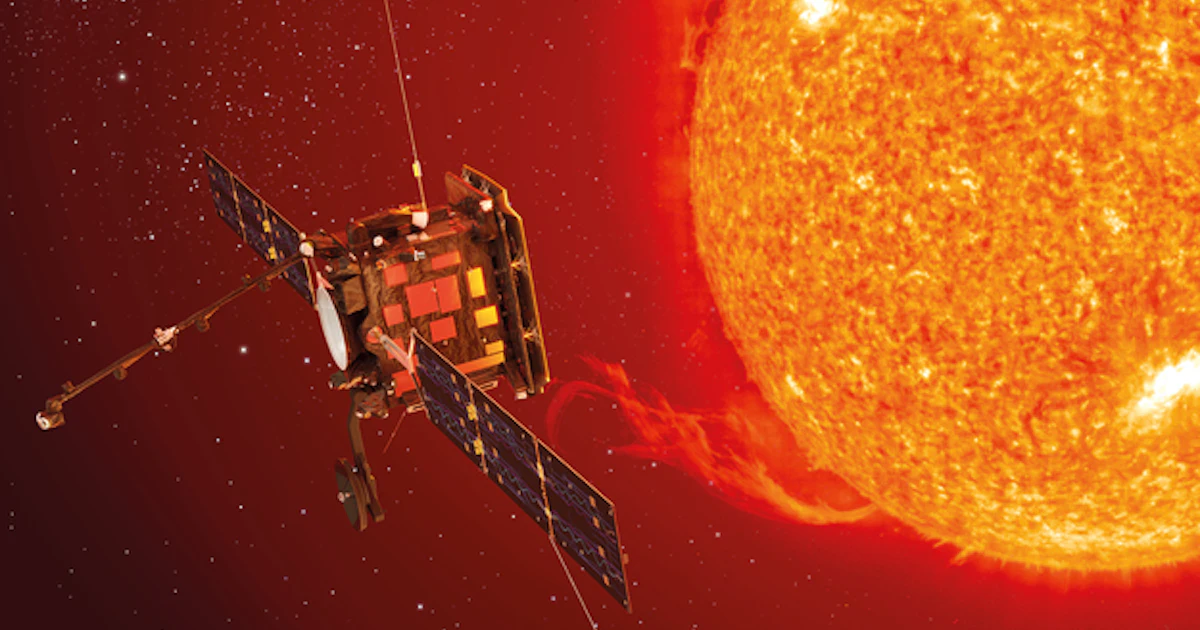
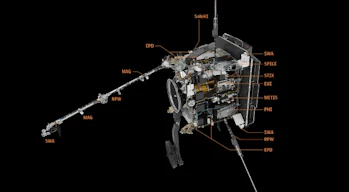
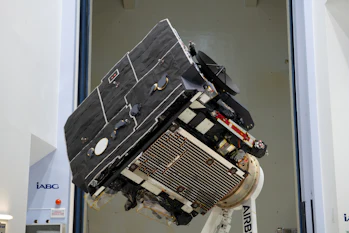
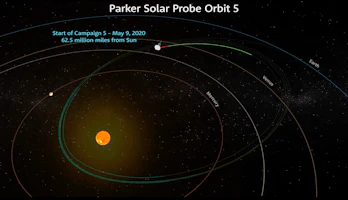


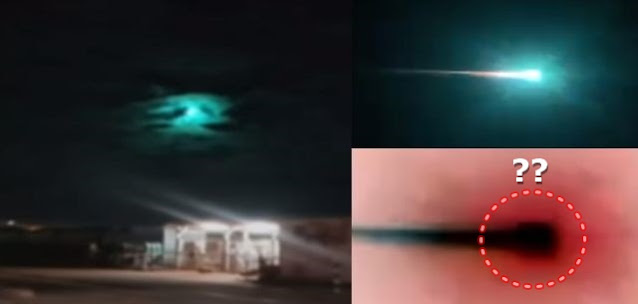





 First fast radio burst to be discovered in the Milky Way is...
 More than 30 intelligent alien races could be living in our...
 A galaxy far, far away! NASA's New Horizons travels 4.3...
 The world's most powerful telescopes in Chile have been...