Ontdek de Fascinerende Wereld van UFO's en UAP's: Jouw Bron voor Onthullende Informatie!
Ben jij ook gefascineerd door het onbekende? Wil je meer weten over UFO's en UAP's, niet alleen in België, maar over de hele wereld? Dan ben je op de juiste plek!
België: Het Kloppend Hart van UFO-onderzoek
In België is BUFON (Belgisch UFO-Netwerk) dé autoriteit op het gebied van UFO-onderzoek. Voor betrouwbare en objectieve informatie over deze intrigerende fenomenen, bezoek je zeker onze Facebook-pagina en deze blog. Maar dat is nog niet alles! Ontdek ook het Belgisch UFO-meldpunt en Caelestia, twee organisaties die diepgaand onderzoek verrichten, al zijn ze soms kritisch of sceptisch.
Nederland: Een Schat aan Informatie
Voor onze Nederlandse buren is er de schitterende website www.ufowijzer.nl, beheerd door Paul Harmans. Deze site biedt een schat aan informatie en artikelen die je niet wilt missen!
Internationaal: MUFON - De Wereldwijde Autoriteit
Neem ook een kijkje bij MUFON (Mutual UFO Network Inc.), een gerenommeerde Amerikaanse UFO-vereniging met afdelingen in de VS en wereldwijd. MUFON is toegewijd aan de wetenschappelijke en analytische studie van het UFO-fenomeen, en hun maandelijkse tijdschrift, The MUFON UFO-Journal, is een must-read voor elke UFO-enthousiasteling. Bezoek hun website op www.mufon.com voor meer informatie.
Samenwerking en Toekomstvisie
Sinds 1 februari 2020 is Pieter niet alleen ex-president van BUFON, maar ook de voormalige nationale directeur van MUFON in Vlaanderen en Nederland. Dit creëert een sterke samenwerking met de Franse MUFON Reseau MUFON/EUROP, wat ons in staat stelt om nog meer waardevolle inzichten te delen.
Let op: Nepprofielen en Nieuwe Groeperingen
Pas op voor een nieuwe groepering die zich ook BUFON noemt, maar geen enkele connectie heeft met onze gevestigde organisatie. Hoewel zij de naam geregistreerd hebben, kunnen ze het rijke verleden en de expertise van onze groep niet evenaren. We wensen hen veel succes, maar we blijven de autoriteit in UFO-onderzoek!
Blijf Op De Hoogte!
Wil jij de laatste nieuwtjes over UFO's, ruimtevaart, archeologie, en meer? Volg ons dan en duik samen met ons in de fascinerende wereld van het onbekende! Sluit je aan bij de gemeenschap van nieuwsgierige geesten die net als jij verlangen naar antwoorden en avonturen in de sterren!
Heb je vragen of wil je meer weten? Aarzel dan niet om contact met ons op te nemen! Samen ontrafelen we het mysterie van de lucht en daarbuiten.
They will explore Venus using a manta ray inspired spacecraft
Researchers are working on a concept that could change the way we explore the intense environment of Earth’s closest planetary neighbor.
Studying Venus will help us better understand why it harbors such an extreme environment and unlock the mysteries of how planets evolve, including Earth.
A network of tensioning cables are used to actuate the pectoral and pelvic fins (equivalent to wings and horizontal stabilizers of a fixed wing aircraft, respectively). They will furnish articulated flapping flight for achieving thrust, control, stability, and additional lift.
Furthermore, the same tensioning network may be used to provide the mechanical compression required for active buoyancy control. This makes BREEZE an ideal alternate approach to the Venus.
Actually it is a bit strange that they now want to explore Venus with such a manta ray craft, since they already sent in the late 80s and 90s the Magellan spacecraft to Venus which already collected an enormous amount of images that have finally been published by NASA in which huge cities, artificial structures and all kinds of elements that seem to obey constructions appear intelligent effected by some kind of alien race that inhabited or colonized the second planet in our solar system.
The I-Team caught up with polygraph expert Terry Tavernetti 30 years after KLAS featured him in an 8-part investigative series about the weird world of UFO conspiracies.
The Enigma of Prehistoric Skulls with Bullet-Like Holes
Nearly one century ago, a Swiss miner was searching for metal ore deposits in the limestone caves of Kabwe, Zambia, when he found a prehistoric skull that dated back between 125,000 and 300,000 years. It was the first fossil to be discovered in Africa with Homo sapiens characteristics.
But there was an even bigger surprise. The prehistoric skull had a small, circular shaped hole on the side, which forensic scientists say could only have been created by an extremely high-velocity projectile, such as that caused by a bullet. The mystery was compounded by the discovery of an ancient auroch skull with exactly the same feature. The discoveries have led to many wild and wonderful speculations, but we are really no closer to solving the puzzle.
Replica of the prehistoric Kabwe skull, housed in Mauer Museum, in Heidelberg, Germany.
Trying to Classify Prehistoric Skulls – The Case of the Kabwe Skull
The skull found in Kabwe (also known as Broken Hill) attracted a great deal of attention when it was first discovered. According to the Smithsonian Institution , it was initially believed that the Kabwe prehistoric skull was the first ever example of a new species of hominid called Homo rhodesiensis .
It was subsequently assigned the classification of Homo heidelbergensis , although more recent research has shown that several characteristics shown similarities to Homo erectus , Homo neanderthalensis , and modern Homo sapiens . Whoever the skull belonged to, it appears he or she may have been the product of interbreeding between different hominid species.
But its unique combination of features was not all that was unique about the Kabwe skull. It was also found to have a small, perfectly-round hole on the left side of the cranium, as well as a shattered parietal plate on the opposite side.
This suggests the projectile that entered on the left side, passed through the skull with such force that it completely shattered the right side. Strangely, the presence of these highly-unusual characteristics are missing from descriptions of the Kabwe skull on the Smithsonian Institution page, as well the Natural History Museum of London, although their photos clearly depict the hole in the skull.
A replica of the prehistoric Broken Hill or Kabwe skull from the Museum in Livingstone, Zambia, with the apparent bullet hole visible on the left.
What Could Have Caused the Hole in the Kabwe Skull?
While it is natural to assume that the hole may have been caused by a high-speed spear or javelin, investigations proved this was not possible. “When a skull is struck by a relatively low-velocity projectile – such as an arrow, or spear – it produces what are known as radial cracks or striations; that is, minute hairline fractures running away from the place of impact,” wrote The Shields Gazette . “As there were no radial fractures on the Neanderthal skull, it was unanimously concluded that the projectile must have had a far, far greater velocity than an arrow or spear.”
According to the book Technology of the Gods: The Incredible Sciences of the Ancients by David Hatcher Childress, a German forensics expert came to an even more radical conclusion: “the cranial damage to Rhodesian man’s skull could not have been caused by anything but a bullet.” Researcher Rene Noorbergen, who investigated the mystery in Secrets Of The Lost Races , concurred, saying that “this same feature is seen in modern victims of head wounds received from shots from a high-powered rifle.”
If this were true, it would mean that a) the skull is not as old as claimed, b) the ancient skull was shot in modern times, c) the ancient skull was shot in ancient times by a technologically advanced civilization. The first and second options are discounted by the fact that the skull was found 60 feet (18.2 m) below the surface, which confirms that it is at least several thousand years old.
It was not located near enough to ground level to have been accidently or intentionally shot in recent decades. Does that just leave us with the third option, or could there be other explanations in the mix?
Auroch skull with bullet-like hole in the forehead.
Before exploring other hypotheses, we must give consideration to another prehistoric skull discovery which further compounds the mystery. Thousands of miles away, along the Lena River in Russia, another ancient skull was discovered with the same clean, round hole.
The skull belonged to an auroch, an extinct species of wile cattle that lived between 2 million and 4,000 years ago. Like the Kabwe skull, the hole in the auroch skull is also missing radial cracks that would result from spear or arrow projectiles.
The prehistoric skull, which is now on display in Moscow’s Museum of Paleontology, could not have been struck by a bullet in more modern times because calcification around the bullet hole shows that the auroch survived the wound for some time afterwards.
The Kabwe skull, or Broken Hill skull, with its bullet-like hole clearly visible on the site, on display in the National History Museum in London.
All these pieces of the puzzle have really brought us no closer to learning the truth. Numerous hypotheses and speculations have surfaced, from radical theories, such as the idea proposed by The Shields Gazette that “someone from the future, carrying a firearm, travelled back into the past and engaged in some sort of trans-temporal hunting expedition,” to the slightly more plausible suggestion that the holes were caused by shrapnel from a small meteorite or something similar.
In alternative archaeology circles, the most popular perspective is that ancient man may have been technologically developed to a very high degree, before virtually all traces were lost. But could two separate societies, separated by thousands of years and a vast cultural gulf, have both invented weapons that just happened to fire small, cylindrical projectiles at high speed?
The only lukewarm attempt to debunk the alternative theories comes from the Bad Archaeology website, which denies the injuries to the right-side of the skull exist. Although they present no explanation or evidence, they claim that the bullet-like hole was caused by “a pathological, rather than a traumatic lesion, caused by an infection in the soft tissue over it.”
At this stage, none of the hypotheses are supported by adequate evidence or logic. Unless more prehistoric skulls or fossils are discovered with the same type of injuries, we may never hold the real answers to the Kabwe skull enigma.
Top image:The Kabwe Skull with bullet-like hole. prehistoric skulls.
WETENSCHAPPERS ONTHULLEN HET UNIEKE LOOPJE VAN HET GROOTSTE VLIEGENDE DIER DAT OOIT OP AARDE HEEFT GELEEFD
Vivian Lammerse
Lopen met vleugels van 6 meter lang valt echt niet mee…
Als je vandaag de dag door moerassig gebied loopt, zie je hooguit één meter lange reigers in ondiep water waden, op zoek naar visjes, insecten of schaaldieren. Maar zo’n 70 miljoen jaar geleden zou je langs de Texaanse Rio Grande-rivier een indrukwekkender en enger wezen door de moerassen hebben zien struinen. Het gaat om een vrij angstaanjagende pterosauriër, bekend als Quetzalcoatlus. Dit beest, met een spanwijdte van bijna 12 meter, was het grootste vliegende dier dat ooit op aarde leefde. En in een nieuwe studie schetsen onderzoekers nu het meest complete beeld van dit gevreesde familielid van de dinosaurus.
Mysterie In de jaren zeventig van de vorige eeuw ontdekte wetenschappers in het Amerikaanse Big Bend National Park de gefossiliseerde botten van de pterosauriër. Eén van de mysteries is echter sindsdien geweest hoe een dier met zes meter lange vleugels rond kon lopen… De vleugels zouden zelfs opgevouwen de grond moeten hebben geraakt. Bovendien gingen er onder zijn enorme vleugels in verhouding vrij kleine beentjes schuil. En dus is het de vraag hoe Quetzalcoatlus het luchtruim koos. “Dit oude vliegende reptiel is legendarisch,” zegt onderzoeker Kevin Padian. “Maar dit is de eerste keer dat we een grondige blik werpen op het grootste dier dat ooit op aarde rondvloog.”
Studie De onderzoekers bogen zich over de gefossiliseerde botten en vergeleken deze met talrijkere exemplaren van een kleinere Quetzalcoatlus-soort om het vlieg-, loop- en lanceergedrag beter te begrijpen. En uiteindelijk slaagde het onderzoeksteam erin het unieke loopje van Quetzalcoatlus te onthullen.
Vleugels Het beeld dat het onderzoeksteam uiteindelijk schetst, is van een dier dat best wat weg heeft van hedendaagse reigers, gecombineerd met kenmerken van condors en gieren. “Pterosauriërs hebben enorme borstbeenderen – de plek waar de vliegspieren zich hechten – dus het lijdt geen twijfel dat het geweldige vliegers waren,” zegt Padian. “Hun opperarmbeen – de humerus – kenmerkt zich door enorme, benige toppen waar de spieren die ze gebruikten om te vliegen, worden verankerd. Deze zijn groter dan die van vogels en veel groter dan die van vleermuizen. De vleugels werkten in wezen hetzelfde als die van vogels en andere dinosauriërs, waaraan pterosauriërs het nauwst verwant zijn.”
Meer over Quetzalcoatlus De onderzoekers vermoeden dat Quetzalcoatlus geen veren had: zijn lichaam – inclusief vleugels – was bedekt met haar, zoals bij alle pterosauriërs. Net als dinosaurussen waren ze warmbloedig en actief. Quetzalcoatlus had geen staart, vermoedelijk om zo wendbaarder te zijn. Daarnaast leek hij een beetje op een uit de kluiten gewassen ooievaar. De pterosauriër hield er waarschijnlijk een gevarieerd dieet op na en zocht in de modder naar krabbetjes, wormen en kokkels, maar ook kleine visjes, insecten, slangen en hagedissen stonden geregeld op zijn menu.
Net als vogels, vleermuizen en zelfs mensen, hebben de voorpoten van pterosauriërs drie segmenten: de humerus, de onderarm en de pols- en handbotjes. Maar in tegenstelling tot vogels en vleermuizen, bestaat het buitenste deel van de pterosauriërvleugel uit een gigantische ‘vleugelvinger’. “Het is vergelijkbaar met een skistok die zich vanaf het begin van je vingers uitstrekt en 90 graden naar buiten buigt,” legt Padian uit.
Tweevoetig Quetzalcoatlus was tweevoetig, wat betekent dat hij op twee benen liep. Maar omdat de botten van de voorpoten zo langwerpig zijn, raakten zijn vleugels de grond wanneer ze opgevouwen waren. Dit deed sommigen vermoeden dat de pterosauriërs zich net als een vampiervleermuis voortbewogen; die gebruiken hun voorpoten om zichzelf op de grond voort te stuwen.
Een schets van de botten van Quetzalcoatlus northropi. Het dier hield er een uniek loopje op na, die duidelijk verschilde van die van een vampiervleermuis.
Afbeelding: John Conway
De onderzoekers komen nu echter tot de ontdekking dat Quetzalcoatlus hier waarschijnlijk niet toe in staat was: als hij op de grond stond, kon hij zijn vleugels alleen naar voren of opzij bewegen. “Eenmaal op de grond, kon hij zijn voorpoten niet terugdraaien om vooruit te komen,” zegt Padian. “Het bot in zijn schouder zat daarvoor in de weg.” Om toch op de grond vooruit te komen, hief de pterosauriër eerst zijn linkerarm op, zette vervolgens met zijn linkerbeen een stap en plaatste zijn linkerarm op de grond. Dit proces herhaalde hij aan de rechterkant. “Dit lijkt misschien wat omslachtig,” zegt Padian. “Maar het dier kon de gang snel en gemakkelijk uitvoeren.”
Opstijgen Hoe Quetzalcoatlus opsteeg? Omdat zijn poten korter waren dan zijn vleugels, kon hij niet simpelweg met zijn vleugels klapperen om zichzelf te lanceren. De onderzoekers vermoeden dan ook dat de pterosauriër zijn sterke achterpoten gebruikte om omhoog te springen. Vervolgens begon hij, zodra er enige ruimte onder hem was gekomen, met zijn vleugels te klapperen. Reigers en zilverreigers doen hetzelfde, hoewel ze aanzienlijk kleiner zijn dan Quetzalcoatlus.
Een stapsgewijze reconstructie van hoe Quetzalcoatlus opsteeg. De pterosauriër hurkt, springt en begint dan met zijn vleugels te klappen.
Afbeelding: Kevin Padian and John Conway
De bevindingen zijn revolutionair voor de studie naar pterosauriërs – de eerste dieren, na insecten, die ooit een gemotoriseerde vlucht ontwikkelden. Padian geeft toe dat er nog steeds enkele vragen over Quetzalcoatlus en pterosauriërs in het algemeen onbeantwoord blijven. Maar dankzij het omvangrijke onderzoek hebben we nu wel een veel beter beeld van hoe het grootste vliegende dier dat ooit op aarde leefde, zich – op vrij eigenaardige wijze – voortbewoog.
An unexplained object is seen at center of the image from video provided by the Department of Defense labelled Gimbal, from 2015. “There's a whole fleet of them,” one naval aviator tells another, though only one indistinct object is shown. “It's rotating."
(DEPARTMENT OF DEFENSE/AP)
American officials and analysts globally are raising alarm about a new Defense Department office that will handle the U.S. government’s examination of unidentified flying objects, warning that the move indicates the military wants to end a brief spell of transparency and shove UFO reports back into a closet under lock and key.
The Pentagon quietly announced the Tuesday night before Thanksgiving that it had formed the esoteric-sounding Airborne Object Identification and Management Synchronization Group. Working with the intelligence agencies, it serves as the follow-on to a government-wide effort earlier this year to document and analyze reports of encounters with unidentified objects – “Unidentified Aerial Phenomena” or UAPs in Pentagon jargon – predominantly from military pilots.
The new office, which reports to the undersecretary of defense for Intelligence and Security, will now oversee the entire government’s study of UFOs, focusing on sightings within restricted military airspace and will also “assess and mitigate any associated threats to safety of flight and national security,” a spokeswoman says.
The Defense Department has since justified the composition of the office as necessary to provide uniformity to the reporting process and subsequent analysis.
But some researchers characterize the Pentagon’s latest move as an “insulting” attempt to run around specific efforts by civilian organizations and leaders in Congress to exercise greater oversight over the government’s study of UFOs.
“It represents a brazen step towards completely stifling the burgeoning demand from both the public and Congress for increased UFO transparency,” says Peter Whitley, a researcher based in Japan and a member of the Mutual UFO Network, or MUFON, which considers itself one of the largest and oldest of its kind. “Clearly, the DOD is attempting to reverse course on this trend and shut the door on further disclosure of any kind.”
Others who follow the issue closely see it as nothing more than a play by the Pentagon to control a subject that should belong in the arena of scientific study – at the expense of proper oversight.
“It is clear that the Pentagon does not want any civilian interference in this,” says Clas Svahn, chairman for the Sweden-based Archives for the Unexplained, among the most comprehensive digital libraries for UFO sightings and investigations into them by governments worldwide. “This is a power struggle over who should have access to UAP information.”
So-called “ufologists” around the world expressed optimism this summer at the congressionally mandated effort led by the civilian Office of the Director of National Intelligence into the government’s handling of UFO sightings. It culminated in a report released in June that offered few exciting conclusions – no documentation of “little green men,” for example – but elevated the reputation of an often-ridiculed subject to one deserving of serious consideration among the world’s most powerful countries.
The Pentagon through the formation of the new office has begun to dash those hopes with what some consider a unilateral power grab. And, indeed, even some lawmakers have expressed concerns of their own.
Sen. Kirsten Gillibrand has sponsored a pending bipartisan amendment to this year’s military budget bill that would ramp up government study of the issue and add more layers of oversight, in addition to determining whether any sighting amounts to a threat from unknown technologies fielded from Russia, China – or elsewhere. It calls for the creation of a new advisory committee composed of experts from civilian agencies such as NASA and the Federal Aviation Administration as well as from academia to strengthen public discourse over the findings.
“While we appreciate the DOD’s attention to the issue, the AOIMSG doesn’t go nearly far enough to help us better understand the data we are gathering on UAPs,” a spokeswoman for the New York Democrat, Lizzie Landau, tells U.S. News. The framework she has proposed “does much more to address the UAP issue while also maintaining public oversight.”
The Defense Department, however, has pushed back on the notion that its supremacy over the issue amounts to anything nefarious and says it can practice transparency on its own.
“This is a chance for us to be much more organized in the way we process these reports,” Pentagon spokesman John Kirby told reporters this week. “And we will certainly continue to be as transparent as we can about these phenomena and the impact that they may or may not be having on our ability to operate.”
Kirby then tempered expectations about what the public may learn of the newly formed office’s findings.
“I don't want to leave you with the impression that there'll be sort of a regular drumbeat of, you know, of some kind of report that gets posted on a website, you know, every couple months,” he added.
The Pentagon’s approach has deeply frustrated those who have followed the issue closely, particularly after it finally acknowledged that for years it has neglected to adequately analyze its encounters with unknown objects in U.S. airspace.
“This is an end-around to cut the legs out from Sen. Gillibrand in her amendment to the next defense spending bill,” says Robert Spearing, MUFON’s director of international investigations, who is based in Costa Rica. “She wants a government office that utilizes input from civilian organizations. In essence, the Pentagon doesn’t want this.”
Two former defense officials who previously worked on UFO assessments told The Hill in an interview that the latest initiative is woefully underprepared to handle the issue.
“If we want 70 more years of secrecy on this topic, then [the undersecretary for intelligence’s office] is the perfect place to put it. They’ve had four years so far, and we have little in the way of efforts serving the public interest,” Luis Elizondo, the former head of an informal Defense Department unit that assessed military UFO reports, told the paper.
Elizondo isn’t the only expert to question the Defense Department’s assertions that it alone can determine what materials to make public.
“To be ‘as transparent as we can’ means nothing much,” Svahn says. The military’s approach is particularly frustrating “when it comes to observations and reports that are made by Air Force and Navy pilots inside restricted airspace, since they most certainly will be seen as something that could threaten national security.”
“Now,” he adds, “UAPs will only be seen as a threat – and treated as that.”
1952 was the year America caught flying-saucer fever.
So when a rash of strange sightings was reported in the skies over Washington D.C. that summer, the press and the public demanded answers. Were these unexplained radar blips, crafts that in some cases outran jets, part of a nuclear-armed Soviet invasion—a very real threat at the height of the Red Scare? Or were they evidence of something far more mysterious?
The Washington, D.C. sightings of July 1952, also known as “the Big Flap,” hold a special place in the history of unidentified flying objects. Major American newspapers were reporting multiple credible sightings by civilian and military radar operators and pilots—so many that a special intelligence unit of the U.S. Air Force was sent in to investigate. What they found—or didn’t find—along with the Air Force’s official explanation, fueled some of the earliest conspiracy theories about a government plot to hide evidence of alien life.
UFO mania takes hold
Pilots E.J. Smith, Kenneth Arnold, and Ralph E. Stevens look at a photo of an unidentified flying object which they sighted while en route to Seattle, Washington, 1947.
Bettmann Archive/Getty Images
It all started in 1947, when a search-and-rescue pilot named Kenneth Arnold reported nine "saucer-like things...flying like geese in a diagonal chainlike line" at speeds exceeding 1,000 m.p.h. near Mount Rainier in Washington State. Within weeks, “flying saucer” sightings had been reported in 40 other states.
In the name of national security, Air Force General Nathan Twining launched Project SIGN (originally named Project SAUCER) in 1948, the first official military-intelligence program to collect information on UFO sightings. Its investigators dismissed the vast majority as hoaxes or misidentifications of known aircraft or natural phenomena.
But a few cases remained “unexplained.”
By 1952, the UFO-investigation unit was called Project Blue Book, led by Captain Edward Ruppelt at the Wright-Patterson Air Force Base in Dayton, Ohio. Ruppelt and his team would probably have continued to investigate a couple dozen sightings a month if not for the April 1952 issue of LIFE magazine. Just above its knockout cover shot of Marilyn Monroe ran an equally eye-catching headline: “There is a Case for Interplanetary Saucers.”
The article, written with Ruppelt’s full cooperation, explained the Air Force’s national-security interest in UFOs. And it made a convincing case—through the colorful retelling of 10 unexplained UFO “incidents”—that these unidentified objects were extraterrestrial in origin. As one rocket scientist working on “secret” projects for the U.S. told LIFE: "I am completely convinced that they have an out-of-world basis."
According to The Washington Post, the number of UFO sightings reported to the Air Force jumped more than sixfold, from 23 in March 1952 to 148 in June. By July, the precise conditions were in place for a wildfire of UFO mania: widespread Cold War anxiety, mainstream press coverage of unexplained UFO incidents and a healthy dose of “midsummer madness.” All that was needed was a spark.
Mysterious radar blips buzzing over the White House
The Washington National Airport, 1953.
PhotoQuest/Getty Images
Shortly before midnight on Saturday, July 19, 1952, air-traffic controller Edward Nugent at Washington National Airport spotted seven slow-moving objects on his radar screen far from any known civilian or military flight paths. He called over his supervisor and joked about a “fleet of flying saucers.” At the same time, two more air-traffic controllers at National spotted a strange bright light hovering in the distance that suddenly zipped away at incredible speed.
At nearby Andrews Air Force Base, radar operators were getting the same unidentified blips—slow and clustered at first, then racing away at speeds exceeding 7,000 mph. Looking out his tower window, one Andrews controller saw what he described as an “orange ball of fire trailing a tail.” A commercial pilot, cruising over the Virginia and Washington, D.C. area, reported six streaking bright lights, “like falling stars without tails.”
When radar operators at National watched the objects buzz past the White House and Capitol building, the UFO jokes stopped. Two F-94 interceptor jets were scrambled, but each time they approached the locations appearing on the radar screens, the mysterious blips would disappear. By dawn of July 20, the objects were gone.
Nobody bothered to tell Ruppelt, the Air Force’s lead Project Blue Book investigator, about the sightings. He found out a few days later when he flew into Washington, D.C. and read news reports. Ruppelt tried to get out to National and Andrews to interview radar operators and air-traffic controllers, but was denied a government-issued car or even cab fare. Frustrated, he flew back to Ohio with nothing.
The very next Saturday, the UFOs were back over the nation’s capital. Again, Ruppelt found out through a phone call from a reporter, and immediately called on two Air Force colleagues to check out the situation at National. The same radar blips were back, and radar operators wondered out loud if the dozen or so objects on their screens couldn’t be caused by a temperature inversion, a common phenomenon in D.C.’s hot, muggy summer months.
A temperature inversion occurs when a layer of warm air forms in the low atmosphere, trapping cooler air beneath. Radar signals can bounce off this layer at shallow angles and mistakenly show near-ground objects as appearing in the sky. Ruppelt’s Air Force colleagues, however, were convinced that the objects on the radar screen weren’t mirages, but solid aircraft.
To be safe, two more F-94 jets were scrambled to chase down the unidentified targets appearing on radar screens at both National and Andrews. A game of high-speed Whack-a-Mole ensued, where the jets would race to a location targeted by radar, only for the blips to vanish. Finally, one of the jet pilots caught sight of a bright light in the distance and gave chase.
“I tried to make contact with the bogies below 1,000 feet,” the pilot later told reporters. “I saw several bright lights. I was at maximum speed, but even then I had no closing speed. I ceased chasing them because I saw no chance of overtaking them.”
Captain Edward Ruppelt, standing, and General John Samford, seated to the right of him, discussing the reports of unidentified flying objects with other Air Force officers at a 1952 news conference.
Bettmann Archive/Getty Images
The next day, newspaper headlines across America screamed “Saucers Swarm Over Capital” and “Jets Chase D.C. Sky Ghosts.” The publicity and public panic over the sightings were so great that President Harry Truman himself asked aides to get answers. When they called Ruppelt, he said it could have been caused by a temperature inversion, but more investigation was needed to fully explain both the radar images and credible eyewitness accounts.
But before such an in-depth investigation could take place, the Air Force called a press conference, the longest such news event since World War II. The Air Force brass had decided, without consulting Ruppelt or the Project Blue Book team, that the best response to the sightings was to feed the press and the public an easy-to-swallow explanation.
Dodging specific questions about what pilots and radar operators had seen in the skies over the Capitol, Major General John Samford came back again and again to the temperature-inversion theory. Never mind that Ruppelt had since come to the opposite conclusion.
“The investigators had ruled out the inversion,” says Alejandro Rojas, editor of the UFO news site OpenMinds. “They had examined that situation. The radar operators said, ‘Inversions happen. We know what inversions look like. This is not an inversion. This is not the same thing at all.’”
To Ruppelt’s disappointment, the Air Force’s press conference worked exactly as planned. The papers reported the temperature-inversion story and the public largely seemed to accept it. In his 1956 book, The Report on Unidentified Flying Objects, Ruppelt reports that after the press conference, UFO sightings dropped from 50 a day to 10.
Skeptics, however, weren’t satisfied with the pat government response. Many accused Air Force and Project Blue Book investigators of devious behavior and secret knowledge. It wasn’t until Project Blue Book documents were made public in 1985 that UFO sleuths could see that the closest thing to a government cover-up of UFO sightings in the nation’s capital was actually a conspiracy of ignorance.
“The Washington UFO flap perfectly illustrates the real government 'cover-up',” says Nick Pope, a UFO journalist who used to run UFO-investigations unit for the British Ministry of Defense. “It’s not a situation where the authorities conspired to keep some terrible truth about UFOs from the people, but rather, the government doing its best to keep people from realizing that they didn't have all the answers.”
The Ateshgah Baku Fire Temple: Built On an Azerbaijan Natural Gas Vent
The Ateshgah Baku fire temple, located in the capital of Azerbaijan, was built over a natural gas vent, and constructed between the late 17th and early 18th centuries AD. There is evidence, however, that an older temple once stood at the site. One of the interesting features of the Ateshgah Baku fire temple are the inscriptions on the temple used by Zoroastrians, Hindus, and Sikhs. The Ateshgah has since lost its religious function and was converted into a museum during the 1970s.
Inscriptions in Arabic and Indian on the Ateshgah Baku fire temple, located in the suburb of Surakhany, Baku, Azerbaijan.
The Baku Fire Temples: Already in Use in the 10th Century AD
The Ateshgah Baku fire temple is located in Surakhany, a suburb of Baku, Azerbaijan. Due to the many natural gas vents under the Absheron Peninsula (where Baku is situated), fire rituals have been carried out in the area since the 10th century AD. The natural gas vents provided fuel for flames that could burn perpetually, the so-called “eternal flames.” This natural phenomenon can also seen at Yanar Dag (meaning “Burning Mountain”) near Baku.
Baku was once on the famous Silk Road . In addition to goods, this trade route also allowed news to travel from East to West, and vice versa. It is thought that through the Silk Road, merchants in India heard of stories about the Absheron Peninsula and its eternal flames. As a result, pilgrims from India began to travel to Baku to worship the sacred flames. At the same time, they brought their own gods to this foreign land, and worshipped them alongside these flaming gas vents.
The current Ateshgah Baku fire temple was built between the late 17th and early 18th centuries AD. When renovations were carried out in 1969, part of an older structure was found beneath the current temple. This suggests that the site was already used for religious purposes prior to the 17th century. Although it is speculated that the older temple extended beyond the perimeter of the current temple, this may be impossible to ascertain, since the remains were probably destroyed from the 19th century onwards as the surrounding area was excavated for oil and gas.
An inscribed invocation to Lord Shiva of the Hindu religion written in Sanskrit at the Ateshgah Baku fire temple.
The current Ateshgah fire temple consists of a circuit of pentagonal walls surrounding a courtyard, in the middle of which is the altar. This altar takes the form of a pavilion and was built on top of a natural gas vent. Through the gases from this vent, the flame in the middle of the pavilion and four smaller ones on the rooftop corners are maintained. Within the courtyard, and around the altar, are small cells that provided accommodation for pilgrims and ascetics.
The architecture of the Ateshgah fire temple incorporates elements from both Zoroastrianism and Hinduism. It is still a matter of debate, however, whether the temple was originally founded as a Zoroastrian or Hindu place of worship. The current consensus is that whilst the Ateshgah was initially established as a Zoroastrian temple, it developed into a predominantly Hindu site over time.
In addition to the Hindu architectural elements, the other sign of the presence of Hindus at the Ateshgah is the inscriptions dedicated to the Hindu gods Ganesha and Shiva. Apart from these, there are also inscriptions dedicated by Sikh pilgrims who came to the Ateshgah to worship. Although Ateshgah is also associated with Zoroastrianism, there is in fact only a single Zoroastrian inscription at the temple. In any case, the inscriptions indicate that the sacred site was shared by the three different religions.
An engraving of the Ateshgah Baku fire temple of Azerbaijan showing pilgrims visiting the site.
It seems that by the late 19th century, the Ateshgah Baku fire temple was abandoned, possibly due to the decline in Azerbaijan’s Indian population. Nevertheless, even during that century, Parsis and Zoroastrians, who migrated to India following the Islamic conquest of Persia during the 7th century AD, continued to make pilgrimages to the site. Moreover, the site also became a tourist attraction for European tourists travelling in Azerbaijan.
As mentioned earlier, the Ateshgah Baku fire temple was renovated in 1969. Incidentally, in that same year, the eternal flame at the altar died, due to the intensive exploitation of the natural gas reserves on the Absheron Peninsula. Although the flame is still maintained today, its source of fuel is provided by Baku’s main gas supply.
In 1975, the Ateshgah was converted into a museum. The cells surrounding the altar, for instance, are used to tell the stories of the pilgrims who once travelled to the temple to worship.
As the Ateshgah fire temple is located in a suburb of Baku, it is not close to any of the city’s metro stations. Instead, there are buses that run from some of the stations to the site. Apart from that, one could also travel to the temple by taxi. The Ateshgah is open every day from 10:00 to 18:00, and tickets are required to enter the site.
Top image: The altar of the Ateshgah Baku fire temple in the capital of Azerbaijan. Source: vadim.nefedov / Adobe Stock
New Denisovan Fossils From Siberian Cave Are The Oldest Ever Found
Researchers from the Max Planck Society and the Universities of Vienna and Tübingen have found new fossilized human-like remains mixed in an assortment of bone samples taken from Siberia’s famed Denisova Cave. This includes three fragments that belonged to actual Denisovans, the much-speculated-about species that gave the cave its name. These bones will be added to the growing collection of Denisovan fossils connected to the most intriguing of all the extinct human species, which lived on the Earth at the same time as Neanderthals and early modern humans yet left such a light footprint as to be virtually undetectable.
Remarkably, these Denisovan fossils were recovered from a deep excavation layer that dated to 200,000 years in the past. These are the earliest Denisovan remains ever found, and they prove that Denisova Cave was occupied by archaic humans more than 150,000 years before modern humans reached the Siberian region following their migrations out of Africa. The analysis results of the newly discovered Denisovan fossils have been published in a study in the Nature Ecology & Evolution journal.
The latest Denisovan fossils were found in a deep layer of Denisova Cave in Siberian Russia and proven to date back about 200,000 years, making them the oldest Denisovan remains ever found.
Evidence Found In a Haystack of Denisovan Fossil Fragments
Science first learned of the existence of the Denisovans in 2008. That’s when a small number of fossilized bones and teeth were recovered from an isolated cave in the Altai Mountains in southern Siberia.
Unfortunately, the Denisovan fossil fragments found at the Denisova Cave were few. They revealed scarce details about this long-lost Homo sapiens cousin, which is believed to have died out approximately 50,000 years ago. In the years that have passed since, archaeologists and anthropologists have been frantically searching for more remains left behind by this elusive species. They’ve been searching primarily in northern, central, and eastern Asia, where traces of their DNA have been found in indigenous residents.
Archaeologists and anthropologists have been optimistic about eventually finding Denisovan fossils in these other locations (a fossilized Denisovan jawbone found in a cave in Tibet generated much excitement). But many scientists have continued to focus their search on Siberia’s Denisova Cave, where the ancient Denisovan presence has been most firmly established.
In this extraordinarily successful new study, scientists working under team leader Katerina Douka, an assistant professor in the University of Vienna’s Department of Evolutionary Anthropology, spent several years analyzing ancient DNA samples and assorted proteins extracted from approximately 3,800 bone fragments taken from the cave. As they explain in a new article in the journal Nature Ecology and Evolution , these bones included a diverse mixture of animal and human fossils, and it would have been impossible to identify anything visually.
Zooarchaeology by Mass Spectrometry or ZooMS was used to analyze the recently discovered Denisovan fossils, which are now the oldest ever!
For a Positive ID Researchers Relied on Peptide Analysis
To make a positive ID, the researchers only option was to use a technology known as Zooarchaeology by Mass Spectroscopy, or ZooMS. This high-tech tool can identify peptides (strings of amino acids) that are found specifically in the human body, and in the body of human ancestor species as well.
With this reliable technology at their disposal, the scientists concentrated on fossils excavated from the cave’s most ancient layer, which had been dated back 200,000 years. The bones collected from this layer were truly a fragmented and haphazard jumble, and that’s why little work had been done on them in the past. But with ZooMS, there was an opportunity to search for Denisovan fossils in a collection of bones that had not been fully examined before.
Team member Samantha Brown, a doctoral student at the University of Tubingen, was assigned the task of performing the actual analysis of the approximately 3,800 previously unidentified bone fragments. The vast majority of these fossil bones had belonged to animals, making the search for human remains the equivalent of looking for the proverbial needle in a haystack.
With enough time and diligence, even the smallest needle can be found eventually, and Brown’s research ultimately proved successful. Aided by the precise ZooMS technology, she found five bones with collagen profiles that matched those of humans.
But which types of humans? Certainly not modern humans ( Homo sapiens ), which would not arrive in Siberia until much later. That left Neanderthals and Denisovans as the two possible candidates.
To solve this mystery, the scientists turned to another high-tech innovation that has revolutionized archaeological and anthropological practice: DNA analysis. Out of the five human bones Brown identified, four contained significant enough traces of genetic material to allow for a mitochondrial DNA reconstruction. These tests showed that one of the bone fragments had belonged to a Neanderthal, while the other three were all Denisovan.
At an age of 200,000 years, this DNA typing officially established the three bone samples as the oldest remains of Denisovans ever found.
"Denisova is an amazing place for DNA preservation, and we have now reconstructed genomes from some of the oldest and best-preserved human fossils," Dr. Diyendo Massilani, a genetic researcher from the Max Planck Institute of Evolutionary Anthropology in Leipzig, explained in an Institute press release announcing this amazing discovery.
The Denisova 3 fifth distal finger phalanx of 13.5-year adolescent Denisovan female, the first bone fossil uncovered at Denisova Cave in 2008.
Finding New Denisovan Fossil Bones and Lithic Stone Tools
There is no underestimating the impact and importance of this discovery. "We were extremely excited to identify three new Denisovan bones amongst the oldest layers of Denisova Cave," Katerina Douka told Live Science . "We specifically targeted these layers where no other human fossils were found before, and our strategy worked."
"Finding one new human bone would have been cool, but five? This exceeded my wildest dreams," Samantha Brown added.
The discovery of the age of the 200,00-year-old Denisovan bones was exciting. But there is another part to the story that is perhaps even more significant.
Inside the deep layer of the cave where the fossils were found, archaeologists also unearthed a large number of lithic stone artifacts dating to the same time period. These included several scaping tools, which presumably were used to process animal skins.
Notably, none of these tools were similar to any that had been found in central or northern Asia before.
"This is the first time we can be sure that Denisovans were the makers of the archaeological remains [the stone tools] we found associated with their bone fragments," Douka confirmed.
Previously discovered Denisovan fossils had either been found separate from artifacts, or alongside artifacts that were suspected to have been left by Neanderthals. The two ancient species frequently occupied the same caves and territories and were known to have interbred .
There were also thousands of pieces of animal bones found in the oldest layer of Denisova Cave. They have now been identified as belonging to such species as deer, wild horses, bison, gazelles, and wooly rhinoceroses, all of which could have been hunted by Denisovans 200,000 years ago. Many of the bones contained marks consistent with butchering, while others had been damaged by fire (meaning the flesh of the animals had been cooked).
"The site's strategic point in front of a water source and the entrance of a valley would have served as a great spot for hunting," Douka noted.
If Denisova Cave contains more Denisovan bones or artifacts, the researchers intend to find them. Katerina Douka confirms that her team is continuing its search at the cave, while also carrying out excavations at several other Asian sites where they are hopeful Denisovan fossil remains might be found.
Top image: Denisovan fossils look a bit unremarkable, but these bone fragments, mostly from animals, were perfect for Zooarchaeology by Mass Spectroscopy and DNA analysis, which were used in the recent study .
Watch: Mysterious Lights In The Sky Puzzle Residents In Punjab City
The phenomenon appeared in the sky for a few minutes shortly before 7 pm.
Residents described seeing a string of bright, white lights.
Chandigarh: A line of bright lights darting through the night sky in Punjab's Pathankot left residents confused on Friday evening.
The phenomenon appeared in the sky for a few minutes shortly before 7 pm.
"We saw the fast-moving object with bright lights, like a train. It looked just like a train at a distance. The light was very bright and white. It was the first time we saw something like this. We saw it for five whole minutes, after which it vanished," said one resident.
The unidentified object also sparked chatter on Twitter.
Believe it or not, not every searcher for a lost underwater city is looking for Atlantis. George Gelé has been seeking what was once a major city 12,000 years ago in the Gulf of Mexico off the coast of the state of Louisiana. He claims his 50-year search has resulted in sonar images of buildings and a pyramid, and he has witnesses who claim they’ve experienced strange electrical anomalies in the area. Needless to say, Gelé has his doubters. What exactly does he think he’s found and what is his evidence?
“What’s down there are hundreds of buildings that are covered with sand and silt and that are geographically related to the Great Pyramid at Giza. Somebody floated a billion stones down the Mississippi River and assembled them outside what would later become New Orleans.”
In an interview with WWL-TV, Gelé claimed he has located large underwater granite mounds near the Chandeleur Islands that were once the site of a lost city he calls “Crecsentis.” The Chandeleur Islands are a chain of uninhabited barrier islands east of New Orleans in the Gulf of Mexico that form the Chandeleur Sound. The islands were in the news a number of times recently – they were partially destroyed in 2005 by Hurricane Katrina, and in 2010 hundreds of miles of the Chandeleur Sound’s coastline marshes were destroyed by the Deep Horizon oil spill. Neither of those deterred Gelé in his search for “Crecsentis.”
An aerial view of Chandeleur Islands. Louisiana, Chandeleur Islands, St. Bernard Parish.
“What’s important is to figure out what’s there because whatever it is, it belongs to the people of Louisiana.”
There is a consensus that there is indeed something big and made of granite in the Gulf off the coast of St. Bernard Parish. Gelé began looking for it after studying architecture at Louisiana State University and archeology on a student trip to Mexico. Since 1976, he has made 44 trips to the site that is well known to Isleño (descendants of Canary Islanders) fishermen and other boaters. He’s measured the largest pyramidal part (200 feet by 700 feet by 280 feet tall) and compares it to the Superdome in New Orleans. On diving expeditions, he’s brought up old pieces of building material, but local fisherman have netted pieces of granite which are not from Louisiana.
“Everything will go out on your boat, all your electronics. Like as if you were in the Bermuda Triangle. That’s exactly what we got here.”
Local shrimper Ricky Robin told the Sun he’s taken Gelé to the spot where his electronics go haywire – the same spot where granite is found. Gelé claims he’s taken sonar images at the spot that show the pyramid and remains of large buildings. While he’s open to suggestions about the rubble piled on top of the pyramid, he seems committed to the pyramid being from a 12,000-year-old civilization predating the Maya, Inca, and Aztecs. While he doesn’t say how, he claims “Crecsentis” could be linked to those civilizations.
Who controls what’s hidden in the depths of the Gulf of Mexico?
This mysterious rock mound in the Gulf is known to archeologists – a study by Texas A&M in the late 1980s concluded it’s a pile of shipwrecks or ballast stones dumped by Spanish or French boats. vessels. Gelé has had permission to dive to the spot since 2011 but hasn’t returned with any solid evidence of “Crecsentis.” Nor have the electrical anomalies claimed by Robin been confirmed by anyone else. Obviously, it hasn’t discouraged Gelé, but it has drained his finances and the state of Louisiana, while interested in what he finds, isn’t interested in kicking in any cash.
George Gelé has spent almost 50 years studying the site where he believes a lost city is hiding underwater.
Is George Gelé chasing a real Gulf of Mexico Atlantis or just a pile of rocks? The Gulf holds many mysteries but is controlled by the oil industry. The only thing they can’t control is hurricanes. Perhaps one will help Gelé find “Crecsentis” … or prove him wrong.
Mention “false flag,” “aliens” and “UFOs” in a sentence and most people are reminded of Project Blue Beam — the infamous conspiracy theory of Serge Monast in the early 1990s warning that NASA was working with the United Nations to establish a New Age religion with the Antichrist at its head and start a New World Order by creating giant holograms to fool the public. However, when retired FBI agent John DeSouza uses those terms, he’s referring to the Tic Tac UFOs encountered by the U.S. military and his alleged inside knowledge that their sightings will increase under a fake alien invasion scenario to scare the world. Is this scenario for real?
Another Project Blue Beam?
“One of the things that I see happening throughout 2022 is going to be … they’re gonna make these Tic Tacs, and these Tic Tacs come in many different shapes and sizes like they are sometimes cylinders, they are sometimes motherships, they are in all different shapes and sizes.”
John DeSouza is in the news this week because of his interview with Michael Salla, founder of Exopolitics.org, who was also in the news this week with his ‘revelation’ that Vladimir Putin invaded Ukraine to gain possession of an “ancient space ark” which the world would see flying soon – and this is just one of two in Russia’s possession and there are more managed by the U.S. and China as well as on the Moon and Mars. In his quest to reveal what’s ‘really’ going on in the world of UFOs, extraterrestrials and world politics, Salla interviewed DeSouza – whose bio says he’s a “FBI Special Agent (RET.) Investigator for 25 years and collector of the real life “X-Files.” He is also the author of three books on paranormal subjects.
“… what we’re going to be seeing is we’re going to be seeing these Tic Tacs, also called UAPs, that’s the new terminology, as well we’re going to be seeing them actually engaging civilian ships and vessels in a hostile aggressive manner.”
The key word in DeSouza’s interview (you can watch it in its entirety here) with Salla is “civilian” – he’s predicting the Tic Tac UFOs/UAPs, which have until now only appeared around Navy ships, will soon become hostile and aggressive to civilians in boats. How hostile and aggressive?
“They may not be killing people yet, but they will be doing things to disable ships, disable vessels, actually have real physical confrontation.”
Physical confrontations, disabling civilian ships but no killing … “yet.” Why will this happen?
“Because at this point they need to ratchet up the fear more than what it’s been. It can’t just be this – oh, the Tic Tacs appeared and they zipped around and then they disappeared. They’re gonna need to kick that up a level.”
Since DeSouza worked for the U.S. FBI, we can assume the “they” in his scenario refers to the U.S. government. Why would our government or any other governments attack their own civilians under the guise of an extraterrestrial attack? Salla himself brings up Project Blue Beam, which Monast linked to NASA and the UN. Taking advantage of his platform, DeSouza seemed to try to get everything he knows into the interview – the Men in Black, the Moon being an artificial structure, motherships or alien arks.
“My calling is to show people they already have what they need to ascend. The first and greatest lie has been exploded: that this material façade is all there is. Next we must awaken to our own supernatural abilities. These abilities must then be joined to faith and belief. Faith and supernatural abilities will then determine everything in life and beyond.”
While he’s often billed as the “real” X-man, DeSouza seems to live on the pseudo-religious side of UFOs and aliens than the physical evidence side. While he talks about frauds and fakes, he doesn’t (at least in this interview) present any evidence to back up his claims. Without that, it’s hard to determine who is waving the false flag.
Here Are 20 Years of UFO Sightings We Got From the Canadian Government
VICE World News obtained nearly 300 pages of documents through freedom of information requests that include strange sightings from pilots, soldiers, and police officers.
THE DOCUMENTS, TOTALLING 290 PAGES, CONTAIN DOZENS OF STRANGE SIGHTINGS FROM COMMERCIAL PILOTS, SOLDIERS, AND COPS.
STOCK PHOTO BY GETTY IMAGES
The Canadian government has released 20 years of UFO reports.
The 500-plus reports spanning nearly 300 pages contain dozens of strange sightings from commercial pilots, soldiers, and police officers. (Here are some of the highlights.) Obtained by VICE World News through Canadian freedom of information laws, the reports were made to federal transportation authorities as recently as last year, when a Canadian military flight spotted a “bright green flying object” that “flew into a cloud then disappeared” over eastern Canada.
Other unusual observations include Newfoundland police “tracking two brightly coloured flying objects” in August 2001 and a December 2018 passenger flight from Alaska to Seattle that reported “pulsating lights” descending from 60,000 feet.
“I would be inclined categorically to believe anybody that reported something,” former Canadian fighter pilot John “Jock” Williams told VICE World News. “There’s no upside to making a fake report.”
Williams is an aviation consultant who has also worked as a federal flight safety officer.
“There is a definite reluctance to report stuff,” he said. “I’m amazed at the amount of the material they sent you, and some of it actually is pretty good.”
All 290 pages of reports have been included at the bottom of this story as a downloadable PDF.
There are loads of civilian sightings too, such as a large glowing “object seen hovering quite quickly back and forth just above the tree line” near Peterborough, Ontario, in January 2011.
One uncommonly long report even details a sighting that was confirmed by military radar. On the night of Dec. 23, 2018, a fisherman in the Bay of Fundy and a woman at home in Yarmouth, Nova Scotia, both contacted a search and rescue centre to report a light that “was yellow, steady, and hovering” high above the Atlantic Ocean. When Royal Canadian Air Force (RCAF) personnel reviewed radar data from NORAD, the joint Canada-U.S. air defence alliance, they “observed three primary radar hits” that correlated almost exactly to the time and location of the sighting.
“This is an area that has good low level radar coverage, so there is no explanation of why there were only three points all at exactly 12,800 ft with no points leading up to or continuing on at any other altitudes,” a Canadian Air Defence Sector report states.
The best guess was “independent radar hits on weather and not an actual airborne object,” even though the “no threat” report notes it was a partly cloudy night with good visibility.
Less than an hour’s drive from Yarmouth, the nearby fishing village of Shag Harbour, Nova Scotia, was the site of a famous 1967 mass sighting of a large luminous object that disappeared into the ocean.
The reports also include previously unpublished documents on Canadian UFO cases covered in earlier VICE World News stories, like Alberta air traffic controllers who spotted a “solid bright light” that “appeared too fast to be any commercial aircraft” in December 2009, a Manitoba police officer who filmed “an unidentified bright yellow and orange light” with their cruiser’s dashcam in April 2011, and an April 2018 cargo flight from New York to Alaska that “reported an object flying sporadically… and moving at Mach 4” over northern Canada.
Have an unusual observation or document to share? Reach out to Daniel Otis via Twitter at @dsotis or email otisstories (at) gmail (dot) com.
VICE World News acquired the documents last month via two separate access to information requests that were filed in April and September with Transport Canada, the government department that oversees aviation. Most were forwarded to Transport Canada by the private company Nav Canada, which owns and operates the country’s civilian air traffic control infrastructure. The releases also feature nearly two dozen reports sent by the Canadian military. Many—but not all—were later edited and published on Transport Canada’s online aviation incident database.
Together, the two releases are meant to capture all “CIRVIS” reports held by Transport Canada that were created over the past two decades. Short for “Communication Instructions for Reporting Vital Intelligence Sightings,” an April 2021 VICE World News story showed how versions of this Cold War-era threat reporting procedure are still being used by Canadian air traffic controllers and the RCAF to document credible UFO cases.
In a statement to VICE World News, Transport Canada described CIRVIS reports as “a U.S. government instrument” that “usually fall outside the scope of Transport Canada’s mandate.”
“CIRVIS reports are infrequently reported to Transport Canada as the reports received are a result of natural phenomena such as fireballs, weather balloons, and meteors,” a spokesperson said.
Canada’s military isn’t as dismissive, but also generally considers UFOs to be outside their purview.
“The Canadian Armed Forces and the Royal Canadian Air Force do not typically investigate sightings of unknown or unexplained phenomena outside the context of investigating credible threats, potential threats, or potential distress in the case of search and rescue,” a spokesperson told VICE World News.
In the U.S., government-funded UFO research programs have existed almost continuously since 2007. The public got a glimpse of those efforts last June, when intelligence officials released a fascinating report on recent U.S. military sightings, which have included objects that appeared to “maneuver abruptly, or move at considerable speed, without discernible means of propulsion.” Signed by President Joe Biden in late December, the 2022 U.S. defence spending bill even contains a provision to create a new UFO office.
For more than two decades, the closest thing Canada had to an official UFO office was civilian researcher Chris Rutkowski.
Rutkowski received many of the reports contained in the two releases directly from transportation or military officials, often soon after the sightings. A handful of Canadian military UFO report forms even include instructions to fax copies to Rutkowski. The Winnipeg-based ufologist’s quiet relationship with Canadian authorities appears to have ended without warning in mid-2021.
“I have noticed an abrupt halt to my receiving of UFO reports through the Department of National Defence and Transport Canada,” Rutkowski told VICE World News. “UFOs may now be getting more attention from the government, which is ostensibly a good thing, but as a consequence the subject will be much less open to public scrutiny.”
While Rutkowski featured data from many of the reports in his annual Canadian UFO Survey, which has documented more than 22,000 UFO sightings since 1989, the reports themselves—especially those from the last decade—have largely not been made public.
“I needed to respect the confidential nature of such reports while at the same time requiring information for research on the topic,” Rutkowski said. “I do not believe there has been a release like this previously.”
There is some overlap between the two releases, which total 290 pages. The reports also include what are clearly drone, meteor, balloon, and satellite sightings—like a December 2019 Air Canada Express flight that reported “40 lights in the sky…travelling in groups of 15,” which was very likely a then relatively uncommon constellation of SpaceX Starlink internet satellites. Others almost seem psychedelic, like a Saint Walburg, Saskatchewan, resident who notified an air force base in October 2020 of “thousands of diamond-shaped objects passing overhead at a very high rate of speed.”
But the releases also contain dozens of reports that underscore the simple fact that credible witnesses like pilots, soldiers, and cops see things in the sky that they can’t identify. In other words, the evidence says UFOs exist. The real question is: what are they?
“I have no theory, to tell you the truth,” said Williams, the former RCAF pilot and Transport Canada safety officer. “But I have no reason to doubt anybody that’s putting in a report of that sort.”
RUSSIA RELEASES BIZARRE VIDEO OF SPACE STATION BREAKING APART
WHAT EXACTLY... ARE THEY SUGGESTING?
RIA NOVOSTI / NASA WATCH / FUTURISM
Break Up
We’re not exactly sure what Russia’s space agency head Dmitry Rogozin is threatening the US with, but he certainly seems to be alluding to… something. A bizarre new video posted by state controlled media RIA Novosti showed the International Space Station breaking apart in an artist rendering after Russian cosmonauts bid adieu.
NASA Watch, a space news blog, tweeted the video with some important context earlier today. It’s accompanied by some kind of ironic classical singing?
“@Rogozin is clearly threatening the ISS program,” the outlet said Saturday, pictured below.
It was only weeks ago that Rogozin threatened to smash the US with debris from a defunct ISS by detaching the Russian segment, which SpaceX CEO Elon Musk responded to with his own company’s logo and a promise to keep the huge craft aloft. This time, it’s not clear if Rogozin is threatening to bring the ISS down into the atmosphere or just remove the Russian portion and fly solo.
Foot Sandwich
This is hardly the first time the chief of Roscosmos, which is essentially the Russian equivalent of NASA, has tossed insults and threats NASA’s way. Rogozin is also quite the colorful character, having taken it personally when SpaceX ended US reliance on Russian spacecraft to reach the ISS. There’s also, you know, that time Russia accidentally spun the ISS around — twice.
Despite the conflict, though, NASA has tried to keep the relationship stable. The organization released a statement after Russia’s ISS threat back in February, according to ScienceAlert.com
“[NASA] continues working with all our international partners, including the State Space Corporation Roscosmos, for the ongoing safe operations of the International Space Station,” the space agency said according to the industry outlet.
Like much of Russia’s ongoing and unprovoked invasion of Ukraine, there are more questions than answers about Rogozin’s threat and if he’s even being serious. Another Twitter user and space expert put it perfectly.
“I can’t wait for Twitter to cut off Russian government accounts so we won’t have to suffer through the trolling from @Rogozin (and other bots),” Alan Boyle, creator of space news outlet Cosmic Log, said online under a NASA Watch tweet.
In many respects an empty threat during a full-scale invasion is as worrying as a real one, so perhaps pulling the plug on Rogozin’s accounts really could dampen further escalation.
Amerikaanse straaljager uit Zuid-Chinese Zee gevist
door Dario Van Fleteren
De Amerikaanse F-35 die in januari neerstortte in de Zuid-Chinese Zee, is weer boven water gehaald. De VS wilden het vliegtuig zo snel mogelijk terug in handen krijgen uit angst voor spionage.
Na complexe takelwerken waarbij het hypermoderne toestel vanop de bodem van de Zuid-Chinese Zee werd opgevist, is het vliegtuig nu terug bij de Amerikanen. Eind januari kwam de F-35 in de zee terecht na een tuimeling van een vliegdekschip. Sindsdien lag het staaltje technologie drie kilometer onder het wateroppervlak. De straaljager kost ongeveer 100 miljoen euro.
Het is vooral een grote opluchting voor de VS. Zij vreesden dat de Chinezen, of andere landen, zelf moeite gingen doen om het vliegtuig te bemachtigen. Zo zouden ze gemakkelijk Amerikaanse technologie kunnen bespieden. Of dat het geval was, wordt nu in het wrak onderzocht. De Chinezen ontkenden altijd dat ze enige interesse hadden.
The James Webb Space Telescope might be grabbing all the headlines right now, but NASA has big plans for another space-based telescope too: The Nancy Grace Roman Space Telescope. Set to launch in 2027, Roman will survey the sky in the infrared wavelength to learn about big topics in cosmology like dark energy as well as perform a census of exoplanets. Now, NASA has shared more information about the kinds of planets that Roman could find, including the possibility it could take the first image of a Jupiter-like world.
Roman will be armed with a coronagraph instrument which is designed to block out light from very bright objects like stars to allow observation of the planets around them, opening the possibility of directly imaging planets. This is exciting because most exoplanets discovered now are detected indirectly, by looking at the star they orbit. Being able to image an exoplanet directly can give more information, for example about the planet’s atmosphere.
NASA’s Nancy Grace Roman Space Telescope, named after NASA’s first Chief of Astronomy.NASA
“We will be able to image worlds in visible light using the Roman Coronagraph,” said Rob Zellem, an astronomer at NASA’s Jet Propulsion Laboratory (JPL) who is working on Roman, in a statement. “Doing so from space will help us see smaller, older, and colder planets than direct imaging usually reveals, bringing us a giant leap closer to imaging planets like Earth.”
This also opens up more possibilities in the type of planets that could be discovered. Most methods used to detect exoplanets currently find large, young planets which glow brightly, and are typically located far from their host star. These factors make them easier to spot using current methods. But Roman’s coronagraph could spot rocky, Earth-sized planets, perhaps even within the habitable zone of sun-like stars. In addition, it could view planets in the visible light wavelength as opposed to the infrared wavelength more commonly used now.
“To image Earth-like planets, we’ll need 10,000 times better performance than today’s instruments provide,” said Vanessa Bailey, an astronomer at JPL and the instrument technologist for the Roman Coronagraph. “The Coronagraph Instrument will perform several hundred times better than current instruments, so we will be able to see Jupiter-like planets that are more than 100 million times fainter than their host stars.”
AWKWARD! A NASA ASTRONAUT IS CURRENTLY SCHEDULED TO FLY BACK TO EARTH IN A RUSSIAN SPACECRAFT
WHAT WILL THE SMALL TALK BE LIKE?
ROSCOSMOS
Awkward Vibes
NASA astronaut Mark Vande Hei, currently stationed on board the International Space Station, is scheduled to return to Earth in a Russian Soyuz spacecraft — an awkward predicament, given the extraordinarily tense situation between Russia and the United States developing back on the ground.
The international space community has been actively distancing itself from Russia after the country invaded Ukraine, a growing humanitarian crisis of devastating proportions. But for many years, Russia’s Soyuz rockets were the de facto way to send astronauts to and from the ISS, especially since NASA retired the Space Shuttle back in 2011.
That’s started to change over the past few years, with SpaceX’s Crew Dragon shifting the power dynamics by letting NASA send astronauts to the station directly again. But Vande Hei got to the station on a Soyuz last year, meaning it’ll be his trip home as well. Let’s just hope he’s good at small talk.
One Last Time
One possibility to avoid the awkward trip was that Vande Hei could crowd into Axiom Space’s upcoming private Ax-1 mission on its return from the station. But a space reporter asked NASA whether that was being considered and they said “no.”
NASA has repeatedly claimed operations on board the International Space Station are going fine, despite all the tension back on Earth. That sentiment stands in stark contrast with recent comments made by Dmitry Rogozin, head of Russia’s space corporation Roscomos, who appeared to threaten the US last week with the ISS dropping out of orbit uncontrollably.
It’s a precarious situation, given that the ISS is the product of decades of collaboration between the US and Russia. For now, it looks like Vande Hei will have to board a Soyuz rocket to end his astonishingly long 355 day stint on board the orbital outpost.
In all likelihood, though, he’ll be one of the last NASA astronauts to rely on a Soyuz trip — both because of SpaceX’s increasing prowess and because of breaking-point tensions between the US and Russia.
THE BATTERIES OF THE FUTURE COULD EXPLOIT QUANTUM PHYSICS.
BERNDTHALLER/VICTOR TANGERMANN
Quantum Battery
A team of scientists from the universities of Alberta and Toronto have laid out the blueprints for a “quantum battery” that never loses its charge.
To be clear, this battery doesn’t exist yet — but if they figure out how to build it, it could be a revolutionary breakthrough in energy storage.
“The batteries that we are more familiar with — like the lithium-ion battery that powers your smartphone — rely on classical electrochemical principles, whereas quantum batteries rely solely on quantum mechanics,” University of Alberta chemist Gabriel Hanna said in a statement.
Dark State
A paper describing the research was published in the Journal of Physical Chemistry C. in July. The battery works by harnessing the power of “excitonic energy” — the state in which an electron absorbs sufficiently charged photons of light.
The researchers found that their resulting battery model should be “highly robust to energy losses,” thanks to the fact that their battery is prepared inside a “dark state” where it cannot exchange energy — by absorbing or releasing photons — with its surroundings.
Large Charge
By breaking down this “dark state” quantum network, the researchers claim the battery could be able to discharge and release energy in the process.
But the team has yet to come up with viable ways of doing so. They will also have to figure out a way to scale the technology for real-world applications as well.
THE UNIVERSE MAY HAVE A FIFTH DIMENSION, ACCORDING TO NEW RESEARCH
A FIFTH DIMENSION COULD FINALLY EXPLAIN THE MYSTERIES OF DARK MATTER.
ZOLTAN TASI VIA UNSPLASH / FUTURISM
5D Everything
A team of German and Spanish scientists says they’ve found a “natural explanation” for dark matter and other unresolved scientific mysteries — but their work depends on the existence of a new theoretical subatomic particle and an entire fifth dimension of the universe.
The new particle, a yet-undiscovered type of fermion, would be able to traverse this new dimension and bind dark matter to the luminous matter that makes up everything in the universe we can see or touch, Motherboard reports, in a way that doesn’t contradict any of the other models we have on how dark matter behaves. It’s seems a bit far-fetched — physicists creating new rules for the universe in order to explain their own theory — but if it pans out, it could vastly improve our understanding of the cosmos.
“Unique Window”
The scientists explained to Motherboard that this new particle would likely be similar to and interact with the Higgs Boson, but that it would be too heavy to detect with the current generation of particle accelerators and colliders.
But assuming the particle and the fifth dimension it navigates both exist, it “represents a unique window” into dark matter, according to the team’s paper, published in The European Physical Journal C last month.
“If this heavy particle exists, it would necessarily connect the visible matter that we know and that we have studied in detail with the constituents of the dark matter, assuming that dark matter is composed out of fundamental fermions, which live in the extra dimension,” a member of the team told Motherboard.
Now What
In lieu of a tangible way to prove that this mysterious particle or the fifth dimension exists, the researchers told Motherboard they hope that other scientists keep their model in mind as they continue to study particle physics and cosmology.
“This could also eventually lead to an interesting cosmological history of the universe and might lead to the production of gravitational waves,” the team told Motherboard. “This is an interesting line of research, which we plan to follow in the months ahead.”
Researchers and scientists spoke to The Daily Beast this week to express horror at Musk’s goal of connecting human brains to computers. Ultimately, at the heart of their trepidation is the infusion of Big Tech into the human mind.
“I don’t think there is sufficient public discourse on what the big picture implications of this kind of technology becoming available are,” Dr. Karola Kreitmair, assistant professor of medical history and bioethics at the University of Wisconsin, told the website.
“I worry that there’s this uncomfortable marriage between a company that is for-profit,” she added.
Indeed, the ethics surrounding technology such as the Neuralink is uncharted territory. As such, many are concerned about how these products — ostensibly meant to help those with disabilities — can ultimately be exploited for profit.
“If the ultimate goal is to use the acquired brain data for other devices, or use these devices for other things — say, to drive cars, to drive Teslas — then there might be a much, much bigger market,” Dr. L. Syd Johnson, associate professor at the Center for Bioethics and Humanities at SUNY Upstate Medical University, told the Daily Beast.
“But then all those human research subjects — people with genuine needs — are being exploited and used in risky research for someone else’s commercial gain,” she continued.
Kreitmair echoed the sentiment. While she believes that the technology could be “life-changing” for paralyzed people, she told the Daily Beast that its potential for consumer uses “raises such a slew of ethical concerns.”
Some experts are also worried that Musk is nothing but a carnival barker who’ll say anything and stop at nothing to make a buck — which, well, fair. He’s been known to make lofty promises before only to grossly underdeliver before. Who’s to say Neuralink won’t be the same?
“With these companies and owners of companies, they’re kind of showmen,” Dr. Laura Cabrera, a neuroethics researcher at Penn State, told the Beast. “They’ll make these hyperbolic claims, and I think that’s dangerous, because I think people sometimes believe it blindly.”
She later added, “I’m always cautious about what [Elon Musk] says.”
This is one of the best close ups of a white reflective structure that I have ever found. I have found about ten of such quality...each unique, each white, reflective and if the sunlight hit it, it would be impossible to photograph. The half of the crater wall its touching...is not stone, but metallic grey structures. Different structures have different environments and uses. The white structures are a upper class, higher ranking area. The grey metallic structures are the lower level grunt area of manual labor. Its not the only structure I have found in this photo...its only one of dozens.
I also found that most the structures were blurred out using a special digital program. Lucky for us, back in 2014 that tech was poorly made and now outdated. Had they used todays software programs...I would have found nothing of interest. Times change, how they edit changes, but one thing never changes...NASA is lying to us all!
Scott C. Waring - Taiwan
Below is a spaceship that is miles long. It was blurred out 70% but I restored some of it. Its huge and its old.
Sky Hunting Group Comes Together To Call UFO To Them! California March 5, 2022, Video, UFO Sighting News.
Date of sighting: March 5, 2022 Location of sighting: California, USA
I love it when a group of like minded UFO hunters come together! This is just such an event. I California some sky watchers came together in hopes that united they may see something. And they did, but what they didn't know is that this type of UFO...white cloud orb, is telepathic. The orb can read your thoughts, desires, feelings...from a long ways away. If it feels that its been seen...then if the thoughts from those people are kind, it will come closer. The thing they failed to do was to unite in meditation asking the orb to come closer, that they are all brothers and sisters...humans and aliens are the same. We are all united though energy that connects all life throughout the universe. Such positiveness brings them closer. The combined group...had a more powerful telepathic message, making the UFO curious of the humans who were not scared of it.
Scott C. Waring - Taiwan
Eyewitness states
They were in the sky with everyone looking up at them when I was arriving to park an all day long we kept seeing left an right. Was a very active day. oh very special, such a good feeling when we see them! Beautiful day always looking, weather nice here in California today also.
Huge UFO Over Florida On Door Cam, March 1, 2022, Video, UFO Sighting News.
Date of sighting:March 1, 2022
Location of sighting: The Villages, Sumter County, Florida, USA
This is one huge UFO! I mean its just amazing at how huge it really is. However this Ringcam caught its full size and compared to the normal size tree below it...its a big UFO.
Now at first I thought no...hole in the clouds...but then I remembered the 80 page MUFON report about the O'Hare Airport UFO. Many witnesses and employees of the airport saw this disk over the area...and caused air traffic to be alerted and stopped. The UFO left shooting up at an angle through the clouds at incredible speed...leaving a hole cut through the cloud that remained in the cloud ceiling for 15 minutes. So...the lesson from O'Hare is that UFOs make holes in clouds.
Guys Ringcam Catches Bigfoot Outside His House! Feb 2022, Video, UFO Sighting News
Date of sighting: Feb 12, 2022, 4:30AM
Location of sighting: Sumter, Florida, USA
A persons Ringcam caught something odd in the early hours of the morning, at 4:30AM. The eyewitness claims he caught the legendary Bigfoot also known as Sasquatch. The Florida areas do have a lot of strange creatures in its swamps and Bigfoot sightings have occurred there a few times. I have long believed that Bigfoot was just an alien species that landed its UFO on Earth to walk through our beautiful forests and mountains. I really think this is the famous Bigfoot. And it seems to frequent this area, since the eyewitness has posted about 7 short Ringcam videos of this creature. This is undeniable proof that not only does Bigfoot exist...but he exists in Florida!
Some Kind of Lightning Shooting from the Sky': Ukrainians Tell Stories of Divine Intervention
Are Ukrainians receiving some heavenly help in the fight against their Russian invaders?
Stories of divine intervention are being told, including a pillar of fire at night and confused Russian troops.
In this week’s episode of CBN News The Global Lane, CBN Ukraine Director Kostyantine Lytvynenko explains that although his fellow countrymen are showing incredible strength and resiliency in the war with Russia, they’re also experiencing some divine intervention.
Lytvynenko said one man shared with him a story of his son who’s serving in the Ukrainian army. He said the man told him on one dark night, the soldiers were holding their positions and discovered there were a lot of Russian Federation tanks and other mobile units coming directly at them. It appeared the soldiers would have trouble defending themselves.
The son picked up his phone and called his father.
Trending
Ex-CIA Officer’s Alien-UFO Encounter: Says ‘There’s A Whole Other Reality That Surrounds Us’
“He said, ‘Dad, you have to pray right now. We’re in a situation,’” Lytvynenko said.
So the father called other members of their church and asked them to start praying. Later, the son called his father back.
“He said, ‘There’s some miracle that happened. It looked like an attack (on the Russians) from a spaceship. There was some kind of lightning shooting from the sky,’” Lytvynenko told CBN News. “And sparks were spreading everywhere.”
In the morning, they (the Ukrainian troops) discovered the Russian tanks and other mobile units had been destroyed.
“All of those soldiers thought maybe it was done by some kind of a weapon we didn’t know about,” Lytvynenko said. “It was just God’s intervention.”
Lytvynenko also relayed another incident he heard from a friend.
He said the friend told him, “‘We were praying that they (the Russians) would start resisting each other. That the enemy would resist the enemy.’”
Lytvynenko explained that there were several incidents like this in the Bible.
“Another part of the Russian army, they occupied one little town. And they removed flags from the town’s government buildings and they attached those flags to their tanks,” he said. “And they started to drive. Eventually, in the evening they met the first group of the (Russian) tanks.”
Lytvynenko said both groups of tanks were confused and thought they were looking at the enemy.
“They started shooting into each other,” he said.
CBN News asked Lytvynenko how should people pray for his family, other CBN workers there, and the people of Ukraine.
“Please pray that we could hear God in this time,” he said. “The most deficit thing in our country now is the peace in our hearts. That our God, who is the Prince of Peace would grant the peace in our hearts. And in that, this condition of peace, we could see the ways how we can build the kingdom in the times of war. That we could be the light, and the warmth and the love, and the hand of God to other people who are in need.”
“Pray that we would be active members of the body of Christ at this time,” Lytvynenko added. “That we would not just sit and be afraid and fear for our lives. That we would be productive in building the kingdom.”
HACKERS CLAIM THEY’VE SEIZED CONTROL OF RUSSIAN SPY SATELLITES
ANONYMOUS IS CLAIMING THAT RUSSIA HAS "NO MORE CONTROL OVER THEIR OWN SPY SATELLITES."
GETTY IMAGES/FUTURISM
Satellite Location
Dmitry Rogozin, Russia’s outspoken head of its space agency, denied recent reports that hackers had already seized control of the nation’s satellites.
A group affiliated with the hacker group Anonymous tweeted on Tuesday that it had “shut down the control center” of Roscomos, which meant the country had “no more control over their own spy satellites.”
According to Rogozin, though, that’s total nonsense.
“The information of these scammers and petty swindlers is not true,” he said, as quoted by Russian news service Interfax. “All our space activity control centers are operating normally.”
Proxy War
But as he is wont to do, Rogozin took the opportunity to threaten Russia’s adversaries.
“Offlining the satellites of any country is actually a casus belli, a cause for war,” he added, according to Reuters.
The alleged hack comes as chaos grips Ukraine, with Russian forces are leaving cities in ruins using powerful explosives.
That kind of aggression isn’t sitting well with the international space community. Both NASA and the European Space Agency have actively distanced themselves from Russia’s space efforts, and Rogozin in particular has a way of painting a target on his own back.
Adding to the drama, Rogozin waded into the controversy around satellite company OneWeb, which is still planning to launch 36 of its satellites, part of a greater effort to build out a satellite-based internet network, from the Baikonur cosmodrome in Kazakhstan, which is run by Roscosmos.
But Rogozin says he wants a guarantee that the satellites won’t be used against Russia, and says he’s ready to pull the plug on the mission if OneWeb fails to provide that guarantee.
Are we alone in the Universe? Billions of dollars are being spent trying to answer that simple question. The implications of finding evidence for life beyond Earth are staggering. The “before and after” mark would punctuate human history.
Mars is currently the most popular exploration target to search for evidence of life elsewhere. Yet little is known about its early history. Our research on a Martian meteorite provides new clues about early surface conditions on the red planet.
Windows into the past
Today Mars is cold and inhospitable. But it may have been more Earth-like and habitable in a bygone era. Landforms on Mars record the action of liquid surface water, perhaps as early as 3.9 billion years ago.
Like Earth, early Mars was subject to a global bombardment from chunks of rock and ice floating around the Solar System. Giant impacts both destroy and create favourable environments for life. So to untangle when conditions suitable for life may have arisen on Mars, we have to track the history of both water and impacts.
A flotilla of rovers and orbiting spacecraft have been dispatched to Mars, with two NASA rovers specifically exploring impact craters for evidence of past life. Samples collected by rovers will be returned in future missions.
For now, meteorites are the only samples of Mars available to study here on Earth. Martian meteorites are born when an impact on Mars ejects rocky fragments that later intercept Earth’s orbit. Most Martian meteorites are igneous rocks, such as basalt. One meteorite, NWA 7034, is different, as it represents a rare sample of the surface of Mars.
Designated Northwest Africa (NWA) 7034, and nicknamed “Black Beauty,” the Martian meteorite weighs approximately 11 ounces (320 grams). (Credit: NASA)
Meteorite NWA 7034 has been dubbed 'Black Beauty'.
Credit: Carl Agee
Sending shock waves
The NWA 7034 meteorite, weighing about 320g, was found in the desert of northwest Africa and first reported in 2013. Unique oxygen isotope signatures reveal its origin from Mars. Other meteorites blasted off of Mars during the same event have since been found.
NWA 7034 is a complicated rock made of broken rock and mineral shards called “breccia”. Its various fragments record different snippets of Martian history.
In this element map of the martian meteorite NWA 7034 different colours correspond to different rock and mineral fragments. (Author provided)
Tiny grains of the mineral zircon occur in NWA 7034. Zircon is a “geochronometer”, meaning it records (and reveals to us) how much time has passed since it crystallised from magma. Prior studies of NWA 7034 found it contains the oldest known zircons from Mars – some up to 4.48 billion years old.
Zircon is quite useful for studying meteorite impacts. It preserves microscopic damage caused by the passage of shock waves, and these “shocked grains” provide a solid record of impact. However, no zircons with definitive shock damage had been identified in previous studies of NWA 7034.
NWA 7034 is similar to a type of sedimentary rock on Earth called conglomerate. In such rocks, every mineral can have a different origin. With that in mind, we set out to survey additional zircon grains in NWA 7034 to see if we could find any that recorded evidence of impact.
We looked at more than 60 zircons, but found only one shocked grain. This means the impact occurred before the grain was mixed into the pile of fragments that became a rock.
Reassessing Mars’s timelines
The type of shock features we found are called “deformation twins”. High pressure shock waves squeeze zircon like an accordion. This process can reorganise atoms within the crystal, to form a duplicated “twin” of zircon, which we can detect.
Scanning electron image of a shocked zircon in the matrix of martian meteorite NWA 7034. (Author provided)
We determined the zircon crystallised 4.45 billion years ago, making it one of the oldest zircons known from Mars – even older than the oldest known piece of Earth (also a zircon).
We don’t know what kind of rock the shocked zircon originally formed in. The original igneous host rock was ripped apart during impacts on Mars. The zircon is a broken fragment from a larger grain mixed in with the matrix of the meteorite.
We do, however, know where shocked zircons like this are made. On Earth, shocked zircons with deformation twins are only found at impact craters. Moreover, they occur at all of Earth’s largest asteroid strikes.
Zircons with shock features have been found at Vredefort in South Africa, Sudbury in Canada and Chicxulub in Mexico. The Mexican crater formed about 65 million years ago, and has been linked to the extinction of the dinosaurs. In this case, shocked zircons were one product of an impact large enough to cause a mass extinction.
Prior studies cited an absence of shock features in zircon from NWA 7034 to indicate a decline in catastrophic impacts on Mars by 4.48 billion years. It was further proposed that habitable conditions existed as of 4.2 billion years ago.
However, the shocked zircon we found crystallised 4.45 billion years ago. The shock event would have had to have occurred at least 30 million years after Mars had supposedly stopped being bombarded.
When exactly was the impact?
Although determining the precise age of impact is difficult, geochemical studies of NWA 7034 reveal its main components were subject to meteorite impacts before roughly 4.3 billion years ago. In this scenario, the zircon may have been shocked during this time, somewhere between 4.3 and 4.45 billion years ago.
Alternatively, it may have formed more recently, but before a decline in the rate of impacts earlier than 3 billion years ago. Both land forms and water-bearing minerals argue for early surface water on Mars, possibly by 3.9 to 3.7 billion years ago. This may be the best indicator for when habitable conditions existed.
Our findings raise new questions about the early impact history of Mars. Determining the origin of the shocked zircon, and time of impact, will provide better context for interpreting the planet’s history as archived in meteorite NWA 7034 – and potentially a timeframe for when conditions for life may have emerged.
Off a stretch of empty West Texas highway some 400 miles from Austin, crowds gather every night to experience the inexplicable. Come nightfall in Marfa, bright orbs of white, yellow, pink, blue, and red dance just above the horizon of the Chinati Mountains: twinkling, darting, hesitating, and disappearing back into the darkness of the Chihuahuan Desert.
Some claim they’re UFOs. Others believe they’re Mexican ghosts. Everyone just calls them the “Marfa Lights.” But what are they really, and why have people been wondering about them for more than a century?
The first historical account of the Marfa Lights dates back to 1883. A cowhand named Robert Reed Ellison thought he was seeing the light of an Apache campfire in the distance. But upon investigation the next morning, there were no traces of humans. And ever since that fateful day, locals have been passing down eyewitness accounts of these glittering desert orbs.
The once-dying town of Marfa eventually embraced its local mystery, throwing the first Marfa Lights Festival in 1986, and erecting a Marfa Lights viewing platform in 2003. Now, thousands flock to this spot in El Despoblado to catch a glimpse of the strange phenomenon.
Dig deep enough into Marfa’s mythology and you’ll find everything from legitimate academic studies to homespun websites in Comic Sans devoted to debunking the lights. In 2004 and 2008, teams from UT–Dallas and Texas State, respectively, studied the perceived phenomenon. Both concluded that the Marfa Lights could be explained by headlights off Highway 67, or small fires.
“When car headlights are seen through 15 miles or so of West Texas air that is unevenly heated by the ground, the light rays are bent and scattered slightly so that the headlights are fuzzy and wavering, even when viewed through a telescope,” explains Karl David Stephan, a professor in the Ingram School of Engineering at Texas State University. “It’s the same reason that stars twinkle.”
This bending and scattering also affects the lights’ perceived size, another tally in the column for “everything’s bigger in Texas.”
But, Stephan cryptically adds, “the ‘real’ Marfa lights are not headlights.”
Most locals you ask about the lights will give the same caveat: The “usual” Marfa lights are indeed car headlights—but somewhere around two dozen nights a year, the “real” Marfa lights show up. Tourists will spend hours watching headlights, and not just because they came on the wrong night: The official viewing platform seems to suggest looking straight at the highway. The “real” lights usually appear further east, dancing above the cacti on the desolate Mitchell Flats, away from the roadway.
But if not headlights—which weren’t exactly common when this all started in 1883—then what? Multiple theories abound, with some insisting the Marfa Lights are essentially ball lightning, stirred up by underground electrical energy. Others say swamp gas, aliens, or the ghosts of conquistadors.
The viewing platform nine miles east of Marfa on US–90 is the go-to stop. Arrive there before the sun sets to get your bearings, note the faraway line of the Chinati Mountains, locate the radio tower, and study the highway.
You won’t be alone. Despite Marfa’s remote location, the funky, artistic town of 1,700 attracts an outsized number of visitors (and has a surprisingly good food scene). Alternatively, head out to the Shurley Ranch, 22 miles south of Marfa, where Mike Shurley invites travelers to gaze from his open land, where a hard-to-miss sign reads “Starlight Gazing — Parking.”
Back in the one-traffic-light town, stay at the Hotel Paisano, where James Dean obsessed over the lights while filming Giant here in 1955. Dean, it’s worth noting, tragically died shortly after leaving Marfa. Maybe he knew too much?
MIT STARTUP DRILLING 12 MILES INTO THE EARTH TO SUCK OUT ENERGY
OKAY, THAT'S KINDA AWESOME.
GETTY IMAGES/FUTURISM
Fusion Drilling
An MIT spinoff has locked down significant funding for a literally groundbreaking project: using fusion power tech to drill 12 miles into the Earth and harvest the immense energy down there.
The startup is called Quaise, and it picked up $40 million in series A funding last month, according to a press release. It says the money is going toward its efforts to leverage fusion technology to drill one of the deepest holes of all time. If it proves viable, it could give humans access to nearly limitless and clean geothermal energy.
That’s right. Fusion drilling.
“We need a massive amount of carbon-free energy in the coming decades,” Mark Cupta, managing director at Prelude Ventures and one of the investors in the company, said in the release.
“Quaise Energy offers one of the most resource-efficient and nearly infinitely scalable solutions to power our planet,” he added. “It is the perfect complement to our current renewable solutions, allowing us to reach baseload sustainable power in a not so distant future.”
Potential Gamechanger
Aside from being just kinda awesome in a sci-fi-sounding way, using fusion tech to dig these ultra-deep holes could offer a number of notable benefits. For one, traditional drill bits are limited with how far they can go before the hot temperatures, gasses, and liquids prevent them from going further.
However, Quaise would use a machine called a gyrotron, which is typically used to create millimeter electromagnetic waves to superheat plasma in fusion reactors. Instead of plasma, though, the startup would point at the ground — and drill into it using energy beams.
The tech has the potential to take drilling to a depth we’ve never seen before. In theory, this could also allow people to access geothermal power from the Earth no matter where they are in the world.
Of course, this tech still has a long way to go. Quaise is slated to launch its first full-scale demonstration machines in 2024, with its first commercial operation by 2026. Plus, there’s a good chance that hiccups like running out of funding or pesky supply chain issues could prevent this from ever actually launching.
Still, the idea of a fusion drill tapping into the Earth for bountiful, clean energy is pretty dope.
As Tensions Soar With Russia, NASA Buys a Ton of SpaceX Astronaut Launches
If there's a winner in this conflict, it's SpaceX.
Image by NASA
NASA has awarded SpaceX contracts for three more Crew Dragon trips to the International Space Station, which brings the total number of crewed missions to the outpost for the company from six to nine, including the three successful operational trips from the last two years.
The newly signed contract is an extension of the agency’s Crew Transportation Capability (CCtCap) contract, and will allow “NASA to maintain an uninterrupted US capability for human access to the space station,” according to an announcement.
The timing of the announcement is noteworthy, as well. While NASA makes no mention of Russia’s invasion of Ukraine — and the subsequent breakdown of international space relations — the news does seem to demonstrate that the space agency is serious about relying on American-made rockets for the foreseeable future.
Ever since retiring the Space Shuttle in 2011, NASA has had to rely on Russian-made Soyuz spacecraft to shuttle astronauts to and from the space station.
After retiring the Space Shuttle in 2011, NASA had to rely on Russian-made Soyuz spacecraft to shuttle astronauts to and from the space station.
But starting in 2020, SpaceX’s Crew Dragon spacecraft has allowed NASA to launch its astronauts to the station from US soil, greatly reducing its reliance on Russia.
So far, SpaceX has successfully flown astronauts to the ISS during three operational missions and one crewed test flight. The new contract means SpaceX will fly astronauts at least six more times.
Given Russia’s invasion and the international community distancing itself as a result, it’s worth noting that SpaceX has given NASA a much better bargaining position in the face of the conflict.
“It’s critical we begin to secure additional flights to the space station now so we are ready as these missions are needed to maintain a US presence on station,” Kathy Lueders, head of NASA’s space operations mission directorate, wrote in a December notice of intent to modify the contract.
Lueders also pointed out at the time that SpaceX is the only company in the US actually certified to fly astronauts to the space station.
NASA has signaled it is willing to invest billions of dollars in SpaceX to keep operations going on board the aging orbital outpost. As TechCrunch points out, the CCtCap contract is now worth $3.49 billion — a considerable sum, even to SpaceX.
With Soyuz spacecraft increasingly out of the question, NASA’s efforts to establish a commercial crew program appear to be paying off, and just in the nick of time.
Astronomers Scan 800 Pulsars to See If Any of Them Have Planets
Astronomers discovered the first exoplanets in 1992. They found a pair of them orbiting the pulsar PSR B1257+12 about 2300 light-years from the Sun. Two years later they discovered the third planet in the system.
Now a team of astronomers are trying to duplicate that feat by searching 800 known pulsars for exoplanets.
The team of astronomers is from the Jodrell Bank Centre for Astrophysics at the University of Manchester. Jodrell Bank has a group that works on Pulsars and time-domain astrophysics. Pulsars are objects of interest for a number of different reasons, and Jodrell Bank monitors 800 pulsars as part of their work.
Jocelyn Bell Burnell, an astrophysicist from Northern Ireland, discovered the first pulsar in 1967. It took a while for her and another astrophysicist to figure out what they were. There was the usual speculation about alien sources, but once other pulsars were discovered and studied, it became clear they were naturally-occurring objects.
Pulsars are rapidly rotating neutron stars that are highly magnetized and emit beams of electromagnetic radiation from their poles. When one of the poles is pointed at Earth, we can see it, kind of like a lighthouse. Pulsars are known to emit in radio, visible light, x-rays, and even gamma rays. As a pulsar rotates the beam is visible then invisible in intervals as small as several milliseconds. The intervals are very precise—more accurate than an atomic clock—and that makes pulsars useful tools for astronomers.
Their precise intervals make them ideal for searching for planets around them. Even a slight variation in their timing means the pulsar is moving back and forth. That means one or more planets could be tugging on it. Looking for exoplanets around pulsars is called the pulsar timing method.
The transit method is the more common method of looking for exoplanets. That involves watching the light from a star and looking for regular dips in its light. A dip in the starlight could signal the presence of a planet transiting in front of the star, and if the dip is repeated regularly, it’s evidence of an orbit. Scientists find most exoplanets with this method, although follow-up measurements with other methods are often used to help confirm a planet’s presence.
One problem with the transit method is its inherent selection bias. It’s much easier to detect large planets because they block more starlight. It’s also easier to find planets orbiting close to their stars because they orbit more quickly and cause dips in starlight more frequently.
This illustration shows a pulsar with its magnetic field lines shown in blue. The beams emitting from the poles are what washes over our detectors as the dead star spins. Image Credit: NASA
But pulsar timing is different. Because pulsar timing is so precise, even small planets can tug on pulsars enough to signal their presence. The planets detected around PSR B1257+12 in the early 1990s were smaller than most exoplanets found with the transit method. The smallest of the three was only 0.002 Earth masses. As of 2019, the smallest exoplanet ever found with the transit method was 80% of Earth’s size.
This new effort to find exoplanets around 800 pulsars is different than other planet-hunting efforts. This effort isn’t a new survey or monitoring program. Instead, it’s based on searching the existing data on pulsars at the Jodrell Bank Centre. “The dataset used in this work is composed of observations of approximately 800 pulsars from the Jodrell Bank pulsar timing database,” the authors explain.
But what is the likelihood of finding more exoplanets around pulsars? Pulsars are extreme objects with long histories punctuated by episodic catastrophes. “The apparent rarity of systems like that of PSR B1257+12 may well be a consequence of the extreme conditions in which pulsars form,” the authors write.
Pulsars are neutron stars, and neutron stars have calamitous origins. They start out as massive stars between about 10 to 25 solar masses. At the end of their lives of regular fusion, these stars explode as supernovae and then collapse into ultra-dense neutron stars made of neutron degenerate matter. It’s highly unlikely that any planet could survive all of that.
Artist’s impression of a supernova. Credit: NASA
Could planets form after the supernova? Maybe. The authors explain one feasible scenario where a planet forms around a binary pair of stars and then is captured by the neutron star after a collision between the two stars. The planet could’ve also “… survived the subsequent evolution of the initial system towards a neutron star system.”
“The resulting system would consist of a normal pulsar with planetary companions in eccentric orbits,” they write, although these types of planets would be very rare. It would require a very fine-tuned environment for planets to survive.
A second scenario might be more likely. In this case, the supernova expels an enormous amount of material when it explodes, blasting it out into space at high velocity. But some of the matter might not escape the remaining neutron star’s gravity. Instead, it forms a protoplanetary disk and planets form via accretion. In this case, “… a normal pulsar, surrounded by relatively small mass planets in circular orbits, is expected,” the authors say.
A third scenario is possible, too. In this case, a planet is actually a remnant of a neutron star in a binary pair of neutron stars. One of the neutron stars disrupts the other or causes the other to partially evaporate. The remnant core is now a planet, made almost entirely of diamonds.
Those are just three of the planet-forming possibilities around pulsars. One of the motivations behind finding more pulsar planets is to narrow down these possibilities into a better-understood framework. “Overall, there are a large number of proposed formation paths of planets around pulsars, and therefore large-scale searches of planetary-mass companions and their orbital parameters are crucial to constraining and determining the feasibility of various models,” the authors explain.
Despite the precision of pulsar timing, there are still some problems. A type of noise can creep into the measurements. “… the detectability of planets around pulsars is also limited by the presence of so-called “timing noise” that manifests as a long-term red noise process in the rotation of the pulsar. This presents a further challenge in searching for planetary companions, as it can not only mask binary signatures but also mimic them,” the authors write.
Before the team could get their results they had to model the effect a planet has on a pulsar. A pulsar/planet combination is best modelled as a binary pair. “When a pulsar is part of a binary system (either with a star or a planet), it revolves around the centre of mass of the system, moving with respect to the observer on Earth,” they explain. That movement creates a slight delay in the signal reaching Earth. That delay is called a Rømer delay.
This is an illustration of the binary pulsar J0737-3039. Most binary pulsars are pulsars paired with a planet or a neutron star, but J0737-3039 is a pair of pulsars. Image Credit: By Michael Kramer (Jodrell Bank Observatory, University of Manchester), Attribution, https://commons.wikimedia.org/w/index.php?curid=827204
The team of researchers used these factors and many others to develop their analytic method. There are necessary limits in work like this, and the most important one involves exoplanet masses. “We put limits on the projected masses of any planetary companions, which reach as low as 1/100th of the mass of the Moon (about 10-4 Earth masses).” Even though that’s a limit, it’s an extraordinarily small planet to be able to detect.
The researchers summarized their overall approach by saying that “This approach is well-suited for a systematic search of planets around pulsars, for placing limits on the mass of any orbiting celestial bodies, and therefore for inferring statistically significant properties of the population of these planets.”
So what did they find?
“We find that two-thirds of our pulsars are highly unlikely to host any companions above 2 ~ 8 Earth masses,” the team says. “Our results imply that fewer than 0.5% of pulsars could host terrestrial planets as large as those known to orbit PSR B1257+12 (about 4 Earth masses).” PSR B1257+12 is the first pulsar around which planets were found in 1992. It serves as a sort of benchmark for pulsar planet systems.
There’s at least one caveat to these results though, and it pertains to low-mass planets. “… however, the smaller planet in this system (about 0.02 Earth masses) would be undetectable in 95% of our sample, hidden by both instrumental and intrinsic noise processes…” The team also points out that it’s not clear if tiny planets like that could exist in isolation.
15 of the pulsars in the sample did display some irregularities, but they weren’t necessarily planets. The team explains that the severe magnetosphere around pulsars can cause irregular periodicities. “We detect significant periodicities in 15 pulsars, however, we find that intrinsic quasi-periodic magnetospheric effects can mimic the influence of a planet, and for the majority of these cases, we believe this to be the origin of the detected periodicity.”
In their final analysis, it appears that pulsar planets are very rare. Only a single pulsar in the 800 is a likely candidate to host planets. “We believe the most plausible candidate for planetary companions in our sample is PSR J2007+3120.”
PSR J2007+3120 might host a pair of planets. “Our initial analysis of PSR J2007+3120 revealed an oscillation consistent with a planetary companion of orbital period 723(8) days,” the authors write. The evidence for the second planet isn’t as strong and could be just noise. “… there is not a strong preference between a red noise component and the second planet,” they explain.
In the end, the team didn’t find many planets. Only one of the 800 pulsars shows strong evidence of planets, and the evidence for the second planet around PSR J2007+3120 isn’t very robust. What does this tell us about pulsars and planets? For one thing, it shows how unusual the PSR B1257+12 system is, with three planets.
“We therefore confirm the hypothesis that the formation of planets around pulsars is rare, and PSR B1257+12 is a special case.”
From “A search for planetary companions around 800 pulsars from the Jodrell Bank pulsar timing programme” by Nitu et al. 2022.
“We confirm that PSR B1257+12 must have an unusual formation mechanism, placing an upper bound of 0.5% of pulsars exhibiting similar planets.” The team also says they can rule out a population of more massive pulsar planets. “We rule out a population of undetected planetary companions greater than about 10 Earth masses,” they write in the conclusion.
Artist’s impression of the planets orbiting PSR B1257+12. Credit: NASA/JPL-Caltech/R. Hurt (SSC)
But they aren’t able to rule out a population of much smaller planets. Some of those planets could be hidden in the noise. “The timing noise present in most pulsars means that we cannot rule out a substantial population of tiny (
“We, therefore, confirm the hypothesis that the formation of planets around pulsars is rare, and PSR B1257+12 is a special case,” they conclude. For now, it remains the only pulsar to host Earth-size planets.
As technology improves astronomers might have more effective ways of finding smaller planets around pulsars, and of removing the noise in the signal. This effort won’t be the final word on pulsar planets
As for habitability, that’s extremely unlikely. The region around pulsars is extremely harsh. Powerful magnetic fields could wreak havoc on any planets in the vicinity. And pulsars are neutron stars so there’s no fusion taking place. They’re little more than cinders, though they can still be extremely hot. Some of the planets that are around pulsars are no more than the blasted remnants of a pulsar’s stellar companion and may be made of pure diamond. Others are captured objects.
But this study was never about habitability. It’s meant to probe some of the most unusual objects in the Universe. Could these extremely dense end-state stars made of degenerate neutron matter, stars that spin rapidly and generate extreme magnetic fields, host planets?
I found some interesting alien artifacts in a Mars photo today. The most interesting of them all was a satellite dish that was sitting on top of a hill. It was a huge curved dish with a large pyramid on its center focused on the sky. It makes sense, any intelligent culture will develop communication skills, and through time, they will evolve such technology.
I also found some other alien artifacts. A bizarre eye statue, similar to the ancient Egyptian eye of Horus sits near the Mar rover. There were other things too, but maybe you should watch the video to see them all. Kind of amazing and wonderful. So many artifacts in one photo clearly points to the fact that intelligent life on Mars evolved to a technology state equal or higher than our own.
Ten Legendary Lost Cities that Have Emerged from the Past
The story of Atlantis is one of the most renowned and enduring tales of a lost city, said to have been swallowed up by the sea and lost forever. Yet, the story of Atlantis is not unique, as other cultures have similar legends of landmasses and cities that have disappeared under the waves, been lost beneath desert sands, or buried beneath centuries of vegetation. Most of these legendary cities have never been found. However, there are now numerous cases of ancient cities, once seen as little more than myths and legends, that have now emerged from the past, raising the question as to how many more lost cities remain buried and waiting to be uncovered.
1. Iram of the Pillars, the Lost ‘Atlantis of the Sands’
Atlantis of the Sands is a lost city, tribe, or area spoken of in the Quran, which has come to be known as Iram of the Pillars. In the Quran, Iram was said to be adorned with lofty buildings, and was populated by a group of people known as Ad. As they had turned away from Allah, the prophet Hud was sent to summon them to return to the worship of Allah and to obey Him. The people of Iram reacted with hostility and did not heed the words of Hud. As a result, legend says that the Ad were punished, and a sandstorm was sent against their city for seven nights and days. In the end, Iram vanished beneath the sands as though it had never existed.
In the early 1990s, a team, led by Nicholas Clapp, an amateur archaeologist and filmmaker, announced that they had found the ancient city of Ubar, which was identified as Iram of the Pillars. This was achieved using NASA’s remote sensing satellites, ground penetrating radar, Landsat programme data, and images taken by the Space Shuttle Challenger. These resources allowed the team to identify old camel trade routes and the points at which they converged. One of these converging points was a well-known water hole at Shisr, in Dhofar province, Oman. When an excavation was carried out at the site, a large, octagonal fort with high walls and tall towers was uncovered. The team announced they had found the legendary Iram of the Pillars. While doubt still remains as to whether Ubar and Iram really are one and the same, it has been suggested that at the very least, the story of Iram was inspired by the city of Ubar, and over time became altered to incorporate a message to obey the will of Allah.
The legendary ancient city of Helike was situated in Achaea, on the northwestern part of the Peloponnesian peninsula. During its heyday, it was the leader of the first Achaean League, a confederation that consisted of 12 cities in the surrounding area. Due to this position, Helike was an important economic, cultural and religious centre. The patron god of Helike was Poseidon, the Greek god of the sea and earthquakes. This is unsurprising, given Helike’s position in one of the most active earthquake zones in Europe.
One night during the winter of 373 B.C., the city of Helike was obliterated. Some signs of the city’s impending doom were recorded, including the appearance of ‘immense columns of flames’ and the mass migration of small animals from the coast to the mountains several days prior to the disaster. A major earthquake, followed by a large tsunami from the Gulf of Corinth, wiped the city of Helike from the face of the earth. The rescue party that came in the following morning found no survivors. Over time, the location of Helike was lost.
In the early 19 th century, speculations about the actual site of Helike began to spread. However, it was not until 2001 that the ancient city was finally unearthed in Achaea, Greece. In 2012, the destruction layer was uncovered, which confirmed that the site is indeed Helike.
3. Ancient Egyptian City of Heracleion - on the border between myth and reality
The city of Heracleion, home of the temple where Cleopatra was inaugurated, plunged into the Mediterranean Sea off the coast of Egypt nearly 1,200 years ago. It was one of the most important trade centres in the Mediterranean before it sank more than a millennium ago. For centuries, the city was believed to be a myth, much like the city of Atlantis is viewed today. But in 2001, an underwater archaeologist searching for French warships stumbled across the sunken city.
After removing layers of sand and mud, divers uncovered the extraordinarily well preserved city with many of its treasures still intact including, the main temple of Amun-Gerb, giant statues of pharaohs, hundreds of smaller statues of gods and goddesses, a sphinx, 64 ancient ships, 700 anchors, stone blocks with both Greek and Ancient Egyptian inscriptions, dozens of sarcophagi, gold coins and weights made from bronze and stone. It was one of the most significant underwater discoveries in over a decade.
4. The Rediscovery of Urkesh: Forgotten City of the Hurrians
Ancient Urkesh was once a major hub of the ancient Near Eastern Hurrian civilization, known in mythology as the home of a primordial god. It flourished between 4000 and 1300 BC as a major political and religious center, and an important stop on both the north-south trade route between Anatolia and the cities of Syria and Mesopotamia, and the east-west route that linked the Mediterranean with the Zagros Mountains of western Iran. It was also the capital of a kingdom that controlled the highlands immediately to the north where the supplies of copper were located, which made the city wealthy and rich.
Little was known about Urkesh and the mysterious Hurrian civilization, as the ancient city had remained buried beneath desert sands for thousands of years, lost to the pages of history. However, in the 1980s, archaeologists discovered Tell Mozan, a towering mound that hid the remains of an ancient palace, temple, and plaza. A decade later, and researchers made the exciting realization that Tell Mozan was the lost city of Urkesh.
The excavations revealed most of what is known today about the early culture of the Hurrian people. The uncovered remains of this fabled ancient city revealed an open plaza, a monumental flight of stairs and a deep underground shaft – the 'Passage to the Netherworld’ which was related to religious rituals. A large royal palace yielded written evidence that was able to identify the ancient city.
5. Cantre'r Gwaelod – The Mythical Sunken Kingdom of Wales
During the sixth century, a legendary kingdom known as Cantre’r Gwaelod (meaning ‘The Lowland Hundred’) was said to have been ruled over by a king by the name of Gwyddno Garanhir. Up to around the 17th century, Cantre’r Gwaelod was known as Maes Gwyddno (meaning ‘Gwyddno’s Land’), so named after this Welsh ruler. An earlier version of the legend associated with Maes Gwyddno asserts that the land was submerged under water when Mererid, a priestess of a fairy well, allowed the water to overflow, sinking the kingdom forever.
Several decades ago, the emergence of prehistoric forests during stormy weather in Cardigan Bay, in the west of Wales, led to the suggestion that it may be the location of the legendary Cantre’r Gwaelod. Indeed, investigations revealed a wattle walkway with associated posts, fossilized human and animal footprints, as well as some human tools. The location of the ancient kingdom is now believed to lie between Ramsey Island and Bardsey Island in Cardigan Bay, and to extend about 32 kilometers west of the current shoreline into the bay.
6. Archaeologists find untouched ruins in their search for the Lost City of the Monkey God
Two years ago, an aerial search of the dense jungle of Honduras fuelled by local legends of a lost ancient city, revealed miles of seemingly man-made features. Announcements quickly spread that archaeologists had found La Ciudad Blanca (“The White City”), otherwise known as the Lost City of the Monkey God. But all they had to go on were vague scans of the jungle below. However, earlier this year, a ground expedition concluded its investigation and dramatically revealed that the aerial images did indeed show traces of a lost civilization. Archaeologists have now discovered extensive plazas, earthworks, mounds, an earthen pyramid, and dozens of finely carved artifacts belonging to a mysterious culture that is virtually unknown.
La Ciudad Blanca is a legendary city that was said to be located in the virgin rainforest of Mosquitia in eastern Honduras. Spanish conquistador Hernán Cortés reported hearing "trustworthy" information about the ancient ruins, but never located them. In 1927, pilot Charles Lindbergh reported seeing monuments constructed from white stone while flying over eastern Honduras. By the 1930s, there were rumors of a place in Honduras called the "City of the Monkey God", which was equated with Ciudad Blanca, and in 1939 adventurer Theodore Morde claimed to have found it and brought thousands of artifacts back to the United States to prove it. According to Morde, the indigenous people said a giant statue of a monkey god was buried there. He never revealed the precise location of his find as he feared the site would be looted and died before returning to the site for a proper excavation.
In 1952, explorer Tibor Sekelj searched for The White City on an expedition financed by the Ministry of Culture of Honduras, but returned empty handed. Investigations picked up pace in the 1990s following reports of the legend in popular media and in 2012 the first significant discovery was made. Investigations have now revealed an extensive complex that had lain untouched since the city was abandoned centuries, perhaps even millennia, ago.
7. The Discovery of the Long-Lost Temple of the City of Musasir
The temple of the ancient city of Musasir was an important Araratian temple dedicated to Haldi, the supreme god of the kingdom of Urartu, an Iron Age kingdom centered on Lake Van in the Armenian Highlands, which extended out across what is now Turkey, Iran, Iraq, and Armenia. The temple was built in the holy city of Ararat in 825 BC, but after Musasir fell to the Assyrians in the 8th century BC, the ancient temple became lost to the pages of history.
The temple of Musasir dates back to a time when the Urartians, Assyrians, and Scythians were all at odds, trying to gain control over the area that is now known as northern Iraq. Ancient inscriptions referred to Musasir as a "holy city founded in bedrock" and "the city of the raven", while the name Musasir itself means “exit of the serpent”. A depiction of the temple appears in an Assyrian bas-relief which adorned the palace of King Sargon II at Khorsapat, to commemorate his victory over "the seven kings of Ararat" in 714 BC.
Over the years, numerous studies and excavations were launched to try to locate the ancient temple of Musasir. All of them were unsuccessful until an expedition in July, 2014, when an exciting announcement was made – the long-lost temple of Musasir had finally been found. Located in the Kurdistan region of northern Iraq, the findings included life-sized human sculptures and column bases from a temple dedicated to the god Haldi, all dating back to the period in which the temple of Musasir was built.
8. High-Tech Equipment Leads to Discovery of Lost City in Cambodian Jungle
In 2014, Australian archaeologists using cutting edge remote-sensing technology made a remarkable discovery in Cambodia – a 1,200-year-old lost city that predates the Angkor Wat temple complex.
Damian Evans, director of the University of Sydney's archaeological research center in Cambodia, and a small team working in the Siem Reap region, were given approval to use Lidar laser technology in the remote jungles of Cambodia, the first time the airborne technology has been used for archaeological research in tropical Asia. The discovery came when the Lidar data emerged on a computer screen. "With this instrument – bang – all of a sudden we saw an immediate picture of an entire city that no one knew existed, which is just remarkable," said Evans.
The finding occurred after years of archaeological ground research to reveal Mahendraparvata, a lost city where people lived on a mountain called Phnom Kulen, 350 years before the building of the famous Angkor Wat temple complex in north-western Cambodia. It was part of the Hindu-Buddhist Khmer Empire that ruled much of Southeast Asia from about 800 to 1400 AD.
Using the lidar data, the team of archaeologists discovered the ruins of five previously unrecorded temples, a huge statue of Buddha, evidence of ancient canals and roads and hundreds of mysterious mounds spread across the city, possibly tombs where the dead were buried. They also found a cave with historically significant carvings that was used by holy hermits who were common during the Angkor period. The research and excavation into the remarkable discovery of Mahendraparvata is still in its infancy and it is unknown what more the archaeologists will find there.
It is widely taught in the field of ancient history that Mesopotamia, Egypt, China, and India, gave rise to the first civilizations of mankind. However, few are aware that at the same time, and in some cases before some of these societies emerged, another great civilization had sprouted - the Norte Chico civilization of Supe, Peru – the first known civilization of the Americas. Their capital was the Sacred City of Caral – a 5,000-year-old metropolis complete with complex agricultural practices, rich culture, and monumental architecture, including six large pyramidal structures, stone and earthen platform mounds, temples, amphitheatre, sunken circular plazas, and residential areas.
The ancient city of Caral had lain buried beneath the sand for thousands of years until the Supe Valley, which lies 200 miles north of Lima on the Peruvian Pacific coast, was surveyed in 1905 by the German archaeologist Max Uhle, who revealed the first archaeological discoveries in the area. It was not until several decades later that full-scale excavations took place, revealing the tip of a very large iceberg. In the 1970s, archaeologists discovered that the hills originally identified as natural formations were actually stepped pyramids, and by the 1990s the full extent of the great city of Caral had emerged. Excavations revealed six large pyramids (platform mounds) arranged around a huge plaza. The public architecture has stairs, rooms, courtyards, an amphitheatre, and three sunken plazas. Accommodation seems to have consisted of large rooms atop the pyramids for the elite, ground-level complexes for craftsmen, and small outlying dwellings for workers. In total, it is estimated that Caral was home to a population of about 3,000 people. Researchers believe the model of the city was used by many civilizations that came after the Norte Chico.
10.Archaeologists Discover Two Long Lost Ancient Maya Cities in Jungle of Mexico
In 2014, archaeologists made an amazing discovery in the jungles of Mexico –two ancient Maya cities that had been lost over time, including ruined pyramid temples, palace remains, a monster mouth gateway, a ball court, altars, and other stone monuments. One of the cities had been found decades ago but all attempts to relocate the ruins, which are named Lagunita, had failed. The other city was previously unknown and was a brand new discovery, shedding new light on the ancient Maya civilization.
One of the most impressive features of the Maya city is the enormous monster-mouth entranceway, which represents a Maya earth deity of fertility. Beyond the entranceway, archaeologists came across a large temple pyramid measuring 65 feet (20 metres) in height, as well as the ruins of a palace complex arranged around four large plazas. Nearby, they found numerous stone sculptures and several altars, all engraved with well-preserved reliefs and inscriptions.
Even more stunning than the rediscovery of Lagunita, was the fact that the research team also stumbled across another set of ancient ruins nearby, which were previously unknown, including a pyramid temple, altar, and large acropolis surrounded by three temples. The researchers named the city Tamchen (‘deep well’), after finding more than thirty chultans, deep underground chambers used for collecting rainwater.
Featured image: A compilation of lost cities that have since been found.
12,000-Year-Old Lost City Off New Orleans Coast or Imagination Gone Wild?
A self-proclaimed amateur archaeologist professes that mysterious granite stones found over the years by fishermen near the uninhabited Chandeleur Islands, located 50 miles east of New Orleans in the United States, are actually architectural artifacts from a 12,000-year-old lost city. Having visited the site 44 times, George Gelé, a retired architect, is convinced that he has found the remains of a submerged city predating the ancient Inca, Maya and Aztec civilizations of the Americas.
Even more startlingly, he claims that there is a pyramid in the granite city, which he has named “Crescentis”, that is related to the Great Pyramid at Giza ! The oldest of the Seven Wonders of the Ancient World , the Great Pyramid is located in Greater Cairo in Egypt. “What’s down there are hundreds of buildings that are covered with sand and silt and that are geographically related to the Great Pyramid at Giza. Somebody floated a billion stones down the Mississippi River and assembled them outside what would later become New Orleans ,” Gelé told CBS affiliate WWL-TV.
George Gelé claims that the lost city located off Chandeleur Islands is related to the Great Pyramid of Giza, seen here.
The Building Blocks of the Lost City of “Crescentis”
So what exactly has Gelé built his theory of a lost city on? While its foundations may be weak, the building stones are solid enough. Local fishermen have for years been talking about netting strange square rocks near the Chandeleur Islands. Granite in the area is certainly something that requires explanation, given that it isn’t found naturally in Louisiana or Mississippi, reports the Sun.
Gelé, who has taken 44 trips to the site over nearly 50 years, has produced underwater sonar images of what he is convinced are discernible ruins of major buildings. These, he claims, include a large pyramid. “All I know is somebody built a city 12,000 years ago and it’s stuck out in Chandeleur. Whether or not they had someone on their shoulder who flew in with a UFO, I don’t know. All I know is they left a whole lot of granite rocks out there,” he said according to WWL-TV.
An aerial view of Chandeleur Islands. Louisiana, Chandeleur Islands, St. Bernard Parish.
But that’s not all. According to Gelé, the pyramid, which he estimates is 280 feet (85 meters) tall, produces an incredible amount of electromagnetic energy . His claims are corroborated by local shrimper Ricky Robin who’s been out with him on four excursions.
According to Robin, the compass on his boat spun completely out of control as they neared the point which Gelé told him was the tip of the pyramid. “Everything will go out on your boat, all your electronics. Like as if you were in the Bermuda Triangle . That’s exactly what we got here,” he is quoted in the Sun as saying . He added that the granite slabs that fishermen found in the area at regular intervals had long been a topic of discussion and putting two and two together, he thought of them immediately as pieces of the pyramid since it was exactly where his compass went crazy.
George Gelé has spent almost 50 years studying the site where he believes a lost city is hiding underwater.
A Lost City? Or Are There More Mundane Explanations?
Though he has his adherents, many treat Gelé’s claims with skepticism, subscribing to explanations that are as of now less of a stretch of imagination than the theory of a submerged city near the Chandeleur Islands . And there are several of these rather more realistic explanations. One is from a late 1980s Texas A&M study which claims the granite blocks originate from old shipwrecks or ballast stones thrown overboard by Spanish and French ships to lighten their load as they entered shallow waters.
In fact, Gelé himself made a presentation in 2014 along similar lines. There he explored possibilities of the stone piles being from a construction dump or a build up from several shipwrecks. LSU archaeology professor Rob Mann told local newspaper the Advocate in 2011 that he believed the granite slabs originated from an abortive attempt to build an artificial reef. The state’s archaeologist told the same newspaper that while he agreed that barge loads of stones seemed to have been dumped there, the reasons were not clear.
The jury is still out on whether there is any substance to Gelé’s claims of a 12,000-year-old lost city, or whether the more commonplace explanations are closer to the truth. Certainly, Gelé’s hypothesis is more romantic. But until future dives, solar technology or satellite imaging help him put some proof out there, he will find it difficult to find serious scientific backing for his lost city ideas.
Top image: Representational image of a lost city at the bottom of the ocean. Source: diversepixel / Adobe Stock
George Gele has found an ancient city off the coast of Louisiana. A city that contains a pyramid that is almost 200 feet tall. He has sonar scans and ancient artifacts as proof. An ancient underwater city should not be hard to believe. Hundreds of ancient cities have been swallowed up by the ocean over the last half million years. Imagine an alien culture making a city on an island and then leaving, making it sink on purpose to hide it...Atlantis. Well, its possible that Atlantis was in Louisiana ..but since the waters are so murky, no-one seems to care to check. But just because people are ignorant of the cities existence, doesn't mean it doesn't exist. We may have just found an ancient alien city of Atlantis!
Scott C. Waring - Taiwan
News states:
An amateur archeologist says he’s discovered the ruins of an ancient civilization off the coast of St. Bernard Parish. He claims there are large underwater granite mounds near the Chandeleur Islands that may have once been the site of the lost city. The Chandeleur Islands are a chain of uninhabited barrier islands located in the Gulf of Mexico, 50 miles east of New Orleans.Twelve thousand years ago, before a dramatic sea-level rise at the end of the last Ice Age, this area may have been dry land. Retired architect George Gelé believes the site, now underwater was once a major city, predating the Maya, Inca, and Aztec civilizations in Mexico and in Central and South America. He dubbed the city “Crecsentis.” “What’s down there are hundreds of buildings that are covered with sand and silt and that are geographically related to the Great Pyramid at Giza,” Gelé said.
Scientists believe that before our universe, another , previous cosmos existed. In a way, they are calling this p
“The next universe will be just like ours — but only in overall appearance, not in detail, of course…”
A researcher may just have discovered conclusive evidence that another cosmos existed before this one. Not only that, but he also claims that ours is just the latest in an infinite series of universes. Professor Sir Roger Penrose argues that our known cosmos is the latest in a long line of previous universes, answering the question of what was ‘there’ before the Big Bang.
Another Universe Before This One
According to Professor Sir Roger Penrose, a former College of late Professor Hawking, our universe still carries the scars of the events of our universe’s predecessor, which was destroyed some 14 billion years ago. Prof Penrose, a researcher from the University of Oxford, is one of the world’s most distinguished theoretical physicists. He claims evidence suggests our universe is just the latest in an infinite series of universes, each emerging phoenix-like from its predecessor in a Big Bang.
Accepted scientific models suggest that our universe and everything inside it, stars, planets, and galaxies, burst into existence literally out of nowhere, thanks to strange and mostly undiscovered laws that govern the sub-atomic world.
The inflation model of the universe’s birth was hailed as a breakthrough when it was first proposed in the 1970s. However, the more we explore the cosmos, and the more we research, the more this theory becomes obsolete.
According to a cyclic model of the cosmos, the answer to what existed before our universe is simple: another one.
Prof. Penrose and colleagues in the US and Poland have been investigating this idea. They believe they’ve finally come across telltale signs of universes that may have existed before ours, and they base their claims on studies of radiation left over from the Big Bang.
First spotted by astronomers in the mid-1960s, this radiation permeates the whole of space in the form of microwaves.
However, studies have shown that this radiation is not spread equally across the cosmos. Astronomers had argued that this inequality of distribution is due to the turbulence that existed when our universe was created.
Prof. Penrose and his team suggest that our cosmic predecessor may have contained supermassive black holes. Over countless millions of years, these black holes would have devoured all mater in the previous cosmos. Countless millions of years after this event, these massive black holes vanished as well, in bursts of so-called Hawking Radiaion.
A link to the paper can be found by clicking here.
Join the discussion and participate in awesome giveaways in our mobile Telegram group. Join Curiosmos on Telegram Today. t.me/Curiosmos
Thanks to the provisions of the U.S. Freedom of Information Act, we know that back in the 1970s, the FBI briefly got involved in one of the strangest phenomena out there. I’m talking about cattle mutilations. It’s a lesser known fact, however, that most of the mute material that came the FBI’s way was supplied by a New Mexico-based police officer: Gabe Valdez. So, with that said, let’s have a look at the files and theories of Valdez, himself. As Valdez’s voluminous records showed, from the summer of 1975 to the early fall of 1978, no less than twenty-eight cattle mutilation incidents occurred in Rio Arriba County. One of the most bizarre events occurred in June 1976, as Valdez’s files demonstrate: “Investigations around the area revealed that a suspected aircraft of some type had landed twice, leaving three pod marks positioned in a triangular shape. The diameter of each pod was 14 inches. Emanating from the two landings were smaller triangular shaped tripods 28 inches and 4 inches in diameter. Investigation at the scene showed that these small tripods had followed the cow for approximately 600 feet. Tracks of the cow showed where she had struggled and fallen. The small tripod tracks were all around the cow. Other evidence showed that grass around the tripods, as they followed the cow, had been scorched. Also a yellow oily substance was located in two places under the small tripods. This substance was submitted to the State Police Lab. The Lab was unable to detect the content of the substance.”
(Nick Redfern)
Gabe Valdez and Nick Redfern in Albuquerque, New Mexico
The document from Valdez continued: “A sample of the substance was submitted to a private lab and they were unable to analyze the substance due to the fact that it disappeared or disintegrated. Skin samples were analyzed by the State Police Lab and the Medical Examiner’s Office. It was reported that the skin had been cut with a sharp instrument.” Seventy-two hours later, Valdez liaised with Dr. Howard Burgess, of the New Mexico-based Sandia National Laboratories, with a view to having the area checked for radiation. It was a wise move. The radiation level was double that which could normally be expected. Valdez’s conclusions on this issue: “It is the opinion of this writer that radiation findings are deliberately being left at the scene to confuse investigators.” The case was not over, however. Whatever, or whoever, was responsible for the mutilation made a return visit. Once again, we need to take a look at the official files on the affair. In Valdez’s own, official words: “There was also evidence that the tripod marks had returned and removed the left ear. Tripod marks were found over Mr. Gomez’s tire tracks of his original visit. The left ear was intact when Mr. Gomez first found the cow. The cow had a 3-month-old calf which has not been located since the incident. This appears strange since a small calf normally stays around the mother even though the cow is dead.”
On the matter of whether or not the mutilations were the work of cults or natural predators, Valdez said: “Both have been ruled out due to expertise and preciseness and the cost involved to conduct such a sophisticated and secretive operation. It should also be noted that during the spring of 1974 when a tremendous amount of cattle were lost due to heavy snowfalls, the carcasses had been eaten by predators. These carcasses did not resemble the carcasses of the mutilated cows. Investigation has narrowed down to these theories which involve (1) Experimental use of Vitamin B12 and (2) The testing of the lymph node system. During this investigation an intensive study has been made of (3) What is involved in germ warfare testing, and the possible correlation of these 3 factors (germ warfare testing, use of Vitamin B12, testing of the lymph node system).” A further, very strange, report can be found in Valdez’s files, from 1978:
“This four year old cross Hereford and Black Angus native cow was found lying on left side with rectum, sex organs, tongue, and ears removed. Pinkish blood from [illegible] was visible, and after two days the blood still had not coagulated. Left front and left rear leg were pulled out of their sockets apparently from the weight of the cow which indicates that it was lifted and dropped back to the ground. The ground around and under the cow was soft and showed indentations where the cow had been dropped. 600 yards away from the cow were the 4-inch circular indentations similar to the ones found at the Manuel Gomez ranch on 4-24-78. This cow had been dead approximately [illegible] hours and was too decomposed to extract samples. This is the first in a series of mutilations in which the cows’ legs are broken. Previously the animals had been lifted from the brisket with a strap. These mutilated animals all dehydrate rapidly (in one or two days).”
(Nick Redfern)
Strangers in the Night
As the summer of 1978 progressed, so did the number of reports where elevated radiation readings were found, as Valdez noted in his records: “It is believed that this type of radiation is not harmful to humans, although approximately 7 people who visited the mutilation site complained of nausea and headaches. However, this writer has had no such symptoms after checking approximately 11 mutilations in the past 4 months. Identical mutilations have been taking place all over the Southwest. It is strange that no eye witnesses have come forward or that no accidents [have] occurred. One has to admit that whoever is responsible for the mutilations is very well organized with boundless financing and secrecy. Writer is presently getting equipment through the efforts of Mr. Howard Burgess, Albuquerque, N.M. to detect substances on the cattle which might mark them and be picked up by infra-red rays but not visible to the naked eye.”
A lengthy document, prepared by Forrest S. Putman, the FBI’s Special-Agent-in-Charge at Albuquerque, New Mexico was soon thereafter sent to the FBI’s headquarters in Washington, D.C. It read: “Information furnished to this office by Officer Valdez indicates that the animals are being shot with some type of paralyzing drug and the blood is being drawn from the animal after an injection of an anti-coagulant. It appears that in some instances the cattle’s legs have been broken and helicopters without any identifying numbers have reportedly been seen in the vicinity of these mutilations. Officer Valdez theorizes that clamps are being placed on the cow’s legs and they are being lifted by helicopter to some remote area where the mutilations are taking place and then the animal is returned to its original pasture. The mutilations primarily consist of removal of the tongue, the lymph gland, lower lip and the sexual organs of the animal. Much mystery has surrounded these mutilations, but according to witnesses they give the appearance of being very professionally done with a surgical instrument, and according to Valdez, as the years progress, each surgical procedure appears to be more professional.”
Nick Redfern)
As Valdez’s files reveal, he made a connection between the mutes and black helicopters
The documentation continues: “Officer Valdez has advised that in no instance, to his knowledge, are these carcasses ever attacked by predator or scavenger animals, although there are tracks which would indicate that coyotes have been circling the carcass from a distance. Special Agent Putman then informed the Director of the outcome of Valdez’s run-ins with officials. He also advised that he has requested Los Alamos Scientific Laboratory to conduct investigation for him but until just recently has always been advised that the mutilations were done by predatory animals. Officer Valdez stated that just recently he has been told by two assistants at Los Alamos Scientific Laboratory that they were able to determine the type of tranquilizer and blood anti-coagulant that have been utilized.” Putnam then demonstrated to headquarters the astonishing scale of the mutilation puzzle:
“Officer Valdez stated that Colorado probably has the most mutilations occurring within their State and that over the past four years approximately 30 have occurred in New Mexico. He stated that of these 330, 15 have occurred on Indian Reservations but he did know that many mutilations have gone unreported which have occurred on the Indian reservations because the Indians, particularly in the Pueblos, are extremely superstitious and will not even allow officers in to investigate in some instances. Officer Valdez stated since the outset of these mutilations there have been an estimated 8,000 animals mutilated which would place the loss at approximately $1,000,000.” Without doubt a huge, and widespread phenomenon – and much of it studied and investigated by Police Officer Gabe Valdez.
To those of a certain age, CHiPS will always be the name of a popular television show of the late 1970s about two motorcycle cops working for the California Highway Patrol (CHP). Today, CHPS still represents a kind of patrol – but one whose range extends far beyond California. Where to? Hint … can Ponch fit in a space suit?
“Until now, the United States space mission extended 22,000 miles above Earth. That was then, this is now. The Air Force Research Laboratory is extending that range by 10 times and the operations area of the United States by 1,000 times, taking our reach to the far side of the Moon into cislunar space.”
Space Force on patrol?
A video released this week by the Air Force Research Laboratory — a scientific research organization operated by the United States Air Force Materiel Command dedicated to providing technological warfighting capabilities to United States air, space, and cyberspace forces – contained a small announcement with big consequences … the Wright Patterson Air Force Base lab will launch a satellite — Cislunar Highway Patrol System (CHPS) — into cislunar space which includes the Moon. That gives CHPS a view of the “far side of the Moon” which is significant since that’s where China’s lunar rover is exploring and where that nation plans to build a Moon base.
“Effectively, this satellite is the beginning of an extension of operations by US Space Command from geostationary space to beyond the Moon.”
Space.com explains that the Air Force Research Laboratory will build the satellite, the US Space Force will operate it and train military personnel on its usage, and the US Space Command will oversee its usage in space. Brian Weeden, director of program planning for the nonprofit Secure World Foundation which works with government and agencies on the peaceful use of outer space, tells Ars Technica he thinks the purpose of the satellite is strictly observational … for now.
“It’s the first step for them to be able to know what’s going on in cislunar space and then identify any potential threats to US activities.”
The current US military focus is on the spot 22,000 miles (35,400 km) above Earth where the all-important geostationary satellites orbit. However, traffic between Earth and the Moon is increasing dramatically among many countries, so CHPS will be placed at 272,000 miles (438,000 km) from Earth. Of course, the video state that the intentions of the Space Force are good.
“The U.S. Space Force will ensure the peaceful development of space, keeping our missions safe and secure in these distant frontiers. The responsible use of space and unfettered access to space domain awareness ensures collision avoidance, on-orbit logistics, communication, navigation and maneuvering, all critical to the United States and allied space commerce, science and exploration.”
Is the announcement of CHPS at this time related to Russia’s invasion of Ukraine intentional or just a coincidence? Good luck getting a straight answer on that one … especially with Russia’s space agency leaders threatening problems in the ISS and cancelling projects with other agencies.
Ready to give up the bike for a rocket?
While keeping space peaceful seems like a noble cause, humanity hasn’t been able to accomplish that on Earth yet, so perhaps we should read between the lines – or the space objects – and see what this announcement really is … the first step towards putting Ponch, Joe, Bear and Hot Dog on space motorcycles patrolling the Moon and beyond.
News reports have confirmed that the Russian army has captured the Ukrainian port city and region (oblast) of Kherson, where an ancient space ark is claimed to be buried. According to two independent sources, the space ark is buried under Oleshky Sands National Nature Park, which is only 25 km (15 miles) east of Kherson. The space ark is said to be activating and predicted to eventually begin flying into the air.
Kherson is strategically important to the Russian military as it contains a fresh-water canal to the nearby Crimean peninsula, which is the only warm water port of the Russian Navy. Russia’s capture of Kherson is vital for ensuring the long-term viability of its Crimean facilities, but also fulfills a new strategic imperative – to gain access to and control the alleged space ark.
I was first told about the Ukraine space ark by my long-time source JP who currently serves in the US Army and has been on covert missions to two other space arks. One mission was to the Moon, and two others have been to the Bermuda Triangle area of the Atlantic Ocean. All three missions were jointly conducted by the US and China, and the second Atlantic Ocean mission included Russia, which had found its own ark but was not giving the US access.
On February 11, JP gave me coordinates (46°35’19″N 33°03’01″E) to a space ark he was told exists in Ukraine. The coordinates are for the Oleshky Sands, which is the only natural sand desert in Ukraine and has long been a tourist attraction. The origins of the sandy desert have puzzled geologists, and there has been speculation that it is a result of historical overgrazing by sheep.
JP later described what he was told about the Ukrainian space ark in briefings and by others participating in the covert missions to ancient arks being found all over our solar system and on Earth. On February 24, he left me the following voice message describing his new intel about space arks being found in Russia and Ukraine:
Remember I was telling you about the ark? There was Russians surrounding the ship that we were on [in the Atlantic Ocean]. They really wanted information. That’s why they went down to the [Atlantic] ark with us. We gave them the opportunity to come down. We didn’t have no problem, you know, bringing the Russians in and sharing information; because, we know that this was huge, worldwide, huge, you know this is humongous.
So all the world leaders need to know about this. But they did not keep their side of the promise right now, taking us to their ark, but now with this happening in Ukraine —that ark that is over there, I guess they want that information for them. We were about to go to that ark.
Don’t be surprised if it starts activation, Oleshky desert national park, and probably gets to be one of the first ships to go up in the air. Everybody sees. Now that the nations in the world [attention] is … on Ukraine, this is probably going to be one the first ones that’s going to go up, and everybody is going to see it. Everything is going to come to a halt. Everybody is going to be shocked because of this
JP’s revelation that the space ark found in Ukraine is activating and US military authorities were ready to go in to investigate is very telling in terms of why Russia chose to intervene now. Even more astounding is his prediction that the Ukrainian ark will eventually begin flying into the air. Indeed, with the world’s attention currently on Ukraine, a flying space ark will instantaneously become a global event of profound significance.
On February 26, during my “What’s Coming in 2022” webinar, I publicly revealed for the first time what JP had told me about the Ukrainian space ark. I subsequently received important corroborating information from Thor Han Eredyon, a Fleet Commander of the Galactic Federation of Worlds, as relayed through Elena Danaan, a former French archeologist.
Two days after my webinar, Elena relayed to me the following information from Thor Han about Russia’s military intervention into Ukraine and the Deep State’s (DS) involvement with the ark:
This is not an invasion of Ukraine but part of the cleansing operations. The DS was attempting to activate the Ark, which they had found many years ago, buried underneath the sand in the lower southern part of Ukraine. The ark activated, so it was time Putin got his hands on it. There is a second ark in the north of Russia, but Putin already has control of it.
Thor Han’s information corroborated what JP had been told about two space arks found in the region — one in Russia and another in Ukraine. It’s very significant that the Deep State has had a strong influence over Ukraine since 2014 and was attempting to activate the space ark found in a sandy region of southern Ukraine—Oleshky Sands.
On March 1, Thor Han revealed more about the buried Ukraine space ark:
Putin has his hands on the other ark in the north of Russia, and he has been taught by positive extraterrestrials how to use this technology.
It is information without consequence because this ark in north Russia is secured and in good hands, contrarily to the Ukrainian ark, which, through to this day (March 01, 2022) is in the hands of the Earth Alliance, it is still fought for by the DS military based in the south of Ukraine, near the ark “buried in the sand.”
Thor Han’s information corroborates what JP had been told about Russia’s control over a space ark found in its own territory. By March 2, Russia had defeated the Ukrainian military and had gained full control over Kherson, including Oleshky Sands National Nature Park.
Kherson is the first Ukrainian city to fall to the Russian military, which is highly significant given claims of an ancient space ark found in the nearby Oleshky Sands.
The discovery of a space ark that is activating under Oleshky Sands provides an understanding of why Russia has decided to militarily intervene in the Ukraine civil war that has been ongoing since 2014. Something dramatic must have happened behind the scenes to motivate Russia to intervene in a civil war that was essentially frozen as a result of a lack of progress on implementing the Minsk Agreement signed by Russia, France, Germany, Ukraine, and the Organization for Security and Cooperation in Europe.
While some claim that the Ukrainian army was preparing a lightning military campaign to retake the contested Donetsk and Lugansk administrative regions (Oblasts) of Ukraine, others claim that US-sponsored Biolabs were the real target of the Russian attack. While these are plausible scenarios, neither one adequately explains why Russia conducted a full-scale military intervention from three directions after eight years of sitting on the sidelines.
The discovery of a buried space ark and Russia’s desire to take full control of it offers a more compelling explanation for Russia moving in and taking over Ukrainian territory far from the contested Donetsk and Lugansk regions.
Russia’s rapid takeover of Kherson is powerful circumstantial evidence that supports the revelations of JP and Thor Han/Elena Danaan about an ancient space ark found under the Oleshky Sands National Nature Park, and that this was the decisive factor in Russia’s surprise military intervention into Ukraine.
A podcast version of this article is available on YouTube & Rumble
It was only a matter of time before something paranormal was reported from the Russian invasion of Ukraine and the first incident will be hard to top – real or otherwise. At about the time Russian troops entered the Ukrainian city of Kherson, a small number of websites reported that an “ancient space ark” buried near Kherson had been activated and would be flying soon. Ancient space ark?
What exactly IS a space ark?
“Don’t be surprised if it starts activation, Oleshky desert national park, and probably gets to be one of the first ships to go up in the air. Everybody sees. Now that the nations in the world [attention] is … on Ukraine, this is probably going to be one the first ones that’s going to go up, and everybody is going to see it. Everything is going to come to a halt. Everybody is going to be shocked because of this.”
That quote comes from a source known only as JP and was said to have been given to Dr. Michael Salla, the Founder of the Exopolitics Institute and the Exopolitics.org website for news about “key individuals, political institutions and processes associated with extraterrestrial life.” Salla claims the space ark is buried under Oleshky Sands National Nature Park, Ukraine’s national park which is 25 km (15 miles) east of Kherson. The park is highly unusual in that it is a semi-arid, desert-like area covered with low-fertility soil and sand. While open to tourists, the park is highly secured because it’s next to a military training ground. And maybe because of the buried space ark?
“I was first told about the Ukraine space ark by my long-time source JP who currently serves in the US Army and has been on covert missions to two other space arks. One mission was to the Moon, and two others have been to the Bermuda Triangle area of the Atlantic Ocean. All three missions were jointly conducted by the US and China, and the second Atlantic Ocean mission included Russia, which had found its own ark but was not giving the US access.”
Scans for other info on “space arks” come up empty, so we have to rely on Salla’s revelations that these are some sort of ancient space ships found buried – two by the U.S. and China, one by Ukraine and one by Russia. His source JP says experts have activated and flown these space arks, with one going to the Moon! Salla claims he confirmed JP’s story with Thor Han — Thor Han Eredyon is a Galactic Federation pilot who speaks telepathically to former French archeologist and Salla’s friend, Elena Danaan. In January, Danaan relayed that huge space arks have also been discovered on the Moon and Mars as well as in Antarctica. However, the ark of the moment is in Oleshky Park at coordinates (46°35’19″N 33°03’01″E), and Salla says Thor Han relayed why we should be concerned.
“This is not an invasion of Ukraine but part of the cleansing operations. The DS (Deep State) was attempting to activate the Ark, which they had found many years ago, buried underneath the sand in the lower southern part of Ukraine. The ark activated, so it was time Putin got his hands on it. There is a second ark in the north of Russia, but Putin already has control of it. Putin … has been taught by positive extraterrestrials how to use this technology.”
That’s right – according to Salla, JP, Danaan and Thor Han, the purpose of the invasion of Ukraine is so Russia could capture this ancient “space ark.” That, according to Salla, is why Kherson was the first city to be taken over.
Space ark parked?
If you believe in exopolitics, then Michael Salla’s story — like others he has told about extraterrestrials, UFOs, remote viewing, alien telepathy – is probably plausible, if not scary. Is it verifiable? As of this writing, no reports of a “space ark” or giant UFO have been reported near Kherson or anywhere else in Ukraine for that matter. However, if you want to join Salla in connecting dots, many military experts have been puzzled by the fact that Russia has not used its air force in this conflict. Could it be because they only need one – Ukraine’s space ark?
The needle on the old Skeptic Meter is deep in the ‘Are you serious?’ quadrant right now on this story, but we’re willing to smash the meter to smithereens as soon as one photo, radar scan or eyewitness report comes in on a space ark over Ukraine. In the meantime, let’s hope peace comes soon … by any means.
De Amerikaanse satelliet Lunar Reconaissance Orbiter was waarschijnlijk niet in positie om te loeren naar de inslag. De NASA beloofde echter naar de inslagkrater te zullen zoeken, aldus space.com.
De botsing geldt als de eerste niet-intentionele met de maan, niet rekening houdend met sondes die te pletter zijn geslagen in een poging zacht te landen.
Van welke makelij de rakettrap is, vormt onderwerp van debat. Aanvankelijk was sprake van een trap van een Falcon-9 van het Amerikaanse SpaceX, later van een Chinese Lange Mars-3C.
Terwijl Peking dat ontkent en zegt dat die trap teruggekeerd is in de atmosfeer en daar is opgebrand, zegt volgens space.com het US Space Command (dat voorwerpen in de ruimte in de gaten houdt) dat het ding niet naar de aarde is teruggekeerd.
The closest black hole system to the Earth, found about 1,000 light years away, doesn't actually contain a black hole, according to a new study.
When it was discovered in 2020, two scenarios were proposed for the discovery of the unusual HR 6819 system, one with, and one without a black hole.
The idea of a black hole just 1,000 light years away, within our stellar neighbourhood, hit the headlines at the time of the discovery and was presented as the main finding - with the other scenario not being widely reported.
However, a new study, by researchers from KU Leuven in Belgium, took new measurements of the system, to see which scenario was most likely to be true.
They pointed the European Southern Observatory Very Large Telescope (ESO, VLT), and the VLT Interferometer at the star system, as this instrument can provide decisive data required to distinguish between the two explanations.
All the evidence pointed to a 'vampire' star system, finding two stars in a very close orbit, with one ripping material from the other.
There was no evidence of a distant orbiting star, as would be required by the black hole theory.
The closest black hole system to the Earth, found about 1,000 light years away, doesn't actually contain a black hole, according to a new study
VAMPIRE STAR SYSTEM: ONE STAR FEASTS ON ANOTHER
A Vampire Star is an object that is in close proximity to a larger star, sucking mass and energy from its companion.
Over time, the Vampire will take so much matter that its victim will be turned into a white dwarf, or trigger a supernova explosion, destroying both.
They are also known as Symbiotic Binaries, as they usually come in pairs.
The Vampire of the pair usually starts off as the smaller, and by the end will be turned into the larger of the two.
If it sucks enough matter from its companion, it can turn into a blue star, then known as a blue straggler.
This is because it has the appearance of being a young star, when in reality it isn't - and is likely an older star.
If its victim turns into a white dwarf, it can get its revenge by sucking hydrogen back from the vampire.
Thomas Rivinius, a Chile-based ESO astronomer and lead author on the original black hole paper, was not surprised by the astronomy community's reception.
'Not only is it normal, but it should be that results are scrutinised,' he said, adding that it was 'even more so' important for results that 'make the headlines'.
Rivinius and his colleagues were convinced that the best explanation for the data they had was that HR 6819 was a triple system, with one star orbiting a black hole every 40 days and a second star in a much wider orbit.
But a study led by Julia Bodensteiner, then a PhD student at KU Leuven, Belgium, proposed a different explanation for the same data.
She suggested that HR 6819 could also be a system with only two stars.
Each of the stars would be found in a very close 40-day orbit, with no black hole at all.
This alternative scenario would require one of the stars to be 'stripped', meaning that, at an earlier time, it had lost a large fraction of its mass to the other star.
'We had reached the limit of the existing data, so we had to turn to a different observational strategy to decide between the two scenarios proposed by the two teams,' says KU Leuven researcher Abigail Frost, who led the new study
The researchers turned to the Very Large Telescope, and in particular the Interferometer on the VLT, known as the VLTAI, to gather detailed observations.
'The VLTI was the only facility that would give us the decisive data we needed to distinguish between the two explanations,' says Dietrich Baade, author on both the original HR 6819 study and the new paper.
Working together, the new team worked with Baade and colleagues, so they only needed to request time on the VLT once.
'The scenarios we were looking for were rather clear, very different and easily distinguishable with the right instrument,' says Rivinius.
Wide field view of the area where this system is present. The idea of a black hole just 1,000 light years away, within our stellar neighbourhood, hit the headlines at the time of the discovery and was presented as the main finding
BLACK HOLES HAVE A GRAVITATIONAL PULL SO STRONG NOT EVEN LIGHT CAN ESCAPE
Black holes are so dense and their gravitational pull is so strong that no form of radiation can escape them - not even light.
They act as intense sources of gravity which hoover up dust and gas around them. Their intense gravitational pull is thought to be what stars in galaxies orbit around.
How they are formed is still poorly understood. Astronomers believe they may form when a large cloud of gas up to 100,000 times bigger than the sun, collapses into a black hole.
Many of these black hole seeds then merge to form much larger supermassive black holes, which are found at the centre of every known massive galaxy.
Alternatively, a supermassive black hole seed could come from a giant star, about 100 times the sun's mass, that ultimately forms into a black hole after it runs out of fuel and collapses.
When these giant stars die, they also go 'supernova', a huge explosion that expels the matter from the outer layers of the star into deep space.
'We agreed that there were two sources of light in the system, so the question was whether they orbit each other closely, as in the stripped-star scenario, or are far apart from each other, as in the black hole scenario.'
They used the GRAVITY and MUSE instruments on the VLT to study the star system, and pin down the distance each star is from its partners, finding no evidence of a bright companion star in a wide orbit - as the black hole model predicted.
They also found two bright objects in a close orbit, as suggested by the 'vampire' star model.
'MUSE confirmed that there was no bright companion in a wider orbit, while GRAVITY's high spatial resolution was able to resolve two bright sources separated by only one-third of the distance between the Earth and the Sun,' said Frost.
'These data proved to be the final piece of the puzzle, and allowed us to conclude that HR 6819 is a binary system with no black hole.'
Bodensteiner said the best interpretation is that they caught this binary system in a moment shortly after one of the stars sucked the atmosphere off its companion.
'This is a common phenomenon in close binary systems, sometimes referred to as "stellar vampirism" in the press,' he explained.
'While the donor star was stripped of some of its material, the recipient star began to spin more rapidly.'
Catching this sort of 'post-interaction phase' of a binary star system is difficult, as this point in the life of the two stars is very short.
'This makes our findings for HR 6819 very exciting, as it presents a perfect candidate to study how this vampirism affects the evolution of massive stars, and in turn the formation of their associated phenomena including gravitational waves and violent supernova explosions,' said Frost.
This chart shows the location of HR 6819 in the constellation of Telescopium. This map shows most of the stars visible to the unaided eye under good conditions and the system itself is marked with a red circle
The newly formed Leuven-ESO joint team now plans to monitor HR 6819 more closely using the VLTI's GRAVITY instrument.
The researchers will conduct a joint study of the system over time, to better understand its evolution, constrain its properties, and use that knowledge to learn more about other binary systems.
They're also optimistic that they could find a black hole in our stellar neighbourhood at some point in the future.
'Stellar-mass black holes remain very elusive owing to their nature,' says Rivinius. 'But order-of-magnitude estimates suggest there are tens to hundreds of millions of black holes in the Milky Way alone,' Baade adds.
THE VERY LARGE TELESCOPE IS A POWERFUL GROUND-BASED INSTRUMENT IN CHILE
The European Southern Observatory (ESO) built the most powerful telescope ever made in the Atacama Desert of northern Chile.
It is called the Very Large Telescope (VLT) and is widely regarded as one of the most advanced optical instruments ever made.
It consists of four telescopes, whose main mirrors measures 27 feet (8.2 metres) in diameter.
There are also four movable six feet (1.8 metre) diameter auxiliary telescopes.
The large telescopes are called Antu, Kueyen, Melipal and Yepun.
The European Southern observatory (ESO) built the most powerful telescope ever made in the Atacama Desert of northern Chile and called it the Very Large Telescope (VLT).
The first of the Unit Telescopes, 'Antu', went into routine scientific operations on April 1, 1999.
The telescopes can work together to form a giant 'interferometer'.
This interferometer allows images to be filtered for any unnecessary obscuring objects and, as a result, astronomers can see details up to 25 times finer than with the individual telescopes.
It has been involved in spotting the first image of an extrasolar planet as well as tracking individual stars moving around the supermassive black hole at the centre of the Milky Way.
It also observed the afterglow of the furthest known Gamma Ray Burst.
It Turns out, the “Closest Black Hole” System Doesn’t Contain a Black Hole At All
One thousand light-years away is pretty close for a black hole. When researchers discovered a black hole at that distance in 2019, it caught the attention of other astronomers and other interested people. It was the first black hole-hosting stellar system to be seen with the naked eye.
But new research shows that it isn’t there.
The black hole got quite a bit of press when scientists published the paper presenting their discovery. It didn’t interact with the matter around it as other stellar-mass black holes do. Astronomers usually discover black holes as they draw material towards themselves, heat it, and release x-rays. But this one didn’t; it’s a non-accreting black hole, and astronomers discovered it through gravitational interactions with its two close neighbours. It was called a quiet black hole, and at the time, astronomers thought there must be many more of them and that the discovery was the tip of the iceberg.
“There must be hundreds of millions of black holes out there, but we know about only very few. Knowing what to look for should put us in a better position to find them,” said Thomas Rivinius, the lead author of the 2019 study.
But a new study by some of the same authors dug deeper into the hole and found that it’s not there. Something else better explains the data; Something called “stellar vampirism.” A more massive star draws matter away from a smaller companion in stellar vampirism, essentially feeding on a less massive donor star.
The system in question is called HR 6819. The 2019 paper announced a three-star system with a non-accreting black hole and two stellar companions. Researchers were looking for double-star systems when they found HR 6819. The closest star’s orbit was affected by the hole’s presence, they thought at the time. They learned the black hole’s mass by figuring out the closest star’s orbit. “An invisible object with a mass at least four times that of the Sun can only be a black hole,” concluded lead author Rivinius at the time.
This artist’s impression from 2019 shows the orbits of the objects in the HR 6819 triple system. At that time, astronomers thought the system was made up of an inner binary with one star (orbit in blue) and a newly discovered black hole (orbit in red), as well as a third object, another star, in a wider orbit (also in blue). Image Credit: ESO/L. Calçada
The 2020 study was based on spectroscopy of the system with different instruments in different studies over a few years. Data from the ESA’s Gaia mission also played a role. The lack of x-rays from the black hole was an issue, but the 2019 study said the lack of x-rays was expected based on the system’s architecture.
“HR 6819 is a hierarchical triple star with a non-accreting BH in the inner binary,” the authors said in the conclusion of their 2019 paper. But something else they wrote foreshadows the new study showing that there is no black hole: “The detection was facilitated by the incompatibility of the spectral sequences with a simple binary.” It turns out they were correct when they said the spectral sequences were incompatible with a simple binary, but their conclusion was incorrect.
HR 6819’s spectral absorption lines are at the heart of the matter. HR 6819’s spectrum contained many different absorption lines: bright and dark, broad and narrow, moving and static.
The broad lines come from a Be star, a type of star behaving quite strangely. They’re giant blue stars that are hotter and more massive than the Sun. “Be stars actually rotate so rapidly that they almost fall apart,” Rivinius explained. “They are no longer spherical but somewhat flattened, and around their equator, they form a gaseous disc ejected from the star itself.” This hot gas around the star creates bright emission lines, clearly visible in the spectrum of HR 6819.
This is a simplified schematic of HR 6819’s spectral lines. Image Credit: ESO/J. C. Munoz-Mateos, D. Catricheo
But there was a second set of spectral lines that were much narrower and more indicative of a different type of star called a B star. B stars are also massive blue stars, but they don’t spin as rapidly as Be stars. There was something odd about the lines from this B star: they moved back and forth every 40 days.
And this is where the black hole conclusion enters the story. For those lines to move back and forth like this, the B star had to be orbiting something. The unusual spectral sequences they observed in HR 6819 were incompatible with a simple binary. They couldn’t see a third star in the system, so the team concluded that there was a black hole at least four times more massive than the Sun was in the system.
There’s a third study involved in this narrative. Julia Bodensteiner, then a Ph.D. student at KU Leuven, Belgium, led that study published in 2020. In that study, the authors wrote that “We re-investigate the properties of HR 6819 to search for a possibly simpler alternative explanation for HR 6819, which does not invoke the presence of a triple system with a BH in the inner binary.”
“Our analysis suggests that HR 6819 is a binary system containing a stripped star and a Be star…” they wrote in their conclusion. “This work shows that the HR 6819 system can be explained without invoking the presence of a stellar-mass BH.” Other follow-up studies on HR 6819 also questioned the existence of the black hole.
When the studies doubting the existence of a black hole came out, it made Rivinius a little nervous. Could he and his team have gotten it wrong? “There were several papers,” remembers Rivinius, “and for some of them, I thought they proposed very viable hypotheses. When I realized that the no-black-hole scenario was indeed a viable hypothesis, at least as likely as ours, I started to sweat a little.”
Bodensteiner’s study had the same spectral lines as Rivinius’s, but they reached different conclusions. “Basically, the difference in our analysis is which of the spectral lines we used to study the motion of the Be star,” explained Bodensteiner. “Depending on which lines you use, you either get a significant result showing the Be star is moving back and forth or not.”
That’s where things stood until this new study was published. “We had reached the limit of the existing data, so we had to turn to a different observational strategy to decide between the two scenarios proposed by the two teams,” says KU Leuven researcher Abigail Frost, who led the new study published today in Astronomy & Astrophysics.
This schematic illustration shows the observations and competing scenarios for HR 6819. Sizes and distances are not to scale. Top: original scenario, with a giant B star orbiting a black hole and a rapidly-spinning Be star further away. Bottom: alternative scenario without a black hole, with a stripped B star that is less massive than the Be one. Note that the spectral lines of the Be star do wobble very slightly (not shown here). Credit: ESO/J. C. Munoz-Mateos, D. Catricheo
Researchers needed new data to solve the mystery, and they knew what facility could gather it. They knew there were two light sources in the system; the question was how closely they orbit each other. The two teams worked together to obtain new, sharper data of HR 6819 using ESO’s Very Large Telescope (VLT) and Very Large Telescope Interferometer (VLTI). “The VLTI was the only facility that would give us the decisive data we needed to distinguish between the two explanations,” says Dietrich Baade, author on both the original HR 6819 study and the new Astronomy & Astrophysics paper. Since it made no sense to ask for the same observation twice, the two teams joined forces, which allowed them to pool their resources and knowledge to find the true nature of this system.
“The scenarios we were looking for were rather clear, very different and easily distinguishable with the right instrument,” says Rivinius. “We agreed that there were two sources of light in the system, so the question was whether they orbit each other closely, as in the stripped-star scenario, or are far apart from each other, as in the black hole scenario.”
“MUSE confirmed that there was no bright companion in a wider orbit, while GRAVITY’s high spatial resolution was able to resolve two bright sources separated by only one-third of the distance between the Earth and the Sun,” says Frost. “These data proved to be the final piece of the puzzle and allowed us to conclude that HR 6819 is a binary system with no black hole.”
The image on the left shows MUSE observations of HR 6819. If the black hole scenario were correct, there should be a second star somewhere over the white circle. The image on the right represents GRAVITY observations. As predicted by the no-black-hole-scenario, the two stars are at close separation. Credit: Frost et al.
While discovering a black hole only 1,000 light-years away is now no longer a thing, HR 6819 is still an exciting place. It’s a case of stellar vampirism, where a giant star is stripping away the atmosphere of a smaller star. That arrangement isn’t rare in binary systems, but it’s still interesting.
The researchers were fortunate to observe the system right after the vampire star had sucked away the donor star’s atmosphere.
“Our best interpretation so far is that we caught this binary system in a moment shortly after one of the stars had sucked the atmosphere off its companion star. This is a common phenomenon in close binary systems, sometimes referred to as “stellar vampirism” in the press,” explains Bodensteiner, now a fellow at ESO in Germany and an author on the new study. “While the donor star was stripped of some of its material, the recipient star began to spin more rapidly.”
“Catching such a post-interaction phase is extremely difficult as it is so short,” adds Frost. “This makes our findings for HR 6819 very exciting, as it presents a perfect candidate to study how this vampirism affects the evolution of massive stars, and in turn the formation of their associated phenomena including gravitational waves and violent supernova explosions.”
New research using data from ESO’s Very Large Telescope and Very Large Telescope Interferometer has revealed that HR 6819, previously believed to be a triple system with a black hole, is a system of two stars with no black hole.
“Therefore, we conclude that HR 6819 is a binary system and reject the presence of a BH on a short-period orbit in this system. HR 6819, therefore, constitutes a perfect source for investigating the origin of Be stars and their possible formation through a binary channel,” the authors of the new study write.
It would’ve been a great scientific opportunity if there had been a quiet black hole in the system. While that opportunity is gone, an equally compelling opportunity is replacing it.
“Personally, I would have wanted my interpretation to be correct,” said Rivinius. “But I have to admit that this interpretation is the far more interesting option.”
According to Frost, the lead author of the new paper, “It was really a win-win situation: either way, we find something pretty cool. On the one hand, we confirm the existence of the nearest stellar-mass black hole to Earth. Or on the other hand, we find this really exciting and difficult to capture evolutionary stage of a massive binary stellar system.”
The pair of research teams have combined into one joint Leuwen/ESO team. They intend to study HR 6819 over time to understand how these systems evolve, their characteristics, and how binary systems work in general.
“In future work, further monitoring of the system with GRAVITY will be crucial,” the authors write. GRAVITY is an interferometric instrument at the ESO’s VLT. It’s a powerful instrument that lets astronomers observe tiny details in faint objects. The research team says that GRAVITY will help them better constrain HR 6189’s orbit, distances, and masses.
The four Unit Telescopes that make up the ESO’s Very Large Telescope, at the Paranal ObservatoryImage: By ESO/H.H.Heyer [CC BY 4.0 (http://creativecommons.org/licenses/by/4.0)], via Wikimedia Commons
“Together with higher-resolution spectroscopy, abundances of both stars could be derived,” they conclude. “With this information, HR 6819 would constitute a cornerstone object for comparing binary evolution models.”
Thanks to Observations, a Potentially Dangerous Asteroid was Found to be Harmless
Earlier this year, the discovery of a potentially hazardous asteroid took astronomers on a roller coaster ride.
On January 6, 2022, astronomers at the Mount Lemmon Observatory in Arizona discovered an asteroid roughly 70-meters (230 ft) across. Based on their initial observations, it appeared this object — called ‘2022 AE1’ – could potentially hit Earth on its next pass, on July 4, 2023.
Since any uncertainties in an asteroid’s orbit are highest in the hours just after its discovery, astronomers at several different observatories scrambled to make follow-up observations – which usually rule out any future impacts.
However, based on the first seven nights of observations, the chance of impact appeared to increase. Asteroid 2022 AE1 was flagged for a potential future impact by the Asteroid Orbit Determination (AstOD), an automated system astronomers around the world use to assess the asteroid risk. Furthermore, the asteroid was given one of the highest rankings on the Palermo Scale, a ranking which astronomers use to categories and prioritize impact risks. Both ESA and NASA published the information on their Near Earth Object (NEO) information portal websites, allowing anyone — such as interested amateur astronomers — to take a look.
The 60-inch telescope on Mount Lemmon is one of three telescopes used in the Catalina Sky Survey.Credit: University of Arizona.
Even more worry-inducing was the following week, where no observations could be made because the full Moon blocked out any views of this asteroid from Earth.
But thankfully, when the asteroid was able to be tracked again, the accumulating data on the asteroid’s path revealed the chance of impact was dramatically decreasing over time. It has since been confirmed that 2022 AE1 will not impact Earth any time in the foreseeable future.
“In my almost ten years at ESA I’ve never seen such a risky object,” said Marco Micheli, astronomer at ESA’s Near-Earth Object Coordination Centre (NEOCC). “It was a thrill to track 2022 AE1 and refine its trajectory until we had enough data to say for certain, this asteroid will not strike.”
So, exactly how were astronomers able to rule out a threat that initially seemed so certain?
The very first observation of an asteroid is just one data point, a single dot of light in the sky. At this point, it’s not clear what it is or where it’s going. Micheli explained that a second observation is needed to reveal an object in motion, and at least three are needed to determine an orbit – where it is going and how fast it is moving. Further observations refine the orbit a little more, reducing uncertainties until astronomers can be sure of where it won’t go: primarily to Earth.
To help make these determinations, astronomers use computer simulations to calculate the future orbital path of the asteroid, and input randomly chosen initial positions and velocities that fall within the margin of error of the observations so far. By creating a large number of simulations, astronomers can calculate the probability that any particular path will actually hit Earth. For example, if one million different possible orbits are simulated and just one of those leads to an impact, that means the odds of the asteroid hitting Earth are a million to one.
The global network of telescopes that search the skies for potentially hazardous asteroids and comets, which provides a near real-time assessment of any incoming risks. Credit: ESA
What usually happens is that with more observations and more data, the hazard zone narrows and the corridor of the asteroid’s future path moves away from Earth, dropping the risk percentage. And with the network of observatories around the world that are focused on planetary defense – i.e., searching the skies for incoming asteroids and comets – multiple observations and quickly rule out any space rocks that aren’t a threat.
In the case of 2022 AE1, observations after the Moon didn’t interfere provided the data needed to show that the risk level had showed the risk level With one single observation, the risk level crashed – getting close to zero – and with that, the team moved on.
“The data was clear, confirmed the next morning by our counterparts at NASA – asteroid 2022 AE1 poses no impact risk,” said Laura Faggioli, near-Earth object dynamicist in the NEOCC who computed the orbit of 2022 AE1 throughout the observation period. “Had 2022 AE1’s path remained uncertain we would have used any means possible to keep watching it with the biggest telescopes we have. As it was removed from our risk list, we didn’t need to follow it anymore – time to move onto the next.”
ESA said some keen observers will continue to monitor the asteroid, confirming the projections, we now know that in early July 2023, asteroid 2022 AE1 will fly by Earth at a distance of about ten million kilometres (+/- one million km) – more than 20 times the distance of the Moon.
So, although the odds of any one particular asteroid ever impacting Earth are quite low, it is still likely that one day our planet will be hit by an asteroid or experience a large airburst event like the Chelyabinsk meteor in 2013. At the current calculated rate of impacts, astronomers expect about one large asteroid to impact Earth every 100 million years or so. For that reason, both professional and amateur astronomers continue to scan the skies.
Lead image caption: Asteroid 2022 AE1 observed with the Calar Alto Schmidt telescope in Spain on the evening of 19 January 2022. Credit: ESA
A few years back I was reading a Forbes article about the artist Imbue. He creates ingenious art using modern technology like 3D printers, PC board and even price tags. He always adds a humorous and eye opening take on life in his art. In the article they had his Instagram link, so I followed him. This week he posted a short video of two ancient alien sculptures he created, and thats where our conversation began.
I said, "Wow! Ancient Aliens, love it! Hey Imbue, have you ever had a UFO sighting before? If so...can you tell me about it please?
Imbue responded two days later, "when I was younger I distinctly remember seeing a group of stationary lights in the sky. They moved slowly at first and then sped off, it was weird!"
I said, "Wow so awesome! Hey what city was the sighting over? Did anyone else see it too?"
Later Imbue answered, "it was in Surrey, UK where I grew up. No one was with me at the time, but I later learned there were official reports on multiple sightings in Surrey released by the Ministry of Defense from around the same time!"
I said, "Hey two final questions. Did the experience of that sighting change your outlook on life at all? How did this sighting impact on your artistic works over the years? Thanks so much for responding. It very kind of you."
Imbue responded, "the experience definitely got me thinking and it put things into perspective, Earth is a tiny dot in an infinite universe! I've made a few artworks about space, its definitely an inspiring subject."
I answered, " Hey thank you so much for taking the time to answer. The readers of UFO Sightings Daily will be delighted."
I was just blown away. He was very kind to take the time to give his expense and perspective on alien life. The artist Imbue admitted to not only seeing a fleet of UFOs when he was younger, but also to seeing the world differently afterwards and thus created some art about space, like his statues fittingly called Ancient Aliens. My hopes are that Imbues words will inspire others out there that have had sightings, but held the information back out of fear of ridicule. The truth will set you free, and it will inspire others to do the same.
Buried Ukraine ancient space ark in Kherson activates so Russia takes over
According to Michael Salla of Ecopolitics, news reports have confirmed that the Russian army has captured the Ukrainian port city and region (oblast) of Kherson, where an ancient space ark is claimed to be buried.
Two independent sources, the space ark is buried under Oleshky Sands National Nature Park, which is only 25 km (15 miles) east of Kherson. The space ark is said to be activating and predicted to eventually begin flying into the air.
One source told Ecopolitics: "Don’t be surprised if it starts activation and probably gets to be one of the first ships to go up in the air. Everybody sees. Now that the nations in the world [attention] is … on Ukraine, this is probably going to be one the first one that’s going to go up, and everybody is going to see it. Everything is going to come to a halt. Everybody is going to be shocked because of this".
Meer van UFO'S of UAP'S, ASTRONOMIE, RUIMTEVAART, ARCHEOLOGIE, OUDHEIDKUNDE, SF-SNUFJES EN ANDERE ESOTERISCHE WETENSCHAPPEN - DE ALLERLAATSTE NIEUWTJES


 They will explore Venus using a manta ray inspired spacecraft
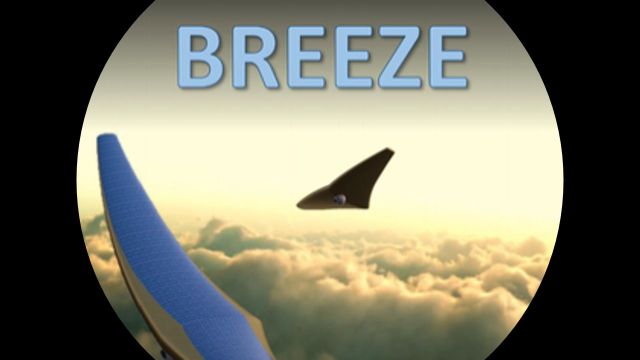




















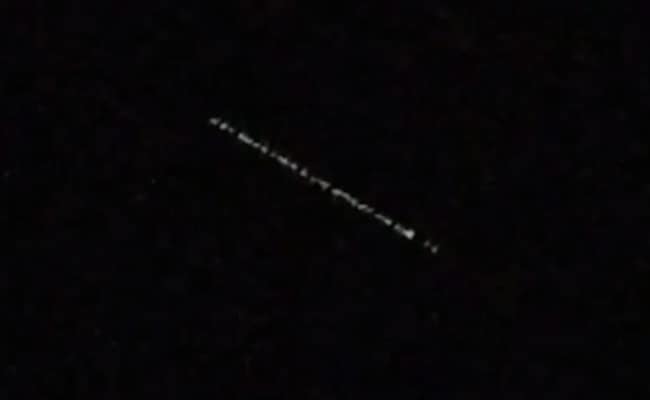




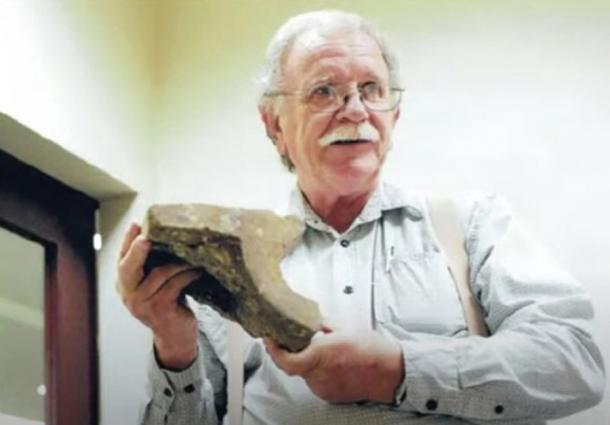



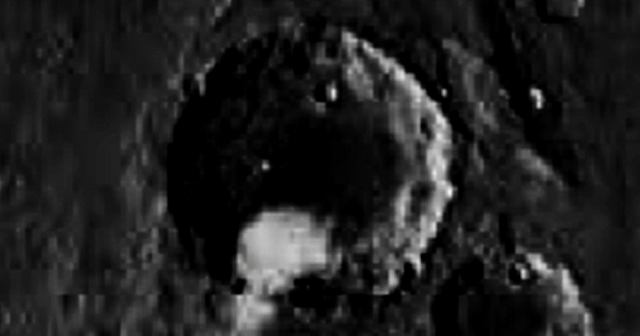
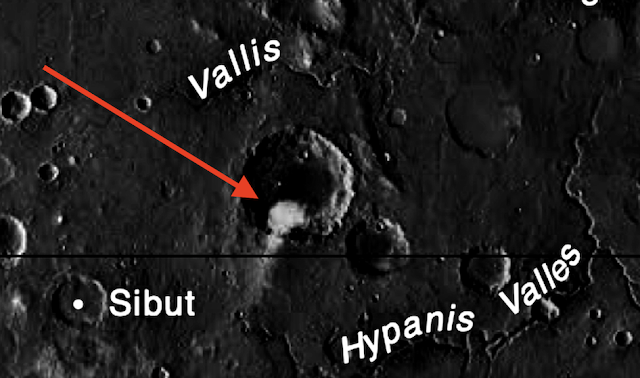
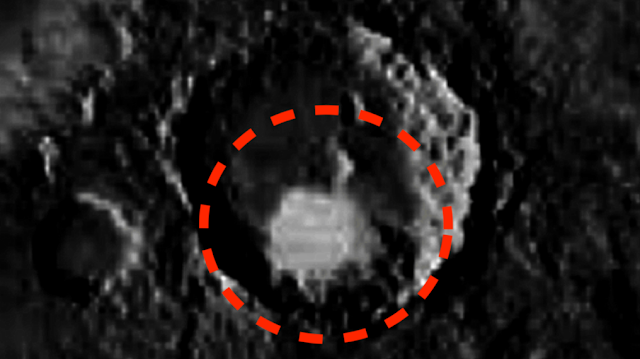
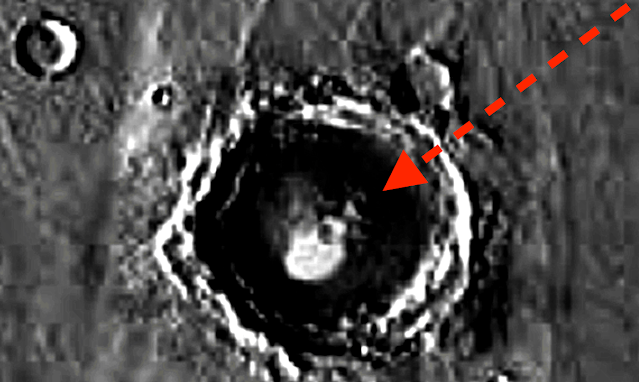
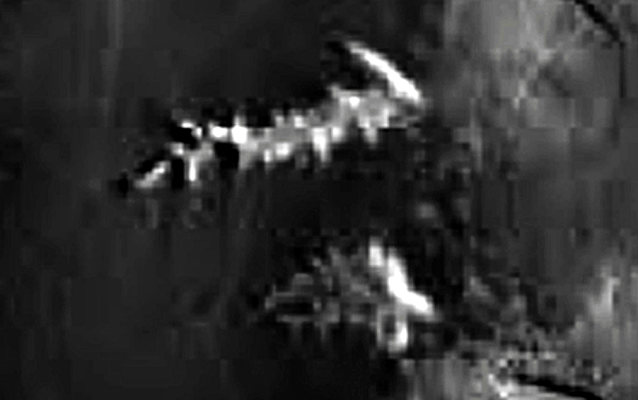
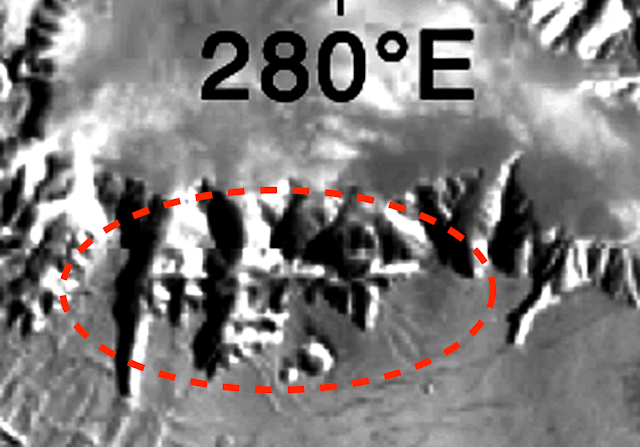
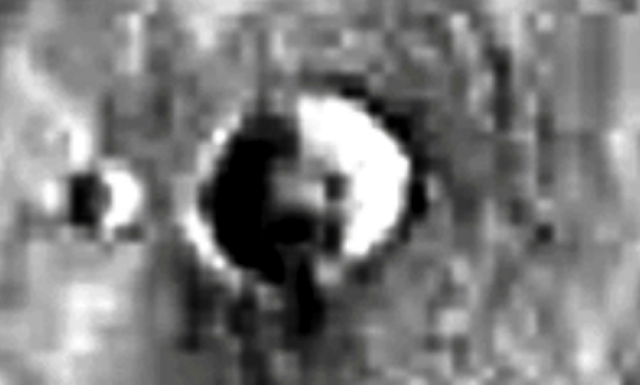


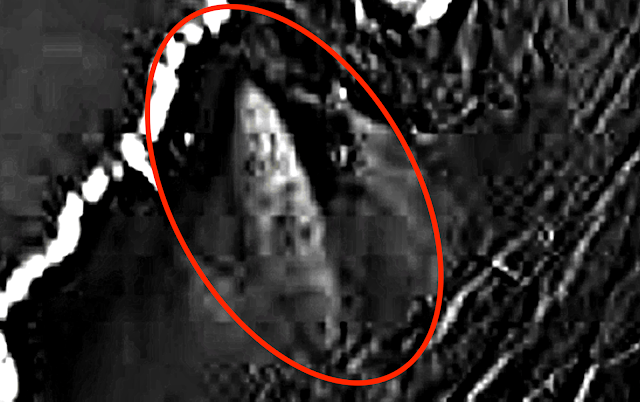








 Universe's largest known galaxy is discovered, measuring...
 Supermassive black hole found hiding in a cloud of cosmic...
 NASA's latest X-ray telescope sends back stunning first...