Ontdek de Fascinerende Wereld van UFO's en UAP's: Jouw Bron voor Onthullende Informatie!
Ben jij ook gefascineerd door het onbekende? Wil je meer weten over UFO's en UAP's, niet alleen in België, maar over de hele wereld? Dan ben je op de juiste plek!
België: Het Kloppend Hart van UFO-onderzoek
In België is BUFON (Belgisch UFO-Netwerk) dé autoriteit op het gebied van UFO-onderzoek. Voor betrouwbare en objectieve informatie over deze intrigerende fenomenen, bezoek je zeker onze Facebook-pagina en deze blog. Maar dat is nog niet alles! Ontdek ook het Belgisch UFO-meldpunt en Caelestia, twee organisaties die diepgaand onderzoek verrichten, al zijn ze soms kritisch of sceptisch.
Nederland: Een Schat aan Informatie
Voor onze Nederlandse buren is er de schitterende website www.ufowijzer.nl, beheerd door Paul Harmans. Deze site biedt een schat aan informatie en artikelen die je niet wilt missen!
Internationaal: MUFON - De Wereldwijde Autoriteit
Neem ook een kijkje bij MUFON (Mutual UFO Network Inc.), een gerenommeerde Amerikaanse UFO-vereniging met afdelingen in de VS en wereldwijd. MUFON is toegewijd aan de wetenschappelijke en analytische studie van het UFO-fenomeen, en hun maandelijkse tijdschrift, The MUFON UFO-Journal, is een must-read voor elke UFO-enthousiasteling. Bezoek hun website op www.mufon.com voor meer informatie.
Samenwerking en Toekomstvisie
Sinds 1 februari 2020 is Pieter niet alleen ex-president van BUFON, maar ook de voormalige nationale directeur van MUFON in Vlaanderen en Nederland. Dit creëert een sterke samenwerking met de Franse MUFON Reseau MUFON/EUROP, wat ons in staat stelt om nog meer waardevolle inzichten te delen.
Let op: Nepprofielen en Nieuwe Groeperingen
Pas op voor een nieuwe groepering die zich ook BUFON noemt, maar geen enkele connectie heeft met onze gevestigde organisatie. Hoewel zij de naam geregistreerd hebben, kunnen ze het rijke verleden en de expertise van onze groep niet evenaren. We wensen hen veel succes, maar we blijven de autoriteit in UFO-onderzoek!
Blijf Op De Hoogte!
Wil jij de laatste nieuwtjes over UFO's, ruimtevaart, archeologie, en meer? Volg ons dan en duik samen met ons in de fascinerende wereld van het onbekende! Sluit je aan bij de gemeenschap van nieuwsgierige geesten die net als jij verlangen naar antwoorden en avonturen in de sterren!
Heb je vragen of wil je meer weten? Aarzel dan niet om contact met ons op te nemen! Samen ontrafelen we het mysterie van de lucht en daarbuiten.
Berichten van 1 november 2022 tot 30 november 2022
The discovery of an Egyptian tomb built with coral
Archaeologists digging at a Red Sea trading port have uncovered a lavish tomb dated between the fourth and fifth centuries. Its walls and floor are made of white coral, highly unusual for Egypt at that period.
In collaboration with the Egyptian Ministry of Tourism and Antiquities, a Polish-American archaeological team led by Steven E. Sidebotham of the University of Delaware, and Mariusz Gwiazda of the Polish Center for Mediterranean Archeology at the University of Warsaw, excavated an ancient port city located on the shores of the Red Sea in 2008.
Located in the eastern desert of Egypt at the Berenice Troglodytica site, it was originally founded by Ptolemy II in the third century BC.
According to the researchers, the project’s objective was to study the community that lived in this settlement after the Roman period, between the fourth and sixth centuries AD.
They were discovered to be the Blemmyes, nomadic people who inhabited the eastern desert from the current border between Egypt and Sudan.
Although the Romans no longer dominated the region, the Blemmyes apparently continued carrying out a great commercial activity over long distances (trade routes connected the Indian Ocean, East Africa, and Byzantium), with which the port of Berenice continued to be important.
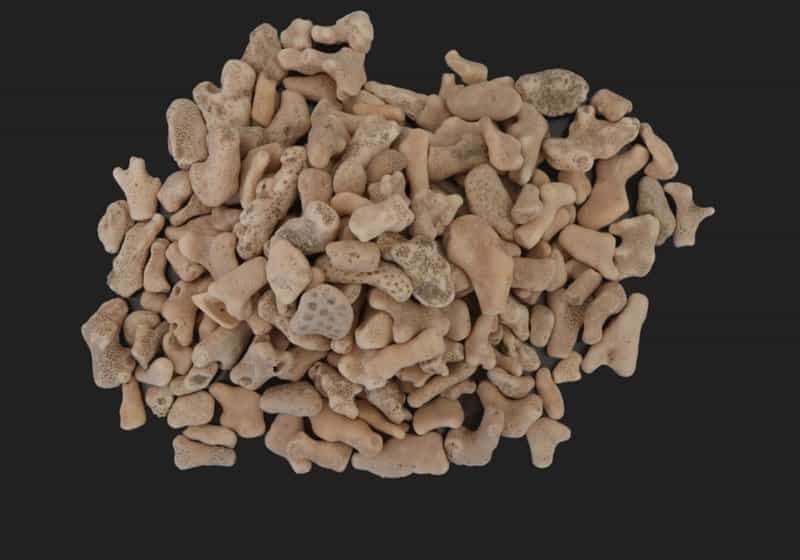
Coral walls and floors
At the end of the last archaeological campaign, the researchers made the results public. Among the findings, the discovery of a monumental tomb with walls and floors made of high-quality white coral stands out.
This new discovery is the first explicit example of social differentiation in a little-recognized phase of the City’s occupation in the fourth-fifth centuries of our era.
The equipment and the shape of the burials are unique in all the east of Egypt.
“The use of plaster with corals as a building material is unique in the architecture of this period and was recorded for the first time in Berenice,” says Gwiazda, who also points out that the selection of the coral fragments must have been very carefully placed and would have taken a long time; something that surely increased the cost of construction, suggesting that members of the City’s elite were buried here.
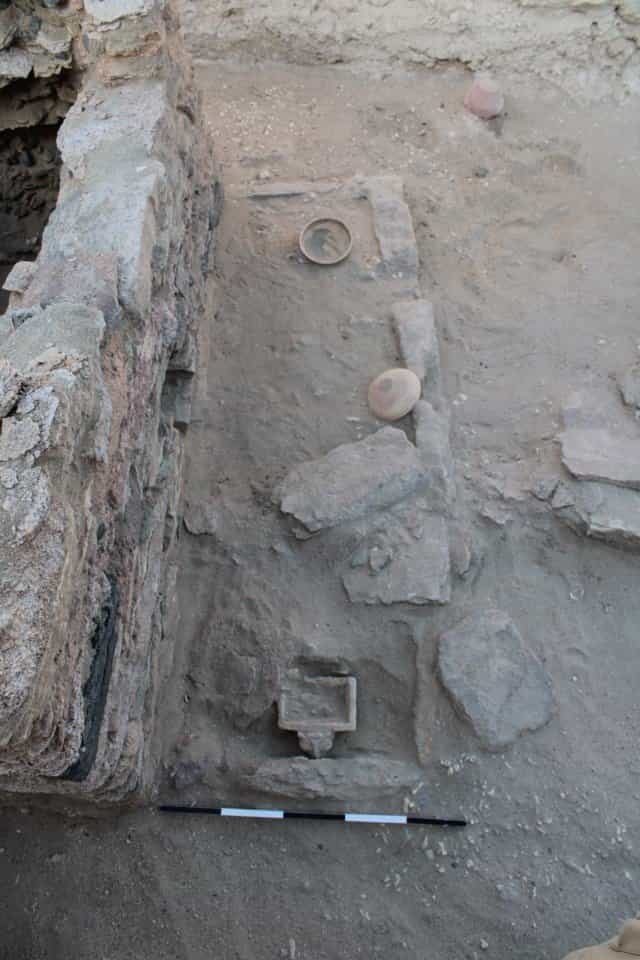
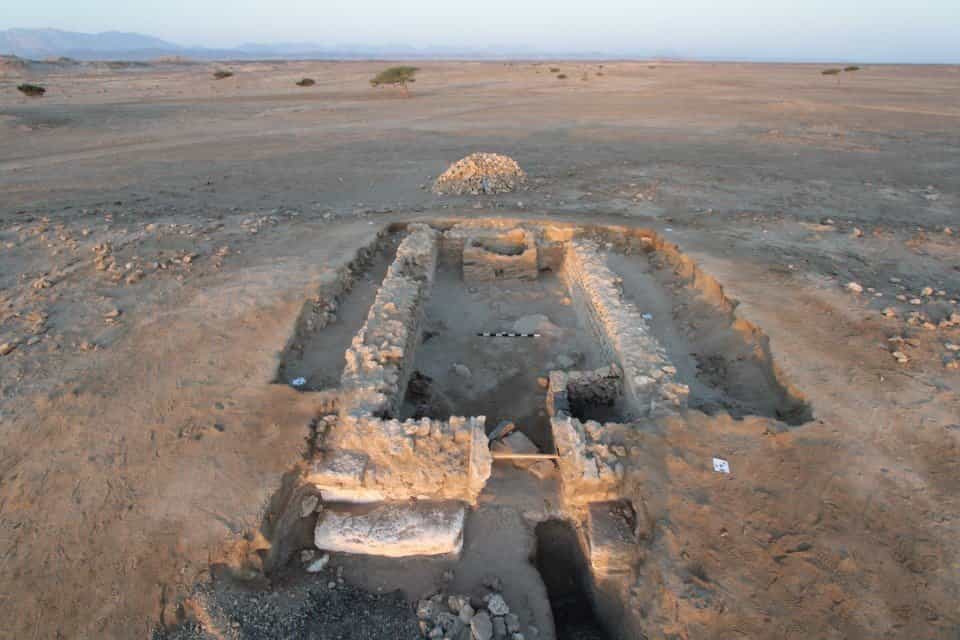
The tomb is a rectangular space that measures five meters long. Inside, several communal burials were found endowed with rich grave goods of more than seven hundred necklace beads (some made with materials from South Asia), rings, silver earrings, and ivory bracelets.
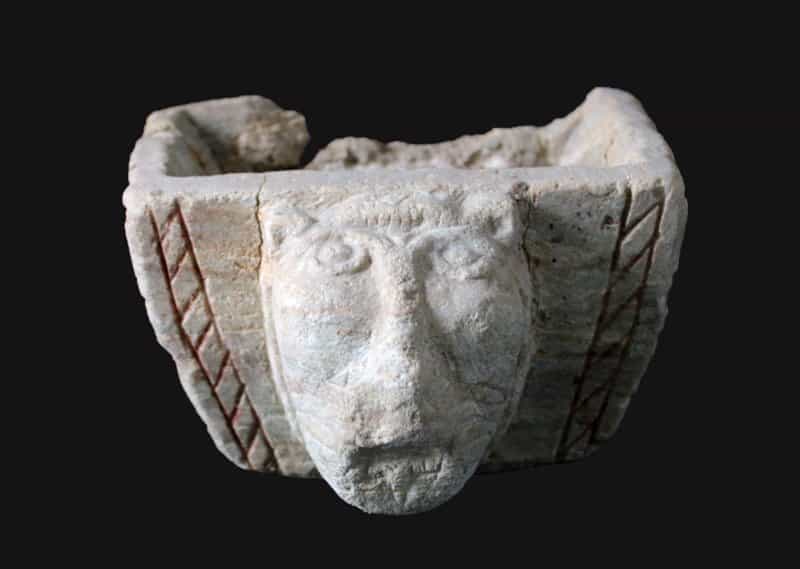
The archaeologists also found wine amphorae, ceramic containers to hold water, incense burners (one of them beautifully made of stone in the shape of a lion’s head), and bowls.
All this is very possibly related to funerary rituals. For their part, the bodies of the people buried there were arranged in stone coffins located next to the walls and placed in a fetal position, possibly to gain space.
One of the aspects that most interests archaeologists excavating in Berenice is studying the different funerary customs that took place here, making the discovery of this tomb of enormous importance.
The team also plans to carry out various paleoanthropological analyzes of the human remains from multiple tombs in the town.
This will allow researchers to better understand the rituals and traditions related to the funerary world, as well as shed light on the diversity of the population of Berenice during the late ancient period.
Source: Carme Mayans, National Geographic
Set of ritual objects found inside the great tomb discovered in Berenice.
Fragments of white corals used in the construction of the tomb floor.
Censer in the form of a lion’s head discovered in the tomb of Berenice.
Strung green colored glass beads found in the excavated tomb at Berenice Troglodytica.
Panoramic view of the monumental tomb excavated by archaeologists at Berenice Troglodytica
SCIENTISTS PUZZLED BECAUSE JAMES WEBB IS SEEING STUFF THAT SHOULDN'T BE THERE
"THE MODELS JUST DON'T PREDICT THIS..."
NASA
Snap Shot
Over the past several weeks, NASA's ultra-powerful James Webb Space Telescope (JWST) has allowed humankind some unprecedented glimpses into the farthest reaches of our universe. And unsurprisingly, some of these dazzling new observations have raised more questions than they've answered.
For a long time, for instance, scientists believed the universe's earliest, oldest galaxies to be small, slightly chaotic, and misshapen systems. But according to the Washington Post, JWST-captured imagery has revealed those galaxies to be shockingly massive, not to mention balanced and well-formed — a finding that challenges, and will likely rewrite, long-held understandings about the origins of our universe."The models just don't predict this," Garth Illingworth, an astronomer at the University of California at Santa Cruz, toldWaPo. "How do you do this in the universe at such an early time? How do you form so many stars so quickly?"
Move Over, Hubble
As WaPo explains, older images of the universe — as captured by the recently dethroned Hubble Space Telescope — seemingly confirmed the widespread belief that early galaxies were chaotic, haphazard places. The JWST, however, appears to show that those findings were an illusion based on that Hubble's limited capabilities.
"We thought the early universe was this chaotic place where there's all these clumps of star formation, and things are all a-jumble," the Space Telescope Science Institute's Dan Coe told WaPo, adding later that, before the JWST was launched into orbit, Hubble's imagery was "missing all the colder stars and the older stars. We were really only seeing the hot young ones."
Time Machine
While these findings have taken the scientific community by surprise, they're not at all a cause for alarm. Major technological advancements, in astronomy and beyond, have a long history of leading to periods of large-scale scientific discovery. Right now, it really feels like we're in one of those watershed moments, and the discoveries made today may well lay the foundation for future breakthroughs, even if they're decades down the line.
And really, discoveries like this mean that the JWST is doing exactly what scientists want it to do — it's revealing new, exciting stuff about our mind-bogglingly expansive universe, answering old questions and asking new ones along the way.
What is the most spook-tacular nebula in the galaxy? One contender is LDN 43, which bears an astonishing resemblance to a vast cosmic bat flying amongst the stars on a dark Halloween night. Located about 1400 light years away in the constellation Ophiuchus, this molecular cloud is dense enough to block light not only from background stars, but from wisps of gas lit up by the nearby reflection nebula LBN 7. Far from being a harbinger of death, this 12-light year-long filament of gas and dust is actually a stellar nursery. Glowing with eerie light, the bat is lit up from inside by dense gaseous knots that have just formed young stars.
Image Credit & Copyright: Mark Hanson and Mike Selby; Text: Michelle Thaller (NASA's GSFC)
Layers of gas and dust are the centerpiece of this view of the Pillars of Creation taken by Webb’s Mid-Infrared Instrument. Thousands of stars exist in this region – 6,500 light-years from Earth – but are not visible in the image since stars typically do not emit much mid-infrared light.
Credit: NASA, ESA, CSA, STScI; Joseph DePasquale (STScI), Alyssa Pagan (STScI)
The observatory’s Mid-Infrared Instrument (MIRI) provides a different view of the famous pillars, revealing young stars that have not yet cast off their dusty “cloaks.”
This is not an ethereal landscape of time-forgotten tombs. Nor are these soot-tinged fingers reaching out. These pillars, flush with gas and dust, enshroud stars that are slowly forming over many millennia. NASA’s James Webb Space Telescope has snapped this eerie, extremely dusty view of the Pillars of Creation in mid-infrared light – showing us a new view of a familiar landscape.
Why does mid-infrared light set such a somber, chilling mood in Webb’s Mid-Infrared Instrument (MIRI) image? Interstellar dust cloaks the scene. And while mid-infrared light specializes in detailing where dust is, the stars aren’t bright enough at these wavelengths to appear. Instead, these looming, leaden-hued pillars of gas and dust gleam at their edges, hinting at the activity within.
Thousands and thousands of stars have formed in this region. This is made plain when examining Webb’s recent Near-Infrared Camera (NIRCam) image. In MIRI’s view, the majority of the stars appear missing. Why? Many newly formed stars are no longer surrounded by enough dust to be detected in mid-infrared light. Instead, MIRI observes young stars that have not yet cast off their dusty “cloaks.” These are the crimson orbs toward the fringes of the pillars. In contrast, the blue stars that dot the scene are aging, which means they have shed most of their layers of gas and dust.
Mid-infrared light excels at observing gas and dust in extreme detail. This is also unmistakable throughout the background. The densest areas of dust are the darkest shades of gray. The red region toward the top, which forms an uncanny V, like an owl with outstretched wings, is where the dust is diffuse and cooler. Notice that no background galaxies make an appearance – the interstellar medium in the densest part of the Milky Way’s disk is too swollen with gas and dust to allow their distant light to penetrate.
How vast is this landscape? Trace the topmost pillar, landing on the bright red star jutting out of its lower edge like a broomstick. This star and its dusty shroud are larger than the size of our entire solar system.
This scene was first captured by NASA’s Hubble Space Telescope in 1995 and revisited in 2014, but many other observatories, like NASA’s Spitzer Space Telescope, have also gazed deeply at the Pillars of Creation. With every observation, astronomers gain new information, and through their ongoing research build a deeper understanding of this star-forming region. Each wavelength of light and advanced instrument delivers far more precise counts of the gas, dust, and stars, which inform researchers’ models of how stars form. As a result of the new MIRI image, astronomers now have higher-resolution data in mid-infrared light than ever before, and will analyze its far more precise dust measurements to create a more complete 3D landscape of this distant region.
The Pillars of Creation is set within the vast Eagle Nebula, which lies 6,500 light-years away.
NASA’s James Webb Space Telescope’s mid-infrared view of the Pillars of Creation strikes a chilling tone. Thousands of stars that exist in this region seem to disappear, since stars typically do not emit much mid-infrared light, and seemingly endless layers of gas and dust become the centerpiece. The detection of dust by Webb’s Mid-Infrared Instrument (MIRI) is extremely important – dust is a major ingredient for star formation.
More About the Mission
The James Webb Space Telescope is the world’s premier space science observatory. Webb will solve mysteries in our solar system, look beyond to distant worlds around other stars, and probe the mysterious structures and origins of our universe and our place in it. Webb is an international program led by NASA with its partners, ESA (European Space Agency) and CSA (Canadian Space Agency).
MIRI was developed through a 50-50 partnership between NASA and ESA. NASA’s Jet Propulsion Laboratory led the U.S. efforts for MIRI, and a multinational consortium of European astronomical institutes contributed for ESA. George Rieke with the University of Arizona is the MIRI U.S. science team lead. Gillian Wright with the UK Astronomy Technology Centre is the MIRI European principal investigator. Alistair Glasse with UK ATC is the MIRI instrument scientist, and Michael Ressler is the U.S. project scientist at JPL. Laszlo Tamas with UK ATC manages the European Consortium. The MIRI cryocooler development was led and managed by JPL, in collaboration with NASA’s Goddard Space Flight Center in Greenbelt, Maryland, and Northrop Grumman in Redondo Beach, California. Caltech manages JPL for NASA.
For more information about the Webb mission, visit:
BRITTEN HEBBEN TOTAAL VERSCHILLENDE VOOROUDERS BLIJKT UIT 15.000 JAAR OUD DNA UIT GROTTEN
Jeannette Kras
Het oudste menselijke DNA ooit gevonden in Groot-Brittannië vertelt het verhaal van twee verschillende bevolkingsgroepen die naar het eiland zijn gemigreerd aan het einde van de laatste ijstijd.
Duizenden jaar oud genetisch materiaal uit de overblijfselen van een vrouw – gevonden in de Gough’s Cave in Zuidwest-Engeland – en de genetische resten van een man – gevonden in de Kendrick’s Cave in Wales – zijn geanalyseerd door wetenschappers. De vrouw leefde ongeveer 14.900 jaar geleden en de man zo’n duizend jaar na haar. Dit was een periode waarin de temperaturen eindelijk begonnen te stijgen na een lange, steenkoude ijstijd. Schaars begroeide toendra veranderde in open dennenbos en de eerste moderne mensen verschenen op het toneel, net als in Nederland en de rest van Europa het geval was.
DNA uit de steentijd Het archeologische team van de Britse University of Oxford ontdekte dat deze twee oer-Britten totaal verschillende genetische voorouders hadden. Het lijkt er dus sterk op dat er lang geleden, binnen een tijdsbestek van duizend jaar, twee genetisch zeer verschillende groepen mensen in Groot-Brittannië rondliepen. Dat is niet uniek: er zijn meer zogenaamde ‘duale voorouder’-patronen in Europa vastgesteld in de loop der tijd.
Bedekt met ijskappen De conclusie van de studie die in vakblad Nature Ecology & Evolution verscheen, is dat verschillende bevolkingsgroepen tegen het einde van de laatste ijstijd naar Groot-Brittannië zijn gemigreerd, voorafgaand aan het Holoceen, dat 11.700 jaar geleden begon. Zij waren niet de eerste menselijke bewoners van de eilanden, maar vanwege de barre omstandigheden – een groot deel van het Britse grondgebied was bedekt met landijs en dus onbewoonbaar – was de bevolkingsdichtheid erg laag.
Reislustige Belg en Italiaan De onderzoekers analyseerden de DNA-strengen uit de eeuwenoude overblijfselen en combineerden die met een analyse van de leefomgeving en cultuurkenmerken op de beide vindlocaties. De vrouw uit de Gough’s Cave bleek veel genetische kenmerken te delen met de zogenaamde Goyet Q2-persoon, die ongeveer 15.000 jaar geleden in België leefde. Je zou dan verwachten dat de man uit de Kendrick’s Cave – circa 150 kilometer noordelijker – dezelfde voorouders zou hebben, maar niets is minder waar. De stokoude voorouder van de hedendaagse Welshman is genetisch verwant aan het Villabruna-individu, dat zo’n 14.000 jaar geleden in Italië rondliep.
‘Dual ancestry’ Dit geeft aan dat er twee genetisch verschillende groepen in Groot-Brittannië leefden binnen duizend jaar van elkaar. Dit ‘duale voorouder’-patroon kwam op meer plekken voor in Europa tijdens het late Pleistoceen. Verder archeologisch onderzoek en isotopenanalyse bracht nog meer verschillen aan het licht tussen de beide personen en zorgde zo voor aanvullend bewijs. Op cultuurgebied, wat betreft het dieet en hun begrafenisrituelen gaven ze een duidelijk andere invulling aan hun leven.
Opbouwende kritiek Professor en vroege prehistorie-expert Chantel Conneller geeft in een reactie aan blij te zijn met de studie en de bevindingen die eruit voortkomen met interesse te hebben gelezen, maar waarschuwt voor het trekken van al te snelle conclusies. De simplistische correlaties tussen genetische kenmerken, sociale groepen en archeologische culturen zijn volgens haar niet zaligmakend.
Paleoarcheologie-data zijn schaars Ze schrijft: “De paleolithische archeologie met zijn relatief onnauwkeurige tijdsaanduidingen en kleine datasets is bijzonder kwetsbaar voor foutieve claims van synchroniciteit. Het is goed mogelijk dat de migraties van verschillende bevolkingsgroepen in werkelijkheid toch langer of korter uit elkaar heeft gelegen. Hetzelfde geldt voor de veranderingen in cultuur, dieet enzovoort. We kunnen er als archeoloog zomaar honderden of zelfs duizenden jaren naast zitten. Verhalen over de oorsprong van volkeren zijn buitengewoon krachtig en hebben bijna altijd een politieke lading.”
Juist daarom maant ze tot voorzichtigheid. Het ontstaan van verschillende volkeren in bepaalde regio’s en waar zij heen zijn getrokken, ligt niet zelden gevoelig. Toch blijft het bijzonder dat er twee genetisch zulke verschillende mensen zijn aangetroffen in Groot-Brittannië.
Wetenschappers zetten magnetisch veld rondom aarde om in geluid: zo (huiveringwekkend) klinkt dat
Wetenschappers van de Universiteit van Denemarken zijn erin geslaagd om het magnetische veld rondom de aarde in geluid om te zetten. Het geluid - dat je hieronder kunt beluisteren - lijkt uit een horrorfilm te komen.
Het magnetische veld rondom de aarde beschermt ons als een schild tegen kosmische straling en geladen deeltjes uit de ruimte, ook wel zonnewind genoemd. Wanneer de zonnewind botst met atomen en moleculen, zoals zuurstof en stikstof, worden die botsingen omgezet in een groenblauw licht. Ook wel bekend als het noorderlicht, of auroris borealis. Dit noorderlicht is dus een visuele weergave van alle geladen deeltjes die botsen met het aardmagnetische veld.
De Swarm-satellieten van het Europees Ruimteagentschap (ESA), die in 2013 werden gelanceerd, konden de magnetische signalen meten. Dat magnetisch veld klinkt zeer eng. “Voor iets dat ons beschermt, is het geluid behoorlijk angstaanjagend”, klinkt het bij ESA. Het fragment kun je hier:
Wie dit weekend een bezoekje bracht aan het Solbjergplein in Kopenhagen, kon het bijzondere geluid door meer dan dertig luidsprekers beluisteren. Wetenschappers werkten hiervoor samen met musicus en projectondersteuner Klaus Nielsen, die het “een lonende oefening in het samenbrengen van kunst en wetenschap” noemt.
“We hebben het systeem zo opgezet dat elke luidspreker een andere plaats op aarde voorstelt”, zegt de projectleider. “Dit laat zien hoe ons magnetisch veld de afgelopen 100.000 jaar heeft bewogen.”
This UFO sighting video was filmed over Sacramento, California on 30th October 2022.
Witness report:
On October 30 of 2022 around 5:30PM PST, I observed an conical shaped object that had moved from the north east direction to the south east direction From my point of view. I’ve taken three videos with my own phone, which is an iPhone 13. myself, my mother and my father had observed the object for roughly 35 to 40 minutes. during that time we had taken some digital videos of the object, the number of videos we took are roughly 5 videos, and all I took three videos in my father, took two.
My mother was also a witness. During that 30 minute observation, the object moved in a straight path, but at times would move south, then move in a move again in a northernly direction. We had used my father‘s phone, which was an android phone. He was able to zoom in on the object during one of the videos, and the object looked to be like a con, but at first it looks like it was an elliptical shape, but had later on taken on the shape of a cone, it had one light at the rear of the cone and one light on the bottom of the cone.
There was also a commercial airliner that had passed from Southwest to Northeast toward that object. I’m pretty sure they may have seen it too. I have 5 videos in all if MUFON needs them, I’ve uploaded some small clips here as the original files are high definition and probably to large to upload using the site’s attachment methods?
In Greek mythology, Cassandra is endowed with the gift of prophesy. But Cassandra is also cursed; her prophesies are never to be believed.
As former White House counterterrorism czar Richard Clarke writes in “Warnings: Finding Cassandras to Stop Catastrophes,” modern-day “Cassandras” – experts who sound the alarm over catastrophic or paradigm-shifting events – are often ignored.
Clarke, who served in the Reagan, Clinton and both Bush administrations, is all too familiar with this phenomenon. Like the engineer who foresaw the space shuttle Challenger catastrophe, the lone intelligence analyst who warned of Iraq’s invasion of Kuwait, the Louisiana State University professor who issued dire predictions years before Hurricane Katrina and the “outsiders” who foresaw the 2008 financial collapse, Clarke’s desperate warnings of an impending terrorist attack fell on deaf ears before Sept. 11, 2001.
Writing in 2017, Clarke is prescient about the risks of a global infectious disease outbreak.
Shortly after “Warnings” was published, a stunning exposé of U.S. government efforts to investigate unidentified flying objects appeared in the New York Times. An accompanying article paints a vivid portrait of an extraordinary, multi-witness UFO encounter off the coast of southern California. A follow-on piece describes naval aviators’ frequent observations – corroborated by multiple sensors – of unknown objects exhibiting seemingly highly advanced technology.
Critically, officials have high confidence that secret U.S. aircraft or experimental technologies are not responsible for these perplexing encounters. At the same time, analysts have no evidence that a foreign power is behind hundreds of UFO reports.
At this point, any intelligence analyst worth his salt should sound the alarm about the UFO phenomenon. And if policymakers are, in fact, receiving such warnings, Cassandra’s curse appears to be alive and well.
As Clarke writes in “Warnings,”“agenda inertia” – when too many issues compete for attention – is one of many factors that keep decisionmakers from acting on dire warnings from experts.
Air Force Secretary Frank Kendall demonstrated this phenomenon recently, saying that he does not focus on UFOs because there are “a lot of known threats out there that we’re working very hard to protect the [U.S.] against. I’d like to focus on those.” (Sec. Kendall did also say, “I think we should take the [UFO] phenomenon seriously” and called for “real technical investigation of what they are.”)
Beyond “agenda inertia,” Sec. Kendall’s comments highlight the core challenge posed by the UFO conundrum.
Congress is demanding that the Department of Defense and the intelligence community – entities laser-focused on national security threats – conduct a sweeping, thorough investigation of UFOs. But in a world teeming with threats, defense and intelligence agencies will always focus limited resources on well-defined risks. As Kendall notes, UFOs do not fall into this category.
This mismatch between organizational priorities (mitigating threats) and the nature of the UFO phenomenon (no unambiguous threat) likely lies at the root of Congress’s palpable frustration and “disappointment” with the government’s slow progress on resolving the UFO problem. (Importantly, NASA, an organization focused on science, rather than threats, is proceeding “full force” on an unprecedented study of UFOs.)
Of course, many other factors cause policymakers to resist acting on warnings of looming disaster or a paradigm-shifting event.
According to Clarke, “initial occurrence syndrome” – when a phenomenon has never occurred previously – frequently inhibits timely and appropriate responses to warnings. At the same time, “complexity mismatch” can paralyze decisionmakers who lack the expertise to understand key pieces of data (such as the extraordinary technologies needed to execute anomalous flight characteristics). Policymakers can also resist acting on warnings, no matter how convincing, if they are based on incomplete data.
Moreover, as Clarke notes, “Decision makers don’t typically welcome predictions of impending disaster.” While UFOs may not represent an inevitable catastrophe, they are a perplexing “unknown.” Woe to the analyst who presents policymakers with evidence of a compelling, yet entirely unknown, phenomenon that may (or may not) pose a grave threat. Such ambiguity is anathema to rigid bureaucratic structures, missions and mindsets.
Cassandra’s curse strikes even more forcefully if the analyst sounding the alarm on UFOs cannot offer decisionmakers concrete recommendations to address this mysterious phenomenon. Policymakers, after all, are answerable to higher-ranking policymakers who expect options for navigating a particular issue.
At the same time, a unique cognitive trap can impede objective analysis or action on UFOs. If decisionmakers believe that a technology, risk or threat simply cannot exist, then all data indicating otherwise is ignored, trivialized or explained away.
Clarke alludes to this “It can’t be, so it isn’t” phenomenon, writing that policymakers presented with compelling evidence of an impending catastrophe “often go into an implicit state of denial. They may not dispute the evidence and reject the warning, but they don’t act as though they actually believe it to be true.”
Capt. Edward Ruppelt, the first director of Project Blue Book (the U.S. Air Force’s decades-long investigation of UFOs) wrote that scientists and “experts” who embrace the “It can’t be” approach to UFOs “are dangerous, if for no other reason than history has proved them so.”
As Ruppelt notes, the French Academy of Sciences once vehemently denied that “stones” (meteorites) could fall from the sky. At the same time, “world-famous astronomer” Dr. Simon Newcomb claimed “that flight without [balloons]” is impossible without “the discovery of some new material or a new force in nature.” Similarly, the chief engineer of the U.S. Navy claimed that any attempts to fly “heavier-than-air vehicles was absurd.” For his part, President Truman’s chief of staff told his boss that the atomic bomb “is the biggest fool thing we have ever done… [it] will never go off, and I speak as an expert in explosives.”
With noteworthy contemporary parallels, Ruppelt’s masterful description of the complexities of warning top government officials about UFOs make his book a must-read.
Importantly, however, not all Cassandras sounding the alarm on the UFO phenomenon are government intelligence analysts with high-level security clearances.
As Clarke writes in “Warnings,” Cassandras “often seek out and interpret data that others overlook, collect facts that no one else bothered to assemble, or derive new insights from data others already have.” To that end, a small group of private citizens has examined, in excruciating detail, three government UFO videos that accompanied the New York Times’ 2017 exposé. These individuals now hold the gold standard of analysis: reproducible, verifiable data.
Sophisticated mathematical modeling, for example, corroborates eyewitness accounts of a well-documented 2015 UFO encounter. This is robust evidence that an unknown object demonstrated anomalous flight characteristics only achievable with highly advanced technology.
For its part, the government is confident that the object involved in the incident is not a U.S. aircraft. Nor do intelligence analysts have evidence that it belonged to a foreign power.
Grappling with the data (and, critically, the broader context surrounding the event) should turn any objective analyst – private citizen and government employee alike – into a modern-day Cassandra.
Marik von Rennenkampff served as an analyst with the U.S. Department of State’s Bureau of International Security and Nonproliferation, as well as an Obama administration appointee at the U.S. Department of Defense. Follow him on Twitter @MvonRen.777
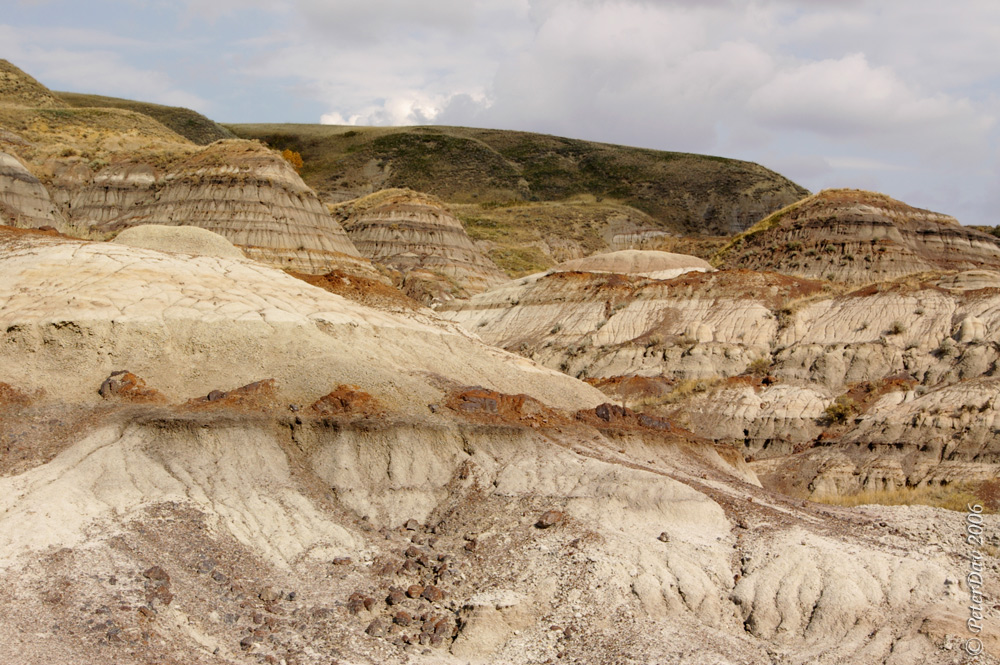
The Hoodoos of Drumheller Valley: Tall Tales of Sandstone Towers
In the badlands of Alberta, Canada, unusually shaped rock-formations which rise to 20 feet tall, grace the landscape. According to Blackfoot and Cree traditions, these rocks are petrified giants who come alive at night to protect their land by throwing stones at trespassers. A legend of the Paiute Indians, who inhabited the area for hundreds of years before the arrival of European Americans, claims the colorful hoodoos are ancient people who were turned to stone as punishment for bad deeds.
Today we know the rocks were created by erosion, shaped by wind and water. These hoodoos (also called a tent rock, fairy chimney or earth pyramid) have been carved over millions of years into pillar-like shapes. They’re formed from soft sandstone, and most are capped with a harder rock which sits on top like a hat. The cap rock slows the process of complete erosion by keeping them from disintegrating at the same speed as the surrounding sandstone. The sandstone structures will ultimately be worn away and break, and the harder top rock will eventually come crashing down.
Hoodoos are found mainly in the desert in hot, dry areas and smaller versions of these sandstone giants can be found all over the Badlands. In common usage, the difference between hoodoos and pinnacles (or spires) is that hoodoos have a variable thickness while spires, have a smoother profile or uniform thickness that taper upward from the ground.
Hoodoos Around the World
Hoodoos, not unique to Alberta, Canada or the North American continent, are commonly found on the Colorado Plateau and abundant in the northern section of Bryce Canyon National Park, Utah. Hoodoos are also prominent a few hundred miles away at Goblin Valley State Park on the eastern side of the San Rafael Swell as well as other parts of the world.
Several are found in the Alpes-de-Haute-Provence, France and one of the most famous examples is the formation called ‘ Demoiselles Coiffées de Pontis ’ since hoodoos in French are called ‘ladies with hairdos’ ( demoiselles coiffées) or cheminées de fees which translates to ‘fairy chimneys’.
Hoodoos ( peribacası) houses have been carved into the formations found in the Cappadocia region of Turkey and were depicted on the reverse of a Turkish banknote.
Serbia has about 200 formations described as earth pyramids or towers by local inhabitants. The site is called Đavolja Varoš (Devil's Town) and since 1959 has been protected by the state and nominated in the New Seven Wonders of Nature campaign.
Devil's Town, near Kuršumlija, Serbia ( Nikolic / CC BY-SA 3.0 )
The hoodoo stones on the northern coast of Taiwan are unusual for their coastal setting. The stones formed as the seabed rose rapidly out of the ocean during the Miocene period.
Red Deer River Valley Is Rich in Fossils
The Drumheller portion of the Red Deer River Valley in the badlands of Alberta is approximately 1.2 miles (2 km) wide and 17 miles (27.3 km) long. The area is often referred to as Dinosaur Valley because of the abundance of fossils found in the area, beginning in the late 1800s.
In 1884, Joseph Burr Tyrrell, found the skull of a meat-eating dinosaur and named the dinosaur in honor of the newly founded Canadian Province: Albertosaurus sarcophagus .
Albertosaurus Skull Cast Geological Museum in Copenhagen (Michael BH / CC BY-SA 3.0 )
Over the years thousands of fossils have been collected and 101 years after Albertosaurus was discovered, the Tyrrell Museum opened. It is now one of the leading dinosaur museums in the world.
The semi-desert badlands surrounding the museum are very different to the lush forests where dinosaurs once roamed. Each year the sediments of the Red Deer River Valley are eroded by nature a little more, revealing more fossils at sites such as Dinosaur Provincial Park, and Hoodoo. Alberta is such a rich fossil province, the museum has multiple specimens for many of the species, enabling them to exhibit a wide collection.
Stiff Fines And Jail Time Await Vandals
Hoodoos take millions of years to form and are so incredibly fragile that the site is protected under the Historical Resources Act. Visitors convicted of defacing or removing property from the site could face a fine of up to $50,000 and/or a year in prison, and yet, some feel the need to leave their mark.
Recently, a Drumheller woman was appalled to see a man scratching into the formations, defacing the hoodoos with a small rock. The man had carved out the word ‘ METTEN’, the name of a town in Germany, and the lady sent a video recording to the police as evidence. Locals are rightly proud of the area.
By contrast, two ladies hiking near the popular tourist attraction found what appeared to be a dinosaur fossil, the leg bone of a hadrosaur, or duck billed dinosaur, and immediately contacted the museum. The rule for fossil collecting in Alberta is that anything still buried in the rock belongs to the government, which is the case with these remains.
Drone Footage Reveals Lost Mesopotamian City Built on Marsh Islands
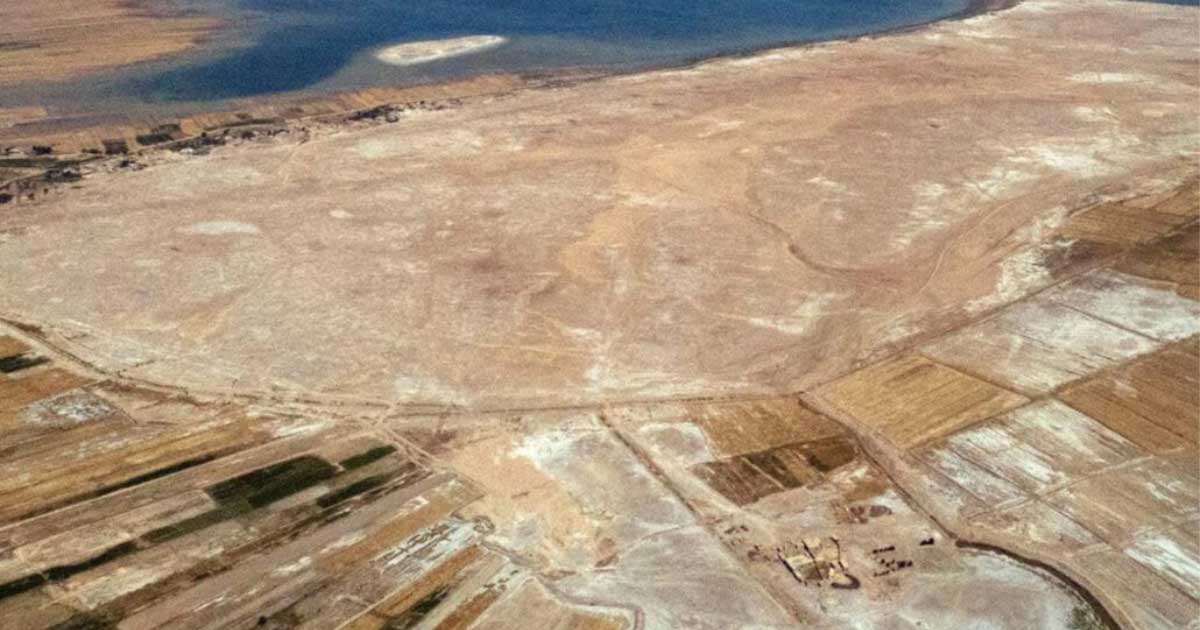
Using remote sensing data technologies at the site of one of the oldest urban centers in world history, scientists have identified a vast Mesopotamian settlement called Lagash. Once upon a time, Lagash consisted of four marsh islands interconnected by waterways. A flourishing, watery lifestyle existed almost 5,000 years ago, in this ancient wetland area located between the Euphrates and Tigris rivers in southern Iraq.
Drone Based and Other Technology
One of the participants of the project was Emily Hammer, an anthropological archaeologist from the University of Pennsylvania. Hammer employed a specially equipped drone that helped provide invaluable insight into Lagash, which formed the core of one of the world’s earliest states. The results of her work have now been published in The Journal of Anthropological Archaeology .
After initial remote-sensing data gathered from the ground level, a drone was used to photograph the area around Lagash over six weeks in 2019. It took high-resolution UAV photographs of the site’s surface that aided Hammer’s research. She was also able to obtain magnetic gradiometry data.
The drone was aided by the heavy rains that had just ended around that time, leading to heavy salt absorption and salt moisture. These made detection of buildings, walls, streets, and waterways that were buried near ground level much easier as they surveyed the ancient Mesopotamian city of wetland islands.
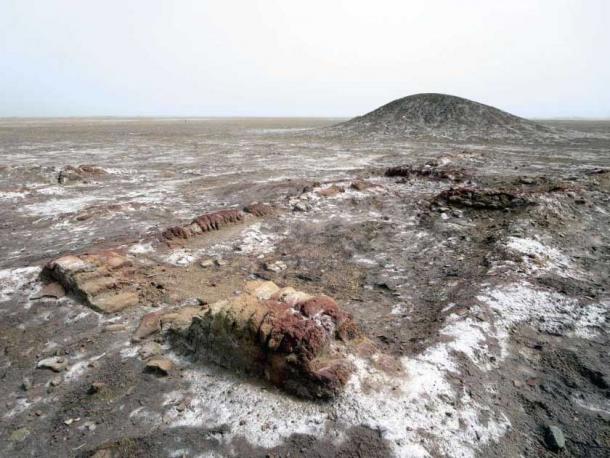
Mud brick foundations and a ziggurat are among the remains of the 3rd millennium BC Sumerian city state of Lagash (Tell al Hiba) northeast of Nasiriyah, Iraq.
Lagash was likely founded between 4,900 and 4,600 years ago, and is today known as Tell al-Hiba. Excavated more than 40 years ago for the first time, it was learnt that this site was abandoned around 3,600 years ago. Previous analysis by other anthropologists, historians, and scientists indicate that Lagash was built on raised mounds in the marshes, and possibly consisted of 33 small, marsh islands. “There could have been multiple evolving ways for Lagash to be a city of marsh islands as human occupation and environmental change reshaped the landscape,” Hammer says.
Critically, Hammer’s study has helped challenge a traditional notion that has presented Mesopotamian cities as nuclear and compact settlements located within an irrigated agricultural hinterland. These settlements have been understood to have expanded from a singular monumental temple complex. Nevertheless, Lagash is different and the curious city of wetland islands has been found to be unlike this presupposed model.
Early Dynastic Lagash, dating back to around 2900 to 2350 BC, was made up of distinctly separate sectors, each with multiple walls or moat-like water courses surrounding them, interspersed by open spaces. In fact, Lagash is characterized by dense architecture spread out over 300 hectares (approximately). Evidence also points to marshy and watery local environmental factors. This led Hammer to conclude that the city sectors originated as marsh islands.
Drone photographs also point to harbors that potentially connected city sectors by boat travel. The remains of potential footbridges also emerged, though only excavations can shed further light on the subject, according to a report on Science News .
Like Lagash, Eridu in southern Iraq was once located within a lush area filled with freshwater marshes.
An absence of a geographical or ritual center allowed each city sector to develop distinctive social and economic practices, to a certain extent. This is not dissimilar to the development of Venice, which evolved during a later historical time period.
Evidence of this was found at two of the marsh islands which were bordered by gated walls that had carefully laid out city streets and areas with large kilns. It was likely that crop growing and activities such as pottery making occurred here. On another island, waterways and canals crisscrossed each other, which likely suggests fishing and the collection of reeds for construction occurred.
In total, Hammer’s research points to three occupied islands near the Persian Gulf area, and a fourth one dominated by a huge temple. These islands were part of delta channels extending towards the sea, again reemphasizing the idea that Lagash was once a city of settled wetland islands which were interconnected by waterways.
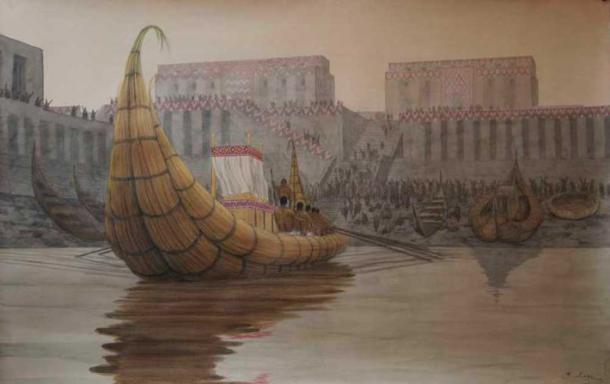
The so-called cradle of civilization survived in what was once a lush, marsh-filled landscape, much like this imagined depiction of ancient Babylon.
The drone also revealed evidence of contrasting neighborhoods on different marsh islands, which reflect either some kind of urban planning or a haphazard arrangement. The latter could be symptomatic of waves of migrations that occurred between 4,600 and 4,350 years ago, according to Augusta McMahon. McMahon was one of the three co-field directors of the continuing excavations at the site.
These migrants were a mix of slave laborers captured from neighboring city states, mobile herders and residents from other cities and islands. At its peak, the city of wetland islands occupied four to six square kilometers (1.5 sq. mi.), which is the area equivalent to that of modern-day Chicago! It also housed tens of thousands of people during its heyday.
Just like other great historic cities, Lagash was doomed to collapse. In the end, it met its end when the marshy water levels fell due to a spike in temperatures. Since nearby cities continued to be occupied and inhabited for at least another thousand years, Lagash’s abandonment provides a window into a past that challenges the deeply held beliefs of what a Mesopotamian city looked like.
Top image: Remote sensing and drone footage of the Lagash / Tell al-Hiba site was deployed to conclude that the ancient Mesopotamian city was made up of four marsh islands.
Meer van UFO'S of UAP'S, ASTRONOMIE, RUIMTEVAART, ARCHEOLOGIE, OUDHEIDKUNDE, SF-SNUFJES EN ANDERE ESOTERISCHE WETENSCHAPPEN - DE ALLERLAATSTE NIEUWTJES


 The discovery of an Egyptian tomb built with coral