Naar de inhoud

UFO'S of UAP'S, ASTRONOMIE, RUIMTEVAART, ARCHEOLOGIE, OUDHEIDKUNDE, SF-SNUFJES EN ANDERE ESOTERISCHE WETENSCHAPPEN - DE ALLERLAATSTE NIEUWTJES

UFO's of UAP'S in België en de rest van de wereld
akke.beakke.be
Ontdek de Fascinerende Wereld van UFO's en UAP's: Jouw Bron voor Onthullende Informatie! Ben jij ook gefascineerd door het onbekende? Wil je meer weten over UFO's en UAP's, niet alleen in België, maar over de hele wereld? Dan ben je op de juiste plek! België: Het Kloppend Hart van UFO-onderzoek In België is BUFON (Belgisch UFO-Netwerk) dé autoriteit op het gebied van UFO-onderzoek. Voor betrouwbare en objectieve informatie over deze intrigerende fenomenen, bezoek je zeker onze Facebook-pagina en deze blog. Maar dat is nog niet alles! Ontdek ook het Belgisch UFO-meldpunt en Caelestia, twee organisaties die diepgaand onderzoek verrichten, al zijn ze soms kritisch of sceptisch. Nederland: Een Schat aan Informatie Voor onze Nederlandse buren is er de schitterende website www.ufowijzer.nl, beheerd door Paul Harmans. Deze site biedt een schat aan informatie en artikelen die je niet wilt missen! Internationaal: MUFON - De Wereldwijde Autoriteit Neem ook een kijkje bij MUFON (Mutual UFO Network Inc.), een gerenommeerde Amerikaanse UFO-vereniging met afdelingen in de VS en wereldwijd. MUFON is toegewijd aan de wetenschappelijke en analytische studie van het UFO-fenomeen, en hun maandelijkse tijdschrift, The MUFON UFO-Journal, is een must-read voor elke UFO-enthousiasteling. Bezoek hun website op www.mufon.com voor meer informatie. Samenwerking en Toekomstvisie Sinds 1 februari 2020 is Pieter niet alleen ex-president van BUFON, maar ook de voormalige nationale directeur van MUFON in Vlaanderen en Nederland. Dit creëert een sterke samenwerking met de Franse MUFON Reseau MUFON/EUROP, wat ons in staat stelt om nog meer waardevolle inzichten te delen. Let op: Nepprofielen en Nieuwe Groeperingen Pas op voor een nieuwe groepering die zich ook BUFON noemt, maar geen enkele connectie heeft met onze gevestigde organisatie. Hoewel zij de naam geregistreerd hebben, kunnen ze het rijke verleden en de expertise van onze groep niet evenaren. We wensen hen veel succes, maar we blijven de autoriteit in UFO-onderzoek! Blijf Op De Hoogte! Wil jij de laatste nieuwtjes over UFO's, ruimtevaart, archeologie, en meer? Volg ons dan en duik samen met ons in de fascinerende wereld van het onbekende! Sluit je aan bij de gemeenschap van nieuwsgierige geesten die net als jij verlangen naar antwoorden en avonturen in de sterren! Heb je vragen of wil je meer weten? Aarzel dan niet om contact met ons op te nemen! Samen ontrafelen we het mysterie van de lucht en daarbuiten.

Berichten van 1 augustus 2024 tot 31 augustus 2024

Van Atlantis tot de zondvloed: mythen die geïnspireerd zijn op echte gebeurtenissen

Van Atlantis tot de zondvloed: mythen die geïnspireerd zijn op echte gebeurtenissen

Artikel door Zeleb.es
Zijn mythen gewoon fantasieverhalen?
©Aangeboden door The Daily Digest
Zijn mythen gewoon fantasieverhalen?
Mensen hebben een grote verbeeldingskracht. Toch ontstaan verhalen, mythen en legendes niet altijd simpelweg uit de creativiteit van een bevoorrechte geest.
Wat als het waar is?
©Aangeboden door The Daily Digest
Wat als het waar is?
In het geval van oude legendes en mythen is het mogelijk dat de verbeelding met de werkelijkheid speelde. Fenomenen en gebeurtenissen die destijds niet zo gemakkelijk te verklaren waren, werden anders geïnterpreteerd. Laten we samen uitzoeken wat de wetenschappelijke en historische basis is achter enkele (zeer bijzondere) legendes uit de oudheid.
De zondvloed
©Aangeboden door The Daily Digest
De zondvloed
Niet alleen in de Bijbel, maar ook in tal van andere mythische tradities in het Oosten en de klassieke wereld, waren er verhalen over een vreselijke storm die de aarde 40 dagen lang hevig deed schudden.
Hoe verklaart de wetenschap het?
©Aangeboden door The Daily Digest
Hoe verklaart de wetenschap het?
Dit verhaal is het onderwerp geweest van verschillende hypothesen. De meest erkende is dat het verwijst naar een overstroming die in 5000 voor Christus het gebied trof dat overeenkomt met de huidige Zwarte Zee.
De ark van Noach
©Aangeboden door The Daily Digest
De ark van Noach
De zondvloed, volgens de bijbelse traditie, werd door God gestuurd om mensen te straffen. Slechts één van hen kon worden gespaard, Noach. Dankzij Gods wil, bouwde hij een groot schip waarin hij een mannetje en een vrouwtje van alle levende dieren verzamelde. Die zouden de planeet opnieuw bevolken zodra de vloed voorbij was.
Wat zit er achter dit verhaal?
©Aangeboden door The Daily Digest
Wat zit er achter dit verhaal?
Mensen gaven zichzelf in die tijd verklaringen voor dingen die ze nog niet konden begrijpen. Bijvoorbeeld voor de ontdekking van visfossielen op hoge bergtoppen. In de oudheid kon dit alleen maar het werk van een god zijn geweest. Wie weet kwamen mensen daarom met het verhaal van Noach op de proppen?
Nu weten we echter dat het vinden dan visfossielen op bergtoppen het resultaat is van aardplaten tektoniek.
De Chimaera
©Aangeboden door The Daily Digest
De Chimaera
De Ilias is een epos dat wordt toegeschreven aan de Griekse dichter Homerus. Hierin werd ook de de mythe van de Chimaera vereeuwigt. Een vuurspuwend monster met een slangenstaart en een leeuwenkop. Het monster werd verantwoordelijk gehouden voor de periodieke verwoesting van de kusten van het huidige Turkije.
De realiteit die waarschijnlijk op deze mythe is geïnspireerd
©Aangeboden door The Daily Digest
De realiteit die waarschijnlijk op deze mythe is geïnspireerd
Achter de mythe van een vuurspuwend monster, kunnen volgens sommige geleerden de eeuwige vuren schuilgaan die vandaag de dag nog steeds te zien zijn op de berg Chimera in Turkije.
De vuren worden aangedreven door methaangas dat uit de rotsen gutst vlakbij de archeologische opgravingen van Yanartaş. Hoogstwaarschijnlijk werden de vuren in de oudheid door zeelieden gebruikt als oriëntatiepunt. Als ze dit vanaf hun boten zagen, zou dit hebben bijgedragen aan het ontstaan van de mythe.
Orakel van Delphi
©Aangeboden door The Daily Digest
Orakel van Delphi
Pythia was de priesteres die verantwoordelijk was voor het reciteren van de antwoorden van het orakel van Delphi. Ze kon dit alleen doen toen ze een staat van mystieke extase bereikte. Dit werd veroorzaakt door de dampen die uit een rots ontsnapten, althans dit is wat de Griekse historicus en filosoof Plutarchus ons vertelt.
De meest erkende hypothese over de oorsprong van de 'zoete dampen'
©Aangeboden door The Daily Digest
De meest erkende hypothese over de oorsprong van de 'zoete dampen'
De 'zoete dampen' die Plutarchus noemde, zijn het onderwerp geweest van talrijke studies en verhitte debatten. Wat bekend is, is dat de tempel gewijd aan Apollo in Delphi zich in een actief seismisch gebied bevindt. Er zijn twee breuklijnen onder gevonden. De meest erkende hypothese is dat een aardbeving langs de breuklijn de gassen veroorzaakte waarnaar de Griekse auteur verwijst.
Maar wat voor gas?
©Aangeboden door The Daily Digest
Maar wat voor gas?
Wat voor soort gas het was en of het hallucinogene eigenschappen had, daar zijn wetenschappers het niet over eens. Degenen die de aardbevingshypothese ondersteunen, geloven dat deze gassen de gassen waren die normaal in deze gevallen worden uitgestoten, zoals koolstofdioxide en zwavelzuur. Andere wetenschappers spreken van een mix van methaan en ethyleen.
De mythe van Atlantis
©Aangeboden door The Daily Digest
Foto: Hansuan Fabregas / Pixabay
De mythe van Atlantis
Volgens de mythe, 'achter de Zuilen van Hercules' (die voor de Grieken het einde van de wereld vertegenwoordigden) werd een legendarisch eiland bewoond door zeer machtige halfgoden: Atlantis. Het einde van dit koninkrijk zou echter op één dag komen. Het zou vernietigd worden door een catastrofe nadat het tevergeefs had geprobeerd de stad Athene binnen te vallen.

Wat zou de inspiratie zijn voor deze legende?
©Aangeboden door The Daily Digest
Wat zou de inspiratie zijn voor deze legende?
Velen zijn het erover eens dat dit verhaal geboren zou kunnen zijn na de uitbarsting van een vulkaan, Thera, in het gebied waar Santorini tegenwoordig staat.
Van Griekenland naar Hawaï
©Aangeboden door The Daily Digest
Van Griekenland naar Hawaï
Volgens de mythe werd de Kilauea-vulkaan bewoond door de vuurgodin Pele. Een onstuimige, opvliegende en wraakzuchtige godheid. Wraak zou het motief zijn geweest voor een van haar meest extreme acties: een heel bos in brand steken en een man in de vulkaan gooien, omdat hij niet voor haar koos, maar haar zus. De zus van de godin Pele was wanhopig en groef onvermoeibaar in de vulkaan om haar geliefde te vinden terwijl ze de lucht vulde met vonken en vulkaansteentjes.
De gevolgen van de uitbarsting van Thera
©Aangeboden door The Daily Digest
Foto: Mandy Beerley / Unsplash
De gevolgen van de uitbarsting van Thera
Deze natuurramp, die ongeveer 3500 jaar geleden plaatsvond, was verantwoordelijk voor de ineenstorting van een deel van het eiland. Het veroorzaakte verschrikkelijke tsunami's en een gaswolk die hoogstwaarschijnlijk leidde tot het verval van de Minoïsche beschaving van het nabijgelegen Kreta.

Uitleg
©Aangeboden door The Daily Digest
Uitleg
De historische hypothese en het ontstaan van deze oude 'soapserie' verwijst naar de eindeloze uitbarsting in de 15e eeuw. Uiteindelijk werd 430 vierkante kilometer bos op het eiland getroffen en duurde het 60 jaar. Het wanhopige graven van Pele's zus zou de verklaring zijn die mensen zichzelf gaven over de vorming van de Kilauea-caldera vulkaan
Namazu, de aardbevingsmeerval
©Aangeboden door The Daily Digest
Namazu, de aardbevingsmeerval
Een populaire Japanse legende betreft een gigantische meerval genaamd Namazu. Hij ligt verborgen onder de oppervlakte van Japan. Vastgehouden door de god Kashima, dankzij een gigantische steen op zijn kop. De gewelddadige aardbevingen die Japan doen schudden, zouden plaatsvinden wanneer, Namazu fladdert en zijn vinnen schudt als hij wil ontsnappen aan de controle van Kashima.
Wat is de wetenschappelijke basis van de legende?
©Aangeboden door The Daily Digest
Wat is de wetenschappelijke basis van de legende?
Het is bekend dat Japan op de verbindingslijn van verschillende tektonische platen ligt. Het land heeft talrijke vulkanen en wordt doorkruist door breuklijnen met een hoge mate van seismische activiteit. De meerval zou, volgens de populaire traditie, een dier zijn dat in staat is aardbevingen te voorspellen. Al deze oorzaken hebben hoogstwaarschijnlijk geleid tot het ontstaan van de legende.
Het meer dat doodt
©Aangeboden door The Daily Digest
Het meer dat doodt
Een Kameroenese legende zegt dat, tijdens een tijdperk waar veel mensen het land verlieten, de mensen van de Bamessi besloten om andere mensen te verwelkomen. Mensen van de Kom, een andere stam die ze voor een periode bij hen lieten wonen. De mensen van de Kom waren echter te vruchtbaar. Na verloop van tijd waren er te veel. Daarom overtuigde de koning van de Bamessi zijn volk ervan dat ze een bedreiging vormden. Ze smeedden een complot om alle mannetjes van de Kom te doden.
De wraak van de koning en de betovering
©Aangeboden door The Daily Digest
De wraak van de koning en de betovering
Uit wraak zei de leider van de Kom tegen zijn zus dat hij zelfmoord zou plegen. Zijn bloed zou een meer vol vissen vormen. Hij waarschuwde dat de mensen van de Kom daar uit de buurt moesten blijven. De mensen van de Kom verlieten het land. Het meer bleef bij de Bamessi. Op de visdag explodeerde het meer en doodde de mensen die in de buurt waren.
Kratermeer in Oregon (VS)
©Aangeboden door The Daily Digest
Kratermeer in Oregon (VS)
Een andere legende over een meer is die van Crater Lake. Een vulkanisch meer gelegen in de caldera van Mount Mazama. Volgens de mythe zou dit het toneel zijn geweest van een bloedige strijd tussen de god van de onderwereld, Llao, en die van de lucht, Skell. Het gevecht tussen de twee goden zou, na aanvallen met stenen en vlammen, geëindigd zijn met het instorten van de vulkaan en de val van Llao. Dankzij de daaropvolgende regens zou het huidige meer zijn gevormd.
De realiteit
©Aangeboden door The Daily Digest
De realiteit
Als we de strijd tussen de goden buiten beschouwing laten, wordt in de legende herhaalt wat er bijna 8000 jaar geleden gebeurde: er was een angstaanjagende vulkaanuitbarsting, de krater van de vulkaan stortte in en de regen vulde het bassin.
De legende van Rapuanate
©Aangeboden door The Daily Digest
De legende van Rapuanate
Volgens een legende op de Salomonseilanden werd een jongeman genaamd Rapuanate smoorverliefd op een vrouw van het eiland Teonimanu. Helaas werd zijn broer ook verliefd op haar en koos ze voor hem. Om wraak te nemen, stortte Rapuanate het land van zijn geliefde met een spreuk in zee.
Historische waarheden
©Aangeboden door The Daily Digest
Historische waarheden
Het was een aardbeving die het eiland Teonimanu deed zinken. Het is een van de vele verzonken eilanden in dit deel van de Stille Oceaan. Door de aardbeving zou het eiland in de oceanische diepte van de Filipijnen zijn verdwenen. Toch is het verhaal van de familie-soap misschien interessanter om door te geven.

Hoe vind je dit bericht?
Geschreven door peter om 19:04 Stuur door

Project Helianthus – a Solar Sail Driven Geomagnetic Storm Tracker

An illustration of the Light Sail 2 craft with its solar sails deployed. Image Credit: Josh Spradling / The Planetary Society

Project Helianthus – a Solar Sail Driven Geomagnetic Storm Tracker

Solar storms captured the imagination of much of the American public earlier this year when auroras were visible well south of their typical northern areas. As the Sun ramps into another solar cycle, those storms will become more and more common, and the dangers they present to Earth’s infrastructure will continue to increase. Currently, most of our early warning systems only give us a few minutes warning about a potentially destructive impending geomagnetic storm event. So a team of researchers from Sapienza University in Rome and the Italian Space Agency proposed a plan to sail a series of detectors to a point out in space where they could give us an early warning. And they want those detectors to stay on station without rockets.

The mission, known as Helianthus, the official name for a sunflower, was initially described at the 6th International Symposium on Space Sailing in June 2023. In a presentation, the Italian scientists explained the mission objective as providing different alarm levels for geomagnetic storms. But more importantly, the mission design would give humanity 100 minutes of warning for fast-moving solar storms, and a large solar sail would entirely control the mission.

Current warning times for solar storms are only a few minutes at best, as the detectors watching for them are located in Low Earth Orbit. To provide much earlier warning times, Helianthus would place a series of specially designed detectors at a point known as sub-L1 in the Sun/Earth system. While it’s unclear what exactly “sub-L1” means in this context, a typical Sun/Earth Lagrange point is about 1.5 million km toward the Sun—about four times as far away as the Moon is from Earth.

Fraser has a soft spot for solar sails, as he describes here.

Getting there using a solar sail is the hardest part of the Helianthus mission. Most solar sails use photons to push themselves outward in the solar system since the source of those photons is the Sun, which is, by definition, the inner part of the solar system. So, getting to a point closer to the Sun than the Earth and then staying there seems counterintuitive. 

How they will do so is the subject of one of a series of papers from the research team behind the project. Others describe the instrumentation, such as a lightweight coronograph and an x-ray spectrometer, and even structural components, such as the booms used to deploy the solar sails and the membranes those sails would be made of. 

Some of the most interesting research described in these papers shows how Helianthus would hold station at a sub-L1 point while still having its solar sail fully deployed. Instead of using rockets for station-keeping, the mission plans to use a series of electrochromic or liquid-crystal actuators to make approximately four station-keeping maneuvers a year. 

Solar sails have been a concept of awhile – Fraser explains what they do.

Driving the development of most of these systems and methodologies is an interest from the Italian Space Agency to improve workforce development in these areas. As stated in one of the papers, they intend to achieve “challenging national development” regarding solar-sail propulsion. And the geomagnetic storm tracker isn’t their only use-case – the same researchers also planned out an Earth-Mars transfer orbit that uses the same solar propulsion technology.

For now, it’s unclear whether Helianthus has the financial backing to make it to the finish line for actual deployment. While some prototypes of the lightweight instrumentation have been built, there is still a lot of engineering work to do before any such solar-sail mission sees the light of day. If it is to do so, the Italian Space Agency must show how committed they are to that idea.

Learn More:

Lead Image:

  • An illustration of the Light Sail 2 craft with its solar sails deployed.
    Image Credit: Josh Spradling / The Planetary Society

{ https://www.universetoday.com/ }

Hoe vind je dit bericht?
Geschreven door peter om 17:47 Stuur door

Specialized Materials Could Passively Control the Internal Temperature of Space Habitats

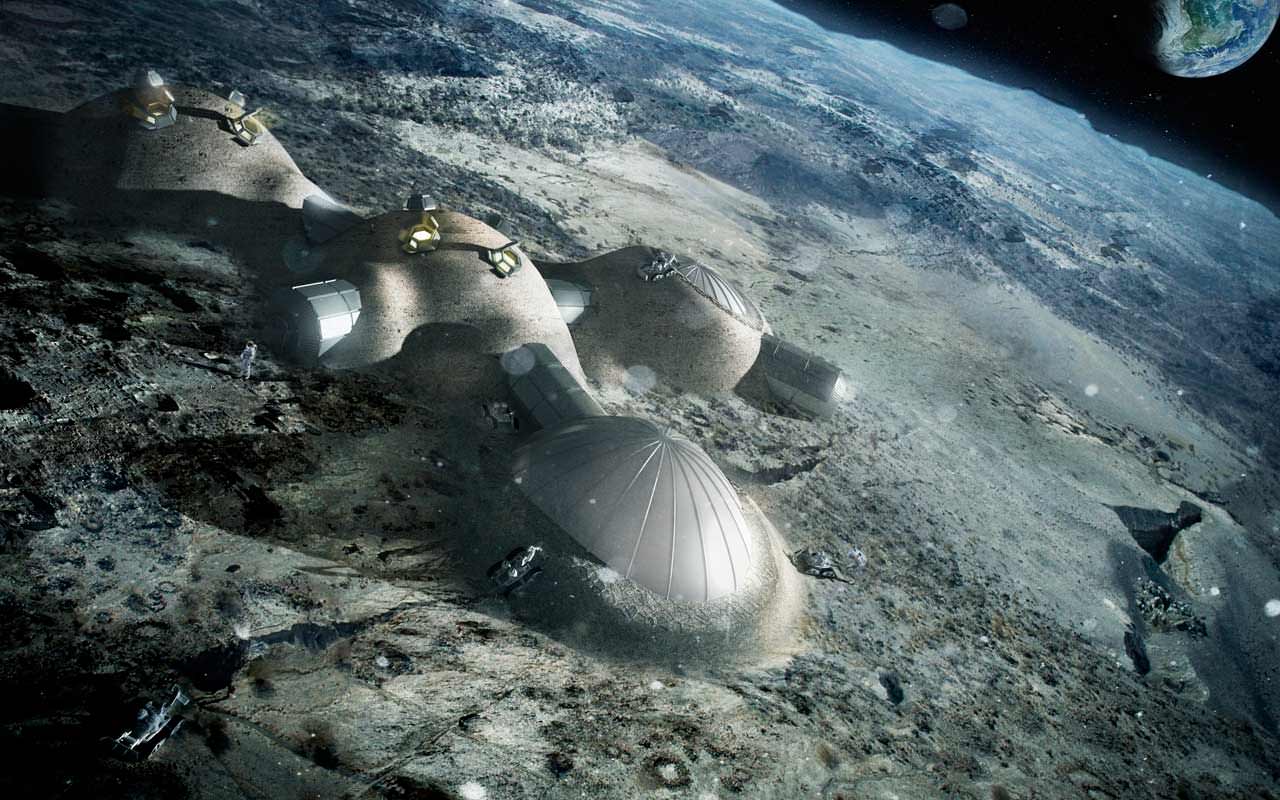
Chris Hadfield recently explained how humanity should create a Moon base before attempting to colonize Mars. Credit: Foster + Partners is part of a consortium set up by the European Space Agency to explore the possibilities of 3D printing to construct lunar habitations. Credit: ESA/Foster + Partners

Specialized Materials Could Passively Control the Internal Temperature of Space Habitats

Areas of space have wildly different temperatures depending on whether they are directly in sunlight or not. For example, temperatures on the Moon can range from 121 °C during the lunar “day” (which lasts for two weeks), then drop down to -133 °C at night, encompassing a 250 °C swing. Stabilizing the temperature inside a habitat in those environments would require heating and cooling on a scale never before conducted on Earth. But what if there was a way to ease the burden of those temperature swings? Phase change materials (PCMs) might be the answer, according to a new paper from researchers at the Universidad Politecnica de Madrid. 

PCMs have been known for some time and are currently used in several industries, including batteries, solar power plants, heat pumps, and even spacecraft. Perhaps most interestingly, they’ve been used to cool and heat the interiors of buildings on Earth.

They do so by absorbing heat during the hot parts of a period (whether a day or season) and emitting that heat in the cooler parts of a later period. They act like a giant thermal “sink,” making it take longer to heat or cool and providing insulation to anything it surrounds.

Two-bit DaVinci explains how PCMs work on terrestrial houses.
Credit – Two-bit DaVinci YouTube Channel

Another way to think of this is through the concept of thermal inertia. When an object, like a building, is in the Sun, it is directly impacted by the Sun’s rays, causing it to heat up. Alternatively, if it is no longer in the Sun but still contains a lot of thermal energy, it will start radiating some of that heat away. In vacuums, radiative energy is transmitted through infrared light like space.

PCMs have such large thermal inertia because they either absorb or emit lots of energy as they change between phases, such as between solid and liquid or liquid and gas. For example, the paper describes using n-octadecane as one of the PCMs being considered. It switches state around 28 °C, slightly above room temperature. Which makes it perfect for holding a room at right about that temperature.

Changing the temperature of something built with PCMs is much more complicated, and that challenge can make it easier to regulate the temperature inside a space habitat. The researchers modeled what would happen if a space habitat were built with PCMs inside the walls, and they found a significant decrease in the heating and cooling required to keep the habitat within the temperature range of being comfortable for humans.

Thermal control is one of the aspects of a self-sustaining space habitat, as Fraser discusses with Dr. Annika Rollock.

Other factors were included in the calculation, such as the reflectivity of the outer surface of the wall and the part of the solar cycle the Sun was experiencing. However, the authors found that given optimal conditions; designers could completely passively heat and cool a space habitat using only PCMs.

That is a pretty impressive feat, though the optimal conditions are improbable to ever happen in practice. Still, any energy savings the materials might provide will be welcome on a habitat that will likely be energy-starved when it starts. However, many different ideas exist for how those habitats should be built, including using regolith on the Moon. It is unclear how feasible it would be to include PCMs in cave walls or other structures involving local materials. The sheer amount of PCMs necessary to thermally control a massive human habitat might also be prohibitively expensive to launch at current prices.

However, materials keep improving, and there are obvious advantages to using these materials in this context. While they might not be integrated into some of the early habitats humanity builds in space, they will undoubtedly be used in future ones, and this paper is one step towards that.

Learn More:

Lead Image:

  • Artist’s depiction of a habitat on the Moon.
    Credit: ESA/Foster + Partners

{ https://www.universetoday.com/ }

Hoe vind je dit bericht?
Geschreven door peter om 17:39 Stuur door

Ancient Rocks in Mars’ Jezero Crater Confirm Habitability

This Mars Reconnaissance Orbiter image shows Jezero Crater, with Perseverance's landing site and the Fan Front feature. Rocks from the Fan Front sampled in 2022 show evidence of water that predates life on Earth. Image Credit: NASA/JPL-Caltech/MSSS/JHU-APL

Ancient Rocks in Mars’ Jezero Crater Confirm Habitability

According to NASA’s Perseverance rover, ancient rocks in Jezero Crater formed in the presence of water. These sedimentary rocks are more than 3.5 billion years old and may predate the appearance of life on Earth. When and if these samples are returned to Earth, scientists hope to determine if they hold evidence of ancient Martian life.

In 2022, the Perseverance Rover worked its way along Jezero Crater’s western slope and sampled rocks from a feature called the ‘fan front.’ Scientists hypothesized that some of the rocks in this region were formed in the ancient lakebed when the crater was filled with water. Perseverance analyzed the rocks’ chemistry and captured images of their surroundings. Members of the Perseverance science team studied this data and have published their results.

“These rocks confirm the presence, at least temporarily, of habitable environments on Mars.”

Professor Tanja Bosak, MIT

Their work is titled “Astrobiological Potential of Rocks Acquired by the Perseverance Rover at a Sedimentary Fan Front in Jezero Crater, Mars.” It’s published in the journal AGU Advances, and the lead author is Tanja Bosak, professor of geobiology in MIT’s Department of Earth, Atmospheric and Planetary Sciences (EAPS).

“These rocks confirm the presence, at least temporarily, of habitable environments on Mars,” said lead author Bosak. “What we’ve found is that indeed there was a lot of water activity. For how long, we don’t know, but certainly for long enough to create these big sedimentary deposits.”

Perseverance collected seven samples from the fan front. Each of the samples is of a sedimentary rock, and some of them may predate life on Earth. “The samples include a sulphate- and clay-bearing mudstone and sandstone, a fluvial sandstone from a stratigraphically low position at the fan front, and a carbonate-bearing sandstone deposited above the sulphate-bearing strata,” the authors explain.

Sulphates and clays typically form in the presence of water, and so do carbonates. Depending on the types of sulphates, it reveals clues about the ancient water’s chemistry, temperature, and acidity. Carbonates are similar and can also reveal things about Mars’ atmosphere when they formed, like how much carbon dioxide it contained.

“The hydrated, sulphate-bearing mudstone has the highest potential to preserve organic matter and biosignatures, whereas the carbonate-bearing sandstones can be used to constrain when and for how long Jezero crater contained liquid water,” the authors explain.

While the samples were placed in sealed tubes for eventual return to Earth, Perseverance also abraded the rock next to each sample location, allowing the rover to analyze the mineral content of the rocks.

This image from the research article shows the rock cores acquired during the Fan Front Campaign. CacheCam images of the cores in their container tubes are on the left. Red symbols on the High-Resolution Imaging Experiment (HiRISE) map on the right show the locations of the sampled outcrops and the corresponding cores. Image Credit: Bosak et al. 2024 This image from the research article shows the rock cores acquired during the Fan Front Campaign. CacheCam images of the cores in their container tubes are on the left. Red symbols on the High-Resolution Imaging Experiment (HiRISE) map on the right show the locations of the sampled outcrops and the corresponding cores. Image Credit: Bosak et al. 2024

Mars rovers have found other rocks that were deposited by water, but none this old. These ancient Martian rocks are the oldest sedimentary rocks ever studied, and they likely formed when the Jezero Crater was a habitable lake. Because they’re sedimentary rocks, they could hold ancient organic matter. But that determination will have to wait until they make it safely to labs on Earth.

“These are the oldest rocks that may have been deposited by water, that we’ve ever laid hands or rover arms on,” said co-author Benjamin Weiss, the Robert R. Shrock Professor of Earth and Planetary Sciences at MIT. “That’s exciting, because it means these are the most promising rocks that may have preserved fossils, and signatures of life.”

(A) gives the local context for the Amalik outcrop, where two samples were taken. (B) shows the workspace after sampling and abrasion. The white arrow on the left shows where the Mageik sample was taken. The center arrow shows how the rock was fractured when the Shuyak core was sampled. The arrow on the right shows the Novarupta abrasion. (C) is a close-up of the abrasion patch. Image Credit: Bosak et al. 2024. (A) gives the local context for the Amalik outcrop, where two samples were taken. (B) shows the workspace after sampling and abrasion. The white arrow on the left shows where the Mageik sample was taken. The center arrow shows how the rock was fractured when the Shuyak core was sampled. The arrow on the right shows the Novarupta abrasion. (C) is a close-up of the abrasion patch. Image Credit: Bosak et al. 2024.

Most sedimentary rock has two components: grains, which are like the building blocks for sedimentary rock, and cement, which are mineral deposits that come along later and bind the grains together. Over time, pressure forces cement into the rock pores, filling them and creating solid rock in a process called lithification. The researchers think that both the grains and the cement in the fan front sedimentary rocks likely formed in aqueous environments. During lithification, organic matter from ancient life could’ve been trapped in the rock.

The fan front is a prime place to search for evidence of ancient life. “We found lots of minerals like carbonates, which are what make reefs on Earth,” Bosak says. “And it’s really an ideal material that can preserve fossils of microbial life.”

Though sulphates form in the presence of water, the water tends to be very salty, which isn’t necessarily great for life. But it could work out for the best because of salt’s preservative effect. If the brine was restricted to the lake bottom, life could’ve persisted in the upper portions of the ancient lake. When lifeforms died, they could’ve sunk to the bottom. In this case, the brine would’ve acted to preserve signs of ancient life.

“However salty it was, if there were any organics present, it’s like pickling something in salt,” Bosak says. “If there was life that fell into the salty layer, it would be very well-preserved.”

NASA's Perseverance rover puts its robotic arm to work around a rocky outcrop called "Skinner Ridge" in Mars' Jezero Crater. Composed of multiple images, this mosaic shows layered sedimentary rocks in the face of a cliff in the delta, as well as one of the locations where the rover abraded a circular patch to analyze a rock's composition. Image Credit: NASA/JPL-Caltech/ASU/MSSS NASA’s Perseverance rover puts its robotic arm to work around a rocky outcrop called “Skinner Ridge” in Mars’ Jezero Crater. Composed of multiple images, this mosaic shows layered sedimentary rocks in the face of a cliff in the delta, as well as one of the locations where the rover abraded a circular patch to analyze a rock’s composition. Image Credit: NASA/JPL-Caltech/ASU/MSSS

It’s fairly well-established that Mars was once warm and wet. The next question is, did life ever exist there? To answer that, we need to find organic matter. But even that can be tricky since some organic matter can be produced geologically without life. The Curiosity Rover found organic carbon in Gale Crater, but scientists showed that UV fractionation is responsible.

Previously, Perseverance also found evidence of organic matter on the floor of Jezero Crater. Subsequent analysis showed that it could be matter that had no connection to life. This is a cautious reminder of the rovers’ limitations. Though they’re powerful, and it’s an amazing feat to have them roam around on another planet studying rocks, they can’t do the same science that’s possible in labs here on Earth.

That’s why the Mars Sample Return is so critical. Only by finally bringing pieces of Mars back to Earth can we fully understand the evidence that Perseverance is collecting.

“On Earth, once we have microscopes with nanometer-scale resolution, and various types of instruments that we cannot staff on one rover, then we can actually attempt to look for life,” Bosak says.

{ https://www.universetoday.com/ }

Hoe vind je dit bericht?
Geschreven door peter om 17:32 Stuur door

De rode planeet: prachtige foto's van Mars, genomen vanuit de ruimte

De rode planeet: prachtige foto's van Mars, genomen vanuit de ruimte

De rode planeet

Foto: Justin Cowart - Tharsis and Valles Marineris - Mars Orbiter Mission / Wikimedia

De rode planeet
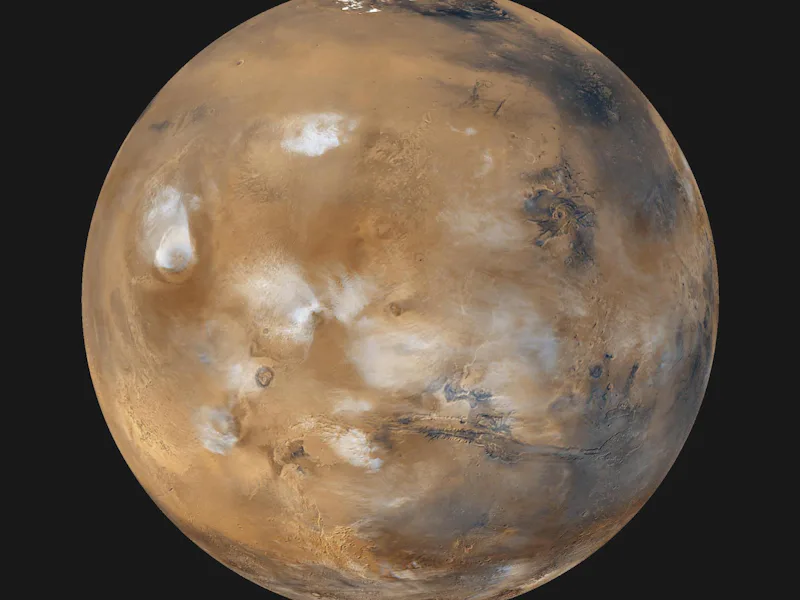
Mars is de planeet in ons zonnestelsel die de eigenschappen van de aarde het dichtst benadert. Daarom is het de favoriete bestemming van NASA-ruimtemissies. Kijk met ons mee naar de mooiste beelden van deze fascinerende planeet!

Arabia Terra

Foto: NASA/JPL/Universiteit van Arizona

Arabia Terra

Hier zien we Arabia Terra, een uitgestrekt gebied op het noordelijk halfrond van de planeet Mars. Kenmerkend zijn de kraters die ongeveer 4 miljard jaar oud zijn. Op deze foto zijn ook donkere duinen te zien, die door het HIRISE-team nauwlettend in de gaten worden gehouden op tekenen van windactiviteit.

Danielson-krater

Foto: NASA/JPL-Caltech/Universiteit van Arizona

Danielson-krater
Danielson is een inslagkrater met een diameter van ongeveer 67 kilometer, gelegen in het zuidwesten van de regio Arabia Terra. Deze foto, die gemaakt is door het ruimtevaartuig Mars Reconnaissance Orbiter, toont het zand en de sedimentaire rotsen die de krater vormen.

Een prachtig kleurencontrast

Foto: NASA/JPL/Universiteit van Arizona

Een prachtig kleurencontrast
Op deze foto zien we geulen die gevuld zijn met glimmend ijs, dat in contrast staat met de rode aarde van Mars. De foto is genomen bij de seizoensgebonden poolkappen van de planeet.

Een zonsopgang op Mars

Foto: NASA/JPL/LaRC

Een zonsopgang op Mars
Deze indrukwekkende zonsopgang op Mars is vastgelegd op 14 juni 1978 door de verkenningssonde Viking 2.

Candor Chasma

Foto: NASA/JPL/Universiteit van Arizona

Candor Chasma

Dit is Candor Chasma, een van de valleien die deel uitmaken van de kloven van Valles Marineris, gelegen in de buurt van de evenaar van de rode planeet. De lichtgekleurde gelaagde afzettingen zijn mogelijk een gebied dat bestaat uit zandsteen en volgens wetenschappers wellicht bewoonbaar is.

Een lentelawine

Foto: NASA/JPL/Universiteit van Arizona

Een lentelawine
Hier zie je een lawine die is vastgelegd door de HiRISE-camera, vlak bij de noordpool van Mars. Elke lente schijnt de zon op dit deel van de planeet. Door de hitte van de zonnestralen vallen er blokken ijs naar beneden. Als de ijsblokken de bodem van de klif bereiken, die meer dan 500 meter hoog is, veroorzaken ze een stofwolk bij het neerkomen op de grond.

Rotsformaties

Foto: NASA/JPL/Universiteit van Arizona

Rotsformaties
Deze foto is in december 2018 gemaakt door de Mars Reconnaissance Orbiter. De rimpels die te zien zijn in het zand vertellen ons in welke richting de wind om deze rotsformaties heeft bewogen.

Phobos

Foto: NASA, ESA, en Z. Levay (STScI)

Phobos
Phobos is een van de twee natuurlijke satellieten van Mars. Deze kleine maan staat ten westen van Mars en cirkelt in de loop van een Marsdag, die ongeveer 24 uur en 40 minuten duurt, drie keer om de rode planeet.

Een zeer jonge inslagkrater

Photo: NASA/JPL-Caltech/Universiteit van Arizona

Een zeer jonge inslagkrater
Dit opmerkelijke beeld toont ons een inslagkrater die is gevormd tussen juli en september 2018. Deze inslag vond plaats in de seizoensgebonden zuidelijke ijskap en heeft deze zichtbaar doorboord, waardoor een ongelooflijk inslagpatroon ontstond.

Krater Jezero

Foto: NASA/JPL-Caltech/MSSS/JHUAPL

Krater Jezero
De Jezero-krater is een inslagkrater met een doorsnede van 49 kilometer waarvan wordt aangenomen dat hij ongeveer 3,7 miljard jaar geleden is ontstaan. Hij ligt ten westen van Isidis Planitia, een reusachtig inslagbekken dat zeer oude landschappen laat zien en interessant is voor wetenschappelijke studie. De Jezero-krater is door NASA uitgekozen als landingsplaats voor de Mars 2020-missie, die op 30 juli 2020 van start ging en momenteel bezig is.

Steile duinen

Foto: NASA/JPL/Universiteit van Arizona

Steile duinen
Hier zijn duinen gefotografeerd op de hellingen van Nectaris Montes, in de kloven van Valles Marineris. De zandduinen die deze reusachtige kloven vormen kunnen indrukwekkend groot zijn, met schijnbaar zeer steile hellingen, zoals op deze foto te zien is.

Mount Sharp

Foto: NASA/JPL-Caltech/MSSS

Mount Sharp
Deze foto is gemaakt door de ruimterover Curiosity die sinds 2012 op Mars staat, op Mount Sharp, een berg die midden in de Gale-krater staat. In het midden van de afbeelding zie je kleirotsen die NASA-wetenschappers graag willen bestuderen.

Selfie van Curiosity

Foto: NASA/JPL-Caltech/MSSS

Selfie van Curiosity
Curiosity nam een kleine selfie op Mars! Deze machine van 899 kg werd in 2012 gelanceerd voor de verkenningsmissie Mars Science Laboratory. Een van zijn doelen is het verkennen van de Gale-krater, waarop hij is geland. De missie Mars Science Laboratory is nog steeds gaande.

De ravijnen van Valles Marineris

Foto: NASA/JPL-Caltech

De ravijnen van Valles Marineris
In het midden van dit mozaïek, dat een compilatie is van beelden die zijn gemaakt door het ruimtevaartuig Viking Orbiter 1, is een breder beeld te zien van de ravijnen van Valles Marineris. Ze zijn meer dan 3000 kilometer lang en 600 kilometer breed.

Aram Chaos-krater

Foto: NASA/JPL/Universiteit van Arizona

Aram Chaos-krater
Op deze afbeelding zijn blokken lichtgekleurde lagen te zien die grotendeels bestaan uit hematiet en door water verweerde silicaten. Deze elementen vertellen ons dat de Aram Chaos-krater ooit een meer bevatte. De diameter is ongeveer 284 kilometer.

Crisp-krater

Foto: NASA/JPL-Caltech/Universiteit van Arizona

Crisp-krater
De Crisp-krater ligt in de Sirenum Fossae. Volgens NASA-wetenschappers zou deze krater relatief recent zijn, omdat de rand nog erg scherp is en omdat blijkbaar de ejecta nog bewaard zijn gebleven.

Spinvormige scheuren

Foto: NASA/JPL-Caltech/Universiteit van Arizona

Spinvormige scheuren
Deze spinvormige scheuren bevinden zich in het oppervlak van het zuidpoolgebied van Mars. Ze zijn veroorzaakt door de verdamping van koolstofdioxide in de atmosfeer.

Een zonsondergang op Mars

Foto: NASA/JPL-Caltech

Een zonsondergang op Mars
Deze zonsondergang is vastgelegd door InSight-lander van NASA op 25 april 2019 om 18:30 uur lokale Marstijd.

Het passeren van een komeet bij Mars

Foto: NASA, ESA, J.-Y. Li (PSI), CM Lisse (JHU/APL), en het Hubble Heritage Team (STScI/AURA)

Het passeren van een komeet bij Mars
De Hubble-ruimtetelescoop heeft de Siding Spring-komeet en de planeet Mars vastgelegd toen ze elkaar passeerden op 19 oktober 2014. Op die dag bewoog de komeet op ongeveer 140.000 kilometer van de rode planeet. Dit is een compositiefoto, omdat de komeet en Mars ten opzichte van elkaar bewogen en daarom niet gelijktijdig in één opname konden worden gefotografeerd.

{ https://www.msn.com/nl-be/ }

Hoe vind je dit bericht?
Geschreven door peter om 17:23 Stuur door

A Europan Lander Could Return an Ice Core For A Fraction of the Cost of Europa Clipper

A Europan Lander Could Return an Ice Core For A Fraction of the Cost of Europa Clipper

Cost is a major driving factor in the development of space exploration missions. Any new technology or trick that could lower the cost of a mission makes it much more appealing for mission planners. Therefore, much of NASA’s research goes into those technologies that enable cheaper missions. For example, a few years ago, NASA’s Institute for Advanced Concepts (NIAC) supported a project by Michael VanWoerkom of ExoTerra Resource to develop a lander mission that could support a sample return from Europa. Let’s examine what made that mission different from other Europa mission architectures.

The Nano Icy Moons Propellant Harvester (NIMPH) mission relies on three main advancements for one significant result: a 10x reduction in the overall mission cost. That reduced cost comes mainly from a single fact—the mission’s weight has dropped below the threshold where it can be launched by an Atlas V rather than the SLS, as similar missions would require.

The mission cost estimated for an SLS-launched Europa lander was around $5 billion, making it prohibitively expensive for NASA or any other agency without significant sacrifices to other missions. ExoTerra estimates that, by using several weight-reducing technologies, they could bring the mission price tag down to $500 million—a much more reasonable sum to garner support from one of the government space programs.

Video describing the mission concept.
Credit – NASA 360 YouTube Channel

Three different technologies would enable this weight and cost to drop. First would be the solar electric propulsion (SEP) system initially designed for use on DART. The second would be a micro in-situ resource utilization (µISRU) system, and the third would be a power-beaming system between the lander and an orbiter.

Let’s first look at the overall mission architecture to understand how each contributes. In NIMPH, a combined orbiter lander will use an Atlas V rocket to get into Earth orbit. Then, a solar electric propulsion system (SEP) was initially designed for use on the DART asteroid redirect test. Although it was not used during the DART mission, the NEXT ion thruster was part of the spacecraft that launched, and, despite suffering from some technical challenges, it could have allowed the spacecraft to reach its destination. A similar, lightweight SEP system could get NIMPH to the Jupiter system, but it could also get the sample back to Earth after the lander collected it.

Just how the lander can get that sample back off the icy moon is the focus of the next major technological step – the µISRU system. NIMPH’s architecture would require using the local ice as a propellant. A lander would literally sublimate the ice under its feet, suck up the resultant water vapor, electrolyze it to split it into oxygen and hydrogen, and then liquefy it to store it for use in getting a 1 kg ice core sample back into orbit.

Fraser discusses the missions planned for Jupiter’s system in the near future.

To do all of this requires power, though, and a lander with a radioisotope thermal generator or similar commonly used power generation system would be prohibitively heavy. So, why not utilize the massive solar array required for the SEP system and beam some of that power down to the lander? That is the concept behind the power beaming system, estimated to produce around 2 kW of power in the Jovian system, about 1.8  kW of which could be beamed directly to a lander. 

After the core has been collected and safely launched back into space using a specially designed LOx-LH2 engine that uses the water collected by the µISRU system, the lander meets up with the orbiter. The SEP system kicks back on and delivers the lander back to Earth orbit, where it once again detaches and rides back to Earth’s surface inside a standard reentry module.

There are some nuances to this entire mission architecture. For example, the SEP system wouldn’t work at full capacity in the Jovian system, so a much smaller LOx / Methane propulsion system is needed to maneuver the orbiter into position. Additionally, the lander would likely have to leave its legs embedded in the Europan ice, as the sublimation process it uses to collect fuel would likely embed them in place. 

Budgetary constraints are always a consideration in deep space exploration, as Fraser discusses in this video.

Plenty of development work on all these systems must be completed before any such mission is ready for launch. And most likely, some of the need for the scientific understanding would be met by the Europa Clipper mission set to launch later this year for $4.25 billion – not far off the 10x times expense that was the original impetus for the more capable NIMPH mission design. And while NIMPH did receive a Phase II NIAC grant, it hasn’t been selected for further development as far as we have found. So, as of now, this novel combination of mass-saving technologies will not be delivering an icy Europan sample any time soon – but maybe someday it will.

Learn More:

Lead Image:

  • Depiction of the NIMPH mission architecture.
    Credit – Michael VanWoerkom

{ https://www.universetoday.com/ }

Hoe vind je dit bericht?
Geschreven door peter om 16:31 Stuur door

'Alarming' reason UFOs appear next to nuclear power sites explained by alien experts

'Alarming' reason UFOs appear next to nuclear power sites explained by alien experts

Story by Adela Whittingham & John O'sullivan

Experts have theorized why UFOs are allegedly regularly spotted near nuclear power sites

Experts have theorized why UFOs are allegedly regularly spotted near nuclear power sites
© Getty

Experts have proposed a startling theory explaining why UFOs are often sighted near nuclear sites and high-speed aircraft. Scientists have scrutinized numerous UFO sightings over the years and believe they've identified an intriguing pattern.

The suggestion is that extraterrestrial beings might be concerned about our defensive capabilities and the potential threat of nuclear annihilation. UFO researchers have highlighted a possible link between sightings at nuclear sites and several instances have been cited to support this theory - including an orb-like object seen near Concorde and an unidentified disc that seemed to trail a squadron of fighter jets, reports the Daily Star.

The unverified UFO sighting near Concorde - which has re-emerged on Reddit's UFOs subchannel, features in a 1976 British Airways advert where an orb-like UFO can be observed darting towards the aircraft curiously before speeding away. Following the Fukushima lab disaster in Japan, witnesses told Netflix docuseries Encounters that UFOs saved them by reducing radioactivity levels, while another expert said UFOs prevented nuclear war.

Several shimmering white orbs were spotted above the plant after the nuclear catastrophe in 2011 and appeared to descend into the lab before reappearing. At the Queen's Platinum Jubilee in June 2022, the monarch was celebrated with a display by nine fighter jets releasing streams of smoke in Union Jack's red, white, and blue colors

Reddit users were quick to spot an unidentified disc near the jets, but no clear explanation has ever been provided. Reports of UFO sightings following rocket test-fires have also surfaced.

Retired US Air Force staff sergeant Larry Hancock and Ian Porritt, a data analyst associated with Harvard's UFO-hunting Galileo Project, have conducted new research showing that unusual activity around nuclear weapons and facilities has evolved over time.

The studies indicate that initially, UFOs appeared interested in nuclear weapon production, but now they are frequently seen around silos and bomber bases.

When a new arsenal of ICMBs was constructed in the 1960s, UFOs became "much more intrusive" in their approach to ICBM bases, Porritt previously stated, adding: "They're very low altitude, they penetrate the security perimeters of the base."

There is also a theory that UFOs are actually "turning off" nuclear weapons - with several reports of this happening by the US military since the 60s.

In their latest study, the pair conclude: "Notable unidentified aerial phenomena loitering, military intrusions and weapons facility interference were documented in a series of incidents in 1967 (Malmstrom AFB) and 1975 (Loring AFB and Malstrom AFB), where at least one flight of 10 Intercontinental Ballistic Missiles (ICBMs) was officially recorded as having unexplainably gone off alert status."

The study delves into the account of former US Air Force ICBM launch officer Robert Salas, who was tasked by the AARO to gather information after he reported an orange flying disc disabling 10 warheads at Malmstrom Air Force Base in Montana in 1967.

He was subsequently made to sign a non-disclosure agreement on the incident by the Air Force Office of Special Investigations. Salas isn't the only one making such claims. In 2000, US Air Force First Lieutenant Robert Jacobs also claimed to have witnessed this in 1964 but was instructed not to discuss the alleged encounter again.

Moreover, in June 2023, two Air Force veterans told DailyMail.com that they had testified to the All-domain Anomaly Resolution Office (AARO) about UFOs deactivating their nuclear warheads.

Lue Elizondo, the former head of the Advanced Aerospace Threat Identification Program, has previously stated that there "seems to be a lot of correlation" between UFO sightings and nuclear sites.

Independent researcher Robert Hastings echoed these sentiments in 2010, stating: "Declassified US government documents and witness testimony from former or retired US military personnel confirm beyond any doubt the reality of ongoing UFO incursions at nuclear weapons sites."

{ https://www.msn.com/en-us/ }

Hoe vind je dit bericht?
Geschreven door peter om 01:34 Stuur door

Aliens secretly implanted 'slimy' microchips inside folk after close encounters

Aliens secretly implanted 'slimy' microchips inside folk after close encounters

Luis Elizondo, who headed the US Government's Advanced Aerospace Threat Identification Program - aka AATIP - launched in 2007 to investigate UFOs, said he had personally handled one of the 'slimy' implants

Elizondo, 52, said it also has material from crashed 'non-human' spaceships

Elizondo, 52, said it also has material from crashed 'non-human' spaceships 

(Image: Getty Images)

Aliens secretly implanted microchips inside folk who have experienced close encounters, according to a former US defence department counter-intelligence expert.

Luis Elizondo, who headed the US Government's Advanced Aerospace Threat Identification Program - aka AATIP - launched in 2007 to investigate UFOs, said he had personally handled’ one of theslimy' implants recovered from a member of the American armed forces.

In a bombshell new book published on Tuesday the defence intelligence chief said the US Government has alien microchip-style implants in its possession.

Elizondo, 52, said it also has material from crashed 'non-human' spaceships. The revelations are set to debunk US defence department claims they have so far found no evidence aliens exist.

In his book called 'Imminent' Elizondo alleged foreign biological implants had been found in military personnel who had encountered UFOs - aka Unidentified Anomalous Phenomena or UAPs.

Elizondo alleged foreign biological implants had been found in military personnel
Elizondo alleged foreign biological implants had been found in military personnel  (Image: Getty Images/iStockphoto)

He said: "I once handled one of these implants myself, provided to me by a hospital in the Department of Veterans Affairs, where it had been removed from a US military service member who had encountered a UAP.

"The material, no longer or wider than a joint of one of your fingers, looked more like a microchip encapsulated by a slimy semi-translucent casing of tissue.

"Under a microscope it was still moving somehow.’"

He said AATIP had also 'obtained photographs of these sorts of tiny objects from living foreign military pilots'.

Elizondo claimed samples were sent to the 'Centers for Disease Control and Prevention, the Food and Drug Administration, the National Institutes of Health, and a US Army research facility at Fort Detrick in Maryland'.

Luis Elizondo, who headed the US Government's Advanced Aerospace Threat Identification Program

Luis Elizondo, who headed the US Government's Advanced Aerospace Threat Identification Program (Image: CNN)

Defence chiefs have so far refused to comment on what was one of a number of other jaw-dropping claims in Elizondo’s book.

He claimed Donald Trump had been briefed on the US Government’s UFO program during his presidency

In 2016 Elizondo said he and colleagues hatched a plan to catch a UFO in the ocean after a series of close encounters reported by US military personnel.

He revealed three years earlier a dramatic saucer had been sighted at the secretive Los Alamos missile test range in Mexico.

Laser-precise holes had been cut through armoured tanks in the Kuwaiti desert in 2003. And a giant craft had been discovered beneath the waters of Puerto Rico in 1999.

Some sections of the book were redacted by the Pentagon, which reviewed it before publication to prevent unauthorised spilling of secrets.

Defence officials stressed their review did not mean they were vouching for Elizondo’s claims - despite his credentials.

Before he took over the Government’s UFO probe he served in Afghanistan running anti-terror missions against ISIS, al-Qaeda and Hezbollah before playing a major role running terrorist jail Guantanamo Bay in the 2010s.

He said AATIP had also 'obtained photographs of these sorts of tiny objects from living foreign military pilots'.

He said AATIP had also 'obtained photographs of these sorts of tiny objects from living foreign military pilots'  (Image: Getty Images/iStockphoto)

But when top rocket scientist James Lacatski (corr) called him in for a meeting in 2008 Elizondo said he discovered something altogether stranger.

"He looked over his glasses at me and he said, 'What do you think about UFOs?’'" the defence expert said.

"I paused for a moment and I said, 'I don’t have the luxury to think about them. I’m too busy chasing bad guys'.

"He said to me: 'Don't let your own personal bias get the best of you because what you learn here may challenge any preconceived notions'.

"That’s really when I first learned what this program was about.’"

Lacatski recruited Elizondo to manage security for the Advanced Aerospace Weapon System Applications Program - a £20m defence initiative that chased down service members’ reports of UFOs and researched ways to replicate their unearthly technology.

When funding ran out in 2012 he switched to AATIP.

In his memoir Elizondo described some of the strange incidents he investigated while in Government.

He said scientists were testing a classified device at the White Sands missile test range in Los Alamos, New Mexico in 2013, when ‘witnesses spotted several mysterious and luminous orbs moving over a nearby ridge’.

x

He revealed three years earlier a dramatic saucer had been sighted at the secretive Los Alamos missile test range in Mexico  (Image: Getty)

"The orbs moved toward the test site, hovered over the device as if scanning it for intel, then zipped away, brashly flying over the heads of bewildered scientists,’’ the ex-official wrote.

"Later, several eyewitnesses saw a formation of disc-shaped objects that seemed to know precisely where the device being tested was located. This occurred several times over a few days.’’

In 1999 a Navy chopper flew over Puerto Rican waters to retrieve a dummy cruise missile they were test-launching.

"As the frogman dangled from his hoist, a large, circular object the size of a small island began to rise to the surface,’’ Elizondo wrote.

"The pilot told me that it was black as the devil and the water began to churn and roll like a witch’s brew. The crew panicked.

"As the helicopter rose, the pilot noticed the missile getting sucked underwater.’"

While serving with the US Army in Kuwait in 2003 Elizondo said military police told him a Bedouin goat herder saw a 'brilliant green flash' over tanks stationed at the remote desert base of Arifjan one night.

When Elizondo investigated they showed him a heavily armoured M1 battle tank – designed to withstand a direct missile hit – with a small hole punched through the armoured side’ that wasperfectly round, no rough edges.’

In his memoir Elizondo described some of the strange incidents he investigated while in Government.

In his memoir Elizondo described some of the strange incidents he investigated while in Government  (Image: Getty Images/Science Photo Library RF)

"The tank next to it showed precisely the same sabotage,’’ Elizondo wrote.Whatever caused this seemed to penetrate the sides of two of our best tanks with one clean hole through both.

"It was as if someone had used a super sharp cookie cutter to take a core sample of the vehicle.

"The energy required to do such a thing would have been enormous.’"

Elizondo and his colleagues’ ultimate goal was to get access to an alleged long-standing program hidden by defence contractors working with the Pentagon, that had recovered crashed UFOs – some dating back to the infamous reported flying saucer crash in Roswell, New Mexico, in 1947.

He claimed his team got a meeting with this shadowy program’s administrators.

"We were told by the people who had the material,’’ he said.

"They sat there and said: 'We’re happy to have this conversation with you. There’s some things you’re going to need to do if you want more access to it. But we’re happy to give this stuff to you’'.

"That’s a holy cow moment. That’s a seismic revelation.

"There are countless examples of this type of material being collected, that when analysed and scrutinised by scientific experts – I'm talking about US government top secret-cleared scientists – substantiate that what we're dealing with is something that was not made by us.’’

But he said these `gatekeepers’ tied his team up in red tape and ultimately failed to open their books – or secret bunkers – to the Pentagon team.

His claims echo those of Pentagon whistleblower David Grusch, a former National Geospatial-Intelligence Agency official, who told Congress in a public hearing last year that the government is covering up a UFO crash retrieval program that has half a dozen spacecraft and even alien bodies.

{ https://www.dailystar.co.uk/ }

Hoe vind je dit bericht?
Geschreven door peter om 01:16 Stuur door

AI Focused! UFO Abducts guy, teaches, returns him May 1988, Puerto Rico, UAP Sighting News.

AI Focused! UFO Abducts guy, teaches, returns him May 1988, Puerto Rico, UAP Sighting News. 

UAP,%20%E0%A4%89%E0%A4%AB%E0%A5%8C%20,%20%E0%A6%87%E0%A6%89%E0%A6%8F%E0%A6%AB%E0%A6%93,%20%C4%91i%CC%83a%20bay,%20MUFON,%20%E7%9B%AE%E6%92%83%E3%80%81%E3%82%A8%E3%82%A4%E3%83%AA%E3%82%A2%E3%83%B3,%20%20UFO,%20UFOs,%20%D0%9D%D0%9B%D0%9E%20,%20NLO,%20sighting,%20sightings,%20alien,%20aliens,%20ET,%20anomaly,%20anomalies,%20ancient,%20astrobiology,%20vreemdelinge,%20%203%20copy%204.png

Date of contact: 1988 
Location of contact: Puerto Rico 
 
This is a sighting...that pushing me in the back of my mind. It's inspiring to know that aliens abducted many individuals from many location and taught them together about the future fate of the world. None of the other abductees have ever been identified, and probably tried to hide the experience from all others, but not this brave guy in Puerto Rico. He not only reported it, he got some great photos of military jets making fly bys of the UFO when he got off. Check out his video below...it will change how you see things. Scott C. Waring

{ https://www.ufosightingsdaily.com/ }

Hoe vind je dit bericht?
Geschreven door peter om 21:51 Stuur door

Nieuw onderzoek helpt het mysterie op te lossen van de asteroïde die leidde tot het uitsterven van de dinosauriërs

Nieuw onderzoek helpt het mysterie op te lossen van de asteroïde die leidde tot het uitsterven van de dinosauriërs

door JanineJanine image

Freepik

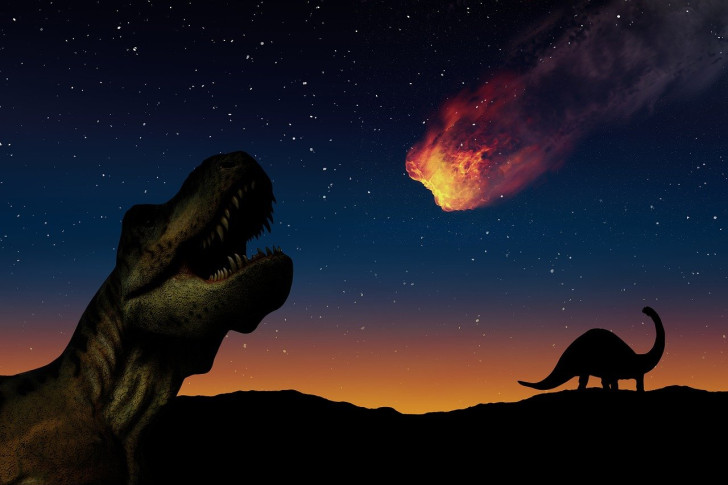
Nieuwe informatie over het hemellichaam dat 66 miljoen jaar geleden op onze planeet neerstortte en het uitsterven van de dinosauriërs veroorzaakte. Een studie heeft ontdekt wat het werkelijk is.

Artistic representation of the impact

Artistic representation of the impact 

(Image: Dona Jalufka / Universität Wien)

Chicxulub impactor, de ware oorsprong

Wat het uitsterven van de dinosauriërs veroorzaakte, was een ruimtesteen die op de aarde viel, maar waarover altijd een groot mysterie heeft geheerst. Het hemellichaam, de Chicxulub impactor genaamd, heeft al langer twijfels doen rijzen onder wetenschappers, die altijd hebben geloofd dat het een asteroïde of een komeet was. Recent onderzoek heeft echter de hypothese bevestigd dat het rotsblok van meer dan 9 kilometer breed deel uitmaakte van een familie van asteroïden die hun oorsprong vonden na de baan van Jupiter en die zeer zelden in contact komen met de aarde.

Een nieuwe studie, geleid door onderzoeker Mario Fischer-Gödde van de Universiteit van Keulen, Duitsland, heeft in dit opzicht verder bewijs opgeleverd, waarbij ruthenium werd aangetroffen in de geologische overblijfselen van de oude inslag. Dit is een element dat in zeer kleine hoeveelheden in de aardkorst voorkomt, maar juist zeer aanwezig is in asteroïden.

Een koolstofhoudende asteroïde veroorzaakte het uitsterven van de dinosauriërs

Pixabay

Op zoek naar soorten ruthenium in de Chicxulub-inslag onderzochten wetenschappers de wereldwijd verspreide laag puin na de inslag, de zogenaamde “Krijt-Paleogeen grens”, waarbij uniform elementen werden gevonden die behoren tot koolstofhoudende asteroïden, die grote hoeveelheden koolstof bevatten. Zoals Fischer-Gödde uitlegde: "de isotopische signatuur van ruthenium die we meten kan niets anders zijn dan een koolstofhoudende asteroïde."

Hoewel eerdere studies chemische kenmerken hebben ontdekt die verband houden met een koolstofhoudende asteroïde van het C-type, concentreerde het team zich op ruthenium. Omdat het zo zeldzaam is op aarde, zijn kleine hoeveelheden voldoende om dit soort ruimtegesteente te traceren. Wetenschappers hebben dit element gemeten bij vijf verschillende inslagen veroorzaakt door asteroïden van 541 miljoen jaar geleden tot nu: in alle gevallen werden de gebeurtenissen in verband gebracht met kiezelhoudende asteroïden, een groep hemellichamen die hun oorsprong vinden tussen Mars en Jupiter. Veel dichterbij dus dan koolstofachtigen. Dat is de reden waarom, zo merkte Fischer-Gödde op, "Chixulub tot nu toe een uniek en zeldzaam geval lijkt te zijn van een asteroïde van het koolstofhoudende type die de aarde raakt. Het ruthenium dat we in deze laag vinden, is voor bijna 100% afkomstig van de asteroïde."

De monsters van de onderzochte laag zijn afkomstig uit Spanje, Italië en Denemarken en hebben allemaal dezelfde samenstelling ruthenium, die verschilt van die van de aarde en daarom niet, zoals eerder werd aangenomen, afkomstig is van de uitbarstingen van de vulkanen van de Deccan Trappus. Bovendien verschillen de rutheniumisotopen in de onderzochte monsters van die in komeetfragmenten.

?id=100098X1555750&isjs=1&jv=15.7.1&sref=https%3A%2F%2Farstechnica.com%2Fscience%2F2024%2F08%2Fscientists-conclude-chicxulub-impactor-was-an-asteroid-from-beyond-jupiter%2F&url=https%3A%2F%2Fcdn.arstechnica.net%2Fwp-content%2Fuploads%2F2024%2F08%2Fasteroid2.jpg&xs=1&xtz=-120&xuuid=7a28ce06781731f7b524ca8987ff1ec7&cci=06944e83973b5e880a4c1462e8eab743

The 66-million-year-old Cretaceous-Paleogene boundary layer at Stevns Klint in Denmark. This boundary layer contains the globally distributed fallout produced by the asteroid impact at Chicxulub.

Credit...Philippe Claeys

Asteroïde die het tijdperk van de dinosauriërs beëindigde: meer vragen

Maar hoe stortte een koolstofhoudende asteroïde van deze omvang op de aarde? Het antwoord op deze vraag is nog steeds twijfelachtig, hoewel er wordt getheoretiseerd dat het, hoewel het zich na de baan van Jupiter heeft gevormd, mogelijk naar de buitenrand van de asteroïdengordel tussen Mars en Jupiter is geduwd, waar zich nu een groep koolstofhoudende asteroïden bevindt. Destijds kan de instabiliteit van de zwaartekracht van een jong zonnestelsel deze verplaatsing hebben veroorzaakt.

Hoe dan ook zijn er nog steeds veel open vragen over de impact van Chicxulub: een voorbeeld is hoe het de opkomst van nieuw leven kan hebben bevorderd, door sleutelelementen naar de bodem van de aarde te brengen voor de vorming van nieuwe levende wezens. Maar hoe zou de aarde er vandaag de dag uitzien als deze nooit was gevallen? “We moeten waarschijnlijk wat meer waarde hechten aan het feit dat we hier zijn en dat dit wellicht een gelukkig toeval is”, was het antwoord van Fischer-Gödde.

{ https://www.curioctopus.nl/ }

Hoe vind je dit bericht?
Geschreven door peter om 21:46 Stuur door

JFK and UFOs: What Did President Kennedy Really Know?

JFK and UFOs: What Did President Kennedy Really Know?

ngcb1

John F. Kennedy’s presidency is often remembered for the Cuban Missile Crisis, his call for the moon landing, and his tragic assassination. However, there is another, less discussed aspect of his time in office: his involvement with and knowledge of unidentified flying objects (UFOs). Despite being a subject of speculation and conspiracy theories, recent discussions and investigations suggest that JFK’s knowledge of UFOs was not only real but also deeply intertwined with Cold War politics.

UFOs and Government Secrecy

When John F. Kennedy assumed office in the early 1960s, the U.S. government already had a history of dealing with UFO sightings and phenomena. Former Australian intelligence official Geoff Cruickshank shed light on Kennedy’s awareness of these issues during an interview with NewsNation’s “Reality Check.” According to Cruickshank, JFK had access to significant information about UFOs, including official footage that captured Unidentified Aerial Phenomena (UAP) while he was in office.

One notable instance is the “Bluegill” nuclear test, part of the larger “Operation Fishbowl” series of high-altitude nuclear tests. During this test, footage reportedly shows an unidentified object plummeting into the ocean following the detonation of the bomb. The release of this footage, with subsequent redactions, suggests that it may have been made public by mistake. This incident raises questions about the extent of Kennedy’s awareness of such phenomena and the classified information surrounding them.

The Majestic 12 Documents

A key part of the UFO narrative during Kennedy’s presidency involves the so-called “Majestic 12” (MJ-12) documents. These documents, which have long been disputed, are said to be a collection of leaked files from U.S. defense intelligence agencies. They purportedly reveal secret operations involving UFOs and suggest that JFK was concerned about the potential for UFO sightings to escalate Cold War tensions.

While the authenticity of the MJ-12 documents has been debated for decades, recent findings have lent some credibility to their claims. For instance, Cruickshank pointed out that one of the secret operations mentioned in the documents, which involved spoofing UFOs to provoke Soviet reactions, was only publicly revealed two years ago. This raises the possibility that the MJ-12 documents may contain elements of truth, despite their controversial history.

Cold War Tensions and JFK’s Concerns

Kennedy’s concern about UFOs was not just about extraterrestrial visitors but also about the geopolitical implications of such sightings. During the height of the Cold War, any unidentified object in the sky could be misinterpreted as a threat, potentially leading to catastrophic consequences. JFK was particularly worried that Soviet leaders might mistake American military activities for a nuclear strike, especially if those activities involved unidentified aerial phenomena.

To address these concerns, JFK pushed for greater transparency with the Soviet Union. According to the MJ-12 documents, Kennedy ordered the CIA to be more open with the Soviets about U.S. military activities that could be mistaken for UFOs. This move was intended to reduce the risk of accidental nuclear conflict, but it also highlighted JFK’s awareness of and involvement with UFO-related matters.

The Vienna Meeting and JFK’s Awareness

One of the most significant moments in JFK’s UFO-related knowledge reportedly occurred during a meeting in Vienna with Soviet Premier Nikita Khrushchev. According to the story, Khrushchev raised concerns about unidentified objects that the Soviets believed were American in origin. This meeting may have been a turning point for JFK, leading him to become more involved in addressing the potential dangers of misinterpreting UFO sightings during a time of heightened global tensions.

Connections to JFK’s Assassination?

The question of whether JFK’s UFO knowledge played a role in his assassination is a topic of ongoing debate. Some conspiracy theories suggest that his push for transparency, particularly regarding UFOs and covert CIA operations, may have made him a target. While these theories remain speculative, they underscore the mysterious and often controversial nature of JFK’s involvement with UFOs.

VIDEO:

  • What did John F. Kennedy know — and not know — about UFOs? | Morning in America

John F. Kennedy’s knowledge of UFOs was likely more extensive than most people realize. His concerns about the potential for UFO sightings to spark international conflict, particularly with the Soviet Union, led him to take significant steps toward transparency. Whether through the “Bluegill” nuclear test footage, the Majestic 12 documents, or his interactions with Soviet leaders, JFK’s presidency was marked by a complex relationship with the UFO phenomena. While much remains uncertain, it is clear that UFOs were more than just a fringe topic for JFK—they were a matter of national and global security during one of the most dangerous periods in modern history.

{ https://www.latest-ufo-sightings.net/  }

Hoe vind je dit bericht?
Geschreven door peter om 21:28 Stuur door

Meet Oumuamua: the interstellar object some astronomers thought might have been an alien spaceship

Meet Oumuamua: the interstellar object some astronomers thought might have been an alien spaceship

A confusing intersteller visitor that lead to weird theories

A confusing intersteller visitor that lead to weird theories

The Oumuamua comet is now confirmed to be the first interstellar object to visit our solar system, according to NASA. But when the object was first discovered back in 2017 it caused a lot of confusion and spurred on more than a few weird theories about what it was and where it came from.

It only took them half a decade

©Provided by The Daily Digest

It took half a decade to sole the mystery

Astronomers studying the sky back in 2017 were examining the night sky from the Panoramic Telescope and Rapid Response System and stumbled on a weird comet with a speed and trajectory that didn't make sense. 

©Provided by The Daily DigestLike nothing we saw before

©Provided by The Daily Digest

Photo: Wiki Commons By nagual design; Tomruen - Own work made with trajectory data from JPL Horizons, redrawn by nagual design, CC BY-SA 4.0

Like nothing we saw before
The comet in question was moving too fast and entered our solar system on a trajectory that couldn't be explained by any known scientific theory at the time, which led to a lot of speculation about the interstellar object.

Could it be an alien spaceship?

©Provided by The Daily Digest

Could it be an alien spaceship?
In 2018, Harvard astronomers Avi Loeb and Shmuel Bialy theorized that the object's nongravitational acceleration could have been evidence that it was a spaceship using a solar sail according to Space.com, a theory which most astronomers did not support according to the news outlet.

How do early quasars differ from modern quasars?

©Provided by The Daily Digest

A visitor from deep space
The comet had a speed of roughly 54 miles per second according to Time Magazine’s Jefferey Kluger and had a highly elliptical orbit, which scientists said indicated the comet didn’t originate in our solar system and actually traveled to us from deep space.

Theories become reality

©Provided by The Daily Digest

Theories become reality
“For decades we’ve theorized that such interstellar objects are out there, and now—for the first time—we have direct evidence they exist,” said the Associate Administrator of NASA’s Space Mission Direct Thomas Zurbuchen at the time of the comet's discovery.

A history-making discovery

©Provided by The Daily Digest

A history-making discovery
“This history-making discovery is opening a new window to study [the] formation of solar systems beyond our own,” Zurbuchen added, and he was more right than he knew.

Odd data indicated abnormalities

©Provided by The Daily Digest

Photo Credit: NASA

Odd data indicated abnormalities
Scientists quickly realized that at the speed the comet was traveling, it had to have accelerated in the latter half of its journey, a fact that shocked the scientific community according to Kluger since the speed increase couldn’t be explained by our sun's gravitational pull or any other scientific theory.

A possible alien craft?

©Provided by The Daily Digest

A possible alien craft?
“That left even sober scientists to speculate that the object might actually be an alien spacecraft,” Kluger wrote, “speeding up under its own power during its barnstorming of our solar system.”

The comet Oumuamua

©Provided by The Daily Digest

Photo: By Original: ESO/M. Kornmesser Derivative: nagualdesign, CC BY-SA 4.0

The comet Oumuamua
The comet was later named Oumuamua—which means “a messenger from afar” in Hawaiian according to Kluger—and while media speculation ran rampant about the possible discovery of aliens, scientists got to work figuring out a less fantastical explanation for Oumuamua.

The Oumuamua's mysteries have been revealed

©Provided by The Daily Digest

The Oumuamua's mysteries have been revealed
Some researchers theorized that what was found could have been an alien spacecraft, but roughly half a decade after the discovery, astronomers finally figured out the mysteries behind the comet and published their findings in March 2023.

What we should be worried about

©Provided by The Daily Digest

We might have an explanation
Hard work into the origins of our solar system's first interstellar visitor eventually paid off and two scientists believe they’ve finally found an explanation for Oumuamua’s unexplained speed increase halfway through its journey.

Part of the data

©Provided by The Daily Digest

Trapped hydrogen fueled Oumuamua's speed increase
Professors Jennifer Bergner and Darryl Seligman were able to show that Oumuamua’s speed increase was due to the release of what they said was “trapped molecular hydrogen” that had formed through an “energetic processing” of the comet’s icy body.

Calculating our galaxy’s rotation curve

©Provided by The Daily Digest

An explanation from Bergner and Seligman
“In this model, Oumuamua began as an icy planetesimal that was irradiated at low temperatures by cosmic rays during its interstellar journey, and experienced warming during its passage through the Solar System,” the professors explained.

The comet melted and hydrogen emerged

©Provided by The Daily Digest

The comet melted and hydrogen emerged
As Oumuamua warmed, the trapped hydrogen in its body was allowed to escape, which fueled the comet and allowed it to increase its speed to levels that baffled scientists.

Published in Nature

©Provided by The Daily Digest

Photo Credit: NASA

Published in Nature
Bergner and Seligman published their work in the peer-reviewed journal Nature, and if it proves true, it would explain how Oumuamua was able to speed up in the latter half of its journey to our solar system.

©Provided by The Daily Digest

"A very interesting explination"
Karen Meech is a leading expert on comets at the University of Hawaii’s Institute for Astronomy, and she told the New York Times via email at the time the study was published that Bergner and Seligman's explanation for Oumuamua’s speed was a “very interesting” one.

Plausible but not a solved

©Provided by The Daily Digest

Plausible but not a solved
“I’m not willing to say it ‘solves’ things,” Meech continued in her email to the New York Times, “the smoking gun there would be to have detected hydrogen spectroscopically.”

Oumuamua isn't solved

©Provided by The Daily Digest

Oumuamua isn't solved
“But it is very plausible, and if another object is discovered that looks like Oumuamua, then all these models and explanations provide a lot of guidance for the observations,” Meech added.

Debate will rage on

©Provided by The Daily Digest

Debate will rage on
Controversy over Oumuamua raged on, however, since many astronomers at the time didn't agree with Bergner and Seligman’s assessment of Oumuamua’s icy body fueling the comet's speed increase.

A gas that would end all life on Earth

©Provided by The Daily Digest

There was no evidence Oumuamua had an icy body
“The authors of the new paper claim that it was a water ice comet even though we did not see the cometary tail,” Harvard astronomer Dr. Avi Loeb told the New York Times. “This is like saying an elephant is a zebra without stripes.”

The other possibility

©Provided by The Daily Digest

The other possibility
In 2021, Alan Jackson and Steve Desch of Arizona State University proposed that Oumuamua could be a giant chunk of nitrogen that was blasted off of a Pluto-like celestial body according to Space.com.

{ https://www.msn.com/en-us/ }

Hoe vind je dit bericht?
Geschreven door peter om 21:16 Stuur door

10 Things Scientists Can't Explain and Attribute to God

10 Things Scientists Can't Explain and Attribute to God

Story by James Dorman
 
10 Things Scientists Can't Explain and Attribute to God
©Tomas T/Unsplash/Vatican Pool/Getty Images
10 Things Scientists Can't Explain and Attribute to God
It’s human nature to try and explain what we see around us. Many religious teachings came to be as a way to explain the unexplainable.

As the centuries passed and our scientific understanding of the world and the wider universe developed, new scientific theories rendered some of these religious ideas obsolete. There are, though, still some areas where science simply cannot produce an explanation.
The Universe and Its Origins
©Greg Rakozy/Unsplash
The Universe and Its Origins
Let’s start with a big one — the existence of the universe. Scientific understanding of the universe and how it came to be has come a long way from the Biblical notion of God creating existence with a few words.

But there’s still a lot that science doesn’t have an answer for. Scientific opinion has shifted from the universe being infinite to it having a beginning point. If it has a beginning, then something outside of the universe brought it into existence. Perhaps something divine.
A ‘Goldilocks Universe’
©Dario Brönnimann/Unsplash
A ‘Goldilocks Universe’
The universe is also finely tuned, with conditions being “just right” to allow for the existence of life on Earth. Any sort of change one way or the other, and life could not exist.

The nature of the fundamental physical laws of the cosmos is very precise. Some feel that they’re too precise to have occurred by accident and instead point to some sort of intelligent design.
Consciousness
©brewbooks/Wikimedia Commons
Consciousness
The scientific definition of the nature of life is extremely limited. We can describe the biological processes in great detail and talk about how the anatomy of the brain permits higher thought, but science cannot really explain consciousness.

And life in the truest, philosophical sense is all about consciousness. The concept of biocentrism takes a more spiritual view of existence that factors in consciousness and much of what religion might describe as the human soul.
Morality
©Tingey Injury Law Firm/Unsplash
Morality

Similarly, science can handily explain basic, almost animalistic responses humans have to the world around us, such as why we as a species might have shared “fight or flight” threat responses.  

But beyond this, we as a species also have a shared morality. We have ethics. Similar moral constructs crop up time and again in different cultures and civilizations totally independently of one another. Science cannot explain why the animal species we call humans have this fundamental, shared, complex moral code. 

Materialistic Desire

©Shane/Unsplash

Materialistic Desire
If we again think of humans as animals, we can explain why there is a biological imperative to secure resources necessary for our survival. But what if we remove this survival need?

We still seek out and cling to things for materialistic or sentimental values. Science is far weaker at explaining these phenomena. Sentimentality in particular is something that is far better explained in the realm of spirituality.

The Design of Life

©Sangharsh Lohakare/Unsplash

The Design of Life
DNA is essentially the code of life. Sequences of nucleotide base pairs describe how to create specific proteins, basically working a lot like computer code for a piece of software.

Science cannot sufficiently explain the chemical evolutionary origins of complex DNA sequencing. If we stick with the software analogy, one explanation could be that it’s a purpose-built design tool for an intelligent designer to use to “program” life in the universe.

The Existence of Miracles

©Marites Allen/Unsplash

The Existence of Miracles
Miracles are present in the world, if we define a miracle as some surprising outcome that defies scientific conventions, laws and theory and yet happens all the same.

Beyond this, there are coincidental occurrences that stretch credulity. Scientific thinking holds that there is an underlying reason for why things happen, but scientific theory can fail to explain how some of these seemingly impossible coincidences or miracles occur. Instead, there might be the divine at play.

Human Connection

©Hugh Edmund/Wikimedia Commons

Human Connection
There are biological reasons to explain why humans within the same families seek connection. Again, there is a biological imperative to stay connected and make sure your lineage’s genes are passed to the next generation.

But what about connections that aren’t about basic, animalistic survival? Why do we seek meaningful connections with others, a connection that has no survival benefit? Again, this is more about the spiritual meaning of what it is to be human rather than the scientific meaning

Life After Death

©Matthew Schwartz/Unsplash

Life After Death
It’s one of the great mysteries that has preoccupied human existence — what happens after we die? It’s a question that permeates philosophy, culture and literature — the world beyond death is Hamlet’s “undiscovered country.”

The limitations of the scientific definition of life mean that science also struggles to tackle what happens after death. The biological processes end, but what of the consciousness? Even science states that everything in existence must be conserved, so our “souls” must go somewhere.

The Meaning of Life

©Tingey Injury Law Firm/Unsplash

The Meaning of Life
A common theme seems to be that science is very good at explaining the “how” of things but less equipped to tackle questions of “why.” We can explain the origins of life scientifically, but not its purpose.

Some scientific thinking navigates this by removing the idea of purpose entirely — there is no meaning to life, life simply is. Many scientists, however, do not accept this and continue their scientific explanation of the mysteries of the universe, holding a spiritual belief that there is some meaning to it all. A meaning they cannot define.

When Science Meets Faith

©Davide Cantelli/Unsplash

When Science Meets Faith
Science is, fundamentally, the pursuit of answers. Just because science cannot explain something yet, that doesn't mean that scientists relent and accept something as inexplicable.

But by the same token, the fact that science cannot explain something can be taken as proof that the explanation lies beyond the realm of science and exists in the spiritual. Furthermore, science can be great at providing explanations for the world around us but falls short of religion when it comes to giving meaning to everything.

Hoe vind je dit bericht?
Geschreven door peter om 18:47 Stuur door

3 Burning Questions We All Have About Boeing Starliner’s Epic Debacle

3 Burning Questions We All Have About Boeing Starliner’s Epic Debacle

Starliner and its first crewed mission remain in limbo.

by Doris Elín Urrutia
 
In this file photo, an aurora streams below Boeing's Starliner spacecraft docked to the forward port...
Nasa/UPI/ShutterstockBoeing’s Starliner, which has been stuck in space since June 6 for what was meant to be an eight day long mission, is at a standstill.

The evaluations NASA will undertake over the next few weeks will determine if Starliner returns to Earth with its crew, or if it comes back alone, and leaves its crew in space for many more months with a return home pushed to next year. There are still many unknowns, but a teleconference NASA held on Wednesday did shed light on some big questions.

NASA gave Boeing a contract a decade ago to build a commercial system to fly astronauts to and from low-Earth orbit. The aerospace giant’s first trial run with astronauts launched from NASA’s Kennedy Space Center up towards the International Space Station (ISS) on June 5. The mission, called Crew Flight Test, was slated to last eight days. Friday marked mission day 72.

NASA astronauts Butch Wilmore (L, front) and Suni Williams (R, front) wave before boarding Boeing's ...

NASA astronauts Butch Wilmore (left) and Suni Williams (right) wave to a crowd before boarding the Boeing Starliner spacecraft in Cape Canaveral, Florida on June 5, 2024.

Xinhua/Shutterstock

Boeing Starliner’s inaugural crew flight carried NASA veteran astronauts Butch Wilmore and Suni Williams. They’re still in space. The duo’s delay to come home stems from issues that first arose as Starliner sought to rendezvous with the ISS.

A key problem with Starliner is that five of its thrusters, which are part of the propulsion system, failed and turned off during the flight to the ISS. Over the past several weeks, NASA and Boeing have performed a number of tests to both the Starliner ship currently stuck at the ISS as well as a test unit in New Mexico to evaluate whether the thrusters are working and the spaceship can safely take astronauts home.

Specifically, on the Starliner docked at the ISS, scientists have performed what they call "hot fire tests" where they ignite all but one of Starliner's thrusters for a very short period of time to test that the thrusters are working. On a test thruster in New Mexico, Boeing engineers attempted to replicate what the thrusters in space would go through by putting them through the same thermal conditions and sequences that they'd feel during the flight.

The tests revealed that the thrusters were likely overheating, and that a teflon seal on the thruster’s oxidizer line poppet was swelling and causing fuel to get blocked.

When will NASA decide if Starliner will return to Earth with astronauts?

The Flight Readiness Review, in which officials are polled for go or no-go, could happen as early as next week. It could potentially get pushed to the beginning of the week beginning with Monday August 26, Ken Bowersox, associate administrator, NASA’s Space Operations Mission Directorate, told reporters at a teleconference NASA held on Wednesday. “It's a fairly major discussion to decide about whether or not we're going to have crew on board Starliner for return,” Bowersox said.

NASA astronauts Suni Williams and Butch Wilmore take their historic ride on Boeing's CST-100 Starlin...

The Boeing Starliner lifting off from Florida up towards low-Earth orbit. 

Orlando Sentinel/Tribune News Service/Getty Images

Could NASA delay the decision again?

At the press conference, Bowersox said that “it’s getting a lot harder,” to delay the decision. He cited consumables, and the need to use the ISS ports for cargo missions, as reasons to avoid postponing the decision of whether or not Starliner returns crewed or empty much longer. “We’re reaching a point where that last week in August we really should be making a call, if not sooner,” Bowersox added.

If Starliner returns with no astronauts, would it mean the end to NASA’s quest for a backup plan in space?

NASA spearheaded its Commercial Crew Program so that it could pay more than one company to fly its astronauts to space. Boeing and SpaceX are meant to be dissimilar contingencies, or different options, in case one company cannot provide astronauts with a lift to space, or return them in case of an emergency.

In fact, although many details haven’t yet been ironed out, NASA has already reached out to SpaceX to bring Wilmore and Williams home on their Crew-9 mission’s Dragon capsule if Starliner is deemed too dangerous to bring the duo home.

“All I can say is that our intent is to keep pressing to have two providers,” Bowersox said.

“We've got two very good companies, and we want to develop two strong and capable spacecraft. We think we still have a very good chance of doing that. But the answer is always in the data, right? That's why we're doing this mission.”

{ https://www.inverse.com/ }

Hoe vind je dit bericht?
Geschreven door peter om 18:15 Stuur door

Saturn's Moon Mimas May Be Way More Inhabitable Than We First Thought

Saturn's Moon Mimas May Be Way More Inhabitable Than We First Thought

The existence of another watery world in the outer solar system may offer clues to how such seas form.

by Shannon Hall and Knowable Magazine
 
Saturn’s moon Mimas, floating above the planet’s rings, might conceal a liquid ocean beneath its sur...
NASA/JPL

The outer solar system is awash with liquid water. A briny ocean is concealed beneath the icy crust of Jupiter’s fourth largest moon, Europa — with more water than all of Earth’s oceans combined. A subsurface sea on Saturn’s moon, Enceladus, spews plumes of water vapor into space. And there are tantalizing hints that oceans could exist on Ganymede, Callisto, Titan and other distant moons, too.

Now, another moon appears to be secretly flooded. Saturn’s moon Mimas, known for its uncanny resemblance to the Star Wars Death Star, might harbor liquid water beneath its icy shell. If true, similar seas could be hiding in plain sight, and the outer solar system may be far more habitable than previously thought.

In 2014, scientists first published evidence that Mimas might be a watery world — submerging the community in a decade-long debate. Many, including Alyssa Rhoden, a planetary scientist now at the Southwest Research Institute in Boulder, Colorado, were highly skeptical of the possibility. Their reasoning was simple: Mimas’ heavily cratered surface showed no signs of an internal ocean. As with Enceladus, Saturn’s gravity should churn the ocean waters within Mimas, causing large cracks to appear in the surface ice. No such fractures have been seen.

The tides might now have turned. Two studies, one by Rhoden and colleagues and another by Valéry Lainey of the Paris Observatory and colleagues make a stronger case for an ocean and even explain the conundrum at the surface. Together, the research suggests that Mimas may have a young and changing ocean. If so, it raises the prospect of an outer solar system rife with activity. That possibility is what most excites Rhoden, who spoke with Knowable Magazine about the potential ocean and why it could be such a boon for scientists.

This conversation has been edited for length and clarity.

What do we know about these hidden oceans?

In many ways, they look like our own — at least in that they’re likely made up of saltwater.

We know that these ocean worlds have icy surfaces from their overall bright appearance, as confirmed by telescopic and spacecraft measurements that detect signatures of water ice. Some ocean moons even have low enough densities that they probably have water ice mixed into the rock in their interiors. With heat, that water ice melts into liquid water, which will erode rock to create saltwater. On Enceladus, saltwater is conveniently spewing out into space.

Given how cold it is in the outer solar system, what generates the heat?

Distant oceans might at first seem out of the question. Heat to melt ice is hard to come by, so far from the Sun. But thanks to a gravitational quirk, the outer solar system can be quite balmy.

Consider Jupiter and its Moon Europa. Jupiter exerts a strong gravitational force on Europa, elongating Europa in the direction of Jupiter. Because Europa’s orbit is eccentric — it swings close to Jupiter before swinging farther away — Europa gets stretched and released over time. This creates friction in the interior that provides the heat necessary to sustain a liquid ocean.

We first saw hints that Europa might host a subsurface ocean when the Voyager mission swung past Jupiter in 1979. Europa doesn’t look like our Moon or even most bodies in the inner solar system. Its icy surface doesn’t have a lot of craters but is instead covered with crisscrossing lines and broken pieces that have shifted around. You don’t have to look at it very hard to imagine that something different is going on there.

You mention surface features. What other evidence do we rely on to detect a hidden ocean?

One way is to look at magnetic fields. Because saltwater is electrically conductive, it can create a magnetic field around the Moon that disrupts the planet’s magnetic field. That is a leading piece of evidence for Europa’s subsurface ocean.

But that alone is not enough. It’s the combination of evidence that leads us to conclude there’s an ocean. We might also consider, for example, measurements of salt on the surface and how the Moon’s gravity tugs on a spacecraft. Since the densities of rock or liquid metal differ from the density of liquid water, the size of those tugs offers clues to the material, as well as where within the Moon it is concentrated.

Or we might simply imagine how the Moon’s face changes direction throughout its orbit. Generally, these small moons always show the same face as their parent planet, much like our Moon. But as a moon moves through its orbit, the direction it points can shift a bit back and forth — creating a shimmy in the visible portion. The extent of that shimmy depends on the interior. An ice shell over an ocean can move more freely than an ice shell on top of rock, so the changes tend to be larger. That’s how the ocean was detected at Enceladus. And it’s one of the best lines of evidence for an ocean at Mimas.

Let’s talk about Mimas. How did you end up studying the Moon?

I had spent a decade or so working on Europa and other icy moons when the 2014 Mimas paper came out. That paper measured that shimmy, or libration, as the visible portion of the moon shifts, suggesting Mimas either hosted a subsurface ocean or an oddly shaped core.

But an ocean seemed impossible. Mimas look much like our Moon, with a heavily cratered surface. It didn’t host any crisscrossing lines or broken pieces like Europa. And it certainly wasn’t spewing geysers like Enceladus. So I took one look at Mimas, and I said, “There’s no way that is an ocean moon.” Yet I realized I couldn’t refute the idea.

I kept Mimas in my mind over the years, eventually putting together a paper for the Annual Review of Earth and Planetary Sciences in 2023. That paper ruled out several ocean scenarios and left only one option, an ocean that formed recently, well after Mimas itself. A young ocean could be stealthy. But it was still just a hypothesis.

How has the most recent work changed the picture?

Early in 2024, Valéry Lainey and his group reported new observational evidence in favor of an ocean on Mimas. They looked not at the libration but at changes in Mimas’ orbit through time — changes that depend on the interior structure. They found that those changes could not be explained by an oddly shaped core, leaving an ocean as the most viable option.

My team’s research, published in June, has gone on to explain the lack of visible surface fractures. We argue that the ocean is so young — merely 10 million years old — that it has only recently stopped growing. We think that the tidal stresses of a young churning ocean may not be enough to crack the ice above. Instead, what’s needed is the stress that comes when the ocean eventually refreezes. Because Mimas is losing heat as its orbit becomes less eccentric over time, refreezing — which is only just beginning on Mimas — will cause the overlying ice to crack.

The research suggests that eventually, Mimas is probably going to lose its ocean, which is a little sad since it is just being recognized. But on the flip side, Mimas may become the new Enceladus — the new coolest moon of Saturn — with deep cracks and maybe even jets of water.

What are the big-picture implications of this research?

I’m interested in this from a geophysical standpoint. We think of the earliest epochs in our solar system as the hot times when all the activity happens; then, everything evolves toward a quieter state. Pluto’s moon, Charon, might have lost an ocean. And Europa’s and Ganymede’s oceans are pretty old. That a moon could form a new ocean well into its history and that we could watch? That’s exciting! It opens up the possibility that any world, including one with an old, cratered surface, may be going through a similar transition.

There’s also interest in habitability — whether these oceans are suitable for supporting life. We don’t currently know whether any of the solar system’s oceans, other than our own, are habitable, have been inhabited or are currently inhabited. But if Mimas truly has an ocean, we could have a window into how these worlds develop and even how habitats are created and lost. It is exciting to be able to see these processes as they occur — instead of always viewing the end states of things that happened long ago.

What upcoming missions could tell us more?

The European Space Agency has already launched the Jupiter Icy Moons Explorer, or Juice, which will make detailed observations of Europa, and the moons Ganymede and Callisto, which show hints of oceans. And in the fall of 2024, NASA will send the Europa Clipper into orbit around Jupiter to determine if Europa has conditions suitable for life.

The Uranus system, which is high on NASA’s agenda for a future mission, is where I see the most implications for this recent work. It’s surprisingly similar to the Saturn system, including hosting ice-rich, mid-sized moons similar to Mimas and Enceladus. If there’s a young ocean on Mimas, it is not a huge leap to consider that water worlds might exist among the Uranian moons, too.

  • This article originally appeared in Knowable Magazine, an independent journalistic endeavor from Annual Reviews. Sign up for the newsletter.

{ https://www.inverse.com/ }

Hoe vind je dit bericht?
Geschreven door peter om 18:03 Stuur door

Asteroids safely fly by Earth all the time. Here’s why scientists are watching Apophis.

Asteroids safely fly by Earth all the time. Here’s why scientists are watching Apophis.

A menacing asteroid named Apophis is projected to have a close encounter with Earth in 2029. Scientists have long ruled it out as an impact threat, but they still hope to study it.

Earth is in the center of this image surrounded by tons of blue dots in a relatively disk-like shape that represent satellites. Toward the right of the screen, a dot is traced with a yellow line as it just barely enters the satellite disk while flying past Earth.

An animation shows Apophis' 2029 path compared to the swarm of satellites orbiting Earth. 
(Image credit: NASA/JPL-Caltech)
Story Summary
  • Apophis is projected to pass within 20,000 miles of our planet’s surface on April 13 2029. The menacing asteroid will harmlessly pass by, astronomers say.
  • Apophis measures nearly a quarter of a mile long – about the size of a cruise ship – making it large enough to be visible to the naked eye when it shoots past Earth.
  • Space agencies and scientific institutes around the world are planning to use the rare flyby to explore Apophis from the ground with telescopes and even spacecraft.

Among astronomers both professional and amateur, perhaps no asteroid is more notorious than Apophis.

If you've heard of Apophis, then you're likely aware of the reputation it gained upon its discovery two decades ago as a potentially very dangerous space rock hurtling too close for comfort toward Earth. It was initially believed that the asteroid could one day pose a serious threat to our planet.

And one day, it just might.

But that day won't come for at least 100 years, astronomers say. No, not even in 2029, when Apophis makes the closest approach to Earth that any asteroid of its size ever has – at least, one that scientists have known about in advance.

Additional observations of Apophis have allowed astronomers to long rule out the risk of an impact in 2029 when Apophis is predicted to come within a distance of Earth 10 times closer than the moon, according to NASA. The asteroid also won't hit our planet when it makes another close approach in 2036.

While we and our children are safe from Apophis' wrath, scientists still see a valuable opportunity to study the asteroid as it whizzes by Earth to learn what they can of other space rocks that actually could hit our planet.

Here's what to know about Apophis and how space agencies hope to protect Earth from other asteroids like it.

Apophis to make 2029 flyby to Earth

Apophis is projected to pass within 20,000 miles of our planet’s surface on April 13, 2029.

For the superstitious lot, yes, that's a Friday, no less.

On that day, Apophis will come closer than telecommunications satellites in geostationary orbit, the ESA says.

The close encounter with Earth will make the asteroid visible in the Eastern hemisphere, including in Europe, Africa, and western Asia. It should look somewhat like a bright star streaking across the sky.

Earth's gravity will significantly influence Apophis – squeezing and distorting the asteroid as one side is pulled toward our planet more than the other. While no affects will be felt on Earth, Apophis may experience some quakes and even landslides, the ESA said.

Will Apophis hit earth?

In short, no. Not during our lifetimes, anyway.

While Apophis is classified as a near-Earth asteroid because its orbit bring it within 30 million miles of Earth, you have nothing to fear from it.

Apophis was initially identified as one of the most hazardous asteroids that could impact Earth after its 2004 discovery, but that assessment has since changed as astronomers tracked it and learned more about its orbit.

While the risk of it impacting Earth during its 2029 flyby rose as high as 2.7%, Apophis has since been removed from NASA’s Sentry Impact Risk Table. That's thanks to a radar observation campaign in March 2021 during a distant flyby that – combined with precise orbit analysis – allowed astronomers to determine that the asteroid poses no risk of crashing into Earth for at least a century.

How big is the Apophis asteroid?

Apophis measures nearly a quarter of a mile long – about the size of a cruise ship – making it large enough to be visible to the naked eye when it shoots past Earth.

The Planetary Society compares its size to the equivalent of about five football fields and taller than the Empire State Building in New York City.

It's hard to know just exactly what Apophis looks like, as scientists do not yet have images of it. But radar observations have suggested that Apophis is shaped roughly like a peanut – a relatively common shape among near-Earth asteroids larger than 660 feet in diameter, according to NASA.

Apophis is believed to be stony, made up of silicate (or rocky) materials and a mixture of metallic nickel and iron.

What would happen if Apophis hit Earth?

Though not as big or catastrophic as the asteroid theorized to have wiped out the dinosaurs 66 million years ago, Apophis would cause widespread destruction up to several hundred kilometers from its impact site.

The energy released would be equal more than 1,000 megatons of TNT, or tens to hundreds of nuclear weapons, according to the Planetary Society, a nonprofit organization promoting space exploration.

What does 'Apophis' mean?

Apophis is no different from other asteroids in that it is a remnant from the early formation of our solar system about 4.6 billion years ago. It originated in the main asteroid belt between Mars and Jupiter and spent millions of years being altered by the gravitational influence of large planets such as Jupiter, NASA said.

Now, Apophis's orbit around the sun brings it startlingly close to Earth.

It's partly due to its proximity, as well as the sheer devastation its impact with Earth would bring, that astronomers named the asteroid after an ancient Egyptian god of disorder.

Specifically, Apophis is named for the demon serpent who personified evil and chaos.

ESA, NASA hope to study Apophis

The NASA spacecraft OSIRIS-APEX hovers over the surface of the near-Earth asteroid Apophis, using its thrusters to disturb the asteroid's surface to reveal what lies beneath, as shown in an undated NASA artist's video rendering, in this screengrab obtained from a handout video.  
NASA's Goddard Space Flight Center/Handout via Reuters

Space agencies and scientific institutes around the world are planning to use the rare flyby to explore Apophis from the ground with telescopes and even spacecraft.

NASA's OSIRIS-REx, which gathered and returned a sample of asteroid Bennu in September, has been renamed OSIRIS-APophis EXplorer (OSIRIS-APEX) and sent on a trajectory that would allow it to cross paths with the asteroid in 2029. When it has its rendezvous with Apophis in June that year, OSIRIS-APEX will spend 18 months mapping the asteroid’s surface and analyzing its chemical makeup, according to NASA.

Earth-based telescopes will observe Apophis as well, but they won't be able to detect as much as the spacecraft will when the asteroid gets near the sun, NASA said. But unlike with the Bennu mission, OSIRIS-APEX will not collect a sample from Apophis.

The European Space Agency, NASA's counterpart across the pond, plans to launch a spacecraft of its own called Ramses.

An art visualization shows how the European Space Agency's "Ramses" mission will approach the massive asteroid Apophis.  
ESA-Science Office

The Ramses spacecraft, which must be ready to launch a year ahead of time, will meet Apophis before it passes by Earth and accompany it on its way out of our orbit. During that time, the mission will observe how the surface of the asteroid changes from being in such close proximity to Earth, the European Space Agency said in July.

NASA takes on dangerous asteroids

The expedition is all part of the steps NASA and other space agencies have taken in recent years to protect humanity from threats posed by asteroids and other inbound space rocks, such as comets.

NASA's Double Asteroid Redirection Test (DART) spacecraft prior to impact at the Didymos binary asteroid system shown in this undated illustration handout.  
NASA/Johns Hopkins/Handout via Reuters

In September 2022, NASA intentionally slammed a spacecraft into the small asteroid Dimorphos at roughly 14,000 mph.

Though Dimorphos posed no threat to Earth, the mission served as the first demonstration of NASA's Double Asteroid Redirection Test, or DART. If an incoming asteroid is ever on a collision course with our planet, the space agency has said that the DART method could prove crucial for deflecting and changing the object's orbital path.

A placard hangs on the wall during the Double Asteroid Redirection Test (DART) Technology Media Workshop Telecon Briefing and tour at the Johns Hopkins Applied Physics Laboratory in Laurel, Maryland, on September 12, 2022, ahead of the September 26 project test mission. The DART mission shifted an asteroid's orbit through kinetic impact specifically, by smashing a spacecraft into the smaller member of the binary asteroid system Didymos.   
Jim Watson/AFP via Getty Images

And to gauge whether authorities are prepared to defend Earth from space objects, NASA has hosted a series of exercises, the fifth and most recent of which occurred in April, with findings announced in June. It was the first such exercise to include about 100 international government representatives who gathered to work through a hypothetical scenario about an inbound asteroid.

The exercise was organized by the U.S. space agency's Planetary Defense Coordination Office, which was established in 2016 to catalog near-Earth objects that could crash into the planet.

NASA is also working on an asteroid-hunting telescope known as the NEO Surveyor to find near-Earth objects capable of causing significant damage. Set to launch no earlier than June 2028, the telescope is designed to discover 90% of asteroids and comets that are 460 feet in size or larger and come within 30 million miles of Earth’s orbit. 

  • Contributing: Claire Thornton, USA TODAY
  • Eric Lagatta covers breaking and trending news for USA TODAY. Reach him at elagatta@gannett.com

{ https://eu.usatoday.com/news/ }

Hoe vind je dit bericht?
Geschreven door peter om 22:13 Stuur door

Apophis, ‘God of Destruction’ is set to skim Earth's orbit; Why scientists are watching closely

Apophis, ‘God of Destruction’ is set to skim Earth's orbit; Why scientists are watching closely

Apophis, ‘God of Destruction’ is set to skim Earth's orbit; Why scientists are watching closely

Apophis, ‘God of Destruction’ is set to skim Earth's orbit; Why scientists are watching closely

In April 2029, the asteroid Apophis will make a close approach to Earth, coming within 20,000 miles of our planet. This encounter will be one of the closest ever recorded for an asteroid of this size, surpassing the distance of geostationary satellites. On April 13, 2029—a Friday the 13th—Apophis will be visible from the Eastern Hemisphere, including parts of Europe, Africa, and Western Asia. It will appear as a bright streak across the sky, resembling a fast-moving star.

What is Apophis?

Apophis is a remnant from the early solar system, formed around 4.6 billion years ago in the asteroid belt between Mars and Jupiter. It has been significantly influenced by the gravitational forces of large planets like Jupiter. Its name derives from the ancient Egyptian god of disorder and chaos, reflecting the potential havoc such an asteroid could wreak. Apophis is named after the demon serpent who personified evil and chaos, symbolizing the potential danger posed by its impact.

Apophis' Safety Assessment

Despite its close proximity, Apophis poses no threat to Earth. Initially identified as a hazardous asteroid after its discovery in 2004, recent observations have ruled out any risk of impact in 2029. "While the risk of it impacting Earth during its 2029 flyby rose as high as 2.7%, Apophis has since been removed from NASA’s Sentry Impact Risk Table," thanks to precise orbit analysis and radar observations in March 2021, NASA confirmed.

What would happen if Apophis hits Earth?

If the asteroid Apophis were to strike Earth, the impact would result in severe destruction, although not as catastrophic as the asteroid believed to have wiped out the dinosaurs 66 million years ago. The devastation from Apophis would extend up to several hundred kilometers from the impact site. The energy released would exceed 1,000 megatons of TNT, a magnitude comparable to tens to hundreds of nuclear weapons, as noted by the Planetary Society, a nonprofit organization dedicated to space exploration.

Physical Characteristics of Apophis

Apophis measures nearly a quarter of a mile long, roughly equivalent to five football fields or taller than the Empire State Building. Radar data suggests that the asteroid is shaped somewhat like a peanut. It is primarily composed of stony silicate materials and a mixture of metallic nickel and iron. Although scientists do not have direct images of Apophis, its shape and size have been inferred from observations.

Potential Impact Consequences

If Apophis were to collide with Earth, the impact would cause significant damage, with effects extending several hundred kilometers from the impact site. The energy released would be equivalent to more than 1,000 megatons of TNT. While not as catastrophic as the asteroid that led to the extinction of the dinosaurs, it would still result in widespread destruction.

Scientific Missions and Observations

The upcoming flyby offers a valuable opportunity for scientific study. NASA's OSIRIS-APEX mission, a renamed version of the OSIRIS-REx spacecraft, is set to rendezvous with Apophis in June 2029. The spacecraft will map the asteroid’s surface and analyze its chemical composition over an 18-month period. The European Space Agency is also preparing a mission called Ramses, which will observe how Earth's gravity affects Apophis during its close approach.

Asteroid Defense and Future Missions

NASA and other space agencies are actively working to enhance planetary defense capabilities. The Double Asteroid Redirection Test (DART) mission, which successfully altered the orbit of the asteroid Dimorphos in 2022, demonstrates potential methods for deflecting hazardous asteroids. "NASA’s mission to Apophis is a chance to practice how to characterize and potentially defend against future threats," said Terik Daly, a planetary scientist involved with both the DART and OSIRIS-APEX missions.

Challenges and Future Plans

As the 2029 flyby approaches, scientists face the challenge of developing and funding additional missions to study Apophis before and during its closest approach. "We’re running out of time," said Jason Kalirai from the Johns Hopkins Applied Physics Laboratory. The need for funding and mission planning is critical, with several proposed missions awaiting approval and support.

Planetary Defense and Future Preparations

The impending close flyby of Apophis in 2029 presents a rare opportunity for detailed scientific study. NASA's OSIRIS-REx spacecraft, which previously returned samples from asteroid Bennu, has been repurposed as OSIRIS-APEX for this mission. Scheduled to rendezvous with Apophis in June 2029, OSIRIS-APEX will spend 18 months mapping the asteroid and analyzing its chemical composition. "The mission will provide critical data on Apophis's surface and structure," said Daniella DellaGiustina, lead scientist on OSIRIS-APEX.

In addition, the European Space Agency (ESA) is preparing the Ramses spacecraft, which will observe Apophis before and after its close encounter with Earth. Ramses aims to study how Earth's gravity affects the asteroid's surface and rotation. "Ramses will help us understand the changes Apophis undergoes due to its proximity to Earth," explained ESA representatives.

NASA has been actively working on planetary defense strategies. In September 2022, NASA's Double Asteroid Redirection Test (DART) demonstrated a method for altering an asteroid's trajectory. This mission successfully redirected the small asteroid Dimorphos by crashing a spacecraft into it. "The DART mission showed that we can deflect an asteroid's orbit, which is crucial for future planetary defense," noted Terik Daly, a planetary scientist involved in DART.

NASA is also developing the NEO Surveyor telescope, set to launch in June 2028. This telescope will search for near-Earth objects larger than 460 feet, aiming to discover 90% of such objects within 30 million miles of Earth's orbit.

Several proposed missions are under consideration, including repurposing the Janus spacecraft and developing new ones. Blue Origin's Blue Ring spacecraft might also be involved in early observations. "No bucks, no Bruce Willis," remarked Richard P. Binzel in a Washington Post report, highlighting the financial constraints in asteroid research.

For more news like this visit The Economic Times.

{ https://www.msn.com/en-us/ }

Hoe vind je dit bericht?
Geschreven door peter om 21:56 Stuur door

Asteroid Apophis will visit Earth in 2029, and this European satellite will be along for the ride

Asteroid Apophis will visit Earth in 2029, and this European satellite will be along for the ride

Earth is in the center of this image surrounded by tons of blue dots in a relatively disk-like shape that represent satellites. Toward the right of the screen, a dot is traced with a yellow line as it just barely enters the satellite disk while flying past Earth.

An animation shows Apophis' 2029 path compared to the swarm of satellites orbiting Earth. 
(Image credit: NASA/JPL-Caltech)

The European Space Agency is fast-tracking a new mission called Ramses, which will fly to near-Earth asteroid 99942 Apophis and join the space rock in 2029 when it comes very close to our planet — closer even than the region where geosynchronous satellites sit. 

Apophis, ‘God of Destruction’ is set to skim Earth's orbit; Why scientists are watching closely

Apophis, ‘God of Destruction’ is set to skim Earth's orbit; Why scientists are watching closely

Ramses is short for Rapid Apophis Mission for Space Safety and, as its name suggests, is the next phase in humanity's efforts to learn more about near-Earth asteroids (NEOs) and how we might deflect them should one ever be discovered on a collision course with planet Earth.

In order to launch in time to rendezvous with Apophis in February 2029, scientists at the European Space Agency have been given permission to start planning Ramses even before the multinational space agency officially adopts the mission. The sanctioning and appropriation of funding for the Ramses mission will hopefully take place at ESA's Ministerial Council meeting (involving representatives from each of ESA's member states) in November of 2025. To arrive at Apophis in February 2029, launch would have to take place in April 2028, the agency says.

This animation depicts the orbital trajectory of asteroid 99942 Apophis as it zooms safely past Earth on April 13, 2029. Earth’s gravity will slightly deflect the trajectory as the 1,100-foot-wide (340-meter-wide) near-Earth object comes within 20,000 miles (32,000 kilometers) of our planet’s surface. The motion has been speeded up 2,000 times.

Credit: NASA/JPL-Caltech

This is a big deal because large asteroids don't come this close to Earth very often. It is thus scientifically precious that, on April 13, 2029, Apophis will pass within 19,794 miles (31,860 kilometers) of Earth. For comparison, geosynchronous orbit is 22,236 miles (35,786 km) above Earth's surface. Such close fly-bys by asteroids hundreds of meters across (Apophis is about 1,230 feet, or 375 meters, across) only occur on average once every 5,000 to 10,000 years. Miss this one, and we've got a long time to wait for the next.

Related: 

When Apophis was discovered in 2004, it was for a short time the most dangerous asteroid known, being classified as having the potential to impact with Earth possibly in 2029, 2036, or 2068. Should an asteroid of its size strike Earth, it could gouge out a crater several kilometers across and devastate a country with shock waves, flash heating and earth tremors. If it crashed down in the ocean, it could send a towering tsunami to devastate coastlines in multiple countries.

Over time, as our knowledge of Apophis' orbit became more refined, however, the risk of impact  greatly went down. Radar observations of the asteroid in March of 2021 reduced the uncertainty in Apophis' orbit from hundreds of kilometers to just a few kilometers, finally removing any lingering worries about an impact — at least for the next 100 years. (Beyond 100 years, asteroid orbits can become too unpredictable to plot with any accuracy, but there's currently no suggestion that an impact will occur after 100 years.) So, Earth is expected to be perfectly safe in 2029 when Apophis comes through. Still, scientists want to see how Apophis responds by coming so close to Earth and entering our planet's gravitational field.

"There is still so much we have yet to learn about asteroids but, until now, we have had to travel deep into the solar system to study them and perform experiments ourselves to interact with their surface," said Patrick Michel, who is the Director of Research at CNRS at Observatoire de la Côte d’Azur in Nice, France, in a statement. "Nature is bringing one to us and conducting the experiment itself. All we need to do is watch as Apophis is stretched and squeezed by strong tidal forces that may trigger landslides and other disturbances and reveal new material from beneath the surface."

The Goldstone radar's imagery of asteroid 99942 Apophis as it made its closest approach to Earth, in March 2021.  (Image credit: NASA/JPL–Caltech/NSF/AUI/GBO)

By arriving at Apophis before the asteroid's close encounter with Earth, and sticking with it throughout the flyby and beyond, Ramses will be in prime position to conduct before-and-after surveys to see how Apophis reacts to Earth. By looking for disturbances Earth's gravitational tidal forces trigger on the asteroid's surface, Ramses will be able to learn about Apophis' internal structure, density, porosity and composition, all of which are characteristics that we would need to first understand before considering how best to deflect a similar asteroid were one ever found to be on a collision course with our world.

Besides assisting in protecting Earth, learning about Apophis will give scientists further insights into how similar asteroids formed in the early solar system, and, in the process, how  planets (including Earth) formed out of the same material.

One way we already know Earth will affect Apophis is by changing its orbit. Currently, Apophis is categorized as an Aten-type asteroid, which is what we call the class of near-Earth objects that have a shorter orbit around the sun than Earth does. Apophis currently gets as far as 0.92 astronomical units (137.6 million km, or 85.5 million miles) from the sun. However, our planet will give Apophis a gravitational nudge that will enlarge its orbit to 1.1 astronomical units (164.6 million km, or 102 million miles), such that its orbital period becomes longer than Earth's. 

It will then be classed as an Apollo-type asteroid. 

Ramses won't be alone in tracking Apophis. NASA has repurposed their OSIRIS-REx mission, which returned a sample from another near-Earth asteroid, 101955 Bennu, in 2023. However, the spacecraft, renamed OSIRIS-APEX (Apophis Explorer), won't arrive at the asteroid until April 23, 2029, ten days after the close encounter with Earth. OSIRIS-APEX will initially perform a flyby of Apophis at a distance of about 2,500 miles (4,000 km) from the object, then return in June that year to settle into orbit around Apophis for an 18-month mission.

Furthermore, the European Space Agency still plans on launching its Hera spacecraft in October 2024 to follow-up on the DART mission to the double asteroid Didymos and Dimorphos. DART impacted the latter in a test of kinetic impactor capabilities for potentially changing a hazardous asteroid's orbit around our planet. Hera will survey the binary asteroid system and observe the crater made by DART's sacrifice to gain a better understanding of Dimorphos' structure and composition post-impact, so that we can place the results in context.

The more near-Earth asteroids like Dimorphos and Apophis that we study, the greater that context becomes. Perhaps, one day, the understanding that we have gained from these missions will indeed save our planet.

{ https://www.space.com/ }

Hoe vind je dit bericht?
Geschreven door peter om 21:40 Stuur door

'Clearest UFO photo ever seen of creepy spaceship chased by fighter jet' uncovered

The photo is claimed by many to be the 'clearest' picture of a UFO

Image: Professor Dave Clarke

'Clearest UFO photo ever seen of creepy spaceship chased by fighter jet' uncovered

By Erin Rose Humphrey, Danny Gutmann  and John O'sullivan

On August 4, 1990, a pair of hikers embarked on a trek through the Scottish Highlands, unaware that they were about to snap what's been hailed as the 'clearest UFO photo ever taken'. The photograph, known as the 'Calvine photo' after the nearby hamlet where it was snapped, would go missing and become the subject of myth for thirty years.

However, after 13 years of relentless investigation by Professor David Clarke, a former journalist and now academic at Sheffield Hallam University, the elusive image was finally located. Prof Clarke discovered ex-RAF press officer Craig Lindsay, who had retained a copy of the photograph depicting the extraordinary scene the two hikers witnessed.

READ MORE: 

What the two men saw in 1990 remains a mystery

Image:  Professor Dave Clarke

In the astonishing image, a sizable saucer-shaped craft is distinctly seen, with a jet fighter seemingly in hot pursuit. The hikers originally handed over the photograph to the Daily Record newspaper in Scotland, but it eventually ended up with the British Ministry of Defence, where it remained shrouded in secrecy until 2022.

If you can't see the photo below, click here.

Video shows 'UFO' over Mexican city that residents claim is 'protected by aliens'

Speaking to Newsweek, Prof Clarke recounted: "The Daily Record's picture editor at that time sent them to Craig Lindsay, who was the RAF press officer in Scotland. He passed the print to the Ministry of Defense in London, the Ministry of Defense in London then asked him to obtain the negatives. So he went back to the Daily Record, asked the Daily Record to send the negatives to London, which they duly did-quite amazingly-and that's when they disappeared."

Despite the media attention the photo received, the two hikers involved have kept mum about their experience. Lindsay, however, shared what he knew about their eerie encounter with Clarke.

For all the latest news straight to your inbox, sign up for our FREE newsletters here.

The pair, who were working as chefs at a hotel in the Scottish Highlands, took an evening stroll in Calvine in August 1990 and encountered the enigmatic object soaring overhead.

Prof Clarke told Newsweek: "They saw this thing in the sky and it scared them. They ran into some woodland to sort of keep their heads down, and they heard this jet come down the valley and then, two minutes later, it returned and started circling around the object. And that's when they took the photographs."

The incident witnessed by the men remains an unsolved enigma to this day.

{ https://www.themirror.com/ }

Hoe vind je dit bericht?
Geschreven door peter om 21:24 Stuur door

NASA Radar Data Confirms Existence of Subsurface “Tunnel” Near Famous Apollo-Era Lunar Landing Site

NqFxGE--?format=jpg&name=900x900

(Credit: University of Trento/NASA)

NASA Radar Data Confirms Existence of Subsurface “Tunnel” Near Famous Apollo-Era Lunar Landing Site

For the first time, scientists have confirmed the existence of an underground tunnel-like feature near the landing site of the first crewed mission to the Moon. The discovery concludes almost half a century of speculation involving the suspected existence of caves below the lunar surface.

On July 20, 1969, astronauts Neil Armstrong and Buzz Aldrin became the first humans to set foot on the lunar surface after making a soft landing in the Apollo 11 Lunar Module on the mare plain of the Moon’s famous Mare Tranquillitatis, Latin for “Sea of Tranquility.”

Now, according to the findings of an international team of researchers led by the University of Trento in Italy, the existence of a subsurface tunnel-like lava tube cave beneath the Mare Plain has been confirmed.

A new study published in the journal Nature Astronomy revealed the discovery, which relied on data obtained with NASA’s Lunar Reconnaissance Orbiter (LRO).

The discovery of the tunnel-like feature has been called a significant milestone toward understanding the Moon’s various geological components more fully. It also offers a potential shelter area that could be used by astronauts during future crewed missions.

Lorenzo Bruzzone, a professor at the University of Trento, said the existence of such underground features had long been suspected, although the team’s discovery is the first confirmation that they exist.

“These caves have been theorized for over 50 years,” Bruzzone said in a statement, “but it is the first time ever that we have demonstrated their existence.”

Data originally obtained in 2010 by the Miniature Radio-Frequency (Mini-RF) instrument aboard the LRO, which included radar reflections from a pit discovered in the Mare Tranquilitatis, were reexamined by the research team.

“Thanks to the analysis of the data, we were able to create a model of a portion of the conduit,” said Leonardo Carrer, a researcher at the University of Trento involved with the new findings.

“The most likely explanation for our observations is an empty lava tube,” Carrer said.

Given the demanding environment on the surface of the Moon, where temperatures can reach as much as 127°C on its illuminated side while dropping to frigid lows nearing -173°C on the unilluminated side, lava tube caves could be ideal locations for astronauts to use as shelters on the Moon.

In addition to being ideal environments for subsurface shelters, such an underground tunnel-like feature could also provide a degree of shielding from cosmic and solar radiation that bombards the lunar surface, which can be up to 150 times more powerful there than on Earth.

The Moon’s thin atmosphere also offers little protection from meteorites that, over time, have led to the natural satellite’s characteristic cratered surface. Creating refuges within subsurface lava tube caves could help to mitigate the constant threat posed by such impacts.

Wes Patterson, principal investigator for the Mini-RF based at the Johns Hopkins Applied Physics Laboratory, said the team’s findings demonstrate “both how radar data of the Moon can be used in novel ways to address fundamental questions for science and exploration and how crucial it is to continue collecting remotely sensed data of the Moon.”

“This includes the current LRO mission and, hopefully, future orbiter missions,” Patterson said.

The discovery is outlined in a new study, “Radar evidence of an accessible cave conduit on the Moon below the Mare Tranquillitatis pit,” which was published in Nature Astronomy on July 15, 2024.

{ https://thedebrief.org/ }

Hoe vind je dit bericht?
Geschreven door peter om 21:04 Stuur door

Unsolved Mystery: Farmer Witnesses Five UFOs Creating Crop Circles

Unsolved Mystery: Farmer Witnesses Five UFOs Creating Crop Circles

crop circles mystery

On September 30, 1974, a serene farming day in Saskatchewan turned into an extraordinary event that continues to baffle researchers and UFO enthusiasts. Edwin Fuhr, a hardworking Saskatchewan farmer, was harvesting rapeseed when he stumbled upon something that would change his life forever and contribute significantly to the enduring mystery of crop circles and UFO sightings.

The Unusual Encounter

As Fuhr was working in his field, he noticed a shiny metallic object that he initially mistook for a duck blind—a common fixture in rural areas used for hunting. Curiosity piqued, he decided to investigate further. Upon closer inspection, what he found was far beyond any ordinary object. Hovering just a foot above the ground was a bun-shaped, stainless steel object, rotating swiftly in a clockwise motion. The grass beneath it swirled in the same direction, seemingly under the influence of the hovering craft.

VIDEO:

  • Crop Circles Mystery: Five UFOs Seen by Farmer | Close Encounters 113

The sight alone was perplexing, but the mystery deepened when Fuhr returned to his tractor and saw four more identical objects hovering in the field. All five objects remained stationary for about 15 minutes before suddenly ascending into the sky and disappearing. The incident left Fuhr in shock and disbelief, as he struggled to make sense of what he had just witnessed.

Investigations and Theories

The incident caught the attention of the Royal Canadian Mounted Police (RCMP), who launched an investigation into the strange occurrence. The RCMP found that the grass in the exact spots where Fuhr reported seeing the UFOs had been flattened and swirled in a circular pattern. This physical evidence corroborated Fuhr’s account, lending credibility to his story.

Two days after the initial sighting, Fuhr discovered a sixth circle in his field, and within weeks, as many as 15 similar circles were reported in seven different locations across Saskatchewan. These findings attracted further attention, and the Canadian National Research Council got involved. However, their explanation—that the circles were caused by a natural phenomenon known as fairy rings, which are circular patterns left by plant-killing fungi—failed to convince many. Critics pointed out that fairy rings do not usually exhibit the uniform size and swirling patterns observed in Fuhr’s field.

The Birth of Crop Circle Phenomenon

What makes Fuhr’s encounter particularly significant is that it may represent one of the earliest documented cases of crop circles. Unlike the typical crop circles that mysteriously appear overnight without any witnesses, Fuhr actually saw the objects that created the circular formations in his field. This unique aspect of his story challenges the common belief that all crop circles are man-made hoaxes.

While many crop circles have been debunked as pranks or artistic expressions, Fuhr’s account provides a rare instance where an eyewitness can testify to the formation of these enigmatic patterns. The presence of UFOs in the creation of crop circles, as described by Fuhr, continues to fuel debates within the UFO and paranormal communities.

Unanswered Questions

Despite numerous investigations and theories, Fuhr’s encounter remains unexplained. Skeptics argue that the objects could have been experimental military drones, though such technology was not known to exist at the time. Others suggest that it was a natural phenomenon that science has yet to understand. Yet, the simplicity and consistency of Fuhr’s testimony, along with the physical evidence found at the scene, make it difficult to dismiss his experience outright.

The case of Edwin Fuhr stands out not just for its strangeness, but for the lasting impact it has had on the study of crop circles and UFO sightings. To this day, it remains one of the most compelling and well-documented cases in the realm of unexplained phenomena.

Conclusion

The mystery of the crop circles and the five UFOs witnessed by Saskatchewan farmer Edwin Fuhr continues to intrigue researchers and the general public alike. Whether viewed as a groundbreaking UFO encounter or an unsolved natural mystery, the incident challenges our understanding of the world and reminds us that some questions may never be fully answered. As investigations into UFOs and crop circles persist, Fuhr’s story stands as a testament to the enduring fascination with the unknown.

LINKS VIDEOS

{ https://www.latest-ufo-sightings.net/ }

Hoe vind je dit bericht?
Geschreven door peter om 20:46 Stuur door

Monday's rare super blue moon is a confounding statistical marvel

Monday's rare super blue moon is a confounding statistical marvel

Story by Doyle Rice, USA TODAY
A full moon shines in the night sky in Surprise, Ariz., on Aug. 1, 2023.
© Diannie Chavez, The Arizona Republic via USA TODAY NETWORK

A rare sky spectacle will occur Monday night that (probably) won't happen again for years: A full moon that can be called both a supermoon and blue moon will grace the night skies over the U.S.

Dubbed a "super blue moon," the rare combination occurs when the different cycles of blue and supermoons happen to align on the calendar, said NASA's Noah Petro, Lunar Reconnaissance Orbiter project scientist.

If that's not confusing enough, astronomers also have varying definitions for what counts as a supermoon and what counts as a blue moon. (Just last year a full moon met the criteria for both, by some definitions.)

Here's why Monday's full moon is so special:

What is a supermoon?

When the moon’s orbit brings it closer to Earth than usual, this cosmic combo is called a supermoon. A supermoon occurs when the moon’s orbit is closest to Earth at the same time the moon is full. The term was coined by astrologer Richard Nolle in 1979.

"Different publications use slightly different thresholds for deciding when a full moon is close enough to the Earth to qualify as a supermoon," NASA said. "Because the orbit of the moon is not a perfect circle, the moon is sometimes closer to the Earth than at other times during its orbit."

Related video: 
  • Tarantula warning for Texas, rare super blue moon (FOX 26 Houston)

When the moon reaches its closest point to Earth, about 226,000 miles away, full moons appears larger and brighter than at other times. A supermoon will appear 30% brighter and 14% larger than a typical full moon.

What is a blue moon?

There are two types of blue moons: seasonal and monthly. The one Monday will be of the seasonal variety.

A seasonal blue moon occurs when there are four full moons in a single season (on this occasion, summer). When this happens, the third of the four is considered a blue moon.

The second definition – which arose from a misunderstanding of the original – is the monthly blue moon, referring to the second full moon in a single calendar month.

In either case, blue moons earn their reputation for being rare because of a quirk in the typical rhythm of one full moon per month.

The moon's cycle takes 29.5 days. But, as Missouri State University professor of astrophysics Mike Reed notes, months can have 28, 29, 30 or 31 days.

The two cycles create odd mismatches resulting in one more moon in a season or month than is typical – that's a blue moon.

Months usually have one full moon – unless there's a (monthly) blue moon. And seasons typically have three full moons – unless there's a (seasonal) blue moon.

In addition, Monday's full moon is unlikely to appear blue, however: Blue-colored moons in photos are usually made using special blue camera filters or photo editing apps.

How rare is a super blue moon? When will the next one occur?

"It's tricky to answer, because it depends on your definition of a supermoon and a blue moon," Edward Bloomer, senior astronomy manager at the U.K.'s Royal Observatory Greenwich told USA TODAY via e-mail.

The answer is different depending on whether you're talking about a seasonal blue moon or a monthly blue moon. If you tweak what counts as a supermoon, the answer also changes.

In general, a blue moon happens once every two or three years on average, according to NASA. The time between super blue moons can be as much as 20 years – but in general, 10 years is the average.

So when will the next super blue moon actually occur?

A safe bet is January 2037, according to NASA.

However, depending on what you count as a super blue moon, you may hear of another one rising before then.

Hoe vind je dit bericht?
Geschreven door peter om 20:34 Stuur door

Moederziel alleen in het universum of toch niet? Sterrenkundige Leen Decin buigt zich over kans op buitenaards leven

Moederziel alleen in het universum of toch niet? Sterrenkundige Leen Decin buigt zich over kans op buitenaards leven

Artikel door Radio 1, Maxine Rappé
 

In 1977 zijn de Voyager-ruimtesondes gelanceerd. Uitgerust met een gouden grammofoonplaat, met daarop een boodschap in verschillende talen, hadden die het bereiken van buitenaardse beschavingen als doel. Voorlopig zonder resultaat.

De gouden plaat aan boord van Voyager

De gouden plaat aan boord van Voyager
© NASA/JPL-Caltech/Public domain

Wat het 'correcte' antwoord op die vraag ook is, het brengt volgens Leen Decin, hoofd van het Instituut voor Sterrenkunde van de KU Leuven, hoe dan ook onrust met zich mee. "Het antwoord 'ja' wekt angst op, want dan zijn we alleen in dit immense universum. Maar zijn we niet alleen, dan schuilt daar ook angst in."

"Momenteel kennen we enkel ons eigen leven. We zijn druk aan het zoeken, samen met veel sterrenkundigen, maar tot nu toe is er geen enkele bevestiging van leven elders", zegt Decin in #weetikveel op Radio 1.

"We slagen er al niet in om met de mensheid op 1 aardkluit samen te leven, laat staan als er nog iets anders bestaat waarmee we niet kunnen communiceren", zegt ze. "De ene zouden blij reageren, maar anderen zouden misschien naar wapens grijpen om zich te verdedigen tegen het onbekende."

Zo ver zijn we echter nog niet. "Of we met meerderen zijn, hangt af van hoe je het leven definieert. Daar zit het struikelpunt: wat zien wij als leven?"

‘Leven’ definiëren

Er bestaat geen wetenschappelijke consensus over wat ‘leven’ precies inhoudt. Sterker nog, er zijn volgens Decin 300 tot 400 wetenschappelijke definities.

"Veel mensen denken dat leven gebaseerd is op de Darwiniaanse revolutie: jezelf kunnen reproduceren, natuurlijke selectie… maar dat is maar 1 manier van leven definiëren." Andere stromingen baseren zich niet op de processen zoals Darwin, maar zien leven als een "biochemische soep van kleine elementen". "Die kunnen interageren en hebben een laag energieniveau."

Leen Decin buigt zich in #weetikveel over de definitie van

Leen Decin buigt zich in #weetikveel over de definitie van
© foto: VRT

"Er zijn veel definities, maar een van de zaken die je vaak naar voren ziet komen, is interactie met de omgeving." Waar alle definities toch op blijven botsen, zijn de grensgevallen. Is een amoebe (een eencellig organisme, red.) ‘leven’? En wat met een mechanisch hondje, dat in principe ook met de mens kan interageren?

"De overgang van niet-leven naar leven, kennen we niet", zegt Decin. "Zet een hoop moleculen samen, en die zullen interageren met elkaar. Sommige interacties gaan snel, anderen gaan traag. Maar het is niet omdat ze dan beginnen te groeien en grotere deeltjes vormen, dat dat leven moet zijn."

"Misschien moeten we het anders zien. Moeten we een verschil maken tussen leven en niet-leven? Misschien is het gewoon een heel stomme vraag." De vraag die we dan wel moeten stellen? Of er buitenaards leven bestaat waarmee we kunnen communiceren.

De hordes van het menselijke leven

"Onze aarde is ongeveer 4,5 miljard jaar geleden gevormd. Na een paar 100 miljoenen jaren zou er al leven geweest zijn." Dat lijkt misschien een gigantisch getal, in sterrenkundige termen is dat snel.

"Er zijn bepaalde omstandigheden die bevorderen dat er levensvormen interageren." Warmte en stabiliteit: dat zijn alvast 2 noodzakelijke basisingrediënten. "Om menselijk leven te creëren, heb je nog veel meer nodig. Het is bijvoorbeeld van belang dat we op een aardkluit leven, een vaste ondergrond. Ook het feit dat we vulkanisme hebben, was van belang."

"Er zijn veel hordes om te nemen om ons leven te krijgen. Stel dat elk van die hordes maar 1 kans op de 1.000 heeft om te slagen, dan heb je na enkele hordes nog maar een minuscule kans om leven te krijgen."

"Maar er is een tegenvoorbeeld: jij en ik. Dat maakt het bijzonder, het feit dat je niet 0 maar minstens 1 hebt, vertelt ons iets. Die hordes mogen er zijn, maar misschien moet je niet over die hordes, maar kan je errond. Je moet misschien niet de snelste manier hebben, maar een tragere manier die je ook over de finish brengt", besluit Decin. En daarin zou wel eens een kans kunnen schuilen.

En daarbuiten?

"We hebben bijzonder veel sterren. Rond elk van die sterren, of een grote fractie ervan, draaien 1 tot meerdere planeten. Ergens is er misschien wel een kans, die niet optimaal maar wel goed genoeg is, om toch een alternatieve vorm van leven te krijgen."

"We hebben al duizenden planeten ontdekt, maar slechts enkele zijn de tweelingzus van onze eigen aarde", zegt Decin. "Er zijn veel planeten die we kunnen uitsluiten waar zich geen leven op kan vormen." Groot genoeg, warm of koud, en nog een hele hoop andere parameters, zijn van belang in dat verhaal.

Een grote sprong in kennis op dat vlak, kwam er dankzij de James Webb-ruimtetelescoop. "De telescoop is een kanteling van ons veld. Het is een goudmijn als het gaat over het ontdekken van nieuwe planeten, maar ook over nieuwe kennis die we krijgen over planeten die we al kenden. Hoe ziet de atmosfeer eruit, is die aardachtig of niet?"

De James Webbtelescoop, voor de lancering

De James Webbtelescoop, voor de lancering
© NASA

Dat kan nu bijvoorbeeld achterhaald worden over de TRAPPIST-planeten. "Dat zijn 7 aardachtige planeten rondom een bepaalde ster. 2 of 3 ervan bevinden zich in wat we de 'bewoonbare zone' noemen. Daar krijgen we nu waarnemingen van binnen. We beginnen stap per stap genoeg signalen te krijgen, mondjesmaat."

Dat alles klinkt optimistisch. Maar er is nog een groot verschil tussen een bewoonbare of een effectief bewoonde planeet. Hoe groot de kans op een bewoonde planeet is, weten we (nog) niet. "Daarvoor kennen we de chemie te slecht", zegt Decin. Chemische reacties op aarde zijn immers verschillend van die in de ruimte.

Maar of we dan ook moederziel alleen zijn in dit gigantische universum? Decin sluit ander leven alvast niet uit.

{ https://www.msn.com/nl-be/ }

Hoe vind je dit bericht?
Geschreven door peter om 20:18 Stuur door

U.S. Senators Push Again for Groundbreaking Law to Unveil Non-Human Intelligence

U.S. Senators Push Again for Groundbreaking Law to Unveil Non-Human Intelligence

Written by Christopher Sharp 

Two influential U.S. Senators, Mike Rounds and Senate Majority Leader Chuck Schumer, have revived their Unidentified Anomalous Phenomena (UAP) Act, which would directly involve the next President in a process that could reveal Earth is being engaged by advanced non-human intelligence.

This process could reveal that the U.S. Government and defense contractors possess these entities' craft, which are, according to the Act, capable of trans-medium travel, instantaneous acceleration, hypersonic speeds, and positive lift.

Both senators, Schumer from the Democratic party and Rounds from the Republican party, resurrected the bipartisan Unidentified Anomalous Phenomena Disclosure Act (UAPDA) following its gutting from last year’s National Defense Authorization Act (NDAA) conference process. 

If the Act is passed, the President would appoint nine impartial citizens, with Senate consent, to a newly established UAP Records Review Board.

This board would oversee the collection, review, and public disclosure of UAP records and has the authority to examine materials, solicit testimonies, and gather additional witnesses and whistleblowers.

The establishment of the Review Board would prevent government agencies and individuals accused of involvement with illegal UAP programs from investigating and exonerating themselves. This board would eliminate their direct influence over the government's current UAP office, the All-Domain Anomaly Resolution Office (AARO), a practice multiple sources have reported to Liberation Times.

The President would also make final decisions regarding the disclosure or postponement of records related to UAP, provide written justifications for any postponements, and ensure the periodic review and declassification of postponed records.

The reintroduction of the Act, intended to be included within the NDAA for fiscal year 2025, could be considered a major rebuke to the AARO, which concluded in February this year that it had ‘found no empirical evidence for claims that the USG and private companies have been reverse-engineering extraterrestrial technology.’

Liberation Times understands that whistleblowers with first-hand knowledge of concealed retrieval and reverse-engineering programs involving advanced non-human intelligence have chosen to engage with Senators Rounds and Schumer, as well as President Biden’s National Security Advisor, Jake Sullivan, rather than approach the AARO.

It is further understood that Sullivan was consulted for both last year’s and this year’s versions of the UAPDA. Although ultimately last year, Liberation Times sources say that Sullivan failed to provide White House backing when the UAPDA faced opposition from the House of Representatives.

Speaking to Liberation Times, Yuan Fung, Executive Director of the UAP Disclosure Fund, which recently launched a petition calling on Senators Rounds and Schumer to continue working on UAP legislation, stated:

“We are extremely pleased that Senators Schumer and Rounds have kept their pledge to continue working towards greater UAP transparency and disclosure. We are also very thankful to the over 10,000 people who signed our petition supporting the inclusion of UAP legislation in the 2025 National Defense Authorization Act. 

“Senator Schumer’s office informed us that he has reviewed the petition and is very appreciative of the support. However, this is just the first of several steps required to successfully pass the UAP Disclosure Act into law. In the coming months, it will be crucial to build even more support from the public and within Congress. We look forward to continuing our efforts on both fronts.”

The new UAPDA must first be voted into the Senate’s version of the NDAA for fiscal year 2025.

Following this, it will undergo the conference process, where the Senate and House versions of the NDAA are negotiated and reconciled to form a single, unified bill.

The language seems to be largely replicated from last year’s proposed Act, but the UAP Disclosure Foundation has been omitted as one of the bodies providing recommendations for members of the UAP Records Review Board; although reference to established nonprofit UAP research organisations is included for this role.

This is noteworthy when considering the emergence of such organisations within the previous two years.

The definition of ‘non-human intelligence’ in the Act is defined as ‘any sentient intelligent non-human lifeform regardless of nature or ultimate origin that may be presumed responsible for unidentified anomalous phenomena or of which the Federal Government has become aware.’

Another noteworthy term is ‘technologies of unknown origin’, defined as ‘materials or meta-materials, ejecta, crash debris, mechanisms, machinery, equipment, assemblies or sub-assemblies, engineering models or processes, damaged or intact aerospace vehicles, and damaged or intact ocean-surface and undersea craft associated with unidentified anomalous phenomena or incorporating science and technology that lacks prosaic attribution or known means of human manufacture.’

Liberation Times understands that there are multiple UAP retrieval operations associated with various circumstances and locations, including at sea and in contested territories.

According to sources, these operations heavily involve the CIA’s Directorate of Operations and Directorate of Science and Technology.

In addition to reinstating the Review Board from last year’s UAPDA, the contentious eminent domain clause has also been reinstated.

Multiple sources have told Liberation Times that this clause has caused significant controversy among defense contractors, which are believed to possess technologies of unknown or non-human origin; it is believed that the clause was a large factor leading to the UAPDA’s gutting last year.

Under the plan, any materials or biological evidence of unknown or non-human origin would be subject to the power of eminent domain exercised by the U.S. Federal Government.

This means that companies like Lockheed Martin or any other defense contractor potentially in possession of such materials would be required to surrender them to the Government. 

Although there is already a precedent for eminent domain in U.S. law, Senators Rounds and Schumer may need to compromise on this clause if the UAPDA is to be included in the final Senate version, which will go to conference.

Liberation Times understands from multiple sources, including those within Congress, that last year the UAPDA was significantly gutted from the NDAA following fierce resistance from Representative Mike Turner, Chair of the House Intelligence Committee, who sources allege was lobbied heavily by defense contractors.

Following the gutting of last year’s UAPDA Senators Schumer and Rounds dramatically engaged in a colloquy to voice their dissatisfaction, with Schumer stating:

“It's beyond disappointing that the House has refused to work with us on all the important elements of the UAP Disclosure Act during the NDAA conference.”

He later added:

"We've also been notified by multiple credible sources that information on UAPs has also been withheld from Congress, which if true is a violation of laws requiring full notification to the legislative branch, especially as it relates to the four congressional leaders, the defense committees, and the intelligence committees."

The final NDAA for fiscal year 2025 is expected to be signed by President Biden. 

Regardless of who wins an increasingly dramatic election contest, if the UAPDA is included in full within the final NDAA, it will be the responsibility of the next President to implement its actions.

It is understood by Liberation Times that figures close to President Biden and his Republican opponent, former President Trump, were involved with the drafting and resurrection of the latest UAPDA.

The new UAPDA was introduced just days after Senator Richard Blumenthal unveiled the Congressional Whistleblower Protection Act, which aims to protect individuals who report information to Congress from retaliation.

This is crucial because, in the face of increasing hostility, Liberation Times understands that whistleblowers have felt increasingly vulnerable.

Senator Blumenthal’s Act includes several key provisions:

  • Protection for Covered Individuals: Extending protections to employees, former employees, and applicants for employment with federal agencies, contractors, subcontractors, grantees, subgrantees, or personal services contractors. 

  • Administrative Remedies: Allowing aggrieved individuals to seek corrective actions through established administrative channels similar to those for other prohibited personnel practices. This includes employees of the FBI, intelligence community, and contractors.

  • Private Right of Action: If a final decision on a whistleblower's complaint is not issued within 180 days, the individual can take their case to a federal district court for de novo review. This provision includes various forms of relief such as reinstatement, compensation for lost wages and benefits, and attorney fees.

  • Burden of Proof: Applying the same burdens of proof used in cases of prohibited personnel practices, ensuring that whistleblowers are fairly treated and that their allegations are seriously considered.

  • Broad Definition of Federal Agency: Ensuring comprehensive protection for whistleblowers across different areas of Government work by defining a federal agency to include all branches of the Federal Government.

Speaking to Liberation Times, ex-Watergate and Pentagon Papers lawyer Daniel Sheehan, Chief Counsel of the New Paradigm Institute, stated that the new proposed protections can support UAP whistleblowers but said the provisions could go further:

"The New Paradigm Institute congratulates Senator Blumenthal of Connecticut for his July 11th introduction into the United States Senate of his long-awaited General 'Enhanced' Federal Whistleblower Protection Act. 

“Senator Blumenthal’s new bill provides new coverage for federal whistleblowers who were previously explicitly excluded from 'Whistleblower Protection' if they held a 'National Security Clearance'. This new provision of federal whistleblower protection to employees of National Intelligence and Defense Department personnel is long overdue.

"However, The New Paradigm Institute has introduced to Congress, on June 30th, a much stronger 'UAP (UFO) Whistleblower-Specific Enhanced Protection Act' exclusively designed to provide additional protections to 'UFO' (or 'UAP')-related federal whistleblowers who attempt to provide UFO or extraterrestrial information to Congress.

"For example, while Senator Blumenthal’s bill does extend very important access to a 'private civil cause of action in Federal Court' on behalf of all federal whistleblowers against any federal employee or official who threatens to 'retaliate' against any federal whistleblower – and does extend this new protection even to federal whistleblowers within the intelligence community and within U.S. defense agencies who have been granted a 'National Security Clearance.'

“The New Paradigm Institute-proposed bill does not require a UFO-related federal whistleblower, even with a national security clearance, to first seek administrative relief before filing such a federal civil lawsuit against any federal employee or official who 'retaliates against' any such UFO-related federal whistleblower who attempts to provide UFO or extraterrestrial information to Congress.

"And the New Paradigm Institute-proposed bill does not require such a UFO-related federal whistleblower to wait 180 days to file such a federal civil lawsuit seeking a federal court injunction against any government employee or official who is planning to – or who has attempted to – 'retaliate' against any UFO-related federal whistleblower who has attempted to inform Congress about any UFO-related secret program, or any secret Defense Department or intelligence agency program that has been concealed from Congress."

Liberation Times understands that the current whistleblower process is fundamentally flawed, with the implementation of existing protections heavily dependent on the competence and willingness of not only the Intelligence Community’s Inspector General but also the Inspectors General of agencies such as the CIA and the National Reconnaissance Office. 

These shortcomings highlight the critical need for robust oversight and consistent enforcement across all relevant bodies to ensure that whistleblowers are adequately protected.

{ https://www.liberationtimes.com/ }

Hoe vind je dit bericht?
Geschreven door peter om 01:46 Stuur door

Photon Energy System Allegedly Generates 60 Times More Power than Solar Panels, May Power an Electric Car without a Battery

UvfAm38D?format=jpg&name=900x900

Photon Energy System Allegedly Generates 60 Times More Power than Solar Panels, May Power an Electric Car without a Battery

New York-based tech company Wavja says the third generation of its proprietary Photon Energy System (PES), which employs tiny spheres to collect photonic energy, generates over 60 times the output of similarly sized traditional solar panels. According to a new video released by the company, the next generation of the PES could soon be powerful enough to run an electric car without a battery.

The company makes several extravagant claims about its system, including that it can allegedly capture light energy from artificial sources, including LED lighting, and convert it to usable electricity, offering both indoor and outdoor applications.

“Our system generates remarkable luminosity by utilizing multiple layers of cutting-edge materials and specialized spheres,” Shereen Chen, co-founder and executive director of Wavja USA, claims in the recently posted video. “This luminosity is then seamlessly converted to electricity using our proprietary technology.”

“It revolutionizes how we harvest sunlight,” Chen adds.

Photon Energy System Spheres An array of Photonic Energy System spheres. Image Credit: Wavja.

Proprietary Technology Powers Photon Energy System

In the newly released video, Chen explains that the spheres work by capturing the incoming photons from various light sources and converting them into “remarkable luminosity.” This luminosity, a.k.a. light, is then converted to usable electricity using a “proprietary technology. On the company’s website, this element of the technology is referred to as a “silicon conductor module.” However, no other details about the system’s proprietary process are revealed.

After setting aside how the technology itself works, the company also makes some bold claims about the Photon Energy System’s ability to generate significantly more power than traditional solar panels. For example, Chen notes that their first generation of PES spheres, which have operated as the company’s “proof of concept,” generate 7.5 times more energy than similarly sized solar panels.

That number, Chen explains, grew to 20 times in their third generation. According to the company’s website, yet another generation of the PES “is being tested and developed to reach up to 100 times (solar panel power output).”

Photon Energy System Spheres This image shows their Photonic Energy System (PES) spheres generating usable electricity from sunlight. Image Credit: Wavja.

As for performance, the company says the photonic energy-collecting spheres are not only more powerful than solar panels, but they take up much less space and generate energy much more efficiently than their bulky competitors.

“Compared to traditional solar panels of today, PES is nearly 30 times smaller,” Chen explains, “and it is over 200 times more efficient.”

Based on the limited information provided by Wavja, it appears that much of this increased efficiency is gained by the system’s ability to work for longer hours and in much more varied lighting conditions than solar panels. For example, the company says that traditional solar panels often only have a working time of about two hours due to lighting and other weather conditions. Conversely, they say that “regardless of weather,” their PES “can operate for 8 hours.”

“Its most significant attribute is its capability to utilize artificial light, including LED flashlights,” the company also adds, something they say increases the system’s overall efficiency and potential applications.

Photon Energy System Spheres

The PES system can generate electricity from indoor lighting or natural sunlight.

Image Credit: Wavja.

Company Claims PES Could Power Vehicles of the Future without the Need for Batteries

Perhaps Wavja’s boldest claims concern its system’s purported ability to power futuristic vehicles like air taxis, boats, cars, and even long-haul electric trucks. While solar panels can accomplish most of the same feats, they must capture and store electricity over a long period of time to generate enough power to fly a drone or power a land vehicle.

In the case of PES, the company says it doesn’t need a battery to power even large vehicles. Instead, it says its system can deliver enough constant energy to power these types of power-hungry applications and operate independently of a battery.

“PES is not connected to a battery,” Chen explains, “PES is actually a separate battery system.”

In the video, Chen shows one such current effort by Wavja to use their system to power a fully electric vehicle. “You are actually looking at real-time, current proof of concept that we are working on,” Chen says.

However, no further details on this effort are provided either, adding to the frustrating number of claims offered by the company that do not seem to be supported with additional data.

Photon Energy System Spheres In a newly released video, Wavja says it is experimenting with using its Photonic Energy System (PES) spheres to power an electric car.

The company says it will offer three separate classes of sphere arrays to provide such significant amounts of power. The first, composed of 3cm diameter spheres, is “primarily responsible for mobile equipment.” According to the website, this includes electric locomotives, electric vehicles, flying cars, drones, unmanned taxis, tourist RVs, transportation vehicles, and others. Notably, the company says nine PES systems are needed “to form an array combination for electric vehicles.”

Photonic Energy System Spheres The company says its PES spheres could power air taxis without the need for batteries.

The second class of PES is comprised of 6cm spheres. According to Wavja, this class is mostly planned for larger-scale uses like residential homes, intelligent buildings, public transportation, “water villas,” resorts, heavy trucks, airplanes, seaplanes, electric flying buses, yachts, and “surface scuba diving.” According to Chen, one dream use of the PES is powering automated air cargo drones.

Photonic Energy System Spheres Wavja claims their PES could one day power a fully autonomous air cargo drone. Image Credit: Wavja.

The last and largest category of spheres offered is 10cm in diameter. According to the company, photon energy-collecting spheres of this size can power industrial plants, commercial buildings, science and technology parks, desalination plants, garbage factories, power plants, restaurants, amusement parks, “and so on.”

One potentially novel application hinted at on the company’s website is an aerial fire extinguisher drone powered by its PES. While few details are offered, the company says, “Our proposed AI drone PES fire extinguishing (system) can patrol forests for extended periods of time and extinguish fires promptly upon discovery.”

However, not everyone is so convinced by the company’s claims. Several postings online that include feedback from Reddit users convey many people’s suspicions that the technology is simply too good to be true.

“Extraordinary claims require extraordinary evidence,” one Reddit user identified as customdemo wrote on a thread discussing the technology, mirroring the sentiments of others who voiced concerns that about the legitimacy of some of the company’s claims.

Wavja Aiming to Create More Powerful, More Sustainable Power Generation

Amid the mixed feedback currently appearing online and while the PES spheres are not yet available for the everyday consumer, the company has said it is looking for industry partners to help it bring its purportedly revolutionary power generation system to the worldwide market.

In the meantime, Wavja, which says its name comes from a term that signifies “WOW” in its Latin root and reflects “the company’s commitment to groundbreaking advancements and transformative initiatives,” is continuing to improve the performance of its photonic energy systems. The goal, the company says, is to create a powerful and versatile photon energy power generating system with a vast array of potential applications that could not only revolutionize energy collection and power generation across a number of industries but do so in a cleaner, more sustainable fashion.

“PES can be used on Smart devices, drones, and electric vehicles and are capable of providing long-term power without charging to residential buildings, commercial centers, industrial plants, power grids, waste disposal, and utilities,” they explain. “The aim is to ensure that it doesn’t pollute the environment, all materials are recyclable, and it’s a new clean energy source.”

  • This article was updated on July 15, 2024. 
  • Christopher Plain is a Science Fiction and Fantasy novelist and Head Science Writer at The Debrief. Follow and connect with him on X, learn about his books at plainfiction.com, or email him directly at christopher@thedebrief.org.

{ https://thedebrief.org/category/tech/ }

Hoe vind je dit bericht?
Geschreven door peter om 01:35 Stuur door

Mystery over Stonehenge origins deepens after 'jaw-dropping' discovery

Mystery of Stonehenge deepens after ‘jaw-dropping’ discovery

Stonehenge 
Stonehenge. Picture: Alamy

By Emma Soteriou

The mystery over Stonehenge's origins has deepened after a "jaw-dropping" discovery.

Most of the monument's bluestones were sourced from the Preseli Hills in Wales - around 150 miles from the site.

But fresh research suggests the largest Altar Stone at the heart of Stonehenge is actually Scottish.

The "remarkable" discovery has left experts "stunned" and busts a century-long held belief about the origins of the bluestone.

It is unclear when the stone arrived at the site on Salisbury Plain in Wiltshire, but the scientists say it may have been placed within the central horseshoe of stones during the second construction phase at about 2620-2480 BC.

The new discovery implies that one of the most famous stones in the world was moved much further than had been believed - at least 435 miles.

For the last century, the six-tonne sandstone was believed to have come from Wales, with the rest of the bluestones.

After work to examine the stone's chemical composition and mineral grains, scientists can say with 95% confidence that the sandstone is very likely to instead have come from north-east Scotland.

The study involved scientists at Aberystwyth University, University College London and, in Australia, Curtin University and the University of Adelaide.

The findings indicate a striking similarity between the Old Red Sandstone of the Orcadian Basin in north-east Scotland and the Stonehenge Altar Stone.

Stonehenge with winter solstice sunset Stonehenge with winter solstice sunset.  Picture: Alamy

Co-author Professor Richard Bevins, from Aberystwyth University, said: "These findings are truly remarkable - they overturn what had been thought for the past century.

"We have succeeded in working out, if you like, the age and chemical fingerprints of, perhaps, one of the most famous of stones in the world-renowned ancient monument.

"It's thrilling to know that our chemical analysis and dating work has finally unlocked this great mystery.

"We can now say that this iconic rock is Scottish and not Welsh.

"Although we can say that much, and confidently - the hunt will still very much be on to pin down where exactly in the north-east of Scotland the Altar Stone came from."

The scientists used their analysis of the ages of the mineral grains in the stone to create a fingerprint of the source of those grains.

They matched ages found in rocks of the Orcadian Basin found in the north-east of Scotland, and are completely different from Welsh-sourced stones.

Anthony Clarke, from the Timescales of Mineral Systems Group at Curtin University, in Perth, Western Australia, said: "Considering the technological constraints of the Neolithic, our findings raise fascinating questions about how such a massive stone was able to be transported over the vast distance implied.

"Given major overland barriers en route from north-east Scotland to Salisbury Plain, marine transport is one feasible option."

Commenting on the findings, he added: "All four of us were stunned. We couldn't believe it."

Co-author Dr Robert Ixer, of the UCL Institute of Archaeology, said: "This is a genuinely shocking result, but if plate tectonics and atomic physics are correct, then the Altar Stone is Scottish.

"The work prompts two important questions: why and exactly how was the Altar Stone transported from the very north of Scotland, a distance of more than 700 kilometres, to Stonehenge?"

{https://www.lbc.co.uk/ }

Hoe vind je dit bericht?
Geschreven door peter om 01:10 Stuur door

Pentagon Alien Hunter: Why I Know We are Not Alone or Safe

Pentagon Alien Hunter: Why I Know We are Not Alone or Safe

A senior intelligence officer who had run the Pentagon’s Unexplained Aerial Phenomena program discloses his own alien experiences in a new memoir.

Luis Elizondo in a baseball cap

Max Moszkowicz

Wikimedia Creative Commons

Mysterious glowing green orbs the size of basketballs invaded the home of a senior defense official tasked with finding the truth about UFOs, he has claimed in a new memoir.

Luis Elizondo has written about his time at the head of a top-secret program to work out what the Pentagon calls Unexplained Aerial Phenomena (U.A.P.s) in an autobiography which took a whole year to pass Department of Defense censors.

The book, Imminent: Inside the Pentagon’s Hunt for UFOs, was obtained by The New York Times and details some of Elizondo’s experiences as an intelligence officer at the secretive Advanced Aerospace Weapons System Applications Program, run by the Defense Intelligence Agency.

Much of his time there remains classified but the book describes how his work came home with him—for seven years. He claims that his D.C.-area home was “invaded,” The Times reported, by green, glowing, basketball-sized orbs. They could pass through walls and appeared to be “under intelligent control,” according to The Times.

Elizondo writes in the book that his wife, their two daughters and their neighbors witnessed the green orbs, which they called “our friends from out of town.”

Elizondo, who is now retired from the DIA and has testified to Congress about the Pentagon’s knowledge of UFOs, says that knowledge of their existences goes back to the 1940s.

A sign saying UFO Crash Site 1947

This sign off route U.S. 285, north of Roswell, New Mexico, points to the alleged 1947 crash site of a flying saucer on the Corn Ranch. In his book, Elizondo says that Pentagon knowledge of UFOs began in the 1940s.

Getty Images

“We can no longer stick our heads in the sand. We know we are not alone,” he says in the book.

Elizondo writes in the book that he served in the Army in Afghanistan, was involved in counterterrorism operations and worked at Guantanamo Bay. But when he was tasked to join the UFO program, he was taken aback by the scale of Pentagon knowledge and the secrecy surrounding it.

Since the 1950s, he says, the Pentagon had gained a body of knowledge kept in conditions of the most guarded secrecy, at first to stop the Communist Soviets learning it. “Whoever controlled such technology could control the world,” he wrote.

His program investigated encounters reported by Navy pilots with unexplained phenomena in the sky and collected recordings of apparently impossible maneuvers by strange craft. Three of the videos they collected have been seen after they were cleared by the Pentagon in 2020, three years after they were first revealed by The Times. The move confirmed their authenticity as coming from Navy pilots, although not whether alien intelligence was involved.

A still image taken from in-flight black and white video of an apparent alien encounter

The videos that have come into the public domain were taken from cameras on Navy planes, which picked up apparent aircraft making movements no conventional planes could make.

Department of Defense

Elizondo writes that his job made him convinced of the existence—and superiority—of extraterrestrial intelligence. Of the apparent spacecraft, he wrote, “the nonhuman intelligence controlling them present, at best, a very serious national security issue, and at worst, the possibility of an existential threat to humanity.”

The limits on what Elizondo could write add their own layer of intrigue to the memoir: the ex-intelligence officer said he cannot discuss other secret alien-hunting programs, suggesting strongly that they exist and have never been fully disclosed.

His program only came to public knowledge because of the way it was set up, by then Senate Majority leader Harry Reid (D-NV) in 2007, with $22 million slipped into other spending. More money followed but the unit was shut down in 2012. Elizondo continued his work with the Navy but resigned five years later in a letter to then Defense Secretary, retired Marine General James Mattis, which said, “There remains a vital need to ascertain capability and intent of these phenomena for the benefit of the armed forces and the nation.”

Elizondo became the most vocal former Pentagon UFO official on the subject of UFOs when he left, casting a public spotlight on this shadowy area of federal government activity. Just after retiring, he told the Daily Beast that the Pentagon’s UFO inquiries continued under new leadership. “I know that our U.S. military takes very seriously their job of defending our nation and I believe they will take the actions necessary to ensure our defense against all threats.”

The Pentagon from the air with D.C. behind

The Pentagon continues to operate alien programs, the memoir strongly suggests. Censors at the Department of Defense took a year to clear the book for publication.

Carlos Barria/Reuters

In his memoir he reveals he has briefed his successors on the Pentagon’s crash retrieval program, and names Harold E. Puthoff as having worked for 50 years as the government’s chief scientist on aliens. Puthoff is a controversial figure. He has a Stanford PhD but has faced accusations of pseudoscience. Until the memoir, Puthoff, now 88, had not been reported to have worked for the government.

Puthoff told The Times that Elizondo “has briefed us on information that he obtained that appears to be firsthand data and I have no reason to discount that. He certainly had clearances to get primary information.”

What Elizondo claims about government knowledge going back to the 1940s goes further than official agencies have admitted to. The CIA has declassified hundreds of documents which detail its UFO investigations since then, but all have findings which are, at most, inconclusive.

The Air Force ran a Project Blue Book looking into 12,618 apparent UFO sightings between 1947 and 1969. But, it said, “There has been no evidence indicating that sightings categorized as ‘unidentified’ are extraterrestrial vehicles.”

{ https://www.thedailybeast.com/ }

Hoe vind je dit bericht?
Geschreven door peter om 22:16 Stuur door

Multiple UFO Sightings Reported In Palmdale And Lancaster, California: Residents Share Eerie Encounters

Multiple UFO Sightings Reported In Palmdale And Lancaster, California: Residents Share Eerie Encounters

Residents of Palmdale and Lancaster, California, are abuzz with reports of six UFO sightings, as multiple locals share eerie encounters of unexplained aerial phenomena. The mysterious sightings have sparked curiosity and concern, prompting an ongoing investigation by local authorities.

California UFOs
Locals Witness Unusual Aerial Sightings; Reports Of UFO Spread Across Social Media Photo: X

UFO sightings have been reported in California, particularly in the Palmdale and Lancaster areas, with residents detailing their experiences on the Ring Neighbors app. The reports of multiple UFO sightings on the app, stirring both curiosity and concern within the community, describe unusual aerial activity.

One person shared, "You guys.... You won't believe what I just saw. You guys I saw UFO, I was walking my dog in my backyard and saw a bright light up in the sky. At first I was like omg what a cool plane that Northrop assembled but to my dismay it was a hovercraft! Please tell me I'm not the only one who saw !!!"

Another resident was intrigued by the initial post and went outside with their mother to see if they could spot anything. They reported, "Flying objects in sky? I was intrigued by the first neighbor who posted that he saw a UFO from his yard so my mom and I went out to ours to see if we'd see anything. They were too far to me to confidently say they were flying saucers, but did anyone else see multiple? We counted 6 after being out there for about 10 minutes."

A third report came from a person who, along with their daughter, saw what they initially thought was a shooting star. "Me and my daughter were hanging out in the backyard when we both thought we saw a shooting star falling east it stopped very abruptly and zig zagged going north. Checking to see if anyone else saw it or if we're both going crazy. Happened about 30 minutes ago."

Local authorities are currently investigating these incidents to determine their origin and nature. The community remains vigilant as more residents share their experiences.

This is a breaking news story and will be updated as more information becomes available.

 { https://www.outlookindia.com/ }

Hoe vind je dit bericht?
Geschreven door peter om 22:04 Stuur door

Dinosaur-Killing Chicxulub Asteroid Came from beyond Jupiter: Study

Dinosaur-Killing Chicxulub Asteroid Came from beyond Jupiter: Study

The so-called Chicxulub impactor was a carbonaceous-type asteroid that had formed beyond the orbit of Jupiter, according to a new paper published in the journal Science.

Ankylosaurus magniventris, a large armored dinosaur species, witnesses the impact of an asteroid, falling on the Yucatan peninsula 66 million years ago. Image credit: Fabio Manucci.

Ankylosaurus magniventris, a large armored dinosaur species, witnesses the impact of an asteroid, falling on the Yucatan peninsula 66 million years ago.

Image credit: Fabio Manucci.

About 66 million years ago, a 10-km-wide asteroid crashed into Earth near the site of the small town of Chicxulub in what is now Mexico.

The impact unleashed an incredible amount of climate-changing gases into the atmosphere, triggering a chain of events that led to the extinction of non-avian dinosaurs and 75% of life on the planet.

Evidence includes high levels of platinum-group elements (PGEs) like iridium, ruthenium, osmium, rhodium, platinum, and palladium in Cretaceous-Paleogene boundary layers, which are rare on Earth but common in meteorites.

  • These elevated PGE levels have been found globally, suggesting the impact spread debris worldwide.

While some propose large-scale volcanic activity from the Deccan Traps igneous province in India as an alternative source of PGEs, the specific PGE ratios at the Cretaceous-Paleogene boundary align more with asteroid impacts than volcanic activity.

LINKS VIDEOS

However, much about the nature of the Chicxulub impactor — its composition and extraterrestrial origin — is poorly understood.

To address these questions, Dr. Mario Fischer-Gödde from the University of Cologne and his colleagues measured ruthenium isotopes in samples taken from three Cretaceous-Paleogene boundary sites.

For comparison, they also analyzed samples from five other impacts that occurred between 36 million to 470 million years ago; samples from ancient 3.5-billion- to 3.2-billion-year-old impact spherule layers; and samples from two carbonaceous meteorites.

They found that the ruthenium isotope signatures in samples from the Cretaceous-Paleogene boundary were uniform and closely matched those of carbonaceous chondrites, not Earth or other meteorite types, suggesting that the Chicxulub impactor likely came from a carbonaceous-type asteroid that formed in the outer Solar System.

Photograph of the 66-million-year-old Cretaceous-Paleogene (K-Pg) boundary layer at Stevns Klint in Denmark. This boundary layer contains the globally distributed fallout produced by the asteroid impact at Chicxulub (Mexico).

Photograph of the 66-million-year-old Cretaceous-Paleogene (K-Pg) boundary layer at Stevns Klint in Denmark. This boundary layer contains the globally distributed fallout produced by the asteroid impact at Chicxulub.

Credit: Philippe Claeys

The five other impact structures have isotopic signatures that are more consistent with siliceous-type asteroids, which formed closer to the Sun.

The ancient spherule layer samples are consistent with impacts of carbonaceous-type asteroids during Earth’s final stages of accretion.

“The asteroid’s composition is consistent with that of carbonaceous asteroids that formed outside of Jupiter’s orbit during the formation of the Solar System,” Dr. Fischer-Gödde said.

“We found that the impact of an asteroid like the one at Chicxulub is a very rare and unique event in geological time,” said University of Cologne’s Professor Carsten Münker.

“The fate of the dinosaurs and many other species was sealed by this projectile from the outer reaches of the Solar System.”

  • Mario Fischer-Gödde et al. 2024. Ruthenium isotopes show the Chicxulub impactor was a carbonaceous-type asteroid. Science 385 (6710): 752-756; doi: 10.1126/science.adk4868

{ https://www.sci.news/ }

Hoe vind je dit bericht?
Geschreven door peter om 21:51 Stuur door

This Swiss Scientist Claims There is Portal Underneath CERN from where Beings Coming In & Out

Dr. Astrid Stuckelberger

This Swiss Scientist Claims There is Portal Underneath CERN from where Beings Coming In & Out

Dr. Astrid Stuckelberger is a Swiss Scientist who claims CERN is working on a secret ‘Nuclear Program’ & there is a Portal underneath CERN from where Beings coming in & out; Physicists who work there told her that there are 17 different dimensions of reality or more.

Dr. Stuckelberger is a scientist and expert in international health. She holds a PhD and teaches at the University of Geneva and Lausanne. With over 20 years of experience, she’s a leading Swiss researcher who has worked with the WHO, UN, and EU on various health programs. That’s what her LinkedIn profile says. She has done numerous interviews which add credibility to her profile.

Two years ago, Dr. Stuckelberger interviewed Maria Zeee on Zeee Media. This interview was published on Rumble where she discussed many strange things, one of which was about CERN’s terrifying experiments. (Source)

Dr. Stuckelberger claimed that CERN is dealing with “Radio Nuclear research” and there are lots of Physicists, who are doing very strange experimentation. She said Physicists from the CERN who her “There are beings from portals, coming in and out.”

She said, “Yes. And they were saying, I mean, I met them at a dinner and there were two of them. And both said that, yes. They have, you know, secondhand proof that the people who, you know, they’re dealing with the boson of Higgs and the subatomic. So they have apparently in the bottom of the CERN, this portal, this door, where they are dealing with all the subatomic dimensions.”

Dr. Stuckelberger further said,

“They [Physicists] say there are 17 different dimensions of reality. That’s what those physicists and some others say.

There are more dimensions. We know the time-space, the tri-dimensional x, y, and z in a graphic. But then you have more dimensions, and they are playing with that. They’re using that. And they were a group, and they had a being.

 They did not tell me more about who came that doesn’t resemble a human. And then they had another one. And they have proof because they left a scarf.

And now when you look at what is going on in the CERN, there is a fight from some of the military agencies, intel. They say that there is a fight on time. They’re trying to change time. I’m just saying that because as a scientist, you can not say something so important, because if you can deal with the little, the smallest energies on earth, you can imagine that you can go through other realms of dimensions.”

Dr. Stuckelberger’s claims are bizarre, and we have no proof to accept or deny them. The stories of interdimensional portals are primarily discussed in fiction, but some concepts in science touch on similar ideas.

Scientists discuss wormholes, theoretical structures in space-time that could, according to some interpretations of general relativity and string theory, potentially connect distant points in the universe or even different dimensions through a tunnel-like passage.

Perhaps there are different life forms on the other side… Who knows, but… Michio Kaku explains the concept of the Multiverse: There are invisible creatures among us (Perhaps a portal can make a way for them)

Regarding Dr. Stuckelberger’s claims, I found a strangely similar story posted on Reddit by a user claiming to be a top scientist at CERN around five years ago. I do not want you to take it seriously, but it does align with what Dr. Stuckelberger said.

This story was published in r/nosleep with 18 Million Subscribers. The synopsis of this user post says: A serious mistake may have endangered humanity. The scientist’s team worked with the Large Hadron Collider (LHC) to study particles.

On March 22, 2019, a small error in the LHC’s startup code led to an unusual yellow light filling the facility. The team noticed a dark, otherworldly orb that quickly vanished. Subsequent experiments with similar orbs led to dangerous results. A metal pen tested in one of the voids showed extremely high radiation, killing ten researchers. Drones sent into the void lost connection instantly.

In a recent test, instead of the expected light, a large black figure emerged from the void and communicated telepathically. It threatened to destroy humanity by invading their world.

This incident happened a week ago. The situation is dire, and there is concern for the safety of many.

“A black figure started to emerge from the large void. Although very humanoid this “thing” was anything but human. It was featureless, It gave off strong vibrations and was so massive it had to duck to exit the void. Many researchers broke down at the sight of this thing, and then it spoke. We all heard it clear as day in our heads, we all heard the blistering static sound as words began to play inside our minds.

“You creatures have no place peering into our world, your destruction was set in stone the moment you opened up the doorway into our dimension, we will exterminate your kind as your knowledge of our existence threatens us, this is not a warning, but a promise.”

In 2022 Vice published this article in….”CERN Causing Collective Mass Delusion by Creating Portals to Alternate Dimensions?”

The theory states that in 2012, CERN scientists were attempting to study the Higgs Boson particle when something went wrong. According to the theory, their experiments caused a rift in the space-time continuum, destroying our universe and moving us into a parallel universe. This new universe is an experimental one, belonging to some unknown entity. It is believed that this is the cause of the so-called “Mandela Effect” and other paranormal activities. The theory further states that CERN used quantum entanglement to bridge the gap between the two universes and move us into this new one.

The theory concludes that the current universe we inhabit is not our own, but rather an experimental universe belonging to some unknown entity. This entity, it is believed, is manipulating the universe to study the effects of their experiments. This is the cause of the Mandela Effect and other paranormal activities.

Clara Nellist, a particle physicist who works on CERN’s ATLAS explained this phenomenon and said she understands where people are coming from.

Read also:

“I completely get the curiosity and trying to understand the Mandela Effects—people have a strong memory of what they think something was, and then to see a contrast with that memory can be quite jarring … I think we should [to some extent] be honored and happy that we’re capturing the imagination of people because we’re at the forefront of science. People are interested in what we’re doing.”

“In my opinion, some of the things being misremembered make more sense as what they should have been,” she said. “I can see how more people remember the spelling of something in a certain way because it’s more intuitive.” This is a popular theory for why people remember “Berenstein Bears” vs “Berenstain Bears”—it just makes more sense as “Berenstein,” because Berenstein is a somewhat common name.

Nellist said that, while the science CERN is doing at the LHC is groundbreaking, they are simply recreating “collisions that happen in our atmosphere all the time” in a controlled environment. “For billions of years this has been happening in our universe,” she said.

The questions that theoretical physicists are trying to answer are in some ways related to the questions that conspiracy theorists and hobby researchers are trying to answer, though they are going about it in wildly different ways. Legitimate scientists, quantum physicists, and theoretical physicists have hypothesized multiple universes, wormholes, teleportation, the idea that reality is a simulation, additional dimensions, and so on. Learning more about basic physics to fill in gaps in knowledge and understand how some of these phenomena may work is part of CERN’s mission, but that doesn’t mean CERN is causing these things to happen.

{ https://www.howandwhys.com/ }

Hoe vind je dit bericht?
Geschreven door peter om 21:27 Stuur door

AI Focused 3 UFO Sightings over Italy, Turkey, Kazakhstan, UAP Sighting News.

AI Focused 3 UFO Sightings over Italy, Turkey, Kazakhstan, UAP Sighting News.

UAP,%20%E0%A4%89%E0%A4%AB%E0%A5%8C%20,%20%E0%A6%87%E0%A6%89%E0%A6%8F%E0%A6%AB%E0%A6%93,%20%C4%91i%CC%83a%20bay,%20MUFON,%20%E7%9B%AE%E6%92%83%E3%80%81%E3%82%A8%E3%82%A4%E3%83%AA%E3%82%A2%E3%83%B3,%20%20UFO,%20UFOs,%20%D0%9D%D0%9B%D0%9E%20,%20NLO,%20sighting,%20sightings,%20alien,%20aliens,%20ET,%20anomaly,%20anomalies,%20ancient,%20astrobiology,%20vreemdelinge,%20%203%20copy%205.png
1st: Italy July 1, 1999 
2nd: Izmir, Turkey Feb 19, 1996 
3rd: Bogadinski, Kazakhstan April 27, 1995
 
I wanted to go through three UFO sightings of the past and let ai focus them to bring out more detail. As always, it worked and they are just mind boggling to see and stirs the imagination about what kind of alien creatures fly those craft and what do the entities look like? As I said before, when you answer one question, it makes a whole lot more questions pop up. But thats part of the mystery. 
Scott C. Waring Please subscribe to my youtube channel below.

{ https://www.ufosightingsdaily.com/ }

Hoe vind je dit bericht?
Geschreven door peter om 21:11 Stuur door

AI Focused 3 UFO Sightings From 1970 In Indonesia, Brasil, Washington, UAP Sighting News.

AI Focused 3 UFO Sightings From 1970 In Indonesia, Brasil, Washington, UAP Sighting News.

UAP,%20%E0%A4%89%E0%A4%AB%E0%A5%8C%20,%20%E0%A6%87%E0%A6%89%E0%A6%8F%E0%A6%AB%E0%A6%93,%20%C4%91i%CC%83a%20bay,%20MUFON,%20%E7%9B%AE%E6%92%83%E3%80%81%E3%82%A8%E3%82%A4%E3%83%AA%E3%82%A2%E3%83%B3,%20%20UFO,%20UFOs,%20%D0%9D%D0%9B%D0%9E%20,%20NLO,%20sighting,%20sightings,%20alien,%20aliens,%20ET,%20anomaly,%20anomalies,%20ancient,%20astrobiology,%20vreemdelinge,%20%203%20copy%205.png
I wanted to go through some old sightings from the 1970s, three of them to be exact, and I ran them through ai to focus them. The ai version is mind-blowing. Each sighting was in the 1970s, and each is not just important, but 100% proof that alien spacecraft are visiting our planet.
Scott C. Waring 

{ https://www.ufosightingsdaily.com/ }

Hoe vind je dit bericht?
Geschreven door peter om 21:07 Stuur door

Een "oceaan" van vloeibaar water gevonden in de diepten van Mars: de ontdekking na de NASA-missie

Een "oceaan" van vloeibaar water gevonden in de diepten van Mars: de ontdekking na de NASA-missie

door JanineJanine image
Een afbeelding van de missie InSight Lander die aardbevingen op Mars bestudeerde

NASA/JPL-Caltech

Mars is al geruime tijd een van de doelstellingen van de ruimteverkenning, waarbij de interesse niet beperkt blijft tot de zoektocht naar buitenaards leven, maar ook de geologische en klimatologische geschiedenis ervan omvat. Tegenwoordig weten we dat Mars ooit vloeibaar water op het oppervlak had, dat tegenwoordig niet meer aanwezig is. Toch hebben onderzoekers onlangs ontdekt dat de rode planeet mogelijk nog steeds vloeibaar water onder het oppervlak heeft. Maar hoe is dit mogelijk? En wat betekent dit voor onderzoek naar andere organismen? Laten we het samen ontdekken!

f46c626a-f271-11e8-abcc-02b7b76bf47f.jpg

Illustratie: NASA

9e444e28-a994-11e7-bbe7-02b7b76bf47f.jpg

InSight landde in 2018 op Mars en verzamelde een schat aan data.

Afbeelding NASA/JPL-Caltech

De erfenis van NASA's Mars InSight Lander-missie

De studie van Mars zou onmogelijk zijn zonder de sondes die verschillende ruimtevaartorganisaties op de rode planeet hebben gelanceerd. De bekendste zijn natuurlijk de Curiosity en Perseverance rovers, of de Ingenuity drone, maar ze zijn niet de enige. De ontdekking van een echte wateroceaan in de diepten van Mars is een gevolg van NASA's Mars InSight Lander-missie, die in 2018 landde met als taak seismische gebeurtenissen op Mars te bestuderen. En in feite heeft de sonde vier jaar lang gegevens verzameld over de geologie van de rode planeet... maar niet alleen.
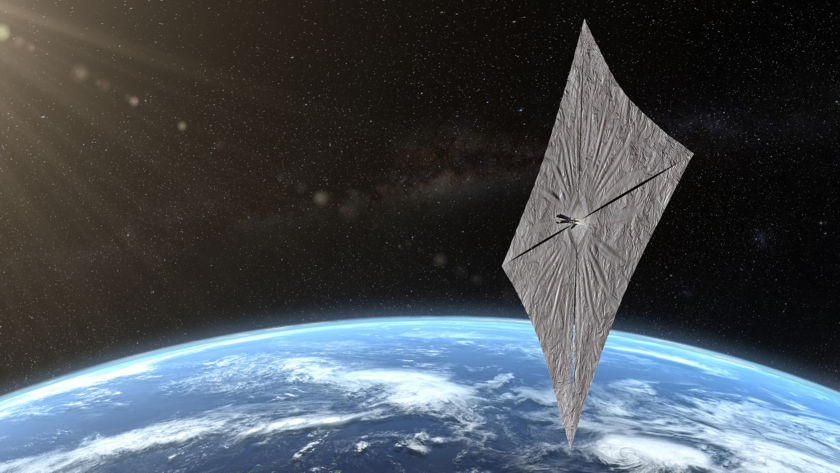
Hoewel InSight Lander nu is beëindigd, zijn onderzoekers doorgegaan met het bestuderen van de verzamelde gegevens, die de aanwezigheid van vloeibaar water op diepten tussen 10 en 20 kilometer onder het aardoppervlak lijken te bevestigen. Kortom, zo beweren wetenschappers in een studie gepubliceerd in het tijdschrift PNAS, er zou nog steeds water in vloeibare vorm aanwezig zijn op Mars.

De analyse van seismische golven op Mars en de aanwezigheid van vloeibaar water

NASA

Mars InSight Lander verzamelde meer dan 1300 opnames van seismische trillingen die plaatsvonden op de rode planeet, en met deze gegevens konden onderzoekers de aard van de materialen ontdekken die door de golven werden doorkruist. Dit is een techniek die al op aarde wordt gebruikt om te zoeken naar hulpbronnen die in de diepte aanwezig zijn, zoals olie of gas, maar ook water. Dit laatste lijkt op grote diepten in de korst van Mars aanwezig te zijn, een verder bewijs dat Mars ooit rijk was aan rivieren en meren.

De afgelopen drie miljard jaar heeft de rode planeet bijna zijn hele atmosfeer en daarmee ook zijn oppervlaktewater verloren. Het lijkt er echter op dat een deel van het water van Mars binnen de planeet bleef, een beetje zoals wat er op aarde gebeurt, waar er hele oceanen in de korst en mantel zouden zitten. Waarom zou Mars anders zijn?

e18ec444-2849-4261-8eee-22881eda680c.png

James Tuttle Keane en Aaron Rodriquez

Scripps Institute of Oceanography

Water en leven

De ontdekking van waterreserves in de diepten van Mars opent nieuwe onderzoeksperspectieven die in twee verschillende richtingen gaan. Aan de ene kant kunnen onderzoekers beter begrijpen hoe het systeem van rivieren en meren op de Rode Planeet werkte. Aan de andere kant is vloeibaar water gekoppeld aan de oude droom van de verkenning van Mars, de zoektocht naar buitenaardse levensvormen: waar water is, kan ook leven zijn, weten we, en niets weerhoudt hen ervan om ook in de korst van Mars te bestaan.

Helaas zijn deze reservoirs niet gemakkelijk toegankelijk vanwege hun diepte van tussen de 10 en 20 kilometer. Pas onlangs is een project gelanceerd dat tot doel heeft het aardoppervlak uit te graven en een diepte van 11 kilometer te bereiken: dit op een andere planeet doen zou een buitengewone uitdaging zijn. Zoals echter vaak gebeurt bij ruimteverkenning, zijn wat aankomstpunten lijken slechts startpunten voor nieuwe doelstellingen en nieuwe ontdekkingen. Kortom, de ontdekking van vloeibaar water op Mars, in de vorm van verzadigde sedimenten of aquifers, kan de geschiedenis van de ruimteverkenning herschrijven. En misschien zelfs zijn toekomst.

PIA17944-MarsCuriosityRover-AfterCrossingDingoGapSanddune-20140209.jpg

Foto: NASA

{ https://www.curioctopus.nl/ }

Hoe vind je dit bericht?
Geschreven door peter om 20:57 Stuur door

The UFO Event That Transformed Dr. Kevin Knuth into a UAP Researcher

The UFO Event That Transformed Dr. Kevin Knuth into a UAP Researcher

The UFO Event That Shocked Dr. Knuth.

Dr. Kevin Knuth, a former NASA research scientist and a respected physicist, was initially a curious observer rather than an active researcher in the field of Unidentified Aerial Phenomena (UAPs). His journey into serious UAP research began in 2010 after attending a press conference that fundamentally altered his views on the subject. This event, organized by Robert Hastings at the National Press Club in Washington, D.C., featured retired U.S. military officers who provided compelling testimonies about their encounters with UAPs at nuclear weapons sites. This marked a significant turning point in Dr. Knuth’s career, transforming him from a bystander to a committed investigator of these phenomena.

The Press Conference That Changed Everything

The 2010 press conference hosted by Robert Hastings was not just another event in the UFO community—it was a game-changer. Hastings, a well-known figure in UAP research, brought together seven former U.S. Air Force officers to share their experiences with UAPs. These officers provided detailed accounts of UAP incidents at various nuclear weapons facilities, including missile sites and storage areas.

One of the most striking aspects of the conference was the consistency of the testimonies. The witnesses described UAPs as disc-shaped, cylindrical, or spherical objects capable of hovering silently or moving at high velocities. What made these sightings particularly alarming was the apparent ability of these UAPs to interfere with nuclear weapons, rendering them inoperative. This connection between UAPs and nuclear facilities has been a recurring theme in UAP research, raising concerns about the potential implications for national security.

Dr. Knuth’s Initial Skepticism

Dr. Knuth’s interest in UAPs dates back to 1988 when he was a graduate student. He recalled a conversation with one of his professors, who mentioned strange incidents involving UAPs at Malmstrom Air Force Base in Montana. According to the professor, UAPs were reportedly disabling intercontinental ballistic missiles (ICBMs) at the base. At the time, Dr. Knuth and his peers dismissed the story as implausible, finding it difficult to believe that such a significant event could occur without widespread attention.

For years, this story remained a humorous anecdote in Dr. Knuth’s mind, something he and his fellow students would joke about. However, it wasn’t until 2010 that he encountered similar accounts, which made him reconsider the validity of his professor’s story.

The Pivotal Moment

In 2010, while preparing lectures on astrobiology at the University at Albany, Dr. Knuth stumbled upon the press conference organized by Robert Hastings. During the conference, he heard testimonies from several military officers, including Robert Salas, who had witnessed UAPs at Malmstrom Air Force Base—the very location his professor had mentioned years earlier.

VIDEO:

  • Chris Lehto – The UFO Event That Shocked Dr. Knuth.

One of the most impactful testimonies came from Robert Salas, a retired U.S. Air Force captain. Salas described an incident at Malmstrom Air Force Base in 1967, where a bright red UAP was seen hovering above the front gate of the facility. Shortly afterward, ten nuclear missiles went offline, becoming inoperable. This account, corroborated by other military personnel, struck a chord with Dr. Knuth, as it matched the story he had heard decades earlier.

Realizing the credibility of these witnesses and the potential implications of their testimonies, Dr. Knuth’s perspective on UAPs shifted dramatically. He began to take the issue seriously, recognizing the need for scientific investigation into these phenomena.

The Broader Implications

The 2010 press conference highlighted a pattern of UAP encounters at nuclear facilities, with multiple witnesses providing corroborating accounts. Among the speakers were military officers such as Colonel Charles Halt, who had witnessed UAPs at RAF Bentwaters in England, and Lieutenant Robert Jacobs, who described a UAP encounter during a missile test in 1964.

These testimonies suggested that UAPs have a specific interest in nuclear weapons, raising questions about their intentions and the potential risks they pose. For Dr. Knuth, the realization that credible military personnel were reporting these incidents—and that they were being largely ignored by the public and the scientific community—was alarming. He saw the lack of attention to these events as dangerous and felt compelled to take action.

Dr. Knuth’s New Mission

Motivated by the testimonies he had heard, Dr. Knuth decided to shift his focus to UAP research. As a physicist with expertise in astrophysics, machine learning, and the foundations of physics, he recognized the need for a scientific approach to studying UAPs. He became an advocate for serious research into these phenomena, calling for greater transparency and investigation.

Dr. Knuth’s journey from skepticism to advocacy underscores the importance of credible witness testimonies in shaping our understanding of UAPs. His experience highlights the need for the scientific community to engage with this issue and for the public to recognize the potential significance of UAP encounters, particularly those involving nuclear weapons.

In conclusion, the 2010 press conference that shocked Dr. Kevin Knuth serves as a powerful reminder of the potential implications of UAPs. It not only transformed his career but also contributed to a growing movement calling for greater scrutiny and research into these mysterious phenomena. As more information comes to light, Dr. Knuth’s story may inspire others in the scientific community to take UAPs seriously and to explore the mysteries that still surround them.

LINKS UFOS

{ https://www.latest-ufo-sightings.net/ 

Hoe vind je dit bericht?
Geschreven door peter om 20:37 Stuur door

Titan’s Liquid Landscapes Decoded in New Findings from Cassini-Huygens

Cassini gets new views of Titan's land of lakes - The Archaeology News ...

(NASA/JPL/Space Science Institute)

Titan’s Liquid Landscapes Decoded in New Findings from Cassini-Huygens

The latest data analysis from the Cassini-Huygens space probe has further illuminated the mysterious seas of Titan, Saturn’s largest moon.

Bistatic radar returns from the moon are providing scientists with greater insight into Titan’s northern seas behavior and composition, according to a new study spearheaded by Cornell University, released on Tuesday in the journal Nature Communications.

Collecting Data on Titan

The Cassini-Huygens mission involves a space probe launched in an international cooperative effort between NASA, the European Space Agency, and the Italian Space Agency. Its goal is to collect data regarding the planet Saturn itself, as well as its surrounding rings and moons.

Two implements were used to conduct the mission: the Cassini space probe orbiting Saturn and the Huygens lander that set down on Titan. Cassini orbited the planet from 2004 until it burned up in Saturn’s atmosphere in 2017. Huygens landed on Titan in January 2005, but contact was lost a little over an hour after it touched down due to a communications problem not identified until after launch.

Novel Data Collection Methods

The difference between the new bistatic method of observation and the previous monostatic method is that the new data comes from a polarized reflection. This means that the reflection is viewed from two perspectives, both the sending spacecraft and a receiver back on Earth. Previous monostatic data was returned only to the spacecraft itself.

Valerio Poggiali, lead author of the new study, says the result of the bistatic method “is a more complete dataset and is sensitive to both the composition of the reflecting surface and to its roughness.” While the bistatic data set does provide dynamic new information, the old mono static data is still relied upon for context. Even this new data set has some limitations, as the radar returns are limited to the surface level of bodies and are incapable of providing depth-sounding information.

The data collection for the recent study actually began a decade ago, as the probe collected measurements when it came into its closest proximity to Titan and again when it moved away. These ingresses and egresses occurred on May 17, June 18, and October 24, 2014, and over two years later on November 14, 2016. The team focused on data collected during the egress portions of the flybys, as only on the egress phase did the radar return cross one of the bodies that the team was honed in on, the Kraken Mare, Ligeia Mare, and Punga Mare polar seas.

The Seas of Titan Show to be Quite Different Than Those of Earth

The differences that emerged between the seas corresponded to the sea’s latitude and location. Proximity to other features, such as rivers and estuaries, impacted the seas’ composition. Titan’s tranquil seas only show minor 3.3-millimeter waves, raising to 5.3 mm near regions where bodies of water meet, such as coasts, estuaries, and interbasin straits. This suggests the existence of tidal currents on the moon. On Earth, we typically measure waves in meters, not millimeters. So, while there is some variation, the surface is remarkably calm from our perspective.

Saturn's moon Titan Artist’s concept of a lake at Titan’s north pole (Credit: NASA/JPL; University of Arizona; University of Idaho).

Another significant variance with Earth is the dialectic constant of Titan’s liquid bodies. Dielectric constant refers to the ability of a material to store electrical energy instead of conducting it. The water bodies of Earth have a high dielectric constant of about 80. In contrast, the methane seas of Titan have a dramatically lower value of around 1.7, falling even lower in rougher coastal areas and estuaries. That is only a bit higher than air on Earth, which registers about a 1. This impacts the bistatic radar returns because a higher value leads to a more accurate reading from a stronger signal.

The Data Meets Our Predictions, But Discoveries Still Lay Ahead

Although their composition appears to be much different, the seas on Titan appear to be behaving quite similarly to the ones on Earth in certain other respects. On Earth, we are dealing with water and salt, but the methane and ethane existent in liquid form on Titan appear to flow quite similarly. Earth’s freshwater streams pour into salty oceans. On Titan, pure methane rivers flow into oceans mixed with ethane.

The new findings “fit nicely with meteorological models for Titan,” according to the study’s co-author, Philip D. Nicholson, an astronomy professor at Cornell. As predicted, it appears that Titan receives a rain comprised of methane and nitrogen.

However, the team has not concluded its work. Poggiali says, “This is only the first step.” With 13 years in orbit, Cassini has collected a mountain of data that still needs to be sifted. In short, our overall understanding of Titan and its seas is still only beginning.

  • jailbreak AI

The new study was made possible by international backing from NASA and the Italian Space Agency. While Cornell led the effort, contributors included the Massachusetts Institute of Technology, California Institute of Technology, NASA Jet Propulsion Laboratory, and Università di Bologna.

The study, titled “Surface Properties of the Seas of Titan as Revealed by Cassini Mission Bistatic Radar Experiments,” appeared in Nature Communications on July 16, 2024. 

  • Ryan Whalen is a writer based in New York. He has served in the Army National Guard and holds a BA in History and a Master of Library and Information Science with a certificate in Data Science. He is currently finishing an MA in Public History and working with the Harbor Defense Museum at Fort Hamilton, Brooklyn.

{ https://thedebrief.org/category/space/ }

Hoe vind je dit bericht?
Geschreven door peter om 23:53 Stuur door

NASA Just Transmitted a Hip Hop Song by Missy Elliot to Venus

XPWv8b9Q?format=jpg&name=900x900

NASA Just Transmitted a Hip Hop Song by Missy Elliot to Venus

Hip-hop has officially been transmitted into deep space. Earlier this week, the popular 1997 song, “The Rain” (Supa Dupa Fly), by rapper Missy Elliot was transmitted from the DSN’s Goldstone complex to Venus, about 158 million miles (254 million kilometers) away.

The lyrics from Elliott’s hip-hop song “The Rain (Supa Dupa Fly)” were beamed to the second planet from the Sun via NASA’s Deep Space Network in a transmission sent by the agency’s Jet Propulsion Laboratory in Southern California at 10:05 a.m. PDT on Friday, July 12.

So why is NASA broadcasting hip-hop into space? In recent years, the space agency has integrated pop culture and space exploration to attract the masses and make space digestible and reachable for everyone. Space exploration, in other words, is not just for astronauts and people who enjoy nerding out over planets and distant star systems; it’s for all of us. Branching out and reaching a larger audience showcases the diversity of our planet, which parallels the diversity of the universe and the many cosmic mysteries it holds. 

“I still can’t believe I’m going out of this world with NASA through the Deep Space Network when ‘The Rain (Supa Dupa Fly)’ becomes the first ever hip-hop song to transmit to space!” Elliott said. “I chose Venus because it symbolizes strength, beauty, and empowerment and I am so humbled to have the opportunity to share my art and my message with the universe!”

Missy Elliot Missy Elliot (Wikimedia Commons CC 4.0)

“Super Dupa Fly” went super dupa far, traveling 158 million miles (254 million kilometers) from Earth to Venus. The transmission was made by the 34-meter (112-foot) wide Deep Space Station 13 (DSS-13) radio dish antenna, located at the DSN’s Goldstone Deep Space Communications Complex near Barstow, California. Coincidentally, DSS-13 is also nicknamed Venus.

“Both space exploration and Missy Elliott’s art have been about pushing boundaries,” said Brittany Brown, director of the Digital and Technology Division, Office of Communications at NASA Headquarters in Washington, who initially pitched ideas to Missy’s team to collaborate with the agency. “Missy has a track record of infusing space-centric storytelling and futuristic visuals in her music videos, so the opportunity to collaborate on something out of this world is truly fitting.”

The Deep Space Network (DSN) has an assortment of giant radio antennas that are used to track spacecraft, send commands, and receive scientific data from the Moon and beyond.  

  • artificial intelligence
    See Also

“Risk of Extinction” From Artificial Intelligence Prompts Concerning New Warning From AI Experts

The DSN has transmitted only one other song into space, The Beatles “Across the Universe” in 2008. The recent transmission of Elliott’s song marks another groundbreaking moment, this time for for hip-hop culture. 

{ https://thedebrief.org/category/space/ }

Hoe vind je dit bericht?
Geschreven door peter om 23:42 Stuur door

Ret. NASA Astronaut Claimed To Have Seen Snake-Shaped UFOs During Two Missions In Space

Snake-Shaped UFOs

Ret. NASA Astronaut Claimed To Have Seen Snake-Shaped UFOs During Two Missions In Space

Space is not what we see at night or what NASA has shown us for years. Amid stars, planets, and other celestial bodies, there are much more vivid, bizarre, and strange things hidden from our eyes. Several astronauts strongly believe in the existence of extraterrestrial civilizations including Gordon Cooper, Buzz Aldrin, and Story Musgrave.

Many conspiracy theorists believe that NASA knew that Buzz Aldrin and Neil Armstrong had an encounter with aliens, which is why they erased 40 rolls of film from the Apollo 11 mission. It was claimed by Bob Dean, a United States Army Command Sergeant Major.

Story Musgrave The crew Of Sts-80, Seated (From Left-to-right) Kent V. Rominger, Pilot; Kenneth D. Cockrell, Commander. Standing (Left To Right) Mission Specialists Tamara E. Jernigan, F. Story Musgrave, And Thomas D. Jones. Photo Credit: Nasa

According to a report shared by Gaia, there is a transcript between Aldrin and Armstrong where the two had witnessed extraterrestrial activities on the Moon during the Apollo 11 mission.

Apollo 11: “Those are giant things. No, no, no, this is not an optical illusion. No one is going to believe this.”

NASA: “What… what…. what? What the hell is happening What’s wrong with you?”

Apollo 11: “They’re here, under the surface.”

Apart from this, what former NASA astronaut Franklin Story Musgrave said about his experience in space would shock anyone. He claimed to have seen an 8-foot-long snake, white in color, floating through space. It is hard to explain how a snake could reach space, but Musgrave has never denied it.

Read also:

Here is Musgrave’s quote from the TV series “Sightings, ” Sunday, April 9, 1995:

“On two of my missions, and I still don’t have an answer, um, I have seen, a snake out there, six seven eight feet long. It is rubbery because it has internal waves in it and it follows you for a rather long period of time. The more you fly in space the more you see an incredible amount of things out there and THAT sorta brings to you, really a certainty, that other living creatures are out there. Some incredibly primitive, more primitive, some just ah just proteins coming together, amino acids and some just single-cell organisms and other civilizations that have been around for a million years that are doing unimaginable kinds of things.”

1-1.jpg

 Fig 1: Alleged Photograph of snake-like UFO captured during NASA STS-61 mission

2-1.jpg

There is even a video (see below) where a snake-like creature is floating in the Earth’s stratosphere. Musgrave said: “Some are incredibly primitive – some just proteins coming together, amino acids, and some just single-celled organisms. And other civilizations have been around for millions of years that are doing unimaginable kinds of things.”

Musgrave (85) is also a retired colonel of the United States Marine Corps, physician, and mathematician, holds six academic degrees, and is simply a legendary figure in US history. He spent a total of 1,281 hours, 59 minutes, and 22 seconds during his six space shuttle missions in space including 27 hours of spacewalk. Besides, he developed a spacesuit for space shuttle astronauts.

This is not the end of strange anomalies watched by the astronauts in space. Retired astronaut Leroy Chiao, a commander of Expedition 10, along with his crew members witnessed a set of bright lights in the formation of an upside-down tick mark in space.

The description of an unknown snake-like creature or craft given by Musgrave was also spotted in March 2019, when one of the passengers on a commercial airline flight from Phoenix to Portland captured two long dark objects, having long tails or tentacles. Some viewers compared it with the squid lime sentinels from the Matrix series, while others believe that it was possibly something from another dimension that slipped through momentarily.

Similarly, the New York Post shared a video of a UFO in 2018, shot by a passenger while cruising over the Aegean Sea that also shows a creature with a long tail. The opinions were divided into two groups, where people from one group believed it was just a hoax while others also witnessed the same encounter while flying in the plane.

{ https://www.howandwhys.com/ }

Hoe vind je dit bericht?
Geschreven door peter om 23:26 Stuur door

Explore an Apollo-era mission gone wrong in sci-fi mystery game 'Lifeless Moon' (video)

Explore an Apollo-era mission gone wrong in sci-fi mystery game 'Lifeless Moon' (video)

an astronaut on an alien beach with a green star in the distance
A scene from Serenity Forge's "Lifeless Moon." 
(Image credit: Serenity Forge)

With an eerie "The Twilight Zone" vibe and surreal cosmic elements, Stage 2 Studios and Serenity Forge's sci-fi video game called "Lifeless Moon" has arrived and we've got the odd launch trailer to share that highlights its immersive old-school storyline.

It's appears to be a trippy 3D action adventure release designed with platform stages that combine logic and puzzle-solving skills, where a pair of Apollo-era astronauts encounter a strangely familiar desert town during a dream-like expedition to the Moon. 

"Lifeless Moon" and its blurred realities was just launched July 9, 2024 for Xbox One/X/S, PlayStation 4 and 5, Epic Games Store, and Steam.

A scene from Serenity Forge's "Lifeless Moon."  (Image credit: Serenity Forge)

Here's the official synopsis:

"What secrets will be unearthed on the moon?

"You cannot fathom what will come next in 'Lifeless Moon'. Reality itself unravels as the mysteries unfold, adding chaos to an already monumental mission. After stumbling upon a town on the moon that is eerily similar to one back on Earth, you are thrown into the middle of a much larger conspiracy. Venture through strange environments as you collect clues and decipher puzzles. The town is only the beginning of an unforgettable adventure across time and space.

"A sandy boardwalk, a cabin in the woods, and an ominous floating city in the sky are just a few of the peculiar stops along the way. Your surroundings may appear familiar, but nothing is as it seems. Reveal the truth behind these unique locations through environmental puzzle-solving and platforming. Gather documents and information in your journal during your lunar travels and piece together the origin of the many strange phenomena you encounter.

"You've uncovered a cryptic mystery on the moon. Confront a strange phenomenon, tap into its extraordinary powers, and overcome psychological challenges to reveal the truth."

A scene from Serenity Forge's "Lifeless Moon."  (Image credit: Serenity Forge)

"Lifeless Moon" acts as sort of a spiritual successor to Serenity Forge's "Lifeless Planet" from 2014,  and its "Lost"-style narrative design was influenced by classic science fiction literature and films where lunar explorers face inexplicable anomalies in time and space. It's also a throwback to TV series like "The Outer Limits," which often depicted astronauts or test pilots facing disorienting situations, psychological experiments, and dangerous discoveries while on routine missions.

Serenity Forge's "Lifeless Moon" is available now on your favorite gaming platform.

{ https://www.space.com/ }

Hoe vind je dit bericht?
Geschreven door peter om 23:12 Stuur door

Former US Army Colonel Warns Of Catastrophic UFO Disclosure That May Spark Social Unrest

Former US Army Colonel Warns Of Catastrophic UFO Disclosure That May ...

Former US Army Colonel Warns Of Catastrophic UFO Disclosure That May Spark Social Unrest

Are we on the verge of a catastrophic UFO disclosure? The year 2023 has witnessed significant progress in bringing the UAP (Unidentified Aerial Phenomena) matter to the attention of the United States Congress. Pentagon whistleblower David Grusch has dominated discussions throughout the year. His testimony before Congress has raised numerous questions about the secrets the U.S. government has allegedly kept since the dawn of UFO sightings. Grusch is convinced that the world has been kept in the dark about this phenomenon for the past 80 to 90 years.

In November 2023, the Daily Mail published a bombshell story discussing the impending UAP Disclosure. Retired US Army Colonel Karl E. Nell was invited to a Stanford University conference to present a “campaign plan” aimed at achieving greater transparency. He also discussed a “Manhattan project,” dedicated to reverse-engineering recovered UFOs/UAPs.

During the conference, Nell showcased slides indicating his hope for disclosure by October 1, 2030. In the slides, he argued his plan, if achieved, would see “Proper Oversight Restored,” “Catastrophic Disclosure Avoid,” and “Scientific Understanding Advanced.” More specifically, Nell advocated for “restoration of proper Federal government oversight over all UAP legacy (and ongoing) program efforts” and “transformative” research and technology programs.

Daily Mail information was based on the first-ever symposium of the new nonprofit Sol Foundation, a group that wants serious research into UFOs and their effects on the world. In 2004, in response to the Defense Intelligence Agency’s decision not to release classified information about UFOs due to the perceived threat to national security, the Sol Foundation was formed.

At this meeting, both Colonel Nell and a former CIA scientist named Hal Puthoff spoke. Puthoff said that in 2004, these important groups chose not to share information about UFO research with the public. Among the Sol Foundation’s other speakers were former U.S. Air Force veteran David Grusch, who testified before Congress earlier this year under oath that “the U.S. government is operating with secrecy—above Congressional oversight” over UAP.

Grusch told the symposium: “Let us advocate for transparency, not for ourselves, but for the generations to come, as we embark on a journey toward a more enlightened and interconnected world.”

Catastrophic UFO Disclosure

At the Sol Foundation UFO symposium, Karl Nell called for a ‘UAP campaign plan’ to compel transparency as well as ‘a Manhattan Project’ to more successfully reverse-engineer recovered UAP craft

Grusch has the support of many individuals in authority who believe he is an authentic person. In the June 2023 edition of the Debrief, authors Leslie Kean and Ralph Blumenthal mention Karl Nell, the retired Army Colonel and aerospace executive who worked with David Grusch and characterized Grusch as “beyond reproach.” Nell speaks highly of Grusch’s integrity and credibility in his role as the Army’s liaison for the UAP Task Force from 2021 to 2022.

Grusch left the government on April 7, 2023, in order, he said, to advance government accountability through public awareness. He remains well-supported within intelligence circles, and numerous sources have vouched for his credibility.

“His assertion concerning the existence of a terrestrial arms race occurring sub-rosa over the past eighty years focused on reverse engineering technologies of unknown origin is fundamentally correct, as is the indisputable realization that at least some of these technologies of unknown origin derive from non-human intelligence,” Karl Nell said.

Ross Coulthart’s insights into UAP disclosure present a compelling narrative, suggesting that there’s more to this phenomenon than meets the eye. With mounting pressure from various quarters, including politicians and the media, the quest for truth regarding UAPs seems poised to intensify in the coming days.

The urgency for UAP disclosure has persisted for a very long time. Roscoe Hillenkoetter, the third CIA director, wrote to Congress in 1960, pleading for UFO disclosure. This confirmed a cover-up and a government disinformation campaign aimed at ridiculing and stigmatizing the topic. (Source)

Perhaps Hillenkoetter’s best-known statement on the subject was in 1960 in a letter to Congress, as reported in The New York Times: “Behind the scenes, high-ranking Air Force officers are soberly concerned about UFOs. But through official secrecy and ridicule, many citizens are led to believe the unknown flying objects are nonsense.”

In his interview with NewsNation, journalist Ross Coulthart shed light on the Office of Global Access (OGA), a key entity where much of the coordination regarding the retrieval of unidentified crafts seems to be happening. He emphasized the seriousness of the matter, stating, “You’ve got to have an office to coordinate the retrieval of these craft.” While some may dismiss these claims as mere  science fiction, his recent interactions with credible intelligence sources have solidified his stance that operations related to UAPs are steered from within the CIA and OGA.

However, the scale of this phenomenon might be more extensive than what has been previously reported. Ross refuted claims that the U.S. only possesses nine such crafts. “I’m told that the United States has far more than nine craft,” he remarked, indicating that not all of them are intact. He further elaborated that JSOC (Joint Special Operations Command) operators, primarily sourced from t he US Air Force special forces, are actively involved in retrieval missions.

A significant revelation from Ross’ sources is the recovery of what he terms as “biologics” — in simpler terms, Non-human Bodies. He shared, “We have recovered what David Grush euphemistically referred to as biologics. Alien bodies, non-human bodies.” This raises pressing concerns about the extent of knowledge the U.S. government possesses regarding non-human life forms.

Read also:

Ross expressed fears of a potential “catastrophic disclosure” if the government remains tight-lipped. He believes that withholding such crucial information from the public and Congress might lead to unforeseen consequences. He stated, “I think it’s incumbent on the president and members of the executive to start thinking seriously,” emphasizing the urgency of the matter.

When posed with alternate explanations, like the involvement of foreign adversaries, Coulthart was quick to debunk such theories. He clarified that the evidence and statements from government officials indicate that these phenomena are not associated with known foreign technologies. This assertion raises eyebrows and places the focus squarely on what exactly the U.S. government knows but is not sharing.

Ross pointed out the notable shift in stance by certain senior Republican politicians. He questioned their motivations behind opposing legislation that seeks transparency regarding non-human intelligence technology. Coulthart’s skepticism was evident when he questioned, “If this is all nonsense, why would somebody of the incredible reputation and seniority of Chuck Schumer and Marco Rubio, associate themselves with legislation that specifically talks over 20 times about NHI nonhuman intelligence technology?”

Danny Sheehan has been publicly pushing for the disclosure or revelation of information related to UAPs. In other words, he believes that there should be more transparency from governments or other relevant authorities about these unidentified phenomena.

In his other interview with James Landoli on “Engaging The Phenomenon,” Sheehan, who was a former Chief Council for the United States Jesuit order, revealed intriguing details about his conversations with the head of the Vatican archives regarding the Vatican’s knowledge of extraterrestrial life. Sheehan shed light on his involvement in a groundbreaking initiative to address the theological and philosophical implications of the discovery of extraterrestrial intelligence.

During the interview, James raised the topic of David Grusch‘s claim that the Vatican possessed knowledge of extraterrestrial phenomena. Sheehan discussed his access to the classified files of the Project Blue Book, where he encountered photos of UFO crash retrievals and concrete evidence of non-human piloted vehicles.

He proposed the formation of a task force involving all 54 major religious denominations to address the issue from a theological perspective. However, at that time, there was insufficient consensus, and the proposal was declined. Sheehan is currently working through his New Paradigm Institute to organize a global summit conference involving world religious leaders to discuss the recent recovery of an extraterrestrial spacecraft.

“The United States government is in possession of biological evidence and has actually taken into custody alive an extraterrestrial person. They’re keeping this secret, interrogating the being, and distorting the information to justify massive expenditures on weapon development under the guise of a perceived threat.” 

Daniel Sheehan.

Sheehan highlighted the Vatican’s acknowledgment of the possibility of extraterrestrial life. He referenced a formal statement issued by the Catholic Church on November 10, 2009, authorized by Pope Benedict. The statement, issued by Father Jose Gabriel Alfuz, a director of the Pontifical Observatory in Rome, recognized the increasing discovery of exoplanets and called for a global discussion on the philosophical and theological implications of the imminent discovery of extraterrestrial life.

Sheehan disclosed that the government was telepathically interrogating the extraterrestrial biological entity (EBO) in custody. Despite acknowledging the bizarre nature of the revelation, Sheehan stood by the credibility of the information, having interviewed individuals directly involved in the process. The EBO allegedly conveyed that a coalition of star systems in our galaxy monitors the evolution of life on different planets, including Earth.

“Pope Benedict had a formal statement issued by the Catholic Church, saying that with the discovery of more exoplanets, it has become clear that we will be discovering life elsewhere in the universe. This prompted the need for a global discussion on the philosophical and theological questions posed by the discovery of extraterrestrial life.” 

Daniel Sheehan.

Meanwhile, Lue Elizondo expresses support for efforts to increase transparency around UAPs. He indicates that there are ongoing efforts behind the scenes to achieve this transparency and that even if certain official channels face challenges or opposition, there are alternative methods and backup plans in place for disclosure. Elizondo emphasizes the importance of understanding the vulnerabilities and challenges faced in these efforts, suggesting a comprehensive strategy is in play.

{ https://www.howandwhys.com/ }

Hoe vind je dit bericht?
Geschreven door peter om 22:59 Stuur door

How Would Humans React to Contact with Extraterrestrials? UK Researchers Seek Answers in New Survey

96StQfKH?format=jpg&name=900x900

(Unsplash)

How Would Humans React to Contact with Extraterrestrials? UK Researchers Seek Answers in New Survey

The question of whether humans are alone in the universe and whether we may one day make contact with extraterrestrials has tantalized philosophers and scientists for centuries.

Astronomers continue to scour the cosmos for signs of biosignatures in far-distant atmospheres that could reveal the planetary home of simple lifeforms or possibly even technosignatures that would indicate an intelligent extraterrestrial civilization not unlike us. Meanwhile, some also speculate that signs of extraterrestrials—particularly in the form of their technologies—might be discovered far closer to home than most would ever expect and that perhaps the search for alien technosignatures should include studies of nearby asteroids, planets, Earth’s Moon, and even sightings of unusual phenomena that occasionally occur within our own atmosphere.

Now, a new survey being conducted by researchers in the United Kingdom is asking the public for answers about people’s attitudes toward the idea that humans could one day contact intelligent extraterrestrials or even the controversial notion that some form of contact might have already occurred.

The survey, led by Professor Michael Bohlander, Chair in Global Law and SETI Policy at Durham Law School in the United Kingdom, along with Dr. Andreas Anton, also a Research Fellow at Durham Law School, in cooperation with Dr John Elliott, Honorary Research Fellow in the School of Computer Science at the University of St Andrews, aims to gauge participants’ attitudes toward the Search for Extraterrestrial Intelligence (SETI), as well as reports in recent years involving what the United States military now calls Unidentified Anomalous Phenomena (UAP), or what have traditionally been known as UFOs.

Bohlander and the team hope to learn how participants would react to such a contact event and what its global societal implications would be for humankind.

While the idea of contact with extraterrestrials has long been an area of focus in both science fiction as well as astronomers’ ongoing search for signs of intelligent life elsewhere in the universe, Bohlander recently told The Debrief that he and his colleagues hope to learn more about the human side of the question of alien life: namely how people would likely react to such an event, and therefore how scientists can better prepare for what Bohlander and his colleagues view as the eventuality of some form of contact.

“Such an event would likely pose an existential risk to humanity, regardless of whether the contact were to be hostile or peaceful,” Bohlander said in an email to The Debrief. “In the words of former NASA chief historian Steven J. Dick, we need to work on a unilateral metalaw to determine by which principles humanity should be guided in the process.”

Bohlander says the survey aims to collect data that ranges from the ethical and moral to political, religious, and even legal perspectives from people in all parts of the world on questions related to the prospect of contact with extraterrestrials. Primarily, the questions contained within the survey will aim to inform what Bohlander describes as “the coming debate about the foundations for such a globally accepted metalaw.”

“It actively addresses the traditional geopolitical imbalance of the SETI and UAP debate,” Bohlander told The Debrief, “where the voices of the so-called Global South, or of Earth’s Eastern Hemisphere are not routinely heard.”

Unlike many past surveys that have looked at people’s attitudes or beliefs toward the possible existence of alien life, Bohlander and his colleagues also incorporated the recent interest in unidentified anomalous phenomena (UAP) into the questions they ask of participants, although he notes that they approach the topic from a slightly different angle than the standard questions involving whether we are alone in the universe.

“The UAP/UFO aspect is of a slightly different nature,” Bohlander explains. “Apart from all the recent controversies about cover-ups and conspiracies, about crash site retrievals or reverse engineering, as well as political and constitutional issues of the public’s right to disclosure versus national or indeed global security, UAP/UFOs represent a fait accompli.”

The revelation that some UAP sightings could be related to extraterrestrials, if ever proven, would mean that humankind could soon face an unexpected development of historic proportions. Currently, the Pentagon’s All-domain Anomaly Resolution Office (AARO) maintains there is still no evidence that is suggestive of any links between UAP and off-planet technologies, but for Bohlander and his team, the question alone is worthy of addressing from an academic perspective.

“If some of them are of extraterrestrial origin, then humanity is for all intents and purposes unprepared,” Bohlander told The Debrief. “This is especially the case given the apparent massive difference in technological capacities in some of the observed objects.”

Also, given the recent advancements in artificial intelligence that have seen a sudden surge in recent years, many researchers have begun to question whether intelligence from off-planet, if it were to be encountered, would necessarily even be biological life as we know it. For Bohlander, whatever the nature or form any prospective non-human intelligence may take, the biggest question for humanity has to do with its intentions.

“There is, however, still the question of how to deal with the intelligence behind them—biological or AI—once they reveal themselves,” Bohlander said. “Questions of negotiations and possibly armed response do remain,” he added.

Prospective participants can find the team’s survey, “Contact with Extraterrestrial Intelligence: A study of projected perceptions and reactions among the world’s societies,” available at the website of Durham University’s Durham Law School.

{ https://thedebrief.org/category/space/ }

Hoe vind je dit bericht?
Geschreven door peter om 22:17 Stuur door

Airline Pilots Capture Video Of Encounter With UFOs That Didn’t Appear On Radar

Airline Pilots Capture Video Of Encounter With UFOs That Didn’t Appear On Radar

Hoe vind je dit bericht?
Geschreven door peter om 22:06 Stuur door

Study: Asteroid Psyche Originated beyond Solar System’s Snow Line and Later Migrated to Main Belt

Study: Asteroid Psyche Originated beyond Solar System’s Snow Line and Later Migrated to Main Belt

Planetary scientists using spectral data from the NASA/ESA/CSA James Webb Space Telescope have confirmed the detection of hydroxyl molecules on the surface of the metallic asteroid Psyche. The presence of hydrated minerals suggests a complex history for Psyche.

Jarmak et al. used Webb, shown in the bottom right corner of this illustration, to confirm the presence of hydrated minerals on the surface of Psyche. Image credit: Southwest Research Institute.

Jarmak et al. used Webb, shown in the bottom right corner of this illustration, to confirm the presence of hydrated minerals on the surface of Psyche.

Image credit: Southwest Research Institute.

Psyche, a metal asteroid about 226 km (140 miles) in diameter, is one of the most intriguing targets in the main asteroid belt.

The object orbits the Sun between the orbits of Mars and Jupiter at a distance ranging from 378 to 497 million km (235-309 million miles) from the Sun.

A box-shaped spacecraft with large solar wings swoops in toward a metal-looking asteroid in space.

An artist's visualization video showing the Psyche spacecraft getting closer to the asteroid. 

(Image credit: NASA/JPL-Caltech/ASU)

Psyche takes about five Earth years to complete one orbit of the Sun, but only a bit over four hours to rotate once on its axis.

Unlike most other asteroids that are rocky or icy bodies, planetary scientists think Psyche is comprised mostly of metallic iron and nickel similar to Earth’s core.

On October 13, 2023, NASA launched the Psyche spacecraft, which is traveling 3.5 billion km (2.2 billion miles) to arrive at the asteroid in August 2029.

“Our understanding of solar system evolution is closely tied to interpretations of asteroid composition, particularly the M-class asteroids that contain higher concentrations of metal,” said Dr. Stephanie Jarmak, a researcher at the Harvard & Smithsonian’s Center for Astrophysics.

“These asteroids were initially thought to be the exposed cores of differentiated planetesimals, a hypothesis based on their spectral similarity to iron meteorites.”

The Webb data point to hydroxyl and perhaps water on Psyche’s surface. The hydrated minerals could result from external sources, including impactors

If the hydration is native or endogenous, then Psyche may have a different evolutionary history than current models suggest.

“Asteroids are leftovers from the planetary formation process, so their compositions vary depending on where they formed in the Solar Nebula,” said Dr. Anicia Arredondo, a researcher at Southwest Research Institute.

“Hydration that is endogenous could suggest that Psyche is not the remnant core of a protoplanet.”

“Instead, it could suggest that Psyche originated beyond the ‘snow line,’ the minimum distance from the Sun where protoplanetary disk temperatures are low enough for volatile compounds to condense into solids, before migrating to the outer main belt.”

However, the authors found the variability in the strength of the hydration features across the observations implies a heterogeneous distribution of hydrated minerals.

This variability suggests a complex surface history that could be explained by impacts from carbonaceous chondrite asteroids thought to be very hydrated.

Understanding the location of asteroids and their compositions tells us how materials in the Solar Nebula were distributed and have evolved since formation.

How water is distributed in our Solar System will provide insight into the distribution of water in other planetary systems and, because water is necessary for all life on Earth, will drive where to look for potential life, both in our Solar System and beyond.

“Using telescopes at different wavelengths of infrared light, the Southwest Research Institute-led research will provide different but complementary information to what the Psyche spacecraft is designed to study,” said Dr. Tracy Becker, a researcher at Southwest Research Institute.

Stephanie G. Jarmak et al. 2024. Estimate of water and hydroxyl abundance on asteroid (16) Psyche from JWST data. Planetary Science Journal, in press; doi: 10.3847/PSJ/ad66b9

  • This article is based on a press-release provided by Southwest Research Institute.

{ https://www.sci.news/ }

Hoe vind je dit bericht?
Geschreven door peter om 21:57 Stuur door

These Rare Photos Reveal What It’s Really Like to Live At the International Space Station

These Rare Photos Reveal What It’s Really Like to Live At the International Space Station

A recent study reveals often-overlooked aspects of how astronauts live, work, and arrange their stuff in space.

by Kiona Smith
 
A recent study reveals often-overlooked aspects of how astronauts live, work, and arrange their stuf...
NASA/ISS Archaeological Project

In a few years, the International Space Station will be the ultimate lost civilization.

Sometime after 2030, a SpaceX ship will pull the ISS into Earth’s atmosphere, where heat and friction will break it apart. A space station the size of a football field, where spacefarers from 22 countries lived and worked for (by the time it’s all over) about 30 years, will be effectively erased from existence.

A lot of human culture is wrapped up in the things we make and use, and in how we interact with our environments. And once the ISS burns up in the upper atmosphere, the physical evidence of its spacefaring culture will just be gone.

Archaeologists, led by Flinders University archaeologist Alice Gorman and Chapman University archaeologist Justin Walsh, are trying to study the soon-to-be-lost culture of the ISS and its crews before it’s gone. In a recent study, Gorman, Walsh, and their colleagues asked astronauts to take regular photographs of six square sections of walls and surfaces aboard ISS, revealing clues about how people on the station used their space and adapted to the weird environment of an orbiting space station. The result is simultaneously a record of a place and culture that will soon vanish and a source valuable data to help engineers design future space stations.

The researchers published their work in the journal PLOS ONE.

378610 03: The International Space Station floats in orbit September 18, 2000 following its undockin...

Behold the world’s next lost civilization

NASA/Hulton Archive/Getty Images

The ISS is in an unusual place and has a tiny population. So far, fewer than 300 people have ever visited the station, for trips ranging from a few days to over a year. But life aboard the ISS has its own traditions, its own etiquette, and its own quirks and habits. According to Walsh and his colleagues, the station is a micro-society with its own culture.

an astronaut affixes a piece of orange tape to a wall covered in equipment

This is what archaeology in space looks like: astronaut Kayla Barron placing markers for the first of six “test pit” squares for the ISS Archaeological Project.

NASA/ISS Archaeological Project

In this image, astronaut Kayla Barron uses tape to mark the corners off a square on one of the station’s walls. For 60 days in early 2022, astronauts aboard the ISS took regular photos of six squares like this one, on walls and surfaces around the station. Walsh and his colleagues used the photos to track which objects people used and stored in different places. That, in turn, offered clues about how people lived and worked in different parts of the station.

Here on Earth, the story of who lived in a place, and what they did there, is encoded in layers of objects left behind and buried in layers of dirt. Archaeologists call this “material culture”: the physical stuff left behind by people. Archaeologists get to that evidence by digging in the ground, but also by using satellite or aerial surveys to look for structures that have been buried or hidden by plant growth. On the ISS, archaeologists can get information about the station’s material culture through photos.

For Walsh and his colleagues, each square aboard the ISS is like a “test pit,” a small hole that archaeologists dig to sample the layers of soil and artifacts at a site on Earth. And each day’s photo is like equivalent of a new layer of dirt and artifacts, showing what people did in that space over a period of time.

photo of a space station wall with objects affixed to it by Velcro strips

The velcro strips in this image are some of the key artifacts of space archaeology, because they tell archaeologists how people used objects to do what gravity does here on Earth: make things stay where you put them. The yellow dotted lines mark the boundaries of the square; the orange tape on the wall marks the corners.

NASA/ISS Archaeological Project

While archaeologists on Earth might look for stone tools, the charred remains of cooking hearths, or radar traces of ancient canals and fortifications, space archaeologists might look for other things that reveal people’s habits: hygiene gear stuck to a random wall near the toilet, for instance. They might also study objects like plastic clips or strips of velcro used to hold objects in place (a category of things Walsh and his colleagues call “gravitational proxies”).

photo of two people reflected in a mirror, affixed to a wall of a space station

Astronaut Mark Vande Hei catches his own reflection in a mirror — with a photobomb from astronaut Kayla Barron — while photographing square 05 for the project.

NASA/ISS Archaeological Project

It turned out that over the years, crews have started using some empty spaces for convenient storage — like a wall between the exercise equipment and the toilet compartment. The wall had no official purpose, but crews started using it to store their toiletries and hygiene supplies, probably just because the location was convenient, thanks to being so close to the toilet.

“If you look at older historic photos of that same location, it doesn't have the same things that it had when we were looking at it. I think the Google Street View virtual model of the ISS that wall actually has a tool kit stuck on the wall; it didn't have that at all when we were looking at it,” says Walsh. “So it's it's this area that can be malleable in terms of its function, depending on what the astronauts, who are the current crew, want to do with it.”

That’s the kind of detail Walsh says we still need archaeology to unearth, because it tends to be left out of official station plans and even astronaut’s biographies — if only because it’s the kind of detail that people seldom think to mention. And it could be important in planning future space stations.

“One of the themes that has emerged throughout our project is a need for increased crew autonomy: Having some sense of control over your context, like how to decorate it or where to carry out certain activities,” says Walsh.

photo of a bunch of tools hanging on velcro strips on a wall

This area didn’t change much, even though it was originally designed as a bustling hive of maintenance activity.

NASA/ISS Archaeological Project

Another “test pit” revealed that what was designed as a maintenance area had actually turned into a storage space. Walsh and his colleagues found no trace of actual work happening in the space, but lots of stored equipment.

“There were lots of objects, but as it turned out, those objects didn't move around a lot,” says Walsh. “They basically stayed static, and that was what led to the interpretation of this as a storage area.”

That kind of information is useful not only for understanding space station culture, but for helping design future stations to line up better with what people actually do and how they actually use their space in orbit.

“During debrief, one of the crew said they liked the idea that looking at these locations systematically over time could lead to better space stations,” says Walsh. “They understood that observing the material culture of the space station could lead to insights that otherwise people hadn't had.”

a diagram of the International Space Station

This diagram shows the location of all six study squares aboard ISS.

Tor Finseth, by permission, modified by Justin Walsh

The ISS Archaeology Project team are still working through the data from the other four “test pit” squares, located on experiment racks in the Japanese Experiment module and the European Laboratory Module, a wall near the galley table, and a workstation in the U.S. Laboratory Module.

“The galley is probably the one that people want to know the most about,” says Walsh.

interior of the International Space Station

On the wall in this image, you can see some of the mission patches and stickers that American, European, and Japanese crews have decorated their space with.

Paolo Nespoli and Roland Miller

An earlier study focused on where station crews actually spend their time aboard, based on where they were seen in the thousands of photos that have been taken over the last 24 years. The International Space Station is supposed to be exactly that — international — but each module is owned by a particular country’s space agency. And it turns out that crew members spend most of their time in their own country’s modules.

That’s especially for Russian cosmonauts, who almost always appeared in the Russian modules — where crew members from other countries were very rarely seen.

The latest study showed the same thing. The maintenance area that the astronauts repurposed for storage is in an area that connects that U.S., European, and Japanese modules. And true to form, Walsh and his colleagues spotted just one Russian artifact, a pack of sanitary wipes, tucked into a hygiene kit. That’s the kind of physical evidence that tells archaeologists about who is using a space — and who isn’t.

Images like this one, of crew members Michael Barratt, Koichi Wakata, and Charles Simonyi, offer a glimpse into the decor of Russia’s Zvezda module. 

NASA/ISS Archaeological Project

In 2021, Walsh and his colleagues used some crew member photos to study how the crew decorated the walls of their station modules. In the Russian module, though, cosmonauts adorned the walls with religious icons, paintings of Russian political leaders, and above all, photos of cosmonaut Yuri Gagarin, the first human in space.

The aft wall of Russia’s Zvezda module also featured a framed photo of Yuri Gagarin. And even older photos from the Mir space station and the Salyut-7 space station show that Gagarin’s photo has been part of station décor for Russian cosmonauts for decades. It’s a way for the current ISS crew to show that they’re connected to a much older spacefaring culture.

In the U.S., European, and American modules, crews tend to decorate public areas with mission patches, name tags and photos of former crew members (and a geocaching tag). Walsh says all of this ties ISS crews not only to older generations of space explorers, but to the very first humans to draw and paint on cave walls tens of thousands of years ago.

“It’s like your refrigerator door with your kids drawings on it, or photos from your vacation that you put there; this is how we can both make comments about who we feel we are, and also to reinforce key elements of our identity,” says Walsh. “That’s what I mean by ‘people in space are people.’ Humans are gonna human.”

{ https://www.inverse.com/ }

Hoe vind je dit bericht?
Geschreven door peter om 20:50 Stuur door

Mars Is Likely Hiding Oceans Worth Of Water Deep In Its Crust — This Could Upend Our Plans For the Planet

Mars Is Likely Hiding Oceans Worth Of Water Deep In Its Crust — This Could Upend Our Plans For the Planet

Miles below the surface, cracks in volcanic rock may be full of liquid water.

by Kiona Smith
 
Miles below the surface, cracks in volcanic rock may be full of liquid water.
NASA

A year and a half after the end of its mission, NASA’s InSight Mars lander may have just helped scientists find enough water to fill an ocean.

Deep beneath NASA’s InSight lander (RIP InSight), an ocean’s worth of liquid water may be trapped in rocky fissures, suggests a recent study of data recorded during more than 1,300 Marsquakes. If University of California, San Diego, geologist Vashan Wright and his colleagues are right, then Mars may be hiding underground reservoirs of water larger than the planet’s ancient, now-vanished, oceans. That could change how we search for traces of life on Mars, as well as how future Mars missions could supply themselves with water, rocket fuel, and oxygen to breathe.

Wright and his colleagues published their work in the journal Proceedings of the Natural Academy of Sciences.

diagram of layers of Martian crust

This diagram illustrates what the crust beneath InSight (which is still there on the Martian surface, just shut down) looks like.

James Tuttle Keane and Aaron Rodriquez

Reservoirs 7 Miles Deep

Wright and his colleagues recently simulated how seismic waves would move through different types of rock deep in the Martian crust and how fast those waves would travel if pores and cracks in the rock were filled with ice or liquid water. They compared those simulations to InSight’s measurement of actual seismic waves, as well as other missions’ measurements of the planet’s gravity and shape. In the end, the model that best matched the actual data was a deep layer of igneous rock (cooled, solidified magma), riddled with cracks and fissures that had formed as the magma cooled. And according to the researchers’ models, those cracks should be filled with liquid water.

The water-filled rock layer lies 7 to 12 miles beneath where InSight sits on the surface of Elysium Planitia, a wide swath of plain on the equator of Mars. The layers of rock closest to the surface are dry, based on the models, but about 7 miles down, cracks in the rock are filled with water. Wright and his colleagues aren’t sure if the deep crust beneath the rest of the planet looks the same, but if it does, then there could be more than an ocean’s worth of water hidden in the depths of the Martian underground, in cracks in long-ago-cooled magma.

Lost Water

Based on a mixture of geology and climate models, we’re pretty sure that Mars was a much warmer, wetter place 3 billion years ago. More than a third of the planet lay beneath ocean waves, and lakes and rivers watered much of the rest of the surface. But then everything changed: the spinning liquid core that powered Mars’s magnetic field slowly cooled. The magnetic field, which had shielded Mars from the Sun’s constant barrage of electrically-charged particles sputtered and died. Solar wind stripped away most of the Martian atmosphere, leaving behind an incredibly thin layer of mostly carbon dioxide.

When Mars lost its atmosphere, most of the water on its surface probably also evaporated because it would have boiled immediately in such incredibly low pressure (the air pressure on Mars’s surface today is less than 1 percent of Earth’s air pressure at sea level).

But Wright and his colleagues’ findings suggest the story may not be that simple. Mars may not have lost most of its water after all. The amount of water that Wright and his colleagues calculate could lie in the depths of the Martian crust means that “Mars’s crust need not have lost most of its water via atmospheric escape,” as the researchers write in their recent paper.

What’s Next?

More simulations, taking into account the possibility of whole oceans of water hidden miles beneath the surface, could reveal new information about Mars’s sparse but dynamic water cycle. The presence of water hidden in the cracks of deeply-buried rock could also suggest new places to search for evidence of ancient, or even modern, life on Mars. And if future Mars missions can drill deep enough wells, they may have a ready source of water for thirsty crews.

{ https://www.inverse.com/ }

Hoe vind je dit bericht?
Geschreven door peter om 18:36 Stuur door

The lost island of Atlantis may have been found 2km under the ocean

The lost island of Atlantis may have been found 2km under the ocean

The lost island of Atlantis may have been found 2km under the ocean

(Picture: Getty)

The lost island of Atlantis may have been found 2km under the ocean
Some people believe that in the Atlantic Ocean, lying west of the Strait of Gibraltar, lies the legendary island of Atlantis. The island itself is thought to have been created by the philosopher Plato. His tale of a fabled civilization that the Gods plunged into the ocean as a punishment for its citizens' pride and arrogance has survived thousands of years. And now researchers think they may have found Plato’s inspiration for such a legend. In an area north of the Canary Islands, Spain, scientists have uncovered a vast submerged mountain that likely sank off the coast of the islands millions of years ago 

The lost island of Atlantis may have been found 2km under the ocean

(Picture: IGME-CSIC)

The lost island of Atlantis may have been found 2km under the ocean
The seamount, which has been dubbed as Mount Los Atlantes, has three inactive volcanoes each around 50km (30 miles) in diameter, with their bases over 2km under the ocean surface, according to researchers from Spain’s Geological and Mining Institute (CSIC). Some of the lost islands even, after all this time, still have their beaches intact. The team said that some of the beaches sit just 60m (200 feet) below the ocean's surface. During the last ice age, when sea levels were far lower than they are today, the inactive volcanoes would have become islands again, which could have been used to inhabit wildlife 

The lost island of Atlantis may have been found 2km under the ocean

 (Picture: IGME-CSIC)

The lost island of Atlantis may have been found 2km under the ocean
These volcanoes were once part of a system of islands that sat around the east of Lanzarote, off the coast of West Africa, during the Eocene era around 56 million years ago, CSIC said. Geologist and project coordinator Dr Luis Somoza told LiveScience: ‘This could be the origin of the Atlantis legend’ referring to the Ancient Greek philosopher’s tale. In a statement he said: ‘They were islands in the past and they have sunk, they are still sinking, as the legend of Atlantis tells. Some of us have been able to verify that they still maintain their beaches’

The lost island of Atlantis may have been found 2km under the ocean

(Picture: IGME-CSIC)

The lost island of Atlantis may have been found 2km under the ocean
The team of geologists went aboard the Sarmiento de Gamboa, an oceanographic vessel of the CSIC, and used an advanced remotely operated vehicle (ROV) to survey the waters at depths around 2.5km (1.5 miles) for a better understanding of the region’s volcanic activity. The dive was part of the team’s Atlantis project which aims to understand underwater volcanic and hydrothermal activity in the region 

The lost island of Atlantis may have been found 2km under the ocean

(Picture: IGME-CSIC)

The lost island of Atlantis may have been found 2km under the ocean
They also assessed the state of the seabed around the archipelago from June 27 to August 6 to look for signs of magma and underwater volcanic activity that may pose risks to Spain’s population in the future. Some of the volcanoes in the underwater region may be more modern than previously thought, and could be the submarine equivalents of Spain’s Timanfaya volcano system, the team suggested 

The lost island of Atlantis may have been found 2km under the ocean

 (Picture: IGME-CSIC)

The lost island of Atlantis may have been found 2km under the ocean
The researchers also looked at how underwater minerals form in such extreme conditions as well as the water’s levels of microorganisms encouraging the formation of metals like manganese, cobalt, and phosphates, which are important for energy transition. The team will analyse the samples collected from Los Atlantes to date the volcanic rocks and pinpoint when the islands began to sink

The lost island of Atlantis may have been found 2km under the ocean

(Picture: IGME-CSIC)

The lost island of Atlantis may have been found 2km under the ocean
The study also reflects the vast life that exists on the seabed after the underwater lava flows formed the lava deltas, revealing how underwater life is reborn after the recent eruptions with new gardens of corals and sponges, or areas covered with bacterial next to the hydrothermal sources 

{ Metro’s News Updates newsletter }

Hoe vind je dit bericht?
Geschreven door peter om 18:09 Stuur door

The biggest asteroids to ever hit Earth were terrifying

The biggest asteroids to ever hit Earth were terrifying

Our planet had a violent past.
By Mark Kaufman  
An artist's conception of a large asteroid impacting Earth 65 million years ago.
An artist's conception of a large asteroid impacting Earth 65 million years ago. 
Credit: MARK GARLICK / SCIENCE PHOTO LIBRARY / Getty Images
The reality about menacing asteroids coming to destroy Earth in the modern-day is, perhaps surprisingly, not too scary.

Yes, the doomsayers thrive online, but the prognosis is encouraging:

- Astronomers have already found over 90 percent of the half-mile-plus "planet-killer" asteroids that at times pass near Earth's neighborhood, and there's no known threat of collision from these giant rocks for the next century; meanwhile, the likelihood of an impact in the next thousand years is exceedingly low.

- Using specialized telescopes, researchers are now discovering around 500 sizable space rocks (over 460 feet across) in our solar system neighborhood each year. None are threats, so far.

- NASA has successfully tested the first-ever endeavor to intentionally move an asteroid — a skill that may be necessary should we ever need to deflect an incoming object.

Yet, past cosmic violence is preserved in Earth's crust. Geologists have confirmed nearly 190 ancient impact craters on Earth — though our planet's evolving surface has certainly erased many of the earliest bombardments. The craters we know about tell a tale of a starkly different time in our planetary past, when fiery rocks plummeting through the sky were common.

"The solar system used to be a lot more violent than it is now," Sally Dodson-Robinson, a planetary scientist at the University of Delaware, told Mashable.

SEE ALSO: 
Early in our solar system, small grains of rock and ice began clumping together, creating miles-wide objects called planetesimals. They would collide and at times merge, eventually forming the familiar planets we see today. But many planetesimals weren't fated to become planets. Some flew around the sun, smashing into planets. This evidence is written in the well-cratered moon, Mars, and beyond.

"Crater evidence shows that during the first billion years or so of solar system history, asteroids were regularly bombarding planetary bodies at a devastating rate," Dodson-Robinson explained.

Today, the leftover planetesimals are the rocky asteroids and icy comets in our much more tranquil solar system. (Of course, it's not completely tranquil.)

 "The solar system used to be a lot more violent than it is now."

Radar images of the 1,100-foot-wide asteroid Apophis, will pass so close to Earth in 2029 that it'll be visible in the sky from certain locations.
Radar images of the 1,100-foot-wide asteroid Apophis. It will pass so close to Earth in 2029 that it'll be visible in the sky from certain locations. 
Credit: NASA

The preserved, or in some cases partially preserved, impact craters on Earth remain poignant reminders of our chaotic cosmic past. Here are some of the most significant known craters.

The largest impact crater on Earth

The Vredefort Crater in South Africa as viewed from above.
The Vredefort Crater in South Africa as viewed from above. 
Credit: USGS / Landsat / NASA

An asteroid some six miles (10 kilometers) wide or bigger smashed into Earth and created the Vredefort Crater, in present-day South Africa, some 2 billion years ago, long before even the dinosaurs evolved.

At the time, researchers estimate the impact crater was a whopping 112 to 186 miles (180 to 300 km) wide. "The world’s oldest and largest known impact structure was formed," NASA said.

Eons later, the south portion of the crater is no longer visible, having been blanketed in younger rock.

Sudbury basin

A view of the topography of the ancient Sudbury impact crater.
A view of the topography of the ancient Sudbury impact crater. 
Credit: NASA Shuttle Radar Topography Mission

Some 1.8 billion years ago, a large comet — which is an ancient "dirty snowball" composed of icy and rocky grains — slammed into modern-day Canada. The impact basin is largely eroded today, though with aerial views and radar, one can make out parts of the impact crater.

The original crater was likely some 120 miles (200 km) wide.

Today, the region is home to nickel and copper mines. That's because the powerful impact, by cracking the crust and allowing parts of Earth's mantle to rise up from below, ultimately generated a great nickel deposit. Nickel is a vital element in electrical wiring, engines, batteries, and beyond.

"There have been positives from some of these impacts," Simon Jowitt, a geochemist at the University of Nevada, Las Vegas, told Mashable.

"But obviously we don't want something the size of Sudbury hitting right now," he added. (A roughly six-mile-wide behemoth wiped out the dinosaurs, and the Sudbury comet was probably similar in size.)

The Chicxulub dinosaur impact

A gravity anomaly map of the Chicxulub Crater in the Yucatan Peninsula.
A gravity anomaly map of the Chicxulub Crater in the Yucatan Peninsula. 
Credit: NASA Shuttle Radar Topography Mission

This one was the dinosaur killer.

The 65 million-year-old Chicxulub site, buried beneath the Yucatan Peninsula today, appears on gravity anomaly maps — which show how much the planet's gravity field, which is dictated by mass, differs from a hypothetically uniform surface. Today, it appears as about half of a huge crater.

The infamous six-mile-wide asteroid struck in shallow water, blowing prodigious amounts of pulverized earth into the skies which drastically cooled the climate. "The enormous amount of energy generated by this impact, equivalent to 10 thousand times the world's nuclear arsenal, ejected into the atmosphere huge quantities of dust particles and gases," NASA explained.

Crucially, scientists found this extremely fine dust proved extremely potent in blocking sunlight. A long, callous winter, with vastly reduced light for some two years, followed.

"That shuts down photosynthesis. And breaks down the food chain," David Fastovsky, a professor emeritus in the Department of Geosciences at the University of Rhode Island who has researched the dinosaur extinction, told Mashable.

Ultimately, the asteroid impact killed off around 70 percent of Earth's species. Though some dinosaurs survived.

Meteor Crater

The Meteor Crater in Arizona.
The Meteor Crater in Arizona. 
Credit: NASA

The Meteor Crater in Arizona is relatively young, proof that Earthlings should track and be aware of potential incoming space rocks.

Some 50,000 years ago, a metal asteroid around 100 to 170 feet across slammed into modern-day Arizona. This is an object considerably smaller than those discussed above. Yet such a rock can still create a tremendous, regionally catastrophic blast.

"A similar-size impact event today could destroy a city the size of Kansas City," David Kring, an impact expert at the Lunar and Planetary Institute, told NASA.

Want more science and tech news delivered straight to your inbox? Sign up for Mashable's Light Speed newsletter today.

Related Stories

The Clearwater Lakes Craters

The Clearwater Lakes Craters in northern Quebec, Canada, as seen from space.
The Clearwater Lakes Craters in northern Quebec, Canada, as seen from space. 
Credit: NASA

A double-whammy.

Two big asteroids slammed into Quebec, Canada, right next to each other. Though researchers argue that these impacts are in fact separated by many millions of years.

Today, the impact basins are lakes. Clearwater West is estimated at some 280 million years old, while Clearwater East formed much earlier, around 450 million years ago. You can spot a ring of islands in the western lake that measures around six miles in diameter.

A colossal mystery in Australia

An image of the Deniliquin impact structure in Southeast Australia made using magnetic measurements.
An image of the Deniliquin impact structure in Southeast Australia made using magnetic measurements. 
Credit: UNSW / Data from Geoscience Australia, published in Glikson and Yeates, 2022

Australian researchers propose that a massive structure — potentially the largest impact structure on Earth — exists deep beneath the southeastern part of the continent in New South Wales.

Called the "Deniliquin structure," magnet measurements of the deep earth show a colossal multi-ring formation underground. The structure is some 520 kilometers across (around 320 miles in diameter).

That would have been quite a blast. "It was more than double the scale of the Chicxulub impact that killed off the dinosaurs," wrote Andrew Glikson, a geologist at Australian National University who has researched the structure.

Yet finding direct proof of the event, which could have driven a mass extinction, won't be easy. "The next step will be to gather samples to determine the structure’s exact age," Glikson said. "This will require drilling a deep hole into its magnetic center and dating the extracted material."

The evidence dramatically carved into Earth's crust makes it clear: Giant objects have slammed into Earth, particularly when the solar system was a chaotic place. But big or catastrophic impacts have become rare. That's why traces of impacts on Earth are relatively few.

"The fact is that through geologic history these impacts are fairly infrequent," said UNLV's Jowitt.

Small rocky particles, however, hit Earth every day, but quickly vaporize in the sky. Here are today's risks from objects both small, and very large.

  • Every single day about 100 tons of dust and sand-sized particles fall through Earth's atmosphere and promptly burn up.

  • Every year, on average, an "automobile-sized asteroid" plummets through our sky and explodes, explains NASA.

  • Impacts by objects around 460 feet in diameter occur every 10,000 to 20,000 years.

  • A "dinosaur-killing" impact from a rock perhaps a half-mile across or larger happens on 100-million-year timescales.

Other, developing solar systems are far more treacherous places. The solar system around the bright star Vega, for example, is likely filled with violent collisions. It's a young star surrounded by a rich disk of dust— which is evidence of ongoing impacts.

The young planets or objects out there must be unsettling places.

"They're pretty dangerous, I would guess," Dodson-Robinson said.

  • This story originally published in July 2023 and has been updated.
Hoe vind je dit bericht?
Geschreven door peter om 17:45 Stuur door

Scientists discover where the huge dinosaur-killing asteroid came from

Scientists discover where the huge dinosaur-killing asteroid came from

Story by Mark Kaufman
 

th?id=ORMS.60ea4077e1fa52fa9a6767cd4d92fe1b&pid=Wdp&w=295&h=160&dpr=1&c=8&rs=2

An artist's conception of a large asteroid impacting Earth 65 million years ago. 
Credit: MARK GARLICK / SCIENCE PHOTO LIBRARY / Getty Images

A menacing asteroid, some six miles wide, triggered Earth's last mass extinction. Now, scientists have found where it originated.

Unlike most space rocks that impact our planet today, this behemoth object came from beyond the gas giant Jupiter. It was a "C-type asteroid" — which are the dark, carbon-rich leftovers of the outer solar system — and the impact scattered the fateful object's remains all over Earth, some 66 million years ago.

It was "a projectile originating at the outskirts of the solar system and sealing the fate of the dinosaurs," Mario Fischer-Gödde, who researches the origin of asteroids and planets at the University of Cologne in Germany, told Mashable.

Fischer-Gödde led the new research, which was published in the peer-reviewed journal Science.

The asteroid left quite a mark. Today this impact zone is called the Chicxulub Crater, and is largely buried beneath the Yucatan Peninsula. The massive object struck in shallow water, blowing prodigious amounts of pulverized rock into the skies which drastically cooled the climate. A long, callous winter followed. Photosynthesis shut down. The food chain failed, and around 70 percent of Earth's species died. Though some dinosaurs survived.

A thin layer of sediment from this event, called the K-Pg boundary, is found around our planet. And one of the elements in it, ruthenium, is quite rare in Earth's crust, meaning that nearly 100 percent of the ruthenium in this widespread sediment sheet is from the infamous asteroid. Importantly, the researchers found the ruthenium isotopes (which are different types of ruthenium) in this telltale layer are similar to carbon-rich meteorites found all over Earth. What's more, the ruthenium samples didn't match the remnants of other major asteroid impacts, which came from objects formed in the inner solar system.

Related video: 
  • New dinosaur species unveiled at the Natural History Museum (KTLA-TV Los Angeles)

"We found that the composition of the asteroid that impacted at Chicxulub is the same as that of carbonaceous meteorites, which are fragments of carbonaceous (C-type) asteroids that originally formed beyond the orbit of Jupiter," Fischer-Gödde said.

Previous research suspected the culprit was a C-type asteroid, too, but didn't use ruthenium in the analyses. That's because making these ruthenium measurements is very difficult, and progressive technological advancements made the latest observations possible, Fischer-Gödde explained. Only three or so laboratories globally, including at the University of Cologne, can conduct this ultra-specialized research.

The C-type asteroid Mathilde as captured by the NEAR spacecraft on June 27, 1997. It's some 38 miles (61 kilometers) across.

The C-type asteroid Mathilde as captured by the NEAR spacecraft on June 27, 1997. It's some 38 miles (61 kilometers) across.
A depiction of an asteroid collision that likely lead to a mountain-sized rock heading towards Earth 66 million years ago.

As the solar system formed, many C-type asteroids came to inhabit the outskirts of the main asteroid belt, a ring containing millions of rocky objects between Mars and Jupiter. It's here the six-mile-wide Chicxulub impactor was probably propelled towards Earth. This was likely triggered by a collision between two asteroids, Fischer-Gödde explained. Or exposure to sunlight, causing a region on the space rock to heat up and release energy, could have given the asteroid a nudge (an outcome called the "Yarkovsky effect").

Such a huge collision with Earth, however, is extremely rare. A "dinosaur-killing" impact from a rock perhaps a half-mile across or larger happens on 100-million-year timescales. Astronomers have already found over 90 percent of the "planet-killer" asteroids that at times pass near Earth's neighborhood. There's no known threat of collision from these giant rocks for the next century; and the likelihood of an impact in the next thousand years is exceedingly low. (Meanwhile, impacts by objects around 460 feet in diameter occur every 10,000 to 20,000 years — an event that would be regionally devastating.)

Radar images of the 1,100-foot-wide asteroid Apophis, will pass so close to Earth in 2029 that it'll be visible in the sky from certain locations.

Radar images of the 1,100-foot-wide asteroid Apophis. It will pass so close to Earth in 2029 that it'll be visible in the sky from certain locations. 

Credit: NASA

Fortunately, should astronomers ever spot a large asteroid that threatens our humble world, NASA has successfully tested the first-ever endeavor to intentionally move an asteroid. It's a skill that needs significantly more refining, of course, but could prove useful in defending our civilization from future devastation.

NASA has never even needed to issue a warning about an incoming space rock, large or small. But if such an event ever transpires, you'll hear from the White House and many others — not just excitable tabloids.

Hoe vind je dit bericht?
Geschreven door peter om 17:18 Stuur door

Study: Asteroid Psyche Originated beyond Solar System’s Snow Line and Later Migrated to Main Belt

Study: Asteroid Psyche Originated beyond Solar System’s Snow Line and Later Migrated to Main Belt

Planetary scientists using spectral data from the NASA/ESA/CSA James Webb Space Telescope have confirmed the detection of hydroxyl molecules on the surface of the metallic asteroid Psyche. The presence of hydrated minerals suggests a complex history for Psyche.

Jarmak et al. used Webb, shown in the bottom right corner of this illustration, to confirm the presence of hydrated minerals on the surface of Psyche. Image credit: Southwest Research Institute.

Jarmak et al. used Webb, shown in the bottom right corner of this illustration, to confirm the presence of hydrated minerals on the surface of Psyche.

Image credit: Southwest Research Institute.

Psyche, a metal asteroid about 226 km (140 miles) in diameter, is one of the most intriguing targets in the main asteroid belt.

The object orbits the Sun between the orbits of Mars and Jupiter at a distance ranging from 378 to 497 million km (235-309 million miles) from the Sun.

Psyche takes about five Earth years to complete one orbit of the Sun, but only a bit over four hours to rotate once on its axis.

Unlike most other asteroids that are rocky or icy bodies, planetary scientists think Psyche is comprised mostly of metallic iron and nickel similar to Earth’s core.

On October 13, 2023, NASA launched the Psyche spacecraft, which is traveling 3.5 billion km (2.2 billion miles) to arrive at the asteroid in August 2029.

“Our understanding of solar system evolution is closely tied to interpretations of asteroid composition, particularly the M-class asteroids that contain higher concentrations of metal,” said Dr. Stephanie Jarmak, a researcher at the Harvard & Smithsonian’s Center for Astrophysics.

“These asteroids were initially thought to be the exposed cores of differentiated planetesimals, a hypothesis based on their spectral similarity to iron meteorites.”

The Webb data point to hydroxyl and perhaps water on Psyche’s surface. The hydrated minerals could result from external sources, including impactors

If the hydration is native or endogenous, then Psyche may have a different evolutionary history than current models suggest.

“Asteroids are leftovers from the planetary formation process, so their compositions vary depending on where they formed in the Solar Nebula,” said Dr. Anicia Arredondo, a researcher at Southwest Research Institute.

“Hydration that is endogenous could suggest that Psyche is not the remnant core of a protoplanet.”

“Instead, it could suggest that Psyche originated beyond the ‘snow line,’ the minimum distance from the Sun where protoplanetary disk temperatures are low enough for volatile compounds to condense into solids, before migrating to the outer main belt.”

However, the authors found the variability in the strength of the hydration features across the observations implies a heterogeneous distribution of hydrated minerals.

This variability suggests a complex surface history that could be explained by impacts from carbonaceous chondrite asteroids thought to be very hydrated.

Understanding the location of asteroids and their compositions tells us how materials in the Solar Nebula were distributed and have evolved since formation.

  • How water is distributed in our Solar System will provide insight into the distribution of water in other planetary systems and, because water is necessary for all life on Earth, will drive where to look for potential life, both in our Solar System and beyond.

“Using telescopes at different wavelengths of infrared light, the Southwest Research Institute-led research will provide different but complementary information to what the Psyche spacecraft is designed to study,” said Dr. Tracy Becker, a researcher at Southwest Research Institute.

  • The findings will appear in the Planetary Science Journal.
  • Stephanie G. Jarmak et al. 2024. Estimate of water and hydroxyl abundance on asteroid (16) Psyche from JWST data. Planetary Science Journal, in press; doi: 10.3847/PSJ/ad66b9
  • This article is based on a press-release provided by Southwest Research Institute

{ https://www.sci.news/ }

Hoe vind je dit bericht?
Geschreven door peter om 15:39 Stuur door

AI Focuses UFO From 1937 Over City Hall In Vancouver, Canada UAP Sighting News.

AI Focuses UFO From 1937 Over City Hall In Vancouver, Canada UAP Sighting News.

Screenshot%202024-08-15%20at%201.08.57%E2%80%AFPM.png

Date of sighting: 1937

Location of sighting: City Hall, Vancouver, Canada
 
Here is an old UFO photo I had on my mind and wanted to look at it with ai in order to focus it. The photo is old, 1937 old and the description of the glowing blue craft has matched numbers other UFO reports worldwide so I knew this has a big chance of being 100% real. Watch the video, learn about who took it and what they saw, and subscribe to my Youtube channel if you can. 
Scott C Waring
 

{ https://www.ufosightingsdaily.com/ }

Hoe vind je dit bericht?
Geschreven door peter om 15:08 Stuur door

JFK, UFOs, and the Majestic 12: Unraveling the Cold War’s Deepest Secrets

JFK, UFOs, and the Majestic 12: Unraveling the Cold War’s Deepest Secrets

The assassination of President John F. Kennedy has remained one of the most scrutinized and debated events in American history. However, in a fascinating episode of “Reality Check” with Ross Coulthart, a fresh perspective emerges, suggesting that JFK’s involvement with UFOs and the covert Majestic 12 (MJ12) files could have played a role in his untimely demise.

This theory isn’t merely speculative but grounded in a complex web of Cold War events, intelligence operations, and declassified documents that tie JFK’s curiosity about UFOs to the clandestine activities of the CIA and other intelligence agencies.

The Cold War Context and Operation Palladium

At the height of the Cold War, espionage and covert operations between the United States and the Soviet Union reached their zenith. One such operation, known as Operation Palladium, involved injecting false UAP (Unidentified Aerial Phenomena) signals into Soviet radar systems, causing confusion and potentially escalating tensions. David Lamar Christ, a CIA scientist likened to James Bond’s “Q,” was deeply involved in this operation. However, when Christ was captured and tortured by Cuban and Russian interrogators, he revealed secrets that compromised the operation, leading to further complications.

During a critical 1961 meeting in Vienna between JFK and Soviet Premier Nikita Khrushchev, the latter allegedly confronted the U.S. president about the spoofing activities by American forces. This exchange reportedly left Kennedy puzzled, prompting him to seek more information from the CIA.

The Majestic 12 Documents and JFK’s Involvement

The Majestic 12 (MJ12) files are a series of controversial documents that first surfaced in 1984, purporting to reveal a secret group overseeing the U.S. government’s investigation into UFOs, including the Roswell incident. While many have dismissed these documents as disinformation, former Australian intelligence officer Geoff Cruickshank suggests there may be some truth to them.

VIDEO:

  • JFK, UFOs and the Majestic 12 files | Reality Check with Ross Coulthart

One of the MJ12 documents allegedly shows JFK sending a directive to CIA Director Allen Dulles on June 28, 1961, asking for information about MJ12 and psychological warfare efforts. What’s intriguing is that Dulles’ event calendar, declassified only in 2022, confirms that he met with JFK twice on that very day—a detail that was unknown until recently, lending some credibility to the authenticity of the MJ12 files.

Cruickshank further argues that JFK’s insistence on transparency regarding UFOs and his desire for greater openness between the U.S. and the Soviet Union may have made him a target within the intelligence community. This, he believes, could explain why JFK was assassinated.

The Connection Between JFK, UFOs, and His Assassination

JFK’s interest in UFOs wasn’t merely academic. In November 1963, just days before his assassination, he issued National Security Action Memorandum 271, directing NASA to cooperate with the Soviets on space matters. This has led some, including Cruickshank, to speculate that JFK’s push for collaboration on UFO research could have been seen as a threat by those within the U.S. government who wanted to maintain control over this sensitive information.

Cruickshank highlights that the CIA, under Dulles, was running secretive operations without JFK’s knowledge, and this lack of transparency may have exacerbated tensions between the president and the intelligence community. Moreover, documents like the “important memo,” which surfaced after the Cuban Missile Crisis, suggest that JFK may have been briefed on MJ12 and other UFO-related matters, further fueling suspicions that his assassination was connected to his interest in these topics.

The Cuban Missile Crisis and UFOs

One of the most critical moments in Cold War history, the Cuban Missile Crisis, also plays a role in this narrative. During this period, there were multiple reports of UFOs appearing near U.S. military installations, including one during a test of an ICBM (Intercontinental Ballistic Missile) off the coast of California. These sightings, coupled with the heightened tensions between the U.S. and the Soviet Union, made the situation even more precarious.

The presence of these unexplained phenomena, which both superpowers were aware of but not fully understood, added another layer of complexity to an already dangerous situation. Cruickshank suggests that this could have further motivated JFK’s desire for openness and cooperation with the Soviets, a stance that may have ultimately led to his downfall.

Conclusion: A Controversial Theory with Lingering Questions

While the connections between JFK, UFOs, and the Majestic 12 files are still shrouded in mystery, the theories presented by Geoff Cruickshank on “Reality Check” offer a compelling alternative perspective on JFK’s assassination. Whether or not these claims can be fully substantiated, they raise important questions about the extent of the U.S. government’s knowledge of UFOs, the secrecy surrounding these topics, and the potential consequences for those who sought to uncover the truth.

As more documents are declassified and researchers continue to delve into the historical record, the enigmatic relationship between JFK, UFOs, and the Majestic 12 files may eventually come into sharper focus, offering new insights into one of the most pivotal moments in American history.

{ https://www.latest-ufo-sightings.net/ }

Hoe vind je dit bericht?
Geschreven door peter om 15:02 Stuur door

Meer van UFO'S of UAP'S, ASTRONOMIE, RUIMTEVAART, ARCHEOLOGIE, OUDHEIDKUNDE, SF-SNUFJES EN ANDERE ESOTERISCHE WETENSCHAPPEN - DE ALLERLAATSTE NIEUWTJES

↑ Terug naar de berichten