Ontdek de Fascinerende Wereld van UFO's en UAP's: Jouw Bron voor Onthullende Informatie!
Ben jij ook gefascineerd door het onbekende? Wil je meer weten over UFO's en UAP's, niet alleen in België, maar over de hele wereld? Dan ben je op de juiste plek!
België: Het Kloppend Hart van UFO-onderzoek
In België is BUFON (Belgisch UFO-Netwerk) dé autoriteit op het gebied van UFO-onderzoek. Voor betrouwbare en objectieve informatie over deze intrigerende fenomenen, bezoek je zeker onze Facebook-pagina en deze blog. Maar dat is nog niet alles! Ontdek ook het Belgisch UFO-meldpunt en Caelestia, twee organisaties die diepgaand onderzoek verrichten, al zijn ze soms kritisch of sceptisch.
Nederland: Een Schat aan Informatie
Voor onze Nederlandse buren is er de schitterende website www.ufowijzer.nl, beheerd door Paul Harmans. Deze site biedt een schat aan informatie en artikelen die je niet wilt missen!
Internationaal: MUFON - De Wereldwijde Autoriteit
Neem ook een kijkje bij MUFON (Mutual UFO Network Inc.), een gerenommeerde Amerikaanse UFO-vereniging met afdelingen in de VS en wereldwijd. MUFON is toegewijd aan de wetenschappelijke en analytische studie van het UFO-fenomeen, en hun maandelijkse tijdschrift, The MUFON UFO-Journal, is een must-read voor elke UFO-enthousiasteling. Bezoek hun website op www.mufon.com voor meer informatie.
Samenwerking en Toekomstvisie
Sinds 1 februari 2020 is Pieter niet alleen ex-president van BUFON, maar ook de voormalige nationale directeur van MUFON in Vlaanderen en Nederland. Dit creëert een sterke samenwerking met de Franse MUFON Reseau MUFON/EUROP, wat ons in staat stelt om nog meer waardevolle inzichten te delen.
Let op: Nepprofielen en Nieuwe Groeperingen
Pas op voor een nieuwe groepering die zich ook BUFON noemt, maar geen enkele connectie heeft met onze gevestigde organisatie. Hoewel zij de naam geregistreerd hebben, kunnen ze het rijke verleden en de expertise van onze groep niet evenaren. We wensen hen veel succes, maar we blijven de autoriteit in UFO-onderzoek!
Blijf Op De Hoogte!
Wil jij de laatste nieuwtjes over UFO's, ruimtevaart, archeologie, en meer? Volg ons dan en duik samen met ons in de fascinerende wereld van het onbekende! Sluit je aan bij de gemeenschap van nieuwsgierige geesten die net als jij verlangen naar antwoorden en avonturen in de sterren!
Heb je vragen of wil je meer weten? Aarzel dan niet om contact met ons op te nemen! Samen ontrafelen we het mysterie van de lucht en daarbuiten.
Berichten van 1 augustus 2024 tot 31 augustus 2024
Dit gebeurde direct na de inslag van de meteoriet die 66 miljoen jaar geleden het einde betekende voor de dinosaurus – ‘Ze werden gefrituurd en daarna bevroren’
De inslag van een meteoriet in het huidige Mexico 66 miljoen jaar geleden, was een belangrijke oorzaak van het uitsterven van de dinosaurus. Wetenschappers zijn het daar al langere tijd over eens.
Maar er zijn ontelbare theorieën over wat er nu precies is gebeurd met onze planeet en de bewoners na de inslag.
Een enorme afkoeling van de aarde omdat grote puin- en roetwolken de zon blokkeerden, zou dinosaurussen de das om hebben gedaan. Een andere verklaring luidt dat schadelijke gassen door wereldwijde vulkaanuitbarstingen de planeet voor hen onleefbaar zou hebben gemaakt.
Volgens nieuw onderzoek dat is gepubliceerd in het wetenschappelijk tijdschrift ‘Proceedings of the National Academy of Sciences’ was de wereldwijde afkoeling de oorzaak.
Door de inslag van de zo’n 10 kilometer brede Chicxulub-meteoriet, ontstonden er honderden meters hoge tsunami’s. Er braken enorme branden uit tot honderden kilometers in de omgeving en er kwam voor miljarden tonnen aan zwavel in de atmosfeer terecht. Al die gassen blokkeerden de zon en koelden de aarde sterk af.
De meteoriet zorgde regionaal voor een inferno, gevolgd door langdurige afkoeling van de hele planeet. Het betekende het einde van de dinosauriërs.
"Ze werden gefrituurd en daarna bevroren", zegt onderzoeksleider Sean Gulick over het lot van de dinosauriërs in een persbericht. "Niet alle dinosauriërs stierven op de dag van de inslag, maar vele wel."
Onderzoek in de Chicxulub-krater
Foto: Donald Davis/NASA
Om beter te begrijpen wat er op die fatale dag in de geschiedenis van onze planeet is gebeurd, hebben wetenschappers diepgravend onderzoek gedaan in de Chicxulub-krater. Een hele uitdaging omdat de krater deels in de Golf van Mexico ligt.
In 2016 hebben Gulick en zijn collega Joanna Morgen, monsters genomen in het deel van de krater waar in de 24 uur na de inslag stenen en puin terecht zijn gekomen. Er was nooit eerder materiaal uit dat gedeelte van de krater gehaald.
Na drie jaar lang onderzoek, hebben Gulick en Morgan een nauwkeurige tijdlijn kunnen opstellen van de nasleep van de inslag.
Foto: Sean Gulick en Joanna Morgan.
Bron: The University of Texas at Austin Jackson School of Geosciences
"Het is een uitgebreid verslag van de gebeurtenissen die we van binnenuit hebben kunnen reconstrueren, zegt Gulick.
De meteoriet sloeg in met een kracht van 10 miljard atoombommen
Dit is de door Gulick en Morgan opgestelde tijdlijn:
De meteoriet sloeg een gat van 190 kilometer breed en 30 kilometer diep in de zeebodem.
Daarin ontstond een borrelende put van gesmolten steen en superheet gas. Die enorme vuurketel leidde tot een kilometershoge pluim van puin en rook.
Die pluim zakte binnen enkele minuten in elkaar en stolde in pieken van golvend lava en rotsachtig materiaal. De pieken werden later bedekt met meer steen en sporen van verbrande grond en houtskool, die door enorme golven uit de oceaan werden meegebracht.
De aanwezigheid van die houtskool is volgens de onderzoekers het bewijs dat er grote branden zijn ontstaan na de inslag. Sommige branden woedden op honderden kilometers afstand van de krater.
Foto: Shutterstock
De wetenschappers schatten dat de kracht van de meteoriet vergelijkbaar was met die van 10 miljard atoombommen, zoals die zijn gebruikt in de Tweede Wereldoorlog.
Water in het omliggende land verdampte door de inslag van de meteoriet, terwijl het water in de oceaan zich verplaatste met de snelheid van een vliegtuig, zegt Gulick. Dat water vormde een tsunami die mogelijk wel tot de huidige Amerikaanse staat Illinois reikte, voordat hij ging liggen.
Gulick zegt tegen Newsweek dat de meteoriet met een snelheid van zo'n 20 kilometer per seconde moet zijn ingeslagen, waardoor de enorme hitte binnen mum van tijd dinosaurussen tot wel 1.5000 kilometer verderop bereikte.
"Binnen de 1.500 kilometer zou je heel weinig gezien hebben voordat je verbrandde", stelt hij.
Het gevolg van miljarden ton aan zwavel in de atmosfeer
De dinosaurus was niet de enige soort die uitstierf na de inslag van Chicxulub. Vliegende pterosauriërs en mariene roofdieren, zoals de mosasaurus en de plesiosaurus verdwenen ook, net als 75 procent van al het leven op de planeet.
Veel dieren kwamen uiteraard om in de directe omgeving van de inslag, maar het massale uitsterven was hoogstwaarschijnlijk een gevolg van veranderingen in de atmosfeer.
De inslag zou volgens het team van Gulick voor verdamping in zwavelrijke rotsen hebben gezorgd, waardoor enorm veel zwavel in de lucht terechtkwam. Vervolgens kon de zon daar niet doorheen dringen en koelde de planeet sterk af.
De wetenschappers zijn tot die conclusie gekomen omdat de monsters die ze onderzochten, wel veel zandsteen, kalksteen en graniet bevatten maar geen zwavel. En dat terwijl de rotsen in de buurt van de inslag helemaal vol zouden moeten zitten met zwavel.
Ze schatten dat er minstens 325 miljard ton zwavelgas in de atmosfeer terecht moet zijn gekomen.
Foto: De vulkaan Kraktau in Indonesië spuwt as uit.
Bron: Reuters
Ter vergelijking: een kwart van die hoeveelheid zwavel kwam in de atmosfeer terecht na de uitbarsting van de vulkaan Krakatau in Indonesië in 1883. Door die vulkaanuitbarsting zakte de temperatuur op aarde met 1,2 graden voor een periode van vijf jaar.
De gevolgen van de inslag van de Chicxulub-meteoriet waren vrijwel zeker veel ingrijpender en veel langduriger, stelt Gulick.
"De aarde zal er vanuit de ruimte waarschijnlijk niet uitgezien hebben als de bekende blauwe bol en het zal misschien wel twintig jaar hebben geduurd voordat het weer helder werd."
Meteoriet verantwoordelijk voor uitsterven dinosaurussen afkomstig uit rand zonnestelsel
Meteoriet verantwoordelijk voor uitsterven dinosaurussen afkomstig uit rand zonnestelsel
De meteoriet die 66 miljoen jaar geleden het uitsterven van de dinosaurussen heeft veroorzaakt, is afkomstig uit de buitenste lagen van het zonnestelsel. Dat blijkt uit een onderzoek van VUB-geologen, gepubliceerd in het wetenschappelijke tijdschrift Science. De inslag van dergelijk type meteoriet is tot vandaag een uitzonderlijke geologische gebeurtenis.
Het team van VUB-geologen heeft in het onderzoek de Krijt-Paleogeen-grenslaag onder de loep genomen. Deze grenslaag in de samenstelling van het aardoppervlak is 66 miljoen jaar geleden ontstaan als gevolg van een meteorietinslag die het uitsterven van 70 procent van de toen levende dieren, waaronder ook de dino's, betekende. De asteroïde met een diameter van meer dan 10 kilometer is ingeslagen nabij de plek waar vandaag de Mexicaanse stad Chicxulub ligt. De impact was zo krachtig dat er over de hele aarde een kleilaag is gevormd als gevolg van de vrijgekomen stofdeeltjes.
Eindelijk weten we waar de planetoïde die de dino’s uitroeide vandaan kwam
Deze K-Pg-grenslaag bevat elementen die slechts uitzonderlijk in het aardoppervlak terug te vinden zijn, waaronder onder meer osmium, iridium en ruthenium. Uit een analyse van de chemische elementen in de kleilaag blijkt dat de Chicxulub-asteröide uit het buitenste gedeelte van het zonnestelsel afkomstig is. "We ontdekten dat de samenstelling van de asteroïde die insloeg op Chicxulub dezelfde is als die van koolstofhoudende meteorieten", zegt Steven Goderis, een van de auteurs van de studie. Deze C-type-asteroïden zijn "oorspronkelijk ver buiten de omloopbaan van Jupiter gevormd".
De uitzonderlijke aard van de Chicxulub-meteoriet blijkt ook uit de vergelijking van de chemische elementen uit andere lagen van het aardoppervlak. "Deze gegevens tonen aan dat in de afgelopen 500 miljoen jaar de dominante samenstellingen van lichamen die op aarde insloegen fragmenten van het steenachtige S-type asteroïden waren", aldus de geologen. Dit type asteroïden vormt zich in het binnenste zonnestelsel. "De inslag van een C-type asteroïde lijkt een tot nu toe unieke gebeurtenis te zijn".
Paul Amadeus Dienachborn in 1884 near Zurich, was a simple professor of French and German, but what happened to him (regardless of the explanations that can be given) was truly incredible. His extraordinary story is based on his personal journal, which was first published in Greek in 1972. During a year-long coma, Dienach wrote about his incredible experiences living in the year 3906. His journal entries are extremely detailed, revealing a life he claimed to have lived centuries in the future.
Dienach was a Swiss-Austrian teacher who struggled with fragile health. His father was a German-speaking Swiss, and his mother was an Austrian from Salzburg. Despite his health issues, Dienach was determined to live a fulfilling life. In the autumn of 1922, he traveled to Greece, hoping the mild climate would improve his condition.
While in Greece, Dienach taught French and German language lessons to support himself. One of his students, George Papahatzis, had a deep appreciation for Dienach and remembered him as a “very cautious and very modest man who used to emphasize the details.” Papahatzis described Dienach as a dedicated teacher who was passionate about sharing his knowledge.
Dienach’s background was marked by a love for learning and helping others. He grew up in a suburb of Zurich and spent his teenage years in a nearby village. He later studied subjects focused on cultural history, classical languages, and helping others. His interests and passions defined his life’s work.
Sadly, Dienach’s life was cut short when he likely died of tuberculosis in Athens, Greece, or while returning home through Italy in early 1924. Despite his passing, Dienach’s journal remains, offering a fascinating glimpse into his extraordinary experiences and insights.
Before Paul Dienach died, he gave his diary to Papahatzis, asking him to translate it from German to Greek to improve his language skills. Papahatzis thought it was a novel, but as he translated, he discovered it was actually Dienach’s diary… from the future!
Papachatzis was a Professor of Administrative Law at Panteion University from 1943 to 1967 when he was dismissed from the Greek military junta of 1967–74. He was among the prominent Greek Professors of the first period of the Panteion University after its foundation in 1927, which contributed to the university’s curriculum. He also served as Rector of the university from 1964 to 1965.
Dienach likely had a rare brain disease called encephalitis lethargica. The first time he fell asleep because of it, he was out for 15 minutes. The second time, he was in a coma for a year. While in a Geneva hospital, Dienach claimed his mind entered the body of a man named Andreas Northam, living in the year 3906 AD.
After waking up, Dienach didn’t tell anyone about his experience, fearing they’d think he was crazy. Instead, he wrote down everything he remembered about the future. He even quit his job to focus on writing as much as possible.
Dienach described the world and people of 3906 AD based on what he could understand as a man from the 20th century. It was hard for him to grasp everything he saw since he wasn’t familiar with their technology or way of life. The story of Paul Amadeus Dienach is reported in the 2015 book “Chronicles from the Future” by Achilleas Sirigos.
The book has so many details that some people think the author must have lived in a spiritual way in the year 3906 or in some future world. This is because of how detailed the book is. On the other hand, 1921 wasn’t very exciting, so there wasn’t much to inspire writers or spark their creativity.
In his memoirs, Dienach says that people in the future understood his strange medical condition, which they called “conscious slide.” They told him about the events from the 21st to the 39th century. However, they didn’t tell him about the 20th century, fearing that if he returned to his time (which he did), knowing the future might change history or his life.
Papahatzis began reading and translating the diary from French to Greek. In the 800 pages, Dienach wrote about how, during his coma, his consciousness left his body and entered the body of someone from the year 3906. Dienach repeatedly says in the diary that he is not a writer or someone with a lot of imagination or attention to detail.
Dienach lived in the future as Andreas Northam
In his diaries Dienach tells of how he lived, for a year, reincarnated as Andreas Northam, an Italian scientist in hospital following an accident on board a flying car, in 3906. Going beyond the events of his alleged existence in the 40th century.
2000-2300: humanity is still grappling with the problems of overpopulation, environmental pollution, economic inequalities, local wars, and food shortages for all.
2204: The large colonization of Mars by 20 million people is completed, but sixty years later, there will be an environmental catastrophe on the red planet that will leave no escape for anyone. As a consequence, humanity will never attempt to colonize any planet again for many centuries to come.
2309: environmental and humanitarian problems become increasingly worse, causing a major natural disaster and leading all nations into atomic war. Western nations prevail over China, and the consequences of the atomic bomb lead to a dramatic decline in the world population and large mass migrations.
2396: this catastrophe leads to the establishment of a Global Parliament where all nations are represented and united without distinction. In this new world order, power is entrusted to scientists, technocrats, and humanitarian figures. Money as we know it no longer exists, wealth has decreased, and the population can finally redistribute every resource equally. From this moment, we start counting again from year 1. However, there is still resistance to this change from some national governments, which will continue for a couple of centuries. After another five centuries, humanity will have become accustomed to the idea of global belonging, bringing the Dark Ages to an end in 3400.
3382: from this year, something phenomenal happens—a mutation of the human brain that allows a new ability called hyper-vision. It leads to the discovery of astounding concepts never before imagined.
3400-4000: The Golden Age begins after more than 1000 years of the “Dark Age.” In the government, there are no longer scientists and technocrats, but the so-called Universal Creators—personalities who incorporate skills from every field of human knowledge. This new world society is free from all the material and conceptual chains that have hindered the spiritual development of humankind. You work for just two years (from 19 to 21) in “glothners” or electrical production factories; after this period, you officially become cives, citizens of the world. The State, now a global body, takes care of the livelihood of the one billion people that Earth hosts, inevitably preserving it with birth control.
What’s interesting is that history up to the year 3906 seems to follow the ideas of Giambattista Vico (1668–1744). He believed that human history is a never-ending cycle of highs and lows. Humanity always faces challenges that lead to difficulties and sadness. Each time, humanity has to correct its negative actions with big changes. No matter how much technology or spiritual growth we achieve, we are doomed to never reach a permanent state of happiness.
Some fact check:
The man you saw in the thumbnail is actually not Paul Dienach. That is the mug shot of Daniel ‘Lohill’. The photograph was mislabeled as Daniel ‘Lohill’ at the time it was taken in 1908; the real name of this handsome rogue is Daniel TOHILL, and he was convicted of theft in Napier, New Zealand, and sentenced to 4 months of hard labor on March 2, 1908. (Source)
Daniel Tohill (incorrectly labelled as Daniel Lohill), born in 1881 in New Zealand. Charged with theft and sentenced to 4 months hard labor on 2 March 1908 in Napier. Image credit: New Zealand Police Museum.
Does that mean Paul Dienach’s story is a hoax? Not really. The Why Files gave a good explanation…
Paul Dienach lived in Zurich in the 1920s. This isn’t very long ago, and Zurich keeps records of everyone who lived there at that time. Athens does too, where Dienach was supposed to be teaching, but there are no records of anyone by that name.
George Papahatzis, the translator and publisher of the story, said he tried to find Dienach years later but couldn’t. He thinks Dienach might have changed his name before moving to Switzerland, where he was safe during World War I, which makes it hard to find out his real name.
Papahatzis also said that the original handwritten diary is missing. He claimed that while living in Greece during the war, Greek soldiers seized the notes because they were in Germany and never returned them. This sounds suspicious.
Others have noticed that the story is similar to an H.P. Lovecraft tale called “The Shadow Out of Time.” Lovecraft’s story is written like a diary, where the main character goes into a coma and wakes up at a different time. Dienach’s story is about waking up in the future, and Lovecraft’s story was published in 1936. If Dienach’s story was inspired by Lovecraft, then it couldn’t have been written in the 1920s.
It’s unlikely that Papahatzis was fooled by a hoax. He was a respected law professor and intellectual in Greece, even serving on their highest court. He was very interested in law, social studies, and humanities, which are themes in Dienach’s diary. It seems more likely that the book was an intellectual exercise on human spirituality, with Papahatzis adding a sci-fi twist.
Some people might find this hard to believe, but a well-known author named Caroline Leavitt said something similar happened to her. While she was in a coma, she felt like she was living someone else’s life. We still don’t understand a lot about dreams and how they connect to our minds. This makes us wonder if there’s more to our abilities as humans than we think. (Source)
Can you have sex in space? How astronauts stuck on board the ISS could join the '220-mile-high club' (although NASA insists that no humans have done it before!)
Sex in space is not physically impossible, although it would be difficult
Butch and Suni's predicament has left a few dirty minded space fans with one burning question - could they have sex to pass the time?
On social media, commenters rushed to speculate how the pair could spend their six months, with one cheekily tweeting: 'I hope they brought birth control with them.'
While Butch Wilmore and Suni Williams are both married to partners back on Earth, experts predict that space tourists will be getting in on in orbit within 10 years.
But from the logistical issues of intimacy in microgravity to the unfortunate effects of orbit on erectile dysfunction, joining the 220-mile-high club might not be as fun as it seems.
Astronauts Butch Wilmore and Suni Williams hit the headlines this month , after NASA revealed that they would be stuck on the International Space Station together for six months, despite originally expecting to be there for eight days. Butch and Suni's predicament has left a few dirty minded space fans with one burning question - could they have sex to pass the time?
On social media, commenters rushed to speculate on how the pair could spend their six months, with one cheekily tweeting: 'I hope they brought birth control with them'
Another commenter added that the astronauts would be 'coming home with a baby on board'
Is sex in space possible?
Experts say that sex in space is physically possible but not recommended.
There is nothing stopping astronauts from overcoming the challenges of having sex in microgravity.
However, low libido and erectile dysfunction may make things difficult.
The biggest risks are associated with pregnancy.
Experts are not sure whether microgravity and radiation will damage a developing foetus.
Some studies have suggested that developing in space could lead to birth defects in children.
Has anyone ever had sex in space?
According to NASA's official line, no human has ever had sex in space and there is very little reason to doubt this is true.
While astronauts are only human, they are also highly-trained professionals operating in an extremely high-stress environment.
While the ISStheoretically spacious enough for an amorous couple, there are very few private areas and the station is constantly monitored.
However, NASA did once unknowingly send a newly married couple on the same mission to space.
In 1992, the Space Shuttle Endeavor was launched with Mark Lee and Jan Davis on the crew who had secret married the year before.
Both NASA and the newlyweds deny that the couple made use of this unique opportunity, but we can never know for certain.
As a direct consequence of this, NASA made a formal ruling that married couples could not fly together and since 2010 has explicitly said it does not allow sex between astronauts.
Experts say there is nothing theoretically stopping astronauts from having sex in space but there are dangers for reproduction. Pictured, Jennifer Lawrence and Chris Pratt in the 2016 film Passengers
NASA says that no one has ever had sex in space, but the best possible contenders would be Jan Davis and Mark Lee (pictured) who are the only married couple to visit space
Whether or not anyone has actually had sex in space, there doesn't seem to be anything to prevent people from trying.
Dr Adam Watkins, Associate Professor in reproductive and developmental physiology, at the University of Nottingham told MailOnline: 'Sex in space is physically possible, but would not be as easy as it is here on Earth.'
Dr Watkins notes that simple constraints such as a lack of privacy would make sex on the ISS difficult but the biggest problem is likely to be the lack of gravity.
While this might call for some more acrobatic solutions, there is nothing that human ingenuity can't overcome.
For an interesting example, you can look at how astronauts train to do CPR while in orbit.
To stop the first-aider drifting away while trying to apply compressions to their patient, the ISS uses a 'CPR bench' which straps the rescuer to the equipment.
Sex in space would be logistically challenging, but astronauts have found their way around similar problems such as how to deliver CPR. Pictured, ESA astronaut Samantha Cristoforetti demonstrates how to deliver CPR in microgravity
With months to kill aboard the space station, there is certainly nothing stopping astronauts figuring out how to give this device a second purpose.
German astronaut Ulrich Walter once said in an interview that humans could also look to the animal kingdom for inspiration.
Dolphins will sometimes enlist the help of a third to push the couple together and prevent them from drifting apart while mating.
Walter suggested that open-minded astronauts might also enlist the help of a willing friend to push them together.
Alternatively, Paul Root Wolpe, a former NASA Bioethicist, has described how the humble Velcro strap could be the answer.
Mr Wolpe told DW: 'Everything on the walls of the space station is covered in Velcro, so you could take advantage of that by velcroing one partner to the wall.
'You have to get creative in this space.'
But even if a couple could overcome the logistical issues, physiological barriers might still get in the way.
Exposure to conditions in space causes intense disruptions to astronauts' hormonal cycles including reduced levels of oestrogen.
That hormonal imbalance leads to a lower libido, which might stop astronauts wanting to have sex in the first place.
Dr Watkins says: 'There can be some biological issues such as getting, and maintaining an erection in space is more difficult than here on earth due to the blood pressure changes that occur while in space.'
Additionally, in microgravity, blood doesn't pump around the body in the normal way but instead tends to rush towards the head.
Inside the 'bedroom' of the ISS (pictured) there isn't a lot of room for moving about but the velcro on the walls has been suggested as a way of overcoming the logistical challenges of sex in space
Astronauts need to use straps and velcro to avoid drifting away while sleeping, it is possible that similar methods could be used to prevent two people drifting apart. Pictured astronaut Gregory C. Johnson rests in the Shuttle Atlantis
Does space cause erectile dysfunction?
Some research suggests that the rush of blood to the head in microgravity could make it harder to sustain an erection.
Studies in rats have shown that simulated microgravity and radiation lead to long-term erectile dysfunction.
However, a number of male astronauts have confirmed that it is possible to get an erection in space.
Former NASA astronaut Mike Mullane went so far as to suggest that being in space had a Viagra-like effect.
AS well as affecting astronauts' eyesight and giving them puffy faces, this rush of blood can also leave male astronauts unable to maintain an erection.
A paper published last year found that simulated spaceflight in rats leads to 'long-term impairment of neurovascular erectile function'.
While NASA has stayed surprisingly quiet on these suggestions, a few former astronauts have stepped in to dispel any concerns.
In an Ask Me Anything Reddit thread, former NASA astronaut Ron Garan was asked whether erections were possible in space.
In response, Mr Garan simply replied: 'I know of nothing that happens to the human body on Earth that can't happen in space.'
Some astronauts such as Mike Mullane, a former NASA astronaut, are far less subtle.
In his book, Riding Rockets, Mr Mullane wrote: 'I had an erection so intense it was
He added: 'I could have drilled through kryptonite.'
Overall, while having sex in space is likely unpleasant, time-consuming, and awkward, it is probably possible.
Sex in space may be made difficult by the fact that microgravity lowers oestrogen levels which reduces the libido while also leading to erectile dysfunction (file photo)
However, just because sex in space is possible, that doesn't necessarily mean it is advisable.
The biggest problem for any astronauts thinking about getting intimate is the risk of pregnancy.
Most female astronauts take birth control to delay their periods while in space but this is by no means compulsory.
Likewise, since NASA has a blanket ban on sex in space there are no other means of contraception aboard the station.
A number of studies have shown that getting pregnant in space is extremely difficult and potentially even impossible.
However, Dr Watkins notes that since no one has ever gotten pregnant in space we just can't know what the consequences will be.
Dr Watkins says: 'DNA damage from the high levels of cosmic radiation is a real concern. Astronauts who spend six months in space are exposed to roughly the same amount of radiation as 1,000 chest X-rays.
The biggest risk of sex in space is that any children might have severe birth defects due to radiation. In a recent experiment (pictured) scientists found that mouse embryos were able to develop without any cell damage
'A pregnant woman, and her developing fetus, would also be exposed to that cosmic radiation while in space. This could be harmful to the embryos and the fetus.'
But an earlier study published in 2020 conversely found that mouse embryos developed in space 'contain severe DNA damage'.
Likewise, since only a few people have gone to space we don't have enough data to really know what the effects would be on an unborn child.
Dr Watkins concludes: 'Until recently, reproduction in space has not been a major priority for the different space agencies.
'Now that there are plans to colonise the moon and even Mars, how we would populate other worlds has become more of a focus and will need to be addressed if we are to establish, maintain and grow human colonies off Earth.'
On board the ISS there is a toilet which has several attachments.
As there is no gravity in space, liquids do not flow but accumulate in floating globules.
To counter this problem, there are hoses which are used and provide pressure to suck the fluid from the body.
Each astronaut has their own personal attachment.
When a toilet is not available or the astronaut is on a space-walk, the astronauts use MAGs (maximum absorbency garments) which are diapers that soak up all the waste.
They are effective for short missions but have been known to leak occasionally.
Nasa is aiming to develop a suit which allows for long-term spacesuit usage and complete independent disposal of human waste.
On the moon missions there was no toilet and the all-male crew had 'condom catheter's that attached to the penis and the fluid was fed to a bag that resided outside of the suit.
According to an 1976 interview with astronaut Rusty Schweickart, the condom catheters came in three sizes: small, medium and large.
Despite the practical advantages of having the right size, the astronauts often ordered the large ones and this resulted in a leakage of urine in the suit.
To combat this, Nasa renamed the sizes as large, gigantic, and humongous to appease the male ego.
There has yet to be an effective female equivalent developed, something Nasa aims to change for the Orion missions.
Witnessing the Northern Lights is something that features on many people's bucket-lists.
Now, one lucky astronaut has trumped seeing them from Earth, and instead has posted an incredible video of the aurora from space.
Matthew Dominick, a NASA astronaut currently on board the International Space Station (ISS), tweeted his bird's-eye view of the Northern Lights.
The stunning footage has garnered huge attention, with fans dazzled by the unique view of the aurora.
Even NASA itself was impressed, with the NASA Earth X account replying: 'These videos never get old.'
Witnessing the Northern Lights is something that features on many people's bucket-lists. Now, one lucky astronaut has trumped seeing them from Earth, and instead has posted an incredible video of the aurora from space
Mr Dominick launched to the ISS on March 3, 2024 as commander of NASA’s SpaceX Crew-8 mission.
He’s serving as a flight engineer aboard the orbiting laboratory and was expected to spend around six months on the ISS, although his return to Earth could be pushed back amid the issues with the Boeing Starliner.
While he spends most of his time on the ISS conducting scientific experiments, Mr Dominick also regularly snaps photos and films footage from his unique vantage point.
'Timelapse of the moon setting into streams of red and green aurora followed by a sunrise lighting up Soyuz with a light blue,' he wrote in the caption with his latest video.
'The aurora have been amazing the past few days.'
His video has already been viewed almost 800,000 times, and several fans have replied, expressing their amazement.
'Man that is just amazing... what a sight,' one user wrote.
Another added: 'you are becoming the ultimate space photographer, great work again!'
While he spends most of his time on the ISS conducting scientific experiments, Mr Dominick also regularly snaps photos and films footage from his unique vantage point
His video has already been viewed almost 800,000 times, and several fans have replied, expressing their amazement
And one joked: 'What a strange world. Fun to visit, I'm sure.'
Auroras are caused by disturbances in Earth's 'magnetosphere' (its system of magnetic fields) due to powerful activity on the sun.
High-energy particles travel from the sun towards us at hundreds of miles per second before bombarding our magnetosphere.
At this point, some of the energy and small particles can travel down the magnetic field lines at the north and south poles into our planet's atmosphere.
There, the particles interact with gases in our atmosphere, resulting in beautiful displays of light in the sky, known as auroras.
Oxygen gives off green and red light, while nitrogen glows blue and purple.
The Northern and Southern Lights are natural light spectacles triggered in our atmosphere that are also known as the 'Auroras'.
There are two types of Aurora - Aurora Borealis, which means 'dawn of the north', and Aurora Australis, 'dawn of the south.'
The displays light up when electrically charged particles from the sun enter the Earth’s atmosphere.
There are two types of Aurora - Aurora Borealis (file photo), which means 'dawn of the north', and Aurora Australis, 'dawn of the south.' The displays light up when electrically charged particles from the sun enter the Earth’s atmosphere
Usually the particles, sometimes referred to as a solar storm, are deflected by Earth’s magnetic field.
But during stronger storms they enter the atmosphere and collide with gas particles, including hydrogen and helium.
These collisions emit light. Auroral displays appear in many colours although pale green and pink are common.
Elon Muskhas big ambitions to colonize Mars by 2050, and a new scientific discovery could make those dreams a reality.
A team of scientists have proposedan 'innovative' way to warm the Red Planet by more than 18 degrees Fahrenheit in just a matter of months, which they believe would be enough to sustain human life.
They proposed injecting large quantities of Martian dust into the atmosphere to improve its ability to trap heat, just like water vapor and carbon dioxide do on Earth.
Shooting about 10 liters of dust, consisting of iron and aluminum, per second for at least a decade could warm the planet from -85F to 86F.
A groundbreaking new discovery suggests that Elon Musk's dream of terraforming Mars might not be as far-fetched as people think.
Elon Musk dreams of building a Martian city that could sustain a million people by 2050.
Musk himself has said that he plans to use the natural resources on Mars to 'terraform' its existing atmosphere and make the planet warmer, wetter and overall more like Earth.
The idea of being stuck in space might sound like the plot of the latest science fiction blockbuster. But it has become a reality for Suni Williams and Butch Wilmore - two unlucky astronauts who are potentially stuck on the International Space Station (ISS) until 2025, despite only expecting to be there for eight days. Although the views might be out of this world, the ISS is far from the ideal destination for an impromptu eight-month trip. With little spare room and zero gravity, even simple tasks like eating or going to the toilet can be extremely difficult. And whether it's in their phone box-sized bedrooms or on the vacuum-powered toilet, the astronauts aboard the orbiting station can often be cramped, smelly, and uncomfortable.
Going to bed on Earth might be one of the simplest things imaginable. But without the assistance of gravity, lying down or even resting your head on a pillow essentially becomes impossible. Aboard the ISS, the astronauts' main sleeping quarters are located in the Harmony Module near one end of the space station. In each of the four walls, there are four 'sleep stations', each about the same size as a phone booth. Rather than trying to lie on a mattress, the astronauts cocoon themselves in sleeping bags tethered to the inside of the station. Although the sleep stations do close to give the astronauts some privacy and darkness, drifting off can be quite tricky.
The ISS can be quite loud as the station's life support systems whirr through the night and the station is regularly bathed in the intense light from the sun as it orbits. For this reason, eye masks and earplugs are standard issue for astronauts looking to get some much-needed rest. One of the biggest risks of sleeping in space is not a bad night's rest but the build-up of CO2. Without gravity, CO2 from the astronaut's breath can form a 'bubble' around their head, potentially suffocating them in their sleep. Thankfully, the NASA sleeping pods are well-ventilated so that the astronauts can breathe fresh air all night. NASA assigns its astronauts eight hours of sleep time after a 16-hour working day, but most astronauts generally get about six hours of shut-eye after spending some of their time resting and relaxing.
Astronauts on the ISS start their day by brushing their teeth and having a wash. But as with everything in space, this is far more complicated than it would be on Earth. Without gravity, water's surface tension causes it to act like a sticky mass, forming large floating orbs that attach themselves to nearby surfaces. This rules out the possibility of having a shower, so astronauts bathe twice a day using washcloths, with one used for washing and the other for rinsing. Hair is kept clean using rinseless shampoo and astronauts even give each other haircuts by using a vacuum to suck away the freshly cut hair. When it comes to brushing your teeth, this is actually quite easy since water sticks to the toothbrush in microgravity. Since floating wastewater would be a danger to the electronics, astronauts either spit their toothpaste into a piece of paper or just swallow it.
Perhaps the biggest question on everyone's mind is how astronauts are able to go to the toilet while in space. The toilet on the ISS, or 'orbital outhouse' as it is jokingly called by astronauts, is located in the Tranquility module. Unlike a terrestrial toilet, the ISS toilet has two separate receptacles for solid and liquid waste. For urine, the astronauts use a hose with a funnel on the front to catch the liquid before it escapes into the rest of the station. And for solid waste, there is a small hole with a lid which uses fan-powered suction to help everything end up where it needs to go. However, astronauts have reported that this set-up takes some practice to use and the process can reportedly become somewhat messy.
In an earlier tour of the ISS, Suni Williams pointed out the various gloves, wet wipes, and disinfectant supplies kept in the toilet to make sure everything remains hygienic. Once the astronauts have done their business, faeces is sucked into rubbish bags where it is dehydrated and compressed. These bags are sometimes returned to Earth for study but are usually burned up in the atmosphere. Urine, meanwhile, is sent through the station's Water Recovery System and transformed back into usable water.
Most of an astronaut's day aboard the ISS is spent working, and shifts usually last 16 hours with a few breaks for meals. Work may involve carrying out routine maintenance of the space station and making repairs to the various systems. In some cases, that could involve 'extra-vehicular activity', otherwise known as spacewalks, in which the astronauts step outside the station. A large part of their work is scientific, with astronauts carrying out various experiments to learn more about the effects of space radiation and microgravity.
In the highly demanding environment of space, astronauts need to eat a lot of nutritious food to stay healthy. That means getting three square meals a day plus snacks to make up a diet of at least 2,500 calories. Since resupplies are infrequent and fresh produce is heavier to transport, the majority of astronauts' food is dehydrated for long-term storage. Astronauts use a water gun to rehydrate the packaged food, before heating it in a microwave. Astronauts are also provided with powdered drinks that can be rehydrated and drunk through a straw. However, between 2015 and 2017 astronauts also had access to the ISSpresso which was the first ever espresso coffee machine designed for space.
Astronauts eat their meals in the Unity module which is fitted with all the necessary food preparation equipment as well as antibacterial materials on the walls. Due to their busy schedules, the crew won't often eat together during the week with the exception of Sunday when the team will come together for a group meal. To maintain some sense of normalcy, the astronauts eat at a table, strapping their legs to chairs and using magnetic trays to hold their food in place. The biggest difference in an astronaut's diet is that booze is absolutely off the cards. NASA has forbidden drinking alcohol on any mission on the grounds that astronauts need to be alert and healthy at all times. To this day, Buzz Aldrin remains the only person to have consumed alcohol in space after he drank a small amount of wine during a secret communion service in the moon lander.
In addition to eating well, astronauts need a lot of exercise to remain fit and healthy. NASA astronauts are required to do two hours of exercise every day while on the ISS and are carefully monitored for fitness and health. Without the need to fight against gravity, astronauts' muscles can quickly shrink, leading to potential health complications. This is part of the reason that many astronauts are unable to walk for a time after re-entering Earth's gravity. The ISS has three main pieces of exercise equipment for the astronauts to use which are located in the Tranquility module.
Astronauts can either choose to use an exercise bike called CEVIS, a treadmill called T2, or a weight-lifting system called ARED. In the absence of gravity, the machines use a combination of pistons, flywheels, and elastic bands to simulate the force of an astronaut's weight. During their time on the ISS, Williams and Wilmore, have even been taking part in weightless Olympics-inspired workouts in order to stay occupied and stay positive amid uncertainty.
This study suggests he may be onto something.
'It’s not that often you get some really quite new, innovative idea for terraforming,' Colin McInnes, a space engineer at the University of Glasgow not involved with the work, told Science Magazine.
'The gap between where Mars is and where Mars could be for habitability is narrower than we might think,' he added.
Related video:
What Has Curiosity Learned About Mars In 10 Years Since Landing? (Dailymotion)
The researchers' approach is actually based on the same atmospheric mechanism that's driving climate change here on Earth: the greenhouse effect.
Currently, Mars' atmosphere is so thin that heat from the sun easily escapes the planet's surface.
The microscopic size and spherical shape of Martian dust mean that it isn't great at absorbing radiation or reflecting heat back down to the surface.
But the research team believes they could use the iron and aluminum in the dust to engineer nine-micrometer-long rods.
That's roughly twice the size of a Martian dust particle, but smaller than a speck of glitter.
Currently, the surface of Mars is a freezing, barren desert. But scientists have come up with a simple way to warm up the Red Planet.
Terraforming Mars' atmosphere would bring us one step closer to establishing a human colony on the red planet.
When the researchers tested how their particles would absorb heat radiation and reflect it down to the planet's surface, they found 'unexpectedly huge effects,' Samaneh Ansari, a Ph.D. student at Northwestern University and the study's lead author, told Science Magazine.
This approach would require about two million tons of particles per year, but manufacturing them would be relatively easy because the ingredients are right there on Mars.
That sets this new approach apart from previous schemes to globally warm the Red Planet.
By comparison, this method would be roughly 5,000 times more efficient, the researchers claimed.
This strategy would still take decades, but it seems logistically easier than any other ideas proposed so far.
Warming up Mars would be a critical first step towards making this planet a suitable home for humans, or any other life form for that matter.
It would free up the little water that's frozen in polar ice caps beneath the planet's surface, and make Mars a more suitable place for agriculture and out own bodies.
Mars' atmosphere is too thin to trap heat at the surface. Scientists want to inject it with engineered dust to make it more insulating.
This is all great news for Musk. But warming up Mars is just one step down a long road he'll need to travel before he can colonize the Red Planet.
Even with this new atmosphere, humans still wouldn't be able to breathe the air on Mars because it doesn't contain enough oxygen.
Plus, the air pressure on Mars is 150 times lover than on Earth, which would cause human blood to boil.
Musk will have to solve these problems and more before he builds a bustling Martian metropolis. But this new research brings him a little bit closer to realizing his dream.
Astronaut Matthew Dominick captured this time-lapse imagery of an aurora dancing through the skies over Earth's polar latitudes in streams of flickering red and green light.
A recent uptick in solar activity has lit up the polar skies with auroras: streams of red or green light that happen when charged particles from the Sun race along the lines of Earth’s magnetic field to collide with the upper atmosphere. This usually happens close to the North and South Poles, but auroras have been visible at lower latitudes several times in recent months. Astronauts aboard the ISS arguably have the best view of all, and Matthew Dominick just proved it.
One of thousands of images Dominick captured with his new lenses over the weekend.
Matthew Dominick, NASA
Lights, Camera, Space Station
NASA astronaut Matthew Dominick took thousands of photos of the spectacular auroras over the weekend and put them together in this short time-lapse video.
"We received a cargo shipment this week with lots of cool stuff, to include some new camera lenses," wrote Dominick on Sunday. "Spent a good part of the weekend with a 15mm, T1.8 lens. Made a whole bunch of timelapses."
In another post, Dominick added, "The aurora have been amazing the past few days"
Part of the station (and a docked Soyuz crew capsule) hovers in the foreground, the glittering stars of deep space in the distance, and the green and red lights of the auroras dance across Earth's upper atmosphere. At about the 45-second mark, the light of sunrise (which happens about every 90 minutes as the ISS zips around the planet) bathe the docked Soyuz capsule in a pale blue glow.
This video was pieced together from individual time-lapse images.
Another image, not part of the short video, shows part of the ISS in the foreground, with the aurora glowing in Earth's atmosphere — and beyond that, the dense swath of stars that make up the Milky Way's disk.
"Still looking though 1000s of frames, lots of which have aurora, but the Milky Way in this one stood out," wrote Dominick.
Dominick captured the aurora and the Milky Way, and some city lights down on Earth, in this single image.
Matthew Dominick, Nasa
The new lenses were part of a supply shipment loaded aboard a Cygnus cargo vessel, which docked at the ISS last Tuesday. Cygnus also brought fresh fruit and vegetables, a new supply of coffee, nearly 2,800 pounds of research equipment, more than 3,500 pounds of new hardware for the station, and more than 2 tons of other supplies for the crew.
Those supplies included some clothes and personal food items for stranded Starliner crew members Butch Wilmore and Suni Williams, who are now scheduled to return home on a SpaceX Crew Dragon spacecraft sometime in early 2025.
NASA astronaut Matthew Dominick took this photo of the aurora display caused by a coronal mass ejection from the International Space Station. “Felt so lucky to grab this shot,” he wrote on X, formerly Twitter.
Matthew Dominick/NASA
Astronaut Matthew Dominick captured this stunning time-lapse of the Northern Lights from the International Space Station.
A new James Webb Space Telescope analysis of the giant, metal-rich asteroid Psyche reveals signs of hydration in the form of rust. This could help pin down the mysterious rock's origins.
An illustration of the metal-rich asteroid Psyche. James Webb Space Telescope data suggests the hydroxyl groups on Psyche are probably bound to metal on the asteroid's surface, forming rust.
(Image credit: NASA/JPL-Caltech/ASU)
Scientists using the James Webb Space Telescope (JWST) have identified a component of water on the mysterious metal-rich asteroid Psyche. The findings suggest the hydration exists as rust and may shed light on how this enigmatic object formed.
The asteroid 16 Psyche is pretty unusual for the main asteroid belt between Mars and Jupiter. Measuring an enormous 173 miles (280 kilometers) at its widest, the potato-shaped object was once thought to be wholly metallic. Psyche's supershiny surface had led researchers to suggest the asteroid was possibly the iron-rich heart of a planetesimal (a planetary building block) and could unravel how Earth and the other terrestrial planets formed. Some have valued the asteroid’s rare metal components at $100,000 quadrillion — a literal goldmine in space.
This hypothesis about the rock’s composition, in fact, is what motivatedNASA's ongoingPsyche mission. Launched in October 2023, it's expected to reach the asteroid in 2029 to study it in-depth.
But all that glitters isn't gold — or even metal. Over the past decade, new data about Psyche's density and reflectance spectra — the intensity of different wavelengths of sunlight reflected off the asteroid's surface ― suggest it is most likely a mixed silicate and metal world.
In 2017, researchers discovered tantalizing traces of another component: water. Spectra from the infrared region, at long wavelengths that we perceive as heat but can't see, showed the signature of hydroxyl units — the OH molecule, which forms part of water.
These results suggested Psyche's surface may contain small amounts of water, as either ice or hydrated minerals. But the results were inconclusive, since the spectrum, collected using NASA's ground-based Infrared Telescope Facility in Hawaii, may have been corrupted by water in Earth's atmosphere. Besides, the researchers hadn't found a more definitive signature of water from a slightly higher infrared wavelength. That signature has helped other astronomers "detect widespread molecular water on the Moon but had not yet been used for asteroids," study author Stephanie Jarmak, a planetary scientist at the Harvard and Smithsonian Center for Astrophysics, told Live Science in an email.
An artist's illustration of the James Webb Space Telescope. (Image credit: Alamy)
To determine if Psyche really has water, Jarmak and scientists from several U.S. and German institutes turned to two of JWST's infrared-sensing instruments: the Near Infrared Spectrograph (NIRSpec) and the Mid-Infrared Instrument (MIRI), which can detect shorter and longer infrared wavelengths, respectively. By directing these instruments toward the asteroid in March 2023, the scientists collected snapshots of the spectrum reflected by Psyche's north pole, which was then facing the telescope. Their results have been accepted by the Planetary Science Journal and are available as a preprint via arXiv.
The NIRSpec data showed the hydroxyl signature, confirming its presence on the asteroid. What's more, Jarmack noted, the high-quality data allowed comparisons with hydroxyl signatures from other meteorites, revealing that Psyche's hydroxyl signature resembled that from certain rust-bearing, carbon-rich meteorites. This finding led the researchers to conclude that hydroxyls are bonded to metals on Psyche, forming rust.
But the MIRI data lacked the conclusive signature of water. Still, the researchers can't rule out the presence of water, as it could be present on other parts of Psyche that JWST couldn't see. It's also possible that water is present but at concentrations below MIRI's detection limit, making it less than half the concentration of water on the moon, which is itself only a raindrop's equivalent in 2.25 pounds (1 kg) of soil.
Apart from forming rust, Psyche's hydroxyl groups provide hints about how the asteroid formed. If the hydroxyl formed within the asteroid, this could indicate Psyche was born in the cold, outer bounds of the solar system and tottered inward over millions of years. However, the existing evidence suggests water-bearing asteroid impactors that slammed into Psyche and shaped it also brought the hydroxyl.
Future plans include studying exactly where the hydrated metals are found on Psyche's surface, Jarmak said, adding that these include "observations of Psyche's south pole that contains a large crater that may have resulted from an encounter with a hydrated impactor."
Metal-rich asteroids are lucrative sources of rare minerals and the subject of future space mining ventures. However, despite its estimated value, Psyche isn't among them — at three times Earth's distance from the sun, it's too far for extraction efforts to be cost-effective.
Scientists hoping to find proof of life on mars have found evidence of a reservoir of water that could at one point have sustained life.
The body of water resides deep under the surface of Mars within fractured igneous rocks, holding enough to fill an ocean that would cover the entire surface of Earth's planetary neighbour.
The discovery follows seismic data obtained by NASA's robotic InSight lander during a mission that helped decipher the interior of Mars.
The water, located about 7.2 to 12.4 miles (11.5 to 20 km) below the Martian surface, potentially offers conditions favourable to sustain microbial life, either in the past or now, the researchers said.
University of California planetary scientist and co-author of the study Vashan Wright said: "At these depths, the crust is warm enough for water to exist as a liquid. At more shallow depths, the water would be frozen as ice."
The InSight lander touched down in 2018 to study the deep interior of Mars, gathering data on the planet's various layers, from its liquid metal core to its mantle and its crust. The InSight mission ended in 2022.
Fellow co-author Michael Manga said: "On Earth, we find microbial life deep underground where rocks are saturated with water and there is an energy source. InSight was able to measure the speed of seismic waves and how they change with depth.
"The speed of seismic waves depends on what the rock is made of, where it has cracks and what fills the cracks. We combined the measured seismic wave speed, gravity measurements and rock physics models. The rock physics models are the same as the ones we use to measure properties of aquifers on Earth or map oil and gas resources underground."
The data indicated the presence of this reservoir of liquid water within fractured igneous rocks - formed in the cooling and solidification of magma or lava - in the Martian crust, the planet's outermost layer.
Wright said: "Mid-crust whose rocks are cracked and filled with liquid water best explains both seismic and gravity data
"The water exists within fractures. If the InSight location is representative and you extract all the water from the fractures in the mid-crust, we estimate that the water would fill a 1-2 km deep (0.6-1.2 miles) ocean on Mars globally."
The Martian surface is cold and desolate today but once was warm and wet. That changed more than 3 billion years ago. The study suggests that much of the water that had been on the Martian surface did not escape into space, but rather filtered down into the crust.
Manga added: "Early Mars had liquid water on its surface in rivers, lakes and possibly oceans. The crust on Mars could also have been full of water from very early in its history, too,
"On Earth, groundwater underground infiltrated from the surface, and we expect this to be similar to the history of water on Mars. This must have occurred during a time when the upper crust was warmer than it is today."
Water would be a vital resource if humankind ever is to place astronauts on the Martian surface or establish some sort of long-term settlement.
Mars harbours water in the form of ice at its polar regions and in its subsurface. But the depth of the apparent underground liquid water would make it difficult to access.
AI Focused Three UFO photos Netal, South Africa July 17, 1956, UAP Sighting News. Video.
Date of sighting: July 17, 1956 Location of sighting: Netal, South Africa
Guys this is awesome, all three of these photo from 1956 sharpen up with ai into a perfectly focused set of photos. It's just mind boggling how ai fixes the photos, not by adding what isn't there but by reading the pixelization and accurately recreating the real scene. This is 100% proof that eyewitness Elizabeth Klarer did in fact encounter a UFO on July 17, 1956 and it's amazing!
Scott C. Waring
Report states:
Her photo series of an "extraterrestrial spaceship" (as she called it) was taken in the presence of two witnesses whom she wanted to show the site of her first contact. With them she drove through the Zulu-Land, the foothills of the mighty Drakens-Mountains, when she noticed a flash of light between the mighty thunderstorm clouds. Immediately she stopped, left the car together with her companions, in her hand the Brownie Box Camera she had brought with her. A moment later she recognized the metallic disc in the dark-clouded sky, obviously slowly approaching. Immediately, like in a reflex action, Elizabeth shot seven photos before the disc suddenly shot away. In the same moment a thunderstorm started, a shower of hail went over the field. Elizabeth Klarer confirmed the authenticity of her photos in an notarized affidavit. She stood behind her story until she died in February 1994, in the age of 83 years.
AI Focused UFO Over Green Bay, Wisconsin Jan 2007,UAP Sighting News.
Date of sighting: January 2007
Location of sighting: Green Ba, Wisconsin, USA
Source:Reddit
Guys this was released back in 2007 on Reddit and as they said there...it has never been debunked, so I wanted to go over it and look at it with ai which really cleared it up. The grainy photo suddenly became crystal clear and wow, you gota see the video for more.
Waaruit is de beschaving ontstaan? Een studie heeft misschien het antwoord gevonden in Turkije: het lijkt erop dat alles begon na de inslag van een oude komeet.
Gravures op de archeologische vindplaats Göbekli Tepe
Archeologen onderzochten gravures op een Turkse vindplaats die naar schatting 7000 jaar ouder zijn dan de Grote Piramide van Gizeh. In een poging om ze te interpreteren kwamen ze tot de conclusie dat ze de inslag van een oude komeet op aarde zouden kunnen voorstellen. Concreet gaat het om de archeologische vindplaats Göbekli Tepe, waarvan experts denken dat het de oudste zonnekalender op onze planeet zou kunnen zijn. Dit 12.000 jaar oude monument is de meest gedateerde architectonische constructie gewijd aan aanbidding die ooit is ontdekt.
Op de tempelachtige omheiningen van de site zijn complexe symbolen gegraveerd. Het onderzoeksteam verklaarde dat deze naar alle waarschijnlijkheid een weergave zouden kunnen zijn van een kosmische gebeurtenis die een keerpunt vormde voor de menselijke beschaving. Als dat zo is, zou dat betekenen dat de oude mensen astronomische informatie gebruikten om een zonnekalender te maken die vergelijkbaar is met de kalender die duizenden jaren later door de Grieken werd uitgevonden.
De impact van de komeet en de lunisolaire kalender
Time and Mind
Martin Sweatman, scheikundig ingenieur aan de Universiteit van Edinburgh, Schotland, en eerste auteur van het onderzoek, zei: "Het lijkt erop dat de inwoners van Göbekli Tepe scherpe waarnemers van de hemel waren, wat te verwachten was gezien het feit dat hun wereld was verwoest door de inslag van een komeet."
Na een dergelijke gebeurtenis lijkt het erop dat de Ouden gegraveerde V-vormige symbolen gebruikten om de individuele dagen op hun kalender aan te geven: door het tellen van de gravures identificeerden de onderzoekers 365 dagen op een van de pilaren, verdeeld in twaalf maanmaanden en 11 extra dagen. Sommige vogelachtige figuren hebben een V op hun nek en zouden volgens de auteurs godheden kunnen voorstellen. Als de interpretaties kloppen, zou dit monument de oudste lunisolaire kalender worden die ooit is ontdekt.
Een komeet begon de beschaving 13.000 jaar geleden
Time and Mind
Maar wat weten we over de hemelse gebeurtenis die dit alles heeft veroorzaakt? Onderzoekers geloven dat het prehistorische monument is opgericht ter ere van de dag waarop fragmenten van een komeet 13.000 jaar geleden op de aarde neerstortten. In feite lijkt een van de pijlers van de site de meteorieten van de Tauriden af te beelden, waarvan de stroom de regen van fragmenten zou hebben veroorzaakt die 27 dagen duurde.
Zo'n inslag rond 10.850 voor Christus zou een kleine ijstijd kunnen hebben ingeluid over een periode van meer dan 1.200 jaar, wat zou hebben geleid tot het uitsterven van verschillende diersoorten. Paradoxaal genoeg maakte de komeet “ruimte” voor het ontstaan van een beschaving in de Vruchtbare Halve Maan in het Midden-Oosten, die de overgang markeerde van jagen en verzamelen naar landbouw. Bovendien behield het monument millennia lang een prominente rol in de cultus van de beschaving, wat mogelijk zelfs leidde tot het ontstaan van een nieuwe religie. Zoals Sweatman uitlegde, kan de inslag van de komeet “de beschaving hebben aangewakkerd, een nieuwe religie hebben doen ontstaan en de ontwikkeling van de landbouw hebben gestimuleerd om het koude klimaat het hoofd te kunnen bieden. Het is aannemelijk dat de pogingen van de Ouden om vast te leggen wat ze zagen, de eerste stappen waren in de richting van de ontwikkeling van het schrift duizenden jaren later."
Volgens een onderzoek is het leven op onze planeet mogelijk ontstaan door een precies atmosferisch fenomeen: bliksem. Dit is hoe.
Oorsprong van het leven op aarde, het grootste mysterie voor de wetenschap
Hoe is het leven op aarde ontstaan en wat heeft het veroorzaakt? Het is een van de grootste vragen van de wetenschap, maar een nieuwe studie heeft misschien het antwoord gevonden. Volgens wetenschappers van Harvard heeft de bliksem die onze oerplaneet tussen de wolken trof mogelijk de elementen gegenereerd die noodzakelijk zijn voor het leven.
De wetenschap heeft zich altijd afgevraagd wat de oorsprong van het leven op aarde is en dit nieuwe onderzoek lijkt steeds dichter bij het antwoord te komen. Een eeuwenoude bliksemschicht kan de oorzaak zijn geweest, waaruit ieder levend wezen is ontstaan. Om het mysterie op te lossen, moeten we beginnen bij de basis: hoe zijn stikstof en koolstof ontstaan en wanneer verschenen ze in onze wereld? Er zijn in dit opzicht drie mogelijke hypothesen: ze werden getransporteerd door kometen en hemellichamen die op de aarde vielen, door onderwaterbronnen of door de bliksem die ons oppervlak trof.
Miller-Urey-experiment over de oorsprong van leven veroorzaakt door bliksem over de oorsprong van bliksem leven
Freepik
Volgens het team van deskundige scheikundigen van de universiteit van Harvard ligt het antwoord precies in de bliksem: nadat ze de wolken en de aarde hadden geraakt, hebben ze mogelijk “hoge concentraties reactieve moleculen op lokaal niveau geproduceerd, waardoor er verschillende grondstoffen zijn ontstaan voor de opkomst en overleving van primitief leven wereldwijd.”
Dit is niet de eerste studie die deze theorie probeert aan te tonen: zelfs Harold Urey, de Amerikaanse Nobelprijswinnaar voor de scheikunde, volgde samen met zijn student Stanley Miller in 1953 hetzelfde experimentele pad. Destijds creëerden ze een elektrische boog om deze theorie na te bootsen. de bliksem, waarbij gebruik wordt gemaakt van een combinatie van ammoniak, methaan, waterstof en water, elementen waarvan men denkt dat ze de atmosfeer van onze jonge planeet vormen. Het resultaat was de productie van aminozuren, essentieel voor het voortbrengen van leven. Tegenwoordig geloven wetenschappers dat de oorspronkelijke atmosfeer uit stikstof en kooldioxide zou kunnen bestaan: op basis hiervan voerde het team van Harvard een nieuw experiment uit, waarbij dat van Urey en Miller werd bijgewerkt.
Heeft de bliksem leven teweeggebracht? Het nieuwe experiment
Door in het laboratorium een simulatie van blikseminslagen tussen de wolken en de aarde na te bootsen, binnenin een primordiale biosfeer, observeerden de wetenschappers de chemische reacties van deze atmosferische gebeurtenissen: het resultaat toonde een significante reductie van kooldioxide tot koolmonoxide en mierenzuur, terwijl stikstof werd omgezet in ammonium, nitriet en nitraat.
Uiteindelijk lijkt de bliksem de belangrijkste elementen voor de vorming van leven te hebben geproduceerd. Hoewel ze het leven niet direct creëerden, kunnen ze wel de voorwaarden hebben gecreëerd voor de ontwikkeling ervan. Als de atmosfeer van de jonge aarde inderdaad bestond uit niet-reactieve stikstofmoleculen, dan was de bliksem datgene wat ontbrak om de aanzet te geven tot de vorming van zaken die essentieel zijn voor het leven, zoals eiwitten en DNA. De zekerheid over wat er miljarden jaren geleden gebeurde, zal er echter misschien nooit komen.
The Ultimate Space Program Cover-Up: Unveiling Cold War UFO Secrets
The history of the Cold War is filled with intrigue, secrets, and a relentless quest for technological superiority. Amid this backdrop, new revelations suggest that the space race between the United States and the Soviet Union was not merely a competition to reach the stars, but also a smokescreen for one of the most extraordinary cover-ups in history: the existence of extraterrestrial beings and their advanced technology.
The Space Race: A Hidden Agenda?
During the Cold War, the rivalry between the U.S. and the Soviet Union extended far beyond Earth’s atmosphere. The race to space, marked by milestones such as the launch of Sputnik and the Apollo moon landing, was more than just a demonstration of technological and ideological superiority. Declassified documents from the era hint at a darker, more secretive purpose: the exchange of intelligence on unidentified flying objects (UFOs) and their occupants.
The UFO phenomena became a significant concern for both superpowers. Reports of sightings and encounters were not just relegated to the fringes of society but were taken seriously by military and intelligence agencies. One of the most chilling accounts comes from a 1989 incident in Siberia, where a UFO allegedly retaliated after being shot down, resulting in the petrification of 23 Soviet soldiers. These soldiers were reportedly turned into a limestone-like substance, an event that remains unexplained and terrifying in its implications.
Operation Paperclip and the Cold War Tensions
The foundation for this clandestine competition can be traced back to the aftermath of World War II. With the collapse of Nazi Germany, both the United States and the Soviet Union scrambled to capture German scientists, engineers, and technological innovations. This effort was formalized in the U.S. through Operation Paperclip, which brought former Nazi experts to America, where they played pivotal roles in the development of the space program and military technology, including what would become NASA.
The Soviet Union, not to be outdone, initiated its own secret operation, absorbing thousands of German specialists to bolster its own technological capabilities. This transfer of knowledge and expertise fueled the Cold War arms race, including the development of intercontinental ballistic missiles and other advanced weaponry. But beyond the conventional arms race, there was an underlying competition to harness extraterrestrial technology, with both sides hoping to gain an insurmountable edge.
UFOs Over Washington and the Eisenhower Incident
The 1950s and 60s were a period of intense UFO activity. In 1952, a series of UFO sightings over Washington, D.C., caused widespread alarm. Radar operators detected unidentified objects that defied conventional explanations, and witnesses, including military personnel, reported strange lights and crafts maneuvering in ways that no known aircraft could replicate. The U.S. Air Force launched an investigation, ultimately attributing the sightings to weather phenomena, though many remain unconvinced by this explanation.
One of the most persistent rumors from this period involves President Dwight D. Eisenhower. Allegedly, Eisenhower had multiple secret meetings with extraterrestrials, facilitated by telepathic communication, at various military bases across the United States. While official documentation supporting these claims is non-existent, the story has been kept alive by testimonies from individuals who claim to have been involved or who heard about the meetings firsthand.
The Kingman Incident and the Alien Treaty
Further fueling the narrative of alien collaboration is the Kingman, Arizona incident of 1953. Reports from the time suggest that multiple UFOs crashed in the desert, with at least one intact craft recovered by the military. Eyewitness accounts describe the presence of alien bodies, some alive, at the crash site. Speculation abounds that this event was part of a larger exchange between the U.S. government and extraterrestrial beings, possibly involving the transfer of technology in return for certain concessions.
It is in this context that the so-called “Eisenhower Alien Treaty” is often discussed. According to some theories, Eisenhower, facing the growing threat of the Soviet Union and the need for technological superiority, entered into a secret agreement with these extraterrestrial visitors. This treaty allegedly granted the U.S. access to advanced alien technology, which would be critical in the ongoing Cold War.
President Kennedy and the Cover-Up
John F. Kennedy’s presidency, marked by its ambitious goals for space exploration, also intersects with this narrative. After a crucial meeting with Eisenhower in 1961, it is rumored that Kennedy was briefed on the alien treaty and the extent of the U.S. government’s interactions with extraterrestrials. Some believe that Kennedy shared details of these revelations with close confidante Marilyn Monroe, contributing to the many conspiracy theories surrounding their untimely deaths.
Kennedy’s vision for space exploration was not just about beating the Soviets to the moon; it was also about demonstrating American leadership in what was perceived as the next frontier of human achievement. However, if these theories hold any truth, Kennedy’s push for the Apollo program may have been motivated by more than just national pride—it could have been part of a broader strategy to integrate and deploy alien technology.
VIDEO:
DECLASSIFIED – THE SPACE PROGRAM ULTIMATE COVER-UP | Aliens Uncovered | Full SCI-FI Documentary HD
While much of this remains in the realm of speculation and conspiracy, the declassified documents and testimonies suggest that there may be more to the story of the space race than what is taught in history books. The possibility that the Cold War space race was a cover for deeper, more secretive interactions with extraterrestrial beings adds a fascinating layer to our understanding of this period.
As researchers and enthusiasts continue to investigate these claims, the truth behind the ultimate cover-up—if it exists—remains one of the most tantalizing mysteries of our time. Whether or not we will ever uncover definitive proof of these allegations, the story of the space race and its possible connections to alien technology will continue to captivate and intrigue generations to come.
Astronauten gestrand in de ruimte: hoe zullen ze overleven?
Twee NASA-astronauten, Sunita “Suni” Williams en Commandant Barry “Butch” Wilmore, zijn onverwacht gestrand in de ruimte na een mislukte testvlucht van het Boeing Starliner ruimtevaartuig. In plaats van hun geplande terugkeer naar de aarde na acht dagen, worden ze geconfronteerd met een onzekere toekomst aan boord van het internationale ruimtestation (ISS).
NASA via Getty Images
De twee astronauten, beiden gepensioneerde marinekapiteins en ervaren ruimtevaarders, bevinden zich in een uitdagende situatie. Terwijl ingenieurs op aarde koortsachtig werken om de oorzaak van het probleem met het voortstuwingssysteem van het Starliner-ruimtevaartuig te achterhalen, blijven Williams en Wilmore optimistisch. Tijdens een persconferentie vanuit de ruimte in juli uitte Williams haar vertrouwen in de technische teams: “Ik heb een heel goed gevoel in mijn hart dat het ruimtevaartuig ons zonder problemen thuis zal brengen.”
Desondanks is het onzeker hoe lang het duo nog in de ruimte zal moeten blijven. Commandant Wilmore benadrukte het belang van de tests die nu worden uitgevoerd: “We vertrouwen erop dat de testen die we doen de testen zijn die we moeten doen om de juiste antwoorden te krijgen en om ons de gegevens te geven die we nodig hebben om terug te keren.”
Williams en Wilmore kwamen aan op 6 juni.
Foto: NASA
Leven zonder zwaartekracht
Voor Williams en Wilmore is het leven in de ruimte ondertussen een bijzondere ervaring. In het ISS, waar zwaartekracht geen rol speelt, ervaren ze geen verschil tussen liggen, staan of zelfs ondersteboven zijn. Slapen kan overal in het ruimtestation, of het nu op de vloer, muur of plafond is, omdat er geen gevoel van richting is. Het ISS biedt slaapstations ter grootte van telefooncellen, waar de bemanning in een slaapzak kan rusten.
Naast hun dagelijkse werkzaamheden aan reparaties en experimenten, zoeken de astronauten ook naar manieren om hun tijd in de ruimte nuttig te besteden. Zo genieten ze van het adembenemende uitzicht op de aarde vanuit het observatoriumdek van het station. Daarnaast kunnen ze gebruik maken van de fitnessapparatuur aan boord, zoals het Advanced Resistive Exercise Device (ARED), dat hen in staat stelt traditionele oefeningen uit te voeren, zoals squats en bankdrukken, door gebruik te maken van vacuümtechnologie.
De Starliner kampt al even met technische mankementen. De capsule van Boeing had jaren geleden al op punt moeten staan.
Foto: Getty
De realiteit dringt door
Ondanks deze afleidingen blijft de harde realiteit van hun situatie aanwezig. “Die mantra die je hebt gehoord, ‘Falen is geen optie’, dat is waarom we hier nu blijven,” zei Wilmore eerder. De komende dagen zullen cruciaal zijn om te bepalen of Williams en Wilmore veilig naar de aarde kunnen terugkeren, of dat hun verblijf in de ruimte nog aanzienlijk langer zal duren.
Williams is een gewezen helikopterpiloot en Wilmore een gevechtspiloot.
Foto: Kyodo News
Recordbrekend verblijf?
Mocht het verblijf van Williams en Wilmore in de ruimte langer duren, dan zullen ze echter geen records breken. Het record voor de langste afzonderlijke ruimtevlucht staat op naam van de Russische kosmonaut Valeri Polyakov, die in 1995 maar liefst 437 dagen in de ruimte verbleef. Recente records zijn echter ook indrukwekkend: NASA-astronaut Frank Rubio keerde vorig jaar terug na een verblijf van 371 dagen in de ruimte.
With an eerie "The Twilight Zone" vibe and surreal cosmic elements, Stage 2 Studios and Serenity Forge's sci-fi video game called "Lifeless Moon" has arrived and we've got the odd launch trailer to share that highlights its immersive old-school storyline.
It's appears to be a trippy 3D action adventure release designed with platform stages that combine logic and puzzle-solving skills, where a pair of Apollo-era astronauts encounter a strangely familiar desert town during a dream-like expedition to the Moon.
"Lifeless Moon" and its blurred realities was just launched July 9, 2024 for Xbox One/X/S, PlayStation 4 and 5, Epic Games Store, and Steam.
A scene from Serenity Forge's "Lifeless Moon." (Image credit: Serenity Forge)
Here's the official synopsis:
"What secrets will be unearthed on the moon?
"You cannot fathom what will come next in 'Lifeless Moon'. Reality itself unravels as the mysteries unfold, adding chaos to an already monumental mission. After stumbling upon a town on the moon that is eerily similar to one back on Earth, you are thrown into the middle of a much larger conspiracy. Venture through strange environments as you collect clues and decipher puzzles. The town is only the beginning of an unforgettable adventure across time and space.
"A sandy boardwalk, a cabin in the woods, and an ominous floating city in the sky are just a few of the peculiar stops along the way. Your surroundings may appear familiar, but nothing is as it seems. Reveal the truth behind these unique locations through environmental puzzle-solving and platforming. Gather documents and information in your journal during your lunar travels and piece together the origin of the many strange phenomena you encounter.
"You've uncovered a cryptic mystery on the moon. Confront a strange phenomenon, tap into its extraordinary powers, and overcome psychological challenges to reveal the truth."
A scene from Serenity Forge's "Lifeless Moon." (Image credit: Serenity Forge)
"Lifeless Moon" acts as sort of a spiritual successor to Serenity Forge's "Lifeless Planet" from 2014, and its "Lost"-style narrative design was influenced by classic science fiction literature and films where lunar explorers face inexplicable anomalies in time and space. It's also a throwback to TV series like "The Outer Limits," which often depicted astronauts or test pilots facing disorienting situations, psychological experiments, and dangerous discoveries while on routine missions.
Serenity Forge's "Lifeless Moon" is available now on your favorite gaming platform.
A cutout of the Martian interior beneath NASA's Insight lander. The top 5 kilometers of the crust appear to be dry, but a new study provides evidence for a zone of fractured rock 11.5-20 km below the surface that is full of liquid water—more than the volume proposed to have filled hypothesized ancient Martian oceans. Credit: James Tuttle Keane and Aaron Rodriquez, courtesy of Scripps Institute of Oceanography
Mars was once wet, but now its surface is desiccated. Its meagre atmosphere contains only a tiny trace amount of water vapour. But new research says the planet contains ample liquid water. Unfortunately, it’s kilometres under the surface, well out of reach.
A 2018 photo of Mars during a dust storm, snapped by the Hubble Space Telescope. More than 3 billion years ago, the dusty red planet had oceans and rivers. That water disappeared, leaving only ice on the surface, most of it in the polar caps. A new analysis of Mars' interior suggests that much of the liquid water still exists in the pores of rocks 10-20 kilometers below the surface.
NASA, ESA, STScI
The question of what happened to Mars’ water is an enduring one. There’s ample evidence showing that water flowed across the planet’s surface, carving out river channels, creating sediment deltas, and filling lakes. It may even have had ocenas. The planet was likely warm and wet until around 3.8 billion years ago, during the transition from the Noachian Period to the Hesperian Period. Over time it lost both its thick atmosphere and its water.
The most widely accepted explanation for the water’s disappearance is that the planet’s magnetic shield weakened and that the solar wind blew most of the water away into space.
New research published in the Proceedings of the National Academy of Sciences (PNAS) presents a new wrinkle in the Mars water mystery. Its title is “Liquid water in the Martian mid-crust,” and the first author is Vashan Wright, an assistant professor at UC San Diego’s Scripps Institution of Oceanography.
“Understanding the Martian water cycle is critical for understanding the evolution of the climate, surface and interior,” Wright said in a press release. “A useful starting point is to identify where water is and how much is there.”
Wright and his colleagues worked with data from NASA’s InSight lander, which was sent to Mars to study the planet’s deep interior. InSight aimed to understand not only Mars but also the processes that shape all rocky planets. The mission ended in December 2022 when the lander became unresponsive, but scientists are still working with its data.
During its mission, InSight gathered seismic data with SEIS, the Seismic Experiment for Interior Structure. SEIS was sensitive to Marsquakes and meteorite impacts, and the seismic data is helping scientists understand Mars’ interior, including its core, mantle, and crust.
This image shows InSight’s SEIS, the Seismic Experiment for Interior Structure. It’s housed under a protective dome that shields it from wind and dust. Credit: NASA/JPL
“Large volumes of liquid water transiently existed on the surface of Mars more than 3 billion years ago,” the authors write in their published research. “Much of this water is hypothesized to have been sequestered in the subsurface or lost to space.”
Seismic waves sensed by SEIS can help determine if some of Mars’ water is in the planet’s subsurface. When seismic waves travel through a planet, they reveal information about the inner structure and composition. There are different types of waves, and some can’t travel through liquids. That’s how scientists learned that Earth has a liquid core.
Wave velocities and directions also reveal a lot. Velocity and direction change when the waves reach boundaries like the one between a planet’s crust and its mantle. Waves also provide information about the density and elasticity of materials they pass through. Changes in wave speed also reveal information about temperature differences.
But conclusions don’t jump out of data and announce themselves. Researchers have to work their way through the data and try to interpret it. The Mars science community is doing just that, and this research is the latest part of the effort.
An artist’s concept of the InSight lander on Mars after the lander’s robotic arm deployed a seismometer (domed object to the left of the lander) and a heat probe directly onto the ground. The lander stopped recording data in 2022, but scientists are still mining the data for information about Mars’ interior.
NASA/JPL-Caltech
Previous researchers have tried to constrain the conditions under the InSight Lander in Elysium Planitia. Scientists use the term upper crust to describe the depth down to about 8km and the term lower crust to describe the depth between 8 km and about 20 km. Some research from orbiters showed that the upper crust is like a cryosphere that contains abundant frozen water. Orbital images of recent meteorite impacts appear to show exposed ice.
But this new research goes against that. The authors write that seismic waves “in the upper 8 km beneath InSight is lower than expected for an ice-saturated cryosphere.”
Previous research also showed that the lower crust contains either highly porous mafic rock or less porous felsic rock. However, it was difficult to determine how much water was contained in the pores.
That’s where this research comes in.
“We assess whether Vs, Vp, and bulk density ?b data are consistent with liquid water-saturated pores in the mid-crust (11.5 ± 3.1 to 20 ± 5km) within 50 km of the InSight lander,” the authors write. Vs means the velocity of secondary seismic waves, Vp means the velocity of primary seismic waves, and pb means bulk density. The bulk density means the mass of a volume unit of rock including any liquid trapped in its pores.
According to the authors, the mid-crust is one of our identifiable layers under the InSight lander. It may even be global, but there is not enough data to conclude that yet.
However, the researchers did reach another conclusion: “A mid-crust composed of igneous rock with thin fractures filled with liquid water can best explain the geophysical data.”
If the InSight Lander location is representative of the rest of Mars, the approximately 11.5 km to 20 km deep mid-crust could hold an enormous amount of water. There could be enough to cover the entire planet in a layer of water 1 to 2 km deep. Of course, this is just a thought exercise since Mars’ wouldn’t be able to hold onto the surface water.
If the planet does hold such a vast amount of water, it won’t be of much use to human visitors trying to establish a presence there. Even on Earth, drilling only 1 km into the surface is difficult. It’s challenging to conceive of a way to drill 11 km deep on Mars.
But where there’s water, there could be life.
“Establishing that there is a big reservoir of liquid water provides some window into what the climate was like or could be like,” said co-author Michael Manga, a UC Berkeley professor of earth and planetary science. “And water is necessary for life as we know it. I don’t see why [the underground reservoir] is not a habitable environment.”
It may very well be habitable, but that doesn’t mean it’s inhabited. It is at least a possibility, though.
We’ve found life at a depth of 5 km within Earth’s crust. Could the same thing be possible on Mars?
Just like the water, an answer to that question is well out of reach. For now.
The pilots can be heard in the clip discussing different theories as to what they saw in the sky.
They said they initially thought they were 'aircraft' but these would show up on the radar.
The pair then considered drones but dismissed this theory as well as drones need to use the radar and don't have such bright lights.
Their final consideration was satellites but Captain Rudd was not convinced by this idea either due to the way they moved 'in various ways'.
However social media users reacting to the video were more sceptical of what the pilots saw.
One person posted in response to a version of the clip on Reddit: : 'As an airline pilot we see these lights just about every late night/early morning flight we do.'
The pilots described the objects they saw as being 'extremely bright' and 'moving freely' in the sky
They added: 'They always appear over the same part of the sky depending on the time and direction we are flying.'
Captain Ruud has 32 years of flying experience according to his Instagram account that has more than 130,000 followers.
He works for Max Air which is a Nigerian airline operating domestic and international flights.
The sighting comes after a Pentagon chief admitted last year that UFOs have been spotted 'all over the world'.
Physicist Dr Sean Kirkpatrick, director of the Pentagon's All-domain Anomaly Resolution Office (AARO), said: 'We see these ['metallic orbs'] all over the world, and we see these making very interesting apparent maneuvers.'
Dr Kirkpatrick presented AARO's latest findings to NASA's independent team of scientists and other experts who have been tasked with studying the UFO phenomenon in May last year.
She added that roughly two to five percent of around 800 cases their organisation constituted real and baffling anomalies.
A now-viral video shared by a Boeing 747 pilot flying from Saudi Arabia to Nigeria in early August allegedly showed three strange lights near the aircraft.
The footage was shared by Captain Ruud Van Pangemanan, who said the glowing orbs showed up around 30 minutes into his flight (the 20-minute mark in the video posted to YouTube). You can clearly see Pangemanan’s co-pilot, and he is transfixed on the aerial phenomenon, which looks sort of like a lighthouse beacon in the sky as it flashes in and out in the sky.
Whatever the objects are, Pangemanan said they didn’t show up on radar. Similarly, his team thought the lights might be drones, though these would also presumably show up on radar.
Pangemanan dismissed the idea that the lights were satellites or stars. But I feel like the latter may be close to the truth, as this is more like a spook light than a straight UFO. Unlike UFOs, spook lights are just giant balls of light that are said to hover off the ground. Science explains them as “ball lightning.” Do I think Pangemanan videoed ball lightning in the atmosphere? No. But I’m not sure he’s captured a UFO either.
My gut feeling, unlike more recent UFO sightings, is that this particular video is probably of something related to the recent meteor showers. Yes, these lights are a bit weird in the way they behave. But they just look like large fragments of exploding rock in our atmosphere.
I may be wrong; perhaps this is some type of military aircraft or possibly some type of cosmic event. But I feel like this is probably not legitimate. At least, I hope it isn’t.
If we want to go full tin-foil-hat and believe these are UFOs following Pangemanan fly to Nigeria then their behavior is somewhat disconcerting. Unlike most UFOs, which whiz through the skies in all sorts of directions, these ones seemed to hover, moving gradually. Almost like they’re watching.
And I really don’t like the idea of an interplanetary alien species taking the time to watch us humans as we go about our normal lives.
Pilots intercepted by mystery ‘UFOs’ that went under the radar during flight
The pilots were flying from Saudi Arabia to Nigeria when they uncovered the 'UFOs'
Callum Jones
The remarkable moment a pair of pilots were intercepted by mystery 'UFOs' has been shown online, with many convinced they now believe as a result of the staggering footage.
Discussion surrounding UFOs has been going on for decades, and it's one that doesn't seem to be ending anytime soon.
While some stories are more plausible than others, it's harder to argue with video footage.
Captain Ruud Van Pangemanan recently posted a video to YouTube of two pilots flying a Boeing 747 from Saudi Arabia to Nigeria.
However, this flight was far from ordinary as the two pilots spotted objects that were described as being 'extremely bright' and 'moving freely' in the night sky.
Captain Ruud explains in the video titled 'UFO Intercept Captain Ruud Flight with Boeing 747' that the supposed 'UFO orbs' appeared around 30 minutes into the flight.
The pilots could not believe their eyes.
(YouTube/Captain Ruud Van Pangemanan)
There was nothing out of the ordinary going on before then, with Captain Rudd stating a 'normal take off and cruising' took place prior to the alleged sighting.
The video concludes with the pilot convinced he had seen a UFO.
"This is my experience of seeing something strange or UFO," he explained in the video.
The pilot continued: "What we see is still a mystery. Before that, we thought it was a light plane but it wasn't on our radar.
"We thought maybe it was a star but the stars didn't move. The UFO light shone for a long time and moved."
The initial assumption here is it's just another aircraft, though this would show up on the pilots' radar.
On this occasion, they say nothing was to be seen.
Drones was another idea floated by those in the aircraft, but this would show up on the radar as well.
The pilots were intercepted by mystery 'UFOS'.
(YouTube/Captain Ruud Van Pangemanan)
While we may not know for sure what the flashing lights were, a Pentagon chief did admit last year UFOs have been spotted 'all over the world'.
Physicist Dr Sean Kirkpatrick, director of the Pentagon's All-domain Anomaly Resolution Office, said: "We see these ['metallic orbs'] all over the world, and we see these making very interesting apparent manoeuvres."
The video has been viewed more than 100,000 times on YouTube, with many now believing in UFOs.
"My wife and I sit in our garden here in the uk. Every single night, if we have a clear sky, you will see lights travel across the sky that will suddenly grow bright, exactly what you see in this video. I am actually so happy that a pilot has confirmed what we see," one person commented.
While a second added: " These things are real, and reporting them may help to at least plot where they are most prevalent. This in turn alerts others to be cautious."
Featured Image Credit: YouTube/Captain Ruud Van Pangemanan
Chloride deposits are markers for early Mars’ aqueous past, with important implications for the understanding of the Martian climate and habitability. Using high-resolution color-infrared images captured by the Colour and Stereo Surface Imaging System (CaSSIS) onboard ESA’s Trace Gas Orbiter (TGO), planetary researchers have performed a planet-wide search for chloride-bearing deposits in Terra Sirenum and other regions of Mars.
This CaSSIS/TGO image shows chloride-bearing deposits (purplish, scaley wave) in Terra Sirenum, Mars.
Image credit: ESA / TGO / CaSSIS.
“Mars is currently a desert world that used to be covered by rivers, lakes, and possibly oceans some 3.5 billion years ago,” said University of Bern researcher Valentin Bickel and his colleagues.
“A cold era began when Mars lost its magnetic field and could no longer hold its own atmosphere, leading to water evaporating, freezing, or becoming trapped within the surface.”
“As the water disappeared over time, it left mineral fingerprints on the surface.”
In the study, the researchers used a neural network to map potentially chloride-bearing deposits in CaSSIS images over a significant fraction of Mars.
They identified a total of 965 chloride deposit candidates with diameters ranging from 300 to 3,000 m.
“Most likely, those salt deposits formed from shallow ponds of water or brine that evaporated in the Sun,” the scientists said.
“People use a similar method to produce salt for human consumption in saltwater pools on Earth.”
“Very salty waters could have become a haven for life, a beacon for habitable places on Mars,” they added.
“High concentrations of salt allow water to remain liquid at temperatures as low as minus 40 degrees Celsius.”
“The chloride deposits in the picture above and its direct relation to liquid water make areas such as Terra Sirenum good targets for future robotic missions searching for signs of life.”
“Chloride-bearing terrain does not stand out in regular black-and-white images but shows up as a distinct purple hue in color-infrared images, making CaSSIS a unique tool to study the distribution of salts across Mars.”
“Our paper includes never-seen-before data that helps us better understand the distribution of water in Mars’ distant past,” they said.
“TGO continues to image Mars from orbit to understand its ancient past and potential habitability.”
“The spacecraft is not only returning spectacular images, but also providing the best inventory of atmospheric gases and mapping the planet’s surface for water-rich locations.”
“Understanding the history of water on Mars and whether it once allowed life to flourish is at the heart of ESA’s ExoMars missions.”
The team’s paper was published this month in the journal Scientific Data.
V.T. Bickel et al. 2024. A Global Dataset of Potential Chloride Deposits on Mars as Identified by TGO CaSSIS. Sci Data 11, 845; doi: 10.1038/s41597-024-03685-3
Large Language Models Pose No Existential Threat to Humanity, Scientists Say
ChatGPT and other large language models (LLMs), comprising billions of parameters and pre-trained on extensive web-scale corpora, have been claimed to acquire certain capabilities without having been specifically trained on them. These capabilities, referred to as emergent abilities, have been a driving force in discussions regarding the potentials and risks of language models. In their new paper, University of Bath researcher Harish Tayyar Madabushi and colleagues present a new theory that explains emergent abilities, taking into account their potential confounding factors, and rigorously substantiate this theory through over 1,000 experiments. Their findings suggest that purported emergent abilities are not truly emergent, but result from a combination of in-context learning, model memory, and linguistic knowledge.
Lu et al. suggest large language models like ChatGPT cannot learn independently or acquire new skills.
“The prevailing narrative that this type of AI is a threat to humanity prevents the widespread adoption and development of these technologies, and also diverts attention from the genuine issues that require our focus,” Dr. Tayyar Madabushi said.
Dr. Tayyar Madabushi and colleagues ran experiments to test the ability of LLMs to complete tasks that models have never come across before — the so-called emergent abilities.
As an illustration, LLMs can answer questions about social situations without ever having been explicitly trained or programmed to do so.
While previous research suggested this was a product of models ‘knowing’ about social situations, the researchers showed that it was in fact the result of models using a well-known ability of LLMs to complete tasks based on a few examples presented to them, known as ‘in-context learning’ (ICL).
Through thousands of experiments, the team demonstrated that a combination of LLMs ability to follow instructions, memory and linguistic proficiency can account for both the capabilities and limitations exhibited by LLMs.
“The fear has been that as models get bigger and bigger, they will be able to solve new problems that we cannot currently predict, which poses the threat that these larger models might acquire hazardous abilities including reasoning and planning,” Dr. Tayyar Madabushi said.
“This has triggered a lot of discussion — for instance, at the AI Safety Summit last year at Bletchley Park, for which we were asked for comment — but our study shows that the fear that a model will go away and do something completely unexpected, innovative and potentially dangerous is not valid.”
“Concerns over the existential threat posed by LLMs are not restricted to non-experts and have been expressed by some of the top AI researchers across the world.”
However, Dr. Tayyar Madabushi and co-authors maintain this fear is unfounded as their tests clearly demonstrated the absence of emergent complex reasoning abilities in LLMs.
“While it’s important to address the existing potential for the misuse of AI, such as the creation of fake news and the heightened risk of fraud, it would be premature to enact regulations based on perceived existential threats,” Dr. Tayyar Madabushi said.
“Importantly, what this means for end users is that relying on LLMs to interpret and perform complex tasks which require complex reasoning without explicit instruction is likely to be a mistake.”
“Instead, users are likely to benefit from explicitly specifying what they require models to do and providing examples where possible for all but the simplest of tasks.”
“Our results do not mean that AI is not a threat at all,” said Technical University of Darmstadt’s Professor Iryna Gurevych.
“Rather, we show that the purported emergence of complex thinking skills associated with specific threats is not supported by evidence and that we can control the learning process of LLMs very well after all.”
“Future research should therefore focus on other risks posed by the models, such as their potential to be used to generate fake news.”
Sheng Lu et al. 2024. Are Emergent Abilities in Large Language Models just In-Context Learning? arXiv: 2309.01809
An artist’s concept of the InSight lander on Mars after the lander’s robotic arm deployed a seismometer (domed object to the left of the lander) and a heat probe directly onto the ground. The lander stopped recording data in 2022, but scientists are still mining the data for information about Mars’ interior.
Credit: NASA / JPL-Caltech
Mid-Crust of Mars May Contain ‘Oceans of Liquid Water’
New data about the Martian crust gathered by NASA’s InSight lander allowed geophysicists at the University of California San Diego and the University of California Berkeley to estimate that the amount of groundwater could cover the entire planet to a depth of between 1 and 2 km. It’s located in tiny cracks and pores in rock in the planet’s mid-crust, between 11.5 and 20 km below the surface.
A cutout of the Martian interior beneath NASA’s Insight lander. The top 5 kilometers of the crust appear to be dry, but a new study provides evidence for a zone of fractured rock 11.5-20 km below the surface that is full of liquid water — more than the volume proposed to have filled hypothesized ancient Martian oceans.
Credit: James Tuttle Keane and Aaron Rodriquez / Scripps Institution of Oceanography
“Liquid water existed at least episodically on Mars in rivers, lakes, oceans, and aquifers during the Noachian and Hesperian, more than 3 billion years ago,” said Dr. Vashan Wright from the Scripps Institution of Oceanography at the University of California San Diego and colleagues.
“Mars lost its ability to host persistent bodies of liquid water on its surface after the planet lost most of its atmosphere during this time period.”
“The ancient surface water may have been incorporated in minerals, buried as ice, sequestered as liquid in deep aquifers, or lost to space.”
For the study, Dr. Wright and his colleagues used data that InSight collected during a four-year mission ending in 2022.
The lander collected information from the ground directly beneath it on variables such as the speed of marsquake waves from which scientists can infer what substances reside beneath the surface.
NASA InSight's first full selfie on Mars. It displays the lander's solar panels and deck. On top of the deck are its science instruments, weather sensor booms and UHF antenna. The selfie was taken on Dec. 6, 2018 (sol 10). The selfie is made up of 11 images which were taken by its Instrument Deployment Camera, located on the elbow of its robotic arm. Those images are then stitched together into a mosaic.
Credit: NASA/JPL-Caltech
InSight's white robotic arm and black handlike grapple deployed the first seismometer on another planet on December 19, 2018.
NASA/JPL-Caltech
The data were fed into a model informed by a mathematical theory of rock physics.
From it, the researchers determined that the presence of liquid water in the crust most plausibly explained the data.
“Establishing that there is a big reservoir of liquid water provides some window into what the climate was like or could be like,” said University of California Berkeley’s Professor Michael Manga.
“And water is necessary for life as we know it. I don’t see why the underground reservoir is not a habitable environment. It’s certainly true on Earth — deep, deep mines host life, the bottom of the ocean hosts life.”
“We haven’t found any evidence for life on Mars, but at least we have identified a place that should, in principle, be able to sustain life.”
“Lots of evidence — river channels, deltas and lake deposits, as well as water-altered rock – support the hypothesis that water once flowed on the planet’s surface.”
A 2018 photo of Mars during a dust storm, snapped by the Hubble Space Telescope. More than 3 billion years ago, the dusty red planet had oceans and rivers. That water disappeared, leaving only ice on the surface, most of it in the polar caps. A new analysis of Mars’ interior suggests that much of the liquid water still exists in the pores of rocks 10-20 kilometers below the surface.
Credit: NASA / ESA / STScI
“But that wet period ended more than 3 billion years ago, after Mars lost its atmosphere.”
“Planetary scientists on Earth have sent many probes and landers to the planet to find out what happened to that water — the water frozen in Mars’ polar ice caps can’t account for it all — as well as when it happened, and whether life exists or used to exist on the planet,” the authors said.
“The new findings are an indication that much of the water did not escape into space but filtered down into the crust.”
“The new paper analyzed the deeper crust and concluded that the available data are best explained by a water-saturated mid-crust below Insight’s location.”
“Assuming the crust is similar throughout the planet, there should be more water in this mid-crust zone than the volumes proposed to have filled hypothesized ancient Martian oceans.”
Large Reservoir of Liquid Water Found Deep Below the Surface of Mars
The findings appear in the Proceedings of the National Academy of Sciences.
Vashan Wrightet al. 2024. Liquid water in the Martian mid-crust. PNAS 121 (35): e2409983121; doi: 10.1073/pnas.2409983121
Now this was just a few miles away from me. It was 96F that day so I didn't go out. But a person in my area caught it and shared it with everyone. It's a fantastic catch of a real UFO disguising itself as a cloud. The dimensions, size, color and smoothness all indicate it's a real UAP. When alien ships want to come closer to the surface of earth, they cloak as clouds, to fool the inferior humans below, who never suspect a thing.
A Facebook friend sent this into me today. A glowing disk seen over dark clouds in Taiwan last week. This looks very much like a light ship...a ship that was created by transcended beings that are now pure energy. It's a rare sight and the aliens like to come as close as possible to see humans and the Earths surface with their own eyes.
Van de meteorieten die de aarde sinds haar ontstaan hebben getroffen, slaagt een klein percentage erin het oppervlak van de planeet te bereiken, en wordt misschien zelfs door mensen gevonden. In de meeste gevallen beperkt het onderzoek zich echter tot de analyse van de compositie, en weinig anders. Het ontdekken van de exacte oorsprong van een meteoriet is niet eenvoudig, en daarom heeft een recent onderzoek liefhebbers en professionals verbaasd. Onderzoekers zijn erin geslaagd om een meteoriet te linken aan een gloed die zich voordeed in de atmosfeer... bijna 50 jaar geleden.
De vondst van de meteoriet… bijna 50 jaar geleden
Het is 1976 en Josef Pfefferle is een boswachter die de overblijfselen van een lawine bij het dorp Ischgl in Oostenrijk opruimt. Op een gegeven moment ziet hij echter een steen die heel anders is dan de andere die hij verwijdert: het is een zwarte steen ter grootte van een vuist en lijkt geen aardse oorsprong te hebben. Pfefferle besluit dit vreemde souvenir van zijn werk mee naar huis te nemen en bergt de steen 32 jaar lang op in een doos.
Het is nu 2008 en eindelijk, na het horen van het nieuws over een meteorietvondst, herinnert de bejaarde boswachter zich de vreemde steen die hij mee naar huis nam. Hij besluit de experts van de universiteit te raadplegen en die vinden de vondst inderdaad buitengewoon. Het is een meteoriet die, te oordelen naar de staat waarin hij bewaard is gebleven, niet in de oudheid op aarde moet zijn gevallen. Maar hoe begrijp je zoiets?
Op zoek naar de ruimtelijke oorsprong van de meteoriet
Gritsevich et al./Meteoritics & Planetary Science - 2024
Het onderzoek naar de meteoriet wordt uitgevoerd door een team van wetenschappers onder leiding van Maria Gritsevich van de Universiteit van Helsinki, die de resultaten publiceerde in het tijdschrift Meteoritics & Planetary Science. Gritsevich en haar collega's veronderstellen dat de meteoriet onlangs op aarde is gevallen, en dat er daarom ook videobewijs van de gebeurtenis zou kunnen zijn.
Om deze reden beginnen onderzoekers beelden te analyseren van 25 hemelobservatiecamera's in Zuid-Duitsland. Het lijkt een eenvoudige zoektocht, maar dat is slechts tot op zekere hoogte zo: in de afgelopen 50 jaar zijn er meer dan 2000 "vuurballen" waargenomen die meteorieten zouden kunnen zijn, maar welke trof Ischgl vóór 1976? Maria Gritsevich en haar team vinden bewijs van de inslag: een enorme flits die, laag aan de horizon, bij zonsopgang op 24 november 1970 de Oostenrijkse hemel verlicht. De meteoriet die Pfefferle vond is meer dan 50 jaar oud en heeft het grootste deel van zijn leven in een doos opgesloten gezeten.
De impact van de ontdekking op de studie van meteorieten
Als je het verhaal van de meteoriet van Ischgl leest, is het normaal om je af te vragen welk doel het dient om zijn ontdekking in verband te brengen met zijn oorsprong. Hoewel complex, is dit zeer belangrijk onderzoek, dat kan helpen cruciale informatie te begrijpen, zoals het gebied van het zonnestelsel waar het vandaan komt, zijn baan, zijn “verwantschap” met andere hemellichamen, enzovoort.
Toch is niet iedereen het erover eens dat de ontdekking van de meteoriet te wijten is aan de crash van 1970. Volgens andere wetenschappers had de door Pfefferle gevonden steen eeuwenlang op aarde kunnen wachten, goed beschermd door de gunstige omstandigheden in de Oostenrijkse Alpen. Wat de waarheid ook is, het is verbazingwekkend hoe je oude gegevens kunt raadplegen om antwoorden te vinden over gebeurtenissen die beginnen in het zonnestelsel en eindigen in een Oostenrijks bos, wachtend om gevonden te worden.
Towering over the Tibetan plateau, Mount Kailash stands as a majestic pyramid of rock and ice. This sacred peak transcends geographical boundaries, holding immense significance for Hinduism, Buddhism, Bon, and Jainism. For centuries, pilgrims have undertaken arduous journeys to circumambulate its base, seeking spiritual fulfillment and a connection to the divine. Beyond its breathtaking beauty, Mount Kailash harbors a multitude of unsolved mysteries that continue to intrigue and mystify. Join us as we delve into 20 enigmas that shroud this sacred mountain, fueling our imagination and sparking a deeper exploration of its secrets.
1. The Unexplored Summit: A Peak Untouched: Mysteries of Mount Kailash
Unlike most Himalayan giants that have succumbed to the will of determined climbers, Mount Kailash remains unconquered. No expedition has ever successfully reached its summit. Religious reverence for the mountain plays a significant role in this. Hindus believe it to be the abode of Lord Shiva, the destroyer and regenerator, and consider climbing it disrespectful. Similarly, Buddhists revere it as the earthly manifestation of Mount Meru, the mythical axis mundi. The challenging terrain, characterized by extreme weather conditions, steep icy slopes, and unpredictable crevasses, further discourages attempts. However, some believe a more profound reason lies behind the mountain’s inviolability. Legends whisper of an unseen force that prevents human intrusion, protecting the sanctity of the peak.
2. Vanishing Acts: Where Do They Go?
The legend of disappearances on Mount Kailash adds another layer of mystery. Stories abound of pilgrims and adventurers venturing onto the circumambulation route, the Kora, and simply vanishing. Search efforts often yield no trace, leaving behind a chilling sense of the unknown. Are these disappearances due to the harsh environment and treacherous terrain? Do they fall victim to accidents or succumb to the unforgiving elements? Or could there be something more at play? Some believe the mountain itself has a role, perhaps transporting those deemed unworthy to another realm. The truth remains shrouded in the mists that cling to the mountain’s slopes.
3. Magnetic Anomalies: Compasses Gone Wild
Modern technology seems to malfunction in the shadow of Mount Kailash. Reports from pilgrims and trekkers detail compasses spinning wildly or pointing in erratic directions. While some attribute this to unusual mineral deposits in the surrounding rocks, others believe it’s a sign of a powerful energy vortex emanating from the mountain itself. This supposed energy vortex is said to have a profound effect on those who visit, influencing their thoughts, emotions, and even their physical well-being. Science may offer explanations based on magnetic field variations, but for many, the experience remains deeply mystical.
4. The Face of Shiva: A Divine Illusion or Geological Wonder?
Legends associated with Mount Kailash are deeply intertwined with its physical characteristics. One such legend claims that a natural formation on the south face of the mountain resembles the face of Lord Shiva. As pilgrims circumambulate the peak, the light and shadow play create a captivating image, seemingly confirming the legend. However, is this a divine message etched into the mountain’s surface or a trick of light and perspective? Geological explanations point to natural rock erosion patterns, but for the faithful, it remains a powerful symbol of the mountain’s connection to the Hindu deity.
5. The Unmelting Snow Cap: A Perpetual Crown of White
Despite its high altitude and harsh climate, the snow cap of Mount Kailash appears to defy nature. Even during warmer months, when surrounding peaks lose their white mantle, Kailash remains crowned with pristine snow. This has sparked various theories. Some believe unusual weather patterns create a microclimate around the mountain, preserving the snow. Others propose the existence of a self-regulating mechanism within the mountain itself, ensuring a perpetual icy cap. The scientific basis for this phenomenon remains elusive, adding to the mountain’s mystique.
6. The Perfect Pyramid: A Creation of Nature or Man?
Unlike other jagged, snow-capped peaks of the Himalayas, Mount Kailash boasts an almost geometrically perfect pyramid shape. Its four near-equal sides and sharp ridges rise majestically towards the sky. This unique form has fueled speculation for centuries. Is it a marvel of nature, sculpted by millions of years of geological processes? Or could it be the work of an advanced civilization, a forgotten pyramid built for a purpose yet unknown? Theories abound, ranging from comparisons to the Egyptian pyramids to suggestions of extraterrestrial intervention.
7. The Mythical Mount Meru: Earthly Abode of the Divine
In Hinduism and Buddhism, Mount Kailash is considered the earthly manifestation of Mount Meru, the mythical axis mundi. This sacred mountain is believed to be the center of all physical and spiritual universes. It serves as a bridge between the earthly realm and the celestial heavens. Whether Mount Kailash is purely a symbolic representation of this cosmic axis or if it has a more literal connection to another dimension remains a mystery. For pilgrims, circumambulating the peak is akin to journeying around the entire cosmos, a powerful act of devotion and spiritual purification.
8. The Alignment with Mount Fuji: A Bridge Across Continents?
Some researchers have noted an intriguing alignment between Mount Kailash and Mount Fuji in Japan. These two sacred peaks, separated by thousands of kilometers, are said to be positioned on a ley line, a hypothetical line of energy that connects various geographical locations with spiritual significance. This alignment could be purely coincidental, a result of our planet’s spherical geometry. However, some believe it holds deeper meaning, suggesting a connection between seemingly disparate cultures and their reverence for mountains as sacred places. Could these peaks be anchors for a vast energy grid that encircles the Earth? The answer remains elusive, but the possibility sparks the imagination.
9. The Singing Sands: A Symphony of the Natural World?
The remote region around Mount Kailash is known for its vast sand dunes. Travelers report hearing strange sounds emanating from these dunes, often described as a low humming or a melodic chanting. Some attribute these sounds to the wind whistling through the sand grains, creating a natural resonance. Others believe the sand itself possesses mystical properties, causing it to “sing” under certain conditions. The true nature of these sounds remains a mystery, adding to the otherworldly aura surrounding Mount Kailash.
10. Celestial Connections: A Gateway to Other Realms?
Legends associated with Mount Kailash often weave a narrative of celestial connections and portals to other realms. The mountain is said to be a point of convergence for cosmic energies, where the veil between dimensions is thinnest. This belief has led some to speculate that the peak serves as a gateway to otherworldly abodes or higher planes of existence. While such ideas may seem fantastical, they highlight the deep human fascination with the unknown and the potential for sacred mountains to act as bridges between the physical and the spiritual.
11. The Footprint of Shiva: A Divine Mark on the Earth
A natural rock formation near Mount Kailash bears a remarkable resemblance to a giant footprint. For Hindus, this is a powerful symbol, believed to be the footprint of Lord Shiva himself. The presence of this formation reinforces the mountain’s association with the deity and serves as a constant reminder of his presence in the region. Whether this is a divinely placed mark or a product of natural processes is a matter of interpretation. For pilgrims, it’s a tangible connection to the divine, a sign that they walk in the footsteps of their god.
12. The Lakes of Yin and Yang: A Duality Reflected in Nature
Two sacred lakes lie nestled near Mount Kailash: Rakshas Tal (Lake of Demons) and Manasarovar (Mind Lake). These lakes are believed to represent Yin and Yang, the opposing and complementary forces that exist in the universe. Rakshas Tal, with its dark, brackish water, embodies the destructive and chaotic aspects of nature. Manasarovar, with its crystal-clear, turquoise water, represents purity, creation, and compassion. The proximity of these lakes and their contrasting qualities highlight the interconnectedness of all things and the balance that exists within the cosmos.
13. The Unexplored Caves: Secrets Waiting to be Unveiled?
Numerous caves dot the landscape surrounding Mount Kailash. These hidden chambers have remained largely unexplored, their depths shrouded in mystery. Legends abound about these caves, some believed to hold hidden treasures or be the dwelling place of mythical beings like yetis or kinnaras (celestial musicians). The harsh environment and the spiritual significance of the caves have deterred extensive exploration. However, the possibility of these caves holding secrets from the past or harboring unique ecosystems fuels the imagination and beckons future exploration.
14. The Language of the Stones: A Code Waiting to be Cracked?
Some researchers have proposed that the rock formations and natural patterns around Mount Kailash may hold a hidden language or set of symbols waiting to be deciphered. These patterns could be remnants of an ancient civilization or a form of communication left behind by a higher intelligence. Deciphering this “language” could unlock secrets about the mountain’s history, its purpose, or even the origins of humanity. While this theory remains highly speculative, it highlights the enduring human desire to find meaning in the natural world and to connect with the past through symbols and patterns.
15. The Energy Vortex: A Conduit for Spiritual Transformation
Mount Kailash is often described as a powerful energy vortex, a place where the earth’s energy field intensifies and interacts with the human body in profound ways. Pilgrims report experiencing heightened states of awareness, increased clarity of thought, and a deep sense of peace while circumambulating the mountain. Some believe this is due to the mountain itself acting as a conduit for spiritual energy, facilitating a connection to something greater than oneself. While the scientific basis for such claims remains elusive, the undeniable impact that Mount Kailash has on many visitors suggests a powerful force at play. Perhaps it’s a combination of the mountain’s majestic presence, the demanding physical journey, and the deep faith of the pilgrims that creates this transformative experience.
16. The Sacred Sounds: A Symphony of the Divine
Many pilgrims report hearing unusual sounds during their circumambulation of Mount Kailash. These sounds can range from ethereal chanting to melodious music, often described as beautiful and otherworldly. Some believe these sounds are a manifestation of the mountain’s energy, a way for it to communicate with those who are open to receiving its message. Others attribute them to the natural world, the wind whistling through the rocks or the calls of unseen birds. Regardless of the source, these sounds add to the mystical aura of Mount Kailash and contribute to the sense of awe and wonder experienced by pilgrims.
17. The Changing Colors: A Play of Light or an Illusion?
Some visitors to Mount Kailash report witnessing the mountain change colors throughout the day. The peak, typically a stark white or gray, is said to shift through hues of gold, pink, and even purple depending on the time of day and the angle of the sunlight. While this phenomenon could be attributed to the interplay of light and shadow on the snow and rock, some believe it’s a sign of the mountain’s inherent dynamism, a way for it to reveal its hidden beauty to those who are worthy. The ever-changing nature of Mount Kailash reflects the impermanence of all things and the constant flux of the universe.
18. The Legends of Shangri-La: A Paradise Lost or a Realm Unseen?
For centuries, the mythical paradise of Shangri-La has captivated imaginations. This hidden utopia, said to be a place of eternal youth and peace, has been variously located in the Himalayas. Some believe the region around Mount Kailash is the true home of Shangri-La, its entrance veiled by the mountain’s mystical energies. While the existence of such a physical paradise remains unproven, the legend speaks to humanity’s yearning for a perfect world and the potential for sacred mountains to serve as gateways to these idealized realms.
19. The Unexplained Lights: A Glimpse into the Unknown?
Reports of strange lights appearing in the night sky near Mount Kailash have fueled speculation about UFO activity or other unexplained phenomena. These lights, often described as orbs or streaks of colorful light, have been witnessed by pilgrims and trekkers alike. While some dismiss them as natural phenomena like meteors or ball lightning, others believe they are signs of intelligent extraterrestrial life or evidence of interdimensional travel. The unexplained nature of these lights adds to the mystery surrounding Mount Kailash and reinforces its reputation as a place where the veil between worlds might be thin.
20. The Personal Transformation: A Journey Within
Perhaps the greatest mystery of Mount Kailash is not something external or readily explained. It lies in the profound personal transformation experienced by many who undertake the pilgrimage. The arduous journey, the breathtaking scenery, and the deep spiritual significance of the location all contribute to a transformative experience. Pilgrims often report a renewed sense of purpose, a deeper connection to their faith, and a greater understanding of themselves. This internal transformation is the ultimate takeaway from a journey to Mount Kailash, a testament to the mountain’s power to influence not just the physical landscape, but also the human spirit.
A Beacon of Mystery and Wonder
Mount Kailash stands as a powerful symbol of the unknown, a place where the boundaries between the physical and the spiritual blur. The 20 mysteries we have explored are just a glimpse into the mountain’s enigmatic aura. Whether you approach it from a religious perspective, a scientific one, or simply as a place of breathtaking beauty, Mount Kailash has the power to inspire, challenge, and transform. The journey to unravel its secrets is an ongoing one, a testament to humanity’s enduring curiosity and our desire to connect with something greater than ourselves.
Mount Kailash – “Precious Jewel of the Eternal Show”.
Rising at an elevation of 6656 meters, Mount Kailash is the most mysterious and sacred mountain in the world. It is the highest peak of Kailash Range which spread in Tibet, Nepal and India. Also, it is a part of the Trans-Himalaya in the Tibetan Autonomous Region of China.
Due to the surroundings of mountains, it is like a majestic creation of nature.
Mount Kailash lies around the origin of the four longest rivers of Asia the Indus River, Sutlej, Brahmaputra and Karnali River.
Strangely but its shape is like the pyramid of Egypt. Therefore, it is known as the “Biggest Man-made Pyramid”. It is rated as “Pillar of the World”. And like this, there are many interesting things about Mount Kailash that will surprise and force you to visit this mystic creation of nature. So grab a cup of tea and take a look at the 13 unsolved mysteries of Mount Kailash:
13 Unsolved Mysteries of Mount Kailash:
1: Who lives at Kailash?
The Hindus consider the Kailash Parvat is the abode of great Lord Shiva and his wife Parvati. While the Tibetan Buddhist believes that Kailash is the abode of the tantric meditational deity Demchog.
And Jains consider the Kailash as the site at which their first Tirthankar attained nirvana. But Bon believes it is a sacred mountain and center of the world and home of all gods.
All of them have a different perspective about who lives at Kailash and that makes it more mysterious and sacred. But hikers from the world goes over oh their for doing parikrama. Back to Top
2: Geographical location of Kailash Parvat
According to some strange disbelief, axis Mundi is the center of the earth and the connection between the physical world to the spiritual world.
It is on the axis of the earth and to keep all living beings alive it maintains the atmosphere. Its location is in synchronization with all other ancient monuments in the universe and earth poles. And it is located at an exact 6666 km from the monument of Stonehenge.
3: Why No One Able to Climb at Mount Kailash?
Mount Kailash is a sacred mountain in all four religions and trekking at the top could hurt the religious sentiments of people. The fear of trespassing the sanctity of the mountain and disturbing the divine energizes residing there makes it unclimbable as according to Hindus Mount Kailash is the abode of Lord Shiva.
Even though number of people tried to climb on Kailash Parvat but till now no one gets succeeds. According to a scientific hypothesis, the mountain keep changes its position for those who want to climb it. Afterward, many people’s journeys have failed to climb its peak.
Till the 21st century, no one reaches the peak of Mount Kailash. Keeps changing position make it more strange and scary.
This 32 L backpack is perfect for casual weekend trips or month-long backpacking. It offers convenient and efficient ways to carry essentials. Moreover, it encourages minimalism, as limited space requires careful packing. With this backpack, you will always stay organized, prepared, and can focus on enjoying the journey.
4: The Mysterious shapes of Manasarovar and other lakes
The word Manasarovar comes from Sanskrit and a combination of two words Mans means mind and Sarovar means lake.
Mansarovar lake is famous for its amazing beauty and the color of the water that changes blue from around the shores to emerald green at the center.
Located southeast of Mount Kailash, Lake Manasarovar is rated as the adobe of Purity. According to legends before it creating on earth, its image was incepted in the mind of Bharma.
This lake is very sincere and calms irrespective of weather.
The Manasarovar lake is the highest freshwater lake in the world but strange as well because of its round shape and its twin named Rakshas Tal Lake which is located next to it.
Rakshas Tal is also known as the devil’s lake while Manasarovar lake is known as God Lake. Rakhast Tal lake is one of the biggest saltwater lakes in the world. And its shape like the moon.
The other two lakes represent solar and lunar forces, bad and good energy respectively.
5: Time Travel on Kailash Parvat
Many passengers reported that time travels quickly around the Kailash Parvat which is not witnessed anywhere in the world.
Many Hikers have reported that they feel like their nails and hairs are growing quickly within 12 hours. But in the normal environment, the same growth of hair and nails takes 2 around week time.
This is very strange, isn’t it?
6: Man-Made Pyramid
According to a Russian theory, “Mount Kailash could be the biggest ancient Man-Made pyramid, the center of an entire complex of the smaller pyramid (100 in total) and is linked with Pyramid of Giza and Teotihuacan.
Mount Kailash could be the center of the world that connecting other monuments or sites from where the paranormal activates have been observed.
7: Importance of Kailash Parikrama
Kailash Parvat is one of the most mysterious, religious and sacred mountains in the world. The one circumambulation (Parikarma) of Mount Kailash symbolizing the phases of life, death, refinement, and resurrection.
Jains and Buddhists refer to this circumambulation as Kora and Hindus refer as parikrama. A single circumambulation is equaled to the one turn of the wheel of life that will clean away the guilt of whole life. But the circumambulation of Kailash Parvat is very difficult and dangerous.
8: The magical Gauri Kund
Gauri Kund that is also known as Lake of Compassion, a water body that lies in transit while going on downwards from Dolma.
This lake is famous as Parvati Sarovar where goddess Parvati had procured her child Ganesha.
According to Hindus Scripture, Goddess Parvati had framed her child Lord Ganesh from the cleanser foam of her body and breathed life into it.
9: A link between Earth to Heaven
According to Hinduism, Buddhism and Jainism Mount Kailash could be the gateway to heaven. And Vedas also describe the same that Mount Kailash is a link between earth to heaven. If we consider the story of Mahabharata then Pandavas along with Draupadi are believed to have achieved moksha.
10: Om Parvat
Om Parvat is another interesting mystery, as the snow falls on the peak and takes the shape of OM.
11: Formation of Swastika
During sunset, the mountain is said to cast a shadow, which has a striking likeness to the religious symbol of Swastika, which is rated as an auspicious sign by Hindus.
12. The Yam Dwar
Yam Dwar is one of the most prominent destinations in the Kailash Manasarovar Yatra which is situated in Tarboche 30 minutes drive from Darchen.
The meaning of Yam Dwar is “The Gateway of God of Death”. It is also known as Chorten Kang Ngyi which means two legged stupas in Tibet.
Yam Dwar is more associated with heaven and the soul.
13. No Mortals allowed to climb atop Mount Kailash
According to some ancient text, no one allowed to climb at the top of Mount Kailash. And who dare to climb to see the face of God will be put to death. And due to its religious significance, government don’t allow anyone to climb it.
10 Interesting Facts About Mount Kailash:
1. The Russian Theory
The biggest mystery of mount Kailash is its Shape. According to Russian scientists, it’s not a mountain rather than it’s a Man-Made Pyramid.
2. Twin Lake
There are two lakes surrounding mount Kailash – The first one is Mansarovar or the God Lake and the second one is Rakshas Tal or the devil lake. Many ancient texts claim that Mount Kailash stands as the balance between the two and teach us that there isn’t any evil external to us; we are the evil.
3. Who Climb at Mount Kailash?
The interesting fact about Mount Kailash that it has never been climbed by anyone apart from a person named Milarepa. There are many stories claimed that mystic Tibetan seer and poet name Milarepa is the only person who successfully climbed atop of Mount Kailash.
4. Source of 4 Major River
The origin of the four most religious rivers of Asia lies around 50 KM radius of Mount Kailash and in four different directions:
Through west flows the great Ganges.
Through south flows the great Karnali.
Through east flows Maa Brahmaputra.
And through north flows river Indus.
5. Place of Ultimate Nirvana
Jain claims Mount Kailash as Mt. Asthapada and believe that their religious originator, Rishadev, achieved Nirvana – State of Happiness or Another form of Moksha.
6. Ancient Monasteries and Caves
As per the Buddhists and Hindus scriptures, around Mount Meru inside the existing caves and ancient monasteries the blessed sages live in their material and unpretentious bodies. Only few lucky ones can see them.
7. Kailash Parikarma
Every year, a number of pilgrims come Tibet for Pilgrimage to the sacred mount Kailash (Kailash Parikarma) but only some of them able to finish outflank the Mount Kailash.
8. Journey of Lifetime
Mount Kailash is one of the most sacred places in the world and known as the Navel of the Universe. Therefore, it attracts many scholars and researchers from all over the world. And Mount Kailash provides a spiritual, enriching, unique and truly rewarding journey of a lifetime.
9. Kang Rimpoche:
Buddhism religion has a special religious connection with Mount Kailash. For them, it is known as Kang Rimpoche or “Precious One of Glacial Snow”.
10. Four faces:
Mount Kailash has four different faces and each of them aligned with four directions. According to Puranas, it is a spiritual center of the earth and also says that each face is made of Gold, Ruby, Lapis Lazuli and Crystal. Back to Top
Here is the list of strange mysteries of mount Kailash: So come; visit the abode of the Gods (Lord Shiva and Parvati) and receive their blessings! And share it with your friend.
Most Frequently Asked Questions About Mount Kailash
Q1: Why no one has climbed mount Kailash?
It’s not that mountaineers from different part of the world have not tried to climb the mount Kailash but they couldn’t because according to some strange believes the mountain keeps changes its position for them who wants to climb it. Truly there is something which not be understandable for common men.
Q2: Is anyone climbed mount Kailash?
Yes, Buddhist monk, Milarepa is said to have climbed atop Mount Kailash.
Q3: What is inside Mount Kailash?
According to Hindus Mount Kailash is the adobe of Lord Shiva but Tibetan Buddhists believe that Kailash is the abode of the tantric meditational deity Demchog. Jains consider the Kailash as the site at which their first Tirthankar attained nirvana. But recently Russain put has an idea that Mount Kailash could be the biggest ancient man-made pyramid.
Q4: Does Lord Shiva live in Mount Kailash
Yes, according to Hindus Kailash Parvat is the adobe of great Lord Shiva and his wife Parvati. And the death of Atheists and Adharmis proved that Mount Kailash is not a normal mountain that can be climbed. According to Russian Research, Mount Kailash is the center of the earth and could be the biggest man-made pyramid.
Q5: Can Plane fly over Mount Kailash?
No, no planes can fly over Mount Kailash. If you talk about scientific reason then the main reason is the elevation of the Himalayan Mount range which is around 30000 ft and the highest cruising altitude that is allowed to planes is around 25 to 35000 ft. And there could be another reason as well like supernatural theories, India-China relation and many more.
Q6: How old is Mount Kailash?
The Kailash range is around 30 million years old.
Q7: Is Mount Kailash a Pyramid?
Yes, according to the Russian report Mount Kailash could be the biggest Man-Made pyramid and the center of the earth.
Q8: Why is Mount Kailash sacred?
Mount Kailash is one the most sacred place in the world not for only one religion but for all 4 religions Hindu, Buddhists, Jain and Bon. Hindus considered this is the home of Lord Shiva and Goddess Parvati while Tibetan Buddhists believe that Kailash is the abode of the tantric meditational deity Demchog. Jains consider the Kailash as the site at which their first Tirthankar attained nirvana.
Mystery at Mount Kailash: Strange ancient anomaly found near the summit
Mount Kailash is a mountain in Ngari Prefecture, Tibet Autonomous Region of China. It lies in the Kailash Range of the Transhimalaya, in the western part of the Tibetan Plateau. The peak of Mount Kailash is located at an elevation of 6,638 m, near the trijunction between China, India and Nepal.
In Tibetan Buddhism, Mount Kailash holds a special place as the Axis Mundi, or the center of the universe. Imagine it as the heart of everything, where heaven and earth meet. This sacred mountain isn't just a random peak; it's like the cosmic hub, connecting different realms together.
In the year 1999, an expedition of Russian Scientists led by Dr Ernst Muldashev claimed that Mount Kailash is too perfectly shaped for a natural mountain. They have discovered that the top of Mt. Kailash is actually a man-made vacuum pyramid. It is surrounded by more than 100 other small pyramids. According to preliminary estimates, the direct height of the pyramid complex is between 100 and 1,800 meters, while the Egyptian pyramid is only 146 meters
It is also believed to be the site of Lord Shiva, the god of destruction and rebirth as well as where the first human beings were created.
According to the legend Shiva has left a giant footprint on the summit of the mountain. Despite extensive searches, no concrete evidence of this footprint has ever been found.
While exploring Mount Kailash on Google Earth, I spotted a large, unusual anomaly near the summit. It resembles two hands, each with four visible fingers, positioned opposite each other and seemingly carved into the rock.
Could these huge hands be a kind of a 'footprint' of Shiva that people have been searching for?
As for climbing up the summit, some daring mountaineers have attempted to do so, but with no luck. It also is said that who climb Mount Kailash age quickly. The time that human takes to age two weeks only take 12 hours in the mountain. Numerous hikers have detailed that they feel like their nails and hairs are developing rapidly within 12 hours.
Trekking all the way up to the peak of Mount Kailash is held to be a forbidden act among Hindus for the fear of trespassing the sanctity of the mountain and disturbing the divine energies residing there.
Even planes don't fly over Kailash as Mount Kailash is said to possess a mysterious magnetic anomaly that disrupts navigational instruments and disrupts compass readings. This phenomenon has puzzled scientists with no concrete explanation offered to date.
Coordinates: 31° 4'4.83"N 81°18'24.47"E
Mount Kailash is still a mystery. The unconquered peak remains wrapped in myths, legends, and spiritual tales.
A Hopper Could Explore Over 150km of Triton’s Surface In Two Years
Neptune’s largest moon, Triton, is one of the most biologically interesting places in the solar system. Despite being hard to reach, it appears to have active volcanoes, a thin atmosphere, and even some organic molecules called tholins on its surface. However, Voyager only visited it once, in passing, 35 years ago. Technology has advanced a lot in the intervening decades, and a new push for a lander on Triton specifically has been garnering attention. One such mission was described by Steve Oleson and Geoffrey Landis of NASA’s Glenn Research Center. Their concept mission, known as Triton Hopper, was funded by NASA’s Institute for Advanced Concepts (NIAC) back in 2018 and utilized a cryogenic pump to extract propellant from Triton’s surface to power a “hopper” that could travel up to 5 km a month, and do some fascinating science along the way.
The first challenge to any mission on Triton is getting there. As part of the NIAC final report for the Triton Hopper, the authors performed a preliminary study examining different propulsion methods. Solar electric propulsion and aerobraking in Neptune’s larger atmosphere came out on top. The Hopper would have to hitch a ride with a larger orbital spacecraft responsible for trajectory planning of the “hops” and communicating with Earth.
Once safely deposited on Triton’s surface, a hopper could do lots of exciting science. The instrument payload described in the mission brief included ground-penetrating radar, spectroscopy equipment, a microscope, and even a seismometer. In total, the whole system weighed just under 300 kg—relatively light for an interplanetary mission.
Video describing the Triton Hopper mission in detail. Credit – Dreksler Astral YouTube Channel
But most of that weight wouldn’t be in the instrumentation—it would be in the Hopper’s unique propulsion system. The concept behind the propulsion system is simple enough: Get some propellant material into the spacecraft, then heat that material to a point where it is pressurized. Once enough pressure is built up, release it as a jet stream that would allow the 300 kg spacecraft to overcome the relatively weak gravity of Titan, which is only ½ the gravity of our own Moon.
The study focused on two main ways to get material into the Hopper – a shovel and a cryogenic pump. Each has its advantages, though the pump was more effective, at least in the theoretical simulations run as part of the Phase I project. The shovel suffered from potential contamination by other material being loaded into the propellant collection hopper and either blocking the nitrogen-rich ice and snow from entering it or itself being absorbed into the thermal chamber and sucking up some of the heat intended to melt the propellant.
On the other hand, a cryopump could use waste heat from the rover’s normal power-generating operations to directly melt the ice and snow the Hopper landed on and absorb that into a heating chamber, where it would be further heated before being used as a propellant. This methodology can be effective at gathering the best propellant options and providing an outlet for the lander’s waste heat that doesn’t just radiate into Triton’s thin atmosphere.
Fraser discusses why Triton is so interesting with Dr. Jason Hofgartner
Once enough pressure is built up by heating the propellant, the Hopper can take off from the moon’s surface and “hop” a short distance using its six power and four steering thrusters. The authors estimate about 50 seconds of specific impulse once a month. While that might not seem like a lot, it would allow the Hopper to cover about 150 kilometers over the course of a two-year mission.
It could find plenty of interesting scientific spots in those two years. However, the mission, which is also competing for resources with plenty of other mission concepts for Triton landers, appears to be on hold. It hasn’t received a Phase II, and there haven’t been any development updates in the last few years. But given the general popularity of the hopper concept even on other worlds in our solar system and the desirability of Triton as an exploration destination, it seems likely that someday some form of this mission will soar above the ice surface of Neptune’s biggest moon. It might just be a while before it does.
Most of us associate sinkholeswith frightening abysses, but in China, they’re considered “heavenly” for good reason.
Far from being mouths of doom, a number of these have been discovered containing pristine ancient forests.
Most recently, in August last year, cave explorers stumbled upon one of these giant holes, which experts said likely contained species of small animals that were unknown to science.
This extraordinary hole reportedly measures a whopping 300 metres (1,000 feet) in length, 150 metres (500 feet) in width and is more than 190 metres (630 feet deep).
It is located in China’s southwestern karst landscape and is now one of 30 such holes known as “tiankeng” – which translates as “heavenly pits” – in the region.
The reason for the trenches’ otherworldly name is that they are some of the last-remaining natural refuges for ancient forests and are home to species unseen anywhere else in the world.
Indeed, describing his own encounter with a tiankeng back in 2016, researcher Tang Jianmin wrote: “The scene down there was stunning: an underground pristine forest with no trace of human activities, with 40 metre-high ancient trees and a group of endangered wild plants from the times of dinosaurs.”
Given their depth, very little light reaches the bottom of the tiankeng, and yet, they harbour an abundance of plants.
For years it remained unclear how this was possible, but a new study, published on 20 July, has revealed how a number of species have been able to thrive in their depths.
The researchers found that nettles, ferns and other plants that live inside them thrive off of abundant stocks of nitrogen, phosphorus, potassium, calcium and magnesium.
These elements limit plant growth in other environments, where they are scarce, but because they are so bountiful in the tiankeng, the plants have evolved to devour them, enabling them to grow tall and benefit from the trickles of sunlight that reach them.
"Plants can adapt to adverse environments by adjusting their nutrient content," the study’s authors wrote, according to a translation by Live Science.
"Due to the towering cliffs and steep terrain of the tiankeng, it has been less disturbed by human activities.”
The deep holes host plants that favour moisture and shade, including species unique to the region, the researchers add. These include modern karst forest plants, such as the Nepali hog plum (Choerospondias axillaris) and the Chinese rain bell (Strobilanthes cusia).
So how do these tiankeng and their forests form?
These remarkable sinkholes emerge when the roof of an underground chamber enlarges and collapses, according to Jianmin.
Some 30 per cent of the world’s tiankeng are found in China’s Guangxi Zhuang Autonomous region among its World Heritage listed karst formations.
Karst landscapes are shaped by the erosion of soluble carbonate rocks such as limestone, creating features such as sinkholes, caves and underground rivers.
The South China Karst are a UNESCO World Heritage site
(Ko Hon Chiu Vincent via UNESCO)
In a piece for The UNESCO Courier, Jianmin further explains the formation of these sinkholes, writing: “Karst tiankeng is a relatively closed environment with high humidity, low temperature and a high concentration of negative oxygen ions.
“Its bottom is connected with underground water flow, nurturing a lush green oasis all year round.
“Primitive ecosystems with unique animal, plant and microbial resources are formed there.”
In total, 300 tiankeng have been discovered across the globe, with China home to two-thirds of them. They have also been found in Papua New Guinea, Malaysia and Madagascar, Slovenia, Croatia, Italy and Spain, among other countries.
Why are they important?
More than just a jaw-dropping natural phenomenon, these sinkholes are important ecological havens.
Jianmin noted that he and fellow researchers have discovered many rare and endemic plants in the tiankeng area, cementing its status as a “refuge for endangered plants and primitive forest ecosystems”.
“There is also a good chance that previously unknown species will be discovered in these environments,” he added.
Video released of Seffner sinkhole that claimed life of Jeff Bushyoutu.be
On July 8, 2023, one of the greatest UFO stories was told by Ross Coulthart to Project Unity host Jay Anderson. The investigative journalist claimed that there is ahuge UFO in the possession of the United States that could not be moved, and he knows the location of the craft. Coulthart clarified that the immovable craft is not in the US.
In the interview, Coulthart discussed the potential implications of the new US Senate intelligence bill. He referenced Douglas Dean Johnson’s writings about the bill, which purportedly mandate holders of non-earth origin or exotic UAP (Unidentified Aerial Phenomena) material to make it accessible to the All Domain Anomaly Resolution Office (AARO) within six months.
Anderson raised concerns that this six-month window might offer enough time for those holding such materials to hide or conceal them. Coulthart acknowledged the possibility but suggested that certain UAP materials could be so large that relocating them is not feasible. He mentioned the existence of a building constructed over such a massive object in a foreign country, which might sound implausible to some.
This revelation left the UFO community curious about the place where the craft might be situated. Interestingly, the late former CIA pilot John Lear previously mentioned the existence of buried crafts too massive to move. In 2018, Lear posted on Facebook, recounting the enigmatic tale of a massive buried UFO near Garrison, Utah. This peculiar incident became a topic of discussion at a UFO conference in Las Vegas, piquing Lear’s curiosity.
The incident dates back to 1953 when a large UFO, measuring between 150 to 200 feet in diameter, crashed near Garrison, Utah. Lear explained that the UFO was so large that even the United States Air Force Security Forces’ “Blue Berets” could not relocate it. Consequently, a decision was made to bury the UFO on the spot. Lear wrote that a team of hundreds of soldiers dug the ground and managed to bury the craft 50 feet below ground level. (Earthfile source)
“While all of the digging to bury the saucer was going on, they also dug a tunnel from the saucer several hundred feet to the south, where they built 2 or 3 houses. The houses were constructed to appear about 75 years old, using old, weathered wood, nails, window frames, and roofing. The only hint that these houses might not be so old were the brand-new padlocks on the doors.
I don’t recall the exact description of the interior, except for a door leading to a stairwell that connected to the tunnel leading to the craft. Everything I’m telling you is from my recollection of the report, likely written by the person who accessed the buildings. My memory isn’t perfect. One of the houses contained a logbook in which visitors from various organizations like Air Force, Navy, Army, and others would inscribe their names.”
Lear and his associates intended to visit Garrison to witness this buried craft. They planned to use a helicopter, a fuel truck, and specialized equipment to explore underground. However, the trip never materialized for reasons unknown. Lear maintained his belief that the craft remains in place. He even shared Google Earth images indicating the potential location. He marked the houses on the images, but they no longer appear on Google Earth.
“About 300 yards east from this claim, there was an alleged Spanish treasure location. This treasure spot had been discovered by an individual from the Phoenix area with access to Spanish treasure maps, and this location was marked on one of the maps.
In a pile of rocks, there was a precisely square cutout approximately 10 inches wide and 16 inches deep. The bottom seemed like concrete. I had the underground radar team scan the area and found only a few potential returns. The area is now in an ACEC (Area of Critical Environmental Concern). Nevertheless, we were all set to convene for the Garrison expedition in 2 weeks, but somehow it never took off.”
Lear even provided the coordinates of the location: Latitude 38 degrees 37 minutes 40 seconds North, Longitude 113 degrees 40 minutes 40 seconds West. This further deepens the mystery, leaving people intrigued about the truth surrounding the buried UFO near Garrison, Utah.
Moreover, there is alleged John Lear’s statement on the alien presence, posted to Paranet on December 29, 1987. Here are the paragraphs published by UFOmind.com discussing the buried craft: [this page was first archived on January 31, 1997]
“Moore is also in possession of more Aquarius documents a few pages of which leaked out several years ago and detailed the supersecret NSA project which had been denied by them until just recently. In a letter to Senator John Glenn NSA’s Director of Policy Julia B. Wetzel wrote, “Apparently there is or was an Air Force project by that name Aquarius) which dealt with UFO’s. Coincidentally, there is also an NSA project by that name.”
NSA’s project Aquarius deals specifically with the ‘communications with aliens’ (the EBE’s). Within the Aquarius program was project ‘Snowbird’ a project to test fly A recovered alien aircraft at Groom Lake, Nevada. This project continues today at that location. In the words of an individual who works at Groom Lake ‘our people are much better at taking things apart than they are at putting them back together’. Another saw a saucer being trucked into the Nevada Test Site in March of 1988. Still another informant witnessed a saucer being buried at that location (for God knows whatever reason) during the second week of August 1988.”
There is another version of this statement: (Source)
“Germany may have recovered a flying saucer as early as 1939. General James H. Doolittle went to Sweden in 1946 to inspect a flying saucer that had crashed there in Spitzbergen…
In July of 1952, a panicked government watched helplessly as squadron of “flying saucers” flew over Washington, D.C., and buzzed the White House, the Capitol Building, and the Pentagon. It took all the imagination and intimidation the government could muster to force that incident out of the memory of the public.
Thousands of sightings occurred during the Korean war and several more saucers were retrieved by the Air Force. Some were stored at Wright-Patterson Air Force Base, some were stored at Air Force bases near the location of the crash sight.
One saucer was so enormous and the logistic problems in transportation so enormous that it was buried at the crash sight and remains there today. The stories are legendary on transporting crashed saucers over long distances, moving only at night, purchasing complete farms, slashing through forests, blocking major highways, sometimes driving 2 and 3 lo-boys in tandem with an extraterrestrial load a hundred feet in diameter.”
Japan is no stranger to reports of unidentified flying objects. Next year will mark the 50th anniversary of the country’s most famous UFO sighting out of Kofu, the capital city of Yamanashi Prefecture, in which two boys claimed to have met a grounded alien following reports of flying saucers. A mini UFO that was supposedly captured in Kochi Prefecture in 1972 and multiple 1974 sightings in Hokkaido Prefecture round out what enthusiasts see as Japan’s classic “big three” incidents.
Throughout the 1970s, residents in and around the town of Iino, near Senganmori Mountain, began reporting frequent sightings that they credit to the region’s spiritual and magnetic forces. The town’s location in Fukushima Prefecture has continued to draw more UFO attention, especially over the last decade. In fact, a rash of recent UFO sightings in Japan have occurred around nuclear facilities. Online forums and YouTube accounts are stacked with descriptions and videos of moving lights and clustered Unidentified Anomalous Phenomena (the modern-day term for a UFO) in the skies over Fukushima following the nuclear disaster there in 2011.
When strange UAP reports begin to pour in from a country’s nuclear or defense facilities, it seems governments start to take the threat more seriously.
Japanese officials met on May 28, 2024 to announce the formation of an 80-plus-member, bipartisan look into increased UAP sightings within the country, especially in the Fukushima region. The new investigative body comes on the heels of last year’s U.S. Navy disclosures—detailing pilots’ accounts of aircraft capable of impossible maneuvers—and Congressional investigations into those reports. As a result, the U.S. Department of Defense created the All-Domain Anomaly Resolution Office (AARO) in July 2022 to trigger a more serious look into the threats UAPs may pose.
Similarly, Japan’s response to ongoing sightings in the Land of the Rising Sun demonstrate how those lights in the sky are now considered legitimate national security threats, worthy of official mainstream investigation. But that doesn’t mean it will be easy to uncover the truth.
Aliens, Drones, Birds, or Myths?
Avi Loeb, Ph.D., is a physicist and professor at Harvard University. In a landscape where people make up their minds about UAP incidents before a proper investigation, Loeb applauds the Japanese approach of looking at its sightings from a more serious perspective.
“In the UAP field, there are skeptics and there are believers,” Loeb says. “Unfortunately, none of them are doing the hard work. That’s why it’s important to see government efforts such as AARO and this body in Japan approach UAPs objectively. In both cases, they’re considering possible security threats, but they’re not trying to debunk them.”
Loeb understands that citizens reporting UAP sightings in Japan, the U.S., or elsewhere most likely want to believe that they’re spotting extraterrestrial spacecraft. However, official efforts emerging from Japan and the Department of Defense must consider every possible explanation.
“I lead the Galileo Project at Harvard [the systematic scientific search for evidence of extraterrestrial technological artifacts],” Loeb explains. “In our work, we must first consider if an object is naturally occurring like a meteor or a bird, or if it’s human-made like a drone or a balloon. I think that is the approach these government agencies must take.”
As for why Japan has become a recent hotbed for UAP activity, the human psychology of mass hysteria and confirmation bias could play a role.
Mick West is a science writer with the Center of Inquiry, an Amherst, New York-based organization that investigates pseudoscience. He took a look at the Japanese claims of UAPs around Fukushima and would credit the decade’s worth of reports to people watching the area and wanting to get in on the proverbial UFO flap.
“We see a lot of videos and reports coming out of Fukushima because it’s a world famous site of a nuclear plant disaster,” says West, who has analyzed hundreds of UAP sightings. “There are a lot of 24/7 webcams around the power station. It’s natural for there to be more eyes looking at the area, and it’s likely those webcams are occasionally going to capture something people can’t identify such as a bird or an airplane. Once the public reports any of those images or videos as a UFO, people start going back looking for more images and videos to report as UFOs.”
As for Japan’s ongoing status as a UAP hotbed, West credits the clustering of reports to the true believers wanting to participate in the action or translating local superstitions into alien legends.
“You also see a town like Kofu wanting to brand itself as the Japanese Roswell to boost tourism,” West adds, drawing a comparison to the small New Mexico town that built international fame out of media reports of a crashed flying saucer in 1947.
It does seem possible that Japan’s myths, legends, and rich narrative tradition could be driving the suggestion of UAP reports, according to Joshua Frydman, Ph.D., an associate professor of Japanese at the University of Oklahoma who also wrote The Japanese Myths: A Guide to Gods, Heroes and Spirits in 2022. He says the foundational tales of eras past can inspire everything from pop culture trends to new faiths to the latest craze—and UAPs can easily fall into any of those categories.
“Ancient mythology is not only deeply incorporated into popular culture, but actively known and discussed in popular books, including ones on ‘secrets’ of being Japanese,” Frydman explains. “It’s also the foundation of several ‘new religions’ or the Japanese idea of cults, like the one responsible for the sarin gas attacks by Aum Shinrikyo on the Tokyo subways in 1995.”
Frydman notes that the influence of centuries-old stories on Japanese culture is somewhat recent as he claims it was not known as widely before the 1890s. He paints a portrait of an ancient society struggling to incorporate a late-hour introduction of the past’s mythology—while driving much of the world’s 20th- and 21st-century technological evolution.
“The current widespread knowledge of the ancient myths is related to the pre-World War II government’s attempt to make Shinto into a modern national religion by teaching the myths as actual history in schools,” he adds.
A Matter of Science and National Security
Given that the Japanese Parliament’s early summer announcement of its new UAP probe followed right on the heels of America’s creation of AARO, it might seem that the U.S. applied a form of international peer pressure to make UAP investigations a global effort.
However, Loeb believes potential threats from nations like China and North Korea have actually forced Japan and the U.S. into this position.
“Obviously, confirming extraterrestrial intelligence would be massively important for science as it would prove that we’re not alone,” Loeb explains. “But, importantly for national security, it’s essential for officials to admit we need to know what these objects are. In the case of Japan, there are nearby countries who want to spy on that nation. That government needs to know if they’re spotting drones or other devices used for espionage.”
As UAP investigations become a matter of public record in the U.S., Japan, and elsewhere, the PBS series NOVA will dig into the international question of UAPs in the upcoming January 2025 program, “What Are UFOs?” Julia Cort and Chris Schmidt, co-executive producers on the project, agree that efforts around the world to study the nature of UAPs will help to move the field beyond folklore or hype—and perhaps truly make some discoveries.
“It’s not just a question of what’s happening in Japan or the U.S. with these new official investigations,” Cort says. “This is a topic so many people are curious about, and the time is right to tackle it because the tone of the examinations and discussions around it have changed. There’s different kinds of evidence now, and it’s being taken more seriously.”
Schmidt hopes that UAP policy developments don’t become the main focus of what’s really going on in our skies.
“It’s important to look at what science can tell us about what [UAPs] are, rather than watch what defense departments are doing about them,” Schmidt says. “If any of us anywhere in the world see something they can’t explain or read a report about a sighting, there are questions we can ask to wrap our heads around possible explanations.”
Back in Japan, as the new UAP investigative body ramps up, the current government’s opposition leader, Yoshiharu Asakawa, went on the record opposing any concept of serious study on the topic. Via interpreted reports, he called UAPs “an occult matter that has nothing to do with politics.”
However, investigation member and former defense minister Yasukazu Hamada echoed the thoughts of Loeb and other scientists, insisting both national security and scientific exploration make UAP studies essential.
“It is extremely irresponsible of us to be resigned to the fact that something is unknowable and to keep turning a blind eye to the unidentified,” Hamada said.
In January 2024, DLR's HRSC on board ESA's Mars Express spacecraft captured the Caralis Chaos region, which has several interesting and sometimes puzzling landscape features – such as a field of small, light-coloured hills to the northeast (bottom-right of the image). The mounds are located in the remains of a depression that was once filled by a lake.Image Credit: ESA/DLR/FU Berlin (CC BY-SA 3.0 IGO)
An Ancient Martian Lake Was Larger Than Any Lake on Earth
The ESA’s Mars Express orbiter captured an image of the remains of a vast ancient lake on Mars. The remnant lake bed has been weathered and altered by the passing of billions of years. In the planet’s distant past, scientists say, it held enough water to fill Earth’s Caspian Sea almost three times over.
The leading image shows a region on Mars called Caralis Chaos.
At first glance, it just looks like a vague outline of a depression scrambled and scarred by time, with Mars’ ubiquitous impact craters sprinkled throughout the image. But for scientists who study planetary surface features, the image is rife with clues—clues that connect it to Mars’ warm and watery ancient past and to the ensuing episodes of change the planet underwent.
The following topographical map brings clarity.
Red is high elevation, and blue is low elevation. The lakebed boundaries curve up and away from the bottom centre of the frame towards the top right, skirting around the large central crater. This is one of several lakebeds in the region that were once joined into one vast lake named Lake Eridania. Image Credit: ESA/DLR/FU Berlin. Licence: CC BY-SA 3.0 IGO or ESA Standard Licence
The ancient lakebed consists of several basins surrounding and including the Caralis Chaos region. In the distant past, they were all joined into one big lake named Lake Eridania. It had a surface area of about 1.1 million square km. The largest non-ocean body of water on Earth is the Caspian Sea, with a surface area of 389,000 km.
This image puts the Caralis Chaos region into context. It’s from a 2015 paper that focused on two parts of the Eridania Lake system: Atlantis Chaos and Simois Colles. Image Credit: Adeli et al. 2015.
Liquid water was likely abundant on early Mars between about 4.1 and 3 billion years ago during the Noachian and Hesperian Periods. Mars may have even hosted a massive ocean that covered about one-third of its surface. Eridania Lake was likely a single lake until the late Noachian when Mars gradually lost its water. During that period, the lake was fragmented into multiple smaller lakes.
The ancient lakebed is now punctuated with mounds. Scientists think Mars’ dusty winds initially formed the mounds. Later, they were covered by water, then the water disappeared, and they were exposed to the wind again.
This perspective view shows the mounds on the floor of ancient Lake Eridani. Image Credit: ESA/DLR/FU CC BY-SA 3.0 IGO
The floors of all of the basins that comprised Eridania Lake are covered by light-toned materials containing Fe/Mg-phyllosilicates. The region also has chloride, indicating that a playa region once existed here as the water receded. Some of the geological evidence in the region suggests that some surface water may have survived until long after the Noachian.
This diagram shows how volcanic activity may have caused the deposition of minerals on the floor of Lake Eridania. Chlorides were deposited along the shoreline by evaporation. Image Credit: By Jim Secosky chose this image NASA – https://www.jpl.nasa.gov/spaceimages/details.php?id=PIA22060, Public Domain, https://commons.wikimedia.org/w/index.php?curid=63303061
There’s also evidence of volcanic activity. Two large faults called fossae run through the region. Collectively, they’re known as Sirenum Fossae.
This image shows the extent and depth of ancient Lake Eridania. It also shows Sirenum Fossae, two large faults in the Martian surface. Image Credit: By Jim Secosky modified NASA image – https://photojournal.jpl.nasa.gov/figures/PIA22059_fig1.jpg, Public Domain, https://commons.wikimedia.org/w/index.php?curid=63330708
The region between the two faults is called a graben, a depressed portion of the crust. Sirenum Fossae was formed as Mars’ Tharsis region, a vast volcanic plateau that’s home to Olympus Mons and Tharsis Montes, rose up and put enormous pressure on the crust.
This is a perspective view of one of the Sirenum Fossae fault lines. Image Credit: ESA/DLR/FU CC BY-SA 3.0 IGO
These images all come from the ESA’s Mars Express Orbiter. It has been orbiting Mars since 2004, mapping its surface and minerals and studying the planet’s interior, subsurface, and atmosphere. It has been in orbit for more than 20 years. The ESA has extended its mission until at least the end of 2026 and has given it a provisional extension until 2028.
Are Andromeda and the Milky Way Doomed to Collide? Maybe Not
Scientists discovered the Andromeda galaxy, known as M31, hundreds of years ago, and around a century ago, we realized that it had negative radial velocity toward the Milky Way. In other words, eventually, the two galaxies would merge spectacularly. That has been common knowledge for astronomers since then, but is it really true? A new paper from researchers at the University of Helsinki looks at several confounding factors, including the gravitational influence of other galaxies in our local group, and finds only a 50% chance that the Milky Way will merge with the Andromeda galaxy in the next 10 billion years.
That seems like a pretty big thing to get the physics wrong on. So, how did the authors come to that conclusion? They accounted for a problem that has been popularized in media as of late – the three-body – or in this case, four-body – problem. And with that problem comes a lot of uncertainty, which is why there’s still a 50% chance that this huge event might still happen.
Thinking of Andromeda and the Milky Way in isolation doesn’t account for the other galaxies in what we know as the “Local Group.” This comprises approximately 100 smaller galaxies at various orientations, distances, and speeds. The largest of the remaining galaxies is the Triangulum galaxy, M33, which is about 2.7 million light-years away and consists of upwards of a mere 40 billion stars. That’s about 40% of the approximately 100 billion stars in the Milky Way but a mere 4% of the nearly 1 trillion stars estimated to exist in Andromeda. Still, they would have their own gravitational pull, contorting the simplistic dynamic between Andromeda and the Milky Way.
Fraser explains some of the orbital mechanics around Andromeda’s motion.
Further confounding that dynamic is the Large Magellanic Cloud, which is either the second or third closest galaxy to our own at a distance of only 163,000 light years. This is slightly larger than the Milky Way’s diameter, at 105,700. It also houses around 20 billion stars, so while it’s even less massive than M33, it still exerts a hefty gravitational pull.
The authors accounted for the gravitational pull of both of those other galaxies in their calculations of the paths of the Milky Way and Andromeda over the next few billion years. They found that the complicated dance of astronomical giants could potentially result in a scenario where the two galaxies don’t merge. However, there was another significant factor in their calculations: uncertainty.
Scientists never like uncertainty. In fact, much of their research tries to place bounds on certain parameters, like the rotational speed of galaxies or the distances between them. Unfortunately, despite their proximity, there are many uncertainties surrounding the four galaxies used in the study, and those uncertainties make precise calculations of the effects of their gravitational and rotational pull difficult.
Fraser discusses what stars, if any, we can see in Andromeda.
Developing estimates rather than concrete numbers is one-way scientists often deal with uncertainty, and in this case, that estimate fell right at the 50% mark in terms of whether or not the wo galaxies would collide. However, there is still a lot of uncertainty in that estimate, and plenty more confounding factors, including the other galaxies in the local group, will influence the final outcome. Ultimately, time will help solve the mystery, but that is a very long time on the scale of galaxy mergers. If it happens at all, a merger between the Milky Way and Andromeda will happen long after our own Sun has burnt out, and humans will either die out with it or find a way to expand to new stars. And if, at that point, we get easy access to an additional galaxy’s worth of resources, it would be all the better for us.
This illustration shows a stage in the predicted merger between our Milky Way galaxy and the neighboring Andromeda galaxy, as it will unfold over the next several billion years. In this image, representing Earth’s night sky in 3.75 billion years, Andromeda (left) fills the field of view and begins to distort the Milky Way with tidal pull. Credit: NASA; ESA; Z. Levay and R. van der Marel, STScI; T. Hallas; and A. Mellinger
The Next Solar Cycle Has Started… But the Current One Hasn’t Finished Yet
We may be already seeing the makings of next solar cycle, peeking out through the current one.
It’s been a wild ride. Thus far, Solar Cycle Number 25 has been one of the strongest cycles in recent memory, producing several massive sunspot groups. The current large region turned Earthward (Active Region 3780) is now easily visible with eclipse glasses… no magnification needed. Cycle 25 started back in 2019.
Massive sunspot rotates into view. Credit: NASA/SDO
A Stormy Year
To be sure, the latest solar cycle will be one for the history books, as it heads towards an active maximum in 2025. But even though Cycle 25 will run out through the remainder of the current decade, there are already signs that Cycle 26 could be beginning, just under the roiling solar surface. A study out of the University of Birmingham recently presented at the Royal Astronomical Society’s National Astronomical Meeting in Hull (United Kingdom) shows that key indicators for the start of the next cycle may already be in place.
Numbering the solar cycle under current the convention goes all the way back to the start of Cycle 1 in 1755. The pattern for numbering cycles was started in 1852 by astronomer Rudolf Wolf.
We know that a new solar cycle has formally started when sunspots appear at higher solar latitudes. These also typically have a reversed polarity, versus the previous cycle. These then push down near the solar equator as the cycle progresses. Spot from two cycles can also mix as the transition gets underway.
A large sunspot group from May 2024. Credit: NASA/SDO
Laying out spots from successive cycles versus latitude creates a butterfly diagram that demonstrates this effect, in what’s known as Spörer’s Law.
A butterfly graph (top) showing sunspots versus latitude over time. Credit: NASA/MSFC
Peering Inside the Sun
But there’s more to the Sun than meets the eye. As a large ball of hydrogen and helium gas, the Sun does not rotate as a single solid mass. Instead, it rotates faster at the equator (25 days) versus near the poles (34 days). Scientists can probe the solar interior via a method known as solarhelioseismology, which looks at waves crossing the solar photosphere in an effort to model the interior.
These internal sound waves form bands in a phenomenon known as solar torsional oscillation. Faster-rotation belts appear as a harbinger of the next cycle. These move along with visible sunspots towards the solar equator as the cycle progresses.
“The indication of Cycle 26 that we see is that the solar rotation has been speeding up at around 50 degrees latitude and now appears to be leveling off,” Rachel Howe (University of Birmingham) told Universe Today. “This forms part of a pattern called the torsional oscillation, where bands of slightly faster and slower rotation emerge at mid-latitudes before the cycle officially starts and move down to lower latitudes, alongside the sunspot activity, as the cycle develops. In earlier cycles we have seen that the faster-rotating band associated with the cycle can be traced back to around the maximum of the previous cycle, and we think we’re seeing the beginning of the pattern again. It will still be several years before we can expect to see sunspots belonging to the new cycle, though!”
A solar cycle map, showing speed and torsional oscillations over time versus latitude for the last three solar cycles… and the start of Solar Cycle 26 (upper right). Credit: Rachel Howe.
Monitoring the Sun Around the Clock
The Global Oscillation Network Group (GONG) makes the science of helioseismology possible. This is a worldwide network that monitors the Sun continuously. In space, the Helioseismic Magnetic Imager aboard the joint ESA/NASA Solar and Heliospheric Observatory (SOHO) compliments this effort. The Michelson Doppler Imager (MDI) on NASA’s Solar Dynamics Observatory (SDO) also plays a key role in this campaign. This effort goes back to 1995, spanning the last three solar cycles.
Big Bear Lake and Solar Observatory, part of the GONG network monitoring the Sun.
This gives researchers a look at the start of the last two solar cycles. It also hints at what might be in store for the start of Solar Cycle 26. “If we can understand how this flow pattern relates to the sunspot cycle, we may be able to do better at predicting how strong the next solar maximum will be and when it will occur,” says Howe.
Sunspots from July 31st, 2024. Credit: Eliot Herman.
Solar Cycle 25 has thus far been extremely active, far beyond expectations. This follows the historic lull that preceded it between Cycles 24 and 25. Observers saw few sunspots during this profound minimum. Still, this fell in line with many predictions made by astronomers who study the Sun, suggesting a stronger than usual cycle on rebound.
Looking Ahead to Cycle 26
“The Sun is always surprising,” says Howe. “Some of the most exciting discoveries recently have come from the spacecraft—Solar Orbiter and Parker Solar Probe—that are flying closer to the Sun than ever before, helping scientists to unravel the connections between what we see on the Sun’s surface and the ‘space weather’ events that affect us on Earth. We’re looking at the surface of the Sun in more detail than ever before, but there’s also a place for long-term studies (which this work is a part of) that follow the large-scale patterns inside the Sun over decades.”
A magnetic view of the Sun, courtesy of SDO. Credit: NASA/SDO
The May 10th solar storm was thus far the most impressive one of the cycle. This storm sent aurora to latitudes far south as Spain and Mexico, areas where aurorae are rarely seen. We were treated to a persistent red glow watching from central Germany, an unforgettable sight.
Solar Cycles and More
Historically, the Wolf Sunspot Number defines the level of solar activity. Astronomers refer to this as the Relative or Zürich Sunspot Number. One 2013 study suggested that the orientation and strength of the heliospheric current sheet is a better indicator of the health of the current solar cycle, rather than the sunspot number.
We usually say it’s an 11-year solar cycle from one minima/maxima to the next… but it’s actually double that length. The Sun’s magnetic field flips every 11-years, returning to the same relative orientation every 22 years.
We see ‘starspot cycles’ on other suns as well. It is also unclear why an 11-year cycle is ‘baked in’ to our Sun. We’re also unsure if this has always been the case throughout its 4.6-billion year life span.
This research provides a great model to test the next solar cycle, as we struggle to understand and live with our tempestuous star.
Astonishing footage has emerged of a possible UFO sighting after flickering coloured lights were spotted in the sky north of Adelaide.
A woman posted the video, which was filmed in Robertstown in South Australia's mid north region at 8.45pm on Saturday, to an Adelaide UFO sightingsFacebook page.
'We were watching two lights move up down left right,' the woman's friend commented on the post.
'(The lights) shine very bright then just disappear, only to reappear again.
'This was happening just left of and below the moon.'
The video captured a series of coloured lights flickering in the sky.
'We're not too sure what it could be,' a woman can be heard in the background.
'It's just really bizarre.'
The flickering lights (pictured bottom) were seen below the moon with a woman's voice on the video calling the sighting 'bizarre'
Aussies were stunned by the pair's experience and their footage.
'Freaky AF,' one wrote.
Others claimed they spotted similar sightings in other parts of South Australia.
'I saw similar at Semaphore Beach,' another said.
Another wrote: 'I saw something today. It wasn't lights it was during early arvo just an object hovering way to high to be a drone it was moving a bit then stopping kept fading in and out.'
A third commented: 'I saw a similar thing about six months ago in the hills. Three coloured lights in a line moving steadily downwards. Didn't have my phone on me.'
But not all Aussies were convinced the footage showed a UFO and believed there was a simple explanation.
'Drones usually have that coloured lighting,' one wrote.
Another added: 'I feel pretty definite that they are drones with those coloured flickering lights.'
A third wrote: 'Someone playing with drones maybe!'
But a drone pilot pointed out that drones are rarely up that high.
The possible UFO sighting was filmed in Robertstown, South Australia (pictured) at 8.45pm on Saturday night
'I'm a high altitude drone pilot, (hobby only ) it just amazes me with all these pretty lights I never catch anything when I'm up,' one wrote.
'And about at 5km looking around, I can assure there is bugger all - in fact NO other drones around any part of the day or night, NOTAM can confirm this.'
The footage comes after a spate of UFO sightings in South Australia over the last decade.
South Australia's Astronomical Society's Paul Curnow previously told ABC News that UFO sightings are fairly common.
'The average city person doesn't look at the sky very often and sometimes when they do look up and see something strange, they can't really explain it,' he said.
De nachtelijke hemel lijkt onbeweeglijk en onveranderlijk, de sterrenbeelden lijken vast en zonder bijzondere veranderingen. Toch zal de hemel binnenkort een gebeurtenis bevatten waar astronomen al jaren op wachten: een enorme explosie op duizenden lichtjaren van de aarde vandaan. En ja, die zal met het blote oog te zien zijn.
Een nova-explosie die binnenkort met het blote oog te zien is
T Coronae Borealis is een binair systeem dat zich op ongeveer 3000 lichtjaar van de aarde bevindt en bestaat uit een witte dwerg en een rode reus. Velen zijn bekend met de term “rode reus”, dat wil zeggen een ster van een bepaalde grootte in de laatste fase van zijn leven: de zon zal over vijf miljard jaar ook een rode reus worden. Het geval van witte dwergen is anders, niet meer bestaande sterren die een massa hebben die vergelijkbaar is met die van de zon, maar gecomprimeerd tot de grootte van de aarde, of zelfs kleiner.
Kortom, het is een zeer dichte ster met een bijzonder sterke zwaartekracht. Precies om deze reden trekt de witte dwerg die aanwezig is in het T Coronae Borealis-systeem waterstof aan van de rode reus en hoopt dit op aan zijn oppervlak. Op een gegeven moment zullen de gasdruk en de hitte een kritiek niveau bereiken, met verwoestende gevolgen: er ontstaat een thermonucleaire explosie die het opgehoopte materiaal de ruimte in werpt. Het proces herhaalt zich gemiddeld elke 80 jaar, en zal binnenkort opnieuw plaatsvinden.
A red giant star and white dwarf orbit each other in this animation of a nova similar to T Coronae Borealis. The red giant is a large sphere in shades of red, orange, and white, with the side facing the white dwarf the lightest shades. The white dwarf is hidden in a bright glow of white and yellows, which represent an accretion disk around the star. A stream of material, shown as a diffuse cloud of red, flows from the red giant to the white dwarf. When the red giant moves behind the white dwarf, a nova explosion on the white dwarf ignites, creating a ball of ejected nova material shown in pale orange. After the fog of material clears, a small white spot remains, indicating that the white dwarf has survived the explosion.
NASA/Goddard Space Flight Center
Hoe de explosie van T Coronae Borealis te herkennen
Het cyclische karakter van de T Coronae Borealis nova is op zijn eigen manier al enige tijd bekend: de eerste geregistreerde waarneming dateert uit de herfst van 1217, toen de explosie werd opgemerkt door een abt in Duitsland. Volgens NASA zal de explosie met het blote oog zichtbaar zijn en niet zo moeilijk te herkennen: trek gewoon een rechte lijn tussen Arcturus en Vega, twee van de helderste sterren op het noordelijk halfrond. Het sterrenbeeld Corona Borealis, waar T Coronae Borealis deel van uitmaakt, heeft de vorm van een hoefijzer en bevindt zich ten westen van het sterrenbeeld Hercules. Dit zijn de woorden van Rebekah Hounsell van NASA's Goddard Space Flight Center:
Dit evenement wordt een unieke ervaring die een nieuwe generatie astronomen kan inspireren. Het zal jongeren in staat stellen een kosmische gebeurtenis te observeren, vragen te stellen en gegevens te verzamelen.
En in feite zullen we, vergeleken met de vorige nova in 1946, een verzameling instrumenten hebben die toen gewoon ondenkbaar was. De Fermi Gamma-ray ruimtetelescoop, de James Webb ruimtetelescoop en NuSTAR en natuurlijk miljarden mensen zullen de gebeurtenis observeren.
Een buitengewone kans voor de astronomie
We weten natuurlijk dat de verwachte explosie al zo'n 3000 jaar geleden plaatsvond, en dat het licht ervan richting de aarde reist. De gebeurtenis zal echter van relatief korte duur zijn en de nova zal minder dan een week zichtbaar blijven aan de nachtelijke hemel. Dit is een buitengewone kans om de structuur en dynamiek van terugkerende stellaire explosies te bestuderen.
Maar is het zeker dat de dreigende explosie zal plaatsvinden? Ja en nee. Zoals we al zeiden, komen novae van T Coronae Borealis gemiddeld elke 80 jaar voor, en het is redelijk om aan te nemen dat de nieuwe explosie op komst is. Toch blijven deze hemelse verschijnselen zeer onstabiel en onvoorspelbaar. Er zullen ongetwijfeld veel ogen naar de hemel gericht zijn, op zoek naar een gloed in een nachtelijke hemel die vaak te stil en onveranderlijk is.
A conceptual image of how to find Hercules and the “Northern Crown” in the night sky, created using planetarium software. Look up after sunset during summer months to find Hercules, then scan between Vega and Arcturus, where the distinct pattern of Corona Borealis may be identified.
NASA
A coordinated scientific approach
Watch V407 Cyg go nova! In this animation, gamma rays (magenta) arise when accelerated particles in the explosion's shock wave crash into the red giant's stellar wind.
NASA/Conceptual Image Lab/Goddard Space Flight Center
The “Tic Tac” UFO: Unraveling the Mysterious Encounter Over San Diego
In November 2004, an extraordinary event occurred off the coast of San Diego that continues to intrigue and mystify both the public and the military. During routine training exercises conducted by a group of U.S. warships, an unidentified flying object (UFO), later described as resembling a “Tic Tac,” was detected. This incident, now famously known as the “Tic Tac” UFO encounter, has sparked widespread interest and debate about the nature of the object and the possibility of advanced, unidentified technologies operating in our skies.
The Encounter: A Routine Exercise Turns Unusual
The event began when the warships, including the USS Princeton, detected multiple unidentified objects on their radar systems near Catalina Island, about 100 miles off the coast of San Diego. Initially, these radar contacts were dismissed as glitches in the newly implemented radar system. However, after rebooting the system, the objects reappeared, leading the Navy to deploy F-18 fighter jets to investigate further.
As the Navy pilots approached the location, they observed a white, oval-shaped object hovering above the water. The object had no visible wings or propulsion system, making its sudden and rapid movements all the more perplexing. At one point, the UFO reportedly descended from an altitude of 80,000 feet to just above the water’s surface in less than a second—a feat that defies the capabilities of known human technology.
Eyewitness Accounts: Confusion and Alarm
Naval Officer Ryan Weigelt, who was stationed on the USS Princeton, recalled being summoned to the ship’s bridge, where he witnessed the chaotic scene as crew members attempted to make sense of what they were seeing. Weigelt observed the object on video monitors and radar screens, noting that the extreme speeds and maneuvers of the “Tic Tac” UFO would generate G-forces far beyond what any human-made aircraft could withstand.
Pilots involved in the encounter, including Commander David Fravor and Lieutenant Commander Alex Dietrich, described the object as engaging with something below the water’s surface. This underwater presence was estimated to be about the size of a Boeing 737, and it seemed to be interacting with the “Tic Tac” in a manner that suggested intelligence or coordination. Moments later, the airborne object performed a series of evasive maneuvers before accelerating away at an incredible speed, leaving the Navy jets unable to track it.
The Implications: Technology Beyond Our Understanding?
The “Tic Tac” incident has raised significant questions about the nature of the technology involved. The extreme capabilities displayed by the object—such as rapid acceleration, sudden directional changes, and the ability to hover without any visible means of propulsion—are far beyond the known technology of any nation on Earth. This has led to speculation that the object could be of extraterrestrial origin or that some unknown party possesses highly advanced technology.
What makes this incident even more compelling is the fact that it is not an isolated event. Over a decade later, in July 2019, Navy aircraft recorded video of another unidentified object disappearing into the ocean in the same general area off the coast of Southern California. The recurrence of such encounters in a concentrated geographical area suggests that these events may be connected and that something unusual is happening in this region.
Conclusion: The Ongoing Mystery of the “Tic Tac” UFO
The “Tic Tac” UFO encounter remains one of the most compelling UFO sightings in recent history. Despite extensive investigations, the origin and nature of the object remain unexplained. The incident has fueled ongoing discussions about unidentified aerial phenomena (UAPs) and the possibility of advanced technologies operating in our skies and oceans that are beyond our current understanding.
As the U.S. Navy continues to detect and document similar incidents, the “Tic Tac” UFO remains a subject of intense interest for both the military and the general public. Whether these objects are the result of secretive human technology, natural phenomena, or something more otherworldly, they continue to challenge our understanding of the world and our place in the universe.
China’s Robotaxi Dreams Spark Economic Anxiety Over AI’s Threat
ByBloomberg News
Residents are complaining that Baidu’s robotaxis, deployed under the “Apollo Go” brand, are causing traffic jams by driving too cautiously. Photographer: Qilai Shen/Bloomberg (Qilai Shen/Photographer: Qilai Shen/Bloombe)
(Bloomberg) -- On a recent summer night in central China, a couple on a motorcycle swerved in front of a driverless cab, forcing the vehicle to brake rapidly. At an intersection, it hesitantly performed a three-point turn, careful to avoid a man with a bike gawking at the new technology from the roadside.
Welcome to Wuhan, the city of 14 million people that’s shaking off its Covid-19 stigma to position itself at the vanguard of smart-car technology — and the difficult questions it raises about the impact artificial intelligence could have on jobs in China and around the world.
More than 500 electric robotaxis built by Baidu Inc. currently ply the city’s streets, with plans for an additional 1,000 to be deployed by year-end. The expansion positions Baidu and other Chinese firms as competitors with Alphabet Inc.’s Waymo and out in front of Tesla Inc., which has delayed its highly anticipated unveiling of robotaxi prototypes by about two months to October.
Moving fast to develop driverless taxis fits into President Xi Jinping’s playbook to bolster the economy by making high-tech industries the centerpiece of China’s economic future, transitioning away from a dependence on property and lower-value exports. The nation is already home to the world’s two biggest electric-vehicle battery manufacturers and dominates the EV supply chain, a result of state subsidies and cutthroat competition that’s made constant innovation a must.
Yet, as Wuhan is discovering, running ahead of the curve can also have its drawbacks.
Already, residents are complaining that Baidu’s robotaxis, deployed under the Apollo Go brand in English, are causing traffic jams, partly because they’re seen as driving too cautiously. Riffing off a phrase that sounds similar to the taxi’s name in Chinese, Wuhan residents have christened the cabs “silly radishes” because they move at slower speeds and don’t always respond to situations on the road the same way a human would.
And even though Wuhan’s robotaxi fleet represents just a fraction of the total cab population — which employs an estimated 24,000 drivers, according to Shanghai-based outlet The Paper — there’s growing anxiety over the economic implications of the city embracing driverless technology. That’s especially true in the ride-hailing industry, where some drivers are already reluctant gig workers who lost their jobs in other sectors.
“The government needs to balance jobs and tech,” said one Wuhan resident, who asked that he be identified by his family name, Wang. “It shouldn’t only focus on wanting Wuhan to be a technologically developed city but also take care of the people who are still drivers.”
Economists echo those concerns.
“It is exciting to witness robotaxis become reality, yet it’s not clear how taxi drivers will face the challenge, and how the government will strike a balance between technological breakthroughs and weak labor market conditions,” Zhiwei Zhang, chief economist of Pinpoint Asset Management Ltd. in Hong Kong, wrote in a recent note.
Baidu is encouraging people to try its service by heavily discounting fares. A recent 30-minute daytime journey covering almost 10 kilometers (6 miles) cost about 14 yuan ($1.93) after a company discount of almost 26 yuan. That’s roughly one-third the cost of a comparable ride in a premium-class, human-driven taxi with the ride-hailing service Didi.
That pricing gap has frustrated some taxi companies, who say the experiment already has gone too far.
“The original intent of technology is to make human life better, but the reality is that it makes the lower class hungry,” according to a statement signed by Wuhan Jianshe Automotive Passenger Transportation Co., which called for more restrictions on where the driverless cabs are allowed to operate.
The pricing scheme also makes the current strategy commercially unviable, JPMorgan Chase & Co. analysts including Alex Yao wrote in a report last month, citing “discouragingly deep loss-making financials.”
Wuhan government officials didn’t respond to repeated requests for comment about the risk to jobs that robotaxis pose or expansion plans for driverless car services in the city. Representatives for Baidu’s Apollo Go business declined to comment on the potential impact on jobs from robotaxis.
Wuhan became China’s biggest proving ground for Baidu’s taxis partly because authorities there have taken a more relaxed regulatory approach relative to other regions and cities. There are also some practical advantages.
The city’s geographic layout — it’s composed of three distinct areas separated by rivers spanned by suspension bridges — and a driving culture known for not following the rules of the road make it a complex and demanding testing ground.
Bloomberg News put the Baidu service to the test last month, hailing one of the taxis via an app. Entering the vehicle, we found a transparent divider separating the passenger area from the unoccupied driver’s seat. At one point, the car accelerated to a top speed of 50 kilometers per hour, though it was more typically traversing the busy streets at around 20 kph.
The sight of a steering wheel moving on its own was a little unsettling. The in-car entertainment system was reminiscent of those available on a long-haul business-class flight, though the music selection was eclectic. At one point, our little robotaxi was cruising along the streets of Wuhan to the thumping electro house sounds of “Fast Cars and Superstars” by Cristian Marchi.
Eric Hu, a 43-year-old insurance industry worker based in Shanghai, took advantage of a recent work trip to Wuhan to test out a robotaxi. Although similar services are available in Shanghai, he said they tend to be located in distant suburbs and are less useful to people working downtown.
Hu deemed his experience in Wuhan “good” and said that he’d become a regular user of driverless cars — if fares remain low. He also expressed concern about the social impact of the technology.
“If all taxi drivers lose their jobs, then that’s something that governments have to be worried about,” he said.
Baidu founder Robin Li said during the company’s first-quarter earnings call that, as of April 19, its driverless services had provided over 6 million rides across the country. The proportion of “fully unmanned driving” trips — the company also offers cars where a human sits in the driver’s seat but doesn’t touch the steering wheel unless needed — exceeded 55% and is expected to reach 100% over the next few quarters, he said.
China didn’t get the first jump on driverless cars. Companies including Waymo and General Motors Co.’s Cruise have been honing driverless-vehicle technology for years in San Francisco and other US cities.
But scaling robotaxi services has proven challenging. Cruise was halted last year when one of its cars hit and dragged a pedestrian who had already been hit by a separate vehicle. Companies in the space have also faced public backlash, including acts of vandalism.
The US hasn’t set hard rules or qualifications for companies deploying automated-driving technology, electing instead to publish voluntary guidelines. Washington’s approach contrasts with China’s in that Beijing has made driverless-car development a strategic priority.
Still, the US’s early start means China has some catching up to do, according to Kevin Xu, a US-based technology investor and founder of Interconnected Capital.
“Top Chinese self-driving companies like Baidu and Pony are making great progress, but by no means are they leading their US counterparts,” Xu said, referring to Pony.ai, a startup that’s partnered with Japan’s Toyota Motor Corp. “That being said, China does have a somewhat more friendly or receptive regulatory environment toward self-driving cars.”
In one of the latest indications of China’s welcoming approach, authorities in Hengqin, an island in the south, ruled this week that autonomous vehicles can now be tested on any public road, allowing self-driving cars to interact with a much wider range of traffic conditions.
Tesla is one potential competitor that, in theory, could have an advantage over Chinese firms. But so far, it appears to be on the back foot.
The company’s stock climbed early this year on optimism about Elon Musk’s planned robotaxi unveiling, seeing it as a potential sign that the company will make good on his years of predictions about self-driving Teslas. But the August event was pushed to October, and some analysts have warned that investors’ high expectations could be misplaced.
Separately, Musk reached a deal earlier this year with Baidu for the Chinese company to provide high-precision mapping and navigation services to support Tesla deploying its advanced driver-assistance system in China.
So far, the Baidu service in Wuhan remains very much in a testing phase. It isn’t even available citywide — in May, the company said its operations covered some 3,000 square kilometers (1,160 square miles) of the greater Wuhan area. And while the service is billed as operating around the clock, Bloomberg noted restrictions on using the app in at least two distinct parts of the city.
An Apollo Go spokesperson said the company adjusts where its Wuhan fleet travels “in response to rider demand and a range of other relevant factors.”
That limited reach may be helping contain public alarm.
“The recent hype on social media has given robocars more exposure to potential consumers, but it is still too early to say how the industry will evolve,” said Jing Yang, director of China corporate research at Fitch Ratings.
Some Wuhan drivers who spoke with Bloomberg signaled they aren’t worried about the driverless taxis, at least not at their current levels of deployment. Others speculate that beyond short-distance trips, passengers might not be ready to ride at higher speeds without seeing someone able to take control of the steering wheel in an emergency.
“It’s still a robot,” said Feng Zhengming, a 42-year-old driver at rival taxi company Didi. “It’s not as flexible as human beings.”
China’s robot with light-driven system can be used like bullet, transform ballistics
Story by Prabhat Ranjan Mishra
China’s robot with light-driven system can be used like bullet, transform ballistics
Ateam of researchers led by a Chinese scientists has developed a light-driven launch system for tiny robots. The new development is expected to transform ballistics and aerospace industry.
The light-driven hydrogel launcher is inspired by squirting cucumber plants.
Claimed to release energy in only 0.3 milliseconds, the launcher can take off from any kind of surface.
Researchers claimed that the engineered accumulated strain energy-fracture power-amplification method is inspired by the pressurized fluidic squirting mechanism of Ecballium elaterium (squirting cucumber plants).
Photothermal response
Published in journal Nature, researchers realized a light-driven hydrogel launcher that harnesses fast liquid vapourization triggered by the photothermal response of an embedded graphene suspension.
“This vapourization leads to appreciable elastic energy storage within the surrounding hydrogel network, followed by rapid elastic energy release within 0.3 ms. These soft hydrogel robots achieve controlled launching at high velocity with a predictable trajectory,” said researchers.
The study claimed that robotic tasks that require robust propulsion abilities, such as jumping, ejecting, or catapulting, require power-amplification strategies where kinetic energy is generated from pre-stored energy. To solve this issue, researchers introduced their game-changing method.
Related video:
China`s drivers anxious as Robotaxis gain ground (WION)
The launcher can travel a distance 643 times its own body height and could even have the potential to be used like a soft bullet. It also has potential to be used like smart-seeding agriculture robot or medicinal robots for deep tissue sampling, according to reports.
Disk-shaped launcher tested on still and moving surfaces
The small, disk-shaped launcher has a diameter of just 7mm (0.27 inches) and a thickness of 3mm, but it is able to travel more than 1.93 (6.33 feet) metres vertically. The adaptable launch system, which the team tested on still and moving surfaces, including leaves, bark, and viscous liquids, could be used to develop untethered medical robots that require a high force output to enter deep tissue, reported SCMP.
Using accumulated strain energy-fracture method, researchers created the artificial squirting cucumber that disperses artificial seeds over metres, which can further achieve smart seeding through an integrated radio-frequency identification chip.
Power-amplification strategy provides a basis for propulsive motion
This power-amplification strategy provides a basis for propulsive motion to advance the capabilities of miniaturized soft robotic systems, according to research.
Researchers also claimed that the system could be used in ballistic weapons. However, they have not conducted any special test in this area.
The team demonstrated the use of the launcher in a smart seed robot by attaching a seed and radio-frequency identification (RFID) to the hydrogel matrix. When launched into a smart seed bed, the RFID is read by sensors to identify the seed type and broadcast care instructions, reported SCMP.
There’s a special kitchen at the bottom of the sea. Scientists are now closer to reconstructing how it whipped up early life, thanks to a massive 1.2-kilometer core that a ship drilled out from a Mount-Rainier-sized underwater mountain in the Atlantic Ocean.
Johan Lissenberg, igneous petrologist at Cardiff University, and his colleagues are fascinated with the extreme temperatures of melted rock. Earth churns out molten rock, and seawater cools it down. It is intrinsic to the planet itself, and likely created life. The undersea mountain, called the Atlantis Massif, is home to a hot spring environment known as the Lost City hydrothermal field. Eons ago, a place like this may have been the cradle of unique microbes and the creatures that consumed them.
In a new study published Thursday in the journal Science, Lissenberg and a team of scientists analyzed the mantle rock the JOIDES Resolution research ship drilled out of Atlantis Massif last year. The trip was led by the International Ocean Discovery Program.
The remotely operated vehicle (ROV) Hercules approaches a ghostly, white, carbonate spire about 2,500 feet below the surface of the Atlantic Ocean, in the Lost City hydrothermal field of Atlantis Massif.
Atlantis Massif is one of the rare places on Earth where geochemists can get their hands on material from the largest part of our planet: the upper mantle.
“Say three to four billion years ago, the continental crust was formed from magma that was sourced in the mantle," Lissenberg tells Inverse.
“But the oceanic crust is always forming. Every day, basically,” he adds. As subaquatic tectonic plates spread apart, the melted rock that makes up Earth's mantle rises up. The material that reaches the surface forms new crust. So, the drill core is a snapshot of processes happening deep below the oceanic floor otherwise inaccessible to researchers.
“The rocks that were present on early Earth bear a closer resemblance to those we retrieved during this expedition than the more common rocks that make up our continents today,” Susan Lang, an associate scientist in Geology and Geophysics at the Woods Hole Oceanographic Institution and co-chief scientist on the expedition, said in a study announcement.
Enigmatic reactions
The ship’s sample is mantle rock, the residue of partial melting underneath Earth’s crust. Embedded within it are minerals that may have been key to understanding early life, like serpentine. This mineral gets its name from a resemblance to snake skin. It’s usually grayish, white or green in color. It occurs when the primary mineral in mantle rock, called olivine, reacts with seawater.
This process releases hydrogen. “Hydrogen can then make compounds such as methane, which can then underpin microbial communities,” Lissenberg says.
Going forward, Lissenberg really wants to understand those reactions. The new study is a start. As the team logged the details of the core centimeter by centimeter, they were surprised. Instead of being rather homogenous, they saw a variability in the mineral composition.
This matters when scientists reconstruct the “chemical kitchen,” Lissenberg says, that led to reactions supporting life. Ultimately, Lissenberg wants to understand all the “flavors” of the upper mantle.
Het bewijst dat het door NASA geramde maantje Dimorphos zeker niet de enige is die rond een ruimtesteen cirkelt.
We weten dat planeten manen kunnen herbergen. Onze aarde heeft er bijvoorbeeld één, terwijl Saturnus met 146 erkende manen de grootste verzameling in ons zonnestelsel heeft. Maar ook ruimtestenen kunnen maantjes hebben. Denk maar aan het maantje Dimorphos, dat de plantoïde Didymos omcirkelt en door NASA’s Dart-missie van koers werd veranderd. Maar hoe uniek is het eigenlijk dat ruimtestenen maantjes hebben?
Binaire planetoïden Het is mogelijk een stuk minder bijzonder dan we dachten. Ruimtetelescoop Gaia heeft namelijk mogelijke maantjes ontdekt rond meer dan 350 planetoïden waarvan niet eerder bekend was dat ze een metgezel hadden. Als deze ontdekking wordt bevestigd, komen er 352 nieuwe binaire planetoïden bij, wat het aantal bekende ruimtestenen met manen bijna verdubbelt.
Moeilijk te vinden Dat er tot nu toe nog niet veel maantjes rond ruimtestenen zijn gevonden, is niet zo verwonderlijk. “Binaire planetoïden zijn lastig te vinden omdat ze vaak klein en ver weg zijn,” legt onderzoeksleider van de nieuwe studie Luana Liberato uit. “We verwachten dat iets minder dan een zesde van de planetoïden een metgezel heeft. Tot nu toe hebben we slechts 500 van de naar schatting één miljard planetoïden in binaire systemen ontdekt. Onze studie suggereert dat er nog veel manen zijn die op ontdekking wachten.”
Gaia Door zijn speciale vermogen om de hele hemel in de gaten te houden, heeft Gaia sinds de lancering in 2013 al verschillende belangrijke ontdekkingen op het gebied van planetoïden op zijn naam staan. In de derde gegevensrelease heeft Gaia de posities en bewegingen van meer dan 150.000 planetoïden met grote precisie bepaald (zie ook de afbeelding hieronder).
Gaia heeft meer dan 150.000 banen van planetoïden in kaart gebracht. Op deze afbeelding zie je verschillende kleurrijke banen die rond de zon cirkelen, waarbij elke kleur een andere planetoïde vertegenwoordigt. In het midden van de afbeelding, waar een gebied binnen de baan van Jupiter wordt afgebeeld, zijn de banen van de planetoïden bijzonder dicht op elkaar gepakt. Afbeelding: ESA/Gaia/DPAC
Deze precisie maakte het mogelijk voor wetenschappers om verder te zoeken naar planetoïden die het typische ‘wiebelen’ vertonen, veroorzaakt door de aantrekkingskracht van een omcirkelende maan (zoals bij een binaire ster). En op deze manier kwamen onderzoekers dus honderden planetoïden met een natuurlijke satelliet op het spoor.
Meer over Gaia ESA’s Gaia-satelliet (afkorting van Global Astrometric Interferometer for Astrophysics) werd eind 2013 gelanceerd en had een duidelijk doel voor ogen: de positie, afstand en bewegingen van miljarden sterren vastleggen, met een betere nauwkeurigheid dan ooit tevoren. De ruimtetelescoop opereert in een baan om het zogenoemde tweede Lagrangepunt, op een slordige 1,5 miljoen kilometer van de aarde. Op dit tweede Lagrangepunt zijn de zwaartekrachten tussen de aarde en de zon in evenwicht, waardoor de telescoop in een stabiele positie blijft en op lange termijn vrijwel onbelemmerd zicht heeft op de nachtelijke hemel. En de metingen zijn heel nauwkeurig; Gaia is zo gevoelig dat de telescoop zelfs de groei van een mensenhaar op de maan zou kunnen meten!
Waarom astronomen zo geïnteresseerd zijn in (de maantjes van) planetoïden? Dat komt omdat deze ruimtestenen waardevolle inzichten verschaffen in de vorming en evolutie van ons zonnestelsel. Binaire systemen zijn nog interessanter omdat ze ons de kans bieden te onderzoeken hoe verschillende hemellichamen ontstaan, botsen en met elkaar interageren in de ruimte.
Nieuwe gegegevengrelease Ondertussen heeft Gaia al meerdere datasets vrijgegeven. In 2016 kwamen onderzoekers met de eerste dataset op de proppen. Deze bevatte de afstanden en bewegingen van twee miljoen sterren. In 2018 volgde de tweede dataset, waarin de 3D-posities, 2D-bewegingen, de helderheid en kleur van meer dan 1,3 miljard sterren werd onthuld. In 2020 volgde de derde gegevensrelease. De meer dan 150.000 ontdekte planetoïde banen werden vervolgens verfijnd als onderdeel van de Focused Product Release van dat jaar. En hier blijft het niet bij. We kunnen namelijk nóg meer planetoïde banen verwachten in de volgende gegevensrelease 4 van Gaia, die voor midden 2026 wordt verwacht.
Geheimen Dankzij de ruimtetelescoop vergroten we dus steeds meer onze kennis over ons zonnestelsel. “Gaia heeft bewezen een geweldige ontdekkingsreiziger van planetoïden te zijn,” zegt Timo Prusti van ESA. “De telescoop werkt hard om de geheimen van het universum, zowel binnen als buiten ons zonnestelsel, te onthullen. Deze nieuwste ontdekking benadrukt hoe elke gegevensrelease van Gaia een grote verbetering in datakwaliteit betekent en laat zien welke opwindende nieuwe wetenschappelijke inzichten door de missie mogelijk worden gemaakt.”
Dat ESA zich blijft richten op het bestuderen van planetoïden blijkt ook wel uit de aanstaande lancering van de Hera-missie, later dit jaar. Hera bouwt voort op NASA’s DART-missie, die in 2022 Dimorphos ramde, om te testen of we planetoïden kunnen afbuigen. Hera zal Dimorphos na de impact onderzoeken. Het is bovendien de eerste missie die een binaire planetoïde op een bezoekje trakteert. En met aankomende missies zoals Hera in het vooruitzicht, kunnen we verwachten dat we nog veel meer zullen leren over planetoïden en hun manen, wat ons begrip van de kosmos verder zal uitbreiden.
These include nuclear tests taking place in the area, unstable gravitational field lines or powerful radars being tested around Kingman to combat foreign aircraft.
At the research center at the Mohave Museum of History and Arts right off Route 66, there's a section dedicated to the UFO crash. Some redacted government documents allegedly detail the crash from those who were there.
Fritz Werner is a name that kept coming up, who Dennett now knowns him to be Arthur Stansel. Werner was a pseudonym Stansel reportedly used when he talked about what happened in Kingman.
The reports claim they saw a UFO measuring 14 feet high and 30 feet in diameter upon arrival. It was made out of an unfamiliar metal that was plunged about 20 inches into the ground but was not damaged from the impact.
The workers conducted their studies on the aircraft. When they piled back on the bus, the document claims an Air Force Colonel who was heading up the operation made them take an oath to keep the mission a secret.
Around two decades later, Stansel signed an affidavit reportedly confirming what he saw. Fifty years after that, claims began circulating that investigators didn't just investigate the crash but took it.
Microscopic wormholesmay be driving the accelerated expansion of the universe, scientists say. These tiny wormholes are constantly being born from the vacuum of space due to subtle quantum effects.
If confirmed through experiments and observations, the wormholes could become a valuable source of information on quantum gravity — a theoretical unification of the fundamental forces of the universe, often considered to be the Holy Grail of theoretical physics.
To reconcile the observations of universe expansion with this theory, scientists have proposed that space is filled with an enigmatic entity that can't be detected in ground or space-based experiments.
This mysterious substance, called dark energy, interacts very weakly with other types of matter and fields, so, there is currently no reliable information about its structure or origin.
In a recent study published April 5 in the journal Physical Review D, researchers proposed a bold new candidate for dark energy: subatomic-size wormholes — or tiny tunnels connecting disparate points in space.
According to the authors, these wormholes are constantly being born and destroyed in the vacuum of space due to quantum effects. This is similar to how particles are produced near the event horizons of black holes, leading to Hawking radiation; or how electron-positron pairs are generated by a strong electric field — a phenomenon known as the Schwinger effect.
However, the creation of these wormholes is somewhat different from those other phenomena because their mathematical description requires quantum effects in gravity to be accounted for — a task that's much more complicated and poorly understood.
These difficulties in calculating quantum gravitational phenomena prevented the authors from accurately deriving the wormhole birth rate. However, using an approach known as Euclidean quantum gravity, they showed that if about 10 billion wormholes are spontaneously created per cubic centimeter per second, the energy they generate would be sufficient to explain the currently observed rate of the universe's expansion.
"Although our result was derived on the grounds of Euclidean quantum gravity… it is likely that our modification may hold for other quantum gravity theories as well," study co-author Stylianos Tsilioukas, a doctoral student at the University of Thessaly and National Observatory of Athens, told Live Science via email.
Moreover, the team's analysis showed that their model of dark energy is even better observationally than the most widely accepted theory, known as the Standard Cosmological Model, which posits that dark energy has a time-independent energy density.
"According to our proposal dark energy can change as time flows," Tsilioukas said. "This is a major advantage because recent observations suggest that the rate of expansion of the universe is different in recent times than it was in the early universe."
However, no matter how successful the researchers' model is at explaining the general properties of dark energy, the validity of any physical theory must be tested with experimental data. And for now, the theory remains untestable.
In the future, the ever-increasing accuracy of space experiments and observations should enable astronomers to deduce the universe expansion rate in more detail, as well as to measure other observable manifestations of dark energy. This could enable researchers to test whether this newly proposed model of dark energy is correct.
In the meantime, the authors plan to further improve their theoretical analysis. "We are working right now on a model which calculates the rate of wormhole formation. " Tsilioukas said. "The research seems promising and we hope to publish the results very soon."
A US Department of Defense contractor's tantalizing encounter with a giant, glowing UFO has sparked 10 years of research and two patents inspired by his encounter.
Three witnesses, including that Pentagon engineer, report that they captured electronic evidence of a 'barbell' UFO, half the length of a football field, that glowed an eerie 'indigo' blue.
The craft, they said, flew silently over an old logging road in southwestern Ontario, Canada, on August 28, 2013, near where the trio had camped for a hunting trip.
DailyMail.com spoke with the case's first investigators, who shared electronic data from the contractor's attempt to film the object — showing 'white noise' pulses in the video that recur in one-second loops identical to strobing light from the UFO itself.
Three witnesses, including a Pentagon engineering contractor, report capturing electronic evidence of a 170-ft long 'barbell' UFO that glowed an eerie 'indigo' blue. Above a Computer-Aided Design (CAD) 3D render of the UFO, made by the Pentagon contractor witness himself
'The captured data of the event,' the witness reported, 'may be the first real physical proof of not just a craft flying, but that it flies by virtue of an incredibly complex and [...] powerful spinning electromagnetic propulsion system.'
'Is there another 'barbell' case we've investigated like this?' that engineer, UFO investigator Robert Powell, told DailyMail.com of this rare case. 'No, it's the only one.'
Powell told DailyMail.com that UFO cases with this shape are so rare that only about '50 to 60 cases' exist 'throughout history.'
Powell, whose new book on UFOs has garnered praise from former Defense Department intelligence official Chris Mellon, personally visited the contractor's lab and worked with him on analyzing the eerie interference on his UFO video.
'He gave me a tour of the defense facility,' Powell said, who vetted the source's identity and biographical claims.
'There was a heavy duty commercial 3D printer in the lab and there were offices with three or four engineers that worked there beside him in that his building,' he noted.
The August 28, 2013 'barbell' UFO encounter itself, these witnesses said, began at around 9:40pm as they were returning to civilization from a black bear hunting expedition, a practice that is legal when done in season in Canada.
The defense contractor witness was seated in the back of Dodge 4x4 truck, with the two other witnesses in the front seat, as reported to Powell and his co-investigator, retired former police detective Phil Leech.
'We were roughly four-and-a-half or five miles from the main road, when I noted something over my shoulder,' continued the defense contractor, who wishes to remain anonymous to preserve his Defense Department business contacts.
'The very first thing that was intense was just how bright this thing was,' he noted.
'It was spectacular. Having been involved with optical systems in the past, we're talking about a vehicle that looked like a stadium lighting scenario — it was brilliant.'
The witness described 'an indigo plasma that covered most of the craft,' which was bone-shaped or barbell-shaped and extended about 170-feet long, 60-feet wide and 20-feet tall, as it flew slowly just over the tree-line above this old logging road.
The case was investigated by UFO researcher Robert Powell (above) - the same nanotech engineer whose analysis of a mass UFO sighting witnessed by over 300 people in Texas became a centerpiece to Netflix's Steven Spielberg-produced UFO docuseries 'Encounters'
'The craft rotated slowly around its center while emitting an electrical-spark-like shower, always opposite of the direction of travel,' the defense contractor stated, 'but without a specific origin point.'
The witness said he first attempted to film the UFO with two devices that he had on him, a Motorola cellphone and a Sony HD camera.
But both devices behaved has if they were caught in 'a boot sequence,' failing to stay on while the craft was nearby, about 400 feet, leaving the witness to view the UFO more closely through the scope of his rifle.
Up close, he told investigators, 'The lights that it emitted were not incoherent light,' meaning not the diffuse 'soft light' like that from a light bulb, but more like laser light.
The lay person's terms, he described the light as like 'tens of thousands of small lit particles, best described as those that occur during a fountain-type firework.'
But, more technically, the contractor described it as 'coherent' light: 'It was salty to my eyes. It was just as if I was looking into a laser that had been passed through a diffraction grating or something of that nature.'
Witnesses described 'an indigo plasma that covered most of the craft,' which was barbell-shaped and extended about 170-ft long, 60-ft wide and 20-ft tall, as it flew slowly over the tree-line Above a CAD 3D render of the UFO showing the UFO on the logging road in Ontario
About the logging road in southwestern Ontario where the 'barbell' UFO was spotted in 2013
'Both the other witnesses were extremely worked up about this,' the defense contractor said in a video taped interview. 'In fact, one of them said [...] "Just shoot it!" like he wanted me to actually shoot a rifle round into this thing.'
The UFO moved in its slow rotating motion for approximately six or seven minutes, eventually allowing the defense contractor witness to film the event with his Sony HD camera, which yielded only static despite working before and after the event.
The sighting ended with 'a similar lit craft' emerging on the horizon and both UFOs zipping off a 'at incredible speed.'
The moment left just visual static and the witnesses' astonished voices on their tape.
'I flew up to meet the guy,' Powell told the DailyMail.com, 'because it was just such an unusual case. I wanted to verify the reality of it. It was more of a personal thing.'
When Powell toured the defense contractor's engineering business, he worked with him to test his Sony footage via an oscilloscope — a device that tracks changes in electrical voltages, frequency, and other specs to troubleshoot electronics.
'The time I spent with him on the oscilloscope was probably 20 or 30 minutes,' Powell said.
'The first thing we looked at were the black bears that they had shot, mostly because we wanted to see a baseline on the oscilloscope, what the camera looks like just under normal operation,' he noted.
'Then we looked at it when it was all basically noise in terms of video,' Powell said, 'here's some signals on the oscilloscope that repeat.'
Powell toured the defense contractor witness's engineering business and worked with him to test his Sony footage via an oscilloscope - a device that tracks changes in voltages, frequency, distortion and other electrical behavior (picture from that test above)
As provisionally concluded in Powell and Leech's report on the UFO case, produced in 2015 and 2016 for the civilian group the Mutual UFO Network (MUFON), the oscilloscope 'post process of the video' matched the rhythm of the UFOs light show (testing shown above)
This oscilloscope processing of the video revealed that the 'interference' matched the rhythm of the UFO's light show, according to Powell and Leech's report on the UFO case, conducted for the civilian group the Mutual UFO Network (MUFON),
What looked just like 'white noise' on the video tape actually showed 'a perfect pulsation function,' according to their report.
This hidden 'perfect' pulse revealed by the scope was 'timed to the revolution of the lights' on the UFO and repeated at the same speed 'roughly 1-second intervals.'
According to the defense contractor witness, the pattern was what would be expected if the 'indigo' plasma outside the UFO was behaving like a very large version of an normal alternating current (A/C) motor.
Such a giant A/C motor would produce a magnetic field around it that could disrupt nearby electronics in a similar way.
'I believe this to be a poly phasing of two immense high frequency A/C fields polarized differently,' as the defense contractor put it.
'A white noise screen with a perfect pulsation function,' according to their report's appendix, 'is timed to the revolution of the lights from the [UFO's two] disks at roughly 1-second intervals.' Above, 11 cycles of the repeating one-second pulse as pulled from the video noise
Above, a close up on one of the repeating pulses, showing harmonic resonance. The researchers hope that this 'harmonic hash' will provide more clues on the UFOs propulsion system in the near future
'A more in-depth report is being generated for continued studies of this apparent "electronic signature,"' the defense contractor witness noted.
But Powell and Leech added that interesting progress has already been made: 'The witness has two patents that resulted from information derived from the event.'
Based on the defense contractor's own experience producing plasmas at a much smaller scale than the indigo plasma that he said enveloped the giant craft, he was able to calculate a ballpark figure for the energy required to produce this field — which he suspects is the UFO's propulsion system.
Calculated that the the craft had an approximate surface area of 3.1 million square inches, as he wrote to Powell and Leech, 'a minimum of 160MW (160 million watts)' of power would be needed to surround the craft in plasma.
'This amount of power is 33 percent of the 478 million-watt nuclear power plant in Fort Calhoun, Nebraska,' he said, but packed into an object a fraction of that size.
'Unquestionably this craft was the highest power density vehicle I have ever even imagined,' at least according to the defense contractor witness.
Powell is sympathetic to view of skeptics who have noted that that while the case is 'a great story [...] without proof it's still anecdotal.'
The UFO investigator told DailyMail.com that he is still is in contact with the witness and 'prodding him every once a while about getting a raw copy of the video.'
You may have heard of the Tic Tac UFO encounter or the Gimbal and Go Fast videos.
But years before these now-world-famous craft sightings went mainstream, a little-known research group was analyzing them over and over again.
MUFON - the Mutual UFO Network - has 700 investigators in the U.S. and has been collecting evidence of strange encounters since the 1960s.
One of its top analysts, Bob Spearing, told DailyMail.com 'Our slogan is, 'Doing the Air Force's job since 1969'.' MUFON now has 137,000 reports of UFO encounters in its files.
Searing is today revealing the strangest cases which he believes could be the catalyst for further government investigations and congressional hearings.
Flying squids
The idea of 'Jellyfish' UFOs rocketed into the public consciousness thanks to a video on an Iraqi military base, released by journalist Jeremy Corbell.
MUFON debunked that video, which Spearing describes as having 'so many flaws' - but looked in its archive to find others.
'What we found was startling,' said Spearing - there were dozens of similar cases, both of larger squid-like craft - and smaller floating squid, some of which seemed to 'suck the life-force' from victims.
This floating squid was pictured in Denmark in 1975(MUFON)
This 'squid' was spotted in Rhode Island in 2023 (MUFON)
'We found a lot of drawings and photographs starting from Denmark in the 70s of these giant cloud-like mushrooms, and it goes right up until today - but then we also discovered that there's also a phenomenon of indoor jellyfish.
One strange encounter in Singapore found sleeping women attacked by floating objects with bioluminescent tentacles.
This squid was spotted in Russia in 1977 (MUFON)
Spearing said: 'They noticed that in the corner of the room there were these squid-like objects with bio luminescent tentacles.
'In one case, the creature, whatever it was, had attached itself to the back of the woman, and she felt pain, and that's what woke her up.
'The thing was sentient because it jumped away. She could hear it actually feel disturbed in English, like she could hear it telepathically.'
The squid attached itself to her like it was sucking the life force out of her.
Other squid encounters included one in Vancouver in 2016, and one in 2024 - as well as two further encounters in Iran.
MUFON's record of one of the Iranian encounter reads: 'The witness is a 45 year old woman, married with two sons.
'Few nights ago on October 24th the witness heard a sound again. She knew something was coming for her again. She woke up feeling a pressure against her chest. She said out-loud what is going on?'
A witness sketched what they saw for MUFON (MUFON)
The Iranian woman woke up with scars on her abdomen (MUFON)
'That's when she saw what looked like a Boxed Jelly fish with lots of short legs, Half blue and half red on her stomach. It looked like a sea creature. It was right on top of her and then it got up and sat on the floor.
'Then disappeared after a few minutes. The next day she saw a scar few inches long on her abdomen. It has been itching and burning from inside out. Witness is very worried.'
The octagon spacecraft
Back in 2023, MUFON's interest was piqued after the U.S. military shot down three alleged Chinese spy balloons - one of which was octagonal in shape.
The search for the octagonal object was called off by Canadian mounted police after it was shot down with a Sidewinder missile.
'They could find the Titan submersible in 12,000 feet of water, but they couldn't find something in 142 feet of water?' says Spearing.
MUFON accessed its database of 137,00 cases, and found many reports of octagonal objects - some of which were startlingly similar.
Spearing said, 'It's mostly drawings. It's all drawings by witnesses, but there were a tremendous amount of cases, and the objects all look the same.
'They were between 30 and 60 feet somewhere, octagons. They all had patterns of yellow, orange and white lights on the bottom.'
A map of octagon-shaped UFO sightings across the USA (MUFON)
One witness drew an image of what they saw (MUFON)
Many had been spotted near strategic military base - and one was in the Upper Michigan peninsula on Lake Huron, where the USAF shot down the first Octagon.
One California sighting in 2014 was described in a MUFON UFO report: '… I… thought it might be a helicopter, or a new aircraft, but ..it was neither one of these,.. no propellers or wings.
'There was NO sound at all…..Marsh Air Force base is several miles away, and I also took that into consideration. I counted the points of the shape, which was eight.
'It was dark out, but there were lights surrounding the craft in white, yellow red and orange.'
Cases stretched back to 1976, and were found in countries in Europe and beyond - often around military bases and other high-security installations.
In August 2023, a witness saw an Octagon over Fort Knox at 4.23 in the morning - and it sparked a reaction from a UFO-sensing device known as a MADAR detector built to detect changes in pressure and magnetism.
A UFO-sensing device known as a MADAR detector built to detect changes in pressure and magnetism (MUFON)
The MADAR devices are built to detect changes in pressure (MUFON)
Spearing said: 'These are all over the country. Volunteers have these hooked up all over the country.'
The witness wrote: 'The entire object and lights appeared to be under shallow water changing the shape very slightly yet still very visible. I've been totally freaked out ever since my sighting and was totally frozen as the object past over me and my home.'
The sighting was described and sketched in detail by a witness (MUFON)
The octagon sighting coincided with a change in pressure which Spearing believes is related to a craft entering or leaving Earth's atmosphere.
The Delaware encounter
One of the most disturbing encounters in MUFON's archives involved a cylindrical craft which seemed to 'suck' a coyote up into the sky - and then turned its attention to human prey.
Spearing said: 'We have one drawing, basically a girl was on vacation in Delaware, near the Atlantic Ocean, a summer community, and behind her, about 100 yards out, is a forest of pine trees.
'She saw a silver-ish cylinder come down with purple lights on it. It comes down almost to maybe three feet above the ground. It was four feet long.
The 1980 encounter saw a coyote 'sucked up into the sky' (MUFON)
'And she sees it drop something out of the bottom of the cylinder. And it turns out, it seems to be a chunk of meat.
'The coyote comes up to the meat sucked up into the cylinder. It vibrates again, incredibly loud, and about three minutes later, she hears what sounds like bones crunching them, plop. The coyote gets dropped out, and the thing takes off.'
The girl ran back into the house to grab a camera and came out to take a picture, Spearing said.
Spearing said, 'So she goes back in the house, and her mother says, Where have you been?
'She goes, I just went outside to take a picture of something. She goes, you've been gone for four hours. It's one o'clock in the afternoon, so the girl had four hours missing time.'
Spearing says that it may be that the girl was abducted and investigated - but she may have been 'very, very lucky'.
A Texascity which has seen a huge spike in UFO sightings is hoping a new app can help identify the phenomena.
The skies of Austin are increasingly lit up by unexplained sightings, partly thanks to Elon Musk's Starlink.
The network of 6,000 satellites were launched by his SpaceX company to try and bring internet to remote areas.
As a result there has been a rise in the number of suspected UFO sightings, although experts acknowledge not all can be explained by billionaire's project.
'With Starlink and other phenomenon up there in the night sky, you see more and more stuff that that you can't explain right away,' Michael Endl, a professor of astronomy and physics at Austin Community College told KXAN.
A Texas city which has seen a huge spike in UFO sightings is hoping a new app can help identify the phenomena
Now the Enigma Labs app is attempting to try and gather more data on UFO sightings in order to classify them better.
The app asks users to upload photo of the object, description and location data which is then sent to the government.
The company examines the reports and rules out objects which have a clear explanation such as Starlink.
'One of the things that we've heard from the Pentagon and from NASA is that a lot of the issue with this topic is there's not enough data. So that's exactly what we're trying to do is gather more data,' Alejandro Rojas, a UFO researcher with the app said.
'Once you can't rule things out, that's when you have something anomalous that either deserves more research, or can point you in a direction.'
Among the unexplained phenomena submitted through the app was a 'small, cylindrical' UFO seen 'zig-zagging' above the Austin skies on July 28, 2023.
The skies of Austin are increasingly lit up by unexplained sightings, partly thanks to Elon Musk 's Starlink
The Enigma Labs app is attempting to try and gather more data on UFO sightings in order to classify them better
Another stargazer gave an account of a strange object spotted in December.
'I can't remember who saw it first, but we noticed this object directly above us. It felt distinctly weightless, spherical, and kind of amorphous,' the account reads.
'The texture was almost like a static TV, kind of gaseous, and grayish black except for a BRIGHT red glow that would flash along one edge, then another, then emanate from the bottom of the object.
.'Tt was definitely at or above cloud level and was visible until it was way off in the distance, never changing its speed to my perception. We have no idea what this was - not balloons because it was too far and cutting against the wind, definitely not a plane, definitely not a consumer drone.'
One curious incident during the solar eclipse saw a black object float past the sun during the cosmic event.
'We were on a boat waiting for the solar eclipse to happen,' the poster explained.
The app asks users to upload photo of the object, description and location data which is then sent to the government
Starlink is a network of 6,000 satellites were launched by SpaceX to try and bring internet to remote areas
'Ten minutes before totality I see this object through my camera fly by on the screen, didn't think much of it at the moment until I reviewed the footage a few days later.'
But UFO-skeptic Robert Shaeffer has his doubts about the usefulness of the app.
'Since we know that the vast majority of reported UFO sightings are readily explained, and hence of no scientific value, this app encourages the reporting and sharing of low-quality UFO sightings, thus muddying the waters,' he said.
'It promotes the idea that seeing a UFO is something that the average person can expect to experience, but even if you don't see anything, send us a photo of the sky, anyway!'
In 1992, “multiple witnesses” in California reported that more than 200 disk-shaped objects soundlessly exited Santa Monica Bay waters, hovered for a moment, and then sped away into the sky. Six years later, U.S. Navy Chief Petty Officer Charles Howard wrote an account of an apparent underwater anomaly. “My ship was visiting Guantanamo Bay, Cuba, when I saw three strange, big white lights in the water,” he said in the History Channel show UFO Files. They were “10 or 20 feet on each side with a rounded shape,” according to Howard’s written account.
Claims of such Unidentified Submerged Objects, or USOs, have intrigued UFO enthusiasts for decades. Based on eyewitness reports, some of the objects have even seemed to traverse the boundary between air and water, traveling at shocking speeds of hundreds of miles per hour.
A small group of UFO devotees, including government security and military officials, have believed for years that the U.S. should be seriously looking into potentially threatening anomalies in bodies of water, as well on land and in the air. In a bipartisan effort, that group ultimately helped convince the U.S. government to legislate a name change for the term it uses to refer to UFOs today—from “Unidentified Aerial Phenomena” to “Unidentified Anomalous Phenomena,” reflecting lobbyists’ concerns about underwater threats.
The slight name change may appear to be a simple case of semantics, but it proves the Pentagon sees underwater UFOs as a legitimate concern.
The Department of Defense has made it clear that it doesn’t assume UAPs necessarily indicate extraterrestrial activity. In fact, these phenomena have so far proven to have mundane explanations. These include human-made technology like drones and weather balloons, Starlink satellites, or atmospheric events such as lenticular cloud formations.
The Government’s Name Game
A shift in how the government handled UFO reports first came to a head in the 2010s. Pressure from legislators, as well as public interest in the government’s disclosure of classified UFO reports, started changing defense culture. For instance, after decades of shielding information on sightings from the public, the military now encourages service members to report unexplained phenomena. Today, Navy pilots report odd incidents in the interest of national defense, such as the 2019 sighting by a Navy warship that seemed to link UFOs and USOs.
In 2021, the Department of Defense created the Unidentified Aerial Phenomena Task Force, a program within the U.S. Office of Naval Intelligence meant to “standardize collection and reporting” of UFO sightings. Aiming to integrate knowledge and efforts across the Pentagon and other government agencies, the Office of the Secretary of Defense established the All-Domain Anomaly Resolution Office (AARO) soon afterward. By law, every federal agency must “review, identify, and organize each Unidentified Anomalous Phenomena (UAP) record in its custody for disclosure to the public and transmission to the National Archives.”
Prior to the 2022 National Defense Authorization Act—which authorizes funding levels for the U.S. military and other defense priorities—UAP originally stood for only aerial objects. Now, it includes underwater and trans-medium phenomena. It’s why AARO was so named, to investigate “All-domain” anomalies. But, before the legal name change, AARO was already considering objects over and in the water—so it was a little confusing to keep calling them all “aerial.”
In 2022, the terminology to describe unexplained incidents officially switched from “aerial” to “anomalous.” Congress enacted the name change that December. At the time, Ronald Moultrie, the Under Secretary of Defense for Intelligence and Security told a roundtable of AARO:
“You may have caught that I just said unidentified anomalous phenomena, whereas in the past the department has used the term unidentified aerial phenomena. This new terminology expands the scope of UAP to include submerged and trans-medium objects. Unidentified phenomena in all domains, whether in the air, ground, sea or space, pose potential threats to personnel security and operations security, and they require our urgent attention.”
This legal change traces back to pressures from UFO enthusiasts who believed submerged and trans-medium objects, which seem to fly between air and sea, should be included in the government’s potential threat evaluation. These proponents include U.S. Navy Rear Admiral Tim Gallaudet, Ph.D., who published a report on the potential maritime threat of USOs, and Luis Alizondo, who once ran the government’s secret Pentagon unit, the 2007–12 Advanced Aerospace Threat Identification Program. A dearth of data about USOs and UAPs is “unsettling,” because they “jeopardize US maritime security, which is already weakened by our relative ignorance about the global ocean,” Rear Admiral Gallaudet wrote in his report. In addition, this is an opportunity to expand maritime science and meet the security and scientific challenges of the future, he added.
The Hunt For Solid Evidence
Yet, evidence of submerged objects is murky at best, says UAP investigator Mick West. There is “vastly less evidence than for flying objects,” he explains in an email. “You can’t see very far underwater, so there’s no video or photos. There are only stories about anomalous sonar returns and occasional sightings that might as well be of sea monsters.”
The Puerto Rico “Aguadilla” incident of 2013 also influenced USO and trans-medium enthusiasts, West says. However, they base their claim largely on one video of the incident, which when analyzed turns out to have “a perfectly reasonable explanation of two wedding lanterns and parallax illusions,” West says.
Based on the angle of the camera, positioned on a moving airplane, and consequently its changing line of sight on the flying objects, the viewer sees the objects streaking rapidly over the ocean, apparently diving in, and then emerging again. West’s analysis confirms a theory first proposed by Rubén Lianza, the head of the Argentinian Air Force’s UAP investigation committee.
The objects were wedding lanterns that originated at a nearby hotel and floated on the wind. Lianza confirmed the hotel typically released lanterns that were consistent with the video. The thermal camera (which reads heat) made it appear that the objects merged with the ocean because when the lantern’s flames were hidden, they were about the same temperature as the water they floated over. At the same time, the lanterns seemed to emerge from the water when the flame was visible again.
New trans-medium and submerged UAP reports could crop up in the future. The government will only be able to take reports of strange underwater lights or objects flying out of the water seriously, says West, if the sightings come with enough solid evidence to follow up with a solid analysis.
Meer van UFO'S of UAP'S, ASTRONOMIE, RUIMTEVAART, ARCHEOLOGIE, OUDHEIDKUNDE, SF-SNUFJES EN ANDERE ESOTERISCHE WETENSCHAPPEN - DE ALLERLAATSTE NIEUWTJES


 Dit gebeurde direct na de inslag van de meteoriet die 66 miljoen jaar geleden het einde betekende voor de dinosaurus – ‘Ze werden gefrituurd en daarna bevroren’









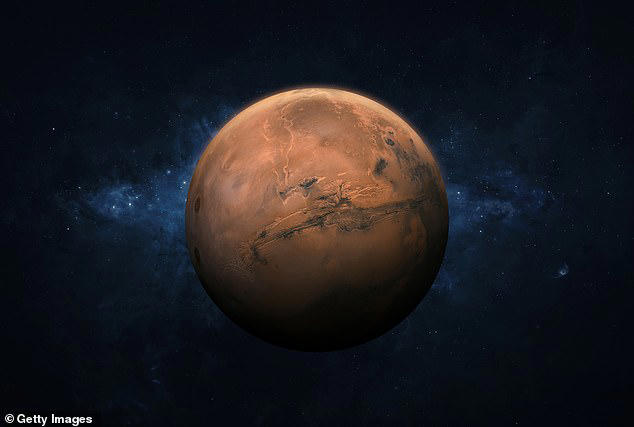


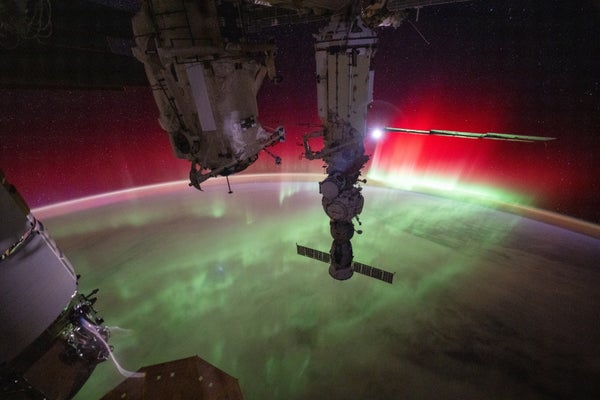
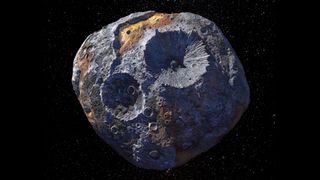

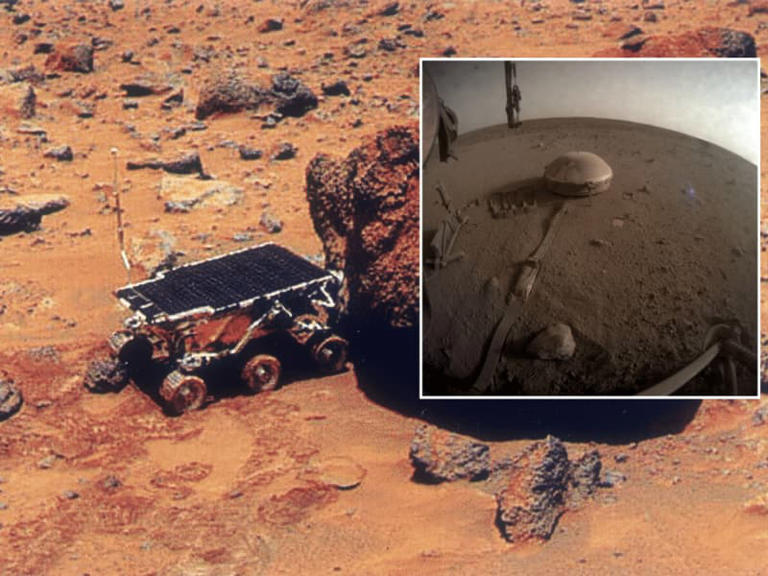
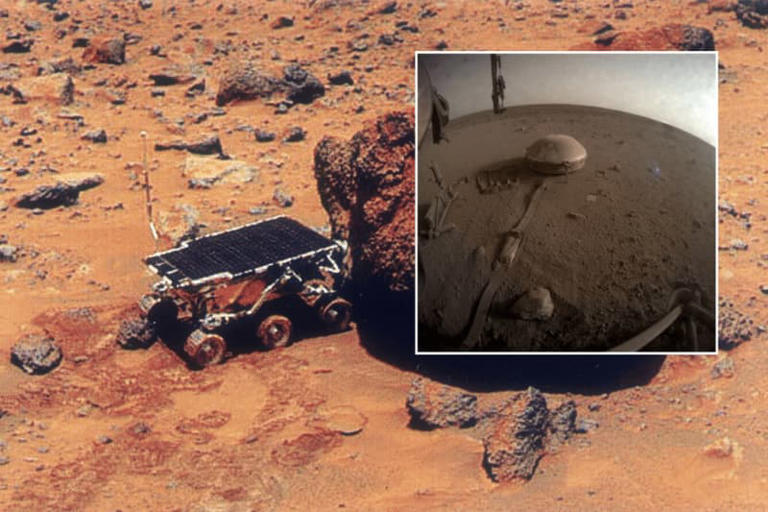
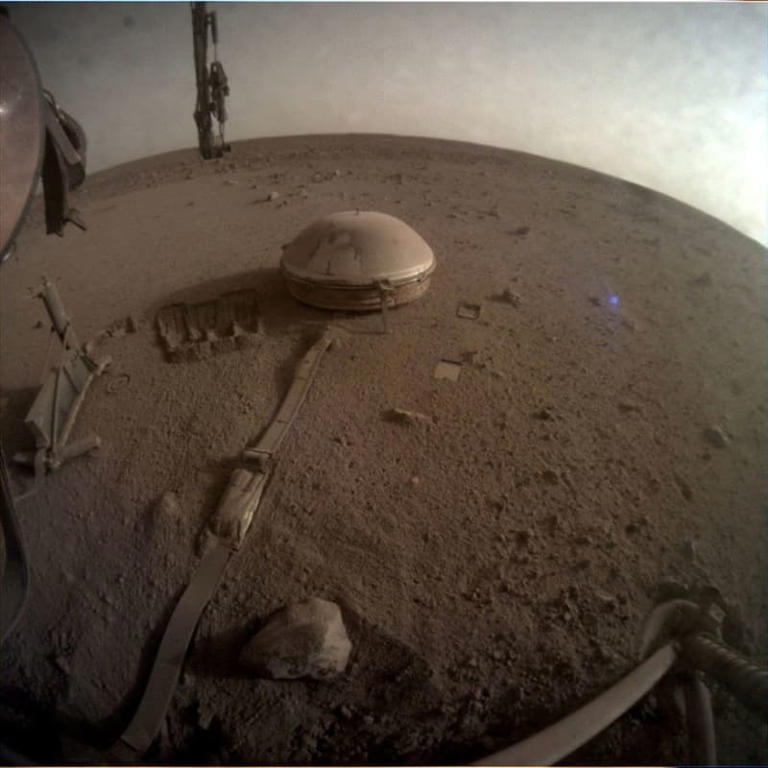


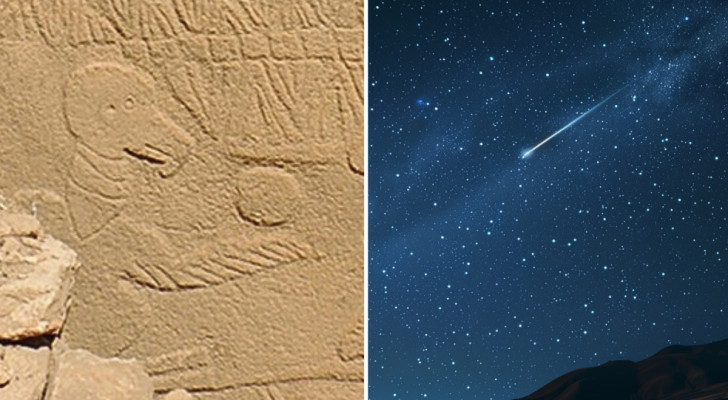
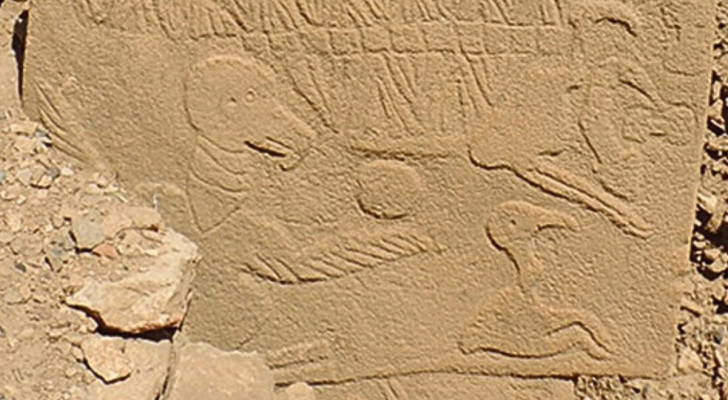

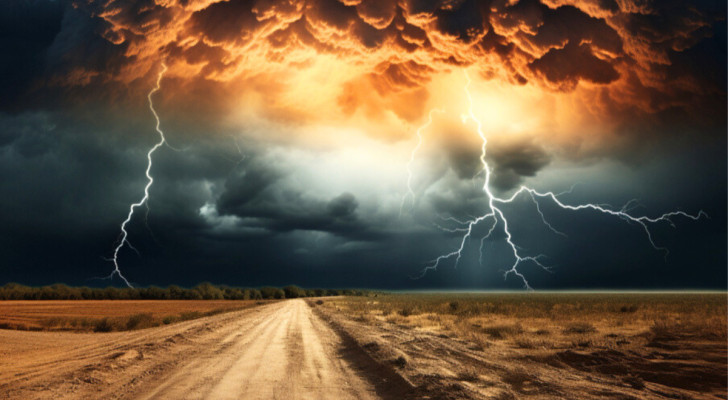
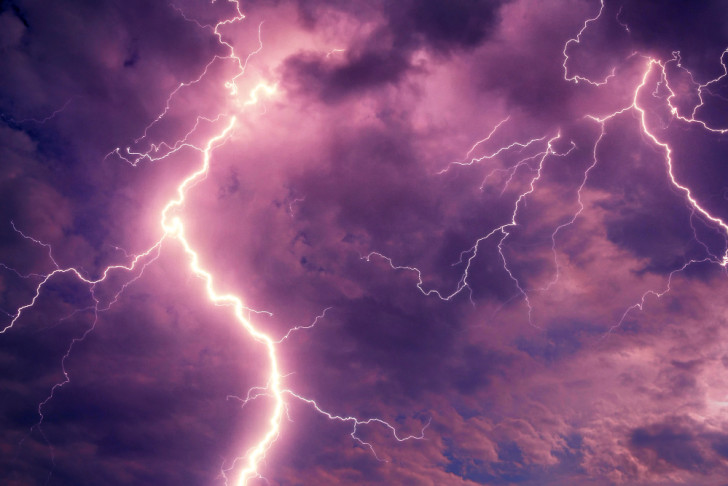

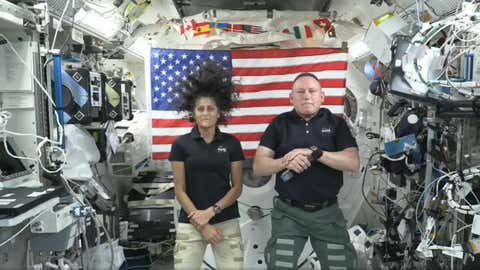
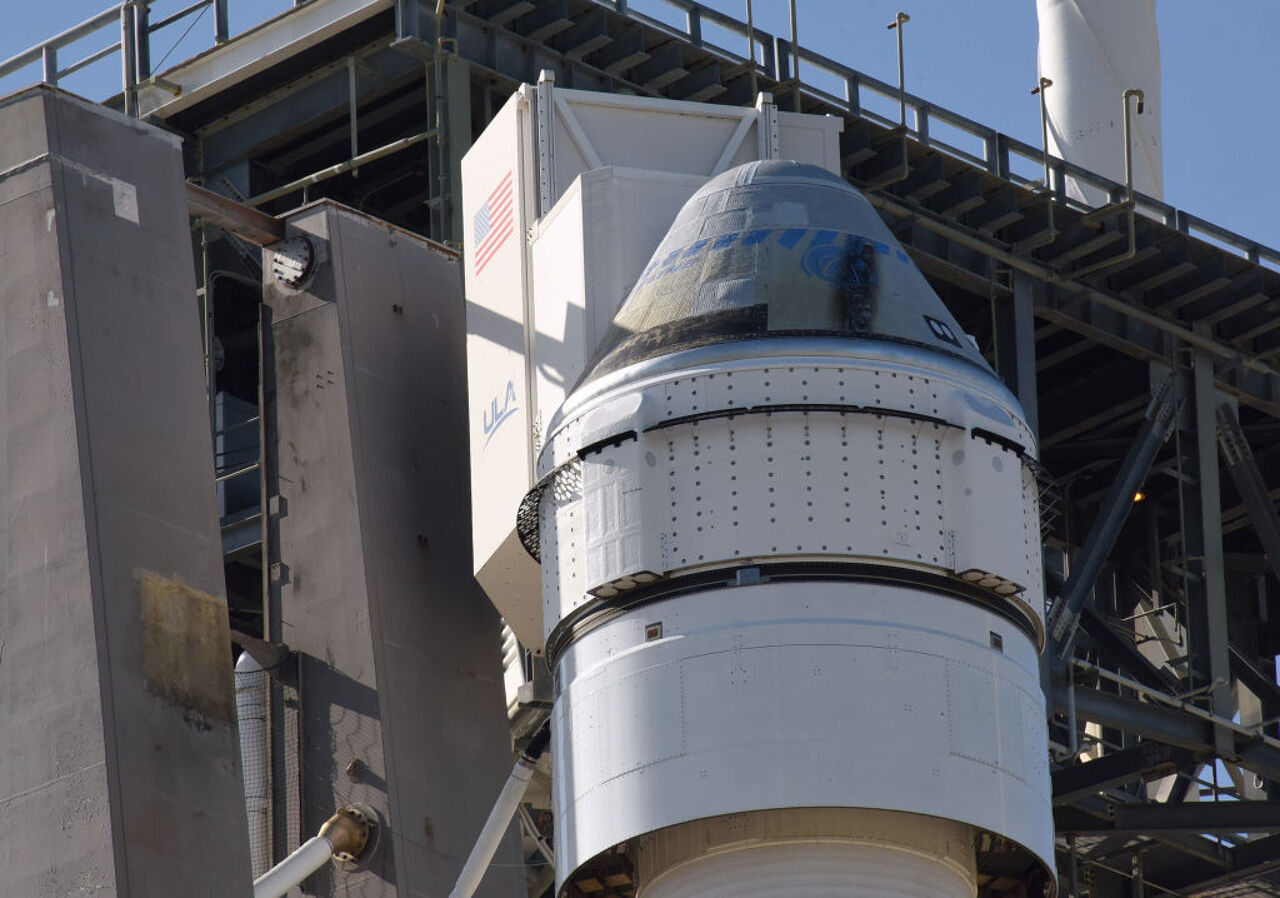
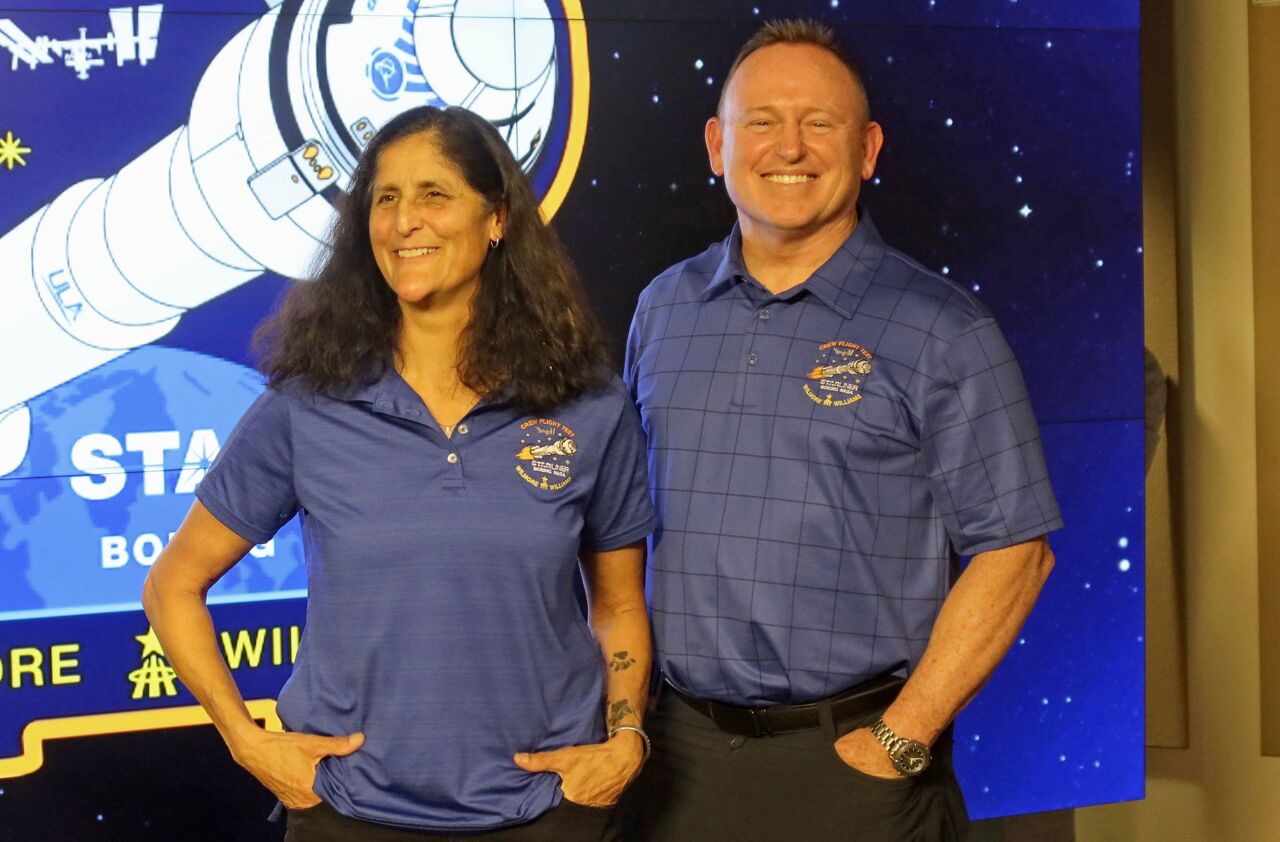



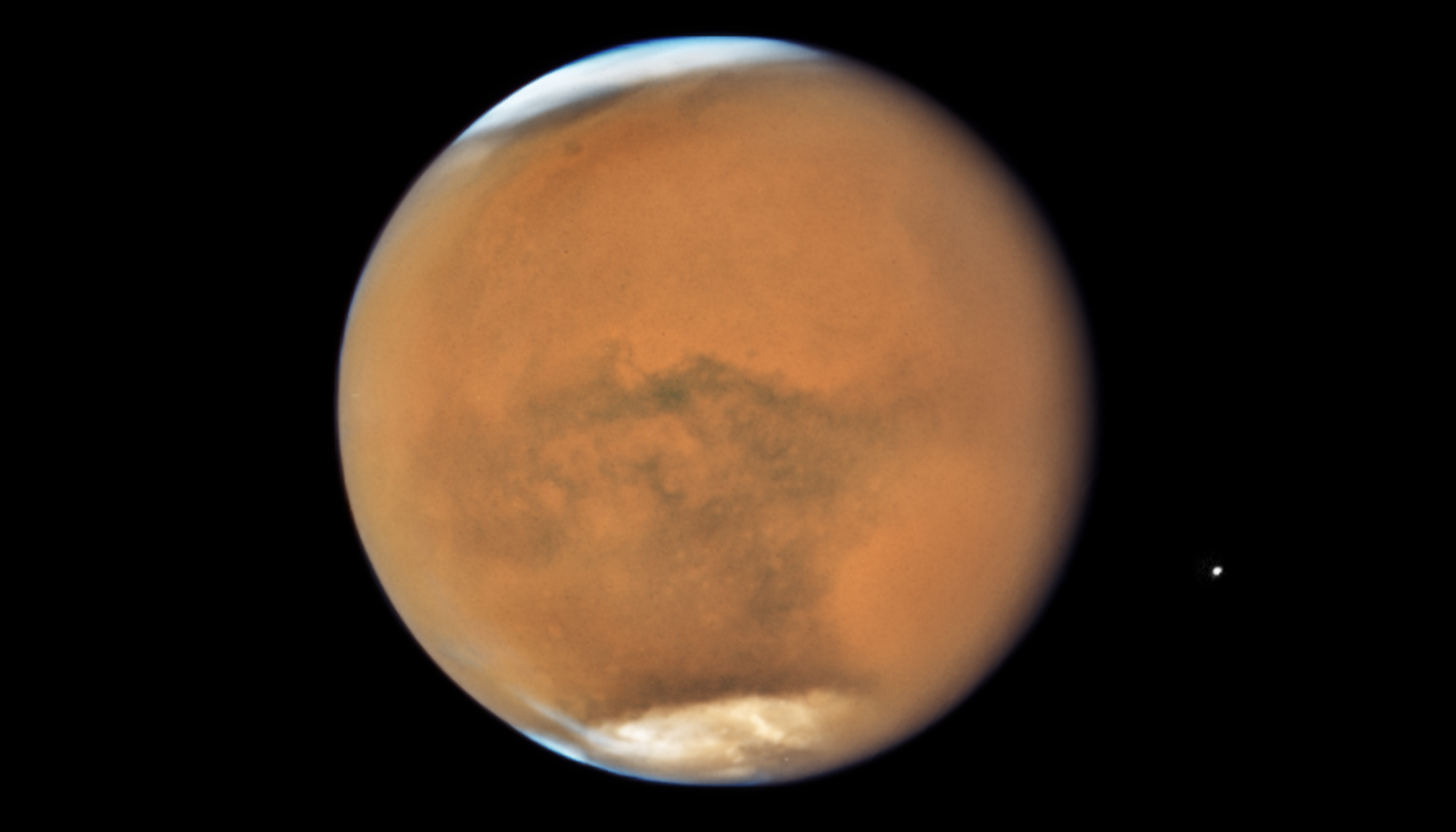

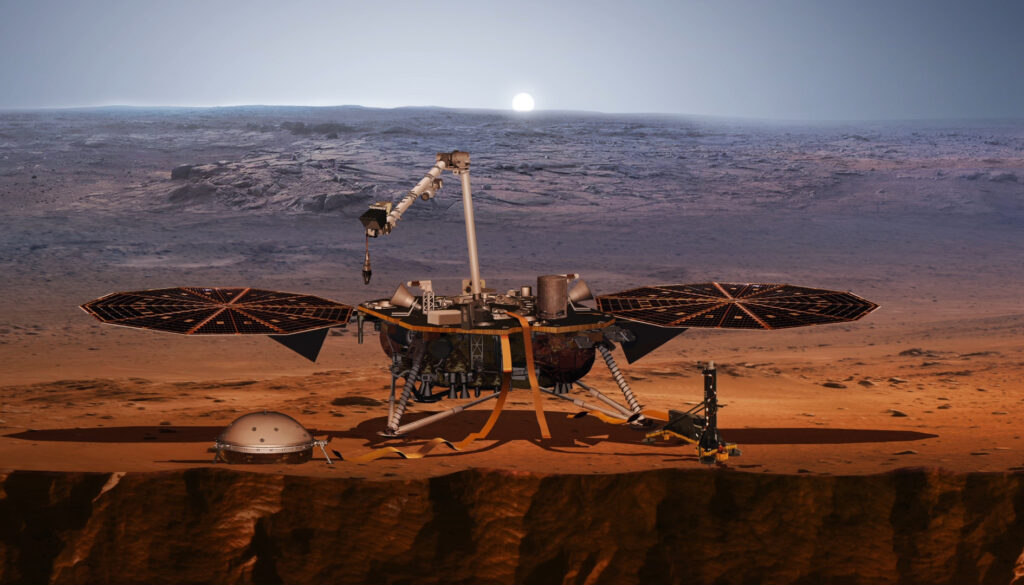







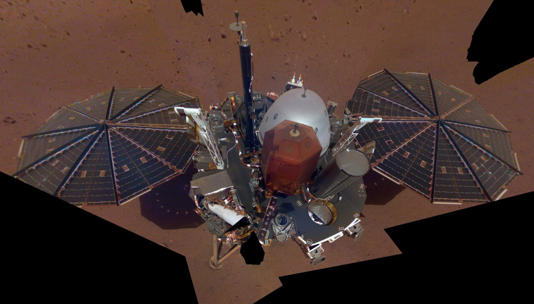
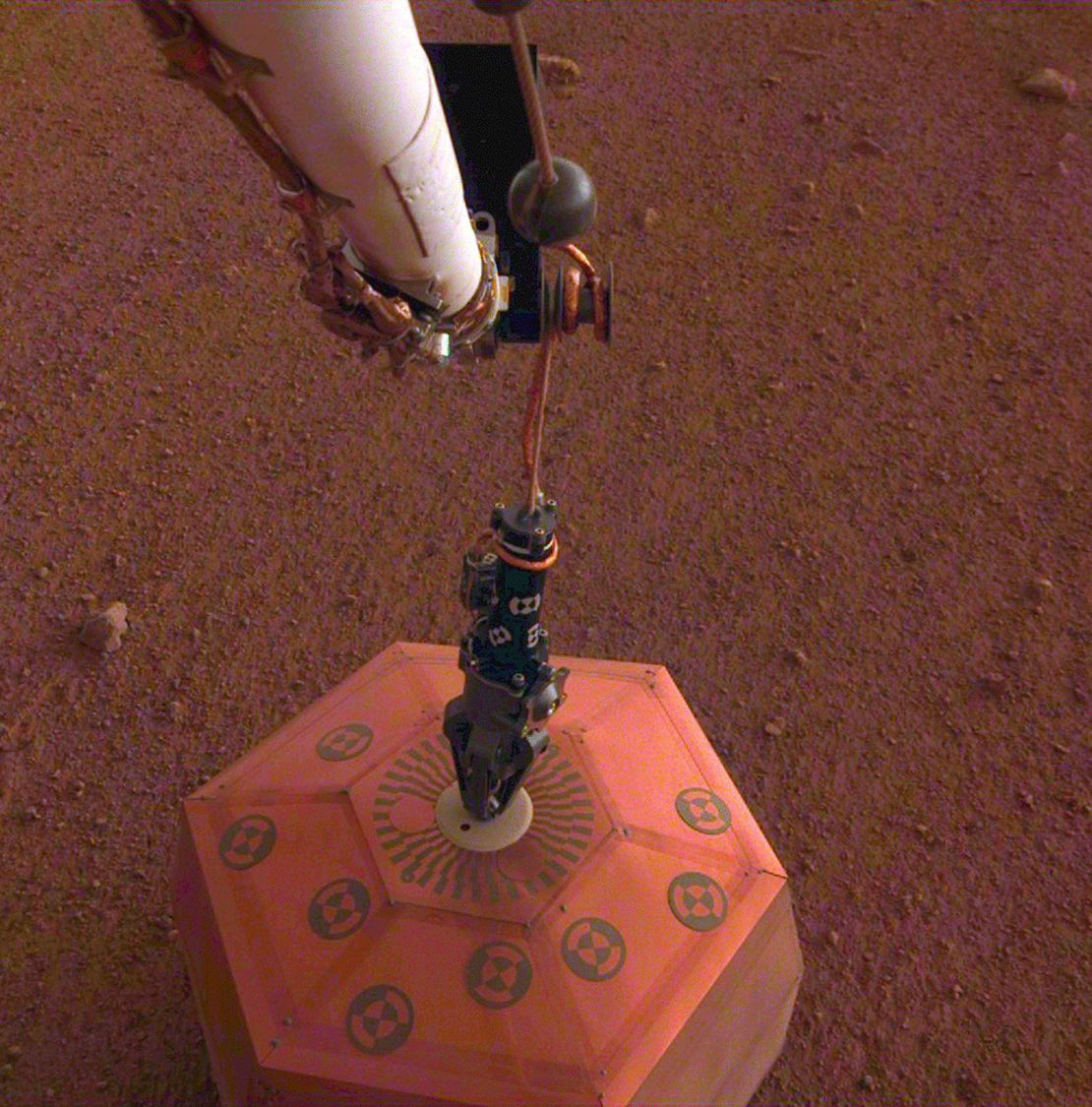

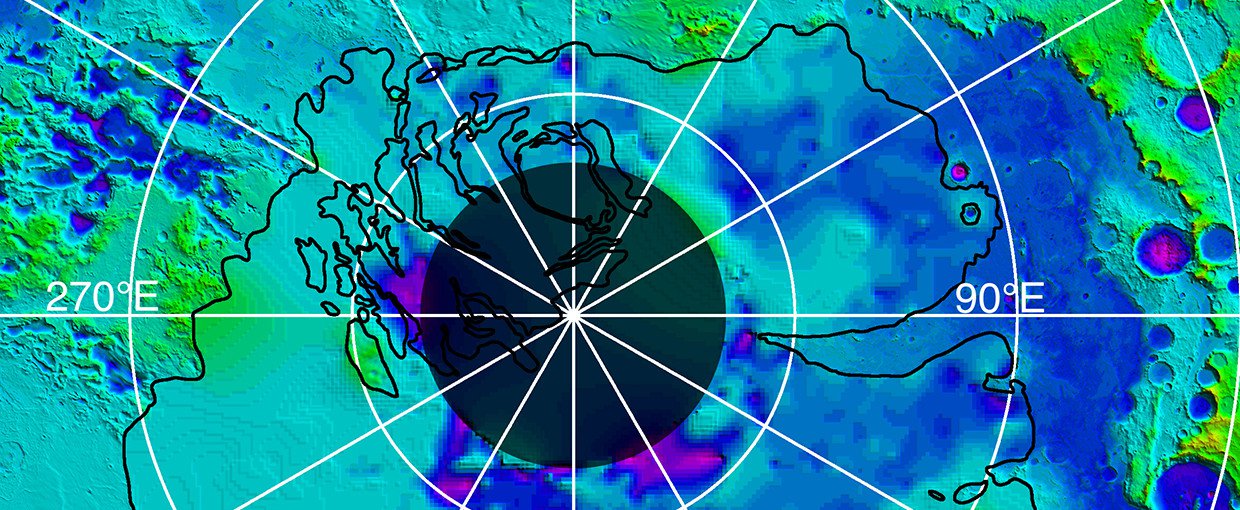
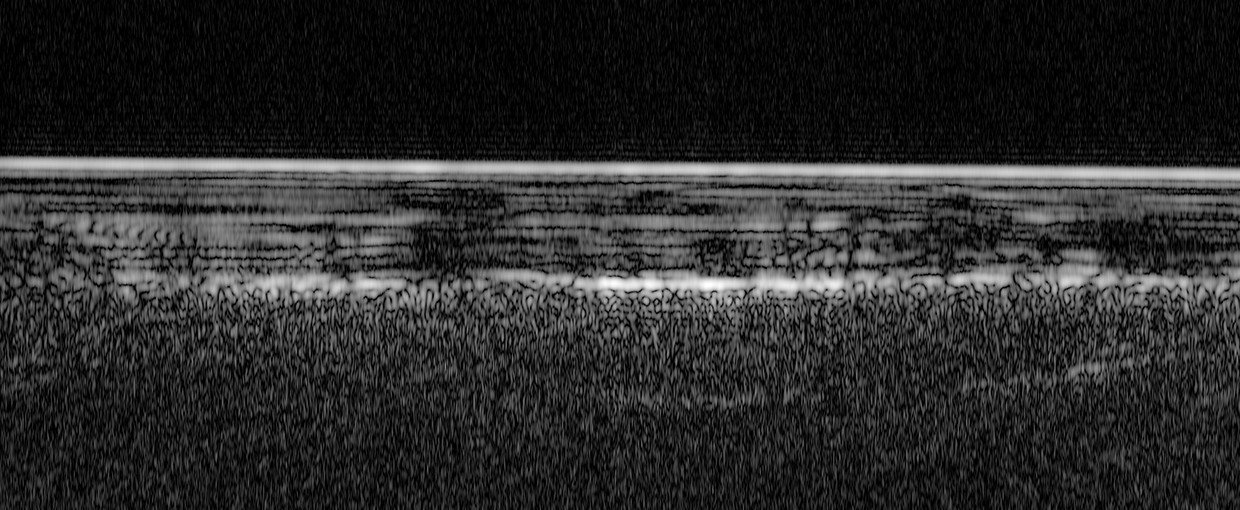


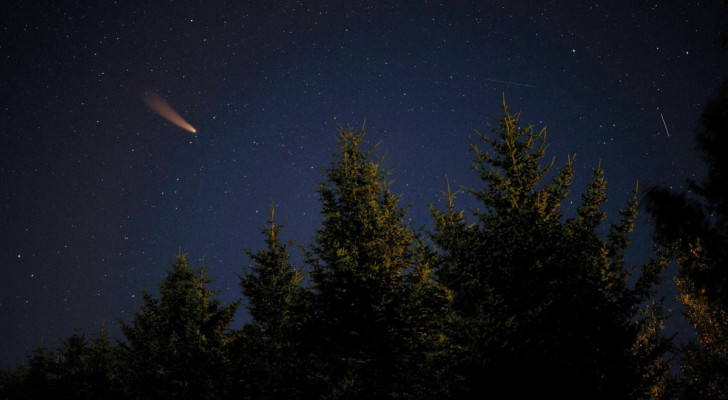
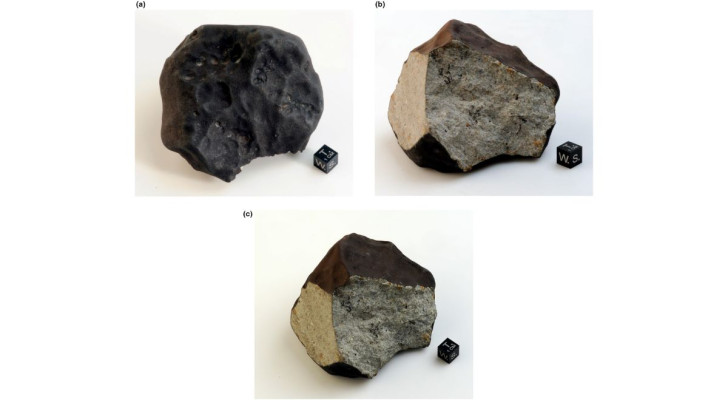





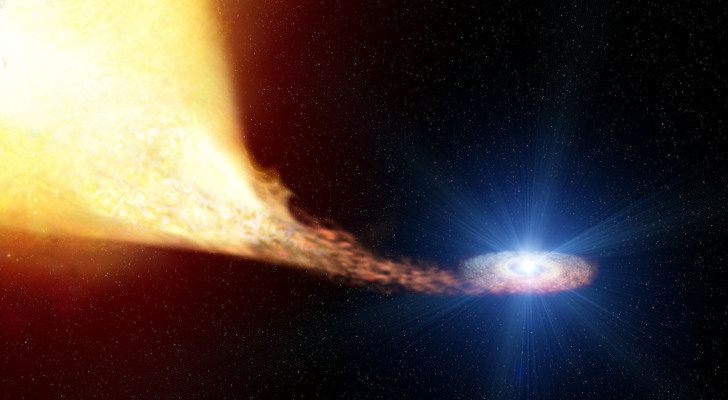
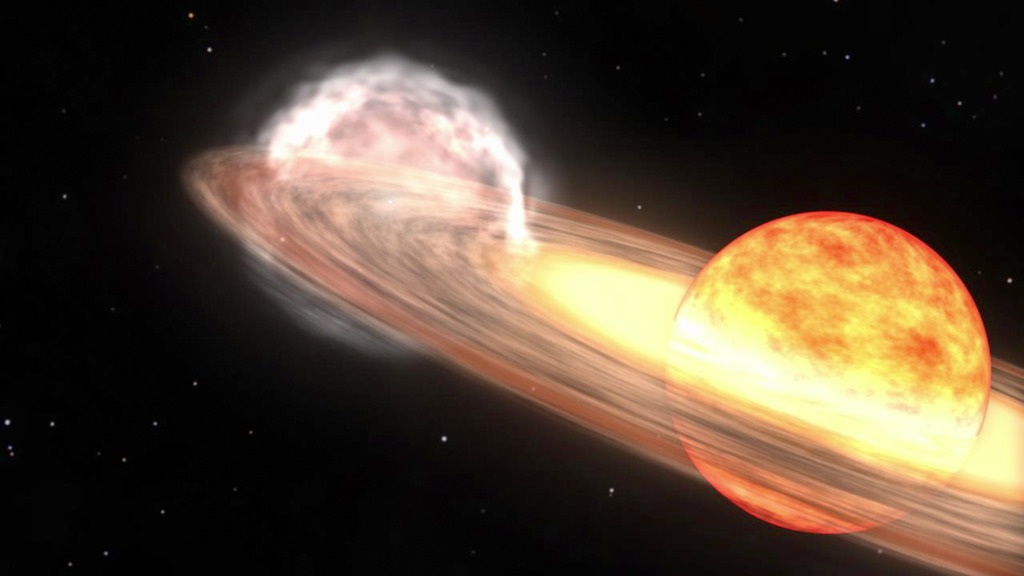






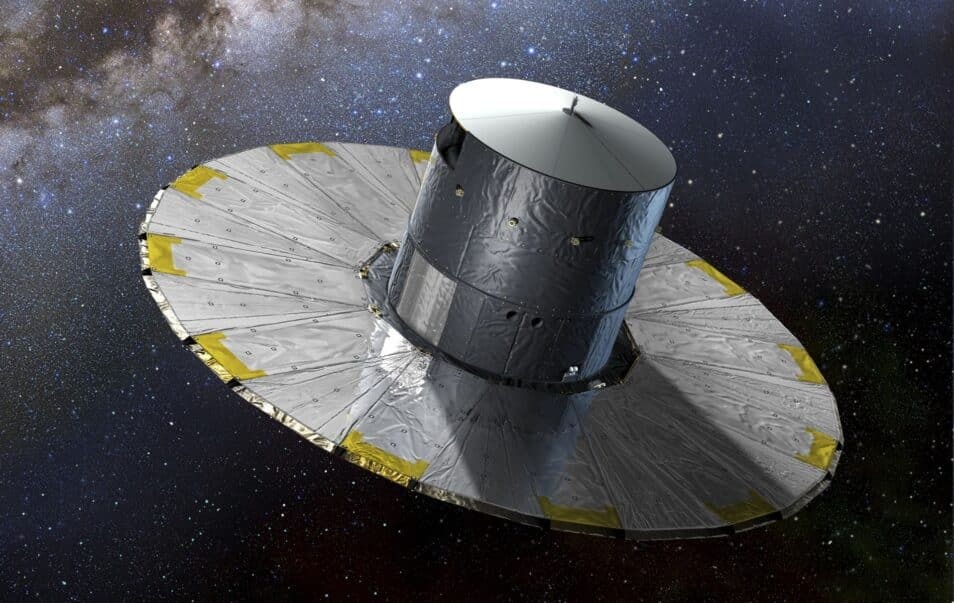

































'One of the things that we've heard from the Pentagon and from NASA is that a lot of the issue with this topic is there's not enough data. So that's exactly what we're trying to do is gather more data,' Alejandro Rojas, a UFO researcher with the app said.
'Once you can't rule things out, that's when you have something anomalous that either deserves more research, or can point you in a direction.'
Among the unexplained phenomena submitted through the app was a 'small, cylindrical' UFO seen 'zig-zagging' above the Austin skies on July 28, 2023.
The skies of Austin are increasingly lit up by unexplained sightings, partly thanks to Elon Musk 's Starlink
The Enigma Labs app is attempting to try and gather more data on UFO sightings in order to classify them better
Another stargazer gave an account of a strange object spotted in December.
'I can't remember who saw it first, but we noticed this object directly above us. It felt distinctly weightless, spherical, and kind of amorphous,' the account reads.
'The texture was almost like a static TV, kind of gaseous, and grayish black except for a BRIGHT red glow that would flash along one edge, then another, then emanate from the bottom of the object.
.'Tt was definitely at or above cloud level and was visible until it was way off in the distance, never changing its speed to my perception. We have no idea what this was - not balloons because it was too far and cutting against the wind, definitely not a plane, definitely not a consumer drone.'
One curious incident during the solar eclipse saw a black object float past the sun during the cosmic event.
'We were on a boat waiting for the solar eclipse to happen,' the poster explained.
The app asks users to upload photo of the object, description and location data which is then sent to the government
Starlink is a network of 6,000 satellites were launched by SpaceX to try and bring internet to remote areas
'Ten minutes before totality I see this object through my camera fly by on the screen, didn't think much of it at the moment until I reviewed the footage a few days later.'
But UFO-skeptic Robert Shaeffer has his doubts about the usefulness of the app.
'Since we know that the vast majority of reported UFO sightings are readily explained, and hence of no scientific value, this app encourages the reporting and sharing of low-quality UFO sightings, thus muddying the waters,' he said.
'It promotes the idea that seeing a UFO is something that the average person can expect to experience, but even if you don't see anything, send us a photo of the sky, anyway!'