Naar de inhoud

UFO'S of UAP'S, ASTRONOMIE, RUIMTEVAART, ARCHEOLOGIE, OUDHEIDKUNDE, SF-SNUFJES EN ANDERE ESOTERISCHE WETENSCHAPPEN - DE ALLERLAATSTE NIEUWTJES

UFO's of UAP'S in België en de rest van de wereld
akke.beakke.be
Ontdek de Fascinerende Wereld van UFO's en UAP's: Jouw Bron voor Onthullende Informatie! Ben jij ook gefascineerd door het onbekende? Wil je meer weten over UFO's en UAP's, niet alleen in België, maar over de hele wereld? Dan ben je op de juiste plek! België: Het Kloppend Hart van UFO-onderzoek In België is BUFON (Belgisch UFO-Netwerk) dé autoriteit op het gebied van UFO-onderzoek. Voor betrouwbare en objectieve informatie over deze intrigerende fenomenen, bezoek je zeker onze Facebook-pagina en deze blog. Maar dat is nog niet alles! Ontdek ook het Belgisch UFO-meldpunt en Caelestia, twee organisaties die diepgaand onderzoek verrichten, al zijn ze soms kritisch of sceptisch. Nederland: Een Schat aan Informatie Voor onze Nederlandse buren is er de schitterende website www.ufowijzer.nl, beheerd door Paul Harmans. Deze site biedt een schat aan informatie en artikelen die je niet wilt missen! Internationaal: MUFON - De Wereldwijde Autoriteit Neem ook een kijkje bij MUFON (Mutual UFO Network Inc.), een gerenommeerde Amerikaanse UFO-vereniging met afdelingen in de VS en wereldwijd. MUFON is toegewijd aan de wetenschappelijke en analytische studie van het UFO-fenomeen, en hun maandelijkse tijdschrift, The MUFON UFO-Journal, is een must-read voor elke UFO-enthousiasteling. Bezoek hun website op www.mufon.com voor meer informatie. Samenwerking en Toekomstvisie Sinds 1 februari 2020 is Pieter niet alleen ex-president van BUFON, maar ook de voormalige nationale directeur van MUFON in Vlaanderen en Nederland. Dit creëert een sterke samenwerking met de Franse MUFON Reseau MUFON/EUROP, wat ons in staat stelt om nog meer waardevolle inzichten te delen. Let op: Nepprofielen en Nieuwe Groeperingen Pas op voor een nieuwe groepering die zich ook BUFON noemt, maar geen enkele connectie heeft met onze gevestigde organisatie. Hoewel zij de naam geregistreerd hebben, kunnen ze het rijke verleden en de expertise van onze groep niet evenaren. We wensen hen veel succes, maar we blijven de autoriteit in UFO-onderzoek! Blijf Op De Hoogte! Wil jij de laatste nieuwtjes over UFO's, ruimtevaart, archeologie, en meer? Volg ons dan en duik samen met ons in de fascinerende wereld van het onbekende! Sluit je aan bij de gemeenschap van nieuwsgierige geesten die net als jij verlangen naar antwoorden en avonturen in de sterren! Heb je vragen of wil je meer weten? Aarzel dan niet om contact met ons op te nemen! Samen ontrafelen we het mysterie van de lucht en daarbuiten.

Berichten van 1 september 2025 tot 30 september 2025

UFOs and Aliens at the Vatican

UFOs and Aliens at the Vatican

UFOs and Aliens at the Vatican

UFOs and Aliens at the Vatican?

Does the Vatican know something about UFOs and aliens that we don’t? Are popes after popes keeping secrets? Might there be a conspiracy between the Curia and an extraterrestrial civilization? Is this an unfounded rumor? How can we find out?

Well, we could ask. And that’s just what I plan to do here.

The Vatican Observatory in Outer Space

From 1987 to 2002, I had the opportunity to work on a joint project including the Vatican Observatory (VO) and the Center for Theology and the Natural Sciences (CTNS). Saint Pope John Paull II took a specific interest in this project, meeting with us every two or three years. We relied on the very able leadership of then VO Director, astronomer George Coyne, S.J.

Former Vatican Observatory at Castel Gandolfo near Rome

We called it the Divine Action Project (DAP). By bringing scientists and theologians along with philosophers together, we sought to articulate a coherent way to understand God’s action in nature’s world. The world of nature we  studied included the electron within the atom as well as the expanding universe of perhaps two billion galaxies.

From time to time we snooped around in the research of the staff scientists both at Castelle Gandolfo in Italy and the University of Arizona in the United States. I recall a number of Vatican astronomers were working on star formation, publishing scientific papers right along with other observatories around the world.

Although the astronomers reported very little direct research on ETI and theology, it was not uncommon to talk about astrobiology and extraterrestrial neighbors in the Milky Way.

In no way did I perceive the slightest nervousness, obfuscation, or deceit from the scientist-Jesuits  over a decade and a half. They seemed to know what was commonly known in the globwide scientific community about the possibilities of extraterrestrial life. Nothing less. Nothing more. No reason to whisper, speculare, or accuse anyone of conspiracy on this subject matter.

We like to gossip about what the Vatican knows.

When David Grusch testified before the Oversight Committee of the US House of Representatives last month and spoke in an interview with NewsNation about UFOs, he said the Vatican had in its possession both a crashed spaceship as well as one or more alien pilots. He dated this during the Mussolini period, 1933. Yes, Grusch said with confidence, the Vatican knows. What a titilating rumor under the guise of whistle blowing. But, until we see the evidence, we simply will not know what the Vatican knows. Allegedly.

Seth Shostak, an astronomer at SETI, asks: where’s the evidence?

 “David Grusch says they’re here. But either he can’t prove it, or he won’t. Until he does, we should consider his stories to be just that: stories.”

If the Vatican has the evidence, let’s see it.

Why not just ask the Vatican about UFOs and Aliens?

UFOs and Aliens at the Vatican?

So, let’s ask the Vatican. But, whom should we pepper with our questions? Pope Francis? The Holy Father has already told us he would baptize an alien if the alien asks for it.  Now, just how many aliens has this pontiff already baptized? Mmmmm? Well, what Francis said, in my opinion,  seems much too innocuous a statement to be worthy of conspiracy speculation.

So, let’s ask José Gabriel Funes. Why him? Because Jose served as Director of the Vatican Observatory from 2006 to 2015. He’s an accomplished astromer and, like so many of his VO 

After departing VO, Jose returned to his native Argentina to teach and conduct research. Jose spent this past sabbatical academic year in Berkeley with his Jesuit colleagues and with us at CTNS. Jose has told me that he has not seen any empirical evidence that would support these rumors. The question of extraterrestrial life is an open question awating future scientific dciscovery.

José Gabriel Funes: an Interview

TED: Jose, whistleblower discussion in the United States strongly hints there is first hand knowledge of UFOs and aliens at the Vatican. But, rumor has it, the Vatican maintains this knowledge in secrecy. You have told me that the Vatican Observatory is not the holder of such secret knowledge. The question of off-Earth civilizations remains a strictly scientific question and an open question. What do you think?

Jose G. Funes, S.J., Director of the Vatican Observatory 2006-2015

JOSE. I think that the scientific community should investigate this information in a multidisciplinary approach.

Secondly, not everyone is able to do scientific research. In simple words, you should get a driving license in sciences to carry on scientific research. That license is the doctorate that universities on behalf of the academic community bestows. The academic system is not perfect but is the best we have. Moreover, results of the research must go through peer review. As I wrote in the epilogue of my recent book on SETI research, we need patience and humility. We live in a culture of immediacy. We may not see in our time any proof of ETI existence. We also need to get along with the fact that our legitimate questions may not have answers.

Third, in the hypothetical case that we find any form of extraterrestrial life, I do not see any contradiction with the faith in God the Creator. However, the potential discovery would challenge our theological thinking becoming less parochial, less anthropomorphic, and anthropocentric.

Now, Jose has shared this statement with a wide audience who has asked him my kind of question.

Conclusion

Well, there you have it. Are you disappointed? Is this just one more rumor about secret knowledge of UFOs and aliens in the Vatican with no conclusive answer? Or, is it just as much as anyone knows about UFOs and aliens at the Vatican?

RELATED VIDEOS


{ https://www.patheos.com/blogs/publictheology }

Hoe vind je dit bericht?
Geschreven door peter om 22:25 Stuur door

Aliens, Tijd en De Esoterische Kennis van Andere Dimensies

Aliens, Tijd en De Esoterische Kennis van Andere Dimensies

end-time-2310776_1920-600x0.jpg

Inleiding

Het onderwerp van buitenaards leven, de aard van tijd en het bestaan van andere dimensies heeft sinds mensenheugenis de menselijke verbeelding en het wetenschappelijke discours gefascineerd. Van de oude beschavingen die mythologische wezens associeerden met sterren tot de moderne zoektocht naar buitenaardse intelligentie, blijven deze thema’s centraal staan in zowel wetenschap als esoterische tradities. Deze dissertatie onderzoekt de interactie tussen het concept van buitenaardse wezens, de aard van tijd en de vermeende esoterische kennis over andere dimensies. Door een interdisciplinair perspectief te combineren, worden wetenschappelijke theorieën en esoterische overtuigingen naast elkaar geplaatst om een holistisch beeld te schetsen van deze complexe onderwerpen.

Alien-ultraterrestrial-1-300x300.webp

Vensters naar een parallelle universum?

  1. Wetenschappelijke benadering van buitenaards leven

De wetenschappelijke benadering van buitenaards leven is een complex en multidisciplinair veld dat zich richt op het begrijpen van de mogelijkheid dat andere beschavingen in het universum bestaan. Een van de bekendste methoden binnen dit domein is de Drake Equation, ontwikkeld door de astronoom Frank Drake in 1961. Deze vergelijking biedt een probabilistische schatting van het aantal technologische beschavingen in onze Melkweg door verschillende parameters te modelleren, zoals de frequentie van stervorming, de kans dat een ster een planeet krijgt, en de waarschijnlijkheid dat leven zich ontwikkelt op zo’n planeet. Hoewel veel van deze parameters onzeker zijn en op schattingen gebaseerd, geeft de Drake Equation wel een inzicht in de mogelijke omvang van buitenaards intelligent leven en suggereert dat het niet ondenkbaar is dat dergelijke beschavingen bestaan.

Naast de astronomische benaderingen speelt de astrobiologie een centrale rol in het begrijpen van de voorwaarden waaronder leven kan ontstaan en voortbestaan. Deze discipline bestudeert de biologische en chemische aspecten van het leven in het universum. Recent onderzoek naar extremofielen op aarde – organismen die in uiterst extreme omstandigheden overleven, zoals in hete bronnen, diepe oceanen of in giftige omgevingen – heeft aangetoond dat leven niet per se gebonden is aan de traditionele aardse condities. Dit vergroot de plausibiliteit dat leven onder andere omstandigheden en op andere planeten of manen mogelijk is. Exoplaneten die zich bevinden in de zogenaamde 'bewoonbare zones' van sterrenstelsels, waar de temperatuur geschikt is voor vloeibaar water, worden als belangrijke kandidaten beschouwd voor het zoeken naar buitenaards leven.

Toch blijft het bewijs voor buitenaards intelligent leven tot nu toe uit. Er zijn enkele opmerkelijke anomalieën die de interesse van wetenschappers wekken, zoals de beroemde 'Wow!'-signalen die in de jaren 1970 werden opgevangen en die mogelijk een buitenaardse oorsprong zouden kunnen hebben. Daarnaast worden er regelmatig onverklaarbare waarnemingen gedaan van onidentificeerbare vliegende objecten (UFO's). Hoewel sommige onderzoekers deze waarnemingen beschouwen als mogelijke aanwijzingen voor buitenaardse activiteit, ontbreekt het nog aan solide, wetenschappelijk bewijs dat bewijst dat buitenaardse wezens contact met de aarde proberen te maken of hebben gemaakt. Het zoeken naar buitenaards leven blijft dus een boeiend veld dat zich zowel op astronomisch, biologisch als technologische niveaus ontwikkelt, met veel vragen nog onbeantwoord.

Woman in space concept.

Welkom in de nieuwe realiteit.

sun ok/Shutterstock

  1. Tijd als dimensie en de relativiteitstheorie

In de natuurkunde wordt tijd vaak beschouwd als een fundamentele dimensie, net zoals de drie ruimtelijke dimensies (lengte, breedte en hoogte). Tot voor kort werd tijd meestal als absoluut en universeel gezien: een universele klok die overal hetzelfde tikte, ongeacht waar je je bevond of hoe snel je bewoog. Echter, met de ontwikkeling van Albert Einsteins relativiteitstheer, vooral de algemene relativiteitstheorie, werd dit beeld radicaal veranderd. Einstein liet zien dat tijd en ruimte niet los van elkaar staan, maar dat ze samen één geheel vormen: de ruimtetijd. In deze theorie worden tijd en ruimte verweven in een vierdimensionaal continuüm, waarbij de aanwezigheid van massa en energie de structuur van de ruimte-tijd beïnvloedt.

Volgens de relativiteitstheorie wordt de manier waarop tijd verloopt, afhankelijk van de positie en beweging van de waarnemer. Een belangrijk concept hierbij is de tijdsdilatatie: het verschijnsel dat tijd voor een waarnemer die zich snel beweegt of zich in een sterk vervormde ruimte bevindt, langzamer verloopt ten opzichte van een stilstaande waarnemer. Dit is experimenteel aangetoond door bijvoorbeeld atoomklokken die op grote hoogten of tijdens snelheden in ruimteschepen verschillen in de gemeten tijdsverloop laten zien. Hoe sneller een object beweegt of hoe sterker de zwaartekracht, hoe meer de tijd wordt uitgerekt of vertraagd. Dit betekent dat tijd niet absoluut is, zoals vroeger werd gedacht, maar relatief en afhankelijk van de situatie van de waarnemer.

Deze inzichten openen de deur naar fascinerende theoretische mogelijkheden, zoals tijdreizen. Hoewel tijdreizen in de praktijk nog buiten bereik ligt en veel wetenschappelijke en technische obstakels kent, blijven de theoretische fundamenten interessant. Sommige wetenschappers speculeren dat het misschien ooit mogelijk zou kunnen zijn om door de tijd te reizen door gebruik te maken van exotische toestanden van de ruimte-tijd, zoals wormgaten of tegenspoedige zwarte gaten. Echter, deze concepten blijven voorlopig binnen de theoretische kaders en worden niet als haalbaar beschouwd binnen de huidige technologie.

Naast de relativiteitstheorie verkent de moderne kwantumfysica en theorieën zoals de snaartheorie en M-theorie de diepere structuur van het universum. Deze theorieën suggereren dat ons universum mogelijk meer dan vier dimensies bevat: naast de drie ruimtelijke en één tijdsdimensie, zouden er nog meerdere, verborgen dimensies kunnen bestaan. Sommige modellen stellen dat deze extra dimensies klein en opgesloten zijn, waardoor ze niet direct waarneembaar zijn. Andere theorieën beschrijven een veel complexere structuur waarin verschillende tijdlagen en dimensies kunnen bestaan, die mogelijk invloed op ons universum uitoefenen. Dit roept vragen op over de aard van de realiteit en de mogelijkheid om interactie te hebben met deze andere werelden of dimensies. Het onderzoek hiernaar is nog in volle gang en vormt een van de meest intrigerende en complexe gebieden binnen de moderne natuurkunde.


  1. Esoterische kennis en andere dimensies

Naast de wetenschappelijke benaderingen die onze wereld en het universum proberen te verklaren, bestaan er oude en moderne esoterische tradities en kennisystemen die de realiteit op een heel andere manier benaderen. Deze systemen gaan uit van het bestaan van meerdere dimensies en werelden, die niet direct waarneembaar zijn met onze zintuigen, maar wel via innerlijke ervaringen, meditatie, trance of channeling toegankelijk kunnen worden. In veel spirituele en mystieke stromingen wordt aangenomen dat onze bekende fysieke wereld slechts één aspect is van een veel complexere multiversum, waarin hogere of andere dimensies bestaan die ons vaak onbekend blijven.

Al eeuwenlang spreken oude beschavingen zoals de Egyptenaren, Hindoes en Kelten over 'andere werelden', 'hemelen' of 'verschillende rijken' waar geascendeerde meesters, goden, geesten en voorouders resideerden. Deze werelden worden vaak beschreven als spirituele gebieden die via meditatie, rituelen of trance bereikt kunnen worden. In de Egyptische mythologie bijvoorbeeld, werden de onderwereld en de hemel beschouwd als verschillende gebieden met hun eigen wezens en wetten. De Hindoeïstische traditie spreekt over de vele lokas of werelden, die verbonden zijn met karma en reïncarnatie. De Kelten hadden hun verhalen over de 'Otherworld' – een magische wereld die parallel liep aan onze realiteit, en die toegankelijk was voor sjamanen en helden.

In de moderne esoterische en channeling-kringen wordt vaak gesproken over 'multi-dimensionale realiteiten'. Deze ideeën worden ondersteund door technieken zoals meditatie, trance en lucid dreaming, waarmee men toegang zou kunnen krijgen tot informatie uit hogere of niet-fysieke dimensies. Mensen die zichzelf of anderen channelen, beweren boodschappen en kennis te ontvangen van entiteiten uit deze hogere werelden, zoals gidsen, beschermengel of buitenaardse wezens. Deze kennis wordt vaak gebruikt voor spirituele groei, genezing of het verkrijgen van inzichten die niet via de reguliere zintuigen kunnen worden verkregen.

In het kader van buitenaards leven en ufologie wordt ook wel gesproken over 'interdimensionale wezens'. Dit zijn wezens die niet vastzitten aan onze fysieke dimensie en zich mogelijk kunnen verplaatsen via niet-fysieke routes of portals tussen verschillende realiteiten. Sommige theorieën suggereren dat deze wezens al eeuwenlang onze wereld bezoeken en dat ontmoetingen met hen vaak plaatsvinden op het grensvlak van fysieke en niet-fysieke werelden. Ze zouden zich kunnen manifesteren in trance, dromen of als schimmerelementen, waardoor ze moeilijk te detecteren zijn met reguliere technologie.

Deze ideeën over meerdere dimensies en interdimensionale wezens vormen een fascinerende aanvulling op de wetenschappelijke kennis, maar blijven voor velen een mysterie. Ze bieden een raamwerk waarin de grenzen van onze fysieke realiteit kunnen worden uitgedaagd en uitgebreid, en waarin de mogelijkheid bestaat dat onze wereld verbonden is met een veel groter, complexer geheel dat nog grotendeels onontdekt en onbegrepen is.

Consciousness and spirituality illustration.

Starseeds beweren dat ze een buitenaardse bewustzijn zijn dat op aarde woont.

Ross Collier/Alamy Stock Foto

  1. De interactie tussen wetenschap en esoterie

De interactie tussen wetenschap en esoterie is de laatste jaren steeds zichtbaarder geworden, ondanks dat deze twee disciplines traditioneel als tegenpolen worden beschouwd. Wetenschap richt zich op het objectief onderzoeken van de werkelijkheid door middel van waarneming, experimenten en bewijs, terwijl esoterie zich vooral bezighoudt met innerlijke ervaring, spirituele inzichten en het verkennen van niet-fysieke werelden. Toch ontstaan er steeds meer kruispunten waar deze werelden elkaar ontmoeten en beïnvloeden.

Een van de meest interessante gebieden waar deze interactie zichtbaar wordt, is de recente ontwikkeling van theorieën over het universum. Zo resoneren de ideeën over holografische universa en multiversa sterk met esoterische opvattingen over meerdere werelden en dimensies die parallel aan onze eigen bestaan. Wetenschappers zoals Leonard Susskind en Gerard 't Hooft hebben hypotheses ontwikkeld waarin ons waarneembare universum wordt beschouwd als een soort hologram, een projectie van informatie die in een hogere dimensie wordt opgeslagen. Dit sluit aan bij esoterische tradities die spreken over meerdere niveaus van werkelijkheid en hogere dimensies die niet direct waarneembaar zijn, maar wel invloed uitoefenen op ons bestaan.

Daarnaast bieden theorieën over hogere dimensies, zoals die uit de snaartheorie, een wetenschappelijk kader dat mogelijk de oude esoterische overtuigingen over niet-fysieke werelden kan onderbouwen. In deze theorieën worden het heelal en de werkelijkheid beschreven als bestaande in meer dan de gebruikelijke drie ruimtelijke dimensies, wat ruimte laat voor het bestaan van andere, onzichtbare werelden die via hogere dimensies toegankelijk zouden kunnen zijn.

Ook in de kwantumfysica zien we raakvlakken met esoterie. Verschijnselen zoals entanglement, waarbij deeltjes op afstand met elkaar verbonden blijven, worden door sommige wetenschappers geïnterpreteerd als aanwijzingen voor een onderliggende verbondenheid die niet afhankelijk is van ruimte en tijd. Dit concept lijkt sterk op de esoterische ideeën over universele eenheid en de verbondenheid van alles in het universum. Sommige filosofen en onderzoekers zien hierin een mogelijkheid om via bewustzijn en hogere kennis toegang te krijgen tot deze verborgen aspecten van de werkelijkheid.

Tegelijkertijd roept deze kruisbestuiving ook vragen op. Bijvoorbeeld over de grenzen van de wetenschappelijke methode, die primair gebaseerd is op empirisch bewijs en reproduceerbaarheid. Esoterische tradities benadrukken juist dat niet alle kennis via objectieve waarneming kan worden verkregen; innerlijke ervaring, meditatie en spirituele ontwikkeling worden als waardevolle manieren gezien om hogere werelden en kennis te bereiken. Dit leidt tot een discussie over de rol van subjectieve ervaring en intuïtie in het begrijpen van de werkelijkheid. De samenwerking tussen wetenschap en esoterie opent dus nieuwe perspectieven, maar roept ook vragen op over de aard van kennis en de methoden die we gebruiken om de diepere lagen van het universum te doorgronden.

Alien-interdimensional-2-300x171.webp

UAP: Interdimensionale Hypothese

  1. Conclusie: Een geïntegreerde visie op buitenaardsheid, tijd en dimensies

De verkenning van buitenaards leven, de aard van tijd en de esoterische kennis over andere dimensies toont aan dat deze onderwerpen diep met elkaar verbonden zijn, zowel in wetenschappelijke theorieën als in spirituele tradities. Wetenschap biedt ons een rationeel kader om de fysieke wereld te begrijpen en te zoeken naar bewijzen voor buitenaards bestaan en hogere dimensies. Esoterie, daarentegen, nodigt uit tot een innerlijke reis en het ontwikkelen van bewustzijns- en waarnemingsvermogen om toegang te krijgen tot niet-fysieke realiteiten.

Deze twee benaderingen hoeven niet per se conflictueus te zijn; ze kunnen elkaar juist verrijken. Wetenschappelijke ontdekkingen over de structuur van het universum en de eigenschappen van tijd kunnen worden geïnterpreteerd binnen een groter metafysisch raamwerk dat de mogelijkheid van andere dimensies en buitenaardse wezens ondersteunt. Tegelijkertijd kunnen esoterische inzichten en ervaringen wetenschappelijke nieuwsgierigheid stimuleren door nieuwe vragen te genereren over de aard van werkelijkheid en bewustzijn.

Het integreren van deze perspectieven vraagt om een open houding en een interdisciplinair discours waarin wetenschap en spiritualiteit elkaar kunnen ontmoeten. Zo ontstaat een completer beeld van de werkelijkheid, waarin niet alleen de materiële wereld wordt erkend, maar ook de verborgen dimensies en de hogere kennis die mogelijk liggen in het domein van het onzichtbare en het onbewuste.

Tot slot benadrukt deze verkenning dat de zoektocht naar buitenaards leven en hogere dimensies niet alleen een wetenschappelijke of esoterische onderneming is, maar ook een innerlijke reis naar de grenzen van ons begrip en bewustzijn. Het is een uitnodiging om de mysterieuze aard van het universum te blijven onderzoeken, zowel met de ratio als met het hart, en open te staan voor de vele verborgen werelden die mogelijk naast onze eigen bestaan.

Door deze integratie kunnen we niet alleen onze kennis uitbreiden, maar ook onze spirituele en existentiële vragen verdiepen, en wellicht dichterbij komen bij het begrijpen van onze plaats in een veelvoudig en wonderlijk universum.

{ PETER2011 }

Hoe vind je dit bericht?
Geschreven door peter om 22:06 Stuur door

Scientist claims to have finally solved mystery of the Bermuda Triangle

Scientist claims to have finally solved mystery of the Bermuda Triangle

From vanishing aircraft to sinister ghost ships, the Bermuda Triangle is the location of some of the planet's strangest phenomena.

Now, a scientist claims to have finally solved the mystery.

Located between Florida, Puerto Rico and Bermuda, the Bermuda Triangle's long history of deadly wrecks has prompted endless supernatural speculation.

However, Dr Simon Boxall, an oceanographer from the University of Southampton, says that the real explanation doesn't involve UFOs or interdimensional portals.

Instead, Dr Boxall says that the Bermuda Triangle's record of disappearances is due to 'rogue waves'.

Otherwise known as extreme storm waves, these are unpredictable walls of water that can reach twice the height of the surrounding waves.

Towering up to 100 feet (30 metres) in the air, rogue waves are abnormally steep and can hit unexpectedly from directions other than the prevailing wind.

According to Dr Boxall, a large ship trapped by one of these killer swells could 'sink in a matter of two or three minutes'.

The Bermuda Triangle is home to some of the world's most famous shipwrecks, such as that of the SS Sapona (pictured), but a scientist now claims to have solved the mystery of this deadly region

The Bermuda Triangle is home to some of the world's most famous shipwrecks, such as that of the SS Sapona (pictured), but a scientist now claims to have solved the mystery of this deadly region 

Theories surrounding the deadly pull of the Bermuda Triangle have spread widely ever since the disappearance of the USS Cyclops in 1918.

The USS Cyclops was an American coal-carrying ship that had been used to ferry fuel to warships during World War I.

In March 1918, the ship was passing through the Bermuda Triangle on its way from Salvador, in Brazil, to Baltimore when it vanished without even sending a distress signal.

Despite an extensive search, no trace of the 542-foot (165-metre) vessel or its 306 crew members has ever been found.

Due to the sudden nature of the USS Cyclops's disappearance, conspiracy theorists and UFO enthusiasts have suggested dozens of wacky theories to explain the loss.

However, Dr Boxall says that the USS Cyclops was more likely to have been sunk by a rogue wave.

Speaking on the Channel 5 documentary series, The Bermuda Triangle Enigma, Dr Boxall says the Bermuda Triangle is a particular hotspot for rogue waves.

He says: 'There are storms to the south and north, which come together.

Dr Simon Boxall, an oceanographer from the University of Southampton, says that disappearances of ships like the USS Cyclops (pictured) could be due to 'rogue waves'

Dr Simon Boxall, an oceanographer from the University of Southampton, says that disappearances of ships like the USS Cyclops (pictured) could be due to 'rogue waves'

Rogue waves up to 100 feet (30 metres) in height are triggered by the convergence of storms around the tropical region of the Bahamas. These could snap a ship in two if they hit from the wrong angle, potentially explaining some of the mysterious wrecks

Rogue waves up to 100 feet (30 metres) in height are triggered by the convergence of storms around the tropical region of the Bahamas. These could snap a ship in two if they hit from the wrong angle, potentially explaining some of the mysterious wrecks  

What are rogue waves?

Rogue, freak, or killer waves are scientifically known as 'extreme storm waves'.

These are abnormally steep and large waves, which can be twice the size of the surrounding swells.

They are very dangerous for ships since they can come from directions other than the prevailing wind.

Scientists still aren't sure how they form, but they might be triggered by multiple waves combining.

Storms may also focus wave energy into an unusual direction, joining multiple waves into a single rogue wave.

'And if there are additional ones from Florida, it can be a potentially deadly formation of rogue waves.'

Alongside his colleagues from the University of Southampton, Dr Boxall constructed a scale model of the USS Cyclops to see how it might react to a rogue wave.

This revealed that, due to the ship's flat base and massive size, it would not take long for waves to overwhelm the ship.

Dr Boxall explains that a rogue wave can be so steep that it can suspend a ship between its peaks, leaving the middle of the ship hanging over the trough.

If a large ship, which requires water to support itself, becomes suspended in this way, Dr Boxall says it will 'snap in two'.

'They are steep, they are high - we've measured waves in excess of 30 metres,' says Dr Boxall.

'If that happens, it can sink in a matter of two or three minutes.'

If the USS Cyclops - or any of the other vanished vessels - were struck by rogue waves, it would explain why they sank before being able to make a distress call.

Some scientists say that the number of plane crashes and shipwrecks within the Bermuda Triangle is completely within normal ranges, meaning there is no mystery to solve in the first place

Some scientists say that the number of plane crashes and shipwrecks within the Bermuda Triangle is completely within normal ranges, meaning there is no mystery to solve in the first place 

Dr Boxall adds: 'The bigger the ship, the more damage is done.'

However, not every scientist is convinced that there really is a mystery to explain in the first place.

In fact, a number of researchers have pointed out that rates of wrecks and plane crashes inside the Bermuda Triangle are well within normal levels.

According to the National Oceanographic and Atmospheric Administration (NOAA): 'There is no evidence that mysterious disappearances occur with any greater frequency in the Bermuda Triangle than in any other large, well-travelled area of the ocean.'

article image

Likewise, the insurance specialist Lloyd’s of London's data shows that there are no more losses in the Bermuda Triangle than anywhere else in the world.

Those losses that do occur can easily be explained by natural forces, such as rogue waves or by the fact that the Caribbean is relatively difficult to navigate.

The NOAA writes: 'Environmental considerations could explain many, if not most, of the disappearances.

'The large number of islands in the Caribbean Sea creates many areas of shallow water that can be treacherous to ship navigation.'

THE BERMUDA TRIANGLE 

The Bermuda Triangle is a section of the Atlantic Ocean roughly bounded by Miami, Bermuda and Puerto Rico where dozens of ships and airplanes have disappeared. 

Unexplained circumstances surround some of these accidents.

Although a range of strange theories have been proposed regarding the Bermuda Triangle, none of them prove that mysterious disappearances occur more frequently there than in other well-travelled sections of the ocean. 

Many people navigate the area every day without incident.

 
RELATED VIDEOS
Bermuda Triangle Mystery Finally Solved by Science | WION Podcast

Bermuda Triangle Mystery Solved? This Scientist’s Theory is Making Big Waves

Real Culprit of Bermuda Triangle Found | GRAVITAS Highlight

{ https://www.dailymail.co.uk/sciencetech/index.html }

Hoe vind je dit bericht?
Geschreven door peter om 20:26 Stuur door

The Bermuda Triangle's biggest remaining mysteries: The 5 key unanswered questions - including what's behind the disappearance of 'hundreds' of vessels

The Bermuda Triangle's biggest remaining mysteries: The 5 key unanswered questions - including what's behind the disappearance of 'hundreds' of vessels

For some, it's the most feared stretch of water on the entire planet. 

The Bermuda Triangle, also known as the Devil's Triangle, is a region in the North Atlantic Ocean that has long been shrouded in mystery.

According to legend, ships and airplanes have a tendency to go missing there, sparking theories of supernatural causes for these disappearances. 

For decades, commentators have speculated on the possibility of alien kidnappings, interdimensional portals, magnetic forces or even lost cities in the triangle. 

Dr Simon Boxall, an oceanographer at the University of Southampton, recently said that the disappearances can be explained by weather – and not to do with such far-fetched concepts.

However, there are still key unanswered questions surrounding the phenomenon, which attracts scientific interest along with wacky theories.

And they mean this section of the North Atlantic will continue to fascinate for many more years to come.  

Here are the Bermuda Triangle's biggest remaining mysteries. 

For decades, commentators have speculated on the possibility of UFOs or interdimensional portals in the Bermuda Triangle (artist's depiction)

For decades, commentators have speculated on the possibility of UFOs or interdimensional portals in the Bermuda Triangle

(artist's depiction) 

MISSING WRECKAGE 

Theories surrounding the deadly pull of the Bermuda Triangle have spread widely ever since the disappearance of the USS Cyclops more than a century ago. 

The USS Cyclops was an American coal-carrying ship that was used to ferry fuel to warships during World War I.

In March 1918, the ship was passing through the Bermuda Triangle on its way from Salvador, in Brazil, to Baltimore when it vanished. 

Despite an extensive search, no trace of the 542-foot (165-metre) vessel or its 306 crew members has ever been found.

Some 27 years later, a squadron of bombers collectively known as Flight 19 disappeared in the airspace above the Bermuda Triangle. 

As with the Cyclops incident, no explanation was given and no wreckage was found – so what happened?

While the missing Cyclops wreck is indeed mysterious, Flight 19 comprised small aircraft which would have likely broken up on impact with the sea, according to Dr Boxall. 

Dr Simon Boxall, an oceanographer from the University of Southampton, says that disappearances of ships like the USS Cyclops (pictured) could be due to 'rogue waves'

Dr Simon Boxall, an oceanographer from the University of Southampton, says that disappearances of ships like the USS Cyclops (pictured) could be due to 'rogue waves'

What is the Bermuda Triangle? 

The Bermuda Triangle is a mythical section of the Atlantic Ocean roughly bounded by Miami, Bermuda and Puerto Rico where dozens of ships and airplanes have disappeared.

Unexplained circumstances surround some of these accidents.

Although a range of strange theories have been proposed regarding the Bermuda Triangle, none of them prove that mysterious disappearances occur more frequently there than in other well-traveled sections of the ocean.

Many people navigate the area every day without incident.

'Whilst there was a rescue mission no one really knew where they would have ditched with a huge search area to cover,' he told the Daily Mail. 

Today, brave explorers are still diving into the area's waters to visit some of the wrecks whose remains are accounted for. 

An example is SS Cotopaxi, a coal ship that vanished in 1925 on way from South Carolina to Cuba, which was finally located nearly a century later in 2020.  

SS Cotopaxi was depicted in Steven Spielberg's 1977 blockbuster 'Close Encounters of the Third Kind', where it was found in the Gobi Dessert having supposedly been placed there by aliens.

But the fact that it was discovered five years ago just shows that not every vessel lost in the triangle vanishes without a trace. 

NUMBER OF LOST VESSELS

One of the biggest remaining mysteries is exactly how many vessels have perished in the triangle, which has Miami, Bermuda and Puerto Rico as its three points. 

Most sources claim 50 ships and 20 airplanes have disappeared in the region's ocean and airspace, but the true figure could be much higher. 

Now, almost 100 years after the ship vanished, a team of marine biologists and underwater explorers have identified the SS Cotopaxi off the coast of St. Augustine, Florida

Now, almost 100 years after the ship vanished, a team of marine biologists and underwater explorers have identified the SS Cotopaxi off the coast of St. Augustine, Florida

Since the SS Cotopaxi (pictured) disappeared in 1925, it has become one of the most famous stories associated with the Bermuda Triangle

Since the SS Cotopaxi (pictured) disappeared in 1925, it has become one of the most famous stories associated with the Bermuda Triangle

NOAA: The Bermuda Triangle is a myth 

US government agency National Oceanic and Atmospheric Administration (NOAA) said foul weather and poor navigation are likely to blame for any mishaps in the area.

Dozens of ships and planes have mysteriously vanished in the area. But NOAA said the number there is no different to elsewhere in the world.

What's more, the theory that some mysterious supernatural force is sinking boats and planes is a myth.

'There is no evidence that mysterious disappearances occur with any greater frequency in the Bermuda Triangle than in any other large, well-traveled area of the ocean,' the agency stated

National Geographic is among the sources that puts the number at 'hundreds of ships' – so not even counting airplanes. 

And because the region is not officially recognised or tracked by government agencies, any figure is unlikely to be substantiated or reliable.

MISSING DISTRESS CALLS

According to Encyclopedia Britannica, some vessels in the triangle transmitted no distress signals just before were never seen or heard from again, of which one is the USS Cyclops, which, as we know, didn't leave any debris.

However, Dr Boxall suggests that ships were suddenly struck by 'rogue waves' – unpredictable walls of water reaching a towering height. 

If the USS Cyclops – or any of the other vanished vessels – were struck by rogue waves, it would explain why they sank before being able to make a distress call.

We already know that the Bermuda Triangle suffers from rough weather, but not necessarily rougher than anywhere else in the world.

In some cases, private boats have been lost in the triangle, but that may be because it is located in such a luxurious part of the world, popular with millionaires. 

The Bermuda Triangle is home to some of the world's most famous shipwrecks, such as that of the SS Sapona (pictured), but a scientist now claims to have solved the mystery of this deadly region

The Bermuda Triangle is home to some of the world's most famous shipwrecks, such as that of the SS Sapona (pictured), but a scientist now claims to have solved the mystery of this deadly region 

Dr Boxall said: 'Over one third of all registered leisure vessels in the USA are based in the Bermuda Triangle, and that includes the great lakes and inland waterways.

'The 2019 US Coastguard Annual Report cites that 82 per cent of all incidents they responded to (including loss of vessels and lives at sea) could be put down to people either having no training, and/or no experience of being at sea.' 

WHY DID THE VESSELS DISAPPEAR? 

The reason why each and every vessel foundered in not on record, but there's the intriguing possibility several losses in the triangle are somehow linked.

Dr Boxall admits there are 'a few anomalies in this region', the first of which is the issue of gas hydrates – methane deposits resulting from rotting material on the sea floor. 

'They waxy substances are solid at the high pressures of the sea floor,' Dr Boxall told the Daily Mail. 'Occasionally if the deep water warms, or if there is some from of submarine slide, [they are] released.

'As they float to the surface the drop in pressure and the warmth turns them to liquid and eventually gas as they erupt at the surface. 

'These occur in many parts of the world’s oceans and whilst the idea of a big gas bubble sinking a ship seems plausible, various experiments have shown that in reality the upthrust of the bubbles balances the tendency of the ship to sink.' 

IS IT ALL A HOAX?

Few regions of the planet have divided opinion like the Bermuda Triangle, with many calling it a hoax and others claiming an enormous cover-up. 

article image

According to most informed experts, the Bermuda Triangle does not have a high incidence of disappearances, at least relatively speaking.

'The Bermuda Triangle isn't particularly unusual in terms of vessels and aircraft disappearing in the ocean without trace,' Dr Boxall told the Daily Mail.  

'One could extend it to cover the globe and pick up disappearances and incidents on each expansion.' 

Its reputation as a particularly dangerous place for vessels to cross may be simply exaggerated – greatly helped by US magazine coverage in the 1950s. 

'The concept was introduced by George X Sand in 1952 in a magazine called Fate,' the academic added.

'The article was entitled 'Sea Mystery at our backdoor' and to give you an idea of the readership of Fate it included articles like 'the truth about the flying saucers', Invisible Beings Walk the Earth' and 'Twenty Million Maniacs'. 

'Prior to this the concept didn’t exist.'  

Dr Boxall concluded that the Bermuda Triangle makes 'a great tale', but ultimately it can be explained rationally, without veering into pseudoscience.

The case of Flight 19 

Flight 19 was an American forces flight that disappeared without trace in the triangle on on the December 5, 1949. 

But Dr Simon Boxall, an oceanographer at the University of Southampton who has researched the incident, calls it 'no mystery'. 

Flight 19 was a training flight with one trainer and a number of new recruits, many on their first solo flight. 

At the time, there was no GPS or other electronic systems, so men had to rely instead on line-of-sight navigation and dead reckoning. 

Dr Boxall explains: 'At the end of the flight the trainer (renowned for being a bit of a pompous ass) told the squad to follow him home. 

'A couple of the trainees raised a question as to where they were and were concerned they were heading in the wrong direction - this was all picked up by radio. 

'He basically told them they knew nothing, he was in charge, and they better follow him or they’d be in serious trouble. 

'They did - in the wrong direction and out to the open sea where they eventually would have run out of fuel. 

'These were small aircraft which would have broken up on impact with the sea and whilst there was a rescue mission no one really knew where they would have ditched with a huge search area to cover.' 

RELATED


Unravelling The Mystery Of The Bermuda Triangle

{ https://www.dailymail.co.uk/sciencetech/index.html }

Hoe vind je dit bericht?
Geschreven door peter om 18:33 Stuur door

Giant Stone 'Doorway' Discovered in Kazakhstan Sparks Ancient Alien Debate

Drone footage showing the massive stone doorway formation in Kazakhstan's Dzungarian Alatau mountains

Giant Stone 'Doorway' Discovered in Kazakhstan Sparks Ancient Alien Debate

Explorers have stumbled upon what appears to be a massive stone doorway carved into the remote Dzungarian Alatau mountains of Kazakhstan, igniting widespread speculation about its origins. The mysterious formation, measuring approximately 40 feet tall and equally wide, has captured the imagination of social media users worldwide, with some claiming it as evidence of ancient extraterrestrial visitation. Located at 6,500 feet above sea level near the Chinese border, this enigmatic structure has sparked intense debate about natural geological processes versus human intervention.

The discovery was shared through drone footage that shows two explorers dwarfed by the imposing semi-circular formation. According to a Daily Mail report,  Reddit users quickly compared the structure to famous fictional doorways from popular culture, including the entrance to Jabba the Hutt's palace in Star Wars and the Doors of Durin from J.R.R. Tolkien's Lord of the Rings. The footage has gone viral across multiple platforms, with commentators ranging from amateur archaeologists to alien enthusiasts offering their interpretations of this remarkable find.

The huge door to Jabba the Hut’s palace in Star Wars, 'Return of the Jedi'.

(LucasFilm/20th Century Fox)

The Dzungarian Gate: A Historical Crossroads

The Dzungarian Alatau mountains where this formation was discovered represent one of Central Asia's most historically significant regions. This mountain range has served as a crucial passage between China and Kazakhstan for millennia, known as the Dzungarian Gate or Altai Gap. Ancient conquerors from Central Asia used this more than 3,000-mile pass as an invasion route for centuries, making it a crossroads of civilizations and cultures.

The region is renowned for its rugged terrain, featuring dramatic foothills, ridges, and ancient fortifications. Archaeological evidence suggests human presence in this area spans thousands of years, with various nomadic tribes and settled peoples leaving their mark on the landscape. Ancient petroglyphs have been discovered throughout Kazakhstan, indicating sophisticated artistic and cultural traditions among early inhabitants. The Dzungarian Gate has also been linked to mythical locations, including the legendary Hyperborea, where inhabitants supposedly lived for 1,000 years in perfect peace.

The Dzungarian Alatau mountain range at sunrise, showing the dramatic landscape where the mysterious doorway was discovered. 

(Public Domain)

Scientific Explanation

While social media speculation ranges from alien spacecraft entrances to ancient megalithic structures, scientists offer a more terrestrial explanation. According to the Daily Mail, Mark Allen, a professor at the University of Durham's department of Earth Sciences, suggests the formation is "to do with different weathering patterns of different rock layers" rather than artificial construction. The professor noted his experience in the region 38 years ago on the Chinese side of the border, reporting "nothing odd" about natural geological formations in the area.

Adding to the natural phenomema explanation, one Reddit user commented:

'There are a ton of these kinds of formations in Southern Utah. It's the beginning of the formation of an arch, which is very naturally occurring.'

Comparing Ancient Doorway Mysteries

The Kazakhstan discovery joins a pantheon of mysterious stone doorways that have captivated human imagination throughout history. Peru's Aramu Muru, known as the "Gate of the Gods," presents a remarkably similar phenomenon. This massive stone formation near Lake Titicaca features a carved doorway-like recess that has inspired countless theories about interdimensional portals and ancient technology. Like the Kazakhstan formation, Aramu Muru's precise geometric appearance challenges observers to distinguish between natural processes and artificial construction.

The door of Hayu Marca located in Puno Peru.

(DavidAlexander / Adobe Stock)

Some Doors Are Human Made

Archaeological sites worldwide demonstrate humanity's long fascination with doorway symbolism. Ancient Egyptian false doors served as spiritual passages between worlds, while megalithic structures across Europe incorporated doorway motifs into their sacred architecture. These historical examples show how doorways have consistently represented transitions, mysteries, and connections to otherworldly realms across different cultures and time periods.

The Ñaupa Waka site in Peru has an intriguingly cut altar stone, with what looks to be a doorway cut into the rock. Its origin is traditionally attributed to Inca, but this is questioned as the style and technology used to create it is not known to be Inca, and so it is likely to predate the Inca constructions that surround it, perhaps by millennia.

The Ñaupa Waka or Naupa Iglesia stone altar in Peru.

(Matthew Knot/ CC BY NC SA 2.0)

The enduring appeal of mysterious doorways reflects fundamental human psychology and spiritual beliefs. Whether formed by natural geological processes or created by ancient civilizations, these formations continue to inspire wonder and speculation about hidden knowledge, lost technologies, and connections to cosmic mysteries that extend far beyond our current understanding.

Ruins at Tiwanaku, Bolivia have fascinating cut rocks resembling doorways.

(CC BY NC SA 2.0)

The Continuing Mystery

Despite scientific explanations, the Kazakhstan doorway continues generating intense interest and debate online. Social media users propose theories ranging from concealed alien bases to entrances to underground civilizations reminiscent of Tolkien's Mines of Moria. The formation's remarkable symmetry and positioning challenge even skeptical observers to consider alternative explanations beyond conventional geology.

The discovery highlights humanity's persistent fascination with unexplained phenomena and our tendency to seek extraordinary explanations for unusual natural features. Whether viewed as evidence of ancient visitation, lost civilizations, or simply remarkable geological coincidence, the Kazakhstan doorway serves as a contemporary addition to the world's collection of mysterious stone formations that continue challenging our understanding of natural and artificial boundaries.

  • Top image: Drone footage showing the massive stone doorway formation in Kazakhstan's Dzungarian Alatau mountains.  
  • Source: LADbible

By Gary Manners

References

{ https://www.ancient-origins.net/history-0 }

Hoe vind je dit bericht?
Geschreven door peter om 17:12 Stuur door

Explorers discover giant doorway hidden in the mountains and people are convinced it's 'ancient aliens'

Explorers discover giant doorway hidden in the mountains and people are convinced it's 'ancient aliens'

For centuries, humans have been scouring the universe for some kind of evidence of extraterrestrial life. 

Now, social media users think it's finally been found – right here on Earth. 

On Reddit, footage has emerged of explorers in front of 'a giant doorway' located in the Dzungarian Alatau mountains in Kazakhstan. 

Like something from an epic movie scene, the 30-second clip shows the stunned explorers searching for a way in. 

One stunned Reddit user commented that the doorway is proof of 'ancient aliens', while another asked if there's an 'alien spaceship hiding there'. 

Others compared it with the 'beginning of the first Tomb Raider game' and the Doors of Durin from J. R. R. Tolkien's 'The Lord of the Rings'. 

It also appears to bear similarities with the vast entrance to Jabba the Hut's palace in the Star Wars film 'Return of the Jedi'. 

Millennials may also be reminded of the Temple of the Jungle King from ITV children's series 'Jungle Run'. 

Explorers have found 'a giant doorway' located in the Dzungarian Alatau mountains in Kazakhstan, close to the border with China

Explorers have found 'a giant doorway' located in the Dzungarian Alatau mountains in Kazakhstan, close to the border with China 

In the Star Wars film 'Return of the Jedi' (1983), R2-D2 and C-3PO arrive at the vast door to Jabba the Hut's palace

In the Star Wars film 'Return of the Jedi' (1983), R2-D2 and C-3PO arrive at the vast door to Jabba the Hut's palace

The clip, which was also posted to X (Twitter), was filmed at the Dzungarian Alatau mountains in Kazakhstan, close to the border with China. 

At an altitude of 6,500 feet (2,000 metres) above sea level, Dzungarian Alatau is known for its rugged foothills, ridges and forts. 

The footage starts with a close-up of the two male explorers making cautious steps in the snow in front of a rocky mass.

Then, the airborne camera – likely attached to a drone – gradually pans out to reveal the massive semi-circular door-like formation. 

Using the height of the men as a reference, the so-called 'entrance' appears to be at least 40 feet (12 metres) in height and about as wide. 

But the rock behind it seems to slope downwards significantly, suggesting any secret cave beyond would have a fairly low ceiling.  

On Reddit, someone pointed out: 'looks like the ridge of rock is narrower than the 'door' is tall.' 

Another added: 'I mean, you can see the other side of the ridge in the drone shot. So, like.... doorway to what, the other side of the ridge?' 

A camera, likely attached to a drone, gradually pans out to reveal the massive circular door-like formationThe so-called 'entrance' appears to be at least 40 feet (12 metres) in height

At an altitude of 6,500 feet (2,000 metres) above sea level, Dzungarian Alatau is known for its stunning foothills, ridges and forts

Millennials may also be reminded of the entrance to the Temple of the Jungle King from ITV children's series 'Jungle Run' (pictured)
Millennials may also be reminded of the entrance to the Temple of the Jungle King from ITV children's series 'Jungle Run' (pictured) 

What is the mystery doorway?

The mysterious 'doorway' in Kazakhstan has been described as a secret alien base and the 'entrance to the mines of Moria'. 

More realistically, the 'doorway' could just be further evidence of 'pareidolia' - the tendency of the human mind to see patterns and symmetry. 

Mark Allen, a professor at the University of Durham's department of earth sciences, said it might be 'to do with different weathering patterns of different rock layers'. 

Commentators speculated on the true nature of the 'doorway', which is a different shade of brown to the surrounding rock. 

One user said: 'There are a ton of these kinds of formations in Southern Utah. It's the beginning of the formation of an arch, which is very naturally occurring.'

Another user replied: 'So ancient aliens.' 

A Harry Potter fan added: 'Run really fast into it and see if you end up on the other side', while a gamer said: 'It’s the doorway to a Zelda dungeon!' 

Another posted: 'If it actually were a door, I’ve seen enough movies to know that something unspeakable has been sealed behind it.' 

More realistically, the 'doorway' could just be further evidence of 'pareidolia' – the tendency of the human mind to see patterns and symmetry. 

Mark Allen, a professor at the University of Durham's department of earth sciences, said it might be 'to do with different weathering patterns of different rock layers'. 

'I was in this area 38 years ago on the Chinese side of the border [and there was] nothing odd to report,' he told the Daily Mail. 

Dzungarian Alatau (pictured) lies on the boundary of the Dzungaria region of China and the Zhetysu region of Kazakhstan

Dzungarian Alatau (pictured) lies on the boundary of the Dzungaria region of China and the Zhetysu region of Kazakhstan

article image

The location in the clip is thought to be part of the Dzungarian Gate, a historically significant mountain pass between China and Kazakhstan. 

For centuries, the more than 3,000-mile pass, also known as the Altai Gap, was used as an invasion route by conquerors from Central Asia. 

Dzungarian Gate has been linked to the location of Hyperborea, the mythical land located to the far north of the known world. 

According to the legend, its inhabitants, the Hyperboreans, each lived for 1,000 years in peace, free of war or disease. 

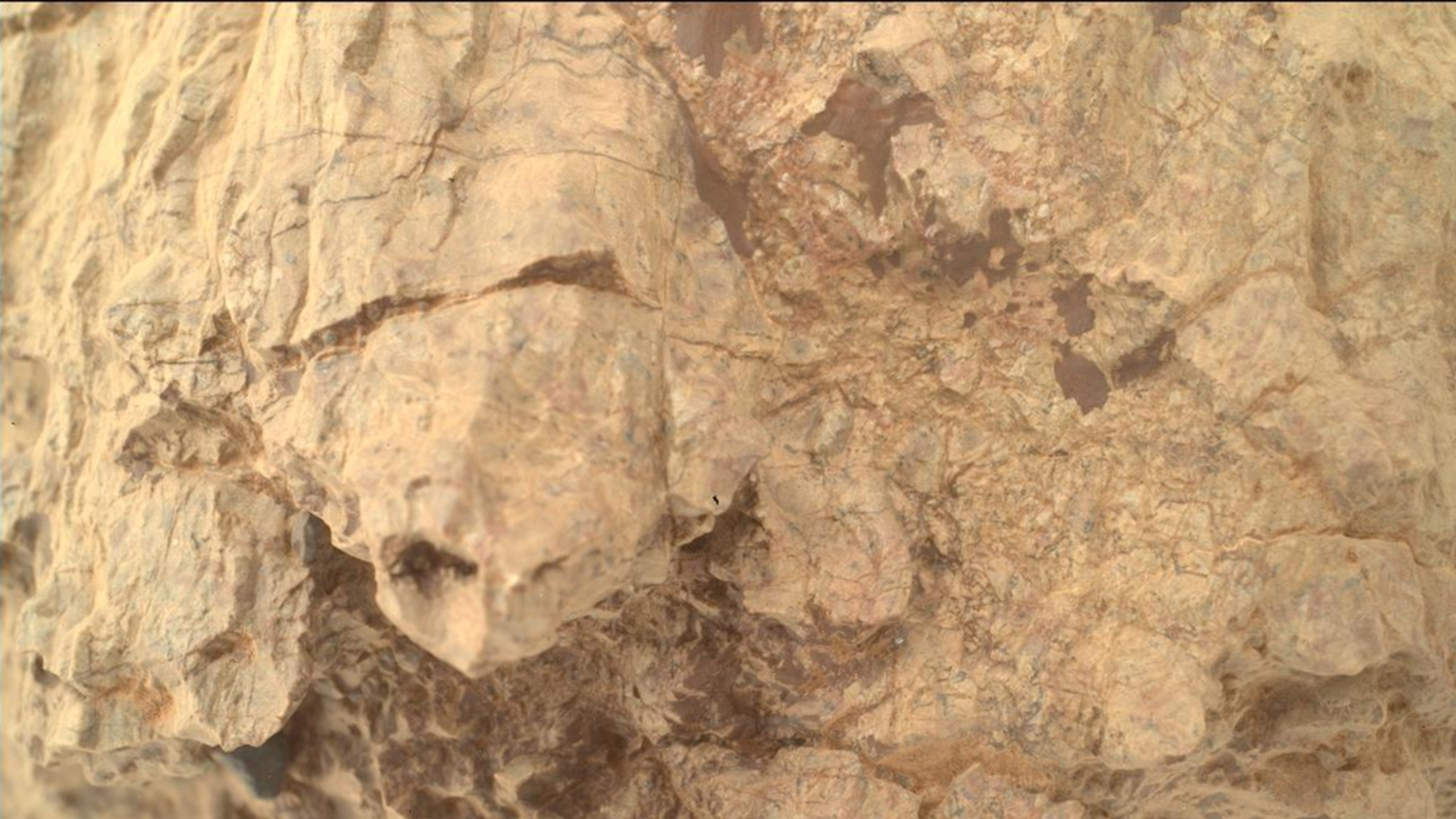
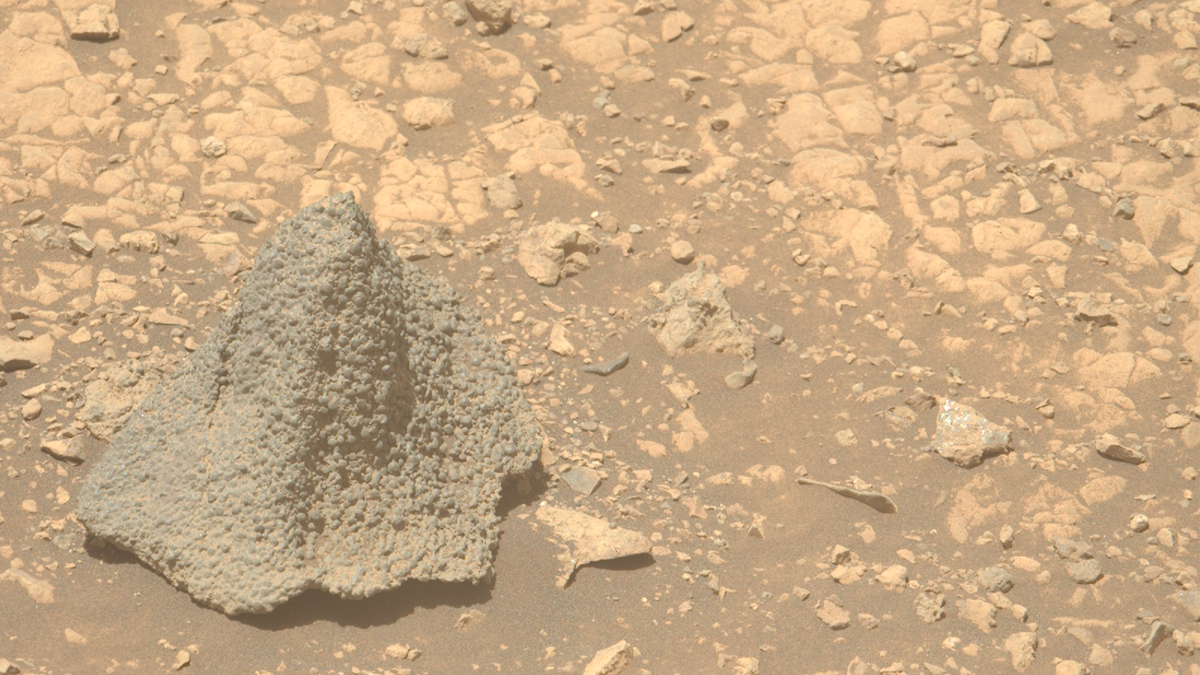
Bizarre 'helmet' spotted on Mars is being likened to the 'sorting hat' from Harry Potter 

With its pointed peak and wide brim, it looks like nothing discovered on Mars before.

In fact, this Martian rock, newly spotted by NASA's Perseverance rover, is leaving people baffled with its hat-like appearance. 

The bizarre feature, snapped on Mars' ancient Jezero Crater, is being likened to the 'sorting hat' from Harry Potter. 

On Reddit, it's also being compared with a helmet, a volcano, a codpiece and Marvin the Martian. 

One commentator joked: 'It’s quite obviously the helmet of a Spanish conquistador.' 

While another added: 'Looks like part of a cup holder.'

{ https://www.dailymail.co.uk/sciencetech/index.html }

Hoe vind je dit bericht?
Geschreven door peter om 16:53 Stuur door

People left baffled as Hollywood director is spotted in bombshell UFO hearing

People left baffled as Hollywood director is spotted in bombshell UFO hearing

Hollywood director Colin Trevorrow has left fans flabbergasted after he was spotted in attendance at the country's third ever UFO hearing in Congress.

The filmmaker, 48, who is best known for the Jurassic World franchise, was seen sitting behind famed paranormal activity journalist George Knapp at the bombshell proceeding on September 9.

The special hearing saw four witnesses give their testimony under oath about their experiences with UFOs.

They also shared their comments on whether the military is being honest about what is behind the supposed sightings.

Trevorrow's presence stirred up a lot of excitement online, with many speculating the reason behind him being there.

Taking to Reddit, one asked: 'He's directing a Lazar/Knapp movie isn't he?'

Another commented: 'He does indeed look like him. Just found out he is likely making a movie on the Las Vegas reporter who covered Area 51 in late 1980.'

In May, Deadline reported that Trevorrow's latest project would indeed be an untitled conspiracy thriller set in the late 1980s.

Hollywood director Colin Trevorrow was spotted at today's UFO hearing in Congress

Hollywood director Colin Trevorrow was spotted at today's UFO hearing in Congress

He was seen sitting behind George Knapp, who testified before the House Oversight Committee's Task Force on the Declassification of Federal Secrets

He was seen sitting behind George Knapp, who testified before the House Oversight Committee's Task Force on the Declassification of Federal Secrets 

He was joined by US Air Force Veteran Jeffrey Nuccetelli, Navy veteran and UAP Witness Chief Alexandro Wiggins, and US Air Force Veteran and UAP witness Dylan Borland.

A UAP is the new government term given to any object or anomaly in the air, sea, or space that defies scientific explanation.

During the hearing, Congressman Eric Burlison of Missouri showed shocking, never-before-seen footage of a UFO being struck by a Hellfire missile from a US military drone on October 30, 2024.

The black-and-white video captured the 100-pound class air-to-ground precision weapon bouncing off the mysterious orb, which continued traveling at extreme speed off the coast of Yemen.

Witness Nuccetelli, a former Air Force military police officer for 16 years, called the new video 'exceptional evidence' of the existence of UFOs.

He and the other men disclosed how they saw multiple types of strange, unexplained craft while on duty, including giant triangles, glowing cubes larger than a football field, and the infamous Tic-Tac-shaped vehicles spotted over the Pacific Ocean.

Witness Dylan Borland joined by UAP Journalist George Knapp as they spoke

Witness Dylan Borland joined by UAP Journalist George Knapp as they spoke 

Trevorrow, who is best known for the Jurassic World franchise, is working on a film about Knapp and Area 51

Trevorrow, who is best known for the Jurassic World franchise, is working on a film about Knapp and Area 51

Along with their eye-witness accounts, two of the veterans claimed that the US government has attempted to keep their incidents a secret, allegedly threatening witnesses to stay quiet and blacklisting at least one of the veterans.

Borland, a former Air Force geospatial intelligence specialist, said in his opening statement that multiple government agencies blocked him from getting work, forged his documents, and manipulated his security clearance.

He claimed that happened after he reported sightings of a 100-foot triangle flying low over him at Virginia's Langley Air Force Base in 2012 to his superiors.

The large craft interfered with his telephone, made no sound, and rapidly ascended thousands of feet in seconds, Borland told the members of Congress.

{ https://www.dailymail.co.uk/sciencetech/index.html }

Hoe vind je dit bericht?
Geschreven door peter om 16:30 Stuur door

Scientists issue the clearest image yet of mysterious interstellar object racing through our solar system

Scientists have issued a breathtaking new update on the mysterious 'interstellar object' racing through the solar system.

This visitor from another solar system, named 3I/ATLAS, is currently rushing towards the sun at 137,000 miles per hour (221,000 km/h).

Now, scientists at the Gemini South Observatory in Chile have captured the clearest images of 3I/ATLAS yet.

And the images reveal one feature which could finally put an end to speculation about whether the object is an alien spacecraft.

The images, taken on August 27 when the object was about 240 million miles (380 million km) from Earth, are some of the first multi-coloured images of 3I/ATLAS.

They reveal a dense icy nucleus surrounded by a broad halo of gas and dust known as a coma.

Most importantly, they also reveal that the object has a long tail stretching behind 3I/ATLAS in the direction opposite to the sun.

This tail measures about one 120th of a degree in the sky, where one degree is about the width of your little finger on an outstretched arm.

Scientists have captured the clearest images yet of the interstellar object 3I/ATLAS as it races through our solar system at 137,000 miles per hour (221,000 km/h)

Scientists have captured the clearest images yet of the interstellar object 3I/ATLAS as it races through our solar system at 137,000 miles per hour (221,000 km/h)

Scientists from the Gemini South Observatory in Chile captured these images of 3I/ATLAS while it was around 240 million miles (380 million km) from Earth, revealing its clear cometary tail stretching out away from the sun

Scientists from the Gemini South Observatory in Chile captured these images of 3I/ATLAS while it was around 240 million miles (380 million km) from Earth, revealing its clear cometary tail stretching out away from the sun 

Dr Mark Norris, an astronomer from the University of Lancashire who was not involved in the study, told The Daily Mail: 'These new images very clearly demonstrate that 3I/ATLAS is a comet.'

In our own solar system, comets are balls of ice and dust that travel around the sun in very long elliptical orbits, with some only returning every few hundred years.

When comets approach the sun, the heat causes ice made of water or carbon dioxide to sublimate, meaning it turns directly from a solid into a gas.

This cloud of gas and dust that is ejected from the comet's surface collects around the frozen core in the form of a coma and is swept out behind the comet to form a tail.

Since this cloud of particles is highly reflective, comets appear much brighter than rocky asteroids of similar sizes.

The closer the comet gets to the sun, and the more heat it is exposed to, the larger and brighter these features become.

Dr Norris says: 'Early images showed evidence for cometary activity, but the activity was quite weak while it was far from the Sun.

'As 3I/ATLAS approaches the Sun, it is being bathed in more and more sunlight, which increases the amount of material outgassing from the comet, which increases the coma and tail of the comet significantly.'

The new images show that the comet has become significantly more active since previous observations, such as this image taken by the Hubble Space Telescope in July

The new images show that the comet has become significantly more active since previous observations, such as this image taken by the Hubble Space Telescope in July 

These new images show that the tail is now significantly larger than it had been in earlier observations, such as those taken by the James Webb Space Telescope.

Additionally, by taking the images in colour, scientists were able to capture the wavelengths of light that the comet emits, known as its spectrum.

The spectrum tells scientists what kinds of chemicals can be found in the comet and in what proportions - telling us how it formed and how it changes as it passes through the solar system.

Interestingly, this analysis reveals that the ice and dust which make up 3I/ATLAS are broadly similar to those found in comets in our own solar system, with a few important differences.

Dr Matthew Genge, a planetary scientist from Imperial College London who was not involved in the study, told The Daily Mail: '3I/ATLAS has a CO2-rich atmosphere with less water than most home-grown comets.

'This might indicate it formed far from its parent star. Ice forms in early planetary systems by raining out of gas as snow. Water ice forms closer to the star and CO2 ice further away.'

This gives scientists an intriguing insight into the processes of planetary formation taking place around distant stars.

Bryce Bolin, research scientist from Eureka Scientific who was part of the team behind the images, says: 'Every interstellar comet is a messenger from another star system, and by studying their light and colour, we can begin to understand the diversity of worlds beyond our own.'

This is proof that the object is either a comet or a very rare type of icy asteroid, clearly demonstrating that it is a natural object and not some form of alien craft

This is proof that the object is either a comet or a very rare type of icy asteroid, clearly demonstrating that it is a natural object and not some form of alien craft 

There is only a short window in which 3I/ATLAS will be observable, so scientists are trying to gather as much data as they can to learn about these distant worlds.

Importantly, these observations also conclusively dismiss the theories that 3I/ATLAS is some sort of alien craft.

Previously, researchers such as Harvard physicist Professor Avi Loeb had suggested that 3I/ATLAS might be an artificial spacecraft of some kind.

Professor Loeb has publicly discussed the possibility that 3I/ATLAS could be a giant, nuclear-powered vessel.

article image

This claim was largely based on the fact that 3I/ATLAS was supposedly too large and too bright to be produced by natural forces.

However, the evidence of a bright coma and a tail is a clear natural explanation for the object's unexpected brightness and seemingly impossible size.

Dr Genge says that the Gemini South images clearly indicate that 3I/ATLAS is a natural object.

'Little green men certainly aren't responsible!' he added.

Explained: The difference between an asteroid, meteorite and other space rocks

An asteroid is a large chunk of rock left over from collisions or the early solar system. Most are located between Mars and Jupiter in the Main Belt.

A comet is a rock covered in ice, methane and other compounds. Their orbits take them much further out of the solar system.

A meteor is what astronomers call a flash of light in the atmosphere when debris burns up.

This debris itself is known as a meteoroid. Most are so small they are vapourised in the atmosphere.

If any of this meteoroid makes it to Earth, it is called a meteorite.

Meteors, meteoroids and meteorites normally originate from asteroids and comets.

For example, if Earth passes through the tail of a comet, much of the debris burns up in the atmosphere, forming a meteor shower.


New Interstellar Object 3I/ATLAS: The Latest Object from Beyond Our Solar System | WION

{ https://www.dailymail.co.uk/sciencetech/index.html }

Hoe vind je dit bericht?
Geschreven door peter om 16:16 Stuur door

Bombshell new video shows US military's direct hit on glowing UFO with hellfire missile

A group of military whistleblowers testified under oath that they've seen UFOs and that the US intelligence community has tried to cover it up. 

Three Navy and Air Force veterans testified Tuesday morning on Capitol Hill at the third congressional hearing on unidentified anomalous phenomena (UAPs), the new term for UFOs, since 2023.

During the hearing, Congressman Eric Burlison of Missouri showed shocking, never-before-seen footage of a UFO being struck by a Hellfire missile from a US military drone on October 30, 2024.

The black-and-white video captured the 100-pound class air-to-ground precision weapon bouncing off the mysterious orb, which continued traveling at extreme speed off the coast of Yemen.

Witness Jeffrey Nuccetelli, a former Air Force military police officer for 16 years, called the new video 'exceptional evidence' of the existence of UFOs. 

He and the other men disclosed how they saw multiple types of strange, unexplained craft while on duty, including giant triangles, glowing cubes larger than a football field, and the infamous Tic-Tac-shaped vehicles spotted over the Pacific Ocean.

Along with their eye-witness accounts, two of the veterans claimed that the US government has attempted to keep their incidents a secret, allegedly threatening witnesses to stay quiet and blacklisting at least one of the veterans.

Dylan Borland, a former Air Force geospatial intelligence specialist, said in his opening statement that multiple government agencies blocked him from getting work, forged his documents, and manipulated his security clearance.

Three military whistleblowers and other experts spoke on Tuesday during the third congressional hearing on UFOs

Three military whistleblowers and other experts spoke on Tuesday during the third congressional hearing on UFOs 

Congressman Eric Burlison of Missouri revealed video of a US military drone striking an orb-shaped UFO with a missile, which bounced off and did not stop the craft

Congressman Eric Burlison of Missouri revealed video of a US military drone striking an orb-shaped UFO with a missile, which bounced off and did not stop the craft

Borland claimed that happened after he reported sightings of a 100-foot triangle flying low over him at Virginia's Langley Air Force Base in 2012 to his superiors. 

The large craft interfered with his telephone, made no sound, and rapidly ascended thousands of feet in seconds, Borland told the members of Congress.

While in the government's classified Special Access Program (SAP), Borland added that other intelligence officers told him they had also faced retaliation after reporting their own encounters with UFOs.

Additionally, Borland claimed that the US intelligence community was engaging in phishing attacks in an attempt to assess what he disclosed to the Intelligence Community Inspector General (ICIG) during a polygraph test in November 2024.

When asked by South Carolina congresswoman Nancy Mace if he feared for his safety, Borland said he didn't believe a government group was currently attempting to kill him, but his reputation has been so damaged that he's currently living off of unemployment assistance. 

When it was Nuccetelli's turn to speak, the Air Force veteran said that he witnessed five unexplained incidents at California's Vandenberg Air Force Base between 2003 and 2005.

Those included receiving reports of a 'glowing red square' hovering silently over missile defense sites and witnessing a giant rectangle-shaped ship over 100 yards long on the same night in October 2003.

A week later, Nuccetelli said he documented how patrols at the base saw a strange light over the ocean heading toward Vandenberg. When guards called for help, the object quickly descended, hovered briefly, and then vanished.

Military whistleblowers revealed never-before-discussed encounters with UFOs, including the often reported Tic-Tac craft (pictured)

Military whistleblowers revealed never-before-discussed encounters with UFOs, including the often reported Tic-Tac craft (pictured)

Dylan Borland, a former Air Force geospatial intelligence specialist, claimed that he was retaliated against by the US government after reporting on UFO encounters

Dylan Borland, a former Air Force geospatial intelligence specialist, claimed that he was retaliated against by the US government after reporting on UFO encounters

article image

It was after this incident that Nuccetelli claimed a witness to the close encounter was threatened by their superiors to stay quiet.

When Colorado Congresswoman Lauren Boebert asked Nuccetelli about the status of the investigations into the reports, the Air Force veteran said the military had been regularly destroying all police records every three years, including the reports made at Vandenberg.

'They destroyed all the police records, so you couldn't even call the Air Force and ask them if there was a vehicle accident,' Nuccetelli said.

In his opening statement, Nuccetelli added that he and two other military police officers witnessed an orb with pulsing lights that moved like a butterfly flying over his house while they were off duty.

Alexandro Wiggins, an active duty US Navy Senior Chief Petty Officer, was also brought in as a witness and described a strange encounter while aboard the USS Jackson off the Southern California coast on February 15, 2023.

Wiggins witnessed a Tic-Tac craft emerge from the Pacific and join three other Tic-Tacs in a flying formation over the navy vessel.

All of the Tic-Tacs shot off at the same time with incredible speed, without creating a sonic boom or making the typical engine trails of a plane or drone.

Alexandro Wiggins, an active duty US Navy Senior Chief Petty Officer, revealed how he witnessed multiple Tic-Tac craft flying over the Pacific Ocean in 2023

Alexandro Wiggins, an active duty US Navy Senior Chief Petty Officer, revealed how he witnessed multiple Tic-Tac craft flying over the Pacific Ocean in 2023

The chairwoman of the hearing, Rep. Anna Paulina Luna of Florida, claimed in her opening statement that the former leader of the Pentagon's UAP investigating office (ARRO), Dr Sean Kirkpatrick, was a 'documented liar' who undermined UFO investigations.

Later in the hearing, Luna added that she would be happy to subpoena Kirkpatrick to testify on the alleged misconduct at the All-domain Anomaly Resolution Office.

Also testifying before Congress was Joe Spielberger, a senior policy counsel at the Project On Government Oversight (POGO), who emphasized the critical role of whistleblowers in exposing government wrongdoing. 

George Knapp, a chief investigative reporter for KLAS-TV in Las Vegas, who highlighted a decades-long pursuit of the UAP story through government documents and witness accounts, was at the hearing as well, documenting years of suspicious behavior surrounding the government's official narratives about UFOs.

Knapp said during the hearing that Americans were told for decades that there was no documentation of any kind of strange craft, but that changed when the Freedom of Information Act (FOIA) was enacted in 1966.

The journalist noted that thousands of pages of previously classified documents have suddenly been released in the ensuing decades, including many involving reports of UAPs worldwide.

RELATED VIDEOS

Bombshell New Video Shows US Military's DIRECT HIT On Glowing UFO with Hellfire Missile

LIVE: Bombshell New Video Shows US Military's Direct Hit On Glowing UFO With Hellfire Missile | N18G

{ https://www.dailymail.co.uk/sciencetech/index.html }

Hoe vind je dit bericht?
Geschreven door peter om 15:56 Stuur door

The Lost Ness Monster! Experts baffled as mystery creature filmed lurking in the Thames

Experts are baffled after a mystery animal was spotted lurking in the Thames by a family out for a stroll.

Ryan Linehan filmed the enigmatic presence swimming near Old Windsor Lock, Berkshire, while walking with his parents.

His mother Bernie, 63, said: 'We were just passing by and it was actually the lock keeper that said to keep an eye out for what he thought was a seal.

'My son just caught it as it bobbed up, but that was the best shot we could get.'

In the footage, the creature's black head can be seen dipping in and out of the water as it swims through the river.

Being a long way from the ocean, the family were sceptical about it being a seal.

Mr Linehan, 21, said: 'It looked slightly furry in its appearance, and it had quite a flat nose.

'I'd say in length, it was the size of a medium to large dog, maybe like a German Shepherd or Alsatian.'

The creature¿s black head can be seen dipping in and out of the water as it swims through the river

The creature's black head can be seen dipping in and out of the water as it swims through the river

The footage, uploaded to Facebook, has been viewed tens of thousands of times and sparked a huge debate

The footage, uploaded to Facebook, has been viewed tens of thousands of times and sparked a huge debate

Looking for answers, the family turned to the internet, sharing the footage with members of a naturalist group on Facebook.

It soon racked up tens of thousands of views and sparked a huge debate.

'Nessie, but she's a bit lost', wrote one joker.

Several others identified it as an 'escaped' capybara – the world's largest rodent species which comes from South America.

Further suggestions included a sea lion, a turtle, and a coypu – another South America species.

'It's 110 per cent a seal,' wrote one viewer. 'Definitely a beaver,' another person said. 

Several people thought it might be an otter, but just as many refuted that too.

And even the experts disagree.

The mystery animal was spotted lurking in the Thames near Old Windsor Lock in Berkshire by a family out for a stroll

The mystery animal was spotted lurking in the Thames near Old Windsor Lock in Berkshire by a family out for a stroll

The animal has even baffled experts, with some arguing that it can't be a seal or a beaver while others saying it could potentially be an otter

The animal has even baffled experts, with some arguing that it can't be a seal or a beaver while others saying it could potentially be an otter

Some believe the creature could be a seal, like this one picturedOthers say it might be a beaver - however, some experts said the species 'wouldn't come up this far'

Some believe the creature could be a seal (left) while others said it might be a beaver (right)

There has also been speculation it could be an otter, although others said the species has a concave 'dip' at the end of the muzzle that's not visible in the footage

There has also been speculation it could be an otter, although others said the species has a concave 'dip' at the end of the muzzle that's not visible in the footage

First the family contacted somebody at a local wildlife trust.

Mrs Linehan said: 'Her opinion – and she checked with colleagues – was that she thought it was an otter. She said a seal and a beaver wouldn't come up that far, and they wouldn't be able to negotiate the locks.'

Florin Feneru, identification and advisory officer with the Angela Marmont Centre at the Natural History Museum, said he couldn't tell 'with any confidence'.

article image

He said: 'I wish I could see its tail, that would have clearly settled the debate. However, I can't see this as a seal at all.

'Between beaver and otter, I lean towards beaver. Their upper line of the cranium is flatter, a bit convex even, like a bull terrier's for example.

'Otters have a stop – the concave dip at the base of the muzzle, like a beagle for example.'

Richard Bennett of the Canal and River Trust also couldn't be 100 per cent sure. He said: 'Not a seal, and more beaver than otter from the shape of the head – something about the way it moves too.'

HOW AND WHY DO BEAVERS BUILD DAMS?

Beavers are found across the northern hemisphere and are among planet's most skilled builders.

This reputation has earnt them the nickname 'nature's engineers'.

They fell trees by gnawing at their trunks and use the resulting sticks to construct dams to stop the movement of water in ponds, lakes, rivers and streams – creating a bodies of water with a low current.

The mammals then use sticks and mud to create a second structure – a large dome-shaped island that can reach as high as ten feet (3m) tall and up to 1,600ft (500m) long.

Each island includes two underwater entrances and a living chamber above water where the animals sleep and shelter.

Beavers often line the walls of this chamber with dry leaves and plants to insulate it during winter. 

It remains unclear exactly why beavers build dams, but scientists speculate the creatures use it for warmth and shelter in the winter and as protection from predators.

Beavers are strong swimmers, and creating a reservoir of water allows the animals to play to their strengths to escape those higher in the food chain.

The biggest beaver dam ever discovered measured 2,790ft (850m) – more than twice the length of the Hoover dam.

The woodland construction, found in the southern edge of Wood Buffalo National Park in Northern Alberta, Canada, was so expansive it could be seen from space.


The Mystery Of The Loch Ness Monster | A Legend Uncovered

{ https://www.dailymail.co.uk/sciencetech/index.html }

Hoe vind je dit bericht?
Geschreven door peter om 15:38 Stuur door

NASA finds clearest sign of life on Mars: US space chief reveals discovery 30 years in the making

NASA has announced the discovery of what it believes to be ancient microbial life on Mars. 

The new administrator for the space agency, Sean Duffy, said a sample collected by the Perseverance rover has been declared the 'clearest sign of life' ever found on the Red Planet.

In a Wednesday news conference, NASA's Associate Administrator Nicky Fox said: 'This is the kind of signature that we would see that was made by something biological.'

Specifically, researchers have been looking at unusual spots and seed-like shapes in ancient Martian rocks that might point to the existence of tiny life forms in the distant past.

These features, nicknamed 'poppy seeds' and 'leopard spots,' were spotted in mud-like rocks in Neretva Vallis, part of the Jezero crater, where a river existed billions of years ago.

Scientist Joel Hurowitz revealed how these tiny signatures found in the crater pointed to the existence of life on Mars long before most organisms emerged on Earth.

Although the findings have been discussed for months, Hurowitz noted that scientists needed to gather more data from Neretva Vallis and confirm the results with other researchers before releasing the conclusion that this could be Martian life.

'We are here to say this is exciting, and we want to share that news. This could be very real,' Duffy continued. 

In 2024, Perseverance spotted a vein-filled arrowhead-shaped rock that featured chemical signatures and structures likely formed by microbial life billions of years ago

In 2024, Perseverance spotted a vein-filled arrowhead-shaped rock that featured chemical signatures and structures likely formed by microbial life billions of years ago

NASA Administrator Sean Duffy (center) revealed that a sample collected by Perseverance is the 'clearest sign of life' on Mars ever found in 30 years

The rover's tools detected chemicals like iron and phosphorus in these spots, which can form when tiny microbes break down organic material, a sign of life here on Earth. 

The NASA robot has been beaming back images to Earth since 2021, revealing crystalline solids left over from water flowing on the surface of Mars, and a reddish area that contained organic compounds and an energy source for what could have been microbial life.

Perseverance collected the new life-proving rocks on July 21, 2024, while exploring the northern edge of Neretva Vallis, the ancient river valley formed roughly 3.7billion years ago.

Scientists noticed the vein-like structures throughout, finding they were white calcium sulfate.

The crystalline solids on the Martian surface are hard-water deposits left behind by ancient groundwater flowing through the now-dusty landscape.

Between those veins were bands of material with a reddish color suggesting the presence of hematite, one of the minerals that gives Mars its distinctive rusty hue.

Duffy noted that the announcement on Wednesday was the culmination of 30 years of research on the Red Planet.

He added that the latest findings went through a peer-review process, just like scientific studies in all fields, which proved the samples likely had a biological origin.

NASA officials revealed new findings by the Perseverance rover, which has been exploring Mars (pictured) since 2021

NASA officials revealed new findings by the Perseverance rover, which has been exploring Mars (pictured) since 2021

Perseverance took a selfie in the Jezero crater on Mars when it found the biological samples

Perseverance took a selfie in the Jezero crater on Mars when it found the biological samples

article image

When asked if NASA plans to retrieve the potential organic samples from Mars, Duffy said the space agency was still looking at how and when they could get the rocks back to Earth, adding that 'we're going to look at our budgets'.

The new administrator appointed by President Trump noted that 'the president loves space' and believed NASA has the money to complete its work, which is now focused on manned space missions.

Duffy noted the space agency's mission was going to be 'a little more focused' but felt comfortable asking the White House for more funding if it was needed to confirm the findings on Mars.

'At no point has this administration said "we don't care about samples,"' Fox added while addressing questions about NASA's changing priorities regarding Mars exploration.

Previously, the Trump administration had cut the Mars sample retrieval mission from its budget proposal for NASA.

It was part of $6billion slashed from NASA's future budget in the May proposal to Congress, even though the ongoing sample study had already cost billions.

Duffy said NASA was now looking at a faster and more cost-effective way of getting Perseverance's samples back for examination.

As for NASA's upcoming space missions, Duffy revealed that four astronauts will circle the moon 'early next year' as part of the Artemis II lunar mission.

'We're going back to the moon,' the administrator declared.

Duffy added that 'about a year and a half' after the Artemis II mission, the Artemis III astronaut mission will 'land and establish a long-term presence of life on the moon led by America'.

NASA's new leader continued by saying that what astronauts learn from the renewed missions to the moon will help in future efforts to 'put American boots on Mars'.

e2-cold-scale-graphic-1.png?w=843

Marked by seven benchmarks, the Confidence of Life Detection, or CoLD, scale outlines a progression in confidence that a set of observations stands as evidence of life. 

Credit: NASA

This animation depicts water disappearing over time in the Martian river valley Neretva Vallis, where NASA’s Perseverance Mars takes the rock sample named “Sapphire Canyon” from a rock called “Cheyava Falls,” which was found in the “Bright Angel” formation.

Credit: NASA

{ https://www.dailymail.co.uk/sciencetech/index.html }

Hoe vind je dit bericht?
Geschreven door peter om 15:16 Stuur door

EXCLUSIVE - Fierce debate erupts over 'non-human' technology in space after video captures UFO surviving Hellfire strike

The jaw-dropping video of a US drone firing a Hellfire missile at an orb, only for the object to remain completely unaffected, has left lawmakers and the public stunned.  

The footage, presented during Tuesday's congressional hearing on unidentified aerial phenomena (UAP), shows an MQ-9 drone tracking an unknown object as another MQ-9 launches a Hellfire missile. 

The missile struck the orb, but instead of detonating, it appeared to bounce off. 

While questions swirl about the video, UFO researcher and filmmaker Mark Christopher Lee told the Daily Mail that the object seen during the hearing 'is non-human.'

'The way the object is described, as a glowing, bright, luminous sphere, like an orb, is unlike anything we currently have,' he said.  'It moves in a fast, straight line, making it trackable, yet shows no visible signs of propulsion such as exhaust plumes or rotors, almost like a plasma object.' 

Lee highlighted the orb's ability to deflect the missile as highly unusual, suggesting technology beyond current human capabilities. 

'None that I know of, which makes me believe it's a non-human UAP,' he added. He also noted similarities to other unexplained drone sightings, including recent incidents in New Jersey. 

However, not all experts agree. Alejandro Rojas, an advisor at Enigma Labs, which analyzes UAP reports, said the video appears authentic but may be a conventional explanation. 

'It seems like the object hit was moving slowly and did not continue. To me, it appears that the missile was unaffected and continued flying,' Rojas said. 'It's likely a military test or drone of some sort.' 

The  video showed a US military drone striking an orb-shaped UFO with a missile, which bounced off and did not stop the craft

The  video showed a US military drone striking an orb-shaped UFO with a missile, which bounced off and did not stop the craft

The footage, presented during Tuesday's c ongressional hearing on unidentified aerial phenomena (UAP), shows an MQ-9 drone tracking an unknown object as another MQ-9 launches a Hellfire missile (stock)

The footage, presented during Tuesday's c ongressional hearing on unidentified aerial phenomena (UAP), shows an MQ-9 drone tracking an unknown object as another MQ-9 launches a Hellfire missile (stock)

The black-and-white footage was presented by Missouri Congressman Eric Burlison, who said he received it anonymously in a 'dead drop.'

'This was taken on October 30, 2024. It shows an MQ-9 tracking an orb off the coast of Yemen,' Burlison explained. 'Another MQ-9 launched a Hellfire missile, which you cannot see, and I'm not going to explain it to you. You'll see exactly what it does.'

UAP journalist George Knapp, who also testified, reacted to the video by asking, 'What the h*** is that?' Burlison replied, 'I'm not going to speculate what it is, but the question is, why are we being blocked from this information consistently?'

Lee speculated that the orb may represent an inter-dimensional phenomenon rather than a craft from another planet. 

'This is the true reality of UFO disclosure. It's far weirder than beings from another planet,' he said, adding that the object was likely only making its presence known, not preparing to attack.

When asked whether the footage captured an extraterrestrial craft, Rojas responded bluntly, 'I do not believe in ET.'

Three Navy and Air Force veterans testified Tuesday morning on Capitol Hill at the third congressional hearing on UAPs, the new term for UFOs, since 2023. 

The men disclosed how they saw multiple types of strange, unexplained craft while on duty, including giant triangles, glowing cubes larger than a football field, and the infamous Tic-Tac-shaped vehicles spotted over the Pacific Ocean.

The black-and-white footage was presented by Missouri Congressman Eric Burlison, who said he received it anonymously in a 'dead drop'

The black-and-white footage was presented by Missouri Congressman Eric Burlison, who said he received it anonymously in a 'dead drop'

Along with their eye-witness accounts, two of the veterans claimed that the US government has attempted to keep their incidents a secret, allegedly threatening witnesses to stay quiet and blacklisting at least one of the veterans.

Dylan Borland, a former Air Force geospatial intelligence specialist, said in his opening statement that multiple government agencies blocked him from getting work, forged his documents, and manipulated his security clearance.

Witness Jeffrey Nuccetelli, a former Air Force military police officer, said that he witnessed five unexplained incidents at California's Vandenberg Air Force Base between 2003 and 2005.

Those included receiving reports of a 'glowing red square' hovering silently over missile defense sites and witnessing a giant rectangle-shaped ship over 100 yards long on the same night in October 2003.

A week later, Nuccetelli said he documented how patrols at the base saw a strange light over the ocean heading toward Vandenberg. When guards called for help, the object quickly descended, hovered briefly, and then vanished.

Three military whistleblowers and other experts spoke on Tuesday during the third congressional hearing on UFOs

Three military whistleblowers and other experts spoke on Tuesday during the third congressional hearing on UFOs

'They destroyed all the police records, so you couldn't even call the Air Force and ask them if there was a vehicle accident,' Nuccetelli said.

Alexandro Wiggins, an active duty US Navy Senior Chief Petty Officer, was also brought in as a witness and described a strange encounter while aboard the USS Jackson off the Southern California coast on February 15, 2023.

article image

Wiggins witnessed a Tic-Tac craft emerge from the Pacific and join three other Tic-Tacs in a flying formation over the navy vessel.

All of the Tic-Tacs shot off at the same time with incredible speed, without creating a sonic boom or making the typical engine trails of a plane or drone.

Knapp, a chief investigative reporter for KLAS-TV in Las Vegas, highlighted a decades-long pursuit of the UAP story through government documents and witness accounts, documenting years of suspicious behavior surrounding the government's official narratives about UFOs.

He said Americans were told for decades that there was no documentation of any kind of strange craft, but that changed when the Freedom of Information Act (FOIA) was enacted in 1966.

The journalist noted that thousands of pages of previously classified documents have suddenly been released in the ensuing decades, including many involving reports of UAPs worldwide.

{ https://www.dailymail.co.uk/sciencetech/index.html }

Hoe vind je dit bericht?
Geschreven door peter om 14:58 Stuur door

Scientists reveal what ancient Martians might have looked like - as NASA announces strongest evidence yet for life on the Red Planet

Scientists reveal what ancient Martians might have looked like - as NASA announces strongest evidence yet for life on the Red Planet

Yesterday, NASA made the startling announcement that its scientists have uncovered the 'clearest evidence' yet for the existence of life on Mars.

Last year, NASA's Perseverance rover discovered that a dry riverbed just north of the Martian equator is dotted with rusty circular markings known as 'leopard spots'.

According to NASA administrator Sean Duffy, the space agency now believes these marks could have been left by ancient lifeforms which lived billions of years ago.

Now, scientists have revealed what these alien organisms might have looked like. 

Any life that evolved on Mars would have had to contend with harsh radiation, weak gravity, and temperatures that can swing between 20°C (70°F) in the day and -153°C (-225°F) at night. 

However, the scientists behind this groundbreaking research say that it is still possible for some forms of life to evolve. 

If there were life on Mars, it would almost certainly consist of very simple microbial organisms like bacteria.

In the unlikely case that more complex life did evolve somewhere on the Red Planet, it would need to develop special adaptations to survive this impossibly harsh climate.

NASA has revealed the 'clearest evidence' yet for the existence of life on Mars, as it claims that 'leopard spots' on Martian rocks could have been created by ancient microbes

NASA has revealed the 'clearest evidence' yet for the existence of life on Mars, as it claims that 'leopard spots' on Martian rocks could have been created by ancient microbes

Scientists say that Mars' Jezero Crater was once filled with water that would have been 'clement' for microbial life to develop. Pictured: AI-generated impression

Scientists say that Mars' Jezero Crater was once filled with water that would have been 'clement' for microbial life to develop. Pictured: AI-generated impression 

What did NASA find on Mars?

While investigating a region known as the 'Bright Angel', NASA's Perseverance rover spotted a group of unusual markings that resemble leopard spots.

Scientists call these spots 'reaction fronts', and they are points of contact where chemical and physical reactions have occurred in the past. 

Critically, Perseverance's on-board lab found that these spots contained two iron-rich minerals: Vivianite, which is found in decaying organic matter, and greigite, which is produced by microbes on Earth.

Dr Keyron Hickman-Lewis, an Earth scientist from Birkbeck, University of London and co-author of the NASA report, told Daily Mail: 'The kinds of organic–mineral associations observed at Bright Angel that are reported in this paper are known to be generated by microbial life on Earth, and so it is a very promising observation to see something so similar on Mars.

'Certainly, I think that this is the most compelling potential evidence of life on Mars found to date.'

The scientists can't yet rule out that these spots could be caused by non-biological processes, and Dr Hickman-Lewis says that this is not a 'smoking gun'.

However, after spending a year reviewing the evidence and looking for alternative explanations, the researchers are now confident enough to say that this could be a 'biosignature', an elusive sign which proves the existence of life.

These signs of life were found by the Perseverance rover in a region called 'Bright Angel'. Researchers say that chemicals found in the leopard spots are produced by biological processes on Earth

These signs of life were found by the Perseverance rover in a region called 'Bright Angel'. Researchers say that chemicals found in the leopard spots are produced by biological processes on Earth 

Although Mars is now a barren desert, billions of years ago, it would have been covered with rivers and lakes that could have supported life

Although Mars is now a barren desert, billions of years ago, it would have been covered with rivers and lakes that could have supported life 

Dr Hickman-Lewis adds: 'The Mars 2020 team does not use the term "potential biosignature" lightly.'

What would this life look like?

The potential signs of life were found in a region called Jezero Crater, an impact basin just north of the equator.

Although it is now a barren wasteland, billions of years ago, the Jezero Crater was filled with water that could have been home to life.

If life did exist in these waters, the most plausible explanation is that it was some sort of simple microorganism.

Dr Hickman-Lewis says: 'The environment in which these potential biosignatures were found seems to be a low-temperature water-rich setting and therefore very clement for microbial life.'

In their paper, published in Nature, the researchers suggest that microbes could have fed on the naturally occurring carbon, sulphur, and phosphorus in the rocks.

These microbes would have then 'excreted' the minerals which we now see as leopard spots.

NASA Administrator Sean Duffy (center) revealed that a sample collected by Perseverance is the 'clearest sign of life' on Mars ever found in 30 years

The Jezero Crater, where the potential signs of life were found, was once a river delta. Observations from orbiting spacecraft show patterns of sediment that are similar to those made by rivers on Earth. Pictured: AI-generated impression

The Jezero Crater, where the potential signs of life were found, was once a river delta. Observations from orbiting spacecraft show patterns of sediment that are similar to those made by rivers on Earth. Pictured: AI-generated impression 

As microbes fed on the carbon, sulphur, and phosphorus in the rocks, they might have released iron-rich chemicals which permanently stained the rocks to leave 'leopard spots'. Pictured: AI-generated impression

As microbes fed on the carbon, sulphur, and phosphorus in the rocks, they might have released iron-rich chemicals which permanently stained the rocks to leave 'leopard spots'. Pictured: AI-generated impression 

The conditions on the surface would have been incredibly harsh, but the researchers say that life still could have eked out a simple existence.

Dr Sanjeev Gupta, an Earth scientist from Imperial College London and member of the research team, told Daily Mail: 'There was liquid water present at the surface at the time billions of years ago, so it was a habitable environment. 

'This would have been simple microbial life. We can say much more than that.'

Since we can only see the possible traces left behind by these microorganisms, it's difficult to know what they might have looked like or how they behaved.

However, it is possible to make some very general predictions based on parallels from Earth.

Professor Michael Garrett, an astronomer from the University of Manchester and Director of Jodrell Bank Centre for Astrophysics who was not involved in the study, told Daily Mail: 'Think of hardy bacteria, similar to terrestrial extremophiles that thrive in very salty, cold, or low-oxygen conditions here on Earth.

'Good analogues are the microbial mats in very salty lakes or microbes that live kilometres underground in Earth’s crust or in the high desert in Chile.

'These examples show us that life can be tough, minimalistic, and persistent even in places where surface conditions are brutal.'

Scientists say that the best parallels for what life might have looked like are the microbial mats that form in extremely salty lakes on Earth. Pictured: AI-generated impression

Scientists say that the best parallels for what life might have looked like are the microbial mats that form in extremely salty lakes on Earth. Pictured: AI-generated impression 

It is unlikely that more complex life could have evolved since Mars' climate changed rapidly about a billion years after the first microbes could have appeared. This means complex organisms like animals probably didn't have time to develop. Pictured: AI-generated impression

It is unlikely that more complex life could have evolved since Mars' climate changed rapidly about a billion years after the first microbes could have appeared. This means complex organisms like animals probably didn't have time to develop. Pictured: AI-generated impression 

Could more complex life have evolved? 

If these leopard spots really are biosignatures, then the researchers say it's unlikely that they only existed in one place.

Perseverance is currently studying very ancient rocks outside of the Jezero Crater to look for signs of more widespread life.

However, it is extremely unlikely that more complex life evolved anywhere on the Red Planet.

The researchers think that microbes emerged on Mars around the same time that life was getting started on Earth.

However, after about one billion years, Mars' climate began to change rapidly as solar winds stripped away its atmosphere - leaving the planet very cold and dry.

Professor Garrett says: 'Those harsh conditions on Mars after 1 billion years would put strong limits on body size and complexity of any lifeform.

'It took really complex life, like animals, another 3 billion years before they appeared on the Earth, where the conditions were much better to support energy-hungry complex life forms.'

If complex life had emerged, it would have needed to develop adaptations like thick skin or live underground to avoid the intense radiation of the Martian surface. Pictured: AI-generated impression

If complex life had emerged, it would have needed to develop adaptations like thick skin or live underground to avoid the intense radiation of the Martian surface. Pictured: AI-generated impression 

On Earth, some of the first animals to evolve were simple filter feeders. Filter feeders also survive in extreme environments such as hydrothermal vents, so complex Martian life might have followed a similar evolutionary trajectory. Pictured: AI-generated impression

On Earth, some of the first animals to evolve were simple filter feeders. Filter feeders also survive in extreme environments such as hydrothermal vents, so complex Martian life might have followed a similar evolutionary trajectory. Pictured: AI-generated impression 

article image

In the unlikely case that more complex life did evolve, Mars' harsh conditions would also put strong constraints on what it might look like.

'It would need to be adapted to survive the intense UV radiation from the Sun, extreme cold, and limited liquid water - we don’t really see complicated animal life in such environments,' says Professor Garret.

He adds: 'If they were present, they would need protection from the UV radiation from the sun – maybe a thick skin, for example, or perhaps mostly living under the Martian soil.'

That means complex life might resemble creatures on Earth that live in exceptionally harsh environments, such as desert-dwelling lizards or the simple filter-feeders that survive near hydrothermal vents.  

MARS: THE BASICS

Mars is the fourth planet from the sun, with a 'near-dead' dusty, cold, desert world with a very thin atmosphere. 

Mars is also a dynamic planet with seasons, polar ice caps, canyons, extinct volcanoes, and evidence that it was even more active in the past. 

It is one of the most explored planets in the solar system and the only planet humans have sent rovers to explore.

One day on Mars takes a little over 24 hours and a year is 687 Earth days.

Facts and Figures 

Orbital period: 687 days

Surface area: 55.91 million mi²

Distance from Sun: 145 million miles

Gravity: 3.721 m/s²

Radius: 2,106 miles

Moons: Phobos, Deimos

{ https://www.dailymail.co.uk/sciencetech/index.html }

Hoe vind je dit bericht?
Geschreven door peter om 14:40 Stuur door

Wat is Angel Hair precies? We analyseren en bespreken deze mysterieuze substantie

angel-hair-example-600x0.jpg

Wat is Angel Hair precies? We analyseren en bespreken deze mysterieuze substantie

In de wereld van het onverklaarbare en bovennatuurlijke bestaat er een fascinerende en vaak voorkomende verschijnsel dat bekendstaat als "angel hair" of "engelenhaar". Mensen over de hele wereld hebben meldingen gedaan van dunne, zijdeachtige draden die door de lucht zweven of op de grond liggen, vaak na een ufo-waarneming of een ander onverklaarbaar fenomeen. Ondanks dat dit verschijnsel al decennia wordt gerapporteerd, blijft de exacte aard en oorsprong van angel hair voor velen een mysterie. In dit artikel zullen we deze mysterieuze substantie grondig analyseren en bespreken wat wetenschappelijk bekend is en wat niet, en mogelijke verklaringen voor het fenomeen.

Wat is angel hair?

Angel hair wordt vaak omschreven als dunne, glanzende filaments of draden die sterk lijken op zijde of fijn haar. Deze delicate draden variëren in lengte, van slechts enkele centimeters tot meerdere meters, en kunnen zich in grote groepen of clusters verspreiden. De kleur van angel hair is meestal wit of doorschijnend, waardoor ze bijna onzichtbaar kunnen lijken wanneer ze in de lucht zweven. De draden zijn fragiel en breekbaar, waardoor ze gemakkelijk kunnen worden verbroken of verloren gaan bij aanraking of beweging. Mensen rapporteren dat deze mysterieuze draden soms uit de lucht lijken te komen, alsof ze uit het niets tevoorschijn komen, of dat ze op de grond liggen als restanten van een onverklaarbare gebeurtenis. Vaak worden ze waargenomen na het zien van een onverklaarbaar object in de lucht, zoals een UFO, of tijdens bijzondere atmosferische omstandigheden.

Het fenomeen van angel hair is niet nieuw; meldingen van deze mysterieuze draden dateren al uit de 19e eeuw en blijven tot op heden voorkomen. Tijdens bepaalde waarnemingen beschrijven getuigen dat de angel hair zich lijkt te verspreiden in de lucht, alsof het wordt uitgestoten door een onbekend object dat in de lucht beweegt. Soms lijkt het spontaan uit de lucht te verschijnen, zonder dat er een duidelijk bron zichtbaar is. Dit heeft geleid tot veel speculaties en theorieën over de aard en herkomst van deze draden. Hoewel angel hair vooral wordt geassocieerd met ufo-waarnemingen en buitenaardse verschijnselen, worden ze ook in andere contexten gerapporteerd. Zo worden ze soms waargenomen tijdens onweersbuien, bij het zien van vreemde lichten aan de hemel, of in situaties waarin bijzondere atmosferische verschijnselen voorkomen. Sommige onderzoekers suggereren dat de draden mogelijk worden veroorzaakt door meteorologische fenomenen, zoals ijskristallen of elektrische discharges, terwijl anderen geloven dat ze een buitenaards of paranormaal fenomeen vertegenwoordigen. Ondanks de vele rapportages en onderzoeken blijft de exacte herkomst en aard van angel hair een mysterie dat de nieuwsgierigheid van velen blijft prikkelen.

Verschillende benaderingen en verklaringen

Het ongrijpbare karakter van angel hair heeft geleid tot diverse theorieën over de oorsprong en aard ervan. Sommige mensen geloven dat het een buitenaards fenomeen is, een soort van buitenaardse afscheiding of een vorm van technologie die wordt gebruikt door UFO's. Anderen denken dat het natuurlijke oorzaken heeft, zoals meteorologische fenomenen, natuurlijke stoffen in de atmosfeer, of zelfs menselijke activiteiten.

500px-Web_in_Israel.jpg

Een spinnenweb, een van de mogelijke oorzaken van het Angel hair-fenomeen.

Natuurlijke verklaringen

Een van de meest gangbare en wetenschappelijk onderbouwde verklaringen voor het fenomeen angel hair is dat het bestaat uit natuurlijke stoffen die in de atmosfeer voorkomen en zich op bepaalde omstandigheden voortplanten. Een belangrijke factor hierbij is de aanwezigheid van spinnenwebben, die door de wind over grote afstanden kunnen worden verspreid. Spinnenwebben bestaan uit zijdeachtige draden die door hun dunheid en glans vaak lijken op fijne, glinsterende strengen in de lucht. Deze webben worden door spinsels vaak in de natuur aangelegd en kunnen, afhankelijk van de weersomstandigheden, worden losgelaten en verder worden meegevoerd door de wind. Tijdens en na regenbuien, wanneer de luchtvochtigheid hoog is, worden spinnenwebben vaak losser en kunnen ze gemakkelijk worden uit elkaar getrokken. Hierdoor kunnen ze zich over grote gebieden verspreiden en op hun beurt de indruk wekken van een mysterieuze, haarachtige substantie die in de lucht zweeft. Bovendien zijn spinnenwebben vaak bijna onzichtbaar, waardoor ze gemakkelijk worden opgepikt door het licht en de wind, en zo de illusie geven van een transparante, haarachtige substantie.

Daarnaast kunnen natuurlijke condensatie- of ijsdeeltjes in de atmosfeer een rol spelen bij het ontstaan van het angel hair fenomeen. Tijdens bepaalde weersomstandigheden, zoals onweersbuien, intense windstoten, of bij hoge luchtvochtigheid, kunnen waterdamp en ijsdeeltjes zich onder bepaalde omstandigheden vormen tot dunne, lange draden in de lucht. Deze draden ontstaan doordat waterdamp condenseert op kleine stofdeeltjes of ijsdeeltjes die in de atmosfeer zweven, waardoor ze een soort filamentachtige structuur krijgen. Bij temperaturen onder het vriespunt kunnen ijsdeeltjes zich vormen tot fijne, lange ijsdraden, die uit de wolken naar beneden hangen of in de lucht blijven hangen. Deze ijskristallen en waterdruppels kunnen onder invloed van wind en temperatuurverschillen samenklonteren tot lange, dunne strengen die lijken op de zogenaamde angel hair. Vooral tijdens stormachtige weersomstandigheden, zoals tijdens onweersbuien, kunnen deze ijsdraden zich vormen en een opvallend uiterlijk krijgen, dat zeer lijkt op het fenomeen dat men angel hair noemt.

Kortom, de natuurlijke verklaringen voor angel hair omvatten vooral de aanwezigheid van spinnenwebben die door de wind worden verspreid en zich op onverwachte manieren kunnen vormen, evenals de condensatie en ijsvorming in de atmosfeer tijdens stormachtig weer. Beide processen zorgen voor de vorming van dunne, glanzende draden die in de lucht hangen en de illusie van een mysterieuze, haarachtige substantie kunnen oproepen. Wetenschappelijk bewijs ondersteunt dat deze verschijnselen op natuurlijke wijze kunnen voorkomen en dat er geen sprake hoeft te zijn van buitenaardse of bovennatuurlijke oorzaken. Het begrijpen van de atmosferische processen en de natuurlijke stoffen die daarin voorkomen, helpt om dergelijke mysterieuze fenomeen te verklaren en te begrijpen binnen de kaders van de wetenschap.

Meteorologische fenomenen

Sommige onderzoekers suggereren dat het verschijnsel dat bekend staat als "angel hair" verband zou kunnen houden met een meteorologisch fenomeen dat vaak wordt aangeduid als "fallstreaks" of "mare's tails". Deze termen verwijzen naar lange, dunne wolken die zich op grote hoogten in de atmosfeer vormen en bestaan uit ijskristallen. Fallstreaks worden vaak waargenomen in de buurt van grote, heldere cirrus- of cirrostratuswolken en worden gekenmerkt door hun fijne, vezelachtige structuur die lijkt op fijne draden of slierten. Ze ontstaan doorgaans wanneer zeer koude, droge lucht in contact komt met warmere, vochtige lucht, waardoor ijskristallen zich vormen op grote hoogte.

Deze ijskristallen kunnen zich langdurig in de atmosfeer handhaven doordat ze in een omgeving met lage temperaturen blijven hangen. Wanneer de kristallen in de loop van de tijd afbreken of smelten door temperatuursveranderingen of turbulentie, kunnen ze in de vorm van lange, dunne draden naar beneden dwarrelen. Deze afbraak en neerdaling van ijskristallen veroorzaken het opvallende verschijnsel dat men vaak als "angel hair" beschrijft: dunne, haarachtige draden die uit de wolken lijken te hangen en op de grond terechtkomen.

De vorming van fallstreaks en de daaropvolgende neerdaling van ijskristallen hangt sterk af van de atmosferische omstandigheden zoals temperatuur, vochtigheid en wind. Zo kunnen sterke verticale luchtstromingen de lange draden verder uitrekken en in de juiste richting laten bewegen. Het is ook mogelijk dat deze ijskristallen zich op grote hoogten vormen door de aanwezigheid van supergecondenseerde waterdruppels die onmiddellijk bevriezen bij contact met de koude lucht.

Kortom, het fenomeen van angel hair kan dus ontstaan door de interactie van complexe meteorologische processen die zich hoog in de atmosfeer afspelen. Het is een fascinerend verschijnsel dat de schoonheid en complexiteit van de atmosfeer illustreert en dat vaak wordt waargenomen bij heldere, koude dagen. Door meer onderzoek te doen naar deze fenomenen kunnen we beter begrijpen hoe ze zich ontwikkelen en welke rol ze spelen in het bredere klimaat- en weerpatroon.

Angel Hair Phenomenon, spider web

Zou ANGEL HAIR spinnenwebben kunnen zijn?

Chemische en menselijke oorzaken

Naast de natuurlijke verklaringen voor de waarneming van "angel hair" zijn er ook verschillende theorieën die wijzen op menselijke activiteiten en chemische processen als mogelijke oorzaken. Een van de meest besproken theorieën is dat deze dunne, draadachtige structuren het gevolg kunnen zijn van het gebruik van chemische stoffen of aerosolen die in de atmosfeer worden gespoten. Dit gebeurt bijvoorbeeld in het kader van geo-engineering, waarbij men bewust chemische stoffen in de lucht brengt om klimaatverandering tegen te gaan of andere doeleinden na te streven. Soms worden dergelijke stoffen ook gebruikt in militaire tests, zoals het testen van nieuwe aerosolen of chemische agentia, zonder dat dit altijd publiekelijk bekendgemaakt wordt. Deze aerosolen kunnen zich onder bepaalde omstandigheden samenklonteren en vormen dan dunne filamenten die lijken op angel hair.

Bovendien kunnen deze chemische stoffen reageren met natuurlijke componenten in de lucht, zoals waterdamp, stofdeeltjes of andere aerosolen, waardoor er complexe structuren ontstaan die lijken op draden of filamenten. Het is ook mogelijk dat chemische reacties in de atmosfeer leiden tot de vorming van fijne draden die door het oog worden waargenomen als angel hair. Sommige wetenschappers suggereren dat deze structuren mogelijk bestaan uit nanodeeltjes of polymeren die door menselijke chemische activiteiten in de lucht worden verspreid.

Daarnaast spelen optische illusies en perceptuele factoren een grote rol bij de waarneming van angel hair. Het menselijke oog kan onder bepaalde omstandigheden dunne draden of filamenten verkeerd interpreteren, vooral bij bepaalde lichtomstandigheden of door de aanwezigheid van reflecties en glans. Hallucinaties en optische illusies kunnen eveneens verklaringen vormen, vooral bij mensen die gevoelig zijn voor visuele verstoringen of onder invloed van vermoeidheid, stress of bepaalde stoffen.

Ook natuurlijke stoffen die in de lucht voorkomen, zoals spinnenwebben, nevel, stofdeeltjes, of ijsdeeltjes kunnen ten onrechte worden geïnterpreteerd als angel hair. Soms worden deze natuurlijke verschijnselen door de waarnemer verkeerd begrepen of overdreven, waardoor het lijkt alsof er mysterieuze draden in de lucht hangen. Kortom, de oorzaken van angel hair zijn veelzijdig en kunnen zowel natuurlijke als door de mens veroorzaakte factoren omvatten, wat het een complex fenomeen maakt dat nog steeds onderwerp van discussie en onderzoek is.

hair ice Exidiopsis effusa

Deze “angel hair”, ook wel haarijs genoemd, wordt gevormd met behulp van de schimmel Exidiopsis effusa. Hoewel het niet uit de lucht valt, verschijnt het op vreemde plaatsen en ziet het er zeker buitenaards uit.

ID 314668189 | Angel Hair © Vitaserendipity | Dreamstime.com

Wetenschappelijke onderzoeken en waarnemingen

Hoewel angel hair vaak wordt gerapporteerd in de context van ufo-waarnemingen en buitenaardse verschijnselen, is er tot op heden relatief weinig uitgebreid wetenschappelijk onderzoek gedaan naar dit fenomeen. Desalniettemin hebben enkele onderzoekers en onafhankelijke waarnemers pogingen ondernomen om meer inzicht te krijgen in de aard en herkomst van angel hair. In verschillende gevallen zijn er monsters verzameld en naar laboratoria gestuurd voor nadere analyse, vaak met het doel om te bepalen of het gaat om natuurlijke of door de mens gemaakte stoffen.

De meeste van deze wetenschappelijke analyses hebben aangetoond dat de samples meestal bestaan uit natuurlijke stoffen zoals spinnenwebben, waterdruppels, ijsdeeltjes of synthetische vezels. Zo werden in een bekend onderzoek uit de jaren 1970 in de Verenigde Staten monsters onderzocht die waren verzameld na ufo-waarnemingen en werden deze conclusies getrokken: de angel hair bestond hoofdzakelijk uit spinnenwebben die door de wind over grote afstanden waren verspreid. Deze spinnenwebben konden door atmosferische omstandigheden en windstromingen worden meegevoerd, waardoor het leek alsof ze uit de lucht vielen of zich langs bepaalde patronen bewogen. Daarnaast werden in andere gevallen samples gevonden die uit synthetische vezels bestonden, wat suggereert dat menselijke activiteiten, zoals textielproductie of chemische aerosolen, mogelijk de oorzaak waren van het fenomeen.

Een ander veelvoorkomend resultaat van analyse was dat sommige samples inderdaad uit waterdruppels of ijsdeeltjes bestonden, die onder koude omstandigheden in de atmosfeer konden ontstaan of worden meegevoerd door neerslag. Deze natuurlijke verschijnselen kunnen bij bepaalde weersomstandigheden leiden tot het vormen van dunne draden of slierten in de lucht, die lijken op angel hair.

Ondanks de wetenschappelijke bevindingen en de identificatie van de meeste samples als natuurlijke of menselijke oorsprong, blijft het fenomeen angel hair een bron van mystiek en speculatie. Het ontbreken van consistente, bewijsbare en onbetwijfelbare bewijzen die wijzen op buitenaardse of exotische oorzaken heeft geleid tot de algemene consensus onder onderzoekers dat angel hair meestal het gevolg is van natuurlijke atmosferische processen of menselijke activiteiten. Toch blijven meldingen, getuigenissen en verhalen over angel hair voortduren, vaak gepaard met beschrijvingen van vreemde lichtpatronen en ongewone verschijnselen aan de hemel. Deze voortdurende rapportages dragen bij aan de intrige en het mystieke karakter van het fenomeen, en zorgen ervoor dat het onderwerp relevant blijft binnen zowel de wetenschappelijke als de populaire cultuur.

Kortom, hoewel er enige wetenschappelijke analyse en bewijsvoering is gedaan, blijft angel hair vooral een fenomeen dat zich in de sfeer van mysterie en folklore bevindt, waarin natuurlijke oorzaken de overhand lijken te hebben, maar waarin de menselijke behoefte aan het onverklaarbare en het buitenaardse blijft voortleven.

Psychologische en culturele aspecten

Naast de fysieke verklaringen en waarnemingen speelt de menselijke perceptie een essentiële rol in het fenomeen van angel hair. Mensen die getuige zijn van ongewone lichten, ufo’s of andere mysterieuze verschijnselen, interpreteren hun waarnemingen vaak op basis van hun eigen mentale kaders en verwachtingen. Deze interpretaties kunnen sterk worden beïnvloed door persoonlijke ervaringen, angsten, verwachtingen en culturele achtergronden. Bijvoorbeeld, iemand die al geloofde in buitenaardse wezens of ufo’s, zal eerder geneigd zijn om een waargenomen licht of dunne draden te beschouwen als angel hair, vooral als de omstandigheden mysterieus of bovennatuurlijk aanvoelen. Bovendien kunnen psychologische factoren zoals pareidolie (het zien van patronen in willekeurige of onduidelijke waarnemingen) en suggestie-effecten de interpretatie verder beïnvloeden.

Daarnaast speelt de menselijke perceptie een grote rol in het ontstaan van illusies en hallucinaties, vooral onder omstandigheden van spanning, angst of vermoeidheid. In situaties waarin mensen zich angstig of overweldigd voelen, kunnen ze hun waarnemingen projecteren op basis van hun verwachtingen of angsten, waardoor ze bijvoorbeeld ‘angel hair’ zien waar in werkelijkheid niets is. Ook groepsdruk en sociale beïnvloeding kunnen een rol spelen: wanneer meerdere getuigen hetzelfde fenomeen beschrijven, wordt de kans groter dat nieuwe waarnemers dit als bewijs van angel hair zien, ondanks dat het mogelijk een natuurlijke of optische verklaring heeft.

Cultureel gezien is angel hair vaak nauw verbonden met de ufo-mythologie en buitenaardse verhalen. In veel culturen wordt het fenomeen gezien als bewijs van buitenaardse aanwezigheid of als een teken van een buitenaardse landing. Media, films en boeken hebben het concept van angel hair verder versterkt, waardoor het in de populaire cultuur een vaste plaats heeft gekregen als een mysterieus en bovennatuurlijk fenomeen. Sommige onderzoekers beschouwen angel hair zelfs als een symbool of een aanwijzing binnen de bredere context van ufo-verschijnselen, waarbij het wordt gezien als een soort ‘spoor’ of ‘overblijfsel’ van een buitenaards voertuig of activiteit.

Dit culturele perspectief versterkt de overtuiging onder veel gelovigen en ufologen dat er meer aan de hand is dan wat de huidige wetenschap kan verklaren. Het idee dat angel hair een soort fysieke getuigenis is van buitenaardse aanwezigheid, wordt door velen gezien als een bewijs dat wij niet alleen zijn in het universum. Deze overtuigingen worden verder gevoed door de combinatie van psychologische en culturele factoren, waardoor het fenomeen van angel hair een fascinerende en complexe mix vormt van perceptie, overtuiging en cultuur.

Conclusie

Angel hair blijft een intrigerend en mysterieus fenomeen dat wereldwijd wordt gerapporteerd en vaak in verband wordt gebracht met ufo-waarnemingen en buitenaardse verschijnselen. Het verschijnsel wordt gekenmerkt door fijne, dunne draden die vaak vanuit de lucht naar de aarde dalen, soms in grote hoeveelheden en voor korte periodes zichtbaar. Ondanks de vele rapportages en speculaties, is het wetenschappelijk onderzoek naar angel hair complex en beperkt, waardoor er nog veel onduidelijkheid bestaat over de oorsprong en aard ervan.

Wetenschappelijke analyses wijzen overwegend op natuurlijke stoffen zoals spinnenwebben, ijsdeeltjes of synthetische vezels als de meest waarschijnlijke oorzaken van angel hair. Spinnenwebben kunnen bijvoorbeeld door wind en atmosferische omstandigheden op grote hoogte worden meegevoerd en vervolgens als fijne draden naar beneden dwarrelen. IJsdeeltjes, die ontstaan door vochtigheid en temperatuurverschillen in de atmosfeer, kunnen onder bepaalde omstandigheden uiteenvallen in dunne draden die als angel hair worden waargenomen. Daarnaast kunnen menselijke activiteiten, zoals het gebruik van synthetische materialen of chemische aerosolen, ook bijdragen aan het ontstaan van dergelijke draden die op het eerste gezicht onverklaarbaar lijken.

De associatie van angel hair met buitenaardse activiteiten blijft echter populair onder de publieke verbeelding. Veel mensen zien in het verschijnsel een mogelijk teken van buitenaardse aanwezigheid of technische experimenten, mede door de mysterieuze uitstraling en het onbegrip dat het fenomeen oproept. Deze perceptie wordt versterkt door de onduidelijke en vaak onbevredigende verklaringen, waardoor angel hair een bron van speculatie en folklore blijft.

Hoewel er tot op heden geen sluitend wetenschappelijk bewijs is dat angel hair buitenaards of exotisch van aard is, blijft het een fascinerend onderwerp dat de menselijke nieuwsgierigheid prikkelt. Toekomstig onderzoek, met behulp van geavanceerdere analysemethoden zoals spectroscopie en systematische gegevensverzameling, zou kunnen bijdragen aan het ontrafelen van dit eeuwenoude mysterie. Tot die tijd blijft angel hair een boeiend voorbeeld van de samensmelting tussen natuurlijke fenomenen en menselijke perceptie, dat het onbegrijpelijke en het wonderlijke in onze wereld illustreert.

Bronnen:

  1. Hynek, J. E. (1972). The UFO Experience: A Scientific Inquiry. Henry Regnery Company.

  2. Rojas, J. (2010). "Analysis of Angel Hair Phenomena." Journal of Atmospheric Phenomena, 15(3), 45-52.

  3. National UFO Reporting Center. (2023). Angel Hair Reports. [Online] Beschikbaar op: https://www.nuforc.org/angel-hair-reports

  4. National Geographic. (2015). "The Science of Spiders' Webs." National Geographic Magazine, 228(4), 60-70.

  5. Muir, L. (2009). Unexplained Mysteries of the Sky. New York: Sky Publishing.

  6. Clark, D. H. (1988). UFOs: The Search for Truth. London: Routledge.

  7. Allen, G. (2012). "Biological Explanations for Atmospheric Phenomena." Journal of Natural Sciences, 22(1), 10-20.

  8. Smith, K. & Johnson, P. (2018). "Environmental Factors in UFO Sightings." International Journal of Ufology, 34(2), 120-135.

  9. European Space Agency. (2020). Atmospheric Anomalies and Their Potential Origins. ESA Reports.

  10. Adams, S. (2005). Mysteries of the Sky: An Investigation into Unexplained Phenomena. Boston: Celestial Press.

Samenvatting

In dit artikel hebben we het fenomeen angel hair onderzocht, de verschillende theorieën besproken, en de wetenschappelijke inzichten samengevat. Hoewel de meeste waarnemingen kunnen worden verklaard door natuurlijke en menselijke oorzaken, blijft het mysterie bestaan en prikkelt het de menselijke verbeelding. Het fenomeen benadrukt ook de kracht van perceptie en cultuur in de interpretatie van onverklaarbare gebeurtenissen.

{ PETER2011 }

Hoe vind je dit bericht?
Geschreven door peter om 23:32 Stuur door

WATCH: Video shown to Congressional hearing shows Hellfire missile hit UFO

WATCH: Video shown to Congressional hearing shows Hellfire missile hit UFO

The video was shown to a Congresional hearing about "Unidentified Anomalous Phenomena" - also known as unidentified flying objects, although not all UAPs are seen in the sky.

RELATED VIDEOS


{ https://www.stuff.co.nz/ }

Hoe vind je dit bericht?
Geschreven door peter om 22:47 Stuur door

Scientists are finally learning what's inside mysterious 'halo' barrels submerged off Los Angeles

Scientists are finally learning what's inside mysterious 'halo' barrels submerged off Los Angeles

Hoe vind je dit bericht?
Geschreven door peter om 22:17 Stuur door

NASA spots bizarre 'turtle' on Mars

NASA spots bizarre 'turtle' on Mars

A photo of a turtle-shape rock formation on the surface of Mars
The Perseverance rover has snapped a uniquely-shaped Martian rock that bears a striking resemblance to a turtle. 
(Image credit: NASA/JPL-Caltech)

NASA's Perseverance rover has snapped an intriguing photo of a "turtle" appearing to poke its head out of its shell on the surface of Mars. The reptile-like structure is the latest in a long list of Martian rocks that look similar to living creatures or other Earth objects.

Perseverance captured the new image on Aug. 31, on what was its 1,610th Sol, or Martian day, on the Red Planet. The wandering, car-sized robot snapped the shot somewhere in the Jezero Crater — a 28-mile-wide (45 kilometers) depression where the rover touched down in 2021, which is thought to have previously contained a large lake.

The photo was taken using the rover's Scanning Habitable Environments with Raman & Luminescence for Organics and Chemicals (SHERLOC) and Wide Angle Topographic Sensor for Operations and eNgineering (WATSON) instruments, which combined to scan the rock in visible and ultraviolet wavelengths of light, according to Live Science's sister site Space.com. Both instruments are mounted on the rover's robotic-arm turret.

The featured rock has garnered comparisons to a turtle, thanks to a head with two eyes that look as if it has protruded from a protective "shell" with a pair of "front legs" on either side (see image below).

It is currently unclear which geological processes have shaped the rock into this unusual shape.

Related:

A photo of a turtle-shape rock formation on the surface of Mars with colored lines highlighting its outline

The turtle-like rock features a protective "shell," a "head" with two "eyes" and a pair of equally sized "front legs." (Image credit: NASA/JPL-Caltech, annotations by Harry Baker)

The Mars rovers have collectively captured tens of thousands of photos of Mars' surface, most of which feature multiple different rocks or other geological features that have been sculpted into unique shapes by ancient water sources or millenia of strong winds. Every once in a while, one of these rocks bears a resemblance to something we can see on Earth, such as blueberries, human-like fingerprints, a mysterious doorway and even a "Star Trek" symbol, to name a few.

You may like
  • NASA's Perseverance Rover captured this image of a strange rock on Aug. 5, 2025. 

NASA's Perseverance rover spies mysterious 'helmet' on Mars

  • Image of a coral-shaped rock taken by Curiosity at the Gale Crater on Mars.

NASA finds multi-billion-year-old 'coral' on Mars

  • Photo of Mars surface taken by the Curiosity rover

Mars rover captures first close-up photos of giant 'spiderwebs' on the Red Planet

These associations are often made due to pareidolia — a psychological phenomenon where the human mind perceives a familiar pattern, such as a face or image, in random objects or structures, such as clouds.

Perseverance has been particularly good at spotting these weird rocks during its five-year mission. Its other recent finds include a bizarre medieval "helmet" that it wheeled past in August and an out-of-place "skull" that is snapped in April.

The Martian turtle is not the only "animal" to be spotted on the Red Planet. In recent years, Mars-orbiting spacecraft have also spotted larger geological features with a zoological appearance, including a Dog-shaped blob beneath the planet's North Pole, a grinning cartoon-like teddy bear and seasonal swarms of "spiders" crawling across the Martian surface.

{ https://www.livescience.com/space }

Hoe vind je dit bericht?
Geschreven door peter om 22:06 Stuur door

'Incredibly exciting': NASA claims it's found the 'clearest sign' yet of past life on Mars

'Incredibly exciting': NASA claims it's found the 'clearest sign' yet of past life on Mars

{ https://www.livescience.com/space }

Hoe vind je dit bericht?
Geschreven door peter om 21:54 Stuur door

Are We All Martians? An Examination of the Panspermia Hypothesis in the Context of Astrobiology

sn-mars_0-1644923273817.jpg

Life’s cradle? According to biochemist Steven Benner, life on Earth may have originated in martian rock samples like these. 

NASA/JPL-Caltech/MSSS

Are We All Martians? An Examination of the Panspermia Hypothesis in the Context of Astrobiology

Abstract

This paper investigates the compelling hypothesis that life on Earth may have originated from extraterrestrial sources through the process of panspermia. The concept suggests that microorganisms could have been transported across space, possibly surviving the extreme conditions of ejection from a planetary surface, the harsh environment of space transit, and eventual deposition on Earth.

To evaluate this, the study reviews current scientific evidence, including the resilience of microbes under simulated space conditions and the presence of organic compounds in space. It also examines theoretical models addressing the survivability of microorganisms during interplanetary and interstellar journeys, considering factors such as radiation, vacuum, and temperature fluctuations. The discussion extends to the potential for life to have independently arisen on other celestial bodies like Mars, which has shown signs of past water activity. Recent discoveries, including meteorites originating from Mars containing organic molecules and the detection of interstellar objects passing through our solar system, are analyzed to assess their significance in supporting the panspermia hypothesis.

The paper also explores the implications of interplanetary transfer for understanding the origin and distribution of life in the universe, touching on the possibility that life could be more widespread than previously thought. Overall, this review synthesizes current scientific findings and theoretical models to evaluate the plausibility of panspermia as a fundamental mechanism in the emergence of life on Earth, suggesting that the transfer of life across space remains a viable and intriguing scientific hypothesis.

Introduction

Are we all Martians? This provocative question challenges our understanding of the origins of life on Earth and opens the door to the fascinating possibility that life may not be exclusive to our planet. The core idea behind this inquiry is rooted in the hypothesis of panspermia, which suggests that life, or at least the building blocks of life, did not originate solely on Earth but may have been transferred here from other celestial bodies such as meteorites, comets, or even interstellar dust. Historically, this idea was considered speculative or even fringe science, but recent scientific advances have rekindled interest in its plausibility.

The concept of panspermia is supported by the discovery that some microorganisms are remarkably resilient, capable of surviving extreme conditions such as high radiation levels, vacuum, and the intense cold of space. This resilience raises the possibility that microbial life could endure the harsh environment of space during interplanetary travel, potentially hitching a ride on space debris traveling between planets. For example, meteorites originating from Mars have been found on Earth, containing mineral compositions and isotopic signatures that suggest they could have been ejected from their parent planet by impact events and traveled through space to land on Earth.

Further, the discovery of interstellar objects like ‘Oumuamua and Comet Borisov has expanded the scope of the panspermia hypothesis, suggesting that material—and perhaps life—can move between star systems. Advances in astrobiology have led scientists to examine the possibility that microbial life, or the precursors to life such as organic molecules, could have been transported across the cosmos and contributed to the emergence of life on Earth. These findings challenge the traditional view that life originated solely through chemical evolution within Earth’s primordial environment.

In conclusion, the question of whether we are all Martians is more than a philosophical curiosity; it is a serious scientific inquiry that could reshape our understanding of life's origins. While definitive proof remains elusive, ongoing research continues to explore the extraordinary resilience of microorganisms and the mechanisms by which life might have been distributed throughout the universe, ultimately suggesting that life on Earth could be part of a much larger cosmic story.

Panspermia: Theoretical Foundations

The hypothesis of panspermia proposes that life, or at least the building blocks of life, can be transferred between planets through space debris such as meteoroids, asteroids, or comets. According to this theory, microorganisms originating on one planet could survive the harsh journey through space and seed life on another planet, potentially explaining the origin of life on Earth or elsewhere in the universe.

This process involves three main stages: ejection, transit, and deposition. The first stage, ejection, occurs when a celestial body experiences a significant impact, such as a collision with an asteroid or comet. The force of the impact can blast material containing microorganisms from the planet's surface into space. For life to survive this phase, microbes must withstand the intense shock and mechanical forces generated during ejection.

The second stage, space transit, presents some of the most formidable challenges for microbial survival. Space is characterized by vacuum conditions, extreme radiation levels from cosmic rays and solar particles, and temperature fluctuations that can reach hundreds of degrees Celsius. Microorganisms traveling through space must endure prolonged exposure to these extreme conditions. Interestingly, some microbes exhibit extraordinary resilience. For example, tardigrades, microscopic creatures known for their ability to survive in extreme environments, can withstand vacuum and radiation. Similarly, Deinococcus radiodurans, a bacterium, is renowned for its resistance to radiation and desiccation, making it a prime candidate for surviving interplanetary journeys.

The final stage, deposition, involves the microbe-laden debris landing on a new planetary surface. For successful colonization, microbes must survive the impact's force and the initial environmental conditions of the new world. Once deposited, if conditions are favorable, these microorganisms could potentially multiply and initiate a new biosphere.

Recent scientific research supports the plausibility of panspermia by demonstrating that certain microbes can survive in space-like environments. Experiments have shown that some microorganisms can endure simulated space conditions, bolstering the hypothesis that life could be distributed throughout the universe via natural cosmic processes. While definitive evidence remains elusive, advances in astrobiology continue to explore this intriguing possibility, expanding our understanding of life's potential ubiquity in the cosmos.

Allemaal_alien_cartoon_goed.jpg?style=W3sicmVzaXplIjp7ImZpdCI6Imluc2lkZSIsIndpZHRoIjoxMjgwLCJoZWlnaHQiOjcyMCwid2l0aG91dEVubGFyZ2VtZW50Ijp0cnVlfX0seyJqcGVnIjp7InF1YWxpdHkiOjY1fX1d&sign=fc674b8b9bb6df3bf08fdcb909835e0350feabecef1c9833718b04fea08b0593
ALIEN EJECTION

Ejection and Launch Survival:

The initial phase of microbial transfer from a planetary surface into space involves the ejection of material caused by asteroid impacts. When a large asteroid strikes a planet such as Mars, the immense energy generated by the impact causes the surface material—comprising rock fragments and soil—to be violently displaced and propelled into space. Embedded within this ejected debris can be microorganisms present in the planet's crust, raising the possibility of interplanetary transfer of life.

According to Brett Gladman, an expert in impact physics and planetary science, not all fragments are subjected to the same extreme conditions during ejection. Some particles that are not directly impacted by the shock wave may escape with relatively minimal heating and pressure. These less-affected fragments are more likely to retain their original biological material without destruction. The dynamics of impact ejection imply that microorganisms embedded within the surface material could survive the violent process if they are shielded within fragments that avoid excessive thermal and mechanical stress.

Further supporting this possibility, analysis of Martian meteorites found on Earth shows that these rocks have never experienced temperatures high enough to sterilize or destroy any potential embedded microbes. This evidence suggests that microbes could survive the ejection process from Mars and possibly be transported through space to other celestial bodies, including Earth. The overall process involves a complex interplay of impact physics, material properties, and biological resilience, making the transfer of life between planets a plausible scenario within the framework of planetary protection and astrobiology research.

NASA's Mars Perseverance rover acquired this image of the area in front of it using its onboard Front Right Hazard Avoidance Camera A.

Mars Perseverance Sol 950 - Front Right Hazard Avoidance Camera: In this image acquired by the Front Hazard Avoidance Camera on Sol 950 (October 22, 2023), Perseverance looks down at an array of rocks in the Turquoise Bay workspace after drilling its 23rd core for future return to Earth.

NASA/JPL-Caltech.

Space Transit

Once microbes are released into space, they are subjected to a series of extreme environmental conditions that pose significant threats to their survival. The vacuum of space causes desiccation, or extreme dehydration, which can damage cellular structures and DNA. Additionally, cosmic radiation, including high-energy particles and gamma rays, can induce mutations and break DNA strands, potentially leading to cell death. Temperatures vary drastically in space, with regions of intense heat when exposed to the Sun and freezing temperatures in shaded areas, creating a hostile environment for most living organisms.

Despite these challenges, some microbes and microscopic animals have demonstrated remarkable resilience. Notably, tardigrades, also known as water bears, can enter a cryptobiotic state—a form of suspended animation—where they halt metabolic processes and become highly resistant to environmental stresses. Similarly, certain bacteria, such as Deinococcus radiodurans, have evolved mechanisms to repair DNA damage inflicted by radiation and oxidative stress. Laboratory experiments have confirmed that tardigrades can survive exposure to space conditions for at least ten days, maintaining their viability after retrieval. Deinococcus radiodurans has also shown an extraordinary ability to withstand high doses of radiation for extended periods.

A critical question remains whether these microbes can survive the entire duration of space transit, which can span from thousands to millions of years, without losing their ability to reproduce or cause infection upon reaching a new environment. While current evidence suggests that some extremophiles can endure short-term exposure, their long-term survival over cosmic timescales remains uncertain. Understanding this resilience is essential for assessing the risks of panspermia—the hypothesis that life can be transferred between planets—and for future space exploration missions.

Interstellar and Interplanetary Transfer

The probability of microorganisms traveling between stars is considered extremely low due to the vast distances involved in space. While the discovery of interstellar objects like ‘Oumuamua in 2017 and comet Borisov in 2019 shows that objects can indeed travel across the galaxy, the chances of microbes hitching a ride on such objects and surviving the journey are minimal. These celestial visitors demonstrate that matter can move between star systems, but this does not necessarily imply biological transfer is feasible.

One of the main challenges is the incredible length of time required for microbes to make such journeys. For example, if a microbe were to travel from the nearest star system—Proxima Centauri, approximately 4.24 light-years away—it would need to survive a journey lasting tens of thousands of years. According to astronomer Gladman, a microbe would need to endure roughly 10,000 years of space travel, facing extreme conditions such as intense radiation, vacuum, and temperature fluctuations. These factors make it highly unlikely that any microorganism could survive such an extended exposure to the harsh environment of space.

Furthermore, even if microbes could survive the initial ejection from a planet and travel through space, the chances of landing on a new planet with suitable conditions for survival are slim. The process of transfer—known as panspermia—is theoretically possible but remains highly speculative without direct evidence. The resilience of microbes over such long periods and extreme conditions is still uncertain, and current scientific understanding suggests that interstellar biological transfer is improbable.

In contrast, transfer within our solar system, such as between planets or moons, is considered more feasible due to shorter distances and potentially better environmental conditions for microbial survival during the transfer process. Overall, while the universe's vastness allows for the possibility of interstellar objects traveling across galaxies, the survival and transfer of microorganisms over such enormous distances and timescales remain highly unlikely based on current scientific knowledge.

Deposition and Colonization

The final stage of planetary microbial transfer involves the deposition of microorganisms onto a planetary surface, such as Earth, and their potential to establish life. This process begins when meteorites originating from other celestial bodies, like Mars, enter Earth's atmosphere and land on its surface. Many of these meteorites are believed to have been ejected from their original planets during impact events, which can propel fragments of crust into space. Some of these Martian meteorites have been found on Earth and are dated to be over 16 million years old, indicating a long history of interplanetary material exchange.

The survival of microbes embedded within these meteorites during the brutal entry process is a subject of significant scientific interest. Despite the intense heat and friction experienced during atmospheric entry, certain extremophiles—microorganisms that thrive in extreme conditions—have demonstrated remarkable resilience. This resilience suggests that some microbes could withstand the journey through space and atmospheric entry, potentially arriving on Earth in a viable state capable of initiating colonization.

Furthermore, this exchange of material is likely bi-directional. Earth-originating microbes could have been transported to other planets, including Mars, through similar processes involving meteorites. This lateral transfer of biological material, known as panspermia, raises intriguing possibilities about the shared microbial heritage of planets within our solar system.

Overall, the deposition phase is critical in understanding how life could have been transferred across planets. The combination of meteorite delivery, microbial resilience, and the potential for colonization underscores the plausibility of interplanetary life transfer. Ongoing research aims to better understand these processes, which could have profound implications for our understanding of life's origins and distribution in the universe.

Implications for the Origin of Life

The hypothesis that life may have originated elsewhere in the universe and subsequently been transported to Earth has profound implications for our understanding of life's origins. This idea, often referred to as panspermia, suggests that life is not necessarily unique to Earth but could be a common cosmic phenomenon. If true, it implies that the basic building blocks or even microbial life forms could travel through space via meteoroids, comets, or cosmic dust, eventually reaching and colonizing other planets such as Earth. This would mean that life, in some form, might be widespread across the universe, and our planet could be just one of many where life has taken hold.

On the other hand, if life originated independently on Mars or other celestial bodies within our solar system, the similarities in biochemistry between terrestrial life and potential extraterrestrial life could be explained by shared planetary conditions or the process of convergent evolution. For instance, the presence of similar molecules like water, carbon, nitrogen, and phosphorous on Mars suggests that the fundamental ingredients necessary for life are common throughout the solar system. Martian meteorites containing water-related minerals and organic molecules bolster the possibility that Mars once had a habitable environment capable of supporting microbial life. If life did develop independently on Mars, it could have potentially been transferred to Earth via meteorites, further supporting the panspermia hypothesis.

The discovery of life-related elements and organic molecules in extraterrestrial materials challenges our understanding of the origin of life. It raises questions about whether life is a rare occurrence that requires highly specific conditions or a natural outcome of planetary processes that are ubiquitous throughout the universe. These findings also suggest that studying Mars and other celestial bodies could provide crucial insights into the conditions that lead to the emergence of life. Ultimately, whether life originated elsewhere and was transported to Earth or arose independently, these possibilities expand our view of life's potential distribution and underscore the importance of ongoing space exploration in solving one of humanity’s most profound questions: Are we alone in the universe?

shutterstock_2111263538.jpg?style=W3sicmVzaXplIjp7ImZpdCI6Imluc2lkZSIsIndpZHRoIjoxOTIwLCJoZWlnaHQiOjEwODAsIndpdGhvdXRFbmxhcmdlbWVudCI6dHJ1ZX19LHsianBlZyI6eyJxdWFsaXR5Ijo2NX19XQ==&sign=4c360cd76475c3ed4b3c82b6624e3cdcf8b57a0aeb7715dddd14f43af0c2c59e
Water bears can survive almost anywhere: in the Himalayan mountains at over 6,000 meters altitude or 4,500 meters deep in the ocean. They can even spend several days in space. Credit: Shutterstock

Current Evidence and Challenges

The idea that life on Earth may have originated from extraterrestrial sources—known as panspermia—has long fascinated scientists and the public alike. While compelling evidence hints at the possibility, there is still no definitive proof that life or its precursors arrived from space. Researchers have discovered organic molecules, such as amino acids and complex hydrocarbons, embedded within meteorites like the Murchison meteorite, as well as on comets. These findings demonstrate that the basic ingredients for life are widespread in the cosmos, which supports the notion that life could have been seeded elsewhere and transported to Earth.

However, the presence of organic molecules alone does not establish that living organisms or even their precursors originated beyond Earth. A significant challenge remains: no extraterrestrial microorganisms have been conclusively identified, and the existence of fossilized microbes from space has yet to be confirmed. Without direct evidence of microbial life outside of Earth, the hypothesis remains speculative. Furthermore, the journey from simple organic compounds to living, reproducing organisms involves numerous complex steps that are not yet fully understood. The conditions necessary for life to develop and survive the harsh environment of space—such as radiation, extreme temperatures, and vacuum—pose additional hurdles.

Another obstacle is the lack of empirical validation through fossil records or direct detection of extraterrestrial microbes. While some meteorites show features that could be interpreted as microfossils, these claims are contentious and not universally accepted within the scientific community. To bolster the panspermia hypothesis, future missions are essential. Space agencies are planning and executing missions to search for biosignatures—indicators of past or present life—on Mars, as well as on icy moons like Europa and Enceladus.

Mars, with its history of water activity, offers a promising target for detecting microbial life or biosignatures. Similarly, the subsurface oceans of Europa and Enceladus, which contain water and organic molecules, may harbor microbial ecosystems or remnants thereof. Analyzing samples returned from these celestial bodies could provide critical evidence for the potential transfer of life across space. Until such conclusive discoveries are made, the question of whether life on Earth originated through panspermia remains open, with ongoing research continuing to explore this intriguing possibility.

Conclusion

While the survival of microbes during ejection from a planet, their transit through space, and eventual deposition on another planetary body remains a significant scientific challenge, recent discoveries and experimental findings have strengthened the plausibility of panspermia as a mechanism for interplanetary transfer of life. Studies have demonstrated that certain extremophiles—microorganisms that thrive in extreme conditions—possess remarkable resilience, enabling them to withstand the harsh environment of space, including vacuum, radiation, and extreme temperatures. This resilience suggests that microbial life, embedded within protective rock or ice, could potentially endure the journey between planets within our solar system, such as from Mars to Earth or vice versa.

Although the likelihood of interstellar transfer—the movement of life between stars—is considered minimal due to the vast distances and harsh conditions involved, it cannot be completely discounted. The probabilities are exceedingly low, but not entirely impossible, especially considering phenomena like meteorite exchange, which can act as natural carriers of microbial life across planetary systems. Ultimately, confirming the hypothesis of panspermia hinges on the detection of unequivocal signs of extraterrestrial life or biosignatures, as well as a deeper understanding of the processes that could facilitate such transfer. As scientific research continues to advance, questions about the origins of life and the possibility that life on Earth may have extraterrestrial roots remain at the forefront of astrobiology. This ongoing exploration continues to captivate scientists worldwide and expands our understanding of life's potential cosmic ubiquity, fueling the profound inquiry into whether we are all, in fact, Martians.

References:

  1. Gladman, B. (2000). The physics of planetary ejecta and implications for panspermia. Astrophysical Journal, 530(2), 875-883.

  2. Benner, S. (2013). Elements for life on Mars. Astrobiology, 13(9), 868-885.

  3. Mojzsis, S., et al. (2019). Cosmic radiation and microbial survival. Geology Today, 35(4), 122-129.

  4. Harvard-Smithsonian Center for Astrophysics. (2017). Discovery of interstellar objects in our solar system. Astrophysics Data System. Retrieved from https://ui.adsabs.harvard.edu/abs/2017ApJ...850L..38H

  5. NASA Ames Research Center. (2021). Life in extreme environments and implications for panspermia. NASA Technical Reports Server. https://ntrs.nasa.gov/citations/20210012345

  6. Melosh, H. J. (1985). Impact ejection, planetary science, and the origin of life. Lunar and Planetary Institute Conference Abstracts, 16, 1223.

  7. Nickell, R. E., & Melosh, H. J. (2004). Transfer of life by impacts. Astrobiology, 4(4), 425-435.

  8. Wallis, M. K., & Wickramasinghe, N. C. (2004). Interstellar dust and the possibility of panspermia. International Journal of Astrobiology, 3(2), 119-124.

  9. Sekanina, Z. (2019). Interstellar objects and the origin of comets. Annual Review of Astronomy and Astrophysics, 57, 423-453.

  10. Rummel, J. D., et al. (2014). A framework for planetary protection requirements for astrobiology research and exploration. Astrobiology, 14(8), 887-906.

  11. Bada, J. L., et al. (2006). Panspermia and the origin of life: A review. Origins of Life and Evolution of Biospheres, 36(3), 201-220.

  12. Morbidelli, A., et al. (2020). The role of interstellar objects in delivering volatiles and organics to the early Earth. Icarus, 346, 113774.

{ PETER2011 }

Hoe vind je dit bericht?
Geschreven door peter om 21:33 Stuur door

NASA vindt aanwijzingen dat er vroeger misschien leven was op Mars

NASA vindt aanwijzingen dat er vroeger misschien leven was op Mars

NASA vindt aanwijzingen dat er vroeger misschien leven was op Mars

NASA vindt aanwijzingen dat er vroeger misschien leven was op Mars

In een rots op Mars zijn aanwijzingen gevonden dat er vroeger misschien leven op de planeet mogelijk was. De steen heeft "potentiële tekenen voor oud leven van microbes". De Amerikaanse ruimtevaartorganisatie NASA zegt "niet eerder zo dicht bij het ontdekken van leven op Mars te zijn geweest". De organisatie houdt nog wel een slag om de arm en zegt dat er ook andere verklaringen mogelijk zijn.

De onbemande robotjeep Perseverance ontdekte in juli vorig jaar een rots met luipaardvlekken. Het gaat mogelijk om "overgebleven fossielen, uitgescheiden door microbes", aldus de NASA. De ruimtevaartorganisatie zegt de vondst te hebben voorgelegd aan wetenschappers. Zij zouden hebben geconcludeerd dat oud leven de meest logische verklaring is, blijkt uit een artikel in het wetenschappelijk tijdschrift Nature.

NASA vindt aanwijzingen dat er vroeger misschien leven was op Mars

NASA vindt aanwijzingen dat er vroeger misschien leven was op Mars

Al kunnen de onderzoekers ook andere verklaringen, waarbij geen biologisch leven betrokken is, niet uitsluiten. Daarom is het belangrijk om een monster van het materiaal te onderzoeken in een labo op aarde, klinkt het.

De Perseverance landde in 2021 op Mars. De verkenner met zes wielen heeft twintig camera's en een boor aan boord om de planeet te onderzoeken. Het werkgebied van de rover is de krater Jezero. Miljarden jaren geleden, toen op Mars mogelijk water stroomde, mondde daar mogelijk een rivier uit in een meer.

De robotjeep onderzoekt stalen, maar transporteert die niet. Daarvoor zijn andere robotten nodig. Vraag is wel of de NASA daar nog geld voor zal vinden, nadat de Amerikaanse president Donald Trump vraagtekens plaatste bij de plannen om materiaal vanop Mars naar de aarde te brengen.

{ Belga.press }

Hoe vind je dit bericht?
Geschreven door peter om 20:35 Stuur door

The Gemini South Telescope Takes A Turn Imaging The Interstellar Comet 3I/ATLAS

The Gemini South Telescope Takes A Turn Imaging The Interstellar Comet 3I/ATLAS

Astronomers and students working together through a unique educational initiative have obtained a striking new image of the growing tail of interstellar Comet 3I/ATLAS. The observations reveal a prominent tail and glowing coma from this rare celestial visitor, while also providing new scientific measurements of its colors and composition. Image Credit: NOIRLab. http://creativecommons.org/licenses/by/4.0/

Interstellar visitors like Comet 3I/ATLAS grant astronomers a rare opportunity to study something from another solar system. It was first discovered on July 1st when it was entering the inner Solar System and was about 4.5 au from the Sun. It's an active comet with an icy nucleus, meaning it's warming up as it approaches the Sun and releasing gas and dust that form a coma and tail.

It's the third confirmed interstellar object (ISO) after Oumuamua and Comet 2L/Borisov. These objects provoke extreme curiosity among astronomers, driven by the fact that they won't be visible again. As ISOs, their trajectory will take them out of the Solar System completely, never to be seen again.

These new images of Comet 3I/ATLAS are from the Gemini South Telescope in Chile. It's an 8.1 meter optical/infrared telescope that has a twin, the Gemini North Telescope, in Hawaii. The telescopes are operated by the National Science Foundation's NOIRLab.

In a twist, these images aren't part of a dedicated strictly scientific observing program. Instead, they're from a public outreach initiative involving NOIRLab and Shadow the Scientists. Shadow the Scientists is an effort to connect astronomers working with powerful telescopes with interested members of the public.

The images are from 27 August 2025, when astronomers used the Gemini South's Gemini Multi-Object Spectrograph (GMOS) to obtain deep images of Comet 3I/ATLAS, its coma, and its tail. The images show that the coma and tail are growing, when compared to earlier images of the comet.

During the outreach initiative, members of the public and students from Hawaii and Chile joined a Zoom call with astronomers at Gemini South. They were able to ask questions, interact with the scientists, and follow observations in real time. People from around the world, including from Europe, New Zealand, and South America, also joined in.

During the session, time-critical communication among the science team and observatory/telescope staff are given the highest priority. This is necessary for obvious reasons, and it gave public participants an opportunity to be immersed in real-time astronomical observations.

Gemini South's Gemini Multi-Object Spectrograph (GMOS) captured the comet's spectrum, which yields information about the comet's chemical makeup. This lets astronomers understand the changes the comet goes through as it traverses the inner Solar System and the Sun's energy drives changes in the comet.

Comet 3I/ATLAS is only the third confirmed ISO to visit our Solar System, though there must have been many more of them throughout the Solar System's history. The comet provides a rare opportunity to study something from a distant star up close. Image Credit: International Gemini Observatory/NOIRLab/NSF/AURA/Shadow the Scientist Image Processing: J. Miller & M. Rodriguez (International Gemini Observatory/NSF NOIRLab), T.A. Rector (University of Alaska Anchorage/NSF NOIRLab), M. Zamani (NSF NOIRLab)

Comet 3I/ATLAS is only the third confirmed ISO to visit our Solar System, though there must have been many more of them throughout the Solar System's history. The comet provides a rare opportunity to study something from a distant star up close.

Image Credit: International Gemini Observatory/NOIRLab/NSF/AURA/Shadow the Scientist Image Processing: J. Miller & M. Rodriguez (International Gemini Observatory/NSF NOIRLab), T.A. Rector

(University of Alaska Anchorage/NSF NOIRLab), M. Zamani (NSF NOIRLab) 

"The primary objectives of the observations were to look at the colors of the comet, which provide clues to the composition and sizes of the dust particles in the coma, and to take spectra for a direct measure of the chemistry,” said Karen Meech, astronomer at the University of Hawai‘i Institute for Astronomy, and leader of the scientific program. “We were excited to see the growth of the tail, suggesting a change in the particles from the previous Gemini images, and we got our first glimpse of the chemistry from the spectrum.”

The new observation and spectrum indicate broad similarity with comets from our own Solar System. This suggests that planetary system formation and evolution is similar in other Solar Systems, or at least in Comet 3I/ATLAS's home system.

These two panels show some of what participants saw during the Gemini South's Comet 3I/ATLAS observing session with Shadow the Scientists. The panel on the left shows a screen displaying different aspects of the telescope's status, and also the weather. The panel on the right is the main software, called the observing tool, that astronomers use in a lot of their interactions with the Gemini South Telescope. Image Credits: NSF/NOIRLab/Gemini South

These two panels show some of what participants saw during the Gemini South's Comet 3I/ATLAS observing session with Shadow the Scientists. The panel on the left shows a screen displaying different aspects of the telescope's status, and also the weather. The panel on the right is the main software, called the observing tool, that astronomers use in a lot of their interactions with the Gemini South Telescope.

Image Credits: NSF/NOIRLab/Gemini South

“As 3I/ATLAS speeds back into the depths of interstellar space, this image is both a scientific milestone and a source of wonder,” said Meech. “It reminds us that our Solar System is just one part of a vast and dynamic galaxy — and that even the most fleeting visitors can leave a lasting impact.”

“These observations provide both a breathtaking view and critical scientific data,” said Bryce Brolin, a research scientist who was also present. “Every interstellar comet is a messenger from another star system, and by studying their light and color, we can begin to understand the diversity of worlds beyond our own.”

Brolin will lead a follow-up Shadow the Scientists session when Comet 3L/ATLAS reappears from behind the Sun. That session will be held from the Gemini North Telescope on Mauna Kea, Hawaii.

Below is a video of the entire Shadow the Scientists observing session.

RELATED VIDEOS

{ https://www.universetoday.com/ }

Hoe vind je dit bericht?
Geschreven door peter om 18:43 Stuur door

The Missing Time Travelers of 3025 Could Be a Real Scientific Problem

The Missing Time Travelers of 3025 Could Be a Real Scientific Problem

Story by Darren Orf
 
A new theory explores the idea that time travel creates its own destruction by introducing instability into certain realities.
© bestdesigns - Getty Images

Here’s what you’ll learn when you read this story:

  • If time travel is possible, one of the greatest questions is why don’t we see time travelers in the here and now.
  • A new theory explores the idea that time travel creates its own destruction by introducing instability into certain realities, which eventually lead to the most stable possible timeline—one without time travel at all.
  • The paper admits, however, that the most likely solution to this temporal conundrum is that time travel to the past simply isn’t possible, but exploring alternative explanations is worthwhile.

Is time travel truly possible? The prospect presents its fair share of paradoxes.

Of course, there are famous logical examples, such as the Grandfather paradox, which explores what would happen if a time traveler killed their grandparent before their parent was conceived (an idea not so far removed from the plot of the sci-fi great Back to the Future). Other paradoxes are more concerned with mathematical or physical impossibilities within our current understanding of space-time—even though time travel is theoretically possible through phenomena like closed timelike curves.

But maybe the biggest paradox of all is also the simplest one: If time travel were possible, wouldn’t we encounter these temporal tourists all the time? Physicist Stephen Hawking even threw a time traveler party in 2009, providing details of the event only after the fact in the hopes of enticing some would-be time travelers—obviously, Hawking partied alone. Because the world isn’t awash with Marty McFlys, maybe that means time travel isn’t possible after all.

Unfortunately, when it comes to the ins and outs of something immensely complicated like time travel, things are rarely so simple.

In a new study, Andrew Jackson—a research associate from the School of Informatics—explores reasons beyond the scientific or technological as to why time travel appears to be impossible (at least, in this reality). Published in the preprint journal arXiv and titled “Where Are All the Tourists From 3025?,” the study posits that maybe time travel itself is a self-suppressing phenomenon.

“I conclude that, assuming my model, time travel is self-suppressing: the timeline is continually rewritten until it inevitably reaches a timeline with no time machines ever being constructed, “ Jackson wrote. “At this point, no further changes to the timeline are possible.”

Jackson illustrates this idea with what’s known as a Markov chain, named after Russian mathematician Andrey Markov, which describes a sequence of possible events wherein the probability of those events depends only on the current state. In the paper, Jackson shows that introducing time travel into any timeline would create dynamic instability that would eventually (at least, statistically) create a timeline where time travel was never invented, which is the most stable state for any timeline. The process of this continuous timeline change would, however, feel instantaneous to non-time travelers such as you and I.

Why would this happen this way? Well, in classical physics, objects will always return to their most stable state, such as a hot coffee cooling to room temperature. If time machines introduce temporal instability, then timelines will similarly default to the most stable state, which would be a timeline with no time machines at all.

“[The paper] shows that time travel—by enabling timeline alterations—induces a dynamic instability that—with very high probability—leads to its own erasure,” Jackson wrote. “This self-suppressing mechanism results in the asymptotic convergence of all timelines toward states in which no time machines ever exist.”

Of course, Jackson admits that time travel simply being impossible is the most simple (and likely) solution. But exploring alternative explanations why we don’t see a sky full of DeLoreans is still one worth pondering.

“It may simply not be possible to travel through time,” Jackson wrote. “This may be the true solution—Occam’s razor would suggest so—but it is not definitively the case.”

Hoe vind je dit bericht?
Geschreven door peter om 18:28 Stuur door

Footage of U.S. drone hits UFO with hellfire missile

Footage of U.S. drone hits UFO with hellfire missile

Three U.S. military veterans, two from the Air Force and one from the Navy, took the stand Tuesday during the third congressional hearing on Unidentified Anomalous Phenomena (UAPs), the government’s sanitized new term for UFOs. 
drone%20ufo%20helfire%20missile.jpg

The most shocking moment came when Congressman Eric Burlison of Missouri unveiled never before seen military footage: a U.S. drone firing a hellfire missile at a mysterious object off the coast of Yemen on October 30, 2024. 
The grainy black and white video shows the 100 pound precision weapon streaking toward the target, only to ricochet off harmlessly as the object shot away at impossible speed. Just as baffling, three smaller spheres hovered in formation around the craft, undisturbed by the impact.  
Reactions were mixed. Skeptics immediately dismissed the video, claiming it could be nothing more than a misidentified balloon, its apparent speed exaggerated by the drone’s telephoto lens. Others suggested the missile was part of a weapons test rather than a failed strike on something otherworldly. 
But the testimony didn’t stop with the video. Two veterans alleged the government has been actively silencing witnesses, threatening those who came forward, and even blacklisting service members who refused to stay quiet. Dylan Borland, a former Air Force geospatial intelligence specialist, testified that multiple agencies conspired to destroy his career blocking jobs, forging documents, and tampering with his security clearance. 
For some, this hearing represented a breakthrough in UFO transparency. For others, it was little more than political theater. As one observer put it: it looks like it is just another carefully staged distraction, the UFO spectacle might just be a smokescreen for something deeper.
  

RELATED VIDEOS


{ https://ufosightingshotspot.blogspot.com/ }

Hoe vind je dit bericht?
Geschreven door peter om 18:15 Stuur door

Is daar iemand? Hoe we hebben geprobeerd contact te maken met aliens

Is daar iemand? Hoe we hebben geprobeerd contact te maken met aliens

Pogingen om contact te maken

©The Daily Digest

Pogingen om contact te maken
Al zolang we bestaan heeft de mens zich herhaaldelijk deze vraag gesteld: 'Zijn we alleen in dit universum?' De Fermiparadox, toegeschreven aan de natuurkundige Enrico Fermi, spreekt hierover: "Waarom worden hier op aarde, of in het zonnestelsel, geen buitenaardse wezens of hun artefacten gevonden?" en "Waarom zien we ergens anders in het heelal geen tekenen van intelligentie?"

Is daar iemand?

©The Daily Digest

Foto: Greg Rakozy / Unsplash

Is daar iemand?
Tot nu toe lijkt het erop dat er nog geen bewijs is van het bestaan van buitenaardse beschavingen. Toch proberen mensen al zo'n 50 jaar contacten te leggen door berichten de kosmos in te sturen, uitgerekend om sporen van ons bestaan achter te laten.

Beacon in the Galaxy

©The Daily Digest

Afbeelding: Luminas Art / Pixabay

Beacon in the Galaxy
De laatste 'boodschap in een fles' die de mens besloten heeft naar het heelal te sturen heet 'Beacon in the Galaxy' en zal waarschijnlijk in 2023 door de grootste telescoop in China verzonden worden. Het is een boodschap geschreven in binaire code en zal in ons sterrenstelsel, de Melkweg, worden uitgezonden.

Wat het bericht precies vermeldt

©The Daily Digest

Afbeelding: Reimund Bertrams / Pixabay

Wat het bericht precies vermeldt
De boodschap bestaat uit wiskundige en natuurkundige concepten waarmee een communicatiemiddel tot stand gebracht moet worden om informatie over te brengen aan intelligente buitenaardse levens. Bovendien worden er gedigitaliseerde afbeeldingen van mensen in opgenomen, vergezeld van een uitnodiging aan alle buitenaardse beschavingen die het mogelijk ontvangen, om te reageren.

De behoefte aan contact

©The Daily Digest

Foto: Pixabay

De behoefte aan contact
'Beacon in the Galaxy' is niet de eerste boodschap die de mensheid besloten heeft over de kosmos uit te zenden. Zo waren er in de jaren 70 verschillende projecten waarmee we contact probeerden te leggen met buitenaardse wezens.

Arecibo

©The Daily Digest

Foto: Wikipedia

Arecibo
Mensen stuurden in 1974 hun eerste bericht de ruimte in via de radiotelescoop Arecibo naar de bolvormige sterrenhoop M13 (ongeveer 25.000 lichtjaren weg). Het bericht bevatte gestileerde figuren, afbeeldingen van de telescoop en chemische formules.

Satellietoorlog

©The Daily Digest

Ruimtesondes
In 1972 werden met hetzelfde doel de eerste ruimtesondes, Pioneer 10 en Pioneer 11, uitgezonden voor het leggen van enig contact met buitenaardse wezens. Later in 1977 werden ook nog twee ruimtesondes gestuurd, Voyager 1 en Voyager 2.
Pioneer 10 en Pioneer 11
©The Daily Digest
Pioneer 10 en Pioneer 11
Op de Pioneer-ruimtesondes zaten borden waarop een man en een vrouw zonder kleren stonden afgebeeld en de positie van de zon ten opzichte van het centrum van het sterrenstelsel.
Voyager Golden Record
©The Daily Digest
Voyager Golden Record
Aan boord van de Voyager-ruimtesondes bevond zich de Voyager Golden Record, een opname die allerlei geluiden, beelden en ander bewijsmateriaal van onze beschaving bevatte.
Een kleine kans om gevonden te worden
©The Daily Digest
Foto: NASA / Unsplash
Een kleine kans om gevonden te worden
Spijtig genoeg zijn deze sondes miniem wanneer we ze bekijken in de immense context van het heelal en is de kans dat ze door een andere beschaving gevonden worden klein.

Carl Sagan over de sondes
©The Daily Digest
Carl Sagan over de sondes
Carl Sagan die dit project leidde, zei zelf: "Het ruimtevaartuig zal alleen worden ontdekt en de plaat zal alleen worden afgespeeld als er ontwikkelde ruimtevarende beschavingen in de interstellaire ruimte zijn, maar het lanceren van deze 'fles' in de kosmische 'oceaan' zegt iets heel hoopvols over het leven op deze planeet."
De gouden platen
©The Daily Digest
Foto: Wikimedia
De gouden platen
De gouden platen in de sondes Voyager 1 en 2 kunnen in dit opzicht meer beschouwd worden als een tijdscapsule dan als een echte poging om contact te leggen. Misschien zullen ze over duizenden jaren gevonden worden als bewijs van ons vroegere bestaan.
De aanwezige materialen
©The Daily Digest
Foto: Wikimedia
De aanwezige materialen
Van alle berichten die de ruimte in gestuurd zijn, zijn die op de gouden platen van de sondes Voyager 1 en 2 ongetwijfeld de meest fascinerende. Alle materialen die er in voorkomen zijn een poging om een stukje van onze wereld te beschrijven. Laten we eens wat voorbeelden bekijken.

Begroetingen
©The Daily Digest
Foto: Jeremy Bezanger / Unsplash
Begroetingen
De gouden platen bevatten groetwoorden in 56 verschillende talen, variërend van Engels, Frans en Italiaans tot Quechua, Urdu en Akkadisch.

Geluiden van de aarde
©The Daily Digest
Geluiden van de aarde
Een ander fascinerend materiaal dat de sondes Voyager 1 en 2 bevatten zijn de geluiden van de aarde. Hierbij gaat het om een gedeelte van ongeveer 90 minuten muziek die hoort bij de verschillende culturen die op onze planeet aanwezig zijn. Muziek met onder andere werken van componisten als J.S. Bach, Mozart, Beethoven (gespeeld door het Budapest String Quartet), Chuck Berry, Kesarbai Kerkar, Valya Balkanska en de elektronische componist Laurie Spiegel.
The Beatles zaten er niet bij!
©The Daily Digest
The Beatles zaten er niet bij!
Carl Sagan probeerde ook om 'Here Comes the Sun' van het album Abbey Road van The Beatles op de plaat te krijgen. Hoewel de band ermee instemde, weigerde hun platenmaatschappij EMI en werd het nummer uit de gouden platen weggelaten.
Foto's
©The Daily Digest
Foto's
De Voyager Golden Record bevat ook een verzameling van 116 foto's die het leven op onze planeet beschrijven en ook enkele details van ons zonnestelsel en landschappen.
Vrouw in de supermarkt
©The Daily Digest
Foto: Wikimedia
Vrouw in de supermarkt
Onder de 116 foto's die de ruimtesondes Voyager 1 en 2 bevatten is een foto van een vrouw in de supermarkt, etende mensen en een close-up afbeelding van de planeet Jupiter waarop ook zijn diameter is aangegeven.

Newton
©The Daily Digest
Foto: Wikimedia
Newton
Bladzijde 6 uit het 3e volumen van Philosophiae Naturalis Principia Mathematica van Isaac Newton, De mundi systemate, over de organisatie van de wereld is ook op de gouden plaat opgenomen.

Het menselijk ras zal onsterfelijk zijn
©The Daily Digest
Foto: Guillermo Ferla / Unsplash
Het menselijk ras zal onsterfelijk zijn
Samengevat blijft het doel, van de Voyager-ruimtesondes tot het laatste bericht 'Beacon in the Galaxy', hetzelfde: bewijzen van ons bestaan achterlaten, zodat in de verre toekomst mogelijk buitenaards leven onze geschiedenis kan leren kennen en daarmee het menselijk ras op de een of andere manier onsterfelijk kan maken.

GERELATEERDE VIDEO'S 


{ The Daily Digest }

Hoe vind je dit bericht?
Geschreven door peter om 17:56 Stuur door

‘WTF’: Retired USAF captain recalls UFO encounter, says aliens turned off 10 nukes

‘WTF’: Retired USAF captain recalls UFO encounter, says aliens turned off 10 nukes

He interpreted the extraterrestrial message as a critique of nuclear weapons: “WTF, nuclear weapons.”

Kapil Kajla

‘WTF’: Retired USAF captain recalls UFO encounter, says aliens turned off 10 nukes

Representational image of aliens in the parallel universe.

Stock image.

Former US Air Force officer Robert Salas recently stirred conversation during a congressional hearing when he suggested that extraterrestrials are trying to send a clear, three-word message regarding nuclear weapons: “WTF.”

Salas, who served as a USAF captain, shared his views in a discussion with Congresswoman Nancy Mace.

The exchange was recorded during a special hearing on UFOs and later shared on social media by the Total Disclosure Podcast.

Salas’s comments drew attention as he recounted incidents where unidentified flying objects (UFOs) were seen near nuclear facilities around the world.

UFO encounter

According to Salas, these UFO sightings did not inflict any serious damage on the weapons systems but did disrupt their navigation systems.

When asked what he believed the extraterrestrial visitors were trying to communicate, he interpreted it as a critique of nuclear armaments: “To me, that says they were sending us a message about nuclear weapons: ‘WTF, nuclear weapons.'”

While he expressed regret for using strong language in front of Congresswoman Mace, she seemed unperturbed by his choice of words.

Salas’s remarks came amid ongoing discussions led by experts who argue that alien entities have made multiple visits to significant nuclear missile bases every year.

Aliens turned off ten nukes

One of the most striking claims from Salas is regarding an incident at Malmstrom Air Force Base in Montana, where he alleged a UFO disabled ten warheads.

In this encounter, he described the UFO as having an eerie red glow as it sped through the night sky on March 24, 1967.

The then-26-year-old lieutenant reported that the UFO pilots appeared to have an in-depth understanding of the missile systems.

At the time of the incident, Malmstrom was in control of Minuteman I intercontinental ballistic missiles (ICBMs).

Today, it operates the more advanced Minuteman III systems. In his exchange with Congresswoman Mace, Salas detailed how, despite the UFO shutting down the missiles, no damage occurred:

“No equipment was fried. Nothing was damaged,” he stated.

Salas believes the extraterrestrial visitors aren’t hostile but rather a “pacifist species,” implying their intention is peaceful rather than aggressive.

He explained that the shutdown was caused by an “intermittent electrical pulse,” which affected a component of the guidance system known as the logic coupler.

The missile’s guidance system failed without this part properly functioning properly, resulting in an automatic shutdown.

However, he noted that all missiles were restored to alert status within 24 hours.

This incident wasn’t isolated; Salas claimed his crew commander had experienced a similar encounter just eight days earlier.

He emphasized that in both situations, no significant damage was reported. Salas interprets these events as a clear message from the unknown visitors about the threats posed by nuclear weapons.

Furthermore, he revealed that he was bound by a non-disclosure agreement that restricted him from discussing the classified incident for years.

Salas’s name is well-known among those who believe in UFOs, also called unidentified aerial phenomena (UAP). Many maintain that these entities have visited Earth for decades.

As discussions on UFOs and their implications for global security continue to unfold, Salas’s testimony adds a provocative perspective to the ongoing conversation about nuclear weapons and potential extraterrestrial awareness of human activities.

RELATED VIDEOS

{ https://interestingengineering.com/ }

Hoe vind je dit bericht?
Geschreven door peter om 23:40 Stuur door

Rh-Negative Blood: “Alien” Origins or Ancient Mutation Linking to Biblical Figures?

DNA
The enigmatic connection between human genetics and cosmic mysteries - exploring the origins of Rh-negative blood through the lens of ancient secrets and extraterrestrial theories.
(Generated Image)

Rh-Negative Blood: “Alien” Origins or Ancient Mutation Linking to Biblical Figures?

Introduction: The Fascination with Rh-Negative Blood

Throughout human history, certain biological traits have sparked curiosity, speculation, and sometimes even myth. Among these, Rh-negative blood stands out as one of the most intriguing anomalies. Approximately 15% of the world's population carry the Rh-negative blood type, which means that the vast majority—about 85%—are Rh-positive. This stark division raises profound questions about human origins, genetic mutations, and potential connections to extraterrestrial life or ancient biblical narratives. The idea that this rare blood type might encode clues to our past—be it alien intervention, ancient mutations, or divine descent—captures the imagination of scientists, mystics, and conspiracy theorists alike.

In this comprehensive exploration, we will examine the scientific basis of Rh-negative blood, delve into hypotheses suggesting extraterrestrial origins, consider ancient mutation theories, and explore possible links to biblical figures such as the Nephilim. Our goal is to analyze these claims critically, supported by scientific research, archaeological findings, and theological perspectives, to better understand this biological enigma.

Understanding the Basics: What is Rh-Negative Blood?

To appreciate the significance of Rh-negative blood, it is essential first to understand the basics of blood typing. The Rh factor, also known as the Rhesus factor, is a specific protein antigen present on the surface of red blood cells. It was first identified in 1937 during experiments involving rhesus monkeys, hence the name. Blood is classified as Rh-positive if the Rh antigen is present and Rh-negative if it is absent.

Blood cells flowing through a human blood vessel.

Blood cells flowing through a human blood vessel.

(Adobe Stock / By Worldwide)

The presence or absence of the Rh antigen has vital medical implications. For example, in pregnancy, if an Rh-negative mother carries an Rh-positive fetus, her immune system may recognize the fetal blood cells as foreign and produce antibodies against them—a condition known as hemolytic disease of the newborn (HDN). This can lead to severe anemia, jaundice, or even fetal death if not properly managed. Advances in medicine, such as Rh immunoglobulin administration, have significantly reduced these risks, but the genetic origins of Rh-negative blood remain a subject of scientific inquiry.

Genetic and Evolutionary Perspectives

From a genetic standpoint, the Rh blood group system is inherited through complex patterns of inheritance involving multiple alleles. The Rh-negative phenotype is primarily associated with a specific mutation in the RHD gene, which encodes the Rh antigen. Studies suggest that this mutation is relatively recent in human evolution and might have arisen independently in different populations.

Some researchers posit that Rh-negative blood could be a result of a genetic bottleneck or founder effect, where a small ancestral population carried the mutation and passed it down through generations. Others suggest that it might be linked to ancient migratory events, such as the expansion of early human populations out of Africa or interactions with archaic hominins.

Hypotheses of Extraterrestrial Origins

One of the most sensational theories surrounding Rh-negative blood is its possible extraterrestrial origin. Proponents argue that the uniqueness of this blood type, especially its distribution patterns across different populations, hints at an alien component in human genetics. Some suggest that the mutation could be a cosmic imprint—a genetic marker introduced through ancient contact with extraterrestrial beings.

Supporters of this hypothesis often cite the following points:

  • Unusual Distribution: Rh-negative blood is more prevalent in certain populations, such as Basques, and less common elsewhere, leading some to speculate about external influences.

  • Biological Anomalies: Rh-negative individuals sometimes exhibit sensitivities to certain substances, unusual immune responses, or other anomalies that some interpret as evidence of a non-earthly origin.

  • Ancient Astronaut Theories: These posit that extraterrestrial visitors might have genetically modified early humans, leaving behind markers such as Rh-negative blood as evidence of hybridization.

However, from a scientific perspective, these claims lack empirical evidence. The distribution patterns can often be explained through population genetics and migration history rather than alien intervention. Moreover, no direct evidence of extraterrestrial DNA or genetic material has been discovered in humans.

Ancient Mutation Theories and Human Evolution

Another perspective considers Rh-negative blood as an ancient mutation within the human genome. Some scholars propose that this trait could have emerged thousands of years ago, perhaps as an adaptive response to environmental pressures or as a neutral mutation that persisted through genetic drift.

Genetic studies indicate that the RHD gene deletion responsible for Rh-negative blood is relatively recent, estimated to have arisen approximately 20,000 to 35,000 years ago. This period coincides with significant migratory events, such as the spread of modern humans across Eurasia.

Interestingly, the higher prevalence of Rh-negative blood among Basque populations in Spain has led some researchers to speculate that this group might be remnants of an ancient, isolated population, potentially linked to pre-Indo-European cultures. Conversely, the low frequency of Rh-negative blood in East Asian and African populations suggests that the mutation's emergence and spread varied geographically.

Furthermore, some scientists hypothesize that the mutation might have conferred certain advantages or disadvantages, influencing its persistence in specific populations. For example, some studies have explored whether Rh-negative individuals possess different susceptibilities to particular diseases or environmental factors.

Connection to Biblical Figures and the Nephilim

Perhaps the most captivating aspect of the Rh-negative blood debate revolves around its potential links to biblical narratives, especially the enigmatic Nephilim described in Genesis. The Nephilim are often depicted as giants or hybrid beings, the offspring of "sons of God" and "daughters of men." Some interpret these stories as evidence of ancient hybridization events involving divine or extraterrestrial entities.

Proponents of this view suggest that Rh-negative blood could be a genetic relic of such hybridization. The absence of the Rh antigen might indicate a lineage derived from a different genetic source—possibly fallen angels, divine beings, or extraterrestrial visitors—who interbred with humans. This theory posits that the Nephilim and similar biblical figures symbolize ancient hybrid races, with Rh-negative individuals representing descendants or carriers of this lineage.

Supporters cite the following points:

  • Genetic Peculiarity: Rh-negative blood's uniqueness has led some to associate it with non-human origins, especially given the lack of a clear evolutionary pathway.

  • Ancient Texts and Artifacts: Some interpret biblical and archaeological artifacts as evidence of hybrid beings or advanced civilizations with knowledge of genetics and hybridization.

  • Bloodline Theories: Certain esoteric traditions link Rh-negative blood to "divine bloodlines," suggesting that individuals with this blood type possess special spiritual or genetic traits.

Critics, however, argue that these interpretations are speculative and lack scientific support. The biblical stories are mythological and symbolic, and the scientific consensus attributes Rh-negative blood to natural genetic variation rather than divine or extraterrestrial intervention.

Scientific Evaluations and Current Research

Modern genetics offers tools to investigate the origins of Rh-negative blood more systematically. Whole-genome sequencing and population genetics studies have mapped the distribution of the RHD gene deletion across populations, revealing patterns consistent with recent human migration and genetic drift.

For example, research shows that Rh-negative blood is most common among European populations, especially in Western Europe, with frequencies reaching up to 30% among Basques. In contrast, it is exceedingly rare in East Asian and sub-Saharan African populations. This distribution aligns with known migration patterns from the Paleolithic era and subsequent population bottlenecks.

Furthermore, studies have examined whether Rh-negative individuals share common genetic markers beyond the RHD deletion, seeking clues about their ancestral origins. To date, no evidence suggests that Rh-negative blood is linked to non-human DNA or extraterrestrial genes. Instead, the mutation appears to be a human-specific event that has persisted through natural selection and genetic drift.

Implications for Medical Science and Anthropology

Understanding the origins of Rh-negative blood has practical implications. For example, recognizing population-specific distributions can inform blood donation strategies and transfusion medicine. Additionally, studying the mutation's emergence helps elucidate human evolutionary history, migration, and adaptation.

Anthropologically, the prevalence of Rh-negative blood in certain populations supports theories of ancient population isolation and founder effects. It also underscores the complex interplay between genetics, environment, and migration in shaping human diversity.

Conclusions: Separating Fact from Fiction

While the allure of connecting Rh-negative blood to alien origins or biblical hybrids is compelling from a mythological or speculative standpoint, scientific evidence currently supports a more grounded explanation rooted in human genetics and migration history. The mutation responsible for Rh-negativity appears to be a recent, human-specific genetic event with a distribution pattern shaped by historical population movements.

Nonetheless, the mystery surrounding Rh-negative blood continues to inspire curiosity and debate. Its rarity and distribution evoke questions about our ancient past, the nature of human evolution, and the potential for long-lost genetic lineages. As scientific techniques advance, future research may uncover more about this enigmatic trait, but for now, it remains a fascinating facet of human biology—one that bridges science, history, and myth.

References

  1. Daniels, G. (2002). The Rh Blood Group System. Blood Reviews, 16(3), 130-145.

  2. Moulds, M. (2019). The genetics of the Rh blood group system. Hematology Today, 35(2), 10-12.

  3. Lalueza-Fox, C., et al. (2003). Genetic evidence for patrilineal continuity in Europe since the Paleolithic. Proceedings of the National Academy of Sciences, 100(11), 6986–6991.

  4. Gibbons, A. (2010). Out of Africa, into the world: The origins of human diversity. Science, 328(5978), 1624–1627.

  5. Horne, P. (2015). The Nephilim and the Genetic Record: Myth, Mystery, and Human Origins. Journal of Ancient Near Eastern Studies, 5(1), 45-60.

  6. National Geographic Society. (2018). Human Migration and Genetic Diversity. Science & Exploration.

In Summary

The phenomenon of Rh-negative blood remains one of the most captivating mysteries in human genetics. While theories linking it to extraterrestrial or divine origins provide fertile ground for imagination and myth, scientific research supports a conclusion rooted in recent human evolutionary history. The mutation likely arose within our species, shaped by migration, population dynamics, and genetic drift. Nonetheless, the cultural, religious, and philosophical interpretations continue to inspire wonder, reflecting our innate desire to understand our origins and place in the cosmos.

{ PETER2011}

Hoe vind je dit bericht?
Geschreven door peter om 23:27 Stuur door

3I/ATLAS and the Anomalies We Cannot Ignore

3I/ATLAS and the Anomalies We Cannot Ignore

One of the weirdest objects we have ever come across.

I have been staring at 3I/ATLAS for weeks, not through an eyepiece, but through the stack of reports and images that keep arriving. At first the object looked reddish. Now its glow reads as green. The gas around it is heavy on carbon dioxide and thin on water, which is not how a regular comet behaves near the Sun. In some images the light seems to extend toward the Sun rather than away from it. That is the kind of detail that makes you sit up, because it refuses to fit neatly into the usual picture.

One anomaly can be a measurement quirk. A handful of them begins to sound like a pattern. With 3I/ATLAS we have color change, unusual chemistry, odd scattering of light, and a path that hugs the plane of the planets more closely than chance would suggest. When you place those facts side by side, you get a portrait that does not match the familiar family of icy bodies in the solar system where we are from.

This is where the culture of science matters. Many researchers are careful, honest, and conservative in how they talk about data. That caution serves the field well. It also means that oddities sometimes get smoothed out by language before they are faced head on. PRofessor Avi Loeb takes a different tack. He keeps pointing at the data and asking simple questions in public. He does not chase applause and he does not hide behind comfortable phrasing. I respect that. Science is not a popularity contest. It is a process for finding out what is true in the world, and that process only works if people are willing to ask the questions that feel awkward.

Let me be direct about one thing. I do not think 3I/ATLAS is an alien spacecraft. I would love it to be, sure. Natural explanations should be worked through first, with patience and rigor. The chemistry could reflect a crust rich in carbon dioxide ice. The color shift could track changes in sunlight and temperature that wake up different molecules at different distances. The odd light pattern could be geometry and timing. I mean, remember the face on Mars? There is work to do before anyone should claim anything extraordinary.

Still, I will take the other path because it is worth thinking clearly about it. If 3I/ATLAS were artificial, it would almost certainly not carry living organisms. Biology does not like deep space. It breaks down under radiation and time. A machine can wait and repair itself. An autonomous probe guided by artificial intelligence makes more engineering sense for an interstellar mission than a cabin full of breath and bone. That is not a romantic picture, but it is a practical one.

Deep exposures on 7 September 2025 show 3I/ATLAS wrapped in a green coma. (Credit: M. Jäger and Gerald Rhemann) Deep exposures on 7 September 2025 show 3I/ATLAS wrapped in a green coma. (Credit: M. Jäger and Gerald Rhemann)

I keep returning to ʻOumuamua. (I also loved Loeb’s book on ʻOumuamua) It was small, fast, and behaviorally odd. It showed no clear signs of venting, yet its motion suggested a small push that gravity alone did not account for. It looked nothing like the textbook comets we teach. It passed. Many argued. It kept its secrets. If you allow a speculative frame for one paragraph, you can imagine ʻOumuamua as a scout, a light vehicle meant to sense, sample, and move on. You can then imagine 3I/ATLAS as a larger platform with a different set of capabilities. If that picture were true, it would point to a civilization far beyond us in age and capacity, one that builds in classes of craft and sends them across star systems as calmly as we send weather satellites across the Atlantic.

I am not claiming that is the case. I am laying out a clean line of reasoning so that readers understand what is at stake when we talk about anomalies. The right response is not to fall in love with the extraordinary answer. The right response is to gather the kind of data that lets the ordinary answer win on evidence, not on habit.

Here is what the data say in plain terms. When 3I/ATLAS was far from the Sun, the light it threw around itself increased very quickly as it moved inward. Once it crossed a certain distance, that increase slowed. That pattern suggests that the material around it changed character. At first the light likely bounced off dust lifted from a dark surface layer. Closer in, fresh, small ice grains likely took over and brightened the glow in a different way. Independent observations show a gas plume dominated by carbon dioxide, with smaller amounts of carbon monoxide and only traces of water. That is unusual when set next to the comets that spend their lives in our system. But thenagain, space is weird, and the universe has so many secrets we are just starting to explore.

You do not need to be a specialist to grasp the next step. If an object from another star looks different from most of our comets, we should not force it into the old mold. We should describe it as it is and ask what that tells us about where it came from, how it formed, and how it is changing now. That is the heart of science. Describe the thing. Test the description. Change your mind when the facts warrant it.

This is also where public conversation can go wrong. People hear “anomaly” and think “mystery solved by a wild claim.” That habit hurts everyone. The better habit is calm curiosity. Loeb often argues for that posture, even when it upsets colleagues. He asks for open data, independent measurements, and patient analysis. He reminds us that history is full of mistakes that felt safe at the time. The Sun did not circle Earth. Diseases did not spring from bad air. Continents did not stand still. Our job is not to protect an old story. Our job is to find the right one.

So what should we do with 3I/ATLAS right now? Keep observing. Compare instruments. Cross-check photometry and spectra. Model the light scattering with more than one set of assumptions. Publish the methods in detail. Invite rival teams to replicate the results. Treat the object as a laboratory for learning about interstellar debris, not as a prop in a culture war between skeptics and believers. If the mundane explanation is correct, it will earn its place by explaining the color, the chemistry, and the geometry without hand-waving. If it fails, we will know exactly where it fails, and that will be valuable.

I will close where I began. The sky is not tidy. It is real and indifferent. It holds dust that glows green and rocks that tumble and gas that tricks the eye. We do not honor it by draping it in stories that flatter us. We honor it by looking closely, asking better questions, and letting evidence lead, even when it drags us somewhere we did not plan to go. If 3I/ATLAS turns out to be a strange but natural traveler, that will be worth knowing. If it is something else, we will need the same tools and the same temperament to face that result. Either way, curiosity and discipline carry us forward.

RELATED VIDEOS

{ https://curiosmos.com/category/alien-theories/ }

Hoe vind je dit bericht?
Geschreven door peter om 21:25 Stuur door

From the Dark to the Bizarre: Crazy and Unsettling Conspiracies of the Vatican

From the Dark to the Bizarre: Crazy and Unsettling Conspiracies of the Vatican

From the Dark to the Bizarre: Crazy and Unsettling Conspiracies of the Vatican

Marcus Lowth

There is little doubt that some of the most intriguing and thought-provoking conspiracies that permeate our existence swirl around the Vatican, both the Vatican Church and Vatican City. And while we should treat some, if not all, of these with a pinch of salt, they are, nonetheless, very much worthy of our examination. Indeed, outside of the world’s intelligence agencies, the Vatican arguably has more conspiracies and wild claims connected to it than any other organization.

The Vatican Archives, for example, have been the center of multiple conspiracies for decades, perhaps even centuries, with much speculation as to just what is contained there, and what else might be hidden away even more in secret underground locations. While a full exploration of the realities of just some of the conspiracies of the Vatican Archives would take an article in its own right, it is worth touching on some of them here.

Perhaps the most captivating of these claims is that somewhere deep within these archives (once more, perhaps hidden away from the archives that are “publicly” on display), there are ancient writings of interaction between humanity and non-human intelligences in antiquity. Not only that, but these interactions have been twisted and repurposed as Biblical writings – essentially, they form the basis of many Western religions. A good example might be stigmata, which some researchers have suggested is simply wounds from interactions with these non-human intelligences, or even with UFOs.

There are, of course, many more Biblical accounts that we could suggest are, in fact, twisted accounts of interactions with otherworldly entities in the distant past. The Jacob’s Ladder account, for example, or the guiding light and column of smoke that guided the Exodus, are just two examples. We could even look at the account of Adam and Eve and the Garden of Eden and theorize it was actually documentation of genetic experiments in a controlled, perhaps bio-dome-type environment. The fact is, though, as intriguing as these suggestions are, without proof, they remain exactly that. Could the proof reside within the Vatican Archives?

We might also consider the many alleged appearances of such figures as the Virgin Mary that have been deemed miraculous by the Church. However, when some of these encounters are more closely examined, it appears they, too, have been twisted from encounters with otherworldly figures, some of which appear to be far from friendly, to encounters with divine intelligences. We might ask why they would choose to do this. Is it simply to accrue miraculous legends as their own to bolster their position on the world stage, or might it be to cover up the nature of our reality and protect their status amid the ever-changing collective understanding of our reality?

It is also worth highlighting some of the research of Leonardo da Vinci, who conducted much of his work within the walls of the Vatican, particularly his autopsies and dissections, which were highly illegal at the time, to study human anatomy. We might ask if this research was not known by the Church, or if they simply turned a blind eye, perhaps in exchange for access to that research. I should stress, this is just speculation on my part, but when we consider how closely the Vatican treats space research, even owning several observatories around the world, it is perhaps not unreasonable speculation.

da-vinci.jpg

It is clear, then, that the conspiracies surrounding the Vatican have been swirling around the Church for hundreds of years, arguably since the very beginning of its official foundation. Indeed, for centuries, the Church controlled multiple countries through the royal families of Europe, while also maintaining control of the respective populations of those countries through the dreaded Inquisition, which claimed the lives of millions of people over hundreds of years.

In more recent times, as we will explore in a little more detail later, the Vatican has become involved in several questionable financial investments, with some accusations of misuse of funds. Moreover, many of these claims appear to be much closer to the mark than the Church would perhaps like. However, before we explore these grittier and decidedly darker conspiracies of the Vatican, we will turn our attention to one of the more thought-provoking, if bizarre, conspiracies of the Church.

Although it is a conspiracy that we should most certainly treat with caution, the claims of a high-tech device that allows those who use it to see into the past, as well as into the “near future”, are of interest to us here. The device in question is known as the Chronovisor, claims of which first began circulating in conspiracy circles following the release of the 2002 book The Vatican’s New Mystery (Le Nouveau Mystere de Vatican) by Father Francois Brune, who, incidentally, is an authority of sorts on paranormal encounters and religion. However, perhaps lending a little more credence to the claims, an account of the Chronovisor can be found in a 1972 Italian newspaper article titled A Machine That Photographs The Past Has Finally Been Invented!

According to the article, the Chronovisor project began in the 1950s, when Father Ernetti, who was an Italian physicist before he joined the priesthood, was tasked with leading the program and creating the device. The device itself was rather small, and was “composed entirely of precious alloys” and utilized a screen that was connected to various tubes and tuning dials. Interestingly, Ernetti had several people working closely with him as advisors, including Nobel prize-winning physicist Enrico Fermi, and one-time member of the Third Reich and Operation Paperclip transplant, Wernher von Braun, who, essentially, guided NASA to the Moon. With von Barun’s involvement in particular, it is interesting to note the similarities of the Chronovisor to the alleged secret device of the Third Reich, Die Glocke (The Bell), which was said to also show visions of the past, as well as the future. Moreover, in the early years of the regime, the Catholic Church supported the Third Reich, so there was certainly some crossover previously between those involved.

According to the reports, the Chronovisor works by utilizing “residual electromagnetic radiation left over by numerous processes!” The energy released from these processes allowed the device to “detect” certain frequencies and energies in space and time and then process and present them as “moving images like a film!” Unfortunately, the processes themselves are not detailed, so we have little understanding of how the device actually works. Nor was the location of the Chronovisor ever revealed, with Ernetti, perhaps understandably, stating that he feared if it fell into the wrong hands, it could result in the “scariest dictatorship the world has ever seen!”

Ernetti did offer some details on the places and events from the past he had seen, however, including the founding of Rome in 753 BC, as well as the destruction of Sodom and Gomorrah. However, it was his claims of witnessing “the crucifixion of Christ” that drew most interest, and criticism, not least as he also offered a clearly faked photograph as proof. While it might be easy to dismiss Ernetti as a fraudster and the claims of the Chronovisor as nothing but nonsense, the Vatican itself had some very interesting things to say on the matter.

Ernetti eventually admitted the photograph was a fake, but insisted that the device itself was very real, and that it worked. He then stated rather matter-of-factly that “Pope Pius XII forbade us to disclose details about this device because the machine was very dangerous!” What makes Ernetti’s claims all the more intriguing is a decree issued by the Vatican on the subject that stated, “anyone using an instrument of such characteristics (as the Chronovisor) would be excommunicated!” Make of that what you will. There are, though, further twists in the tale of the Chronovisor.

chronovisor.jpg

On September 24th, 1953, on the other side of the Atlantic in Los Angeles, California, publisher Douglas K. DeVross was shot dead at point-blank range in his office. The man who pulled the trigger claimed DeVross was having an affair with his wife (something, incidentally, that she denied), and he was ultimately imprisoned for second-degree murder.

It was, though, the publishing project he was working on at the time of his death that is of most interest to us here – the life’s work of Baird T. Spalding, Life and Teachings of the Masters of the Far East. Spalding, who had passed away several months previously at the age of 95, was a controversial figure who made some interesting claims during his life, some of which were now within the pages of his multi-volume work. According to Spalding, from 1894 to 1897, he had toured India, Tibet, China, and Persia (now Iran) with a “party of 12”, soaking up the “wisdom of elder brothers” as he did so. It was this wisdom that resulted in his life’s work, and it has to be said, they are remarkably insightful and thought-provoking. However, it appeared, at least to some, that all was not quite as Spalding was offering.

It was noted that he was absolutely “penniless” at the time of his death. Moreover, there were no records of him ever accruing any type of moderate wealth, certainly not enough to have funded such an extensive multi-year trip that he claimed to have embarked on. As we might imagine, this led many people to question if Spalding was nothing more than a fraud. However, despite this, many people were equally insistent that the authenticity of his writings shone through, and certainly didn’t appear to have been written by a fraudster. It was, though, some of Spalding’s other claims that some eagle-eyed researchers picked up on.

He claimed that after returning from his extensive travels, he became involved in a project with an engineer, Charles Steinmetz. This project eventually resulted in the invention of a “camera of past events” that could “peer back in time”. We might ask if this project, if indeed it took place, was an early version of the Chronovisor, and if this device assisted Spalding in attaining the knowledge and wisdom he seemingly undoubtedly had. We also might consider whether the plans or blueprints for this device found their way to DeVross when he got the four-volume work he was publishing at the time of his death. Could it really be possible that he was murdered for what he had suddenly discovered? It is only wild speculation, but it is certainly speculation worth considering.

Of course, if there is any truth in the notion that DeVross was murdered due to his discovery of knowledge of a device that could view the past, then we might consider what became of that information. Did it somehow find its way across the Atlantic Ocean and to the Vatican? And if so, does that mean the Vatican, or organizations sympathetic to the Vatican, were behind DeVross’ murder? Or might the intelligence agencies of the United States have been involved, and did they then “farm out” the technology to the safety of the Vatican? We might consider that the agency involved would have simply advanced the technology themselves behind closed doors, but claims that surfaced in the late 2010s perhaps make the claims that the Vatican ended up with Spalding’s technology a little more credible.

In early 2017, author and researcher Alfred Lambermont Webre claimed that as far back as the 1960s, the Vatican granted access to the CIA to “quantum access technology”. Moreover, he stated that proof of this could be found in the WikiLeaks files. Webre continued that the CIA and the Vatican were very “close organizations” and that the Vatican was instrumental in the intelligence agency’s beginnings. He continued that the Vatican had “subcontracted out” the Chronovisor, not only to the United States, but to other countries, including the United Kingdom, which were “sympathetic” to the Vatican’s ideology. We should note that many people, even in the conspiracy community, are skeptical of Webre’s claims, considering him eccentric and unpredictable. Perhaps in his defense, we should also state that he holds a law degree from Yale University.  

There can be little doubt that there are no darker conspiracies than those surrounding the sudden death of Pope John Paul I on September 28th, 1978. Although Pope John Paul I’s – real name, Albino Luciani – death was from a sudden heart attack, there are genuine reasons to be suspicious, not least when Masonic connections were highlighted, as well as the fact that he died on the 33rd day after becoming pope.

This was documented masterfully in the book In God’s Name: An Investigation into the Murder of Pope John Paul I by David Yallop. In fact, in the introduction to the book, Yallop issued a challenge of sorts: if anyone was able to disprove his evidence, particularly about a key piece of paper allegedly discovered in the dead Pope’s hand and who discovered his body, he would happily give all the royalties from the book to a charity of the Vatican’s choice. It is a challenge that was never undertaken.

Perhaps as good a place as any to start when exploring the death of Pope John Paul I is with the man himself, or more specifically, his political and religious ideology, which was, at best, a little at odds with the inner workings of the Catholic church and the Vatican. His views on birth control, for example, often put him at loggerheads with the official stance of the Vatican, as was the amount of wealth the Church itself seemed to keep hold of. And these were just two of such niggling disagreements. Perhaps of much more consequence to the events that would result in his (to some) untimely demise is his interest in the inner workings of the Vatican, particularly the financial workings, as well as outside forces that seemingly had vast influence within the Church.

As a good example of these inner workings, Pope John Paul I was seemingly immediately frustrated by the amount of control that these shadowy “lifetime residents” of the Vatican had over his daily life and routine. Everything from where he had his morning coffee to which “secret stairways” he could use and which room even he was forbidden to enter was made clear to him. However, it was quickly clear to the cardinals, bishops, and high priests who were more than happy with the perks of life in the Vatican that the new pope had little liking for “pomp and ceremony” and was unlikely to toe the line.

John-PAul-I.jpg Pope John Paul I

Bizarrely, although perhaps not so when we consider the Cold War climate, the pope’s apparent openness to the ideology of communism also made him a target of several organizations, including, according to some, the CIA. In fact, so concerned were the CIA that, at least according to some researchers, “elements” of the agency provided funding to the Masonic P2 Lodge, which held great sway in almost all aspects of Italian life, including the Vatican. In fact, while we could spend an entire article on it, it is worth also highlighting that this connection between the powerful lodge and intelligence agency, including the connection to the Vatican Bank (in Vatican City – a state within a state that was answerable only to itself), provided excellent cover for drugs and weapons smuggling, as well as money laundering.  

As this was unfolding, the P2 Lodge was under investigation for various terrorist acts, as well as various charges such as money laundering. Moreover, after Mussolini (like Hitler) had banned secret societies in Italy, their formation was legalized once more following the end of the Second World War. However, they had to make all of their details public, including their members. This was something that P2 pushed the absolute limits of these rules, which only put their activities even more under scrutiny. Furthermore, although it was frowned upon, rumors had swirled around Vatican City for years that many high-ranking members of the Church were members of the Masonic lodge, which only made the alleged connections between P2, the CIA, and the Vatican even stronger.

Of further interest, all the members of P2 had one thing above all else that united them – their hatred for communism. Indeed, many of the terrorist acts they were being investigated for had been against communist leaning politicians and persons of influence. The Grand Master of the lodge at the time was Licio Gelli, who had power and influence in all directions, including, it would seem, in the Vatican. It is also worth noting that one-time Italian Prime Minister, Silvio Berlusconi, one of the most powerful and influential people in recent Italian politics, was also a P2 member.

Without a doubt, though, what, if anything, put him in the speculative firing line more than anything else was his genuine desire to have a “poor church for the poor!” Of course, this meant not only would that mean an end to the needless perks of Vatican life, but a complete overhaul of the Church’s finances, and it is there, where the Vatican’s most deadly outside influence seemingly resided. The Church had multiple financial interests that made the Vatican Bank an abundance of tax-free money, money that, if they so chose, they could move around at will and without scrutiny.

The person largely responsible for this at the time was Bishop Paul Marcinkus, who, essentially, held the Vatican’s purse strings, and whose nickname, due to his imposing build, was The Gorilla. Marcinkus was seemingly at the center of all the questionable financial affairs of the Vatican, and was perhaps the ultimate target, at least internally, of Pope John Paul I’s overhaul of the inner workings of the Church. It is also worth mentioning that of all the people accused of having some kind of connection to the Pope’s death, all were either dead, in prison, or on the run in the years that followed, apart from Marcinkus.

With Marcinkus in mind, it is also worth mentioning Cardinal Cody of Chicago, who just happened to be Marcinkus’ hometown. While there is no evidence or suggestion that Cody had any direct connection to the death of Pope John Paul I, he was well versed in moving church funds around for his own ends, and was almost certainly going to be removed from his position by the Pope, after years of attempts to do so due to his overly lavish lifestyle, as well as claims of racism. In short, it certainly wouldn’t have done him any harm whatsoever if something were to happen to the new pope.

Marcinkus also had two other connections to the underworld, both of which were P2 Lodge members, and both of which perhaps stood to lose a lot off the back of the Pope’s desire to rid the Vatican of its wealth and the secrecy of how it conducted its financial affairs – Roberto Calvi (referred to as God’s Banker) and Michele Sindona (known as The Shark). Both had connections to crime syndicates and Masonic lodges, and both were experts at “playing” stock markets and banking sectors. Moreover, following respective investigations into their activities, several “gangland-style assassinations” of prosecutors and witnesses took place throughout the country. Whatever the truth and whatever involvement they might not have had in the death of Pope John Paul I, both men met harrowing ends.

Sindona was eventually arrested and imprisoned for 25 years for murder. While incarcerated, he was poisoned and died. Calvi’s fate was much darker and much more public. In July 1982, his body was found hanging from a bridge under Blackfriars Lodge. Rather than being a suicide, many believed his death was made to look like he had taken his own life. The location, some suggested, was a symbol of the Black Friars, or the Frati Neri, a name that members of the P2 Lodge used for themselves, and that Calvi had been murdered to keep him from speaking of what he knew about the death of Pope John Paul I. Even more interesting, at the same time that her boss seemingly decided to take his own life, Calvi’s secretary decided to “throw herself” from the window of their headquarters. Make of that what you will, of course.

Whether any of those mentioned above were involved, directly or indirectly, with the death of Pope John Paul I or not remains unknown. There are, though, many inconsistencies with the death itself, including just who found the body.

Initial reports of the Pope’s demise came via Vatican Radio, which announced his passing before the official time of death was officially recorded by the Vatican authorities. While some people dismiss this as nothing more than an administrative error, given the weight of the situation, others point this out as a glaring hole in the story of just what happened in the aftermath of the Pope’s death.

There was also, according to sources Yallop spoke with inside the Vatican, an urgent “desire to wrap everything up quickly” following the Pope’s death, and while it is perfectly within Vatican protocol that no autopsy takes place, many people highlighted this as an area of concern. Moreover, even though the Pope had complained of chest pains earlier that evening, these pains eased greatly as the evening progressed, so much so that it was decided there was no need to call the doctor. It was highlighted by some that the nuns close to the Pope, who had travelled with him from Venice to Rome and were fiercely loyal to him, would have insisted a doctor be called, even if the pains had eased. In fact, according to some researchers, including Yallop, it was one of these nuns, Pope John Paul I’s most loyal members of his inner circle, Sister Vencelza, who found the body, something the Vatican denied.

There was also an alleged piece of paper that, according to Yallop’s research, was found in the Pope’s hand when his body was discovered, a piece of paper that was said to contain the names of those inside the Vatican who had connections to P2, as well as to criminal activity involving the Vatican’s finances. Despite inside sources offering that this paper did indeed exist, official Vatican sources have always denied it.

The fact is, given that almost half a century has passed since the death of Pope John Paul I, barring some kind of smoking gun or a confession, it is unlikely we will ever know if there was anything untimely or unsavory about his demise. On the one hand, his desire to rid the Vatican of what he saw as unsavory characters, combined with such symbolism as his death occurring on the 33rd day of his papacy, makes it all the more believable that something untoward did take place. However, despite the Vatican’s obvious power on the world stage, we might suspect that if Pope John Paul I had been murdered, more evidence might have surfaced by now. Ultimately, his death, at least to some, will remain suspicious and unexplained for the foreseeable future.

What is perhaps more apparent is that while some of the claims and conspiracies surrounding the Vatican are wide of the mark in terms of accuracy and credibility, there is little doubt that the Church has, at times, found itself in questionable and/or secretive situations. Indeed, we might wonder just what is contained within the Vatican Archives, and what it might tell us about our collective history, and perhaps even about our reality.  

The fact is, the Vatican has influence and sway across the planet in various aspects of our society. That influence, though, could be more far-reaching and dominant than many people might realize. Indeed, the Vatican could be the public face – albeit a discreet and unofficial one – of the alleged secret society of world elites who hold the world on puppet strings. After all, they have been wielding power over most of Europe and through great parts of South America for centuries, with a foothold in almost every country on the planet. That is not to say that we should consider the Vatican, or indeed Catholicism, to be some kind of threat or ominous force, but we should most definitely be aware of the influence they have, and where that influence can be applied.


RELATED VIDEOS


{ https://mysteriousuniverse.org/ }

Hoe vind je dit bericht?
Geschreven door peter om 20:56 Stuur door

China plans to send a mission to the asteroid Apophis

China plans to send a mission to the asteroid Apophis

Chinese scientists have developed a comprehensive mission to study asteroids. One of its targets could be the asteroid Apophis.

Asteroid Apophis in an artist’s impression. Source: ESA Science Office

The asteroid Apophis has a diameter of 375 meters. On April 13, 2029, it will make a close flyby of Earth, passing at a distance of 32,000 km from its surface (i.e., inside the orbits of geostationary satellites). At that moment, the asteroid will be visible to the naked eye across most of Europe and Africa, as well as in some parts of Asia. The encounter with Earth is expected to affect the asteroid and cause landslides and shifts on it.

According to scientists’ estimates, such large objects approach Earth on average once every 5,000 to 10,000 years. It is not surprising that Apophis’ visit has attracted increased attention, and a number of countries and space agencies are considering options for sending missions to it. Currently, ESA and JAXA are working on the Ramses spacecraft, while NASA is focusing on the OSIRIS-APEX mission, which previously studied the asteroid Bennu.

Chinese scientists do not intend to miss such a rare opportunity and are also working on their own mission. It has been named CROWN/Apophis and is part of a larger project called CROWN, which aims to launch six different probes to study near-Earth objects in heliocentric orbits similar to those of Venus. 

The main task of CROWN/Apophis will be to measure the fundamental properties of this potentially dangerous asteroid and the consequences of its approach to Earth. The goal of the project is to observe the processes that will occur on the surface of Apophis and how it interacts with Earth’s magnetosphere.

CROWN/Apophis will consist of two spacecraft. The larger one, weighing 44 kg, will use a combined chemical and ion propulsion system and will be equipped with cameras, a microwave rangefinder/Doppler system, and low-frequency radar. The 8 kg CubeSat will be equipped with some of the same systems as the main spacecraft.

The devices are proposed to be launched as accompanying cargo as part of a mission that has not yet been determined. After that, they will fly to the L1 Lagrange point of the Sun-Earth system, where they will wait for Apophis to arrive. They will make a close flyby of the asteroid shortly after it visits the vicinity of our planet. This will happen on April 13, 2029.

RELATED VIDEOS

{ https://universemagazine.com/en/articles-en/ }

Hoe vind je dit bericht?
Geschreven door peter om 20:42 Stuur door

Target: Titan. NASA specialists test components of the Dragonfly drone

Target: Titan. NASA specialists test components of the Dragonfly drone

NASA specialists conducted a series of key tests on components of the Dragonfly drone. These tests were successful, allowing them to move on to the next stage of mission development.

Dragonfly drone in an artist’s impression. Source: NASA/Johns Hopkins APL/Steve Gribben

Development of the Dragonfly mission began in 2019. As part of this mission, NASA plans to send a rotary-wing aircraft with a total mass of about 450 kg to Titan. It will be equipped with four twin propellers, allowing it to travel at speeds of around 36 km/h and rise to an altitude of up to 8 km. The drone will use a radioisotope generator as its power source.

Dragonfly’s primary mission is to search for complex organic molecules and assess the overall suitability of this celestial body for past and present life. The drone will be able to collect samples from the Titanian surface and conduct chemical analysis on them. Dragonfly will also study the moon’s terrain, atmosphere, and hydrocarbon reservoirs. The spacecraft is designed to operate on Titan for at least three years.

To date, the mission has already gone far beyond computer concepts. In April, its design underwent critical review. This allowed engineers to begin manufacturing and testing the drone’s components. One of the most important tests was conducted in a wind tunnel. For a month, engineers from NASA and the Applied Physics Laboratory (APL) immersed a sensor-equipped drone model in a stream of heavy gas simulating Titan’s dense atmosphere. The collected data helped to understand the kind of loads that the device, its rotary system, and blades would be subjected to. This will enable the preparation of the software necessary for drone flights.

Dragonfly drone blades in a wind tunnel. Source: NASA

APL engineers also completed structural and thermal testing of the foam insulation for the Dragonfly lander, confirming that it will retain its shape and protect the internal components from the environment, which reaches temperatures of approximately -185 °C on Titan. The landing module body will be covered with a 7.6 cm thick layer of solimide-based foam.

In addition, APL engineers have completed the development of onboard radio stations that will serve as receivers and transmitters during Dragonfly’s flight to Titan and its work on the surface. Employees at the Goddard Space Flight Center have completed work on the DraMS mass spectrometer in search of biosignatures. And Lockheed Martin specialists conducted the first series of tests on the aerodynamic fairing that would protect Dragonfly during its re-entry into the moon’s atmosphere.

The DraMS mass spectrometer, which Dragonfly will use to search for signs of life on Titan. Source: NASA

The success of all these tests made it possible to move on to the next stage of mission development. In January, engineers will begin assembling the device components and conducting comprehensive testing. The launch of Dragonfly is scheduled for July 2028, with landing on Titan planned for 2034.

  • According to NASA

{ https://universemagazine.com/en/articles-en/ }

Hoe vind je dit bericht?
Geschreven door peter om 20:32 Stuur door

Birth of a star on the edge of the Galaxy: Bright jets show how new stars appear in space

Birth of a star on the edge of the Galaxy: Bright jets show how new stars appear in space

Scientists investigated the source of radiation Sh 2-283-1a SMM1. It is a stream of matter emitted by a newborn star located at the very edge of the Galaxy. Its chemical composition shows that it contains far fewer heavy elements than similar objects observed to date, but the general patterns of physical processes remain the same.

Newborn star Sh 2-283-1a SMM1. Source: Ikeda et al. (Niigata University), background: R. Hurt / NASA / JPL-Caltech / ESO

Jets from a newborn star

Research conducted using the Atacama Large Millimeter/submillimeter Array (ALMA) may help us better understand the processes of star formation. This giant radio telescope observed the radiation source Sh2-283-1a SMM1. It is located 26,000 light-years away from us and 51,000 light-years from the center of the Galaxy.

In fact, it consists of jets of matter emitted by a newborn star. This phenomenon is not new and has been observed more than once. A large amount of matter falls onto the newly formed star, and part of it is ejected back into space due to the large angular momentum.

What makes Sh 2-283-1a SMM1 unusual is the star’s location. Not only is it far away from us, but it is also at the very edge of the Galaxy. Scientists have not yet observed such a phenomenon so far from the center of the Galaxy, and this should be an interesting region, because even compared to the vicinity of the Sun, it is poor in metals, i.e., elements heavier than hydrogen and helium.

Research results

Observations made with ALMA have provided insight into the chemical composition of the jets. It has been confirmed that it is much poorer in heavy elements than similar structures that have been observed previously. In particular, the ratio of silicon oxide to carbon oxide was significantly lower than in jets emanating from young stars near the Sun.

At the same time, this object is a “hot core” — a hot structure rich in chemical elements. They are quite common in star-forming regions closer to the center of the galaxy, but this is only the second time such an object has been observed at its edge. 

The luminosity of the core is 6,700 times greater than that of the Sun, which suggests that the star, when fully formed, will be of average or large mass. The jets are not emitted continuously, but at intervals of 900–1400 years.

ALMA also detected increased activity in four other young stars on the outskirts of the Galaxy. This indicates that the processes of star formation here are quite intense and, in general, follow the same patterns as in the center of the Galaxy.


{ https://universemagazine.com/en/articles-en/ }

Hoe vind je dit bericht?
Geschreven door peter om 20:19 Stuur door

September MUFON eNewsletter- with the Monthly Sighting Statistics!

September MUFON eNewsletter- with the Monthly Sighting Statistics!

COUNTRIES OF THE WORLD

UNITED STATES 379

UNITED KINGDOM 24

CANADA 21

GERMANY 11

FRANCE 10

AUSTRALIA 10

MEXICO 5

BRAZIL 3

SWITZERLAND 3

ITALY 3

PORTUGAL 3

NETHERLANDS 2

POLAND 2

DOMINICAN REPUBLIC 2

RUSSIAN FEDERATION 2

NEW ZEALAND 2

CYPRUS 2

HUNGARY 2

IRAN 2

DENMARK 2

ROMANIA 2

EGYPT 1

ISRAEL 1

ARGENTINA 1

CROATIA 1

GREECE 1

MACEDONIA 1

BELGIUM 1

INDIA 1

TURKEY 1

MADAGASCAR 1

VENEZUELA 1

BOLIVIA 1

ECUADOR 1

MOROCCO 1

SOUTH AFRICA 1

CHINA 1

JAPAN 1

PERU 1

BANGLADESH 1

ICELAND 1

MARTINIQUE 1  

TOTAL: 513

SHAPE

Circle 65

Sphere 58

Other 56

Unknown 53

Disc 42

Triangle 34

Oval 25

Star-like 22

Cigar 19

Cylinder 13

Square/Rectangular 10

Fireball 8

Diamond 7

Boomerang 6

Flash 6

Egg 6

Tic Tac 5

Chevron 4

Blimp 4

N/A 4

Cross 2

Teardrop 2

Bullet/Missile 2

Dumbbell 1

Saturn-like 1

Cone 1

STATES OF THE U.S.A.

California 40

New York 21

Pennsylvania 20

Florida 16

Arkansas 15

Colorado 15

Ohio 14

Washington 13

Michigan 13

North Carolina 12

Tennessee 12

Oregon 12

Texas 11

Indiana 11

New Jersey 11

Missouri 10

Arizona 10

Oklahoma 9

South Carolina 8

Connecticut 8

Illinois 7

Utah 6

Minnesota 6

Alabama 5

Georgia 5

Louisiana 5

Maine 5

Maryland 5

West Virginia 5

New Mexico 5

Wisconsin 5

Idaho 4

Virginia 4

Massachusetts 4

South Dakota 4

Kentucky 3

Nevada 3

Kansas 3

Mississippi 3

Alaska 2

Iowa 2

District of Columbia 1

Montana 1

North Dakota 1

Hawaii 1

Nebraska 1

New Hampshire 1

Wyoming 1

DISTANCE

< 100 ft 70

101-500 ft 61

501 ft - 1 Mile 74

Over 1 Mile 86

Unknown 78

NO VALUE 24

ERT

Most impressively there were 15 Landings, Hovering, or Takeoffs reported, and 33 Entities observed.

{ MUFON Mutual UFO Network }

Hoe vind je dit bericht?
Geschreven door peter om 22:28 Stuur door

MUFON CMS Statistics for 2025: The First Seven Months

MUFON CMS Statistics for 2025: The First Seven Months

by Rob Swiatek

Generally, statistics speak best for themselves when seen in graphs, so herewith I’m presenting graphically two select categories of UFO numbers for 2025. We’re more than halfway through 2025, and inquiring minds need to know what’s happening in the skies. Has the phenomenon markedly diminished? Or does it continue apace, as it has for at least the last 78 years? Well, no suspense as to the latter: The phenomenon continues to be seen and to mystify.

The stats collected by MUFON are amenable to illustrating any of several trends. For example, one could compile the number of U.S. unknowns for each day of the week for a certain time period or note how specific UFO shapes vary per day or month over a year. For this article, however, and as I typically do, I’ve chosen to show MUFON’s incoming U.S. cases and unknowns for the first seven months of 2025. Basic as it is, this remains an important graph, in my opinion. And then I went a bit outside the box: the two pie charts that follow illustrate how a subset of the 24 shapes (which include the category “Other”) set forth in CMS vary between U.S. and non-U.S. cases

8afceb6a-0515-4d58-9cdb-0d07e38fdc3c.png?rdr=true

Unusual for a Winter month, January, with its cold weather and short daylight periods, is currently the high-water month for 2025 sightings—both incoming and unknown. Happily gone, one will note, are the three dispiriting months of 2024 when the CMS was shut down, resulting in the loss of hundreds of sightings that were never reported. Still, despite the robust number of 2025 cases, MUFON was outdone by the National UFO Reporting Center, which had 2,565 events—U.S. and international—versus MUFON’s 1,959 (U.S. and international) for the same time span and tabulation date. The difference is 606 events. (NUFORC sighting totals acquired from the nuforc.org website.
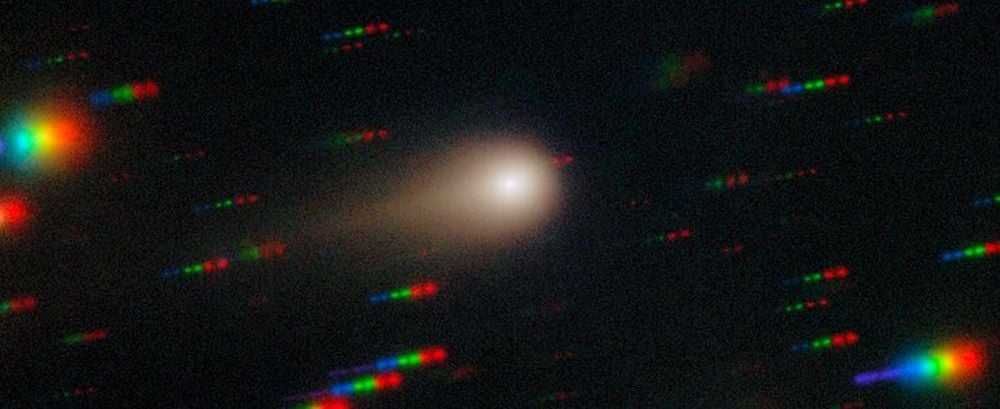
126969d7-c382-4b91-8ae9-13519a19734a.png?rdr=true

Turning to the pie charts, it’s an understatement to note the MUFON international total of UFO events is dominated by the U.S. numbers. For example, as of 31 August 2025, the CMS had 13 reports from India, the most populous country in the world at 1.45 billion, for the period 1 January 2025 through 31 July 2025; the corresponding number for China—with a population of 1.41 billion—is zero. Not one has yet come in! Nevertheless, with that understatement in mind, it’s almost eerie how cylindrical unknown UFOs are 8% of both U.S. and non-U.S. cases and star-like unknowns hover around 6.8%. Sometimes the statistics of UFOs can evince the phenomenon’s anomalous nature as much as an unknown trace sample held in the hand

87495d11-67d6-4aba-8f18-1687d48ffb50.png?rdr=true

The unknown percentages for discoidal and spherical objects are also close, considering that both spheres and discs are sometimes reported as circular UFOs, which occupy a separate slice of the chart. Combined, the latter three shape categories account for 42.4% and 56.3%, respectively, of the U.S. and non-U.S. unknowns.

I was a bit surprised the non-U.S. slate of unknowns didn’t include a single square or rectangular UFO, a category normally boasting a small, yet persistent number of U.S. entrants year after year. But the 3.2% of U.S. square/rectangular cases reflects only eight cases out of 250 unknowns, however, so they’re not common sights by any means. On the other hand, use of the trademark “Tic Tac” to refer to UFOs having the peculiar shape of the iconic mint seems to be confined to the U.S., thanks to David Fravor’s use of this term to describe the object he saw in 2004 over the Paci‹ c. Since 2017, when his case received nationwide publicity, U.S. witnesses routinely pronounce stubby-cylindrical or tablet-shaped UFOs as tic tacs. In the world outside the U.S., however, they’re still cylinders.

821f35a9-8f23-45ae-ac07-23af5ae2719d.png?rdr=true

{ MUFON Mutual UFO Network }

Hoe vind je dit bericht?
Geschreven door peter om 22:19 Stuur door

'Oumuamua: Did an alien probe visit our solar system in 2017?

'Oumuamua comet, interstellar object passing through the Solar System, unusual shaped asteroid (3d space rendering)

Oumuamua comet, interstellar object passing through the Solar System, unusual shaped asteroid

(3d space rendering) | Shutterstock

'Oumuamua: Did an alien probe visit our solar system in 2017?

On October 19 2017, Robert Weryk, a Canadian astronomer working at the University of Hawaii, discovered the first-ever known interstellar object in our solar system. If that sounds a bit strange, what with all the relatively regular sightings of asteroids and comets popping up in the news, it’s important to understand the significance of the phrase ‘in our solar system’.

Unlike previous interstellar objects, ‘Oumuamua which means ‘a message from afar arriving first’ in Hawaiian) had entered the zone controlled by the sun’s gravity. What’s potentially more alarming is that ‘Oumuamua had come closer to Earth than any other known interstellar object, and we still don't know much about it.

So what do we know? 'Oumuamua, a shining object that measured approximately 400-800 metres in length, entered our Solar System travelling 57,000 miles per hour (that's 16 miles per second). It sped straight down towards the Sun but curled underneath due to the star's gravitational pull. This sent the object off on a new trajectory, which was once again altered slightly as it passed Mercury. At its closest point, 'Oumuamua was 15 million miles away from the Earth, which may seem like a lot, but can be classed as a near-miss in the grand scheme of things. The whole process lasted forty days.

But no-one knows what 'Oumuamua really was. An asteroid comprised of metal and rocks, a comet made up of rocks, dust and ice, or a spinning, intensely bright, cigar-shaped (or 'prolate ellipsoid' to give it the technical description) alien probe?

The popular conclusion that ‘Oumuamua was most probably a cosmic iceberg, a mass of frozen hydrogen, is based upon observed findings that ‘Oumuamua couldn’t have contained any water, carbon monoxide or carbon dioxide, as found in asteroids and comets, because they would have been visible phenomena.

Perhaps more contentiously, astronomers also discovered that the object was accelerating as it left the solar system, yet it had no antitail as one might expect to find on a comet. The theory was that tails on comets and asteroids (though less common) act like rocket engines, but a frozen lump of hydrogen could have rocket-engine like propulsion, while the tail remained invisible from the gaze of the telescope.

Based on this, the general conclusion is that ‘Oumuamua was a highly luminescent, half-billion old chunk of planet from outside the Solar System., However, the theory is in a perpetual case of dispute. There are also a growing number of high-profile voices, such as Harvard astrophysicist Professor Avi Loeb, that claim ‘Oumuamua might have been an alien spacecraft from the far reaches of space.

His theory that ‘Oumuamua was a fully operational probe sent intentionally to the Earth’s vicinity by an alien civilization, was based on exactly the same observations that deemed it a cosmic iceberg.

In the series finale of Craig Charles: UFO Conspiracies, Craig Charles and astrophysicist Sarah Cruddas investigate ‘Oumuamua in an attempt to get one step closer to the answer. They speak to Professor Loeb who warns that the object could be a ‘message in a bottle telling us we’re not alone’. Sarah and Craig also speak with members of the SETI Institute who offer their hypotheses about the event and ponder the existence of intelligent life outside of Earth.

Is Oumuamua an alien probe sent from another galaxy, as Professor Loeb believes or a cosmic glacier? We’ll probably never know for sure, but let's leave you with this: the Drake Formula. Formulated in 1961 by Dr Frank Drake, this provides the formula for a probabilistic argument to estimate the number of communicative extraterrestrial civilizations in our galaxy. The answer is 12,600, and that’s just in the Milky Way. The Hubble Telescope has revealed an estimated 100 billion galaxies in the universe and the James Webb Telescope will probably double that…

RELATED VIDEOS


{ https://www.history.co.uk/articles }

Hoe vind je dit bericht?
Geschreven door peter om 22:09 Stuur door

Two Sides of History: Are UFOs really as extraordinary as they seem?

Two Sides of History: Are UFOs really as extraordinary as they seem?

In the new Sky HISTORY series Two Sides of History, believer Jonathan Davies and sceptic Deborah Hyde debate UFOs.


Image: Believer Jonathan Davies and sceptic Deborah Hyde debate UFOs | Two Sides of History

In recent decades, the UK and US have released intelligence reports acknowledging the existence of UFOs. Such revelations are not surprising to MUFOG.co.uk founder Jonathan Davies, who attests to seeing UFOs landing near his homes.

Deborah, a former editor of The Skeptic magazine, is more cautious. While not denying UFOs’ existence, she suggests they could be attributed to 'atmospheric junk' like balloons and satellites, or 'lights or interference from the ground'.

What do UFO sightings really tell us? Do they say more about the wider universe or instead simply humans’ overeager willingness to believe? In Sky HISTORY’s Two Sides of History, Jonathan and Deborah present contrasting views.

Is a new tech ‘arms race’ underway?

In a Sky HISTORY survey, about 47% of respondents expressed their belief that Earth had been visited by aliens. Nonetheless, Jonathan doesn’t jump to the conclusion that UFOs are necessarily extraterrestrial spacecraft.

He posits that many of these UFOs are craft incorporating advanced technologies not yet known to the public. 'There’s currently a race going on between the West and Russia and China to develop these technologies.'

However, Deborah isn’t convinced when Jonathan implies that they include time travel. 'You are aware, I’m sure, that our present understanding of physics is that time travel isn’t possible. So that would be a quantum leap ahead of what we generally know.'

The 2004 ‘Tic Tac’ UFO incident

In November 2004, US Naval aviators had been undertaking training exercises off the Californian coast when they were alerted to the presence of nearby UFOs.

Upon closer inspection, an oblong UFO appeared to be moving erratically above the Pacific Ocean. The UFO’s performance characteristics are said to have far exceeded the capabilities of human-made aviation technology from both then and now.

One of the fighter pilots even captured footage of the ‘Tic Tac’ UFO — so-called due to its similar shape to a breath mint. This video has since been released to the public, and Jonathan sees it as evidence of futuristic aliens.

Has Mick West refuted the ‘alien craft’ theory?

Sceptical investigator Mick West has his own take on the ‘Tic Tac’ footage — and as far as he’s concerned, no aliens are involved. Deborah brings up West’s explanation that the UFO had actually 'been a similar naval plane from a good distance away, probably 30 miles'.

The Tic Tac seemingly lacked obvious protrusions of a human-made aircraft, such as wings. However, Deborah relays West’s view that, on radar, 'the heat haze had sort of taken the rough edges off the shape.'

'I prefer to believe the actual US Navy that came out with the report on the Tic Tac,' Jonathan replies. 'Mick West develops video games, I believe — he’s not really an expert.'

The US Navy, on the other hand, 'even said themselves that there were objects under the water as well as above the water. The Tic Tac moved at 70,000 miles an hour. It was tracked. There were three different pilots that saw it, and they’ve all given testimonies.'

Could UFO sightings be a trick of the light?

Deborah is thinking along these lines. She opines that 'there’s likely to be a psychological and neurological and sociocultural reason for all of these things.'

Deborah wonders if people who encounter UFOs 'have a cluster of specific neurological traits that predisposes them to it.' She believes that sleep paralysis could help to explain Jonathan’s own experiences.

'I’ve heard interviews with you where you describe sleep paralysis to a tee. If you didn’t know the neurological basis, you would totally buy into what you saw in front of you. I’d like to emphasise that none of this stuff means you’re weird.'

Some surprising common ground emerges

As the debate goes on, there’s a surprising amount of overlap between Jonathan’s and Deborah’s opinions.

According to Jonathan, studies indicate that between 5% and 8% of sighted UFOs are 'anomalous', while 'everything else can be identified.'

He acknowledges endeavouring to consult 'the people that are rational, are credible, that are not looking for any type of publicity.' He tries to 'avoid people that say they know. Nobody knows at this point.'

Deborah observes: 'I think we probably agree on quite a lot. We know that there’s unidentified aerial phenomena. I think we would agree there’s stuff that we don’t understand yet, we’d just disagree on how certain we were on what it was.'

{ https://www.history.co.uk/articles }

Hoe vind je dit bericht?
Geschreven door peter om 21:44 Stuur door

Scientific objectivity is a myth — here's why

Scientific objectivity is a myth — here's why

an illustration of small people climbing around scientific lab equipment
People are at the heart of the scientific enterprise.  
(Image credit: Matteo Farinella, CC BY-NC)

Even if you don't recall many facts from high school biology, you likely remember the cells required for making babies: egg and sperm. Maybe you can picture a swarm of sperm cells battling each other in a race to be the first to penetrate the egg.

For decades, scientific literature described human conception this way, with the cells mirroring the perceived roles of women and men in society. The egg was thought to be passive while the sperm was active.

Over time, scientists realized that sperm are too weak to penetrate the egg and that the union is more mutual, with the two cells working together. It's no coincidence that these findings were made in the same era when new cultural ideas of more egalitarian gender roles were taking hold.

You may like
  • View of an unidentified chemist as she works with various flaks in a laboratory, May 23, 1958.

'The first author was a woman. She should be in the kitchen, not writing papers': Bias in STEM publishing still punishes women

  • an illustration of many sperm swimming towards an egg at the center of the image

The choice of sperm is 'entirely up to the egg' — so why does the myth of 'racing sperm' persist?

  • a digitally-manipulated image showing the back of a businessman&#039;s head with a power cable in his neck

Would outsourcing everything to AI cost us our ability to think for ourselves?

Scientist Ludwik Fleck is credited with first describing science as a cultural practice in the 1930s. Since then, understanding has continued to build that scientific knowledge is always consistent with the cultural norms of its time.

Despite these insights, across political differences, people strive for and continue to demand scientific objectivity: the idea that science should be unbiased, rational and separable from cultural values and beliefs.

When I entered my Ph.D. program in neuroscience in 2001, I felt the same way. But reading a book by biologist Anne Fausto-Sterling called "Sexing the Body" set me down a different path. It systematically debunked the idea of scientific objectivity, showing how cultural ideas about sex, gender and sexuality were inseparable from the scientific findings. By the time I earned my Ph.D., I began to look more holistically at my research, integrating the social, historical and political context.

From the questions scientists begin with, to the beliefs of the people who conduct the research, to choices in research design, to interpretation of the final results, cultural ideas constantly inform "the science." What if an unbiased science is impossible?

Emergence of idea of scientific objectivity

Science grew to be synonymous with objectivity in the Western university system only over the past few hundred years.

In the 15th and 16th centuries, some Europeans gained traction in challenging the religiously ordained royal order. Consolidation of the university system led to shifts from trust in religious leaders interpreting the word of "god," to trust in "man" making one's own rational decisions, to trust in scientists interpreting "nature." The university system became an important site for legitimizing claims through theories and studies.

Previously, people created knowledge about their world, but there were not strict boundaries between what are now called the humanities, such as history, English and philosophy, and the sciences, including biology, chemistry and physics. Over time, as questions arose about how to trust political decisions, people split the disciplines into categories: subjective versus objective. The splitting came with the creation of other binary oppositions, including the closely related emotionality/rationality divide. These categories were not simply seen as opposite, but in a hierarchy with objectivity and rationality as superior.

A closer look shows that these binary systems are arbitrary and self-reinforcing.

a diagram showing how different people conceive the influence between science and culture

Alternative views on the relationship between science and culture.  (Image credit: Sara Giordano)

Science is a human endeavor

The sciences are fields of study conducted by humans. These people, called scientists, are part of cultural systems just like everyone else. We scientists are part of families and have political viewpoints. We watch the same movies and TV shows and listen to the same music as nonscientists. We read the same newspapers, cheer for the same sports teams and enjoy the same hobbies as others.

All of these obviously "cultural" parts of our lives are going to affect how scientists approach our jobs and what we consider "common sense" that does not get questioned when we do our experiments.

Beyond individual scientists, the kinds of studies that get conducted are based on what questions are deemed relevant or not by dominant societal norms.

For example, in my Ph.D. work in neuroscience, I saw how different assumptions about hierarchy could influence specific experiments and even the entire field. Neuroscience focuses on what is called the central nervous system. The name itself describes a hierarchical model, with one part of the body "in charge" of the rest. Even within the central nervous system, there was a conceptual hierarchy with the brain controlling the spinal cord.

My research looked more at what happened peripherally in muscles, but the predominant model had the brain at the top. The taken-for-granted idea that a system needs a boss mirrors cultural assumptions. But I realized we could have analyzed the system differently and asked different questions. Instead of the brain being at the top, a different model could focus on how the entire system communicates and works together at coordination.

Every experiment also has assumptions baked in — things that are taken for granted, including definitions. Scientific experiments can become self-fulfilling prophecies.

For example, billions of dollars have been spent on trying to delineate sex differences. However, the definition of male and female is almost never stated in these research papers. At the same time, evidence mounts that these binary categories are a modern invention not based on clear physical differences.

Related: 

But the categories are tested so many times that eventually some differences are discovered without putting these results into a statistical model together. Oftentimes, so-called negative findings that don't identify a significant difference are not even reported. Sometimes, meta-analyses based on multiple studies that investigated the same question reveal these statistical errors, as in the search for sex-related brain differences. Similar patterns of slippery definitions that end up reinforcing taken-for-granted assumptions happen with race, sexuality and other socially created categories of difference.

Finally, the end results of experiments can be interpreted in many different ways, adding another point where cultural values are injected into the final scientific conclusions.

Settling on science when there's no objectivity

Vaccines. Abortion. Climate change. Sex categories. Science is at the center of most of today's hottest political debates. While there is much disagreement, the desire to separate politics and science seems to be shared. On both sides of the political divide, there are accusations that the other side's scientists cannot be trusted because of political bias.

US Secretary of Health and Human Services Robert F. Kennedy Jr., US President Donald Trump and Medicare and Medicaid Administrator Mehmet Oz participate in an event on &quot;Making Health Technology Great Again,&quot; in the East Room of the White House in Washington, DC

It can be easier to spot built-in bias in scientific perspectives that conflict with your own values.  (Image credit: JIM WATSON via Getty Images)

Consider the recent controversy over the U.S. Centers for Disease Control and Prevention's vaccine advisory panel. Secretary of Health and Human Services Robert F. Kennedy Jr. fired all members of the Advisory Committee on Immunization Practices, saying they were biased, while some Democratic lawmakers argued back that his move put in place those who would be biased in pushing his vaccine-skeptical agenda.

If removing all bias is impossible, then, how do people create knowledge that can be trusted?

The understanding that all knowledge is created through cultural processes does allow for two or more differing truths to coexist. You see this reality in action around many of today's most controversial subjects. However, this does not mean you must believe all truths equally — that's called total cultural relativism. This perspective ignores the need for people to come to decisions together about truth and reality.

Instead, critical scholars offer democratic processes for people to determine which values are important and for what purposes knowledge should be developed. For example, some of my work has focused on expanding a 1970s Dutch model of the science shop, where community groups come to university settings to share their concerns and needs to help determine research agendas. Other researchers have documented other collaborative practices between scientists and marginalized communities or policy changes, including processes for more interdisciplinary or democratic input, or both.

I argue a more accurate view of science is that pure objectivity is impossible. Once you leave the myth of objectivity behind, though, the way forward is not simple. Instead of a belief in an all-knowing science, we are faced with the reality that humans are responsible for what is researched, how it is researched and what conclusions are drawn from such research.

With this knowledge, we have the opportunity to intentionally set societal values that inform scientific investigations. This requires decisions about how people come to agreements about these values. These agreements need not always be universal but instead can be dependent on the context of who and what a given study might affect. While not simple, using these insights, gained over decades of studying science from both within and outside, may force a more honest conversation between political positions.

Hoe vind je dit bericht?
Geschreven door peter om 21:16 Stuur door

Earth 2.0: Is it possible to make Mars resemble our planet?

Earth 2.0: Is it possible to make Mars resemble our planet?

Humanity is advancing into space rather slowly – astronauts landed on the moon 55 years ago, and since then, we have not been able to boast of any achievements of a similar scale. But our journey through the Solar System will continue, and its next destination will obviously be Mars.

While some scientists are trying to figure out how colonists can protect themselves and adapt to Martian conditions, others are proposing to change the planet itself. Is it possible to make the Martian environment more suitable for future colonists, and is it worth doing? Let’s try to figure it out.

The greenhouse effect: enemy of Earth, friend of Mars?

The technology for creating conditions on the surface of a celestial body that are as close as possible to those on Earth is called “terraforming”. The term was first used by American science fiction writer Jack Williamson in his 1942 novel Collision Course.

In 1971, astronomer and science popularizer Carl Sagan became the first scientist to propose terraforming Mars, which currently has a thin atmosphere consisting almost entirely of carbon dioxide with small amounts of nitrogen, oxygen, and other gases. He suggested that by releasing gases from various sources on the Red Planet, it would be possible to artificially thicken its gas envelope and increase the chances of liquid water appearing on the surface due to the greenhouse effect.

NASA took an interest in the concept. Carbon dioxide and water vapor are the only greenhouse gases present in the atmosphere and ice deposits on Mars and beneath the planet’s surface. Carbon dioxide molecules are excellent at trapping the Sun’s infrared rays. So if enough of this substance is released by melting the ice caps and filling the atmosphere with it, it will create a greenhouse effect that will raise the average temperature and thus “warm” the cold planet. This is literally the same effect that is currently causing climate change on our planet.

For its part, increased pressure will contribute to the appearance of water bodies on the surface of Mars. And although it will not be possible to breathe fresh Martian air for a long time, at least it will be possible to do without airtight compression suits there.

However, in 2018, after a series of studies, NASA scientists abandoned the project. It turned out that there was not enough carbon dioxide on the Red Planet. Based on data from the MAVEN, Mars Express, Mars Reconnaissance Orbiter, and Mars Odyssey missions, experts calculated that even if all Martian carbon dioxide were completely evaporated, the atmospheric pressure would only rise to 15 mbar (for comparison: the average pressure at the Earth’s surface is 987 mbar). The project was closed with the conclusion: “Terraforming Mars is impossible with current technology. Any such plans are only possible in the very distant future”.

Regional terraforming

Of course, they decided not to stop there. Researchers from Harvard University, the Jet Propulsion Laboratory (JPL NASA), and the University of Edinburgh came up with the idea that it is not necessary to change the climate of the entire planet – it is enough to influence only certain regions where the colonists will live. The scientists proposed using silica aerogel, one of the best insulating materials that mimics the greenhouse effect in the Earth’s atmosphere. These aerogels are currently used in several engineering projects, including the Mars Exploration Rovers mission probes. Through modeling and experiments, scientists have shown that a two- to three-centimeter-thick aerogel shield without any internal heat source can transmit enough visible light for photosynthesis, block dangerous ultraviolet radiation, and raise and maintain the surface temperature above the melting point of water ice. This material can be used to build dwellings or even autonomous biospheres on Mars.

Artistic illustration of the stages of terraforming Mars.

Source: Daein Ballard

Controlled heating of limited areas would not require large amounts of energy or maintenance of modular settlements to keep the area warm for a long time. The results of studies simulating the Martian surface showed that a thin layer of aerogel generally increased surface temperatures in the mid-latitudes of Mars to those found on Earth. However, further research is needed to build such “greenhouses”. In addition, this miracle material does not solve the problem of the harsh climate of the entire planet, and it is also quite fragile and requires large-scale production.

Nuclear bombing, or Musk’s method

Even the eccentric billionaire Elon Musk has become fascinated with the seductive idea of terraforming Mars, in his own style, through nuclear bombing. Musk is the most famous contemporary proponent of colonizing the fourth planet from the Sun. He has repeatedly shared his plans to populate it by 2050 with more than a million colonists who will live under the glass domes of Martian cities. However, he also has a long-term goal – to make Mars more like Earth.

Source: TechInsider

Musk also proposes to use the greenhouse effect. First, it is necessary to heat the frozen carbon dioxide reserves at the Martian poles, which can be accomplished by detonating nuclear bombs above them. In response to comments about the insufficient amount of carbon dioxide in frozen deposits, the billionaire emphasized that Martian soil may also contain a “huge amount” of this substance. Its release will help warm the planet, melt frozen glaciers, and further thicken the atmosphere, causing warming.

Therefore, scientists point out the shortcomings of this method of transforming Mars into a blooming oasis. Even if there were enough frozen CO2, such a strategy would require the use of an almost unattainable amount of nuclear weapons. According to some estimates, 3,500 half-megaton nuclear warheads would need to be detonated every day for seven weeks straight. And even at that rate, the subsequent terraforming process would take several millennia.

Giant orbital mirrors

Another popular method of terraforming Mars is to build giant mirrors in orbit around the planet, which will reflect and direct more sunlight and heat its surface. Among the most prominent proponents of this method are Christopher McCain, a planetary scientist and researcher at NASA, and Robert Zubrin, an American aerospace engineer, writer, and founder of the Mars Society.

Source: nextbigfuture.com

The idea is to build orbital mirrors with a radius of about 100 km from thin aluminized thermoplastic film (a similar material is used to make solar sails). Such mirrors would weigh about 200,000 tons! If they were manufactured in space using resources from the Moon or asteroids, the production of the necessary aluminum would require a huge amount of energy, not to mention time.

According to Zubrin, we do not have enough data to claim that there are insufficient carbon dioxide deposits on Mars. Until now, experts have relied on data from the MAVEN satellite and several Mars rovers, which have only penetrated a few centimeters into the Martian soil. There may be more deposits of volatile substances deeper underground. Further research involves drilling several hundred meters deep in various locations on the planet.

Asteroid bombardments

Another way to raise the temperature is to direct small asteroids or comets toward the surface of Mars. For decades, humanity has been developing programs to track potentially hazardous objects and creating systems to protect Earth from collisions. Therefore, one or more of these methods could be used to arrange for such objects to collide with Mars. The energy from the crash would then serve as a source of heat.

Source: Science Photo Library

Asteroids can be selected based on their “usefulness” – for example, based on their ammonia content, which, when released into the Martian atmosphere, will further enhance the greenhouse effect, or based on the presence of water, which will turn into water vapor.

However, NASA believes that thousands of such asteroids will be needed, and there is currently no ready-made technology for their targeted transportation to Mars.

The hardest part is still ahead

There are other methods of bringing conditions on Mars closer to those on Earth by importing ammonia, hydrogen, or bacteria capable of living and serving as a nutrient substrate for plants in Martian regolith. However, scientists believe that instead of fighting the consequences, we should look at the root of the problem. More precisely, at the core. After all, any attempts to create an atmosphere on the Red Planet will be futile without a magnetosphere to hold it in place. A terraformed Mars will need a reinforced magnetosphere, similar to the one that protects Earth from the flow of charged particles from the Sun.

It is believed that about 4 billion years ago, Mars lost its magnetic field due to the cessation of core rotation. Without a magnetosphere to serve as a shield, solar winds began to bombard and destroy the atmosphere. Leading NASA scientist James Green, who has worked at the agency for 40 years, proposes creating a huge magnetic shield to prevent our star from destroying the future Martian atmosphere. As a result, the planet will be able to retain heat near the surface, pressure will increase, and the climate will improve and become suitable for life. According to the scientist, this method will entail the least amount of interference and destruction, and then Mars will begin to terraform on its own. However, he does not provide estimates of the cost of the project, the necessary technological capabilities, or the time required for such long-term processes.

Ethical issues and the benefits of concepts and research for the Earth

Although humanity is still quite far from realizing its plans to terraform Mars, we must nevertheless consider the ethical and appropriateness of such projects. Similar to protected wilderness areas on Earth, Mars has extreme, historically important, and aesthetically valuable regions. Any interference with the planet’s natural development will lead to irreversible changes. Mars will forever lose its unique historical and research value for future generations.

Source: DETLEV VAN RAVENSWAAY/SCIENCE PHOTO LIBRARY

Another problem with terraforming Mars is the high cost of such missions. And if, say, humanity had such resources, wouldn’t it be more expedient to use them for the benefit of Earth? Scientists around the world are already sounding the alarm about climate change, the destruction of fertile land, the depletion of fresh water and mineral resources, and the lack of preparedness for possible epidemics.

We should not forget the history of colonization, which has always been accompanied by tragedy. Even today, destructive wars continue over territory, resources, religious beliefs, and so on. So, have we reached the point of moral development where we can become wise guests in the Universe, rather than destructive invaders?

We will have to find answers to these and other questions in the future. However, similar research, such as improving soil quality or developing protection against asteroids, can also be used on our planet. Like many other technologies that are part of our everyday life, thanks to space developments. And in the event of an inevitable catastrophe, Mars would become “plan B” for the salvation of the human race.

  • Author: Anastasiia Bernatska, journalist
  • This article was published in issue No. 1 (190) of Universe Space Tech magazine in 2024. You can purchase this issue in print or electronic format from our store.

RELATED VIDEOS


{ https://universemagazine.com/en/articles-en/ }

Hoe vind je dit bericht?
Geschreven door peter om 20:53 Stuur door

How to see the fourth dimension: Carl Sagan gave a genius explanation 45 years ago

In a world limited to three dimensions, imagining a fourth is incredibly difficult, especially for an unprepared reader. But one genius scientist found a way to show people the hidden world using an ordinary apple. 

Legendary science popularizer Carl Sagan explained what the fourth dimension looked like 45 years ago. Illustration: Copilot

As it happens, the human mind is attuned to perceiving only three dimensions: height, width, and depth. Representing the fourth dimension seems like an impossible task, because our brains are limited by the physical world around us. But what if there is a dimension that we simply cannot see? Legendary science popularizer Carl Sagan comes to the rescue.

Known for his research into space, Sagan possessed a unique gift — the ability to explain complex scientific theories through simple stories and vivid analogies. He could turn the most complex concept into a fascinating adventure for the mind.

In search of the fourth dimension

Time is often referred to as the fourth dimension. This is logical: to determine the position of an object in the Universe, you need three coordinates in space and one in time. But there is another, more theoretical concept — a space where all four dimensions are spatial. It is precisely this concept that is so difficult to understand.

Sagan begins his explanation with a simple analogy. He invites us to imagine a two-dimensional world — a Flat World whose inhabitants have no concept of “up” or “down.” When a three-dimensional object, such as an apple, passes through this flat world, its inhabitants see only a strange phenomenon.

They do not see the apple as a whole. They only observe the point of contact that appears when the apple crosses their world. When an object moves, this point may change shape, split into several parts, or disappear. For a resident of the Flat World, this is an incomprehensible phenomenon, a set of changing forms that cannot be explained in his/her world.

From apple to hypercube

The same logic, Sagan notes, applies to us when we try to imagine the fourth dimension. We are like those inhabitants of the Flat World. Our minds cannot comprehend anything beyond our three dimensions. But we can see its “imprint” in our world.

To demonstrate this, the scientist uses a tesseract — a four-dimensional hypercube. We cannot see a real tesseract, but we can observe its three-dimensional projection, just as the inhabitants of Flat world saw only a two-dimensional trace of an apple. This projection looks like a complex cube, as if nested within itself. It is only a shadow, an attempt by our brain to reproduce something much more complex.

Truth beyond reach

Sagan’s work is not just an interesting scientific trick. Studying measurements that lie beyond our immediate experience is key to understanding the fundamental laws of the Universe. Many phenomena in physics, such as black holes or the curvature of space-time, cannot be adequately described in only three dimensions.

Carl Sagan not only dispelled the myth that complex concepts are inaccessible. He showed that the best way to understand something is through clear explanations, vivid metaphors, and engaging stories. His lesson on the fourth dimension remains a brilliant example of how to talk about the most complex things in a simple way.

Earlier, we reported on how Carl Sagan was responsible for the most famous photograph of Earth from space.

{ https://universemagazine.com/en/articles-en/ }

Hoe vind je dit bericht?
Geschreven door peter om 20:33 Stuur door

Perseverance noticed a “turtle” in the sands of Mars

Perseverance noticed a “turtle” in the sands of Mars

NASA’s Perseverance rover continues to delight Earthlings with unique images from the surface of the Red Planet. At the end of August, its cameras captured an unusual rock formation resembling a turtle sticking its head out from under its shell. This bizarre discovery quickly found fans among space enthusiasts around the world.

In August, NASA’s Perseverance rover photographed a rock on Mars that resembles a turtle peeking out of its shell. Photo: NASA

A highly detailed photograph of the “Martian turtle” was obtained using the SHERLOC instrument mounted on the rover’s robotic arm. This device, designed to search for signs of ancient life, in this case recorded something even more fantastic. However, this is far from the first time that Martian rocks have reminded us of familiar objects.

Earlier in August, another camera, Mastcam-Z, captured an image of a pointed rock resembling an ancient conquistador’s helmet. And in the autumn, the Mars rover discovered a formation with spherical intersperses, which was unofficially named “St. Paul’s Bay.” Scientists note that all these amazing shapes are the result of purely natural geological processes.

Photo of the rock by NASA’s Perseverance, on top of which a “turtle sits.” Photo: NASA

Erosion, wind exposure, and slow changes over millions of years have shaped the modern Martian landscape. Each such rock, regardless of what it looks like, is an important piece of the puzzle for scientists. Studying it helps to reconstruct the ecological history of the Jezero crater and determine whether conditions suitable for life once existed on Mars.

The process by which we see familiar images in abstract forms is called pareidolia. This is a psychological phenomenon where our brain automatically fills in reality by finding familiar patterns, faces, or figures in it. This is how we recognize animals in the shape of clouds or patterns in wood. Mars, with its desert landscapes, is the perfect playground for this mind game.

The Perseverance mission has been going on for more than three Earth years, and during that time, the rover has traveled more than 37 km. The “turtle” was spotted on the 1610th Martian day (sol) of the mission, proving once again that even in uninhabited worlds, we seek and find something familiar and understandable.

Earlier, we reported on how Perseverance spotted a rock on Mars shaped like a sleeping cat.

{ https://universemagazine.com/en/articles-en/ }

Hoe vind je dit bericht?
Geschreven door peter om 20:22 Stuur door

The Vatican & UFO Disclosure: Will Pope Leo XIV Open the Secret Archives?

The Vatican & UFO Disclosure: Will Pope Leo XIV Open the Secret Archives?

The-Vatican-UFO-Disclosure-Will-Pope-Leo-XIV-Open-the-Secret-Archives-1024x576.jpg

The Pope, the Vatican & UFO Disclosure: Faith Meets the Unknown

For centuries, the Vatican has stood as one of the most secretive and influential institutions in the world. Beyond its spiritual authority over 1.4 billion Catholics, it is also home to vast archives and scientific endeavors that touch on one of humanity’s most profound mysteries: the possibility of extraterrestrial life. Recent discussions in the media, testimony before the U.S. Congress, and statements from whistleblowers have placed the Vatican at the center of the UFO disclosure debate.

A New Pope and Old Questions

When Cardinal Robert Post was elected as Pope Leo XIV, observers quickly drew attention to his chosen name. His predecessor in that name, Pope Leo XIII, not only championed social justice but also established the Vatican Observatory in the late 19th century. This act cemented the Church’s formal engagement with astronomy and opened the door for centuries of collaboration between Vatican scientists and global research institutions.

The observatory, still active today with facilities in both Italy and Arizona, symbolizes the Church’s dual role in faith and science. Yet with the new pope’s reputation for openness to scientific inquiry, some speculate that he may be the one to lift the veil on the Vatican’s rumored knowledge of UFOs.

Whistleblowers and Allegations of a Vatican Connection

In 2023, former U.S. intelligence officer David Grusch testified before Congress that the Vatican had been involved in UFO secrecy for decades. According to Grusch, the Catholic Church played a role in backchanneling information during the 1930s, when Benito Mussolini’s regime allegedly recovered a mysterious craft in Magenta, Italy. Grusch claimed that Pope Pius XII informed the United States of the incident, leading to American possession of the object after World War II.

While Vatican officials dismissed these claims with humor, the allegation sparked global curiosity. Could the Vatican’s secret archives, said to stretch over 50 miles of shelving and now undergoing digitization, contain records of extraterrestrial encounters?

Historical Engagement with the UFO Question

The Vatican has not always remained silent on the issue. In 2009, the head of the Vatican Observatory at the time, Father José Gabriel Funes, publicly stated that the existence of extraterrestrial life does not contradict Catholic theology. “Just as there is a multitude of creatures on Earth, there could be other beings, even intelligent ones, created by God,” he explained.

This sentiment was echoed in Vatican-sponsored conferences on astrobiology and the philosophy of science. The Church has sought to balance its centuries-old teachings with modern discoveries, showing openness to the possibility that life beyond Earth is compatible with faith.

Faith, Secrecy, and Global Disclosure

Why, then, would the Vatican withhold information if it exists? Some experts argue that revelations about extraterrestrial life could disrupt religious belief systems, challenging traditional interpretations of creation and humanity’s place in the universe. Others suggest that secrecy may be more political than theological, tied to international relations and cooperation with intelligence agencies during the 20th century.

Journalist Ross Coulthart notes that the Vatican has historically collaborated with intelligence services, including the CIA, during and after World War II. If true, such connections could explain why alleged knowledge of UFOs has remained carefully guarded.

The Road Ahead

The question remains: will Pope Leo XIV become the so-called “Disclosure Pope”? Advocates like attorney Daniel Sheehan, who once sought Vatican files on behalf of President Carter, believe that this pope’s interest in merging science and theology makes him uniquely positioned to open the archives.

At the same time, disclosure is not simply a matter of papal decree. Just as governments weigh national security concerns, the Vatican must navigate theological, political, and cultural implications before acknowledging anything extraordinary.

What is clear is that we are entering a new era of dialogue between science, religion, and the mysteries of the cosmos. Whether or not the Vatican possesses hidden UFO files, its role in shaping humanity’s response to potential extraterrestrial contact will be pivotal. The world now watches to see if faith and secrecy will give way to openness and revelation.

RELATED VIDEOS

{ https://www.latest-ufo-sightings.net/ }

Hoe vind je dit bericht?
Geschreven door peter om 18:49 Stuur door

Giant Stone 'Doorway' Discovered in Kazakhstan Sparks Ancient Alien Debate

Drone footage showing the massive stone doorway formation in Kazakhstan's Dzungarian Alatau mountains

Giant Stone 'Doorway' Discovered in Kazakhstan Sparks Ancient Alien Debate

Explorers have stumbled upon what appears to be a massive stone doorway carved into the remote Dzungarian Alatau mountains of Kazakhstan, igniting widespread speculation about its origins. The mysterious formation, measuring approximately 40 feet tall and equally wide, has captured the imagination of social media users worldwide, with some claiming it as evidence of ancient extraterrestrial visitation. Located at 6,500 feet above sea level near the Chinese border, this enigmatic structure has sparked intense debate about natural geological processes versus human intervention.

The discovery was shared through drone footage that shows two explorers dwarfed by the imposing semi-circular formation. According to a Daily Mail report,  Reddit users quickly compared the structure to famous fictional doorways from popular culture, including the entrance to Jabba the Hutt's palace in Star Wars and the Doors of Durin from J.R.R. Tolkien's Lord of the Rings. The footage has gone viral across multiple platforms, with commentators ranging from amateur archaeologists to alien enthusiasts offering their interpretations of this remarkable find.

The huge door to Jabba the Hut’s palace in Star Wars, 'Return of the Jedi'.

(LucasFilm/20th Century Fox)

The Dzungarian Gate: A Historical Crossroads

The Dzungarian Alatau mountains where this formation was discovered represent one of Central Asia's most historically significant regions. This mountain range has served as a crucial passage between China and Kazakhstan for millennia, known as the Dzungarian Gate or Altai Gap. Ancient conquerors from Central Asia used this more than 3,000-mile pass as an invasion route for centuries, making it a crossroads of civilizations and cultures.

The region is renowned for its rugged terrain, featuring dramatic foothills, ridges, and ancient fortifications. Archaeological evidence suggests human presence in this area spans thousands of years, with various nomadic tribes and settled peoples leaving their mark on the landscape. Ancient petroglyphs have been discovered throughout Kazakhstan, indicating sophisticated artistic and cultural traditions among early inhabitants. The Dzungarian Gate has also been linked to mythical locations, including the legendary Hyperborea, where inhabitants supposedly lived for 1,000 years in perfect peace.

The Dzungarian Alatau mountain range at sunrise, showing the dramatic landscape where the mysterious doorway was discovered.

(Public Domain)

Scientific Explanation

While social media speculation ranges from alien spacecraft entrances to ancient megalithic structures, scientists offer a more terrestrial explanation. According to the Daily Mail, Mark Allen, a professor at the University of Durham's department of Earth Sciences, suggests the formation is "to do with different weathering patterns of different rock layers" rather than artificial construction. The professor noted his experience in the region 38 years ago on the Chinese side of the border, reporting "nothing odd" about natural geological formations in the area.

Adding to the natural phenomema explanation, one Reddit user commented:

'There are a ton of these kinds of formations in Southern Utah. It's the beginning of the formation of an arch, which is very naturally occurring.'

Comparing Ancient Doorway Mysteries

The Kazakhstan discovery joins a pantheon of mysterious stone doorways that have captivated human imagination throughout history. Peru's Aramu Muru, known as the "Gate of the Gods," presents a remarkably similar phenomenon. This massive stone formation near Lake Titicaca features a carved doorway-like recess that has inspired countless theories about interdimensional portals and ancient technology. Like the Kazakhstan formation, Aramu Muru's precise geometric appearance challenges observers to distinguish between natural processes and artificial construction.

The door of Hayu Marca located in Puno Peru.

(DavidAlexander / Adobe Stock)

Some Doors Are Human Made

Archaeological sites worldwide demonstrate humanity's long fascination with doorway symbolism. Ancient Egyptian false doors served as spiritual passages between worlds, while megalithic structures across Europe incorporated doorway motifs into their sacred architecture. These historical examples show how doorways have consistently represented transitions, mysteries, and connections to otherworldly realms across different cultures and time periods.

The Ñaupa Waka site in Peru has an intriguingly cut altar stone, with what looks to be a doorway cut into the rock. Its origin is traditionally attributed to Inca, but this is questioned as the style and technology used to create it is not known to be Inca, and so it is likely to predate the Inca constructions that surround it, perhaps by millennia.

The Ñaupa Waka or Naupa Iglesia stone altar in Peru.

(Matthew Knot/ CC BY NC SA 2.0)

The enduring appeal of mysterious doorways reflects fundamental human psychology and spiritual beliefs. Whether formed by natural geological processes or created by ancient civilizations, these formations continue to inspire wonder and speculation about hidden knowledge, lost technologies, and connections to cosmic mysteries that extend far beyond our current understanding.

Ruins at Tiwanaku, Bolivia have fascinating cut rocks resembling doorways.

(CC BY NC SA 2.0)

The Continuing Mystery

Despite scientific explanations, the Kazakhstan doorway continues generating intense interest and debate online. Social media users propose theories ranging from concealed alien bases to entrances to underground civilizations reminiscent of Tolkien's Mines of Moria. The formation's remarkable symmetry and positioning challenge even skeptical observers to consider alternative explanations beyond conventional geology.

The discovery highlights humanity's persistent fascination with unexplained phenomena and our tendency to seek extraordinary explanations for unusual natural features. Whether viewed as evidence of ancient visitation, lost civilizations, or simply remarkable geological coincidence, the Kazakhstan doorway serves as a contemporary addition to the world's collection of mysterious stone formations that continue challenging our understanding of natural and artificial boundaries.

  • Top image: Drone footage showing the massive stone doorway formation in Kazakhstan's Dzungarian Alatau mountains.  
  • Source: LADbible

By Gary Manners

References

{ https://www.ancient-origins.net/history-archaeology }

Hoe vind je dit bericht?
Geschreven door peter om 23:06 Stuur door

Reptielenmensen, een bizarre complottheorie

Reptielenmensen, een bizarre complottheorie

Het 'complot van de reptielenmensen'

©The Daily Digest

Het 'complot van de reptielenmensen'
Legio mensen over de hele wereld geloven dat er een ras van reptielen bestaat met het vermogen om mensen te worden. Deze reptielenmensen zouden geïnfiltreerd zijn onder gewone mensen, zeggen complotdenkers als David Icke. Ook FVD-politicus Thierry Baudet zei erin te geloven.

Een grap of een gevaar?

©The Daily Digest

Een grap of een gevaar?
Het klinkt misschien als een grap, maar er zijn mensen die deze zaak heel serieus nemen. En dat baart niet alleen de volgers van deze theorie zorgen. De Nederlandse regering ontzegde David Icke onlangs de toegang tot het land omdat zijn complottheorie gevaarlijk en anti-Semitisch zou zijn. Hoe zit dat?

De oorsprong van reptielen

©The Daily Digest

Foto: Albert Antony / Unsplash

De oorsprong van reptielen
We beginnen bij het begin: de oorsprong van de theorie over de reptielenmensen. Deze komt voort uit een discussie over de oorsprong van reptielen zelf. Sommige mensen denken dat ze de evolutie van een voormenselijk ras zijn, terwijl anderen geloven dat ze uit de ruimte komen.

Komen ze van de ster Alpha Draconis?

©The Daily Digest

Komen ze van de ster Alpha Draconis?
Een van de meest ondersteunde theorieën door gelovigen in 'reptilianen' is degene die stelt dat ze afkomstig zijn van de ster Alpha Draconis, die zich in het sterrenbeeld Draak bevindt.

Of zijn het dinosauriërs die niet zijn uitgestorven?

©The Daily Digest

Of zijn het dinosauriërs die niet zijn uitgestorven?
Anderen denken dat de reptilianen geëvolueerd zouden kunnen zijn van een dinosaurussoort die nooit echt is uitgestorven. Deze mensen bouwen (losjes) op de ideeën van Carl Sagan (foto) in het boek 'De Draken uit het Paradijs' ('The Dragons of Eden'). Hij won in 1978 de Pulitzer Prize voor dat boek.

Gesis van mensen net als van reptielen

©The Daily Digest

Gesis van mensen net als van reptielen
"Is het louter toeval dat de klanknabootsing die de mens uitzendt om stilte te vragen of de aandacht te trekken een griezelige gelijkenis vertoont met het gesis van reptielen?" vroeg Sagan zich af. De aanhangers van het reptielengeloof denken dat de wetenschapper met dit soort zinnen hun gelijk bewijst.

Ze bevinden zich onder ons

©The Daily Digest

Ze bevinden zich onder ons
Ondanks het feit dat er geen enkel bewijs is voor hun bestaan, schrijven de complotdenkers aan reptilianen een aantal bovenmenselijke krachten toe. Zo zouden ze zich van uiterlijk kunnen veranderen, allerlei camouflages aan kunnen nemen en zich kunnen verbergen tussen beroemdheden, royals en religieuze leiders.

David Icke, de ideoloog

©The Daily Digest

David Icke, de ideoloog
Het was David Icke, een voormalige Britse voetballer (voormalige Hereford United-doelman). die als schrijver in 1999 zijn theorie over de reptielenmens uit de doeken deed in zijn werk 'The Biggest Secret' ('Het grootste geheim').

Reptielen maken stiekem de dienst uit

©The Daily Digest

Reptielen maken stiekem de dienst uit
Hij twijfelt er niet aan dat reptielenmensen onder ons zijn en dat ze deel uitmaken van de elite die de wereld regeert. Zijn uitspraken hebben ervoor gezorgd dat Icke een gemeenschap van gelovigen om zich heen heeft verzameld, en ook een aardig fortuin.

Wat zegt Icke over reptielenmensen?

©The Daily Digest

Wat zegt Icke over reptielenmensen?
Icke beweert dat de reptilianen onder ons leven met als doel om mensen tot slaaf te maken en de mensheid te onderwerpen. Dat klinkt ongelofelijk, belachelijk en daardoor onschuldig, maar volgens Professor Bart Wallet van de Universiteit van Amsterdam heeft die theorie veel overeenkomsten met anti-semitische denkwijzen.

Ook Joden soms als hagedissen gezien

©The Daily Digest

Afbeelding: Duitse propaganda uit de jaren dertig, via het Philadelphia Holocaust Memorial

Ook Joden soms als hagedissen gezien
Wallet, professor in de Joodse studies, legde op Radio 1 uit dat de samenzweringstheorie van Icke "antisemitische gedachten en uitingen" bevat. Het idee van de reptielen is volgens hem gebaseerd op "een oud antisemitisch beeld waarbij Joden worden afgebeeld als slangen of hagedissen," aldus Radio 1.

'Kwaden' die 'controle willen over de wereld'

©The Daily Digest

Afbeelding: USC Shoah Foundation Yad Vashem, publiek domein

'Kwaden' die 'controle willen over de wereld'
De reptielentheorie doet denken aan klassieke antisemitische schrijfsels zoals het pamflet op deze foto ('Het Joodse Gevaar,' toegeschreven aan de Rus Mathieu Golovinsky in 1938). In die schrijfsels worden Joden afgebeeld als onmenselijke wezens die gebrand zijn op wereldwijde dominantie. Zij zijn 'de kwaden,' zoals professor Wallet uitlegt, en alle andere mensen zijn 'de goeden.'

Andere (controversiële) uitspraken van David Icke

©The Daily Digest

Andere (controversiële) uitspraken van David Icke
Hoewel David Icke onschuldige opmerkingen heeft gemaakt, zoals de bewering dat hij de zoon van God zou zijn of dat de maan een kunstmatige constructie is, jagen zijn insinuaties tegen Joden toch veel mensen schrik aan. Volgens de BBC heeft hij onder meer valselijk beweerd dat het coronavirus door 5G-straling was verspreid en dat een Joodse groep daar achter zat.

Het geloof van de Hopi-indianen

©The Daily Digest

Het geloof van de Hopi-indianen
Om zijn beweringen te staven, vertrouwt David Icke naar eigen zeggen op een legende die circuleert onder de Hopi-indianen. Zij suggereerden dat er een reeks tunnels in Los Angeles was en dat deze zo'n 5.000 jaar geleden bewoond werd door een ras van hagedissen. In het jaar 1933 zei de mijningenieur G. Warren Shufelt zelfs dat hij de reptielenmensen had gevonden.

Bewijs van het verleden?

©The Daily Digest

Bewijs van het verleden?
Een andere auteur, de Amerikaan Scott Alan Roberts, die veel boeken over deze onderwerpen heeft geschreven, bouwt op mythologie en elementen van klassieke culturen om soortgelijke theorieën te bevestigen.

Atum, Quetzalcotl, Nahash...

©The Daily Digest

Atum, Quetzalcotl, Nahash...
Zo is er bijvoorbeeld Atum, de Egyptische slangenmens; Quetzalcotl, de slangengod van de Maya's; Enki/Ea, de dubbele helix-slang uit de oude Sumerische literatuur; en de Bijbelse slang Nahash uit de Hof van Eden.

Regelmatig in popcultuur te zien

©The Daily Digest

Regelmatig in popcultuur te zien
De samenzweringstheorie, ongetwijfeld een van de meest wijdverbreide, is onderdeel geworden van de populaire cultuur over de hele wereld.

Zelfs op Netflix

©The Daily Digest

Zelfs op Netflix
De derde aflevering van de animatieserie 'Inside Job' op Netflix, bijvoorbeeld, laat zien hoe Taylor Swift en wijlen koningin Elizabeth van Engeland midden op een feestje hun reptielachtige aard onthullen.

Koningin Elizabeth als een reptiel

©The Daily Digest

Koningin Elizabeth als een reptiel
Het is niet verrassend dat de Britse koningin in de animatieserie als voorbeeld werd gebruikt. Ze is door complotdenkers altijd verdacht een reptiel te zijn.

Een grote truc om belasting te ontwijken

©The Daily Digest

Andere beroemde, zogenaamde reptielenmensen
Ook Amerikaanse presidenten zoals Donald Trump en Barack Obama hebben altijd op de lijst van de zogenaamde reptielenmensen gestaan. Hetzelfde geldt voor Justin Bieber, over wie de Australische media in 2017 meldden dat hij midden op een vliegveld in een reptiel was veranderd...

Mark Zuckerberg, ook verdacht

©The Daily Digest

Mark Zuckerberg, ook verdacht
Je hoeft maar succesvol te zijn of macht te hebben en je wordt al verdacht een reptielenmens te zijn. Neem bijvoorbeeld Mark Zuckerberg, wiens gebaren en blikken door complotdenkers zijn geanalyseerd. Ze suggereren dat er iets onmenselijks is aan zijn manier van doen. De filmpjes en foto's die ze gebruiken om hun argument kracht bij te zetten zijn vaak bewerkt en nep.

Maar het is niet zomaar een curieuze 'hobby'

©The Daily Digest

Maar het is niet zomaar een curieuze 'hobby'
Hoewel het lachwekkend lijkt en materiaal zou kunnen zijn voor een goede science-fictionserie, is er helaas meer aan de hand met de reptielenmensentheorie.

'You Will Not Replace Us'

©Aangeboden door The Daily Digest

Echte gevolgen
Het feit dat invloedrijke sprekers als David Icke de theorie inzetten om te suggereren dat er een complot wordt gesmeed door 'de kwaden' in de samenleving, waarbij ze eveneens suggereren dat Joodse elites de samenleving willen ontwrichten, kan ertoe leiden dat zijn volgers zich met geweld tegen die elites keren.

Icke mag Nederland niet meer in

©The Daily Digest

Icke mag Nederland niet meer in
David Icke zou in november 2022 een toespraak geven op de Samen voor Nederland-demonstratie tegen het Covid-19-regeringsbeleid. Nadat de gemeente Amsterdam en justitie al hadden verzocht om hem af te zeggen wegens zijn "antisemitische en beledigende opmerkingen," besloot de Nederlandse regering uiteindelijk om de complotdenker uit het land te weren.

Ban van twee jaar

©The Daily Digest

Ban van twee jaar
David Icke mocht twee jaar lang Nederland niet inreizen, omdat zijn aanwezigheid in het land "spanningen tussen verschillende groepen [zou] veroorzaken en de publieke orde verstoren," aldus een brief geciteerd door de BBC. Aangezien Nederland met alle Schengenlanden verbonden is, kan Icke ook in al die andere landen niet terecht, aldus de BBC.

Forum voor Democratie (FvD)

©Aangeboden door The Daily Digest

Ook Baudet zei erin te geloven
Maar ook binnen Nederland geloven invloedrijke personen in deze complottheorie. Thierry Baudet haalde hem eerder in 2022 aan in een video op sociale media. Later relativeerde hij zijn verhaal met de opmerking dat hij 'reptielen' figuurlijk bedoelde en dat hij eigenlijk eerder bepaalde groepen mensen in gedachte had.

Verkiezingen

©Aangeboden door The Daily Digest

Een samenzwering van globalisten, zei Baudet
Zijn verhaal was een "metafoor" voor "een samenzwering achter de schermen van globalisten, geheime diensten, psychopaten, waardoor de democratie en de vrijheid verdwijnt," twitterde het tweede kamerlid. Maar dat maakt het natuurlijk niet veel beter.

Geïnspireerd door succes in het referendum

©Aangeboden door The Daily Digest

Gevaarlijke woorden
Buiten het feit dat 'globalisten' bekend staat als een codewoord voor 'Joden,' is de complottheorie van Baudet niet op feiten gebaseerd en ook nog eens gevaarlijk omdat hij zo veel volgers heeft. Zij zouden erdoor aangemoedigd kunnen worden om met gewelddadige acties in 'opstand' te komen.

GERELATEERDE VIDEO'S


{ The Daily Digest }

Hoe vind je dit bericht?
Geschreven door peter om 22:10 Stuur door

The truth about reptilians that is not being hidden from you

The truth about reptilians that is not being hidden from you

Surely everyone has heard that reptilians from outer space secretly influence our lives. But from which star did they arrive? How long have humans known about them? And why are they hostile toward us? In this article, we will reveal the whole truth about them.

What do you know about reptilians? Source: www.craiyon.com

Secrets of history

Reptilians are aliens from outer space who look like humanoids with green reptilian skin, snake-like eyes, and often forked tongues. They are very skilled at disguising themselves as humans, including famous people, and are plotting a global conspiracy. However, brave fighters for the truth are still exposing them.

You have almost certainly heard something like this at least once in your life. Of course, it is nonsense. However, thousands and millions of people believe it. And so the question immediately arises: is there any truth behind all these stories, and if not, where did they come from in the first place?

It is worth starting with the fact that the image of the reptilian, as we know it, is unknown to any ancient mythology, at least among those that have been well studied. They feature reptilian humans such as the ancient Lamia or the Nāgas of Southeast Asia, but they have nothing in common with anthropoids completely covered in green skin. These are creatures with a human torso and a snake’s body instead of legs.

Statues of Nāgas. Source: Wikipedia

Therefore, all references to ancient legends that supporters of the theory about them may use are fiction from beginning to end. The Russian writer Helena Blavatsky was the first to write about reptilian humans in the modern sense in the second half of the 19th century. Her work became the basis for practically all pseudoscientists and mystics – from those who worked in the Third Reich to those who are now creating content on this topic on TikTok.

However, the main theme of Blavatsky’s books is a fierce mixture of mysticism and science about the world spirit that guides the development of civilizations through the repetition of cosmic cycles. As a result, the writer developed a theory of changing races on Earth, which arise in turn, reach the peak of development, and then decline.

And in this context, she mentions the previous race of dragon people who once existed on the continent of Lemuria, now submerged in the Indian Ocean. It should be noted that she honestly borrowed the name and concept of this land from contemporary scientists who, in the absence of the theory of lithospheric plate movement, could not explain why lemurs and some other fauna are found in Madagascar and Southeast Asia, but nothing similar exists in much closer Africa.

Lemuria, as it was imagined. Source: www.gaia.com

All this was explained by a piece of land named after lemurs. In science, this theory quickly became marginalized, but Blavatsky was not concerned. Why did she populate Lemuria with reptiles? It is quite possible that the image of dinosaurs, which were actively being discovered at that time and were very fashionable, played a role in this.

It was from her that humanity first learned that dragon people are hostile to ordinary people. The reason for this is that although their continent sank, they do not want to die out and are doing everything they can to harm us, because we are reaching the peak of our power. Blavatsky calls the Jews the descendants of the reptilians from Lemuria.

n other words, the global conspiracy against all of humanity in the reptilian myth appeared earlier than the space theme. And, of course, the key role in its further spread was played by the very assertion that Jews were involved in all this, because anti-Semitism in Europe at that time was much more widespread than knowledge of Eastern mystical practices, which Blavatsky shamelessly distorted.

Helena Blavatsky. Source: phys.org

Reptilians in books and on screen

While Blavatsky’s readers were busy exterminating Jews, the reptilian myth existed somewhere on the periphery of their consciousness. They had much more mundane arguments to justify mass murder.

Meanwhile, the image of the reptilian human has permeated popular culture. The first reptilian was described in 1929 by the “father” of Conan the Destroyer, American writer Robert Howard. However, his creatures are still more in line with ancient traditions: they have human bodies and several snake heads, but, in the spirit of Blavatsky and her modern followers, they can disguise themselves as humans and enter their subconscious.

Gorn from the original Star Trek. Source: musingsofamiddleagedgeek.blog

Later, the image of reptilians as creatures who came to us from space with hostile intentions developed in science fiction. For example, the Gorns from Star Trek and the Kh’harnis from Edmond Hamilton’s Return from the Stars are typical reptilians. The latter can even get inside their victims’ heads. The only thing is that no one associated them with Jews and a global conspiracy. However, it was science fiction that made the image of reptilians world-famous and familiar to millions of people, which, from the very beginning, did not claim to be the truth about who really controls our lives.

David Icke

Meanwhile, in 1940, American occultist Claude Doggins, who wrote under the pseudonym Maurice Doril, independently of science fiction writers, invented the reptilians we are familiar with, with green skin and a single head, like a lizard. His creation, which he claimed to have found under the pyramids of Giza in Egypt, was called “The Emerald Tablets of Thoth the Atlantean”.

In this collection of pseudo-myths, clearly written under the influence of Blavatsky’s The Secret Doctrine, reptilians already travel in “flying saucers” and conspire with the Antichrist. However, initially they were not identified with space, but lived in a giant cavity which, according to Doggins, occupies the entire interior of the Earth, and scientists are hiding this fact. It was only in the 1950s, amid the wave of enthusiasm for flying saucers, that he finally recognized them as extraterrestrials.

It should be noted that none of the authors described above identified reptilians with the Anunnaki, which is common practice today. In the mid-20th century, this was a completely independent esoteric theory developed by Zecharia Sitchin. Unlike reptilians, the Anunnaki were aliens from outer space from the very beginning, but they were not reptilians and were not plotting global conspiracies at that time.

David Icke talks about reptilians. Source: Wikipedia

However, the Emerald Tablets would have remained little known if Doggins had not found a talented follower – David Icke. Like all his predecessors, he had (and still has) no connection to science. Before becoming interested in the mysteries of the Universe, he was a soccer player, then a soccer commentator, then a spokesperson for the Green Party (the Greens! Could this be a coincidence? Reptilians also have green skin!).

All this did not prevent him in the early 1990s from combining in his teachings not only the works of Doggins, Sitchin, and Blavatsky, but also the popular fantasy image of the reptilian, The Protocols of the Elders of Zion, and many other conspiracy theories. Perhaps it is this broad coverage of the most popular fictions that explains the success of reptilians as a modern myth.

Reptilians and Astronomy

It is also thanks to Aiku that we can pinpoint not only the place on Earth, but also the place in the sky from which the reptilians came. In his early works, he names the star Alpha Draconis, or Thuban, as their historical homeland.

Here, he seems to be referring to Blavatsky, who also calls reptilians “dragon people”. However, from an astronomical point of view, it is much more important that this is a real celestial body, which 4,500 years ago was indeed closest to the North Pole and is located 303 light-years away from us.

But you won’t find the ancestral home of a race millions of years older than humanity near this star. The thing is, it is actually a system of two white stars orbiting each other every 51 days.

The masses of the components are 3.2 and 2.4 times that of the Sun, and their luminosities are 240 and 48 times that of our star, respectively. Even if there is a planet in the system, life on it simply did not have time to develop, because the age of the system is about 300 million years.

On the other hand, David Icke later increasingly referred to the planet Nibiru as the homeland of the reptilians, which modern astronomers cannot find, but which, in his opinion, was well known to ancient civilizations.

The orbit of Nibiru. Source: futurism.com

You can read more about Nibiru in this article. Suffice it to say that Icke, following Sitchin, repeats that this celestial body has a perihelion between Mars and Jupiter and an orbital period of 3,600 years.

If such a celestial body really existed in the Solar System and was to pass its perihelion within the next 50 years, it would already be only a few dozen astronomical units away from the Sun, and astronomers would have discovered it long ago – it would be impossible to hide such a thing.

In general, it can be summarized that the myth of reptilians from space is a relatively new phenomenon, which from the very beginning has been linked to earthly conflicts, while its connection to space remains rather arbitrary. Like most similar theories, it is a layer of fiction that should be dealt with by cultural studies, not astronomy.

RELATED VIDEOS


{ https://universemagazine.com/en/articles-en/ }

Hoe vind je dit bericht?
Geschreven door peter om 21:07 Stuur door

Einstein’s Student Claimed US Govt. Re-Engineered UFO & Studied Alien Bodies; Oppenheimer & Others Were Involved

r/ScienceUncensored - Einstein's Student Claimed US Govt. Re-Engineered UFO & Studied Alien Bodies; Oppenheimer & Others Were Involved

Einstein’s Student Claimed US Govt. Re-Engineered UFO & Studied Alien Bodies; Oppenheimer & Others Were Involved

On September 15, 1950, a remarkable interview took place in Washington, D.C., but it remained classified until the early 1980s, when Canadian UFO researcher Arthur Bray discovered a memo written by Canadian engineer Wilbert B. Smith that discussed an alleged UFO crash rumor confirmed by a former student of Einstein, Dr. Robert Irving Sarbacher.

Dr. Sarbacher (1907-1986) was a preeminent scientist. He went to Harvard and was Dean of the Graduate School, Director of Research at Wedd Laboratories, a successful inventor, and a Scientific Consultant to the U.S. Marines and government agencies. He was also connected to the Joint Research and Development Board (JRDB) of the US Department of Defense. He did a lot of research on rockets that could be controlled from a distance. Later, he would start the Washington Institute of Technology. (Source)

In the 1980s, Dr. Sarbacher confirmed several facts about UFOs and ET to researchers William Steinman, Stan Freidman, Jerry Clark, and William Moore. He said that he had been officially told about the crash of an extraterrestrial craft in the Southwest in the early 1950s. This crash may have been the Roswell UFO crash, or it may have happened at a different time. (Source)

He confirmed to them (as well as to Wilbert Smith three decades before) that the issue was classified as more important than the development of the Atom Bomb. According to him, the debris was both incredibly light and highly durable. He understood that the aliens were lightweight and constructed somewhat like insects. He stated that a limited group of individuals, including Von Braun, Vannevar Bush, Oppenheimer, and Eric Walker, were likely involved in the crash debris analysis. They were unsuccessful in their attempts to reverse-engineer the technology.

Dr. Robert Irving Sarbacher

Back in 1983, William Steinman, the author of the book “UFO Crash: Aztec, New Mexico, March 1948,” wanted to talk to Sarbacher about UFOs and dead aliens. He tried to get in touch with him and start a conversation. Steinman received a reply from Sarbacher in an amazing way. Sarbacher wrote him the following in a letter: (Source)

“Dear Mr. Steinman: I am sorry I have taken so long in answering your letters. However, I have moved my office and have had to make a number of extended trips. To answer your last question in your letter of October 14, 1983, there is no particular reason I feel I shouldn’t or couldn’t answer any and all of your questions. I am delighted to answer all of them to the best of my ability. You listed some of your questions in your letter of September 12th. I will attempt to answer them as you had listed them.

1. Relating to my own experience regarding recovered flying saucers, I had no association with any of the people involved in the recovery and have no knowledge regarding the dates of the recoveries. If I had I would send it to you. 2. Regarding verification that persons you list were involved, I can say only this: John von Neuman was definitely involved. Dr. Vannevar Bush was definitely involved, and I think Dr. Robert Oppenheimer also.

My association with the Research and Development Board under Doctor Compton during the Eisenhower administration was rather limited. o although I had been invited to participate in several discussions associated with the reported recoveries, I could not personally attend the meetings. I am sure that they would have asked Dr. von Braun, and the others that you listed were probably asked and may or may not have attended. This is all I know for sure.

3. I did receive some official reports when I was in my office at the Pentagon but all of these were left there as at the time we were never supposed to take them out of the office. 4. I do not recall receiving any photographs such as your request so I am not in a position to answer. 5. I have to make the same reply as on No. 4.

I recall the interview with Dr. Brenner of the Canadian Embassy. I think the answers I gave him were the ones you listed. Naturally, I was more familiar with the subject matter under discussion, at that time. Actually, I would have been able to give more specific answers had I attended the meetings concerning the subject. You must understand that I took this assignment as a private contribution. We were called “dollar-a-year men. My first responsibility was the maintenance of my own business activity so that my participation was limited.

About the only thing I remember at this time is that certain materials reported to have come from flying saucer crashes were extremely light and very tough. I am sure our laboratories analyzed them very carefully.

There were reports that instruments or people operating these machines were also of very light weight, sufficient to withstand the tremendous deceleration and acceleration associated with their machinery. I remember in talking with some of the people at the office that I got the impression these “aliens” were constructed like certain insects we have observed on earth, wherein because of the low mass the inertial forces involved in operation of these instruments would be quite low.

I still do not know why the high order of classification has been given and why the denial of the existence of these devices. I am sorry it has taken me so long to reply but I suggest you get in touch with the others who may be directly involved in this program.”

According to UFO researcher Anthony Bragalia, researcher D.M. Duncan located Sarbacher’s son, Robert Sarbacher Jr., living in Texas. Duncan had a revealing dialogue with Sarbacher. It turned out that the younger Sarbacher had once questioned his father about the UFO phenomena. His father spoke sparingly about the saucer subject. (Source)

Sarbacher Jr. said of his father: “He knew that they were real for the obvious reason that they would be going 600 mph and then make a direct 90-degree turn in mid-air without slowing down… separated from all inertia and gravity. Dad said that the reason he was called in was to build the right kind of missile to track these things since they were way too fast for any of our planes to catch. They wanted the missile to not destroy any of the UFOs, but to be able to track them. So Dad had cameras installed (like on the V-2 rockets) so when the UFO comes into our air space we would shoot missiles at them with cameras on them, since only a missile could keep up with the speed turns.”

Stunned at the revelation, Duncan wanted to clarify this, and Sarbacher’s son replied, “Yes, exactly to track UFOs, or rather to photograph and watch them… When he first told me about the missiles… the first thing I thought was, what? You were trying to destroy them? He (Sarbacher Sr.) said very normally and matter of factly, ‘No, we put cameras on the end of them.'”

Sarbacher never changed his story, and he resisted the urge to expound or make assumptions. Everyone who spoke with him was impressed. However, his statement could not be corroborated because all of the people he mentioned had passed away. It was the summer of 1986 when Sarbacher passed away.

RELATED VIDEOS

{ https://howandwhys.com/ }

Hoe vind je dit bericht?
Geschreven door peter om 23:18 Stuur door

Whitley Strieber’s Alien Abduction & Stranger Who Told Him ‘Mankind Is Trapped’

Strieber plays a major role in George Kuchar's Secrets of the Shadow World (1989-99)

Whitley Strieber’s Alien Abduction & Stranger Who Told Him ‘Mankind Is Trapped’

Whitley Strieber, born in Texas, United States, is a famous author known for his thought-provoking horror fiction. Strieber wrote a novel called The Wolfen, which later became a popular film in 1980. However, it was his book Communion that garnered significant attention, particularly from the UFO community. His book changed this dynamic almost instantly, attracting widespread interest beyond the usual UFOlogy circles

Strieber’s writings have been adapted into various movies and TV shows, contributing to his global acclaim as a best-selling author. However, his popularity soared after the publication of “Communion” in 1987, a non-fiction novel detailing his encounter with non-human intelligent beings. The book became a major success, reaching the No. 1 spot on The New York Times’ non-fiction bestseller list.

In 1989, a film adaptation of “Communion” was released, featuring actors Christopher Walken and Lindsay Crouse. The author’s real encounter with aliens happened on December 26, 1985, when he was sleeping alone in his cabin in the woods, upstate New York. That night, Strieber was awakened by an unusual noise. When he opened his eyes, he saw a small alien creature approaching his bed.

“Throughout the world, there is a certain type of face, a being that’s seen again and again and again. With a long, thin face and big black eyes, sometimes the head seems quite big, as in the Betty Andreas case. In others, like in my case, they seem smaller, and the beings are taller. But that basic configuration, that basic sort of non-human configuration, seems to be repeated again and again and again in experiences all over the world,” Strieber said.

Whitley Strieber alien abduction

Whitley Strieber

The next thing Strieber remembered was finding himself sitting in the surrounding woods with fragmented memories of what had transpired. To uncover the truth and regain his memories, he decided to undergo regressive hypnosis administered by Dr. Donald F. Klein. He recalled he had been abducted and physically assaulted by someone whom he designated as “Visitors” to keep the possibility of extraterrestrials’ involvement low.

Under hypnosis, Strieber recalled being “floated” out of his bedroom and taken aboard a UFO. During this experience, he encountered four different types of alien beings: a small robot-like being, a short and stocky type, a slender one, and a weak-looking being. Whatever he had recalled in the hypnosis became the story of his best-selling novel. Since that night, he was full of curiosity about the unknown visitors.

Read also:

Strieber described that one of the beings had captivating black slanted eyes, while the last being had black button eyes. He further said that he underwent medical experiments conducted by those extraterrestrial beings. The experiments included a needle being inserted into his brain and an object being inserted into his rectum. Additionally, the beings extracted a blood sample from him by making an incision in his finger, indicating a series of invasive procedures.

As a result of the bizarre incidents described, Dr. Klein diagnosed Strieber with “temporal lobe epilepsy,” a condition known to cause hallucinations. However, Strieber did not accept this diagnosis and continued to claim that his abduction was a real experience. In fact, he went on to establish a foundation to provide support for other individuals who claimed to have been abducted by aliens, forming a support group for alien abductees.

Communion

Cover page of Communion: A True Story by Whitley Strieber, showing the face of an alien that resembles the famous Grey aliens

In 1998, Strieber had another strange encounter at the Delta Chelsea Hotel in Toronto. He was awakened at 2:30 in the morning by a knock at the door, expecting room service, but instead found a mysterious man. Stieber told the Huffington Post: “I got up to open the door, thinking it was the room service waiter. It was not. It was a man I described as about 5 and a half feet tall, older-looking, like someone in his 70s. He wore dark-colored clothing, a turtleneck, and charcoal slacks.”

Strieber described this encounter in his book “The Key: A True Encounter,” published in 2000. The stranger engaged Strieber in a conversation about life lessons, science, and ethics. He expressed a desire to help humanity escape from a cycle of violence and self-destruction. When asked about technology, the stranger mentioned that an intelligent machine would continually seek to enhance its intelligence for survival. The conversation touched upon various topics, including the existence of multiple universes and catastrophic events in Earth’s history.

During the 45-minute conversation, Strieber grew increasingly curious and asked many questions. However, at one point, the stranger offered him a drink, which caused him to fall asleep immediately. The stranger’s true identity remains unknown, leaving Strieber contemplating the future of humanity and the undiscovered realms of science.

While many people remain skeptical about Strieber’s claim of alien abduction, John B. Alexander, a former Green Beret Commander and weapons developer, has regarded Strieber as an intelligent and thoughtful researcher in the field.

Author Whitley Strieber approached the subject of alien abductions differently than his contemporaries in the 1980s. While others focused on the idea that extraterrestrial scientists were stealing human DNA, Strieber delved into the controversial aspects of his own experiences with what he called the Visitors. He used this term because he was not sure if his captors were truly alien in the conventional sense. Strieber believed they might represent something beyond human comprehension.

In his book “Transformation,” a sequel to “Communion,” Strieber explored traumatic encounters of abductees who believed the Visitors (also known as Greys) had the ability to extract the immortal human soul from the physical body. He received a response from the Visitors, explaining that they recycled souls and that Earth was like a school where souls learn, grow, and evolve through successive reincarnations.

Strieber’s realization that the abduction phenomenon was stranger than initially thought was shared by Harvard professor John E. Mack. Mack encountered abductees who believed the entities they encountered were soul-stealers. In Mack’s book “Passport to the Cosmos,” he recounted the story of an abductee named Greg who feared being separated from his soul, believing it would lead to the end of his consciousness and existence.

RELATED VIDEOS

 { https://howandwhys.com/ }

Hoe vind je dit bericht?
Geschreven door peter om 22:48 Stuur door

Leslie Kean: Varginha UFO Crash Was Real; Alien Organism Found In Police Officer Body Who Died of Infection

DKcyDquB?format=jpg&name=900x900

Leslie Kean: Varginha UFO Crash Was Real; Alien Organism Found In Police Officer Body Who Died of Infection

In the 2023 July UAP hearings, whistleblower David Grusch mentioned “Non-Human Biologics,” claiming that the U.S. had retrieved them from alleged UFO crash sites. He claimed having knowledge of the exact locations of UAPs in U.S. possession. Remarkably, the day after the hearings, Leslie Kean discussed the 1996 Varginha UFO crash in an interview that seemed to support Grusch’s statement on Non-Human Biologics.

Non-Human Biologics, also known as non-human biological matter, refers to living or deceased species of non-human biology. This category encompasses any species that is not human. Investigative journalist Leslie Kean, when discussing the legendary Varginha crash, affirmed its authenticity, and she mentioned the unfortunate case of a Brazilian police officer who died due to an infection after encountering the creature. The organism responsible for the infection was one that is not typically found in the human body

In a recent episode of the podcast show “Really,” investigative journalist Leslie Kean discussed the baffling case of the 1996 Varginha UFO crash, shedding new light on this astonishing incident that has captured the imagination of UFO enthusiasts worldwide. Joining hosts Tom Wheeler and Dave Foley, Kean delved into the incredible claims surrounding the event and the efforts to uncover the truth.

The conversation began with Tom and Dave mentioning “Moment of Contact” filmmaker James Fox’s social media post, where Leslie Kean confirmed the involvement of the U.S. military in the Varginha incident. Kean emphasized that her sources had indeed confirmed the military’s role in moving materials out of Brazil, validating the incident as it has been described.


The Varginha case revolves around a reported crashed UFO in Varginha, Brazil that happened in 1996, where many locals claimed to have seen two alien creatures, captured by the Brazilian military. According to Kean, one creature was dead while the other one was still alive.

According to the report, the encounter involved two military police officers, who came across a creature running in front of their vehicle. One of the officers, Marco Chereze, supposedly captured the creature with his bare hands but later suffered from an infection that turned out to be fatal.

James Fox Varghina Alien

Filmmaker James Fox (Left, )Marco Chereze (in photo shown by his sister) died after one of the creatures scratched him

Kean revealed that she personally spoke with the doctors who had treated the police officer before his tragic demise. She said: “The circumstances of his death are really shocking. He had this little cut on his shoulder from having grabbed this entity when it was alive, and it cut him. Then he got a horrific infection, and no antibiotics would work.” The veteran Brazilian doctor she spoke to, known for his expertise in autopsies, had never encountered anything like that, indicating the severity and uniqueness of the situation.

The journalist further expressed her intent to uncover more details about the mysterious infection, including collaborating with Stanford Professor Garry Nolan to understand the organisms involved. According to Kean, one of the organisms found during the autopsy was typically exclusive to animals, raising questions about its presence in the human body. Speculating on the implications, she pondered whether such an organism could be linked to extraterrestrial life. Though the records were limited, Kean indicated that the case presented numerous fascinating avenues for investigation.

As the hosts probed further, Kean mentioned the witnesses involved in the case. While she primarily focused on autopsy reports and discussions with medical professionals, James Fox conversed with several military personnel connected to the incident. The presence of credible military sources added depth to the credibility of the accounts.

Doctor who saw Varginha Alien

Dr. Italo Venturelli, a neurosurgeon from Regional Hospital, was shown a video of the Varginha alien by another physician. Researchers Marco Leal and João Marcelo interviewed Dr. Venturelli to inquire about the day the creature was brought to his hospital. He clarified that he had not performed any surgery on the alien. (Click here to read the full article)

Dr. Venturelli discussed the situation with a colleague who showed him the video of the alleged extraterrestrial. He stressed that he did not personally witness the extraterrestrial but heard about it from a younger colleague, who unfortunately passed away later.

Read also:

Describing the video, Dr. Venturelli mentions seeing military personnel but is unsure of its origin or if it was manipulated. He describes the creature as having a whitish appearance, a thin chest, a large head with angular features, and three small protrusions on the eyes. The creature had large, reddish eyes, almost no neck, thin arms, and was capable of moving its torso.

“But it was a hominid, right? A small man, right? It was not our size. I am 180 cm tall. It was much smaller. As I said, I did not see the legs. I saw them covered here, right? It had a thin chest, a short neck, and the head was like a drop. And there were bumps on the head, and the eyes were red,” Dr. Venturelli said. He mentioned that the creature was alive in the video and appeared normal, without signs of suffering. However, he could not discern many details as the video was very short, only 15 to 20 seconds.

Nature of Varginha Aliens

On November 7, 2022, Mr. Fox shared one of the possibilities on what the biological chemistry of these Varginha creatures could be. According to his tweet, these creatures could be made of different chemistries than other lifeforms on Earth. Hypothetically, there could be ammonia-based and silicon-based life forms instead of water and carbon. (Click here to read the full article)

In the “Moment Of Contact,” there was a particular set of consistently reported characteristics about the crash site and creatures that might shed light on the biological chemistry of alien creatures. These are some points that corroborate the above theory, according to which the Varginha creatures could be “oxidizing ammonia-based lifeforms.”

A crash site that smelled strongly of something like ammonia and had what appeared to be a chemical fire encircling the wreckage. Two creatures left a strong ammonia-like scent that did not go away with cleaning and lingered for many days.

Varginha Incident Classified

Reddit user “pepper-blu” has found that the future of the Varginha incident appears to be veiled in secrecy for an extended period. The incident should have been declassified and made available to the public 25 years after its occurrence. (Source)

However, for the first time in Brazilian history, the military fought to renew the top-secret Non-Disclosure Agreement (NDA) related to the Varginha incident and succeeded in doing so. As a result, the incident that was supposed to be declassified in 2021 will only be made available to the public in 2046, 50 years after its occurrence.

Varginha UFO Crash 2046

The justification given for reclassifying the incident is “external threat to the nation’s sovereignty and to the integrity of the national territory, as well as severe risk to our country’s international relationships.” This suggests that the Brazilian military considers the information related to the Varginha incident to be of significant importance, potentially impacting national security and international relations.

The fact that the NDA was renewed for 50 years indicates that the Varginha incident is perceived as extremely sensitive and classified at a higher level than other similar cases, such as Operation Prato’s initial NDA, which lasted only 20 years. Brazilian Ufologists, the press, and citizens have attempted to access the information before, but they were informed about the 50-year NDA on the event. The document linked provides additional context regarding the request for releasing the information and the conclusion that the incident will remain classified until 2046.

RELATED VIDEOS

{ https://howandwhys.com/ }

Hoe vind je dit bericht?
Geschreven door peter om 22:17 Stuur door

New Predictive “Intelligent Drone Swarm” Technology Allows Drones to Cooperate for Faster, Safer Flight

DARPA

(Credit: DARPA)

New Predictive “Intelligent Drone Swarm” Technology Allows Drones to Cooperate for Faster, Safer Flight

The application of unmanned aerial vehicles and autonomous drones in emergency and rescue operations has been rapidly increasing, as the use of drones in these situations enables real-time aerial data to be instantly provided to support crisis teams.

However, coordinating the flight of multiple drones simultaneously presents its own technical challenges. Increasing speed can heighten the risk of collisions or navigation errors, while prioritizing safety may slow response times in situations where urgent action is required.

Now, researchers at Durham University have developed a new system that enables drones to fly in precisely coordinated swarm formations. By enhancing the communication capabilities between drones, this method allows them to gather and share detailed information as well as navigate through challenging terrain with greater efficiency and safety.

Swarm Intelligence

This new system, known as T-STAR (Time-Optimal Swarm Trajectory Planning), enables unmanned aerial vehicles to exchange information in real-time. This capability allows for immediate collision avoidance and enhances coordination across the swarm, allowing drones to deliver timely and accurate results even in challenging conditions.

According to lead researcher Dr. Junyan Hu, “T-STAR allows autonomous aerial vehicles to operate as a truly intelligent swarm, combining speed, safety, and coordination in ways that were previously impossible. This opens up new possibilities for using cooperative robotic swarms in complex scenarios, where every second counts.”

Time-Optimal Swarm Trajectory Planning

T-STAR is designed to allow drones to maintain speed, safety, and coordination while in swarm formations, even in crowded airspace. The system utilizes a method known as model predictive contour control to calculate the most efficient flight path for each drone, while avoiding obstacles.

Researchers applied dynamic equations to simplify the system’s constraints, reduce the complexity of the algorithms, and improve overall stability. As a result, the swarm can remain stable while still responding quickly to environmental changes.

Drawing inspiration from the way birds naturally flock together, T-STAR applies virtual forces to guide drones along their paths and prevent collisions. When new obstacles or threats emerge, the system recalculates routes in real-time, enabling the swarm to maintain its formation and effectiveness throughout the mission.

Tests comparing T-STAR results to data from earlier drone swarm formation models show that the new system produces faster and safer routes. These results suggest that T-STAR has the potential to deliver reliable information quickly during time-sensitive missions.

Expanding on Military Application

The idea of using coordinated drone formations has been explored for years. Over the past decade, military programs in the United States, China, and Europe have explored various approaches to unmanned aerial vehicle swarms. Early experiments showed that swarms could either overwhelm defenses or survey large areas more efficiently than single drones.

drones

Screenshot of the flight trajectories of a UAV swarm using T-STAR

(image: Pan, H., Zahmatkesh, M., Rekabi-Bana, F., Arvin, F., & Hu, J.)

Earlier systems often required drone swarms to slow down when navigating complex terrain, which limited their effectiveness. T-STAR is designed to keep swarms moving quickly and in coordination, ensuring that critical information reaches response teams without delay.

From Theory to Urgent Missions

Drone swarms could have potential applications in areas such as parcel delivery and agriculture; however,  their most immediate impact is likely to be in emergency response. By increasing both speed and safety, T-STAR could help make swarm robotics a practical option for urgent missions that require fast, dependable information.

In areas affected by earthquakes or floods, drones equipped with T-STAR technology can navigate through debris to send real-time images and data to rescue teams. During wildfires, swarms can monitor fire lines and supply information to help firefighters allocate resources more effectively.

Future Applications

The Durham team has evaluated T-STAR in simulations and laboratory experiments, where it outperformed previous coordination methods. The next phase will involve large-scale outdoor trials to test how the system works in real-world conditions.

Although the current research is aimed at humanitarian and environmental uses, the technology may have wider applications. Improvements in speed and coordination could also influence future defense strategies for the military organizations that first developed drone swarm concepts.

For now, the Durham researchers are focusing on disaster response, public safety, and logistics. The development of T-STAR reflects the rapid progress in swarm robotics. As AI technology advances, coordinated drone swarms could become a routine part of emergency management, much like how radar and satellites have transformed crisis response over the past century.

  • Austin Burgess is a writer and researcher with a background in sales, marketing, and data analytics. He holds a Master of Business Administration and a Bachelor of Science in Business Administration, along with a certification in Data Analytics. His work combines analytical training with a focus on emerging science, aerospace, and astronomical research.

RELATED VIDEOS

{ https://thedebrief.org/category/defense/ }

Hoe vind je dit bericht?
Geschreven door peter om 21:49 Stuur door

“It Could Change in the Future”: Simulations of Earth’s Mysterious Core Just Revealed Something Unexpected

Earth's core

Artist's concept of Earth's core

(Credit: NASA/JPL)

“It Could Change in the Future”: Simulations of Earth’s Mysterious Core Just Revealed Something Unexpected

Researchers have made a discovery involving how the Earth’s core initially froze and crystallized millions of years ago, suggesting that a previously unexpected amount of carbon,  as revealed in a new paper published in Nature Communications.

Accounting for 3.8% of the Earth’s interior, such a percentage is far higher than researchers believed was likely to exist in the planet’s core, which is primarily believed to be rich in iron. Presently, it continues to grow as more of its molten surroundings cool to join the core’s mass in a process that scientists have debated for decades.

Understanding The Earth’s Inner Core

Forming a solid inner core requires more than just cooling—it depends on the precise chemistry of the molten material. The process can be compared to hail formation: water droplets in clouds must reach temperatures well below water’s normal freezing point before crystallizing into ice. Similarly, molten iron in Earth’s core must become “supercooled,” dropping roughly 800–1000 °C below its normal freezing point to solidify.

However, geological evidence suggests Earth’s core has never cooled this far. Simulations show such extreme cooling would have caused runaway core growth and likely collapsed the planet’s magnetic field—an event that never appears to have happened. Data instead indicate the core cooled by less than 250 °C below its melting point.

Reconciling A Warm Core

To explain how the core could crystallize without extreme supercooling, researchers from the University of Oxford, the University of Leeds, and University College London turned to computer simulations. Lacking direct access to the planet’s center, they modeled how elements like carbon, oxygen, sulfur, and silicon—known to exist in the mantle—would influence crystallization if present in the core.

“Each of these elements exist in the overlying mantle and could therefore have been dissolved into the core during Earth’s history,” said co-author Associate Professor Andrew Walker of the University of Oxford. “As a result, these could explain why we have a solid inner core with relatively little supercooling at this depth. The presence of one or more of these elements could also rationalise why the core is less dense than pure iron, a key observation from seismology.”

inner core

A diagram of the Earth’s inner and molten cores, displaying how convection generates the magnetic field.

Credit: Dr Alfred Wilson

The First Steps Of Freezing

The team simulated atomic-scale interactions, tracking how roughly 100,000 atoms behaved under high pressure and supercooled conditions similar to those in the inner core. They focused on “nucleation,” the moment when small crystal clusters first form, marking the beginning of freezing.

The results were striking. Elements like silicon and sulfur, once thought to be major components of the core, actually slowed freezing and required greater supercooling. Carbon, by contrast, accelerated freezing, bringing models closer to observed conditions. A 2.4% carbon mixture still fell short, but at 3.8% carbon, the simulations aligned perfectly with expectations—producing an inner core temperature requiring just 266 °C of supercooling. No other combination reproduced the core’s observed nucleation and size.

Continuing to Investigate the Core

“It is exciting to see how atomic-scale processes control the fundamental structure and dynamics of our planet,” said lead author Dr Alfred Wilson of the University of Leeds. “By studying how Earth’s inner core formed, we are not just learning about our planet’s past. We’re getting a rare glimpse into the chemistry of a region we can never hope to reach directly and learning about how it could change in the future.”

The study also lends new data to the ongoing debate over the age of Earth’s core. Some scientists argue it began crystallizing more than two billion years ago, while others suggest it solidified less than half a billion years ago. The new evidence, pointing to carbon’s crucial role, may help resolve this long-standing question.

RELATED VIDEOS


{ https://thedebrief.org/category/science/ }

Hoe vind je dit bericht?
Geschreven door peter om 21:29 Stuur door

Could Alien Technosignatures Be Detected from Interstellar Objects Like 3I/ATLAS? These Astronomers Say It’s Possible.

hypothetical interstellar object technosignature

A conceptual image of an interstellar alien probe

(Image: AI generated)

Could Alien Technosignatures Be Detected from Interstellar Objects Like 3I/ATLAS? These Astronomers Say It’s Possible.

With the recent discovery of the mysterious space object 3I/ATLAS, the third-known interstellar object directly observed by astronomers, debate over its origins—and even the possibility that it might be of technological origin—has captured the public imagination.

Now, an international team of astronomers suggests that the rare appearances of interstellar objects passing through our solar system could provide scientists with an opportunity to search for signs of extraterrestrial technology.

While the available evidence strongly supports the view that 3I/ATLAS is a comet, albeit one bearing some rather unusual qualities, the team behind the recent study nonetheless suggests that there are good reasons to consider interstellar objects passing through our solar system as potential candidates in the search for alien technosignatures.

3I/ATLAS: A Comet, or Alien Technology?

Following the discovery of 3I/ATLAS on July 1, 2025, speculations about the object’s nature and origin have entertained a range of possibilities based on some of its unusual characteristics. Among these is the idea proposed by Harvard astronomer Avi Loeb and colleagues in a preprint paper earlier this year, which examined whether the object’s trajectory and non-gravitational motion through the solar system might suggest that it bears the qualities astronomers could expect from an intelligently controlled spacecraft.

Notably, Loeb and his co-authors stated in the paper that their examination of the potentially technological origins of 3I/ATLAS had been largely pedagogical, although they maintained that such views should not be dismissed outright, even if the likeliest interpretation by far remains that the object is an interstellar comet.

 Now, in a new study by an international team of scientists that reviews decades of speculation and outlines concrete strategies for examining interstellar comets and asteroids, the paper’s authors similarly argue that 3I/ATLAS and its predecessors, 1I/‘Oumuamua and 2I/Borisov, bore all the qualities of comets, but that the search for genuine alien technosignatures associated with interstellar objects that make our way to our solar system is not unwarranted.

Cosmic Hitchhikers

“Since humanity has sent many of our own spacecraft on interstellar trajectories, we know that it is possible to send probes to other stars,” the study’s authors write. Equally, they argue that a range of different types of technosignatures could essentially “hitchhike” across interstellar distances and arrive with an interstellar object.

“Technology could either be active throughout an object’s interstellar journey, or wake from a dormant state upon arrival in the Solar System,” the authors write. “Defunct technology may also be found, such as spacecraft whose power supplies have long since become inactive.”

Other possibilities include technology that might be buried beneath the surface of an interstellar object. According to this premise, as the surface material begins to sublimate as the object begins to approach our Sun—the same processes producing the Sun-facing coma or “halo” of cometary material currently surrounding 3I/ATLAS—any alien technologies may be revealed through such natural processes. This would allow for the deployment of a once-buried probe, but only if its interstellar carrier manages to reach the vicinity of a star like our Sun.

Other possibilities include interstellar asteroids that are modified to produce “world ships, objects which may include natural structures and other technological features that would allow any “interstellar nomads” on board to utilize generational habitats that could be carried along with any prospective comets capable of spanning interstellar distances.

“Given the extreme distance between star systems, sending physical objects between stars may be advantageous for an extraterrestrial civilization, compared with direct communication,” the authors note.

Four Avenues for Technosignature Searches

In their paper, the team examines four primary categories of potential searches for technosignatures, which include

1) anomalous trajectories (the presence of unexpected accelerations or maneuvers that can’t be explained by natural outgassing or radiation pressure),

2) spectral or coloration anomalies (including unusual reflectance, coatings, or waste heat detectable in the infrared),

3) objects with unnatural shapes such as cylinders or thin “light-sails,” and

4) any detectable transmissions in the form of narrowband radio or optical signals, including lasers, that could indicate intentional or incidental communication.

Interestingly, such observations were made of ‘Oumuamua and Borisov, although no detectable signatures were discernible. As it continues its journey through our solar system, 3I/ATLAS has already been targeted by the Allen Telescope Array and observed by multiple observatories, including NASA’s Webb and Hubble telescopes. Based on all the available data, everything astronomers have observed thus far suggests that these objects have natural origins.

Nonetheless, the authors of the new paper emphasize that there remains a chance that even a few mundane observations—such as monitoring a comet’s rotation, its color, or how it accelerates—could still provide some critical context that may be helpful in identifying potential outliers that might arrive in the future.

Why Technosignature Searches Matter

Currently, with the Rubin Observatory’s Legacy Survey of Space and Time expected to discover anywhere from six to more than 50 interstellar objects in the next decade, the team behind the new study argues that technosignature investigations should not be overlooked and must be incorporated into routine follow-ups. Coordinated campaigns that scour radio, optical, infrared, and radar frequencies could maximize the chances of spotting anything unusual, in the unlikely event that it existed.

For now, although speculation about alien probes captures public imagination, the real value of taking such studies seriously lies in building a systematic framework for distinguishing natural phenomena from any potential anomalies we might find.

“Any potential detection of technosignatures from an [interstellar space object] will require the most stringent and detailed confirmation possible,” the paper’s authors write, underscoring the need for rigorous protocols and independent verification if—or perhaps when—we spot something truly anomalous.

The team’s paper, “Technosignature Searches of Interstellar Objects,” by James R.A. Davenport, et al, appeared on the preprint arXiv.org server on August 22, 2025.

  • Micah Hanks is the Editor-in-Chief and Co-Founder of The Debrief. A longtime reporter on science, defense, and technology with a focus on space and astronomy, he can be reached at micah@thedebrief.org. Follow him on X @MicahHanks, and at micahhanks.com.

{ https://thedebrief.org/category/space/ }

Hoe vind je dit bericht?
Geschreven door peter om 21:10 Stuur door

The U.S. Air Force is Developing a Plasma ‘Freeze Ray’ to Keep Things Cool in Space

The U.S. Air Force is Developing a Plasma ‘Freeze Ray’ to Keep Things Cool in Space

Hoe vind je dit bericht?
Geschreven door peter om 20:53 Stuur door

Meer van UFO'S of UAP'S, ASTRONOMIE, RUIMTEVAART, ARCHEOLOGIE, OUDHEIDKUNDE, SF-SNUFJES EN ANDERE ESOTERISCHE WETENSCHAPPEN - DE ALLERLAATSTE NIEUWTJES

↑ Terug naar de berichten