Ontdek de Fascinerende Wereld van UFO's en UAP's: Jouw Bron voor Onthullende Informatie!
Ben jij ook gefascineerd door het onbekende? Wil je meer weten over UFO's en UAP's, niet alleen in België, maar over de hele wereld? Dan ben je op de juiste plek!
België: Het Kloppend Hart van UFO-onderzoek
In België is BUFON (Belgisch UFO-Netwerk) dé autoriteit op het gebied van UFO-onderzoek. Voor betrouwbare en objectieve informatie over deze intrigerende fenomenen, bezoek je zeker onze Facebook-pagina en deze blog. Maar dat is nog niet alles! Ontdek ook het Belgisch UFO-meldpunt en Caelestia, twee organisaties die diepgaand onderzoek verrichten, al zijn ze soms kritisch of sceptisch.
Nederland: Een Schat aan Informatie
Voor onze Nederlandse buren is er de schitterende website www.ufowijzer.nl, beheerd door Paul Harmans. Deze site biedt een schat aan informatie en artikelen die je niet wilt missen!
Internationaal: MUFON - De Wereldwijde Autoriteit
Neem ook een kijkje bij MUFON (Mutual UFO Network Inc.), een gerenommeerde Amerikaanse UFO-vereniging met afdelingen in de VS en wereldwijd. MUFON is toegewijd aan de wetenschappelijke en analytische studie van het UFO-fenomeen, en hun maandelijkse tijdschrift, The MUFON UFO-Journal, is een must-read voor elke UFO-enthousiasteling. Bezoek hun website op www.mufon.com voor meer informatie.
Samenwerking en Toekomstvisie
Sinds 1 februari 2020 is Pieter niet alleen ex-president van BUFON, maar ook de voormalige nationale directeur van MUFON in Vlaanderen en Nederland. Dit creëert een sterke samenwerking met de Franse MUFON Reseau MUFON/EUROP, wat ons in staat stelt om nog meer waardevolle inzichten te delen.
Let op: Nepprofielen en Nieuwe Groeperingen
Pas op voor een nieuwe groepering die zich ook BUFON noemt, maar geen enkele connectie heeft met onze gevestigde organisatie. Hoewel zij de naam geregistreerd hebben, kunnen ze het rijke verleden en de expertise van onze groep niet evenaren. We wensen hen veel succes, maar we blijven de autoriteit in UFO-onderzoek!
Blijf Op De Hoogte!
Wil jij de laatste nieuwtjes over UFO's, ruimtevaart, archeologie, en meer? Volg ons dan en duik samen met ons in de fascinerende wereld van het onbekende! Sluit je aan bij de gemeenschap van nieuwsgierige geesten die net als jij verlangen naar antwoorden en avonturen in de sterren!
Heb je vragen of wil je meer weten? Aarzel dan niet om contact met ons op te nemen! Samen ontrafelen we het mysterie van de lucht en daarbuiten.
Berichten van 1 september 2025 tot 30 september 2025
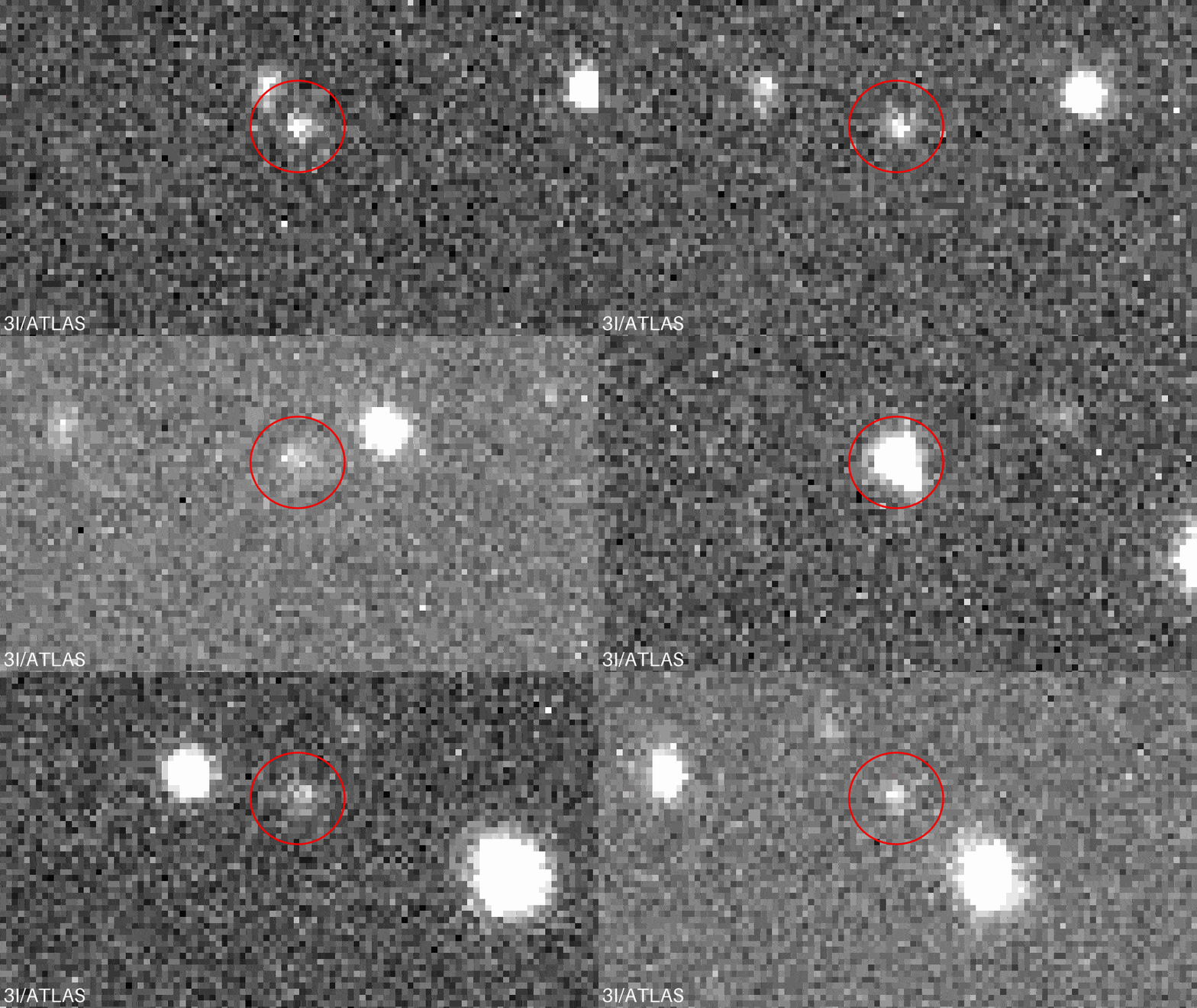
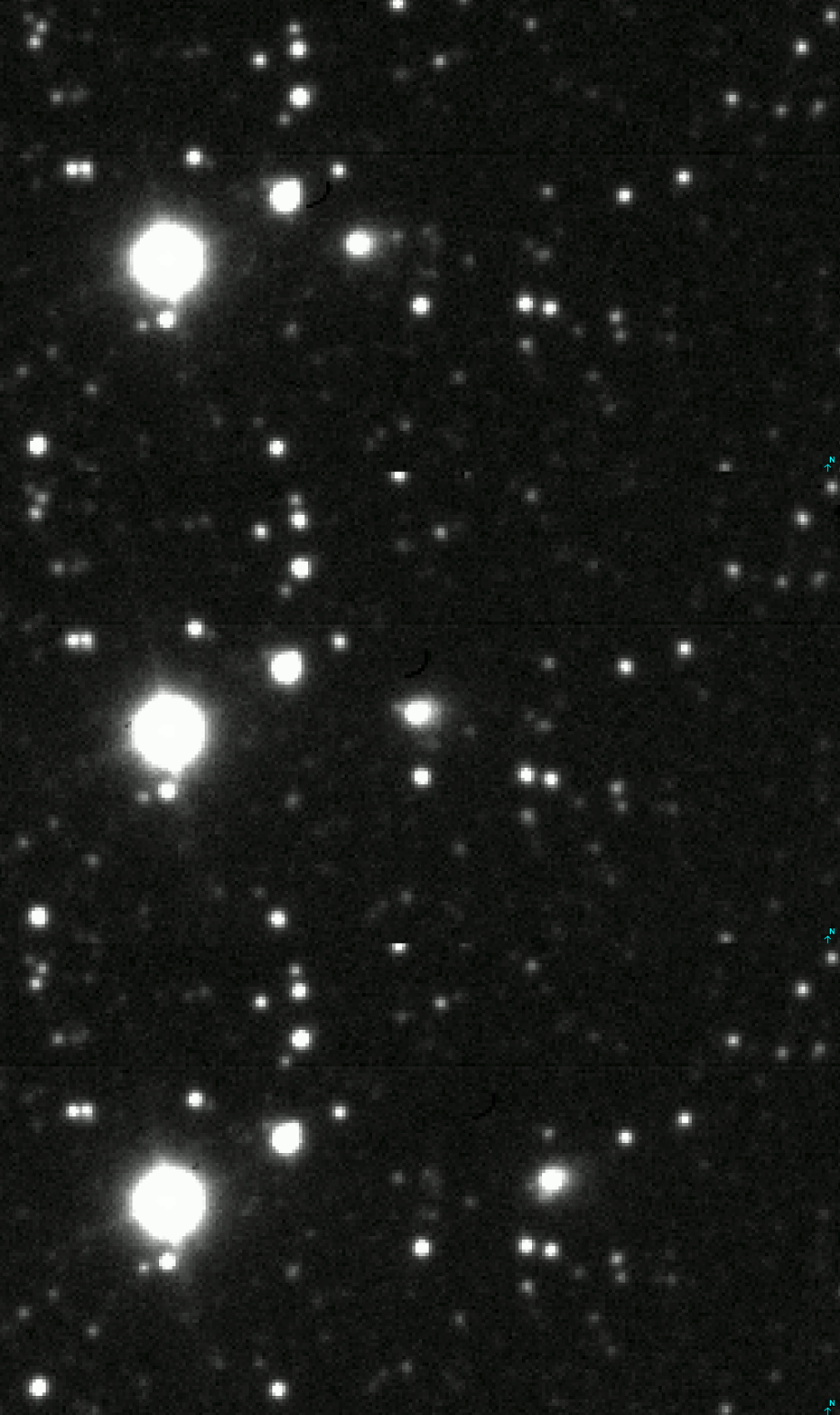
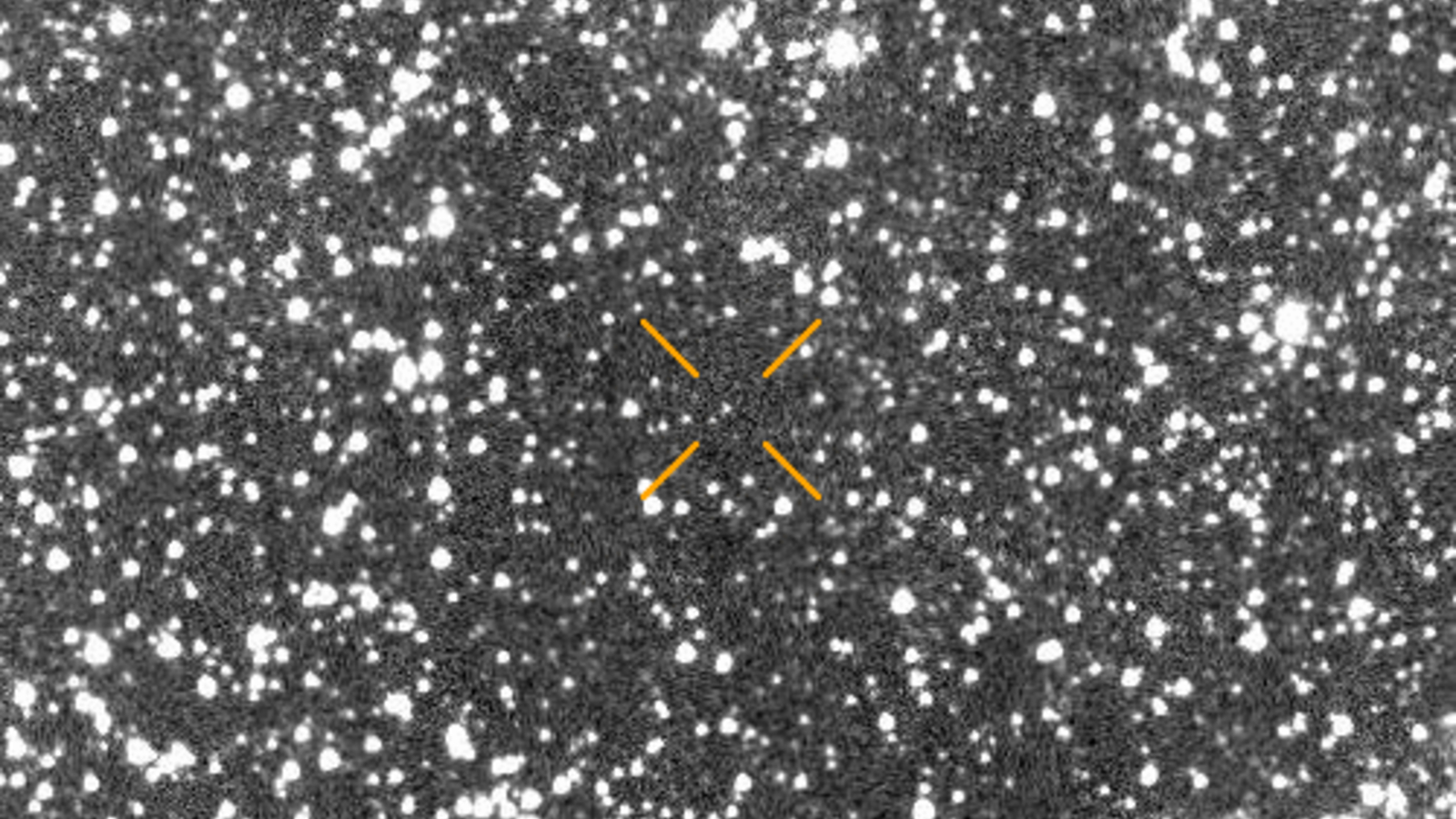
CAPE CANAVERAL, Fla. (AP) — Telescope observations reveal a growing tail on the comet that’s visiting from another star.
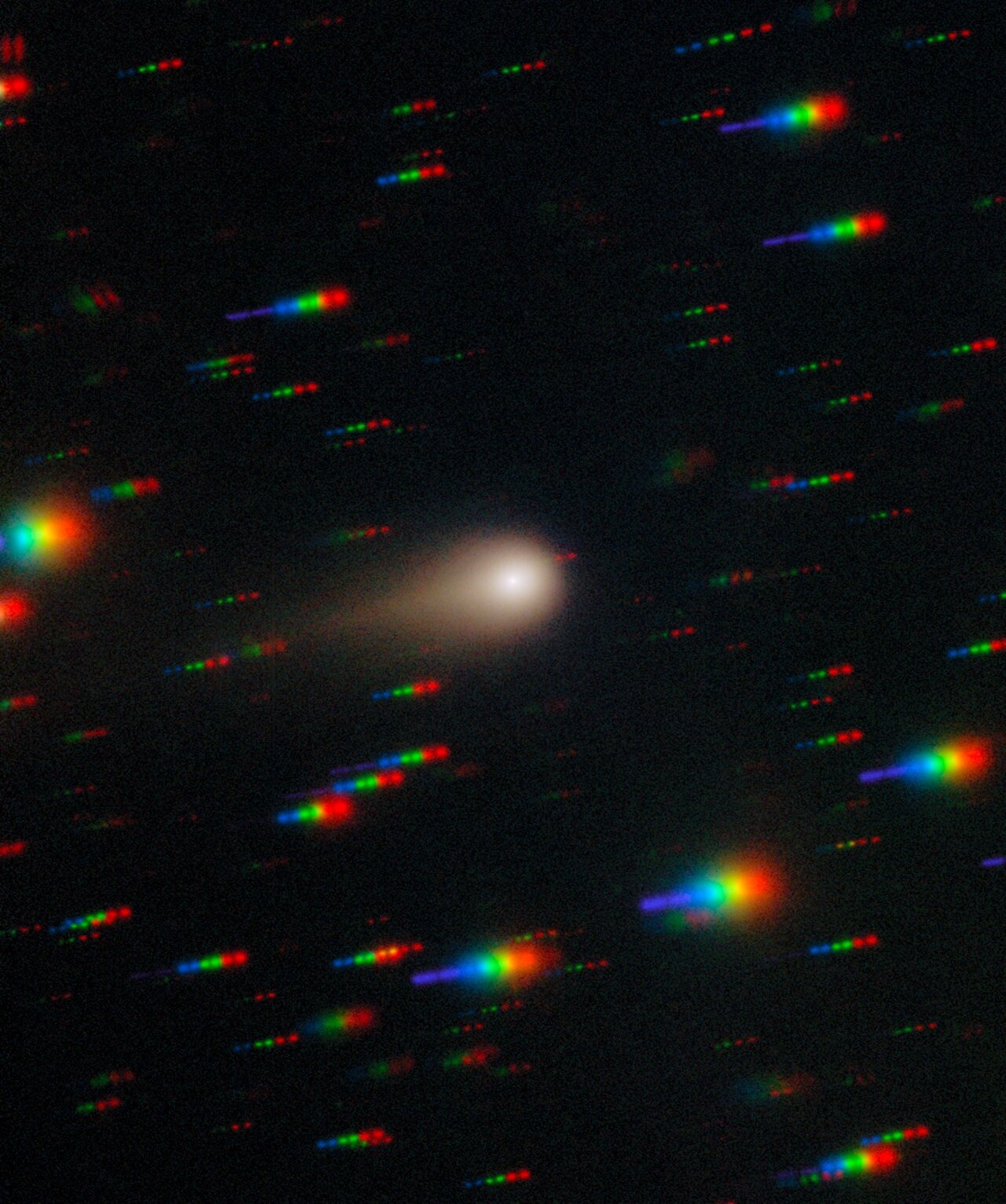
Released Thursday, the pictures taken by the Gemini South telescope in Chile late last month are the most detailed yet of the recently discovered comet. They show a wide coma of dust and gas around the ice ball as it speeds toward the sun, and also a tail that’s more extended than it was in previous shots.
These new images confirm that the comet is becoming more active as it plows harmlessly through our solar system, according to the National Science Foundation's NoirLab, which operates the telescope. It’s only the third known interstellar object to venture our way.
As of Thursday, the comet known as 3I-Atlas was 238 million miles (384 million kilometers) from Earth and growing ever nearer, according to NASA. It will make its closest approach to the sun at the end of October and then pass closest to Earth in December from 167 million miles (269 million kilometers) away — farther from Earth than the sun.
This story was first published on Sep. 4, 2025. It was updated on Sep. 5, 2025 to correct the name of the agency that operates the telescope. It is the National Science Foundation, not the National Space Foundation.
The Associated Press Health and Science Department receives support from the Howard Hughes Medical Institute’s Department of Science Education and the Robert Wood Johnson Foundation. The AP is solely responsible for all content.
Planeten vinden die lijken op de aarde en waar mogelijk ook leven is: het blijft een ontzettende uitdaging. Wetenschappers hebben echter een methode ontwikkeld waarmee we mogelijk aliens kunnen opsporen.
Tot nu toe hebben wetenschappers nog geen bewijs gevonden voor buitenaards leven. Alle levensvormen die we kennen – van eencellig tot meercellig – komen voor op onze eigen planeet waar vloeibaar water zorgt voor de noodzakelijke chemische reacties. Het opsporen van aarde-achtige exoplaneten is een enorme uitdaging. Een team astrofysici denkt nu een haalbare oplossing te hebben.
Exoplaneten vinden met huidige technologie is moeilijk Exoplaneten met vloeibaar water zenden het meeste licht uit bij golflengtes rond de 10 micrometer, ongeveer de dikte van een dunne mensenhaar en twintig keer de typische golflengte van zichtbaar licht. Om een planeet als de aarde te onderscheiden van een ster op een afstand van 30 lichtjaar, is een telescoop met een spiegeldiameter van minstens 20 meter nodig. Bovendien moet die telescoop in de ruimte worden geplaatst, omdat de aardse atmosfeer het beeld te veel vervaagt. De James Webb Space Telescope (JWST), met een diameter van 6,5 meter, was al een huzarenstukje om te lanceren. Een telescoop van 20 meter is simpelweg niet uitvoerbaar.
Alternatieve opties Daarom zoeken wetenschappers naar alternatieven. Ideeën variëren van zwermen kleinere telescopen die samen één groot geheel vormen, tot het gebruik van kortere golflengtes waarmee kleinere spiegels volstaan. Maar die opties brengen weer andere problemen met zich mee: de precisie die nodig is om meerdere telescopen in de ruimte te laten samenwerken is onhaalbaar en in zichtbaar licht is een zonachtige ster meer dan tien miljard keer helderder dan een planeet als de aarde. Het blokkeren van dat sterlicht ligt nog ver buiten ons technische bereik.
Wel haalbaar Een team onder leiding van Heidi Newberg van het Rensselaer Polytechnic Institute stelt nu een alternatief voor dat dichterbij de huidige mogelijkheden ligt. In Frontiers in Astronomy and Space Sciences presenteren de onderzoekers een ontwerp voor een telescoop met ongeveer hetzelfde formaat als de JWST, maar met een andere vorm: een rechthoekige spiegel van één bij twintig meter, in plaats van een ronde van 6,5 meter.
Die langwerpige spiegel zou het mogelijk maken een ster van een exoplaneet te scheiden. Door de spiegel te draaien kan de lange as telkens worden uitgelijnd met zowel ster als planeet. Volgens berekeningen van het team kan een dergelijke telescoop in minder dan drie jaar tijd de helft van alle aarde-achtige planeten binnen 30 lichtjaar opsporen.
30 veelbelovende planeten vinden Hoewel het ontwerp nog verdere ontwikkeling en optimalisatie vereist, zijn er geen onoverkomelijke technische obstakels. In veel opzichten lijkt de telescoop op de JWST, maar dan met een andere spiegelvorm. Als we veronderstellen dat er sowieso één aarde-achtige planeet draait om de gemiddelde zonachtige ster, dan zouden we ongeveer 30 veelbelovende planeten vinden. Nadat deze ontdekt zijn kunnen we aan de hand van vervolgonderzoek identificeren of er leven aanwezig kan zijn. De onderzoekers dromen er in ieder geval al van om vervolgens een sonde te sturen naar de meest veelbelovende planeet voor verder onderzoek.
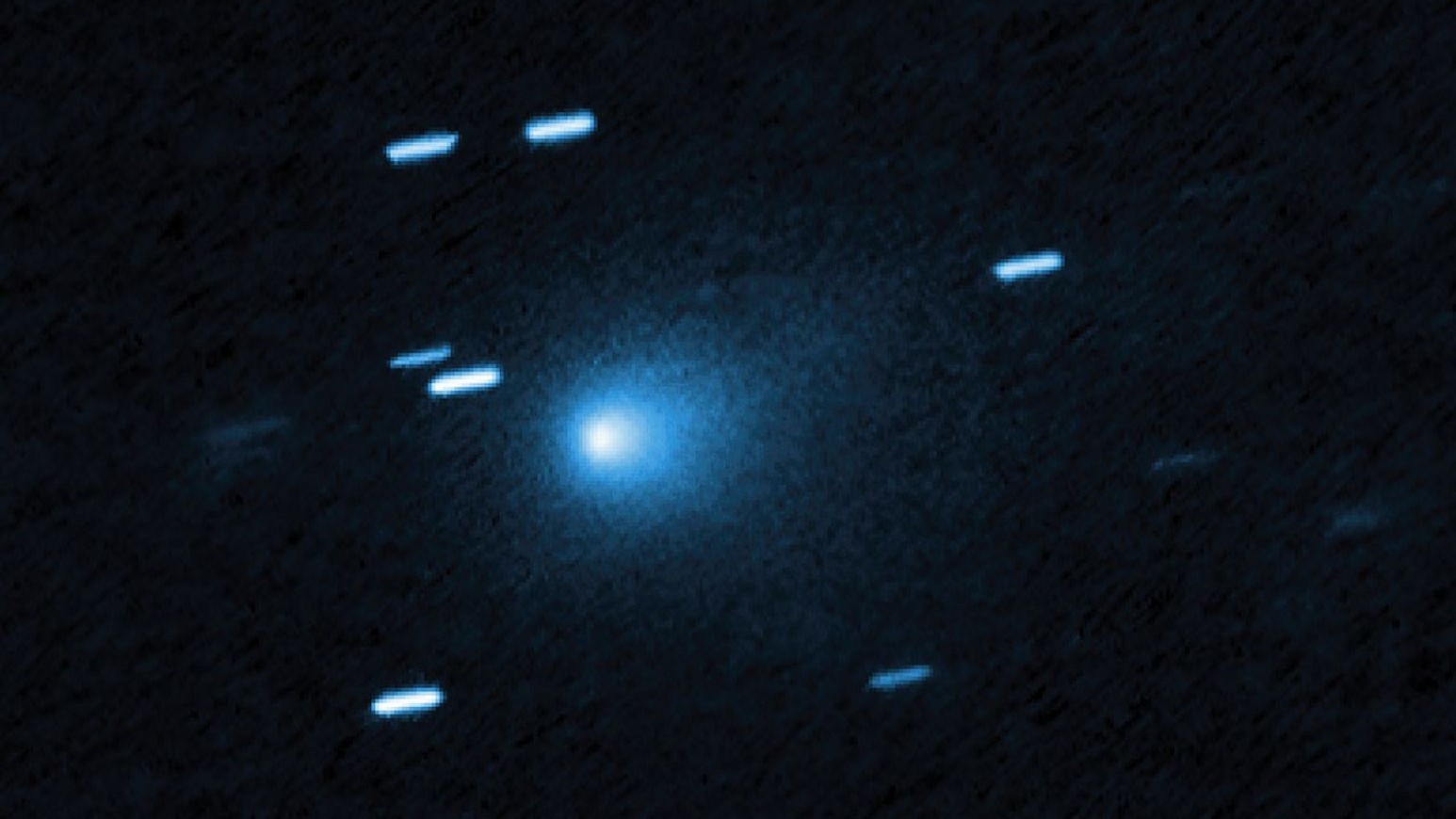
Astronomers have obtained a color image of a rare visitor from deep space — comet 3I/ATLAS, which is hurtling through our Solar System at breakneck speed. This scientific photograph reveals the secrets of the formation of celestial bodies in distant star systems.
New images of 3I/ATLAS were obtained by the Gemini South telescope in Chile as part of the Shadow the Scientists program.
In August 2025, the GMOS spectrograph on the Gemini South telescope in Chile took a unique image of comet 3I/ATLAS. This object attracts the attention of scientists around the world because it is an interstellar traveler that has come to us from beyond our planetary system. Its incredible speed — over 200,000 km/h — undeniably confirms its origin in interstellar space.
Scientific value of the photograph
The magnificent color photograph clearly shows the coma — a cloud of gas and dust that surrounds the comet’s nucleus and expands as it approaches the Sun. Astronomers were particularly struck by the comet’s expressive tail, which had grown significantly longer compared to previous observations. Its length in the sky reaches 1/120 of a degree, which is comparable to the width of your pinky finger when you look at it with your arm outstretched.
In addition to its aesthetic appeal, this photograph has enormous scientific value. The main purpose of the observations was to study the colors of the comet and obtain its spectra. By analyzing the wavelengths of light emitted by the comet, scientists can accurately determine the chemical composition of dust particles in its coma and directly measure its chemical composition.
Discovery that brings worlds together
Color photograph 3I/ATLAS without distortion. Photo: noirlab.edu
Despite its exotic origin, spectral analysis of comet 3I/ATLAS revealed something surprising: its composition is very similar to comets that originated in our own Solar System. This discovery leads to a revolutionary assumption: comets in different parts of our galaxy are formed from similar materials and according to the same laws, regardless of their star system.
Karen Meech, an astronomer at the University of Hawaii who led the observations, notes that scientists have for the first time been able to see the chemical composition of such a comet from its spectrum and track changes in its particles.
Space traveler
Comets like 3I/ATLAS are extremely rare. It is only the third confirmed interstellar comet in history, joining the famous comets discovered in 2017 and 2019.
Unlike ordinary comets, which often perish when they approach the Sun, this traveler has a hyperbolic orbit. This means that it has only visited us temporarily and will soon return to the abyss of interstellar space, taking with it new knowledge about the Universe.
Wetenschappelijke Analyse van de Recent Claims over Aliens en UFO’s: Kritisch Evalueren van Bewijs en Logica
Inleiding
De recente verklaringen van voormalig luchtmachtofficier David Grusch, waarin hij beweert bewijs te bezitten dat de militaire overheid een programma voert voor het terughalen en reverse-engineeren van onidentificeerbare luchtverschijnselen (UAP), hebben wereldwijd voor opschudding gezorgd. Hij stelt dat dit programma al decennia bestaat en dat het niet alleen niet-menselijke “biologische materialen” en buitenaardse schepen bevat, maar ook dat deze technologie afkomstig zou zijn van buitenaardse beschavingen. Dit rapport analyseert deze claims kritisch en wetenschappelijk, met gebruikmaking van logische en empirische evaluatiemethoden, in het bijzonder de “SEARCH”-methode van Ted Schick, en benadrukt de noodzaak van bewijs gebaseerd op objectieve waarnemingen en redelijke aannames.
Hypothese en Onderzoeksvraag
De hypothese die centraal staat in dit artikel stelt dat de militaire overheid een actief en gestructureerd programma uitvoert met als doel het verzamelen, analyseren en reverse-engineeren van UFO’s (Onbekende Vliegen Objecten) en biologisch materiaal dat mogelijk afkomstig is van buitenaardse beschavingen. Deze hypothese impliceert dat overheidsinstanties niet alleen waarnemingen registreren, maar ook in staat zijn om geavanceerde technologieën en biologisch materiaal te bestuderen om inzicht te krijgen in buitenaardse technologieën en levensvormen. Daarnaast wordt de bewering gedaan dat er concreet bewijs bestaat dat buitenaardse beschavingen contact met de Aarde hebben gehad, wat suggereert dat er niet alleen observaties zijn gedaan, maar dat er mogelijk interacties of communicatie hebben plaatsgevonden die verder gaan dan louter waarnemingen.
De onderzoeksvraag die uit deze hypothese voortvloeit, richt zich op de validiteit en plausibiliteit van deze beweringen. Specifiek wordt gevraagd: “Is er voldoende en betrouwbaar bewijs dat de militaire overheid daadwerkelijk UFO’s verzamelt en reverse-engineert, en dat dit programma bewijs levert voor het contact tussen buitenaardse beschavingen en de aarde?” Daarnaast wordt onderzocht welke alternatieve verklaringen er bestaan voor de waarnemingen en gegevens die worden gepresenteerd, zoals natuurlijke fenomenen, menselijke technologie of andere niet-buitenaardse oorzaken.
Het onderzoek richt zich verder op het analyseren van beschikbare documenten, getuigenissen van betrokken ambtenaren, geclassificeerde rapporten en andere vormen van bewijs die kunnen ondersteunen of weerleggen dat de overheid een dergelijk programma voert. Ook wordt gekeken naar de betrouwbaarheid en authenticiteit van deze bewijzen, evenals de mogelijke motieven achter het verzwijgen of openbaar maken van informatie over UFO’s en buitenaards biologisch materiaal. Door deze uitgebreide analyse beoogt het artikel duidelijkheid te scheppen over de plausibiliteit van de hypothese en de onderliggende bewijsvoering, en zo bij te dragen aan het publieke debat over buitenaardse aanwezigheid en overheidsgeheimen.
Evaluatie van het Bewijs
Volgens de “SEARCH”-methode begint de evaluatie met het formuleren van de hypothese, gevolgd door het beoordelen van het bewijs.
Het Bewijs voor de Hypothese
Grusch heeft zich gebaseerd op getuigenissen van insiders binnen de militaire en inlichtingendiensten. Hij beweert dat zij toegang zouden hebben tot bewijsstukken zoals niet-menselijke schepen en biologisch materiaal afkomstig van crashplaatsen. Echter, belangrijk is dat deze claims grotendeels gebaseerd zijn op anonieme getuigenissen en persoonlijke verklaringen, zonder dat er openbaar bewijs wordt geleverd dat onafhankelijk is geverifieerd.
Volgens de principes van de empirische wetenschap en de logica van David Hume, is getuigenis op zich niet voldoende om een dergelijke uitzonderlijke claim te rechtvaardigen. Hume stelde dat miraculeuze gebeurtenissen, zoals het contact met buitenaardse wezens, niet geloofwaardig kunnen worden geacht op basis van getuigenissen alleen, omdat menselijke waarnemingen vaak feilbaar en onderhevig aan interpretatie- of geheugenfouten zijn. Bovendien, wanneer het gaat om fenomenen die de natuurlijke wetten schenden, moet het bewijs dat herhaald en direct is, veel sterker zijn dan enkel getuigenverhalen.
Het ontbreken van objectief bewijs
Tot op heden is er geen publiekelijk beschikbaar, onafhankelijk geverifieerd bewijs dat niet-menselijke schepen of biologisch materiaal daadwerkelijk is vastgesteld. Verschillende vermeende bewijzen, zoals foto’s, video’s of “absolute bewijzen,” zijn herhaaldelijk ontkracht of blijken niet overtuigend te zijn na diepgaand onderzoek. Dit onderstreept dat het bewijs dat volgens Grusch wordt aangevoerd, voornamelijk gebaseerd is op indirecte en subjectieve waarnemingen.
Het risico op zelfmisleiding en cognitieve biases
Het is waarschijnlijk dat getuigen en bronnen zichzelf hebben overtuigd van de authenticiteit van hun waarnemingen, ondanks het ontbreken van solide bewijs. Cognitieve biases zoals de Dunning-Kruger-effect, bevestigingsbias en de neiging tot overinterpretatie kunnen leiden tot het verkeerd inschatten van de betrouwbaarheid van waarnemingen. Mensen kunnen bijvoorbeeld biologische materialen of scheepsonderdelen verkeerd interpreteren of overschatten, vooral onder de druk van geheime informatie en geheime programma’s.
Alternatieve Hypothese: Louter Leugens of Misverstanden
De meest waarschijnlijke verklaring voor de claims van Grusch is dat hij of zijn bronnen zich vergissen of zich zelf hebben overtuigd van niet-bestaande bewijsstukken. Mogelijke scenario’s zijn:
Misinterpretatie van natuurlijke of menselijke objecten en materialen.
Contaminatie of fouten in de beoordeling van biologische stoffen.
Opzettelijke misleiding of het uitlokken van misinformatie, mogelijk voor persoonlijke of politieke doelen.
Slechte interpretatie van geheime militaire technologieën die niet buitenaards hoeven te zijn.
Deze alternatieven worden ondersteund door de geschiedenis van UFO-onderzoek, waarin veel vermeende “bewijzen” later werden ontkracht door wetenschappelijk onderzoek en kritische analyse. Het is essentieel om elke claim te beoordelen op basis van het bewijs dat herhaalbaar en onafhankelijk verifieerbaar is.
Logica en Wetenschappelijke Conclusie
De toepassing van logica en wetenschappelijke bewijsvoering vormt de kern van het kritisch beoordelen van beweringen over buitenaardse schepen en biologisch materiaal. Volgens de principes van de wetenschappelijke methode moeten beweringen worden onderbouwd door concreet, herhaalbaar en controleerbaar bewijs. Zonder dergelijke bewijzen is het uiterst onwaarschijnlijk dat de hypothese dat buitenaardse voertuigen en organismen zijn gevonden en geverifieerd, standhoudt.
Vanuit een logisch perspectief is het belangrijk om het bewijs dat wordt aangevoerd kritisch te bekijken. Veel beweringen over buitenaardse ontmoetingen zijn gebaseerd op getuigenissen, waarnemingen zonder fysieke resten of foto's die niet reproduceerbaar of verifiëerbaar zijn. Dit soort bewijs valt vaak onder anekdotisch bewijs, dat volgens de wetenschappelijke standaarden niet volstaat om een definitieve conclusie te onderbouwen. Bovendien moeten claims over het ontdekken van buitenaardse technologie en organismen voldoen aan strikte criteria van validiteit en consistentie, wat in veel gevallen ontbreekt.
Een belangrijke wetenschappelijke overweging betreft de natuurwetten die ons begrip van het universum vormen. Volgens de relativiteitstheorie en de beperkingen die zij oplegt aan reistijden door het heelal, is het zeer onwaarschijnlijk dat buitenaardse beschavingen ons al hebben bezocht. De immense afstanden tussen sterrenstelsels maken reizen met de snelheid van het licht, of zelfs met snelheden die dicht daarbij liggen, praktisch onmogelijk volgens onze huidige kennis. Zelfs als buitenaardse beschavingen geavanceerd genoeg zijn om dergelijke reizen te maken, zouden zij geconfronteerd worden met enorme technologische en energetische uitdagingen die niet eenvoudig kunnen worden genegeerd.
Daarnaast impliceert het bestaan van buitenaardse technologie dat de natuurwetten, zoals de energiebalans, de fysica van de materie en de kwantummechanica, significant zouden worden overtreden of uitgedaagd. Tot op heden ondersteunt het wetenschappelijke paradigma dit niet; er is geen bewijs dat de natuurwetten kunnen worden doorbroken zonder dat dit detecteerbaar is. Het zou betekenen dat er nieuwe fysische principes zouden moeten worden ontdekt die de huidige theorieën ondermijnen, wat een enorme sprong voorwaarts in onze wetenschap zou betekenen.
Verder is het aannemelijk dat veel van de vermeende bewijzen en waarnemingen niet meer zijn dan menselijke interpretaties, misverstanden, of zelfs opzettelijke misleiding. Veel 'buitenaardse' waarnemingen kunnen worden verklaard door natuurlijke fenomenen zoals atmosferische verschijnselen, technische storingen, of optische illusies. Daarnaast kunnen hallucinatietechnieken, psychologische factoren en de menselijke neiging tot patroonherkenning leiden tot het zien van buitenaardse structuren of voertuigen waar die niet zijn.
Samenvattend, op basis van logica en empirisch bewijs is de conclusie dat de hypothese van het vinden en verifiëren van buitenaardse schepen en biologisch materiaal zonder concreet bewijs uiterst onwaarschijnlijk. De huidige natuurwetten en wetenschappelijke paradigma’s ondersteunen deze conclusie. Het is daarom veel waarschijnlijker dat de bewijzen die worden aangevoerd, menselijke interpretaties, fouten of opzettelijke misleiding betreffen, dan dat ze daadwerkelijk bewijs zijn voor buitenaardse aanwezigheid. Alleen met herhaalbare, verificabele en onafhankelijke bewijzen kan deze hypothese serieus worden overwogen en mogelijk worden bevestigd door de wetenschap.
Vergelijking van Hypotheses: Parsimonie en Conservatisme
Bij het evalueren van verschillende verklaringen voor een fenomeen, zoals onverklaarbare waarnemingen van vreemde objecten aan de hemel, wordt vaak gebruik gemaakt van principes uit de wetenschappelijke methode. Twee belangrijke principes in dit proces zijn parsimonie (ook wel Occam’s scheermes genoemd) en conservatisme. Deze principes helpen om te bepalen welke hypothese het meest waarschijnlijk is op basis van eenvoud en consistentie met bestaande kennis.
Het principe van Occam’s scheermes stelt dat, tussen verschillende verklaringen die hetzelfde fenomeen kunnen verklaren, de eenvoudigste meestal de voorkeur verdient. Dit betekent dat men geen onnodige aannames moet doen, zoals het introduceren van complexe, niet-geloofde entiteiten of processen, tenzij het echt niet anders kan. In de context van UFO-waarnemingen en geruchten over geheime buitenaardse technologie, kunnen we twee hypothesen vergelijken:
Hypothese 1:“De militaire overheid bezit buitenaardse schepen en biologisch materiaal en voert een geheim programma uit.” Deze verklaring veronderstelt dat er een uitgebreide, geavanceerde buitenaardse technologie bestaat, die door de overheid wordt geheime gehouden. Het impliceert ook dat de overheid een grootschalig dekmanteloperatie voert, die decennia lang onopgemerkt zou blijven ondanks de controlemechanismen en transparantie in moderne samenlevingen. Deze hypothese vereist het bestaan van technologisch superieure buitenaardse schepen, het bestaan van biologische materialen van buitenaardse oorsprong, en een uitgebreide wereldwijde samenzwering die al die informatie verborgen houdt. Het is hiermee een complex en onconservatief scenario dat veel aannames bevat die niet direct ondersteund worden door bewijs. Volgens het principe van Occam’s scheermes is deze hypothese dus relatief onnodig complex en minder waarschijnlijke verklaring.
Hypothese 2: “De verklaringen zijn gebaseerd op misverstanden, misinterpretaties of opzettelijke leugens.” Deze verklaring stelt dat de waarnemingen en rapportages niet noodzakelijkerwijs buitenaards of geheimzinnig hoeven te zijn, maar het gevolg kunnen zijn van menselijke fouten, verwarring, of misverstanden. Bijvoorbeeld: optische illusies, technische storingen, psychologische factoren zoals suggestie of hysterie, of zelfs bewust gefabriceerde leugens en misleidingen. Deze verklaring sluit aan bij wat we weten over menselijke waarneming en geheugen, en over de neiging tot overdrijven of het maken van fouten bij het rapporteren van onduidelijke gebeurtenissen. Omdat deze verklaring geen ingewikkelde aannames vereist over buitenaardse technologie of geheime overheidsprogramma’s, is ze volgens het principe van Occam’s scheermes eenvoudiger en plausibeler.
Daarnaast speelt het principe van conservatisme een belangrijke rol. Dit principe houdt in dat we het meest conservatief moeten blijven in onze aannames, dat wil zeggen dat we niet meer moeten aannemen dan noodzakelijk is, tenzij er overtuigend bewijs is voor de meer complexe theorieën. In dit geval betekent dat dat we eerst moeten kijken naar verklaringen die het beste passen bij wat we al weten over menselijke waarnemingen en psychologische processen, voordat we uitgaan van exotische oorzaken zoals buitenaardse technologie.
Kortom, de vergelijking tussen deze hypotheses toont dat de verklaring gebaseerd op menselijke fouten en interpretaties niet alleen eenvoudiger is, maar ook meer in overeenstemming met de principes van wetenschappelijke voorzichtigheid. Het gebruik van parsimonie en conservatisme moedigt ons aan om eerst de meest eenvoudige en meest bewijsconforme verklaring te accepteren, voordat we overgaan tot complexere, minder ondersteunde scenario’s. Hierdoor blijven we kritisch en open-minded, maar ook rationeel en gebaseerd op de bestaande kennis en bewijsmateriaal.
Conclusie
Tot op heden is er geen overtuigend, herhaalbaar wetenschappelijk bewijs dat buitenaardse schepen of biologisch materiaal daadwerkelijk zijn ontdekt. De claims die door personen zoals Grusch naar voren worden gebracht, moeten daarom met grote scepsis worden bekeken. In de wetenschap is het cruciaal dat observaties en beweringen worden bevestigd door herhaalbare experimenten en objectieve waarnemingen. Zonder dergelijk bewijs blijven deze beweringen in het rijk van speculatie en theorieën die niet kunnen worden bevestigd.
De meest waarschijnlijke verklaring voor de claims van Grusch en soortgelijke verhalen is dat ze voortkomen uit misverstanden, verkeerde interpretaties of zelfmisleiding. Soms kunnen menselijke percepties worden beïnvloed door verwachtingen, of kunnen verhalen worden overdreven door de behoefte aan sensatie of media-aandacht. Daarnaast bestaat er ook de mogelijkheid dat sommige informatie opzettelijk wordt vervalst of misleidend wordt gepresenteerd om publieke interesse te wekken of andere doelen te dienen.
Het is daarom van groot belang dat de wetenschap en het publiek kritische vragen blijven stellen. Onderzoekers moeten blijven zoeken naar solide bewijs, en de media moeten waakzaam zijn voor het verspreiden van ongefundeerde claims die geen basis hebben in de feiten. Sensationalisme zonder onderbouwd bewijs ondermijnt het vertrouwen in wetenschappelijke methoden en kan leiden tot verwarring en wantrouwen.
Kortom, totdat er overtuigend bewijs wordt geleverd dat buitenaardse schepen en biologisch materiaal bestaan en zijn bevestigd door herhaalbare experimenten, moeten deze claims met de grootste voorzichtigheid worden behandeld. Het is essentieel om een kritische houding te behouden en niet meegesleept te worden door sensationele verhalen die niet op degelijke wetenschap berusten. Alleen door rigoureus onderzoek en verificatie kunnen we de waarheid achter dergelijke claims achterhalen en voorkomen dat onjuiste informatie zich verspreidt.
Aanbeveling
Het is cruciaal dat verder onderzoek en publieke discussies over vermeende ontmoetingen met buitenaardse wezens gebaseerd blijven op bewijs dat objectief verifieerbaar en reproduceerbaar is. Dit betekent dat gegevens en bevindingen onder gecontroleerde omstandigheden herhaald moeten kunnen worden door onafhankelijke onderzoekers, zodat de geldigheid ervan wordt bevestigd en niet het resultaat is van willekeur of subjectieve interpretaties. Het gebruik van wetenschappelijke methoden, zoals gestructureerde observaties, gecontroleerde experimenten en kritische beoordeling van bewijs, is essentieel om nepnieuws, misverstanden en verkeerde conclusies te voorkomen.
Daarnaast is het belangrijk dat onderzoekers transparant zijn over hun methodologie en bevindingen, zodat anderen deze kunnen controleren en valideren. Kritisch denken moet altijd de kern vormen van het proces, waarbij elke bewering zorgvuldig wordt geëvalueerd op haar bewijsvoering en plausibiliteit. Open discussie en het delen van gegevens onder wetenschappelijke consensus kunnen leiden tot een beter begrip van dit fenomeen, zonder dat men zich laat leiden door speculatie of ongefundeerde claims. Alleen door een objectieve en methodische aanpak kunnen we voorkomen dat misleidende of onjuiste informatie zich verspreidt en kunnen we op een rationele en geïnformeerde wijze omgaan met het onderwerp.
Samenvatting
De recente claims over het bestaan van geheime buitenaardse programma’s, gebaseerd op anonieme getuigenissen en zonder concreet bewijs, bieden geen solide wetenschappelijke basis. Deze verhalen worden vaak aangedragen door personen die anoniem blijven, wat het moeilijk maakt om de betrouwbaarheid te beoordelen. Daarnaast ontbreken er verifieerbare documenten of fysiek bewijs dat het bestaan van dergelijke programma’s ondersteunt. Wetenschappelijke studies en empirisch onderzoek wijzen uit dat deze verhalen meestal voortkomen uit menselijke fouten, misverstanden of bewust gemaakte misleiding. Psychologische factoren zoals hallucinerende ervaringen, groepsdruk of het verlangen naar sensatie kunnen eveneens bijdragen aan het ontstaan van dergelijke verhalen.
Het is belangrijk kritisch te blijven nadenken en de wetenschappelijke methode toe te passen bij het evalueren van dergelijke claims. Door feiten te onderzoeken en te verifiëren kunnen we misverstanden en ongefundeerde geruchten voorkomen. Totdat er concreet bewijs wordt geleverd, blijft de meest waarschijnlijke verklaring dat deze verhalen niet gebaseerd zijn op werkelijkheid, maar op menselijke interpretaties en fouten. Het handhaven van scepsis en het stimuleren van wetenschappelijk onderzoek blijven cruciaal om de waarheid rondom deze controverses te achterhalen.
A Harvard professor has proposed that a bizarre interstellar object speeding toward Earth might have been dispatched by aliens to evaluate our intelligence.Professor Loeb has been outspoken about his theories – and now proposes we should take action before it enters our solar system.
Research indicates the enigmatic interstellar object currently traveling through space is now "generating its own light". The peculiar UFO – named 3I/ATLAS – has sparked conjecture that it may be a technologically-sophisticated mothership. Loeb has been outspoken about this prospect, even proposing we should attempt to make contact.
While numerous experts have rejected these concepts as completely inaccurate, Loeb believes it could be worthwhile taking a closer examination. Prevailing theories propose the object is a comet – but Loeb says a photograph of the object reveals that light is emanating in a manner which differs from how comets typically reflect sunlight.
Loeb stated 3I/ATLAS's focused glow was comparable to a "vehicle turning on its headlights" before adding it "could be a spacecraft powered by nuclear energy", reports the Daily Star.
Building on this, Loeb says we should reach out and contact the space vessel – or perhaps intercept it to determine the intentions.
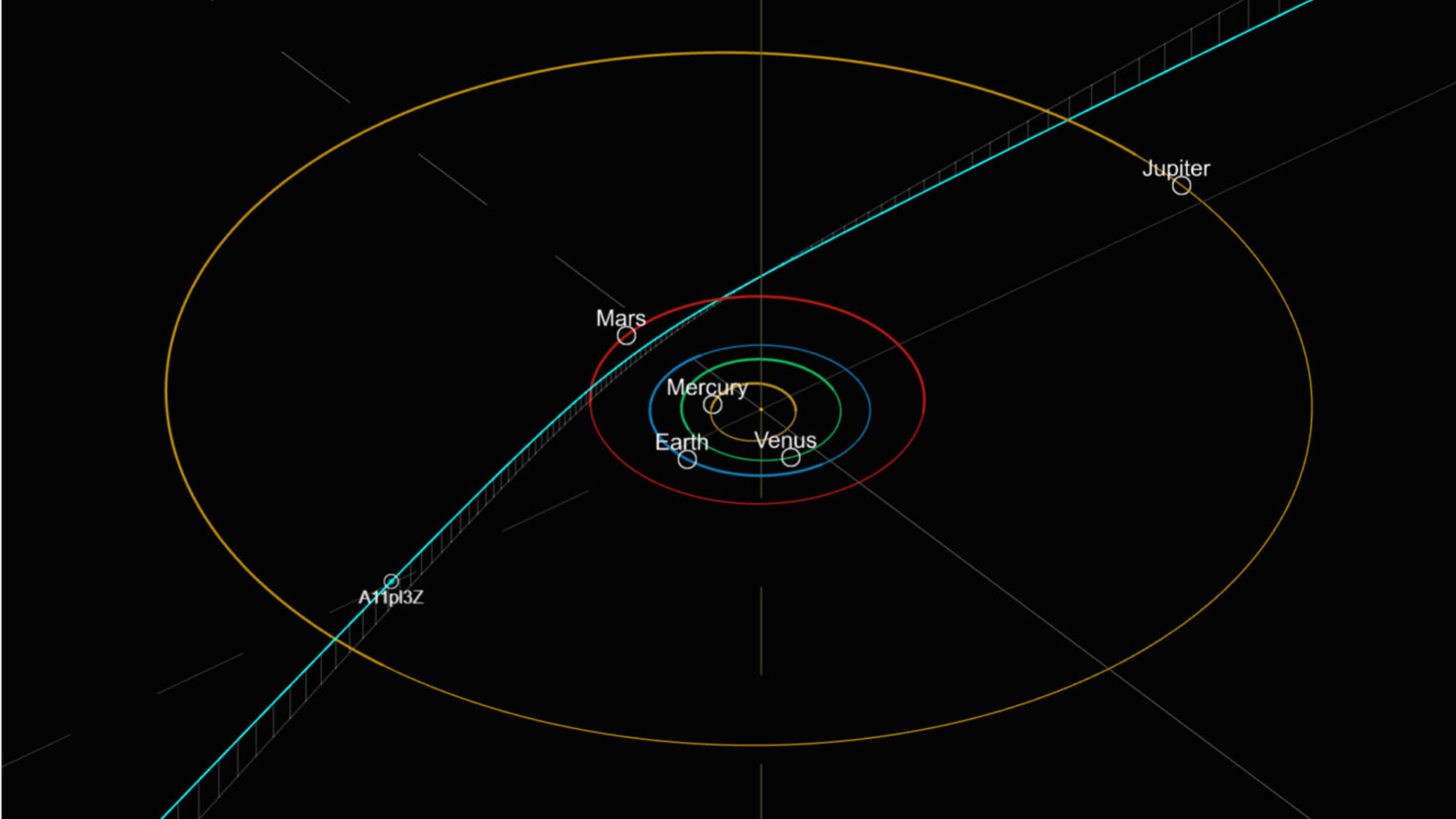
One of the initial recommendations made by Loeb was to utilize NASA's Juno spacecraft that was launched in 2011 to examine Jupiter.
The Harvard professor says if Juno accelerates by 2.6 kilometers per second on September 14, 2025, it could approach 3I/ATLAS and reach out to deliver a message. Loeb conducted calculations to determine the precise date this encounter could occur.
Based on his analysis, if Juno's trajectory can be adjusted, the spacecraft could rendezvous with the interstellar visitor 3I/ATLAS on March 14, 2026.
However, researchers have identified significant obstacles with this proposal. Loeb believes Juno could utilize its scientific equipment to "probe the nature of 3I/ATLAS from a close distance."
The celestial body is hurtling through space at an incredible velocity of 221,000 km/hr. Other experts argue this speed is far too rapid for any successful interception attempt.
Nevertheless, Loeb proposed in his blog that this represents an exceptional opportunity to examine the object. He observed: "The close encounter of 3I/ATLAS to Jupiter provides a rare opportunity to shift Juno from its current orbit around Jupiter to intercept the path of 3I/ATLAS at its closest approach to Jupiter"
Alien looking through the window of a spaceship in earth orbit, illustration
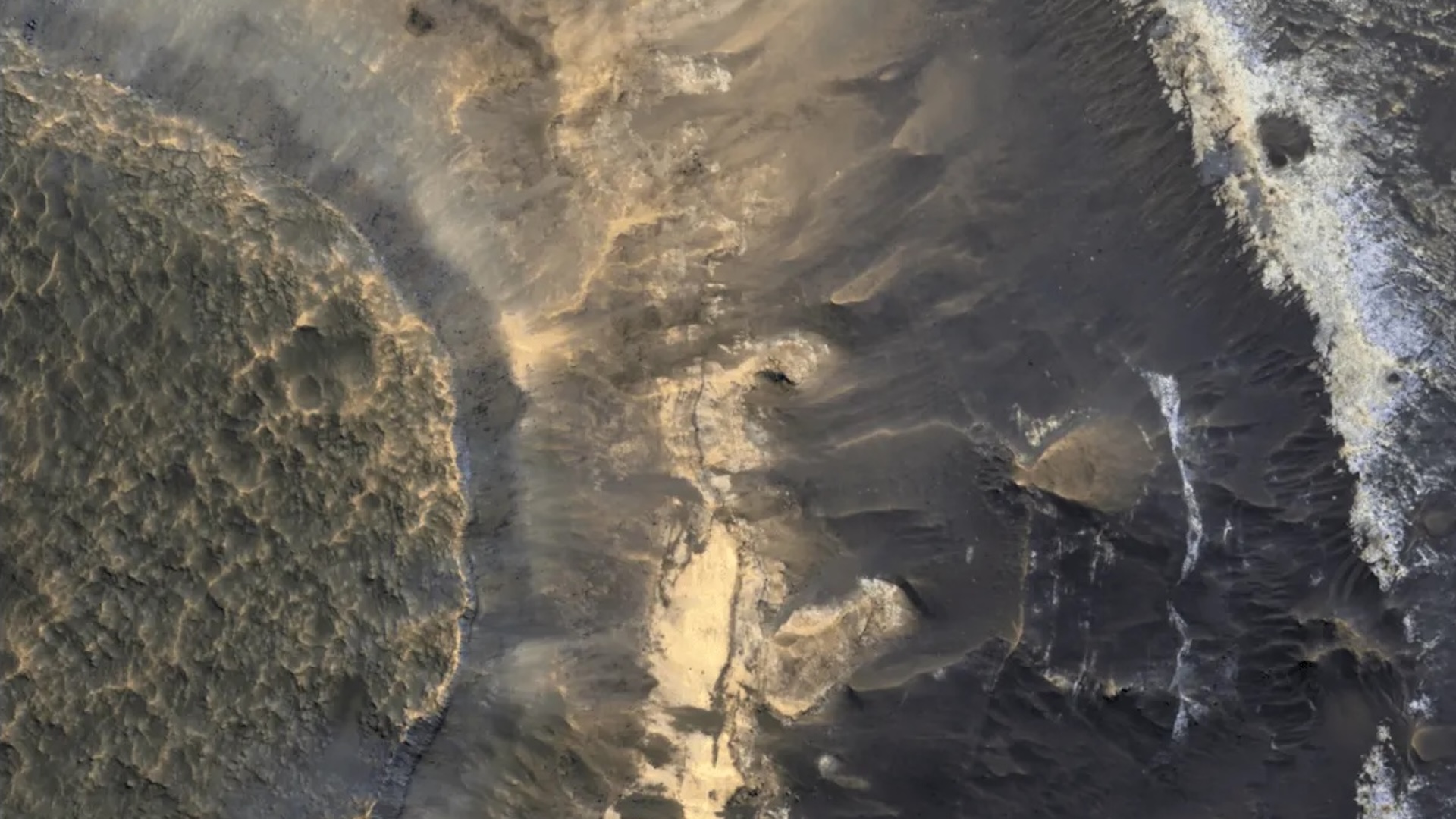
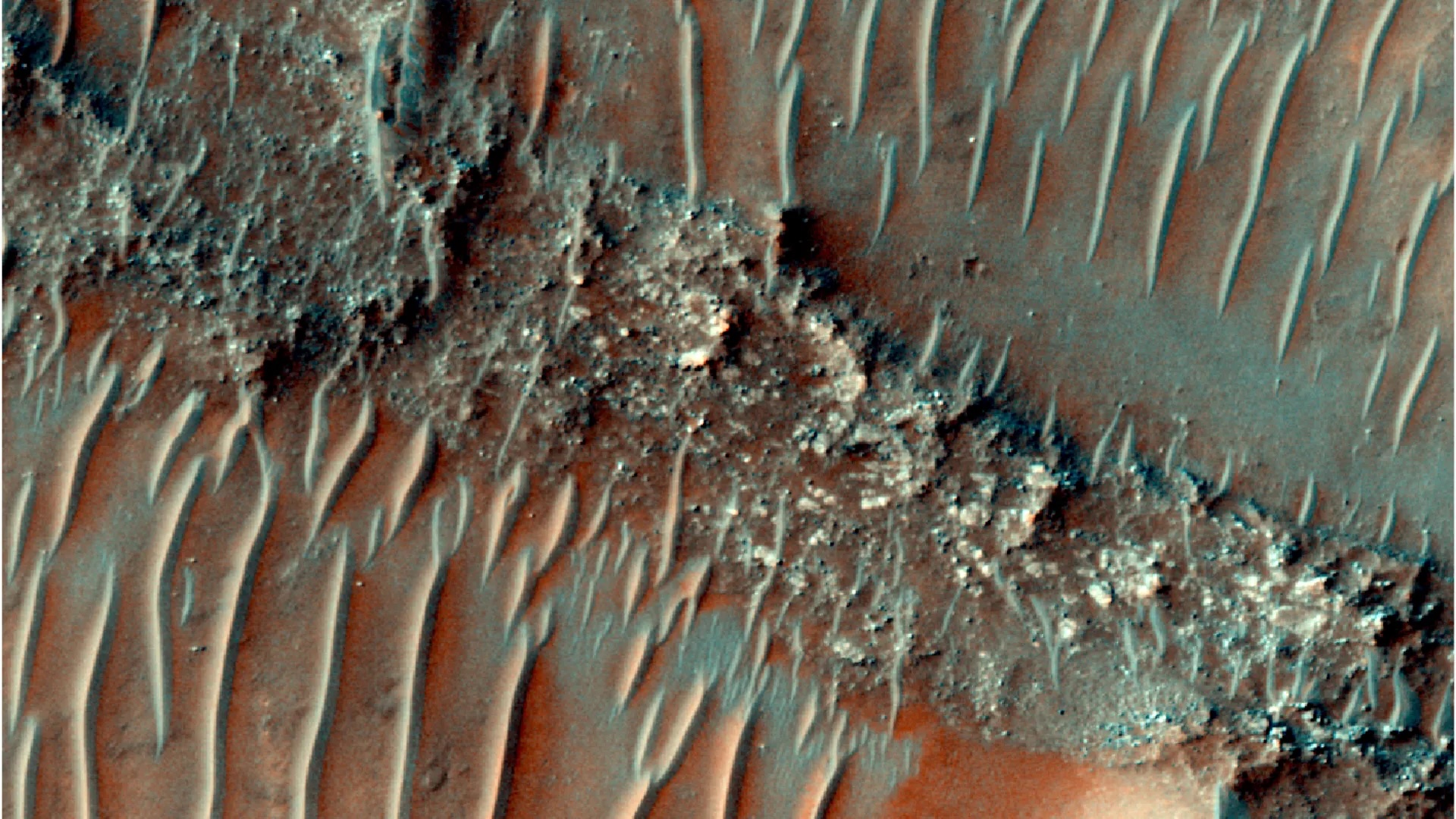
An additional recommendation from Loeb indicates that 3I/ATLAS approaches Mars in October. Loeb proposes utilizing the HiRISE camera aboard the Mars Reconnaissance Orbiter.
On October 3, 3I/ATLAS will be positioned 29 million kilometers from Mars, before closing to just 2.7 million kilometers within several days.
Most of the metallic orbs were reportedly spotted between 1 a.m. and 4 a.m.
(Image: Enigma)
A fresh report from a crowdsourced UFO-spotting app discovered that amongst hundreds of accounts of mysterious metallic spheres between 2022 and 2025, most were observed during the early hours near military facilities in California, New York and Arizona.
Enigma, which enables users to submit their own UFO encounters, recorded over 8,000 reports across the U.S. between Dec. 2022 and June 2025, according to the findings.
Uf these, 422 detailed sightings of a metallic sphere, with the vast majority witnessed between 1 a. m. and 4 a. m. within five miles of military installations. The news comes after a sleepy UK market town was revealed as secretly being a hotbed of mysterious UFO sightings.
Examining such enigmatic aerial objects falls under the Pentagon's All-domain Anomaly Resolution Office (AARO), which documented 757 cases between May 2023 and June 2024, according to the office's yearly report.
'While classic disc-shaped UFOs dominated mid-20th century sightings, orb-shaped UAP have emerged as one of the most frequently reported modern phenomena on Enigma," the report said.
"Often spotted at high altitudes near sensitive infrastructure, these orbs are described as hovering silently or darting across the sky at seemingly impossible speeds.
Enigma users logged more than 8,000 reports in the U.S. between Dec. 2022 and June 2025
(Image: US MQ-9)
'Frequently observed in restricted airspace'
"Consistently seen across the globe, the orbs typically lack visible propulsion systems or control surfaces.
"What makes these orbs especially compelling isn't just how often they appear, but where and how they operate. They are frequently observed in restricted airspace, near nuclear facilities, and have even been tracked on radar or captured by high-resolution infrared systems," the report added.
According to Enigma, former head of the AARO Dr. Sean Kirkpatrick presented a video of one such metallic sphere flying over the Middle East. The 24-second video was taken by an MQ-9, an unmanned aerial vehicle, though it was determined to be a "typical" unresolved UAP.
"While AARO assesses the object in the clip is not exhibiting anomalous behaviour, the object remains unidentified," the AARO report said.
Pentagon baffled by 8,000 mysterious UFO orbs hovering over US military bases An invasion of small
(Image: CC Composite Editor)
Enigma decoded
Of the hundreds of reports of metallic orbs, 43% mentioned the appearance of light and 40% said the object flew very low, according to Enigma. Another 35% said the object flew rapidly, fast or quick, and 38% reported the object was hovering.
A common theory about the metallic orbs paints them as surveillance devices, whether deployed by terrestrial governments or by "non-human intelligences," the Enigma report said.
"Some sceptics argue metallic orbs may be misunderstood weather balloons, optical illusions, or rare atmospheric conditions (like ball lightning)," the report admits. "And others maintain that they are a psychological manifestation, projected by the human mind during altered states or high-stress moments.
"Despite official statements and competing theories, their origin and purpose remain unknown."
Was it aliens, a top-secret government test balloon, or just “hyped up kids” spreading a wild tale of a flying saucer buzzing their playground?
Nearly 60 years on from the incident that has been dubbed “Australia’s Rowell”, the federal government is facing fresh calls to come clean on what it knows about the world-famous Westall UFO mystery.
Next year will mark the 60th anniversary of the incident known as Australia’s largest mass UFO sighting. It’s been the subject of documentaries, books and countless news articles and YouTube videos, with scores of witnesses sharing their stories over the years.
But six decades on, the ageing former students have never been given an official answer about what they saw — or why they were told to keep quiet.
The incident sparked a flurry of headlines.
Picture: Shane Ryan
“They just want to know what it was and why they were told to shut up about it,” said UFO researcher Grant Lavac, who has created a petition to parliament calling for an independent inquiry into the Westall incident.
On Wednesday, April 6, 1966, at around 11am, more than 200 students, teachers and members of the public observed three “metallic discs” or “flying saucers” with no obvious markings moving silently through the sky over Westall High School and Westall State School in Clayton South, about 25km southeast of the Melbourne CBD.
It was just before recess when a girl came running into the Year 9 science class of a young teacher, Andrew Greenwood, 20.
“This student bolted into the classroom and said, ‘Mr Greenwood, Mr Greenwood, there’s a flying saucer outside!’ The recess bell rang and there was a mass exodus of students onto the sports oval,” said Mr Lavac.
Australian UFO researcher Grant Lavac.
Picture: Supplied
Witnesses claim they watched as one of the objects descended towards a wooded area about 1km south of the school, known as The Grange.
The object landed among the pine trees before quickly flying away, leaving large circles of flattened grass with well-defined, discoloured edges behind.
Mr Lavac, who spoke to a number of witnesses for a 2023 YouTube documentary, noted they “all very compellingly recalled that what they saw was not a weather balloon” but rather a classic “flying saucer in the shape of two saucers up-ended and turned facing each other”.
Marilyn Eastwood was 13 when she watched the three objects as she stood on the school sports oval.
“Kids were screaming and so forth, get out into the oval and there was flying saucers,” she told Mr Lavac. “Looked up in the air and there was one just hovering in the playground.”
She said she was among the group of kids who ran over to The Grange.
Flying saucer themed children’s park at The Grange.
Picture: Chris Eastman
“I saw where it actually landed, the grass was flattened in a circular area,” she said.
“The speed that these flying saucers moved at was incredible. It was just unbelievable. Straight up and gone — vertical, horizontal, gone. Just amazing.”
Joy Clarke was 12 at the time and vividly remembers the events of that day.
“I was in class when students rushed in and told us the story,” she told news.com.au in 2016. “We rushed down to the oval and I saw three flying saucers on that day. My personal belief is they weren’t of this world. They were definitely from somewhere else because I have never seen anything like it all.”
Ms Clarke said the army and police then arrived.
“We were told we were hysterical and it didn’t happen, while men in black interviewed some of the other kids,” she said.
Terry Peck was playing cricket on the school oval when she saw the saucer and decided to chase it to The Grange.
“I was about six metres away from it,” she told the Herald Sun.
“It was bigger than a car and circular. I think I saw some lights underneath it. Two girls were there before me. One was terribly upset and they were pale, really white, ghostly white. They just said they had passed out, fainted. One was taken to hospital in an ambulance.”
Coverage in The Dandenong Journal.
Picture: Supplied
Every year on April 6, a number of Westall witnesses gather for a reunion at The Grange.
“They use it as an opportunity to share memories and keep them alive, but also to voice their frustration that the government has not provided an official explanation for what they observed,” Mr Lavac said.
“More importantly they want to know why they were told to shut up about it.”
In the hours after the sighting, the area was flooded with emergency services, military personnel and media outlets.
The Dandenong Journal ran with coverage of the incident on its front page for consecutive issues and Nine News also reported the story on its 6pm bulletin.
Speaking to the Greater Dandenong Leader in 2005, former Year 10 student Ken Stallard described watching the 20-metre round craft fly over the school.
“So many of us saw it,” Mr Stallard said.
“It never occurred to us that it didn’t happen or was an optical illusion. If it was, it was a pretty good optical illusion. It was 1966 … the space race was at its best. It was a mysterious time.”
Witnesses have consistently claimed they were told privately and collectively not to speak about the incident.
Joy Clarke aged 12, standing at the scene of the sighting.
Picture: Supplied
“Shortly after the incident an ad hoc assembly was called and the headmaster told all the students, ‘You’re not to say anything about this event, you’re not to talk about it,’ essentially saying ‘shut up’,” Mr Lavac said.
“That was reiterated individually to a number of students individually by people they thought were government officials or members of the military. That has been a source of their frustration for so long.”
Jacqueline Argent said she was one of the first three kids over the fence to look for the UFO landing site.
“Originally I thought it must have been an experimental-type aircraft, but nothing has emerged like that after all these years,’’ she told the Herald Sun.
Ms Argent claims she was called into the headmaster’s office and interrogated by three men immediately following the incident.
“They had good-quality suits and were well-spoken,” she said.
“They said, ‘I suppose you saw little green men.’ I spoke to my parents about it at the time and they were pretty outraged.’’
In 2021, Mr Greenwood came forward publicly for the first time, confirming he also witnessed the objects — and claiming he was “threatened” to keep quiet.
“I can remember running out into the oval, looking into the sky, and seeing these things, and just standing there absolutely transfixed,” Mr Greenwood told Seven’s Spotlight.
Former Westall science teacher Andrew Greenwood.
Picture: 7News Spotlight
“I haven’t seen anything in my life like it before, haven’t seen anything since.”
However Mr Greenwood, who passed away earlier this year, had a different recollection to the students. “It was a grey, almost cylindrical or cigar shaped object which moved with some degree of precision in the sky,” he said.
According to Mr Greenwood, two weeks later he was visited by two senior Royal Australian Air Force (RAAF) officers, one in a uniform and the other in a civilian suit.
‘Australia’s Roswell’: Calls for fresh inquiry into 60-year-old Westall UFO mystery - PART II
Was it aliens, a top-secret government test balloon, or just “hyped up kids” spreading a wild tale of a flying saucer?
He claimed the men threatened his job if he spoke about what he saw.
“Absolutely, I was threatened,” he said. “I was told that I should not say anything about it.”
Mr Greenwood said it “beggars belief for me, in Australia we’ve never had an official investigation and, flatly, I think there has been a cover-up”.
“I think someone has buried the Department of Supply report which I know exists,” he said.
In his petition, Mr Lavac writes that “allegations of a government cover-up, including the rapid response of military personnel, confiscation of evidence, witness intimidation and nondisclosure of a comprehensive report compiled by the then Department of Supply” warrant an investigation.
“Despite the risks posed to people, property and safety of flight, no official explanation has ever been provided by the government as to the source, identify and intent of what was observed at Westall,” he writes.
An animation from the documentary Westall ’66: A Suburban UFO Mystery.
Picture: Supplied
He has called on the RAAF to revisit its long-held position since 1996 that it sees “no scientific or other compelling reason” to investigate or collect reports of UFOs, now referred to as unidentified anomalous phenomena (UAP).
“As this continues to be the official position of the Department of Defence today, an investigation may help inform a formal review of this long-held position,” he writes.
The petition has attracted more than 350 signatures. If a petition reaches more than 50 signatures, it is usually forwarded to the relevant minister for a response.
Defence Minister Richard Marles has been contacted for comment.
Hazel Edwards was an English and maths teacher at Westall High on the day of the incident and believes it has been blown out of proportion.
The self-proclaimed sceptic suggests overly excited kids made up the story and were responsible for the media hype.
“I think there were a lot of kids that were hyped up,” she told news.com.au in 2016.
“Look at the so-called evidence, most of it is just hearsay.”
Although federal and state government agencies refused to comment about the incident at the time, government documents unearthed in 2014 offer an explanation for the sighting.
A sketch by researcher Bill Chalker.
Picture: Supplied
The documents revealed a secret radiation-testing project known as the HIBAL program — a joint US-Australian initiative developed to monitor atmospheric radiation levels using large silver balloons equipped with sensors between 1960 and 1969.
Each balloon was equipped with a 180kg payload and was followed by a light aircraft tasked with tracking it and triggering its 12-metre parachute via radio signal.
UFO researcher Keith Basterfield said examinations of the documents held by the National Archives and former Department of Supply indicate the mysterious flying object may have been a test balloon that was blown off course after being launched from Mildura.
“My hypothesis is that the incident involved not a UFO, but a high-altitude balloon, its parachute and large payload,” he told News Corp in 2016.
“The Westall object was described as being a white/silver colour which could describe the colour of an HIBAL balloon or parachute.”
Mr Lavac said if that explanation were true, “surely if it’s classified 60 years later that is now not the case”.
“And if it is prosaic, whether it was a high-altitude balloon or some other technology that was being tested, why doesn’t the government come out and admit what it was?” he said.
“If it was something that was maybe not prosaic, it’s a compelling reason for the RAAF to consider devoting resources to the investigation and reporting of UAP.”
Melinda Messenger has UFO experience as she shares videos of eerie glowing orbs in sky
Former Page Three icon Melinda Messenger is adamant that what she saw was not drones, a meteor shower or flares, with the mysterious orbs 'splitting' in the sky
Melinda Messenger saw a number of mysterious lights in the sky
(Image: Instagram)
Melinda Messenger has shared images and videos of an eerie UFO encounter. The former glamour model posted a lengthy caption in which she was adamant that the light orbs were not man made or a meteor shower. The images, albeit blurry, show a number of golden-coloured light orbs hovering in the sky before splitting to show more.
She wrote: "I had an experience last night in North Pembrokeshire. Golden sun sized orbs showed up over the sea horizon.
"They appeared on over 10 different occasions throughout the evening, moving, hovering, changing formation and size and shape and splitting into more orbs, then merging
Melinda Messenger was adamant the lights were not man made
(Image: ExpressStar)
"My old phone camera does not do justice to what I saw."
She continued: "They weren't plane or boat lights, and were not a man made light show nor drones, starlink or a meteor shower nor flares.
"In the first video three golden orbs the size of the sun appeared, the second video is another sighting in the same location when it was darker.
Melinda was warned not to fall for any 'conspiracy'
"You might need to zoom in to see them. The dogs started barking like crazy.
"I took a few screenshots and enhanced some of them to try and see more clearly what was there."
The statement went on: "What my camera didn't pick up was how much they separated into different orbs, how distinct they were and that some of them changed into star cross shapes in one of the sightings.
"The intensity of the light was profound."
Melinda said the light orbs split into more and were seen numerous times during the evening
(Image: Instagram)
Followers found it amazing, with The Wanted star Siva Kaneswaran commenting: "Wow Melinda! I think they showed themselves to you because you're open to it. Inspiring stuff!"
Someone else said: "That's totally amazing. Very envious of that spectacular sight."
Another said: "We are definitely not alone."
Meanwhile, others tried to explain the lights away, suggesting they were just normal street or building lights photographed from a long way away, making them blur and distort due to the limitations of a phone camera.
"Don't get involved in all these conspiracy theories in these people commenting," one person said. "It might get a few comments on the post but in the long run it will result in you being humiliated."
In recent years, the fascination with unidentified flying objects (UFOs) has surged, capturing the attention of both the public and major technology companies. Tech giants are now investing billions into researching UFO sightings, driven by the potential for groundbreaking discoveries and technological advancements. The motivations behind these investments and the implications for the tech industry and society at large are becoming increasingly significant.
The Rising Interest in UFO Phenomena
Image Credit: U.S. Secretary of Defense – Public domain/Wiki Commons
UFO sightings have long captivated the public imagination, with reports dating back to the mid-20th century. Notable incidents, such as the Roswell incident of 1947, have fueled speculation and intrigue for decades. The allure of these mysterious objects has been amplified by the possibility that they might represent advanced technologies or extraterrestrial life forms. Over time, this curiosity has been further stoked by a combination of governmental disclosures and media coverage.
Recent disclosures by government agencies have added a layer of legitimacy to the topic. For instance, the U.S. Department of Defense’s release of previously classified footage showing unidentified aerial phenomena has sparked renewed interest. This transparency has encouraged tech companies to take a more active role in exploring the mysteries of UFOs. The media has played a critical role in amplifying UFO curiosity, with documentaries, podcasts, and articles exploring the subject from various angles. Popular culture, from movies to books, has also kept the public engaged and intrigued by the possibilities of UFO phenomena.
Tech Giants Enter the Fray
Image Credit: NASA Headquarters / NASA/Bill Ingalls – Public domain/Wiki Commons
Technology powerhouses like Google, Amazon, and SpaceX have begun investing heavily in UFO research. Their motivations are multifaceted, ranging from the pursuit of technological breakthroughs to the strategic benefit of being at the forefront of potential discoveries. For instance, Google’s parent company, Alphabet, has allocated resources to its research division, X, to explore the potential of unidentified aerial phenomena.
The technologies employed by these companies in their studies are cutting-edge. Many are leveraging advancements in data analytics, machine learning, and satellite imagery to analyze and interpret UFO sightings. By collaborating with governmental agencies like NASA and the Department of Defense, tech companies are gaining access to valuable data and insights. These partnerships enhance their ability to conduct comprehensive research and potentially unlock new understandings of the universe.
The Potential for Technological Advancements
SpaceX/Pexels
The exploration of UFO phenomena holds the exciting potential for breakthroughs in aerospace technology. By studying these unidentified objects, researchers may discover new principles of physics or innovative propulsion systems previously thought impossible. Companies like SpaceX are particularly interested in these possibilities, as they align with their mission to revolutionize space travel.
Reverse-engineering potential alien technology could lead to significant advancements in various fields. This process involves analyzing and replicating the technology seen in UFO sightings, which could, in turn, inspire new innovations in transportation, communication, and energy. Moreover, the application of AI and machine learning in analyzing UFO data offers exciting possibilities for automating the detection and classification of aerial phenomena, leading to more accurate and efficient research outcomes.
Economic and Investment Implications
Image Credit: NASA Kennedy Space Center / NASA/Kim Shiflett – Public domain/Wiki Commons
The financial implications of investments in UFO research are profound. As tech giants pour resources into this field, stock markets and the tech sector could experience significant impacts. Companies involved in UFO research may see their valuations rise as they become associated with cutting-edge innovation and potential discoveries.
This trend also holds the potential for the emergence of new industries and job creation. As research progresses, new sectors focused on aerospace advancements or extraterrestrial exploration may develop, providing opportunities for entrepreneurs and job seekers. However, investors must navigate the risks and challenges associated with capitalizing on this trend. The speculative nature of UFO research means that returns on investment are not guaranteed, and there are ethical considerations to weigh when allocating resources to such endeavors.
Skepticism and Ethical Considerations
Image Credit: NASA Kennedy Space Center / NASA/Kim Shiflett – Public domain/Wiki Commons
Despite the excitement and potential for discovery, skepticism remains prevalent within the scientific community and the public regarding UFO research. Many scientists argue that extraordinary claims require extraordinary evidence, and the lack of concrete proof continues to fuel doubt. Critics also question the allocation of substantial resources to UFO research when other pressing global issues demand attention and funding.
Ethical considerations play a crucial role in the debate over investing heavily in UFO research. The responsibility to balance scientific curiosity with responsible spending is paramount, especially when public funds are involved. As tech companies and governments collaborate on these projects, they must remain transparent and accountable to the public, ensuring that their initiatives align with broader societal goals. Ultimately, the pursuit of understanding UFO phenomena must be tempered with careful consideration of its ethical implications and potential impacts on society.
Tech Giants Invest Billions in AI UFO Research Amid 2,000+ Sightings
Tech giants like Google, Amazon, and Microsoft are investing billions in AI-driven UFO research amid over 2,000 sightings in early 2025, partnering with defense firms to explore potential breakthroughs in propulsion and energy. Critics warn of hype, but the efforts could add trillions to markets by 2030.
Written by Emma Rogers
Tech Giants Invest Billions in AI UFO Research Amid 2,000+ Sightings
In recent months, a surge in unidentified flying object (UFO) sightings has captured the attention of not just conspiracy theorists but also some of the world’s most powerful technology companies. According to a report from MSN, tech giants including Google, Amazon, and Microsoft are channeling billions of dollars into research initiatives aimed at investigating these phenomena, blending cutting-edge AI with aerospace expertise to decode what could be extraterrestrial signals or advanced human technology.
This investment wave comes amid a dramatic uptick in reported UFO incidents, with over 2,000 sightings documented in the first half of 2025 alone, as detailed in data from the National UFO Reporting Center cited by The Gateway Pundit. Industry insiders suggest that these firms are not merely chasing curiosities; they’re positioning themselves to capitalize on potential breakthroughs in propulsion systems, energy sources, and surveillance tech derived from UFO analyses.
Rising Interest from Silicon Valley
The push into UFO probing represents a strategic pivot for tech behemoths traditionally focused on cloud computing and machine learning. Sources familiar with the matter indicate that Google’s parent company, Alphabet, has allocated upwards of $1.5 billion through its X lab division for drone fleets equipped with spectral imaging to track anomalous aerial activities, building on patterns observed in sightings that NewsNation reports have prompted bipartisan calls for Pentagon transparency.
Meanwhile, Amazon’s involvement ties into its vast satellite network via Project Amelia, which insiders say is repurposing Starlink-like constellations to monitor global hotspots for UFO activity. This aligns with a broader trend where private capital is filling gaps left by government programs, as evidenced by investments in startups like Enigma Labs, which has received funding from Silicon Valley proxies, according to posts on X highlighting ties to former intelligence officials.
Collaborations with Defense Contractors
Partnerships with aerospace giants such as Lockheed Martin and Boeing are accelerating these efforts, with joint ventures exploring reverse-engineered technologies from alleged UFO retrievals. A filing noted on X for an ‘alien tech’ ETF by Tuttle Capital underscores how defense contractors are eyeing commercial applications, potentially revolutionizing fields like quantum computing and hypersonic travel.
Critics, however, warn of overhyped narratives. A former NASA official, quoted in Fox News, dismisses many claims as military secrecy, arguing that interstellar explanations overlook practical barriers like 70,000-year travel times. Yet, the financial commitment persists, with Microsoft integrating UFO data into its Azure platform for AI-driven pattern recognition, aiming to differentiate genuine anomalies from drones or atmospheric illusions.
Economic Implications and Future Outlook
The economic stakes are immense, with analysts projecting that successful UFO-derived innovations could add trillions to global markets by 2030. RAND Corporation’s commentary on long-term space investments, available at RAND, emphasizes the need for sustained funding in exoplanet research, which indirectly supports these probes by providing chemical signature baselines for alien tech detection.
As sightings continue to climb—nearly 3,000 reported in 2025 per UFO Matrix—tech leaders are betting that unraveling these mysteries will yield proprietary advantages. Whether this leads to disclosure or disappointment, the influx of billions signals a new era where Silicon Valley’s ambitions extend beyond Earth, potentially reshaping industries from defense to energy. Insiders expect more revelations as government reports, like Canada’s Sky Canada Project detailed in CTV News, push for standardized investigations.
Brit millionaire living in Cold War bunker will 'find aliens' after Dragon's Den fail
Tech entrepreneur William Sachiti, 41, has bought an old RAF base and fired up its radar station to create a UFO-hunting network across the UK using and old cold war scanning system
William Sachiti has turned a former Cold War radar site to a UK-wide UFO hunting network
(Image: Sonya Duncan / Newsquest / SWNS)
A madcap millionaire lives in an ex-Cold War nuclear bunker where he is building the world's most sophisticated UFO hunting machine. Tech entrepreneur William Sachiti, 41, has bought an old RAF base and fired up its radar station to search for aliens.
The former Dragons Den contestant — who was rejected by all four investors in 2009 — lives in the "supervillain lair" at the decommissioned RAF Neatishead radar station in Norfolk, which he spent £250,000 repurposing.
He said: "There's no point being the richest man in the graveyard, I just want to have fun and let people track UFOs."
William in the converted bunker
(Image: Sonya Duncan / Newsquest / SWNS)
William, whose company Kar–go made the UK's first roadworthy autonomous car in 2019, bought the site in 2022 and converted it into the headquarters of The Academy of Robotics, where he now lives and works.
He founded the company in 2017 with the goal of developing autonomous vehicles, robots and AI systems and initially used his new gaff to test out his robots on private roads safely away from the public and in its buildings converted into workshops.
His quirky property's most obvious feature is the enormous Type–84 radar that looms over William's bungalow on the site. It was previously used to keep an eye out for a potential nuclear attack at the height of Cold War paranoia and was once responsible for tracking and identifying every aircraft moving over the south of the UK.
The former Cold War radar at RAF Neatishead in Norfolk is the centre of a UFO-hunting network
(Image: Sonya Duncan / Newsquest / SWNS)
As William doesn't "know anything" about how radars work, he fed all the documents into a super–intelligent AI and turned it into the "world's best radar expert" called RadarBot, one of many AI assistants who keep him company at the base.
Since he couldn't use the Type–84's radar illuminator as it is far too power hungry for civilian use, he was limited to the smaller, passive secondary surveillance radar (SSR) to build a UFO-hunting network.
William has built a computer programme that could listen for signals in the sky and anyone with his software can either log in and use RAF Neatishead's "secondary surveillance radar" or grab a £20 Amazon antenna and scan their own 150–mile radius.
William has spent £250,000 converting the old base
(Image: Sonya Duncan / Newsquest / SWNS)
With just 20–30 of these antennas placed strategically around the country, nothing would move in the skies above Britain without him and his network of UFO hunters seeing it.
He told the Daily Mail: "We essentially ended up in the world's biggest UFO database just for fun. This is legitimately a UFO hunting machine, but it could be used for other things which I don't have an interest in."
Zimbabwe-born William said his passion for tech came from watching Star Trek as a kid and his interest in UFOs was sparked when more than 60 schoolchildren reported seeing a UFO when he was a youngster.
He added: "I was in primary school, at a school named Greatstone Park, and we had just had a hockey game with students from the Aerial school. Apparently, the school had just seen a UFO land, and it was the talk of all the schools everywhere.
"So in my youth, we were all drawing pictures of UFOs and aliens and things, and I think maybe that dropped a seed, and that's where it started."
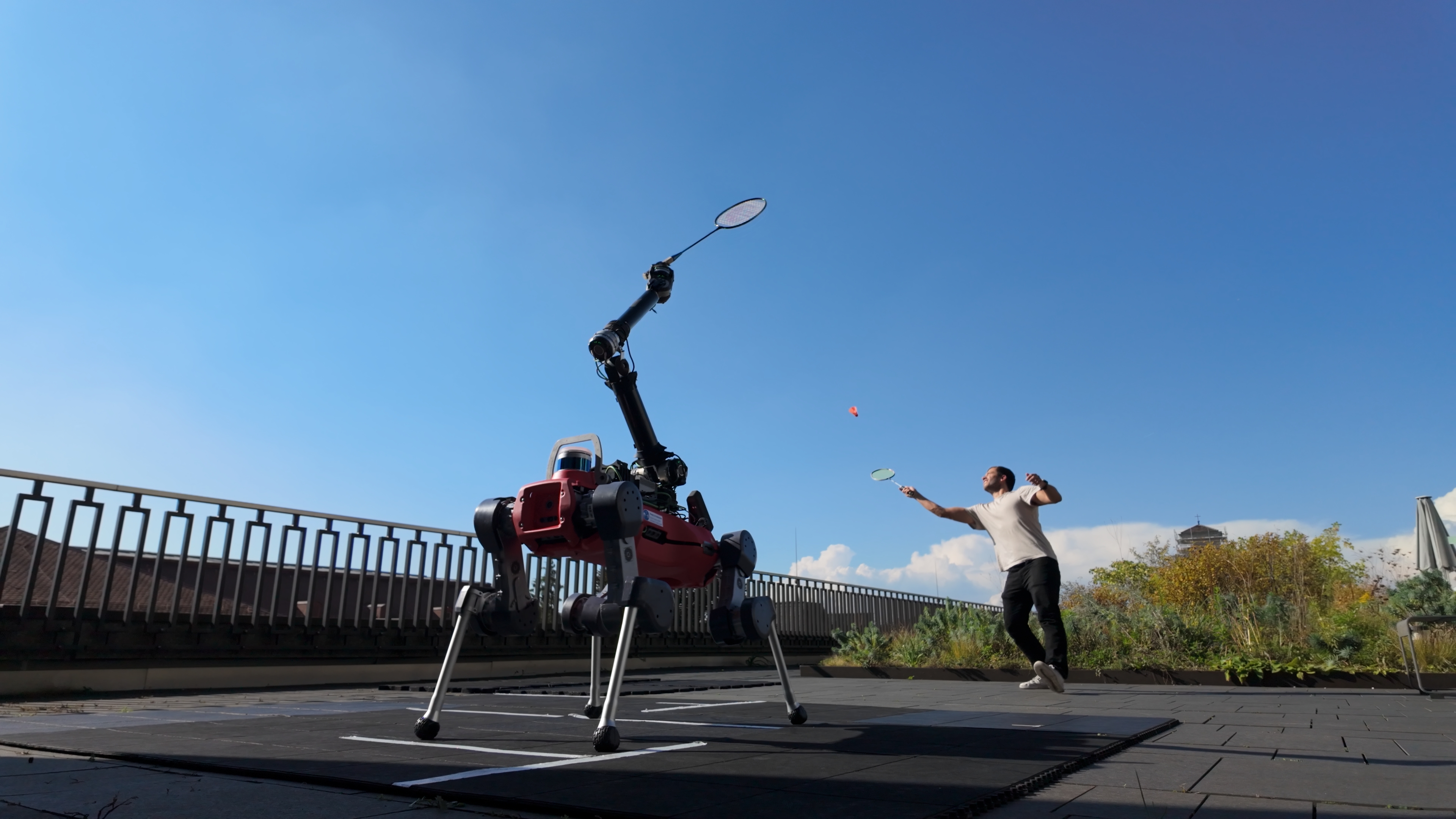
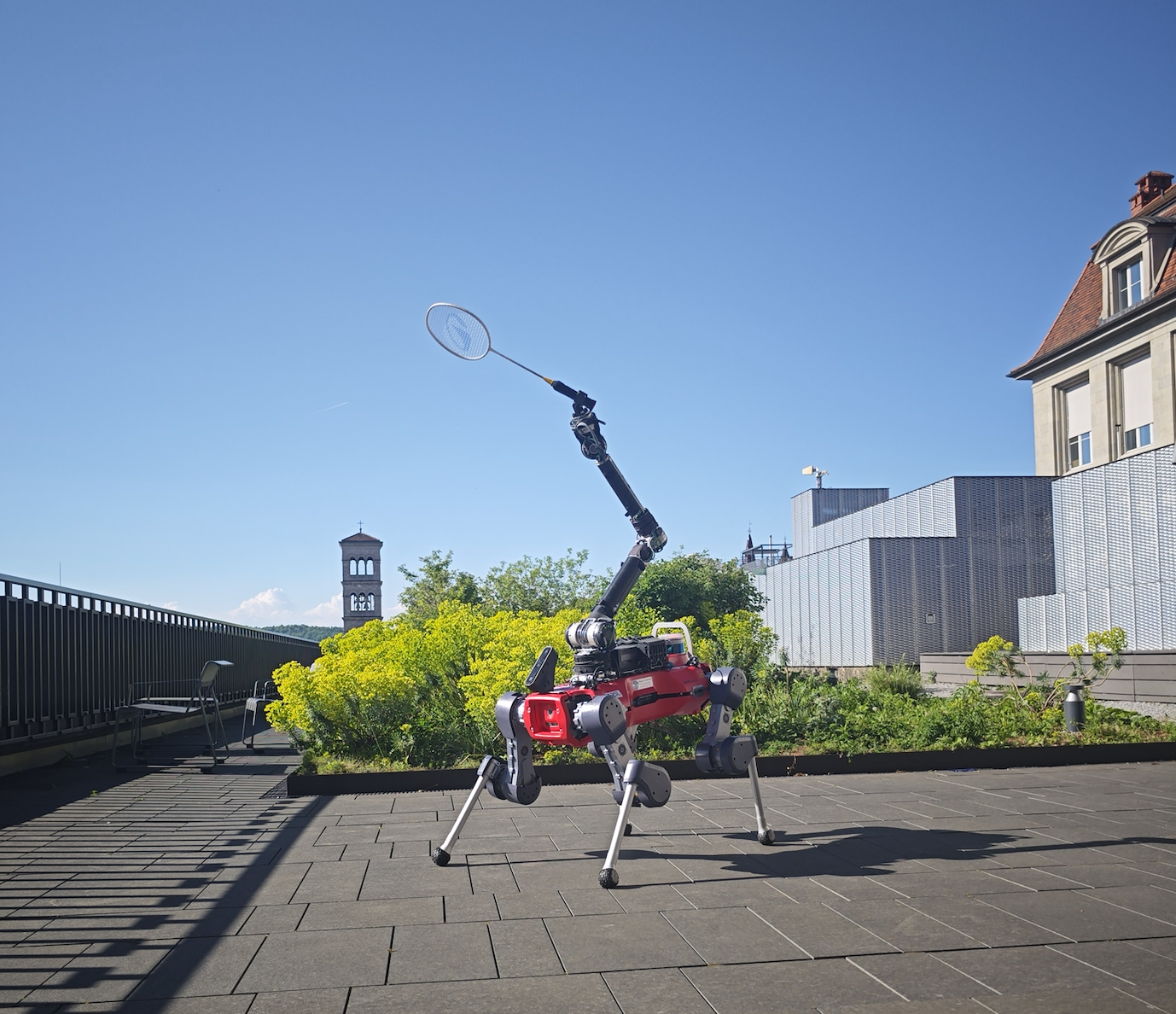
Scientists have trained a four-legged robot to play badminton against a human opponent, and it scuttles across the court to play rallies of up to 10 shots.
By combining whole-body movements with visual perception, the robot, called "ANYmal," learned to adapt the way it moved to reach the shuttlecock and successfully return it over the net, thanks to artificial intelligence (AI).
This shows that four-legged robots can be built as opponents in "complex and dynamic sports scenarios," the researchers wrote in a study published May 28 in the journal Science Robotics.
ANYmal is a four-legged, dog-like robot that weighs 110 pounds (50 kilograms) and stands about 1.5 feet (0.5 meters) tall. Having four legs allows ANYmal and similar quadruped robots to travel across challenging terrain and move up and down obstacles.
Researchers have previously added arms to these dog-like machines and taught them how to fetch particular objects or open doors by grabbing the handle. But coordinating limb control and visual perception in a dynamic environment remains a challenge in robotics.
"Sports is a good application for this kind of research because you can gradually increase the competitiveness or difficulty," study co-author Yuntao Ma, a robotics researcher previously at ETH Zürich and now with the startup Light Robotics, told Live Science.
In this research, Ma and his team attached a dynamic arm holding a badminton racket at a 45-degree angle onto the standard ANYmal robot.
With the addition of the arm, the robot stood 5 feet, 3 inches (1.6 m) tall and had 18 joints: three on each of the four legs, and six on the arm. The researchers designed a complex built-in system that controlled the arm and leg movements.
The team also added a stereo camera, which had two lenses stacked on top of each other, just to the right of center on the front of the robot's body. The two lenses allowed it to process visual information about the incoming shuttlecocks in real time and work out where they were heading.
The robot was then taught to become a badminton player through reinforcement learning. With this type of machine learning, the robot explored its environment and used trial and error to learn to spot and track the shuttlecock, navigate toward it and swing the racket.
To do this, the researchers first created a simulated environment consisting of a badminton court, with the robot's virtual counterpart standing in the center. Virtual shuttlecocks were served from near the center of the opponent's half of the court, and the robot was tasked with tracking its position and estimating its flight trajectory.
Then, the researchers created a strict training regimen to teach ANYmal how to strike the shuttlecocks, with a virtual coach rewarding the robot for a variety of characteristics, including the position of the racket, the angle of the racket's head, and the speed of the swing. Importantly, the swing rewards were time-based to incentivize accurate and timely hits.
The shuttlecock could land anywhere across the court, so the robot was also rewarded if it moved efficiently across the court and if it didn't speed up unnecessarily. ANYmal's goal was to maximize how much it was rewarded across all of the trials.
Based on 50 million trials of this simulation training, the researchers created a neural network that could control the movement of all 18 joints to travel toward and hit the shuttlecock.
A fast learner
After the simulations, the scientists transferred the neural network into the robot, and ANYmal was put through its paces in the real world.
Here, the robot was trained to find and track a bright-orange shuttlecock served by another machine, which enabled the researchers to control the speed, angles and landing locations of the shuttlecocks. ANYmal had to scuttle across the court to hit the shuttlecock at a speed that would return it over the net and to the center of the court.
The researchers found that, following extensive training, the robot could track shuttlecocks and accurately return them with swing speeds of up to approximately 39 feet per second (12 meters per second) — roughly half the swing speed of an average human amateur badminton player, the researchers noted.
ANYmal also adjusted its movement patterns based on how far it had to travel to the shuttlecock and how long it had to reach it. The robot did not need to travel when the shuttlecock was due to land only a couple of feet (half a meter) away, but at about 5 feet (1.5 m), ANYmal scrambled to reach the shuttlecock by moving all four legs. At about 7 feet (2.2 m) away, the robot galloped over to the shuttlecock, producing a period of elevation that extended the arm's reach by 3 feet (1 m) in the direction of the target.
"Controlling the robot to look at the shuttleclock is not so trivial," Ma said. If the robot is looking at the shuttlecock, it can't move very fast. But if it doesn't look, it won't know where it needs to go. "This trade-off has to happen in a somewhat intelligent way," he said.
Ma was surprised by how well the robot figured out how to move all 18 joints in a coordinated way. It's a particularly challenging task because the motor at each joint learns independently, but the final movement requires them to work in tandem.
The team also found that the robot spontaneously started to move back to the center of the court after each hit, akin to how human players prepare for incoming shuttlecocks.
However, the researchers noted that the robot did not consider the opponent's movements, which is an important way human players predict shuttlecock trajectories. Including human pose estimates would help to improve ANYmal's performance, the team said in the study. They could also add a neck joint to allow the robot to monitor the shuttlecock for more time, Ma noted.
He thinks this research will ultimately have applications beyond sports. For example, it could support debris removal during disaster relief efforts, he said, as the robot would be able to balance the dynamic visual perception with agile motion.
Alien Encounters: Five Shocking UFO Space Secrets & Cover-up Claims
When former US Air Force intelligence officer David Grusch testified about mysterious alien landings and a covert 'multi-decade' UFO program in July 2023, he sparked a heated debate - is the US really hiding intel on aliens and spacecraft?
We’re "not bringing little green men or flying saucers into the hearing,” Republican Tim Burchett said. “We're just going to get to the facts.”
The congressional committee heard from three witnesses in all: Grusch, former US Navy commanding officer David Fravor, and former Navy pilot Ryan Graves. Buckle up for a cosmic shockwave as we delve into the five most memorable moments from the head-spinning hearing.
1. ‘Non-human’ bodies were recovered from a UFO crash site
Whistleblower David Charles Grusch testified under oath at a national security subcommittee hearing that 'non-human biologics’ were found at an alleged UFO crash site. In a remarkable exchange, South Carolina Republican Nancy Mace asked Grusch to elaborate on his knowledge of ‘non-terrestrial bodies’ and ‘biologics’ to which Grusch responded: "Biologics came with some of these recoveries." Were they human or non-human? "Non-human, and that was the assessment of people with direct knowledge on the program I talked to," Grusch said.
Separately, he confirmed he had not personally seen alien bodies or aircraft but based his testimony on compelling evidence in the form of photography, official documentation, and classified testimony. Grusch said he interviewed 40 witnesses over four years.
Grusch: US aware of non-human intel in the ‘30s
Who is David Grusch? For 14 years, Grusch was an intelligence officer in the US Air Force at the rank of Major and, from 2021-2023, a civilian at the National-Geospatial Intelligence Agency with the military equivalent rank of a full-bird Colonel. He was previously the Agency’s co-lead in UAP - Unidentified Anomalous Phenomena - as well as reporting to UAP Task Force and All-Domain Anomaly Resolution Office.
2. The Pentagon is hiding evidence of alien spacecraft from Congress
The US government is accused of conducting a ‘multi-decade’ program that collected and attempted to reverse-engineer crashed UFOs. Grusch also claimed the Pentagon is hiding evidence of alien spacecraft from Congress which he described as “non-human origin technical vehicles”.
Furthermore, Grusch said that while he was on the intelligence community’s task force, he became aware of secret US government programs in charge of unsanctioned technological research related to UFOs.
He explained that much of the information is classified and responded several times: “I can’t discuss that in an open session.”
The Pentagon’s view: In a statement, the Pentagon said it hasn’t discovered “any verifiable information to substantiate claims that any programs regarding the possession or reverse-engineering of extraterrestrial materials have existed in the past or exist currently”.
3. US employees who come forward about UFOs and government practices are punished
Grusch, who filed a whistleblowing claim two months before the heading, said he had support from colleagues but was also subjected to reprisal: "I do have knowledge of active, planned, reprisal activity against myself and other colleagues."
Grusch said the blowback is coming from 'certain senior leadership at previous agencies I was associated with.' He described some of the behavior as ‘administrative terrorism’ including threats to his colleagues’ career paths. He offered to provide further details in a ‘closed environment’ such as a SCIF - a secure, sound-proofed room where officials with security clearances can examine sensitive intel.
Burchett asked if Grushch had personal knowledge of people who have been harmed or injured in efforts to cover up or conceal extraterrestrial technology. “Yes,” Grusch replied.
“Anyone been murdered that you would - that you know of or have heard of?” Burchett added.
“I have to be careful asking that question,” Grusch responded. “I directed people with that knowledge to the appropriate authorities.”
Asked at one point where the committee could find corroborating information about possible cover-ups, Grusch said he could not answer but encouraged the committee to thoroughly investigate: “As I stand here under oath now, I am speaking to the facts as I have been told.”
4. UFOs pose a national security threat
Representative Glenn Grothman asked if the witnesses believed UAPs - Unidentified Anomalous Phenomena - posed a threat to US national security.
“Yes," former US Navy Commander David Fravor responded. "The technology that we faced was far superior than anything that we had. If you had one, you captured one, you reverse engineered it, you got it to work.”
Representative Robert Garcia told the bipartisan committee that more reports should be encouraged: "UAPs, whatever they be, may pose a serious threat to our military and our civilian aircraft, and that must be understood."
5. US Navy pilots David Fravor and Ryan Graves say they've personally seen UFOs
David Fravor, a former commanding officer in the US Navy, and former Navy pilot Ryan Graves have previously gone public with allegations about UFOs but it was breathtaking to hear their first-hand accounts at the House Oversight Committee hearing.
Regarding a 2004 incident, Fravor (pictured right) described a UFO caught on camera that resembled a Tic Tac breath mint: “As all four looked down we saw a small white Tic Tac-shaped object with the longitudinal axis pointing N/S and moving very abruptly over the white water. There were no rotors, No rotor wash, or any visible flight control surfaces like wings,” he testified. “This Tic Tac object… was far superior in performance to my brand new F/A-18F and did not operate with any of the known aerodynamic principles that we expect.”
Graves (pictured left), a former F-18 pilot, said that in 2014 - after the radar system was upgraded - he saw a craft without exhaust plumes or a visible engine ‘almost daily’ flying over the East Coast.
He added that at one point two jets were forced to make evasive maneuvers to avoid a ‘dark gray cube inside of a clear sphere’ that stood motionless against the wind.
Graves' squadron submitted a safety report, but there was no official acknowledgment of the incident.
“Over time, UAP sightings became an open secret among our aircrew,” Graves testified. “They were a common occurrence, seen by most of my colleagues on radar and occasionally up close. The sightings were so frequent that they became part of daily briefs.”
Some UFOs may be man-made including a ‘Chinese spy balloon’ seen from a U-2 plane
Unexplained Vanishings Preceded by Bizarre Behavior: UFOs, Aliens, and the Mysterious Disappearances
Throughout history, humanity has been captivated by the unknown—mysterious lights in the sky, strange encounters, and unexplained disappearances. Among these phenomena, one of the most perplexing and intriguing are cases where individuals or groups vanish suddenly and inexplicably, often preceded by strange or bizarre behavior. Increasingly, these disappearances are being linked, in some reports, to encounters with unidentified flying objects (UFOs) and alleged extraterrestrial entities. This article explores the phenomenon of disappearances marked by bizarre conduct and the possible connection to UFO and alien activity.
The Pattern of Bizarre Behavior Before Disappearances
Many documented cases of unexplained disappearances involve witnesses or victims exhibiting unusual or inexplicable behavior prior to vanishing. These behaviors often serve as unsettling clues, hinting at a mysterious external influence that precedes the sudden disappearance of individuals. Analyzing these patterns provides insight into the possible mechanisms or forces involved in such cases, and has led researchers and investigators to consider phenomena beyond conventional understanding. The behaviors observed can be diverse but tend to share common themes, suggesting a connection to unknown energies, extraterrestrial influences, or otherworldly forces that temporarily affect human consciousness or physiology.
Sudden agitation or paranoia is one of the most frequently reported behaviors. Victims often become unexpectedly anxious, paranoid, or distressed without any obvious cause. Witnesses describe individuals who, moments before their disappearance, appear to be overwhelmed by fear or confusion. They may exhibit frantic movements, attempt to flee, or behave in a wildly erratic manner. This surge of agitation might be interpreted as an external influence disrupting their mental state, possibly induced by unseen energies or signals. Such reactions could be a result of human consciousness being affected by electromagnetic or other unknown forces, which temporarily impair rational thought and induce panic.
Incoherent speech or confusion is another common pattern observed in these cases. Victims often speak nonsensically, mumble incoherent phrases, or appear disoriented and lost, as if affected by a sudden mental or neurological influence. Witnesses report that these individuals struggle to communicate clearly or process their surroundings properly. This disorientation might suggest a temporary disruption of brain function, possibly caused by exposure to unusual electromagnetic fields, radiation, or other unknown energies associated with the phenomenon. The incoherence may also indicate a form of cognitive interference, where the individual's mental faculties are compromised, leading to unpredictable behavior just before they disappear.
Seeking out strange or unusual locations is a behavior frequently documented among individuals who later vanish. Reports often describe victims wandering into remote, uninhabited areas, dense forests, or approaching unfamiliar phenomena in the sky—such as strange lights, glowing objects, or inexplicable aerial displays. Some individuals are drawn toward these phenomena involuntarily, as if compelled by an external force. This behavior raises questions about whether these locations or phenomena serve as portals, gateways, or points of contact that facilitate their disappearance. The tendency to approach unusual sights or environments suggests that the individuals may be responding to signals or stimuli from an external source, possibly connected to extraterrestrial or dimensional activity.
Physical symptoms observed in some cases further support the idea of external influences affecting victims before their disappearance. These symptoms include burns, radiation marks, or other signs of exposure to unknown energy sources. Witnesses have reported seeing victims with strange, glowing marks on their skin, or injuries that seem inconsistent with typical accidents or injuries. Such physical signs point toward some form of contact with an energy field or radiation emitted by unidentified objects or entities. In some cases, victims exhibit symptoms similar to radiation poisoning, which hints at the involvement of advanced or unknown energy technologies.
These behaviors—ranging from psychological distress to physical symptoms and environmental exploration—are often the last actions recorded before individuals vanish without a trace. The common denominator across many cases is that these bizarre behaviors are frequently followed by abrupt disappearances with no clear explanation. The pattern suggests an external influence—possibly linked to UFO or alien activity—that temporarily alters human behavior, mental state, or physical condition, ultimately leading to their sudden disappearance. Researchers continue to investigate these patterns, seeking to understand whether these behaviors are mere coincidences or indicative of a deeper, perhaps extraterrestrial, interaction.
In conclusion, the pattern of bizarre behavior exhibited by individuals prior to their disappearance points toward external forces at play, which may involve electromagnetic phenomena, alien influences, or other supernatural elements. These behaviors—marked by agitation, incoherence, environmental curiosity, and physical symptoms—serve as crucial clues for understanding the mysterious nature of these disappearances. As investigations progress, these patterns remain central to unraveling the enigma of unexplained vanishings, offering potential pathways to understanding phenomena that continue to defy conventional explanation.
Notable Cases of Bizarre Behavior and Disappearances
The Dyatlov Pass Incident (1959)
The Dyatlov Pass Incident of 1959 remains one of the most perplexing and widely discussed mysteries in modern history. It involved nine experienced hikers, all young and seasoned explorers from the Soviet Union, who embarked on a trek through the remote and treacherous Ural Mountains. Their journey was meticulously planned, but things took a bewildering turn when, under unknown circumstances, the group abruptly abandoned their tent in the dead of night, fleeing into the harsh, freezing wilderness without adequate clothing or footwear.
The hikers’ abandoned tent was later discovered torn from the inside out, suggesting they had fled in a panic. Their bodies were found days later scattered across the snowy terrain, some at significant distances from the campsite. The injuries sustained by the victims were bizarre and severe: one had a fractured skull, another suffered broken ribs, and several exhibited internal injuries that resembled a forceful impact, yet no external wounds such as bruises or cuts were visible. Remarkably, some of the bodies showed signs of radiation on their clothing, adding to the enigma.
Investigations into the incident revealed no conclusive evidence of a natural disaster or human foul play. Theories ranged from a katabatic wind causing disorientation, to a secret military test gone wrong, or an avalanche that was misinterpreted. However, these explanations failed to account fully for the strange injuries and the hikers’ apparent panic.
Adding to the mystery were eyewitness reports of strange lights or glowing objects in the sky over the area around the time of the incident. Several witnesses claimed to have seen unidentified flying objects or bright, unexplained lights. This led some to speculate about extraterrestrial involvement or UFO interference as a possible cause of the hikers’ bizarre behavior and injuries.
Despite numerous investigations and ongoing speculation, the case remains unresolved, fueling conspiracy theories and inspiring countless books, documentaries, and fictional accounts. The Dyatlov Pass Incident continues to fascinate and mystify, symbolizing the mysterious dangers lurking in remote wilderness areas and the enduring human curiosity about what truly happened that winter night in 1959
The Travis Walton Abduction (1975)
The case of Travis Walton is one of the most famous and extensively documented alien abduction stories in modern ufology. It began on November 5, 1975, in the Apache-Sitgreaves National Forest near Snowflake, Arizona. Walton, a seasoned logger working with a crew of fellow lumberjacks, was part of a routine day of work deep in the forest. While cutting trees, the crew noticed a strange, glowing craft hovering silently among the trees. The craft was described as a luminous, disc-shaped object emitting a soft, pulsating light, which appeared to be observing them.
Suddenly, Walton approached the craft, curious and intrigued by its unusual appearance. Without warning, a beam of light shot out from the craft, striking him and causing him to vanish instantly. His coworkers, witnessing the event, were shocked and frightened. They scrambled to find Walton, but he was nowhere to be seen. Fearing for his safety, they reported the incident to authorities, and a search operation was launched.
Walton’s disappearance lasted for five days, during which he was believed to be missing or possibly dead. However, on November 10, Walton reappeared at a remote forest service road, disoriented and confused. He was visibly distressed and showed signs of physical trauma, including singed hair and burns. His clothing was torn, and he exhibited unusual behavior, such as being uncooperative and trembling with fear. Walton claimed that he had been abducted by extraterrestrial beings while unconscious and taken aboard an alien spacecraft. According to his account, he was subjected to medical examinations by the beings, who communicated with him telepathically and showed him images of distant planets and stars.
Walton’s story was corroborated by his coworkers, who witnessed his sudden disappearance and bizarre behavior upon his return. Medical examinations and psychological evaluations were conducted, adding credibility to some aspects of his account. The case gained widespread media attention and has since become a cornerstone of alien abduction lore. It has inspired numerous books, documentaries, and investigations, and remains one of the most compelling and well-documented stories of extraterrestrial contact. To this day, the Travis Walton case continues to intrigue skeptics and believers alike, fueling debates about the existence of alien life and the reality of abduction phenomena.
The Rendlesham Forest Incident (1980)
The Rendlesham Forest Incident of 1980 is widely regarded as one of the most compelling and documented UFO encounters in history, often referred to as "Britain’s Roswell." Occurring near the twin Royal Air Force (RAF) bases of Woodbridge and Bentwaters in Suffolk, England, the incident involved multiple military personnel who reported seeing strange lights and witnessing an unidentified craft in the dense woodland area. The event took place over several nights in late December 1980, capturing the attention of both military authorities and UFO enthusiasts worldwide.
On the night of December 26, 1980, several servicemen from the United States Air Force stationed at RAF Woodbridge noticed bright, unusual lights moving erratically in the sky above Rendlesham Forest. Some described the lights as pulsating or flashing in different colors, while others reported them as silent, hovering or darting across the sky at high speeds. As the phenomenon persisted, a small team of personnel, including Jim Penniston, was sent into the woods to investigate further. Penniston famously approached a mysterious, triangular-shaped craft that appeared to be made of a solid, metallic material. The craft was reportedly about 2.4 meters wide, with strange symbols or markings on its surface.
Jim Penniston's experience was particularly noteworthy. He claimed to have come into direct contact with the craft, touching its surface and receiving what he later described as a series of vivid visions or strange symbols in his mind. Over the following days, Penniston exhibited odd behavior, including memory lapses, disorientation, and unexplained health issues such as headaches and fatigue. He also reported experiencing recurring dreams about the encounter, which he believed contained coded messages or information from the craft.
Other witnesses, including military personnel and security officers, reported similar sightings of anomalous lights and phenomena in Rendlesham Forest. The incident was officially investigated by both the United States Air Force and the British Ministry of Defence, which produced reports acknowledging the observations but offering no definitive explanation. Some theories suggest that the soldiers may have been affected by electromagnetic interference or psychological factors, while others propose that they encountered an extraterrestrial craft.
Over the years, some researchers have speculated that the individuals involved, particularly Jim Penniston, may have been subjected to close encounters that caused altered states of consciousness, strange visions, or even temporary disorientation. In rare cases, these experiences have been associated with unexplained health issues or mysterious disappearances of certain witnesses, fueling ongoing debate about the true nature of the Rendlesham Forest Incident.
In summary, the Rendlesham Forest Incident remains one of the most intriguing and well-documented UFO encounters, blending eyewitness testimony, military reports, and unexplained phenomena, and continues to captivate both skeptics and believers alike.
The Le Roy, New York, Case (2010)
The Le Roy, New York, case of 2010 is a compelling and perplexing incident that garnered significant media attention and raised numerous questions about unexplained phenomena affecting young individuals. The case revolves around a college student named Ryan Halligan, who suddenly began exhibiting a series of bizarre behaviors that puzzled his family, friends, and medical professionals. Initially, Ryan displayed signs of paranoia, such as intense mistrust of those around him, along with episodes of hallucinations—seeing or hearing things that were not present. His confusion and disorientation worsened over a short period, leading to concerns about his mental health.
Despite consulting multiple healthcare providers and undergoing various medical evaluations, the underlying cause of Ryan’s sudden behavioral change remained elusive. Some speculated that external factors might have contributed to his condition. Among the theories proposed was the possibility of exposure to unknown energy sources or electromagnetic interference, potentially linked to recent reports of unidentified flying object (UFO) activity in the area. Witnesses in Le Roy had reported strange lights and unusual aerial phenomena around the time of Ryan's decline, fueling speculation that electromagnetic disturbances caused by UFOs or other anomalous sources could have affected his neurological functioning.
Further investigations into the case revealed that the region had experienced increased electromagnetic activity, with some residents claiming their electronic devices malfunctioned or emitted strange noises during the same period. Experts in bioelectromagnetics suggested that such interference could disrupt brain activity, especially in sensitive individuals, potentially leading to hallucinations, paranoia, and disorientation. Although there was no definitive scientific evidence directly linking UFO activity or electromagnetic interference to Ryan’s symptoms, the coincidence of these events raised questions about the possible impact of unseen energy sources on human health.
The case remains a subject of debate among researchers, UFO enthusiasts, and medical professionals. Some argue that Ryan’s symptoms could have been caused by a rare neurological disorder or psychological factors, while others believe that external electromagnetic influences—possibly from secret military experiments or extraterrestrial sources—might have played a role. This incident highlights the need for further research into the effects of electromagnetic phenomena on human health and the potential impact of unidentified energy sources. The Le Roy case continues to serve as a catalyst for discussions about the intersection of unexplained phenomena, human biology, and emerging technological influences.
The Mysterious Disappearance of Pilot Frederick Valentich: Australia’s UFO Enigma
On October 21, 1978, Australian pilot Frederick Valentich vanished during a routine flight over the Bass Strait, a body of water separating the Australian mainland from Tasmania. Valentich was flying his Cessna 182L when he suddenly reported encountering an unidentified flying object (UFO). His last radio transmission has become one of Australia’s most enduring mysteries, fueling speculation about extraterrestrial encounters and government cover-ups.
Valentich, an experienced pilot, was flying from Moorabbin Airport near Melbourne to King Island. During his flight, he contacted air traffic control to report a strange, advancing object. According to his last radio message, he saw a shiny, metallic craft moving silently above him. He described the object as having multiple lights and emitting a strange, humming sound. Moments later, he exclaimed that the craft was overtaking him and appeared to be "not an aircraft" as he had initially thought.
As Valentich’s radio transmission continued, the signal suddenly cut out. Despite extensive search efforts, neither Valentich nor his aircraft was ever recovered. Witnesses on the ground reported seeing strange lights in the sky around the time of his disappearance, further fueling the UFO theory.
Many researchers believe Valentich’s encounter was a genuine extraterrestrial event. The UFO he described matched reports of strange lights in the skies over southern Australia during that period. Some suggest that Valentich was abducted by the craft or that his aircraft was intercepted by an alien vessel. The fact that no wreckage was ever found only deepens the mystery.
Official investigations concluded that Valentich likely lost control of his aircraft due to a combination of weather conditions and mechanical issues. However, critics argue that these explanations fail to account for the strange details Valentich relayed and the absence of any debris. The case remains open, with many UFO enthusiasts convinced that his disappearance was not accidental but linked to extraterrestrial activity.
Over the years, numerous theories have emerged, including the possibility that the Australian government was aware of alien activity and chose to conceal it. Others believe Valentich was the victim of a secret military experiment or a cover-up involving advanced aircraft technologies.
In recent years, declassified documents and witness testimonies continue to keep the story alive. The disappearance of Frederick Valentich remains one of the most compelling UFO mysteries in Australia, prompting questions about what lies beyond our understanding of the skies.
Whether a tragic accident, a cover-up, or an encounter with the unknown, the case of Frederick Valentich endures as a haunting reminder of the mysteries that still hover just beyond our reach.
Theories Connecting UFOs, Aliens, and Disappearances
hroughout history, numerous reports of unexplained disappearances have puzzled investigators, researchers, and enthusiasts alike. Many of these cases share common features—sudden vanishing acts in remote or secluded areas, bizarre behaviors before or after disappearance, and inexplicable phenomena associated with UFO sightings. To understand these strange phenomena, various hypotheses have been proposed, each attempting to elucidate the possible connections between unidentified flying objects (UFOs), extraterrestrial beings, and sudden disappearances. These theories span a broad spectrum, from extraterrestrial abductions to advanced technological phenomena, government secrets, and psychological explanations. While none have been definitively proven, they offer intriguing insights into the mysterious linkages that might exist.
1.Alien Abduction and Experiments
One of the most prominent and widely discussed theories is that some disappearances are directly caused by alien abductions. According to this hypothesis, extraterrestrial entities—often described as humanoid or insectoid in appearance—operate spacecraft that can discreetly land or beam individuals aboard for various purposes. Victims of abduction often report being taken against their will, subjected to medical examinations, genetic testing, or other experiments while aboard alien vessels. Many abductees recount experiencing a sense of paralysis, detailed memories of clinical procedures, or encounters with strange beings that manipulate their consciousness.
In some cases, individuals exhibit altered mental states upon their return or after vanishing, including confusion, disorientation, or even psychosis. These symptoms could be attributed to the trauma of abduction, or perhaps to direct manipulation by the aliens’ advanced technology, which might interfere with human neural functioning. Additionally, some abductees report pre-abduction phenomena such as missing time, strange dreams, or feelings of being watched, further supporting the idea that extraterrestrial entities could be conducting ongoing investigations or experiments on humans. The purpose behind these experiments remains speculative—ranging from genetic hybridization projects to studying human behavior or even attempting to establish some form of contact or communication.
2. Energy or Portal Phenomena
Another compelling hypothesis suggests that UFOs are manifestations of highly advanced technology capable of manipulating space-time itself. According to this theory, UFOs might generate temporary portals or rifts in the fabric of reality, allowing them to travel vast distances instantaneously or even access alternate dimensions. In this context, disappearances occur when individuals inadvertently cross these dimensional boundaries, becoming trapped in unknown realms or slipping into other physical states.
Proponents of this idea argue that strange behaviors observed prior to disappearances—such as feelings of dizziness, out-of-body experiences, or sudden flashes of light—could be signs of individuals approaching these energetic portals. Exposure to unknown energies emitted by UFOs or dimensional rifts might cause neurological effects, hallucinations, or disorientation, leading witnesses or victims to behave bizarrely. Some researchers speculate that these portals are part of a natural or artificially created phenomenon, perhaps used by extraterrestrial or interdimensional entities to traverse the universe or access hidden knowledge. The interplay of electromagnetic energies, gravitational anomalies, and quantum effects could explain the sudden vanishing acts and strange behaviors associated with these events.
3. Government Cover-Ups and Secret Experiments
A significant portion of the discourse surrounding disappearances involves covert government activities. Many theorists posit that some cases are linked to clandestine military or scientific experiments involving alien technology, energy sources, or experimental aircraft. Governments worldwide have historically conducted secret projects—often in remote locations—aimed at developing advanced weaponry, surveillance systems, or propulsion technologies. Some believe that these experiments have inadvertently caused individuals to disappear, especially when experimental devices interact unpredictably with human physiology or consciousness.
Furthermore, some suggest that governments may possess knowledge of extraterrestrial involvement but keep it hidden from the public to avoid panic or diplomatic repercussions. This secrecy could involve the concealment of crash sites, retrieval of alien technology, or the use of mind control techniques on unwitting subjects. The strange conduct of individuals linked to these experiments—such as sudden memory loss, unexplained injuries, or unusual psychological states—could be the result of exposure to experimental energy fields or neural manipulation. Disappearances might thus be the tragic side effects of secret projects designed to harness or study alien technology, or even covert attempts at reverse-engineering extraterrestrial craft.
4. Psychological and Mass Hysteria
Skeptics often argue that many of these phenomena can be explained through psychological processes, suggesting that mass hysteria, hallucinations, or misinterpretations of natural phenomena are at play. From this perspective, sightings of UFOs and associated disappearances may be the result of collective psychological states, especially in environments prone to hysteria or heightened suggestibility. Natural atmospheric phenomena—such as ball lightning, meteors, or unusual cloud formations—could be mistaken for craft or portals. Similarly, psychological factors like fear, anxiety, or cultural influences could lead individuals to interpret ambiguous stimuli as alien encounters.
Some researchers point out that many reported disappearances occur in remote, wilderness areas, where environmental factors like hallucinations induced by hypoxia, dehydration, or exposure to toxic substances could cause disorientation or bizarre behaviors. Additionally, the phenomenon of mass hysteria—where groups of people share false memories or collective delusions—may explain some widespread reports of alien abductions or strange disappearances. However, critics highlight that this theory struggles to account for the physical evidence, such as scars, physiological anomalies, or high-strangeness cases where multiple witnesses corroborate the events.
Conclusion
While definitive explanations remain elusive, these various theories underscore the complex and multifaceted nature of the phenomena connecting UFO sightings, extraterrestrial activity, and sudden disappearances. Whether these events are orchestrated by advanced alien civilizations conducting experiments, the result of dimensional portals and energy manipulation, the consequence of secret government projects, or psychological misinterpretations, they continue to fascinate and puzzle researchers. Understanding these phenomena requires an open mind, rigorous investigation, and acknowledgment of the mystery that still shrouds many unexplained disappearances. As science advances and new evidence emerges, perhaps someday we will uncover the truth behind these enigmatic connections, shedding light on one of the most intriguing mysteries of our time.
The Role of Bizarre Behavior in Unraveling the Mystery
The recurring theme of bizarre behavior preceding disappearances holds significant importance for investigators and researchers seeking to understand unexplained vanishings. These behaviors often serve as potential warning signs or precursors, indicating that an individual may be about to experience an extraordinary event, such as abduction, exposure to unknown energies, or other anomalous phenomena. Recognizing and thoroughly documenting these behaviors can provide critical insights into the mechanisms underlying these mysterious incidents.
One key reason why bizarre behavior is so crucial is that it suggests the presence of an external influence—whether extraterrestrial, dimensional, or advanced technological—that begins affecting individuals psychologically or physically before their disappearance. For instance, reports frequently describe individuals exhibiting sudden paranoia, intense disorientation, or inexplicable anxiety shortly before vanishing. These mental states could be indicative of subconscious awareness of an impending event or of a form of influence exerted by unknown entities or energies. In addition to psychological symptoms, physical manifestations such as burns, radiation marks, or unexplained injuries are often reported, lending credence to the hypothesis that some external force is at play.
Documented cases further support this perspective. For example, numerous abduction reports include descriptions of witnesses experiencing sudden bouts of confusion, hallucinations, or heightened emotional states, sometimes coupled with physical symptoms like burns, scars, or unusual marks. Notably, some individuals report seeing unexplained lights, hearing strange noises, or experiencing sensations of pressure or being lifted, all of which align with the physical and psychological symptoms described in these pre-vanishing behaviors. Such patterns are documented in well-known case studies, including those collected by researchers like Dr. John Mack and Budd Hopkins, who analyzed hundreds of abduction reports and noted common behavioral precursors.
Tracking these behaviors is vital because they can serve as valuable clues about the timing and nature of the disappearance process. By establishing a database of behavioral indicators, investigators can potentially predict when a disappearance might occur, allowing for closer monitoring or intervention. Furthermore, understanding these behaviors can help differentiate between genuine cases of unexplained disappearances and those caused by other factors such as mental health issues or environmental influences.
In conclusion, the significance of bizarre behavior before disappearances cannot be overstated. It provides a window into the possible external influences affecting individuals and offers a pathway for developing predictive models. Continued research and detailed documentation of these behaviors are essential for unraveling the complex phenomena behind these mysterious incidents and advancing our understanding of the forces at play.
The Challenge of Evidence and Verification
One of the most significant obstacles in understanding the mysterious disappearances associated with unidentified flying objects (UFOs) and other anomalous phenomena is the profound lack of concrete, verifiable evidence. Many reported cases rely heavily on anecdotal accounts from witnesses, often lacking corroborative physical evidence or thoroughly documented investigations. This paucity of reliable data fosters skepticism within the scientific community and among the general public, which in turn breeds various conspiracy theories and unsubstantiated claims. The absence of tangible proof makes it difficult to distinguish genuine phenomena from misinterpretations, hoaxes, or psychological effects such as mass hysteria or hallucinations.
Despite this challenge, patterns begin to emerge when examining multiple cases across different regions and historical periods. For instance, numerous reports describe similar phenomena such as sudden lights in the sky, unexplained electromagnetic disturbances, or eyewitness accounts of inexplicable disappearances. These recurring themes suggest that while individual cases may lack definitive proof, their collective analysis can reveal noteworthy correlations and trends. Researchers have identified commonalities, such as the timing of sightings near military or nuclear sites, which could imply a connection to specific environmental or technological factors.
Recent technological advancements offer renewed hope for gathering objective, verifiable data that could shed light on these phenomena. Innovations in infrared imaging allow researchers to detect heat signatures that are invisible to the naked eye, potentially capturing anomalous objects or energy emissions associated with UFO activity. Electromagnetic field measurements can identify unusual fluctuations in local energy levels that might correlate with sightings or disappearances, providing quantifiable data that can be independently analyzed and replicated. Biometric sensors, including wearable devices and remote monitoring systems, enable the collection of physiological responses from witnesses, helping to distinguish genuine encounters from hallucinations or psychological influences.
If these phenomena are indeed linked to specific energy signatures or electromagnetic anomalies, then deploying sophisticated detection equipment becomes crucial. Such data could prove pivotal in establishing a scientific basis for these events, moving the discussion beyond anecdotal evidence toward empirical validation. Ultimately, the integration of advanced technology, rigorous investigation, and systematic data collection holds the key to overcoming the current evidentiary challenges. Only through meticulous verification and reproducibility can the scientific community begin to unravel the true nature of these enigmatic disappearances and bizarre behaviors associated with UFO phenomena.
Conclusion: An Enigmatic Intersection of the Unknown
The phenomenon of sudden disappearances, often preceded by inexplicable and bizarre behavior, remains one of the most captivating and perplexing mysteries in the fields of ufology and paranormal research. Despite decades of investigation, definitive explanations continue to elude scientists and enthusiasts alike. However, the recurring patterns observed in these cases—such as individuals acting out of character, exhibiting strange symptoms, or displaying sudden, unexplainable movements—strongly suggest that external forces beyond our current understanding are at play. Many researchers posit that these phenomena may be linked to unidentified flying objects and extraterrestrial entities, which could influence human behavior or even cause individuals to vanish without a trace.
Numerous eyewitness testimonies and case studies lend credibility to these theories. For instance, reports of individuals experiencing sudden, intense episodes of disorientation or hallucinations prior to their disappearance align with the hypothesis of alien abduction or contact. Furthermore, technological advancements in surveillance, forensic analysis, and remote sensing have begun to uncover anomalies—such as unexplained electromagnetic disturbances or unidentified aerial phenomena—that reinforce the possibility of non-human interference. These findings underscore the importance of continued, rigorous investigation.
It is crucial to approach these mysteries with an open mind, embracing scientific curiosity and innovative methodologies. Only through dedicated research, interdisciplinary collaboration, and the development of advanced detection technologies can we hope to uncover the truth behind these enigmatic cases. Whether these disappearances are caused by alien abductions, interactions with dimensional portals, or other yet-unknown phenomena, the enduring human fascination with the mysterious remains unshaken. The ongoing quest to understand UFOs and unexplained disappearances not only challenges our scientific boundaries but also compels us to reconsider our place within the universe. Ultimately, these mysteries serve as a profound reminder that, despite our technological progress, there remains much about reality that remains hidden and waiting to be uncovered.
"Marsquake" data collected by NASA's InSight lander have revealed dozens of mysterious blobs within the Red Planet's mantle. The structures may have been left by powerful impacts up to 4.5 billion years ago.
Researchers believe they have found several blobs within Mars that were leftover from giant impacts with "protoplanets" up to 4.5 billion years ago.
(Image credit: NASA/JPL-Caltech)
Giant impact structures, including the potential remains of ancient "protoplanets," may be lurking deep beneath the surface of Mars, new research hints. The mysterious lumps, which have been perfectly preserved within the Red Planet's immobile innards for billions of years, may date back to the beginning of the solar system.
In a new study, published Aug. 28 in the journal Science, researchers analyzed "Marsquake" data collected by NASA's InSight lander, which monitored tremors beneath the Martian surface from 2018 until 2022, when it met an untimely demise from dust blocking its solar panels. By looking at how these Marsquakes vibrated through the Red Planet's unmoving mantle, the team discovered several never-before-seen blobs that were much denser than the surrounding material.
The researchers have identified dozens of potential structures, measuring up to 2.5 miles (4 kilometers) across, at various depths within Mars' mantle, which is made of 960 miles (1,550 km) of solid rock that can reach temperatures as high as 2,700 degrees Fahrenheit (1,500 degrees Celsius).
"We've never seen the inside of a planet in such fine detail and clarity before," study lead author Constantinos Charalambous, a planetary scientist at Imperial College London, said in a NASA statement. "What we're seeing is a mantle studded with ancient fragments."
Based on the hidden objects' size and depth, the researchers think the structures were made when objects slammed into Mars up to 4.5 billion years ago, during the early days of the solar system. Some of the objects were likely protoplanets — giant rocks that were capable of growing into full-size planets if they had remained undisturbed, the researchers wrote.
The researchers first noticed the buried structures when they found that some of the Marsquake signals took longer to pass through parts of the mantle than others. By tracing back these signals, they identified regions with higher densities than the surrounding rock, suggesting that those sections did not originate there.
Researchers identified dozens of impact structures in Mars' mantle by analyzing how vibrations from Marsquakes moved through the planet's interior. (Image credit: NASA/JPL-Caltech)
Mars is a single-plate planet, meaning that its crust remains fully intact, unlike Earth's, which is divided into tectonic plates. As pieces of Earth's crust subduct through plate boundaries, they sink into the mantle, which causes the molten rock within our planet to rise and fall via convection. But on Mars, this does not happen, which means its mantle is fixed in place and does not fully melt.
The newly discovered blobs are further proof that Mars' interior is much less active than Earth's.
"Their survival to this day tells us Mars' mantle has evolved sluggishly over billions of years," Charalambous said. "On Earth, features like these may well have been largely erased."
NASA's InSight lander recorded more than 1,300 Marsquakes on the Red Planet between 2018 and 2022. (Image credit: NASA/JPL-Caltech)
Because Mars has no tectonic activity, Marsquakes are instead triggered by landslides, cracking rocks or meteoroid impacts, which frequently pepper the planet's surface. These tremors have also been used to detect other hidden objects beneath the Red Planet's surface, including a giant underground ocean discovered using InSight data last year.
In total, InSight captured data on 1,319 Marsquakes during its roughly four-year-long mission. However, scientists were still surprised that they could map the planet's insides in such great detail.
"We knew Mars was a time capsule bearing records of its early formation, but we didn't anticipate just how clearly we'd be able to see with InSight," study co-author Tom Pike, a space exploration engineer at Imperial College London, said in the statement.
De Oude Buitenaardse Oorsprong van de Wandjina Mythologie: Een Interdisciplinaire Analyse
Hebben de Wandjina-mensen in Australië een vreemde oorsprong?
Inhoudsopgave
Inleiding
Theoretisch Kader
Historische en Culturele Context van de Wandjina-mythologie
Analyse van de Wandjina-figuren en Symboliek
Buitenaardse Theorieën en Mythen
Vergelijkingen met Andere Culturen
Discusssie en Kritische Analyse
Conclusie
Bronnen en Referenties
Kaart van Australië en eiland Zuidoost-Azië. De stippellijnen geven historisch gedocumenteerde handelsroutes van Makassar aan, van Zuid-Sulawesi naar de noordkust van Australië
(bron: Urwin et al., 2023). De zwarte lijn geeft de Molukken aan. Basiskaart: K. Newman.
1. Inleiding
De inleiding richt zich op de fascinerende Wandjina-mythologie, een kernaspect van de Aboriginal cultuur in het noordwesten van Australië, met name in de regio Kimberley. Wandjina worden afgebeeld als majestueuze, vaak regenbrengende geesten die een centrale rol spelen in de scheppingsverhalen, regenrituelen en het verantwoordelijk houden van de mensen en de natuur. Deze mythologische figuren worden gekenmerkt door hun grote, expressieve ogen en kleurrijke gezichten, afgebeeld op rotswanden en in kunstwerken die duizenden jaren oud zijn. De cultuur rondom Wandjina weerspiegelt een diepe verbondenheid met de natuur en het geloof in spirituele beschermers die het land en de mensen leiden en beschermen.
Naast de traditionele interpretaties van deze mythologie, groeit de interesse in alternatieve theorieën die buiten het conventionele verhaal vallen. Eén van deze theorieën suggereert dat Wandjina-figuren mogelijk buitenaardse wezens zouden kunnen voorstellen, wat de discussie opent over de oorsprong en betekenis van oude Aboriginal kunst. Sommige onderzoekers wijzen op de gelijkenissen tussen de figuren en moderne buitenaardse entiteiten uit UFO-rapportages, wat leidt tot speculaties over contact met buitenaardse beschavingen in het verre verleden. Deze theorieën blijven controversieel, maar dragen bij aan de fascinatie voor de mysteries rondom de oude Aboriginal mythologie en de mogelijk universele aard ervan.
Beeldsuggestie: Een afbeelding van wandjina-figuren uit rotstekeningen in Kimberley, Australië, die de culturele rijkdom en artistieke verfijning van deze oude beschaving illustreren en de diepe spirituele betekenis ervan benadrukken.
2. Theoretisch Kader
De sectie "Theoretisch Kader" richt zich op de verschillende perspectieven en benaderingen die worden gebruikt om mythologieën, archeologische bevindingen en ufologische theorieën te begrijpen en te interpreteren. Een belangrijk aspect hiervan is de manier waarop mythologieën worden geïnterpreteerd: worden ze gezien als louter symbolische verhalen die culturele waarden overbrengen, of bieden ze aanwijzingen over historische gebeurtenissen en contacten met buitenaardse beschavingen? Het onderzoek bespreekt verschillende interpretatiemodellen, zoals het symbolisch-psychoanalytische perspectief dat mythes als manifestaties van collectief onbewuste beschouwt, versus het historisch-analytische model dat mythes beschouwt als documentatie van feitelijke gebeurtenissen.
Daarnaast wordt de rol van archeologie belicht, waarin vondsten en oude structuren worden geïnterpreteerd om inzicht te krijgen in de cultuur en relaties van oude beschavingen. Een controversieel onderdeel hiervan is de hypothese dat sommige archeologische artefacten of monumenten mogelijk bewijs zouden kunnen leveren voor buitenaardse interacties. Deze theorieën worden besproken in het licht van wetenschappelijke validiteit en kritische evaluatie.
De rol van ufologie, de studie naar UFO's en buitenaardse verschijnselen, vormt eveneens een belangrijk onderdeel van het theoretisch kader. Het wordt onderzocht hoe buitenaardse theorieën worden geïntegreerd in de studie van oude culturen en mythes, bijvoorbeeld door parallellen te trekken tussen beschrijvingen van hemelverschijnselen of vreemde objecten in oude teksten en moderne UFO-waarnemingen. Het diagram dat wordt voorgesteld illustreert de verschillende theorieën over de oorsprong van mythologieën, waarbij wordt aangegeven welke theorieën puur aardse verklaringen zijn en welke theorieën suggereren dat buitenaardse wezens een rol zouden kunnen hebben gespeeld in het ontstaan van mythologische verhalen.
Kortom, dit theoretisch kader biedt een uitgebreide basis voor de verdere analyse van mythologieën en archeologische vondsten, met aandacht voor zowel traditionele interpretaties als controversiële buitenaardse hypotheses. Het benadrukt het belang van een kritische en multidisciplinaire aanpak, waarbij mythologieën niet alleen worden bekeken als culturele verhalen, maar ook als mogelijke vensters naar onbekende historische contacten en fenomenen buiten onze planeet.
3. Historische en Culturele Context van de Wandjina-mythologie
De Wandjina-mythologie vormt een essentieel onderdeel van de spirituele en culturele wereld van de Aboriginals in Noordwest-Australië, met name onder de Worrorra, Ngarinjen en Wunambal-groepen. Deze mythologie is al duizenden jaren oud en wordt gezien als een levendig onderdeel van hun identiteit, tradities en wereldbeeld. De Wandjina-figuren worden niet alleen vereerd als regen- en wildernis-goden, maar ook als bewakers van de natuurlijke orde en als boodschappers tussen de menselijke wereld en de spirituele sferen.
Historisch gezien dateren de rotstekeningen en schilderingen van Wandjina terug tot ongeveer 2.000 tot 4.000 jaar geleden. Deze kunstwerken zijn vaak te vinden op de rotswanden in afgelegen en moeilijk bereikbare gebieden, wat aantoont dat ze een heilige en beschermde status hadden. De Wandjina-afbeeldingen worden gekenmerkt door hun grote, ronde hoofden, vaak met indrukwekkende gezichtskenmerken zoals grote ogen, een brede neus en een brede mond. Ze worden afgebeeld zonder mond, wat symboliseert dat ze niet spreken, maar via hun blik en aanwezigheid communiceren.
De mythologie rondom de Wandjina benadrukt hun rol in het reguleren van de regenval en het beïnvloeden van de natuurlijke omgeving. Volgens de verhalen zouden de Wandjina de regen brengen en zorgen voor vruchtbaarheid van het land en de waterbronnen. Ze worden daarom vaak afgebeeld met waterdruppels en regenbogen, die hun kracht en verbinding met de regen symboliseren. De Aboriginals geloven dat de Wandjina-figuren hun voorouders vertegenwoordigen en dat het respect voor deze beelden en de bijbehorende rituelen essentieel is voor het welzijn van de gemeenschap.
Culturele praktijken rondom de Wandjina omvatten rituelen, dansen en het maken van kunstwerken die de mythologische verhalen levend houden. Deze rituelen worden vaak uitgevoerd tijdens seizoenswisselingen en belangrijke ceremonies, waarbij de Wandjina-figuren centraal staan. Het onderhouden van de rotstekeningen en het beschermen van de locaties waar zij zich bevinden, wordt gezien als een heilige plicht die de band tussen de mensen, de natuur en de spirituele wereld versterkt.
Foto's van rotstekeningen en schilderingen tonen de diepe verbondenheid van de Aboriginals met hun land en hun goddelijke wezens. Deze kunstwerken illustreren niet alleen de mythologische verhalen, maar dienen ook als een visueel geheugen van de geschiedenis, cultuur en tradities die van generatie op generatie worden doorgegeven. De Wandjina-mythologie blijft zo een levend onderdeel van de culturele identiteit van de Aboriginals, die haar respecteert en bewaart door middel van kunst, rituelen en verhalen.
4.Analyse van de Wandjina-figuren en Symboliek
De Wandjina-figuren vormen een belangrijk onderdeel van de Aboriginal kunst en mythologie in Noord-Australië, met name binnen de cultuur van de Yolngu en andere inheemse groepen. Deze figuren worden vaak afgebeeld in rotstekeningen en schilderingen en dienen als beschermende entiteiten die de natuurlijke wereld, het water en de regen beheersen. Een opvallend kenmerk van de Wandjina-figuren is hun witte gezichtsverf, die symbool staat voor de spirituele kracht en het goddelijke karakter van deze figuren. De witte kleur wordt vaak gemaakt met natuurlijke pigmenten zoals kalk en krijt, en symboliseert zuiverheid, het bovennatuurlijke en het hemelse.
De grote, opvallende ogen van de Wandjina-figuren zijn een ander essentieel kenmerk. Deze ogen worden vaak afgebeeld als grote, ronde vormen en symboliseren het alziend oog dat alles in de wereld observeert. Ze vertegenwoordigen de alomtegenwoordige aanwezigheid van de spirituele kracht en het bewustzijn dat over de mensen en de natuur waakt. De ogen kunnen ook een verbinding aangeven tussen de fysieke wereld en de spirituele wereld, en benadrukken het belang van waarneming, waakzaamheid en spiritueel bewustzijn binnen de cultuur.
Een ander belangrijk aspect van de Wandjina-figuren is de symboliek rondom regenboog en bliksem. Deze elementen worden vaak geïntegreerd in de schilderingen en beelden van de Wandjina. De regenboog symboliseert de regen en het water dat essentieel is voor het leven in de droogtegebieden van Noord-Australië, en wordt gezien als een heilige brug tussen de aarde en de hemel. De bliksem, vaak afgebeeld als scherpe lijnen of streepjes, vertegenwoordigt de kracht en het geweld van de natuur, evenals de aanwezigheid van de goddelijke kracht die de regen brengt. Samen vormen regenboog en bliksem een krachtig symbool voor de scheppingskracht, het natuurlijke ritme en de spirituele relatie tussen hemel en aarde.
In close-up afbeeldingen van Wandjina-figuren kunnen deze symbolische elementen duidelijk worden geïllustreerd. De gezichten met hun witte verf, grote ogen en de omringende symbolen van regenboog en bliksem kunnen worden gelabeld om de diepere betekenis ervan te verduidelijken. Deze kunstwerken benadrukken niet alleen de visuele pracht, maar ook de rijke culturele en spirituele betekenis die deze figuren voor de Aboriginal samenleving hebben. Ze vertegenwoordigen de verbinding tussen de fysieke wereld en het spirituele rijk, en herinneren ons aan de kracht en het belang van natuurlijke elementen en spirituele waakzaamheid in het leven van inheemse volkeren.
Rotstekeningen van Wandjinas. Mount Barnett, 1985.
Foto: K. Akerman.
5. Buitenaardse Theorieën en Mythen
In deze sectie wordt de hypothese besproken dat de Wandjina-representaties mogelijk niet louter mythologische figuren zijn, maar in plaats daarvan verwijzingen kunnen vormen naar buitenaardse wezens. Deze theorieën worden vaak aangehaald door onderzoekers en enthousiastelingen die proberen de symboliek en de fysieke kenmerken van Wandjina te koppelen aan beschrijvingen van buitenaardse ontmoetingen uit oude culturen wereldwijd.
Een belangrijke basis voor deze hypothese ligt in de gelijkenissen tussen de fysieke kenmerken van Wandjina en de beschrijvingen van vreemde wezens uit oude kunst en mythologie. Wandjina worden vaak afgebeeld met grote, ronde ogen, een opvallende hoofdbeschildering en soms met een soort helm of kroon die doet denken aan een ruimtehelm of een futuristisch masker. Hun gezichten worden gekenmerkt door symmetrische lijnen en opvallende patronen die kunnen worden geïnterpreteerd als symbolen van buitenaardse technologie of communicatie.
Daarnaast zijn er overeenkomsten te vinden tussen de symboliek rondom Wandjina en beschrijvingen van buitenaardse ontmoetingen in oude beschavingen. Veel van deze beschrijvingen spreken over wezens die vreemde, glanzende huid of een opvallende uitstraling bezitten, vaak met grote ogen en een niet-aardse verschijning. Sommige kunstwerken uit oude culturen, zoals bijvoorbeeld de petrogliefen en muurschilderingen, tonen figuren met kenmerken die goed aansluiten bij de afbeelding van Wandjina: grote ogen, een soort hoofdbeschildering of helm, en een uitstraling die niet volledig natuurlijk lijkt.
Een ander interessant aspect is de symboliek die de Aboriginals toekennen aan Wandjina. Zij worden gezien als bewakers van het water en de regen, en vertegenwoordigen vaak de spirituele kracht die de natuurlijke wereld beheerst. Sommige onderzoekers suggereren dat deze spirituele krachten mogelijk een herinnering zijn aan oude ontmoetingen met buitenaardse wezens die mogelijk een rol speelden in de mythologie en de geschiedenis van de Aboriginals. Het idee is dat de verhalen en iconografie over Wandjina niet alleen mythologisch zijn, maar ook historische herinneringen aan buitenaardse interacties.
Verder wijzen sommige onderzoekers op de gelijkenis tussen de beschrijvingen van de Wandjina en bepaalde UFO-waarnemingen en buitenaardse beschrijvingen uit de 20e eeuw. Dit leidt tot de hypothese dat de oude beschrijvingen en kunstwerken mogelijk de eerste getuigenissen waren van buitenaardse ontmoetingen, verpakt in symboliek en mythologie om ze te kunnen doorgeven zonder dat ze werden begrepen door de algemene bevolking.
Tot slot wordt de theorie ondersteund door de overeenkomsten tussen de schilderingen van Wandjina en moderne visualisaties van buitenaardse wezens, zoals grijze wezens met grote ogen en een slank lichaam. De intuïtieve interpretatie van deze gelijkenissen leidt tot de conclusie dat het mogelijk is dat de oude kunstenaars en verhalenvertellers een visuele taal gebruikten om contact te leggen met vreemde wezens uit andere werelden.
In conclusie, hoewel deze theorie niet algemeen wordt aanvaard binnen de mainstream wetenschap, blijft de gelijkenis tussen Wandjina en buitenaardse wezens een intrigerend onderwerp dat de verbeelding prikkelt. Het opent de mogelijkheid dat oude culturen mogelijk contact hadden met buitenaardse beschavingen, en dat deze interacties werden vastgelegd in iconografie en mythologie, als een vorm van geheime communicatie of herinnering. Of deze theorie ooit definitief kan worden bevestigd, blijft een vraag die nog verder onderzoek vereist en die de grenzen tussen mythologie, geschiedenis en buitenaardse verkenning doet vervagen.
6. Vergelijkingen met Andere Culturen
Vergelijkingen tussen Wandjina-figuren en vergelijkbare goden of wezens in andere oude beschavingen bieden een fascinerend inzicht in universele thema’s en symboliek die door verschillende culturen heen worden gedeeld. Wandjina, een spirituele figuur uit de Aboriginals van Noord-Australië, wordt vaak afgebeeld met grote ogen, een kaal hoofd en een kenmerkende gezichtsuitdrukking. Deze figuur wordt gezien als een schepper en beschermer, en vertegenwoordigt de kracht van de natuur en het water. Om een dieper begrip te krijgen, kunnen we deze figuur vergelijken met andere mythologische entiteiten uit verschillende oude beschavingen.
In de Sumerische cultuur, bijvoorbeeld, zien we de god Enki, de god van water, wijsheid en schepping. Enki wordt vaak afgebeeld met een waterdruppel of stromend water, symbool voor zijn kracht over de wateren en creatie. Net als Wandjina symboliseert hij de scheppende kracht en is hij verbonden met het water, dat essentieel is voor het leven. De iconografie van Enki met waterdruppels of stromend water benadrukt de kracht en het belang van water in het scheppingsverhaal, vergelijkbaar met de rol van Wandjina als beschermer en waterbrenger.
In het oude Egypte kunnen we de god Osiris als vergelijkingspunt nemen. Osiris wordt vaak afgebeeld met een witte kopermummie en een dubbele kroon, en staat symbool voor de dood, wedergeboorte en het leven na de dood. Hoewel hij niet direct verbonden is met water zoals Wandjina of Enki, vertegenwoordigt hij de cyclus van leven en dood, een thema dat ook in Aboriginal mythologie terugkomt. De iconografie van Osiris met zijn kenmerkende kleren en symboliek benadrukt de overgang en het eeuwige leven, wat parallellen vertoont met de spirituele rol die Wandjina speelt in de Aboriginal mythologie.
Tot slot kunnen we Zuid-Amerikaanse mythologieën bekijken, zoals die van de Inca’s. De god Viracocha, de schepper van de wereld, wordt afgebeeld met een staf en een hoed, en wordt gezien als de ultieme schepper en beschermer. Net als Wandjina symboliseert hij de scheppende kracht en de verbondenheid met de natuur. De iconografie van Viracocha met zijn staf en hoed benadrukt zijn rol als schepper en de universele kracht die de wereld in stand houdt.
Door deze vergelijkingen te maken, wordt duidelijk dat verschillende culturen, ondanks geografische en temporele verschillen, vergelijkbare symbolen en figuren gebruiken om de kracht van water, schepping en het spirituele te vertegenwoordigen. Deze overeenkomsten onderstrepen de universele menselijke behoefte om het mysterie van het bestaan te begrijpen en te visualiseren via mythische figuren.
Deze schilderingen zijn gevonden in grotten op verschillende locaties in Australië, maar voornamelijk in de regio van de Wimberley Mountains. Ze zijn niet specifiek voor één Aboriginalstam, maar worden aangetroffen bij verschillende Aboriginals.
7. Discusssie en Kritische Analyse
De discussie en kritische analyse rondom de mogelijke buitenaardse oorsprong van bepaalde fenomenen, zoals UFO's of andere onverklaarbare verschijnselen, vereisen een grondige en objectieve benadering. In deze sectie wordt niet alleen gekeken naar de bewijzen die door voorstanders worden aangevoerd, maar ook naar de wetenschappelijke haalbaarheid en de onderliggende aannames van die bewijzen. Bovendien worden alternatieve verklaringen overwogen, waardoor een vollediger beeld ontstaat van de complexiteit van het onderwerp.
Allereerst is het belangrijk om te onderscheiden tussen anekdotisch bewijs en wetenschappelijke gegevens. Veel getuigenverslagen en foto's worden vaak als bewijs aangevoerd, maar deze kunnen gemakkelijk worden beïnvloed door menselijke perceptie, verkeerde interpretaties, of technische fouten. Bijvoorbeeld, een foto van een helder licht in de lucht kan door weersomstandigheden, ballonnen of zelfs drones worden veroorzaakt. Daarom is het essentieel om te kijken naar de betrouwbaarheid en herhaalbaarheid van het bewijs. Wetenschappelijke validiteit vereist dat observaties reproduceerbaar en objectief verifieerbaar zijn, wat in veel gevallen ontbreekt bij de claims van buitenaardse oorsprong.
Daarnaast wordt de wetenschappelijke methode toegepast om de plausibiliteit van de theorie te beoordelen. Dit omvat het testen van hypothesen, het verzamelen van systematisch bewijs en het gebruik van falsifieerbaarheid. Tot nu toe ontbreken er vaak empirisch bewijs dat buitenaardse wezens of technologieën daadwerkelijk op aarde zijn geweest. De meeste waarnemingen kunnen vaak worden verklaard door natuurlijke fenomenen zoals meteorieten, atmosferische verschijnselen zoals lenticulair wolken of sterren, of menselijke activiteiten zoals militaire tests.
Alternatieve verklaringen worden dan ook breed uitgewerkt. Sommige wetenschappers stellen dat wat mensen interpreteren als buitenaardse voertuigen, vaak geopolitieke of technologische experimenten betreffen die nog niet openbaar bekend zijn. Anderen wijzen op psychologische factoren, zoals massahypnose of cognitieve biases die percepties beïnvloeden. Zo kunnen groepsdruk en media-invloed leiden tot collectieve misinterpretaties van ongewone verschijnselen aan de hemel.
Culturele interpretaties spelen eveneens een centrale rol. In verschillende culturen bestaan mythen, legendes en verhalen over hemellichamen en geesten die overeenkomsten vertonen met moderne waarnemingen. Dit suggereert dat percepties van buitenaardse wezens deels cultureel geconstrueerd kunnen zijn, en niet noodzakelijkerwijs bewijs voor hun bestaan. Bijvoorbeeld, de populaire afbeelding van kleine groengekleurde wezens kan worden verklaard uit media-invloeden en volksverhalen.
In conclusie vereist de discussie een kritische blik op de bewijsvoering en een open houding ten opzichte van verschillende verklaringen. Wetenschappelijke validiteit wordt versterkt door herhaalbaarheid, objectiviteit en falsifieerbaarheid. Alternatieve verklaringen zoals natuurlijke fenomenen, menselijke psychologische processen en culturele factoren bieden plausibele en vaak meer onderbouwde verklaringen. Alleen door een uitgebreide en kritische analyse kunnen we de complexiteit van het fenomeen beter begrijpen en voorkomen dat we ons laten leiden door vooroordelen of onjuiste interpretaties.
Wandjina-figuren worden uitsluitend gevonden in de Kimberley-regio in West-Australië. Deze oude kunstwerken dateren van ongeveer 2000 tot 4000 jaar geleden.
Wandjina, afgebeeld als antropomorfe wezens die van gedaante kunnen veranderen, zijn de belangrijkste scheppingsgeesten, nauw verbonden met regenval en seizoensgebonden vernieuwing. Hun lichamen zijn vaak geïllustreerd met stippelpatronen die vallende regen symboliseren.
De mythologie, religieuze tradities en rotstekeningen die met de Wandjina geassocieerd worden, speelden een cruciale rol in de kosmologische overtuigingen van de inheemse bevolking van Noord-Centraal Kimberley.
8. Conclusie
In deze scriptie is onderzocht of de Wandjina-mythologie, een inheemse religieuze traditie uit Noordwest-Australië, mogelijk buitenaardse invloeden bevat. De Wandjina worden vaak afgebeeld als mythische wezens met grote, opvallende ogen en een halo-achtige uitstraling, die fungeren als bewakers en regengoden. De analyse richtte zich op de iconografie, mythologische verhalen, en overeenkomsten met andere culturen wereldwijd. Uit de evaluatie bleek dat bepaalde kenmerken van de Wandjina, zoals de opvallende oogvormen en de symboliek rondom regen en water, mogelijk parallellen vertonen met buitenaardse beschrijvingen en symboliek uit andere samenlevingen. Echter, deze overeenkomsten kunnen ook verklaard worden vanuit universele archetypen en de natuurlijke omgeving waarin de Aboriginals leefden, wat het moeilijk maakt om definitief buitenaardse invloeden aan te tonen.
De plausibiliteit van de buitenaardse oorsprong blijft dus een open vraag. Hoewel sommige elementen in de mythologie en iconografie lijken te suggereren dat er invloeden van buiten de aarde kunnen zijn, ontbreekt er momenteel overtuigend bewijs om deze hypothese te bevestigen. Het is belangrijk te benadrukken dat de interpretaties vooral gebaseerd zijn op vergelijkingen en interpretaties van symboliek, zonder dat er directe archeologische of technologische bewijzen aanwezig zijn die de buitenaardse theorie ondersteunen.
Voor verder onderzoek wordt aanbevolen om meer interdisciplinair samen te werken met archeologen, antropologen, en astrobiologen. Bijvoorbeeld, het analyseren van oude kunstwerken en rituele praktijken met geavanceerde beeldanalyses kan nieuwe inzichten bieden. Daarnaast zou het bestuderen van vergelijkbare mythologieën wereldwijd en het onderzoeken van universele symboliek kunnen helpen om de context van de Wandjina te verduidelijken. Het onderzoeken van oudere overleveringen en het gebruik van nieuwe technologieën, zoals radiokoolstofdatering en DNA-analyses op archeologische vondsten, kan eveneens waardevolle data opleveren. Tot slot is het belangrijk om de culturele en spirituele context van de Aboriginals te blijven respecteren en te voorkomen dat interpretaties worden gedreven door exotische of buitenaardse theorieën zonder voldoende bewijs.
Al met al biedt de huidige studie een basis voor verder onderzoek, maar kan niet concluderen dat de Wandjina-mythologie direct buitenaardse invloeden bevat. Het blijft een fascinerend en complex onderwerp dat vraagt om een genuanceerde en respectvolle benadering.
9. Bronnen en Referenties
Hercus, Louise (2003).Dreaming and Believing: The Wandjina Mythology of the Kimberley. Aboriginal History, 27, 1-20. Een uitgebreide analyse van de mythologie rondom de Wandjina en hun betekenis in de Kimberley-cultuur.
Morwood, Michael J. (2010).Australië’s oudst bekende kunst: De betekenis van Wandjina-grotschilderingen. In: Archaeology Australia, 64(2), 45-50.Onderzoekt de archeologische vondsten van Wandjina-grotschilderingen en hun mogelijke buitenaardse interpretaties.
Rühli, Franz J., et al. (2014).Ancient Australian cave paintings and possible extraterrestrial links. Journal of Archaeological Science, 51, 160-168.Verkennende studie naar oude grotschilderingen en de theorieën over buitenaardse invloed.
Dusseljee, Peter (2009).De mythen van de Aboriginals en hun mogelijke buitenaardse wortels. Tijdschrift voor Cultuurwetenschappen, 15(3), 112-128.Bespreekt de mythologische verhalen en speculaties over buitenaardse connecties.
Smith, Mark (2018).De betekenis van de Wandjina-symboliek in de Australische Aboriginal cultuur. Journal of Australian Indigenous Studies, 9(1), 33-50.Analyseert de symboliek en de mogelijke buitenaardse interpretaties.
Clendon, Mary (2004).Mythologie en archeologie in Kimberley: Een interdisciplinair perspectief. Australian Archaeology, 59, 23-30.Combineert mythologische en archeologische data rondom Wandjina.
Mellor, Robert (2012).De rol van kunst en mythologie in Aboriginal spirituele tradities. In: Spirituele Cultuur en Kunst, 5(2), 89-104. Bespreekt hoe kunst en mythologie mogelijk buitenaardse invloeden kunnen bevatten.
Walsh, Peter (2006).Oude verhalen, oude werelden: Mythologieën van de Aboriginals en buitenaardse theorieën. Tijdschrift voor Mythologie, 22(4), 55-70. Een overzicht van oude verhalen en de theorie dat deze verhalen buitenaardse contacten kunnen suggereren.
Allen, David (2015).De archeo-astronomie van de Kimberley-regio. Journal of Ancient Astronomy, 3(1), 44-59.
Onderzoekt astronomische kennis in oude kunst en mythologieën, inclusief Wandjina-symboliek.
Kumar, Ravi (2019).De culturele betekenis van Wandjina en mogelijke buitenaardse connecties. International Journal of Cultural Studies, 23(2), 123-139. Biedt een interdisciplinair perspectief op de symboliek en mogelijke buitenaardse associaties.
Thompson, Lisa (2011).De wetenschap achter oude Aboriginal kunst: Een kritische blik. Tijdschrift voor Archeologie en Cultuur, 17(3), 150-165. Bespreekt de interpretatie van oude kunst en de buitenaardse theorieën.
Henderson, Robert (2008).De mythen van de Kimberley: Een cultuurhistorisch overzicht. In: Australian Aboriginal Studies, 2008(2), 78-94.Verkent de mythologie en de speculaties over buitenaardse oorsprong.
In the vast expanse of our galaxy, the discovery of interstellar objects passing through our solar system has long fascinated astronomers and the general public alike. Among these, ‘Oumuamua—an enigmatic object detected in October 2017—stands out as one of the most intriguing and debated celestial phenomena in recent history. Its peculiar characteristics have sparked widespread speculation about its nature, with some proposing it could be an extraterrestrial craft. This essay aims to analyze the evidence surrounding ‘Oumuamua, evaluate the plausibility of it being an alien spacecraft, and explore the likelihood of its return to our solar system.
Discovery and Initial Observations
‘Oumuamua was first observed by the Pan-STARRS 1 telescope in Hawaii on October 19, 2017. Its name, derived from Hawaiian, means “scout” or “messenger,” reflecting its status as the first known interstellar object detected passing through our solar system. Unlike typical comets or asteroids, ‘Oumuamua exhibited several unusual features that defied easy classification. Its trajectory was hyperbolic, indicating an origin outside our solar system, and its high velocity suggested it had come from interstellar space, traveling at an impressive speed of approximately 87.3 kilometers per second relative to the Sun.
The initial observations revealed that ‘Oumuamua had an elongated shape, estimated to be about 400 meters long and only 40 meters wide, giving it a striking aspect ratio of approximately 10:1. Its surface reflected sunlight unevenly, leading to a brightness variation as it rotated—indicative of an irregular shape. The object displayed a brightness variation of about 2.5 magnitudes over a rotation period of roughly 8 hours, implying a highly elongated or flattened structure. Moreover, telescopic observations showed that ‘Oumuamua lacked a visible coma or tail, which are typical features of comets when they approach the Sun and begin to outgas.
One of the most intriguing aspects of ‘Oumuamua was its non-gravitational acceleration. As it moved away from the Sun, its velocity increased slightly beyond what would be expected from gravitational influences alone. This subtle acceleration suggested that ‘Oumuamua was experiencing some form of outgassing, releasing material that provided a small push. However, unlike typical comets, no detectable gas or dust emissions were observed, leading to considerable debate among astronomers about the precise nature of this outgassing—or whether it was caused by some other process altogether.
Further observations using various telescopes, including the Hubble Space Telescope and ground-based observatories, confirmed these unusual features. Spectroscopic analysis revealed a featureless, reddish surface, similar to some primitive asteroids and comets. Its lack of detectable activity and peculiar shape made ‘Oumuamua an unprecedented object in our solar system—an interstellar visitor that challenged existing theories about small body formation and behavior in space. This initial discovery sparked a wave of scientific interest, leading to numerous hypotheses about its origin, composition, and the possibility of artificial or extraterrestrial nature, making ‘Oumuamua one of the most fascinating objects ever encountered in our cosmic neighborhood.
Theories on ‘Oumuamua’s Nature
The unusual features of ‘Oumuamua, the first known interstellar object passing through our Solar System, sparked widespread scientific debate and numerous hypotheses about its true nature. The initial consensus among astronomers was that ‘Oumuamua was a natural object, likely a fragment of a larger body that was ejected from its parent star system due to gravitational interactions, such as close encounters with massive planets or other celestial events. Many researchers believed it to be an elongated asteroid, perhaps a remnant of a collision or disruption event in another star system. Its highly elongated shape, with estimates suggesting it was at least five to ten times longer than it was wide, was unusual compared to typical asteroids within our Solar System.
One of the key features that puzzled scientists was the absence of a visible coma or tail. Comets generally develop a glowing envelope of gas and dust—called a coma—when their ices sublimates as they approach the Sun, creating a characteristic tail. ‘Oumuamua, however, showed no such features despite passing relatively close to the Sun at about 0.25 astronomical units. This lack of outgassing was initially interpreted as evidence that it might be a rocky or metallic object, similar to an asteroid, rather than a comet.
Yet, the most intriguing aspect of ‘Oumuamua was its observed non-gravitational acceleration—an unexplained push that slightly altered its trajectory without any corresponding visible outgassing. This phenomenon challenged the traditional understanding that such acceleration is caused solely by the sublimation of volatile ices. The absence of detectable gases or dust in the observational data led some scientists to question whether ‘Oumuamua was a typical comet or asteroid.
Several hypotheses emerged to explain this acceleration. One prominent idea was that ‘Oumuamua could be a comet with outgassing composed of materials that are difficult to detect, such as molecular hydrogen or other volatiles that produce minimal observable gases. Alternatively, some scientists suggested that the acceleration might be caused by radiation pressure—solar photons exerting a force on ‘Oumuamua. This hypothesis would imply that the object has an extremely low mass-to-area ratio, possibly indicating a thin, sheet-like structure or an artificial origin.
The radiation pressure hypothesis gained further attention because it could account for the observed acceleration without the need for detectable outgassing. If ‘Oumuamua were a thin, lightweight object—perhaps a spacecraft or a light sail—solar radiation could effectively push it, influencing its trajectory. Although this idea was met with skepticism and considered speculative, it opened up new discussions about the possibility, however remote, of extraterrestrial technology.
Additional theories proposed that ‘Oumuamua could be a fragment of an interstellar comet or asteroid that had undergone surface processing, such as space weathering, which might suppress outgassing signatures. Others suggested it could be a piece of alien technology, like a probe or a fragment of a larger artificial object, although such hypotheses remain highly controversial and lack concrete evidence.
In conclusion, the true nature of ‘Oumuamua remains an open question. Its unusual shape, lack of visible activity, and unexplained acceleration continue to inspire debate. While the majority of scientists favor a natural origin, the peculiar characteristics of this interstellar visitor have broadened our understanding of the diversity of objects that exist beyond our Solar System and have highlighted the need for further observations and research into such enigmatic objects.
The Alien Craft Hypothesis
A more provocative and controversial theory was proposed by Harvard astrophysicist Avi Loeb, along with his colleague Shmuel Bialy, in 2018. They suggested that ‘Oumuamua, the first known interstellar object passing through our solar system, could potentially be an artificially manufactured artifact—a piece of alien technology rather than a natural cosmic body. This hypothesis garnered significant attention both within the scientific community and the public, as it challenged conventional understanding of such objects.
Loeb and Bialy’s proposition was primarily based on the unusual physical characteristics observed in ‘Oumuamua, particularly its acceleration and shape. Unlike typical asteroids or comets, ‘Oumuamua exhibited a non-gravitational acceleration—that is, it moved faster than could be explained solely by the Sun’s gravitational pull. Interestingly, astronomers did not detect any signs of outgassing, such as cometary jets, which are usually responsible for such acceleration in natural objects. This lack of outgassing was perplexing because the observed acceleration appeared to be consistent with the effect of radiation pressure— the push exerted by sunlight on a small, lightweight object.
Based on these observations, Loeb and Bialy hypothesized that ‘Oumuamua could be a form of artificial structure—a light sail. A light sail is a type of spacecraft propulsion technology that harnesses radiation pressure from sunlight to propel itself through space. Such a design would imply that ‘Oumuamua was not a natural asteroid or comet, but an engineered object, possibly a probe or a piece of alien spacecraft technology. The object’s elongated shape and high velocity further supported this idea, as these features could be consistent with a deliberately crafted artificial object intended for interstellar travel or exploration.
Supporters of the alien craft hypothesis argued that the peculiar features of ‘Oumuamua—its unusual shape, its rapid acceleration without observable outgassing, and its high velocity—could be more straightforwardly explained if the object were an extraterrestrial probe or artifact. They suggested that an advanced civilization might have sent such a probe to explore the galaxy, and that ‘Oumuamua was simply a chance encounter with this technological relic.
While the hypothesis remains speculative and controversial within the scientific community, it has sparked a great deal of debate and further investigation into the nature of interstellar objects. Critics argue that natural explanations, such as a fragment of an extinct comet, could still account for ‘Oumuamua’s properties, citing the lack of direct evidence for alien technology. Nonetheless, the idea that ‘Oumuamua could be an alien spacecraft continues to inspire discussions about the possibility of detecting other extraterrestrial artifacts and the potential for intelligent life beyond Earth.
In summary, the alien craft hypothesis presents a provocative perspective that challenges traditional astrophysics. It emphasizes the importance of open-mindedness in scientific inquiry and encourages further research into the mysterious objects traveling through our solar system, which could hold clues to the existence of advanced extraterrestrial civilizations.
An illustration of bizarre interstellar visitor 'Oumuamua
(Image credit: VICTOR HABBICK VISIONS/SCIENCE PHOTO LIBRARY via Getty Images)
Criticisms and Counterarguments
The alien craft hypothesis has faced significant criticism within the scientific community, with many experts emphasizing the importance of natural explanations over speculative theories. A primary argument against the extraterrestrial origin hypothesis is that the observed properties of ‘Oumuamua can be adequately explained by well-understood natural phenomena. For instance, some astrophysicists propose that ‘Oumuamua is a fragment of a larger parent body, such as an asteroid or comet, that was tidally disrupted during a close passage to its host star. This process can produce elongated, irregular shapes similar to what is observed. Additionally, the object’s unusual acceleration as it moved away from the Sun can be attributed to outgassing—where volatile materials, like hydrogen or other sublimating substances, escape from the surface of the object. Importantly, such outgassing can occur without forming a visible coma or tail, especially if the materials are less volatile or the outgassing is highly anisotropic, which means the gases are released unevenly, providing a recoil effect that alters the trajectory.
This simulation depicts the interstellar object 'Oumuamua as a mass of fragments forced into an elongated shape by stellar tidal forces.
(Image credit: ZHANG Yun/background by ESO/M. Kornmesser)
Furthermore, the lack of direct evidence supporting artificiality remains a core challenge for proponents of the alien hypothesis. No definitive signals or artifacts have been detected that would indicate technological origins. The rarity of interstellar objects passing through our solar system also raises questions; such objects are expected to be extremely uncommon, making it statistically less likely that ‘Oumuamua is an alien probe or spacecraft. Critics argue that extraordinary claims require extraordinary evidence—a principle rooted in scientific rigor. Invoking extraterrestrial technology without concrete proof risks undermining the credibility of scientific inquiry and diverts attention from more plausible natural explanations.
Another important aspect of criticism involves cognitive biases, such as apophenia—the tendency to perceive meaningful patterns or connections where none actually exist. Given the limited data and the enigmatic nature of ‘Oumuamua, it is easy for observers to interpret ambiguous signals as evidence of alien technology. This psychological tendency can lead to overinterpretation of uncertain observations, especially in the face of a mysterious object that defies easy classification. Skeptics caution against jumping to conclusions based on circumstantial evidence, emphasizing the need for caution and rigorous analysis.
In conclusion, while the idea of an alien craft is intriguing and captures popular imagination, the scientific consensus favors natural explanations for ‘Oumuamua’s peculiar properties. Ongoing observations and future interstellar object detections will be crucial in providing more data to settle these debates. Until then, the hypothesis of extraterrestrial origin remains speculative and not sufficiently supported by empirical evidence.
Recent Developments and Ongoing Research
In 2021, the scientific community received a wealth of new data from the Hubble Space Telescope, along with observations from other ground-based and space-based observatories, such as the Pan-STARRS telescope in Hawaii and the European Southern Observatory's Very Large Telescope (VLT). These observations aimed to unravel the mysteries surrounding ‘Oumuamua, the first known interstellar object detected passing through our Solar System. The data collected provided increasingly detailed information about its physical characteristics, trajectory, and possible origins. Despite these advances, conclusive evidence about its true nature remains elusive, fueling ongoing debates among astronomers and astrophysicists.
The collected data reinforced the idea that ‘Oumuamua was an unusual natural object with peculiar features that set it apart from typical comets or asteroids. For instance, its elongated shape, estimated to be about 400 meters long and 40 meters wide, was extraordinary. Additionally, ‘Oumuamua exhibited non-gravitational acceleration—an unexpected change in its trajectory that could not be explained solely by gravitational forces from the Sun and planets. Some scientists theorized that this might be due to outgassing, similar to comets, but no visible tail or coma was observed, leading others to propose more exotic explanations, including the possibility of artificial origin or manufactured components.
Looking ahead, the upcoming Vera C. Rubin Observatory, located in Chile, is set to revolutionize the detection of interstellar objects. Scheduled to begin full operations in the near future, this observatory will survey the entire sky with unprecedented sensitivity and frequency. Its wide-field telescope is expected to discover dozens of interstellar visitors over the coming years, vastly increasing the potential for in-depth study of these enigmatic objects. Such data will be instrumental in providing a broader statistical understanding of their composition, trajectories, and physical properties, helping scientists distinguish between natural and potentially artificial origins.
In addition to observational efforts, plans are underway for more direct exploration of interstellar objects. The European Space Agency’s proposed Comet Interceptor mission aims to visit a pristine, unaltered interstellar object in the near future. Unlike previous missions that targeted known comets or asteroids, the Comet Interceptor will be launched to rendezvous with an object that has recently entered our Solar System, offering a unique opportunity to study its composition and physical properties up close. This mission could yield invaluable insights into the building blocks of planetary systems and the processes involved in their formation.
Furthermore, the recent emergence of the interstellar object 3I/ATLAS has garnered significant attention. Discovered in late 2017, 3I/ATLAS was notable for its hyperbolic trajectory, confirming its interstellar origin. Its passage through the Solar System provided another valuable dataset, especially regarding its brightness variations and spectral properties. Studying objects like 3I/ATLAS helps scientists understand the diversity of interstellar visitors and refine models of their origin and evolution.
The combined data from these observations and upcoming missions will deepen our understanding of interstellar objects. They may also shed light on the possibility that some objects could possess artificial characteristics, potentially originating from extraterrestrial technological civilizations. While such claims remain speculative, the scientific community continues to explore all possibilities with rigorous analysis and open-minded inquiry.
In conclusion, recent advancements—from detailed observations of ‘Oumuamua to the anticipated discoveries by the Vera C. Rubin Observatory and dedicated missions like the Comet Interceptor—are paving the way for a new era of interstellar exploration. These efforts will not only improve our knowledge of these mysterious visitors but also enhance our understanding of the broader cosmos and the potential for extraterrestrial life or technology. The discovery of the interloper 3I/ATLAS serves as a reminder of the richness of interstellar phenomena and the importance of continued vigilance and innovation in astronomical research.
Will ‘Oumuamua Return?
Given its hyperbolic trajectory, ‘Oumuamua is highly unlikely to return to our solar system. Objects on hyperbolic paths are not gravitationally bound to the Sun; instead, they are interstellar travelers passing through our solar neighborhood at high speeds. Once ‘Oumuamua passed perihelion—its closest approach to the Sun—its velocity increased significantly due to gravitational acceleration, and it is now receding from our solar system at an estimated speed of approximately 26 kilometers per second relative to the Sun. This rapid departure means that, barring extraordinary gravitational influences or unforeseen cosmic events, it will not return.
‘Oumuamua’s trajectory through the inner Solar System.
The probability of ‘Oumuamua making a second pass is effectively zero. Its trajectory indicates a one-time visit, highlighting the importance of developing advanced detection and tracking systems to identify interstellar objects early on. Such preparedness would allow scientists to study these visitors more comprehensively and potentially gather valuable data about their composition, origin, and trajectories. Understanding ‘Oumuamua's characteristics—such as its elongated shape, unusual acceleration, and surface properties—has already sparked debates about its nature, with some researchers suggesting it could be an alien probe or artifact, though mainstream science remains cautious.
The discovery of additional interstellar objects, like 2I/Borisov, which was identified in 2019, will provide a broader context for understanding these visitors. Each new object offers crucial insights into the composition, diversity, and frequency of interstellar bodies passing through our solar system. These findings could eventually help scientists piece together the history of material exchange between star systems, shedding light on the formation and evolution of planetary systems across the galaxy.
In conclusion, while ‘Oumuamua itself is unlikely to revisit our solar system, its passage has opened an exciting new chapter in astronomy. Continued efforts to detect and analyze interstellar objects could not only enhance our understanding of the cosmos but also possibly reveal signs of extraterrestrial technology or life, should such evidence exist. The future of interstellar object research promises to be a fascinating and rapidly evolving field, offering much to explore beyond our solar neighborhood.
Conclusion
In sum, ‘Oumuamua remains one of the most perplexing interstellar objects observed to date. While some have proposed that it could be an extraterrestrial craft, the majority of scientific evidence supports a natural origin—most likely as a fragment of a larger body from another star system. Its peculiar shape, acceleration, and lack of typical cometary features have fueled speculation, but no definitive proof has emerged to confirm an artificial origin.
The question of whether ‘Oumuamua is an alien spacecraft ultimately hinges on the quality and interpretation of available data. As our observational capabilities improve and we detect more interstellar visitors, the scientific community will be better equipped to answer these profound questions. For now, ‘Oumuamua remains a fascinating natural enigma, reminding us of the vast unknowns that lie beyond our solar neighborhood. Its passing has underscored the importance of continued exploration and vigilance in the search for extraterrestrial life and technology.
References
Meech, K. J., et al. (2017). "A brief visit from a strange interstellar visitor." Nature, 552(7685), 378–381.
Bialy, S., & Loeb, A. (2018). "Could Solar Radiation Pressure Explain ‘Oumuamua’s Peculiar Acceleration?" Astrophysical Journal Letters, 868(2), L1.
Loeb, A., & Bialy, S. (2018). "Could ‘Oumuamua be a lightsail from an alien civilization?" Astrophysical Journal Letters, 857(2), L3.
Jewitt, D. (2022). "Interstellar objects: A review." The Astrophysical Journal, 927(2), 123.
NASA. (2018). "'Oumuamua: First Interstellar Object Detected Passing Through Our Solar System." NASA Fact Sheet.
In conclusion, while the hypothesis that ‘Oumuamua is an extraterrestrial craft is intriguing and has garnered significant media attention, the prevailing scientific consensus attributes its unusual characteristics to natural phenomena. Its unlikely return underscores the importance of ongoing and future observations to better understand interstellar objects. As our detection capabilities improve, so too will our understanding of these cosmic visitors, possibly revealing more about the universe’s hidden wonders and the potential for extraterrestrial life.
RELATED
The asteroid size distribution. Even though there are only a handful of large asteroids, those objects outweigh all of the small ones.
Credit: Marco Colombo, DensityDesign Research Lab via Wikimedia Commons.
A simulation of how a cigar-like shape for ‘Oumuamua would match its large observed brightness oscillations.
Strange blobs found insideMars by Nasa’s InSight lander may be remnants of the ancient “embryo” that eventually developed into theplanetwe see today, according to a new study.
The findings, published in the journal Science, may change what we know about the formation of rocky planets like Mars, Venus and the Earth.
The first four planets from the Sun are often depicted in textbooks as having smooth, layered interiors, with crust, mantle and core stacked like a millionaire’s shortbread.
However, seismic anomalies detected on Mars by the InSight mission reveal that the mantle is far from smooth and contains rough lumps of ancient fragments up to 4km wide, preserving the planet’s violent early history like geological fossils.
The solar system’s rocky planets formed about 4.5 billion years ago when dust and rock orbiting the young Sun clumped together under gravity.
As Mars took shape, it was struck by giant objects the size of entire planets in cataclysmic collisions similar to the kind thought to have formed our Moon.
“These colossal impacts unleashed enough energy to melt large parts of the young planet into vast magma oceans,” Constantinos Charalambous, an author of the study from Imperial College London, said. “As those magma oceans cooled and crystallised, they left behind compositionally distinct chunks of material, and we believe it’s these we’re now detecting deep inside Mars.”
Cutaway view of Mars in artist’s concept shows debris from ancient impacts scattered through planet’s mantle
(Nasa)
These cataclysmic collisions mixed fragments of the planet's crust and mantle from its “embryo” with debris from the impacting objects.
Then, as Mars cooled, these diverse chunks were trapped in a sluggishly churning mantle, “like ingredients folded into a Rocky Road brownie mix”, the study said. However, the mixing of these “ingredients” was too weak to fully smooth things out.
Unlike the Earth, where plate tectonics constantly recycle the crust and mantle, the interior of Mars is sealed up beneath a stagnant outer crust, preserving a geological time capsule.
“The fact that we can still detect its traces after four and a half billion years shows just how sluggishly Mars’s interior has been churning ever since,” Dr Charalambous said.
Astronomers uncovered these lumps by analysing data from eight marsquakes detected by the InSight lander, including two triggered by recent meteorite impacts that left almost 150m-wide craters on the planet.
The lander is equipped with instruments to detect seismic waves on Mars travelling through the mantle.
The researchers found that seismic waves of higher frequencies took longer to reach the lander sensors from the impact site. This revealed that the interior was chunky rather than smooth.
“These signals showed clear signs of interference as they travelled through Mars’s deep interior,” Dr Charalambous said.
“That’s consistent with a mantle full of structures of different compositional origins – leftovers from Mars's early days.”
The latest findings, the study notes, have implications for our understanding of the histories of other rocky planets as well.
Some still question the origins of the strange steel ball that a Florida family found on their property in 1974. Could it bealien technology?
The military—and even ufologists—examined the sphere, concluding that humans made the bizarre orb.
Yet, the Betz mystery sphereconspiracy theorycontinues to persist. Is there any validity to it?
Picture this: you walk outside and into your yard and discover a strange metal sphere that’s a little smaller than a bowling ball (a diameter of eight inches), but a solid eight pounds heavier than even the sturdiest professional bowling bowl that players use (22 pounds).
That’s exactly what happened in 1974, when the Betz family found what is now known as the eponymous “Betz mystery sphere” near their
Florida Times-Union Archive/WJCT
Wayne Betz with the sphere.
The Betz family said the sphere acted of its own accord, moving and making noises. What does this surprising backyard shot-put have to do with conspiracy theories? Is it some kind of autonomous cannonball? Could it actually be a piece of alien technology?
Origins of the Betz Sphere Conspiracy Theory
After a fire destroyed their property in March 1974, the Betz family found the bizarre metal sphere in their yard, and believed it was a historic cannonball from Florida’s Renaissance-era Spanish colonizers, the Skeptoid podcast explains. But the sphere was clean, free of corrosion, and shiny. Weaponry in the Spanish colonial time period, unlikely from Florida’s missionaries to begin with, would have been made of iron or stone—not stainless steel or silver plate.
When the family took the sphere home, they said, it started to behave by itself. Their accounts detailed the sphere rolling by itself, making noises, and vibrating.
Terry, the son of Antoine and [G]erri Betz, was playing guitar and found that the sphere reacted to the sound of the guitar and made a throbbing noise which scared the family dog. Things took an even odder turn when they were sitting on the floor and rolling the sphere towards one another. When it was sent in one direction, it would change direction midway and head back to the person who rolled it.
St. Petersburg Times/Google News Archives
The April 15, 1974 edition of the St. Petersburg Times.
In an April 1974 interview with the St. Petersburg Times, Gerri Betz said when the family dog got next to the sphere, “she began to whimper and cover her ears with her paws, something I’ve never seen her do before.”
The Betz family suspected solar radiations affected the sphere, which may have been why it reportedly moved “intensely” when the sun shone brightly, according to Wonderful Engineering. Eventually, the U.S. military got their hands on the sphere to analyze it for more answers.
When an expert from a research firm in Baton Rouge, Louisiana examined the sphere, he “found radio waves coming from it and a magnetic field around it,” Gerri Betz told the St. Petersburg Times. Then, the U.S. Navy analyzed the sphere at Jacksonville Naval Air Station. A Navy spokesman told the St. Petersburg Times that the Navy’s first x-ray attempts failed because its “machine wasn’t strong enough to penetrate the steel, but two subsequent tests showed the contents of the globe.”
“I don’t know who manufactured it,” the spokesman said, “but I say it came from Earth. We do know it is not an explosive and presents no hazard.”
The Betz family then sent the sphere to astronomer and renowned ufologist J. Allen Hynek for examination, but he also agreed the object was human-made, according to The Jaxson.
The Believers
The popular Mysterious Universe podcast reported on the Betz mystery sphere with the headline “Alien Artifact or Doomsday Device,” tipping their hand about the possible explanations among believers. A scientist could have disabused the Betz family of their far-out ideas like 16th-century 431 steel, silver plating, or an improbably solid metal satellite.
Still, their account of the sphere’s motions and noises made local news and continues to inspire believers. Even a quick browse on Reddit shows that the Betz mystery sphere conspiracy theories are alive and well. Here’s just a sampling of the ideas anonymous posters have offered up on the r/aliens subreddit in the past year:
The “government opened it and stole the fillings!”
“My opinion it was some sort of drone, apparently it would roll back to whoever previously held it.”
“Maybe this was is what orbs look like when they’re not lit up. Many people have reported orbs look like metallic spheres when their lights go out. Maybe this was a damaged/broken one?”
“I’ve seen the exact same thing pulled through big drainage pipes to declog them. They also move on their own when placed on a flat surface.”
The Akron Beacon Journal/WJCT
The Facts
The widely-reported explanation for the Betz mystery sphere is so neat that it’s failed to persuade believers. After the Navy examined the sphere and identified its steel composition, among other facts, the ball was conclusively compared with a stainless steel ball kept in stock by a Jacksonville equipment supply company, Skeptoid reports.
Upon seeing news reports of the mystery sphere, the president of that company, Robert Edwards, showed a reporter a Bell & Howell stainless steel ball that was eight inches across and weighed over 21 pounds—almost exactly the same size as the sphere. From Skeptoid:
“I’m not saying that this thing didn’t come from outer space because I’ve never seen it,” said Edwards. “All I’m saying is that the physical description of it matches exactly the type of ball we have in stock.”
As for the noted behaviors of the sphere, these have been repeated and festooned with extra details over the last 50 years. In reality, the sphere was probably rolling on an uneven floor, experts say.
As the Navy spokesman told the St. Petersburg Times:
“I believe [the sphere moved] because of the construction of the house. It’s old and has uneven stone floors. The ball is almost perfectly balanced, and it takes just a little indentation to make it move or change direction.”
The Case
It’s unlikely that even an advanced alien technology would use an Earth steel alloy—431, used in aircraft and things like fasteners and bolts, per Skeptoid. It wouldn’t remain unblemished on the long, extremely hot fall to Earth. Not even a solid steel ball would escape damage.
But the Navy investigation and a series of “inconclusive” examinations have led believers to think the sphere is a UFO. In the U.S., that meant persuading someone in exchange for a financial reward. Based on mixed information, they believe there are different sections of different materials inside the sphere, making it unknown to terrestrial science despite being coated in a carefully human-developed steel alloy.
The Verdict
It’s easy to see how a regular family in Florida would decide a strange object in their yard had some kind of improbable properties. In the absence of clear scientific input about it, that legend could grow very quickly. And the 1970s were a heyday of belief in things like UFOs as well as “new religious movements” and Americanized transcendental meditation—a heady mix for people to develop some wild ideas.
But the reality is that the ball’s existence can probably be chalked up to a regular manufactured object that got lost. If you ever get ahold of the Betz mystery sphere, consider taking it to your local bowling shop and getting some holes drilled.
Artist's conception of WASP-121b, a planet with a metal-rich atmosphere. Credit - NASA, ESA, and J. Olmsted (STScI)
Life is complicated, and not just in a philosophical sense. But one simple thing we know about life is that it requires energy, and to get that energy it needs certain fundamental elements. A new paper in preprint on arXiv from Giovanni Covone and Donato Giovannelli from the University of Naples discusses how we might use that constraint to narrow our search for stars and planets that could potentially harbor life. To put it simply, if it doesn’t have many of the constituent parts of the “building blocks” of life, then life probably doesn't exist there.
So how does one go from needing energy to needing elements? Life gets much of its energy from a physical phenomenon called a “thermodynamic disequilibria” - basically a fancy way of saying that a “system” in nature has some potential energy, whether that’s thermal, mechanical, chemical, or radiative. One of the most common ways for life to take advantage of a disequilibria is through a process called a reduction-oxidation (redox) reaction.
Redox reactions are common in chemistry, and usually involve the transfer of an electron, which itself involves a release of energy. That energy is what life uses to power itself, and to facilitate these types of reactions, it uses proteins called oxidoreductases. Each of these proteins requires at least one metal as part of their chemical structure. To clarify, these are metals in the chemistry sense, not the astronomical one, which classifies any element higher on the periodic table than hydrogen as a “metal”. For example, nickel and iron are key components of proteins that take electrons from hydrogen, whereas copper is a key component of proteins that redox oxygen.
Fraser discusses the importance of another element for life, though it's not a metal - phosphorous.
Archaeologists have noticed that the availability of these metals has affected the course of life on Earth. Their availability changes based on events like plate tectonics, volcanism like the Deccan Traps, or the “Great Oxidation Event” of 2.3 billion years ago, when cyanobacteria released so much oxygen into Earth's atmosphere that it dramatically changed the planet’s biosphere. That change included a massive extinction event, but also gave life the ability to develop aerobic respiration, eventually paving the way for the development of animals.
Given the known impact of the availability of these elements on the evolution of life, Drs Covone and Giovannelli put forward a reasonable argument - if they are so important, why don’t we check stars and planets to see if they have these elements in abundance as a way of pre-screening them for astrobiological investigation. There are thousands of exoplanets that could make interesting targets for those investigations, and likely millions more that we’ll uncover as we continue our survey of the galaxy. Sorting and prioritizing them becomes increasingly important as humanity is limited in the number of observatories that are capable of checking for concrete biosignatures.
Typically that screening process is done by looking at the availability of three things: free energy, liquid water, and CHNOPS (Carbon, Hydrogen, Nitrogen, Oxygen, Phosphorous, and Sulfur) elements. However, the authors argue that those are all relatively abundant in the galaxy, and the constraints on higher atomic number metals, like those found in the proteins used for redox reactions, are actually much more of a constraint than the three typical search parameters. By further constraining their search to stars and planets that have an abundance of these critical materials, they could save scarce observational resources for targets that have a higher likelihood of actually harboring life.
Fraser talks about a realistic search for extraterrestrial life, and how we might find it.
Luckily, missions like ESA’s upcoming PLATO observatory will already be checking the spectroscopies of exoplanets for CHNOPS, and doing so for the biometals discussed in the paper would be collected in the same dataset. All the scientists would have to do is add a further screening category to any systems marked for a follow up. However, that is getting into a complex realm, as we have reported on other papers that show a higher “metallicity” star tends to have less UV radiation, causing less development of critical ozone layers. There are many complex factors that go into the search for life, and continually looking for them is the best way to keep refining them. This paper adds one more, particularly unique, consideration to the mix.
Sphere Over Bountiful, Utah For 20 Minutes! Then Moved Away Fast! UFO UAP Sighting News. Video!
Date of sighting: Sept 2, 2025 5pm
Location of sighting: Bountiful, Utah, USA
Source:Self recorded SCW
Guys, I recorded this myself and it was over my backyard in Bountiful, Utah. I was watching three hawks circling above me when I noticed a white glowing sphere. The sphere never moved, but sat in one place. The wind was blowing strong at about 25mph but this sphere sat over my area for 20 minutes. I tried again and again to record it on my iPhone, but my phone died six times, even though its battery said 75% full. Thats never happened to me before. Then I had a panic attack and went chasing after my telescope and 140mm lens Nikon, both just couldn't see it. I got my Sony 50X zoom camera and its battery was full, but when I went out to record it died in 12 seconds and said battery empty, so I recharged it for 3-4 minutes so I could take 30-90 seconds of video...I did this three times.
Then it slowly started to move away, I said hey, let's get in the car and get a closer look. We drove as far as we could and when we got to the edge of the mountain...the UFO moved faster than ever...at least 75-120mph away from us. I know because we have over 100 planes and helicopters every day flying over our house which is between Hill AFB and Salt Lake City airport routes. Anyways, watch the video and tell me your thoughts.
Jellyfish UFO over Downey, Idaho, I recorded it too in Utah today, UAP sighting news. Sept 2, 2025 Wow!
Date of sighting: Sept 2, 2025
Location of sighting: Downey, Idaho, USA
Guys I just came out of panic mode because this same UFO flew over my back yard here in Bountiful, Utah a few minutes ago. It's a Jellyfish type UFO, but my cell phone kept shutting down saying memory full, cannot record...first time ever! Also my camera which was fully charged died within seconds of recording it...I had to recharge the batter for about 5 min and then shoot the object again which was hovering in place for a total of about ten minutes. Then we got into the car and took off after it...but suddenly it took off and vanished over the mountains heading toward the Salt Lake City capital building. If it was a balloon, how could it stop on a windy day and hover ten minutes then shoot away? Impossible! This was a UFO. I too got a few min of video, coming in a few hours. Same UFO as this report here.
Eyewitness states:
Could somebody please tell me what in the world, or not in the world this is? I saw this in the sky east of Downey Idaho this morning at around 7:30. 
What is the True Story of the Philadelphia Experiment?
Invisible ships, aliens, top secret missions, a government conspiracy and Albert Einstein - the Philadelphia Experiment had it all. But was the story of the USS Eldridge a hoax or science fiction brought to life?
The Philadelphia Experiment, sometimes known as the USS Eldridge conspiracy, has all the trappings of a sci-fi blockbuster. Indeed it became the subject of one starring Michael Paré in 1984.
If it’s to be believed, this top secret test of alien invisibility technology was carried out at the height of the Second World War, under the direction of Albert Einstein himself, ending in both success and catastrophe.
If it’s deemed a hoax, it is one whose ramifications have been long-term and widespread. So which is it?
The Philadelphia Experiment
Albert Einstein image on a postage stamp
(Photo: tomograf via iStock)
The Philadelphia Conspiracy was an alleged top secret government project codenamed Operation Rainbow, carried out under the auspices of Albert Einstein in accordance with his unified field theory. Its objective was to test alien invisibility technology. It was 1943, the midst of World War II and the US was seeking an advantage to help them win the Battle of the Atlantic.
And so, one day that year, often cited as 28th October 1943, the new tech was supposedly fitted onto the USS Eldridge which was docked at the Philadelphia Naval Shipyard. It’s said that those on nearby ships witnessed the generators of the Eldridge begin to hum, a green-blue hue – some said a fog or a glow – emanated from the destroyer’s hull and, in an instant, the ship simply vanished.
It’s said the ship reappeared again just as suddenly, but only after it was spotted materialising out of thin air over 200 miles away, at Norfolk Naval Shipyard in Virginia – before then vanishing a second time.
If true, surely the Philadelphia Experiment had been a resounding success. Not only did it render an entire Cannon-class destroyer escort ship invisible, but it teleported it over 200 miles away and back again. However, there was more to the story than simply this astonishing tale.
It was said that classified military documents revealed far darker implications. When the USS Eldridge rematerialised in Philadelphia, members of its crew suffered injuries ranging from minor to catastrophic. Nausea, disorientation, insanity, third degree burns and mysterious illnesses were all cited. The most alarming effects regarded crew being found fused to parts of the ship, some of them still alive.
The Philadelphia Conspiracy Origins
The Case for the UFO scripts
(Poto: Pixsooz via iStock)
According to the story, there were many witnesses to the Philadelphia Experiment; people who saw the ship’s disappearance and reappearance. And yet, only one witness came forward, and it was not until the 1950s that details of it began to emerge. In fact, all information about the Philadelphia Conspiracy derives from a single source. That was a man by the name of Carl Meredith Allen.
In 1956, Carl Allen began writing what would be hundreds of letters to Morris K. Jessup, the author of a book called The Case for the UFO (1955). Going by the name Carlos Allende, he tried to convince Jessup to stop the research he was then conducting on Albert Einstein’s incomplete unified field theory. As part of this, he informed Jessup of the USS Eldridge conspiracy, claiming to have witnessed the test himself while working on a ship called the SS Andrew Furuseth as a deckhand. When Jessup attempted to get more information from Allen, he was unable to provide any evidence for his claims.
At around the same time, the US Office of Naval Research (the ONR) received an anonymous package labelled “Happy Easter”. Inside was a copy of Jessup’s book, heavily annotated by what appeared to be three different contributors, each in different shades of blue and referring to each other as “gypsies”. The notes within related to UFOs, purporting to have knowledge of extraterrestrial life on Earth and suggesting that Jessup’s research on unified field theory was too close to some alien technology. There were also several allusions to the Philadelphia Experiment.
In a strange twist that served only to enhance belief in the Philadelphia conspiracy, two agents at the ONR took it upon themselves to privately print many copies of the annotated book, which became known in certain circles as the Varo Version.
Investigating The Philadelphia Conspiracy
In 1957, the ONR invited Jessup to view the annotated copy of his book. He confirmed that the annotations matched the handwriting in Allen’s letters. It has since been confirmed that it was Allen who sent the package to the ONR and, in 1969, he even admitted to writing all of the annotations. His aim? To “scare the hell out of Jessup” and deter him from continuing his investigation of Unified Field Theory, which Allen viewed as dangerous. He later retracted this admission.
So, who was Carlos Allende aka Carl Allen? For a long time, that answer was as elusive as the man himself. In fact, nothing was known about him until a journalist called Robert Goerman wrote about the man in 1980. Goerman, apparently realising an old family connection with Allen, interviewed the man’s family and described him as a “a creative and imaginative loner.” According to Goerman, Allen had a history of mental illness which he speculated might have been behind any fabrications.
USS Eldridge Hoax: The Official Response
The Philadelphia Experiment captured the imagination of the ufologist community for many years. Indeed, the ONR was so overwhelmed by the constant enquiries about it that, in 1996, it released an official statement completely denying the event, stating:
“ONR has never conducted any investigations on invisibility, either in 1943 or at any other time (ONR was established in 1946.) In view of present scientific knowledge, ONR scientists do not believe that such an experiment could be possible except in the realm of science fiction.”
The same statement provided theories as to the origins of the ideas behind the USS Eldridge Conspiracy. For example, the invisibility aspect might have arisen from real research at the Philadelphia Naval Yard at the time into rendering ships undetectable to radar, known as degaussing.
There has never been any evidence provided for or corroboration of the Philadelphia Experiment. What is more, any evidence collected, such as the logs of the USS Eldridge and other involved ships, have contradicted the story. For example, on the alleged date of the experiment, 28th October 1943, the ship’s log puts it in the Bahamas on a shakedown tour.
Resurgence of the USS Eldridge 'Hoax'
Abstract Futuristic Technology Background with Clock concept and Time Machine
(Photo: ChakisAtelier via iStock)
For a long time it was widely accepted that the Philadelphia Experiment was a fake, sometimes referred to as the USS Eldridge hoax. However, it was revived by the emergence of another alleged secret experiment, The Montauk Project. Instead of invisibility, this time it was time travel and, in place of Einstein, were Wilhelm Reich and Nikola Tesla. It tied in with the Philadelphia Experiment as part of a wider plan.
Some Still Believe
Hoax stamp
(Photo: Christian Horz via iStock)
It is widely acknowledged that the Philadelphia Experiment was indeed a hoax, perpetrated by one man whose family described him as a “master leg-puller”, Carl Meredith Allen. And yet, despite a complete lack of proof, under the umbrella of the Montauk Project, the USS Eldridge conspiracy seems to be gaining new supporters even to this day.
Het Philadelphia Experiment: Een Wetenschappelijk Verkenning van een Legende
The USS Eldridge.
Photo: U.S. Navy
Inleiding
Het Philadelphia Experiment is een bekende en omstreden samenzweringstheorie die beweert dat de Amerikaanse marine in de jaren 1940 een experiment heeft uitgevoerd dat leidde tot het onzichtbaar maken van een schip, de USS Eldridge. Deze gebeurtenis zou plaatsgevonden hebben in de haven van Philadelphia in 1943, tijdens de Tweede Wereldoorlog. Hoewel de meeste wetenschappers en historici deze verhalen als mythes beschouwen, blijft het onderwerp intrigeren en heeft het een prominente plek in populaire cultuur en conspiracy theorieën. In dit artikel onderzoeken we de oorsprong, de vermeende wetenschap achter het experiment, de ontstaansgeschiedenis en de wetenschappelijke plausibiliteit van dergelijke claims.
De oorsprong van de legende
De oorsprong van de legende rond het zogenaamde Philadelphia Experiment gaat terug naar de late jaren 1950 en de vroege jaren 1960. Het verhaal werd voor het eerst bekend via anonieme brieven en verhalen van mensen die beweerden getuige te zijn geweest van het experiment. Een van de meest invloedrijke bronnen is het boek "The Philadelphia Experiment," dat in 1994 werd gepubliceerd door auteurs William Moore en Charles Berlitz. In dit boek wordt beweerd dat de Amerikaanse marine tijdens de Tweede Wereldoorlog, in 1943, een geheim experiment uitvoerde met als doel een schip onzichtbaar te maken voor radar en visueel waarnemen.
Volgens de verhalen zou de USS Eldridge, een destroyer escort, in de haven van Philadelphia worden blootgesteld aan een krachtig elektromagnetisch veld. Dit veld zou het schip volledig onzichtbaar maken voor radar en het voor het blote oog onzichtbaar maken. Bovendien worden er verhalen verteld dat het schip fysiek van plaats zou zijn veranderd, waarbij het in een soort teleportatie zou zijn getransporteerd naar een andere locatie. Sommige versies van het verhaal gaan zelfs verder door te stellen dat het schip door de tijd zou zijn gereisd, waardoor het op een ander moment weer werd teruggevonden.
De verhalen over het experiment worden vaak aangevuld met mysterieuze en griezelige details over de gevolgen voor de bemanning. Sommige getuigen spreken over fysieke deformities, zoals vergroeiingen en verwondingen die niet natuurlijk leken, terwijl anderen berichten over telepathische verschijnselen en psychische stoornissen die na het experiment zouden zijn ontstaan. Deze verhalen zorgen voor een aura van mysterie en paranormale gebeurtenissen rondom het experiment. Hoewel er geen concreet bewijs is dat het Philadelphia Experiment daadwerkelijk heeft plaatsgevonden, blijft het een populair onderwerp in de conspiracy-theorieën, sciencefiction en folklore rondom geheime militaire projecten.
De vermeende wetenschappelijke basis
Hoewel het hele verhaal rondom het zogenaamde Philadelphia Experiment op het eerste gezicht ongelooflijk en bijna onvoorstelbaar lijkt, worden door voorstanders van deze theorieën vaak pogingen gedaan om een wetenschappelijke onderbouwing aan te wijzen. Ze suggereren dat het experiment gebaseerd zou kunnen zijn op de toenmalige kennis over elektromagnetisme, deeltjesfysica, en de theorieën die binnen de kwantummechanica en veldentheorieën ontwikkeld zijn. Het is belangrijk om deze claims kritisch te bekijken en te begrijpen in welke mate ze overeenkomen met de actuele wetenschappelijke stand van zaken.
Electromagnetische onzichtbaarheid en de rol van elektromagnetische velden
Een van de kernideeën achter het vermeende experiment is dat elektromagnetische velden gebruikt zouden kunnen worden om een object onzichtbaar te maken voor het blote oog of radar. In de hedendaagse wetenschap bestaat het concept van "metamaterialen", die speciale materialen zijn met een negatieve refractie-index. Deze materialen kunnen elektromagnetische golven buigen en manipuleren op manieren die in de natuur niet voorkomen. Hierdoor is het mogelijk om bijvoorbeeld experimentele onzichtbaarheidsmantels te ontwikkelen die licht of radarstralen om een klein object heen laten leiden, waardoor het lijkt alsof dat object niet bestaat.
Deze technologie wordt onder andere onderzocht binnen de context van militaire camouflage en wetenschappelijke experimenten. Het is echter cruciaal te benadrukken dat de huidige toepassingen nog zeer beperkt zijn: de meeste experimenten betreffen kleine objecten en werken onder zeer gecontroleerde omstandigheden. Het is niet realistisch om te denken dat deze technologie, op de schaal van een groot schip zoals in het Philadelphia Experiment, al operationeel of zelfs praktisch toepasbaar is. De complexiteit en de schaalgrootte maken het gebruik van metamaterialen voor grote objecten nog altijd een grote uitdaging, en de technologische vooruitgang op dit gebied is nog zeer beperkt.
Het gebruik van elektromagnetische velden voor cloaking
De theorieën die ten grondslag liggen aan het concept van onzichtbaarheid maken gebruik van het manipuleren van elektromagnetische golven door middel van speciale materialen. Door deze materialen met negatieve refractie-index te gebruiken, kunnen golven worden geleid en gebroken op een manier die het lijkt alsof het object niet bestaat. Het principe is gebaseerd op het idee dat door het buigen en omleiden van straling, het licht of radarstralen rondom een object heen kunnen worden geleid, waardoor het object wordt "verborgen".
In theorie betekent dit dat een dergelijk proces mogelijk zou kunnen werken voor kleine objecten, en dat het in een zeer gecontroleerde omgeving en onder zeer precieze omstandigheden kan worden toegepast. Maar het toepassen van dergelijke technologieën op grote schaal, zoals een volledig schip, en vooral in de jaren 1940, is nog volledig experimenteel en theoretisch. De benodigde materialen en technologieën waren toen nog niet beschikbaar, en de praktische implementatie zou onmogelijk zijn geweest met de toenmalige kennis en middelen.
Kwantummechanica en tijdreizen
Een ander aspect dat vaak wordt aangehaald in verband met het Philadelphia Experiment betreft de vermeende mogelijkheid van tijdreizen en de invloed van kwantumveldentheorieën. Sommige theorieën binnen de kwantumfysica suggereren dat onder extreme omstandigheden en met zeer geavanceerde technologieën, het mogelijk zou kunnen zijn om de ruimte-tijd te manipuleren. Bijvoorbeeld, door middel van het creëren van wormgaten of door het manipuleren van kwantumvelden, zouden theoretisch tijdreizen mogelijk kunnen worden.
Het is echter van groot belang te onderstrepen dat deze ideeën zich nog in een zeer theoretisch stadium bevinden. Er is geen experimenteel bewijs dat tijdreizen mogelijk maakt, en de technologieën die hiervoor nodig zouden zijn, bevinden zich op dit moment nog in het domein van sciencefiction. Het toepassen van dergelijke theorieën op een schip, zoals in het geval van het Philadelphia Experiment, is dus volledig hypothetisch en niet gebaseerd op bewezen wetenschap. Bovendien zou het manipuleren van de ruimte-tijd een enorme hoeveelheid energie vereisen en onvoorziene consequenties met zich meebrengen.
Kortom, terwijl er in de wetenschappelijke wereld bepaalde theorieën en principes bestaan die het idee van elektromagnetische onzichtbaarheid en zelfs tijdreizen mogelijk zouden kunnen maken in de toekomst, is er momenteel geen concreet bewijs dat dergelijke technologieën op grote schaal bestaan of operationeel zijn. Het verhaal rondom het Philadelphia Experiment blijft dus vooral binnen het domein van legendes, speculaties en niet-geverifieerde theorieën. Wetenschappelijke kennis zoals die in de jaren 1940 bestond, was nog lang niet ver genoeg gevorderd om dergelijke fenomenen te kunnen realiseren, laat staan dat ze effectief toegepast konden worden op een schip dat in een haven lag.
Philadelphia Experiment illustratie.
Photo: Shutterstock AI
De ontstaansgeschiedenis en de mythologie
Het verhaal van het zogenaamde Philadelphia Experiment kreeg voor het eerst brede aandacht nadat het werd gepubliceerd in een boek geschreven door Charles Berlitz en William Moore. In dit boek werd beweerd dat de Amerikaanse marine en de Amerikaanse regering in het geheim experimenten hadden uitgevoerd met het doel om schepen onzichtbaar te maken voor radar en visuele observatie. Volgens de auteurs zouden deze experimenten plaatsgevonden hebben in de haven van Philadelphia in de jaren 1943, tijdens de Tweede Wereldoorlog. Het boek stelde dat de USS Eldridge betrokken was bij een dergelijk experiment, wat leidde tot geruchten en complottheorieën die zich snel verspreidden.
De verhalen werden verder versterkt door vermeende getuigenissen van mensen die beweerden de experimenten te hebben gezien, of zelfs eraan te hebben deelgenomen. Sommige van deze getuigen spraken over mysterieuze verschijnselen zoals het verdwijnen en weer verschijnen van schepen, het plotseling teleporteren van mensen, en zelfs gevallen waarin mensen door de romp van het schip zouden zijn gezeten. Deze verhalen bevatten vaak elementen uit sciencefiction en paranormale verschijnselen, wat het verhaal een mythische en bijna legendarische dimensie gaf. Het idee dat de Amerikaanse overheid geheime technologieën ontwikkelde die de natuurwetten tartten, sprak tot de verbeelding en voedde de aantrekkingskracht van het verhaal.
Het is belangrijk op te merken dat de bronnen waarop deze verhalen gebaseerd zijn, niet op harde bewijzen rusten. Het Amerikaanse Marine Corps heeft herhaaldelijk verklaard dat er geen bewijs is dat het experiment ooit daadwerkelijk heeft plaatsgevonden. Ze benadrukten dat er geen documenten, rapporten of andere betrouwbare bronnen bestaan die het bestaan van zo’n experiment bevestigen. Ook uit onderzoek blijkt dat de USS Eldridge op de genoemde data niet in de haven van Philadelphia lag, maar elders. Daarnaast is er geen enkele officiële documentatie of erkend onderzoeksrapport dat wijst op het uitvoeren van een dergelijk experiment.
Bovendien is er sterke twijfel onder historici en wetenschappers over de echtheid van de verhalen. Veel experts beschouwen het Philadelphia Experiment als een mythe, een modern legendes zoals die vaak ontstaan rondom geheime militaire projecten en mysterieuze gebeurtenissen. De combinatie van onduidelijke getuigenissen, suggestieve verhalen en het ontbreken van concrete bewijzen heeft ertoe geleid dat het verhaal een mythische status heeft verworven, die nog altijd de gemoederen bezighoudt. Het verhaal blijft daarmee een fascinerend voorbeeld van hoe mythes en legendes ontstaan rond geheime overheidsprojecten en de menselijke fascinatie voor het paranormale en het onverklaarbare.
Photo: Polonio Video
Wetenschappelijke kritiek en realiteit
De claims over het zogenaamde Philadelphia Experiment worden door de wetenschappelijke gemeenschap over het algemeen als onjuist en ongeloofwaardig beschouwd. Deze verhalen vertellen over een geheime militaire operatie uit de jaren 1940 waarbij een Amerikaanse marinefregat zogenaamd werd onzichtbaar gemaakt voor radar en zelfs door de tijd zou zijn gereisd. Hoewel het een fascinerend verhaal is dat veel mensen intrigeert, ontbreekt er wetenschappelijk bewijs dat dergelijke gebeurtenissen daadwerkelijk hebben plaatsgevonden. Bovendien zijn de genoemde technologieën, zoals elektromagnetische onzichtbaarheid en tijdreizen, momenteel nog in de experimentele fase of bestaan ze slechts in theoretische modellen zonder praktische toepassing of bevestiging.
Elektromagnetische onzichtbaarheid
Een van de kernonderdelen van het Philadelphia Experiment is de claim dat het schip onzichtbaar kon worden gemaakt voor detectiesystemen door middel van elektromagnetische cloaking. Deze technologie zou werken door het manipuleren van elektromagnetische golven zodat ze om een object heen buigen, waardoor dat object voor het blote oog of voor detectiemiddelen onzichtbaar wordt. In de wetenschappelijke wereld wordt deze techniek ook wel metamaterialen genoemd. Metamaterialen zijn materialen die speciaal zijn ontworpen om elektromagnetische golven op ongebruikelijke manieren te laten verlopen, bijvoorbeeld door negatieve refractie.
Hoewel er inderdaad onderzoek wordt gedaan naar elektromagnetische cloaking en metamaterialen, bevindt deze technologie zich nog in een zeer experimenteel stadium. De meeste succesvolle experimenten zijn beperkt tot kleine objecten en op laboratoriumschaal. Het maken van een grote structuur, zoals een schip, volledig onzichtbaar voor radar of visueel zicht, vereist extreem precieze materialen en een enorme hoeveelheid energie. Deze praktische beperkingen maken het momenteel onmogelijk om dergelijke technologie op grote schaal toe te passen, laat staan in militaire of civiele contexten. Bovendien zou het gebruik van dergelijke technologie enorme kosten met zich meebrengen, en er is geen bewijs dat dergelijke technieken operationeel zijn of in de nabije toekomst haalbaar worden.
Tijdreizen en kwantumveldentheorieën
Een ander fascinerend element uit het verhaal van het Philadelphia Experiment is de bewering dat het schip door de tijd zou zijn gereisd. Tijdreizen wordt vaak afgebeeld in sciencefictionverhalen en wordt soms besproken binnen de context van kwantumfysica en de theoretische mogelijkheden van de ruimte-tijd. In de huidige wetenschappelijke consensus echter, wordt tijdreizen niet als mogelijk beschouwd volgens de bekende natuurwetten. De relativiteitstheorie van Einstein laat bijvoorbeeld toe dat tijd langzaam kan verlopen onder extreme omstandigheden, maar niet dat men terug in de tijd kan reizen of de tijd volledig kan manipuleren zoals in de verhalen wordt gesuggereerd.
Binnen de kwantumveldentheorieën en de theoretische fysica bestaan wel ideeën over exotische ruimtetijdconfiguraties zoals wormgaten, die mogelijk tijdreizen zouden kunnen faciliteren. Maar deze concepten blijven uiterst speculatief en ver weg van praktische toepassing. Er is geen experimenteel bewijs dat tijdreizen mogelijk is of dat dergelijke fenomenen daadwerkelijk kunnen worden gerealiseerd. De meeste wetenschappers beschouwen het idee van tijdreizen als een interessant theoretisch vraagstuk, maar niet als een daadwerkelijke technologische mogelijkheid op dit moment.
De rol van mythes en cultuur
De populariteit van het Philadelphia Experiment kan niet los worden gezien van de menselijke fascinatie voor geheimzinnige technologieën, geheime overheidsprojecten en het verkennen van de grenzen van wetenschap en technologie. Verhalen over geheime experimenten en bijzondere technologieën worden vaak versterkt door media, films en conspiracy-theorieën die inspelen op onze nieuwsgierigheid en behoefte aan mysterieuze verhalen.
Het verhaal past in een bredere context van sciencefiction en complottheorieën die vaak gebruik maken van echte wetenschappelijke principes, maar deze combineren met fantasie en onbewezen claims. Deze verhalen worden vaak versterkt door een gebrek aan transparantie van overheden, waardoor het idee ontstaat dat er geheime en gevaarlijke technologieën bestaan die de mensheid kunnen bedreigen of verheffen. In veel gevallen wordt het wetenschappelijke verhaal vermengd met mythen, waardoor het moeilijk wordt om feit van fictie te onderscheiden.
Kortom, hoewel het Philadelphia Experiment een intrigerend verhaal is dat veel mensen aanspreekt en inspireert, wordt het door de wetenschap niet ondersteund. De technologische claims die erin worden gedaan, zijn niet haalbaar met de huidige kennis en technologie. Het verhaal blijft daarmee een mooi voorbeeld van hoe wetenschap, cultuur en fantasie kunnen samensmelten tot een mythe die de verbeelding blijft boeien.
Conclusie
Het Philadelphia Experiment blijft een fascinerende legende die de menselijke nieuwsgierigheid en het verlangen naar verborgen kennis weerspiegelt. Vanuit een wetenschappelijk perspectief is er echter geen bewijs dat zo'n experiment heeft plaatsgevonden of mogelijk is onder de huidige kennis van natuurkunde. De technologieën die in de verhalen worden beschreven, bevinden zich nog in de kinderschoenen of bestaan slechts in theorieën zonder experimenteel bewijs.
De verhalen over het experiment illustreren hoe wetenschap en mythologie vaak met elkaar verweven raken in de populaire cultuur. Het is belangrijk om kritisch te blijven en te erkennen dat veel van de claims rond het Philadelphia Experiment niet meer zijn dan mythes en legendes, zonder basis in de realiteit. Toch blijft het verhaal een boeiend voorbeeld van de menselijke verbeeldingskracht en onze zoektocht naar het onverklaarbare.
Bronnen:
Berlitz, C., & Moore, W. (1994). The Philadelphia Experiment.
U.S. Navy. Official statements over het experiment.
Scientific American, "Metamaterials and Electromagnetic Cloaking," 2018.
Kenniscentrum over kwantummechanica en tijdreizen, Universiteit van Amsterdam.
Popular science artikelen over elektromagnetische onzichtbaarheid en metamaterialen.
Scientific Analysis of the Saas Fee UFO Encounter: A Critical Examination of the "Saas Fee Picture"
Close-up of the Saas-Fee UFO picture
Introduction
UFO sightings and encounters have long fascinated both the public and the scientific community. While many reports can be attributed to natural phenomena, misidentifications, or hoaxes, some cases remain unexplained, fueling speculation about extraterrestrial life and advanced technologies. One such incident is the so-called “Saas Fee Picture,” purportedly capturing a UFO in the Swiss Alps. This analysis aims to critically evaluate the available evidence, examine plausible explanations, and assess the scientific validity of claims surrounding this event.
Background and Context
The Saas Fee incident reportedly occurred in the vicinity of the Swiss village of Saas Fee, a popular tourist destination nestled within the Pennine Alps. The event gained attention primarily through a photograph that purportedly shows a mysterious flying object. The photograph was circulated through various UFO enthusiast circles and media outlets, prompting questions about its authenticity and origin.
Key aspects of the incident include:
The date and time of the photograph are often unspecified or uncertain, complicating efforts to verify the event.
Witness testimonies are sparse and sometimes inconsistent.
The photograph itself appears in different versions, with some claiming it is authentic and others suggesting it is manipulated or a hoax.
To understand the significance of this incident, it is important to analyze the photograph and the circumstances under which it was taken.
Super clear UFO photo taken in Saas-Fee, Switzerland on July 26, 1975.
Analysis of the Photograph
The central piece of evidence in the Saas Fee case is the photograph purportedly depicting a UFO. An initial step in scientific critique involves examining the image itself:
Visual Features: The object appears as a bright, disc-shaped anomaly in the sky, with some suggesting it is a classic “flying saucer” shape. Its size relative to the background landscape is ambiguous due to lack of scale references.
Image Quality: The photograph is of moderate resolution, with some graininess. The lack of metadata (such as EXIF data) impairs accurate analysis.
Possible Artifacts: The object could be a lens flare, reflection, or photographic artifact, common in images taken with certain camera types or under specific lighting conditions.
Manipulation Evidence: Digital forensic analysis can assess whether the image has been altered. To date, no conclusive evidence of manipulation has been publicly presented, though skeptics argue that the image could be artificially created or enhanced.
Environmental and Contextual Factors
The Swiss Alps present unique environmental conditions that can produce phenomena sometimes mistaken for UFOs:
Reflections and Mirages: Mountainous regions are prone to optical illusions such as superior mirages, which can distort the appearance of distant objects.
Natural Phenomena: Ball lightning, rare atmospheric events, or unusual cloud formations can create luminous objects in the sky.
Human-made Objects: Aircraft, drones, weather balloons, or even optical illusions caused by camera reflections can be mistaken for extraterrestrial craft.
In the case of the Saas Fee photograph, there is no definitive evidence linking the object to any natural or man-made phenomenon, though these explanations remain plausible.
Possible Explanations
Given the available evidence and environmental context, several plausible explanations emerge:
Photographic Artifact or Hoax
The simplest explanation is that the image was manipulated or artificially created. This could involve digital editing, composite images, or staged photographs.
Some UFO images have been proven to be hoaxes, either as pranks or for publicity.
Optical Illusions and Natural Phenomena
The object may be a natural atmospheric phenomenon, such as a lenticular cloud or optical mirage.
A lens flare or reflection caused by sunlight or artificial lighting could produce a bright, disc-shaped appearance.
Human-made Objects
Drones or aircraft, especially if flying at high altitude, can resemble UFOs in photographs.
Weather balloons or other experimental equipment could also be misidentified.
Extraterrestrial Hypothesis
The most sensational explanation is that the object is an alien spacecraft.
Scientific skepticism is warranted here, as there is no conclusive evidence to support this claim.
Scientific Perspectives and Methodology
From a scientific standpoint, evaluating UFO sightings involves rigorous methodology:
Data Verification: Authenticating photographs through forensic analysis, metadata examination, and cross-referencing witness accounts.
Environmental Analysis: Studying weather conditions, atmospheric phenomena, and local environmental factors at the time of the event.
Instrumental Evidence: Utilizing radar, infrared imaging, or other sensors to corroborate visual sightings.
Historical Context: Comparing the incident with known phenomena or previous sightings in the region.
Applying this methodology to the Saas Fee case reveals the following:
No supporting instrumental data (radar, infrared) has been publicly released.
The photograph’s metadata is unavailable or unverifiable.
Witness testimony is limited and anecdotal.
The environmental context suggests that optical illusions or reflections are plausible causes.
Critical Evaluation of the Evidence
The lack of corroborative data diminishes the credibility of the UFO claim. The photograph’s ambiguous nature and absence of independent verification suggest it is most likely a natural or human-made phenomenon, or possibly a hoax. Scientific standards demand reproducibility, verifiability, and conclusive evidence, which are absent in this case.
Furthermore, the tendency for UFO images to be manipulated or misinterpreted underscores the importance of critical analysis. Many purported UFO photographs have been debunked or explained through natural phenomena or photographic artifacts.
Implications for UFO Research
While the Saas Fee picture does not constitute conclusive evidence of extraterrestrial visitation, it highlights broader issues in UFO research:
The necessity for rigorous scientific investigation and skepticism.
The importance of collecting multi-modal data (visual, radar, infrared) for validation.
The risk of cognitive biases, such as pareidolia or confirmation bias, influencing interpretation of ambiguous images.
The case emphasizes that extraordinary claims require extraordinary evidence—a standard unmet here.
During a hunting expedition, a group of individuals encountered a low-hovering craft that glided quietly among the nearby trees. One member managed to capture a photograph of the object. Skeptic Wim Van Utrecht contended that the image might be fabricated.
Conclusion
The Saas Fee UFO encounter, as represented by the photograph, remains an intriguing but ultimately unsubstantiated incident within the scientific community. The most plausible explanations involve optical illusions, photographic artifacts, or human-made objects. Without supporting physical evidence or corroborative data, the claim of an extraterrestrial encounter is unwarranted.
This analysis underscores the importance of applying scientific rigor when evaluating UFO claims. While the allure of discovering extraterrestrial life persists, the scientific method demands careful scrutiny, reproducibility, and verification. The Saas Fee incident exemplifies the necessity for skepticism and the need for comprehensive data collection in exploring unexplained aerial phenomena.
References
Hynek, J. A. (1972). The UFO Experience: A Scientific Inquiry. University Books.
Maccabee, B. (2011). UFOs and Government: A Historical Inquiry. Anomalist Books.
Schmid, S., & Horne, J. (2015). Optical illusions and atmospheric phenomena in mountain regions. Journal of Atmospheric Sciences, 72(4), 1234–1245.
National Aerospace Laboratory Reports on Optical Phenomena and UFO Investigations.
Planetoïden die bijna onze planeet raakten Asteroïden zijn rotsachtige objecten die rond de zon draaien, en meteoren zijn stukken van asteroïden (of kometen) die de atmosfeer van de aarde binnendringen. Ze variëren sterk in grootte en bedreiging voor ons hier op aarde. Terwijl kleine meteoren elke dag voorkomen, zijn grote meteoren of asteroïden veel zeldzamer. Volgens NASA komt een asteroïde zo groot als een auto meestal één keer per jaar de atmosfeer van de aarde binnen. Deze grootte verbrandt voordat hij de grond raakt, wat een indrukwekkende vuurbal oplevert. Ruwweg elke 2000 jaar raakt een object ter grootte van een voetbalveld de aarde en richt aanzienlijke schade aan.
Geïntrigeerd? Lees dan verder om een aantal van de close calls van de afgelopen 20 jaar te ontdekken.
Wat zijn meteoren? Volgens NASA komt zo'n incident voor wanneer een meteoroïde de atmosfeer van onze planeet binnendringt en verdampt. Dit noemt men ook wel een vallende ster.
Hoe vaak dringen meteoroïden de atmosfeer binnen? Dagelijks komen er meer dan 100.000 stofdeeltjes ten grootte van een zandkorrel op onze planeet terecht.
Wat is een meteoriet? Een meteoriet is in wezen een meteoroïde die erin slaagt de atmosfeer binnen te dringen en het oppervlak van de planeet te raken.
Hoe zit het met kometen? Kometen zijn relatief kleine objecten die bestaan uit ijs dat in zonlicht kan verdampen. Wat bijzonder aan ze is, is dat ze een laag van stof en gas vormen die soms lijkt op een staart.
Hoe groot kunnen kometen worden? Asteroïden zijn tamelijk kleine, inactieve, stukken rots die in een baan om de zon draaien. Vele hiervan komen gevaarlijk dicht in de buurt van de aarde. De bewegingen van asteroïden worden voortdurend in de gaten gehouden. Ongeveer één keer per jaar dringt een asteroïde ter grootte van een auto de atmosfeer binnen, maar deze gaat in vlammen op voordat hij het oppervlak van de planeet bereikt.
Wat is een planetoïde? Een planetoïde is een klein rotsachtig object, die kleiner zijn dan een planeet maar groter dan meteoroïde. Ze bevinden zich in een baan om de zon, meestal tussen Mars en Jupiter. Ze variëren van 1 tot 1000 km in afmeting.
Data en afmetingen In het volgende deel van de galerij volgen een van de belangrijkste aardscheerders (zoals meteorieten, asteroïden, etc.) die vlakbij onze planeet zijn waargenomen, gerangschikt op de datum waarop ze zich het dichtst bij de aarde bevonden en hun grootte.
18 december, 2018 Op 18 december 2018 ontplofte een grote meteoor, die tien keer krachtiger was dan de atoombom van Hiroshima, in de atmosfeer. Het is echter nog niet zo lang geleden dat deze ontdekking werd gedaan. De explosie werd door een Amerikaanse militaire satelliet waargenomen en vervolgens kenbaar gemaakt aan NASA.
“De temperatuur zal een stevige duik nemen in België”: stort de Golfstroom in voor het einde van deze eeuw?
Vijf vragenWetenschappers vrezen dat de Golfstroom sneller zal stilvallen dan verwacht. Dat blijkt uit een nieuwe studie van Nederlandse klimaatwetenschappers. Volgens hen zal dit gevreesde klimaatkantelpunt zelfs nog ruim voor het einde van deze eeuw worden bereikt. Maar wat is de Golfstroom precies? Hoe kan die stilvallen? En wat is de impact hiervan op ons en de rest van Europa? HLN-wetenschapsjournalist Martijn Peters beantwoordt vijf vragen.
Martijn Peters
1. Wat is de Golfstroom?
De Golfstroom is een onderdeel van een groter geheel in de Atlantische Oceaan, de ‘Atlantic Meridional Overturning Circulation’ (AMOC). Samengevat is het een systeem van zeestromingen die een soort lopende bandvoor het transport van water vormen. Over heel de aarde lopen er verschillende van die systemen. In ons deel van de Atlantische Oceaan wordt de transportband voornamelijk aangedreven door het verschil in temperatuur en de hoeveelheid zout in het water.
De Golfstroom brengt warm water vanuit de tropen via de Amerikaanse oostkust richting Europa en vervolgens nog verder noordwaarts. Terwijl het water van de Golf van Mexico zich naar het noorden van de Atlantische Oceaan verplaatst, koelt het af. In de winter bevriest het rond de Noordpool voor een deel tot zee-ijs, waardoor het zoutgehalte van het omringende water toeneemt. Dat koude, zoute water zinkt dan ter hoogte van Groenland en IJsland. Het zakt zo’n twee tot drie kilometer en stroomt terug zuidwaarts in de AMOC-transportband.
Na het ineenstorten van de Golfstroom kan de temperatuur bij ons tot 15 °C zakken
Martijn Peters - HLN-wetenschapsjournalist
Het resultaat van deze continue stroming is dus dat er aan het oppervlak warm water naar het noorden vloeit en in de diepte koud water naar het zuiden. Per seconde vloeit er zo’n 12 tot 25 miljoen m³ water doorheen een punt in de AMOC. Dat zijn 10.000 olympische zwembaden. Toch duurt het wel een tijdje vooraleer zo’n kubieke meter helemaal rond is gereisd: naar schatting een duizendtal jaar.
2. Wat is de impact ervan op ons leven.
Die is groter dan je zou vermoeden. Het warme water dat onze richting uitstroomt zorgt ervoor dat we hier een veel milder klimaat hebben. België ligt ongeveer op dezelfde hoogte als Canada, waar de temperaturen al gauw enkele graden lager liggen. Hetzelfde geldt voor Noorwegen, dat op dezelfde breedtegraad ligt als Alaska en Groenland. Voor West- en Noordwest-Europa kan de temperatuur gemiddeld tot 10 °C hoger liggen dan aan de overkant van de Atlantische Oceaan.
Dat betekent dus dat als de Golfstroom zou stilvallen, dat we dit duidelijk zullen merken in Europa. Wetenschappelijk onderzoek toont aan dat het noordelijk halfrond zou afkoelen terwijl het zuidelijke deel net gaat opwarmen. De grootste dalingen verwacht men in februari. Na het ineenstorten van de Golfstroom kan bij ons de temperatuur tot 15 °C zakken. In het noorden kan dit zelfs tot 35 °C zijn voor landen zoals Noorwegen. Die sterkere daling daar komt door de uitbreiding van het Arctische zee-ijs. Maar één ding is zeker, de temperatuur zal een stevige duik nemen. Daarnaast mogen we ook krachtigere winterstormen en meer droogte in de zomer verwachten.
Ja, dat kan. Als de AMOC verzwakt en stilvalt, dan ook de Golfstroom die daar een onderdeel van is. Meer nog, dat is in het verleden al meermaals gebeurd. Dit is dus geen ‘theoretisch concept’ uit wetenschappelijke studies. De meest recente ineenstorting vond zo’n 12.000 jaar geleden plaats. Op het einde van de ijstijd stroomde er toen zeer grote hoeveelheden smeltwater de Atlantische Oceaan in. Dit zoete water riep de motor van de AMOC een halt toe, waardoor hij tot stilstand kwam. België veranderde toen in een toendra, een boomloze, poolachtige vlakte.
Of hij nu gaat stilvallen, hangt af van of we een zogenaamd kantelpunt bereiken (voor meer informatie over wat kantelpunten zijn en welke we allemaal dreigen te overschrijden kan je dit artikel lezen). Dit is een onomkeerbaar punt waarop die motor opnieuw stopt met werken. Het is de klimaatverandering die ons momenteel naar zo’n kantelpunt aan het toeduwen is. De verhoogde instroom van zoet water door het smelten van onder andere ijs op Groenland zorgt ervoor dat de AMOC verzwakt. Dat komt doordat het water minder zout is en dus minder snel zinkt.
Sinds het midden van vorige eeuw stroomt hij zo’n 15 procent minder snel. Die vertraging zorgt er op zijn beurt voor dat er minder zout water naar het noorden vloeit. Het resultaat is een zelfversterkende vicieuze cirkel. Het kantelpunt is het moment waarop die in gang wordt gezet. Als het kantelpunt eenmaal bereikt is, zal het ongeveer honderd jaar duren voordat de AMOC en dus ook de Golfstroom helemaal stilvalt. Maar eenmaal op de glijbaan naar beneden kan je niet meer stoppen.
4. Zullen wij deze ineenstorting meemaken?
We zijn er nog niet, maar we zijn wel al goed op weg. In de afgelopen duizend jaar was de AMOC nog nooit zo zwak. In de afgelopen jaren is er steeds meer onderzoek gevoerd naar wanneer dit kantelpunt zou plaatsvinden. Eerst dacht men dat dit ten vroegste na 2100 zou zijn. Dat staat ook in het IPCC-rapport van 2021. De AMOC zou verder verzwakken, maar niet abrupt instorten deze eeuw.
Maar uit recentere studies blijkt nu dat het risico op het stilvallen van de Golfstroom deze eeuw groter is dan gedacht. Hoe komt dat? Volgens het IPCC-rapport zouden we het kantelpunt pas bereiken bij een opwarming boven de 4 °C, maar gebruikmakend van meerdere klimaatmodellen en supercomputers zijn Nederlandse wetenschappers tot de conclusie gekomen dat dit al kan bij een opwarming van 2,5 °C.
Hoe meer we de klimaatverandering kunnen inperken, hoe kleiner de kans dat we gaan klappertanden
Martijn PetersHLN-wetenschapsjournalist
In hun nieuwe studie zijn ze zelfs nog concreter en komen ze voor het eerst met een tijdsinschatting op de proppen. Volgens hen kan de Golfstroom al beginnen stil te vallen rond 2060. Warmt de aarde 4 °C op, dan zijn ze er vrijwel zeker van dat hij begint ineen te storten rond die periode. Maar ook bij een opwarming van ‘maar’ 2,5 °C is het nog fifty-fifty rond 2060. Ter informatie: de aarde is tot nu toe 1,3 °C opgewarmd.
5. Kunnen we er nog iets aan doen?
Ja, we kunnen er nog iets tegen ondernemen. Uit deze nieuwe studie blijkt ook dat hoe meer we de klimaatverandering kunnen inperken, hoe kleiner de kans is op het stilvallen van de Golfstroom. We kunnen het dus volledig voorkomen, maar dan moeten we wel actie ondernemen.
The island of Borneo has a history...one of the earliest human settlements discovered there that dates more than 40,000 years ago. However this face is much older than that, it goes back hundreds of thousands of years ago. A face made before humans existed…which leave only one option…ancient aliens.
Mystery fighter jet crash in ocean off Gaza, UFO UAP sighting news. 📰 Shot Down by UFO!
Date of discovery: Aug 2025
Location of discovery: Gaza Coast
Coordinates: 31°29'56"N 34º24'32"E
Just a few months ago, the US gov labeled UFOs flying over every US military base and several states over the east coast as drones...but they were really UFOs. Well it appears that a fighter jet in Gaza has encountered such a drone and may have tried to shoot it down, leading to this wreckage in the ocean. UFOs are everywhere, no more in one country than any other. They love aircraft since most contain the most up to date technology...and knowledge of human tech can help aliens predict what stage of development is coming next, what threats are coming next, what life is expected to be on Earth. It looks like the UFOs visiting New Jersey USA are now buzzing around Gaza.
Reports of strange lights in the sky. What appear to be craft flying through the air following impossible trajectories. Radar and camera signatures of mysterious origins. Whatever you want to call them—Unidentified Flying Objects (UFOs) or Unidentified Anomalous Phenomena (UAPs)—they are certainly weird. I get it; many of the questions we have about these bizarre occurrences do not have a satisfying answer.
But this is exactly why, as a scientist, I won’t say they’re aliens.
While reports of alien ships have been a part of our culture since we began training the first astronauts at the dawn of the space age, there’s been a resurgence in UAP curiosity over the past two years, with congressional hearings, NASA-led working groups, public databases, and more, all devoted to answering the timeless question: what’s that in the sky? And the supposed evidence is compounding, too, with recordings from military and civilian pilots and crew. They have released footage of (what appear to be) flying machines crisscrossing their field of view, or screens showing radar, infrared, or other remote imaging of objects exhibiting downright strange behavior.
Many of these sightings end up having mundane, technical explanations, like wayward drones, miscalibrated sensors, or incomplete information, all of which create the illusion of something unusual.
Getty Images
Flying saucers over the Eiffel Tower? Actually, this un-retouched photo taken in Paris, France, in 1958 depicts reflections of lamps and their shades in the window of the Palais de Chaillot. Someone took the photo through this window.
Admittedly, some sightings defy explanation. These are situations in which no team of experts has been able to identify a cause behind a strange UAP report. That’s why the Office of the Director of National Intelligence designated a UAP Task Force to try to explain 143 mysterious sightings from a 2021 report. For example, in one 2015 case, Navy pilots observed objects moving fast with great agility, in some cases appearing to plunge underwater. To date, there has been no commonly agreed upon explanation for those sightings.
And without additional information, scientists have to stop and say three simple words: “I don’t know.”
But that phrase doesn’t mean we live in a sea of ignorance. We can say that we don’t know the true origins of the most mysteries of UAPs, and we can also say that they are likely not aliens.
As soon as you claim that an unexplained incident is due to alien activity, then you’re claiming to have an identification for the aliens that caused the incident.
After all, mysteries abound not just in Earth’s atmosphere, but throughout the cosmos. We don’t understand what powers Jupiter’s giant storms. We don’t understand why the sun’s corona is so hot. We don’t understand how the first stars appeared in the universe ... and so on. Ongoing mysteries are the reason that scientists get out of bed in the morning. Because we suppose that aliens are intelligent and technologically sophisticated, we could potentially turn to them to explain everything: aliens are powering Jupiter’s giant storms, and heating up the sun’s corona, and creating the first stars.
To Prove the Existence of Aliens, You Need a Body of Evidence
Finding the answers to any of these mysteries requires incredibly high standards of evidence. You can posit any theory you want, with as much beauty and sophistication and force of argument as you can cram into it—but if it goes against the evidence, it’s tossed in the trash.
For example, the history of science is littered with ideas that sounded good, but ultimately did not live up to the evidence. We used to think that a mother’s stress levels caused birth defects, that the sun orbited around Earth, and that an invisible kind of fluid was responsible for causing heat. With more evidence, we now understand genetics, gravity, and thermodynamics, and so we left those old ideas behind.
When it comes to UAPs, if you want to claim that aliens are visiting Earth and this is what we’re seeing, by all means, go ahead. It’s a hypothesis, and a testable one at that: if we were to ever get our hands on one of these supposed spacecraft, crack open the door, and say hello to whomever is inside, then the hypothesis would be validated.
But we haven’t yet done that. So we can’t say for certain that UAPs, even some of them, are due to alien activity. It’s in the name, after all: unidentified anomalous phenomena remain unidentified. As soon as you claim that an unexplained incident is due to alien activity, then you’re claiming to have an identification for the aliens that caused the incident.
Since evidence is the ultimate judge, you need a substantial amount of positive evidence working in your favor. You also need a cohesive base of support for your hypothesis. In other words, you can’t drop a bomb like “it’s aliens” and walk away; you have to back it up and provide additional sources of evidence. For example, I can say with an extreme amount of confidence that our universe is 13.77 billion years old. I didn’t just pull that number out of a hat, or make an educated guess. That number comes from over a century of studying the universe: combining data and more than one line of evidence from the expansion rate of the universe, observing the leftover light from the Big Bang, taking insights from nuclear theory, and more. Every simple statement in science is backed up by mountains of evidence.
All-domain Anomaly Resolution Office and DoD
A chart showing the different shapes and features of UAP sightings, from reports collected between 1996 up to November 2023, via the All-domain Anomaly Resolution Office.
These are not impossible questions to navigate, but to date, there have not been any successful answers, and so the alien hypothesis remains a relatively weak one.
Why You Shouldn’t Jump to Conclusions
On the other hand, as long as UAPs remain unidentified, it’s impossible to rule out an alien hypothesis entirely. However, without further evidence, we can point to potential explanations that make a much stronger case and more readily coexist with our wider body of knowledge—even if we can’t yet prove them. For example, we know that sensors occasionally malfunction and give false readings, or that computer analysis algorithms can misinterpret data. Therefore, what appears to be an alien ship may in fact be a weather balloon instead. It does not take great leaps in logic or vast knowledge to make such a statement, and so it’s a much stronger hypothesis, simply because it’s a more likely, albeit mundane, explanation.
Getty Images
Four brightly glowing, unidentified objects appeared in the sky at 9:35 a.m. on July 15, 1952 over a parking lot.
Lastly, intelligent aliens make for a poor scientific hypothesis because the idea of intelligent aliens could explain virtually any mysterious phenomenon. When scientists come across a new situation and want to explain it, they can’t just make up supernatural stories. They are forced to explain the situation in terms of rules of the natural world: forces, energies, particles, and so on.
Because aliens could explain everything, they end up explaining nothing. Aliens on Earth are not a useful scientific hypothesis, because it doesn’t help us dig deeper into the workings of nature. Instead, aliens bring up more questions than they answer, making our scientific lives more complicated, which is the opposite of what we try to do in science.
The Bottom Line
Speaking personally, I think there are aliens out there in the universe. There are likely many intelligent civilizations living in parallel to ours, since it’s a big universe, after all. But there is no substantial evidence they have visited Earth.
Simultaneously, I can’t explain some of the observed UAP phenomena. These two statements are not in contradiction—“I don’t know” and “that’s not a good hypothesis, therefore I don’t have to believe it” both speak to the spirit of scientific curiosity. This spirit moves us to explore the universe around us and let our imaginations run free … but to let the evidence ultimately decide what we should believe in.
RELATED VIDEOS
What the U.S. Military Knows About UFOs ft. Jeremy Corbell | Shane Smith Has Questions
53 Undeniable UFO & Alien Sightings Caught on Camera I Shocking Footage 2025
Latest UFO updates: "Alien tech," new UFO research | Backscroll
The province of Al-Ula in Saudi Arabia has attracted the attention of the global astronomical community. A photograph of the night sky above this region was selected by the US National Aeronautics and Space Administration (NASA) as its “Astronomy Picture of the Day.” All because the astrophotographer managed to capture a brightgreen meteoragainst the backdrop of the Pleiades star cluster. The photograph, taken with a one-hour exposure, is not only visually stunning, but also confirms Al-Ula’s status as one of the most attractive places on the planet for stargazing.
“Meteor and Star Cluster.” Authors: Yousif Alqasimi & Essa Al Jasmi / NASA
Perfect sky for astronomy
Why Al-Ula? The answer lies in the region’s crystal clear, dark skies. Thanks to the almost complete absence of light pollution, it is rated among the top 5% of places in the world for astronomical observations. This unique status was officially confirmed by DarkSky International, which awarded the prestigious Dark Sky certificate to two sites in the province: the ancient archaeological complex of Hegra, listed as a UNESCO World Heritage Site, and the Gharameel Nature Reserve. This makes Makkah Region the destination for astrophotographers and stargazers from around the world.
The Pleiades in a Hubble Space Telescope image
The author named the photograph “The Meteor and the Star Cluster.” For the first time in history, NASA has highlighted the work carried out in Al-Ula. This achievement was made possible thanks to the efforts of Manarat AlUla, an organization that is working hard to ensure a night sky free of light pollution and to develop the region as a global center for space research and astro-tourism. NASA’s choice highlights not only the incredible beauty of this corner of Saudi Arabia for those who seek to glimpse the deepest secrets of the universe.
Interdimensional Beings of Pure Light and Energy – The Potential Truth Behind the Alien Mysteries
Abstract
The phenomenon of unidentified flying objects (UFOs) and claims of encounters with extraterrestrial beings have persisted across cultures and centuries. Traditional explanations have centered on extraterrestrial origin within our three-dimensional universe; however, recent developments in physics suggest the possible existence of higher dimensions and interdimensional entities. This dissertation explores the hypothesis that some reported encounters with "aliens" may, in fact, be interactions with beings existing outside our conventional spacetime, composed of light and energy, and operating within interdimensional realms. Drawing from quantum physics, string theory, and consciousness studies, this work aims to evaluate the scientific plausibility of such entities and their potential role in the broader understanding of UFO phenomena.
Introduction
The enigma of unidentified flying objects (UFOs) and alleged extraterrestrial encounters has captivated human imagination for centuries. From ancient cave paintings and folklore to modern-day conspiracy theories, the belief that some visitors from beyond our planet—or even beyond our known universe—may be visiting Earth endures. These phenomena have sparked curiosity, fear, and speculation across cultures and generations. Conventional scientific approaches have largely attributed UFO sightings to atmospheric phenomena, psychological factors, or technological anomalies, such as misidentifications of natural objects, optical illusions, or experimental aircraft. Despite these explanations, numerous reports continue to challenge these rationalizations, describing encounters with beings that are luminous, energy-based, and capable of defying known physical laws.
Over the years, witnesses and researchers have documented sightings of entities that seem to lack physical solidity, instead appearing as glowing lights or energy forms that can move instantaneously or through seemingly impossible means. These descriptions often conflict with conventional understanding of matter and physics, prompting many to seek alternative explanations. Recent advances in physics, particularly in the realms of higher-dimensional theories, quantum mechanics, and the nature of consciousness, have opened intriguing new avenues for interpreting these phenomena. Some scientists and theorists propose that these entities could be manifestations of beings existing outside our familiar four-dimensional spacetime, perhaps in higher dimensions or as pure energy forms.
The concept of interdimensional beings—entities existing in dimensions beyond human perception—provides a compelling framework that aligns with many of the anomalous reports associated with UFO encounters. Such beings could potentially appear as luminous, energy-based entities that can traverse space and time in ways that defy our understanding of physics. This dissertation aims to explore whether these beings could be interpreted as higher-dimensional entities, composed of pure light and energy, capable of manifesting in our dimension under certain conditions. By examining scientific theories and evidence, this study seeks to evaluate the plausibility of these interpretations and contribute to the ongoing discourse surrounding UFO phenomena and the possibility of extraterrestrial or interdimensional life.
Theoretical Foundations
Higher Dimensions in Physics The concept of extra dimensions has a long-standing history in physics, dating back to the early 20th century with the pioneering work of Theodor Kaluza and Oskar Klein. Their aim was to unify gravity and electromagnetism by proposing an additional spatial dimension beyond the familiar three. In modern physics, this idea has evolved significantly, especially within the framework of string theory and M-theory. These theories suggest that our universe may contain up to 11 dimensions—comprising the familiar four (three spatial dimensions plus time) and several additional compactified dimensions that are curled up at scales too small to detect directly. These extra dimensions are thought to be compactified into complex shapes such as Calabi-Yau manifolds, rendering them imperceptible at our macroscopic scale. Nonetheless, their existence could have profound implications for understanding the fundamental forces and particles. Theories involving higher dimensions also imply that phenomena outside our perceptual capacity—such as interdimensional beings or entities—could exist and possibly influence our universe in subtle ways. These beings might interact with us through phenomena that are currently considered anomalous or unexplained by conventional physics, hinting at a reality richer and more complex than our immediate perception.
Quantum Mechanics and Nonlocality Quantum mechanics introduces a radically different perspective on the nature of reality, particularly through the phenomenon of nonlocality. Quantum entanglement, where particles become correlated such that the state of one instantly influences the state of another regardless of the distance separating them, challenges classical notions of locality and causality. Some interpret entanglement as evidence of an underlying interconnectedness that transcends the limitations of spacetime as described by classical physics. This interconnectedness could imply the existence of hidden dimensions or a deeper level of reality where information and influence can travel instantaneously. Such perspectives open the possibility that interactions with entities existing in higher or alternate dimensions might be facilitated through nonlocal quantum processes. If entangled particles can influence each other across vast distances instantaneously, then perhaps consciousness or other phenomena could similarly operate across higher-dimensional realms, enabling contact or interaction with beings that exist outside our conventional understanding of space and time.
Consciousness and the Observer Effect The role of consciousness in shaping reality is a topic of ongoing debate and investigation. Certain interpretations of quantum mechanics suggest that observation or awareness plays a fundamental role in the manifestation of physical phenomena—a concept often referred to as the observer effect. Some hypotheses propose that consciousness itself could serve as a bridge between different dimensions, enabling interaction with entities or realms beyond our physical universe. This idea is supported by anecdotal reports of luminous, energy-based beings, such as spirits or interdimensional entities, which some believe are manifestations of consciousness operating across dimensional boundaries. These reports often describe entities that appear to be composed of pure energy or light, and they seem to interact with individuals in ways that defy conventional physical explanations. Such phenomena could reflect the influence of consciousness extending beyond traditional physical limits, potentially opening portals or gateways to higher or alternate dimensions. While these ideas remain speculative and are not yet scientifically validated, they suggest intriguing possibilities about the interconnectedness of consciousness and the fabric of reality itself.
In summary, the theoretical frameworks involving higher dimensions, quantum nonlocality, and consciousness provide a multifaceted foundation for exploring the existence and interaction with interdimensional entities. While these ideas are still largely speculative and require further scientific validation, they open fascinating avenues for understanding the deeper nature of reality and the potential for entities that exist beyond our immediate perceptual horizon.
Empirical Evidence and Reports of Interdimensional Entities
UFO Encounters and Luminous Entities Many credible witnesses across different regions and backgrounds have reported encounters with beings that are described as luminous or radiant. These entities often manifest as pure light, energy forms, or glowing apparitions that defy conventional understanding. Witnesses frequently describe these luminous entities as appearing suddenly, sometimes materializing out of thin air, and disappearing just as swiftly. Their behaviors include levitation, non-material presence, and movements that appear to transcend physical laws, such as instantaneous travel or hovering without any visible means of support. Some reports also mention interactions where these entities seem to communicate through light patterns or electromagnetic signals, further complicating their classification within known biological or technological frameworks. The consistency of such reports from diverse sources lends credibility to their authenticity, prompting researchers to consider the possibility that these luminous beings are manifestations from an interdimensional realm or a higher vibrational plane.
Historical and Cultural Parallels Throughout history, numerous cultures and religions have documented encounters with beings of pure light. For example, angels in Judeo-Christian traditions, devas in Eastern philosophies, and spirits in indigenous cultures often share visual and behavioral similarities with modern reports of energy-based entities. These historical accounts describe luminous beings that serve as messengers, guides, or divine entities, reinforcing the idea that such phenomena are not merely modern inventions but are rooted in a universal archetype. The recurring theme of radiant, non-material entities across different eras and civilizations suggests that these experiences could be reflections of a reality that extends beyond the physical universe. Many researchers propose that these entities might be interdimensional travelers or entities existing in a realm parallel to our own, accessible under certain conditions or through specific states of consciousness.
Photographic and Video Evidence While photographic and video documentation of luminous entities is often met with skepticism, some instances challenge conventional explanations. Certain images and recordings display entities emitting bright light or energy fields that appear to interact with their environment in ways inconsistent with known technology or biological beings. Advanced analysis tools, such as spectral analysis and digital forensics, sometimes reveal that these luminous figures lack a solid physical structure, indicating their non-material or energetic nature. In some cases, the entities seem to manipulate electromagnetic fields or produce anomalous light phenomena that cannot be easily replicated by human technology. Although definitive proof remains elusive, such visual evidence continues to intrigue researchers and enthusiasts alike, fueling debates about the true nature of these luminous beings and their possible interdimensional origins.
In conclusion, the collective empirical reports, historical parallels, and visual evidence all suggest that luminous, energy-based entities are a real phenomenon that warrants further scientific investigation. Whether these beings are interdimensional travelers, spiritual entities, or manifestations of higher consciousness, their existence challenges our current understanding of reality and opens new avenues for exploring the nature of existence beyond the physical realm.
Scientific Plausibility of Interdimensional Beings
Light and Energy as Fundamental Components
According to electromagnetic theory, light is a fundamental form of energy that exhibits both wave-like and particle-like properties, the latter in the form of photons. Photons are massless particles that travel at the speed of light, and they serve as the basic quanta of electromagnetic radiation. If entities exist purely as energy or light, they could, in theory, bypass many of the physical limitations that constrain matter. Such entities would not be bound by the same physical laws as solid objects, such as friction or matter resistance, which could explain reports of rapid, non-material movement. These beings might manifest as luminous apparitions or flashes of light, consistent with descriptions of spirits or interdimensional visitors in various cultural narratives. The concept of light-based entities aligns with certain interpretations of quantum field theory, which postulates that energy fields permeate all space and could, under specific conditions, give rise to localized phenomena that appear as conscious entities. Moreover, if these beings are composed of energy that can interact with electromagnetic fields, they could potentially influence or be influenced by electromagnetic signals, opening pathways for scientific investigation into their existence.
Interdimensional Travel and Interaction
Theoretical physics offers intriguing possibilities for the existence of higher dimensions beyond our familiar three-dimensional space and one dimension of time. String theory, for example, posits that additional spatial dimensions—possibly up to eleven—could exist but are compactified or hidden at scales beyond our current observational capabilities. If beings inhabit these higher dimensions, their interactions with our universe could occur via phenomena such as wormholes—hypothetical tunnels through spacetime that connect distant points or different dimensions—or through quantum tunneling, where particles or entities bypass energy barriers due to quantum effects. Such interactions might produce observable effects that appear inexplicable within our current understanding of physics, such as sudden appearances or disappearances, or luminous phenomena that defy conventional explanation. These higher-dimensional entities could influence our reality indirectly, perhaps by modulating electromagnetic or gravitational fields, resulting in phenomena that are perceived as ghostly or interdimensional encounters. Scientific models exploring these interactions suggest that if such beings exist, their modes of travel and communication would be vastly different from our conventional understanding, involving complex geometries of spacetime and quantum mechanics.
Limitations and Challenges
Despite the intriguing theoretical frameworks supporting the possibility of interdimensional beings, empirical evidence remains elusive. Current scientific methods lack the technological capacity to detect or measure entities that may exist in higher dimensions or as pure energy forms outside our observable universe. Many phenomena attributed to interdimensional or spiritual entities could have alternative explanations rooted in psychology, such as hallucinations, sleep paralysis, or cognitive biases. Others might stem from undiscovered physical processes, including unknown particles or forces that could explain luminous phenomena. Additionally, the subjective nature of many reports complicates scientific validation; eyewitness accounts are prone to errors, misinterpretations, and cultural influences. The challenge lies in developing experimental methodologies capable of testing hypotheses about higher dimensions or energy-based beings, which often operate outside the scope of current physics. Moreover, the lack of reproducible, measurable evidence makes it difficult to establish scientific consensus on the existence of interdimensional entities. Consequently, while theoretical physics provides a plausible foundation for their existence, the scientific community remains cautious, emphasizing the need for rigorous evidence before accepting such extraordinary claims into the realm of validated scientific knowledge.
In summary, the scientific plausibility of interdimensional beings hinges on the understanding of light, energy, and higher-dimensional physics. While current theories suggest that such entities could, in principle, exist and manifest through luminous phenomena or non-material movement, substantial empirical evidence is still lacking. Advances in physics and technology may, in the future, shed light on these mysterious phenomena, but for now, they remain within the realm of theoretical possibility and scientific curiosity.
Implications for Ufology and Scientific Inquiry
Reconceptualizing UFO Phenomena
Traditionally, UFO encounters have been viewed through the lens of extraterrestrial visitation—alien crafts arriving from distant planets within our universe. However, emerging theories suggest that some UFO phenomena might involve interdimensional entities, which fundamentally shifts our understanding of these encounters. If certain UFO sightings and experiences are indeed manifestations of beings from other dimensions or realities beyond our familiar universe, then the paradigm must expand from a purely extraterrestrial framework to encompass a multiversal perspective. This broader outlook invites a reevaluation of the nature of reality itself, suggesting that our universe may be just one of many interconnected dimensions or realms.
This reconceptualization has profound implications for ufology, prompting researchers to consider alternative explanations for phenomena that do not fit conventional models. It encourages multidisciplinary research integrating physics—particularly theories related to higher dimensions and multiverses—along with consciousness studies, to explore how these entities might interact with our reality. Anthropology and cultural studies can also offer insights into how different societies interpret and mythologize such encounters, potentially uncovering shared symbolic frameworks or collective subconscious influences. Embracing a multidimensional perspective necessitates an openness to novel hypotheses, rigorous investigation, and the development of new methodologies capable of detecting or measuring interdimensional phenomena.
Potential for New Physics
Investigating the existence and nature of interdimensional beings could revolutionize our understanding of fundamental physics. Currently, our models of spacetime are grounded in Einstein's theory of general relativity, which describes gravity and the fabric of our universe. However, the existence of entities operating across different dimensions might require modifications or extensions to these theories. For example, understanding how such beings might traverse or communicate across dimensions could shed light on the nature of consciousness, energy, and spacetime itself.
This line of inquiry could lead to groundbreaking technological advancements. If we could unlock the mechanisms enabling interdimensional travel or communication, it might pave the way for revolutionary technologies—such as devices capable of detecting or even interacting with higher-dimensional realms. Such breakthroughs could have profound implications not only for scientific research but also for practical applications in communication, transportation, and information transfer. Moreover, exploring these phenomena may challenge and expand our current understanding of the laws of physics, potentially leading to the discovery of new particles, forces, or principles that govern the multiversal structure.
Challenges and Future Directions
Despite the intriguing possibilities, scientific skepticism remains a crucial component in the investigation of interdimensional UFO phenomena. Extraordinary claims require extraordinary evidence, and currently, the evidence for interdimensional entities remains largely anecdotal or based on unverified reports. Developing rigorous, reproducible experiments is essential to move beyond speculation and establish empirical foundations for these phenomena.
Technological advancements will play a pivotal role in future research. Instruments capable of detecting subtle anomalies in spacetime, electromagnetic fields, or consciousness states could provide valuable data. For instance, advancements in quantum sensing, high-energy physics, and neurotechnology might enable scientists to observe phenomena indicative of interdimensional interactions.
Collaboration across disciplines is necessary to approach these complex issues comprehensively. Physicists, psychologists, neuroscientists, and anthropologists must work together to interpret data, design experiments, and develop theories. Psychological and cultural factors should also be considered, as human perception and cultural narratives can influence accounts of UFO encounters. Addressing biases and ensuring scientific rigor will help distinguish genuine phenomena from illusions or misinterpretations.
Looking ahead, the path forward involves a combination of open-minded inquiry and stringent scientific methodology. Building international research initiatives, sharing data openly, and fostering interdisciplinary dialogue are crucial steps. As our technological capabilities grow, so too will our capacity to test hypotheses related to interdimensionality. Ultimately, embracing the possibility that UFO phenomena might involve entities beyond our current understanding could catalyze a new era of scientific discovery—one that challenges and potentially transforms our comprehension of the universe and our place within it.
Conclusion
The hypothesis that some alien encounters are interactions with interdimensional beings composed of pure light and energy presents a compelling, if speculative, avenue for scientific exploration. While current empirical evidence remains limited and often ambiguous, this perspective aligns with emerging theories in physics, consciousness studies, and historical accounts of extraordinary experiences. The idea that these entities could originate from higher dimensions or alternate realities challenges traditional notions of extraterrestrial life confined to physical, three-dimensional space. Instead, it suggests that consciousness and energy might play a fundamental role in bridging different planes of existence.
Recent developments in quantum physics, such as the multiverse theory and the concept of parallel dimensions, provide a scientific basis for hypothesizing the existence of entities beyond our perceptual limitations (Kaku, 2014). Furthermore, research into altered states of consciousness, including near-death experiences and mystical encounters, often describes interactions with luminous beings or entities that resemble interdimensional visitors (Greyson, 2000). These accounts, although subjective, are supported by neurological and psychological studies indicating that consciousness may extend beyond physical brain processes (Tart, 2009).
Additionally, historical and cultural records worldwide describe encounters with luminous, energy-based beings, suggesting a perennial human recognition of non-material entities (Lévi-Strauss, 1963). Modern sightings and abduction reports often include descriptions of entities made of light or energy, which could be indicative of interactions with interdimensional phenomena (Hynek, 1972). From a scientific perspective, the interface between consciousness, energy, and higher dimensions warrants further exploration using interdisciplinary approaches, including physics, neuroscience, and anthropology.
Embracing this broader understanding could revolutionize our comprehension of the universe, consciousness, and the fundamental nature of reality itself. It opens new pathways for research into the fabric of existence, potentially leading to groundbreaking discoveries that transcend traditional scientific boundaries. While speculative, this hypothesis invites a paradigm shift that could ultimately unify various fields of knowledge, expanding our understanding of what it means to be conscious and connected within a vast, multidimensional cosmos.
ELEMENTS OF STUDY:
The integration of physics and consciousness studies offers promising avenues for understanding unidentified phenomena.
Quantum theories support the existence of multiple dimensions that could host interdimensional beings.
Historical accounts provide valuable qualitative data that can guide scientific hypotheses.
The nature of light and energy is central to understanding these proposed beings.
Cultural stories reflect a universal human tendency to interpret luminous encounters.
Advances in neurophysics suggest consciousness may operate beyond physical confines.
Empirical evidence remains limited, highlighting the need for innovative research methods.
Interdisciplinary collaboration can bridge gaps between science and experiential reports.
Revisiting traditional scientific paradigms may be necessary to accommodate these phenomena.
Recognizing the potential reality of interdimensional beings could have profound philosophical implications.
The pursuit of this research aligns with humanity’s innate curiosity about the universe.
Ultimately, expanding our scientific frameworks could unlock new dimensions of understanding about existence itself.
References:
Greyson, B. (2000). Near-death experiences. In E. Cardeña, S. J. Lynn, & S. J. Krippner (Eds.), Varieties of Anomalous Experience: Examining the Scientific Evidence (pp. 315-352). American Psychological Association.
Hynek, J. A. (1972). The UFO Experience: A Scientific Inquiry. Henry Regnery Company.
Kaku, M. (2014). The Future of the Mind: The Scientific Quest to Understand, Enhance, and Expand Our Consciousness. Doubleday.
Lévi-Strauss, C. (1963). Structural Anthropology. Basic Books.
Tart, C. T. (2009). The End of Materialism: How Evidence of the Paranormal Is Bringing Science and Spirit Together. New Harbinger Publications.
Onschatbaar onderzoek begint eindelijk antwoorden te onthullen over het mysterie van een oude schedel
(Afbeelding: Wikimedia Commons/ Nadina)
Al in de jaren 60 ontdekten wetenschappers per toeval een vrijwel complete schedel in een grot in Griekenland. Sindsdien is het ding een groot mysterie. Maar eindelijk is er meer duidelijk over de leeftijd ervan.
Op twee vlakken stelt de schedel, die gevonden is in de Petralonagrot, wetenschappers voor een raadsel. Ten eerste: met wat voor mensachtige hebben we hier te maken? Het fossiel verschilt behoorlijk van zowel neanderthalers als moderne mensen. Ten tweede was tot op de dag van vandaag onbekend hoe oud de schedel is. Eerdere schattingen liepen uiteen van ongeveer 170.000 tot 700.000 jaar.
Maar over dat laatste is nu meer duidelijk geworden door middel van nieuwe zogenoemde U-serie-dateringen, die zijn uitgevoerd op het calciet dat op de schedel groeide. Daaruit blijkt dat het hoofd minimaal 286.000 jaar oud is.
Wat is U-serie-datering? De U-serie-datering maakt gebruik van de natuurlijke eigenschappen van uraniumisotopen. Uranium vervalt met een vaste halfwaardetijd tot thorium. Door de verhouding tussen uranium en thorium te meten, kun je berekenen wanneer dit proces begon en zo een nauwkeurige datum vaststellen.
In bodemlagen worden voortdurend uraniumisotopen afgezet door omgevingsfactoren, waardoor de U-seriemethode daar niet bruikbaar is: de grond bevat immers een mengsel van isotopen die allemaal hun eigen ‘klok’ hebben.
Dit gesteente is bedekt met jongere lagen, waarvan de jongste gedateerd is op 228.000 jaar. Foto: Journal of Human Evolution
De omstandigheden in een grot Maar in een grot verandert dat. Vocht dat door de bodem sijpelt, neemt wateroplosbare mineralen, waaronder uranium, mee, maar laat het thorium achter. Wanneer dit vocht zich ophoopt op een grotmuur en verdampt, blijven sporen van mineralen en uraniumisotopen achter zonder thorium. Zo vormt zich een korstachtige afzetting. Binnen die afzetting vervalt uranium verder tot thorium, maar nu in een afgesloten systeem. Elke laag krijgt daarmee een eigen startpunt dat exact te dateren is.
U-serie-datering analyseert vervolgens de uranium-thoriumverhoudingen in de binnenste lagen om vast te stellen wanneer die voor het eerst gevormd zijn. Dit levert een minimale leeftijd op voor alles wat eronder ligt.
Calciet Voor het onderzoek zijn monsters genomen van de calcietlaag die de schedel bedekte, maar ook van stalagmieten, stalactieten en calcietafzettingen in verschillende delen van de grot: de Mausoleumkamer, waar de schedel naar verluidt aan een wand vastzat, de gang ernaartoe en andere secties. Calciet is een mineraal dat voornamelijk uit het zout calciumcarbonaat bestaat. Het is een van de meest voorkomende mineralen in de aardkorst.
De resultaten van de metingen van de calcietkorst op de schedel geven een minimale leeftijd van 286.000 ± 9.000 jaar. Als de schedel aanvankelijk droog of afgedekt bleef, kan hij nog veel langer in de grot hebben gelegen, want de methode kan alleen dateren vanaf het moment dat calciet begon te vormen door blootstelling aan vocht en verdamping. Voor een maximumleeftijd wordt gekeken naar de ouderdom van andere grotelementen.
Primitieve groep Dateringen van de stalagmietlaag in de Mausoleumkamer leverden een leeftijd op van 510.000 ± 29.000 jaar bovenaan en een minimum van 650.000 jaar van binnen, wat aangeeft dat de bedekking van de schedel veel later begon dan de vorming van de grot zelf.
Op basis van hun bevindingen concluderen de onderzoekers nog iets anders interessants: de mensachtige in de Petralonagrot was geen Homo sapiens en ook geen neanderthaler. Hij maakte deel uit van een aparte, primitievere groep. Het idee dat er nog een andere mensachtige zich in die tijd in Europa ontwikkelde naast de neanderthalerlijn is niet nieuw. De nieuwe resultaten zijn hier een bevestiging van.
De Petralonagrot De Petralonagrotten zijn een grote bezienswaardigheid in Griekenland. Ze zijn te vinden op schiereiland Chalkidiki, zo’n 50 kilometer van Thessaloniki. Het enorme complex is in 1959 per toeval ontdekt. En wat een vondst: het hele gebied is zo’n 10.000 m2 groot. Op 300 meter hoogte vind je specifiek de Petralonagrot, waar met de Petralonaschedel de oudste menselijke resten van Griekenland zijn gevonden.
Why are alien visits and UFO sightings highest in America? Explosive truth revealed in new report
Synopsis
A new Pentagon-backed report by the All-domain Anomaly Resolution Office (AARO) has revealed that many UFO sightings in the United States were not evidence of alien activity but part of deliberate military disinformation efforts. During the Cold War, the U.S. government planted UFO conspiracy theories, particularly around sites like Area 51, to conceal classified weapons testing. The report explains that some military officers were even shown fa ..
Report Reveals Why UFO Sightings Are Most Common in the US.
For decades, the United States has been at the center of the global UFO debate, with more sightings reported within its borders than anywhere else in the world. According to the National UFO Reporting Center, the country has recorded over 105,000 UFO encounters since 1947. While the recent data from 2025 shows the U.K. slightly ahead in annual sightings, the U.S. continues to dominate in long-term numbers. This overwhelming volume has puzzled both skeptics and believers — until now.
A recently released report by the Pentagon-backed All-domain Anomaly Resolution Office (AARO) has shed light on why so many of these incidents are reported in America. The findings suggest the phenomena may have less to do with extraterrestrial activity and more with human-made disinformation.
Role of the Pentagon
AARO, which was set up in 2022, has been investigating Unidentified Anomalous Phenomena (UAPs) across various domains. The team, led by Sean Kirkpatrick, reviewed military records dating back to the 1940s and interviewed numerous current and former military officials.
One of the key revelations was that several UFO conspiracy theories — including those related to the infamous Area 51 — were deliberately planted by the U.S. military. These deceptions, often involving altered images and false briefings, were used as a cover for secret weapons testing during the Cold War. The Wall Street Journal reported that this strategy was not centralized, making it difficult to track how widespread the disinformation actually was.
Hazing and Hoaxes: The Secret of 'Yankee Blue'
Part of the conspiracy involved a classified military induction prank. Newly appointed Air Force commanders were reportedly shown fake documents and images claiming the existence of a program called “Yankee Blue,” which allegedly reverse-engineered alien spacecraft. Officers were instructed to never discuss the program again. Many believed in it for years — some never learning that it was all fabricated.
The report detailed that one retired colonel, acting under official orders, gave forged UFO photos to a Nevada bar owner near Area 51 to stir public speculation. The ploy worked, creating a smokescreen that helped protect the secrecy of the F-117 Nighthawk stealth fighter jet and other advanced technologies being tested at the time.
UFO Sightings: Misidentifications and Media Influence
The AARO report also addressed numerous recent and historical sightings. Many of the so-called UFOs were found to be balloons, birds, drones, or reflections from Starlink satellites. In one significant case, a former Air Force captain claimed he witnessed a UFO interfering with nuclear missiles. Investigators later concluded that the event was actually part of a secret electromagnetic pulse test — a detail kept from him to preserv ..
In March 2024, AARO publicly confirmed there was no verified evidence of alien life or recovered extraterrestrial materials. The report attributed the rise in sightings to misidentified military operations and a surge in pop culture portrayals of aliens, which have influenced public perception.
Despite the official stance, many within the military still claim to have witnessed unexplained aerial phenomena. Former Navy pilot Ryan Graves described an object flying between two jets, appearing as a “dark gray or black cube inside of a clear sphere.” AARO continues to receive between 50 and 100 new sighting reports each month, and while most are now swiftly explained, a few remain unresolved.
The Department of Defense has committed to releasing a second volume of its historical findings, which is expected to further address misleading briefings, inauthentic materials, and reports of deliberate pranks.
Area 51 secret revealed: NASA scientist answers what the mysterious restricted land is actually used for: 'I could tell you, but...'
Synopsis
A new WIRED interview has shed light on the enduring mystery of Area 51. NASA astrobiologist David Grinspoon clarified that the Nevada base is used to test experimental military aircraft, not alien spacecraft. Despite official statements, speculation persists, fueled by recent wildfires and decades of secrecy. Acknowledged by the CIA only in 2013, the site remains a cultural symbol of UFO folklore, while the real search for extraterrestrial life ..
Area 51 is a place of mystery. It is located in Nevada's desert. A NASA scientist says it is a testing ground for military aircraft. It was once hidden from the public. Conspiracy theories link it to aliens. A recent fire near the facility sparked new rumors. (Iamge: iStock)
Few places on Earth stir as much speculation as Area 51. Tucked away in Nevada’s desert, this highly classified U.S. Air Force facility has long been the centerpiece of alien folklore, conspiracy theories, and Hollywood scripts. Since its establishment in 1955, the base remained hidden from public consciousness until 1989, when whistleblower Robert Lazar claimed he had worked there on alien spacecraft.
For decades, many have wondered whether UFOs or extraterrestrial experiments were truly part of its operations. Now, a NASA scientist has given perhaps the clearest answer yet.
“I could tell you, but then I’d have to kill you”
In an interview withWIRED, David Grinspoon, Senior Scientist for Astrobiology Strategy at NASA, addressed the burning question directly. Joking first with the classic quip, “Well, I could tell you, but then I’d have to kill you,” Grinspoon quickly clarified: “Area 51 is a place where experimental military aircraft are tested. This is common knowledge, and that’s all I know, and I’ve seen no evidence that it’s anything else,” he said.
His matter-of-fact response cuts through decades of speculation, pointing instead to the base’s original purpose: a testing ground for advanced aviation, from the Cold War era U-2 spy planes to modern experimental technology.
Fire, folklore, and flying saucers
Despite official statements, Area 51 continues to fuel imagination. Just last month, a massive blaze known as the Gothic Fire scorched more than 30,000 acres near the facility after a lightning strike. The smoke plumes, captured on livestream, triggered a fresh wave of online chatter linking the fire to UFO cover-ups.
Social media platforms lit up with tongue-in-cheek reactions. One Redditor quipped, “I bet someone was microwaving fish and the aliens had enough of the smell,” while another suggested the truly valuable assets were safe underground, untouched by wildfire.
Why the fascination endures
Part of the allure is the secrecy itself. Area 51 was only officially acknowledged by the CIA in 2013, after a Freedom of Information Act request. Even today, its activities are classified as Top Secret, which makes the lack of concrete details fertile ground for speculation.
The surrounding region has leaned into its reputation, with Nevada’s “Extraterrestrial Highway” and the nearby town of Rachel drawing tourists eager for a brush with mystery.
Beyond Area 51: The bigger cosmic question
Interestingly, Grinspoon’s conversation withWIREDalso touched on the Fermi Paradox — the puzzle of why, in a galaxy so vast, humanity has yet to find evidence of other civilizations. As he explained, our search has barely scratched the surface: “If the Universe is an ocean, we’ve basically searched a teacup full of water.”
So while Area 51 may not be hiding alien spacecraft, the search for extraterrestrial life continues on a much grander stage.
The answer, it turns out, is far less otherworldly but no less intriguing: Area 51 is not a UFO vault but a test bed for cutting-edge military aviation. Yet the mix of government secrecy, desert isolation, and cultural myth-making ensures it will remain an icon of mystery — even if the aliens are, for now, still out there.
Astronomers have been given the rare opportunity to study an extrasolar object after the recent discovery of the interstellar comet 3I/ATLAS. Experts tell Live Science how they are planning to observe the cosmic visitor.
Interstellar comet 3I/ATLAS will blaze through our solar system for the rest of the year before zooming away forever.
(Image credit: ESA/Las Cumbres Observatory)
The astronomical community is abuzz over a newly discovered "interstellar object," only the third of its kind ever seen, which is currently shooting toward us on a one-way trip through thesolar system.
The race is now on to study the alien interloper, named 3I/ATLAS, before it leaves forever.
"We only have one shot at this object and then it's gone forever," Darryl Seligman, an astronomer at Michigan State University and the lead author of a new paper about the object, told Live Science. "So we want as much information from all of our observatories as we can possibly get."
Experts say studying 3I/ATLAS could potentially tell us about alien star systems and how exoplanets form — and we may even be able to trace it back to its origins.
Initial discovery
3I/ATLAS (previously dubbed A11pl3Z) has a high speed and extremely flat trajectory, which is it what first hinted it was interstellar object. (Image credit: David Rankin/Catalina Sky Survey)
3I/ATLAS was discovered on July 1 from data collected by the Asteroid Terrestrial-impact Last Alert System (ATLAS) and immediately piqued researchers' interests due to its trajectory and extreme speed, which exceeds 130,000 mph (210,000 km/h). Within 24 hours of its discovery, NASA had confirmed that it was an interstellar object.
A day later (July 3), a group of more than 40 astronomers, led by Seligman, had uploaded the first paper describing the extrasolar entity to the preprint database arXiv. All data so far indicates that 3I/ATLAS is a large comet surrounded by a cloud of ice, dust and gas up to 15 miles (24 kilometers) across.
Prior to this discovery, only two other interstellar objects (ISOs) had been spotted: 1I/'Oumuamua, a space rock that was discovered in 2017; and 2I/Borisov, a comet spotted in 2019. This makes the newly discovered comet particularly appealing to astronomers.
However, there is a limited window to study 3I/ATLAS. The comet, which is currently around 4.5 times farther from the sun than Earth, will reach its closest point to the sun, or perihelion, on Oct. 30, before beginning its journey out of the solar system, when it will get much harder to spot. It will also be out of view between late September and early December, when it is positioned on the opposite side of the sun to Earth.
Observing an interstellar visitor
Astronomers discovered the interstellar object 3I/ATLAS on July 1. This was one of the first photos of the object. (Image credit: ATLAS/University of Hawaii/NASA)
Over the next few weeks and months, researchers will attempt to use "any and all telescopes" they can to make observations of 3I/ATLAS, Sean Raymond, a planetary scientist at the University of Bordeaux in France, told Live Science in an email.
This will be especially true for observatories in the Southern Hemisphere, which will have a better view of the increasingly bright comet, Aster Taylor, a graduate student at the University of Michigan and co-author of the arXiv study, told Live Science in an email.
Experts are particularly excited about the possibility of imaging 3I/ATLAS with the Vera C. Rubin Observatory — the world's most powerful optical telescope, which recently released its first images. The observatory, located in Chile, has already proved to be adept at imaging never-before-seen asteroids and will undoubtedly target the interstellar comet when it comes fully online in a few months time.
The James Webb Space Telescope (JWST) and Hubble Space Telescope, meanwhile, could help reveal the interloper's chemical composition because of their ability to study the object in multiple wavelengths of the electromagnetic spectrum Pedro Bernardinelli, a planetary scientist at the University of Washington's DiRAC Institute, told Live Science in an email.
Some researchers have also proposed using NASA's Mars rovers to snap pictures of the comet as it makes a close pass by the Red Planet a few weeks before it reaches perihelion. The robots have previously been used to spy on dangerous sunspots lurking on the sun's far side from Earth.
3I/ATLAS is currently racing towards the sun at more than 130,000 mph (210,000 km/h). (Image credit: Olivier Hainaut et al./European Southern Observatory)
Studying 3I/ATLAS provides a rare opportunity for us to glean insights into alien star systems and potential exoplanets.
"Interstellar objects are probably the leftovers of the formation of exoplanets," Raymond said. "Studying them can open a window into understanding other planetary systems' formation and evolution."
In this way, ISOs like 3I/ATLAS also "connects the solar system with its galactic environment," Amir Siraj, a doctoral candidate at Princeton University who has previously studied ISOs, told Live Science.
While it is still unclear where 3I/ATLAS came from, it's possible we can pinpoint its origins, especially if researchers can work out how old it is, Wes Fraser, an astronomer with National Research Council Canada, told Live Science in an email. And as the comet reaches perihelion, the amount of ice and other "volatile" substances that get burned off the interloper will help us narrow this down, Fraser added.
However, even then "we probably won't ever be able to pin it down to a single star system," Taylor argued.
The Wide Field Camera 3 (WFC3) aboard NASA's Hubble Space Telescope, snapped this image of the planetary nebula, catalogued as NGC 6302 and known as the Butterfly Nebula (Credit : NASA/ESA)
The Butterfly Nebula, officially known as NGC 6302, earned its name from its distinctive wing like lobes that spread in opposite directions from a central dusty band. This striking shape isn't just beautiful, it’s a natural laboratory where scientists can study the very processes that create the raw materials for rocky planets like Earth.
At the centre of this beautiful object lies one of the hottest known stellar cores in our Galaxy, blazing at 220,000 Kelvin. This ancient remnant of a Sun like star is surrounded by a doughnut shaped ring of dusty gas called a torus, which acts like a forge where planetary building blocks are born.
Test unit of the sunshield stacked and expanded at the Northrop Grumman facility in California, 2014
(Credit : Chris Gunn)
A recent study has revealed a wide variety of dust particles within this stellar graveyard. Most cosmic dust has a random, soot-like structure, but the James Webb Space Telescope (JWST) revealed both crystalline dust grains that sparkle like tiny gemstones and irregular particles forming in more turbulent regions.
"We were able to see both cool gemstones formed in calm, long-lasting zones and fiery grime created in violent, fast-moving parts of space, all within a single object.”
- Dr. Mikako Matsuura from Cardiff University.
These dust particles are enormous by cosmic standards, about a millionth of a meter across which indicates they've been growing for extended periods. The torus contains crystalline silicates like quartz alongside more irregularly shaped grains, creating a diverse mixture of materials that could eventually become incorporated into forming planets.
The research also revealed fascinating chemical geography within the nebula. Different elements arrange themselves in layers based on how much energy they need to form ions. Iron and nickel trace distinctive jets blasting outward from the central star, while other elements settle at various distances depending on their energy requirements.
Perhaps most intriguingly though, the team discovered polycyclic aromatic hydrocarbons, or PAHs, complex carbon based molecules that form flat, ring like structures similar to honeycomb patterns. On Earth, we commonly find PAHs in campfire smoke, car exhaust, or burnt toast, but finding them in this oxygen rich environment was unexpected.
Meteorites like ALH840001 from Mars have revealed polycyclic aromatic hydrocarbons
(Credit : NASA)
The researchers suspect these PAHs form when stellar winds create "bubbles" that burst into surrounding gas. This may be the first ever evidence of PAHs forming in an oxygen rich planetary nebula, providing crucial insights into how these potential building blocks for life can form in space.
For years, scientists have debated how cosmic dust like this forms and grows in the harsh environment of space. The Butterfly Nebula offers a unique window into these processes because it contains both calm regions where crystalline dust can slowly form and violent areas where particles are rapidly created and destroyed. Understanding these processes helps scientists trace the journey from stellar death to planetary birth. These tiny particles eventually clump together through gravitational attraction, forming the asteroids, comets, and rocky planets that populate solar systems.
Meer van UFO'S of UAP'S, ASTRONOMIE, RUIMTEVAART, ARCHEOLOGIE, OUDHEIDKUNDE, SF-SNUFJES EN ANDERE ESOTERISCHE WETENSCHAPPEN - DE ALLERLAATSTE NIEUWTJES


 Telescope reveals a growing tail on the comet that's visiting from another star