Was ‘Oumuamua an Extraterrestrial Craft and Will It Return?

In the vast expanse of our galaxy, the discovery of interstellar objects passing through our solar system has long fascinated astronomers and the general public alike. Among these, ‘Oumuamua—an enigmatic object detected in October 2017—stands out as one of the most intriguing and debated celestial phenomena in recent history. Its peculiar characteristics have sparked widespread speculation about its nature, with some proposing it could be an extraterrestrial craft. This essay aims to analyze the evidence surrounding ‘Oumuamua, evaluate the plausibility of it being an alien spacecraft, and explore the likelihood of its return to our solar system.
Discovery and Initial Observations
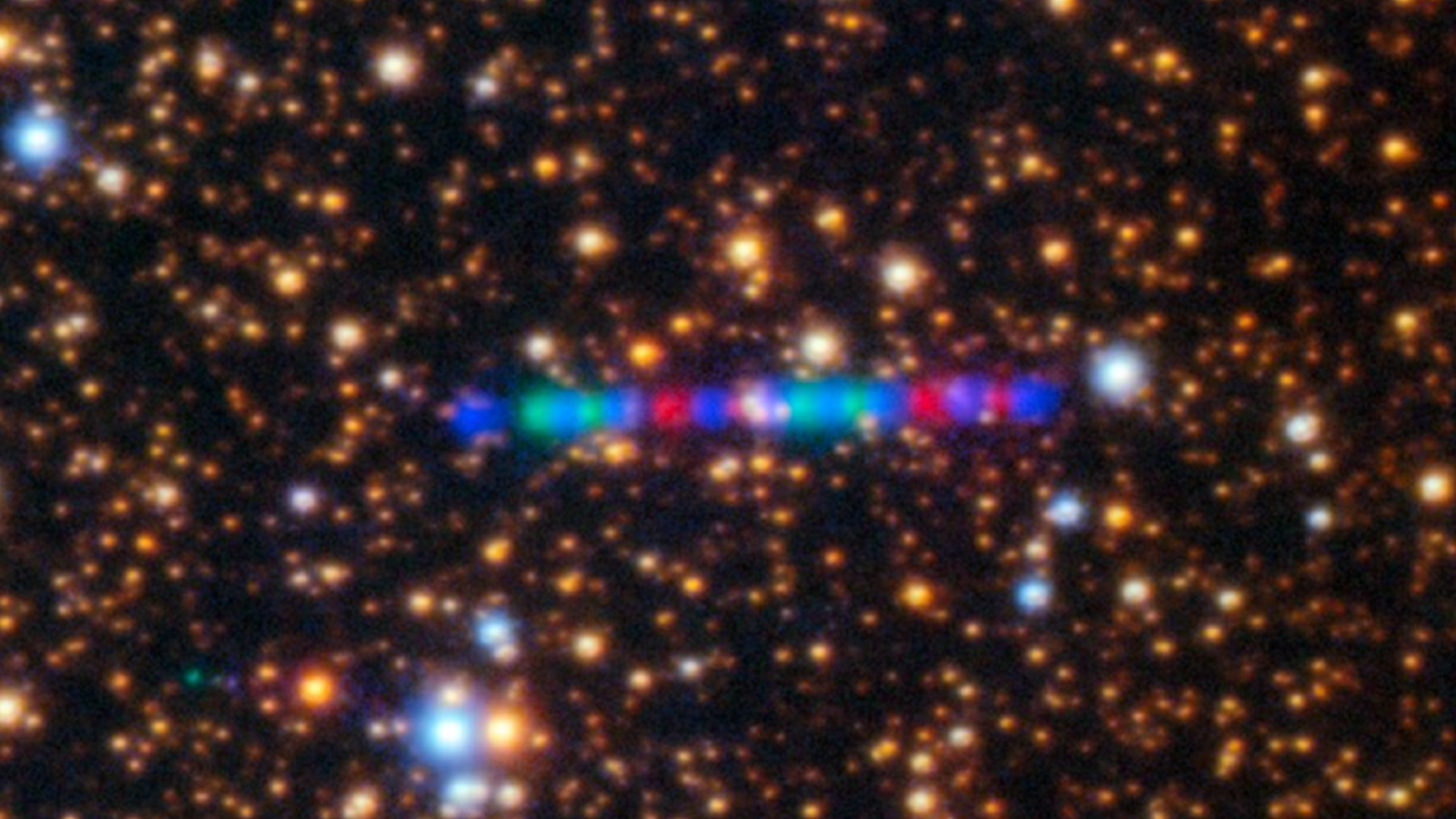
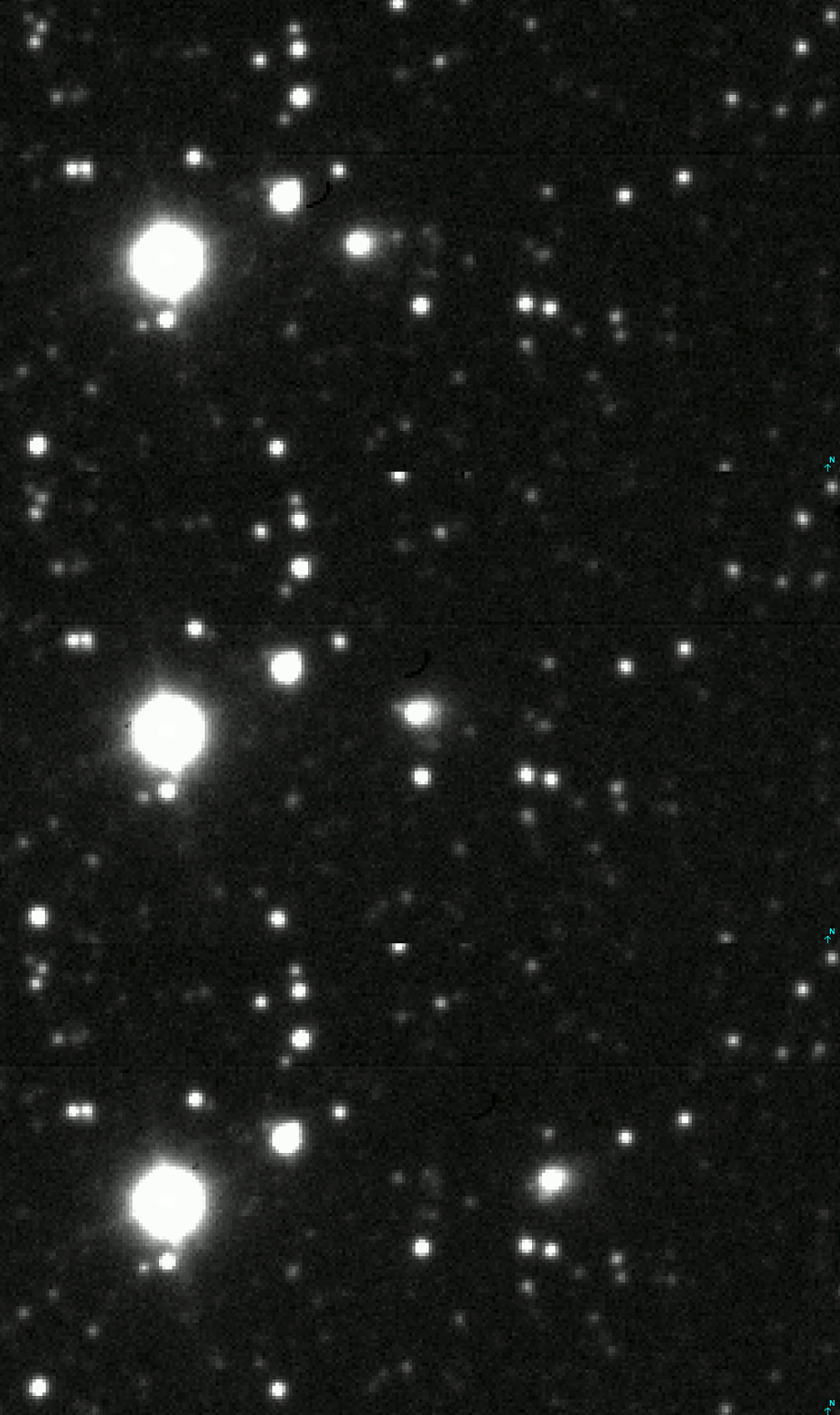
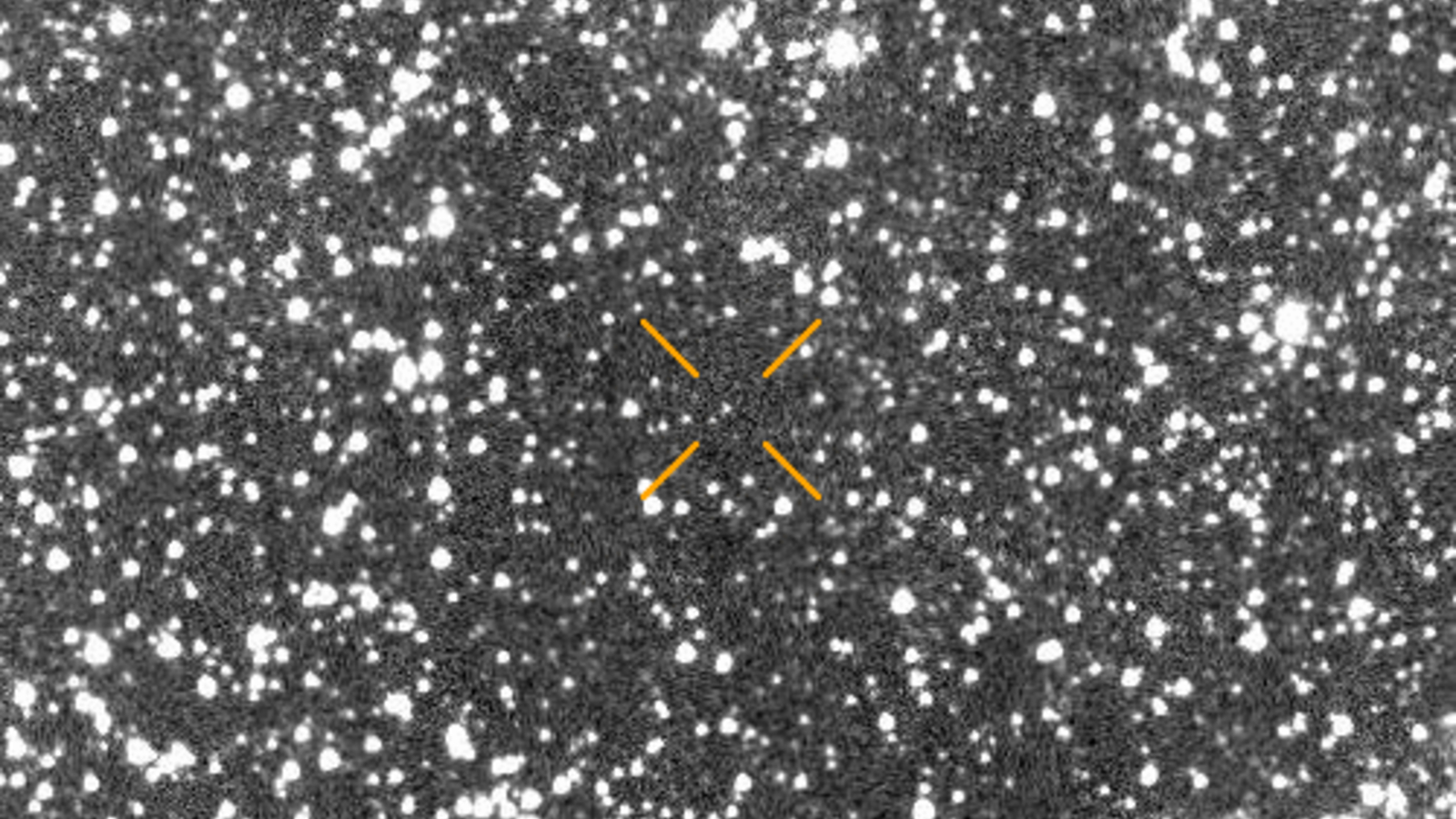
‘Oumuamua was first observed by the Pan-STARRS 1 telescope in Hawaii on October 19, 2017. Its name, derived from Hawaiian, means “scout” or “messenger,” reflecting its status as the first known interstellar object detected passing through our solar system. Unlike typical comets or asteroids, ‘Oumuamua exhibited several unusual features that defied easy classification. Its trajectory was hyperbolic, indicating an origin outside our solar system, and its high velocity suggested it had come from interstellar space, traveling at an impressive speed of approximately 87.3 kilometers per second relative to the Sun.
The initial observations revealed that ‘Oumuamua had an elongated shape, estimated to be about 400 meters long and only 40 meters wide, giving it a striking aspect ratio of approximately 10:1. Its surface reflected sunlight unevenly, leading to a brightness variation as it rotated—indicative of an irregular shape. The object displayed a brightness variation of about 2.5 magnitudes over a rotation period of roughly 8 hours, implying a highly elongated or flattened structure. Moreover, telescopic observations showed that ‘Oumuamua lacked a visible coma or tail, which are typical features of comets when they approach the Sun and begin to outgas.
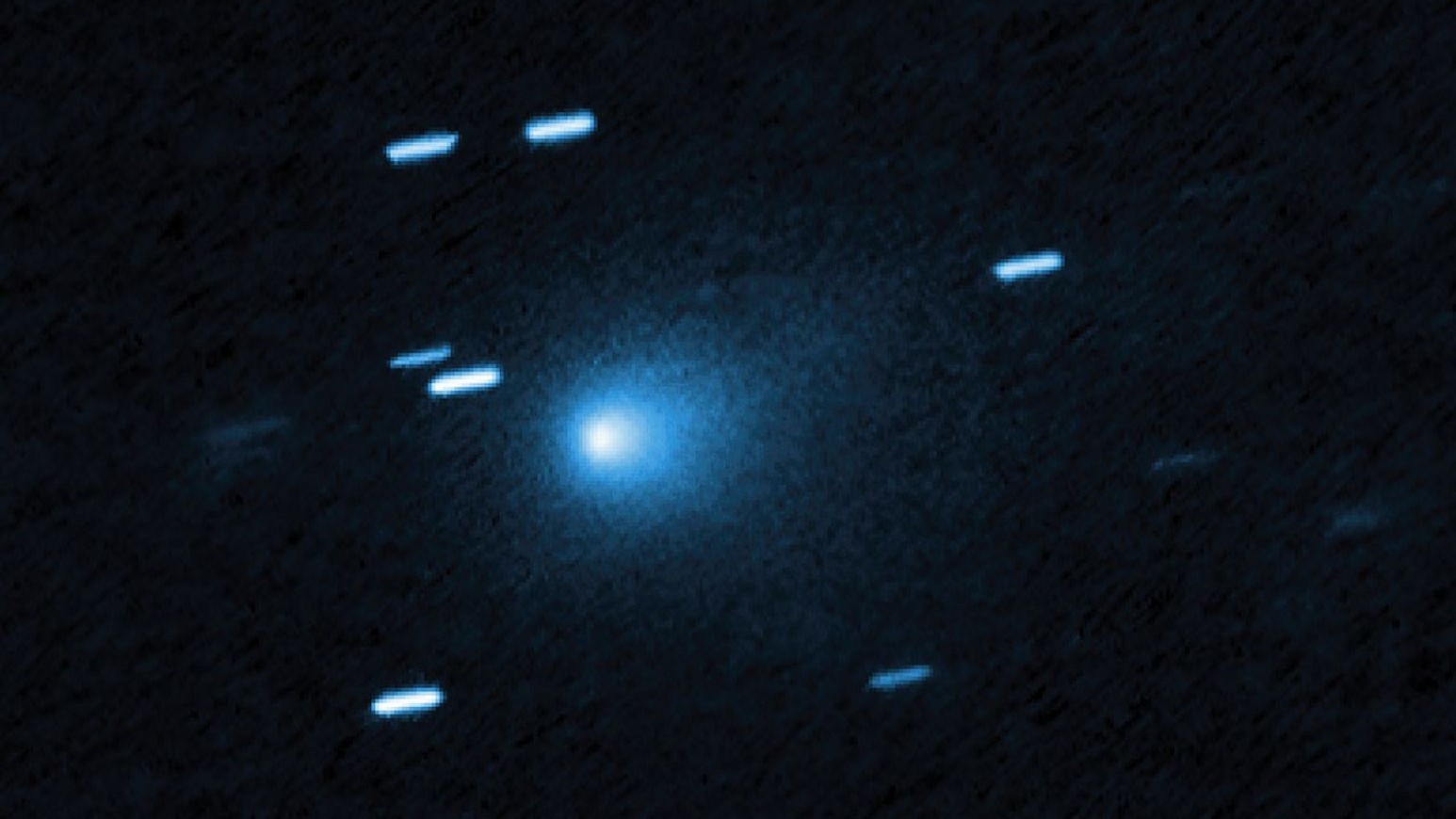
One of the most intriguing aspects of ‘Oumuamua was its non-gravitational acceleration. As it moved away from the Sun, its velocity increased slightly beyond what would be expected from gravitational influences alone. This subtle acceleration suggested that ‘Oumuamua was experiencing some form of outgassing, releasing material that provided a small push. However, unlike typical comets, no detectable gas or dust emissions were observed, leading to considerable debate among astronomers about the precise nature of this outgassing—or whether it was caused by some other process altogether.
Further observations using various telescopes, including the Hubble Space Telescope and ground-based observatories, confirmed these unusual features. Spectroscopic analysis revealed a featureless, reddish surface, similar to some primitive asteroids and comets. Its lack of detectable activity and peculiar shape made ‘Oumuamua an unprecedented object in our solar system—an interstellar visitor that challenged existing theories about small body formation and behavior in space. This initial discovery sparked a wave of scientific interest, leading to numerous hypotheses about its origin, composition, and the possibility of artificial or extraterrestrial nature, making ‘Oumuamua one of the most fascinating objects ever encountered in our cosmic neighborhood.
Theories on ‘Oumuamua’s Nature
The unusual features of ‘Oumuamua, the first known interstellar object passing through our Solar System, sparked widespread scientific debate and numerous hypotheses about its true nature. The initial consensus among astronomers was that ‘Oumuamua was a natural object, likely a fragment of a larger body that was ejected from its parent star system due to gravitational interactions, such as close encounters with massive planets or other celestial events. Many researchers believed it to be an elongated asteroid, perhaps a remnant of a collision or disruption event in another star system. Its highly elongated shape, with estimates suggesting it was at least five to ten times longer than it was wide, was unusual compared to typical asteroids within our Solar System.
One of the key features that puzzled scientists was the absence of a visible coma or tail. Comets generally develop a glowing envelope of gas and dust—called a coma—when their ices sublimates as they approach the Sun, creating a characteristic tail. ‘Oumuamua, however, showed no such features despite passing relatively close to the Sun at about 0.25 astronomical units. This lack of outgassing was initially interpreted as evidence that it might be a rocky or metallic object, similar to an asteroid, rather than a comet.
Yet, the most intriguing aspect of ‘Oumuamua was its observed non-gravitational acceleration—an unexplained push that slightly altered its trajectory without any corresponding visible outgassing. This phenomenon challenged the traditional understanding that such acceleration is caused solely by the sublimation of volatile ices. The absence of detectable gases or dust in the observational data led some scientists to question whether ‘Oumuamua was a typical comet or asteroid.
Several hypotheses emerged to explain this acceleration. One prominent idea was that ‘Oumuamua could be a comet with outgassing composed of materials that are difficult to detect, such as molecular hydrogen or other volatiles that produce minimal observable gases. Alternatively, some scientists suggested that the acceleration might be caused by radiation pressure—solar photons exerting a force on ‘Oumuamua. This hypothesis would imply that the object has an extremely low mass-to-area ratio, possibly indicating a thin, sheet-like structure or an artificial origin.
The radiation pressure hypothesis gained further attention because it could account for the observed acceleration without the need for detectable outgassing. If ‘Oumuamua were a thin, lightweight object—perhaps a spacecraft or a light sail—solar radiation could effectively push it, influencing its trajectory. Although this idea was met with skepticism and considered speculative, it opened up new discussions about the possibility, however remote, of extraterrestrial technology.
Additional theories proposed that ‘Oumuamua could be a fragment of an interstellar comet or asteroid that had undergone surface processing, such as space weathering, which might suppress outgassing signatures. Others suggested it could be a piece of alien technology, like a probe or a fragment of a larger artificial object, although such hypotheses remain highly controversial and lack concrete evidence.
In conclusion, the true nature of ‘Oumuamua remains an open question. Its unusual shape, lack of visible activity, and unexplained acceleration continue to inspire debate. While the majority of scientists favor a natural origin, the peculiar characteristics of this interstellar visitor have broadened our understanding of the diversity of objects that exist beyond our Solar System and have highlighted the need for further observations and research into such enigmatic objects.
The Alien Craft Hypothesis
A more provocative and controversial theory was proposed by Harvard astrophysicist Avi Loeb, along with his colleague Shmuel Bialy, in 2018. They suggested that ‘Oumuamua, the first known interstellar object passing through our solar system, could potentially be an artificially manufactured artifact—a piece of alien technology rather than a natural cosmic body. This hypothesis garnered significant attention both within the scientific community and the public, as it challenged conventional understanding of such objects.
Loeb and Bialy’s proposition was primarily based on the unusual physical characteristics observed in ‘Oumuamua, particularly its acceleration and shape. Unlike typical asteroids or comets, ‘Oumuamua exhibited a non-gravitational acceleration—that is, it moved faster than could be explained solely by the Sun’s gravitational pull. Interestingly, astronomers did not detect any signs of outgassing, such as cometary jets, which are usually responsible for such acceleration in natural objects. This lack of outgassing was perplexing because the observed acceleration appeared to be consistent with the effect of radiation pressure— the push exerted by sunlight on a small, lightweight object.
Based on these observations, Loeb and Bialy hypothesized that ‘Oumuamua could be a form of artificial structure—a light sail. A light sail is a type of spacecraft propulsion technology that harnesses radiation pressure from sunlight to propel itself through space. Such a design would imply that ‘Oumuamua was not a natural asteroid or comet, but an engineered object, possibly a probe or a piece of alien spacecraft technology. The object’s elongated shape and high velocity further supported this idea, as these features could be consistent with a deliberately crafted artificial object intended for interstellar travel or exploration.
Supporters of the alien craft hypothesis argued that the peculiar features of ‘Oumuamua—its unusual shape, its rapid acceleration without observable outgassing, and its high velocity—could be more straightforwardly explained if the object were an extraterrestrial probe or artifact. They suggested that an advanced civilization might have sent such a probe to explore the galaxy, and that ‘Oumuamua was simply a chance encounter with this technological relic.
While the hypothesis remains speculative and controversial within the scientific community, it has sparked a great deal of debate and further investigation into the nature of interstellar objects. Critics argue that natural explanations, such as a fragment of an extinct comet, could still account for ‘Oumuamua’s properties, citing the lack of direct evidence for alien technology. Nonetheless, the idea that ‘Oumuamua could be an alien spacecraft continues to inspire discussions about the possibility of detecting other extraterrestrial artifacts and the potential for intelligent life beyond Earth.
In summary, the alien craft hypothesis presents a provocative perspective that challenges traditional astrophysics. It emphasizes the importance of open-mindedness in scientific inquiry and encourages further research into the mysterious objects traveling through our solar system, which could hold clues to the existence of advanced extraterrestrial civilizations.

An illustration of bizarre interstellar visitor 'Oumuamua
(Image credit: VICTOR HABBICK VISIONS/SCIENCE PHOTO LIBRARY via Getty Images)
Criticisms and Counterarguments
The alien craft hypothesis has faced significant criticism within the scientific community, with many experts emphasizing the importance of natural explanations over speculative theories. A primary argument against the extraterrestrial origin hypothesis is that the observed properties of ‘Oumuamua can be adequately explained by well-understood natural phenomena. For instance, some astrophysicists propose that ‘Oumuamua is a fragment of a larger parent body, such as an asteroid or comet, that was tidally disrupted during a close passage to its host star. This process can produce elongated, irregular shapes similar to what is observed. Additionally, the object’s unusual acceleration as it moved away from the Sun can be attributed to outgassing—where volatile materials, like hydrogen or other sublimating substances, escape from the surface of the object. Importantly, such outgassing can occur without forming a visible coma or tail, especially if the materials are less volatile or the outgassing is highly anisotropic, which means the gases are released unevenly, providing a recoil effect that alters the trajectory.

This simulation depicts the interstellar object 'Oumuamua as a mass of fragments forced into an elongated shape by stellar tidal forces.
(Image credit: ZHANG Yun/background by ESO/M. Kornmesser)
Furthermore, the lack of direct evidence supporting artificiality remains a core challenge for proponents of the alien hypothesis. No definitive signals or artifacts have been detected that would indicate technological origins. The rarity of interstellar objects passing through our solar system also raises questions; such objects are expected to be extremely uncommon, making it statistically less likely that ‘Oumuamua is an alien probe or spacecraft. Critics argue that extraordinary claims require extraordinary evidence—a principle rooted in scientific rigor. Invoking extraterrestrial technology without concrete proof risks undermining the credibility of scientific inquiry and diverts attention from more plausible natural explanations.
Another important aspect of criticism involves cognitive biases, such as apophenia—the tendency to perceive meaningful patterns or connections where none actually exist. Given the limited data and the enigmatic nature of ‘Oumuamua, it is easy for observers to interpret ambiguous signals as evidence of alien technology. This psychological tendency can lead to overinterpretation of uncertain observations, especially in the face of a mysterious object that defies easy classification. Skeptics caution against jumping to conclusions based on circumstantial evidence, emphasizing the need for caution and rigorous analysis.
In conclusion, while the idea of an alien craft is intriguing and captures popular imagination, the scientific consensus favors natural explanations for ‘Oumuamua’s peculiar properties. Ongoing observations and future interstellar object detections will be crucial in providing more data to settle these debates. Until then, the hypothesis of extraterrestrial origin remains speculative and not sufficiently supported by empirical evidence.
Recent Developments and Ongoing Research
In 2021, the scientific community received a wealth of new data from the Hubble Space Telescope, along with observations from other ground-based and space-based observatories, such as the Pan-STARRS telescope in Hawaii and the European Southern Observatory's Very Large Telescope (VLT). These observations aimed to unravel the mysteries surrounding ‘Oumuamua, the first known interstellar object detected passing through our Solar System. The data collected provided increasingly detailed information about its physical characteristics, trajectory, and possible origins. Despite these advances, conclusive evidence about its true nature remains elusive, fueling ongoing debates among astronomers and astrophysicists.
The collected data reinforced the idea that ‘Oumuamua was an unusual natural object with peculiar features that set it apart from typical comets or asteroids. For instance, its elongated shape, estimated to be about 400 meters long and 40 meters wide, was extraordinary. Additionally, ‘Oumuamua exhibited non-gravitational acceleration—an unexpected change in its trajectory that could not be explained solely by gravitational forces from the Sun and planets. Some scientists theorized that this might be due to outgassing, similar to comets, but no visible tail or coma was observed, leading others to propose more exotic explanations, including the possibility of artificial origin or manufactured components.
Looking ahead, the upcoming Vera C. Rubin Observatory, located in Chile, is set to revolutionize the detection of interstellar objects. Scheduled to begin full operations in the near future, this observatory will survey the entire sky with unprecedented sensitivity and frequency. Its wide-field telescope is expected to discover dozens of interstellar visitors over the coming years, vastly increasing the potential for in-depth study of these enigmatic objects. Such data will be instrumental in providing a broader statistical understanding of their composition, trajectories, and physical properties, helping scientists distinguish between natural and potentially artificial origins.
In addition to observational efforts, plans are underway for more direct exploration of interstellar objects. The European Space Agency’s proposed Comet Interceptor mission aims to visit a pristine, unaltered interstellar object in the near future. Unlike previous missions that targeted known comets or asteroids, the Comet Interceptor will be launched to rendezvous with an object that has recently entered our Solar System, offering a unique opportunity to study its composition and physical properties up close. This mission could yield invaluable insights into the building blocks of planetary systems and the processes involved in their formation.
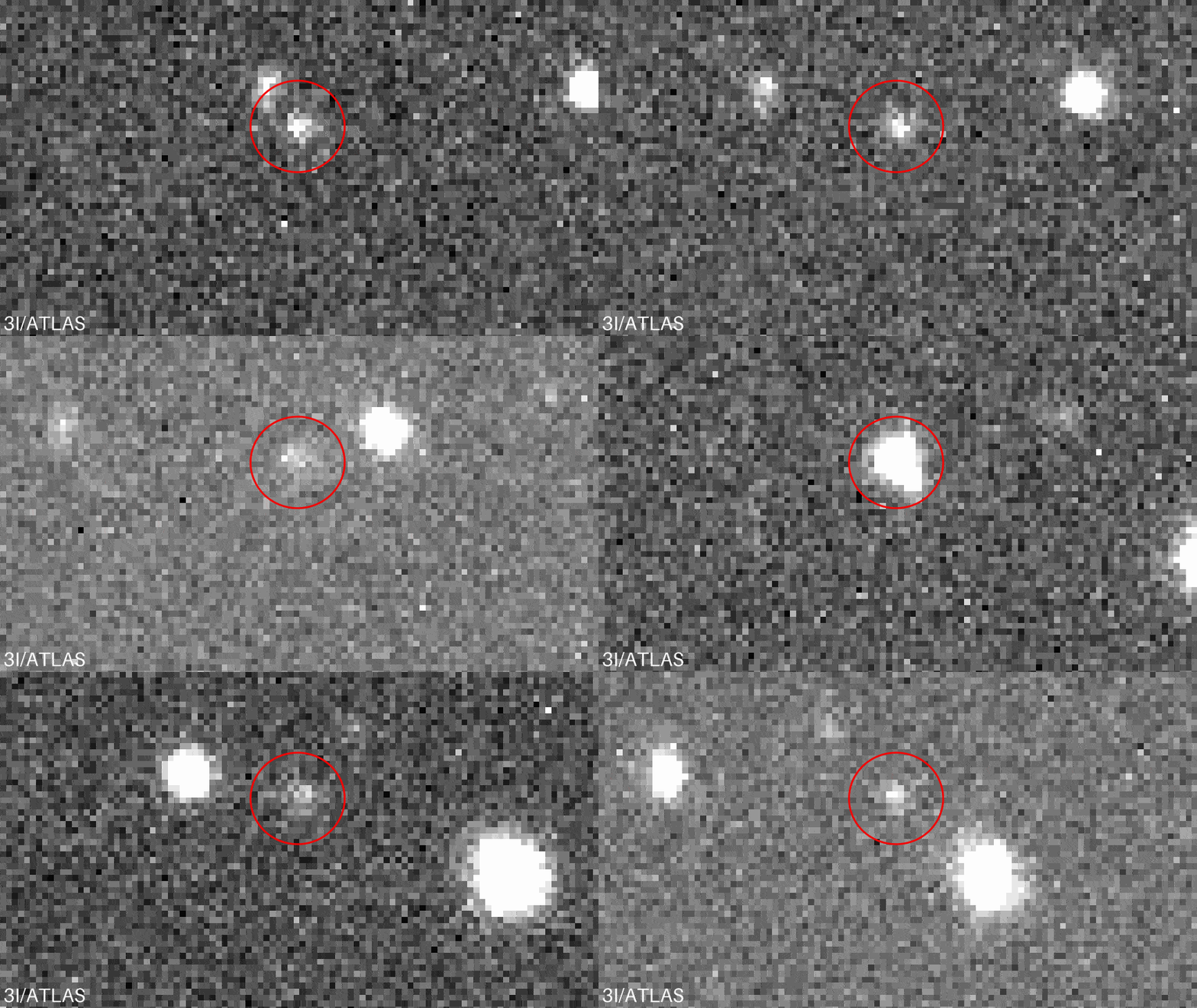
Furthermore, the recent emergence of the interstellar object 3I/ATLAS has garnered significant attention. Discovered in late 2017, 3I/ATLAS was notable for its hyperbolic trajectory, confirming its interstellar origin. Its passage through the Solar System provided another valuable dataset, especially regarding its brightness variations and spectral properties. Studying objects like 3I/ATLAS helps scientists understand the diversity of interstellar visitors and refine models of their origin and evolution.
The combined data from these observations and upcoming missions will deepen our understanding of interstellar objects. They may also shed light on the possibility that some objects could possess artificial characteristics, potentially originating from extraterrestrial technological civilizations. While such claims remain speculative, the scientific community continues to explore all possibilities with rigorous analysis and open-minded inquiry.
In conclusion, recent advancements—from detailed observations of ‘Oumuamua to the anticipated discoveries by the Vera C. Rubin Observatory and dedicated missions like the Comet Interceptor—are paving the way for a new era of interstellar exploration. These efforts will not only improve our knowledge of these mysterious visitors but also enhance our understanding of the broader cosmos and the potential for extraterrestrial life or technology. The discovery of the interloper 3I/ATLAS serves as a reminder of the richness of interstellar phenomena and the importance of continued vigilance and innovation in astronomical research.
Will ‘Oumuamua Return?
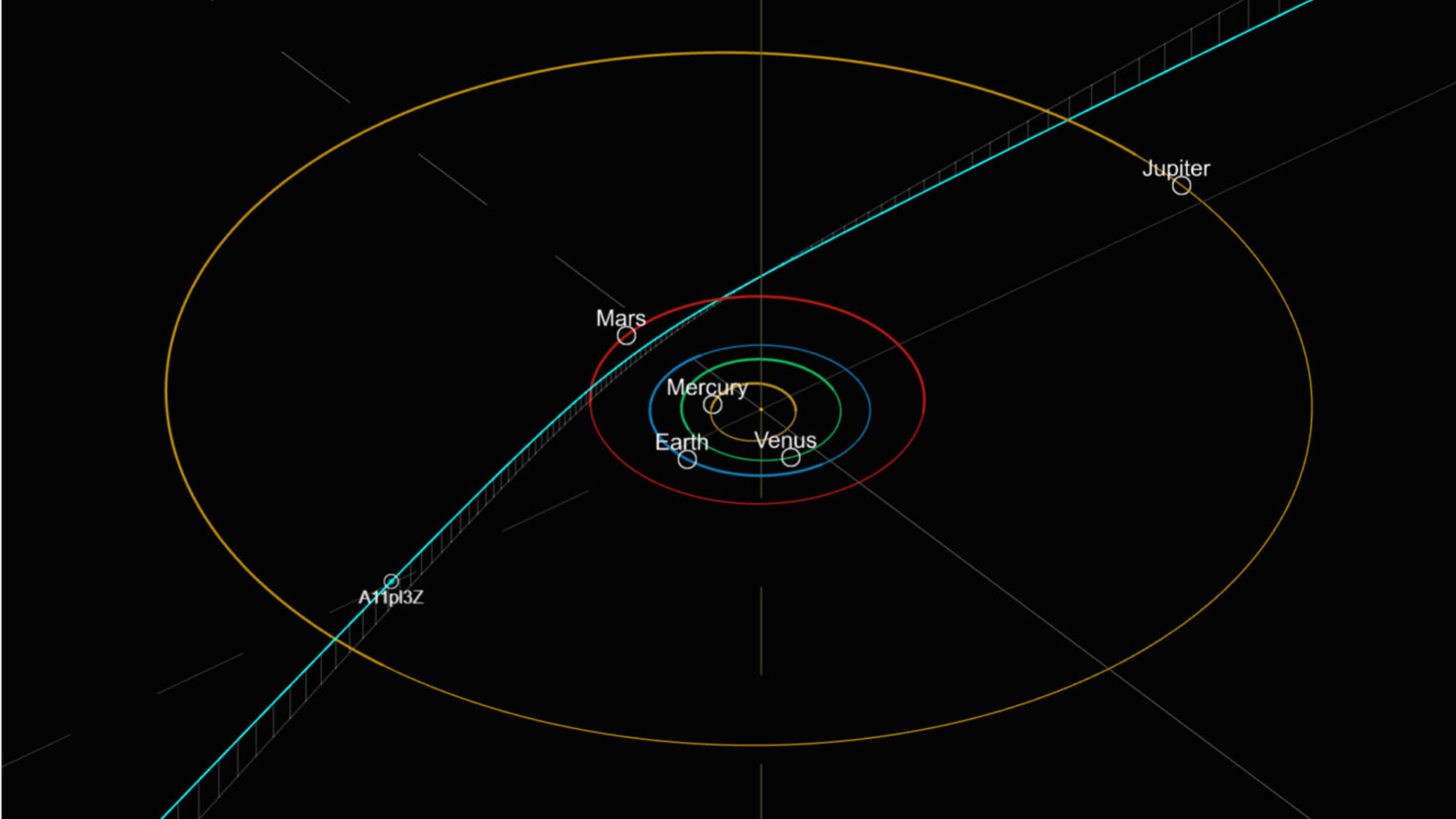
Given its hyperbolic trajectory, ‘Oumuamua is highly unlikely to return to our solar system. Objects on hyperbolic paths are not gravitationally bound to the Sun; instead, they are interstellar travelers passing through our solar neighborhood at high speeds. Once ‘Oumuamua passed perihelion—its closest approach to the Sun—its velocity increased significantly due to gravitational acceleration, and it is now receding from our solar system at an estimated speed of approximately 26 kilometers per second relative to the Sun. This rapid departure means that, barring extraordinary gravitational influences or unforeseen cosmic events, it will not return.

‘Oumuamua’s trajectory through the inner Solar System.
Credit: Tom Ruen via Wikimedia Commons.
The probability of ‘Oumuamua making a second pass is effectively zero. Its trajectory indicates a one-time visit, highlighting the importance of developing advanced detection and tracking systems to identify interstellar objects early on. Such preparedness would allow scientists to study these visitors more comprehensively and potentially gather valuable data about their composition, origin, and trajectories. Understanding ‘Oumuamua's characteristics—such as its elongated shape, unusual acceleration, and surface properties—has already sparked debates about its nature, with some researchers suggesting it could be an alien probe or artifact, though mainstream science remains cautious.
The discovery of additional interstellar objects, like 2I/Borisov, which was identified in 2019, will provide a broader context for understanding these visitors. Each new object offers crucial insights into the composition, diversity, and frequency of interstellar bodies passing through our solar system. These findings could eventually help scientists piece together the history of material exchange between star systems, shedding light on the formation and evolution of planetary systems across the galaxy.
In conclusion, while ‘Oumuamua itself is unlikely to revisit our solar system, its passage has opened an exciting new chapter in astronomy. Continued efforts to detect and analyze interstellar objects could not only enhance our understanding of the cosmos but also possibly reveal signs of extraterrestrial technology or life, should such evidence exist. The future of interstellar object research promises to be a fascinating and rapidly evolving field, offering much to explore beyond our solar neighborhood.
Conclusion
In sum, ‘Oumuamua remains one of the most perplexing interstellar objects observed to date. While some have proposed that it could be an extraterrestrial craft, the majority of scientific evidence supports a natural origin—most likely as a fragment of a larger body from another star system. Its peculiar shape, acceleration, and lack of typical cometary features have fueled speculation, but no definitive proof has emerged to confirm an artificial origin.
The question of whether ‘Oumuamua is an alien spacecraft ultimately hinges on the quality and interpretation of available data. As our observational capabilities improve and we detect more interstellar visitors, the scientific community will be better equipped to answer these profound questions. For now, ‘Oumuamua remains a fascinating natural enigma, reminding us of the vast unknowns that lie beyond our solar neighborhood. Its passing has underscored the importance of continued exploration and vigilance in the search for extraterrestrial life and technology.
References
- Meech, K. J., et al. (2017). "A brief visit from a strange interstellar visitor." Nature, 552(7685), 378–381.
- Bialy, S., & Loeb, A. (2018). "Could Solar Radiation Pressure Explain ‘Oumuamua’s Peculiar Acceleration?" Astrophysical Journal Letters, 868(2), L1.
- Loeb, A., & Bialy, S. (2018). "Could ‘Oumuamua be a lightsail from an alien civilization?" Astrophysical Journal Letters, 857(2), L3.
- Jewitt, D. (2022). "Interstellar objects: A review." The Astrophysical Journal, 927(2), 123.
- NASA. (2018). "'Oumuamua: First Interstellar Object Detected Passing Through Our Solar System." NASA Fact Sheet.
In conclusion, while the hypothesis that ‘Oumuamua is an extraterrestrial craft is intriguing and has garnered significant media attention, the prevailing scientific consensus attributes its unusual characteristics to natural phenomena. Its unlikely return underscores the importance of ongoing and future observations to better understand interstellar objects. As our detection capabilities improve, so too will our understanding of these cosmic visitors, possibly revealing more about the universe’s hidden wonders and the potential for extraterrestrial life.
RELATED

The asteroid size distribution. Even though there are only a handful of large asteroids, those objects outweigh all of the small ones.
Credit: via Wikimedia Commons.

A simulation of how a cigar-like shape for ‘Oumuamua would match its large observed brightness oscillations.
Credit: nagualdesign via Wikimedia Commons.

Artist’s view of the potential, pancake-like shape of ‘Oumuamua.
Credit: William K. Hartmann.
{ PETER2011 }