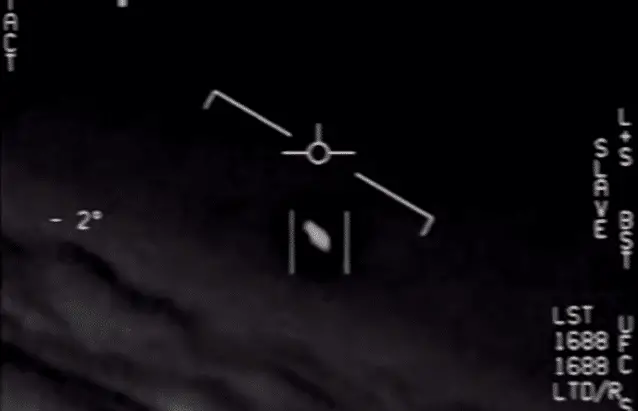
Ontdek de Fascinerende Wereld van UFO's en UAP's: Jouw Bron voor Onthullende Informatie!
Ben jij ook gefascineerd door het onbekende? Wil je meer weten over UFO's en UAP's, niet alleen in België, maar over de hele wereld? Dan ben je op de juiste plek!
België: Het Kloppend Hart van UFO-onderzoek
In België is BUFON (Belgisch UFO-Netwerk) dé autoriteit op het gebied van UFO-onderzoek. Voor betrouwbare en objectieve informatie over deze intrigerende fenomenen, bezoek je zeker onze Facebook-pagina en deze blog. Maar dat is nog niet alles! Ontdek ook het Belgisch UFO-meldpunt en Caelestia, twee organisaties die diepgaand onderzoek verrichten, al zijn ze soms kritisch of sceptisch.
Nederland: Een Schat aan Informatie
Voor onze Nederlandse buren is er de schitterende website www.ufowijzer.nl, beheerd door Paul Harmans. Deze site biedt een schat aan informatie en artikelen die je niet wilt missen!
Internationaal: MUFON - De Wereldwijde Autoriteit
Neem ook een kijkje bij MUFON (Mutual UFO Network Inc.), een gerenommeerde Amerikaanse UFO-vereniging met afdelingen in de VS en wereldwijd. MUFON is toegewijd aan de wetenschappelijke en analytische studie van het UFO-fenomeen, en hun maandelijkse tijdschrift, The MUFON UFO-Journal, is een must-read voor elke UFO-enthousiasteling. Bezoek hun website op www.mufon.com voor meer informatie.
Samenwerking en Toekomstvisie
Sinds 1 februari 2020 is Pieter niet alleen ex-president van BUFON, maar ook de voormalige nationale directeur van MUFON in Vlaanderen en Nederland. Dit creëert een sterke samenwerking met de Franse MUFON Reseau MUFON/EUROP, wat ons in staat stelt om nog meer waardevolle inzichten te delen.
Let op: Nepprofielen en Nieuwe Groeperingen
Pas op voor een nieuwe groepering die zich ook BUFON noemt, maar geen enkele connectie heeft met onze gevestigde organisatie. Hoewel zij de naam geregistreerd hebben, kunnen ze het rijke verleden en de expertise van onze groep niet evenaren. We wensen hen veel succes, maar we blijven de autoriteit in UFO-onderzoek!
Blijf Op De Hoogte!
Wil jij de laatste nieuwtjes over UFO's, ruimtevaart, archeologie, en meer? Volg ons dan en duik samen met ons in de fascinerende wereld van het onbekende! Sluit je aan bij de gemeenschap van nieuwsgierige geesten die net als jij verlangen naar antwoorden en avonturen in de sterren!
Heb je vragen of wil je meer weten? Aarzel dan niet om contact met ons op te nemen! Samen ontrafelen we het mysterie van de lucht en daarbuiten.
TWO UFO's STARTING IN CALIFORNIA & ENDING IN GEORGIA?
Two UFO sightings, starting in California we have a bazar shaped UFO spotted. Next we have Golfer that was starting his game when he spots Two white UFOs that rise up on go in opposite directions.
Sourceof Videos MUFON and Terry's Theories
Mystic Secrets of the Great Pyramid | Ancient Aliens
Ancient Astronaut Theorists take a deep dive look at the profound connection between extraterrestrials and the Great Pyramid, see more in this clip from "Aliens and Unexplained Engineering."
RELATED
What's behind all this technology? | UFOs / UAPs and how tiny we all are in this universe
This is not a new phenomenon, there are records and descriptions of these types of objects flying in our skies from thousands of years ago. From our egoistic point of view, it might seem that we are the only ones capable of evolving up to this point, but there are many things at play, and there's no interest on behalf of the elite for this information to become public knowledge because it will suggest the obsolesce of our current economic system which is a disguise for the modern slavery.
Correction at 5:58 The estimated Diameter of the Milky Way galaxy is 105,700 lightyears its radius is about 52,000 lightyears.
UFO [Unidentified flying object]
UAP [Unidentified Aerial Phenomena]
It's been happening even before humans were here, here's one of the earliest detailed records https://bit.ly/3UtPb8W
What about Bob Lazar? it is my own opinion that he is telling the truth, in the documentary he was raided by the FBI, giving his story more strength, otherwise what else would the FBI be looking for? Not only that but many of the things Bob has been telling have been found to be true over time, his story has never changed in over 30 years.
The Solar System we live in is a perfectly balanced cosmic machine, and every planet in this gravitationally stable system plays a significant role in keeping things that way.
Think of the planets as being in balance with each other. Their orbits locked in an intricate, but delicate dance.
But what would happen if an interstellar object, such as an actual ‘shooting star’ were to cruise by our solar neighborhood and alter the orbit of just one planet?
Get ready to see what would happen to the Earth and the Solar System if a passing star changed the orbit of Neptune. Learn about the giant cosmic objects headed straight for our Solar System and the destruction they could cause!
Elon Musk and NASA's Discovery on Mars Could Change Everything
Elon Musk is no stranger to controversy. Whether it’s tweeting stuff that influences the stock market, getting baked on podcasts, or making the decision to name one of his ten kids X AE A-12 [pronounced X Ash A-12], the tech billionaire is as erratic as he is ambitions. With his fresh acquisition of Twitter, he seems as determined to colonize social media as he does Mars. During his first video call with Twitter employees in June – before Musk officially owned the company and was embroiled in a messy legal dispute – he reportedly began musing on alien life and extraterrestrial civilizations. He’s even jokingly called himself an alien trying to get back to his home planet.
But Musk’s SpaceX and NASA are working on a question that’s far from a joke: Is there, or was there, life on Mars?
Randall Carlson & Graham Hancock on Lost Technology and the Great Pyramids
12 INGENIOUS INVENTIONS YOU'VE NEVER SEEN BEFORE
Most Astonishing Pre-Flood Anomalies?
China's Secret Space Plane Project Revealed..
China's Secret Space Plane Project Revealed..
RELATED
SpaceX's Secret Starship Factory...
SpaceX's Secret Starship Factory...
Last Video: China's Secret Space Plane Project Revealed..
Amazing daytime UFO footage of high speed objects – Canton, Ohio 10-Nov-2022
This daytime UFO sighting was filmed over Canton, a city in northeast Ohio on 10th November 2022.
Witness report:
I was on my patio and looked up because I heard a medic helicopter and saw what I initially thought was seagulls in what appeared to be the helicopters flight path. My girlfriend said “that’s not birds” which I also realized and began recording. Prior to the recording there were dozens of these objects flying but they just look like bright lights in front of the white clouds. As they moved in front of the blue sky they seemed to appear white/gray and were traveling at a high speed. Many of these objects seemed to vanish before I could record but I did catch some which can be seen in the video.
FBI raides homes of a famous Area 51 website owner!
Joerg Arnu, owner of Dreamlandresort.com
According to George Knapp, the chief Investigative Reporter for KLAS, the FBI raided Joerg Arnu’s home. He is the owner of a famous website that claimed to have uncovered information about Area 51.
The website claims to have uncovered information about Area 51, which is a secret US Air Force facility located in Nevada. It’s located near the town of Rachel.
The FBI reportedly came after Joerg Arnu, the owner of a website that claims to have uncovered information about Area 51, after serving a no-knock warrant on his home in Rachel. The website, which is called Dreamlandresort.com, is dedicated to covering all things Area 51.
According to George Knapp, a reporter for KLAS, the FBI seized various items from Arnu’s home, including his computers and phones. During the raid, the agents also reportedly held his girlfriend at gunpoint.
On his website, Arnu stated that he did not know why the FBI came after him, and he did not believe that the raid was related to the images posted online. He said that the authorities are still gathering information regarding the incident.
Only George Knapp has reported on this matter. According to Arnu’s website, Dreamlandresort.com, it has been providing the most comprehensive coverage of all things Area 51, including the Black Projects, the Nellis Ranges, and the ET Highway. The site’s 24-year history has been dedicated to providing readers with the latest intelligence regarding this facility. The website’s webmaster is a veteran of Area 51 research and is based in Rachel, Nevada.
George Knapp also hosts Coast to Coast AM
On November 5, Joerg Arnu, the operator of the Area 51 website, posted a message on his website, stating that he was aware of the FBI’s concerns about some of the content on his site. However, he did not believe that posting or collecting information about this facility was illegal.
Due to the situation, some of the content on his website has been removed. However, he did not provide further details regarding the reason for the removal of the content. He said that he was aware of the FBI’s concerns, and he did not want to make any further comment at this time.
In response, he posted another message on his website, stating that he had regained control of his website and assets. He also said that the FBI and the Air Force Office of Special Investigations (AF OSI) executed search warrants at his home in Rachel and in Las Vegas. Although he did not provide further details regarding the details of the incident, he said that it was very humiliating and tense for him and his girlfriend.
In addition to his computers, phones, and cameras, the FBI also seized various items from his home, including his drones and memory sticks. After the raid, he said that he was left in his home in Rachel without any means of communication. On the other hand, his home in Las Vegas was relatively unscathed.
According to him, each of his homes was visited by around 20 agents, and they were able to search his home and several vehicles. The incident was a spectacle for his neighbors in both Las Vegas and Rachel.
He said that he lost all of his personal data, including his medical records and tax records. He also noted that he was facing thousands of dollars in expenses due to the repairs and replacement of his various electronic equipment. He will be consulting an attorney on Tuesday regarding his next steps.
He maintained that he did not break the law. However, he noted that the aerial photos of various installations, including Area 51, were frequently found on his website. Because of this, he decided to take down the photos.
According to Arnu, his website had received over 27k hits on Thursday, and he believes that the raid was carried out to send a message to the residents of Area 51. He also noted that the authorities might go further with their investigation.
It is interesting to note that the FBI’s raid on his home occurred just a couple of weeks after NASA established a new team of scientists to study the mysterious phenomena known as UAP. The Pentagon also started a new agency to address the issue of anomalous flying objects.
Marco Rubio’s quest to expose the truth about UFOs
Senator Marc Rubio
As the number of UFO sightings increases, members of Congress have started looking into the matter. They believe that the government should investigate these reports seriously.
Several high-profile individuals, such as US Senator Marco Rubio, have also started speaking out about the increasing number of UFO sightings.
Due to the increasing number of UFO sightings, politicians in the US have started talking about the phenomenon more.
A year ago, the Pentagon released a report about 144 incidents of UAP sightings. The report noted that some of these were close calls for military pilots.
During the time that the report was released, Senator Marco Rubio was able to receive a sneak peek of it. According to the report, alien life is not necessarily a threat to the country, but UFOs pose a significant security concern.
In a statement, the Senator noted that the reports of encounters with unidentified flying objects have been coming from members of the US military.
Despite the negative stigma attached to the phenomenon, the government should still investigate these reports seriously.
The report, which was released by the Office of the Director of National Intelligence, looked into 144 incidents involving what the government considers to be an unidentified aerial phenomenon.
Investigators were only able to explain one of the 144 incidents. The case was reportedly caused by airborne clutter.
The report also stated that there was no evidence suggesting that the sightings were related to extraterrestrial life or a technological advancement carried out by a foreign nation.
A senior official from the US government noted that there is no evidence suggesting that alien life exists in the 144 reported cases. However, the government will still look into these reports.
The increasing number of UFO sightings has raised concerns about the country’s vulnerability to foreign espionage. This is because the objects could be used by hostile forces to acquire information.
Due to the lack of information regarding the nature of the incidents, Senator Marco Rubio called for the government to take the situation seriously. Last year, he told CBS 60 Minutes that the government should allocate more resources to investigate these reports.
During his interview, Senator Marco Rubio said that the government should establish a process that will allow it to analyze the data collected regarding the incidents. He also suggested that a dedicated facility should be established to analyze the data.
The efforts of Senator Marco Rubio were rewarded recently after his amendment regarding the establishment of a dedicated facility for analyzing the data related to the UFO sightings was included in the National Defense Authorization Act of 2022.
The amendment provided that government employees would no longer be required to follow a strict process when reporting encounters with unidentified flying objects. In a statement, the Senator noted that the establishment of a dedicated facility for analyzing the data related to the UFO sightings would allow the government to get the necessary resources to investigate these reports.
The Senator noted that the amendment was also aimed at maintaining the transparency of the reports related to the incidents. It allows the government to continue unclassified reporting of these sightings.
The amendment was reportedly successful, as a classified report revealed that there were over 150 reported sightings of unidentified flying objects during the previous year.
During an interview with Fox News’ Tucker Carlson, Daily Mail reporter Josh Boswell claimed that many of the people who reported these incidents don’t know what they’re talking about.
According to Josh, many of the people who reported these incidents don’t know what they’re talking about due to the strange nature of the objects they saw. He also noted that the objects were moving in ways that they didn’t understand.
Reports about the incidents include footage taken by Reaper drones during a surveillance operation in the Middle East. They allegedly captured “orbs” flying around before suddenly bolting from the screen.
The classified report also noted that some of the incidents were reported as the work of Chinese intelligence. For instance, Chinese agents reportedly used drones to study the training of US military pilots.
Other theories have also been presented, such as weather balloons and radar systems that allegedly showed objects that didn’t exist. However, officials noted that other cases still remain unexplained.
This comes after a US congressman claimed that the upcoming report on the UFO sightings will be a whitewash. He also noted that the government is still incapable of handling the issue of alien visitors.
An expert noted that the UFO phenomenon could still gain political traction even after the next election in 2022.
Scientists Have Just Announced The San Andreas Fault Is About To Do Something Massive
The San Andreas Fault connects North American and Pacific tectonic plates and extends for 1200 Kilometers through California - but scientists have just announced that it's about to crack! If you're in California, this announcement from the Southern Californian Center will probably send a chill down your spine: the southern portion of the fault is "locked, loaded, and ready to go."
What new evidence have they discovered? And what does it mean for California residents? Join us as we tell you what massive thing the San Andreas fault is about to
Something Unusual Happened 2 Days Before The Dinosaurs Went Extinct
RELATED
Deep-Sea Gigantism. Why the Ocean Breeds Monsters
We often hear the news that the remains of giant deep-sea creatures were washed ashore after another storm again. Some of them are new even for scientists. And here's the most amazing thing: they all tend to live at depths ranging from one thousand meters. Where even the known species are the most enormous and terrifying monsters. But what other giants are concealed by the ocean? And why can underwater monsters rise to the surface?
9 Strange Deep Ocean Creatures Found by Japan's ROVs🇯🇵
Japan's coasts and nearby waters are home to some of the world's richest biodiversity. Decades of underwater research continue to yield fascinating remotely operated vehicle (ROV) encounters with deep ocean dwellers, often those that are particularly strange. These are nine of them.
RELATED VIDEOS
NASA Scientists Did Not Expect Mars to Do This | InSight Finale
The final images of NASA's InSight lander probe. Offset your carbon footprint on Wren:
NASA’s Roman Space Telescope Selects 24 Flight-Quality Heat-Vision ‘Eyes’
NASA’s Nancy Grace Roman Space Telescope team recently flight-certified all 24 of the detectors the mission needs. When Roman launches in the mid-2020s, these devices will convert starlight into electrical signals, which will then be decoded into 300-megapixel images of large patches of the sky. These images will allow astronomers to explore a vast array of celestial objects and phenomena, bringing us closer to solving many pressing cosmic mysteries.
“As the telescope’s eyes, Roman’s detectors will enable all of the mission’s science,” said John Gygax, the focal plane system manager for the Roman Space Telescope at NASA’s Goddard Space Flight Center in Greenbelt, Maryland. “Now, based on our testing results, our team can confirm these infrared detectors meet all the requirements for Roman’s purposes.”
Each detector has 16 million tiny pixels, providing the mission with exquisite image resolution. While 18 detectors will be incorporated into Roman’s camera, another six will be reserved as flight-qualified spares.
This photo shows 18 of Roman's detectors mounted in an engineering test unit of the mission's focal plane array. The focal plane array will be incorporated into Roman's Wide Field Instrument – a 300-megapixel camera that will capture enormous images of the cosmos.
Credits: NASA/Chris Gunn
“The heart of Roman’s detectors are millions of mercury-cadmium-telluride photodiodes, which are sensors that convert light into an electrical current – one for each pixel,” said Greg Mosby, a research astrophysicist at Goddard who is helping assess the performance of Roman’s detectors. “One of the reasons we chose this material is because by varying the amount of cadmium, we can tune the detector to have a specific cutoff wavelength. That allows us to focus more precisely on the wavelengths of light we’re trying to see.”
To make the detectors, technicians at Teledyne Imaging Sensors in Camarillo, California built up the photodiodes on the base of the detector layer by layer. Then, they secured the detector to a silicon electronics board that will help process the light signals using indium – a soft metal that has roughly the same consistency as chewing gum. The pixels were glued down using a tiny drop of indium for each one.
The drops were meticulously placed just 10 microns apart – about the width of a typical cotton fiber. If we scaled one of Roman’s detectors up to be as long as an Olympic-size swimming pool, the indium blobs would be less than half an inch apart. This precise alignment ensures that each of the sensors will operate independently.
“The Roman team has spent years identifying an optimal recipe for the mission’s detectors,” Mosby said. “It’s gratifying to see the team’s hard work pay off on this crucial technical aspect of the mission. We can’t wait to see how the images from these detectors transform our understanding of the universe.”
Greg Mosby holds one of Roman’s detectors (left) and an entire cell phone camera (right) for size comparison. The best modern cell phone cameras can provide around 12-megapixel images, while each of Roman’s detectors contains 16 megapixels. Since Roman’s camera contains 18 detectors, it will capture 300-megapixel panoramas. The mission will conduct sweeping cosmic surveys with the same sharp resolution that the Hubble Space Telescope provides.
Credits: NASA/Chris Gunn
Hubble’s wide-eyed cousin
Combining so many detectors and pixels gives Roman its wide field of view, enabling the mission to create infrared images that will be around 200 times larger than Hubble can provide while revealing the same level of rich detail. The spacecraft is expected to collect far more data than any other NASA astrophysics mission before it. Scientists had to develop new processes that will compress and digitize the mission’s downpour of data.
Goddard engineers also pioneered novel testing methods to ensure the detectors will meet the mission’s needs. Roman requires extremely sensitive detectors to see faint signals from far across the cosmos. But it isn’t easy to create detectors that meet the mission’s strict quality requirements.
The team knew that not all of the detectors would pass their stringent tests, so they ordered more than the mission requires and will use the best ones. But the extra detectors won’t go to waste – some are destined to serve as the eyes of other telescopes that have more lenient requirements, while others will be used for additional testing on the ground.
Staying cool
Roman will create enormous, high-resolution panoramas of the infrared universe, building on the Spitzer Space Telescope’s groundbreaking observations and complementing the James Webb Space Telescope. Viewing space in infrared light is like using heat-vision goggles, helping us spot things we wouldn’t be able to see otherwise. But doing so requires precise and extremely cold detectors.
The Nancy Grace Roman Space Telescope is a next-generation observatory that will survey the infrared universe from beyond the orbit of the Moon. The spacecraft's giant camera, the Wide Field Instrument (WFI), will be fundamental to this exploration. Watch this video to see a simplified version of how it works.
“Space is very dark, and everything gives off infrared light according to its temperature,” said Dominic Benford, the Roman program scientist at NASA Headquarters. “Roman’s telescope, camera, and detectors all have to be cooled so that they are darker than the universe they’ll be looking at.”
Since we can detect infrared light as heat, Roman’s detectors will have to be supercooled to a frigid -288 degrees Fahrenheit (-178 degrees Celsius). Otherwise heat from the spacecraft’s own components would saturate the detectors, effectively blinding the telescope. A radiator will redirect waste heat from the spacecraft components away from the detectors out into cold space, ensuring that Roman will be sensitive to faint signals from distant galaxies and other cosmic objects.
The combination of Roman’s fine resolution and enormous images has never been possible on a space-based telescope before and will make the Nancy Grace Roman Space Telescope an indispensable tool in the future.
The Nancy Grace Roman Space Telescope is managed at NASA’s Goddard Space Flight Center in Greenbelt, Maryland, with participation by NASA's Jet Propulsion Laboratory and Caltech/IPAC in Southern California, the Space Telescope Science Institute in Baltimore, and a science team comprising scientists from various research institutions. The primary industrial partners are Ball Aerospace and Technologies Corporation in Boulder, Colorado; L3Harris Technologies in Melbourne, Florida; and Teledyne Imaging Sensors in Camarillo, California.
Is Bacteria Hiding on Mars? Indestructible Microbe “Conan the Bacterium” Suggests There Is
Could there be living bacteria sheltered deep beneath the frozen and desiccated surface of the planet Mars? According to a team of experts, there very well could be.
Microbes might have been surviving undisturbed since the time dinosaurs walked the Earth, these scientists say, a conclusion they have drawn based on the results of a fascinating study recently published in the journal Astrobiology.
There is a type of bacteria that is so tough and hardy that it has been nicknamed “Conan the Bacterium.” Its real name is Deinococcus radiodurans , and this impenetrable microbe is resistant to extreme cold and heat, acid, dehydration, vacuum conditions, and radiation. In fact, it can withstand enormous doses of radiation without dying; it is this ability that was relevant to the newly published research. The authors of this study uncovered evidence that this hardiest of all microbial lifeforms could have survived on Mars if it had evolved there instead of here, despite the fact that Mars is continuously bombarded with toxic and deadly cosmic radiation .
Biologists who’ve studied the question believe microbes that evolved on Mars billions of years ago would bear a striking resemblance to those found on Earth today. So the discovery that Conan the Bacterium could have survived Mars-like conditions suggests that bacteria native to Mars might have developed the capacity to do the same.
Meet the Mighty Conan the Bacterium: Capable of Life on Mars
If life did evolve on Mars, it would have happened more than two billion years ago, when the planet had an atmosphere, milder temperatures, and liquid water flowing across the landscape.
To survive to the present day, Martian bacteria would have had to adapt to a totally frozen planet , where temperatures average -80 degrees Fahrenheit (-63 degrees Celsius) in the mid-latitudes. Even more destructive are the deadly ultraviolet light, gamma rays, and solar-generated, high-energy protons that inundate the Martian surface constantly.
Any flora or fauna that existed on the Martian surface in the far distant past would be long extinct. However, microbial life forms are extraordinary resilient and flexible. On Earth, there are bacteria that can survive some of the harshest conditions imaginable, and if microbes evolved on Mars, they might have shared that characteristic. But could they have survived Mars’ descent into its current radioactive state? This is the question the scientists involved in the new study wanted to address.
A sample of D. radiodurans, the bacteria that could possibly live on Mars, growing on a nutrient agar plate. The red color is due to carotenoid pigment.
Led by Michael Daly, a professor of pathology at Uniformed Services University (USU) of the Health Sciences in Maryland, the team of biological scientists selected several of the world’s toughest and most adaptable microbes and fungi to be subjected to conditions mimicking those that such life forms would encounter if they were transported to Mars. These “ extremophiles” are able to live in Earth environments that are completely inhospitable to all other organisms, surviving exposure to extreme heat or cold, toxic chemicals and gases, and other substances or conditions known to destroy living cells.
In carefully controlled laboratory conditions, all of these organisms were blasted with continuous heavy doses of ultraviolet light, gamma rays, and high-energy protons, to see how they could handle such exposure.
After this phase of the experiment was finished, the scientists took samples from the organisms to test for the presence of manganese antioxidants. This is a biochemical that forms in microbes after they’ve been exposed to radiation. Manganese antioxidant formation is a cellular defense mechanism, and the more of these protective molecules a microbe can synthesize, the more resistant it will be to the deleterious effects of intense radiation.Despite their durability and resiliency, most of the extremophiles used in the experiment did not produce nearly enough manganese antioxidants to survive a Martian-style radioactive onslaught. However, there was one that did: Conan the Bacterium (Deinococcus radiodurans to scientists).
This durable molecule was able to absorb 28,000 times the amount of radiation that would kill a human, and that protective capacity would be enough to make it viable on Mars, even as it is today.
To add further realism to the experiment, the bacteria was frozen and dried out, putting it in the suspended state it would have to enter if it were to stay alive on Mars.
Remarkably, the experiments on D. radiodurans showed that this indestructible microbe could have survived on Mars for as long as 280 million years, if it burrowed far enough underneath the surface—33 feet (10 meters) under the surface, to be precise—to limit its radiation exposure to a manageable dosage. If buried just four inches (10 centimeters) beneath the surface it could still survive for 1.5 million years, despite being regularly hit with massive amounts of cosmic radiation.
Even at a depth of 33 feet (10 meters), the radiation that hits Mars would penetrate far enough into the ground with enough intensity to kill other types of bacteria. But it seems D. radiodurans could withstand it in a state of suspended animation , and thus have the possibility of being reanimated if conditions were right.Obviously, the scientists are not proposing that Conan the Bacterium is somehow living on Mars. This is strictly an earth-bound organism. But if life ever did evolve on Mars, the experts believe the simplest microbial life forms would almost certainly share most of the characteristics displayed by microbial life forms on Earth. This would include the capacity to survive in exceptionally harsh conditions, assuming evolutionary pressures required it—as they would on Mars.
Will Future Missions to Mars Finally Find Proof of Life?
While it seems that Martian bacteria could have survived for a long time under the planet’s surface, there is some question as to whether they would have endured until the present day.
The last liquid water to exist on Mars dried up more than two billion years ago, meaning any bacteria that evolved there would have had to retreat underground that long ago. With no water to sustain them, they would have remained in a dried or desiccated state, and after 280 million years or so (based on the Deinococcus radiodurans example), they would have all presumably died.
But Michael Daly claims this wouldn’t necessarily push all ancient bacteria into extinction.
“Although Deinococcus radiodurans buried in the Martian subsurface could not survive dormant for the estimated 2 to 2.5 billion years since flowing water disappeared on Mars, such Martian environments are regularly altered and melted by meteorite impacts,” Michael Daly said in a Northwestern University press release (Northwestern personnel participated in the new study). “We suggest that periodic melting could allow intermittent repopulation and dispersal.”
If this theory is correct, impact craters less than 280 million years old would be most likely to have living bacteria buried in the ground underneath them. In older craters, too much time would have passed since the melting event for any bacteria spawned during the event to survive, no matter how far they retreated beneath the planet’s dry and frozen surface.
Fortunately, there are plenty of craters on Mars that are on the younger side of this deadline. Now that research has shown these could be prime locations to dig in the soil looking for microbes, future missions from NASA, the European Space Agency or the China’s National Space Administration may decide to target those locations for explorer landings. If they do, it may only be a matter of time before one of these organizations announces it has found proof that life exists on Mars, and that it is still there right now.
Top image: Representative image of astronaut examining rock for bacteria on Mars.
LUGUBERE VONDST HINT EROP DAT DIT ÉÉN VAN DE OUDSTE PLANETAIRE SYSTEMEN IN ONZE MELKWEG IS
Vivian Lammerse
In de atmosfeer van een stokoude, dode ster hebben astronomen de resten van aardachtige planeten ontdekt die lang voor onze planeet het levenslicht zag, al ten onder gingen.
Astronomen hebben de overblijfselen gevonden van een heuse slachtpartij in de ruimte. Het gaat om een zwakke witte dwergster, omringd door planetair puin. De onderzoekers vermoeden dat de ster en zijn planetaire brokstukken meer dan tien miljard jaar oud zijn. Daarmee is dit één van de oudste planetaire systemen die tot nu toe in de Melkweg is ontdekt.
Witte dwergster Als een ster ouder wordt, valt de waterstoffusie in de kern van de ster stil en zwelt deze op. Dan ontstaat een rode reus. Wanneer de ster vervolgens zijn buitenste lagen gas en stof wegblaast, trekt de kern samen en blijft een witte dwerg over. De ster is aan het einde van zijn leven gekomen. De meeste sterren in het heelal, inclusief onze zon, zullen op een dag in een witte dwerg veranderen. Dit is zoals je je kunt voorstellen een vijandig proces, die grote invloed heeft op de planeten die rond zo’n ster cirkelen. De meeste planeten zullen naar de ster toegetrokken en opgeslokt worden.
Studie In de nieuwe studie namen onderzoekers twee ongewone witte dwergen onder de loep. “Omdat 97 procent van de sterren uiteindelijk in een witte dwerg zal veranderen – en dit type ster dus alomtegenwoordig in het universum is -, is het heel belangrijk om er meer over te leren,” legt onderzoeker Abbigail Elms uit. De ene vreemde witte dwerg die de onderzoekers bestudeerden, blijkt opvallend blauw gekleurd, terwijl de ander de zwakste en de roodste is die tot nu toe in onze kosmische achtertuin is gevonden. Beide sterren blijken vervuild door planetair puin. Met behulp van spectroscopische en fotometrische gegevens, verzameld door krachtige telescopen, slaagden de onderzoekers erin de leeftijd van de witte dwergen te achterhalen. De ‘rode’ ster, die zich op 90 lichtjaar afstand bevindt, blijkt maar liefst 10,7 miljard jaar oud. Ongeveer 10,2 miljard jaar geleden veranderde hij in een witte dwerg. De ‘blauwe’ ster is slechts ietsje jonger.
Rode ster Verdere analyse wijst uit dat de rode ster onder andere de alkalimetalen natrium, lithium en kalium herbergt. Dit maakt de stokoude ster de oudste met metaal vervuilde witte dwerg die tot nu toe is ontdekt. Daarnaast vermoeden de onderzoekers dat de planeten die eens rond deze ster cirkelden, zich bijzonder lang staande hebben weten te houden. Mogelijk werden de planeten pas laat in het transformatieproces van de ster vernietigd. De onderzoekers concluderen dat dit één van de oudste planetenstelsels is die ooit in onze Melkweg is ontdekt.
Blauwe ster Ook de blauwe ster werd vergezeld door planeten. Deze ster blijkt na analyse vervuild te zijn met planetair puin dat een vergelijkbare samenstelling heeft als de continentale korst van de aarde. Het team concludeert dat de blauwe kleur van de ster mogelijk wordt veroorzaakt door zijn ongebruikelijke atmosfeer, die bestaat uit een mix van helium en waterstof.
Niet uniek De vondst van deze met metaal vervuilde sterren laat zien dat de aarde niet uniek is: er bestaan andere planetenstelsels met planetaire hemellichamen die vergelijkbaar zijn met de aarde. “In deze studie hebben we oude, stellaire overblijfselen in de Melkweg gevonden die de resten van aardachtige planeten bevatten,” zegt Elms. “Het is verbazingwekkend om te bedenken dat dit zo’n tien miljard jaar geleden plaatsvond. Die planeten gingen vervolgens al ten onder lang voordat onze aarde het levenslicht zag.”
Mysterie Astronomen kunnen door middel van analyse van de spectra van een ster bepalen hoe overvloedig bepaalde metalen in het oorspronkelijke planetaire lichaam aanwezig waren. Door die hoeveelheden vervolgens te vergelijken met planeten uit ons eigen zonnestelsel, kunnen wetenschappers een beeld schetsen van hoe die planeten eruit hebben gezien – voordat de ster stierf en in een witte dwerg veranderde. Maar in het geval van de rode ster blijkt dit bijzonder uitdagend. “De rode ster is een mysterie,” zegt Elms. “Het opgehoopte planetaire puin is rijk aan lithium en kalium en anders dan alles wat we in ons eigen zonnestelsel kennen. Het maakt ‘m tegelijkertijd een erg interessante en zeldzame witte dwerg, mede door zijn ultra-koele oppervlaktetemperatuur, zijn ouderdom en het feit dat hij magnetisch is.”
Hoewel de sterren nieuw inzicht verschaffen in witte dwergen, roepen ze ook weer nieuwe vragen op. “Toen deze oude sterren meer dan 10 miljard jaar geleden werden gevormd, was het universum een stuk minder metaalrijk dan nu,” zegt onderzoeker Pier-Emmanuel Tremblay. “Dat komt omdat metalen in geëvolueerde sterren en door gigantische stellaire explosies ontstaan. De twee bestudeerde witte dwergen bieden dan ook een opwindend venster om de vorming van planeten in een metaalarme en gasrijke omgeving te onderzoeken — een omgeving die sterk verschilt van de omstandigheden die heersten toen ons eigen zonnestelsel werd gevormd.”
Ancient Egyptian Worker Took Sick Leave to Embalm his Mother
The British Museum houses a tablet which provides a peek into work-life balance in ancient Egypt. It documents the number of sick days and why 40 workers took time off from their workplace in 1250 BC. All sorts of fascinating reasons have been given for why people were away from their work, including a note about someone named Buqentuf, who needed time off for embalmingand wrapping the corpse of his dead mother.
The limestone tablet was found at Deir el-Medina (Thebes). It has New Egyptian hieratic script on it, with the text written in red and black ink. The writing covers both sides of the tablet, and the days of workers’ absence are marked by season and number, such as “month 4 of Winter, day 24.” This is useful information for researchers who want to know more about the administrative side of life in Egypt. For others, there’s the human-interest angle. They want to know why people were absent from work.
A limestone ostracon from ancient Egypt listing workers and their reasons for being absent from work on certain dates .
Like Buqentuf, several other workers also had to take time off to embalm and wrap their dead relatives. As we see today, family obligations and illness were the most common reasons why people had to take sick leave. Some workers, such as a man named Pennub, missed work because their mothers were ill. Others had causes that we wouldn’t expect to hear as often today, such as men who stayed home to help around the house due to a “wife or daughter bleeding” - a reference to menstruation.
Of course, people had to deal with their own health and manage their illnesses as well. For example, someone called Huynefer was frequently “suffering with his eye” and the scribe noted that a man named Seba couldn’t work after being bitten by a scorpion.
A person named Aapehti was said to have been ill on a regular basis and also took time off when he was “making offerings to god” – perhaps to improve his health? Illness was the most frequently recorded reason for sick leave, it appears over a hundred times on the tablet.
Workers also took days off when they had to perform tasks for their superiors – which was apparently permitted in moderate amounts. For example, Amenmose was allowed time away from work when he was “fetching stones for the scribe.”
Finally, there’s another reason people often had to excuse themselves from work - brewing beer. While this may sound like nothing more than a strange excuse for people to go out drinking, beer was an important beverage in ancient Egypt. It was a fortifying drink for people to consume daily and it was associated with some of their gods and rituals!
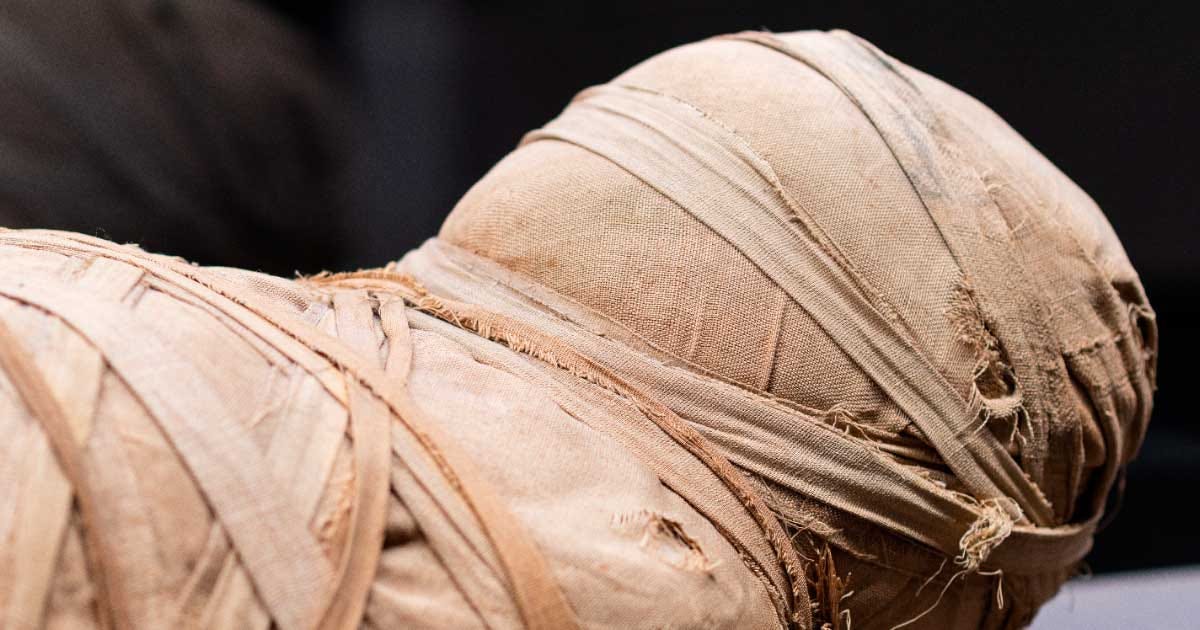
Top Image: Ancient Egyptian mummy photographed at the archaeological museum of Florence.
Divers Have Found a Piece of the Space Shuttle Challenger Off the Coast of Florida
Nearly 37 years ago the world watched in stunned horror as an explosion destroyed the space shuttle Challenger. The accident occurred 73 seconds after liftoff and killed seven astronauts. Memories of shuttle pieces falling into the sea remain with everyone who witnessed the catastrophe.
In the aftermath, NASA searched for pieces of the shuttle. The agency recovered a great deal of wreckage in the years right after the event. Recently a film crew working on a show for the History Channel discovered a 20-foot-long piece of Challenger on the ocean floor. It was a stunning find and totally unexpected.
Divers working on a documentary uncovered a section of the space shuttle Challenger. Courtesy The HISTORY Channel.
The team’s actual goal was to find remnants of ships lost in the Bermuda Triangle. That region actually lies well southeast of the Space Coast. It’s the first major find of wreckage from the disaster in more than 25 years. Underwater explorer and marine biologist Mike Barnette, who led the team, said the crew recognized they had something unique very quickly.
“The significance of this large section of Challenger’s structure was readily apparent,” he said. “We recognized the necessity of bringing this find to the immediate attention of NASA. The site, which is outside of the Bermuda Triangle off the Florida coast, marks the loss of seven brave astronauts—fellow explorers—and the Challenger disaster was a tragic setback for America’s space program. But from this horrific event, important lessons were learned that have ultimately led to remarkable advances in space exploration.”
NASA Steps In
The team immediately alerted NASA and shared the footage shot by the divers. Agency leaders viewed it and readily agreed that the debris looks very much like a piece of Challenger. NASA administrator Bill Nelson confirmed the find in a public statement.
“While it has been nearly 37 years since seven daring and brave explorers lost their lives aboard Challenger, this tragedy will forever be seared in the collective memory of our country. For millions around the globe, myself included, January 28, 1986, still feels like yesterday,” he said. “This discovery gives us an opportunity to pause once again, to uplift the legacies of the seven pioneers we lost, and to reflect on how this tragedy changed us. At NASA, the core value of safety is – and must forever remain – our top priority, especially as our missions explore more of the cosmos than ever before.”
Space shuttle artifacts such as this one are the property of the U.S. government. The rest of the shuttle is memorialized and ensiloed at Launch Complex 31 at the Cape Canaveral Air Force Station. One piece is on display at the Kennedy Space Center Visitor Complex nearby and lost crews are memorialized there. NASA will work with the families of the astronauts as it decides how to handle the newly found artifact.
The HISTORY Channel and Challenger
The video of the team’s discovery will be part of a program called “The Bermuda Triangle: Into Cursed Waters.” It will air on November 22 as part of a narrative about wreck sites off the coast of Florida.
“The historic and emotional discovery of this Challenger artifact by our incredible team reinforces the HISTORY Channel’s mission to preserve important sites and stories from our national heritage,” said Eli Lehrer, the network’s executive vice president and head of programming. “While the remarkable discovery of wreckage from Challenger was not part of our diving team’s initial mission exploring the Bermuda Triangle, the find’s historical significance cannot be understated.”
Meer van UFO'S of UAP'S, ASTRONOMIE, RUIMTEVAART, ARCHEOLOGIE, OUDHEIDKUNDE, SF-SNUFJES EN ANDERE ESOTERISCHE WETENSCHAPPEN - DE ALLERLAATSTE NIEUWTJES


 LATEST UFO SIGHTINGS AND VIDEOS -