Ontdek de Fascinerende Wereld van UFO's en UAP's: Jouw Bron voor Onthullende Informatie!
Ben jij ook gefascineerd door het onbekende? Wil je meer weten over UFO's en UAP's, niet alleen in België, maar over de hele wereld? Dan ben je op de juiste plek!
België: Het Kloppend Hart van UFO-onderzoek
In België is BUFON (Belgisch UFO-Netwerk) dé autoriteit op het gebied van UFO-onderzoek. Voor betrouwbare en objectieve informatie over deze intrigerende fenomenen, bezoek je zeker onze Facebook-pagina en deze blog. Maar dat is nog niet alles! Ontdek ook het Belgisch UFO-meldpunt en Caelestia, twee organisaties die diepgaand onderzoek verrichten, al zijn ze soms kritisch of sceptisch.
Nederland: Een Schat aan Informatie
Voor onze Nederlandse buren is er de schitterende website www.ufowijzer.nl, beheerd door Paul Harmans. Deze site biedt een schat aan informatie en artikelen die je niet wilt missen!
Internationaal: MUFON - De Wereldwijde Autoriteit
Neem ook een kijkje bij MUFON (Mutual UFO Network Inc.), een gerenommeerde Amerikaanse UFO-vereniging met afdelingen in de VS en wereldwijd. MUFON is toegewijd aan de wetenschappelijke en analytische studie van het UFO-fenomeen, en hun maandelijkse tijdschrift, The MUFON UFO-Journal, is een must-read voor elke UFO-enthousiasteling. Bezoek hun website op www.mufon.com voor meer informatie.
Samenwerking en Toekomstvisie
Sinds 1 februari 2020 is Pieter niet alleen ex-president van BUFON, maar ook de voormalige nationale directeur van MUFON in Vlaanderen en Nederland. Dit creëert een sterke samenwerking met de Franse MUFON Reseau MUFON/EUROP, wat ons in staat stelt om nog meer waardevolle inzichten te delen.
Let op: Nepprofielen en Nieuwe Groeperingen
Pas op voor een nieuwe groepering die zich ook BUFON noemt, maar geen enkele connectie heeft met onze gevestigde organisatie. Hoewel zij de naam geregistreerd hebben, kunnen ze het rijke verleden en de expertise van onze groep niet evenaren. We wensen hen veel succes, maar we blijven de autoriteit in UFO-onderzoek!
Blijf Op De Hoogte!
Wil jij de laatste nieuwtjes over UFO's, ruimtevaart, archeologie, en meer? Volg ons dan en duik samen met ons in de fascinerende wereld van het onbekende! Sluit je aan bij de gemeenschap van nieuwsgierige geesten die net als jij verlangen naar antwoorden en avonturen in de sterren!
Heb je vragen of wil je meer weten? Aarzel dan niet om contact met ons op te nemen! Samen ontrafelen we het mysterie van de lucht en daarbuiten.
200 years ago, Jean-Francois Champollion raced into his brother’s office and shouted ‘Je tiens l’affaire!’ – ‘I’ve got it’. After years of research, he had pieced together one of the great historical puzzles of the time; he had deciphered the hieroglyphic script of ancient Egypt.
Various objects were crucial in helping Champollion arrive at this famous moment: from the Casati Papyrus to the Philae Obelisk at Kingston Lacy. But of all the artefacts that contributed to the groundbreaking decipherment, one is more renowned than all of the rest: the Rosetta Stone.
Today on display at the British Museum, this object was central in kickstarting antiquarians such as Champollion and Thomas Young down the path of unlocking ancient Egypt’s enigmatic language within just c.20 years of the Stone’s rediscovery. Today, the Rosetta Stone ranks amongst the most famous artefacts in the world. But what exactly is it?
The Rosetta Stone
The Stone itself is a commemorative stone (stela), upon which is written a priestly decree issued on 27 March 196 BC. The early 2nd century BC was a time when non-native pharaohs ruled Egypt; the last native Egyptian ruler had been forced into exile almost 150 years before, in c.343 BC.
196 BC was the time of the Ptolemaic Dynasty, one of the most remarkable of Alexander the Great’s Successor kingdoms. Ruling from the prestigious city of Alexandria, ancient Greek was the dominant language of Ptolemaic administration. Away from the official administration however, ancient Egyptian was still a language that people spoke widely across the kingdom: in homes and temples all along the River Nile. Early 2nd century Ptolemaic Egypt was a multicultural, multilingual society.
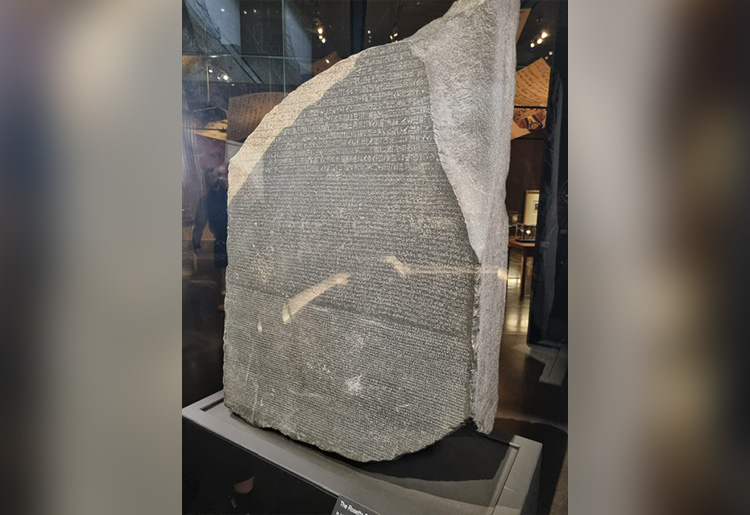
The Rosetta Stone in the British Museum
Image Credit: Tristan Hughes
It’s this bilingual nature of Ptolemaic Egypt that explains one of the central features of the Rosetta Stone. Carved onto this great, broken slab of granodiorite was text, written in three different languages. The first language was Egyptian hieroglyphs, the second was demotic (a handwritten version of the Egyptian script that Egyptians had long used alongside hieroglyphs; demotic was the ‘script of the people’) and the third language on the Stone was ancient Greek.
The priestly decree itself was issued by a group of priests that, in essence, provided King Ptolemy V divine honours. As thanks for his good deeds as King (protecting the country, rebuilding temples, lowering taxes etc), the Stone’s decree ordered that Ptolemy’s statue be honoured inside the temple and placed alongside those of the gods. Furthermore, Ptolemy’s statue was also to appear during sacred processions, once more alongside statues of other gods. To all extents and purposes, the decree placed King Ptolemy V on the same level as the gods.
This in itself was no novel practice for the Ptolemies; Hellenistic ‘ruler cult’ is something we see repeated again and again in various Successor Kingdoms across the Eastern Mediterranean during this latter half of the 1st millennium BC, where people paid tribute to their ruler’s benefaction by bestowing them with divine honours.
Discovery
The Stone itself is named after its discovery location: Rosetta. Situated east of Alexandria near the coast of the Mediterranean today, Rosetta (Rasheed) didn’t exist in pharaonic times. But sometime in Egypt’s long and incredible history, the Stone was moved here and used in the foundations of a building. Given the strength of this granodiorite slab, someone decided that it would be a very useful building block.
It would be in 1799 that the importance of this stone was realised, when French soldiers – assigned to Napoleon’s ongoing Egyptian campaign – were restoring their fort at Rosetta and discovered this tri-lingual stela. Very quickly, both the soldiers themselves and the many scholars that Napoleon had brought with him to Egypt realised that this artefact could be the key to deciphering hieroglyphics – an ancient script that medieval Arab scholars had already been attempting to decipher for centuries.
It was rapidly realised that the Rosetta Stone was highlighting the same decree in three different languages. As ancient Greek was already known, the huge potential this Stone had for helping scholars finally decode this enigmatic ancient Egyptian script (both hieroglyphic and demotic) was quickly acknowledged.
British takeover
French soldiers had rediscovered this Ptolemaic priestly decree, but it would not remain in their hands for long. In 1801, the defeated remnants of Napoleon’s expedition to Egypt signed the Capitulation of Alexandria with the British and the Ottomans. Part of the surrender – Article 16 – demanded that the French transfer 22 Egyptian antiquities to the British. Amongst these were two giant sarcophagi – one of which was at the time believed to be the sarcophagus of Alexander the Great. But the most famous object that the French handed over to the British was the Rosetta Stone.
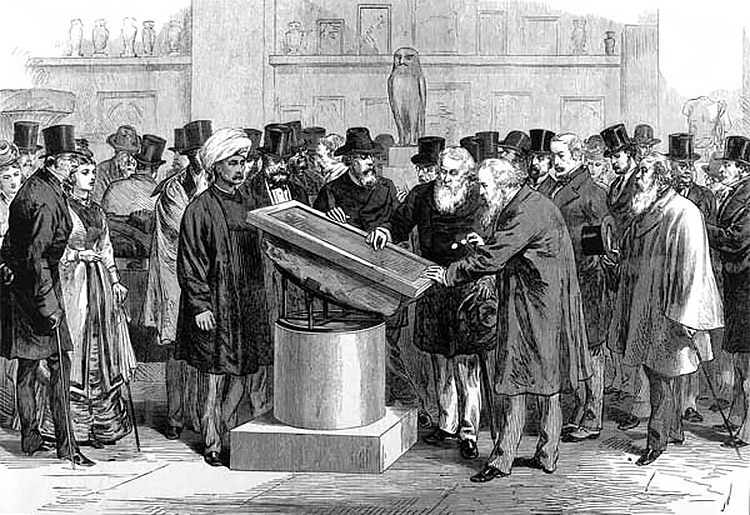
Experts inspecting the Rosetta Stone during the Second International Congress of Orientalists, 1874
Image Credit: British Museum, Public domain, via Wikimedia Commons
Although they took possession of the physical object, the British still permitted the French scholars to make copies of the Stone. This would allow many figures on both sides of the Channel Sea (including Champollion) to have access to copies of the inscription in the years ahead, as the race to decipher hieroglyphics heated up.
In 1802 the Rosetta Stone, alongside the other artefacts seized by the British, arrived in Portsmouth. Not long after they were placed in the British Museum, which at the time was still very small. The arrival of these new objects encouraged the Museum to expand – to create new galleries that would ultimately house these artefacts.
The Rosetta Stone has since left the British Museum on only two occasions. The first was during World War Two – for safety; the second occasion was in 1972, when the Stone was displayed at the Louvre.
Significance
The Rosetta Stone was the keystone for the great acceleration of decoding hieroglyphics in the early 19th century. It was thanks to this Stone that figures such as Thomas Young and Champollion worked tirelessly as they raced to be the first to crack the ancient script. Other artefacts would help these scholars fill in the final pieces of the decoding puzzle, but it was the Rosetta Stone’s discovery, and its surviving trilingual text, that kickstarted them to devote years in their mission to make Egyptology’s ultimate breakthrough.
Thomas Young made some striking early progress. Focusing on the demotic text, he was able to identify some key words such as King/ruler(basileus)and temple. Most famously of all, he correctly identified the demotic word for Ptolemy and its hieroglyphic cartouche. Attributing phonetic values to the symbols in the cartouche, he was able to make some progress. Mistakenly however, he didn’t quite translate the correct phonetic sound for each of the symbols.
Ultimately, it was Champollion who made the ultimate breakthrough on the Ptolemy cartouche on the Rosetta Stone. That is why it is Champollion today, who we associate with making the ultimate breakthrough. Young made significant progress and is heralded in some circles as the man who translated Demotic. But Champollion was the man who ‘won’ the race.
William Bankes and the Philae Obelisk
One other figure to mention here is William Bankes. An adventurer and daredevil, in the 1810s Bankes voyaged down the River Nile on two separate occasions. Bankes was an avid drawer; he and several of his companions made countless drawings of the ancient Egyptian sites he saw as he ventured up the Nile as far as the Second Cataract and Wadi Hafa.
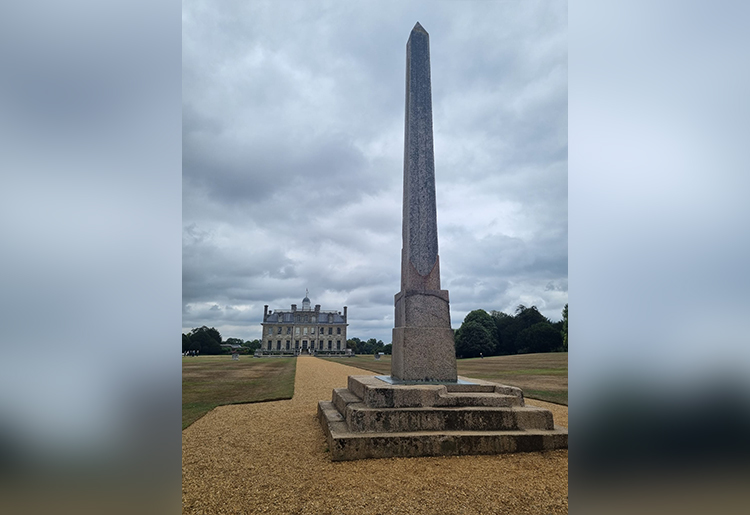
Philae Obelisk
Image Credit: Tristan Hughes
Bankes sent countless drawings back to Young, who used them to help him in the great deciphering race. But Bankes also brought back to Britain an obelisk, which he had found fallen over at Philae. This obelisk, today visible at Kingston Lacy, had a bilingual inscription. An ancient Greek inscription on the base of the obelisk, with hieroglyphs running up the shaft. It was from this obelisk that Bankes correctly identified the cartouche for the name Cleopatra.
Champollion, using this discovery, the Ptolemy cartouche from the Rosetta Stone and other papyri was able to make the breakthrough. Although we remember Champollion and the Rosetta Stone in the story of how hieroglyphs were deciphered, let us not forget the invaluable information that William Bankes and the Philae Obelisk also provided in this story.
Anunnaki - The Astronaut God or Alien that created us. Sumerian clay tablets revealed | Some Say… PART I
Anunnaki created the first humans: Adam, Lilith, and then Eve as the first breedable, primitive workers to mine gold at their facilities.
After Lilith’s banishment, Enki gave the fruit of wisdom to Lilith so she can solely reproduce and work at the gold mines.
Enlil (the brother of Enki) saw this situation as a threat, as granting humans with wisdom might risk the existence of Annunaki. Later, Enlil decided to summon a catastrophic flood to wipe out humanity completely and abandon the gold mining project.
So where did the Annunaki go after the flood? How did humanity survive the flood?
Anunnaki - They forsaken Lilith and Humanity. After the flood, where did they go? | Some Say… PART II
Anunnaki created the first humans: Adam, Lilith, and then Eve as the first breedable, primitive workers to mine gold at their facilities.
After Lilith’s banishment, Enki gave the fruit of wisdom to Lilith so she can solely reproduce and work at the gold mines. Enlil (the brother of Enki) saw this situation as a threat, as granting humans with wisdom might risk the existence of Annunaki.
Later, Enlil decided to summon a catastrophic flood to wipe out humanity completely and abandon the gold mining project. So where did the Annunaki go after the flood?
How did humanity survive the flood?
Humans are the First Aliens. Here's Why.
Where are all the aliens?! This is the essence to the Fermi Paradox. It's most popular solution is the "Great Filter." What is the obstacle that life and/or intelligent species are unlikely to survive? Let's discuss.
Peter Khoury’s case is the first alien abduction where an alien specimen was found on a human body, revealed in a DNA test. He was born in Lebanon in 1964, and in 1973 migrated to Australia where he met his future wife Vivian in 1981, and the couple married later in 1990. They have 2 children.
Peter’s first encounter with a UFO happened when he was only 7 years old. It was the summer of 1971, and he was playing with seven other children when all of them decided to go to a rooftop. As he came there, an egg-shaped UFO was hovering above other children who were standing like a statue.
Peter Khoury
After some time gap, all the children found themselves on the ground floor with no memory of the incident. The next encounter happened in February 1988, when Peter and Vivian were in Sydney. That time, they saw a strange moving light. But the incident that happened later in July completely changed Peter’s life.
It was around 11 PM, and Peter was staying with his family. That night, his brother Sam invited him to watch a movie in his room. Peter lay in his bedroom, but what happened next was completely frightening. As he was laying on the bed, he felt a paralysis in his whole body and could move only his eyes.
“While…lying on my bed, I felt something grab my ankles. As I felt this, a strange numbness, tingling and churning sensation crawled up through my body and right up to my head. I was paralyzed, I could not move any part of my body but for the exception of my eyes, which I could move, open or close. My brain was functioning but I could not do anything physically. I tried to call out to family members but I could not force the words out. At this stage I started to panic thinking I would not walk again. I thought I was truly paralyzed.”
Peter Khoury and his wife Vivian
As the experience unfolded Peter’s first thought was that this was a form of payback, a punishment for the less than satisfactory life he had led for about six years before he returned to the family fold. He thought, if he survived this, that his community would think, God’s punishing him, God paid him back. What followed — the encounter with the hooded, three- to four-foot-tall creatures with black, wrinkled faces — changed everything.
“The fear was so extreme. I’m gone! I’m dead! It’s real! I was petrified and paralyzed. Irrational fears were crowding in. They were going to kill me. I could be killed. The fear level was extraordinary. I was stressing out, how could I get out of this?
I became aware of some sort of communication, seemingly telepathic, no sound made, and yet I could hear the message in my mind. I was told not to worry and I would not be harmed and to relax. As I moved my eyes and looked to the left side…I made eye contact with two beings who looked so different to the others. These were thin, tall with big black eyes and a narrow chin. They were goldish-yellow in color. Astonishingly the stress was gone immediately. The whole fear thing washed away as quickly as a light switch on. How could I be so calm after such a level of fear? My heartbeat was no longer racing.[A whole different situation was unfolding.]
Peter said he saw three- to four-foot-tall creatures with black, wrinkled faces around him. He communicated with the aliens telepathically. He heard them saying that they would not harm him and even made eye contact with the two of them. Peter even noticed that one alien was male and another female, wearing masks.
One of them inserted a needle into his head, and he blackout. Peter described him as tall and thin with large black eyes in the golden yellow suit. After he got consciousness, he found out the creatures had also drugged his family members. Further, he thought that only 10 minutes had passed but in reality, it was 1 to 2 hours.
After this, Peter was totally petrified and had no clue what to do next. He even had surgical marks on his head which could prove his encounter with aliens. He had not much knowledge about alien abductions and struggled to understand them.
Eventually, he understood about the abduction experiences, jumped into, the world of Ufology, and started a group named the UFO Experience Support Association (UFOESA). He continued helping other victims who claimed to encounter aliens, but his personal experiences did not finish.
On July 23, 1992, he came home after dropping off his wife at the train station. It was around 7 AM, and he was not feeling very well as he had got head injuries during an assault at the job site. So, he decided to go to bed and get some sleep. Peter felt something alighting on the bed. As he got up, he was shocked to see two strange women kneeling near his bed.
He described one had an appearance of Nordic with an elongated face, big blue eyes, and a sharply pointed chin. Another one looked like an Asian. “I got the shock of my life because right on top of me was this female, a blonde female. She was just milky white in color. Her eyes were probably two-three times bigger than human eyes. She had protruding cheekbones and a narrow face that narrowed down to a pointy chin and on the side of the bed on the corner of the bed there was another female an asian looking female and then she the blonde female touches her stomach and points to the sky
Although no normal communication occurred, the Nordic woman seemed to be in charge, and Khoury got the impression she was giving the Asian-looking woman some sort of instruction. She was 6 feet tall and very strong. She tried to copulate with Peter by pulling him towards her chest, but he resisted and even bit her which made him cough. Moments later, he looked up again, but both women had vanished.
Artistic view of two alien women: Nordic and Asian
The coughing stimulated him to go to the bathroom to drink water. After that, he tried urinating and found blonde hair on the genital of that Nordic alien woman. He kept the hair in the plastic bag with a seal. Peter refrained himself telling about it to Vivian for 2 weeks, although she had been very supportive of him for the 1988 abduction.
Prof. John Mack, Peter Khoury, Bill Chalker & Dominique Callimanopulos
In 1996, Harvard psychiatrist John Mack did a hypnotic regression on Peter to understand what had happened to him in 1988. Under hypnosis, Peter said that he was taken to a room full of lights. He was on the table with one creature above him but could not find out more than that.Because of the bizarre and controversial nature of the 1992 episode, Peter was more comfortable describing his 1988 experience.
Because of the 1988 and 1992 experiences, Peter’s case was widely discussed and came into the knowledge of UFO researcher Bill Chalker. He began an investigation into the case and did the world’s first PCR (polymerase Chain Reaction) DNA test on the hair sample.
Bill Chalker
The test result showed that the hair was biologically close to human genetics but came from an unusual human race, probably a rare Chinese Mongoloid type. Could Peter Khoury’s July 1988 alien encounter be an example of the well-established phenomenon known as “sleep paralysis”?
John O’Neill, a member of Australian Skeptics, argued that sleep paralysis could explain the paralysis Peter Khoury experienced, hallucination could explain his experience with extraterrestrials, falling asleep could explain his missing time, and “the puncture wound and scab could be from anything — a pimple, an insect bite or anything else in approximately the right location.” O’Neill accepted that Peter’s experience was genuine, as he himself had had a sleep paralysis episode. But his experience was typically vague, like most sleep paralysis episodes — “the feeling of some other entity being in the room, but [I] did not know and could not see what.” That vague description falls far short of the detailed and ordered description Peter Khoury offers of his experience.
Several aspects of Peter’s encounter actually defy this simplistic categorization. First of all, he was not asleep, nor had he reached the state that precedes sleep, the hypnagogic state, that often yields fleeting imagery of a hallucinatory nature. Furthermore, his experience has an ordered sequence of events that were recollected consciously; they were not vague sensory experiences of fragmented sleep. Then there are the physical marks, namely the injury to his head, where he felt the strange needle being stuck in, along with the biopsy-like mark on his leg, which certainly can’t be accounted for as a classic sleep paralysis episode or as a product of the sleep/awake interface that spawns hypnagogic imagery.
SCIENTISTS SPOTTED SOMETHING THAT APPEARED TO BE MOVING 7 TIMES THE SPEED OF LIGHT
THAT CAN'T BE RIGHT.
ROBIN DIENEL/CARNEGIE INSTITUTION FOR SCIENCE
Speed Demon
Back in 2017, scientists observed a spectacular collision of two neutron starsthat blasted a jet of radiation so powerful that NASA says the energy it released was "comparable to that of a supernova," according to a press release by the agency.
But it's taken scientists until now to unpack all the data that was gathered because of its complexity. Among other intriguing findings: stuff appearing to travel faster than light — which, of course, is impossible. But don't worry. There's a perfectly reasonable explanation.
Joint Effort
The event, designated GW170817, is what's known as a binary neutron star merger. Neutron stars are the collapsed cores of once-massive stars and some of the densest objects in the universe. According to NASA, just a single teaspoon of one would weigh four billion tons on Earth.
With that sort of unfathomable density comes great gravity — enough to draw two of these neutron stars together in an explosive collision that launched gravitational waves and gamma radiation into space, making it the first time scientists have detected both from a neutron star merger, NASA says.
The Hubble Space Telescope observed the two neutron stars collapse into a black hole in the aftermath of the explosion. A spinning disk then formed around the black hole, which beamed incredibly fast jets of matter into space. Combining their findings with that of the National Science Foundation, scientists were able to piece together the event with extreme precision — including how fast the jets were moving.
Breaking the Law
Initially, from the Hubble observations, it appeared the jets were traveling at seven times the speed of light. Of course, that's impossible. The scientists attribute this discrepancy to a phenomena known as superliminal motion. Essentially, since the jet approaches our planet at nearly the speed of light, NASA says, the light it emits at later points has a shorter distance to travel each time, making it seem like it's moving faster than it really is.
With some additional calculations, scientists found the real speed: at least 99.97 percent the speed of light — which, to be fair, is still pretty damn fast.
The scientists hope their findings, published in a paper this week in Nature, will allow for even more precise observations of neutron star mergers in the future, which could potentially help calculate the rate of the universe's expansion.
Scientists Mapped 8000 Galaxies (Out Of Billions) & Made An Amazing Discovery
We are beginning to realize how little we know about the universe as we continue to explore it. For example, the number of galaxies in the universe is still unknown, even though the consensus is that there are roughly 200,000 billion galaxies in the known universe.
However, given we’ve only seen a small portion of the universe, this number might grow tremendously. Our Galaxy, the Milky Way, includes at least 400 billion stars, and the number of planets orbiting those stars is unfathomable.
Furthermore, the Milky Way galaxy has a diameter of 105,000 light-years and a diameter of 1,000,000,000,000,000,000 kilometres (approximately 621,371,000,000,000,000 miles). In other words, the Milky Way Galaxy is an extremely large place, and mapping it will take much better technology and more research.
Scientists, on the other hand, haven’t been sitting around doing anything. They’ve already started tracing the Milky Way’s physical plane in the cosmos. They have a much better knowledge of our physical, cosmic address after collecting data from over 8,000 galaxies in the Milky Way’s vicinity.
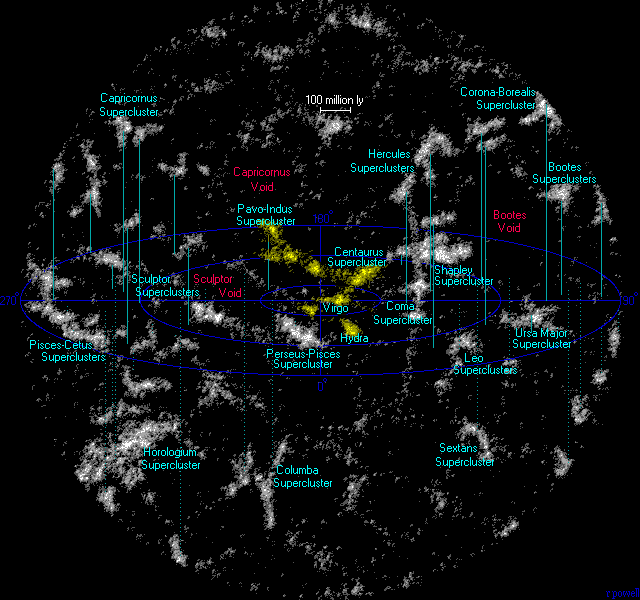
Astronomers created a map of each Galaxy’s movement and position in space. They discovered that our Milky Way galaxy is part of a massive system that holds thousands of other galaxies together in what is known as a supercluster of Galaxies.
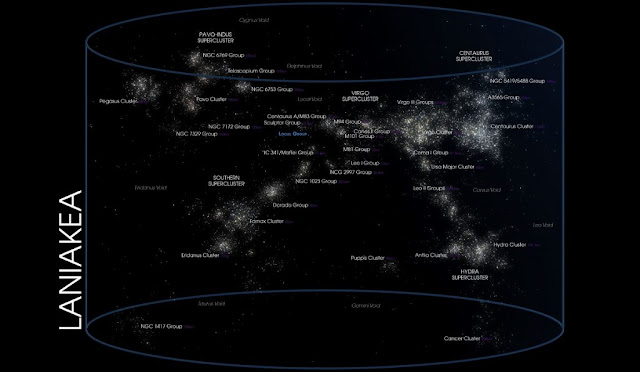
Researchers have revealed that the Milky Way is part of a gigantic cosmic structure named Laniakea, which spans 500 million light-years and has 100,000,000,000,000,000 Stars spread among 100,000 150,000 galaxies. Radio telescopes were utilized to map the movements of a large number of nearby galaxies.
The name laniakea means ‘immense heaven’ in Hawaiian, from lani, meaning ‘heaven,’ and ākea, meaning ‘spacious, immeasurable.’ The Laniakea Supercluster, according to the most recent data, has roughly 100,000 galaxies spread out across 160 megaparsecs (520 million light-years).It is made up of four subparts that were formerly identified as independent superclusters:
The Milky Way is located within the Virgo Supercluster.Supercluster Hydra Centaurus Laniakea core gravitational point, near Norma, is known as the Great Attractor.Hydra Supercluster, also known as Antlia Wall.Centaurus Supercluster is a supercluster in the constellation Centaurus.
Supercluster Pavo-Indus.
The Fornax Cluster (S373), Dorado, and Eridanus clouds are all part of the Southern Supercluster. Astronomers have discovered that Laniakea is not gravitationally bound, meaning that it will disperse rather than remain as an overdensity in comparison to its surroundings. Laniakea, unlike its constituent clusters, is expected to be ripped apart by dark energy, according to astronomers.
Astronomers Think They Have a Warning Sign for When Massive Stars are About to Explode as Supernovae
Red supergiant stars are explosions waiting to happen. They are in the last stage of their life, red and swollen as they fuse heavier elements in a last effort to keep from collapsing. But eventually, gravity will win and the red supergiant core will collapse, triggering a supernova. We know it will happen, but until recently, we didn’t know when.
The most famous red supergiant is Betelgeuse, the bright red star in the constellation Orion. It is about 550 light-years away and has a mass of about 18 Suns. It is the closest red supergiant to Earth, and when it eventually does explode it will briefly outshine the Moon. Of course, this has caused all manner of speculation about the star. Will it explode in our lifetime? Has it already exploded, and we’re just waiting for the supernova light to reach us? And all astronomers have been able to say is probably not, but we don’t really know. But a new study could give us an advance warning a few months before Betelgeuse does explode.
There are two general models for red supergiant supernovae. Both predict a red supergiant should dim significantly before exploding, on significantly different time scales. In the superwind model, a stellar wind is triggered by the ever-faster rate of fusion at a star’s end of life. The outer layer of the star is driven off by this wind over several decades, creating a circumstellar layer of cool gas that causes the star to appear very dim. The rapid outburst model, on the other hand, predicts a final period of less than a year, where more than a tenth of a solar mass can be cast off. This would cause the star to dim by a factor of 100 within the last few months of its life.
Betelgeuse cast off a dark cloud layer in 2019, seen in this artist view. Credit: NASA, ESA, and E. Wheatley (STScI)
In this study, the team looked at all the red supergiant supernovae cases where the star was observed before its explosion. Most supernovae are only observed after the explosion, so between 1999 and 2017 there are only a dozen cases of good pre-supernova observations. But in all of those cases, the brightness of the stars remained fairly consistent in the years leading up to the supernovae. This would rule out the superwind model and suggests that a red supergiant should dim significantly before exploding. In the case of Betelguese, we have seen the star dim as it cast off a cloud of gas, but not to the level that indicates an eminent explosion.
Unfortunately, we don’t have enough red supergiant observations to have observed a rapid dimming before the bang, but that could change in the future as more long-term sky surveys come online. And who knows, given how well-studied Betelgeuse is, our red supergiant neighbor might be the first star to give us a supernova red alert.
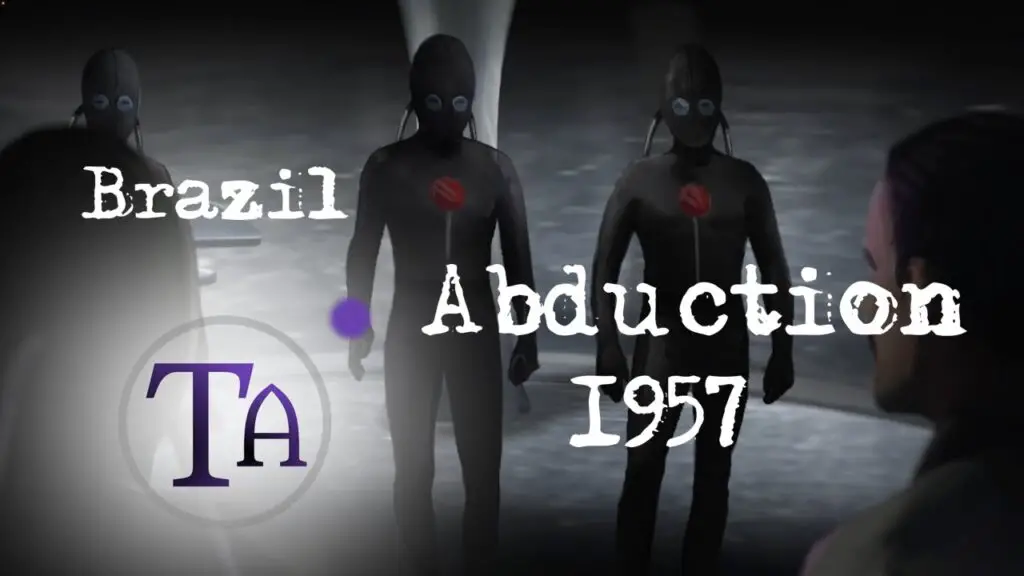
In another case that caught the public’s attention, a Brazilian farmer had an unsettling experience four years before the Hill Abduction. His case is regarded as the first case of its kind during the post-war era. It has been interpreted as an attempt to establish a human-alien hybrid agenda.
Partially Cloaked UFO Captured On Home CCTV Over Kansas City, Missouri.
This was captured on October 13, 2022 at 8:42pm and the witness stated that he had seen the object on the home security monitor but by the time he had gotten outside the UFO had gone.
Thanks to Anthony B for allowing me the use of his footage and to view the original:
Is this company working with alien technology in Nevada?
Radiance Technologies has quietly become a major player in developing cutting-edge weapons and systems for the Pentagon, with 20 offices established in 17 states. When it comes to unidentified flying objects or alien technology, the company doesn't duck the topic formerly considered taboo or fringe.
Drone Captures INCREDIBLE UFO Racing At 10x The Speed Of Sound | Contact
A drone pilot shows Nick & Sarah footage he captured, which shows a white UFO travelling at over 10x the speed of sound!
James Webb Telescope solves 'mind-blowing' phenomenon | ABC News
A new image from NASA's James Webb space telescope has revealed the secrets of a pair of stars surrounded by ghostly dust shells.
Why Do We See Things Traveling Faster Than Light? Superluminal Motion Explained
Top 9 Insane Sightings by Astronauts in Space: UFOs, Aliens and More!
Today, we will look at some of the most bizarre incidents that astronauts have experienced while on space. And you don’t have to believe all of them, but keep an open mind, because like I said, Space is strange and there is so much that we don’t know about it
SHOCKING!! NASA Just Shut Down Live Feed As Something Massive Shows Up At The ISS
Space exploration is one type of research that has been going on for centuries together and the ISS has been aiding in these various endeavors. Apart from having discovered many heavenly bodies out in space, there have been some events that they have not yet been able to justify completely. Stay tuned to find out more about these events!
Hello guys and welcome to Space Side! In today’s video, we shall be taking a look at how NASA just shut down its live feed as soon as something massive showed up at the International Space Station.
Shocking!! This Is What Scientists Discovered In Egypt That Has Left People Speechless
Egyptian history is one the most interesting and richest history out there, that has so much still to be uncovered about it. But not so long ago, a very amazing discovery was made that has opened up a bigger pathway for research. Wish to find out more about that? Stay tuned!
Hello guys and welcome to Space Side! In today’s video, we shall be taking a look at what scientists discovered in Egypt that has left many individuals speechless.
Laughing gas in space could be a sign of aliens: Scientists says nitrous oxide could be a biosignature for life
By Cassidy Morrison Senior Health Reporter For Dailymail.Com
Nitrous oxide in another planet's atmosphere could indicate the presence of life
Scientists typically look at oxygen and methane to determine presence of life
It is possible that the groundbreaking James Webb Telescope could detect N2O
Astrobiologists believe the presence of laughing gas in a distant planet's atmosphere could indicate life.
Nitrous oxide is a greenhouse gas emitted by plants, making it a biosignature, or a compound in the atmosphere generated by a living thing.
Biosignatures typically include gases found in abundance in Earth’s atmosphere today.
Oxygen, which is produced by photosynthesis, and methane, which results from the decay of organic material, have been touted as the most promising biosignatures for life on exoplanets, or planets outside the Solar System.
But astrobiologists at the University of California, Riverside (UCR) believe the scientific community has largely overlooked the party drug as an indicator of life.
Dr Eddie Schwieterman, an astrobiologist in UCR’s Department of Earth and Planetary Sciences said: 'Fewer researchers have seriously considered nitrous oxide, but we think that may be a mistake.'
Nitrous oxide is a sedative and pain reliever commonly associated with a dentist's office.
It is also abused as a party drug - often via small cannisters called 'whippets'. It is also known as laughing gas, or simply nitrous.
The team led by Dr Schwieterman came to their conclusion after calculating how much nitrous oxide living things on a planet resembling Earth could produce.
Then, they constructed models simulating the other planet around different stars, which showed the amounts of laughing gas that could be detected on these rocky, Earth-like exoplanets by an observatory such as the James Webb Space Telescope.
Their findings were published last week in The Astrophysical Journal.
University of California Riverside scientists believe nitrous oxide in the atmosphere could offer clues about life on planets outside of the solar system.
Nitrous oxide, or laughing gas, is a popular party drug. N2O is emitted by living organisms like oxygen and methane, which are considered indicative of extraterrestrial life.
The Webb telescope, which will continue studying the potential presence of life on exoplanets, is capturing some of the first light emitted after the big bang.
Living things are constantly transforming other nitrogen compounds into nitrous oxide and its presence in another planet's atmosphere would insinuate life.
'In a star system like TRAPPIST-1, the nearest and best system to observe the atmosphere of rocky planets, you could potentially detect nitrous oxide at levels comparable to CO2 or methane,' Dr Schwieterman said.
Nitrous oxide has not been granted as much attention as a potential biosignature as other atmospheric compounds.
The UC Riverside scientists hope their report will garner attention from the wider scientific community.
There are certain circumstances under which the presence of nitrous oxide would not indicate life, and the UC Riverside team accounted for that in the modeling.
What can laughing gas tell us about space?
Astrobiologists at UC Riverside believe the compound found in Earth's atmosphere could indicate life on planets outside of our solar system.
Nitrous oxide, N2O, is a common sedative and pain reliever sometimes used in party settings
Like other biosignatures (any characteristic that can be used as evidence for life) oxygen and methane, N2O is naturally derived
Scientists at UC Riverside hope their report out last week will bring more attention to N2O has a viable sign of life
They expect that the James Webb Telescope, the most powerful one ever built, will expand their study into N2O as an indicator for life outside our solar system
For example, a small amount of nitrous oxide can be generated by lightning, which the modelers considered.
Lightning also creates nitrogen dioxide, which offers a clue that non-living weather or geological processes created the gas.
Scientists who have considered nitrous oxide as a biosignature have often concluded that it would be too difficult to detect from such a great distance.
They based that conclusion on how much nitrous oxide is in the Earth's atmosphere today.
The atmosphere has a very small concentration of nitrous oxide despite the billions of living organisms here that produce it, leading skeptical scientists to believe it would be too difficult to measure.
But according to Dr Schwieterman, that conclusion ignores the fact that there was a time in Earth's history 'where ocean conditions would have allowed for much greater biological release of [nitrous oxide].'
He added: 'Conditions in those periods might mirror where an exoplanet is today.'
The James Webb Telescope, the most powerful one ever built, began surveilling planets that orbit other stars over the summer.
It was dreamed up by scientists as a tool primarily to capture some of the first light in the universe emitted shortly after the big bang.
Astronomers hoped at the outset that it would answer whether some of those exoplanets harbor atmospheres that could support life.
OOK LACHGAS KAN HINTEN OP DE AANWEZIGHEID VAN BUITENAARDSE WEZENS
Caroline Kraaijvanger
Op jacht naar sporen van leven in buitenaardse atmosferen ligt de focus vaak op ons bekende biosignaturen zoals zuurstof en methaan. Maar ook lachgas kan wijzen op de aanwezigheid van buitenaards leven, zo stellen onderzoekers nu.
Zijn we alleen? Het is een vraag die de mensheid al eeuwenlang bezighoudt. En eindelijk hebben we de middelen om die prangende vraag van een antwoord te voorzien. Zo rijdt op Mars momenteel een wagentje rond dat actief zoekt naar sporen van (vergane) Marsbewoners en zijn er plannen om ook een sonde naar Jupiters maan Europa te sturen om uit te vogelen of die leven kan herbergen. Een robot naar andere werelden sturen om daar te zoeken naar sporen van leven, is een prima benadering voor relatief nabije werelden die deel uitmaken van ons eigen zonnestelsel, maar leent zich minder goed voor de zoektocht naar buitenaards leven op exoplaneten: planeten die zich buiten ons zonnestelsel bevinden. Simpelweg omdat zelfs de reis naar de dichtstbijzijnde exoplaneet – Proxima b – decennialang zou duren. Maar onderzoekers hebben daar wat op bedacht. In plaats van die verre werelden met een bezoekje te vereren en ter plekke naar sporen van leven te zoeken, willen ze hun atmosferen op afstand gaan ‘uitlezen’. Het enige wat je daarvoor nodig hebt, is een superkrachtige telescoop. En die hebben we sinds kort: de James Webb Space Telescope. Met deze telescoop kunnen onderzoekers de samenstelling van buitenaardse atmosferen vaststellen en nagaan of die atmosferen elementen herbergen die hinten op de aanwezigheid van leven. Dergelijke elementen worden ook wel biosignaturen genoemd. Bekende voorbeelden zijn zuurstof en methaan (zie kader). Maar als het aan onderzoekers ligt, gaan we verder kijken dan die twee populaire opties en opent James Webb ook de jacht op…lachgas, oftewel N2O.
De atmosfeer van de aarde is vandaag de dag rijk aan zuurstof. Maar dat is niet altijd zo geweest; toen de aarde net gevormd was, herbergde deze noch in de atmosfeer, noch in de oceanen zuurstof. Dat begon zo’n 2,4 miljard jaar geleden echter te veranderen, toen bacteriën middels fotosynthese meer en meer zuurstof gingen produceren. De hogere zuurstofconcentraties maakten de evolutie van hogere levensvormen mogelijk, waarvan een deel ook weer zuurstof ging produceren en zo steeg de zuurstofconcentratie geleidelijk aan naar het huidige niveau. Daarmee is de hoge zuurstofconcentratie in de aardatmosfeer dus een direct gevolg van de aanwezigheid van leven. Maar de aanwezigheid van zuurstof maakt ook de aanwezigheid van methaan in diezelfde aardatmosfeer wat raadselachtig. Want zuurstof en methaan reageren vrij snel met elkaar, waardoor er koolstofdioxide en water ontstaat. In die zin zou je – zeker met het oog op de hoge zuurstofconcentratie – dan ook eigenlijk niet verwachten dat de aardatmosfeer vrij methaan herbergt. Het feit dat dat wel het geval is, hint er dan ook op dat er voortdurend nieuw methaan wordt aangemaakt. Nu kan methaan op twee manieren gevormd worden: door geologische processen en door leven. En juist het feit dat het samen met zuurstof in de aardatmosfeer voorkomt, hint op het laatste. Wanneer buitenaardse wezens van een afstandje naar onze planeet kijken, zouden ze uit de aanwezigheid van zuurstof en methaan in de aardatmosfeer dan ook voorzichtig kunnen afleiden dat onze planeet hoogstwaarschijnlijk leven herbergt. En op een vergelijkbare manier kunnen wij door de atmosfeer van andere planeten te onderzoeken, nagaan of die misschien leven herbergen.
“Er wordt veel nagedacht over zuurstof en methaan als biosignaturen,” stelt onderzoeker Eddie Schwieterman. “Veel minder onderzoekers hebben ook distikstofmonoxide (in de volksmond beter bekend als lachgas, red.) serieus als biosignatuur overwogen. En wij denken dat dat onterecht is.”
Lachgas is hier schaars Dat lachgas tot op heden als biosignatuur een beetje is afgeserveerd, komt doordat de atmosfeer van de aarde – de enige planeet waarvan we met zekerheid kunnen stellen dat deze leven herbergt – niet rijk is aan distikstofmonoxide. Maar, zo stellen Schwieterman en collega’s, dat kan in het verleden weleens anders zijn geweest. “De mate waarin N2O in onze atmosfeer voorkomt, wordt gedicteerd door de omvang van bronnen van lachgas en de snelheid waarmee dat lachgas – voornamelijk door UV-straling – wordt afgebroken,” legt Schwieterman aan Scientias.nl uit. “De (niet-industriële) productie van lachgas op aarde komt voor het grootste deel voor rekening van levensvormen. Organismen kunnen bepaalde vormen van stikstof omzetten in lachgas om zo cellulaire energie te verkrijgen. De stikstofcyclus kent echter nog een volgende en laatste stap, waarbij dat lachgas omgezet wordt in moleculair stikstof (N2), maar die stap is relatief lastig en vereist de aanwezigheid van een speciaal enzym dat nitrous oxide reductase wordt genoemd. De effectiviteit van dit enzym hangt af van omgevingsfactoren en dan met name van de aanwezigheid van koper, dat het enzym nodig heeft. Op de hedendaagse aarde is de stikstofcyclus vrij efficiënt en wordt het meeste biologische lachgas uiteindelijk omgezet in N2, hoewel ook wel een deel van het lachgas in de atmosfeer weglekt.” Maar in het verleden kan dat weleens heel anders zijn geweest. “In het Proterozoïcum, tussen 2,5 en 0,5 miljard jaar geleden, kunnen grote hoeveelheden zwavel en lage hoeveelheden zuurstof in de oceaan de hoeveelheid koper sterk beperkt hebben, waardoor er veel grotere hoeveelheden lachgas in de atmosfeer weglekten. Nu kunnen we ons voorstellen dat vergelijkbare omstandigheden vandaag de dag voorkomen op een exoplaneet of in een stikstofcyclus die nog niet zodanig geëvolueerd is dat het enzym dat nodig is voor die laatste stap (N2O naar N2) voorhanden is.”
Methaan en lachgas
We moeten lachgas – ondanks dat het hier in de aardatmosfeer relatief schaars is – dus niet te snel uitsluiten als biosignatuur, zo vinden Schwieterman en collega’s. Temeer, omdat lachgas met onze huidige gereedschappen een stukje gemakkelijker in buitenaardse atmosferen op te sporen is dan zuurstof. “James Webb is bijvoorbeeld niet gevoelig genoeg om de zuurstofconcentraties zoals we die vandaag de dag in de aardatmosfeer aantreffen in buitenaardse atmosferen te meten. Maar de telescoop zou bijvoorbeeld in de atmosfeer van rotsachtige planeten in het TRAPPIST-1-systeem wel methaan kunnen detecteren. En onze resultaten suggereren dat James Webb ook eventueel lachgas zou kunnen zien. De detectie van zowel methaan als lachgas in de atmosfeer van zo’n planeet zou net zo’n overtuigend biosignatuur zijn als de detectie van methaan en zuurstof.”
Of beter nog: methaan, lachgas en zuurstof Maar ook in de toekomst, als er nog krachtigere observatoria komen, waarmee ook aardachtige zuurstofconcentraties kunnen worden opgespoord, is het belangrijk om verder te kijken dan zuurstof en methaan alleen, zo benadrukt Schwieterman. “Hoe meer potentiële biosignaturen we kunnen detecteren, hoe zekerder we er in onze uiteindelijke beoordeling van de leefbaarheid van de planeet ook van kunnen zijn dat deze daadwerkelijk leven herbergt. Als we in de toekomst zowel zuurstof, methaan als lachgas in een atmosfeer aantreffen, zouden we daarmee al behoorlijk wat twijfels die er omtrent de aanwezigheid van leven op die planeet zouden kunnen zijn, kunnen wegnemen.”
Abiotisch of biotisch? Daarnaast moeten we ook niet vergeten dat methaan en zuurstof – zeker als de één zonder de ander in een atmosfeer voorkomt – als biosignaturen ook de nodige tekortkomingen kennen. Zo zijn er scenario’s denkbaar waarbij ze ook in de afwezigheid van leven in een atmosfeer op kunnen hopen. “Zo weten we bijvoorbeeld dat methaan op gasreuzen zoals Jupiter en Saturnus voorkomt en veel wetenschappers hebben al scenario’s geschetst waarin abiotisch zuurstof (oftewel zuurstof dat niet door leven is voortgebracht, red.) zich in de atmosfeer van exoplaneten – weliswaar in de afwezigheid van methaan – kan verzamelen. Daarnaast zijn er ook in de Marsatmosfeer kleine hoeveelheden abiotisch zuurstof en ozon te vinden.” Kortom: zuurstof en methaan zijn in ieder geval op zichzelf geen keihard bewijs dat een planeet leven herbergt. Lachgas is wat dat betreft wat overtuigender. “Hoewel er kleine abiotische bronnen van lachgas bekend zijn, zoals bijvoorbeeld bliksem, kennen we nog geen abiotische processen die zodanig veel lachgas zouden kunnen voortbrengen dat sprake is van een concentratie die we in een planetaire atmosfeer zouden kunnen detecteren.”
Na jaren naar de komst van James Webb te hebben uitgezien, is de telescoop sinds enkele maanden daadwerkelijk actief. En het is dan ook een kwestie van tijd voor deze de ogen richt op buitenaardse atmosferen en daadwerkelijk op zoek zal gaan naar biosignaturen, zoals methaan en – na dit onderzoek – misschien ook wel lachgas. Het lijkt daarbij echter niet aannemelijk dat we op basis van de door de telescoop verzamelde data ook echt kunnen concluderen dat een planeet leven herbergt, zo benadrukt Schwieterman. “In het best denkbare scenario zouden we een sterke aanwijzing kunnen vinden dat er leven op een planeet is.” Maar ook dat zou al een gamechanger zijn. Goede kandidaten in die zoektocht naar sterke aanwijzingen voor leven zijn er genoeg, maar voor Schwieterman springen er toch een paar uit. “Er zijn twee veelbelovende systemen die rotsachtige planeten herbergen en door James Webb gekarakteriseerd zullen worden: TRAPPIST-1 en SPECULOOS-2. De moedersterren zijn in beide gevallen kleine, lichtzwakke, rode dwergsterren waarvan we weten dat ze zeer actief zijn. Het is mogelijk dat ze met hun activiteit de atmosferen van hun planeten hebben doen eroderen. Maar als dat niet zo is, zijn er wel enkele werelden in deze systemen – zoals TRAPPIST-1e – die zich op de juiste afstand van de moederster bevinden om op hun oppervlak vloeibaar water en misschien wel leven te herbergen. Als die planeten een robuuste biosfeer hebben, zou James Webb gassen als methaan en lachgas in grote hoeveelheden kunnen aantreffen. Het zijn een hoop ‘als-en’, maar we mogen blijven hopen dat we geluk hebben.”
Meer van UFO'S of UAP'S, ASTRONOMIE, RUIMTEVAART, ARCHEOLOGIE, OUDHEIDKUNDE, SF-SNUFJES EN ANDERE ESOTERISCHE WETENSCHAPPEN - DE ALLERLAATSTE NIEUWTJES


 What Is the Rosetta Stone and Why Is It Important?







 Giant methane leak from Nord Stream pipeline is detected from SPACE: Satellite images show potent greenhouse gas leaking at a rate of 174,000 pounds per hour
 Astronomers capture sharpest ever Earth-based images of Jupiter's largest moons Europa and Ganymede - revealing their icy landscapes
 Life on MARS: Red Planet may once have been home to microbes that fed on hydrogen and produced methane - just like the early Earth, scientists claim
