Naar de inhoud

UFO'S of UAP'S, ASTRONOMIE, RUIMTEVAART, ARCHEOLOGIE, OUDHEIDKUNDE, SF-SNUFJES EN ANDERE ESOTERISCHE WETENSCHAPPEN - DE ALLERLAATSTE NIEUWTJES

UFO's of UAP'S in België en de rest van de wereld
akke.beakke.be
Ontdek de Fascinerende Wereld van UFO's en UAP's: Jouw Bron voor Onthullende Informatie! Ben jij ook gefascineerd door het onbekende? Wil je meer weten over UFO's en UAP's, niet alleen in België, maar over de hele wereld? Dan ben je op de juiste plek! België: Het Kloppend Hart van UFO-onderzoek In België is BUFON (Belgisch UFO-Netwerk) dé autoriteit op het gebied van UFO-onderzoek. Voor betrouwbare en objectieve informatie over deze intrigerende fenomenen, bezoek je zeker onze Facebook-pagina en deze blog. Maar dat is nog niet alles! Ontdek ook het Belgisch UFO-meldpunt en Caelestia, twee organisaties die diepgaand onderzoek verrichten, al zijn ze soms kritisch of sceptisch. Nederland: Een Schat aan Informatie Voor onze Nederlandse buren is er de schitterende website www.ufowijzer.nl, beheerd door Paul Harmans. Deze site biedt een schat aan informatie en artikelen die je niet wilt missen! Internationaal: MUFON - De Wereldwijde Autoriteit Neem ook een kijkje bij MUFON (Mutual UFO Network Inc.), een gerenommeerde Amerikaanse UFO-vereniging met afdelingen in de VS en wereldwijd. MUFON is toegewijd aan de wetenschappelijke en analytische studie van het UFO-fenomeen, en hun maandelijkse tijdschrift, The MUFON UFO-Journal, is een must-read voor elke UFO-enthousiasteling. Bezoek hun website op www.mufon.com voor meer informatie. Samenwerking en Toekomstvisie Sinds 1 februari 2020 is Pieter niet alleen ex-president van BUFON, maar ook de voormalige nationale directeur van MUFON in Vlaanderen en Nederland. Dit creëert een sterke samenwerking met de Franse MUFON Reseau MUFON/EUROP, wat ons in staat stelt om nog meer waardevolle inzichten te delen. Let op: Nepprofielen en Nieuwe Groeperingen Pas op voor een nieuwe groepering die zich ook BUFON noemt, maar geen enkele connectie heeft met onze gevestigde organisatie. Hoewel zij de naam geregistreerd hebben, kunnen ze het rijke verleden en de expertise van onze groep niet evenaren. We wensen hen veel succes, maar we blijven de autoriteit in UFO-onderzoek! Blijf Op De Hoogte! Wil jij de laatste nieuwtjes over UFO's, ruimtevaart, archeologie, en meer? Volg ons dan en duik samen met ons in de fascinerende wereld van het onbekende! Sluit je aan bij de gemeenschap van nieuwsgierige geesten die net als jij verlangen naar antwoorden en avonturen in de sterren! Heb je vragen of wil je meer weten? Aarzel dan niet om contact met ons op te nemen! Samen ontrafelen we het mysterie van de lucht en daarbuiten.

Archief

Radio signals detected from a planet beyond our Solar System. Landmark discovery could help us search for habitable worlds
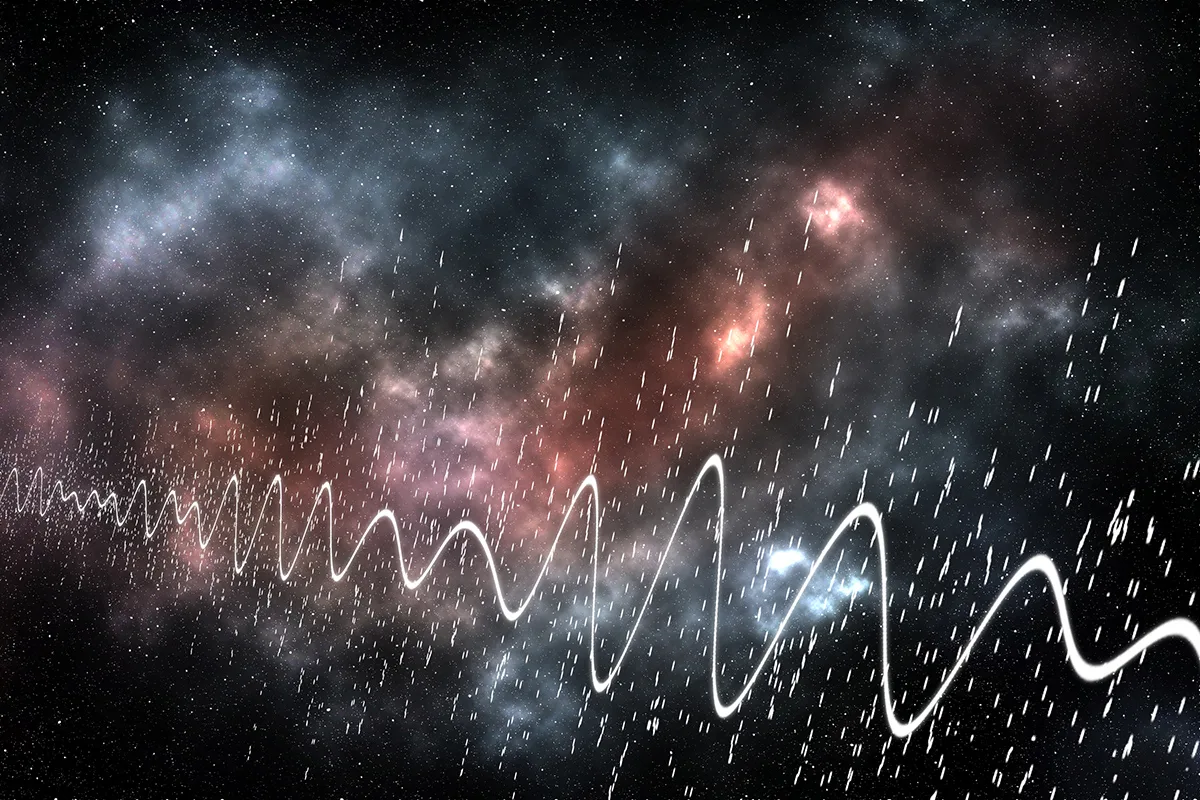
Radio signals detected from a planet beyond our Solar System. Landmark discovery could help us search for habitable worlds

Radio signals detected at a planet beyond our Solar System

BY Iain Todd

Researchers have captured direct radio wave emissions originating from a planet outside our Solar System.

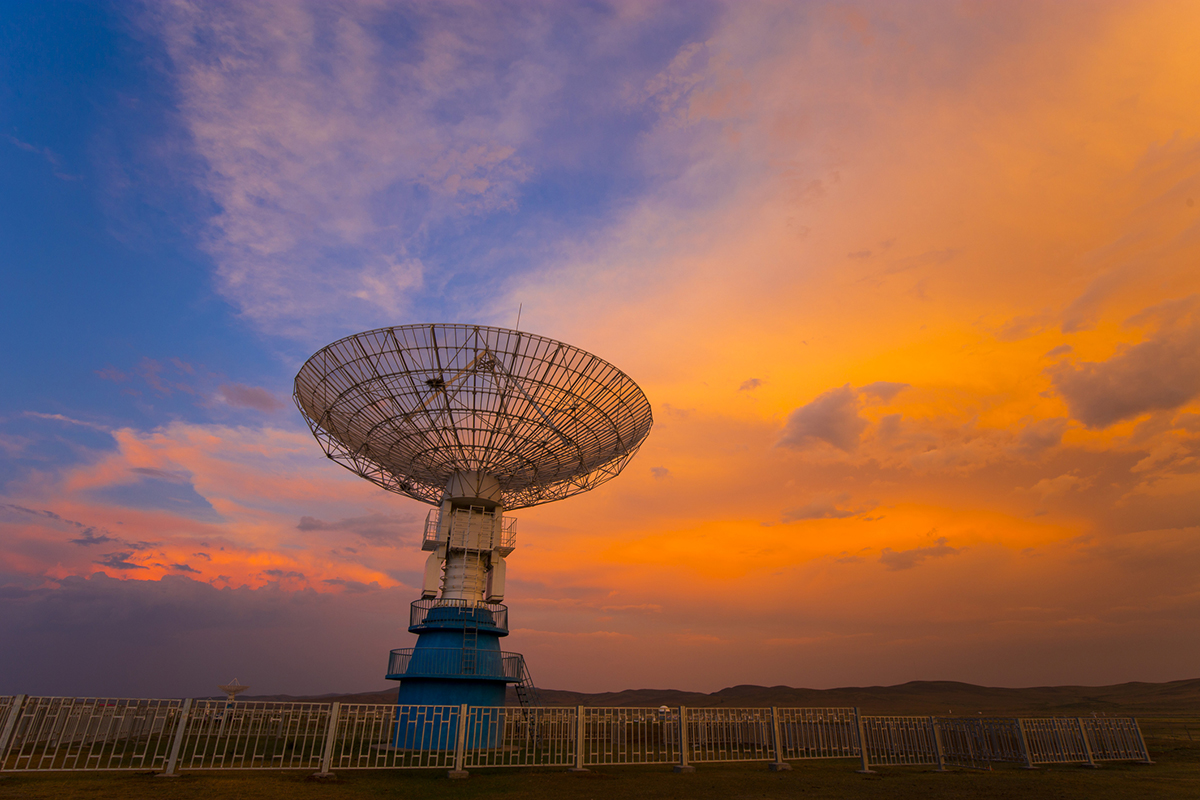
Using South Africa’s MeerKAT radio telescope array, an international team of astronomers successfully detected variable radio bursts coming directly from Beta Pictoris b, a massive gas giant exoplanet located about 63 lightyears away.

But while many of us may hear of radio signals detected at a distant planet in our Galaxy and instinctively imagine a detection of alien life, in this case the discovery is not a sign that E.T. has been detected.

The discovery is, however, a landmark find that will help astronomers learn more about the types of planet that exist beyond our Solar System – and where we might find life.

Chasing signals across the cosmos

For decades, scientists have hunted for radio emissions in deep space.

When it comes to exoplanets – planets beyond our Solar System – astronomers are interested in detecting radio waves similar to those produced by the large gas giants Jupiter, Saturn, Uranus and Neptune.

Scientists say Jupiter is the strongest auroral radio source in our Solar System.

So, learning more about radio waves emitted by other Jupiter-like planets across the Galaxy could reveal more about what those planets are like, what their magnetic fields are like and whether they produce visual displays of aurora like the Northern and Southern Lights on Earth.

It could also tell us whether those planets have protective magnetic fields that could protect emerging life from the ferocious power of their host stars.

However, separating an individual planet's faint signal from the radio signal of its host star is difficult.
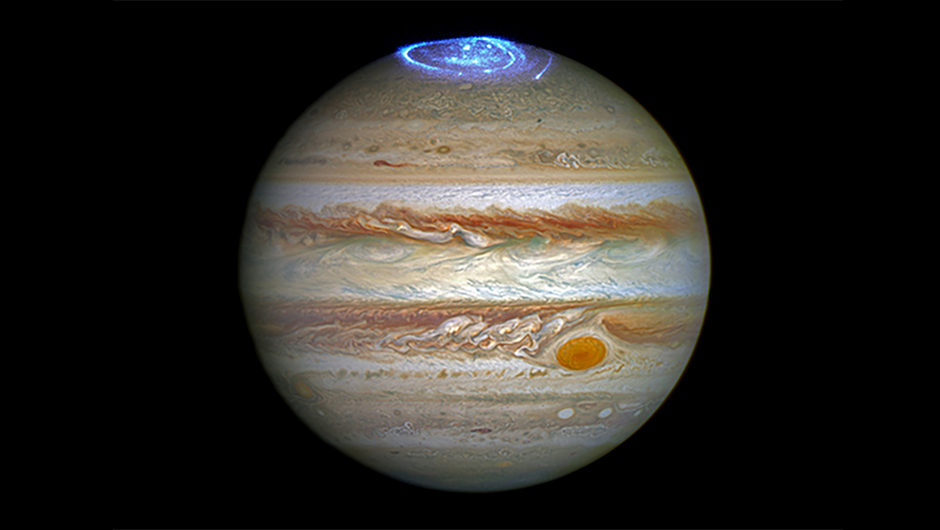
An image of aurorae on Jupiter, taken by the Hubble Space Telescope. Image Credits: NASA, ESA, and J. Nichols (University of Leicester)

An image of aurorae on Jupiter, taken by the Hubble Space Telescope. I mage Credits: NASA, ESA, and J. Nichols (University of Leicester)

Targeting a distant system

The team behind this study targeted planet Beta Pictoris b, which orbits star Beta Pictoris, 63 lightyears from Earth. That's just a stone's throw in cosmic terms.

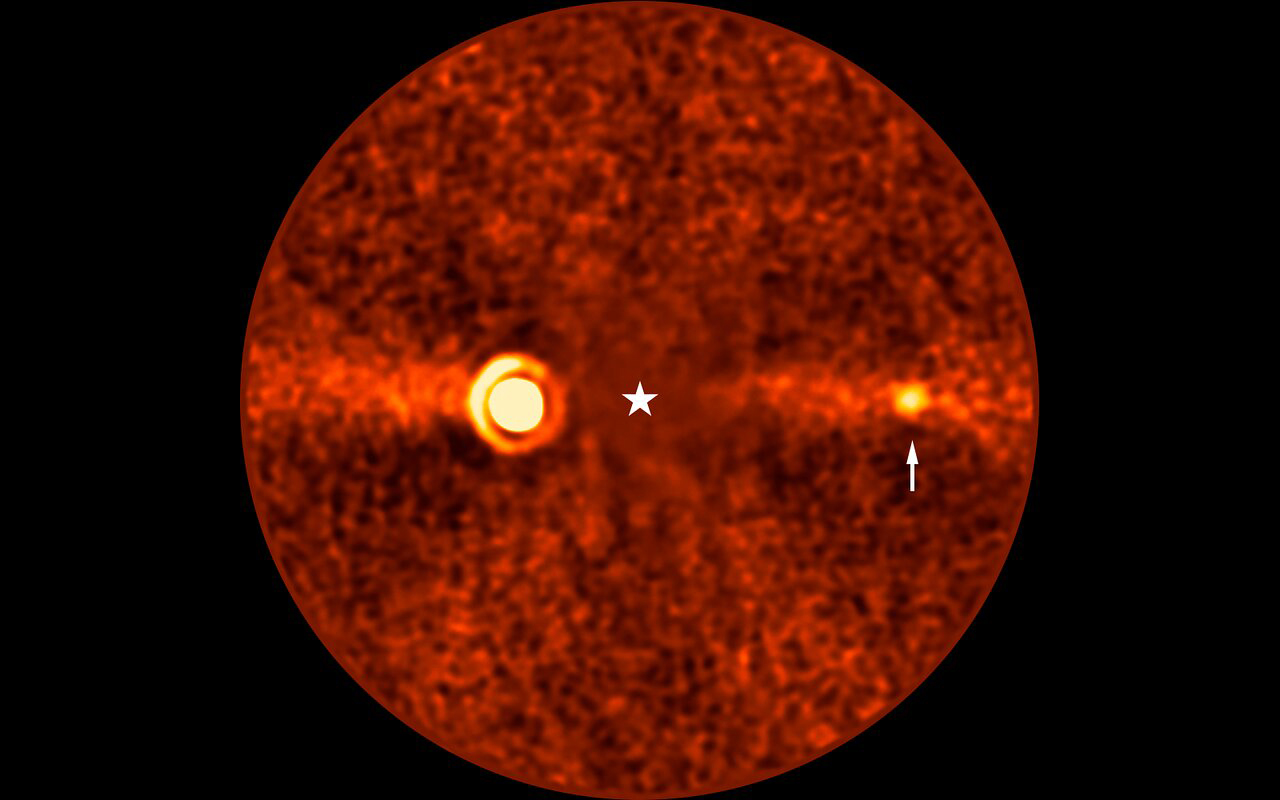
Beta Pictoris made headlines in July 2026 when astronomers photographed one of its other orbiting planets, Beta Pictoris d, making it the faintest exoplanet ever directly imaged from Earth.

The subject of this study, however, is Beta Pictoris b, which is about 10–12 times the mass of Jupiter.

Crucially, the star it orbits is magnetically quiet, say the researchers, which enabled them to isolate a particular radio signal to Beta Pictoris b.

It's the first time a radio signal has been confirmed as coming from a single planet, rather than from the whole star system in general.

Alien Signal Detected? What Scientists Just Found
Image taken with ESO’s Very Large Telescope showing Beta Pictoris d, orbiting the star Beta Pictoris. Credit: ESO/B. Sutlieff, M. Bonse et al. Image taken with ESO’s Very Large Telescope showing Beta Pictoris d, orbiting the star Beta Pictoris. Credit: ESO/B. Sutlieff, M. Bonse et al.

Magnetism and aurorae across the Galaxy

The team say the physics behind the signals is the same as the mechanisms that power aurora displays on the planets in our Solar System.

As energetic, charged particles from the Sun spiral down along magnetic field lines toward a planet's polar regions, they excite particles in the atmosphere, creating the colourful aurora displays we see on Earth.

And because the aurora correlates with the planet's magnetic field strength, the detection has allowed the team to calculate the strength of Beta Pictoris b's magnetic field. It's thousands of times stronger than our planet's.
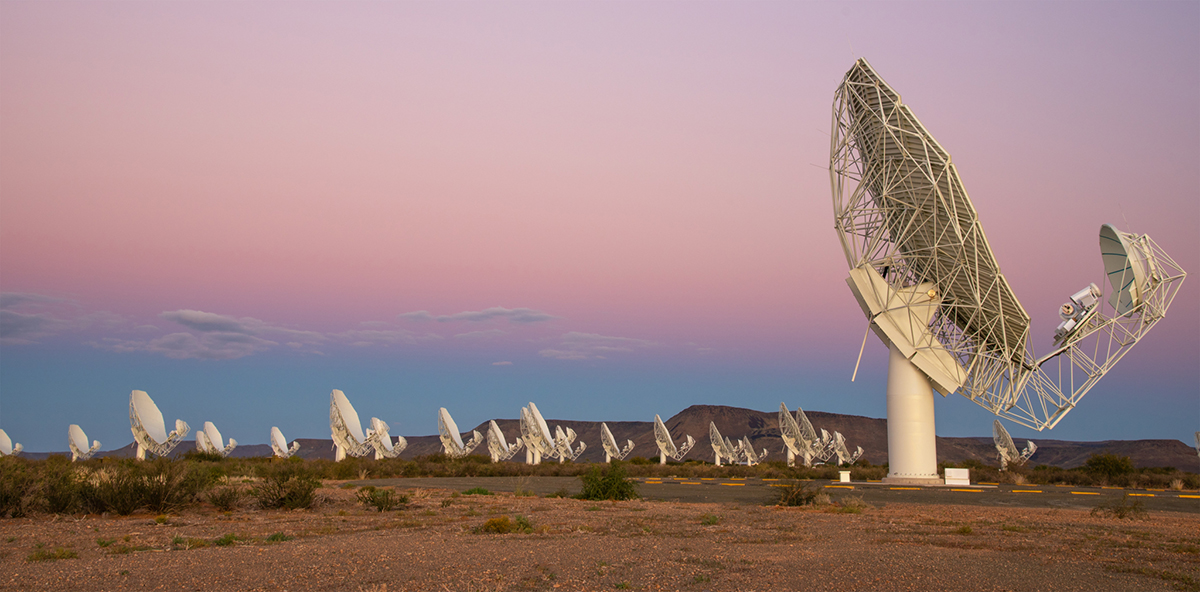
The 64-dish MeerKAT radio telescope array. Credit: South African Radio Astronomy Observatory The 64-dish MeerKAT radio telescope array. Credit: South African Radio Astronomy Observatory

A new era for exoplanet science?

The discovery is a milestone in the study of distant planets and the search for life beyond our Solar System.

Because magnetic fields play a vital role in protecting planetary atmospheres from being stripped by stellar winds – just as Earth's magnetic field protects us from the power of the Sun – understanding them is crucial in the search for habitable worlds beyond our Solar System.

And with more powerful radio observatories on the horizon, astronomers may be able to use the lessons learned from this study to target other gas giant planets.

That could give us a new, unique way of learning more about the types of planets orbiting stars scattered across our Galaxy and whether they might be able to host life.

  • Read the full paper via arxiv
Radio signal detected for the first time from a planet

{ https://www.skyatnightmagazine.com/ }

Hoe vind je dit bericht?
Geschreven door peter om 17:12 Stuur door

Scientists have detected radio signals from a planet beyond our Solar System

Scientists have detected radio signals from a planet beyond our Solar System

First time a radio signal has been confirmed as coming from a single planet rather than an entire system

BY  Iain Todd

THE KEY FACTS

  • Radio emissions: Researchers have captured direct radio wave emissions originating from a planet outside our Solar System.
  • MeerKAT array: Using South Africa’s radio telescope array, an international team successfully detected variable bursts coming from Beta Pictoris b.
  • Not aliens: While some might imagine the signal indicates extraterrestrial life, the discovery is not a sign of E.T.
  • Giant exoplanet: The targeted planet is a massive gas giant located about 63 lightyears away from Earth.
  • Magnetic fields: Studying these radio waves could reveal details about the magnetic fields of other Jupiter-like planets across the Galaxy.
  • Quiet star: Because the star it orbits is magnetically quiet, the researchers were able to isolate the particular radio signal.
  • First confirmation: This marks the first time a radio signal has been confirmed as coming from a single planet rather than an entire system.
  • Habitable worlds: Understanding planetary magnetic fields is crucial in the search for habitable worlds because they protect atmospheres from stellar winds.

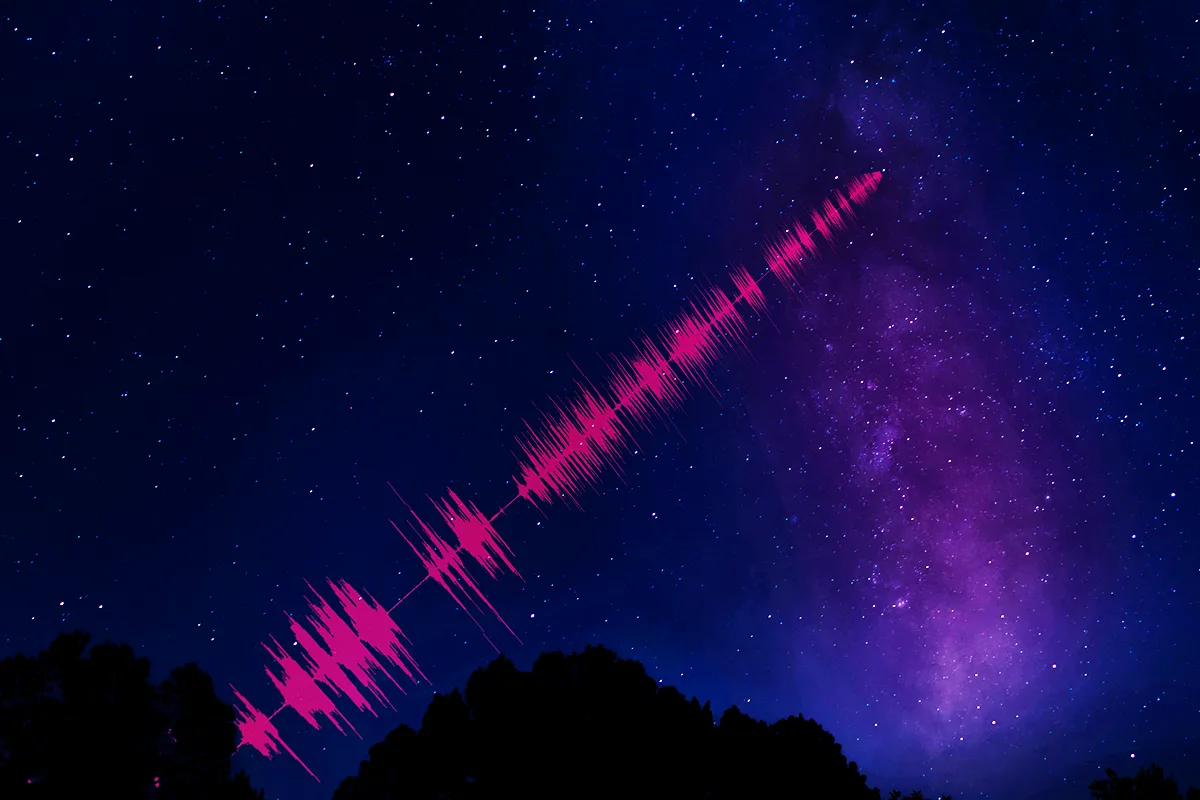
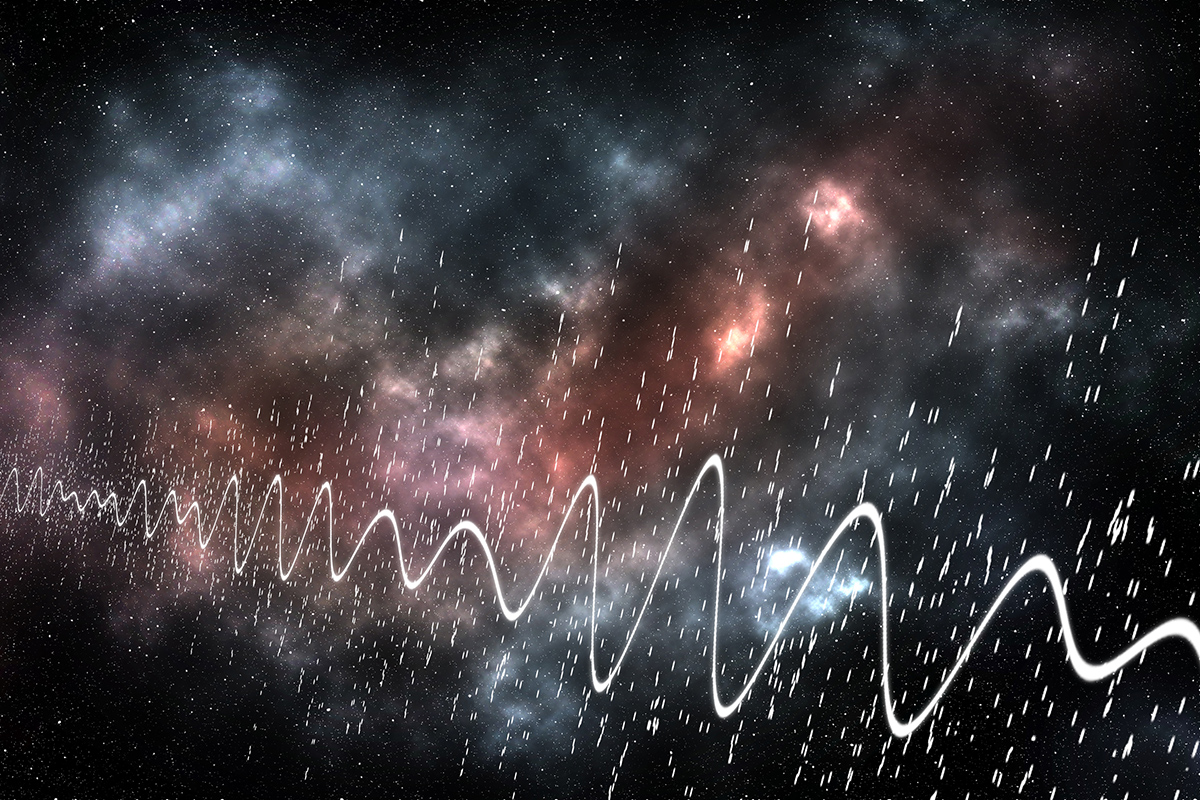
Artist's impression of radio signals in deep space. Credit: Credit: Rytis Bernotas

Credit: Rytis Bernotas / Getty Images

{ https://www.skyatnightmagazine.com/ }

Hoe vind je dit bericht?
Geschreven door peter om 16:18 Stuur door

Milky Way may have begun as thousands of galaxies, new simulations suggest

Milky Way may have begun as thousands of galaxies, new simulations suggest

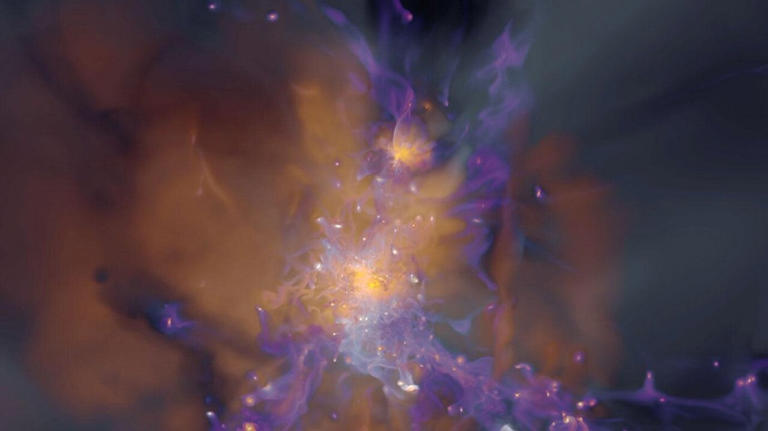
Using powerful supercomputers, scientists created an extensive simulation of what the Milky Way could have looked like long ago—a chaotic progression of hot gas cooling, condensing into stars, and exploding, over and over again. Purple indicates hot gas; white is UV radiation from stars; yellow is glowing hot oxygen atoms. Credit: Harley Katz/MEGATRON Collaboration

Using powerful supercomputers, scientists created an extensive simulation of what the Milky Way could have looked like long ago—a chaotic progression of hot gas cooling, condensing into stars, and exploding, over and over again. Purple indicates hot gas; white is UV radiation from stars; yellow is glowing hot oxygen atoms. Credit: Harley Katz/MEGATRON Collaboration

In the early days of the universe, our home looked very different from how it does today. Back then, the region in our universe that would eventually become our Milky Way neighborhood was a collection of thousands of smaller galaxies—some pumping out tons of new stars, others filled only with gas or littered with dead stars and black holes.

You can watch how these galaxies coalesced over time and formed the familiar spiral disk we see today, thanks to a new set of simulations by a group of scientists led by Harley Katz, assistant professor of astronomy and astrophysics at the University of Chicago.

The simulations, which took three years to run even on high-powered supercomputers, are the most detailed model to date of how a galaxy like the Milky Way might have evolved over the first several billion years of its existence.

"What does the Milky Way look like at what we call cosmic dawn?" said Katz. "For the first time, we can directly predict what the early Milky Way would have looked like to telescopes like Hubble or the James Webb Space Telescope."

The six papers from the project, which is named MEGATRON, provide new insight into the makeup of early galaxies and how the elements formed over time. The papers are published in The Open Journal of Astrophysics.

A simulation of the area that will eventually collapse into the Milky Way, starting from 180 million years after the Big Bang and running for two billion years. The purple filaments are hot gas; the white represents UV radiation from stars; and yellow shows glowing hot oxygen atoms. Flashes of white and yellow appear as the gas cools and collapses into stars, which then heats up the gas, and the cycle begins again. "The very big bursts are catastrophic star formation events, typically caused by instabilities or when a galaxy merges," explained Katz. Credit: Harley Katz/MEGATRON Collaboration

How the Milky Way evolves over time

Since we cannot travel to the dawn of the universe to study it, one of the only ways we have to understand how space evolved over time is to build detailed computer models based on what we know about the laws of nature.

"Essentially, we put in all of the physics we think is relevant—gravity, hydrodynamics, radiation, chemistry, etc.—and then let it evolve and see if it reproduces what we actually see when we look around us today," said Katz.

New data coming in from the powerful James Webb Space Telescope has added a new dimension to our understanding of the universe. So three years ago, a team of scientists undertook a project to incorporate this newfound knowledge into a model of what our galaxy might have looked like back in the first billion years of its existence. Now they can compare it to the readings Webb gets today to see what matches and what's missing.

If you run the clock back, the scientists said, you see a web of large and small galaxies of all different types, which will eventually merge into the modern Milky Way.

"We follow thousands of subsystems in the model and directly compute what they all would have looked like with our most powerful space telescopes, which is many orders of magnitude more than what had been simulated before," said Katz. "Within those you see an incredible diversity. Some of them are bursting out in star formation, others are dead, others are in the process of dying."

One unique finding was that the model predicts the existence of "galaxies" that don't have any stars at all but still shine. Some of these might have once had stars that exploded or collapsed directly into black holes; others might have only ever contained gas.

Another discovery addresses a long-standing puzzle in stellar astrophysics. In our Milky Way, we typically see that smaller and fainter galaxies have less iron. However, this trend breaks down in extremely faint systems where the amount of iron appears constant, independent of mass. Thus far, simulations have been unable to reproduce this behavior.

The culprit, the simulation suggests, is explosions from an exotic type of star left over from right after the Big Bang. These stars, known as Population III stars, are so old that they are made of only the first elements that existed in the universe—hydrogen and helium—and when they explode, they can produce more iron than other supernovae do. If a galaxy is large enough, it will have enough gravity to hold on to this iron; but if it's too small, the iron will be lost to space.

These Population III stars, in fact, are so old that none have ever been directly seen by telescopes. Another paper in the set is the first to show how these stars form in an environment like the Milky Way and predicts where these stars would be most likely to exist if any still do—which may help astronomers search for them.

Simulation of a glowing disc with stars in the background.

This image shows what our galaxy could have looked like 12 billion years ago. Though young, the galaxy could already have formed a rotating disk like we see today, with a significant amount of heavy elements and dust. The bands of light to the north and south are remnants from a gigantic collision of two galaxies, which left a trail of stars. Credit: Harley Katz/MEGATRON Collaboration

The physics of stars and elements

A hallmark of these simulations is that they are much more complex than anything attempted before.

"What's unique about our simulation is that it's the first time we have modeled the enrichment of individual chemical elements from individual stars after the Big Bang, coupled to detailed models for gravity, chemistry, radiation and stellar processes," said Katz.

This model, for example, was the first large-scale simulation to include a detailed computation of "non-equilibrium physics." Most physics models assume, for the sake of simplicity, that a system's chemistry is more or less in equilibrium. But of course, in the real universe, galaxies are constantly evolving, which often breaks this key assumption.

Scientists weren't sure how much this would affect the end result—and including it in a simulation slows down the computation significantly.

However, two of the papers that are part of the study show that adding non-equilibrium physics made a real difference—especially when dealing with flows of gases around galaxies, known as the circumgalactic medium.

Adding this complexity allows scientists to more accurately interpret observations and to put limits on the number of possible answers to many questions about the formation of the universe.

"Looking at these results, it's very clear that the physics happening right after the Big Bang has a direct impact on what we see today in the local universe," said Katz.

"But there are also things we're not getting right, which is interesting too—what are the parts we're still missing? That can lead you into new directions and new questions."

More information
  • Harley Katz et al, MEGATRON: Reproducing the Diversity of High-Redshift Galaxy Spectra with Cosmological Radiation Hydrodynamics Simulations, The Open Journal of Astrophysics (2026). DOI: 10.33232/001c.169643
  • Martin Rey et al, MEGATRON: how the first stars can create an iron metallicity plateau in the smallest dwarf galaxies, The Open Journal of Astrophysics (2026). DOI: 10.33232/001c.169605
  • Corentin Cadiou et al, MEGATRON: the impact of non-equilibrium effects and local radiation fields on the circumgalactic medium at cosmic noon, The Open Journal of Astrophysics (2026). DOI: 10.33232/001c.169640
  • Harley Katz et al, MEGATRON: The Physical Origins of Steep UV Slopes at high redshift, The Open Journal of Astrophysics (2026). DOI: 10.33232/001c.169642
  • Nicholas Choustikov et al, MEGATRON: Disentangling Physical Processes and Observational Bias in the Multi-Phase ISM of High-Redshift Galaxies, The Open Journal of Astrophysics (2026). DOI: 10.33232/001c.158199
  • Harley Katz et al, The Impact of Star Formation and Feedback Recipes on the Stellar Mass and Interstellar Medium of High-Redshift Galaxies, The Open Journal of Astrophysics (2026). DOI: 10.33232/001c.156097

RELATED


THE FATE OF THE MILKY WAY | 100,000 Simulations Reveal Our Galaxy’s Future (4K Documentary)

Did the Milky Way Slowly Flip on Its Side After a Cosmic Crash?

{ https://phys.org/space-news/ }

Hoe vind je dit bericht?
Geschreven door peter om 16:04 Stuur door

NASA chief Jared Isaacman wants to stay 'open-minded' about UFOs: 'If it's aliens, I think NASA should have a seat at the table'

NASA chief Jared Isaacman wants to stay 'open-minded' about UFOs: 'If it's aliens, I think NASA should have a seat at the table'

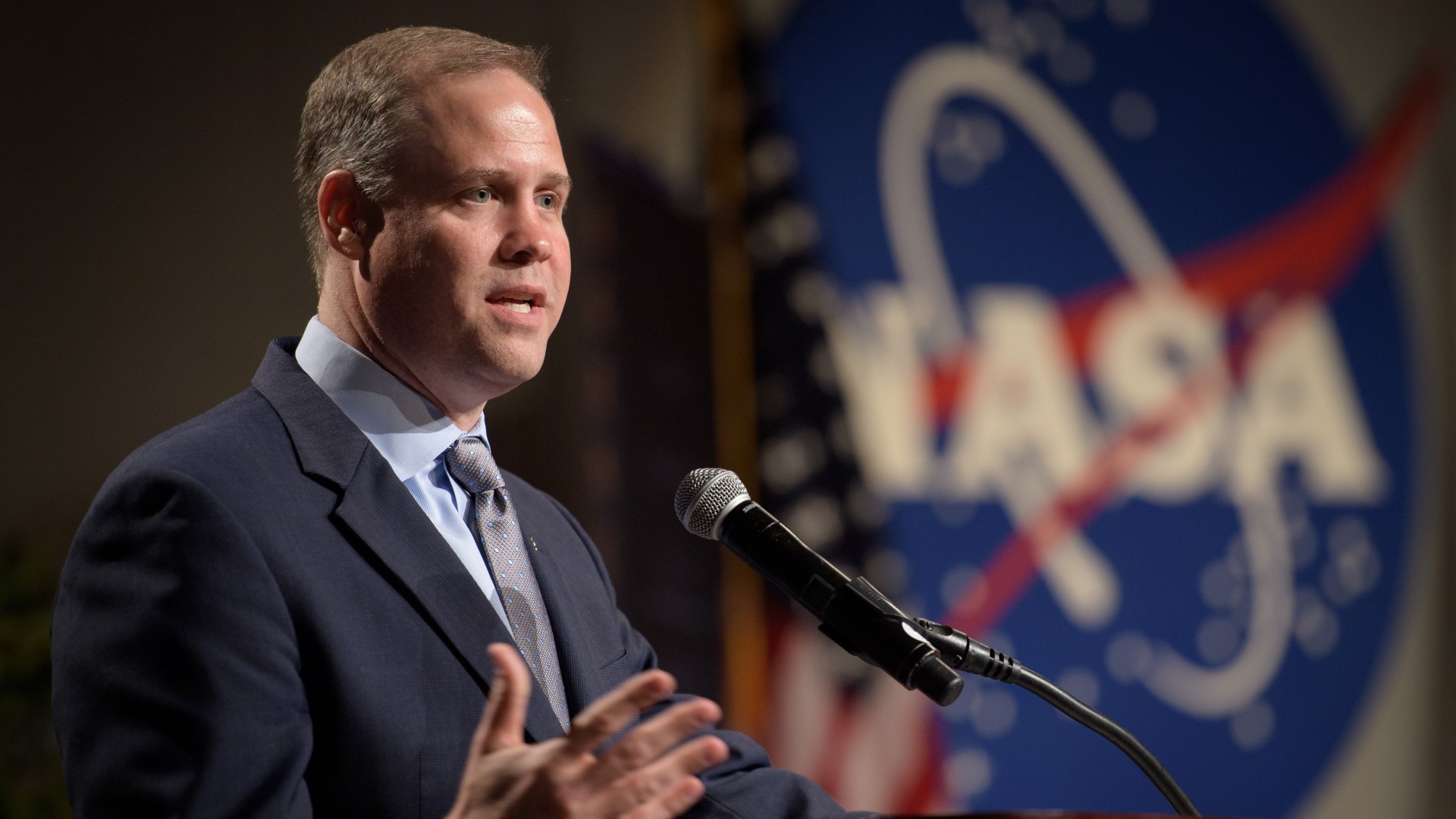
a man in a suit and a NASA pin speaks on stage

NASA Administrator  Jared Isaacman delivers remarks at the American Institute of Aeronautics and Astronautics (AIAA) ASCEND 2026 Conference on May 19, 2026 in Washington, DC.

(Image credit: Kevin Dietsch/Getty Images)

Could unidentified anomalous phenomena — a new catch-all term for unidentified objects in the sky, oceans or space — be pushing the United States towards another "Sputnik Moment"?

That's the belief of NASA Administrator Jared Isaacman, who compared the uptick in reported unidentified anomalous phenomena (UAP) sightings in recent years to the Cold War paranoia stirred up when the former Soviet Union launched Sputnik 1, the first artificial satellite to circle Earth in 1957.

Isaacman made the comments in a recent interview with Blake Burman, host of NewsNation's "The Hill" broadcast on Sept. 25 that touched upon a range of space-related issues. And one of those was probing the space agency chief about he thinks UAP might be.

Flight characteristics

Burman made note of pilot reports and videos released of objects with flight characteristics unlike anything previously seen.

"When you watch these videos," Burman asked Isaacman, "do you believe that anything that we've seen in any of this is potentially extraterrestrial. Is it military? What is it?"


Why are the US China and Russia racing to build nuclear reactors on the Moon?

You may like
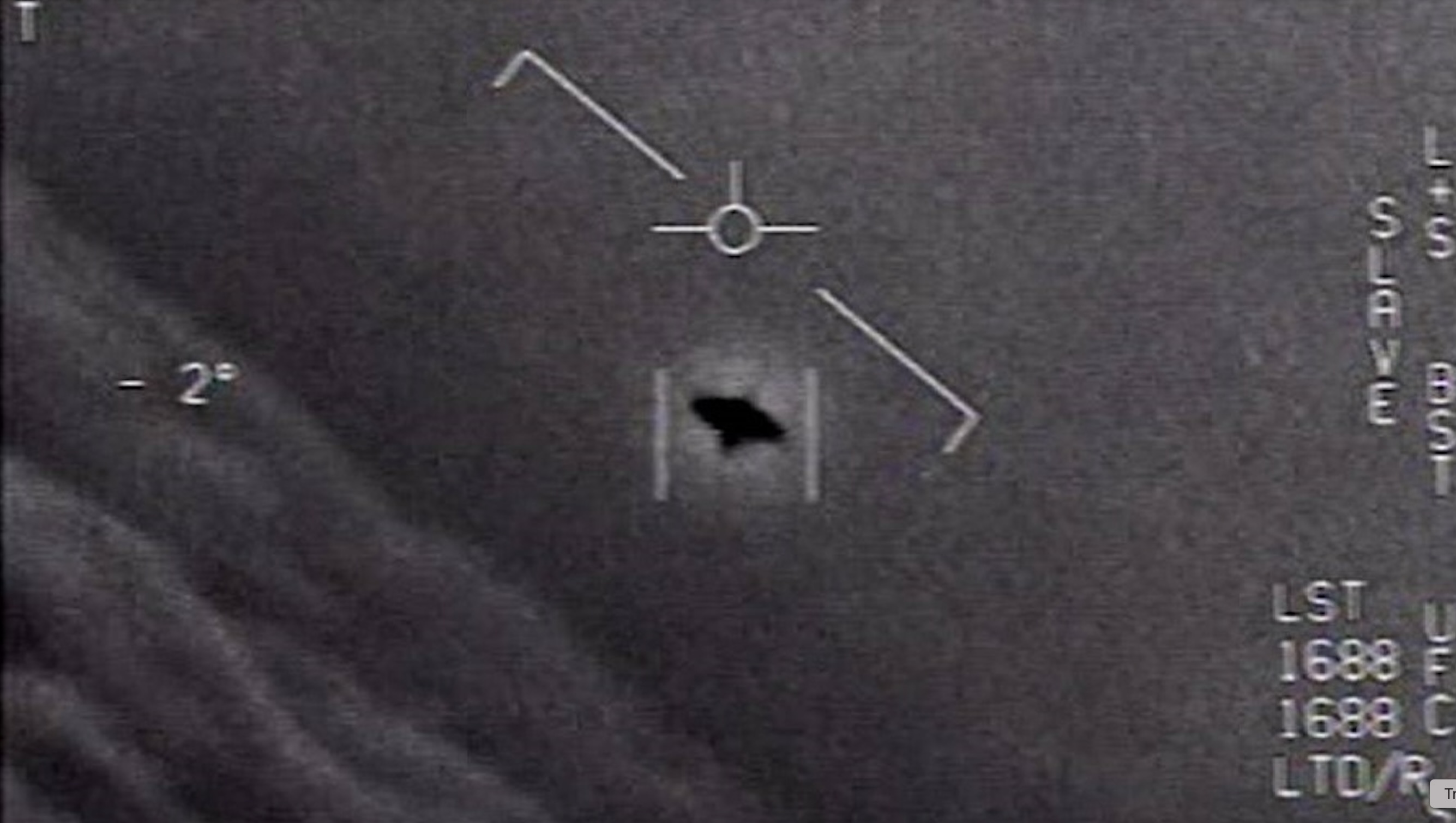
  • Navy pilots have encountered unidentified aerial phenomena (UAP).

'This is unprecedented': Why the Pentagon's recent UFO file releases are so important

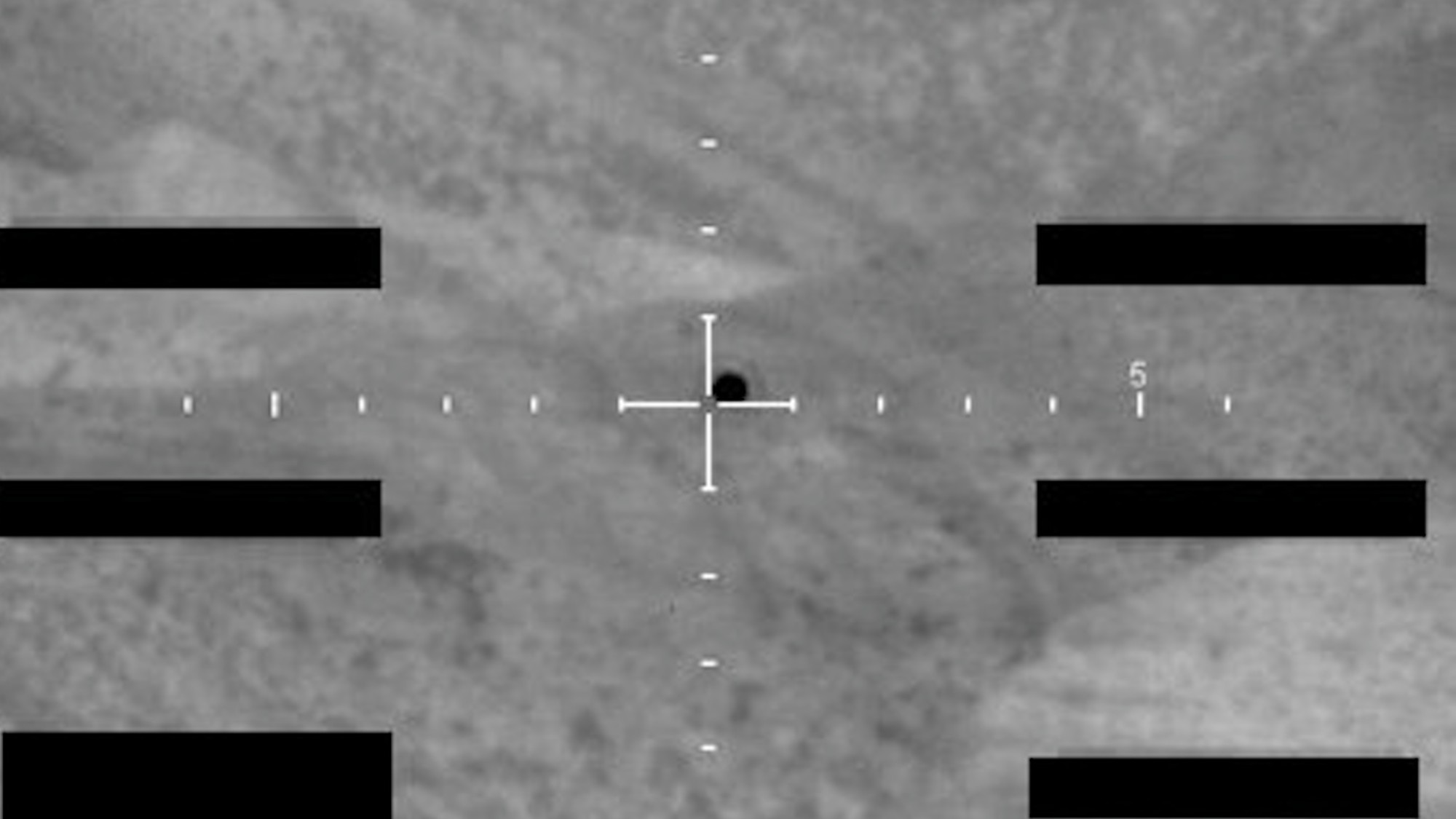
  • a dark blob seen against a mountainous desert landscape in a monochromatic, grainy photograph

The US government is 'sincere in its efforts to understand UAP', new White House council chair says

  • a man in a suit peers up into a large telescope

White House appoints Harvard astronomer Avi Loeb to lead new UFO study group

Isaacman said that NASA has had "a seat at the table" since U.S. President Donald Trump earlier this year called for releasing Unidentified Flying Object (UFO) and UAP files. That call is now officially known as the Presidential Unsealing and Reporting System for UAP Encounters (PURSUE).

"My position going into every one of these: one, be open-minded. I mean, it is kind of our job to go out and try to answer the question 'are we alone?' And I said look, if it's aliens, I think NASA should have a seat at the table in this for sure," Isaacman said.

a man in a suit and a NASA pin speaks on stage

Jared Isaacman appears before the Senate Committee on Commerce, Science, and Transportation, Wednesday, April 9, 2025 during a confirmation hearing prior to his appointment as NASA Administrator. (Image credit: NASA/Bill Ingalls)

The NASA Administrator also said that, "if it's a Sputnik moment, we did really well the last time that happened. Which means, is this potentially red technology? Is this an adversary that's testing some next generation propulsion? It's certainly in the realm of the possible." (In military exercises, adversary forces are generally referred to as "red.")

TV host Burman then asked Isaacman, "but what does your gut tell you?"

"I would say I would lean toward it's either some phenomenon that can happen," Isaacman responded. "There are things that can happen just like natural phenomena that can be observed. I also think there's a good chance that there could be a Sputnik Moment that's happening and people are testing new stealthy or next generation type technologies," he said.

What to read next
  • a person looks up at a bright light in the sky

'We Want to Believe' book explores the reality of UFOs: 'It's always going to be more likely that someone is wrong about what they saw' (interview)

  • a white man in a suit talks into a microphone

'That's going to come back and bite us': Former NASA chief questions Artemis moon lander plans

  • an old white man sits and practices writing his name.

Trump is proposing a US Space Academy — if created, it could blur the lines between NASA and the military (op-ed)

Our own backyard

Isaacman continued by noting that space missions have barely explored our own backyard.

"Do you know there are moons out there […] Saturn's moon Enceladus has an ocean. Europa has an ocean. It has complex chemistry. We couldn't tell you conclusively that there isn't life in our own backyard let alone the billions of other stars in the Milky Way galaxy, or the two trillion other galaxies out there. It's why NASA's mission is so important," Isaacman concluded.

Whistleblower woes

In a related UAP side saga, in early September, the U.S. Department of War issued a "legal waiver" for those wishing to disclose information regarding UAP, a hybrid term also linked to Unidentified Flying Objects (UFOs).

Military service members, civilian personnel, and contractors are purportedly green-lighted to disclose once protected information, such as under a non-disclosure agreement (NDA).

What's old news is that this waiver is not really new, said Robert Powell, an executive board member for the Scientific Coalition for UAP Studies in Austin, Texas. This same protection was provided to whistleblowers if they reported UAP information to the U.S. government's All-domain Anomaly Resolution Office (AARO).

"This was established via the 2023 National Defense Authorization Act, which stated that, 'Individuals with current or previous access to UAP-related information subject to a U.S. government NDA are authorized to provide that information to AARO representatives.' This waiver simply adds a second agency that can collect information," Powell told Space.

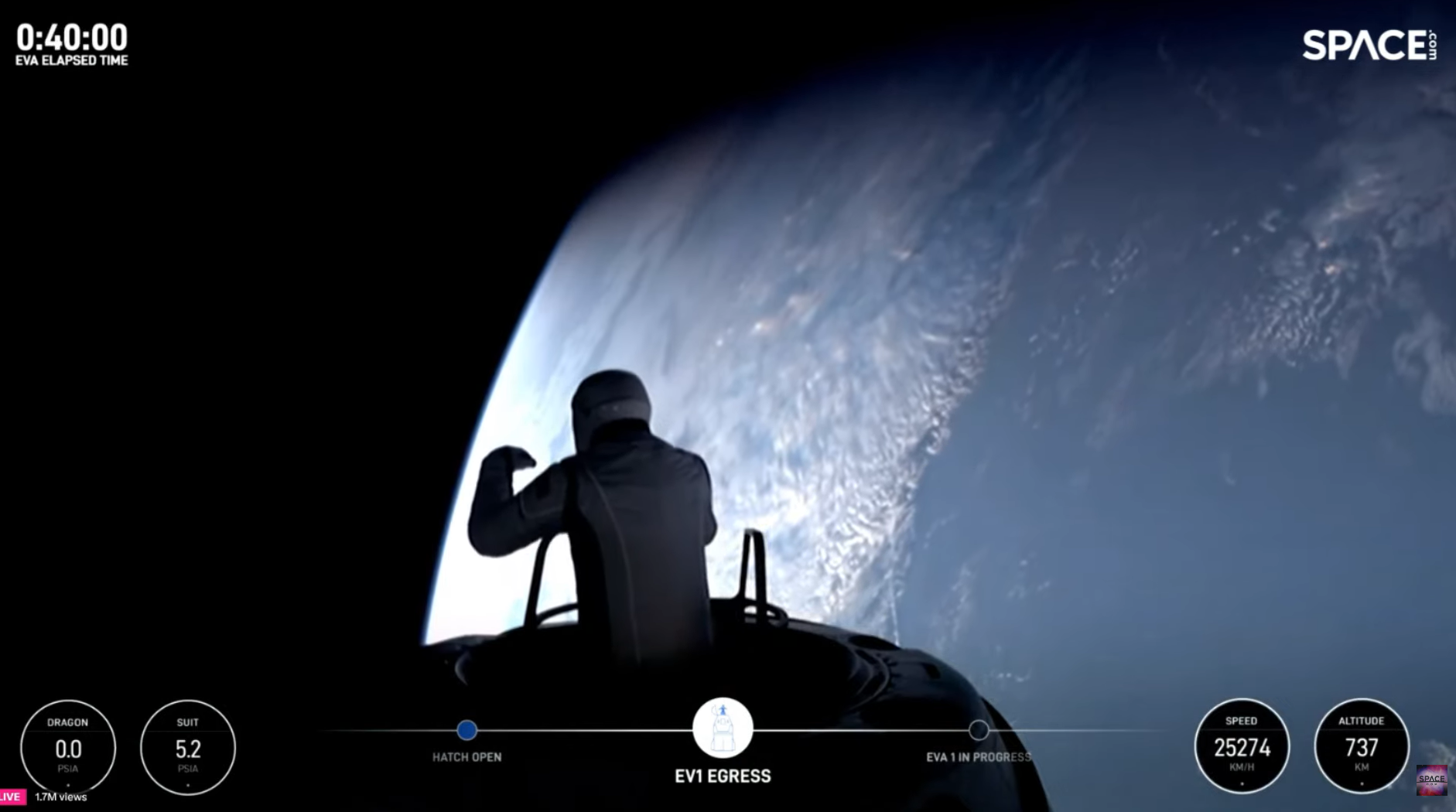
Jared Isaacman stands partially outside SpaceX's Dragon spacecraft during the first-ever commercial spacewalk on Sept. 12, 2024 as part of the Polaris Dawn mission he funded. (Image credit: SpaceX)

PURSUE and release

It is important to note that this is not permission for a whistleblower to talk to the press, a researcher, or the public," said Powell. "The same is true of this latest whistleblower waiver."

The new waiver states, "This waiver removes those barriers by explicitly authorizing covered disclosures to PURSUE representatives without triggering breach-of-agreement penalties or standard NDA violations."

"The NDA relaxation is only if the whistleblower reports their information to PURSUE representatives," said Powell.

"However, the waiver does not state how a whistleblower can identify the PURSUE representatives or how to reach them. So will anything change? It will take a year or two to determine if any whistleblower stories are made public or if a whistleblower realizes that an individual's story will go no farther than the PURSUE representative," Powell said.

He said/she said

Furthermore, Powell points out, this new waiver does not clearly waive criminal statutes, for example Espionage Act/unauthorized disclosure of classified information.

"How does a whistleblower know if their information violates criminal statutes versus civil statutes? The new waiver does not protect a whistleblower from an NDA with a civilian corporation," said Powell.

Let's assume someone comes forth and says that they know that there is an alien spacecraft being held at Edwards Air Force Base in California, said Powell. How is that claim verified?

"If it is not verified then there is little value in the efforts put forth by the whistleblower. To date, Congress has not seemed willing to use its subpoena powers to force a military branch to provide information, concluded Powell, and until Congress is willing to push the point and investigate claims, "it just remains 'he said, she said.'"

FULL HEARING: NASA Administrator Jared Isaacman Testifies Before The House Appropriations Committee

Reporter Asks NASA Admin Jared Isaacman Directly: Are We Alone In The Universe?

{ https://www.space.com/space-exploration }

Hoe vind je dit bericht?
Geschreven door peter om 15:06 Stuur door

Strange lights over Cyprus: what are people seeing?

Strange lights over Cyprus: what are people seeing?

cover Strange lights over Cyprus: what are people seeing?

From a 1985 sighting off Chlorakas to reports involving Starlink and military activity, specialists say most unusual sightings over Cyprus have ordinary explanations

Most things people see in the skies above Cyprus have perfectly ordinary explanations. Every night, satellites pass overhead, meteors streak across the night sky, and aircraft fly back and forth over one of the busiest regions in the world. Yet from time to time, something catches someone’s attention that they can’t immediately explain. For decades, those moments have given rise to reports of unusual aerial phenomena across the island.

One of the most well-known cases occurred in September 1985, when fishermen off the coast of Chlorakas reported seeing a bright white glow on the horizon that gradually expanded into a rainbow like arc. According to Dr Georgios Florides co-founder of the Unidentified Aerial Phenomena (UAP) Cyprus Centre, the phenomenon lasted around 35 minutes and coincided with a power cut in nearby Kissonerga. At around the same time, commercial pilots flying between Cyprus and the Aegean also reported an unusual luminous object. The incident was covered by local press and attracted the attention of aviation authorities, but no definitive explanation was established.

Nearly four decades later, reports of unexplained aerial phenomena continue to capture public attention. International interest has grown following US government disclosures and a renewed willingness among scientists to discuss the subject openly. But behind the headlines there’s a more intriguing question. What do those who dedicate their lives to studying the skies over Cyprus really think about the island’s reports of unexplained phenomena?

What people are seeing in Cyprus skies

For Chief Operating Officer of the Troodos Observatory Agapios Elia reports of unusual lights are a familiar part of the job.

“This happens very frequently,” he says. “Often people write or call in to report strange sightings or they mention things they have seen at one time or another during our public sessions. Nowadays a lot of people just post online about unusual lights they see and they are frequently directed to us for clarifications”.

More often than not, those sightings have ordinary explanations. Many recent reports have involved SpaceX’s Starlink satellites or military activity in the Middle East, Elia says. Other common explanations include missile plume cones, high altitude aircraft reflecting the setting sun, unusual cloud formations and meteors.

feat-3-sotiris-savvides-_4k5QaP9fso-unsplash.jpg

“I have to say no,” he says when asked if he’s ever found a phenomenon that ultimately defied explanation. “Any strange looking phenomenon ultimately turns out to be one of two things: man-made and nature-made.”

This is not to say that people are imagining what they see. Instead, Elia says, many unusual sightings come down to perspective. “From a practical standpoint, the biggest misconception is a lack of understanding regarding scale and distance,” he says. “People often struggle to judge how large, how fast, or how far away a light in the dark sky truly is.”

How UAP reports are investigated

But explaining what people see is only part of the story. Just as important is what happens after someone reports an unexplained sighting.

For Florides, every report begins the same way: with an investigation. Established in 2022, the centre investigates unexplained aerial phenomena in Cyprus and the Eastern Mediterranean from a scientific perspective. When a report is received, investigators visit the location where possible, interview the witnesses, measure distances and viewing angles, analyse photographs and compare the location and time of the sighting with flight paths, satellite movements and astronomical data.

The centre receives numerous reports each year, but Florides says all those investigated so far have had conventional explanations. “Most submissions consist of either a photograph of a distant, undefined speck of light or a written account describing such a light,” he says. In some instances where higher quality images or more detailed observations were available, they ultimately ended up being Venus, military drones, distant aircraft, Starlink satellites or meteors.

feat-3-Many-of-the-UAPs-are-just-lights.jpg

For Florides, the biggest misconception isn’t witnessing something unusual; it’s the assumption that “unidentified” means “unexplainable”.

“Based on the received reports and the work the centre is doing, we believe the single biggest misconception people have about UAP is that any unidentified light in the sky is inherently extraordinary or ‘otherworldly’,” he says. “In reality, the vast majority of reports have mundane explanations”.

Why scientists are still interested

Nonetheless, conventional explanations doesn’t mean that the subject lacks scientific value. For president of the Cyprus Space Exploration Organisation (CSEO) George A Danos, unexplained aerial phenomena are worth investigating precisely because science is driven by curiosity and evidence.

Cyprus’ location may also make it particularly interesting for UAP reporting. Danos points to UAP reporting maps published by the US Department of Defense’s All-domain Anomaly Resolution Office (AARO), which show concentrations of reports in the broader Middle East and eastern Mediterranean region.

“Science ultimately requires empirical evidence to reach results,” he says. “Right now, that conclusive evidence regarding UAPs as non-human technology isn’t yet readily available or conclusive, but the scientific community is now establishing the rigorous, objective frameworks necessary to properly investigate these anomalies.”

Danos believes that, regardless of where the evidence ultimately leads, asking questions is fundamental to scientific progress. “Scientists constantly seek to expand the frontiers of knowledge,” he says. “If there are objects in our skies performing maneuvers we don’t understand, we need to investigate and learn rather than being afraid to study the data due to the professional stigma that historically surrounded the topic.”

For Danos, curiosity remains one of science’s greatest strengths. “The cosmos is limited only by our capacity to wonder.”

Find out more

 { https://cyprus-mail.com/category/cyprus }

Hoe vind je dit bericht?
Geschreven door peter om 20:13 Stuur door

Pastor who sparked doomsday panic claims the Rapture is just DAYS away

Pastor who sparked doomsday panic claims the Rapture is just DAYS away

The Christian pastor who sparked panic with a failed prediction of the Rapture has made a new claim that the end-times belief is near.

Pastor Joshua Mhlakela, a South African preacher, recently said he has calculated the exact time of the biblical event in which believers are lifted into the clouds to meet Jesus Christ, claiming that it will happen between October 12 and 13.

The Rapture is a belief held by some Christians called 'eschatology,' which is the study of end-times events, marking the Second Coming of Jesus and Judgment Day for non-believers.

Mhlakela has claimed in multiple interviews and his own videos online that both God and Jesus have appeared to him in visions, revealing when the Rapture would take place and what the fallout on Earth would look like.

The controversial pastor declared: 'God told me because there's no other date coming out, 12 to 13 October, which is the true feast of trumpets, which is when I will be meeting my savior face to face in the rapture.' 

Mhlakela has drawn widespread skepticism and criticism for his wild predictions, including incorrectly marking the date of the Rapture multiple times in 2025.

He sent social media into a frenzy when he alleged the biblical event would take place on September 23, 2025, convincing scores of believers who watched his predictions online to sell their homes and cars and even quit their jobs.

'There's no other final. I mean, there's no other rapture date. This is the final date for me,' Mhlakela claimed in an interview on September 17.

Pastor Joshua Mhlakela (Pictured) has falsely predicted the biblical event known as the Rapture. He recently said it will now start on October 12, 2026

Pastor Joshua Mhlakela (Pictured) has falsely predicted the biblical event known as the Rapture. He recently said it will now start on October 12, 2026

The Rapture is considered a kind of rescue, where believers are instantly taken away from Earth to avoid a coming period of intense suffering called the Tribulation (Stock Image)

The Rapture is considered a kind of rescue, where believers are instantly taken away from Earth to avoid a coming period of intense suffering called the Tribulation

(Stock Image)

The pastor claimed his previous false predictions were not errors, but the work of God, who was delaying the final judgement to give humanity more time to repent.

He said the delay was actually fulfilling Scripture, which says the Tribulation days will be shortened for the sake of the 'elect' - meaning the people God has chosen before Jesus returns.

This event is thought to be a kind of rescue, where believers are instantly taken up from Earth into Heaven to avoid a coming period of intense suffering called the Tribulation.

Biblical texts describe the Tribulation as a seven-year period of chaos and disasters, where evil rules on Earth before Jesus returns again to set up a peaceful kingdom.

Mhlakela has said that his first visions of Jesus came to him in 2018, when he warned that the Rapture would come on September 23, 2025, during the Jewish Feast of Trumpets, also known as Rosh Hashanah.

Some Christians have tied the annual holiday to the prophecy that Jesus will return to Earth 'with the voice of the archangel and with the trumpet call of God.'

However, Mhlakela now says the date of the Feast of Trumpets has been off by one month, pushing the actual time of the Rapture roughly 30 days past the annual celebration of Rosh Hashanah.

'Many are saying Feast of Trumpets is September when you Google [it's] September 11. [This] is not Feast of Trumpets. The true Feast of Trumpets is actually in October,' Mhlakela claimed during his interview with CettwinzTV.

Many Christians have pushed back on claims the Rapture's date has been revealed, saying that date-setting goes against the teachings of Jesus (Stock Image)

Many Christians have pushed back on claims the Rapture's date has been revealed, saying that date-setting goes against the teachings of Jesus (Stock Image) 

Read More

article image

The pastor explained that his new calculation for the Rapture was based on additional visions from Jesus which pointed him toward later days.

According to Mhlakela, a vision involving two full moons convinced him the calendar itself was off by about a month because the current celebration of Passover was taking place under the astrological sign of Pisces.

He tied that gap to the Exodus story of Israel’s departure from Egypt, saying the 'true' Passover must fall when the sun is in Aries, just as it is said to have taken place during the biblical Exodus.

The pastor then applied that same one-month shift to his new Feast of Trumpets date in mid-October.

However, the Bible did not document the sun being in Aries during the Exodus. It only said Passover falls in the first month of spring, with the Aries link coming from later writers such as Josephus, a first-century Jewish historian - not from the Exodus account itself.

Moreover, Mhlakela's end times predictions continue to receive pushback from many Christians who believe setting a definitive date for the Second Coming of Jesus goes against the teachings of the Bible.

Vladimir Savchuk, a pastor, author, and YouTube preacher, said last September: 'If someone sets the date, they are directly contradicting Jesus's word.'

He further debunked the Rapture claims by noting that Scripture says the son of perdition must be revealed first, referring to a figure often interpreted as the Antichrist.

'2 Thessalonians 2:3, it says clearly that Jesus is not returning until the Antichrist is revealed, and that has not happened yet,' Savchuk explained.

Hoe vind je dit bericht?
Geschreven door peter om 18:16 Stuur door

The dark secret of Egypt’s ancient kings: 5,000-year-old skulls suggest royal servants were bludgeoned to death so they could follow their ruler into the afterlife

The dark secret of Egypt’s ancient kings: 5,000-year-old skulls suggest royal servants were bludgeoned to death so they could follow their ruler into the afterlife

When Egypt's earliest kings died, they may not have gone to the afterlife alone.

Archaeologists examining the remains of people buried around royal tombs have discovered many had suffered devastating blows to the head.

This suggests trusted servants were killed and entombed alongside their rulers in a brutal ritual dating back 5,000 years.

And these sacrifices would have been made to ensure kings had attendants in the afterlife, experts said.

‘Retainer sacrifice is a type of human sacrifice where those close to a ruler are killed when the ruler dies,’ lead author Dr Roselyn Campbell, from Purdue University, said.

‘In many cultures, retainer sacrifice is practised because of beliefs that the sacrificed individuals will continue to serve the ruler in some kind of afterlife, but retainer sacrifice can also be a visceral display of the ruler's power.

‘Some retainers might have volunteered to die to achieve eternal life or honour; others may have been chosen or even forced.’

Researchers re-examined 46 skulls belonging to servants and officials buried around the funerary enclosures of three First Dynasty rulers at Abydos in southern Egypt

Researchers re-examined 46 skulls belonging to servants and officials buried around the funerary enclosures of three First Dynasty rulers at Abydos in southern Egypt

A fresco depicting a funeral procession in ancient Egypt. The study suggests trusted servants were killed and entombed alongside their rulers in a brutal ritual dating back 5,000 years

A fresco depicting a funeral procession in ancient Egypt. The study suggests trusted servants were killed and entombed alongside their rulers in a brutal ritual dating back 5,000 years

Plan of the royal tombs (left) and funerary enclosures (right) at Umm el-Qaab in Abydos, southern Egypt. The diagrams show the tombs of First Dynasty rulers surrounded by rows of subsidiary burials, where researchers believe some royal retainers may have been sacrificed to accompany their rulers into the afterlife

Plan of the royal tombs (left) and funerary enclosures (right) at Umm el-Qaab in Abydos, southern Egypt. The diagrams show the tombs of First Dynasty rulers surrounded by rows of subsidiary burials, where researchers believe some royal retainers may have been sacrificed to accompany their rulers into the afterlife

For their investigation, researchers re-examined 46 skulls belonging to servants and officials buried around the funerary enclosures of three First Dynasty rulers at Abydos in southern Egypt.

The remains, originally excavated in the 1920s by British archaeologist Sir Flinders Petrie, are now housed in the University of Cambridge's Duckworth Collections.

When they were first discovered, experts believed they may have been an example of human sacrifice – but the remains showed no signs of trauma.

Now, using modern forensic techniques unavailable to earlier archaeologists, the team looked for hints of injuries that occurred around the time of death.

They found evidence of potentially fatal cranial trauma in 18 of the skulls, including fractures and, in one case, a chopping wound near the eye.

The researchers concluded that at least 39 per cent of the individuals examined may have been deliberately killed by blows to the head, providing fresh evidence that some royal retainers were sacrificed when their ruler died.

These linear fractures may have initially been mistaken for naturally caused damage, the team said.

A detail from a wooden label discovered in the tomb of an official at the Saqqara cemetery, which appears to depict a bound individual being stabbed in the chest while another figure collects the blood in a vessel... the findings add to previous evidence that ancient Egyptians carried out sacrificial practices

A detail from a wooden label discovered in the tomb of an official at the Saqqara cemetery, which appears to depict a bound individual being stabbed in the chest while another figure collects the blood in a vessel... the findings add to previous evidence that ancient Egyptians carried out sacrificial practices

An ancient Egyptian tomb painting showing a funerary or offering scene. The new study showed 39 per cent of servants and officials buried near the funerary enclosures of kings had potentially fatal head wounds

An ancient Egyptian tomb painting showing a funerary or offering scene. The new study showed 39 per cent of servants and officials buried near the funerary enclosures of kings had potentially fatal head wounds

‘The injuries on the preserved crania are generally linear fractures, which would likely cause rapid unconsciousness, internal bleeding and death,’ Dr Campbell said.

The research, published in the journal Frontiers in Environmental Archaeology, states it remains unclear exactly how the individuals were killed.

Ancient Egyptian rulers are frequently depicted striking enemies with maces, but the injuries seen on the retainers' skulls do not match the type of damage such weapons would typically cause.

Instead, the fractures suggest they were struck with a broad, flat object, although the possibility of accidental falls cannot be ruled out entirely.

RELATED

The Rise and Fall of Ancient Egypt | 5000 BC – 30 BC (4K Documentary)

{ https://www.dailymail.com/sciencetech/index.html }

Hoe vind je dit bericht?
Geschreven door peter om 18:03 Stuur door

EXCLUSIVE - I was an atheist until Satan appeared and tried to convince me that Christianity is a cult. Now I'm a pastor... there are signs everywhere that we are living in the final days

EXCLUSIVE - I was an atheist until Satan appeared and tried to convince me that Christianity is a cult. Now I'm a pastor... there are signs everywhere that we are living in the final days

A Christian pastor who believed there was no God and was desperately trying to stay out of jail as a teenager has described how a terrifying encounter with Satan changed his life forever.

Bishop Alan DiDio of Revival Nation Church in North Carolina told the Daily Mail that he was 17 years old in 1998 when a demonic presence started speaking to him while he was attending a gathering for his friend's Christian youth group.

He said the voice had lingered in the back of his mind for days, but at the gathering it became as clear as someone speaking aloud, telling him not to believe in God or go near Christians.

As the voice overwhelmed him, DiDio said he instinctively responded to Satan's voice by claiming his soul belonged to Jesus, an act which he claimed miraculously filled his mind with the teachings of Christianity, despite having barely read the Bible.

'I just said, "Satan, you can't have me anymore. Jesus, I'm all yours." And it immediately stopped, and it never came back again,' he recalled, believing that he had received a 'download' of knowledge from Heaven which made it clear he was supposed to share his experience with other Christians.

DiDio said: 'If you hear the voice of Satan, all of a sudden the supernatural becomes very, very real to you. And if Satan is real, then Jesus is real.'

The shocking incident not only caused DiDio to embrace Christianity, but inspired him to take up ministry work, where he found others had experienced what they believed to be demonic encounters – something he believes is part of a spiritual battle taking place across Earth.

DiDio claimed that the demon he confronted as a teen had likely been stalking him for years as he faced arrests for petty crimes, and now theorizes that demons are 'assigned' to mortals on Earth to steer them away from the word of God in this ongoing war between good and evil.

Alan DiDio as a teenager around the time of his demonic encounter    Pictured: Bishop Alan DiDio of Revival Nation Church

Left: Alan DiDio around the time of his demonic encounter as a teen. Right: Today, Alan DiDio is the lead pastor at Revival Nation Church in North Carolina

{ https://www.dailymail.com/sciencetech/index.html }

Hoe vind je dit bericht?
Geschreven door peter om 17:46 Stuur door

Could AI really kill all humans? Scientists say an AI armageddon is unlikely – but warn 'enfeeblement' could cause our demise

Could AI really kill all humans? Scientists say an AI armageddon is unlikely – but warn 'enfeeblement' could cause our demise

Visions of an AI–fuelled armageddon usually involve nuclear blasts, deadly engineered viruses, and marching armies of murderous Terminator–style robots.

However, scientists warn that the real way AI may bring about humanity's demise is likely to be far more subtle.

Leading AI researchers are now sounding the alarm over the growing threat of 'enfeeblement'.

This is the gradual erosion of our critical thinking, planning, and even emotional abilities as we gladly hand over more and more responsibility to the machines.

Dr Samuele Vinanzi, senior lecturer in Robotics and Artificial Intelligence at Sheffield Hallam University, believes that this is the real risk that AI poses for the world.

Dr Vinanzi told the Daily Mail: 'Over time, those small choices could leave us with a population that struggles to think without help from an AI, and that is less able to understand, check and overrule the systems it depends on.'

And, according to a growing body of research, this worrying process has already begun.

Scientists warn that AI won't destroy the world with Terminator-style robots, but by gradually 'enfeebling' humanity as we hand over more power to the machines

Scientists warn that AI won't destroy the world with Terminator–style robots, but by gradually 'enfeebling' humanity as we hand over more power to the machines  

Hoe vind je dit bericht?
Geschreven door peter om 17:26 Stuur door

David Grusch Says He Never Saw a Reptilian Himself but Claims US Personnel Shot Them After a UFO Crash

David Grusch Says He Never Saw a Reptilian Himself but Claims US Personnel Shot Them After a UFO Crash

Grusch's extraordinary account goes further than his earlier testimony, but the alleged reptilian encounter remains second-hand and publicly unverified

David Grusch

David Grusch claimed that US personnel shot alleged reptilian beings after an unidentified craft reportedly crashed, while making clear that he did not witness the beings himself 

PHOTO U.S. House Subcommittee on National Security, the Border, and Foreign Affairs screenshot from government website video broadcast/Wikimedia Commons

David Grusch said US personnel shot alleged reptilian beings after an apparent unidentified craft crash, while stressing that he never personally saw the beings himself. The former intelligence officer made the claim during a 30 September appearance on The Joe Rogan Experience, where he described second-hand accounts of clashes involving non-human intelligence.

Grusch testified before a House Oversight subcommittee in July 2023 that he had been informed of a multi-decade programme involving UAP crash retrieval and reverse engineering. He did not claim to have personally examined recovered bodies. His latest remarks similarly relied on accounts from others, documents and audiovisual material.

No publicly verifiable evidence has established that reptilian beings, greys or other non-human entities have been recovered from crashed craft. The Pentagon's All-domain Anomaly Resolution Office, or AARO, said in September 2025 that it had found no evidence of extraterrestrial beings or technology.

David Grusch Claims Alleged Reptilians Survived a Crash

During the Rogan interview, Grusch described an alleged crash he linked to what he characterised as conflict between different non-human beings. He claimed dead greys were found at the scene while reptilian beings survived.

Rogan later asked what happened to the alleged survivors. Grusch said they were killed and agreed when Rogan asked whether US personnel had shot them.

Grusch also claimed the alleged beings had posed a threat to personnel and said people had been hurt or killed. He did not provide names or independently verifiable documentation during the interview.

Asked how often such alleged adversarial crashes had occurred, Grusch said the total appeared to be 'at least a dozen or two.' He acknowledged uncertainty about the overall number and some details surrounding the incidents.

Crucially, Grusch said he had never personally seen the reptilian beings. He attributed their description to a friend whom he presented as having knowledge of the alleged encounter. Grusch described them as more than seven feet tall, heavily built and covered in scaly skin.

He also associated the alleged craft with a Tic Tac-like shape. That description is separate from retired US Navy Commander David Fravor's 2004 UAP encounter off Southern California. Fravor has described seeing a white, oblong object about 40 feet long without visible wings.

The 2004 incident does not independently substantiate Grusch's later claims about alleged non-human occupants.

David Grusch's Claims Remain Second-Hand

Grusch's latest account builds on allegations he made under oath in 2023. In written testimony, he said his information relied on material supplied by other people, including photography, documents and classified oral testimony.

When questioned about alleged biologics during the hearing, Grusch attributed their supposed non-human classification to people he said had direct programme knowledge. He did not testify that he had personally inspected any bodies.

That distinction remains central to his latest interview. Grusch says he received extraordinary information from people and material he considers credible, but his account of reptilian beings is not based on something he says he witnessed.

Reaction spread through UFO-focused Reddit communities after the Rogan episode. Some users debated the implications of the alleged encounter, while sceptical commenters focused on the continuing absence of publicly verifiable evidence.

Earlier UAP Briefing Raised Similar Claims

Grusch's remarks also resemble claims aired during a congressional UAP briefing on 1 May 2025 involving the UAP Disclosure Fund and members of the House Oversight Committee. The event was a briefing rather than a formal congressional hearing.

Physicist Eric Davis discussed alleged categories of non-human beings at the event, including greys, Nordics, insectoids and reptilians.

UFO

AARO's public position remains that it has found no evidence of extraterrestrial beings or technology Peter Pieras/Pixabay

US Representative Eric Burlison of Missouri later said he had heard the same classifications discussed privately. Burlison, who represents Missouri's 7th Congressional District, also expressed uncertainty about the basis for Davis's information.

Burlison said the claims would be 'paradigm-shifting' if proved true. His comments did not independently verify either Davis's account or Grusch's latest allegations.

AARO's public position remains that it has found no evidence of extraterrestrial beings or technology. Until independently verifiable evidence becomes public, the alleged crash, supposed beings and claimed shooting remain unverified.


David Grusch: Americans killed by reptilian beings at crash site | Reality Check

UFO Whistleblower David Grusch Reveals Recovered Crafts, Reptilian Aliens, and Other Sub-Types

{ https://www.ibtimes.co.uk/trending }

Hoe vind je dit bericht?
Geschreven door peter om 23:08 Stuur door

Meer van UFO'S of UAP'S, ASTRONOMIE, RUIMTEVAART, ARCHEOLOGIE, OUDHEIDKUNDE, SF-SNUFJES EN ANDERE ESOTERISCHE WETENSCHAPPEN - DE ALLERLAATSTE NIEUWTJES

↑ Terug naar de berichten