Naar de inhoud

UFO'S of UAP'S, ASTRONOMIE, RUIMTEVAART, ARCHEOLOGIE, OUDHEIDKUNDE, SF-SNUFJES EN ANDERE ESOTERISCHE WETENSCHAPPEN - DE ALLERLAATSTE NIEUWTJES

UFO's of UAP'S in België en de rest van de wereld
akke.beakke.be
Ontdek de Fascinerende Wereld van UFO's en UAP's: Jouw Bron voor Onthullende Informatie! Ben jij ook gefascineerd door het onbekende? Wil je meer weten over UFO's en UAP's, niet alleen in België, maar over de hele wereld? Dan ben je op de juiste plek! België: Het Kloppend Hart van UFO-onderzoek In België is BUFON (Belgisch UFO-Netwerk) dé autoriteit op het gebied van UFO-onderzoek. Voor betrouwbare en objectieve informatie over deze intrigerende fenomenen, bezoek je zeker onze Facebook-pagina en deze blog. Maar dat is nog niet alles! Ontdek ook het Belgisch UFO-meldpunt en Caelestia, twee organisaties die diepgaand onderzoek verrichten, al zijn ze soms kritisch of sceptisch. Nederland: Een Schat aan Informatie Voor onze Nederlandse buren is er de schitterende website www.ufowijzer.nl, beheerd door Paul Harmans. Deze site biedt een schat aan informatie en artikelen die je niet wilt missen! Internationaal: MUFON - De Wereldwijde Autoriteit Neem ook een kijkje bij MUFON (Mutual UFO Network Inc.), een gerenommeerde Amerikaanse UFO-vereniging met afdelingen in de VS en wereldwijd. MUFON is toegewijd aan de wetenschappelijke en analytische studie van het UFO-fenomeen, en hun maandelijkse tijdschrift, The MUFON UFO-Journal, is een must-read voor elke UFO-enthousiasteling. Bezoek hun website op www.mufon.com voor meer informatie. Samenwerking en Toekomstvisie Sinds 1 februari 2020 is Pieter niet alleen ex-president van BUFON, maar ook de voormalige nationale directeur van MUFON in Vlaanderen en Nederland. Dit creëert een sterke samenwerking met de Franse MUFON Reseau MUFON/EUROP, wat ons in staat stelt om nog meer waardevolle inzichten te delen. Let op: Nepprofielen en Nieuwe Groeperingen Pas op voor een nieuwe groepering die zich ook BUFON noemt, maar geen enkele connectie heeft met onze gevestigde organisatie. Hoewel zij de naam geregistreerd hebben, kunnen ze het rijke verleden en de expertise van onze groep niet evenaren. We wensen hen veel succes, maar we blijven de autoriteit in UFO-onderzoek! Blijf Op De Hoogte! Wil jij de laatste nieuwtjes over UFO's, ruimtevaart, archeologie, en meer? Volg ons dan en duik samen met ons in de fascinerende wereld van het onbekende! Sluit je aan bij de gemeenschap van nieuwsgierige geesten die net als jij verlangen naar antwoorden en avonturen in de sterren! Heb je vragen of wil je meer weten? Aarzel dan niet om contact met ons op te nemen! Samen ontrafelen we het mysterie van de lucht en daarbuiten.

Archief

Things on Mars That Look Like They Shouldn’t Be There
Things on Mars That Look Like They Shouldn’t Be There

Mars has always captivated our imagination, but modern space exploration has made it even more intriguing. High-resolution Mars anomalies images from NASA’s rovers and orbiters often reveal formations that resemble familiar objects—from faces to doorways—leading to fascinating debates.

While most of these anomalies have logical geological explanations, they spark curiosity about what lies beneath the Red Planet’s dusty surface. Here are 15 of the strangest things spotted on Mars that look like they shouldn’t be there.

1. The “Face on Mars”
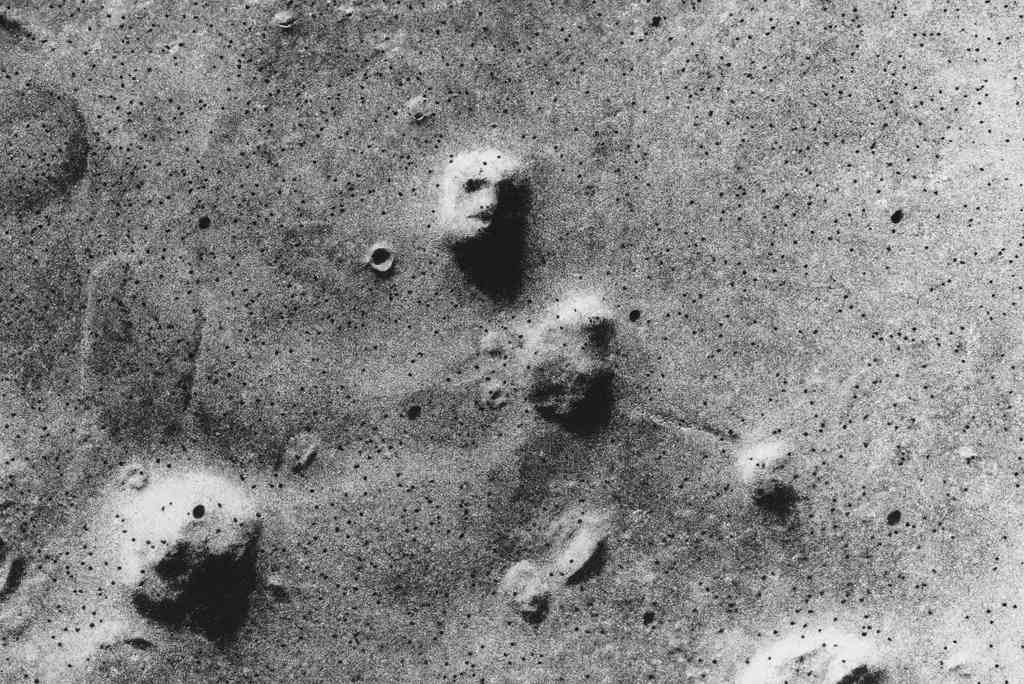
Photo Credit: Wikipedia

One of the most iconic Mars anomalies images , the “Face on Mars,” was first photographed by NASA’s Viking 1 orbiter in 1976. The image appeared to show a massive humanoid face, sparking decades of speculation about alien civilizations.

Later, high-resolution images from the Mars Reconnaissance Orbiter revealed it as a natural mesa with shadows creating facial illusions. This phenomenon is a classic example of pareidolia—our brain interpreting random patterns as familiar shapes. Even though it’s been debunked, the face remains a pop culture symbol of extraterrestrial mystery. (NASA)

2. The “Doorway” Rock Formation
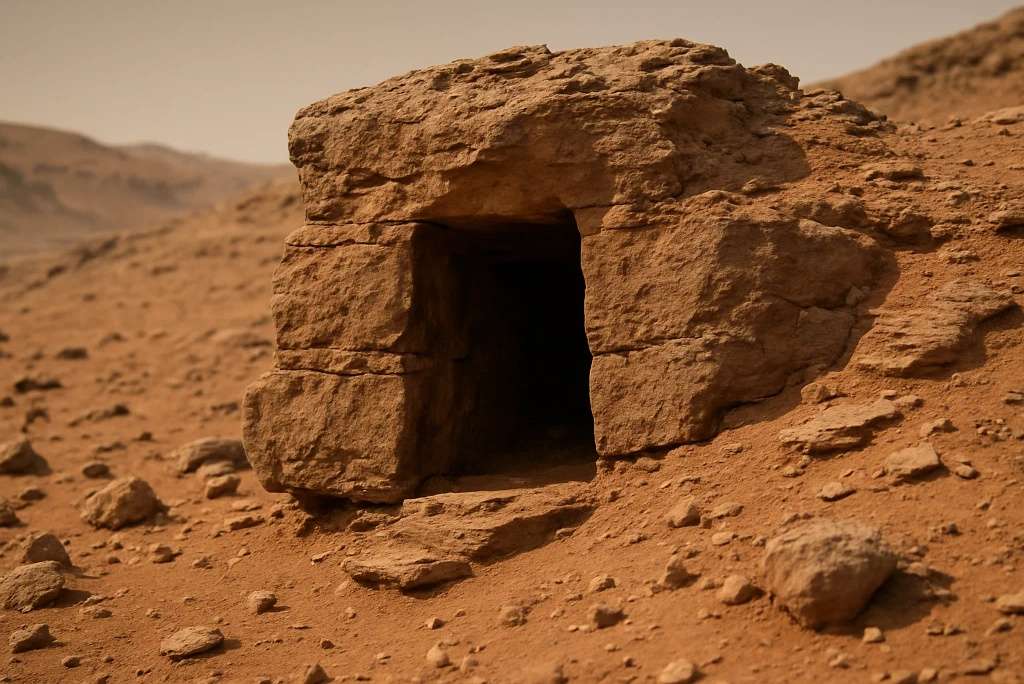
Photo Credit: ChatGPT

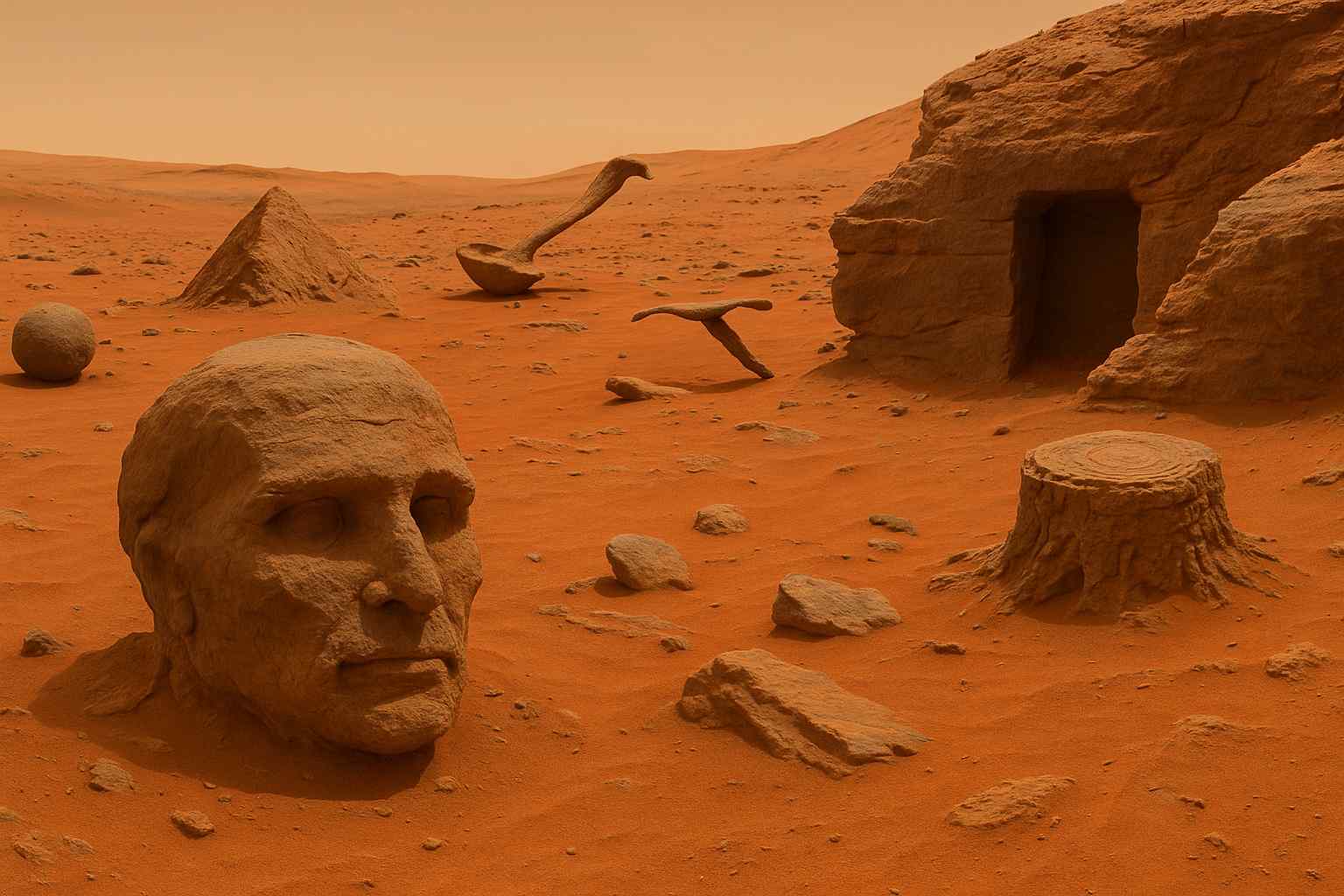
In 2022, NASA’s Curiosity rover captured an image resembling a doorway carved into a cliffside. The feature sparked theories about ancient Martian structures. However, scientists clarified that it’s likely the result of natural fracturing and erosion in the rock.

This “doorway” measures only a few centimeters high, ruling out the possibility of it being an entrance. Its clean, rectangular shape is still fascinating, highlighting how wind and seismic activity can mimic artificial designs. (BBC News)

3. The “Spoon” in Gale Crater
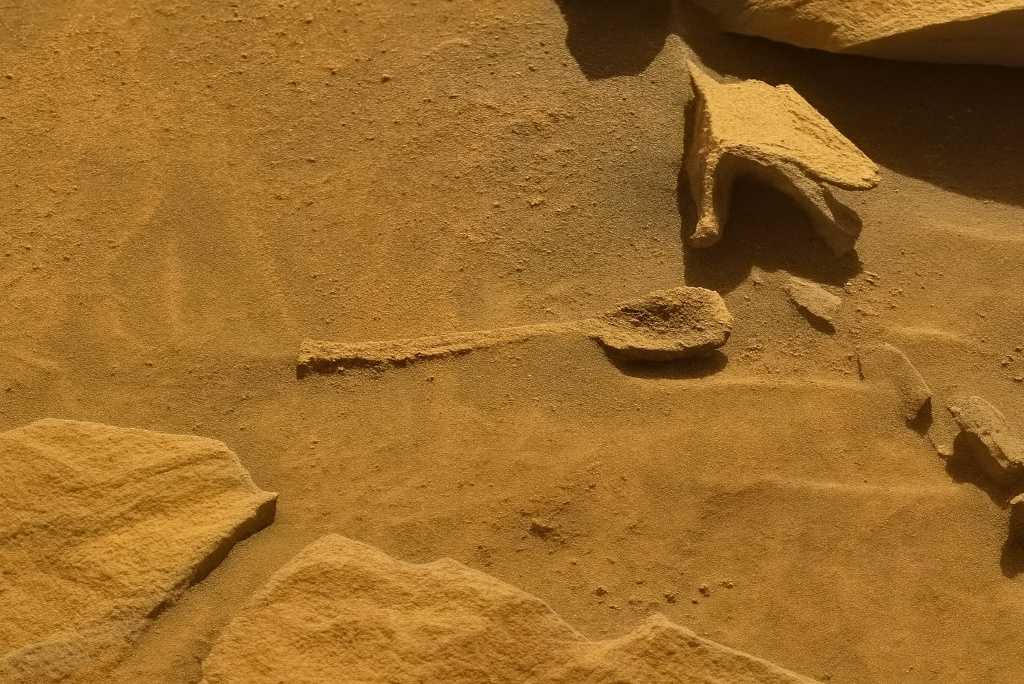
Photo Credit: THE SUN

In 2015, images from the Curiosity rover revealed a rock that appeared to be a floating spoon. Its thin, curved shape made it an internet sensation. Scientists explain it as a rock formation shaped by wind erosion, with its thin neck eroding faster than its broader “bowl” area.

While it’s not actually levitating, the angle of the photo enhances the illusion. Such formations are examples of ventifacts—rocks sculpted by wind-driven sand over long periods. (NASA Jet Propulsion Laboratory)

4. The “Blueberries” of Meridiani Planum

Photo Credit: NASA

In 2004, NASA’s Opportunity rover discovered tiny, spherical formations nicknamed “blueberries.” These hematite-rich concretions are formed by the action of mineral-laden water, suggesting Mars once had conditions suitable for life.

Their abundance and uniformity puzzled scientists initially, but their composition provides evidence of ancient water activity. These “blueberries” are now a key piece in understanding Mars’ wetter past. (NASA Science)

5. A “Pyramid” Structure
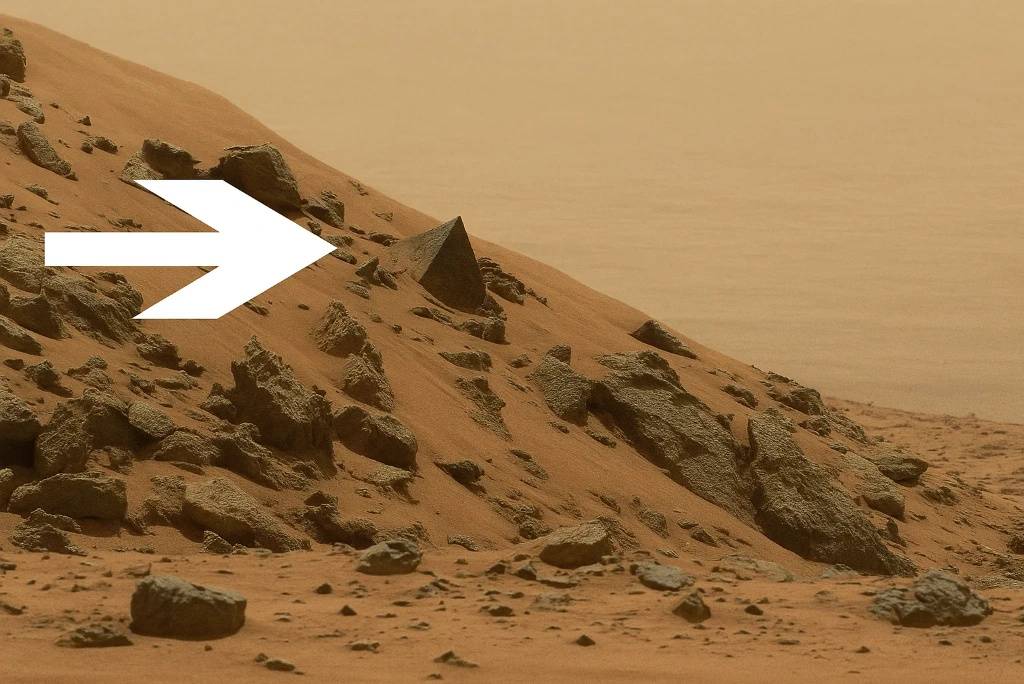
A-Pyramid-Structure.jpeg

Photo Credit: BOW

A pyramid-like rock was photographed by Curiosity in 2015, leading some to claim evidence of ancient Martian architecture. However, geologists point out that such shapes can form naturally through fracturing and erosion.

The sharp edges and triangular profile are coincidental, though they fuel imaginative theories about intelligent design. This formation highlights how our pattern-recognition instincts often outpace scientific explanations. (National Geographic)

6. The “Legless Lizard” Rock
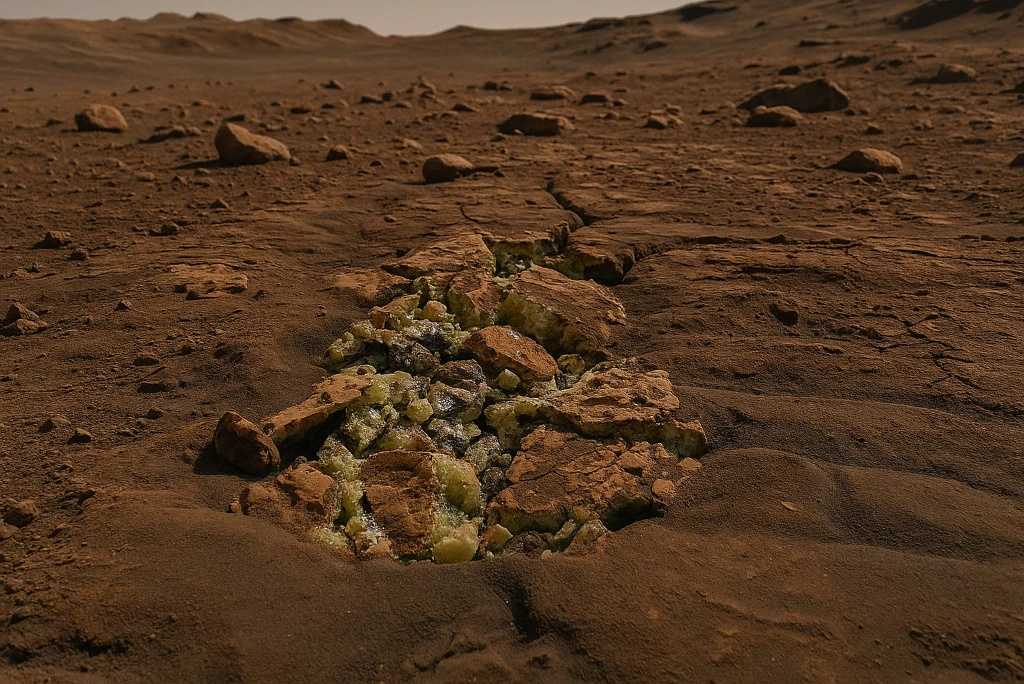
Photo Credit: NASA

In 2013, a Curiosity image seemed to show a small lizard-like creature on Mars. This fueled online claims of living organisms. NASA scientists quickly dismissed these as illusions caused by rock shadows and shape pareidolia.

Close analysis revealed it was nothing more than an oddly shaped rock. Such sightings underscore the human tendency to project familiar life forms onto alien landscapes. (NASA)

7. The “Cannonball” Spheres in Gale Crater
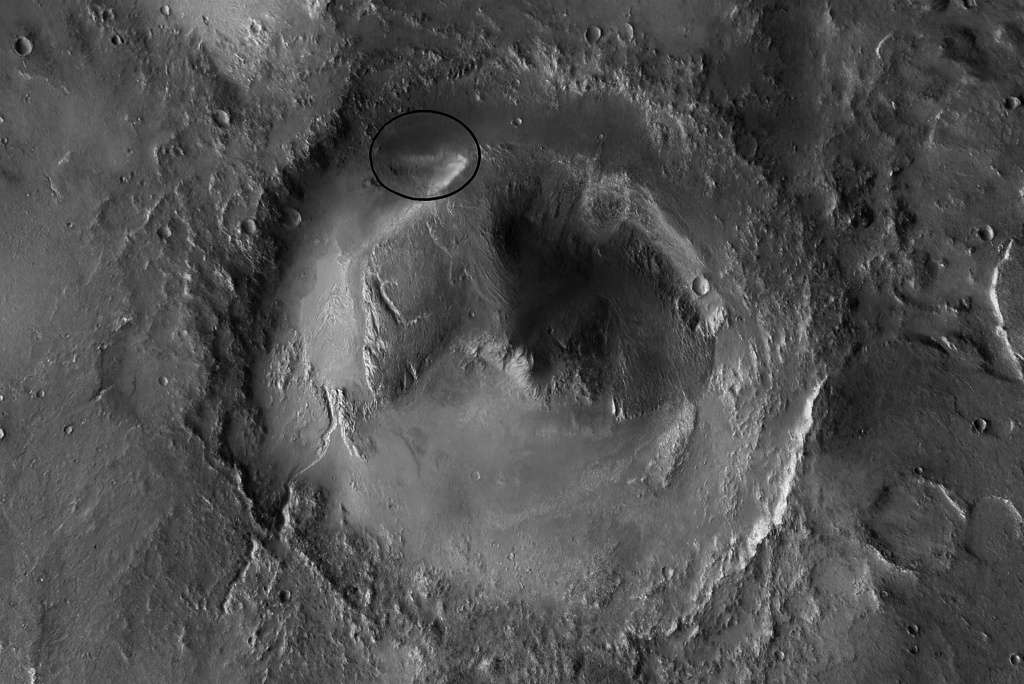
Photo Credit: NASA

Curiosity discovered nearly perfectly spherical rocks in 2016, resembling cannonballs scattered across the Martian surface. These are actually concretions—hard mineral masses formed within sedimentary layers when groundwater deposits minerals over time.

Their near-perfect shape makes them stand out in the rugged Martian terrain, adding to the planet’s mysterious geological story. The spheres provide insights into Mars’ aqueous past, helping scientists piece together how water once influenced its geology. (Space.com)

8. The “Thigh Bone” Rock Illusion
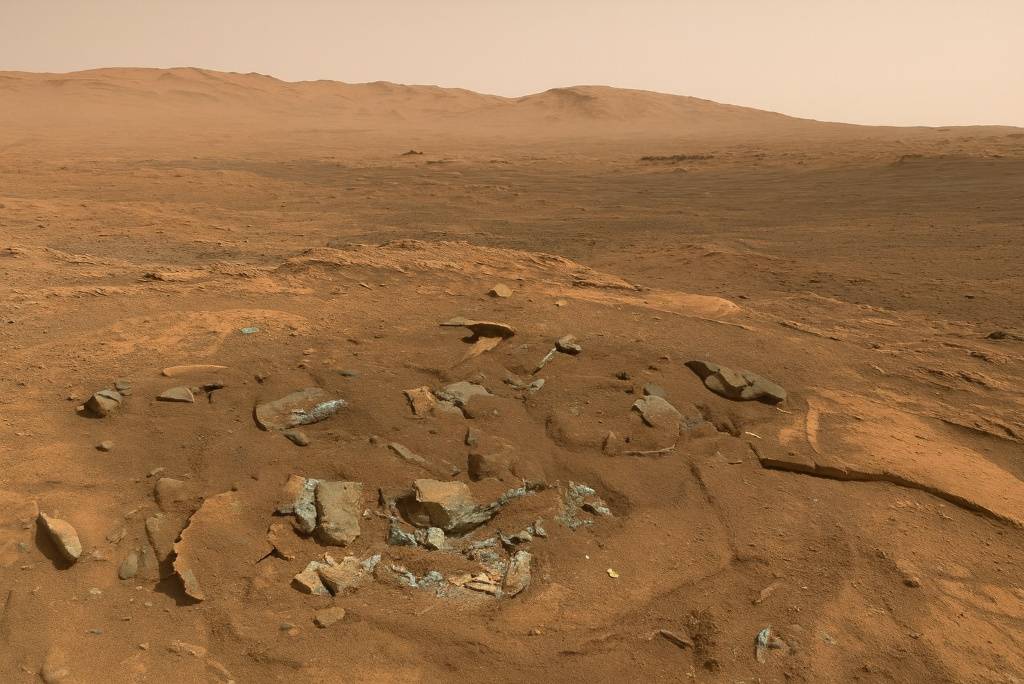
Photo Credit: SPACE

In 2014, a rock shaped like a human femur was spotted by Curiosity. Its bone-like appearance fueled speculation about Martian fossils and ancient creatures.

However, NASA scientists attribute it to erosion and fracturing, emphasizing that Mars’ surface processes can produce surprisingly familiar shapes. This peculiar resemblance reinforces how visual illusions often spark theories about alien life. (NASA)

9. The “Stonehenge” Circle of Rocks
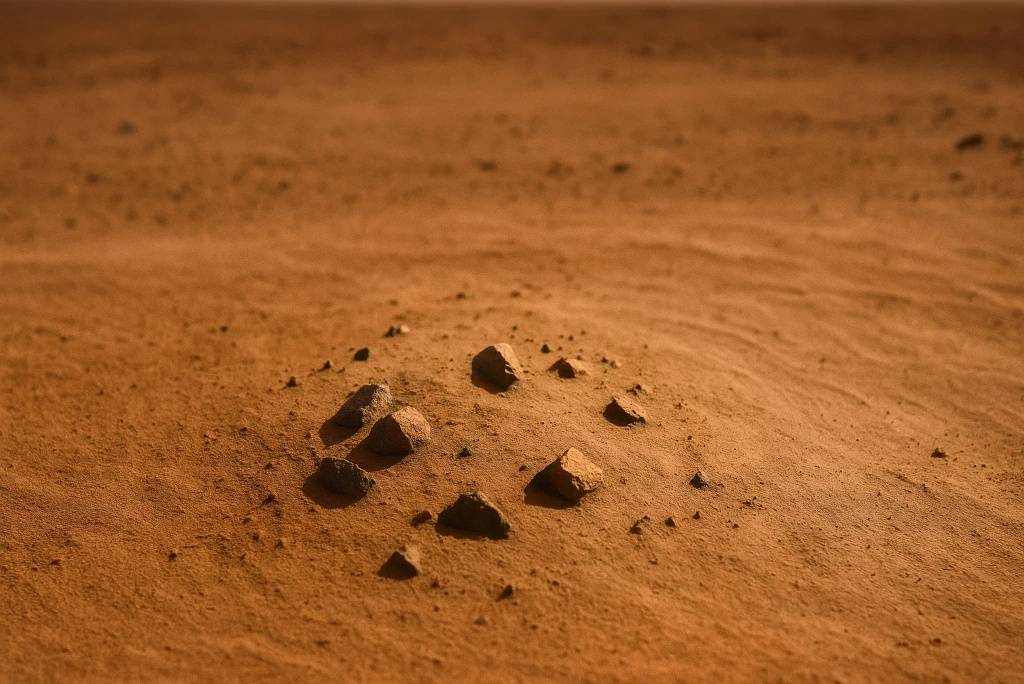
Photo Credit: ChatGPT

In 2018, satellite images revealed a circular arrangement of rocks resembling Earth’s Stonehenge, baffling some observers. This feature, located in the Mawrth Vallis region, is believed to be a natural consequence of impact cratering and weathering.

The ring formation, while eye-catching, serves as a reminder that natural processes can mimic intentional design, leading to fascinating debates about its origins. (The Guardian)

10. The “Tree Stump” Rock Formation
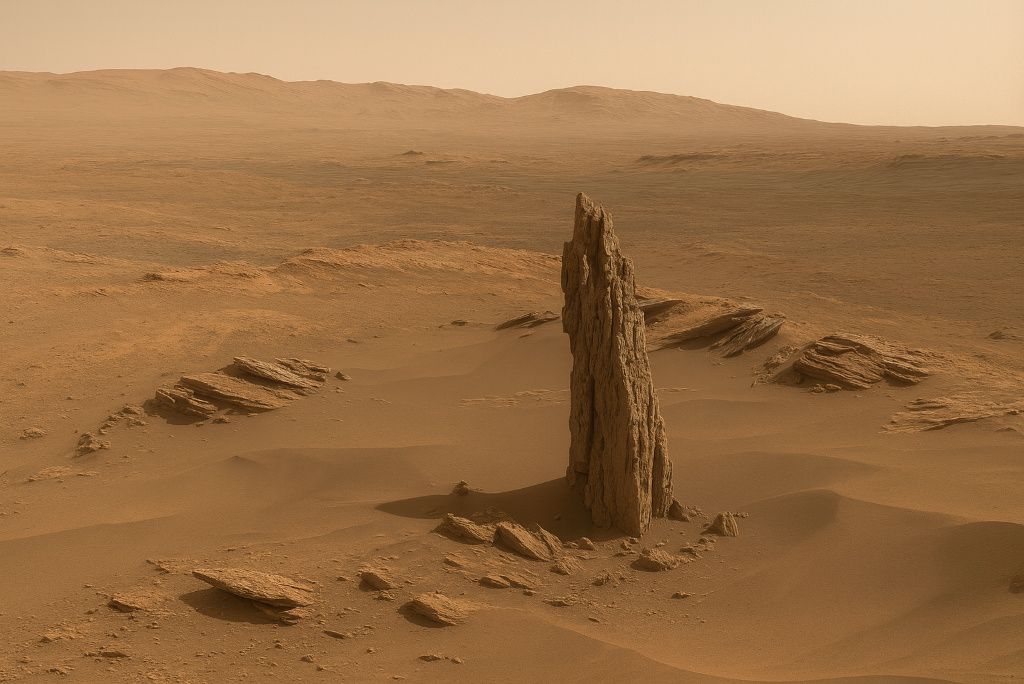
Photo Credit: METRO

In 2016, Curiosity photographed a rock resembling a fossilized tree stump, leading some to argue it hinted at ancient vegetation. Experts explained it as an eroded mudstone outcrop shaped by sedimentary processes.

Its layered appearance may suggest ancient water-related activity, but there’s no evidence it was biological. The structure remains one of the most visually striking finds so far. (NASA JPL)

11. The “Bear Face” Crater Image Discovery
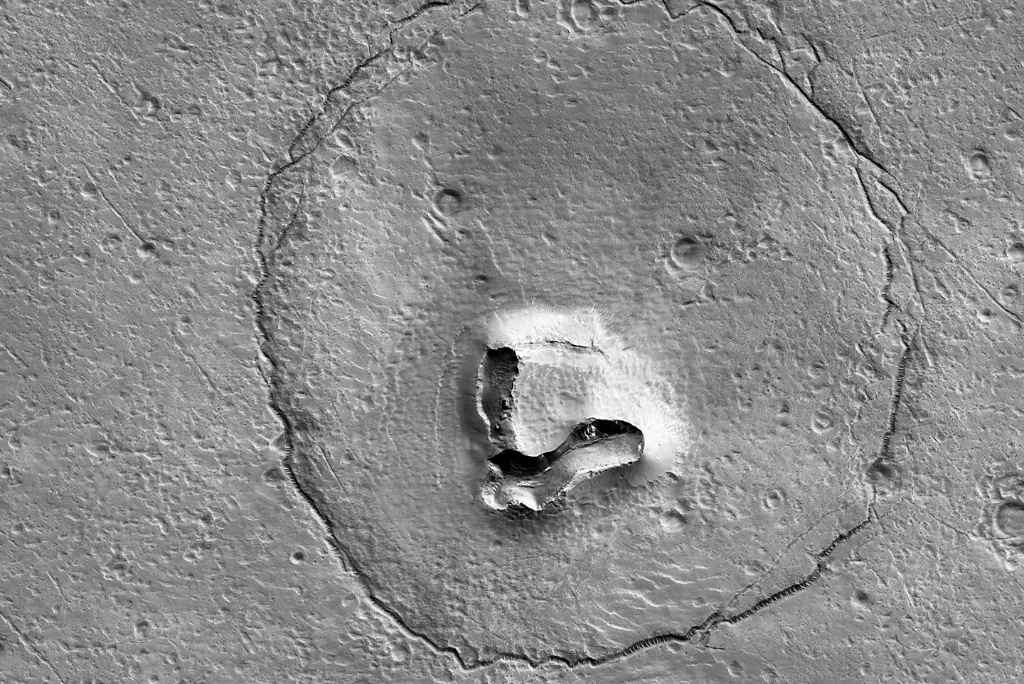
Photo Credit: NASA

In 2023, the Mars Reconnaissance Orbiter captured an image of a crater resembling a bear’s face. Its “eyes” are two smaller craters, and the “snout” is a collapsed mound shaped over time.

This example of pareidolia shows how our minds interpret random arrangements as recognizable images. Such formations are fun yet scientifically significant, revealing the planet’s dynamic and complex surface evolution. (Smithsonian Magazine)

12. The “Glass Tubes” Dune Illusion Explained
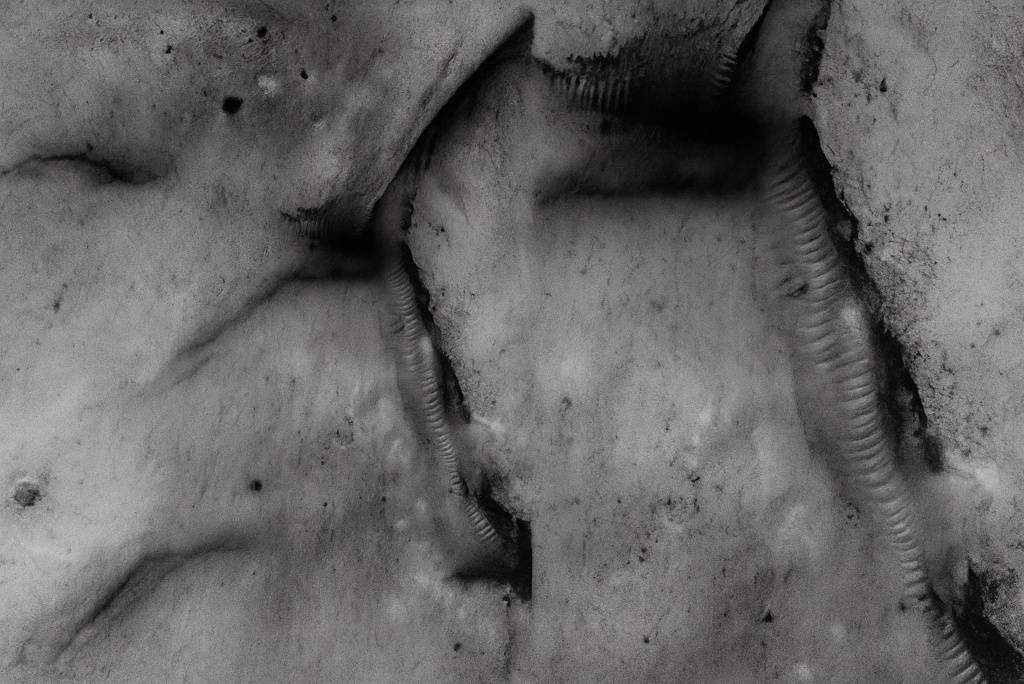
Photo Credit: ScholarWorks

Images from Mars Global Surveyor once appeared to show translucent, tube-like structures on the surface, leading to wild theories about Martian transport systems or pipelines.

Later analysis revealed these were rows of sand dunes illuminated at certain angles, giving the illusion of tubes. This optical effect underscores the challenges of interpreting alien landscapes from orbital imagery, often creating misleading impressions. (NASA)

13. The “Crab Monster” Rock Shadow Appearance
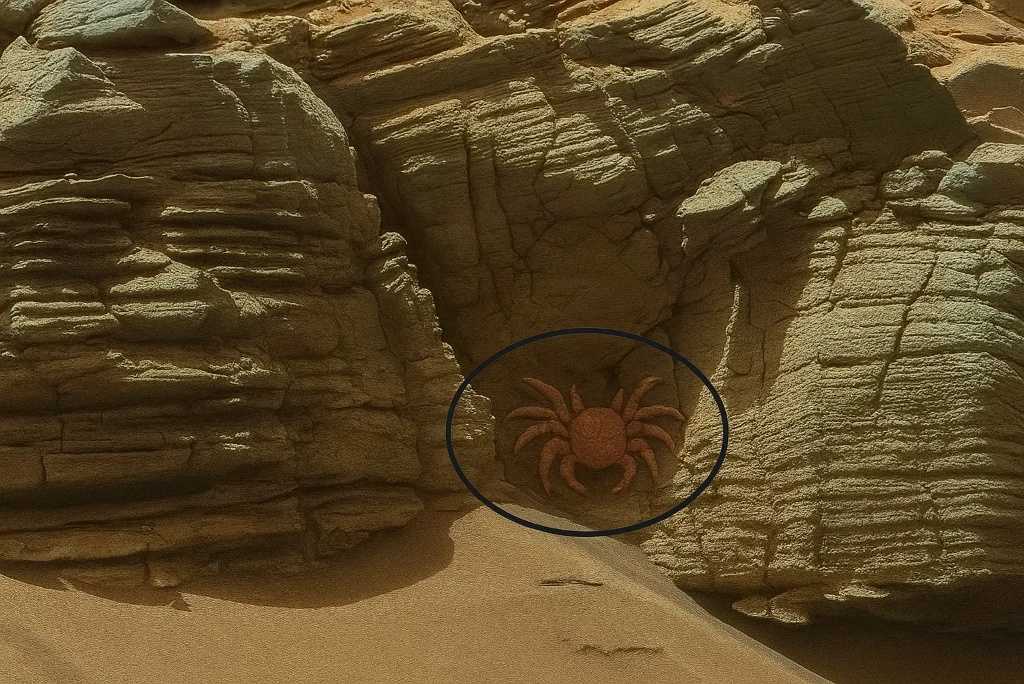
Photo Credit: ChatGPT

In 2015, Curiosity captured an image that many claimed looked like a giant crab hiding in a cave. NASA quickly explained this as a rock formation created by shadows and lighting effects interacting with rough terrain.

This example highlights how pareidolia thrives when viewing low-resolution or shadowed imagery in alien environments, sparking viral discussions and conspiracy theories online. (National Geographic)

14. The “Fossilized Spine” Rock Feature Illusion
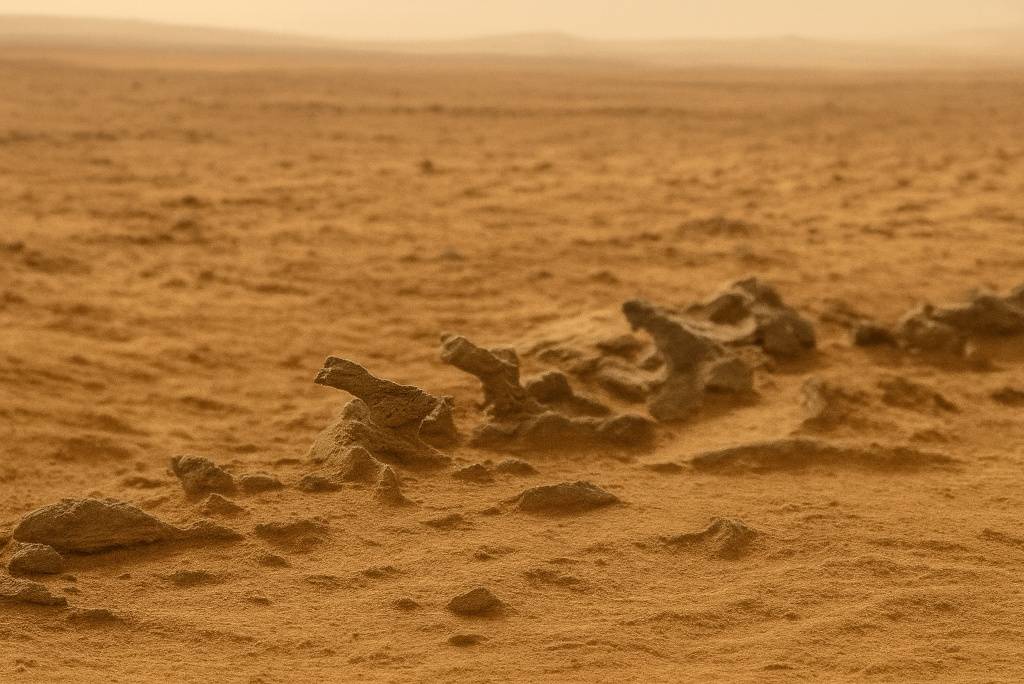
Photo Credit: ScholarWorks

Another 2017 rover image showed what looked like a segmented spine protruding from the ground. Some speculated it might be evidence of past Martian life or ancient fossilized remains.

However, geologists identify it as a common type of sedimentary rock with fractures giving it a spine-like appearance. While intriguing, no biological explanation holds up under detailed scientific review or peer analysis. (Space.com)

15. The “Wheel Tracks” Natural Grooves Explained
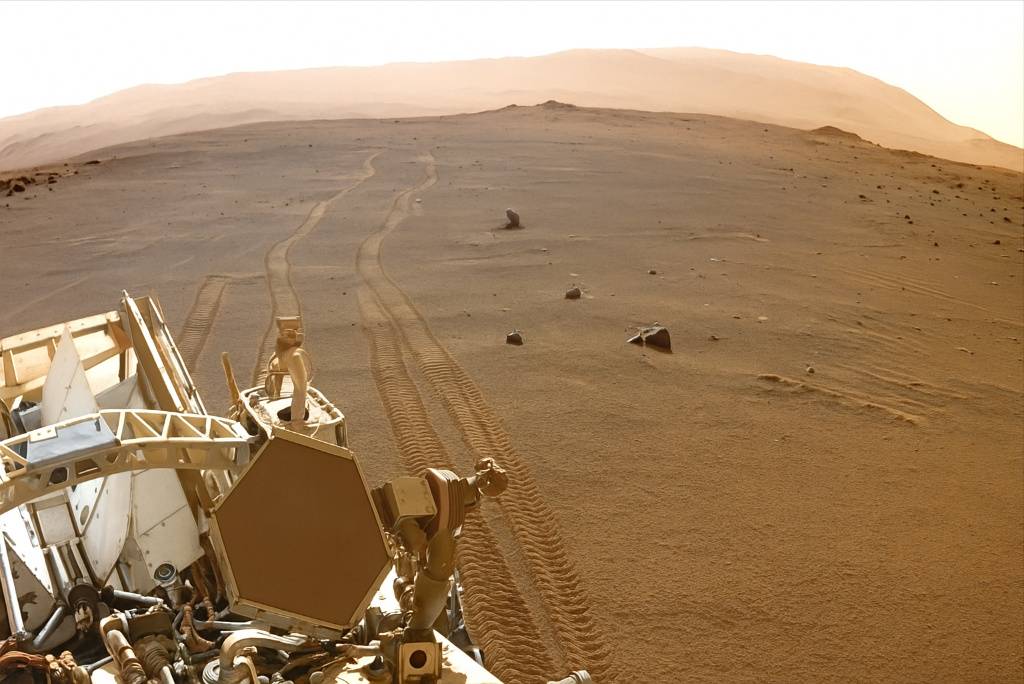
Photo Credit: NASA

In some rover images, natural grooves in Martian terrain have been mistaken for vehicle tracks from unknown sources or previous explorers. These linear features are actually caused by repeated wind erosion or dried channels carved over long periods.

Comparing them with actual rover tracks reveals significant differences in depth and uniformity, proving their natural origin beyond reasonable scientific doubt. (NASA)

RELATED VIDEOS

{ https://scitechnologia.com/ }

Hoe vind je dit bericht?
Geschreven door peter om 21:21 Stuur door

The Coldest "Stars" in the Galaxy Might Actually Be Alien Megastructures

The Coldest "Stars" in the Galaxy Might Actually Be Alien Megastructures

Relatistic representation of a Dyson swarm. Credit - Віщун / Wikimedia Commons Relatistic representation of a Dyson swarm. Credit - Віщун / Wikimedia Commons

Ever since physicist Freeman Dyson first proposed the concept in 1960, the “Dyson sphere” has been the holy grail of techno-signature hunters. A highly advanced civilization could build a “sphere” (or, in our more modern understanding, a “swarm” of smaller components) around their host star to harvest its entire energy output. We know, in theory at least, that such a swarm could exist - but what would it actually look like if we were able to observe one? A new paper available in pre-print on arXiv, and soon to be published in Universe from Amirnezam Amiri of the University of Arkansas digs into that question - and in the process discloses the types of stars that are the most likely to find them around.

Perhaps unsurprisingly, one of those types is a Red Dwarf. The most abundant type of stars in the Milky Way, they burn through their nuclear fuel incredibly slowly making them extremely long lived. With estimated lives in the trillions of years - far longer than the current lifetime of the universe - they are also relatively small compared to our own Sun. A Dyson swarm could be built around 0.05 to 0.3 AU away from its surface, with relatively low cost of material.

White dwarfs are arguably even better for material costs, and represent the second type of star that it’s worth tracking. These are compact, dead remnants of stars like our Sun, which have shrunk down to have incredibly small radii - around 1% of their original star. In this scenario, a Dyson swarm could be built just a few million kilometers away from the surface of the star, alleviating much of the engineering challenge of build a supermassive structure around a larger star. They also radiate energy steadily for billions of years, essentially creating an effective long-lived power source.

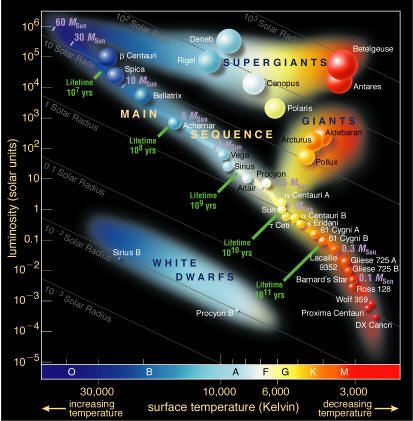
The H-R diagram used to classify stars. Credit - ESO

*The H-R diagram used to classify stars.

Credit - ESO*

But what would stars surrounded by such megastructures actually look like? Astronomers typically use a tool called the Hertzsprung-Russell (H-R) diagram to classify stars based on their temperature and luminosity. However, since a Dyson sphere would block all of a star’s natural light, it would completely change where on the diagram it would fall. Energy can neither be created nor destroyed, so the sphere itself would have to emit the exact same amount of radiation away from itself as the star is putting into it. It just does it in the form of heat, or infrared light instead. So a Dyson sphere can really be thought of as a shell that absorbs a star’s light, does something useful with that energy, and then emits it as heat.

In doing so, it is shifting the location of the star entirely to the right - where lower temperatures are mapped on the diagram. The luminosity itself doesn’t change at all, it is simply shifted to the infrared, and since H-R diagrams use bolometric luminosity (i.e. the luminosity over all of the spectra), it would appear in the same vertical place on the diagram as whatever its host star is, whether that’s a red or white dwarf.

But the key take away is how much further on the right the star would go. A typical red dwarf, which inhabits the lower right hand corner of a H-R diagram, has a surface temperature of around 3000K degrees. A Dyson sphere surrounding a star would have a temperature down to 50K - two orders of magnitude lower. There are no natural stars in this area, making any such object highly interesting as a potential Dyson swarm candidate.

Fraser explains the concept of a Dyson Sphere.

One further factor contributing to the possibility of an object being a Dyson swarm is a lack of dust. A star without a Dyson sphere would typically show a spectral line for silicate emission that is commonly associated with dusky disks. However, radiator panels don’t have any dust surrounding them, so they would look remarkably “clean” to a spectrograph monitoring them.

One thing to note - in the “swarm” methodology, there would likely be gaps between some of the solar collectors, or varying thickness in certain parts of the swarm. This is intended to make the material requirements actually physically possible - modern calculations show that, even with relatively small radii, an actual full Dyson sphere is physically impossible. In the case where there were these small gaps, the star would behave exceedingly erratically, with non-natural light curves as the structure rotates.

Since infrared is the specialty of the James Webb Space Telescope, it is well placed to monitor for these kinds of structures. But even older telescopes like WISE are being actively used to search for them. In May 2024, a paper highlighting work from Project Hephaistos identified seven strong Dyson sphere candidates (all red dwarfs) out of a catalogue of 5 million stars. One was eliminated as a possible source, as there was a supermassive black hole aligned perfectly in the background around the star, explaining the anomalous readings. But that still leaves five more potential candidates that are worth some closer observation. This new paper will add another tool to astronomers’ understanding of what to search for to one day find one of these elusive technosignatures.

Learn More:


{  https://www.universetoday.com/ }

Hoe vind je dit bericht?
Geschreven door peter om 18:28 Stuur door

Laser-Based 3D Printing Could Build Future Bases on the Moon

Laser-Based 3D Printing Could Build Future Bases on the Moon

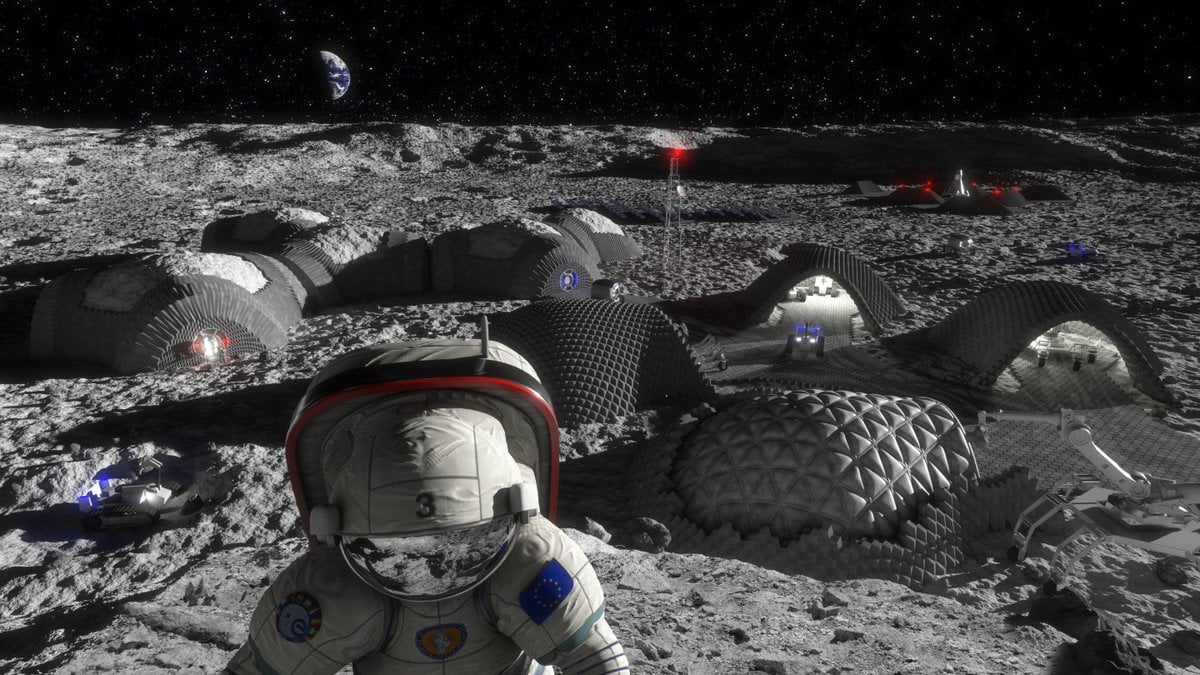
A laser 3D printing method, tested by researchers at OSU, could lead to resilient, stable structures on the Moon. Credit: ESA A laser 3D printing method, tested by researchers at OSU, could lead to resilient, stable structures on the Moon. Credit: ESA

Through the Artemis Program, NASA hopes to establish a permanent human presence on the Moon in its southern polar region. China, Russia, and the European Space Agency (ESA) have similar plans, all of which involve building bases near the permanently shadowed regions (PSRs) - i.e., craters that contain water ice - that dot the South Pole-Aitken Basin. For these and other agencies, it is vital that these bases be as self-sufficient as possible since resupply missions cannot be launched regularly and take several days to arrive.

Therefore, any plan for a lunar base must come down to harvesting local resources to meet the needs of its crews as much as possible - a process known as In-Situ Resource Utilization (ISRU). In a recent study, researchers at The Ohio State University (OSU) proposed using a specialized laser-based 3D printing method to turn lunar regolith into hardened building material. According to their findings, this method can produce durable structures that withstand radiation and other harsh conditions on the lunar surface.

The research team was led by Sizhe Xu, a Graduate Research Associate at OSU. He was joined by colleagues from OSU's Department of Integrated Systems Engineering, Mechanical and Aerospace Engineering, and Materials Science & Engineering. Their paper, "Laser directed energy deposition additive manufacturing of lunar highland regolith simulant," appeared in the journal Acta Astronautica.

Cutaway image of a lunar habitat. Credit: ESA

*Cutaway image of a lunar habitat. Credit: ESA*

The importance of ISRU for human exploration has prompted the rapid development of additive manufacturing systems - aka 3D printing. These systems have proven effective at fabricating tools, structures, and habitats, effectively reducing dependence on supplies delivered from Earth. Developing such systems for long-duration missions is one of the most challenging aspects of the process, as they must be engineered to operate in the extreme environment on the Moon. This includes the lack of an atmosphere, massive temperature variations, and the ever-present problem of Moon dust.

Scientists use two types of lunar regolith for their experiments and research: Lunar Highlands Simulant (LHS-1) and Lunar Mare Simulant (LMS-1). As part of their research, the team used LHS-1, which is rich in basaltic minerals, similar to rock samples obtained by the Apollo missions. They melted this regolith with a laser to produce layers of material and fused them onto a base surface of stainless steel or glass. To assess how well these objects would fare in the lunar environment, the team tested their fabrication process under a range of different environmental conditions.

One thing they noticed was that the fused regolith adhered well to alumina-silicate ceramic, possibly because the two compounds form crystals that enhance heat resistance and mechanical strength. This revealed that the overall quality of the printed material is largely dependent on the surface onto which the regolith is printed. Other environmental factors, such as atmospheric oxygen levels, laser power, and printing speed, also affected the stability of the printed material. As Xu explained in an OSU News release:

By combining different feedstocks, like metal and ceramics, in the printing process, we found that the final material is really sensitive to the environment. Different environments lead to different properties, which directly affect the mechanical strength and the thermal shock resistance of certain components. There are so many applications that we’re working toward that with new information, the possibilities are endless.

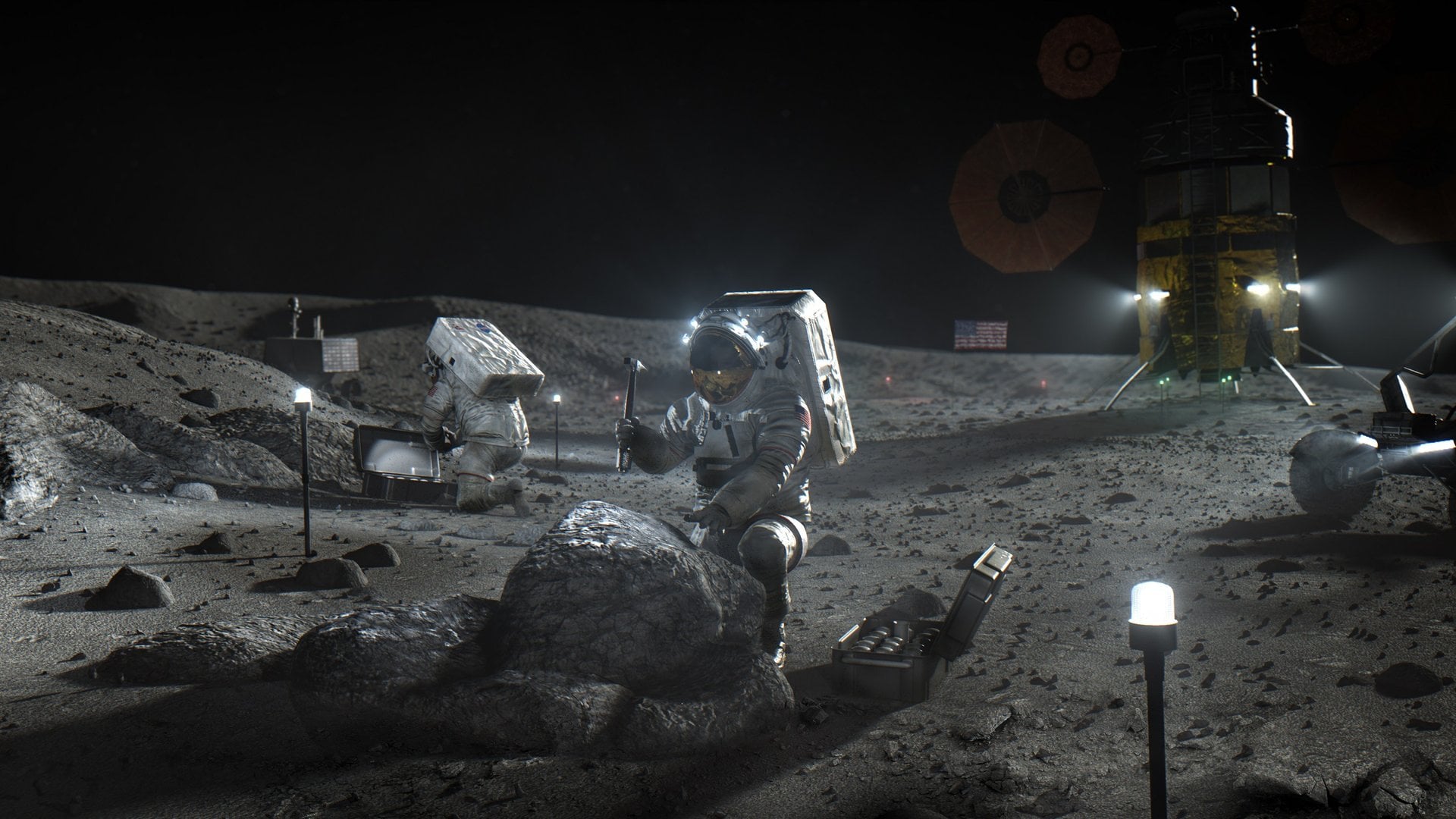
Astronauts collecting samples on the lunar surface as part of NASA's Artemis Program. Credit: NASA

*Astronauts collecting samples on the lunar surface as part of NASA's Artemis Program.

Credit: NASA*

Deployed to the Moon's surface, this process could help build habitats and tools that are strong, resilient, and capable of handling the lunar environment. This has the added benefit of increasing independence from Earth, which is key to realization long-duration missions on the Moon. In addition to assisting astronauts exploring the Moon in the near future (as part of NASA's Artemis Program), this technology could also lead to resilient habitats that will enable a long-term human presence on the Moon, Mars, and beyond.

However, there are several unknown environmental factors that could limit the effectiveness of these systems on other worlds, and more data is needed before they can be addressed. In their study, the team suggests that instead of being powered by electricity, future scaled-up versions of their method could rely on solar or hybrid power systems. Nevertheless, the potential for space exploration is clear, and the technology also has applications for life here on Earth. Sarah Wolff, an assistant professor in mechanical and aerospace engineering and a lead author on the study, explained:

There are conditions that happen in space that are really hard to emulate in a simulant. It may work in the lab, but in a resource-scarce environment, you have to try everything to maximize the flexibility of a machine for different scenarios. If we can successfully manufacture things in space using very few resources, that means we can also achieve better sustainability on Earth. To that end, improving the machine’s flexibility for different scenarios is a goal we’re working really hard toward.

As the saying goes, "Solving for space solves for Earth." In environments where materials and resources are limited, laser-based 3D printing is one of several technologies that could support sustainable living. This applies equally to extraterrestrial environments and to regions on Earth experiencing the effects of Climate Change.

Further Reading: 


{  https://www.universetoday.com/ }

Hoe vind je dit bericht?
Geschreven door peter om 18:17 Stuur door

The Toughest Animals in the Universe Just Got a New Job

The Toughest Animals in the Universe Just Got a New Job

Image of Milnesium tardigradum in active state (Credit : Schokraie E, Warnken U, Hotz-Wagenblatt A, Grohme MA, Hengherr S, et al. (2012) - Schokraie E, Warnken U, Hotz-Wagenblatt A, Grohme MA, Hengherr S, et al. (2012)) Image of Milnesium tardigradum in active state (Credit : Schokraie E, Warnken U, Hotz-Wagenblatt A, Grohme MA, Hengherr S, et al. (2012) - Schokraie E, Warnken U, Hotz-Wagenblatt A, Grohme MA, Hengherr S, et al. (2012))

You could fit about a dozen of them across the full stop at the end of this sentence. Under a microscope they look like tiny eight legged bears shuffling around in slow motion. They have been frozen, boiled, irradiated, sent into the vacuum of open space and brought back alive. Scientists have been studying them for over two hundred years and they still have the capacity to astonish. Their name is tardigrade, though most people know them by the rather more charming nickname of water bears. And right now, they might be one of our best tools for figuring out how to survive on Mars.

A team of researchers from Penn State University has just published a study that used tardigrades in a genuinely novel way, not to test how tough they are, but to test how tough Mars is. Specifically, they wanted to understand how the planet's regolith, the loose mineral deposits that cover the Martian surface rather like soil covers our own, would interact with living animals. Could it ever be adapted to support plant growth for future human explorers? And could it actually help protect the planet from contamination that humans might inadvertently bring with them?

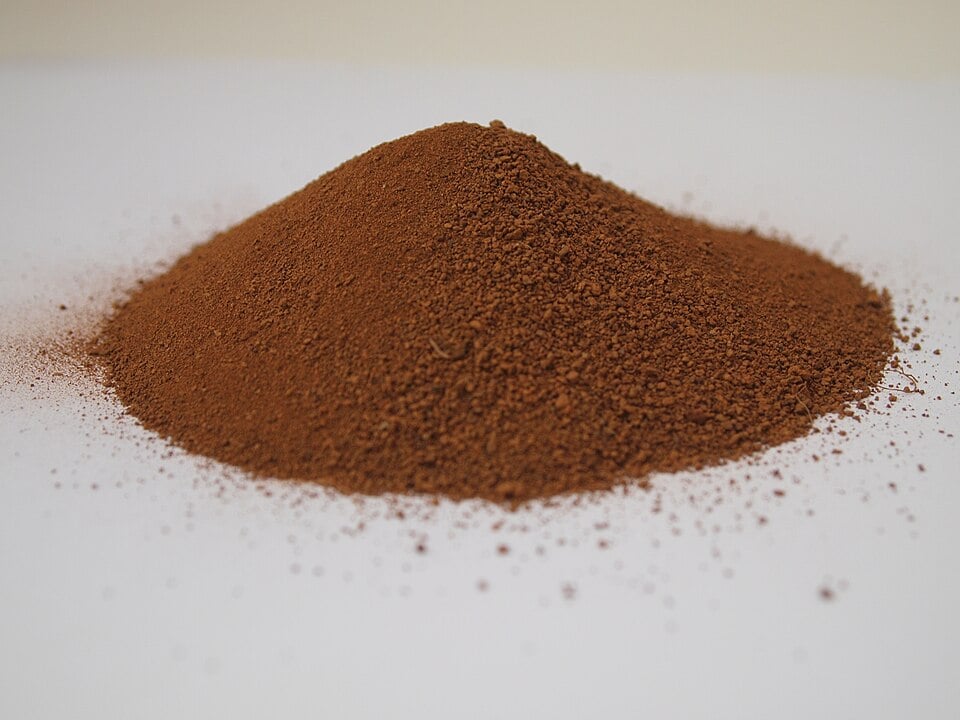
Simulated Martian regolith (Credit : Z22)

Simulated Martian regolith

(Credit : Z22)

To find out, they mixed active tardigrades with two different simulated Martian soils, both designed to precisely replicate the mineral and chemical composition of regolith sampled by NASA's Curiosity Rover from a region called the Rocknest deposit, inside the Gale Crater.

The first simulant, known as MGS-1 was designed to represent the Martian surface broadly and yielded terrible results. Within just two days, the tardigrades showed severely reduced activity. For an animal that routinely shrugs off the vacuum of space, that is extraordinary. The second simulant was still inhibitory but far less damaging, which itself tells researchers something important about exactly which aspects of Martian soil pose the greatest risk.

Then came the surprise. When the team rinsed the MGS-1 simulant with water before introducing fresh tardigrades, the damage almost vanished entirely. Something in the soil, possibly dissolved salts or another soluble compound, was responsible for the harm, and water washed it away. The same property that made the regolith so hostile to life also makes it a potential natural barrier against Earthly contamination. Mars, in a sense, may have its own built in defence system.

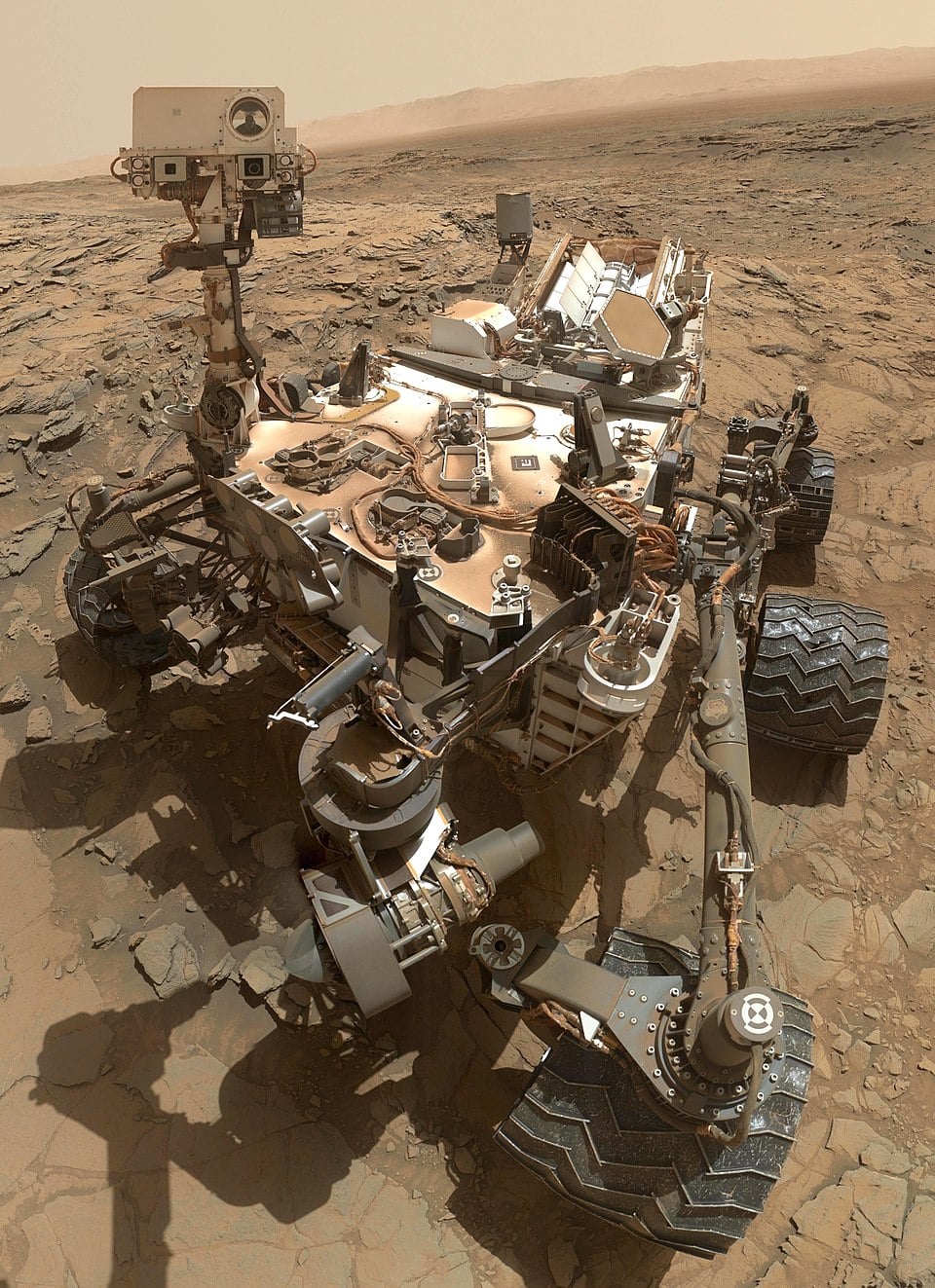
This self-portrait of NASA's Curiosity Mars rover shows the vehicle at the "Big Sky" site, where its drill collected the mission's fifth taste of Mount Sharp (Credit : NASA)

This self-portrait of NASA's Curiosity Mars rover shows the vehicle at the "Big Sky" site, where its drill collected the mission's fifth taste of Mount Sharp

(Credit : NASA)

This matters enormously for what scientists call planetary protection, the internationally agreed principle that we should not contaminate other worlds with Earth life, and equally should not bring alien contamination back home. If Martian soil is naturally hostile to Earth organisms, that provides a degree of reassurance. But equally, if a simple rinse with water can neutralise that hostility, then future colonists might be able to process regolith to grow food after all.

Water, of course, is precious on Mars, which means washing soil on an industrial scale is not a straightforward solution. But knowing the problem can be solved at all is a significant step forward. As the researchers put it, they are beginning to tease apart the components of an enormously complex system, one piece at a time.

The water bears have survived everything Earth could throw at them for hundreds of millions of years. It turns out they may be exactly the right animal to help us understand whether Mars will ever be ready to welcome us.

Source : 

{ https://www.universetoday.com/ }

Hoe vind je dit bericht?
Geschreven door peter om 18:01 Stuur door

Growing Future Meals in Space Will Require Human Waste

Growing Future Meals in Space Will Require Human Waste

An artist's concept depicts a greenhouse on the surface of Mars. Plants are growing with the help of red, blue, and green LED light bars and a hydroponic cultivation approach. Other methods using soil simulants should also contribute to long-term food production on the Moon and Mars. Image credit: SAIC An artist's concept depicts a greenhouse on the surface of Mars. Plants are growing with the help of red, blue, and green LED light bars and a hydroponic cultivation approach. Other methods using soil simulants should also contribute to long-term food production on the Moon and Mars. Image credit: SAIC

In the future, farmers on the Moon and Mars will have a big challenge: how to grow healthy food in two extremely unhealthy environments. That's because the soil on both worlds isn't at all hospitable to plants and animals. Neither are other conditions. Both are irradiated worlds, Mars has a thin atmosphere and the Moon has none at all. So, how will future colonists on either world grow their food?

We could look toward the example shown by Matt Damon in "The Martian". There, a stranded Marsnaut figures out how to grow potatoes using his own sewage, which turns out to be do-able according to experiments run by the International Potato Center and NASA few years ago. More recently, researchers led by Harrison Coker of Texas A&M worked with a team at NASA, tested a solution of recycled sewage products and how they interacted with simulated lunar and Mars regolith (soil). The NASA team, headquartered at Kennedy Space Center, is taking a deep look at what are called bioregenerative life support systems (BLiSS). These bioreactors and filters turn an artificial form of sewage into a solution rich in the kinds of nutrients that plants need to thrive. This work has immediate implications for people who will be living and working on the Moon and Mars in the future. That's because people can easily furnish the waste products needed. With the upcoming Artemis missions to the Moon, the question of food production is assuming a high priority for long-term inhabitants.

“In lunar and Martian outposts, organic wastes will be key to generating healthy, productive soils, said Coker, the first author on a study of such systems. “By weathering simulant soils from the Moon and Mars with organic waste streams, it was revealed that many essential plant nutrients can be harvested from surface minerals.”

A simulated lunar greenhouse at NASA Kennedy Space Center is helping scientists solve the problem of growing food on the Moon, and ultimately Mars. Courtesy NASA.

A simulated lunar greenhouse at NASA Kennedy Space Center is helping scientists solve the problem of growing food on the Moon, and ultimately Mars.

Courtesy NASA.

What Do Plants Need?

The plant life on Earth needs a complex set of nutrients to thrive. For example, corn needs a great deal of nitrogen. Peas like potassium and phosphorus. Potatoes like both phosphorus and nitrogen. And, all planets need water. The researchers looked at what it would take to "enrich" Martian and lunar regoliths. It turns out, they need a lot. That's because the soils are irradiated and in the case of Mars, rich in sulfur, ferric oxide, silicon dioxide, and magnesium. It's also laced with high levels of perchlorates, which are toxic.

The first inhabitants of these worlds will need to bring their own food and sewage systems, and then work on making the local soils habitable for plants. That will take time and a lot of work, in addition to all the other projects they'll need to fulfill, such as exploration and habitat building.

Of course, the future inhabitants could rely on hydroponics for a growth medium, and there have been a great many studies of such water-based systems. However, you do need a lot of water and the nutrient loads need to be quite high to produce food in great quantities. On the Moon, at least, astronauts could send back to Earth for supplies, but that's going to be expensive and time-consuming. So, it's likely that the first sets of explorers will depend on food from "home". However, that can't be a permanent solution, which is why scientists are looking at ways to make local soils good for farming in the long run.

Studies of food growth in space go back many years. A variety of red potatoes called Norland were grown in the Biomass Production Chamber inside Hangar L at Cape Canaveral Air Force Station in Florida during a research study in 1992. Credit: NASA

*Studies of food growth in space go back many years. A variety of red potatoes called Norland were grown in the Biomass Production Chamber inside Hangar L at Cape Canaveral Air Force Station in Florida during a research study in 1992.

Credit: NASA*

Better Farming Through Sewage and Chemistry

In the research led by Coker and the folks at NASA, scientists combined the BLiSS effluent they created with simulated Martian or lunar regolith (each called a simulant). Then, they stored the two different solutions in a shaker for 24 hours. The goal was to determine if the BLiSS effluents could essentially "weather" the regolith and provide a nutrient-rich growing solution.

It turns out that the weathered simulants supplied large amounts of essential plant nutrients. They including sulfur, calcium, and magnesium, and other metals, when interacting with both water and BLiSS solutions. In addition, looking at the simulant particles under a microscope revealed weathered features such as tiny pits forming in the lunar simulant and the Martian simulant becoming covered in nanoparticles. Both helped make the sharp minerals in the simulant less abrasive, showing successful weathering and a step toward a more soil-like material.

So, is recycling human sewage the solution for better off-world gardens? Not quite. Despite promising initial results, the next steps would need to include tests on actual lunar and Martian regoliths. They're quite different from the simulants the scientists tested. It's a good start, though, and provides crucial insights into a process that will be critical for sustaining human colonies in outer space. It may not be long before lunar citizens are snacking on watercress sandwiches and Mars colonists are growing their own corn, beans, and yes, potatoes, thanks to their own effluent products.

For More Information

{ https://www.universetoday.com/ }

Hoe vind je dit bericht?
Geschreven door peter om 17:51 Stuur door

NASA Updates Artemis Program, Adding a Mission and Delaying Lunar Landing

NASA Updates Artemis Program, Adding a Mission and Delaying Lunar Landing

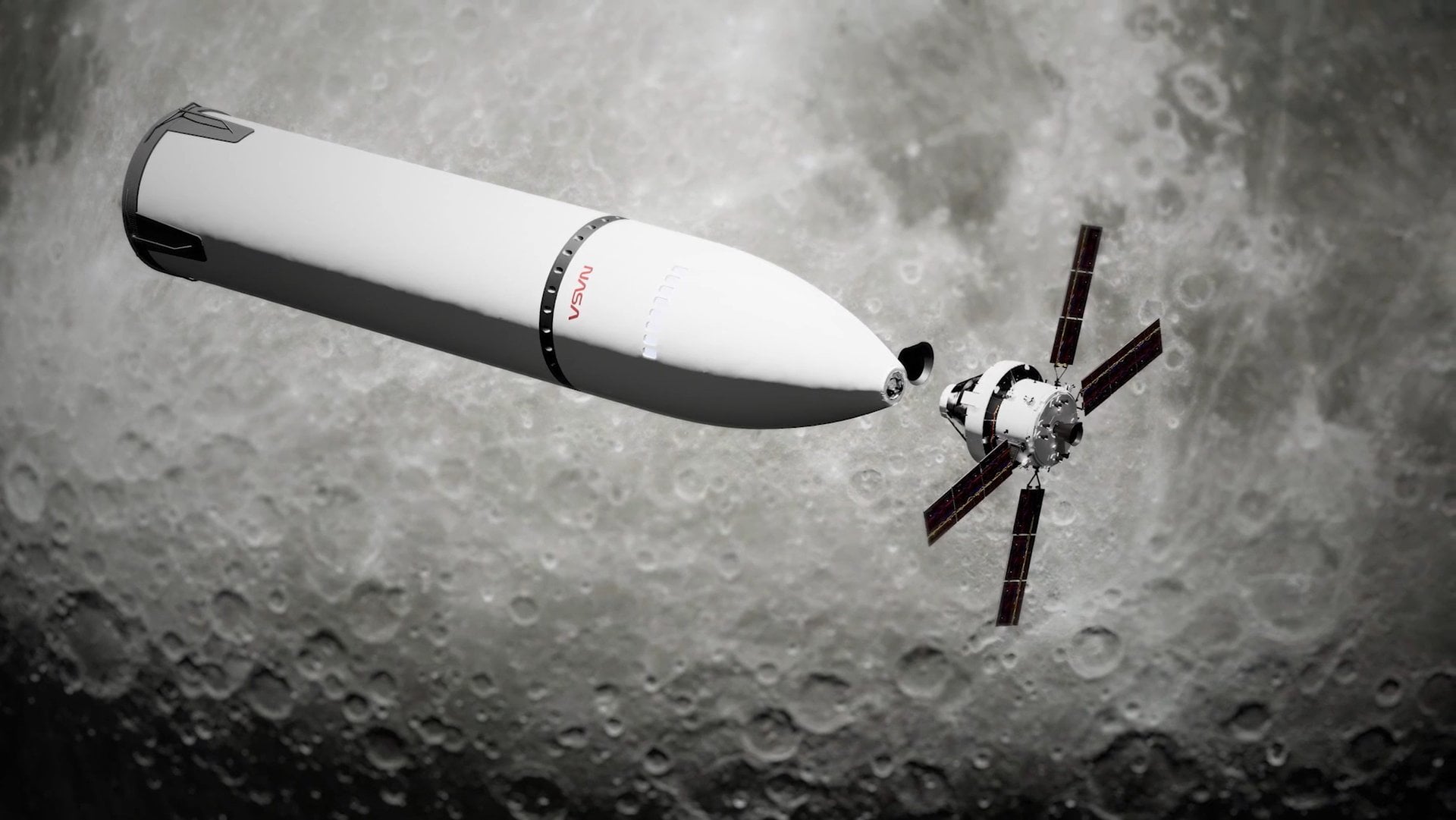
Artist's impression of an Orion spacecraft and Starship HLS rendezvousing in lunar orbit. Credit: Lockheed Martin Artist's impression of an Orion spacecraft and Starship HLS rendezvousing in lunar orbit. Credit: Lockheed Martin

Earlier today, NASA announced that it would be increasing the cadence of its missions to meet its objectives under the Artemis Program. It is also making changes to its mission architecture to include a standard vehicle configuration and undertake one surface landing every year after 2027. In real terms, this means that a lunar landing will not take place as part of Artemis III in 2027, but during Artemis IV, currently scheduled for 2028. Instead, Artemis III will involve a rendezvous in Low Earth Orbit (LEO) to test the systems and operations for the first lunar landing in over sixty years.

The announcement came during a news conference at NASA's Kennedy Space Center, amid discussions about the status of the Artemis II mission. As Isaacman and other NASA officials stated, the agency now envisions an orbital rendezvous with a crewed Orion spacecraft and either the Starship HLS or Blue Origin's Blue Moon lander. This means that Artemis III* will mirror the Apollo 9* mission, which took place in March 1969 and was the first test of the Apollo Lunar Module in space, including docking maneuvers in LEO.

Per the agency's statement, the mission will also include in-space tests of the docked vehicles, integrated life support, communications, propulsion, and the new Extravehicular Activity (xEVA) spacesuits. Further details on this test flight will be released pending completion of detailed reviews between NASA and its commercial partners, and it was indicated that updates will be made soon. As NASA Administrator Jared Isaacman explained, the key considerations here are safety, competition, and "standardization":

NASA must standardize its approach, increase flight rate safely, and execute on the President’s national space policy. With credible competition from our greatest geopolitical adversary increasing by the day, we need to move faster, eliminate delays, and achieve our objectives. Standardizing vehicle configuration, increasing flight rate and progressing through objectives in a logical, phased approach, is how we achieved the near-impossible in 1969 and it is how we will do it again.

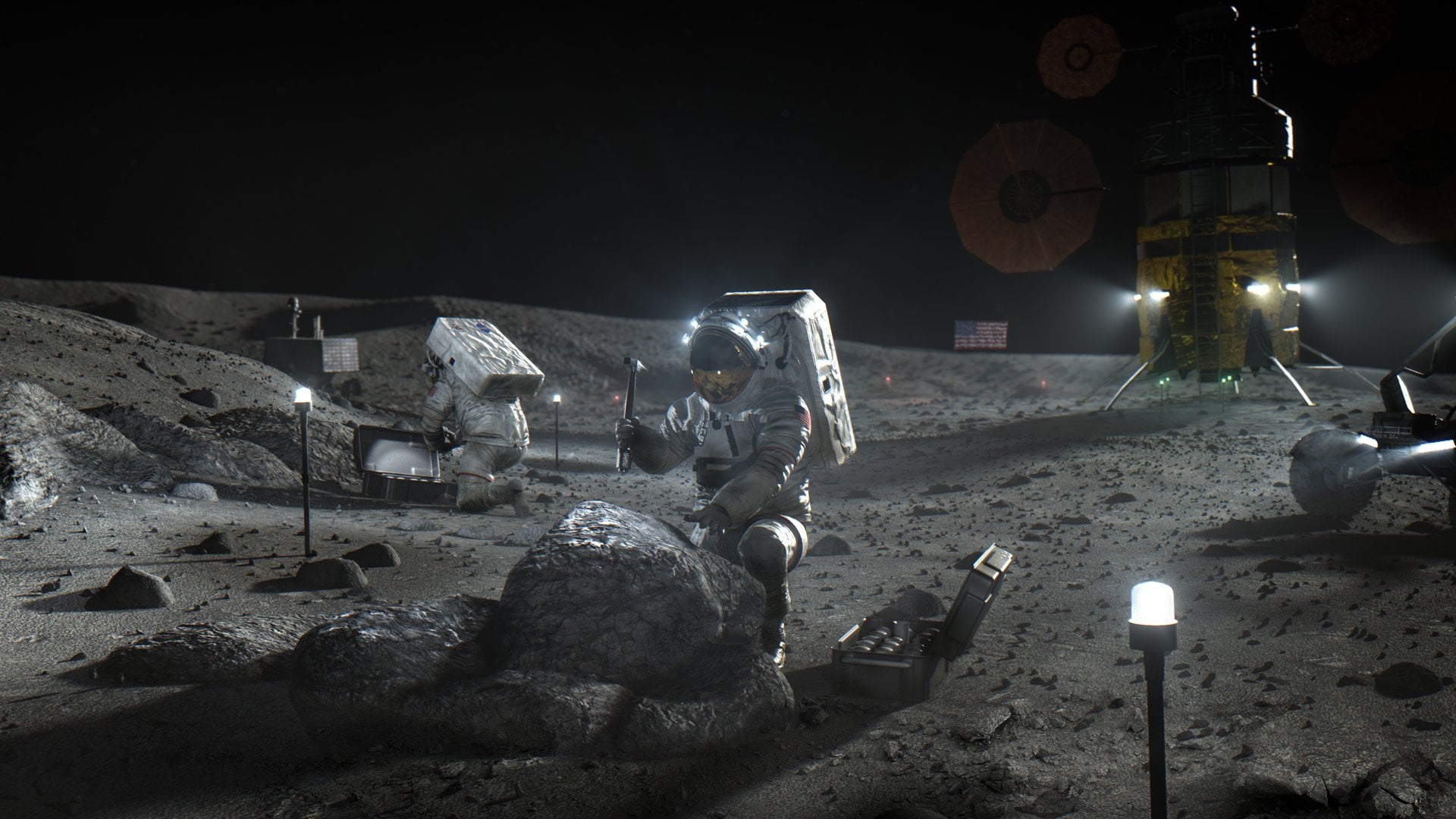
Artist's impression of NASA astronauts operating on the lunar surface, as part of the Artemis Program. Credit: NASA

*Artist's impression of NASA astronauts operating on the lunar surface, as part of the Artemis Program.

Credit: NASA*

What to make of this news? At face value, these sound like perfectly sensible considerations, but there are undeniable concerns that could be motivating this switch-up as well.

Delays?

For starters, this news comes about six months after the former acting-Administrator Sean Duffy announced that NASA was reopening the competition for a Human Landing System (HLS), a contract awarded exclusively to SpaceX in 2021. However, delays with the Starship's development have led NASA to conclude that the HLS will not be ready in time for Artemis III. This includes an in-orbit refueling demonstration, currently planned for later this year.

But between the Starship's current payload limits and fuel leaks and engine failures that have led to five out of eleven prototypes being lost, this is unlikely to happen. While the Starship is intended to launch between 100 and 150 metric tons (110 and 165 US tons) to LEO in its fully-reusable form, tests with the Block 2 prototype have been limited to about 35 metric tons (38.5 US tons). To perform in-orbit refueling, SpaceX will need to launch multiple refueling tankers into orbit in advance to fuel the proposed orbital depot fully.

Given the Starship's fuel capacity of up to 1,500 metric tons (1650 US tons), this means 10 to 15 tankers will need to launch to refuel one HLS fully. Even if, as Elon has suggested, it can perform its mission objectives with only half a tank of liquid methane and liquid oxygen, that means five to eight tankers will be needed. But only if they can reach their full payload capacity, something the company hopes to remedy with the Block 3 version of the Starship. The first test flight of this latest prototype is scheduled for April 7th, 2026. Significant tests will need to take place before SpaceX can conduct the multiple launches needed for a refueling demonstration.

Meanwhile, Blue Origin has been making great strides in developing its New Glenn orbital launch vehicle. Although the vehicle has launched only twice, the second stage has managed to reach orbit both times without incident. In fact, the first launch placed its payload (the Blue Ring pathfinder) in a Medium-Earth Orbit (MEO) while the second deployed NASA's Escape and Plasma Acceleration and Dynamics Explorers (ESCAPADE) mission at the Earth-Sun L2 Lagrange Point.

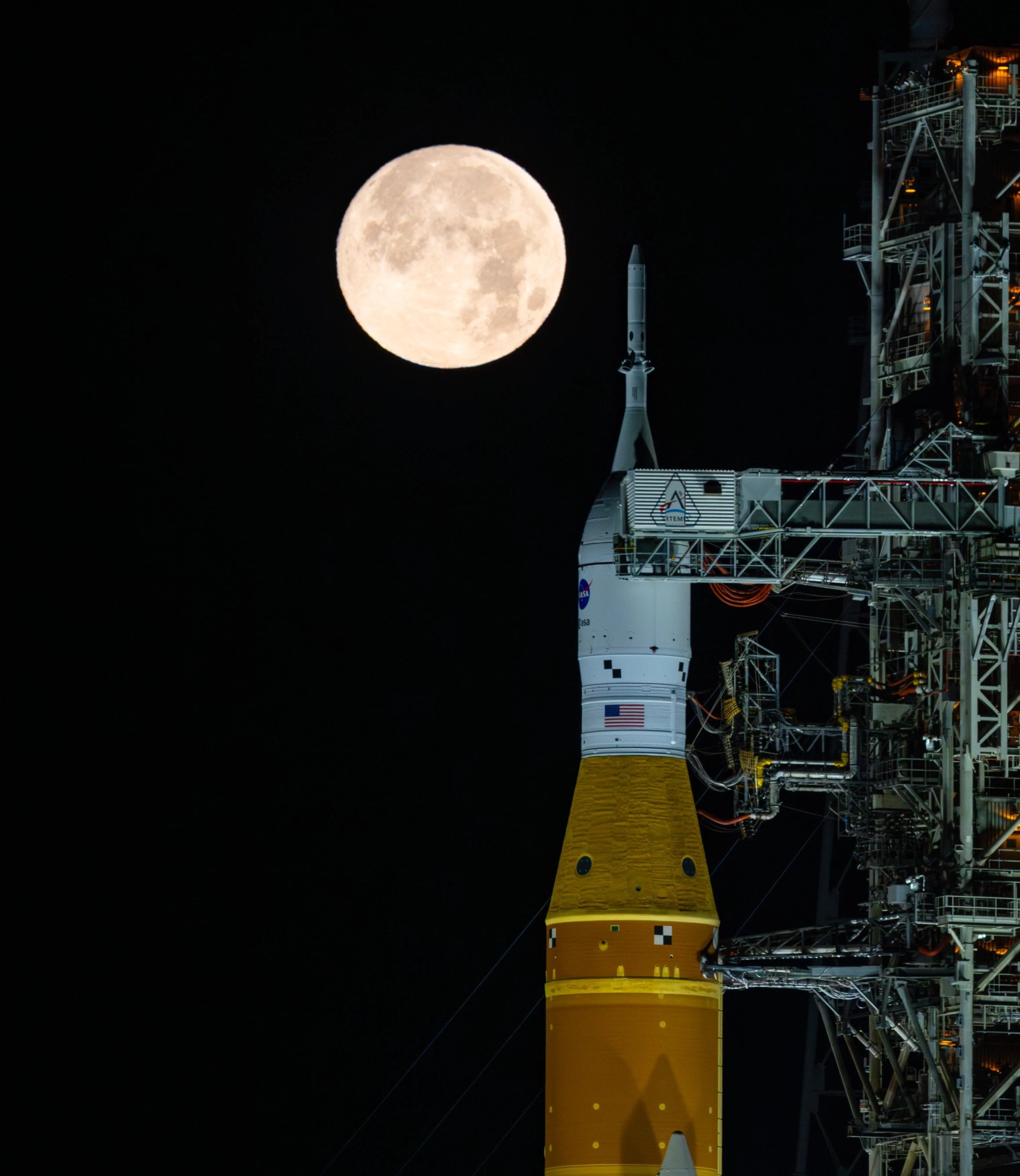
The Artemis II rocket on Launch Pad 39A at NASA's Kennedy Space Center. Credit: NASA

*The Artemis II rocket on Launch Pad 39A at NASA's Kennedy Space Center.

Credit: NASA*

Under the circumstances, it is understandable why NASA is taking a more measured approach and pushing the date of the lunar landing mission forward.

No New Configurations

Another keyword in the statement is "standardization," referring to the configuration of the Space Launch System (SLS). Previously, NASA planned to upgrade the SLS design after Artemis III, moving from the Block 1 configuration to Block 1B. The first three SLS launches will rely on the former, with the Interim Cryogenic Propulsion Stage (ICPS), which provides propulsion to the Orion spacecraft after the solid rocket boosters and core stage are jettisoned, as part of the upper stage. The Block 1B version was to feature a larger Exploration Upper Stage (EUS), a four-engine liquid hydrogen/liquid oxygen propulsion system.

The purpose of this decision is to enable a faster launch cadence of a mission per year, something that Bill Gerstenmaier, the former Associate Administrator for Human Exploration and Operations, recommended in 2016. It also mirrors what NASA accomplished during the Apollo Era, where eight launches (Apollo 8 to 14) were conducted between 1968 and 1972. NASA Associate Administrator Amit Kshatriya indicated as much, referencing Apollo by name:

We are looking back to the wisdom of the folks that designed Apollo. The entire sequence of Artemis flights needs to represent a step-by-step build-up of capability, with each step bringing us closer to our ability to perform the landing missions. Each step needs to be big enough to make progress, but not so big that we take unnecessary risk given previous learnings. Therefore, we want to fly the landing missions in as close to the same Earth ascent configuration as possible – this means using an upper stage and pad systems in as close to the ‘Block 1’ configuration as possible.

Politics and Cutbacks

In its statement, NASA also mentioned its recently announced workforce directive as vital to the "acceleration" of the Artemis Program. The directive is intended to "rebuild core competencies in the civil servant workforce," which is a rather telling statement. On the one hand, it sounds reminiscent of Isaacman's past comments, in which he repeatedly criticized NASA's "bureaucratic" nature and how it has prevented progress. This could mean that "rebuilding core competencies" is merely an extension of his expressed desire to impose private-sector thinking on a public agency.

On the other hand, it could be a veiled reference to the recent cutbacks and layoffs NASA has been forced to contend with. In addition to a 25% reduction in overall funding for FY 2026, NASA experienced significant workforce reductions, with over 4,000 employees lost through buyouts and attrition. This has left more than 40 missions in danger, including Mars Odyssey, MAVEN, and OSIRIS-APEX. The same budget request also included the cancellation of the Space Launch System (SLS), the Orion spacecraft, and the Lunar Gateway, all vital aspects of NASA's long-term vision for a "sustained program of lunar exploration and development."

It also called for the cancellation of the Demonstration Rocket for Agile Cislunar Operations (DRACO) mission, a joint project initiated by NASA and DARPA in 2023. These decisions were enacted under Duffy, whom Isaacman got into a bit of a row with in November 2025 due to the leak of the "Project Athena" document, which outlined what Isaacman originally planned to do as NASA's Administrator. Eric Berger of Ars Technica, writing at the time, indicated it was possible Duffy himself leaked the document to "hold onto his job" as acting Administrator.

In essence, the leaked version of the plan appeared to be intended to lay the cancellations and layoffs at Isaacman's feet. According to Berger, the 62-page document (Isaacman stressed that the original was over 100 pages long) does not bear this out. As Isaacman stated in a post on X (dated Nov. 4th, 2025), "This plan never favored any one vendor, never recommended closing centers, or directed the cancellation of programs before objectives were achieved. The plan valued human exploration as much as scientific discovery."

Perhaps, then, this decision is motivated by a genuine desire to get NASA back on track and to restore the programs affected by measures enacted under Duffy, with the blessing of the current administration.

Competition

This certainly makes sense in light of what Isaacman said about competition from "our greatest geopolitical adversary" - aka China. For years, China has been making significant progress in its crewed and robotic space programs, and its plans for the future are nothing if not ambitious. But it is the progress they've seen in their lunar program that has left many analysts and observers in the West concerned that China could reach the Moon before NASA. This includes the development of the Long March-10 super-heavy launch system and the Mengzhou spacecraft, both of which passed a key launch test less than two weeks ago.

According to their current plan, the Mengzhou spacecraft and Lanyue lunar lander will launch separately aboard two Long March-10 rockets. This mission is slated for 2030 and is part of China's larger effort to develop an International Lunar Research Station (ILRS) in the Moon's southern polar region to rival NASA's Artemis Program.

Much like Elon Musk's recent announcement that SpaceX was pivoting to focus on the Moon instead of Mars, there are many common-sense reasons for these decisions. However, the context in which they occurred and additional incentives certainly warrant exploration. One thing is for certain: NASA has experienced repeated delays since the Moon-to-Mars mission architecture was first undertaken over 20 years ago, due to limited budget, shifting priorities, and needless shake-ups.

In the meantime, NASA continues to work on the *Artemis II* mission, which has been delayed again until April due to a helium flow issue that engineers identified in the ICPS during the latest wet dress rehearsal. After the Artemis II was rolled back into the Vehicle Assembly Building (VAB), the team immediately began working to resolve the issue. They're also preparing for several actions, including replacing batteries in the flight termination system, conducting end-to-end testing to meet range safety requirements, and more.

Further Reading: 

{ https://www.universetoday.com/ }

Hoe vind je dit bericht?
Geschreven door peter om 17:36 Stuur door

Jupiter Is Smaller and Flatter Than Previously Thought

Jupiter Is Smaller and Flatter Than Previously Thought

Credit: Weizmann Institute of Science Credit: Weizmann Institute of Science

Jupiteris the largest planet in the solar system and has proudly boasted about this since time immemorial, with its scientific confirmation occurring by Galileo Galilei in 1610. It was later found that Jupiter has a bulging equator caused by its rapid rotation, turbulent atmosphere, and complex interior mechanisms despite its massive size, and scientists have even measured its “waistline” down to a tenth of a kilometer. Now, imagine being the largest planet in the solar system and you’re told you’re not as big as you thought. Where probably most humans would be thrilled to find this out, how do you respond if you’re Jupiter?

We might never know how Jupiter feels about being slimmer. But a team of international researchers led by the Weizmann Institute of Science in Israel are happy to explain how they feel about this incredible finding, which was recently published in *Nature Astronomy*. To accomplish this, the team used a combination of data obtained from NASA’s past missions of Pioneer 10 and Pioneer 11, which visited Jupiter in December 1973 and December 1974, respectively, Voyager 1 and Voyager 2, which visited Jupiter in March and July of 1979, respectively, and the currently active Juno spacecraft, which arrived at Jupiter in July 2016.

While the Pioneer and Voyager missions used a technique called radio occultation to measure Jupiter’s radius, with Voyager using an improved method, Juno used a combination of multi-angle radio occultation and gravity science to obtain its measurements.

Radio occultation involves using radio waves to estimate Jupiter’s size, with Pioneer using this method when the radio waves between itself and Earth were “cut off” as the spacecraft passed behind Jupiter. This not only estimating its radius but also confirmed Jupiter had an equatorial bulge, which was first proposed by Giovanni Cassini in 1666. Voyager improved this method by using radio waves to study Jupiter’s atmosphere, with the measured radius being the official measurement since then. Finally, Juno’s multi-angle radio occultation involves dividing Jupiter into “slices”, while the gravity science method involves measuring the tiny speed changes the spacecraft encounters that is produced by Jupiter’s massive gravity.

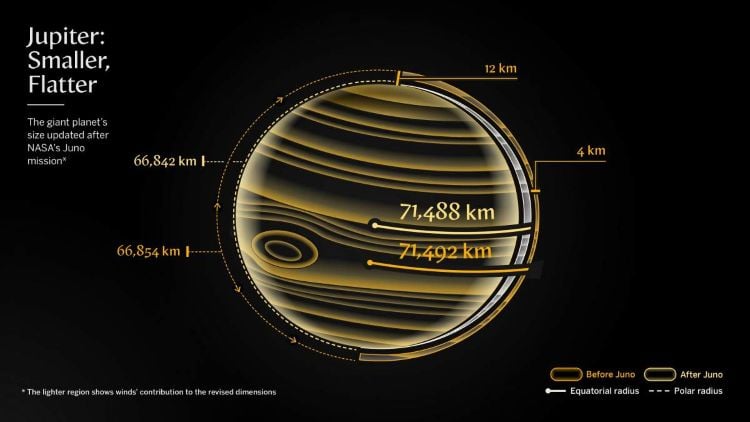
In the end, the researchers provided some of the most accurate measurements of Jupiter’s polar and equator radius ever. This includes a polar radius of 66,842 km (41,533 mi), an equatorial radius of 71,488 km (44,420 mi) and a mean radius of 69,886 km (43,487 mi), which are 12 km (7.4 mi), 4 km (2.5 mi) and 8 km (5 mi) smaller than longstanding estimates, respectively, along with a margin of error of 0.4 km (0.25 mi) for all estimates. This indicates a 7 percent larger difference between Jupiter’s equatorial radius and its polar radius.

For context, Earth’s equatorial radius is approximately 0.33 larger than its polar radius. These new estimates indicate that Jupiter is approximately 20 times flatter than Earth despite Jupiter being more than 300 times as massive as Earth, also being able to fit more than 1,300 Earths inside it.

“We tracked how the radio signals bend as they pass through Jupiter’s atmosphere, which allowed us to translate this information into detailed maps of Jupiter’s temperature and density, producing the clearest picture yet of the giant planet’s size and shape”, said the study’s co-author, Maria Smirnova, who is a PhD student at the Weizmann Institute of Science and spearheaded the development of a novel method for processing the latest data from Juno.

Despite being slightly slimmer, Jupiter still proudly boasts its massive size and remains the largest planet in the solar system. However, studies like this demonstrate how far methods have improved in just the 50 years since Jupiter was first explored by spacecraft. It also demonstrates how these methods could be employed to other planetary bodies throughout the solar system, including the other gas giants Saturn, Uranus, and Neptune.

What new insight into Jupiter’s physique will researchers make in the coming years and decades? Only time will tell, and this is why we science!

  • As always, keep doing science & keep looking up!

RELATED VIDEOS


{ https://www.universetoday.com/ }

Hoe vind je dit bericht?
Geschreven door peter om 17:22 Stuur door

Kenneth Arnold en het begin van het moderne ufo-tijdperk

Kenneth Arnold en het begin van het moderne ufo-tijdperk

Onderdeel van de populaire cultuur

©The Daily Digest

Onderdeel van de populaire cultuur
De fascinatie voor ongeïdentificeerde vliegende objecten (ufo's) groeide binnen de moderne cultuur vanaf 1947, het jaar waarin de term 'vliegende schotel' bekendheid verwierf na een gerapporteerde massale waarneming in de Verenigde Staten.

Pogingen om contact te maken

©The Daily Digest

Wat is een ufo?
Een ufo, oftewel ongeïdentificeerd vliegend object (van het Engels), verwijst naar elk object in de lucht waarvan de aard niet door de waarnemer of de wetenschap kan worden verklaard. De hedendaagse betekenis van deze term is verbonden met meldingen die na de Tweede Wereldoorlog zijn gedaan.

Onregelmatig, helder en snel

©The Daily Digest

24 juni 1947: een beslissende dag
De eerste breed uitgemeten waarneming vond plaats op 24 juni 1947, toen piloot Kenneth Arnold iets zag dat niet overeenkwam met een bekend vliegtuig uit die tijd.

Kenneth Arnold: de eerste waarneming?

©The Daily Digest

Wie was Kenneth Arnold?
Kenneth Albert Arnold (midden op de foto) was een Amerikaanse ondernemer en burgerpiloot met ervaring in zoek- en reddingsvluchten, iemand met diepgaande kennis van de luchtvaart, wat hem in staat stelde om zijn ervaring gedetailleerd te beschrijven.

Een vonk in de wolken

©The Daily Digest

Vlucht boven Washington
Arnold bestuurde een klein CallAir A-2-vliegtuig nabij Mount Rainier in de staat Washington toen hij vreemde objecten waarnam.

Een beeld dat bijblijft

©The Daily Digest

Een beeld dat bijblijft
Volgens zijn eigen relaas zag Arnold in totaal negen heldere objecten in formatie vliegen, die zich met hoge snelheid en ongewone bewegingen voortbewogen die niet eenvoudig uit te leggen waren.

Ongelooflijke snelheid

©The Daily Digest

Ongelooflijke snelheid
De ervaren Amerikaanse piloot schatte dat deze objecten sneller gingen dan 1200 mijl per uur, wat ongeveer 1932 kilometer per uur is, een snelheid die veel hoger lag dan die van de destijds bekende vliegtuigen.

Als een schotel op water

©The Daily Digest

Als een schotel op water
Bij het beschrijven van de bewegingen verklaarde Arnold in een interview met Edward R. Murrow van CBS op 7 april 1950 dat de objecten zich bewogen "als schotels die over het water stuiteren", een omschrijving die bepalend werd voor de populaire benaming van ufo's.

Vliegende schotel: een blijvende term

©The Daily Digest

Vliegende schotel: een blijvende term
Na zijn eerste verklaringen over de waarneming begonnen tal van media in de Verenigde Staten en Canada – en zelfs daarbuiten – de term 'vliegende schotel' te gebruiken, geïnspireerd door Arnolds woorden. Al snel werd deze uitdrukking wereldwijd een synoniem voor ufo.

Media-aandacht

©The Daily Digest

Media-aandacht
Het verhaal werd breed verspreid door nieuwsdiensten als Associated Press, waardoor zijn verslag niet alleen in de Verenigde Staten, maar ook daarbuiten bekend werd.

Eindelijk was alles duidelijk

©Aangeboden door The Daily Digest

Het ontstaan van het ufo-mythos
Dit voorval markeerde het begin van het moderne tijdperk van ufo-waarnemingen, met honderden vergelijkbare meldingen in de dagen na de bekendmaking van de Amerikaanse piloot.

Ufo-toerisme

©The Daily Digest

Grote invloed op de cultuur
Na Arnolds waarneming nam de belangstelling voor ongeïdentificeerde objecten aan de hemel sterk toe, wat invloed had op boeken, films en de populaire cultuur van vele landen, en dat tot op de dag van vandaag.

Officiële onderzoeken

©The Daily Digest

Officiële onderzoeken
De waarneming trok de aandacht van het leger en inlichtingendiensten, die later officiële programma's opzetten om dit soort verschijnselen te onderzoeken.

Andere gemelde waarnemingen

©The Daily Digest

Wat waren het echt?
De verklaringen over wat Arnold die dag zag, verschillen afhankelijk van de deskundigen die de zaak hebben onderzocht. Van optische illusies tot natuurlijke fenomenen, geen enkele uitleg is voor alle waarnemers volledig overtuigend geweest.

De erfenis van Arnold

©The Daily Digest

De erfenis van Arnold
Hoewel sommigen denken dat Arnold mogelijk vogels of andere natuurlijke verschijnselen zag, blijft zijn verslag het gedocumenteerde beginpunt van de hedendaagse interesse in ufo's.

GERELATEERDE VIDEO'S


{ The Daily Digest }

Hoe vind je dit bericht?
Geschreven door peter om 16:15 Stuur door

Cigar Craft Over Capestrano hospital, San Juan, Puerto Rico Feb 18, 2026, UFO UAP Sighting News

Cigar Craft Over Capestrano hospital, San Juan, Puerto Rico Feb 18, 2026, UFO UAP Sighting News

UFO_ocean.png
Above screenshot has added contrast to see details. 
UAP_nuforc.png

Date of sighting: February 18, 2026

Location of sighting: San Juan, Puerto Rico
Source: NUFORC
 
This is interesting. A long cigar shaped craft was seen standing upright...like a light entity mimicking human appearance. When I added contrast to a screenshot, it turns out it appears like a pillar of light. Seen for 3 hours by five eyewitnesses this is something special. This seems to be a sign, an energy entity, possibly a spiritual being trying to inspire someone of importance. Someone who has things they want you to complete in the future. 
Scott C. Waring - UFO Sightings Daily
 
Eyewitness states: 
Time: Approximately 1000–1200 hours AST on both days
Location: Observed from northern Puerto Rico (Cataño/Bay area) facing toward Trujillo Alto airspace. Object appeared hovering over Trujillo Alto region, Puerto Rico.
Number of objects: One
Witnesses: Five total witnesses observed the object.
Weather conditions: Clear skies, good visibility, no significant cloud cover.
Description of object:
• Bright white aerial object
• Appeared elongated or “tic-tac” shaped
• No visible wings, rotors, or structure
• No contrail • Brighter than nearby aircraft
• Remained visible in daylight.

{ https://www.ufosightingsdaily.com/ }

Hoe vind je dit bericht?
Geschreven door peter om 15:32 Stuur door

Mysterious disappearance of UFO-linked Air Force general sparks nationwide search

Mysterious disappearance of UFO-linked Air Force general sparks nationwide search - Daily Mail

Mysterious disappearance of UFO-linked Air Force general sparks nationwide search

A retired US Air Force general who led laboratories linked to UFO research has been reported missing from New Mexico.

William Neil McCasland, 68, was last seen around 11am Friday near Quail Run Court NE in Albuquerque, the Bernalillo County Sheriff's Office (BCSO) said.

The sheriff's office issued a Silver Alert, a public notification system used to locate missing seniors or individuals with Alzheimer's, dementia, or other medical conditions.

'Due to his medical issues, law enforcement is concerned for his safety,' the office said.

McCasland, a veteran of Kirtland Air Force Base in New Mexico, previously led both the Phillips Research Site and the Air Force Research Laboratory at Wright-Patterson in Ohio.

Some UFO enthusiasts have linked those facilities to secret studies of advanced aerospace technology and unexplained phenomena, though officials maintain they focus on national security and experimental defense projects.

The FBI told the Daily Mail that they are also involved in the hunt, but that the Sheriff’s Department is leading the search.

‘The FBI Albuquerque Field Office is involved in this investigation, as it is standard practice for the FBI to assist our local law enforcement partners if we have a tool, tactic, or technique that could benefit their investigations,’ a spokesperson said.

‘The Bernalillo County Sheriff's Office (BCSO) is leading this investigation.’

The sheriff's office has issued a Silver Alert, a public notification system used in the US to locate missing seniors or individuals with Alzheimer's, dementia or other mental disabilities

The sheriff's office has issued a Silver Alert, a public notification system used in the US to locate missing seniors or individuals with Alzheimer's, dementia or other mental disabilities

Col. Justin Secrest, commander of Kirtland's 377th Air Base Wing, told the Albuquerque Journal the base is working closely with local law enforcement.

'Our thoughts are with his family during this difficult time,' Secrest said.

The BCSO shared a missing person's report for McCasland on Facebook, writing: 'Unknown clothing description and unknown direction of travel.'

By Sunday afternoon, the BCSO said New Mexico Search and Rescue was assisting in the investigation, the Albuquerque Journal reported.

Anyone with information was urged to text BCSO at 847411 or call the Missing Persons Unit at 505-468-7070.

McCasland oversaw research at Wright-Patterson Air Force Base, where he managed the Air Force's $2.2 billion science and technology program, along with additional customer-funded research. 

Wright-Patterson has long been linked in UFO lore to the alleged study of materials from the 1947 Roswell incident, though official reports attribute the debris to Project Mogul balloons.

He retired from the Air Force in 2013 and later held private-sector positions, including director of technology at Applied Technology Associates.

William Neil McCasland, 68, was last seen around 11am Friday near Quail Run Court NE in Albuquerque, the Bernalillo County Sheriff's Office said
 
William Neil McCasland, 68, was last seen around 11am Friday near Quail Run Court NE in Albuquerque, the Bernalillo County Sheriff's Office said

McCasland's name became associated with UFO topics after the 2016 WikiLeaks release of emails from John Podesta, Hillary Clinton's campaign chairman. 

In the emails, musician Tom DeLonge, founder of Blink-182 and the UFO-focused To The Stars Academy (TTSA), referenced McCasland multiple times, claiming he had advised him on disclosure matters and helped assemble an advisory team.

DeLonge also suggested on a podcast that he was being advised by McCasland and several named and unnamed insiders to carry out a slow disclosure of UAP information to the American public from US government or contractor sources.

article image

He claimed that the US government and contractor groups already possess free energy technology, sometimes referred to as zero-point energy, that could make conventional energy sources obsolete, stating: 'One inch of air could power the U.S. for hundreds of years.'

DeLonge suggested that TTSA was being restrained from releasing all the information government insiders had provided, but that the organization sought investment from private sources to develop this technology for energy and aerospace purposes. 

He further stated that TTSA expected to create a working anti-gravity craft, and the company's SEC filing noted that its aerospace division is 'dedicated to finding revolutionary breakthroughs in propulsion, energy and communications.'

An email tied McCasland to Wright-Patterson, alleging he oversaw the lab where Roswell materials were supposedly sent and scheduling emails showed a planned meeting with DeLonge, Podesta, and someone signing as 'Neil McC,' consistent with McCasland.

McCasland, a veteran of Kirtland Air Force Base in New Mexico, previously led both the Phillips Research Site and the Air Force Research Laboratory at Wright-Patterson in Ohio (PICTURED)

McCasland, a veteran of Kirtland Air Force Base in New Mexico, previously led both the Phillips Research Site and the Air Force Research Laboratory at Wright-Patterson in Ohio (PICTURED)

These claims come from DeLonge and have not been confirmed by McCasland or official records. 

There is no public evidence that he participated in UFO crash retrievals, reverse-engineering of non-human technology, or classified extraterrestrial programs. 

His documented work focused on advanced aerospace research, which has fueled speculation about experimental propulsion and unidentified phenomena in defense circles.

{ https://www.dailymail.co.uk/news/index.html }

Hoe vind je dit bericht?
Geschreven door peter om 00:00 Stuur door

Meer van UFO'S of UAP'S, ASTRONOMIE, RUIMTEVAART, ARCHEOLOGIE, OUDHEIDKUNDE, SF-SNUFJES EN ANDERE ESOTERISCHE WETENSCHAPPEN - DE ALLERLAATSTE NIEUWTJES

↑ Terug naar de berichten