Naar de inhoud

UFO'S of UAP'S, ASTRONOMIE, RUIMTEVAART, ARCHEOLOGIE, OUDHEIDKUNDE, SF-SNUFJES EN ANDERE ESOTERISCHE WETENSCHAPPEN - DE ALLERLAATSTE NIEUWTJES

UFO's of UAP'S in België en de rest van de wereld
akke.beakke.be
Ontdek de Fascinerende Wereld van UFO's en UAP's: Jouw Bron voor Onthullende Informatie! Ben jij ook gefascineerd door het onbekende? Wil je meer weten over UFO's en UAP's, niet alleen in België, maar over de hele wereld? Dan ben je op de juiste plek! België: Het Kloppend Hart van UFO-onderzoek In België is BUFON (Belgisch UFO-Netwerk) dé autoriteit op het gebied van UFO-onderzoek. Voor betrouwbare en objectieve informatie over deze intrigerende fenomenen, bezoek je zeker onze Facebook-pagina en deze blog. Maar dat is nog niet alles! Ontdek ook het Belgisch UFO-meldpunt en Caelestia, twee organisaties die diepgaand onderzoek verrichten, al zijn ze soms kritisch of sceptisch. Nederland: Een Schat aan Informatie Voor onze Nederlandse buren is er de schitterende website www.ufowijzer.nl, beheerd door Paul Harmans. Deze site biedt een schat aan informatie en artikelen die je niet wilt missen! Internationaal: MUFON - De Wereldwijde Autoriteit Neem ook een kijkje bij MUFON (Mutual UFO Network Inc.), een gerenommeerde Amerikaanse UFO-vereniging met afdelingen in de VS en wereldwijd. MUFON is toegewijd aan de wetenschappelijke en analytische studie van het UFO-fenomeen, en hun maandelijkse tijdschrift, The MUFON UFO-Journal, is een must-read voor elke UFO-enthousiasteling. Bezoek hun website op www.mufon.com voor meer informatie. Samenwerking en Toekomstvisie Sinds 1 februari 2020 is Pieter niet alleen ex-president van BUFON, maar ook de voormalige nationale directeur van MUFON in Vlaanderen en Nederland. Dit creëert een sterke samenwerking met de Franse MUFON Reseau MUFON/EUROP, wat ons in staat stelt om nog meer waardevolle inzichten te delen. Let op: Nepprofielen en Nieuwe Groeperingen Pas op voor een nieuwe groepering die zich ook BUFON noemt, maar geen enkele connectie heeft met onze gevestigde organisatie. Hoewel zij de naam geregistreerd hebben, kunnen ze het rijke verleden en de expertise van onze groep niet evenaren. We wensen hen veel succes, maar we blijven de autoriteit in UFO-onderzoek! Blijf Op De Hoogte! Wil jij de laatste nieuwtjes over UFO's, ruimtevaart, archeologie, en meer? Volg ons dan en duik samen met ons in de fascinerende wereld van het onbekende! Sluit je aan bij de gemeenschap van nieuwsgierige geesten die net als jij verlangen naar antwoorden en avonturen in de sterren! Heb je vragen of wil je meer weten? Aarzel dan niet om contact met ons op te nemen! Samen ontrafelen we het mysterie van de lucht en daarbuiten.

Archief

Pentagon reveals plan to disclose all UFO files as Pete Hegseth insists he doesn't know if aliens exist

US Secretary of War Pete Hegseth has finally addressed the president's announcement to release all government files related to UFOs and aliens.

Speaking at an event for the Department of War’s 'Arsenal of Freedom' tour on Monday, Hegseth, 45, said he intends to find out if aliens really exist, and the American people will learn the truth at the same time.

Although he admitted he never envisioned being the person put in charge of potentially revealing alien life to the world, Hegseth declared that the Department of War would fully comply with the president's orders.

'I did not have that on my bingo card at all,' Hegseth said.

'We've got our people working on it right now. I don't want to oversell how much time it will take, right? We're digging in. We're going to be in full compliance with that executive order, eager to provide that for the president.'

Hegseth didn't have an estimate of how long it would take for the Pentagon and US intelligence agencies to release every piece of information on unidentified aerial phenomena (UAP), which have been widely reported throughout the US since the 1940s.

Asked if he believes aliens exist, Hegseth replied: 'We'll see. I get to do the review and find out along with all of you.'

Congresswoman Anna Paulina Luna of Florida, who was put in charge of the House Oversight Committee's task force on declassifying secret records on UAPs, revealed that all of the incoming documents will be housed on the US National Archives' website.

Secretary of War Pete Hegseth (Pictured) said the Pentagon plans to be in 'full compliance' with President Trump's order to release all UFO-related files

Secretary of War Pete Hegseth (Pictured) said the Pentagon plans to be in 'full compliance' with President Trump's order to release all UFO-related files

Trump's February 19 order to disclose any and all information on alien life came hours after he scolded former President Obama for saying in an interview that aliens were real

Trump's February 19 order to disclose any and all information on alien life came hours after he scolded former President Obama for saying in an interview that aliens were real

'The extent to which they've been involved is literally just saying to the Department of Defense that "we're backing his request. Do what you can to make it happen,"' Burlison explained during the January 30 interview.

Trump has previously said he didn't believe UFOs or aliens exist, but revealed that military pilots have personally told him about their mid-air encounters with unexplainable craft which defied the laws of gravity.

When asked if he would declassify the files about aliens on the Lex Fridman Podcast in September 2024, then-candidate Trump said: 'Sure, I’ll do that. I would do that. I’d love to do that. I have to do that.'

The president's daughter-in-law, Lara Trump, has claimed he already has a written speech prepared, which discusses the topic of UFOs and alien life visiting Earth.

White House insiders and UFO researchers have claimed this speech is scheduled to be given this year, possibly coinciding with the Roswell UFO incident's 79th anniversary on July 8 or at the United Nations General Assembly in September.

{ https://www.dailymail.co.uk/news/index.html }

Hoe vind je dit bericht?
Geschreven door peter om 20:50 Stuur door

All-domain Anomaly Resolution Office Hosts Private Workshop with Civilian Researchers, Universities, and Government Agencies

All-domain Anomaly Resolution Office Hosts Private Workshop with Civilian Researchers, Universities, and Government Agencies

The Pentagon’s All-domain Anomaly Resolution Office (AARO) has outlined plans to standardize the collection and analysis of reports on unidentified anomalous phenomena (UAP), marking a shift toward greater collaboration with civilian researchers and more structured public data sharing.

The plans were conveyed in a new report that appeared on AARO’s website earlier this month, detailing an August 2025 private meeting with experts from government, academia, and civilian research organizations convened in the Washington, D.C., area.

Coordinated by AARO and hosted by Associated Universities, Inc. (AUI), the workshop marked a significant step in AARO’s engagement with civilian and independent research groups. The meeting sought to establish a more collaborative and professional process for standardizing the study of UAP within the Department of War (DoW), while potentially increasing transparency compared with previous years.

Topics discussed at the 2025 Workshop

Traditionally, many UAP gatherings involving academics or government officials have focused on presenting findings, historical analysis, or scientific data. The AARO workshop took a different approach, forming breakout groups to address a foundational challenge: how to collect, manage, integrate, and analyze UAP data using rigorous scientific methods—both internally at AARO and in collaboration with civilian datasets.

Areas that the August 2025 workshop focused on included:

  • Assessing the current landscape of UAP reporting systems and data repositories;
  • Identifying key challenges and gaps in UAP data collection, standardization, and accessibility;
  • Exploring methodologies for data analysis and pattern recognition in UAP reports.
  • Nurturing trust and collaboration among researchers, government agencies, and civilian organizations; and
  • Proposing recommendations for developing a robust UAP data infrastructure.

UAP Report Collection

UAP reports originate from a wide array of sources, including military logs, pilot reports, civilian testimony, archival records, social media posts, and sensor-based systems such as radar and imagery platforms.

In the past, challenges with UAP data collection have ranged from fragmentation and inconsistent formatting to the lack of standardized metadata and limited cross-correlation between datasets. Classification restrictions, language differences, social stigma, and inconsistent retention policies have further complicated access for both government and civilian researchers.

According to the report, participants in the 2025 workshop emphasized that progress in UAP research depends on building a shared data infrastructure between government and civilian researchers. One major recommendation was the development of standardized metadata templates that combine human expertise with AI tools, leverage existing infrastructure, support case triage, and integrate interviews and historical reports, while prioritizing new high-quality data.

These templates would record contextual information such as time, location, morphology, provenance, and environmental conditions.

Clear metadata standards would also make it easier for agencies and independent researchers to share datasets while protecting sensitive information and privacy. The white paper notes AARO seeks a “multi-disciplinary and community-engaged approach to UAP narrative data,” which may influence future sensor deployment strategies.

The white paper identifies artificial intelligence as both a potential solution and a potential hazard. AI could assist with transcription, clustering, and large-scale pattern detection, but also risks introducing bias, amplifying hoaxes, or producing inaccurate results—the classic “garbage in, garbage out” problem. The workshop strongly endorsed a hybrid human-AI model with human oversight.

Privacy First

The AARO whitepaper emphasizes that privacy was a central priority for the workshop. “Participant privacy was an important consideration throughout workshop planning, and Institutional Review Board (IRB) approval governed data collection and security for the workshop,” the report states.

Workshop participants were asked to adhere to the “Chatham House Rules,” and not to take photos or attribute statements to individuals without permission. Given these circumstances, civilian participants who attended the workshop and later spoke with The Debrief did so on background.

“Civilian participants were given genuine opportunities to contribute perspectives and technical insights, and there appeared to be a shared commitment—on the part of both AARO personnel and external researchers—to improving the quality and rigor of UAP data collection,” one participant told The Debrief. “The discussions and presentations were conducted in a constructive, solutions-oriented atmosphere that encouraged collaboration on best practices for future observational and analytical efforts.”

The breakout sessions also emphasized balancing quantitative data with qualitative witness narratives and incorporating cultural and experiential perspectives while allowing multiple analytical approaches to coexist.

“I was pleasantly surprised that AARO did a good job of getting a cross-section, not only of the UAP community, right, but also of people from other federal groups or agencies that attended. None of the three-letter agencies, at least none that I knew of, were represented,” said one participant who spoke with The Debrief.

“There was definitely more transparency compared to their public statements and postings,” another participant said. “I think that was attributed to the level of trust they had with their select invitees in a private session. ”

The Importance of Public Reporting 

Improving reporting systems was another major priority discussed at the workshop. Recommendations included open-ended narrative submissions followed by AI-assisted structuring that witnesses could review; improved geolocation tools; standardized time inputs; flexible units; and optional metadata fields. Participants also encouraged the release of de-identified public data to build public trust and reduce stigma.

Following the report’s publication, The Debrief reached out to the Pentagon for comment on how AARO’s mission may incorporate public reports going forward.

“AARO anticipates using public reports to enhance overall UAP trend analysis and, when possible, to enrich open UAP cases from government and law enforcement sources,” said Sue Gough, a Department of War spokesperson, in an email to The Debrief.

According to AARO’s official website, it currently accepts UAP-related information from military and Department of War civilian personnel, although it adds that “AARO will announce when a reporting mechanism is available to the public.”

Asked about the potential timeline for completing this civilian-accessible UAP reporting mechanism, Gough told The Debrief that “We have nothing to announce at this time.”

A Change in Direction

Sean M. Kirkpatrick, a laser and materials physicist and inaugural director of AARO, presided over the office during the initial phase of its development. At that time, engagement with civilian UAP researchers had been limited and often viewed through a more cautious, security-focused lens. That approach appeared to reflect broader government concerns about data reliability, classification, and the challenges of integrating independent research into official investigative frameworks; however, it also left some outside researchers feeling excluded from the process, and at times drew criticism from some in the broader UAP research community.

Under its current director, Dr. Jon T. Kosloski, AARO appears to be moving toward a more collaborative model. The recent workshop brought together representatives from academia, government, and civilian research communities, offering participants an opportunity to contribute perspectives on data collection practices, reporting standards, and analytical methods. For many independent researchers, the possibility of participating in discussions about government UAP data infrastructure and national security implications marks a notable shift from previous engagement.

Overall, the workshop concluded that continuous collaboration and community-building are needed to establish a sustainable “community of practice” across disciplines. 

“AARO recognizes that input from the scientific and academic community is critical to its work and hopes to convene future workshops and collaborative opportunities, as needed, to foster an interdisciplinary community for UAP analysis,” Gough told The Debrief.

“The long-term success of these efforts will be measured by higher-quality UAP reporting, the use of new analytical tools, and improved understanding of UAP sightings, drawing on the expertise of a wide range of stakeholders,” Gough added.

{ https://thedebrief.org/category/science/ }

Hoe vind je dit bericht?
Geschreven door peter om 20:30 Stuur door

Artemis II – NASA says it's fixed the fuel leak, putting the Moon mission on course for a March launch

Artemis II – NASA says it's fixed the fuel leak, putting the Moon mission on course for a March launch

The next mission to the Moon could now be weeks away

BY Iain Todd

NASA says the second wet dress rehearsal of the upcoming Artemis II mission has concluded with engineers having successfully fuelled the Space Launch System.

The wet dress rehearsal concluded on Thursday 19 February, and was the second rehearsal of the mission that will take humans back to the Moon.

The Artemis II crew Jeremy Hansen, Christina Koch, Victor Glover and Reid Wiseman during training at Kennedy Space Center, Florida, 31 July 2025. Credit: NASA

Credit: NASA

A previous Artemis II wet dress rehearsal that concluded on 2 February found a leak in the system that provides liquid hydrogen fuel for propulsion of the Space Launch System (the rocket).

But it seems NASA engineers have completed the second wet dress rehearsal with the problem fixed, and the Artemis II crew are preparing to enter a 14-day quarantine ahead of the first potential launch on 6 March.

Feed showing the fuelling test for Artemis II during the second wet dress rehearsal

Prep for a mission to the Moon

NASA's Artemis II mission will see astronauts Reid Wiseman, Victor Glover, Christina Koch and Jeremy Hansen launch to the Moon and back.

The 10-day mission will take the crew to the Moon, further into space than any human has ever travelled before, then slingshot around the Moon and return to Earth.

Part of preparations for the launch of Artemis II include a wet dress rehearsal, where the ground team run through all the steps to launch, but without the astronauts onboard.

The first wet dress rehearsal for Artemis II concluded on 2 February 2026.

Animation showing the flight path of the Artemis II mission. Credit: NASA, Kel Elkins (Science and Technology Corporation), Ernie Wright (USRA)

Engineers discovered issues with the system providing fuel to the Space Launch System, but also problems with a valve involved in the pressurisation of the Orion crew module hatch, which is where the astronauts will be situated during their journey around the Moon.

The second dress rehearsal concluded on 19 February 2026.

NASA says the ground team successfully fuelled the Space Launch System rocket and demonstrated the launch countdown for Artemis II during the rehearsal at Kennedy Space Center in Florida.

Engineers loaded over 700,000 gallons of liquid fuel, practiced closing the Orion capsule's hatches and completed two runs of the final phase of the launch countdown.

NASA's Artemis II rocket and spacecraft at Kennedy Space Center, Florida. Credit: NASA/Sam Lott

Credit: NASA/Sam Lott

The Artemis II crew were present, but observing the wet dress rehearsal from the Launch Control Center at Kennedy Space Center.

Previously-known issues around maintaining communications between ground teams seem to have re-surface, however.

NASA says teams experienced a loss of ground communications in the Launch Control Center.

However, backup communications kicked in so the fuelling could continue before engineers restored main communications and isolated what had caused the issue.

The Artemis II Space Launch System inside the Vehicle Assembly Building at NASA's Kennedy Space Center, Florida, just prior to rollout, 18 January 2026. Credit: NASA

The Artemis II Space Launch System inside the Vehicle Assembly Building at NASA's Kennedy Space Center, Florida, just prior to rollout, 18 January 2026. Credit: NASA

While no launch date has been confirmed, the Artemis II crew are preparing to enter quarantine again, having been released from earlier quarantine after issues with the first wet dress rehearsal became apparent.

Quarantine is a standard practice for the crewed Artemis missions, and sees the astronauts isolated in order to ensure they remain fit and healthy for the mission ahead.

NASA's earliest potential launch date for Artemis II is 6 March 2026.


{ https://www.skyatnightmagazine.com/ }

Hoe vind je dit bericht?
Geschreven door peter om 22:38 Stuur door

What came before the Big Bang? These are the best theories we have about the origin of the cosmos

What came before the Big Bang? These are the best theories we have about the origin of the cosmos

We explore the theories about one of the most mind-boggling questions about the Universe.

BY Govert Schilling

It’s the question that always comes up when thinking about the origin of the Universe: what came before the Big Bang?

And if there was no ‘before’, what was the cause of the Big Bang in the first place?

Until a few centuries ago, the answer was easy: some eternal deity set everything in motion.

For more amazing science, read our guides to...

Spaghetti in tomato sauce. Credit: Aleksandr Zubkov / Getty Images
Credit: Aleksandr Zubkov / Getty Images

Even Isaac Newton believed that God created the Universe, some 6,000 years ago.

Later, many scientists, including young Albert Einstein, assumed the Universe itself to be eternal and everlasting.

Albert Einstein writing an equation on a chalkboard

Einstein's theories of spacetime revolutionised our understanding of the Universe. Credit: Bettmann / Getty Images

The beginning of the Universe

But when cosmic expansion was discovered, Belgian cosmologist (and Jesuit priest) Georges Lemaître realised there must have been a beginning – a scientific version of Genesis, so to speak.

Not that everyone immediately agreed.

Well into the 1960s, Fred Hoyle’s steady-state theory was quite popular among iconoclastic scientists as well as lay people.

Hoyle accepted the expansion of the Universe, but he didn’t believe in the Big Bang.

Instead, he assumed that a slow, continuous creation of new matter could keep the average density and the general properties of the Universe constant over time.

Popular in the 1950s, steady-state theory claimed matter is continuously created as the Universe expands, a theory overtaken by the Big Bang idea that density drops as galaxies move away from one another

Popular in the 1950s, steady-state theory claimed matter is continuously created as the Universe expands, a theory overtaken by the Big Bang idea that density drops as galaxies move away from one another

The 1964 discovery of the cosmic microwave background was the major nail in the coffin of the steady-state theory.

Ever since, supporting evidence for the Big Bang origin of our Universe has accumulated to a point where there’s hardly any doubt left.

Still, no one has the final answer to the question "what happened before the Big Bang?".

Could there have been a Universe before the Big Bang?

Most scientists simply ignore the question, as it seems to be too hard a nut to crack.

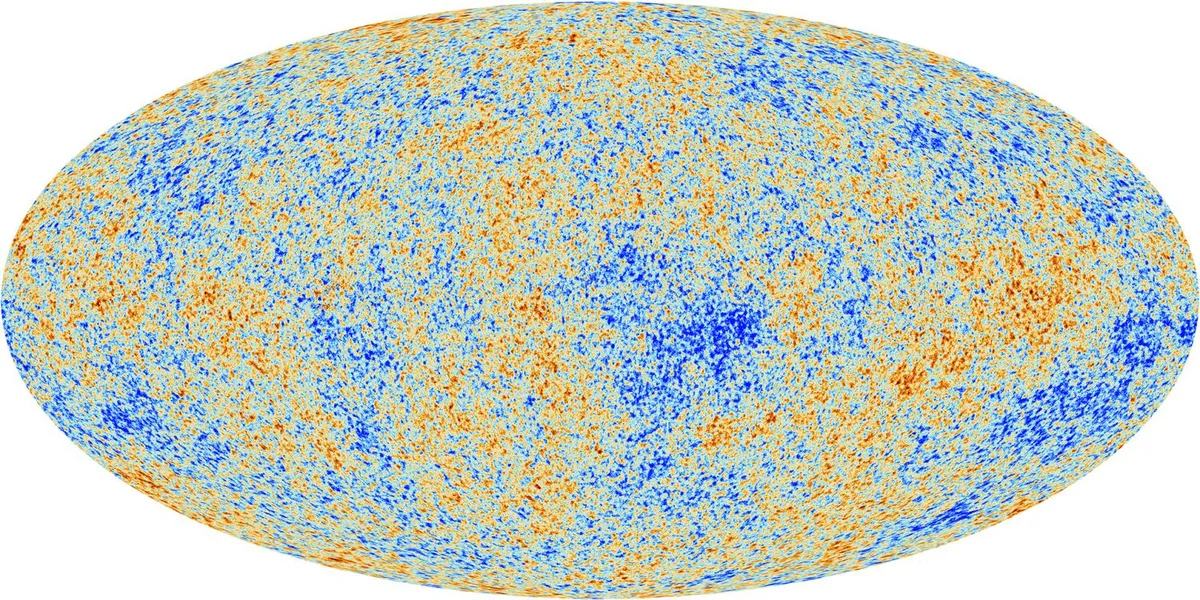
A snapshot of the Cosmic Microwave Background - heat left over from the Big Bang - when the Universe was just 380,000 years old. What came before? Credit: ESA and the Planck Collaboration

A snapshot of the Cosmic Microwave Background - heat left over from the Big Bang - when the Universe was just 380,000 years old. What came before? Credit: ESA and the Planck Collaboration

Beginning of time

When astronomers talk about the Big Bang, they usually do not refer to the very beginning of the Universe (time zero), but to the incredibly hot and compact state of the Universe in the first couple of minutes of its existence.

To some extent, this is because no one has a real clue about the true nature of time, let alone about the beginning of time.

British physicist Julian Barbour, for one, has argued that time doesn’t even exist, except as an illusion in our minds.

According to others (including Stephen Hawking), time came into existence together with the Universe, rendering the whole concept of the word ‘before’ meaningless.

Asking what happened before the Big Bang would be like asking what lies north of the North Pole, or what distance is shorter than zero.

Hubble Ultra-Deep Field 3, June 2014. Virtually every point of light in this image is a galaxy, each composed of billions of stars. Credit: NASA, ESA, H. Teplitz and M. Rafelski (IPAC/Caltech), A. Koekemoer (STScI), R. Windhorst (Arizona State University), Z. Levay (STScI)

Will all matter eventually crush back in on itself? Credit: NASA, ESA, H. Teplitz and M. Rafelski (IPAC/Caltech), A. Koekemoer (STScI), R. Windhorst (Arizona State University), Z. Levay (STScI)

Alternative theories

Then again, we simply don’t know whether or not there was time before the Big Bang.

According to the once-popular idea of the cyclic (or oscillatory) Universe, the current expansion of space could one day revert into a contraction, and the resulting Big Crunch could bounce into a new Big Bang, starting the next cycle of an eternal sequence.

For more on this, read our interview with Katie Mack about the end of the Universe.

It’s just one of many hypotheses in which our Universe is not unique, but part of a possibly infinite multiverse, one way or another.

And if the multiverse is also infinite in time, we’re back to the idea that everything has existed forever, conveniently circumnavigating the nagging question of a beginning.

What is antimatter? Credit: NASA/JPL

Credit: NASA/JPL

Finally, South African physicist Neil Turok thinks the Big Bang not only spawned our Universe, but also an anti-Universe, composed of anti­­​­matter and running backward in time.

Again, an intriguing idea, but there’s also no chance of confirmation (or rejection!) via observations.

In the end, we have to admit we’re ignorant about the true beginning of the Universe.

And even if we lean towards an eternal multiverse with no real beginning at all, we don’t know why there is something (or, more to the point, why there is everything) instead of nothing.


{ https://www.skyatnightmagazine.com/ }

Hoe vind je dit bericht?
Geschreven door peter om 22:20 Stuur door

This moss just survived months in space. Here's why it could one day help humans live on Mars

This moss just survived months in space. Here's why it could one day help humans live on Mars

By Iain Todd

A team of scientists have confirmed that a sample of moss – the small plant often found in damp, shady spots – was able to survive the harsh radiation of space.

On Earth, moss is known for its resilience, surviving in the Himalayas, Antarctic tundra, lava fields and even in the scorching sands of East California's Death Valley.

Now moss can add another string to its bow: the ability to survive in space for months on end.

A study found more than 80% of moss spores survived 9 months outside the International Space Station – and returned to Earth still capable of growing.

This is the first demonstration that moss can withstand long-term exposure to the extreme elements of space, and could have implications for humans' ability to develop ecosystems on barren planets like Mars.

Moss growing on arctic tundra, Nunavut Territory, Vansittart Island, Canada. Credit: Paul Souders / Getty Images Moss growing on arctic tundra, Nunavut Territory, Vansittart Island, Canada. Credit: Paul Souders / Getty Images

Why moss?

The study was led by Tomomichi Fujita of Hokkaido University, Japan, who was inspired by moss’s ability to survive among the harshest conditions on Earth.

His question was simple: if moss can survive glaciers, deserts and volcanoes, could it also survive space?

"Most living organisms, including humans, cannot survive even briefly in the vacuum of space," says Fujita.

"However, the moss spores retained their vitality after nine months of direct exposure."

The results, he says, suggest that life on Earth contains "intrinsic mechanisms" that can endure conditions far beyond our planet.

A sporophyte sample from moss that survived the harsh environment of space on the exterior of the International Space Station. Credit: Tomomichi Fujita

A sporophyte sample from moss that survived the harsh environment of space on the exterior of the International Space Station. Credit: Tomomichi Fujita

Putting moss to the test

Before sending moss to space, the researchers simulated space-like stresses on Physcomitrium patens, a well-studied moss known as spreading earthmoss.

They evaluated three moss structures:

  • Protonemata – juvenile moss
  • Brood cells – stress-induced stem cells
  • Sporophytes – reproductive capsules containing spores

The team exposed them to extreme temperatures, vacuum conditions and intense ultraviolet (UV) radiation.

UV radiation proved the most damaging. Juvenile moss died under high UV exposure or severe temperatures.

Brood cells fared better, but the real champions were the encased spores, which tolerated UV radiation roughly 1,000 times better than the other structures.

The spores also survived freezing at –196°C (–320°F) for over a week and withstood 55°C (131°F) heat for a month.

The researchers suggest the sporophyte’s protective outer casing shields the spore from radiation and physical damage.

This is likely an evolutionary feature dating back 500 million years, when early bryophytes first moved from water onto land.

Humans need sophisticated equipment to survive outside the Space Station. Moss seems to fare much better. Credit: NASA

Humans need sophisticated equipment to survive outside the Space Station. Moss seems to fare much better. Credit: NASA

The ultimate test: a trip beyond Earth

To test these structures under real cosmic conditions, the team launched hundreds of sporophytes to the International Space Station in March 2022.

Astronauts mounted them on the Space Station's exterior, where they endured vacuum, cosmic radiation, microgravity and temperature extremes for 283 days.

In January 2023, the spores returned to Earth.

"We expected almost zero survival," Fujita says. "But the result was the opposite: most of the spores survived.:

More than 80% survived, and of those, all but 11% successfully germinated in the lab.

The team checked chlorophyll levels as well – essential pigments for photosynthesis – and found normal levels across the spores, aside from a 20% drop in chlorophyll a.

But even that reduction did not appear to harm the spores’ overall health.

A previous experiment on the Space Station, the Environmental Response and Utilization of Mosses in Space – Space Moss experiment, saw mosses grown inside the ISS to determine how microgravity affects their growth, development, gene expression, photosynthetic activity and other features. Credit NASA

A previous experiment on the Space Station, the Environmental Response and Utilization of Mosses in Space – Space Moss experiment, saw mosses grown inside the ISS to determine how microgravity affects their growth, development, gene expression, photosynthetic activity and other features. Credit NASA

How long could moss survive in space?

Using their experimental data, the researchers built a model to estimate long-term survival.

Their rough prediction: up to 5,600 days (around 15 years) in space.

This estimate is preliminary, they caution, and more data will be needed to refine it.

Still, the finding underscores the astonishing durability of early land plants, and raises new possibilities for space exploration.

The researchers hope their results will guide future work on how plants interact with extraterrestrial soils and how hardy species like moss might support agricultural systems beyond Earth.

"Ultimately, we hope this work opens a new frontier toward constructing ecosystems in extraterrestrial environments such as the Moon and Mars," says Fujita.

"I hope that our moss research will serve as a starting point."

RELATED VIDEOS

{ https://www.skyatnightmagazine.com/ }

Hoe vind je dit bericht?
Geschreven door peter om 22:00 Stuur door

“What I Saw Was Not Our Technology”: A Navy Officer Breaks the Silence on Mysterious Underwater UFOs

“What I Saw Was Not Our Technology”: A Navy Officer Breaks the Silence on Mysterious Underwater UFOs

From the depths of the ocean, UFOs surface as a Navy officer warns of a threat too real to be ignored.

Written by Ashley Morgan

“what I Saw Was Not Our Technology” A Navy Officer Breaks The Silence On Mysterious Underwater Ufos

© Credit: Shutterstock

An extraordinary new investigation, originally published by Popular Mechanics is drawing fresh attention to a string of unexplained encounters between U.S. Navy personnel and unidentified submerged objects (USOs). These sightings—recorded over decades and across multiple oceans—are now being described by former officers as a legitimate threat and part of a global pattern that defies conventional physics.

Unexplained Encounters During Training Missions

In 2014, Lieutenant Ryan Graves, a U.S. Navy F/A-18 pilot stationed off the coast of Virginia Beach, began to detect anomalies during flight training missions. Initially dismissed as radar glitches, the signals reappeared repeatedly—only this time, they were backed by infrared and optical confirmation.

According to Graves, these unidentified objects could hover completely still or accelerate to supersonic speeds. They were seen across all altitudes, always above or near the ocean. Graves reported seeing a particularly strange object: a black or dark gray cube enclosed in a clear sphere, estimated to be 5 to 15 feet in diameter. It passed within 50 feet of one of the jets. That incident, he later explained, “was the turning point.”

When Graves later spoke with pilots stationed on the USS Nimitz and USS Princeton off the West Coast, he discovered that similar sightings had occurred for years.

Craft That Travel Between Air And Sea

The military has since adopted the term unidentified anomalous phenomena (UAPs) to describe objects like those witnessed by Graves. A growing number of them appear to be transmedium—able to travel from air to sea without slowing down, splashing, or generating turbulence. These transitions contradict what we know about aerodynamics and hydrodynamics.

Rear Admiral Tim Gallaudet, a retired oceanographer and Navy commander, was among the first to review footage of these transmedium encounters, captured in 2015 by jets from the USS Theodore Roosevelt. The craft shown in those videos moved at extraordinary speeds, rotated midair, and left no propulsion trail.

“What I saw was not our technology,” Gallaudet said. “No nation has craft that can move like that.” For him, these phenomena represent a national research priority. He now collaborates with Graves and former Pentagon officials to push for transparency and investigation.

Four Major Incidents Still Unexplained

Several high-profile military encounters continue to raise questions about unidentified submerged objects. In 2004, Navy pilots aboard the USS Nimitz witnessed a Tic Tac–shaped craft that dropped from 80,000 feet to sea level in under one second, with no wings or engines.

In 2013, infrared footage from Aguadilla, Puerto Rico captured a spherical object entering the ocean without a splash, resurfacing, then splitting into two before submerging—defying known flight and fluid dynamics.

A 1990s incident involved a CH-53 Sea Stallion helicopter crew near Puerto Rico. As they retrieved a drone, a massive dark object rose from below and pulled it back underwater, leaving the pilot stunned.

In 2019, the USS Omaha recorded a spherical object hovering over the Pacific before it dropped into the water without any visible splash. A sailor later confirmed similar sightings aboard the USS Jackson in 2023.

This New U.S. Law Could Expose Alien Technology

The volume and consistency of these reports have led to real political action. In 2023, Congress passed the UAP Disclosure Act, mandating federal agencies to catalog, analyze, and disclose data about recovered nonhuman craft and biologics. The legislation marks a shift in how the U.S. treats this topic, acknowledging the possibility of nonhuman intelligence and hinting at secret recovery programs.

Graves and Gallaudet recently briefed Washington officials on the national security implications of USOs. “We’re at a unique moment in history,” Graves said. “People have access to tools that can reveal things. The momentum is building.”

Reflecting on what lies beneath, Gallaudet posed a final theory: “Maybe they lived here for a long time, before we even evolved, and sought safety from the Earth’s atmospheric and geologic cataclysms by creating a habitat or place to live beneath the seafloor… That’s one hypothesis.”

RELATED VIDEOS

{ https://dailygalaxy.com/category/news/ }

Hoe vind je dit bericht?
Geschreven door peter om 21:22 Stuur door

Curiosity Rover Navigates Mars’ Spiderweb-Like Formations, Here’s What Scientists Are Finding

Curiosity Rover Navigates Mars’ Spiderweb-Like Formations, Here’s What Scientists Are Finding

Mars’ mysterious ‘spiderwebs’ hold ancient clues, could they be signs of past water flow?

Curiosity Rover Navigates Mars' Spiderweb Like Formations, Here’s What Scientists Are Finding

© Credit: Shutterstock

NASA’s Curiosity rover has unveiled an incredible feature on Mars: intricate geological formations resembling giant spiderwebs, known as boxwork ridges, that stretch across the Martian surface. For the past six months, Curiosity has been carefully exploring this region, and its findings are raising some very interesting questions about the possibility of life on Mars long before it became the dry, desert world we see today.

These boxwork formations, with ridges ranging from three to six feet tall, aren’t just a weird visual anomaly. They tell a story about Mars’ watery past. The discovery comes at a time when scientists are trying to piece together the history of water on Mars and how it may have supported life, or at least provided the conditions that could have.

What the Ridges Might Reveal?

Curiosity’s mission on Mars is focused on one big question: Did water ever flow on Mars in a way that might have supported life? According to NASA, Curiosity has been exploring an area of Mount Sharp where these boxwork formations can be found, and the data it’s collecting is helping answer that question in unexpected ways.

“The formations suggest ancient groundwater flowed on this part of the Red Planet later than scientists expected. This possibility raises new questions about how long microbial life could have survived on Mars billions of years ago.”

Curiosity’s detailed exploration of these ridges has added some important evidence.

“Seeing boxwork this far up the mountain suggests the groundwater table had to be pretty high,” said Tina Seeger, one of the scientists leading the investigation. “And that means the water needed for sustaining life could have lasted much longer than we thought looking from orbit.”

This Image Of Boxwork Formations Was Captured By Nasa’s Curiosity Rover On Mars.

This image of boxwork formations was captured by NASA’s Curiosity rover on Mars.

Credit: NASA/JPL-Caltech/MSSS

Rover Exploration: Navigating the Tight Ridges

But getting to the bottom of this discovery isn’t exactly easy. Curiosity, an SUV-sized rover, is rolling across a landscape with ridges just a few feet wide. For the team at NASA’s Jet Propulsion Laboratory, navigating this terrain is a bit like threading a needle.

“It almost feels like a highway we can drive on. But then we have to go down into the hollows, where you need to be mindful of Curiosity’s wheels slipping or having trouble turning in the sand,” explained Ashley Stroupe, an operations systems engineer.

It’s a constant balancing act to make sure the rover doesn’t get stuck or damaged, all while trying to collect as much data as possible from these fascinating Martian features.

Despite the challenges, the rover has been able to gather rock samples and analyze them with some seriously sophisticated equipment.

Minerals Left Behind By Drying Groundwater Billions Of Years Ago On Mars Created These Bumpy Nodules.
Minerals left behind by drying groundwater billions of years ago on Mars created these bumpy nodules.
Credit: NASA/JPL-Caltech/MSSS

What the Boxwork Reveals?

As Curiosity ascends the mountain, it’s uncovering signs of a climate that fluctuated between wet and dry conditions. The boxwork formations themselves are evidence of a time when water was more abundant, even if it wasn’t around in the way we see it on Earth today. By analyzing the mineral content and the structure of the boxwork ridges, scientists are starting to put together a more nuanced timeline of Mars’ climate history.

The minerals that the rover has found in the ridges, such as clay and carbonate, suggest that groundwater may have been active for much longer than researchers initially thought.

“We can’t quite explain yet why the nodules appear where they do.” As Seeger suggested. “Maybe the ridges were cemented by minerals first, and later episodes of groundwater left nodules around them,” hinting at the possibility of multiple wet periods across Mars’ history.

RELATED VIDEOS


{ https://dailygalaxy.com/category/space/ }

Hoe vind je dit bericht?
Geschreven door peter om 21:00 Stuur door

Eco Engineers: 5 Animals That Can Reshape Earth's Waterways

Eco Engineers: 5 Animals That Can Reshape Earth's Waterways

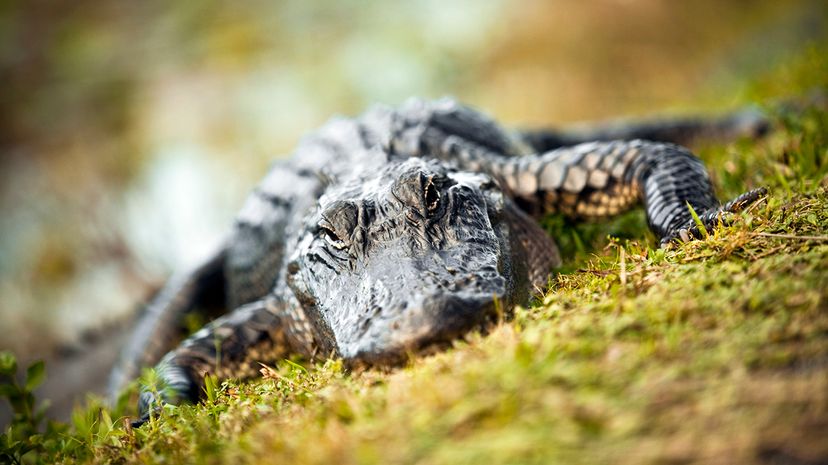
American alligator
American alligators in the Florida Everglades use their snouts and claws to create massive trenches known as "gator holes."  Paul Giamou/Getty Images

Nutrients, water and living space. Those are some of life's basic needs. Anything that alters their distribution is going to be a key factor in the struggle for survival. Change the waterways, the landscape or the availability of food and an entire ecosystem can be reshaped.

Certain species wield that power to great effect. One of the most fascinating topics in biology is the role of ecosystem engineers. Scientists define these as "organisms that directly or indirectly modulate the availability of resources to other species by causing physical state changes to biotic or abiotic materials."

In simple terms, ecosystem engineers alter their physical surroundings in ways that have major impacts on the livelihood of other organisms. A perfect example would be the American alligator (Alligator mississippiensis).

Out in the wild, the big reptiles like to make their own swimming pools. Using their snouts and claws, they create massive trenches known as "gator holes" in the limestone around Florida's Everglades. In short order, these things flood with water. The depressions also tend to remain full of water, even well into the dry season — a time when standing water is scarce.

For other life forms, these gator holes provide badly-needed oases. Frogs and turtles pour into these convenient little ponds, while plants surround their rims, attracting all kinds of insects. So, as unlikely as it sounds, Florida alligators are environmental stewards. They create brand-new homes for their neighbors and — in the process — strengthen the biodiversity of the Everglades.

Other ecosystem engineers leave different marks. Today, we're looking at five that reshape rivers, link ponds together and transform mangrove creeks. Mapmakers of the world, you'll want to keep your erasers handy when these beasties come to town.

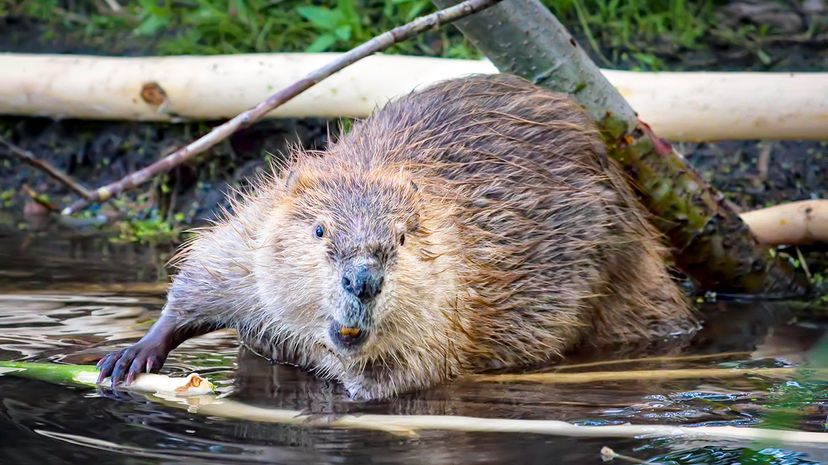
5: Beavers

beaver Beavers can wreak havoc digging canals and building dams that often block rivers.  Dean Fikar/Getty Images

The term "busy as a beaver" is high praise indeed. Beavers are insanely hard-working rodents; a lone individual can cut down up to 200 trees in a single year. Famously, they build sturdy homes — or "lodges" — for themselves out of branches, mud and other materials. They can also make their own large-scale ponds by damming streams.

With a well-placed dam, a beaver family will be able to regulate water flow. On the structure's upstream side, backlogged water may give rise to a standing pond where none previously existed. This not only gives beavers a place to build their lodges, it also affords easy access to surrounding trees. Often, a couple of inches (5 centimeters) or feet (0.6 meters) of water covers the bases of nearby pines and hardwoods that once stood on dry ground. As a result, beavers can swim right up to these trees. They also like to dig canals that branch out of the new ponds, penetrating deeply into the local forests.

These new beaver-created wetlands provide homes for smaller animals like amphibians. Plus, the rodents' dams make great natural filters, blocking excess nitrogen from our creeks and streams.

However, not all the side-effects are positive. When a beaver dam fails, it's liable to flood towns or farms. The aftermath can be expensive: In the southeastern U.S. alone, these floods are responsible for an estimated $22 million in yearly damages to the timber industry. It's not surprising, then, that many people view beavers as pests. If you've got a beaver problem, know that humane solutions are out there.

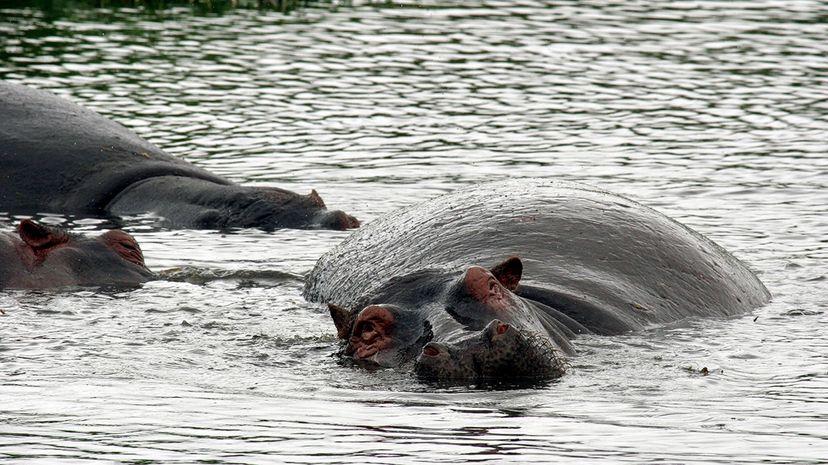
4: Hippos

hippos Hippos carve up and revamp Africa's waterways just by going about their daily business.  Arterra/Getty Images

Landscaping is child's play for these guys. Put a group of hippos into a floodplain with lots of nice, soft soil and they'll start reconfiguring the turf like crazy. The massive creatures like to plow through the reed beds that ring bodies of water. This creates deep depressions in the underlying soil, which in turn become channels. Also, on hot days, hippos will sometimes relax in the cool comfort of freshwater pools.

However, these don't offer much in the way of food. So when hunger strikes, the hippos leave their little pools to feed elsewhere. All of this coming and going produces what Discover magazine once called "hippo highways."

Worn down into deep, plant-free ravines by wandering hippos, these footpaths can be as much as 16 feet (5 meters) wide and — just like gator holes — they're quick to fill up with water. What's more, hippo highways linking the pools to big rivers can also be established. If the area should flood, these connection points may become an outlet for surging water. They also enable swamplands to expand. And under the right circumstances, the trench-like trails will divert a great deal of sediment from rivers into lagoons or ponds.

So to make a long story short, just by going about their daily business, hippos can carve up and revamp Africa's waterways. Neat. But if hippopotamuses are true blue ecosystem engineers, then how do they affect other organisms?

Well, one 2015 analysis determined that hippo dung is an important source of nutrition for at least some of the fish and insects that share the animal's native range. Don't underestimate the power of poop.

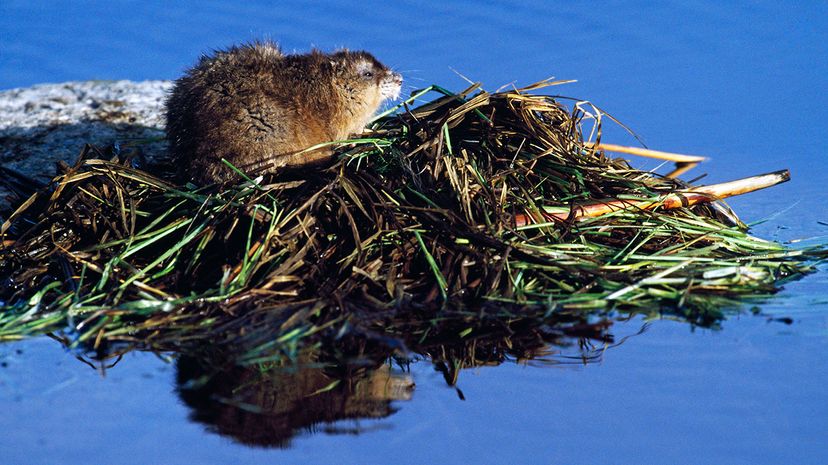
3: Muskrats

muskrat hut The burrows muskrats build have big implications for the waterways because they promote erosion, which can cause riverbanks to collapse.  Design Pics/David Ponton/Getty Images

Beavers may be the poster children for ecosystem engineers, but other rodents also deserve some acknowledgement for their roles in shaping habitats.

Consider the muskrat. Like beavers, muskrats are known to create dome-shaped lodges out of things like twigs and leaves. But this isn't their only method of building shelters. Muskrats who live alongside rivers, ponds or ditches tend to eschew lodges in favor of deep holes they've burrowed into the banks. The critters begin by diving under the water, where they start working on a tunnel about 6 to 18 inches (15.2 to 45.7 centimeters) below the surface. From there, the muskrats dig farther and farther at an upward slant. Eventually, they produce a warm, dry living chamber that's only accessible through underwater entrances. Not a bad way to keep uninvited guests out.

Such burrows can have big implications for the waterways they're connected to. For one thing, the structures promote erosion, which can cause banks to collapse. This prompts water to race into the afflicted area, disrupting the river flow. Over time, if enough water is re-routed toward the collapsed bank, the river's curvature might change — thanks partly to the rodents. And much to the annoyance of human land developers, when a muskrat burrows into a manmade dam, unwanted drainage often follows.

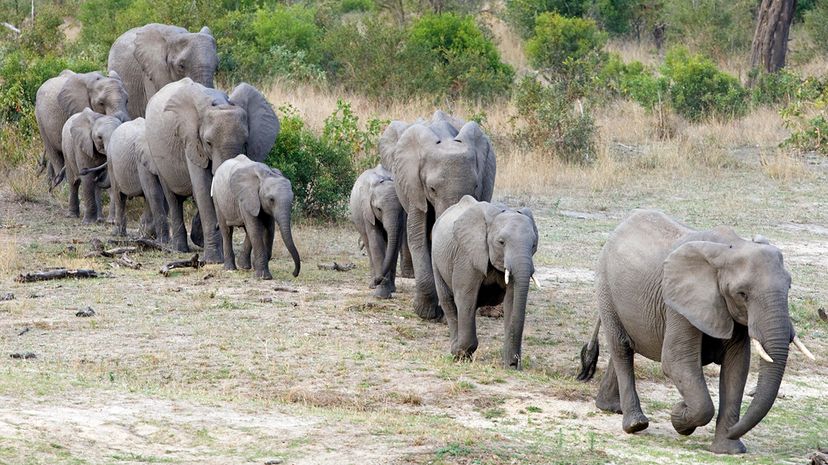
2: Elephants

elephant herd African elephants transform the landscape and waterways in multiple ways.  Wim van den Heever/Getty Images

It's hard to keep a full belly when you weigh 7 tons (6.35 metric tons). African elephants are larger than life and have appetites to match. On a typical day, an adult will spend 12 to 18 hours eating, devouring as much as 600 pounds' (272 kilograms') worth of food in the process. All that munching is vital to the ecosystem. So are the bowel movements that come later.

Elephant dung is a nutritious fertilizer for the soils of Africa; it's also a vehicle by which many seeds are dispersed. Furthermore, by knocking down trees and eating shrubs, these colossal animals convert forests into grasslands.

A 2009 study revealed even more about the transformative powers that African elephants have over their habitats. Appearing in an issue of the journalBioScience, this study reported on the ecosystem engineers in Botswana's Okavango Delta. Elephants, the co-authors noted, are great at building water channels. The tusked herbivores like to cover the same land routes over and over again, making trails in the process. Sometimes, multiple generations of elephants will re-use the exact same footpaths. As time goes by, the heavy animals can't help but compress the soil, turning their walkways into trenches.

According to study authors, when elephants move back and forth between two bodies of water, their sunken trails become nice conduits. Thus, rivers or ponds that were once isolated can be merged via elephant-made canals.

And that's not the only service that elephant routes provide. In 2010, environmental scientists Roy Sidle and Alan Ziegler published a seven-year study on an Asian elephant trail in northern Thailand. By inspecting both water and sediment levels, they determined that this pathway helped send monsoon runoff directly into the local streams.

1: Burrowing Crabs

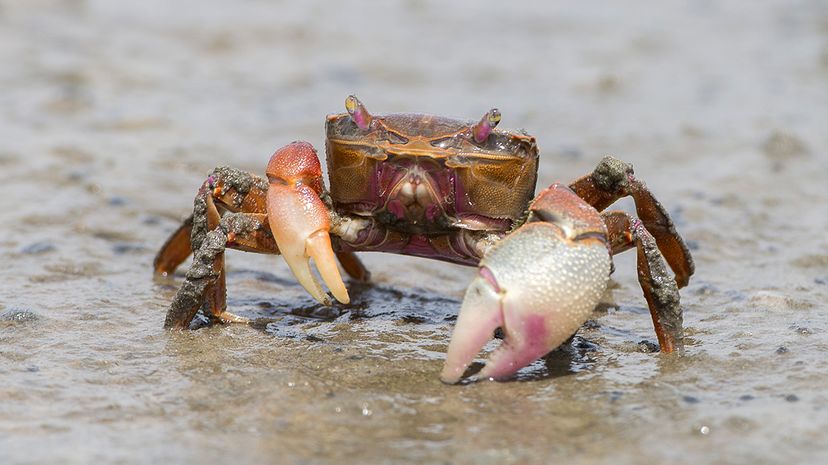
Burrowing crab Burrowing crabs trenches along mangrove swamp shorelines so deep they often collapse.  Nortondefeis via Wikimedia Commons

It's time to take a break from our own phylum. A number of crustaceans are great diggers, including the so-called fiddler crabs (genus Uca), which shelter in tunnels measuring up to 3 feet (0.9 meters) or more in depth. (The holes are quite a construction project, given the fact that most fiddler species are less than 2 inches (5 centimeters) wide.

And then we've got the "burrowing crabs" of the genus Chasmagnathus. Unrelated to the fiddlers, these guys live in the mangrove swamps, salt marshes and estuaries of eastern Asia. For many years, a South American species formerly known as Chasmognathus granulatus was assigned to this genus, but in 2006, it was reclassified and renamed Neohelice granulata — though, confusingly, some scientists still use the old name.

Often found in the mangrove swamps of Brazil and Argentina, Neohelice granulata is an efficient, deep-digging burrower. Like muskrat holes, the tunnels these small crabs builds are liable to weaken the surrounding turf. On mangrove swamp shorelines, this has the effect of widening tidal creeks, whose mud and clay-based banks are rendered more vulnerable to erosion by the digging invertebrates. And that's just part of the story. Because burrowing crabs have such a pronounced effect on sediment composition, their tunnels can also cause completely new creeks to form within these mangrove systems.

So despite being rather miniscule animals, burrowing crabs can shake up entire waterway networks. Will nature ever cease to amaze us?

Hoe vind je dit bericht?
Geschreven door peter om 18:37 Stuur door

Daring Space Mission Would Catch Up With 3I/ATLAS and Intercept It

Daring Space Mission Would Catch Up With 3I/ATLAS and Intercept It

There's still time.
Scientists think it's technically still possible to send a probe and have a closer look at interstellar object 3I/ATLAS.
Getty / Futurism

Interstellar object 3I/ATLAS provided scientists with an exceptionally rare opportunity to study the nature of other planetary systems beyond our own. It was first discovered in July of last year, heading straight past the Sun and making its closest approach to our star in late October.

It’s been speeding out of the solar system ever since, releasing copious amounts of carbon dioxide and water vapor that potentially date back billions of years.

But scientists think it’s technically still possible to send a probe and have a closer look, as Space.com reports. It’s admittedly a long shot: the mission would have to launch by 2035 to catch up with 3I/ATLAS by 2085, at which point it will be over 700 times the distance between the Sun and Earth away from us, or over four times the distance NASA’s Voyager 1 spacecraft has covered over the last 48 years.

To gain enough speed, such a probe would have to perform close flybys of the Sun, making use of the Oberth effect to borrow energy from the star’s extreme gravitational field. As former NASA staffer and Space Initiatives chief scientist Marshall Eubanks told Space.com, it’s common for spacecraft to use the effect. However, as detailed in a new yet-to-be-published paper, he and his colleagues proposed performing a major burn during the closest approach to reach massive levels of acceleration — a delta-V, or a change in velocity, of over five miles per second.

Besides reaching potentially record-breaking speeds for any spacecraft, it would also have to endure searing temperatures as it brushes by the Sun.

After its daring solar flyby, the spacecraft would then need to perform several flybys of Venus to speed up even more, not unlike NASA’s Parker Solar Probe. In their paper, the researchers propose using a “refueled Starship Block 3” in low-Earth orbit, referring to SpaceX’s enormous launch platform, which would have “sufficient performance for such a mission.”

But whether it would be worth the effort to careen after 3I/ATLAS for decades remains debatable. The interceptor would also only be able to perform a flyby some 50 years from now due to the difference in velocities, greatly undermining the usefulness of such a major undertaking.

Fortunately, as more powerful space telescopes like the Vera C. Rubin Observatory come online, 3I/ATLAS probably won’t be the last interstellar object to be detected cruising by in the near future.

“We’ll just have to see,” Eubanks told Space.com. “Maybe after, say, ten interstellar objects have been found, 3I will seem commonplace and it won’t seem worthwhile to mount an expedition to chase it.”

However, any future interstellar objects should be chased by spacecraft that are already in orbit, Eubanks and his colleagues argued.

“There are better mission architectures, using a probe already in orbit in space, which would intercept an interstellar object around perihelion in much less time, rendering an Oberth unnecessary,” Adam Hibberd, Optimum Interplanetary Trajectory Software creator and coauthor of the latest paper, told Space.com.

Conveniently, the European Space Agency is already planning to launch its Comet Interceptor mission as soon as late 2028 and “park” it while it awaits its target, opening the door for studying future interstellar visitors.

“I feel quite confident that when we develop the ability to reach these interstellar objects, there will be a strong desire to directly explore at least some of them,” Eubanks told the outlet.

More on 3I/ATLAS: 

Victor Tangermann Avatar Victor Tangermann - Senior Editor

{ https://futurism.com/category/space }

Hoe vind je dit bericht?
Geschreven door peter om 18:20 Stuur door

Curiosity examined Martian “web”

Curiosity examined Martian “web”

The Curiosity rover has studied a network of Martian “webs” — structures formed by ancient underground water. This raises the question once again of whether life could have existed on the Red Planet.

Panorama showing the Boxwork ridges on Mars. Source: NASA/JPL-Caltech/MSSS

One of the distinctive features of Mars are geological formations called “boxworks,” which look like giant spider webs from space. They are low ridges stretching for many kilometers, with heights ranging from 1 to 2 meters, with sandy depressions between them.

To explain their shape, scientists have hypothesized that underground water once flowed through large cracks in the bedrock, leaving minerals behind. These minerals then reinforced the areas that became ridges, while other areas that did not have mineral reinforcement were eroded over time.

Martian “highway”

However, until recently, this was only a hypothesis. Although boxwork ridges also exist on Earth, they rarely exceed a few centimeters in height and are usually found in caves or dry sandy environments. To reveal the nature of these formations, it was necessary to examine them closely.

Selfie taken by the Curiosity rover. Source: NASA/JPL-Caltech/MSSS

The Curiosity rover was used to solve this problem, which proved to be a real challenge for the team controlling it. They needed to plan the route for the 900-kilogram rover so that it could travel along the tops of ridges whose width was not much greater than the rover’s own width. 

“It almost feels like a highway we can drive on. But then we have to go down into the hollows, where you need to be mindful of Curiosity’s wheels slipping or having trouble turning in the sand,” said Ashley Stroup, an operations systems engineer at NASA’s Jet Propulsion Laboratory. “There’s always a solution. It just takes trying different paths.”

Water on Mars

Orbital images of the boxwork showed characteristic dark lines. In 2014, it was suggested that there were cracks in the rocks where groundwater seeped in and allowed minerals to concentrate. After examining the ridges up close, Curiosity confirmed that these lines are indeed cracks.

These bumpy nodules formed from minerals left behind after groundwater on Mars dried up billions of years ago. Source: NASA/JPL-Caltech/MSSS

The rover also discovered irregular formations called nodules, which are a clear sign of the presence of underground water in the past. Unexpectedly, these nodules were found not near the central cracks, but along the walls of the ridges and in the depressions between them.

This discovery is particularly important given the geography of the region. Curiosity is climbing the slope of the 5-kilometer-high Mount Sharp. Each layer was formed during different geological eras. The higher Curiosity climbs, the more signs of alternating periods of water drying up and wet periods with rivers and lakes appear in the landscape.

“Seeing boxwork this far up the mountain suggests the groundwater table had to be pretty high,” said Tina Seeger of Rice University in Houston, one of the mission scientists leading the boxwork research. “And that means the water needed for sustaining life could have lasted much longer than we thought looking from orbit.”

Sometime in March, Curiosity will leave the boxwork and begin studying the sulfate layer covering Mount Sharp. It consists of salt minerals formed as a result of water drying up. Studying it will help us learn even more about what the climate of the Red Planet was like billions of years ago.

{ https://universemagazine.com/en/articles-en/ }

Hoe vind je dit bericht?
Geschreven door peter om 16:56 Stuur door

Meer van UFO'S of UAP'S, ASTRONOMIE, RUIMTEVAART, ARCHEOLOGIE, OUDHEIDKUNDE, SF-SNUFJES EN ANDERE ESOTERISCHE WETENSCHAPPEN - DE ALLERLAATSTE NIEUWTJES

↑ Terug naar de berichten