Naar de inhoud

UFO'S of UAP'S, ASTRONOMIE, RUIMTEVAART, ARCHEOLOGIE, OUDHEIDKUNDE, SF-SNUFJES EN ANDERE ESOTERISCHE WETENSCHAPPEN - DE ALLERLAATSTE NIEUWTJES

UFO's of UAP'S in België en de rest van de wereld
akke.beakke.be
Ontdek de Fascinerende Wereld van UFO's en UAP's: Jouw Bron voor Onthullende Informatie! Ben jij ook gefascineerd door het onbekende? Wil je meer weten over UFO's en UAP's, niet alleen in België, maar over de hele wereld? Dan ben je op de juiste plek! België: Het Kloppend Hart van UFO-onderzoek In België is BUFON (Belgisch UFO-Netwerk) dé autoriteit op het gebied van UFO-onderzoek. Voor betrouwbare en objectieve informatie over deze intrigerende fenomenen, bezoek je zeker onze Facebook-pagina en deze blog. Maar dat is nog niet alles! Ontdek ook het Belgisch UFO-meldpunt en Caelestia, twee organisaties die diepgaand onderzoek verrichten, al zijn ze soms kritisch of sceptisch. Nederland: Een Schat aan Informatie Voor onze Nederlandse buren is er de schitterende website www.ufowijzer.nl, beheerd door Paul Harmans. Deze site biedt een schat aan informatie en artikelen die je niet wilt missen! Internationaal: MUFON - De Wereldwijde Autoriteit Neem ook een kijkje bij MUFON (Mutual UFO Network Inc.), een gerenommeerde Amerikaanse UFO-vereniging met afdelingen in de VS en wereldwijd. MUFON is toegewijd aan de wetenschappelijke en analytische studie van het UFO-fenomeen, en hun maandelijkse tijdschrift, The MUFON UFO-Journal, is een must-read voor elke UFO-enthousiasteling. Bezoek hun website op www.mufon.com voor meer informatie. Samenwerking en Toekomstvisie Sinds 1 februari 2020 is Pieter niet alleen ex-president van BUFON, maar ook de voormalige nationale directeur van MUFON in Vlaanderen en Nederland. Dit creëert een sterke samenwerking met de Franse MUFON Reseau MUFON/EUROP, wat ons in staat stelt om nog meer waardevolle inzichten te delen. Let op: Nepprofielen en Nieuwe Groeperingen Pas op voor een nieuwe groepering die zich ook BUFON noemt, maar geen enkele connectie heeft met onze gevestigde organisatie. Hoewel zij de naam geregistreerd hebben, kunnen ze het rijke verleden en de expertise van onze groep niet evenaren. We wensen hen veel succes, maar we blijven de autoriteit in UFO-onderzoek! Blijf Op De Hoogte! Wil jij de laatste nieuwtjes over UFO's, ruimtevaart, archeologie, en meer? Volg ons dan en duik samen met ons in de fascinerende wereld van het onbekende! Sluit je aan bij de gemeenschap van nieuwsgierige geesten die net als jij verlangen naar antwoorden en avonturen in de sterren! Heb je vragen of wil je meer weten? Aarzel dan niet om contact met ons op te nemen! Samen ontrafelen we het mysterie van de lucht en daarbuiten.

Archief

All-domain Anomaly Resolution Office Hosts Private Workshop with Civilian Researchers, Universities, and Government Agencies

All-domain Anomaly Resolution Office Hosts Private Workshop with Civilian Researchers, Universities, and Government Agencies

The Pentagon’s All-domain Anomaly Resolution Office (AARO) has outlined plans to standardize the collection and analysis of reports on unidentified anomalous phenomena (UAP), marking a shift toward greater collaboration with civilian researchers and more structured public data sharing.

The plans were conveyed in a new report that appeared on AARO’s website earlier this month, detailing an August 2025 private meeting with experts from government, academia, and civilian research organizations convened in the Washington, D.C., area.

Coordinated by AARO and hosted by Associated Universities, Inc. (AUI), the workshop marked a significant step in AARO’s engagement with civilian and independent research groups. The meeting sought to establish a more collaborative and professional process for standardizing the study of UAP within the Department of War (DoW), while potentially increasing transparency compared with previous years.

Topics discussed at the 2025 Workshop

Traditionally, many UAP gatherings involving academics or government officials have focused on presenting findings, historical analysis, or scientific data. The AARO workshop took a different approach, forming breakout groups to address a foundational challenge: how to collect, manage, integrate, and analyze UAP data using rigorous scientific methods—both internally at AARO and in collaboration with civilian datasets.

Areas that the August 2025 workshop focused on included:

  • Assessing the current landscape of UAP reporting systems and data repositories;
  • Identifying key challenges and gaps in UAP data collection, standardization, and accessibility;
  • Exploring methodologies for data analysis and pattern recognition in UAP reports.
  • Nurturing trust and collaboration among researchers, government agencies, and civilian organizations; and
  • Proposing recommendations for developing a robust UAP data infrastructure.

UAP Report Collection

UAP reports originate from a wide array of sources, including military logs, pilot reports, civilian testimony, archival records, social media posts, and sensor-based systems such as radar and imagery platforms.

In the past, challenges with UAP data collection have ranged from fragmentation and inconsistent formatting to the lack of standardized metadata and limited cross-correlation between datasets. Classification restrictions, language differences, social stigma, and inconsistent retention policies have further complicated access for both government and civilian researchers.

According to the report, participants in the 2025 workshop emphasized that progress in UAP research depends on building a shared data infrastructure between government and civilian researchers. One major recommendation was the development of standardized metadata templates that combine human expertise with AI tools, leverage existing infrastructure, support case triage, and integrate interviews and historical reports, while prioritizing new high-quality data.

These templates would record contextual information such as time, location, morphology, provenance, and environmental conditions.

Clear metadata standards would also make it easier for agencies and independent researchers to share datasets while protecting sensitive information and privacy. The white paper notes AARO seeks a “multi-disciplinary and community-engaged approach to UAP narrative data,” which may influence future sensor deployment strategies.

The white paper identifies artificial intelligence as both a potential solution and a potential hazard. AI could assist with transcription, clustering, and large-scale pattern detection, but also risks introducing bias, amplifying hoaxes, or producing inaccurate results—the classic “garbage in, garbage out” problem. The workshop strongly endorsed a hybrid human-AI model with human oversight.

Privacy First

The AARO whitepaper emphasizes that privacy was a central priority for the workshop. “Participant privacy was an important consideration throughout workshop planning, and Institutional Review Board (IRB) approval governed data collection and security for the workshop,” the report states.

Workshop participants were asked to adhere to the “Chatham House Rules,” and not to take photos or attribute statements to individuals without permission. Given these circumstances, civilian participants who attended the workshop and later spoke with The Debrief did so on background.

“Civilian participants were given genuine opportunities to contribute perspectives and technical insights, and there appeared to be a shared commitment—on the part of both AARO personnel and external researchers—to improving the quality and rigor of UAP data collection,” one participant told The Debrief. “The discussions and presentations were conducted in a constructive, solutions-oriented atmosphere that encouraged collaboration on best practices for future observational and analytical efforts.”

The breakout sessions also emphasized balancing quantitative data with qualitative witness narratives and incorporating cultural and experiential perspectives while allowing multiple analytical approaches to coexist.

“I was pleasantly surprised that AARO did a good job of getting a cross-section, not only of the UAP community, right, but also of people from other federal groups or agencies that attended. None of the three-letter agencies, at least none that I knew of, were represented,” said one participant who spoke with The Debrief.

“There was definitely more transparency compared to their public statements and postings,” another participant said. “I think that was attributed to the level of trust they had with their select invitees in a private session. ”

The Importance of Public Reporting 

Improving reporting systems was another major priority discussed at the workshop. Recommendations included open-ended narrative submissions followed by AI-assisted structuring that witnesses could review; improved geolocation tools; standardized time inputs; flexible units; and optional metadata fields. Participants also encouraged the release of de-identified public data to build public trust and reduce stigma.

Following the report’s publication, The Debrief reached out to the Pentagon for comment on how AARO’s mission may incorporate public reports going forward.

“AARO anticipates using public reports to enhance overall UAP trend analysis and, when possible, to enrich open UAP cases from government and law enforcement sources,” said Sue Gough, a Department of War spokesperson, in an email to The Debrief.

According to AARO’s official website, it currently accepts UAP-related information from military and Department of War civilian personnel, although it adds that “AARO will announce when a reporting mechanism is available to the public.”

Asked about the potential timeline for completing this civilian-accessible UAP reporting mechanism, Gough told The Debrief that “We have nothing to announce at this time.”

A Change in Direction

Sean M. Kirkpatrick, a laser and materials physicist and inaugural director of AARO, presided over the office during the initial phase of its development. At that time, engagement with civilian UAP researchers had been limited and often viewed through a more cautious, security-focused lens. That approach appeared to reflect broader government concerns about data reliability, classification, and the challenges of integrating independent research into official investigative frameworks; however, it also left some outside researchers feeling excluded from the process, and at times drew criticism from some in the broader UAP research community.

Under its current director, Dr. Jon T. Kosloski, AARO appears to be moving toward a more collaborative model. The recent workshop brought together representatives from academia, government, and civilian research communities, offering participants an opportunity to contribute perspectives on data collection practices, reporting standards, and analytical methods. For many independent researchers, the possibility of participating in discussions about government UAP data infrastructure and national security implications marks a notable shift from previous engagement.

Overall, the workshop concluded that continuous collaboration and community-building are needed to establish a sustainable “community of practice” across disciplines. 

“AARO recognizes that input from the scientific and academic community is critical to its work and hopes to convene future workshops and collaborative opportunities, as needed, to foster an interdisciplinary community for UAP analysis,” Gough told The Debrief.

“The long-term success of these efforts will be measured by higher-quality UAP reporting, the use of new analytical tools, and improved understanding of UAP sightings, drawing on the expertise of a wide range of stakeholders,” Gough added.

RELATED VIDEOS


{ https://thedebrief.org/category/science/ }

Hoe vind je dit bericht?
Geschreven door peter om 16:22 Stuur door

Wetenschappers lossen miljarden jaar oud mysterie op over het begin van complex leven

national-cancer-institute-c-wqrSCjVf4-unsplash-954x718_1.jpg

Wetenschappers lossen miljarden jaar oud mysterie op over het begin van complex leven

Al het complexe leven op aarde deelt een gemeenschappelijke oorsprong. Maar hoe meercellig leven exact is ontstaan uit eencelligen, was lange tijd een raadsel.

Diep in de zee leven microscopisch kleine organismen die Asgard-archaea heten. De beestjes zijn vernoemd naar de mythologische wereld van de Noorse goden. Deze oeroude microben zijn de verre voorouders van alle complexe levensvormen, inclusief wijzelf. Wetenschappers van de Universiteit van Texas hebben deze microben bestudeerd en hebben zo een oeroude vraag beantwoord.

Hoe werden twee onverenigbare microben één?

Neem even een stap terug. Alle planten, dieren en schimmels (wetenschappelijk samengevat als eukaryoten, alle organismen waarvan de cellen een celkern hebben) zijn vermoedelijk ontstaan doordat twee totaal verschillende microben samensmolten. Eén daarvan was een Asgard-archaeon, de andere een bacterie. Die bacterie leefde uiteindelijk verder als het mitochondrium, vandaag de dag het mini-orgaantje in onze cellen dat energie aanmaakt.

Het grote probleem waar wetenschappers hun hersenen over kraakten was dat de Asgard-archaea altijd werden gevonden op plekken zonder zuurstof, bijvoorbeeld op de bodem van de diepe oceaan. De bacterie waarmee ze samensmolten had echter zuurstof nodig om te overleven. Hoe kwamen die twee dan ooit bij elkaar?

“De oorsprong van eukaryoten is een van de langlopende mysteries binnen de biologie”, vertelt Kathryn Appler, postdoctoraal onderzoeker aan het Institut Pasteur in Parijs en medeauteur van de studie, aan Scientias.nl. “Welke microbiële afstammingslijnen betrokken waren, wat hun samenwerking op gang bracht en waar dit precies plaatsvond: dat waren allemaal nog openstaande vragen.”

Een verrassende vondst

Voor het onderzoek verzamelde het team enorme hoeveelheden genetisch materiaal van microben uit allerlei omgevingen. Uit die data konden ze meer dan 13.000 nieuwe microbiële genomen in kaart brengen. Een genoom is de complete genetische blauwdruk van een organisme. Daarmee konden ze het aantal bekende Asgard-genomen bijna verdubbelden.

En uit de data bleek iets onverwachts: de Asgard-archaea die het nauwst verwant zijn aan eukaryoten en dus het meest op onze gemeenschappelijke voorouder lijken, werden aangetroffen in ondiepe kustgebieden, waar wél zuurstof aanwezig is dus. Sterker nog, hun genen wijzen erop dat ze zuurstof actief kunnen gebruiken bij hun stofwisseling.

“We waren verrast dat een meerderheid van de genomen uit bepaalde Asgard-groepen afkomstig was uit ondiepe kustomgevingen”, zegt Appler. “De meeste eerdere studies suggereerden dat Asgard-archaea geen zuurstof verdroegen.”

Zuurstof als sleutel tot complex leven?

De timing van deze bevinding sluit aan op wat geologen al wisten. Zo’n 1,7 miljard jaar geleden maakte de aardatmosfeer een radicale omslag door: zuurstofniveaus schoten toen omhoog. Kort daarna verschenen de eerste sporen van eukaryoten in het fossielenarchief. Dat is geen toeval, zo blijkt nu.

Appler is voorzichtig in haar conclusies: “Het is mogelijk dat zuurstof de omgeving vormgaf waarin eukaryoten ontstonden. Ik kijk uit naar verdere gesprekken met geologen terwijl we de omgevingscontext van deze cruciale evolutionaire stap verder ontrafelen.”

Wat mogen we hier wel en niet uit concluderen?

De studie lost misschien een belangrijk raadsel op, maar Appler zegt wel dat voorzichtigheid geboden blijft. “Het is belangrijk te benadrukken dat het om moderne nakomelingen gaat en dat wij als wetenschappelijke gemeenschap proberen een gebeurtenis te reconstrueren die miljarden jaren geleden plaatsvond.” En dat vergt de nodige bescheidenheid.

We schreven vaker over dit onderwerp, lees bijvoorbeeld ook Eerste meercellige dieren ontstonden heel anders dan gedacht en Stokoude biologische sporen onthullen vroegste leven op aarde meer dan 3 miljard jaar geleden. Of lees dit artikel: Hoe nagemaakt ruimtepuin ons iets vertelt over het ontstaan van het leven op aarde.

Uitgelezen? Luister ook eens naar de Scientias Podcast: 

Bronmateriaal

{https://scientias.nl/nieuws/astronomie-ruimtevaart/ }

Hoe vind je dit bericht?
Geschreven door peter om 15:53 Stuur door

We didn't find answers in 2025, but UFO researchers say the search continues

We didn't find answers in 2025, but UFO researchers say the search continues

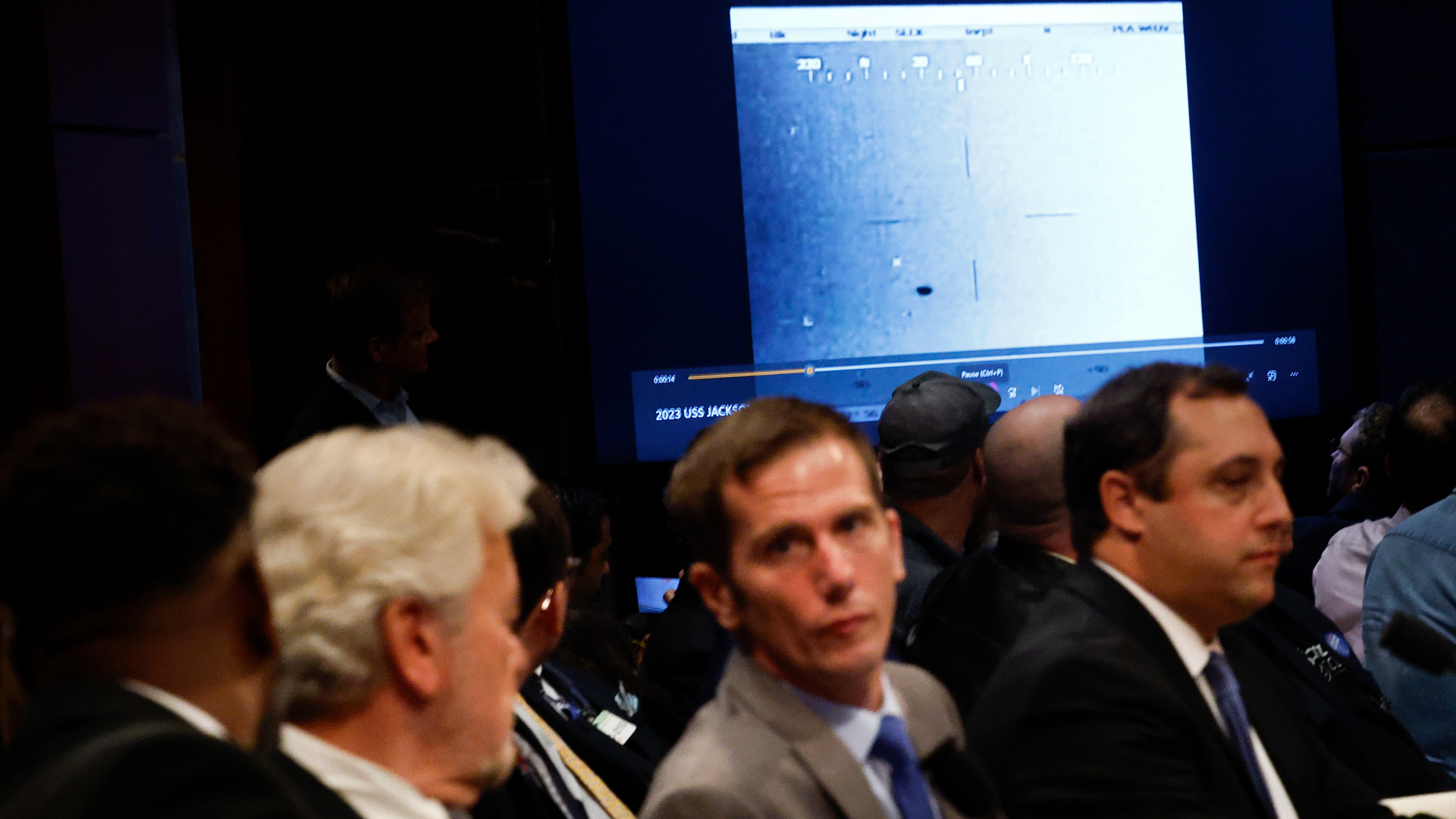
A man looks at the camera sitting in the audience with other people wearing formal attire while a projector screen in the back is lit up with a grid-like image

A photo taken at the recent US Congressional UAP hearing on September 9. 

(Image credit: Kevin Dietsch / Getty Images staff)

After years of making headlines, air vehicles of nameless origin, unknown intent, and seemingly odd capabilities are still being reported within America's national airspace, allegedly flying over sensitive facilities and interfering with commercial air traffic.

All of this aerial weirdness involves unidentified anomalous phenomena, or UAP for short. Whatever they are, UAP continue to be seen, reported and even documented through various sensor technologies. However, despite years of whistleblowers testifying before Congress, there seems to have been a bottleneck in getting to the bottom of the UAP issue in 2025. Why so?

Key specialists appraising the issue UAP have yet to untangle the mystery, but do appear to agree on what needs to be done now to further resolve what UAP are and from where they might originate.

You may like
  • A series of four photos, one large one on the right and three stacked on the left showing various dots of comet 3I/ATLAS

How did interstellar comet 3I/ATLAS capture our imagination in 2025?

  • Four images next to each other with the top left being a black and white image of a satellite with green circles, the top right being a black and white image of a man in front of a red background, the bottom left showing cutouts of protestors on an orange background and the bottom right a deep space image showing a circled dot.

Our favorite Space.com stories of 2025

  • An illustration of 3I/Atlas shedding material as it passes close to the sun

Interstellar comet 3I/ATLAS isn't an alien spacecraft, astronomers confirm. 'In the end, there were no surprises.'

Plurality of minds

The UAP phenomenon benefits from having a plurality of minds engaged in disciplined debate, suggests Michael Cifone, founding executive director and President of the Society for UAP Studies, based in Los Angeles, California.

Today, there's a division emerging between classical Unidentified Flying Object (UFO), aka "flying saucer," incidents and studying UAP from the point of view of observational and experimental science. But engaging scientific methods and instruments turns out to be neither trivial nor cheap, Cifone said.

"Perhaps the holdup is reluctance to dump time, energy and money into what looks to some like a wild goose chase," said Cifone.

Cold cases

"Like any other scientific venture, both funding and institutional support is required," Cifone said. "Given the historical stigma associated with the topic that has been hard to achieve. But now with the emphasis no longer on chasing forensic cold cases, and relying on reports of UAP, serious scientists and student researchers are getting involved."

The upshot is to deploy scientific methodology to establish the observational framework with the proper instrumentation, Cifone added, "in order to generate the data on UAP from which more secure conclusions can be derived."

Cifone said that progress, like in any other science or research area, will be slow but hopefully steady, albeit incremental.

"What will likely happen is that there will be downstream benefits that aren't foreseeable exactly now. Maybe new sciences will break away. So it will be a win for the growth of knowledge and for science in particular," Cifone senses.

For Cifone, his view is to keep the eye on the ball and work out the observational framework design and required instruments and observational modalities before we can have the reliable datasets we need. "But science doesn't always go as planned. In any case, there's a lot of work to be done."

Cifone points to an increasing number of institutions that are studying UAPs. Indeed, work underway on UAP has blossomed into a world-wide field of research, he said.

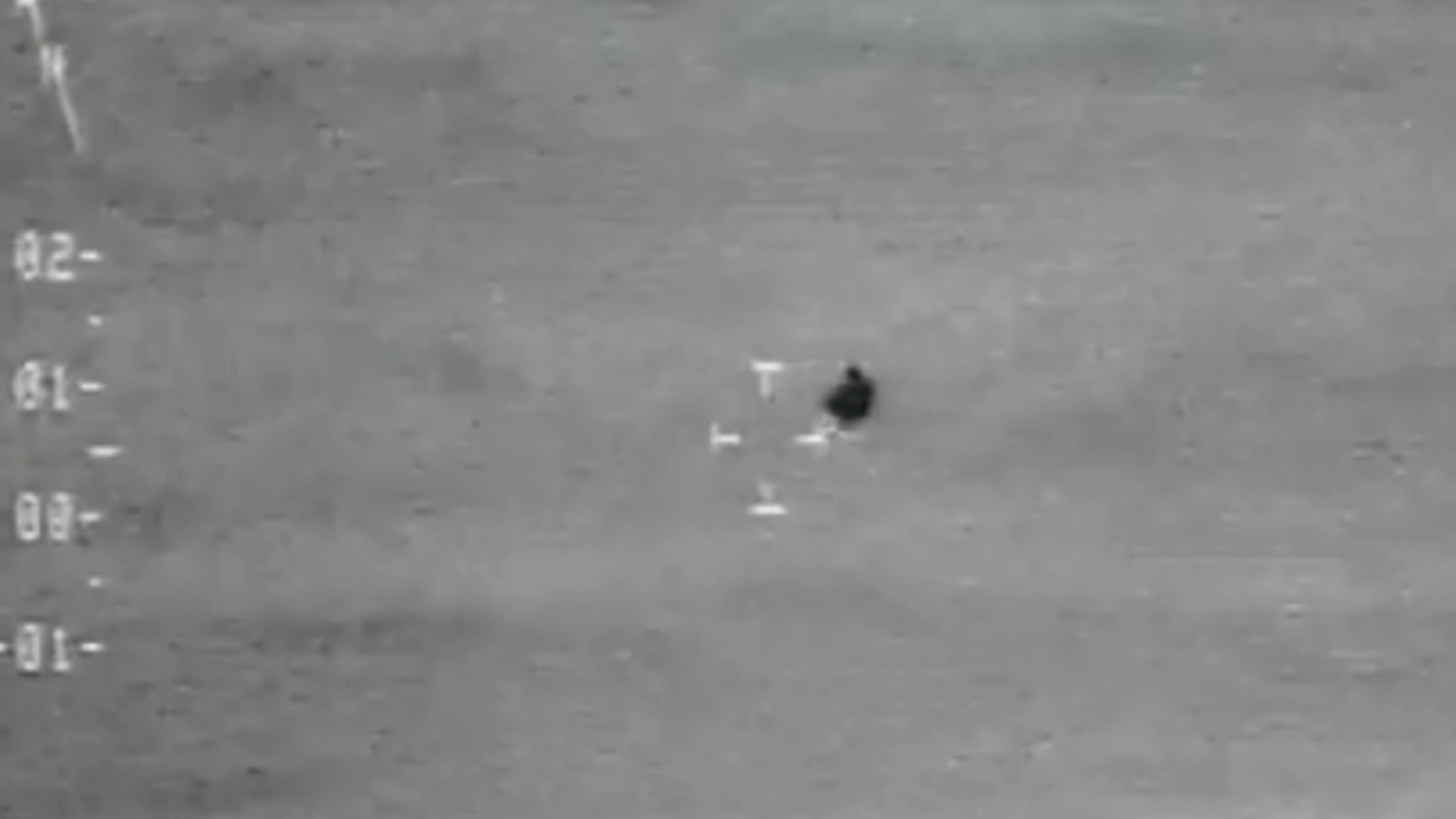
A still from a video reportedly showing a "transmedium" UAP that appears to travel between air and water and split in half. During testimony on Nov. 19, 2024 the head of the Pentagon's UFO office AARO said it actually shows an infrared camera's inability to tell two objects' temperature apart from the ocean behind them.  (Image credit: AARO/DOD)

All sky, all the time

To Cifone's point, there's the University of Würzburg in northern Bavaria, one of the oldest universities in Germany. An Interdisciplinary Research Center for Extraterrestrial Studies (IFEX) has been established.

One effort the university is developing is an "AllSkyCAM" able to capture UAP. An automated reporting system is currently under construction with the university cooperating with the Luftfahrt-Bundesamt, the national civil aviation authority of Germany, to research unusual phenomena in the country's airspace.

Then there's the Galileo Project led by astrophysicist Avi Loeb of Harvard University. They have designed and built an array of sensors to scan the sky for aerial phenomena and assess atmospheric anomalies that may not be of terrestrial origin.

This type of research can produce data on UAP, Cifone said, "then we need to experiment with the data and produce theories, or what you call explanations, and perhaps even understanding! We're only at the observational framework design and testing phase. Then we need to let the systems run, probably for many years."

Test a hypothesis

There's need to be able to scientifically test a hypothesis that some UAP are potentially extraterrestrial craft, said Robert Powell, executive board member of the Scientific Coalition for UAP Studies (SCU).

"I consider extreme acceleration to be the best characteristic that has the potential to eliminate a terrestrial explanation for a UAP," said Powell. But measurement of high accelerations of UAP, he said, requires high-precision scientific gear and data.

"The cost of putting out a network of calibrated and characterized equipment, maintaining it, obtaining placement rights on land, and analyzing the data will cost tens to hundreds of millions of dollars," said Powell.

Military systems

One estimate by an engineer in SCU forecasts that given 300 "actual" UAP sightings per year — and assuming random distribution of sightings — that with 930 automated camera systems distributed across the U.S., one would have a 95% chance of detecting a UAP of 50 foot or larger size within a year.

"To date, the financial resources to achieve this are not available," said Powell. "The military has the capability with radar, satellite, and optical systems, but the scientific community does not have access to these systems." He thinks the work ahead could be done now via military systems, but only if there were no national security concerns.

"I think it will take many years to do it through privately-financed civilian systems but that doesn't mean we shouldn't continue working at it," Powell concluded.

Ignore, rationalize away

Ryan Graves is chair of the American Institute of Aeronautics and Astronautics (AIAA) Unidentified Anomalous Phenomena Integration Committee. He is also director of Americans for Safe Aerospace, a military pilot group devoted to aerospace safety and national security, but focused on UAPs.

"Highly credible people and professional observers are seeing objects that appear to exhibit capabilities beyond the state of the art," Graves told Space.com. "In the data received, there seems to be this core anomalous aspect that we can't just ignore or rationalize away."

Graves speaks with UAP eye-witness authority as a former Lt. U.S. Navy and F/A-18F pilot. He was the first active-duty pilot to publicly point to his own encounters and spotlights his military colleagues regarding their UAP sightings.

In July 2023, Graves testified about UAPs before the House Oversight Committee's National Security Subcommittee in Congress, a hearing centered on UAP and the implications for national security, public safety, and how best to attain government transparency on the issue.

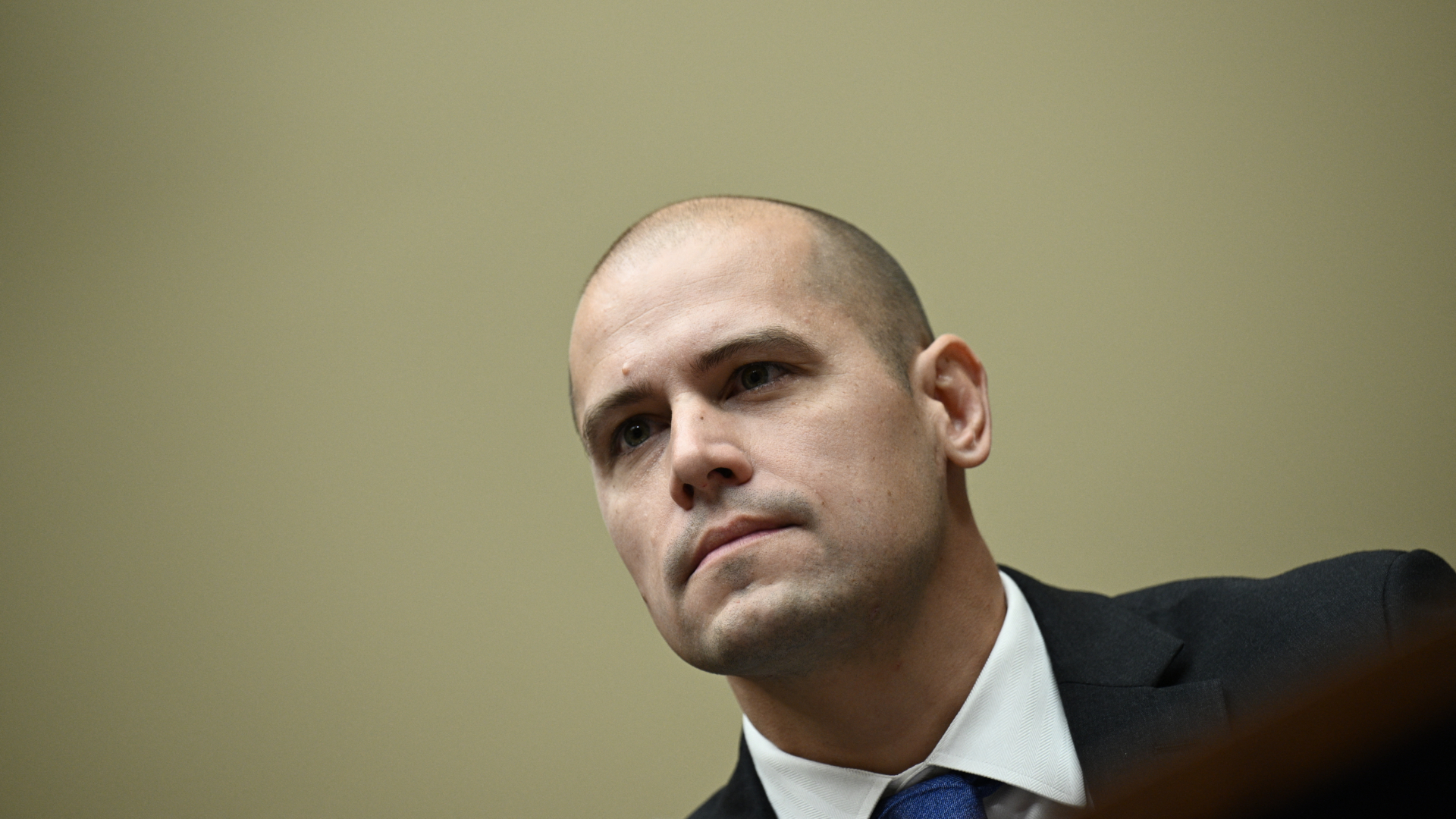
Ryan Graves, the chair of the American Institute of Aeronautics and Astronautics.  (Image credit: BRENDAN SMIALOWSKI/Getty Images)

Pay attention

"We need to pay attention to this and recognize the national security implications," Graves said. Objects are operating in sovereign air space, he said, potentially collecting intelligence and trying to break into or set the stage to counter our defenses and set the country up for strategic surprise.

In blunt talk, Graves said UAP are engaged in actions "that would be recognized as acts of war or at the minimum preparation for an attack."

For its part, the AIAA UAP Integration & Outreach Committee is a strictly agnostic, science-first committee inside the AIAA.

"Our remit is to bring aerospace rigor to an area with real safety-of-flight implications," Graves said. The committee has been convening experts across AIAA's technical committees, publishing peer-reviewed and conference papers, and producing policy guidance that standardizes how aviation professionals document and share safety-relevant observations, Graves added.

Retention of data

While AIAA provides technical expertise rather than lobbying, Graves said the work on UAP has helped clarify best-practice reporting standards as well as set standards for retention of data on what's being reported.

One early payoff is that AIAA's UAP effort parallels what Congress has been considering in the standalone bill "Safe Airspace for Americans Act," introduced in January 2024 and reintroduced in September of this year. "Our focus remains the same," said Graves, "and that is credible data, clear procedures, and aviation safety."

That bipartisan Act is championed by U.S. representatives Robert Garcia of California and Glenn Grothman of Wisconsin, legislation crafted to support civilian UAP reporting.

"Transparency surrounding UAP is crucial for national security, public safety, and making sure people trust that our government is taking these reports seriously," Congressman Garcia said in a statement. "This bill creates a clear, protected pathway for pilots and other aviation professionals to report UAP incidents without having to fear stigma or worry about retaliation. This is a vital step forward to make sure our skies are safe and our government is responsive."

Closure on the topic?

Graves also points to the current leadership of the Department of Defense All-domain Anomaly Resolution Office, or AARO. It too is established to minimize technical and intelligence surprise by "synchronizing identification, attribution, and mitigation of UAP in the vicinity of national security areas," the AARO states.

"I'm optimistic. There is significant organizational change across the government that I think will bare fruit. There process is maturing to the point where they can start delivering on their expectations," said Graves.

Overall, Graves is heartened by current UAP interest and on-going activities.

"I don't know if there's been a better time to hope for closure on this topic. I don't think we've ever been in quite the situation we're in today," Graves said.


{ https://www.space.com/space-exploration }

Hoe vind je dit bericht?
Geschreven door peter om 15:29 Stuur door

Revealed: Unexplained objects that stop and accelerate quickly in space detected by 'highly qualified observers, says former UFO chief. 'Spacecraft we know don't behave that way'

EXCLUSIVE - Revealed: Unexplained objects that stop and accelerate quickly in space detected by 'highly qualified observers, says former UFO chief. 'Spacecraft we know don't behave that way'

The Pentagon's UFO office former chief has revealed unexplained objects were detected in space – and that some performed maneuvers defying anything in America's known aerospace arsenal.

Lieutenant Colonel Tim Phillips, who was acting director of the All-domain Anomaly Resolution Office (AARO) until last April, told the Daily Mail that while most cases involved objects in the air, some detections extended beyond the atmosphere.

a grainy black orb above the ocean in a black-and-white video

A still from a video reportedly showing a "transmedium" UAP that appears to travel between air and water and split in half. During testimony on Nov. 19, the head of the Pentagon's UFO office says it actually shows an infrared camera's inability to tell two objects' temperature apart from the ocean behind them. 

(Image credit: AARO/DOD)

'I would say probably 90 percent of our cases, if not higher, were always in the air domain,' Phillips said.

'Most of these were in the atmosphere, but there were things in space.'

AARO, a team within the Department of War, is tasked with collecting and investigating UFO cases, with a focus on data-backed reports from skilled military members like fighter pilots or radar operators.

Phillips described reports from 'highly qualified observers' who witnessed these objects displaying capabilities beyond anything the US government is known to have.

He said the object had the 'ability to stop very, very quickly, accelerate quickly, right angle turns – the things that aircraft and spacecraft we know don't behave that way.'

Out of thousands of reports reviewed by AARO, fewer than 50 remained completely unresolved, even after examination by some of the world's leading experts, he said.

Lieutenant Colonel Tim Phillips, former acting director of the All-domain Anomaly Resolution Office (AARO) until last April, said that ‘highly qualified observers’ reported unexplained objects in space performing maneuvers beyond the capabilities of known US aircraft or spacecraft

Lieutenant Colonel Tim Phillips, former acting director of the All-domain Anomaly Resolution Office (AARO) until last April, said that 'highly qualified observers' reported unexplained objects in space performing maneuvers beyond the capabilities of known US aircraft or spacecraft 

Of thousands of reports reviewed by AARO, fewer than 50 remain completely unresolved, even after scrutiny by some of the world’s leading experts

Of thousands of reports reviewed by AARO, fewer than 50 remain completely unresolved, even after scrutiny by some of the world’s leading experts

The lieutenant colonel also told the Daily Mail that while most cases involved objects in the air, some sightings extended beyond the atmosphere

The lieutenant colonel also told the Daily Mail that while most cases involved objects in the air, some sightings extended beyond the atmosphere 

But those few dozen reports kept the experts scratching their heads.

'We're talking some of the best and brightest in the world couldn't explain what it is,' Phillips said.

His office was also able to rule out the possibility that the objects belonged to any known US or foreign program.

'We were able to conclusively prove it wasn't a known system, either adversary or friendly,' he said.

Despite the extraordinary nature of some sightings, Phillips told the Daily Mail that the objects never appeared to pose a direct threat.

'We never saw any hostile behavior,' he said. 'I couldn't speak to the intent, but we saw them in sensitive locations sometimes.'

He also noted that some objects appeared to actively avoid detection.

'We saw their attempt not to be surveyed, and in other cases they didn't seem to care,' Phillips said.

The drone managed to record the moment when the object suddenly disappears, appearing as a faint white streak as it moved to the right

The drone managed to record the moment when the object suddenly disappears, appearing as a faint white streak as it moved to the right

Between May 1, 2023, and June 1, 2024, UAPs where reported frequently in US airspace

Between May 1, 2023, and June 1, 2024, UAPs where reported frequently in US airspace

Phillips was quick to stress that many dramatic sightings turn out to be misidentified classified US programs or objects mistaken for balloons, satellites, aircraft and birds
 
Phillips was quick to stress that many dramatic sightings turn out to be misidentified classified US programs or objects mistaken for balloons, satellites, aircraft and birds

article image

That language echoes the Office of the Director of National Intelligence's landmark 2021 UFO assessment, which noted data appearing to show objects demonstrating 'acceleration or a degree of signature management', a term used to describe active attempts to avoid detection.

Phillips was also quick to stress that many dramatic sightings turn out to be misidentified classified US programs.

In one striking case, he described a witness who accurately reported what they saw – but drew the wrong conclusion entirely.

'We looked into it and there was a spaceship being tested, but it wasn't an alien spaceship. It's one of ours,' he said.

a blurry black dot flying above a snow-covered volcano in grainy black-and-white footage

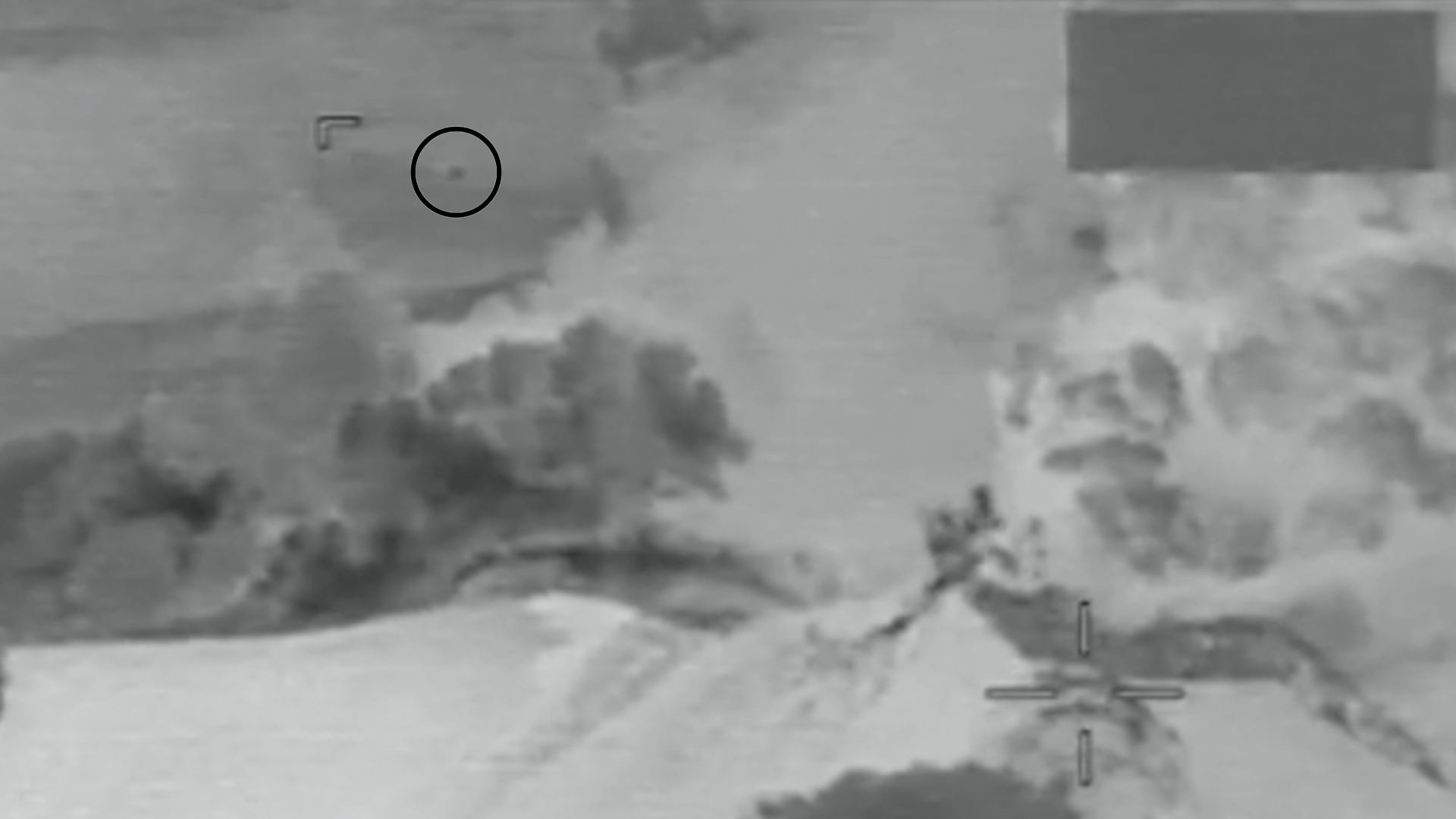
A still from a video captured by a U.S.-operated drone in 2018 while flying above Mt. Etna appears to show an anomalous object, but the Pentagon's UFO chief says his office was able to solve the case. 

(Image credit: AARO/DOD)

Phillips has publicly thrown cold water on expectations of any dramatic revelations.

In a LinkedIn post, he wrote: 'UFO believers will be disappointed by what is disclosed; there is no US Government evidence for beings or their craft visiting earth.'

But his statements on space detections, extraordinary flight performance, and dozens of unexplained cases despite analysis by top experts, are sure to stoke the debate.

He spoke to the Daily Mail in the wake of a shock announcement by President Donald Trump that he had directed Secretary of War Pete Hegseth to release any government UFO files still kept secret.

President Donald Trump shockingly announced on Truth Social that he had directed Secretary of War Pete Hegseth to release any remaining government UFO files

President Donald Trump shockingly announced on Truth Social that he had directed Secretary of War Pete Hegseth to release any remaining government UFO files 

'I will be directing the Secretary of War, and other relevant departments and agencies, to begin the process of identifying and releasing government files related to alien and extraterrestrial life, unidentified aerial phenomena (UAP), and unidentified flying objects (UFOs), and any and all other information connected to these highly complex, but extremely interesting and important, matters,' Trump posted on Truth Social on February 19.

'We've got our people working on it right now,' Hegseth told reporters Monday. 'I don't want to oversell how much time it will take, but we're digging in.'

Former President Barack Obama also weighed in on the topic this month, telling podcast host Brian Tyler Cohen that he believes aliens are real.

'They're real, but I haven't seen them, and they're not being kept in Area 51,' Obama said.

President Trump, asked about Obama's remarks aboard Air Force One on February 19, said his predecessor had made 'a big mistake'.

'He took it out of classified information... He's not supposed to be doing that,' Trump said.

Hoe vind je dit bericht?
Geschreven door peter om 14:34 Stuur door

Aliens exist — but they haven’t visited Earth, says Nasa veteran

Aliens exist — but they haven’t visited Earth, says Nasa veteran

Overview

Veteran NASA engineer Gentry Lee – a former project manager for the Mars Pathfinder and a key figure in the development of the Mars rovers – told reporters on 24 February 2026 that, while the existence of extraterrestrial life is “almost inevitable,” there is no credible evidence that any such life has ever visited Earth. Lee’s remarks come amid renewed public interest in unidentified aerial phenomena (UAP) and a series of high‑profile congressional hearings on the topic. He cautioned that “UFO believers have been misled by sensational claims that lack scientific rigor,” and emphasized that NASA’s current focus remains on systematic, data‑driven searches for life beyond our planet.

Lee’s Perspective

In his interview with a media outlet in London, Lee emphasized the significant role that the vastness of the universe plays in supporting the possibility of extraterrestrial life. He explained that the sheer scale of the cosmos makes the likelihood that Earth is the only planet with life incredibly small. With billions of galaxies, each containing billions of stars, the probability that Earth is uniquely suited for life is astronomically low. This concept is rooted in the principle of statistical probability; given the enormity of space, it would be extraordinary if no other planets harbored life forms. However, Lee also underscored a crucial distinction: while the chances of microbial life existing elsewhere are high, the leap from simple organisms to intelligent, technologically advanced civilizations capable of interstellar travel is immense. Currently, there is no concrete evidence to support the existence of such civilizations. Despite numerous claims and sightings, scientists like Lee point out that no signals, artifacts, or physical traces have been definitively linked to extraterrestrial intelligence.

NASA scientist makes bold claim about why aliens haven’t contacted us yet

This cautious stance reflects the scientific community’s consensus, which remains skeptical until verifiable proof is presented. Lee’s perspective balances curiosity with scientific rigor, advocating for a measured approach grounded in empirical evidence rather than speculation. He acknowledges the excitement surrounding potential alien encounters but emphasizes that extraordinary claims require extraordinary proof. Until such evidence emerges, the scientific approach remains focused on exploring the universe for signs of life through systematic research rather than sensationalism.

Alien meeting - Imgflip

Context Within the UFO Debate

The current UFO debate has evolved significantly over recent years, especially with the United States government taking steps to declassify and study unexplained aerial phenomena. Several videos capturing unidentified flying objects (UFOs), now often referred to as Unidentified Aerial Phenomena (UAP), have been released to the public, fueling both curiosity and skepticism. The establishment of the All-Domain Anomaly Resolution Office (AARO) signifies a formal effort to investigate these sightings and assess any potential threats to national security. While these initiatives lend credibility to the study of unexplained aerial phenomena, scientists like Lee caution against jumping to conclusions. He warns that the public’s fascination with aliens can sometimes overshadow the importance of scientific rigor, leading to sensationalism. Many UFO reports are often the result of misinterpretations of natural atmospheric phenomena, astronomical events, or human-made objects. Some claims are hoaxes or deliberate fabrications aimed at garnering attention.

Lee advocates for a clear distinction between genuine scientific investigation and myth-making, emphasizing that credible research must be based on solid evidence rather than rumors or sensational stories. He hopes that the focus remains on collecting verifiable data and applying rigorous scientific methods to understand these phenomena, rather than succumbing to hype or unfounded speculation about alien life.

Scientists Believe They Have Worked Out Why Aliens Haven't Visited ...

Ongoing Scientific Efforts

The scientific community is actively engaged in multiple projects aimed at discovering signs of extraterrestrial life, aligning with Lee’s call for disciplined inquiry. NASA’s current missions are designed to explore potential habitats beyond Earth systematically. The James Webb Space Telescope, for example, is analyzing the atmospheres of exoplanets, searching for biosignature gases such as oxygen, methane, and phosphine—indicators that could suggest the presence of life or habitable conditions. These gases are considered potential markers because they can be produced by biological processes. Meanwhile, the upcoming Europa Clipper mission, scheduled for launch in 2027, aims to study Jupiter’s icy moon Europa.

This moon is believed to harbor a subsurface ocean beneath its icy crust, and scientists hope to detect chemical signs of habitability or even microbial life within this hidden ocean. Additionally, on Mars, the Perseverance rover and its Ingenuity helicopter continue to collect rock and soil samples, searching for organic molecules and other biological markers. These samples may eventually be returned to Earth for detailed analysis. The overarching goal of these missions is to follow a logical, step-by-step approach: first, identify environments that could support life, then look for biological indicators, and finally, investigate the possibility of technological signatures—technosignatures—that could indicate intelligent life.

These efforts exemplify a cautious yet promising approach, grounded in scientific methodology, to answering one of humanity’s most profound questions: are we alone in the universe?

Implications for the Public and Policy

Lee’s remarks carry significant implications for both policymakers and the general public. His message underscores that the search for extraterrestrial life is a long-term scientific pursuit, rather than a quick fix for sensational headlines or entertainment. The recent declassification of UAP videos by the U.S. government has sparked widespread interest, but Lee stresses the importance of maintaining scientific discipline. Transparent, peer-reviewed research programs are essential to ensure that any claims about alien life are based on reliable and reproducible data. Policymakers are encouraged to support sustained investment in scientific missions and research that adhere to rigorous standards, rather than succumbing to the allure of sensational stories that lack empirical backing.

Lee also highlights the broader philosophical implications of discovering extraterrestrial life. If humanity were to find evidence of an advanced civilization, it would fundamentally alter our understanding of our place in the universe—potentially challenging long-held beliefs and sparking profound societal and scientific shifts. Until such a discovery is made, Lee advocates for patience, rigor, and reliance on data. He concludes that the pursuit of knowledge about extraterrestrial life must be driven by scientific integrity, ensuring that any breakthroughs are meaningful and credible. Ultimately, maintaining a disciplined approach will serve humanity best as we continue to explore the cosmos and seek answers to one of the most compelling questions: are we alone?

{ https://usubjects.com/  }

Hoe vind je dit bericht?
Geschreven door peter om 22:44 Stuur door

The Saga of NASA’s Space Station Evacuation Keeps Getting Stranger

The Saga of NASA’s Space Station Evacuation Keeps Getting Stranger

What's going on?
A NASA astronaut has voluntarily stepped forward, announcing in a NASA statement that it was he who had "experienced a medical event."
SpaceX

RELATED VIDEOS

{ https://futurism.com/category/science-energy }

Hoe vind je dit bericht?
Geschreven door peter om 22:22 Stuur door

Can aliens live on the Hycean planet K2-18b?

Can aliens live on the Hycean planet K2-18b?

K2-18b is a so-called Habitable Zone planet located 124 light-years away from us. In terms of mass, the planet is somewhere between Earth and a small gas giant. Researchers are interested in whether extraterrestrial life could exist on it.

Planet K2-18b. Source: phys.org

Primary goal for SETI

If you have been following exoplanet research over the past few years, you have probably heard of K2-18b. Located 124 light-years away in the constellation Leo, it has attracted a lot of attention because it is right in the habitable zone of its red dwarf star, and measurements from the James Webb Space Telescope show that its atmosphere is rich in carbon dioxide and methane. It is one of the leading candidates for the title of “hydrogen world” — a world where a dense atmosphere rich in hydrogen covers a global ocean of liquid water.

This is such an interesting target for researchers from the Search for Extraterrestrial Intelligence (SETI) project that they have directed two of the world’s most powerful radio telescopes to observe the K2-18b system. A recent article available on the arXiv preprint server shows that, despite millions of potential matches, this planet is unlikely to be sending out artificial narrowband radio signals equivalent to our level of technology.

Listening with radio telescopes

To collect the data needed for processing, both the Karl G. Jansky Very Large Array (VLA) in New Mexico and the MeerKAT radio telescope in South Africa were used. These are the two most powerful radio telescopes on the planet, and their coordination within the observation campaign is an extremely rare occurrence.

But physical equipment was not the only important factor for this work. The “data transfer channel,” as astronomers call the software filters and logic applied after data collection, is no less important, especially in radio astronomy. Signals from Earth are the source of the vast majority of radio signals received by these telescopes, and modern filtering algorithms, such as the Commensal Open-Source Multi-Mode Interferometer Cluster system used by the VLA, and the Breakthrough Listen User Supplied Equipment (BLUSE) system used by MeerKAT, are important elements of any modern radio astronomy program.

Radio signal filtering system

However, the logic behind such filtering remains the responsibility of the people involved in the process, and the article describes five different restrictions they impose on the data for selecting potential alien technosignatures. The first step was to mask radio frequency interference — essentially, they removed all data from signals falling within frequency ranges known to be heavily contaminated by terrestrial interference. If aliens communicated through these channels, we would have to use some other method — such as a radio telescope on the far side of the Moon — to hear them.

Doppler effects, such as the changing sound of an ambulance siren as it approaches or passes you, are even more noticeable when the signal travels between planets. Any signal with virtually no Doppler effect was immediately rejected, as it could only have originated from Earth. Perhaps the most controversial logical filtering choice was to exclude all signals with a signal-to-noise ratio of less than 10 or greater than 100. Although this allowed for the exclusion of extremely weak false positives, as well as strong instrumental data artifacts typically observed in only one antenna, it could also exclude.

Another filtering technique is the use of multi-beam analysis. In this case, the telescopes formed coherent beams across the sky, one of which was directed directly at K2-18b, and the other at a different location. In such cases, the signal coming from the exoplanet would only appear in the beam directed directly at it, while terrestrial interference penetrates several beams simultaneously. The final check, which was not necessary due to the timing of the study, is transit filtering. Any signal coming from K2-18b should disappear when the planet passes in front of its parent star, but since no such “secondary transit” occurred during the observation, filtering was not necessary.

Positive test result in any case

In short, despite millions of potential signals throughout the observation period, none of them passed these filters. No unambiguous technosignatures were detected in the narrowband radio spectrum from K2-18b. Although this may seem disappointing, it is precisely this kind of thing that science needs in order to progress. By carefully scanning the planet and finding nothing, they can establish the “upper limits” of the transmitter’s power from this system — in terms of power, it would be equivalent to the destroyed Arecibo radar in Puerto Rico. If there is civilization there, it certainly does not scream at us from anything greater than this level of radio telescope.

However, perhaps the most important result is the confirmation of the concept of their automated filtering system. Processing millions of signals detected by two telescopes manually would be virtually impossible. So, when even larger radio telescopes such as the Square Kilometer Array appear, these technologies will be ready to help other research projects make sense of the mass of data collected. Although planet K2-18b may be quiet today, we will continue to improve our ability to listen if it ever begins to communicate with us.

RELATED VIDEOS


{ https://universemagazine.com/en/articles-en/ }

Hoe vind je dit bericht?
Geschreven door peter om 22:05 Stuur door

Astronauts were forgotten before the Artemis II flight: Trump is indifferent to the space program

Astronauts were forgotten before the Artemis II flight: Trump is indifferent to the space program

On the night of February 24-25, US President Donald Trump made history by giving the longest speech on the state of the nation — it lasted 107 minutes. The main topics were economic successes, criticism of the Democrats, and the fight against illegal immigration. However, amid the political statements, an event worthy of special attention has been overlooked: the country is preparing to send a human into deep space for the first time since the legendary Apollo program. 

Artemis II astronauts (left to right): Canadian Space Agency mission specialist Jeremy Hansen, pilot Victor Glover, commander Reid Wiseman, and mission specialist Christina Koch attend the President’s address to Congress during a joint session of Congress at the U.S. Capitol on February 24, 2026. Photo: Gizmodo

The most ironic thing is that the main characters of the upcoming space breakthrough went unnoticed, even though they were sitting in the front row. The astronauts of the Artemis II mission — Reid Wiseman, Victor Glover, Christina Koch from NASA, and Jeremy Hansen from the Canadian Space Agency — were guests of honor of the Speaker of the House of Representatives. These four brave souls are about to embark on a journey to the Moon that no human being has undertaken in more than fifty years.

Their 10-day flight will be more than just a symbolic gesture. This will be the farthest human expedition in the history of space exploration, taking the Orion spacecraft into orbit around our natural satellite.

The Trump administration’s vision

The Artemis II mission is intended to lay the foundation for a “golden age of American space leadership” — a phrase that the Trump administration uses quite often. However, the president limited himself to brief references to Apollo’s glorious past and boastful statements about the creation of the US Space Force, proudly calling it “his brainchild.”

However, the significance of Artemis II extends far beyond political ambitions. This is a critically important test phase: for the first time, the super-heavy Space Launch System (SLS) rocket and the Orion spacecraft will be tested with a crew on board. The success of the mission should confirm the US’s ability not only to return to the Moon, but also to make long-term plans for expeditions to Mars.

Space race gains momentum

The importance of the program is reinforced by the international context. China is actively developing its own manned lunar program, adding an element of healthy competition and urgency to American efforts. Maintaining NASA’s technological supremacy is not only a matter of prestige, but also of national security and scientific leadership.

However, despite its historical context and geopolitical significance, the mission faces an unexpected enemy — public indifference. Even among space enthusiasts, interest is beginning to wane due to technical problems. It was recently announced that SLS and Orion are returning to the hangar, postponing the likely launch until at least April.

A missed opportunity to unite the nation

The problem of lack of attention is not just a matter of NASA’s “public relations.” Without broad public support, multi-billion-dollar space programs become vulnerable targets for budget cuts. Trump had a unique opportunity to draw the attention of a 300 million-strong audience to the titanic feat that his compatriots are preparing to accomplish for the first time in half a century. He could present the astronauts sitting in the hall and explain the significance of their mission for the future of humanity.

Instead, time was spent on political tirades. By failing to seize this opportunity, the president did more than simply ignore an important event — he dealt a blow to his own space policy, depriving it of potential public support at a time when it needs it most.

Earlier, we reported on whether Trump is hiding something about aliens.

{ https://universemagazine.com/en/articles-en/ }

Hoe vind je dit bericht?
Geschreven door peter om 21:56 Stuur door

Did people report seeing UFOs before the 20th century?

Did people report seeing UFOs before the 20th century?

An illustration of a strange streak of light in the night sky

Did earlier civilizations report seeing UFOs? 

(Image credit: Aaron Foster via Getty Images)

The phenomenon of unidentified flying objects, or UFOs, has long fascinated humanity. From ancient times to the modern era, countless individuals across different cultures and eras have reported strange sightings in the sky. While the term "UFO" and the contemporary scientific approach to these phenomena are relatively modern inventions, accounts of mysterious aerial objects and unexplained lights have existed for centuries. This article explores whether people before the 20th century reported seeing UFOs, examining historical records, cultural interpretations, and the evolution of the phenomenon over time.

Ancient and Medieval Accounts of Unexplained Aerial Phenomena

Long before the advent of modern aviation, humans looked up at the sky and interpreted unusual sights through the lens of their cultural, religious, and mythological frameworks. Many ancient texts and artworks contain references that can be interpreted as descriptions of strange aerial phenomena.

Ancient Civilizations and Sky Phenomena

  • Mesopotamia:
    The cradle of civilization, Mesopotamian cultures such as the Sumerians, Akkadians, Babylonians, and Assyrians, left behind a rich tapestry of mythological texts and cuneiform inscriptions. Some of these writings mention celestial objects and phenomena that appear to be beyond natural explanation. For example, the "Epic of Gilgamesh" references celestial lights and unusual skies, though these are often interpreted symbolically or mythologically rather than as sightings of physical objects.
  • Ancient Egypt:
    Egyptian hieroglyphs and texts frequently depict the sky as populated with gods, stars, and otherworldly entities. Some scholars have suggested that certain images of flying chariots or celestial ships could be interpreted as early UFO sightings. For example, depictions of solar barques and celestial boats in tombs and temples may symbolize divine journeys, but some interpret them as possible representations of aerial phenomena.
  • Ancient China:
    Chinese historical texts from thousands of years ago record numerous accounts of unusual sky phenomena, such as "guest stars" (novae and supernovae), comets, and mysterious lights. The "Book of Han" (2nd century CE) describes strange objects in the sky, which to ancient observers might have appeared as flying crafts or celestial visitors.
  • Ancient Greece and Rome:
    Classical writers such as Pliny the Elder, Cicero, and Lucian of Samosata mention strange lights and flying objects. For example, Pliny’s "Natural History" describes fiery chariots and luminous bodies in the sky. Lucian’s satirical texts mention "chariots of the gods" and "flying shields," which may reflect observations of atmospheric phenomena or mythological allegories.

Medieval and Renaissance Reports

During the Middle Ages, reports of unusual aerial phenomena persisted, often intertwined with religious and superstitious interpretations.

Medieval Europe

  • Fireballs and mysterious lights:
    Medieval chronicles often mention "fiery disks" or "balls of fire" seen in the sky, sometimes associated with omens or divine signs. For example, the "Annales of Saint-Bertin" (9th century) record sightings of strange lights during battles or significant events.
  • The "Mysterious Flying Shields":
    In 14th-century Europe, some accounts describe "flying shields" or "phantoms" seen in the sky, which contemporary scholars sometimes interpret as atmospheric reflections or natural phenomena, but which could also have been early reports of unidentified aerial objects.

Renaissance and Early Modern Period

The Renaissance brought a renewed interest in astronomy and natural phenomena. However, the period also saw reports of strange lights and craft.

  • The Nuremberg Celestial Phenomenon (1561):
    One of the most famous pre-20th-century UFO reports is the "Nuremberg Celestial Phenomenon," documented in a broadsheet newspaper published in 1561. It describes a sky filled with numerous orbs, crosses, and other shapes engaging in a celestial battle. Witnesses reported seeing "many globes" moving across the sky, changing colors, and interacting in strange ways. While some interpret this as a natural atmospheric event or a religious allegory, others see it as an early sighting of unidentified flying objects.
  • The Kepler Incident (1594):
    The astronomer Johannes Kepler recorded an unusual sighting involving a "small, bright, and moving star" that appeared in the sky and then disappeared. While likely a meteor or atmospheric phenomenon, such accounts contribute to the long history of strange sky sightings.

The 17th and 18th Centuries

As scientific understanding of the cosmos expanded, so did the recording of unusual sightings, often with more detailed descriptions.

  • The Aurora Borealis:
    Northern lights have been observed for centuries and often mistaken for mysterious aerial displays. In many historical accounts, the aurora was seen as a divine or supernatural sign, but to modern observers, it is understood as a natural atmospheric phenomenon.
  • Unidentified Lights and Apparitions:
    Throughout the 17th and 18th centuries, reports of strange lights persisted. For instance, in 1719, a report from the English coast described "bright, moving lights" in the sky, which could have been early observations of meteors, atmospheric reflections, or unexplained craft.
  • Ball Lightning and Other Natural Phenomena:
    Many reports of strange aerial phenomena during this period have been attributed to natural causes like ball lightning, meteors, or atmospheric reflections. However, some reports remained unexplained and could be considered early UFO sightings.

19th Century: The Precursors to Modern UFO Sightings

The 19th century saw a surge in reports of strange aerial phenomena, coinciding with advances in scientific instrumentation, increased observations, and a growing public interest in science and exploration.

Early Ballooning and Aerial Experiments

  • Hot Air Balloons:
    The advent of balloon flight in the late 18th and early 19th centuries introduced new aerial phenomena that observers sometimes misinterpreted. Balloons drifting across the sky appeared strange to those unfamiliar with the technology, leading to reports of mysterious "flying ships" or "aircraft."
  • Aerial Spectacles and Phenomena:
    In 1804, the "Great Moon Hoax" in New York newspapers captivated the public with stories of life on the moon, but also reflected the fascination with celestial and aerial phenomena. Similarly, the rise of aviation experiments, including early gliders and aircraft, led to more reports of unidentified flying objects.

Notable 19th Century Sightings

  • The Vevay, Indiana, Sightings (1800s):
    Multiple reports from the early 1800s describe strange lights and disks seen over Indiana. Such sightings were often dismissed at the time as natural or atmospheric phenomena.
  • The Aurora and Unexplained Lights:
    Throughout the 19th century, reports of luminous objects in the sky, including the Aurora Borealis and Aurora Australis, were common. While natural, some reports involved shapes and movements that puzzled observers.
  • The Mount Washington UFO (1800s):
    In the late 19th century, there are reports of strange lights and disks over Mount Washington in New Hampshire, which some interpret as early UFOs.

The 20th Century and the Birth of Modern UFO Phenomenon

While the question focuses on whether people reported seeing UFOs before the 20th century, it is impossible to ignore the pivotal role that early 20th-century sightings played in shaping modern perceptions of UFOs. The famous 1947 Kenneth Arnold sighting, which gave rise to the term "flying saucers," was preceded by a long history of similar reports.

  • Cultural and Interpretative Variations

Throughout history, interpretations of strange sky phenomena have varied widely depending on cultural context.

  • Religious Interpretations:
    Many ancient and medieval reports framed mysterious aerial phenomena as divine signs, celestial battles, or messages from gods. These interpretations reflect the worldview of the time, often seeing such phenomena as supernatural or divine rather than unexplained natural or technological events.
  • Mythological and Allegorical Accounts:
    Stories of flying chariots, celestial ships, and divine messengers often served as allegories for spiritual or moral lessons, but they also may encode observations of natural phenomena.

Natural Explanations vs. Unexplained Sightings:
Many historical accounts are now understood as natural phenomena—meteors, atmospheric reflections, planets, or atmospheric optical effects. However, some reports remain unexplained, especially when descriptions are vague or sensational.

Limitations and Challenges in Interpreting Historical Accounts

Interpreting pre-20th-century sky sightings as UFO reports is complicated by several factors:

  • Lack of Verification: Many accounts are anecdotal, lacking corroboration or detailed descriptions.
  • Cultural Filters: Interpretations are heavily influenced by contemporary beliefs, religious views, and scientific understanding.
  • Terminology: The language used in historical texts often differs from modern descriptions, making it challenging to classify sightings accurately.
  • Natural Phenomena: Many sightings are likely natural atmospheric or celestial phenomena misinterpreted due to limited scientific knowledge.

Conclusion: Were There Reports of UFOs Before the 20th Century?

Based on historical records, cultural narratives, and scientific analysis, it is clear that humans have reported strange aerial phenomena for millennia. These accounts, spanning from ancient civilizations to the Renaissance, often described lights, craft-like objects, or strange shapes in the sky, which today could be considered early UFO sightings.

While many of these reports can be explained by natural phenomena or mythological symbolism, some remain unexplained or ambiguous, suggesting that the phenomenon of unidentified aerial observations is as old as human civilization itself. The interpretations of these sightings have evolved over time—from divine signs and mythic symbols to potential evidence of extraterrestrial visitation.

In essence, yes, people before the 20th century did report seeing objects or phenomena in the sky that they could not readily explain. Whether these were actual physical objects, atmospheric effects, or cultural expressions, they contribute to the long and complex history of humanity’s fascination with the skies and the mysterious entities that inhabit them.

References & Further Reading:

  • Clodd, Edward. The Story of the Heavens. (1913)
  • Keel, John. The Mysterious Universe. (1977)
  • Ruppelt, Edward. The Report on Unidentified Flying Objects. (1956)
  • Hynek, J. Allen. The UFO Experience: A Scientific Inquiry. (1972)
  • McNeill, William H. The Shape of the Sky: An Introduction to the History of Astronomy. (1984)
  • Historical newspapers and chronicles, including the Nuremberg Celestial Phenomenon (1561)

Final thoughts:
The phenomenon of UFO sightings is deeply rooted in human history. While the context and interpretations have shifted over centuries, the fundamental human curiosity about the unknown in the skies remains unchanged. Recognizing these ancient accounts enriches our understanding of the longstanding human engagement with unexplained aerial phenomena.

{PETER2011 }

Hoe vind je dit bericht?
Geschreven door peter om 21:46 Stuur door

James Webb telescope spots giant auroras rolling through Uranus' atmosphere

James Webb telescope spots giant auroras rolling through Uranus' atmosphere

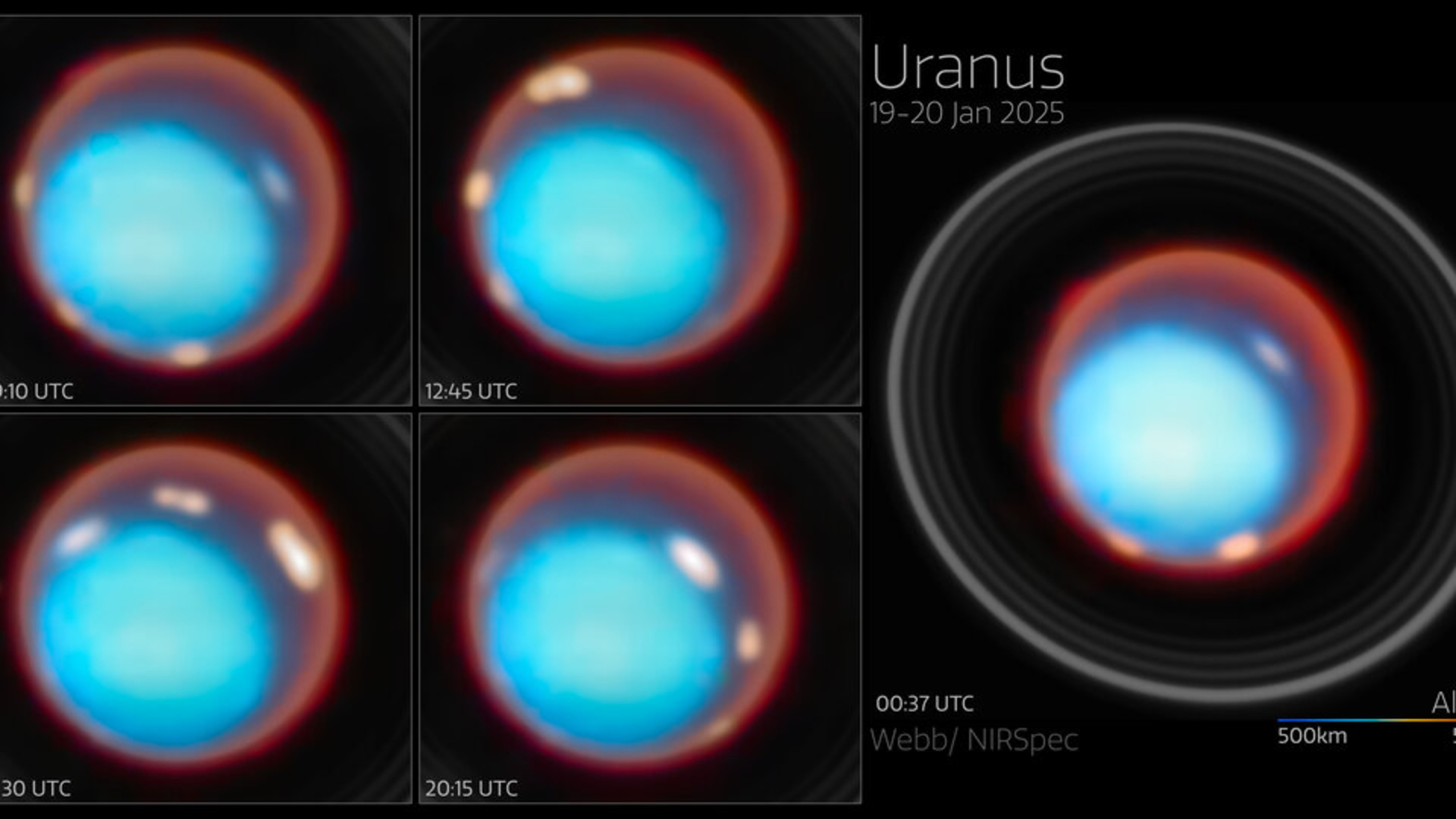
A series of four small boxes on the left of the image and one large box on the right, each showing a circle with blue in the bottom left of the circle and a ring of glowing red around it, representing Uranus' atmosphere.

JWST observed Uranus rotating for 15 hours in January 2025, showing bright auroral bands (in white) near the planet's magnetic poles. 

(Image credit: ESA/Webb, NASA, CSA, STScI, P. Tiranti, H. Melin, M. Zamani (ESA/Webb))

Scientists using the James Webb Space Telescope just mapped the mysterious upper atmosphere of Uranus for the first time, revealing strange new features of the planet's mysterious magnetic field and glowing auroras.

The James Webb Space Telescope (JWST) observed Uranus rotating for 15 hours (nearly a full Uranian day) to learn more about how ice giants distribute energy in the upper layers of their atmospheres and to investigate how the planet's auroras operate.

Uranus' magnetic field is unique among the big planets of our solar system in that its magnetic pole is tilted by 60 degrees relative to its geographic pole. That tilt produces auroras that extend far beyond the poles of Uranus, unlike auroras on Earth.

You may like
  • An illustration of a distant planet shrouded in purple hydrogen gas

JWST spots a planet chasing its own atmosphere through space

  • half of a reddish lava planet illustration with a dark space horizon

James Webb telescope uncovers a new mystery: A broiling 'hell planet' with an atmosphere that shouldn't exist

  • An artist's concept of the exoplanet PSR J2322-2650b (at left) orbiting a pulsar (right)

'What the heck is this?' James Webb telescope spots inexplicable planet with diamonds and soot in its atmosphere

To learn more, scientists used JWST to study Uranus' magnetosphere — the region of space around Uranus that's dominated by the planet's magnetic field.

"Uranus's magnetosphere is one of the strangest in the solar system," study lead author Paola Tiranti, a doctoral student at Northumbria University in the U.K., said in a European Space Agency (ESA) statement. "Webb has now shown us how deeply those effects reach into the atmosphere."

Strange lights on Uranus

JWST charted "the most detailed portrait yet" of how particles in Uranus' upper atmosphere are energized (ionized) by interactions with the sun, ESA officials said in the statement. The study, published Feb. 19 in the journal Geophysical Research Letters, aimed to measure ion temperature and density as far as 3,100 miles (5,000 kilometers) above the cloud tops of Uranus.

Temperature and density do not peak at the same altitude, JWST showed. Ions were the warmest between roughly 2,500 and 3,100 miles (4,000 and 5,000 km) but the densest at about 600 miles (1,000 km). This is because of the "complex geometry" of the planet's magnetic field, ESA officials said in the statement.

RELATED STORIES

That geometry also produced two bright bands of auroras near Uranus' magnetic poles. In between the aurora belts, however, there is a "depletion" in both ion density and auroral emissions — an effect likely produced by transitions between the planet's magnetic-field lines, the scientists said. Observations at Jupiter's upper atmosphere have shown similar transition regions.

In addition to charting Uranus' upper atmosphere in three dimensions for the first time, JWST confirmed findings from previous studies that suggested the planet's upper atmosphere has been cooling steadily since the early 1990s. The telescope showed the average temperature of Uranus' atmosphere is about 307 degrees Fahrenheit (153 degrees Celsius), which is lower than the temperature measurements from other spacecraft and ground-based telescopes.

"By revealing Uranus's vertical structure in such detail, Webb is helping us understand the energy balance of the ice giants," Tiranti said. "This is a crucial step towards characterizing giant planets beyond our solar system."

{ https://www.livescience.com/space }

Hoe vind je dit bericht?
Geschreven door peter om 21:12 Stuur door

Meer van UFO'S of UAP'S, ASTRONOMIE, RUIMTEVAART, ARCHEOLOGIE, OUDHEIDKUNDE, SF-SNUFJES EN ANDERE ESOTERISCHE WETENSCHAPPEN - DE ALLERLAATSTE NIEUWTJES

↑ Terug naar de berichten