Naar de inhoud

UFO'S of UAP'S, ASTRONOMIE, RUIMTEVAART, ARCHEOLOGIE, OUDHEIDKUNDE, SF-SNUFJES EN ANDERE ESOTERISCHE WETENSCHAPPEN - DE ALLERLAATSTE NIEUWTJES

UFO's of UAP'S in België en de rest van de wereld
BerichtenArchiefGastenboekContact
akke.beakke.be
Ontdek de Fascinerende Wereld van UFO's en UAP's: Jouw Bron voor Onthullende Informatie! Ben jij ook gefascineerd door het onbekende? Wil je meer weten over UFO's en UAP's, niet alleen in België, maar over de hele wereld? Dan ben je op de juiste plek! België: Het Kloppend Hart van UFO-onderzoek In België is BUFON (Belgisch UFO-Netwerk) dé autoriteit op het gebied van UFO-onderzoek. Voor betrouwbare en objectieve informatie over deze intrigerende fenomenen, bezoek je zeker onze Facebook-pagina en deze blog. Maar dat is nog niet alles! Ontdek ook het Belgisch UFO-meldpunt en Caelestia, twee organisaties die diepgaand onderzoek verrichten, al zijn ze soms kritisch of sceptisch. Nederland: Een Schat aan Informatie Voor onze Nederlandse buren is er de schitterende website www.ufowijzer.nl, beheerd door Paul Harmans. Deze site biedt een schat aan informatie en artikelen die je niet wilt missen! Internationaal: MUFON - De Wereldwijde Autoriteit Neem ook een kijkje bij MUFON (Mutual UFO Network Inc.), een gerenommeerde Amerikaanse UFO-vereniging met afdelingen in de VS en wereldwijd. MUFON is toegewijd aan de wetenschappelijke en analytische studie van het UFO-fenomeen, en hun maandelijkse tijdschrift, The MUFON UFO-Journal, is een must-read voor elke UFO-enthousiasteling. Bezoek hun website op www.mufon.com voor meer informatie. Samenwerking en Toekomstvisie Sinds 1 februari 2020 is Pieter niet alleen ex-president van BUFON, maar ook de voormalige nationale directeur van MUFON in Vlaanderen en Nederland. Dit creëert een sterke samenwerking met de Franse MUFON Reseau MUFON/EUROP, wat ons in staat stelt om nog meer waardevolle inzichten te delen. Let op: Nepprofielen en Nieuwe Groeperingen Pas op voor een nieuwe groepering die zich ook BUFON noemt, maar geen enkele connectie heeft met onze gevestigde organisatie. Hoewel zij de naam geregistreerd hebben, kunnen ze het rijke verleden en de expertise van onze groep niet evenaren. We wensen hen veel succes, maar we blijven de autoriteit in UFO-onderzoek! Blijf Op De Hoogte! Wil jij de laatste nieuwtjes over UFO's, ruimtevaart, archeologie, en meer? Volg ons dan en duik samen met ons in de fascinerende wereld van het onbekende! Sluit je aan bij de gemeenschap van nieuwsgierige geesten die net als jij verlangen naar antwoorden en avonturen in de sterren! Heb je vragen of wil je meer weten? Aarzel dan niet om contact met ons op te nemen! Samen ontrafelen we het mysterie van de lucht en daarbuiten.

Archief

Dinsdag 27 januari 2026

Doomsday Clock ticks forward... moving humanity closer to annihilation than ever before

Doomsday Clock ticks forward... moving humanity closer to annihilation than ever before

  • MORE:  Map reveals your nearest nuclear fallout shelter if major US cities are bombed

By STACY LIBERATORE, US SCIENCE & TECHNOLOGY EDITOR and CHRIS MELORE, US ASSISTANT SCIENCE EDITOR

The Doomsday Clock, which has been ticking down to the end of the world for decades, is now officially closer to annihilation than ever before. 

On Tuesday, scientists with the Bulletin of Atomic Scientists moved the symbolic clock four seconds forward to 85 seconds to midnight.

It's also the closest the clock has ever been to midnight in its 79-year history, meaning experts believe humanity has never faced a more dire threat of a world-ending catastrophe than it does in 2026.

The group, which decides where the hands are set annually, cited multiple threats to global stability, including nuclear weapons, climate change, disruptive technologies like AI, and the creation of synthetic biological substances called 'mirror life.'

Alexandra Bell, president and CEO of the Bulletin of Atomic Scientists, said: 'Every second counts and we are running out of time. It is a hard truth that this is our reality. This is the closest our world has ever been to midnight.'

The Chicago-based nonprofit created the Doomsday Clock in 1947 during the Cold War as tensions between the US and the Soviet Union brought the constant fear of a nuclear apocalypse.

This is the second year in a row that the Doomsday Clock has moved closer to midnight - the hypothetical point where the world will end. Until 2020, the clock had never been closer than two minutes to midnight.

Daniel Holz, chair of the Bulletin's Science and Security Board, said: 'Last year, we warned that the world was perilously close to catastrophe and that countries needed to change course towards international cooperation and action on the most critical and existential risks. Unfortunately, the opposite has happened.' 

The Bulletin of Atomic Scientists moved the 'Doomsday Clock' four seconds closer to midnight - the theoretical point of world annihilation

The Bulletin of Atomic Scientists moved the 'Doomsday Clock' four seconds closer to midnight - the theoretical point of world annihilation

The US, Israel, Iran, and Russia all warned in 2025 that a catastrophic global war could be nearing as the crisis in the Middle East and Ukraine reached a breaking point

The US, Israel, Iran, and Russia all warned in 2025 that a catastrophic global war could be nearing as the crisis in the Middle East and Ukraine reached a breaking point 

Holz added that nuclear-armed nations became even more adversarial and nationalistic in 2025 and influenced the four-second jump, the largest move forward since 2023 when scientists cut it from 100 to 90 seconds to midnight.

'The latest remaining treaty governing nuclear weapon stockpiles between the US and Russia expires next week. For the first time in over half a century, there will be nothing preventing a runaway nuclear arms race,' Holz revealed. 

Any time the Doomsday Clock has moved forward has been said to signify humanity's failures to make progress in solving the global threats of the past 12 months.

Every year, the Doomsday Clock has been updated based on how close humanity theoretically is to total annihilation.

If the clock goes forward and gets a few minutes or seconds closer to midnight (compared with where it was set the previous year), it suggests humanity has moved closer to self-destruction.

If it moves further away from midnight, it suggests humanity has lowered the risks of global catastrophe since the same point last year.

In some years, the hands of the clock don't move at all, suggesting global tensions and threats worldwide haven't changed for better or worse.

It has been moving steadily closer to the predicted end of the world since 2011, when it was still six minutes from midnight. 

In 2025, the US, Iran, and Israel were involved in a deadly conflict in the Middle East, with the US sending a precision bombing mission to attack Iran's nuclear facilities

In 2025, the US, Iran, and Israel were involved in a deadly conflict in the Middle East, with the US sending a precision bombing mission to attack Iran's nuclear facilities

Rhe Bulletin's Science and Security Board added that climate change has also escalated over the last year, with global sea levels reaching record highs.

'Droughts, floods, fires, and storms continue to intensify and become more erratic, and this will only get worse,' Holz predicted.

READ MORE

EXCLUSIVE

  • I'm a doomsday prepper... It's only a matter of time before society is crippled, and this is how I'm getting ready

article image

Additionally, the expert warned of 'mirror life,' which are synthetic organisms built completely backwards compared to normal DNA, which scientists believe could help develop advanced medicines.

However, many scientists fear the threat posed by these lab-made substances, as they are totally incompatible with normal DNA, raising the threat of an unstoppable pandemic.

'Despite repeated warnings from scientists worldwide, the international community has no coordinated plan and the world remains unprepared for potentially devastating biological threats,' Holz said. 

As for so-called 'disruptive technologies,' the security board's chair singled out artificial intelligence (AI) for 'supercharging mis- and disinformation.' 

Dr Leonard Rieser, Chairman of the Board of the Bulletin of the Atomic Scientists, moves the hand of the Doomsday Clock back to 17 minutes before midnight at offices near the University of Chicago on November 26, 1991

Dr Leonard Rieser, Chairman of the Board of the Bulletin of the Atomic Scientists, moves the hand of the Doomsday Clock back to 17 minutes before midnight at offices near the University of Chicago on November 26, 1991

Last year, the Bulletin moved the clock to 89 seconds to midnight, citing the ongoing Russia-Ukraine war, conflicts in the Middle East, the threat of nuclear war, climate change, a potential bird flu pandemic, and the so-called 'arms race' to develop AI.

Russia's 2022 invasion of Ukraine has led to Europe's bloodiest conflict since World War II, with unconfirmed estimates estimating the death toll reaching one million people in 2026.

Meanwhile, multiple conflicts involving the US broke out in the last year, as the Trump Administration launched a bombing of Iran's nuclear facilities and arrested Venezuelan leader Nicolás Maduro and his wife during a covert raid in Caracas.

Tensions have even flared between the US and its allies in NATO, as President Trump vies to take control of Greenland, a current territory of Denmark, citing its importance to national security against Russia and China.

'If the world splinters into an "us versus them" zero-sum approach, it increases the likelihood that we all lose,' Holz warned. 

Although symbolic and not an actual clock, the Bulletin of the Atomic Scientists unveiled a physical 'quarter clock' model at an event on Tuesday when they delivered the news of their estimate for 2026.

After the unveiling, the model can be found located at the Bulletin offices in the Keller Center, home to the University of Chicago Harris School of Public Policy. 

The Doomsday Clock goes back to June 1947, when US artist Martyl Langsdorf was hired to design a new cover for the Bulletin of the Atomic Scientists journal

The Doomsday Clock goes back to June 1947, when US artist Martyl Langsdorf was hired to design a new cover for the Bulletin of the Atomic Scientists journal 

Every January, the Bulletin of Atomic Scientists reveals its annual update to the Doomsday Clock – even if the hands are not moved.

The Doomsday Clock officially came into existence in June 1947, when US artist Martyl Langsdorf was hired to design a new cover for the Bulletin of the Atomic Scientists journal.

With a striking image on the cover, the organization hoped to 'frighten men into rationality' as the Cold War seemed destined to go nuclear, according to Eugene Rabinowitch, the first editor of the journal.

The clock was initially set at seven minutes to midnight because 'it looked good to my eye,' Langsdorf later said.

On the cover of later issues, the hands of the clock were adjusted based on how close civilization was estimated to be to catastrophe.

After the Soviet Union successfully tested its first atomic bomb in 1949, Rabinowitch reset the clock from seven minutes to midnight to three minutes to midnight.

Since then, it has continued to move forward and backwards, now moving within a minute and a half of total destruction.

In 2009, the Bulletin ceased its print edition, but the clock has still been updated once a year on its website and is now a much-anticipated highlight of the scientific community.

{ https://www.dailymail.co.uk/sciencetech/index.html }

Diversen (Eng, NL en Fr)

Hoe vind je dit bericht? 0 stemmen
Geschreven door peter om 20:57 Stuur door
Dinsdag 27 januari 2026

The footprints that rewrite the evolution of flight: Ancient tracks suggest birds could be 60 MILLION years older than thought

The footprints that rewrite the evolution of flight: Ancient tracks suggest birds could be 60 MILLION years older than thought

  • READ MORE: Evolution debate reignited after 'missing human link' is found

By SHIVALI BEST, SCIENCE & TECHNOLOGY EDITOR 

A new AI app is helping to rewrite the evolution of flight. 

The app, developed by researchers from the University of Edinburgh, has been used to analyse footprints made by dinosaurs more than 200 million years ago.

The results show that several tracks share 'uncanny' features with both extinct and modern birds. 

According to the researchers, this suggests that birds could have originated 60 million years earlier than we thought. 

'This study is an exciting contribution for paleontology and an objective, data–driven way to classify dinosaur footprints – something that has stumped experts for over a century,' said Professor Steve Brusatte, an author of the study. 

'It opens up exciting new possibilities for understanding how these incredible animals lived and moved, and when major groups like birds first evolved. 

'This computer network might have identified the world's oldest birds, which I think is a fantastic and fruitful use for AI.'

A new AIapp is helping to rewrite the evolution of flight. The app, developed by researchers from the University of Edinburgh, has been used to analyse footprints made by dinosaurs more than 200 million years ago

A new AIapp is helping to rewrite the evolution of flight. The app, developed by researchers from the University of Edinburgh, has been used to analyse footprints made by dinosaurs more than 200 million years ago

While dinosaur footprints are an important indicator of our evolution, they've proved difficult to interpret. 

Until now, scientists have largely relied on manual methods, which introduce an element of bias. 

To rectify this issue, the team developed a new AI app dubbed the DinoTracker, which uses advanced algorithms to recognise dinosaur footprints. 

To train the app, the researchers fed it nearly 2,000 fossil footprints alongside millions of variations to mimic changes such as compression and edge displacement. 

Amazingly, tests have revealed that DinoTracker can now identify dinosaur footprints with 90 per cent accuarcy – even for contentious species. 

One of the most interesting discoveries by the app was the resemblance between several dinosaur tracks and those left by birds. 

According to the researchers, this either suggests that birds originated tens of millions of years earlier than thought, or that some dinosaurs had feet that resembled birds by coincidence. 

The researchers also fed the AI app images of footprints from the Isle of Skye in Scotland, which have left scientists baffled. 

One of the most interesting discoveries by the app was the uncanny resemblance between several dinosaur tracks and those left by birds

One of the most interesting discoveries by the app was the uncanny resemblance between several dinosaur tracks and those left by birds

Its analysis suggests that the tracks may have been left around 170 million years ago by some of the oldest relatives of duck-billed dinosaurs.   

Looking ahead, the researchers hope the tool will help to improve our understand of how dinosaurs lived and moved around the Earth.  

READ MORE

  •  T. rex fossil discovery rewrites dinosaur history and reveals how long they really lived 

article image

Dr Gregor Hartmann of Helmholtz–Zentrum research centre, and co-author of the study, said: 'Our method provides an unbiased way to recognize variation in footprints and test hypotheses about their makers. 

'It's an excellent tool for research, education, and even fieldwork.'

WHAT WAS THE 'CAMBRIAN EXPLOSION'?

Scientists have long speculated that a large oxygen spike during the 'Cambrian Explosion' was key to the development of many animal species. 

The Cambrian Explosion, around 541 million years ago, was a period when a wide variety of animals burst onto the evolutionary scene.

Before about 580 million years ago, most organisms were simple, composed of individual cells occasionally organised into colonies.

Over the following 70 or 80 million years, the rate of evolution accelerated and the diversity of life began to resemble that of today.

It ended with the Cambrian-Ordovician extinction event, approximately 488 million years ago. 

{ https://www.dailymail.co.uk/sciencetech/index.html }

ARCHEOLOGIE ( E, Nl, Fr )

Hoe vind je dit bericht? 0 stemmen
Geschreven door peter om 20:55 Stuur door
Dinsdag 27 januari 2026

Prophecy from apocalyptic 'messiah' warns of death so widespread 'even birds won't escape'

Prophecy from apocalyptic 'messiah' warns of death so widespread 'even birds won't escape'

  • MORE:  Wild theory claims the world actually ended in 2012

By CHRIS MELORE, US ASSISTANT SCIENCE EDITOR

A poem written over 120 years ago by a revered religious figure has resurfaced as some fear its prediction of an apocalyptic event could be coming true today. 

Hazrat Mirza Ghulam Ahmad, also known as the Promised Messiah and the Imam Mahdi, wrote a 1905 poem describing massive earthquakes and destruction across the world, which some have now interpreted as a warning of World War III. 

In the poem, published around the time of his death in 1908, Ahmad predicted streams of blood flowing from widespread death, entire regions being wiped out, a massive earthquake, and even strange sky events beyond scientific explanation.

It mentions of calamity befalling the Czar of Russia has been seen by some as foreshadowing modern conflicts involving Russia, such as the war in Ukraine and continued tensions with the US and NATO. 

'A sign will come some days hence, which will turn over villages, cities and fields. Wrath of God will bring a revolution in the world, the undressed one would be unable to tie his trousers,' Ahmad's 1905 poem described.

'Suddenly, a quake will severely shake, mortals, trees, mountains and seas, all. In the twinkling of an eye, the land shall turn over, streams of blood will flow like rivers of water.'

Ahmad, born in 1835 in Qadian, India, founded the Ahmadiyya Movement in Islam and dedicated his life to defending his faith against criticisms from other religions, such as Christianity. He also claimed to receive multiple divine revelations.

Ahmad's followers believe he was divinely appointed as the guided leader expected in Islamic End Times prophecies.

A 1905 poem and prophecy of global destruction by Hazrat Mirza Ghulam Ahmad has resurfaced as some believe it is close to coming true (Stock Image)

A 1905 poem and prophecy of global destruction by Hazrat Mirza Ghulam Ahmad has resurfaced as some believe it is close to coming true

(Stock Image)

The poem described a devastating earthquake which would shake 'mortals, trees, mountains and seas,' just as recent natural disasters, like the March 2025 quake in Myanmar (Pictured)

The poem described a devastating earthquake which would shake 'mortals, trees, mountains and seas,' just as recent natural disasters, like the March 2025 quake in Myanmar

(Pictured)

There is some skepticism about the potential ties to current world tensions, as Russia no longer has a Czar in 2026 and some believers have suggested that Ahmad's predictions referred to a major earthquake in India before his death.

In his book Barahin-e-Ahmadiyya, written in the late 1800s, Ahmad wrote that a 'warner came unto the world, but the world accepted him not,' which believers have suggested meant disasters and wars would break out after a divine messenger was rejected by the people.

In The Philosophy of Divine Revelation from the early 1900s, Ahmad warned of a terrible earthquake coming.

'There will be death on such a large scale that streams of blood will flow. Even birds and grazing animals will not escape this death,' the religious leader foretold.

'Those days are near, indeed they are at the door, when the world shall witness the spectacle of a doomsday.'

He also spoke of 'mighty assaults' from God and heaven that seemed to depict the launching of missiles in a global war, and the immense distress this would cause the leader of Russia.

'The terror of it will exhaust everyone, the great and the small, even the Czar will be at that hour in a state of the utmost distress,' Ahmad wrote in the poem.

'It will be a glimpse of wrath, that heavenly sign, the sky shall draw its dagger to attack.'

The poem also described the wrath of God assaulting from heaven and the sky drawing 'its dagger to attack,' similar to the image of a missile flying through the air (Stock Image)

The poem also described the wrath of God assaulting from heaven and the sky drawing 'its dagger to attack,' similar to the image of a missile flying through the air (Stock Image)

Hazrat Mirza Ghulam Ahmad (Pictured) was the founder of the Ahmadiyya Movement in Islam and promoted the religion as a peaceful and tolerant faith

Hazrat Mirza Ghulam Ahmad (Pictured) was the founder of the Ahmadiyya Movement in Islam and promoted the religion as a peaceful and tolerant faith

Read More

EXCLUSIVE
  •  I'm a doomsday prepper...It's only a matter of time before society is crippled 

article image

Despite his dire warnings of the future, Ahmad's main goal for the founding of the Ahmadiyya Movement was to present Islam as a peaceful, tolerant, and rational religion based on the Quran and the example of the Prophet Muhammad.

After Ahmad's death in 1908, the Ahmadiyya movement split into two main branches due to disagreements over their late leader's exact religious status.

The Ahmadiyya Muslim Community and the Lahore Ahmadiyya Movement operate independently from one another, with their key doctrinal difference being how they view Ahmad.

Ahmadiyya Muslim Community sees him as a subordinate prophet under Muhammad, while the Lahore branch views him strictly as a reformer without prophethood.

However, both acknowledge the existence of the 1905 poem and its prophecy of a cataclysmic event following Ahmad's death, which both branches suggest includes events that have already taken place.

Specifically, Lahore interpreted Ahmad's warning to be about World War I, which began in 1914. Meanwhile, the Ahmadiyya Muslim Community has suggested that the quake mentioned by Ahmad described major seismic events in India.

However, the prophecy has resurfaced in 2026 as scientists in the US prepare to update the so-called Doomsday Clock, which is said to show how close the world is to a man-made global catastrophe, such as nuclear war.

As of last year, the clock has sat at 89 seconds to midnight, the closest it has ever come in its 78-year history of reaching the presumed End Times.

RELATED VIDEOS

{ https://www.dailymail.co.uk/sciencetech/index.html }

MYSTERIES ( Fr, Nl, E)

Hoe vind je dit bericht? 0 stemmen
Geschreven door peter om 20:54 Stuur door
Dinsdag 27 januari 2026

High-resolution map shows dark matter's gravity pulled normal matter into galaxies

High-resolution map shows dark matter's gravity pulled normal matter into galaxies

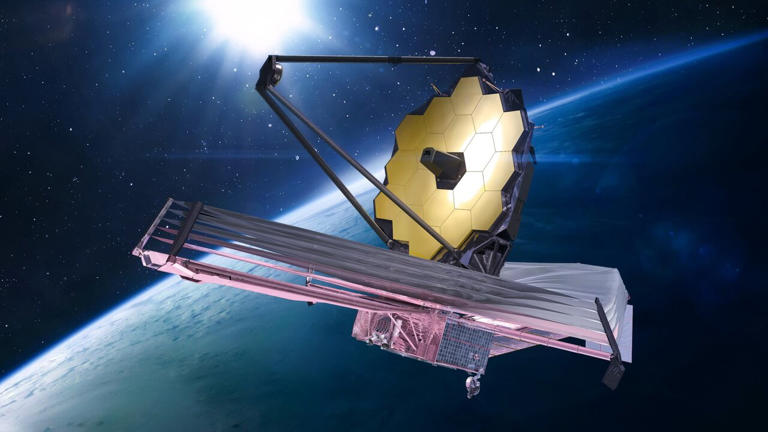
The James Webb Space Telescope in space near Earth. Credit: NASA/dima_zel

The James Webb Space Telescope in space near Earth.
Credit: NASA/dima_zel

Scientists have created the highest resolution map of the dark matter that threads through the universe—showing its influence on the formation of stars, galaxies and planets.

The research, including astronomers from Durham University, UK, tells us more about how this invisible substance helped pull ordinary matter into galaxies like the Milky Way and planets like Earth.

The findings, using new data from NASA's James Webb Space Telescope (Webb), are published in the journal Nature Astronomy.

The study was jointly led by Durham University, NASA's Jet Propulsion Laboratory (JPL), and the École Polytechnique Fédéral de Lausanne (EPFL), Switzerland.

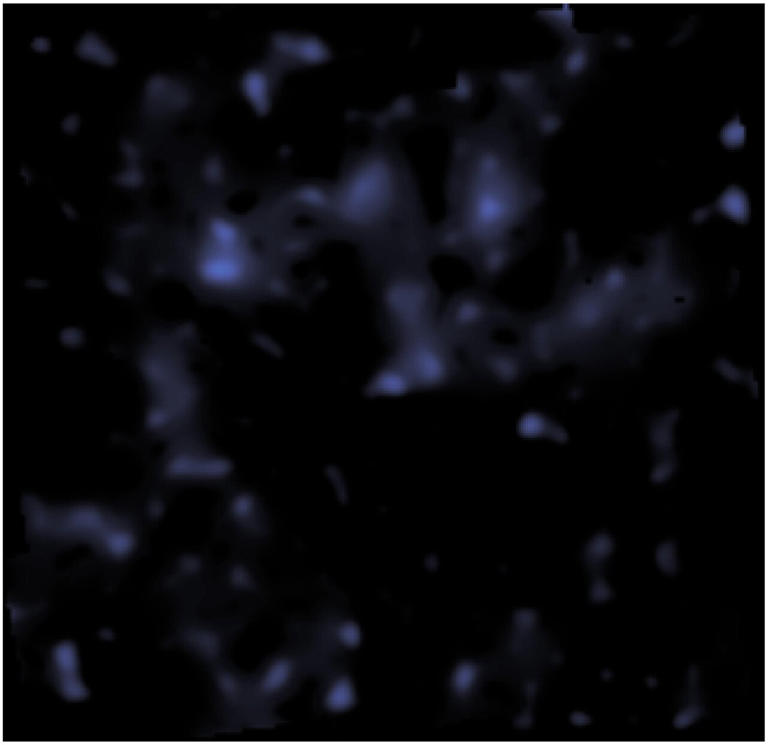
In 2007, astronomers produced the first detailed map of the hidden dark matter of the COSMOS field. By measuring how gravity from unseen matter bends the light of background galaxies, the map shows how dark matter is distributed and acts as the hidden framework on which visible galaxies are built. Credit: NASA, ESA and R Massey (California Institute of Technology).

In 2007, astronomers produced the first detailed map of the hidden dark matter of the COSMOS field. By measuring how gravity from unseen matter bends the light of background galaxies, the map shows how dark matter is distributed and acts as the hidden framework on which visible galaxies are built.
Credit: NASA, ESA and R Massey (California Institute of Technology).

The new map confirms previous research and provides new details about the relationship between dark matter and the normal matter from which we—and everything we can touch or see—are made.

When the universe began, dark matter and normal matter were probably sparsely distributed.

Scientists think dark matter clumped together first and then pulled in normal matter, creating regions where stars and galaxies began to form.

How dark matter shaped the universe

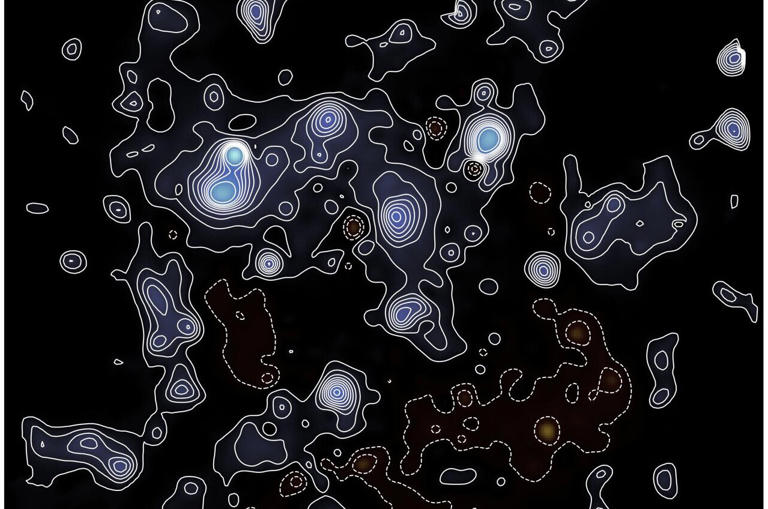
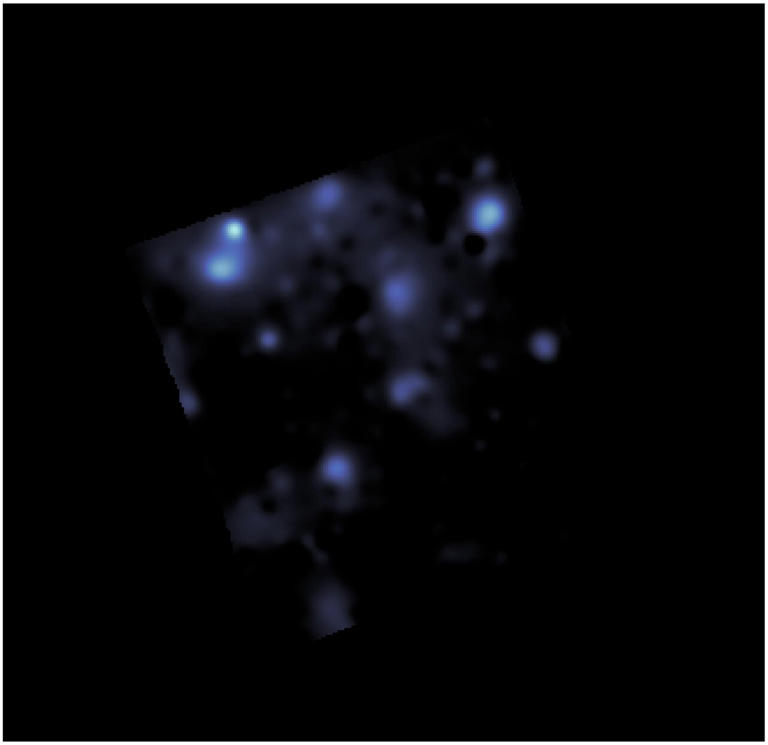
Using data from the James Webb Space Telescope, astronomers have produced one of the most detailed maps to date of dark matter. By measuring how gravity from unseen matter bends the light of background galaxies, the map shows how dark matter acts as the hidden framework on which visible galaxies are built. The overlaid contours mark regions of equal dark-matter density, highlighting where this invisible matter—shown here in a blue color—is most strongly concentrated. Credit: Dr. Gavin Leroy/COSMOS-Webb collaboration.

Using data from the James Webb Space Telescope, astronomers have produced one of the most detailed maps to date of dark matter. By measuring how gravity from unseen matter bends the light of background galaxies, the map shows how dark matter acts as the hidden framework on which visible galaxies are built. The overlaid contours mark regions of equal dark-matter density, highlighting where this invisible matter—shown here in a blue color—is most strongly concentrated.
Credit: Dr. Gavin Leroy/COSMOS-Webb collaboration.

In this way, dark matter determined the large-scale distribution of galaxies we see in the universe today.

By prompting galaxy and star formation to begin earlier than they would have otherwise, dark matter also played a role in creating the conditions for planets to eventually form. Without it we might not have the elements in our galaxy that allowed life to appear.

Using data from the James Webb Space Telescope, astronomers have produced one of the most detailed maps to date of dark matter. By measuring how gravity from unseen matter bends the light of background galaxies, the map shows how dark matter acts as the hidden framework on which visible galaxies are built. Here the Dark matter map from the JWST telescope is framed inside the original HST map from 2007. Credit: Dr. Gavin Leroy/Professor Richard Massey/COSMOS-Webb collaboration.

Using data from the James Webb Space Telescope, astronomers have produced one of the most detailed maps to date of dark matter. By measuring how gravity from unseen matter bends the light of background galaxies, the map shows how dark matter acts as the hidden framework on which visible galaxies are built. Here the Dark matter map from the JWST telescope is framed inside the original HST map from 2007.
Credit: Dr. Gavin Leroy/Professor Richard Massey/COSMOS-Webb collaboration.

Research co-lead author Dr. Gavin Leroy, of the Institute for Computational Cosmology, Department of Physics, Durham University, said, "By revealing dark matter with unprecedented precision, our map shows how an invisible component of the universe has structured visible matter to the point of enabling the emergence of galaxies, stars, and ultimately, life itself.

Using data from the James Webb Space Telescope, astronomers have produced one of the most detailed maps to date of dark matter. By measuring how gravity from unseen matter bends the light of background galaxies, the map shows how dark matter acts as the hidden framework on which visible galaxies are built. Credit: Dr. Gavin Leroy/Professor Richard Massey/COSMOS-Webb collaboration.

Using data from the James Webb Space Telescope, astronomers have produced one of the most detailed maps to date of dark matter. By measuring how gravity from unseen matter bends the light of background galaxies, the map shows how dark matter acts as the hidden framework on which visible galaxies are built.
Credit: Dr. Gavin Leroy/Professor Richard Massey/COSMOS-Webb collaboration.

"This map reveals the invisible but essential role of dark matter, the true architect of the universe, which gradually organizes the structures we observe through our telescopes."

Understanding dark matter's elusive nature

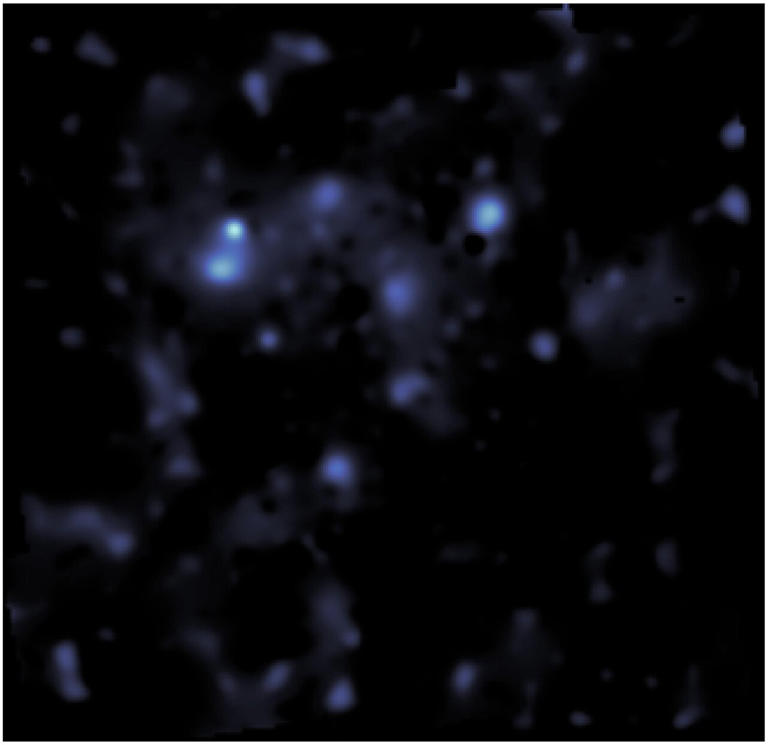
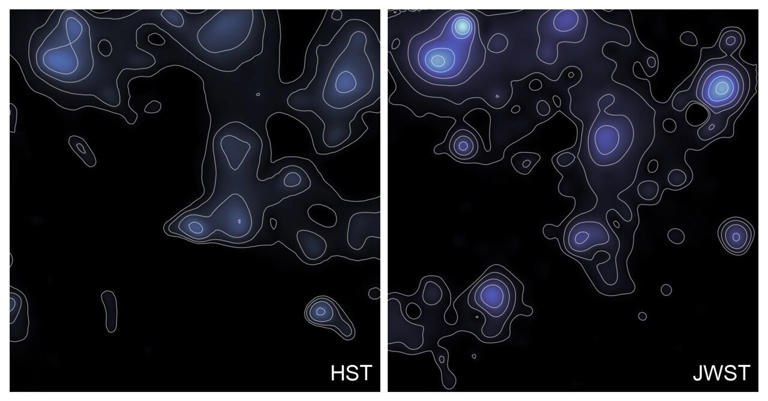
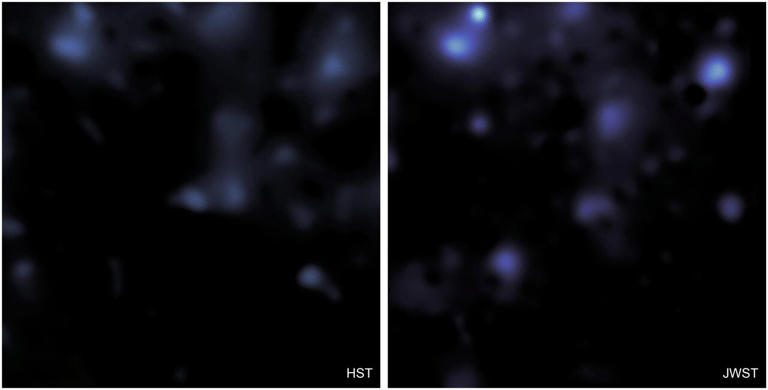
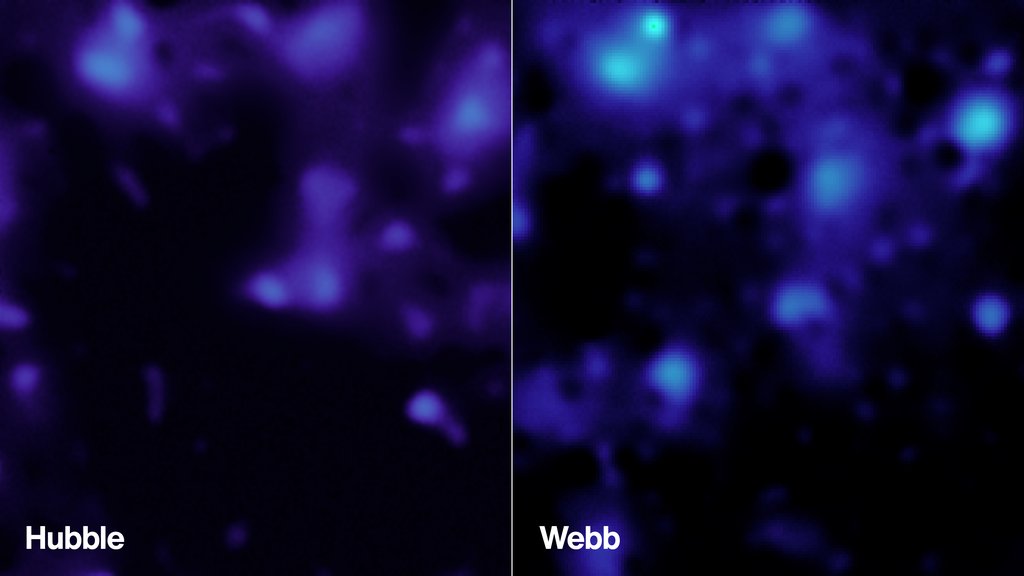
This map shows the Dark Matter distribution in the COSMOS field observed by the Hubble Space Telescope (left) and by the James Webb Space Telescope (right). The overlaid contours mark regions of equal dark-matter density, highlighting where this invisible matter—shown here in a blue color—is most strongly concentrated. Credit: Dr. Gavin Leroy/Professor Richard Massey/COSMOS-Webb collaboration.

This map shows the Dark Matter distribution in the COSMOS field observed by the Hubble Space Telescope (left) and by the James Webb Space Telescope (right). The overlaid contours mark regions of equal dark-matter density, highlighting where this invisible matter—shown here in a blue color—is most strongly concentrated.
Credit: Dr. Gavin Leroy/Professor Richard Massey/COSMOS-Webb collaboration.

Dark matter does not emit, reflect, absorb, or block light, and it passes through regular matter like a ghost.

However, it does interact with the rest of the universe through gravity, something the new map shows with a new level of clarity.

Evidence for this interaction lies in the degree of overlap between maps of dark matter and normal matter.

According to the research, Webb's observations confirm that this close alignment cannot be a coincidence. Instead, the astronomers say it is due to dark matter's gravity pulling normal matter toward it throughout cosmic history.

The Dark Matter distribution in the COSMOS field observed by the Hubble Space Telescope (left) and by James Webb Space Telescope (right). Credit: Dr. Gavin Leroy/Professor Richard Massey/COSMOS-Webb collaboration.

The Dark Matter distribution in the COSMOS field observed by the Hubble Space Telescope (left) and by James Webb Space Telescope (right).
Credit: Dr. Gavin Leroy/Professor Richard Massey/COSMOS-Webb collaboration.

Research co-author Professor Richard Massey, in the Institute for Computational Cosmology, Department of Physics, Durham University, said, "Wherever you find normal matter in the universe today, you also find dark matter.

"Billions of dark matter particles pass through your body every second. There's no harm, they don't notice us and just keep going.

  • Related video: This Is the Biggest Thing Ever Discovered in the Universe

"But the whole swirling cloud of dark matter around the Milky Way has enough gravity to hold our entire galaxy together. Without dark matter, the Milky Way would spin itself apart."

Mapping the universe with Webb

The area covered by the new map is a section of sky about 2.5 times larger than the full moon, in the constellation Sextans.

Webb peered at this region for a total of about 255 hours and identified nearly 800,000 galaxies, with many detected for the first time.

The scientific team then looked for dark matter by observing how its mass curves space itself, which in turn bends the light traveling to Earth from distant galaxies—as if the light of those galaxies has passed through a warped windowpane.

The map contains about 10 times more galaxies than maps of the area made by ground-based observatories and twice as many as the Hubble Space Telescope.

It reveals new clumps of dark matter and captures a higher-resolution view of the areas previously seen by Hubble.

Sharper images and future research

Research co-lead author Dr. Diana Scognamiglio, of NASA's Jet Propulsion Laboratory, said, "This is the largest dark matter map we've made with Webb, and it's twice as sharp as any dark matter map made by other observatories.

"Previously, we were looking at a blurry picture of dark matter. Now we're seeing the invisible scaffolding of the universe in stunning detail, thanks to Webb's incredible resolution."

To refine measurements of the distance to many galaxies for the map, the team used Webb's Mid-Infrared Instrument (MIRI).

Durham University's Center for Extragalactic Astronomy was involved in the development of MIRI, which was designed and managed through launch by JPL.

The wavelengths detected by MIRI make it adept at detecting galaxies obscured by cosmic dust clouds.

The team next plans to map dark matter throughout the entire universe, using the European Space Agency's (ESA) Euclid telescope and NASA's upcoming Nancy Grace Roman Space Telescope.

They will learn more about dark matter's fundamental properties and how dark matter might have changed over cosmic history.

However, that patch of sky studied in this latest research will be the reference on which all future mapping will be fine-tuned and compared.

More information: 

  • Diana Scognamiglio, An ultra-high-resolution map of (dark) matter, Nature Astronomy (2026). 

DOI: 10.1038/s41550-025-02763-9. www.nature.com/articles/s41550-025-02763-9

  • Provided by Durham University

RELATED VIDEOS

{ Phys org }

ASTRONOMIE / RUIMTEVAART

Hoe vind je dit bericht? 0 stemmen
Geschreven door peter om 20:53 Stuur door
Maandag 26 januari 2026

Underground shelters for the chosen, silence for the masses

Underground shelters for the chosen, silence for the masses

Back in 2013, we reported on the so-called elite survival bunkers and the notorious Deep Underground Military Bases — the D.U.M.B.s. Curiously, the rumors never faded. If anything, they feel more relevant today than ever. 
underground%20doomsday%20bunkers.jpg

Despite the public silence, world powers may already be aware of a looming global crisis, yet choose to say nothing. While the masses are distracted, preparations appear to continue behind closed doors. 
Mainstream media keeps its spotlight fixed on geopolitical tension, conveniently ignoring escalating environmental and planetary risks. Governments offer no clear explanation. Scientists remain reserved. The pattern speaks for itself. 
Evidence suggests the world’s major governments have been preparing for catastrophe far longer than most people realize. 
Across continents, state agencies, defense contractors, and major corporations have accelerated underground construction to unprecedented levels. In the United States, massive subterranean complexes are being excavated in remote and restricted regions, well beyond public oversight. China has quietly built unusually deep subway networks beneath key cities, resembling a crash infrastructure program. Russia went public in 2011 with plans for roughly 5,000 new nuclear shelters for Moscow alone, while newer metro lines were designed to double as hardened bunkers. 
More recently, former HUD official Catherine Austin Fitts alleged that the U.S. has been covertly constructing an underground “breakaway” civilization for the elite, designed for near extinction-level scenarios. She claimed trillions in unaccounted federal funds were diverted into subterranean infrastructure, including an underground command grid for continuity of government during nuclear war or worse, as well as advanced transit systems. 
One acknowledged D.U.M.B. is the Cheyenne Mountain Complex, arguably America’s most secure and secretive military fortress. Imagine what else they've built. ( Video : take a look at the inside the Cheyenne Mountain Complex.) 
Economist Mark Skidmore of Michigan State University reviewed federal financial discrepancies and concluded in 2017 that roughly $21 trillion in “unauthorized expenditures” occurred between 1998 and 2015 within the Department of Defense and the Department of Housing and Urban Development. One Army report alone listed $6.5 trillion in unsupported adjustments for fiscal year 2015 — fifty times its official budget. 
After examining the missing trillions, Fitts estimated that at least 170 underground installations exist within U.S. territory, some rumored to extend beneath oceans and interconnect via classified high-speed transit systems. According to her, these would function as sanctuaries if governments anticipated a civilization level collapse. 
Hollywood has long been accused of predictive programming, quietly introducing future technologies, events, or disclosures into films and entertainment well before they surface in reality. In the context of underground survival infrastructure, the film Greenland is frequently cited. Its storyline depicts an extinction-level disaster in which ordinary citizens are abandoned while selected individuals are quietly evacuated to fortified subterranean facilities, including a base beneath Greenland. 
Confirmed or not, the pattern is hard to ignore: powerful institutions appear to be preparing for contingencies the public is not being informed about. And if the worst comes, one uncomfortable possibility emerges, the general population may be left to fend for itself.

{ http://ufosightingshotspot.blogspot.com/ }

MYSTERIES , Complot Theories, ed ( EN, FR, NL )

Hoe vind je dit bericht? 0 stemmen
Geschreven door peter om 22:39 Stuur door
Maandag 26 januari 2026

4 big changes coming to NASA in 2026

4 big changes coming to NASA in 2026

Story by Nicolae Bochis
The NASA sign at the Kennedy Space Center
© SNEHIT PHOTO/Shutterstock

In 2026, NASA will move from long-running development and testing into a phase defined by action, readiness, and progress. After years shaped by delays, redesigns, and risk reductions, many of NASA's most ambitious programs are finally lining up for execution. The result will be a year that could redefine how humans explore space and how science missions are delivered. Human spaceflight is once again the central focus.

After more than 50 years, humans are planning to return to the Moon. At the same time, the agency is testing new ways to communicate across deep space, manage crews, and operate complex systems from Earth. Meanwhile, the next-generation Nancy Grace Roman telescope is finished and preparing to launch, while NASA continues to build strong partnerships with commercial companies to improve its means to search for life outside Earth. Together, these efforts make 2026 more than just another year of planning. It represents a moment when planning turns into progress.

Read more: What's Happening To Earth Right Now Can't Be Explained By Climate Models

1. Artemis II is going back to the Moon

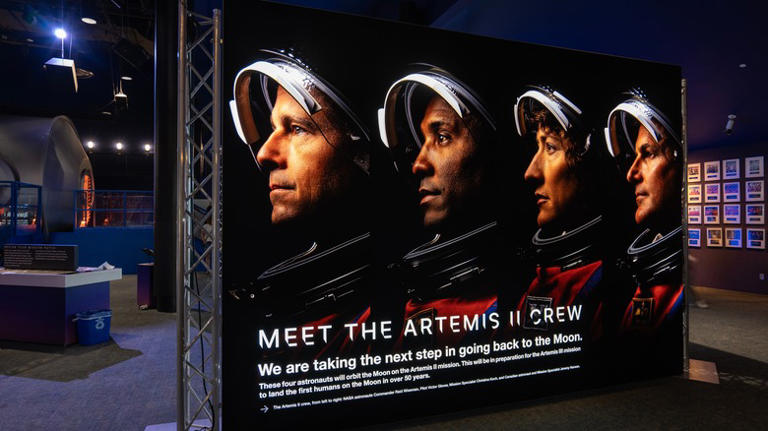
Photo of the Artemis II crew shown at the space center in Houston, Texas
© Tada Images/Shutterstock

In 2026, NASA plans to take a major step in returning humans to the Moon with the Artemis II mission. This flight will be the first time astronauts reach the moon since the final Apollo mission concluded in 1972. A crew of four astronauts aboard NASA's Orion spacecraft will leave Earth from the Kennedy Space Center in Florida. The mission is planned to launch no later than April 2026, but NASA is actually aiming for a possible launch even sooner.

  • Moon After 54 Years!

The trip will last only 10 days, during which the spacecraft will loop around the Moon and return to Earth. The astronauts won't land on the Moon because the true purpose of the Artemis II mission is to test life support, navigation, communication, and other systems with humans aboard in a deep-space environment. That said, Artemis II is more than just a technical tryout. It's a confidence builder for the later Artemis missions planned to take astronauts to the lunar surface, Mars' surface, and beyond. The excitement for Artemis II is global. NASA invited the public to sign up and have their names fly around the Moon during the mission. Projects like this can help people around the world feel more connected to space exploration in 2026.

2. NASA hones in on search-for-life missions

Artist's concept of the Habitable Worlds Observatory
© NASA's Scientific Visualization Studio - KBR Wyle Services, LLC/Jonathan North, KBR Wyle Services, LLC/Walt Feimer, NASA/GSFC/Claire Andreoli

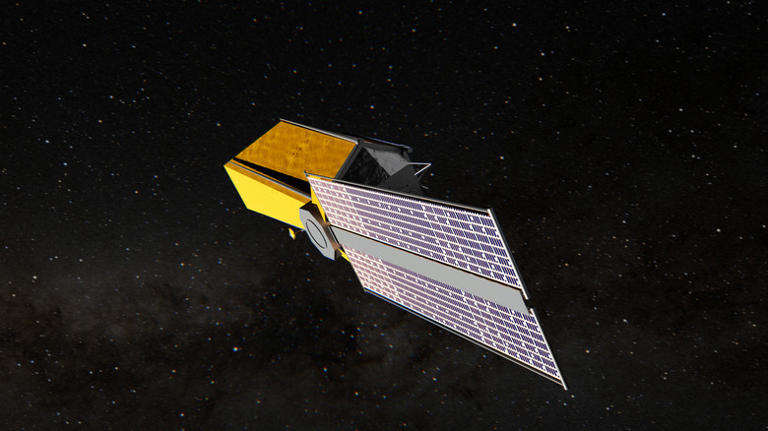
In early January 2026, NASA announced that it was hearing proposals from companies who could help advance technology on the successor to James Webb, the Habitable Worlds Observatory (HWO). NASA plans to have HWO serve as a space telescope designed to image Earth-like planets orbiting distant suns and analyze their atmospheres for signatures of life. This new flagship telescope will push beyond what Hubble and James Webb can do. While these existing telescopes also have coronagraphs, or devices that block starlight so that scientists can get a better look at orbiting planets, HWO is expected to have one that is thousands of times more powerful.

NASA awarded three-year contracts to seven companies to build the technical foundations for HWO. Among these are some major players including Lockheed Martin, Northrop Grumman, and BAE Systems. In a statement, NASA administrator Jared Isaacman  said humanity is ready to find life beyond Earth and that he believes developing such technology is a matter of urgency. HWO is NASA's boldest step yet in answering the question: Are we alone in the universe? 
3. Laser-based communication is implemented

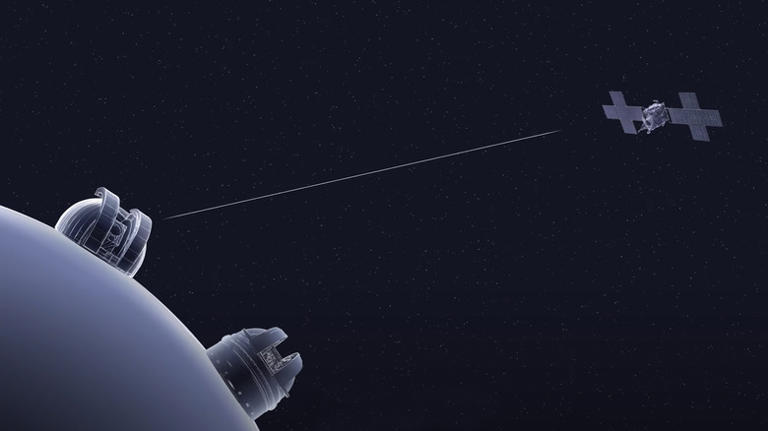
Illustration depicting transmits between NASA's Psyche spacecraft and Earth-based observatories

Illustration depicting transmits between NASA's Psyche spacecraft and Earth-based observatories
© NASA/JPL-Caltech

In recent years, NASA has been pushing the limits of how space communication works. Until now, spacecraft were using traditional radio waves to communicate with Earth. Now, new technologies are laser-based. They use pulses of light to send information, packing far more data in each transmission. This breakthrough could transform how missions share high-definition images, video, and scientific data across millions of kilometers.

NASA already successfully demonstrated how Deep Space Optical Communication (DSOC) works. The Psyche spacecraft, launched in October 2023, is equipped with this new technology, and it already received laser-encoded data over record-breaking distances. The first stream was, funnily enough, a video of a cat chasing a laser pointer. Throughout 2024 and 2025, the DSOC onboard Psyche continued to beat distance records.

This successful demonstration lays the groundwork for the operational use of laser communication in crew-supported missions like Artemis II. NASA will fly the Orion Artemis II Optical Communication System (O2O) aboard the Orion spacecraft. The Artemis crew will be able to send 4K ultra-high definition video, voice, procedures, images, and science data for the duration of the mission.

The Nancy Grace Roman telescope finishes its final tests

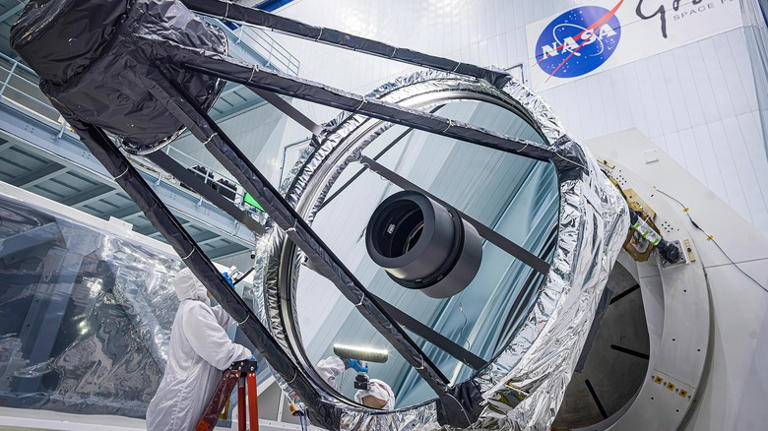
An engineer inspecting the primary mirror for NASA's Nancy Grace Roman Space Telescope
© NASA/Chris Gunn

NASA's next great space telescope, the Nancy Grace Roman Space Telescope has officially moved from construction to completion. After years of development, the spacecraft's physical build is finished, and all major components have been assembled and integrated. Roman is NASA's next flagship telescope that combines Hubble-like resolution with a field view 100 times larger. That means it's capable of capturing huge cosmic areas in a single image.

The next step is to launch this space telescope. Final testing and preparations are ongoing as engineers simulate the launch vibrations, cold of space, and long-term operations far from Earth to make sure this next-generation telescope will be fully operational before the launch. The telescope is scheduled to go online in May 2027, but as the work progresses fast, there are indications that the launch could be moved to September 2026. While the launch preparations continue, the scientific community is already gearing up. In 2025, NASA ca }ed for research proposals using the Ronan telescope. It could be that 2026 sees some of these come to life.

Enjoyed this article? Sign up to BGR's free newsletter and add us as a preferred search source for the latest in tech and entertainment, plus tips and advice you'll actually use.

  • Read the original article on BGR.

{ BGR }

ASTRONOMIE / RUIMTEVAART

Hoe vind je dit bericht? 0 stemmen
Geschreven door peter om 22:30 Stuur door
Maandag 26 januari 2026

Finding Water on Mars

Finding Water on Mars

By Mark Thompson 
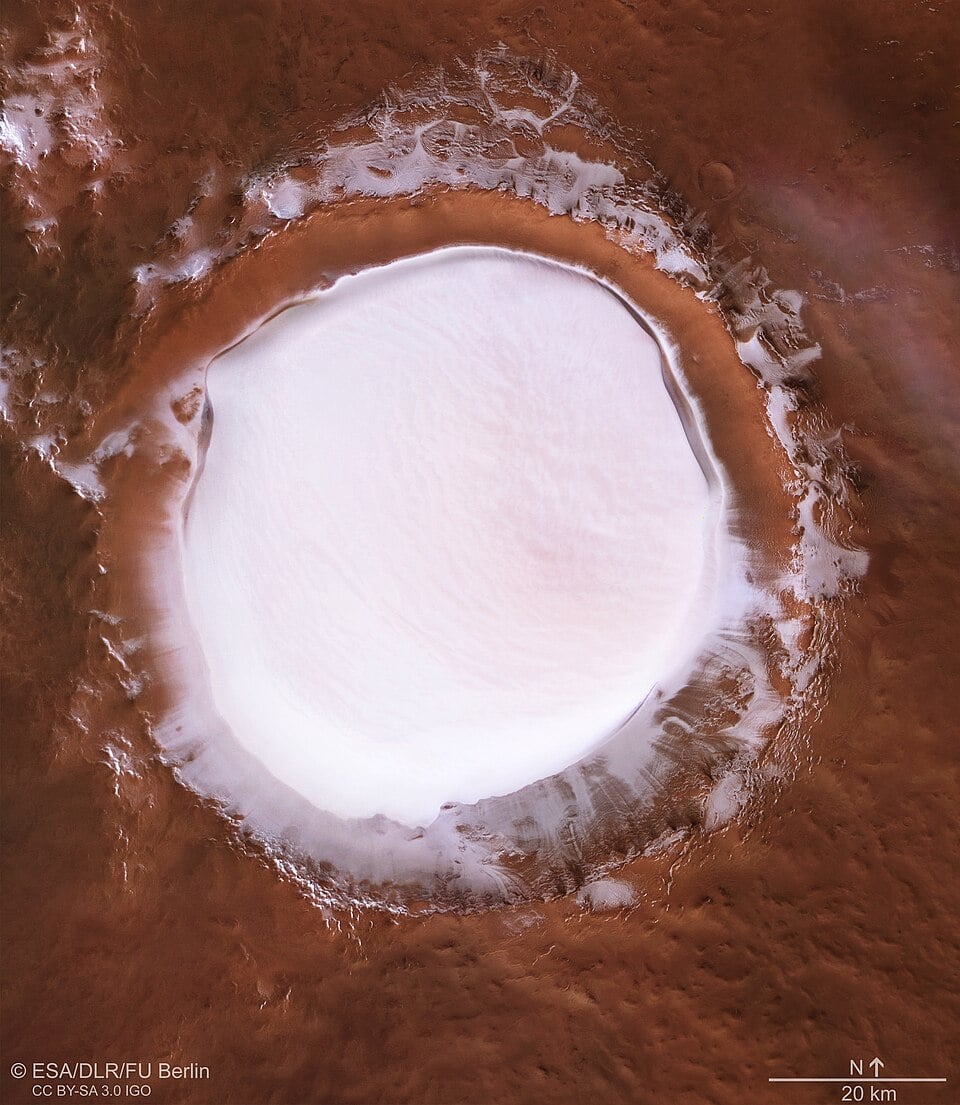
Mars contains water, though mostly as subsurface permafrost. Surface water is readily visible at some places, such as the ice-filled Korolev Crater, near the north polar ice cap (Credit : ESA/DLR/FU) Mars contains water, though mostly as subsurface permafrost. Surface water is readily visible at some places, such as the ice-filled Korolev Crater, near the north polar ice cap (Credit : ESA/DLR/FU)

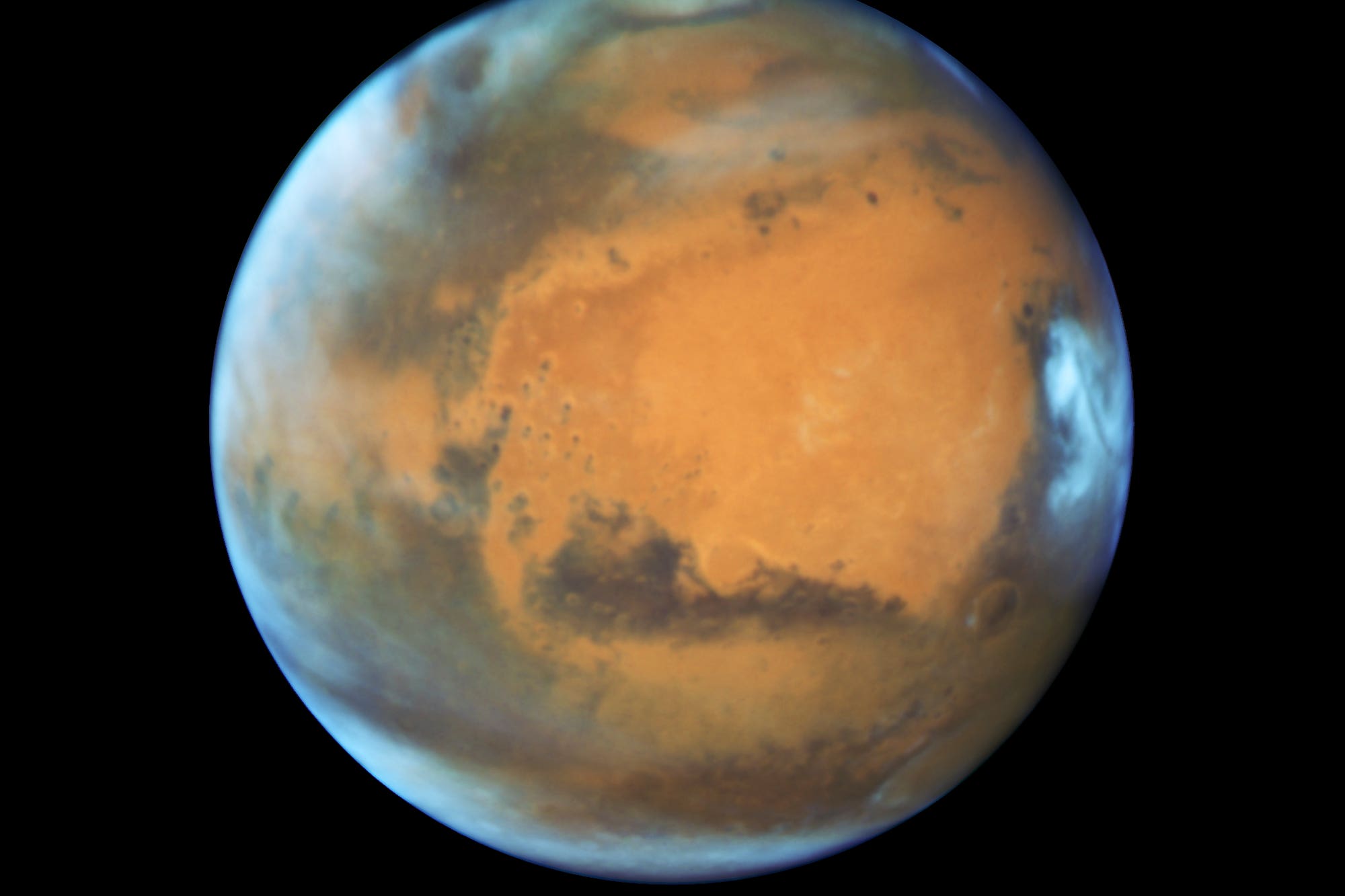
Scientists have known that Mars has water for some years, documenting ice beneath the surface, moisture locked in soil, and vapour drifting through the thin atmosphere. The challenge facing future human missions isn't finding water on the Red Planet, it’s figuring out how to actually extract and use it.

Dr Vassilis Inglezakis at the University of Strathclyde has tackled this practical problem in a new study that compares the various technologies capable of recovering Martian water. While previous research focused on identifying where water exists, this analysis examines the crucial next step which is the evaluation of how effectively each extraction method would work under authentic Martian conditions.

Reliable water access would prove essential not just for drinking but for producing oxygen and fuel, dramatically reducing dependence on supplies shipped from Earth at enormous expense. A self sufficient Mars base needs local water, and it needs extraction systems that actually function in an environment far harsher than anywhere on Earth.

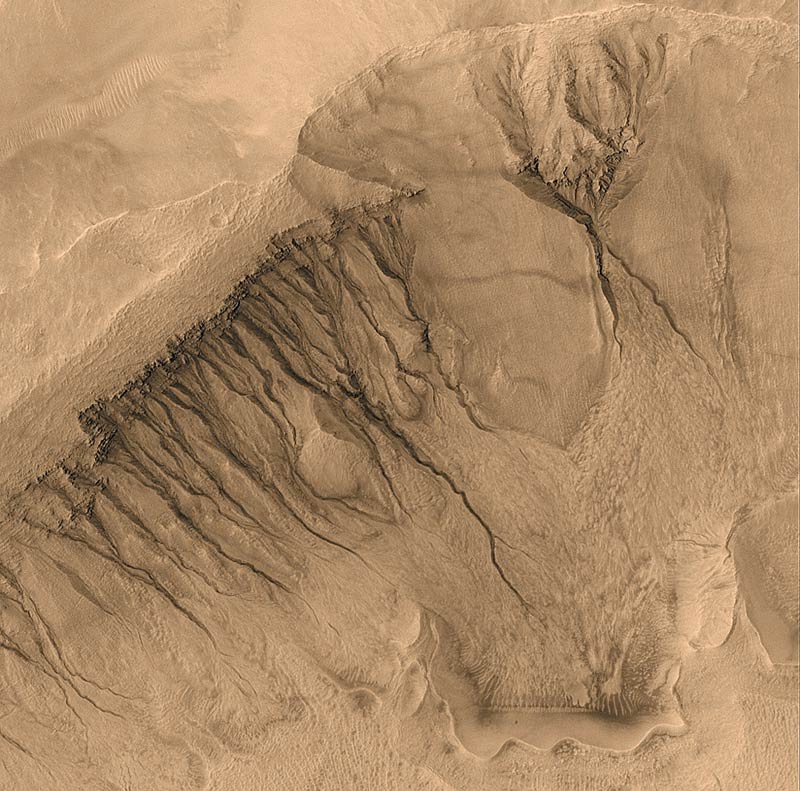
Gullies, similar to those formed on Earth, are visible on this image from Mars Global Surveyor and are thought to be formed by transient running water on the surface of Mars.

Gullies, similar to those formed on Earth, are visible on this image from Mars Global Surveyor and are thought to be formed by transient running water on the surface of Mars.

Inglezakis compared three primary water sources and their associated technologies. Subsurface ice emerges as the most promising long term option, offering substantial quantities of relatively pure water once drilling or excavation equipment reaches deposits typically buried beneath meters of dry soil and rock. The energy costs of melting ice pale in comparison to the water yield, making this approach economically viable for permanent settlements.

Soil moisture presents a trickier proposition. Martian regolith contains water molecules chemically bound to minerals, which can be liberated through heating. However, the process demands significant energy to extract relatively modest amounts of water, making it better suited as a supplementary source or emergency backup rather than a primary supply.

Atmospheric water harvesting represents perhaps the most intriguing possibility, particularly for missions exploring regions far from known ice deposits. Mars's atmosphere contains water vapour, though in concentrations far lower than Earth's driest deserts. The study proposes new harvesting approaches that could capture this atmospheric moisture, offering a potentially valuable water source when nothing else is accessible. The technology would need to operate continuously, compensating for the atmosphere's stinginess through persistent collection over extended periods.

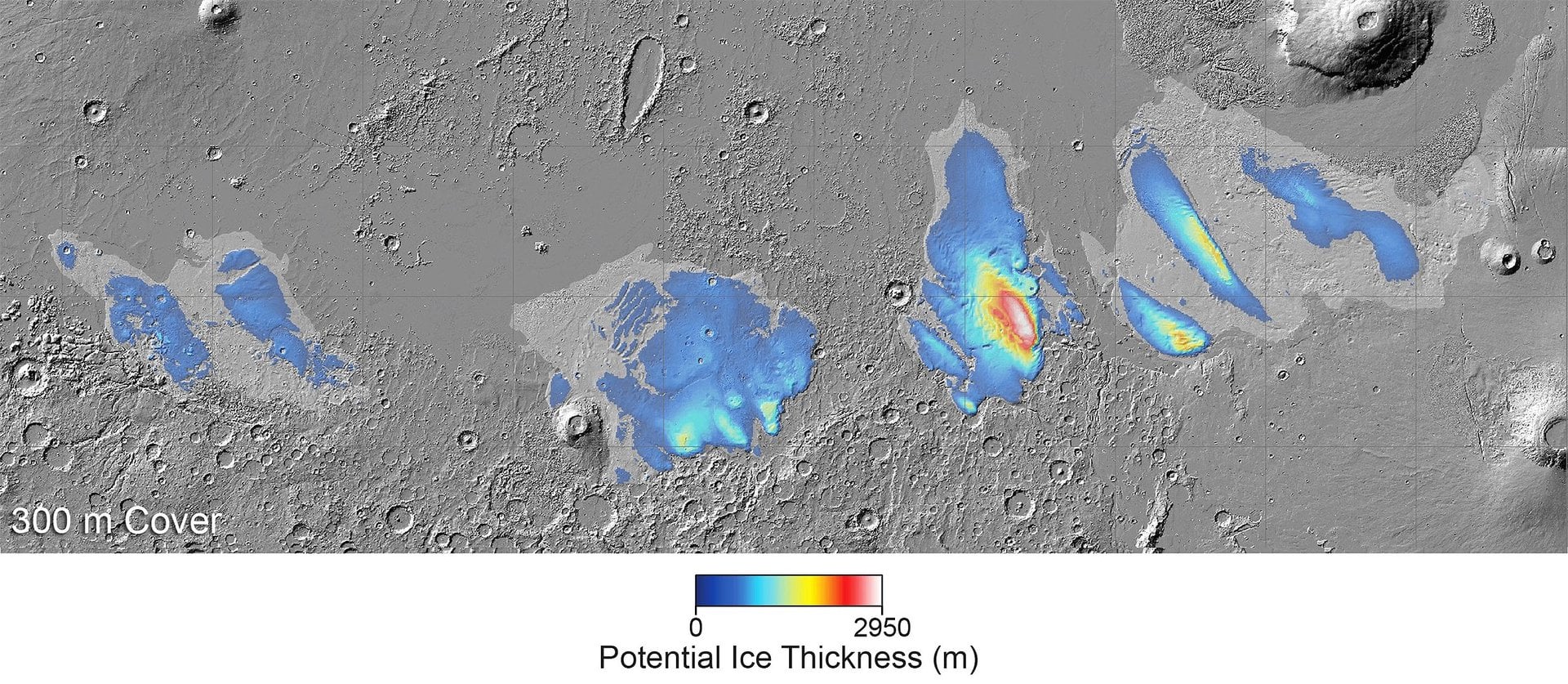
This map shows the ice thickness at Mars’s Medusae Fossae Formation (MFF) if we assume that the dust is 1000 feet thick. In this case, the total volume of water ice contained within the MFF deposits, if it melted, would be enough to cover Mars in an ocean of water approximately 3 metres deep (Credit: ESA)

This map shows the ice thickness at Mars’s Medusae Fossae Formation (MFF) if we assume that the dust is 1000 feet thick. In this case, the total volume of water ice contained within the MFF deposits, if it melted, would be enough to cover Mars in an ocean of water approximately 3 metres deep (Credit: ESA)

The analysis evaluates each method across multiple criteria; energy requirements, equipment complexity, scalability from small exploration missions to large settlements, and reliability under varying Martian conditions. Temperature extremes, dust storms, and equipment degradation from the planet's corrosive soil all factor into determining which technologies would prove practical rather than merely theoretically possible.

As Inglezakis notes, much of Mars remains unexplored, and the search for accessible water continues. But understanding which extraction technologies could realistically function on the Red Planet proves equally crucial for planning sustained missions and eventual permanent settlement. The research provides a roadmap for making future Mars missions more self sufficient, transforming the planet's scattered water resources from tantalising discoveries into practical assets for human survival.

Source : 

  • Research examines technologies to access water on Mars

{ https://www.universetoday.com/ }

ASTRONOMIE / RUIMTEVAART

Hoe vind je dit bericht? 0 stemmen
Geschreven door peter om 22:02 Stuur door
Maandag 26 januari 2026

Moisture in Mars atmosphere could provide water for future human inhabitants, research finds

Moisture in Mars atmosphere could provide water for future human inhabitants, research finds

By ELEANOR MANN, JUNIOR NEWS REPORTER

Moisture extracted from the atmosphere of Mars could provide a valuable alternative water supply if humans are ever to inhabit the red planet, a study has found. 

However, the research from a Strathclyde University academic found that ice located beneath the surface of Mars would provide the most viable long-term solution. 

Dr Vassilis Inglezakis examined the various ways of obtaining water on Mars in a paper in the Advances In Space Research journal. 

The planet has several potential sources of H2O - including underground ice, soil moisture, and atmospheric vapour.

While underground ice could provide a long-term solution, Dr Inglezakis's research noted there are unlikely to be any accessible deposits near locations where explorers would land.

Harvesting water from the atmosphere is challenging as it requires more power and energy - but he suggested it could provide an alternative in areas were subsurface ice is inaccessible, or as a backup supply.

Dr Inglezakis, from the university's Department of Chemical and Process Engineering, said: 'Reliable access to water would be essential for human survival on Mars, not only for drinking but also for producing oxygen and fuel, which would reduce dependence on Earth-based supplies.

'This study is one of the first to compare the various technologies that could be deployed to recover water in a Martian environment.

Mars has several potential sources of H20 - including underground ice, soil moisture, and atmospheric vapour

Mars has several potential sources of H20 - including underground ice, soil moisture, and atmospheric vapour

'It also puts forward new ideas for atmospheric water harvesting, offering potentially valuable alternatives where other sources are inaccessible.'

The paper discusses each method in terms of energy demands, scalability, and suitability for different Martian conditions.

The analysis suggests subsurface ice is the most viable long-term water source.

The study examined ways of obtaining water on Mars

The study examined ways of obtaining water on Mars

Nasa/ESA

Dr Inglezakis added: 'While the search for water continues and much of Mars remains unexplored, a clear understanding of available technologies and their realistic applications will be key to supporting sustained missions and eventual settlement.

'The research offers insights for future space exploration missions, supporting efforts to make them more self-sufficient and sustainable.'

{ https://www.dailymail.co.uk/sciencetech/index.html }

ASTRONOMIE / RUIMTEVAART

Hoe vind je dit bericht? 0 stemmen
Geschreven door peter om 21:50 Stuur door
Maandag 26 januari 2026

Mystery of Egypt's Giza pyramids deepens as hidden megastructure 4,000 feet below is revealed

Mystery of Egypt's Giza pyramids deepens as hidden megastructure 4,000 feet below is revealed

  • READ MORE: I interviewed Joe Rogan's 'worst guest ever'... then a controversial question stopped everything

By STACY LIBERATORE, US SCIENCE & TECHNOLOGY EDITOR

Joe Rogan's latest podcast guest delved into controversial scans showing an enormous underground structure beneath the Great Pyramid of Giza, potentially rewriting ancient history.

The scans were conducted by Italian scientist Filippo Biondi and the Khafre Project team using synthetic aperture radar. This satellite imaging technology maps subsurface features by bouncing radio waves off the ground.

More than 200 scans from multiple satellites, including Italy's Cosmo-SkyMed and the US-based Capella Space, showed uniform results suggesting massive pillars about 65 feet in diameter wrapped in spirals and plunging nearly 4,000 feet deep.

Those pillars appear to end in 260-foot cubic chambers beneath all three pyramids and the Sphinx, which Biondi described as 'huge chambers' measuring roughly 260 feet in length and width.

The scans also highlighted shafts descending about 2,000 feet that intersect horizontal corridors roughly 10 feet tall, leading Biondi to speculate the pyramids may not be tombs but ancient power plants or vibration devices for out-of-body experiences.

Rogan echoed the radical implications, saying: 'They're not tombs,' and adding that if the data is accurate, the pyramids may be 'just the tip of the iceberg.'

Biondi dated the underground structures to 18,000 to 20,000 years ago, linking them to Zep Tepi, the mythic 'First Time' when gods first ruled and civilization began.

He also pointed to salt residues from ancient seawater flooding as evidence of a great flood event that could support the theory of a far older civilization beneath Giza.

The researcher team has released a model of the structures hiding below the Giza plateau, which includes three pyramids and the Great Sphinx

The researcher team has released a model of the structures hiding below the Giza plateau, which includes three pyramids and the Great Sphinx

Italian scientist Filippo Biondi was the latest guest on the Joe Rogan Experience, where he discussed the scans showing the hidden megastructure

Italian scientist Filippo Biondi was the latest guest on the Joe Rogan Experience, where he discussed the scans showing the hidden megastructure 

The Giza complex consists of three pyramids, Khufu, Khafre and Menkaure, built 4,500 years ago on a rocky plateau on the west bank of the Nile River in northern Egypt.

However, the Khafre Pyramid team believes the structures are much older and are hiding an underground world built by a lost civilization. 

The key driver of the controversy is the credibility of the technology, which Biondi said he developed through 'top secret projects for the Italian military' and has applied to sites like the Mosul Dam and Italy's Grand Sasso laboratory.

It's patented, peer-reviewed, and built for precision, yet when the scans are applied to Giza, the reaction is fierce. Mainstream archaeologist Dr Zahi Hawass has called the scans 'This is bulls***.'

Biondi admitted that he and Armando Mei, who is part of the team, initially doubted the data, holding the results for six months, suspecting processing artifacts.

'My opinion was that it was not real. I was thinking that maybe it was noise or some artifacts due to our processing procedures,' he said.

Confirmation came from multiple satellite systems and benchmarks, including exact mapping of Italy's Grand Sasso particle collider, which lies about 4,600 feet deep inside a mountain.

Biondi said the consistency across datasets was what ultimately convinced him the findings were real. 

The scans captured enormous shafts descending from the pyramids

The scans captured enormous shafts descending from the pyramids 

The Giza complex consists of three pyramids, Khufu, Khafre and Menkaure, built 4,500 years ago on a rocky plateau on the west bank of the Nile River in northern Egypt

The Giza complex consists of three pyramids, Khufu, Khafre and Menkaure, built 4,500 years ago on a rocky plateau on the west bank of the Nile River in northern Egypt

After initially relying only on Italy's Cosmo-SkyMed satellites, the team expanded its analysis to US-based Capella Space satellites and others, seeking confirmation through diversity of sources. 

'Once we had the same results while we were using American satellites… and also other satellites always the same results, we decided to disclose,' he said.

Read More

EXCLUSIVE
  •  Chilling new theory about mystery city beneath Egypt's pyramids 
article image

In total, more than 200 scans returned the same structural patterns. 

Rogan pointed out that the technology has already been validated elsewhere, including its ability to precisely map Italy's underground Gran Sasso laboratory, a particle physics facility buried roughly 4,600 feet inside a mountain. '

We know it's accurate, we know it works,' Rogan said, calling resistance to the findings 'confirmation bias.'

Biondi emphasized that his work does not involve penetrating the ground with radar beams, a common online criticism. 

Hawass has used that argument to dismiss the claims, telling the Daily Mail: 'They used topographic radar.

'They claim it reaches more than 1,000 feet down to a city. But any scientist who understands tomographic radar knows it only reaches about 60 feet. Their theory is completely wrong.'

However, Biondi explained that the method analyzes mechanical vibrations naturally present on Earth's surface and reconstructs subsurface features through tomographic inversion. 

'We are not penetrating anything,' he said. 'We are just grabbing the entropy that is on the surface of the earth.'

The scans indicated not only vertical structures but horizontal corridors roughly nine feet tall that connect the shafts and chambers beneath the plateau. 

The scans also captured large rooms at the bottom of the shafts

The scans also captured large rooms at the bottom of the shafts 

After gathering the data, researchers used a special algorithm that turned the information into vertical images of the ground beneath the pyramid, capturing the first look at the hidden structures. Pictured are the eight wells under the pyramid

After gathering the data, researchers used a special algorithm that turned the information into vertical images of the ground beneath the pyramid, capturing the first look at the hidden structures. Pictured are the eight wells under the pyramid

According to Biondi, existing shafts between the pyramids, currently blocked by debris, may already provide access points to the underground system. 

'Those shafts go down, down, down… and they reach chambers that are below,' he said, estimating depths of about 1,968 feet.

Biondi argued that physical excavation may not even be necessary to confirm the findings. 

He has proposed a project to Egyptian authorities that would focus on clearing debris from existing shafts and deploying robotic drones, rather than digging new tunnels. 

'We want to use machines, not humans,' he said, estimating the cost of such an effort at roughly $20 million.

Rogan repeatedly returned to the scale of the implications. If the data holds up, he said, the pyramids, long considered among humanity's greatest architectural achievements, may be only the visible remnants of something far larger. 

'Those immense structures that have baffled mankind forever are just the tip of the iceberg,' Rogan said.

Biondi agreed, stressing that the measurements are the only subsurface data currently available for the Giza Plateau. 

'What we found is something that has been confirmed by our measurements,' he said. 'At the moment, these are the only data that we have.'

Despite the controversy, Biondi said he welcomes replication by other research groups and remains open to scrutiny. 

'I am happy if somebody can replicate things,' he said. 'If other research groups can replicate the things that I'm showing, I'm happy.'

For now, the scans remain unverified by direct exploration, suspended between radical possibility and entrenched skepticism. 

But as Rogan put it, ignoring the data outright would be a mistake. 'If you're skeptical, we should probably explore it,' he said. 'And if it's wrong, okay. But if it's right, it's a crime not to investigate.'

RELATED VIDEOS

{  https://www.dailymail.co.uk/sciencetech/index.html }

ARCHEOLOGIE ( E, Nl, Fr )

Hoe vind je dit bericht? 0 stemmen
Geschreven door peter om 21:40 Stuur door
Maandag 26 januari 2026

See dark matter like NEVER before: NASA reveals one of the most detailed maps of the elusive substance yet – confirming its vital influence on the universe

See dark matter like NEVER before: NASA reveals one of the most detailed maps of the elusive substance yet – confirming its vital influence on the universe

  • READ MORE: Image shows elusive substance that makes up 25% of universe

By SHIVALI BEST, SCIENCE & TECHNOLOGY EDITOR 

NASA has revealed one of the most detailed maps of dark matter yet.

Taken by the James Webb Space Telescope, the map suggests the elusive substance acts as a hidden framework on which entire galaxies are built. 

According to researchers from Durham University, it could help to unravel the mystery of the formation of our Milky Way – as well as planet Earth. 

'Wherever you find normal matter in the Universe today, you also find dark matter,' explained Professor Richard Massey, co–author of the study. 

'Billions of dark matter particles pass through your body every second. 

'There's no harm, they don't notice us and just keep going.

'But the whole swirling cloud of dark matter around the Milky Way has enough gravity to hold our entire galaxy together. 

'Without dark matter, the Milky Way would spin itself apart.'

NASA has revealed one of the most detailed maps of dark matter yet. Taken by the James WebbSpace Telescope, the map suggests the elusive substance acts as a hidden framework on which entire galaxies are built

NASA has revealed one of the most detailed maps of dark matter yet. Taken by the James WebbSpace Telescope, the map suggests the elusive substance acts as a hidden framework on which entire galaxies are built

Dark matter is described as the 'glue' that holds the universe together. 

However, because it's invisble, understanding exactly what it is or what is does has proved difficult. 

Scientists have previously suggested that when the universe began, dark matter and normal matter were sparsely distributed.

Dark matter clumped together first, before pulling in normal matter, creating regions where stars and galaxies began to form.

By prompting this formation, dark matter also played a role in creating the conditions for planets to form – eventually allowing life to appear. 

To prove this is the case, the research team turned to NASA's James Webb – the largest and most powerful telescope ever launched to space.

This allowed them to map dark matter with 'unprecedented precision'.

Because dark matter is invisible, the team looked for it by observing how its mass curves space itself, which in turn bends the light travelling to Earth from distant galaxies.

Because dark matter is invisible, the team looked for it by observing how its mass curves space itself, which in turn bends the light travelling to Earth from distant galaxies

Because dark matter is invisible, the team looked for it by observing how its mass curves space itself, which in turn bends the light travelling to Earth from distant galaxies

The research team turned to NASA's James Webb ¿ the largest and most powerful telescope ever launched to space

The research team turned to NASA's James Webb – the largest and most powerful telescope ever launched to space

The map shows that dark matter interacts with the rest of the universe through gravity – seen by the degree of overlap between maps of dark and normal matter. 

'By revealing dark matter with unprecedented precision, our map shows how an invisible component of the Universe has structured visible matter to the point of enabling the emergence of galaxies, stars, and ultimately life itself,' explained Dr Gavin Leroy, co–author of the study. 

'This map reveals the invisible but essential role of dark matter, the true architect of the Universe, which gradually organises the structures we observe through our telescopes.'

In total, the area covered by the map is a section of sky about 2.5 times larger than the full moon, in the constellation Sextans. 

Read More

  • Dark matter seen for the first time: Eerie image shows first direct evidence of elusive substance 

article image

It includes nearly 800,000 galaxies – about 10 times more than Webb's predecessor, Hubble, was able to observe.  

Dr Diana Scognamiglio, co–author of the study from NASA's Jet Propulsion Laboratory, said: 'This is the largest dark matter map we've made with Webb, and it's twice as sharp as any dark matter map made by other observatories.

e1a-PIA26703_new.width-1024.jpg

Created using data from NASA’s Webb telescope in 2026 (right) and from the Hubble Space Telescope in 2007 (left), these images show the presence of dark matter in the same region of sky. Webb’s higher resolution is providing new insights into how this invisible component influences the distribution of ordinary matter in the universe.

 Credit: NASA/STScI/A. Pagan

Full Image Details

'Previously, we were looking at a blurry picture of dark matter. 

'Now we're seeing the invisible scaffolding of the Universe in stunning detail, thanks to Webb's incredible resolution.'

The team now plans to map dark matter through the entire universe, using the European Space Agency's Euclid telescope alongside NASA’s upcoming Nancy Grace Roman Space Telescope.

Dark matter: The mysterious substance that makes up 85% of the universe that scientists cannot confirm

Dark matter is a hypothetical substance said to make up roughly 85 per cent of the universe.

The enigmatic material is invisible because it does not reflect light, and has never been directly observed by scientists.

Astronomers know it to be out there because of its gravitational effects on known matter.

The European Space Agency says: 'Shine a torch in a completely dark room, and you will see only what the torch illuminates.

Dark matter is a hypothetical substance said to make up roughly 27 per cent of the universe. It is thought to be the gravitational 'glue' that holds the galaxies together (artist's impression)

Dark matter is a hypothetical substance said to make up roughly 27 per cent of the universe. It is thought to be the gravitational 'glue' that holds the galaxies together (artist's impression)

'That does not mean that the room around you does not exist.

'Similarly we know dark matter exists but have never observed it directly.'

The material is thought to be the gravitational 'glue' that holds the galaxies together.

Calculations show that many galaxies would be torn apart instead of rotating if they weren't held together by a large amount of dark matter.

Just five per cent the observable universe consists of known matter such as atoms and subatomic particles.

{  https://www.dailymail.co.uk/sciencetech/index.html }

ASTRONOMIE / RUIMTEVAART

Hoe vind je dit bericht? 0 stemmen
Geschreven door peter om 21:24 Stuur door
‹ Nieuwere berichten Meer berichten

Meer van UFO'S of UAP'S, ASTRONOMIE, RUIMTEVAART, ARCHEOLOGIE, OUDHEIDKUNDE, SF-SNUFJES EN ANDERE ESOTERISCHE WETENSCHAPPEN - DE ALLERLAATSTE NIEUWTJES

 FORUM 

Geen fotobeschrijving beschikbaar.

Kan een afbeelding zijn van hond

Geen fotobeschrijving beschikbaar.

5 juni 2025 , DAN BESTAAT MIJN BLOG AL 14 JAAR!!!

Carl Sagan Space GIF by Feliks Tomasz Konczakowski

X Files Ufo GIF by SeeRoswell.com

1990: Petit-Rechain, Belgium triangle UFO photograph - Think AboutIts

Ufo Pentagon GIF

Alberta_meteor_GIF_%283%29.gif

Asteroid_sitecard.gif

ufo abduction GIF by Ski Mask The Slump God

Flying Sci-Fi GIF by Feliks Tomasz Konczakowski

Season 3 Ufo GIF by Paramount+

DEAR VISITOR,


MY BLOG EXISTS TODAY 6 - 10 - 2026 15 YEARS AND 4 MONTHS  = 5.622 days.

ON 06/10/2026 MORE THAN 4.434.000 bezoekers..

VISITORS FROM 135 DIFFERENT NATIONS ALREADY FOUND THEIR WAY TO MY BLOG.

THAT IS AN AVERAGE OF 789 GUESTS PER DAY.

THANK YOU FOR VISITING  MY BLOG AND HOPE YOU ENJOY EACH TIME.


Goodbye and thanks
PETER2011

De bronafbeelding bekijken

De bronafbeelding bekijken

Beste bezoeker, bedankt voor uw bezoek.

Dear visitor, thank you for your visit.

Cher visiteur, je vous remercie de votre visite.

Liebe Besucher, vielen Dank für Ihren Besuch.

Estimado visitante, gracias por su visita.

Gentile visitatore, grazie per la vostra visita.

Inhoud blog

  • AI imagines what cities on other planets could look like
  • The Living-Orb Accounts Robert Hastings Wants to Investigate
  • Trump says Air Force pilots described a round UFO flying three times faster than an F-22 fighter jet
  • Trump says ‘young, handsome’ pilots have told him ‘very strange’ things about UFOs
  • Donald Trump on UFOs, Aliens & UAPs (Compilation)
  • Arizona Nurse Claims Over 100 Terminally Ill Children Saw Grey Alien-Like Beings Before Death
  • An Artificial CORTEX to Guide Satellite Rescue Missions
  • Five Alien Orbs Being Followed By Small Aircraft, Madison, Wisconsin, USA Nov 8, 2026, UFO UAP Sighting News.
  • Do you have what it takes? Nasa is hiring new astronauts to live and work on the MOON - with a $165,000 salary
  • Joe Rogan warns of 'human vs nonhuman' war in the next five years: 'We're not going to be the apex predator anymore'
  • Ancient writings offer 'historical evidence' Jesus was hailed 'a god' after the crucifixion, researcher claims
  • Meet the real-life 'Thing': Scientists develop a robotic hand that walks on its fingers – just like the creepy Addams Family character By WILIAM HUNTER, SENIOR SCIENCE & TECHNOLOGY REPORTER
  • The Army Built a Nuclear-Powered ‘City’ Beneath Greenland’s Ice. It Was a Test for Something Bigger
  • A Strange Radio Signal in The Far Reaches of The Milky Way Is Behaving Like Nothing Else in The Galaxy
  • Details of New Jersey’s 2024 Drone Outbreak Still Remain Largely Unexplained
  • UFO Expert Says Government Hides 'Mantis-Type' Aliens and Keeps Dead Bodies in a Military Institute
  • Pilots Entering Thunderstorm Encounter Cylindrical UFO And Fear Collision
  • Matthew Brown Raises a Mind-Controlled UFO Theory—and a Human Breeding Claim
  • Steven Greer Put His UFO Disclosure Demand in Writing. Here Is What the Letter Says
  • Eric Weinstein Says Officials Sought His Help With UFO Disclosure

Categorieën

  • ALIEN LIFE, UFO- CRASHES, ABDUCTIONS, MEN IN BLACK, ed ( FR. , NL; E ) 3763
  • André's Hoekje (ENG) 745
  • André's Snelkoppelingen (ENG) 383
  • ARCHEOLOGIE ( E, Nl, Fr ) 2086
  • ARTICLES of MUFON ( ENG) 478
  • Artikels / PETER2011 (NL EN.) 174
  • ASTRONOMIE / RUIMTEVAART 14047
  • Before it's news (ENG.) 5702
  • Belgisch UFO-meldpunt / Frederick Delaere ( NL) 23
  • Diversen (Eng, NL en Fr) 4383
  • FILER FILES - overzicht met foto's met dank aan Georges Filer en WWW.nationalUFOCenter.com (ENG) 930
  • Frederick's NEWS ITEMS (ENG en NL) 112
  • HLN.be - Het Laatste Nieuws ( NL) 1717
  • INGRID's WEETJES (NL) 6
  • Kathleen Marden 's News about Abductions... ( ENG) 36
  • LATEST ( UFO ) VIDEO NEWS ( ENG) 12043
  • Michel GRANGER - a French researcher ( Fr) 22
  • MYSTERIES ( Fr, Nl, E) 2270
  • MYSTERIES , Complot Theories, ed ( EN, FR, NL ) 519
  • Myths, legends, unknown cultures and civilizations 233
  • National UFO Center {NUFOC} 110
  • News from the FRIENDS of facebook ( ENG ) 6019
  • NIEUWS VAN JAN ( NL) 42
  • Nieuws van Paul ( NL) 17
  • NineForNews. nl ( new ipv NIBURU.nl) (NL) 3711
  • Oliver's WebLog ( ENG en NL) 118
  • Paul SCHROEDER ( ENG) 98
  • Reseau Francophone MUFON / EUROPE ( FR) 87
  • références - MAGONIE (Fr) 486
  • Ruins, strange artifacts on other planets, moons, ed ( Fr, EN, NL ) 655
  • SF-snufjes }, Robotics and A.I. Artificiel Intelligence ( E, F en NL ) 980
  • UFO DIGEST / a Weekly Newsletter - thanks that I may publish this on my blog (ENG) 125
  • UFOs , UAPs , USOS 3191
  • Vincent'snieuws ( ENG en NL) 5
  • Who is Stanton FRIEDMAN - follow his news (ENG) 16
  • WHO IS WHO? ( ENG en NL) 5

Zoeken in blog

Beoordeel dit blog

Bekijk de resultaten

8:03:07 PM

Al 20 uur. Lekker ontspannen...

Er is nu 1 bezoeker op dit blog.
Record tot nu toe: 845

Dinsdag10november2026

The purpose of  this blog is the creation of an open, international, independent and  free forum, where every UFO-researcher can publish the results of his/her research. The languagues, used for this blog, are Dutch, English and French.You can find the articles of a collegue by selecting his category.
Each author stays resposable for the continue of his articles. As blogmaster I have the right to refuse an addition or an article, when it attacks other collegues or UFO-groupes.
 

Archief per maand

  • November 2026
  • Oktober 2026
  • September 2026
  • Augustus 2026
  • Juli 2026
  • Juni 2026
  • Mei 2026
  • April 2026
  • Maart 2026
  • Februari 2026
  • Januari 2026
  • December 2025
  • November 2025
  • Oktober 2025
  • September 2025
  • Augustus 2025
  • Juli 2025
  • Juni 2025
  • Mei 2025
  • April 2025
  • Maart 2025
  • Februari 2025
  • Januari 2025
  • December 2024
  • November 2024
  • Oktober 2024
  • September 2024
  • Augustus 2024
  • Juli 2024
  • Juni 2024
  • Mei 2024
  • April 2024
  • Maart 2024
  • Februari 2024
  • Januari 2024
  • December 2023
  • November 2023
  • Oktober 2023
  • September 2023
  • Augustus 2023
  • Juli 2023
  • Juni 2023
  • Mei 2023
  • April 2023
  • Maart 2023
  • Februari 2023
  • Januari 2023
  • December 2022
  • November 2022
  • Oktober 2022
  • September 2022
  • Augustus 2022
  • Juli 2022
  • Juni 2022
  • Mei 2022
  • April 2022
  • Maart 2022
  • Februari 2022
  • Januari 2022
  • December 2021
  • November 2021
  • Oktober 2021
  • September 2021
  • Augustus 2021
  • Juli 2021
  • Juni 2021
  • Mei 2021
  • April 2021
  • Maart 2021
  • Februari 2021
  • Januari 2021
  • December 2020
  • November 2020
  • Oktober 2020
  • September 2020
  • Augustus 2020
  • Juli 2020
  • Juni 2020
  • Mei 2020
  • April 2020
  • Maart 2020
  • Februari 2020
  • Januari 2020
  • December 2019
  • November 2019
  • Oktober 2019
  • September 2019
  • Augustus 2019
  • Juli 2019
  • Juni 2019
  • Mei 2019
  • April 2019
  • Maart 2019
  • Februari 2019
  • Januari 2019
  • December 2018
  • November 2018
  • Oktober 2018
  • September 2018
  • Augustus 2018
  • Juli 2018
  • Juni 2018
  • Mei 2018
  • April 2018
  • Maart 2018
  • Februari 2018
  • Januari 2018
  • December 2017
  • November 2017
  • Oktober 2017
  • September 2017
  • Augustus 2017
  • Juli 2017
  • Juni 2017
  • Mei 2017
  • April 2017
  • Maart 2017
  • Februari 2017
  • Januari 2017
  • December 2016
  • November 2016
  • Oktober 2016
  • September 2016
  • Augustus 2016
  • Juli 2016
  • Juni 2016
  • Mei 2016
  • April 2016
  • Maart 2016
  • Februari 2016
  • Januari 2016
  • December 2015
  • November 2015
  • Oktober 2015
  • September 2015
  • Augustus 2015
  • Juli 2015
  • Juni 2015
  • Mei 2015
  • April 2015
  • Maart 2015
  • Februari 2015
  • Januari 2015
  • December 2014
  • November 2014
  • Oktober 2014
  • September 2014
  • Augustus 2014
  • Juli 2014
  • Juni 2014
  • Mei 2014
  • April 2014
  • Maart 2014
  • Februari 2014
  • Januari 2014
  • December 2013
  • November 2013
  • Oktober 2013
  • September 2013
  • Augustus 2013
  • Juli 2013
  • Juni 2013
  • Mei 2013
  • April 2013
  • Maart 2013
  • Februari 2013
  • Januari 2013
  • December 2012
  • November 2012
  • Oktober 2012
  • September 2012
  • Augustus 2012
  • Juli 2012
  • Juni 2012
  • Mei 2012
  • April 2012
  • Maart 2012
  • Februari 2012
  • Januari 2012
  • December 2011
  • November 2011
  • Oktober 2011
  • September 2011
  • Augustus 2011
  • Juli 2011
  • Juni 2011

Rondvraag / Poll

Bestaan UFO's echt? Are UFOs real?Les OVNIS existent-ils vraiement?

Bekijk resultaat

Rondvraag / Poll

Denk Jij dat UFO's buitenaards zijn? Do You think that UFOs are extraterrestrial? Les OVNIS sont- ils ET?

Bekijk resultaat

E-mail mij

Druk oponderstaande knop om mij te e-mailen.
E-mail mij!

Zoeken in blog

Deze blog is opgedragen aan mijn overleden echtgenote Lucienne.

In 2012 verloor ze haar moedige strijd tegen kanker!

In 2011 startte ik deze blog, omdat ik niet mocht stoppen met mijn UFO-onderzoek.

BEDANKT!!!

Een interessant adres?

Hello GIFs – Fun Animated Images to Greet Anyone - Funimada.com

Item preview, Colorful UFO Design with Hello Text designed and sold by Rue Market.

Ufo GIFs | Tenor

De bronafbeelding bekijken

MUFON’s New Social Network

full-blackMUFON-logo-copy.png

Mijn favorieten

  • Verhalen TINNY * SF
  • IFO-databank van Belgisch UFO meldpunt
  • Belgisch UFO meldpunt
  • The Black Vault
  • Terry's Theories UFO Sightings. Its a Youtube Channel thats really overlooked, but has a lot of great and recent sightings on it.
  • . UFO Institute: A cool guy who works hard
  • YOUTUBE kanaal van het Belgisch UFO-meldpunt
  • LATEST UFO SIGHTINGS

DES LIENS AVEC LE RESEAU FRANCOPHONE DE MUFON ET MUFONEUROP

  • BELGISCH UFO-NETWERK BUFON
  • RFacebook BUFON
  • MUFONFRANCE
  • MUFON RHÔNE-ALPES
  • MUFON MIDI-PYRÉNNÉES
  • MUFON HAUTE-NORMANDIE
  • MUFON MAROC
  • MUFON ALSACE LORRAINE
  • MUFON USA
  • Site du REUB ASBL

Other links with friends / bloggers # not always UFOs

  • PANGRadio MarcSima
  • Blog 2 Bernward
  • Nederlandse UFO-groep
  • Ufologie Liège
  • NIBURU
  • Disclose TV
  • UFO- Sightings - HOTSPOT
  • Website van BUFON ( Belgisch UFO-Netwerk)
  • The Ciizen Hearing on Disclosure
  • Exopolitics Finland: LINKS

LINKS OF THE BLOGS OF MY FACEBOOK-FRIENDS

  • ufologie -Guillaume Perrot
  • UFOMOTION
  • CENTRE DE RECHERCHE OVNI PARASPYCHOLOGIE SCIENCE - CROPS -
  • SOCIAL PARANORMAL Magazine
  • TJ Morris ACO Associations, Clubs, Organizations - TJ Morris ACO Social Service Club for...
  • C.E.R.P.I. BELGIQUE
  • Attaqued'un Autre Monde - Christian Macé
  • UFOSPOTTINGNEDERLAND
  • homepage UFOSPOTTINGNEDERLAND
  • PARANORMAL JOURNEY GUIDE
WELCOME TO THIS BLOG! I HOPE THAT YOU ENJOY THE LECTURE OF ALL ISSUES. If you did see a UFO, you can always mail it to us. Best wishes.

Beste bezoeker,
Heb je zelf al ooit een vreemde waarneming gedaan, laat dit dan even weten via email aan Frederick Delaere op
 www.ufomeldpunt.be. Deze onderzoekers behandelen jouw melding in volledige anonimiteit en met alle respect voor jouw privacy. Ze zijn kritisch, objectief  maar open minded aangelegd en zullen jou steeds een verklaring geven voor jouw waarneming!
DUS AARZEL NIET, ALS JE EEN ANTWOORD OP JOUW VRAGEN WENST, CONTACTEER FREDERICK.
BIJ VOORBAAT DANK...

Laatste commentaren

  • crop cirkels (herman)
    op UFO'S FORM CROP CIRCLE IN LESS THAN 5 SECONDS - SCOTLAND 1996
  • crop cirkels (herman)
    op UFO'S FORM CROP CIRCLE IN LESS THAN 5 SECONDS - SCOTLAND 1996
  • Een zonnige vrijdag middag en avond (Patricia)
    op MUFON UFO Symposium with Greg Meholic: Advanced Propulsion For Interstellar Travel

Gastenboek

  • Nog een fijne avond
  • Hallo Lieverd
  • kiekeboe
  • Een goeie middag bezoekje
  • Zomaar een blogbezoekje
Druk op onderstaande knop om een berichtje achter te laten in mijn gastenboek Alvast bedankt voor al jouw bezoekjes en jouw reacties. Nog een prettige dag verder!!!
Voeg berichtje toe!

Over mijzelf

Ik ben Pieter, en gebruik soms ook wel de schuilnaam Peter2011.
Ik ben een man en woon in Linter (België) en mijn beroep is Ik ben op rust..
Ik ben geboren op 18/10/1950 en ben nu dus 76 jaar jong.
Mijn hobby's zijn: Ufologie en andere esoterische onderwerpen.

Op deze blog vind je onder artikels, werk van mezelf. Mijn dank gaat ook naar André, Ingrid, Oliver, Paul, Vincent, Georges Filer en MUFON voor de bijdragen voor de verschillende categorieën... Veel leesplezier en geef je mening over deze blog.

Zoeken in blog

LINKS NAAR BEKENDE UFO-VERENIGINGEN - DEEL 1

  • http://www.ufonieuws.nl/
  • http://www.grenswetenschap.nl/
  • http://www.beamsinvestigations.org.uk/
  • http://www.mufon.com/
  • http://www.ufomeldpunt.be/
  • http://www.ufowijzer.nl/
  • http://www.ufoplaza.nl/
  • http://www.ufowereld.nl/
  • http://www.stantonfriedman.com/
  • http://ufo.start.be/

LINKS NAAR BEKENDE UFO-VERENIGINGEN - DEEL 2

  • www.ufo.be
  • www.caelestia.be
  • ufo.startpagina.nl.
  • www.wszechocean.blogspot.com.
  • AsocCivil Unifa
  • UFO DISCLOSURE PROJECT

Een interessant adres?

Mijn favorieten

  • Verhalen
↑ Terug naar de berichten
SeniorenNet BlogsEen blog op SeniorenNet
Maak ook een blog Mijn blog
RSSAtom JavaScript Meld misbruik Privacy