Ontdek de Fascinerende Wereld van UFO's en UAP's: Jouw Bron voor Onthullende Informatie!
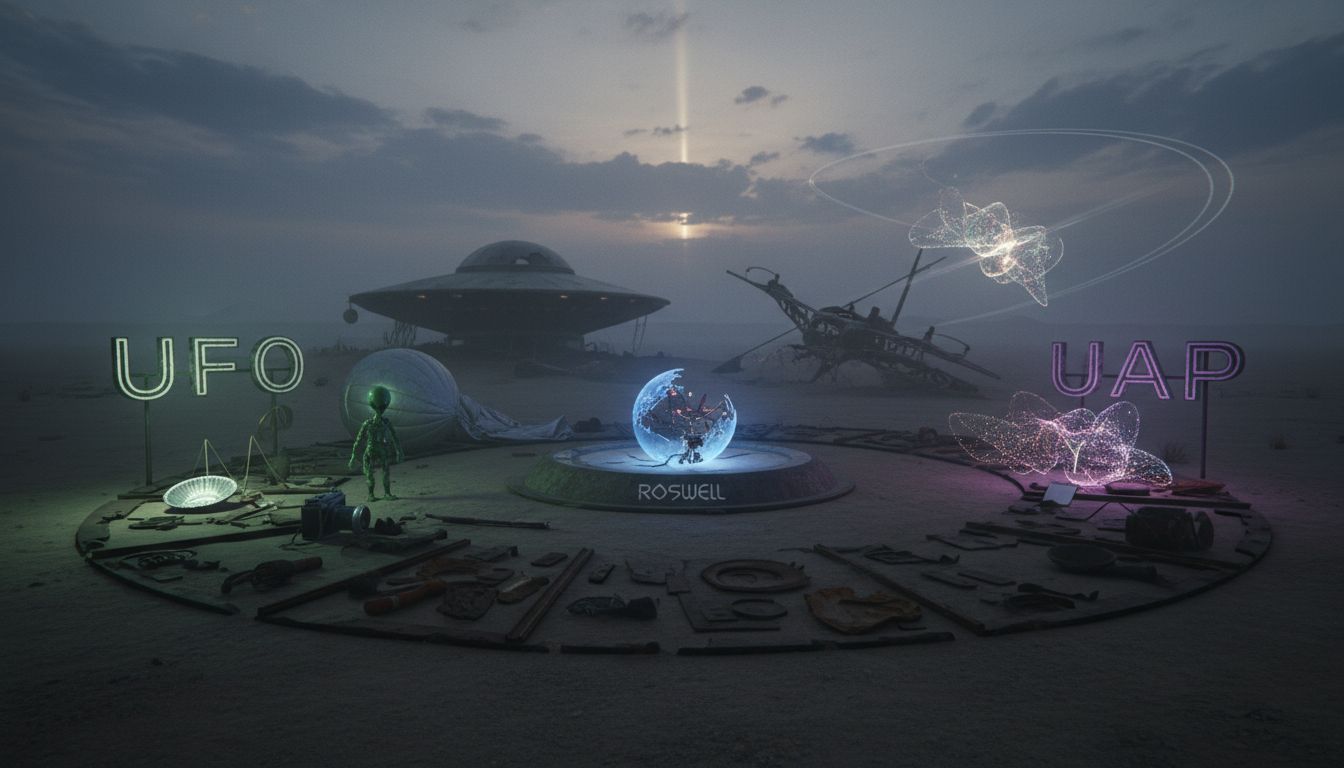
Ben jij ook gefascineerd door het onbekende? Wil je meer weten over UFO's en UAP's, niet alleen in België, maar over de hele wereld? Dan ben je op de juiste plek!
België: Het Kloppend Hart van UFO-onderzoek
In België is BUFON (Belgisch UFO-Netwerk) dé autoriteit op het gebied van UFO-onderzoek. Voor betrouwbare en objectieve informatie over deze intrigerende fenomenen, bezoek je zeker onze Facebook-pagina en deze blog. Maar dat is nog niet alles! Ontdek ook het Belgisch UFO-meldpunt en Caelestia, twee organisaties die diepgaand onderzoek verrichten, al zijn ze soms kritisch of sceptisch.
Nederland: Een Schat aan Informatie
Voor onze Nederlandse buren is er de schitterende website www.ufowijzer.nl, beheerd door Paul Harmans. Deze site biedt een schat aan informatie en artikelen die je niet wilt missen!
Internationaal: MUFON - De Wereldwijde Autoriteit
Neem ook een kijkje bij MUFON (Mutual UFO Network Inc.), een gerenommeerde Amerikaanse UFO-vereniging met afdelingen in de VS en wereldwijd. MUFON is toegewijd aan de wetenschappelijke en analytische studie van het UFO-fenomeen, en hun maandelijkse tijdschrift, The MUFON UFO-Journal, is een must-read voor elke UFO-enthousiasteling. Bezoek hun website op www.mufon.com voor meer informatie.
Samenwerking en Toekomstvisie
Sinds 1 februari 2020 is Pieter niet alleen ex-president van BUFON, maar ook de voormalige nationale directeur van MUFON in Vlaanderen en Nederland. Dit creëert een sterke samenwerking met de Franse MUFON Reseau MUFON/EUROP, wat ons in staat stelt om nog meer waardevolle inzichten te delen.
Let op: Nepprofielen en Nieuwe Groeperingen
Pas op voor een nieuwe groepering die zich ook BUFON noemt, maar geen enkele connectie heeft met onze gevestigde organisatie. Hoewel zij de naam geregistreerd hebben, kunnen ze het rijke verleden en de expertise van onze groep niet evenaren. We wensen hen veel succes, maar we blijven de autoriteit in UFO-onderzoek!
Blijf Op De Hoogte!
Wil jij de laatste nieuwtjes over UFO's, ruimtevaart, archeologie, en meer? Volg ons dan en duik samen met ons in de fascinerende wereld van het onbekende! Sluit je aan bij de gemeenschap van nieuwsgierige geesten die net als jij verlangen naar antwoorden en avonturen in de sterren!
Heb je vragen of wil je meer weten? Aarzel dan niet om contact met ons op te nemen! Samen ontrafelen we het mysterie van de lucht en daarbuiten.
Declassified documents from Russian military archives, obtained through a recent transparency initiative, describe a series of unexplained aerial phenomena (UAP) observed by Soviet‑era and post‑Soviet air defense units. Among the entries is a report of a “near‑miss” incident in which an unidentified object allegedly entered the airspace surrounding a strategic nuclear missile site, prompting a brief, unauthorized launch sequence before the system was manually aborted. The files, dated between the late 1970s and early 2000s, indicate that the sightings were taken seriously by senior commanders and were recorded in official incident logs.
Pinterest
Key Findings
The archival material includes 27 separate sighting reports, ranging from high‑altitude luminous orbs to low‑flying, high‑speed craft exhibiting flight characteristics beyond known aircraft. One entry, dated April 12, 1983, details a radar contact that appeared to “hover” at 15 km altitude before accelerating to Mach 5 and disappearing from detection. A second, more consequential report from June 7, 1999, describes an object that penetrated the protective air corridor of the Kursk‑2 strategic missile complex. According to the log, the intrusion triggered an automatic “launch‑on‑warning” protocol, but a manual override by the base commander halted the sequence seconds before missile ignition.
Military Response
Russian officials cited in the documents emphasize the procedural rigor applied to each encounter. Colonel Sergei Ivanov, head of the air‑defence unit at the Kursk‑2 base, is quoted as stating, “The radar signature was unlike any known platform; we followed standard engagement rules, but the system’s automatic response forced us to intervene directly.” The incident prompted a review of the Command, Control, and Communications (C3) architecture for nuclear forces, leading to the introduction of additional human verification steps in the launch chain—a measure later echoed in NATO’s own post‑Cold‑War reforms.
Broader Implications
Analysts note that the Russian files add weight to a growing body of evidence suggesting that UAPs have, on occasion, intersected with high‑value military assets. Dr. Mikhail Petrov, a senior researcher at the Russian Academy of Sciences, remarks, “When unidentified objects appear near strategic installations, the risk calculus changes dramatically. Even a brief false alarm can have cascading geopolitical consequences.” The near‑miss incident underscores the potential for misinterpretation or system error to elevate regional tensions, especially given the heightened alert status of nuclear arsenals during the 1990s.
Next Steps
Both Russian and international defense establishments are reportedly reviewing the declassified material to assess gaps in detection and response protocols. The Russian Ministry of Defense has announced plans to convene a joint task force with the Federal Security Service (FSB) and the Russian Space Agency (Roscosmos) to develop upgraded sensor suites and revised engagement procedures. Meanwhile, the U.S. Department of Defense, which has released its own UAP reports in recent years, has expressed interest in collaborative data sharing to better understand the flight characteristics and possible origins of these phenomena.
The release of the Russian archives marks a rare instance of candid acknowledgment of UAP encounters within a major nuclear power’s official records. While the documents stop short of attributing the objects to any known technology, they highlight a pragmatic concern: that unidentified aerial activity, however brief, can intersect with the world’s most dangerous weapons systems, prompting a reevaluation of safety margins and command safeguards.
The new Space Economy’s latest feature, produced in partnership with the UAP News Center, surveys the ten most infamous UAP hoaxes ever recorded. While the term “UFO” still dominates popular imagination, the article deliberately uses UAP (Unidentified Anomalous Phenomena) to align with the language adopted by contemporary scientific and defense communities. The list is framed as a historical lens, showing how each fabrication mirrors the cultural anxieties of its era and how rigorous scientific review repeatedly dismantles the supposed evidence.
The Maury Island Incident – A Blueprint for Modern Myths
The series opens with the Maury Island Incident (1947), often eclipsed by Kenneth Arnold’s famous “flying saucers” sighting but arguably more influential in shaping UFO folklore. According to the original claim, Harold Dahl reported six massive, donut‑shaped objects hovering over his patrol boat, one of which allegedly ejected a stream of metallic debris that damaged the vessel and injured his son. Dahl asserted he captured photographs, yet investigators later reported the images were “fogged or ruined,” a detail that has fueled skepticism for decades. The episode also introduced the now‑iconic “Men in Black” figure—a mysterious, black‑clad emissary who allegedly warned Dahl to keep silent. Subsequent analyses by the U.S. Army Air Forces and later civilian researchers concluded the story was a fabricated narrative designed to attract media attention and, possibly, financial gain.
Other High‑Profile Hoaxes
While the article’s full list is behind a paywall, it references several other cases that have repeatedly resurfaced in public discourse:
The 1950 “Great Falls” hoax, in which a local photographer staged a night‑time light display using aircraft navigation lamps, later exposed by a university physics department.
The 1994 “Phoenix Lights” video, later identified as a combination of military flares and a misinterpreted advertising aircraft, with the original footage digitally altered to enhance the “mystery” effect.
The 2007 “Mogul” (or “Tic‑Tac”) video, released by the Pentagon, which skeptics argue was a misidentified balloon or sensor glitch, a claim reinforced by independent radar analyses.
Each example follows a similar pattern: an eye‑catching visual claim, limited physical evidence, and eventual debunking through photometric testing, radar cross‑section analysis, or eyewitness cross‑verification.
Common Threads in Fabricated UAP Claims
The article’s “Key Takeaways” highlight three recurring motifs:
Cultural Anxiety– During the Cold War, many hoaxes featured metallic, disc‑shaped craft, echoing fears of foreign technology. In the digital age, hoaxes increasingly exploit deep‑fake software, reflecting contemporary concerns about misinformation.
Erosion of Physical Evidence– Photographs, video clips, and alleged debris consistently “fail under scientific scrutiny,” either because they are deliberately altered or because the materials cannot be reproduced in a lab.
Motivation of Fabricators– Financial reward, personal fame, or a desire to “expose gullibility” are repeatedly cited by investigators as the primary drivers behind these deceptions.
These patterns underscore why the scientific community stresses transparent methodology and peer‑reviewed verification when evaluating any new UAP report.
Impact on Public Perception and Policy
Even as hoaxes are exposed, they leave a lasting imprint on public opinion. Polling data from the Pew Research Center (2024) shows that nearly 60 % of Americans still believe extraterrestrial life has visited Earth, a figure that has remained stable despite repeated debunkings. This persistence influences policy debates, prompting legislators to allocate funding for UAP research while simultaneously demanding stricter standards for evidence. The article notes that recent congressional hearings have cited past hoaxes as cautionary tales, urging agencies to distinguish genuine anomalies from manufactured spectacles before allocating resources.
Looking Forward
The New Space Economy piece serves as both a historical catalog and a reminder that rigorous scientific inquiry remains the antidote to sensationalism. By dissecting the narratives behind the ten most famous UAP hoaxes, the article equips readers with the context needed to evaluate future claims—whether they emerge from a backyard enthusiast’s drone footage or a classified military sensor. As the field evolves, the hope expressed by the UAP News Center is that transparency, reproducibility, and critical analysis will continue to separate genuine anomalous phenomena from the allure of well‑crafted hoaxes.
A virus thatinfectsnearly all children early in life has, in rare cases, been present withinhuman DNA for thousands of years. Recent research indicates that this relationship extends back to the Iron Age and that some people today still carry inherited copies of the virus in every cell of their bodies.
Arecent studypublished in Science Advances describes how scientists reconstructed ancient genomesof Human betaherpesvirus 6 (HHV-6) from archaeological remains found across Europe. This research offers the first direct geneticevidencethat HHV-6 has coevolved with humans for at least 2,500 years. These findings reveal a long-standing, close relationship between humans and a virus most people first encounter in early childhood.
A Common Virus With an Uncommon Ability
HHV-6 comes in two closely related forms, HHV-6A and HHV-6B. HHV-6B infects roughly 90 percent of children by age two. It causes roseola infantum, also called “sixth disease,” a leading cause of febrile seizures in young children. After the initial infection, the virus typically remains dormant in the body for life.
HHV-6 is unusual among common human viruses because it can integrate its genetic material into human chromosomes. Occasionally, the virus integrates into reproductive cells, enabling transmission from parent to child as part of the human genome. Today, about one percent of the population carries this genetically inherited virus.
Scientists suspected these inherited viral sequences originated in ancient times but lacked direct genetic evidence until now.
Mining Ancient DNA for Viral Genomes
To investigate this anomaly, an international team from the University of Vienna and the University of Tartu analyzed DNA from almost 4,000 human skeletal remains found at archaeological sites across Europe. The team was able to identify and reconstruct 11 ancient HHV-6 genomes from these samples.
Researchers found the oldest viral genome in the remains of a young girl who lived in Iron Age Italy between 1100 and 600 BCE. Other samples came from medieval sites in England, Belgium, Estonia, early historic Russia, and Italy. Both HHV-6A and HHV-6B were present in medieval remains, but only HHV-6B was found in the earlier samples.
“While HHV-6 infects almost 90% of the human population at some point in their life, only around 1% carry the virus, which was inherited from your parents, in all cells of their body,” said Meriam Guellil, lead researcher of the study at the University of Vienna’s Department of Evolutionary Anthropology. “These 1% of cases are what we are most likely to identify using ancient DNA, making the search for viral sequences quite difficult.”
Tracing Viral Evolution Across Millennia
The researchers traced the evolution of HHV-6 over more than 2,500 years by comparing ancient viral genomes with modern genetic data. Their analysis indicated that some viral integrations happened thousands of years ago and have persisted for generations.
The study also uncovered a key difference between the two types of the virus. HHV-6A appears to have lost its ability to integrate into human DNA early in its history, while HHV-6B has kept this unusual trait.
Modern Health Connections With Ancient Origins
These inherited HHV-6 sequences are more than genetic anomalies. Earlier research has linked chromosomally integrated HHV-6B to a higher risk of certain heart-related diseases.
“Carrying a copy of HHV6B in your genome has been linked to angina-heart-disease,” said Charlotte Houldcroft of the University of Cambridge’s Department of Genetics. “We know that these inherited forms of HHV6A and B are more common in the UK today compared to the rest of Europe, and this is the first evidence of ancient carriers from Britain.”
A New Perspective on Human and Virus Coevolution
Although HHV-6A and HHV-6B were first identified in the 1980s, modern genetic data had already suggested that these viruses may have evolved alongside humans since early migrations out of Africa. The discovery of ancient genomes now provides direct, time-stamped evidence of this long-standing relationship.
“This research traces their presence back to the Iron Age,” Guellil said. “These ancient genomes now provide first concrete proof of their presence in the deep human past.”
Beyond HHV-6, this study shows how ancient DNA can reveal the hidden history of infectious diseases. Infections that occur in childhood and seem to disappear can leave lasting traces, turning viruses into inherited parts of the human genome. Therefore, DNA can serve as a partial record of ancient epidemics that once moved quietly through entire populations.
Austin Burgess is a writer and researcher with a background in sales, marketing, and data analytics. He holds a Master of Business Administration, a Bachelor of Science in Business Administration, and a Data Analytics certification. His work combines analytical training with a focus on emerging science, aerospace, and astronomical research.
For the first time, astronomers have discovered clear evidence that some fast radio bursts (FRBs) are emitted by binary stars, according to an international team of researchers.
The powerful yet brief bursts of radio waves emanate from distant galaxiesand have puzzled scientists for some time, until a general consensus emerged that they are produced by isolated, single stars.
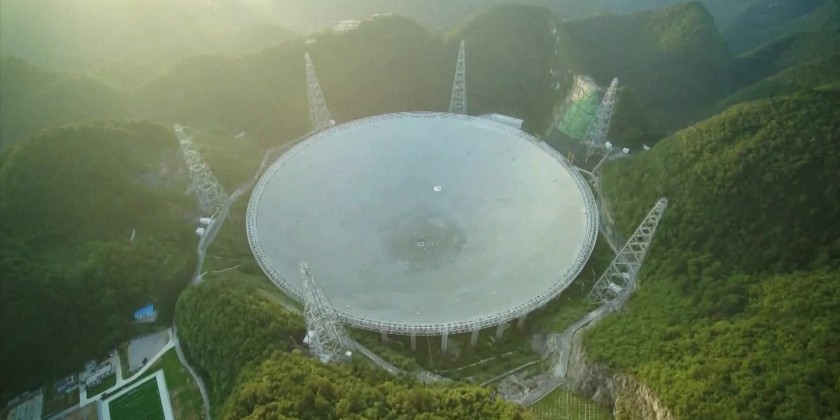
Now, a recent paper published in Science challenges that idea, based on observations of FRB 220529A made possible by the Five-hundred-meter Aperture Spherical Telescope (FAST), also known as China’s Sky Eye, which demonstrates that binary systems can produce FRBs.
The China Sky Eye
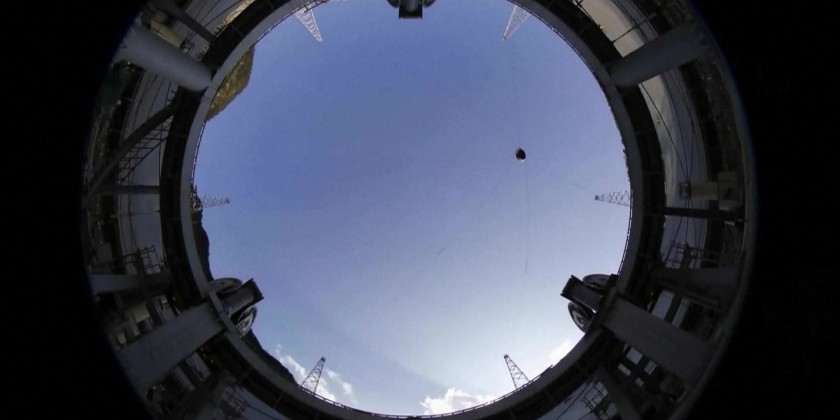
Located in southwestern China’s Guizhou province, FAST is also nicknamed “Tianyan,” which translates to “Heaven’s Eye” or “Sky Eye.” The radio telescope features a 1,640-foot-diameter dish, making it the largest single-dish telescope in the world, nestled within a natural depression.
The bright, millisecond-long flashes known as FRBs travel to us from distant galaxies. Generally, they are singular events, but the rare repeaters offer scientists intriguing opportunities to study the phenomena over longer periods and observe changes. Since 2020, Professor Bing Zhang has co-led a program to study these repeating FRBs. They found something remarkable in FRB 220529A, located 2.5 billion light-years from Earth.
“FRB 220529A was monitored for months and initially appeared unremarkable,’ said co-author Professor Bing Zhang. ‘Then, after a long-term observation for 17 months, something truly exciting happened.” The researchers used FAST to monitor the FRB for 20 months, eventually revealing that the source had a companion star.
Fast Radio Burst Polarization
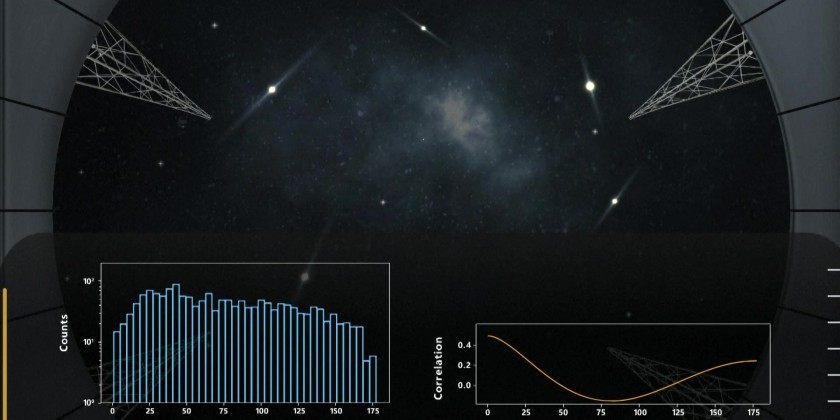
Analyzing a radio wave’s polarization properties offers important clues about its source’s surroundings. In this FRB, the most notable feature was a sudden and dramatic polarization change known as an RM flare, indicative of a coronal mass ejection from a companion star interfering with the burst source.
“This finding provides a definitive clue to the origin of at least some repeating FRBs,” said co-author Professor Bing Zhang, Chair Professor of Astrophysics of the Department of Physics and Founding Director of the Hong Kong Institute for Astronomy and Astrophysics at HKU. “The evidence strongly supports a binary system containing a magnetar—a neutron star with an extremely strong magnetic field, and a star like our Sun.”
An FRB’s linear polarization allows researchers to track its journey through space. Due to the Faraday rotation effect, a radio wave’s polarization angle rotates when it travels through magnetized plasma. That rotation can be precisely measured using a quantity called a rotation measure (RM).
“Near the end of 2023, we detected an abrupt RM increase by more than a factor of a hundred,” said lead author Dr Ye LI of Purple Mountain Observatory and the University of Science and Technology of China. “The RM then rapidly declined over two weeks, returning to its previous level. We call this an ‘RM flare’.”
Binary Sourced Fast Radio Bursts
A brief RM change like this is consistent with the FRB having intercepted a dense magnetized plasma, likely ejected from a companion star.
“Such a model works well to interpret the observations,” said co-first author Professor Yuanpei Yang, a professor from Yunnan University. “The required plasma clump is consistent with CMEs launched by the Sun and other stars in the Milky Way.”
Directly observing the companion star over these billions of light-years was not feasible, but FAST and supplemental observations from the Parkes telescope in Australia successfully confirmed its presence.
“This discovery was made possible by the persevering observations using the world’s best telescopes and the tireless work of our dedicated research team,” said co-lead author Professor Xuefeng Wu of Purple Mountain Observatory and the University of Science and Technology of China.
The work supports a proposal by Professor Bing Zhang that FRBs are generated by magnetars and that binary systems produce a geometry that allows bursts to occur more frequently, and marks the beginning of ongoing studies required to determine how common binary systems are as sources of FRBs.
Ryan Whalen covers science and technology for The Debrief. He holds an MA in History and a Master of Library and Information Science with a certificate in Data Science. He can be contacted at ryan@thedebrief.org, and follow him on Twitter @mdntwvlf.
If a genuine extraterrestrial signal ever arrives, the hard part may not be detecting it, but understanding what it means. That is the central idea behind a NASA History Series book that explores how archaeologists and anthropologists - experts at interpreting fragmentary traces of vanished cultures - might help the Search for Extraterrestrial Intelligence (SETI). The surprising update is that, despite early claims that NASA “pulled” the publication after media confusion, the book is now hosted openly on NASA’s website, complete with official downloads.
A NASA History Series volume, not a sensational “aliens did it” claim
The story first circulated widely after an Ancient Origins report, “NASA book explores how archaeology could contribute to understanding Extra-terrestrial Communication,” described a new NASA volume edited by Douglas A. Vakoch, then Director of Interstellar Message Composition at the SETI Institute, draws parallels between deciphering ancient scripts and interpreting possible interstellar messages.
NASA’s own official page describes the book as an effort to broaden SETI thinking beyond a purely technical problem, raising questions about whether “meaningful communication” would actually be straightforward.
Titled ‘Archaeology, Anthropology and Interstellar Communication’, the book is a collection of chapters by different authors who explore latest research regarding the search for extraterrestrial intelligence.
In the opening introduction, Vakoch sets out how the field of archaeology can contribute to this search:
“As we search for analogies to contact at interstellar distances, archaeology provides some intriguing parallels, given that its practitioners – like successful SETI scientists – are charged with reconstructing long-lost civilizations from potentially fragmentary evidence”.
Anthropologist Ben Finney and historian Jerry Bentley draw a comparison between the decoding of ancient scripts, including Egyptian and Mayan hieroglyphics, and how we may be able to understand and possibly communicate with an extraterrestrial civilization, particularly through the ‘universal language’ of mathematics and astronomy. For example, when scholars began decoding ancient Mayan hieroglyphs, their earliest successes were in recognizing the basic numbering system used by the Maya, as well as their calendar systems, which were based on the visible motions of the Moon and Sun.
“Math and science provided the foundation for communication, just as many SETI scientists have predicted will be the case for interstellar communication,” wrote Vakoch.
This is one reason ancient scripts are such a useful mirror for interstellar communication.
Decoding alien messages: why archaeology is the analogy NASA chose
The NASA book argues that SETI researchers could face a situation similar to archaeologists reconstructing societies from incomplete evidence: an interstellar signal might be detected, but its cultural content could remain opaque. The volume’s introduction explicitly frames this as a problem of reconstructing distant civilizations, separated by space and time, much like archaeology reconstructs the human past.
Rock art, cup-and-ring marks, and the limits of interpretation
A flashpoint in the original media frenzy involved a misunderstanding: some outlets implied NASA was “announcing” ancient rock art was extraterrestrial. But the point presented is more subtle - rock art can be used as a thought experiment about the way we interpret symbols when we lack context.
The part that was confused comes in the book's last chapter, "Constraints on Message Construction for Communication with Extraterrestrial Intelligence." William H. Edmondson, senior research fellow at the University of Birmingham in England, draws upon an analogy by suggesting that ancient rock art may be an example of the type of symbolic communication that would be used by extraterrestrial civilizations and studying rock art could therefore help us understand possible communication from an extraterrestrial intelligence.
"It is helpful to review some parallels from human existence that pose problems for us today," wrote Edmondson. "One of these is "rock art," which consists of patterns or shapes cut into rock many thousands of years ago. Such ancient stone carvings can be found in many countries.”
Edmondson maintains that posing the idea that ancient markings were created by aliens is helpful for reframing the way we go about searching for signals from other worlds - and how we make contact.
"We can say little, if anything, about what these patterns signify, why they were cut into rocks, and who created them," he wrote. "For all intents and purposes, they might have been created by aliens."
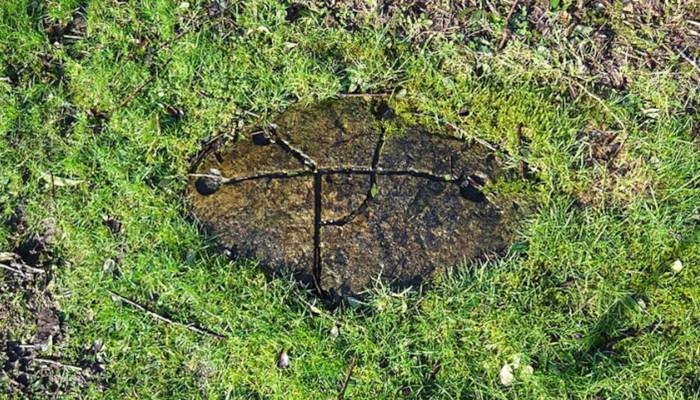
That ambiguity is familiar to readers of prehistoric rock art. Scotland’s cup-and-ring marks, for example, are still debated, and Ancient Origins has previously covered attempts to study major carved stones such as the Cochno Stone.
Cup-and-ring-marked rock near to Cairnbaan, Argyll And Bute, Scotland.
However, there is an important warning from archaeologist and anthropologist Kathryn Denning: even if you can measure the complexity of a signal, that does not automatically tell you what it means. And unlike classic codebreaking between humans, an extraterrestrial message comes without any guarantee of shared language or shared assumptions.
In other words, the “Rosetta Stone moment” may never come.
The key update: NASA hosts the book openly
A major claim in the older media cycle was that NASA removed the book and related materials. Whatever happened during the original wave of reporting, the current reality is clear: NASA now provides an official landing page with download formats, and the PDF is directly accessible on nasa.gov.
NASA also lists the book on its “NASA and SETI” history page and notes continued NASA interest in astrobiology and technosignatures, even after Congress canceled NASA’s formal SETI program in the early 1990s. (That page shows a “Last Updated” of Jan 05, 2026.)
Why this matters now: NASA’s technosignature era
While the original story framed the debate as SETI and messaging, NASA’s current SETI-history material emphasizes technosignatures - possible signs of technology that might show up in astronomical observations.
Ancient Origins has also covered modern technosignature thinking, including proposed atmospheric industrial gases as possible “telltale signs” of technology-using life.
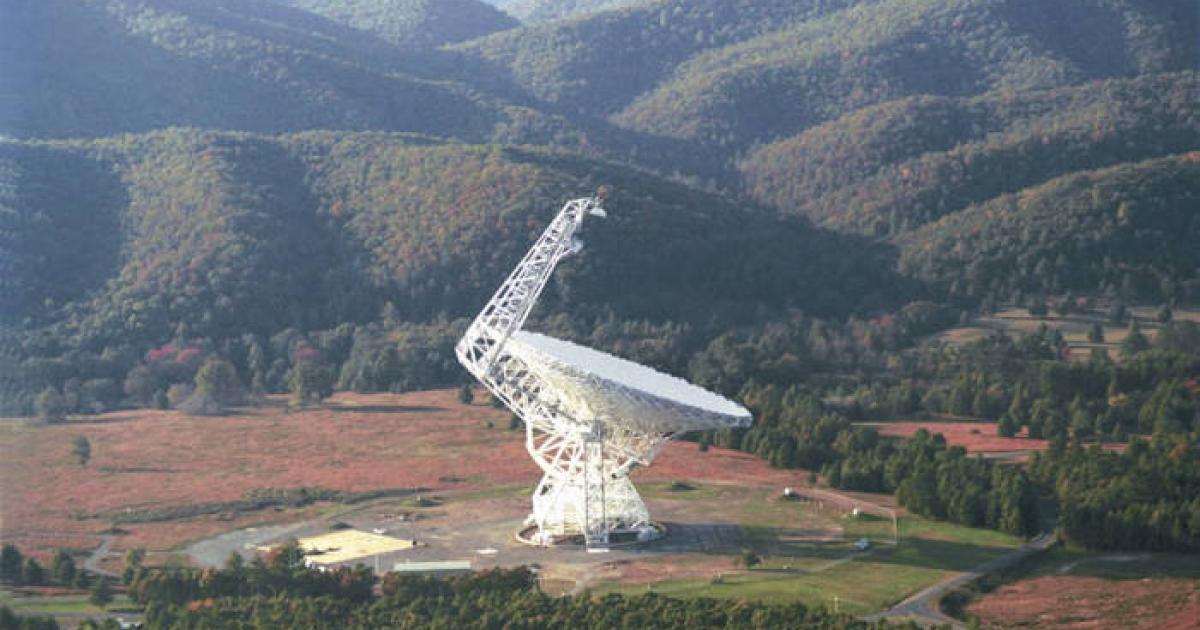
Top image: Green Bank 100m diameter Radio Telescope (West Virginia, USA).
Model of the chemical cycle on Mars that is driven by the electrostatic discharges of dust storms. Credit - WUSL
Chemistry on other worlds varies widely from that on Earth. Much of Earth’s chemistry is driven by well-understood processes, which typically involve water and heat in some form. Mars lacks both of those features, which makes how some of its chemicals formed a point of ongoing debate in the scientific community. A new paper led by Alian Wang and Neil Sturchio of Washington University of St. Louis and the University of Delaware, respectively, and published recently in Earth and Planetary Science Letters offers a new framework for understanding chemical reaction processes on Mars. Despite the differences, Earthlings will still be familiar with the driving force behind Martian chemistry - electricity.
Various rovers and orbits on and around Mars have noticed a peculiar isotopic imbalance on the surface of the Red Planet. An isotopic imbalance can occur when the ratio of two different isotopes of a particular element is skewed from the natural ratios expected. In particular, “heavy” isotopes of some of the most common elements - chlorine, oxygen, and carbon, seem to be lacking on Mars.
For example, Chlorine-37, the “heavy” isotope of that particular element, is 51 parts per thousand (ppt) less abundant than would otherwise be expected on the Martian surface. Given that it is a key ingredient in the hazardous “perchlorates” that stand as one of the major challenges to long-term biological systems living on Mars (like humans), understanding why that imbalance has occurred is key to understanding how we might mitigate the threat those chemicals represent.
Fraser discusses an idea to treat Mars of its toxic perchlorates.
The heavy isotope imbalance for carbon (11.4 ppt) and oxygen (22.8 ppt) are less pronounced, but no less important. Both are key ingredients for the formation of carbonates, which previous generations of scientists thought were evidence of previous liquid water on the planet’s surface. So what is causing these imbalances? And what does electricity have to do with it?
Another common feature of Mars’ surface are its famous dust storms. These massive storms take up a significant amount of the planet’s surface in certain seasons. They also form mini-vortices that look like miniaturized tornadoes. Importantly, those storms, and especially those vortices, cause Martian dust they kick up to rub together, eventually building up an electrostatic charge, similar to what happens when you rub a balloon on your head.
But in Mars’ weaker atmosphere, it’s relatively easy to overcome the dielectric constant of the atmosphere itself, allowing small “arcs” that are familiar to anyone who has played under a blanket in a dry room at night. These arcs, known technically as electrostatic discharges, or ESDs, are the driving force of one of the primary chemical cycles on Mars, according to the new paper.
Fraser talks about how a realistic mars mission will play out.
The authors built several test chambers, including the Planetary Environment and Analysis Chamber (PEACh), specifically to test how salts commonly found on Mars would react to the electricity produced during a dust storm. They found the ESDs that happen in dust storms create high-energy electrons that run into the CO2 that comprises the Martian atmosphere. When they do so, they create reactive radicals like CO and O. These free radicals then fall to the chloride salts that exist on the ground, bonding oxygen to them, and changing chlorine to perchlorates, the deadly substance carbon-based lifeforms would rather avoid.
But it does explain where they came from. The same process happens for carbonates, which were commonly thought to be formed by liquid water. But like their chlorinated cousins, it seems a wide variety of Mars-based chemicals can form with nothing other than static shocks during a dust storm.
This data matches up much more closely with in-situ and remote observations - in particular the lower density of “heavy” isotopes they’ve found. ESD acts like a “filter”, selecting the lighter atoms to participate in chemical reactions that form the compounds rovers like Curiosity and orbiters like ExoMars have captured. The actual physics behind that process is complicated, but needless to say, this idea that chemical cycles on Mars are driven by dust-derived electrical discharge seems to fit the data very well.
Video of dust devils captured on Mars by Curiosity. These are the types of storms that create ESDs, which then create perchlorates and carbonates on the Martian surface.
Such electrical-driven reactions have applications on more than just Mars. Venus, some of the outer Gas Giants, and even our own Moon, could have their own version of ESD-driven chemical reaction chains. While that means there’s plenty more to study, there’s also a cautionary tale for future Martian explorers. ESD is an ongoing, active process that is part of Mars’ natural, cold climate. That means that perchlorates, the deadly chemicals that might very well hinder our tentative efforts at a permanent base on the Red Planet, are constantly being created there.
While that’s certainly not a deal breaker for exploration, it is something we need to be aware of. But the authors certainly aren’t done with their exploration of the impact that small arcs of electricity have on driving chemical reactions throughout the solar system. Expect more papers about how arcs on Venus affect that planet’s surface chemistry soon.
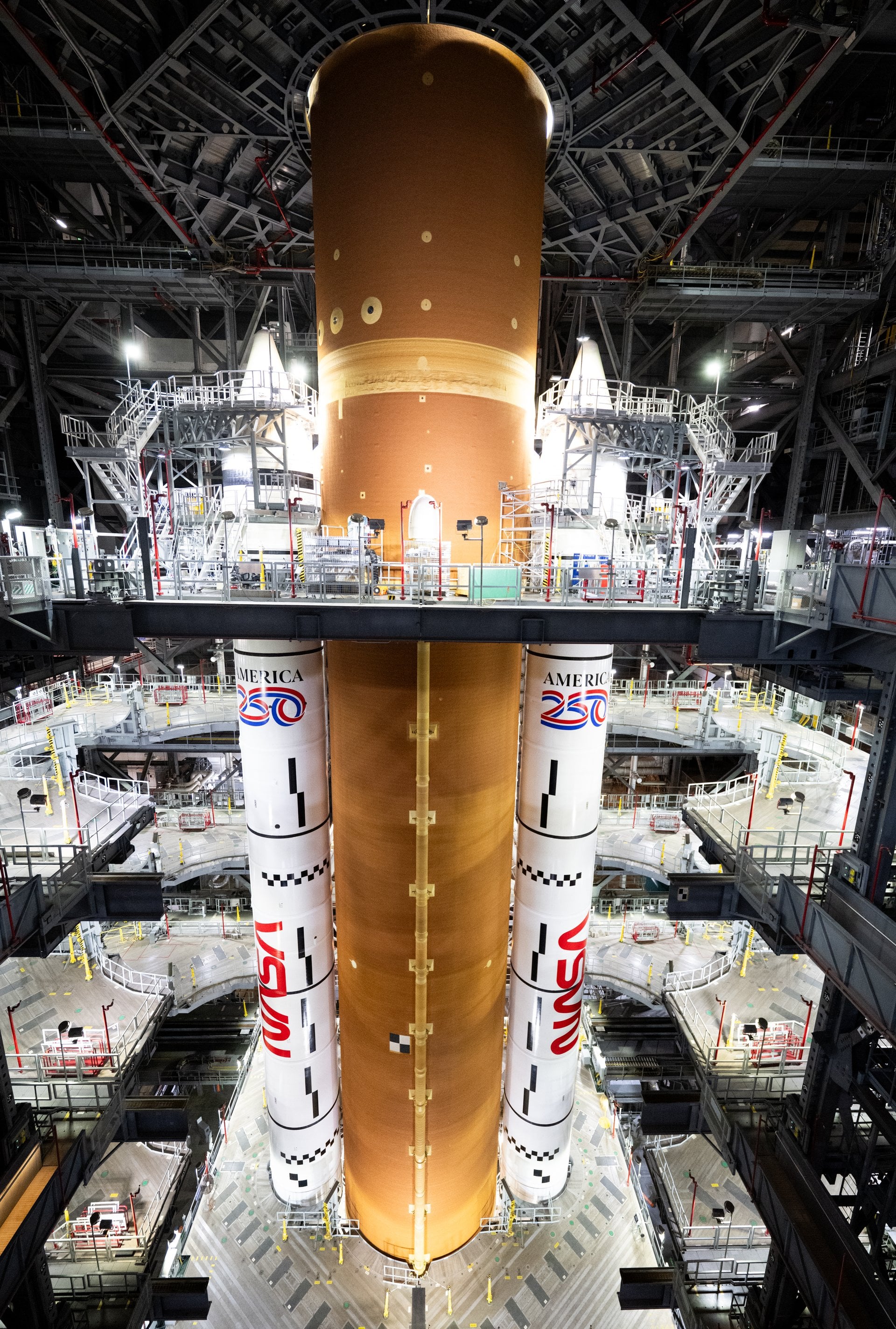
Inside high bay 3 of NASA’s Vehicle Assembly Building at NASA's Kennedy Space Center, the SLS (Space Launch System) for NASA Artemis II stands fully stacked as the retractable platforms pull away. Credit: NASA
Between February and April of this year, NASA will conduct its first crewed mission beyond Low Earth Orbit (LEO) in over fifty years. At 09:41 p.m. EST (06:41 p.m. PDT), the Artemis II crew will launch aboard their Orion spacecraftatop the Space Launch System(SLS) from Launch Pad-39B at the Kennedy Space Center in Florida. With the launch date rapidly approaching, NASA is entering the final stages of preparation, including the rollout of the SLS and Orion to the launch pad for the first time. This will be followed by the final integration and testing of the rocket and spacecraft, then launch rehearsals.
The Artemis II crew consists of NASA astronauts Reid Wiseman (commander), Victor Glover (pilot), and Christina Koch (mission specialist), and Canadian Space Agency (CSA) astronaut Jeremy Hansen (mission specialist). Building on the success of the uncrewed Artemis I mission, *Artemis II* will see this crew execute a circumlunar flight, taking them around the Moon without landing and returning them to Earth. The entire mission will take 10 days and will be the curtain-raiser for the first crewed mission to the lunar surface since Apollo 17 landed there in 1972.
The rollout is targeted for no earlier than this Saturday (Jan. 17th) and will take up to 12 hours for the rocket and crawler-transporter-2 to travel the ~6.5 km (4 mi) that lie between the Vehicle Assembly Building and Launch Pad 39B. "We are moving closer to Artemis II, with rollout just around the corner," said Lori Glaze, acting associate administrator for NASA’s Exploration Systems Development Mission Directorate (ESDMD). "We have important steps remaining on our path to launch, and crew safety will remain our top priority at every turn, as we near humanity’s return to the Moon."
Teams are currently working around the clock to complete all remaining tasks ahead of the rollout, a process that has been ongoing for months. In December, during a countdown demonstration test, engineers detected a problem with a valve associated with the Orion capsule's hatch pressurization. They replaced the valve on Jan. 5th, which was followed by a successful pressure test. They also resolved a leak with the ground support hardware that is part of the loading system for pressurizing the Orion with oxygen gas. The work will continue for weeks after the SLS and Orion roll out to the launch pad.
At this point, ground crews will begin connecting electrical lines, fuel-control-system ducts, cryogenic propellant feeds, and other ground-support equipment. They will then power up all of the rocket's integrated systems for the first time to ensure they work properly with each other, the mobile launcher, and the launch pad infrastructure. The final preparation, scheduled for the end of January, will consist of a prelaunch fuel test (aka a "wet dress rehearsal") where NASA will fuel the rocket with about 2.65 million liters (700,000 US gallons) of cryogenic fuel into the rocket, conduct a launch countdown, then safely unload it.
Several countdowns are scheduled to allow mission controllers to hold, resume, and recycle back to previous times in the final 10 minutes before liftoff (aka terminal count). Several lessons from the previous mission have been integrated into this launch's preparations, including the challenges ground crews experienced while loading liquid hydrogen propellant during Artemis I's wet dress rehearsal. So in addition to carefully watching the propellant loading process, the ground teams will also closely monitor the effectiveness of recently updated procedures that limit how much nitrogen gas accumulates between the Orion crew module and the launch abort system.
Additional wet dress rehearsals may be required to make sure the vehicle is ready for flight, and NASA may opt to roll the SLS and Orion back into the VAB for additional work (as they did with Artemis I). Following a successful wet dress rehearsal, NASA's mission management team will convene a "flight readiness review" to assess the readiness of all systems before committing to a firm launch date. Once all of this is complete, and in what will be a major media event, the Artemis II astronauts will conduct a final walkdown at the pad.
While the Artemis II launch window opens as early as Friday, Feb. 6th, the mission management team may push the launch to a date before the window closes (no later than April). These launch opportunities require that the planned trajectory account for the complex orbital mechanics of Earth and the Moon. Basically, the rotation of the Earth and the Moon's orbit result in a pattern of approximately a week of launch opportunities, followed by three weeks without. The opportunities between February and April (subject to change) are available here.
NASA and its partners have high expectations for the Artemis II test flight. Much like the Apollo 10 mission, which was a dress rehearsal for the first landing on the Moon, this mission will provide the necessary experience and validate the systems that will allow humans to return to the lunar surface after more than 50 years. Currently scheduled for 2028, Artemis III will last for about 30 days and will depend on the development of the Human Landing System (HLS).
Warp drive propulsion, the hypothetical means by which advanced spacecraft of the future may one day explore the universe by way of superluminal travel, has its origins as a concept in science fiction. Best known for its appearances in the famed 1960s TV series Star Trek, it wasn’t until 1994, when a Mexican mathematician named Miguel Alcubierre laid out the mathematics of warp theory, that some scientists–and at least one engineer–began to take the concept seriously.
More recently, an international think-tank of over 30 physicists called Applied Physics has inched closer to a working concept by laying out the math behind what they call a physical warp drive. But in order to overcome many of the energy violations that have haunted previous efforts, their concept is unable to go faster than the speed of light.
Of course, traveling at 90% light speed would make trips to other planets possible. But even this potentially breakthrough design (dubbed the Martire-Bobrick warp drive for the two authors behind the concept Alexey Bobrick and Gianni Martire) is still purely theoretical.
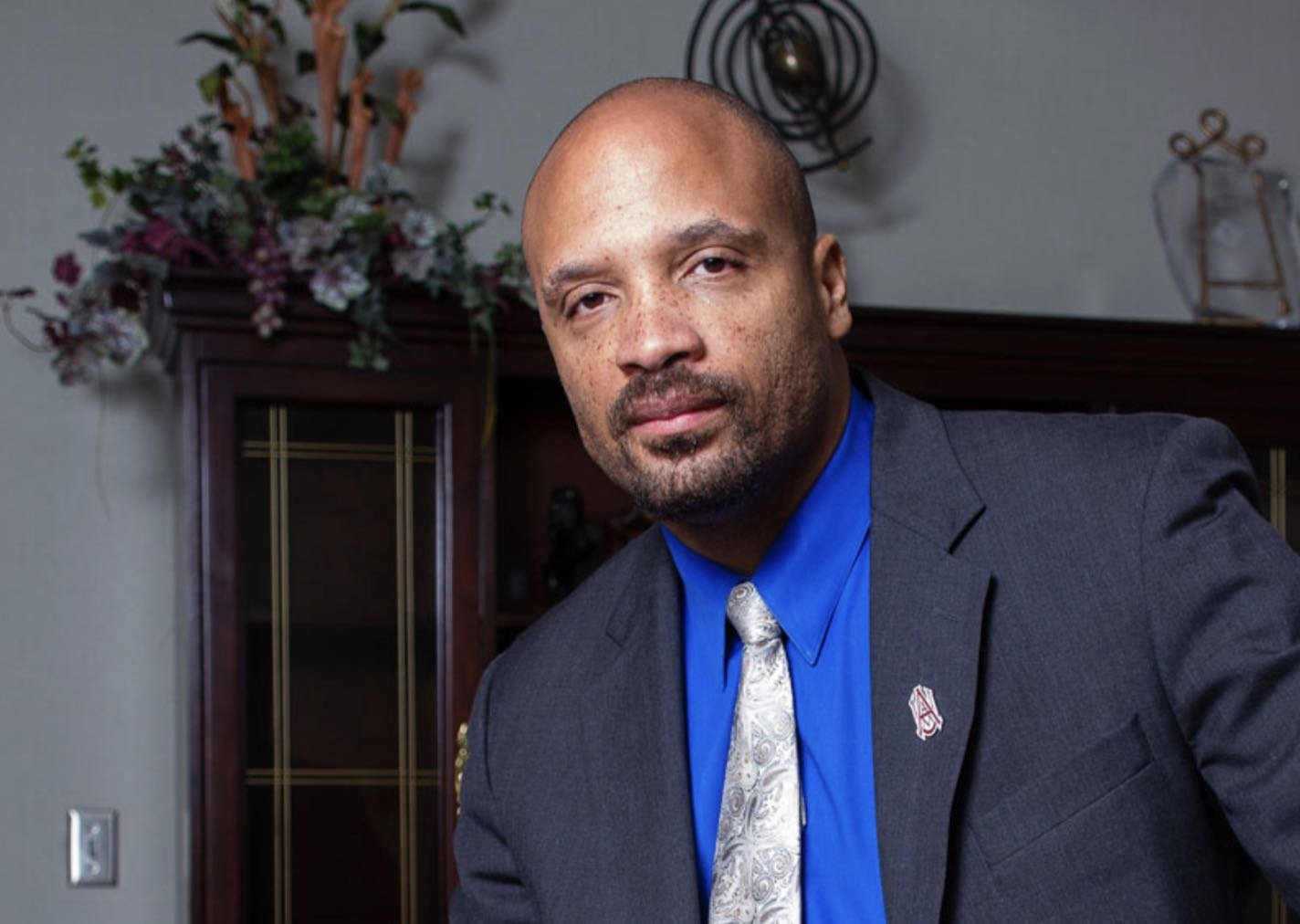
Now, a new player has entered the fray, and unlike most of the others working in this field, he says he is ready to run an experiment on his theory right now. Ladies and gentlemen, meet the university professor and Provost of the University of Houston-Victoria, and the man who may finally crack the warp drive puzzle, Dr. Chance Glenn.
The Engineer
Dr. Chance Glenn recently won the 2022 Permission to Dream Award at the Space Cowboy Ball in Austin, Texas, an award previously given to Jeff Bezos. The award was presented by SpaceX’s Gwynne Shotwell, who also won an award
(Credit: Thomas Colvin/University of Houston-Victoria).
“I’m a huge Star Trek lover,” the impressively calm and cool Glenn told The Debrief when discussing his interest in warp drive. “I was drawn by the future that it projects.”
Glenn says he is partial to the original series “by far” and has identified with one character in particular.
“Mr. Spock is my guy,” said Glenn. “I tried to be him.”
Like Spock, Glenn is undoubtedly left-brained, having earned a number of degrees in electrical engineering, including a Masters and a Ph.D. from Johns Hopkins University. But unlike Mr. Spock, Glenn embraces his creative side as well, including writing and recording music. He says that he actually knows of many engineers like himself that are drawn to the mathematical nature of music and that he often finds unexpected inspiration for his engineering work when creating a tune. Although he didn’t say so, one could almost imagine the theme of Star Trek The Original Series playing in the background when he decided to take a look at warp drive.
“I took a closer look at (Einstein’s Theory) General Relativity and all of that,” said Glenn, which led him to try to work out exactly how one would go about building a warp drive. Oh yeah, and the massive media coverage around UFOs over the last few years had an impact as well.
“There was actually some DARPA research a few years ago where they were actually looking at this,” explained Glenn, “and it may even intersect with this seriousness that DOD and NASA have gotten around UFOs, or UAPs, to see how were they doing it? If there are vessels flying around, how are they doing it? So that got my interest”
The first thing Glenn noticed was the massive amounts of negative energy required in the faster-than-light concepts, including the more popular models of Alcubierre and White, as well as those published by Dr. Eric Lentz.
“I said, ‘well, if the shaping function was complex, with a larger imaginary part, then it would make all of the energy density requirements positive,’” Glenn told The Debrief. “And I modeled that and got some results that are positive. That’s what’s shown in the paper.”
Of course, being an engineer at heart and by trade, Glenn knew he would have to go beyond simple theory if, as Captain Picard might say, he was going to “make it so.”
“Mathematics and all of that is cool,” Glenn said with a sly grin, “but there is nothing like proving it.”
The Proof
According to Glenn, he labored for some time to come up with a viable way to test his new theory before landing on a class of material known as dielectrics.
“I know from my RF (radio frequency) background that dielectrics can be complex,” Glenn told The Debrief. “So if you put an RF signal through a dielectric material, that could be a way to implement this, implement a shaping function, having whatever characteristics you want.”
He says he found this approach particularly intriguing since it seemed to address the negative energy issue. And he says, he didn’t see anyone else taking this route.
“The difference (between his model and others) is, I’ve identified a material which I think can take us there, and that mathematically fits what the equations are saying,” Glenn told The Debrief. “A lot of the (warp theories) out there haven’t speculated actually how they would do these things,” he added. “Nobody has looked at it that way that I was able to find.”
The self-described ‘engineer with a physicist’s heart’ says he looked around for a material that had the exact properties he would need, and “lo and behold,” one of them is something called ethylene glycol. For those of us not trained in chemistry, he explained that ethylene glycol is more commonly known as antifreeze. That’s right, Star Trek fans. Not the fictional dilithium crystals or anti-matter used to power the starship Enterprise, but good old-fashioned, your-grandpa-keeps-a-can-in-the-garage, anti-freeze.
Glenn says that the realization that such a simple material could unlock the door to warp drive motivated him to begin to design an actual lab experiment, one that could be performed with present-day tools and materials.
“I am, at the present time, working on conducting that experiment using an interferometer to measure any changes that you may see,” Glenn told The Debrief, “because that’s how they’re measuring gravitational waves now.”
For reference, gravitational waves were theorized way back in 1916 by Albert Einstein. Still, they were not proven to exist until 2015, when researchers used the Laser Interferometer Gravitational Observatory (LIGO) run by The California Institute of Technology (Cal Tech) and the Massachusetts Institute of Technology (MIT) to actually observe real gravitational waves in space. It was a discovery nearly 100 years in the making and one that won the researchers involved a Nobel Prize.
“My planned experiment (involves) pumping an RF chamber with a laser beam running through it,” explained Glenn, “and if somehow, even slightly, space/time is distorted in some way, it could be detected.”
Of course, the observably brilliant yet humble engineer makes it perfectly clear that his first goal is to see that warping of space/time and not the construction of an actual warp spaceship.
“In the lab, I don’t want to see a warp bubble shooting by at ten times the speed of light,” Glenn told The Debrief. “I can’t detect it anyway.”
Fortunately, the experiment he does plan to run is something he is almost ready to execute.
The Experiment
The actual design of Glenn’s lab experiment is rather straightforward. It involves building a chamber, filling it with anti-freeze, blasting that chamber with RF energy, and measuring the impact with a laser interferometer, just like LIGO.
“If it can concentrate (the RF energy) into a particular spot, which the chamber I am designing allows us to do, that may be enough, at the atomic level, I’m only speculating, could be the thing that actually bends space/time.”
Of course, Glenn points out that there are a number of variables he has to take into account, variables that he is currently writing into his experiment.
“If I’m trying to measure stuff at such a small level, and a small resolution, there are a lot of variables that could affect the results,” he explained. “Like heat, or vibrations on the table could make the laser beam look like it’s being jostled or moved, but it (might not) be what you think.”
The key to making sure he is actually seeing what he hopes to see is pulsing the RF signal. That’s because pulsing the signal not only allows for the tuning and shaping of the RF to improve performance and reduces the overall energy required (a stalling point for many warp theories) but also gives a method for making sure any perturbance of space/time witnessed is a result of the RF and not some outside force.
“I want to pulse it so that if I see distortions based on those pulses, I know that I’m doing it,” explained Glenn, “and not the train that is riding down the tracks 20 miles away.”
The Warp Drive Propulsion
The first step, Glenn explained, is finishing the design of the chamber to make sure the RF energy is concentrated at a single point. To accomplish this task, he is using a design software tool known as COMSOL. And, he says, he is already about 75% of the way through that work.
Next, as is the case in pretty much every visionary engineering endeavor, Glenn will need to secure the funding to perform his experiment. Fortunately, his pre-proposal to the National Science Foundation (NSF) for a grant has already been accepted for review. If it is approved, the professor says there should be more than enough funding to build his chamber, pour the concrete for his stable test table, buy the cutting-edge interferometer and other tools, and compensate all of the people he will need to pull it off.
Of course, in his position as provost at the university, Glenn could just appropriate the resources and people and do it right there on campus. But if he receives the NSF grant, he wants to create a dedicated facility off campus to avoid any conflicts of interest. Towards that end, he has also received some support from other warp theorists who are excited about his idea.
“Dr. White has opened up his (Eagleworks) lab to us if we need it,” said Glenn, “so there is always that option.”
The professor also noted that his initial paper outlining his theory has garnered him some rather high-profile allies that are supporting his efforts to test his warp drive concept.
“The exciting thing is, SpaceX is indirectly involved,” Glenn told The Debrief. “I am actually working with someone who is connected to the Jet Propulsion Laboratory (JPL), so NASA, and also connected to SpaceX. They are centered at Texas A&M’s technology and engineering center.”
Whichever route he takes, Dr. Glenn says his experiment should be conducted very soon.
“I’m hoping to run initial experiments in the 1st half of 2023,” said Glenn. “Maybe sometime in March or early spring.”
The Vision
Along with being a fan of Star Trek and an engineer who loves a good challenge, Glenn says there is a larger driving force behind his work. It is the idea of access to space for all.
“We look at all of these ideas, like building colonies on Mars or hotels in space, and we wonder if any of this is going to be accessible to the average person or if it is going to be another case of the haves versus the have-nots,” explained Glenn.
He calls his idea “space for everyone” and has even chartered an organization whose primary goal is to make sure everyday people can reap the rewards of trillion-dollar asteroids or colonies on the moon.
“I am representing a group called the Morningbird Foundation,” said Glenn. “Our goal is to make sure everyone benefits from access to space, not just the wealthy.” If this idea sounds familiar, that’s because it is more or less one of the primary factors that motivated Gene Roddenberry to create the original Star Trek series.
So, although we don’t know if Dr. Glenn will be successful in warping space/time, it sounds like he may have already realized his first dream: to actually become Mr. Spock.
To that, we say good luck with your experiment, Dr. Glenn. We can’t wait to report the results.
Christopher Plain is a novelist, comedian, and Head Science Writer at The Debrief. Follow and connect with him on Twitter, learn about his books at plainfiction.com, or email him directly at christopher@thedebrief.org.
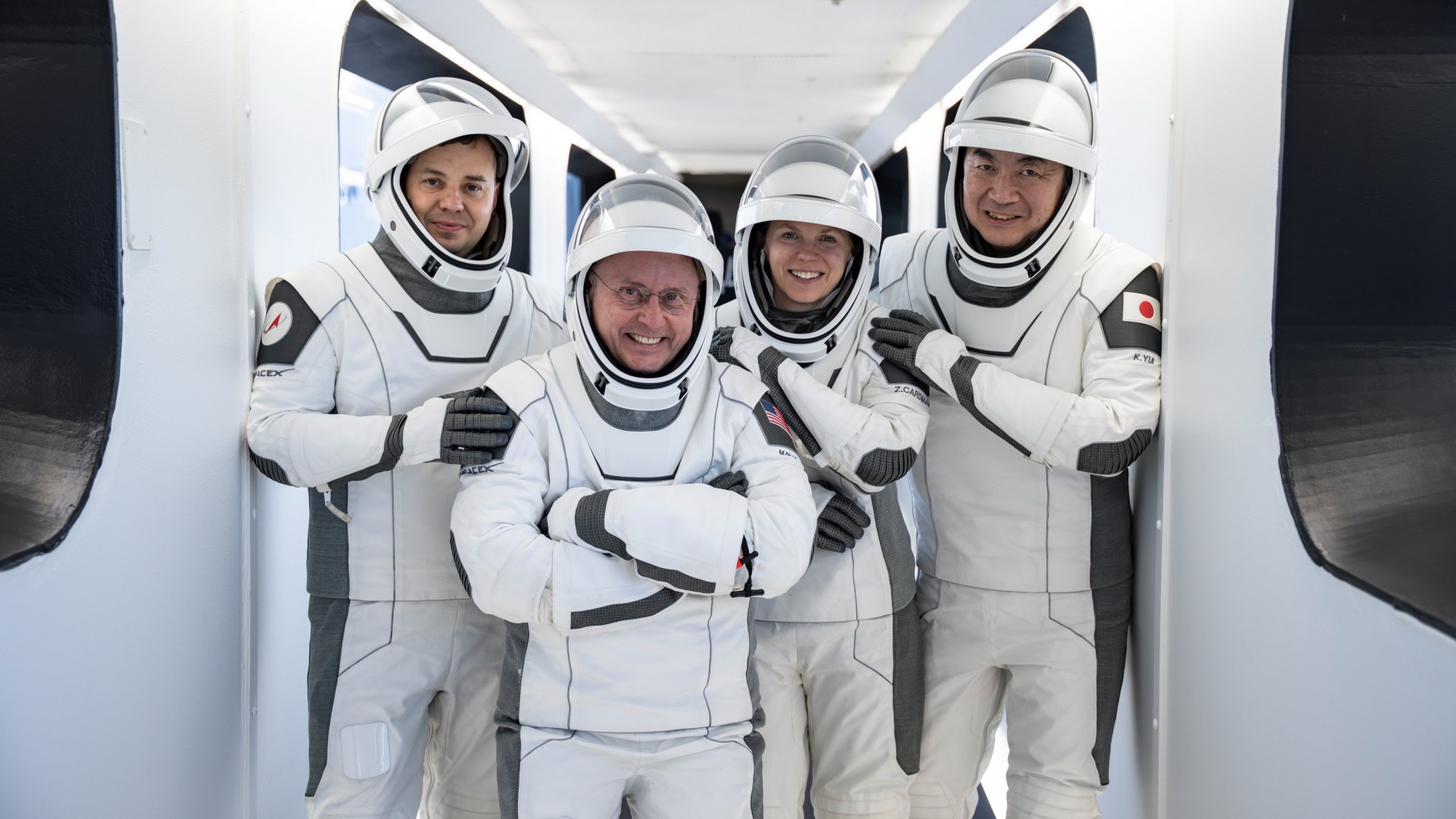
On January 14, an unprecedented event in NASA history took place. For the first time, the aerospace administration terminated a manned space mission ahead of schedule due to health problems of one of the Crew-11 mission participants. For confidentiality reasons, NASA is not disclosing his name or details of his diagnosis. According to unofficial sources, the astronaut in question is Michael Fincke.
The Crew-11 mission crew. Source: NASA
But although evacuation to Earth is an unprecedented event for NASA, it is far from the first such case. Yes, cosmonauts and astronauts undergo thorough medical examinations, but they are still human beings. It is no secret that even healthy people can unexpectedly experience health problems under certain circumstances. Moreover, space explorers work in extremely harsh conditions and are exposed to factors such as weightlessness, increased radiation levels, and confinement in a closed space – not to mention significant stress.
In this article, you will learn about the most famous cases in history when medical problems directly affected the course of space expeditions.
Cold and disobedience, Apollo 7
At the dawn of the space age, NASA did not have a preflight quarantine for astronauts. The Apollo 7 mission clearly demonstrated the shortcomings of this practice. Shortly after launch, mission commander Walter Schirra came down with a cold. Later, the rest of the crew also developed symptoms. Colds in zero gravity were much more severe than on Earth. Aspirin from the onboard first aid kit did not help, and it was impossible to clear their noses and ears.
The Apollo 7 mission crew. Source: NASA
It is worth noting that Apollo 7 was a very difficult mission. It was supposed to demonstrate that NASA had recovered from the loss of three astronauts who died in a fire during Apollo 1 testing, and that after all the changes made, the spacecraft was safe for flight. The crew was under a great deal of pressure. And illness only exacerbated the situation.
From a technical point of view, the flight itself went brilliantly: the astronauts completed absolutely all of their tasks, paving the way to the Moon. The flip side of the coin was that communication between Mission Control (RKA) and the astronauts was very difficult and accompanied by a number of conflicts. The final straw was the landing. Mission Control (RKA) demanded that the astronauts put on their helmets in case of depressurization of the spacecraft. But the crew refused to do so, citing concerns that the increase in pressure could cause their eardrums to rupture due to their airways still being blocked. The astronauts wanted to be able to perform the Valsalva maneuver to equalize the pressure in their ears. As a result, they refused to obey a direct order and did not put on their helmets.
This had direct consequences. Even before the flight, Wally Schirra announced that he would soon be leaving NASA, so the aerospace administration was unable to impose any serious sanctions on him. However, for the other two crew members, Donn Eisele and Walter Cunningham, this flight was their last. NASA management decided to no longer allow astronauts who did not follow orders to fly into space.
Moon allergy
Scientists and engineers working on projects to create lunar settlements have identified a number of problems that need to be solved before colonization of Earth’s satellite can begin. But actual flights have revealed another problem that no one had thought about before, and that could seriously complicate long-term stays on the Moon. We are talking about allergies to lunar dust.
Harrison Schmitt inside the lunar module. Note that his spacesuit is covered in moondust.Source: NASA
The fact is that lunar dust is completely different from Earth dust. It consists of very fine and extremely sharp particles – after all, there is no atmosphere or water on the Moon to smooth them out. Lunar dust is extremely sticky. It easily sticks to spacesuits and equipment, which creates a number of problems. It can also cause allergies.
Harrison Schmitt, a member of the Apollo 17 mission, saw this for himself. When he took off his spacesuit after returning to the lunar module, he developed hay fever – an allergic reaction caused by inhaling dust particles. The next day, the allergy had almost disappeared, allowing the astronaut to continue his work. However, as it soon became clear, Cernan’s case was not unique. Later, the same symptoms appeared in a person who worked with the astronauts’ spacesuits after their return to Earth.
It is possible that long-term inhalation of dust could have even more serious consequences for humans and cause lung disease. Therefore, designers of modern lunar missions are taking this factor into account and looking for ways to combat dust.
Skylab strike
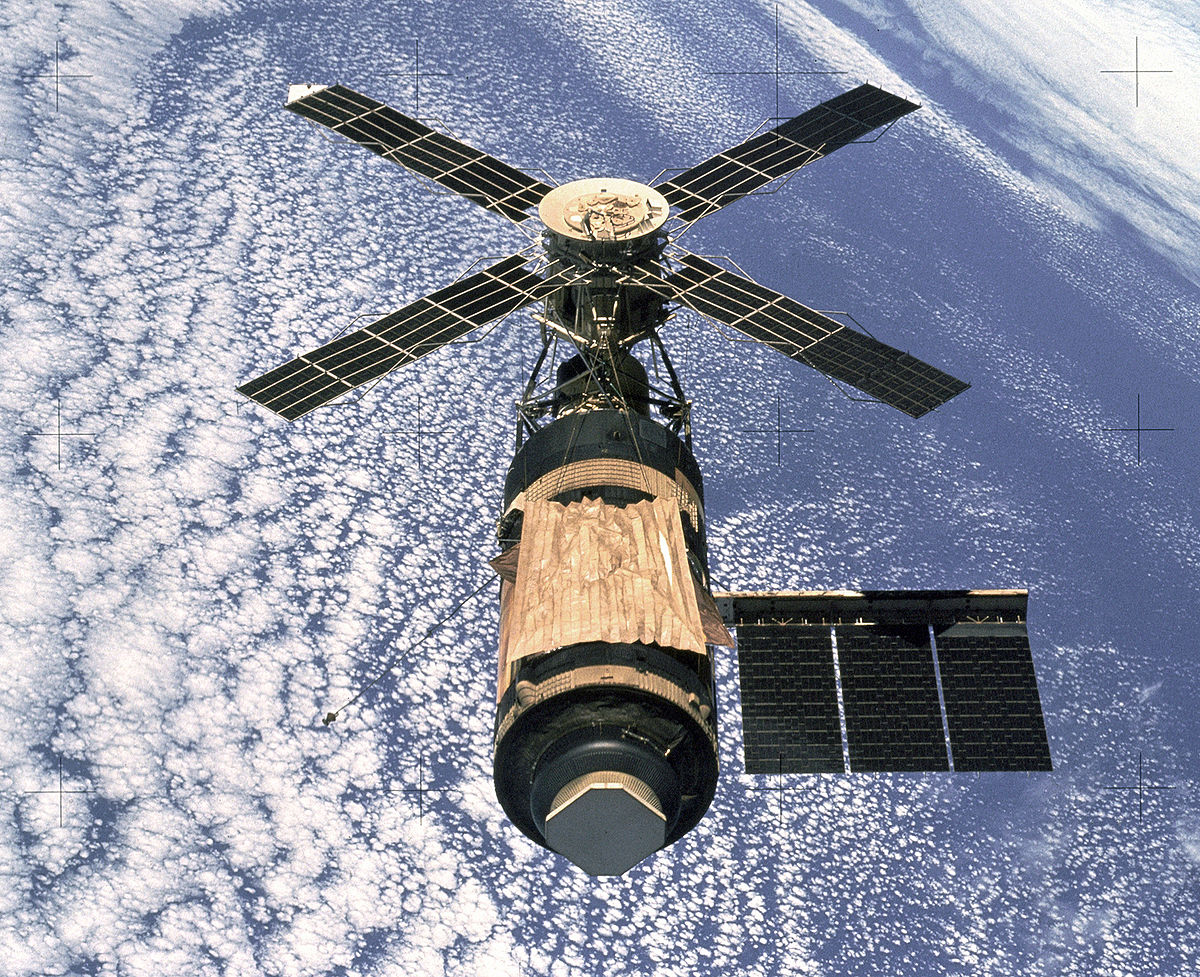
Information about the so-called Skylab “strike” can easily be found on the Internet. It is claimed that on December 28, 1973, in protest against an overly busy work schedule, the station crew (astronauts Gerald Carr, Edward Gibson, and William Pogue) cut off communication with Mission Control (RKA) and spent the entire day relaxing and looking at Earth.
Skylab orbital station. Source: NASA
What really happened? For all the astronauts at the station, it was their first flight into space. At the same time, NASA had drawn up an overly ambitious work plan for them. This led to the crew falling behind schedule and the psychological atmosphere becoming very tense. It is claimed that this is precisely why the astronauts broke down at some point and went on strike.
But in reality, everything was much more complicated. Communication was lost not for a day, but for an entire orbit. According to the astronauts, this was due to a mistake – they confused who was responsible for maintaining contact with Earth that day. The available records of the conversations also do not confirm that the crew refused to work. In fact, there was a dialogue between the crew and Mission Control (RKA) about the problems that had arisen – something like the first psychotherapy session in space. At first, the crew reported everything they did not like and what needed to be changed first. Then Mission Control (RKA) openly told the crew about everything that was bothering them.
The changes introduced after this discussion yielded results. As a result, the second half of the mission turned out to be much more productive than the first. In some respects, the crew even managed to exceed the initial plan. After this flight, NASA began to pay much more attention to the psychological aspects of space travel, realizing that they were just as important as the crew’s physical health.
The Skylab mission became the starting point for numerous medical studies devoted to human behavior in space. Its results are still actively used in the selection and training of crews for long-term expeditions. The most obvious legacy of this mission was the introduction of the practice that at least one member of a space expedition must have experience flying in orbit.
The mysterious return of Soyuz-21
Despite all the problems, the Skylab crew remained at the station until the end of their scheduled stay. The same cannot be said about the crew of Soyuz-21. In July 1976, it docked with the Salyut 5 military orbital station. It was assumed that crew commander Boris Volynov and flight engineer Vitaly Zholobov would spend 60 days aboard the station. In reality, they returned to Earth after only 49 days.
Boris Volynov and Vitaly Zholobov
The reason for the early return of Soyuz-21 is still shrouded in rumors. According to Volynov, after an emergency arose at the station, Zholobov began to suffer from severe headaches, and his condition continued to deteriorate. By the time the Mission Control Center decided to terminate the expedition early, he was unable to put on his spacesuit by himself. As for the reasons for his deteriorating health, a strange smell was cited, which was presumably caused by a nitric acid leak. Because of this, the next expedition boarded Salyut-5 wearing respirators. However, the cosmonauts did not detect any smell or leaks.
However, according to popular opinion, the real reason was the difficult psychological situation and conflict between the crew members, which led to the early termination of the mission. Later, Zholobov denied some of the rumors surrounding the flight, but at the same time stated that he had essentially taken on the problems that had arisen for Volynov, who was in command of the mission.
Astronaut sickness
While there are many gray areas in the history of Soyuz-21, there is no doubt about the main reason for the early termination of the Soyuz T-14 expedition: cosmonaut Vladimir Vasyutin fell ill. While on board the Salyut-7 station, he developed symptoms of prostatitis.
The Salyut 7 orbital station. Source: Wikipedia
The treatment administered on board the space station after consultation with doctors was unsuccessful. The cosmonaut’s health deteriorated rapidly. As a result, on November 21, 1985, Soyuz T-14 returned to Earth. Instead of the planned 200 days, the flight lasted only 64 days.
According to the widely accepted version, Vasyutin knew about his illness and concealed it, attempting to treat himself, and the responsibility lies solely with him. However, there is also an alternative opinion, according to which, given the thoroughness of medical examinations, regardless of his wishes, the cosmonaut would never have been able to hide a chronic illness from doctors, and that this was an acute illness that suddenly developed during the space flight.
Regardless of whether Vasyutin knew about his illness or not, it led to the failure of a very ambitious expedition and the cancellation of a number of missions planned for Salyut 7. Subsequently, only one spacecraft visited the station, after which it was mothballed and, a few years later, fell out of orbit. Shortly after returning to Earth, Vasyutin himself was removed from the cosmonaut corps due to health reasons and never flew into space again.
Wormholes may not exist—we've found they reveal something deeper about time and the universe
Story by Enrique Gaztanaga
Credit: Pixabay/CC0 Public Domain
Wormholes are often imagined as tunnels through space or time—shortcuts across the universe. But this image rests on a misunderstanding of work by physicists Albert Einstein and Nathan Rosen.
In 1935, while studying the behavior of particles in regions of extreme gravity, Einstein and Rosen introduced what they called a "bridge": a mathematical link between two perfectly symmetrical copies of spacetime. It was not intended as a passage for travel, but as a way to maintain consistency between gravity and quantum physics. Only later did Einstein–Rosen bridges become associated with wormholes, despite having little to do with the original idea.
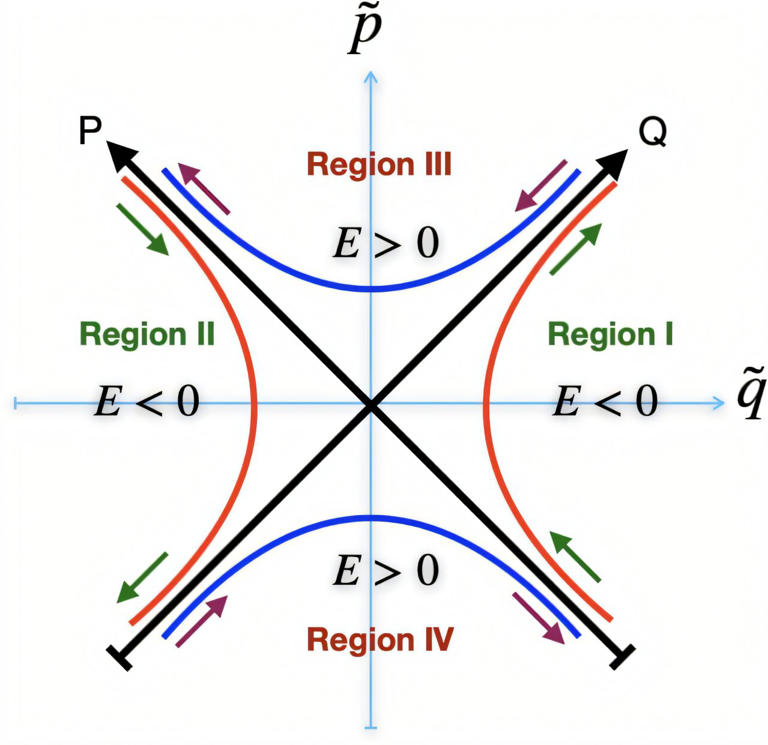
Phase space of inverted harmonic oscillator representing doubly degenerate positive and negative energy solutions.
Credit: Classical and Quantum Gravity (2026). DOI: 10.1088/1361-6382/ae3044
But in new research published in Classical and Quantum Gravity, my colleagues and I show that the original Einstein–Rosen bridge points to something far stranger—and more fundamental—than a wormhole.
The puzzle Einstein and Rosen were addressing was never about space travel, but about how quantum fields behave in curved spacetime. Interpreted this way, the Einstein–Rosen bridge acts as a mirror in spacetime: a connection between two microscopic arrows of time.
Quantum mechanics governs nature at the smallest scales such as particles, while Einstein's theory of general relativity applies to gravity and spacetime. Reconciling the two remains one of physics' deepest challenges. And excitingly, our reinterpretation may offer a path to doing this.
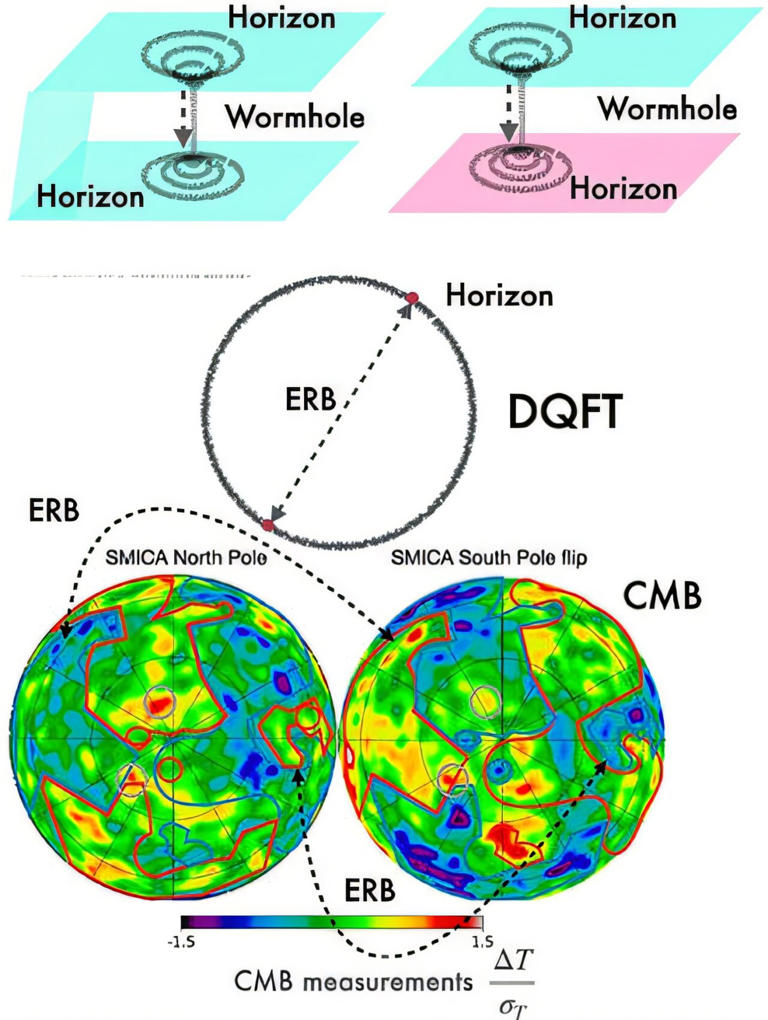
Einstein–Rosen bridges (ERB): "A particle in the physical Universe must be described by a mathematical bridge between two sheets of spacetime."
Credit: Classical and Quantum Gravity (2026). DOI: 10.1088/1361-6382/ae3044
A misunderstood legacy
The "wormhole" interpretation emerged decades after Einstein and Rosen's work, when physicists speculated about crossing from one side of spacetime to the other, most notably in the late-1980s research.
But those same analyses also made clear how speculative the idea was: within general relativity, such a journey is forbidden. The bridge pinches off faster than light could traverse it, rendering it non-traversable. Einstein–Rosen bridges are therefore unstable and unobservable—mathematical structures, not portals.
Nevertheless, the wormhole metaphor flourished in popular culture and speculative theoretical physics. The idea that black holes might connect distant regions of the cosmos—or even act as time machines—inspired countless papers, books and films.
Yet there is no observational evidence for macroscopic wormholes, nor any compelling theoretical reason to expect them within Einstein's theory. While speculative extensions of physics—such as exotic forms of matter or modifications of general relativity—have been proposed to support such structures, they remain untested and highly conjectural.
Two arrows of time
Our recent work revisits the Einstein–Rosen bridge puzzle using a modern quantum interpretation of time, building on ideas developed by Sravan Kumar and João Marto.
Most fundamental laws of physics do not distinguish between past and future, or between left and right. If time or space is reversed in their equations, the laws remain valid. Taking these symmetries seriously leads to a different interpretation of the Einstein–Rosen bridge.
Rather than a tunnel through space, it can be understood as two complementary components of a quantum state. In one, time flows forward; in the other, it flows backward from its mirror-reflected position.
This symmetry is not a philosophical preference. Once infinities are excluded, quantum evolution must remain complete and reversible at the microscopic level—even in the presence of gravity.
The "bridge" expresses the fact that both time components are needed to describe a complete physical system. In ordinary situations, physicists ignore the time-reversed component by choosing a single arrow of time.
But near black holes, or in expanding and collapsing universes, both directions must be included for a consistent quantum description. It is here that Einstein–Rosen bridges naturally arise.
Solving the information paradox
At the microscopic level, the bridge allows information to pass across what appears to us as an event horizon—a point of no return. Information does not vanish; it continues evolving, but along the opposite, mirror temporal direction.
This framework offers a natural resolution to the famous black hole information paradox. In 1974, Stephen Hawking showed that black holes radiate heat and can eventually evaporate, apparently erasing all information about what fell into them—contradicting the quantum principle that evolution must preserve information.
The paradox arises only if we insist on describing horizons using a single, one-sided arrow of time extrapolated to infinity—an assumption quantum mechanics itself does not require.
If the full quantum description includes both time directions, nothing is truly lost. Information leaves our time direction and re-emerges along the reversed one. Completeness and causality are preserved, without invoking exotic new physics.
These ideas are difficult to grasp because we are macroscopic beings who experience only one direction of time. On everyday scales, disorder—or entropy—tends to increase. A highly ordered state naturally evolves into a disordered one, never the reverse. This gives us an arrow of time.
But quantum mechanics allows more subtle behavior. Intriguingly, evidence for this hidden structure may already exist. The cosmic microwave background—the afterglow of the Big Bang—shows a small but persistent asymmetry: a preference for one spatial orientation over its mirror image.
This anomaly has puzzled cosmologists for two decades. Standard models assign it extremely low probability—unless mirror quantum components are included.
Echoes of a prior universe?
This picture connects naturally to a deeper possibility. What we call the "Big Bang" may not have been the absolute beginning, but a bounce—a quantum transition between two time-reversed phases of cosmic evolution.
In such a scenario, black holes could act as bridges not just between time directions, but between different cosmological epochs. Our universe might be the interior of a black hole formed in another, parent cosmos. This could have formed as a closed region of spacetime collapsed, bounced back and began expanding as the universe we observe today.
If this picture is correct, it also offers a way for observations to decide. Relics from the pre-bounce phase—such as smaller black holes—could survive the transition and reappear in our expanding universe. Some of the unseen matter we attribute to dark matter could, in fact, be made of such relics.
In this view, the Big Bang evolved from conditions in a preceding contraction. Wormholes aren't necessary: the bridge is temporal, not spatial—and the Big Bang becomes a gateway, not a beginning.
This reinterpretation of Einstein–Rosen bridges offers no shortcuts across galaxies, no time travel and no science-fiction wormholes or hyperspace. What it offers is far deeper. It offers a consistent quantum picture of gravity in which spacetime embodies a balance between opposite directions of time—and where our universe may have had a history before the Big Bang.
It does not overthrow Einstein's relativity or quantum physics—it completes them. The next revolution in physics may not take us faster than light—but it could reveal that time, deep down in the microscopic world and in a bouncing universe, flows both ways.
More information: Enrique Gaztañaga et al, A new understanding of Einstein–Rosen bridges, Classical and Quantum Gravity (2026). DOI: 10.1088/1361-6382/ae3044
Meer van UFO'S of UAP'S, ASTRONOMIE, RUIMTEVAART, ARCHEOLOGIE, OUDHEIDKUNDE, SF-SNUFJES EN ANDERE ESOTERISCHE WETENSCHAPPEN - DE ALLERLAATSTE NIEUWTJES


 Russian UFO files reveal chilling encounters, near-miss nuclear launch - KLAS 8 News Now