Naar de inhoud

UFO'S of UAP'S, ASTRONOMIE, RUIMTEVAART, ARCHEOLOGIE, OUDHEIDKUNDE, SF-SNUFJES EN ANDERE ESOTERISCHE WETENSCHAPPEN - DE ALLERLAATSTE NIEUWTJES

UFO's of UAP'S in België en de rest van de wereld
akke.beakke.be
Ontdek de Fascinerende Wereld van UFO's en UAP's: Jouw Bron voor Onthullende Informatie! Ben jij ook gefascineerd door het onbekende? Wil je meer weten over UFO's en UAP's, niet alleen in België, maar over de hele wereld? Dan ben je op de juiste plek! België: Het Kloppend Hart van UFO-onderzoek In België is BUFON (Belgisch UFO-Netwerk) dé autoriteit op het gebied van UFO-onderzoek. Voor betrouwbare en objectieve informatie over deze intrigerende fenomenen, bezoek je zeker onze Facebook-pagina en deze blog. Maar dat is nog niet alles! Ontdek ook het Belgisch UFO-meldpunt en Caelestia, twee organisaties die diepgaand onderzoek verrichten, al zijn ze soms kritisch of sceptisch. Nederland: Een Schat aan Informatie Voor onze Nederlandse buren is er de schitterende website www.ufowijzer.nl, beheerd door Paul Harmans. Deze site biedt een schat aan informatie en artikelen die je niet wilt missen! Internationaal: MUFON - De Wereldwijde Autoriteit Neem ook een kijkje bij MUFON (Mutual UFO Network Inc.), een gerenommeerde Amerikaanse UFO-vereniging met afdelingen in de VS en wereldwijd. MUFON is toegewijd aan de wetenschappelijke en analytische studie van het UFO-fenomeen, en hun maandelijkse tijdschrift, The MUFON UFO-Journal, is een must-read voor elke UFO-enthousiasteling. Bezoek hun website op www.mufon.com voor meer informatie. Samenwerking en Toekomstvisie Sinds 1 februari 2020 is Pieter niet alleen ex-president van BUFON, maar ook de voormalige nationale directeur van MUFON in Vlaanderen en Nederland. Dit creëert een sterke samenwerking met de Franse MUFON Reseau MUFON/EUROP, wat ons in staat stelt om nog meer waardevolle inzichten te delen. Let op: Nepprofielen en Nieuwe Groeperingen Pas op voor een nieuwe groepering die zich ook BUFON noemt, maar geen enkele connectie heeft met onze gevestigde organisatie. Hoewel zij de naam geregistreerd hebben, kunnen ze het rijke verleden en de expertise van onze groep niet evenaren. We wensen hen veel succes, maar we blijven de autoriteit in UFO-onderzoek! Blijf Op De Hoogte! Wil jij de laatste nieuwtjes over UFO's, ruimtevaart, archeologie, en meer? Volg ons dan en duik samen met ons in de fascinerende wereld van het onbekende! Sluit je aan bij de gemeenschap van nieuwsgierige geesten die net als jij verlangen naar antwoorden en avonturen in de sterren! Heb je vragen of wil je meer weten? Aarzel dan niet om contact met ons op te nemen! Samen ontrafelen we het mysterie van de lucht en daarbuiten.

Archief

Biblical figures validated by archaeological finds

Biblical figures validated by archaeological finds

Biblical figures validated by archaeological finds

©Getty Images

Biblical figures validated by archaeological finds
Science has confirmed that many parts of the Bible are indeed true, but how about its characters? The quest for evidence when it comes to biblical characters continues, but several archeological finds suggest that many of these people may have actually existed. These inscriptions, artifacts, and historical texts all amount to possible evidence that many biblical characters lived.

Curious? Click through the gallery to find out what has been discovered and how compelling the evidence is.

King David

©Getty Images

King David
The archeological evidence that proved the existence of King David was not unearthed until 1993 in Israel. A piece of stone known as the Tel Dan stele dating from the 9th century BCE contained a reference to the “House of David."

King Solomon

©Getty Images

King Solomon
There are a number of archeological finds that confirm the existence of King Solomon, namely in ancient Israeli cities such as Hazor, Megiddo, and Gezer. Six official clay seals found in 2014 also support the existence of the biblical king (and of his father, King David).

King Hezekiah

©Getty Images

King Hezekiah
Multiple pieces of evidence that confirm the existence of King Hezekiah have been found. First, the Taylor Prism in the 1830s, where Assyrian King Sennacherib wrote about the failed siege of Jerusalem in 701 BCE. There was also an inscription found in 1880 in the Siloam Tunnel in Jerusalem.

Pontius Pilate

©Getty Images

Pontius Pilate
Evidence of the existence of the Roman governor who ordered Jesus’ crucifixion was found in 1961. The “Pilate Stone” was found at Caesarea Maritima, an ancient Roman Judea city, containing a Latin inscription that made reference to “Pontius Pilate, Prefect of Judea.”

Herod the Great

©Getty Images

Herod the Great
The King of Judea left quite a legacy across Israel. His tomb was found in the 1800s in Herodium, a fortress near Bethlehem. He was also the man behind constructions such as Jerusalem’s Second Temple and the Antonia Fortress.

Cyrus the Great

©Getty Images

Cyrus the Great
There is archeological evidence that the founder of the Persian Achaemenid Empire lived. In 1879, archaeologists discovered a clay cylinder from Babylon’s ruins dating back to 539 BCE. The cylinder contained a text praising Cyrus and his rule.

Nebuchadnezzar II

©Getty Images

Nebuchadnezzar II
The Babylonian Chronicles, a series of clay tablets from 590 BCE, make reference to major Babylonian events, including King Nebuchadnezzar II’s capture of Jerusalem in 586 BCE.

Pharaoh Shishak (Sheshonq I)

©Public Domain

Pharaoh Shishak (Sheshonq I)
There is also evidence that the Pharaoh who attacked Jerusalem (1 Kings 14:25–26) lived. This can be found in inscriptions inside Egypt’s Karnak Temple.

Judas Maccabeus

©Public Domain

Judas Maccabeus
Judas Maccabeus, or Judah Maccabee, is yet another biblical figure whose existence was proven by archeology. There are some coins and pottery fragments that make reference to the Jewish priest and how he defeated the Syrian armies between 166 and 160 BCE.

Caiaphas

©Public Domain

Caiaphas
The bones of the High Priest of Israel who played a role at the trial of Jesus are evidence of his existence. An ossuary bearing the words “Joseph son of Caiaphas” was found in 1990.

Pontius Sergius Paulus

©Getty Images

Pontius Sergius Paulus
The Roman official was Proconsul of Cyprus. Inscriptions found in Paphos, on the Mediterranean island of Cyprus, match the account found in Acts.

King Ahab

©Getty Images

King Ahab
A basalt monument called the Mesha Stele was unearthed in Jordan in 1868. The stone’s inscriptions make reference to King Mesha of Moab’s victories against Israel’s King Ahab, as per 1 Kings. Ahab also left an ivory palace complex in Samaria behind, providing further proof of his existence.

King Jehoiakim

©Public Domain

King Jehoiakim
There are a number of archeological finds that prove the existence of the King of Judah. These include the Babylonian Chronicles (clay tablets), as well as seals with King Jehoiakim’s name.

Hiram of Tyre

©Getty Images

Hiram of Tyre
Proof that Hiram I, the Phoenician king of Tyre, lived was found in Sidon, Lebanon, in 1855. The Phoenician text in Eshmunazar II's sarcophagus makes reference to King Hiram of Tyre.

Herod Antipas

©Getty Images

Herod Antipas
The name of Herod Antipas stamped across coins of Galilee and Perea attests to his existence as a ruler of the region.

King Josiah

©Getty Images

King Josiah
A seal stamp with the name “Nathan-Melech” from the 7th century BCE was discovered in the City of David archeological site. In 2 Kings 23:11 we find reference to this man as one of King Josiah’s officials.

King Zedekiah

©Public Domain

King Zedekiah
The Babylonian Chronicles detail King Zedekiah’s attempt to save Jerusalem from Nebuchadnezzar’s men. In addition, an unearthed clay tablet from Sippar makes reference to Zedekiah’s children among the exiles in Babylon.

Sennacherib

©Getty Images

Sennacherib
The Neo-Assyrian king is mentioned on the Taylor Prism (an early cuneiform artifact). More specifically, it details his siege of Jerusalem in 701 BCE.

King Ahaz

©Getty Images

King Ahaz
The Kurkh Monolith lists King Ahaz’s tribute to Tiglath-Pileser III. Royal seals also add to the veracity of the biblical character mentioned in 2 Kings 16 and 2 Chronicles 28.

Nehemiah

©Getty Images

Nehemiah
Evidence that Governor Nehemiah lived can be found in the Elephantine Papyri. Archaeologists also found sections of walls rebuilt by Nehemiah under the streets of modern-day Jerusalem.

Peter (Simon Peter)

©Getty Images

Peter (Simon Peter)
There are a few artifacts that support that the disciple of Jesus lived, including early Christian documents. In addition, graffiti that reads “Peter is here” was found at a tomb beneath St. Peter’s Basilica, dating back to the 1st century, which suggests this is his resting place.

James, Son of Zebedee

©Getty Images

James, Son of Zebedee
Jewish historian Flavius Josephus wrote in ‘Antiquities of the Jews’ about the execution of James in 62 CE, which is a remarkable non-Christian piece of evidence that he existed.

John the Evangelist

©Getty Images

John the Evangelist
There are historical accounts of John’s life in Irenaeus’ book ‘Against Heresies.’ Justin Martyr’s ‘Dialogue with Trypho’ also makes reference to “John, one of the Apostles of Christ” who lived in Ephesus.

Andrew the Apostle

©Getty Images

Andrew the Apostle
The historian Eusebius’ book ‘Ecclesiastical History,’ also known as ‘Church History,’ mentions Andrew’s missionary work. His remains are believed to be held in the Cathedral of St. Andrew in Patras, Greece. Christian symbols discovered in Sinope and Nicea also support Andrew’s presence in the region.

Thomas the Apostle

©Getty Images

Thomas the Apostle
It’s believed that Thomas traveled to India and preached there. His tomb is believed to be located at the Santhome Basilica in Chennai, India. Crosses, coins, and other archeological finds also add weight to the veracity of his story.

Philip the Apostle

©Getty Images

Philip the Apostle
This Apostle of Jesus spread the gospel across Asia Minor. Evidence includes early Christian artifacts found in Hierapolis (modern-day Pamukkale, Turkey), including the Martyrion of St. Philip, which is believed to be the place where Philip died.

Bartholomew the Apostle

©Getty Images

Bartholomew the Apostle
The ruins of Saint Bartholomew Monastery in Vaspurakan, Armenia, are believed to be the final resting place of the Apostle. Christian symbols have also been unearthed along India’s Konkan coast, which also match his story.

Matthew the Apostle

©Getty Images

Matthew the Apostle
An old manuscript called GG 00039, held at the Gunda Gunde Monastery in Ethiopia, contains the first part of Matthew’s Gospel. Christian objects were also found in Persia, which suggests a Christian community was active in the area Matthew traveled to. A ceramic pot found in a lake in Kyrgyzstan is also believed to be linked to Matthew.

James the Just

©Public Domain

James the Just
In 62 CE, Jewish historian Josephus made a reference to “James, the brother of Jesus who is called Christ,” who was executed.

Jesus of Nazareth

©Getty Images

Jesus of Nazareth
Many archeological finds point to the possibility that Jesus existed. This includes houses from his period found in Nazareth, the Pilate Stone, which proves that Pontius Pilate existed, and proof that Roman crucifixion practices matched the ones described in the Bible.

Jesus of Nazareth

©Getty Images

Jesus of Nazareth
Another piece of the puzzle includes a letter Roman governor Pliny the Younger wrote to Emperor Trajan, where he makes reference to early Christians singing “hymns to Christ as to a god.”

Sources: (History Collection) (National Geographic) (Biblical Archeological Society)

See also: The largest empires in world history

RELATED

{ Stars Insider }

Hoe vind je dit bericht?
Geschreven door peter om 22:01 Stuur door

Shocking breakthrough makes colonizing Mars more realistic

Shocking breakthrough makes colonizing Mars more realistic

Story by Cassian Holt

Shocking breakthrough makes colonizing Mars more realistic

Shocking breakthrough makes colonizing Mars more realistic

For decades, the idea of people living on Mars has felt like a distant fantasy, limited by the brutal cost of hauling everything from Earth and the difficulty of building safe shelters on a hostile world. That picture is starting to shift as engineers quietly solve the hardest part of the problem: how to construct real infrastructure using Martian soil itself. A cluster of new techniques for making bricks, concrete and even self-assembling structures from local material is turning the dream of a permanent foothold on the Red Planet into a practical engineering challenge rather than a science fiction plot.

The new Martian brick that changes the equation

The most striking development is a method that lets future settlers turn raw Martian dust into solid building blocks without importing heavy equipment or binders from Earth. NASA scientists have announced a way to create robust bricks on Mars using only local dust, minerals and a small amount of human sweat, effectively turning the grit under an astronaut’s boots into structural material. In reports shared in Jul, the agency described how this process could produce dense, durable bricks that lock together into walls and radiation shields, cutting out the need to ship conventional construction materials across interplanetary space.

What makes this so disruptive is not just the chemistry, but the logistics. Launching one kilogram of cargo from Earth is already expensive, and a settlement would need thousands of tons of material for habitats, storage and shielding. By relying on Martian dust and minerals, the NASA approach slashes that mass requirement and lets crews scale up construction as they go, brick by brick, instead of waiting for resupply. The technique, detailed in a Facebook group post on NASA scientists, frames human presence not as a fragile outpost, but as a growing worksite where the planet itself becomes the raw stock for expansion.

From improvised shelters to full Martian communities

Once you can make a single brick, the next question is whether you can build entire neighborhoods. Follow up work has shown that scientists have successfully created bricks strong enough to support not just small test structures, but the foundations of full-scale habitats. Using similar principles that combine Martian dust with minimal additives, researchers have demonstrated blocks that could be stacked into domes, tunnels and multiroom shelters capable of housing crews for months at a time. The same Jul reporting on NASA’s work has been echoed in other technical communities, where engineers argue that these bricks could underpin entire communities on Mars rather than just emergency bunkers.

That shift in ambition matters because it changes how mission planners think about timelines. Instead of shipping prefabricated modules for every new crew, agencies could send a compact starter kit of tools and rely on local brick production to expand living space, storage and even agricultural enclosures. The idea that settlers might one day walk through streets lined with structures made from Martian dust is no longer a poetic metaphor, but a scenario grounded in lab-tested materials. One widely shared discussion of how scientists have successfully created bricks robust enough for entire communities captures how quickly the field has moved from proof of concept to city-scale thinking.

Self-building tech and shape-optimized structures

Material is only half the story. The other half is how to assemble it in a place where human labor is scarce, dangerous and expensive. In June, a study from Texas A&M University, working with the University of Nebraska-Lincoln, introduced a self-building technology that could let habitats on Mars assemble themselves from modular components. The concept uses robotic systems and smart joints that lock together autonomously, guided by algorithms that account for Martian gravity and the properties of regolith, which consists of dust, sand and rocks. Instead of astronauts spending weeks in bulky suits stacking bricks, swarms of machines could raise walls and roofs while crews focus on science and survival.

At the same time, structural engineers are rethinking what Martian buildings should look like in the first place. Rather than copying Earth-style boxes, they are designing shape optimized structures that use arches, shells and curved forms to handle pressure differences and radiation with far less material. One detailed analysis shows that such structures can remarkably reduce the energy and material required for construction, while also eliminating the need for large imports from Earth. The study argues that these optimized geometries, when combined with in situ concrete and regolith-based bricks, can lead to sustainable colonization on Mars by aligning architecture with the physics of the environment. The case for these designs is laid out in research that notes how Such structures reduce both energy and imported mass, a crucial advantage when every kilogram counts.

When I put these threads together, the picture that emerges is of a construction ecosystem that is both automated and highly efficient. Self-building systems from Texas and the University of Nebraska, Lincoln can handle the assembly, while shape optimized shells minimize the amount of Martian material that needs to be processed in the first place. That combination does not just make habitats cheaper, it makes them faster to deploy, which is vital in the narrow windows when launch trajectories and Martian seasons line up in favor of new arrivals.

Concrete, 3D printing and the rise of in situ manufacturing

Bricks and shells are powerful tools, but long term settlements will also need heavy duty infrastructure: landing pads, radiation bunkers, pressure locks and industrial floors. Here, researchers are turning Martian soil into a kind of waterless cement known as AstroCrete. Studies of future Mars settlements, often described as the Red Planet’s first towns, point out that All the key ingredients for this material, including regolith, certain salts and even biological components, will be available in relative abundance in Martian environments. AstroCrete made from Martian regolith and human byproducts behaves like a tough concrete that can be cast into slabs and beams without relying on scarce water, which is too valuable to waste on construction. One technical overview notes that All of these components can be sourced locally, making AstroCrete a cornerstone of Martian civil engineering.

Alongside concrete, 3D printing is emerging as the workhorse for turning raw regolith into precise parts. Techniques originally developed for products as mundane as an airless basketball are being adapted to extraterrestrial construction. One analysis of advanced additive manufacturing notes that this approach not only reduces the need for carrying heavy payloads from Earth, but also offers the potential for rapid prototyping and adaptability to the unique Martian environment. The same logic that lets engineers print a complex lattice for a sports ball can be applied to printing pressure vessels, support trusses and custom connectors on Mars, all tuned to local gravity and temperature swings. The broader promise of this method is captured in work showing how 3D printing can cut launch mass from Earth while boosting flexibility on site, a point underscored in coverage of how printing directly from regolith reduces the need to ship bulky components from Earth.

A broader blueprint for sustainable colonization

Behind these individual breakthroughs sits a larger strategic shift in how space agencies and researchers think about Mars. Instead of treating each mission as a one-off expedition, planners are sketching a comprehensive blueprint for colonization that assumes permanent, growing infrastructure. A recent synthesis of this thinking argues that Technological evolution is central to making Mars habitable in a sustainable way. It highlights Key advancements in propulsion, in situ resource utilization, closed-loop life support systems and advanced robotics as the pillars of a long term presence. In that framework, construction technologies like regolith bricks, AstroCrete and self-building habitats are not side projects, but core enablers of a settlement that can expand without constant resupply. The same work on Technological evolution on Mars makes clear that construction, life support and robotics must advance together if colonization is to move beyond flags and footprints.

Self-building systems, shape optimized structures and in situ materials are already being woven into that broader roadmap. In June, the work from Texas and the University of Nebraska, Lincoln on self-assembling habitats was framed explicitly as a bridge from science fiction to operational reality, showing how regolith-based modules could be deployed in advance of human crews. Combined with NASA’s Jul breakthroughs on Martian bricks and the growing body of research on sustainable concrete, these developments suggest that the hardest part of colonizing Mars may no longer be the rockets, but the patience to test and refine the tools that will turn dust into cities. As I look across the emerging blueprint, the shocking part is not that colonization is possible, but that the practical pieces are arriving faster than the public conversation has caught up, quietly making a permanent human presence on Mars feel less like a fantasy and more like an engineering deadline.

More from Morning Overview

{ Morning Overview }

Hoe vind je dit bericht?
Geschreven door peter om 18:44 Stuur door

New Evidence That An Ancient Martian Ocean Covered Half The Planet

New Evidence That An Ancient Martian Ocean Covered Half The Planet

These images highlight three scarp-fronted deposits in a segment of Valles Marineris on Mars. These features are nearly identical to river deltas on Earth, and add to the growing body of evidence showing that ancient Mars was wet and warm, with liquid water flowing on its surface. Image Credit: Argadestya et al. 2026, NPJ Space Exploration/MOLA These images highlight three scarp-fronted deposits in a segment of Valles Marineris on Mars. These features are nearly identical to river deltas on Earth, and add to the growing body of evidence showing that ancient Mars was wet and warm, with liquid water flowing on its surface. Image Credit: Argadestya et al. 2026, NPJ Space Exploration/MOLA

Bit by bit, scientists are piecing together Mars' climate history. Thanks to orbiters armed with powerful cameras and rovers carrying suites of scientific instruments, the red planet's history is becoming clearer year-by-year. In the past decade or so, evidence of Mars' ancient habitability is becoming more and more convincing.

In order to be habitable, Mars had to be both warmer and wetter than it is now. There are two broad types of evidence that show that's exactly what it was: One is the existence of minerals that only form in the presence of water, and the other is in landforms created by water. New evidence in NPJ Space Exploration highlights the presence of scarp-fronted deposits in Valles Marineris, features very similar to river deltas here on Earth.

The research is titled "Scarp-fronted deposits record the highest water level in Mars’ Valles Marineris," and the lead author is Ignatius Argadestya, a PhD student at the Institute of Geological Sciences and the Physics Institute of the University of Bern.

"The structures that we were able to identify in the images are clearly the mouth of a river into an ocean." - Fritz Schlunegger, University of Bern.

Valles Marineris is an extremely large tectonic crack in the Martian crust, and the largest canyon system in the Solar System. Along with Olympus Mons, it's one of Mars' defining features. This research is focused on the southeast part of Coprates Chasma, a massive sub-canyon that's a central part of Valles Marineris.

"Information on water-lain deposits on Mars provides a key contribution to the understanding of the planet’s geologic history and its past environmental conditions, particularly considering the potential for past habitability," the authors write. "Consequently, major scientific efforts have been undertaken to reconstruct the geological history of Mars by documenting the occurrence of water," they write, emphasizing what many Universe Today readers are already aware of.

The researchers used images from multiple orbital cameras: CTX and HiRISE on NASA's Mars Reconnaissance Orbiter, and CaSSIS on the ESA/Roscosmos Trace Gas Orbiter. They also worked with Digital Elevation Models (DEM) based on CaSSIS, Mars Express' High-Resolution Stereo Camera, and the Mars Orbital Laser Altimeter (MOLA) on the now defunct Mars Global Surveyor.
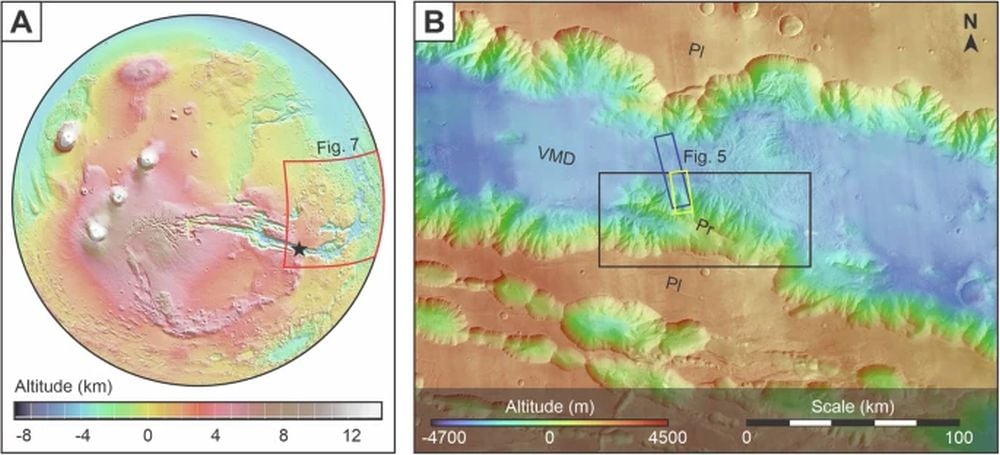
These figures show the location of the research area in Southeast Coprates Chasma. The red quadrangle in (A) shows the extent of the identified SFDs. The dark blue and yellow rectangles in (B) depict the areas for which HiRISE and CaSSIS images are available, respectively. Basemap image (B): Global CTX V1 overlain with MOLA – HRSC Global DEM V2. Pl= Plateau, Pr= Promontory, and VMD= Valles Marineris Depression. Image Credit: Argadestya et al. 2026

*These figures show the location of the research area in Southeast Coprates Chasma. The red quadrangle in (A) shows the extent of the identified SFDs. The dark blue and yellow rectangles in (B) depict the areas for which HiRISE and CaSSIS images are available, respectively. Basemap image (B): Global CTX V1 overlain with MOLA – HRSC Global DEM V2. Pl= Plateau, Pr= Promontory, and VMD= Valles Marineris Depression.

Image Credit: Argadestya et al. 2026*

They used all this data to examine the "geomorphology of the promontory and the sedimentology of scarp-fronted deposits (SFDs) in Southeast Coprates Chasma," the authors write.

"In the promontory, we find a network of branched channels bordered by screes and bedrock along the drainage divides, indicating a fluvial origin," the researchers explain. "The SFDs, occurring at the downstream end of the promontory, display convex break-in-slopes, separating a flat surface with a radial drainage network from a steep front downstream." The authors say that they interpret these features to be fan-deltas with their sources in the promontory, and that they're records of an ancient high water mark.

Previous research suggested that this was the case, but it lacked the high-resolution DEMs that these authors have at their disposal. According to these results, the SFDs are where a river drained into an ocean and are evidence of an ancient coastline.

"The unique high-resolution satellite images of Mars have enabled us to study the Martian landscape in great detail by surveying and mapping," said lead author Argadestya in a press release.
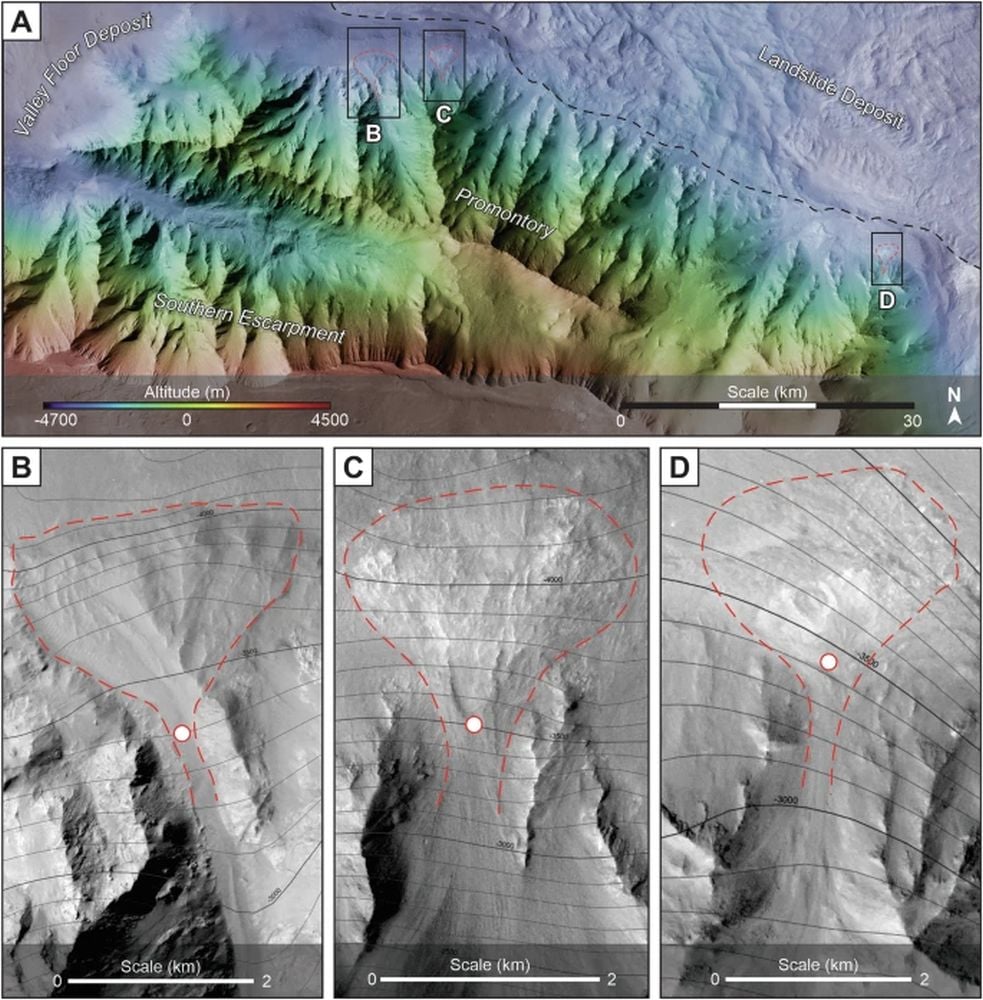
(A) shows where three SFDs are located along the northern margin of the promontory in Southeast Coprates Chasma. The dashed black line indicates the boundary of the deposits. The subsequent panels show them in greater detail. The red lines show their rough boundaries, and the white dots show their apexes. Image Credit: Argadestya et al. 2026

*(A) shows where three SFDs are located along the northern margin of the promontory in Southeast Coprates Chasma. The dashed black line indicates the boundary of the deposits. The subsequent panels show them in greater detail. The red lines show their rough boundaries, and the white dots show their apexes.

Image Credit: Argadestya et al. 2026*

"CaSSIS has been providing high-resolution color images of the surface of Mars since April 2018," said Nicolas Tomas, Professor at the Department of Space Research & Planetary Sciences (WP) at the University of Bern. "The images are regularly used in scientific studies. I am personally very pleased that the images have now also been used in a geomorphological study by the Institute of Geological Sciences," added Thomas, who provided leadership for the development of the CaSSIS camera.

"When measuring and mapping the Martian images, I was able to recognize mountains and valleys that resemble a mountainous landscape on Earth. However, I was particularly impressed by the deltas that I discovered at the edge of one of the mountains," said Argadestya. SFDs are like river deltas, where fan-shaped deposits of sediments form where a river empties into a body of standing water.

"Delta structures develop where rivers debouch into oceans, as we know from numerous examples on Earth," explained study co-author Fritz Schlunegger, Professor of Exogenous Geology at the Institute of Geological Sciences at the University of Bern. "The structures that we were able to identify in the images are clearly the mouth of a river into an ocean," Schlunegger continues.
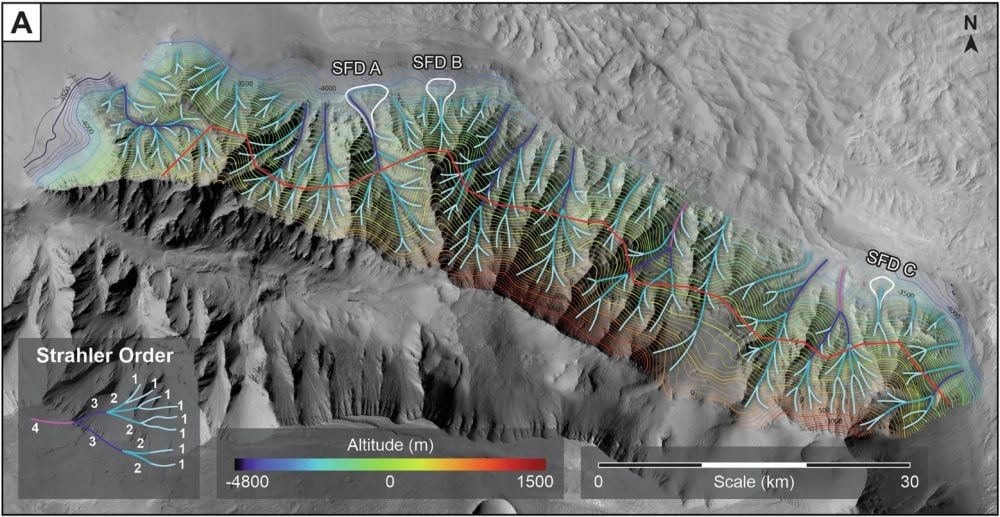
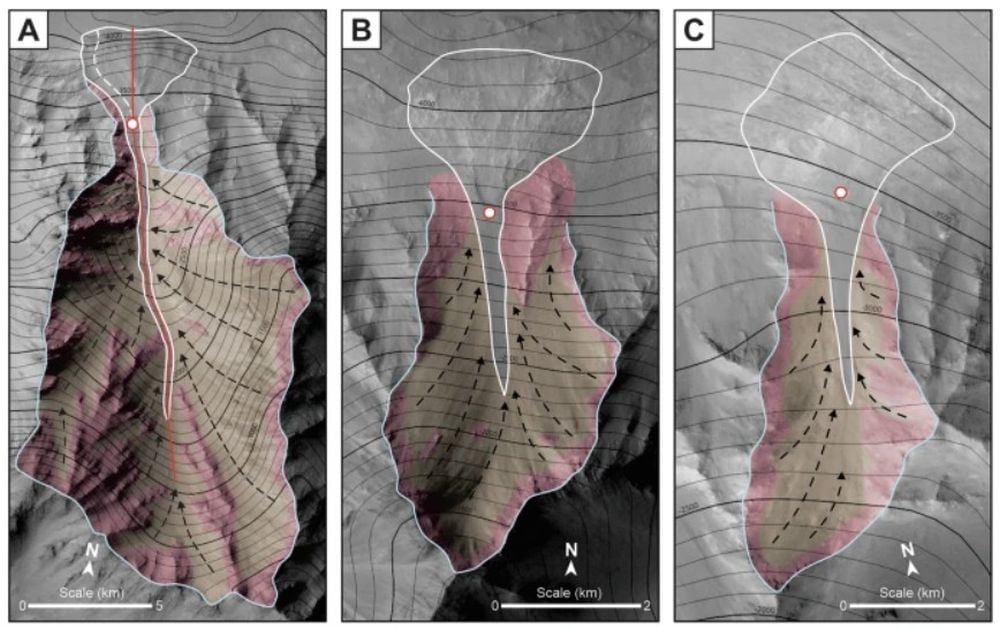
This image shows tributary channels identified in the northward facing promontory of the Southeast Coprates Chasma. The Strahler order in the inset box shows the stream size hierarchy. Image Credit: Argadestya et al. 2026

*This image shows tributary channels identified in the northward facing promontory of the Southeast Coprates Chasma. The Strahler order in the inset box shows the stream size hierarchy.

Image Credit: Argadestya et al. 2026*

The SFDs are all at about the same elevation in Valles Marineris, and in previous research on the northern lowlands, an important detail. The bulk of research shows they were deposited between the Late Hesperian period and the Early Amazonian period. The Hesperian spanned from 3.7 billion to 3 billion years ago, and the Amazonian period spans from about 3 billion years ago to the current age. "We consider this as the time with the largest availability of surface water on Mars," the authors write.

Multiple studies have shown that ancient Mars had a massive, perhaps global ocean. This study adds to that weight of evidence by providing clear evidence of ancient coastlines.

"We are not the first to postulate the existence and size of the ocean," Schlunegger said. "However, earlier claims were based on less precise data and partly on indirect arguments. Our reconstruction of the sea level, on the other hand, is based on clear evidence for such a coastline, as we were able to use high-resolution images."
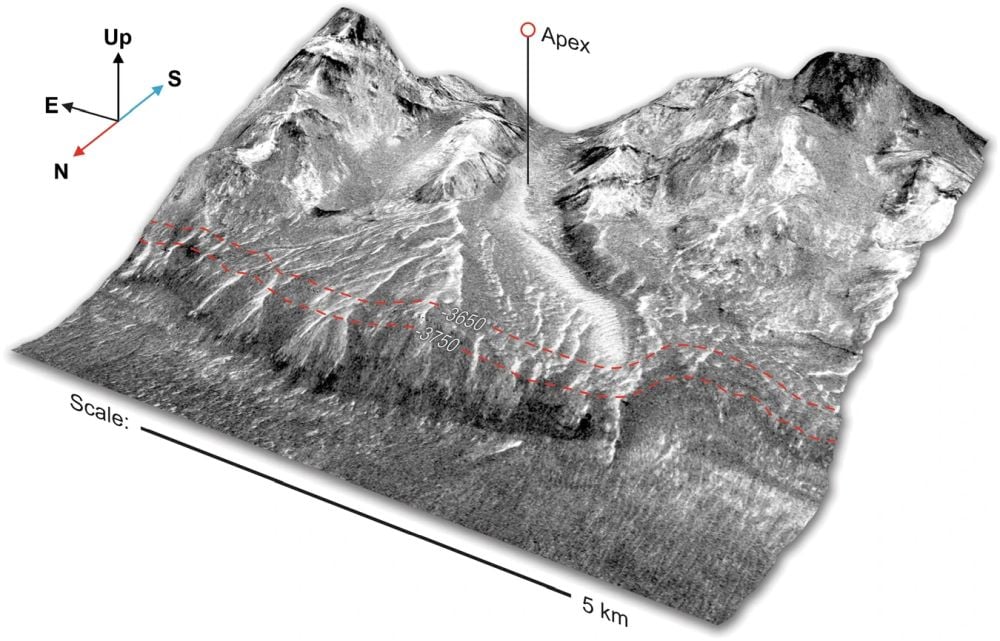
This is an oblique view of a 3D Digital Elevation Model from CaSSIS showing more detail in SFD A. The -3750 and -3650m elevation contours are shown in red dashed lines, indicating the high-water mark of Mars' ancient ocean. Image Credit: Argadestya et al. 2026

*This is an oblique view of a 3D Digital Elevation Model from CaSSIS showing more detail in SFD A. The -3750 and -3650m elevation contours are shown in red dashed lines, indicating the high-water mark of Mars' ancient ocean.

Image Credit: Argadestya et al. 2026*

The three SFDs in Coprates Chasma aren't the only ancient fan deposits on Mars. There are also some in Capri Chasma, Chryse Chaos, and Hydraotes Chaos. This evidence of an ancient paleoshoreline indicates that an ocean reached the same high level from Valles Marineris to the Northern Lowland.

These panels show where an ancient paleoshoreline existed on Mars. (A) shows the westward extension of the inferred paleoshoreline (orange line) identified in the study area (red rectangle) across the Valles Marineris depression into Chryse Chaos, a transitory region between the Southern highlands and the Northern lowlands on Mars. B,C, and D, show more detail for the three SFDs in the study and how they fit in. Image Credit: Argadestya et al. 2026

*These panels show where an ancient paleoshoreline existed on Mars. (A) shows the westward extension of the inferred paleoshoreline (orange line) identified in the study area (red rectangle) across the Valles Marineris depression into Chryse Chaos, a transitory region between the Southern highlands and the Northern lowlands on Mars. B,C, and D, show more detail for the three SFDs in the study and how they fit in.

Image Credit: Argadestya et al. 2026*

"With our study, we were able to provide evidence for the deepest and largest former ocean on Mars to date – an ocean that stretched across the northern hemisphere of the planet," said Argadestya.

"In conclusion, the SFDs at the foothills of the Promontory of Southeast Coprates Chasma reflects a period (boundary between the Late Hesperian and the Early Amazonian) with the highest water availability on Mars," the authors write. "We thus consider that our findings on the environmental stage during the Late Hesperian to Early Amazonian will have implications for research on the evidence for potential life on Mars."

RELATED VIDEOS
{ https://www.universetoday.com/ }

Hoe vind je dit bericht?
Geschreven door peter om 23:58 Stuur door

Top 7 “Drone Killers” Currently in Development

Top 7 “Drone Killers” Currently in Development

In the 21st century battlefield, unmanned aerial vehicles (UAVs) are increasingly part of the enemy arsenal. “Drone Killers” have become significantly more important, as these drone platforms move beyond surveillance and into lethal systems. These remote-controlled vehicles can tasked as strike craft and bombers, deployed in “swarms,” operating as a wingman for human-piloted fighters, or operating autonomously using AI.

This expanding range of abilities makes UAVs a growing threat to allied military forces. As Acting Secretary of Defense, Chris Miller told The Debrief in January, “Small unmanned aircraft systems (sUAS) were previously viewed as hobbyist toys, but today it is evident that the potential for hazards or threats has the ability to impact the Joint Force.”https://thedebrief.org/pentagon-releases-new-counter-drone-strategy/

Not surprisingly, this has led to a new wave of counter-drone tools and strategies, many of which are at the very edge of current technology. Some are already being tested, and others are still on the drawing board, but all seem more like science fiction than reality. However, at The Debrief, we focus not only on the cutting edge of science and tech but also on the future. Therefore, here are: 

The Top 7 “Drone Killers” Currently In Development

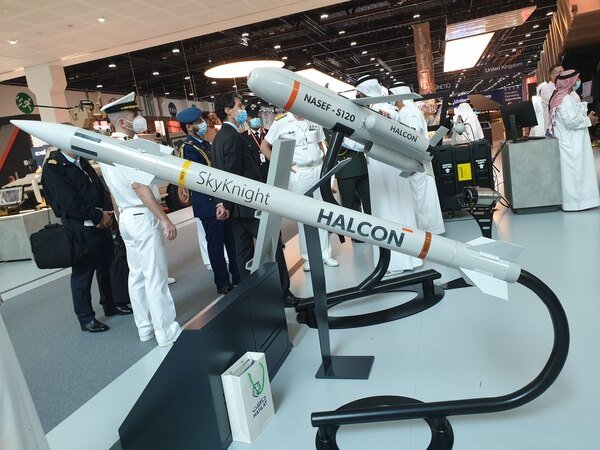
Ground to Air Missile: SkyKnight 

At the 2021 International Defense Expo (IDEX), Emirati defense company Halcon unveiled their radar-equipped anti-aircraft missile SkyKnight. Integrated into the German Oerlikon air defense system, made by Rheinmetall, SkyKnight is specifically designed to neutralize a whole host of airborne threats, including UAVs. As Defense News previously reported, “the counter-drone system was designed to mitigate modern threats such as rotary-wing aircraft, UAVs, rockets, artillery, mortars and other fixed-wing aircraft at a range of up to 10 kilometers.”

“The system is able to detect, track and neutralize small-sized threats,” Halcon CEO Saeed Al Mansoori told Defense News in that report. “It is not a joint venture, we are not participating in the technology; they already have air defense systems, and we already have our missile and canister…We are just integrating the systems together.”

The first such ground-based missile system to be designed and manufactured in the United Arab Emirates, SkyKnight is expected to begin field tests in 2024.

skyknight SkyKnight is a radar-equipped missile made by Emirati defense company Halcon. (Image: Defense News/Agnes Helou)

High Energy Lasers

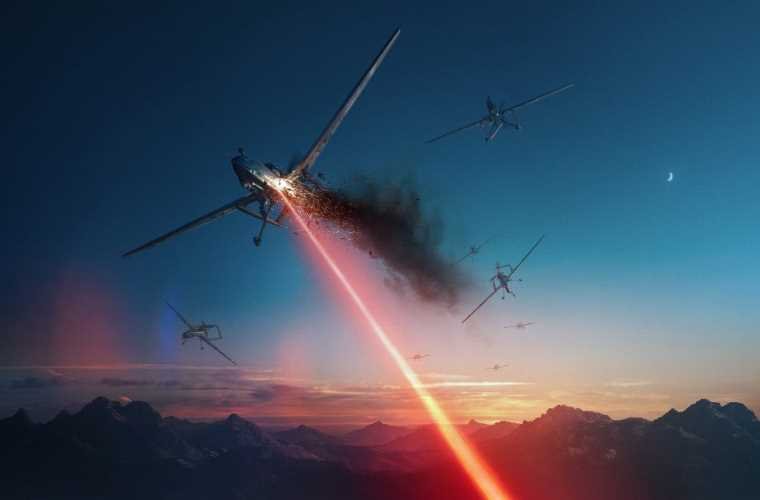
Due to their high level of accuracy and lack of additional munitions, lasers have consistently been developed and tested against several enemy targets, including drones. 

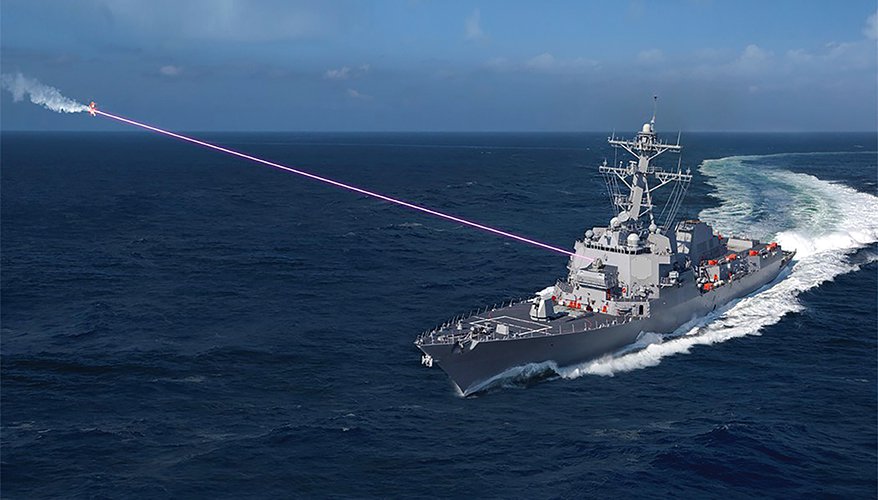
The U.S. Navy has one such system, the Lasers Weapon System (LaWS), already mounted on the USS Ponce and has recently deployed the new Optical Dazzling Interdictor, Navy (ODIN) on the USS Dewey. As The Debrief reported at the time, that system can interfere with unmanned aerial system sensors. In that same report, we noted the Navy also plans to deploy Lockheed Martin’s HELIOS system aboard the USS Preble this year.

Not to be outdone, both the U.S. Air Force and the Army are developing drone killer laser systems of their own.

For the USAF, Raytheon’s High-Energy Laser Weapon System (HELWS) is already undergoing field testing to identify and neutralize enemy drones. As Jeff Newson, the company’s director for high-energy laser systems, explained to Defense News, “Raytheon has updated the tracking algorithms and the advanced electro-optical targeting system that helps to identify the drones, with a limitless magazine. The cost per shot is what two people can pay for a cup of coffee, hence the advantages for customers who are going to target very small, cheap drones.”

The Army’s system is an even more complicated, six-layer concept, composed of the Ballistic, Low-Altitude Drone Engagement (BLADE), the Multi-Mission High-Energy Laser (MMHEL), the Next-Generation Fires Radar; Maneuver Air Defense Technology (MADT), the High-Energy Laser Tactical Vehicle Demonstrator (HEL-TVD), and the LowCost Extended Range Air Defense (LOWER AD) systems. Like the Navy and Air Force systems, this array is designed to track, attack, and neutralize airborne targets, primarily missiles and drones, using the power of various types of lasers.

helios-system.jpg

An artist’s rendering of the High Energy Laser with Integrated Optical-dazzler and Surveillance (HELIOS) system at work. (Image: Lockheed Martin)

Hunter-Killer Drones

In 2017, the Air Force Research Lab unveiled a pair of airborne systems (or “spirals” in AFRL parlance) designed to counter enemy drones.

According to a report by Defense Daily, the first spiral, which is the size of a microwave oven and has already been deployed overseas for months, “is designed to precisely disrupt radiofrequency communications between a drone and its operator and push the drone away from protected areas.” 

That same report notes that unlike current jamming systems that can inadvertently interfere with friendly communications, this system is more targeted.

The AFRL also unveiled a second system that is essentially a “hunter-killer” drone with a net attached. The system was tested back in 2016 at Robins Air Force Base, where it successfully captured a Phantom 3 drone in mid-flight. Both systems work on entirely different concepts but support the notion that one method for countering enemy drones is deploying drones explicitly designed for that purpose.

A hunter-killer drone with attached net, part of the unmanned aerial system solution developed by the team from Robins Air Force Base, Ga., captures a Phantom 3 drone in mid-flight during the 2016 Air Force Research Laboratory Commander’s Challenge at the Nevada National Security Site, Las Vegas. (Image: U.S. Air Force photo by Wesley Farnsworth)

Smart Weapons: SMASH

Along with lasers, jammers, and drone-capturing drones, systems designed to simply shoot the UAVs out of the sky are also under development. One such pair of systems, the SMASH 2000 Plus Fire Control System and the SMASH Hopper Light Remote-Controlled Weapon Station, was unveiled at IDEX 2021 by Israeli company Smart Shooter.

As The Debrief reported at the time, the company brochure says, “the SMASH 2000 Plus is a sophisticated electro-optical target acquisition and tracking system designed to be attached to small-arms weapons systems. Using advanced proprietary algorithms and sophisticated image processing software, the SMASH 2000 Plus dramatically increases a shooter’s ability to hit their intended target in all-weather and lighting conditions. Based on the original SMASH 2000 system, the SMASH 2000 plus offers an additional advanced counter-unmanned aerial systems mode, giving individual ground troops an accurate hard-kill capability to counter emerging drone threats.”

The company crystalized this point further, stating, “With a unique ‘One Shot – One Hit’ capability, SMASH allows the operator to quickly and effectively neutralize any ground or airborne target, manned or unmanned.”

_Smart Shooter SMASH 2000 Plus and Hopper Light new defense technologies

(Image Source: Smart Shooter)

Microwaves: The Power of THOR

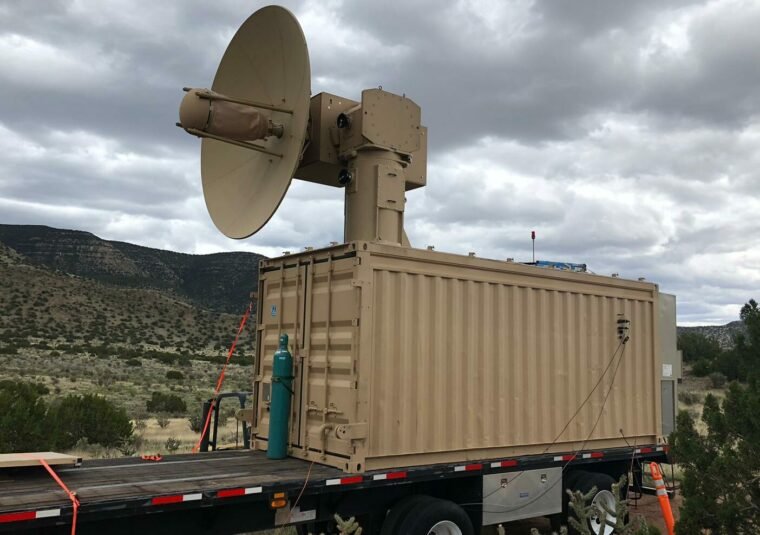
Also on the docket for testing in 2024, a weapon named after the Norse God of Thunder brings an entirely different approach to downing an attacking drone: microwaves. The Tactical High Power Operational Responder (THOR), built at Kirtland Air Force Base, offers a benefit other systems can’t. Specifically, it can spread a wide field of electromagnetic radiation to counter several targets at once.

In an interview with the Albuquerque Journal, Army Lt. General L. Neil Thurgood said, “The Army’s directed-energy capabilities will need to provide a layered defense with multiple ways to defeat incoming threats. High-energy lasers (only) kill one target at a time, and high-powered microwaves can kill groups or swarms, which is why we are pursuing a combination of both technologies.”

Working with a budget of $15 million, the Air Force Research Lab’s Directed Energy Directorate built THOR with help from Verus Research, an Albuquerque-based engineering firm, BAE Systems, and Leidos.

As far as a timeline and plans for actual deployment of this drone killer system, AFRL’s Directed Energy Directorate head Kelly Hammett told the Albuquerque Journal. “They intend to procure enough systems for a platoon unit in 2024 to do experimentation with a mix of weapons. They will put microwaves and lasers together in a single unit to assess how to deploy it all.”

THOR

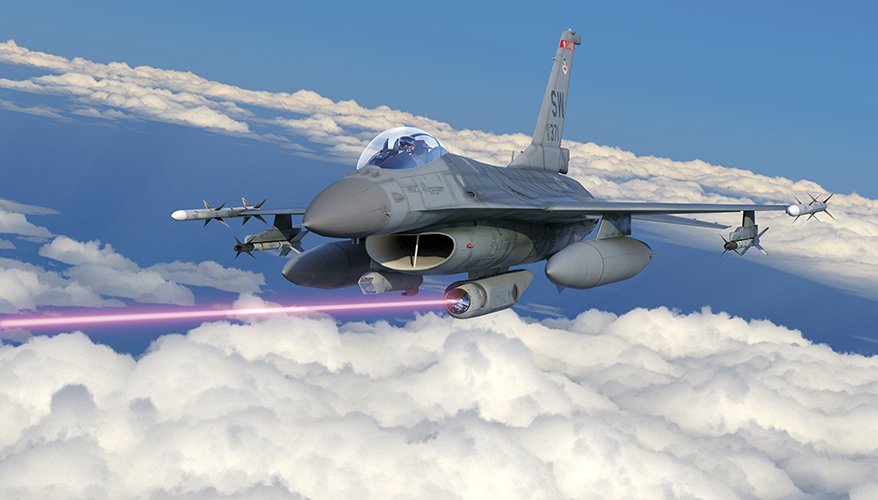
Fighter-mounted lasers

Unlike ground-based or even ship-based laser systems, lasers mounted directly on aircraft have long been a dream for military engineers. Now, Lockheed Martin is setting a 2025 timeline for reaching that goal.

“We’re committing to putting a laser pod equipped with a high-energy laser in the air within five years,” Mark Stephen, business development lead for strategic technology development at Lockheed Martin’s missiles and fire control division told National Defense Magazine back in 2020.

A crucial part of the Air Force Research Laboratory’s Self-Protect High Energy Laser Demonstrator, or SHiELD, program, Lockheed Martin indicated that the system results from many years of research and development. “The beam director is the optical system that puts the high-energy light on the target and keeps it there with enough precision to defeat the threat. We spent several years developing producible, low [size, weight, and power] and low-cost tactical beam directors in-house.”

Because the lasers are pod mounted, they are likely poor fits for Stealth aircraft like the F-22 or F-35 Joint Strike Fighter, and therefore will most likely be integrated into larger aircraft like F-15s, F-16s, or even the A-10c Warthog.

Air Force Research Laboratory’s Self-Protect High Energy Laser Demonstrator Rendering of a Lockheed Martin producible tactical airborne laser weapon. Image: Lockheed Martin

Super Laser

If tactical lasers, killer drones, and microwave jammers aren’t sci-fi enough, the Army recently posted a request for proposals for a Tactical Ultrashort Pulsed Laser. 

Unlike conventional continuous wave (CW) laser systems which are mostly designed to interfere with an incoming drone or missile’s optics, the ultrashort pulsed laser (USPL) would pack enough energy into a short blast to completely disable an attacker’s electronic systems or even blow the thing out of the sky.

“USPL systems are able to neutralize threats via three distinct mechanisms,” the Army’s posting states, “ablation of material from the target, the blinding of sensors through broadband supercontinuum generation in the air, and the generation of a localized electronic interference used to overload a threat’s internal electronics.”

To accomplish this goal, the proposal indicates that the laser must operate in the incredibly powerful terawatt range (current systems only operate in the kilowatt range) and be able to fire all of that energy in a shockingly brief 200 femto-second pulse. For comparison, a terawatt is a trillion watts, as opposed to a kilowatt which is a comparatively paltry 1,000 watts, and a femto-second is essentially a quadrillionth of a second.

Packing that much power into such a short burst means this laser system will be three orders of magnitude more powerful than even the most powerful systems currently in use, and can offer an ultra-precise, ultra-potent option for forces hoping to counter the increasing threat from UAVs.

Outlook: How To Shoot Down A Drone?

Although most of the advanced weapons systems listed above are still in development, even those platforms appear only a few years away from real-world implementation. Until then, UAVs will continue to see an increase in use, as they offer a low-cost option for militaries and other military-style organizations worldwide. Fortunately for the U.S. and its allies, the growing list of “drone killers” now in development appears to offer a veritable array of tactical countermeasures to even the most sophisticated 21st century UAVs.

{ https://thedebrief.org/category/science/ }

Hoe vind je dit bericht?
Geschreven door peter om 23:10 Stuur door

Cryptozoology: Hunting Bigfoot and Other Mysterious Beasts

Cryptozoology: Hunting Bigfoot and Other Mysterious Beasts

Bernard Heuvelmans a founder of cryptozoology

Belgian scientist Bernard Heuvelmans is considered to be the father of cryptozoology, the study of creatures rumored to exist.  lain BENAINOUS/Gamma-Rapho via Getty Images

Cryptozoology is the study of creatures that are rumored to exist, but whose existence has not been substantiated using the scientific method. These include new species and legendary beasts such as Bigfoot and the Loch Ness monster, as well as other lesser-known animals and entities around the world. A few of these creatures may have a basis in reality, while others seemingly do not.

Either way, the aim of cryptozoologists is to prove that these entities really exist in the wild, and some people dedicate years of their lives to these quests. In doing so, they find biologists and other established scientific types scoffing at them. While some cryptozoologists may apply critical thinking principles to their investigations, the field itself often draws skepticism from a vast majority of those in mainstream science.

Because cryptozoology pursues creatures based mostly on rumor or folklore, it's considered a pseudoscience. That is, it's not regarded as "real" science because it doesn't use the scientific method as part of its investigations. Instead, cryptozoologists rely on historical documents, eyewitness accounts and their own observations in their attempts to prove what often seems unprovable. As you can probably guess, their efforts frequently come up empty-handed.

The Founders of Cryptozoology

As a discipline, cryptozoology has its roots in the 1950s, thanks largely to Belgian scientist Bernard Heuvelmans and Scottish biologist and writer Ivan T. Sanderson. Both men had formal scientific degrees but also found themselves fascinated with rare creatures and paranormal subjects. Sanderson even claimed to have been personally attacked by an Olitiau, a legendary giant bat with a 12-foot (3.6-meter) wingspan that supposedly exists somewhere in Central Africa.

Likewise, Heuvelmans was always hot on the trail of mysterious animals. His 1958 book, "On the Track of Unknown Animals," is often regarded as a watershed moment for the cryptozoology subculture. Surely, Heuvelmans speculated in his tome, there could be pockets of dinosaurs still hidden in remote parts of the world. It was just a matter of finding them.

Both researchers drew minor fame from their various investigations, as well as scorn from mainstream scientists who were perturbed about its reliance on anecdotal evidence and eyewitness testimony (which can be unreliable). And although they never officially found any of their fantastical creatures, their pursuits live on in the adventure of many other wannabe cryptozoologists. Looking for Bigfoot? Don't kid yourself — you're not the only one.

13 Famous Cryptids of Folklore

Mystery animals have captured the imagination and curiosity of people worldwide for centuries. The potential existence of such creatures in the modern world continues to inspire passionate debates as well as new tales and legends.

1. Marozi

With a maned lion's face fronting a jaguar-like body, the Marozi (also known as the spotted lion) was reported several times in the 1930s in Kenya's mountains but hasn't been mentioned much since.

The Natural History Museum in Great Britain is said to be in possession of the spotted skin of a marozi, but many experts think the specimen represents a jaguar that bred with common, spotless plains lions.

2. Kamchatka Giant Bear

Swedish zoologist Sten Bergman, working in Russia's Kamchatka Peninsula in the 1920s, discovered a paw print that measured a full square foot, suggesting a bear of remarkable size.

Similar sightings tell of an ursine almost twice the size of a typical North American grizzly bear, measuring 6 feet at the shoulder. Some Russian biologists believe there is a small group of Kamchatka Giant Bears that survived the most recent ice age.

3. Bigfoot

Bigfoot, also known as Sasquatch, is a big, hairy, two-legged beast that arose in North America, and first received the "Bigfoot" nickname in California in the late 1950s. What started with a flurry of local stories turned into a full-fledged media sensation and ultimately a legend that's now known around the world.

Many people claim to have caught glimpses of Bigfoot, and the Patterson-Gimlin film, which supposedly shows one creature fleeing through the forest, is probably the most iconic bit of evidence in the entire library of 20th-century cryptozoology.

4. Yeti, aka Abominable Snowman

The Himalayan Mountains are reportedly home to the Yeti (or in Western culture, the Abominable Snowman), a bear-like or ape-like creature that's been part of Eastern lore for centuries. Covered with long hair and built for rugged, cold environments, the Yeti is as evasive and mysterious as Bigfoot.

5. Skunk Ape

Bigfoot's smelly Southern cousin has been reported a number of times in Florida's swamps, most convincingly in 2000 by a couple who took an excellent snapshot of what looked to be a 6-foot-6-inch (2-meter) orangutan. The picture didn't capture its scent, of course, but the couple attested to its atrocity.

6. Lizard Man

This scaly green hominid, the resident mysterious beast of Escape Ore Swamp in South Carolina, has long been at the center of local lore. While many consider the creature a hoax, others swear they've encountered it face to face.

Lizard Man has had several brushes with fame: A local radio station once offered $1 million for a live capture, and in 1988, a South Carolina Republican leader labeled Lizard Man a staunch Democrat.

7. Jersey Devil

According to most reports, New Jersey's cryptozoological curiosity has wings, a horse's face, a pig's hooves, and a kangaroo's body. The legend of the Jersey Devil was born in the 1700s — based on a tale of a cursed baby-turned-demon that flew off into the night — and boomed in the early 1900s, with people seeing it all over the state.

To this day, people report Jersey Devil sightings, mostly in the spooky Pine Barrens of southern New Jersey. While some locals think the creature is truly a supernatural beast, others say it's probably a misidentified sandhill crane.

8. El Chupacabra

<source "="" dataChupacabra drawing in black and whiteEl Chupacabra differs in appearance according to sightings, but some characteristics — like the spiny back and prominent fangs — are consistent.

Latin America's legendary "goat sucker" is a fanged and clawed beast that performs vampirism on livestock.

The first accounts of its victims — often goats, chickens, horses, cows and even domestic pets — were reported in the 1950s by farmers who found animals drained of blood, with several large puncture marks.

Some who have allegedly sighted the chupacabra describe it as a short, kangaroo-like monster with oversize teeth and an oval head, but others liken it to a large reptile or bat.

9. Kraken

The Kraken is a legendary monstrous creature in the deep ocean waters near Scandinavian regions. It's described as an enormous, octopus-like animal that's big enough to attack ships and frighten sailors.

This one might have basis in reality, thanks to the existence of giant squids (a former cryptid) that can grow up to 50 feet (15 meters) long.

10. Loch Ness Monster

Also known as Nessie, the Loch Ness monster is another world-famous creature that's appeared in countless headlines and movies. It's an ancient legend, too, appearing in historical records dating to 1,500 years ago. It's supposedly a large marine animal with a slender neck that lives in Loch Ness, a 23-mile (37-kilometer)- long lake in Scotland.

Nearly 800 feet (244 meters) deep in some places, the lake (the largest body of fresh water in the United Kingdom) would make a sufficient hiding place for a shy creature, but aside from a few famous (and blurry) photographs and unreliable eyewitness accounts, there's no proof that Nessie exists. A 2019 Washington Post article says scientists now think Nessie might have been a giant eel.

11. Tahoe Tessie

Deep in Lake Tahoe on the California-Nevada border lurks a storied sea creature that's the Sierra Nevada cousin of the Loch Ness Monster. It's alleged that after a submarine expedition, undersea explorer Jacques Cousteau said, "The world isn't ready for what's down there." (He could, of course, have been referring to anything odd.)

Popular descriptions portray Tessie as either a freshwater relative of a whale or a 20-foot (6-meter) sea serpent with a humped back.

12. Mogollon Monster

In eastern Arizona there's a long, rocky ridge, called the Mogollon Rim, that runs deep through a thick forest. That's the reported home of the Mogollon Monster, which is described as a tall, two-legged monster with thick hair and a rancid stench.

Although amateur hunters have produced various bits of so-called evidence over the past century, there's no reason to think this famous cryptid really exists.

13. Champy

Like Tessie, Champy is named for the body of water in which it purportedly lurks — in this case, Lake Champlain, a body of water on the New York-Vermont border.

Several hundred recorded sightings typically describe the beast as a serpentlike black sea monster with scales, measuring about 50 feet (15 meters) in length. One investigative group believes the oft-sighted Champy is actually a surviving plesiosaur, a dinosaur that died off over 60 million years ago.

6 Cryptids That Mainstream Science Confirmed as Real

From the depths of the ocean to the heart of the rainforest, the realm of cryptids has witnessed remarkable transformations as real creatures have emerged from the shadows of legend to become validated and recognized as real species by mainstream scientists.

1. Giant Squids

Once the stuff of legends and maritime lore, giant squids were long considered mythical monsters. However, scientific exploration and advancements in deep-sea technology led to the first documented encounter with a live giant squid in 2004.

Subsequent expeditions have since captured more sightings and even footage of these elusive cephalopods, shedding light on their mysterious lives.

2. Coelacanth

The term "cryptid" doesn't only refer to mythical creatures with magical properties. It also describes creatures that were thought to have gone extinct but have reappeared, like the coelacanth, which was rediscovered in 1938 after disappearing in the Cretaceous period of the dinosaur age.

This primitive fish, with its lobed fins and unique physiology, challenged the scientific community's understanding of evolution and the fossil record.

3. Okapi

Native to the dense rainforests of the Democratic Republic of Congo, the Okapi remained unknown to the Western world until the early 20th century. It had been dismissed as a myth until a British explorer encountered the elusive creature in 1901, revealing a fascinating relative of the giraffe.

4. Komodo Dragons

Legends of monstrous dragons dwelling on remote Indonesian islands were validated with the discovery of the Komodo dragon. These formidable reptiles, known for their size and venomous bite, were officially recognized as a distinct species in the early 20th century.

5. Mountain Gorillas

Once considered a myth, the mountain gorilla was discovered by Western scientists in the early 20th century. Their remote habitats in the mountains of Central Africa and the elusive nature of these very real animals had kept them hidden from scientific exploration until their existence was confirmed.

6. Goblin Shark

Resembling a creature from nightmares, the goblin shark was known only through fragmented reports until its first live specimen was captured in 1898. This deep-sea shark with its protruding jaws and eerie appearance has since been studied and recognized as a real species.

  • Portions of this article were adapted from "The Book of Incredible Information," published by West Side Publishing, a division of Publications International, Ltd. HowStuffWorks earns a small affiliate commission when you purchase through links on our site.
  • This article was updated in conjunction with AI technology, then fact-checked and edited by a HowStuffWorks editor.

RELATED VIDEOS


{ https://science.howstuffworks.com/ }

Hoe vind je dit bericht?
Geschreven door peter om 22:29 Stuur door

China Builds Wild Gravity Machine

China Builds Wild Gravity Machine

It's so powerful, it can compress space and time.

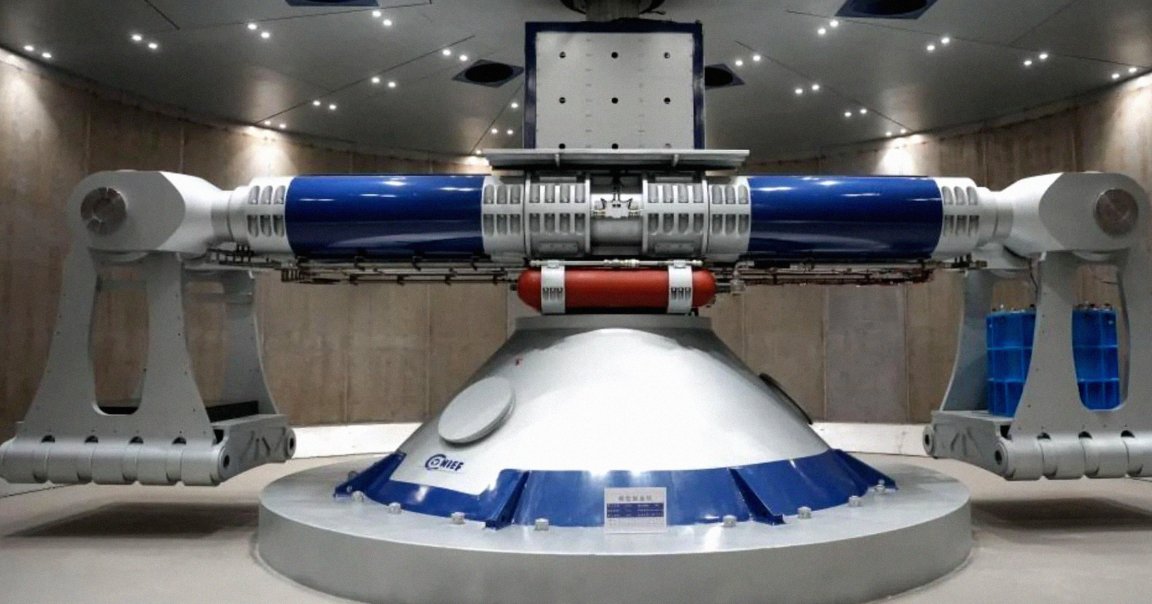
China has unveiled a powerful "hypergravity machine" that can generate forces almost two thousand times stronger than Earth's gravity.

CHIEF

China has unveiled an extremely powerful “hypergravity machine” that can generate forces almost two thousand times stronger than Earth’s regular gravity.

The futuristic-looking machine, called CHIEF1900, was constructed at China’s Centrifugal Hypergravity and Interdisciplinary Experiment Facility (CHIEF) at Zheijang University in Eastern China, and allows researchers to study how extreme forces affect various materials, plants, cells, or other structures, as the South China Morning Post reports.

It can effectively compress space and time, allowing researchers to recreate the conditions during catastrophic events, from dam failures to earthquakes. For instance, it can analyze the structural stability of an almost 1,000-feet-tall dam by spinning a ten-foot model at 100 Gs, meaning 100 times the Earth’s regular gravity.

It could also be used to study the resonance frequencies of high-speed rail tracks, or how pollutants seep into soil over thousands of years.

hqdefault.jpg
China Debuts World's Mightiest Centrifuge, Unleashing Ultra-Intense GravityThe machine officially dethroned its predecessor, CHIEF1300, which became the world’s most powerful centrifuge a mere four months ago.

The previous record holder was the centrifuge at the Army Corps of Engineers in Vicksburg, Mississippi, which can generate 1,200 g-tonnes, a metric that combines gravitational acceleration (G) and a mass measured in tonnes (2,200 pounds), of force.

To generate these forces, CHIEF1900 spins a payload inside a beefy centrifuge, not unlike those being used by the US Air Force to simulate high G-forces during pilot training.

Except that the forces are orders of magnitude stronger. It can generate 1,900 g-tonnes of force, or 1,900 times the Earth’s gravity. To put that into perspective, a washing machine only reaches about two g-tonnes.

Engineers had to overcome some significant challenges in getting CHIEF1900 up to that mighty force. For one, spinning at such high speeds generates an enormous amount of heat. To dissipate all of it, the engineers came up with a vacuum-based temperature control system, as the SCMP reports, which uses coolant and forced-air ventilation to keep things cool enough.

“We aim to create experimental environments that span milliseconds to tens of thousands of years, and atomic to [kilometre] scales — under normal or extreme conditions of temperature and pressure,” Zhejiang University professor and CHIEF’s chief scientist Chen Yunmin told the SCMP.

“It gives us the chance to discover entirely new phenomena or theories,” he added.

More on centrifuges: 

{https://futurism.com/category/science-energy }

Hoe vind je dit bericht?
Geschreven door peter om 21:26 Stuur door

Asteroid Behaving Strangely

Asteroid Behaving Strangely

Bizarre.

An international team of astronomers has discovered an asteroid that spins so fast, it should've torn itself apart.

NSF–DOE Vera C. Rubin Observatory/NOIRLab/SLAC/AURA/P. Marenfeld

Using early data from the Vera C. Rubin Observatory, which is set to kick off full operations later this spring, an international team of astronomers has discovered an asteroid that spins so fast, it should’ve torn itself apart.

The unusual cosmic lump — dubbed 2025 MN45, 2,300 feet in diameter and located in the Main Asteroid Belt between the orbits of Mars and Jupiter — completes a full rotation every minute and 53 seconds, as detailed in a new paper published in The Astrophysical Journal Letters.

While that may not sound like all that fast at first blush, it’s an astonishing feat considering the object’s sheer bulk. The centrifugal forces involved should’ve already overcome its estimated structural integrity, the researchers found, especially if it were a “rubble pile” made up of smaller rocks, like many other asteroids in the Main Belt.

It’s an especially surprising finding, considering that most distant asteroids were thought to be spinning at much slower rates, as Science Alert points out.

“For objects in the main asteroid belt, the fast-rotation limit to avoid being fragmented is 2.2 hours; asteroids spinning faster than this must be structurally strong to remain intact,” the paper reads. “The faster an asteroid spins above this limit, and the larger its size, the stronger the material it must be made from.”

The team used data collected during the Rubin Observatory’s commissioning phase in the spring of last year to discover 2025 MN45, one of three “ultrafast rotators” that complete a full rotation in less than five minutes. They also found 16 “superfast” rotators with periods between 13 minutes and 2.2 hours. All 19 are larger in diameter than the length of an American football field.

“Clearly, this asteroid must be made of material that has very high strength in order to keep it in one piece as it spins so rapidly,” said Sarah Greenstreet, study lead and assistant astronomer at the National Science Foundation National Optical-Infrared Astronomy Research Laboratory (NOIRLab), in a statement. “We calculate that it would need a cohesive strength similar to that of solid rock.”

“This is somewhat surprising since most asteroids are believed to be what we call ‘rubble pile’ asteroids, which means they are made of many, many small pieces of rock and debris that coalesced under gravity during Solar System formation or subsequent collisions,” she added.

Asteroids beyond the orbit of Mars are very faint and extremely hard to spot. But thanks to the Rubin Observatory’s extremely light-sensitive sensors, the team was able to discover the most distant fast rotators ever spotted.

It’s the first peer-reviewed study that’s based on data from the observatory, and a sure sign that many more discoveries from it are still to come.

“As this study demonstrates, even in early commissioning, Rubin is successfully allowing us to study a population of relatively small, very-rapidly-rotating main-belt asteroids that hadn’t been reachable before,” Greenstreet said.

More on asteroids: 

RELATED

{ https://futurism.com/category/space }

Hoe vind je dit bericht?
Geschreven door peter om 21:15 Stuur door

Prehistoric discoveries beneath a US lake found to be older than Egypt's Great Pyramid

Prehistoric discoveries beneath a US lake found to be older than Egypt's Great Pyramid

A new prehistoric discovery in a Wisconsin lake has revealed the existence of an advanced culture in America during the same time as the ancient Egyptians. 

Researchers unearthed six previously undiscovered canoes from Lake Mendota, including one that archeologists said was approximately 5,200 years old - older than the Great Pyramid of Giza, which is at least 4,500 years old.

Overall, 16 ancient 'dugout' boats have been found during excavations of the lake since 2021, all carved from individual tree trunks using fire and simple tools like stones and shells.

Testing the wood to see how much of a naturally radioactive element has decayed over time revealed that the canoes were built between 1300AD and 3000BC.

The discovery suggests a previously unknown civilization thriving in the area for thousands of years, engaging in trade, fishing and possibly spiritual journeys along a sophisticated travel network throughout the present-day Midwest.

Researchers from the Wisconsin Historical Society (WHS) said the new findings rewrite what we know about history in North America, revealing that humans on the continent lived and developed into organized communities much earlier than previously thought.

The canoes, found 30 feet below the surface, were found in clusters near natural paths, suggesting the lake was a busy spot for generations.

The oldest boat recovered from Lake Mendota places the ancient ancestors of a group known as the Ho-Chunk on the same timeline as some of the Egyptians in terms of showing how long ago human boat-making skills were developed worldwide. 

The boats in Lake Mendota are known as dugout canoes because each was constructed out of a single tree trunk

The boats in Lake Mendota are known as dugout canoes because each was constructed out of a single tree trunk

A new excavation of the Wisconsin lake discovered six previously unseen canoes, including one that is believed to be older than the Egyptian pyramids

A new excavation of the Wisconsin lake discovered six previously unseen canoes, including one that is believed to be older than the Egyptian pyramids

So far, only two of the 16 canoes located in Lake Mendota have been taken out of the water and are nearing the end of a multi-year preservation process, including a 14-foot-long boat that's approximately 3,000 years old. 

These ancient dugout vessels were mostly made from tough hardwoods such as red and white oak, including the oldest, dating back to the time of the Egyptians, and were carved from the trunk of a red oak.

The WHS team noted that using oak was unusual because red oak typically absorbs water through the tree's open pores, which could make boats heavier or less buoyant.

However, it's believed their mysterious builders may have prepared trees to form natural blockages, called tyloses, in the wood that seal it against water, rot and improve floating.

Archaeologists suspected that the native people of the area selected stressed or damaged trees, or intentionally wounded them while growing, to produce these more resistant tree trunks. 

Maritime archaeologist Tamara Thomsen said: 'Archaeology is kind of like putting together pieces of a puzzle, and the more pieces you can find, the better you can start to form a picture of what was going on and why during a period of history.'

'We can't go back in time to get answers to our questions, but we can examine the available data alongside knowledge from First Nations and cultural history to form theories to answer our questions.'

The canoes were found with rocks meticulously placed on top, while below the surface, which experts speculated was done to ensure the boats did not warp during the winter months.

The discovery of ancient boats in Wisconsin has rewritten the timeline of sophisticated civilizations living in North America

The discovery of ancient boats in Wisconsin has rewritten the timeline of sophisticated civilizations living in North America

Archeologists have pulled two of the 16 canoes from the lake and are working on preserving them for a future museum exhibition

Archeologists have pulled two of the 16 canoes from the lake and are working on preserving them for a future museum exhibition

Archaeologists have been investigating Lake Mendota since 2021

Archaeologists have been investigating Lake Mendota since 2021 

article image

While the Ho-Chunk tribe once lived in the area surrounding Lake Mendota, the Paleo-Indian people were the earliest inhabitants, arriving around 12,000 years ago. 

The Ho-Chunk tribe migrated there no earlier than 800AD.

This discovery of ancient canoes in Lake Mendota has been deeply significant to the Ho-Chunk people because it proved their ancestors lived in this region for thousands of years, strengthening their ongoing cultural and spiritual connection to the waters and lands.

The Ho-Chunk view the nearby Lake Wingra, which this ancient community likely traveled across by canoe, as holding profound spiritual importance, with one of its springs seen as a sacred gateway to another realm.

Dr Amy Rosebrough, state archaeologist for WHS, said: 'One of its springs, with its white clay bottom, is viewed as a portal to the spirit world. For generations, the Ho-Chunk have honored this place through ceremonies of remembrance.' 

RELATED VIDEOS

{ https://www.dailymail.co.uk/sciencetech/index.html }

Hoe vind je dit bericht?
Geschreven door peter om 21:02 Stuur door

NASA just switched on a giant solar engine, and it’s headed for the moon

NASA just switched on a giant solar engine, and it’s headed for the moon

Story by Kouceila Rekik
Credit: NASA | The Daily Galaxy --Great Discoveries Channel
Credit: NASA | The Daily Galaxy --Great Discoveries Channel© Daily Galaxy US

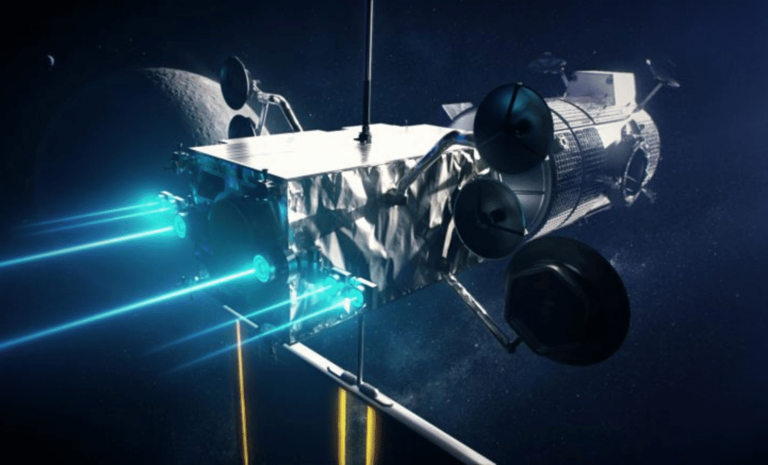
The Gateway, NASA’s upcoming lunar space station, is one step closer to reality as engineers have successfully powered on its solar electric propulsion system, a spacecraft engine designed to orbit and maneuver around the Moon. This achievement marks a major milestone in NASA’s Artemis program, which aims to establish a sustainable human presence on the lunar surface and prepare for future missions to Mars.

Building The Power And Propulsion Element

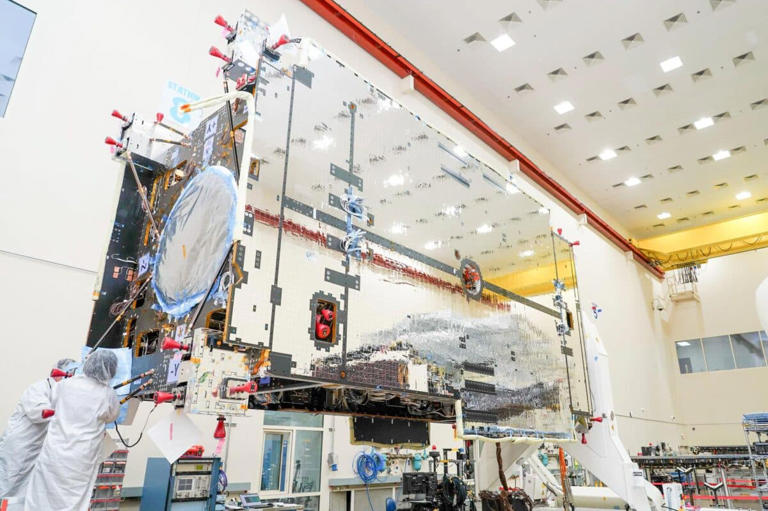
At the heart of the Gateway lies the Power and Propulsion Element (PPE), developed under the supervision of NASA’s Glenn Research Center in Cleveland, Ohio. Construction and assembly are led by Lanteris Space Systems in Palo Alto, California, where teams have integrated the spacecraft’s main electrical system within protective panels. This ensures the hardware can withstand the harsh environment of deep space.

Once fully operational, the PPE will generate up to 60 kilowatts of electricity,enough to supply power for communications, navigation, and orbital adjustments. The engine’s advanced solar electric propulsion allows for continuous, efficient thrust powered by sunlight, offering an innovative alternative to traditional chemical propulsion.

The system’s propulsion capability is built around three 12-kilowatt thrusters developed by L3Harris and four 6-kilowatt BHT-6000 thrusters by Busek. Together, these thrusters provide the necessary maneuverability to maintain the Gateway’s orbit and reposition it as needed for lunar missions. Redwire, another NASA partner, is responsible for the roll-out solar arrays, lightweight, flexible panels that convert sunlight into electrical energy.

Jsc2025e087964~large
© Daily Galaxy US

This hardware will power not only the Gateway’s core functions but also its visiting spacecraft and future science payloads, forming the energetic backbone of NASA’s next-generation lunar operations.

The Gateway’s Role In NASA’s Artemis Program

The Gateway is a cornerstone of NASA’s Artemis program, which aims to return astronauts to the lunar surface for the first time since Apollo 17. Unlike the International Space Station, the Gateway will not be permanently crewed. Instead, it will serve as a modular outpost, orbiting the Moon in a highly stable near-rectilinear halo orbit (NRHO).

This orbit provides ideal access to both the lunar surface and deep space, making it an essential platform for testing life-support systems, radiation protection, and advanced propulsion technologies. Astronauts visiting the Gateway will conduct scientific experiments, prepare landers for surface missions, and evaluate long-duration spaceflight conditions, all critical for future crewed missions to Mars.

NASA envisions Gateway as an international collaboration, involving key contributions from ESA (European Space Agency), JAXA (Japan Aerospace Exploration Agency), and CSA (Canadian Space Agency). Each partner will deliver specialized modules, robotics, and technology to create a truly global platform for exploration.

Engineering A Sustainable Future Beyond Earth

NASA’s decision to rely on solar electric propulsion for the Gateway is both a technological and environmental breakthrough. Unlike conventional rockets, which burn large quantities of fuel in short bursts, this system produces continuous, gentle thrust using electricity derived from sunlight. Over time, it can achieve impressive velocities with minimal resource consumption, an essential feature for long-duration missions far from Earth.

The Gateway will also act as a proving ground for autonomous operations, as it will often function without a human crew onboard. This autonomy will be vital for deep-space missions where communication delays make real-time control impossible. The spacecraft’s design prioritizes efficiency, durability, and adaptability, ensuring it can operate safely and independently in lunar orbit for years at a time.

Through its partnership with Lanteris, L3Harris, Busek, and Redwire, NASA is cultivating a powerful ecosystem of innovation that bridges public and private sectors. These collaborations are essential for building the infrastructure required for humanity’s next leap: establishing a permanent foothold on another world.

Hoe vind je dit bericht?
Geschreven door peter om 20:34 Stuur door

Historical evidence of Jesus found in 9 ancient records

Historical evidence of Jesus found in 9 ancient records

Story by Diana Rose

12 traditions Jesus publicly confronted

©The Queen Zone

Believing in historical figures usually requires a leap of faith, but finding Jesus’ footprints outside the Bible feels like striking gold. I remember my first deep dive into ancient history during college. I wanted to know if this figure actually walked the earth or if he remained a myth constructed by followers. You might feel the same skepticism.

I found that critics and historians from the Roman Empire actually documented his existence. These writers had no reason to promote Christianity. In fact, most of them despised the movement.

Bart Ehrman, a renowned agnostic scholar, states that “Jesus certainly existed” because virtually every competent scholar of antiquity agrees on this point. I find this consensus fascinating because it bridges the gap between theology and history. We see a man named Jesus emerging from the ink of his enemies rather than just his friends. This list breaks down the most compelling non-biblical accounts that place Jesus firmly in the history books.

Tacitus Links Jesus To Pontius Pilate

© Image Credit: Pexels/Donatellotrisolino

Tacitus Links Jesus To Pontius Pilate
Cornelius Tacitus is among the most trusted historians of the ancient world. He wrote his Annals in 116 AD and did not hold back his disdain for Christians. Tacitus detailed how Emperor Nero blamed Christians for the Great Fire of Rome to deflect rumors that he started it himself. In this account, Tacitus connects the name “Christians” directly to “Christus” and mentions his execution.

I love this entry because Tacitus clearly has no agenda to support the religion. He calls Christianity a “mischievous superstition,” yet confirms two massive historical facts. He notes that Pontius Pilate executed Jesus during the reign of Tiberius. This aligns perfectly with the biblical timeline. IMO, this hostility makes his testimony even more reliable.

Josephus Identifies James, the Brother of Jesus

© Image Credit: Pexels/Ian-Panelo

Josephus Identifies James, the Brother of Jesus
Flavius Josephus gives us a Jewish perspective on first-century Judea. In his work Antiquities of the Jews, published around 93 AD, he references Jesus twice. The most accepted passage involves the execution of James. Josephus identifies James specifically as “the brother of Jesus, who was called Christ.” Scholars like Louis Feldman regard this passage as highly authentic because it lacks the flowery language Christian scribes might add later.

This brief mention carries heavy weight in the historical community. Josephus does not preach here. He simply uses Jesus as a marker to identify James. Most historians agree that this casual reference proves Jesus was a known public figure at the time.

Pliny The Younger Describes Early Christian Worship

© Image Credit: Pexels/Tara-Winstead

Pliny The Younger Describes Early Christian Worship
Pliny serves as a fascinating source because he wrote from the perspective of a frustrated government official. As the governor of Bithynia in 112 AD, he wrote a letter to Emperor Trajan asking how to handle Christians. He described their practice of gathering before dawn and singing hymns to Christ “as to a god.”

I find this letter incredible because it captures the early church in action through the eyes of an outsider. Pliny cared about law and order, not theology. His letter confirms that within a few decades of his death, Jesus had a dedicated following willing to die for him.

Suetonius Records the Expulsion of Jews

© Image Credit: Pexels/Magda-Ehlers

Suetonius Records the Expulsion of Jews
Gaius Suetonius Tranquillus served as a court official under Emperor Hadrian. In his Lives of the Twelve Caesars, written around 121 AD, he mentions a disturbance during Claudius’s reign. He writes that the Emperor expelled Jews from Rome because they “constantly made disturbances at the instigation of Chrestus.”

Most scholars agree that “Chrestus” is a common misspelling of “Christus” or “Christ.” This aligns with the biblical account in Acts 18:2, where Paul meets Priscilla and Aquila after they left Rome. It shows that Jesus’ influence reached the empire’s capital within roughly 20 years of his death.

The Talmud Mentions the Trial and Hanging

© Image Credit: Pexels/cottonbro

The Talmud Mentions the Trial and Hanging
The Babylonian Talmud contains rabbinic writings that offer a hostile but confirming view of Jesus. In Sanhedrin 43a, the text mentions “Yeshu,” who was “hanged” on the eve of the Passover. The text accuses him of practicing sorcery and leading Israel astray.

I appreciate this source because it represents the opposition. The writers had every reason to deny his existence if he were a myth. Instead, they attempt to explain his power through sorcery. This confirms he performed deeds that people could not easily explain.

Mara Bar Serapion Refers to the Wise King

© Image Credit: Pexels/Tima-Miroshnichenko

Mara Bar Serapion Refers to the Wise King
Mara bar Serapion wrote a letter to his son from prison sometime after 73 AD. He compares the deaths of Socrates, Pythagoras, and the “wise King” of the Jews. He observes that the Jews lost their kingdom after killing this wise ruler.

Though he does not use the name Jesus, scholars universally agree that he refers to him. He credits this “wise King” with laying down new laws. I think this letter is touching because it frames Jesus as a philosopher and a martyr rather than just a religious figure.

Lucian of Samosata Mocks the Crucified Sophist

© Image Credit: Pexels/sp7photography

Lucian of Samosata Mocks the Crucified Sophist
Lucian brings a touch of satire to the historical record. A Greek satirist writing in the second century, he poked fun at Christians in The Passing of Peregrinus. He calls Jesus “the man who was crucified in Palestine” and mocks his followers for worshipping him.

Lucian describes Jesus as a “crucified sophist” who introduced new mysteries. While his goal involves ridicule, he inadvertently cements the fact that Jesus existed and died by crucifixion. It proves that even comedians of the era knew exactly who Jesus was.

The 10 hardest teachings of Jesus that modern believers often ignore

© Image Credit: 4rtsyf4rtsy/123RF

Celsus Attacks the Miracles of Jesus
Celsus wrote The True Doctrine around 175 AD as a comprehensive attack on Christianity. We know his arguments because the church father Origen wrote a massive rebuttal titled Contra Celsum. Celsus did not deny that Jesus performed miracles. Instead, he claimed Jesus learned magic in Egypt.

This mirrors the accusations found in the Talmud. I find this line of attack very telling. Celsus could not simply say “Jesus never did those things.” The evidence was likely too strong. So he attacked the source of the power rather than the events themselves.

Thallus discusses the darkness at the crucifixion

© Image Credit: Pexels/Jedrzej-Koralewski

Thallus discusses the darkness at the crucifixion
Thallus provides one of the earliest potential references to Jesus. Although his original works are lost, Julius Africanus quotes him in a history written around 221 AD. Africanus debates Thallus regarding the darkness that fell over the land during the crucifixion. Thallus argued it was a solar eclipse.

Africanus points out that a solar eclipse cannot occur during a full moon, which falls on Passover. This debate is significant. FYI, it shows that even skeptics did not deny that the darkness occurred. They simply tried to find a natural explanation for it.

Key takeaway

© Image Credit: lendig/123rf

Key Takeaway
The historical existence of Jesus is supported by nine ancient non-Christian sources, including writings by Roman historians such as Tacitus and Jewish sources such as Josephus. These texts provide independent verification of his life, execution under Pontius Pilate, and the early worship practices of his followers, separating the man from the myth. Collectively, these diverse accounts from critics and historians alike confirm that Jesus was a real figure who left an undeniable mark on the ancient world.

Disclosure line: This article was developed with the assistance of AI and was subsequently reviewed, revised, and approved by our editorial team.

RELATED VIDEOS


{ The Queen Zone }

Hoe vind je dit bericht?
Geschreven door peter om 18:38 Stuur door

Meer van UFO'S of UAP'S, ASTRONOMIE, RUIMTEVAART, ARCHEOLOGIE, OUDHEIDKUNDE, SF-SNUFJES EN ANDERE ESOTERISCHE WETENSCHAPPEN - DE ALLERLAATSTE NIEUWTJES

↑ Terug naar de berichten