Naar de inhoud

UFO'S of UAP'S, ASTRONOMIE, RUIMTEVAART, ARCHEOLOGIE, OUDHEIDKUNDE, SF-SNUFJES EN ANDERE ESOTERISCHE WETENSCHAPPEN - DE ALLERLAATSTE NIEUWTJES

UFO's of UAP'S in België en de rest van de wereld
akke.beakke.be
Ontdek de Fascinerende Wereld van UFO's en UAP's: Jouw Bron voor Onthullende Informatie! Ben jij ook gefascineerd door het onbekende? Wil je meer weten over UFO's en UAP's, niet alleen in België, maar over de hele wereld? Dan ben je op de juiste plek! België: Het Kloppend Hart van UFO-onderzoek In België is BUFON (Belgisch UFO-Netwerk) dé autoriteit op het gebied van UFO-onderzoek. Voor betrouwbare en objectieve informatie over deze intrigerende fenomenen, bezoek je zeker onze Facebook-pagina en deze blog. Maar dat is nog niet alles! Ontdek ook het Belgisch UFO-meldpunt en Caelestia, twee organisaties die diepgaand onderzoek verrichten, al zijn ze soms kritisch of sceptisch. Nederland: Een Schat aan Informatie Voor onze Nederlandse buren is er de schitterende website www.ufowijzer.nl, beheerd door Paul Harmans. Deze site biedt een schat aan informatie en artikelen die je niet wilt missen! Internationaal: MUFON - De Wereldwijde Autoriteit Neem ook een kijkje bij MUFON (Mutual UFO Network Inc.), een gerenommeerde Amerikaanse UFO-vereniging met afdelingen in de VS en wereldwijd. MUFON is toegewijd aan de wetenschappelijke en analytische studie van het UFO-fenomeen, en hun maandelijkse tijdschrift, The MUFON UFO-Journal, is een must-read voor elke UFO-enthousiasteling. Bezoek hun website op www.mufon.com voor meer informatie. Samenwerking en Toekomstvisie Sinds 1 februari 2020 is Pieter niet alleen ex-president van BUFON, maar ook de voormalige nationale directeur van MUFON in Vlaanderen en Nederland. Dit creëert een sterke samenwerking met de Franse MUFON Reseau MUFON/EUROP, wat ons in staat stelt om nog meer waardevolle inzichten te delen. Let op: Nepprofielen en Nieuwe Groeperingen Pas op voor een nieuwe groepering die zich ook BUFON noemt, maar geen enkele connectie heeft met onze gevestigde organisatie. Hoewel zij de naam geregistreerd hebben, kunnen ze het rijke verleden en de expertise van onze groep niet evenaren. We wensen hen veel succes, maar we blijven de autoriteit in UFO-onderzoek! Blijf Op De Hoogte! Wil jij de laatste nieuwtjes over UFO's, ruimtevaart, archeologie, en meer? Volg ons dan en duik samen met ons in de fascinerende wereld van het onbekende! Sluit je aan bij de gemeenschap van nieuwsgierige geesten die net als jij verlangen naar antwoorden en avonturen in de sterren! Heb je vragen of wil je meer weten? Aarzel dan niet om contact met ons op te nemen! Samen ontrafelen we het mysterie van de lucht en daarbuiten.

Archief

Aliens, A Meteor, Or A Soviet Satellite? Inside The Enduring Mystery Of The Kecksburg UFO Incident - All That's Interesting

Aliens, A Meteor, Or A Soviet Satellite? Inside The Enduring Mystery Of The Kecksburg UFO Incident - All That's Interesting

Overview

On the evening of December 9, 1965, a brilliant fireball streaked across the skies of the northeastern United States and southern Ontario. The phenomenon was reported by thousands of observers from Michigan to New York, and by residents of the small Pennsylvania town of Kecksburg, located about 30 miles south of Pittsburgh. Within minutes of the flash, witnesses described a “thump” and a brief vibration, after which a metallic, acorn‑shaped object allegedly came to rest in a densely forested area near the town. The incident quickly became known as the “Roswell of Pennsylvania,” and it has remained a focal point for UFO researchers, military historians, and meteorite specialists for six decades.

Eyewitness Accounts

Local resident Bill Bulebush recounted that the object “moved just like it was controlled” before striking the ground. He claimed to have approached the crash site and found a 10‑foot-long, glowing, acorn‑shaped craft that emitted sparks before he fled when other people arrived. Volunteer firefighter James Romansky, who initially thought the event might be a plane crash, reported seeing a metallic object with a smooth, tapered body and a series of rivets along its surface. The Greensburg Tribune‑Review quoted military officials as saying the object “appeared to be an unidentified flying object, possibly the same one seen streaking across seven northeastern states and Canada.” While the accounts vary in detail, they share consistent descriptions of a controlled descent and an unusual, non‑natural shape.

Official Response

Within hours of the sighting, U.S. Army, National Guard, and State Police units established a perimeter around the alleged impact zone. The Greensburg Tribune‑Review noted that the area was “cordoned off on the order of U.S. Army and State Police officials,” and that “no one was allowed near the area,” fueling speculation about possible radioactive or classified material. Military spokespeople told United Press International that no rockets had been launched that night, and the Air Force denied involvement in any test flight. However, the rapid deployment of troops and the removal of the object—reported to have been taken away on a military truck—suggested a level of secrecy that has kept the case alive in public memory.

Competing Theories

Researchers have offered three primary explanations for the Kecksburg event.

  1. Meteorite – Some scientists argue that the fireball was a natural bolide that fragmented and landed in the woods, with the “acorn‑shaped” description arising from a partially melted stone. No recovered meteorite has ever been publicly identified, and the lack of a crater or typical impact evidence challenges this view.

  2. Soviet Satellite – Cold‑War analysts note that the timing coincides with the launch of Kosmos 961, a Soviet reconnaissance satellite that re‑entered Earth’s atmosphere in late 1965. If a fragment survived re‑entry, it could explain the metallic construction and the military’s interest in securing the debris before it fell into Soviet hands.

  3. Classified U.S. Device – A third hypothesis posits that the object was a top‑secret U.S. test vehicle, such as a high‑altitude balloon or a prototype aerospace craft. The swift military response and the removal of the object without public disclosure align with standard procedures for safeguarding classified technology.

Each theory has supporters, but none has been definitively proven. The lack of official documentation—most of which remains classified or has been lost—prevents a conclusive determination.

Legacy and Ongoing Inquiry

The Kecksburg incident continues to attract attention from both scholarly and popular audiences. In recent years, the Pennsylvania Center for the Book has catalogued the event as part of the state’s cultural heritage, while UFO investigative groups have organized annual “Kecksburg Days” gatherings to interview surviving witnesses. A 2024 Freedom of Information Act request yielded a handful of declassified memos indicating that the Air Force’s Project Blue Book examined the case but concluded that “insufficient data exist to determine the nature of the object.”

As the 60th anniversary approaches, historians emphasize the need for rigorous, evidence‑based analysis rather than speculation. Whether the object was a meteor, a Soviet satellite fragment, or a classified American craft, the Kecksburg incident remains a reminder of the challenges inherent in investigating anomalous aerial phenomena—especially when national security concerns intersect with public curiosity.

{ https://usubjects.com/ }

Hoe vind je dit bericht?
Geschreven door peter om 23:05 Stuur door

Joe Rogan: There's Something Strange Under The Pyramids!

Joe Rogan: There's Something Strange Under The Pyramids!

Overview

In a recent episode of his widely followed podcast, Joe Rogan and his guests delved into the longstanding enigmas of the Egyptian pyramids, focusing particularly on new radar evidence suggesting the existence of intricate underground structures beneath these ancient monuments. The discussion touched on advanced ancient engineering, possible lost civilizations, and the intersection of myth and emerging science—prompting new questions about humanity's distant past.

Underground Structures and Advanced Engineering

Rogan referenced synthetic aperture radar scans conducted by Italian researchers, which have reportedly revealed vast subterranean complexes beneath the pyramids. According to the guests, these scans indicate the presence of columns and spiral tubes forming what could be interpreted as an "energy grid" extending as deep as two kilometers underground. One guest, who had interviewed the Italian team, explained: "There are these structures, tubes, huge tubes that are the stranding underneath and we have noticed... these tubes have a sort of spiral nature."

The scale and complexity of these findings raise questions about the technological capabilities of ancient builders. Rogan emphasized the logistical marvel of the pyramids, noting that more than two million stones—some weighing up to 90 tons—were precisely aligned and transported over great distances. The conversation speculated that the society responsible may have possessed health and engineering technologies surpassing those currently known to mainstream archaeology.

Ancient Cataclysms and Lost Civilizations

The discussion also bridged ancient myth and geological science, highlighting Plato’s account of Atlantis. As recounted, the date given for Atlantis’s destruction—9,600 BC—aligns with a well-documented geological phenomenon known as Meltwater Pulse 1B, a sudden, massive sea level rise that occurred around 11,600 years ago. Rogan and his guests pointed out that this era coincides with the end of the Younger Dryas, a period marked by dramatic climatic upheaval.

"Nobody disputes that there was a Meltwater Pulse 1B. And it raised sea levels massively, literally overnight," one guest noted, suggesting that such cataclysms could have erased evidence of earlier advanced societies, supporting theories of lost civilizations far older than traditionally accepted by historians.

Sumerian Kings List and Longevity Speculation

The conversation shifted to ancient Mesopotamia, specifically the Sumerian Kings List, a document that blends historical rulers with legendary figures claimed to have reigned for tens of thousands of years. Rogan and his guests observed the strange juxtaposition of myth and reality, with some kings' reigns corresponding to plausible human lifespans and others described as living for millennia.

They speculated on the possibility of ancient longevity technologies, citing modern experiments in life extension. Rogan referenced hyperbaric chamber therapies and research on cellular aging, including studies showing the lengthening of telomeres—a marker of youthfulness—through specific medical protocols. He remarked, "We're real close to being able to do weird [stuff] right now. And there’s a lot of people that believe that if you can make it to 90 right now, you're going to be able to make it to like 300 years old." The implication: if ancient societies had cracked such technologies, it could help explain their monumental achievements.

The Ongoing Mystery

While the podcast acknowledged the speculative nature of some claims, it underscored the growing body of evidence that challenges the conventional timeline of human civilization. The combination of advanced underground structures, the alignment of mythic dates with geological events, and enigmatic ancient records like the Sumerian Kings List invites further scientific investigation.

For now, the mysteries beneath the pyramids remain unsolved, but as Rogan and his guests concluded, "There’s something strange under the pyramids," and the search for answers continues to captivate both researchers and the public alike.

{ https://usubjects.com/  }

Hoe vind je dit bericht?
Geschreven door peter om 22:46 Stuur door

BOMBSHELL Anti-Gravity Documents Prove Classified Research Continued!

BOMBSHELL Anti-Gravity Documents Prove Classified Research Continued!

Overview

A resurfaced 1990 US Air Force study titled "Electric Propulsion Study" is challenging decades of mainstream scientific consensus by validating controversial research into anti-gravity propulsion. The document, prepared by Science Applications International Corporation, examines the Biefield-Brown Effect—a phenomenon long dismissed by academic physics as mere ion wind—as a genuine candidate for exotic propulsion. This revelation suggests that classified research into technologies with potential UFO-like capabilities persisted well into the late 20th century.

Biefield-Brown Effect: From Fringe to Feasible

For decades, the Biefield-Brown Effect, discovered by Thomas Townsend Brown in the 1920s, has been relegated to the fringes of physics. Brown claimed that high-voltage, asymmetric capacitors could produce thrust through an interaction with gravity, not just by pushing air. Mainstream science has typically explained reported effects as "ion wind," or electrical devices moving by pushing against surrounding air, thus dismissing any gravitational connection.

However, the 1990 Air Force study directly contradicts this view. "It places the Biefield-Brown configuration at the top of its list of legitimate propulsion candidates," the video transcript notes, highlighting the study’s willingness to endorse phenomena that academic institutions have long ignored or denied. The study evaluates the underlying physics of the effect as a real, potentially gravitational phenomenon deserving of further military research.

Mass Fluctuation and Reactionless Propulsion

One of the most striking proposals in the document is the idea that electrical charge and mass may be interconvertible. According to the study, rapidly modulating the energy stored in a capacitor could lead to "genuine fluctuations in mass." This suggests the possibility of dynamically reducing an object’s weight—a concept that, in lay terms, constitutes anti-gravity.

The report goes further, exploring the possibility of violating the traditional law of momentum conservation. "If momentum conservation is broken or bypassed, you can generate thrust without expelling anything," the video points out. This reactionless propulsion is precisely the kind of technology that could explain the silent, high-acceleration, and exhaust-free maneuvers often reported in UFO sightings.

Gravitational Engineering and Energy Potential

The study also delves into unified field theories, suggesting that "power densities 10 billion times greater than nuclear reactions become possible and accessible" under certain interactions. To put this in perspective, nuclear energy already eclipses chemical energy by several orders of magnitude. If such energy densities were achievable, it could revolutionize technology and society overnight.

Additionally, the document proposes that gravitational components of electromagnetic waves could be amplified at specific frequencies. This blurs the line between electromagnetism and gravity, hinting at the engineering of gravity itself by tuning electromagnetic systems. The report even claims that electromagnetic energy could penetrate a superconducting Faraday cage—a device typically impervious to such signals—if transformed into a mixed gravitational mode.

Implications and Continuing Research

While the resurfacing of this study does not provide direct evidence that operational anti-gravity craft exist, it does show that serious military and scientific investigation into these concepts continued far beyond their public dismissal. The presence of such ideas in a formal Air Force document, presented without sensationalism, suggests that classified research may have pursued technologies once thought impossible.

The findings link directly to the behaviors reported in numerous UFO encounters: silent operation, high acceleration, and lack of visible exhaust. While the true extent of the research remains classified, the study’s technical assertions present a significant crack in the facade of mainstream scientific narratives—raising new questions about the limits of physics and the potential for breakthrough propulsion systems.

{ https://usubjects.com/  }

Hoe vind je dit bericht?
Geschreven door peter om 22:38 Stuur door

China Is Officially Scared of Robots

China Is Officially Scared of Robots

It's just way too much.
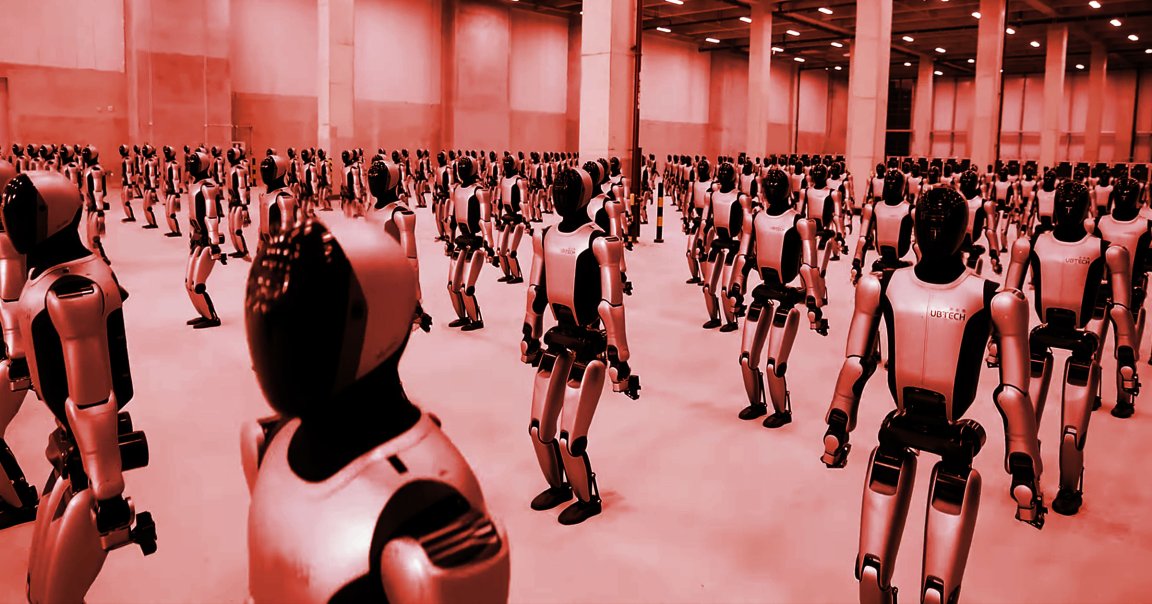
Chinese officials are warning that the country's humanoid robotics industry could be forming a massive bubble.
UBTECH

Chinese officials are warning that the country’s humanoid robotics industry could be forming a massive bubble.

As Bloomberg reports, strategists from the National Development and Reform Commission (NDRC), which serves as the country’s state-run macroeconomic management agency, say that extreme levels of investment could be drowning out other markets and research initiatives.

It’s a notable shift in tone as the humanoid robot industry continues to attract billions of dollars in investment. Aided by advancements in artificial intelligence opening up new use cases — and plenty of unbridled enthusiasm — for the tech, investors are pouring untold sums into over 150 humanoid robot companies in China alone, according to the NDRC.

Many of those companies are producing robots that are extremely similar to each other, overspending that could overwhelm the market. Bike-sharing apps, for instance, flooded the market in China in 2017 and 2018, with dozens of them crowding each other out at the same time. The outcome: streets littered with unused bikes.

“Frontier industries have long grappled with the challenge of balancing the speed of growth against the risk of bubbles — an issue now confronting the humanoid robot sector as well,” NDRC spokeswoman Li Chao told reporters last week, as quoted by Bloomberg.

China has established itself as a clear global leader in the space, with Morgan Stanley predicting the humanoid robot market could surpass a whopping $5 trillion by 2050. Citigroup is even more optimistic, expecting the market to hit $7 trillion by that point.

New offerings by companies like Unitree have made bipedal robots far more affordable and advanced than ever before. Unitree’s G1 robot, in particular, has garnered tons of attention for its flashy abilities to throw punches in the ring or play basketball.

A burgeoning industry of far smaller Chinese competitors has cropped up as well, fueling even more investment — as well as concern from policymakers that the industry could be growing too fast.

Last month, Chinese robotics company UBTECH claimed it had rolled out the “world’s first mass delivery” of industrial humanoid robots. Startup AgiBot’s A2 also set a Guinness World Record for the longest distance ever walked by a humanoid robot, with its A2 covering over 66 miles while live-swapping its battery over and over.

Despite plenty of enthusiasm, turning humanoid robots into a viable and affordable product with a clear-cut use case remains a major challenge. Case in point, the current crop of androids still struggles significantly with completing household tasks, particularly without the help of a nearby human teleoperator.

To speed up the process of finding real-world applications, the NDRC is hoping to spread industrial resources across the country, while also accelerating research and development for “core technologies.”

The risks of a bubble are certainly there. Without consolidation, China’s market could soon be flooded with armies of largely identical humanoid robots — which is either a terrifying prospect, considering the possibility of them putting us all out of work, or risks a market crash if it turns out they’re not particularly good at real work.

More on humanoid robots: 

RELATED VIDEOS

{ https://futurism.com/category/robots-and-machines }

Hoe vind je dit bericht?
Geschreven door peter om 22:20 Stuur door

Alarming Video Shows Humanoid Robot Demon-Scuttling

Alarming Video Shows Humanoid Robot Demon-Scuttling

"They're actually capable of way weirder stuff and way faster motions."
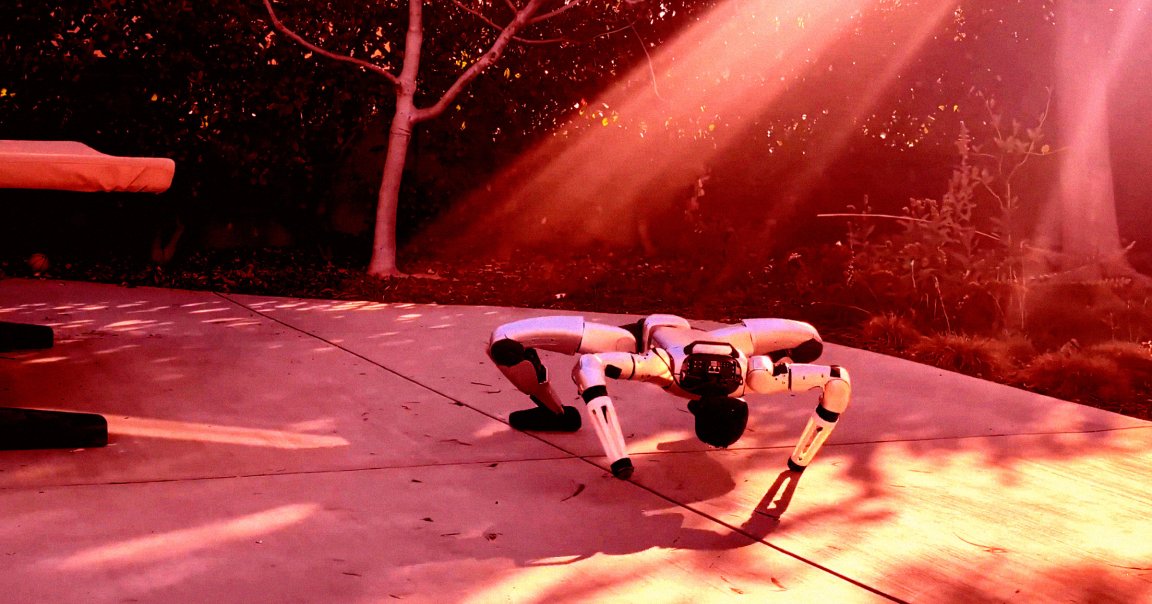
A recent video shows how a humanoid robot can turn itself into a surprisingly creepy crawling machine, using the full extent of its limbs.
Logan Olson via X

The tech industry has become obsessed with the idea of humanoid robots, bipedal androids designed to complete tasks on behalf of their flesh-and-blood counterparts.

But as many experts have argued, having robots walk around on two legs and manipulate the world around them with two hands and arms may not always be the most efficient option. After all, plenty of industrial robots use wheels to roll around a warehouse, or feature one large, strong, and multi-pivoting arm instead of relying on several weaker ones.

Besides, the existing crop of humanoid robots is capable of a lot more than walking around and waving their hands.

Look no further than a video shared by robot tinkerer and researcher Logan Olson last month, which shows how a humanoid robot can turn itself into a surprisingly creepy crawling machine while using the full extent of its four limbs’ freedom of movement. The footage shows the robot dropping down to all fours in less than a second, unnervingly bending its arms and legs to crouch down and scuttle across a concrete patio — like a demon straight out of a horror movie.

Agility Robotics AI research scientist Chris Paxton, who recently reshared the video, used the footage as a reminder that a “lot of these robots are ‘faking’ the humanlike motions.”

“It’s a property of how they’re trained, not an inherent property of the hardware,” he wrote. “They’re actually capable of way weirder stuff and way faster motions.”

“Human motion is most efficient for humans; robots are not humans,” he added in a follow-up.

It’s a particularly pertinent topic as companies like Tesla, Figure, and China’s Unitree race to commercialize humanoid robots for the mass market. While companies have made major strides — in a separate tweet, Paxton argued that “running is now basically commoditized” — experts have questioned if it’s really the best form factor for every job.

Case in point, Chris Walti, the former lead of Tesla’s humanoid robot Optimus, told Business Insider earlier this year that humanoid robots simply don’t make much sense on the factory floor.

“It’s not a useful form factor,” he said at the time. “Most of the work that has to be done in industry is highly repetitive tasks where velocity is key.”

The human form “evolved to escape wolves and bears,” he added. “We weren’t designed to do repetitive tasks over and over again.”

While a creepy-crawling robot, as demonstrated in Olson’s video, admittedly may not be the pinnacle of productivity, it serves as a great — albeit nightmare-inducing — reminder that humanoid robots are technically capable of a lot more than masquerading as a human being, while walking around, shaking hands, and giving out popcorn.

At the same time, a humanoid robot distending its joints to crawl along the floor likely won’t endear it to humans, either.

“That is terrifyingly cool,” one user wrote in response to Olson’s video.

“I just s*** my pants,” another user confessed.

More on humanoid robots: 

{ https://futurism.com/ }

Hoe vind je dit bericht?
Geschreven door peter om 21:55 Stuur door

Top astronaut removed from NASA mission after SpaceX 'classified' photos breach

Top astronaut removed from NASA mission after SpaceX 'classified' photos breach

A veteran Russian astronaut has been removed from an upcoming NASA mission after allegedly violating an international arms trafficking law. 

Oleg Artemyev is said to have been accused of photographing classified documents and rocket equipment at a SpaceX facility in Hawthorne, California, and then 'smuggling' that information out of the building on his phone in late November.

The 54-year-old was scheduled to be part of the SpaceX Crew-12 mission, led by NASA, heading to the International Space Station (ISS) in early 2026.

He has been replaced by fellow cosmonaut Andrey Fedyaev, and Russia's official space agency Roscosmos said the change was made because of 'Artemyev's transfer to another job'.

However, other reports from Russia have said the move was made for much more serious reasons, claiming that Artemyev violated the International Traffic in Arms Regulations (ITAR) by allegedly photographing and leaking the SpaceX materials.

ITAR is a set of US government rules that tightly control the export, sharing, or transmission of sensitive defense-related technologies, information, and items, including spacecraft components and technical blueprints.

Russian investigative outlet The Insider reported that an international probe has been launched into Artemyev's actions. 

At the moment, there are no claims that the alleged incident took place in order to harm the US. However, the case would amount to espionage if it is proven that Artemyev collected the photos with the intent to deliver them to a foreign government to gain an advantage over the US.

Cosmonaut Oleg Artemyev is believed to have been accused of photographing sensitive documents and equipment at the SpaceX facility in California

Cosmonaut Oleg Artemyev is believed to have been accused of photographing sensitive documents and equipment at the SpaceX facility in California

Artemyev was working at the SpaceX building in Hawthorne in preparation for Crew-12's 2026 mission to the International Space Station

Artemyev was working at the SpaceX building in Hawthorne in preparation for Crew-12's 2026 mission to the International Space Station

The Daily Mail has reached out to NASA and SpaceX for comment regarding the allegations against Artemyev.

Russian media also reported that the cosmonaut has already been 'booted out of America' as space and national security officials investigate the alleged incident.

Space industry analyst Georgy Trishkin revealed on his Telegram channel that the veteran cosmonaut committed a 'serious violation' of the ITAR laws, which can carry both civil and criminal punishments if investigators were to determine he is guilty.

He added that the change was made with no official announcement by NASA or SpaceX, noting that the allegations seem credible since Artemyev was removed less than three months before the Crew-12 mission.

'My contacts confirm that a violation occurred and an interdepartmental investigation has been launched,' Trishkin told The Insider.

'It's very difficult to imagine a situation in which an experienced cosmonaut could inadvertently commit such a gross violation.'

The space industry expert also claimed that NASA was trying to make sure the scandal did not become public knowledge.

Artemyev had flown to the ISS on three previous missions, in 2014, 2018 and 2022. He has spent a total 560 days in space and performed eight spacewalks lasting over 53 hours. The 2026 mission would have been his first in the SpaceX Dragon Capsule.

Artemyev was removed from the 2026 mission to accept a 'transfer to another job', according to the Russian space agency Roscosmos

Artemyev was removed from the 2026 mission to accept a 'transfer to another job', according to the Russian space agency Roscosmos

The Crew-12 SpaceX mission to the International Space Station is set to take off in early 2026, and another Russian cosmonaut has replaced Artemyev. Pictured: SpaceX's Dragon Capsule

The Crew-12 SpaceX mission to the International Space Station is set to take off in early 2026, and another Russian cosmonaut has replaced Artemyev. Pictured: SpaceX's Dragon Capsule

The ITAR restrictions were created by the US Department of State in 1976 to protect national security by preventing unauthorized access to important data and equipment that could benefit enemy nations.

READ MORE

EXCLUSIVE

article image

In this case, Artemyev is alleged to have violated the law because he is a foreign national illegally capturing images of materials deemed 'restricted' by the US government. Allegedly leaving SpaceX headquarters with those images on his phone would amount to 'exporting' the information without US government approval.

If the claims against Artemyev are proven to be true, breaking ITAR laws can lead to fines of more than $1million per violation.

In the most serious cases, where a violator is found to be committing espionage against the US, the State Department noted that criminal penalties include up to 20 years in prison.

Even in less serious cases, violators can also be banned from government contracts, including working with NASA and SpaceX on future missions.

If the incident is proven true, it could also strain joint missions between NASA and Roscosmos, as cosmonauts will likely face increased monitoring while they work at US-based facilities.

RELATED VIDEOS

{ https://www.dailymail.co.uk/sciencetech/index.html }

Hoe vind je dit bericht?
Geschreven door peter om 21:33 Stuur door

The real-life Pixar lamp! Adorable desk robot can talk and move just like the cartoon - and it even comes with a pair of privacy sunglasses

The real-life Pixar lamp! Adorable desk robot can talk and move just like the cartoon - and it even comes with a pair of privacy sunglasses

Pixar's adorable hopping lamp has been brought to life – and he could soon be lighting up your own desk at home. 

Developed by California firm Interaction Labs, Ongo the robotic smart lamp can move, see, hear and even talk. 

A promo clip shows the 'ambient desk lamp companion robot' peering curiously at objects and people around him while giving help around the home. 

And to allay any privacy concerns, he even comes with a pair of sunglasses blocking his view. 

Karim Rkha Chaham, co-founder and CEO Interaction Labs, said the 'expressive' bot can even remember users and anticipate their needs.

'Think of it as a cat trapped inside the body of a desk lamp,' he said. 

On X, commentators called the design 'incredible', 'epic', 'very cool' and an 'amazing-looking piece' of tech. 

One said it's 'definitely something I would have at home and not a creepy humanoid robot', while another added it 'might be the cutest robot on the market'.  

According to the company, the cute desk lamp 'lights up your desk and your day' and brings ' a familiar magic presence' to your home

According to the company, the cute desk lamp 'lights up your desk and your day' and brings ' a familiar magic presence' to your home

Developed by California firm Interaction Labs as a tribute to the Pixar character, Ongo the smart lamp can move, see, hear and even talk

Developed by California firm Interaction Labs as a tribute to the Pixar character, Ongo the smart lamp can move, see, hear and even talk 

Ongo has movements designed by Alec Sokolow, the Oscar-nominated writer of Pixar film Toy Story as well as Garfield: The Movie and Evan Almighty. 

As the promo video shows, Ongo spins on its base and self-adjusts its axis just like the legendary Pixar character. 

Depending on the user's needs, he can adjust levels of light that are emitted from his 'eyes' and bring them closer, for when reading a book after nightfall for example. 

Ongo utters cheery greetings, helpful advice and instructions such as 'Hey, don't forget your keys' and 'Maybe try a dash of balsamic' during cooking. 

Another adorable scene shows Ongo bopping to the sound of music in the next room when his owners are having a party. 

According to the company, the cute desk lamp 'lights up your desk and your day' and brings 'a familiar magic presence' to your home. 

'It brings your space to life with movement, personality and emotional intelligence,' Interaction Labs says on its website. 

'It remembers what matters, senses how you feel, and supports you through the day with small, thoughtful interactions.

'Ongo senses the rhythm of your day and responds with quiet understanding, reading the subtle shifts in your environment.' 

Ongo comes with 'fun' opaque sunglasses that snap on with magnets for when users want total privacy

Ongo comes with 'fun' opaque sunglasses that snap on with magnets for when users want total privacy

Karim Rkha Chaham, co-founder and CEO Interaction Labs, said the 'expressive' bot can even remember users and anticipate their needs

Karim Rkha Chaham, co-founder and CEO Interaction Labs, said the 'expressive' bot can even remember users and anticipate their needs

One commentator posted: 'definitely something I would have at home and not a creepy humanoid robot'

One commentator posted: 'definitely something I would have at home and not a creepy humanoid robot'

Ongo: Key specs 

  • Manufacturer: Interaction Labs 
  • Height: Approx. 3 feet 
  • Features: Computer vision, contextual awareness, privacy mode
  • Price: $300/£225 
  • Shipping: Summer 2026 

Much like smart products packed with cameras, Ongo has an awareness of its surroundings but it processes vision on the device itself and never sends clips out to the cloud for company staff to watch.

When users want total privacy without Ongo peering in, they can put 'fun' opaque sunglasses over his eyes that snap on with magnets.  

On X, several users said they found Ongo's voice 'annoying' and 'grating', but Chaham said it can be customised along with his personality. 

The co-founder also admitted that the promo clip is computer-generated, but it gives users a good idea of what to expect as prototypes are being worked on – so it's not quite ready yet. 

He said: 'Will be posting more and more videos of us interacting with the prototype.' 

Ongo is available to pre-order on the company's website, with a fully refundable 'priority access deposit' costing $49/£38.38. 

This deposit secures users a unit from the first batch and will be taken from the product's final price – which Chaham said will be 'about $300' (£225) – and those who pay now will get Ongo when shipping begins summer next year. 

Ongo is an obvious nod to Pixar's original lamp, called Luxo Jr., which has appeared on the production logo of every Pixar film since the first one, Toy Story, back in 1995. 

'That's not what a chair looks like': Ongo keeps an eye on his users and offers helpful suggestions and reminders - such as when they're trying to put furniture together

'That's not what a chair looks like': Ongo keeps an eye on his users and offers helpful suggestions and reminders - such as when they're trying to put furniture together

Pixar's lamp, called Luxo Jr., has appeared on the production logo of every Pixar film since the first one, Toy Story, back in 1995

Pixar's lamp, called Luxo Jr., has appeared on the production logo of every Pixar film since the first one, Toy Story, back in 1995

article image

In the short sequence, Luxo Jr. is seen hopping into view and jumping on the capital letter "I" in "PIXAR" to flatten it before turning his head. 

Toy Story director John Lasseter created the character in August 1986, modeling it after his own Luxo brand lamp. 

Luxo Jr. starred in his own short film of the same name that year, also directed by Lasseter, in which he appears with a larger lamp, 'Luxo Sr'. 

It was also in 1986 that the animation studio was purchased by Apple co-founder Steve Jobs, having been owned by George Lucas' Lucasfilm. 

After a run of hugely-successful films including Toy Story, A Bug's Life, Monsters Inc and Finding Nemo, Disney acquired Pixar in 2006. 

Key milestones in Pixar's history  

  • 1979: George Lucas recruits Ed Catmull from the New York Institute of Technology to head Lucasfilm’s Computer Division.
  • 1982-83: The division completes a scene for Star Trek II: The Wrath of Khan showing a lifeless planet being transformed by lush vegetation. It is the first completely computer animated sequence in a feature film.
  • 1986: Apple co-founder Steve Jobs purchases the Computer Division from George Lucas and establishes the group as an independent company, Pixar. At this time about 40 people are employed.
  • 1986: A short film called Luxo Jr. is completed featuring two anthropomorphic desk lamps
  • 1991: Disney and Pixar announce an agreement 'to make and distribute at least one computer-generated animated movie' which will become Toy Story. 
  • 1995: Toy Story, the world’s first computer animated feature film, is released on November 22. It opens at #1 that weekend and goes on to become the highest grossing film of the year, making $192 million domestically and $362 million worldwide.
  • 1998: Pixar's second feature-length film A Bug's Life is released in theaters on November 25 
  • 2006: The Walt Disney Company announces that it has agreed to purchase Pixar Animation Studios 

{ https://www.dailymail.co.uk/sciencetech/index.html }

Hoe vind je dit bericht?
Geschreven door peter om 21:13 Stuur door

What really crashed in the New Mexico desert in 1947? Daily Mail's ALEXA CIMINO investigates in the new Conspiracy Vault episode

What really crashed in the New Mexico desert in 1947? Daily Mail's ALEXA CIMINO investigates in the new Conspiracy Vault episode

Conspiracy Vault returns with a new investigation - and this time, it's stepping into the case that sparked America's modern fascination with UFOs.

After debuting with the Dyatlov Pass mystery, the series now turns its focus to the event that changed everything: Roswell.

Hosted by US Reporter Alexa Cimino, this episode digs into one of history's most debated incidents through five key objects pulled from the vault - artifacts that shaped the narrative, fueled speculation, and cemented Roswell as the cornerstone of UFO lore.

The investigation leads to the New Mexico desert in the summer of 1947, when a rancher discovered strange metallic debris scattered across his land - including foil-like material that allegedly snapped back into shape when crushed, and thin, rigid beams marked with unusual, glyph-like symbols.

A military press release soon announced the recovery of a 'flying saucer' - the first time the US government had ever publicly claimed to have captured an unidentified craft. 

But the very next day, officials reversed course. 

Newspapers that had splashed the sensational headline suddenly printed retractions. Witnesses insisted the material they handled was unlike anything used in conventional aircraft, while the photographs released by the military showed debris that many argued did not match what was first collected from the ranch.

The second installment of Conspiracy Vault delves into the Roswell Incident

The second installment of Conspiracy Vault delves into the Roswell Incident

Depending on who you ask, the Roswell crash was either a classified military project cloaked in confusion… or the first recovered evidence of something not made by human hands.

Despite repeated government assurances that the case is closed, new documents, witnesses, and theories continue to emerge - keeping the nearly 80-year-old mystery alive.

Conspiracy Vault reconstructs how the Roswell narrative took shape, why it remains fiercely disputed, and what might still be hidden behind decades of secrecy.

Watch the full episode now on The Crime Desk YouTube Channel and stay tuned for new investigations dropping monthly.

RELATED VIDEOS

WATCH HERE

https://youtu.be/0Sz7o_339-A

Daily Mail Reporter, Alexa Cimino, takes a look at the 5 key pieces of evidence from the Roswell Incident and discusses the theories that could potentially explain what really happened in New Mexico that fateful day in 1947.

CHAPTERS

00:00 - 00:22 - Intro

00:22 - 03:40 - Evidence + Theory #1

3:40 - 06:50 - Evidence + Theory #2

6:50 - 09:50 - Evidence + Theory #3

9:50 - 13:35 - Evidence + Theory #4

13:35 - 17:55 - Evidence + Theory #5

17:55 - 18:47 - Conclusion

{ https://www.dailymail.co.uk/sciencetech/index.html }

Hoe vind je dit bericht?
Geschreven door peter om 23:07 Stuur door

Could life have started in space? How Hayabusa2 uncovered the mystery of the origin of organic matter in the Solar System

Could life have started in space? How Hayabusa2 uncovered the mystery of the origin of organic matter in the Solar System

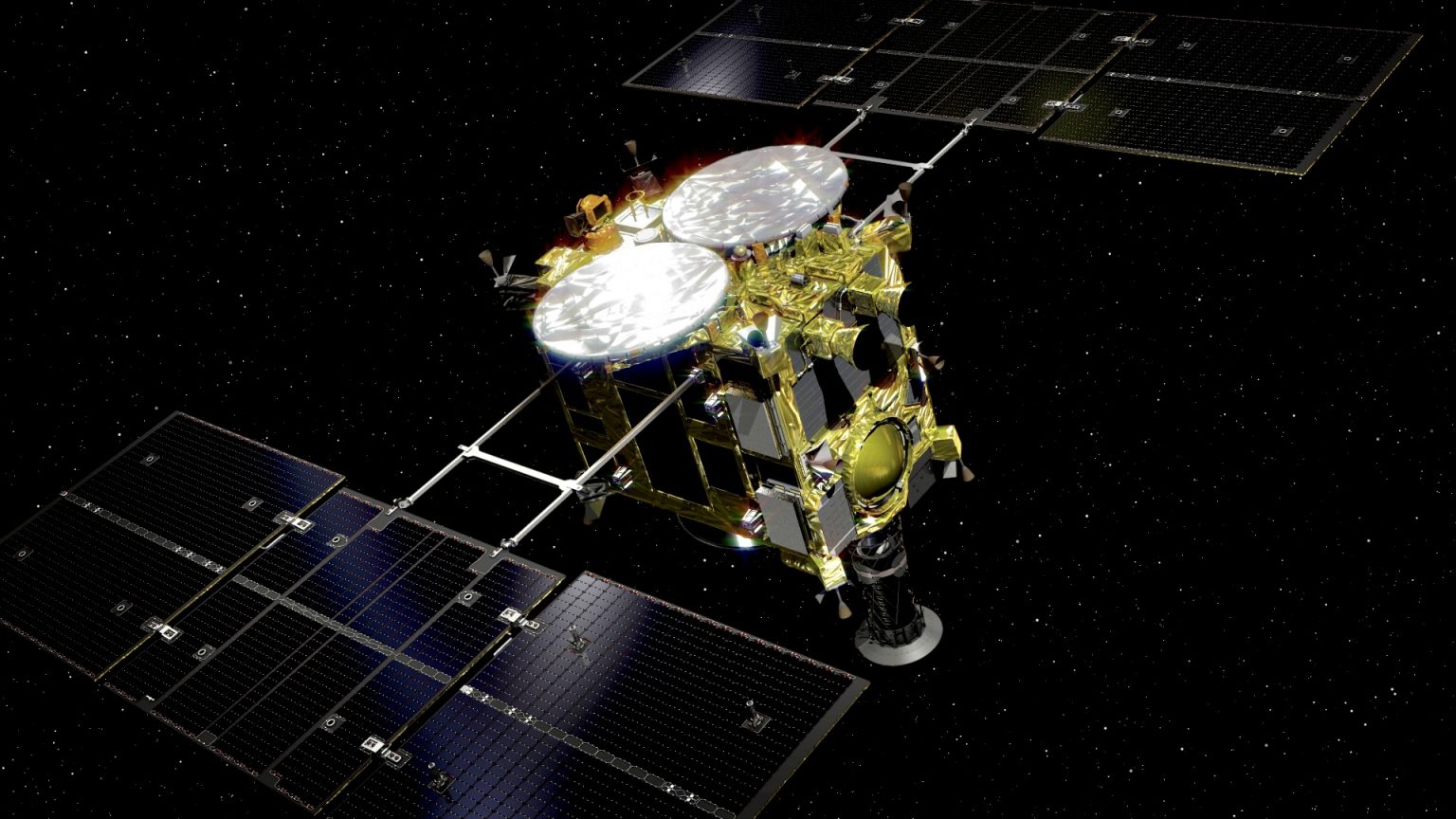
Five years ago, on December 5, 2020, the Hayabusa2 spacecraft dropped a capsule containing samples of material collected on the asteroid Ryugu into Earth’s atmosphere. Scientists are still studying them and finding substances that can tell us a lot about the past of the Solar System.
Hayabusa2 spacecraft. Source: Wikipedia

Hayabusa spacecrafts

The Japanese space program is usually talked about as something that’s way behind the American, Russian, and Chinese ones. But there’s one thing that’s way ahead of all of them. That’s using innovative ways to speed up in space.

And while solar sails remain an experiment, the use of ion engines has already yielded very important results. We are talking about two spacecraft from the Hayabusa series, which delivered samples from asteroids to Earth. December 5 marks the fifth anniversary of the second spacecraft dropping a capsule with samples from the asteroid Ryugu onto our planet.
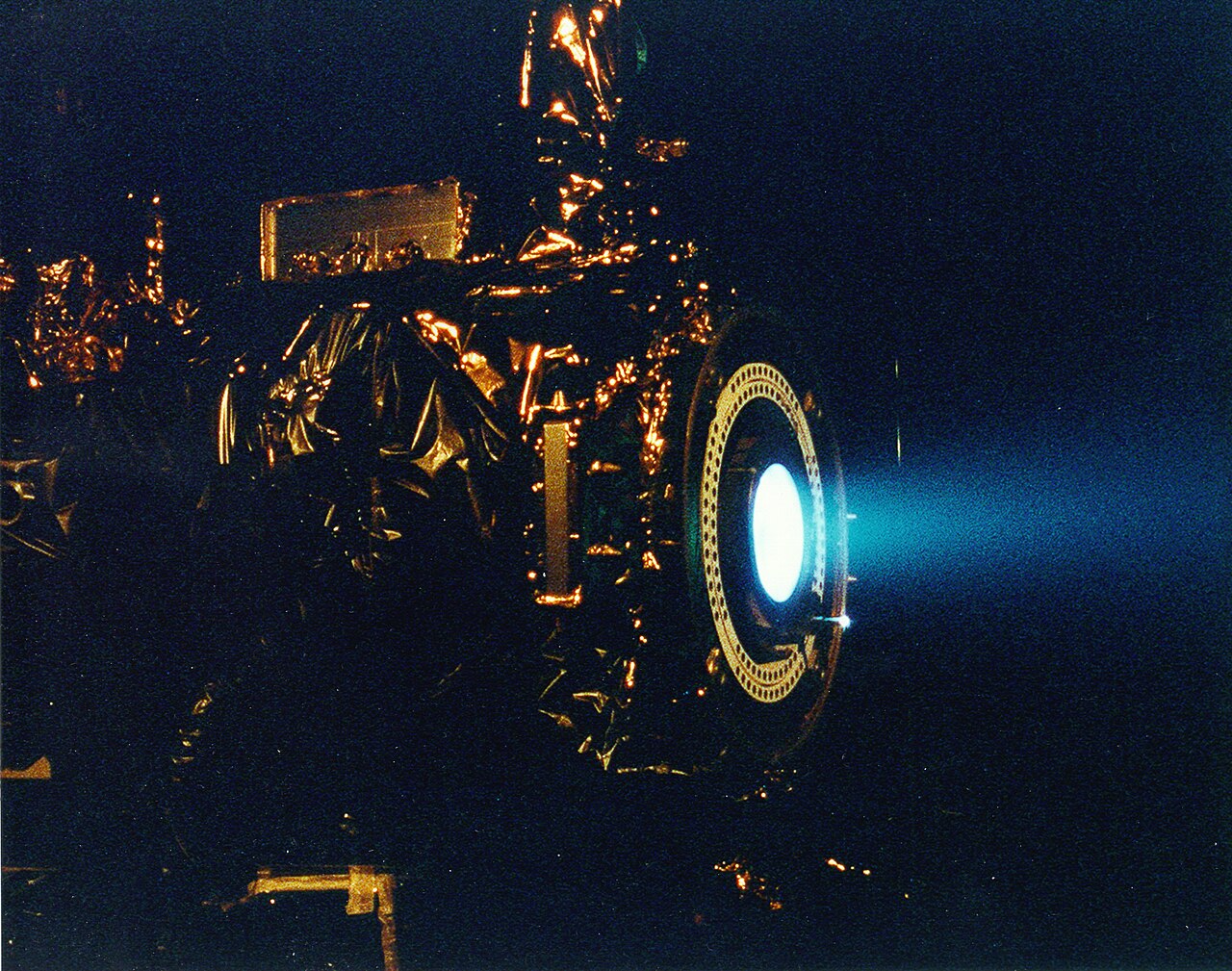
And while solar sails remain an experiment, the use of ion engines has already yielded very important results. We are talking about two spacecraft from the Hayabusa series, which delivered samples from asteroids to Earth. December 5 marks the fifth anniversary of the second spacecraft dropping a capsule with samples from the asteroid Ryugu onto our planet.

Ion engine. Source: phys.org

Its small size and therefore gravitational pull make this task easier. However, for spacecraft with conventional chemical engines, it remains unattainable. Ion engines, in which charged particles are accelerated by a magnetic field, are another matter. Their thrust is small, but the speed of the jet is several times higher than that provided by rockets that launch spacecraft into orbit.

This allows fuel to be used much more economically and acceleration to be maintained for much longer. And this was perfectly suited to the tasks of flying to an asteroid. The Hayabusa spacecraft, whose name refers to the peregrine falcon, had four engines. They were powered by solar panels, used xenon as a working fluid, and provided acceleration for the 510 kg spacecraft.

The spacecraft also carried containers for samples and a device for collecting them, communication systems, and equipment necessary for landing on the asteroid. The first spacecraft also carried a small robot, while the second carried two robots, plus a stationary MASCOT module.

Hayabusa2 flight

The flight of Hayabusa2 was entirely determined by the results of the first spacecraft’s journey, which was extremely problematic. From its launch in 2003, it was expected that by 2007, it would have collected samples from the near-Earth asteroid Itokawa and returned to Earth. But something kept happening during the flight.

Ryugu asteroid. Source: Wikipedia

First, during the initial landing, Hayabusa lost the miniature robot MINERVA, which simply could not stay on the surface and flew off into space. Then the spacecraft itself touched down rather unsuccessfully on the surface of the space rock, so it was unclear until the very end whether it had managed to collect any material. And finally, on its way back to Earth, its propulsion system failed, so it was even considered lost for some time.

In the end, specialists managed to start some of the ion engines, and Hayabusa was able to reach Earth in 2010 and drop a capsule with samples onto the surface. Incidentally, it turned out to be not empty at all and gave scientists the first sample of material delivered from an asteroid. But it was clear that a second attempt was needed to get everything right this time.

This was the mission of Hayabusa2, which began on December 3, 2014. The target was the carbonaceous asteroid 162173, a member of the Apollo group of near-Earth asteroids. During the probe’s 2015 flight, it was named Ryugu after the palace of the dragon lord of the seas in the Japanese fairy tale about Urashima Tarō.

Hayabusa2 flight path. Source: Wikipedia

On July 7, 2018, Hayabusa2 entered orbit around Ryugu, which had a diameter of 920 m and resembled a nut in shape. On September 21 of the same year, two small robots were lowered to the surface. This time, they were able to stay on the surface long enough to transmit images back to Earth. Then, on October 3, the MASCOT module landed on the surface and was able to conduct research on Ryugu’s chemical composition on site.

But researchers on Earth still wanted to obtain something for their laboratories. So, on February 22, 2019, the probe itself descended to the surface of Ryugu and took samples of material from its surface. But that was not all. Japanese researchers also wanted to obtain materials from its depths. Therefore, the probe took off from the asteroid and fired a copper projectile at it on April 5 of the same year.

As a result, a crater was formed, and some rock samples from the depths of the asteroid settled on the surface near it. These were needed by Hayabusa2, which landed on the asteroid’s surface for the second time on July 11, 2019, filled another container, and took off. The probe remained in Ryugu’s orbit until November 13, 2019. One of its ion engines failed on the way, but this did not prevent the mission from being completed.

MINERVA-II-1 robot. Source: Wikipedia

What scientists learned from Ryugu samples

On December 5, 2020, Hayabusa2 dropped a capsule containing samples collected on Ryugu into Earth’s atmosphere. It landed at the Woomera Range Complex in Australia. A team of specialists quickly retrieved it and took it to a laboratory, where they opened it and began studying the samples.

The first thing that scientists noticed when studying the samples was that they resembled black sand. The soil delivered by Hayabusa2 turned out to be the darkest of all samples extracted in space. This, along with chemical analysis, allowed scientists to establish a connection between Ryugu and carbonaceous meteorites found on Earth.

Determination of the physical characteristics of these samples showed that they are quite fragile and porous. This allowed us to solve an old mystery: why are there so many carbonaceous asteroids in space, but very few meteorites of similar composition have been found on Earth? It turns out that they do not survive collisions with our planet’s atmosphere, being destroyed in it.

Copy of a sample capsule. Source: Wikipedia

The second important discovery was published in January 2025. Carbonate and sodium sulfate, as well as chlorides, were found in samples from Ryugu. These could only have formed in hot water conditions.

This means that the asteroid was previously part of a much larger body that was closer to the Sun. It may belong to the Elania or Pulana group. According to scientists’ estimates, Ryugu is only 8.9 million years old.

The third important discovery made during the study of samples from the Hayabusa2 capsule is that a bunch of organic substances were found in Ryugu. These include all twenty essential amino acids, aliphatic amines, carboxylic acids, aromatic hydrocarbons, and nitrogen-containing heterocyclic compounds.

Perhaps this news is the most important of all. Because, despite the fact that Ryugu broke away from its parent body relatively recently, the material it is made of has remained unchanged since the formation of the Solar System. This means that even back then, in interplanetary space, all the components necessary for biological evolution were already present.
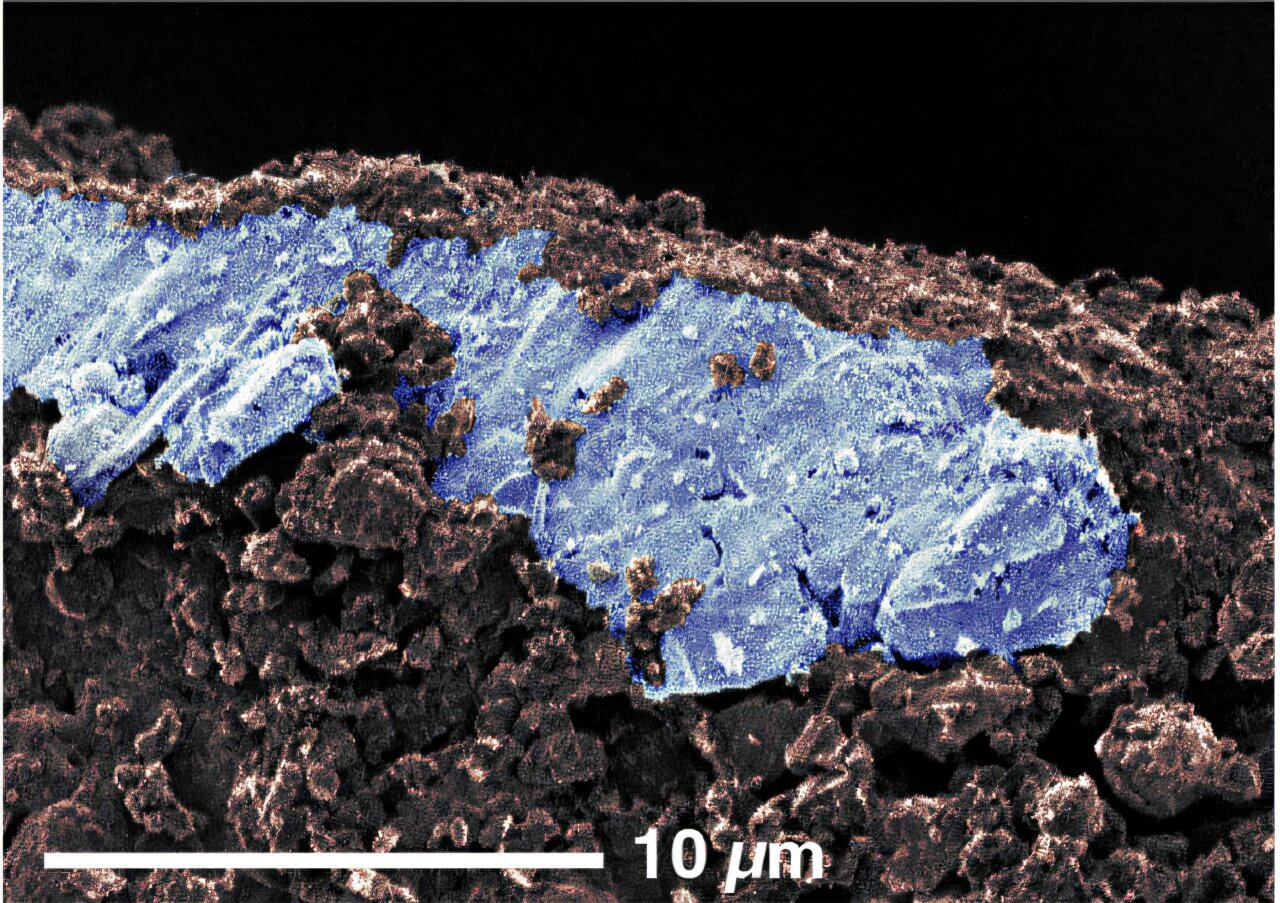
Sodium carbonate deposits in samples from the asteroid Ryugu. Source: KyotoU / Toru Matsumoto

The question of where it began has long been a source of concern for scientists. It is quite possible that the first biochemical reactions did not even take place in the protoplanetary disk, but in the gas and dust cloud from which the Solar System was formed. Samples from Ryugu support this theory.

It is not over yet

But that’s not all. After dropping the capsule with the samples, Hayabusa2 did not burn up in Earth’s atmosphere, as its predecessor did. It flew on, and so the mission continues even 11 years after its launch. The spacecraft still has three engines and fuel for them, as well as equipment for photographing and remotely studying asteroids.

And now the Japanese probe is continuing its mission. In July 2026, it is scheduled to fly past asteroid (98943) Torifune, which belongs to the silicate class and has a diameter of about 500 m. Hayabusa2 is expected to fly at a distance of 10 km from it.

Asteroid Torifune from three angles. Source: Wikipedia

After that, the probe will continue to orbit the Sun and will approach 1998 KY26 in 2031. Like other objects studied by Hayabusa2, it belongs to the Apollo group of near-Earth asteroids. However, observations of this space rock, which is only 11 m in diameter, have shown that it may be extremely interesting.

In 2023, after the Hayabusa2 flight program was approved, 1998 KY26 was classified as a dark comet. This asteroid does not form a tail or coma, but it experiences acceleration similar to that of a comet. It is expected to contain a significant amount of water, so it will be interesting to see during the flyby whether anything evaporates from its surface, creating jet streams.

However, it is possible that the Hayabusa2 mission will not end there. If its equipment remains functional and there is enough xenon in the tanks for new maneuvers, its mission may be extended again.


{ https://universemagazine.com/en/articles-en/ }

Hoe vind je dit bericht?
Geschreven door peter om 22:44 Stuur door

A strange butterfly-shaped crater appears in a Mars Express image

A strange butterfly-shaped crater appears in a Mars Express image

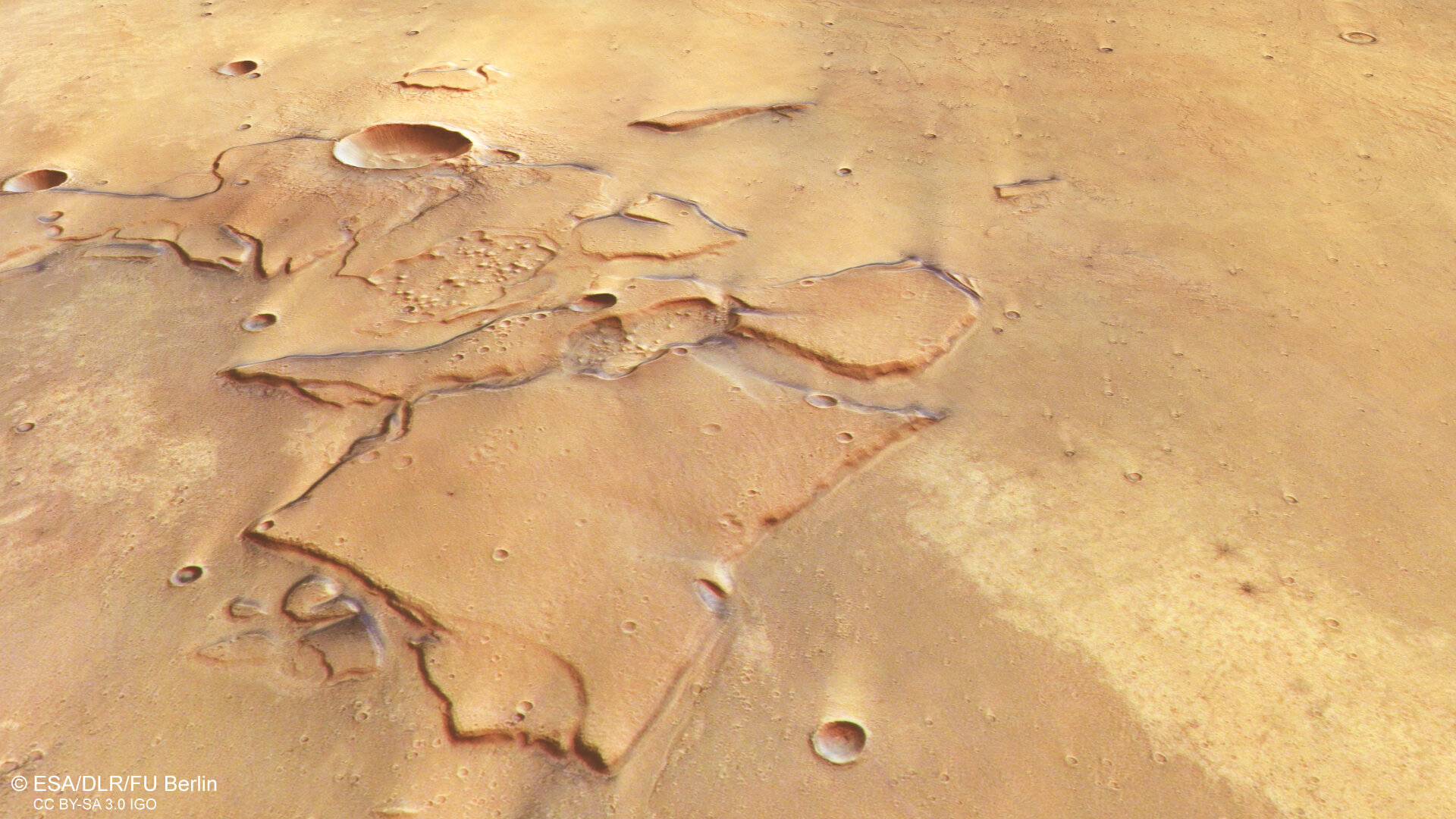
The European Space Agency (ESA) has published an interesting image taken by the Mars Express spacecraft. It shows a very unusual crater, whose structure resembles a butterfly.

Butterfly crater. Source: ESA/DLR/FU Berlin

Usually, in a collision that causes a crater to form, material will be ejected in all directions. However, this is not always the case. In the case of the butterfly crater, the space rock fell at a low, shallow angle, resulting in the interesting and unusual shapes that can be seen in the Mars Express image.

As a result of the collision, two separate sections of material were ejected north and south of the crater, creating two elongated “wings” of raised ground. The “wings” of this unique butterfly crater are rather vague and irregular, but they can be seen in the lower left and upper right parts of the main crater, which resembles a walnut. It has an atypical oval shape and measures 15 by 20 km.

The region where the butterfly crater is located. Source: ESA/DLR/FU Berlin

Some of the debris forming the wings (mainly visible just above the crater) also appears smoother and more rounded, almost resembling a mudflow. This indicates that it mixed with water or ice from beneath the surface of Mars, which melted during the impact.

The butterfly crater is far from the only interesting feature of this place. The rest of the frame is mostly flat, drawing attention to a group of steep, flat-topped rock formations known as mesas. The higher areas of land here have been gradually eroded away, and the remaining hills are those that have managed to withstand erosion over time.

Martian masses. Source: ESA/DLR/FU Berlin

The mesas stand out sharply against the brownish surroundings thanks to layers of exposed dark material at their edges. As on Earth, it is probably rich in magnesium and iron and was formed by eruptions. In the past, this region experienced fairly powerful volcanic activity, resulting in the accumulation of lava and ash deposits over time, which were buried by other materials.

Signs of lava can be seen in the form of “wrinkled ridges”: folded patterns that formed when lava flows cooled and contracted, causing the surface to crumple.

Earlier, we reported on how mysterious rocks revealed the history of Mars’ tropical climate.

  • According to ESA

{ https://universemagazine.com/en/articles-en/ }

Hoe vind je dit bericht?
Geschreven door peter om 22:23 Stuur door

Meer van UFO'S of UAP'S, ASTRONOMIE, RUIMTEVAART, ARCHEOLOGIE, OUDHEIDKUNDE, SF-SNUFJES EN ANDERE ESOTERISCHE WETENSCHAPPEN - DE ALLERLAATSTE NIEUWTJES

↑ Terug naar de berichten