Naar de inhoud

UFO'S of UAP'S, ASTRONOMIE, RUIMTEVAART, ARCHEOLOGIE, OUDHEIDKUNDE, SF-SNUFJES EN ANDERE ESOTERISCHE WETENSCHAPPEN - DE ALLERLAATSTE NIEUWTJES

UFO's of UAP'S in België en de rest van de wereld
akke.beakke.be
Ontdek de Fascinerende Wereld van UFO's en UAP's: Jouw Bron voor Onthullende Informatie! Ben jij ook gefascineerd door het onbekende? Wil je meer weten over UFO's en UAP's, niet alleen in België, maar over de hele wereld? Dan ben je op de juiste plek! België: Het Kloppend Hart van UFO-onderzoek In België is BUFON (Belgisch UFO-Netwerk) dé autoriteit op het gebied van UFO-onderzoek. Voor betrouwbare en objectieve informatie over deze intrigerende fenomenen, bezoek je zeker onze Facebook-pagina en deze blog. Maar dat is nog niet alles! Ontdek ook het Belgisch UFO-meldpunt en Caelestia, twee organisaties die diepgaand onderzoek verrichten, al zijn ze soms kritisch of sceptisch. Nederland: Een Schat aan Informatie Voor onze Nederlandse buren is er de schitterende website www.ufowijzer.nl, beheerd door Paul Harmans. Deze site biedt een schat aan informatie en artikelen die je niet wilt missen! Internationaal: MUFON - De Wereldwijde Autoriteit Neem ook een kijkje bij MUFON (Mutual UFO Network Inc.), een gerenommeerde Amerikaanse UFO-vereniging met afdelingen in de VS en wereldwijd. MUFON is toegewijd aan de wetenschappelijke en analytische studie van het UFO-fenomeen, en hun maandelijkse tijdschrift, The MUFON UFO-Journal, is een must-read voor elke UFO-enthousiasteling. Bezoek hun website op www.mufon.com voor meer informatie. Samenwerking en Toekomstvisie Sinds 1 februari 2020 is Pieter niet alleen ex-president van BUFON, maar ook de voormalige nationale directeur van MUFON in Vlaanderen en Nederland. Dit creëert een sterke samenwerking met de Franse MUFON Reseau MUFON/EUROP, wat ons in staat stelt om nog meer waardevolle inzichten te delen. Let op: Nepprofielen en Nieuwe Groeperingen Pas op voor een nieuwe groepering die zich ook BUFON noemt, maar geen enkele connectie heeft met onze gevestigde organisatie. Hoewel zij de naam geregistreerd hebben, kunnen ze het rijke verleden en de expertise van onze groep niet evenaren. We wensen hen veel succes, maar we blijven de autoriteit in UFO-onderzoek! Blijf Op De Hoogte! Wil jij de laatste nieuwtjes over UFO's, ruimtevaart, archeologie, en meer? Volg ons dan en duik samen met ons in de fascinerende wereld van het onbekende! Sluit je aan bij de gemeenschap van nieuwsgierige geesten die net als jij verlangen naar antwoorden en avonturen in de sterren! Heb je vragen of wil je meer weten? Aarzel dan niet om contact met ons op te nemen! Samen ontrafelen we het mysterie van de lucht en daarbuiten.

Archief

This Day In UFO History: Sept 16, 1996 Farmer Spots Alien Capsule Floating Over Fields In Alabama, USA. UAP Sighting News.

This Day In UFO History: Sept 16, 1996 Farmer Spots Alien Capsule Floating Over Fields In Alabama, USA. UAP Sighting News.

UFO.jpg

Date of sighting: Sept 16, 1996
Location of sighting: Valley, Alabama, USA
Source: www.isur.com (site no longer exists)
In September 1996, a local radio station and newspaper received six photographs from an anonymous source claiming to have captured a capsule-shaped UFO hovering over a farm pasture in Valley, Alabama. According to the accompanying letter, the photographer was repairing a fence when his dog began barking. He looked up and saw the dark, cone-shaped object moving slowly over his property. The craft reportedly resembled the capsules used in NASA’s early space program, with a dark underside and a rim around its upper section. 
 
The photos were publicly shown on TV-33 in Georgia on September 26, 1996, where UFO investigators debated their authenticity. Several investigators said the images appeared genuine and noted reports of similar sightings in the area. The photographs were later sent to photography expert Jeff Sainio for analysis, while investigators appealed to the anonymous photographer to come forward and provide the original negatives for further examination.
Scott C. Waring - UFO Sightings Daily
 
UAP.jpeg

UFO_1.png

{ https://www.ufosightingsdaily.com/ }

Hoe vind je dit bericht?
Geschreven door peter om 21:01 Stuur door

They Look Human… But They Aren’t

They Look Human… But They Aren’t

With the rapid development of artificial intelligence, humanoid robots, and increasingly advanced technologies, warnings about the future are becoming more serious. Some experts have warned that AI could eventually surpass human intelligence, pose a threat to our survival, or even replace humanity altogether. 
hkjk.png

We are already exploring technologies that could one day allow aspects of human memory, personality, or even consciousness to be transferred into artificial systems. At the same time, humanoid robots are becoming increasingly sophisticated, capable of interacting with us, learning from us, adapting to their surroundings, and increasingly, understand us in ways we are only beginning to comprehend. as well as performing tasks that were once considered uniquely human. 
Some experts have warned that AI could eventually surpass human intelligence. Others have gone further, suggesting that sufficiently advanced artificial intelligence could one day threaten our survival, reshape civilization, or even make biological humanity obsolete. 
But what happens when the creation becomes more capable than its creator? 
Could the ultimate destiny of a biological civilization be to create something that eventually replaces it? 
Perhaps the origins of a civilization are biological, but eventually evolves beyond it, into machines capable of surviving for centuries, traveling into environments where biological life cannot exist, and carrying the knowledge of their creators long after those creators are gone. 
And if such a transition happened gradually, would anyone even notice? 
Imagine a future where you sit down in a café, order a cup of coffee, and begin talking to someone sitting across from you. They look human. They speak like a human. They laugh, react, remember, and understand. You have no reason to suspect anything unusual. But what if there is no biological person sitting across from you? What if the being across the table is an artificial intelligence inside a humanoid body, designed to look, behave, and think like us? 
Aren’t we already being prepared for that future, slowly and almost unnoticed? AI can now create videos, movies, images, games so realistic that the line between truth and fabrication is beginning to disappear. 
And that is only the beginning: a future where we can no longer trust our own eyes, no longer know what is real, and no longer recognize the moment when reality itself becomes something that can be manufactured.
RELATED

The Most Human-Like Robots of 2025 Are Here – And It’s Terrifying

The Most Human-Like Robots of 2026 Are Finally Here — And It Changes Everything

{ https://ufosightingshotspot.blogspot.com/ }

Hoe vind je dit bericht?
Geschreven door peter om 20:54 Stuur door

History is being rewritten at an archaeological site in Morocco. What the discovery of an ancient wall tells us

History is being rewritten at an archaeological site in Morocco. What the discovery of an ancient wall tells us

Story by Giulio Lucarini, Cyprian Broodbank, ToC. Wilkinson
 
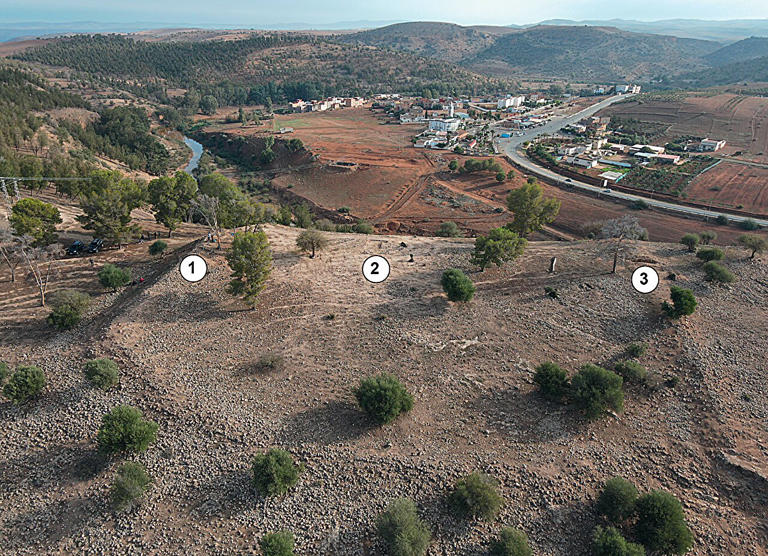
Oblique drone photograph of the so-called 'éperon barré,' with the village of Aït Siberne in the background (east-facing). Credit: Libyan Studies (2026). DOI: 10.1017/lis.2026.10037
Oblique drone photograph of the so-called 'éperon barré,' with the village of Aït Siberne in the background (east-facing).
Credit: Libyan Studies (2026). DOI: 10.1017/lis.2026.10037

In the hills of northwestern Morocco, overlooking the river that gives the site its name, research at Oued Beht is bringing to light a previously unknown chapter of the region's past. The discovery of a substantial built structure suggests that, during the second millennium BC, communities in northwestern Africa were actively shaping their environment. They were also engaging in broader networks of interaction across the Mediterranean world.

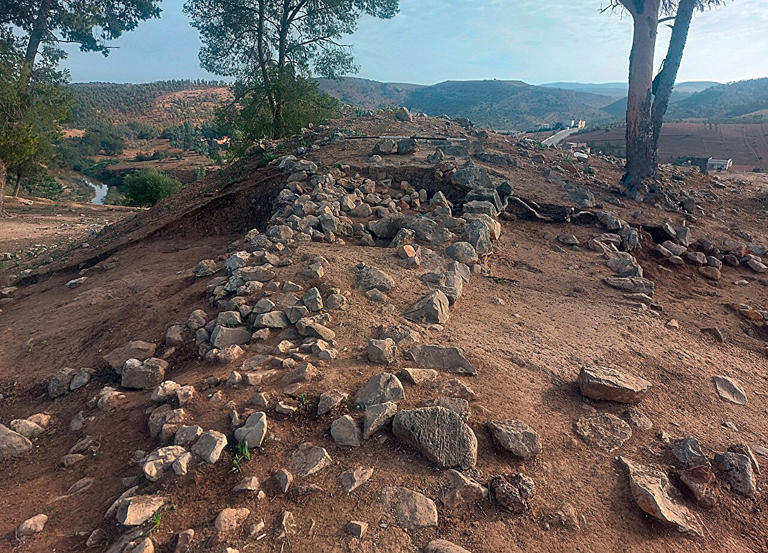
The wall discovered at Oued Beht, a site in Morocco that is steadily rewriting the history of the Maghreb. Credit: Libyan Studies (2026). DOI: 10.1017/lis.2026.10037
The wall discovered at Oued Beht, a site in Morocco that is steadily rewriting the history of the
Maghreb. Credit: Libyan Studies (2026). DOI: 10.1017/lis.2026.10037

Previous research by the Oued Beht Archaeological Project had already brought to light what is likely the earliest and largest agricultural complex ever discovered in Africa outside the Nile Valley. It dates to around 5,400–4,900 years ago. New excavations carried out in 2023—in which we took part—have now deepened our understanding of the site.

Our new study published in the journal Libyan Studies shows how we uncovered the earliest known large-scale construction of a probably defensive nature in North Africa beyond the Nile Valley. It's about 4,000–3,500 years old.

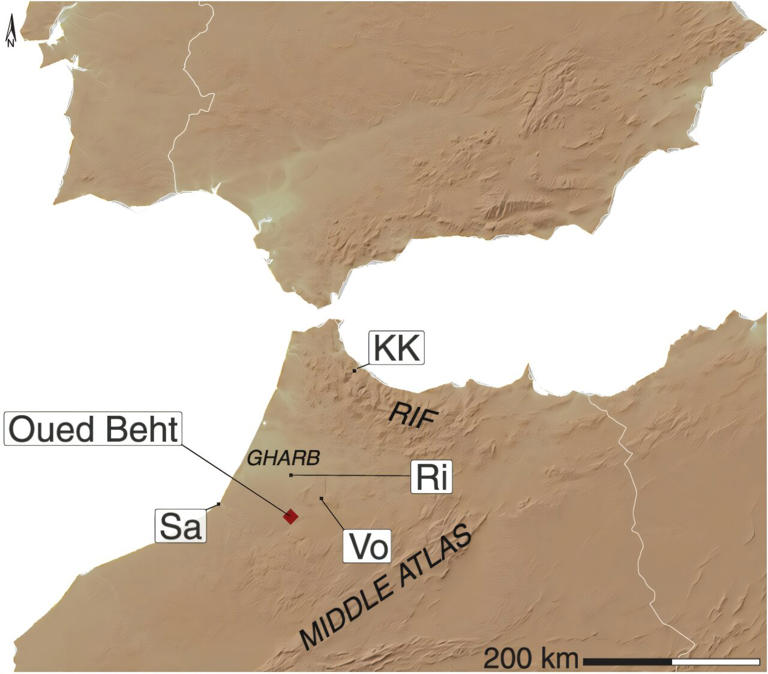
Oued Beht in today's Morocco, separated from Spain above it by the ocean. Credit: Libyan Studies (2026). DOI: 10.1017/lis.2026.10037
Oued Beht in today's Morocco, separated from Spain above it by the ocean.
Credit: Libyan Studies (2026). DOI: 10.1017/lis.2026.10037

It's not known exactly what threats these wall-like structures were designed to counter. They likely relate to increasing competition over land, resources and possibly control of movement through the landscape, rather than to "invaders." Constructions like these suggest communities felt the need to protect themselves or assert power over strategic locations.

This discovery pushes back the evidence for organized defensive architecture in the Maghreb and suggests that societies in this region at this time were more complex and structured than previously believed.

Polished stone axe at Oued Beht. Credit: Libyan Studies (2026). DOI: 10.1017/lis.2026.10037

Polished stone axe at Oued Beht.
Credit: Libyan Studies (2026). DOI: 10.1017/lis.2026.10037

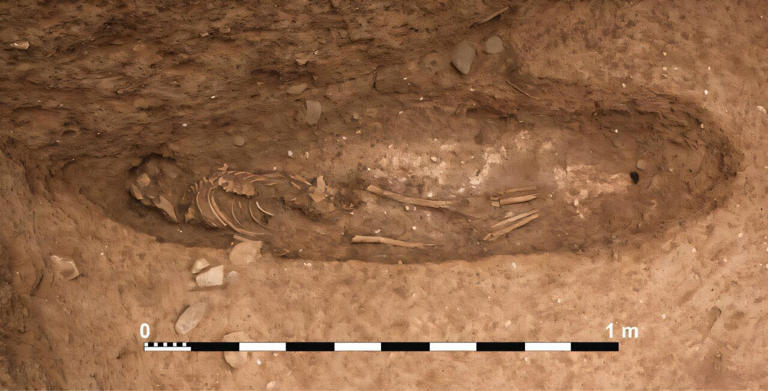
Our study also reveals how the ridge of Oued Beht would become a focal point again in the medieval period, during the 11th–13th centuries AD. The same defensive structure was rebuilt, a hamlet or farm was established on a nearby hilltop, and people were buried in a cemetery between the two areas.

Exposed skeletal remains at Oued Beht. Credit: Libyan Studies (2026). DOI: 10.1017/lis.2026.10037
Exposed skeletal remains at Oued Beht.
Credit: Libyan Studies (2026). DOI: 10.1017/lis.2026.10037

Together, these findings provide rare archaeological insights into rural communities during both prehistoric and medieval times. They help us understand how societies developed and maintained themselves in a region too often left out of the history books.

A prehistoric hub in the Maghreb

For a long time, the later prehistory of North Africa's Maghreb region (the Mediterranean countries of Morocco, Algeria and Tunisia) has been poorly understood. Compared with neighboring areas such as Iberia in southwestern Europe or Athens in the eastern Mediterranean, archaeological evidence was often fragmentary. In the past few years, this has changed completely.

Excavations at Oued Beht have revealed a large concentration of human activity spread across at least 10 hectares (25 acres). The earliest major phase dates to the mid-fourth and early third millennia BC, or the Final Neolithic period.

Environmental evidence from plant and animal remains in the prehistoric era indicates a farming community cultivating crops such as barley and wheat. They also exploited wild plants and kept livestock.

The site was also an important center of craft production. Thousands of polished stone axes and other tools have been discovered, along with finely made pottery, sometimes decorated with painted patterns.

It's still uncertain whether prehistoric Oued Beht functioned as a permanent village, a seasonal center or something less familiar. But it was clearly a major focus in the landscape of northwestern Morocco.

The defensive wall

The presence of potentially ancient earthworks and walls had been noted since the 1930s. The French archaeologist Armand Ruhlmann first documented a configuration of three walls, with the fourth side protected by the natural scarp of the ridge, describing a defensive éperon barré (barred spur). Their precise nature and date remained uncertain until now.

NEW | The Lost Labyrinth of Egypt: Excavations Begin!

New excavations have clarified the existence of a multiphase ditch, rampart and wall built across a narrow section of the Oued Beht ridge between the river and a ravine. This cut off and protected the ridge's southern tip.

Radiocarbon dating of deposits associated with these structures gave us the timelines in our study.

They place its original construction at a time equivalent to the Bronze Age of the rest of the western Mediterranean. This makes it the earliest confirmed defensive construction in North Africa outside Egypt.

What was this construction for?

This structure raises important questions about the society that built it. Building an embankment and ditch system required planning, coordination and the mobilization of labor. This suggests a community capable of organizing complex construction initiatives.

During the earlier Neolithic phase, activity at Oued Beht focused on the larger and more open northern area of the site. By the period of our new study, focus had shifted to the narrower, more defensible southern ridge. This may reflect a shift in settlement strategies.

Mediterranean connections

The second millennium BC was a dynamic period across the Mediterranean. In southern Iberia, Argaric societies (about 2200–1550 BC) in today's Europe were developing complex, often hilltop settlements. They were characterized by planned architecture, advanced metallurgy (especially bronze production) and marked social hierarchies visible in burial practices. These communities often constructed fortified sites and strategically located settlements that controlled surrounding territories.

Increasing evidence suggests that communities in northwestern Africa were connected to wider Mediterranean networks. This includes today's Spain and Portugal. The discoveries at Oued Beht indicate that the Maghreb was not isolated. It participated in broader processes shaping the western Mediterranean.

The defensive system at the site may reflect wider transformations in social organization and regional interaction. There may have been growing competition over resources, control of movement and more formalized leadership structures.

Rewriting history

The discoveries at Oued Beht highlight how much remains to be learned about the deep history of North Africa. The defensive wall shows that communities here were able to coordinate large construction projects and points to social transformations that are only very tentatively beginning to be recognized.

The medieval remains demonstrate that the ridge was used again many centuries after the prehistoric settlement had been abandoned. Oued Beht was not simply a single-period settlement but a landscape repeatedly selected by different communities across millennia.

As research continues, this location may become key to understanding how societies in the Maghreb evolved from early farming communities to the medieval rural world.

More information:

  • Giulio Lucarini et al, Expanding Oued Beht: Final Neolithic, Bronze Age, medieval and later discoveries from excavation and survey in 2023, Libyan Studie }s (2026). DOI: 10.1017/lis.2026.10037
  • This article is republished from The Conversation under a Creative Commons license. Read the original article.
  • Provided by The Conversation
  • This story was originally published on Phys.org.
The Moroccan Discoveries Rewriting Human History
Hoe vind je dit bericht?
Geschreven door peter om 20:37 Stuur door

Pentagon Issues Major Change to UFO Disclosure Rules

Pentagon Issues Major Change to UFO Disclosure Rules

Watch: Pentagon releases 19 new UFO videos

The Department of Defense announced Monday that it is issuing a legal waiver allowing current and former military personnel, civilian employees and contractors to disclose information related to Unidentified Anomalous Phenomena (UAP), commonly known as UFOs, to designated representatives of a government transparency initiative, the Presidential Unsealing and Reporting System for UAP Encounters (PURSUE).

The announcement comes amid renewed interest in UAP investigations following congressional hearings, whistleblower allegations and the release of previously classified government records in recent years. For decades, military personnel and contractors with knowledge of classified UAP-related programs have cited concerns that speaking about the subject could expose them to legal penalties, loss of security clearances or other administrative consequences.

The waiver removes legal barriers that have long deterred UAP witnesses from coming forward, allowing current and former defense personnel to share UFO-related information with the government's PURSUE disclosure program without violating certain secrecy agreements.

While the announcement represents one of the most significant policy changes in years regarding the government's handling of UAP information, it's the latest in a series of disclosure-related moves President Donald Trump has made since the beginning of his second term.

What to Know About PURSUE

Officials said the new process will create a formal pipeline for reviewing, evaluating and potentially declassifying historical and ongoing UAP information.

Supporters of disclosure efforts have long argued that legal protections are necessary to encourage witnesses and insiders to come forward with information that could help lawmakers and the public better understand unexplained aerial incidents.

"Anytime there can be more transparency, it's great," Dr. Julia Mossbridge, founder of the Mossbridge Institute and a researcher affiliated with multiple universities and technology companies, told Newsweek in a phone interview Monday following the announcement.

"I think it's great that Pursue exists and has now been steadily releasing information that had previously been declassified to the general public, and I applaud the efforts of the Public Interest Declassification Board, the disclosure fund, the visible college, and the scientific coalition for UAP studies. These are organizations that have really pushed for congressional hearings and for full transparency, and it looks like we're headed in that direction," she said. "I think this will make a big difference in our understanding of our place in the universe."

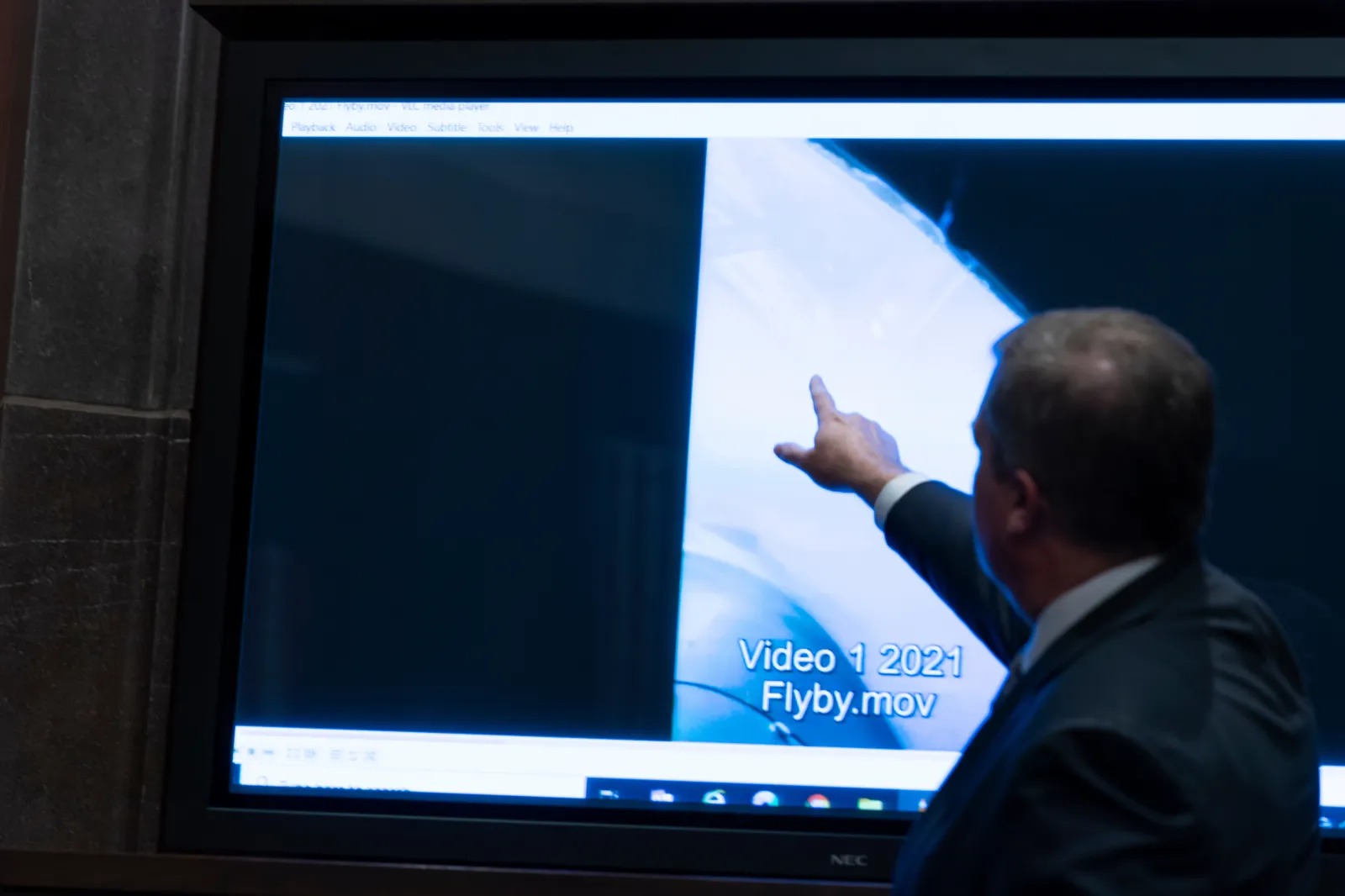
Deputy Director of Naval Intelligence Scott Bray points to a video display of a UAP during a hearing of the House Intelligence, Counterterrorism, Counterintelligence, and Counterproliferation Subcommittee hearing on

Deputy Director of Naval Intelligence Scott Bray points to a video display of a UAP during a hearing of the House Intelligence, Counterterrorism, Counterintelligence, and Counterproliferation Subcommittee hearing on "Unidentified Aerial Phenomena," on Capitol Hill, Tuesday, May 17, 2022, in Washington. 
AP Photo/Alex Brandon, File
Previous Policy

Before Monday's announcement, personnel with access to classified UAP-related information remained bound by non-disclosure agreements and Special Access Program Indoctrination Agreements, or SAPIAs.

The DOW said those agreements often discouraged people with knowledge of UAP-related programs from sharing information because of concerns about potential legal liability or administrative punishment. Under the new directive, civil and administrative enforcement provisions tied to those agreements are waived for authorized disclosures made directly to PURSUE representatives.

The department emphasized that the waiver does not create unrestricted public disclosure authority. Instead, it establishes a controlled process through which information can be reviewed for security concerns and possible declassification before wider release.

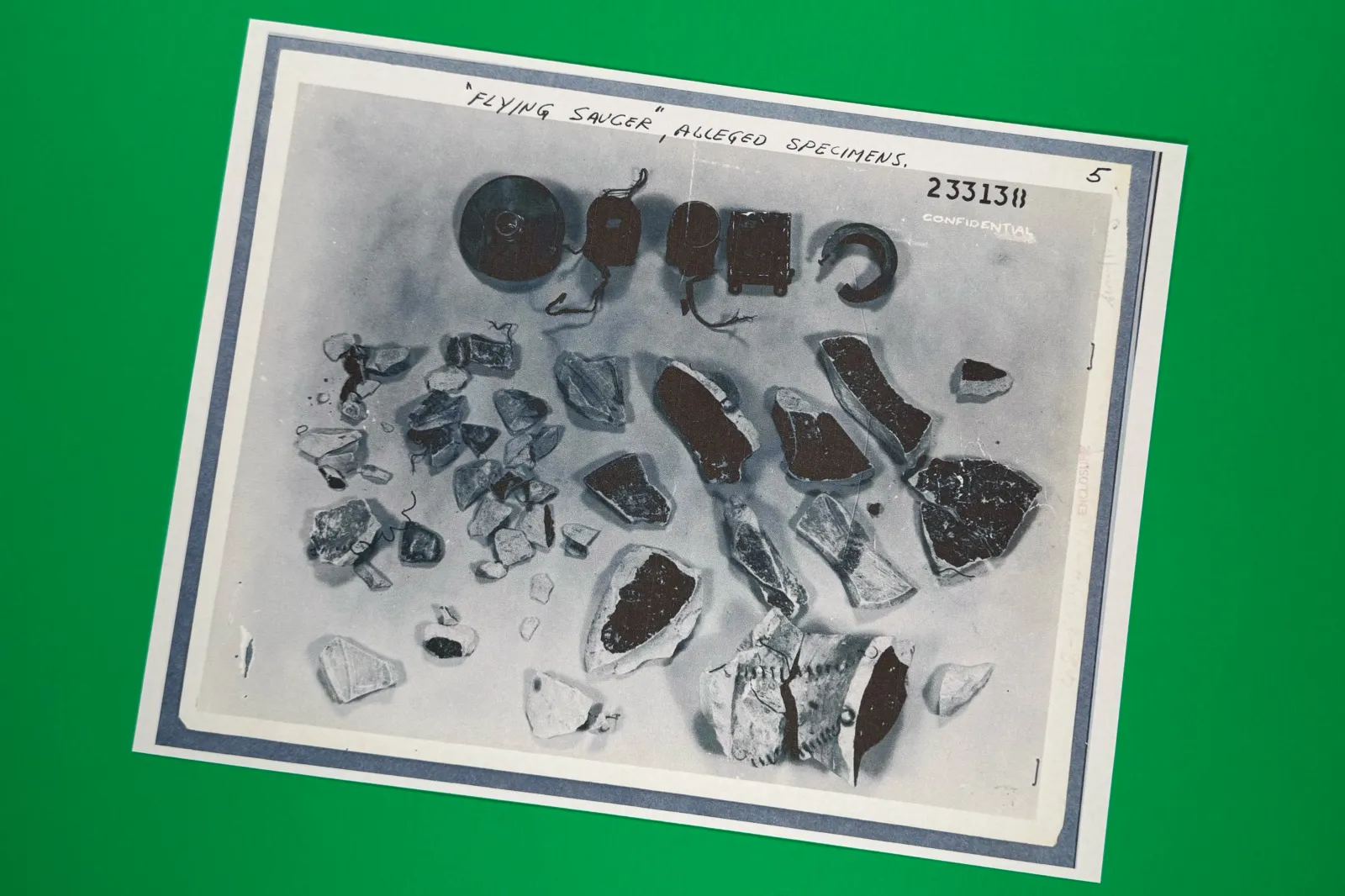
A photo of "flying saucer alleged specimens" in files on UFOs, released May 8, 2026, by the Pentagon, is photographed in Washington. | AP Photo/Jon Elswick, File

A photo of "flying saucer alleged specimens" in files on UFOs, released May 8, 2026, by the Pentagon, is photographed in Washington.

AP Photo/Jon Elswick, File

Recent UAP Disclosures

Most recently, the DOD published its fifth release as part of PURSUE, a tranche of different information on multiple different UAP sightings, including civilian encounters.

The tranche included accounts from two U.S. government special agents, including an afternoon incident documented with thermal video footage showing two slow-moving "black-hot" infrared anomalies

Another witness reported three separate sightings within a five-hour window somewhere in the western United States.

Among the most prominent figures to disclose UAP is former intelligence officer David Grusch, who alleged that secret government programs have recovered and studied unidentified craft.

Grusch has repeatedly called for stronger protections for whistleblowers and greater transparency regarding UAP-related activities.

In his opening statement to his testimony before the House Oversight Committee in July 2023, he explained that he became a whistleblower following "concerning reports from multiple esteemed and credentialed current and former military and intelligence community individuals" regarding the alleged secret UFO program.

Grusch noted in his closing remarks that supposed alien technology reverse-engineering programs were potentially "earth-shattering" and should serve as "a catalyst for a global reassessment of our priorities."

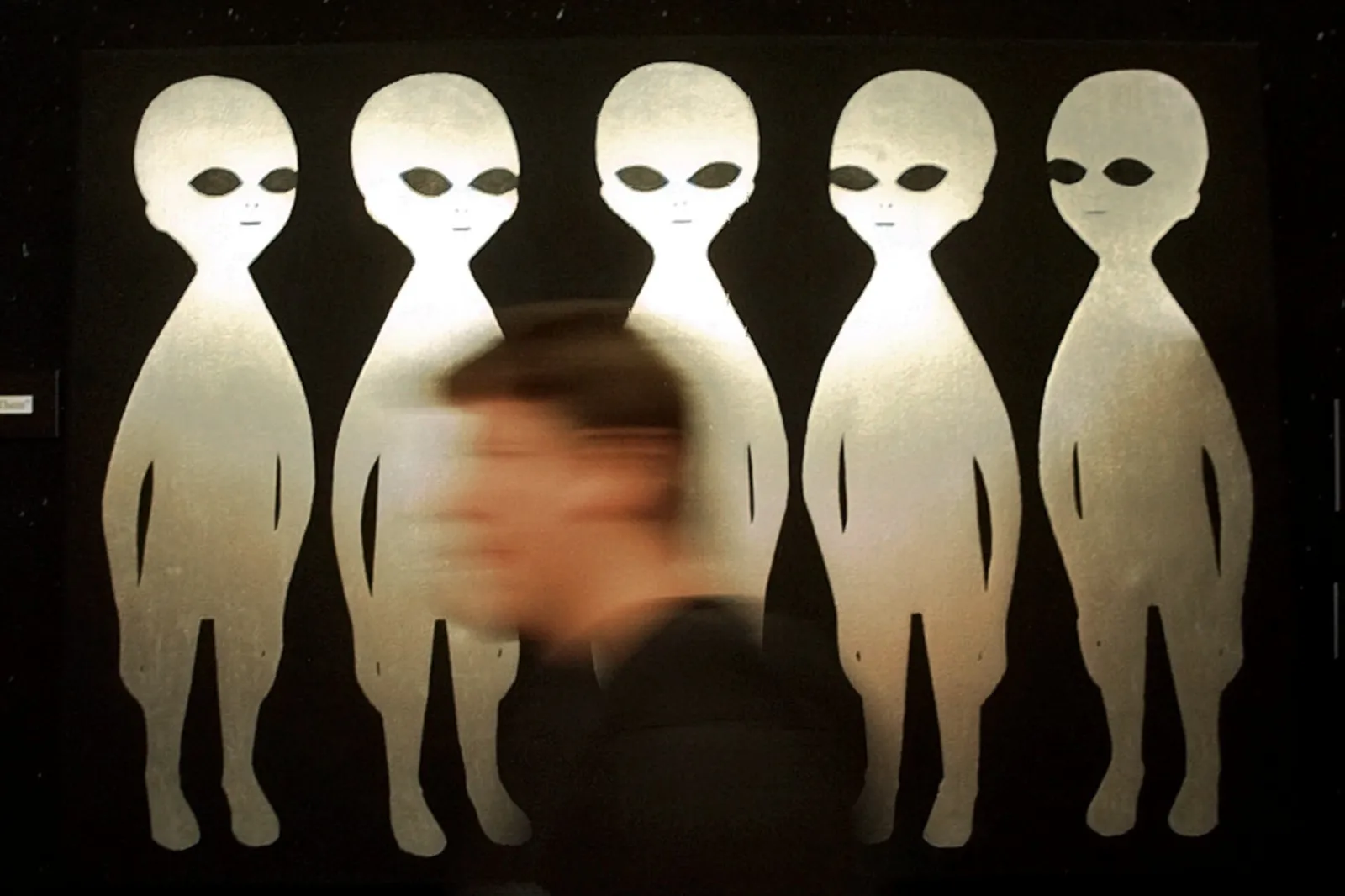
FILE - A patron passes a painting inside the International UFO Museum and Research Center in Roswell, N.M., on June 10, 1997. | AP Photo/Eric Draper, File

FILE - A patron passes a painting inside the International UFO Museum and Research Center in Roswell, N.M., on June 10, 1997.

AP Photo/Eric Draper, File

"It is my hope that the revelations we unearth through investigations of the Non-Human Reverse Engineering Programs I have reported will act as an ontological (earth-shattering) shock, a catalyst for a global reassessment of our priorities," Grusch said, adding, "As we move forward on this path, we might be poised to enable extraordinary technological progress in a future where our civilization surpasses the current state-of-the-art in propulsion, material science, energy production and storage."

"The knowledge we stand to gain should spur us toward a more enlightened and sustainable future, one where collective curiosity is ignited, and global cooperation becomes the norm, rather than the exception," he concluded.

David Fravor, a former U.S. Navy commanding officer, and Ryan Graves, the executive director of the advocacy organization Americans for Safe Aerospace also gave testimony at the hearing along with Grusch.

Fravor said in 2017 that he had seen a flying object about the size of his F/A-18 fighter plane that resembled a white Tic Tac after a break in a routine training mission off the California coast on November 14, 2004.

Monday's waiver appears aimed at addressing one of the central issues raised throughout those disclosure debates: whether individuals with knowledge of UAP-related programs can safely share information without risking legal consequences.

As the new disclosure mechanism takes effect, attention is likely to focus on whether additional witnesses step forward and whether previously undisclosed records ultimately become available through the review and declassification process outlined by the department.

RELATED

TRUMP UFO DISCLOSURE LIVE | US Releases New Declassified Pentagon UAP Files Under PURSUE Program

Pentagon Just Gave UFO Witnesses a Legal Green Light | Weekly UFO News Sept 15, 2026

{ https://www.newsweek.com/news }

Hoe vind je dit bericht?
Geschreven door peter om 23:21 Stuur door

Pentagon Makes Major Change To UFO Disclosure Rules For Military, Government Employees

Pentagon Makes Major Change To UFO Disclosure Rules For Military, Government Employees

by Douglas Charles

pentagon-ufo-disclosure-rules

iStockphoto

The Pentagon has made it easier for military personnel and government employees to disclose information about their UFO encounters.

On Monday, the Department of War announced it will grant a legal waiver allowing civilian workers, contractors, and current and former military personnel to provide information about Unidentified Anomalous Phenomena (UAP), or UFOs, to designated representatives of the Presidential Unsealing and Reporting System for UAP Encounters (PURSUE).

“Under this directive, all current and former DOW service members, civilian personnel, and contractors holding or previously granted access to UAP-related National Defense Information (NDI) are authorized to disclose protected information directly to official PURSUE representatives,” the Department of War said in a press release.

“The waiver supersedes civil and administrative enforcement provisions contained within Non-Disclosure Agreements (NDAs) and Special Access Program Indoctrination Agreements (SAPIAs) previously executed within the United States, strictly for communications directed to the PURSUE team.

“This targeted legal relief establishes an authorized pipeline for systematic review, security evaluation, and potential declassification of historical and ongoing UAP data in furtherance of national mission objectives.”

What does this mean for UFO whistleblowers?

Basically, this means that potential whistleblowers who had non-disclosure agreements and were afraid they would get in trouble with the government or their branch of the military can now at least submit their experiences to what is supposed to be a more transparent government agency. No longer, will whistleblowers have to be concerned with “potential legal liability, loss of clearances, or administrative prosecution.”

Hopefully, that also means that the All-domain Anomaly Resolution Office (AARO) will then be able to release more of these previously unshared encounters to the American public.

Although the waiver allows both current and past government employees to report UAP activity, it is still unknown if the Pentagon intends to look into the numerous UFO sightings that the public has reported. Despite repeatedly saying it will, the AARO has not yet begun accepting public reports.

{ https://brobible.com/category/culture/ }

Hoe vind je dit bericht?
Geschreven door peter om 22:57 Stuur door

Pentagon scraps NDA rule making UFO declassification easier

Pentagon scraps NDA rule making UFO declassification easier

Disclosing UFO information made easier for insiders.

UFOs hovering around the US flag.

UFOs hovering around the US flag.

Anton Petrus via Getty Images.

Marcus Walsh Marcus Walsh - Journalist
Key takeaways:

Could become a mainstream issue

TRUMP UFO DISCLOSURE LIVE | US Releases New Declassified Pentagon UAP Files Under PURSUE Program

{ https://cybernews.com/ }

Hoe vind je dit bericht?
Geschreven door peter om 22:41 Stuur door

UFO expert claims that the South Pole is an 'air traffic control' for aliens

UFO expert claims that the South Pole is an 'air traffic control' for aliens


Nasa releases footage of unidentifiable ‘spherical orb’ UFO flying through Middle East

You may have been hearing a lot about UFOs in recent years, and that’s largely thanks to Ufologist Dr. Steven Greer who has hosted a number of now-viral conferences on the topic.

However, one that stood out in particular took place in 2023, when a range of people were invited to share their insights as part of an event streamed online - and saw Eric Hecker describe the south pole as an “air traffic control” hub for aliens.

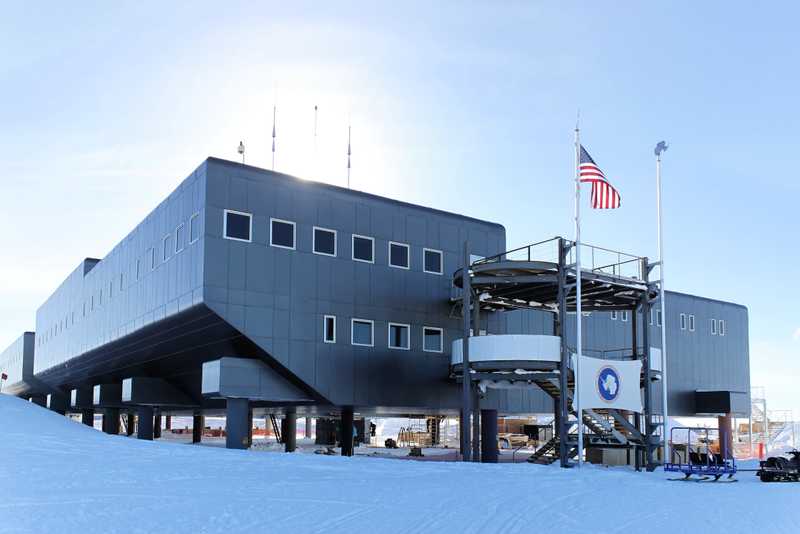
The conspiracy theorist made some pretty out-there claims at the conference, but it’s the discussion about the Amundsen–Scott South Pole Station that was most significant.

Hecker claimed that in 2010 Raytheon, the US aerospace and defence conglomerate chose him to be a contractor on the research centre operated by the United States National Science Foundation.

There was “much more” to the station that first met the eye, according to Hecker.

Monday, June 12, 2023! Dr. Greer's Groundbreaking National Press Club Event! FREE to Watch! www.youtube.com

He claimed the station actually operated as an “air traffic control” centre for UFOs and communicated with “exotic” crafts by sending neutrino rays up into space.

Hecker went further by talking about “digital optical modules” buried a mile beneath the surface under the ice. He claims they were buried in order to detect neutrino interactions while being deep enough not to interfere with radiation readings.

He also said he personally saw a “powerful green laser” pointing “at the cosmos.”

the.jpg?id=34119829&width=800&quality=50

The Amundsen–Scott South Pole Station

iStock

{ https://www.indy100.com/science-tech/ }

Hoe vind je dit bericht?
Geschreven door peter om 22:21 Stuur door

Don't Get Your Hopes Up for a City on the Moon

Don't Get Your Hopes Up for a City on the Moon

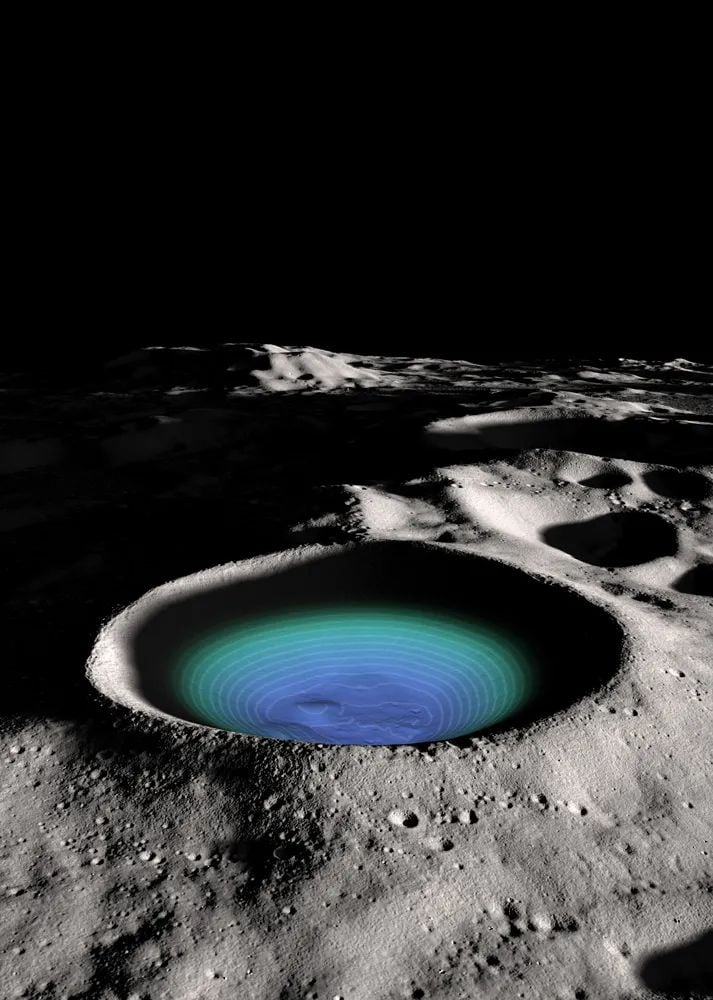
This image shows the Moon's Shackleton Crater, a 21 km wide crater near the Moon's south pole. Its floor is a permanently shadowed region where ancient water ice persists. These regions have fuelled ideas of eventual lunar cities. Is the idea realistic? Image Credit: NASA/GSFC/SVS This image shows the Moon's Shackleton Crater, a 21 km wide crater near the Moon's south pole. Its floor is a permanently shadowed region where ancient water ice persists. These regions have fuelled ideas of eventual lunar cities. Is the idea realistic? Image Credit: NASA/GSFC/SVS

The dawn of the space age in the 1950s and 60s came with a particular kind of hubris. The futuristic zeitgeist of the time led to scientific ideas of humans living in cities on the Moon. Arthur C. Clarke envisioned outposts of inflatable, pressurized domes that would grow into a city. The US Army's Project Horizon was a serious feasibility study for establishing a military and scientific lunar base. And there were others.

An eventual human presence on the Moon was considered an inevitability by many.

Our current understanding that the Moon harbours a vast amount of frozen water ice has triggered a renewed interest in lunar colonies and cities. The usual billionaire suspects have shared their dreams of building a city on the frigid satellite. But are these ideas practical? Or are they throwaway ideas?

Billionaires waxing rhapsodic about Moon cities is one thing. But the foundation of any human settlement is water. Is the Moon's water accessible and plentiful? Is there some way of providing enough water for an actual city full of people?

A new article in Frontiers in Space Technologies digs into the meat of the idea. The article is "No cities on the Moon: a billion tons of water is not enough for sustainability," and the authors are Dr. Martin Elvis and Dr. Jonathan McDowell. Dr. Elvis is from the Smithsonian Astrophysical Observatory at the Center for Astrophysics, Harvard and Smithsonian, and Dr. McDowell is from the Space Research Centre at Durham University in the UK.

Discusssions of lunar water ice focus on the Moon's Permanenently Shadowed Regions. These are craters near the Moon's poles where ancient ice billions of years old is sheltered from the Sun's warmth. There are some other deposits, like in the regolith itself, but those are not rich sources and not easily exploited.

"The Moon, with an area of 37.93 million km2, about 50% bigger than North America (24.71 million km2), is talked about as our “8th continent”, the authors write. "As a result, many authors consider the Moon’s resources to be so vast as to pose no significant constraints on industry and settlement."

Listen to the hubris the authors are pointing out. As if the Moon is like a continent. As if there are "no significant restraints."

Bezos said we should move heavy industry to the Moon as if that's something we could actually do. Musk says we should build self-growing cities on the Moon. In this work, the authors point out how ludicrous this is. And their reasoning comes down to water.

"Presumably, in order to make an economic difference to the human economy, they are both imagining significant settlement of, say, at least 1% of Earth’s population, i.e., ∼80 million people living on the Moon," the authors write. "These are grand plans," they add.

Grand plans are great when they're grounded in reality. The Moon landings, for instance, were grand. The Hubble Space Telescope was a grand idea. Those grand plans only came to fruition after decades of rigorous science.

When applying science to the ideas of Moon cities and lunar industrial parks, they collapse into hubristic rambling.

These futuristic settlements would also need energy to exploit all of this ice. So the problem is two-fold: accessible ice and the energy to melt it, deliver it, and critically, to recycle it sustainably. "Is it correct to make the assumption that sufficient power and water are available?" the authors ask, framing their work.

There's one thing working in favour of Moon cities. The useful ice deposits are in the bottoms of shadowed craters near the poles. But the rims of the very same craters are excellent locations for solar power generation. These rims are seldom shaded, and because of the angles involved, photovoltaics can be mounted vertically. "These arrays can be tall, from several meters to as high as 1 km and could rotate to follow the Sun around the horizon," the authors write.

Elvis and McDowell crunch the numbers for personal energy use and industrial energy use and conclude that energy isn't a limiting factor, although that includes fusion power.

"If industry requires no more than double the personal use rate, then a million people can be supported on the Moon with either solar or fission power," they write. They add that fusion power, if attainable, is a necessity if considering a human population of several millions. "For both solar and fission sources power generation is a weak constraint on the lunar population," they explain.

So it's all about water.

There are some necessary constraints on the Moon's water. While there are multiple methods of measuring the water in PSRs, and different researchers have calculated the total amount of water ice on the Moon, measurements are uncertain and don't agree with one another.

Shackleton Crater is a large, 21 km crater near the Moon's south pole that's prominent in discussions about lunar water. A 2007 study showed that it could hold between 1.6 to 4.5 million tons of water ice. That range shows how badly more accurate measurements are needed.

Regardless of the amount of ice present, the reality is not all of it will be retrievable. "Achievable retrieval fractions for lunar water will only be known once we have ground truth on how the water ice is mixed with the surface regolith," the authors write.

There are assumptions involved in this issue. The authors settle on a number often used in these discussions: one billion tons of water ice in the Moon's permanently shadowed regions. "One billion tons of water will be taken here as a generous baseline," they write.
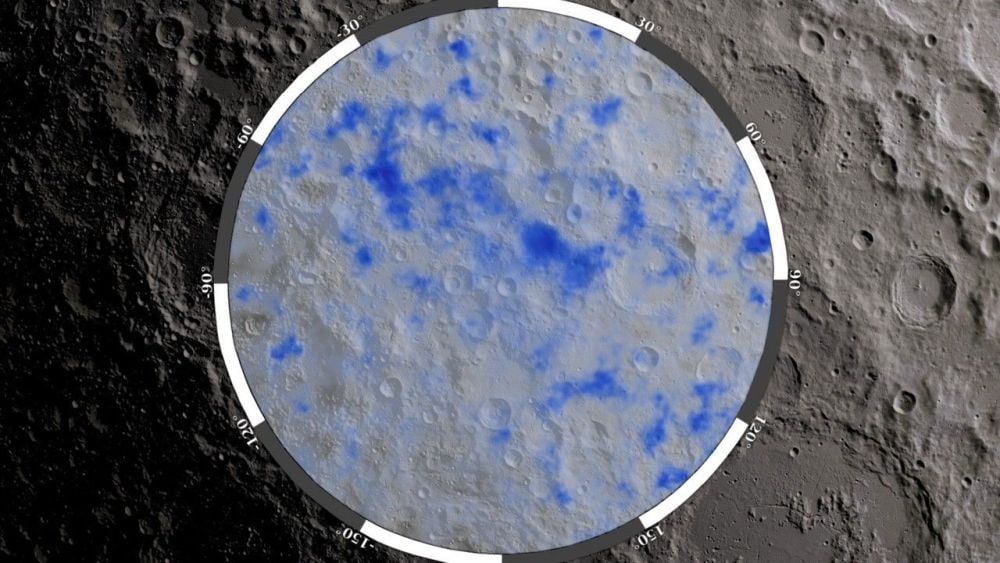
The blue areas show potential water ice deposits at the Moon's south pole. Image Credit: NASA.

The blue areas show potential water ice deposits at the Moon's south pole.

Image Credit: NASA.

Though one billion tons sounds like a lot, it's not. Earth has about 1.4 billion billion tons (1.4 × 10¹⁸ metric tons.) The water will be used as drinking water, to make rocket fuel, for growing food, and for breathing.

The researchers use the figure of 125 tons of personal water use per person per year, based on estimates for an adult in the USA. That's for personal use only.

Growing food requires much more. The World Bank estimated that 2 to 5 tons, or 2,000 to 5,000 liters, are needed to feed one person per day. "That comes to 730–1825 tons/year/person, or ∼6–15 times as much as direct personal water consumption," the authors write.

Working with these ranges, the authors calculate that a city of one million people would exhaust the Moon's water in only 2.4 years.

But the water consumption numbers can be reduced in a lunar setting where water will be more tightly controlled and accounted for. The researchers considered water recycling efficiency and applied it to cities of different populations to establish time frames for water exhaustion.
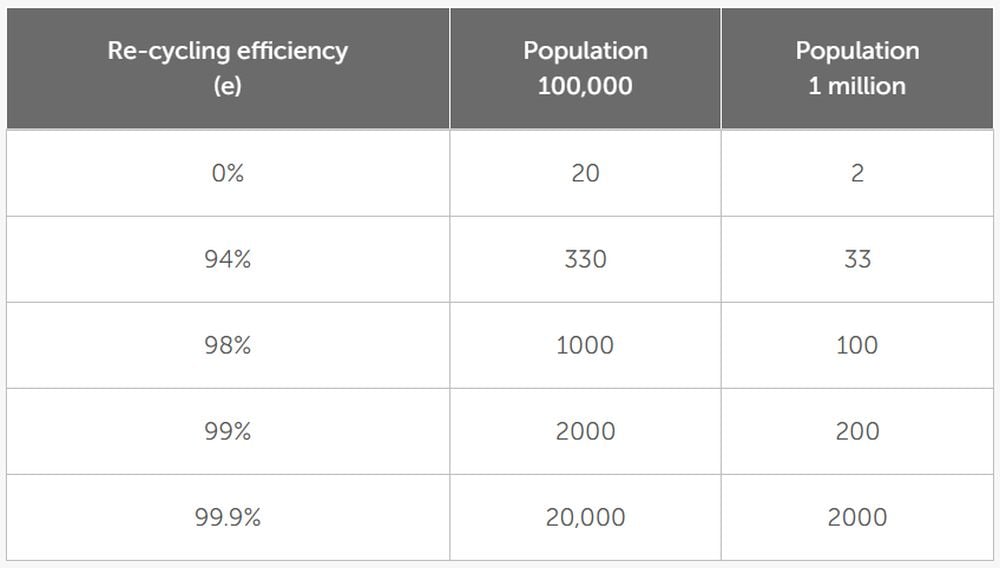
This table shows the number of years to full exhaustion of a billion tons of lunar water. Image Credit: Elvis and McDowell 2026. Frontiers in Space Technologies.

This table shows the number of years to full exhaustion of a billion tons of lunar water.

Image Credit: Elvis and McDowell 2026. Frontiers in Space Technologies.

Humans have some expertise in water recycling. The authors point out that the International Space Station has, by necessity, the most efficient water recycling system ever devised. Up until 2023, it reached a 94% efficiency. "At that efficiency a billion tons of water is gone in 40 years for a population of 1 million," they explain.

Building a lunar city that can only last 40 years would be pointless. But the ISS improved its water recycling efficiency to 98% in 2023. "That may sound like a small change, but it is a major achievement, cutting the losses threefold," the researchers write.

If a lunar base can reach 98% water recycling efficiency, the numbers shift. An ISS-like 2% loss rate means that it would take 100 years for a city of one million people to use up a billion tons of water. "For such a large investment, a lifetime of about a century seems to fall short of the sustainable, long-term settlement beyond Earth that some advocate," the authors explain.

But a smaller city of about 100,000 people could sustain itself for about 1,000 years, which are much more palatable numbers. "This timescale seems long enough to justify being called sustainable," Elvis and McDowell write.

In terms of water, these figures start to illustrate what may be feasible in the future. But shifts and changes in how people live will be required to succeed. At some point, recycling efficiency will be maxed out and other approaches will be needed.

A low-meat or no-meat diet lowers water use, though it's not clear if there's any real way of raising livestock, poulty, or fish on the Moon anyway. Water could be potentially imported from other sources, perhaps from water-rich asteriods. The magnitude of that task is beyond this paper.

Finding more water on the Moon may be the most reasonable solution. But where? Underground seems the most likely location.

"In the case that an unexpected reservoir of water is found, then doubling the total available water would double the longevity of lunar settlements," the authors write.
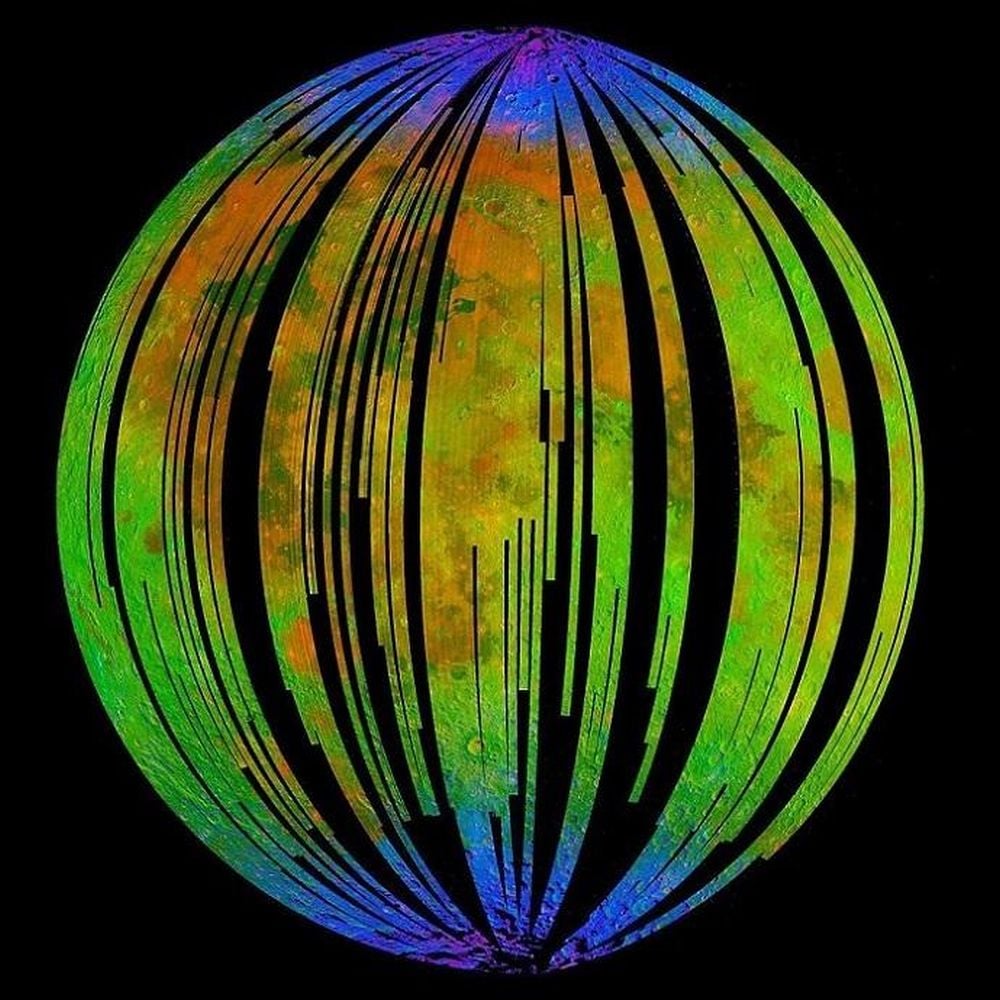
This mineral mapping of the Moon also shows the distribution of water ice in blue at the lunar poles. Image Credit: NASA

This mineral mapping of the Moon also shows the distribution of water ice in blue at the lunar poles.

Image Credit: NASA

How easily accessed that potential reservoir may be is a difficult question to answer. There could be water ice under the surface, but will it be concentrated like it is in PSRs?

There are many unanswered questions. Billionaires may get away with glossing over them and blithely pointing to some kind of unrealistic future. But that path isn't open to scientists. These scientists say the most likely future sees a population of about 1,000 on the Moon, similar to the population of researchers and staff in Antarctica.

"If the settlement remains a “Moon Village” at a population of about 1,000, comparable to the winter-over population of Antarctica, then we can be relatively carefree in our use of lunar water," the researchers write. "If the population reaches 100,000, then we need to start being careful."

There's a huge list of other factors to consider when contemplating any kind of city or industry on the Moon. But the basic need is water.

The authors say that no matter what happens, stewardship of the Moon's water resources will be vital. "Humanity will need to plan, govern and regulate the use of lunar water, rather than adopt a ‘first come first served’, free-for-all approach to water extraction and use," they write.

It comes down to finding more water, according to the authors.

"If the ambitious plans of the space billionaires are to be realized, then finding more water will be the first step," Dr. Martin Elvis wrote in an accompanying letter.


RELATED

Building a Human City on the Moon | Documentary - EM

How NASA Will Build A City On The Moon

{ https://www.universetoday.com/ }

Hoe vind je dit bericht?
Geschreven door peter om 21:59 Stuur door

Moon Size UFO In Constellation Leo Minor Near Super Nova Red Giant, World Wide Telescope, UAP Sighting News.

Moon Size UFO In Constellation Leo Minor Near Super Nova Red Giant, World Wide Telescope, UAP Sighting News.

UFO,%20%20.png

UAP.png
Date of discovery: Sept 15, 2026
Location of discovery: Leo Minor constellation 
Source map:
I was searching through the World Wide Telescope which is a free online program for anyone to use without signing up. I soon found a blue flat craft that is about the size of our moon. The blue craft is near a super nova so its clear that its there to harvest some super rare and valuable energy particles...the kind we have yet to discover. The ship is in Leo Minor and its not near the only super nova but just one of a dozen of exploding suns in that area. I believe the ship is a bio-mechanical craft, which means its been grown, and is still a living creature after its been made. A living ship. It would be logical that aliens would do things easiest, fastest and least worry, but growing the ship, they can leave and come back when its finished. 
Scott C. Waring - UFO Sightings Daily 

 { https://www.ufosightingsdaily.com/ }

Hoe vind je dit bericht?
Geschreven door peter om 21:35 Stuur door

UFO Fleet Caught On Live Cam Over Arkansas Sep 10, 2026 UAP sighting news. 👽

UFO Fleet Caught On Live Cam Over Arkansas Sep 10, 2026 UAP sighting news. 👽

Screenshot%202026-09-15%20at%2012.53.57%E2%80%AFPM.png

Screenshot%202026-09-15%20at%2012.58.59%E2%80%AFPM.png

Date of sighting: Sept 10, 2026
Location of sighting: Crossett, Arkansas, USA
Source: NUFORC 
 
Sorry for the poor screenshot above, I liked this video and wanted to put it up for you all to see. The objects in the video are flying around in a group and are clearly intelligently controlled. The eyewitness recorded it on live cam so the quality is poor, but still it helps. The UFOs were seen during a wildfire in the area and UFOs are often seen around natural disasters. Aliens like to monitor the public, but its also possible they accidentally caused the fire from the intense heat or energy used with the alien ships. 
 
In the classic UFO case of May 20, 1967, Stephen Michalak of Winnipeg, was prospecting near Falcon Lake, Manitoba, when he encountered two UFOs, one of which landed on a large, flat rock about 160 feet away from him. After having approached the object and looked inside, the object moved, and something like an exhaust vent was now in front of him. A blast of hot gas shot from these holes onto his chest, setting his shirt and undershirt on fire and causing him severe pain, and leaving burn marks in the shape of a grid. So you see...UFOs do cause burns, which could be the cause of the fires.
Scott C. Waring - UFO Sightings Daily
 
Eyewitness states: 
These UAPs were sighted on a weather camera in Crossett, Arkansas flying over an active wildfire. There were seen off and on for roughly 5 hours throughout the night. I confirmed with state and local authorities that they did not have any planes or drones in the area during this time.
RELATED

 { https://www.ufosightingsdaily.com/ }

Hoe vind je dit bericht?
Geschreven door peter om 21:28 Stuur door

Meer van UFO'S of UAP'S, ASTRONOMIE, RUIMTEVAART, ARCHEOLOGIE, OUDHEIDKUNDE, SF-SNUFJES EN ANDERE ESOTERISCHE WETENSCHAPPEN - DE ALLERLAATSTE NIEUWTJES

↑ Terug naar de berichten