Ontdek de Fascinerende Wereld van UFO's en UAP's: Jouw Bron voor Onthullende Informatie!
Ben jij ook gefascineerd door het onbekende? Wil je meer weten over UFO's en UAP's, niet alleen in België, maar over de hele wereld? Dan ben je op de juiste plek!
België: Het Kloppend Hart van UFO-onderzoek
In België is BUFON (Belgisch UFO-Netwerk) dé autoriteit op het gebied van UFO-onderzoek. Voor betrouwbare en objectieve informatie over deze intrigerende fenomenen, bezoek je zeker onze Facebook-pagina en deze blog. Maar dat is nog niet alles! Ontdek ook het Belgisch UFO-meldpunt en Caelestia, twee organisaties die diepgaand onderzoek verrichten, al zijn ze soms kritisch of sceptisch.
Nederland: Een Schat aan Informatie
Voor onze Nederlandse buren is er de schitterende website www.ufowijzer.nl, beheerd door Paul Harmans. Deze site biedt een schat aan informatie en artikelen die je niet wilt missen!
Internationaal: MUFON - De Wereldwijde Autoriteit
Neem ook een kijkje bij MUFON (Mutual UFO Network Inc.), een gerenommeerde Amerikaanse UFO-vereniging met afdelingen in de VS en wereldwijd. MUFON is toegewijd aan de wetenschappelijke en analytische studie van het UFO-fenomeen, en hun maandelijkse tijdschrift, The MUFON UFO-Journal, is een must-read voor elke UFO-enthousiasteling. Bezoek hun website op www.mufon.com voor meer informatie.
Samenwerking en Toekomstvisie
Sinds 1 februari 2020 is Pieter niet alleen ex-president van BUFON, maar ook de voormalige nationale directeur van MUFON in Vlaanderen en Nederland. Dit creëert een sterke samenwerking met de Franse MUFON Reseau MUFON/EUROP, wat ons in staat stelt om nog meer waardevolle inzichten te delen.
Let op: Nepprofielen en Nieuwe Groeperingen
Pas op voor een nieuwe groepering die zich ook BUFON noemt, maar geen enkele connectie heeft met onze gevestigde organisatie. Hoewel zij de naam geregistreerd hebben, kunnen ze het rijke verleden en de expertise van onze groep niet evenaren. We wensen hen veel succes, maar we blijven de autoriteit in UFO-onderzoek!
Blijf Op De Hoogte!
Wil jij de laatste nieuwtjes over UFO's, ruimtevaart, archeologie, en meer? Volg ons dan en duik samen met ons in de fascinerende wereld van het onbekende! Sluit je aan bij de gemeenschap van nieuwsgierige geesten die net als jij verlangen naar antwoorden en avonturen in de sterren!
Heb je vragen of wil je meer weten? Aarzel dan niet om contact met ons op te nemen! Samen ontrafelen we het mysterie van de lucht en daarbuiten.
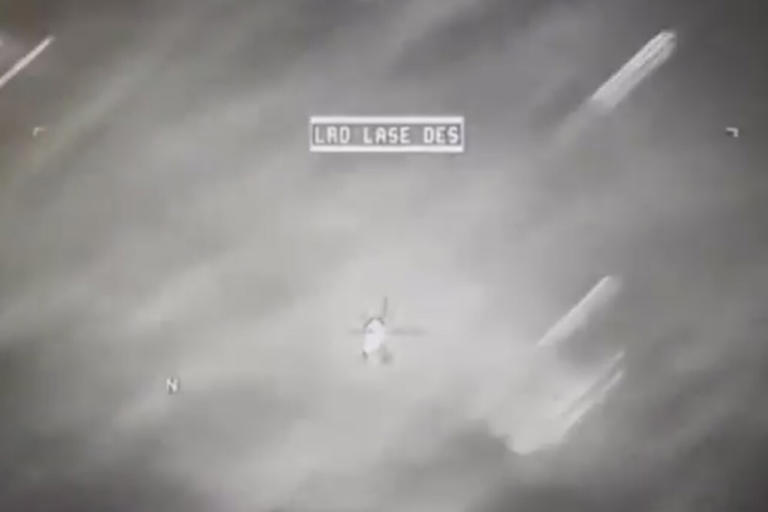
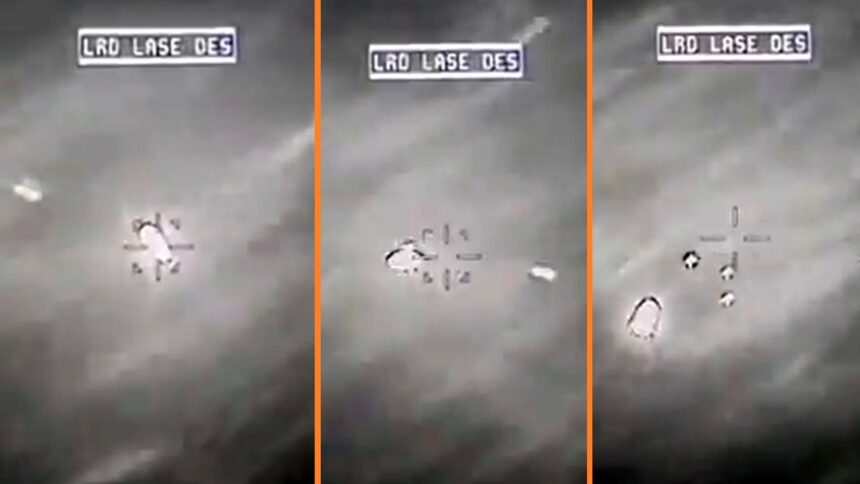
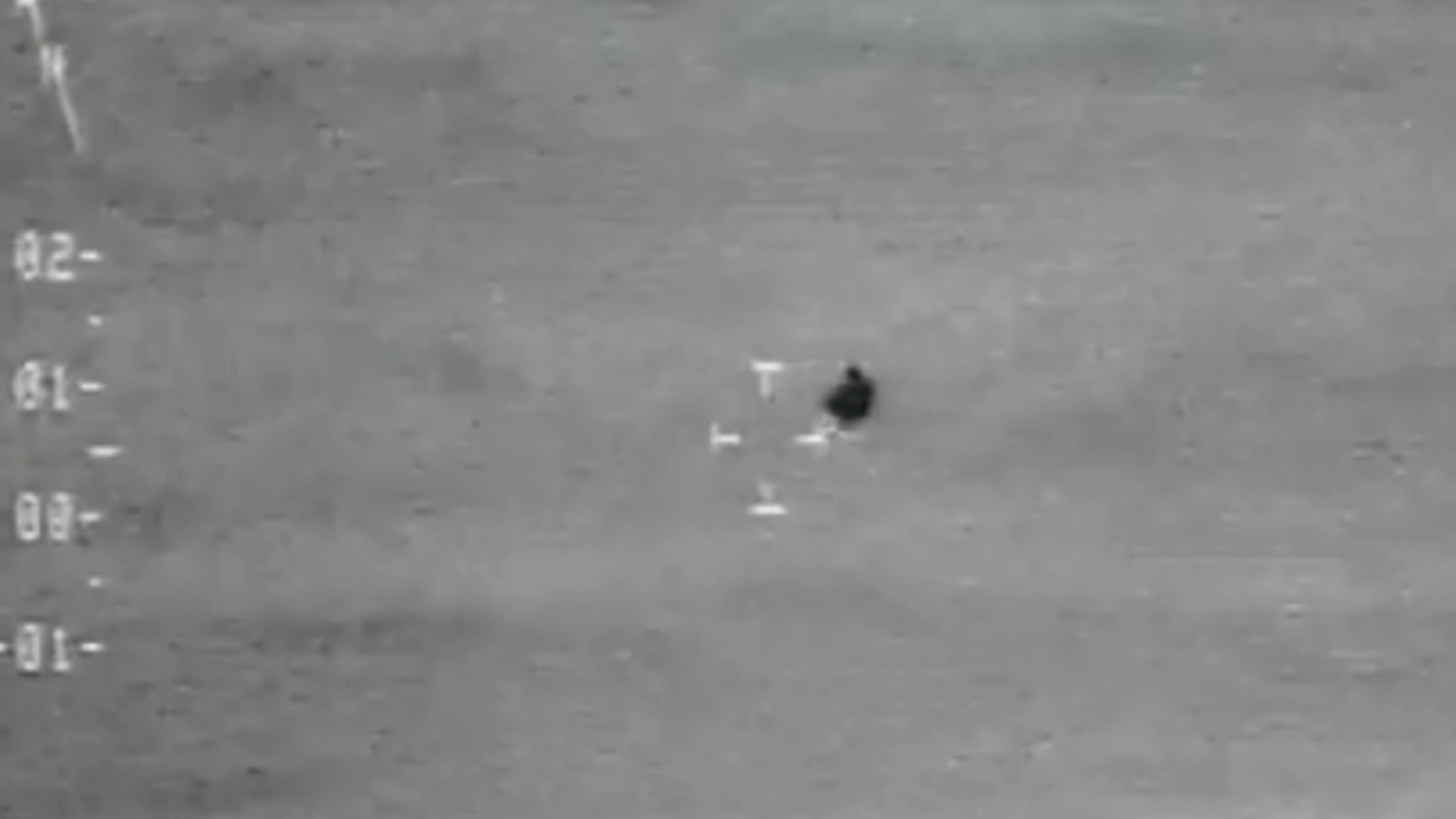
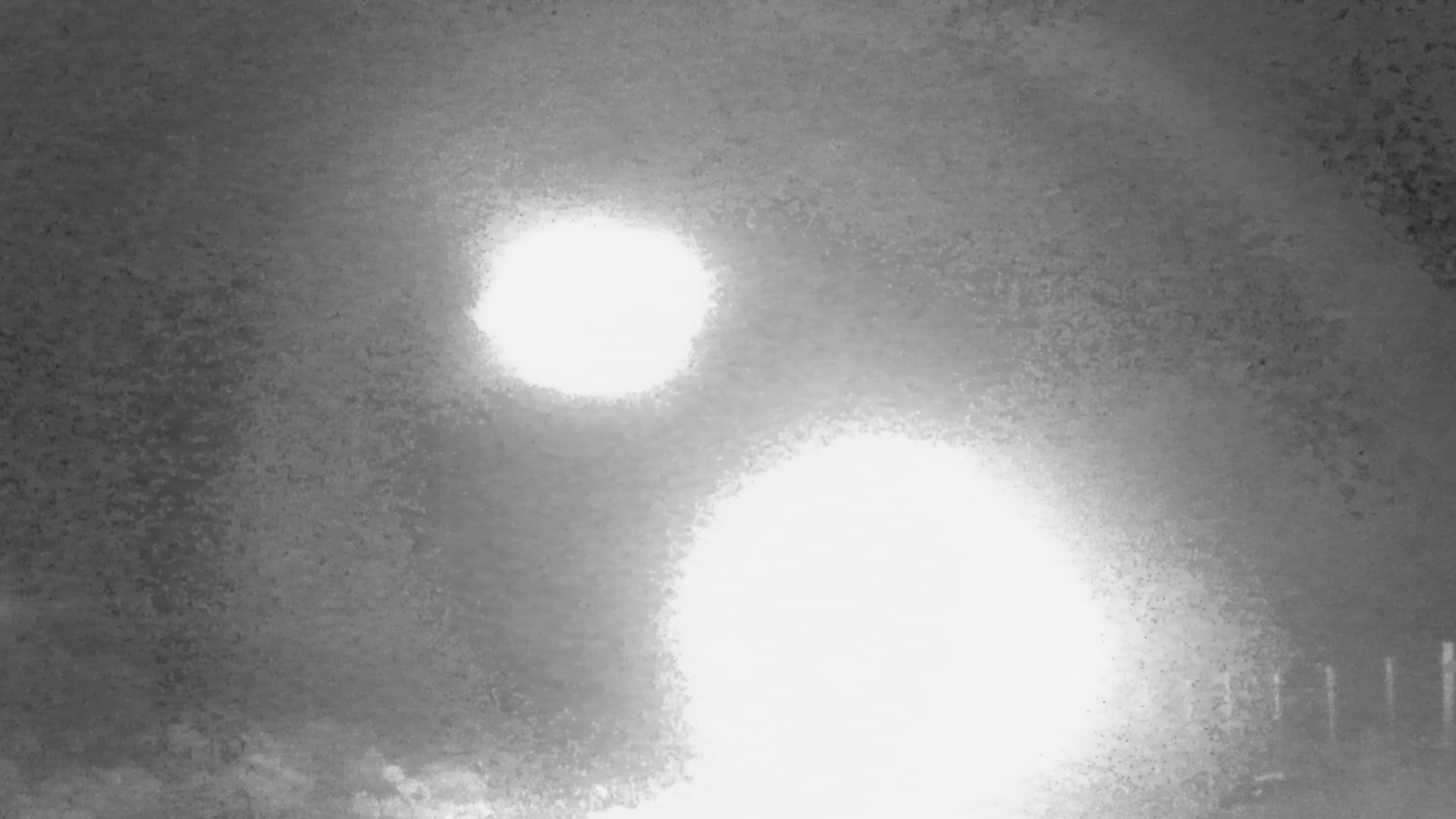
Een verrassende sequentie, vastgelegd in oktober 2024 voor de kust van Jemen, onthult een Amerikaanse Hellfire-raket die door een Reaper-drone is afgevuurd op een mysterieuze lichtgevende bol. In plaats van zijn doel te vernietigen, lijkt de raket te stuiteren, waardoor de UFO (ongeïdentificeerd vliegend object) ongedeerd blijft – een uniek fenomeen dat sindsdien tot bezorgdheid heeft geleid bij experts en beleidsmakers.
Een video die nog nooit eerder is vertoond
Deze video, getoond tijdens een hoorzitting van het Amerikaanse Congres in september 2025, werd gepresenteerd door afgevaardigde Eric Burlison. De video toont duidelijk dat de Hellfire-raket het doel raakt, maar terugkaatst in plaats van te exploderen of het object te neutraliseren. Voormalig inlichtingenofficier Lue Elizondo wijst erop dat dit gedrag ongekend is voor dit type raket, waarvan de impact meestal fataal is.
Schokkende video toont raket afgevuurd door het Amerikaanse leger die van een UFO stuitert boven de oceaan
(Foto: X)
Een onverklaarbaar object in een gespannen militaire context
De UFO, officieel aangeduid als UAP (Unidentified Aerial Phenomeen), werd met hoge snelheid over water gegleden, gevolgd door twee MQ-9 Reaper-drones. Deze waarneming vond plaats in een conflictgebied, wat wijst op een mogelijke connectie met geavanceerde militaire technologieën van een wereldmacht, in plaats van een buitenaardse oorsprong.
Foto en video: X @digijordan. Deze inhoud is gemaakt met behulp van AI en herzien door het redactieteam.
Op weg naar meer transparantie en onderzoek
Het Congres roept op tot meer duidelijkheid en informatie over deze onbekende luchtverschijnselen, die nog steeds in nevelen gehuld zijn. Deze video, afkomstig van een klokkenluider, wordt nog steeds bestudeerd door onafhankelijke experts. Het onderstreept de groeiende Amerikaanse interesse in het monitoren en begrijpen van onconventionele luchtdreigingen.
Beeld: Youtube
Er is een groot mysterie gaande rond onlangs verschenen beelden van een Amerikaanse raket die een UFO probeert neer te schieten. Zonder succes, want het object lijkt zijn weg te vervolgen. Verschillende officals en media vragen zich nu hardop af wat er precies heeft plaatsgevonden.
“Waarom laten we dit nu zien?”
Burlison toonde de clip op 9 september 2025 tijdens een hoorzitting over UAP’s om één boodschap te onderstrepen: open de boeken. Als dit soort opnames bestaan, dan hoort het Congres de ruwe data te zien — tijdcodes, IR-feeds, radar, alles. Geen sensatie zonder context, maar óók geen geheimzinnigheid als het om publieke verantwoording gaat.
“What the hell is that?”
Journalist George Knapp was erbij als getuige. Geen wilde claims, geen grootse theorieën — juist dat maakt zijn reactie zo raak. Hij vindt dat dit type materiaal met volksvertegenwoordigers gedeeld moet worden, maar zonder extra context is het vooral… een fascinerende puzzel. Zijn soundbite die bleef hangen: “What the hell is that?” Precies de vraag die je stelt als je de clip twee keer hebt teruggespoeld en nog steeds niet begrijpt waarom dat ding niet omlaag komt.
Wat weten we níet (en dat is lekker frustrerend)
Wapendetail: Er is geen publiek vrijgegeven forensische analyse die definitief zegt: “dit was het wapen, hier was de impact.”
Ruwe sensordata: Zonder multisensor-correlatie (IR, radar, metadata) blijft het gissen naar snelheid, grootte en materiaal.
Optische trucs: Wat lijkt op “onverwoestbaar” kan deels worden verklaard door perspectief, compressie of autofocus. Of niet — en dan wordt het alleen maar spannender.
Plaats in groter patroon: Het incident past in een bredere reeks meldingen rond gevoelige locaties, maar harde conclusies ontbreken.
Waarom dit zo viraal gaat
Eerlijk is eerlijk: we zijn gek op paradoxen. Een raket treft iets, dat “iets” blijft vliegen — dat is voer voor discussies, memes en eindeloze replayknoppen. Het zet de deur open naar alles: van hypergeavanceerde drones tot exotische technologie. En ja, het woord UFO duikt dan onvermijdelijk op, al is het officieel gewoon “onverklaard”.
Het grotere plaatje: tussen wow-moment en waarheidsvinding
Dit fragment balanceert perfect tussen spectaculair en onbeantwoord. Het roept vragen op over hoe we militair beeldmateriaal delen, hoe we UAP-cases onderzoeken en welke data nodig zijn om feiten van fantasie te scheiden. Zolang de ruwe bestanden, rapporten en telemetrie niet op tafel liggen, blijft het een cliffhanger waar elke nieuw hoofdstuk om schreeuwt.
UFO houdt ons even in z’n greep
Wat we zagen: een object dat na een vermoedelijke treffer onverstoorbaar doorgaat. Wat we voelen: een mix van ongeloof, nieuwsgierigheid en een gezonde dosis show me the data. Burlison en Knapp zitten op dezelfde golflengte: deel het materiaal, laat experts ermee aan de slag en geef het publiek duidelijkheid. Tot die tijd blijft de UFO het internet — en Washington — knap bezighouden.
Tussen fascinatie en publieke bezorgdheid
Op sociale media en onder gekozen functionarissen wekt de afbeelding van de stuiterende raket fascinatie, debat en bezorgdheid op. Sommigen zien het als bewijs van buitengewone technologie, terwijl anderen de realiteit en bedoelingen van deze verschijnselen in twijfel trekken, wat aanleiding geeft tot allerlei fantasieën en theorieën.
Uiteindelijk wakkert deze uitzonderlijke video het debat over de aard van UAP's en het vermogen van de strijdkrachten om hiermee om te gaan, opnieuw aan. Daarmee wordt een toekomst voorspeld waarin wetenschap en inlichtingendiensten transparant en nauwkeurig moeten zijn.
Check ook:
UFO gefilmd door vliegtuigpassagiers: Bewijs dat buitenaards leven echt is!
Perseverance Finds Potential Chemical Signatures of Ancient Microbial Life on Mars
Introduction
The quest to discover past life on Mars has long captivated scientists and the public alike. With NASA’s Perseverance rover exploring the Jezero Crater, a site believed to have once hosted a lake, researchers are uncovering intriguing evidence that may point to ancient microbial life. A recent publication in Nature details the extensive geological, petrographic, and geochemical investigations conducted by the rover’s suite of instruments, revealing potential biosignatures in rocks of the Bright Angel formation. This article delves into these findings, their significance, and the broader implications for understanding Mars’ ancient habitability.
This artist’s impression shows how Mars may have looked about 4 billion years ago.
Image credit: M. Kornmesser / ESO.
The Geological Context of Jezero Crater
Jezero Crater as a Window into Mars’ Past
Jezero Crater, approximately 45 kilometers in diameter, was once a lake-rich environment that preserved a diverse array of sedimentary deposits. Its geological makeup offers a unique record of Mars' early climate and potential habitability. The crater’s deposits include mudstones and conglomerates indicative of flowing water and standing lakes, making it an ideal site to search for biosignatures. These sediments have the potential to contain organic molecules and microfossils, providing crucial clues about past life possibilities on Mars. The stratigraphy within Jezero reveals multiple episodes of water activity, including lake formation and sedimentation, which are essential for understanding the planet's climatic evolution. Moreover, the mineralogical composition of these deposits, such as clay minerals and carbonates, further supports the evidence of a once warmer and wetter environment. Studying these geological features helps scientists reconstruct Mars’ climatic history and assess its habitability during the Noachian period, approximately 3.8 to 4.1 billion years ago
Image showing the area of Jezero Crater explored by the Perseverance rover.
Credit: ESA/DLR/FU Berlin
Bright Angel Formation: A Sedimentary Archive
Within Jezero, the Bright Angel formation comprises sedimentary rocks deposited by aqueous processes. These include fine-grained mudstones, layered beds, and conglomerates. Such rocks form in environments where water interacts with sediments over extended periods, often creating conditions conducive to the preservation of organic molecules and mineralogical signs of biological activity. The layered nature of the Bright Angel formation suggests repeated cycles of sedimentation, possibly related to lake level changes or seasonal variations. The presence of clay minerals within these sediments indicates neutral to slightly alkaline conditions, favorable for preserving organic compounds. Additionally, the conglomerates contain rounded pebbles and cobbles that reveal information about water flow velocities and sediment transport mechanisms. The detailed analysis of these rocks by Perseverance provides insights into the environmental conditions that prevailed during sediment deposition, including water chemistry, temperature, and duration of aqueous episodes. These findings are vital in understanding the habitability potential of Jezero’s past environments and guiding future exploration efforts.
Exploration of Neretva Vallis
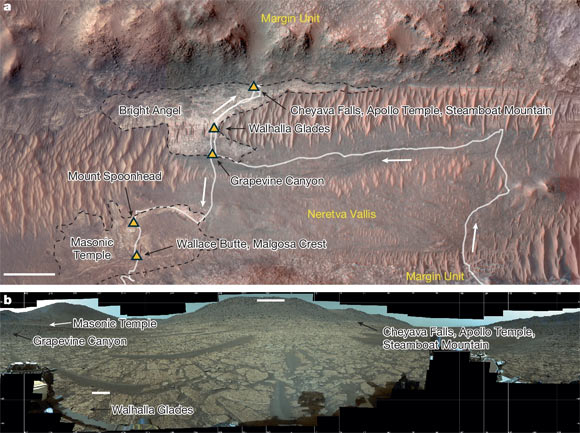
Perseverance’s entry into Neretva Vallis, on the western edge of Jezero, allowed the rover to investigate distinctive outcrops of the Bright Angel formation. The rover’s detailed analyses of these rocks have yielded key insights into their composition and formation history. By examining the mineralogy and texture of the outcrops, scientists have identified signatures of aqueous alteration, such as clay minerals and sulfates, which indicate past interactions with water. The morphology of the outcrops reveals layered structures that suggest episodic sedimentation, possibly during different lake stages or flood events. These observations help reconstruct the paleoenvironmental conditions, including water chemistry, pH, and redox states. Furthermore, the geochemical data obtained from Neretva Vallis outcrops have provided evidence for mineral stabilization processes that may have contributed to the preservation of potential biosignatures. The exploration of this area continues to refine our understanding of Mars’ aqueous history and enhances the search for signs of ancient life in Jezero Crater.
This artist’s concept depicts NASA’s Mars rover Perseverance on the surface of the Red Planet.
Image credit: NASA / JPL-Caltech.
Instrumentation and Methodology
Perseverance’s Suite of Scientific Instruments
The rover is equipped with a comprehensive array of scientific tools designed for detailed analysis of the Martian surface. In addition to SHERLOC and PIXL, it features the SuperCam, which combines laser-induced breakdown spectroscopy (LIBS), Raman spectroscopy, and visible/near-infrared (VNIR) spectroscopy, enabling remote mineral identification and organic detection from a distance. The Mastcam-Z camera system provides high-resolution panoramic and stereoscopic imaging for geological context and terrain mapping. The Sample Caching System allows for the collection, sealing, and storage of promising samples for future retrieval and return missions. The MEDA (Mars Environmental Dynamics Analyzer) monitors atmospheric conditions, temperature, humidity, and dust levels, providing essential environmental data to support the interpretation of geological findings.
Analytical Techniques
Spectroscopy: SHERLOC and PIXL provide mineralogical and molecular signatures, including Raman spectra indicative of organic carbon.The suite employs multiple spectroscopic methods, including Raman, LIBS, and X-ray fluorescence, to determine mineral compositions and detect organic compounds. These techniques identify chemical signatures indicative of past habitability and potential biosignatures.
Imaging:The high-resolution cameras capture detailed images of rock textures, layering, and mineral veins, revealing geological history and processes. Imaging also helps select optimal sample sites for drilling and analysis.
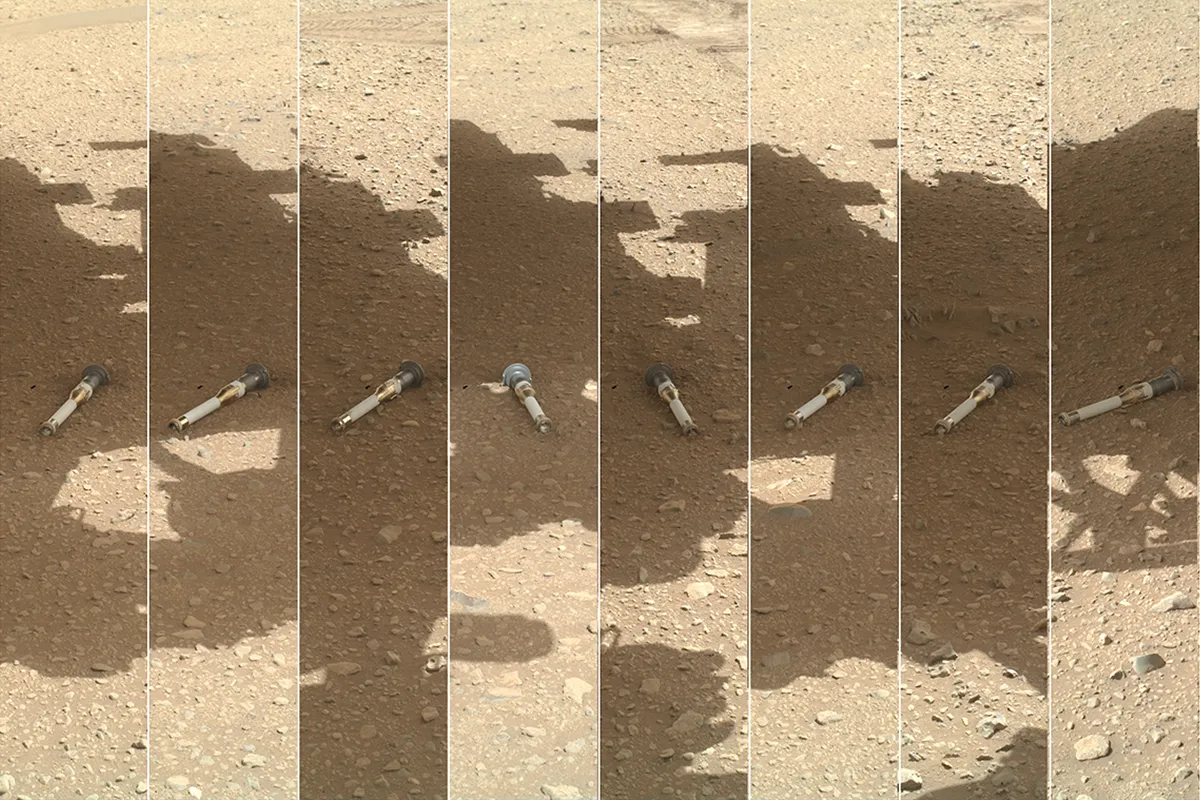
Sample Collection:Perseverance drilled into rocks to collect core samples, such as from Sapphire Canyon, which are stored securely in sealed tubes. These samples are preserved for detailed laboratory analysis upon return to Earth, enabling future detailed studies of Martian geology and potential biosignatures.Acore sample named Sapphire Canyon was obtained from the Bright Angel formation and stored in a sealed tube for potential future return to Earth.
Composite image showing some of the sample tubes deposited by the Perseverance rover at 'Three Forks,” a location within Mars’s Jezero Crater.
Credit: NASA JPL-Caltech
Some of the features of Chevaya Falls.
(NASA/JPL-Caltech/MSSS)
Key Geological and Geochemical Findings
Detection of Organic Molecules and Redox-Active Minerals
The analytical instruments identified diverse organic molecules—carbon-based compounds—embedded within the rock matrices. These organics include complex hydrocarbons and functionalized carbon compounds that suggest the past presence of biological activity or prebiotic chemistry. Alongside these, minerals such as vivianite (ferrous iron phosphate) and greigite (iron sulfide) were detected. These minerals are indicative of low-temperature, aqueous environments, often forming in conditions that support microbial life. Their presence implies that water-rock interactions played a crucial role in the mineralization process and potentially served as habitats for microbial ecosystems. The redox-active nature of these minerals suggests a dynamic environment where oxidation-reduction reactions could facilitate energy transfer, possibly supporting microbial metabolisms similar to those on early Earth. These findings point toward a past environment conducive to life, characterized by the availability of liquid water, chemical energy sources, and organic building blocks. The coexistence of organics and redox minerals strengthens the hypothesis that these rocks experienced biogeochemical processes, offering valuable insights into the planet’s potential habitability during its geological history.
Structural Features: ‘Poppy Seeds’ and ‘Leopard Spots’
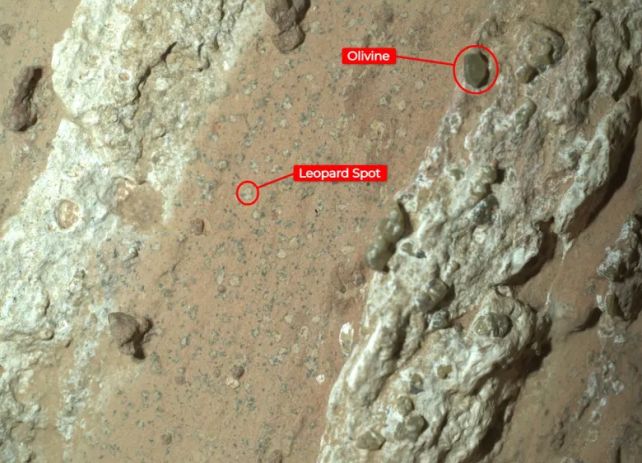
Microscopic imaging revealed distinctive textures within the rocks, notably tiny nodules called 'poppy seeds' and reaction fronts known as 'leopard spots.' The 'poppy seeds' are small, spherical inclusions enriched in ferrous iron phosphate, which suggest localized mineralization possibly driven by biological or chemical processes. The 'leopard spots' display mottled patterns of mineral alteration, often associated with zones of redox change. These features are significant because they are typically formed through redox reactions involving electron transfer, processes often mediated by microbial activity. Their spatial distribution and mineralogy imply that microbial communities might have influenced mineral deposition and alteration, leaving biosignatures embedded within the rock fabric. Such features serve as microscopic indicators of past biological processes and environments. Their study provides clues about the extent and nature of microbial life in ancient aqueous systems, contributing to our understanding of extraterrestrial habitability.
Organic Signatures and the G-Band
The SHERLOC instrument detected a prominent Raman spectral feature known as the G-band within multiple Bright Angel rocks. The G-band, centered around 1580 cm^-1, is a diagnostic marker of graphitic or amorphous organic carbon. Its presence indicates that organic molecules are not only present but have undergone some degree of carbonization or graphitization, processes associated with biological activity or diagenetic alteration. The strongest G-band signals were observed at Apollo Temple, correlating with a mineral assemblage rich in carbonaceous material and redox-sensitive minerals. The detection of the G-band provides compelling evidence for the past existence of organic matter, which could have originated from biological sources or abiotic synthesis pathways. The spatial distribution of the G-band, alongside mineralogy, helps reconstruct potential environments where organics were preserved—such as low-temperature, water-rich settings that favor organic stability. These findings bolster the case for ancient habitable environments and highlight the importance of organic preservation in the geological record, both on Mars and in astrobiological research.
Interpreting the Geological and Chemical Evidence
Redox Reactions and Microbial Metabolisms
The spatial association of organic molecules with redox-sensitive minerals suggests that chemical processes similar to microbial metabolisms on Earth could have occurred on Mars. On Earth, microbes metabolize organic matter by "breathing" iron and sulfate, leading to mineral formation. The presence of these features on Mars raises the tantalizing possibility that similar processes took place.
Abiotic versus Biotic Origins
The findings prompt two main hypotheses:
1. Abiotic (Geochemical) Processes: The mineral structures and organic signatures could result from purely chemical reactions driven by environmental conditions, such as water chemistry, temperature, and mineral interactions, without biological intervention.
2. Biological Influence: Alternatively, microbial activity could have influenced mineral formation, with microbes metabolizing organic molecules and mediating redox reactions, leaving behind biosignatures.
Constraints on Temperature and Formation Conditions
One critical aspect is the temperature history of these rocks. Many mineral features associated with microbial processes on Earth only form at relatively low temperatures. The analysis suggests that the rocks were never subjected to high-temperature heating, which would have obliterated delicate biosignatures. This supports the hypothesis that if life existed, it could have thrived in the aqueous environments represented by these rocks.
Perseverance’s path through Neretva Vallis and views of the Bright Angel formation.
Image credit: Hurowitz et al., doi: 10.1038/s41586-025-09413-0.
Implications for Past Life on Mars
Potential Biosignatures and Their Significance
While the evidence remains inconclusive as definitive proof of past life, the observed features align with NASA’s criteria for potential biosignatures—molecular or mineralogical indicators that suggest biological activity in the planet's history. The co-occurrence of organic molecules with minerals formed in water-rich, redox-active environments is particularly noteworthy, as it points to conditions that could have supported microbial life. These signatures, especially when found in specific mineral matrices, increase the likelihood that biological processes may have contributed to their formation. Understanding these biosignatures enhances our knowledge of Mars’ ancient habitability and guides future exploratory missions. Further laboratory analysis will be crucial to determine whether these features originated biologically or through abiotic processes, helping to refine our criteria for detecting life beyond Earth.
Comparison with Terrestrial Analogues
On Earth, similar mineral-organic associations are prevalent in ancient sedimentary deposits where microbial communities thrived under comparable environmental conditions. For example, iron-rich banded iron formations and sulfur-rich sediments often host microfossils and biogenic mineral structures. These terrestrial analogues demonstrate how microbial metabolisms can influence mineral precipitation and organic preservation over geological timescales. The parallels suggest that if life ever existed on Mars, it might have employed similar metabolic pathways, particularly involving iron and sulfur cycling, which are abundant in the planet's ancient crust. Studying Earth's early ecosystems provides valuable insights into the potential biological processes that could have operated on Mars, informing the search for life and interpreting potential biosignatures.
Sample Return and Future Research
The core sample from Sapphire Canyon is carefully stored for eventual return to Earth, marking a significant milestone in planetary exploration. Once retrieved, comprehensive analyses in terrestrial laboratories will enable high-precision isotopic studies to determine biogenic versus abiotic origins of the detected features. Advanced techniques such as microfossil identification, mineralogical characterization, and molecular analysis will be employed, surpassing the capabilities of rover-based instruments. These investigations aim to confirm whether the observed features are indeed the result of past biological activity or are products of non-biological processes. Such definitive evidence would profoundly impact our understanding of Mars’ history and its potential to have harbored life. Moreover, the findings will guide future missions, refining biosignature detection strategies and expanding our search for extraterrestrial life elsewhere in the universe.
Broader Scientific and Astrobiological Context
Understanding Mars’ Habitability
The findings reinforce the idea that early Mars had environments suitable for life: persistent liquid water, chemically rich sediments, and energy sources. The presence of organic molecules and microbial-like mineral signatures suggests that habitable conditions may have persisted long enough for microbial communities to develop. These conditions provide a compelling case for Mars being a potentially life-supporting environment in its past. The detection of water-related minerals, such as clays and sulfates, indicates that Mars experienced prolonged aqueous activity, which is essential for the emergence and sustenance of life. Moreover, the chemical richness of sediments points to the availability of nutrients necessary for microbial metabolism. The energy sources, possibly derived from volcanic activity or chemical gradients, could have powered biological processes. Understanding these factors helps scientists reconstruct the planet’s ancient climate and assess its capacity to harbor life, guiding future exploration efforts to identify specific sites with the highest potential for biosignatures. Such insights are crucial in establishing Mars’ role in the broader narrative of life's origins in the universe and assessing the planet’s potential as a future habitat for human exploration.
NASA's Perseverance rover captured this selfie on 23 July 2024, near a rock known as Cheyava Falls, which shows evidence that it may have once been home to microbial life.
Credit: NASA/JPL-Caltech/MSSS
Astrobiological Significance
Discovering potential biosignatures on Mars has profound implications for understanding the universality of life. If microbial processes can form mineral-Organic associations in Martian environments, it broadens the scope of where life could exist or have existed elsewhere in the universe. These findings suggest that life may not be confined to Earth-like conditions but could potentially thrive in a variety of extraterrestrial settings. The detection of organic molecules, combined with mineral signatures indicative of biological activity, supports the hypothesis that life’s building blocks are widespread and that similar processes might occur on other planetary bodies, such as Europa or Enceladus. This expands the astrobiological search beyond traditional habitable zones, encouraging scientists to explore diverse environments that may harbor life. Additionally, understanding how biosignatures form and are preserved on Mars provides critical insights into the longevity and detectability of extraterrestrial life signals. These discoveries fuel the scientific quest to answer whether life exists beyond Earth, shaping future missions aimed at detecting definitive signs of past or present life on other planets and moons.
Challenges and Limitations
Despite the excitement, scientists emphasize caution. The features observed could result from non-biological processes, such as mineralization, chemical reactions, or abiotic mineral formation. Differentiating between biological and abiotic origins of potential biosignatures remains a significant challenge, requiring rigorous analysis and multiple lines of evidence. Definitive proof of past life necessitates unambiguous biosignatures, such as microfossils—tiny, cell-like structures—or isotopic ratios characteristic of biological activity, which are difficult to confirm remotely. Contamination, preservation biases, and the complexity of planetary geology complicate interpretations. Future sample analyses, potentially conducted on return missions, are expected to provide more conclusive evidence. They aim to identify complex organic molecules, specific microscopic structures, and isotopic signatures that can only be attributed to biological processes. Until then, findings remain promising but provisional, emphasizing the importance of cautious scientific interpretation. These limitations highlight the need for advanced instrumentation, meticulous data collection, and comprehensive analysis to confidently establish whether life once existed—or still exists—on Mars.
Concluding Remarks
The Perseverance rover’s exploration of the Bright Angel formation has provided compelling evidence that ancient Martian environments could have supported microbial life. The detection of complex organic molecules is particularly significant, as these are fundamental building blocks of life. Additionally, the identification of minerals such as clay and sulfates—known to form in the presence of water—indicates that Mars once had a habitable environment with the necessary conditions for microbial life to thrive. Structural features observed within the rock formations resemble biosignatures, further strengthening the case for past life, although they are not definitive proof on their own.
These findings are crucial because they suggest that Mars's ancient environment was more hospitable than previously thought, potentially allowing microbial organisms to exist or have existed. The significance of these discoveries extends beyond Mars; they contribute to the broader search for life beyond Earth and inform future exploration strategies. The upcoming analysis of samples returned to Earth will be critical in verifying these initial findings.
Advanced laboratory techniques can detect subtle biosignatures that in-situ instruments cannot, offering the possibility of conclusive evidence of past life. Ultimately, these discoveries challenge our understanding of life's distribution in the universe, opening new avenues for scientific inquiry and existential reflection. Continued research is essential to fully unravel Mars’s ancient habitability and to answer one of humanity’s most profound questions: Are we alone?
Leaked Video Shows US Military Shooting UFO With Hellfire Missile
"What the hell is that?"
Image by Department of Defense / Futurism
Someone has leaked a video of an unidentified anomalous phenomenon (UAP) — the military's preferred term for unidentified flying objects, better known as UFOs — to Congress.
As USA Today reports, this never-before-seen video was provided anonymously to Eric Burlison, a Missouri Republican and member of the House of Representative's UAP Caucus, and shows a bizarre encounter that occurred last October off the coast of Yemen.
In the video, an Air Force MQ-9 "Reaper" drone tracks the object that Burlison referred to as an "orb" over the water until a second Reaper fires a precision Hellfire missile at the UAP. Although it's unclear what mission was occurring during the footage, it did occur the same time that the US and its allies were conducting strikes against Houthi rebels in Yemen.
The strange object took the hit and was momentarily pushed off its trajectory by the missile, which also appeared to cause some debris to eject from it, before correcting course. It's unclear from the video, which zoomed out just after the strike, where the debris went.
Hellfire missiles pack a punch. As Military.com details, these missiles can be launched both air-to-air or air-to-ground, and are "capable of defeating any known tank in the world today." Whatever that orb was, in other words, its ability to bounce back from a Hellfire strike would suggest it was tougher than a tank.
During the hearing, as USA Today notes, witnesses to the event — including three military veterans — said there is no known human technology that could survive a Hellfire hit.
Discussing the video, neither Burlison nor UAP journalist George Knapp chose to hypothesize on what the video showed — but still remarked at how strangely the objected acted after the missile strike.
"That's the Hellfire missile smacking into that UFO and just (bouncing) right off," Knapp said, per ABC News' write-up of the hearing. "And it kept going."
"And it looks like the debris was taken with it," Burlison responded.
"Yeah," the reporter responded. "What the hell is that?"
In response to ABC's requests for comment, a Department of Defense spokesperson demurred.
"I have nothing for you," they said.
Knapp, meanwhile, was glad that the video had been released, even if outside official channels.
"The public should be seeing this stuff," the UAP journalist said during the hearing, and "why you're not allowed to, I don't know."
"This is about national security, government accountability, and the American people's right to the truth."
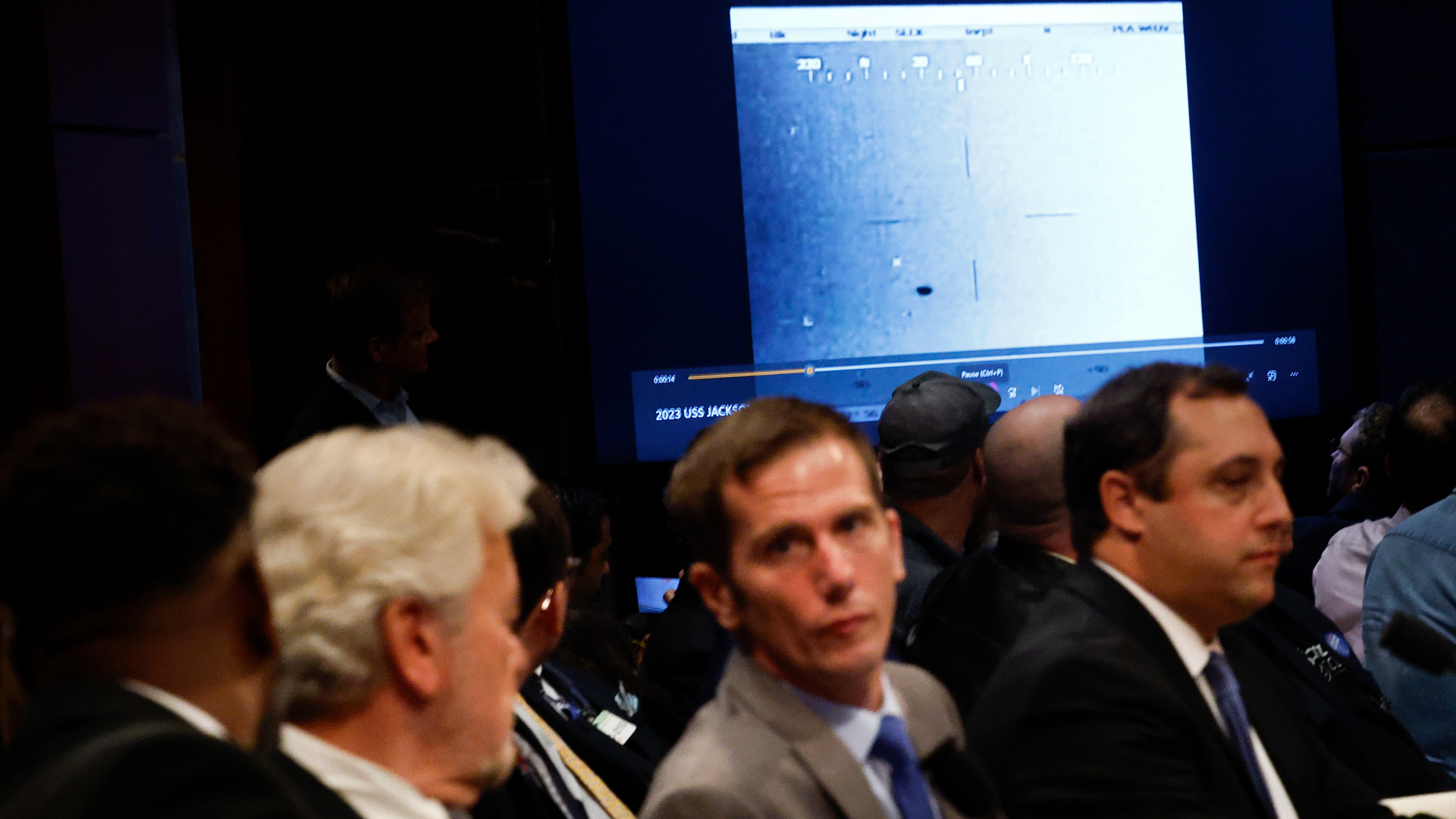
A photo taken at the recent US Congressional UAP hearing on September 9.
(Image credit: Kevin Dietsch / Getty Images staff)
How can the U.S. government restore public trust regarding unidentified anomalous phenomena (UAP) through transparency and offering whistleblower protections?
Representative Anna Paulina Luna (R-FL) is chair of that task force, swearing in witnesses that under oath discussed their experiences and knowledge about UAPs, a rebranded term attached, deserved or not, to unidentified flying objects (UFOs), as well as unidentified objects or phenomena in Earth's bodies of water or space.
For too long, UAPs have been "shrouded in secrecy, stigma, and in some cases outright dismissal," Luna said in her opening statement.
"Today, I want to state clearly: this is not science fiction or creating speculation. This is about national security, government accountability, and the American people's right to the truth," said Luna. "Future generations will look back on this moment and ask what we did when presented with the unknown. Did we look away, embarrassed or afraid? Or did we pursue the truth with courage? I intend to be on the side of truth, transparency, and accountability," the lawmaker stated.
Space.com asked several experts from leading research groups on UAPs/UFOs concerning the hearing and their take-away thoughts.
Wanted: nitty-gritty details
"The military witness reports were very good," said Robert Powell, executive board member of the Scientific Coalition for UAP Studies in Austin, Texas.
While it may not be apparent to the public or congress, Powell said that anyone who has studied the history of the subject knows that there have been hundreds of such reports by military witnesses that are equally as good.
"Unless Congress is willing to push for the nitty-gritty details" by obtaining full videos, interviewing pilots involved in UAP incidents, and other reported events, "we will not progress," said Powell.
Powell said, in his view, the military will never release the necessary information to establish the presence of a non-human intelligence.
"That's because of their concerns for national security and whether one of our adversaries might learn something from UAP that they could use militarily against us," Powell said. "The resulting tendency to silo all information on UAP prevents moving forward with learning more. Only if Congress allocates funding to the scientific community and academia to study UAP will we make any progress," he concluded.
Science above all
"I find it frustrating that they, rightly, reiterate the importance of the role science can take in figuring out what is behind UAP, but do not apply it in these hearings."
That's the outlook from Alejandro Rojas, a long-time UFO journalist and a consultant to Enigma, a UAP/UFO sightings alert network.
"We have years of anecdotal sighting reports and claims of hidden government knowledge about alien visitation. What we need is evidence," Rojas said.
Rojas added that he found it also trying that the one organization that has been using science, the Pentagon's All-domain Anomaly Resolution Office (AARO), was pummeled in the hearing, without being represented.
"Having worked in the UFO field for so long, I am sympathetic to their [AARO's] effort. They have shown each step of their work analyzing previous videos, and although it is unpopular to demystify some of these reports, their scientific analyses have been sound," he said.
A still from a video reportedly showing a "transmedium" UAP that appears to travel between air and water and split in half. During testimony on Nov. 19, 2024 the head of the Pentagon's UFO office AARO said it actually shows an infrared camera's inability to tell two objects' temperature apart from the ocean behind them. (Image credit: AARO/DOD)
Preconceived notions
At the recent hearing, "the gripes of committee members came across as being frustrated with the organization that is using science and coming up with answers," sensed Rojas. "However, because they dislike the answers, they blame AARO, when in fact they genuinely do not want scientific analysis to dismantle their preconceived notions."
In the end, Rojas found the hearing disheartening.
"Instead of focusing on real issues and truly championing scientific investigation, the hearing comes across as a very political back-and-forth between the Oversight Committee and the Pentagon," said Rojas. "What gets lost is what we actually need, and that is data gathering and scientific evaluation of that data."
As a consultant with Enigma, Rojas said the group is collecting hundreds of reports, many with videos.
"What we need is a robust, transparent effort to analyze what we are collecting, and to build better sensor systems to gather more and better data on UAP," said Rojas. "If extraterrestrials are visiting us, it is not just the military that would be seeing them."
Credible and intriguing
Avi Loeb, head of the Galileo Project at Harvard, and director of the Institute for Theory & Computation, said he found the first-hand testimonies at the hearing "to be credible and intriguing."
Loeb's Galileo Project is an endeavor to bring the search for extraterrestrial technological signatures of other star folk from "accidental or anecdotal observations and legends" to the mainstream of crystal-clear, confirmed and systematic scientific research.
"I salute congresswoman Luna for chairing this important discussion within the Task Force on the Declassification of Federal Secrets in the U.S. Congress," Loeb said.
But does such a congressional hearing restore public interest in UAP?
"This discussion is not a matter of public relations in a popularity contest, but instead a topic of great relevance for national security and science," responded Loeb. "Once we all see credible evidence about the nature of UAP, we will be able to get to the bottom of it and everyone would agree on what it means."
(L-R) Unidentified Aerial Phenomena (UAP) witness U.S. Air Force veteran Jeffrey Nuccetelli, UAP witness U.S. Navy Senior Chief Petty Officer Alexandro Wiggins, UAP Journalist George Knapp, UAP witness U.S. Air Force veteran Dylan Borland and Senior Policy Counsel at the Project On Government Oversight Joe Spielberger are sworn-in at the recent Congressional hearing(Image credit: Kevin Dietsch / Getty Images Staff)
Best path to new knowledge
Data collection is the goal of the Galileo Project under Loeb's leadership.
Does the astrophysicist believe that the U.S. government is hiding information? He replied that "as a scientist I respond to evidence and not to what people tell me. Scientific evidence is our best path to new knowledge."
The simplest way to tell the difference between a dogmatist and a genuine scientist, Loeb said, is to flood both of them with scientific-quality data.
"Whereas the dogmatist will shove anomalous data under the carpet of traditional thinking, an open-minded scientist will be thrilled to learn something new with an underlying sense of humility," advised Loeb. "Not only is nature more imaginative than we are, but it also does not care whether we figure it out. The insistence that everything in the sky is either icy rocks or human-made technologies will not rid us of cosmic neighbors, if they exist out there," he concluded.
Tone and testimony
"Overall, I was pleased with the tone and testimony in the hearing from the witnesses, and the often excellent questions from the Representatives," said Mark Rodeghier, president and scientific director of the Center for UFO Studies in Chicago, Illinois.
"The hearing hopefully provided more impetus to pass the crucial legislation necessary to answer questions we have about possible US government/contractor involvement with UAP that has been hidden all these years," said Rodeghier.
Rodeghier said the witnesses added additional experiences on the record of both UAP sightings and how the aftermath of those has been handled by the military, including treatment of those wishing to speak publicly.
Crucial legislation
Beyond moving Congress to pass the bills, Rodeghier advised getting witnesses into a SCIF, short for Sensitive Compartmented Information Facility. Located several levels beneath the U.S. Capitol, a SCIF is where lawmakers and witnesses hold closed interviews, far from the prying eyes of the public.
"I'm not sure what can be done with it [those interviews], but having it available is important," said Rodeghier.
Another Rodeghier recommendation is to have the head of AARO in a hearing this fall now that he has been on the job for a year. Lastly, there's need to work on getting the appropriate government agencies to provide modest funding for UAP research, which continues to be unavailable, he said.
Deep difficulties
Michael Cifone is the founding executive director of the Society for UAP Studies, based in Los Angeles, California. The group's mission is not to promote a single narrative but to advance careful scholarship, develop educational frameworks, and advocate for standards of evidence and data transparency.
The recent Congressional hearing on UAPs underscored, once again, "both the importance of the issue and the deep difficulties that have hampered its treatment for decades," said Cifone.
That handling of the topic within the government — whose aim since at least after World War II has been increasingly obsessed with national security and maintaining US military and strategic dominance, feels Cifone, "are guiding principles that are ultimately at odds with the inner operating directives of the sciences themselves: free, open, and therefore democratic exploration of self and world."
Mixed pool
"The UAP problem is not a mystery with one answer, but rather a somewhat unstable and chaotic amalgam of many overlapping realities, complicated by the unfortunate facts of the modern bureaucratic national security state," is a view that Cifone basically endorses.
"UAP reports are not a monolith," Cifone advised.
Instead, they are a mixed pool consisting of: (1) misidentified U.S. black projects, where cutting-edge aerospace programs are understandably shrouded in secrecy; (2) adversarial drones and surveillance platforms, which represent a genuine national security challenge; (3) a large number of ordinary misperceptions of balloons, satellites, or atmospheric phenomena; and (4) a small but stubborn residue of anomalous cases that resist explanation.
"This mixture makes the phenomenon difficult to study, not because of some grand cover-up, but because of the dysfunctional way information is handled inside the government," Cifone said.
Are we up to the task?
The UAP hearing, for all its frustrations, said Cifone, "at least signaled that Congress is beginning to take seriously the structural problems that have long clouded this issue."
From a safety standpoint, the "mixture hypothesis" is particularly important, said Cifone. If even a fraction of UAP reports involve advanced adversarial drones or unsafe incursions into U.S. airspace, then society is faced with an aviation and national security challenge that demands systematic response, he said.
"Let's see what data and frameworks we can establish that can handle UAP and associated phenomena/claims, and what philosophical/conceptual challenges remain, and if we're up to the task," Cifone said.
And for the other claims — crashes, bodies, and so on, Cifone concludes, "sure, but where's the beef?"
KIJK. Amerikaans Congreslid geeft beelden vrij van incident met ufo: “Waarom wordt dit voor ons verzwegen?”
Er zijn voor het eerst beelden vrijgegeven van een incident op 30 oktober 2024, voor de kust van Jemen. Een Amerikaanse Hellfire-raket kwam toen in botsing met een ufo (ongeïdentificeerd vliegend voorwerp). Nadien zet de ufo z’n koers voort. Tot vandaag is nog steeds onduidelijk wat het object was.
De video werd vrijgegeven door Congreslid Eric Burlison tijdens een hoorzitting van een subcommissie van het Huis van Afgevaardigden over Ongeïdentificeerde Anomale Fenomenen (UAP), wat de militaire term is voor ufo’s. Hij speelde de beelden, die volgens hem voor zich spreken, af tijdens de commissie. Op die beelden, die boven zee gefilmd zijn, is inderdaad een raket te zien. Niet veel later verschijnt er in de linkerbovenhoek een voorwerp dat recht op de raket afgaat. De twee komen in botsing, waarna de ufo onverstoord verder vliegt.
De beelden roepen veel vragen op, ook bij ufo-kenner en onderzoeksjournalist George Knapp. “Mensen moeten dit zien, maar krijgen dit niet te zien. Waarom weet ik niet”, vroeg Knapp zich luidop af. “Dit is een Hellfire-raket die tegen een ufo botst en die gaat gewoon door. Dat is heel vreemd, wat is dit in godsnaam?”
Jemen
De Verenigde Staten halen in die regio regelmatig raketten en drones van Houthi-rebellen neer. Dat zou een verklaring kunnen zijn voor het ongeïdentificeerde object, maar de Amerikaanse defensiedienst en het Pentagon willen niet verder ingaan op het incident.
Nasa vindt ‘vingerafdruk’ van oud leven op Mars: “Nooit eerder zo dichtbij geweest”
In een rots op Mars zijn aanwijzingen gevonden dat er vroeger misschien leven op de planeet mogelijk was. De steen vertoont "potentiële tekenen van oud leven van microben". De Amerikaanse ruimtevaartorganisatie NASA zegt "niet eerder zo dicht bij het ontdekken van leven op Mars te zijn geweest". De organisatie houdt nog wel een slag om de arm en zegt dat er ook andere verklaringen mogelijk zijn.
De onbemande robotjeep Perseverance ontdekte in juli vorig jaar een rots met luipaardvlekken. Mogelijk gaat het om "overgebleven fossielen, uitgescheiden door microben", aldus NASA. De ruimtevaartorganisatie zegt de vondst te hebben voorgelegd aan wetenschappers. Zij zouden hebben geconcludeerd dat oud leven de meest logische verklaring is, blijkt uit een artikel in het wetenschappelijk tijdschrift 'Nature'.
Al kunnen de onderzoekers andere verklaringen, waarbij geen biologisch leven betrokken is, niet uitsluiten. Daarom is het belangrijk om een staal van het materiaal te onderzoeken in een labo op aarde, klinkt het.
De Perseverance landde in 2021 op Mars. De verkenner met zes wielen heeft twintig camera’s en een boor aan boord om de planeet te onderzoeken. Het werkgebied van de rover is de krater Jezero. Miljarden jaren geleden, toen op Mars mogelijk water stroomde, mondde daar mogelijk een rivier uit in een meer.
De robotjeep onderzoekt stalen, maar transporteert die niet. Daarvoor zijn andere robots nodig. De vraag is wel of NASA daar nog geld voor zal vinden, nadat de Amerikaanse president Donald Trump vraagtekens plaatste bij de plannen om materiaal vanop Mars naar de aarde te brengen.
UFO’s lopen het risico de gevaarlijke weg in te skaan van het paranormale, waarschuwt expert – terwijl een schokkend rapport onthult dat het Pentagon mythen heeft verzonnen
De recente onthulling dat het Pentagon mogelijk heeft bijgedragen aan het creëren van mythen rond onverklaarbare vliegende objecten (UFO’s) schokt de wereld en dwingt ons tot een kritische herbezinning op deze mysterieuze verschijnselen. Het feit dat overheidsinstanties mogelijk bewust hebben meegespeeld in het verspreiden van misleidende informatie ondermijnt niet alleen onze nieuwsgierigheid, maar ook de geloofwaardigheid van officiële verklaringen. Een vooraanstaand expert waarschuwt dat dit soort onderzoek gevaarlijk kan afdwalen in het paranormale, waardoor de objectieve interpretatie van UFO’s wordt ondermijnd. Het risico is groot dat we verstrikt raken in een ‘paranormale rabbit hole’, waarin feit en fictie door elkaar worden gehaald, waardoor de waarheid steeds verder uit het zicht raakt.
Het creëren van mythen en het manipuleren van informatie door de overheid ondermijnt het vertrouwen in officiële bronnen en bemoeilijkt het ontdekken van de daadwerkelijke aard van deze verschijnselen. Het is cruciaal dat we kritisch blijven en niet meegaan in sensationele complottheorieën, maar ons richten op zorgvuldig en transparant onderzoek. Alleen door openheid en objectiviteit kunnen we de ware aard van UFO’s ontrafelen. Het gevaar is immers niet alleen dat we in een web van desinformatie verstrikt raken, maar dat we belangrijke aanwijzingen missen die ons kunnen leiden naar een beter begrip van deze mysterieuze fenomenen. Het is tijd voor een frisse, rationele blik die de feiten centraal stelt en wegblijft van manipulatie en speculatie.
Ondanks deze nieuwe informatie hebben UFO-voorstanders zoals Luiz Elizondo (op de foto) hun overtuigingen versterkt. Meneer Elizondo leek te insinueren dat het recente onderzoek zelf onderdeel was van een samenzwering om de waarheid over UFO's te verbergen.
De gevaarlijke valkuil van het paranormale: Hoe oncontroleerbare verhalen onze realiteit ondermijnen
In de hedendaagse samenleving worden UFO’s en buitenaardse verschijnselen vaak besproken, maar het onderscheid tussen feit en fictie vervaagt steeds meer. Wat ooit begon als een zoektocht naar wetenschappelijke antwoorden, dreigt nu te ontsporen in een wirwar van ongefundeerde verhalen en conspiracy theories die zich snel verspreiden via sociale media en andere kanalen. Het gevaar hiervan is niet alleen dat de waarheid ondergesneeuwd raakt, maar ook dat het publieke vertrouwen in wetenschap en overheidsinstanties ernstig wordt ondermijnd.
Het fenomeen dat steeds vaker wordt besproken, wordt wel de ‘paranormale rabbit hole’ genoemd. Hiermee wordt bedoeld dat mensen die zich verdiepen in onverklaarbare fenomenen zich vaak verliezen in een eindeloze zoektocht naar antwoorden, waarbij ze zich laten meeslepen door speculaties en complotten. Hierdoor ontstaat een gevaarlijke dynamiek: angst en wantrouwen nemen toe, terwijl de grond onder onze voeten wegzakt. Mensen gaan steeds meer geloven in samenzweringen, dat overheden en militaire instanties de waarheid verbergen, en dat er een geheime buitenaardse agenda zou bestaan. Dit leidt tot een vervormde werkelijkheid waarin feiten en fictie nauwelijks nog te onderscheiden zijn.
De gevolgen hiervan zijn verstrekkend. Wetenschappelijk onderzoek wordt ondermijnd doordat men zich niet meer baseert op harde feiten, maar op geruchten en ongefundeerde theorieën. Dit remt niet alleen de vooruitgang in de wetenschap, maar voedt ook het wantrouwen in politiek en media. De gevaarlijke realiteit is dat, doordat mensen niet meer weten wat ze kunnen vertrouwen, de maatschappelijke cohesie onder druk komt te staan. Daarnaast kunnen deze misleidende verhalen leiden tot gevaarlijke acties, zoals het negeren van medische adviezen of het aansporen tot onnodige angst en paniek.
Het is daarom essentieel dat we ons bewust blijven van de gevaren van de ‘paranormale rabbit hole’. We moeten kritisch blijven ten opzichte van informatie die niet op feiten is gebaseerd en ons niet laten meeslepen door sensationele verhalen. Het is de taak van wetenschappers, journalisten en overheidsinstanties om transparant te zijn en betrouwbare informatie te bieden. Alleen door een helder onderscheid te maken tussen feit en fictie, kunnen we voorkomen dat de samenleving wordt verdeeld door oncontroleerbare theorieën en dat het vertrouwen in onze instituties verder afneemt. Het gevaar ligt niet alleen in de verhalen zelf, maar in de manier waarop ze onze perceptie van de werkelijkheid beïnvloeden. Het is tijd om de feiten terug te winnen en onze samenleving te beschermen tegen de destructieve kracht van onbewezen paranormale claims.
Een sensationeel rapport heeft beweerd dat de UFO-samenzweringen rond Nevada's Area 51 (gefotoiseerd) zijn aangewakkerd door het Pentagon om een geheim wapenprogramma te verbergen.
Het schokkende rapport: mythes en manipulatie
Het recente rapport dat onlangs is uitgebracht, schokt de wereld en roept dringende vragen op over de geloofwaardigheid van onze overheden. Het beschrijft een schokkend patroon waarbij het Pentagon bewust mythes en misleidende verhalen heeft gesponnen over UFO’s. Volgens dit rapport zou de militaire macht niet slechts onschuldige waarnemingen hebben gecategoriseerd, maar actief hebben gelogen en informatie hebben achtergehouden om het publiek te manipuleren. Ze zouden beelden en verhalen hebben gebruikt om de ware aard van hun technologische ontwikkelingen en militaire operaties te verbergen.
Deze onthullingen ondermijnen niet alleen het vertrouwen in officiële verklaringen, maar brengen ook de integriteit van onze democratische instituties in twijfel. Het is geen toeval dat al decennia lang overheden wereldwijd zich hebben ingespannen om UFO-verschijnselen te minimaliseren of te ontkennen. Tijdens de jaren ’50 en ’60 werden talloze waarnemingen gecategoriseerd en afgedaan als onzinnig of misinterpretaties, puur om de publieke rust te bewaren en de militaire geheimen te beschermen. Maar nu, met het bewijs dat het Pentagon mogelijk actief mythes heeft gecreëerd, wordt de vraag gerechtvaardigd: wat wordt er nog meer achter gesloten deuren verborgen?
Het rapport toont aan dat er een systematisch patroon van leugens en manipulatie bestaat, waarbij de waarheid over buitenaardsen en geavanceerde technologieën wordt verhuld. Deze praktijken ondermijnen niet alleen het vertrouwen in de overheid, maar roepen ook de vraag op of wij als burgers ooit de volle waarheid zullen kennen. Het lijkt erop dat de ware aard van UFO’s en eventuele buitenaardse ontmoetingen al decennia lang wordt bedekt onder een laag van desinformatie en staatsgeheimen.
Het is essentieel dat we niet langer passief blijven toekijken. Transparantie en openheid moeten de kern vormen van het overheidsbeleid. De samenleving verdient volledige duidelijkheid over wat er echt speelt. Het rapport bevestigt dat er structureel wordt gelogen en dat de waarheid over UFO’s en buitenaardsen mogelijk al jaren wordt verdoezeld. Dit opent de deur naar een nieuwe werkelijkheid, waarin we niet langer moeten vertrouwen op officiële verklaringen, maar zelf op zoek moeten gaan naar de feiten.
De tijd is gekomen om kritisch te zijn, om door de leugens heen te prikken en de waarheid te achterhalen. Het is niet langer acceptabel dat overheden informatie achterhouden die ons allemaal aangaat. Het vertrouwen in de overheid staat op het spel, en het is onze plicht om die te herstellen door volledige transparantie en openheid te eisen. Het rapport is een wake-up call: de mythes en manipulaties moeten aan het licht worden gebracht, zodat de waarheid eindelijk kan worden onthuld en wij niet langer in het duister blijven tasten.
Ufo's lopen het risico 'in het paranormale konijnenhol te belanden', waarschuwt een expert naar aanleiding van een schokkend rapport van de Wall Street Journal.
De rol van wetenschap en kritisch denken
De rol van wetenschap en kritisch denken in het begrijpen van UFO’s is van onschatbare waarde en kan niet worden onderschat. In een tijd waarin allerlei onbewezen verhalen en sensationele geruchten de ronde doen, is het van essentieel belang dat we deze fenomenen niet afdoen als louter fantasie of complotdenken. Integendeel, juist door een kritische en wetenschappelijke blik te hanteren, kunnen we de ware aard van deze mysterieuze verschijnselen benaderen en onderscheid maken tussen feit en fictie. Het ontbreken van een wetenschappelijke aanpak leidt immers snel tot verwarring, misinformatie en het ontstaan van mythen die ons wegtrekken van de realiteit.
Het gevaar van het blindelings accepteren van onbewezen verhalen is groot. Het opent de deur naar irrationeel denken, het paranormale en zelfs gevaarlijke desinformatie die onze samenleving kunnen ondermijnen. Alleen door systematisch, objectief en transparant onderzoek kunnen we de waarheid achter UFO’s ontdekken. Wetenschap biedt hiervoor de juiste tools: het toetsen van hypotheses, het verzamelen van bewijs en het kritisch evalueren van bevindingen. Door deze methoden consequent toe te passen, kunnen we feiten scheiden van fictie en voorkomen dat onjuiste informatie zich verspreidt.
Het belang van wetenschappelijk onderzoek is niet alleen voor het begrijpen van deze fenomenen zelf, maar ook voor onze veiligheid en het publieke vertrouwen. Wanneer we conclusies baseren op solide bewijs en transparant rapporteren over onze bevindingen, versterken we het vertrouwen in de wetenschap en de overheid. Dit is cruciaal in een tijd waarin desinformatie zich snel verspreidt via sociale media en andere kanalen. Het is daarom noodzakelijk dat we een juiste aanpak hanteren: nieuwsgierig, kritisch en wetenschappelijk. Alleen zo kunnen we de mysteries van het universum op een verantwoorde en betrouwbare manier ontrafelen.
Wetenschap moedigt ons aan om vragen te stellen, sceptisch te blijven en onze kennis continu te verbeteren. Kritisch denken helpt ons om niet zomaar alles voor waar aan te nemen, maar om door te dringen tot de kern van de zaak. Samen vormen wetenschap en kritisch denken een krachtig instrument om de ware aard van UFO’s te ontdekken en onze samenleving te beschermen tegen misleidingen en onjuiste informatie. Het is tijd om deze aanpak te omarmen en serieus te investeren in wetenschappelijk onderzoek, zodat we de mysteries van het universum niet alleen kunnen begrijpen, maar ook kunnen beheersen en verantwoord kunnen delen met de wereld.
Het onderwerp van UFO's heeft de laatste tijd aan geloofwaardigheid gewonnen, met als hoogtepunt een serie van Congreshoorzittingen in 2023 waarin klokkenluiders getuigenis hebben afgelegd dat de VS een geheim UFO-retrievalprogramma heeft.
Conclusie: waakzaamheid en integriteit
De waarschuwing van de expert is glashelder: de waarheid over UFO’s ligt binnen handbereik, maar alleen als we waakzaam en integer blijven. Het gevaar schuilt in het verzanden in mythen, valse paranormaliteit en desinformatie, vooral wanneer overheden en instanties hun invloed gebruiken om de feiten te manipuleren of te verdoezelen. Het is dan ook cruciaal dat onderzoekers, beleidsmakers en het publiek zich niet laten misleiden door sensationalisme of ongefundeerde verhalen, maar zich blijven baseren op gedegen bewijs, volledige transparantie en een kritische houding.
Alleen door alert te blijven, kunnen we voorkomen dat de zoektocht naar het onbekende ontspoort in angst en oncontroleerbare geruchten. De waarheid over UFO’s is mogelijk dichterbij dan ooit, maar dat vergt moed, doorzettingsvermogen en het stellen van de juiste vragen. Het is tijd om de sluier op te tillen en onze zoektocht te richten op betrouwbare informatie en wetenschappelijke methoden. Zo voorkomen we dat de fascinatie voor het onbekende wordt omgezet in misleidende verhalen en angstzucht. Alleen door waakzaam te blijven en onze integriteit te bewaren, kunnen we de echte antwoorden vinden en de mysteries van het universum doorgronden.
Recente berichten suggereren dat het Pentagon opzettelijk het vuur van UFO-samenzweringen heeft aangewakkerd en bewerkte beelden heeft gegeven aan leden van het publiek en leden van het leger om een geheim wapenprogramma te verbergen. Afgebeeld: De beroemde 'Tic Tac' UFO-video.
Kortom, de recente onthullingen onderstrepen de urgentie van een nuchtere en wetenschappelijke benadering van UFO-verschijnselen. Het gevaar van het ‘down the paranormal rabbit hole’ is reëel, maar met waakzaamheid en integriteit kunnen we de weg naar echte kennis en begrip vrijmaken.
UFO-gelovigen maken zich zorgen dat deze bevindingen gebruikt kunnen worden om de getuigenissen van verschillende klokkenluiders die in 2023 voor het Congres getuigen, onderuit te halen. Dit heeft geleid tot wilde speculaties dat het onderzoek zelf een 'psy-op' van het Pentagon was om UFO-gelovigen te discrediteren.
Scientists have engineered a strain of bacteria with a genetic code unlike anything found in nature, marking a groundbreaking advance in synthetic biology.
The microbe, called Syn57, is a lab-made version of Escherichia coli, a bacterium that normally causes infections in the gut, urinary tract and other parts of the body.
Unlike all known life, which relies on 64 codons, or three-letter DNA sequences that tell cells how to build proteins, Syn57 uses just 57 codons.
Think of DNA as a cookbook where each codon is a three-letter word telling the cell which amino acids, or ingredients, to use.
Life normally has some duplicate instructions, but Syn57 strips out the extras while still functioning perfectly.
These freed-up codons open the door to entirely new possibilities, allowing scientists to create proteins and synthetic compounds that nature has never produced.
Syn57's unusual genetic code also makes it resistant to viruses, which rely on the standard DNA language to hijack cells. And because its code is so different, it is less likely to mix with natural organisms, easing safety concerns.
This breakthrough could also pave the way for new medicines, advanced materials and synthetic lifeforms beyond anything seen in nature.
The microbe, named Syn57, is a lab-engineered version of Escherichia coli, a bacterium that can naturally cause infections in the gut, urinary tract and other areas of the body
To tackle this huge project, scientists divided the genome into 38 pieces, each about 100,000 DNA letters long.
They built each piece in yeast and then inserted it into E coli using a method called uREXER, which combines CRISPR-Cas9 and other tools to swap in synthetic DNA in one step.
Some genome regions slowed growth or resisted changes, but the team solved these issues by adjusting gene sequences, untangling overlapping genes, and carefully choosing which codons to swap.
Step by step, the fragments were stitched together into the final, fully synthetic bacterium.
The result, Syn57, is the most heavily redesigned organism ever made, demonstrating that life can survive with a much smaller, simpler genetic code.
Wesley Robertson, a synthetic biologist at the Medical Research Council Laboratory in the UK, told the New York Times: 'We definitely went through these periods where we were like, 'Well, will this be a dead end, or can we see this through?'
Syn57 is alive, but barely. While normal E. coli can double in an hour, Syn57 takes four, making it 'extremely feeble,' Yonatan Chemla, a synthetic biologist at MIT who was not involved in the study.
The bacteria grew on a jelly-like surface and in a nutritious liquid, but at four times slower than their natural counterparts.
Dr Robertson and his team are now experimenting to see if they can make it grow faster.
If successful, scientists could eventually program it to do tasks that ordinary bacteria cannot.
In addition to the 20 standard amino acids that all life uses to make proteins, chemists can create hundreds of others.
Syn57's seven missing codons could potentially be reassigned to these unnatural amino acids, allowing the bacterium to produce new drugs or other useful molecules.
Syn57 could also make engineered microbes safer for the environment.
Microbes swap genes easily, which can be risky if engineered DNA spreads.
But a gene from Syn57 would be gibberish to natural bacteria because of its unique genetic code, preventing it from being used outside the lab.
Representative Eric Burlison called it "startling evidence," per News Nation.
“A Reaper drone fired a Hellfire missile at this thing," he said during the hearing.
"And the missile didn’t seem to have any effect."
The AGM-114 Hellfire is a laser-guided missile made for precision drone strikes and capable of "defeating any known tank in the world today," according to Military.com.
Burlison then turned his questions toward George Knapp, a witness in the hearing and a journalist whose work has largely focused on UFOs, to ask for his point of view.
"I have heard about events like this. I have heard about this event," Knapp said of the Yemen video.
“There are servers where there is a whole bank of these kinds of videos that Congress has not been allowed to see, that the public hasn’t been allowed to see," Knapp said.
"Occasionally, some of that stuff gets out in the wild and it comes our way, but it should be going to you. The public should be seeing this stuff, and why you're not allowed to, I don't know."
"But that's a Hellfire missile smacking into that UFO and just bounce right off, and it kept going."
He concluded his statement by saying simply, "What the hell is that?"
The Rendlesham Forest incident: Britain’s most famous UFO sighting
The Rendlesham Forest incident took place in December 1980 over a series of at least two nights.
On December 26, 1980, military personnel at the twin bases of RAF Bentwaters and RAF Woodbridge in Suffolk saw a strange light in Rendlesham Forest, which lies between the two bases.
Three men were sent out to investigate where two of them encountered a small, triangularshaped craft.
One man, Jim Penniston, got close enough to touch the side of the object.
He and another of the airmen present, John Burroughs, made sketches of the craft for witness statements.
Two nights later Deputy Base Commander, Lieutenant Colonel Charles Halt and his team then encountered the UFO.
He said later: “Here I am, a senior official who routinely denies this sort of thing and diligently works to debunk them, and I’m involved in the middle of something I can’t explain.” Despite an MOD investigation the Rendlesham Forest incident remains unexplained.
UFO SIGHTINGS
The new footage comes as US Air Force veteran Dylan Borland gave his testimony on a separate experience he had with a UFO during the same hearing.
The whistleblower claimed he was outside Langley Air Force Base in Virginia back in 2012 when a mysterious white light suddenly appeared in the night sky.
“At first I thought it was just a hot air balloon,” he said.
“Then the light started moving across the base and that’s when everything changed.”
In sworn testimony, the veteran described a colossal 100 foot triangular craft hovering silently above him.
The bizarre black object was “one to two stories thick,” with sharp 90-degree edges and lights glowing at each corner, plus a blinding, larger orb at its center.
Even more terrifying, he said, was the shimmering effect across the UFO’s surface.
“It was like molten gold, lava, plasma — some kind of liquid flowing over the craft,” he recalled.
“I was under it for two to three minutes. Then the center light flashed two or three times and — bang — it shot thousands of feet straight up without a sound.”
The encounter left Borland reeling.
He also told lawmakers that his phone overheated and died during the incident.
"My whole body was covered in static electricity,” he said. “And I smelled that strong storm scent, like after lightning in the summer.”
But the nightmare didn’t end there.
After this sighting, Borland claimed in his testimony that his career was sabotaged, and he became the target of shadowy phishing attempts.
“If this gets buried again, behind closed doors, it’s going to get really ugly,” Borland said.
UAP HEARINGS
The never-before-seen clip was played during a Congressional UAP hearing where lawmakers demanded answers on what the US government really knows about UFOs.
The hearings are part of a growing push to hold the Pentagon accountable after years of secrecy.
In November 2024, whistleblowers stunned Washington with claims that Navy ships were stalked by intelligently controlled UFOs and that the mystery crafts defied the laws of physics.
Earlier this year, the US intelligence chief said extraterrestrial life “cannot be ruled out” and warned that the unexplained objects in US skies demand serious investigation.
U.S. Air Force veteran Dylan Borland testified before the House Oversight CommitteeCredit: Getty
Unexplained lights caught by a wildlife camera in Patagonia confounded researchers in January.
(Image credit: Courtesy of Rodrigo Bravo Garrido)
On Jan. 21, at 12:22 a.m. local time, in the silence and darkness of Chile's Patagonia region, a camera trap used to monitor wildlife for a project run by the University of Magallanes (UMAG) captured, in 2 seconds, three photographs showing intense lights moving downward.
Everyone was baffled.
"On a camera located at the edge of a meadow, quite far from any public road and focused on a flat horizon, some lights appeared that we cannot explain," biologist Alejandro Kusch said in a UMAG podcast in August. "Apparently, these lights, which are initially distant, approach and remain in front of the camera, dazzling it, in a movement that appears to be descending."
Kusch is one of the leaders of the Public Baseline project, which uses 65 camera traps distributed between continental Patagonia and Tierra del Fuego, on the southern tip of Chile, to record terrestrial animals, particularly felines. Since the project began in November 2023, at least 365,000 images and videos have been collected; however, only these three photographs show this phenomenon.
UMAG shared the images with a variety of organizations, from Chile's General Directorate of Civil Aeronautics (SEFAA)to the La Serena UFO Museum, and to several people who analyze anomalous aerial phenomena.
Potential explanations ranged from an arachnid coming very close to the camera lens to that of a "plasmoid," a short-lived form of plasma rarely observed in nature that may be behind phenomena such as ball lightning. However, all specialists agreed: for now, there is no conclusive explanation.
This sighting is unique because it was recorded within the framework of a scientific project, said Rodrigo Bravo, a researcher with the Environmental Studies Group (GEA) at UMAG and a member of the Public Baseline project. That means there is no possibility of fraud or manipulation, as the camera traps operate under rigorous protocols and are equipped with an infrared system, motion sensor, and other features that would preclude people tampering with them, he argued.
"This is not the first time these phenomena have been described in the area, but it is the first time they have been recorded in this way," Bravo told Live Science.
(Image credit: Courtesy of Rodrigo Bravo Garrido)A series of images captured by UMAG’s camera trap. The entire sequence took 2 seconds to record.
(Image credit: Courtesy of Rodrigo Bravo Garrido)The sequence of the recording captured by UMAG’s camera trap.
(Image credit: Courtesy of Rodrigo Bravo Garrido)The sequence of the recording captured by UMAG’s camera trap.
Bad lights
The local Mapuche people traditionally speak of "bad lights," which they believe are spirits that appear in the fields. This raises the possibility that the camera traps are finally capturing a phenomenon that has long been recognized in the region.
But even if these strange flashes are the "bad lights" the Mapuche speak of, what are they?
One possibility is that the lights are unidentified aerial phenomena (UAP), possibly from a mysterious flying object. Some declassified Pentagon files on UAP show similar characteristics, Bravo added. Generally poor-quality data means that most UAP sightings cannot be confirmed or explained, but common explanations include foreign spy drones and "airborne clutter" such as birds and weather balloons.
To address that possibility, UMAG sent photos and video to Freddy Alexis, who discusses UFOs and other unknown phenomena on his TV programs on UCVTV, the station of the Catholic University of Valparaíso.
Alexis wrote two reports on his findings, which included trajectory, spectrographic, and relief analyses of the photographs and videos. In the second report, he wrote that only a single "luminous stimulus" is visible, not two, and that the other "lights" are internal lens reflections.
According to Alexis, the primary light may be a plasmoid, or a bubble of incandescent ionized gas that is confined by Earth's local magnetic field, and that can remain stable for a few seconds. The most familiar atmospheric example is ball lightning, usually associated with storms. But that is where his explanation hits a wall. "It was summer, with 48 degrees Fahrenheit [8 degrees Celsius], and there were no electrical storms," Alexis told Live Science. "There were no atmospheric conditions for a storm, so it is very unlikely that ball lightning could have formed."
A photograph capturing the rare phenomenon of ball lightning. Ball lightning typically occurs during storms, but the weather was clear on the day the lights were recorded. (Image credit: “ball of fire.” by Storm Wolf, CC BY-ND 2.0)
But more exotic plasmoids have been proposed under special conditions, such as transient, localized changes in Earth's magnetic field.
Still, Alexis noted that there may be other, poorly understood atmospheric plasmoids, similar to the "mysterious lights" of Hessdalen, Norway. Like the Magallanes phenomenon, these lights defy conventional explanations and could involve plasma structures that are still poorly understood.
In one of his reports, Alexis also calculated that, assuming this was a distant, flying object, it would have been moving at a speed of 590 mph (947 km/h), or roughly 0.7 times the speed of sound. Alexis suggested that the lights might not be a flying object, but some plasmoids can move at high speeds, he added.
A strange creature
In a separate report, technicians from La Serena UFO Museum suggested that a spider or moth may have inadvertently tripped the camera's sensor. That's because in the first photo, what appears to be an insect or arachnid can be seen along one edge of the image. However, the insect does not appear in the subsequent photos.
While one possibility is that the insect triggered the camera, this would only explain why the photo was taken, not why a bright, blob-like light appears, said
Cristian Riffo, director of the La Serena UFO Museum, who was also consulted for the UMAG report.
Riffo noted that the camera traps are designed to minimize false positives caused by insects, lasers or other stimuli. He thinks the rapid sequence of photos, in which the light appears to move toward the camera, is baffling and hard to explain.
"It could be two different phenomena: one natural, which triggered the camera, and the other, a light phenomenon, which remains unexplained," Riffo told Live Science.
Meer van UFO'S of UAP'S, ASTRONOMIE, RUIMTEVAART, ARCHEOLOGIE, OUDHEIDKUNDE, SF-SNUFJES EN ANDERE ESOTERISCHE WETENSCHAPPEN - DE ALLERLAATSTE NIEUWTJES


 Raket raakt UFO en stuitert terug: beelden die het Congres intrigeren