Ontdek de Fascinerende Wereld van UFO's en UAP's: Jouw Bron voor Onthullende Informatie!
Ben jij ook gefascineerd door het onbekende? Wil je meer weten over UFO's en UAP's, niet alleen in België, maar over de hele wereld? Dan ben je op de juiste plek!
België: Het Kloppend Hart van UFO-onderzoek
In België is BUFON (Belgisch UFO-Netwerk) dé autoriteit op het gebied van UFO-onderzoek. Voor betrouwbare en objectieve informatie over deze intrigerende fenomenen, bezoek je zeker onze Facebook-pagina en deze blog. Maar dat is nog niet alles! Ontdek ook het Belgisch UFO-meldpunt en Caelestia, twee organisaties die diepgaand onderzoek verrichten, al zijn ze soms kritisch of sceptisch.
Nederland: Een Schat aan Informatie
Voor onze Nederlandse buren is er de schitterende website www.ufowijzer.nl, beheerd door Paul Harmans. Deze site biedt een schat aan informatie en artikelen die je niet wilt missen!
Internationaal: MUFON - De Wereldwijde Autoriteit
Neem ook een kijkje bij MUFON (Mutual UFO Network Inc.), een gerenommeerde Amerikaanse UFO-vereniging met afdelingen in de VS en wereldwijd. MUFON is toegewijd aan de wetenschappelijke en analytische studie van het UFO-fenomeen, en hun maandelijkse tijdschrift, The MUFON UFO-Journal, is een must-read voor elke UFO-enthousiasteling. Bezoek hun website op www.mufon.com voor meer informatie.
Samenwerking en Toekomstvisie
Sinds 1 februari 2020 is Pieter niet alleen ex-president van BUFON, maar ook de voormalige nationale directeur van MUFON in Vlaanderen en Nederland. Dit creëert een sterke samenwerking met de Franse MUFON Reseau MUFON/EUROP, wat ons in staat stelt om nog meer waardevolle inzichten te delen.
Let op: Nepprofielen en Nieuwe Groeperingen
Pas op voor een nieuwe groepering die zich ook BUFON noemt, maar geen enkele connectie heeft met onze gevestigde organisatie. Hoewel zij de naam geregistreerd hebben, kunnen ze het rijke verleden en de expertise van onze groep niet evenaren. We wensen hen veel succes, maar we blijven de autoriteit in UFO-onderzoek!
Blijf Op De Hoogte!
Wil jij de laatste nieuwtjes over UFO's, ruimtevaart, archeologie, en meer? Volg ons dan en duik samen met ons in de fascinerende wereld van het onbekende! Sluit je aan bij de gemeenschap van nieuwsgierige geesten die net als jij verlangen naar antwoorden en avonturen in de sterren!
Heb je vragen of wil je meer weten? Aarzel dan niet om contact met ons op te nemen! Samen ontrafelen we het mysterie van de lucht en daarbuiten.
The images, taken on August 27 when the object was about 240 million miles (380 million km) from Earth, are some of the first multi-coloured images of 3I/ATLAS.
They reveal a dense icy nucleus surrounded by a broad halo of gas and dust known as a coma.
Most importantly, they also reveal that the object has a long tail stretching behind 3I/ATLAS in the direction opposite to the sun.
This tail measures about one 120th of a degree in the sky, where one degree is about the width of your little finger on an outstretched arm.
Scientists have captured the clearest images yet of the interstellar object 3I/ATLAS as it races through our solar system at 137,000 miles per hour (221,000 km/h)
Scientists from the Gemini South Observatory in Chile captured these images of 3I/ATLAS while it was around 240 million miles (380 million km) from Earth, revealing its clear cometary tail stretching out away from the sun
Dr Mark Norris, an astronomer from the University of Lancashire who was not involved in the study, told The Daily Mail: 'These new images very clearly demonstrate that 3I/ATLAS is a comet.'
In our own solar system, comets are balls of ice and dust that travel around the sun in very long elliptical orbits, with some only returning every few hundred years.
When comets approach the sun, the heat causes ice made of water or carbon dioxide to sublimate, meaning it turns directly from a solid into a gas.
This cloud of gas and dust that is ejected from the comet's surface collects around the frozen core in the form of a coma and is swept out behind the comet to form a tail.
Since this cloud of particles is highly reflective, comets appear much brighter than rocky asteroids of similar sizes.
The closer the comet gets to the sun, and the more heat it is exposed to, the larger and brighter these features become.
Dr Norris says: 'Early images showed evidence for cometary activity, but the activity was quite weak while it was far from the Sun.
'As 3I/ATLAS approaches the Sun, it is being bathed in more and more sunlight, which increases the amount of material outgassing from the comet, which increases the coma and tail of the comet significantly.'
The new images show that the comet has become significantly more active since previous observations, such as this image taken by the Hubble Space Telescope in July
Additionally, by taking the images in colour, scientists were able to capture the wavelengths of light that the comet emits, known as its spectrum.
The spectrum tells scientists what kinds of chemicals can be found in the comet and in what proportions - telling us how it formed and how it changes as it passes through the solar system.
Interestingly, this analysis reveals that the ice and dust which make up 3I/ATLAS are broadly similar to those found in comets in our own solar system, with a few important differences.
Dr Matthew Genge, a planetary scientist from Imperial College London who was not involved in the study, told The Daily Mail: '3I/ATLAS has a CO2-rich atmosphere with less water than most home-grown comets.
'This might indicate it formed far from its parent star. Ice forms in early planetary systems by raining out of gas as snow. Water ice forms closer to the star and CO2 ice further away.'
This gives scientists an intriguing insight into the processes of planetary formation taking place around distant stars.
Bryce Bolin, research scientist from Eureka Scientific who was part of the team behind the images, says: 'Every interstellar comet is a messenger from another star system, and by studying their light and colour, we can begin to understand the diversity of worlds beyond our own.'
This is proof that the object is either a comet or a very rare type of icy asteroid, clearly demonstrating that it is a natural object and not some form of alien craft
There is only a short window in which 3I/ATLAS will be observable, so scientists are trying to gather as much data as they can to learn about these distant worlds.
Importantly, these observations also conclusively dismiss the theories that 3I/ATLAS is some sort of alien craft.
A group of military whistleblowers testified under oath that they've seenUFOsand that the US intelligence community has tried to cover it up.
Three Navy and Air Force veterans testified Tuesday morning on Capitol Hill at the third congressional hearing on unidentified anomalous phenomena (UAPs), the new term for UFOs, since 2023.
During the hearing, Congressman Eric Burlison of Missouri showed shocking, never-before-seen footage of a UFO being struck by a Hellfire missile from a US military drone on October 30, 2024.
The black-and-white video captured the 100-pound class air-to-ground precision weapon bouncing off the mysterious orb, which continued traveling at extreme speed off the coast of Yemen.
Witness Jeffrey Nuccetelli, a former Air Force military police officer for 16 years, called the new video 'exceptional evidence' of the existence of UFOs.
He and the other men disclosed how they saw multiple types of strange, unexplained craft while on duty, including giant triangles, glowing cubes larger than a football field, and the infamous Tic-Tac-shaped vehicles spotted over the Pacific Ocean.
Along with their eye-witness accounts, two of the veterans claimed that the US government has attempted to keep their incidents a secret, allegedly threatening witnesses to stay quiet and blacklisting at least one of the veterans.
Dylan Borland, a former Air Force geospatial intelligence specialist, said in his opening statement that multiple government agencies blocked him from getting work, forged his documents, and manipulated his security clearance.
Three military whistleblowers and other experts spoke on Tuesday during the third congressional hearing on UFOs
Congressman Eric Burlison of Missouri revealed video of a US military drone striking an orb-shaped UFO with a missile, which bounced off and did not stop the craft
Borland claimed that happened after he reported sightings of a 100-foot triangle flying low over him at Virginia's Langley Air Force Base in 2012 to his superiors.
The large craft interfered with his telephone, made no sound, and rapidly ascended thousands of feet in seconds, Borland told the members of Congress.
While in the government's classified Special Access Program (SAP), Borland added that other intelligence officers told him they had also faced retaliation after reporting their own encounters with UFOs.
Additionally, Borland claimed that the US intelligence community was engaging in phishing attacks in an attempt to assess what he disclosed to the Intelligence Community Inspector General (ICIG) during a polygraph test in November 2024.
When asked by South Carolina congresswoman Nancy Mace if he feared for his safety, Borland said he didn't believe a government group was currently attempting to kill him, but his reputation has been so damaged that he's currently living off of unemployment assistance.
When it was Nuccetelli's turn to speak, the Air Force veteran said that he witnessed five unexplained incidents at California's Vandenberg Air Force Base between 2003 and 2005.
Those included receiving reports of a 'glowing red square' hovering silently over missile defense sites and witnessing a giant rectangle-shaped ship over 100 yards long on the same night in October 2003.
A week later, Nuccetelli said he documented how patrols at the base saw a strange light over the ocean heading toward Vandenberg. When guards called for help, the object quickly descended, hovered briefly, and then vanished.
Military whistleblowers revealed never-before-discussed encounters with UFOs, including the often reported Tic-Tac craft (pictured)
Dylan Borland, a former Air Force geospatial intelligence specialist, claimed that he was retaliated against by the US government after reporting on UFO encounters
It was after this incident that Nuccetelli claimed a witness to the close encounter was threatened by their superiors to stay quiet.
When Colorado Congresswoman Lauren Boebert asked Nuccetelli about the status of the investigations into the reports, the Air Force veteran said the military had been regularly destroying all police records every three years, including the reports made at Vandenberg.
'They destroyed all the police records, so you couldn't even call the Air Force and ask them if there was a vehicle accident,' Nuccetelli said.
In his opening statement, Nuccetelli added that he and two other military police officers witnessed an orb with pulsing lights that moved like a butterfly flying over his house while they were off duty.
Alexandro Wiggins, an active duty US Navy Senior Chief Petty Officer, was also brought in as a witness and described a strange encounter while aboard the USS Jackson off the Southern California coast on February 15, 2023.
Wiggins witnessed a Tic-Tac craft emerge from the Pacific and join three other Tic-Tacs in a flying formation over the navy vessel.
All of the Tic-Tacs shot off at the same time with incredible speed, without creating a sonic boom or making the typical engine trails of a plane or drone.
Alexandro Wiggins, an active duty US Navy Senior Chief Petty Officer, revealed how he witnessed multiple Tic-Tac craft flying over the Pacific Ocean in 2023
The chairwoman of the hearing, Rep. Anna Paulina Luna of Florida, claimed in her opening statement that the former leader of the Pentagon's UAP investigating office (ARRO), Dr Sean Kirkpatrick, was a 'documented liar' who undermined UFO investigations.
Later in the hearing, Luna added that she would be happy to subpoena Kirkpatrick to testify on the alleged misconduct at the All-domain Anomaly Resolution Office.
Also testifying before Congress was Joe Spielberger, a senior policy counsel at the Project On Government Oversight (POGO), who emphasized the critical role of whistleblowers in exposing government wrongdoing.
George Knapp, a chief investigative reporter for KLAS-TV in Las Vegas, who highlighted a decades-long pursuit of the UAP story through government documents and witness accounts, was at the hearing as well, documenting years of suspicious behavior surrounding the government's official narratives about UFOs.
Knapp said during the hearing that Americans were told for decades that there was no documentation of any kind of strange craft, but that changed when the Freedom of Information Act (FOIA) was enacted in 1966.
The journalist noted that thousands of pages of previously classified documents have suddenly been released in the ensuing decades, including many involving reports of UAPs worldwide.
RELATED VIDEOS
Bombshell New Video Shows US Military's DIRECT HIT On Glowing UFO with Hellfire Missile
LIVE: Bombshell New Video Shows US Military's Direct Hit On Glowing UFO With Hellfire Missile | N18G
Experts are baffled after a mystery animal was spotted lurking in the Thames by a family out for a stroll.
Ryan Linehan filmed the enigmatic presence swimming near Old Windsor Lock, Berkshire, while walking with his parents.
His mother Bernie, 63, said: 'We were just passing by and it was actually the lock keeper that said to keep an eye out for what he thought was a seal.
'My son just caught it as it bobbed up, but that was the best shot we could get.'
In the footage, the creature's black head can be seen dipping in and out of the water as it swims through the river.
Being a long way from the ocean, the family were sceptical about it being a seal.
Mr Linehan, 21, said: 'It looked slightly furry in its appearance, and it had quite a flat nose.
'I'd say in length, it was the size of a medium to large dog, maybe like a German Shepherd or Alsatian.'
The creature's black head can be seen dipping in and out of the water as it swims through the river
The footage, uploaded to Facebook, has been viewed tens of thousands of times and sparked a huge debate
Looking for answers, the family turned to the internet, sharing the footage with members of a naturalist group on Facebook.
It soon racked up tens of thousands of views and sparked a huge debate.
'Nessie, but she's a bit lost', wrote one joker.
Several others identified it as an 'escaped' capybara – the world's largest rodent species which comes from South America.
Further suggestions included a sea lion, a turtle, and a coypu – another South America species.
'It's 110 per cent a seal,' wrote one viewer. 'Definitely a beaver,' another person said.
Several people thought it might be an otter, but just as many refuted that too.
And even the experts disagree.
The mystery animal was spotted lurking in the Thames near Old Windsor Lock in Berkshire by a family out for a stroll
The animal has even baffled experts, with some arguing that it can't be a seal or a beaver while others saying it could potentially be an otter
Some believe the creature could be a seal (left) while others said it might be a beaver (right)
There has also been speculation it could be an otter, although others said the species has a concave 'dip' at the end of the muzzle that's not visible in the footage
First the family contacted somebody at a local wildlife trust.
Mrs Linehan said: 'Her opinion – and she checked with colleagues – was that she thought it was an otter. She said a seal and a beaver wouldn't come up that far, and they wouldn't be able to negotiate the locks.'
Florin Feneru, identification and advisory officer with the Angela Marmont Centre at the Natural History Museum, said he couldn't tell 'with any confidence'.
He said: 'I wish I could see its tail, that would have clearly settled the debate. However, I can't see this as a seal at all.
'Between beaver and otter, I lean towards beaver. Their upper line of the cranium is flatter, a bit convex even, like a bull terrier's for example.
'Otters have a stop – the concave dip at the base of the muzzle, like a beagle for example.'
Richard Bennett of the Canal and River Trust also couldn't be 100 per cent sure. He said: 'Not a seal, and more beaver than otter from the shape of the head – something about the way it moves too.'
Beavers are found across the northern hemisphere and are among planet's most skilled builders.
This reputation has earnt them the nickname 'nature's engineers'.
They fell trees by gnawing at their trunks and use the resulting sticks to construct dams to stop the movement of water in ponds, lakes, rivers and streams – creating a bodies of water with a low current.
The mammals then use sticks and mud to create a second structure – a large dome-shaped island that can reach as high as ten feet (3m) tall and up to 1,600ft (500m) long.
Each island includes two underwater entrances and a living chamber above water where the animals sleep and shelter.
Beavers often line the walls of this chamber with dry leaves and plants to insulate it during winter.
It remains unclear exactly why beavers build dams, but scientists speculate the creatures use it for warmth and shelter in the winter and as protection from predators.
Beavers are strong swimmers, and creating a reservoir of water allows the animals to play to their strengths to escape those higher in the food chain.
The biggest beaver dam ever discovered measured 2,790ft (850m) – more than twice the length of the Hoover dam.
The woodland construction, found in the southern edge of Wood Buffalo National Park in Northern Alberta, Canada, was so expansive it could be seen from space.
The Mystery Of The Loch Ness Monster | A Legend Uncovered
NASA has announced the discovery of what it believes to be ancient microbial life on Mars.
The new administrator for the space agency, Sean Duffy, said a sample collected by the Perseverance rover has been declared the 'clearest sign of life' ever found on the Red Planet.
In a Wednesday news conference, NASA's Associate Administrator Nicky Fox said: 'This is the kind of signature that we would see that was made by something biological.'
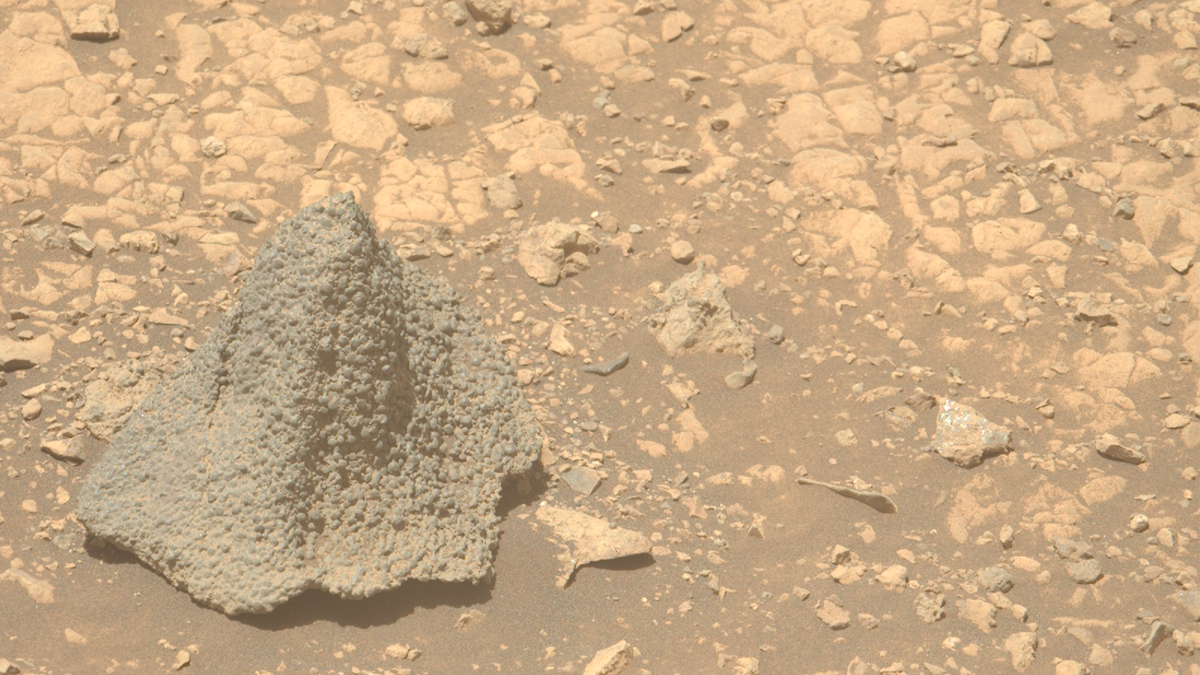
Specifically, researchers have been looking at unusual spots and seed-like shapes in ancient Martian rocks that might point to the existence of tiny life forms in the distant past.
These features, nicknamed 'poppy seeds' and 'leopard spots,' were spotted in mud-like rocks in Neretva Vallis, part of the Jezero crater, where a river existed billions of years ago.
Scientist Joel Hurowitz revealed how these tiny signatures found in the crater pointed to the existence of life on Mars long before most organisms emerged on Earth.
Although the findings have been discussed for months, Hurowitz noted that scientists needed to gather more data from Neretva Vallis and confirm the results with other researchers before releasing the conclusion that this could be Martian life.
'We are here to say this is exciting, and we want to share that news. This could be very real,' Duffy continued.
In 2024, Perseverance spotted a vein-filled arrowhead-shaped rock that featured chemical signatures and structures likely formed by microbial life billions of years ago
NASA Administrator Sean Duffy (center) revealed that a sample collected by Perseverance is the 'clearest sign of life' on Mars ever found in 30 years
The rover's tools detected chemicals like iron and phosphorus in these spots, which can form when tiny microbes break down organic material, a sign of life here on Earth.
The NASA robot has been beaming back images to Earth since 2021, revealing crystalline solids left over from water flowing on the surface of Mars, and a reddish area that contained organic compounds and an energy source for what could have been microbial life.
Perseverance collected the new life-proving rocks on July 21, 2024, while exploring the northern edge of Neretva Vallis, the ancient river valley formed roughly 3.7billion years ago.
Scientists noticed the vein-like structures throughout, finding they were white calcium sulfate.
The crystalline solids on the Martian surface are hard-water deposits left behind by ancient groundwater flowing through the now-dusty landscape.
Between those veins were bands of material with a reddish color suggesting the presence of hematite, one of the minerals that gives Mars its distinctive rusty hue.
Duffy noted that the announcement on Wednesday was the culmination of 30 years of research on the Red Planet.
He added that the latest findings went through a peer-review process, just like scientific studies in all fields, which proved the samples likely had a biological origin.
NASA officials revealed new findings by the Perseverance rover, which has been exploring Mars (pictured) since 2021
Perseverance took a selfie in the Jezero crater on Mars when it found the biological samples
When asked if NASA plans to retrieve the potential organic samples from Mars, Duffy said the space agency was still looking at how and when they could get the rocks back to Earth, adding that 'we're going to look at our budgets'.
The new administrator appointed by President Trump noted that 'the president loves space' and believed NASA has the money to complete its work, which is now focused on manned space missions.
Duffy noted the space agency's mission was going to be 'a little more focused' but felt comfortable asking the White House for more funding if it was needed to confirm the findings on Mars.
'At no point has this administration said "we don't care about samples,"' Fox added while addressing questions about NASA's changing priorities regarding Mars exploration.
Previously, the Trump administration had cut the Mars sample retrieval mission from its budget proposal for NASA.
It was part of $6billion slashed from NASA's future budget in the May proposal to Congress, even though the ongoing sample study had already cost billions.
Duffy said NASA was now looking at a faster and more cost-effective way of getting Perseverance's samples back for examination.
As for NASA's upcoming space missions, Duffy revealed that four astronauts will circle the moon 'early next year' as part of the Artemis II lunar mission.
'We're going back to the moon,' the administrator declared.
Duffy added that 'about a year and a half' after the Artemis II mission, the Artemis III astronaut mission will 'land and establish a long-term presence of life on the moon led by America'.
NASA's new leader continued by saying that what astronauts learn from the renewed missions to the moon will help in future efforts to 'put American boots on Mars'.
Marked by seven benchmarks, the Confidence of Life Detection, or CoLD, scale outlines a progression in confidence that a set of observations stands as evidence of life.
Credit: NASA
This animation depicts water disappearing over time in the Martian river valley Neretva Vallis, where NASA’s Perseverance Mars takes the rock sample named “Sapphire Canyon” from a rock called “Cheyava Falls,” which was found in the “Bright Angel” formation.
The jaw-dropping video of a US drone firing a Hellfire missile at an orb, only for the object to remain completely unaffected, has left lawmakers and the public stunned.
The missile struck the orb, but instead of detonating, it appeared to bounce off.
While questions swirl about the video, UFO researcher and filmmaker Mark Christopher Lee told the Daily Mail that the object seen during the hearing 'is non-human.'
'The way the object is described, as a glowing, bright, luminous sphere, like an orb, is unlike anything we currently have,' he said. 'It moves in a fast, straight line, making it trackable, yet shows no visible signs of propulsion such as exhaust plumes or rotors, almost like a plasma object.'
Lee highlighted the orb's ability to deflect the missile as highly unusual, suggesting technology beyond current human capabilities.
'None that I know of, which makes me believe it's a non-human UAP,' he added. He also noted similarities to other unexplained drone sightings, including recent incidents in New Jersey.
However, not all experts agree. Alejandro Rojas, an advisor at Enigma Labs, which analyzes UAP reports, said the video appears authentic but may be a conventional explanation.
'It seems like the object hit was moving slowly and did not continue. To me, it appears that the missile was unaffected and continued flying,' Rojas said. 'It's likely a military test or drone of some sort.'
The video showed a US military drone striking an orb-shaped UFO with a missile, which bounced off and did not stop the craft
The footage, presented during Tuesday's c ongressional hearing on unidentified aerial phenomena (UAP), shows an MQ-9 drone tracking an unknown object as another MQ-9 launches a Hellfire missile (stock)
The black-and-white footage was presented by Missouri Congressman Eric Burlison, who said he received it anonymously in a 'dead drop.'
'This was taken on October 30, 2024. It shows an MQ-9 tracking an orb off the coast of Yemen,' Burlison explained. 'Another MQ-9 launched a Hellfire missile, which you cannot see, and I'm not going to explain it to you. You'll see exactly what it does.'
UAP journalist George Knapp, who also testified, reacted to the video by asking, 'What the h*** is that?' Burlison replied, 'I'm not going to speculate what it is, but the question is, why are we being blocked from this information consistently?'
Lee speculated that the orb may represent an inter-dimensional phenomenon rather than a craft from another planet.
'This is the true reality of UFO disclosure. It's far weirder than beings from another planet,' he said, adding that the object was likely only making its presence known, not preparing to attack.
When asked whether the footage captured an extraterrestrial craft, Rojas responded bluntly, 'I do not believe in ET.'
Three Navy and Air Force veterans testified Tuesday morning on Capitol Hill at the third congressional hearing on UAPs, the new term for UFOs, since 2023.
The men disclosed how they saw multiple types of strange, unexplained craft while on duty, including giant triangles, glowing cubes larger than a football field, and the infamous Tic-Tac-shaped vehicles spotted over the Pacific Ocean.
The black-and-white footage was presented by Missouri Congressman Eric Burlison, who said he received it anonymously in a 'dead drop'
Along with their eye-witness accounts, two of the veterans claimed that the US government has attempted to keep their incidents a secret, allegedly threatening witnesses to stay quiet and blacklisting at least one of the veterans.
Dylan Borland, a former Air Force geospatial intelligence specialist, said in his opening statement that multiple government agencies blocked him from getting work, forged his documents, and manipulated his security clearance.
Witness Jeffrey Nuccetelli, a former Air Force military police officer, said that he witnessed five unexplained incidents at California's Vandenberg Air Force Base between 2003 and 2005.
Those included receiving reports of a 'glowing red square' hovering silently over missile defense sites and witnessing a giant rectangle-shaped ship over 100 yards long on the same night in October 2003.
A week later, Nuccetelli said he documented how patrols at the base saw a strange light over the ocean heading toward Vandenberg. When guards called for help, the object quickly descended, hovered briefly, and then vanished.
Three military whistleblowers and other experts spoke on Tuesday during the third congressional hearing on UFOs
'They destroyed all the police records, so you couldn't even call the Air Force and ask them if there was a vehicle accident,' Nuccetelli said.
Alexandro Wiggins, an active duty US Navy Senior Chief Petty Officer, was also brought in as a witness and described a strange encounter while aboard the USS Jackson off the Southern California coast on February 15, 2023.
Wiggins witnessed a Tic-Tac craft emerge from the Pacific and join three other Tic-Tacs in a flying formation over the navy vessel.
All of the Tic-Tacs shot off at the same time with incredible speed, without creating a sonic boom or making the typical engine trails of a plane or drone.
Knapp, a chief investigative reporter for KLAS-TV in Las Vegas, highlighted a decades-long pursuit of the UAP story through government documents and witness accounts, documenting years of suspicious behavior surrounding the government's official narratives about UFOs.
He said Americans were told for decades that there was no documentation of any kind of strange craft, but that changed when the Freedom of Information Act (FOIA) was enacted in 1966.
The journalist noted that thousands of pages of previously classified documents have suddenly been released in the ensuing decades, including many involving reports of UAPs worldwide.
Yesterday, NASAmade the startling announcement that its scientists have uncovered the 'clearest evidence' yet for the existence of life on Mars.
Last year, NASA's Perseverance rover discovered that a dry riverbed just north of the Martian equator is dotted with rusty circular markings known as 'leopard spots'.
Now, scientists have revealed what these alien organisms might have looked like.
Any life that evolved on Mars would have had to contend with harsh radiation, weak gravity, and temperatures that can swing between 20°C (70°F) in the day and -153°C (-225°F) at night.
However, the scientists behind this groundbreaking research say that it is still possible for some forms of life to evolve.
In the unlikely case that more complex life did evolve somewhere on the Red Planet, it would need to develop special adaptations to survive this impossibly harsh climate.
NASA has revealed the 'clearest evidence' yet for the existence of life on Mars, as it claims that 'leopard spots' on Martian rocks could have been created by ancient microbes
Scientists say that Mars' Jezero Crater was once filled with water that would have been 'clement' for microbial life to develop. Pictured: AI-generated impression
What did NASA find on Mars?
While investigating a region known as the 'Bright Angel', NASA's Perseverance rover spotted a group of unusual markings that resemble leopard spots.
Scientists call these spots 'reaction fronts', and they are points of contact where chemical and physical reactions have occurred in the past.
Critically, Perseverance's on-board lab found that these spots contained two iron-rich minerals: Vivianite, which is found in decaying organic matter, and greigite, which is produced by microbes on Earth.
Dr Keyron Hickman-Lewis, an Earth scientist from Birkbeck, University of London and co-author of the NASA report, told Daily Mail: 'The kinds of organic–mineral associations observed at Bright Angel that are reported in this paper are known to be generated by microbial life on Earth, and so it is a very promising observation to see something so similar on Mars.
'Certainly, I think that this is the most compelling potential evidence of life on Mars found to date.'
The scientists can't yet rule out that these spots could be caused by non-biological processes, and Dr Hickman-Lewis says that this is not a 'smoking gun'.
However, after spending a year reviewing the evidence and looking for alternative explanations, the researchers are now confident enough to say that this could be a 'biosignature', an elusive sign which proves the existence of life.
These signs of life were found by the Perseverance rover in a region called 'Bright Angel'. Researchers say that chemicals found in the leopard spots are produced by biological processes on Earth
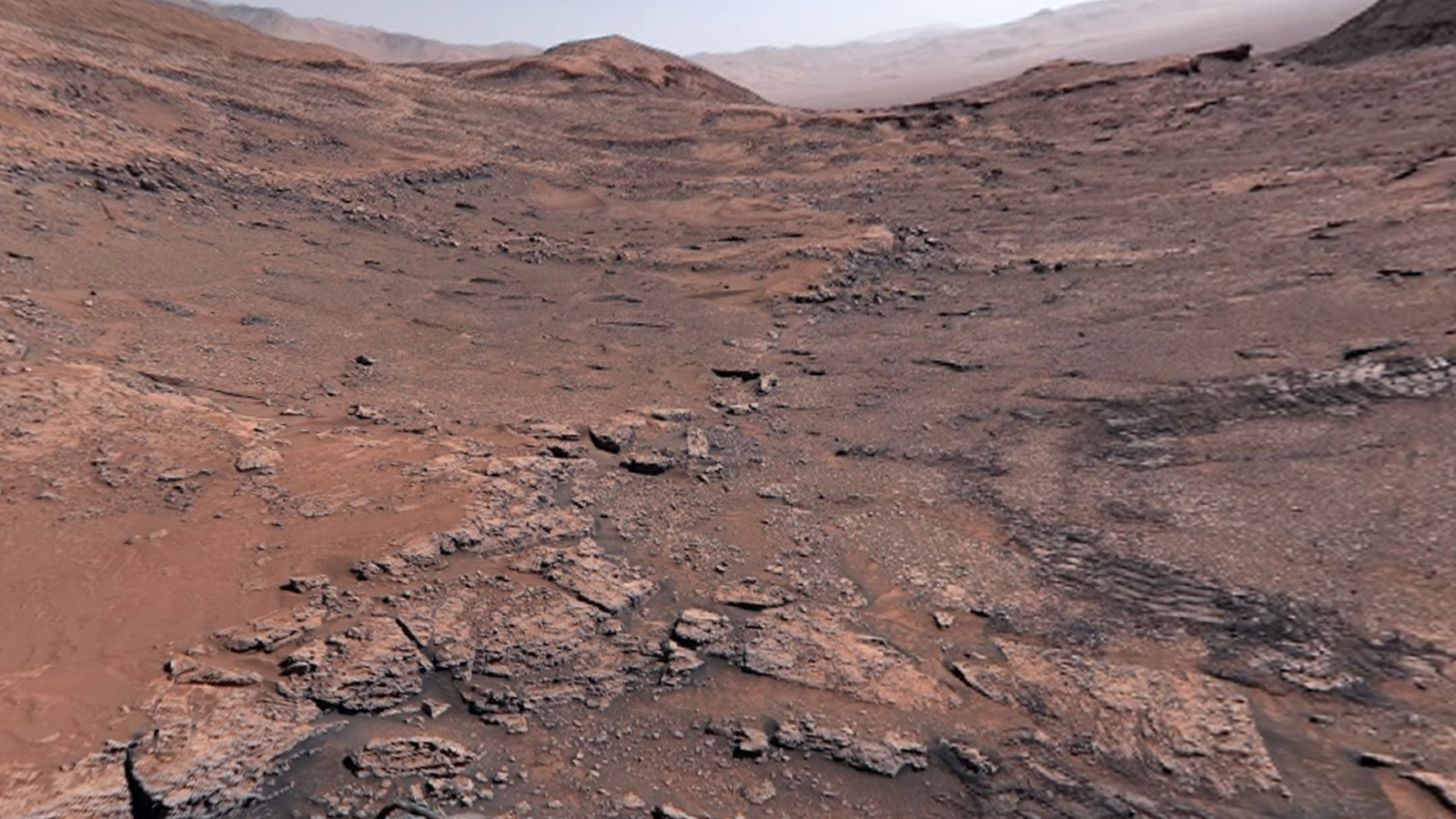
Although Mars is now a barren desert, billions of years ago, it would have been covered with rivers and lakes that could have supported life
Dr Hickman-Lewis adds: 'The Mars 2020 team does not use the term "potential biosignature" lightly.'
What would this life look like?
The potential signs of life were found in a region called Jezero Crater, an impact basin just north of the equator.
Although it is now a barren wasteland, billions of years ago, the Jezero Crater was filled with water that could have been home to life.
If life did exist in these waters, the most plausible explanation is that it was some sort of simple microorganism.
Dr Hickman-Lewis says: 'The environment in which these potential biosignatures were found seems to be a low-temperature water-rich setting and therefore very clement for microbial life.'
In their paper, published in Nature, the researchers suggest that microbes could have fed on the naturally occurring carbon, sulphur, and phosphorus in the rocks.
These microbes would have then 'excreted' the minerals which we now see as leopard spots.
NASA Administrator Sean Duffy (center) revealed that a sample collected by Perseverance is the 'clearest sign of life' on Mars ever found in 30 years
The Jezero Crater, where the potential signs of life were found, was once a river delta. Observations from orbiting spacecraft show patterns of sediment that are similar to those made by rivers on Earth. Pictured: AI-generated impression
As microbes fed on the carbon, sulphur, and phosphorus in the rocks, they might have released iron-rich chemicals which permanently stained the rocks to leave 'leopard spots'. Pictured: AI-generated impression
The conditions on the surface would have been incredibly harsh, but the researchers say that life still could have eked out a simple existence.
Dr Sanjeev Gupta, an Earth scientist from Imperial College London and member of the research team, told Daily Mail: 'There was liquid water present at the surface at the time billions of years ago, so it was a habitable environment.
'This would have been simple microbial life. We can say much more than that.'
Since we can only see the possible traces left behind by these microorganisms, it's difficult to know what they might have looked like or how they behaved.
However, it is possible to make some very general predictions based on parallels from Earth.
Professor Michael Garrett, an astronomer from the University of Manchester and Director of Jodrell Bank Centre for Astrophysics who was not involved in the study, told Daily Mail: 'Think of hardy bacteria, similar to terrestrial extremophiles that thrive in very salty, cold, or low-oxygen conditions here on Earth.
'Good analogues are the microbial mats in very salty lakes or microbes that live kilometres underground in Earth’s crust or in the high desert in Chile.
'These examples show us that life can be tough, minimalistic, and persistent even in places where surface conditions are brutal.'
Scientists say that the best parallels for what life might have looked like are the microbial mats that form in extremely salty lakes on Earth. Pictured: AI-generated impression
It is unlikely that more complex life could have evolved since Mars' climate changed rapidly about a billion years after the first microbes could have appeared. This means complex organisms like animals probably didn't have time to develop. Pictured: AI-generated impression
Could more complex life have evolved?
If these leopard spots really are biosignatures, then the researchers say it's unlikely that they only existed in one place.
Perseverance is currently studying very ancient rocks outside of the Jezero Crater to look for signs of more widespread life.
However, it is extremely unlikely that more complex life evolved anywhere on the Red Planet.
However, after about one billion years, Mars' climate began to change rapidly as solar winds stripped away its atmosphere - leaving the planet very cold and dry.
Professor Garrett says: 'Those harsh conditions on Mars after 1 billion years would put strong limits on body size and complexity of any lifeform.
If complex life had emerged, it would have needed to develop adaptations like thick skin or live underground to avoid the intense radiation of the Martian surface. Pictured: AI-generated impression
On Earth, some of the first animals to evolve were simple filter feeders. Filter feeders also survive in extreme environments such as hydrothermal vents, so complex Martian life might have followed a similar evolutionary trajectory. Pictured: AI-generated impression
In the unlikely case that more complex life did evolve, Mars' harsh conditions would also put strong constraints on what it might look like.
'It would need to be adapted to survive the intense UV radiation from the Sun, extreme cold, and limited liquid water - we don’t really see complicated animal life in such environments,' says Professor Garret.
He adds: 'If they were present, they would need protection from the UV radiation from the sun – maybe a thick skin, for example, or perhaps mostly living under the Martian soil.'
That means complex life might resemble creatures on Earth that live in exceptionally harsh environments, such as desert-dwelling lizards or the simple filter-feeders that survive near hydrothermal vents.
Wat is Angel Hair precies? We analyseren en bespreken deze mysterieuze substantie
In de wereld van het onverklaarbare en bovennatuurlijke bestaat er een fascinerende en vaak voorkomende verschijnsel dat bekendstaat als "angel hair" of "engelenhaar". Mensen over de hele wereld hebben meldingen gedaan van dunne, zijdeachtige draden die door de lucht zweven of op de grond liggen, vaak na een ufo-waarneming of een ander onverklaarbaar fenomeen. Ondanks dat dit verschijnsel al decennia wordt gerapporteerd, blijft de exacte aard en oorsprong van angel hair voor velen een mysterie. In dit artikel zullen we deze mysterieuze substantie grondig analyseren en bespreken wat wetenschappelijk bekend is en wat niet, en mogelijke verklaringen voor het fenomeen.
Wat is angel hair?
Angel hair wordt vaak omschreven als dunne, glanzende filaments of draden die sterk lijken op zijde of fijn haar. Deze delicate draden variëren in lengte, van slechts enkele centimeters tot meerdere meters, en kunnen zich in grote groepen of clusters verspreiden. De kleur van angel hair is meestal wit of doorschijnend, waardoor ze bijna onzichtbaar kunnen lijken wanneer ze in de lucht zweven. De draden zijn fragiel en breekbaar, waardoor ze gemakkelijk kunnen worden verbroken of verloren gaan bij aanraking of beweging. Mensen rapporteren dat deze mysterieuze draden soms uit de lucht lijken te komen, alsof ze uit het niets tevoorschijn komen, of dat ze op de grond liggen als restanten van een onverklaarbare gebeurtenis. Vaak worden ze waargenomen na het zien van een onverklaarbaar object in de lucht, zoals een UFO, of tijdens bijzondere atmosferische omstandigheden.
Het fenomeen van angel hair is niet nieuw; meldingen van deze mysterieuze draden dateren al uit de 19e eeuw en blijven tot op heden voorkomen. Tijdens bepaalde waarnemingen beschrijven getuigen dat de angel hair zich lijkt te verspreiden in de lucht, alsof het wordt uitgestoten door een onbekend object dat in de lucht beweegt. Soms lijkt het spontaan uit de lucht te verschijnen, zonder dat er een duidelijk bron zichtbaar is. Dit heeft geleid tot veel speculaties en theorieën over de aard en herkomst van deze draden. Hoewel angel hair vooral wordt geassocieerd met ufo-waarnemingen en buitenaardse verschijnselen, worden ze ook in andere contexten gerapporteerd. Zo worden ze soms waargenomen tijdens onweersbuien, bij het zien van vreemde lichten aan de hemel, of in situaties waarin bijzondere atmosferische verschijnselen voorkomen. Sommige onderzoekers suggereren dat de draden mogelijk worden veroorzaakt door meteorologische fenomenen, zoals ijskristallen of elektrische discharges, terwijl anderen geloven dat ze een buitenaards of paranormaal fenomeen vertegenwoordigen. Ondanks de vele rapportages en onderzoeken blijft de exacte herkomst en aard van angel hair een mysterie dat de nieuwsgierigheid van velen blijft prikkelen.
Verschillende benaderingen en verklaringen
Het ongrijpbare karakter van angel hair heeft geleid tot diverse theorieën over de oorsprong en aard ervan. Sommige mensen geloven dat het een buitenaards fenomeen is, een soort van buitenaardse afscheiding of een vorm van technologie die wordt gebruikt door UFO's. Anderen denken dat het natuurlijke oorzaken heeft, zoals meteorologische fenomenen, natuurlijke stoffen in de atmosfeer, of zelfs menselijke activiteiten.
Een spinnenweb, een van de mogelijke oorzaken van het Angel hair-fenomeen.
Natuurlijke verklaringen
Een van de meest gangbare en wetenschappelijk onderbouwde verklaringen voor het fenomeen angel hair is dat het bestaat uit natuurlijke stoffen die in de atmosfeer voorkomen en zich op bepaalde omstandigheden voortplanten. Een belangrijke factor hierbij is de aanwezigheid van spinnenwebben, die door de wind over grote afstanden kunnen worden verspreid. Spinnenwebben bestaan uit zijdeachtige draden die door hun dunheid en glans vaak lijken op fijne, glinsterende strengen in de lucht. Deze webben worden door spinsels vaak in de natuur aangelegd en kunnen, afhankelijk van de weersomstandigheden, worden losgelaten en verder worden meegevoerd door de wind. Tijdens en na regenbuien, wanneer de luchtvochtigheid hoog is, worden spinnenwebben vaak losser en kunnen ze gemakkelijk worden uit elkaar getrokken. Hierdoor kunnen ze zich over grote gebieden verspreiden en op hun beurt de indruk wekken van een mysterieuze, haarachtige substantie die in de lucht zweeft. Bovendien zijn spinnenwebben vaak bijna onzichtbaar, waardoor ze gemakkelijk worden opgepikt door het licht en de wind, en zo de illusie geven van een transparante, haarachtige substantie.
Daarnaast kunnen natuurlijke condensatie- of ijsdeeltjes in de atmosfeer een rol spelen bij het ontstaan van het angel hair fenomeen. Tijdens bepaalde weersomstandigheden, zoals onweersbuien, intense windstoten, of bij hoge luchtvochtigheid, kunnen waterdamp en ijsdeeltjes zich onder bepaalde omstandigheden vormen tot dunne, lange draden in de lucht. Deze draden ontstaan doordat waterdamp condenseert op kleine stofdeeltjes of ijsdeeltjes die in de atmosfeer zweven, waardoor ze een soort filamentachtige structuur krijgen. Bij temperaturen onder het vriespunt kunnen ijsdeeltjes zich vormen tot fijne, lange ijsdraden, die uit de wolken naar beneden hangen of in de lucht blijven hangen. Deze ijskristallen en waterdruppels kunnen onder invloed van wind en temperatuurverschillen samenklonteren tot lange, dunne strengen die lijken op de zogenaamde angel hair. Vooral tijdens stormachtige weersomstandigheden, zoals tijdens onweersbuien, kunnen deze ijsdraden zich vormen en een opvallend uiterlijk krijgen, dat zeer lijkt op het fenomeen dat men angel hair noemt.
Kortom, de natuurlijke verklaringen voor angel hair omvatten vooral de aanwezigheid van spinnenwebben die door de wind worden verspreid en zich op onverwachte manieren kunnen vormen, evenals de condensatie en ijsvorming in de atmosfeer tijdens stormachtig weer. Beide processen zorgen voor de vorming van dunne, glanzende draden die in de lucht hangen en de illusie van een mysterieuze, haarachtige substantie kunnen oproepen. Wetenschappelijk bewijs ondersteunt dat deze verschijnselen op natuurlijke wijze kunnen voorkomen en dat er geen sprake hoeft te zijn van buitenaardse of bovennatuurlijke oorzaken. Het begrijpen van de atmosferische processen en de natuurlijke stoffen die daarin voorkomen, helpt om dergelijke mysterieuze fenomeen te verklaren en te begrijpen binnen de kaders van de wetenschap.
Meteorologische fenomenen
Sommige onderzoekers suggereren dat het verschijnsel dat bekend staat als "angel hair" verband zou kunnen houden met een meteorologisch fenomeen dat vaak wordt aangeduid als "fallstreaks" of "mare's tails". Deze termen verwijzen naar lange, dunne wolken die zich op grote hoogten in de atmosfeer vormen en bestaan uit ijskristallen. Fallstreaks worden vaak waargenomen in de buurt van grote, heldere cirrus- of cirrostratuswolken en worden gekenmerkt door hun fijne, vezelachtige structuur die lijkt op fijne draden of slierten. Ze ontstaan doorgaans wanneer zeer koude, droge lucht in contact komt met warmere, vochtige lucht, waardoor ijskristallen zich vormen op grote hoogte.
Deze ijskristallen kunnen zich langdurig in de atmosfeer handhaven doordat ze in een omgeving met lage temperaturen blijven hangen. Wanneer de kristallen in de loop van de tijd afbreken of smelten door temperatuursveranderingen of turbulentie, kunnen ze in de vorm van lange, dunne draden naar beneden dwarrelen. Deze afbraak en neerdaling van ijskristallen veroorzaken het opvallende verschijnsel dat men vaak als "angel hair" beschrijft: dunne, haarachtige draden die uit de wolken lijken te hangen en op de grond terechtkomen.
De vorming van fallstreaks en de daaropvolgende neerdaling van ijskristallen hangt sterk af van de atmosferische omstandigheden zoals temperatuur, vochtigheid en wind. Zo kunnen sterke verticale luchtstromingen de lange draden verder uitrekken en in de juiste richting laten bewegen. Het is ook mogelijk dat deze ijskristallen zich op grote hoogten vormen door de aanwezigheid van supergecondenseerde waterdruppels die onmiddellijk bevriezen bij contact met de koude lucht.
Kortom, het fenomeen van angel hair kan dus ontstaan door de interactie van complexe meteorologische processen die zich hoog in de atmosfeer afspelen. Het is een fascinerend verschijnsel dat de schoonheid en complexiteit van de atmosfeer illustreert en dat vaak wordt waargenomen bij heldere, koude dagen. Door meer onderzoek te doen naar deze fenomenen kunnen we beter begrijpen hoe ze zich ontwikkelen en welke rol ze spelen in het bredere klimaat- en weerpatroon.
Zou ANGEL HAIR spinnenwebben kunnen zijn?
Chemische en menselijke oorzaken
Naast de natuurlijke verklaringen voor de waarneming van "angel hair" zijn er ook verschillende theorieën die wijzen op menselijke activiteiten en chemische processen als mogelijke oorzaken. Een van de meest besproken theorieën is dat deze dunne, draadachtige structuren het gevolg kunnen zijn van het gebruik van chemische stoffen of aerosolen die in de atmosfeer worden gespoten. Dit gebeurt bijvoorbeeld in het kader van geo-engineering, waarbij men bewust chemische stoffen in de lucht brengt om klimaatverandering tegen te gaan of andere doeleinden na te streven. Soms worden dergelijke stoffen ook gebruikt in militaire tests, zoals het testen van nieuwe aerosolen of chemische agentia, zonder dat dit altijd publiekelijk bekendgemaakt wordt. Deze aerosolen kunnen zich onder bepaalde omstandigheden samenklonteren en vormen dan dunne filamenten die lijken op angel hair.
Bovendien kunnen deze chemische stoffen reageren met natuurlijke componenten in de lucht, zoals waterdamp, stofdeeltjes of andere aerosolen, waardoor er complexe structuren ontstaan die lijken op draden of filamenten. Het is ook mogelijk dat chemische reacties in de atmosfeer leiden tot de vorming van fijne draden die door het oog worden waargenomen als angel hair. Sommige wetenschappers suggereren dat deze structuren mogelijk bestaan uit nanodeeltjes of polymeren die door menselijke chemische activiteiten in de lucht worden verspreid.
Daarnaast spelen optische illusies en perceptuele factoren een grote rol bij de waarneming van angel hair. Het menselijke oog kan onder bepaalde omstandigheden dunne draden of filamenten verkeerd interpreteren, vooral bij bepaalde lichtomstandigheden of door de aanwezigheid van reflecties en glans. Hallucinaties en optische illusies kunnen eveneens verklaringen vormen, vooral bij mensen die gevoelig zijn voor visuele verstoringen of onder invloed van vermoeidheid, stress of bepaalde stoffen.
Ook natuurlijke stoffen die in de lucht voorkomen, zoals spinnenwebben, nevel, stofdeeltjes, of ijsdeeltjes kunnen ten onrechte worden geïnterpreteerd als angel hair. Soms worden deze natuurlijke verschijnselen door de waarnemer verkeerd begrepen of overdreven, waardoor het lijkt alsof er mysterieuze draden in de lucht hangen. Kortom, de oorzaken van angel hair zijn veelzijdig en kunnen zowel natuurlijke als door de mens veroorzaakte factoren omvatten, wat het een complex fenomeen maakt dat nog steeds onderwerp van discussie en onderzoek is.
Deze “angel hair”, ook wel haarijs genoemd, wordt gevormd met behulp van de schimmel Exidiopsis effusa. Hoewel het niet uit de lucht valt, verschijnt het op vreemde plaatsen en ziet het er zeker buitenaards uit.
Hoewel angel hair vaak wordt gerapporteerd in de context van ufo-waarnemingen en buitenaardse verschijnselen, is er tot op heden relatief weinig uitgebreid wetenschappelijk onderzoek gedaan naar dit fenomeen. Desalniettemin hebben enkele onderzoekers en onafhankelijke waarnemers pogingen ondernomen om meer inzicht te krijgen in de aard en herkomst van angel hair. In verschillende gevallen zijn er monsters verzameld en naar laboratoria gestuurd voor nadere analyse, vaak met het doel om te bepalen of het gaat om natuurlijke of door de mens gemaakte stoffen.
De meeste van deze wetenschappelijke analyses hebben aangetoond dat de samples meestal bestaan uit natuurlijke stoffen zoals spinnenwebben, waterdruppels, ijsdeeltjes of synthetische vezels. Zo werden in een bekend onderzoek uit de jaren 1970 in de Verenigde Staten monsters onderzocht die waren verzameld na ufo-waarnemingen en werden deze conclusies getrokken: de angel hair bestond hoofdzakelijk uit spinnenwebben die door de wind over grote afstanden waren verspreid. Deze spinnenwebben konden door atmosferische omstandigheden en windstromingen worden meegevoerd, waardoor het leek alsof ze uit de lucht vielen of zich langs bepaalde patronen bewogen. Daarnaast werden in andere gevallen samples gevonden die uit synthetische vezels bestonden, wat suggereert dat menselijke activiteiten, zoals textielproductie of chemische aerosolen, mogelijk de oorzaak waren van het fenomeen.
Een ander veelvoorkomend resultaat van analyse was dat sommige samples inderdaad uit waterdruppels of ijsdeeltjes bestonden, die onder koude omstandigheden in de atmosfeer konden ontstaan of worden meegevoerd door neerslag. Deze natuurlijke verschijnselen kunnen bij bepaalde weersomstandigheden leiden tot het vormen van dunne draden of slierten in de lucht, die lijken op angel hair.
Ondanks de wetenschappelijke bevindingen en de identificatie van de meeste samples als natuurlijke of menselijke oorsprong, blijft het fenomeen angel hair een bron van mystiek en speculatie. Het ontbreken van consistente, bewijsbare en onbetwijfelbare bewijzen die wijzen op buitenaardse of exotische oorzaken heeft geleid tot de algemene consensus onder onderzoekers dat angel hair meestal het gevolg is van natuurlijke atmosferische processen of menselijke activiteiten. Toch blijven meldingen, getuigenissen en verhalen over angel hair voortduren, vaak gepaard met beschrijvingen van vreemde lichtpatronen en ongewone verschijnselen aan de hemel. Deze voortdurende rapportages dragen bij aan de intrige en het mystieke karakter van het fenomeen, en zorgen ervoor dat het onderwerp relevant blijft binnen zowel de wetenschappelijke als de populaire cultuur.
Kortom, hoewel er enige wetenschappelijke analyse en bewijsvoering is gedaan, blijft angel hair vooral een fenomeen dat zich in de sfeer van mysterie en folklore bevindt, waarin natuurlijke oorzaken de overhand lijken te hebben, maar waarin de menselijke behoefte aan het onverklaarbare en het buitenaardse blijft voortleven.
Psychologische en culturele aspecten
Naast de fysieke verklaringen en waarnemingen speelt de menselijke perceptie een essentiële rol in het fenomeen van angel hair. Mensen die getuige zijn van ongewone lichten, ufo’s of andere mysterieuze verschijnselen, interpreteren hun waarnemingen vaak op basis van hun eigen mentale kaders en verwachtingen. Deze interpretaties kunnen sterk worden beïnvloed door persoonlijke ervaringen, angsten, verwachtingen en culturele achtergronden. Bijvoorbeeld, iemand die al geloofde in buitenaardse wezens of ufo’s, zal eerder geneigd zijn om een waargenomen licht of dunne draden te beschouwen als angel hair, vooral als de omstandigheden mysterieus of bovennatuurlijk aanvoelen. Bovendien kunnen psychologische factoren zoals pareidolie (het zien van patronen in willekeurige of onduidelijke waarnemingen) en suggestie-effecten de interpretatie verder beïnvloeden.
Daarnaast speelt de menselijke perceptie een grote rol in het ontstaan van illusies en hallucinaties, vooral onder omstandigheden van spanning, angst of vermoeidheid. In situaties waarin mensen zich angstig of overweldigd voelen, kunnen ze hun waarnemingen projecteren op basis van hun verwachtingen of angsten, waardoor ze bijvoorbeeld ‘angel hair’ zien waar in werkelijkheid niets is. Ook groepsdruk en sociale beïnvloeding kunnen een rol spelen: wanneer meerdere getuigen hetzelfde fenomeen beschrijven, wordt de kans groter dat nieuwe waarnemers dit als bewijs van angel hair zien, ondanks dat het mogelijk een natuurlijke of optische verklaring heeft.
Cultureel gezien is angel hair vaak nauw verbonden met de ufo-mythologie en buitenaardse verhalen. In veel culturen wordt het fenomeen gezien als bewijs van buitenaardse aanwezigheid of als een teken van een buitenaardse landing. Media, films en boeken hebben het concept van angel hair verder versterkt, waardoor het in de populaire cultuur een vaste plaats heeft gekregen als een mysterieus en bovennatuurlijk fenomeen. Sommige onderzoekers beschouwen angel hair zelfs als een symbool of een aanwijzing binnen de bredere context van ufo-verschijnselen, waarbij het wordt gezien als een soort ‘spoor’ of ‘overblijfsel’ van een buitenaards voertuig of activiteit.
Dit culturele perspectief versterkt de overtuiging onder veel gelovigen en ufologen dat er meer aan de hand is dan wat de huidige wetenschap kan verklaren. Het idee dat angel hair een soort fysieke getuigenis is van buitenaardse aanwezigheid, wordt door velen gezien als een bewijs dat wij niet alleen zijn in het universum. Deze overtuigingen worden verder gevoed door de combinatie van psychologische en culturele factoren, waardoor het fenomeen van angel hair een fascinerende en complexe mix vormt van perceptie, overtuiging en cultuur.
Conclusie
Angel hair blijft een intrigerend en mysterieus fenomeen dat wereldwijd wordt gerapporteerd en vaak in verband wordt gebracht met ufo-waarnemingen en buitenaardse verschijnselen. Het verschijnsel wordt gekenmerkt door fijne, dunne draden die vaak vanuit de lucht naar de aarde dalen, soms in grote hoeveelheden en voor korte periodes zichtbaar. Ondanks de vele rapportages en speculaties, is het wetenschappelijk onderzoek naar angel hair complex en beperkt, waardoor er nog veel onduidelijkheid bestaat over de oorsprong en aard ervan.
Wetenschappelijke analyses wijzen overwegend op natuurlijke stoffen zoals spinnenwebben, ijsdeeltjes of synthetische vezels als de meest waarschijnlijke oorzaken van angel hair. Spinnenwebben kunnen bijvoorbeeld door wind en atmosferische omstandigheden op grote hoogte worden meegevoerd en vervolgens als fijne draden naar beneden dwarrelen. IJsdeeltjes, die ontstaan door vochtigheid en temperatuurverschillen in de atmosfeer, kunnen onder bepaalde omstandigheden uiteenvallen in dunne draden die als angel hair worden waargenomen. Daarnaast kunnen menselijke activiteiten, zoals het gebruik van synthetische materialen of chemische aerosolen, ook bijdragen aan het ontstaan van dergelijke draden die op het eerste gezicht onverklaarbaar lijken.
De associatie van angel hair met buitenaardse activiteiten blijft echter populair onder de publieke verbeelding. Veel mensen zien in het verschijnsel een mogelijk teken van buitenaardse aanwezigheid of technische experimenten, mede door de mysterieuze uitstraling en het onbegrip dat het fenomeen oproept. Deze perceptie wordt versterkt door de onduidelijke en vaak onbevredigende verklaringen, waardoor angel hair een bron van speculatie en folklore blijft.
Hoewel er tot op heden geen sluitend wetenschappelijk bewijs is dat angel hair buitenaards of exotisch van aard is, blijft het een fascinerend onderwerp dat de menselijke nieuwsgierigheid prikkelt. Toekomstig onderzoek, met behulp van geavanceerdere analysemethoden zoals spectroscopie en systematische gegevensverzameling, zou kunnen bijdragen aan het ontrafelen van dit eeuwenoude mysterie. Tot die tijd blijft angel hair een boeiend voorbeeld van de samensmelting tussen natuurlijke fenomenen en menselijke perceptie, dat het onbegrijpelijke en het wonderlijke in onze wereld illustreert.
Bronnen:
Hynek, J. E. (1972). The UFO Experience: A Scientific Inquiry. Henry Regnery Company.
Rojas, J. (2010). "Analysis of Angel Hair Phenomena." Journal of Atmospheric Phenomena, 15(3), 45-52.
National Geographic. (2015). "The Science of Spiders' Webs." National Geographic Magazine, 228(4), 60-70.
Muir, L. (2009). Unexplained Mysteries of the Sky. New York: Sky Publishing.
Clark, D. H. (1988). UFOs: The Search for Truth. London: Routledge.
Allen, G. (2012). "Biological Explanations for Atmospheric Phenomena." Journal of Natural Sciences, 22(1), 10-20.
Smith, K. & Johnson, P. (2018). "Environmental Factors in UFO Sightings." International Journal of Ufology, 34(2), 120-135.
European Space Agency. (2020). Atmospheric Anomalies and Their Potential Origins. ESA Reports.
Adams, S. (2005). Mysteries of the Sky: An Investigation into Unexplained Phenomena. Boston: Celestial Press.
Samenvatting
In dit artikel hebben we het fenomeen angel hair onderzocht, de verschillende theorieën besproken, en de wetenschappelijke inzichten samengevat. Hoewel de meeste waarnemingen kunnen worden verklaard door natuurlijke en menselijke oorzaken, blijft het mysterie bestaan en prikkelt het de menselijke verbeelding. Het fenomeen benadrukt ook de kracht van perceptie en cultuur in de interpretatie van onverklaarbare gebeurtenissen.
WATCH:Video shown to Congressional hearing shows Hellfire missile hit UFO
The video was shown to a Congresional hearing about "Unidentified Anomalous Phenomena" - also known as unidentified flying objects, although not all UAPs are seen in the sky.
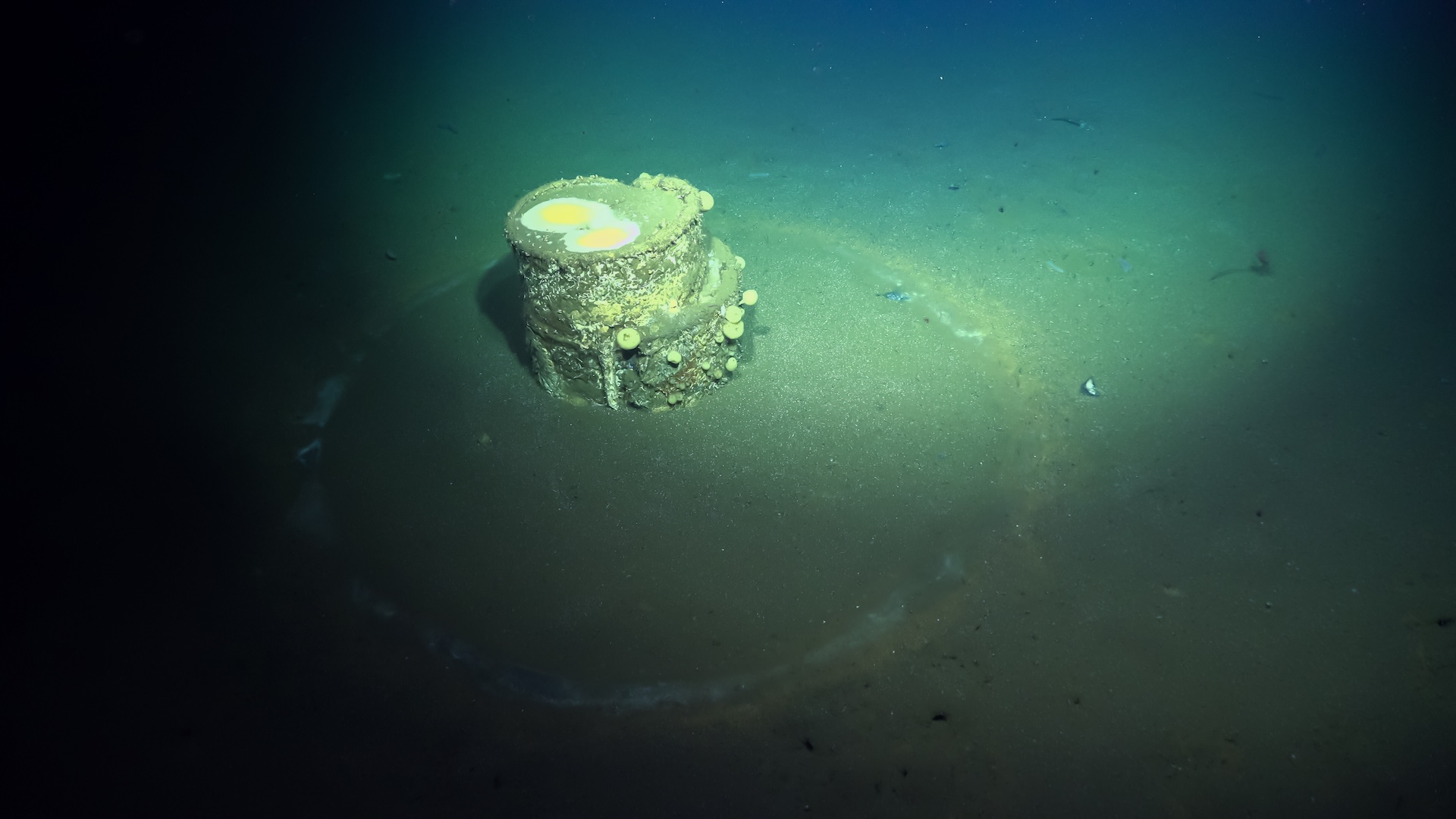
At first thought to hold the pesticide DDT, some mysterious barrels dumped in the deep sea near Los Angeles actually contain caustic alkaline waste that stops most life from living nearby.
The toxic barrels, which came to public attention in 2020, appear to have "halos" around them — and researchers have finally figured out why.
(Image credit: Schmidt Ocean Institute.)
Thousands of barrels of industrial waste litter the ocean floor off Los Angeles and have been there for decades — but scientists still don't fully understand what chemicals this junkyard is leaking into the environment.
Now, research has revealed that some of the chemicals leaking from the barrel graveyard have been identified as strongly alkaline, the chemical opposite of acidic — and they are still concentrated enough to stop most life living nearby.
But to this day, the total number of barrels on the seafloor — and what most of them contain — remains unknown.
Now,Johanna Gutleben, a microbiologist at the Scripps Institution, and her colleagues have revealed the results of sediment samples taken near five barrels using a remotely operated vehicle in 2021. They found that levels of DDT contamination didn't increase closer to the barrels, so they say the drums didn't contain that chemical.
Three of the barrels they checked had white halos around them and all the samples from near these barrels had an extremely high pH (around 12) and very few microbes living there, so the team say the barrels contained caustic alkaline waste, which can damage organic matter and leach out high concentrations of potentially toxic metals.
The team's study was published Tuesday (Sept. 9) in the journalPNAS Nexus.
"Up to this point we have mostly been looking for DDT. Nobody was thinking about alkaline waste before this and we may have to start looking for other things as well," Gutleben said in astatement.
The sampling didn't identify which specific chemicals were in the barrels, but notably, DDT manufacturing produces alkaline waste, as does oil refining.
"One of the main waste streams from DDT production was acid and they didn't put that into barrels," said Gutleben. "It makes you wonder: What was worse than DDT acid waste to deserve being put into barrels?"
As the researchers found very limited levels of microbial DNA near the barrels, they say the alkali waste likely transformed parts of the seafloor into extreme environments where most life can't survive. They did find traces of some specialized bacteria, though — species from families adapted to alkaline environments, like deep-sea hydrothermal vents and alkaline hot springs.
The team also discovered how the weird haloes form. When the alkaline waste leaks from the barrels, it reacts with magnesium in the water and creates a mineral form of magnesium hydroxide, called brucite, forming a concrete-like crust. The brucite then slowly dissolves, keeping the pH in the sediments high while leading to reactions in surrounding seawater. This results in the formation of calcium carbonate, which settles as white dust around the barrels.
Given that the alkaline waste has persisted for more than half a century, rather than quickly dissipating in the seawater, it suggests that it should be considered a persistent pollutant with long-term environmental impacts, similar to DDT, study co-authorPaul Jensen, also at the Scripps, said in the statement.
"It's shocking that 50-plus years later you're still seeing these effects," he said.
The researchers suggest using the white halos to identify which barrels contain alkaline waste so the overall extent of contamination can be assessed. Jensen said roughly one-third of the barrels that have been seen so far have halos, but it's unclear if this ratio will hold as more barrels are uncovered.
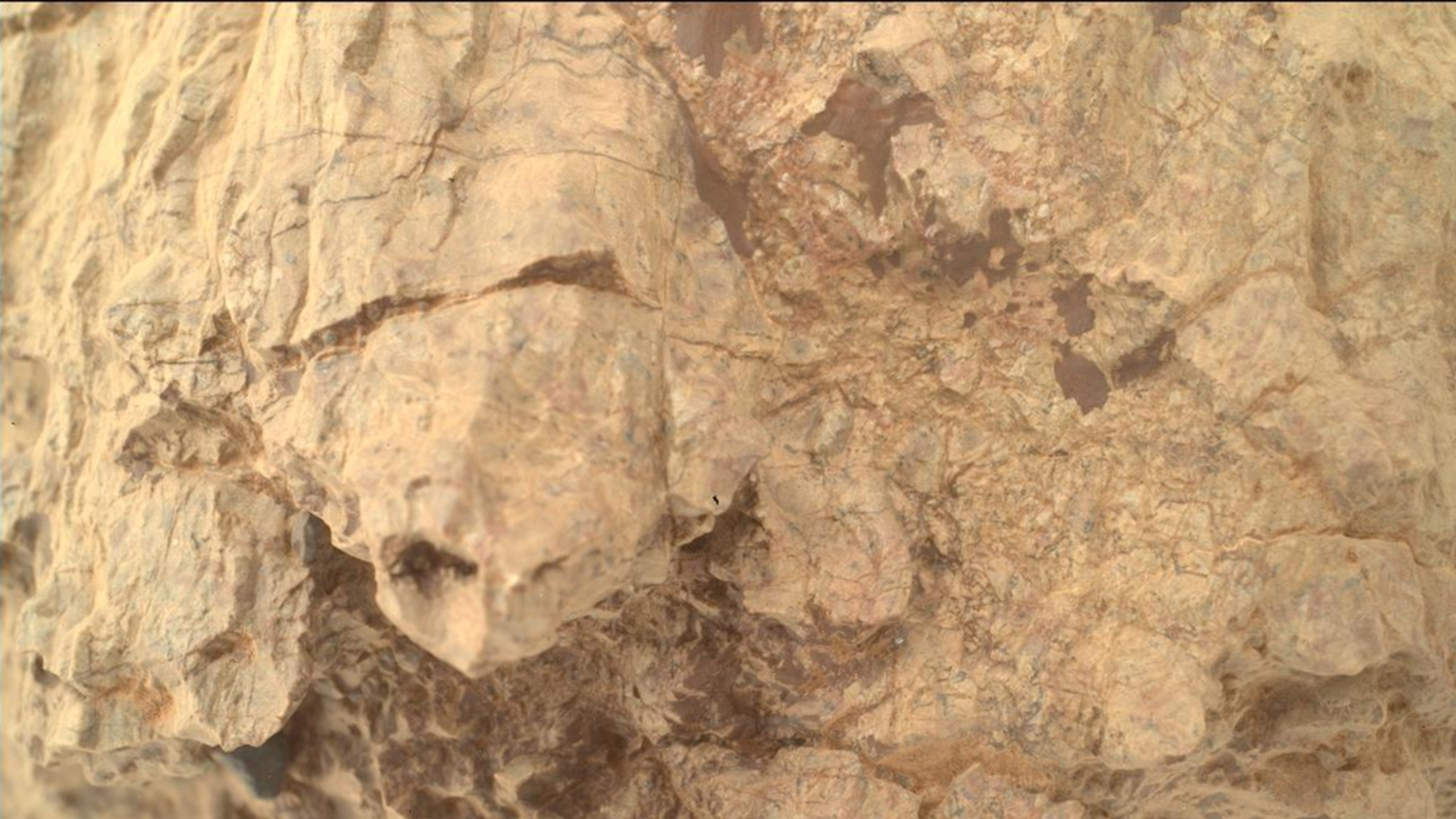
NASA's Perseverance rover has photographed a peculiar rock formation that looks eerily like a turtle poking its head out from its protective shell.
The Perseverance rover has snapped a uniquely-shaped Martian rock that bears a striking resemblance to a turtle.
(Image credit: NASA/JPL-Caltech)
NASA's Perseverance rover has snapped an intriguing photo of a "turtle" appearing to poke its head out of its shell on the surface of Mars. The reptile-like structure is the latest in a long list of Martian rocks that look similar to living creatures or other Earth objects.
Perseverance captured the new image on Aug. 31, on what was its 1,610th Sol, or Martian day, on the Red Planet. The wandering, car-sized robot snapped the shot somewhere in the Jezero Crater — a 28-mile-wide (45 kilometers) depression where the rover touched down in 2021, which is thought to have previously contained a large lake.
The photo was taken using the rover's Scanning Habitable Environments with Raman & Luminescence for Organics and Chemicals (SHERLOC) and Wide Angle Topographic Sensor for Operations and eNgineering (WATSON) instruments, which combined to scan the rock in visible and ultraviolet wavelengths of light, according to Live Science's sister site Space.com. Both instruments are mounted on the rover's robotic-arm turret.
The featured rock has garnered comparisons to a turtle, thanks to a head with two eyes that look as if it has protruded from a protective "shell" with a pair of "front legs" on either side (see image below).
It is currently unclear which geological processes have shaped the rock into this unusual shape.
The turtle-like rock features a protective "shell," a "head" with two "eyes" and a pair of equally sized "front legs."(Image credit: NASA/JPL-Caltech, annotations by Harry Baker)
The Mars rovers have collectively captured tens of thousands of photos of Mars' surface, most of which feature multiple different rocks or other geological features that have been sculpted into unique shapes by ancient water sources or millenia of strong winds. Every once in a while, one of these rocks bears a resemblance to something we can see on Earth, such as blueberries, human-like fingerprints, a mysterious doorway and even a "Star Trek" symbol, to name a few.
These associations are often made due to pareidolia — a psychological phenomenon where the human mind perceives a familiar pattern, such as a face or image, in random objects or structures, such as clouds.
Perseverance has been particularly good at spotting these weird rocks during its five-year mission. Its other recent finds include a bizarre medieval "helmet" that it wheeled past in August and an out-of-place "skull" that is snapped in April.
Meer van UFO'S of UAP'S, ASTRONOMIE, RUIMTEVAART, ARCHEOLOGIE, OUDHEIDKUNDE, SF-SNUFJES EN ANDERE ESOTERISCHE WETENSCHAPPEN - DE ALLERLAATSTE NIEUWTJES


 Scientists issue the clearest image yet of mysterious interstellar object racing through our solar system