Ontdek de Fascinerende Wereld van UFO's en UAP's: Jouw Bron voor Onthullende Informatie!
Ben jij ook gefascineerd door het onbekende? Wil je meer weten over UFO's en UAP's, niet alleen in België, maar over de hele wereld? Dan ben je op de juiste plek!
België: Het Kloppend Hart van UFO-onderzoek
In België is BUFON (Belgisch UFO-Netwerk) dé autoriteit op het gebied van UFO-onderzoek. Voor betrouwbare en objectieve informatie over deze intrigerende fenomenen, bezoek je zeker onze Facebook-pagina en deze blog. Maar dat is nog niet alles! Ontdek ook het Belgisch UFO-meldpunt en Caelestia, twee organisaties die diepgaand onderzoek verrichten, al zijn ze soms kritisch of sceptisch.
Nederland: Een Schat aan Informatie
Voor onze Nederlandse buren is er de schitterende website www.ufowijzer.nl, beheerd door Paul Harmans. Deze site biedt een schat aan informatie en artikelen die je niet wilt missen!
Internationaal: MUFON - De Wereldwijde Autoriteit
Neem ook een kijkje bij MUFON (Mutual UFO Network Inc.), een gerenommeerde Amerikaanse UFO-vereniging met afdelingen in de VS en wereldwijd. MUFON is toegewijd aan de wetenschappelijke en analytische studie van het UFO-fenomeen, en hun maandelijkse tijdschrift, The MUFON UFO-Journal, is een must-read voor elke UFO-enthousiasteling. Bezoek hun website op www.mufon.com voor meer informatie.
Samenwerking en Toekomstvisie
Sinds 1 februari 2020 is Pieter niet alleen ex-president van BUFON, maar ook de voormalige nationale directeur van MUFON in Vlaanderen en Nederland. Dit creëert een sterke samenwerking met de Franse MUFON Reseau MUFON/EUROP, wat ons in staat stelt om nog meer waardevolle inzichten te delen.
Let op: Nepprofielen en Nieuwe Groeperingen
Pas op voor een nieuwe groepering die zich ook BUFON noemt, maar geen enkele connectie heeft met onze gevestigde organisatie. Hoewel zij de naam geregistreerd hebben, kunnen ze het rijke verleden en de expertise van onze groep niet evenaren. We wensen hen veel succes, maar we blijven de autoriteit in UFO-onderzoek!
Blijf Op De Hoogte!
Wil jij de laatste nieuwtjes over UFO's, ruimtevaart, archeologie, en meer? Volg ons dan en duik samen met ons in de fascinerende wereld van het onbekende! Sluit je aan bij de gemeenschap van nieuwsgierige geesten die net als jij verlangen naar antwoorden en avonturen in de sterren!
Heb je vragen of wil je meer weten? Aarzel dan niet om contact met ons op te nemen! Samen ontrafelen we het mysterie van de lucht en daarbuiten.
NASA scientists have found more intriguing details on speckled Martian rocks spotted by the Perseverance rover. But bringing samples back to Earth will be key.
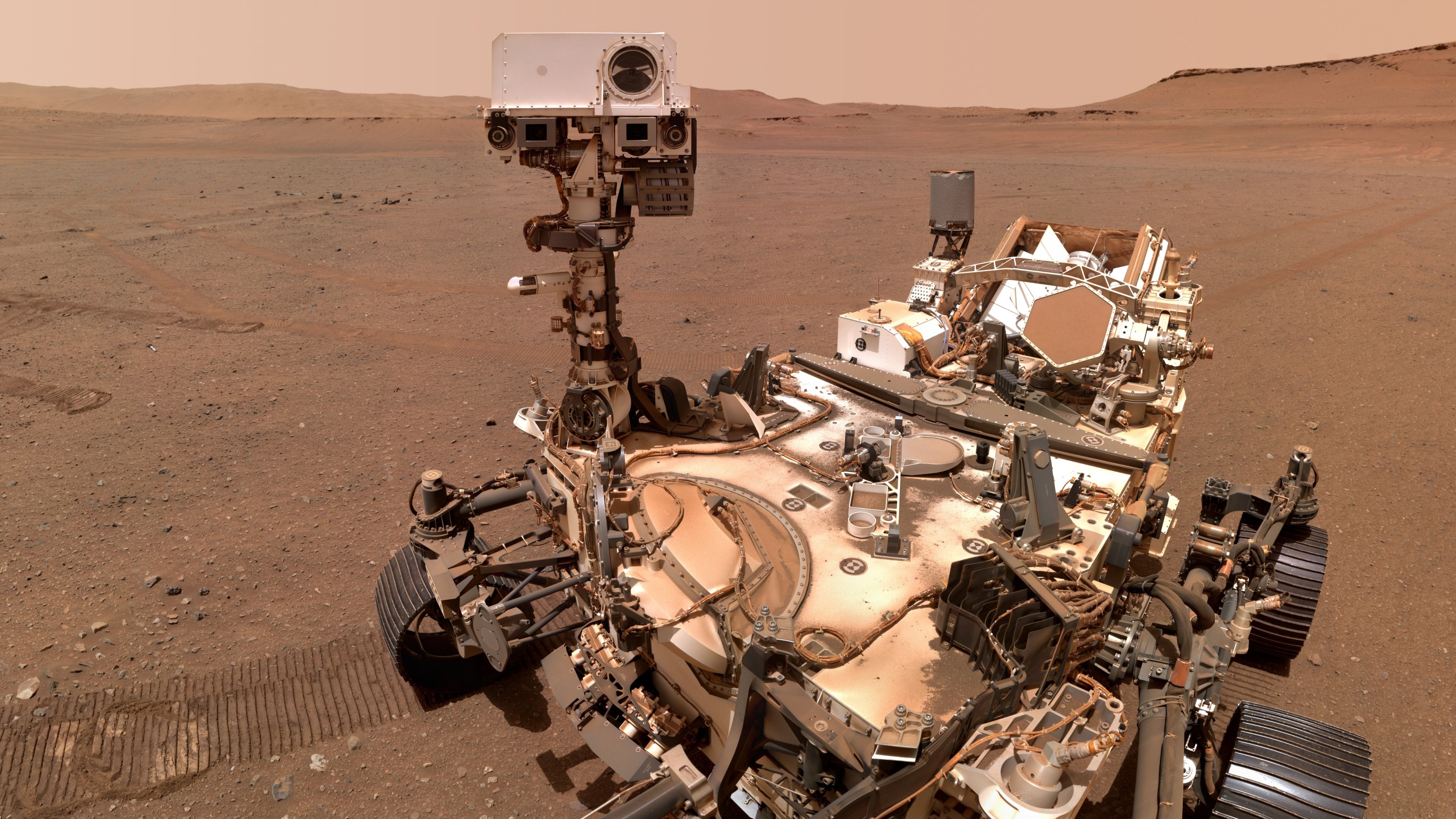
A selfie taken by NASA's Perseverance Rover while on Mars.
(Image credit: NASA)
Strange nodules of unusual minerals found on speckled rocks on Mars have offered more tantalizing clues that ancient life may have once thrived on the now-dead planet, NASA says.
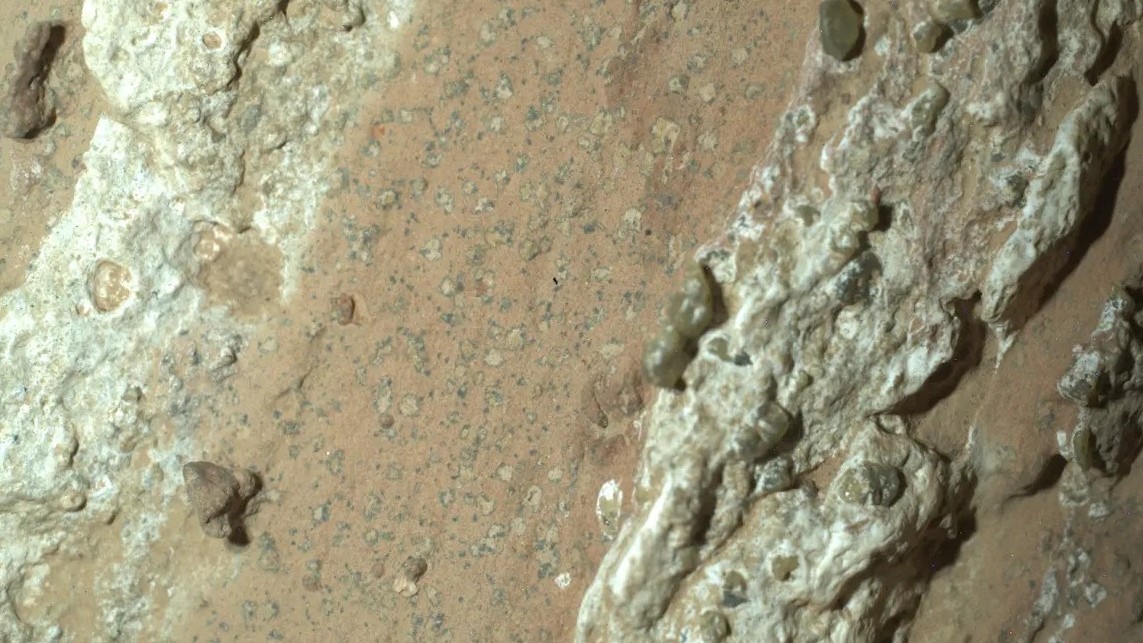
NASA's Perseverance rover found one such arrow-shaped rock, nicknamed Cheyava Falls, in 2024 along the northern bank of Neretva Vallis, the dried-up remnants of an ancient river that once rushed into Mars' Jezero crater.
An initial analysis of the rock, which appeared in a lake bed formation known as Bright Angel, revealed it was crammed with organic compounds, had evidence that water once flowed through it, and contained flecks of leopard-like spots from chemical reactions that ancient microbes could have used for energy.
These features may result from non-biological processes occurring over millions of years. But now, in a new study published Sept. 10 in the journal Nature, NASA scientists have announced intriguing details about additional rock samples found at two nearby sites — and they say these clues bolster the case for past life on Mars.
"After a year of review, they have come back and they said, listen, we can't find another explanation," Acting NASA Administrator Sean Duffy, said during a news briefing following the announcement. "So this very well could be the clearest sign of life that we've ever found on Mars, which is incredibly exciting."
Since arriving on Mars in 2021, Perseverance has been trundling across the 30-mile-wide (50 kilometers) Jezero crater, collecting dozens of rock samples for eventual return to Earth. Upon finding the leopard-spotted rock, scans by the rover's Scanning Habitable Environments with Raman and Luminescence for Organics and Chemicals (SHERLOC) instrument showed that the specimen contained carbon-based molecules, alongside bands of reddish hematite that featured spots of iron and phosphate.
"When the rover entered Bright Angel and started measuring the compositions of the local rocks, the team was immediately struck by how different they were from what we had seen before," study co-author Michael Tice, a geobiologist and astrobiologist at Texas A&M University, said in a statement. "They showed evidence of chemical cycling that organisms on Earth can take advantage of to produce energy. And when we looked even closer, we saw things that are easy to explain with early Martian life but very difficult to explain with only geological processes."
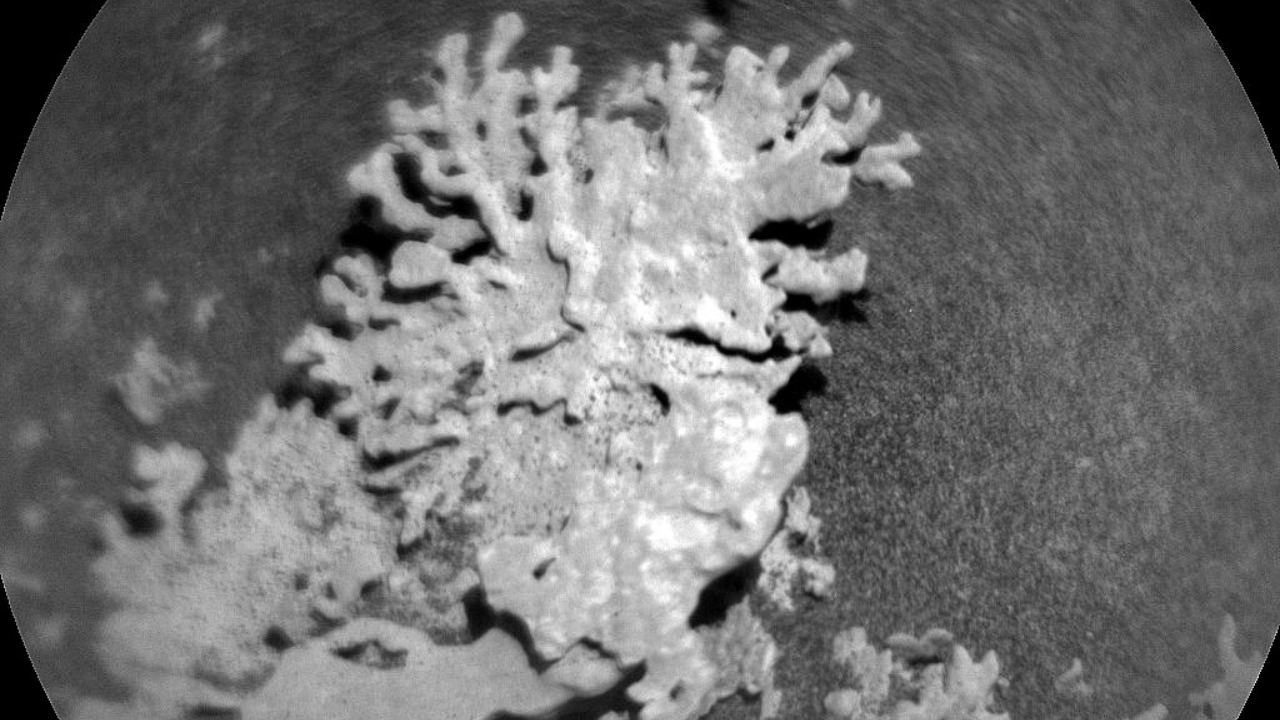
An image of Cheyava Fallas, showing white markings that could be traces of ancient microbial activity. (Image credit: NASA/JPL-Caltech/MSSS)
The additional discoveries announced by NASA today relate to clay-rich rock samples found at two sites, named Sapphire Canyon and Masonic Temple, containing vivianite, an iron-phosphate mineral, and greigite, a mineral containing iron sulfide.
These minerals may have formed from reactions between the mud and organic matter, according to the scientists. The minerals' distribution across the rocks appears to support this hypothesis.
"It's not just the minerals, it's how they are arranged in these structures that suggests that they formed through the redox cycling [in which bacteria are key players on Earth] of iron and sulfur," Tice said. "On Earth, things like these sometimes form in sediments where microbes are eating organic matter and 'breathing' rust and sulfate. Their presence on Mars raises the question: could similar processes have occurred there?"
Nonetheless, a definitive ruling over the biological or non-biological processes that created the patterns can only be made in labs on Earth, and whether Perseverence's precious cargo will be fetched for that analysis remains a contentious political question.
The European Space Agency (ESA) and NASA originally proposed the use of NASA’s Sample Retrieval Lander — a spacecraft carrying a small rocket — to collect the rover's samples by 2033 as a part of their Mars Sample Return mission. The rocket would then launch back into orbit with the samples.
When pressed by reporters during a Q&A session following the announcement, Duffy was unable to confirm if or when the sample-return mission would happen, but he remained optimistic.
"The president loves space — he asked me about it," Duffy said. "I give him updates, how it's going, what we're doing, and he doesn't brush me off."
"If there was an issue with resources, I would go to him and I'm sure he would support us," he added.
Life’s cradle? According to biochemist Steven Benner, life on Earth may have originated in martian rock samples like these.
NASA/JPL-Caltech/MSSS
Are We All Martians? An Examination of the Panspermia Hypothesis in the Context of Astrobiology
Abstract
This paper investigates the compelling hypothesis that life on Earth may have originated from extraterrestrial sources through the process of panspermia. The concept suggests that microorganisms could have been transported across space, possibly surviving the extreme conditions of ejection from a planetary surface, the harsh environment of space transit, and eventual deposition on Earth.
To evaluate this, the study reviews current scientific evidence, including the resilience of microbes under simulated space conditions and the presence of organic compounds in space. It also examines theoretical models addressing the survivability of microorganisms during interplanetary and interstellar journeys, considering factors such as radiation, vacuum, and temperature fluctuations. The discussion extends to the potential for life to have independently arisen on other celestial bodies like Mars, which has shown signs of past water activity. Recent discoveries, including meteorites originating from Mars containing organic molecules and the detection of interstellar objects passing through our solar system, are analyzed to assess their significance in supporting the panspermia hypothesis.
The paper also explores the implications of interplanetary transfer for understanding the origin and distribution of life in the universe, touching on the possibility that life could be more widespread than previously thought. Overall, this review synthesizes current scientific findings and theoretical models to evaluate the plausibility of panspermia as a fundamental mechanism in the emergence of life on Earth, suggesting that the transfer of life across space remains a viable and intriguing scientific hypothesis.
Introduction
Are we all Martians? This provocative question challenges our understanding of the origins of life on Earth and opens the door to the fascinating possibility that life may not be exclusive to our planet. The core idea behind this inquiry is rooted in the hypothesis of panspermia, which suggests that life, or at least the building blocks of life, did not originate solely on Earth but may have been transferred here from other celestial bodies such as meteorites, comets, or even interstellar dust. Historically, this idea was considered speculative or even fringe science, but recent scientific advances have rekindled interest in its plausibility.
The concept of panspermia is supported by the discovery that some microorganisms are remarkably resilient, capable of surviving extreme conditions such as high radiation levels, vacuum, and the intense cold of space. This resilience raises the possibility that microbial life could endure the harsh environment of space during interplanetary travel, potentially hitching a ride on space debris traveling between planets. For example, meteorites originating from Mars have been found on Earth, containing mineral compositions and isotopic signatures that suggest they could have been ejected from their parent planet by impact events and traveled through space to land on Earth.
Further, the discovery of interstellar objects like ‘Oumuamua and Comet Borisov has expanded the scope of the panspermia hypothesis, suggesting that material—and perhaps life—can move between star systems. Advances in astrobiology have led scientists to examine the possibility that microbial life, or the precursors to life such as organic molecules, could have been transported across the cosmos and contributed to the emergence of life on Earth. These findings challenge the traditional view that life originated solely through chemical evolution within Earth’s primordial environment.
In conclusion, the question of whether we are all Martians is more than a philosophical curiosity; it is a serious scientific inquiry that could reshape our understanding of life's origins. While definitive proof remains elusive, ongoing research continues to explore the extraordinary resilience of microorganisms and the mechanisms by which life might have been distributed throughout the universe, ultimately suggesting that life on Earth could be part of a much larger cosmic story.
Panspermia: Theoretical Foundations
The hypothesis of panspermia proposes that life, or at least the building blocks of life, can be transferred between planets through space debris such as meteoroids, asteroids, or comets. According to this theory, microorganisms originating on one planet could survive the harsh journey through space and seed life on another planet, potentially explaining the origin of life on Earth or elsewhere in the universe.
This process involves three main stages: ejection, transit, and deposition. The first stage, ejection, occurs when a celestial body experiences a significant impact, such as a collision with an asteroid or comet. The force of the impact can blast material containing microorganisms from the planet's surface into space. For life to survive this phase, microbes must withstand the intense shock and mechanical forces generated during ejection.
The second stage, space transit, presents some of the most formidable challenges for microbial survival. Space is characterized by vacuum conditions, extreme radiation levels from cosmic rays and solar particles, and temperature fluctuations that can reach hundreds of degrees Celsius. Microorganisms traveling through space must endure prolonged exposure to these extreme conditions. Interestingly, some microbes exhibit extraordinary resilience. For example, tardigrades, microscopic creatures known for their ability to survive in extreme environments, can withstand vacuum and radiation. Similarly, Deinococcus radiodurans, a bacterium, is renowned for its resistance to radiation and desiccation, making it a prime candidate for surviving interplanetary journeys.
The final stage, deposition, involves the microbe-laden debris landing on a new planetary surface. For successful colonization, microbes must survive the impact's force and the initial environmental conditions of the new world. Once deposited, if conditions are favorable, these microorganisms could potentially multiply and initiate a new biosphere.
Recent scientific research supports the plausibility of panspermia by demonstrating that certain microbes can survive in space-like environments. Experiments have shown that some microorganisms can endure simulated space conditions, bolstering the hypothesis that life could be distributed throughout the universe via natural cosmic processes. While definitive evidence remains elusive, advances in astrobiology continue to explore this intriguing possibility, expanding our understanding of life's potential ubiquity in the cosmos.
ALIEN EJECTION
Ejection and Launch Survival:
The initial phase of microbial transfer from a planetary surface into space involves the ejection of material caused by asteroid impacts. When a large asteroid strikes a planet such as Mars, the immense energy generated by the impact causes the surface material—comprising rock fragments and soil—to be violently displaced and propelled into space. Embedded within this ejected debris can be microorganisms present in the planet's crust, raising the possibility of interplanetary transfer of life.
According to Brett Gladman, an expert in impact physics and planetary science, not all fragments are subjected to the same extreme conditions during ejection. Some particles that are not directly impacted by the shock wave may escape with relatively minimal heating and pressure. These less-affected fragments are more likely to retain their original biological material without destruction. The dynamics of impact ejection imply that microorganisms embedded within the surface material could survive the violent process if they are shielded within fragments that avoid excessive thermal and mechanical stress.
Further supporting this possibility, analysis of Martian meteorites found on Earth shows that these rocks have never experienced temperatures high enough to sterilize or destroy any potential embedded microbes. This evidence suggests that microbes could survive the ejection process from Mars and possibly be transported through space to other celestial bodies, including Earth. The overall process involves a complex interplay of impact physics, material properties, and biological resilience, making the transfer of life between planets a plausible scenario within the framework of planetary protection and astrobiology research.
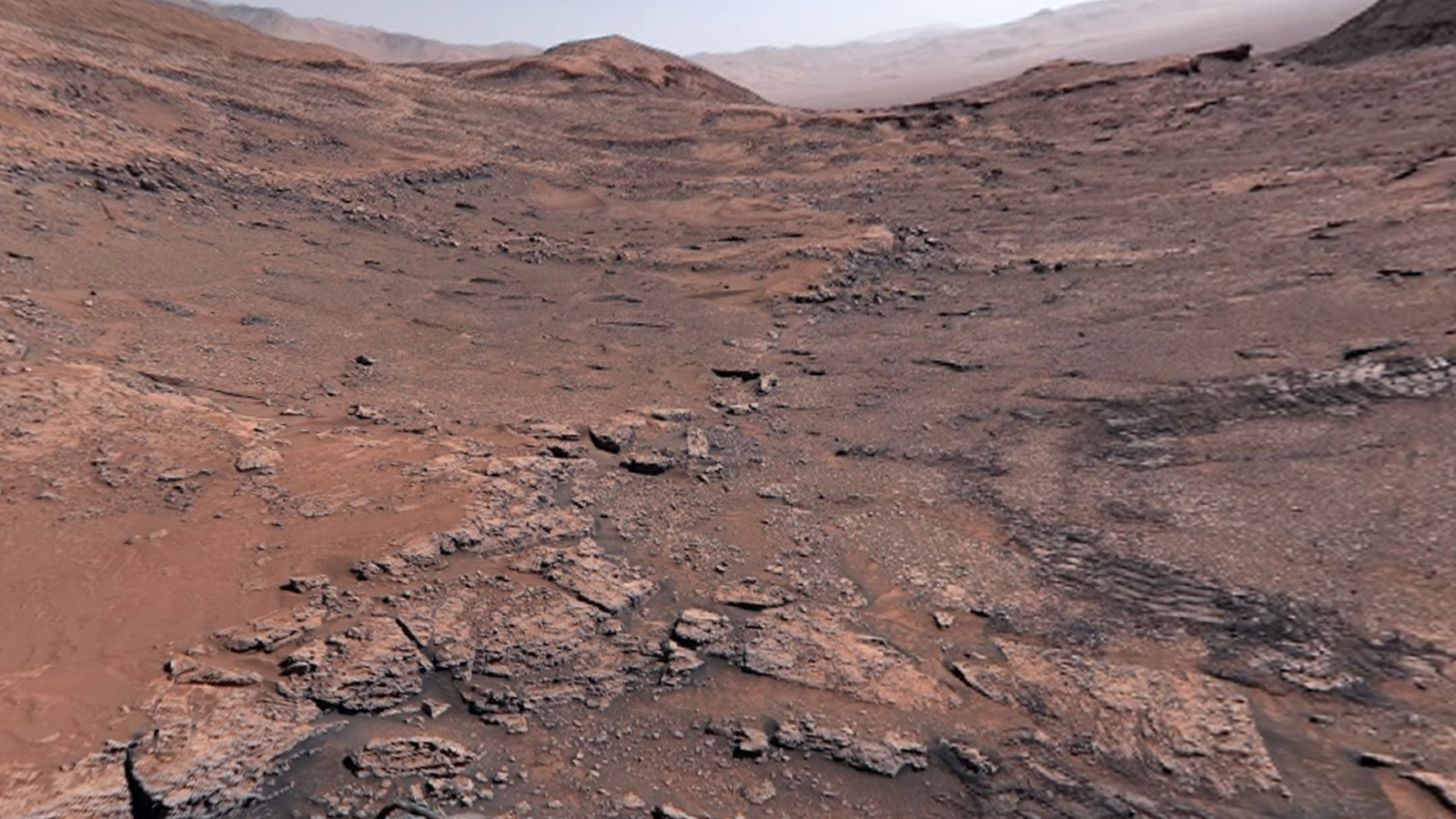
Mars Perseverance Sol 950 - Front Right Hazard Avoidance Camera: In this image acquired by the Front Hazard Avoidance Camera on Sol 950 (October 22, 2023), Perseverance looks down at an array of rocks in the Turquoise Bay workspace after drilling its 23rd core for future return to Earth.
NASA/JPL-Caltech.
Space Transit
Once microbes are released into space, they are subjected to a series of extreme environmental conditions that pose significant threats to their survival. The vacuum of space causes desiccation, or extreme dehydration, which can damage cellular structures and DNA. Additionally, cosmic radiation, including high-energy particles and gamma rays, can induce mutations and break DNA strands, potentially leading to cell death. Temperatures vary drastically in space, with regions of intense heat when exposed to the Sun and freezing temperatures in shaded areas, creating a hostile environment for most living organisms.
Despite these challenges, some microbes and microscopic animals have demonstrated remarkable resilience. Notably, tardigrades, also known as water bears, can enter a cryptobiotic state—a form of suspended animation—where they halt metabolic processes and become highly resistant to environmental stresses. Similarly, certain bacteria, such as Deinococcus radiodurans, have evolved mechanisms to repair DNA damage inflicted by radiation and oxidative stress. Laboratory experiments have confirmed that tardigrades can survive exposure to space conditions for at least ten days, maintaining their viability after retrieval. Deinococcus radiodurans has also shown an extraordinary ability to withstand high doses of radiation for extended periods.
A critical question remains whether these microbes can survive the entire duration of space transit, which can span from thousands to millions of years, without losing their ability to reproduce or cause infection upon reaching a new environment. While current evidence suggests that some extremophiles can endure short-term exposure, their long-term survival over cosmic timescales remains uncertain. Understanding this resilience is essential for assessing the risks of panspermia—the hypothesis that life can be transferred between planets—and for future space exploration missions.
Interstellar and Interplanetary Transfer
The probability of microorganisms traveling between stars is considered extremely low due to the vast distances involved in space. While the discovery of interstellar objects like ‘Oumuamua in 2017 and comet Borisov in 2019 shows that objects can indeed travel across the galaxy, the chances of microbes hitching a ride on such objects and surviving the journey are minimal. These celestial visitors demonstrate that matter can move between star systems, but this does not necessarily imply biological transfer is feasible.
One of the main challenges is the incredible length of time required for microbes to make such journeys. For example, if a microbe were to travel from the nearest star system—Proxima Centauri, approximately 4.24 light-years away—it would need to survive a journey lasting tens of thousands of years. According to astronomer Gladman, a microbe would need to endure roughly 10,000 years of space travel, facing extreme conditions such as intense radiation, vacuum, and temperature fluctuations. These factors make it highly unlikely that any microorganism could survive such an extended exposure to the harsh environment of space.
Furthermore, even if microbes could survive the initial ejection from a planet and travel through space, the chances of landing on a new planet with suitable conditions for survival are slim. The process of transfer—known as panspermia—is theoretically possible but remains highly speculative without direct evidence. The resilience of microbes over such long periods and extreme conditions is still uncertain, and current scientific understanding suggests that interstellar biological transfer is improbable.
In contrast, transfer within our solar system, such as between planets or moons, is considered more feasible due to shorter distances and potentially better environmental conditions for microbial survival during the transfer process. Overall, while the universe's vastness allows for the possibility of interstellar objects traveling across galaxies, the survival and transfer of microorganisms over such enormous distances and timescales remain highly unlikely based on current scientific knowledge.
Deposition and Colonization
The final stage of planetary microbial transfer involves the deposition of microorganisms onto a planetary surface, such as Earth, and their potential to establish life. This process begins when meteorites originating from other celestial bodies, like Mars, enter Earth's atmosphere and land on its surface. Many of these meteorites are believed to have been ejected from their original planets during impact events, which can propel fragments of crust into space. Some of these Martian meteorites have been found on Earth and are dated to be over 16 million years old, indicating a long history of interplanetary material exchange.
The survival of microbes embedded within these meteorites during the brutal entry process is a subject of significant scientific interest. Despite the intense heat and friction experienced during atmospheric entry, certain extremophiles—microorganisms that thrive in extreme conditions—have demonstrated remarkable resilience. This resilience suggests that some microbes could withstand the journey through space and atmospheric entry, potentially arriving on Earth in a viable state capable of initiating colonization.
Furthermore, this exchange of material is likely bi-directional. Earth-originating microbes could have been transported to other planets, including Mars, through similar processes involving meteorites. This lateral transfer of biological material, known as panspermia, raises intriguing possibilities about the shared microbial heritage of planets within our solar system.
Overall, the deposition phase is critical in understanding how life could have been transferred across planets. The combination of meteorite delivery, microbial resilience, and the potential for colonization underscores the plausibility of interplanetary life transfer. Ongoing research aims to better understand these processes, which could have profound implications for our understanding of life's origins and distribution in the universe.
Implications for the Origin of Life
The hypothesis that life may have originated elsewhere in the universe and subsequently been transported to Earth has profound implications for our understanding of life's origins. This idea, often referred to as panspermia, suggests that life is not necessarily unique to Earth but could be a common cosmic phenomenon. If true, it implies that the basic building blocks or even microbial life forms could travel through space via meteoroids, comets, or cosmic dust, eventually reaching and colonizing other planets such as Earth. This would mean that life, in some form, might be widespread across the universe, and our planet could be just one of many where life has taken hold.
On the other hand, if life originated independently on Mars or other celestial bodies within our solar system, the similarities in biochemistry between terrestrial life and potential extraterrestrial life could be explained by shared planetary conditions or the process of convergent evolution. For instance, the presence of similar molecules like water, carbon, nitrogen, and phosphorous on Mars suggests that the fundamental ingredients necessary for life are common throughout the solar system. Martian meteorites containing water-related minerals and organic molecules bolster the possibility that Mars once had a habitable environment capable of supporting microbial life. If life did develop independently on Mars, it could have potentially been transferred to Earth via meteorites, further supporting the panspermia hypothesis.
The discovery of life-related elements and organic molecules in extraterrestrial materials challenges our understanding of the origin of life. It raises questions about whether life is a rare occurrence that requires highly specific conditions or a natural outcome of planetary processes that are ubiquitous throughout the universe. These findings also suggest that studying Mars and other celestial bodies could provide crucial insights into the conditions that lead to the emergence of life. Ultimately, whether life originated elsewhere and was transported to Earth or arose independently, these possibilities expand our view of life's potential distribution and underscore the importance of ongoing space exploration in solving one of humanity’s most profound questions: Are we alone in the universe?
Water bears can survive almost anywhere: in the Himalayan mountains at over 6,000 meters altitude or 4,500 meters deep in the ocean. They can even spend several days in space. Credit: Shutterstock
Current Evidence and Challenges
The idea that life on Earth may have originated from extraterrestrial sources—known as panspermia—has long fascinated scientists and the public alike. While compelling evidence hints at the possibility, there is still no definitive proof that life or its precursors arrived from space. Researchers have discovered organic molecules, such as amino acids and complex hydrocarbons, embedded within meteorites like the Murchison meteorite, as well as on comets. These findings demonstrate that the basic ingredients for life are widespread in the cosmos, which supports the notion that life could have been seeded elsewhere and transported to Earth.
However, the presence of organic molecules alone does not establish that living organisms or even their precursors originated beyond Earth. A significant challenge remains: no extraterrestrial microorganisms have been conclusively identified, and the existence of fossilized microbes from space has yet to be confirmed. Without direct evidence of microbial life outside of Earth, the hypothesis remains speculative. Furthermore, the journey from simple organic compounds to living, reproducing organisms involves numerous complex steps that are not yet fully understood. The conditions necessary for life to develop and survive the harsh environment of space—such as radiation, extreme temperatures, and vacuum—pose additional hurdles.
Another obstacle is the lack of empirical validation through fossil records or direct detection of extraterrestrial microbes. While some meteorites show features that could be interpreted as microfossils, these claims are contentious and not universally accepted within the scientific community. To bolster the panspermia hypothesis, future missions are essential. Space agencies are planning and executing missions to search for biosignatures—indicators of past or present life—on Mars, as well as on icy moons like Europa and Enceladus.
Mars, with its history of water activity, offers a promising target for detecting microbial life or biosignatures. Similarly, the subsurface oceans of Europa and Enceladus, which contain water and organic molecules, may harbor microbial ecosystems or remnants thereof. Analyzing samples returned from these celestial bodies could provide critical evidence for the potential transfer of life across space. Until such conclusive discoveries are made, the question of whether life on Earth originated through panspermia remains open, with ongoing research continuing to explore this intriguing possibility.
Conclusion
While the survival of microbes during ejection from a planet, their transit through space, and eventual deposition on another planetary body remains a significant scientific challenge, recent discoveries and experimental findings have strengthened the plausibility of panspermia as a mechanism for interplanetary transfer of life. Studies have demonstrated that certain extremophiles—microorganisms that thrive in extreme conditions—possess remarkable resilience, enabling them to withstand the harsh environment of space, including vacuum, radiation, and extreme temperatures. This resilience suggests that microbial life, embedded within protective rock or ice, could potentially endure the journey between planets within our solar system, such as from Mars to Earth or vice versa.
Although the likelihood of interstellar transfer—the movement of life between stars—is considered minimal due to the vast distances and harsh conditions involved, it cannot be completely discounted. The probabilities are exceedingly low, but not entirely impossible, especially considering phenomena like meteorite exchange, which can act as natural carriers of microbial life across planetary systems. Ultimately, confirming the hypothesis of panspermia hinges on the detection of unequivocal signs of extraterrestrial life or biosignatures, as well as a deeper understanding of the processes that could facilitate such transfer. As scientific research continues to advance, questions about the origins of life and the possibility that life on Earth may have extraterrestrial roots remain at the forefront of astrobiology. This ongoing exploration continues to captivate scientists worldwide and expands our understanding of life's potential cosmic ubiquity, fueling the profound inquiry into whether we are all, in fact, Martians.
References:
Gladman, B. (2000). The physics of planetary ejecta and implications for panspermia. Astrophysical Journal, 530(2), 875-883.
Benner, S. (2013). Elements for life on Mars. Astrobiology, 13(9), 868-885.
Mojzsis, S., et al. (2019). Cosmic radiation and microbial survival. Geology Today, 35(4), 122-129.
Harvard-Smithsonian Center for Astrophysics. (2017). Discovery of interstellar objects in our solar system. Astrophysics Data System. Retrieved from https://ui.adsabs.harvard.edu/abs/2017ApJ...850L..38H
NASA Ames Research Center. (2021). Life in extreme environments and implications for panspermia. NASA Technical Reports Server. https://ntrs.nasa.gov/citations/20210012345
Melosh, H. J. (1985). Impact ejection, planetary science, and the origin of life. Lunar and Planetary Institute Conference Abstracts, 16, 1223.
Nickell, R. E., & Melosh, H. J. (2004). Transfer of life by impacts. Astrobiology, 4(4), 425-435.
Wallis, M. K., & Wickramasinghe, N. C. (2004). Interstellar dust and the possibility of panspermia. International Journal of Astrobiology, 3(2), 119-124.
Sekanina, Z. (2019). Interstellar objects and the origin of comets. Annual Review of Astronomy and Astrophysics, 57, 423-453.
Rummel, J. D., et al. (2014). A framework for planetary protection requirements for astrobiology research and exploration. Astrobiology, 14(8), 887-906.
Bada, J. L., et al. (2006). Panspermia and the origin of life: A review. Origins of Life and Evolution of Biospheres, 36(3), 201-220.
Morbidelli, A., et al. (2020). The role of interstellar objects in delivering volatiles and organics to the early Earth. Icarus, 346, 113774.
NASA vindt aanwijzingen dat er vroeger misschien leven was op Mars
NASA vindt aanwijzingen dat er vroeger misschien leven was op Mars
In een rots op Mars zijn aanwijzingen gevonden dat er vroeger misschien leven op de planeet mogelijk was. De steen heeft "potentiële tekenen voor oud leven van microbes". De Amerikaanse ruimtevaartorganisatie NASA zegt "niet eerder zo dicht bij het ontdekken van leven op Mars te zijn geweest". De organisatie houdt nog wel een slag om de arm en zegt dat er ook andere verklaringen mogelijk zijn.
De onbemande robotjeep Perseverance ontdekte in juli vorig jaar een rots met luipaardvlekken. Het gaat mogelijk om "overgebleven fossielen, uitgescheiden door microbes", aldus de NASA. De ruimtevaartorganisatie zegt de vondst te hebben voorgelegd aan wetenschappers. Zij zouden hebben geconcludeerd dat oud leven de meest logische verklaring is, blijkt uit een artikel in het wetenschappelijk tijdschrift Nature.
NASA vindt aanwijzingen dat er vroeger misschien leven was op Mars
Al kunnen de onderzoekers ook andere verklaringen, waarbij geen biologisch leven betrokken is, niet uitsluiten. Daarom is het belangrijk om een monster van het materiaal te onderzoeken in een labo op aarde, klinkt het.
De Perseverance landde in 2021 op Mars. De verkenner met zes wielen heeft twintig camera's en een boor aan boord om de planeet te onderzoeken. Het werkgebied van de rover is de krater Jezero. Miljarden jaren geleden, toen op Mars mogelijk water stroomde, mondde daar mogelijk een rivier uit in een meer.
De robotjeep onderzoekt stalen, maar transporteert die niet. Daarvoor zijn andere robotten nodig. Vraag is wel of de NASA daar nog geld voor zal vinden, nadat de Amerikaanse president Donald Trump vraagtekens plaatste bij de plannen om materiaal vanop Mars naar de aarde te brengen.
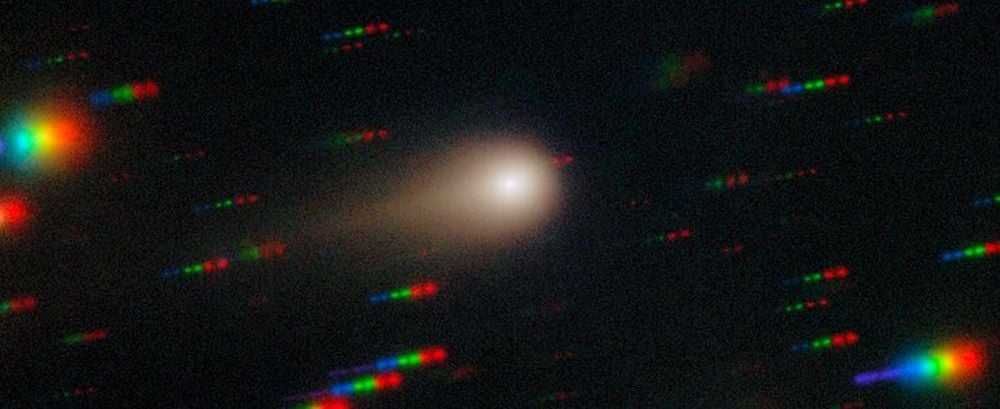
Astronomers and students working together through a unique educational initiative have obtained a striking new image of the growing tail of interstellar Comet 3I/ATLAS. The observations reveal a prominent tail and glowing coma from this rare celestial visitor, while also providing new scientific measurements of its colors and composition.Image Credit: NOIRLab. http://creativecommons.org/licenses/by/4.0/
Interstellar visitors like Comet 3I/ATLAS grant astronomers a rare opportunity to study something from another solar system. It was first discovered on July 1st when it was entering the inner Solar System and was about 4.5 au from the Sun. It's an active comet with an icy nucleus, meaning it's warming up as it approaches the Sun and releasing gas and dust that form a coma and tail.
It's the third confirmed interstellar object (ISO) after Oumuamua and Comet 2L/Borisov. These objects provoke extreme curiosity among astronomers, driven by the fact that they won't be visible again. As ISOs, their trajectory will take them out of the Solar System completely, never to be seen again.
These new images of Comet 3I/ATLAS are from the Gemini South Telescope in Chile. It's an 8.1 meter optical/infrared telescope that has a twin, the Gemini North Telescope, in Hawaii. The telescopes are operated by the National Science Foundation's NOIRLab.
In a twist, these images aren't part of a dedicated strictly scientific observing program. Instead, they're from a public outreach initiative involving NOIRLab and Shadow the Scientists. Shadow the Scientists is an effort to connect astronomers working with powerful telescopes with interested members of the public.
The images are from 27 August 2025, when astronomers used the Gemini South's Gemini Multi-Object Spectrograph (GMOS) to obtain deep images of Comet 3I/ATLAS, its coma, and its tail. The images show that the coma and tail are growing, when compared to earlier images of the comet.
During the outreach initiative, members of the public and students from Hawaii and Chile joined a Zoom call with astronomers at Gemini South. They were able to ask questions, interact with the scientists, and follow observations in real time. People from around the world, including from Europe, New Zealand, and South America, also joined in.
During the session, time-critical communication among the science team and observatory/telescope staff are given the highest priority. This is necessary for obvious reasons, and it gave public participants an opportunity to be immersed in real-time astronomical observations.
Gemini South's Gemini Multi-Object Spectrograph (GMOS) captured the comet's spectrum, which yields information about the comet's chemical makeup. This lets astronomers understand the changes the comet goes through as it traverses the inner Solar System and the Sun's energy drives changes in the comet.
Comet 3I/ATLAS is only the third confirmed ISO to visit our Solar System, though there must have been many more of them throughout the Solar System's history. The comet provides a rare opportunity to study something from a distant star up close.
Image Credit: International Gemini Observatory/NOIRLab/NSF/AURA/Shadow the Scientist Image Processing: J. Miller & M. Rodriguez (International Gemini Observatory/NSF NOIRLab), T.A. Rector
(University of Alaska Anchorage/NSF NOIRLab), M. Zamani (NSF NOIRLab)
"The primary objectives of the observations were to look at the colors of the comet, which provide clues to the composition and sizes of the dust particles in the coma, and to take spectra for a direct measure of the chemistry,” said Karen Meech, astronomer at the University of Hawai‘i Institute for Astronomy, and leader of the scientific program. “We were excited to see the growth of the tail, suggesting a change in the particles from the previous Gemini images, and we got our first glimpse of the chemistry from the spectrum.”
The new observation and spectrum indicate broad similarity with comets from our own Solar System. This suggests that planetary system formation and evolution is similar in other Solar Systems, or at least in Comet 3I/ATLAS's home system.
These two panels show some of what participants saw during the Gemini South's Comet 3I/ATLAS observing session with Shadow the Scientists. The panel on the left shows a screen displaying different aspects of the telescope's status, and also the weather. The panel on the right is the main software, called the observing tool, that astronomers use in a lot of their interactions with the Gemini South Telescope.
Image Credits: NSF/NOIRLab/Gemini South
“As 3I/ATLAS speeds back into the depths of interstellar space, this image is both a scientific milestone and a source of wonder,” said Meech. “It reminds us that our Solar System is just one part of a vast and dynamic galaxy — and that even the most fleeting visitors can leave a lasting impact.”
“These observations provide both a breathtaking view and critical scientific data,” said Bryce Brolin, a research scientist who was also present. “Every interstellar comet is a messenger from another star system, and by studying their light and color, we can begin to understand the diversity of worlds beyond our own.”
Brolin will lead a follow-up Shadow the Scientists session when Comet 3L/ATLAS reappears from behind the Sun. That session will be held from the Gemini North Telescope on Mauna Kea, Hawaii.
Below is a video of the entire Shadow the Scientists observing session.
Here’s what you’ll learn when you read this story:
If time travel is possible, one of the greatest questions is why don’t we see time travelers in the here and now.
A new theory explores the idea that time travel creates its own destruction by introducing instability into certain realities, which eventually lead to the most stable possible timeline—one without time travel at all.
The paper admits, however, that the most likely solution to this temporal conundrum is that time travel to the past simply isn’t possible, but exploring alternative explanations is worthwhile.
Of course, there are famous logical examples, such as the Grandfather paradox, which explores what would happen if a time traveler killed their grandparent before their parent was conceived (an idea not so far removed from the plot of the sci-fi great Back to the Future). Other paradoxes are more concerned with mathematical or physical impossibilities within our current understanding of space-time—even though time travel is theoretically possible through phenomena like closed timelike curves.
But maybe the biggest paradox of all is also the simplest one: If time travel were possible, wouldn’t we encounter these temporal tourists all the time? Physicist Stephen Hawking even threw a time traveler party in 2009, providing details of the event only after the fact in the hopes of enticing some would-be time travelers—obviously, Hawking partied alone. Because the world isn’t awash with Marty McFlys, maybe that means time travel isn’t possible after all.
Unfortunately, when it comes to the ins and outs of something immensely complicated like time travel, things are rarely so simple.
In a new study, Andrew Jackson—a research associate from the School of Informatics—explores reasons beyond the scientific or technological as to why time travel appears to be impossible (at least, in this reality). Published in the preprint journal arXiv and titled “Where Are All the Tourists From 3025?,” the study posits that maybe time travel itself is a self-suppressing phenomenon.
“I conclude that, assuming my model, time travel is self-suppressing: the timeline is continually rewritten until it inevitably reaches a timeline with no time machines ever being constructed, “ Jackson wrote. “At this point, no further changes to the timeline are possible.”
Jackson illustrates this idea with what’s known as a Markov chain, named after Russian mathematician Andrey Markov, which describes a sequence of possible events wherein the probability of those events depends only on the current state. In the paper, Jackson shows that introducing time travel into any timeline would create dynamic instability that would eventually (at least, statistically) create a timeline where time travel was never invented, which is the most stable state for any timeline. The process of this continuous timeline change would, however, feel instantaneous to non-time travelers such as you and I.
Why would this happen this way? Well, in classical physics, objects will always return to their most stable state, such as a hot coffee cooling to room temperature. If time machines introduce temporal instability, then timelines will similarly default to the most stable state, which would be a timeline with no time machines at all.
“[The paper] shows that time travel—by enabling timeline alterations—induces a dynamic instability that—with very high probability—leads to its own erasure,” Jackson wrote. “This self-suppressing mechanism results in the asymptotic convergence of all timelines toward states in which no time machines ever exist.”
Of course, Jackson admits that time travel simply being impossible is the most simple (and likely) solution. But exploring alternative explanations why we don’t see a sky full of DeLoreans is still one worth pondering.
“It may simply not be possible to travel through time,” Jackson wrote. “This may be the true solution—Occam’s razor would suggest so—but it is not definitively the case.”
Footage of U.S. drone hits UFO with hellfire missile
Three U.S. military veterans, two from the Air Force and one from the Navy, took the stand Tuesday during the third congressional hearing on Unidentified Anomalous Phenomena (UAPs), the government’s sanitized new term for UFOs.
The most shocking moment came when Congressman Eric Burlison of Missouri unveiled never before seen military footage: a U.S. drone firing a hellfire missile at a mysterious object off the coast of Yemen on October 30, 2024.
The grainy black and white video shows the 100 pound precision weapon streaking toward the target, only to ricochet off harmlessly as the object shot away at impossible speed. Just as baffling, three smaller spheres hovered in formation around the craft, undisturbed by the impact.
Reactions were mixed. Skeptics immediately dismissed the video, claiming it could be nothing more than a misidentified balloon, its apparent speed exaggerated by the drone’s telephoto lens. Others suggested the missile was part of a weapons test rather than a failed strike on something otherworldly.
But the testimony didn’t stop with the video. Two veterans alleged the government has been actively silencing witnesses, threatening those who came forward, and even blacklisting service members who refused to stay quiet. Dylan Borland, a former Air Force geospatial intelligence specialist, testified that multiple agencies conspired to destroy his career blocking jobs, forging documents, and tampering with his security clearance.
For some, this hearing represented a breakthrough in UFO transparency. For others, it was little more than political theater. As one observer put it: it looks like it is just another carefully staged distraction, the UFO spectacle might just be a smokescreen for something deeper.
Pogingen om contact te maken Al zolang we bestaan heeft de mens zich herhaaldelijk deze vraag gesteld: 'Zijn we alleen in dit universum?' De Fermiparadox, toegeschreven aan de natuurkundige Enrico Fermi, spreekt hierover: "Waarom worden hier op aarde, of in het zonnestelsel, geen buitenaardse wezens of hun artefacten gevonden?" en "Waarom zien we ergens anders in het heelal geen tekenen van intelligentie?"
Is daar iemand? Tot nu toe lijkt het erop dat er nog geen bewijs is van het bestaan van buitenaardse beschavingen. Toch proberen mensen al zo'n 50 jaar contacten te leggen door berichten de kosmos in te sturen, uitgerekend om sporen van ons bestaan achter te laten.
Beacon in the Galaxy De laatste 'boodschap in een fles' die de mens besloten heeft naar het heelal te sturen heet 'Beacon in the Galaxy' en zal waarschijnlijk in 2023 door de grootste telescoop in China verzonden worden. Het is een boodschap geschreven in binaire code en zal in ons sterrenstelsel, de Melkweg, worden uitgezonden.
Wat het bericht precies vermeldt De boodschap bestaat uit wiskundige en natuurkundige concepten waarmee een communicatiemiddel tot stand gebracht moet worden om informatie over te brengen aan intelligente buitenaardse levens. Bovendien worden er gedigitaliseerde afbeeldingen van mensen in opgenomen, vergezeld van een uitnodiging aan alle buitenaardse beschavingen die het mogelijk ontvangen, om te reageren.
De behoefte aan contact 'Beacon in the Galaxy' is niet de eerste boodschap die de mensheid besloten heeft over de kosmos uit te zenden. Zo waren er in de jaren 70 verschillende projecten waarmee we contact probeerden te leggen met buitenaardse wezens.
Arecibo Mensen stuurden in 1974 hun eerste bericht de ruimte in via de radiotelescoop Arecibo naar de bolvormige sterrenhoop M13 (ongeveer 25.000 lichtjaren weg). Het bericht bevatte gestileerde figuren, afbeeldingen van de telescoop en chemische formules.
Ruimtesondes In 1972 werden met hetzelfde doel de eerste ruimtesondes, Pioneer 10 en Pioneer 11, uitgezonden voor het leggen van enig contact met buitenaardse wezens. Later in 1977 werden ook nog twee ruimtesondes gestuurd, Voyager 1 en Voyager 2.
Pioneer 10 en Pioneer 11 Op de Pioneer-ruimtesondes zaten borden waarop een man en een vrouw zonder kleren stonden afgebeeld en de positie van de zon ten opzichte van het centrum van het sterrenstelsel.
Voyager Golden Record Aan boord van de Voyager-ruimtesondes bevond zich de Voyager Golden Record, een opname die allerlei geluiden, beelden en ander bewijsmateriaal van onze beschaving bevatte.
Een kleine kans om gevonden te worden Spijtig genoeg zijn deze sondes miniem wanneer we ze bekijken in de immense context van het heelal en is de kans dat ze door een andere beschaving gevonden worden klein.
Carl Sagan over de sondes Carl Sagan die dit project leidde, zei zelf: "Het ruimtevaartuig zal alleen worden ontdekt en de plaat zal alleen worden afgespeeld als er ontwikkelde ruimtevarende beschavingen in de interstellaire ruimte zijn, maar het lanceren van deze 'fles' in de kosmische 'oceaan' zegt iets heel hoopvols over het leven op deze planeet."
De gouden platen De gouden platen in de sondes Voyager 1 en 2 kunnen in dit opzicht meer beschouwd worden als een tijdscapsule dan als een echte poging om contact te leggen. Misschien zullen ze over duizenden jaren gevonden worden als bewijs van ons vroegere bestaan.
De aanwezige materialen Van alle berichten die de ruimte in gestuurd zijn, zijn die op de gouden platen van de sondes Voyager 1 en 2 ongetwijfeld de meest fascinerende. Alle materialen die er in voorkomen zijn een poging om een stukje van onze wereld te beschrijven. Laten we eens wat voorbeelden bekijken.
Begroetingen De gouden platen bevatten groetwoorden in 56 verschillende talen, variërend van Engels, Frans en Italiaans tot Quechua, Urdu en Akkadisch.
Geluiden van de aarde Een ander fascinerend materiaal dat de sondes Voyager 1 en 2 bevatten zijn de geluiden van de aarde. Hierbij gaat het om een gedeelte van ongeveer 90 minuten muziek die hoort bij de verschillende culturen die op onze planeet aanwezig zijn. Muziek met onder andere werken van componisten als J.S. Bach, Mozart, Beethoven (gespeeld door het Budapest String Quartet), Chuck Berry, Kesarbai Kerkar, Valya Balkanska en de elektronische componist Laurie Spiegel.
The Beatles zaten er niet bij! Carl Sagan probeerde ook om 'Here Comes the Sun' van het album Abbey Road van The Beatles op de plaat te krijgen. Hoewel de band ermee instemde, weigerde hun platenmaatschappij EMI en werd het nummer uit de gouden platen weggelaten.
Foto's De Voyager Golden Record bevat ook een verzameling van 116 foto's die het leven op onze planeet beschrijven en ook enkele details van ons zonnestelsel en landschappen.
Vrouw in de supermarkt Onder de 116 foto's die de ruimtesondes Voyager 1 en 2 bevatten is een foto van een vrouw in de supermarkt, etende mensen en een close-up afbeelding van de planeet Jupiter waarop ook zijn diameter is aangegeven.
Newton Bladzijde 6 uit het 3e volumen van Philosophiae Naturalis Principia Mathematica van Isaac Newton, De mundi systemate, over de organisatie van de wereld is ook op de gouden plaat opgenomen.
Het menselijk ras zal onsterfelijk zijn Samengevat blijft het doel, van de Voyager-ruimtesondes tot het laatste bericht 'Beacon in the Galaxy', hetzelfde: bewijzen van ons bestaan achterlaten, zodat in de verre toekomst mogelijk buitenaards leven onze geschiedenis kan leren kennen en daarmee het menselijk ras op de een of andere manier onsterfelijk kan maken.
Representational image of aliens in the parallel universe.
Stock image.
Former US Air Force officer Robert Salas recently stirred conversation during a congressional hearing when he suggested that extraterrestrials are trying to send a clear, three-word message regarding nuclear weapons: “WTF.”
Salas, who served as a USAF captain, shared his views in a discussion with Congresswoman Nancy Mace.
The exchange was recorded during a special hearing on UFOs and later shared on social media by the Total Disclosure Podcast.
Salas’s comments drew attention as he recounted incidents where unidentified flying objects (UFOs) were seen near nuclear facilities around the world.
UFO encounter
According to Salas, these UFO sightings did not inflict any serious damage on the weapons systems but did disrupt their navigation systems.
When asked what he believed the extraterrestrial visitors were trying to communicate, he interpreted it as a critique of nuclear armaments: “To me, that says they were sending us a message about nuclear weapons: ‘WTF, nuclear weapons.'”
While he expressed regret for using strong language in front of Congresswoman Mace, she seemed unperturbed by his choice of words.
Salas’s remarks came amid ongoing discussions led by experts who argue that alien entities have made multiple visits to significant nuclear missile bases every year.
Aliens turned off ten nukes
One of the most striking claims from Salas is regarding an incident at Malmstrom Air Force Base in Montana, where he alleged a UFO disabled ten warheads.
In this encounter, he described the UFO as having an eerie red glow as it sped through the night sky on March 24, 1967.
The then-26-year-old lieutenant reported that the UFO pilots appeared to have an in-depth understanding of the missile systems.
At the time of the incident, Malmstrom was in control of Minuteman I intercontinental ballistic missiles (ICBMs).
Today, it operates the more advanced Minuteman III systems. In his exchange with Congresswoman Mace, Salas detailed how, despite the UFO shutting down the missiles, no damage occurred:
“No equipment was fried. Nothing was damaged,” he stated.
Salas believes the extraterrestrial visitors aren’t hostile but rather a “pacifist species,” implying their intention is peaceful rather than aggressive.
He explained that the shutdown was caused by an “intermittent electrical pulse,” which affected a component of the guidance system known as the logic coupler.
The missile’s guidance system failed without this part properly functioning properly, resulting in an automatic shutdown.
However, he noted that all missiles were restored to alert status within 24 hours.
This incident wasn’t isolated; Salas claimed his crew commander had experienced a similar encounter just eight days earlier.
He emphasized that in both situations, no significant damage was reported. Salas interprets these events as a clear message from the unknown visitors about the threats posed by nuclear weapons.
Furthermore, he revealed that he was bound by a non-disclosure agreement that restricted him from discussing the classified incident for years.
Salas’s name is well-known among those who believe in UFOs, also called unidentified aerial phenomena (UAP). Many maintain that these entities have visited Earth for decades.
As discussions on UFOs and their implications for global security continue to unfold, Salas’s testimony adds a provocative perspective to the ongoing conversation about nuclear weapons and potential extraterrestrial awareness of human activities.
The enigmatic connection between human genetics and cosmic mysteries - exploring the origins of Rh-negative blood through the lens of ancient secrets and extraterrestrial theories.
(Generated Image)
Rh-Negative Blood: “Alien” Origins or Ancient Mutation Linking to Biblical Figures?
Introduction: The Fascination with Rh-Negative Blood
Throughout human history, certain biological traits have sparked curiosity, speculation, and sometimes even myth. Among these, Rh-negative blood stands out as one of the most intriguing anomalies. Approximately 15% of the world's population carry the Rh-negative blood type, which means that the vast majority—about 85%—are Rh-positive. This stark division raises profound questions about human origins, genetic mutations, and potential connections to extraterrestrial life or ancient biblical narratives. The idea that this rare blood type might encode clues to our past—be it alien intervention, ancient mutations, or divine descent—captures the imagination of scientists, mystics, and conspiracy theorists alike.
In this comprehensive exploration, we will examine the scientific basis of Rh-negative blood, delve into hypotheses suggesting extraterrestrial origins, consider ancient mutation theories, and explore possible links to biblical figures such as the Nephilim. Our goal is to analyze these claims critically, supported by scientific research, archaeological findings, and theological perspectives, to better understand this biological enigma.
Understanding the Basics: What is Rh-Negative Blood?
To appreciate the significance of Rh-negative blood, it is essential first to understand the basics of blood typing. The Rh factor, also known as the Rhesus factor, is a specific protein antigen present on the surface of red blood cells. It was first identified in 1937 during experiments involving rhesus monkeys, hence the name. Blood is classified as Rh-positive if the Rh antigen is present and Rh-negative if it is absent.
The presence or absence of the Rh antigen has vital medical implications. For example, in pregnancy, if an Rh-negative mother carries an Rh-positive fetus, her immune system may recognize the fetal blood cells as foreign and produce antibodies against them—a condition known as hemolytic disease of the newborn (HDN). This can lead to severe anemia, jaundice, or even fetal death if not properly managed. Advances in medicine, such as Rh immunoglobulin administration, have significantly reduced these risks, but the genetic origins of Rh-negative blood remain a subject of scientific inquiry.
Genetic and Evolutionary Perspectives
From a genetic standpoint, the Rh blood group system is inherited through complex patterns of inheritance involving multiple alleles. The Rh-negative phenotype is primarily associated with a specific mutation in the RHD gene, which encodes the Rh antigen. Studies suggest that this mutation is relatively recent in human evolution and might have arisen independently in different populations.
Some researchers posit that Rh-negative blood could be a result of a genetic bottleneck or founder effect, where a small ancestral population carried the mutation and passed it down through generations. Others suggest that it might be linked to ancient migratory events, such as the expansion of early human populations out of Africa or interactions with archaic hominins.
Hypotheses of Extraterrestrial Origins
One of the most sensational theories surrounding Rh-negative blood is its possible extraterrestrial origin. Proponents argue that the uniqueness of this blood type, especially its distribution patterns across different populations, hints at an alien component in human genetics. Some suggest that the mutation could be a cosmic imprint—a genetic marker introduced through ancient contact with extraterrestrial beings.
Supporters of this hypothesis often cite the following points:
Unusual Distribution: Rh-negative blood is more prevalent in certain populations, such as Basques, and less common elsewhere, leading some to speculate about external influences.
Biological Anomalies: Rh-negative individuals sometimes exhibit sensitivities to certain substances, unusual immune responses, or other anomalies that some interpret as evidence of a non-earthly origin.
Ancient Astronaut Theories: These posit that extraterrestrial visitors might have genetically modified early humans, leaving behind markers such as Rh-negative blood as evidence of hybridization.
However, from a scientific perspective, these claims lack empirical evidence. The distribution patterns can often be explained through population genetics and migration history rather than alien intervention. Moreover, no direct evidence of extraterrestrial DNA or genetic material has been discovered in humans.
Ancient Mutation Theories and Human Evolution
Another perspective considers Rh-negative blood as an ancient mutation within the human genome. Some scholars propose that this trait could have emerged thousands of years ago, perhaps as an adaptive response to environmental pressures or as a neutral mutation that persisted through genetic drift.
Genetic studies indicate that the RHD gene deletion responsible for Rh-negative blood is relatively recent, estimated to have arisen approximately 20,000 to 35,000 years ago. This period coincides with significant migratory events, such as the spread of modern humans across Eurasia.
Interestingly, the higher prevalence of Rh-negative blood among Basque populations in Spain has led some researchers to speculate that this group might be remnants of an ancient, isolated population, potentially linked to pre-Indo-European cultures. Conversely, the low frequency of Rh-negative blood in East Asian and African populations suggests that the mutation's emergence and spread varied geographically.
Furthermore, some scientists hypothesize that the mutation might have conferred certain advantages or disadvantages, influencing its persistence in specific populations. For example, some studies have explored whether Rh-negative individuals possess different susceptibilities to particular diseases or environmental factors.
Connection to Biblical Figures and the Nephilim
Perhaps the most captivating aspect of the Rh-negative blood debate revolves around its potential links to biblical narratives, especially the enigmatic Nephilim described in Genesis. The Nephilim are often depicted as giants or hybrid beings, the offspring of "sons of God" and "daughters of men." Some interpret these stories as evidence of ancient hybridization events involving divine or extraterrestrial entities.
Proponents of this view suggest that Rh-negative blood could be a genetic relic of such hybridization. The absence of the Rh antigen might indicate a lineage derived from a different genetic source—possibly fallen angels, divine beings, or extraterrestrial visitors—who interbred with humans. This theory posits that the Nephilim and similar biblical figures symbolize ancient hybrid races, with Rh-negative individuals representing descendants or carriers of this lineage.
Supporters cite the following points:
Genetic Peculiarity: Rh-negative blood's uniqueness has led some to associate it with non-human origins, especially given the lack of a clear evolutionary pathway.
Ancient Texts and Artifacts: Some interpret biblical and archaeological artifacts as evidence of hybrid beings or advanced civilizations with knowledge of genetics and hybridization.
Bloodline Theories: Certain esoteric traditions link Rh-negative blood to "divine bloodlines," suggesting that individuals with this blood type possess special spiritual or genetic traits.
Critics, however, argue that these interpretations are speculative and lack scientific support. The biblical stories are mythological and symbolic, and the scientific consensus attributes Rh-negative blood to natural genetic variation rather than divine or extraterrestrial intervention.
Scientific Evaluations and Current Research
Modern genetics offers tools to investigate the origins of Rh-negative blood more systematically. Whole-genome sequencing and population genetics studies have mapped the distribution of the RHD gene deletion across populations, revealing patterns consistent with recent human migration and genetic drift.
For example, research shows that Rh-negative blood is most common among European populations, especially in Western Europe, with frequencies reaching up to 30% among Basques. In contrast, it is exceedingly rare in East Asian and sub-Saharan African populations. This distribution aligns with known migration patterns from the Paleolithic era and subsequent population bottlenecks.
Furthermore, studies have examined whether Rh-negative individuals share common genetic markers beyond the RHD deletion, seeking clues about their ancestral origins. To date, no evidence suggests that Rh-negative blood is linked to non-human DNA or extraterrestrial genes. Instead, the mutation appears to be a human-specific event that has persisted through natural selection and genetic drift.
Implications for Medical Science and Anthropology
Understanding the origins of Rh-negative blood has practical implications. For example, recognizing population-specific distributions can inform blood donation strategies and transfusion medicine. Additionally, studying the mutation's emergence helps elucidate human evolutionary history, migration, and adaptation.
Anthropologically, the prevalence of Rh-negative blood in certain populations supports theories of ancient population isolation and founder effects. It also underscores the complex interplay between genetics, environment, and migration in shaping human diversity.
Conclusions: Separating Fact from Fiction
While the allure of connecting Rh-negative blood to alien origins or biblical hybrids is compelling from a mythological or speculative standpoint, scientific evidence currently supports a more grounded explanation rooted in human genetics and migration history. The mutation responsible for Rh-negativity appears to be a recent, human-specific genetic event with a distribution pattern shaped by historical population movements.
Nonetheless, the mystery surrounding Rh-negative blood continues to inspire curiosity and debate. Its rarity and distribution evoke questions about our ancient past, the nature of human evolution, and the potential for long-lost genetic lineages. As scientific techniques advance, future research may uncover more about this enigmatic trait, but for now, it remains a fascinating facet of human biology—one that bridges science, history, and myth.
References
Daniels, G. (2002). The Rh Blood Group System. Blood Reviews, 16(3), 130-145.
Moulds, M. (2019). The genetics of the Rh blood group system. Hematology Today, 35(2), 10-12.
Lalueza-Fox, C., et al. (2003). Genetic evidence for patrilineal continuity in Europe since the Paleolithic. Proceedings of the National Academy of Sciences, 100(11), 6986–6991.
Gibbons, A. (2010). Out of Africa, into the world: The origins of human diversity. Science, 328(5978), 1624–1627.
Horne, P. (2015). The Nephilim and the Genetic Record: Myth, Mystery, and Human Origins. Journal of Ancient Near Eastern Studies, 5(1), 45-60.
National Geographic Society. (2018). Human Migration and Genetic Diversity. Science & Exploration.
In Summary
The phenomenon of Rh-negative blood remains one of the most captivating mysteries in human genetics. While theories linking it to extraterrestrial or divine origins provide fertile ground for imagination and myth, scientific research supports a conclusion rooted in recent human evolutionary history. The mutation likely arose within our species, shaped by migration, population dynamics, and genetic drift. Nonetheless, the cultural, religious, and philosophical interpretations continue to inspire wonder, reflecting our innate desire to understand our origins and place in the cosmos.
Deep exposures on 7 September 2025 show 3I/ATLAS wrapped in a green coma.
(Credit: M. Jäger and Gerald Rhemann)
I have been staring at 3I/ATLAS for weeks, not through an eyepiece, but through the stack of reports and images that keep arriving. At first the object looked reddish. Now its glow reads as green. The gas around it is heavy on carbon dioxide and thin on water, which is not how a regular comet behaves near the Sun. In some images the light seems to extend toward the Sun rather than away from it. That is the kind of detail that makes you sit up, because it refuses to fit neatly into the usual picture.
One anomaly can be a measurement quirk. A handful of them begins to sound like a pattern. With 3I/ATLAS we have color change, unusual chemistry, odd scattering of light, and a path that hugs the plane of the planets more closely than chance would suggest. When you place those facts side by side, you get a portrait that does not match the familiar family of icy bodies in the solar system where we are from.
This is where the culture of science matters. Many researchers are careful, honest, and conservative in how they talk about data. That caution serves the field well. It also means that oddities sometimes get smoothed out by language before they are faced head on. PRofessor Avi Loeb takes a different tack. He keeps pointing at the data and asking simple questions in public. He does not chase applause and he does not hide behind comfortable phrasing. I respect that. Science is not a popularity contest. It is a process for finding out what is true in the world, and that process only works if people are willing to ask the questions that feel awkward.
Let me be direct about one thing. I do not think 3I/ATLAS is an alien spacecraft. I would love it to be, sure. Natural explanations should be worked through first, with patience and rigor. The chemistry could reflect a crust rich in carbon dioxide ice. The color shift could track changes in sunlight and temperature that wake up different molecules at different distances. The odd light pattern could be geometry and timing. I mean, remember the face on Mars? There is work to do before anyone should claim anything extraordinary.
Still, I will take the other path because it is worth thinking clearly about it. If 3I/ATLAS were artificial, it would almost certainly not carry living organisms. Biology does not like deep space. It breaks down under radiation and time. A machine can wait and repair itself. An autonomous probe guided by artificial intelligence makes more engineering sense for an interstellar mission than a cabin full of breath and bone. That is not a romantic picture, but it is a practical one.
Deep exposures on 7 September 2025 show 3I/ATLAS wrapped in a green coma. (Credit: M. Jäger and Gerald Rhemann)
I keep returning to ʻOumuamua. (I also loved Loeb’s book on ʻOumuamua) It was small, fast, and behaviorally odd. It showed no clear signs of venting, yet its motion suggested a small push that gravity alone did not account for. It looked nothing like the textbook comets we teach. It passed. Many argued. It kept its secrets. If you allow a speculative frame for one paragraph, you can imagine ʻOumuamua as a scout, a light vehicle meant to sense, sample, and move on. You can then imagine 3I/ATLAS as a larger platform with a different set of capabilities. If that picture were true, it would point to a civilization far beyond us in age and capacity, one that builds in classes of craft and sends them across star systems as calmly as we send weather satellites across the Atlantic.
I am not claiming that is the case. I am laying out a clean line of reasoning so that readers understand what is at stake when we talk about anomalies. The right response is not to fall in love with the extraordinary answer. The right response is to gather the kind of data that lets the ordinary answer win on evidence, not on habit.
Here is what the data say in plain terms. When 3I/ATLAS was far from the Sun, the light it threw around itself increased very quickly as it moved inward. Once it crossed a certain distance, that increase slowed. That pattern suggests that the material around it changed character. At first the light likely bounced off dust lifted from a dark surface layer. Closer in, fresh, small ice grains likely took over and brightened the glow in a different way. Independent observations show a gas plume dominated by carbon dioxide, with smaller amounts of carbon monoxide and only traces of water. That is unusual when set next to the comets that spend their lives in our system. But thenagain, space is weird, and the universe has so many secrets we are just starting to explore.
You do not need to be a specialist to grasp the next step. If an object from another star looks different from most of our comets, we should not force it into the old mold. We should describe it as it is and ask what that tells us about where it came from, how it formed, and how it is changing now. That is the heart of science. Describe the thing. Test the description. Change your mind when the facts warrant it.
This is also where public conversation can go wrong. People hear “anomaly” and think “mystery solved by a wild claim.” That habit hurts everyone. The better habit is calm curiosity. Loeb often argues for that posture, even when it upsets colleagues. He asks for open data, independent measurements, and patient analysis. He reminds us that history is full of mistakes that felt safe at the time. The Sun did not circle Earth. Diseases did not spring from bad air. Continents did not stand still. Our job is not to protect an old story. Our job is to find the right one.
So what should we do with 3I/ATLAS right now? Keep observing. Compare instruments. Cross-check photometry and spectra. Model the light scattering with more than one set of assumptions. Publish the methods in detail. Invite rival teams to replicate the results. Treat the object as a laboratory for learning about interstellar debris, not as a prop in a culture war between skeptics and believers. If the mundane explanation is correct, it will earn its place by explaining the color, the chemistry, and the geometry without hand-waving. If it fails, we will know exactly where it fails, and that will be valuable.
I will close where I began. The sky is not tidy. It is real and indifferent. It holds dust that glows green and rocks that tumble and gas that tricks the eye. We do not honor it by draping it in stories that flatter us. We honor it by looking closely, asking better questions, and letting evidence lead, even when it drags us somewhere we did not plan to go. If 3I/ATLAS turns out to be a strange but natural traveler, that will be worth knowing. If it is something else, we will need the same tools and the same temperament to face that result. Either way, curiosity and discipline carry us forward.
Meer van UFO'S of UAP'S, ASTRONOMIE, RUIMTEVAART, ARCHEOLOGIE, OUDHEIDKUNDE, SF-SNUFJES EN ANDERE ESOTERISCHE WETENSCHAPPEN - DE ALLERLAATSTE NIEUWTJES


 'Incredibly exciting': NASA claims it's found the 'clearest sign' yet of past life on Mars