Ontdek de Fascinerende Wereld van UFO's en UAP's: Jouw Bron voor Onthullende Informatie!
Ben jij ook gefascineerd door het onbekende? Wil je meer weten over UFO's en UAP's, niet alleen in België, maar over de hele wereld? Dan ben je op de juiste plek!
België: Het Kloppend Hart van UFO-onderzoek
In België is BUFON (Belgisch UFO-Netwerk) dé autoriteit op het gebied van UFO-onderzoek. Voor betrouwbare en objectieve informatie over deze intrigerende fenomenen, bezoek je zeker onze Facebook-pagina en deze blog. Maar dat is nog niet alles! Ontdek ook het Belgisch UFO-meldpunt en Caelestia, twee organisaties die diepgaand onderzoek verrichten, al zijn ze soms kritisch of sceptisch.
Nederland: Een Schat aan Informatie
Voor onze Nederlandse buren is er de schitterende website www.ufowijzer.nl, beheerd door Paul Harmans. Deze site biedt een schat aan informatie en artikelen die je niet wilt missen!
Internationaal: MUFON - De Wereldwijde Autoriteit
Neem ook een kijkje bij MUFON (Mutual UFO Network Inc.), een gerenommeerde Amerikaanse UFO-vereniging met afdelingen in de VS en wereldwijd. MUFON is toegewijd aan de wetenschappelijke en analytische studie van het UFO-fenomeen, en hun maandelijkse tijdschrift, The MUFON UFO-Journal, is een must-read voor elke UFO-enthousiasteling. Bezoek hun website op www.mufon.com voor meer informatie.
Samenwerking en Toekomstvisie
Sinds 1 februari 2020 is Pieter niet alleen ex-president van BUFON, maar ook de voormalige nationale directeur van MUFON in Vlaanderen en Nederland. Dit creëert een sterke samenwerking met de Franse MUFON Reseau MUFON/EUROP, wat ons in staat stelt om nog meer waardevolle inzichten te delen.
Let op: Nepprofielen en Nieuwe Groeperingen
Pas op voor een nieuwe groepering die zich ook BUFON noemt, maar geen enkele connectie heeft met onze gevestigde organisatie. Hoewel zij de naam geregistreerd hebben, kunnen ze het rijke verleden en de expertise van onze groep niet evenaren. We wensen hen veel succes, maar we blijven de autoriteit in UFO-onderzoek!
Blijf Op De Hoogte!
Wil jij de laatste nieuwtjes over UFO's, ruimtevaart, archeologie, en meer? Volg ons dan en duik samen met ons in de fascinerende wereld van het onbekende! Sluit je aan bij de gemeenschap van nieuwsgierige geesten die net als jij verlangen naar antwoorden en avonturen in de sterren!
Heb je vragen of wil je meer weten? Aarzel dan niet om contact met ons op te nemen! Samen ontrafelen we het mysterie van de lucht en daarbuiten.
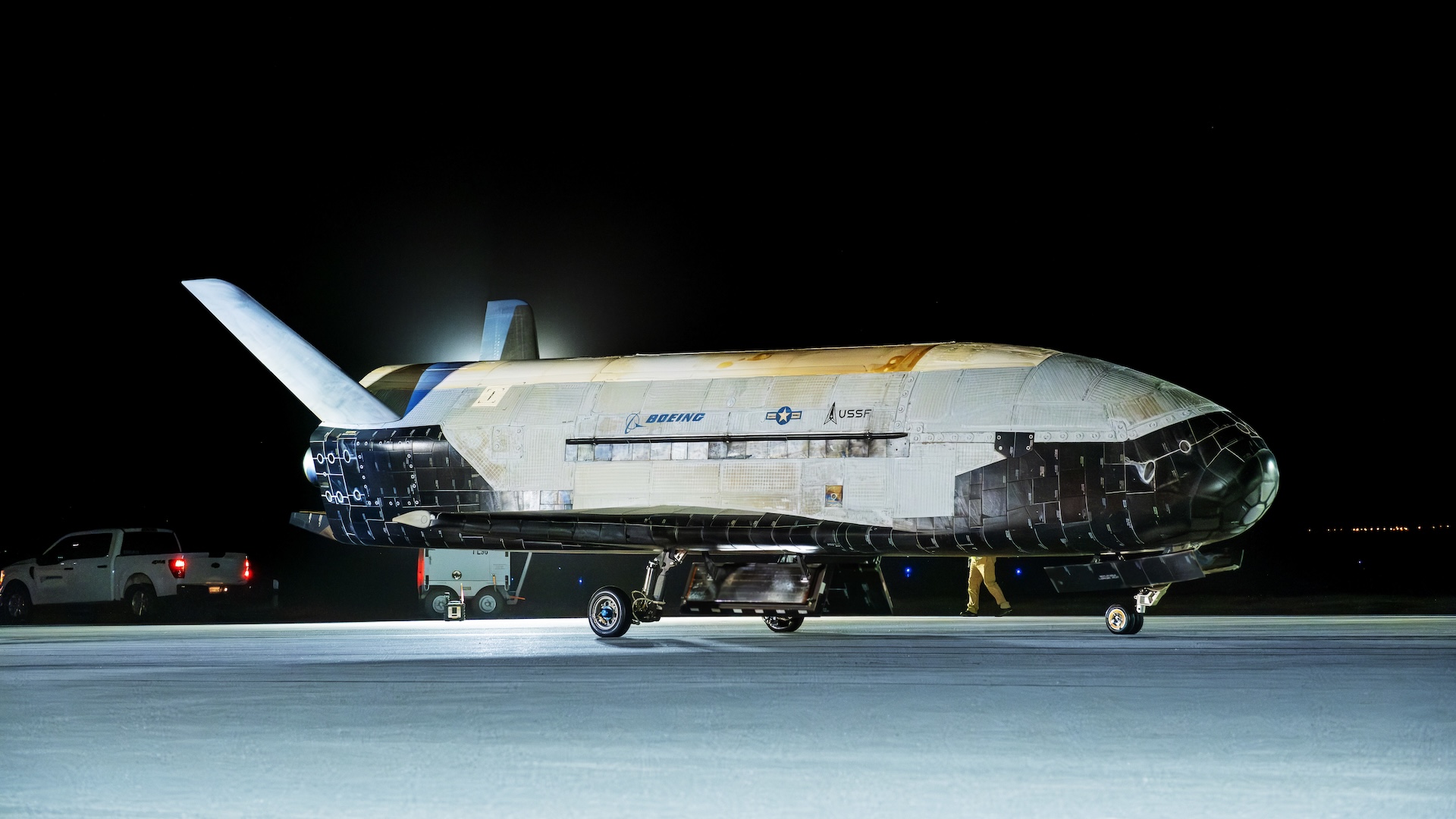
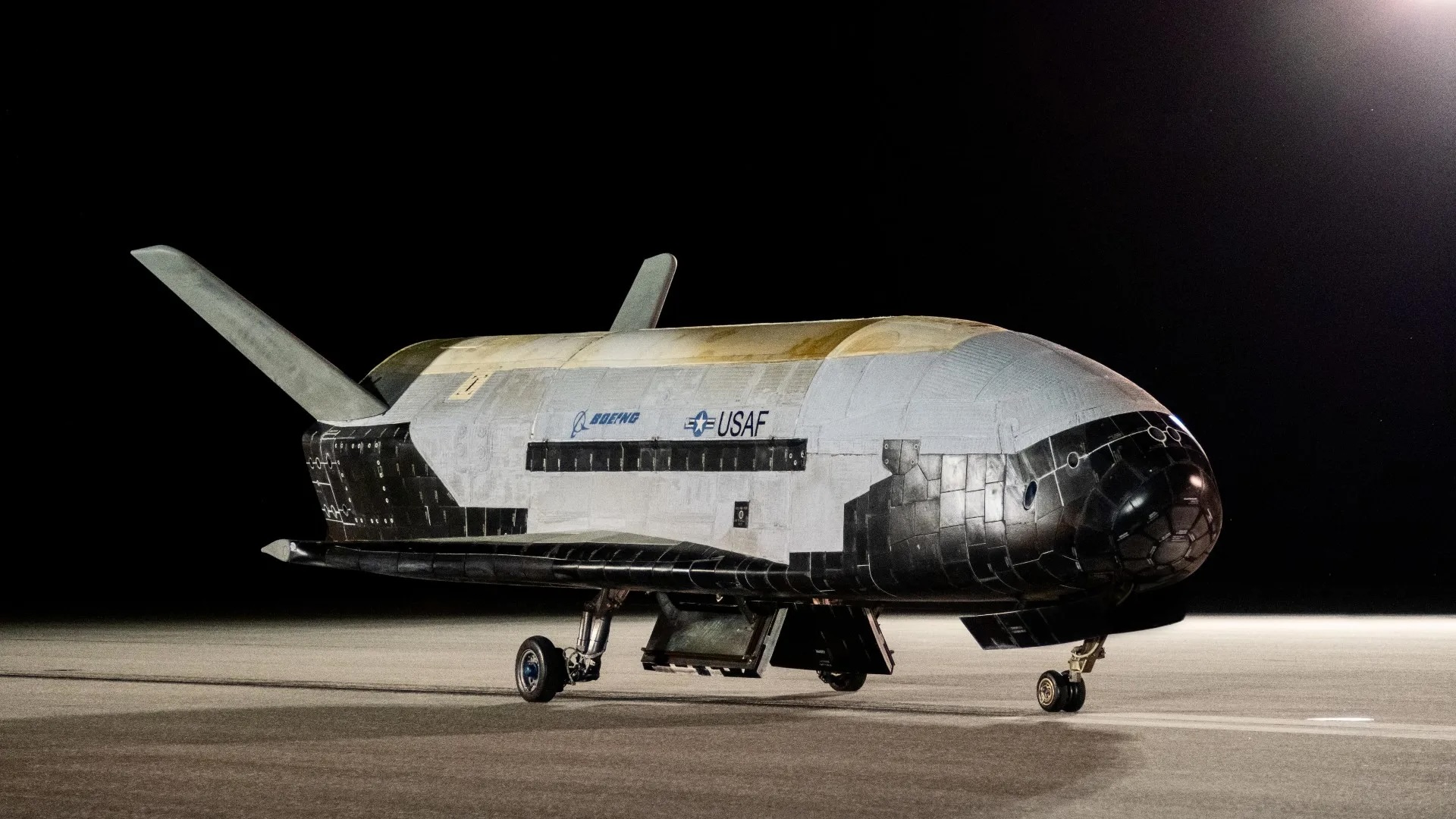
A US military space-plane, the X-37B orbital test vehicle, is due to embark onits eighth flight into space on August 21, 2025. Much of what the X-37B does in space is secret. But it serves partly as a platform for cutting-edge experiments.
One of these experiments is a potential alternative to GPS that makes use of quantum science as a tool for navigation: a quantum inertial sensor.
Satellite-based systems like GPS are ubiquitous in our daily lives, from smartphone maps to aviation and logistics. But GPS isn't available everywhere. This technology could revolutionize how spacecraft, airplanes, ships and submarines navigate in environments where GPS is unavailable or compromised.
In space, especially beyond Earth's orbit, GPS signals become unreliable or simply vanish. The same applies underwater, where submarines cannot access GPS at all. And even on Earth, GPS signals can be jammed (blocked), spoofed (making a GPS receiver think it is in a different location) or disabled — for instance, during a conflict.
This makes navigation without GPS a critical challenge. In such scenarios, having navigation systems that function independently of any external signals becomes essential.
Traditional inertial navigation systems (INS), which use accelerometers and gyroscopes to measure a vehicle's acceleration and rotation, do provide independent navigation, as they can estimate position by tracking how the vehicle moves over time. Think of sitting in a car with your eyes closed: you can still feel turns, stops and accelerations, which your brain integrates to guess where you are over time.
Eventually though, without visual cues, small errors will accumulate and you will entirely lose your positioning. The same goes with classical inertial navigation systems: as small measurement errors accumulate, they gradually drift off course, and need corrections from GPS or other external signals.
Where quantum helps
If you think of quantum physics, what may come to your mind is a strange world where particles behave like waves and Schrödinger's cat is both dead and alive. These thought experiments genuinely describe how tiny particles like atoms behave.
At very low temperatures, atoms obey the rules of quantum mechanics: they behave like waves and can exist in multiple states simultaneously — two properties that lie at the heart of quantum inertial sensors.
The quantum inertial sensor aboard the X‑37B uses a technique called atom interferometry, where atoms are cooled to the temperature of near absolute zero, so they behave like waves. Using fine-tuned lasers, each atom is split into what's called a superposition state, similar to Schrödinger's cat, so that it simultaneously travels along two paths, which are then recombined.
Since the atom behaves like a wave in quantum mechanics, these two paths interfere with each other, creating a pattern similar to overlapping ripples on water. Encoded in this pattern is detailed information about how the atom's environment has affected its journey. In particular, the tiniest shifts in motion, like sensor rotations or accelerations, leave detectable marks on these atomic "waves".
The X-37B is being prepared for its eighth flight. (Image credit: US Space Force)
Compared to classical inertial navigation systems, quantum sensors offer orders of magnitude greater sensitivity. Because atoms are identical and do not change, unlike mechanical components or electronics, they are far less prone to drift or bias. The result is long duration and high accuracy navigation without the need for external references.
The upcoming X‑37B mission will be the first time this level of quantum inertial navigation is tested in space. Previous missions, such as NASA's Cold Atom Laboratory and German Space Agency's MAIUS-1, have flown atom interferometers in orbit or suborbital flights and successfully demonstrated the physics behind atom interferometry in space, though not specifically for navigation purposes.
By contrast, the X‑37B experiment is designed as a compact, high-performance, resilient inertial navigation unit for real world, long-duration missions. It moves atom interferometry out of the realms of pure science and into a practical application for aerospace. This is a big leap.
This has important implications for both military and civilian spaceflight. For the US Space Force, it represents a step towards greater operational resilience, particularly in scenarios where GPS might be denied. For future space exploration, such as to the Moon, Mars or even deep space, where autonomy is key, a quantum navigation system could serve not only as a reliable backup but even as a primary system when signals from Earth are unavailable.
Quantum navigation is just one part of the current, broader wave of quantum technologies moving from lab research into real-world applications. While quantum computing and quantum communication often steal headlines, systems like quantum clocks and quantum sensors are likely to be the first to see widespread use.
Countries including the US, China and the UK are investing heavily in quantum inertial sensing, with recent airborne and submarine tests showing strong promise. In 2024, Boeing and AOSense conducted the world's first in-flight quantum inertial navigation test aboard a crewed aircraft.
This demonstrated continuous GPS-free navigation for approximately four hours. That same year, the UK conducted its first publicly acknowledged quantum navigation flight test on a commercial aircraft.
This summer, the X‑37B mission will bring these advances into space. Because of its military nature, the test could remain quiet and unpublicized. But if it succeeds, it could be remembered as the moment space navigation took a quantum leap forward.
Cosmic Tunnels Connect Our Solar System to Distant Stars
Scientists have discovered extraordinary "interstellar tunnels" that create direct pathways from our solar system to distant stellar regions, fundamentally changing our understanding of the space around Earth. Using advanced X-ray telescope data, researchers at the Max Planck Institute have mapped these cosmic channels that stretch across vast regions of the galaxy, revealing an intricate network connecting different star systems.
The breakthrough discovery emerged from analysis of data gathered by the eROSITA X-ray telescope, which orbits the Sun-Earth Lagrangian point L2. This sophisticated instrument provided researchers with the clearest view ever obtained of the soft X-ray background, allowing them to peer deep into the structure of interstellar space without interference from Earth's atmosphere or magnetosphere. The telescope's unique position enables continuous observation of cosmic phenomena that remain invisible to ground-based instruments.
Our solar system exists within an enormous cavity known as the Local Hot Bubble, a region of space approximately 300 light-years across filled with million-degree plasma. This cosmic bubble was carved out by a series of supernova explosions that occurred between 10 and 20 million years ago, creating what astronomers describe as a "supernova graveyard."
The research team, led by scientists at the Max Planck Institute for Extraterrestrial Physics, analyzed thousands of X-ray measurements to create the most detailed map ever produced of this local cosmic environment. Their findings, published in the journal Astronomy & Astrophysics, reveal that this bubble is far from uniform in temperature and structure, reveals the Max Planck Institute report.
What makes this discovery particularly remarkable is the identification of tunnel-like structures extending from the Local Hot Bubble toward specific constellations. These channels appear as regions of exceptionally hot, low-density plasma that create pathways through the surrounding cooler interstellar medium.
3D model of the solar neighborhood. The color bar represents the temperature of the LHB as colored on the LHB surface. The direction of the Galactic Centre (GC) and Galactic North (N) is shown in the bottom right. The link to the interactive version can be found at the bottom of the page.
The most significant tunnel discovery points directly toward the constellation Centaurus, home to some of our nearest stellar neighbors including the Alpha Centauri system. This cosmic highway extends across vast distances, potentially connecting our Local Hot Bubble with distant star-forming regions where new solar systems are being born.
A second interstellar tunnel was identified leading toward the constellation Canis Major, linking our solar system with the Gum Nebula located approximately 1,500 light-years away. Co-author Dr. Michael Freyberg explained the implications: "What we didn't know was the existence of an interstellar tunnel towards Centaurus, which carves a gap in the cooler interstellar medium" explains a Daily Mail report.
These tunnels may form part of an extensive branching network that connects different star-forming regions throughout our local galactic neighborhood. The researchers believe this interstellar highway system is maintained by the explosive births and deaths of massive stars, which create powerful shockwaves and stellar winds that push gas and debris through space.
The formation of these interstellar tunnels demonstrates a process astronomers call "stellar feedback," where the life cycles of massive stars shape the structure of entire galaxies. When extremely massive stars exhaust their nuclear fuel, they collapse and explode as supernovae, creating expanding shells of superheated plasma that sweep through space at tremendous velocities.
Previous research has shown that the supernova explosions that created our Local Hot Bubble also collected gas and debris at their expanding edges, creating ideal conditions for new star formation. These new stars then produce their own jets of hot gases and radiation, which continue pushing outward until they encounter other stellar bubbles and star-forming regions.
The discovery also provides fascinating insights into our solar system's cosmic journey. According to co-author Dr. Gabriele Ponti:
"The sun must have entered the LHB a few million years ago, a short time compared to the age of the sun. It is purely coincidental that the sun seems to occupy a relatively central position in the LHB as we continuously move through the Milky Way."
The Ancient Mysteries of Time and Space ebook available from the Ancient Origins store.
Implications for Galactic Evolution
This network of cosmic tunnels represents a previously unknown aspect of galactic architecture that influences how matter and energy move between different regions of space. The researchers discovered that these pathways exhibit a distinct north-south temperature dichotomy, with the southern regions significantly hotter than their northern counterparts.
The thermal pressure measured within the Local Hot Bubble suggests it may be "open" toward high galactic latitudes, allowing material to flow freely between our local environment and the broader galactic halo. This connectivity could have profound implications for understanding how elements created in stellar cores are distributed throughout the galaxy, potentially affecting the formation of new planetary systems.
The eROSITA telescope's unprecedented sensitivity to soft X-ray emissions has revealed structures that remained invisible to previous generations of instruments. By operating from the L2 Lagrangian point, the telescope avoids contamination from Earth's magnetosphere, providing the cleanest possible view of these faint cosmic phenomena.
Top image: eROSITA telescope's all sky survey image.
An Analytical Examination of Twenty Characteristics Unique to Unidentified Flying Objects (UFOs)
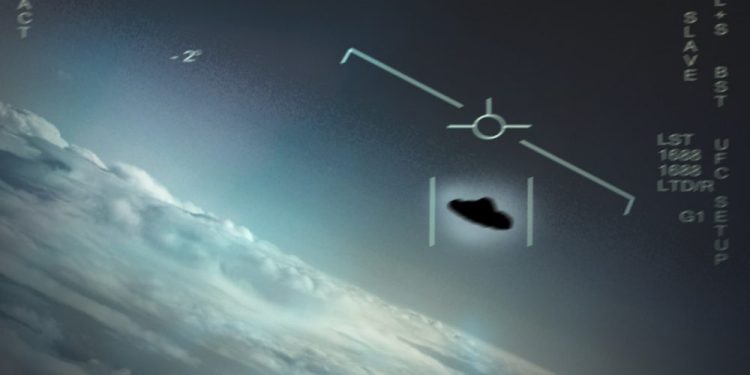
The USS Nimitz UFO that reportedly hovered over an underwater disturbance in the ocean. Some believe that there was either another mysterious object or an underwater base where UFOs come from.
Credit: US Navy
Abstract
Unidentified Flying Objects (UFOs), now often referred to as Unidentified Aerial Phenomena (UAP), have intrigued humanity for decades. Despite numerous sightings and anecdotal reports, the scientific community has largely approached UFOs with skepticism due to their elusive nature and the lack of empirical evidence. However, recent government disclosures and technological advancements have renewed interest in systematically analyzing the defining features that distinguish UFOs from conventional aircraft and natural phenomena. This report identifies and critically examines twenty characteristics that are frequently reported and appear to be unique to UFOs, emphasizing their implications for scientific inquiry and understanding. These characteristics challenge current physics paradigms, inspire the development of new scientific theories, and underscore the necessity for rigorous, multidisciplinary research. Exploring these features may offer insights into advanced propulsion, materials science, and space-time manipulation, potentially revolutionizing our understanding of the universe.
Twenty Key Characteristics Unique to Unidentified Flying Objects (UFOs)
1. Astounding Acceleration One of the most remarkable features of UFOs (UAPs) is their ability to perform rapid, deliberate maneuvers, including sudden changes in direction that appear instantaneous. These accelerations far exceed the capabilities of known biological organisms and surpass the limits of current human-made technology. Such rapid movements suggest propulsion systems or energy sources that are beyond our current understanding and engineering. The ability to accelerate so quickly raises profound questions about their physical and technological properties, challenging our concepts of physics and material science. For example, reports describe accelerations exceeding 20g, with abrupt directional changes and hovering capabilities that defy conventional aeronautical principles. These maneuvers imply propulsion systems capable of manipulating inertia or gravitational fields, hinting at breakthroughs in physics that could enable acceleration and maneuverability previously thought impossible. This characteristic remains a key indicator of their extraordinary and possibly non-human origin.
2. Silent Hypersonic Speeds UAPs are capable of traveling at hypersonic speeds—faster than Mach 5—without producing the usual detectable signatures associated with high-speed aircraft. Unlike military jets or reconnaissance drones, which generate sonic booms, vapor trails, and atmospheric ionization that can be tracked and measured, UAPs leave no such traces. Their silent travel suggests advanced propulsion methods or energy field manipulation that minimizes emissions and acoustic signatures. Their ability to operate covertly at incredible speeds, moving silently at hypersonic velocities, remains one of the most perplexing aspects of their behavior. This may involve electromagnetic or field-based propulsion systems that eliminate noise, heat, and vapor signatures, making detection extremely challenging.
3. Elusive Observability Despite advances in optical, electromagnetic, and radar technologies, capturing clear images or definitive data of UAPs remains extraordinarily difficult. Witnesses often report vague or fleeting visual impressions, while radar returns can be inconsistent, nonsensical, or jammed. Many UAPs appear opaque, semi-metallic, and difficult to see in detail, further complicating identification. Their elusive nature may be due to advanced cloaking, reflective properties, or interference with detection systems. Some reports suggest they employ optical camouflage, adaptive reflection, or electromagnetic cloaking that render them nearly invisible or indistinct. This persistent challenge in observation underscores their ability to evade detection, making it difficult for scientists and military agencies to analyze or understand their true nature.
4. Mysterious Trans-medium Travel UAPs demonstrate a baffling ability to seamlessly move through different environments—air, water, and space—without any apparent loss in performance or stability. Unlike human-made vehicles designed specifically for one medium, these objects seem to operate efficiently across all three, suggesting an understanding of physics that surpasses current technology. Their smooth transitions imply they harness unknown principles of energy or physics, allowing them to defy conventional limitations. Such trans-medium capabilities raise profound questions about their origin, engineering, and the physical laws they might exploit. They often appear to manipulate local gravitational or electromagnetic fields, facilitating effortless movement through different environments—an ability that suggests mastery over physics beyond our current comprehension.
5. Unexplained Positive Lift UAPs can maintain altitude and move through Earth's atmosphere without relying on traditional aerodynamic lift mechanisms such as wings, engines, or propellers. They lack exhaust plumes, fins, or control surfaces yet exhibit precise movement, hovering, and maneuvering capabilities. This suggests they generate lift through unknown forces—possibly electromagnetic or gravitational—allowing them to resist gravity without visible means of thrust. Such behavior defies current aerodynamic principles and indicates the presence of advanced, potentially non-human, propulsion technologies. Their ability to sustain positive lift in various atmospheric conditions remains one of the most intriguing mysteries, suggesting the use of electromagnetic or gravitational manipulation rather than conventional aerodynamics.
6. Atypical Flight Dynamics UFOs frequently demonstrate flight behaviors that defy conventional aeronautical principles. Observers describe sudden accelerations exceeding 20g, abrupt directional changes, and hovering capabilities that surpass the performance limits of known human-made aircraft. For instance, the 2004 USS Nimitz incident involved an object accelerating rapidly and executing sharp turns without visible means of propulsion, implying the utilization of advanced energy fields or propulsion technologies beyond our current understanding. These anomalous flight dynamics imply propulsion systems capable of manipulating inertia or gravitational fields, hinting at breakthroughs in physics that enable acceleration and maneuverability previously thought impossible. Such capabilities raise crucial questions about energy sources, control mechanisms, and the fundamental laws governing motion, requiring further scientific investigation into the mechanics behind these phenomena.
7. Lack of Visible Means of Propulsion A hallmark of UFO sightings is the absence of observable propulsion systems. Many reports describe objects that exhibit rapid acceleration, sustained hovering, or high-speed travel without any visible engines, exhaust plumes, or wings. For example, luminous objects are often seen gliding silently across the sky, with no detectable heat or smoke signatures. This suggests they might harness propulsion mechanisms involving electromagnetic fields, field manipulation, or other exotic technologies that do not produce conventional exhaust or noise. The absence of visible propulsion aligns with hypotheses involving futuristic energy manipulation technologies such as warp drives or antigravity engines. These propulsion systems challenge our understanding of energy transfer, field interactions, and the potential harnessing of zero-point or unknown energy sources. Investigating these phenomena could revolutionize aerospace propulsion.
8. Shape-Shifting and Morphing Forms Reports frequently note the shape-shifting abilities of UFOs, which appear as discs, spheres, triangles, or other geometric configurations that transition seamlessly between forms. This morphological variability exceeds simple optical illusions or artifacts, suggesting the objects possess shape-memory materials or cloaking mechanisms that allow real-time reconfiguration. For example, craft have been documented changing from spherical to triangular shapes within seconds, sometimes displaying complex geometries that seem to defy the constraints of rigid structures. Such shape-shifting could imply the utilization of advanced materials with programmable properties or energy fields that manipulate the object's shape. This capability might serve stealth, evasion, or tactical purposes, and hints at technologies capable of dynamically altering physical form and optical characteristics. Understanding the physics behind such morphing abilities could unlock new fields in materials science, nanotechnology, and electromagnetic control.
9. Absence of Noise A significant number of UFO sightings report objects operating silently, even during high-speed maneuvers and rapid accelerations. This acoustic silence is inconsistent with traditional aircraft, which produce noise due to engine operation and aerodynamic effects. For instance, luminous craft are often observed moving swiftly overhead without any sound, despite the sonic booms or engine noise associated with conventional flight. This suggests the use of propulsion methods that do not generate acoustic signatures—possibly through electromagnetic or field-based propulsion systems that eliminate propulsive noise. Such silent operation would be advantageous for stealth and tactical purposes, with physics likely involving manipulation of electromagnetic or gravitational fields to produce motion without propellant exhaust. Exploring these silent propulsion technologies could lead to the development of near-silent aircraft and spacecraft, revolutionizing aeronautics and defense.
10. Unusual Light Emissions Many UFOs are characterized by anomalous light phenomena, including intense, fluctuating, multicolored, or pulsating emissions. These luminous displays often seem to emanate intrinsically from the craft rather than be external illumination or reflections. For example, sightings over military bases frequently describe craft emitting multicolored flashes or persistent glowing patterns that change dynamically. These light emissions may indicate energy emissions or field manipulations, possibly involving plasma, electromagnetic radiation, or exotic energy states. Such phenomena challenge conventional understanding of lighting and energy emission, suggesting that these objects possess advanced energy control systems capable of manipulating electromagnetic spectra. These luminous characteristics could serve functions such as communication, propulsion, or camouflage. Understanding the physics behind these emissions might lead to breakthroughs in energy management and optical technologies.
11. Hovering and Station-Keeping Abilities UFOs often demonstrate the capacity to hover at fixed positions for extended durations without visible means of support. Witnesses frequently report craft remaining stationary in mid-air, sometimes for hours, with no visible propulsion or stabilization devices. This persistent station-keeping defies gravitational constraints and aerodynamic principles. For example, sightings near military bases or populated areas often involve craft silently hovering without any apparent means of support. Such abilities suggest the presence of anti-gravity or electromagnetic levitation technologies, possibly involving manipulation of local gravitational fields or creation of controlled energy bubbles that counteract gravity. These capabilities could revolutionize transportation and infrastructure, enabling stationary hover modes impossible with current technology. The physics underlying such anti-gravity or electromagnetic levitation remains speculative but offers promising avenues for research into gravitational control and energy field manipulation.
12. Transcendence of Known Aerodynamic Constraints UFOs are frequently observed performing maneuvers that violate known aerodynamic constraints, such as abrupt stops, rapid climbs, or instantaneous reversals of direction. These actions challenge the principles of inertia, drag, and lift governing conventional flight. Multiple eyewitness accounts describe craft executing sharp turns at high speeds without observable yawing or banking motions, suggesting bypassing aerodynamic limitations via new physics. These extraordinary maneuvers imply the use of propulsion systems capable of manipulating inertia or gravitational forces, allowing objects to accelerate or decelerate instantly or change direction without inertia effects. Such capabilities could involve local spacetime manipulation or electromagnetic field control, enabling craft to effectively "teleport" or phase through physical constraints. These phenomena necessitate exploration of advanced propulsion theories extending beyond classical aerodynamics, potentially leading to breakthroughs in inertial control and spacetime engineering.
13. Non-Standard Material Composition Recovered debris or visual reports occasionally suggest that UFOs are composed of materials with properties unlike any known terrestrial alloys. Reports describe metals that withstand extreme heat without melting, exhibit remarkable strength-to-weight ratios, or display unknown spectral signatures. For example, alleged debris has shown to contain alloys with unusual atomic structures, possibly indicating extraterrestrial origin or the use of advanced manufacturing techniques. Although physical recoveries remain rare and often unverified, the implications are profound: materials capable of surviving intense re-entry conditions, resisting corrosion, or withstanding electromagnetic stress could revolutionize materials science. If such materials are indeed advanced or extraterrestrial, they might incorporate unknown elements or nanostructures that enable extraordinary properties. Studying these materials could provide insights into new material physics and lead to the development of ultra-lightweight, super-strong, or heat-resistant materials for human use.
14. Disappearance and Reappearance A recurring phenomenon reported in UFO encounters is the sudden vanishing of craft, sometimes followed by reappearance elsewhere or at different altitudes. Witnesses describe objects "blinking" out of existence or teleporting across the sky within seconds. Multiple military and civilian accounts describe craft vanishing behind clouds or reappearing at great distances unexpectedly. These behaviors suggest the use of advanced space-time manipulation, portals, or wormholes—concepts considered within physics but currently speculative. Such teleportation-like behavior would require extraordinary control over space and time, possibly involving localized distortions of spacetime fabric. Understanding and harnessing such phenomena could revolutionize transportation, communication, and our understanding of the universe's structure, potentially enabling interstellar travel and multidimensional exploration.
15. Multidirectional Movement UFOs often demonstrate the ability to change direction instantly and move in multiple directions without observable effects of inertia. Observers report craft executing complex trajectories that would cause severe G-forces on human pilots, yet no such effects are perceived. For example, craft performing rapid lateral shifts or sudden reversals are often described as gliding seamlessly through the air. These movements imply effective control over inertia or gravitational interactions, possibly via electromagnetic or exotic propulsion systems that manipulate local spacetime curvature. The physics involved might relate to inertial dampening or gravitational shielding, which are currently theoretical. Mastery of such control would have profound implications for spacecraft navigation, allowing rapid, precise maneuvers with minimal energy expenditure. Further research into inertia control and gravitational field manipulation is essential to fully understand these phenomena.
16. Absence of Conventional Flight Surfaces Contrary to traditional aircraft, many UFOs lack visible wings, fins, stabilizers, or aerodynamic surfaces. Their streamlined, smooth shapes suggest designs optimized for non-aerodynamic propulsion or cloaking. Reports describe craft with seamless, monolithic metallic surfaces that seem almost inorganic, with no protrusions or control surfaces. This design minimizes drag and could facilitate field-based propulsion methods, such as electromagnetic or gravitational manipulation, which do not depend on aerodynamic principles. The absence of such features indicates a fundamentally different approach to flight, possibly involving self-contained energy fields or inertialess control mechanisms. Understanding these structural configurations could inform future aircraft and spacecraft designs that operate independently of aerodynamic principles, emphasizing energy field control over traditional aerodynamics.
17. Ability to Penetrate or Hover Through Obstructions Several eyewitness accounts describe UFOs passing through solid objects like clouds, glass, or barriers, then reappearing on the other side. For example, craft are reported to glide through cloud cover or penetrate windows without damage. These behaviors suggest the use of advanced energy fields or matter manipulation technologies capable of temporarily altering physical properties—such as reducing density or creating localized spacetime distortions. Such capabilities might involve phase-shifting, portal creation, or electromagnetic cloaking, enabling objects to bypass physical obstacles seamlessly. If validated, these technologies could revolutionize transportation and infrastructure by allowing objects to pass through barriers effortlessly. Investigating the physics behind such phenomena involves exploring quantum field manipulation, spacetime topology, and advanced energy control.
18. Unusual Radar and Electromagnetic Signatures UFOs frequently produce radar signatures that are inconsistent with their visual appearance, sometimes evading detection entirely or generating anomalous electromagnetic interference. For instance, radar systems may register a large cross-section that does not match the visual size, or the craft may cause electromagnetic disturbances that interfere with communication and navigation systems. These signatures suggest the use of stealth or cloaking technologies involving electromagnetic shielding, plasma fields, metamaterials, or active interference systems designed to evade detection. Such properties have significant implications for stealth technology and electromagnetic physics, prompting further research into electromagnetic cloaking, stealth design, and advanced sensor development capable of penetrating such defenses.
19. Persistent Multi-spectrum Anomalies Many UFOs are detected across multiple electromagnetic spectrums simultaneously, including visible light, infrared, radio, and ultraviolet. This multi-spectrum activity indicates the presence of complex onboard systems capable of energy manipulation across different wavelengths. For example, infrared signatures often show high-energy emissions, while radio frequencies display unusual modulation patterns. Such multi-wavelength activity suggests that these objects possess advanced energy sources and multifunctional systems operating cohesively across the electromagnetic spectrum. These phenomena could involve plasma engines, quantum energy states, or exotic particles that emit or manipulate radiation in multiple bands. Studying these multi-spectrum signatures can reveal the nature of their energy systems, improve detection techniques, and contribute to the development of advanced energy management and communication technologies.
20. Behavioral Anomalies and Possible Intelligence In some cases, UFOs appear to exhibit behaviors influenced by human presence, such as approaching observers, altering trajectories upon detection, or performing specific maneuvers. While some interpret these as psychological effects or misidentifications, others suggest the possibility of deliberate interaction or testing by the objects themselves. For example, craft have been observed adjusting altitude or speed when detected by military personnel or civilians, implying a form of responsiveness or embedded intelligence. If such interactions are genuine, they suggest a level of cognition or programming beyond simple physical phenomena, possibly indicating that these objects are controlled by entities capable of sensing and reacting to human observers. This raises profound questions about consciousness, artificial intelligence, and communication protocols embedded within these phenomena. Further multidisciplinary research combining physics, psychology, and AI is essential to understanding whether these behaviors represent intelligent control or programmed responses.
Discussion and Implications
The twenty characteristics discussed above collectively underscore the extraordinary and often inexplicable nature of UFO phenomena. Many traits challenge the current scientific understanding rooted in physics, materials science, and aerospace engineering. While some features could be attributed to optical illusions, atmospheric artifacts, or psychological effects, the consistency, recurrence, and multi-spectral nature of these reports suggest they are intrinsic properties of the objects themselves. These phenomena motivate the development of new scientific theories that incorporate advanced energy manipulation, anti-gravity, spacetime engineering, and possibly extraterrestrial technology. The recent declassification of military and government reports—such as the U.S. Office of Naval Intelligence’s UAP reports—reinforces the importance of systematic scientific investigation (U.S. Department of Defense, 2021). Addressing these anomalies requires a multidisciplinary approach, combining physics, engineering, psychology, and atmospheric science, with an emphasis on rigorous data collection, experimental validation, and theoretical modeling.
Conclusion
The twenty characteristics identified in this report serve as a comprehensive framework for understanding the peculiarities of UFO phenomena. Their repeated occurrence across various contexts and reports suggests these objects possess properties and capabilities currently beyond human technological and scientific reach. Recognizing and studying these features could lead to groundbreaking advancements in physics, propulsion, materials science, and space-time manipulation. Continued research, supported by advanced sensor technologies, international collaboration, and open scientific inquiry, is essential to unravel the mysteries surrounding these enigmatic objects. Such efforts not only hold the potential to expand our scientific horizons but also to fundamentally alter humanity’s understanding of the universe and our place within it.
References
U.S. Department of Defense. (2021). Preliminary Assessment: Unidentified Aerial Phenomena. Office of the Director of National Intelligence.
U.S. Government Accountability Office. (2022). Unidentified Aerial Phenomena: Observations of Unusual Activity and Progress in Understanding. GAO-22-105.
National Aeronautics and Space Administration (NASA). (2020). Advanced Aerial Surveillance Technologies. NASA Technical Reports.
Center for the Study of Extraterrestrial Intelligence. (2019). Analyzing Unexplained Aerial Encounters. CSET Research Paper.
National Defense Authorization Act. (2022). Provision for UAP Investigations. Congress of the United States.
Schmidt, H., & Lee, J. (2020). "Emerging Technologies in UAP Detection." Journal of Aerospace Technology, 15(3), 45-60.
European Space Agency. (2018). Monitoring Unusual Aerial Phenomena in Near-Earth Space. ESA Reports.
Johnson, R. (2021). The Science of UAPs: Challenges and Opportunities. Scientific American, 324(4), 78-85.
United Nations Office for Outer Space Affairs. (2022). Guidelines for Reporting and Investigating Aerial Anomalies. UNOOSA Publications.
Smith, A., & Patel, K. (2023). "Advances in Radar and Sensor Technologies for Detecting UAPs." International Journal of Aerospace Engineering, 2023, Article ID 567890.
SwRI scientists reviewed spectral data of sample material taken from near-Earth asteroids Ryugu and Bennu (pictured above) and compared them with spectral data of main belt asteroid Polana from the James Webb Space Telescope and found that they closely match. Image Credit: NASA
In 2020, the Japan Aerospace Exploration Agency's (JAXA) Hayabusa2 spacecraft completed its primary mission when it returned samples of asteroid Ryugu to Earth. In 2023, NASA's OSIRIS-REx also completed its primary mission by returning samples of asteroid Bennu to Earth. Scientists in labs around the world have been studying those samples and have uncovered some surprises.
The Ryugu sample contained uracil, one of the four RNA nucleotides that are essential for life as we understand it. That discovery indicates that asteroids could've played a role in delivering the raw materials for life to Earth. The Bennu sample contained its own surprise. It contained unexpected phosphate compounds, which suggested that it could be a splinter from a small, ancient body with an ocean.
These findings show how complex asteroids can be, and that they're more than just chunks of space rock.
Asteroids are the fragments from collisions involving planetesimals. Each one is a puzzle piece that can help astronomers uncover our Solar System's history. One of the key endeavours in asteroid and Solar System science is determining which asteroids shared the same parent bodies, which can help illuminate the overall history of the Solar System.
Both are from the Polana collisional family in the main asteroid belt (MAB) between Mars and Jupiter. It took more than laboratory study of the samples to confirm it. The JWST played an important role, too, by obtaining both mid-infrared and near-infrared spectra from both asteroids.
"We present JWST Near Infrared Spectrograph and Mid-Infrared Instrument spectroscopy of the parent body of the family, (142) Polana, and compare it with spacecraft and laboratory data of both near-Earth asteroids," the authors write. "Spectral features at similar wavelengths in the spectra of Polana and those of Bennu and Ryugu support the hypothesis that both asteroids originated in the Polana family."
This figure shows the hydrogen content of asteroids determined by various techniques in other research. The Polana results are added from this study. Shaded regions show the range of H wt % for carbonaceous chondrites. Polana is similar to Bennu and Ryugu and unlike the CI and CM chondrites.
Image Credit: Arredondo et al. 2025. PSJ.
“Very early in the formation of the solar system, we believe large asteroids collided and broke into pieces to form an ‘asteroid family’ with Polana as the largest remaining body,” said lead author Arredondo in a press release. “Theories suggest that remnants of that collision not only created Polana, but also Bennu and Ryugu as well. To test that theory, we started looking at spectra of all three bodies and comparing them to one another.”
“They are similar enough that we feel confident that all three asteroids could have come from the same parent body,” Arredondo said.
Polana is much larger than both Ryugu and Bennu, at about 55 km in diameter. Bennu is only about 500 meters in diameter, and Ryugu is only about 850 meters in diameter. Polana is very dark, with an albedo of only 0.045, and is a Type F carbonaceous asteroid, a sub-group of the more common C-type asteroid.
The researchers think that after the collision that spawned them, Ryugu and Bennu were pushed out of their orbits close to Polana by Jupiter's immense gravity. As a result, the two smaller asteroids have been altered by their closer proximity to the Sun.
“Polana, Bennu and Ryugu have all had their own journeys through our solar system since the impact that may have formed them,” said SwRI’s Dr. Tracy Becker, a co-author of the paper. “Bennu and Ryugu are now much closer to the Sun than Polana, so their surfaces may be more affected by solar radiation and solar particles.
There are some differences between the three, especially around the depth and width of the 2.7 μm feature. This feature indicates hydrated minerals, or water-bearing minerals, and tells scientists something about an asteroid's history of thermal and aqueous alteration. "The differences in the depth and width of the 2.7 μm feature are more prominent between Polana and Ryugu than between Polana and Bennu. The cause of this difference is uncertain but could potentially be due to location in the early planetesimal or the effects of space weathering," the researchers write.
This figure compares NIRSpec Polana data to Bennu and Ryugu data. There are differences around the 2.7 micrometer feature that are likely due to space weathering.
Image Credit: Arredondo et al. 2025. PSJ.
“Likewise, Polana is possibly older than Bennu and Ryugu and thus would have been exposed to micrometeoroid impacts for a longer period,” Becker added. “That could also change aspects of its surface, including its composition.”
The differences could also stem from differences in the parent body.
"The differences in hydration between Bennu and Ryugu do not necessarily mean that they come from different parent bodies," the authors explain. "Differences between the similarly sized Bennu and Ryugu could be due to parent body partial dehydration due to internal heating. If Bennu came from surface material and Ryugu came from inner material, the parent body impact would produce different layers of compaction, which would cause them to have different macroporosities and levels of hydration."
In their conclusion, the authors state that despite differences, they're confident that all three bodies share the same parent body. "We find that similarities in the shapes and strengths of many of the spectral features across the NIR and MIR, including the prominent OH feature at 2.72 μm, support the hypothesis that Bennu and Ryugu could have originated in the new Polana family," they write.
Some regions of the spectra require further study to understand and explain, according to the authors.
"The analysis of the returned samples from both Bennu and Ryugu is ongoing, and future developments in the understanding of how surface processes manifest in NIR and MIR spectra will give additional insights into the interpretation of our Polana spectrum," they conclude.
Scientists studied Polana, a fairly large asteroid in the Main Belt, using a spectroscope installed on the James Webb Space Telescope. It turned out to be very similar to Bennu and Ryugu, which had previously been explored by spacecraft.
An article on the spectroscopy of Polana (142) was recently published in the Planetary Science Journal. Its authors claim that it has a common origin and forms a family with well-known objects such as Bennu and Ryugu.
The diameter of Polana is about 55 km. It was discovered back in the 19th century and has not been particularly noteworthy until now. Instead, Ryugu and Bennu were explored by spacecraft at close range, and material from the former was even brought back to Earth.
Spectral analysis of asteroids and their samples
A team of scientists led by Dr. Anicia Arredondo believes that in the early stages of the Solar System’s formation, large asteroids collided and broke into pieces to form a “family of asteroids,” the largest of which was Polana. Theories suggest that the remnants of this collision not only created Polana, but also Bennu and Ryugu. To test this theory, scientists began studying the spectra of all three bodies and comparing them with each other.
Arredondo and her team have applied for time on the James Webb Space Telescope to observe Polana using two different spectral instruments that focus on the near-infrared and mid-infrared spectra. Next, they compared this data with spectral data from physical samples of Ryugu and Bennu collected by two different space missions. The Japanese Aerospace Exploration Agency’s Hayabusa2 spacecraft encountered Ryugu in 2018 and collected samples that returned to Earth at the end of 2020. NASA’s OSIRIS-REx spacecraft encountered Bennu in 2020 and collected samples that returned to Earth in late 2023.
Asteroid sizes
Bennu and Ryugu are considered asteroids on Earth because they orbit the Sun inside the orbit of Mars; however, they are not considered dangerous to Earth, with closest approaches of approximately 1.9 and 1 million miles, respectively.
Both Bennu and Ryugu are relatively small compared to Polana. Bennu’s diameter is approximately one-third of a mile, or roughly the same as that of the Empire State Building. Ryugu is twice as large, but Polana overshadows them both, being approximately 33 miles wide. Scientists believe that Jupiter’s gravity pushed Bennu and Ryugu out of their orbits near Polana.
Moon samples collected by the Apollo 17 mission have revealed new information about the Light Mantle, a distinctive bright band crossing the surface of the Moon. These are the remains of an ancient landslide that may be associated with the Tycho crater.
The last people on the Moon
Launched in December 1972, the Apollo 17 mission was the last flight in the Apollo program. As part of this program, NASA sent a scientist (geologist Harrison Schmitt) to the Moon for the first time, which largely determined its record “catch” of 110 kg of lunar soil samples, which were then delivered to Earth.
Harrison Schmitt on the Moon. Source: NASA
Light Mantle was one of the key objectives of the mission. This five-kilometer-long deposit, located at the foot of the two-kilometer-high South Massif mountain, has attracted the attention of scientists since its discovery. It is believed to be the remains of an ancient landslide. However, how exactly it formed and what allowed it to stretch for several kilometers was unknown.
The astronauts studied the Light Mantle by taking a series of cores. Some of them were placed in long-term storage in a sealed container in a special nitrogen storage facility. This was done with the expectation that in the future they could be studied using more advanced technologies and new scientific approaches that did not exist at that time.
Anatomy of a lunar landslide
This turned out to be the right decision. Over the next half-century, scanning technology took a huge leap forward, making it possible to examine samples in great detail. The research team took advantage of this circumstance. First, scientists simulated how landslides could occur on the Moon using rocks of similar composition. After that, they opened one of the sealed cores, analyzed its contents, and then compared it with the results of computer simulations.
A sample of lunar soil delivered by the Apollo 17 mission. It has been stored in a sealed container for over 50 years. Source: Dave Edey and Romy Hanna, UTCT, Jackson School of Geosciences/NASA
According to the researchers, analysis showed that the finer material covering the fragments in the core originated from them, rather than from the surrounding rock. This suggests that the debris broke apart and helped the landslide to “flow” like a liquid.
Although it is still unclear what exactly caused the landslide, one of the most likely causes was attributed to the impact of an asteroid that formed the Tycho crater. During the impact, countless rocks were thrown outwards and then fell back onto the Moon, forming small secondary craters. They diverge from Tycho with bright rays. Some of them stretch toward the Southern Massif.
The location where the lunar soil sample was collected. Source: NASA/GSFC/Arizona State University
Scientists have suggested that some of the material ejected during the formation of Tycho may have struck the South Massif. This could have caused a landslide, which ultimately formed the Light Mantle.
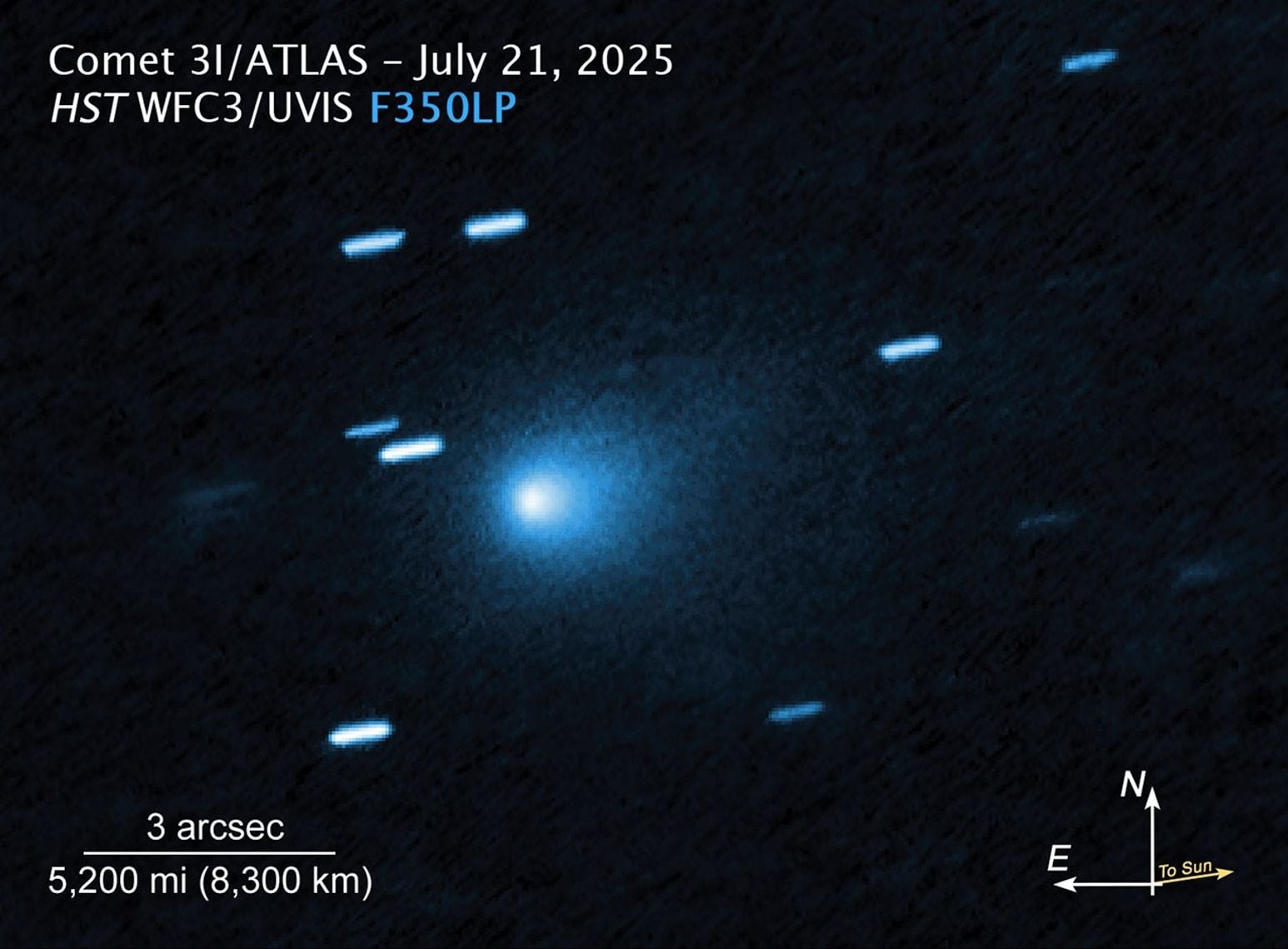
In the past decade, astronomers have witnessed three interstellar objects (ISOs) passing through the Solar System. This included the enigmatic 'Oumuamua in 2017, the interstellar comet 2I/Borisov in 2019, and 3I/ATLAS in July 2025. This latest object also appears to be a comet based on recent observations that showed it was actively releasing water vapor as it neared the Sun. The detection of these objects, which were previously theorized but never observed, has piqued interest in the origins of ISOs, their dynamics, and where they may be headed once they leave the Solar System.
Since asteroids and comets are essentially material leftover from the formation of planets, studying ISOs could reveal what conditions are like in other star systems without having to send interstellar missions there. In a recent paper, Shokhruz Kakharov and Prof. Abraham Loeb calculated the trajectories of all three interstellar visitors to determine where they came and apply age constraints. Their results indicate these ISOs originated from different regions in the Milky Way's disk, and range in age from one to several billion years.
Kakharov is a graduate student at Harvard University's Astronomy Department whose work includes studies on interstellar objects, the trajectories of spacecraft like Voyager, direct imaging, and the flux of extragalactic dark matter. Prof. Loeb is the Frank B. Baird Jr. Professor of Professor of Science at Harvard University and the Director of the Institute for Theory and Computation (ITC) at the Harvard & Smithsonian Center for Astrophysics (CfA). The paper that details their findings appeared online and is being reviewed for publication in Astronomy & Astrophysics.
Artist's impression of Project Dragonfly, a study for an interstellar spacecraft.
Credit: i4is
The discovery of 'Oumuamua kicked off a revolution in astronomy, confirming the existence of ISOs and inspiring efforts to study them closer. As Kakharov told Universe Today via email, they've also transformed our understanding of galactic dynamics and the formation of planetary systems:
Before 1I/'Oumuamua's discovery in 2017, we had no direct evidence that objects from other star systems could reach our solar system. These visitors provide unique samples of material from distant planetary systems, offering insights into the chemical composition and physical properties of exoplanetary material that we cannot obtain through remote observations alone. They also serve as natural probes of the interstellar medium and galactic dynamics, revealing the gravitational interactions that shape stellar populations over billions of years.
Since asteroids and comets are essentially material leftover from the formation of planetary systems, the study of ISOs enables the study of other star systems without having to mount interstellar missions. Currently, the only viable means for sending spacecraft to neighboring star systems involves gram-scale wafercraft and lightsails that are accelerated by direct energy arrays to a small fraction of the speed of light. Examples include Breakthrough Initiative's Starshot, and the Institute for Interstellar Studies' (i4is) Swarming Proxima Centauri concept.
While these mission concepts could reach the nearest star (Proxima Centauri) within a human lifetime, they would be very expensive to mount, and it would be decades before we learned what conditions are like in neighboring star systems. But as 'Oumuamua, 2I/Borisov, and 3I/ATLAS have demonstrated, ISOs pass through our Solar System regularly, each offering unique research opportunities. Determining where each ISO originated is the first step toward understanding the diversity and dynamics of stellar populations in the Milky Way. Said Kakharov:
Understanding ISO origins provides a deeper context for interpreting their physical and chemical properties. For example, knowing that 3I/ATLAS likely originated from an old stellar population suggests it may have experienced different evolutionary processes than younger objects. This information helps us understand the diversity of planetary system architectures and the conditions under which objects are ejected into interstellar space. Also, tracing their origins helps identify potential source regions and ejection mechanisms, whether through gravitational scattering, stellar evolution, or other dynamical processes.
For their purposes, Kakharov and Loeb ran a series of Monte Carlo numerical simulations using the GalPot galactic potential model, a software package designed to calculate the gravitational potential of a galaxy:
For each ISO, we generated 10,000 different possible trajectories by sampling from the observational uncertainties in their velocities and systematic uncertainties in the Solar motion relative to the Local Standard of Rest. We integrated each trajectory for 1 billion years in the Milky Way's gravitational potential to determine their maximum vertical excursions from the galactic plane. This statistical approach provides robust estimates of their orbital parameters and accounts for the significant uncertainties inherent in long-term orbital predictions.
From this, they were able to numerically integrate the trajectories of these three interstellar objects back in time and relate them to potential stellar populations. "Our analysis revealed that the three ISOs originate from distinct stellar populations with different ages and galactic locations," said Kakharov. Their results showed 3I/ATLAS is the oldest of the three, with a median age of 4.6 billion years, and originated from the Milky Way's thick disk. This component is thicker than the galaxy's thin disk (where our Sun resides) and is populated by older, lower metallicity stars.
1I/'Oumuamua is relatively young by comparison, about 1 billion years, and originated from the thin disk where new stars are still forming. 2I/Borisov falls between them in age, approximately 1.7 billion years old, and originated from the thin disk. "This diversity suggests that ISOs are ejected from planetary systems throughout the galaxy's history, not just from young, recently formed systems." These results also offer a preview of what's to come thanks to new observational facilities that will become operational in the coming years. Said Kakharov:
The Vera C. Rubin Observatory's Legacy Survey of Space and Time (LSST) will dramatically increase ISO detection rates, potentially finding dozens of new interstellar objects per year. Future missions like the European Space Agency's Comet Interceptor could potentially help with an ISO for in-situ analysis. These facilities will enable statistical studies of ISO populations, allowing us to understand their frequency, distribution, and diversity across different stellar environments.
Hidden in the Grand Canyon in an area the public is not allowed to enter, is a phase shifting plane, never in one reality but always in several in space and time. Caused by UFOs interacting with the plane in flight…never to return again. Sometimes in our reality...and sometimes not...proven by the satellite photos.
Hey here is a wild sighting not one, but a whole UFO fleet cloaked in clouds. The photos were captured by two different individuals (in source) and they captured something rare. The UFO clouds were seen leaving a mountainous area of Taiwan, with mountains so steep and dangerous that no roads reach those locations, no trails and no homes exist. Make for the perfect entrance and exit to an alien base, am I right or am I right?
One eyewitness states, "Lots of clouds!" The other states, "Unbelievable! First time seeing so many UFO clouds from noon to night."
Just to make sure the photos were real I ran them through ai to confirm and yes, they are not ai, but are the real thing.
How do UFOs keep the cloud from blowing away? Sometimes they do blow away, but usually the cloud around the UFO is contained using a forcefield...that same field used to protect the ship from outside attacks also keeps things in...namely the clouds.
This is 100% proof that an alien base exists 5km below the mountains of Taiwan in Nantou County.
Hey look at this. A video was sent it to NUFORC that shows glowing lights of a triangle UFO over Missouri. It looks like the USAF ultra top secret TR-3B Black Manta project. It's never before been seen but only heard of from US gov sources, but this is it. This is a huge one and it looks like it's tilted vertical so that its bottom propulsion systems can each be seen glowing white. So rare and it's very similar to the New Jersey drones seen for several months earlier this year, but this one is 3X the size of those. This TR-3B most likely is the Black Manta project of the USAF, however aliens do have such craft, and it the TR-3B was based upon alien tech that was back engineered at Area S4, inside Area 51.
Silent triangular craft hovered, cloaked in light, reappeared nearby; seen multiple times in hotspot with decades of similar reports. I was following what I now believe to be a usaf recon craft. I stopped where it stopped and it began to hover and loiter with no noise other than its visible triangular shape. It was about 100 feet overhead and a football field length away. It was manuevering in an odd way. Almost like it was submerged taking banks and angular dives. It would cloak in a ball of light than re appear nearby elsewhere hovering.
Meer van UFO'S of UAP'S, ASTRONOMIE, RUIMTEVAART, ARCHEOLOGIE, OUDHEIDKUNDE, SF-SNUFJES EN ANDERE ESOTERISCHE WETENSCHAPPEN - DE ALLERLAATSTE NIEUWTJES


 Secretive X37-B space plane to test quantum navigation system — scientists hope it will one day replace GPS