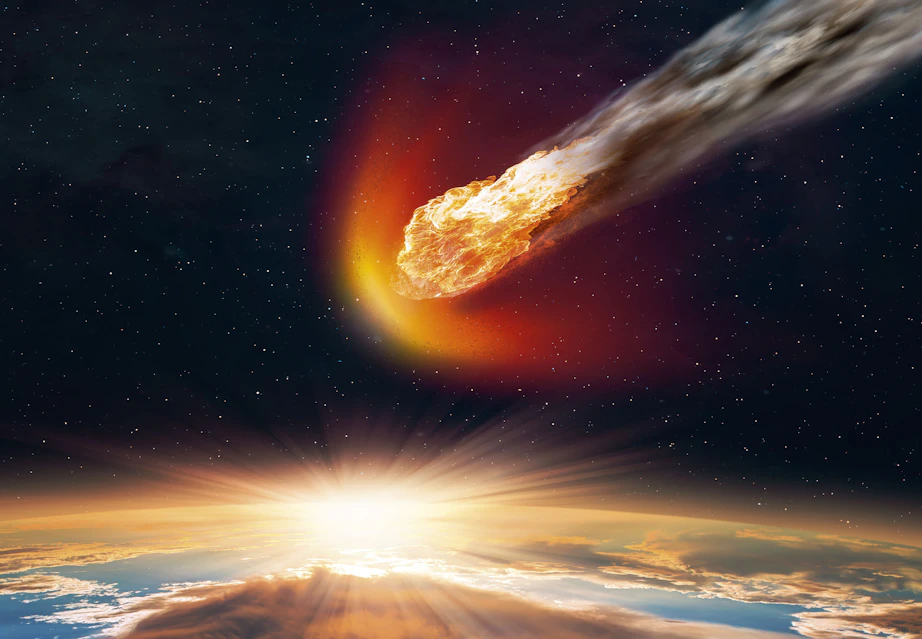
Ontdek de Fascinerende Wereld van UFO's en UAP's: Jouw Bron voor Onthullende Informatie!
Ben jij ook gefascineerd door het onbekende? Wil je meer weten over UFO's en UAP's, niet alleen in België, maar over de hele wereld? Dan ben je op de juiste plek!
België: Het Kloppend Hart van UFO-onderzoek
In België is BUFON (Belgisch UFO-Netwerk) dé autoriteit op het gebied van UFO-onderzoek. Voor betrouwbare en objectieve informatie over deze intrigerende fenomenen, bezoek je zeker onze Facebook-pagina en deze blog. Maar dat is nog niet alles! Ontdek ook het Belgisch UFO-meldpunt en Caelestia, twee organisaties die diepgaand onderzoek verrichten, al zijn ze soms kritisch of sceptisch.
Nederland: Een Schat aan Informatie
Voor onze Nederlandse buren is er de schitterende website www.ufowijzer.nl, beheerd door Paul Harmans. Deze site biedt een schat aan informatie en artikelen die je niet wilt missen!
Internationaal: MUFON - De Wereldwijde Autoriteit
Neem ook een kijkje bij MUFON (Mutual UFO Network Inc.), een gerenommeerde Amerikaanse UFO-vereniging met afdelingen in de VS en wereldwijd. MUFON is toegewijd aan de wetenschappelijke en analytische studie van het UFO-fenomeen, en hun maandelijkse tijdschrift, The MUFON UFO-Journal, is een must-read voor elke UFO-enthousiasteling. Bezoek hun website op www.mufon.com voor meer informatie.
Samenwerking en Toekomstvisie
Sinds 1 februari 2020 is Pieter niet alleen ex-president van BUFON, maar ook de voormalige nationale directeur van MUFON in Vlaanderen en Nederland. Dit creëert een sterke samenwerking met de Franse MUFON Reseau MUFON/EUROP, wat ons in staat stelt om nog meer waardevolle inzichten te delen.
Let op: Nepprofielen en Nieuwe Groeperingen
Pas op voor een nieuwe groepering die zich ook BUFON noemt, maar geen enkele connectie heeft met onze gevestigde organisatie. Hoewel zij de naam geregistreerd hebben, kunnen ze het rijke verleden en de expertise van onze groep niet evenaren. We wensen hen veel succes, maar we blijven de autoriteit in UFO-onderzoek!
Blijf Op De Hoogte!
Wil jij de laatste nieuwtjes over UFO's, ruimtevaart, archeologie, en meer? Volg ons dan en duik samen met ons in de fascinerende wereld van het onbekende! Sluit je aan bij de gemeenschap van nieuwsgierige geesten die net als jij verlangen naar antwoorden en avonturen in de sterren!
Heb je vragen of wil je meer weten? Aarzel dan niet om contact met ons op te nemen! Samen ontrafelen we het mysterie van de lucht en daarbuiten.
Illustrative guide to the four key topics of future human outposts on the Moon and on Mars that can be addressed by synthetic biology.
As humanity sets its sights on long duration missions to the Moon, Mars, and beyond, keeping astronauts healthy will be as critical as building rockets or habitats. In the harsh environment of space, the human body faces challenges that Earth never prepared us for including isolation, microgravity, and radiation that disrupt the immune system, increasing the risk of infection, chronic inflammation, and disease. Interestingly, new research on HIV is revealing lessons that could help future explorers live sustainably, regenerate resources in closed-loop systems, and even produce custom medicine far from Earth.
Long duration space missions to the Moon and Mars will require some special planning for astronaut health and resource production.
(Credit : NASA)
At the heart of this research is the inflammasome, a tiny but powerful protein inside our immune cells. Acting like a security alarm, the inflammasome senses trouble, such as viral particles, stress, or cell damage, and triggers inflammation by releasing molecules like interleukin-1β and interleukin-18. This rapid response is vital for fighting infections, but it comes with a risk: if the inflammasome remains switched on too long, it drives constant inflammation that weakens the body instead of protecting it.
In HIV infection, scientists have discovered that inflammasomes play a double role. Early on, they help contain the virus by boosting immune defences. But over time, especially if left unchecked, they contribute to harmful chronic inflammation that damages healthy cells, accelerates aging, and causes other diseases, even in patients who take effective antiviral treatments. This insight is important for space travel, where the same risk of unchecked inflammation could quietly undermine an astronaut’s health during long missions.
Learning how to balance inflammasome activity could help crews stay healthier in space, with far-reaching benefits. If inflammation can be regulated properly, astronauts may recover faster from injuries and resist infection more effectively, reducing their dependence on supplies from Earth. This supports the vision of closed-loop habitats where food, water, and medical resources are regenerated on board. Keeping inflammation under control also matters for protecting tissues from cosmic radiation, which damages DNA and stresses cells, pushing inflammasomes into overdrive. If we can dampen this reaction safely, we can help the body repair itself more efficiently.
JAXA (Japan Aerospace Exploration Agency) astronaut Satoshi Furukawa pedals on the upgraded CEVIS system to maintain health and fitness during space missions.
(Credit : NASA)
Perhaps most promising is the idea that lessons from HIV research could enable astronauts to produce custom medicine as needed. By understanding how to switch inflammasome pathways on or off at the right time, future missions might use onboard bioreactors or 3D bioprinters to make personalised treatments, rather than carrying an entire pharmacy into space. This very concept has been explored in a paper just published by a team of researchers led by Silvano Onofri.
In the decades ahead, managing the body’s internal fire may prove just as vital as any life-support system. By unlocking what HIV teaches us about inflammation, we may give future explorers the tools they need to live, adapt, and thrive far beyond Earth.
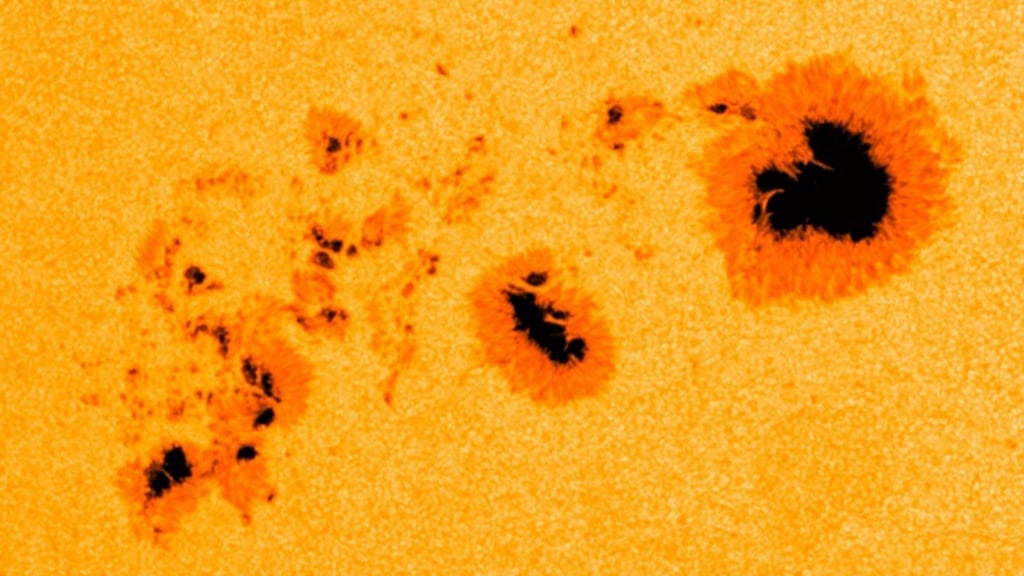
Sunspots on the Sun have become the focus of a new study (Credit : NASA)
Since Galileo first observed them through his telescope in the early 1600s, sunspots have fascinated scientists. These dark patches on the Sun's surface can persist for days or even months, but until now, researchers couldn't fully explain why they remained stable for such extended periods.
A study published in Astronomy & Astrophysics has finally solved this centuries-old puzzle. An international team of scientists, led by researchers from Germany's Institute of Solar Physics, developed a revolutionary new method for analyzing sunspot stability that reveals the delicate balance keeping these solar features intact.
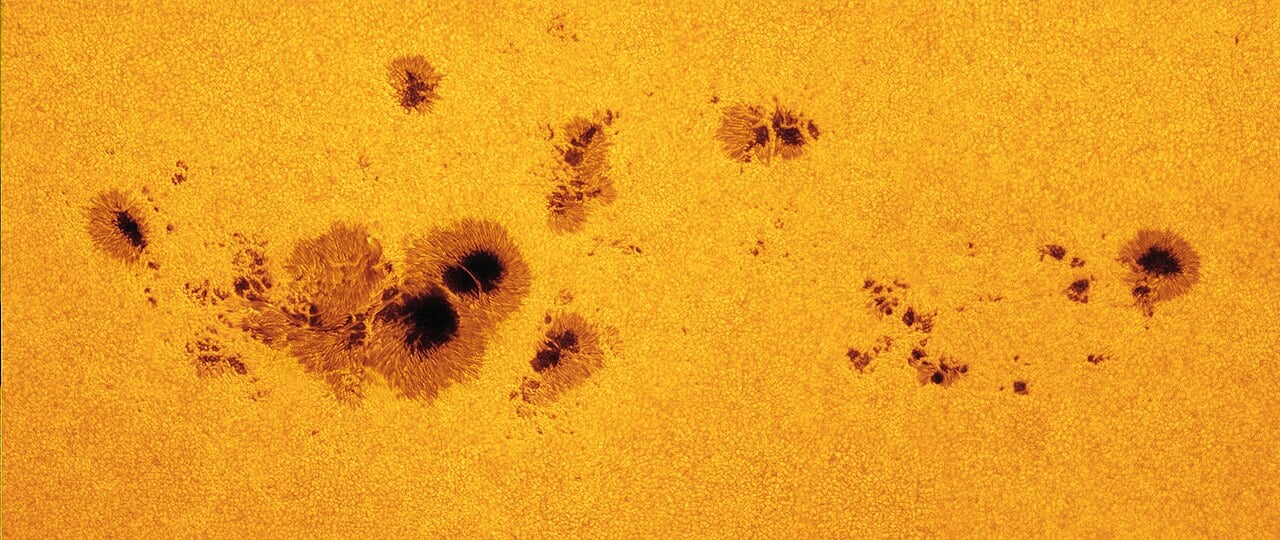
A group of sunspots, labeled as Active Region 1520 rotated into view over the left side of the sun on July 7, 2012.
(Credit : NASA/Goddard Space Flight Centre)
Sunspots are regions where the Sun's magnetic field is strong, comparable to the magnetic field in a hospital MRI machine, but covering an area larger than Earth itself. These magnetic field concentrations appear as dark spots because they're cooler than the surrounding solar surface but in reality, a sunspot at the distance of the Sun but isolated from the rest of the disc would shine brighter than the full Moon!
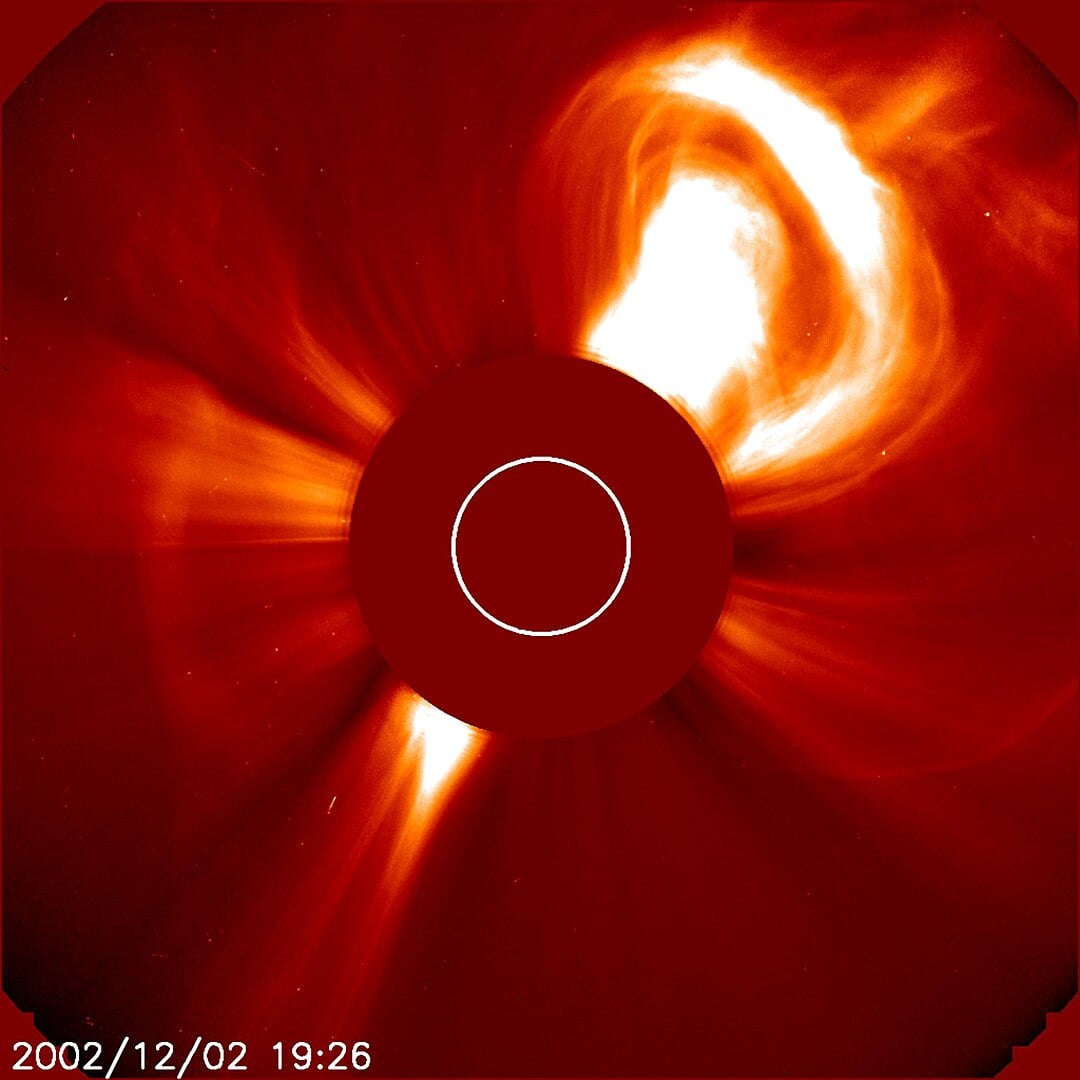
The number of sunspots follows an 11 year cycle, reaching peak activity when solar storms are most likely to occur. During these periods, unstable magnetic configurations near sunspots can trigger explosive events called coronal mass ejections and solar flares. These space weather events can disrupt satellite communications and, in extreme cases, cause power grid failures on Earth.
When observed in white-light coronagraph imagery, CMEs sometimes resemble a light bulb, possessing a bright bulb-like outer shell surrounding a dark void and compact inner structure.
(Credit : NASA)
It’s long been suspected that sunspots remain stable because of an equilibrium between gas pressure and magnetic forces. However, proving this balance has been challenging due to atmospheric disturbances that interfere with ground based observations of the Sun's magnetic field.
The research team made a crucial breakthrough by improving a technique originally developed at Germany's Max Planck Institute for Solar System Research. Their enhanced method removes the blurring effects of Earth's atmosphere from observations made with the German GREGOR solar telescope.
Using this refined technique, the researchers analysed polarised light emitted by the Sun to measure magnetic forces within sunspots with unprecedented precision. Their measurements now achieve satellite quality results from ground based telescopes at a fraction of the cost.
The analysis revealed that magnetic forces inside sunspots are perfectly balanced by pressure forces, maintaining strict equilibrium. This delicate balance explains why sunspots can survive for such extended periods on the Sun's turbulent surface.
This discovery has significant practical applications. By understanding the precise mechanisms that keep sunspots stable, scientists may be able to predict when these solar features become unstable and more likely to produce dangerous space weather events.
Better prediction of solar storms could help protect satellites, power grids, and astronauts from harmful radiation. As our society becomes increasingly dependent on satellite technology and electronic infrastructure, this research provides crucial insights for safeguarding modern life against solar threats. It also represents a major step forward in solar physics, combining advanced ground based observations with sophisticated analysis techniques to solve one of astronomy's oldest mysteries.
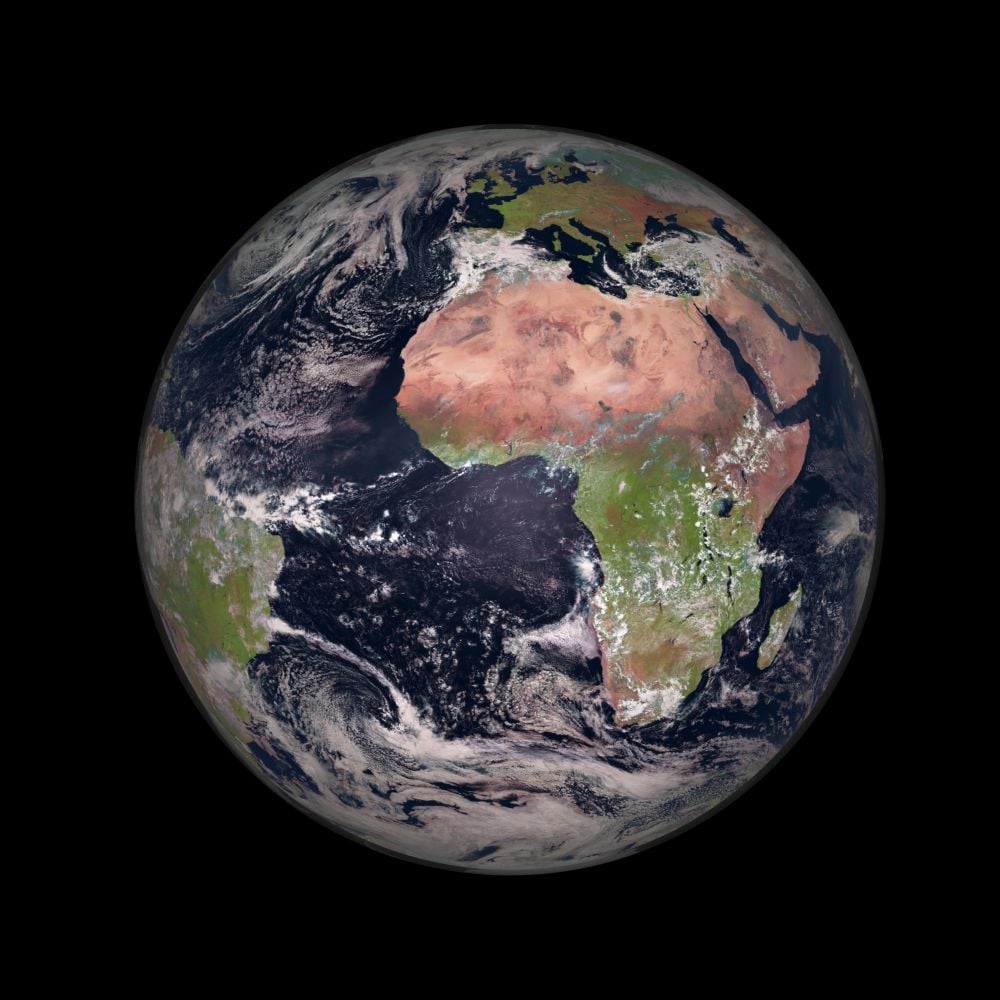
About 71% of Earth's surface is covered in water, and that's a defining feature of our planet and its habitability. The source of that water is still being debated and determined. Image Credit: EUMETSAT/ESA
Alone among known planets, Earth has vast oceans on its surface and its landmasses are marked with lakes and extensive river drainage systems. Water is the biosphere's lifeblood, and without it, Earth would be just another dead world. If Earth life is a reliable indicator, then water is necessary for life, full stop.
That's why scientists are so interested in how Earth got its water.
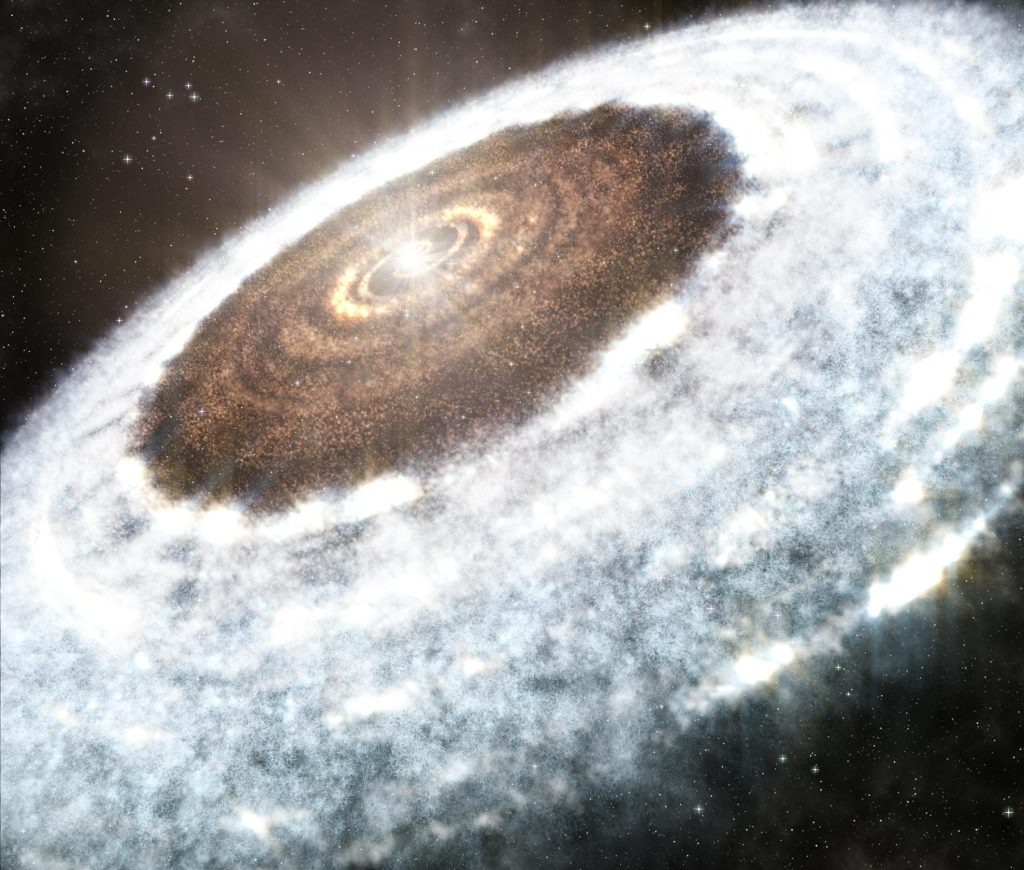
For a long time, researchers examined the idea that Earth's water came from elsewhere in the Solar System. The protoplanetary disk the planets formed in was massive, and it was dissected by a snowline. This is a line in the disk, defined by its distance from the Sun, beyond which volatiles like water vapour can condense.
This artist's illustration shows how the astrophysical snow line works. The inner Solar System is water depleted due to the star's warmth, while outside of it, water can sublimate onto dust particles.
Image Credit: A. Angelich (NRAO/AUI/NSF)
The idea is that water can condense, freeze, then be delivered to Earth by asteroids, meteorites, or comets. Astronomers know that comets are icy bodies, and there's growing evidence that asteroids hold water, either in frozen form or locked in minerals. This is the 'late veneer hypothesis', which states that water was delivered to Earth after its core had already formed.
But a growing body of evidence and simulations shows that this picture may be incorrect. New research in The Astrophysical Journal Letters challenges the later veneer hypothesis by showing that the snow line may not accurately reflect reality. Rather than a single line which separates water sublimation as an on/off process, where it all sublimates on one side of the snow line and none sublimates on the other side, the reality is more nuanced.
"There is consensus on the fact that molecular water was mostly formed on micrometer-sized dust grains at the very beginning of the solar system formation, in the molecular cloud and prestellar phase, where it remained frozen on the icy mantle enveloping the grains," the researchers explain. Over time these grains formed rocks, asteroids, comets, and even the rocky planets. But as the Sun commenced shining, conditions changed. The material in the proto-solar nebula disk warmed up, and water sublimated from the surface of the dust grains inwards to the snow line, which is basically the condensation front of water.
As a result, conditions on the inside of the line changed. Any water that wasn't trapped inside larger bodies was dissipated, and the inner disk became depleted of water. This is where the rocky planets formed. Earth accreted out of this dry material, implying that water had to be delivered from beyond the snow line, and that's the late veneer hypothesis.
But in this new understanding, the line is more nebulous. The research is based on developments in quantum chemistry showing that there's no specific single temperature at which water binds itself to dust grains. Instead of a binary dividing line, the binding energies are subject to a Gaussian distribution of values.
This figure from the research shows how water binding energies are distributed.
Image Credit: L. Tinacci et al. 2023
"While the classically used snowline relies on a single condensation temperature, recent work in quantum chemistry shows that the binding energy (BE) of water on icy grains has a Gaussian distribution, which implies a gradual sublimation of water rather than a sharp transition," the authors write. The researchers computed the distribution of binding energies to understand how water ice on dust grains was spread across the proto-solar nebula (PSN) protoplanetary disk.
This figure show how different the frost lines are when calculated with a single binding energy (blue) compared to ten different binding energies (black).
Image Credit: Boitard-Crépeau et al. 2025. TApJL
Using the distribution of different water binding energies, the researchers established a frost line that is actually several astronomical units wide. "The adoption of a water BE distribution does not generate a single snowline, inside which water ices are fully desorbed and remain “completely dry,” as often assumed, but rather a water transition zone extending several astronomical units," the researchers write.
This all happened a long time ago, and aside from Earth itself, the only place we can look for evidence is in asteroids and meteorites. For the researchers work to be accurate, it would need to duplicate the Earth's water abundance and isotope ratio and the hydration patterns seen in meteorites. Chondrites can remain unchanged since the Solar System's early days and are an important evidentiary link with the deep past.
The research shows that while the bulk of water ice is desorbed farther out than about one astronomical unit, small percentages remain attached to dust grains inside that limit due to different binding energies. "This small fraction, between ∼ 0.04 and 2.5 wt%, can fully account for the Earth’s water content," the authors write. "In turn, terrestrial water could be mostly inherited from the dust grains that were in the Earth’s orbit, with no necessity of migration of outer ones."
So Earth's water abundance lines up with the researchers' results. But what about chondrites?
"Our model also successfully reproduces the observed water-equivalent content trend across chondrite groups," the authors write. Even though the parent bodies of these chondrites accreted at different times, their water-equivalent contents "likely represent lower limits of primitive water originally incorporated into silicate dust grains, the building blocks of chondrite matrices," they explain.
"In summary, at the light of the above discussion, it is possible that the terrestrial water was inherited from the icy grains in the orbit of Earth. i.e., locally," the authors write. Their results also agree with the idea that Enstatite Chondrites (EC), a rare form of meteorite, are the Earth's building blocks. ECs have a comparable isotopic ratio as Earth's water, and researchers think that they formed near Earth's orbit.
The timing of the late veneer hypothesis has always been tricky. How could the right quantity of water be delivered to Earth at the right time without disrupting the planetary accretion process? If Earth was gradually hydrated as it formed, that whole question can be side-stepped.
There are still some problems with the researchers' conclusions, and they point them out in their paper. For example, the Earth's currently measured ratio of heavy water (deuterium) with regular water is equivalent with an elemental ratio. But the currently measured ratio may not represent the actual elemental ratio because of "various processes that cycle water between the surface and the Earth’s interior," the authors explain. Those processes could've altered the ratio.
The researchers have shown that water ice doesn't necessarily sublimate along a sharply defined line. Instead, a range of binding energies means that even inside the generally agreed upon snowline, some water can survive on the inside of rocks and larger grains. They've also shown that enough water can survive to account for Earth's water.
"In summary, these results suggest that a significant share of Earth’s water could have originated locally, without requiring delivery from beyond the classical snowline," the authors conclude.
This won't be the end of the late veneer hypothesis, but if further work supports this research, the idea that Earth's water came from elsewhere and was delivered by comets and asteroids will grow weaker.
When the first astronauts walked on the Moon as part of the Apollo Program, the concept of lunar habitats ceased being the stuff of science fiction and became a matter of scientific study. With several space agencies planning on sending crewed missions to the Moon in the coming decade, these plans have become the subject of scientific interest again. Structures that will enable a "sustained program of lunar science and development" is the long-term aim of NASA's Artemis Program. China and the ESA have similar plans with the International Lunar Research Station (ILRS) and the Moon Village.
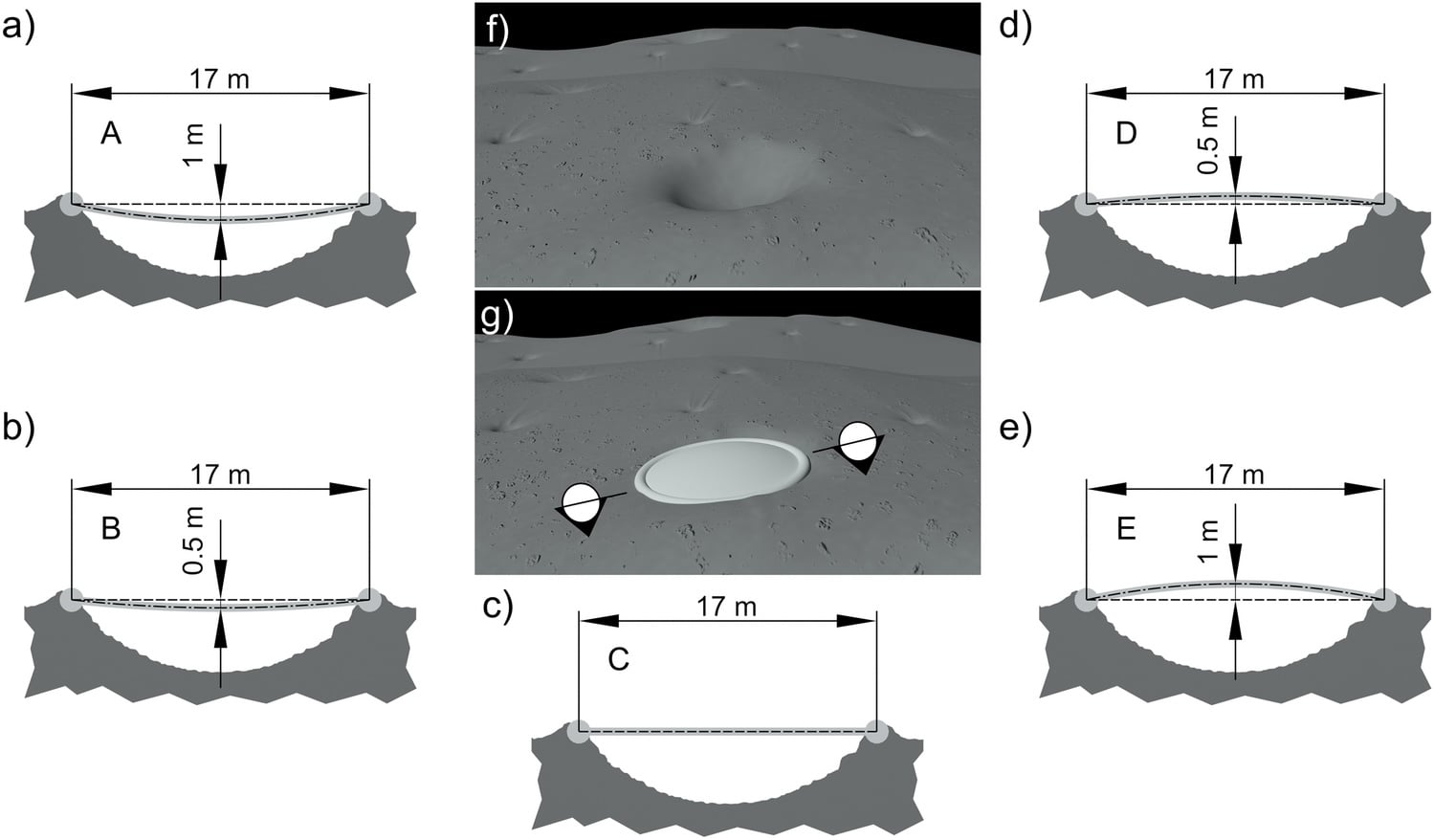
To limit the amount of materials that need to be launched for the Moon and reduce reliance on Earth, these plans will incorporate local resources for building materials and resources - in-situ resource utilization (ISRU). In a recent study, researchers from Poland and the UK proposed a developmental pathway for a lunar habitat that begins with a dome built using a regolith-based geopolymer. This dome would enclose a 17-meter (~56 ft) diameter crater in the Mare Tranquillitatis region that would house all the necessary buildings for a lunar base.
The research was led by Magdalena Mrozek, a Research Assistant with the Faculty of Civil Engineering at the Silesian University of Technology in Gliwice, Poland. She was joined by Dawid Mrozek and Mateusz Smolana, also researchers from the Silesian University of Technology, and Lorna Anguilano, a Senior Research Fellow with the Brunel University London, and the Assistant Director of the Wolfson Centre for Sustainable materials development and Processing. The paper that describes their findings recently appeared in Scientific Reports.
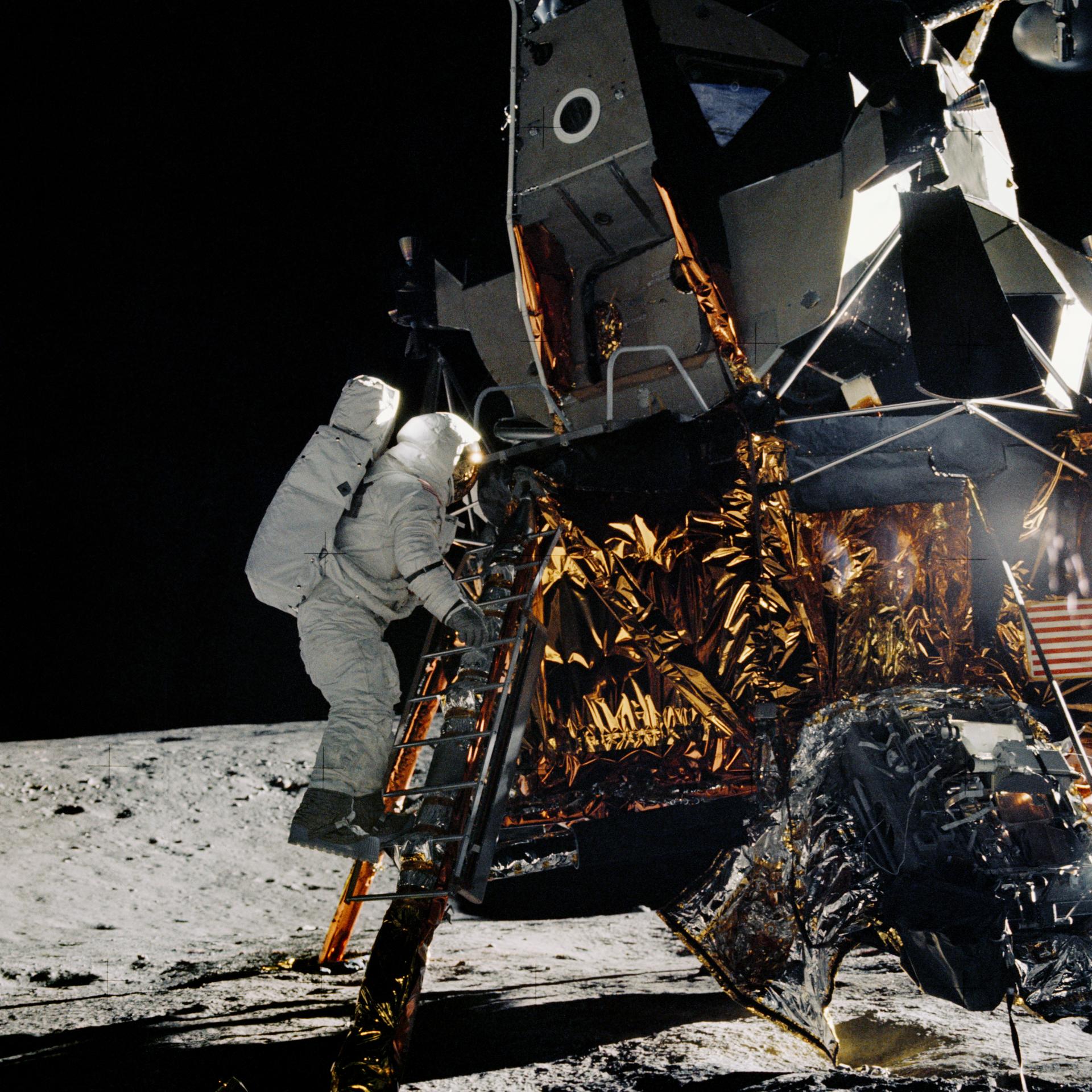
Apollo-12 astronaut Alan L. Bean operating on the lunar lander.
Credit: NASA
The concept outlined in their paper represents a simplified concept for a lunar base that would leverage ISRU and the production of geopolymers on-site. The site location also offers several advantages, not the least of which is protection from meteoroid impacts and the ejecta these produce. They also selected a mare region, which are lower in elevation than highland terrains and have a higher crater density. In addition, the Mare Tranquillitatis region near the Apollo 11 landing site (0.67 North by 23.47 East) was selected because of the sample data provided by moonrocks brought back by the Apollo-12 astronauts. As Mrozek told Universe Today via email:
The concept of utilizing a crater for construction holds considerable economic significance, as it diminishes the volume of structural materials needed by concentrating solely on the implementation of a cover. In the phase of our research presented in this paper, the specific location of the crater was not a primary focus. We selected a crater with dimensions appropriate for our design, situated in a region where the temperature range would facilitate the production of geopolymers without the need for supplementary energy.
The authors analysed the concept of a covering lid for their hypothetical lunar crater, which measures 17 meters (~56 ft) in diameter and 6 meters (~20 ft) in depth. This is consistent with craters in the Mare Tranquillitatis region, which average about 20 meters by 8 meters (65.5 by 26.25 ft). The next step was to conduct a numerical analysis to identify the appropriate dimensions and shapes for a lunar structure that could handle the load transfers and maintain an Earth-like atmospheric pressure (1,013.25 millibars or 1 bar) within. The next step was to select building materials that could handle the internal stress distributions and be produced on-site using local resources.
Ultimately, they selected lunar regolith-based geopolymers (GP), which consist of synthetic, inorganic monomers primarily composed of aluminium and silicon and have distinctive mechanical properties analogous to cement concrete. This is advantageous given that lunar regolith contains an average of 45% silicon oxide (SiO) by weight. The geopolymer they created consisted of a sodium hydroxide (NaOH) solution, sodium silicate water glass (NaO x nSiO x nHO), and the lunar highlands regolith simulant LHS-1 produced by Exolith Lab.
Location of the site for the analysed structure—a hypothetical crater near a 0.67 latitude North and a 23.47 longitude East within the selenographic coordinate system.
Credit: NASA
"The creation of building materials from original lunar regolith is not a viable option; therefore, one of the available lunar regolith simulants on the market must be used," said Mrozek. "We selected LHS, produced by Space Resource Technologies. Utilizing this material, we developed a geopolymer, which was subsequently tested to obtain the strength parameters that were input into the numerical model. The forces acting on a lunar structure differ significantly from those experienced on Earth; consequently, we needed to abandon certain methodologies applicable on Earth and re-examine the problem from a novel perspective.
The curing conditions for the samples were subjected to were selected to simulate lunar conditions in the Mare Tranquillitatis region. While temperatures range from 120 °C during lunar day and -180 °C during lunar night (248 to -292 °F), they do not drop below 60 °C (140 °F) for seven terrestrial days, which is conducive to the geopolymerisation process. With these considerations in mind, the team cured their samples in a thermal vacuum chamber at 60 °C and a pressure of 50 hPa (50 millibars), consistent with the near-vacuum conditions on the Moon.
After a total curing period of 28 days, the materials were subjected to bending and compression tests and analyzed using electron microscopy (SEM) and X-ray diffraction (XRD). These tests revealed that their regolith-based geopolymer had strength and elasticity comparable to masonry cement-sand calcium-silicate. The geopolymer and the design they selected could very well enable the construction of lunar bases in cratered mare regions, thus realizing a key goal of NASA's Artemis Program. Said Mrozek:
We are civil engineers, which is why our paper concentrates on this specific area of inquiry. However, we are currently collaborating with a diverse range of specialists from various countries in disciplines such as architecture, physics, geology, and chemistry. We are currently engaged in preparations for the initiation of a project of a lunar base, which will be significantly more complex and detailed.
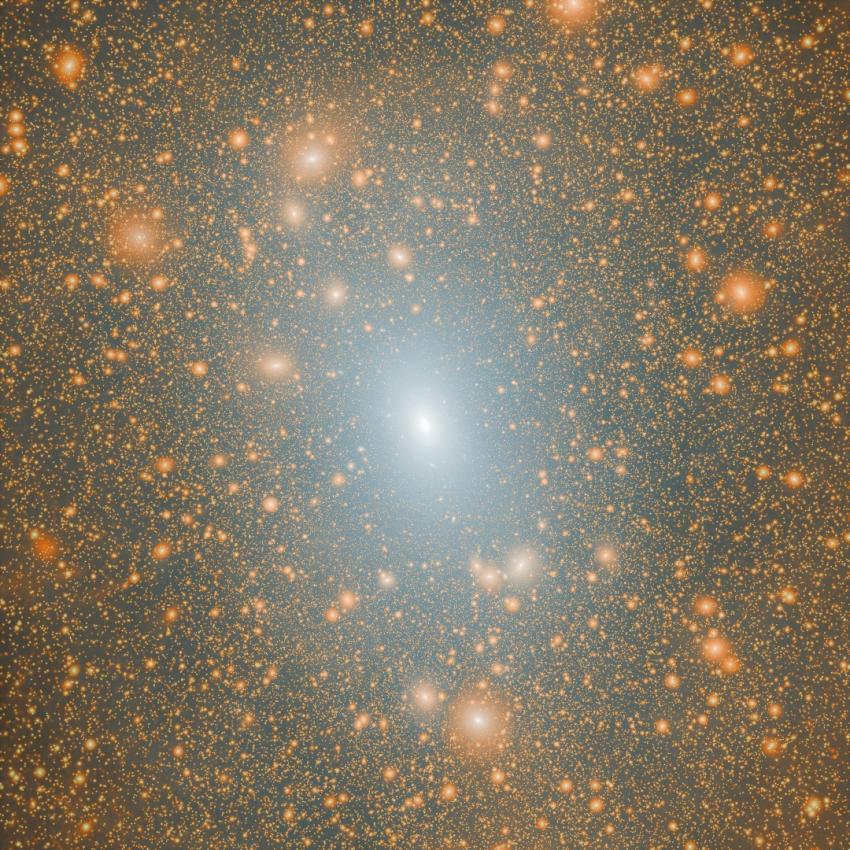
The dark matter distribution of a Milky Way mass halo in a Lambda-cold dark matter (LCDM) cosmological simulation. This is the highest resolution simulation of a MW-mass dark matter halo ever performed, called Aquarius-A-L1. The MW halo (in the centre) is surrounded by myriad substructures, a key prediction of the "cold dark matter” model. Some of these subhalos host a satellite galaxy within them that could be observable. Credit The Aquarius simulation, the Virgo Consortium/Dr Mark Lovell
Whatever dark matter is, cosmologists are busy trying to understand the role it plays in the structure of the Universe. Our standard cosmological model, also called Lambda Cold Dark Matter(LCDM), makes a number of predictions about how galaxies form and evolve, largely focused on dark matter haloes. DM haloes are fundamental building blocks for the cosmological structure. Scientists often describe them as the scaffolding on which the Universe is built.
One of LCDM's predictions concerns satellite galaxies. Theory says that every galaxy forms and grows within a dark matter halo, including dwarf and satellite galaxies. LCDM theory predicts more small dark matter haloes than there are observed satellite galaxies around the Milky Way. New research presented at the Royal Astronomical Society's National Astronomy Meeting might have the answer.
The presentation is "The contribution of "orphan" galaxies to the ultrafaint population of MW satellites," and the lead researcher is Dr. Isabel Santos-Santos, from the Institute for Computational Cosmology in Department of Physics at Durham University, UK.
"The last decade has seen a rise in the number of known Milky Way (MW) satellites, primarily thanks to the discovery of ultrafaint systems at close distances," Santos-Santos writes. "These findings suggest a higher abundance of satellites within ~ 30kpc than predicted by cosmological simulations of MW-like halos in the CDM framework."
Astronomers have found about 60 satellite galaxies around the Milky Way. The Large and Small Magellanic Clouds are the most well-known satellite galaxies, and there are others like the Sagittarius Dwarf Spheroidal Galaxy and the Sculptor Dwarf. Santos-Santos says there should be dozens more of them.
Some of the known satellite galaxies of the Milky Way, including the well-known Large and Small Magellanic Clouds. There could be many more of them according to simulations, and if scientists can find them, it supports the Lambda Cold Dark Matter model.
Image Credit: ESA/Gaia/DPAC. CC BY-SA 3.0 IGO
"We know the Milky Way has some 60 confirmed companion satellite galaxies, but we think there should be dozens more of these faint galaxies orbiting around the Milky Way at close distances," she said in a press release.
The problem is that these small galaxies can be extremely difficult to detect. Scientists think that these galaxies might have had their dark matter stripped away through interactions with the much more massive Milky Way. Without their dark matter, which acts as a gravitational anchor, gas, dust and even stars are more easily stripped away. That means there's little active star formation, and only a dimmer population of older stars. This is why satellite galaxies can be so challenging to detect.
"If our predictions are right, it adds more weight to the Lambda Cold Dark Matter theory of the formation and evolution of structure in the universe. Observational astronomers are using our predictions as a benchmark with which to compare the new data they are obtaining," Santos-Santos said. "One day soon we may be able to see these 'missing' galaxies, which would be hugely exciting and could tell us more about how the universe came to be as we see it today."
The work is based on the Aquarius simulation produced by the Virgo Consortium. Aquarius simulates the evolution of the MW's dark matter halo in the highest resolution ever. It was created to investigate the fine-scale structure around the MW.
The researchers used Aquarius and other analytic galaxy formation models to watch as dwarf galaxies formed and evolved and to "estimate the true abundance and radial distribution of MW satellites" that LCDM predicts. They determined that small dark matter haloes that could host satellite galaxies have been orbiting the Milky Way for billions of years, but since they've been stripped, they're dim and hard to see. These are sometimes called 'orphaned' galaxies. The simulation showed that there could be up to 100 more MW satellites.
"Strikingly, orphans make up half of all satellites in our highest-resolution run, primarily occupying the central regions of the MW halo," the researchers write.
This illustration shows galaxies forming as part of the large-scale structure of the Universe.
Image Credit: Ralf Kaehler/SLAC National Accelerator Laboratory
The other piece of the puzzle concerns the approximately 30 satellite galaxies discovered recently, all small and dim. If these are stripped or orphaned galaxies, then their discovery is additional evidence in support of LCDM. They could be a subset of the dim satellite population the simulation predicts. However, they could also be globular clusters (GC).
Professor Carlos Frenk of the Institute for Computational Cosmology in the Department of Physics at Durham University is one of the co-researchers. Frenk said, "If the population of very faint satellites that we are predicting is discovered with new data, it would be a remarkable success of the LCDM theory of galaxy formation."
"It would also provide a clear illustration of the power of physics and mathematics," Frenk added. "Using the laws of physics, solved using a large supercomputer, and mathematical modelling we can make precise predictions that astronomers, equipped with new, powerful telescopes, can test. It doesn't get much better than this."
The Vera Rubin Observatory and its 10-year Legacy Survey of Space and Time might uncover the presence of these dim, orphaned satellites. "We predict that dozens of satellites should be observable within ~30 kpc of the MW, awaiting discovery through deep-imaging surveys like LSST," the researchers explain.
Scientists have been puzzling over the connections between the Milky Way, dark matter haloes, and satellite galaxies for a long time. Some research suggests that not only does the MW have more satellites that we haven't detected yet, but that those satellites may have had their own satellites that they dragged towards the MW with them. If that turns out to be true, then the MW may have another 150 dim satellites waiting to be found by observatories like the Rubin.
Scientists think that there are different sizes of DM haloes, some with only a few Earth masses, while some are enormously massive. They also think that they could've formed hierarchically, with smaller haloes merging with larger haloes, slowly building up the cosmic web that largely defines the modern Universe. If that's true, then the MW's orphaned galaxies might be strong evidence supporting their hierarchical nature.
Now that the Vera Rubin Observatory has achieved its long-awaited first light, we could get confirmation soon.
Maybe that will help us figure out what dark matter actually is one day .
Nieuwe ontdekking op mysterieuze Marsberg verborg zich in het volle zicht
Een verrassende ontdekking op Mars kan ons mogelijk antwoorden geven op de vraag of de planeet ooit leven heeft geherbergd – en dat misschien nog steeds doet.
Een illustratie van de Jezero-krater zoals die er miljarden jaren geleden uit kan hebben gezien op Mars, toen hij nog een meer was. Een berg op de bodem van het meer verbergt mogelijk een geheim.
Op 18 februari 2021 landde de NASA-rover Perseverance in de 45 kilometer brede Jezero-krater op Mars, waar 3,7 miljard jaar geleden een meer zou hebben gelegen.
Een van de belangrijkste taken van de rover is het vinden van tekenen van leven op de rode planeet en daarom is de krater een van de meest onderzochte gebieden op Mars tot nu toe.
Astronomen zien sinds 2007 een kleine berg naast de krater Jezero Mons, en speculeren sindsdien dat deze vulkanisch kan zijn geweest – of nog steeds is.
Dat kan nu worden opgehelderd.
Een onderzoeksteam onder leiding van het Georgia Institute of Technology (Georgia Tech) in de VS heeft grote hoeveelheden gegevens verzameld die erop wijzen dat Jezero Mons vulkanisch is.
Kort nadat de Perseverance op Mars landde, toonden de eerste gesteentemonsters aan dat de krater niet alleen de sedimentaire meerafzettingen bevatte die wetenschappers verwachtten – ze waren ook vulkanisch.
Nieuwe vondsten maken krater op Mars extra interessant
Om de berg verder te onderzoeken, gebruikten de onderzoekers gegevens van oudere sondes zoals de Mars Odyssey Orbiter, Mars Reconnaissance Orbiter en ExoMars Trace Gas Orbiter.
Ze gebruikten ook gegevens van de Perseverance en vergeleken de eindresultaten met gegevens van bestaande vulkanen op zowel Mars als de aarde.
De conclusie was duidelijk: Jezero Mons is vulkanisch en heeft zelfs een vulkaankrater.
Hij is nu niet actief en het zal waarschijnlijk nog lang duren voordat hij weer actief wordt, aldus de onderzoekers.
Maar de ontdekking opent de mogelijkheid dat de rode planeet meer vulkanen herbergt dan we dachten.
‘De Jezero-krater is een van de best bestudeerde plekken op Mars. Als we hier nu pas een vulkaan identificeren, stel je dan eens voor hoeveel meer er op Mars zouden kunnen zijn,’ zegt een van de onderzoekers, James Wray, in een persbericht.
Een topografische afbeelding van de 21 kilometer brede vulkanische berg Jerezo Mons.
De nieuwe ontdekking maakt de Jezero-krater nog interessanter.
Zoals gezegd denken de onderzoekers dat de krater ooit een meer was.
En als dat naast een actieve vulkaan lag, waren de omstandigheden misschien ideaal om leven in het meer in stand te houden.
Mars is miljarden jaren geleden opgedroogd – dat dachten we tenminste. Nieuwe vondsten op onze rode buurman onthullen nu een opmerkelijke comeback voor het water. Lees er hier over:
De Perseverance keert naar verwachting terug naar de aarde met gesteentemonsters uit de krater die meer aanwijzingen kunnen geven over de vraag of er miljarden jaren geleden leven was in het meer – en of er misschien nog steeds leven te vinden is.
De ontdekking en de monsters kunnen ook bijdragen aan een beter begrip van de geologische geschiedenis van Mars.
The Martian meteorite Northwest Africa (NWA) 16254 is a 406-g gabbroic shergottite found two years ago in Algeria.
Image of the entire NWA 16254 sample studied by Chen et al.: (a) a backscattered electron (BSE) image obtained by the TESCAN Integrated Mineral Analyzer (TIMA); (b) mineralogical mapping via TIMA; (c) distribution map of the iron content obtained via TIMA; (d) distribution map of the calcium content obtained via TIMA.
Image credit: Chen et al., doi: 10.15302/planet.2025.25002.
“Martian meteorites represent the only direct samples available in laboratory for studying the composition and evolution of the Martian mantle, as most are igneous in origin and retain geochemical fingerprints of mantle processes,” said lead author Dr. Jun-Feng Chen and colleagues at the Chengdu University of Technology.
“Among these available samples, shergottites, comprising approximately 90% of the Martian meteorite collection, are particularly critical for deciphering mantle dynamics, crust-mantle interactions, and magmatic differentiation on Mars.”
“Shergottites are classified into four petrological subtypes depending on their distinct textural and mineralogical characteristics: including basaltic, olivine-phyric, poikilitic, and gabbroic.”
“These variations reflect distinct formation environments, ranging from shallow subsurface crystallization to potential surface eruptions, with gabbroic shergottites notably preserving coarse-grained textures indicative of slow cooling in crustal magma chambers.”
In the new study, the authors combined advanced mineralogical mapping and geochemical analyses to decode the history of NWA 16254.
They revealed decoupled geochemical behaviors in pyroxene cores and rims, a phenomenon critical for reconstructing magma chamber dynamics.
“Our study reveals that NWA 16254 formed initially under high-pressure conditions (4.3-9.3 kbar) at the Martian mantle-crust boundary, where magnesium-rich pyroxene cores crystallized,” the researchers said.
“Later, the magma ascended to shallow crustal depths (<4 kbar), where iron-enriched pyroxene rims and plagioclase developed.”
“This prolonged cooling process, preserved in the meteorite’s coarse-grained texture, suggests episodic melt extraction from a long-lived, depleted mantle reservoir — a critical clue for reconstructing Mars’ magmatic evolution.”
“The meteorite’s geochemical depletion, marked by light rare earth element depleted and low oxygen fugacity, aligns it with a meteorite called QUE 94201, hinting at a shared magma source.”
“Its gabbroic texture, indicative of slow cooling in crustal chambers, distinguishes it as a unique archive of subsurface magmatism.”
“These findings challenge existing models of Martian volcanic evolution, as NWA 16254’s consistently low oxygen fugacity, corroborated by Ti3+-bearing ilmenite assemblages, implies sustained reducing conditions during crystallization.”
“This underscores the heterogeneity of Mars’ mantle and raises questions about the planet’s redox evolution over billions of years.”
“Future geochronological studies could resolve whether this meteorite represents ancient mantle melting (2.4 billion years ago) or younger magmatic activity, offering clues to Mars’ thermal history.”
The team’s paper was published May 13, 2025 in the journal Planet.
Jun-Feng Chen et al. Petrography and geochemistry of a newly discovered Martian gabbroic shergottite NWA 16254. Planet, published online May 13, 2025; doi: 10.15302/planet.2025.25002
The surface of Mars, destination for China's Tianwen-3 (Credit : NASA)
China is preparing to make history with its upcoming Mars Sample Return mission, Tianwen-3, scheduled to launch in 2028. This ambitious project aims to collect Martian soil and rock samples and bring them back to Earth for detailed analysis, potentially answering one of humanity's most profound questions; has life ever existed on Mars?
Mars, the red planet.
(Credit : NASA)
The mission represents leap forward in planetary exploration. While several countries have successfully landed rovers on Mars, returning samples to Earth requires an entirely different level of technological complexity and international coordination. If successful, China would become the first nation to bring potentially biologically active material from another planet back to Earth.
Mars wasn't always the cold, dry desert we see today. Studies suggest that Mars once had a dense atmosphere and a warm, moist climate early in its history, making it suitable for the emergence and development of microbial life. Like Earth, Mars sits within our Solar System's habitable zone, the region where liquid water can exist on a planet's surface and therefore potentially support life!
Scientists believe that if life ever emerged on Mars, it would likely have been microbial, similar to the extremophiles found in Earth's harshest environments. These hardy organisms thrive in conditions that would kill most life forms, surviving in environments with extreme temperatures, radiation, or chemical compositions.
Preliminary landing sites for the Tianwen-3 mission
(Credit : By Zengqian Hou, Jizhong Liu, Yigang Xu, Fuchuan Pang, Yuming Wang, Liping Qin, Yang Liu, Yu-Yan Sara Zhao, Guangfei Wei, Mengjiao Xu, Kun Jiang, Chuanpeng Hao, Shichao Ji, Renzhi Zhu, Bingkun Yu, Jia Liu, Zhenfeng Sheng, Juntao Wang, Chaolin Zhang, Yiliang Li)
The Tianwen-3 mission involves a complex two part operation. There will be two separate components; a lander which will land on the Martian surface to collect samples and an orbiter, which will wait in orbit around Mars to receive the samples and bring them back to Earth. The lander will drill two meters underground, a crucial depth because Mars' surface is constantly bombarded with radiation and corrosive chemicals that destroy organic materials. Below this hostile surface layer, valuable signs of past or present life might still be preserved after billions of years.
The mission's success depends on careful site selection so the team are searching for regions where liquid water likely existed in Mars' early history, areas rich in essential nutrients, and locations where traces of microbial activity could have been preserved. This preparatory research is ongoing and represents one of the mission's most critical phases.
Surprisingly, the greatest obstacle isn't the technical complexity of getting to Mars and back, it’s what happens when the samples arrive on Earth. The greatest challenge is in the quarantining and monitoring required once these extraterrestrial materials arrive, a process known as planetary protection. To address the risk, they plan to construct a specialised facility near Hefei Institute of Physical Sciences where Martian samples will undergo comprehensive testing under strict isolation from Earth's environment. The samples will remain quarantined until scientists can conclusively determine they contain no active biological agents that could threaten Earth's biosphere.
The Hefei Institutes of Physical Science
(Credit : Yen Tzu)
This cautious approach reflects the profound implications of the mission. While the risk of dangerous Martian microbes may be small, the potential consequences are too significant to ignore. Only after extensive safety testing will the samples be released to laboratories worldwide for detailed scientific analysis.
The Tianwen-3 mission builds on China's previous Mars success. In 2021, China became only the second country after the United States to successfully land and operate a rover on Mars with its Zhurong rover. This achievement demonstrated China's growing capabilities in interplanetary exploration. This mission represents more than just a technological achievement, it could fundamentally change our understanding of life in the universe. If the samples contain evidence of past or present Martian life, it would prove that life can emerge independently on different worlds, suggesting that life might be common throughout the universe.
We zijn waarschijnlijk niet alleen op deze planeet Is het mogelijk dat in zo'n immens heelal alleen levende wezens op aarde bestaan? Onderzoekers Tim Lomas en Brendan Case van Harvard en professor Michael Masters van de Montana Technological University denken van niet.
Een gewaagde hypothese In juni 2024 publiceerden de drie wetenschappers een onafhankelijk artikel genaamd 'De crypto-terrestrische hypothese: een geval van wetenschappelijke openheid voor een verborgen aardse verklaring voor ongeïdentificeerde anomale verschijnselen'.
De cryptoterrestrische hypothese Ze suggereren dat er misschien al buitenaardse wezens onder ons zijn, maar dat ze zich schuilhouden in een soort van "sluipmodus".
Of op de maan Een andere plek die interessant zou kunnen zijn voor deze wezens is de verborgen kant van de maan, die eeuwig uit het zicht blijft. "Feitelijk is dit van alle mogelijke cryptoterrestrische locaties degene die aanleiding heeft gegeven tot de meeste speculaties", aldus het artikel.
Ze komen uit de toekomst Volgens CBS News stellen de wetenschappers in kwestie dat de cryptoterrestrials mensen uit de toekomst zouden kunnen zijn die in staat zijn om terug in de tijd te reizen.
Waar komen ze vandaan? Volgens Masters, een van de auteurs, worden in de verhalen over hypothetische ontmoetingen met buitenaardse wezens door de jaren heen vaak beschreven dat ze op ons lijken. Het zou daarom uitzonderlijk zijn als wezens met menselijke eigenschappen van andere planeten zouden komen.
Vergelijkbaar met ons "Ze zouden op ons kunnen lijken. We zouden uiteindelijk op hen kunnen lijken", zei Masters, verwijzend naar de typische voorstellingen van 'kleine groene mannetjes', volgens CBS News.
Onze meest geavanceerde versie Hij voegde eraan toe: "Op basis van onze evolutionaire kenmerken van de afgelopen 6 tot 8 miljoen jaar, kunnen we grotere hoofden hebben, kleinere gezichten, geavanceerde technologie, en veel van deze kenmerken worden beschreven in verband met deze wezens".
Waarom maken ze geen contact met ons? Volgens Masters, geciteerd door CBS News, hebben de cryptoterrestrials besloten zich te verbergen, omdat we nog niet klaar zijn voor direct contact. Daarnaast kunnen we voor hen nog steeds extreem "primitief" lijken.
Magische wezens Volgens het artikel zouden cryptoterrestrials ook "magische" wezens kunnen zijn die geassocieerd worden met oude mythen, wat zich voor wetenschappers zou vertalen in "onconventionele menselijke intelligenties".
Onconventionele menselijke intelligenties Dit zouden entiteiten zijn die in verschillende culturen van oudsher worden gegroepeerd als elfen, kabouters, gnomen en feeën, bijvoorbeeld: figuren die meestal worden beschreven in mythologische verhalen of oude religies.
Bovennatuurlijke wezens Deze wezens zouden sporadische interacties met mensen hebben gehad en zouden voor godheden of bovennatuurlijke wezens kunnen zijn aangezien.
'Ze lopen onder ons rond' De drie wetenschappers van Harvard stelden dat de intelligente wezens van veel ufowaarnemingen op aarde dus "zelfs onder ons zouden kunnen rondlopen".
Het is een mogelijkheid "We zeggen niet dat het waar is of absoluut 100 procent vaststaat, maar dat dit enkele mogelijkheden zijn om de oorsprong van deze wezens te helpen verklaren", zei Masters, geciteerd door CBS News.
Ze zouden de mensheid kunnen helpen De auteurs van de hypothese sluiten af door te zeggen dat, hoewel speculatief, dit een onderwerp is waar over gesproken moet worden omdat, als alles waar zou zijn, deze intelligente levensvormen "de mensheid zouden kunnen helpen bij het aanpakken van de grote problemen van vandaag, zoals klimaatverandering".
Ancient Gods, Alien Abduction, and Human Souls – A Potentially Dark Connection
Abstract
This dissertation explores the intriguing hypothesis that ancient mythologies, reports of alien abductions, and concepts of human souls may be interconnected through a potentially dark and complex framework. Drawing from interdisciplinary sources—archaeology, anthropology, psychology, and ufology—it examines whether these phenomena could share a common underlying mechanism or narrative structure. The investigation considers alternative explanations, the role of cognitive and cultural factors, and the implications of a possible dark alliance between extraterrestrial entities and human spiritual concepts.
Introduction
Throughout human history, cultures across the globe have consistently reported encounters with divine beings, supernatural entities, or extraterrestrial visitors. Ancient mythologies often depict gods descending from the heavens, engaging in extraordinary acts, or bestowing sacred knowledge upon humans. These stories served to explain natural phenomena, reinforce social hierarchies, or express spiritual beliefs. In recent decades, accounts of alien abductions have gained prominence, describing individuals who claim to have been taken against their will by extraterrestrial beings. These experiences often involve invasive procedures, such as medical examinations, and result in significant psychological impacts, including trauma, confusion, and altered perceptions of reality.
Simultaneously, religious and spiritual traditions have long posited the existence of human souls—immaterial, conscious entities that transcend physical death and continue their existence in an afterlife or spiritual realm. These beliefs suggest that human consciousness is not solely rooted in the physical body but may possess an enduring, non-material essence. The recurring themes of divine intervention, supernatural encounters, extraterrestrial contact, and the existence of the soul invite intriguing questions about their possible interconnectedness.
Could these phenomena represent different facets of a single, overarching reality? Is it conceivable that ancient gods, alien abductors, and human souls are expressions of a unified, underlying phenomenon—perhaps revealing the manipulation or influence of a higher consciousness or hidden agenda? Some hypotheses propose that these encounters might be orchestrated by a collective consciousness or a covert force seeking to manipulate human perception and spiritual development. Alternatively, they might reflect different stages or interpretations of a fundamental truth about human existence and our place in the universe.
This dissertation aims to critically examine these complex questions within a scientific framework, recognizing the current limitations of empirical evidence and the challenges inherent in studying such elusive phenomena. While acknowledging the speculative nature of these connections, the analysis seeks to explore plausible theories and consider the potential implications of a unified understanding of these diverse human experiences. Ultimately, this work aspires to contribute to the ongoing dialogue about the nature of consciousness, spirituality, and the universe, encouraging an open yet rigorous inquiry into some of humanity’s most profound mysteries.
Historical and Cultural Perspectives on Ancient Gods
Throughout history, civilizations across the globe have crafted rich mythologies surrounding their deities, often portraying them as powerful, divine beings descending from the heavens or cosmic realms. These gods were frequently associated with natural phenomena such as the sun, moon, stars, thunderstorms, and celestial events, reflecting the importance of the cosmos in early human understanding of the world. For example, in ancient Mesopotamia, the Sumerians worshipped the Anunnaki—celestial beings depicted as divine entities who interacted directly with humans. These gods were believed to have descended from the sky, imparting knowledge, establishing laws, and shaping early civilizations. Similarly, in Egyptian mythology, gods like Ra and Osiris embodied the solar and underworld powers, often depicted as divine rulers overseeing cosmic order. In Hindu traditions, deities such as Vishnu and Shiva are associated with cosmic cycles and universal principles, while Greek mythology features gods like Zeus and Apollo, who reign from Mount Olympus and wield control over natural and human affairs.
Scholars have long debated the origins and meanings of these mythologies. Are they literal historical accounts of actual divine visits? Are they allegorical stories designed to teach moral lessons or encode cultural values? Or do they serve as psychological archetypes, reflecting inner human experiences and fears? Some researchers suggest that these narratives may be symbolic representations of humanity’s attempts to understand the universe, natural forces, and their place within it. Others propose a more controversial theory: that these stories encode actual encounters with extraterrestrial visitors, interpreted through the limited worldview of pre-scientific societies. This hypothesis, often called the "ancient astronauts" theory, posits that the gods described in ancient texts were, in fact, advanced alien beings who visited Earth and influenced early human development. Proponents of this idea argue that certain mythological descriptions of gods' technologies and appearances resemble modern notions of extraterrestrial life. While mainstream scholarship remains skeptical of this extraterrestrial hypothesis, it has gained popularity in popular culture and alternative historical theories, prompting ongoing debates about the true origins of these ancient stories and their significance.
Modern Reports of Alien Abduction and Their Parallels
Ancient civilizations across different regions and eras have depicted gods and divine beings with striking similarities, often portraying them as powerful entities descending from the sky or celestial realms. These deities are frequently associated with cosmic phenomena such as the sun, moon, stars, and other astronomical events, reflecting the importance of celestial bodies in shaping early human understanding of the universe. For instance, in Mesopotamian mythology, the Anunnaki are described as celestial beings who descended from the heavens to interact with humans. They are often credited with imparting knowledge, establishing early civilizations, and influencing human culture and society. These narratives emphasize their divine authority and their role in shaping the cosmos and human destiny.
Similarly, Egyptian mythology features gods like Ra, the sun god, who embodies the solar cycle and is believed to travel across the sky each day, symbolizing the divine order and the cyclical nature of life. In Hindu traditions, deities such as Vishnu and Shiva are associated with cosmic functions, maintaining the balance and order of the universe through their divine actions. Greek mythology also presents a pantheon of gods, such as Zeus and Apollo, who are linked to celestial phenomena and natural forces. These gods often reside on Mount Olympus or other divine realms, overseeing the mortal world and influencing natural events.
Scholars have long debated the origins and meanings of these mythological stories. Some interpret them as literal historical accounts, believing that ancient peoples actually witnessed divine or supernatural beings. Others see these stories as allegories or symbolic narratives that convey moral, spiritual, or societal values. Additionally, many researchers consider that these myths function as psychological archetypes, reflecting universal aspects of human consciousness and experience.
One intriguing contemporary hypothesis is that these ancient stories encode encounters with extraterrestrial visitors. Proponents of this idea, often referred to as the "ancient astronauts" hypothesis, suggest that the gods described in mythologies may have been advanced alien beings who visited Earth in antiquity. According to this view, these extraterrestrial entities could have influenced early human development, technology, and religion, with their appearances interpreted through the lens of pre-scientific societies. This perspective attempts to reconcile the grandeur and complexity of ancient mythologies with the possibility of non-human origins, suggesting that humanity's perception of divine beings may have been shaped by actual encounters with extraterrestrial civilizations.
In conclusion, the stories of ancient gods reflect diverse cultural, religious, and philosophical understandings of the cosmos. Whether viewed as literal beings, symbolic archetypes, or potential extraterrestrial visitors, these mythologies continue to fascinate and inspire, offering insight into how ancient peoples sought to comprehend the universe and their place within it.
The Concept of Human Souls in Spiritual and Scientific Contexts
The idea of the human soul has played a fundamental role in numerous religious and spiritual traditions across the world. In these belief systems, the soul is often regarded as an eternal, immaterial essence that transcends the physical body and persists beyond death. Many religions, such as Christianity, Islam, Hinduism, and Buddhism, describe the soul as the core of a person's identity, consciousness, or spiritual essence, which is subject to moral judgment and may undergo rebirth or ascension in an afterlife.
From a scientific standpoint, the concept of a soul presents significant challenges because it is not directly measurable or observable. Contemporary science generally explains human consciousness—the awareness, thoughts, feelings, and perceptions we experience—as a product of complex neural processes within the brain. According to this view, mental functions emerge from biochemical and electrical activities, making the notion of an immaterial soul unnecessary for explaining human cognition and identity.
Despite this, some researchers and theorists in the fields of parapsychology and consciousness studies explore ideas that challenge mainstream scientific paradigms. They propose that consciousness might not be confined to the physical brain alone and could have non-local properties—that is, existing outside the boundaries of space and time. Such theories suggest that the soul or soul-like entities could potentially operate independently of the body, capable of existing or influencing the physical world from a non-material realm.
Supporters often cite anecdotal evidence such as near-death experiences, out-of-body experiences, and reported instances of psychic phenomena as potential indications of an existence beyond the physical. These phenomena are interpreted by some as glimpses into a non-physical dimension where the soul might reside or operate. However, rigorous scientific validation remains elusive, and these reports are often met with skepticism due to their subjective nature and lack of reproducible evidence. Consequently, while the concept of the soul remains a profound and influential idea in spiritual traditions, its scientific acceptance continues to be a subject of debate and investigation.
Potential Connections and the Dark Hypothesis
Bringing these various strands of evidence and speculation together, one can formulate a hypothesis about a dark underlying framework that might connect seemingly disparate phenomena. This framework suggests that extraterrestrial entities—potentially ancient gods, interdimensional beings, or modern abductors—are engaged in covert operations targeting humanity. Instead of overt contact, these entities could be manipulating human consciousness or spiritual essence from behind the scenes, operating in secrecy to achieve their hidden agendas.
This manipulation might serve multiple purposes. One possible aim is spiritual bypassing, where these entities interfere with human spiritual development to keep individuals from awakening to higher consciousness. Alternatively, their goal could be control—either social, psychological, or spiritual—by suppressing human autonomy and free will. A more sinister hypothesis involves the harvesting of human souls or spiritual energy, using humans as energy sources or resources for their own purposes.
Supporters of this theory point to numerous parallels between mythological divine descents—such as gods, angels, or other celestial beings—and modern accounts of alien abductions. These similarities suggest a continuum rather than separate phenomena, implying that ancient mythologies may encode subconscious or historical memories of extraterrestrial encounters. The recurring themes across cultures and eras—such as beings descending from the skies, performing medical experiments, or taking individuals away—could be evidence of ongoing and historical interactions with these entities.
Moreover, proponents argue that these entities are exploiting human religious and spiritual beliefs to further their aims. By aligning their activities with religious narratives or spiritual practices, they might be feeding off spiritual energy—sometimes called "prana" or "chi"—to sustain themselves or to manipulate human collective consciousness. This exploitation could also serve to prevent humans from evolving spiritually, maintaining a kind of spiritual stagnation that benefits these unseen orchestrators.
In addition to individual abductions, some conspiracy theories propose that secretive organizations—such as clandestine government agencies, secret societies, or shadow governments—are in league with extraterrestrial overlords. These alliances could be orchestrating a long-term agenda to enslave humanity or harvest human souls systematically. This collaboration might explain the persistence of similar themes—such as secret experiments, mind control, and spiritual suppression—across different cultures and historical periods.
The recurring motifs, the similarities between mythological stories and modern accounts, and the persistent rumors of secret collaborations all lend credence to the idea that a hidden, dark agenda may be at play. Whether these entities are ancient gods, extraterrestrial overlords, or interdimensional beings, the overarching hypothesis suggests that humans are unwitting participants in a covert operation. This operation’s purpose might be to keep humanity spiritually subdued, harvest energy or souls, or exert control over human consciousness—potentially explaining the enduring mystery surrounding abductions, mythologies, and spiritual suppression.
In conclusion, the dark hypothesis posits that behind the veil of our perceived reality, an elaborate and sinister web of manipulation exists—one that involves extraterrestrial entities, secret organizations, and ancient mythologies—all working in concert to influence and control human spiritual evolution for their own hidden purposes.
Scientific Skepticism and Alternative Explanations
Scientific skepticism and the evaluation of alternative explanations are crucial when examining claims of extraterrestrial abductions and mythological narratives. While some hypotheses related to these phenomena are intriguing and garner interest, they are often met with significant scientific skepticism due to a lack of robust empirical support and the presence of plausible alternative explanations.
A primary factor to consider is the role of cognitive biases, such as confirmation bias, where individuals tend to interpret ambiguous experiences in ways that confirm their existing beliefs. Additionally, sleep paralysis—a condition where a person experiences temporary paralysis while falling asleep or waking—can produce vivid hallucinations, often accompanied by a sense of a malevolent presence or alien figures. These hallucinations are well-documented phenomena that can easily be mistaken for extraterrestrial encounters or supernatural entities. Cultural conditioning also plays a significant role; stories, legends, and beliefs prevalent in a society shape how individuals interpret strange experiences. For example, in cultures with a rich tradition of alien or spirit encounters, similar experiences may be explained within those frameworks, leading to a shared narrative that is culturally constructed rather than externally real.
The human brain’s natural tendency for pattern recognition and storytelling further contributes to these phenomena. Our brains are wired to find meaning and connections, even where none exist, which can result in the creation of elaborate narratives across diverse cultures. These stories often reflect universal psychological structures and archetypes that help humans make sense of unexplained events but do not necessarily indicate external realities.
Furthermore, the scientific community emphasizes the importance of empirical evidence, reproducibility, and falsifiability when evaluating extraordinary claims. To date, there is a notable lack of empirical evidence supporting the existence of extraterrestrial influences or spiritual entities as causes of these phenomena. Most reports are anecdotal, subjective, and difficult to verify under controlled conditions. As such, these claims are often dismissed as misinterpretations of natural psychological or physiological processes rather than evidence of external phenomena.
In conclusion, while alternative explanations such as sleep paralysis, hallucinations, and cultural conditioning provide plausible accounts for many of these experiences, rigorous scientific methodology remains essential. Critical analysis underscores the importance of skepticism and the need for reproducible, falsifiable evidence when exploring these fascinating yet contentious phenomena.
Implications and Future Directions
If a dark connection exists linking ancient gods, alien abductions, and human souls, it could have profound implications for our understanding of human consciousness, spirituality, and our place in the universe. Such a discovery would suggest that human spiritual traditions, mythologies, and religious beliefs encode subconscious knowledge of a broader cosmic reality, potentially manipulated or influenced by unseen forces or entities. This could challenge conventional scientific paradigms and open new avenues for exploring the origins of human spirituality and the nature of existence.
Understanding this potential connection might also shed light on the origins and purpose of religious experiences, visions, and mystical encounters reported throughout history. It could imply that these phenomena are not merely cultural or psychological constructs but are rooted in deeper cosmic truths that are encoded within our subconscious or collective memory. This perspective might lead to a reevaluation of the role that extraterrestrial or interdimensional beings play in human history and spiritual development.
Future research could benefit from an interdisciplinary approach, integrating insights from archaeology, psychology, neuroscience, anthropology, and ufology. Archaeological studies might focus on uncovering ancient symbols, artifacts, and texts that hint at extraterrestrial contact or cosmic knowledge. Psychological and neuroscientific investigations could explore the nature of spiritual experiences, hallucinations, and altered states of consciousness, seeking to understand how the brain may access or encode these cosmic messages. Ufology, the study of unidentified flying objects and extraterrestrial encounters, could provide data on recent and historical contact scenarios, helping to establish patterns or common themes.
Moreover, collaborative efforts between scientists, theologians, and researchers in consciousness studies could help interpret the spiritual and mythological implications of these findings. Technology such as brain imaging, virtual reality, and artificial intelligence could be employed to simulate and analyze spiritual experiences or extraterrestrial contact scenarios, providing further insights into their nature and origins.
In conclusion, exploring the potential links between ancient mythologies, alien encounters, and human consciousness could revolutionize our understanding of reality. By embracing an interdisciplinary approach, future research may uncover the hidden truthsbehind humanity’s spiritual history and our cosmic connections, ultimately expanding our comprehension of our place in the universe.
Meer van UFO'S of UAP'S, ASTRONOMIE, RUIMTEVAART, ARCHEOLOGIE, OUDHEIDKUNDE, SF-SNUFJES EN ANDERE ESOTERISCHE WETENSCHAPPEN - DE ALLERLAATSTE NIEUWTJES


 Synthetic Biology Could Support Future Outposts on the Moon and Mars