Naar de inhoud

UFO'S of UAP'S, ASTRONOMIE, RUIMTEVAART, ARCHEOLOGIE, OUDHEIDKUNDE, SF-SNUFJES EN ANDERE ESOTERISCHE WETENSCHAPPEN - DE ALLERLAATSTE NIEUWTJES

UFO's of UAP'S in België en de rest van de wereld
akke.beakke.be
Ontdek de Fascinerende Wereld van UFO's en UAP's: Jouw Bron voor Onthullende Informatie! Ben jij ook gefascineerd door het onbekende? Wil je meer weten over UFO's en UAP's, niet alleen in België, maar over de hele wereld? Dan ben je op de juiste plek! België: Het Kloppend Hart van UFO-onderzoek In België is BUFON (Belgisch UFO-Netwerk) dé autoriteit op het gebied van UFO-onderzoek. Voor betrouwbare en objectieve informatie over deze intrigerende fenomenen, bezoek je zeker onze Facebook-pagina en deze blog. Maar dat is nog niet alles! Ontdek ook het Belgisch UFO-meldpunt en Caelestia, twee organisaties die diepgaand onderzoek verrichten, al zijn ze soms kritisch of sceptisch. Nederland: Een Schat aan Informatie Voor onze Nederlandse buren is er de schitterende website www.ufowijzer.nl, beheerd door Paul Harmans. Deze site biedt een schat aan informatie en artikelen die je niet wilt missen! Internationaal: MUFON - De Wereldwijde Autoriteit Neem ook een kijkje bij MUFON (Mutual UFO Network Inc.), een gerenommeerde Amerikaanse UFO-vereniging met afdelingen in de VS en wereldwijd. MUFON is toegewijd aan de wetenschappelijke en analytische studie van het UFO-fenomeen, en hun maandelijkse tijdschrift, The MUFON UFO-Journal, is een must-read voor elke UFO-enthousiasteling. Bezoek hun website op www.mufon.com voor meer informatie. Samenwerking en Toekomstvisie Sinds 1 februari 2020 is Pieter niet alleen ex-president van BUFON, maar ook de voormalige nationale directeur van MUFON in Vlaanderen en Nederland. Dit creëert een sterke samenwerking met de Franse MUFON Reseau MUFON/EUROP, wat ons in staat stelt om nog meer waardevolle inzichten te delen. Let op: Nepprofielen en Nieuwe Groeperingen Pas op voor een nieuwe groepering die zich ook BUFON noemt, maar geen enkele connectie heeft met onze gevestigde organisatie. Hoewel zij de naam geregistreerd hebben, kunnen ze het rijke verleden en de expertise van onze groep niet evenaren. We wensen hen veel succes, maar we blijven de autoriteit in UFO-onderzoek! Blijf Op De Hoogte! Wil jij de laatste nieuwtjes over UFO's, ruimtevaart, archeologie, en meer? Volg ons dan en duik samen met ons in de fascinerende wereld van het onbekende! Sluit je aan bij de gemeenschap van nieuwsgierige geesten die net als jij verlangen naar antwoorden en avonturen in de sterren! Heb je vragen of wil je meer weten? Aarzel dan niet om contact met ons op te nemen! Samen ontrafelen we het mysterie van de lucht en daarbuiten.

Archief

Congress Requires Pentagon to Address UFO Disinformation

Congress Requires Pentagon to Address UFO Disinformation

US intelligence has admitted to participating in UFO disinformation that has helped create conspiracy theories, and congress has mandated they address it in a report.

In 1988, a recently retired U.S. Air Force Office of Special Investigations (OSI) Agent claimed on live television that the government was working with aliens at a secret base in the Nevada desert called Area 51 and that the “extraterrestrials have complete control of this base.” In the program, the producers blacked out the OSI agent’s face, and he went by the codename “Falcon.” The agent’s actual name is Richard Doty. It’s listed on the IMDB page for the show. Doty has admitted that during his career as an OSI agent, beginning in 1980, he had been sharing disinformation about aliens and UFOs with the UFO community. Within weeks of the airing of the live UFO program, a man in Nevada named Bob Lazar approached reporters in Las Vegas claiming he had worked on alien spacecraft at Area 51. Despite lacking evidence, Lazar’s claims made headlines, and Area 51, then one of our most secret military bases, quickly became the most famous.

Stories like this leave me wondering how much of the UFO mythos is disinformation created by the U.S. government and why. It sounds like another UFO conspiracy theory, but Congress is interested in this question also. They require that the Pentagon’s current UAP investigation program, the All-Domain Anomaly Resolution Office (AARO), produce a report that includes “the key historical record of the involvement of the intelligence community with unidentified anomalous phenomena, including…any efforts to obfuscate, manipulate public opinion, hide, or otherwise provide incorrect unclassified or classified information about unidentified anomalous phenomena or related activities.”

Is there any reason to believe the U.S. government has deceived the public about UFOs? Mr. Doty’s story is not well known, but the CIA has admitted to deceiving the public about UFOs in a study published by the CIA  journal Studies in Intelligence titled “A Die-hard Issue: CIA’s Role in the Study of UFOs, 1947–1990.”

According to the study, much like today, credible UFO sightings in the late 1940s and early 1950s brought media attention to the topic. This pressured the U.S. Air Forces into creating UFO investigation programs  and the CIA to discreetly monitor the situation. The CIA didn’t want attention to the fact that it was monitoring UFO reports and interfacing with the U.S. Air Force on the matter, so both organizations chose to lie about it.

The report states, “This concealment of CIA interest contributed greatly to later charges of a CIA conspiracy and cover-up.”

The problem worsened in the late 50s when testing of U-2 spy planes began. The aircraft flew much higher than any others at the time, and the prototypes were highly reflective, causing a spike in reports to the USAF UFO research program at the time, Project Blue Book. The CIA later estimated half of the UFO reports during this time were due to U-2 aircraft. The report claims, “This led the Air Force to make misleading and deceptive statements to the public in order to allay public fears and to protect an extraordinarily sensitive national security project.”

The report also covers the CIA’s involvement with a University of Colorado review of UFO information in the late 60s, which led to the USAF closing Project Blue Book and exiting public UFO research completely. Both agencies decided to keep the CIA’s involvement in the report hidden.

Even Roswell was a cover-up, albeit not of the extraterrestrial kind. Unfortunately, the first volume of the AARO report whitewashes this event. According to the AARO report, in the 1990s, “USAF’s research did not locate or develop any information that indicated the ‘Roswell Incident’ was a UFO event, nor was there any ‘cover-up’ by the USG.”

It goes on to explain how the USAF found that the debris collected in the desert in 1947 was part of a classified project to listen for Russian nuclear testing called Project Mogul. It does not include the fact that the USAF’s research also found that the person in charge of researching the material, General Roger Ramey, had taken it upon himself to hide that the debris was part of a classified project. Instead, he told the press they had found an ordinary weather balloon and switched out the actual debris before taking press photos.

According to the 1995 USAF Roswell report, “the Air Force did not find documented evidence that Gen. Ramey was directed to espouse a weather balloon in his press conference, he may have done so because he was either aware of Project MOGUL and was trying to deflect interest from it, or he really perceived the material to be a weather balloon based on the identification from his weather officer, Irving Newton.”

Ramey’s Chief of Staff, Colonel Thomas DuBose, who can be seen in one of the photos, claimed in an affidavit, “the material shown in the photographs taken in Gen. Ramey’s office was a weather balloon. The weather balloon explanation for the material was a cover story to divert the attention of the press.”

Photo: Ramey, left, holding letter, and DuBose looking over wind-forecasting device at Fort Worth Army Airfield brought from Roswell, New Mexico. Credit: University of Arlington

Photo: Ramey, left, holding letter, and DuBose looking over wind-forecasting device at Fort Worth Army Airfield brought from Roswell, New Mexico. Credit: University of Arlington

DuBose does not claim to have seen or known anything about the material that the USAF found. Still, Ramey’s switching out of the material and DuBose’s statement help fuel Roswell’s conspiracy theories to this day.

This brings us back to Doty, who is the first source of the claim that the USAF took alien bodies to Area 51. He did so in a document claiming a cabal of influential people inside and outside of the government controls UFOs and alien secrets. If this sounds like the X-Files, it’s because the show was allegedly based on Doty’s stories.

In late 1980, Doty worked at Kirtland Air Force base in Albuquerque, New Mexico. Only months after beginning his position as an OSI agent, a local technical equipment vendor and paranormal enthusiast, Paul Bennewitz, claimed to be getting images and signals from UFOs over the base. According to documents I and others have received via FOIA, Doty and another agent looked at what Bennewitz had found but didn’t see anything worth researching.

Doty claims that someone in the Defense Intelligence Agency (DIA) approached him soon after meeting with Bennewitz. Doty refers to the DIA agent with the codename “Falcon”—the same name he later used on the TV show mentioned earlier. According to Doty, Falcon wanted Doty to feed disinformation to Bennewitz and make Bennewitz believe what he saw was aliens. Falcon said Bennewitz was capturing signals and videos of top-secret activity at the base, and the disinformation was intended to throw off Bennewitz and any Russian spies that might be monitoring him.

There is no evidence that Falcon exists or that Doty was ordered to conduct his disinformation program against Bennewitz, but it was effective and drove Bennewitz into a dangerous mental state. Even worse, the disinformation Doty spread and its amplification by the X-Files has created mythos that may even fool government insiders.

The FBI investigated some of Doty’s documents and asked the U.S. Air Force what they knew. The documents were returned with the word “BOGUS” written on them in thick black marker. But the question isn’t whether they are bogus. The question is why they came from an active OSI agent—a question still unanswered.

In an op-ed for Scientific American earlier this year, former AARO Chief Sean Kirkpatrick wrote: “…our efforts were ultimately overwhelmed by sensational but unsupported claims that ignored contradictory evidence yet captured the attention of policy makers and the public, driving legislative battles and dominating the public narrative.”

I agree with Kirkpatrick regarding the negative effect “sensational but unsupported claims” are having on moving UAP research forward. However, the government has to be open and cooperative as well and needs to investigate and take responsibility for its role in UAP disinformation.

  • A version of this article was originally posted on Den of Geek.

{ https://openminds.tv/category/articles/ }

Hoe vind je dit bericht?
Geschreven door peter om 20:51 Stuur door

Pentagon’s UFO Program confusion and how the New York Times got it wrong

Pentagon’s UFO Program confusion and how the New York Times got it wrong

There has been much confusion about the alleged secret Pentagon UFO program the New York Times exposed in 2017, and the problems stem from factual errors and omissions in the article.

According to the contract solicitation, the Pentagon created the Advanced Aerospace Weapon Systems Applications Program (AAWSAP) under the Defense Intelligence Agency (DIA) to research “advanced aerospace weapon system applications” to understand “the foreign threat out to the far term.”

In 2009, then-Nevada Senator Harry Reid tried to get Special Access Program (SAP) status for AAWSAP. In the request, he used the Advanced Aerospace Threat Identification Program (AATIP) as a nickname. James Lacatski, the DIA program manager for AAWSAP, confirmed this in his book Skinwalkers at the Pentagon, co-written by Las Vegas journalist George Knapp and AAWSAP lead scientist Colm Kelleher. 

Regarding Reid’s SAP request, the book states: “A new unclassified nickname, the Advanced Aerospace Threat Identification Program (AATIP), was created for use within the unclassified letter because it was decided for security reasons not to use the AAWSAP acronym.”

The Pentagon denied the SAP request.

Despite selling the program to the Pentagon as a future aerospace tech analysis program, Reid, Lacatski, and Nevada real estate tycoon Robert Bigelow intended to conduct paranormal investigations. Lacatski outlined AAWSAP’s work in his book. It does not align with the objectives outlined in the contract, nor do his tales of the alleged paranormal adventures AAWSAP engaged in. From the Pentagon’s perspective, AAWSAP was delivering on the non-paranormal research they were tasked to do.

I received the official AAWSAP files delivered to the Department of Defense in this FOIA request. All of them are within the scope of the contract. 

For those of us who followed UFOs before the 2017 New York Times article, it was shocking to see that the Pentagon awarded the AAWSAP contract to Bigelow’s fledgling company, Bigelow Aerospace. The surprise was not only due to Bigelow’s involvement with AAWSAP’s inception but also because we knew what Bigelow had been up to, and UFO research was not the whole story.

At the time, Bigelow also owned Skinwalker Ranch, where a group of scientists investigated alleged paranormal activity. In 2005, Knapp (a close associate of Bigelow’s) and Kelleher wrote a book on this investigation called Hunt for the Skinwalker. The ranch now has a new owner and is the subject of a TV show on the History Channel.

We also knew that around 2008, Bigelow had changed the name of his Skinwaler and paranormal research group from the National Institute of Discovery Sciences (NIDS) to a department in his new Bigelow Aerospace company called Bigelow Aerospace Advanced Space Studies (BAASS). At this time, I was in a leadership position with a non-profit called the Mutual UFO Network (MUFON). We had created a partnership with BAASS. They provided us with resources for our UAP investigations. I handled public relations and was the only one in a leadership position who did not sign an NDA with BAASS. I didn’t want the liability.

I don’t know who knew what at MUFON, but Knapp later reported that Bigelow created BAASS solely to win and manage the AAWSAP contract. The MUFON partnership was short-lived and ended in less than a year.

Another thing many of us UFO enthusiasts knew was that despite their claims the numerous paranormal phenomena they investigate are real, Bigelow’s researchers have never been able to prove any of it.

In December 2017, the infamous NYT article claimed that a program called AATIP, run by an agent in the Office of the Under Secretary of Defense for Intelligence and Security named Lue Elizondo, received $22M to investigate UFOs. This conclusion has not aged well.

We know now:

  • AAWSAP got the contract, AATIP was a nickname for AAWSAP
  • Lacatksi and one of the lead scientists for BAASS deny Elizondo was involved with AAWSAP/AATIP – the program that was budgeted the $22M
  • The Pentagon did not create AAWSAP to investigate UFOs – Although AAWSAP did investigate UFOs, it was one of the least fringy things they took it upon themselves to look into, which is an important context the authors of the New York Times article left out.
  • Elizondo has claimed he was both part of AAWSAP and that he had nothing to do with AAWSAP

In 2018, a senior manager of BAASS, potentially wanting to set the record straight, gave a strange statement to KLAS, the news outlet Knapp works for, claiming “the [UFO] phenomenon also involved a whole panoply of diverse activity that included bizarre creatures, poltergeist activity, invisible entities, orbs of light, animal and human injuries and much more.”

The NYT article seemed to confuse the Pentagon, and its initial messaging was muddled. However, after further investigation, the Pentagon acknowledges the history I just covered. Volume 1 of the historical report created by the current Pentagon UAP program, the All-Domain Anomaly Resolution Office (AARO), states, “The primary purpose of AAWSAP/AATIP was to investigate potential next generation aerospace technologies in 12 specific areas—such as advanced lift, propulsion, the use of unconventional materials and controls, and signature reduction.” 

“Although investigating UFO/UAP was not specifically outlined in the contract’s statement of work,” the report continues. “The selected private sector organization conducted UFO research with the support of the DIA program manager [Lacatski].”

The report also clarifies that the “DIA did not seek, nor specifically authorize, this work though a DIA employee set up and managed the contract with the private sector organization.”

In 2019, I asked one of the authors of the NYT article most familiar with the UFO topic, Leskie Kean, about the omission of AAWSAP. She said, “at the time, our focus was AATIP. This was the name on the documents that we had, and this is what Lue Elizondo had talked to us about in interviews with him, as did others associated with the program.” 

Elizondo told me his involvement was primarily with AATIP and the UFO side of things, he did not feel at liberty to share AAWSAP information with the New York Times.

So what did Elizondo do? These details are less clear. I say this despite having interviewed him several times here on OpenMinds.tv. It appears he started a group of interested parties inside the intelligence community to look at the most interesting military UFO cases collected by AAWSAP. An effort I appreciate. Elizondo and his associates adopted the AATIP name to conduct this non-funded and apparent non-official work. Department of Defense spokesperson Susan Gough recently told News Nation, “Luis Elizondo had no assigned responsibilities for the Advanced Aerospace Threat Identification Program (AATIP) while assigned to the Office of the Under Secretary of Defense for Intelligence and Security.”

The successor to AAWSAP, the UAP Task Force (UAPTF), was set up in 2020 and included AAWSAP personnel in leadership roles. Like Bigelow’s previous efforts, members of the UAPTF continue to make extraordinary yet unsupported claims. These claims come after a 2021 UAPTF report concluding that “the limited amount of high-quality reporting on unidentified aerial phenomena (UAP) hampers our ability to draw firm conclusions about the nature or intent of UAP.” UAPTF was short-lived and ultimately replaced by AARO. Some former UAPTF members now appear on the The Secrets of Skinwalker Ranch TV show.

For a more comprehensive analysis of this topic, I recommend you read: “On the AAWSAP-AATIP Confusion” by V.J. Ballester-Olmos and Luis Cayetano.

UPDATE: On May 28, 2025, John Greenewald posted Department of Defense correspondence he received via a Freedom of Information Act (FOIA) request which supports my reporting on the nature of the “AATIP” Elizondo refers to as an unofficial, unfunded effort. In an email from June 5, 2019, a press official writes:

There is confusion — probably as a result of semantics/terminology
— over whether the program “ended” or was “transitioned.” By the best information we’ve received, the formal AATIP program last received funding in the FY2010 NDAA, and those funds ran out, with the completion of the final 12 of 38 technical studies, in 2012. From the overall DoD perspective, that was the end of AATIP as a program. However, I’m beginning to think what happened is that some office in either OSD and/or Navy (e.g., N2N6) continued to track/monitor UAP incidents — but not as an official program, just as a mission/function/duty of an office, with no funding line, and certainly not as “AATIP.” I think that is what Elizondo is referring to when he claims that he continued to work with/in AATIP until 2017.

Read Greenewald’s article and download the documents here: 

{ https://openminds.tv/category/articles/ }

Hoe vind je dit bericht?
Geschreven door peter om 20:37 Stuur door

Huge Luminous Bar of Light Captured on Video Over Spokane Valley, Washington

Huge Luminous Bar of Light Captured on Video Over Spokane Valley, Washington

“It was like a giant light bar,” reports a witness who recorded a video of a large luminous object floating across the night sky over Spokane Valley and submitted it via the Enigma UFO reporting app.

“This thing flew right over top of us the best way that I can describe,” the witness continued. “The lights looked like big square lights going all the way across it in a cigar shape, and if you look at all the stars behind it the constellation is Orion‘s belt And all the stars are flashing in sequence as it passes by.”

Clip from Enigma #311157 – Spokane Valley, Washington – Sept. 5, 2022

The video shows what appears to be a long luminous object very high up in the sky. The object appears to be very large. Although the video was captured in 2022, it was only recently submitted to the Enigma app.

When SpaceX deploys Starlink satellites, they are very close together at first. There have been several videos and photos of these satellite trains where they look like one long object when it is a string of many small objects.

SpaceX deployed 51 Starlink satellites on Sept 4, 2022.

When it comes to the “flashing,” this is due to scintillation, the same phenomenon that causes stars to twinkle.

{ https://openminds.tv/category/articles/ }

Hoe vind je dit bericht?
Geschreven door peter om 20:26 Stuur door

Open Minds UAP News: Where do we go from here?

Open Minds UAP News: Where do we go from here?

Open Minds UAP News podcast version: 

Check out Alejandro’s articles on Den of Geek:

JOIN Alejandro on PATREON and help sponsor the show:

UFO Articles covered in this episode:

Exploring expert figures in alien-related UFO conspiracy theories – Nature: 

NBC News covers the new Tic-Tac video captured off the coast of San Diego: 

Infrared AI Camera Proposed to Scan Earth’s Skies For Signs of Alien Visitors – Science Alert: 

UFOs in space? Is it possible to launch a flying saucer into space and return it to Earth? – Universe Magazine: 

Scientists hail ‘strongest evidence’ so far for life beyond our solar system – The Guardian: 

Is this a hint of life on another world, or just a lot of hot air? – NPR: 

Enigma Reports reviewed on this episode:

{ https://openminds.tv/category/open-minds-uap-news/ }

Hoe vind je dit bericht?
Geschreven door peter om 20:20 Stuur door

Orb Over Tri Cities, Washington USA On June 7, 2025, UFO UAP Sighting News.

Orb Over Tri Cities, Washington USA On June 7, 2025, UFO UAP Sighting News.

UFO_Orb_Washington.png
Date of sighting: June 8, 2025
Location of sighting: Tri Cities, Washington, USA
Source: Email report
 
Now this one is special to me, since I lived in the Tri Cities for several years and still have family there. This orb is unique in that it's producing a whitish smoke around itself to hide its sphere shape. But with the bright blue sky in the background it really stand out. This is an alien orb...also called a 'drone that can't be shot down,' by the US military. Yes it's the same type of UFO seen over aircraft military runways around the world even today. Clearly it wants to be seen and recorded, a slow reveal by aliens may be happening in the coming months. 
Scott C. Waring 
 
Eyewitness states: 
Suntanning in the pool. Just staring at the open sky enjoying the weather the first time. Yesterday I was actively looking for it… again. I had been outside for a couple hours… then boom! This time much higher in the sky. Appears to be spinning because it distorts the area around it and makes it look blurry. Really hard to find it on my camera. iPhone 15, at 5:20pm.

{ https://www.ufosightingsdaily.com/ }

Hoe vind je dit bericht?
Geschreven door peter om 20:03 Stuur door

I recorded the moon and found some unusual structures of massive proportions, UFO UAP Sighting News.

I recorded the moon and found some unusual structures of massive proportions, UFO UAP Sighting News.

UFO_moon.png
Date of sighting: June 7, 2025
Location of sighting: Earths moon
Source: Me
 
I was using my old digital camera to record the moon and when uploading the video to the computer, I decided it was too light, so I added contrast, which brought out so much detail. Here is just a screenshot, and some of the things I found in it. My camera is an old Sony 50X zoom Cybershot from about 10 years ago, but id does the job of filling my screen with nothing but moon. 
 
Anyone can do this, just record the moon with your camera or telescope. Then take a screenshot or photo of it and add contrast until it pops! Then fiddle with it adding sharpening and it should be perfect for your eyes to see the truth. That alien structure of massive proportions exist on our moon. 
Scott C. Waring - UFO Sightings Daily
 
Alien%20building.png

moon%20building%20.png

alien%20base,%20moon.png

Screenshot%202025-06-07%20at%2010.38.25%E2%80%AFPM.png

{ https://www.ufosightingsdaily.com/ }

Hoe vind je dit bericht?
Geschreven door peter om 19:48 Stuur door

The classified truth: Mars' origins traced to lost planet Maldek

The classified truth: Mars' origins traced to lost planet Maldek

Evidence points to the existence of a massive planet once located between Mars and Jupiter, known to some as Maldek. This ancient world is believed to have had a large moon, complete with oceans, an atmosphere, and possibly even life, orbiting it for millions of years. 
planet%20Maldek,%20Mars,%20sky%20beings.jpg

Maldek is thought to have once been home to a highly advanced humanoid civilization before meeting a cataclysmic end, likely the result of either internal collapse, through nuclear war, technological abuse, or spiritual decline, or an external force, whether natural or engineered. Its destruction scattered debris across the solar system, forming what we now know as the asteroid belt. 
As for its large moon, it was cast adrift and eventually settled into a new orbit around the Sun. Today, we know that moon as Mars. 
This theory sheds light on several of Mars’ mysteries: the stark contrast between its two hemispheres, the presence of tidal bulges typically seen in moons, and the unusual nuclear isotopes in its soil, matching those produced by atomic explosions. 
For decades, government scientists have suppressed this information. But the truth remains, etched into planetary scars, buried beneath ancient monuments, and encoded in the mathematical patterns of our solar system’s violent past. 
Additional: According to some alternative theories, a remnant of Maldek’s civilization escaped the planet’s cataclysmic destruction, seeking refuge on Mars, a world that once pulsed with life and bore a striking resemblance to Earth. For a time, they thrived. But Mars, too, would not remain untouched. Whether through the slow unraveling of its atmosphere or the lingering shadows of interplanetary war, Mars fell into decline. And so, the survivors journeyed again, this time to Earth. Shrouded in mystery, their presence may have shaped early human consciousness, remembered through the ages as ancient gods or sky beings.


{ http://ufosightingshotspot.blogspot.com/ }

Hoe vind je dit bericht?
Geschreven door peter om 19:36 Stuur door

James Webb telescope unveils largest-ever map of the universe, spanning over 13 billion years

James Webb telescope unveils largest-ever map of the universe, spanning over 13 billion years

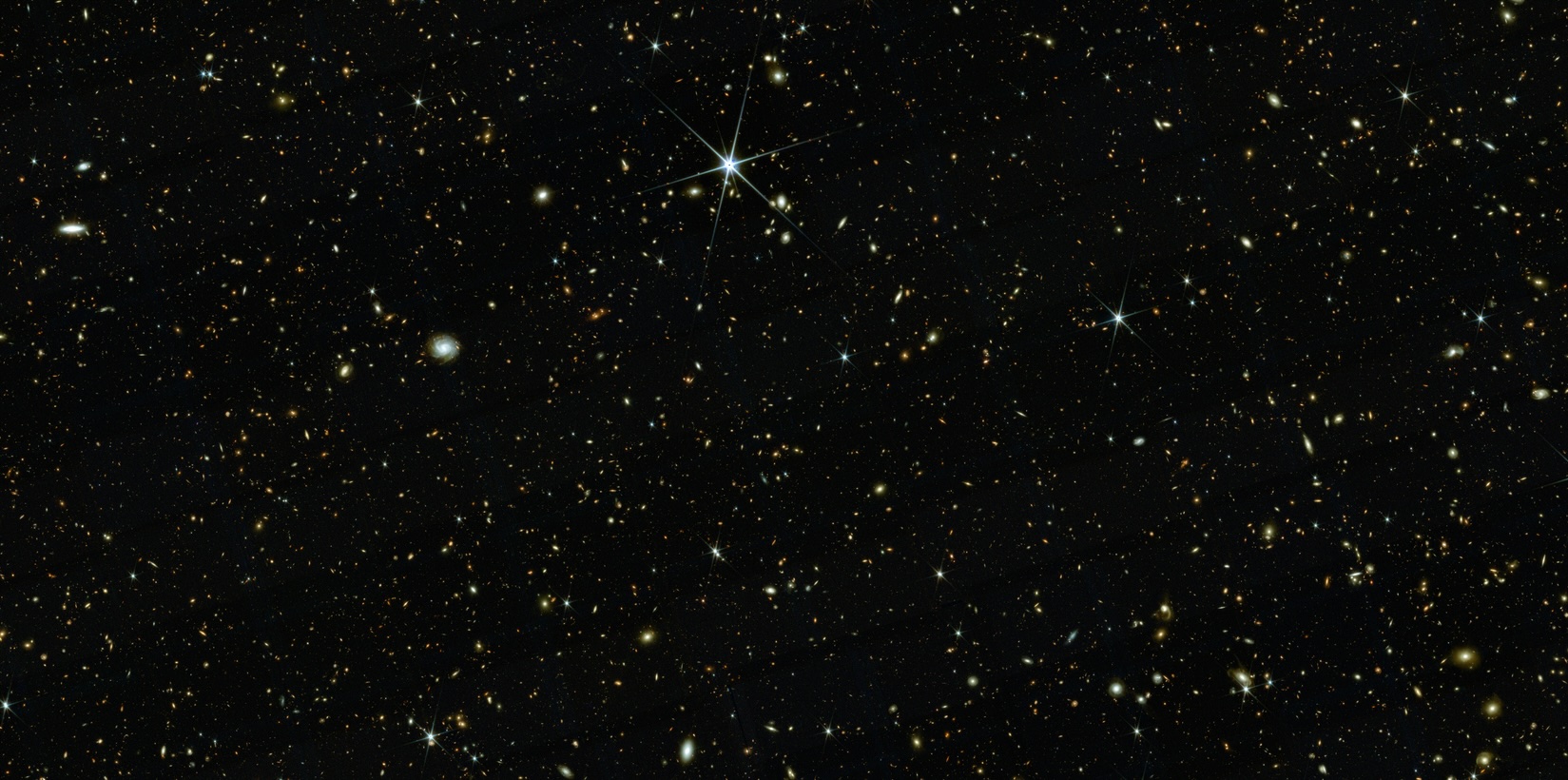
an image of outer space showing a collection of galaxies that are all different colors, shapes, and sizes
A tiny sliver of the new COSMOS map showing an incredibly diverse collection of galaxies, created from a recent sky survey by JWST. 
(Image credit: M. Franco/C. Casey/COSMOS-Web collaboration)

Scientists have unveiled the largest map of the universe ever created. Stretching across a tiny sliver of space and almost all cosmic time, it includes almost 800,000 galaxies imaged across the universe. Some are so far away that they appear as they existed in the infant universe, about 13 billion years ago.

The map, released Thursday (June 5) by scientists at the Cosmic Evolution Survey collaboration , covers a 0.54-degree-squared arc of the sky, or about three times as much space as the moon takes up when viewed from Earth.

To collect the data for the map, the James Webb Space Telescope (JWST) spent 255 hours observing a region of space nicknamed the COSMOS field. This patch of sky has very few stars, gas clouds or other features blocking our view of the deep universe, so scientists have been surveying it with telescopes across as many wavelengths of light as possible.

You may like

a six-paneled image showing six different galaxies

Six galaxies from the COSMOS-Web map, each with a different age. From upper left to lower right: present-day universe, and 3 billion, 4 billion, 8 billion, 9 billion and 10 billion years ago.  (Image credit: M. Franco/C. Casey/COSMOS-Web collaboration)

JWST's observations of the COSMOS field have given us an incredibly detailed view of the universe going back as far as 13.5 billion years.

Because the universe has been expanding, visible light that left its source at the other side of the universe gets stretched out, becoming infrared light. This is why JWST was designed to be an extremely sensitive infrared telescope: to detect these faint, stretched-out signals from the beginning of time that we couldn't see with other telescopes. It's already reshaping our understanding of how the universe formed.

an image of outer space showing many small, sparkling galaxies

A small portion of the new COSMOS-Web map showing many thousands of galaxies from across the universe.  (Image credit: M. Franco/C. Casey/COSMOS-Web collaboration)

"Since the telescope turned on we've been wondering 'Are these JWST datasets breaking the cosmological model?" Caitlin Casey, a professor of physics at the University of California, Santa Barbara and co-lead for the COSMOS project, said in a statement. "The big surprise is that with JWST, we see roughly 10 times more galaxies than expected at these incredible distances. We're also seeing supermassive black holes that are not even visible with Hubble."

The raw data from the COSMOS field observations was made publicly available just after it was collected by JWST, but it wasn't easily accessible. Raw data from telescopes like JWST needs to be processed by people with the right technical knowledge and access to powerful computers.

The COSMOS collaboration spent two years creating the map from JWST's raw data to make it more accessible for amateur astronomers, undergraduate researchers and the general public to peer into the heart of the universe. You can see it for yourself using COSMOS' interactive map viewer.

RELATED VIDEOS

{ https://www.livescience.com/space }

Hoe vind je dit bericht?
Geschreven door peter om 23:47 Stuur door

'Hard landing': Japanese spacecraft carrying Europe's first moon rover has likely been destroyed, company says

'Hard landing': Japanese spacecraft carrying Europe's first moon rover has likely been destroyed, company says

 
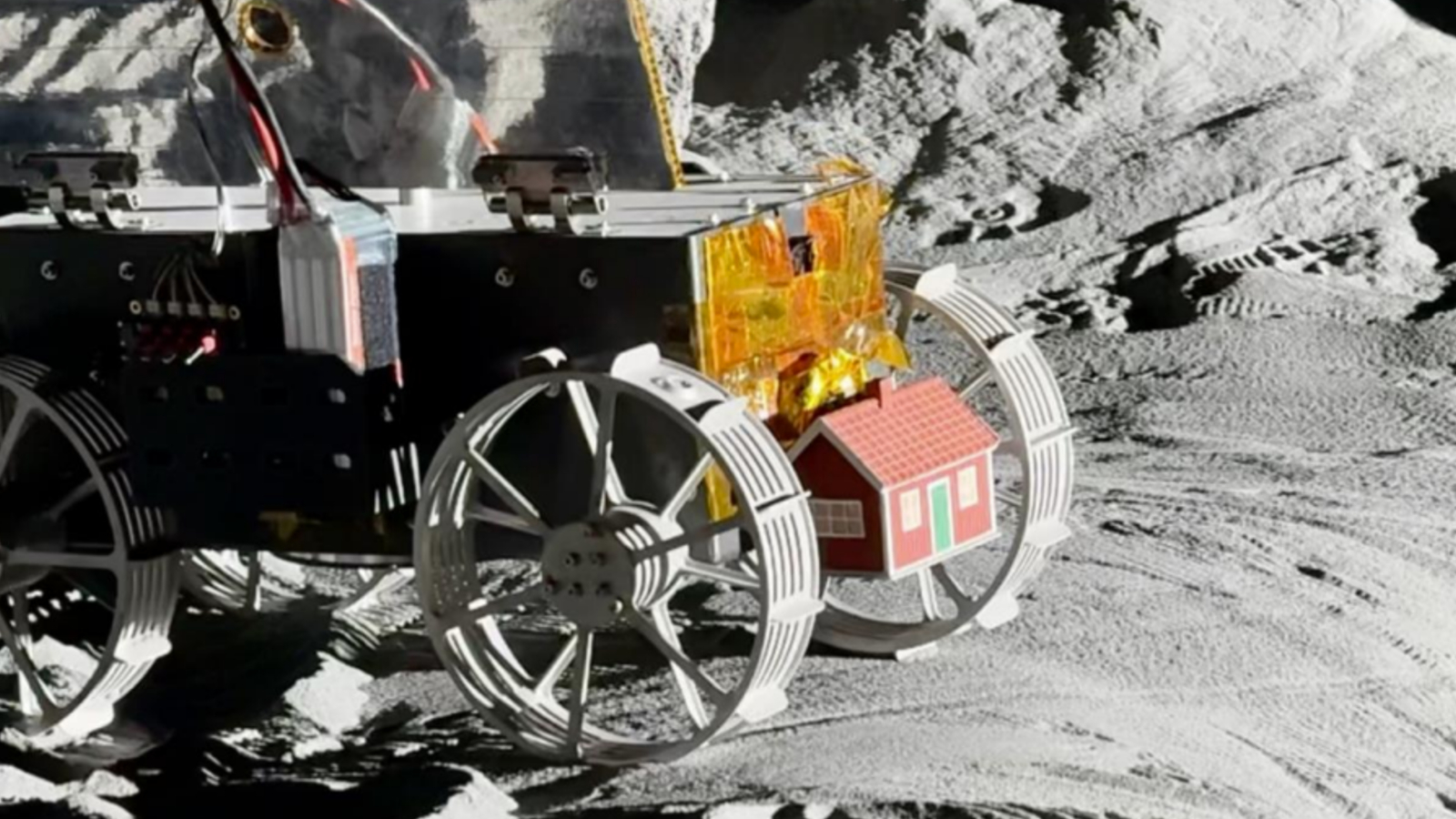
A photo of The Moonhouse model attached to the Tenacious rover in a simulated moon environment
The Tenacious rover is carrying a tiny model of a suburban house, known as "The Moonhouse," which was supposed to be deployed on the lunar surface. (This photo was taken before the rover was launched into space.) 
(Image credit: The Moonhouse)
  • Editor's note: This story was updated at 12:00 p.m. on Friday (June 6) with new information from ispace.

A private Japanese moon lander — which was carrying Europe's first lunar rover — has likely been destroyed in a "hard landing" after ground control suddenly lost contact with the spacecraft on Thursday (June 5).

Mission control lost contact with the lander, known as "Resilience," at 3:17 p.m ET, just as it was attempting a lunar touchdown, and was unable to restore it as of Friday morning.

"As of 8:00 a.m. on June 6, 2025, mission controllers have determined that it is unlikely that communication with the lander will be restored," Japanese company ispace wrote in a statement posted to X. "It has been decided to conclude the mission."

It is highly unlikely that the European rover, or any of the spacecraft's other payloads, can be deployed.

You may like

The rover, known as "Tenacious," is one of several payloads carried aboard Resilience, the second Hakuto-R lander made and operated by ispace. The spacecraft attempted to touch down in an unexplored region of the moon's northern hemisphere known as Mare Frigoris, or the "Sea of Cold," after spending just over a month in lunar orbit.

Resilience is the third Japanese lander to attempt to touch down on the moon, following ispace's first Hakuto-R lander, which crash-landed in April 2023 after losing contact with its operators in orbit, and the Japan Aerospace Exploration Agency's SLIM lander (or "moon sniper"), which landed upside down in January 2024 but unexpectedly survived two lunar nights.

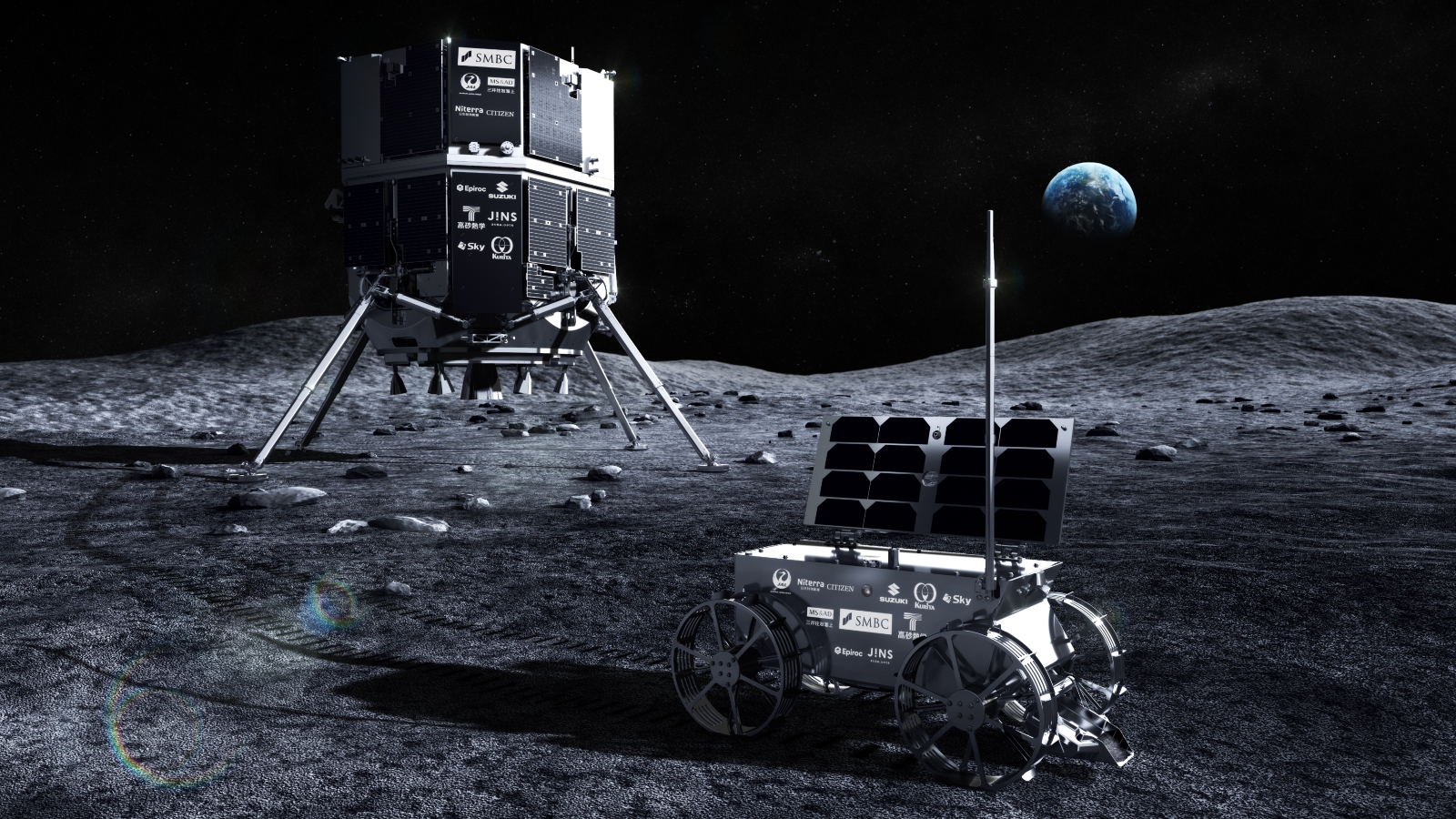
An artist's illustration of the Tenacious rover next to the Resilience lander on the moon

An artist's illustration of the Tenacious rover next to the Resilience lander on the moon.  (Image credit: ESA/ispace)

Moon milestones

Resilience launched Jan. 15 on board a SpaceX Falcon 9 rocket from NASA's Kennedy Space Center in Florida, Live Science's sister site Space.com reported at the time. The same rocket also launched Firefly Aerospace's Blue Ghost lander, which successfully landed on the moon on March 2, after taking a more direct route.

Related: 

Resilience would have been just the second private lunar lander to complete a soft landing on the moon. Its main payload, the Tenacious rover, would be the first European-built vehicle to roam the moon.

Tenacious is small, measuring roughly 21 inches (54 centimeters) long and weighing just 11 pounds (5 kilograms). But its most-talked-about payload — a tiny, red house dubbed "The Moonhouse" — is even teenier, standing just 4 inches (10 cm) tall. The art piece, dubbed the "first house on the moon," was created by Swedish artist Mikael Genberg, who first envisioned the project in 1999.

"To me, the Moonhouse is both a shared achievement, something made possible by the efforts of many individuals, but also a profoundly personal thing," Genberg recently told Space.com. "It's a small house in a vast, empty place, a symbol of belonging, curiosity, and vulnerability."

An artist's illustration of The Moonhouse on the moon with Earth in the background

The Moonhouse was created by Swedish artist Mikael Genberg and has been in the works for more than 25 years.  (Image credit: The Moonhouse)

Other experiments

Tenacious planned to roam the Sea of Cold for up to two weeks. It would then likely die during the "lunar night," when its solar panels can no longer collect light, according to ESA.

During this time, the rover would have conducted various additional experiments, including using a tiny scoop to collect a small amount of lunar regolith, which could be returned to Earth on a future mission. NASA has already agreed to buy the sample for $5,000, according to Sky News.

The Resilience lander also carryied several other payloads, including the Water Electrolyzer Experiment, which aimed to demonstrate the feasibility of producing oxygen and hydrogen from "lunar water resources"; an algae-based food production module, which would have attempted to grow the photosynthetic organism as a potential future food source for lunar astronauts; and the Deep Space Radiation Probe, which would have tracked the amount of radiation the lander will experience on the moon, according to Space.com.

RELATED VIDEOS

{ https://www.livescience.com/space }

Hoe vind je dit bericht?
Geschreven door peter om 23:28 Stuur door

ispace's Resilience Lander Proves the Moon is Still a Tough Customer

ispace's Resilience Lander Proves the Moon is Still a Tough Customer

Full-size model of Hakuto-R (Credit : Artvill) Full-size model of Hakuto-R (Credit : Artvill)

Japan's private space company ispace experienced another setback on Thursday 5th June when its Resilience lunar lander crashed into the surface of the Moon, marking the company's second consecutive failed landing attempt in just over two years.

The full Moon (Credit : Gregory H. Revera)

The Full Moon

(Credit : Gregory H. Revera)

The uncrewed spacecraft was attempting to touch down in Mare Frigoris, or the "Sea of Cold," a vast basaltic plain in the Moon's northern region around 3:17 p.m. ET on June 5th. More than 500 ispace employees, shareholders, and government officials watched anxiously at a public viewing event in Tokyo as flight data was suddenly lost less than two minutes before the scheduled touchdown time.

Mare Frigoris is located just north of Mare Imbrium, and stretches east to north of Mare Serentatis. (Credit : NASA)

*Mare Frigoris is located just north of Mare Imbrium, and stretches east to north of Mare Serentatis.

(Credit : NASA)

According to ispace officials, the preliminary data suggests the lander's laser rangefinder experienced delays in obtaining accurate distance measurements to the lunar surface, preventing Resilience from slowing down for a safe landing. The spacecraft had successfully descended from about 100 kilometres to 20 kilometres above the surface and fired its main engine as planned, but something went wrong during the final critical phase.

“Based on these circumstances, it is currently assumed that the lander likely performed a hard landing on the lunar surface.” - ispace spokesperson This failure is somewhat similar to ispace's first attempt in April 2023, when their Hakuto-R lander also crashed during its final descent. However, company executives stressed that while both missions failed due to altitude measurement issues, the specific technical problems appear to be different.

Resilience had launched in January aboard a SpaceX Falcon 9 rocket alongside Firefly Aerospace's Blue Ghost lander, which took a faster trajectory to the Moon and successfully landed in March this year. The Japanese spacecraft chose a slower, more fuel-efficient route that took nearly five months to reach its destination.

The December 11th launch of a Falcon 9 rocket with the first Hakuto R. mission (Credit : SpaceX/ispace)The December 11th launch of a Falcon 9 rocket with the first Hakuto R. mission (Credit : SpaceX/ispace)

The mission carried significant scientific value, including a four-wheeled rover built by ispace's Luxembourg based subsidiary and five external payloads worth $16 million, featuring experiments from Japanese companies and a Taiwanese university. The lander was also contracted by NASA to collect lunar regolith samples during what was planned to be a 14-day surface mission.

Despite the setback, ispace isn't giving up. The company has already secured funding for a third attempt and is collaborating with US-based Draper on the Apex 1.0 lander, scheduled to target the Moon's far side as soon as 2027. The commercial space race to the Moon continues, but Thursday's crash serves as another reminder of just how challenging lunar exploration remains.

Source : 

{ https://www.universetoday.com/ }

Hoe vind je dit bericht?
Geschreven door peter om 22:26 Stuur door

Meer van UFO'S of UAP'S, ASTRONOMIE, RUIMTEVAART, ARCHEOLOGIE, OUDHEIDKUNDE, SF-SNUFJES EN ANDERE ESOTERISCHE WETENSCHAPPEN - DE ALLERLAATSTE NIEUWTJES

↑ Terug naar de berichten